The Story Behind
A Private Hilltop Estate Above the Ukiah Valley
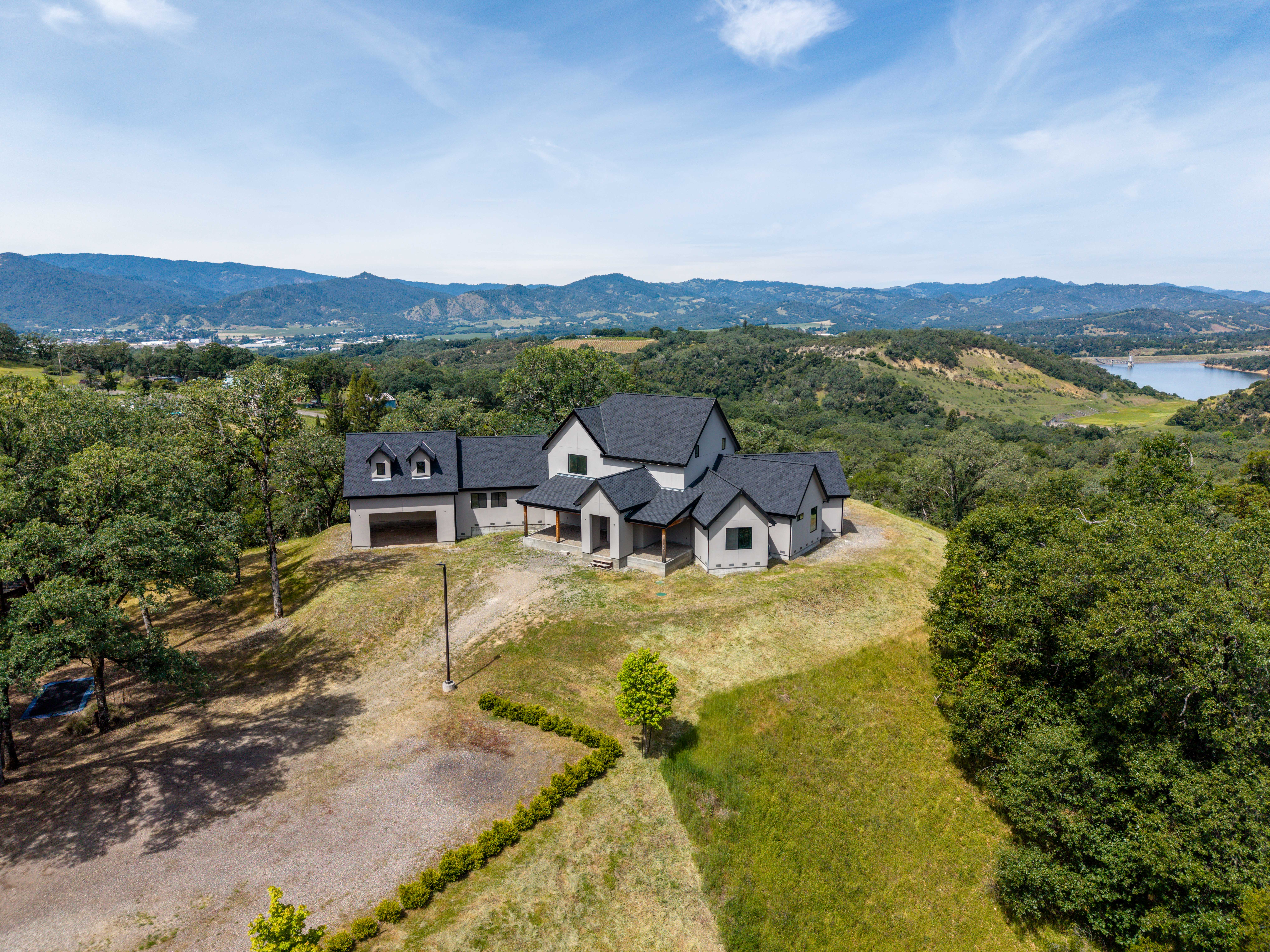
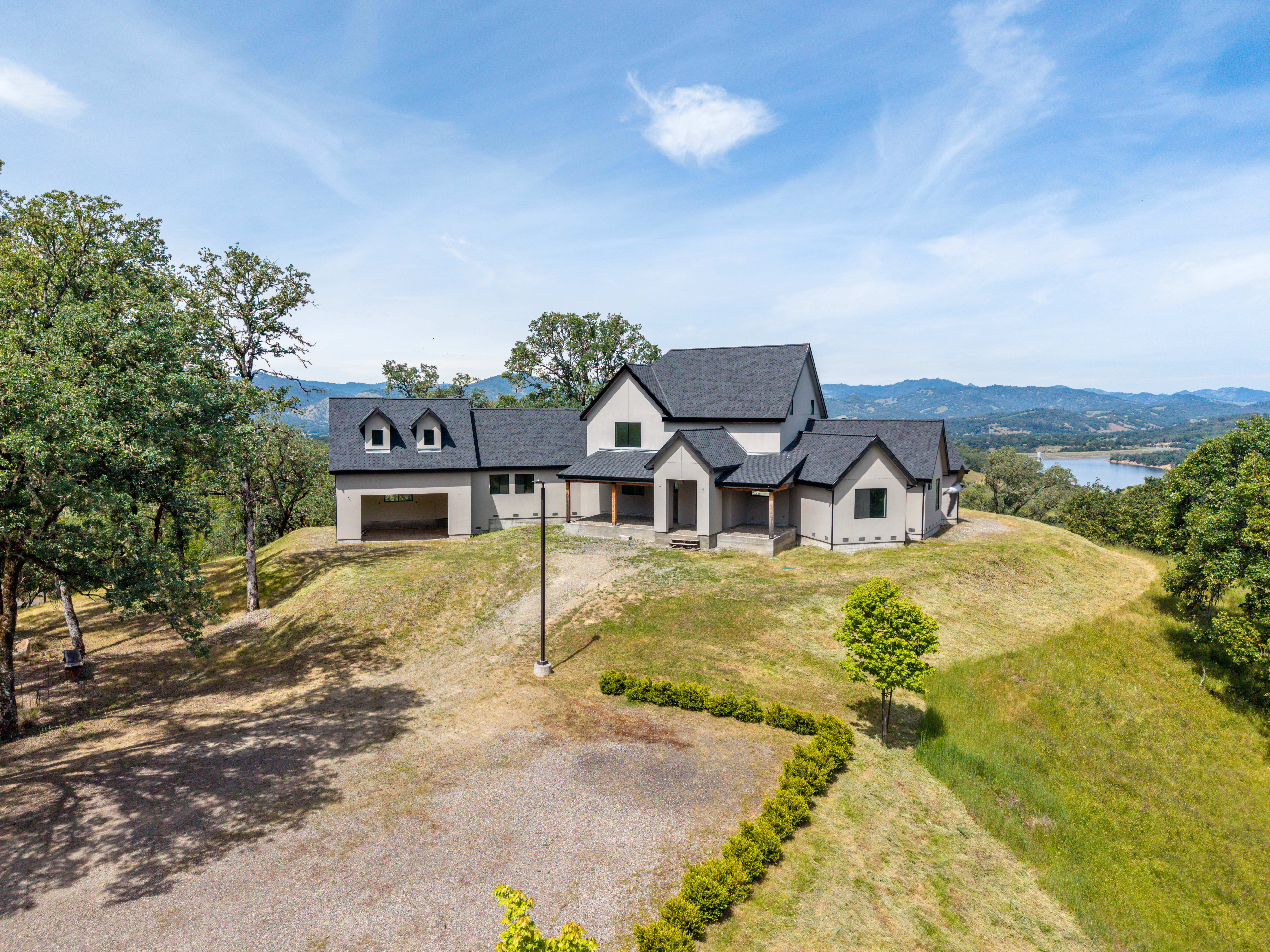
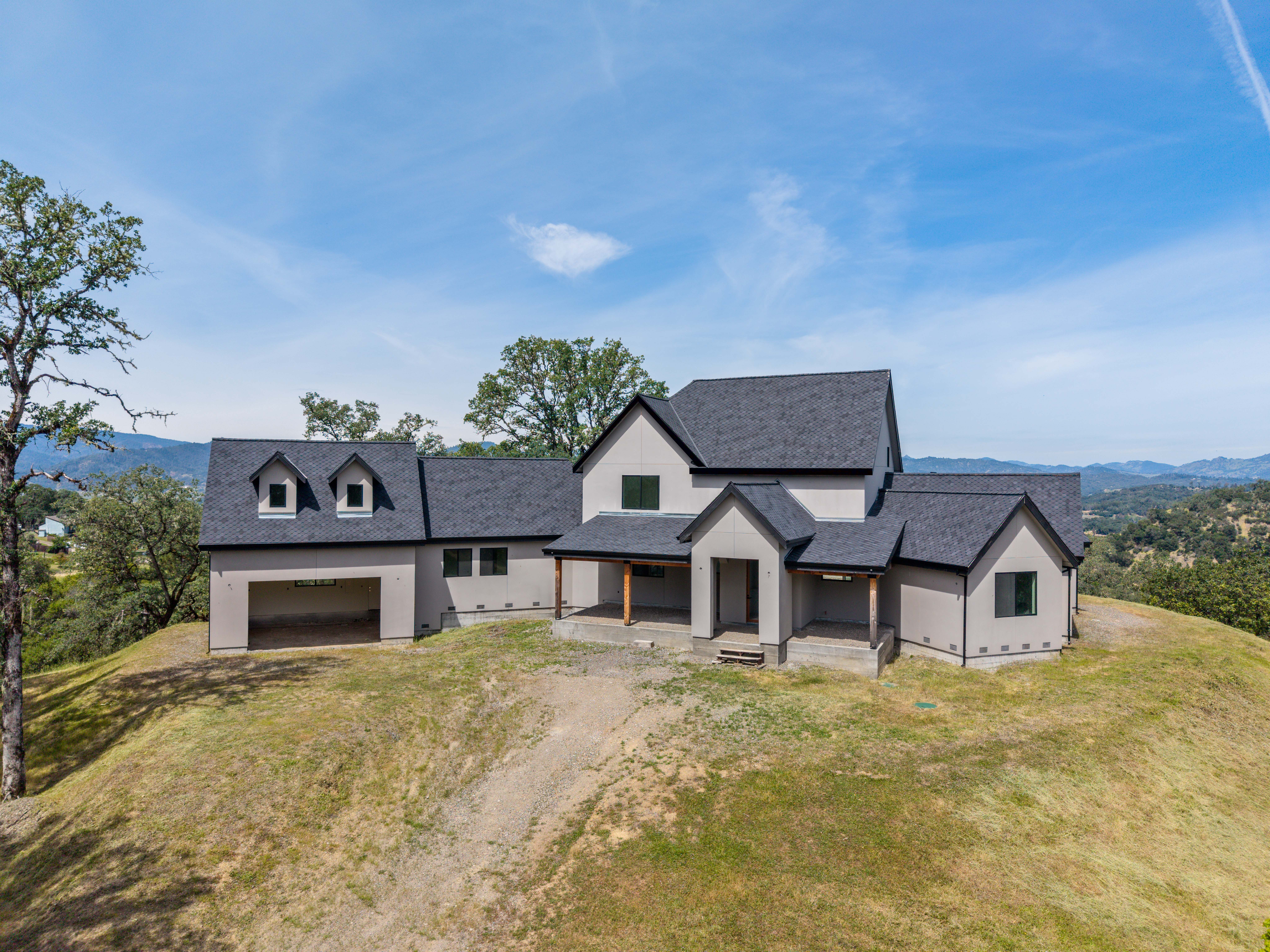
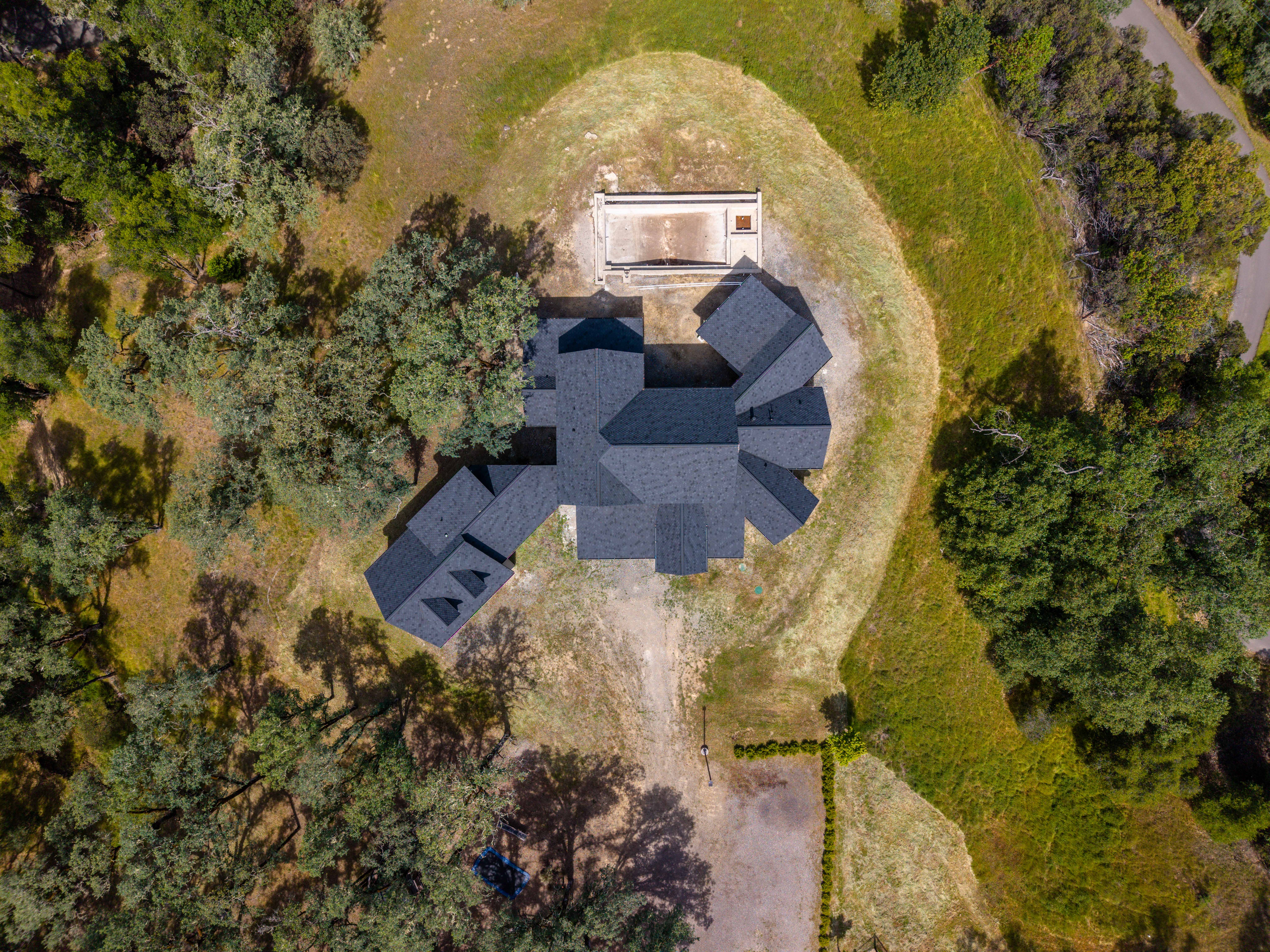
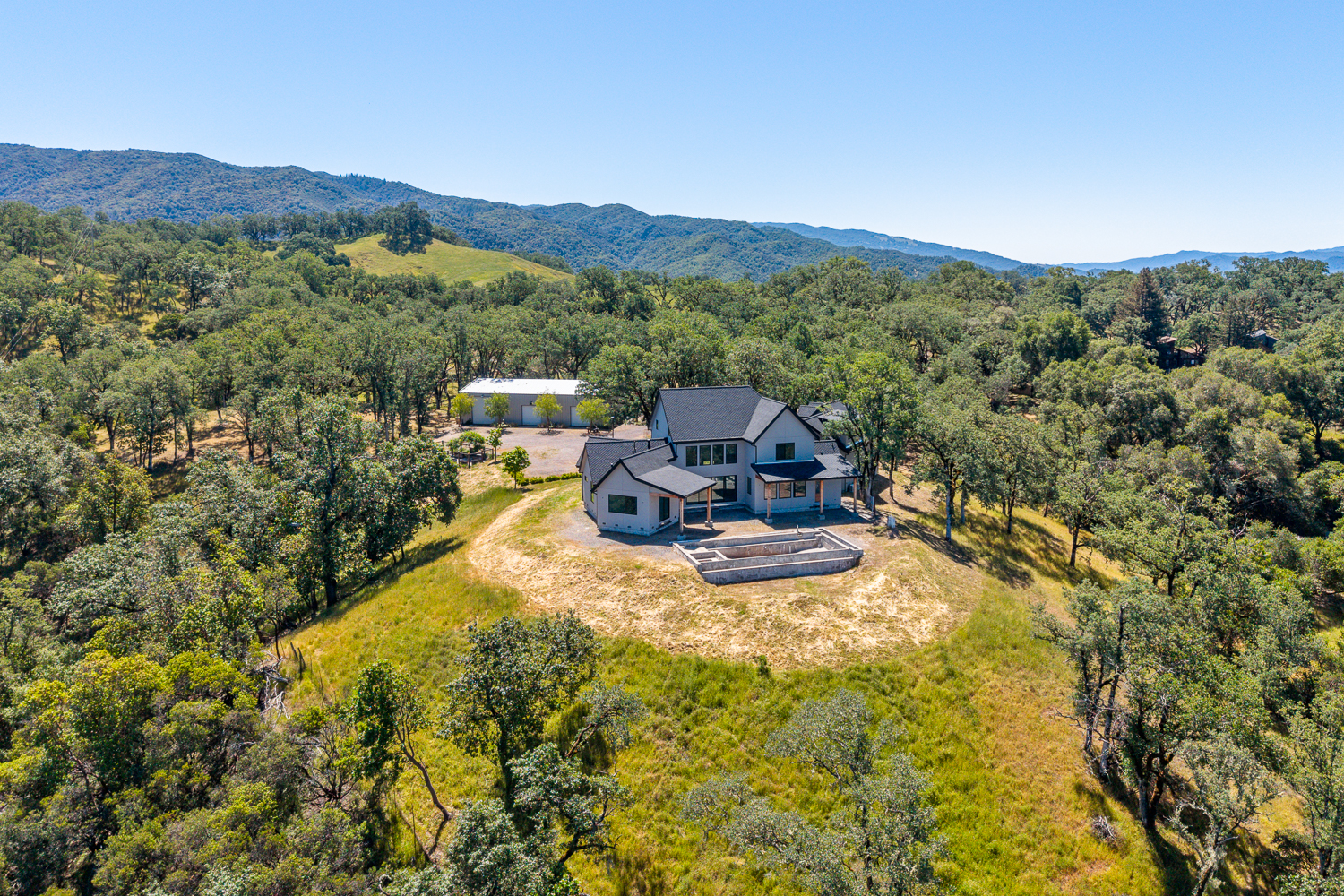
There is a particular kind of clarity that comes with building a home from the ground up on land like this — land that already knows what it wants to be. At 3215 Deerwood Drive, the architecture does not impose itself on the hillside so much as settle into it, composed and unhurried, as if it has always belonged here among the oaks.
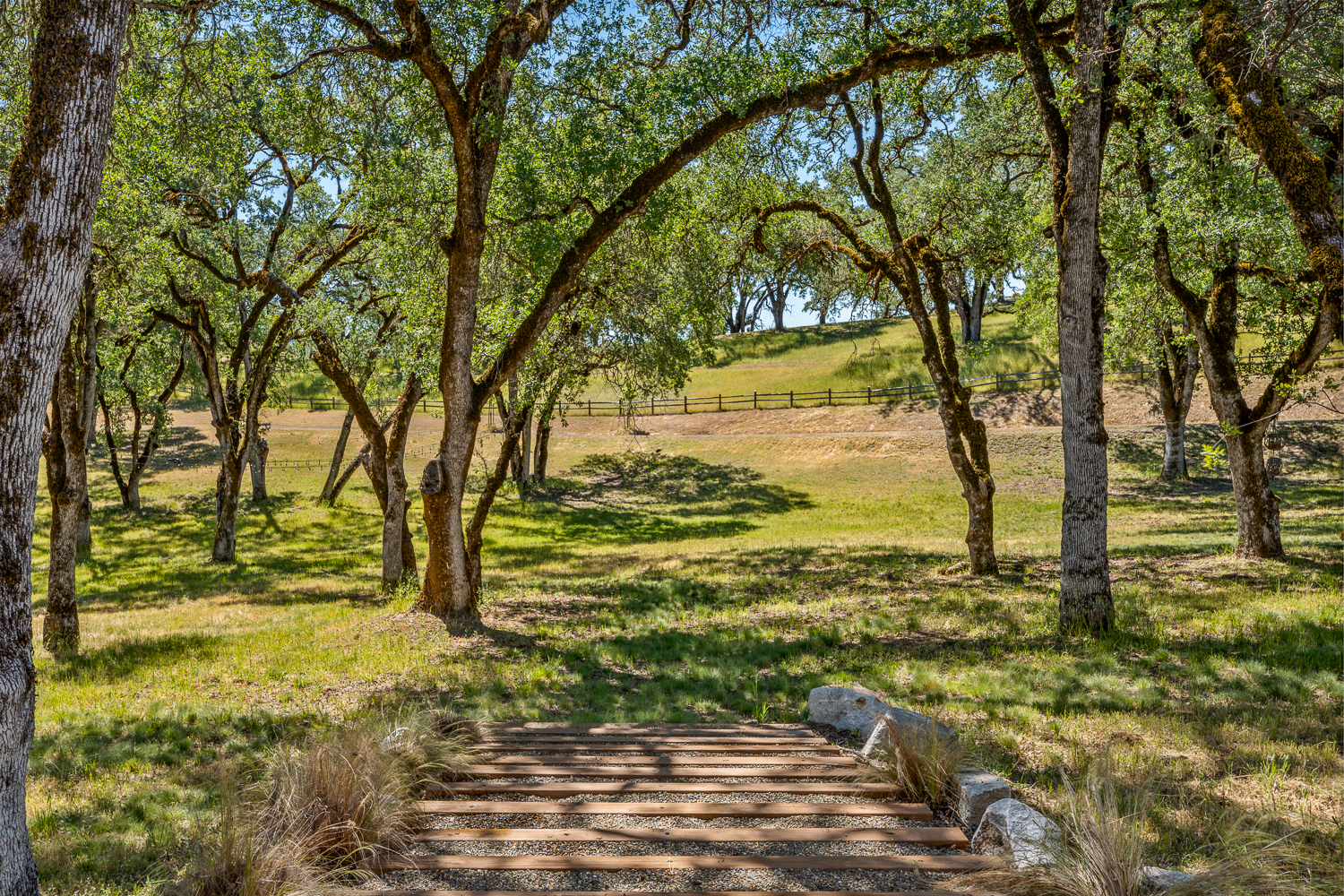
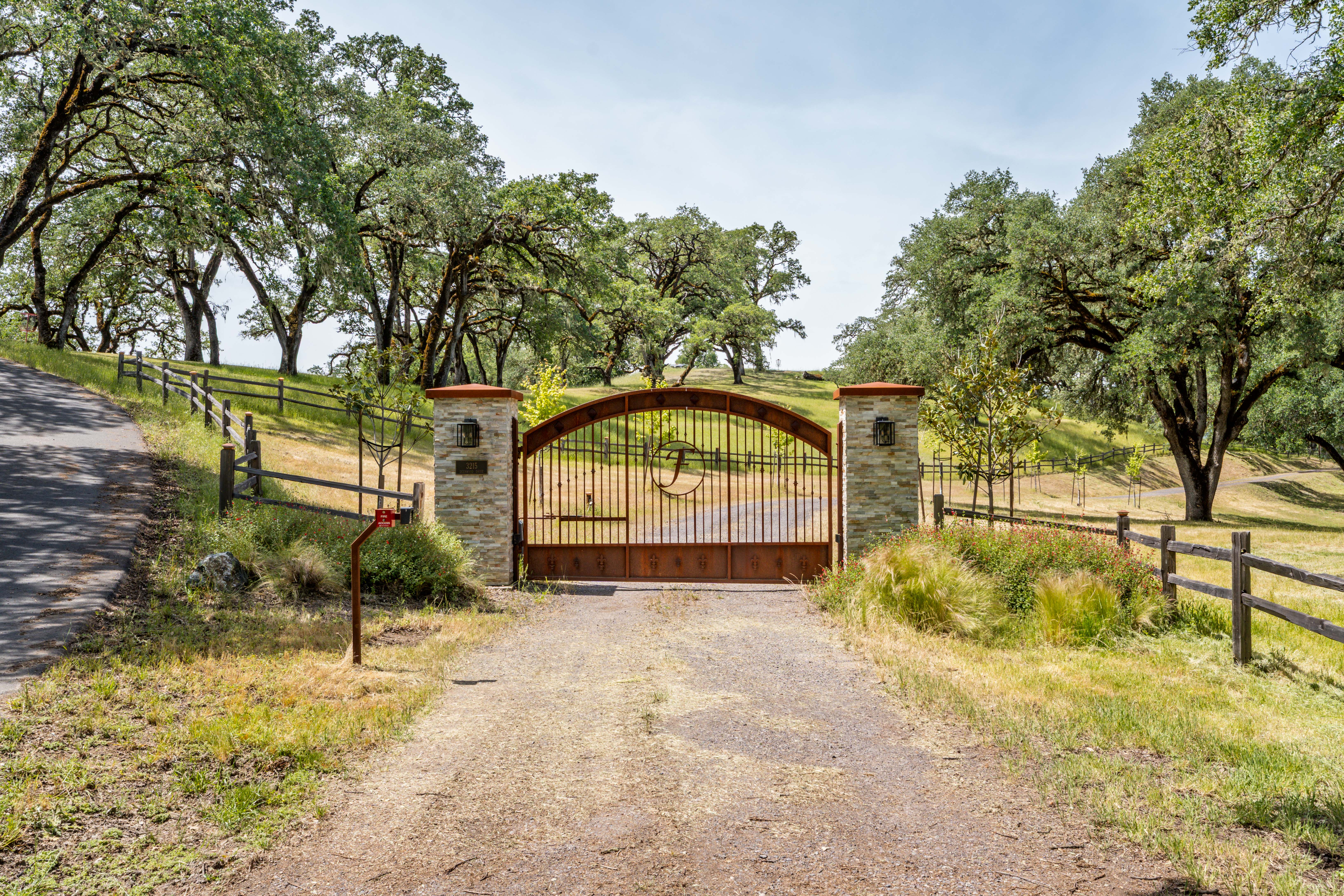
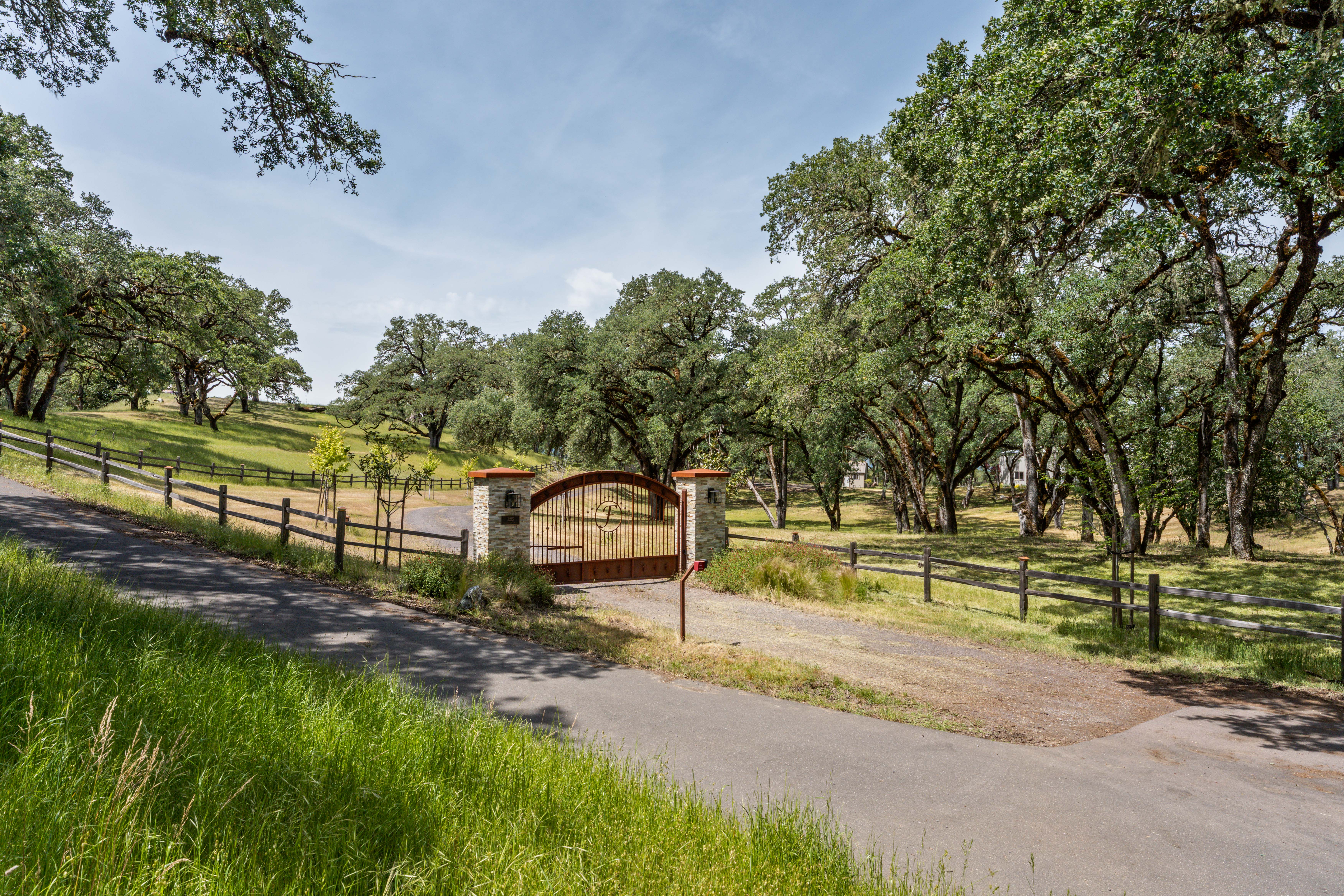
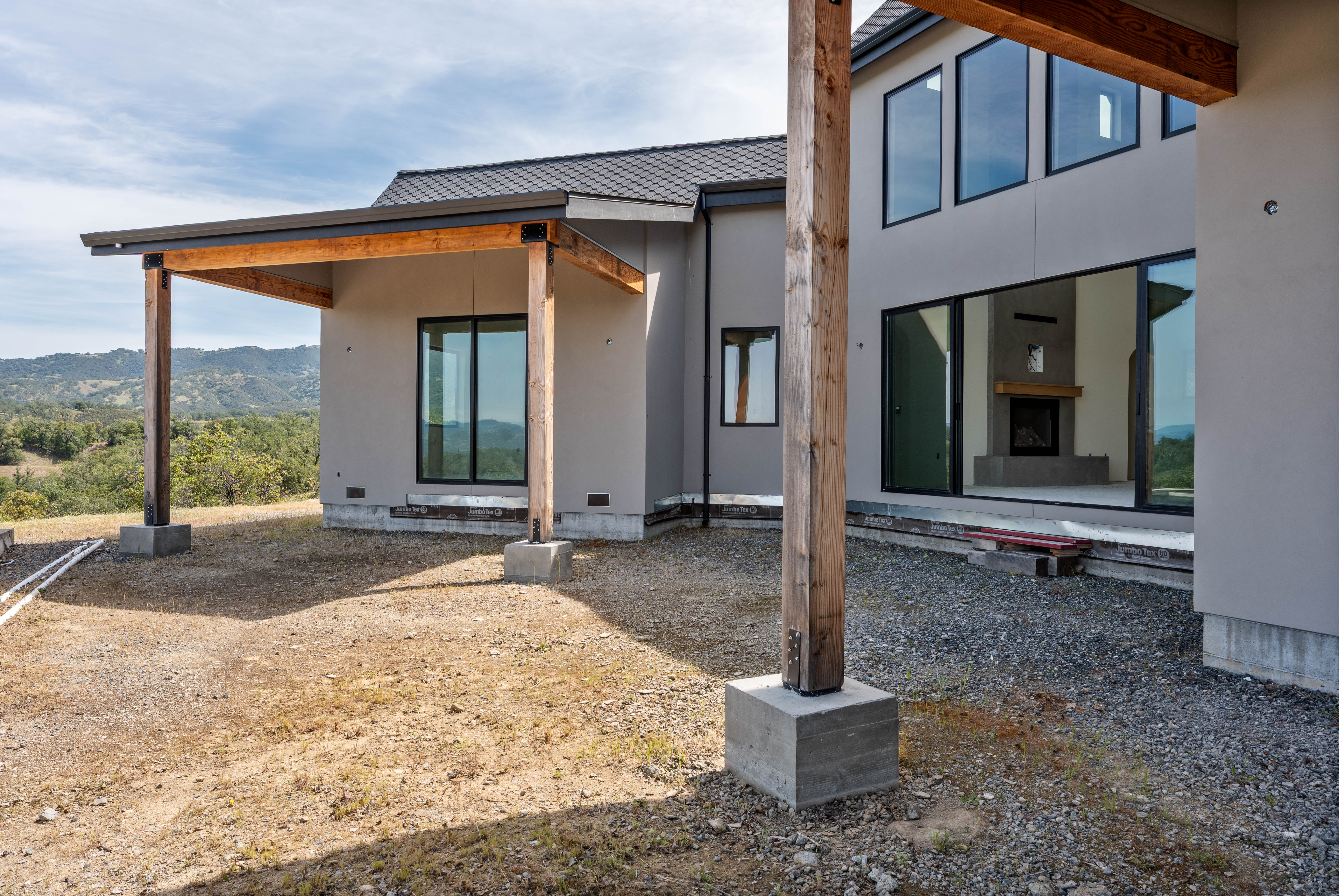
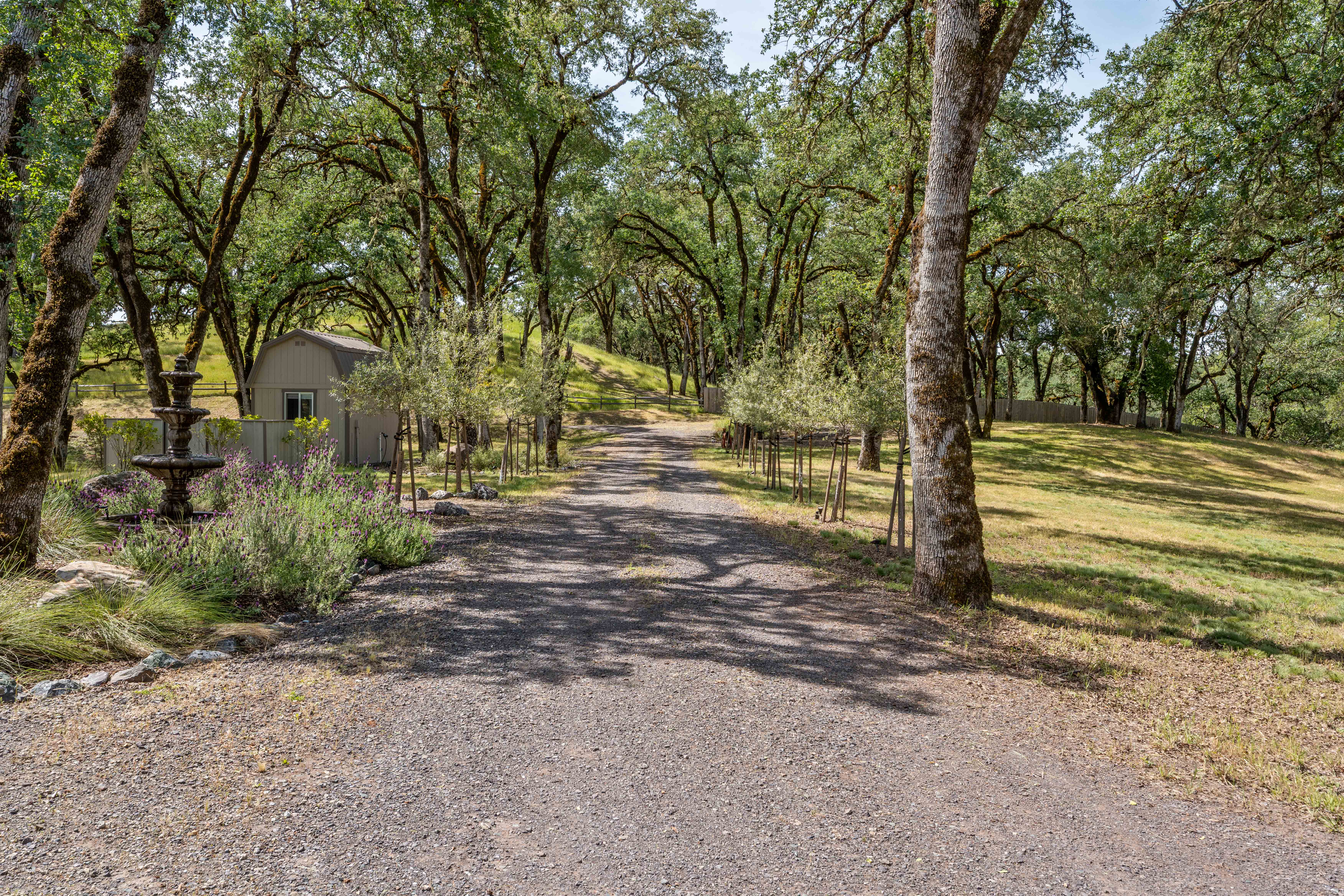
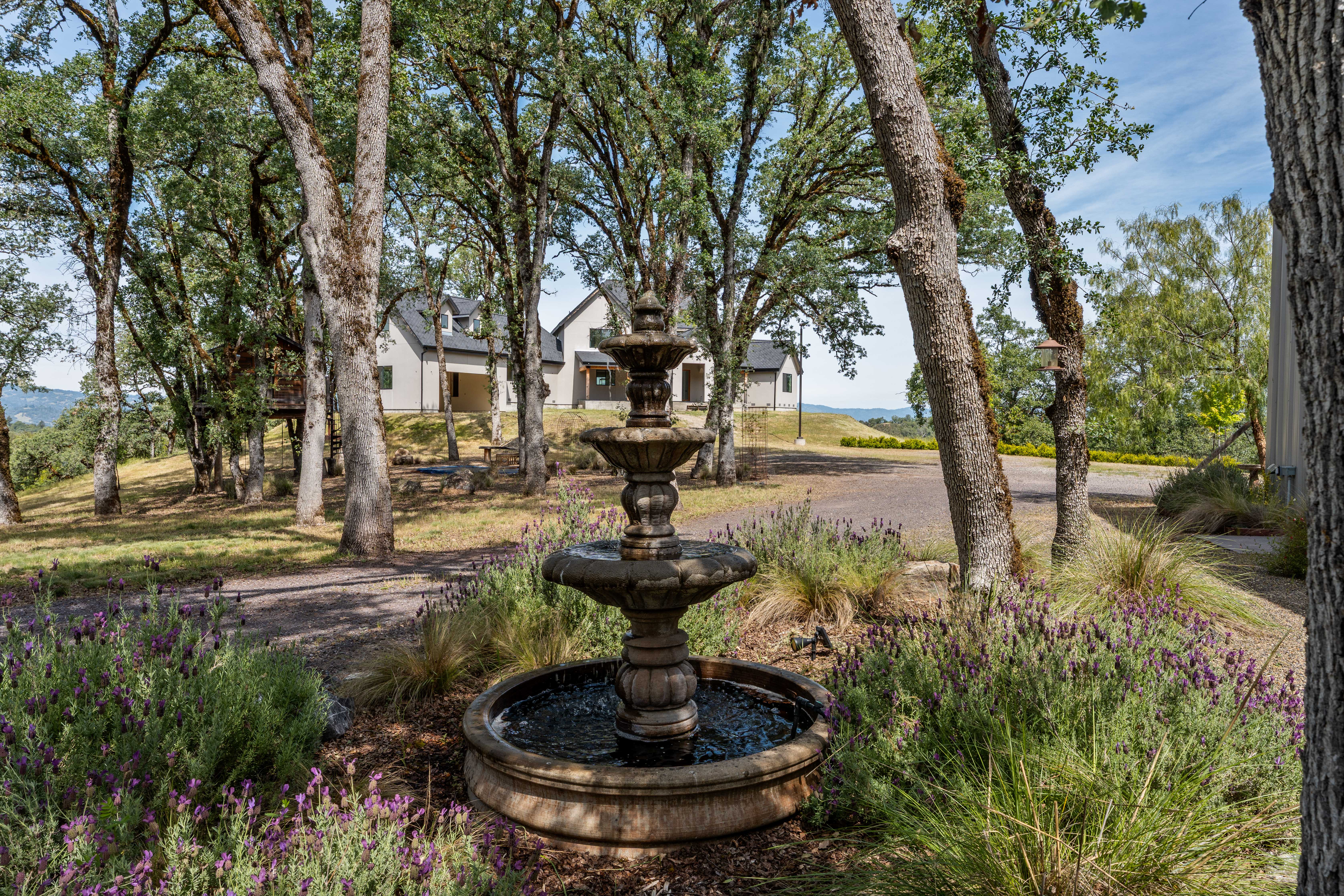
The approach sets the tone. A gated entry framed by stone pillars and arched ironwork opens onto a gravel drive that winds through mature trees and rolling meadow before arriving at a residence of considered presence. The multi-gabled roofline, light stucco cladding, and dark-framed windows read as modern farmhouse in the most refined sense — neither trend-chasing nor nostalgic, but genuinely rooted in its Northern California context.
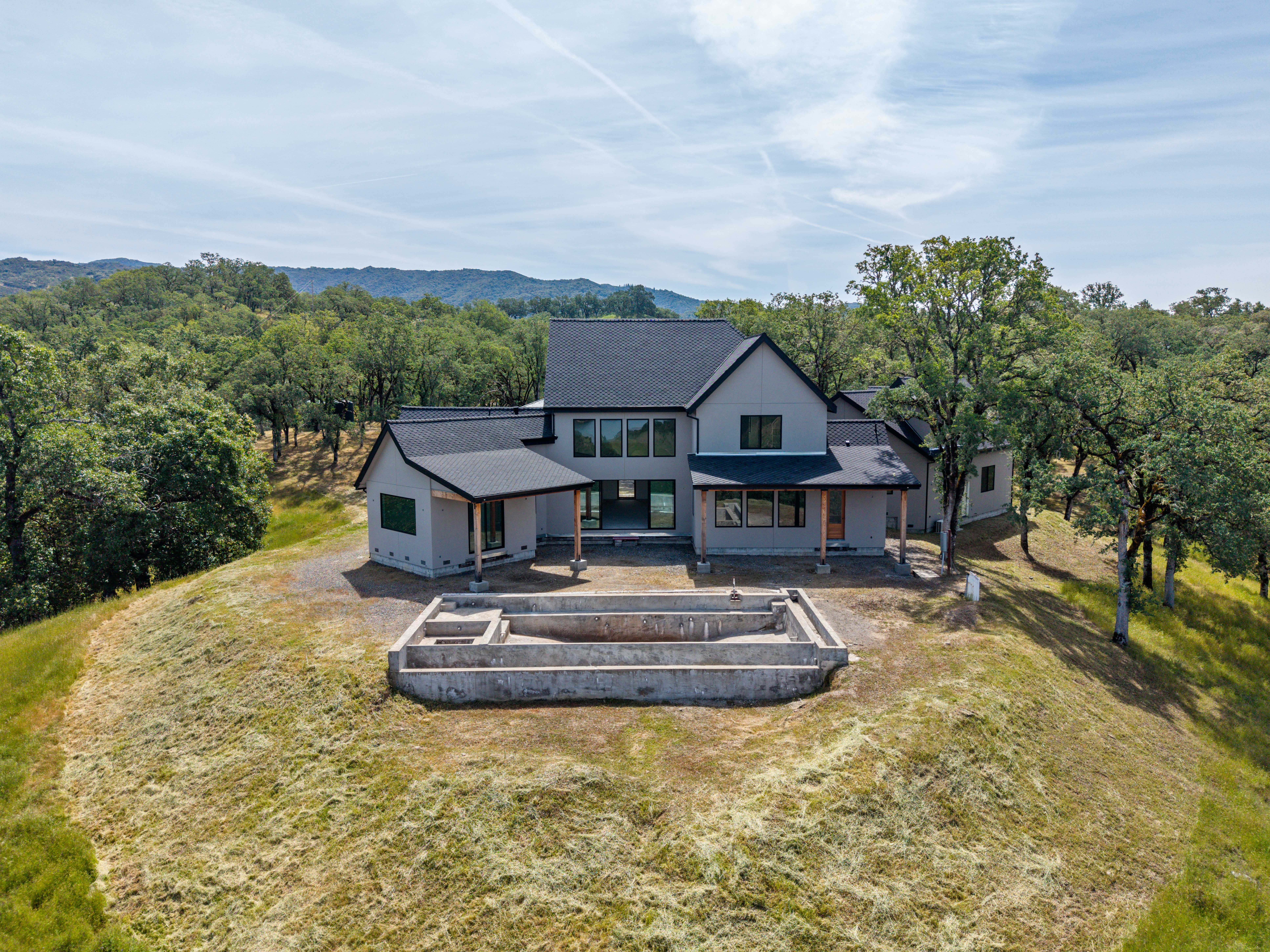
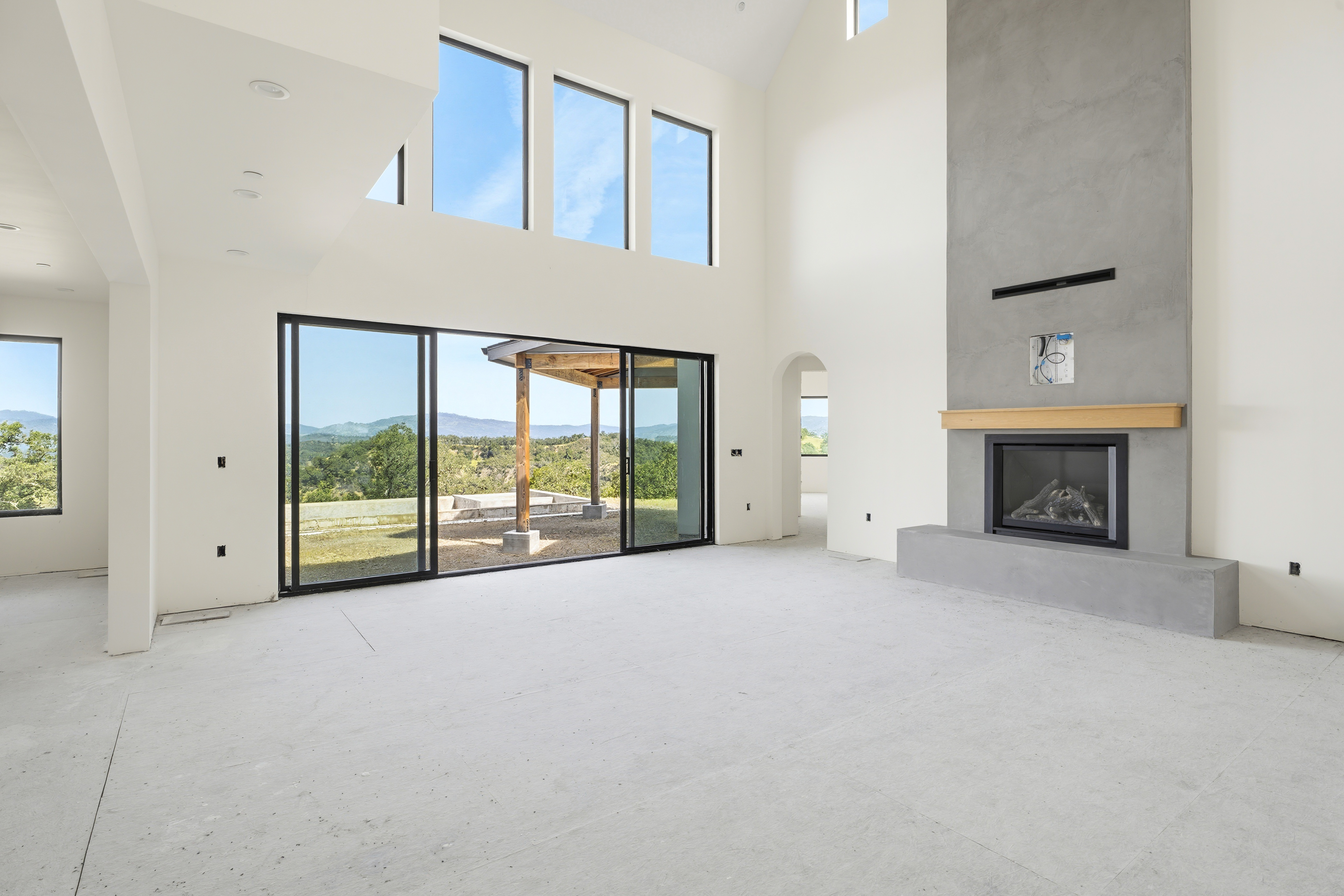
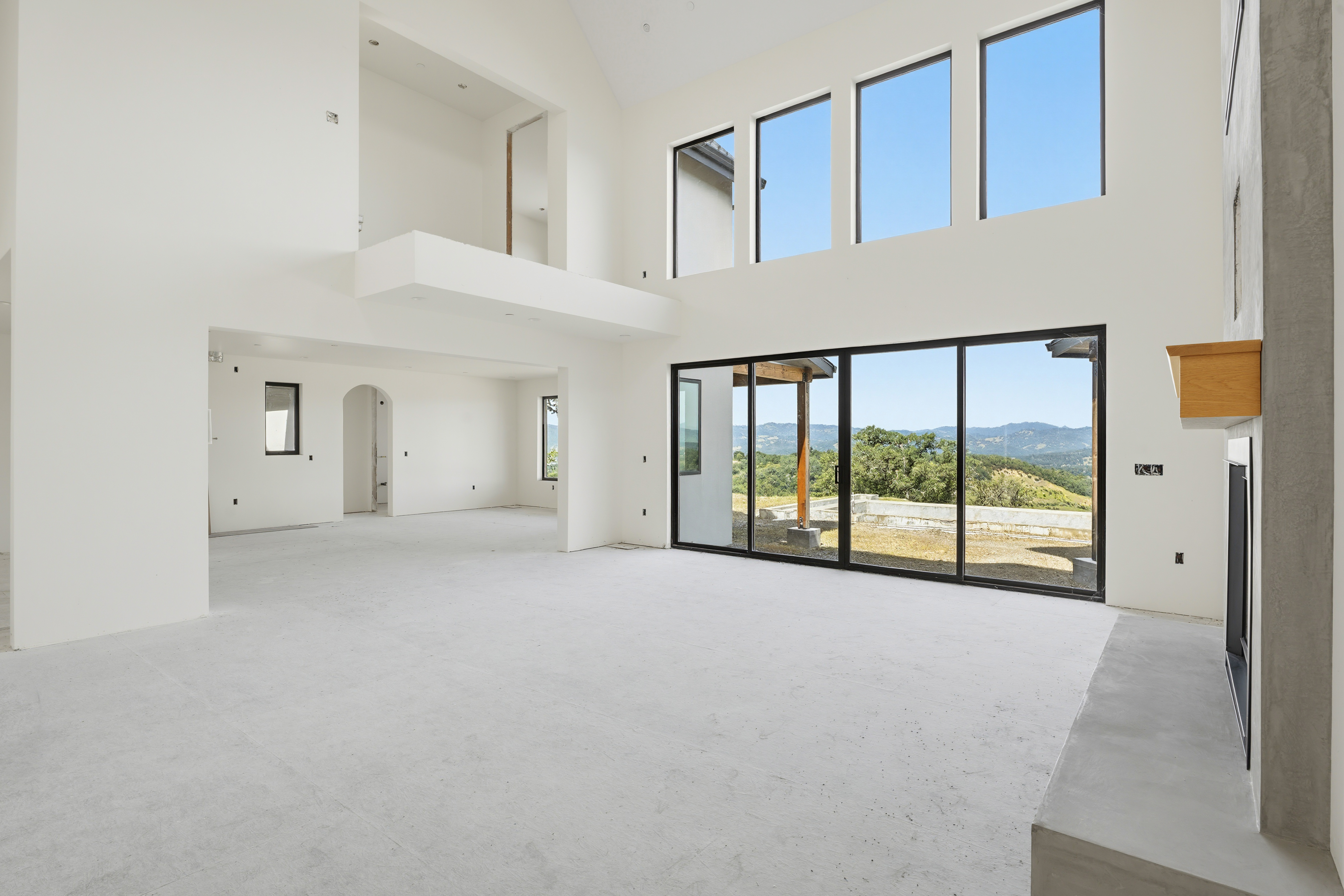
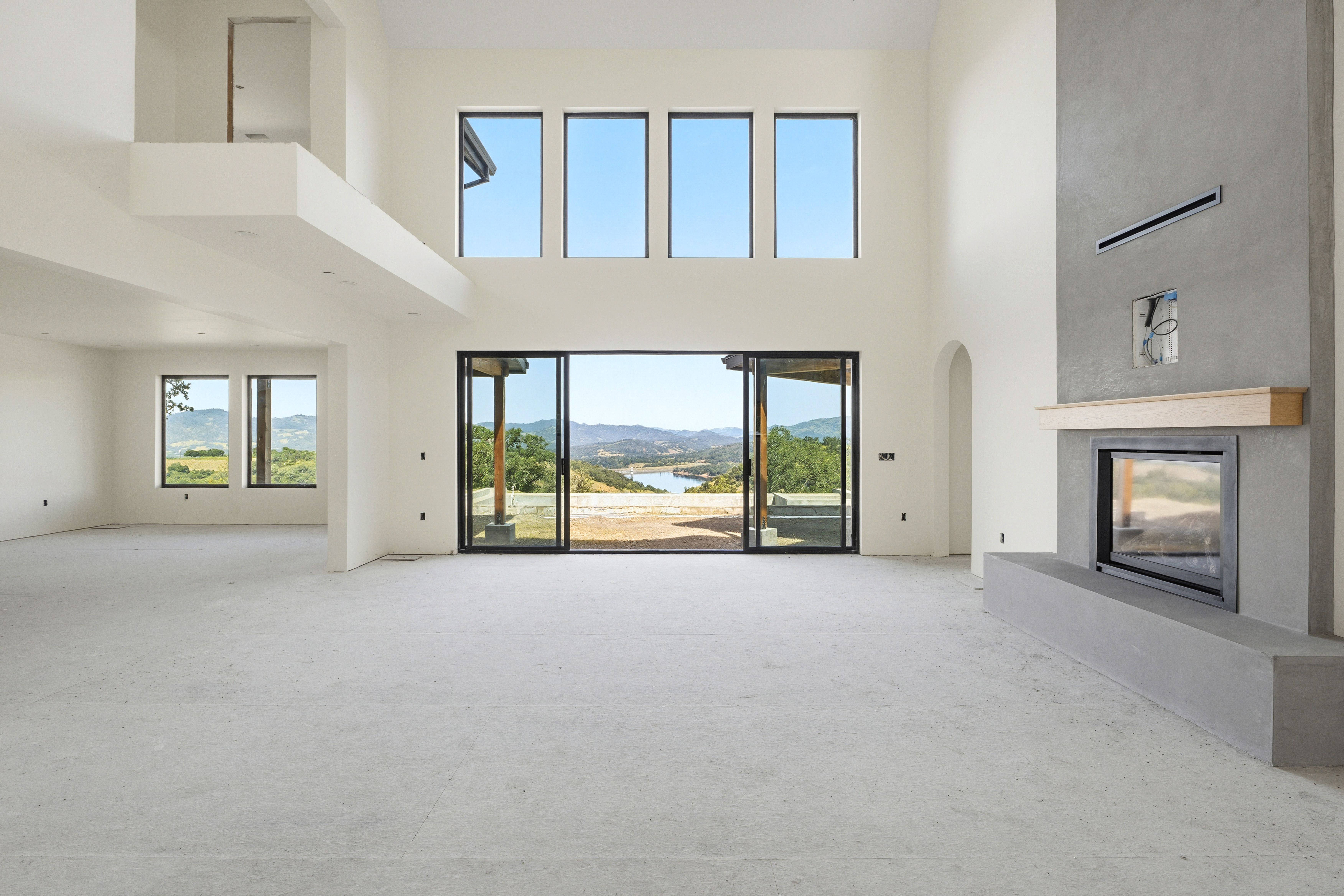
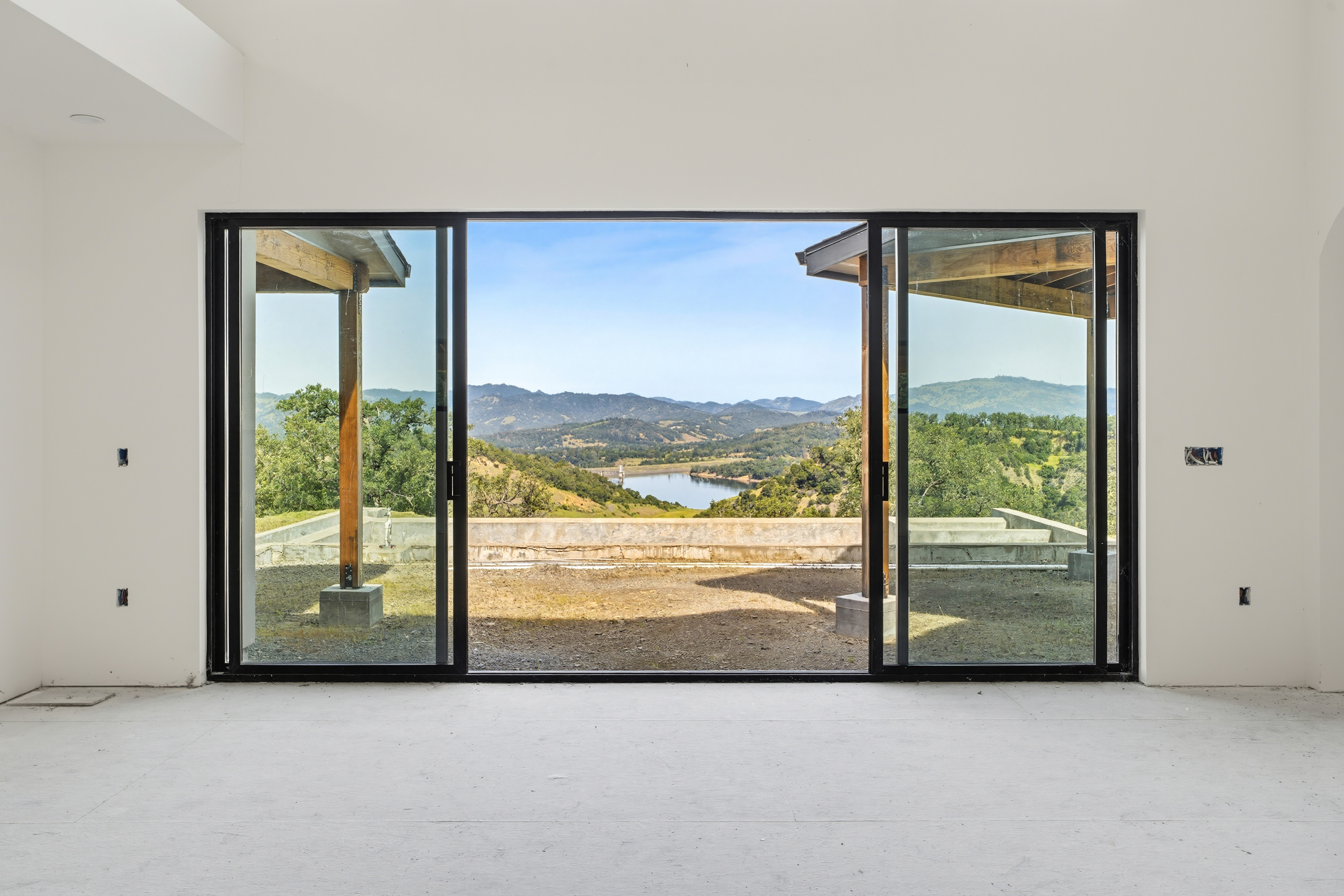
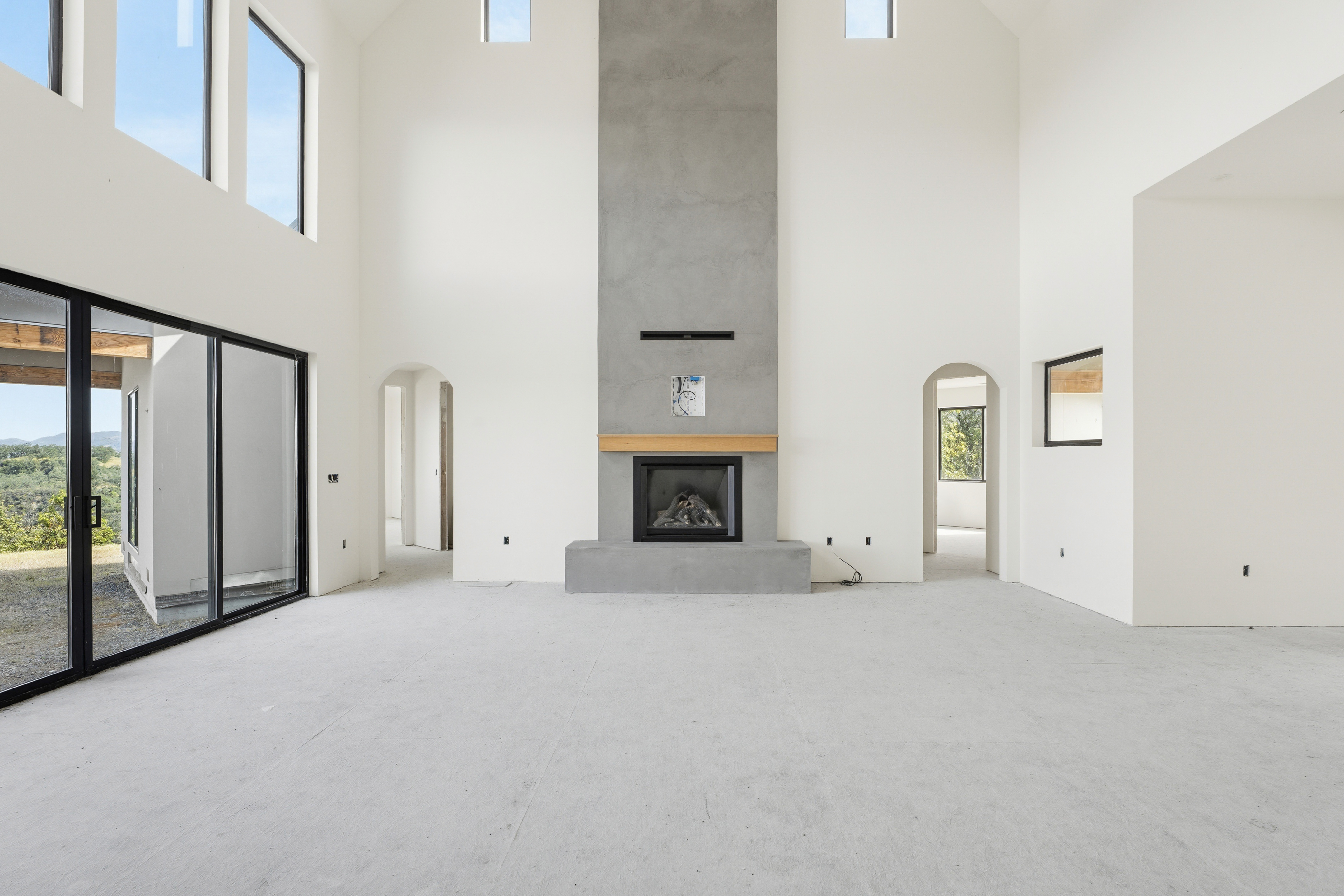
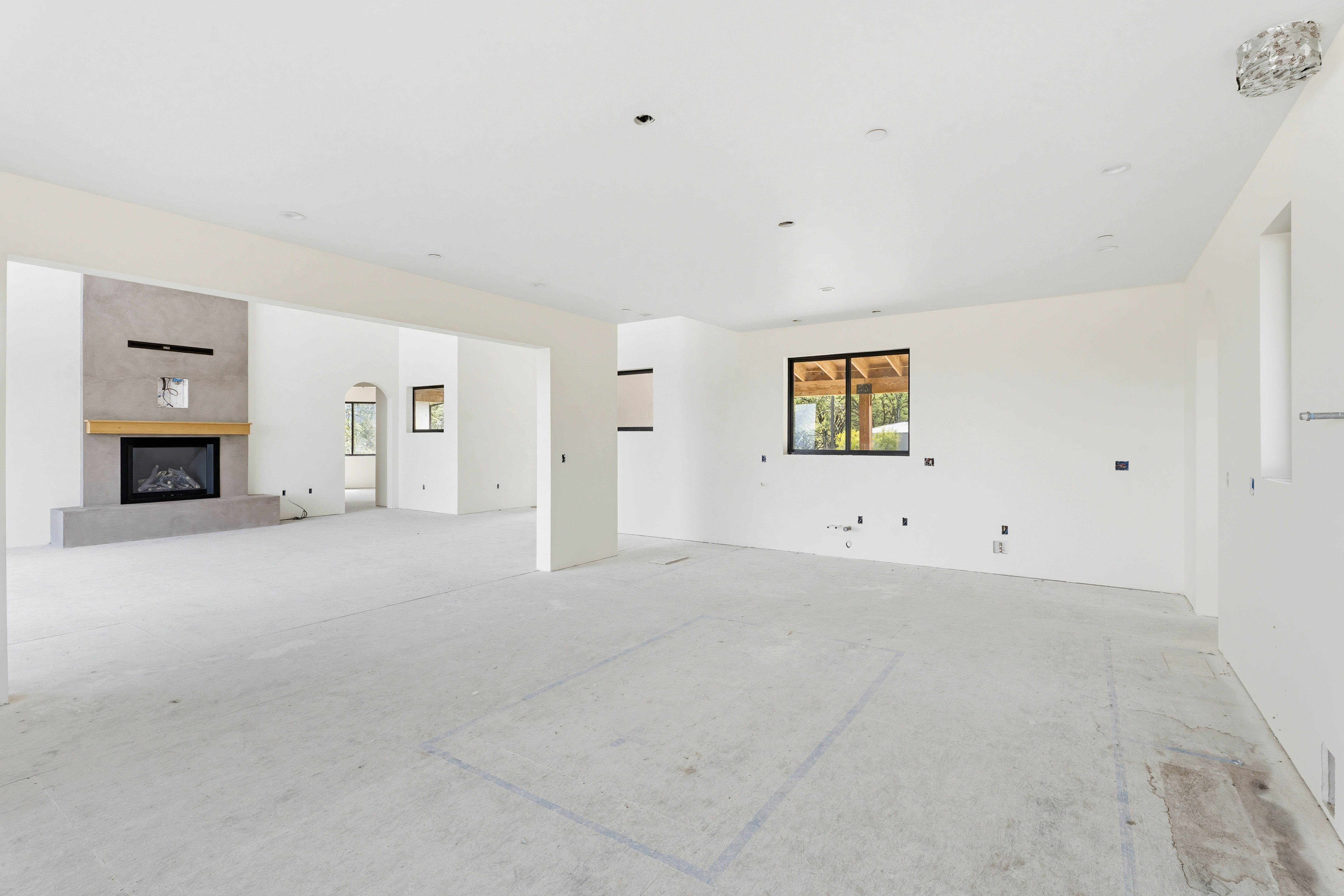
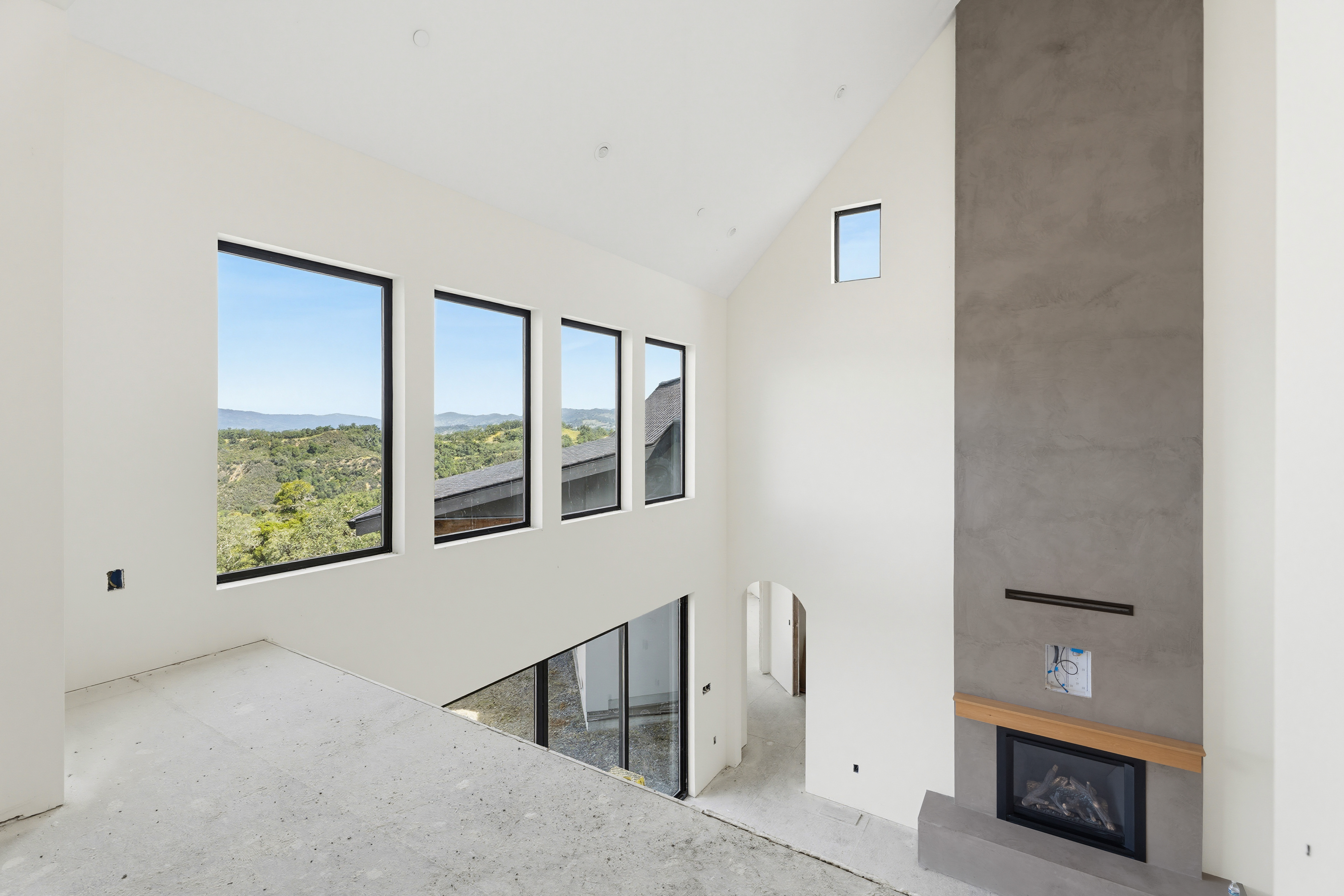
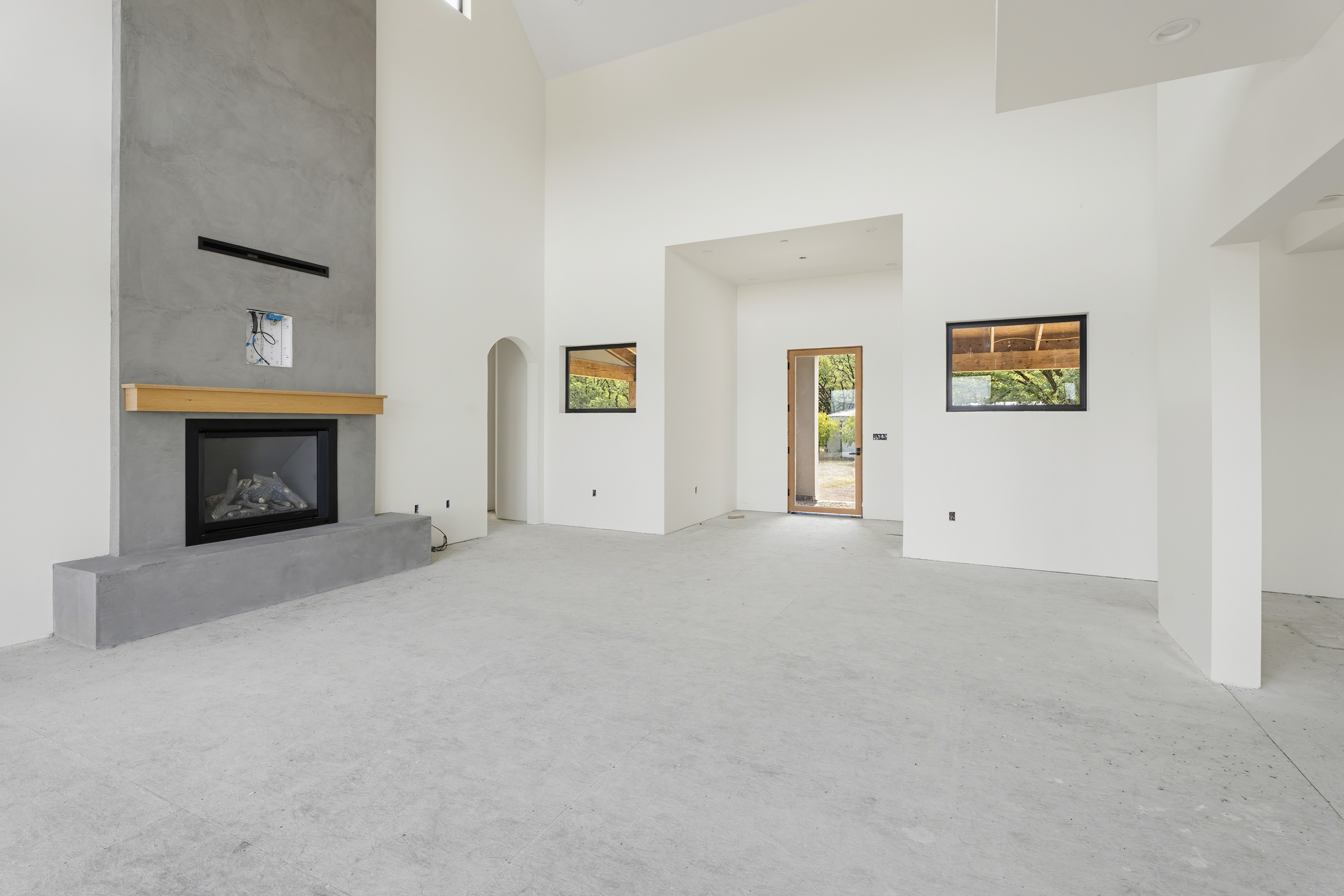
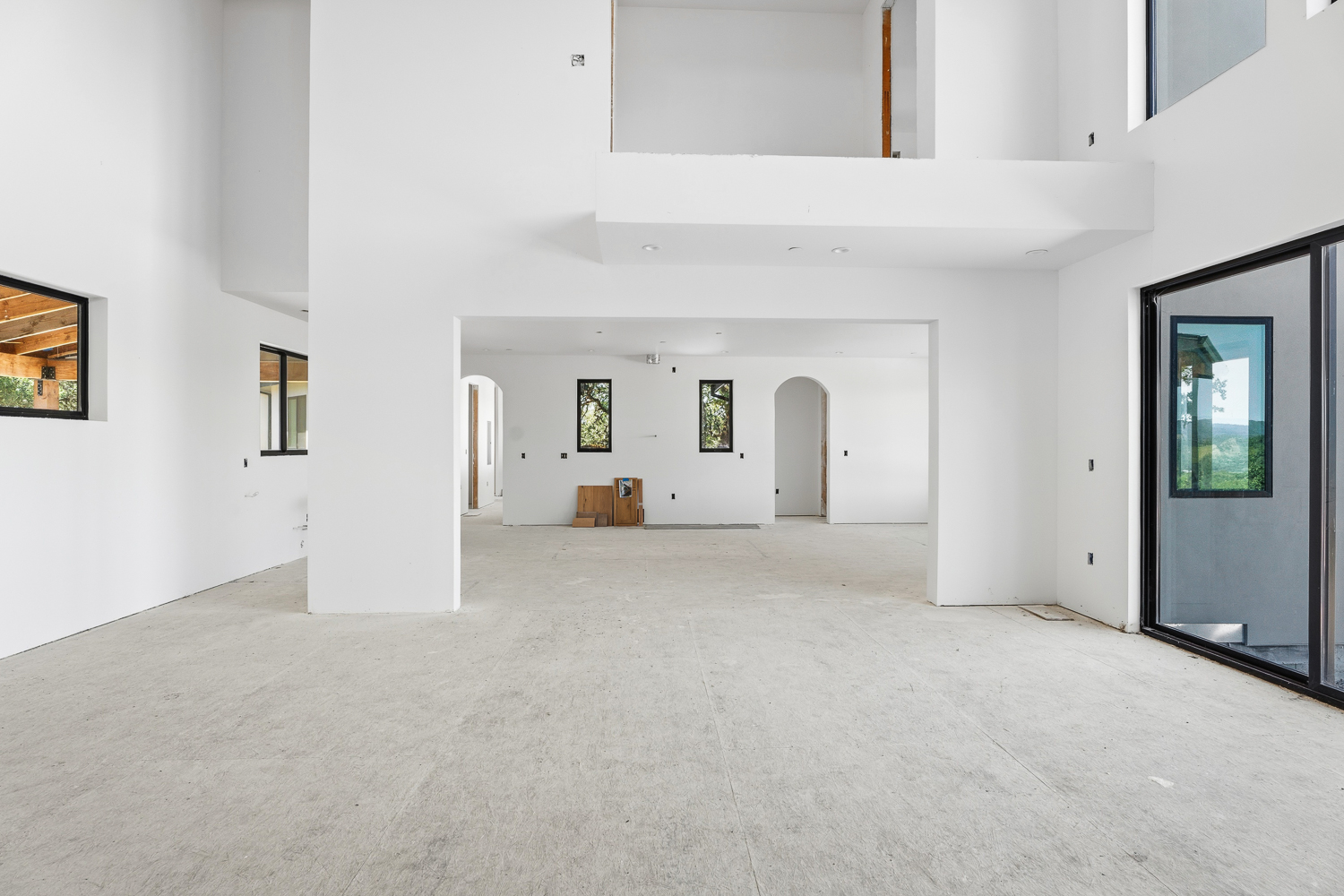
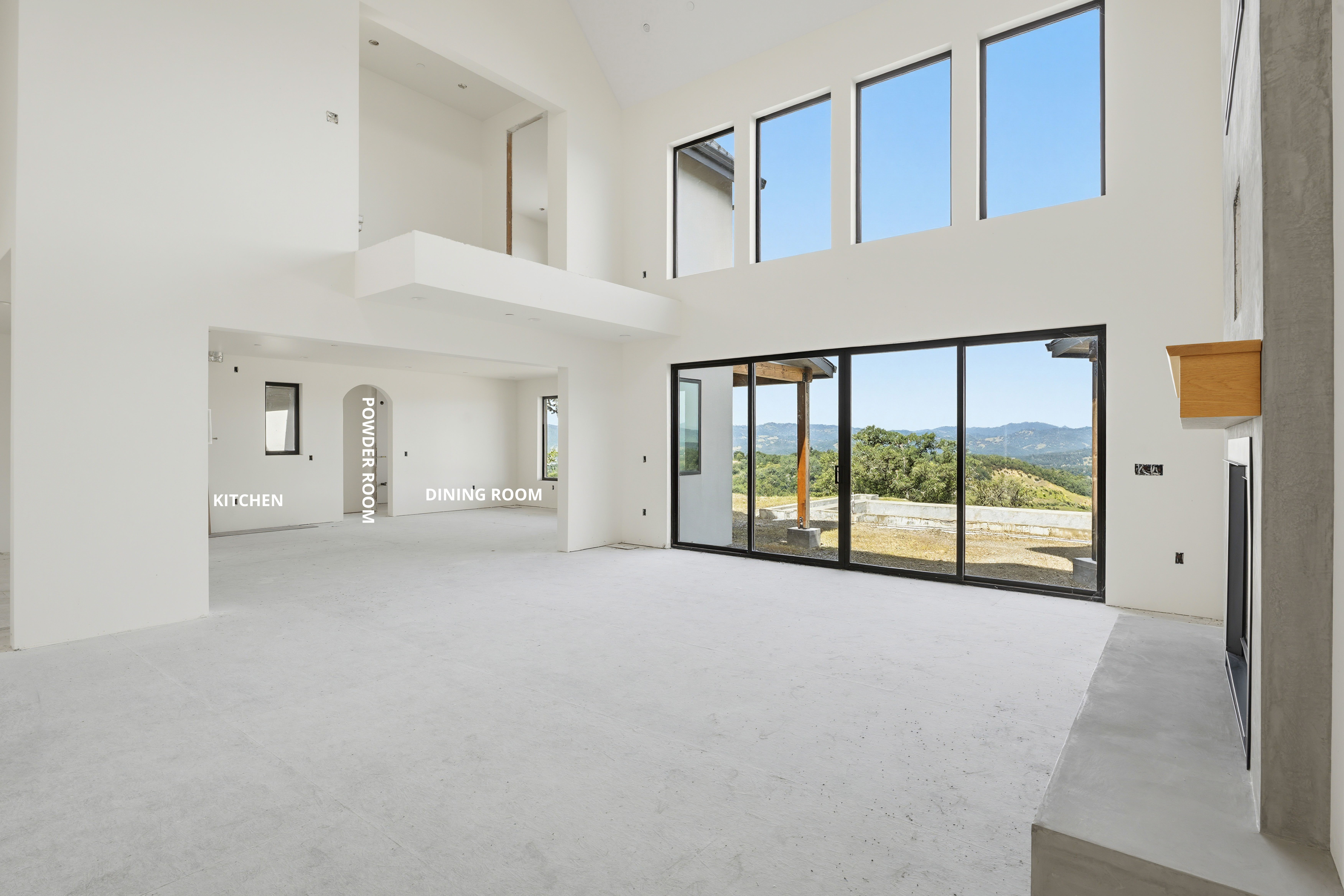
Inside, the living room is the home's architectural centerpiece. A floor-to-ceiling concrete fireplace anchors the space with quiet authority, its warm wood mantel providing the kind of tactile counterpoint that keeps modernism from feeling cold. Walls of glass extend the room outward toward the pool terrace and the valley beyond, so that the hills and the open Mendocino sky become as much a part of the interior as the floors underfoot. Sliding doors dissolve the boundary entirely, and the living room becomes, in the best moments, simply an extension of the landscape.
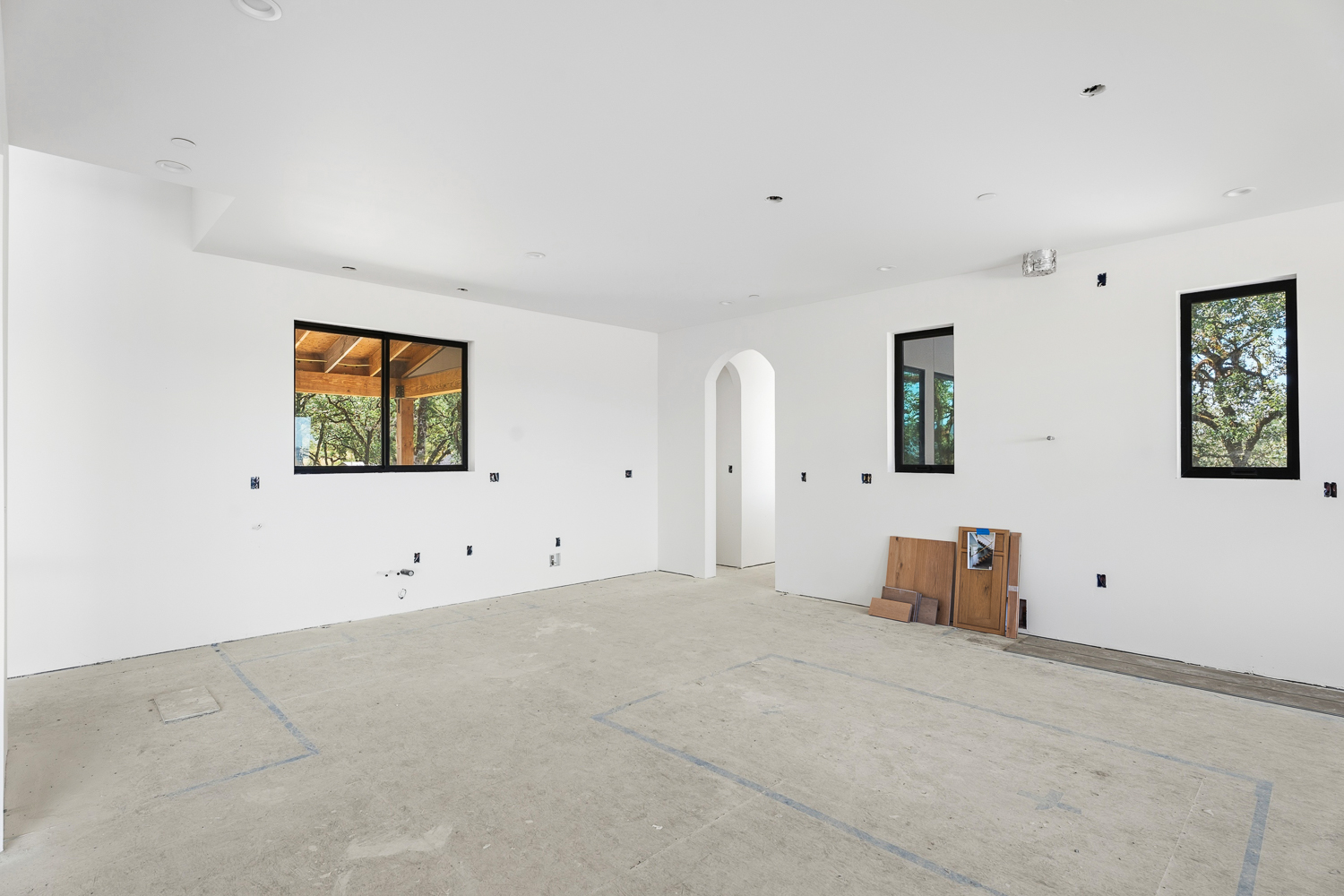
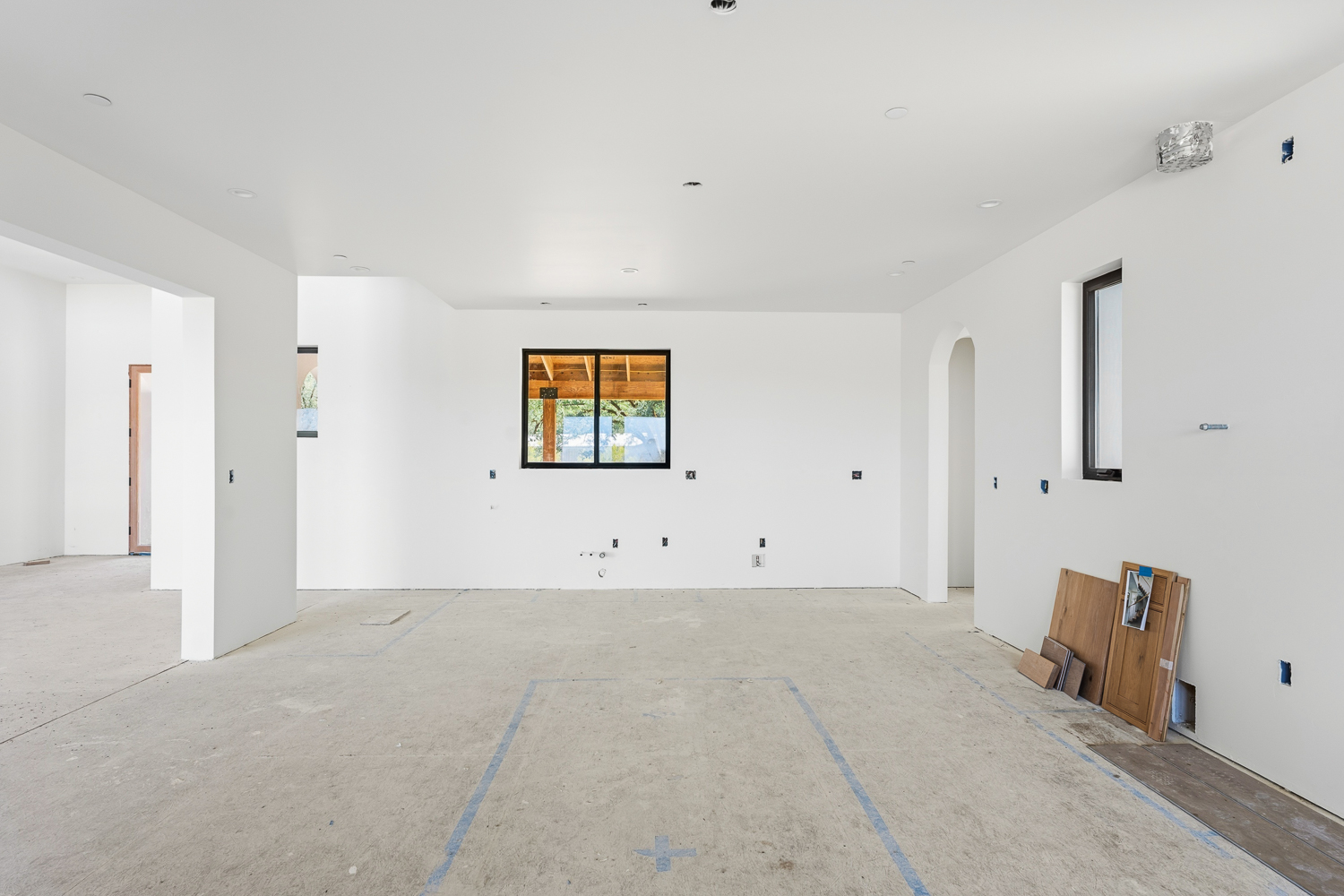
The kitchen continues this material conversation with equal conviction. A generous marble-wrapped island grounds the room, brass accents offer warmth, and the deliberate absence of upper cabinetry — replaced entirely by floating white oak shelves — keeps the space open, airy, and visually connected to the views on all sides. It is a detail that speaks to the client's design sensibility: restraint chosen not from limitation, but from a deep understanding of what the room actually needs.
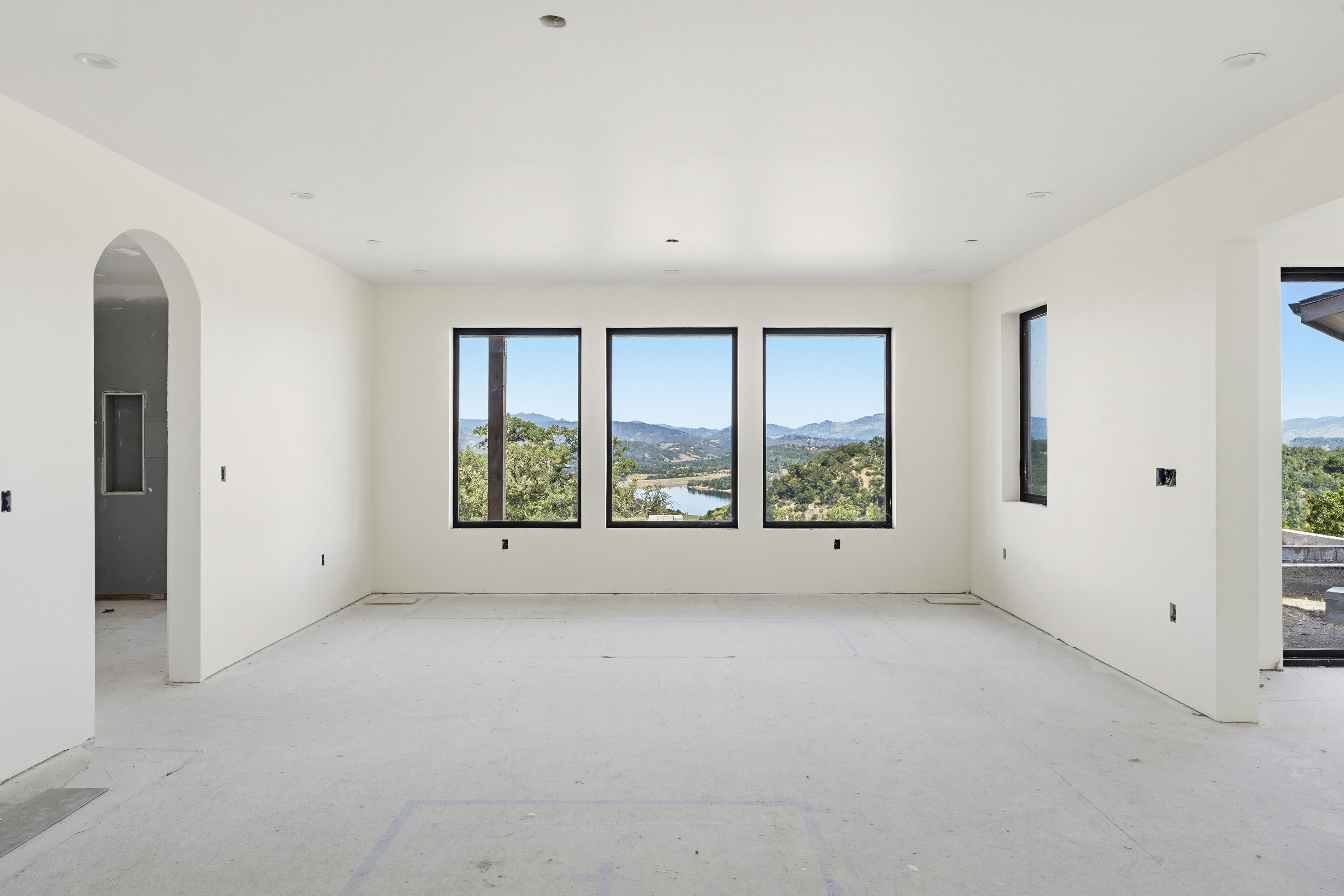
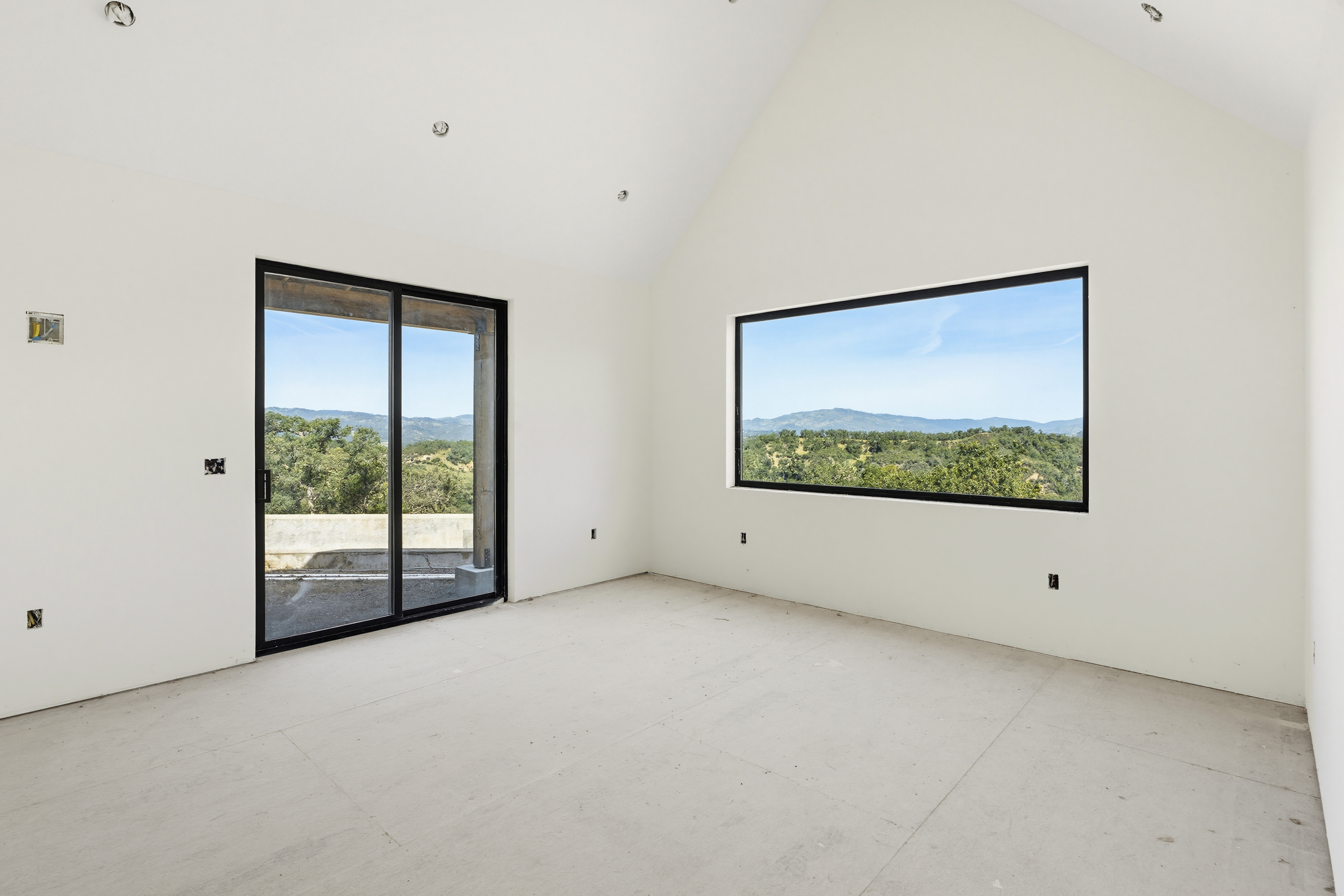
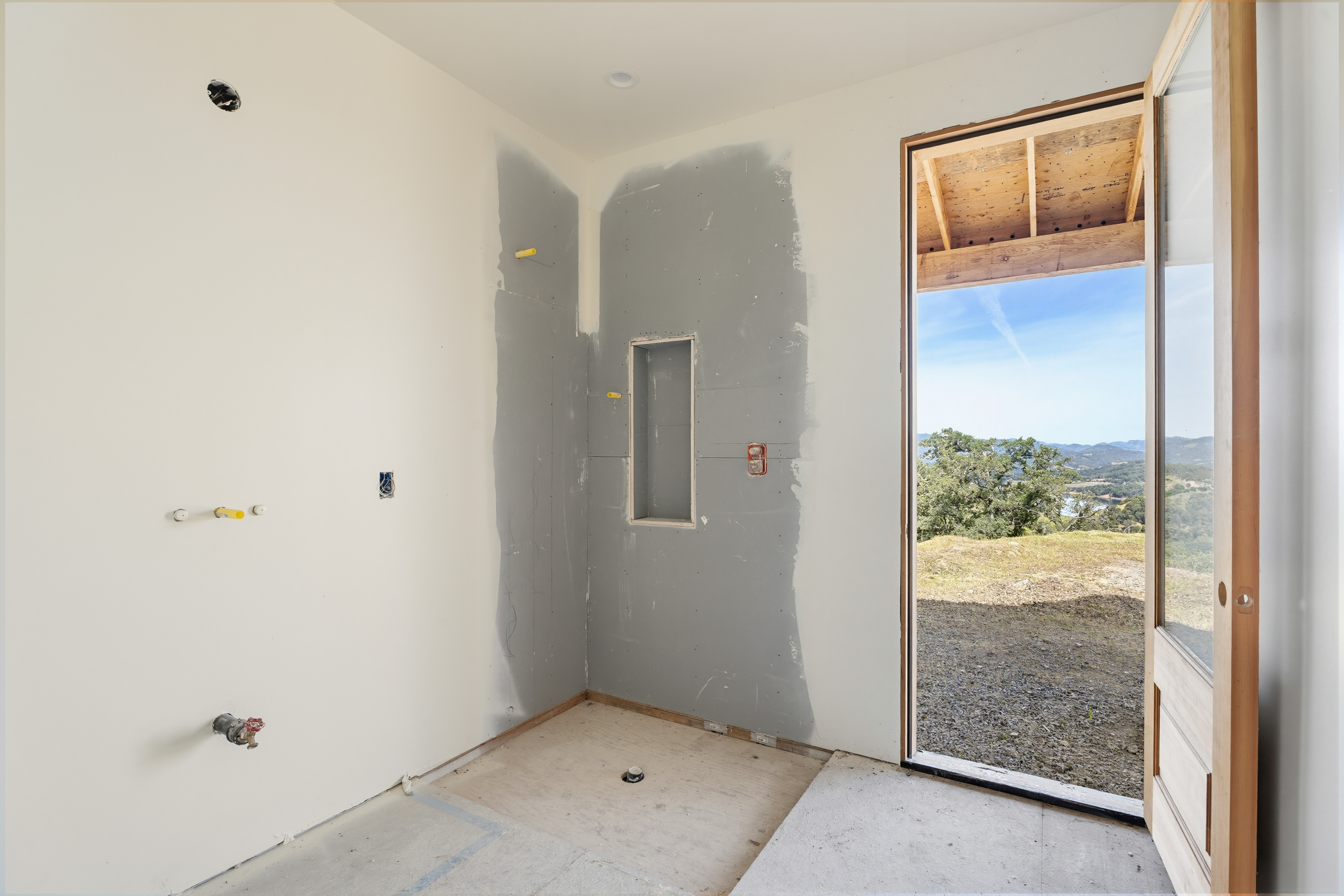
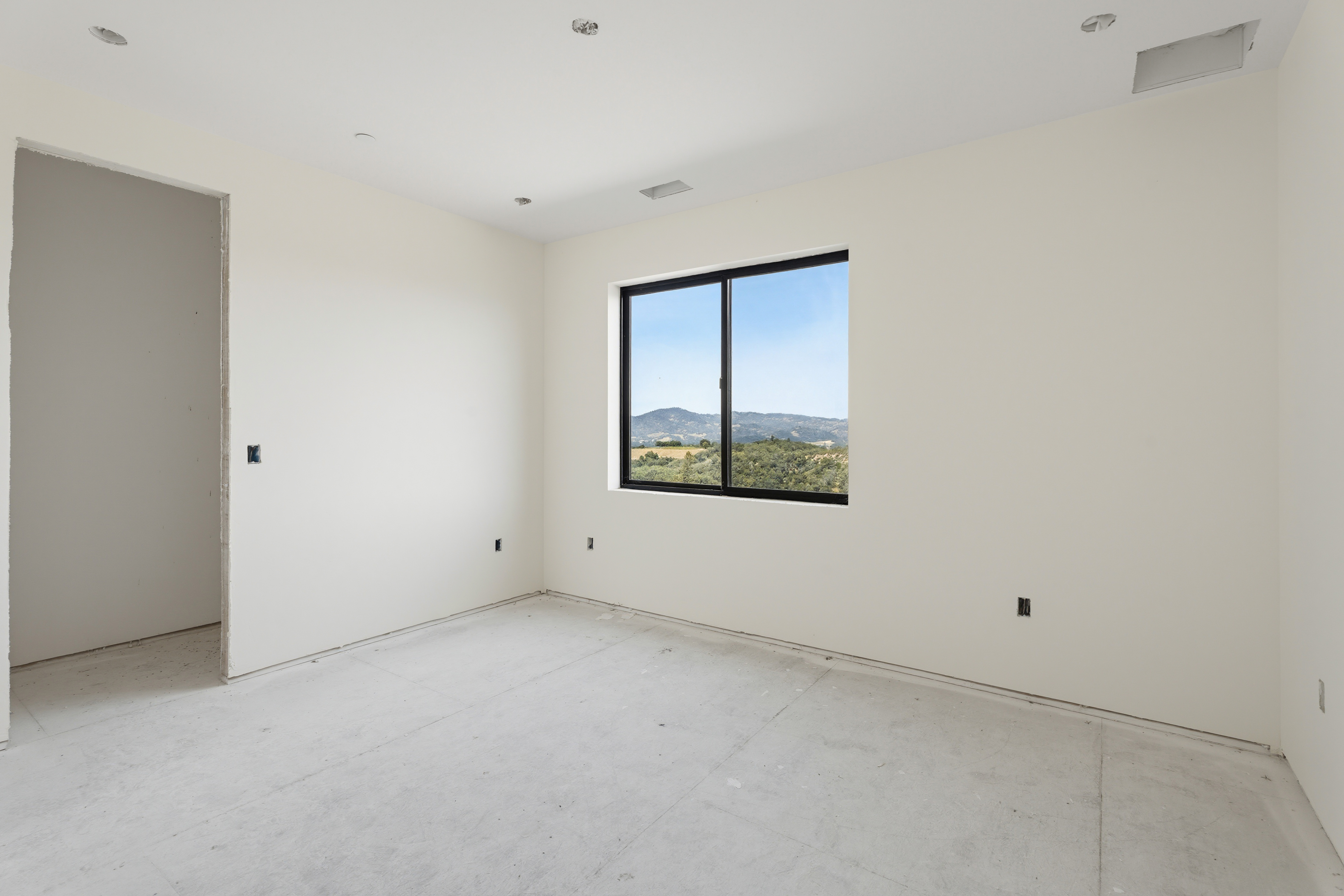
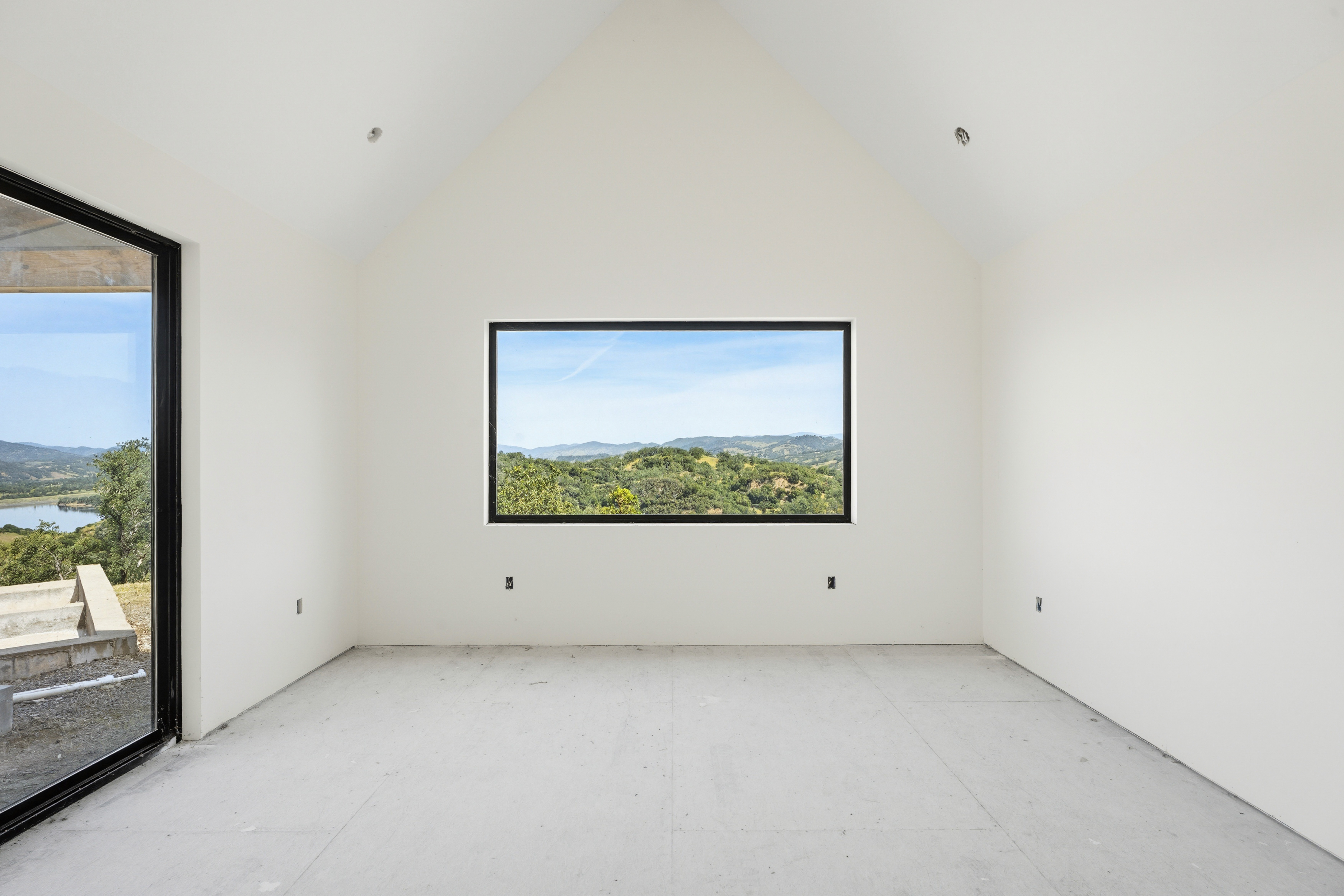
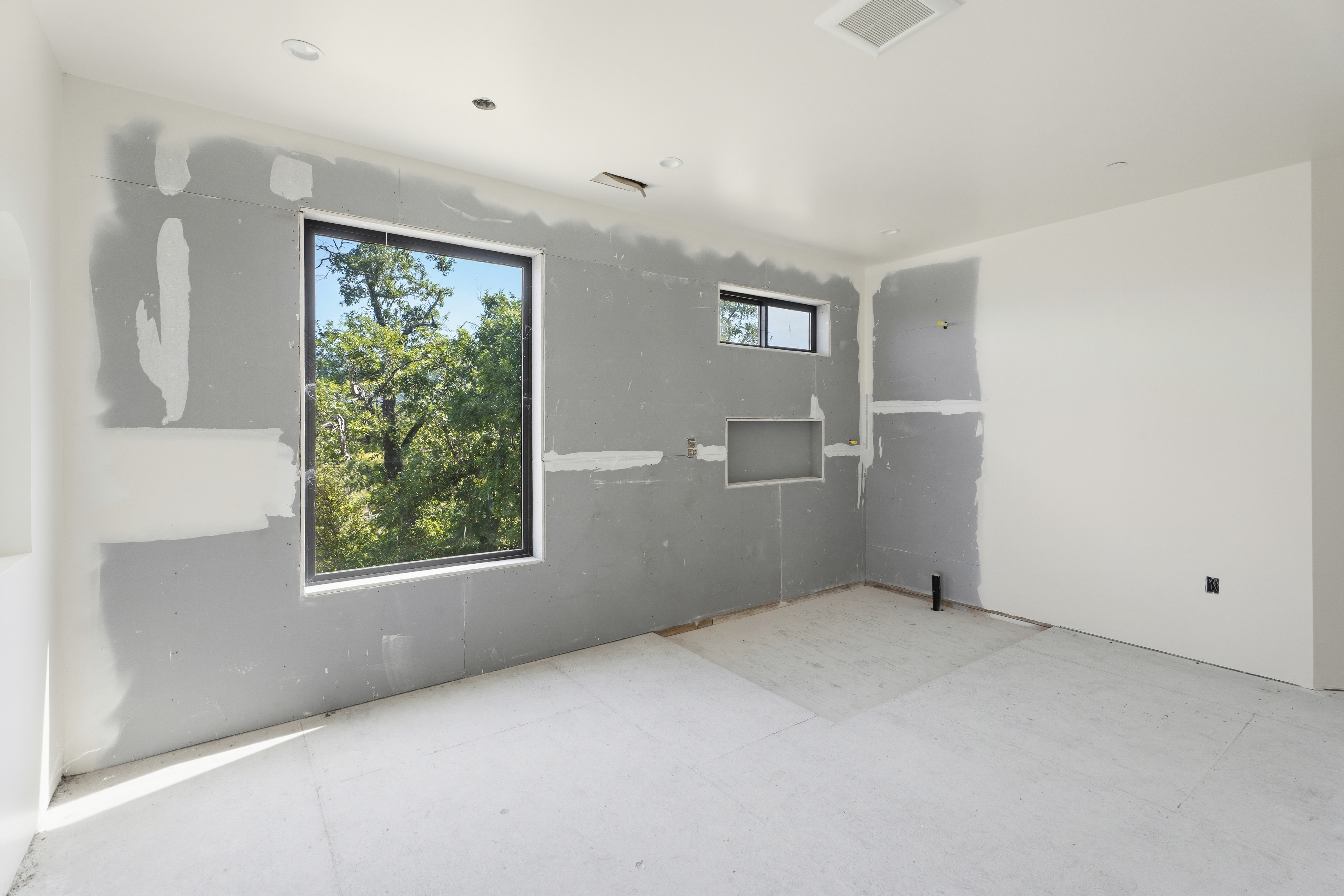
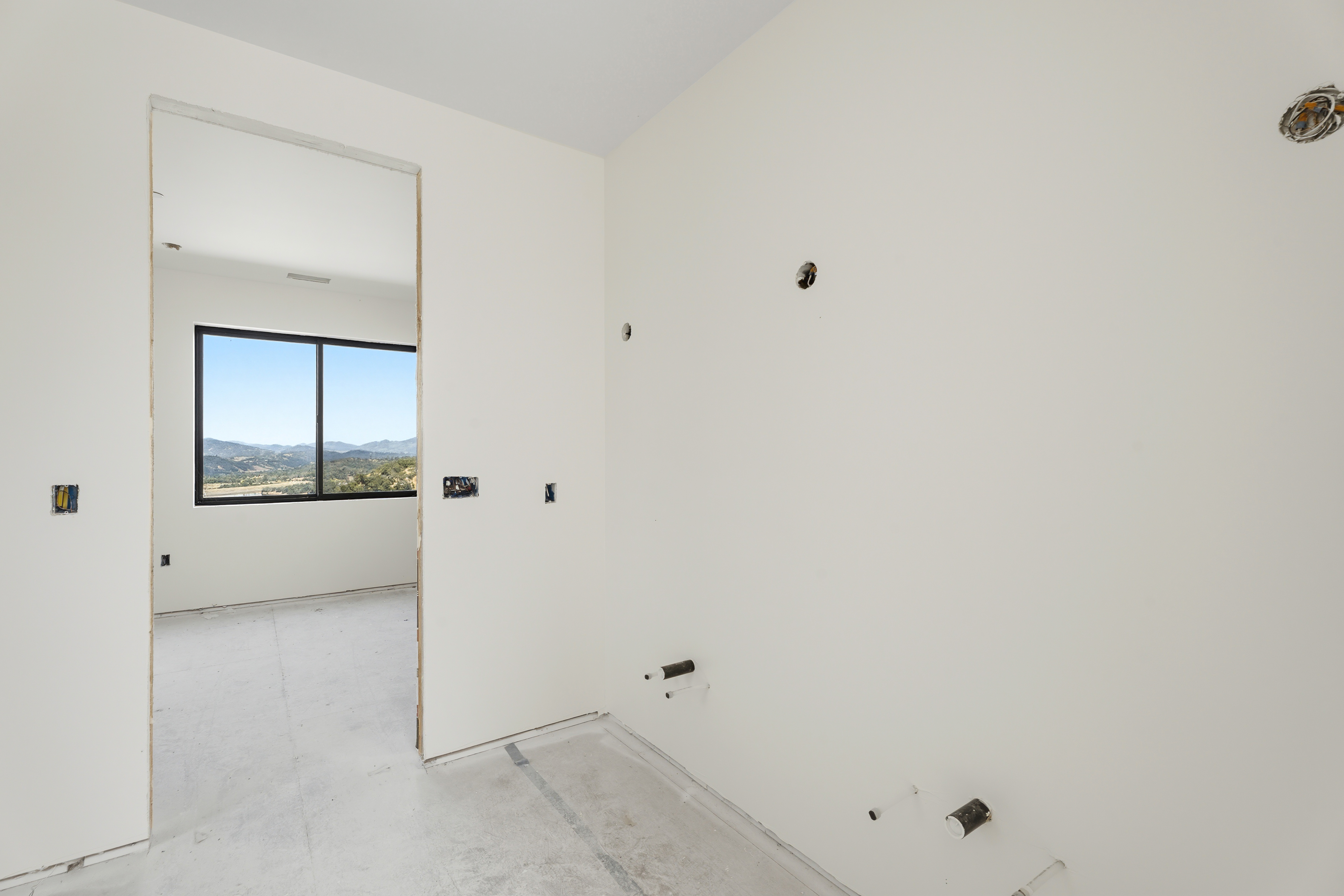
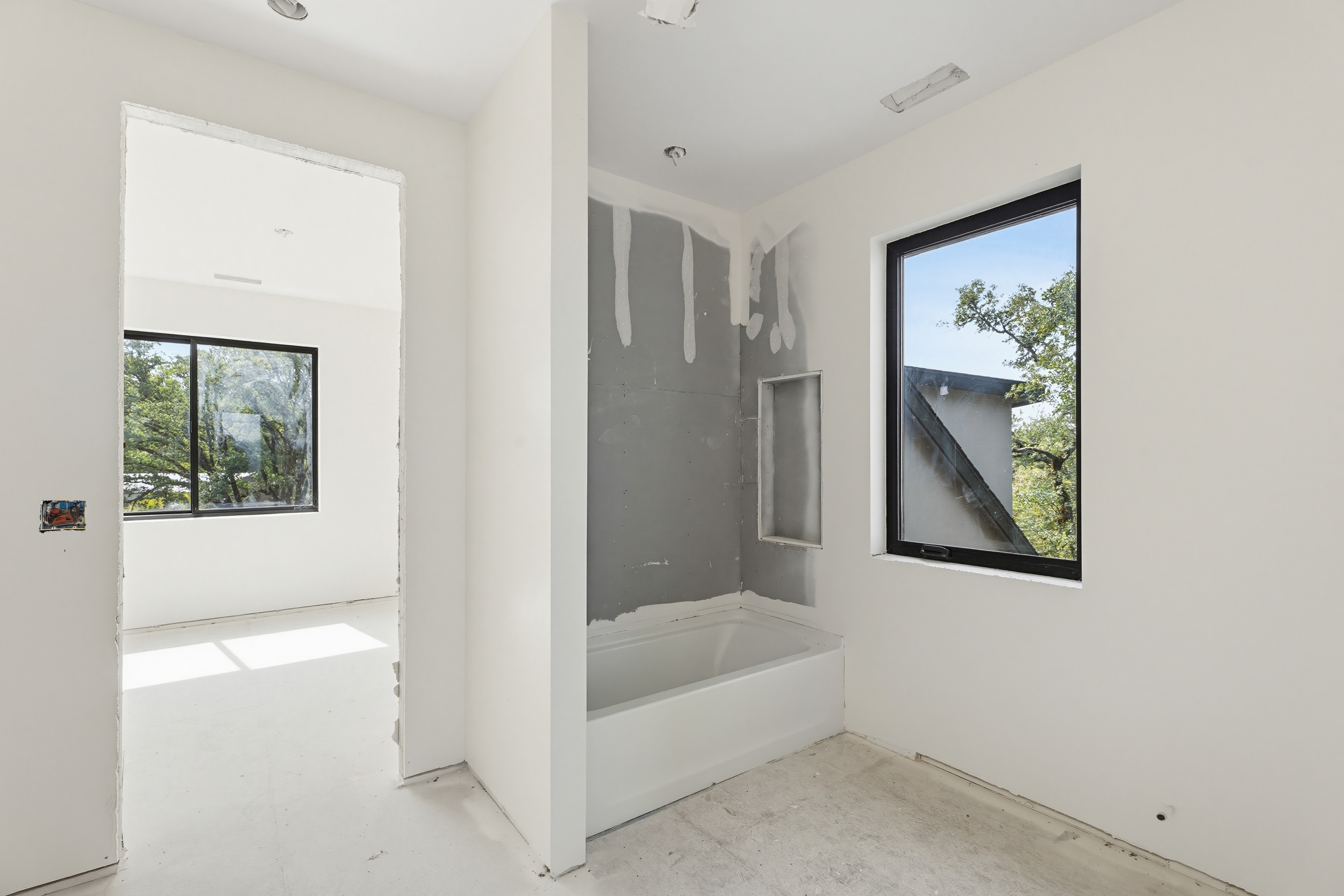
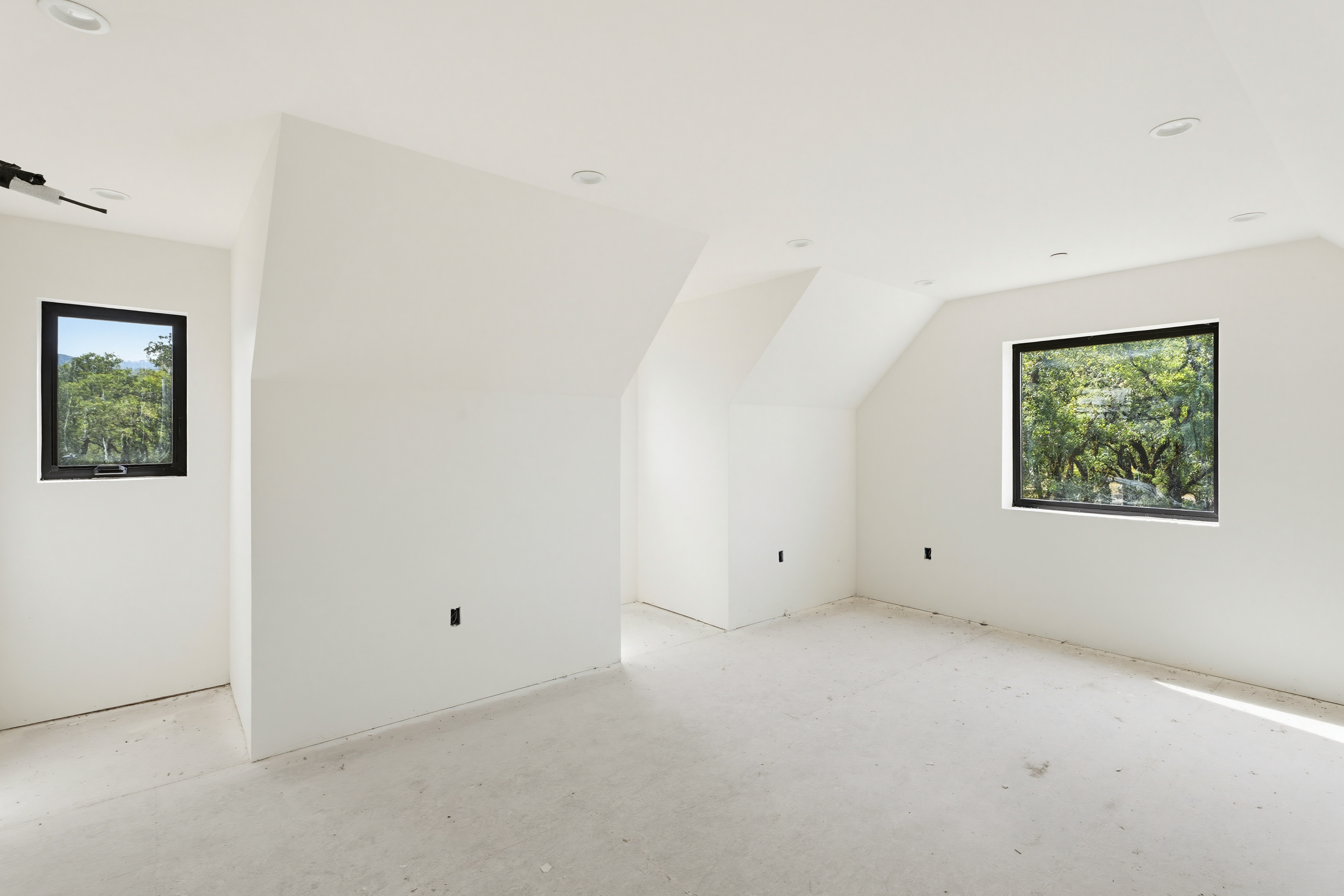
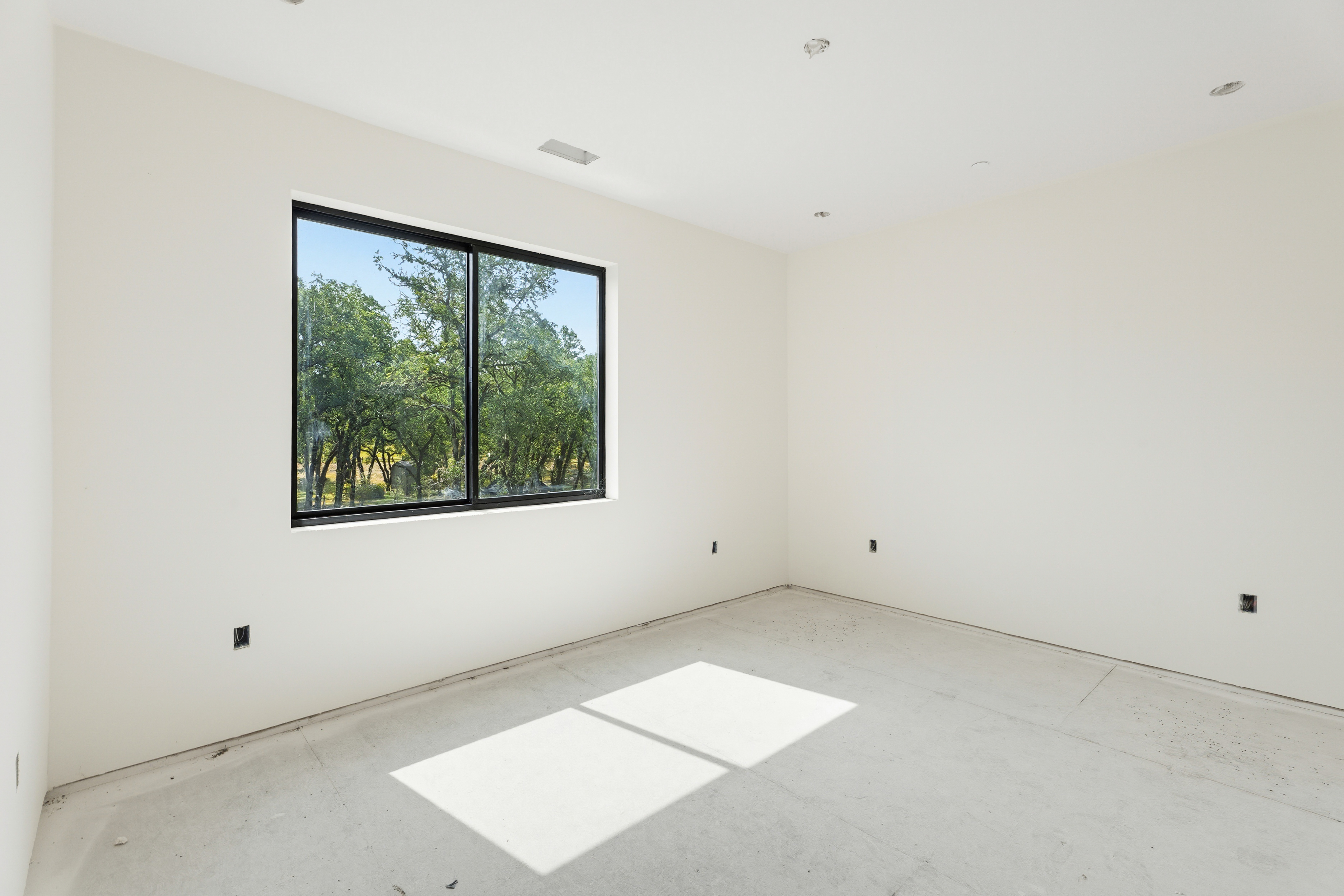
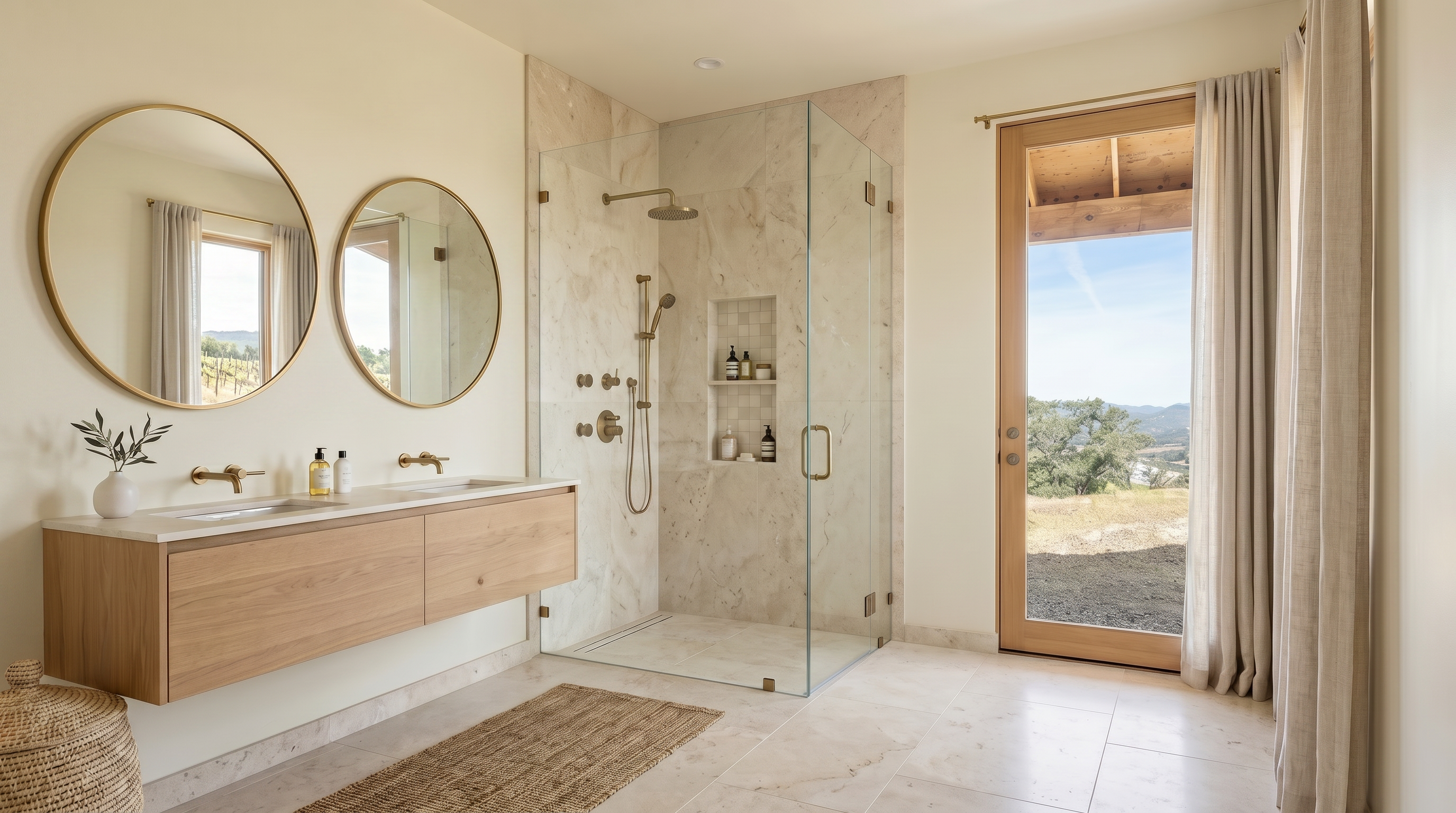
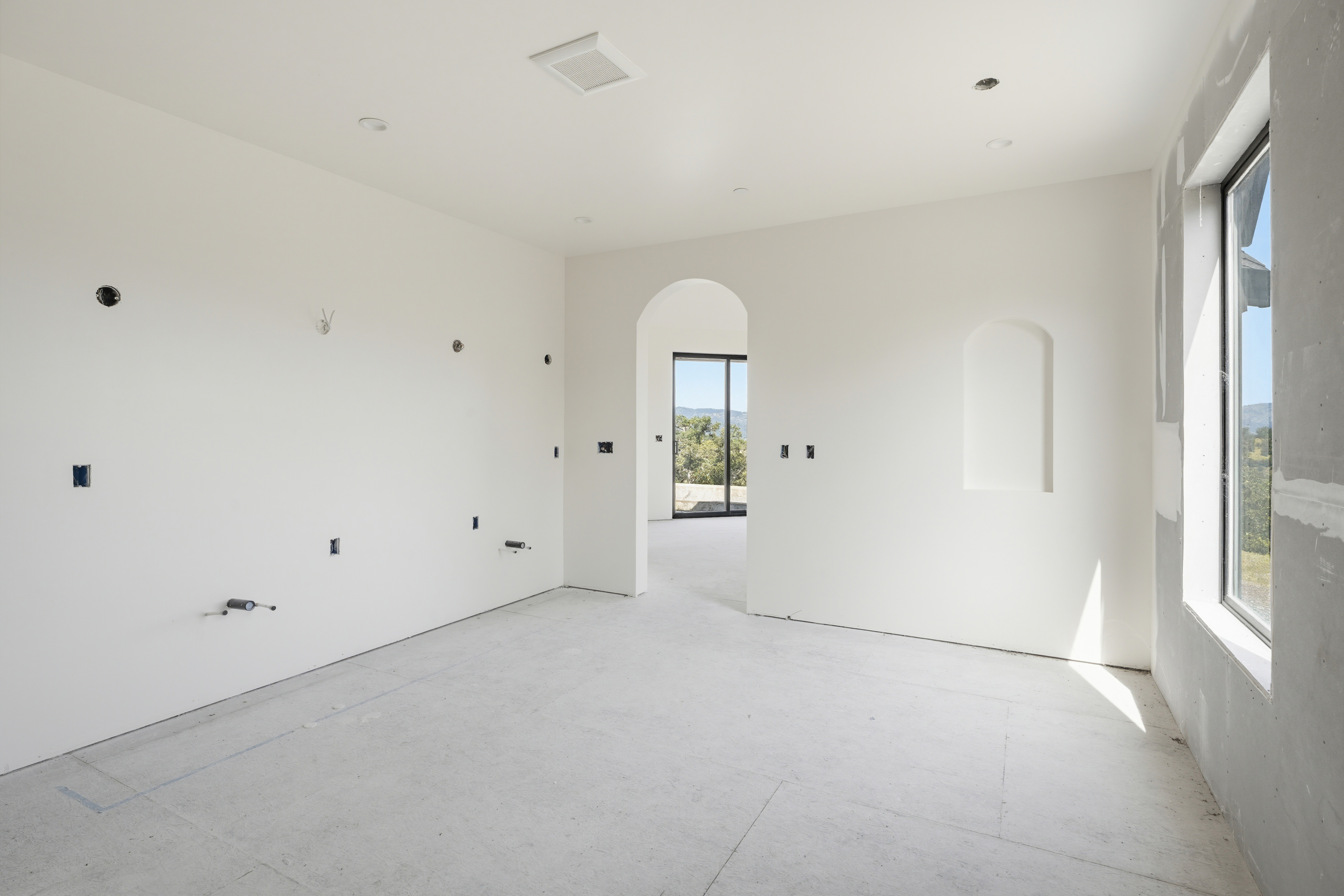
The primary suite carries the same philosophy forward. A wide horizontal window frames the landscape like a living painting, while direct terrace access invites the outside in at every hour of the day. The spa-like bath, finished with a freestanding soaking tub, glass-enclosed shower, floating white oak vanity, and soft natural stone, is a room designed for genuine unhurrying. Upstairs, vaulted ceilings and sloped architectural lines give the secondary spaces an intimate, considered quality — a lounge with built-in cabinetry and open shelving feels like a room with a point of view.
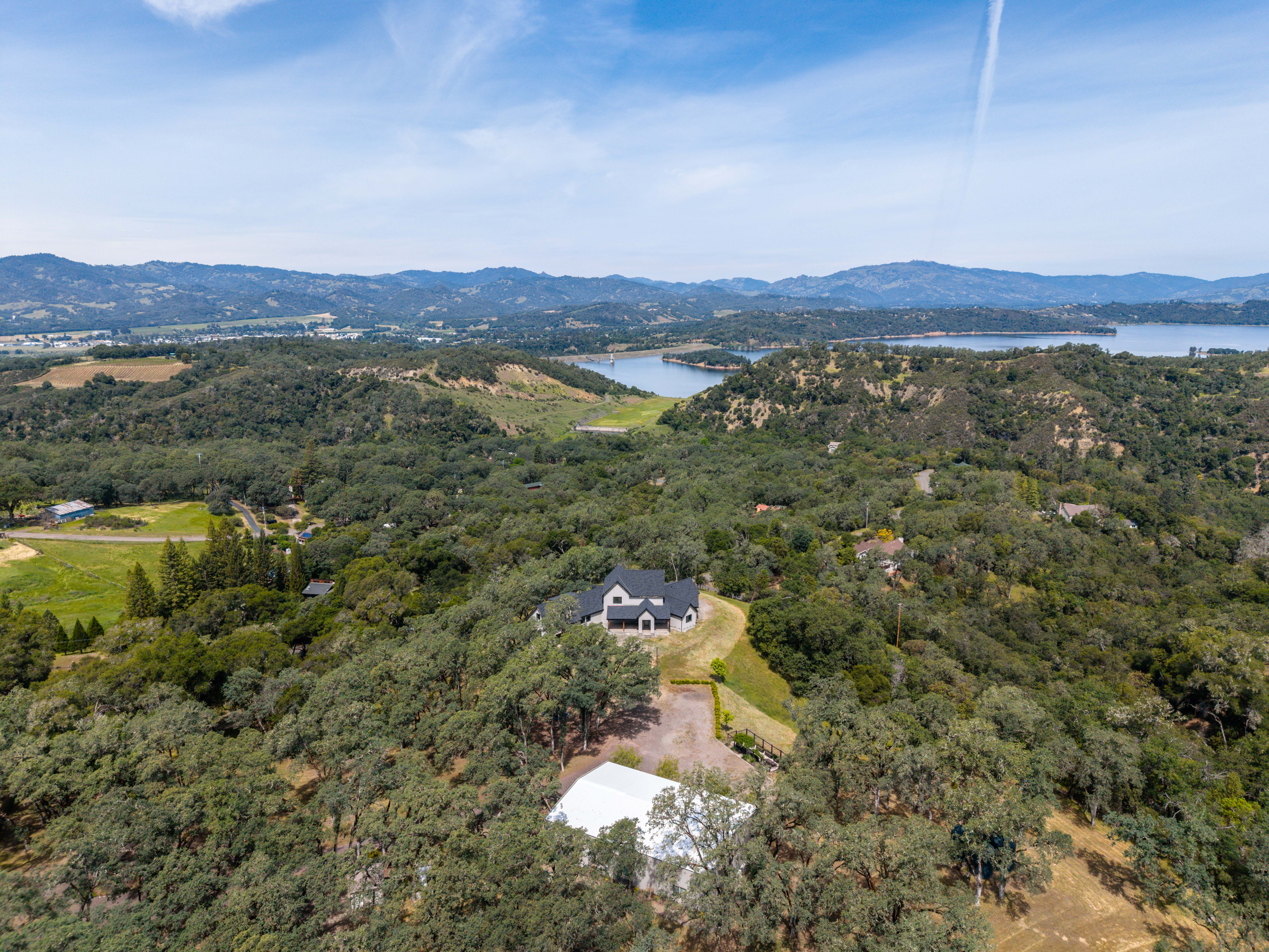
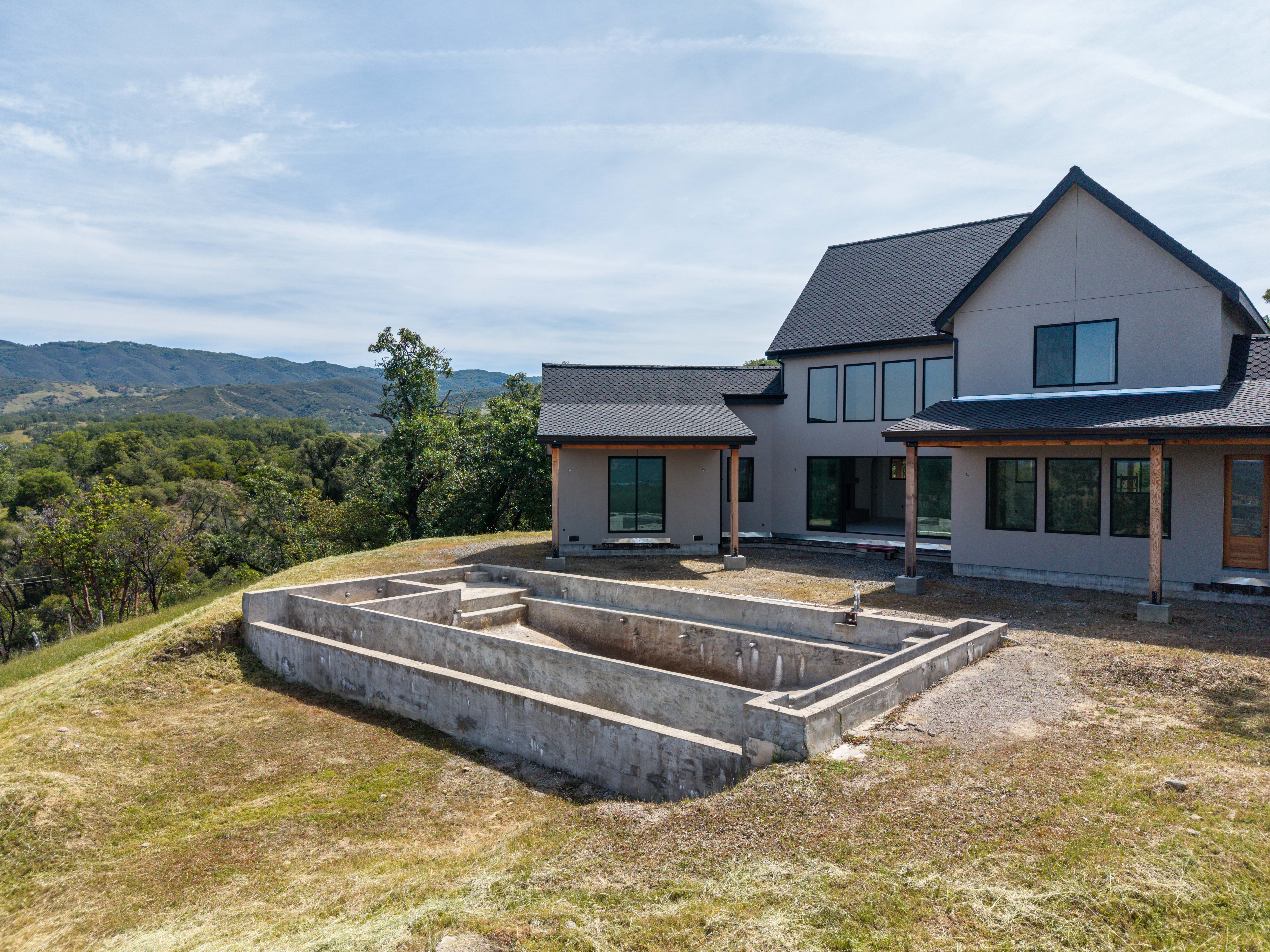
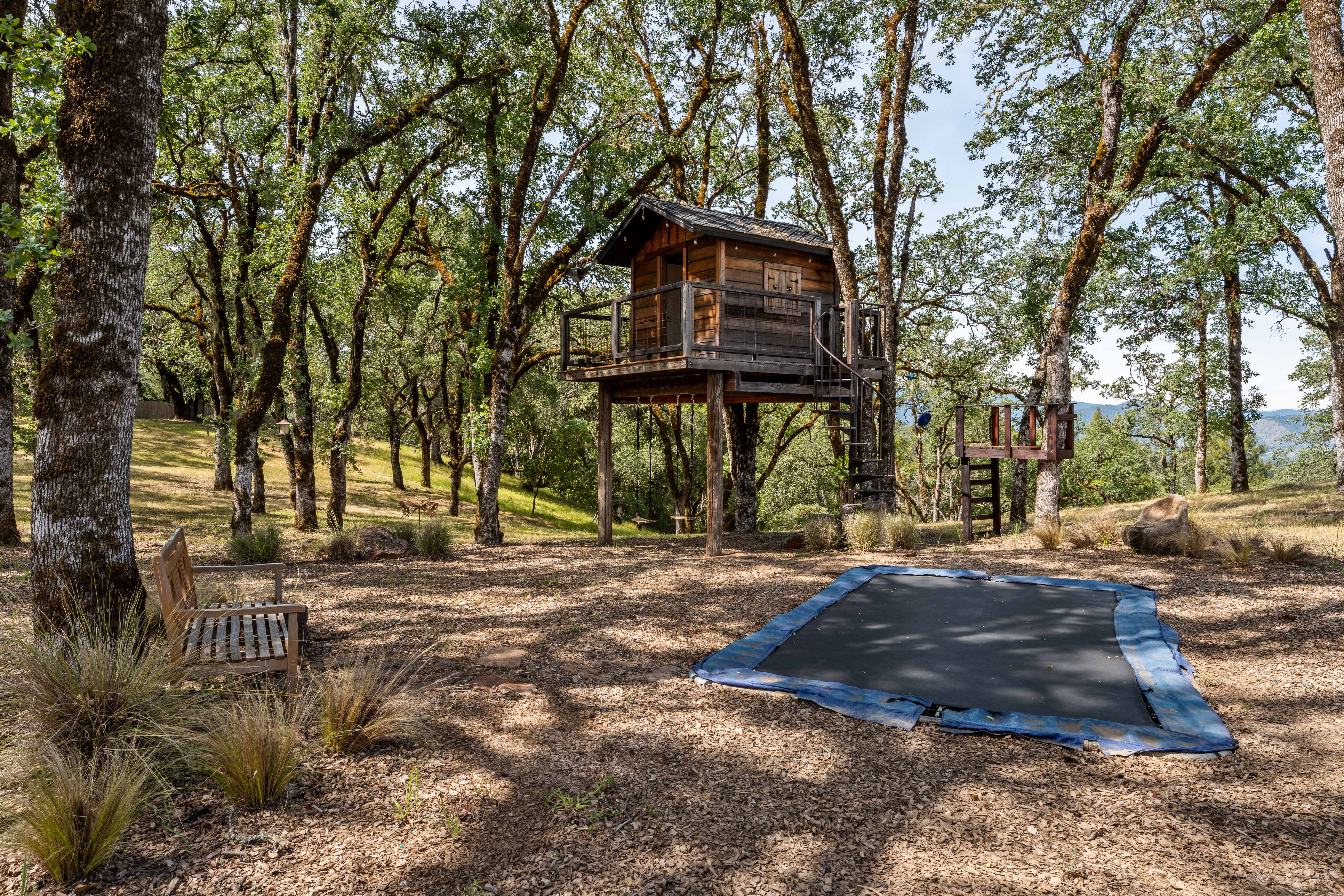
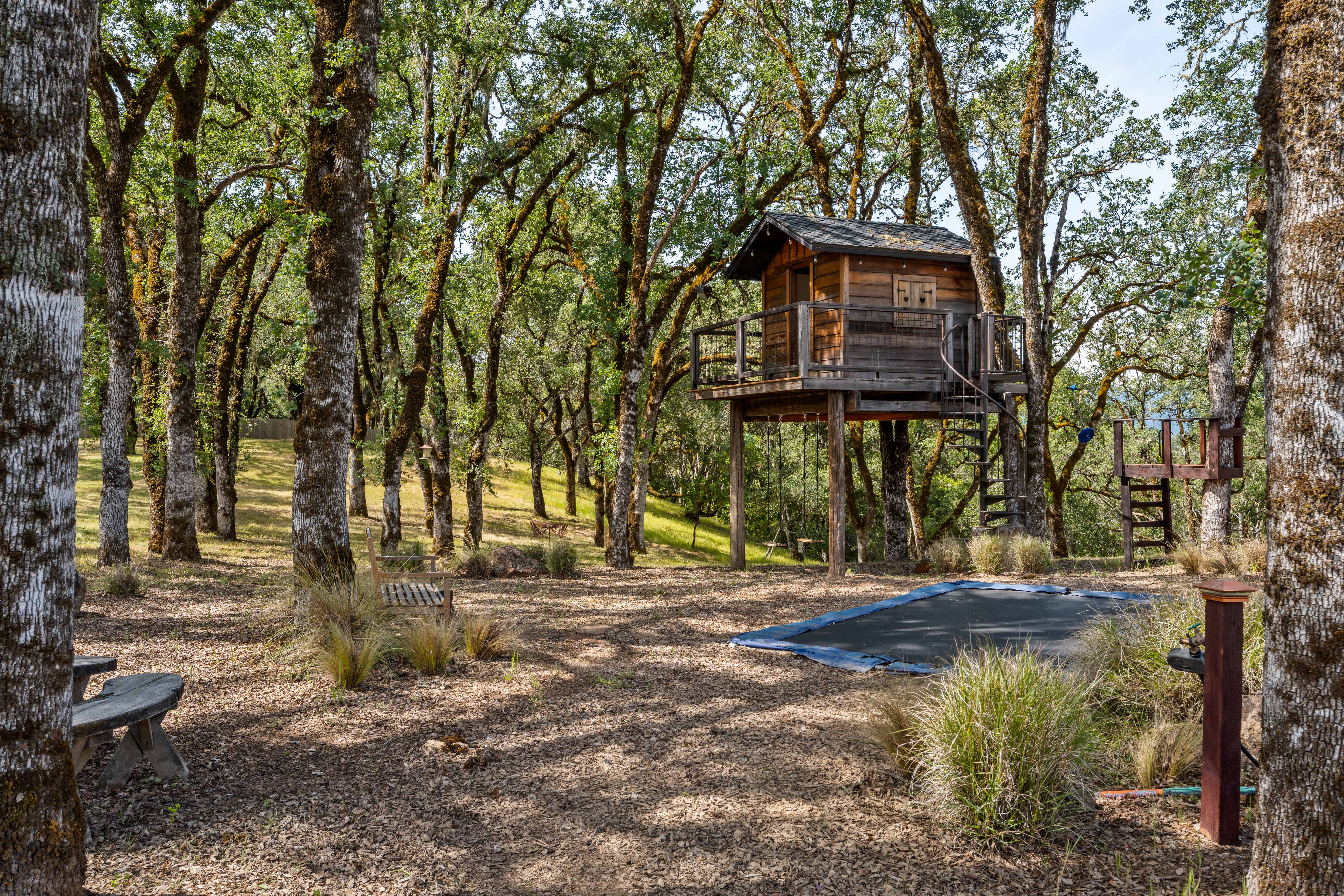
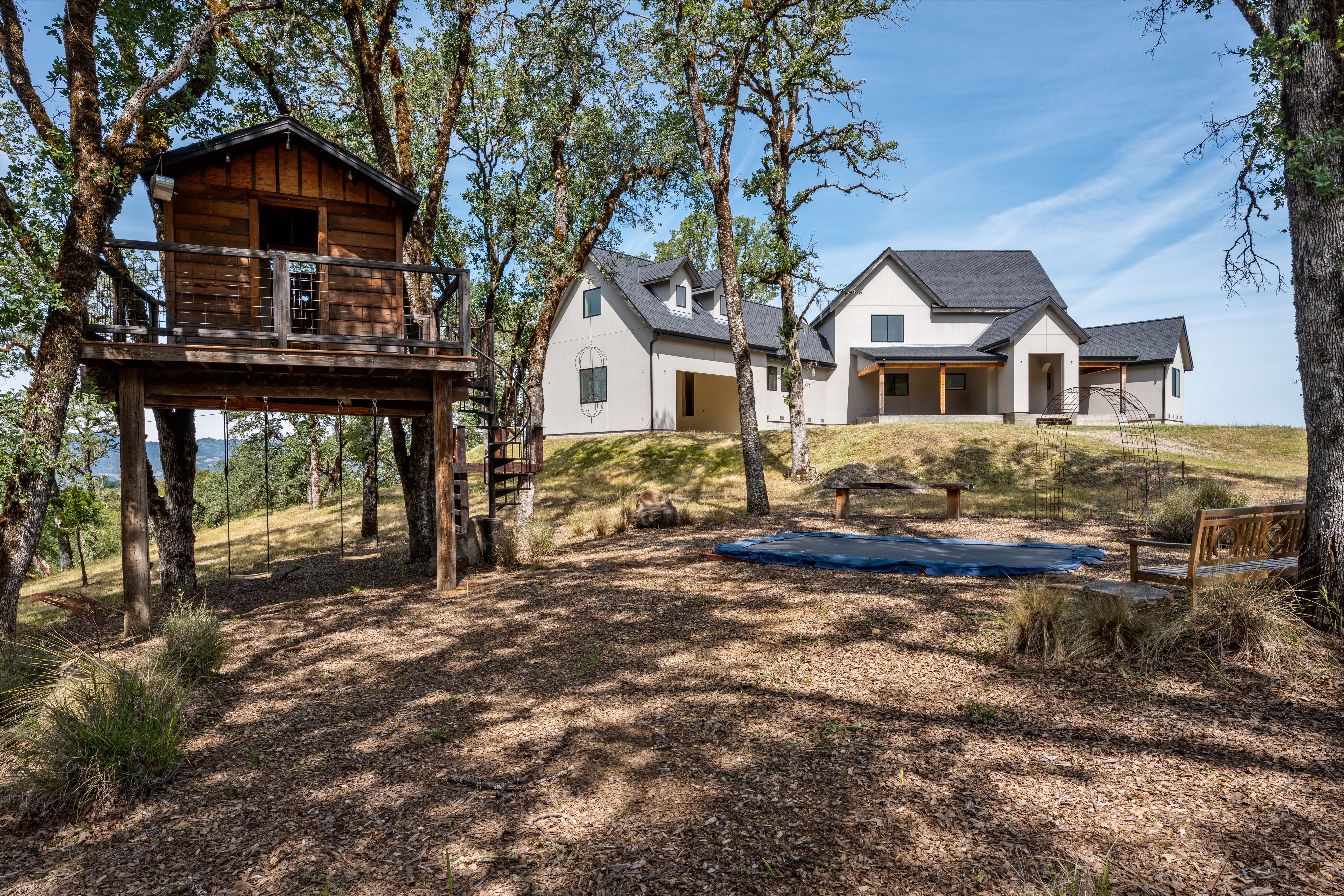
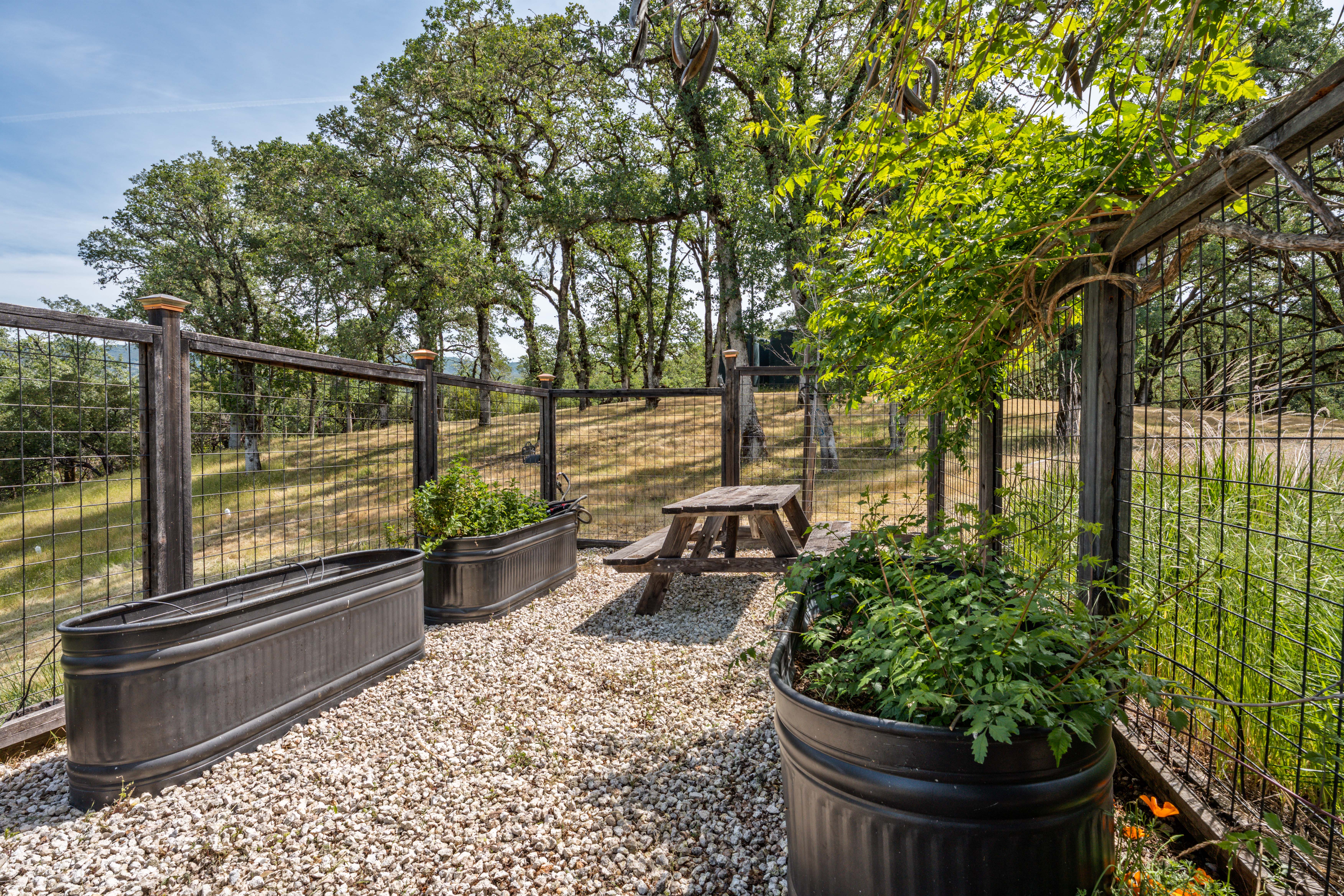
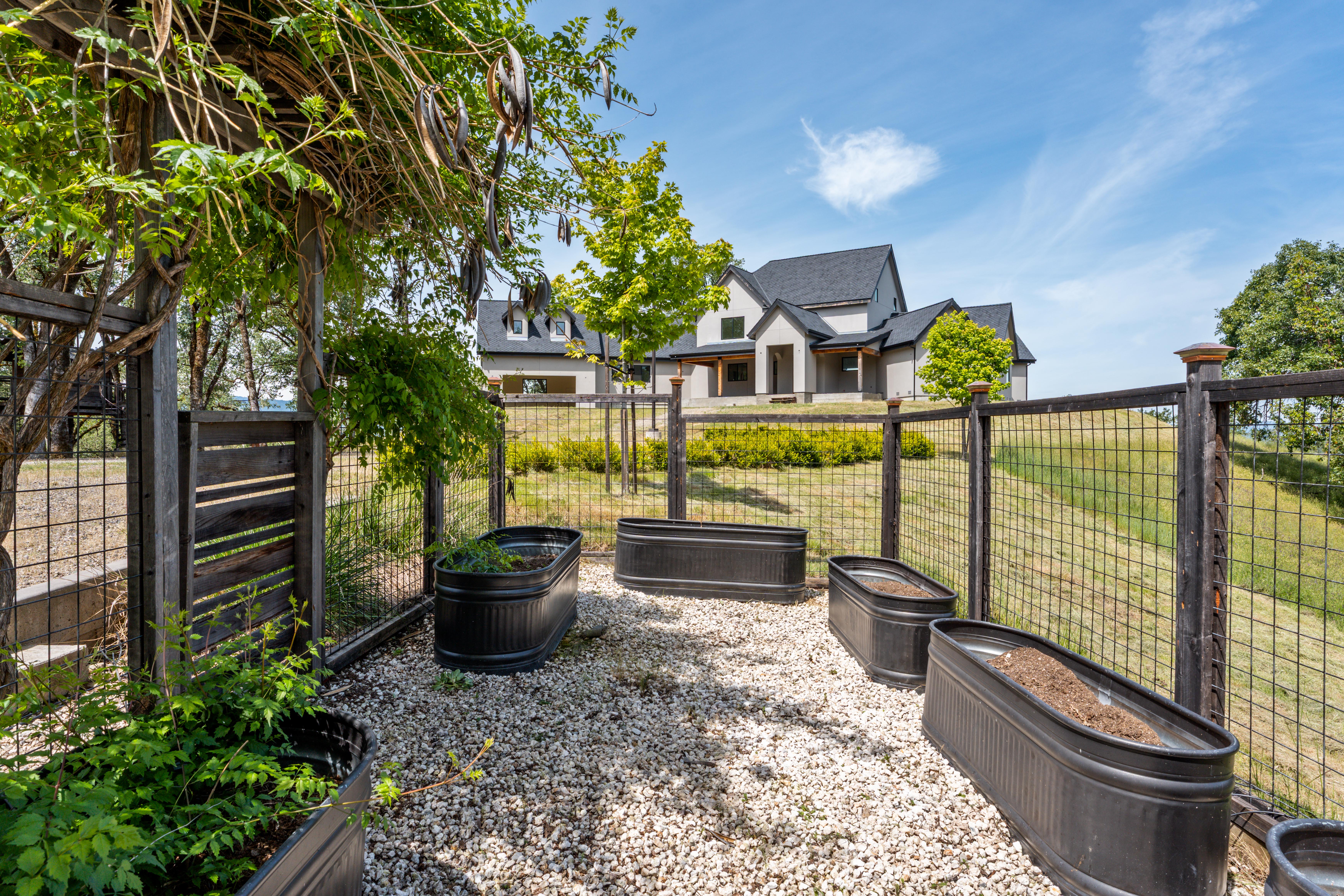
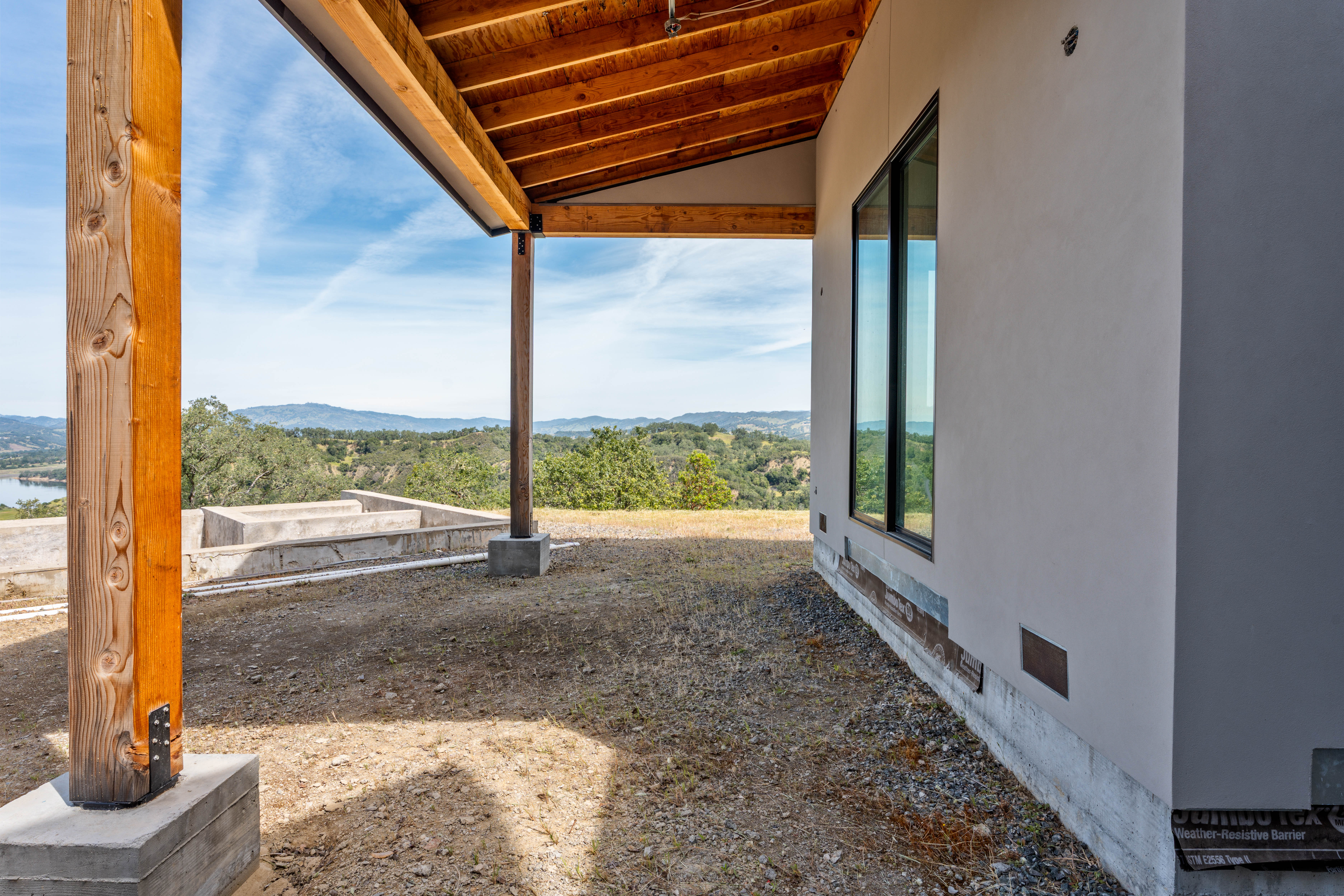
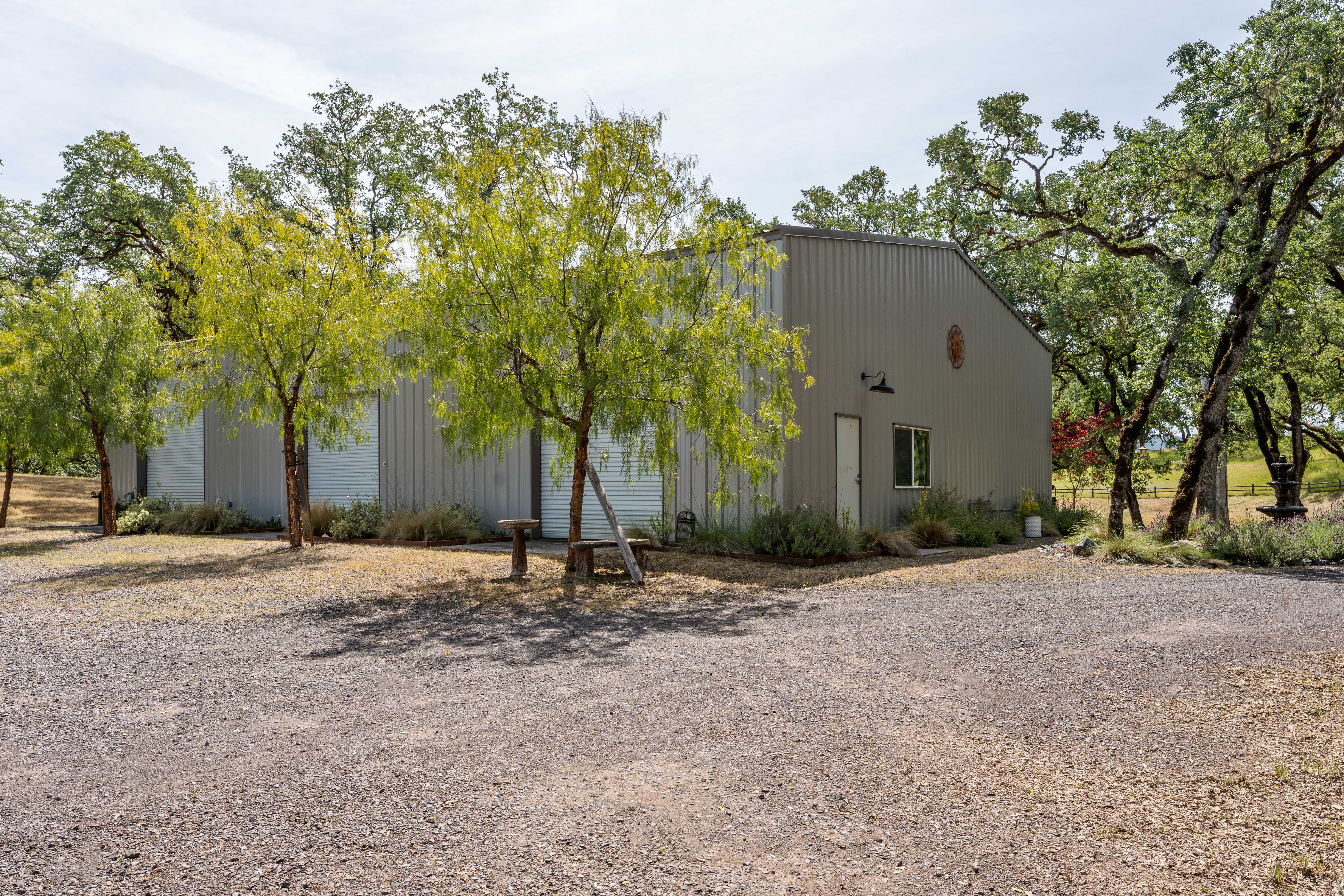
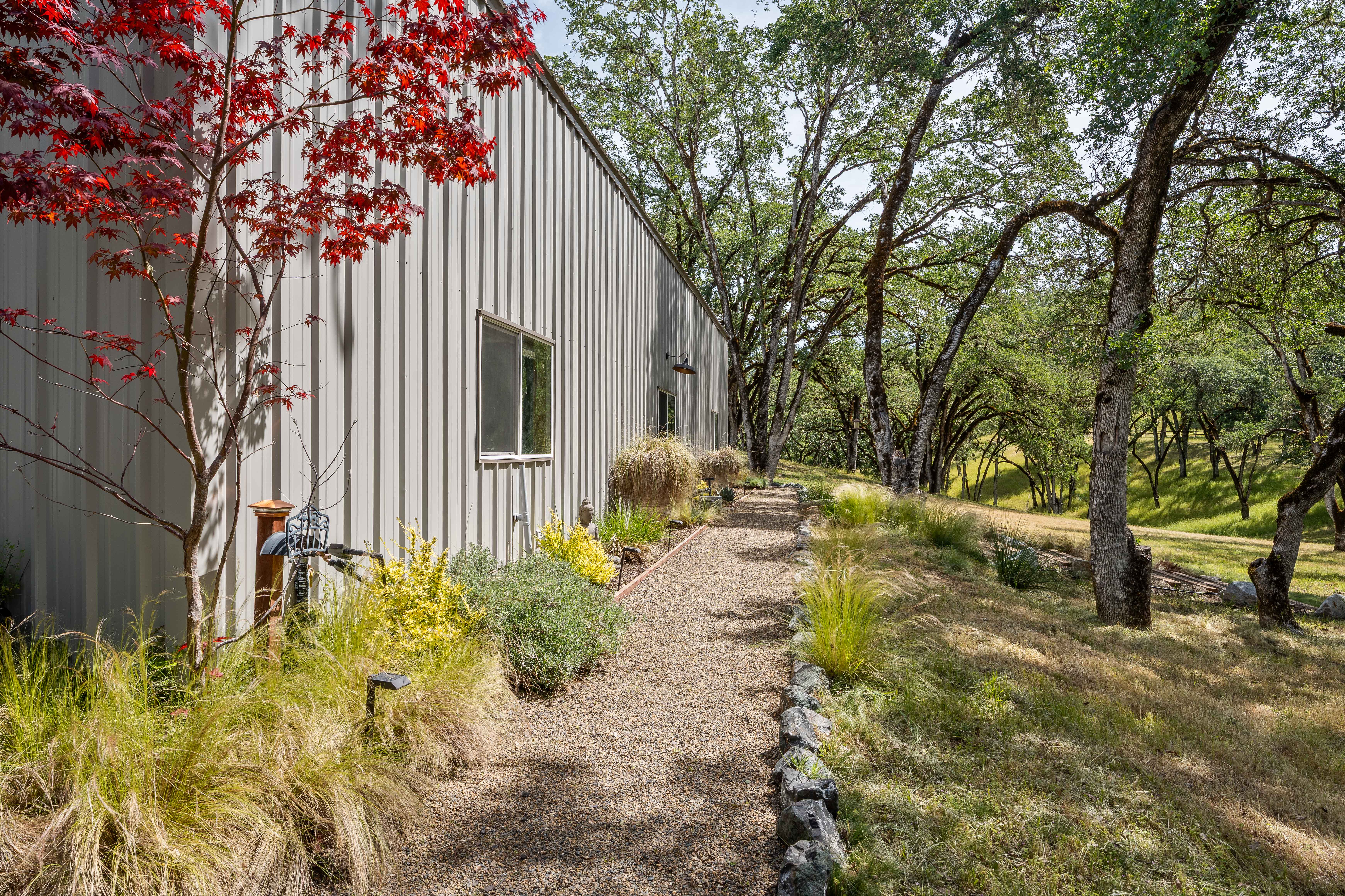
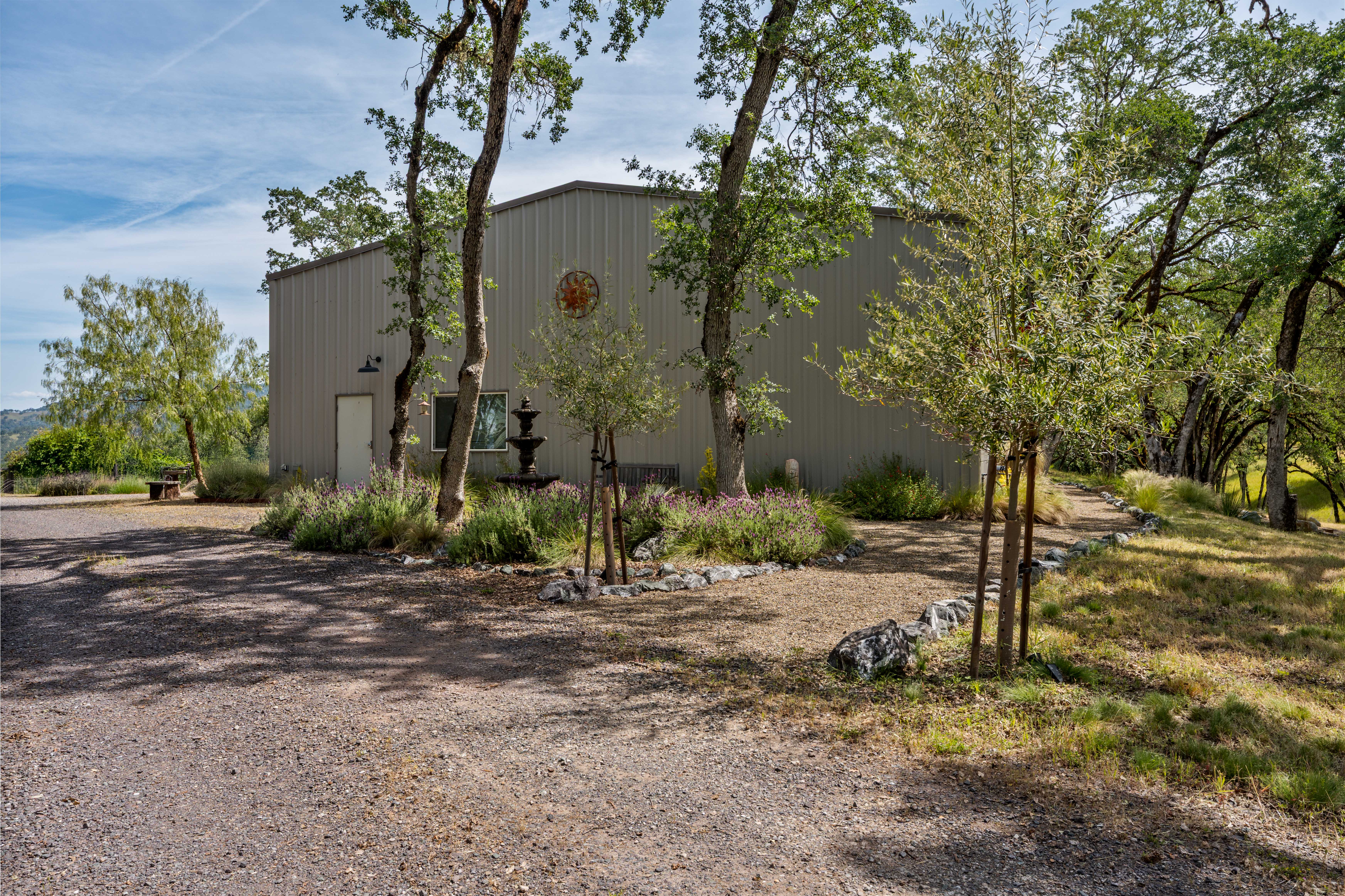
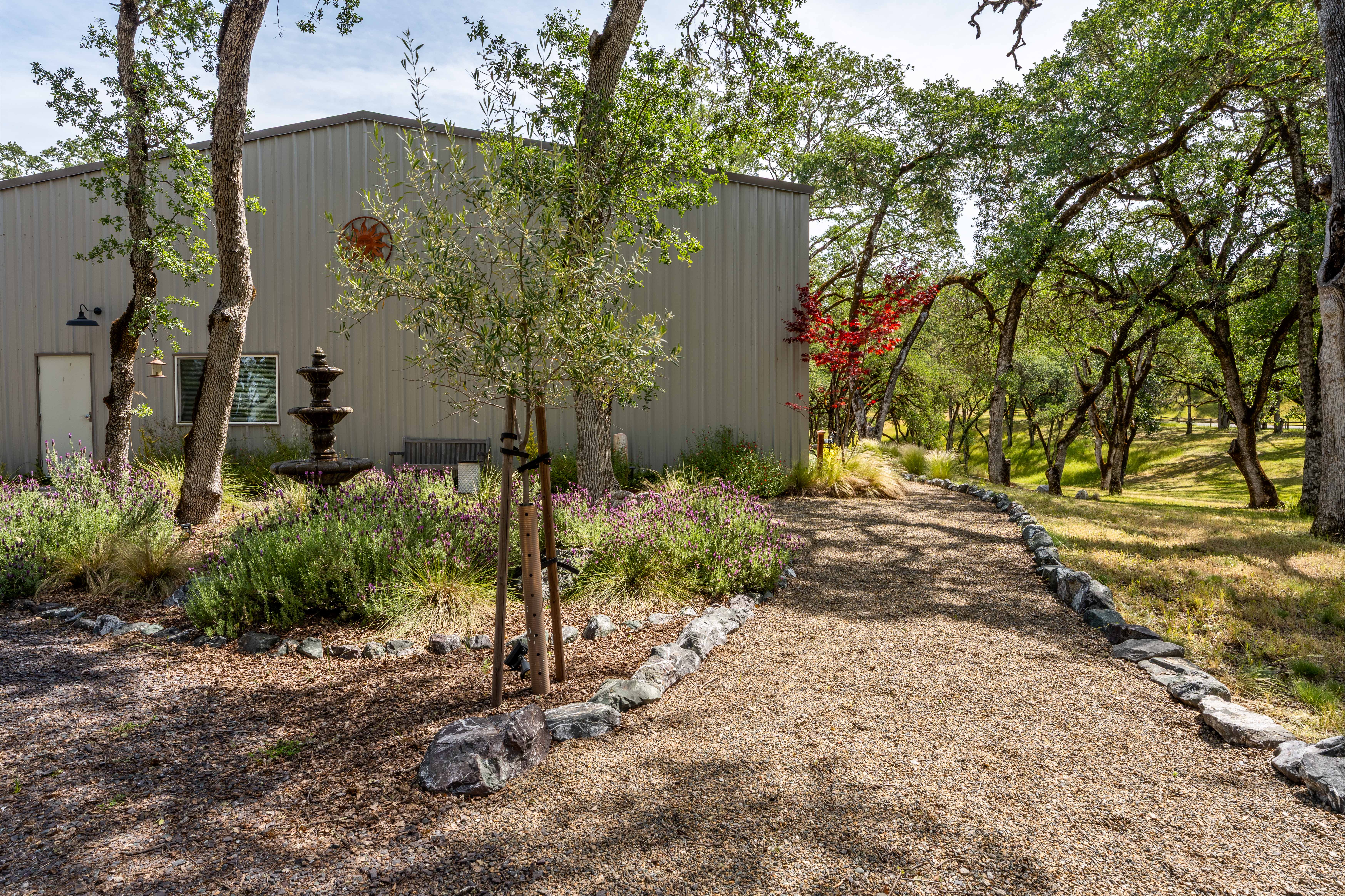
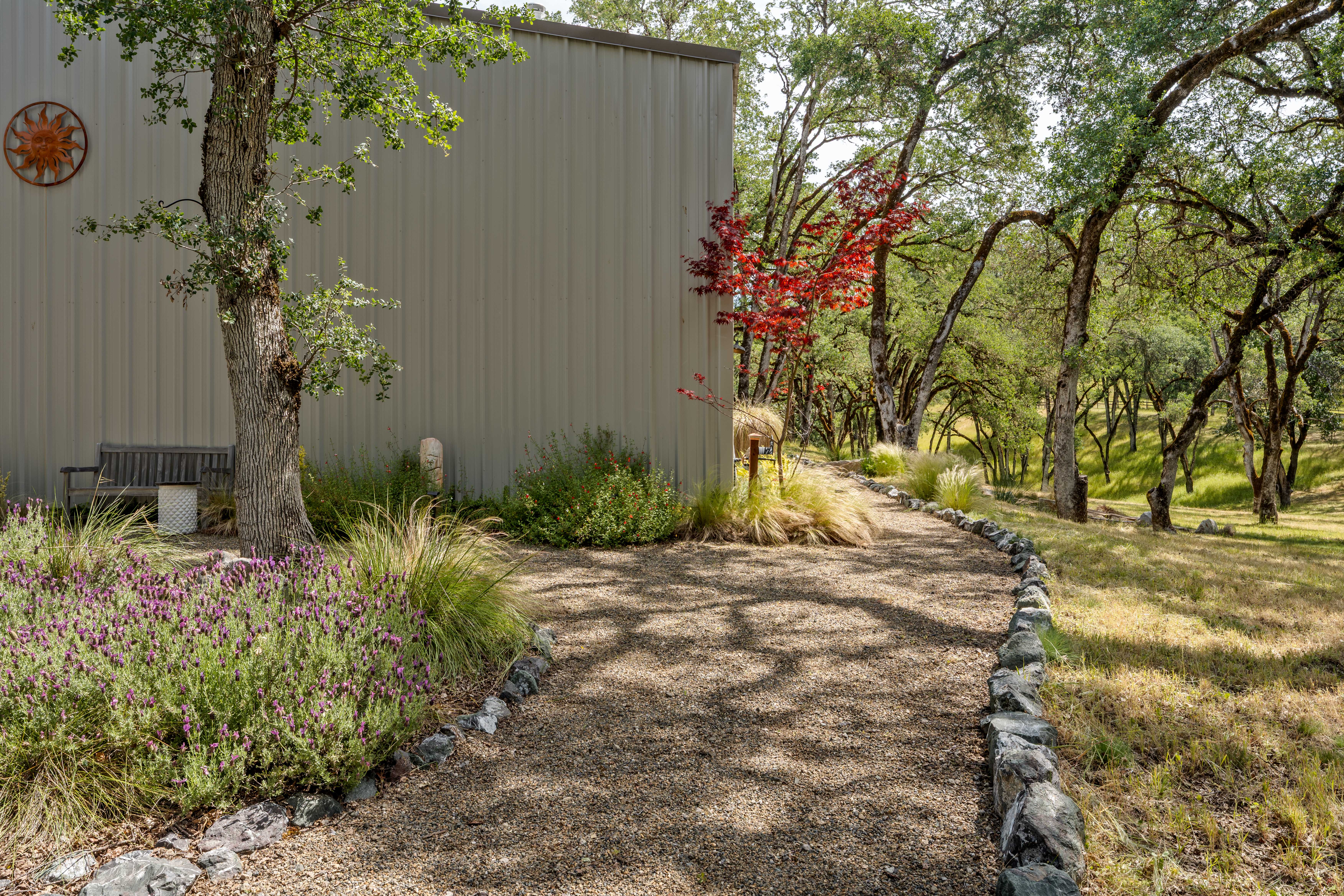
Outside, the estate expands into a complete hilltop lifestyle assembled with the same care as the interiors. The infinity-edge pool meets the sky at the horizon. A covered patio with timber beams creates a generous outdoor living room. A treehouse with a spiral staircase, sunken trampoline, outdoor firepit, pizza oven, and raised-bed garden enclosed by vine-covered trellises give the grounds a layered, lived-in richness. A separate multi-bay workshop — clad in clean metal siding and set among lavender, olive trees, and stone paths — completes the estate with utility that matches its elegance.
This is a home still becoming itself, and that is precisely the opportunity. Every finish, every material, every detail remains open to the vision of the buyer who will call it home.
Mendocino County occupies a particular place in the California imagination — less polished than Napa, less familiar than Sonoma, and all the more compelling because of it. It is a place defined by openness, restraint, and a kind of natural grandeur that feels increasingly rare: redwood forests, coastal bluffs, vineyard valleys, oak-studded hillsides, and inland ridgelines that seem to hold the light differently throughout the day.
Here, Wine Country takes on a quieter and more grounded expression. The county stretches from the Pacific coastline through Anderson Valley and into the warmer inland regions around Ukiah, Hopland, Redwood Valley, and Lake Mendocino, creating a landscape where vineyards, ranchland, forest, and water all exist within close reach. Rather than the performance of luxury, Mendocino offers something more elemental — space, privacy, craft, and a slower relationship to the land.
The wine culture here is well established without feeling overproduced. Anderson Valley has become one of Northern California’s most respected regions for Pinot Noir, sparkling wine, and cool-climate varietals, while Hopland, Redwood Valley, Potter Valley, and the surrounding inland appellations bring a deeper agricultural character to the county’s identity. Tasting rooms, small producers, farmers markets, family-owned vineyards, and independent restaurants shape daily life in a way that feels authentic rather than staged.
The surrounding communities carry that same understated appeal. Ukiah, the county seat, provides essential amenities, dining, shopping, medical services, and regional access, while nearby Hopland has become a gateway to Mendocino wine country. To the northwest, Anderson Valley moves through Boonville and Philo toward the coast, where redwoods give way to the Pacific and the historic village of Mendocino offers galleries, restaurants, coastal trails, and a deeply rooted creative culture.
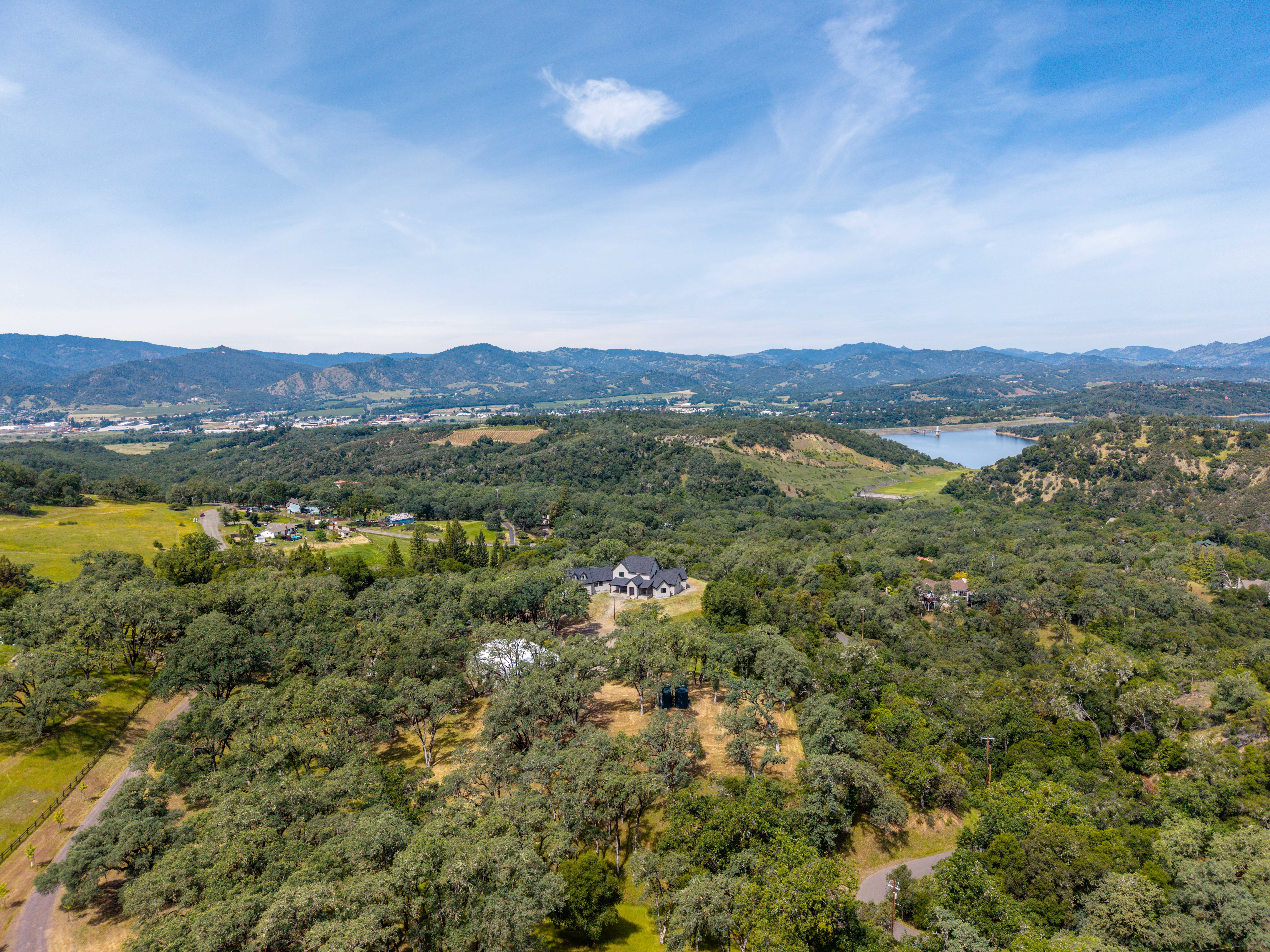
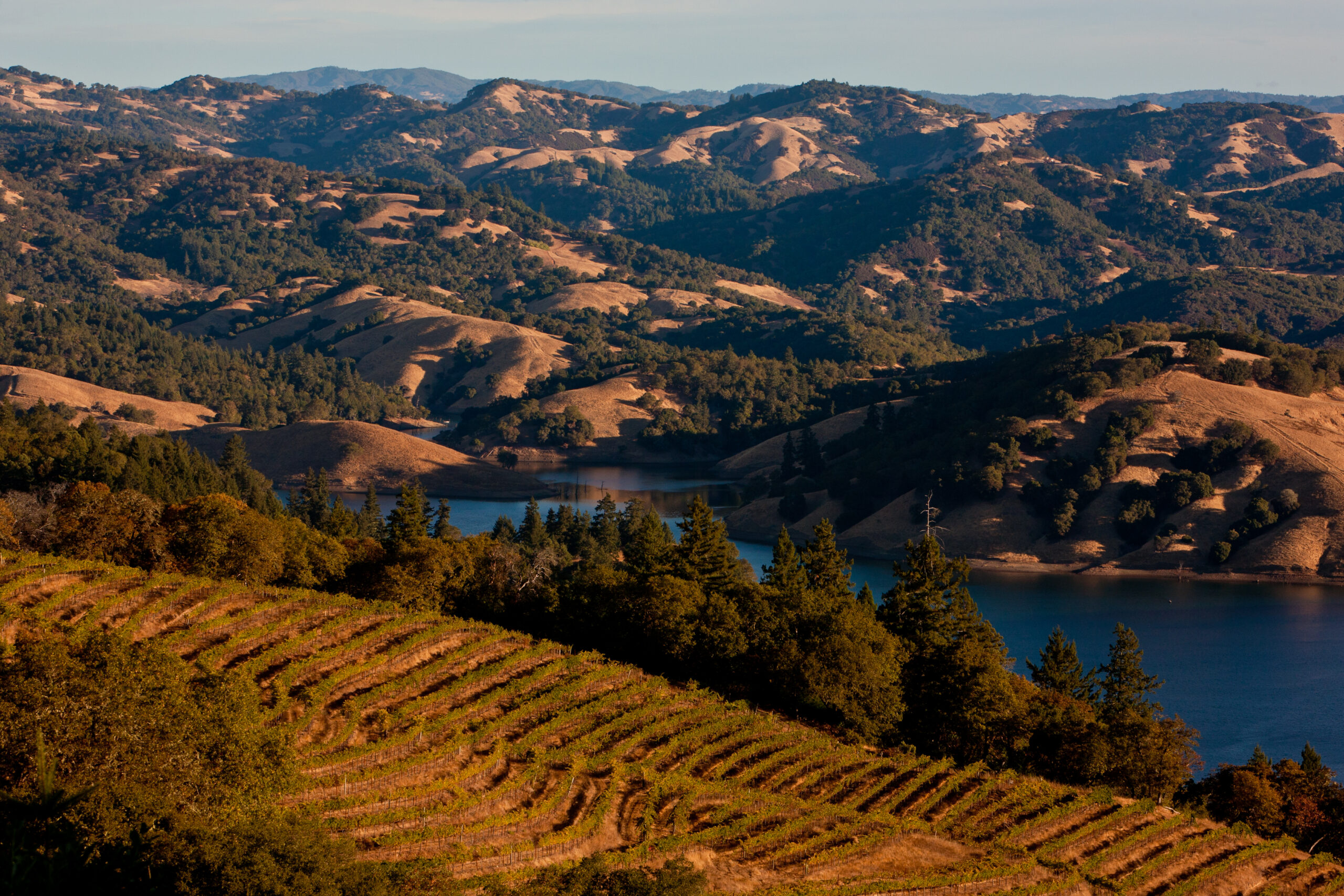
For those drawn to the outdoors, Mendocino County offers extraordinary range. Lake Mendocino provides boating, fishing, trails, and open-water views just beyond the hillsides of Ukiah, while the broader county unfolds into redwood preserves, river corridors, mountain roads, and rugged coastline. Within a single day, the landscape can shift from golden inland ridges to old-growth forest to windswept ocean bluffs — a rare diversity that gives the region its quiet power.
The county has long attracted people who value independence, privacy, creativity, and a closer connection to place. Winemakers, artists, entrepreneurs, remote professionals, and families have chosen Mendocino not because it announces itself loudly, but because it offers room to live with intention.
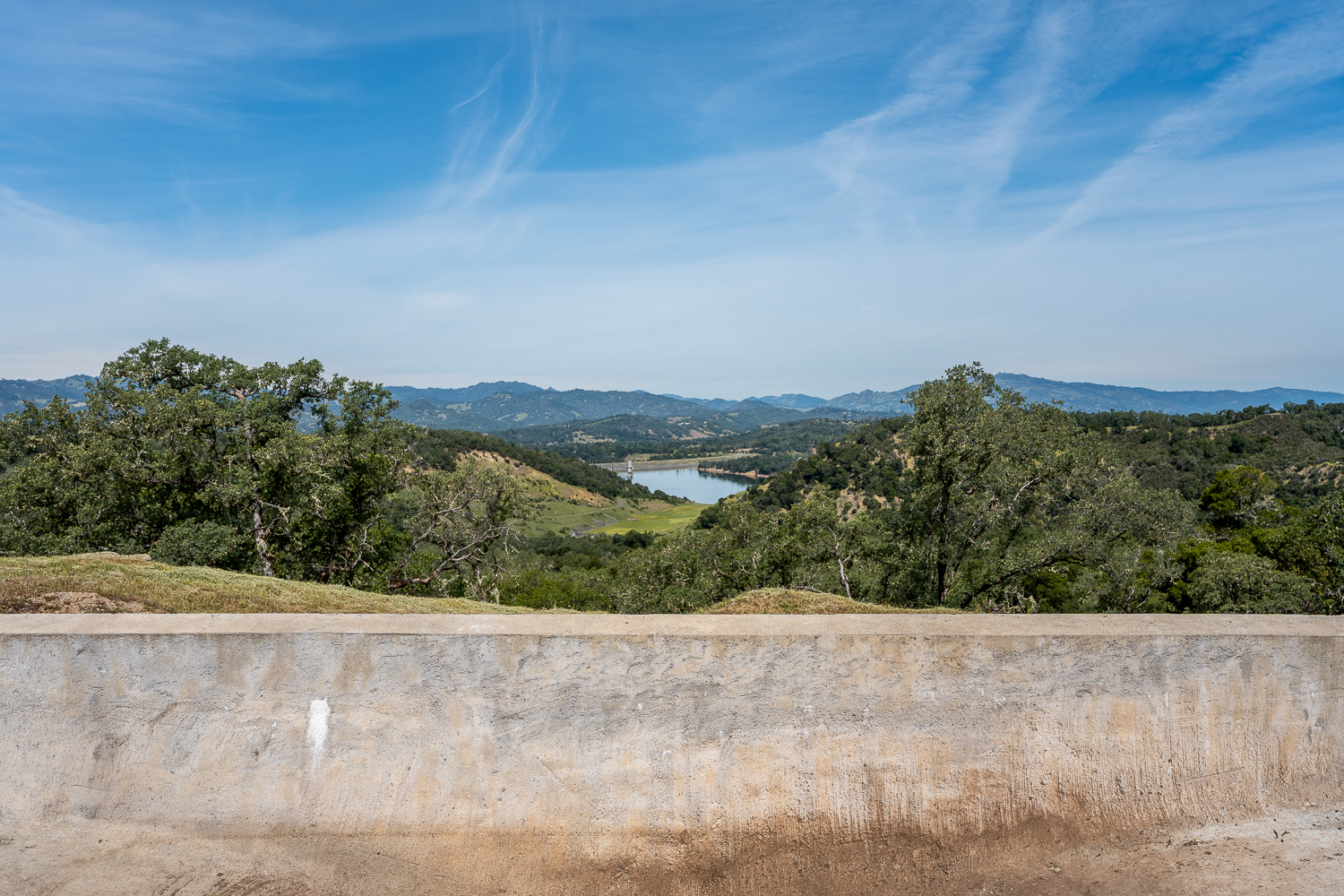
What the hilltop setting of 3215 Deerwood Drive offers, above all, is perspective — literal and figurative. The reservoir visible from nearly every room, the layered ridgelines, the oak canopy below, the open sky above: these are not incidental features of the property. They are the reason for it. In a county already defined by the quality of its landscape, this estate occupies a position that is genuinely rare — private, elevated, and quietly extraordinary.
Featured Highlights
Curated Content • Presented by Randy Waller