The Story Behind
A Duplex Penthouse Where Manhattan's Scale Meets Milanese Sophistication
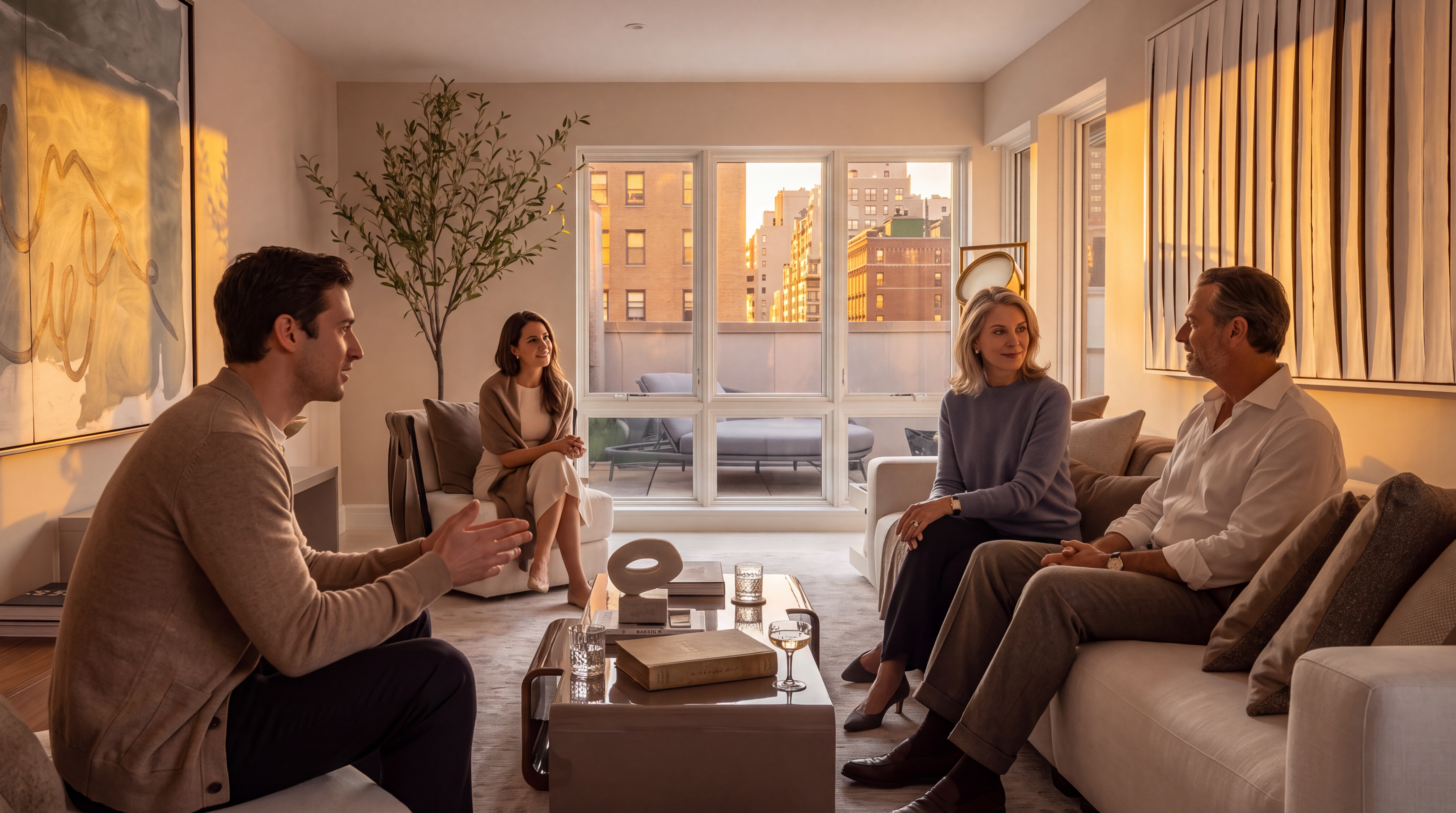
There is a particular kind of Manhattan apartment that announces itself quietly — not through ostentation, but through proportion. The duplex Penthouse at 133 East 73rd Street belongs to that rare category. From the moment the private elevator opens onto a handsome gallery dressed in fine millwork, the residence establishes its intentions: this is a home conceived for living at a genuinely civilized scale.
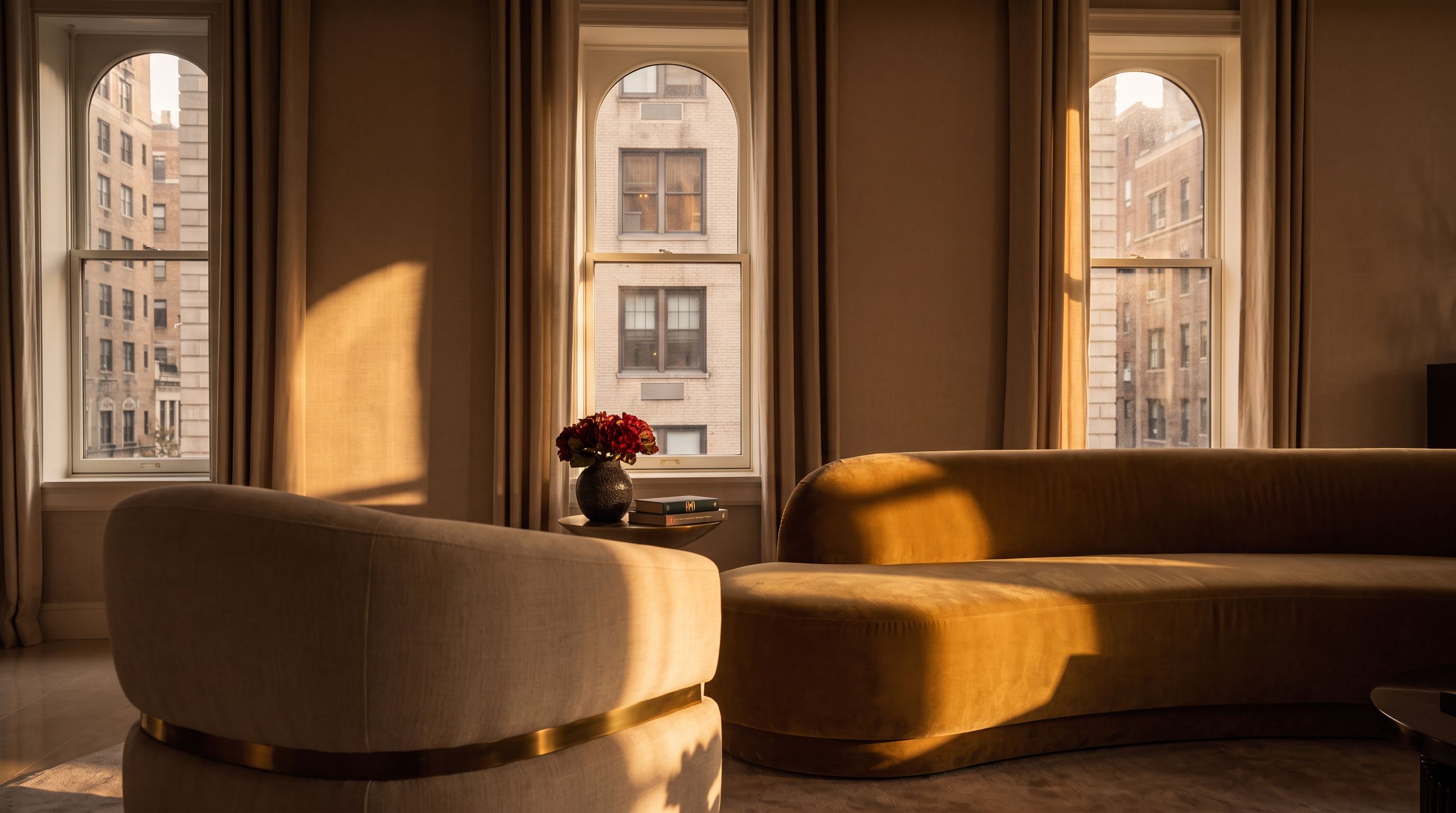
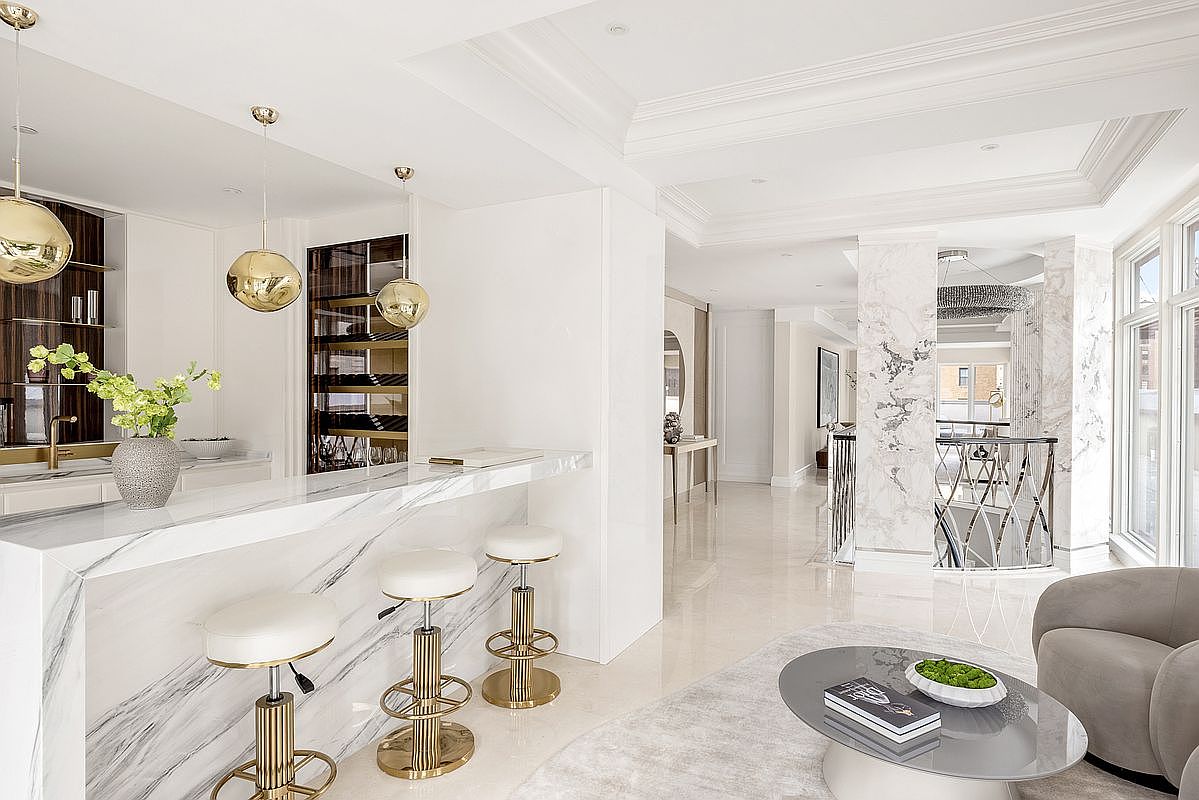
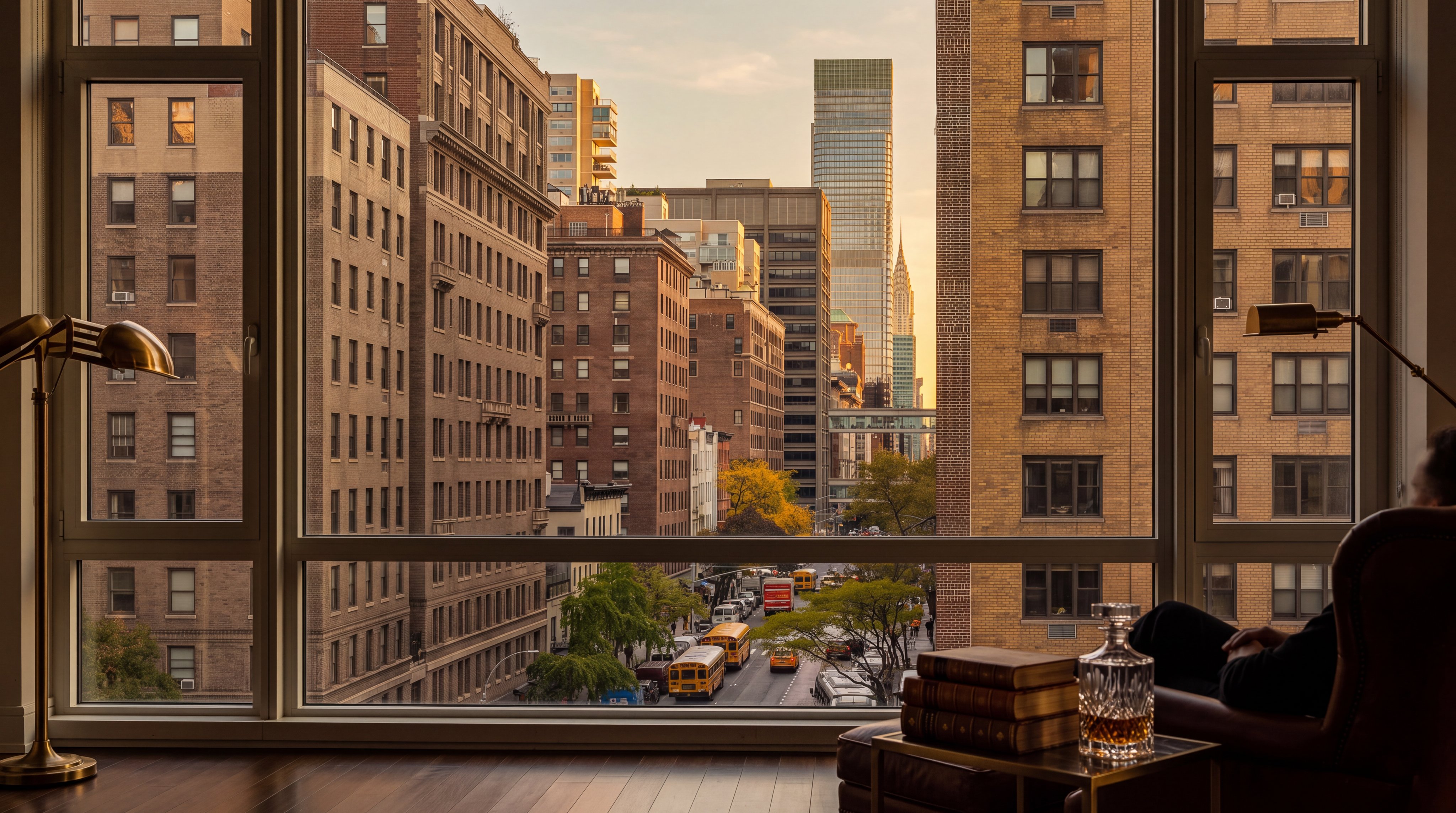
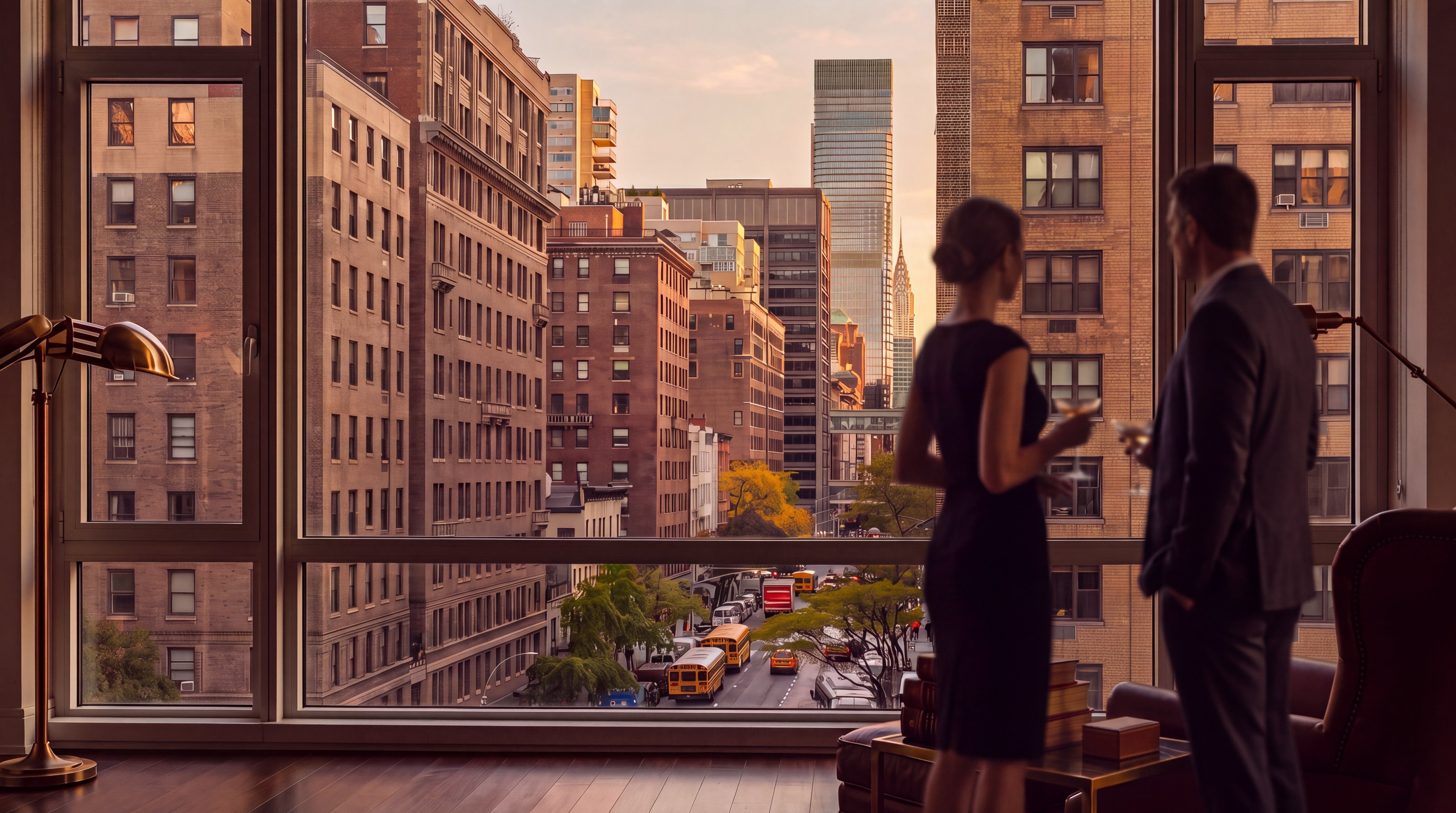
The work of Milanese design firm Meroni, the interiors carry a distinctly European sensibility — one that prizes the relationship between architecture and daily life above the merely decorative. Crema marble floors extend across the great room, where coffered ceilings rise with the unhurried confidence of pre-war construction and corner windows frame the intersection of Lexington Avenue and 73rd Street below. Natural light moves through these rooms with ease, shifting from morning brilliance to the amber warmth of late afternoon.
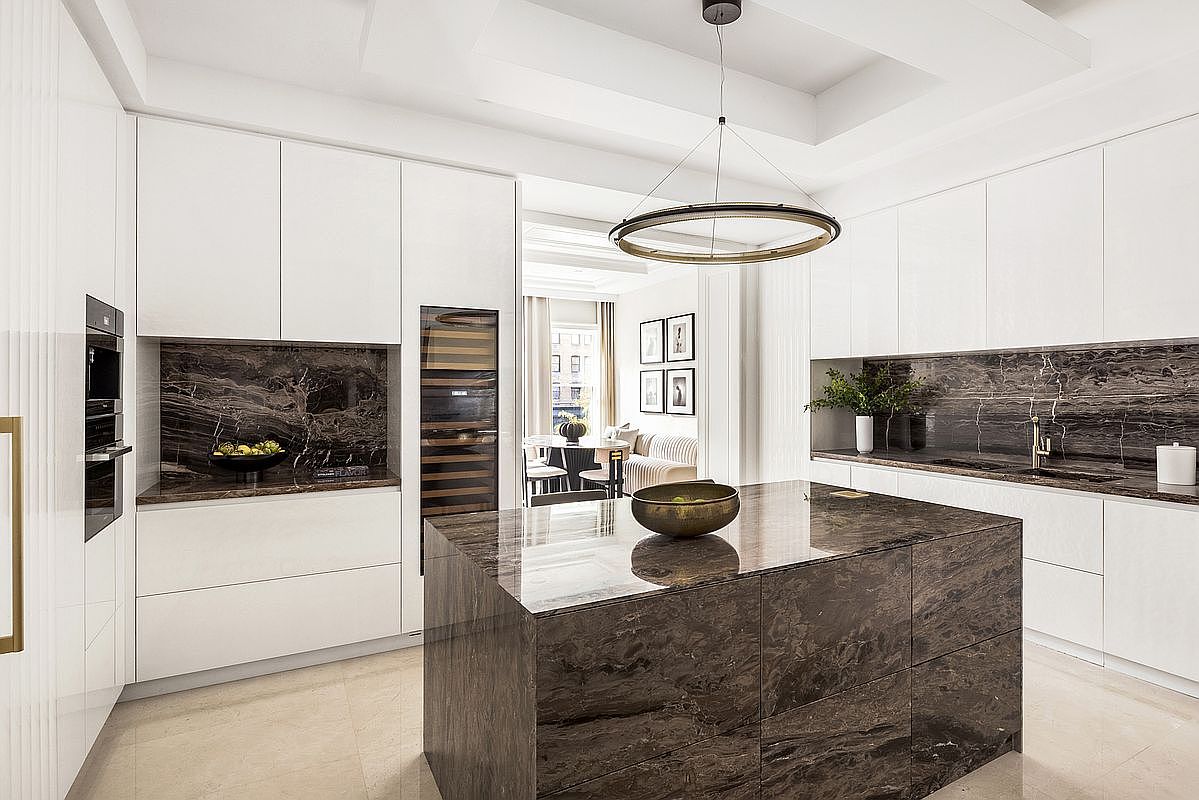
The chef's kitchen is a study in material contrast: Frappuccino marble countertops meet mother-of-pearl finished cabinetry, while satin brass Dornbracht hardware catches the light with a restrained gleam. Professional-grade appliances from Sub-Zero, Miele, BlueStar, and Wolf are integrated with the seamlessness of a kitchen designed to be used seriously, not merely admired. An adjacent den extends the utility of the entertaining floor, serving equally well as a formal dining room or a relaxed morning space.
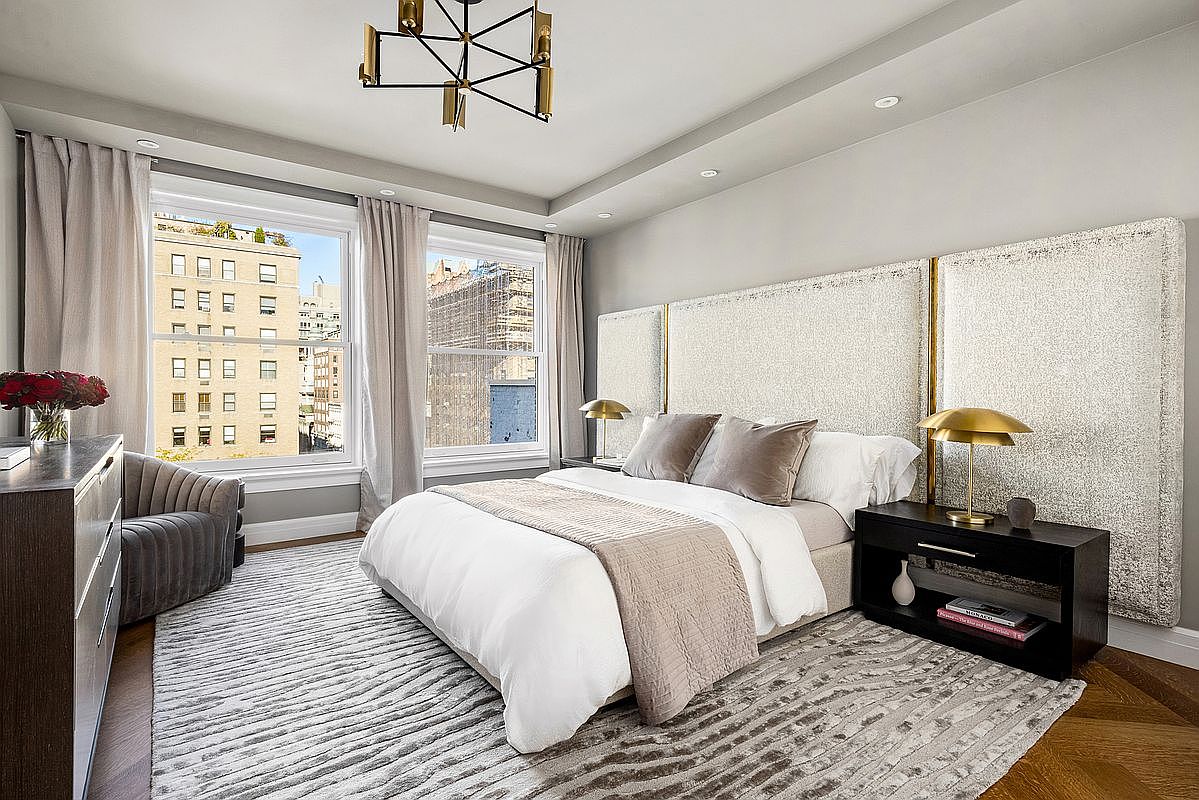
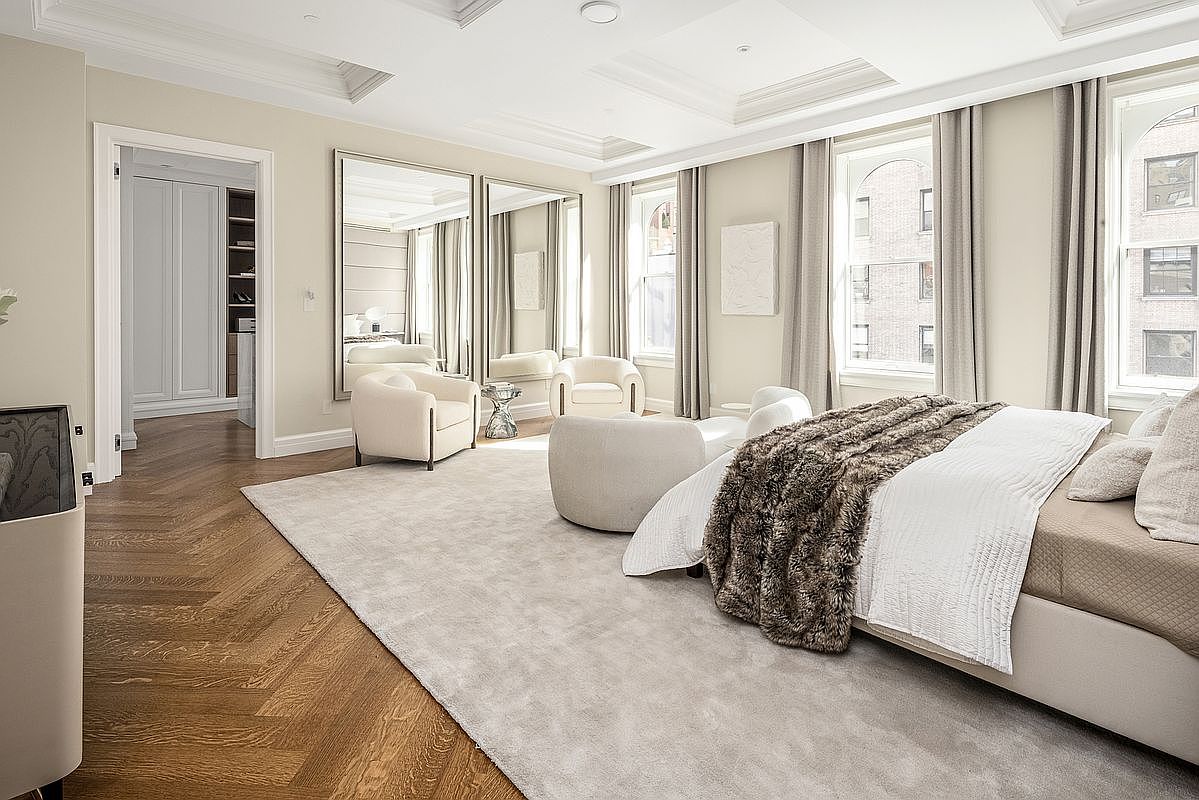
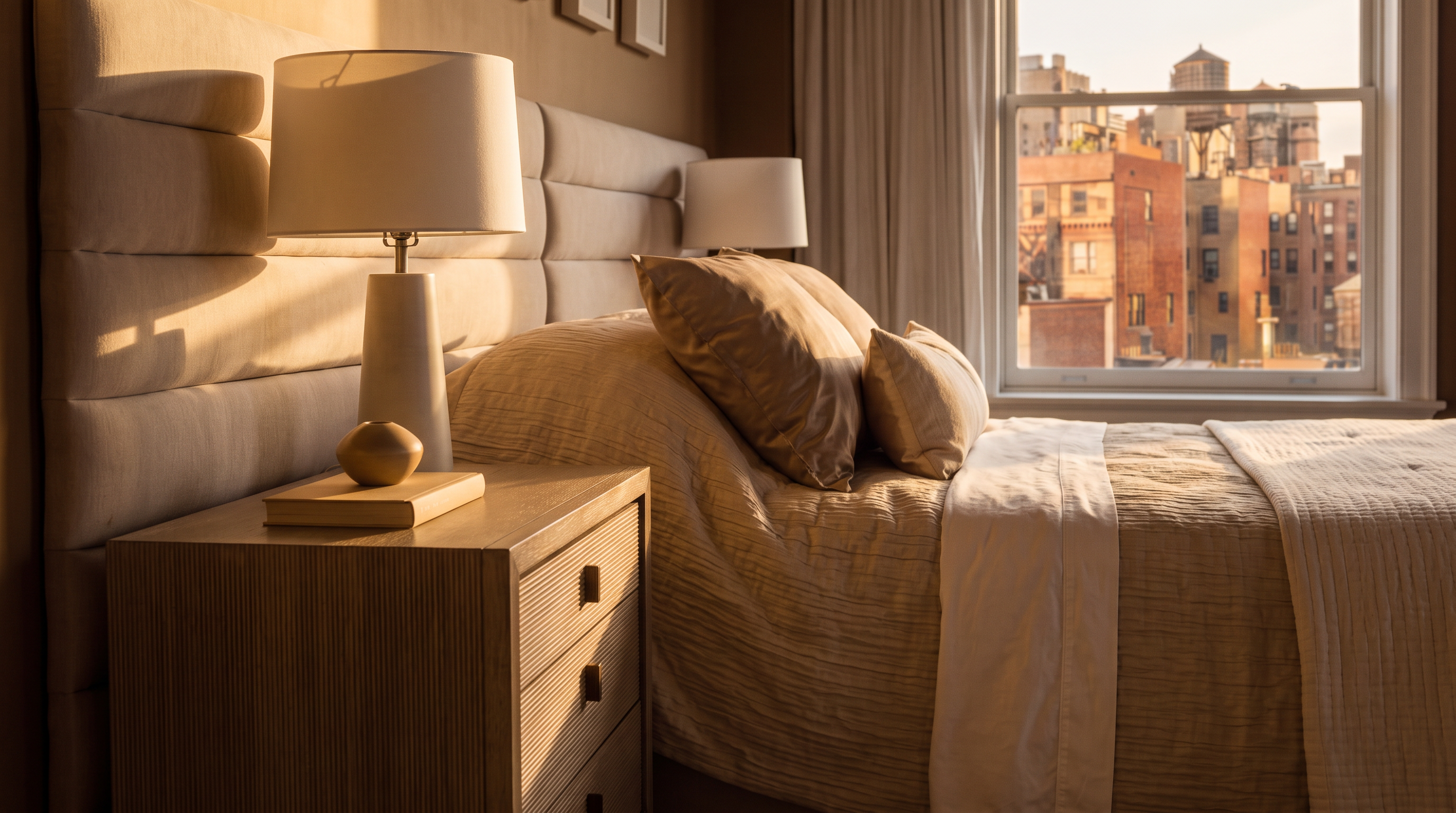
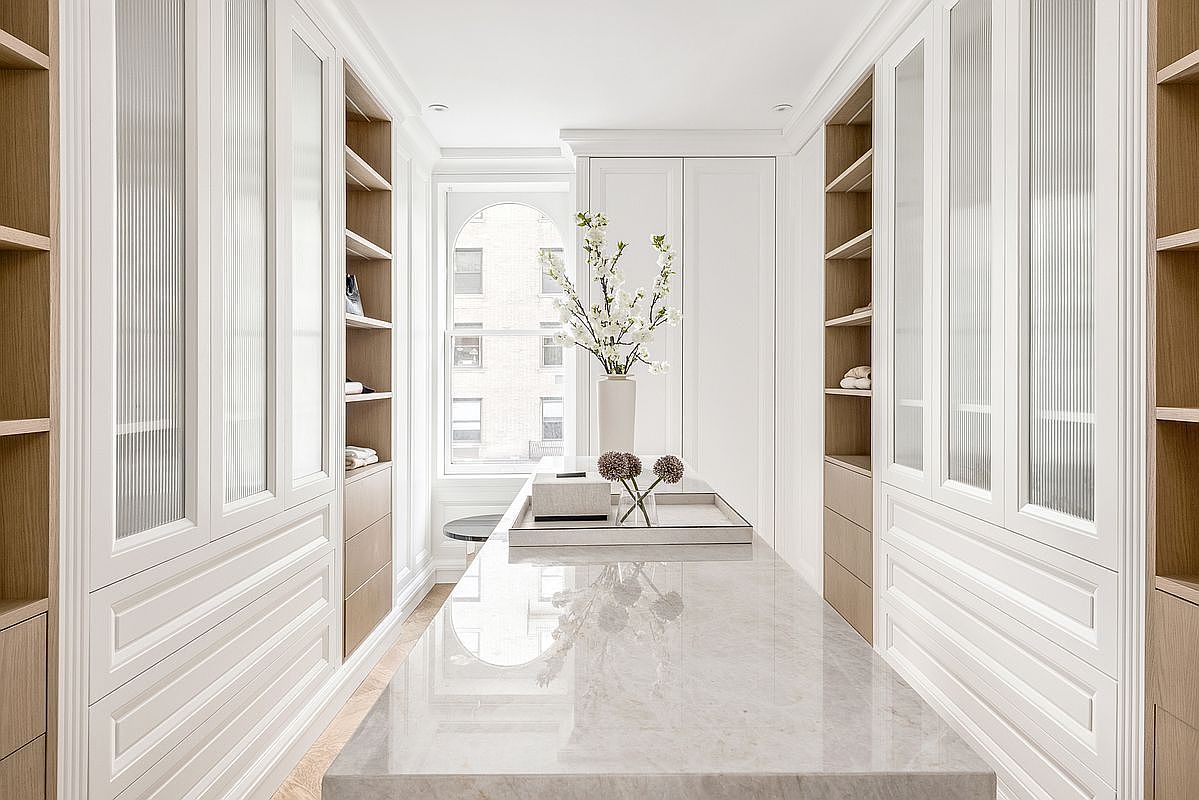
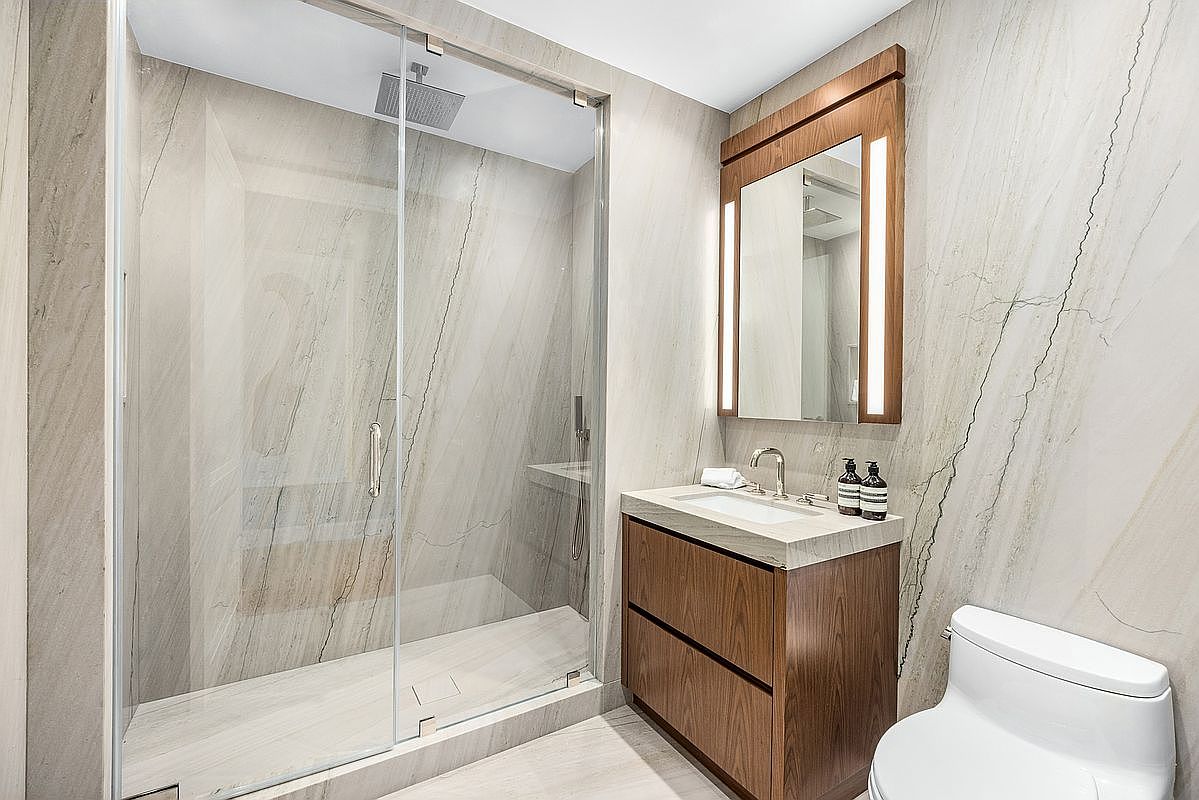
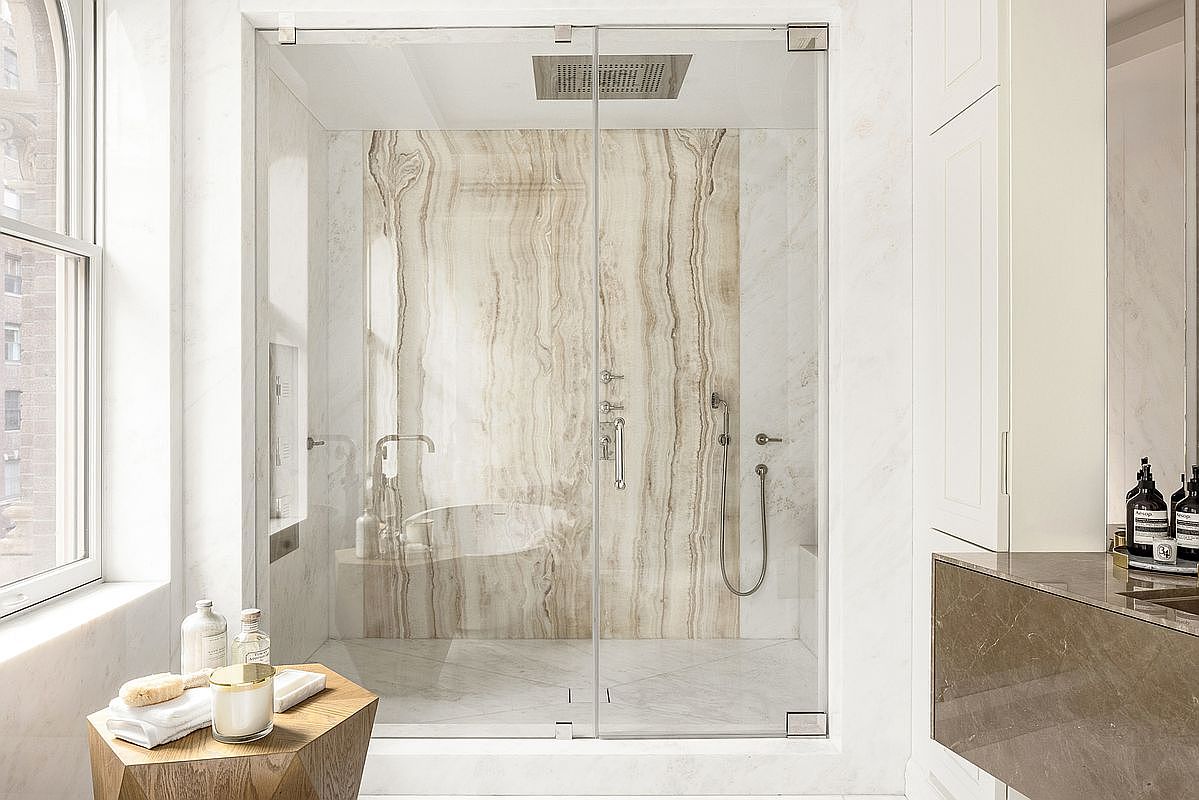
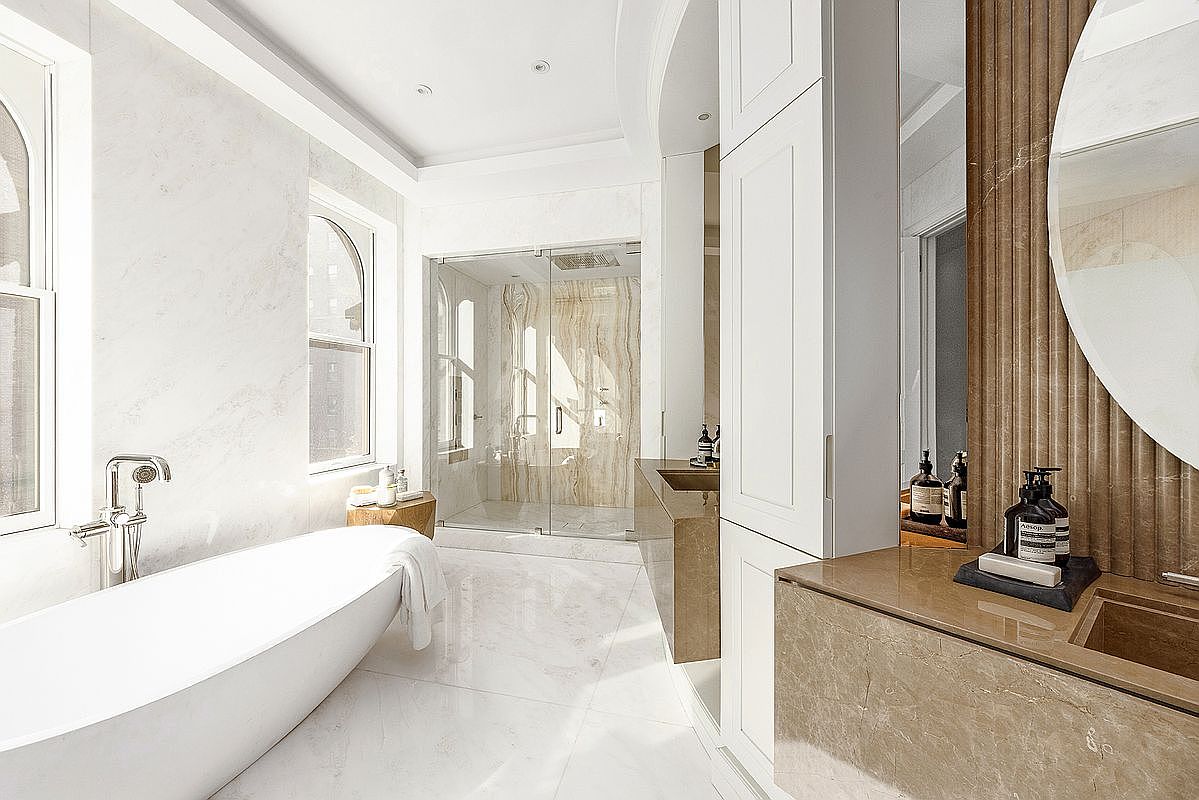
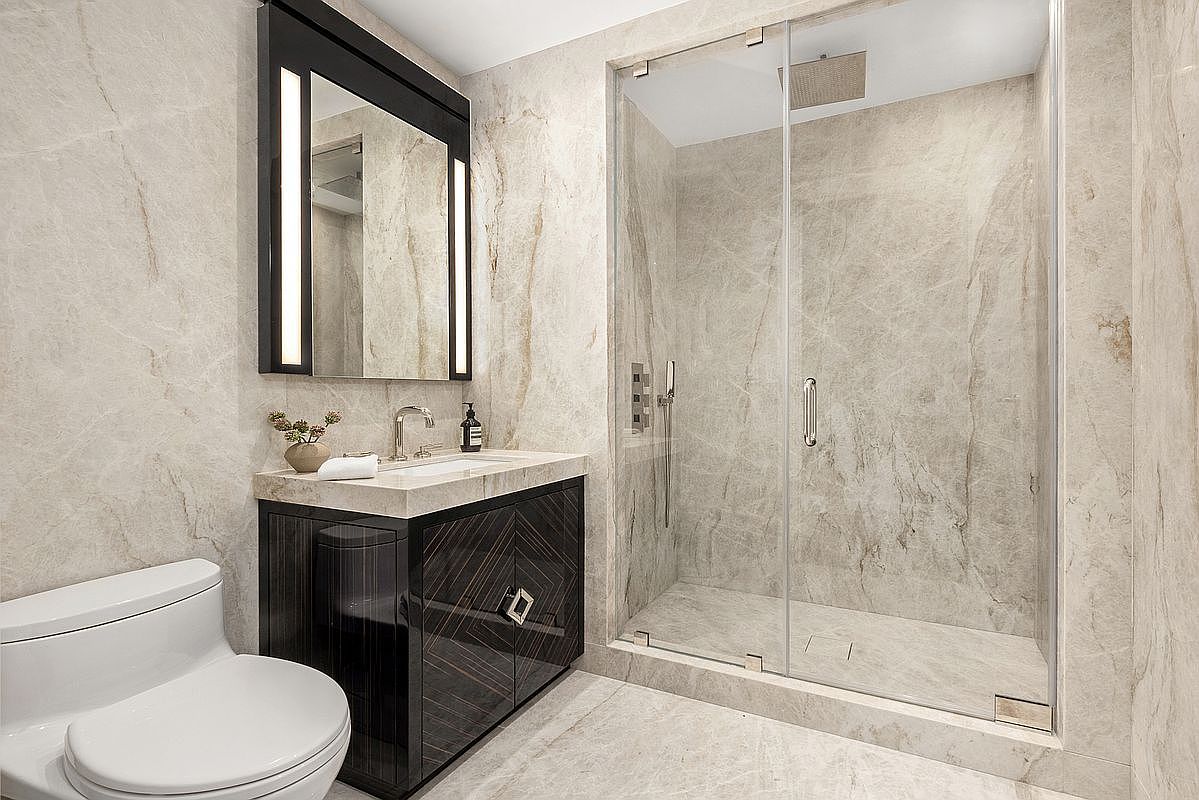
The primary bedroom suite is positioned to overlook the treetops of Lexington Avenue, a detail that speaks to the thoughtfulness of the floor plan. A windowed dressing room of generous proportions anchors the suite, while the ensuite bathroom achieves the atmosphere of a private spa: a freestanding soaking tub appointed with Samuel Heath nickel fixtures, an oversized steam shower, and radiant-heated flooring that transforms an ordinary morning into something more considered.
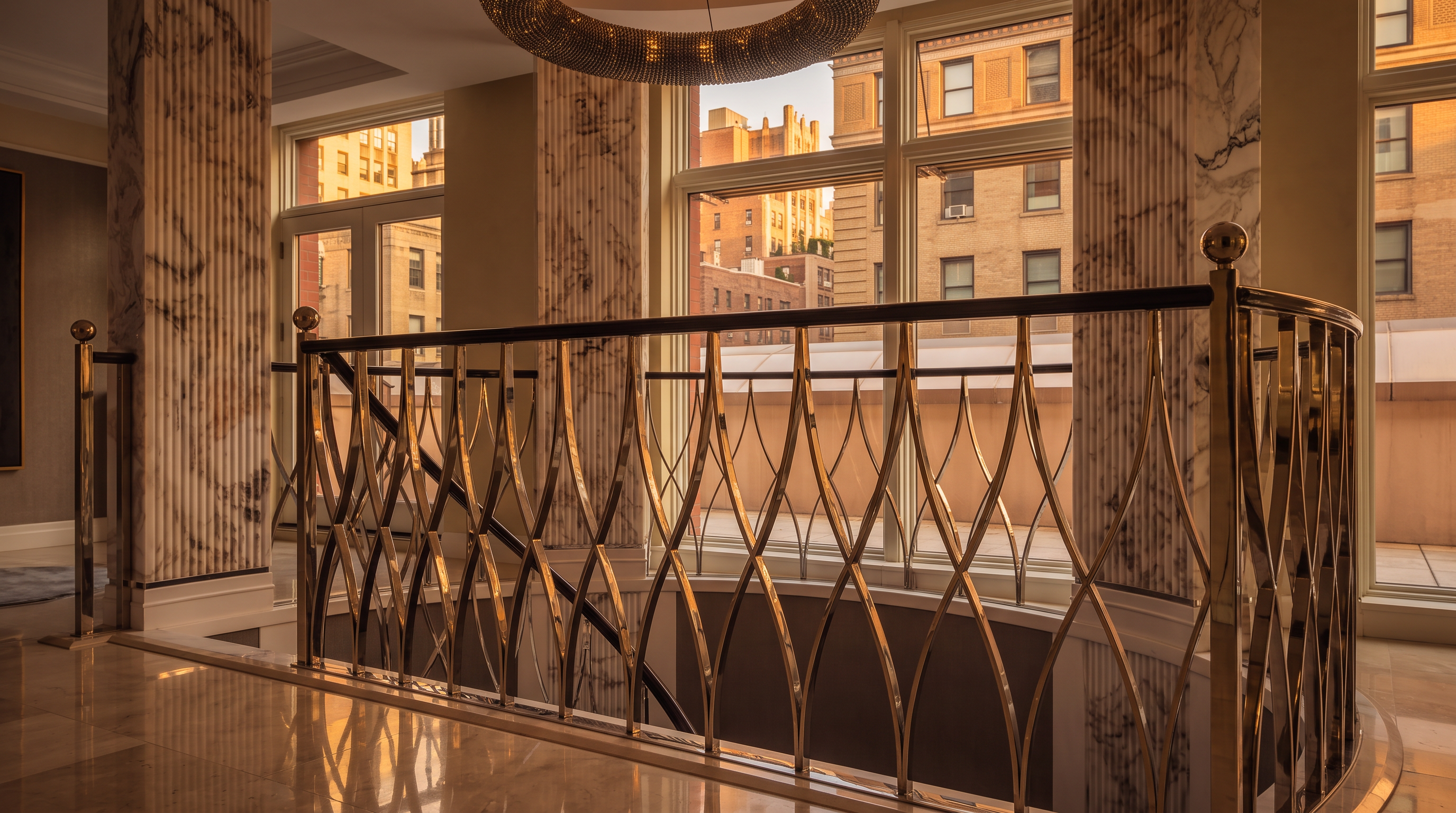
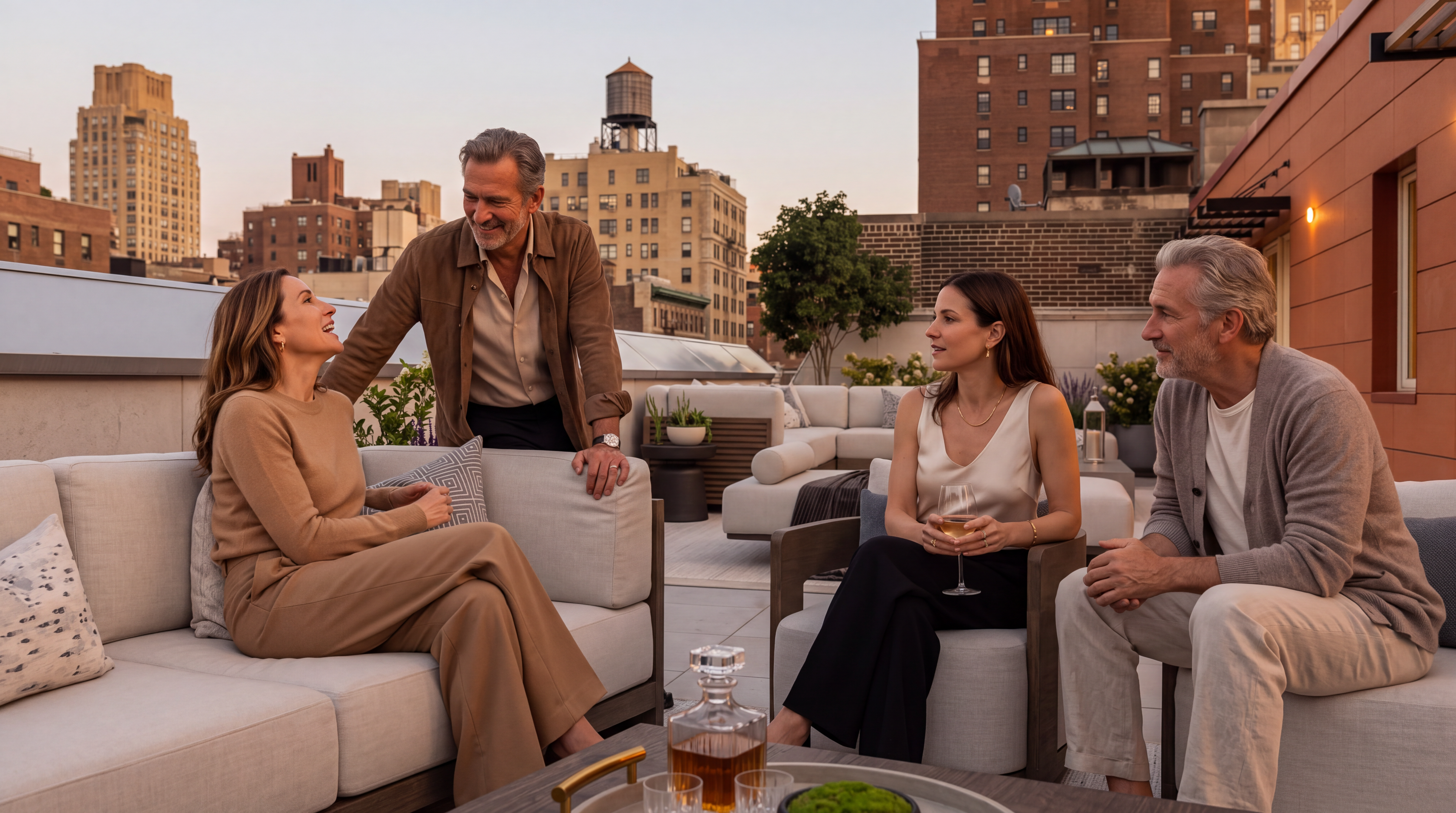
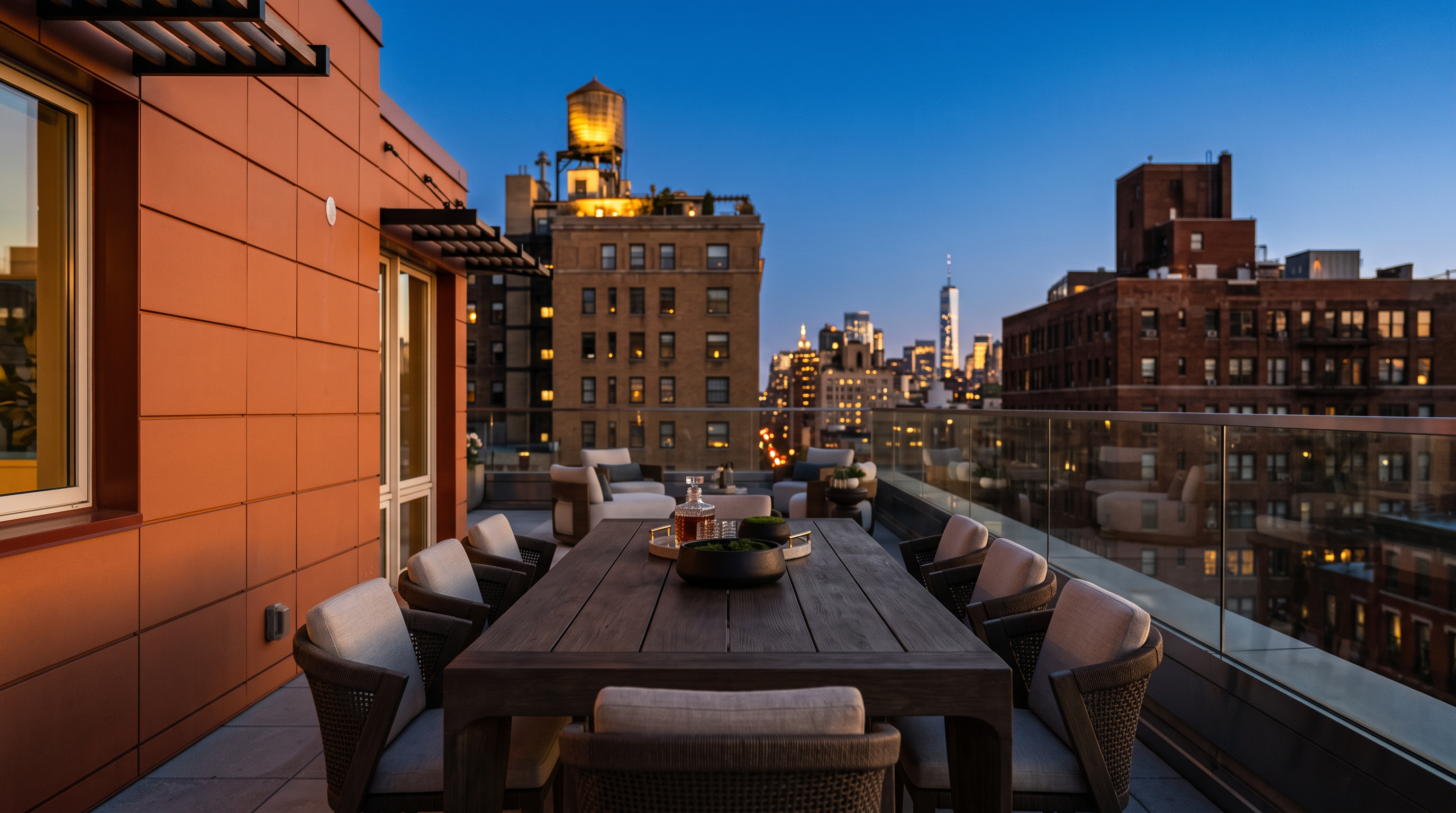
The staircase — its curved form a signature architectural gesture, its stone treads and polished metal railing visible from the double-height landing — leads to the residence's upper level, where the home opens outward in a way that feels almost theatrical. A media room and lounge connect directly to the 1,822-square-foot finished terrace, which wraps the building to deliver 270-degree views: rooftops, water towers, the Chrysler Building catching light to the south, and the broad expanse of the Upper East Side stretching in every direction. A warming kitchen and wet bar fitted with Gaggenau and Sub-Zero appliances ensures that the terrace functions as a true outdoor room across three seasons.
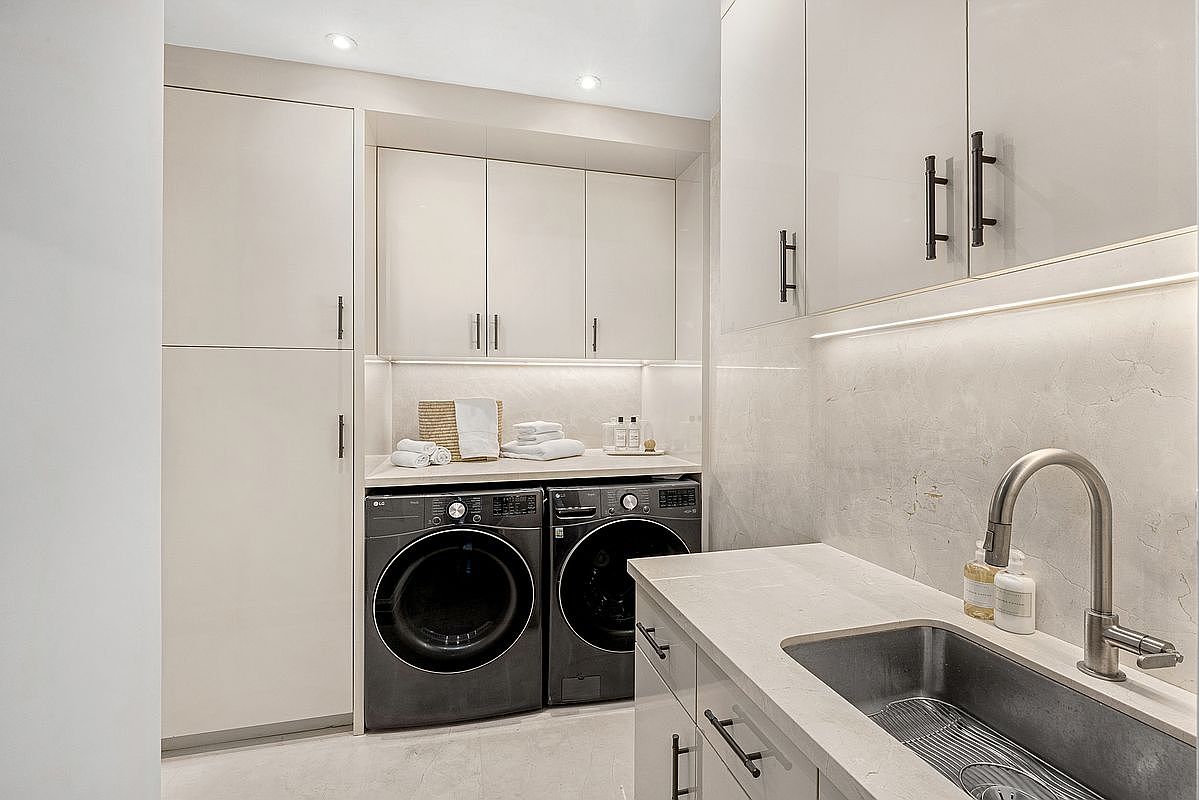
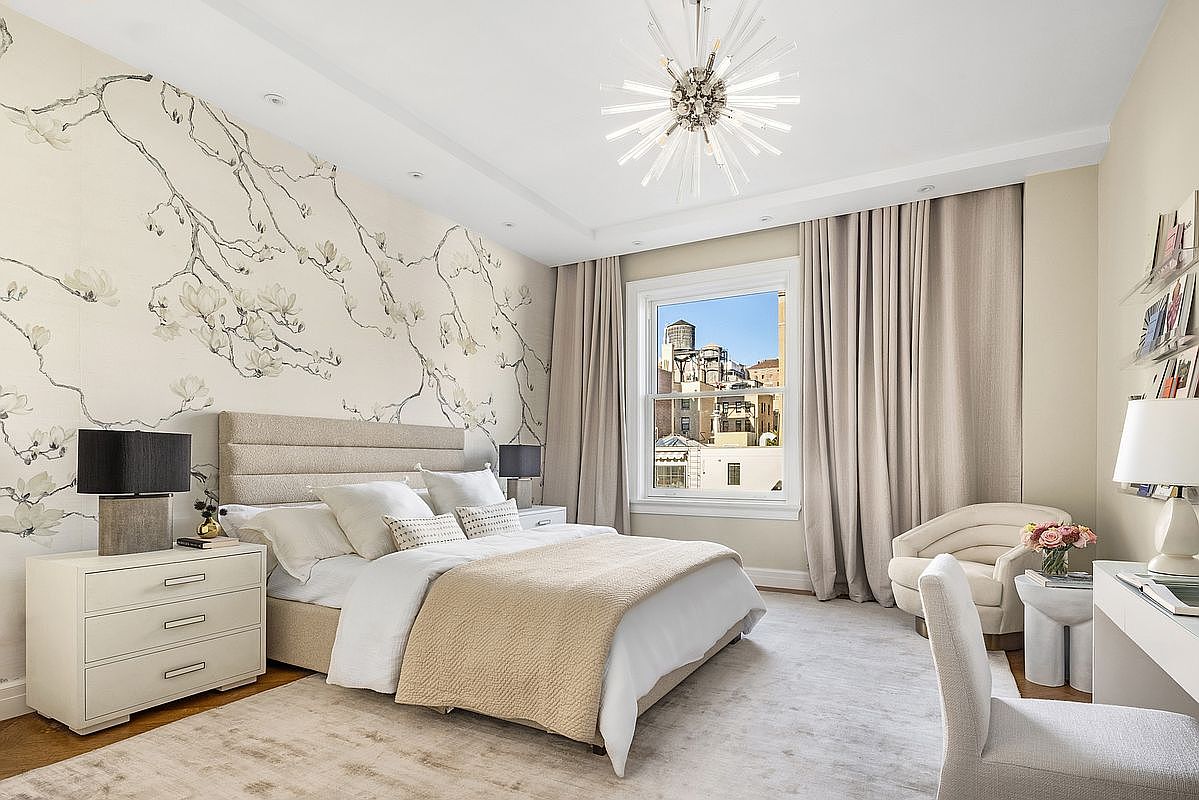
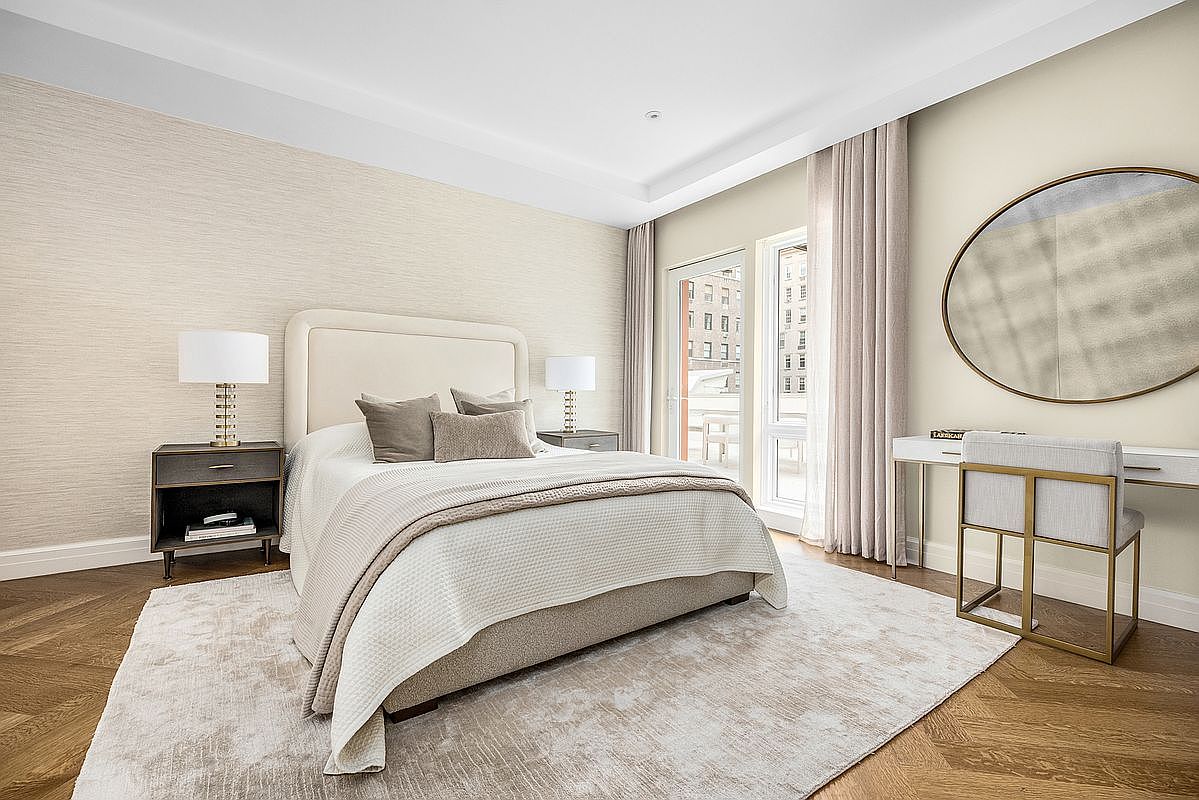
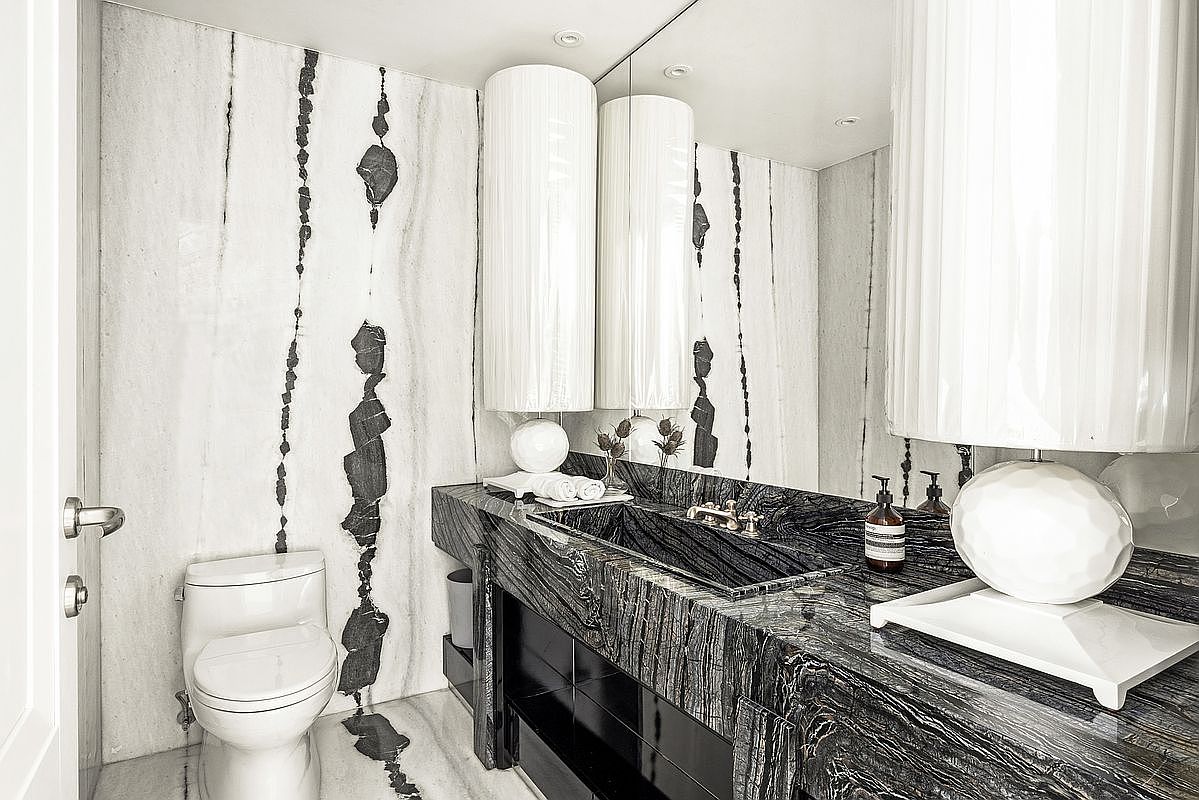
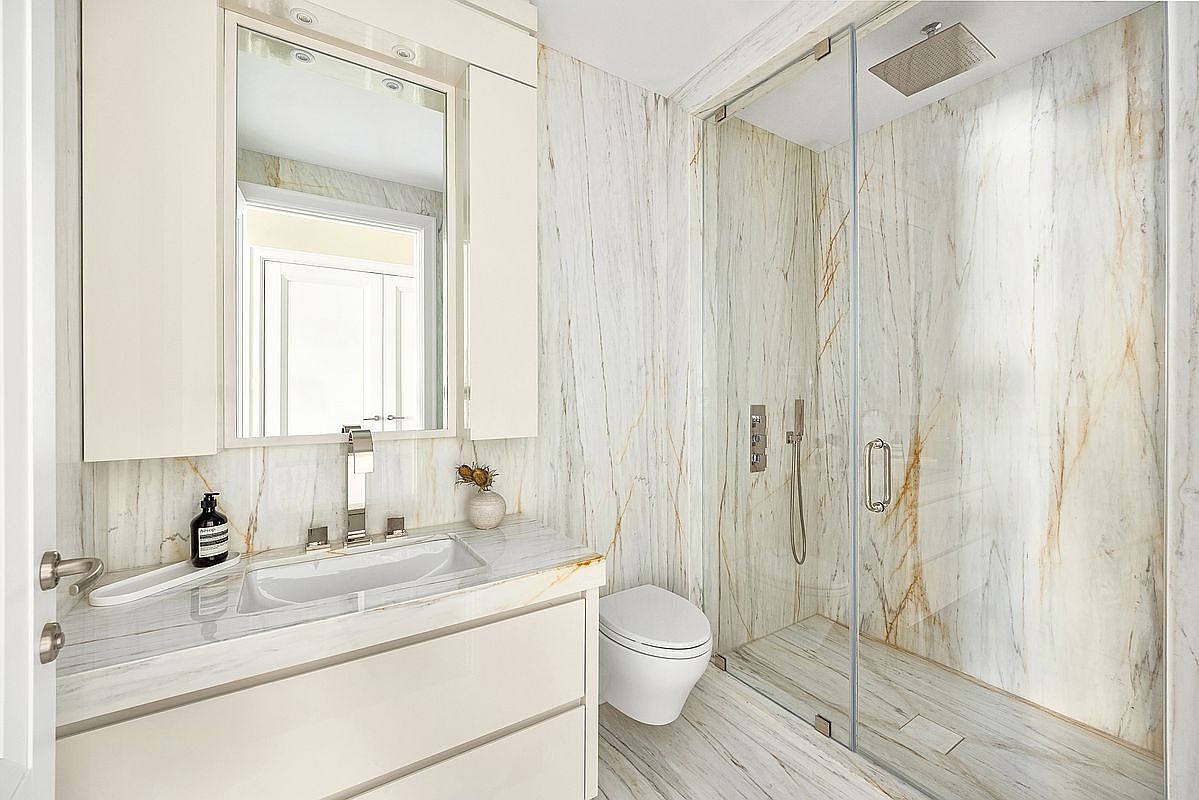
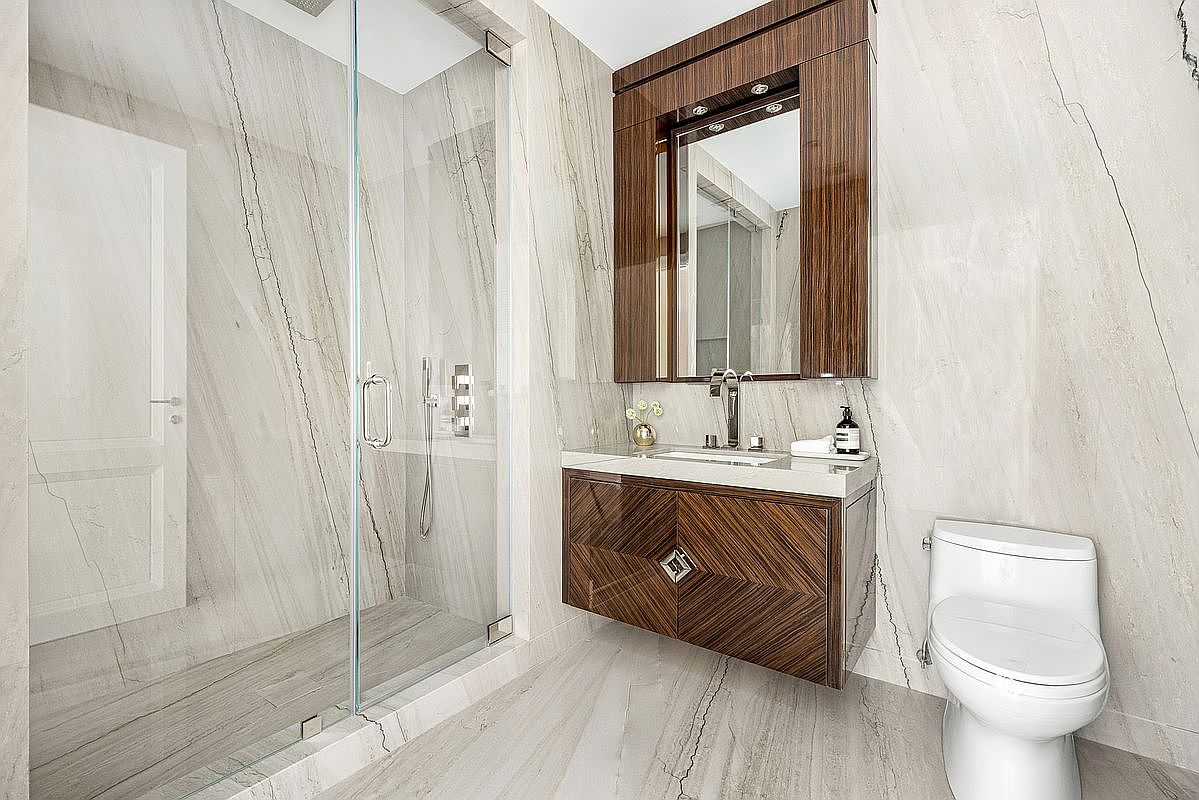
Three additional bedrooms with ensuite bathrooms occupy the upper floor, each finished with the same commitment to quality evident throughout — radiant-heated floors, ample closet space, and materials chosen for their tactile richness rather than trend. A seventh bedroom near the kitchen offers flexibility as staff quarters. A laundry room with oversized LG appliances and dedicated storage completes a home that has been designed not only to impress, but to sustain the full texture of a life well lived.
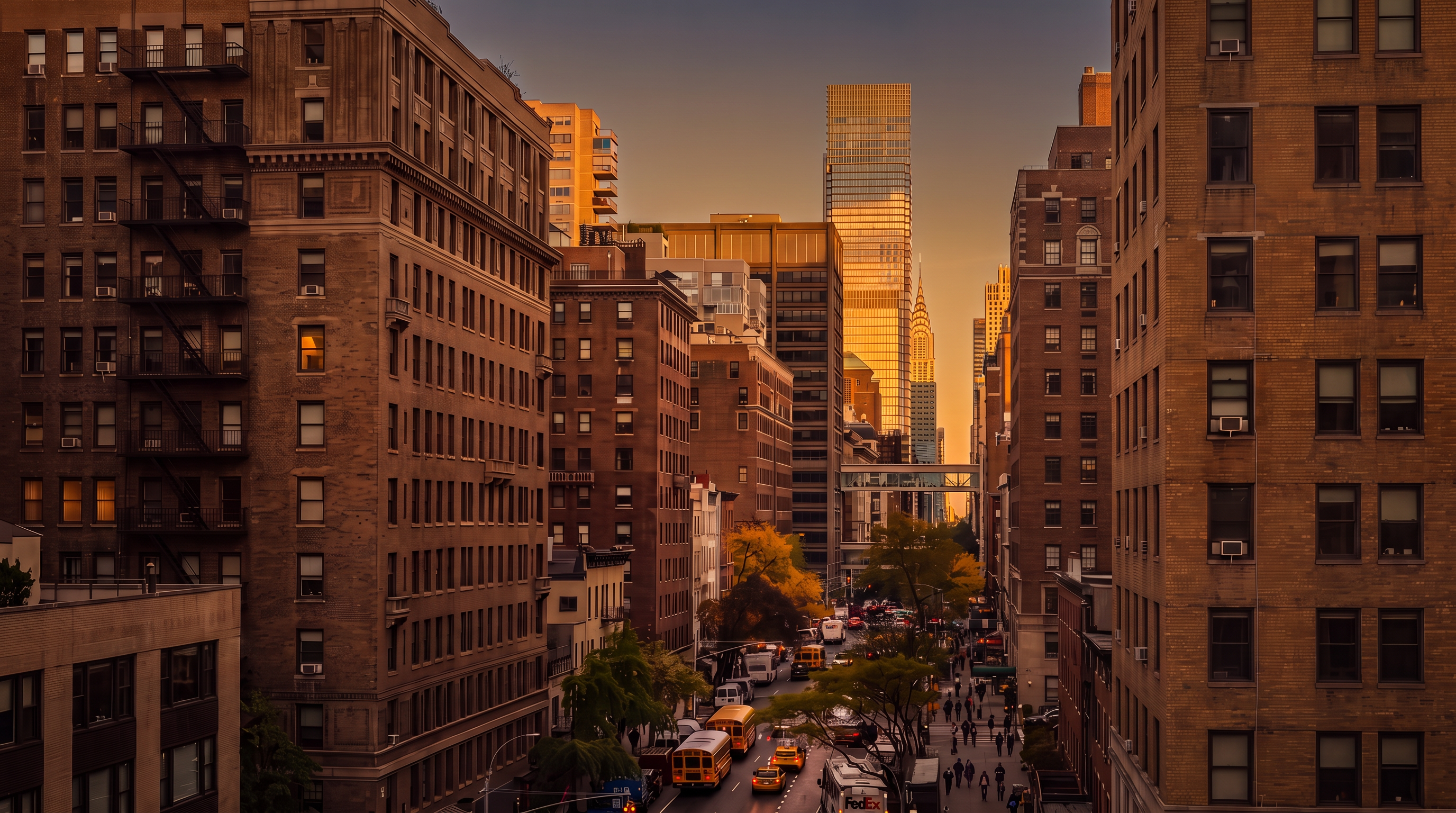
The Upper East Side has long occupied a particular position in the geography of New York City — one defined less by a single landmark or era than by the accumulated weight of cultural institutions, architectural continuity, and a residential character that resists the city's perpetual appetite for reinvention. East 73rd Street, situated between Park and Lexington Avenues, sits at the heart of this neighborhood's most distinguished residential corridor, where limestone-clad townhouses and pre-war cooperatives have shaped the streetscape for the better part of a century.
The cultural infrastructure of this part of Manhattan is without parallel in the city. The Metropolitan Museum of Art anchors Fifth Avenue just blocks to the west, its encyclopedic collections drawing visitors from around the world while remaining a genuinely local institution for those who live nearby. The Frick Collection, housed in Henry Clay Frick's former mansion on 70th Street, offers one of the most intimate fine art experiences in any American city. The Whitney Museum, though relocated to the Meatpacking District, long called the Upper East Side home, and the neighborhood's relationship with the visual arts remains embedded in the galleries that line Madison Avenue between the sixties and nineties — a stretch that constitutes one of the most significant concentrations of fine art dealing in the world.
Madison Avenue itself is the neighborhood's commercial spine, lined with flagship boutiques from the world's most distinguished fashion houses alongside independent booksellers, florists, and specialty food shops that have served the community for decades. Restaurants along this corridor and the surrounding cross streets range from celebrated destination dining rooms to the kind of neighborhood bistros that a resident comes to think of as their own. Café Boulud on 76th Street, Rotisserie Georgette on 60th, and a constellation of other establishments have made this part of the city a genuine destination for serious dining.
Central Park begins at Fifth Avenue, three blocks to the west, and its eastern edge along this stretch of the city is among its most refined — the Conservatory Garden, the reservoir running track favored by generations of New Yorkers, and the quieter, less trafficked paths that make an early morning or late afternoon walk feel genuinely restorative. The park functions here not as a distant amenity but as an extension of the neighborhood's daily life.
The architecture of the streets immediately surrounding 133 East 73rd Street reflects the neighborhood's layered history — pre-war apartment buildings of considerable scale sit alongside Federal and Greek Revival townhouses, creating a streetscape of unusual variety and visual richness. The proximity to the Lexington Avenue subway line provides straightforward access to the rest of the city, while the crosstown buses on 72nd and 79th Streets connect east and west with regularity.
To live at this address is to occupy a position at the center of one of Manhattan's most enduring and authentically urban neighborhoods — one that offers not the novelty of emerging districts, but the deeper satisfaction of a place that has already become exactly what it intends to be.
Featured Highlights
Curated Content • Presented by Adam Modlin