The Story Behind
Panoramic Masterpiece Crowning Cedar Hill's Highest Summit
There are homes that occupy a landscape, and then there are homes that command it. 2449 Mountain View Court belongs emphatically to the latter. Situated on one of the highest points for hundreds of miles across the Dallas–Fort Worth region, this eight-bedroom, eight-full and two-half-bath mansion was conceived as an architectural statement—one that answers the grandeur of its surroundings with equal ambition.
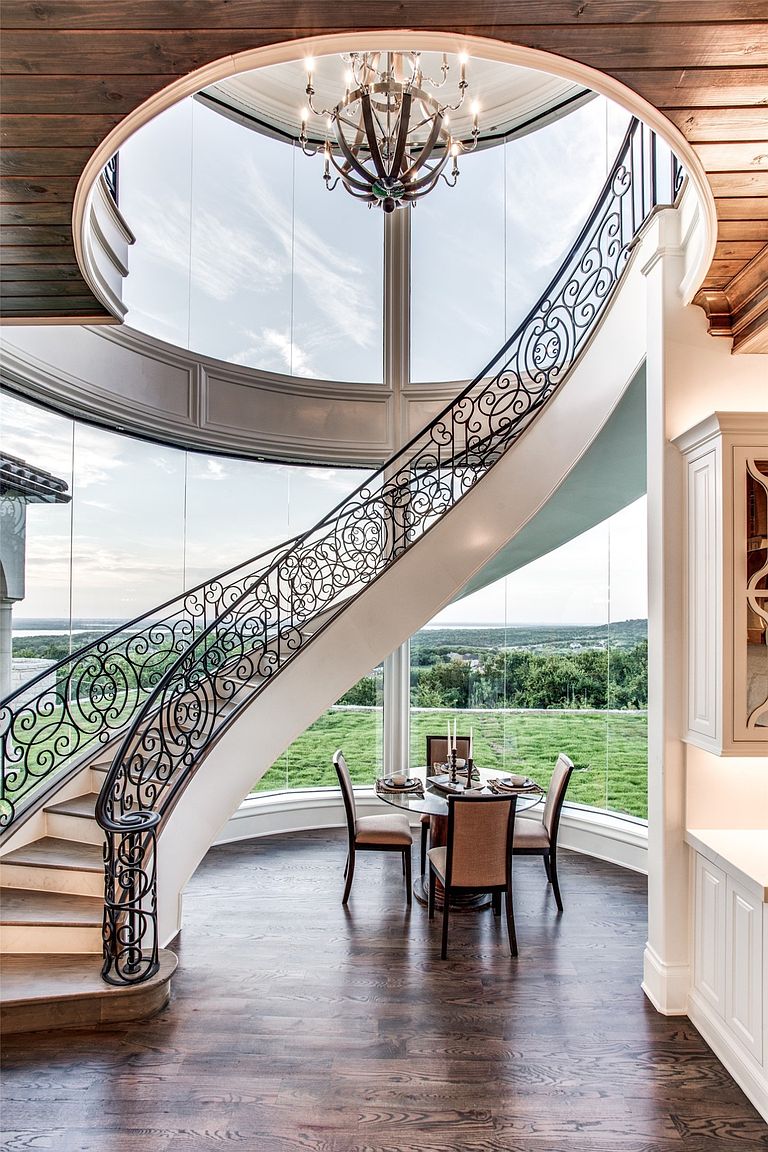
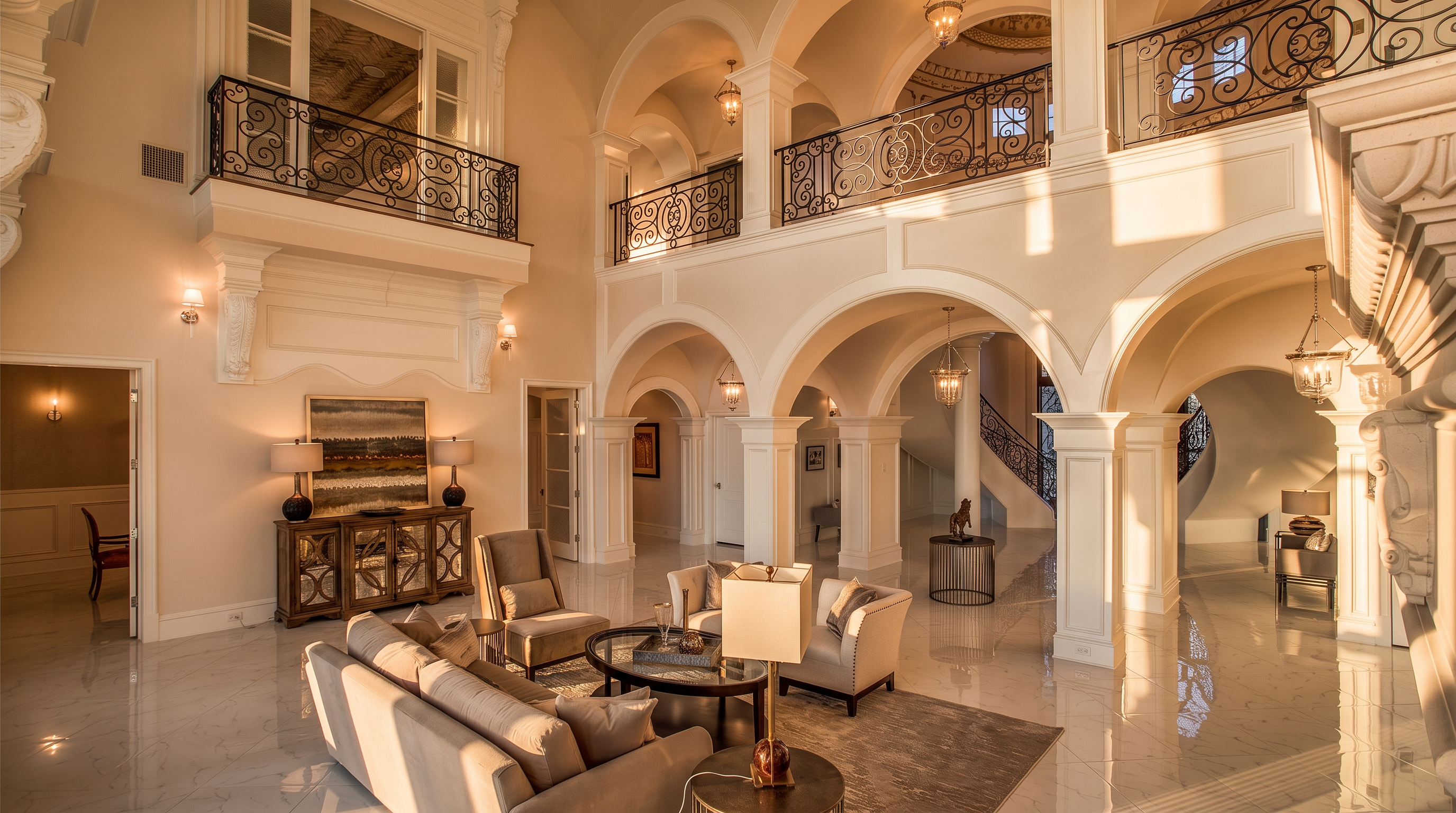
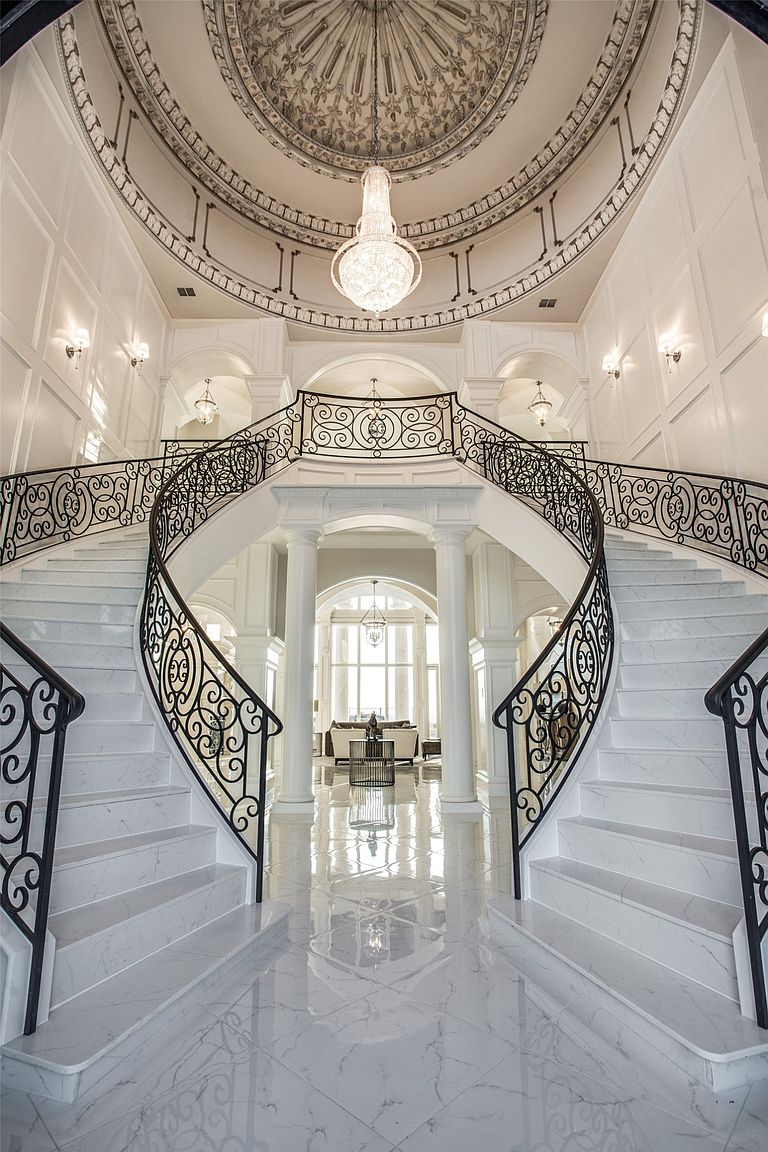
The approach alone sets the tone. A long paved driveway leads through a symmetrical, Mediterranean-inspired forecourt anchored by a tiered stone fountain, the warm exterior lighting catching the tiled roofline during the golden hour in a way that feels almost cinematic. Step through the arched central entryway and the home announces itself immediately: a dramatic double staircase rises beneath a crystal chandelier suspended from a circular domed ceiling, its wrought-iron railings casting delicate shadows across light stone steps. Two additional floating staircases elsewhere in the residence reinforce the architectural ambition—each one a sculptural gesture as much as a functional element.
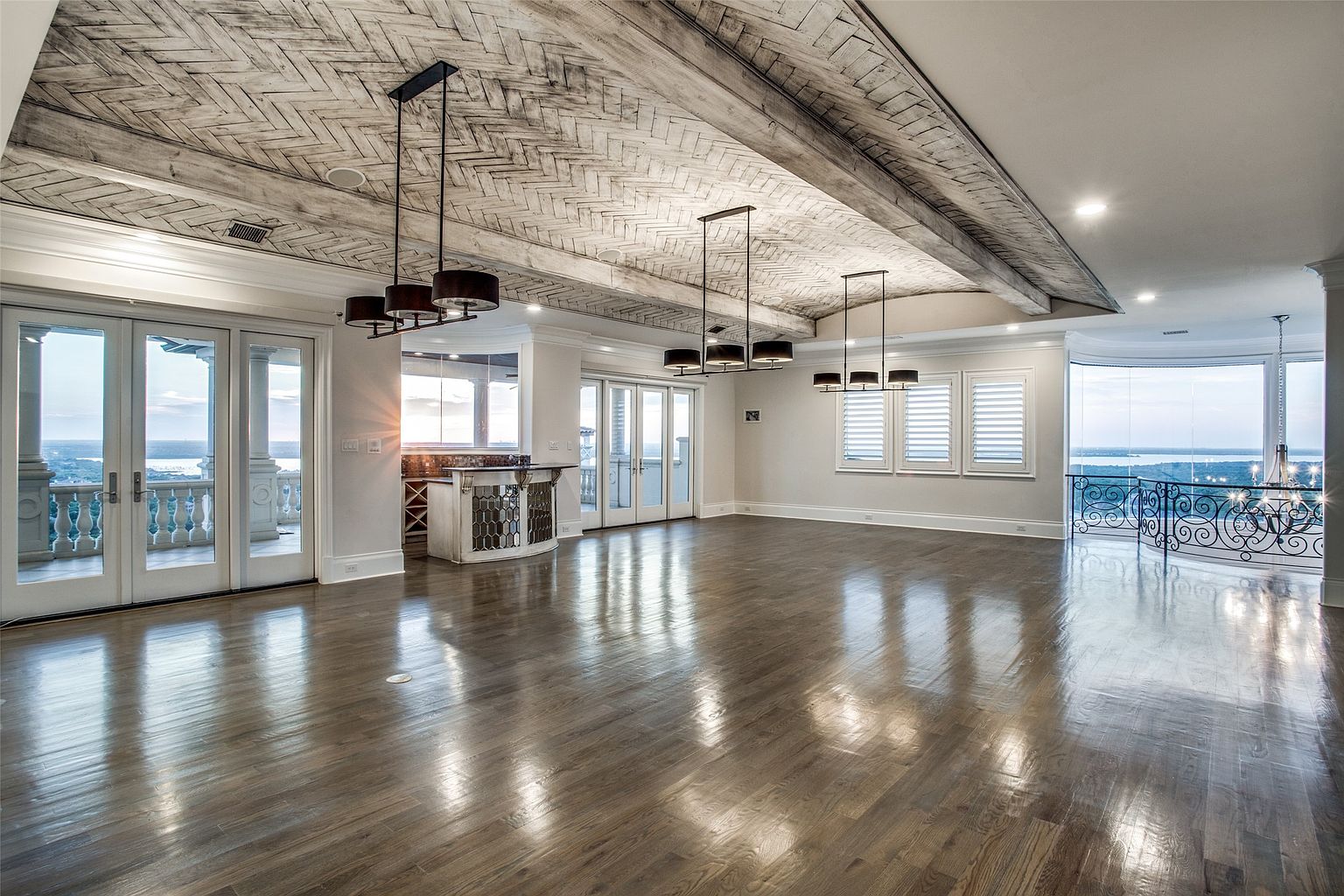
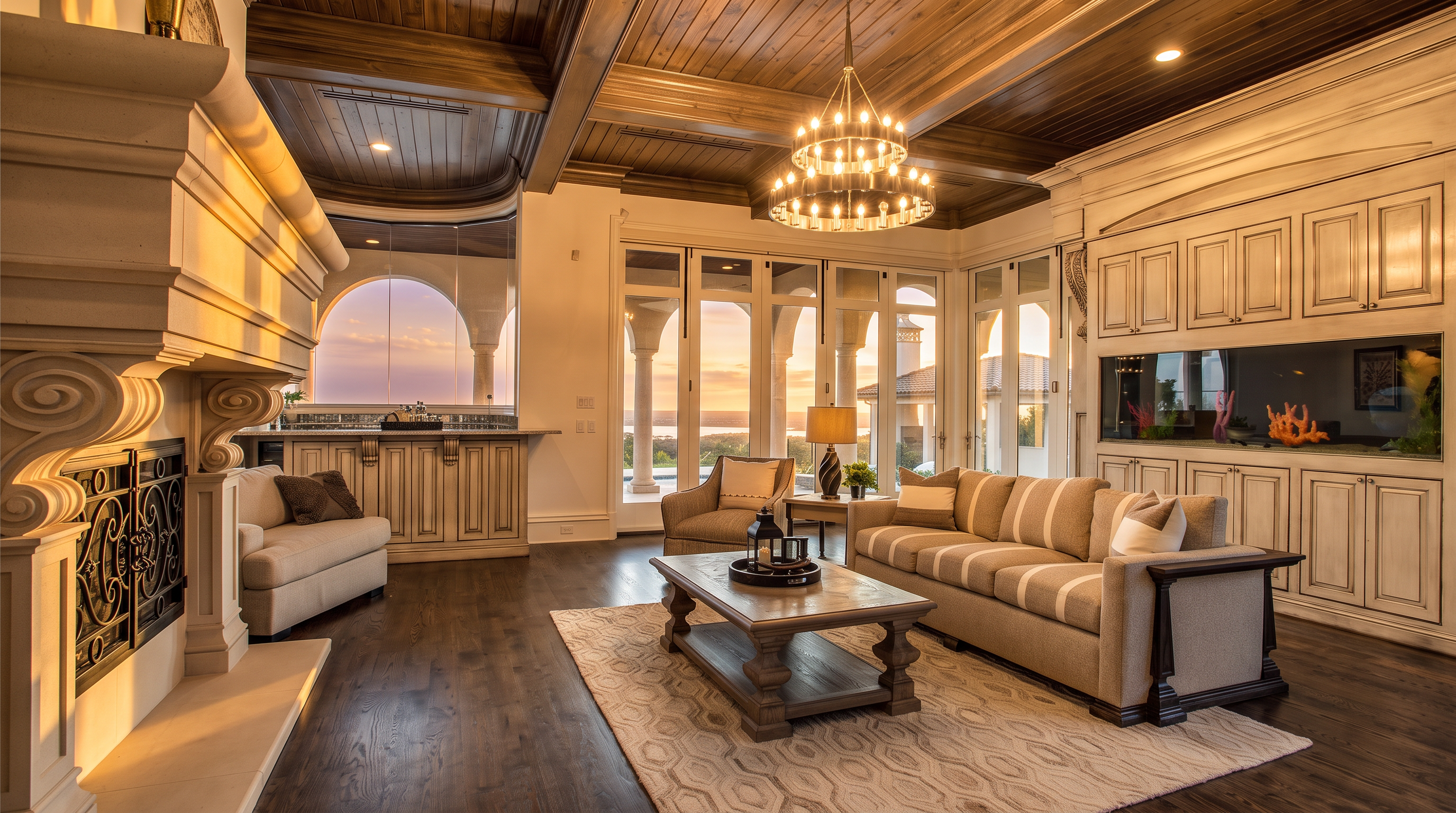
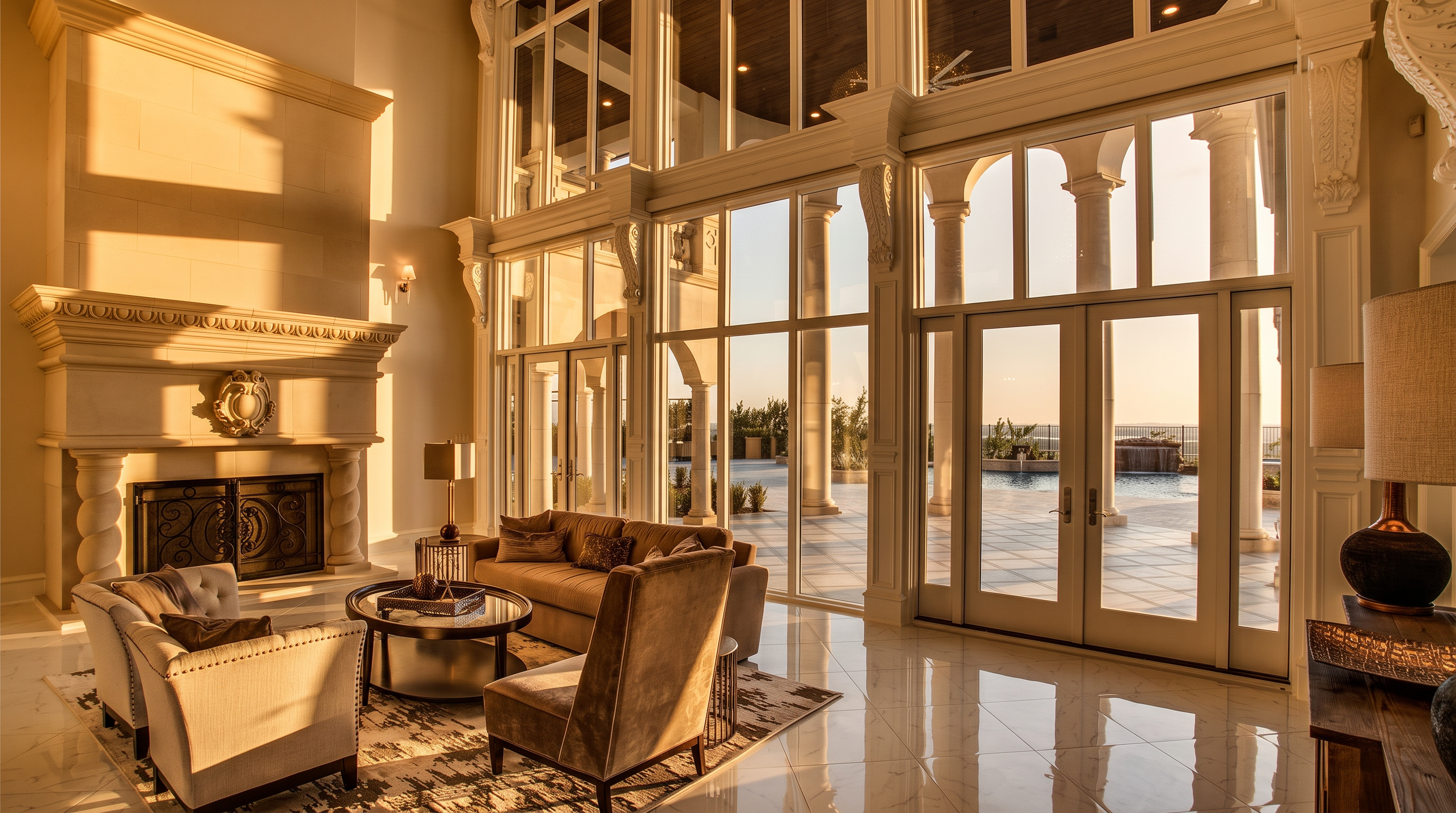
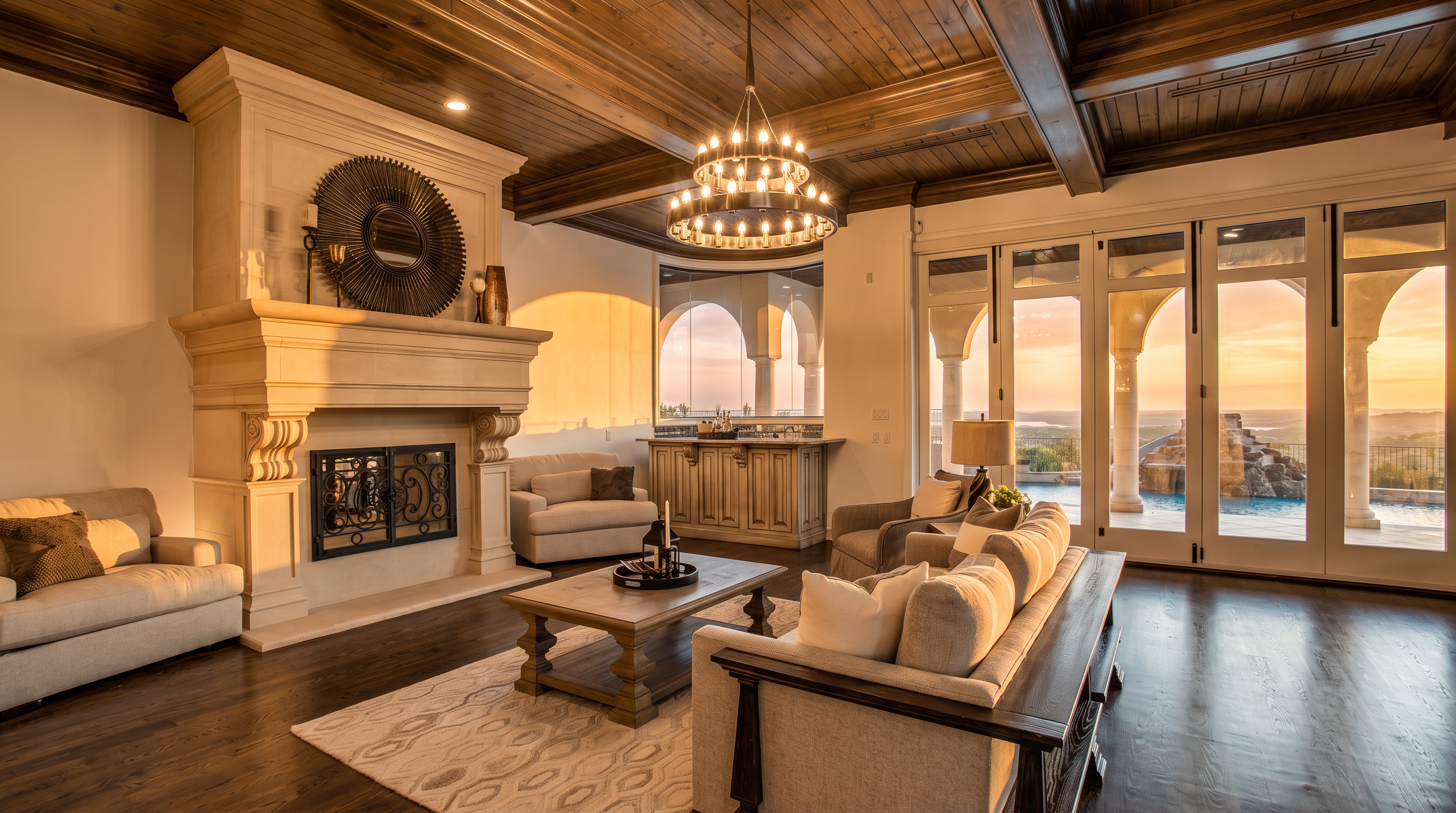
The interiors move between grandeur and intimacy with practiced ease. A soaring living room with a herringbone-patterned wood vaulted ceiling and exposed beams opens to panoramic landscape views through walls of glass, while a second sitting room anchored by a stone fireplace and coffered wood-paneled ceiling offers a more gathered, atmospheric retreat. Throughout, dark hardwood floors, polished stone, and custom millwork establish a material language that is both consistent and richly layered.
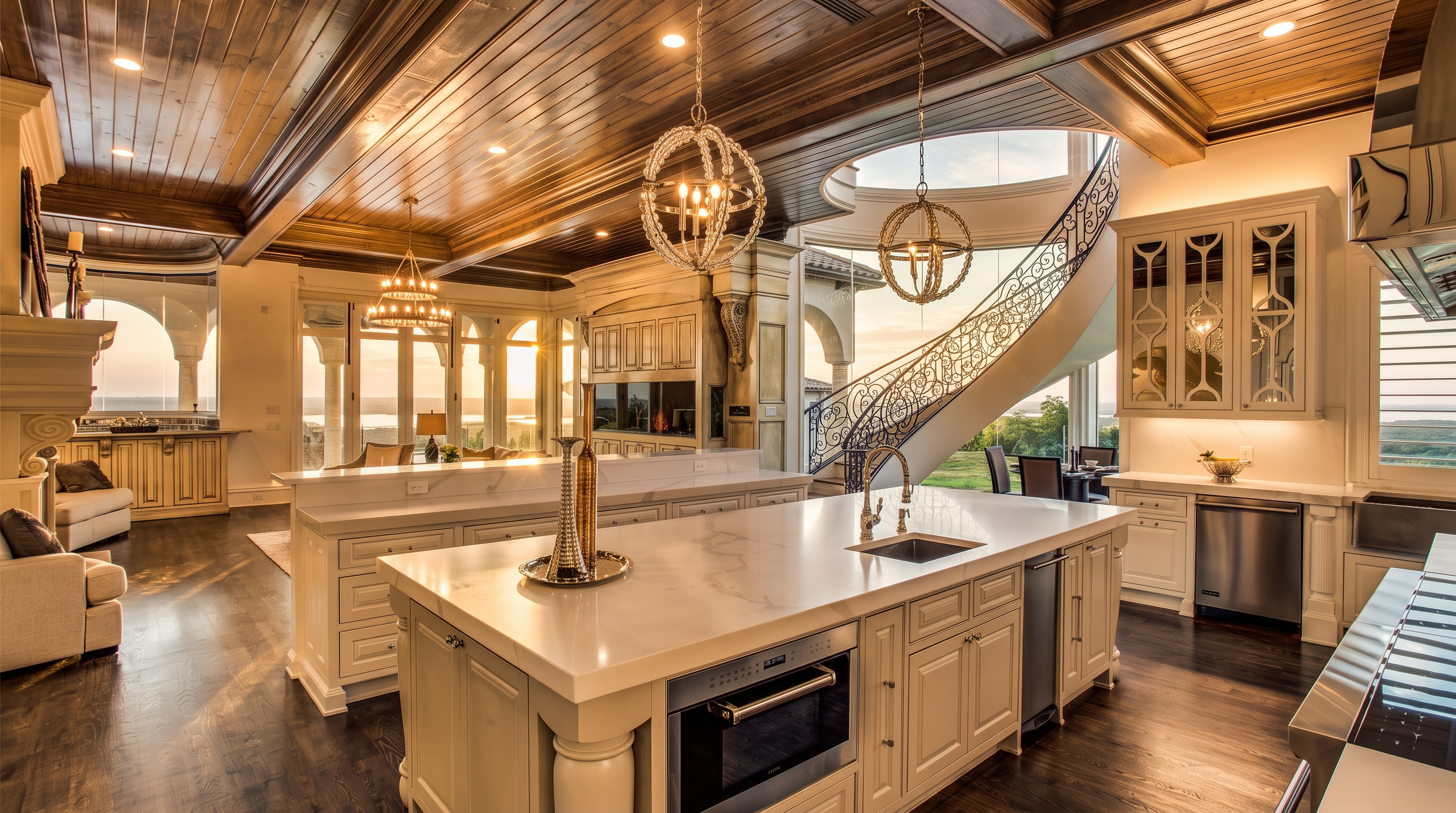
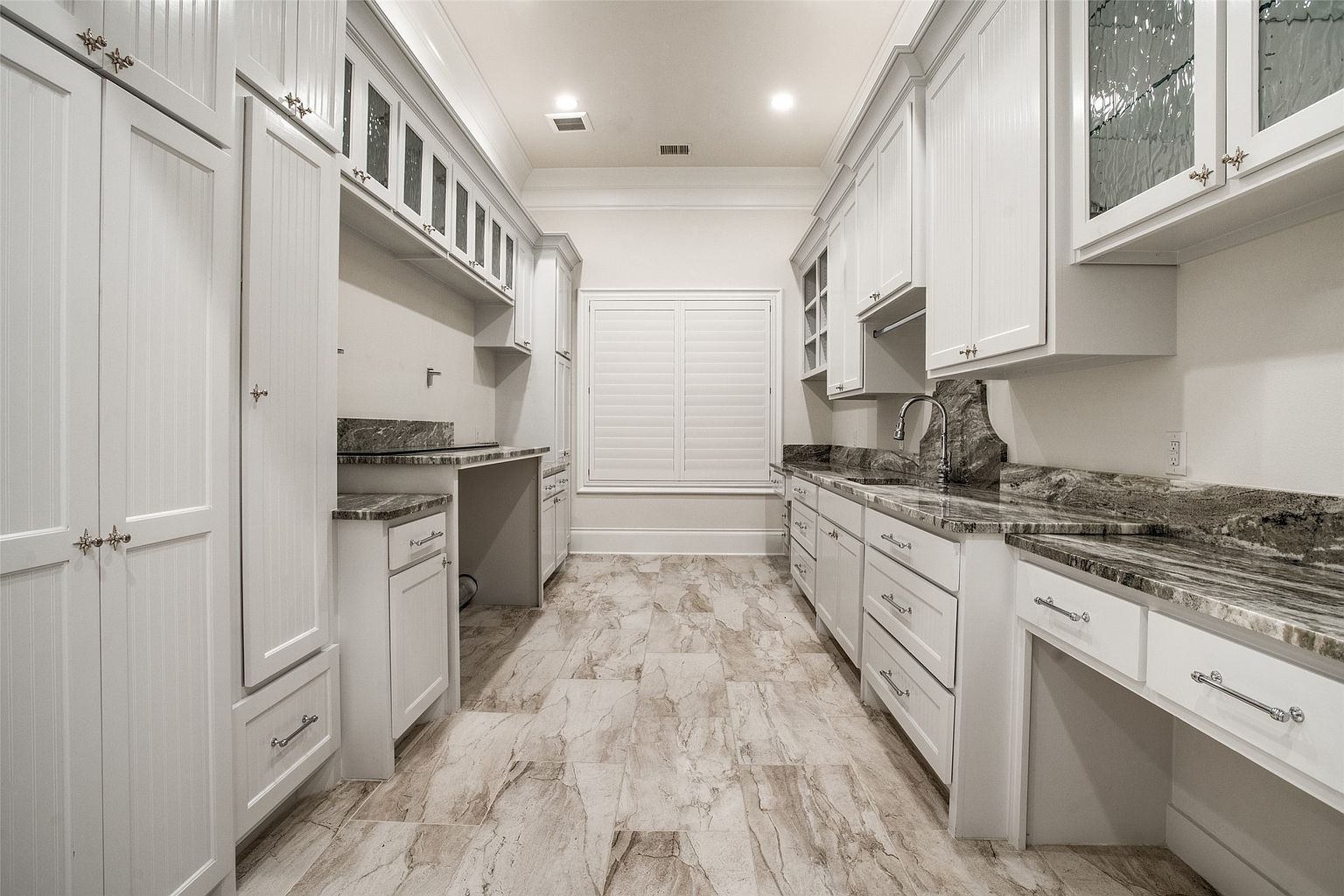
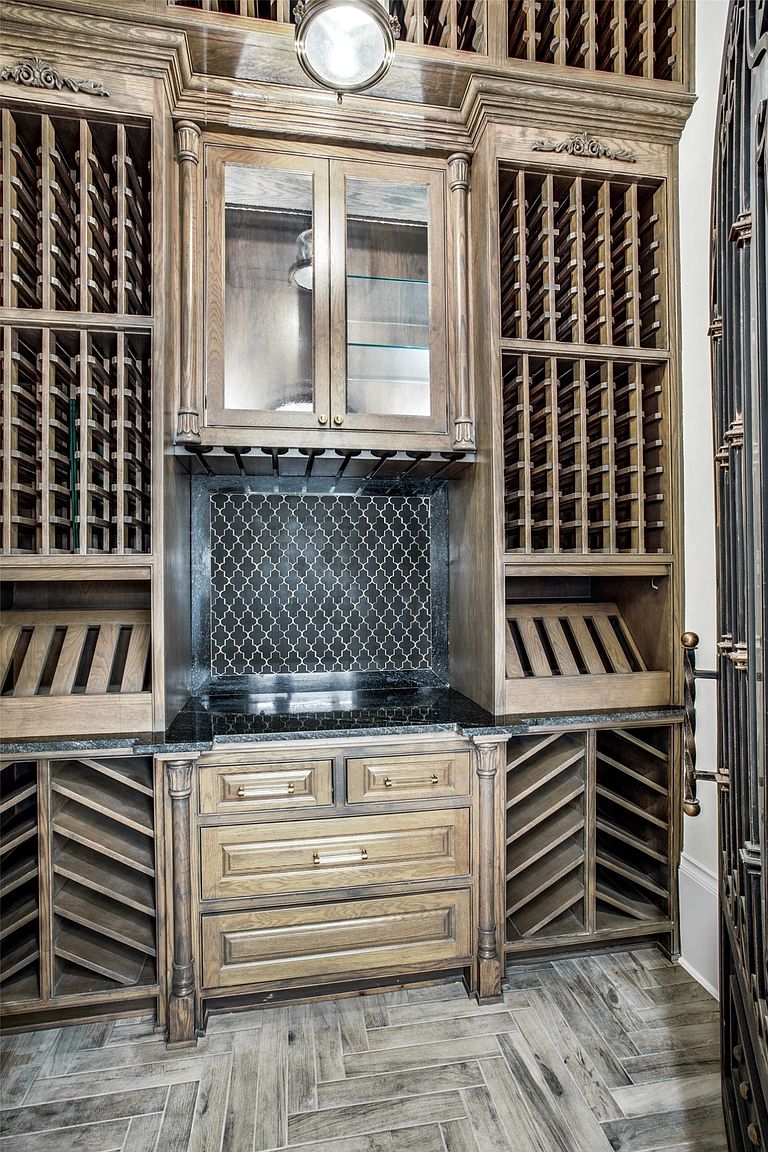
The gourmet kitchen is a working centerpiece: a large stone-topped island, Wolf and SubZero appliances, custom wood ceilings, and a curved staircase serving as an architectural flourish that reminds you this room was never meant to be merely functional. Adjacent, the wine room—finished with herringbone flooring, custom wood cabinetry, and an ornate metal gate—offers dedicated bottle storage and display in an atmosphere more reminiscent of a private club than a residential cellar. A butler's pantry completes the entertaining infrastructure.
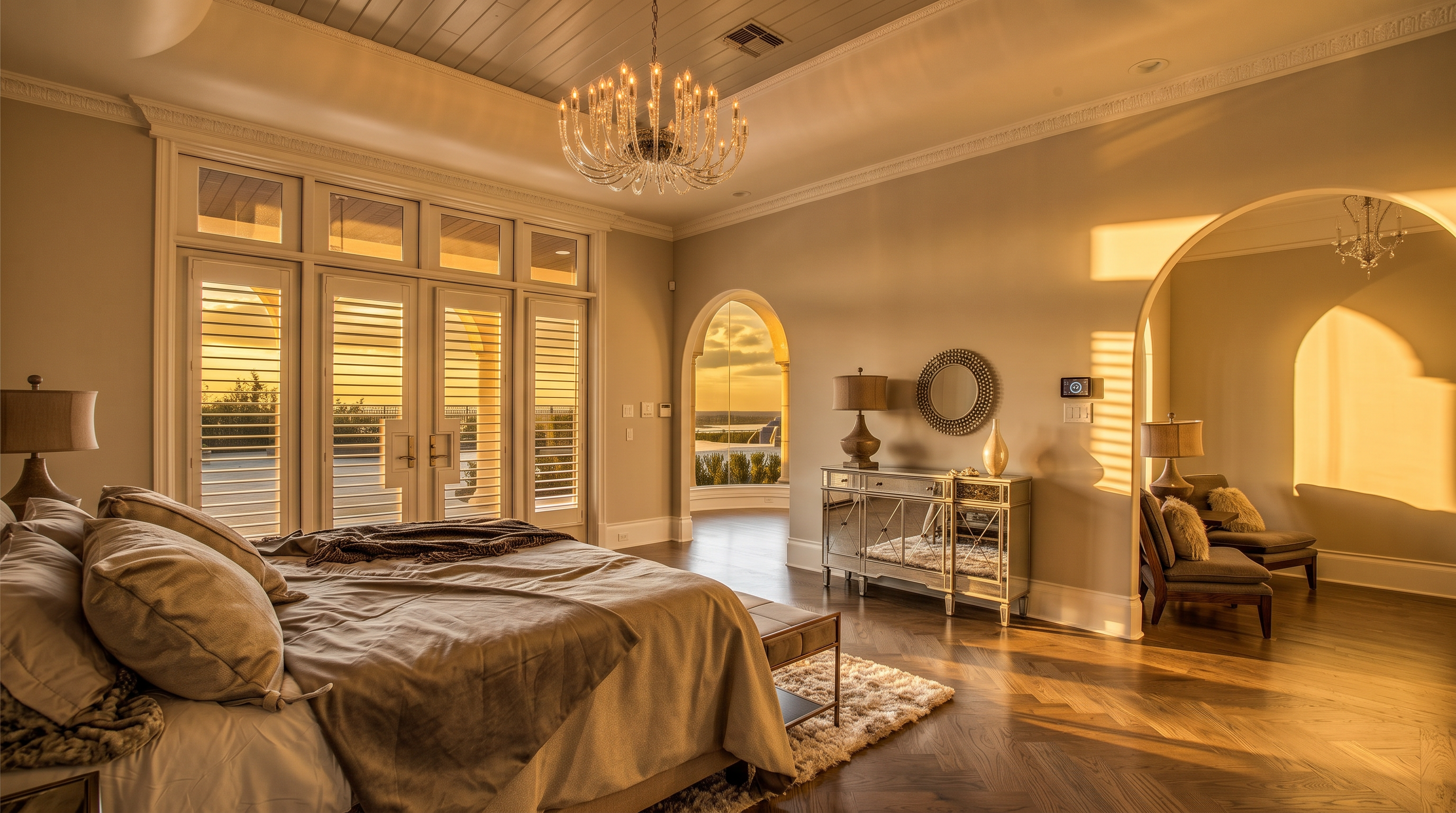
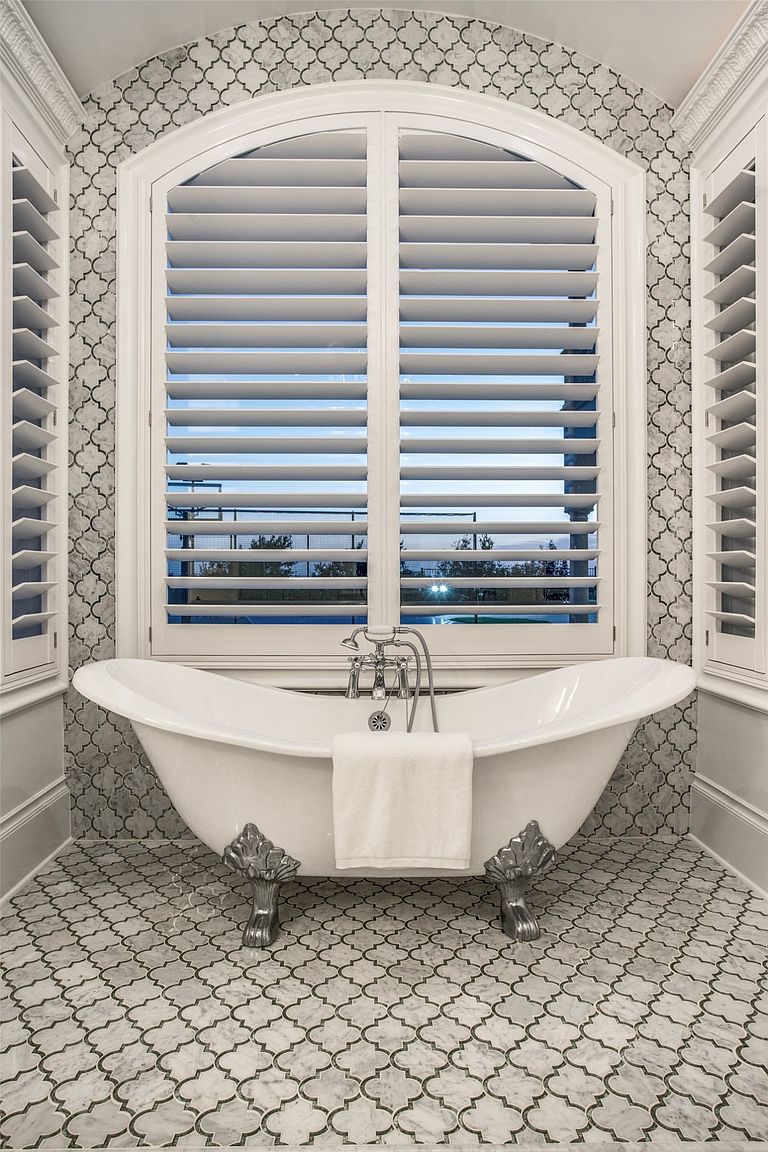
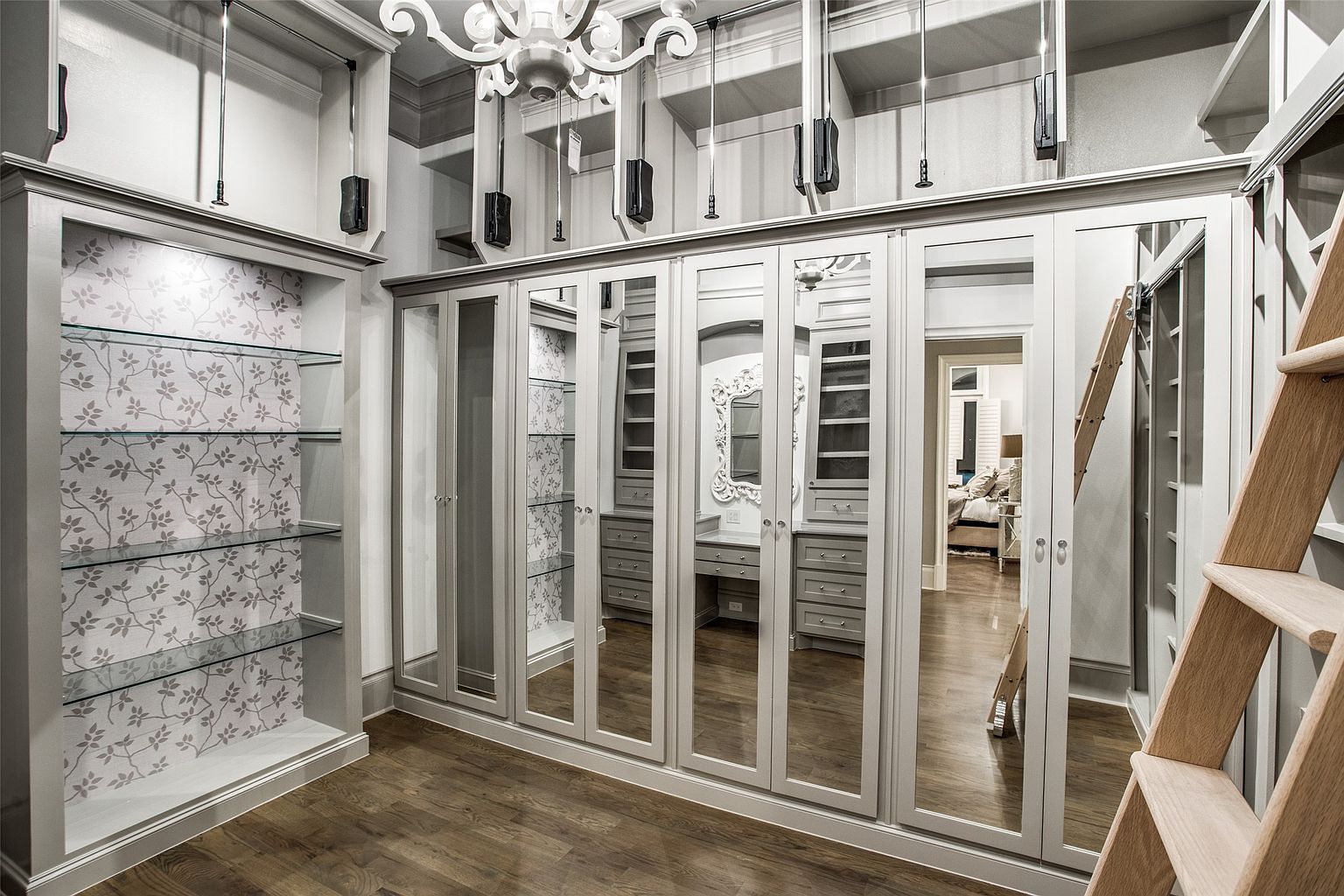
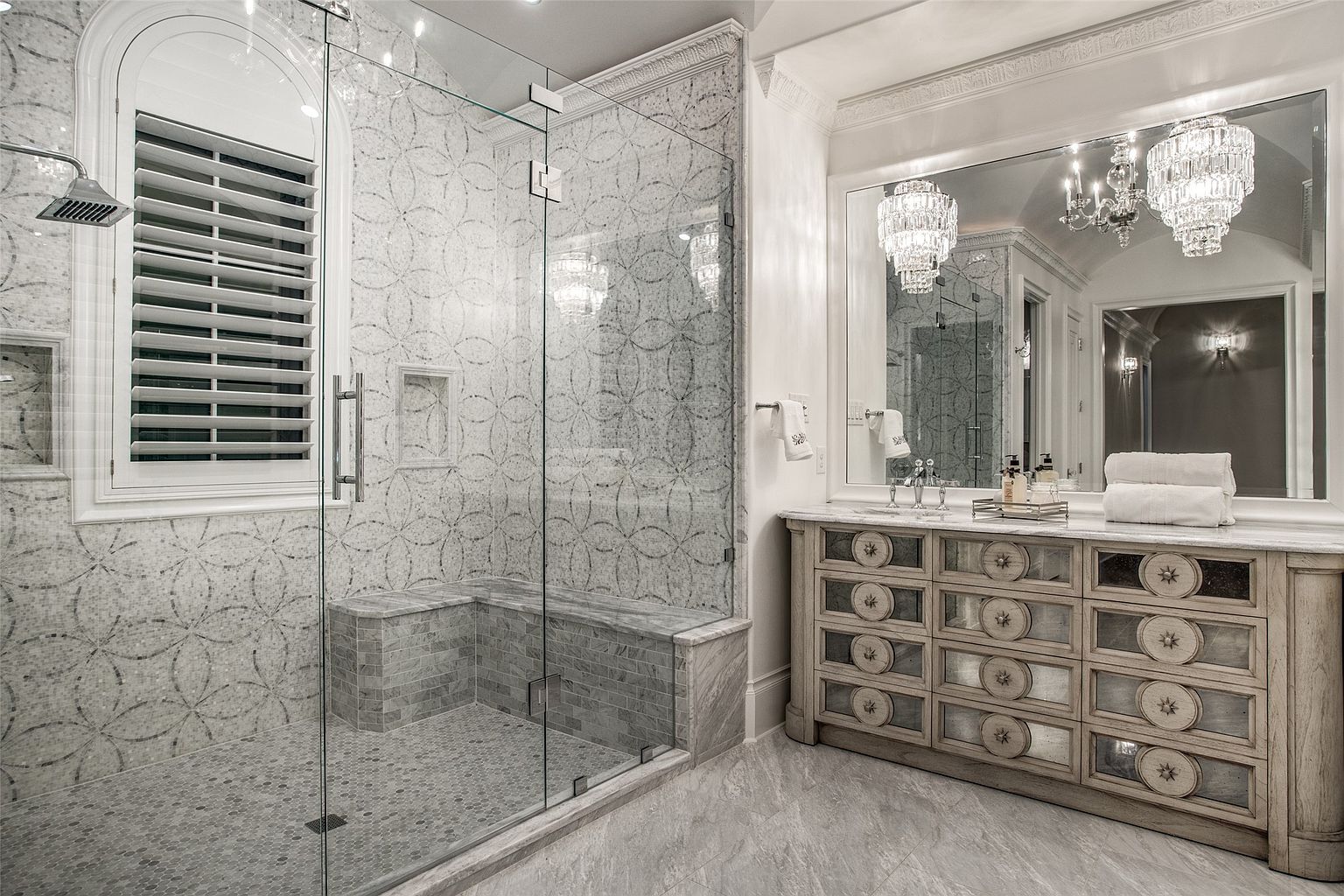
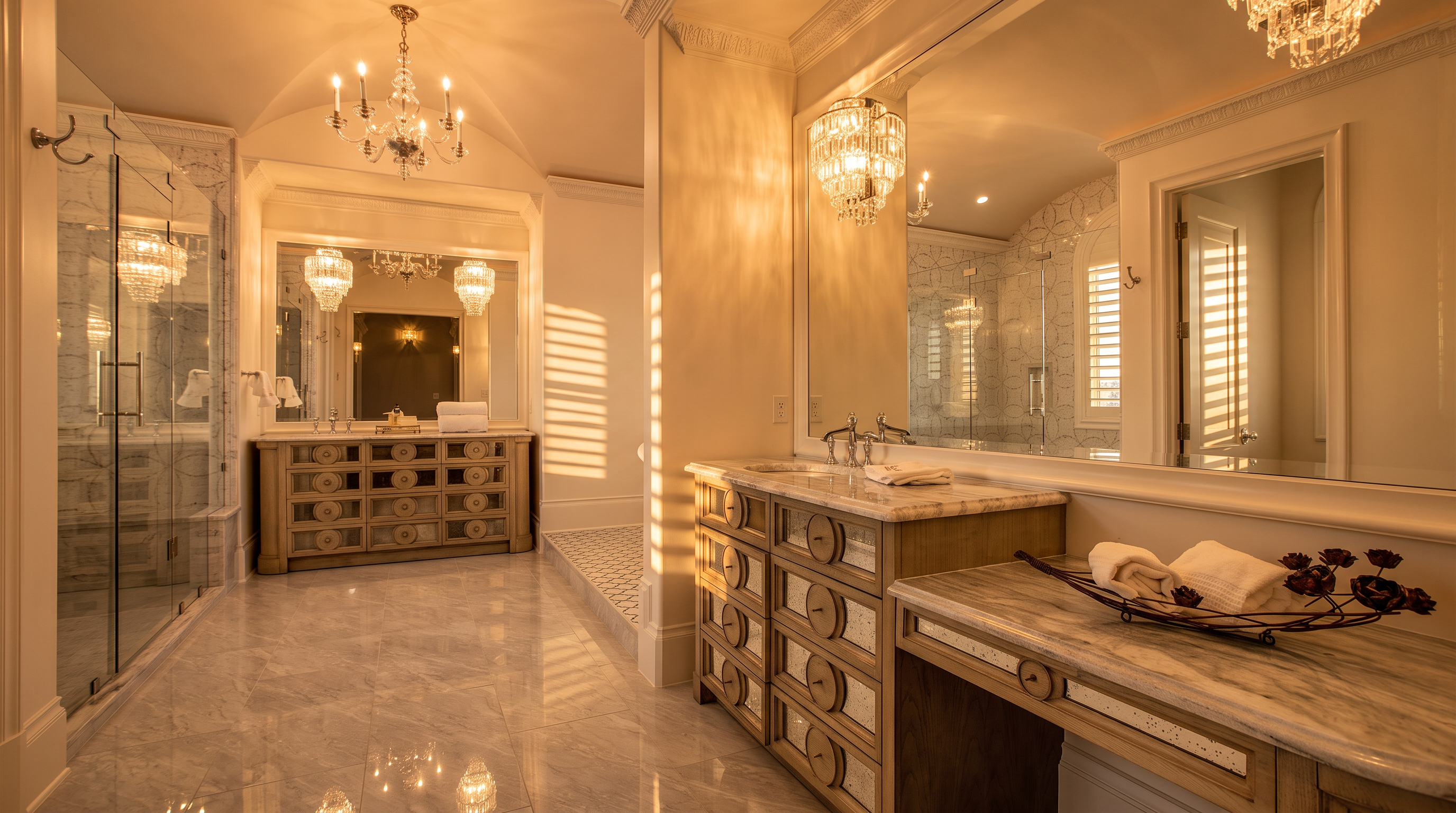
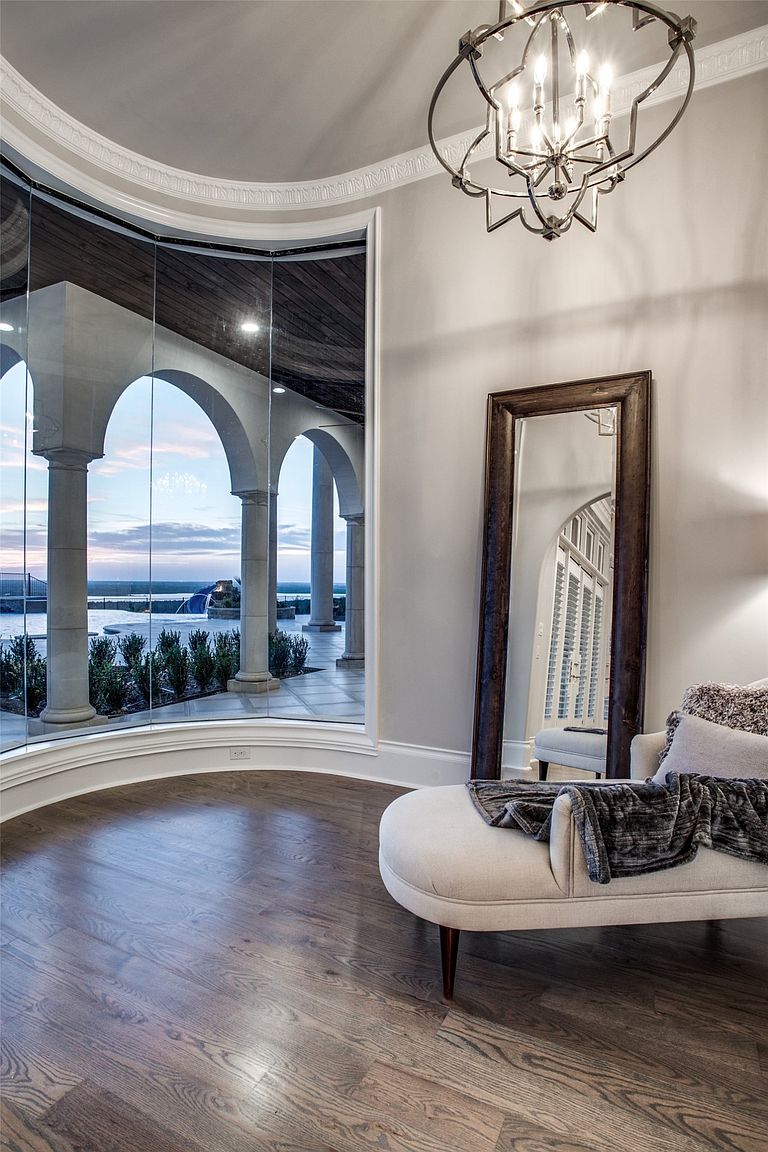
The primary suite is a destination unto itself. Herringbone wood floors, a coffered ceiling, and a grand crystal chandelier establish a refined backdrop, while arched doorways lead through to a spa-inspired bathroom featuring a freestanding clawfoot soaking tub centered beneath an arched window, a walk-in shower clad in intricate patterned tile with a built-in stone bench, dual vanities with crystal chandeliers, and a walk-in closet outfitted with mirrored custom cabinetry, integrated lighting, and a rolling library ladder.
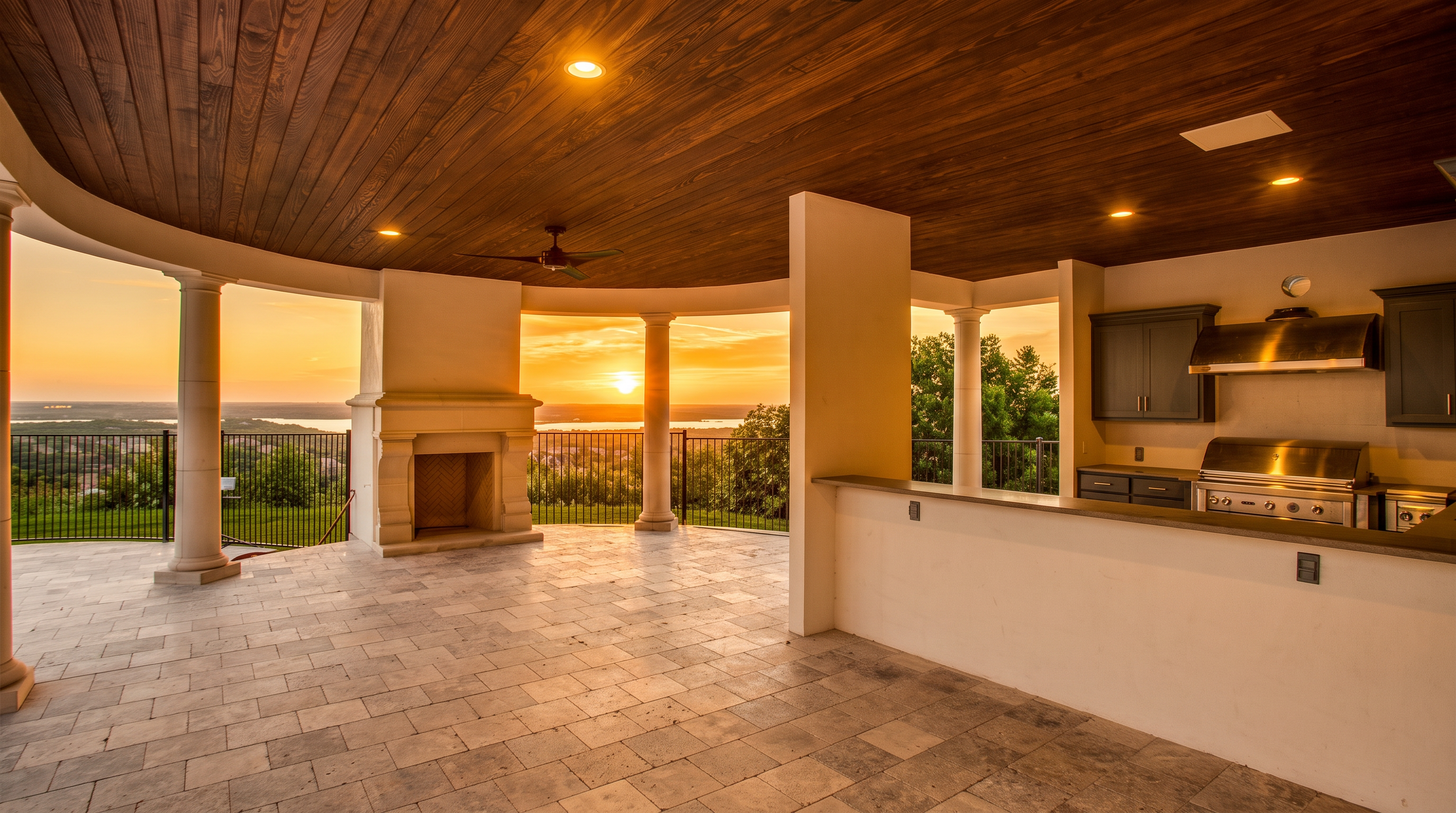
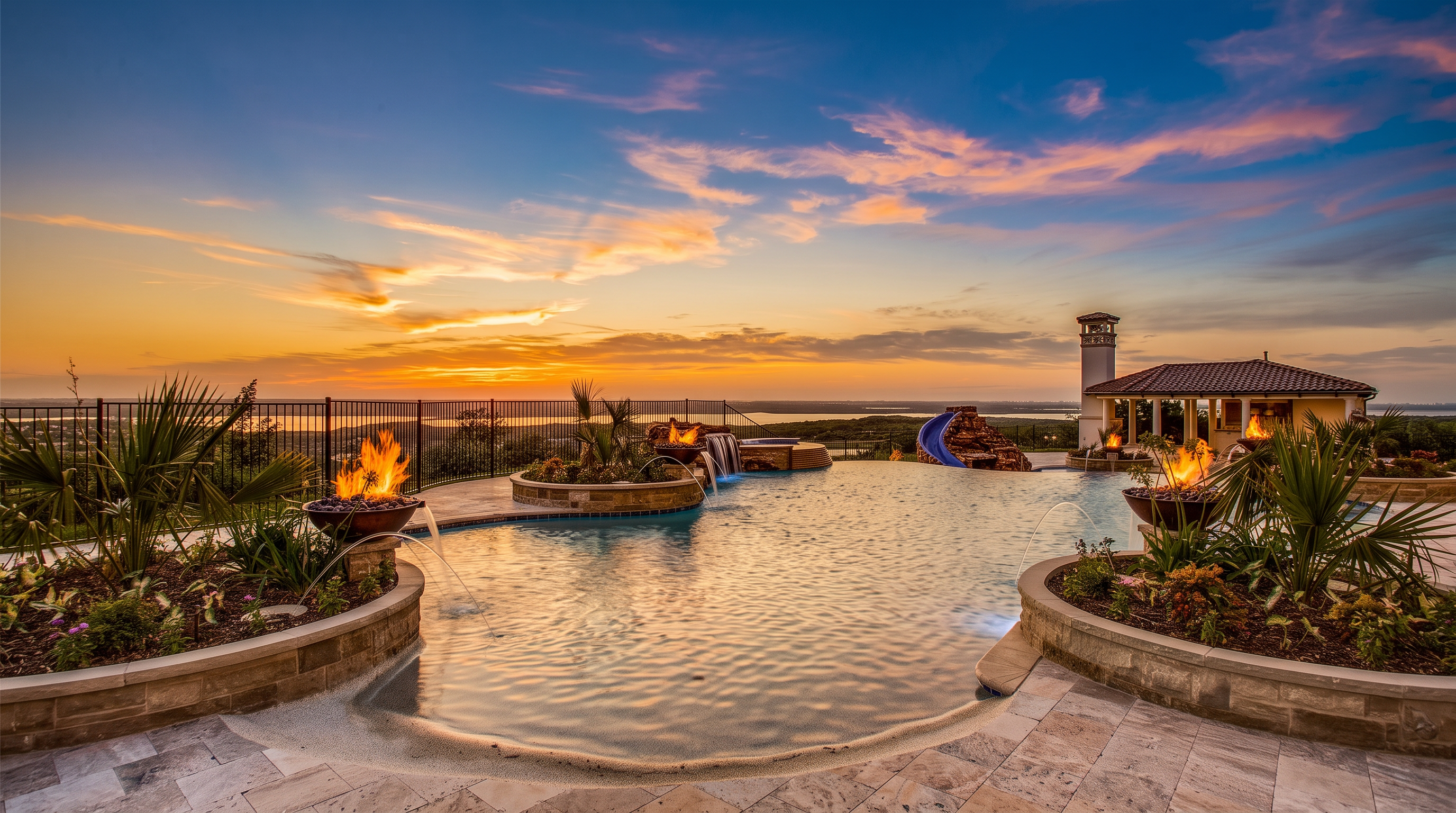
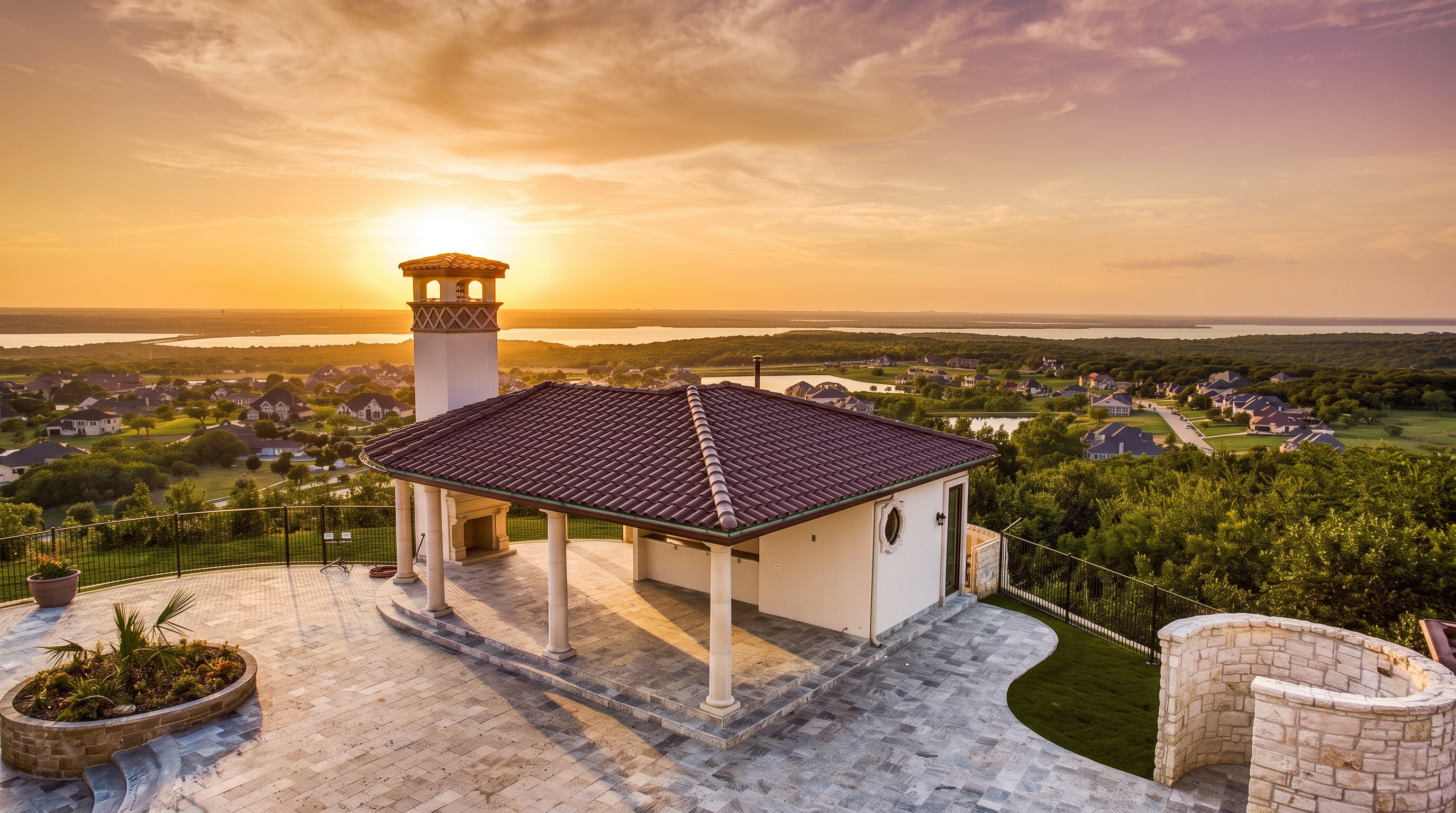
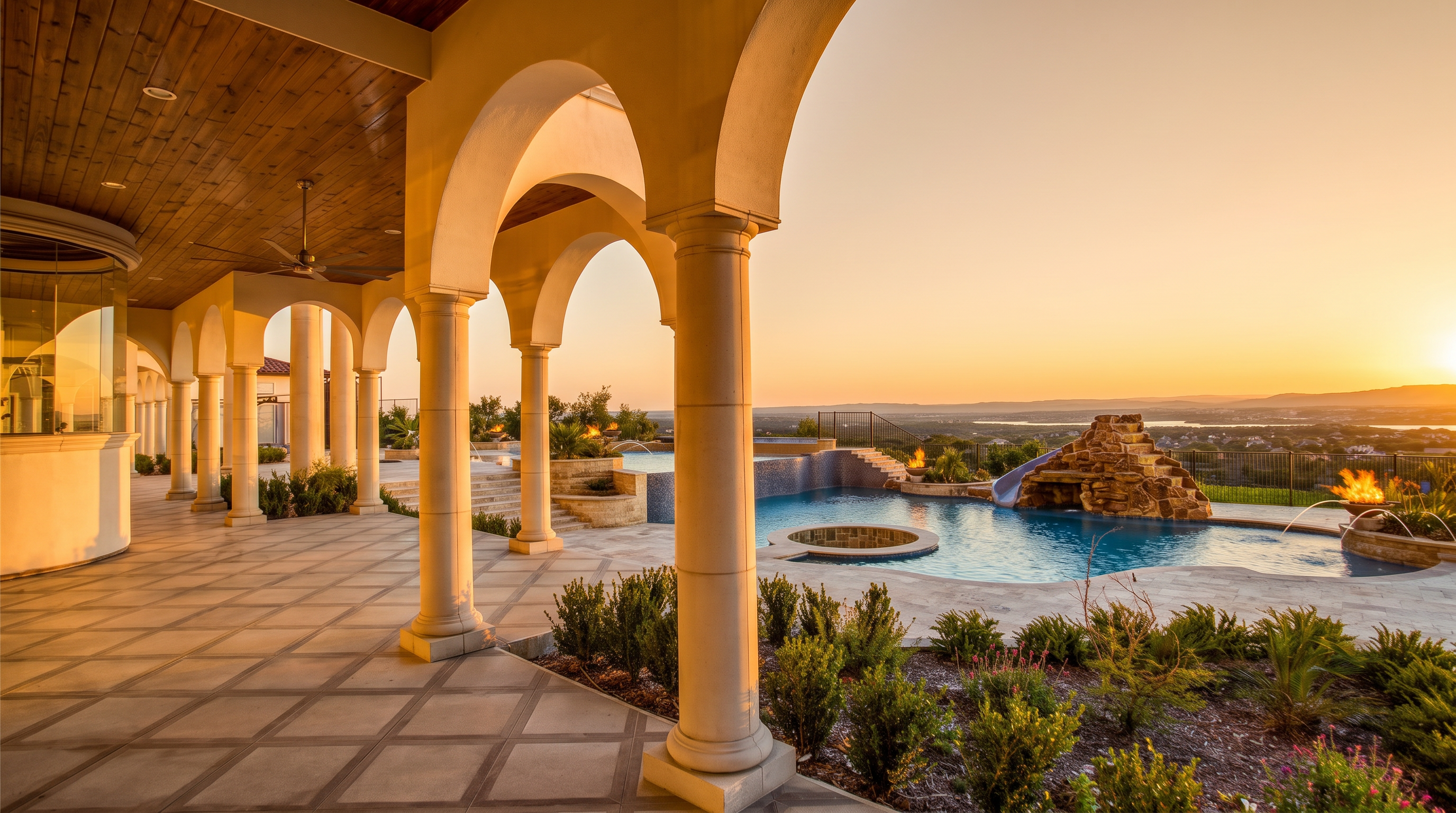
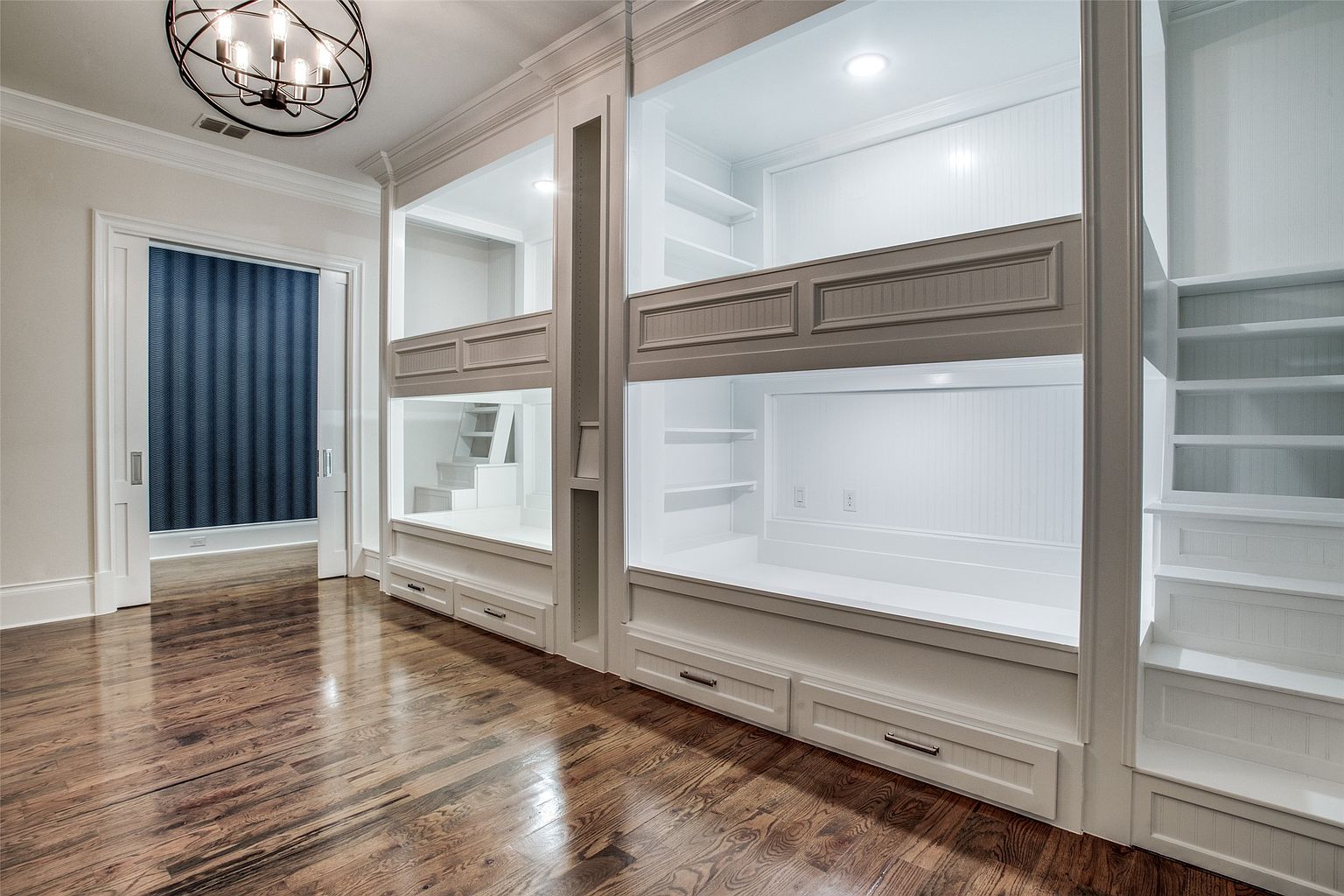
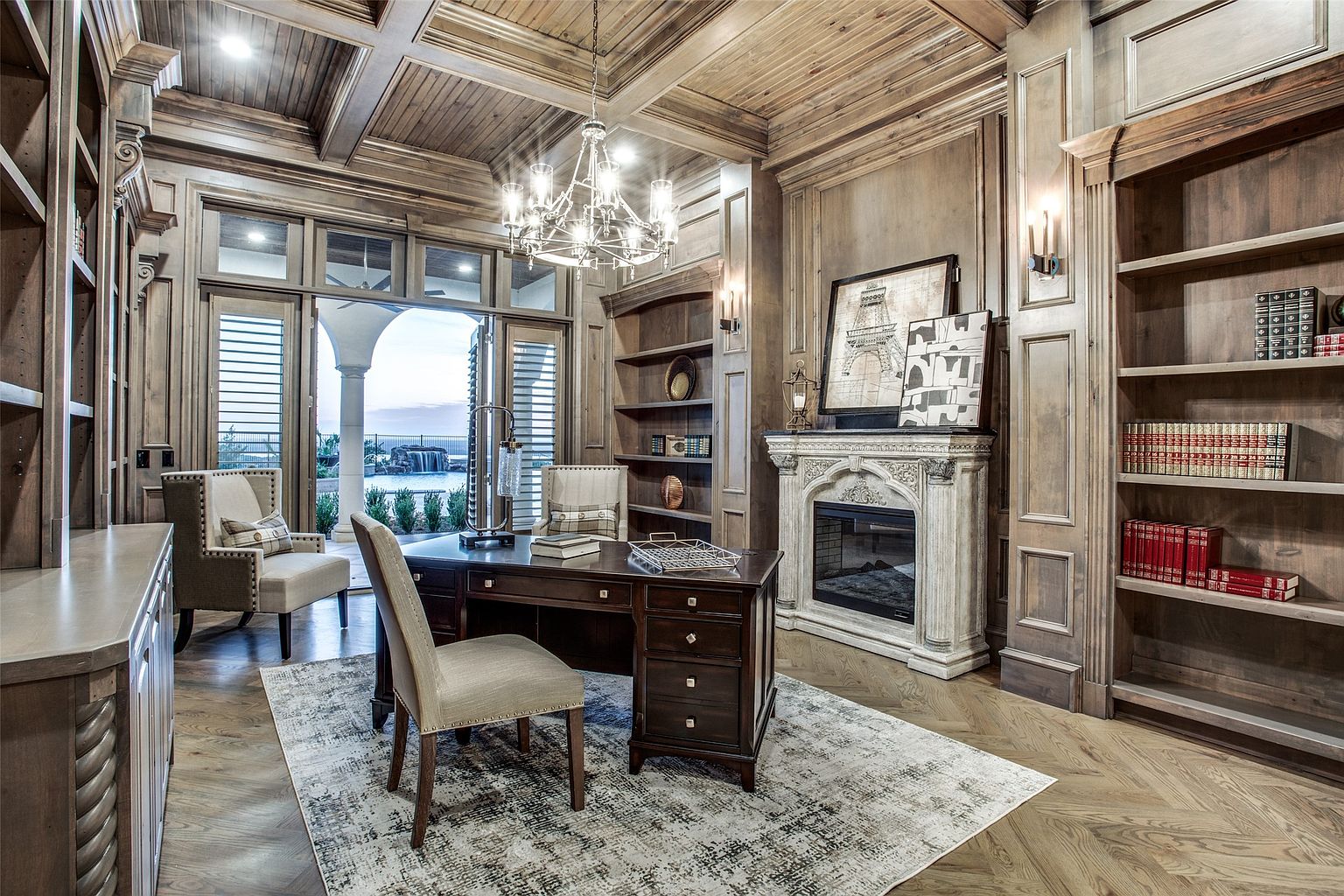
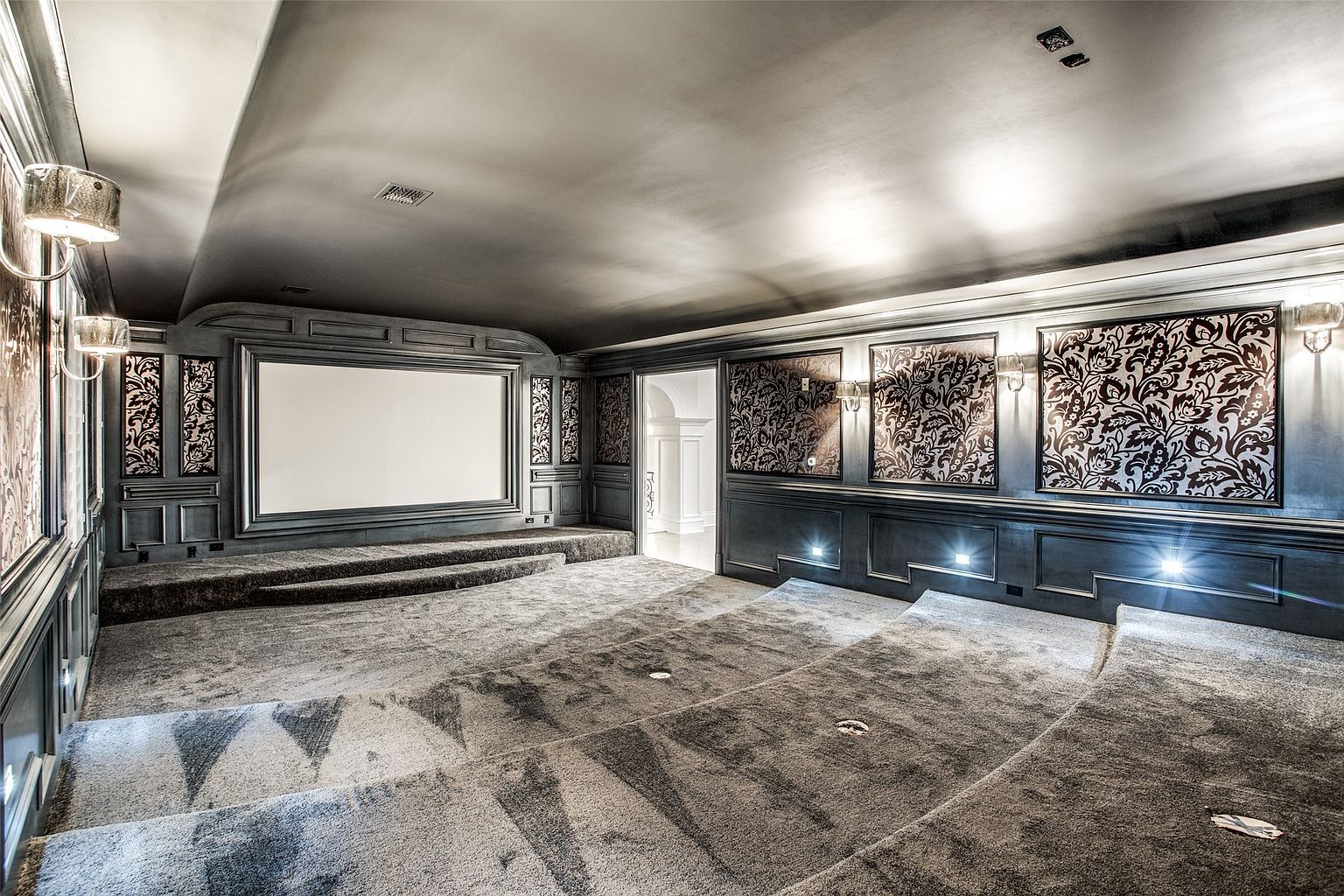
Outside, the estate transforms into a full resort. The infinity-edge pool complex incorporates dual grottos, cascading waterfalls, a water slide, integrated fire bowls, and a sunken fire pit connected by a stone walkway—all positioned to frame the extraordinary panoramic views of the lake and distant city lights. The covered cabana and outdoor kitchen, finished with wood-paneled ceilings and classical columns, make the transition between indoor and outdoor living entirely seamless. A dedicated home theater with tiered seating and a projection screen, a private home office with a stone fireplace and built-in bookshelves, and custom bunk accommodations for guests round out a property that has genuinely anticipated every occasion.
Cedar Hill, Texas occupies a distinctive position—both geographically and culturally—within the broader Dallas–Fort Worth metroplex. Situated in the southwestern corner of Dallas County and extending into Ellis County, the city sits along the Escarpment, a dramatic geological ridge that forms the western edge of the Blackland Prairie and contributes to the elevated terrain that makes addresses like Mountain View Court genuinely singular. The city's name is no accident: Cedar Hill's topography is among the most pronounced in the region, and the views available from its higher elevations are measurably different from anything found in the flatlands that characterize much of North Texas.
The community itself has grown steadily and deliberately over recent decades, evolving from a small historic town—incorporated in 1856 and one of the older municipalities in Dallas County—into a thriving suburban city of roughly 50,000 residents that has managed to retain meaningful green space and a strong sense of local identity. The historic downtown district preserves traces of the city's nineteenth-century origins, with period architecture and a walkable commercial core that provides a counterpoint to the broader suburban landscape.
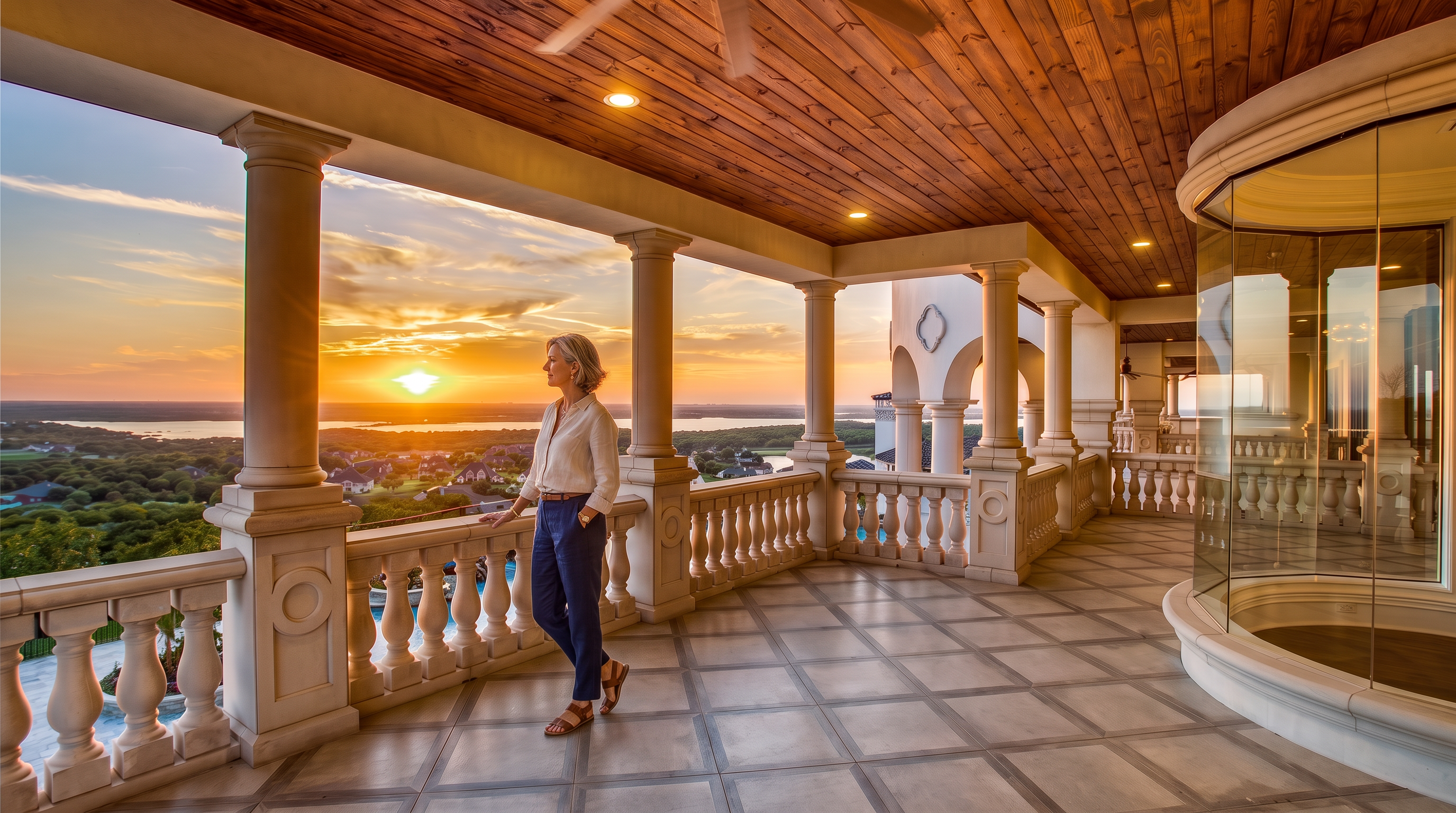
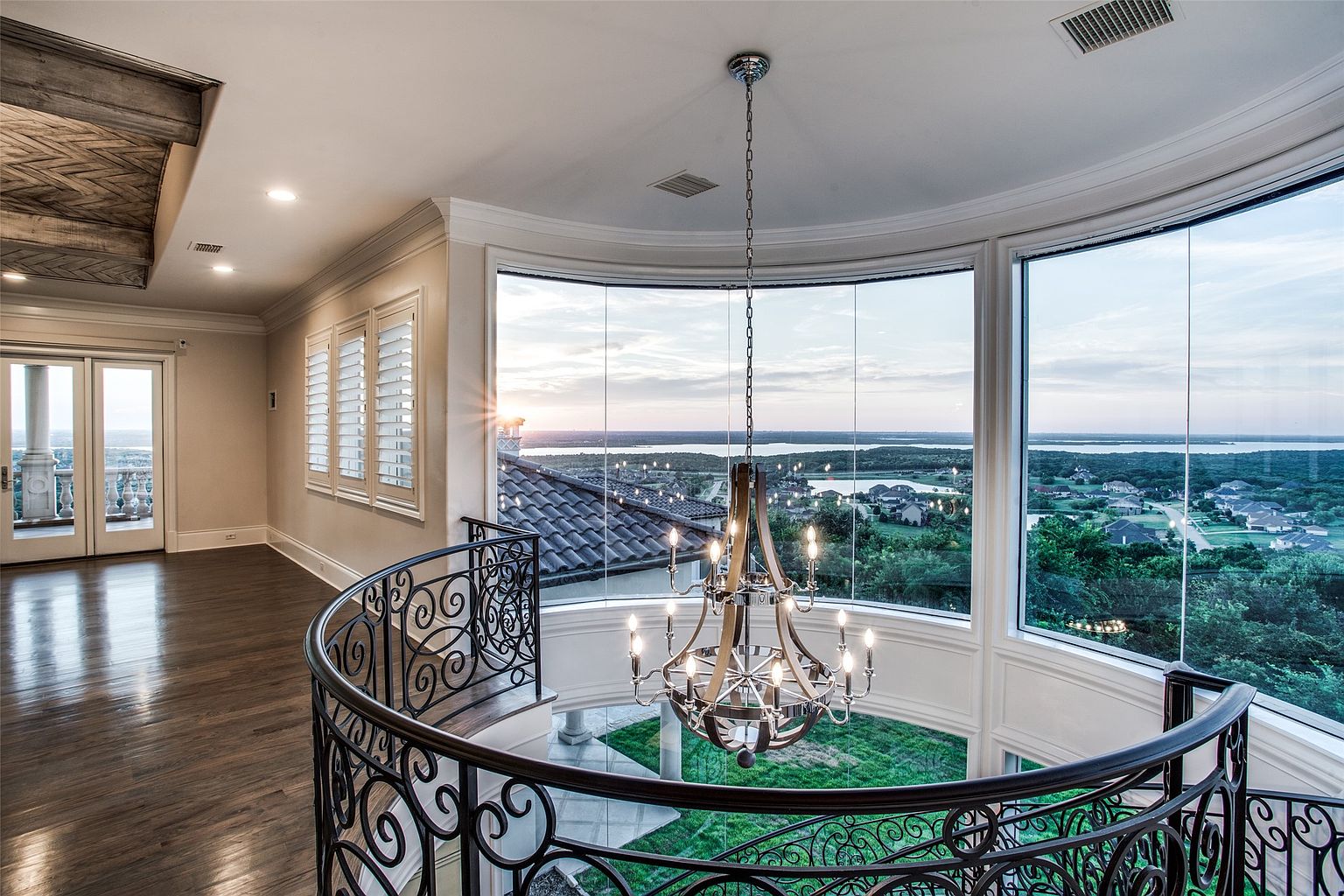
The natural environment surrounding Cedar Hill is one of its most compelling assets. Cedar Hill State Park, one of the most visited state parks in Texas, encompasses more than 1,800 acres along the shores of Joe Pool Lake and offers hiking trails, mountain biking, fishing, and water recreation within minutes of the city's residential neighborhoods. Joe Pool Lake itself—a reservoir completed by the Army Corps of Engineers in the 1980s—provides approximately 7,500 acres of water surface and has become a regional destination for boating, sailing, and lakeside recreation. From the elevated vantage point of Mountain View Court, the lake's surface is visible as part of a sweeping panorama that also takes in the Fort Worth skyline to the west, the Las Colinas urban center to the north, and the unmistakable form of AT&T Stadium in Arlington.
That panorama speaks to Cedar Hill's central location within the metroplex. The city sits within practical driving distance of Dallas, Fort Worth, and the mid-cities corridor, offering residents the full cultural, dining, and commercial infrastructure of one of the country's largest metropolitan areas while maintaining a quieter, more spacious residential character. Major employment centers, international airports, professional sports venues, and the cultural institutions of both Dallas and Fort Worth are all accessible without the density and traffic congestion of the urban core.
For families, Cedar Hill Independent School District serves the community, and the city's parks and recreation infrastructure—anchored by the state park but extending through a network of municipal facilities—supports an active outdoor lifestyle throughout the year. The combination of dramatic natural topography, proximity to water recreation, genuine metropolitan access, and a community that has invested in its own character makes Cedar Hill an address that rewards closer attention. At Mountain View Court, that address reaches its most compelling expression.
Featured Highlights
Curated Content • Presented by James Walsh