The Story Behind
Treetop Privacy, Connected Living, in the Heart of Happy Valley
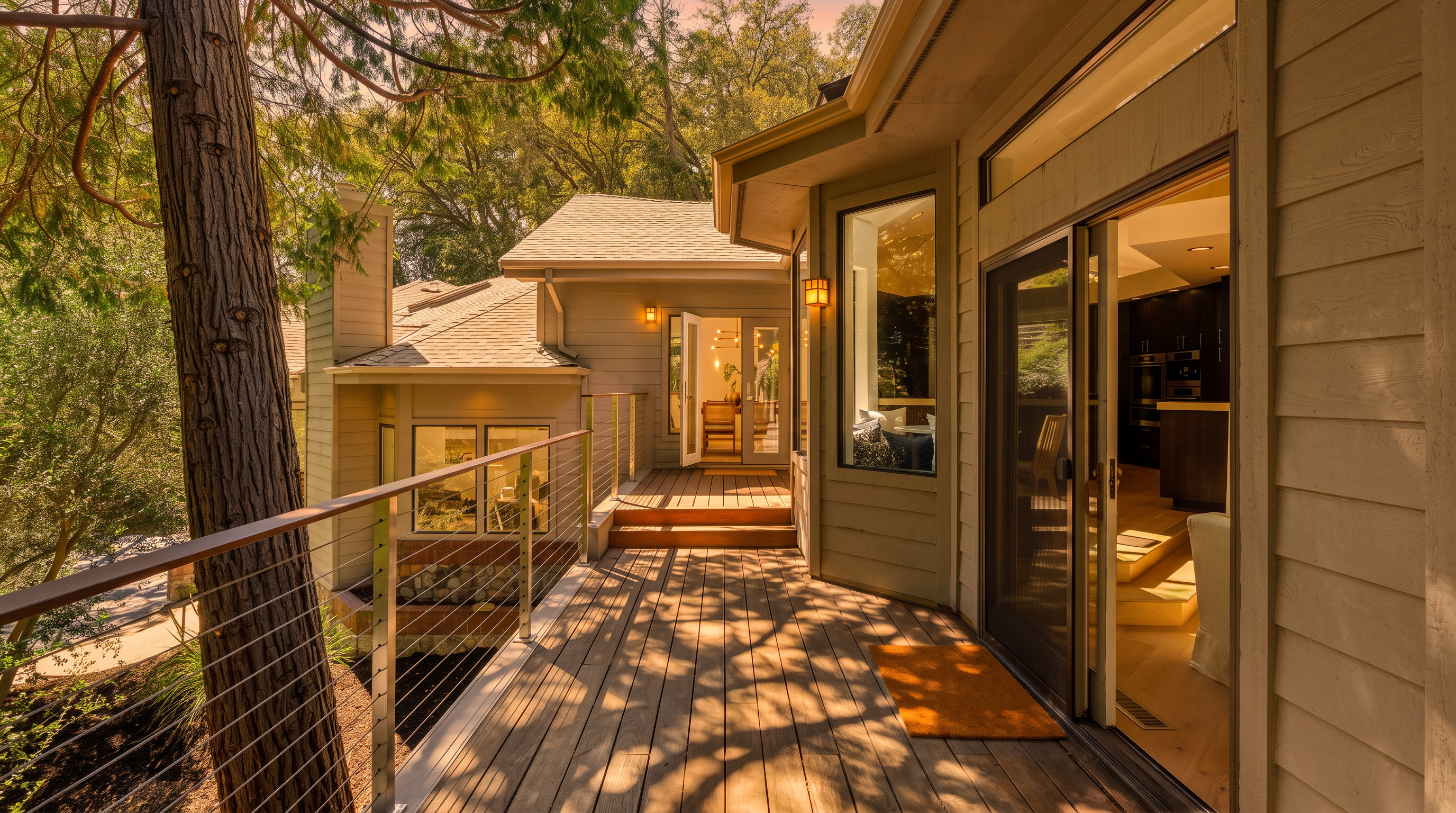
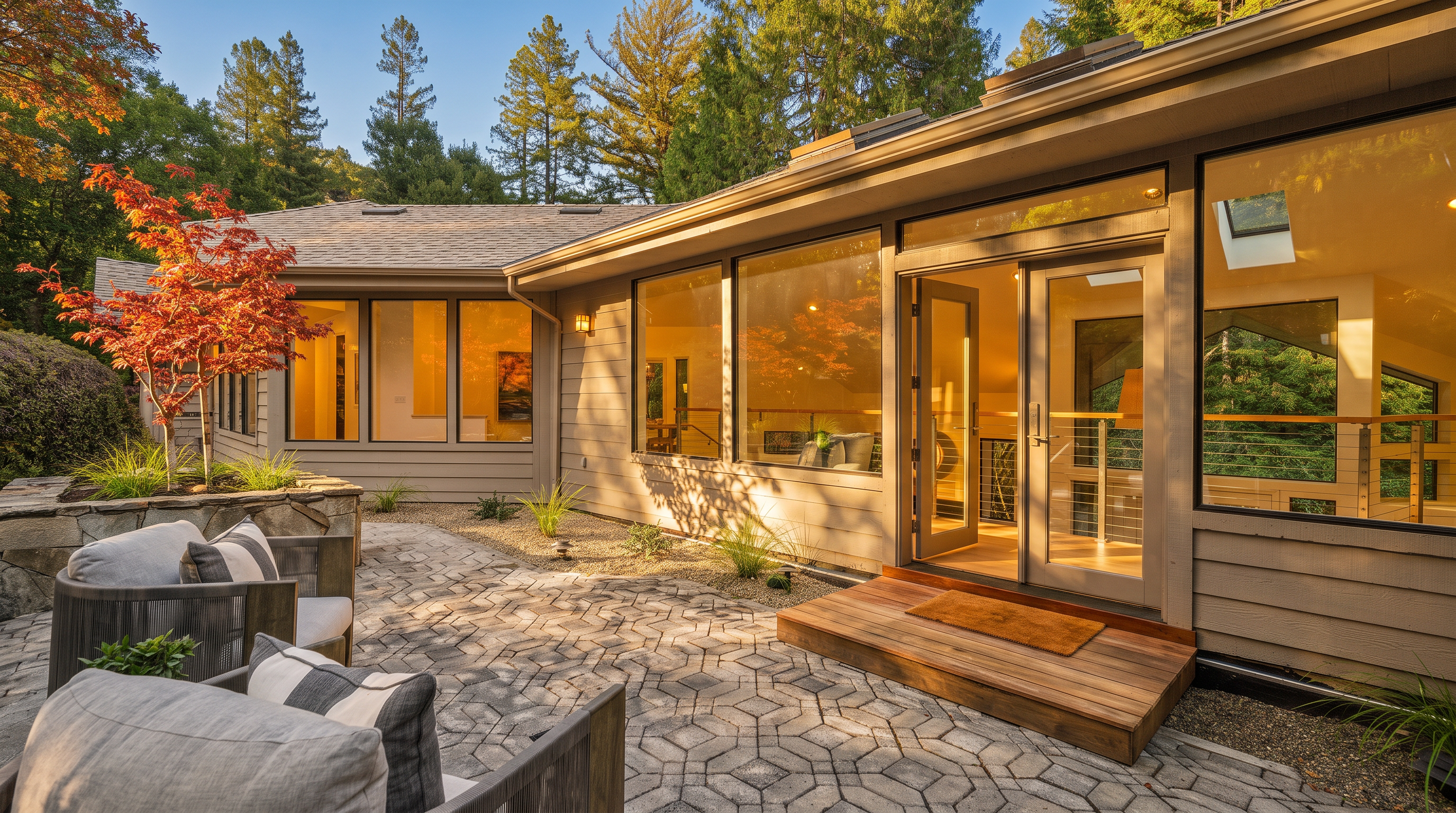
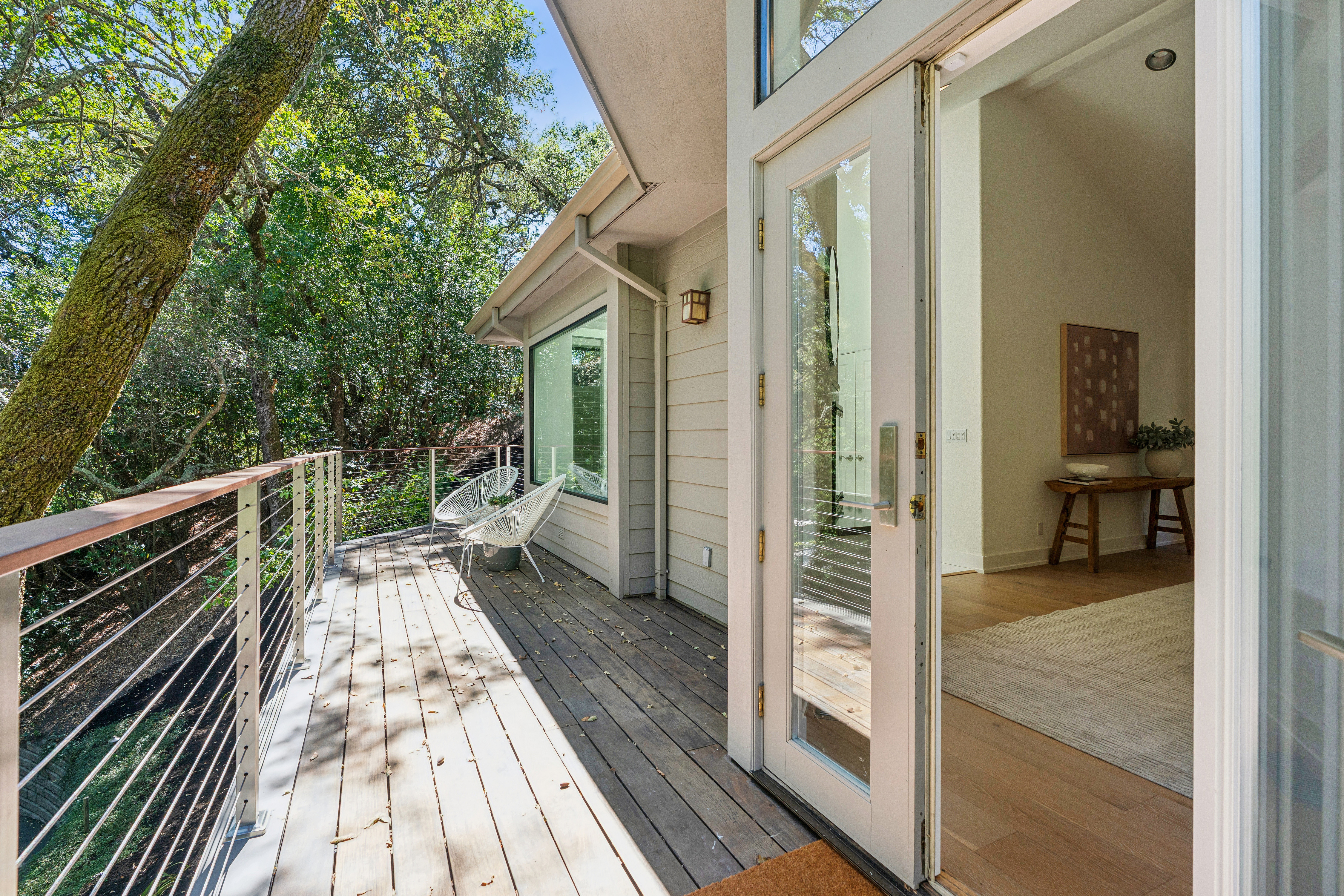
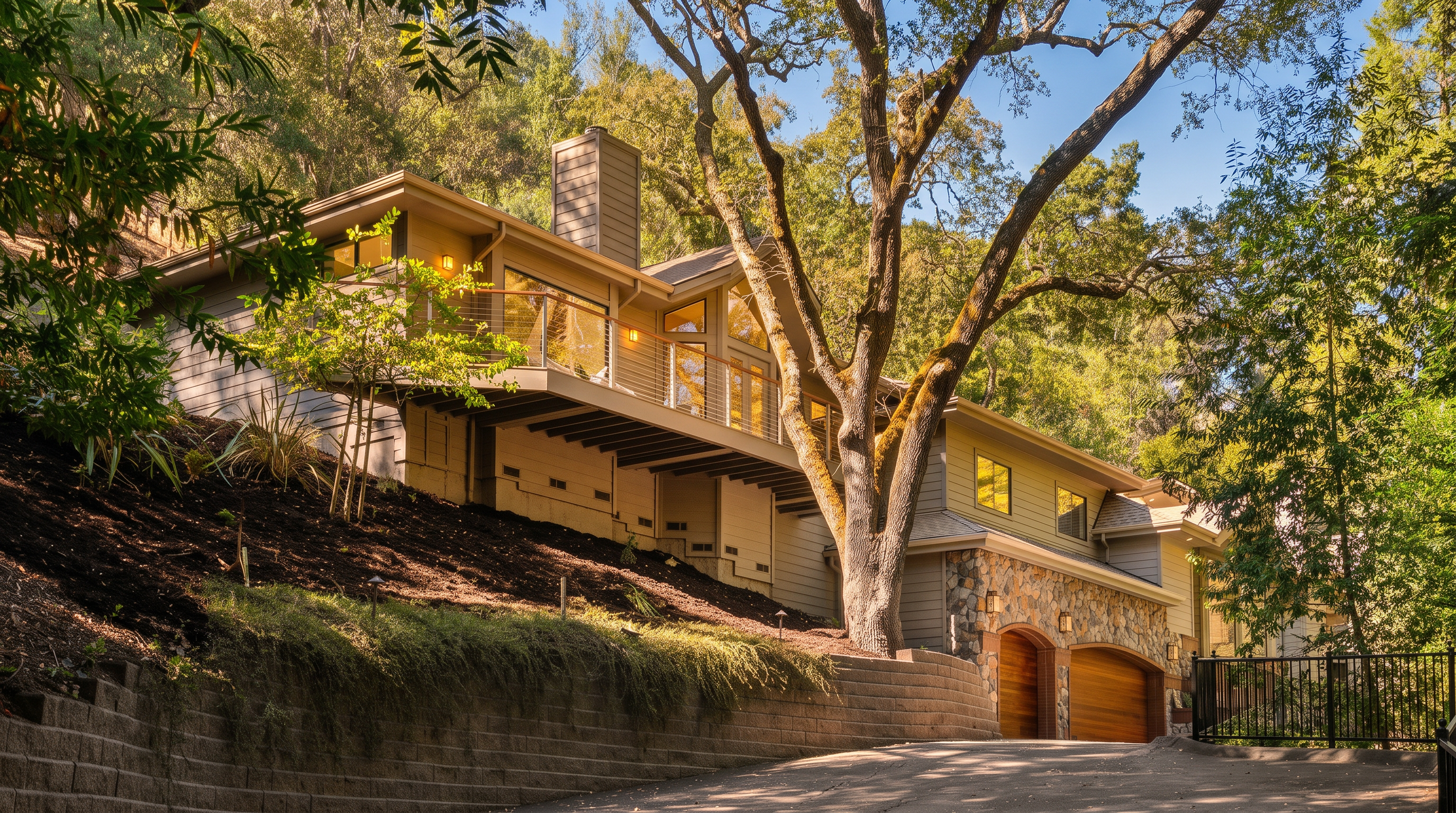
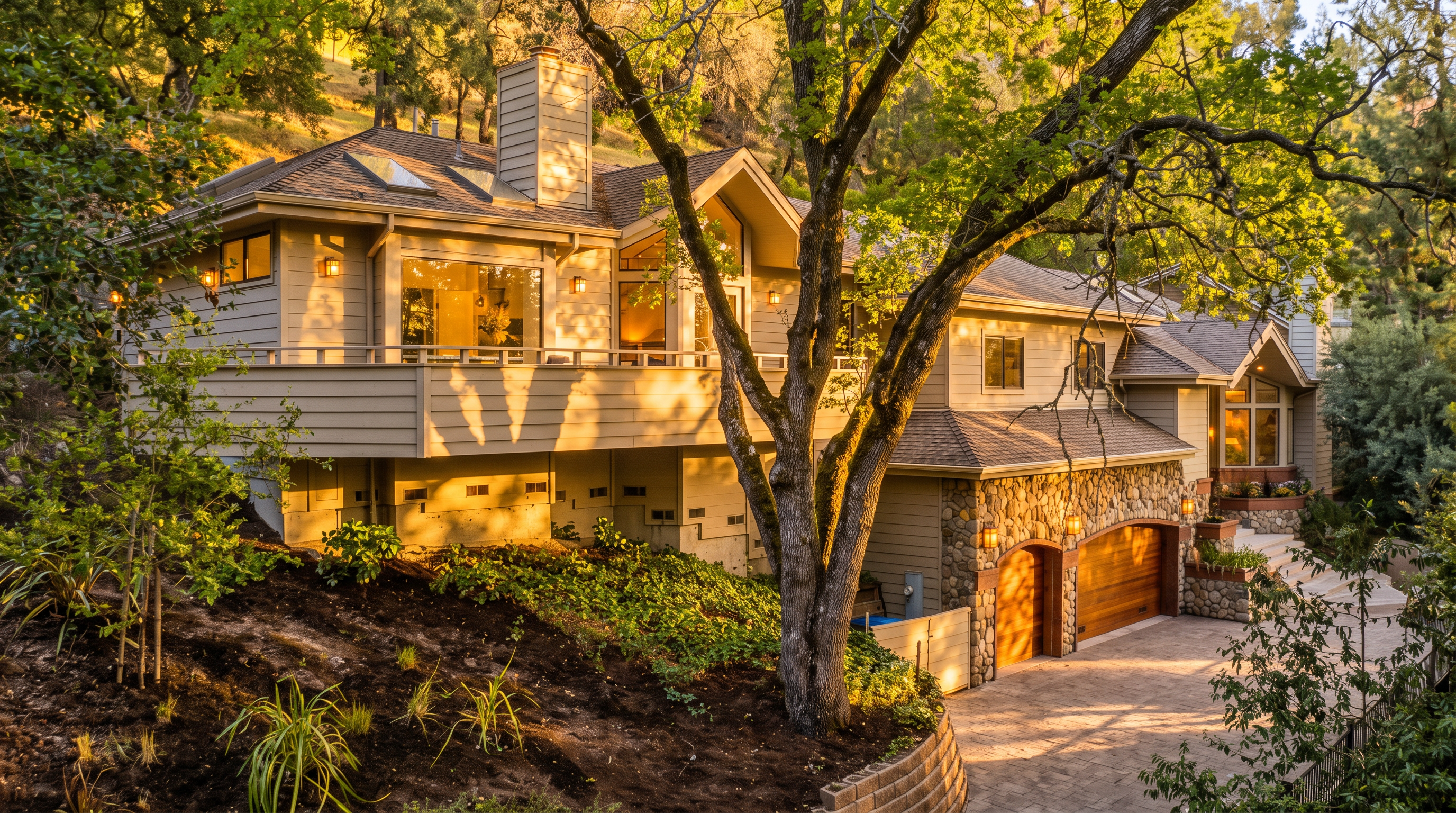
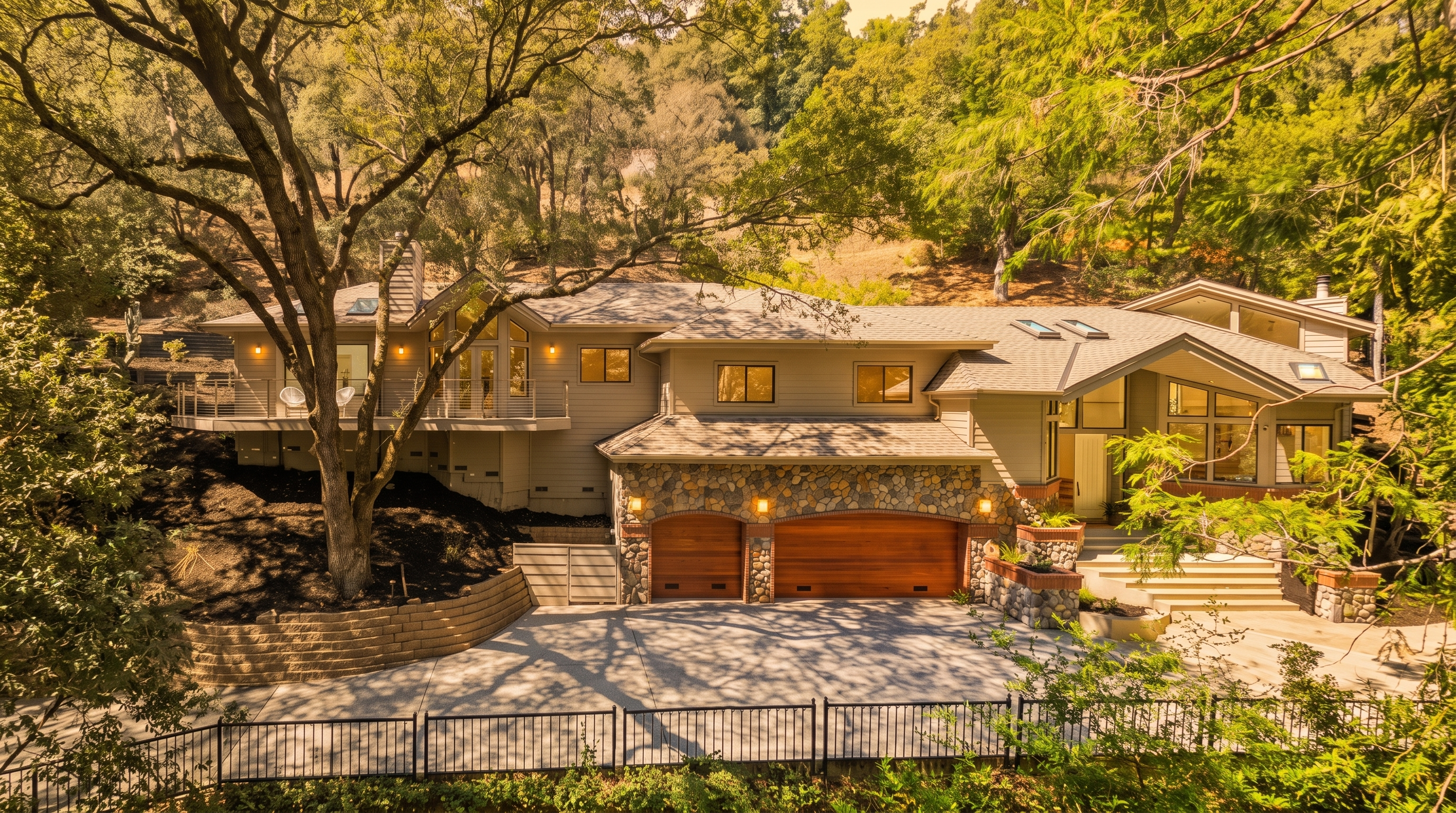
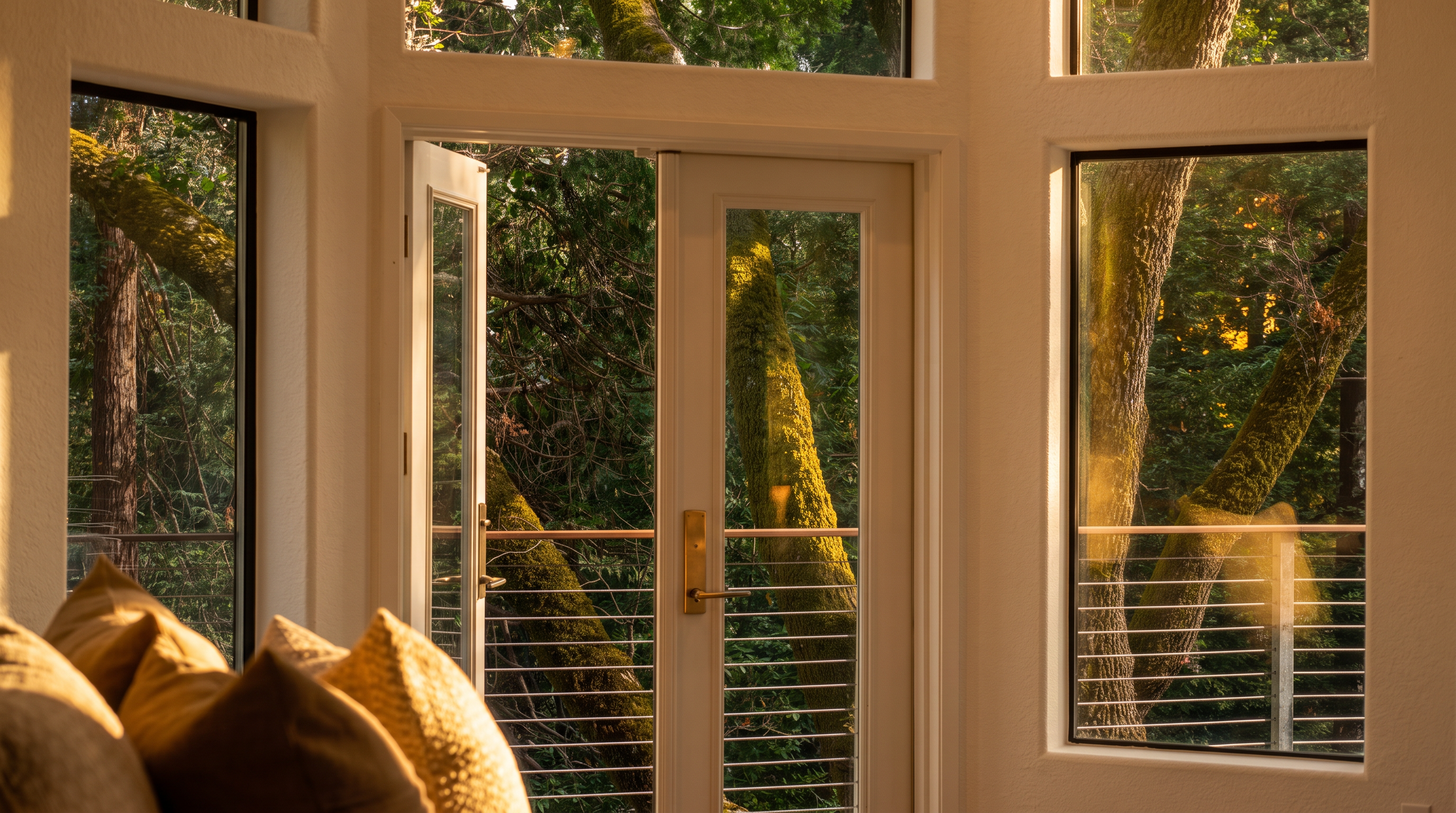
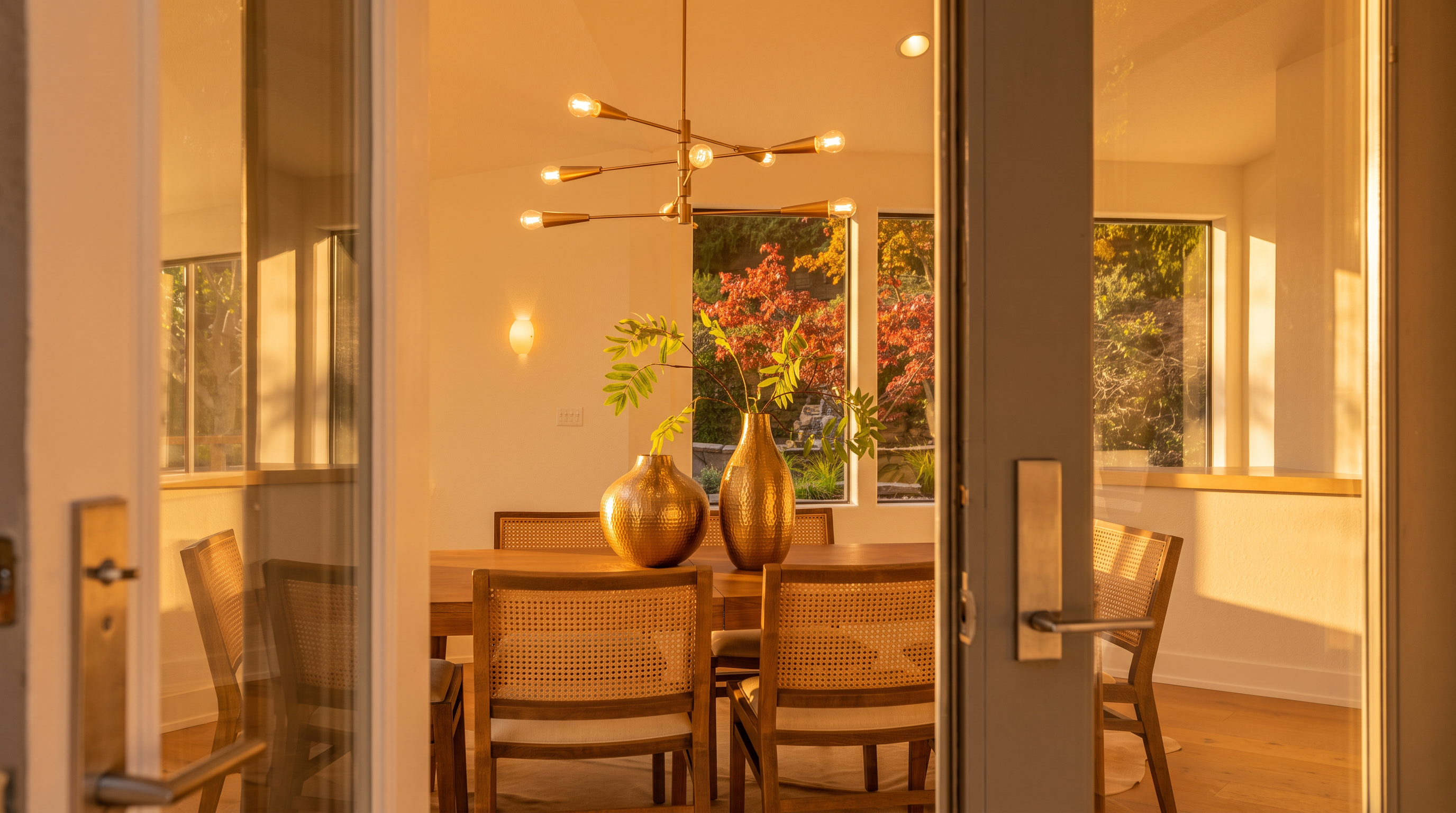
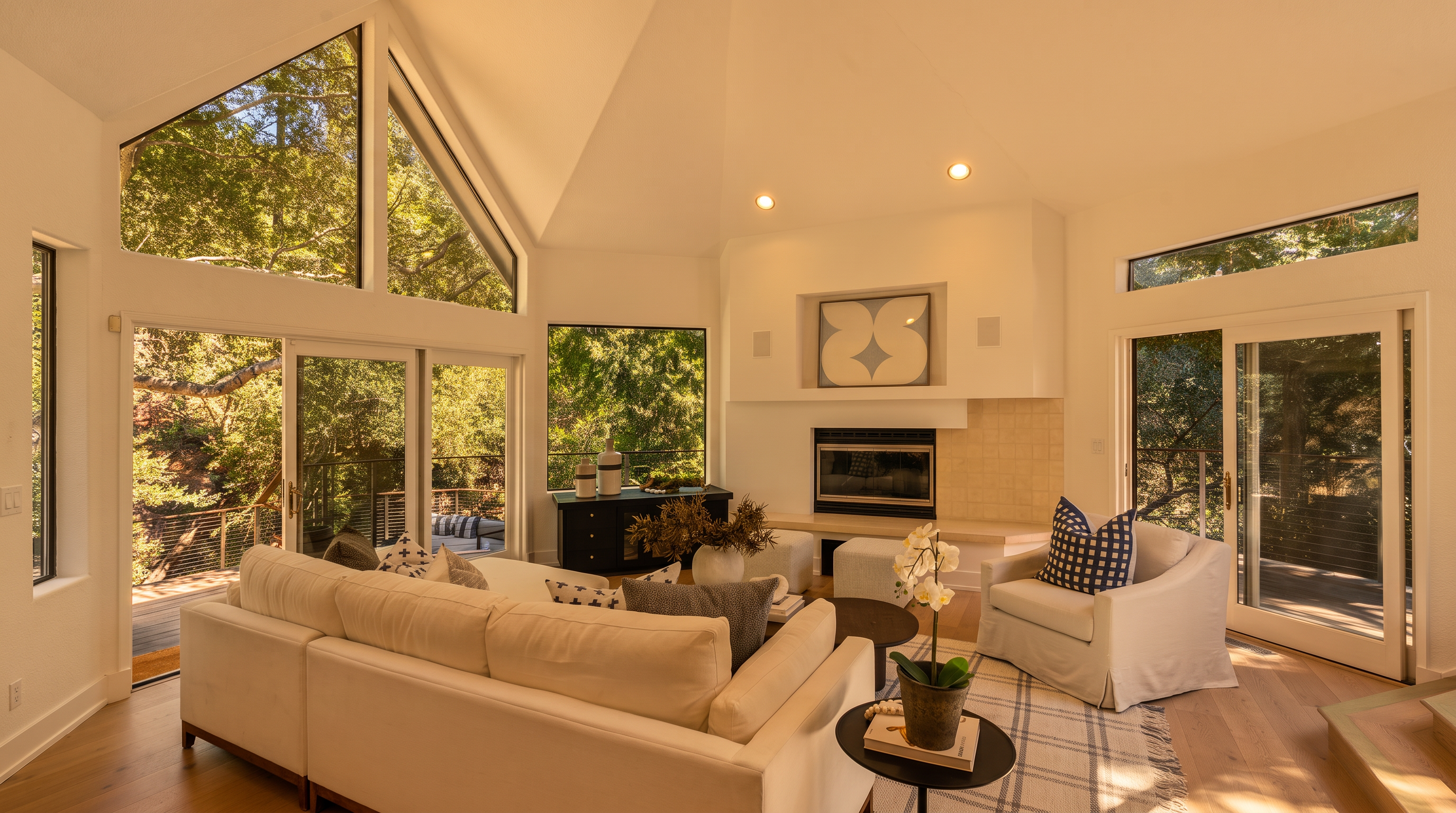
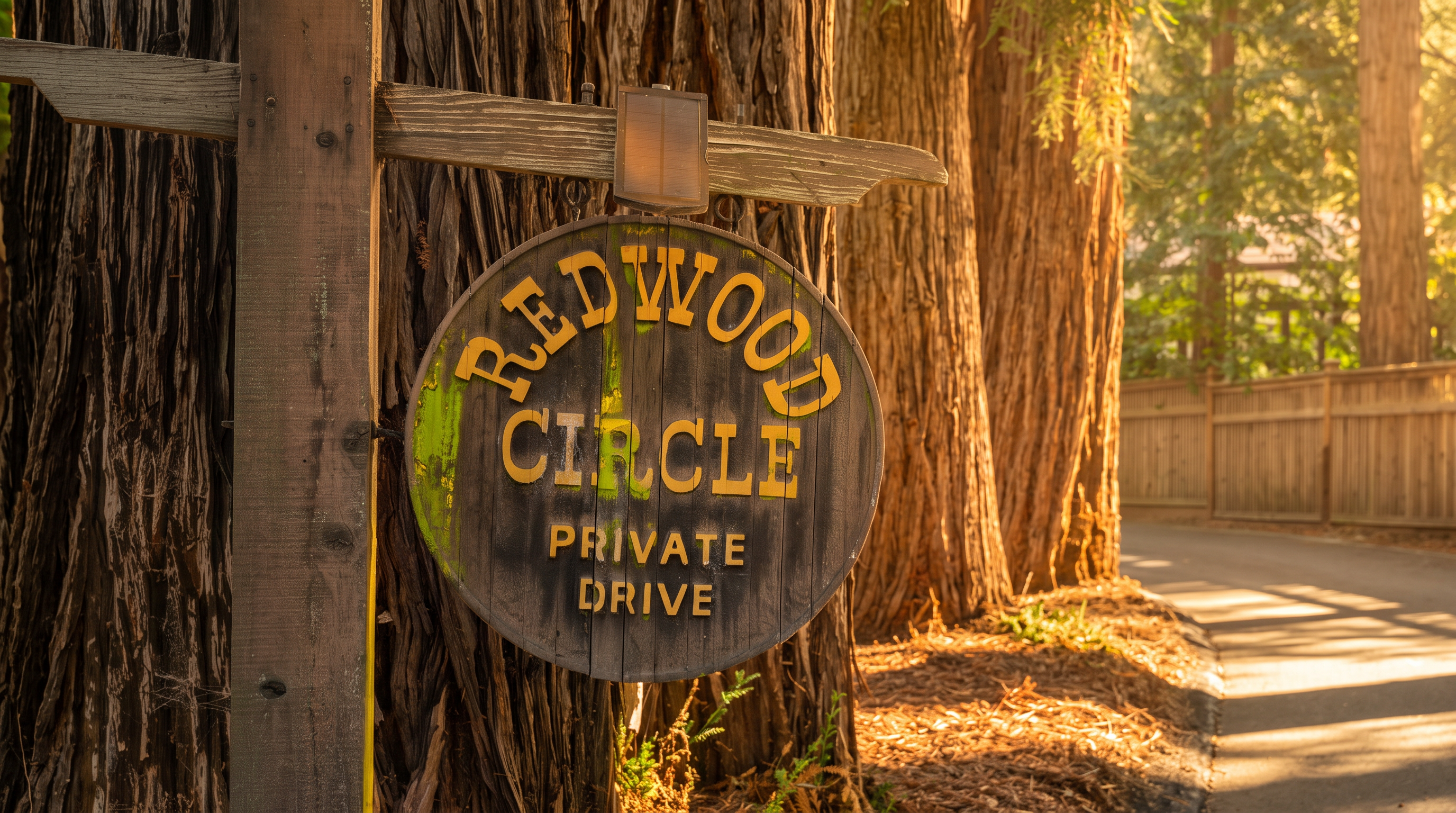
There is a particular quality of morning light that filters through a redwood canopy — diffuse, unhurried, and entirely its own. At 11 Redwood Circle, that light sets the tone for everything that follows. Positioned within a private cul-de-sac enclave in Happy Valley, this updated modern residence was conceived around a single, quietly radical idea: that the natural world outside should feel less like a backdrop and more like a living room wall. The architects answered that idea with glass — walls of it, skylights above, and French doors that open wide enough to make the distinction between deck and interior feel almost academic.
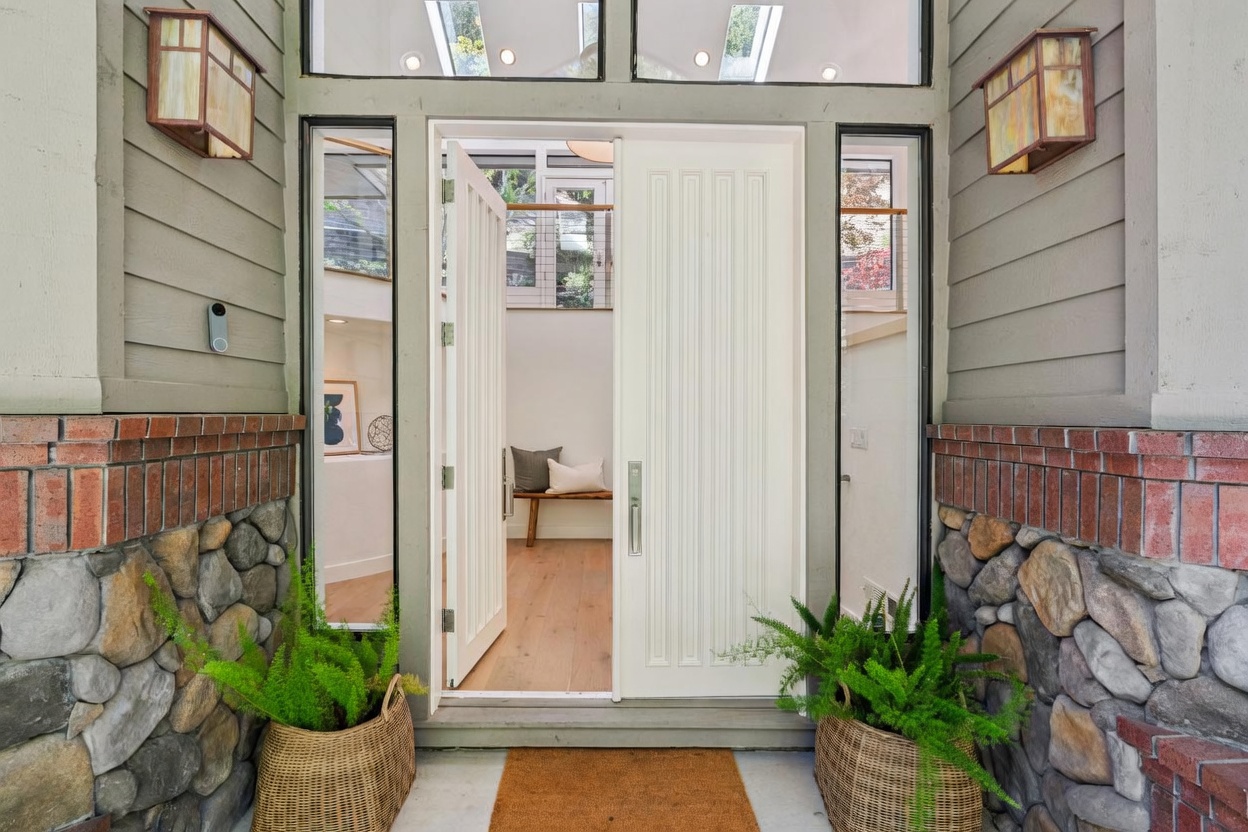
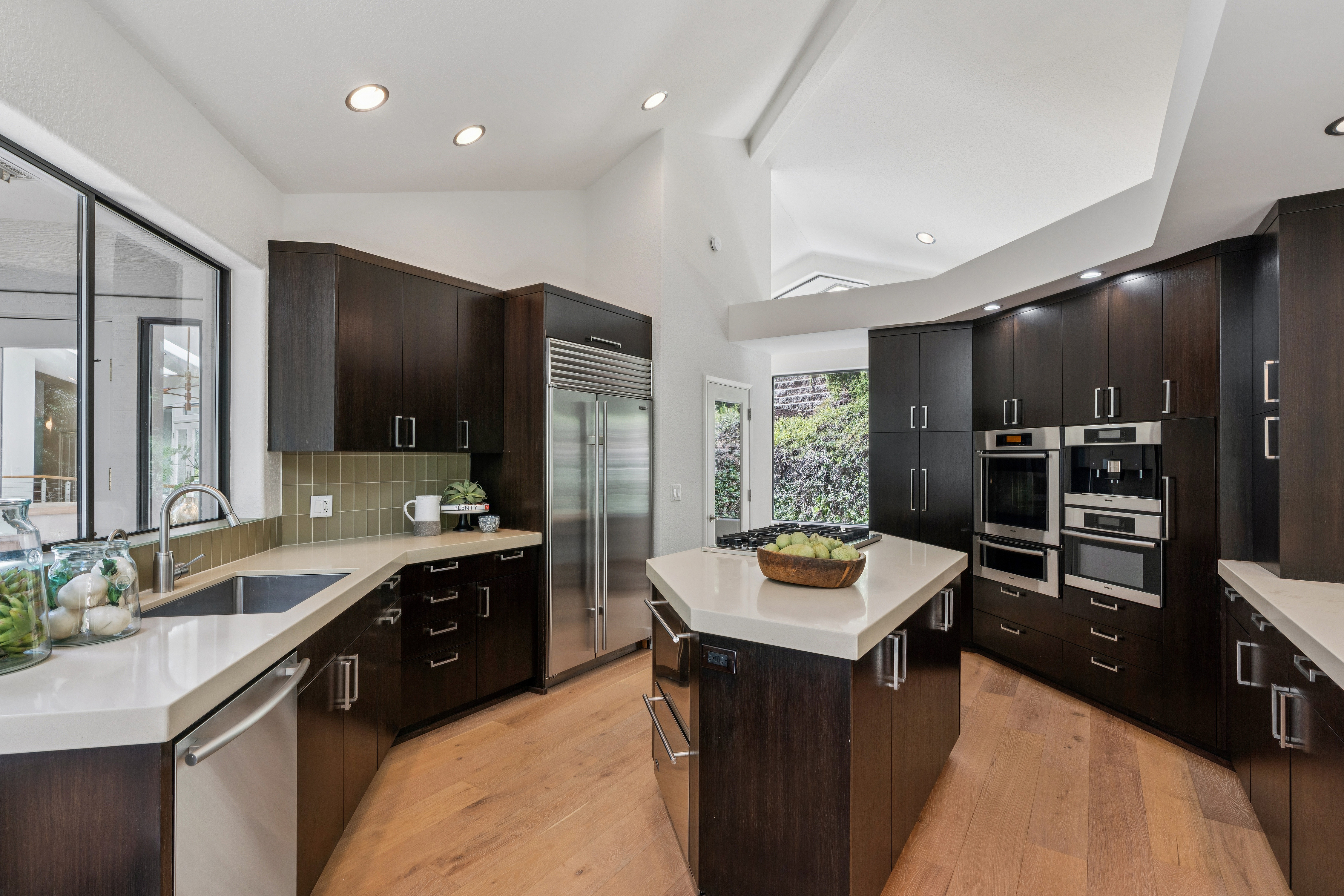
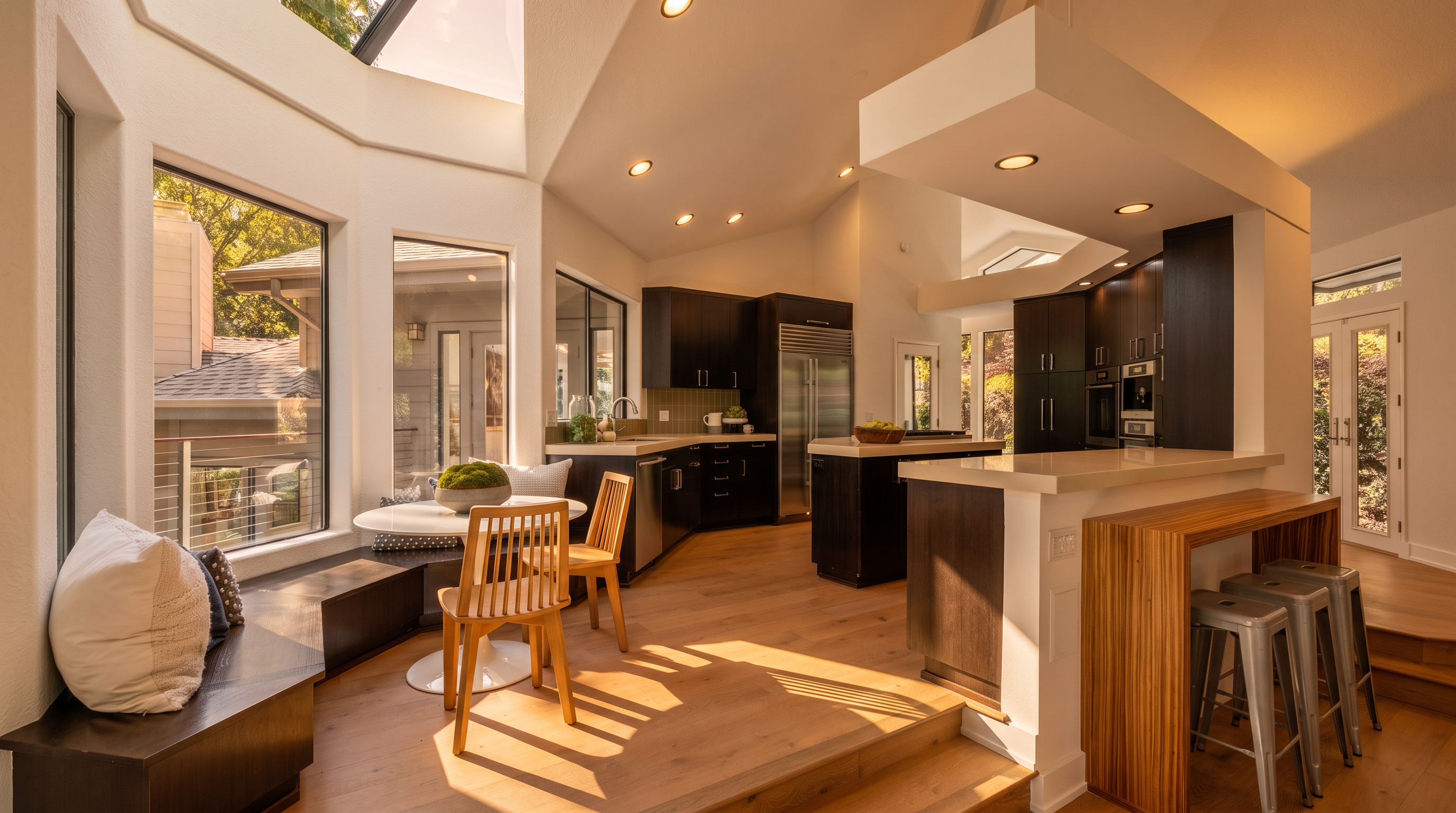
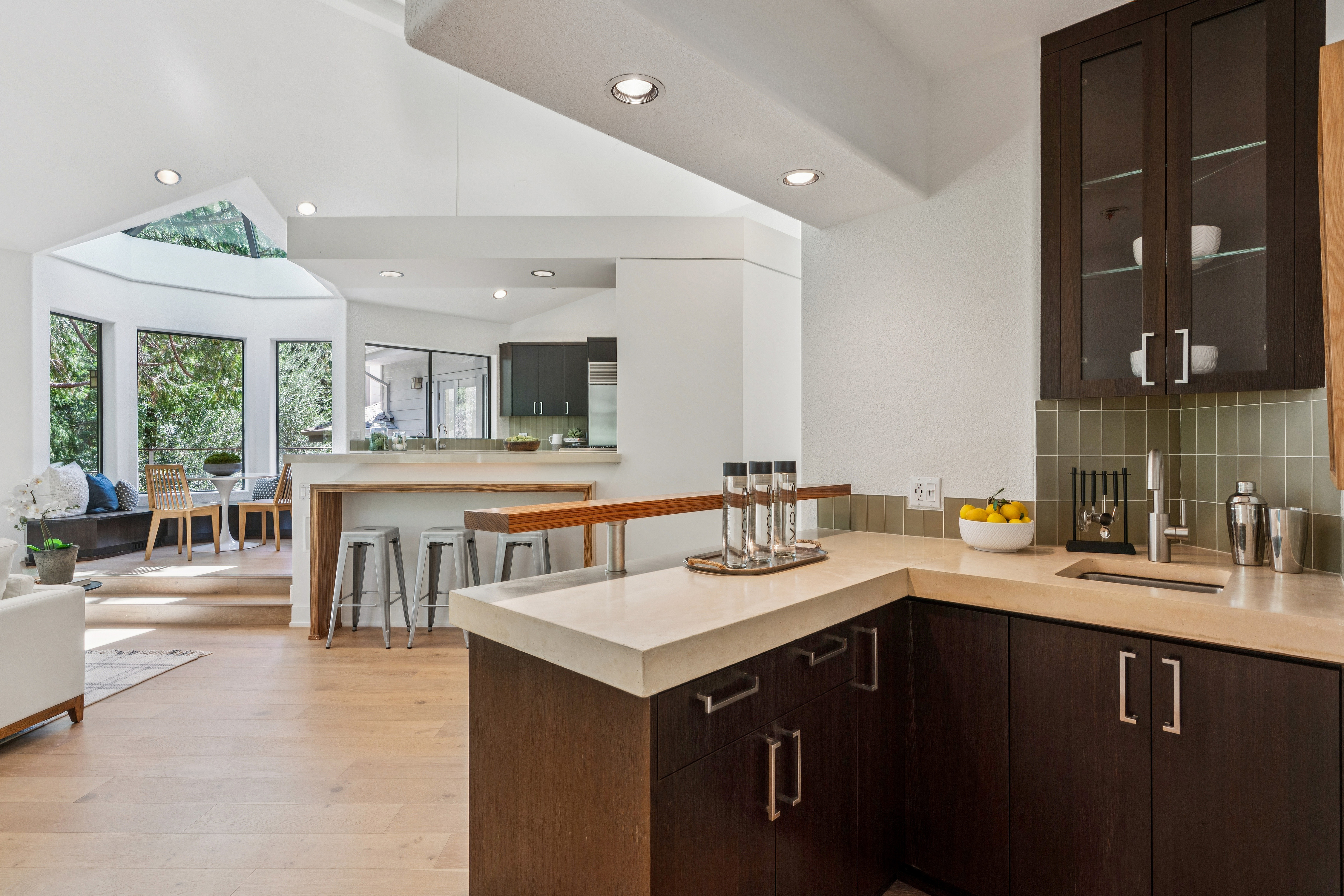
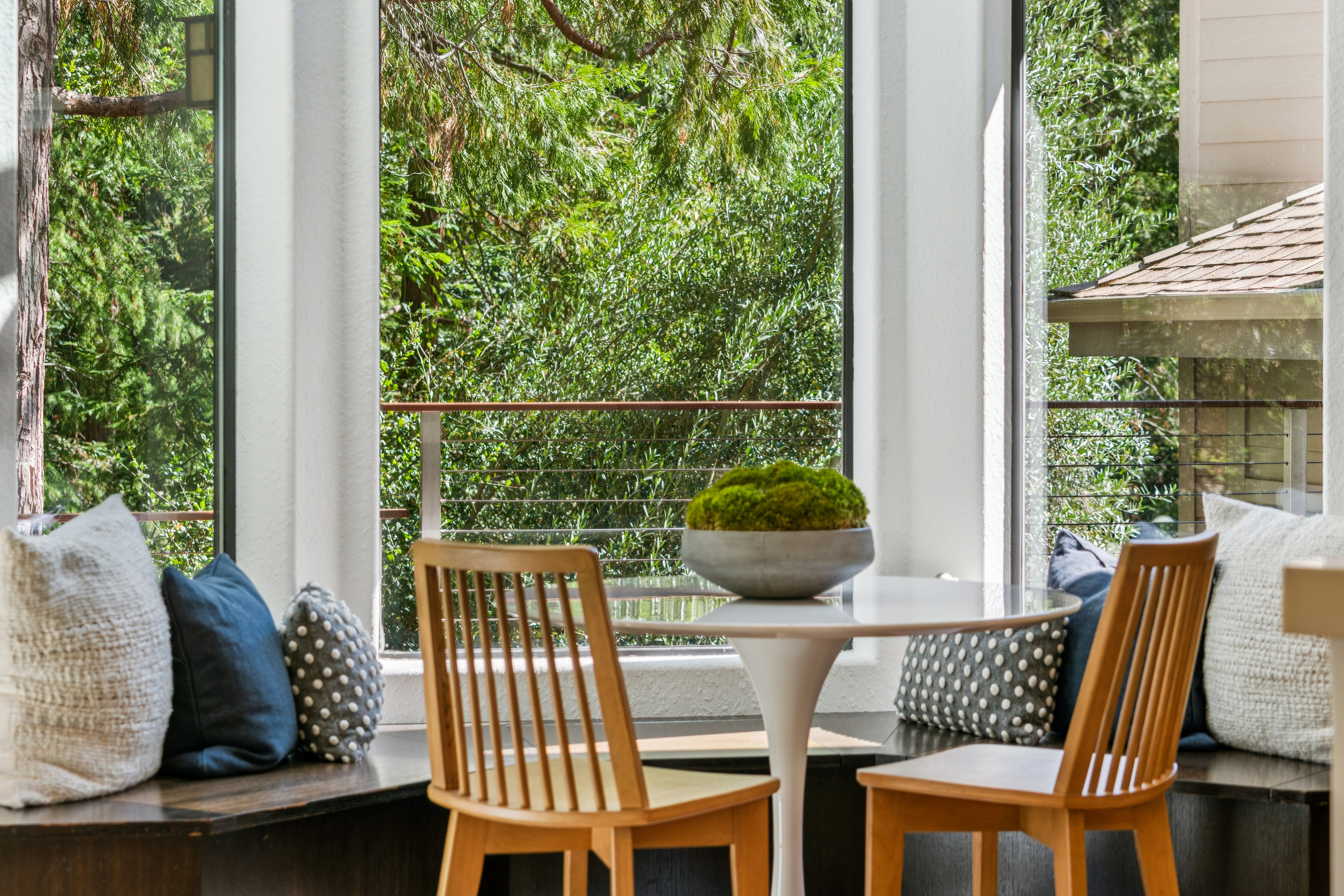
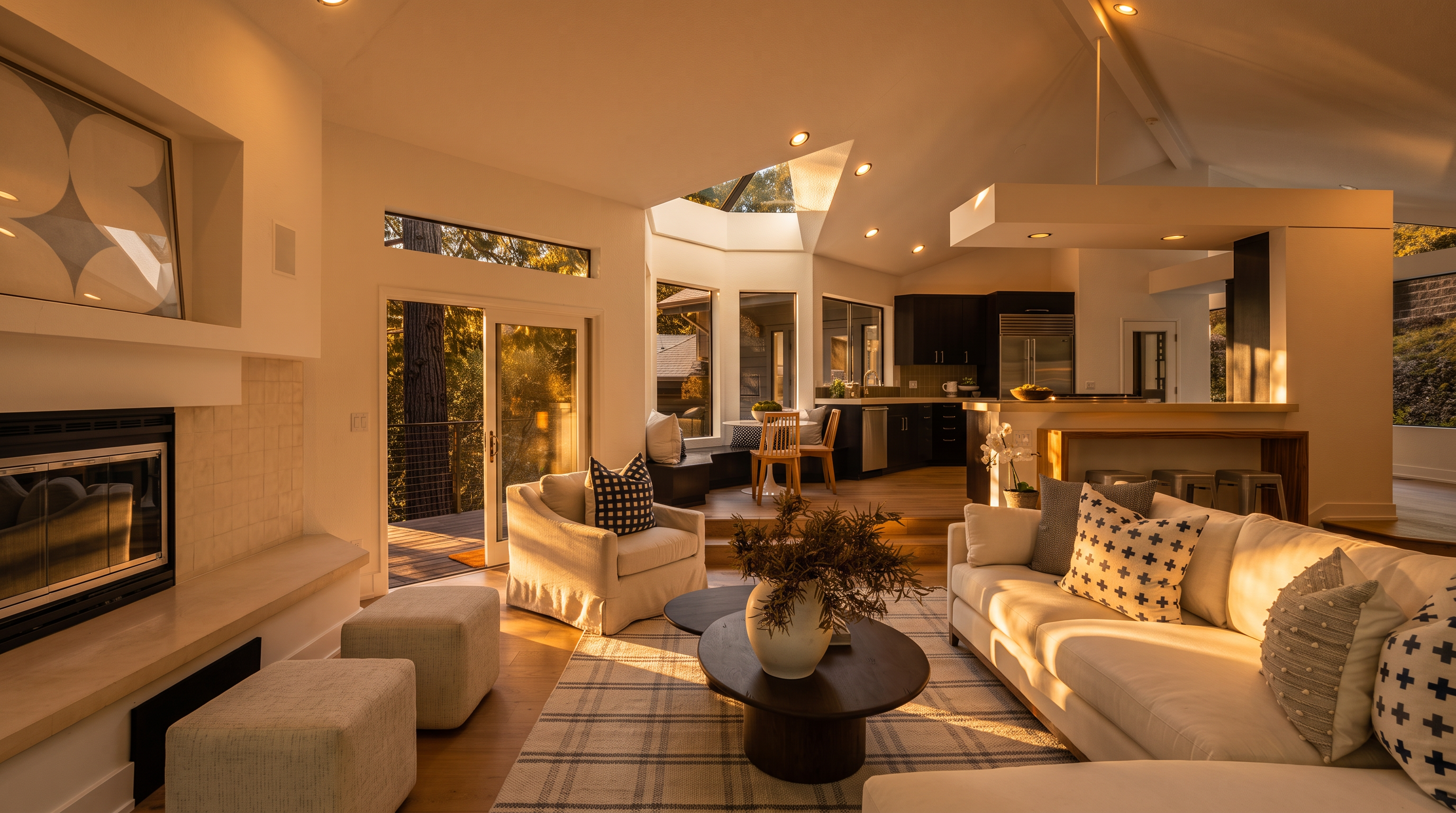
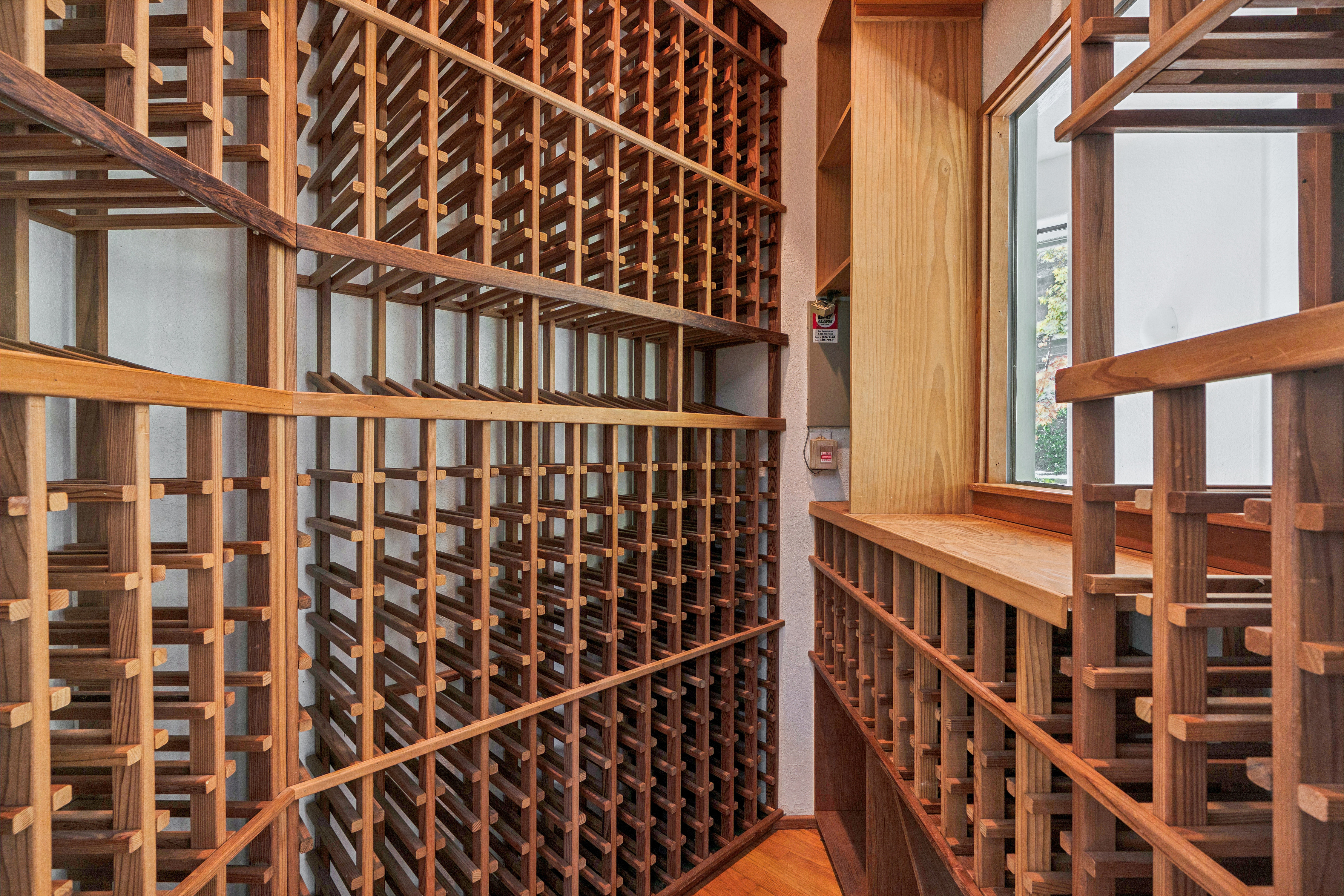
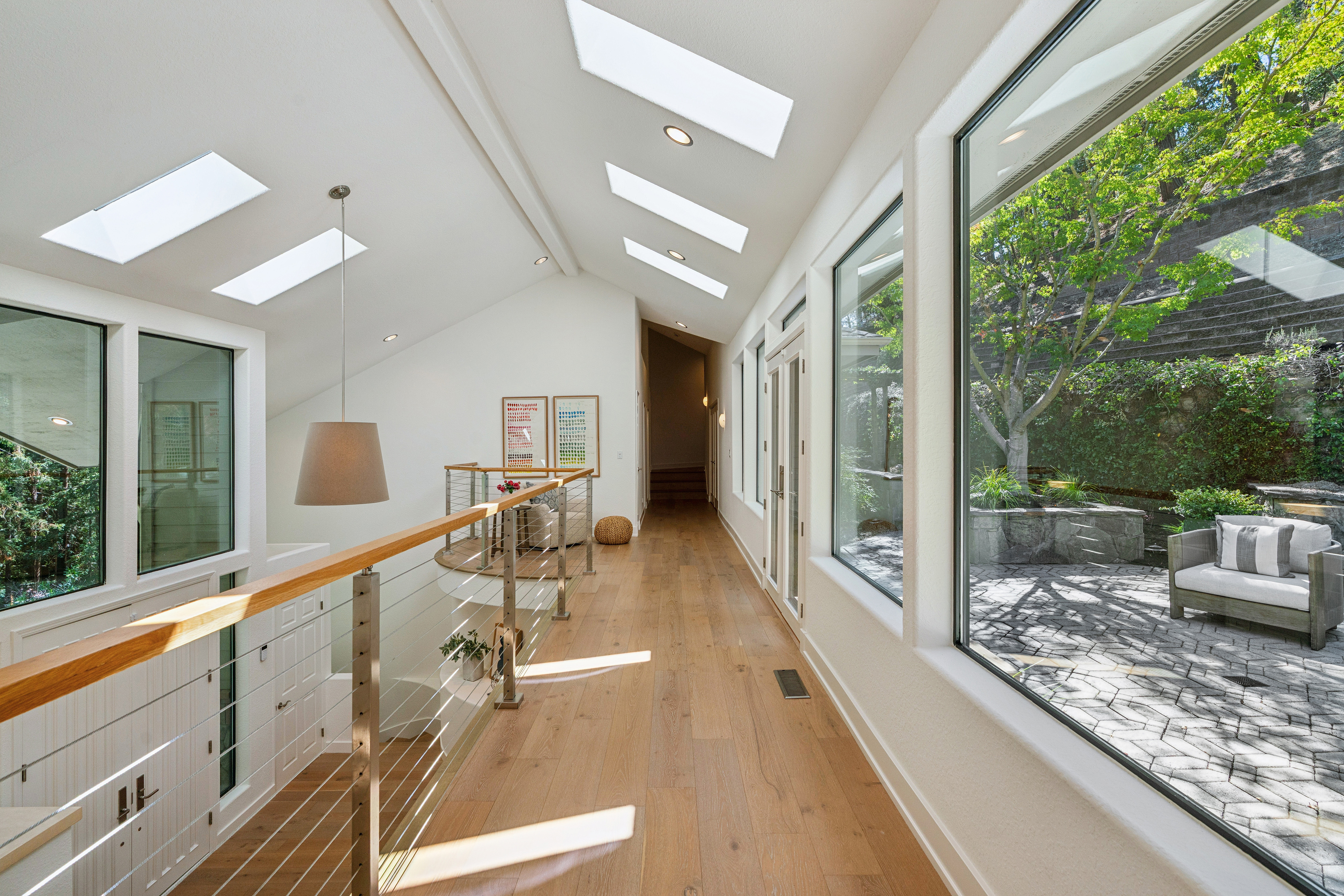
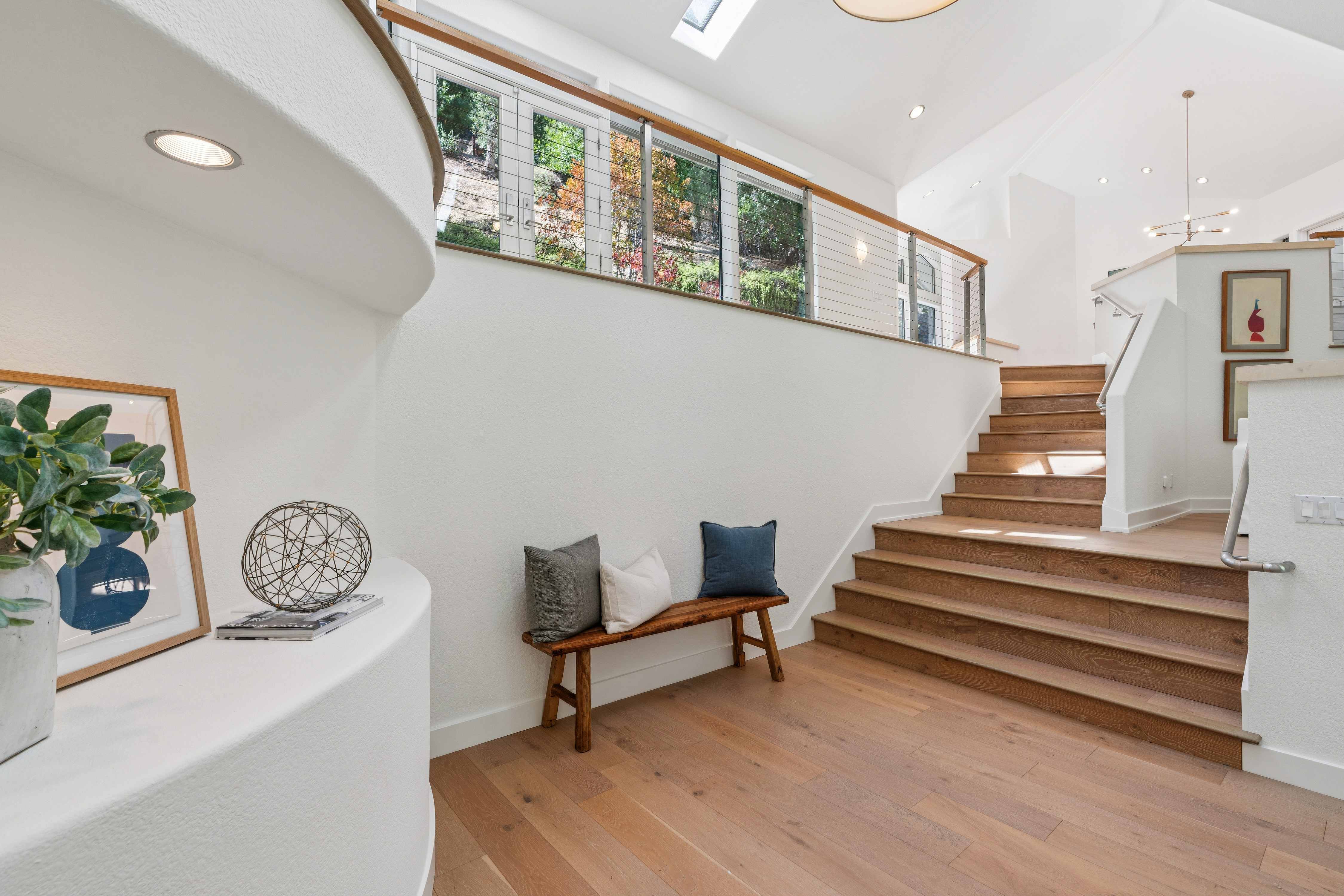
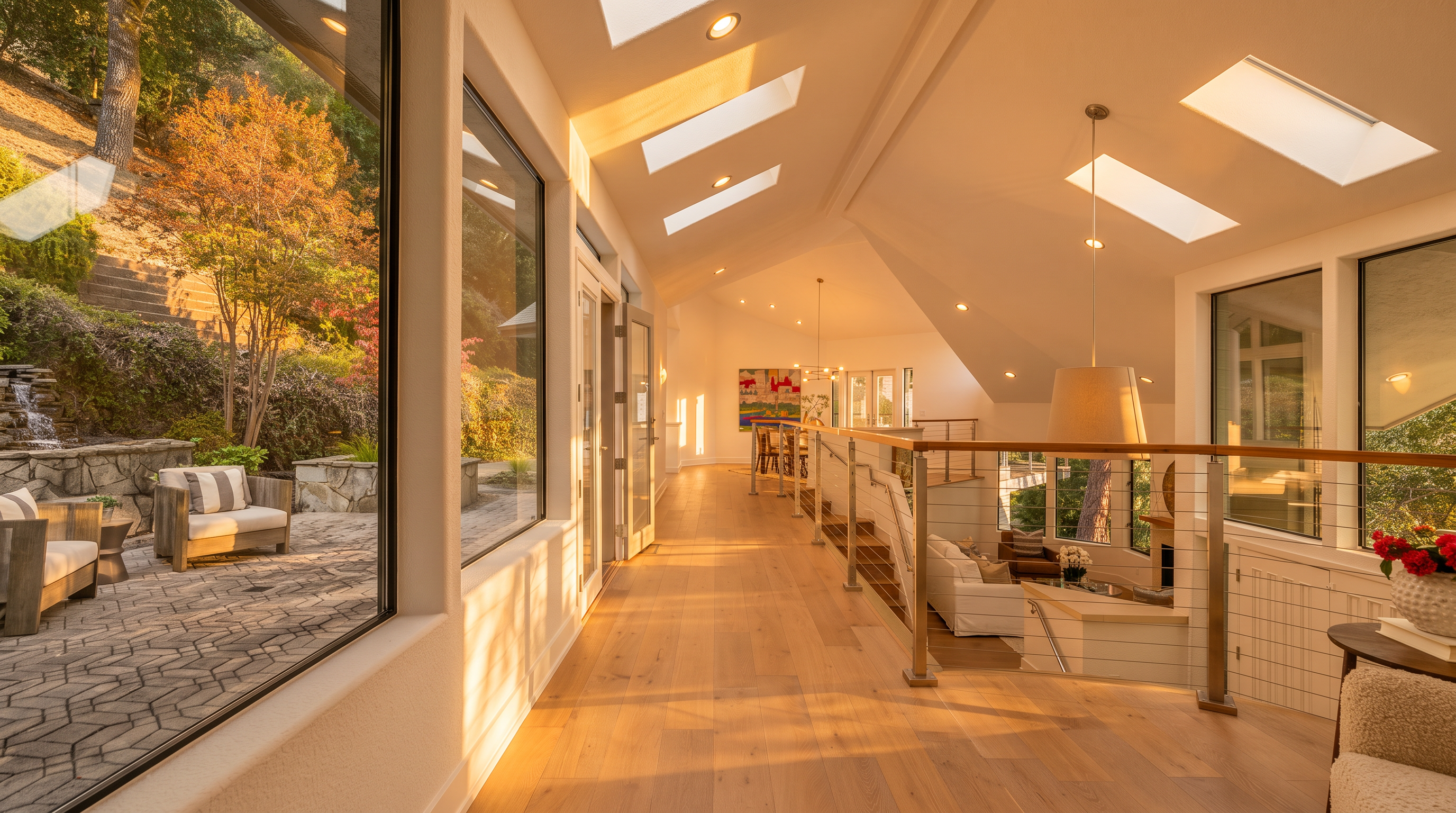
At 3,707± square feet, the floor plan is generous without being sprawling. The home moves intuitively from its entry — a bright, skylit hallway with light wood floors and a cable-railed staircase — into a central gathering space where the kitchen and family room share an open, vaulted volume that becomes the genuine heart of daily life. Dark wood cabinetry grounds the kitchen against light stone countertops and warm wood floors, while Miele, Viking, and Sub-Zero appliances signal that this is a kitchen designed for serious cooking as well as casual living. A breakfast nook tucked beneath a skylight and framed by large windows makes even a Tuesday morning feel considered. For the collector or the entertainer, a dedicated temperature-controlled wine closet offers custom-built wooden racking alongside a counter workspace — a room that takes its subject seriously.
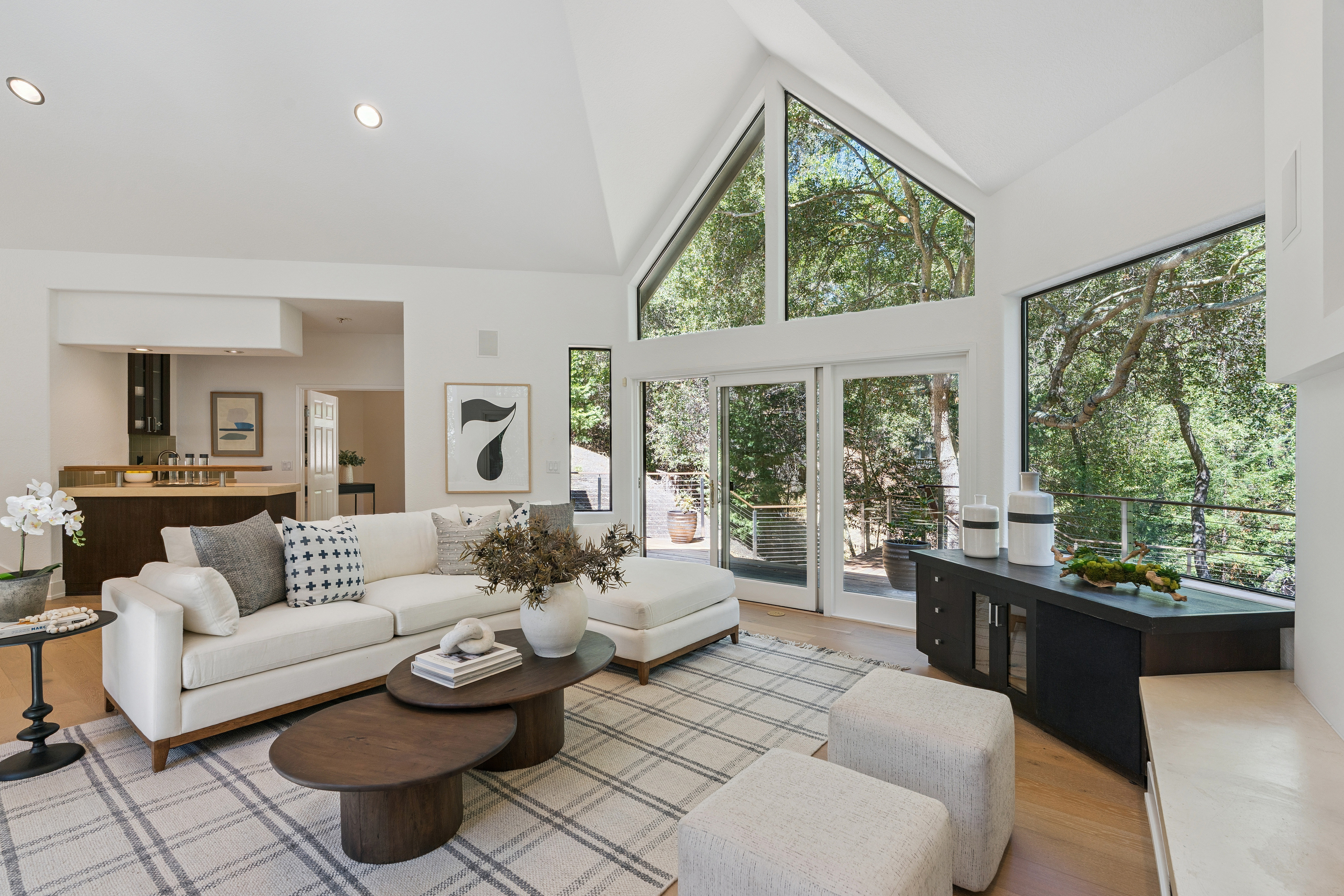
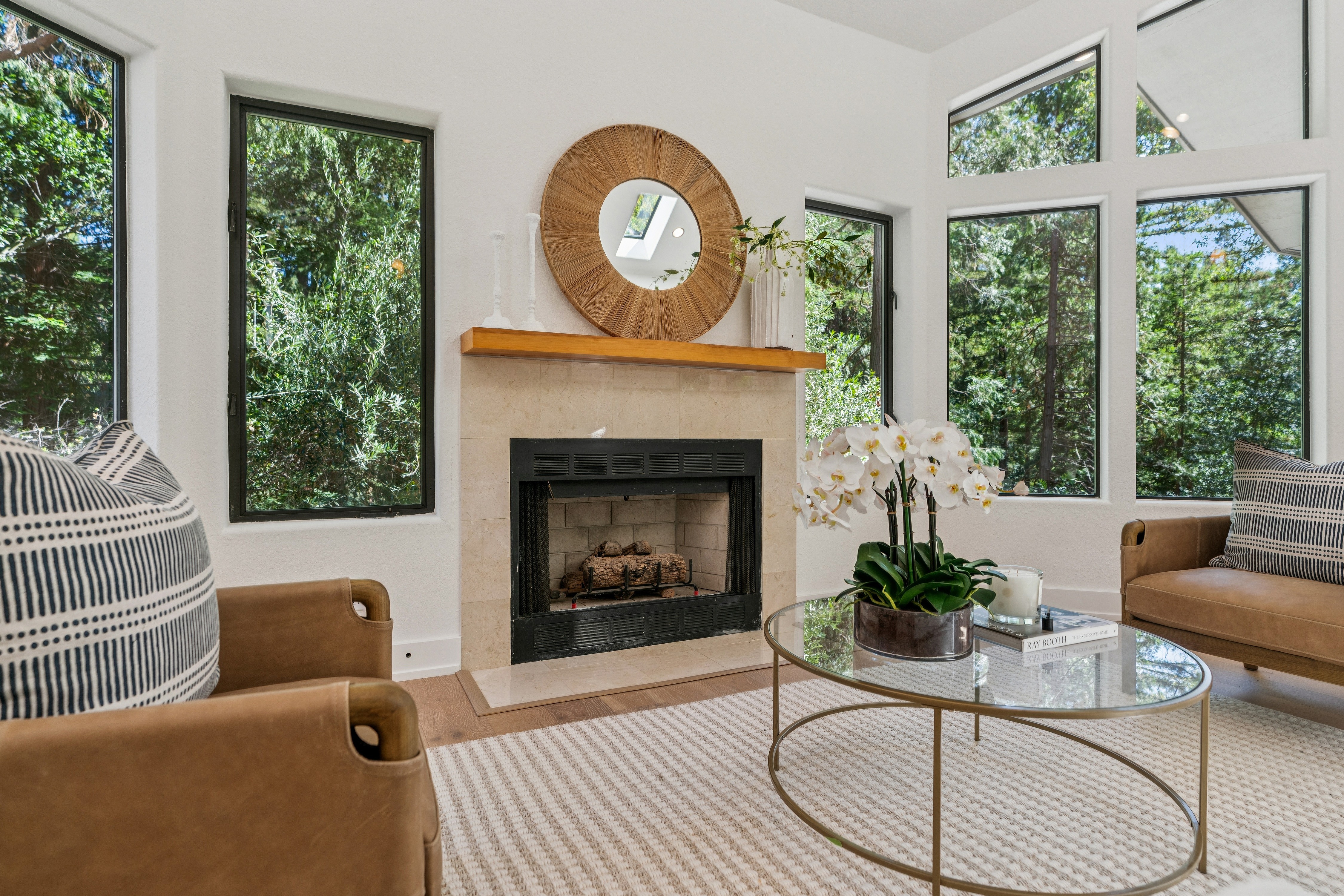
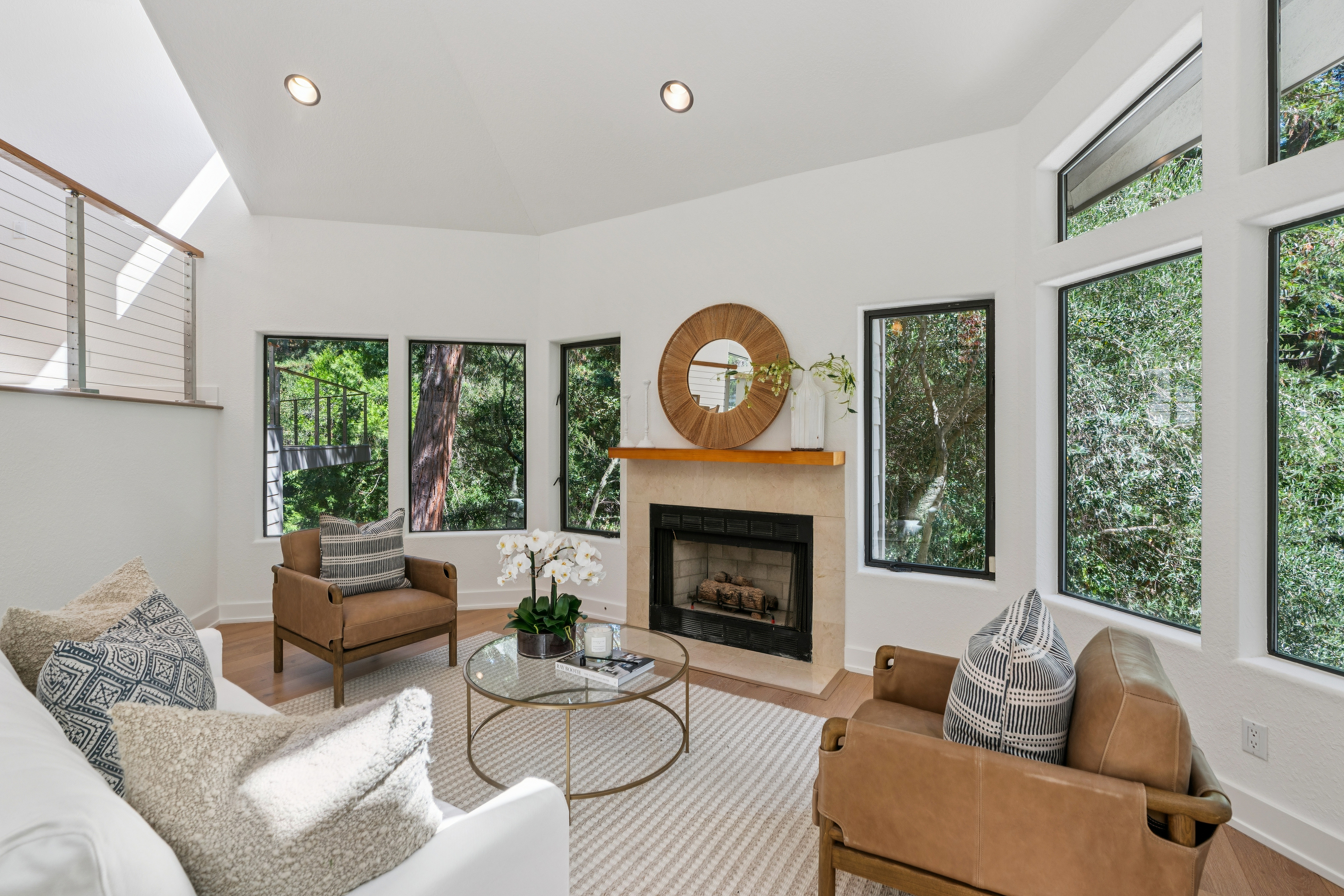
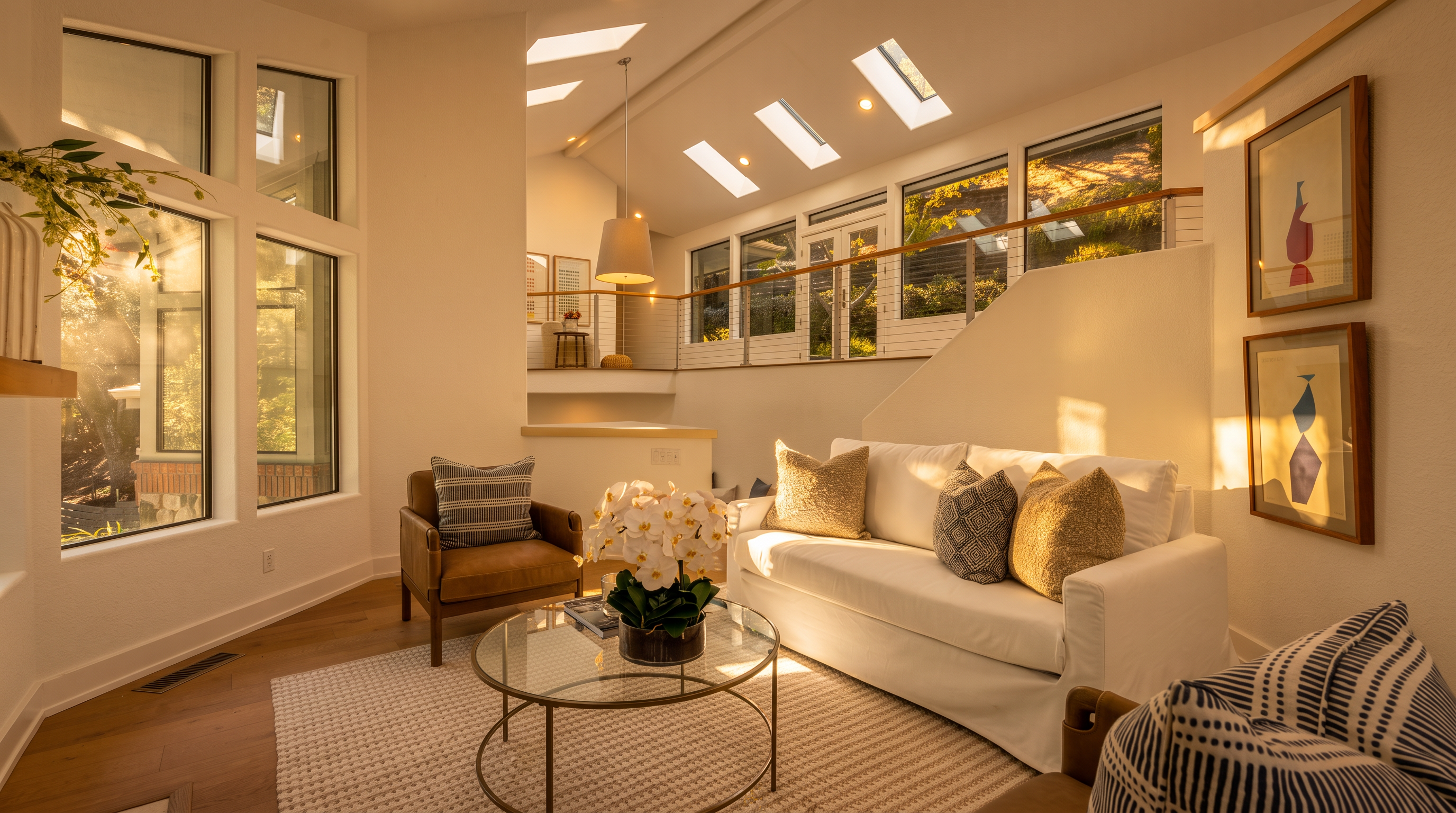
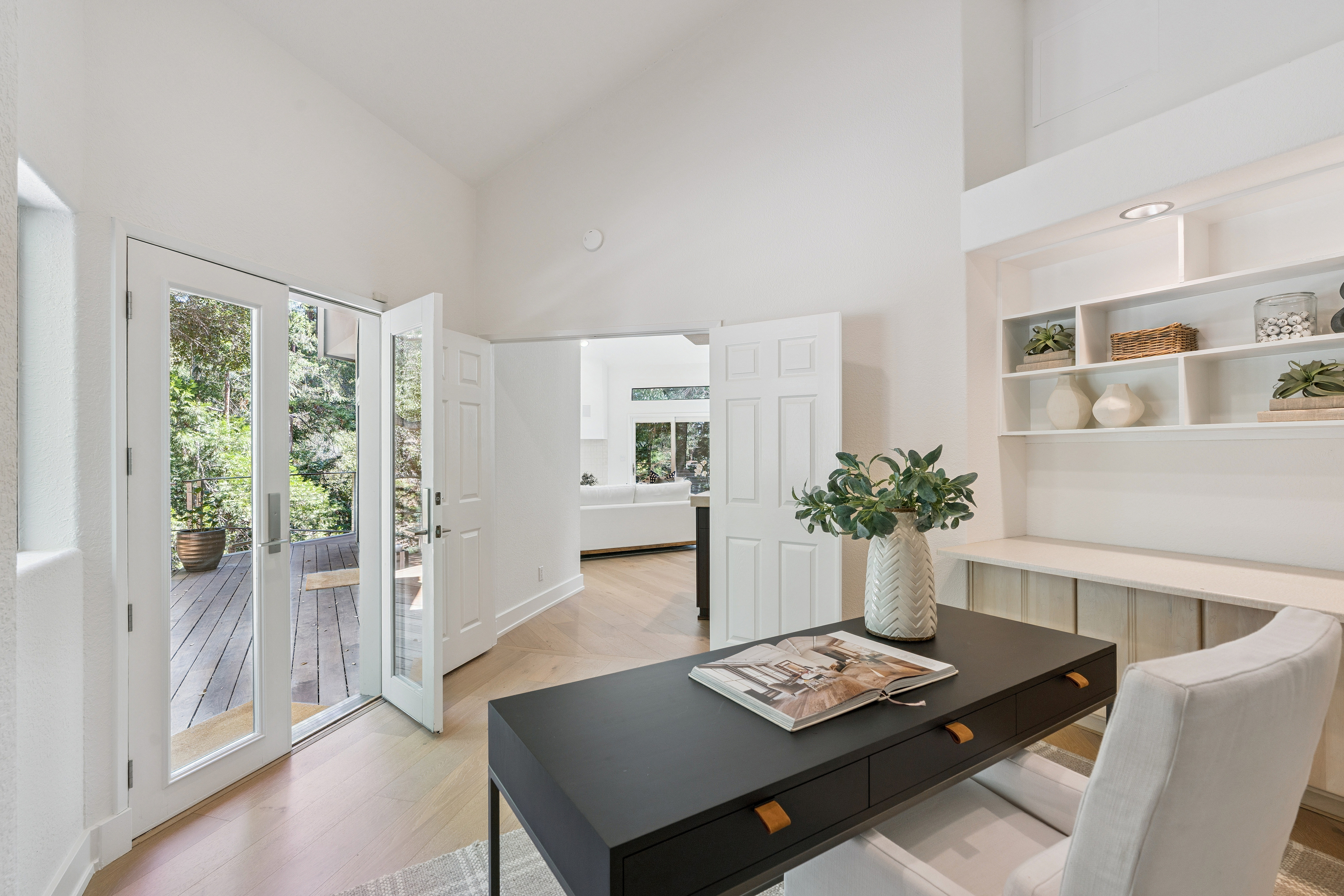
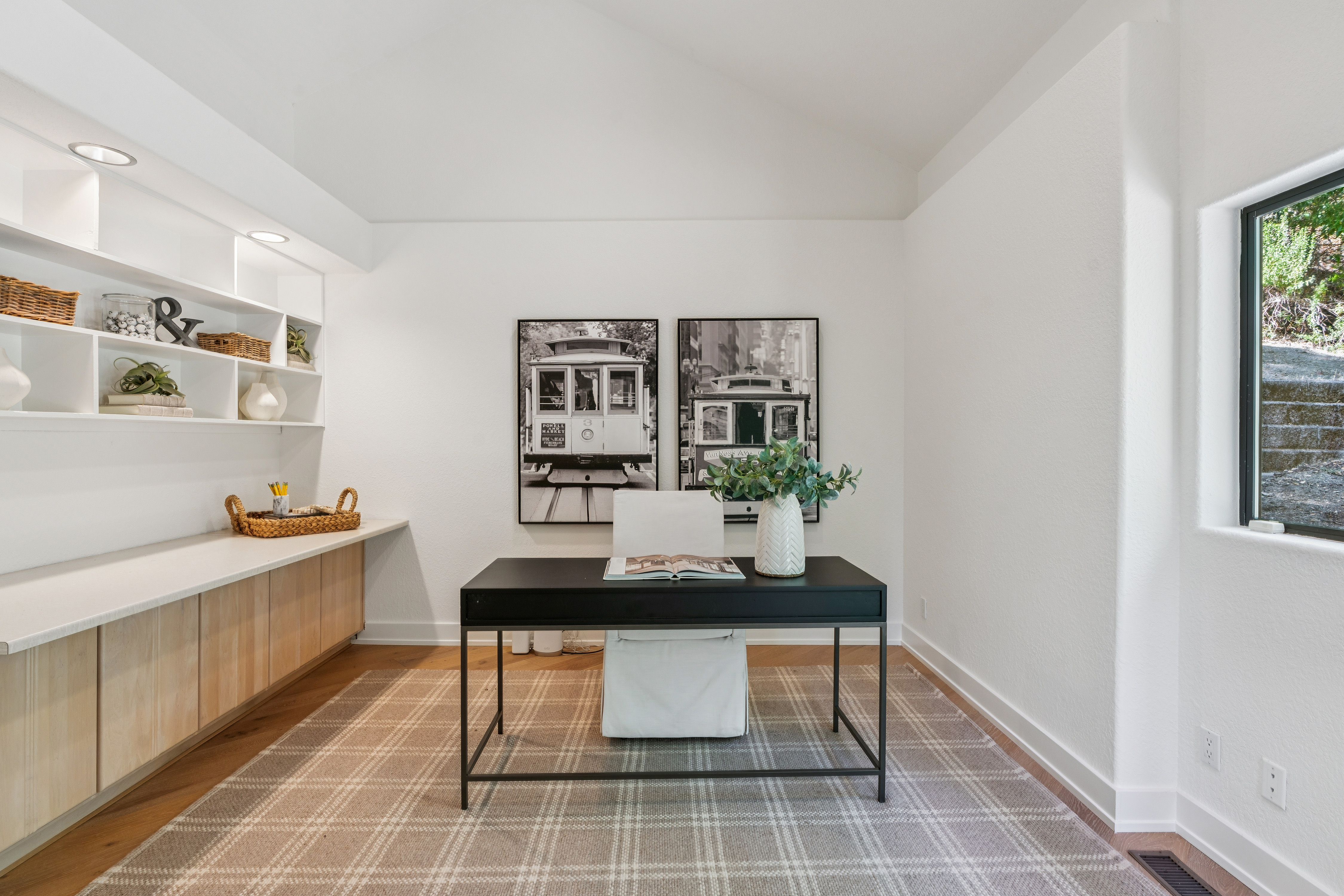
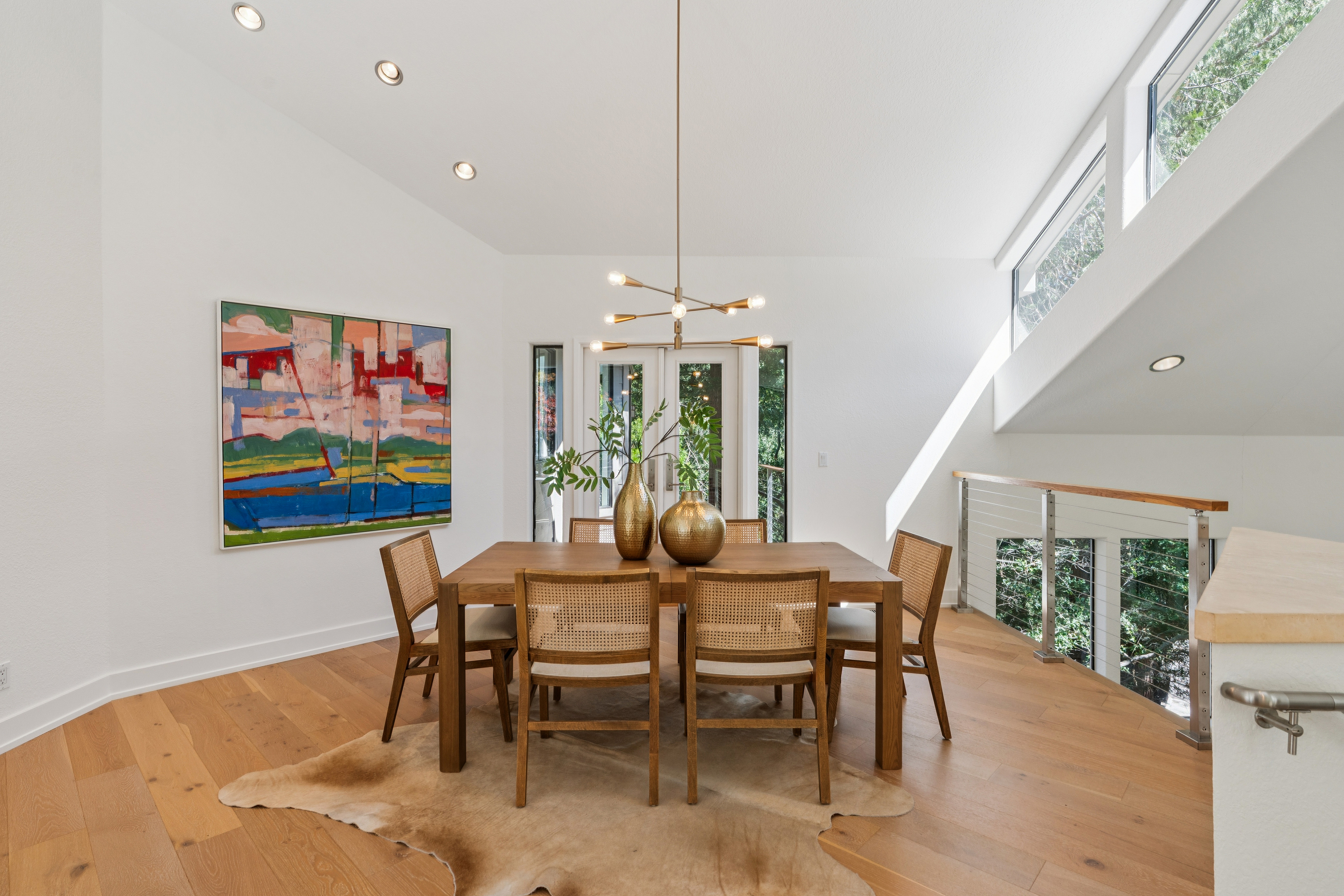
The living spaces continue the architecture's commitment to light and proportion. Vaulted ceilings rise above multiple seating areas, each oriented toward the surrounding oaks and redwoods through expansive window walls. Stone fireplace surrounds anchor rooms without competing with the views beyond them. A home office with double glass doors opening directly to the deck offers a workspace that would make concentration optional on any given afternoon.
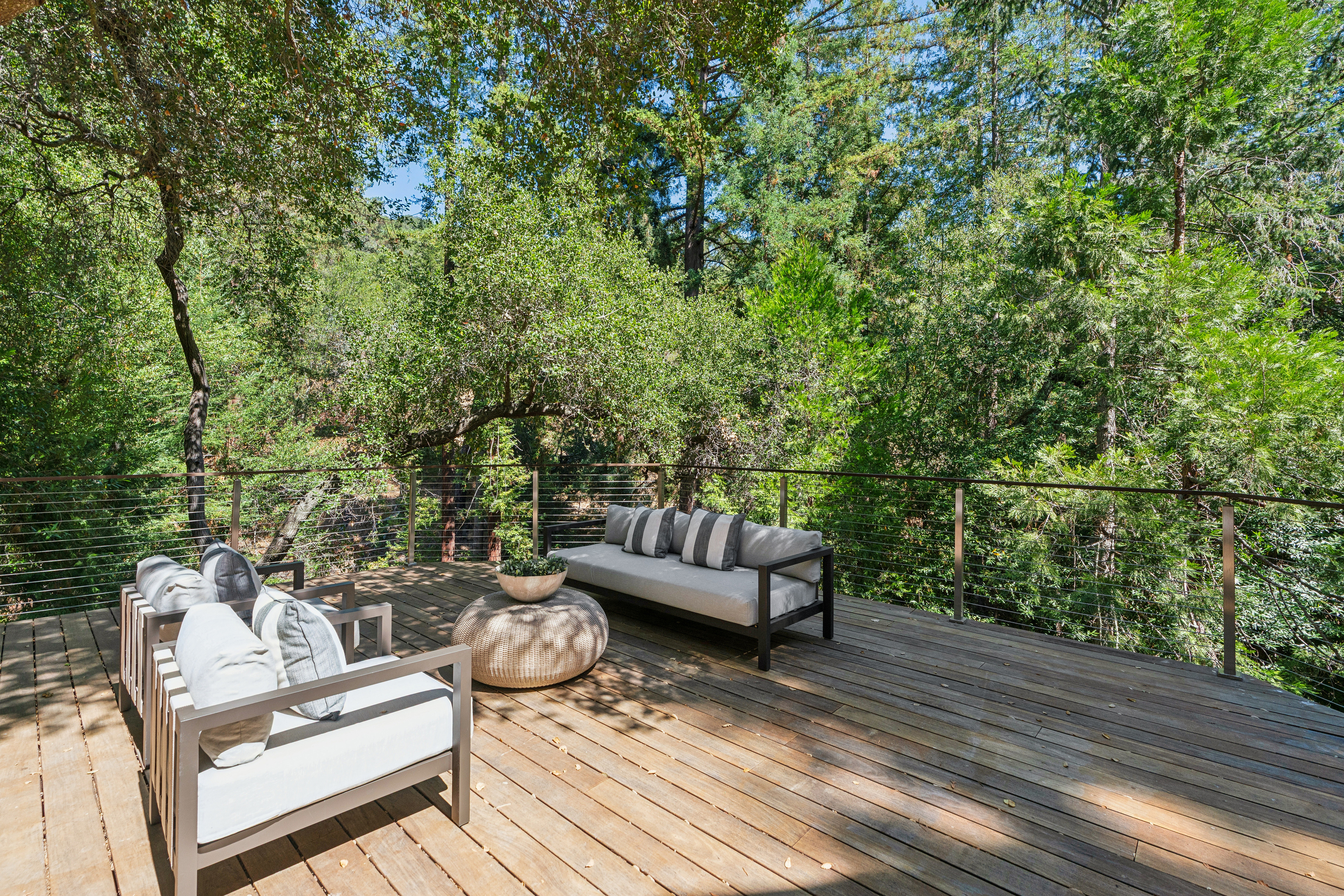
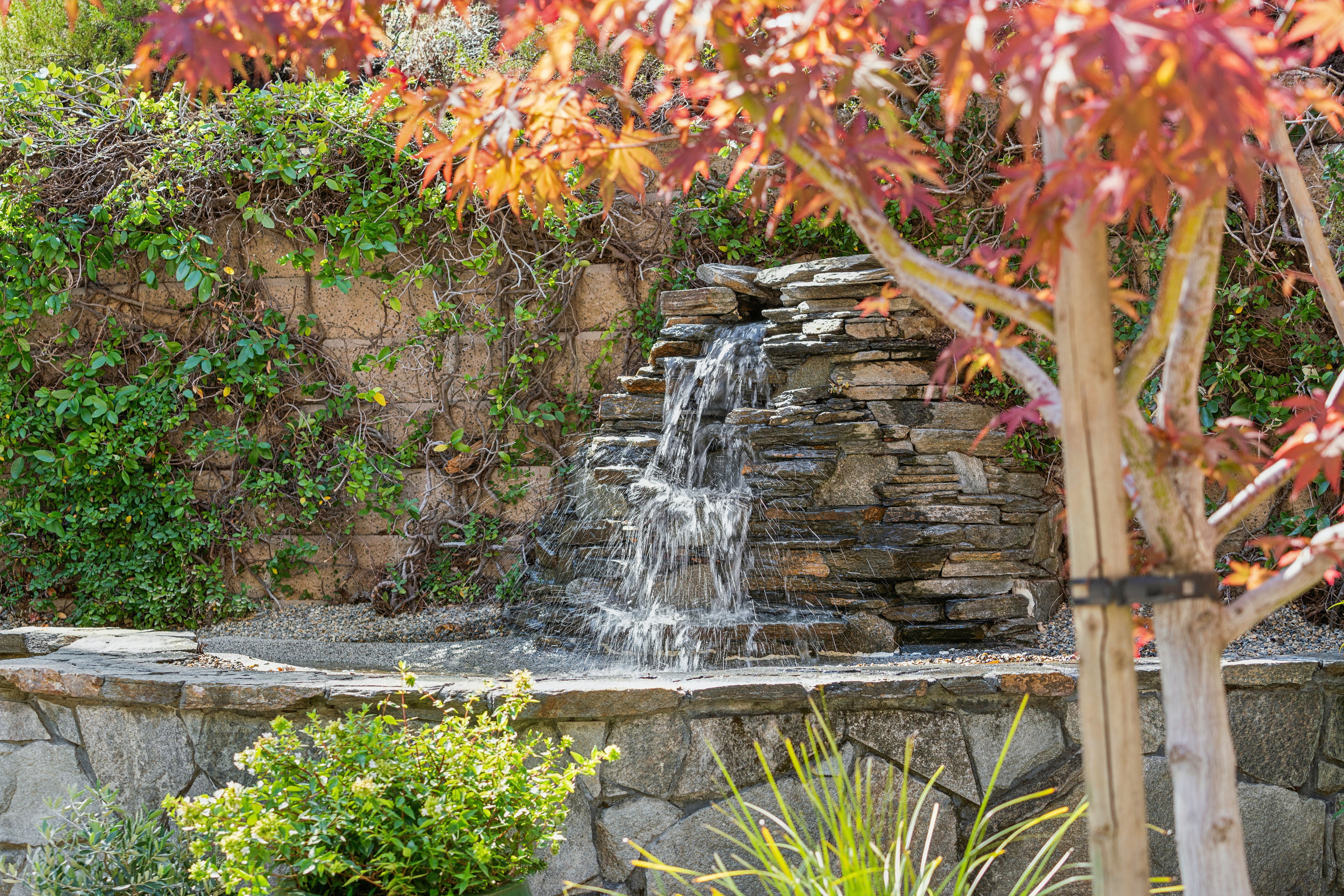
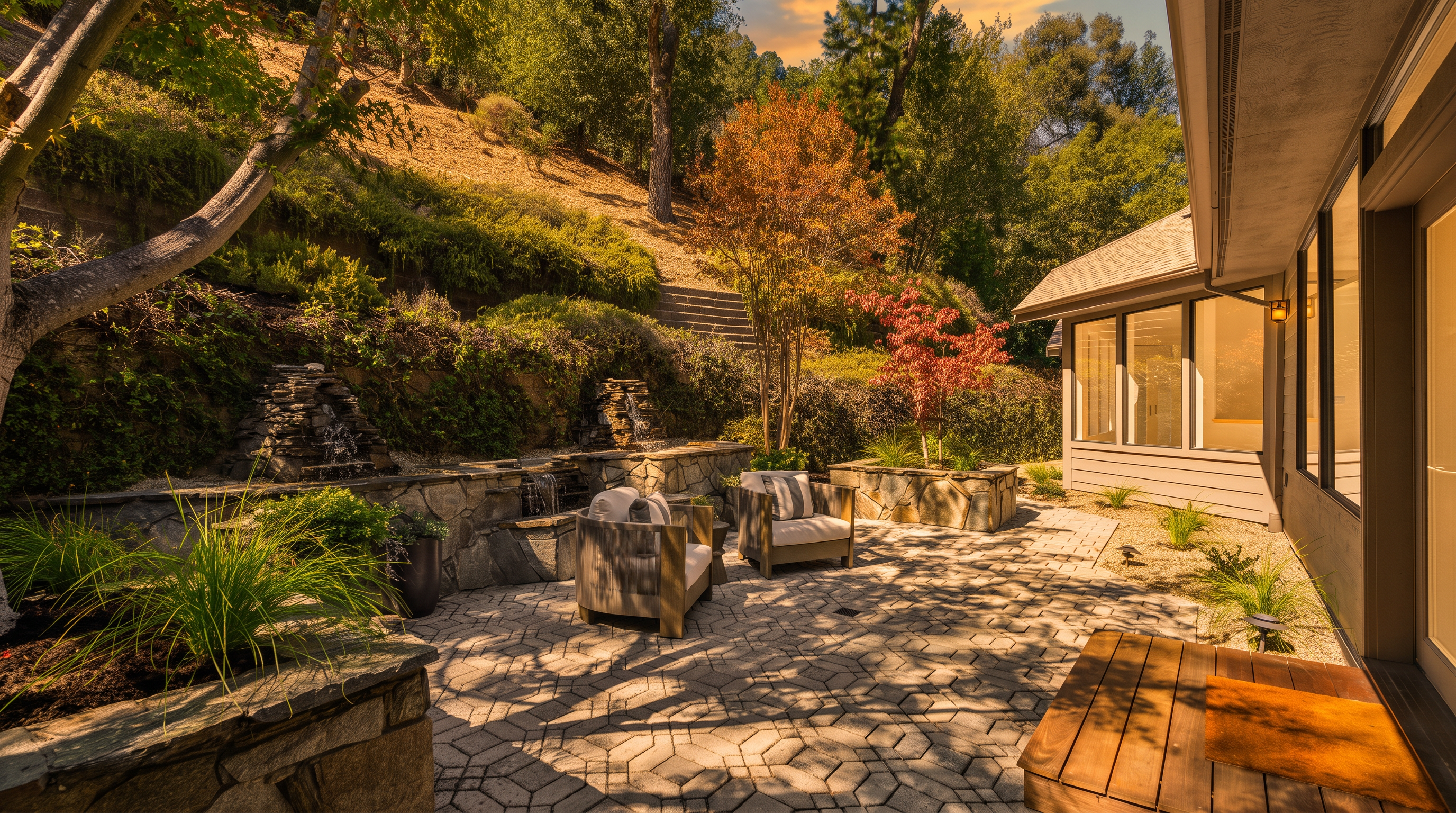
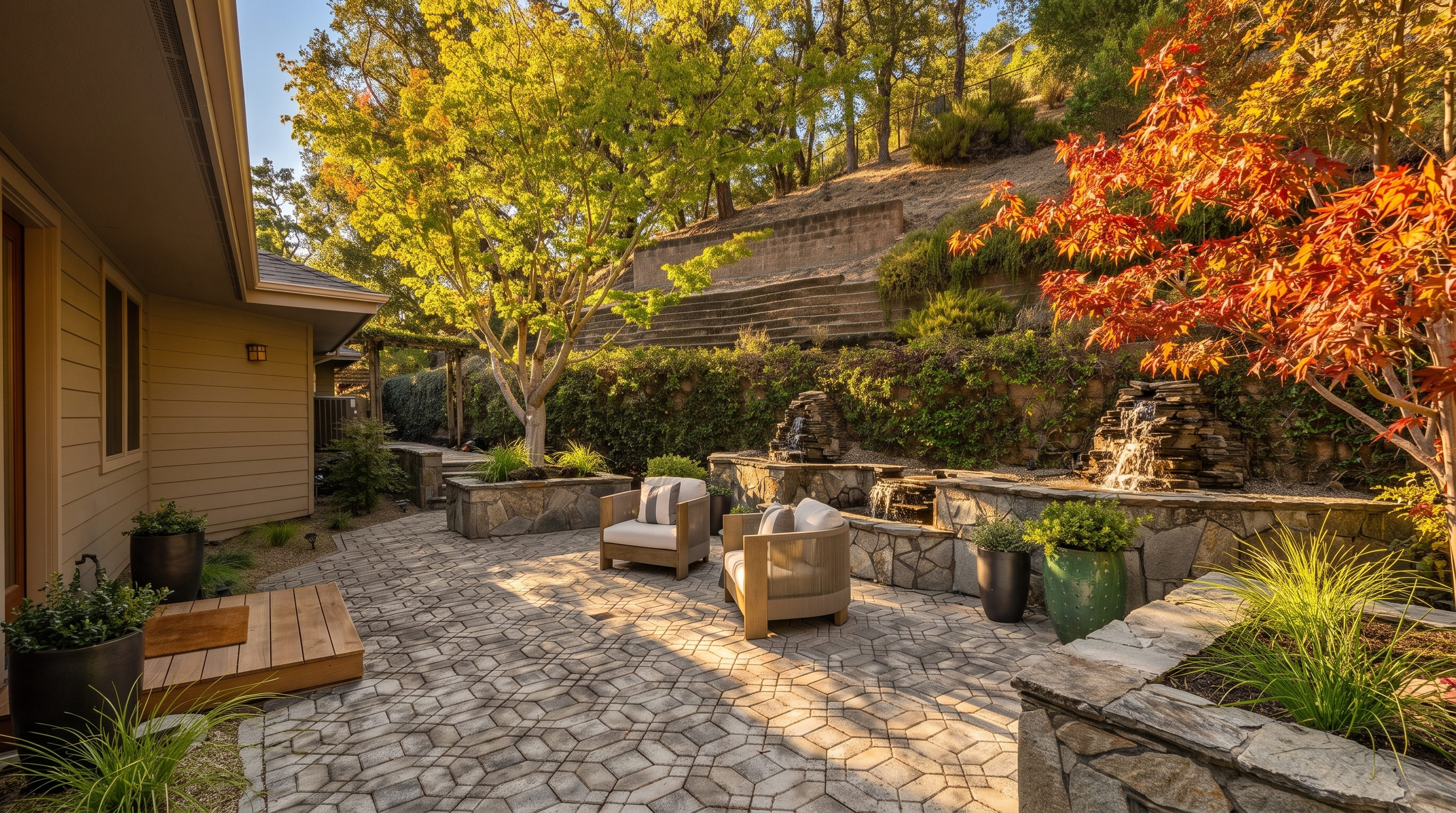
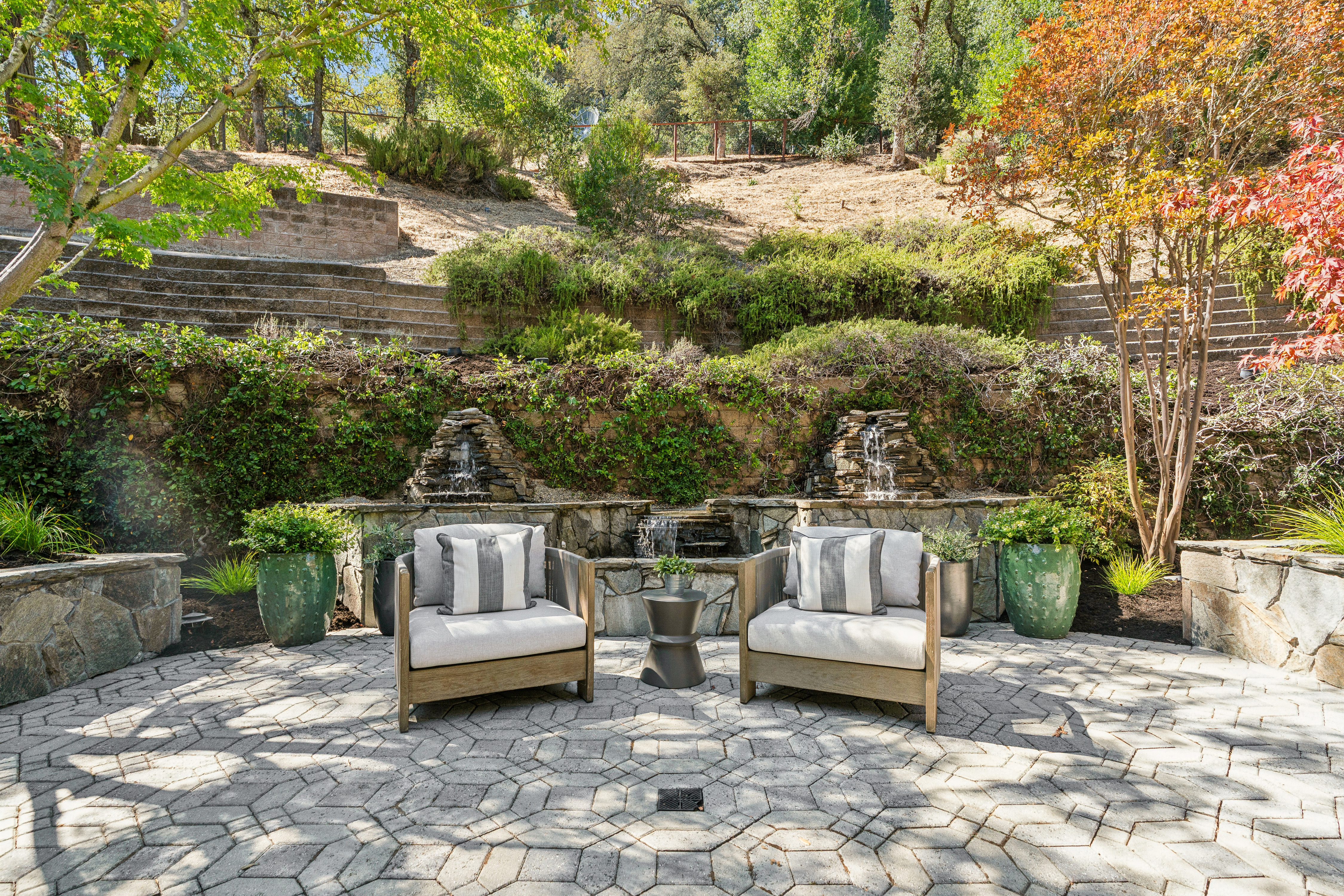
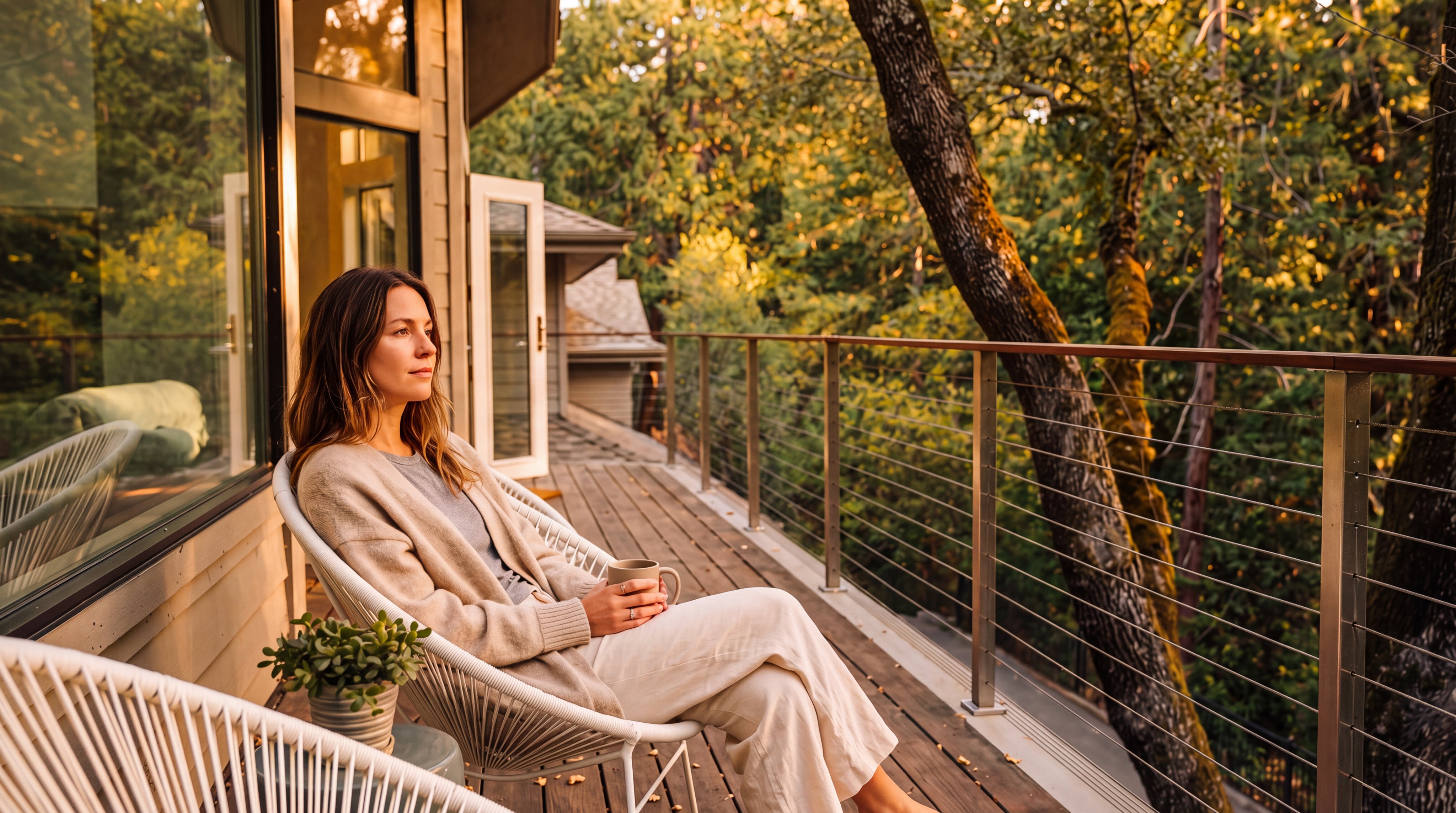
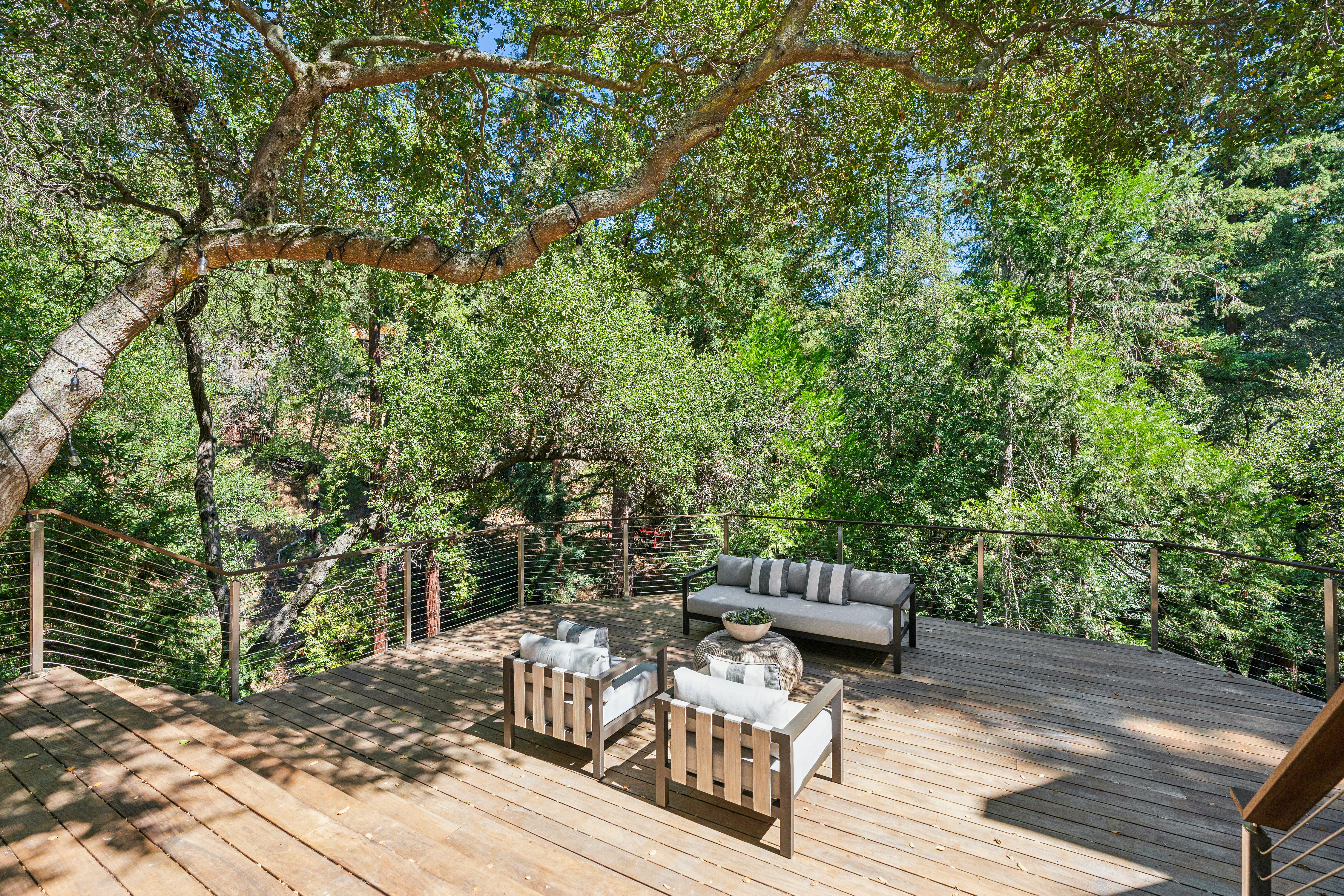
Outdoors, the property unfolds across a series of carefully composed spaces. An oversized Ipe deck — naturally weather-resistant and rich in tone — serves as the primary stage for entertaining, furnished with modern seating and framed by the forest canopy above. A lower stone-paver patio introduces a more intimate scale, centered on a tiered water feature and surrounded by terraced retaining walls, ornamental grasses, and a striking Japanese maple. Cable railings throughout the exterior maintain unobstructed sight lines into the trees at every level.
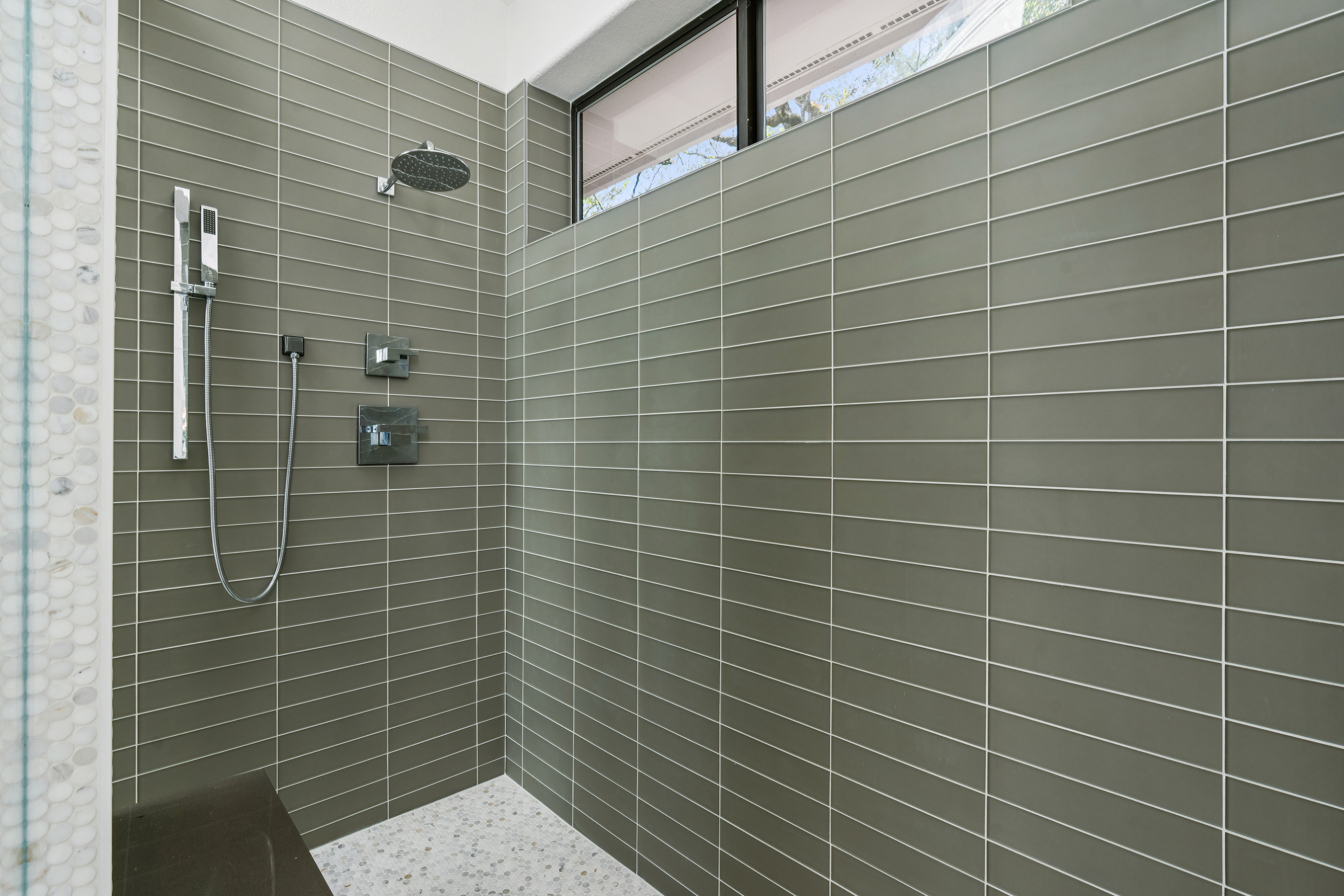
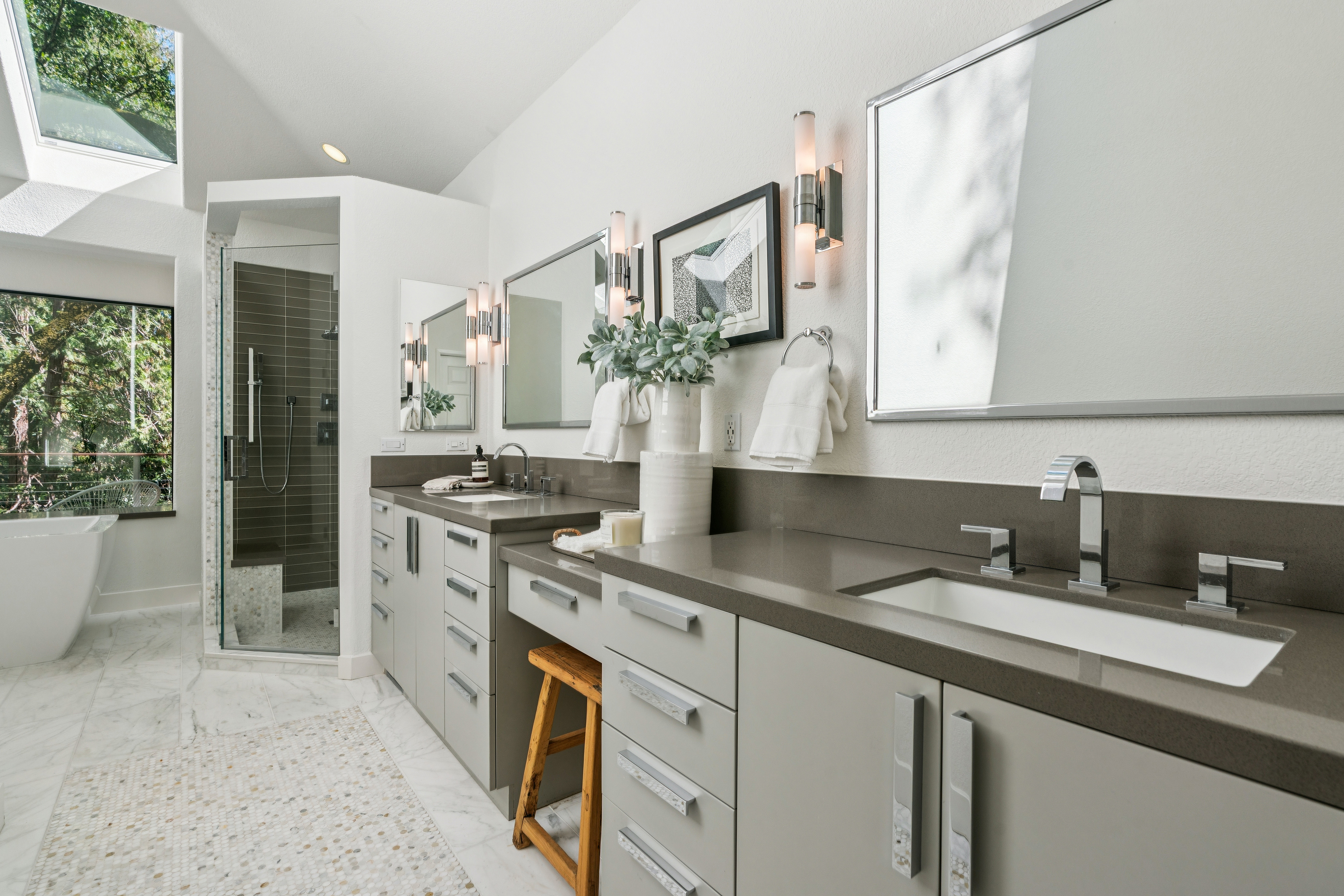
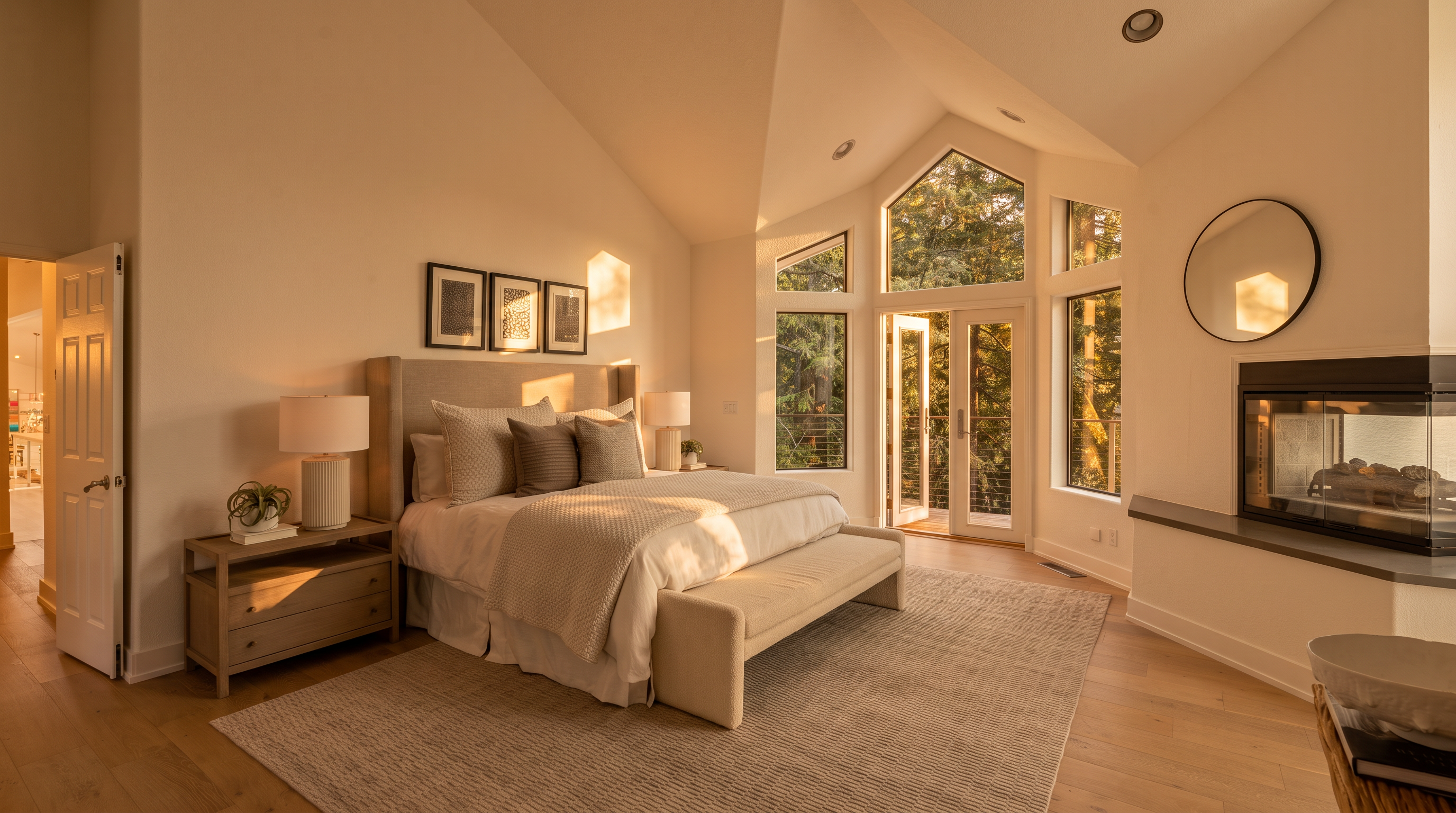
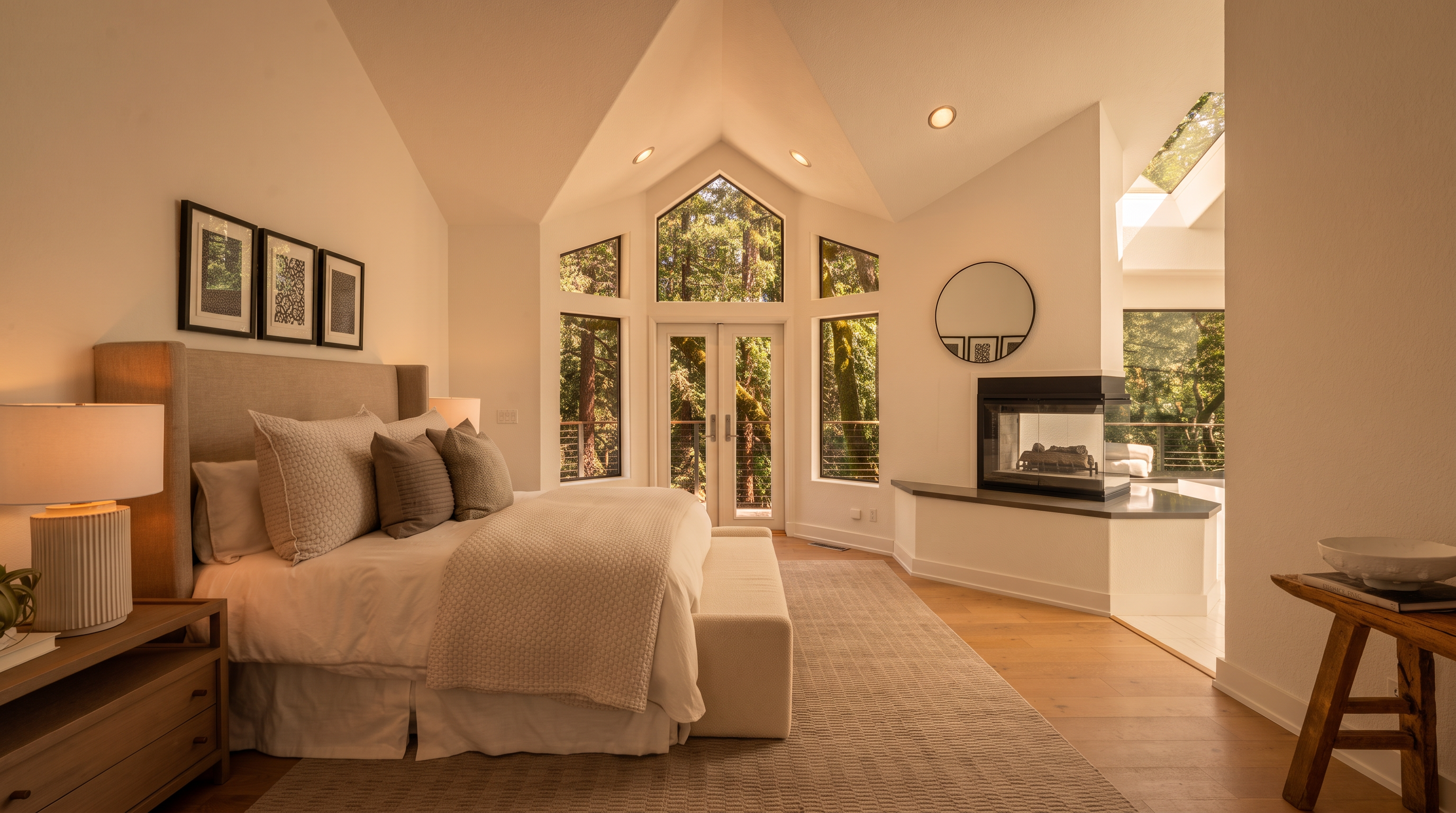
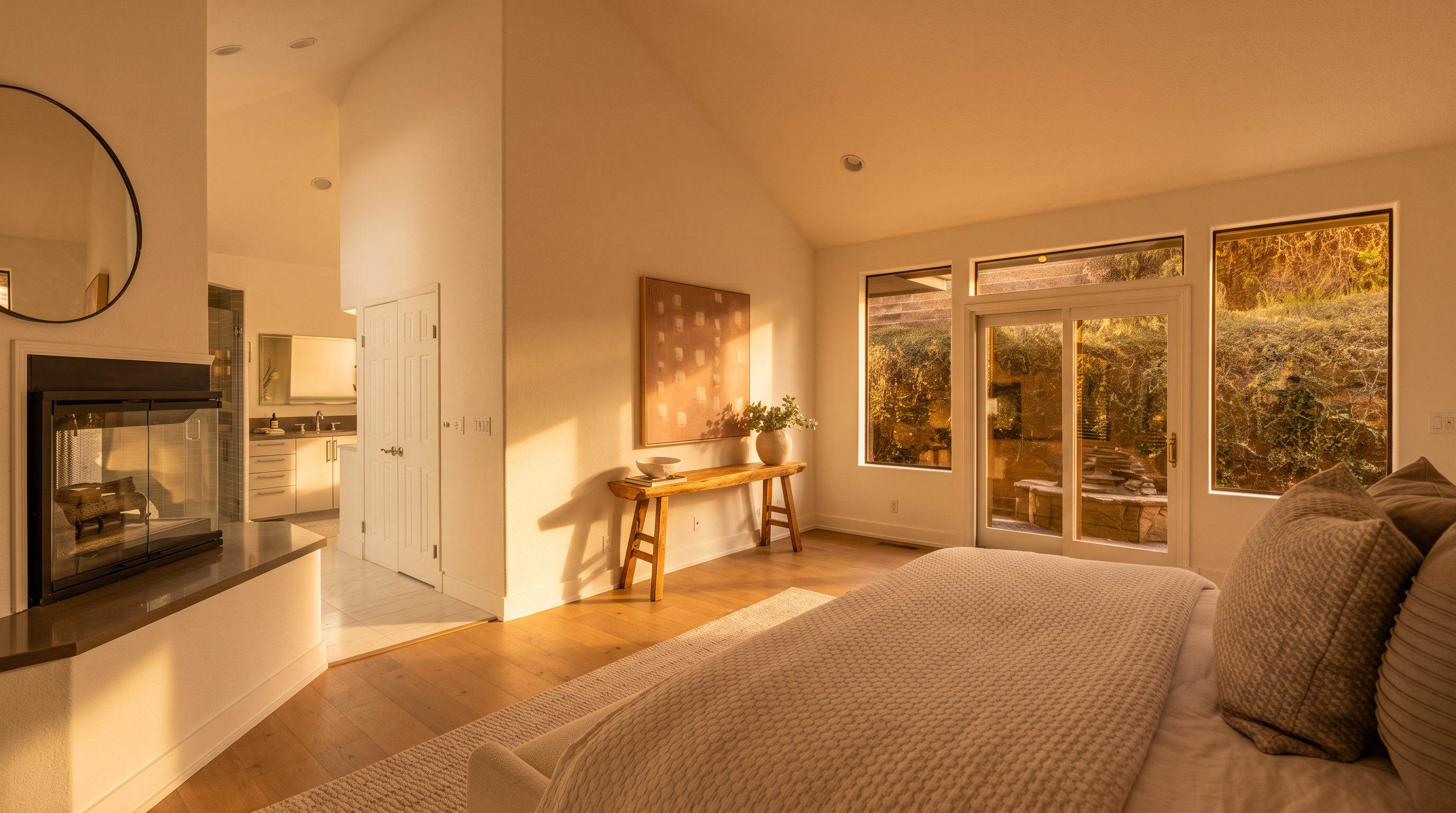
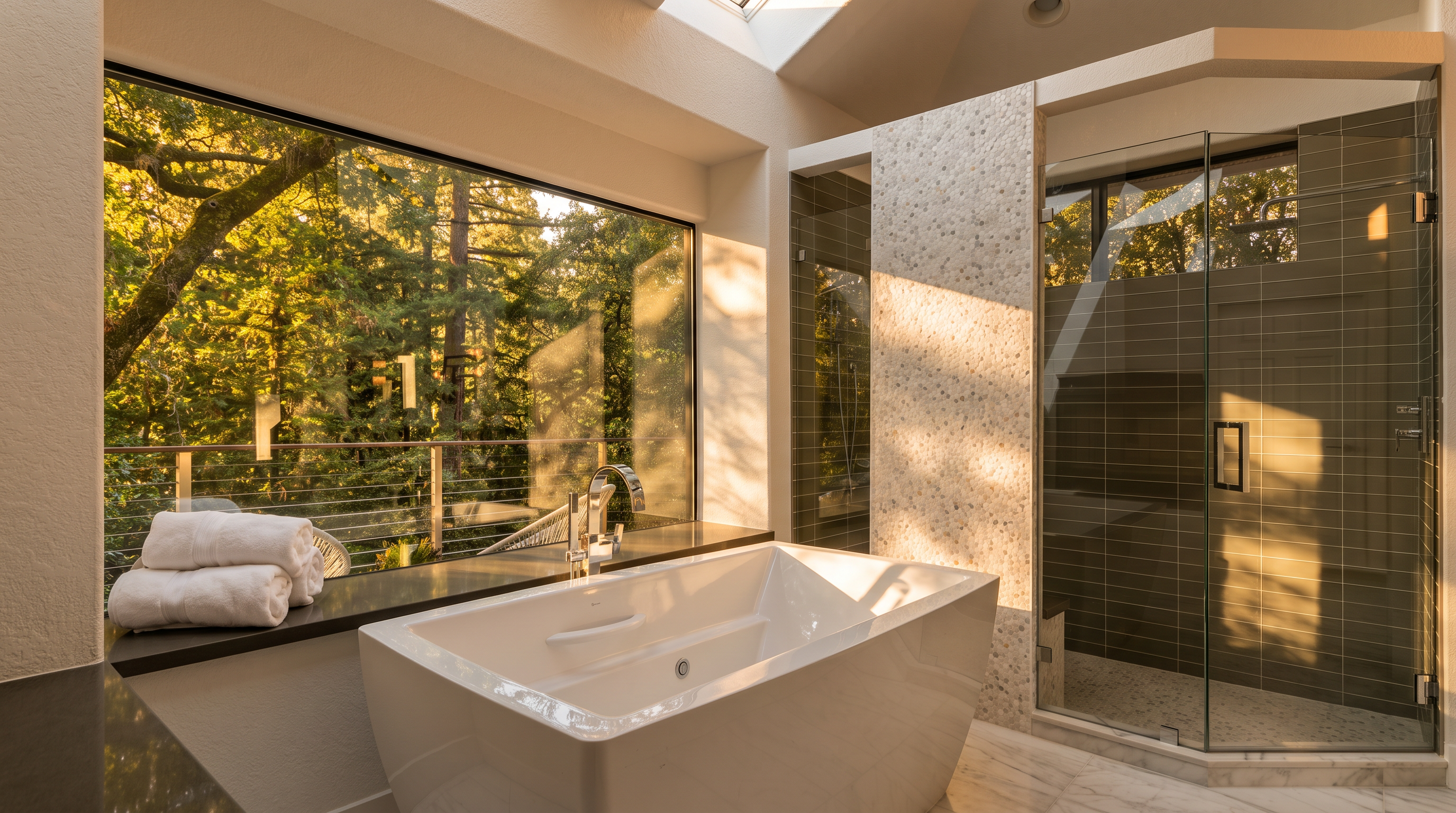
The primary suite occupies its own quiet altitude. A vaulted ceiling, a glass-front fireplace, and a private balcony with treetop views create a retreat that feels genuinely removed from the rhythms below. The en suite bath is finished with care: a freestanding soaking tub positioned beneath a large window overlooking the forest, a glass-enclosed shower clad in olive-green rectangular tile with a rainfall showerhead, a skylight overhead, and a dual-vanity with dark stone countertops. Practicalities have not been overlooked — the HVAC system, water heater, and roof have all been replaced within the last five years, offering the kind of peace of mind that rarely announces itself but is always welcome.
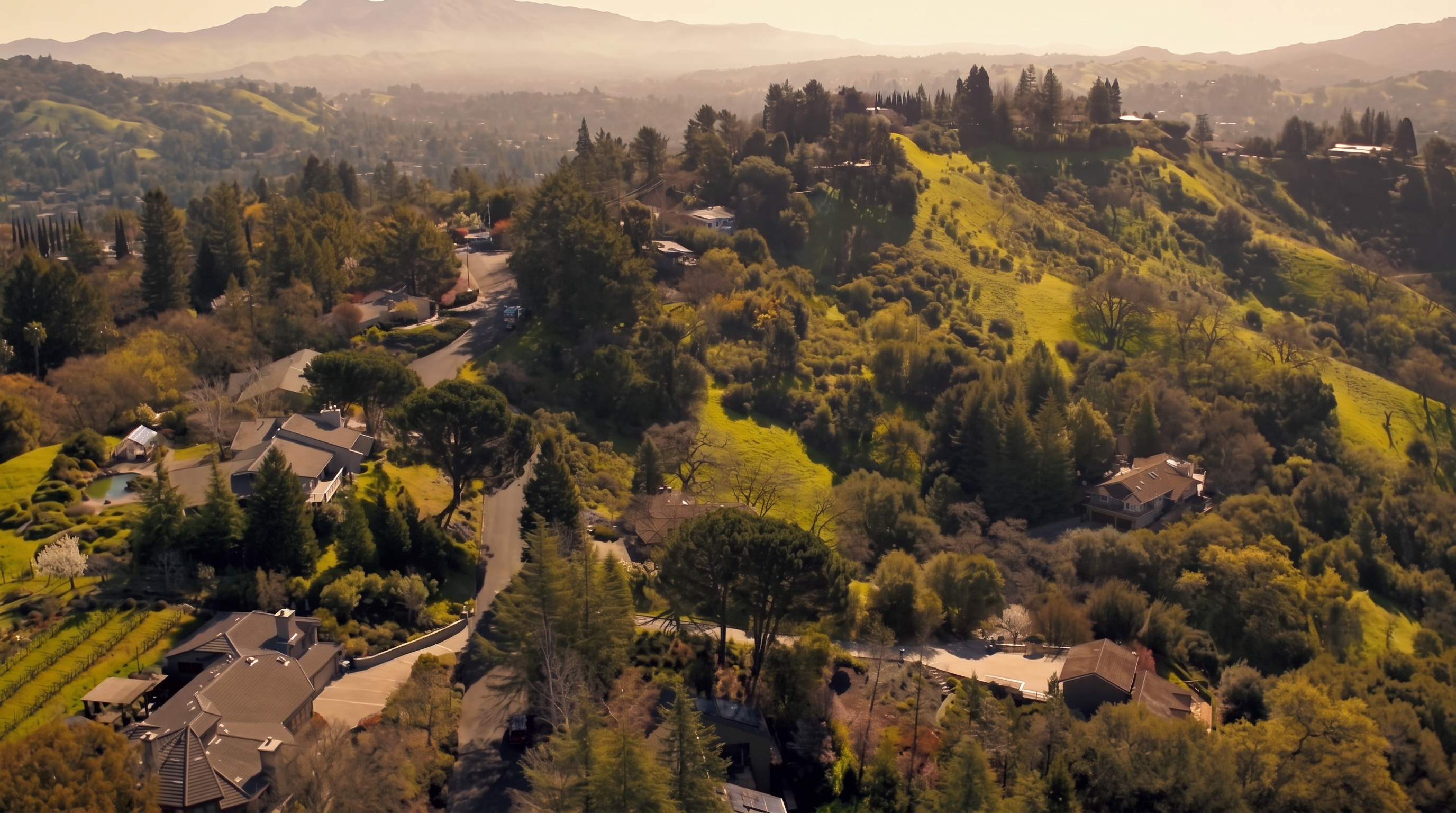
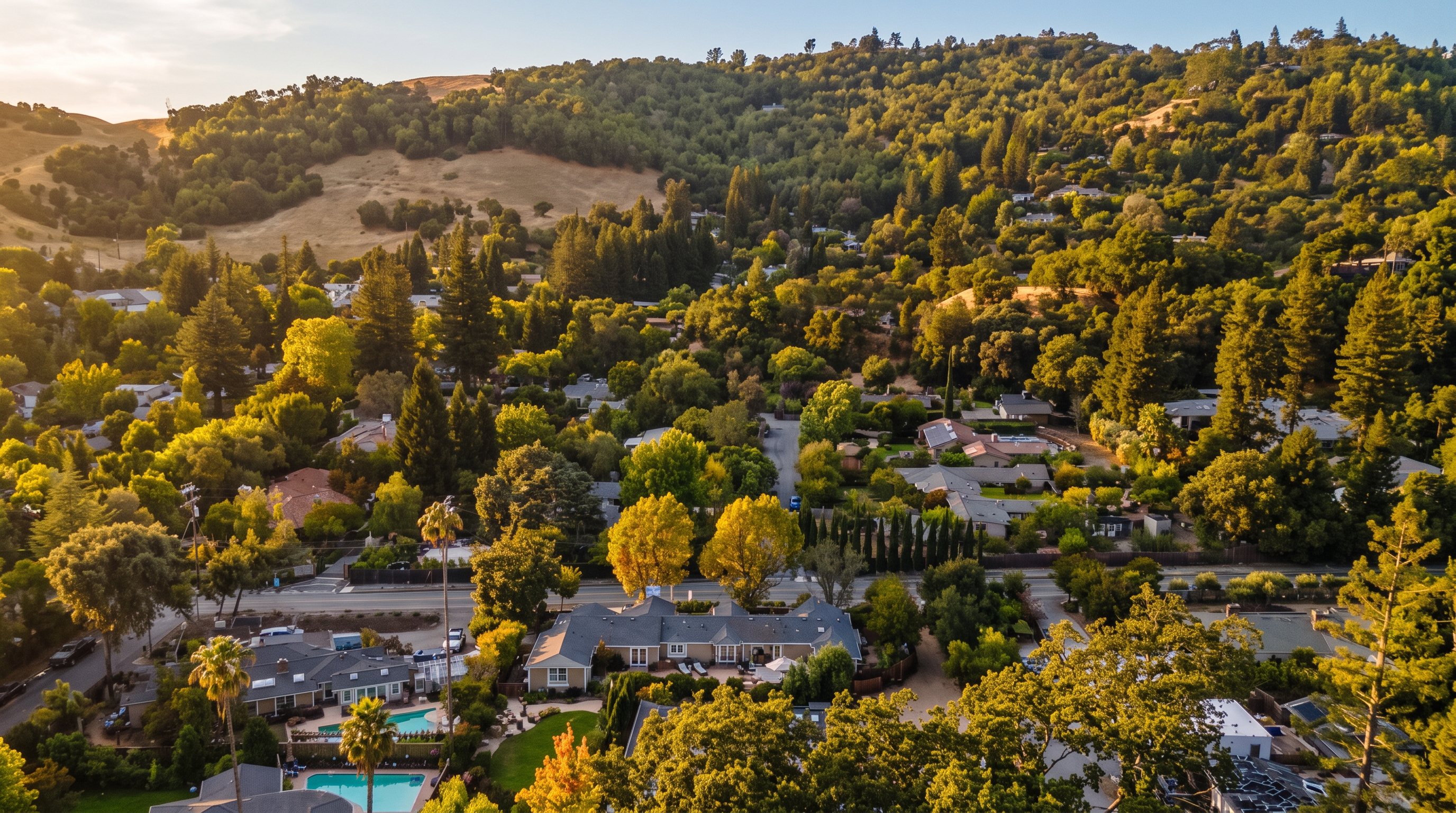
Happy Valley is one of Lafayette's most storied residential enclaves — a quietly prestigious address that has long attracted those who understand the difference between proximity to a good life and actual immersion in one. Nestled in the hills above central Lafayette in Contra Costa County, the neighborhood takes its name from the small valley that cradles it, a landscape shaped by the same volcanic ridgelines and seasonal creek drainages that define the broader East Bay Hills. The mature redwoods and oaks that define Redwood Circle are not incidental to the neighborhood's character — they are its character, a living record of the terrain that existed long before the first homes arrived.
Lafayette itself occupies a particular place in the East Bay's civic identity. Incorporated in 1968 after decades as an unincorporated community, it has maintained a scale and sensibility that larger cities often lose: walkable pockets of commerce, a strong commitment to its public school system, and a cultural life anchored by the performing arts. The Lafayette-Orinda Performing Arts Center and the Town's own community programming reflect a community that takes quality of life seriously, not as an aspiration but as an operating assumption.
For families, the proximity to Happy Valley Elementary School — consistently regarded as one of the stronger elementary schools in the Acalanes Union High School District — is not a minor footnote. The Acalanes district as a whole draws families from across the region, with Acalanes High School and its peer campuses maintaining reputations for academic rigor and strong extracurricular programs. That educational ecosystem is woven into the fabric of why Happy Valley commands the attention it does.
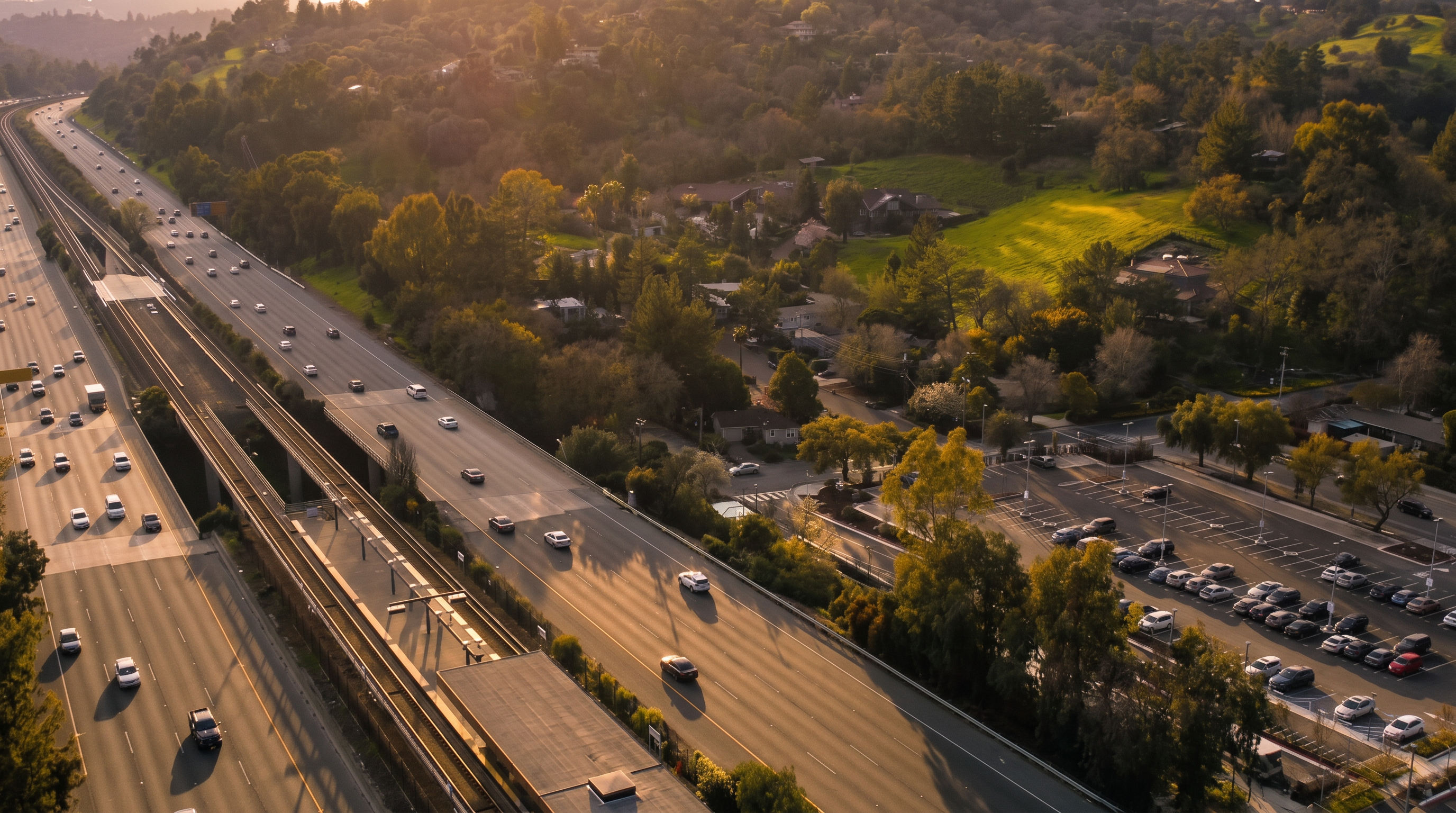
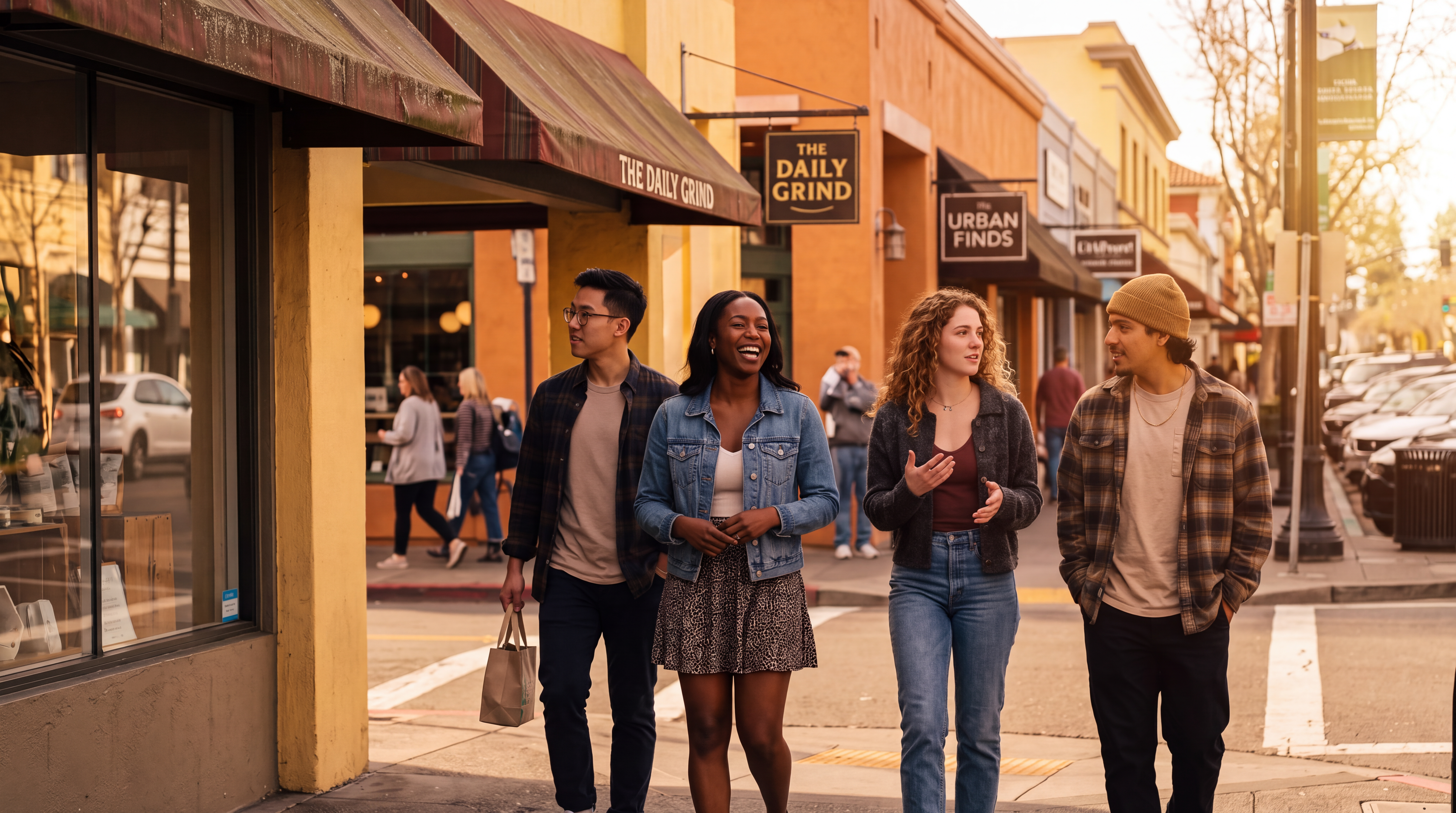
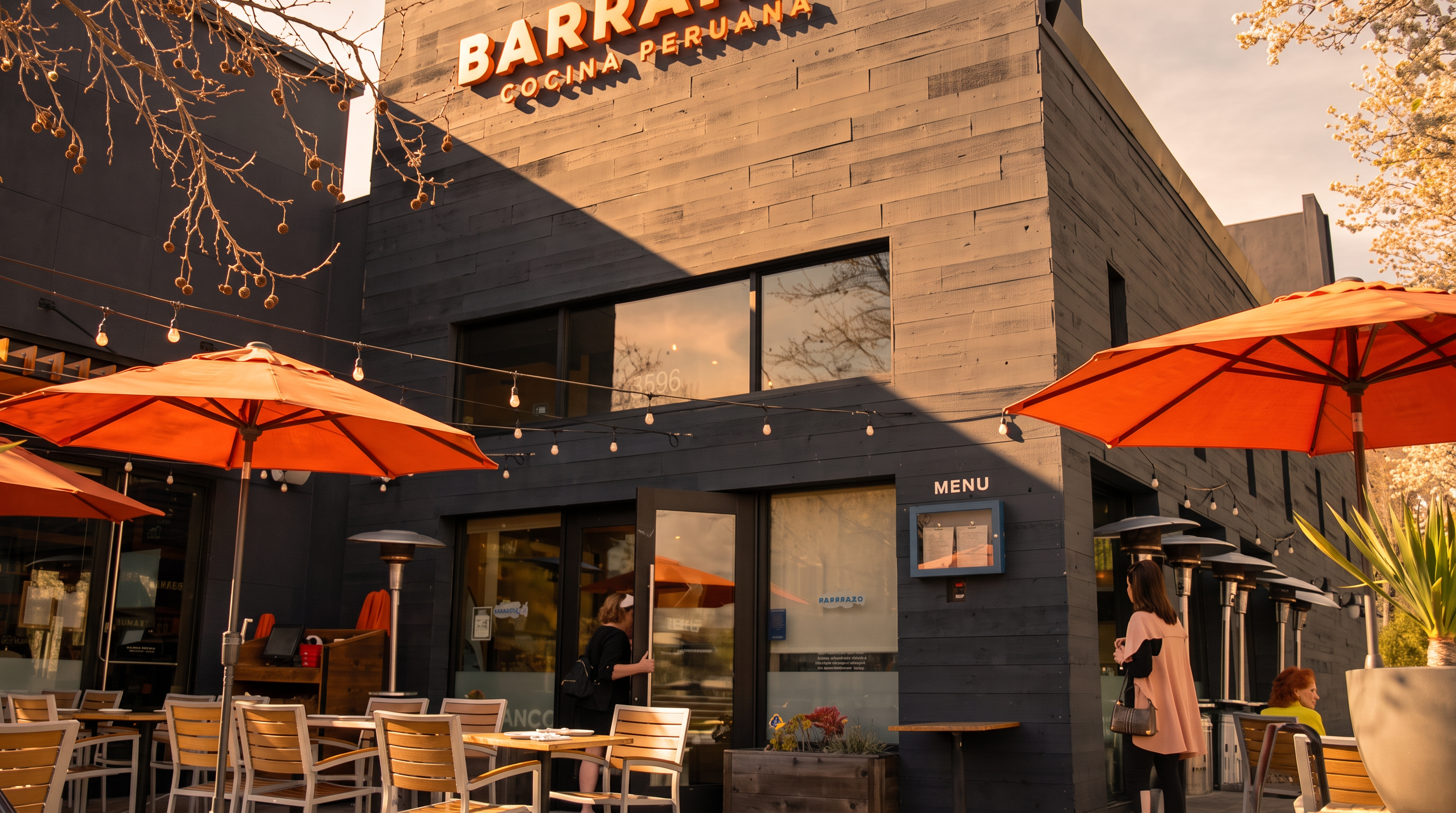
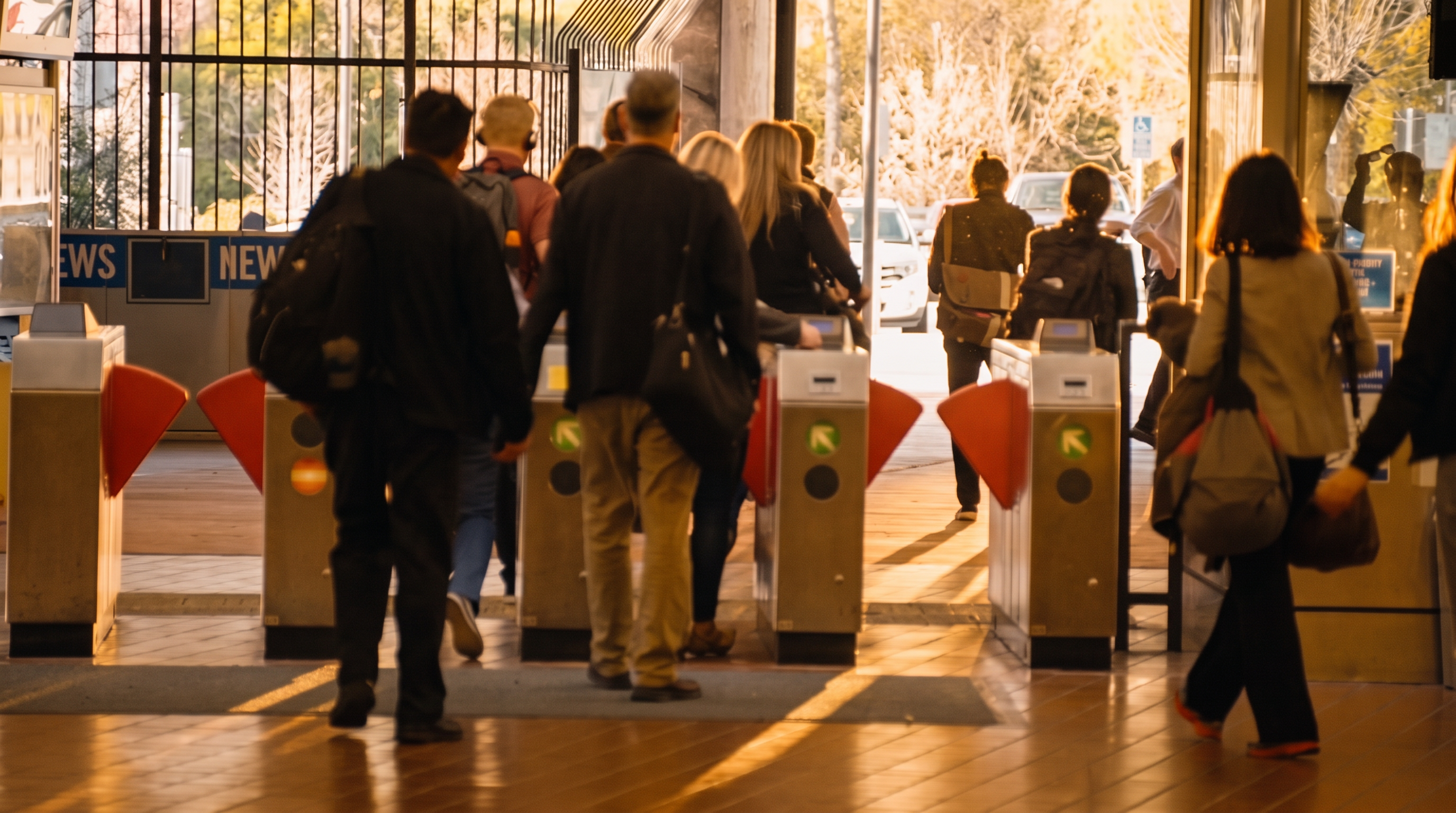
Downtown Lafayette is minutes away by car, and its commercial core along Mount Diablo Boulevard has evolved into something genuinely pleasant: a mix of independent restaurants, wine bars, specialty markets, and neighborhood retailers that reflects the community's tastes without the self-consciousness of a curated district. Commuters are equally well served. The Lafayette BART station connects the neighborhood directly to San Francisco in under an hour, and Interstate 680 and State Route 24 place Oakland, Walnut Creek, and the broader Bay Area within straightforward reach.
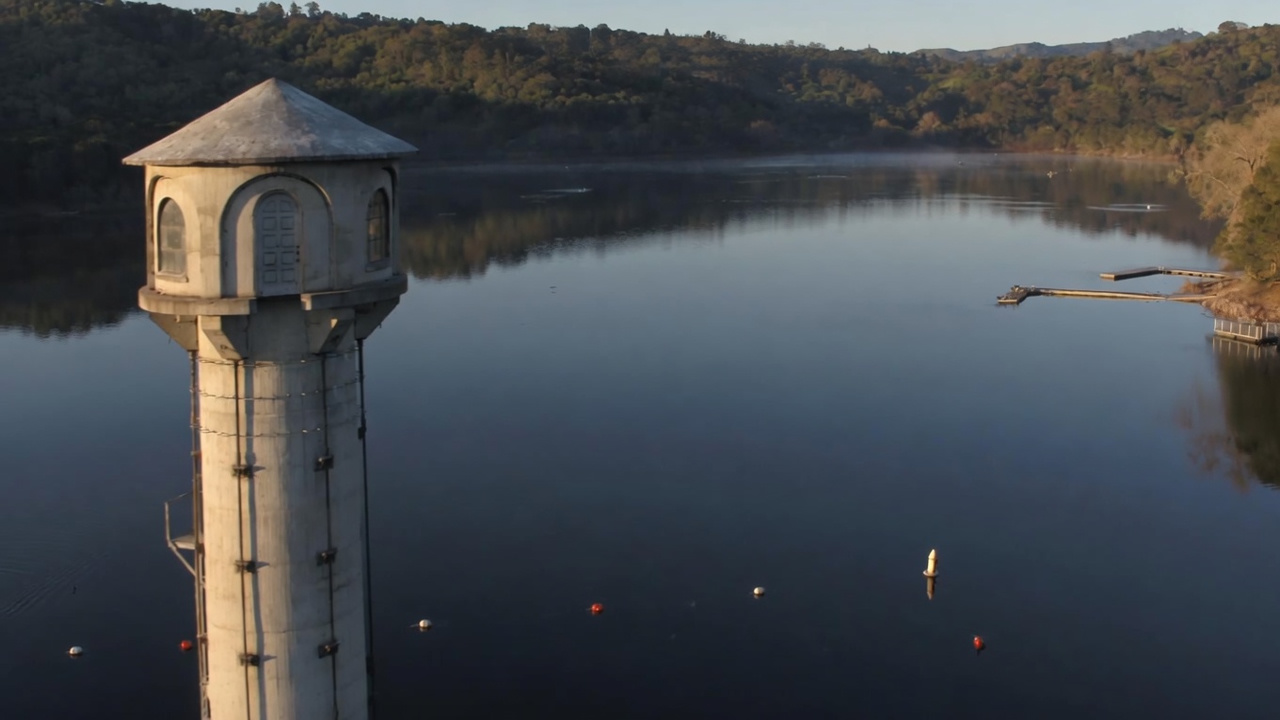
What distinguishes Happy Valley most, however, is the ease with which residents move between civilization and open space. The Lafayette-Moraga Regional Trail — a paved multi-use path tracing a former railroad right-of-way — begins effectively at the neighborhood's doorstep, offering miles of walking, running, and cycling through riparian corridors and open hillsides. The Lafayette Reservoir Recreation Area, with its one-mile perimeter loop, fishing dock, and calm water, sits close at hand and offers a quality of stillness that most Bay Area residents have to drive considerably farther to find.
To live on Redwood Circle is to inhabit a very specific intersection: private enough to feel genuinely apart, connected enough that nothing feels out of reach. In the East Bay, that particular balance is rarer than it appears on a map.
Featured Highlights
Curated Content • Presented by Dana Green Team