The Story Behind
Victorian Grandeur, Reimagined for the Way You Live Today
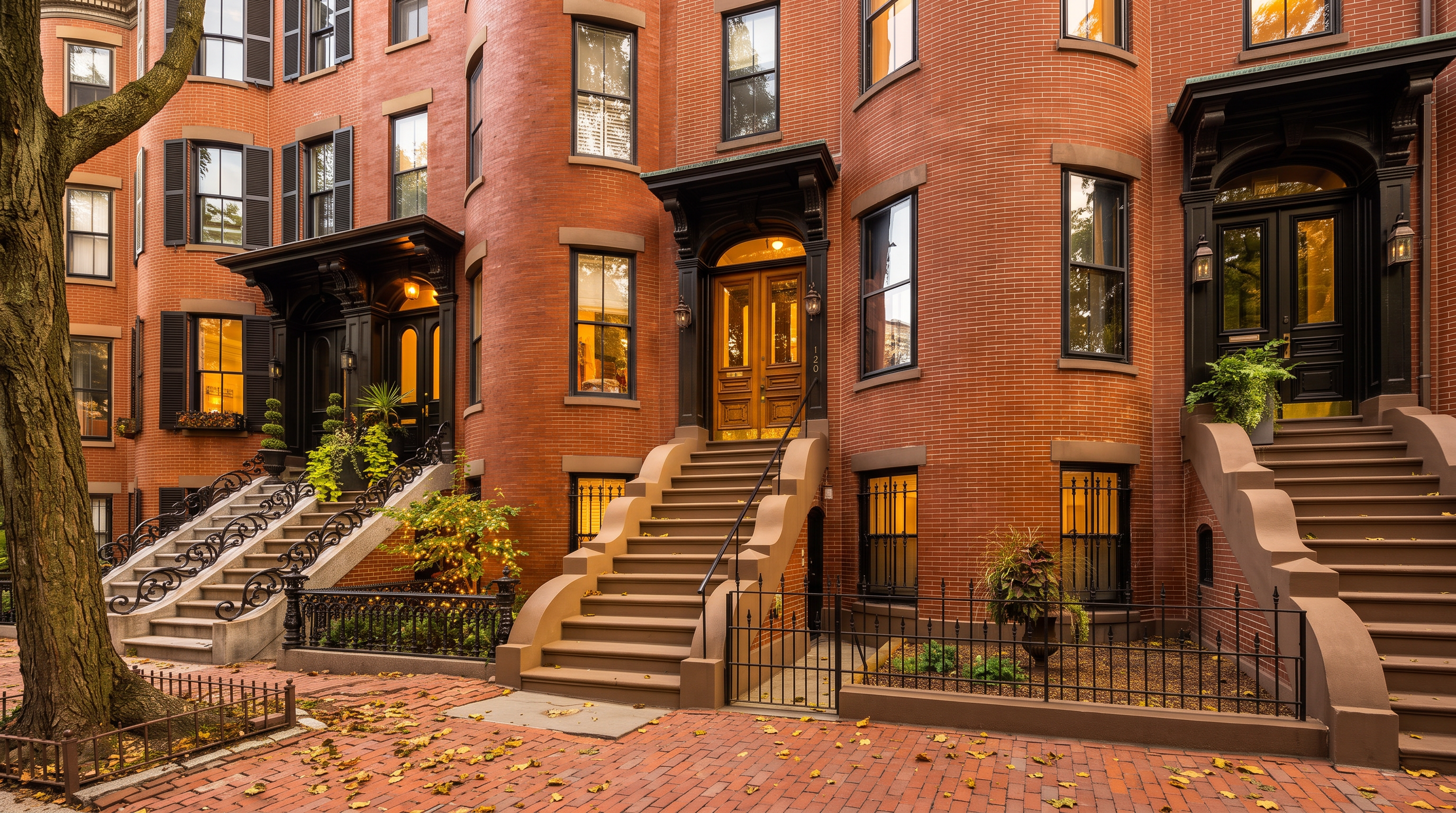
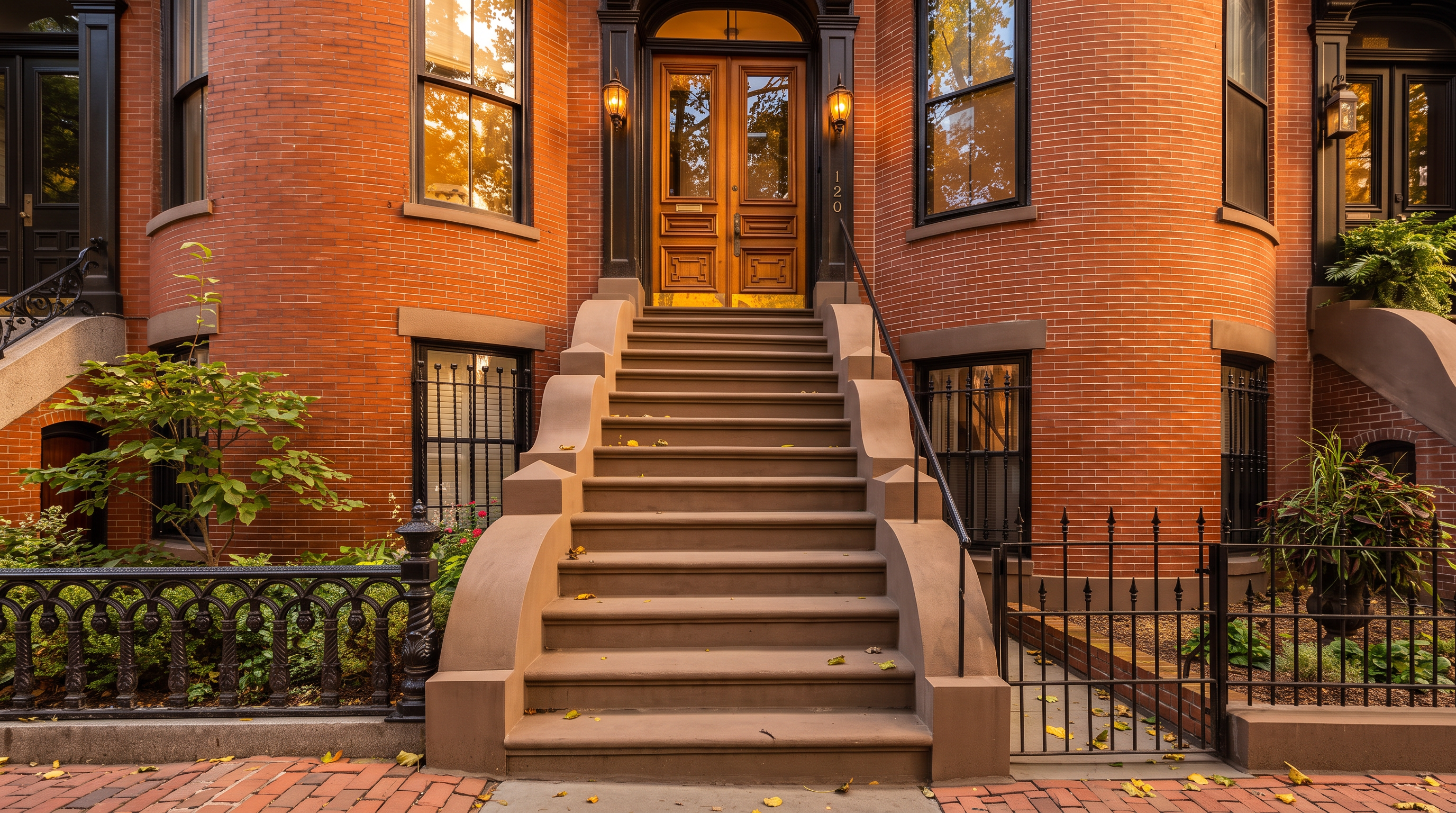
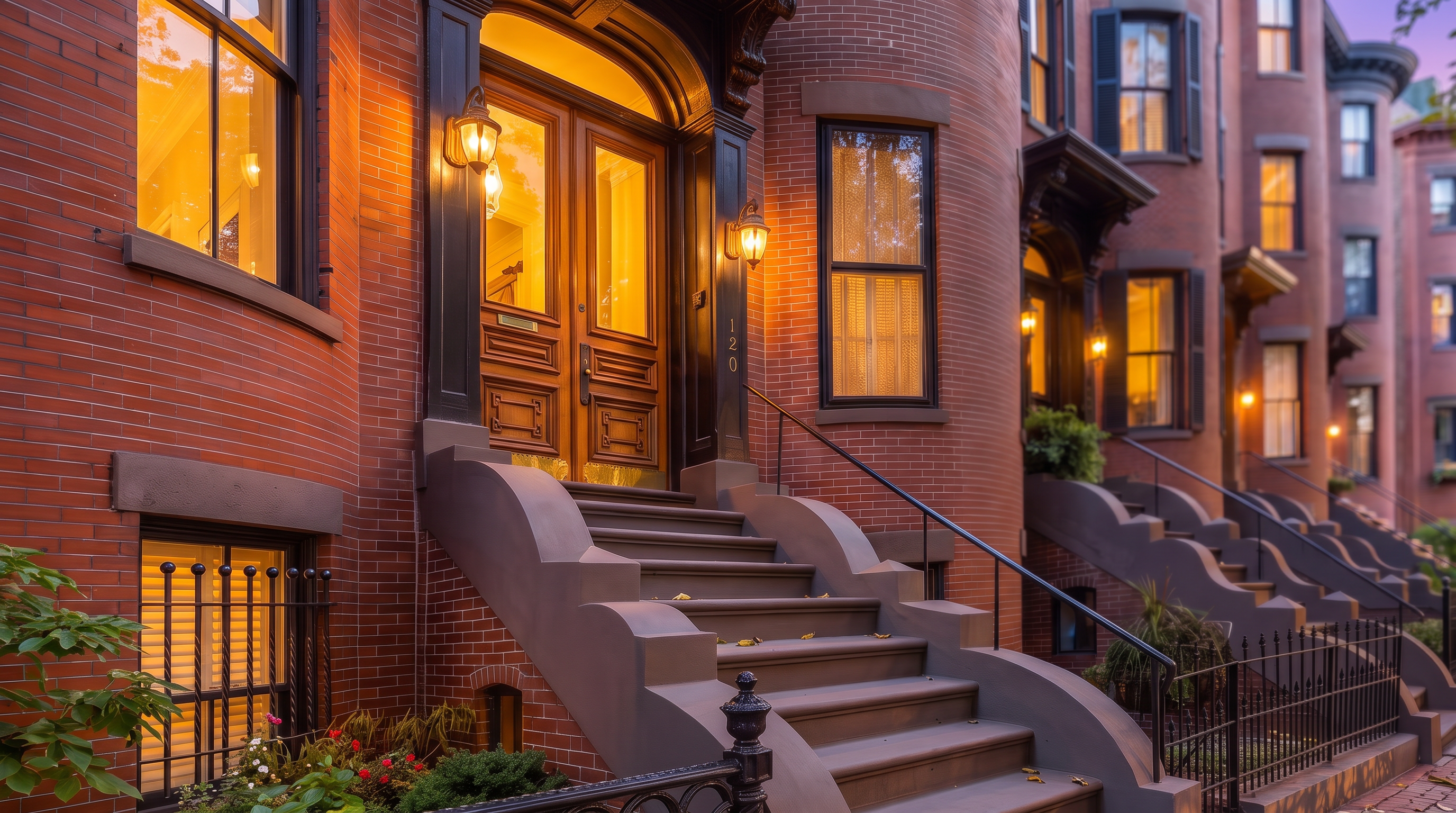
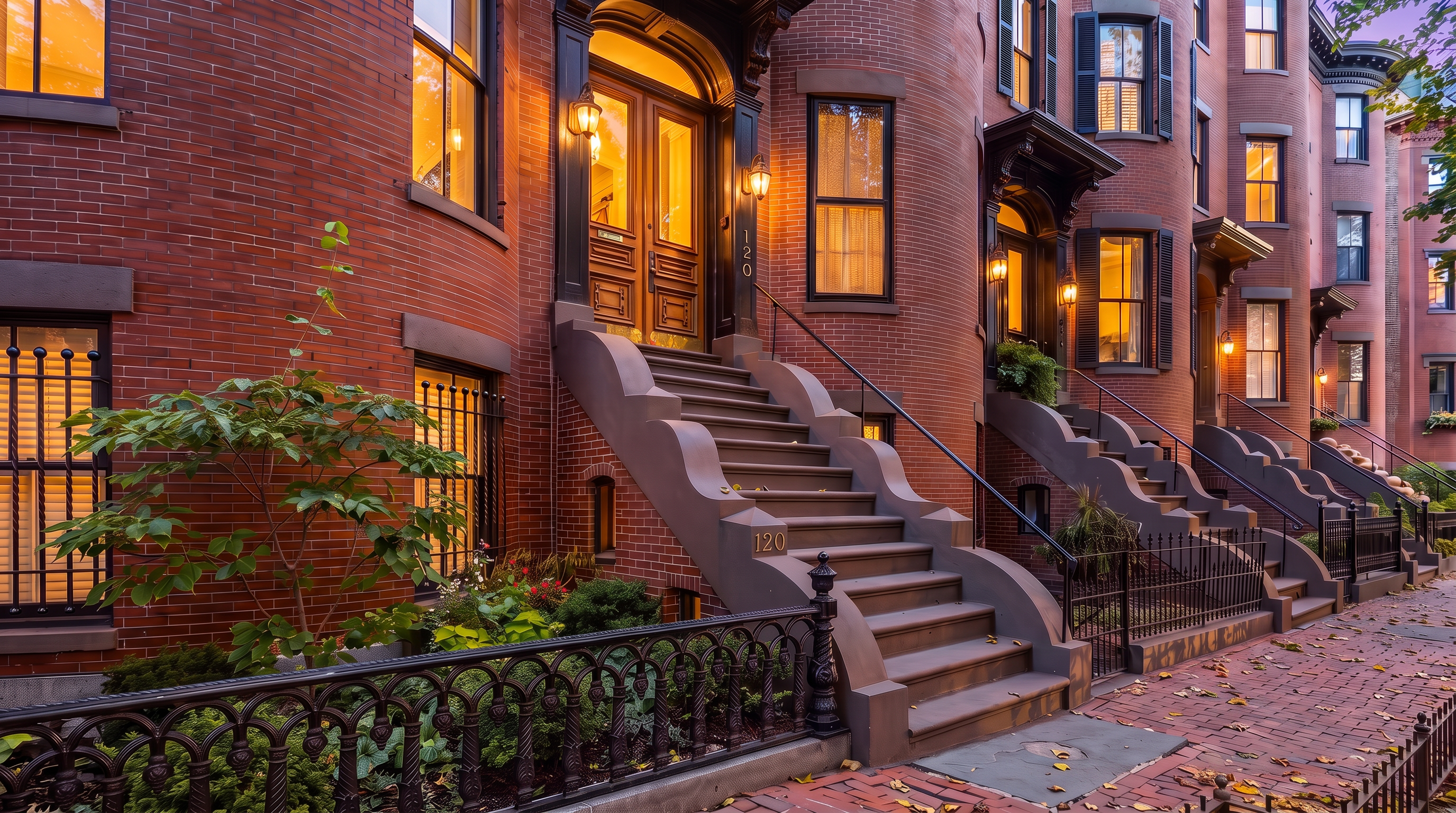
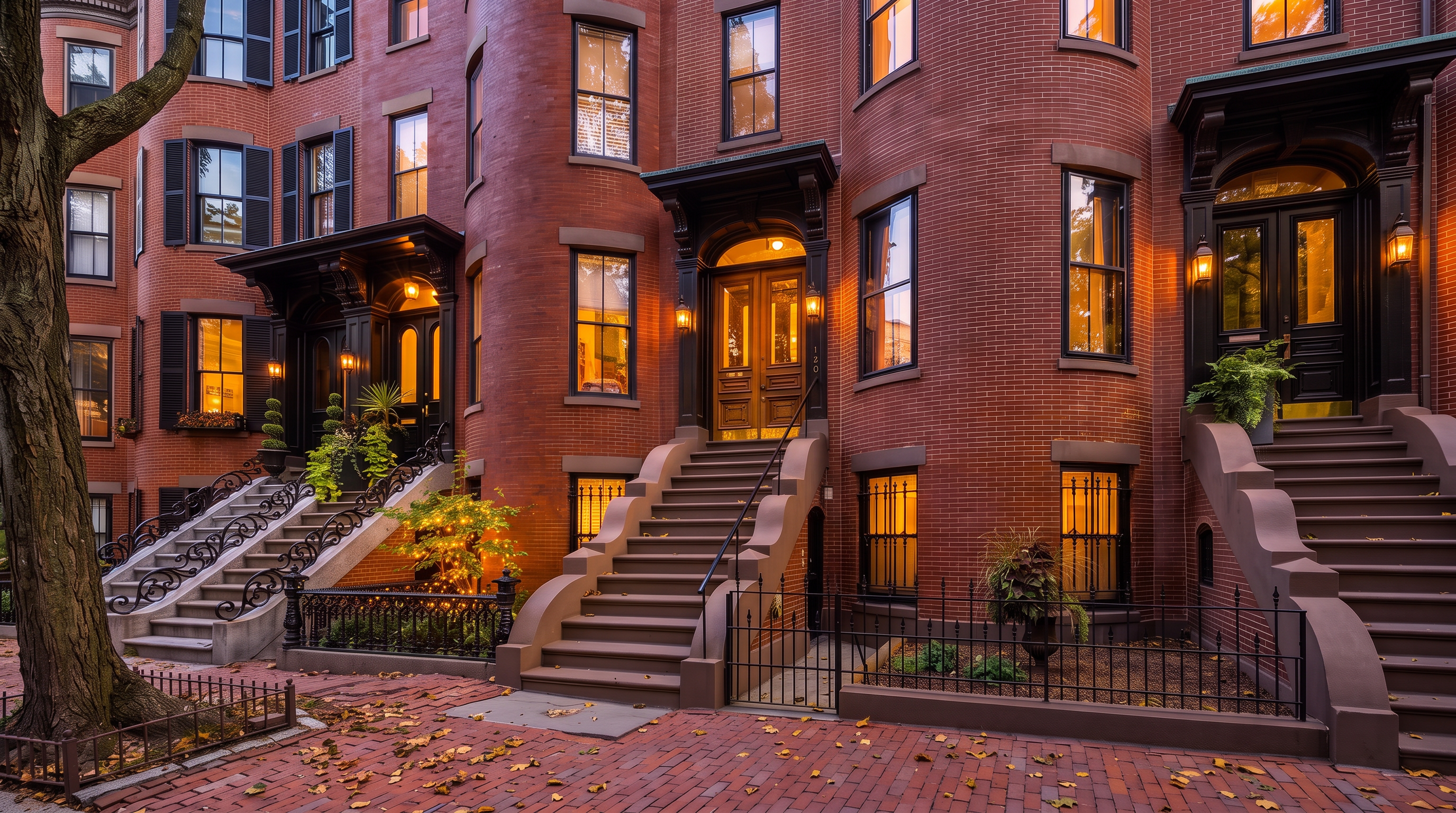
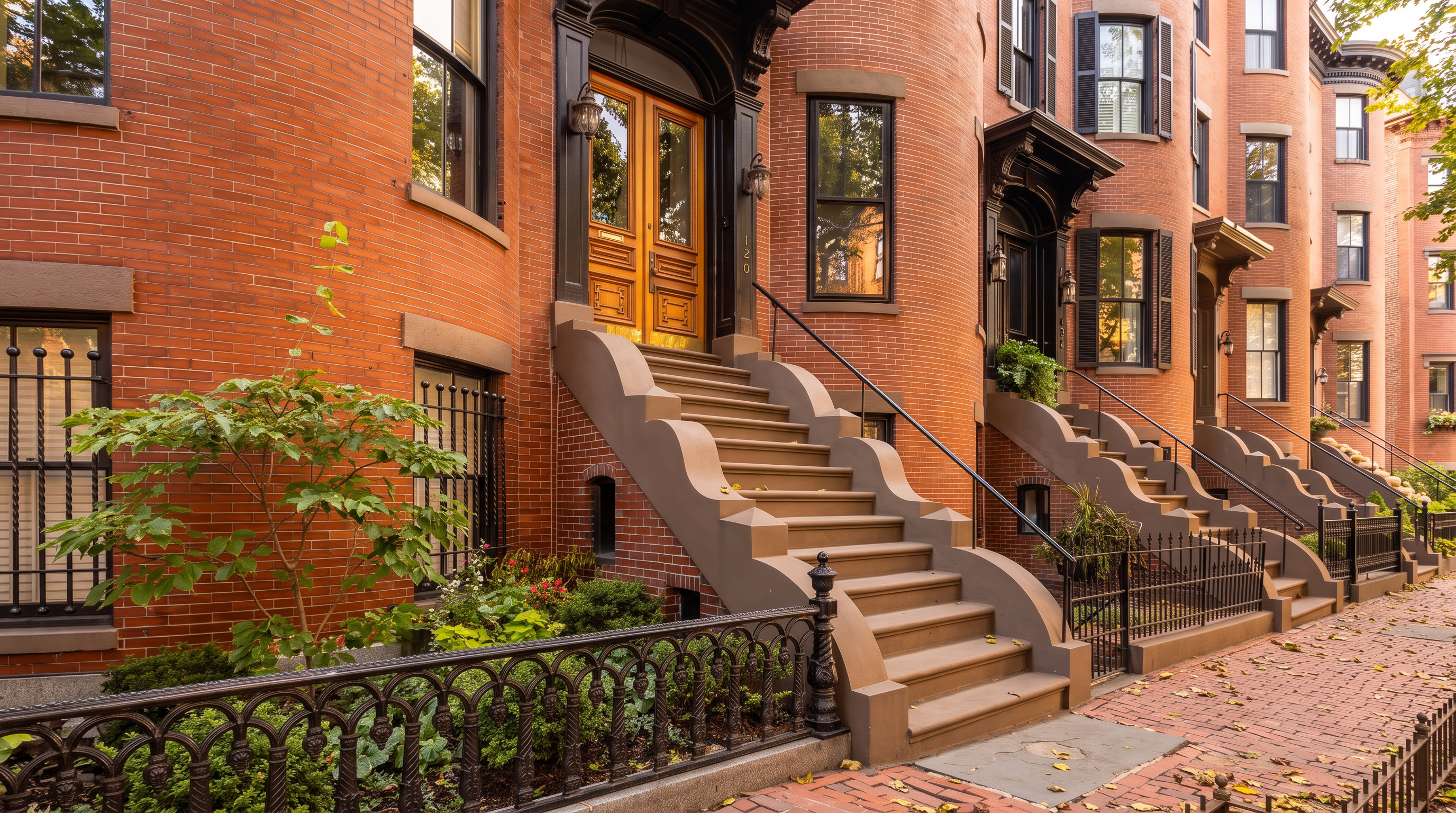
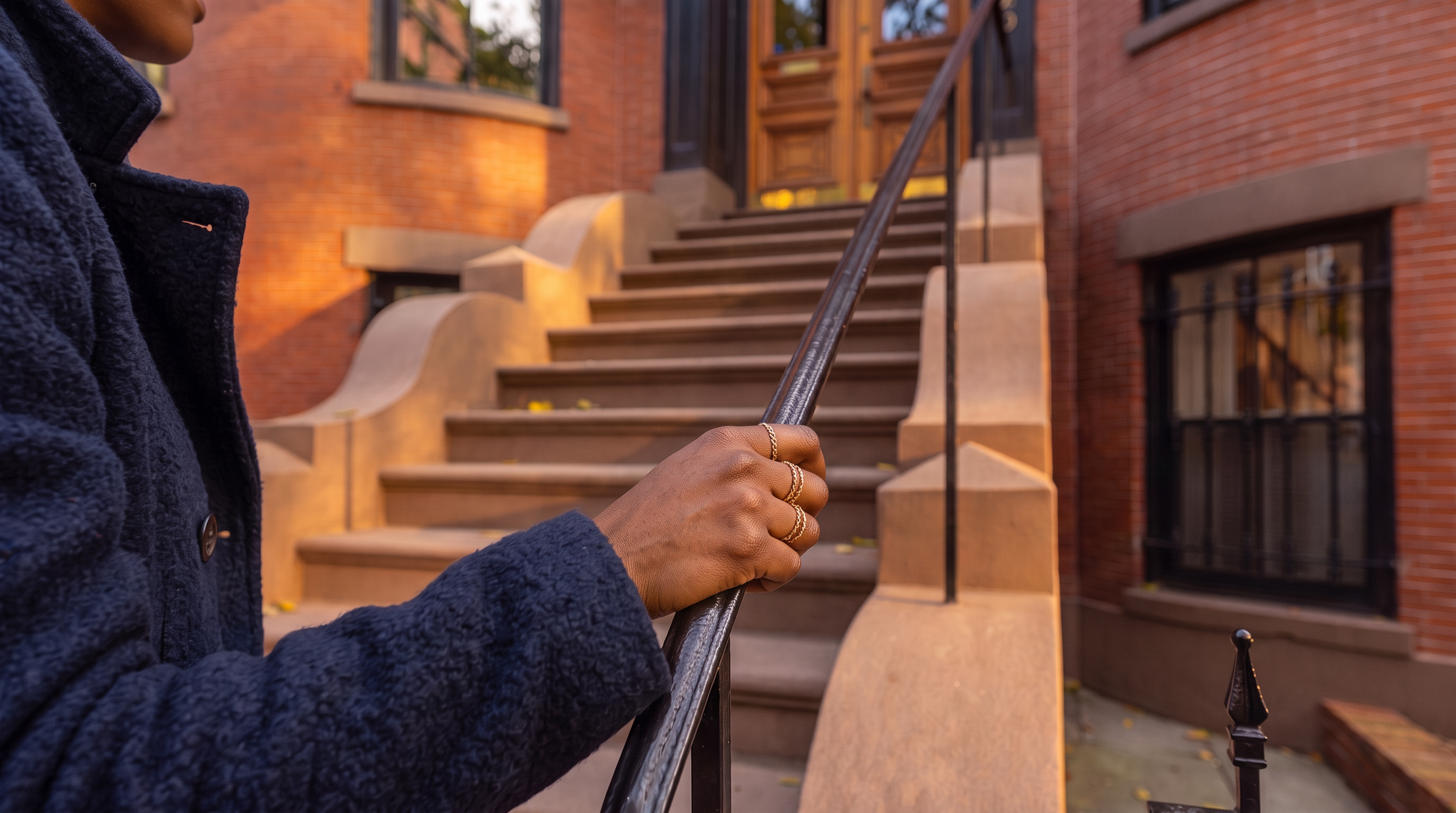
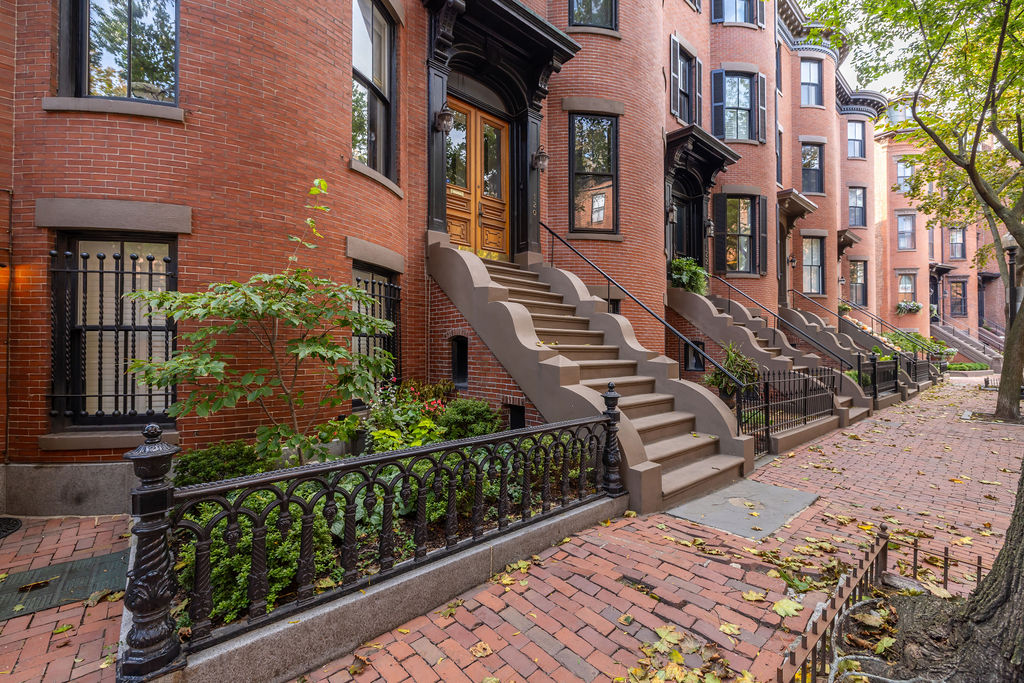
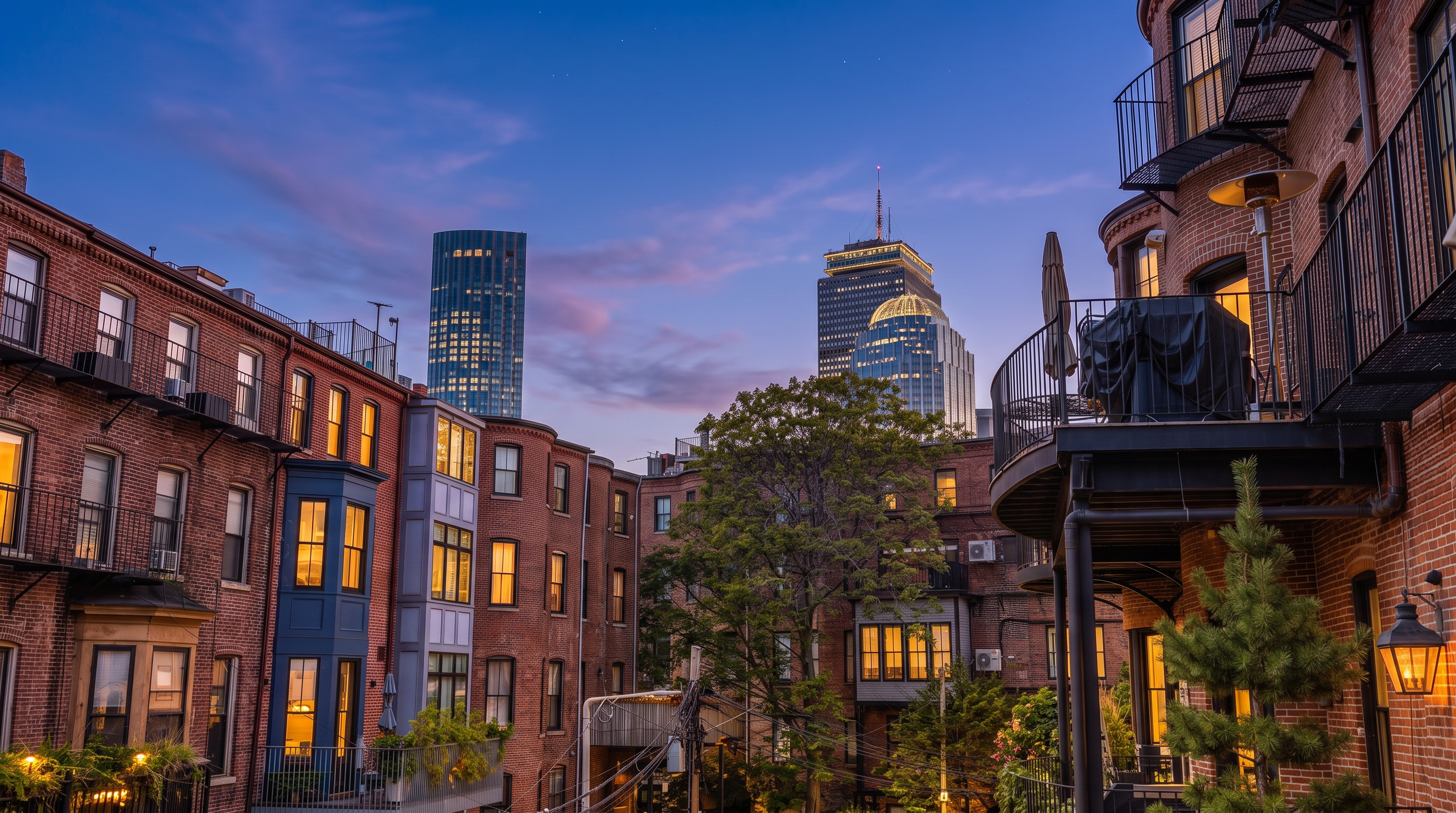
There is a particular alchemy at work at 120 Pembroke Street — the kind that only emerges when a serious renovation meets a genuinely exceptional shell. The brownstone stoop, framed by ornate cast-iron fencing, rises to carved double doors that signal, from the very first step, that this is not an ordinary South End row house. It is a home that has been thought through with rare rigor, floor by floor and detail by detail.
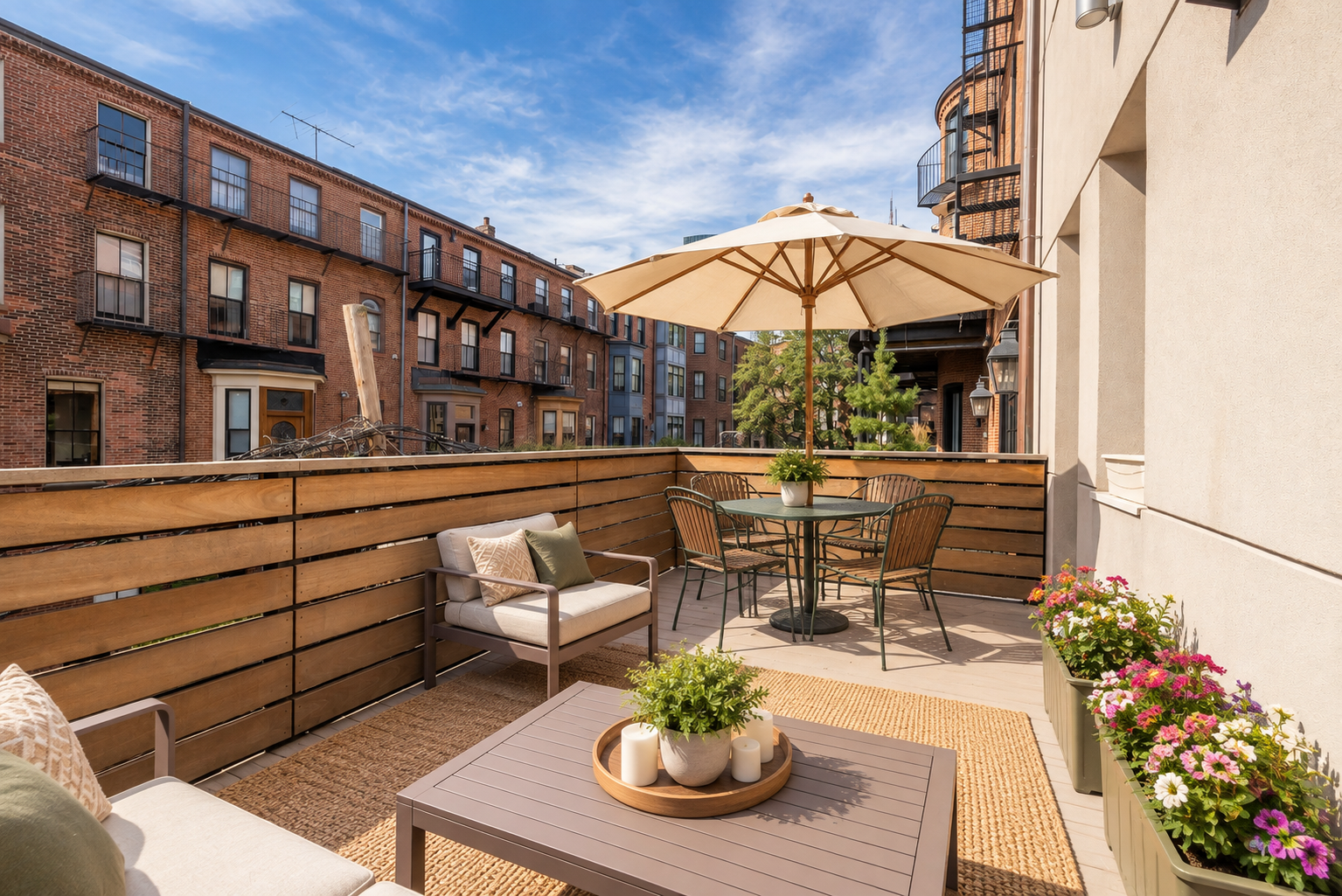
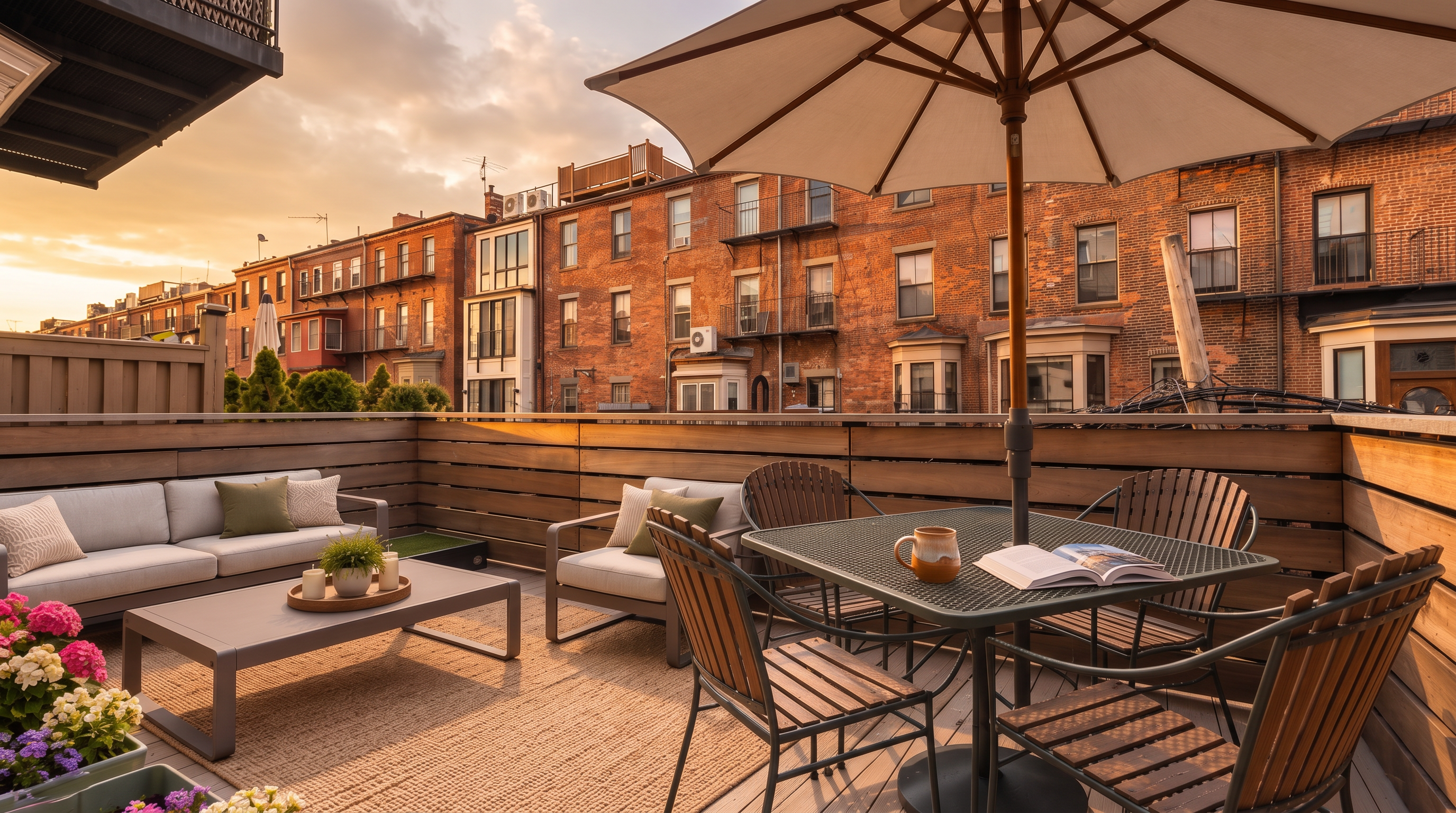
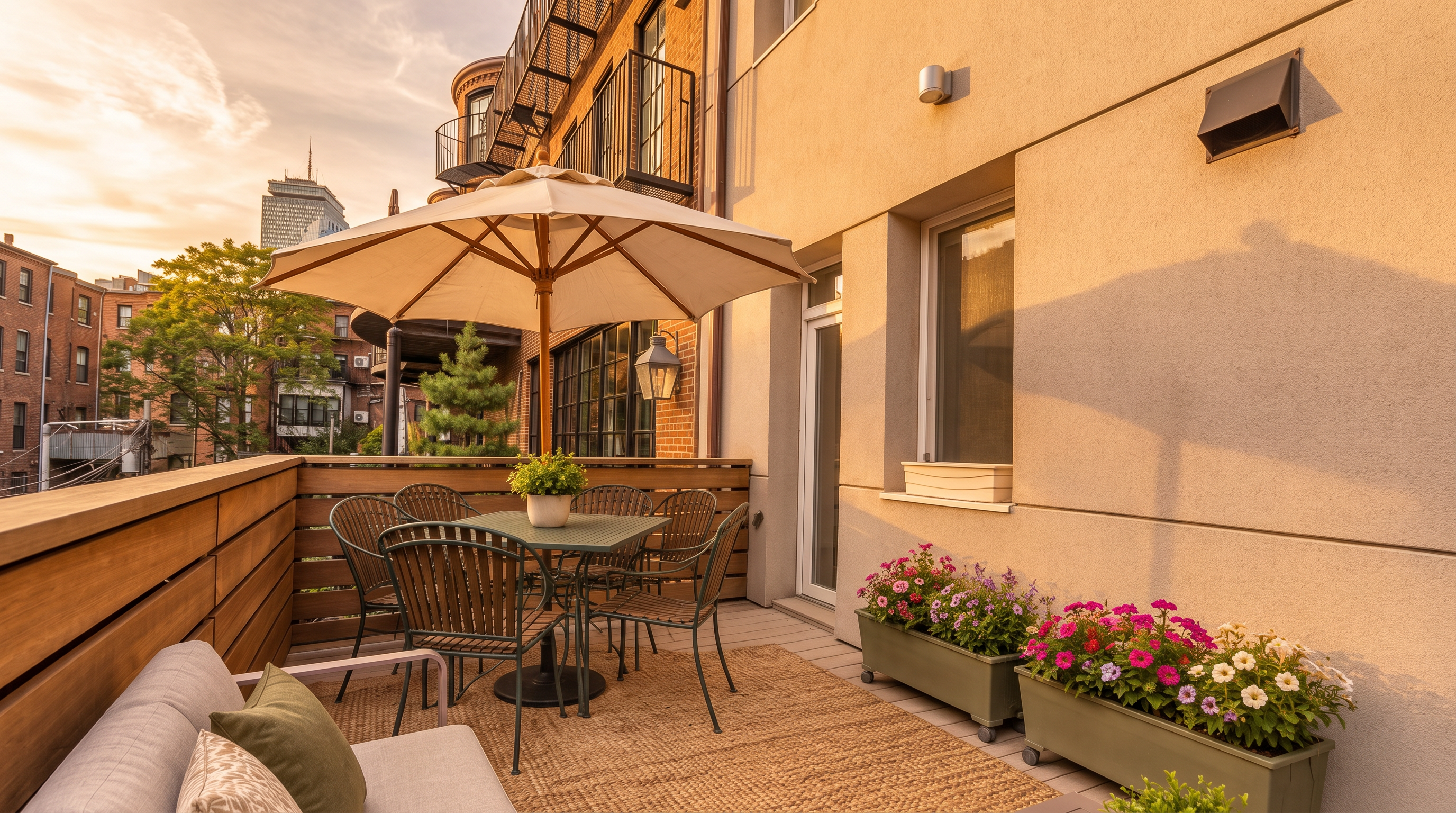
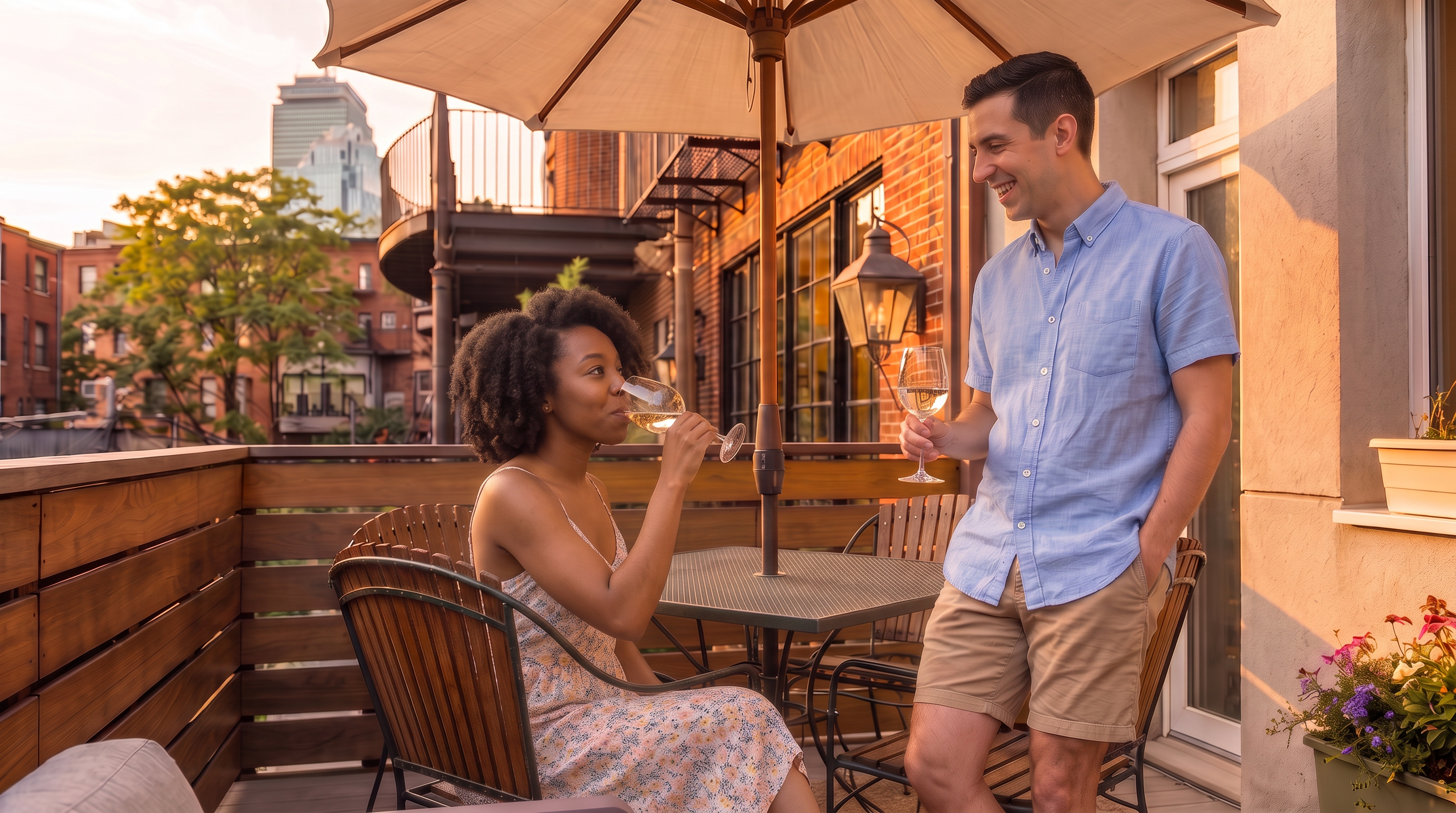
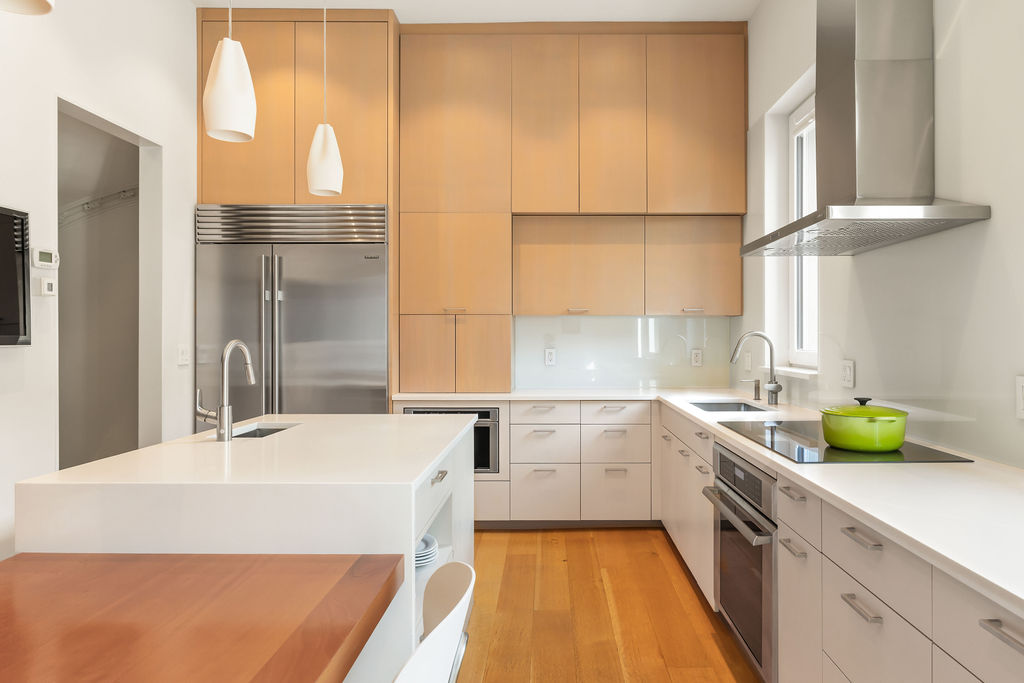
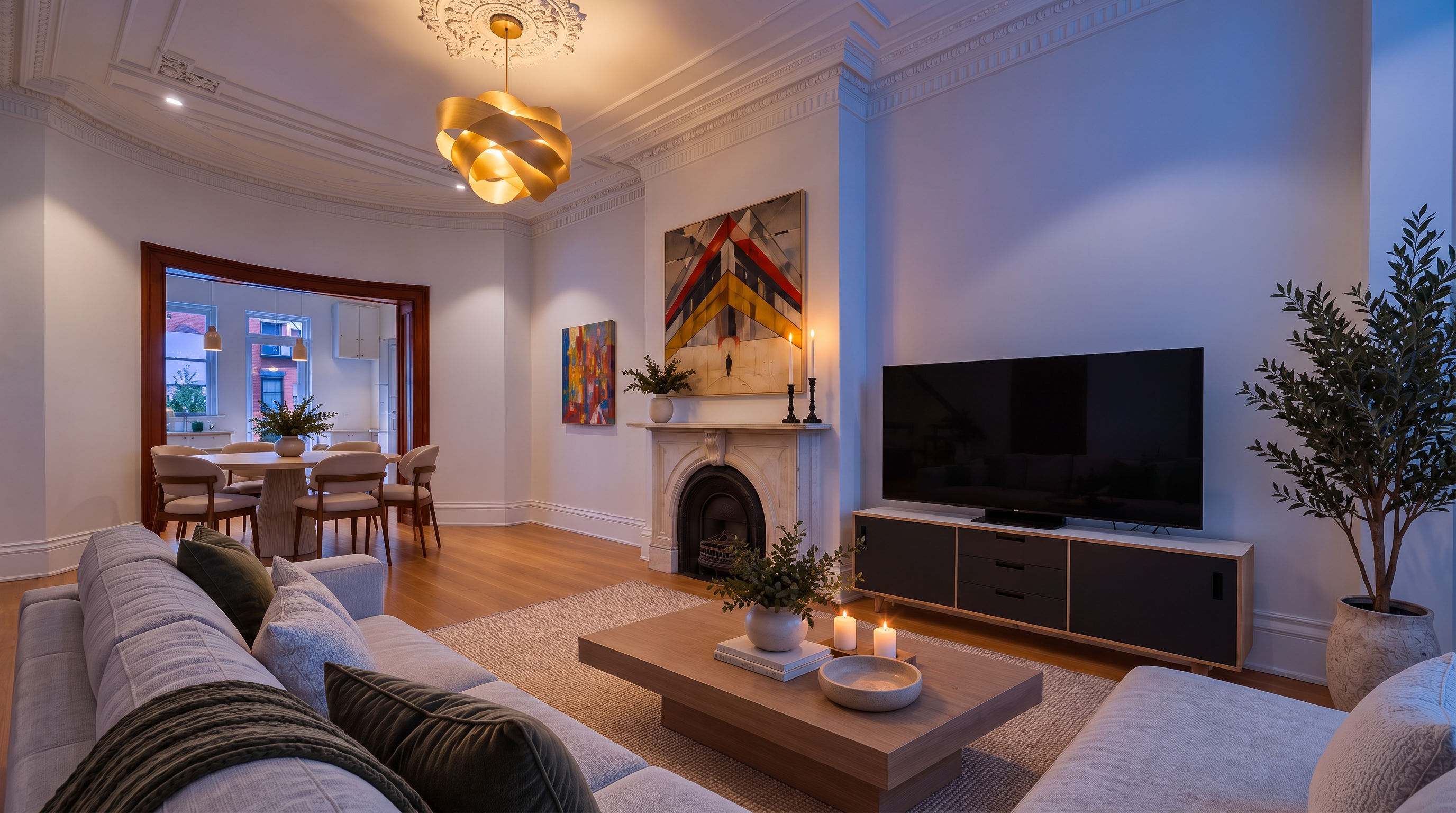
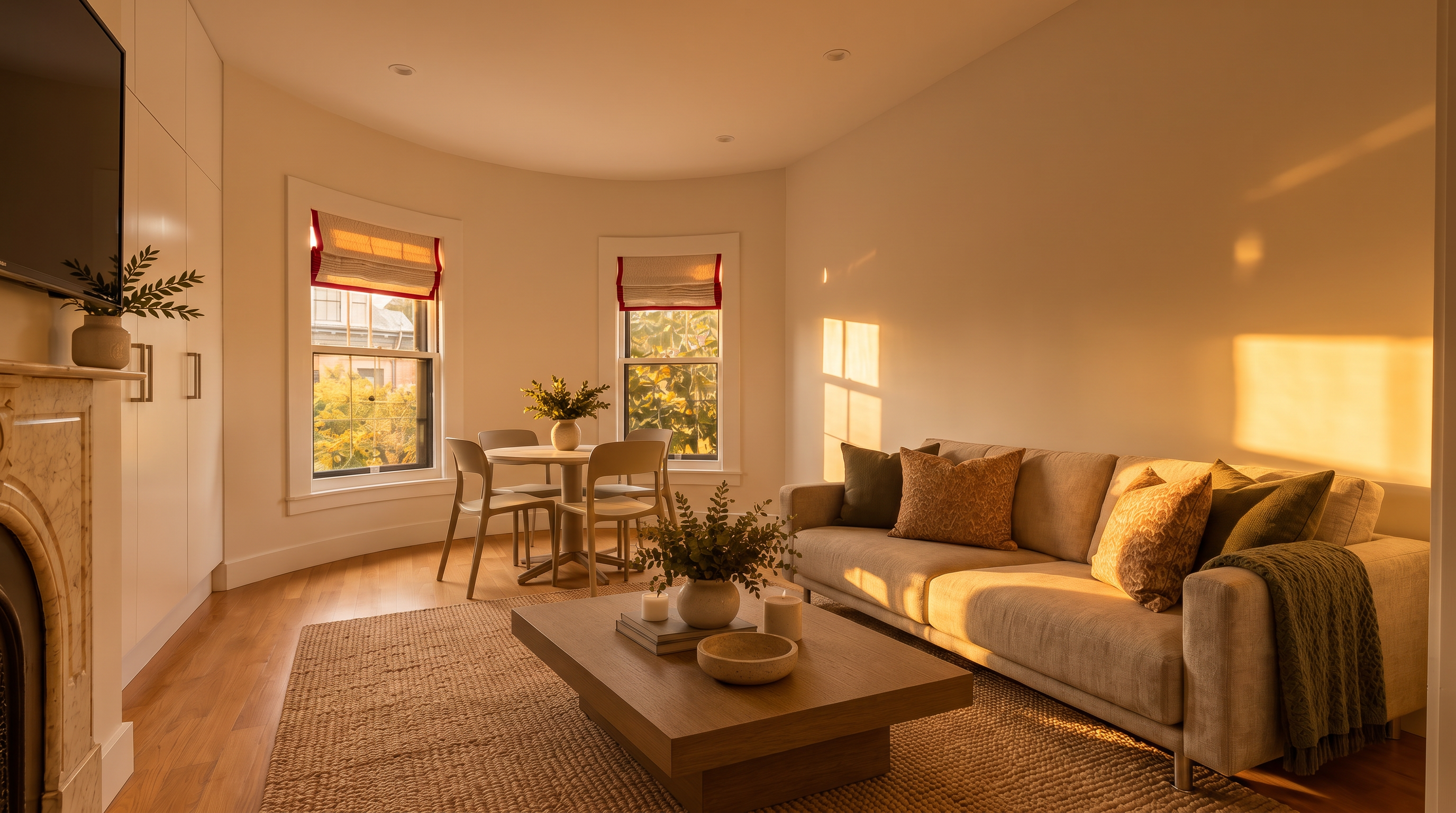
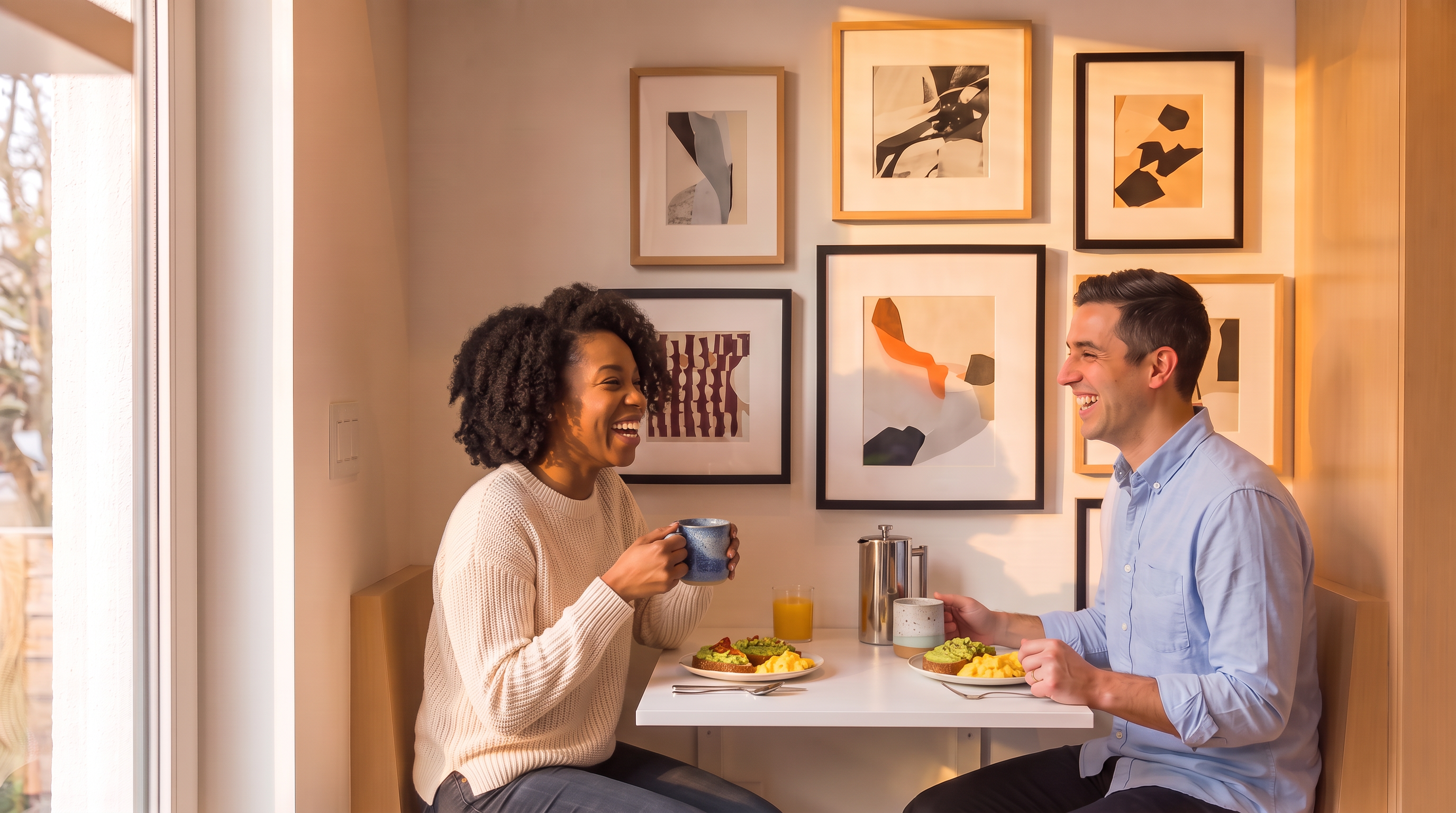
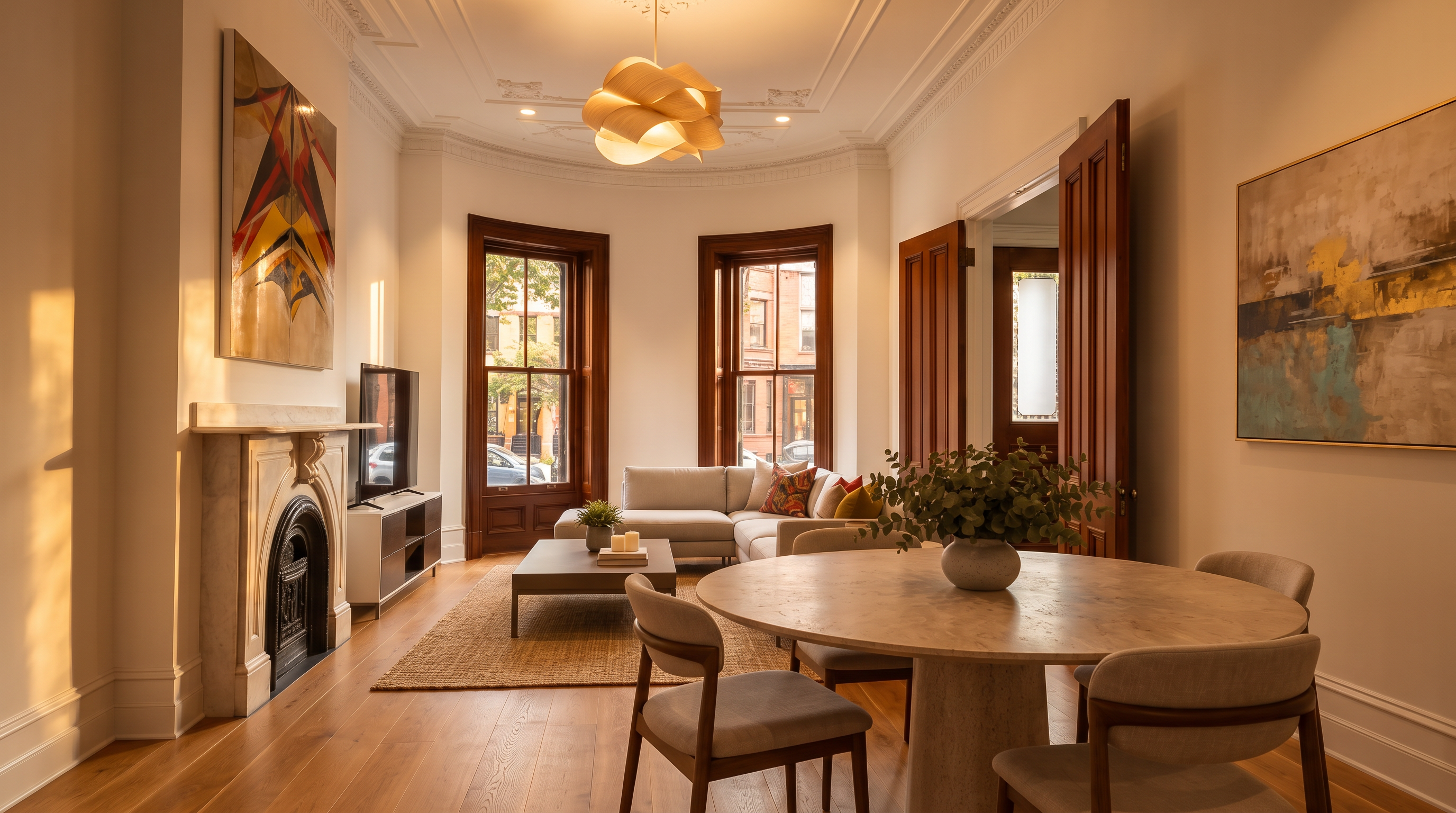
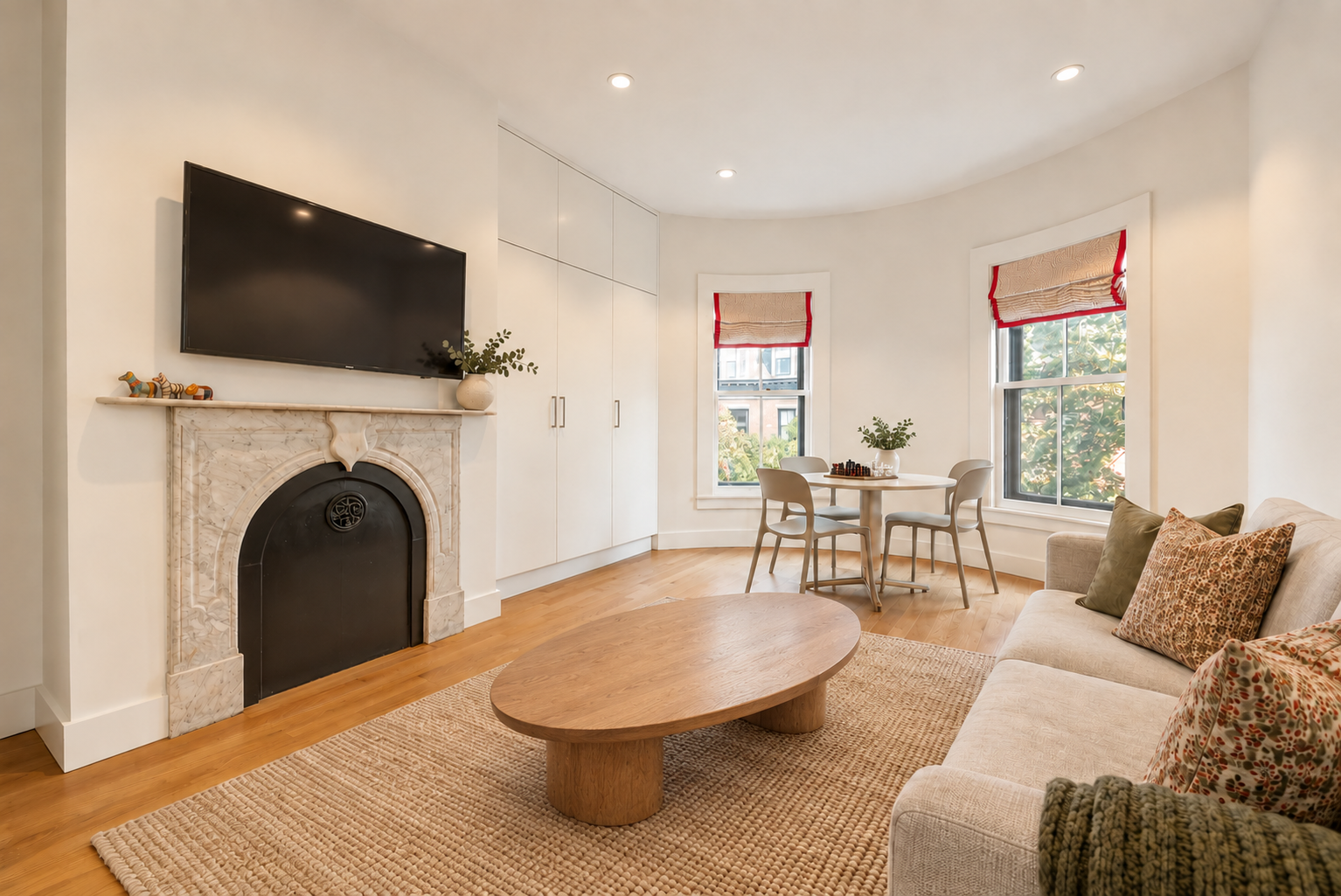
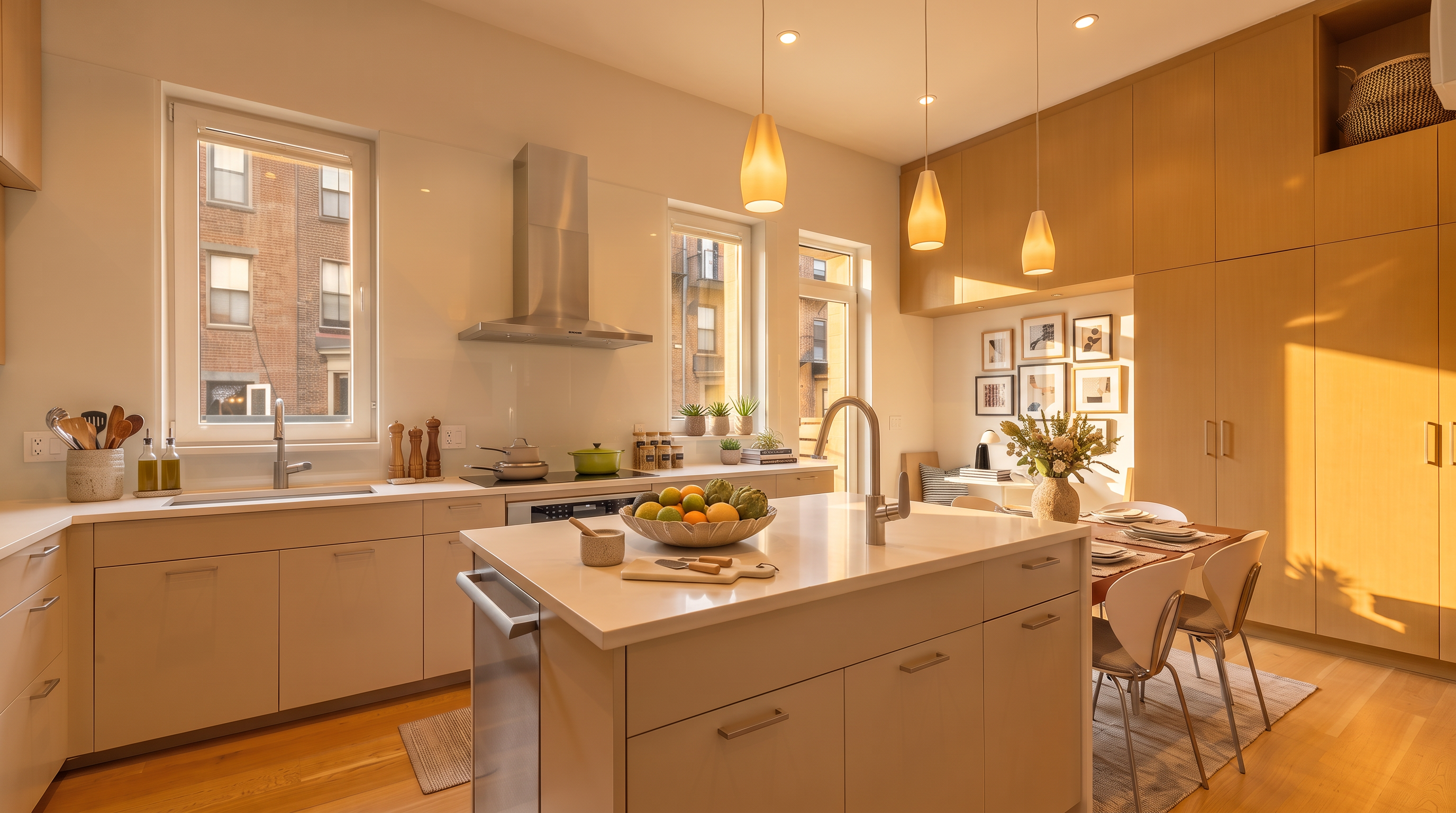
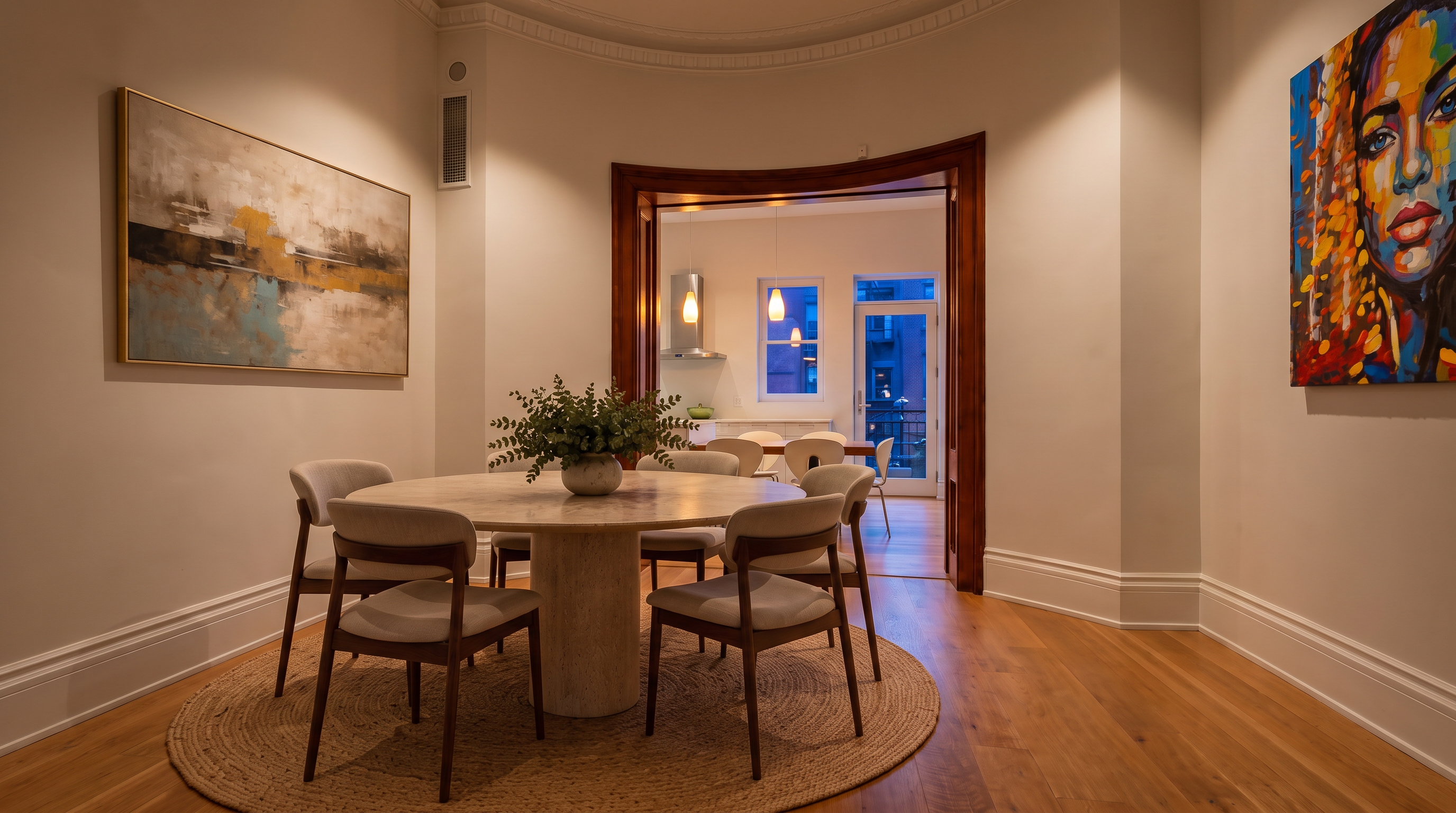
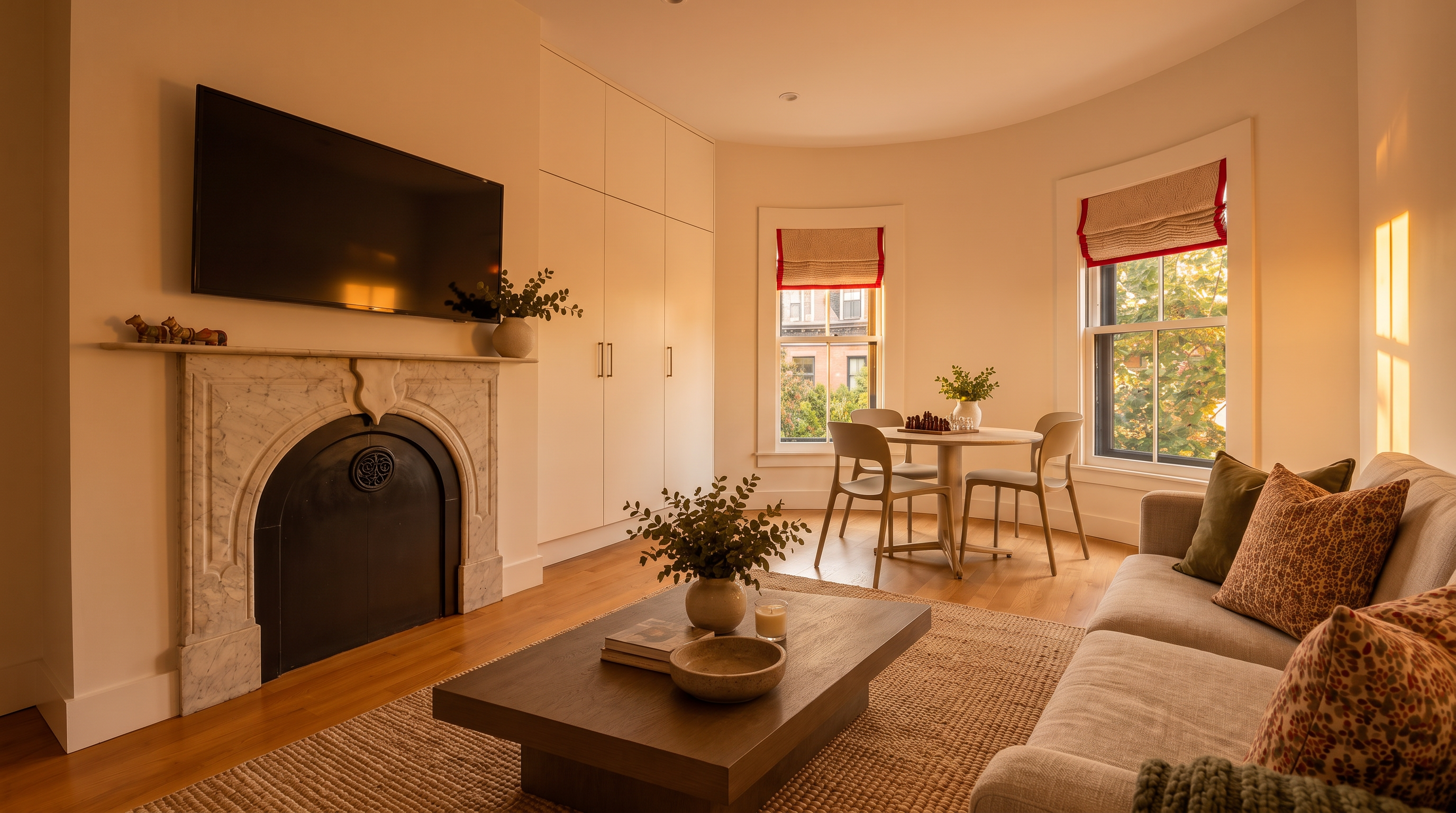
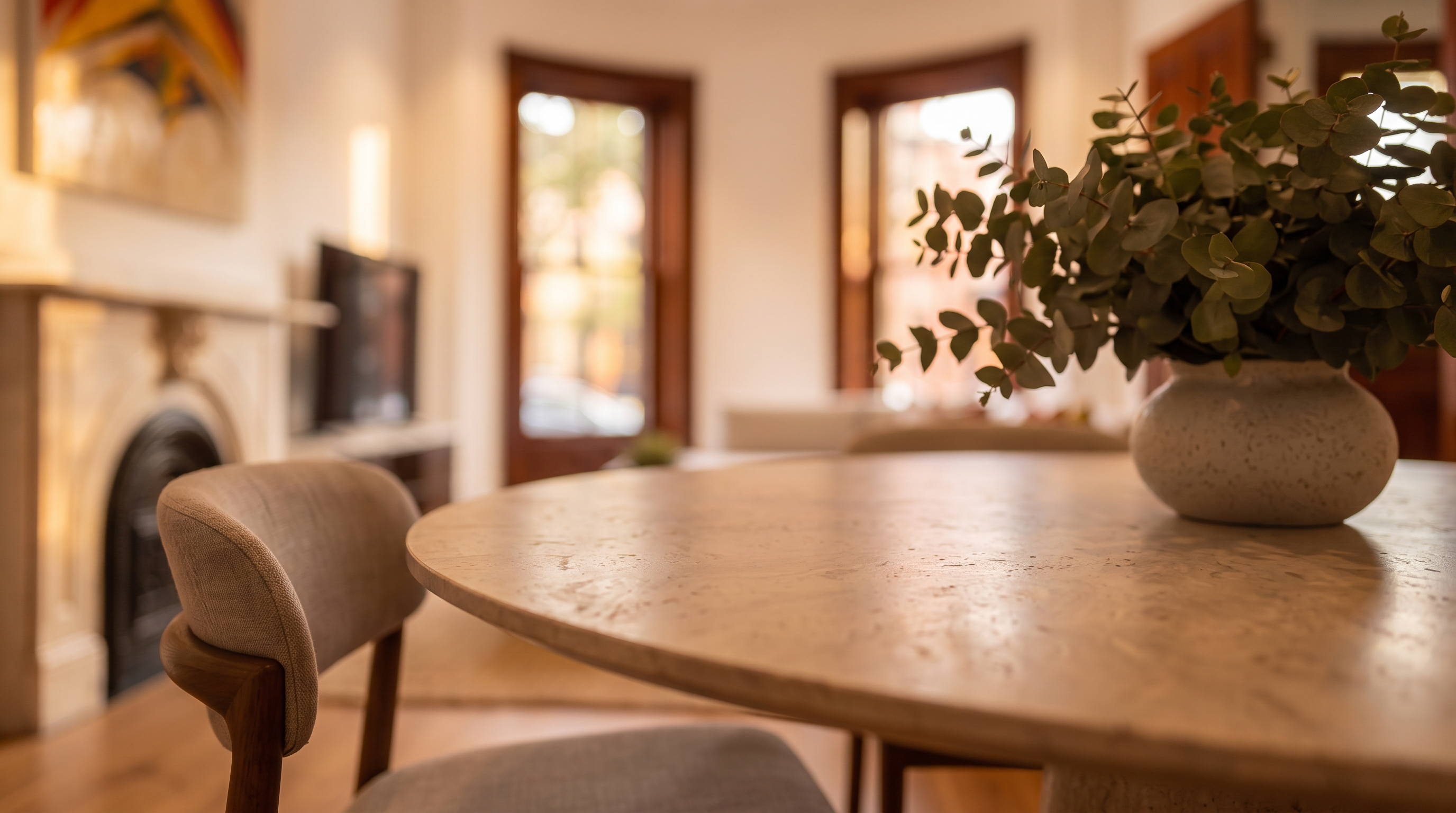
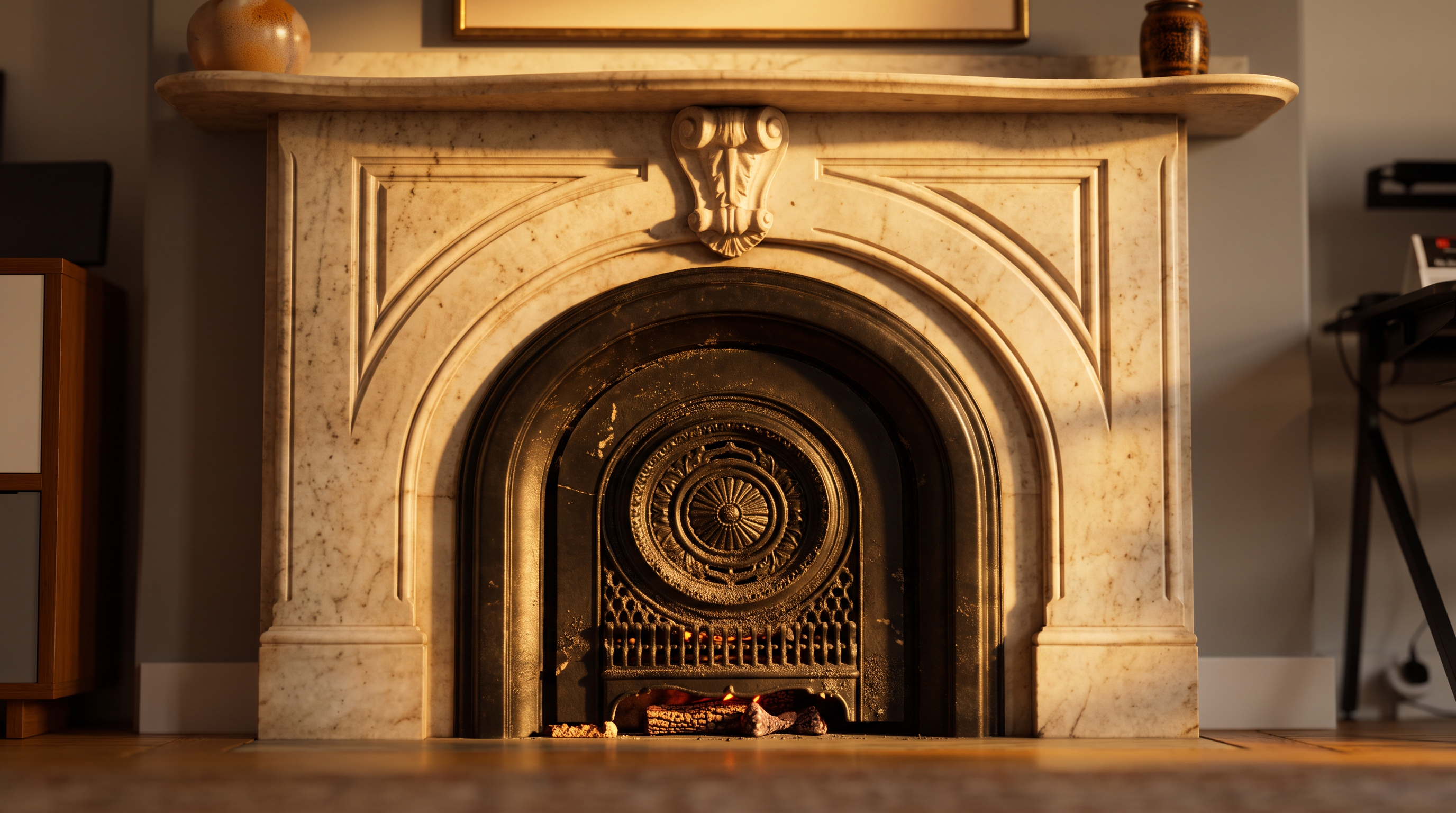
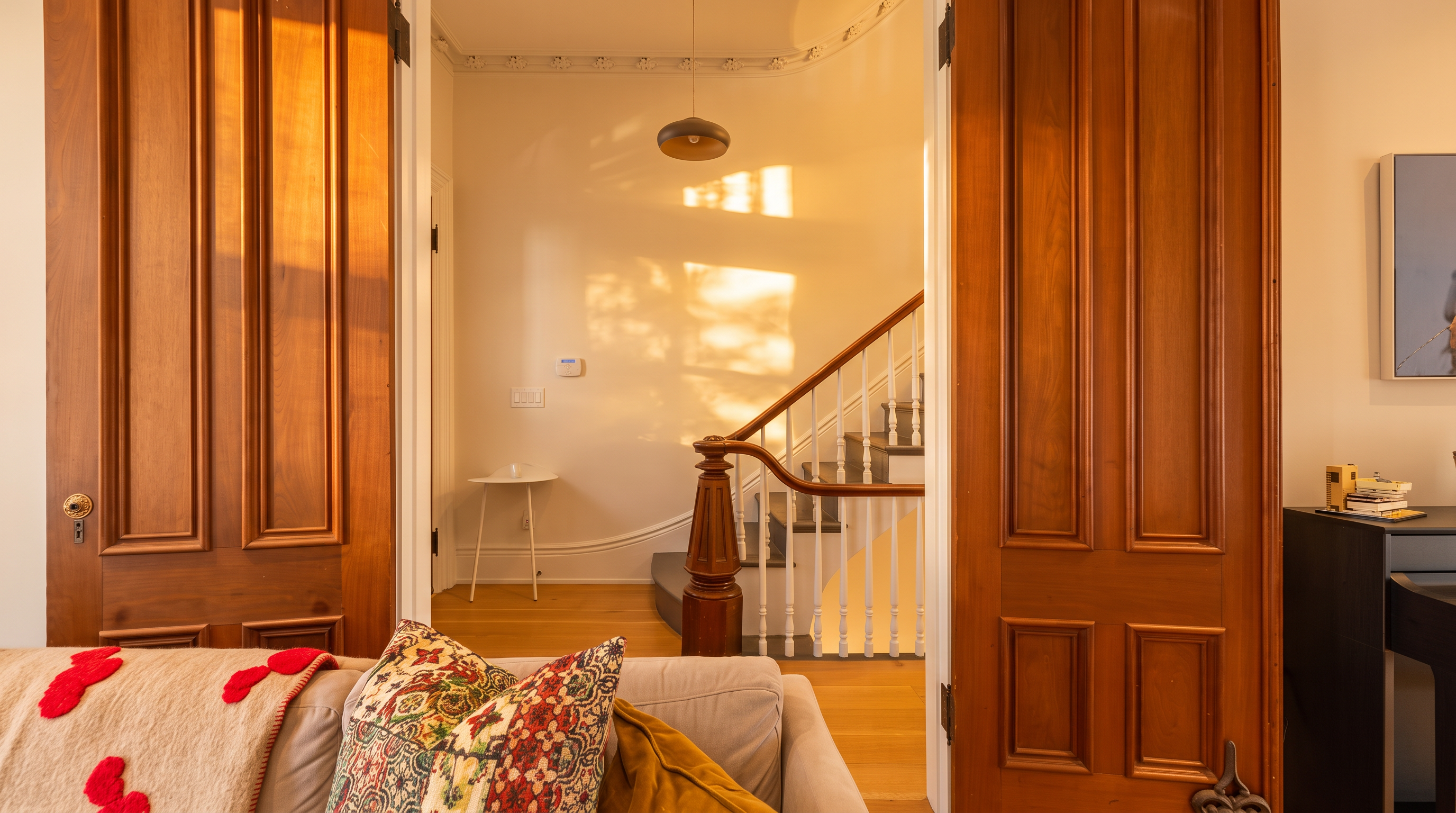
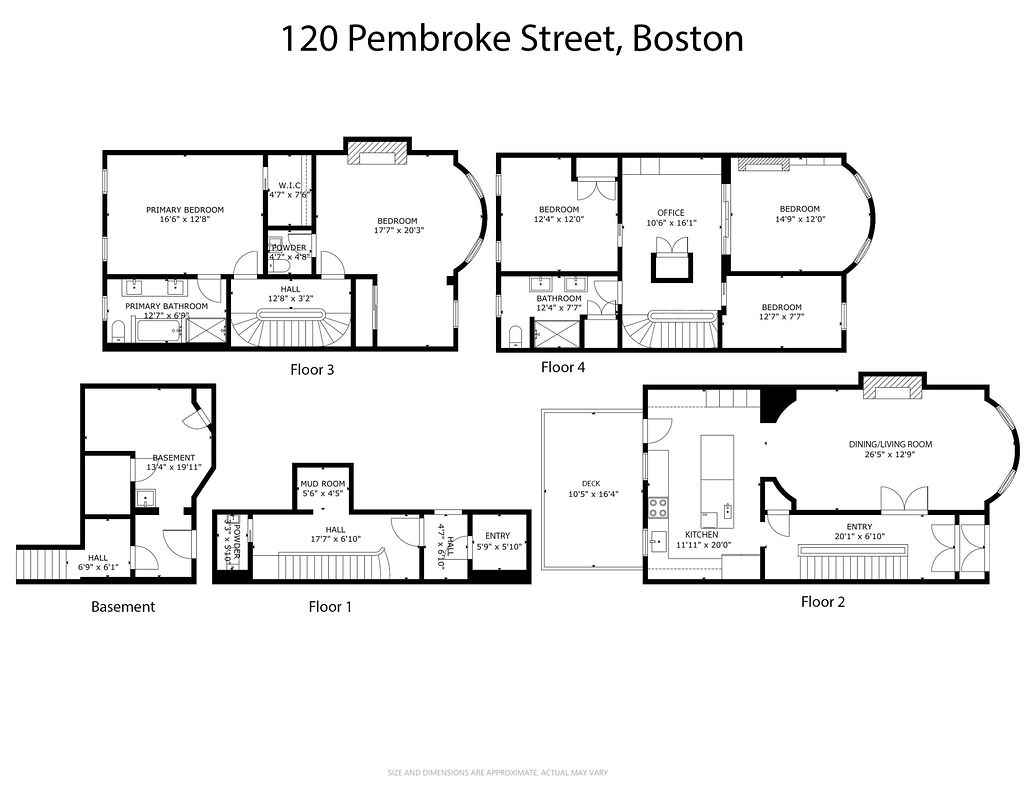
The parlor level is the gravitational center of the residence. Here, a carved marble fireplace anchors the front living and dining room, while ornate plaster cornices and medallion moldings recall the Victorian craftsmen who shaped this block in the mid-nineteenth century. Soaring bay windows trimmed in rich mahogany flood the space with light, and the visual continuity between historic ornament and contemporary living is seamless. The kitchen beyond is uncompromisingly modern: ceiling-height cabinetry, a waterfall island, induction cooktop, and a built-in banquette nook that invites long, unhurried meals. Step through to the private deck and the Back Bay skyline arranges itself like a reward — an effortless backdrop for morning coffee or an evening al fresco.
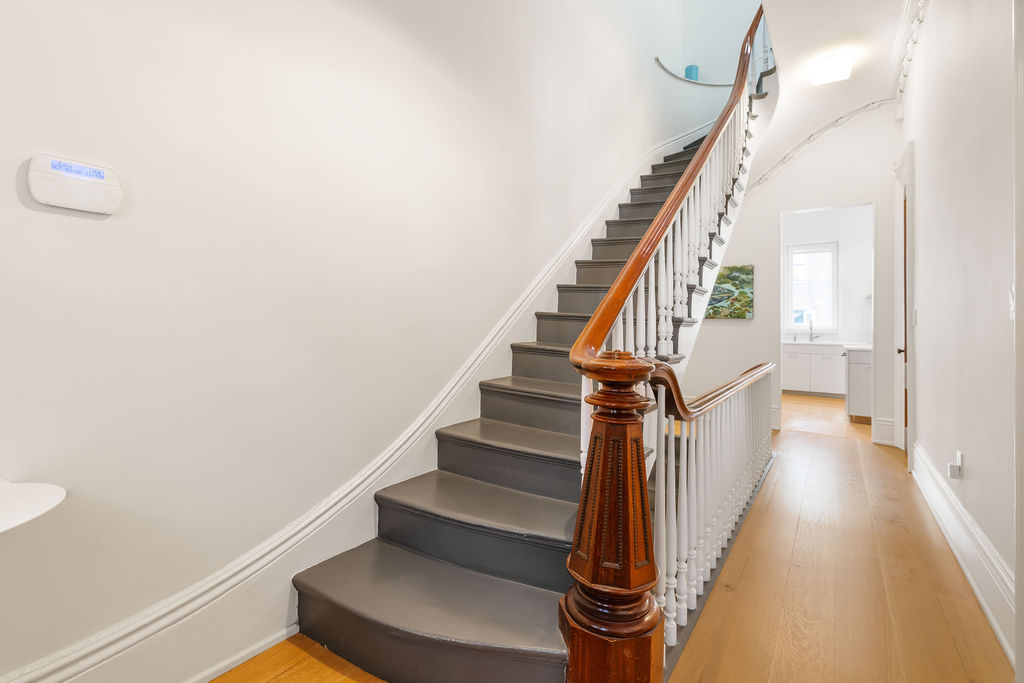
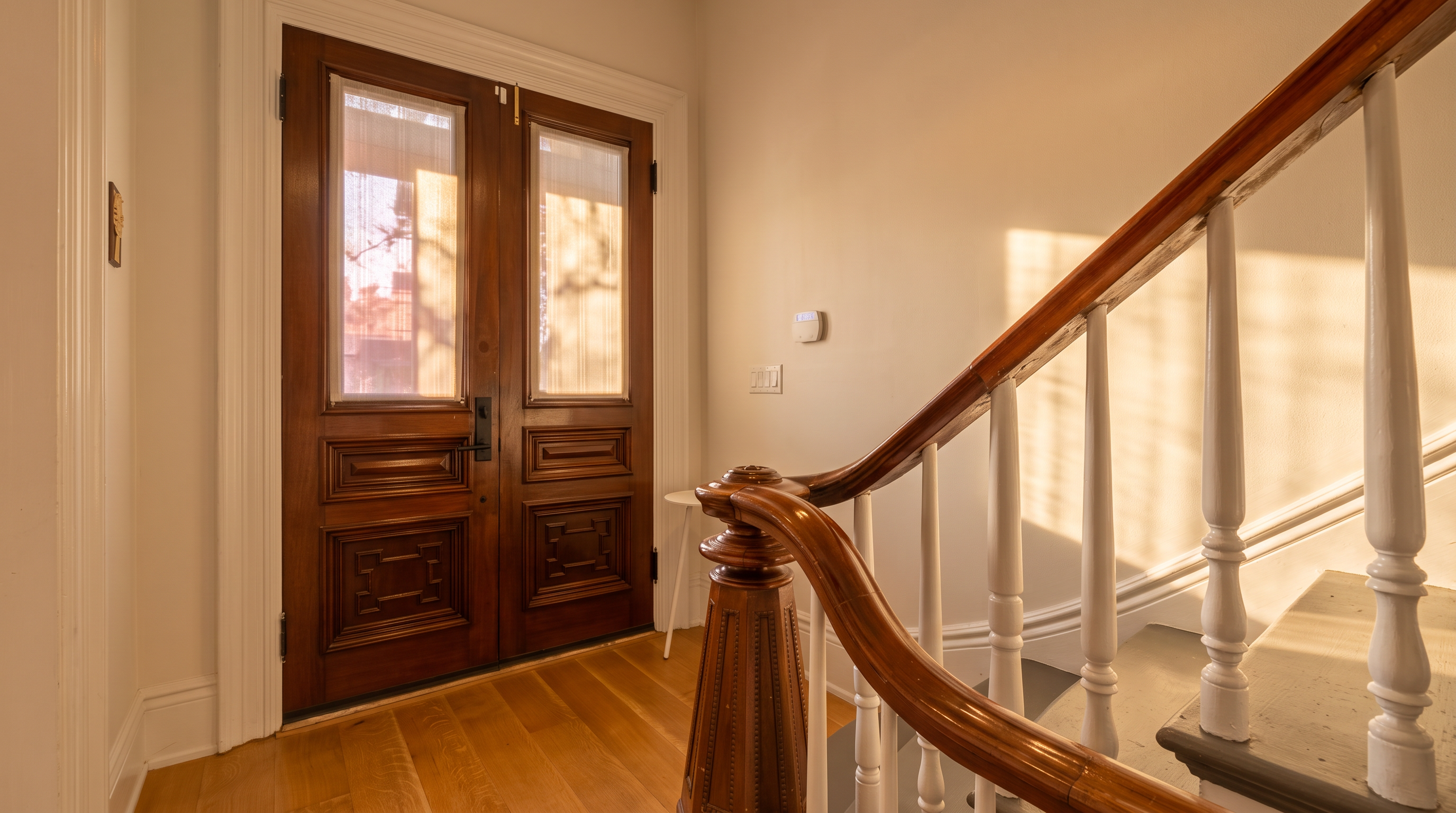
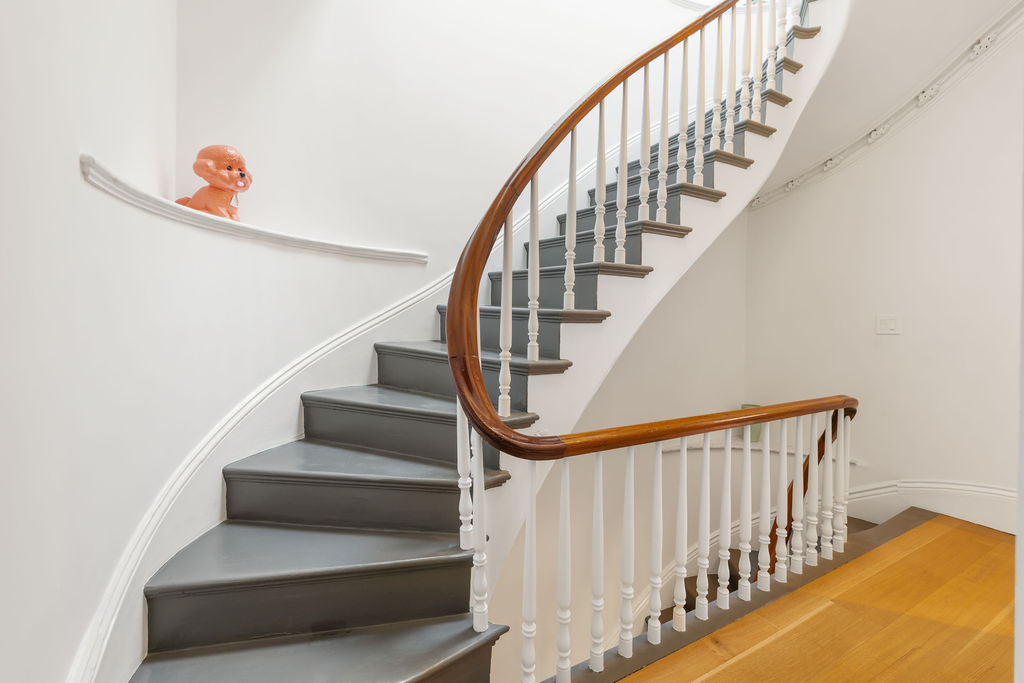
The renovation's intelligence is most apparent in what it chose to preserve and what it chose to reinvent. The historic front windows have been meticulously rebuilt to honor the street's architectural language, while triple-glazed European rear windows and enhanced insulation create an almost surprising acoustic calm — a genuine sense of refuge within the city. The sweeping curved staircase, its mahogany banister polished to a warm glow, connects the home's levels with the kind of graceful gesture that no modern construction can replicate.
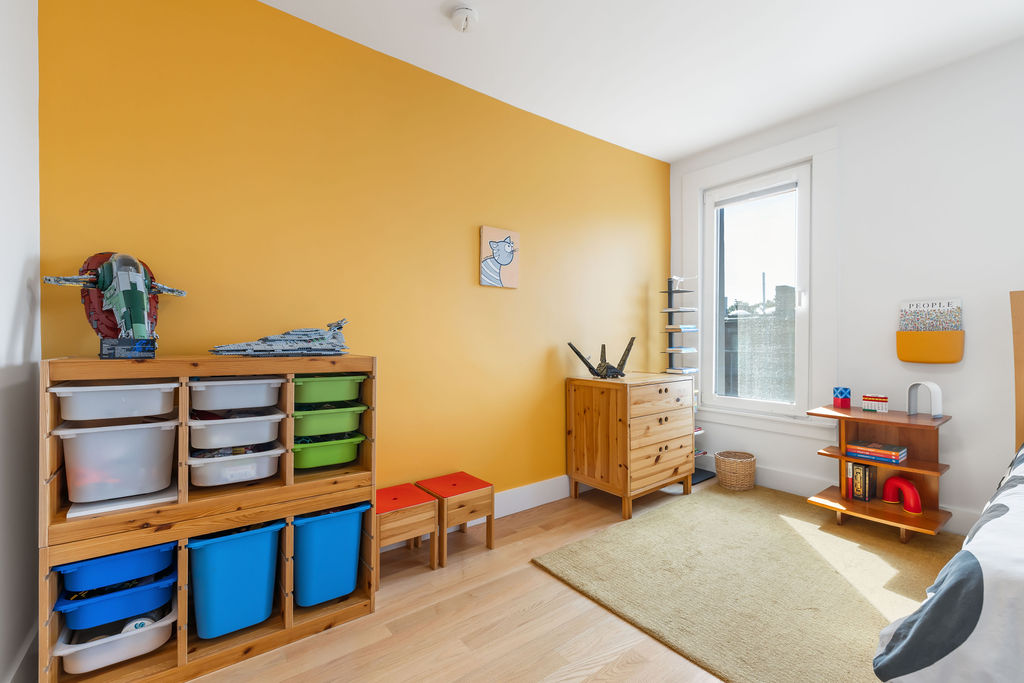
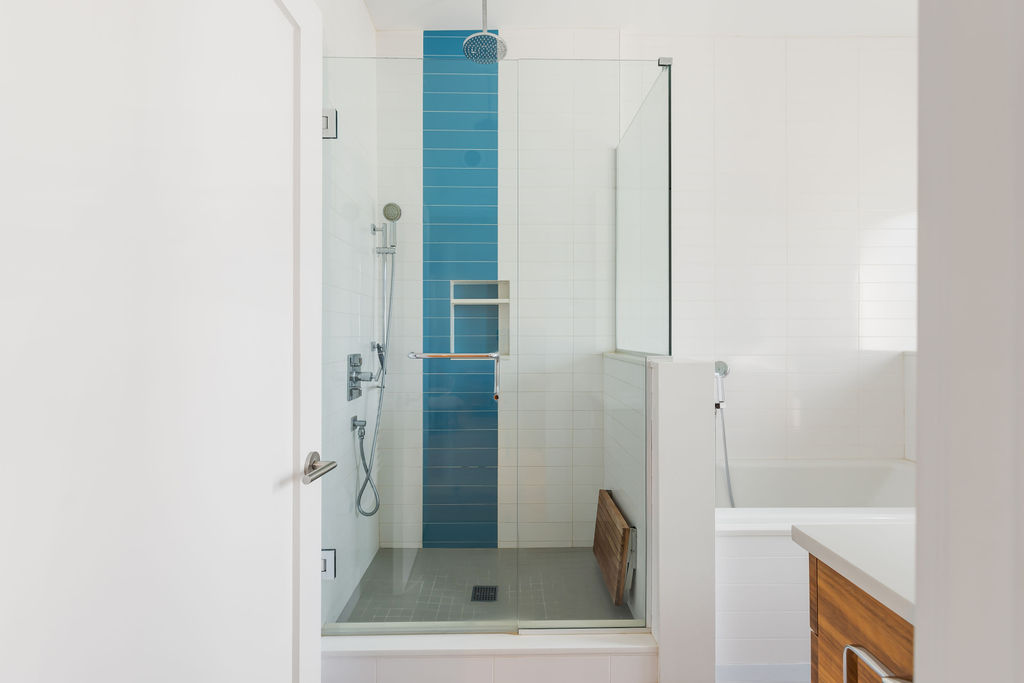
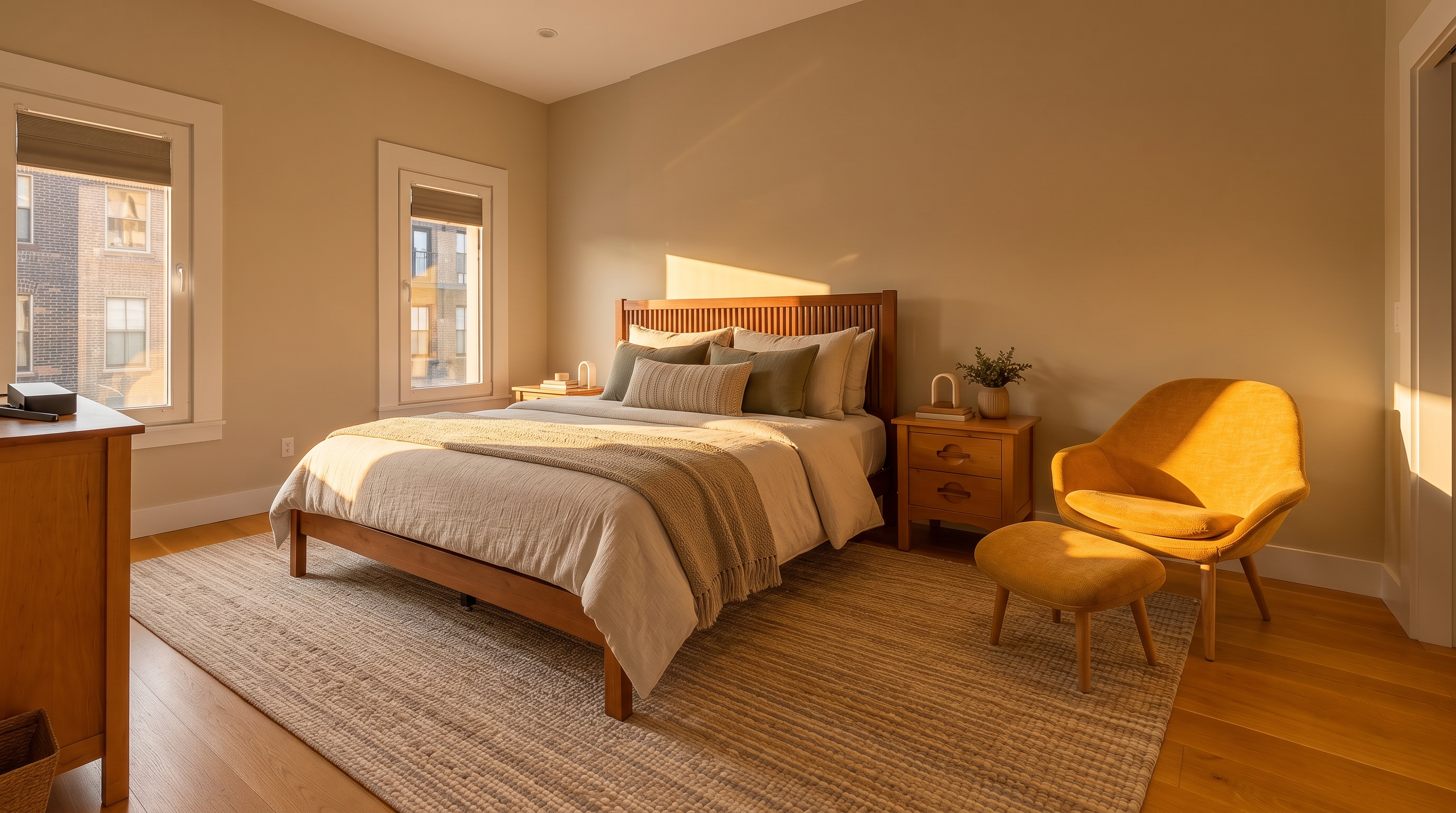
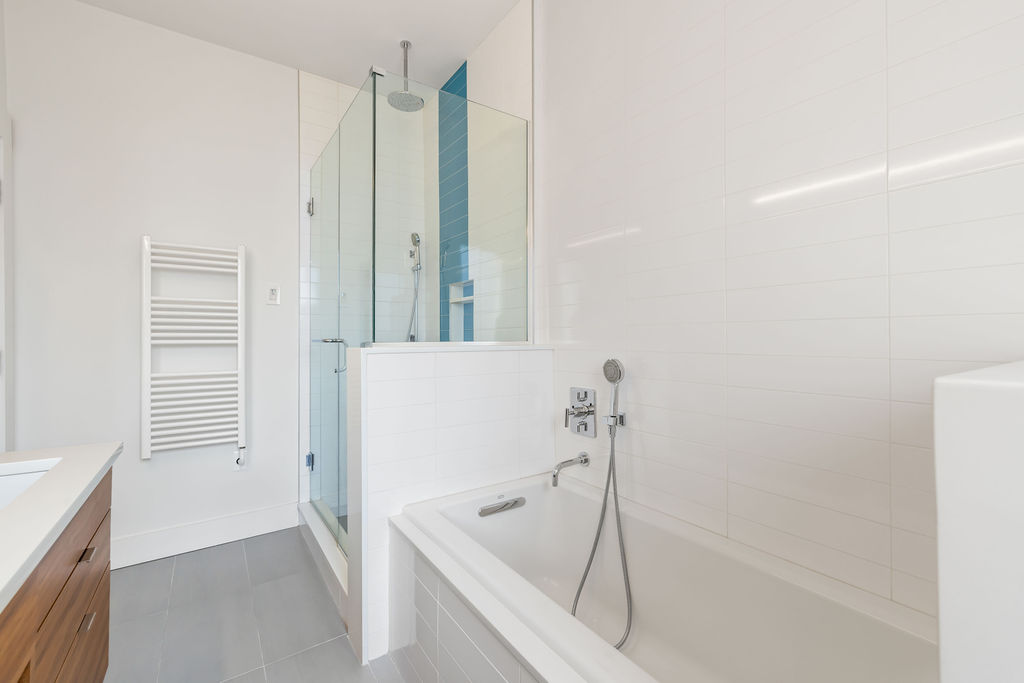
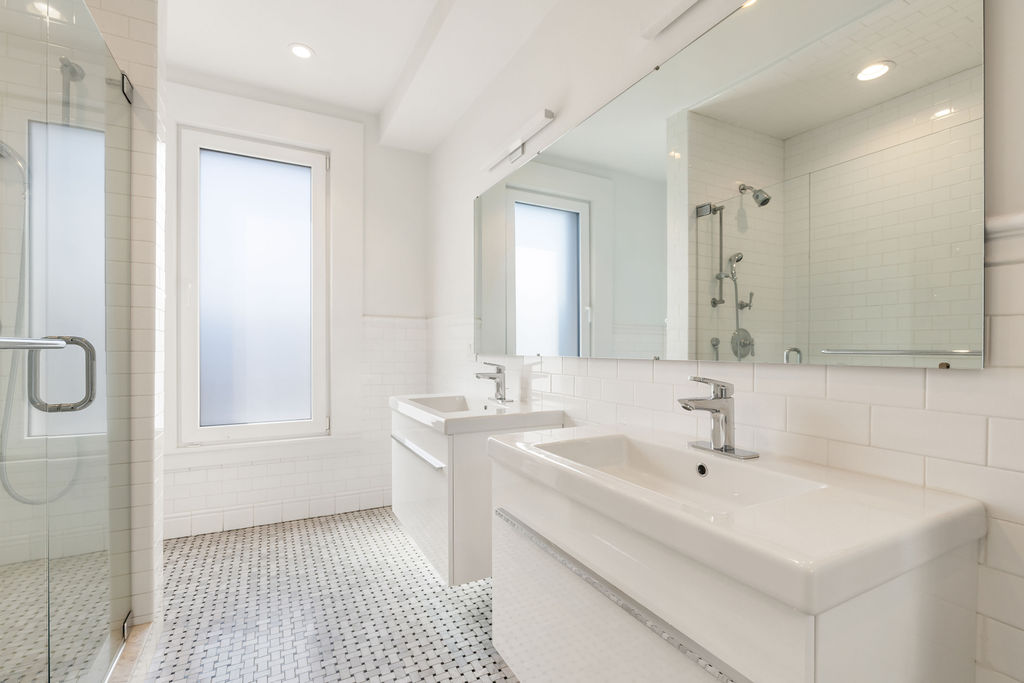
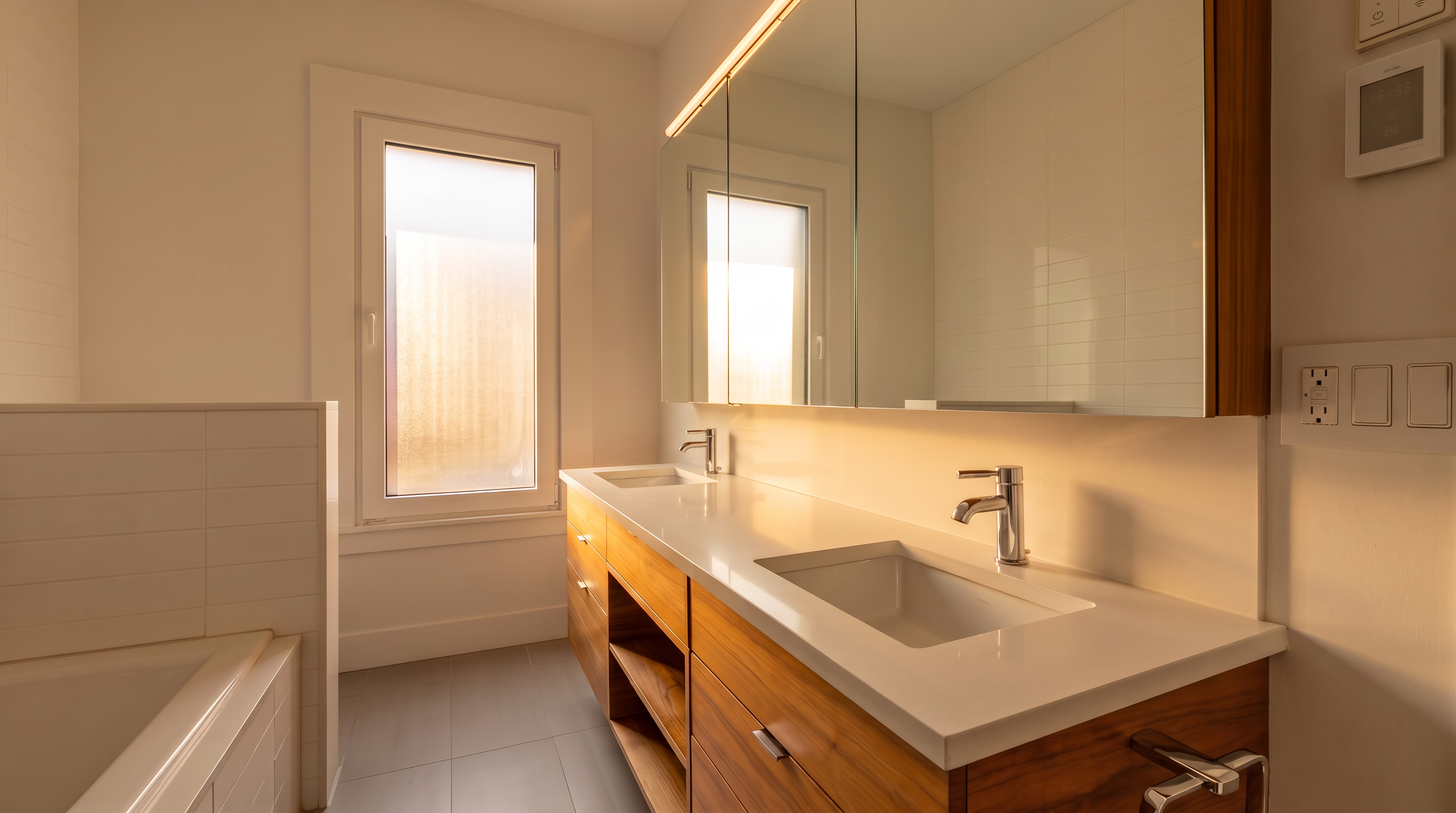
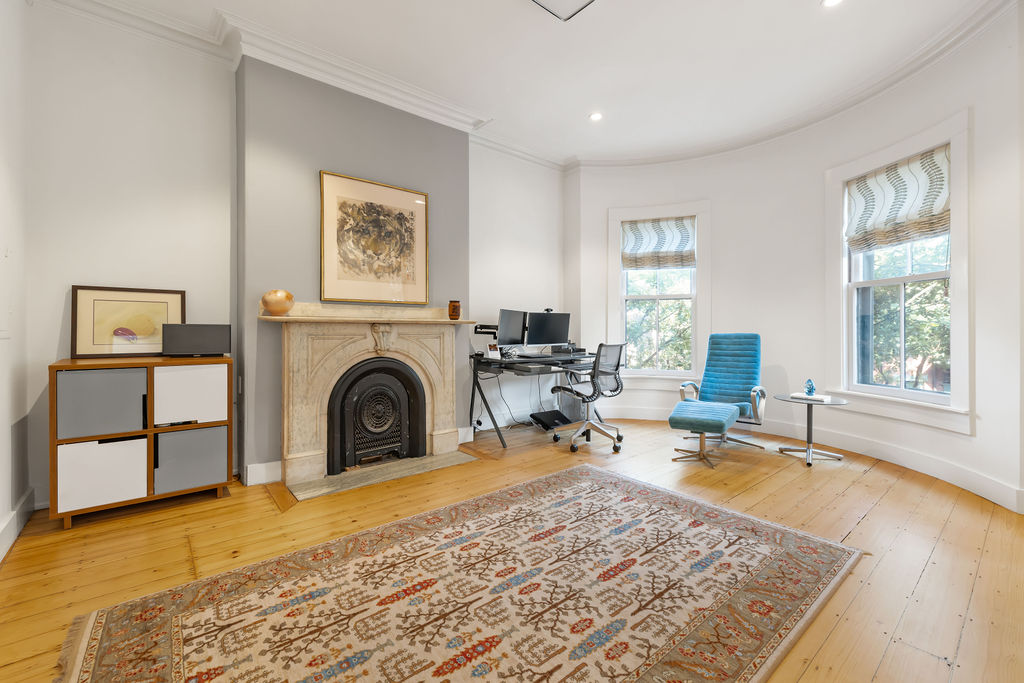
The primary suite occupies its own floor, a deliberate choice that gives the owners a private world apart. A custom walk-in closet and a spa bath — soaking tub, glass rain shower, double vanity — offer the unhurried rituals of a fine hotel, every morning. The grand 17-by-20-foot bow-windowed front room, centered on its own marble fireplace, flexes beautifully as a study, a second suite, or a formal sitting room, adapting as life's needs evolve.
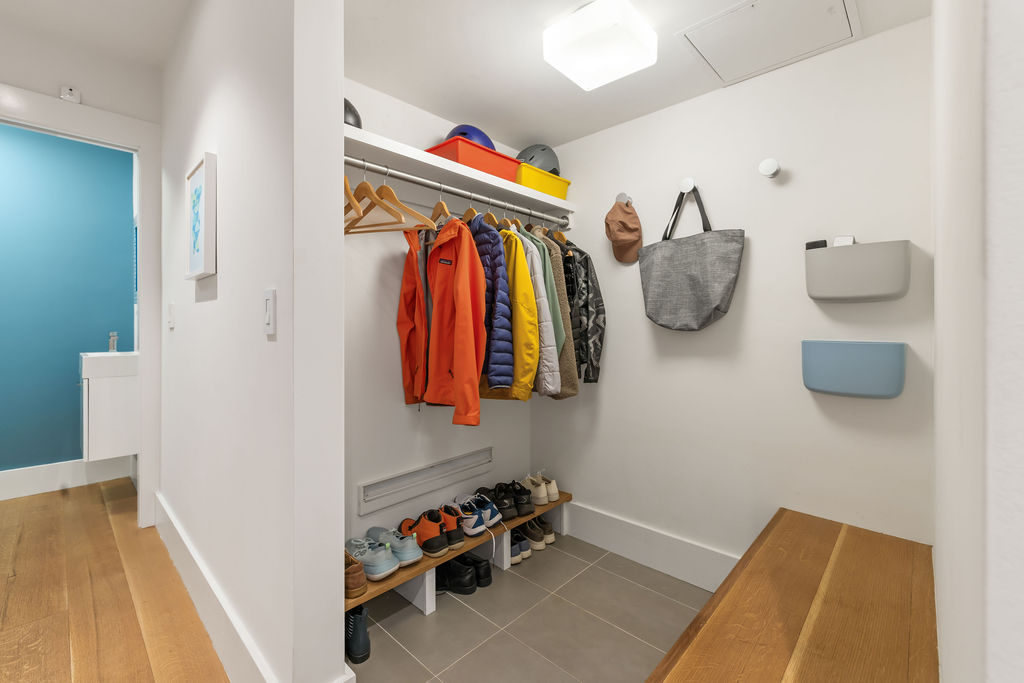
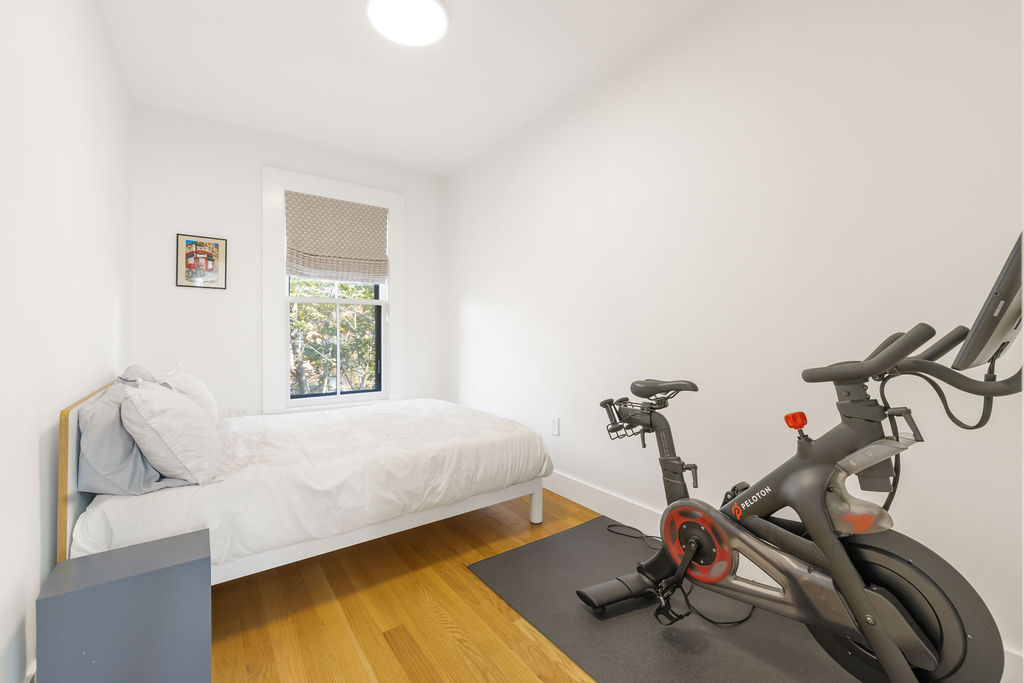
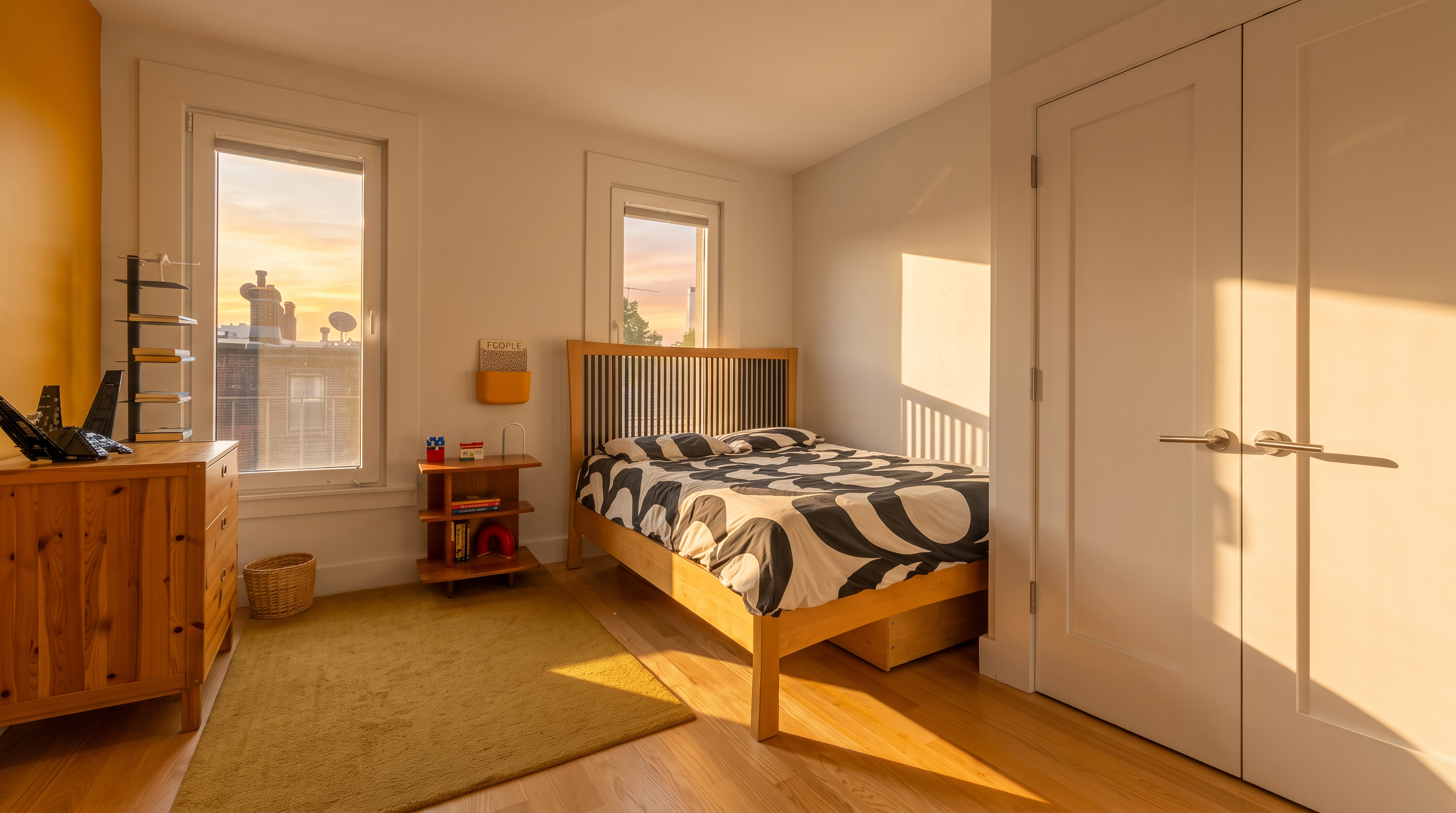
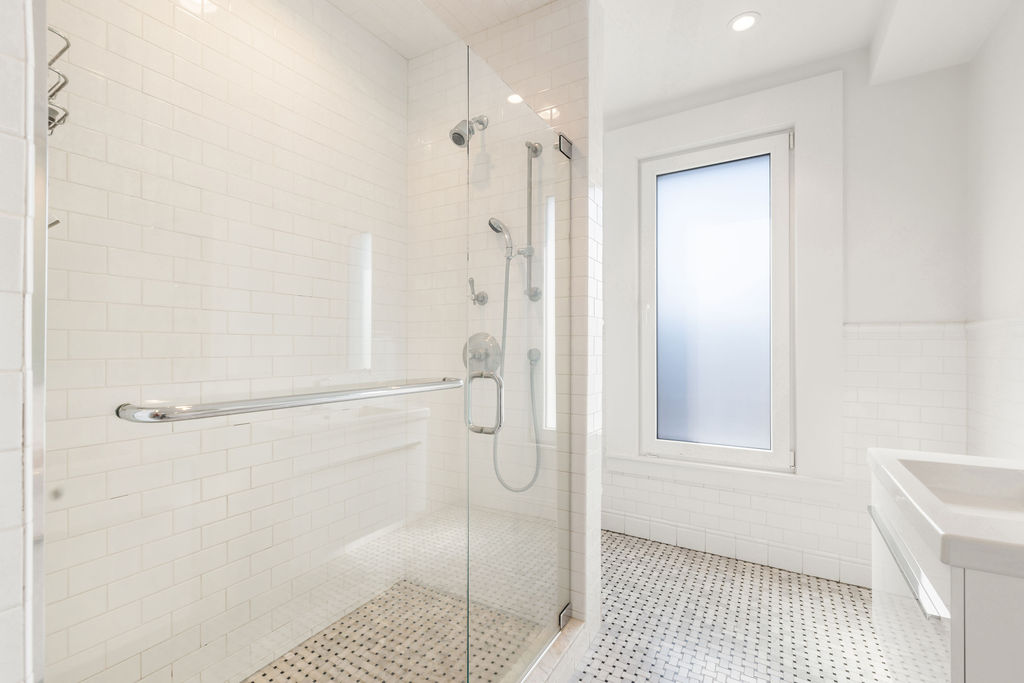
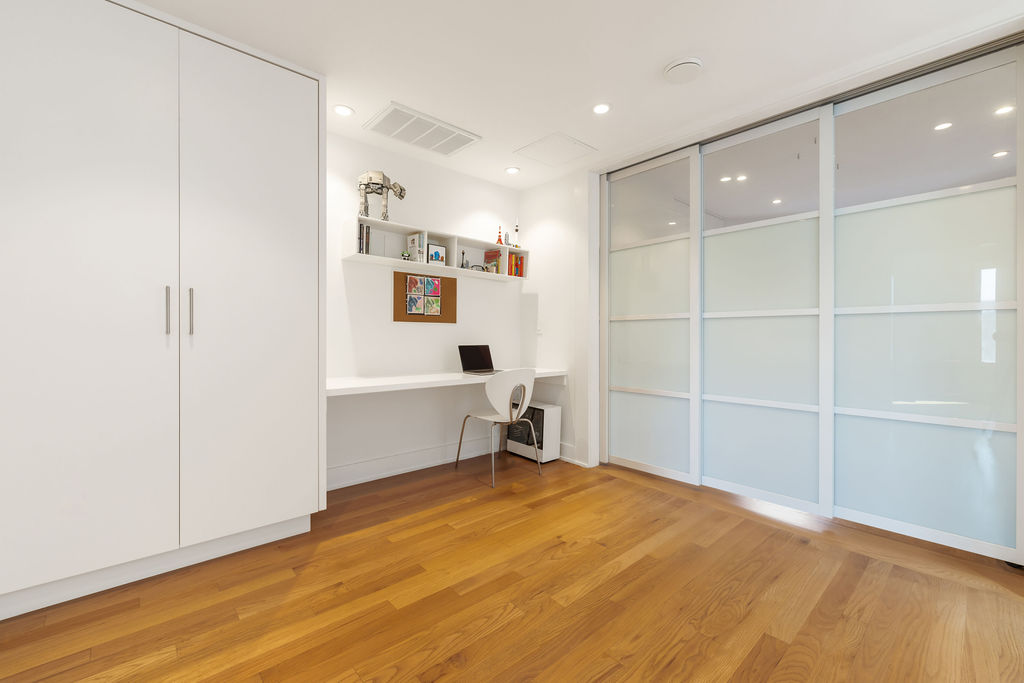
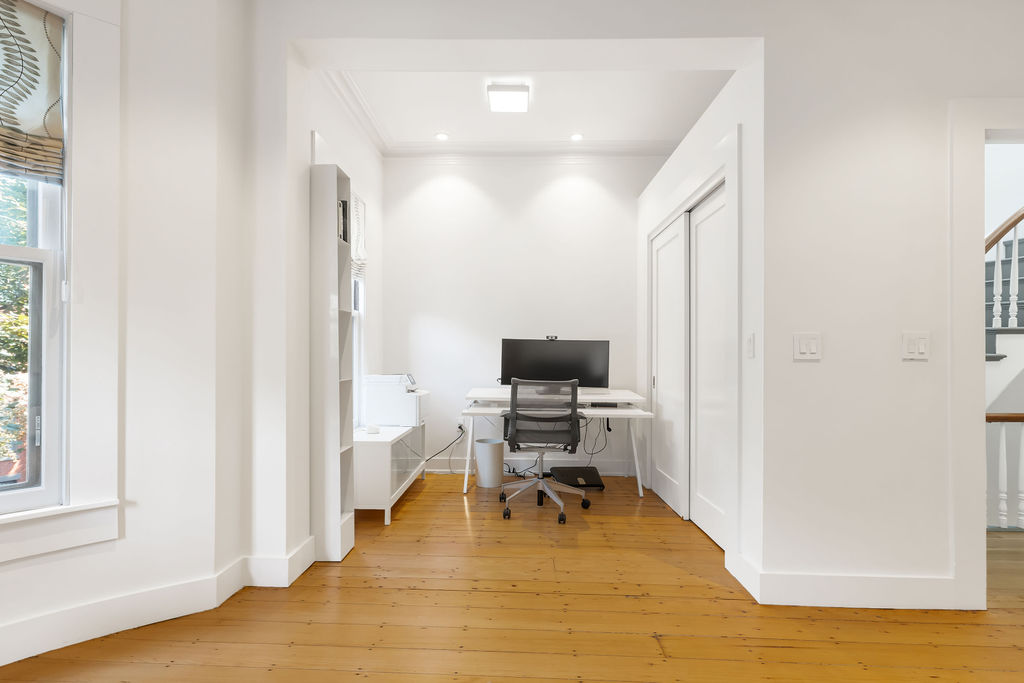
The top floor continues the home's generous spatial logic: a family room with a third marble fireplace, an office partitioned by frosted glass sliding panels, two additional bedrooms, and a full marble bath with double vanity and laundry. At street level, a thoughtfully appointed mudroom — heated floors, built-in bench and cubbies, half bath — eases the daily rhythm of coming and going.
The home is fully combustion-free, with an ERV system delivering continuous fresh air and 23 owned solar panels generating the majority of the triplex's electricity. Wide-plank oak floors and LED recessed lighting run throughout. The lower-level duplex — one bedroom, two full baths, in-unit laundry, and air conditioning — is currently tenanted, providing meaningful income with the flexibility to become an in-law suite. Two parking spaces, one per unit, each with EV charging, complete a property that has been prepared not just for the present, but for whatever comes next.
To live on Pembroke Street is to occupy a privileged position within one of America's most storied urban neighborhoods. The South End of Boston is recognized by the National Register of Historic Places as the largest intact Victorian row-house district in the United States, covering more than 300 acres of brick-paved streets, cast-iron fences, and bow-front facades that have defined this quarter since construction began in 1849. The neighborhood was listed on the National Register of Historic Places in 1973 — a designation that has helped ensure the extraordinary architectural coherence still visible on every block today.
The South End's origins are as ambitious as its architecture. Developed on filled tidal marshland through the early 1870s, the neighborhood was conceived as a fashionable residential district modeled on the English residential square — blocks of townhouses looking inward to small parks and gardens, a pattern that persists in Union Park, Worcester Square, Rutland Square, and Chester Square. The street plan and building specifications were tightly controlled, which accounts for the unusual homogeneity and coherence that give the South End its distinctive visual character: four-story brick row houses of uniform setback, punctuated by ornate cast-iron detailing that the South End Historical Society has identified as the largest collection of cast iron in the United States.
The neighborhood has long been defined by its diversity and its creative energy. Historically a center of Boston's Black cultural life and jazz scene, and for generations the heart of its LGBTQ community, the South End wears its history of reinvention openly. Today it draws young professionals, artists, families, and cosmopolitan residents who value both its architectural patrimony and its exceptional quality of daily life.
For residents of 120 Pembroke Street, the practical pleasures are immediate. Tremont Street and Columbus Avenue — the South End's primary commercial spines — form one of Boston's densest and most celebrated restaurant corridors: bistros, wine bars, bakeries, and neighborhood institutions tucked into garden-level storefronts. The neighborhood has earned a firm reputation as one of Boston's culinary hubs, with restaurateurs continually drawn to the ground floors of its brownstones. Just to the south, the SoWa district — South of Washington — has transformed former industrial buildings into a thriving hub of galleries, design studios, and makers' spaces, with the open-air SoWa Open Market running every Sunday from May through October.
Cultural institutions anchor the neighborhood's creative life. The Boston Center for the Arts supports resident arts programs and houses the Stanford Calderwood Pavilion, which serves as a second stage for the Huntington Theatre Company, while the Boston Ballet maintains a presence in the broader district. The Southwest Corridor Park threads a long ribbon of greenway and bike path along the neighborhood's edge, connecting Back Bay Station to Jamaica Plain and providing a beloved route for cyclists, joggers, and dog walkers. The South End's eleven residential parks, inspired by English-style squares, offer additional green space woven directly into the residential fabric.
For all its cultural density, the South End retains the measured pace of a neighborhood built for living well — a place where Saturday mornings unfold slowly and the city's energy is always close at hand without ever being intrusive. Pembroke Street sits at the center of that balance.
Featured Highlights
Curated Content • Presented by Jackie O'Connor