The Story Behind
A British Manor of Singular Craftsmanship in Washington Park
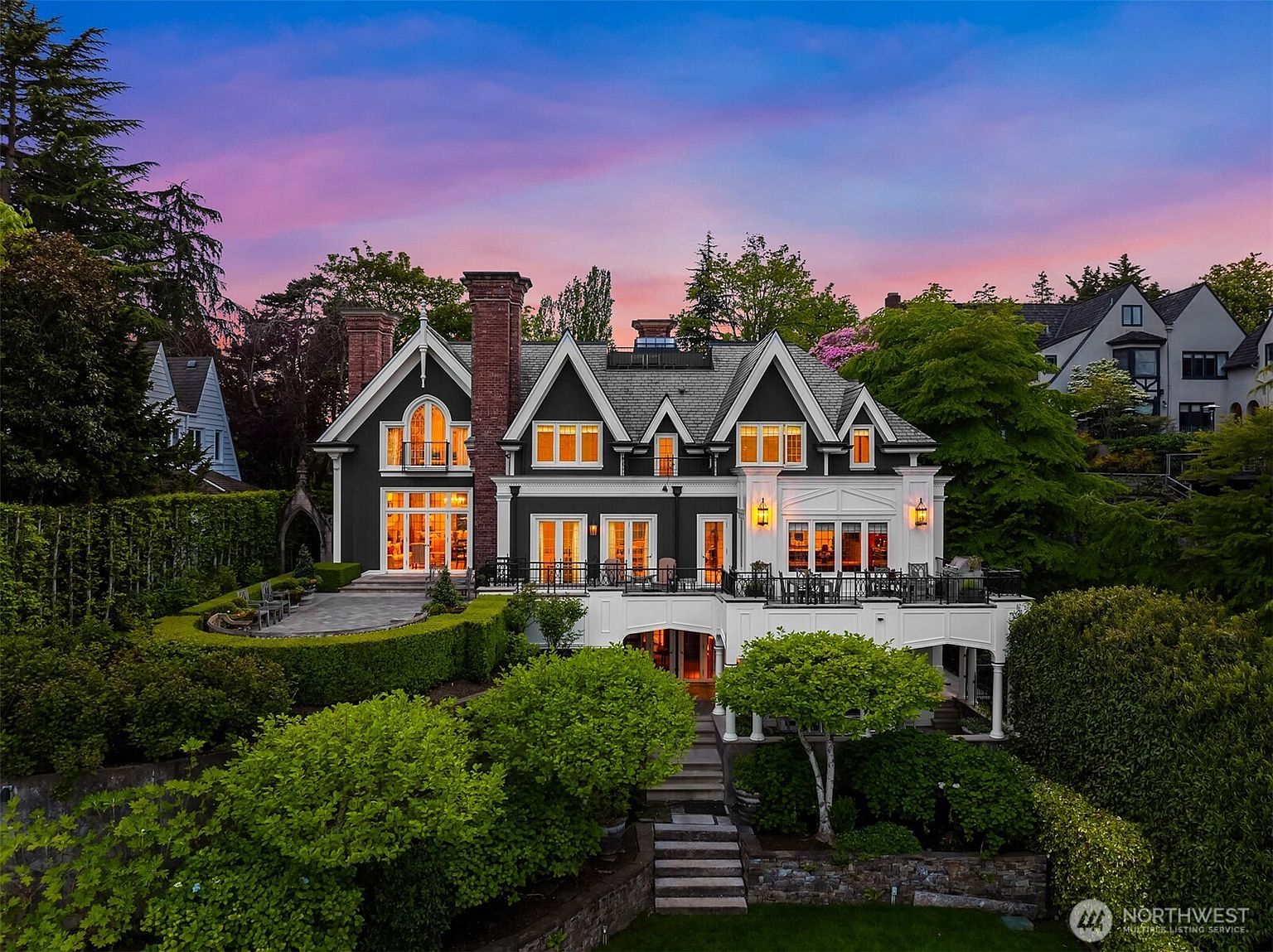
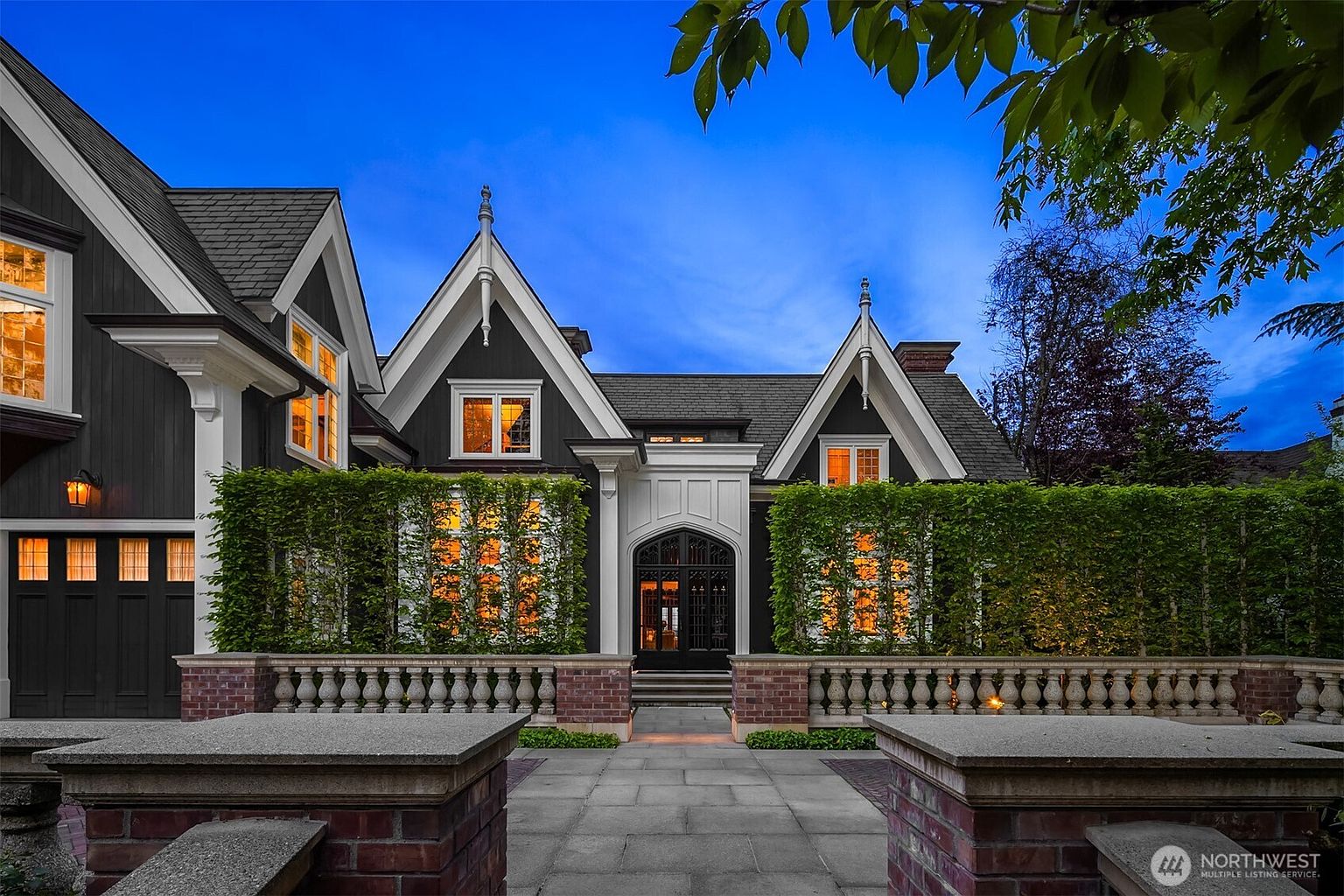
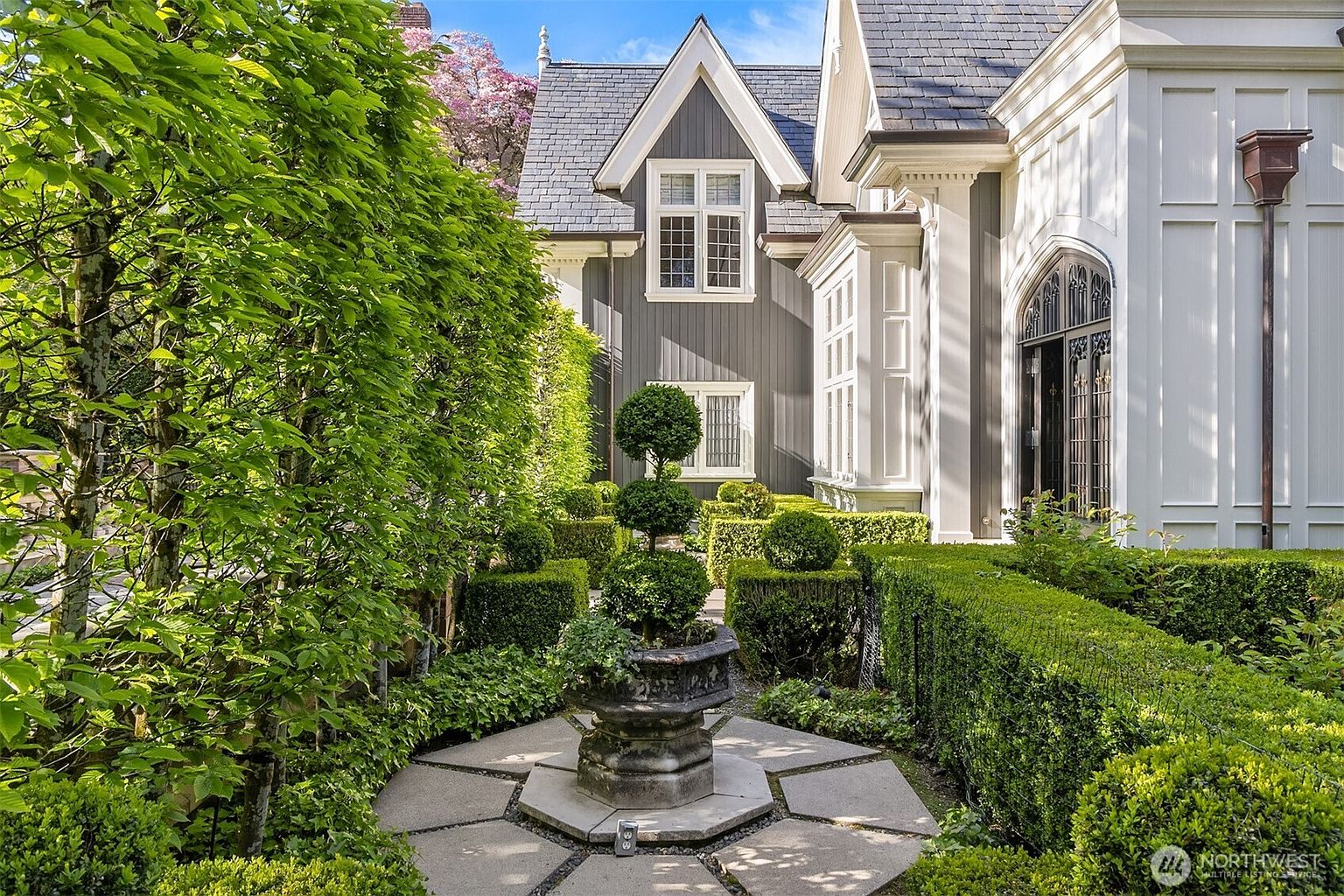
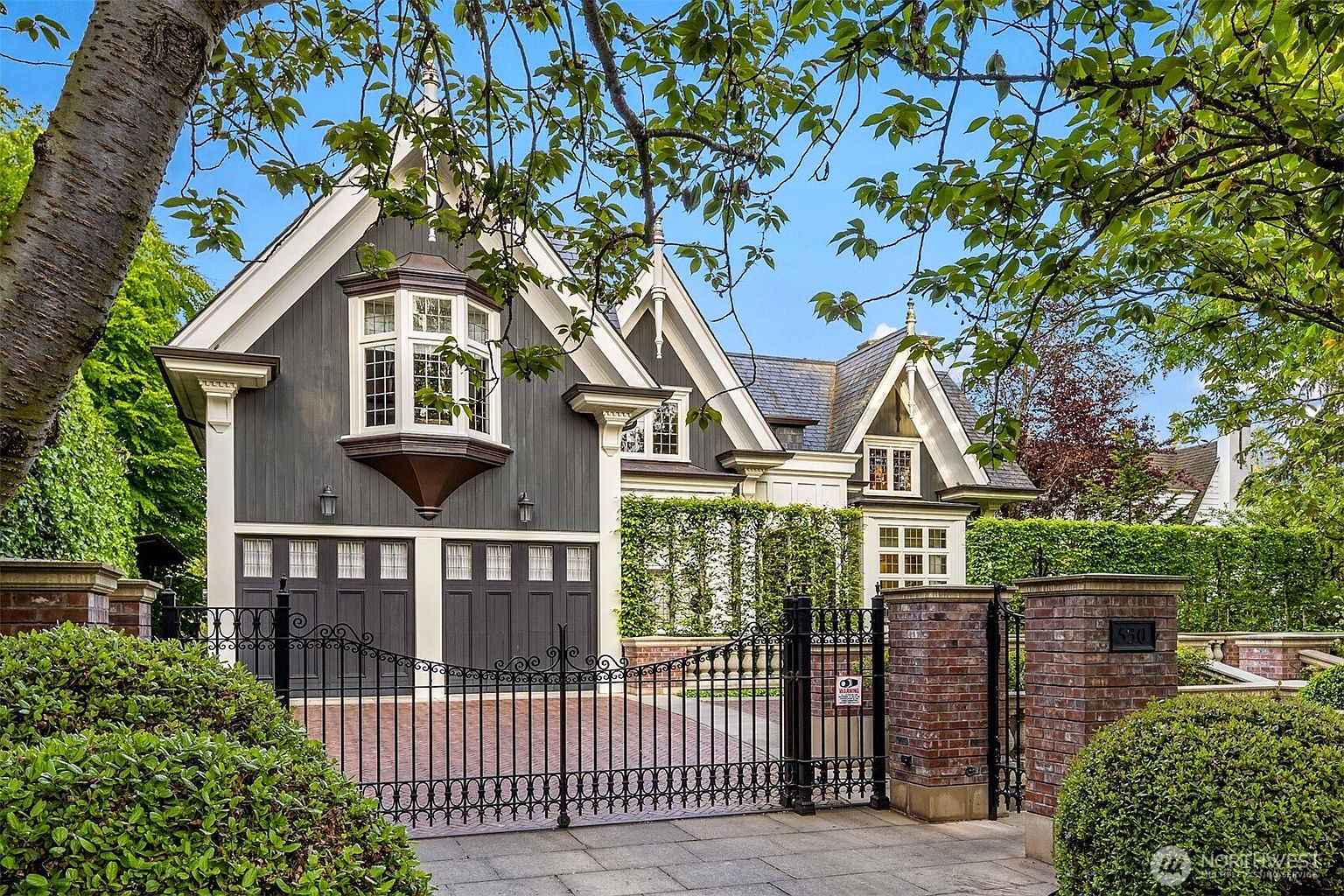
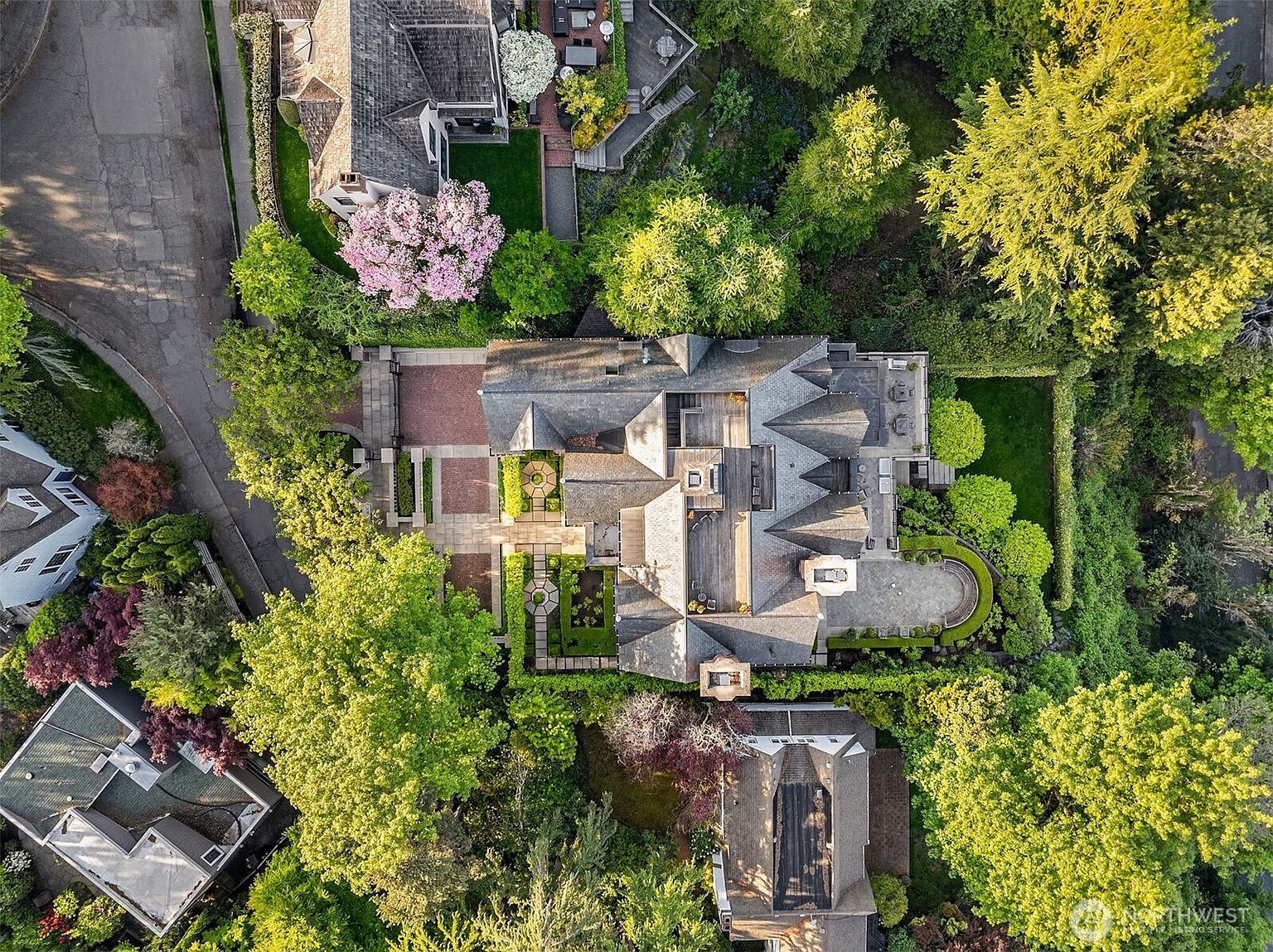
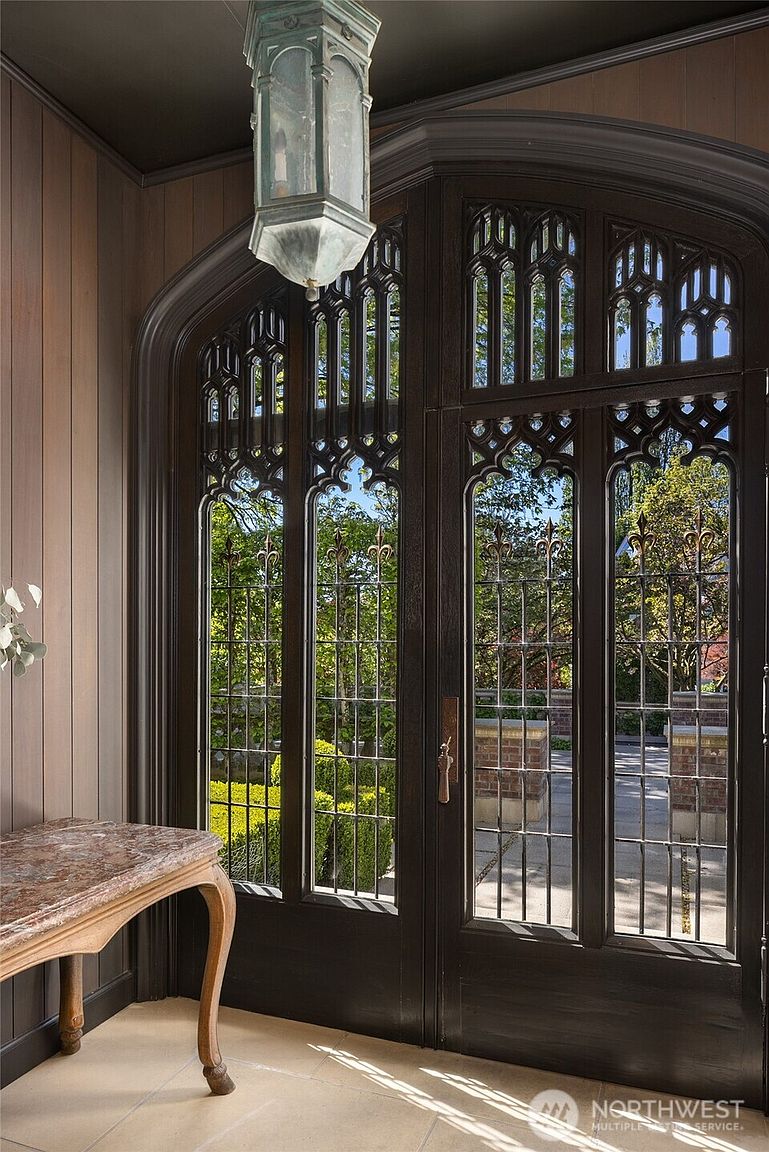
There are homes that announce themselves loudly, and there are homes that earn your attention slowly, revealing themselves in layers. 530 36th Avenue East belongs emphatically to the latter category. From the street, a gated brick motor court and a precisely maintained hornbeam hedge offer privacy without pretension—a composed, Tudor-inspired facade of dark grey and white that signals quality long before you reach the Gothic-arched double doors. Cross the threshold, and the home's philosophy becomes immediately apparent: this is a residence built without compromise, finished without shortcuts, and maintained with the kind of meticulous care that preserves the integrity of genuinely fine work.
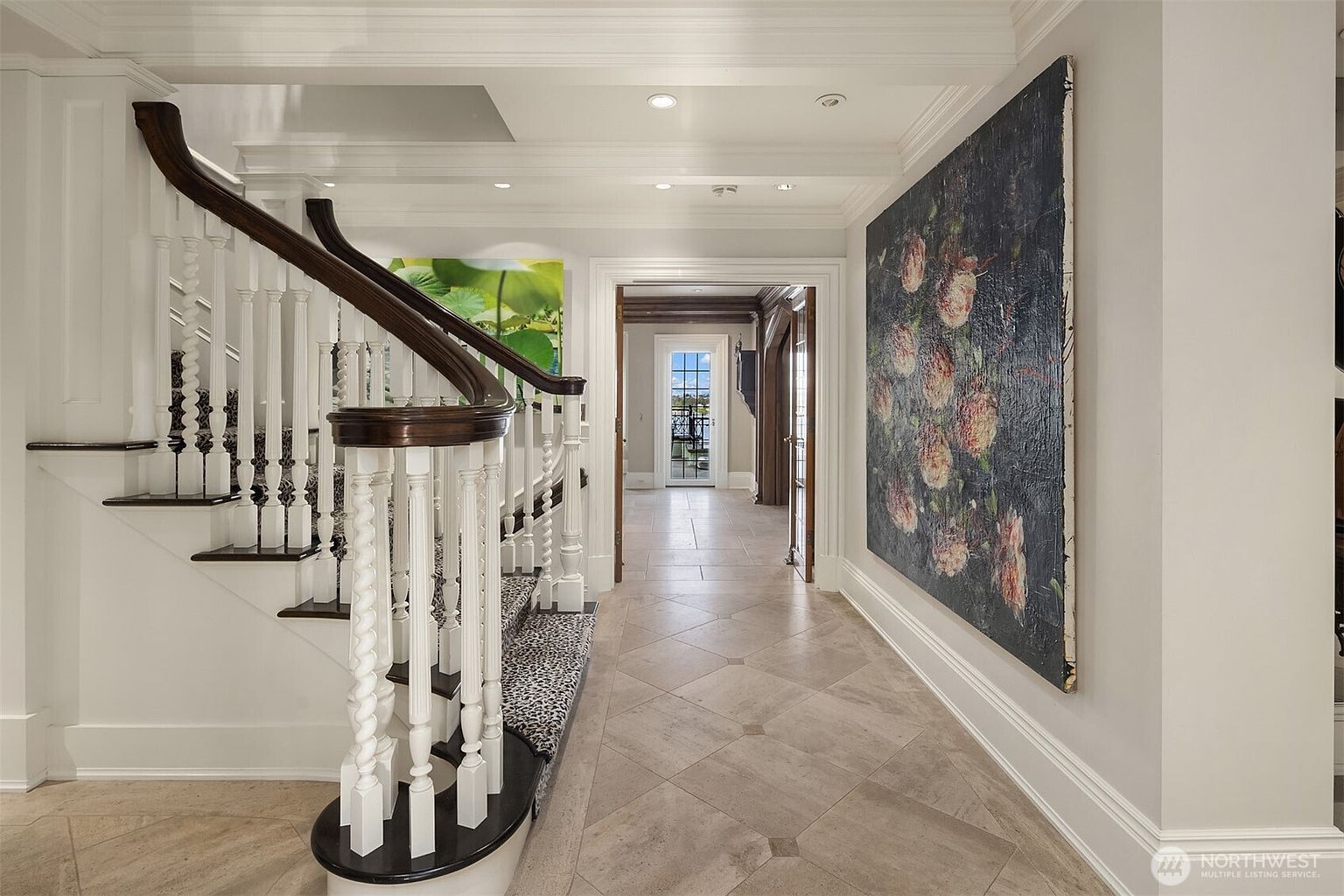
The entry foyer sets the tone at once. Limestone floors extend underfoot, hand-crafted moldings articulate every transition, and a grand staircase with a dark wood handrail rises through the heart of the home, drawing the eye upward through a sequence of spaces that feel both monumental and intimate. The leaded windows, present throughout, filter light in a way that shifts with the hour, lending the interiors a warmth that no recessed fixture can replicate.
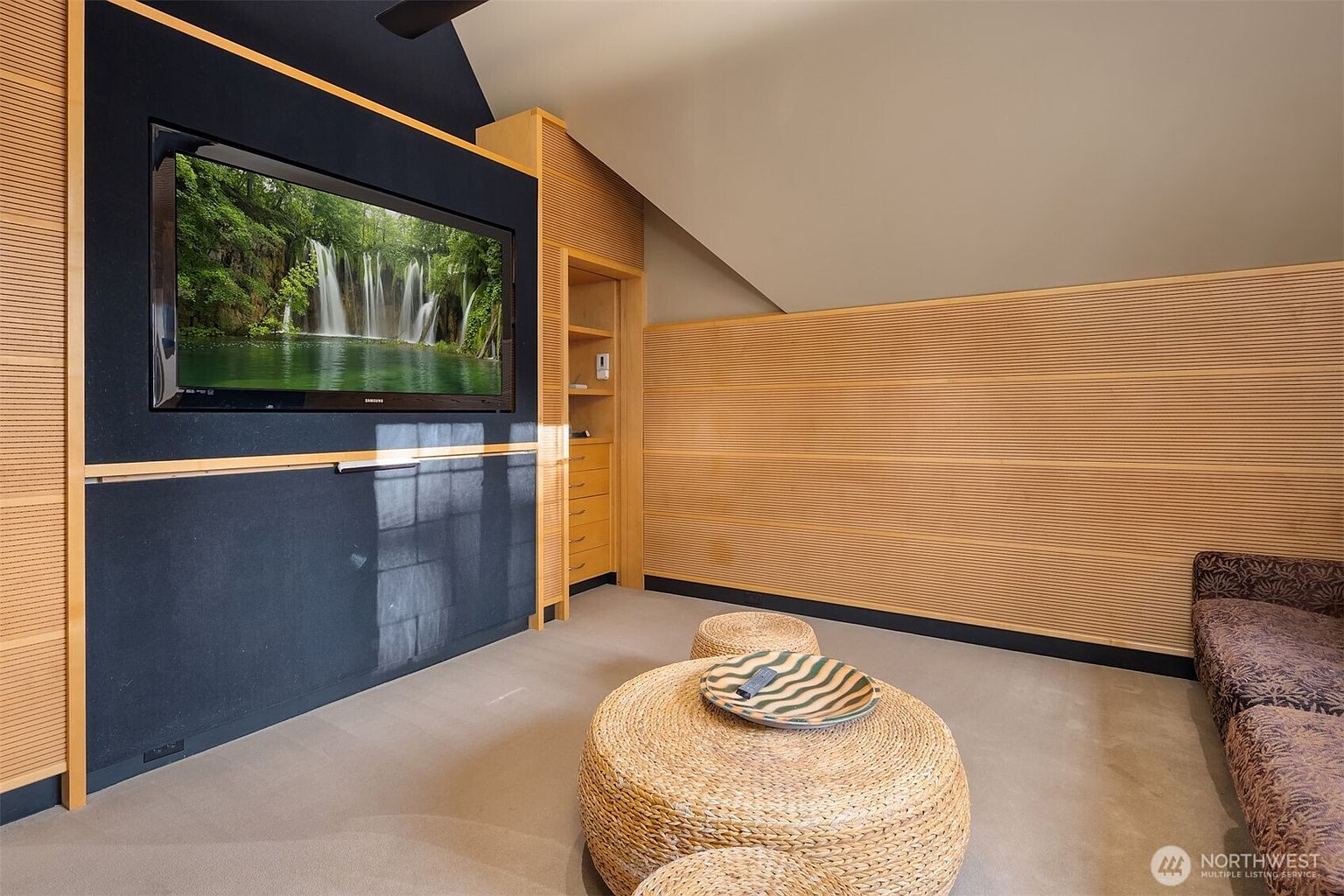
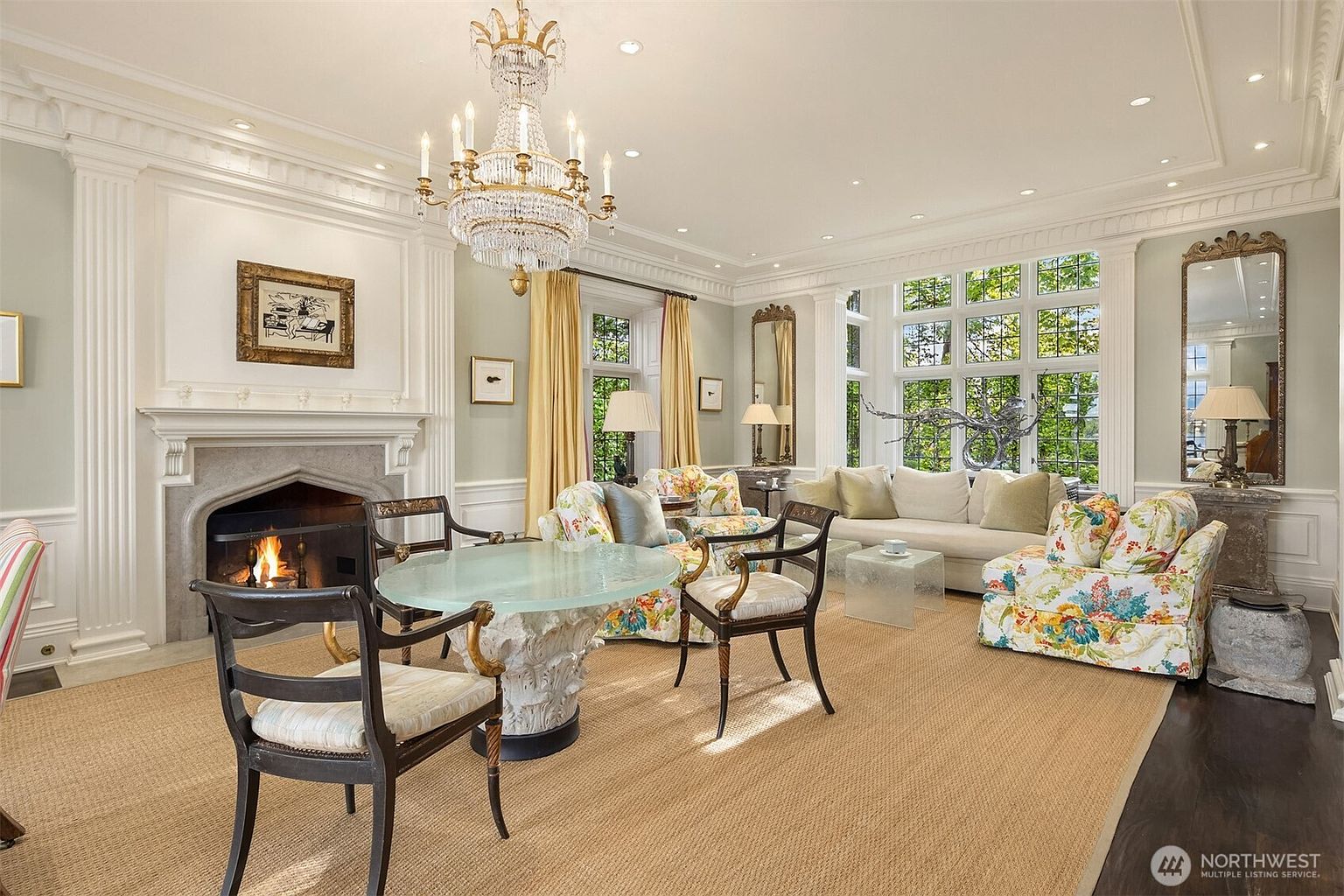
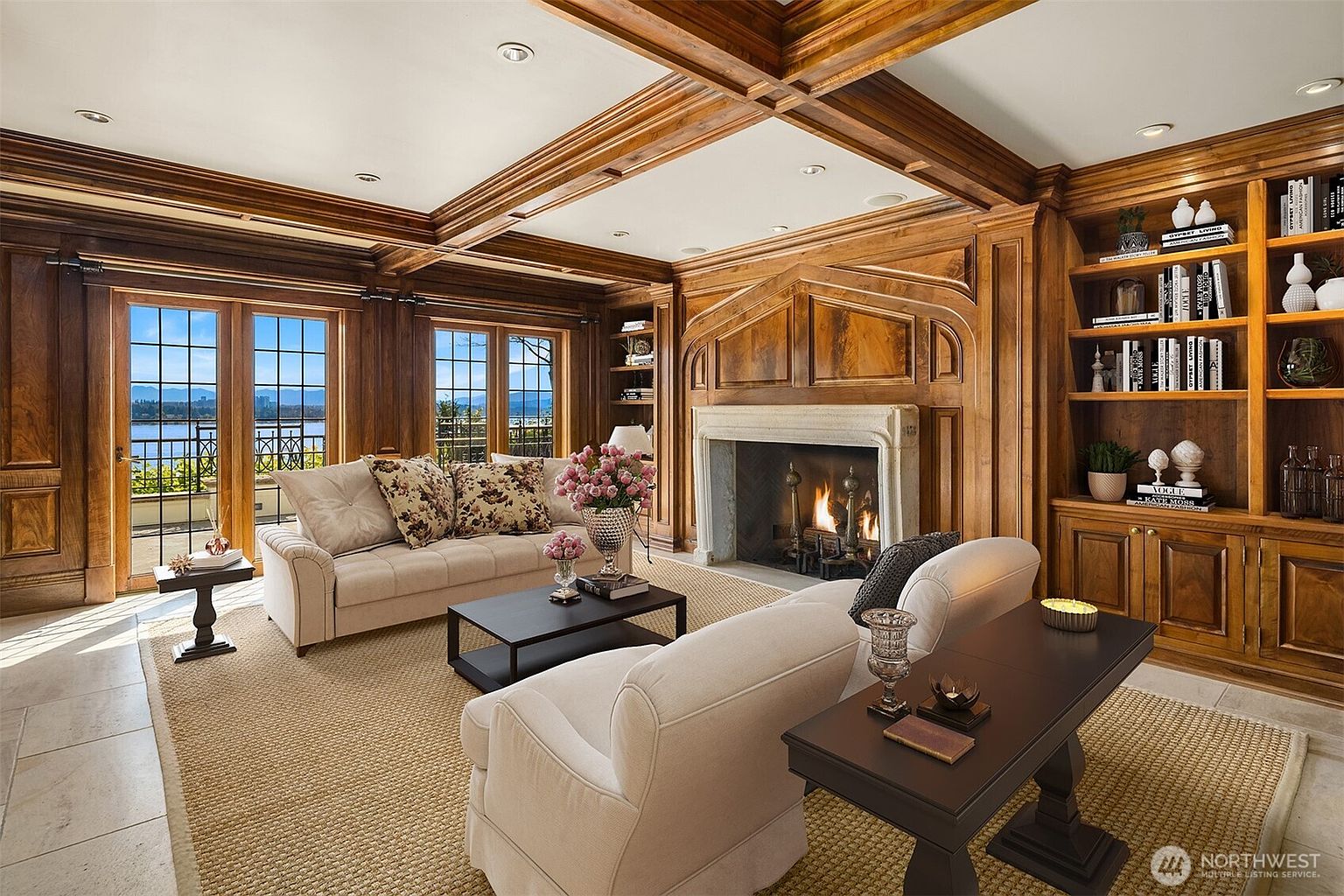
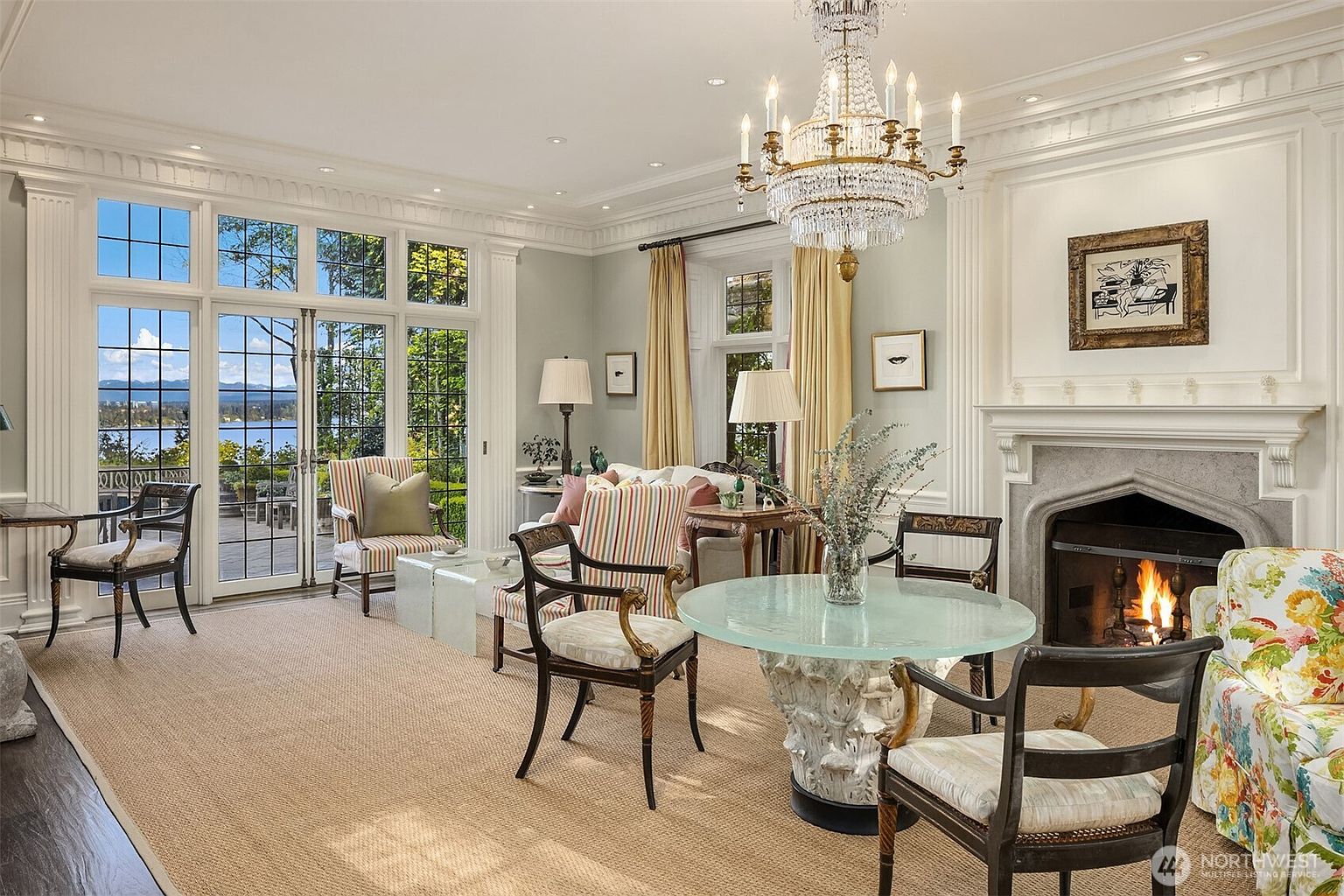
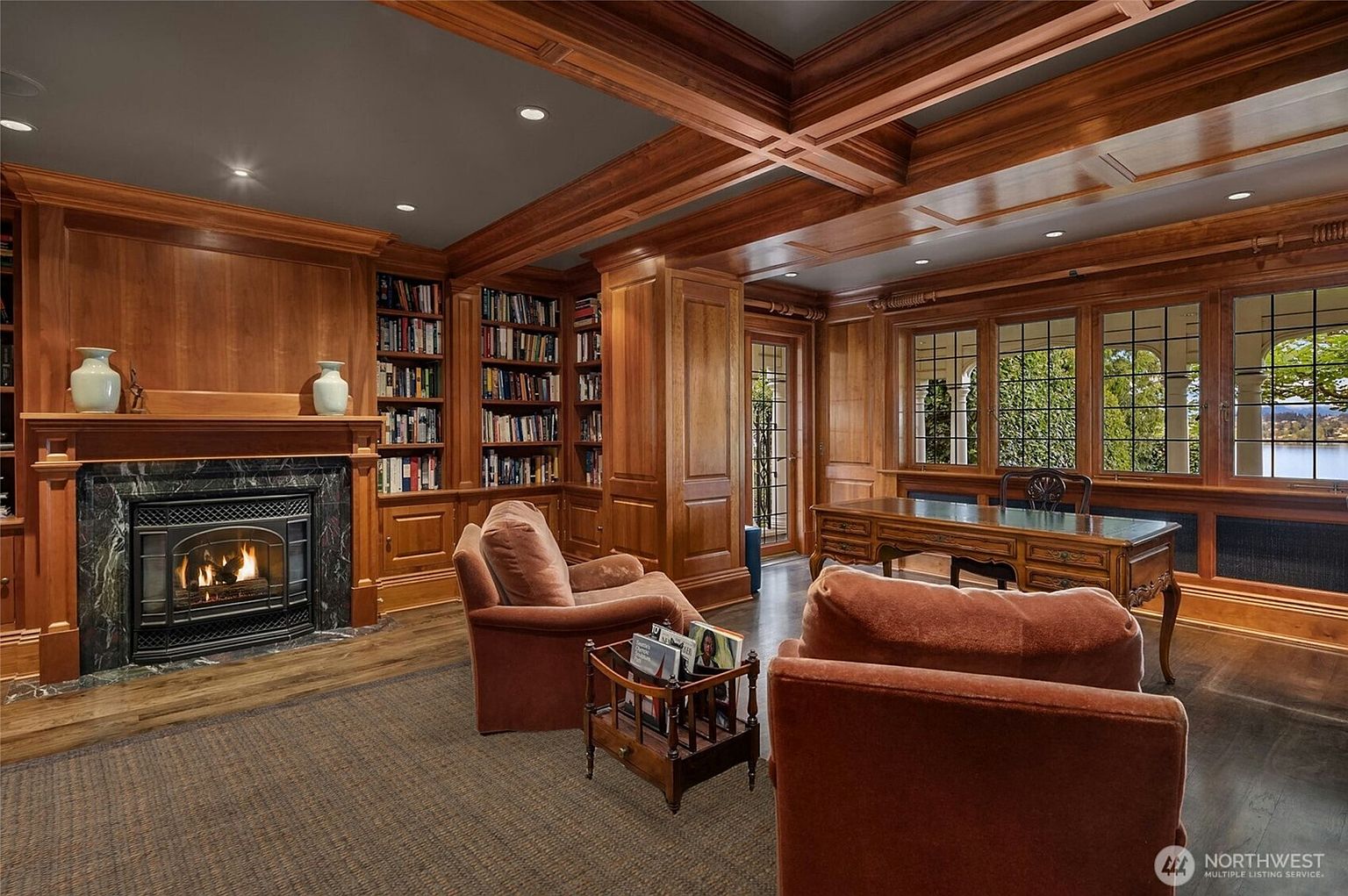
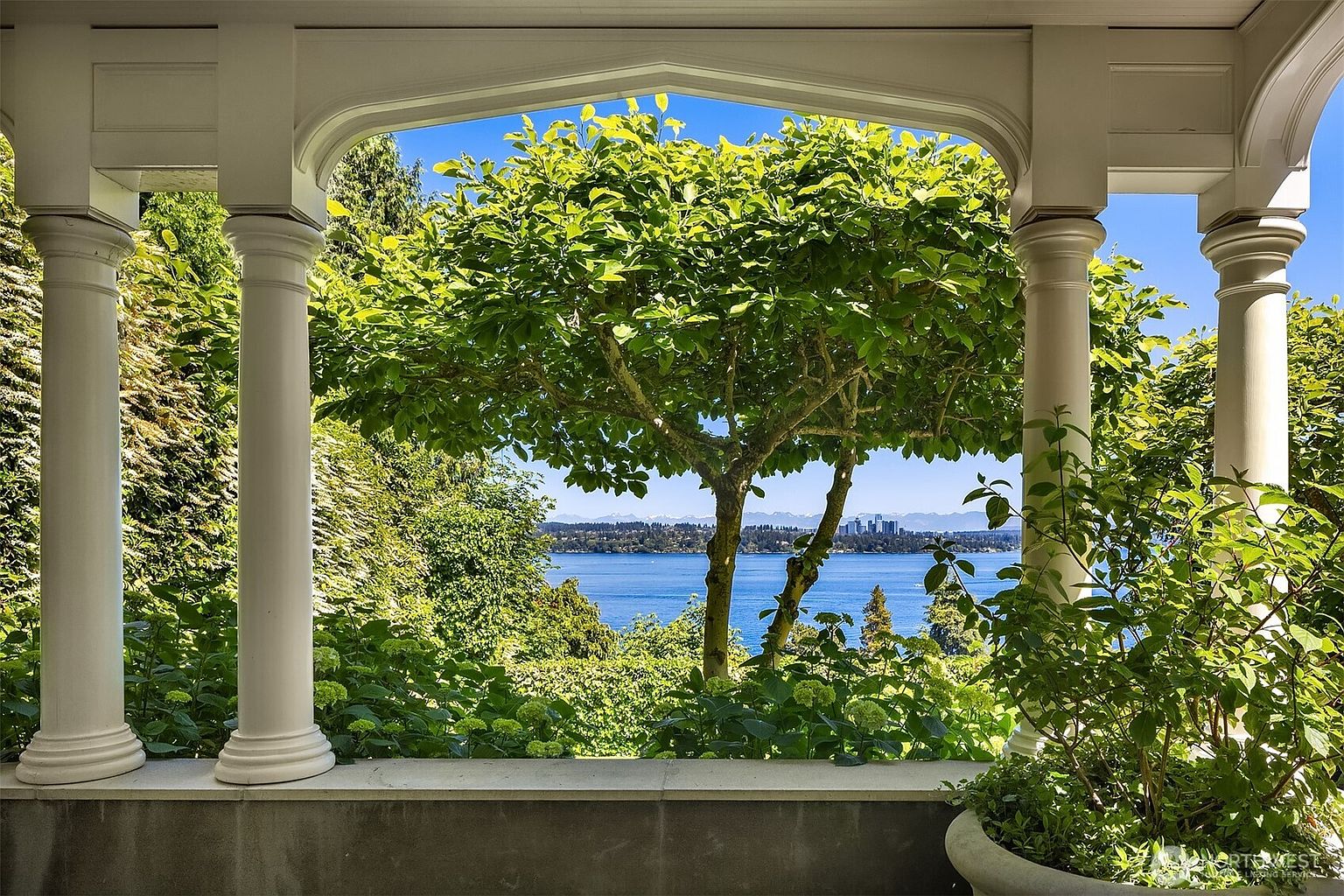
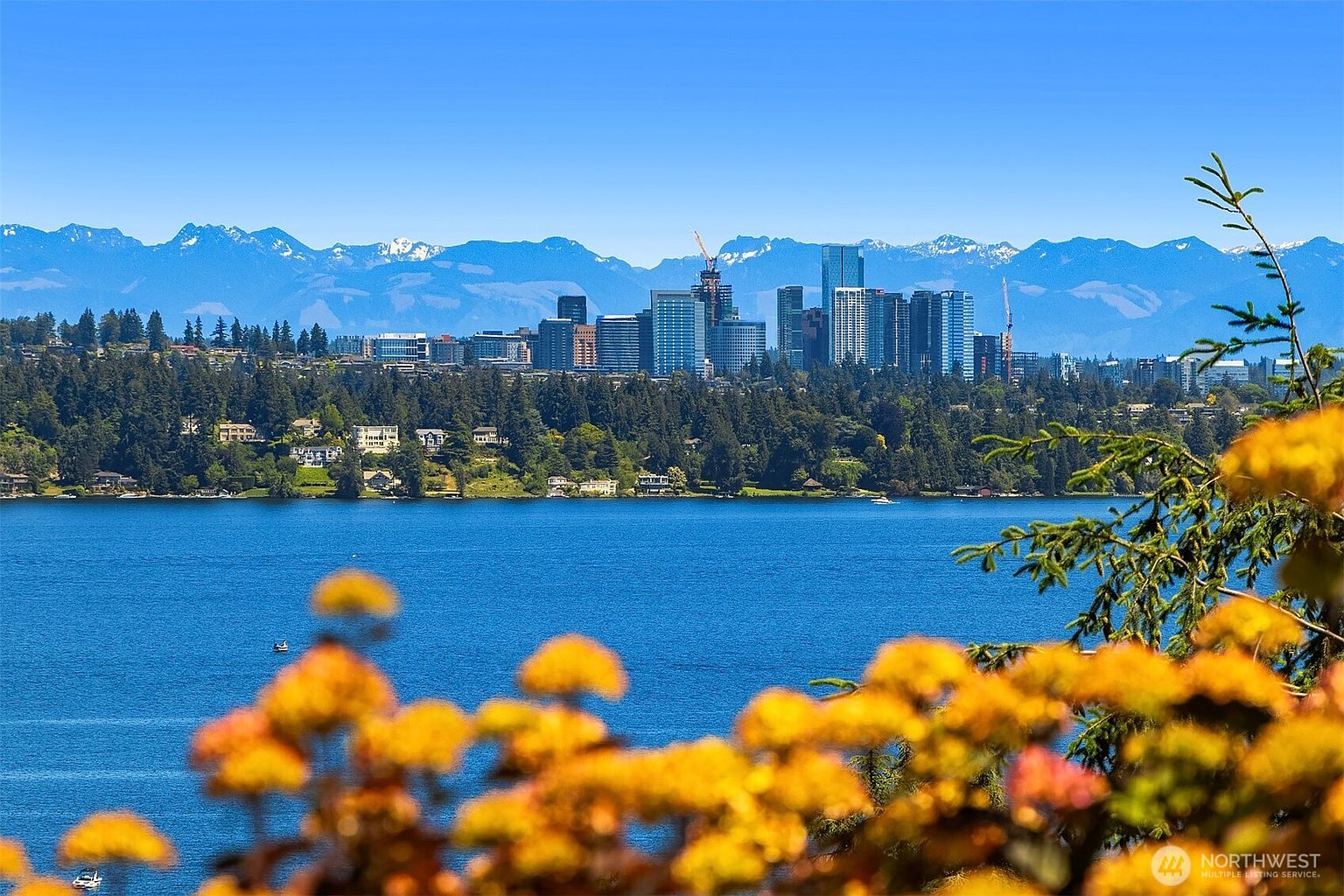
The formal living room is among the home's most commanding spaces—a stone fireplace anchors one wall while French doors on the opposite side open to panoramic views of Lake Washington and the Cascade Mountains, a sight line of such scale that it reorganizes your sense of the entire room around it. Two additional living spaces extend the home's social range: one a richly paneled study with floor-to-ceiling bookshelves, a dark marble fireplace surround, and multi-paned windows framing the water, the other a more relaxed media room with built-in shelving and a vaulted ceiling that brings an unexpected airiness to the space.
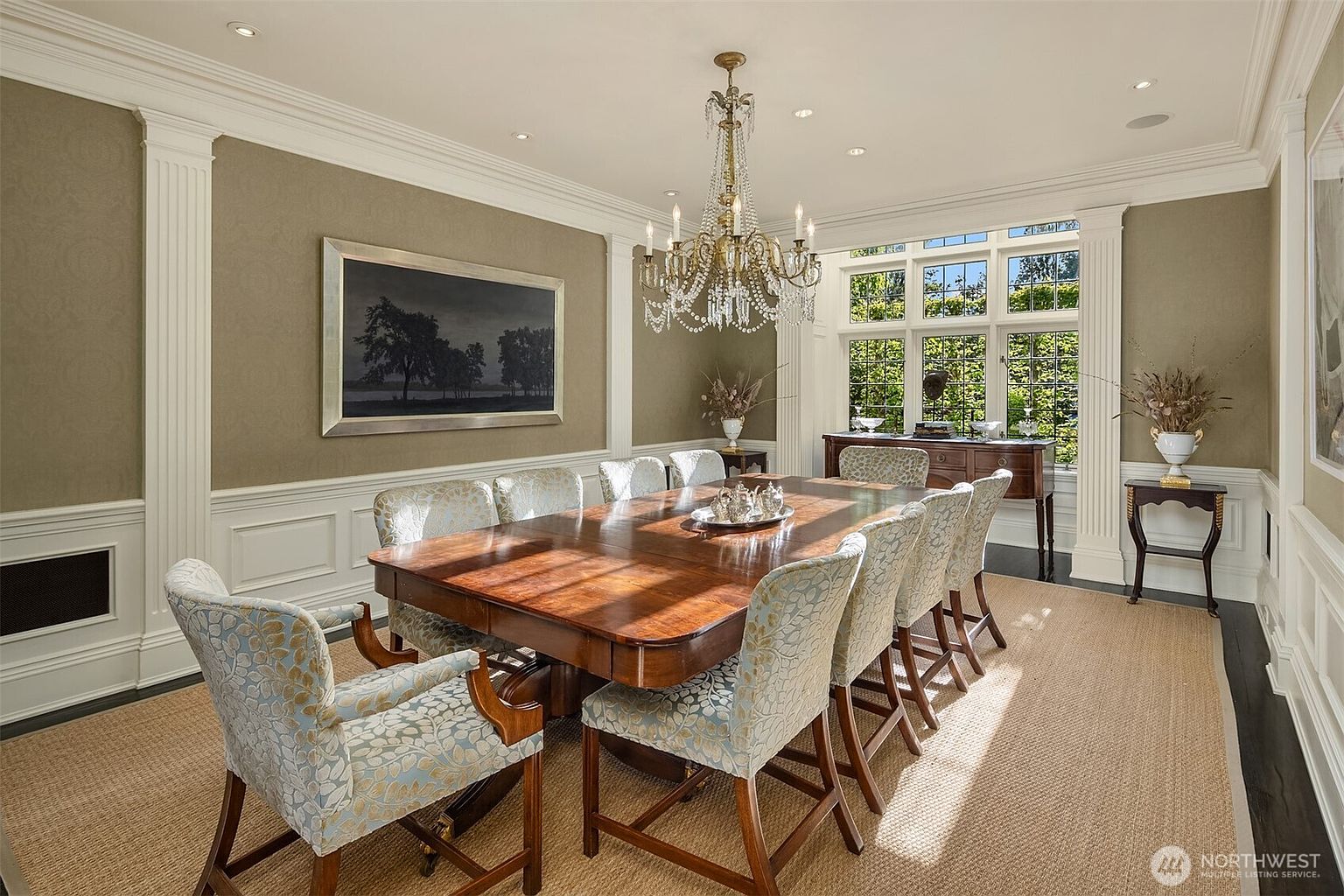
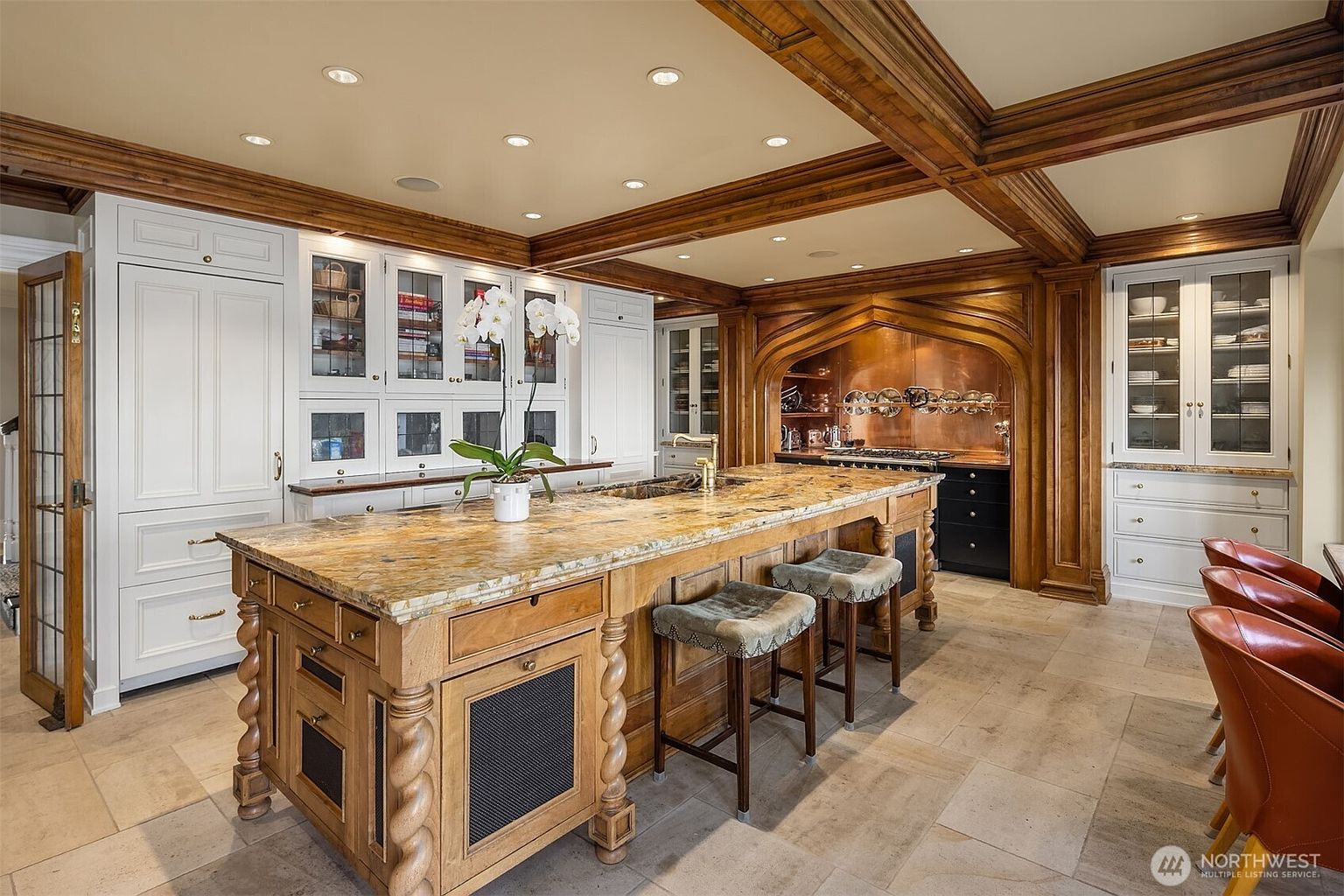
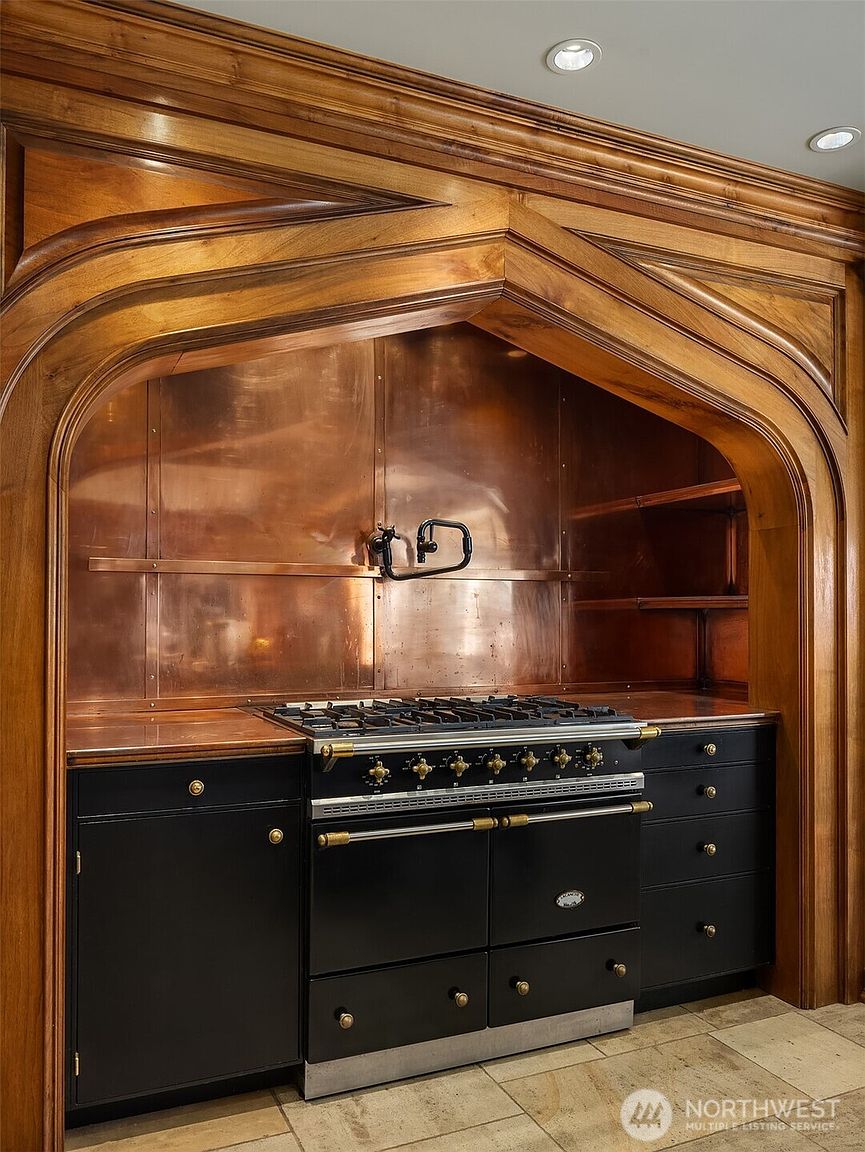
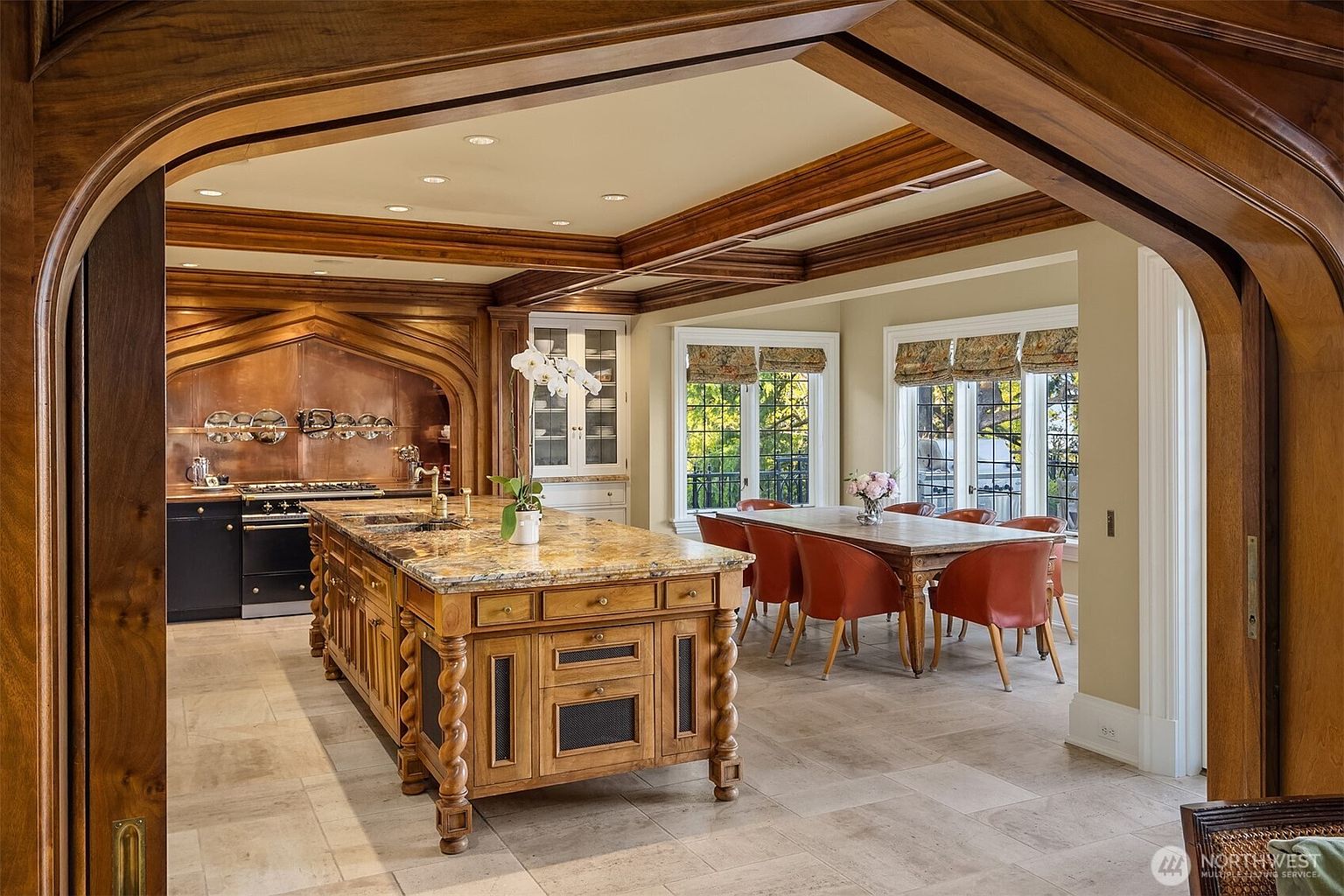
The kitchen is a study in Old World precision executed at modern scale. Coffered ceilings and ceiling beams overhead, custom-stained cabinetry below, a copper-hooded range alcove as the room's dramatic focal point, and a patterned granite island of considerable dimension flowing without interruption toward a formal dining room finished with wainscoting and a crystal chandelier. Every material choice here reflects a commitment to authenticity over approximation.
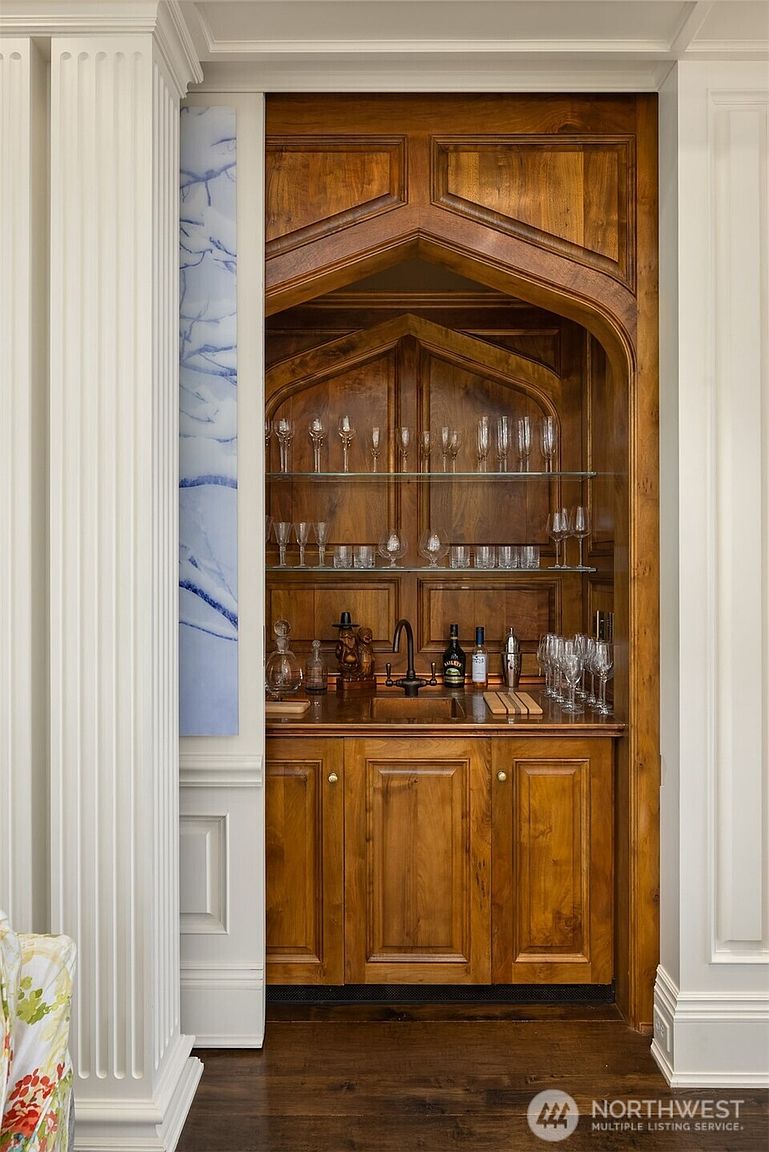
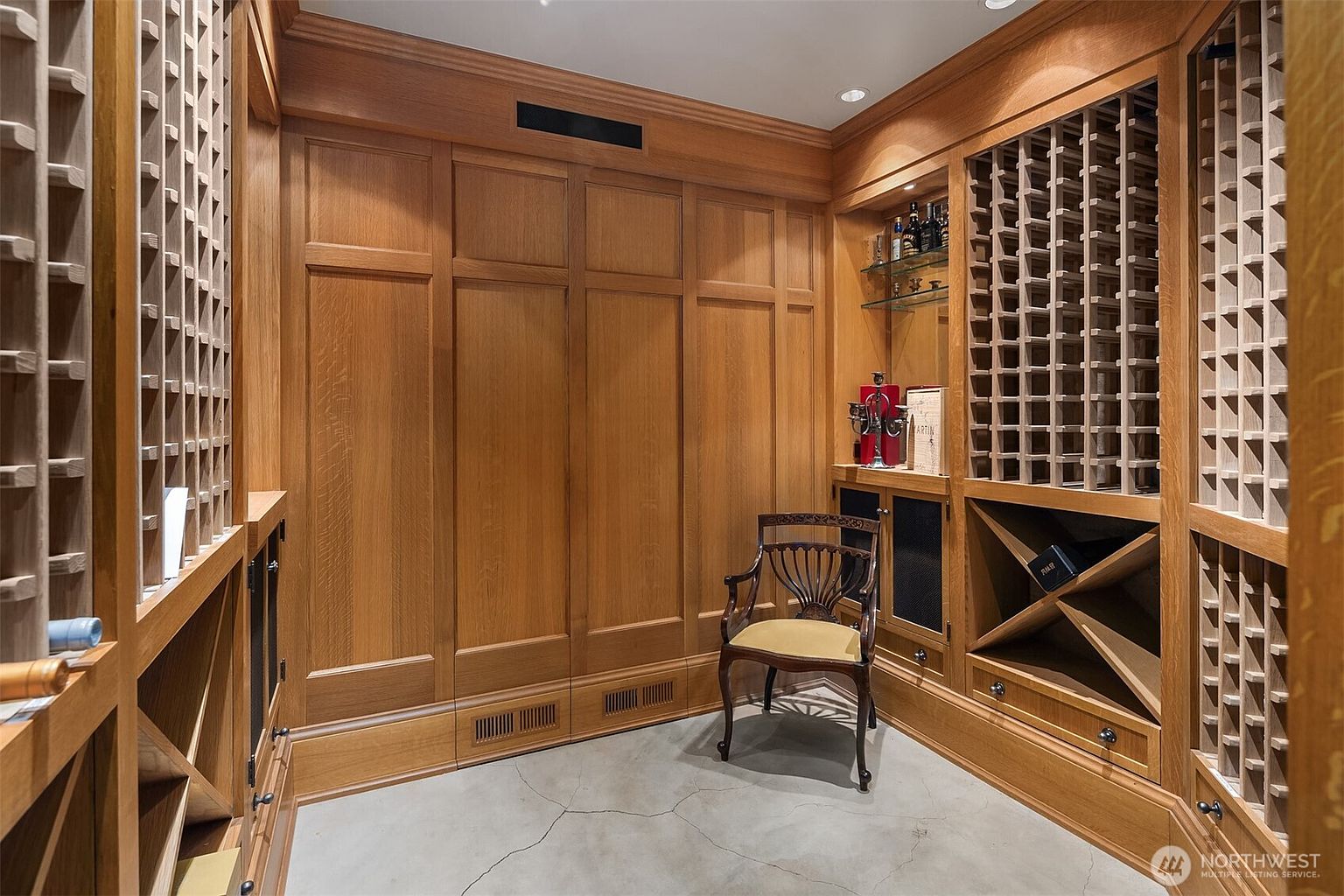
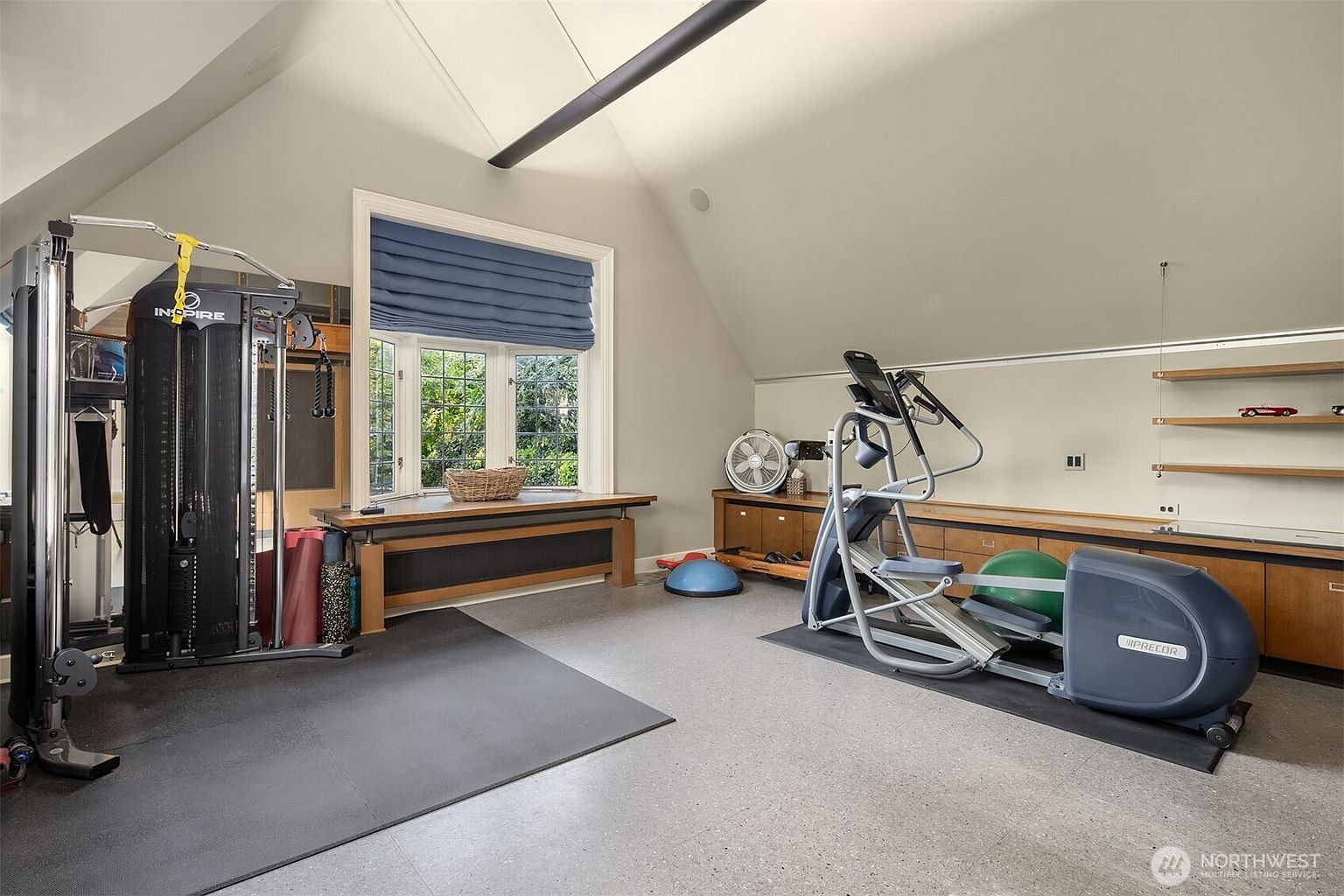
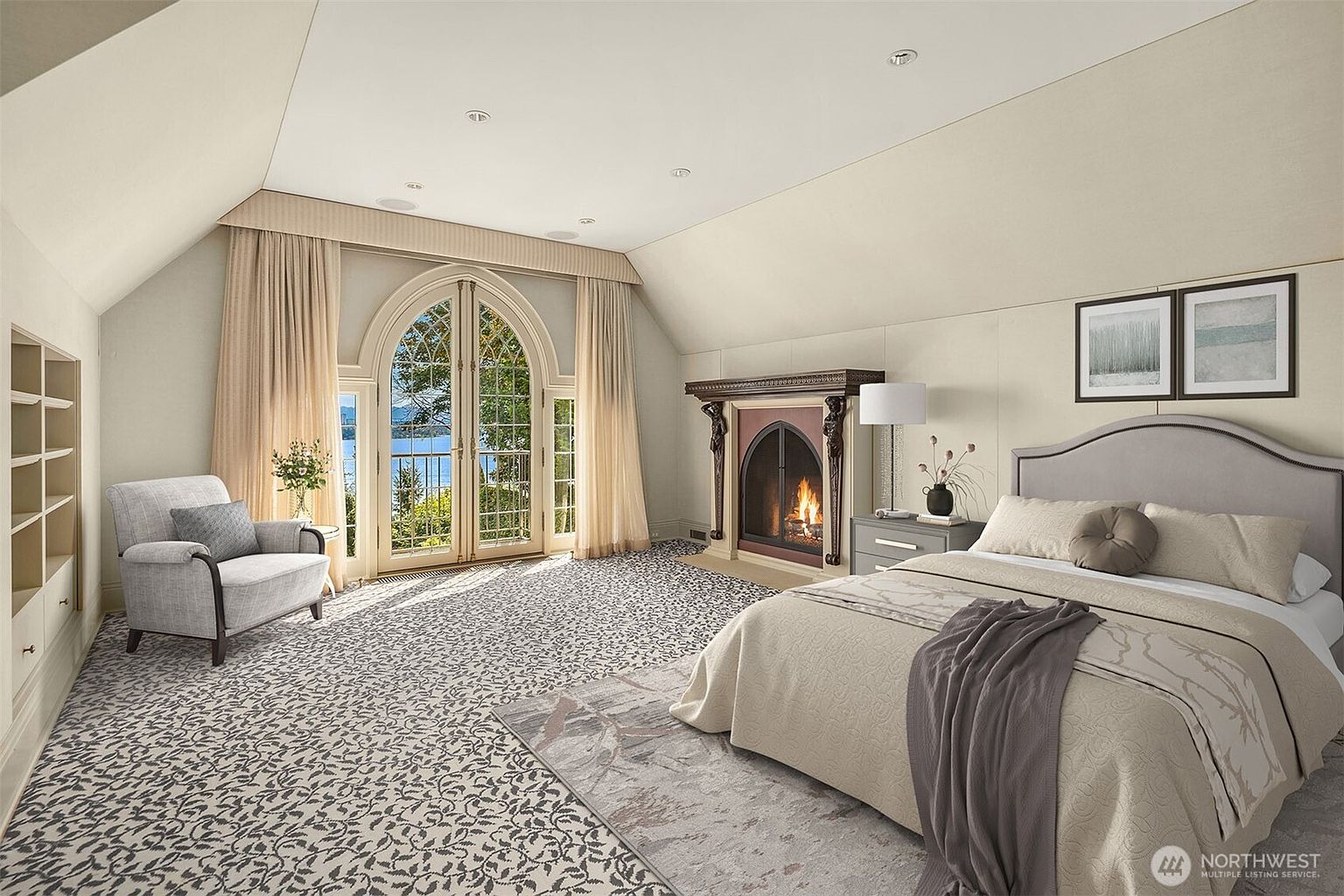
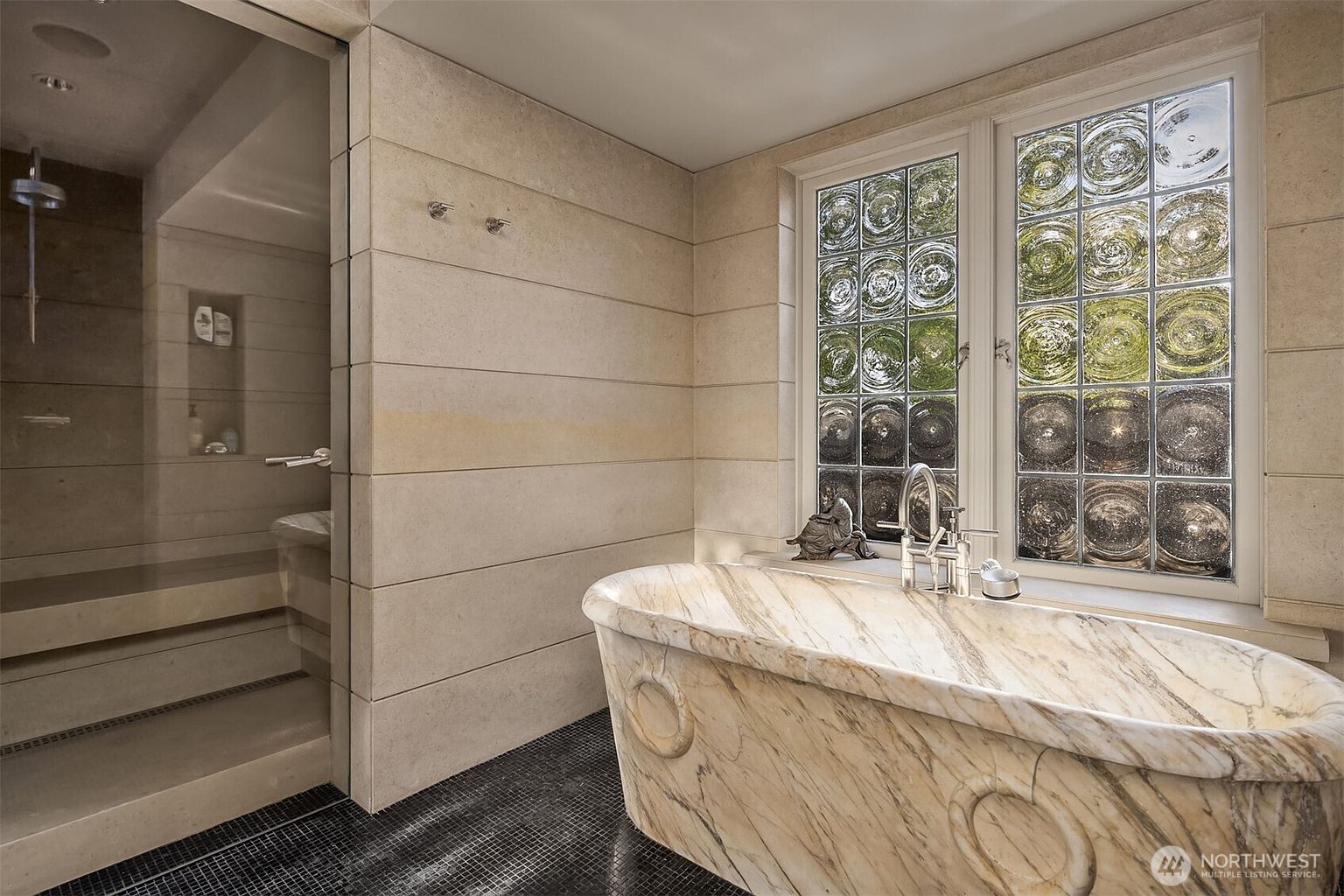
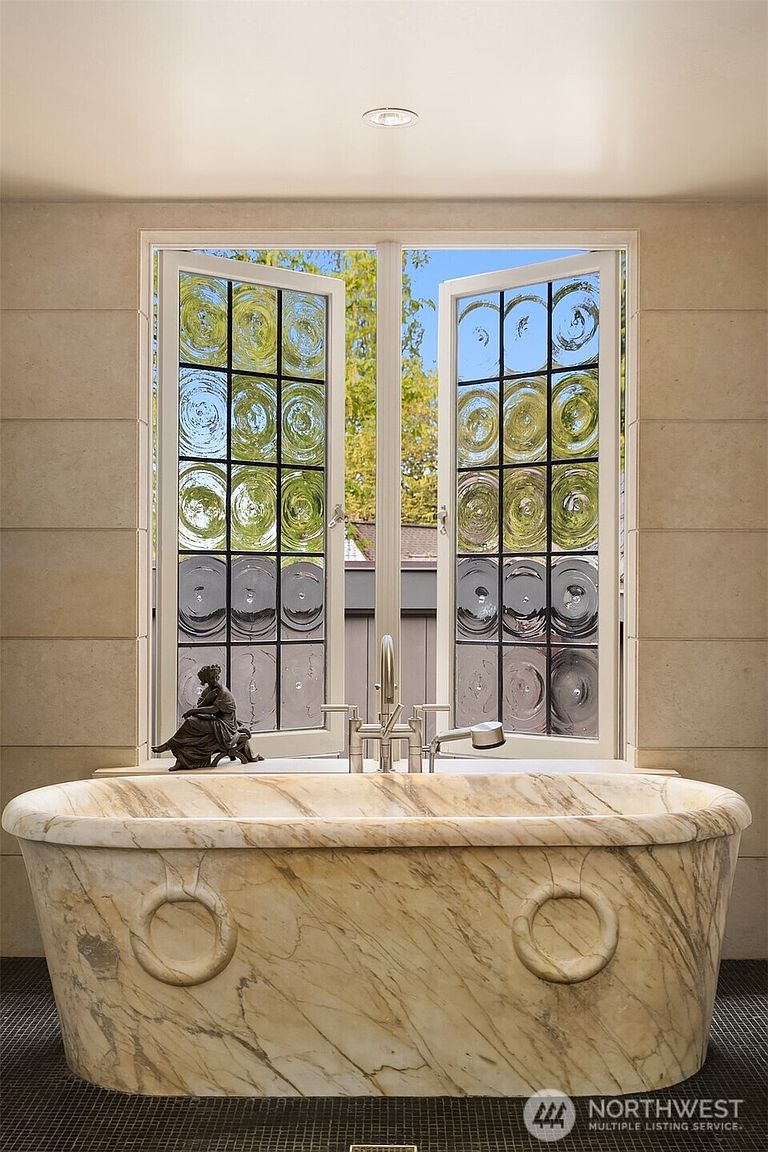
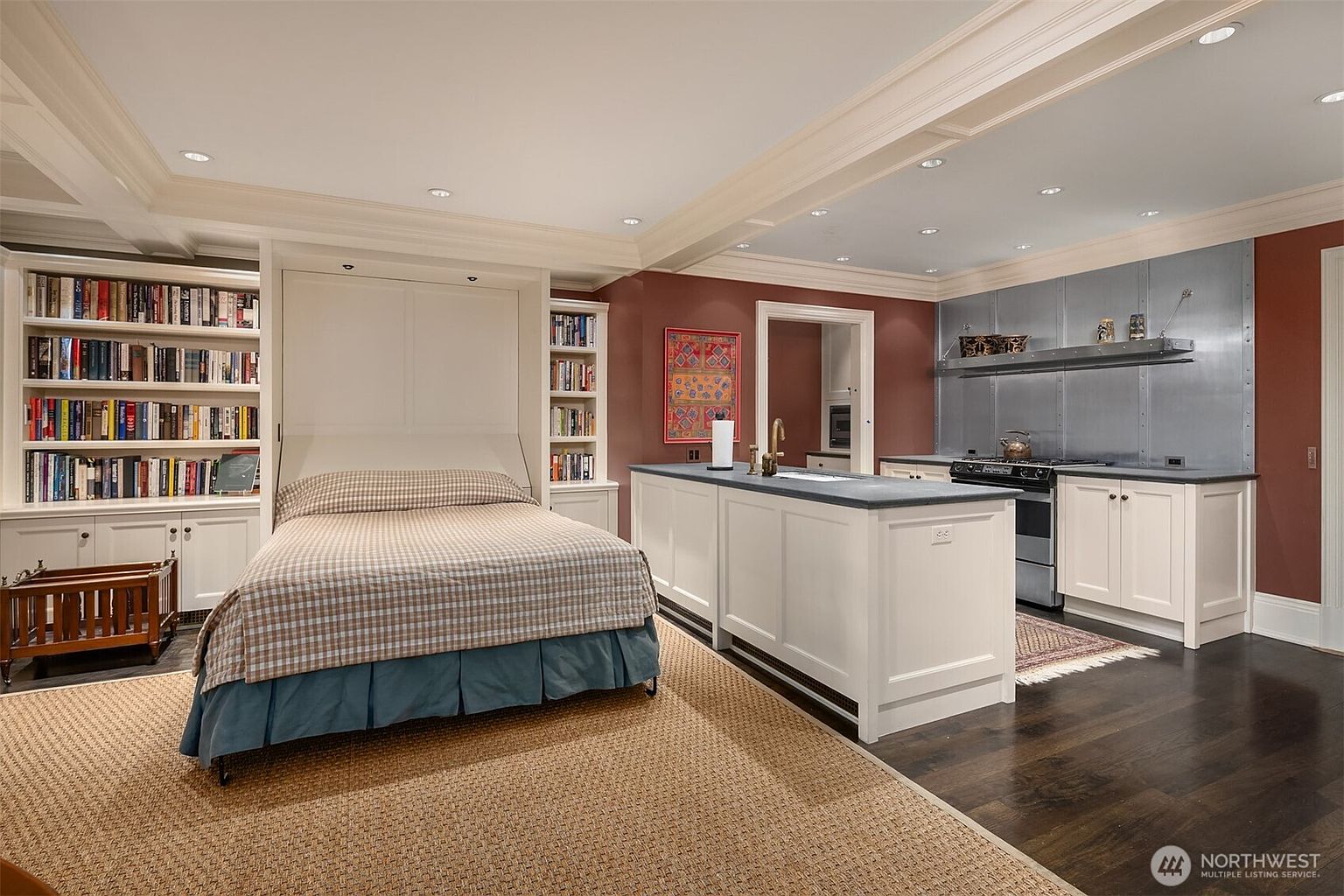
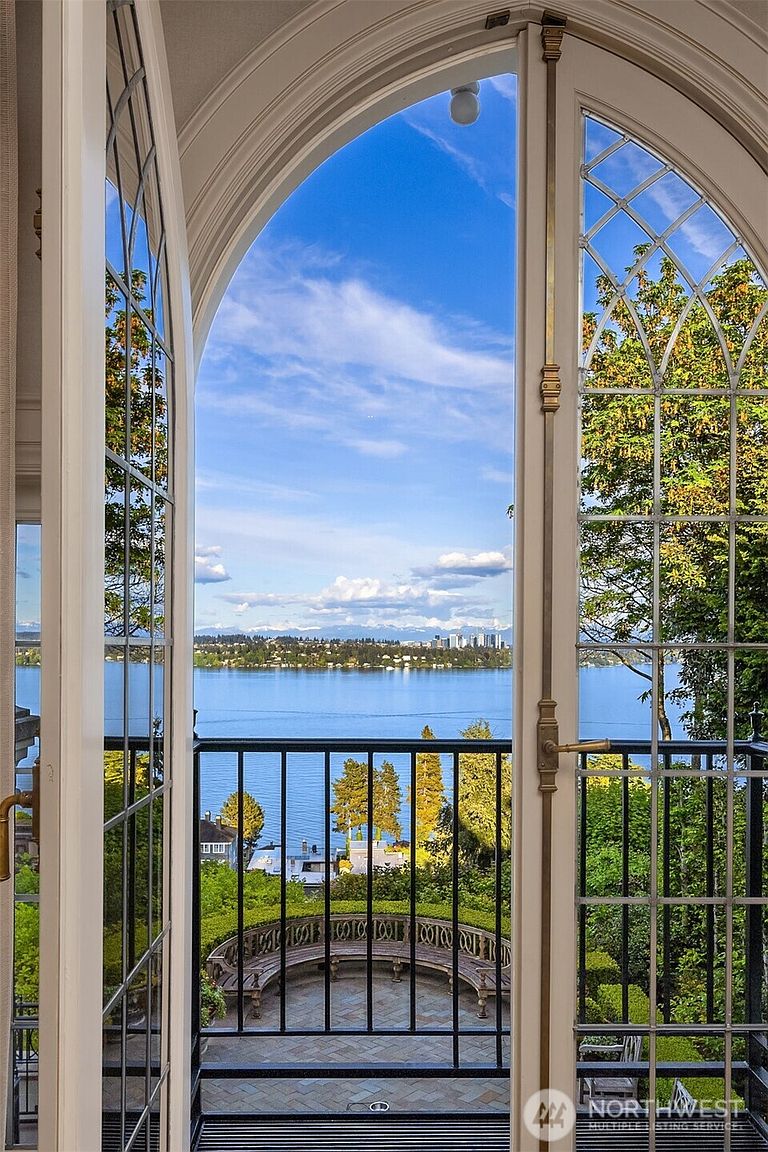
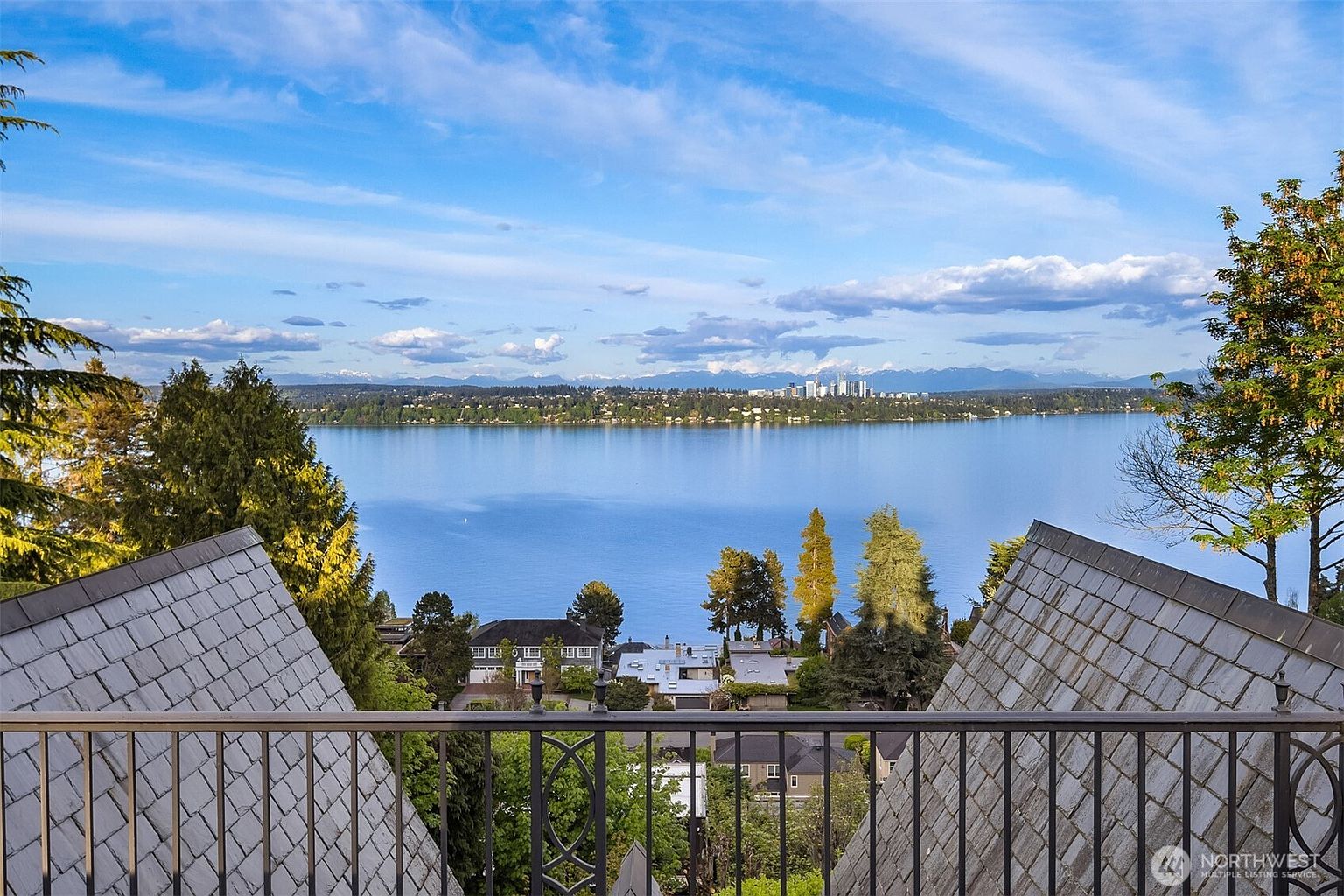
The primary suite continues that dialogue. Arched French doors open to a private balcony with wrought-iron railings and unobstructed lake views, while the en-suite presents a hand-carved marble soaking tub and a stone-tiled walk-in shower of genuine spa quality. Beyond the primary rooms, the program is exceptional in its versatility: a dedicated wine cellar with custom oak cabinetry, a home gym with vaulted ceiling and bay window, and a guest suite with Murphy bed and integrated kitchen accommodate every dimension of contemporary life.
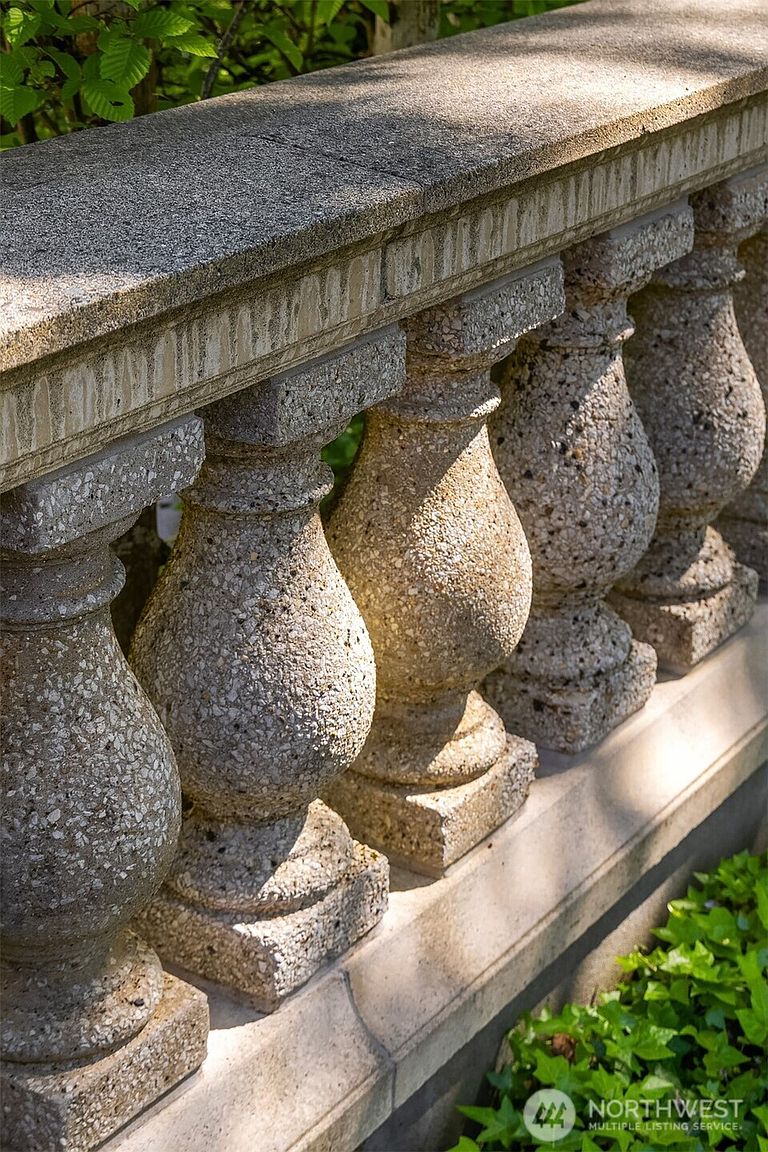
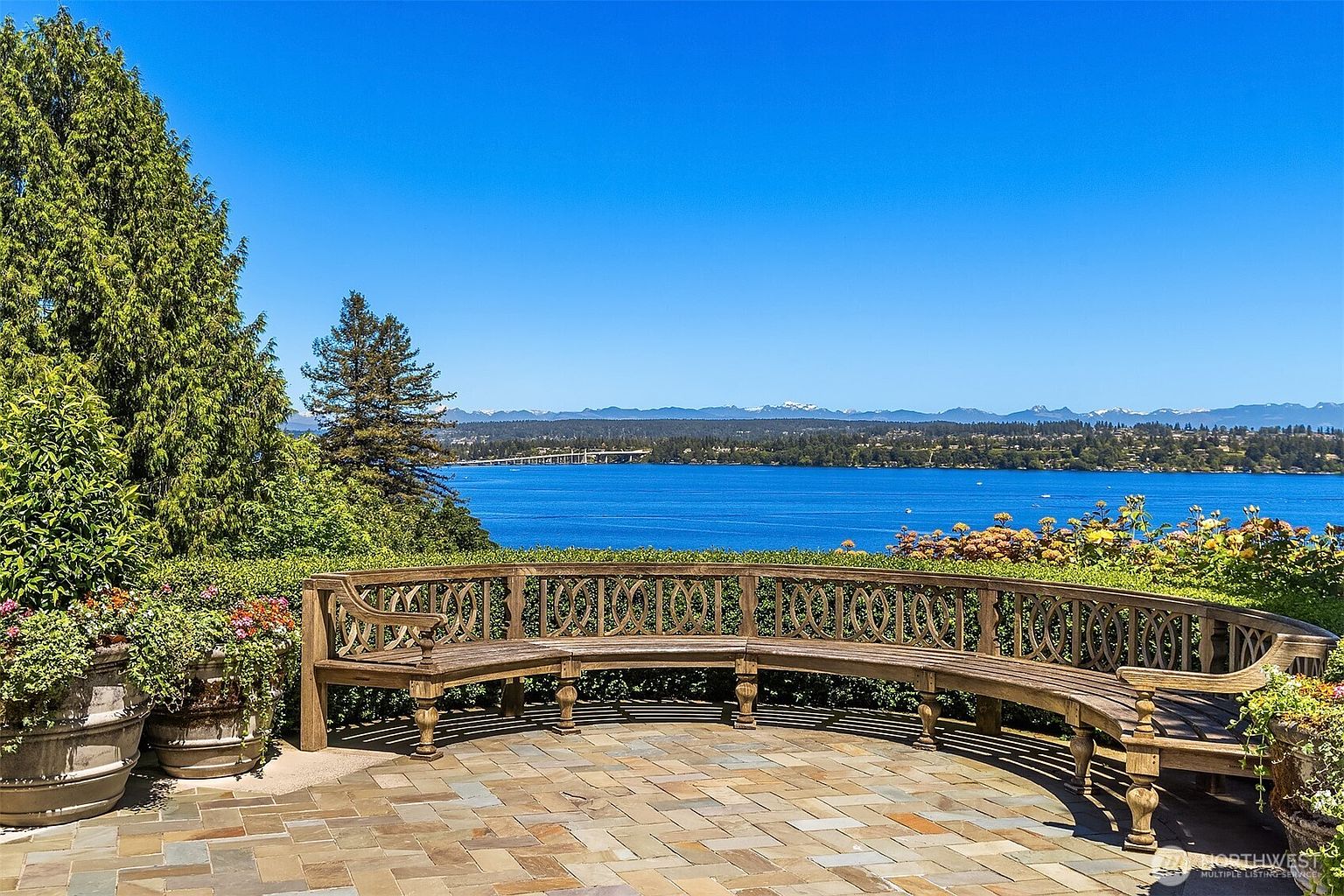
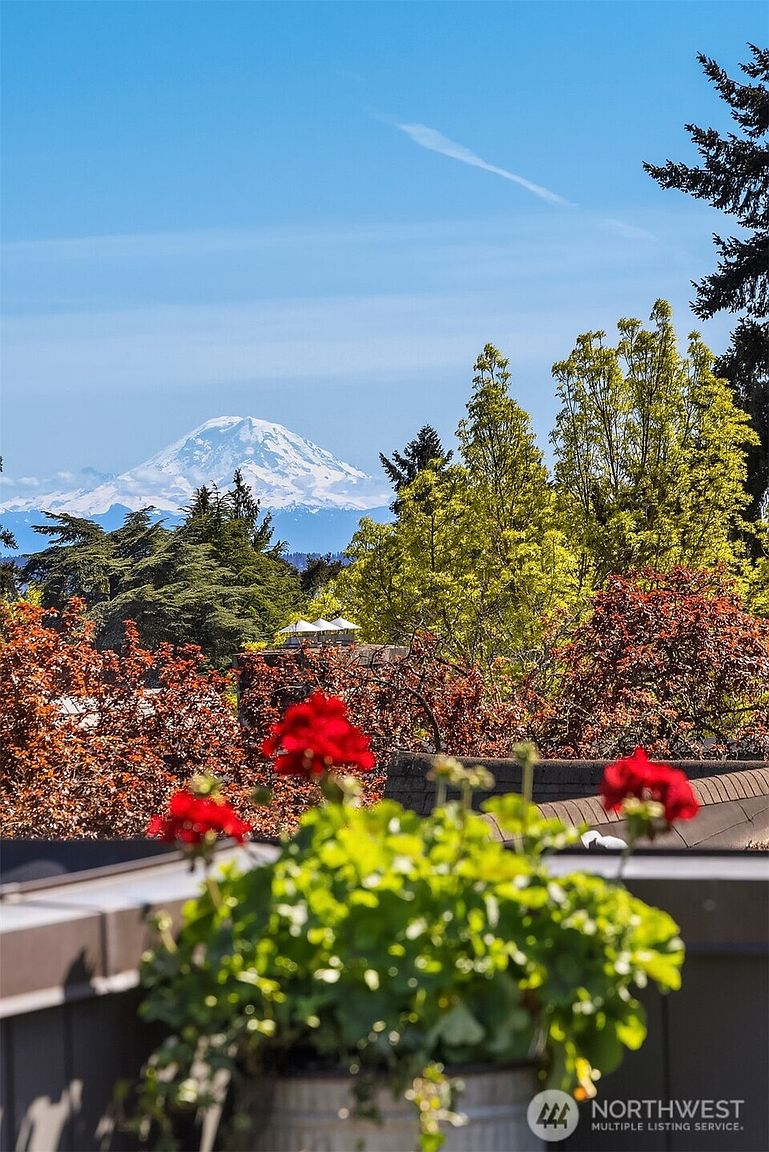
Outside, broad garden terraces with antique aggregate stone balusters descend through formal, European-inspired grounds. From nearly every vantage point—terrace, balcony, or garden bench—Mount Rainier anchors the southern horizon with quiet authority. Five fireplaces. Leaded windows. French polished paneling. This is a home you experience differently each time you move through it, its richness revealing itself gradually, as the finest things invariably do.
Washington Park is one of Seattle's oldest and most distinguished residential neighborhoods, occupying a gently elevated peninsula between the eastern shore of Lake Washington and the city's broader urban fabric. Developed primarily in the early twentieth century, the neighborhood attracted Seattle's most prominent families, who commissioned architecturally ambitious homes on generously proportioned lots—a character the area has preserved with remarkable fidelity. Today, Washington Park remains one of the city's most sought-after addresses, prized for its architectural integrity, its mature tree canopy, its privacy, and the singular quality of its lake and mountain views.
The neighborhood's eastern boundary meets the shores of Lake Washington directly, and the water is a constant presence—visible from elevated lots, audible in the early morning quiet, and accessible via the lakefront parks and pathways that define the area's recreational life. Lake Washington itself stretches nearly eighteen miles from north to south, offering sailing, rowing, kayaking, and swimming within moments of home. The lake's scale ensures that no development on the opposite shore diminishes its power as a natural amenity; the Bellevue skyline across the water reads more as a distant accent than an intrusion.
Immediately adjacent to the neighborhood lies the Washington Park Arboretum, a 230-acre living collection managed jointly by the University of Washington and the City of Seattle. The Arboretum contains more than 20,000 plants representing thousands of species, with curated collections of Japanese maples, conifers, camellias, and flowering cherries that draw visitors from across the region each spring. Its trails and waterway offer a genuine immersion in landscape that feels entirely removed from the city, despite sitting minutes from both Capitol Hill and the University District.
Madison Park, the small commercial and residential enclave at the neighborhood's western edge along the lake, provides an intimate village atmosphere with independent restaurants, a wine bar, a well-regarded bakery, and boutique retail—the kind of walkable neighborhood amenity that larger commercial districts cannot replicate. The Madison Park beach and boat launch add a summer social dimension that is characteristically Seattle in its informality and genuine appreciation of the outdoors.
For cultural engagement, the Seattle Art Museum's Asian Art Museum is located nearby in Volunteer Park on Capitol Hill, and the broader museum campus, symphony, opera, and performing arts venues of downtown Seattle are accessible within a fifteen-minute drive. The University of Washington, one of the country's leading research universities, is similarly proximate, lending the area an intellectual energy that complements its residential refinement.
Private and public schools of strong reputation serve the area, and the neighborhood's position between Interstate 520 and the city's arterial network makes both the Eastside and downtown Seattle readily accessible without the friction of denser urban living. Washington Park does not ask you to choose between nature and culture, between privacy and connectivity, between the grandeur of the landscape and the convenience of the city. It offers all of it, held in a balance that is genuinely rare.
Featured Highlights
Curated Content • Presented by Betsy Q. Terry