The Story Behind
Where Wine Country Heritage Meets Unmistakably Modern Living
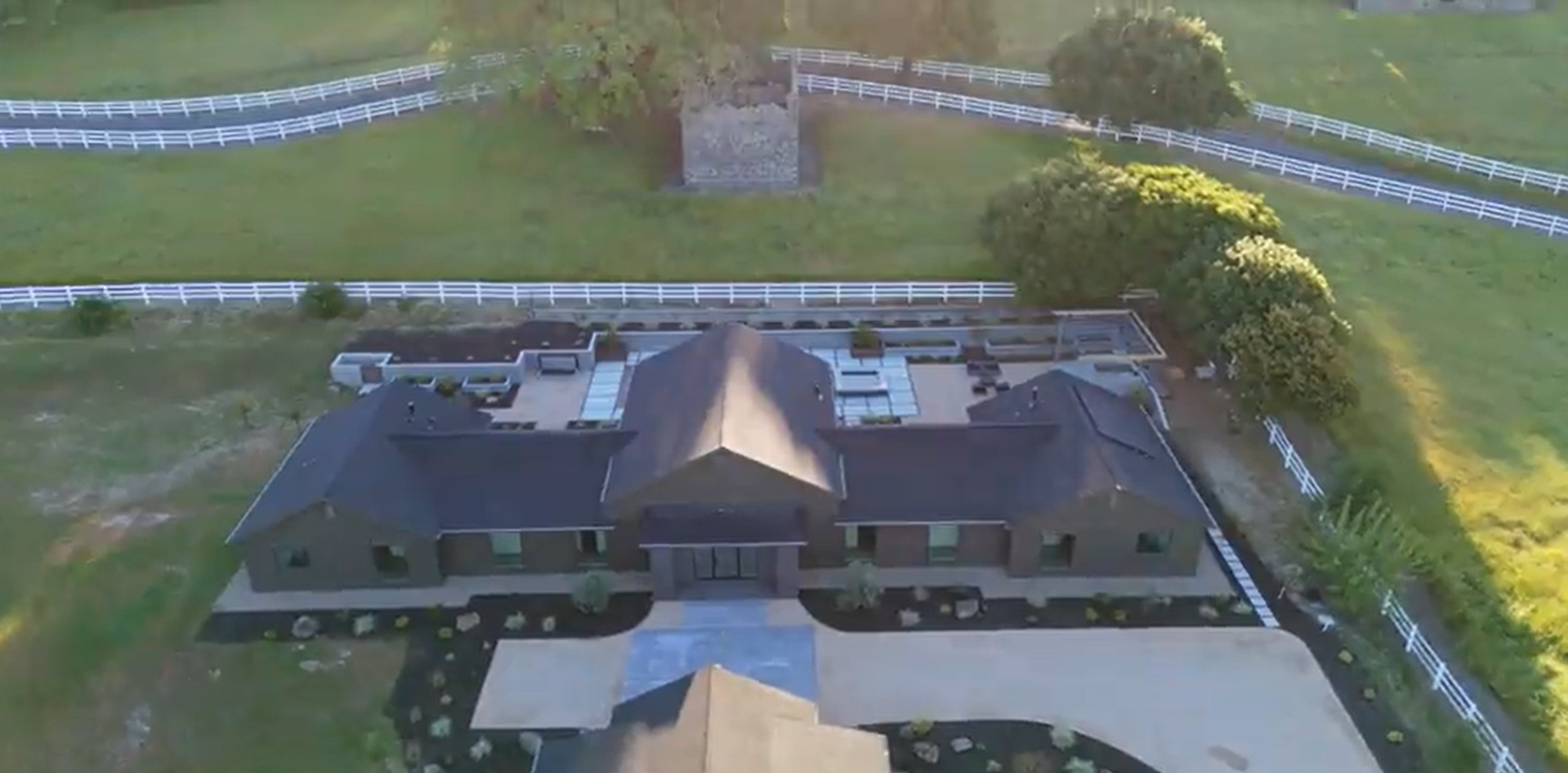
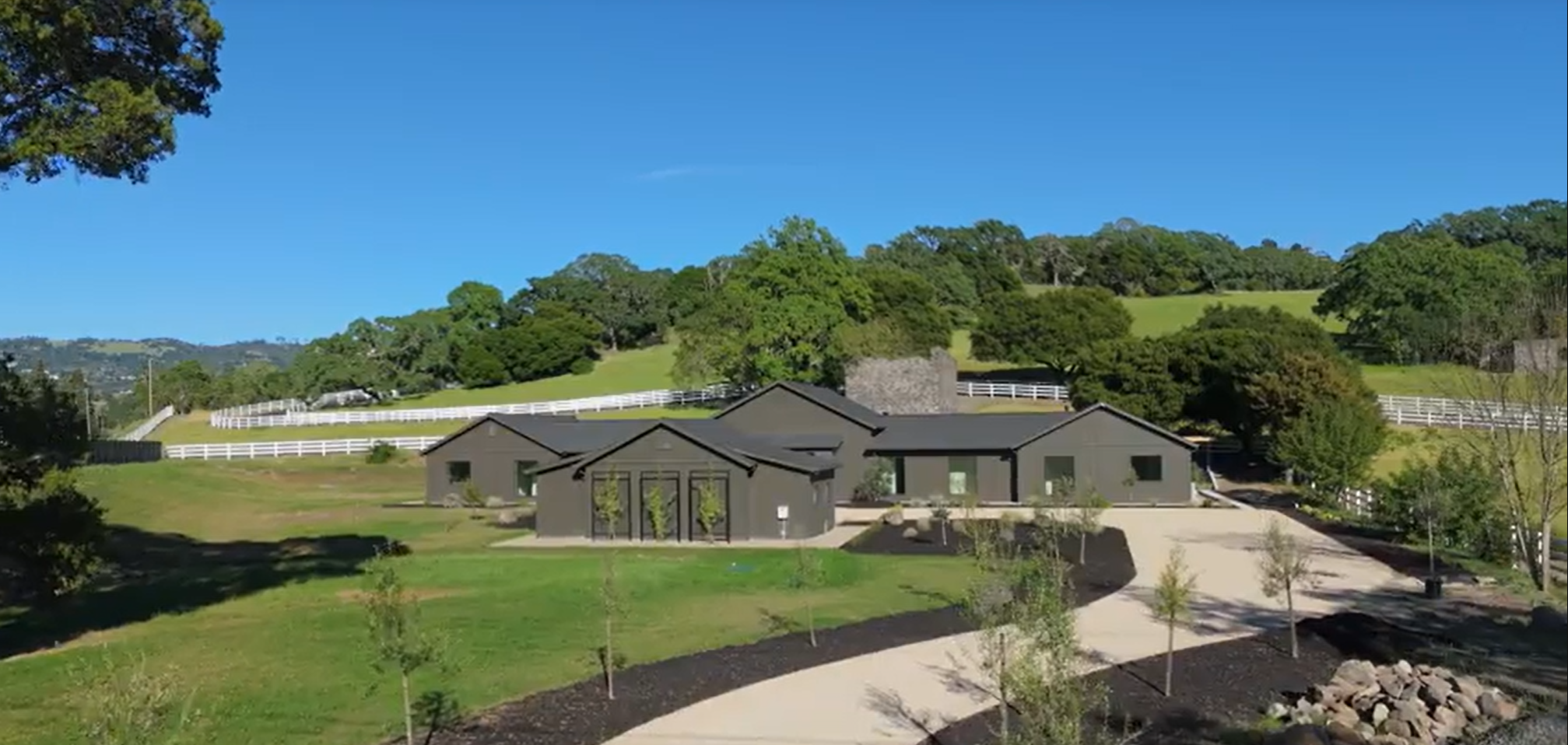
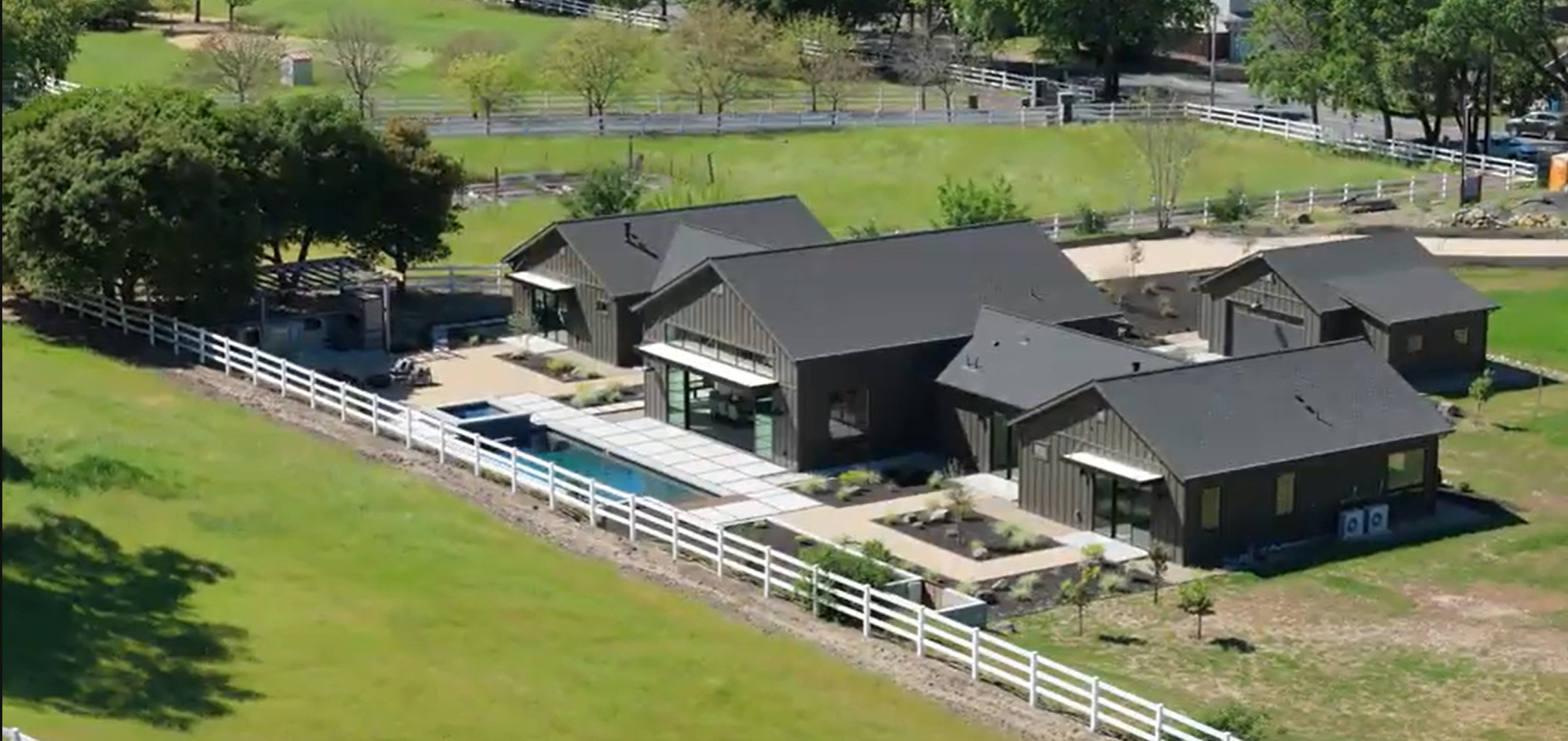
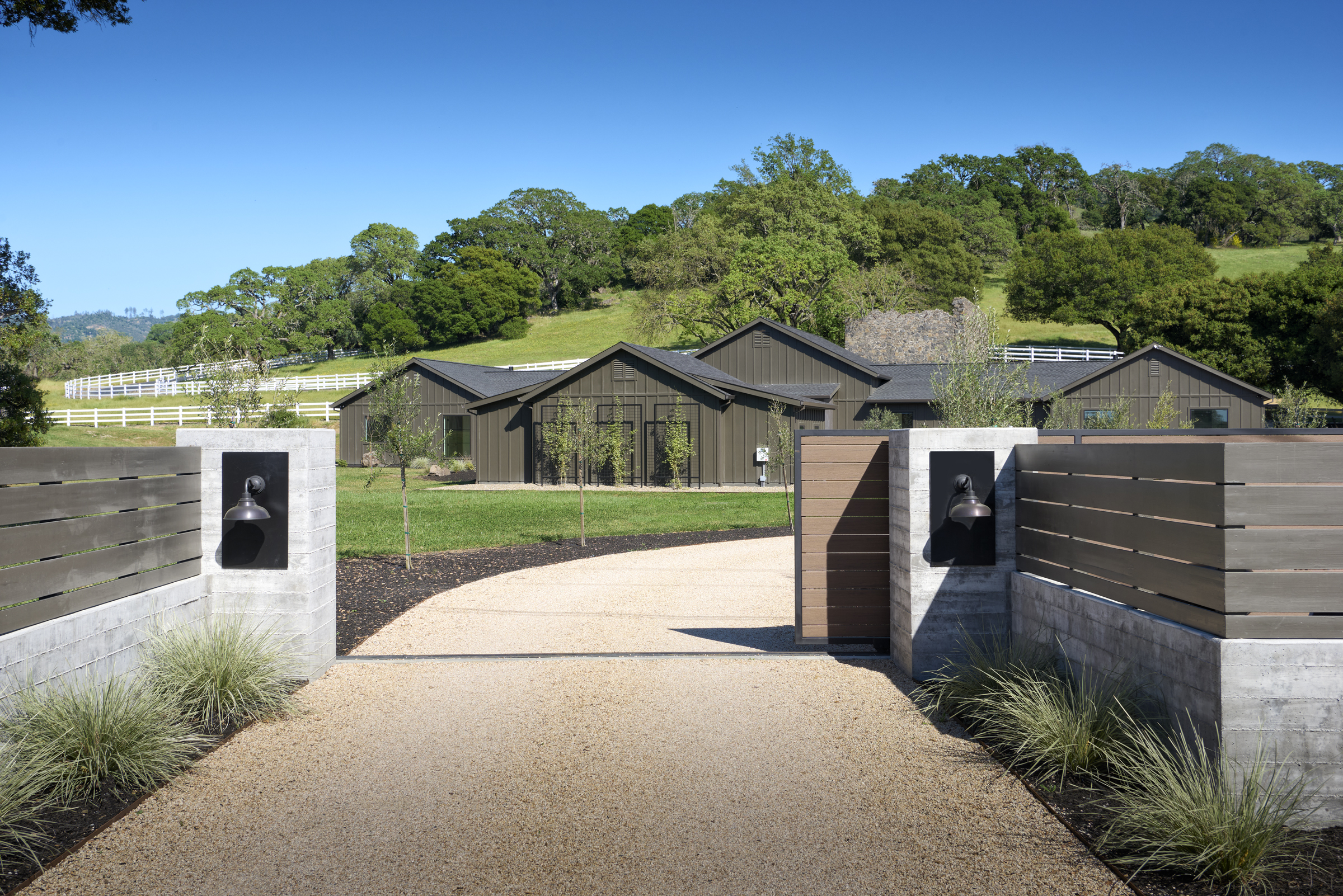
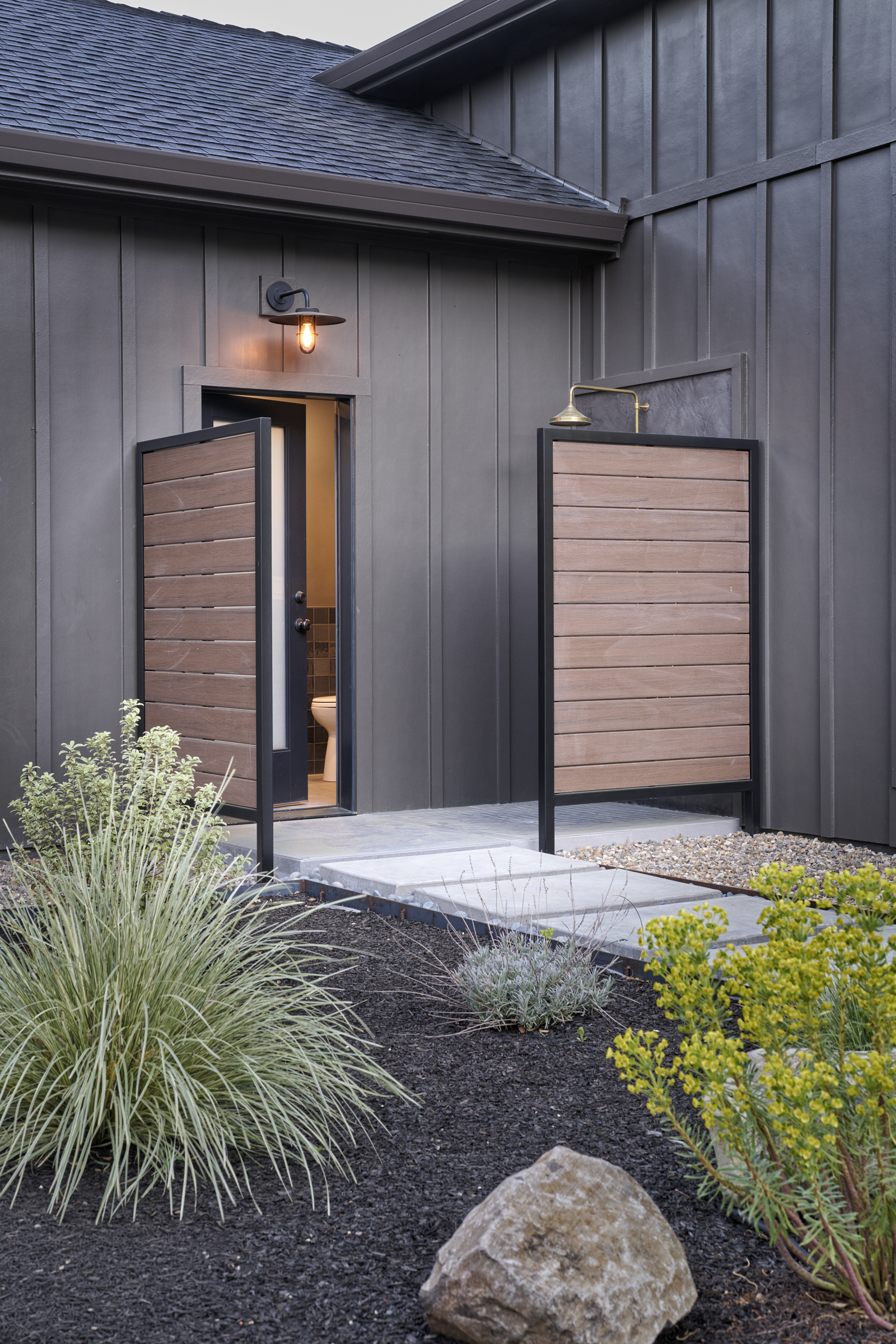
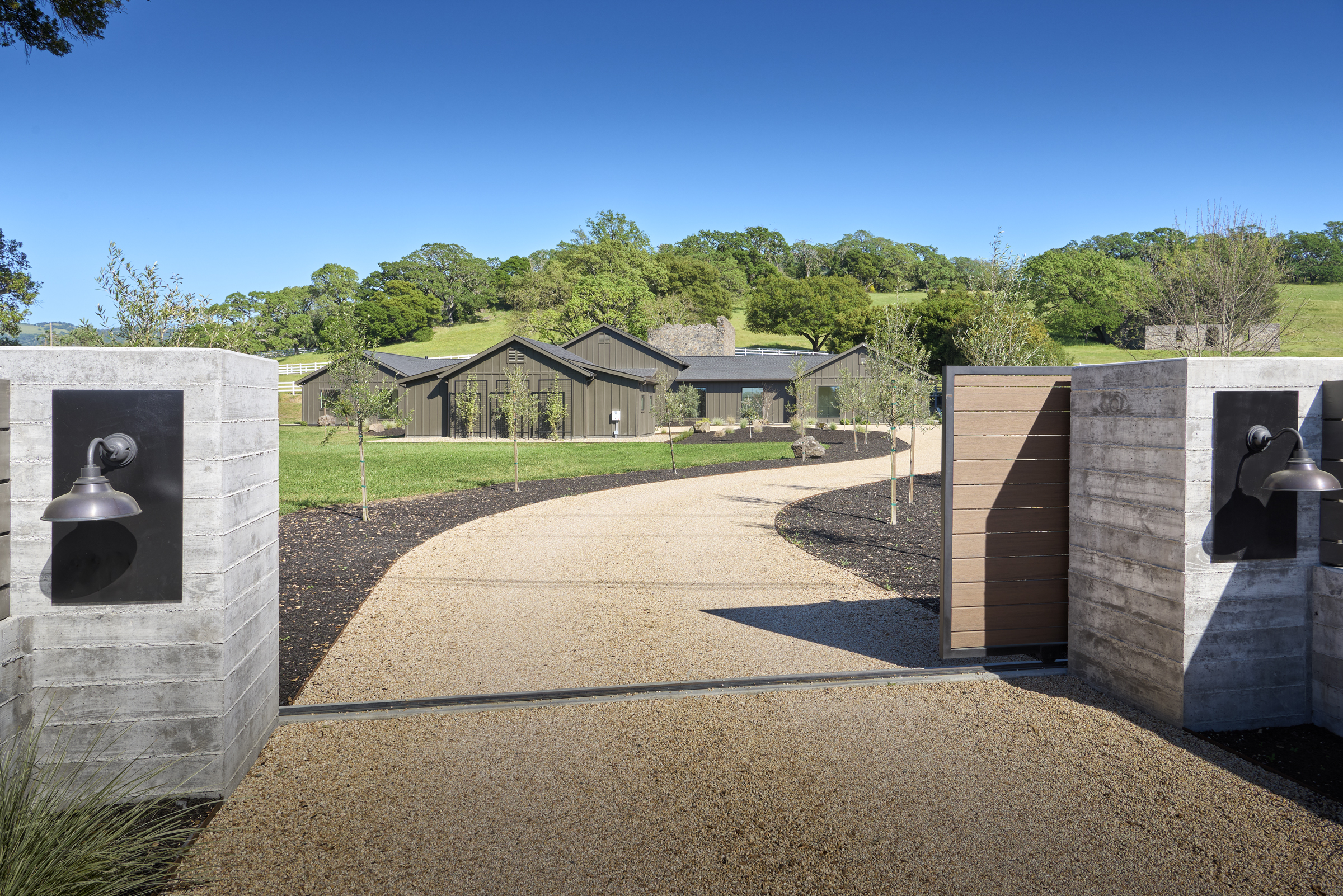
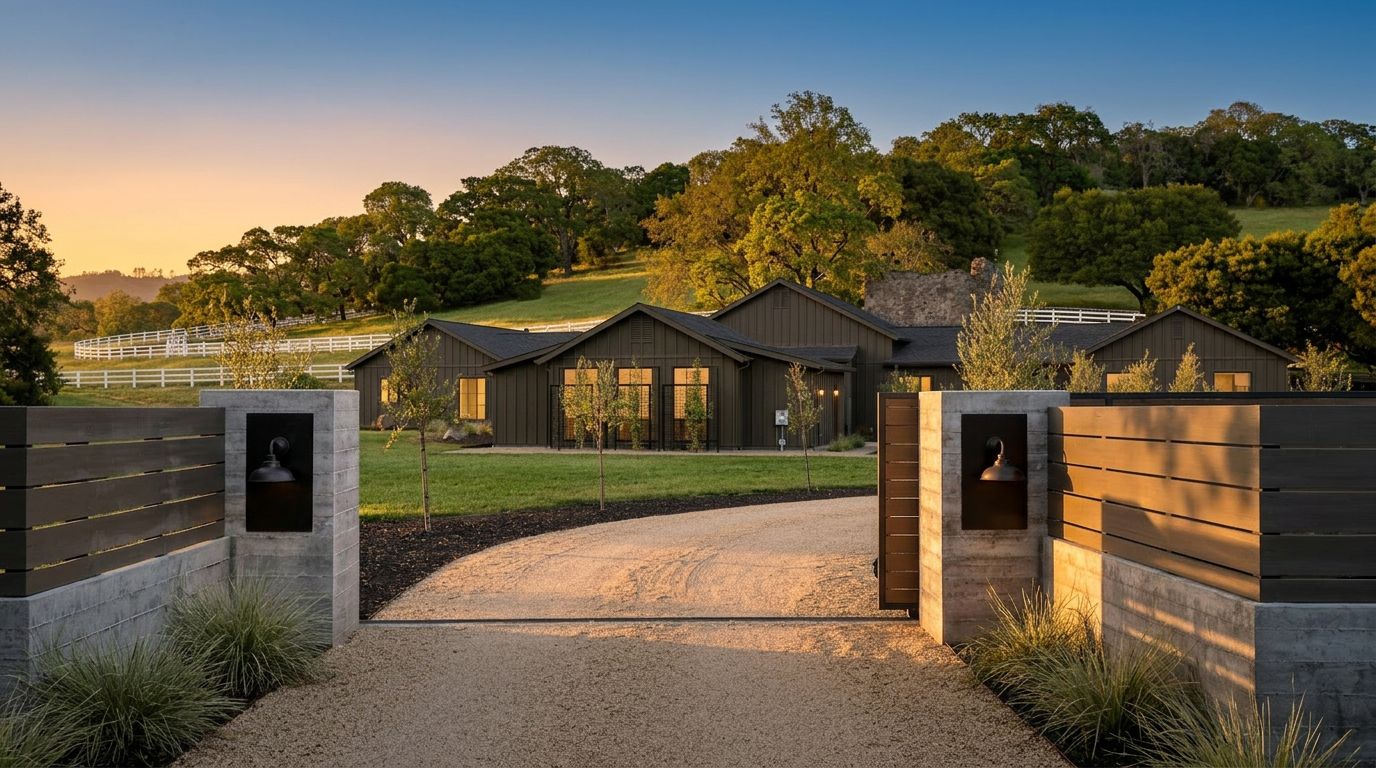
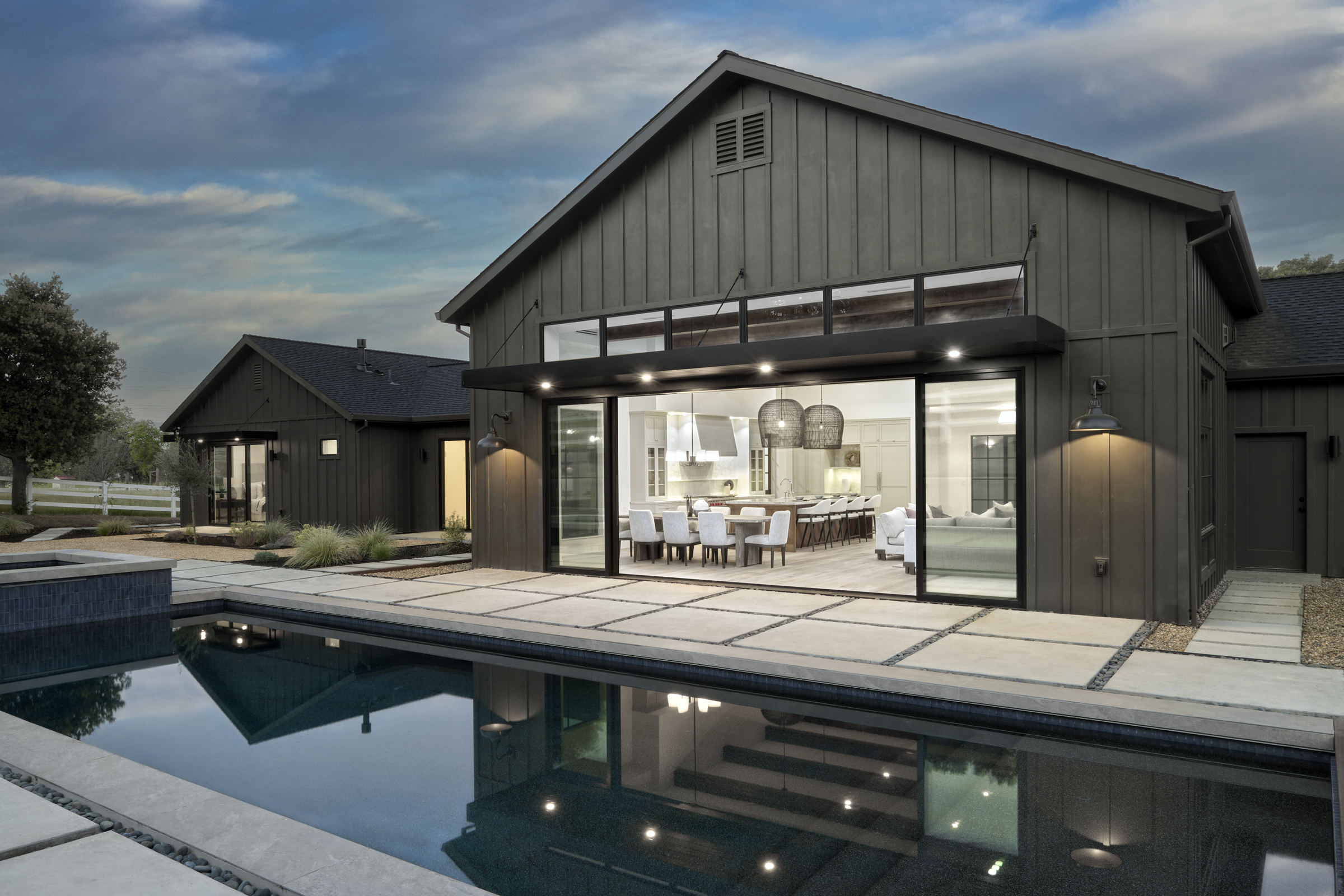
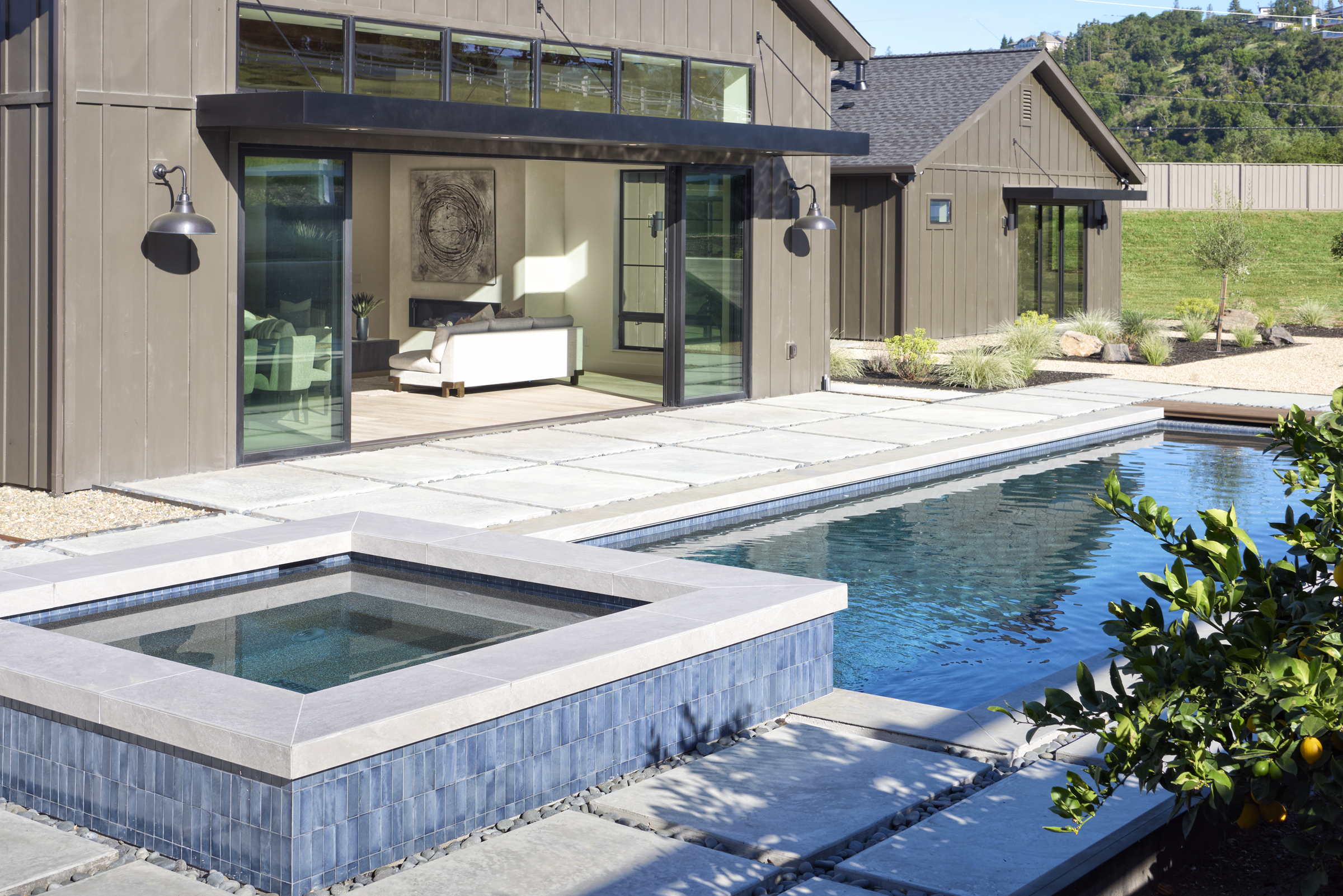
There is a particular discipline required to design a home that belongs to its landscape without deferring to it. This newly constructed Sonoma County residence achieves that balance with quiet confidence—a series of clean, gabled structures rendered in dark vertical siding that reads as both contemporary and completely at home against the rolling hills of wine country.
The architecture announces itself without announcement. A gravel approach framed by concrete pillars and horizontal wood-slat gates establishes the tone before you arrive—privacy, intention, a considered sense of arrival. Once inside the gate, the home unfolds across the property in a composition that feels expansive yet composed, each volume connected and purposeful.
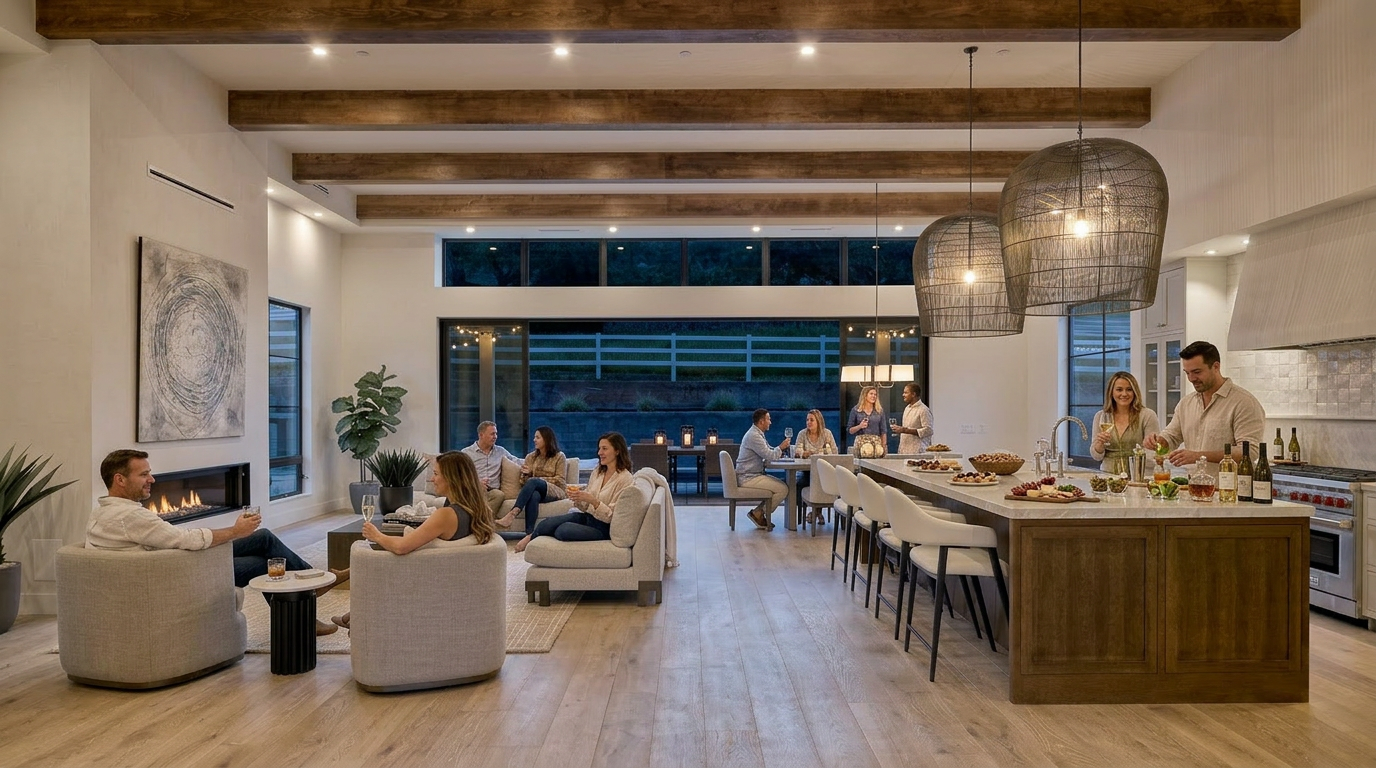
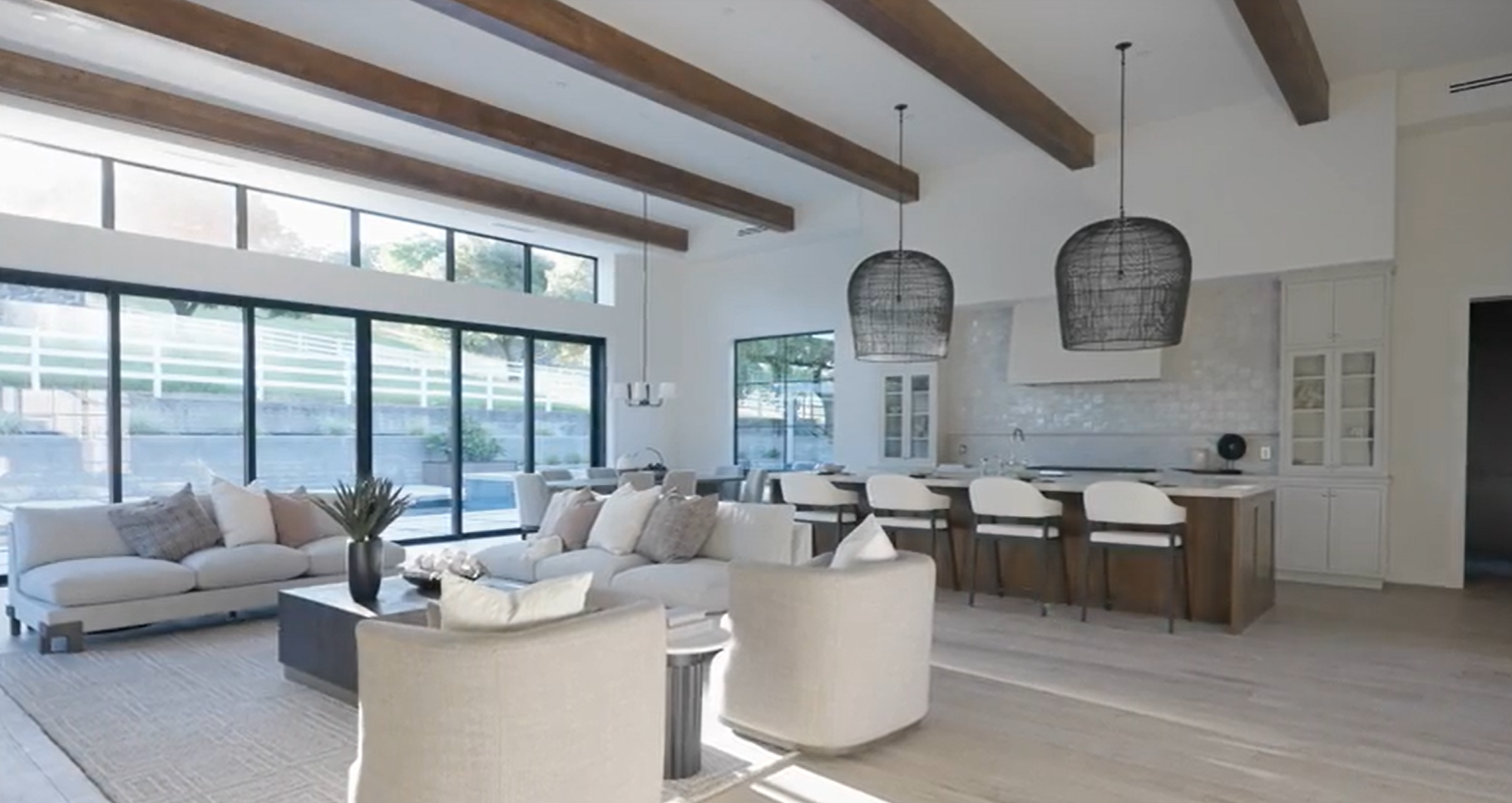
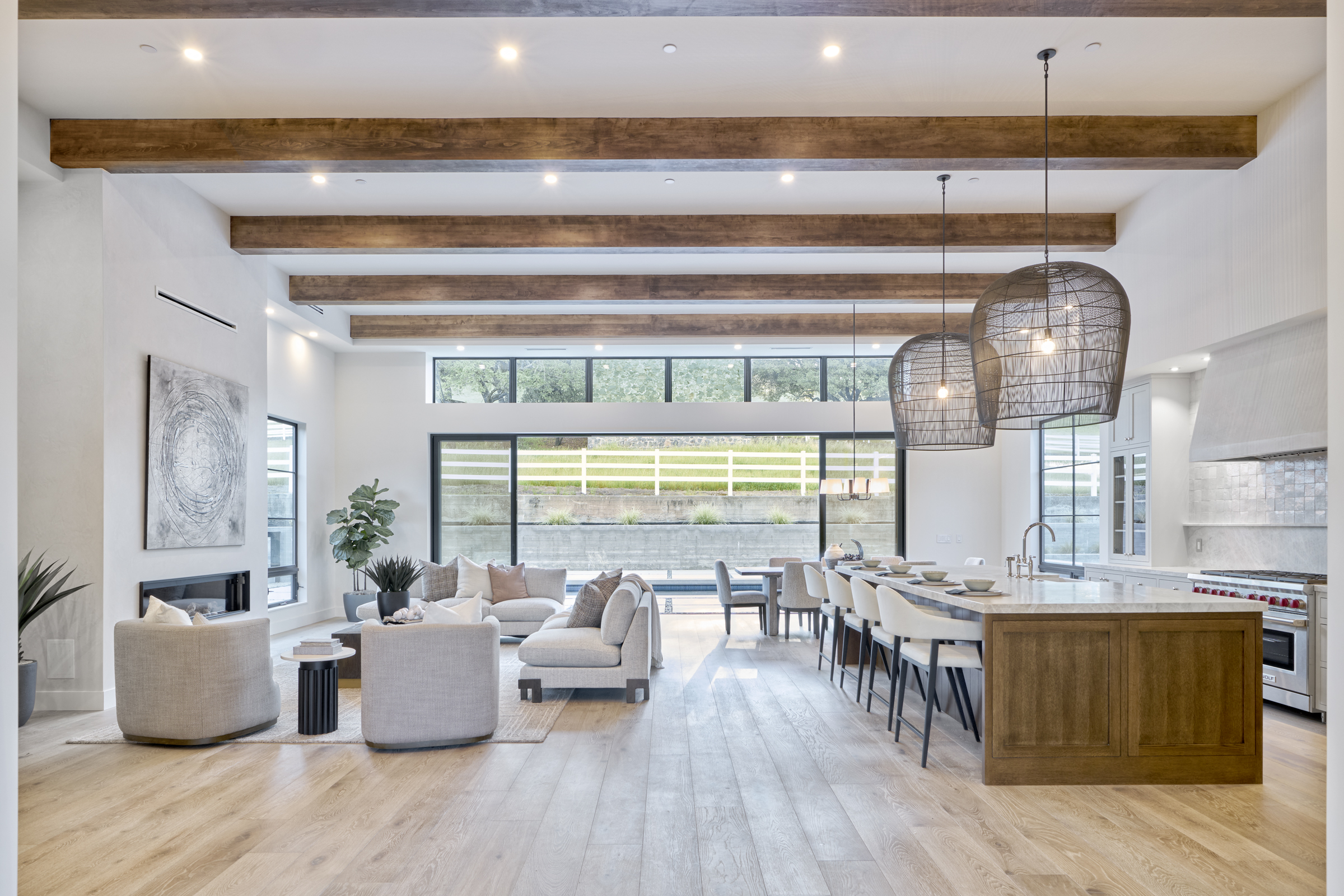
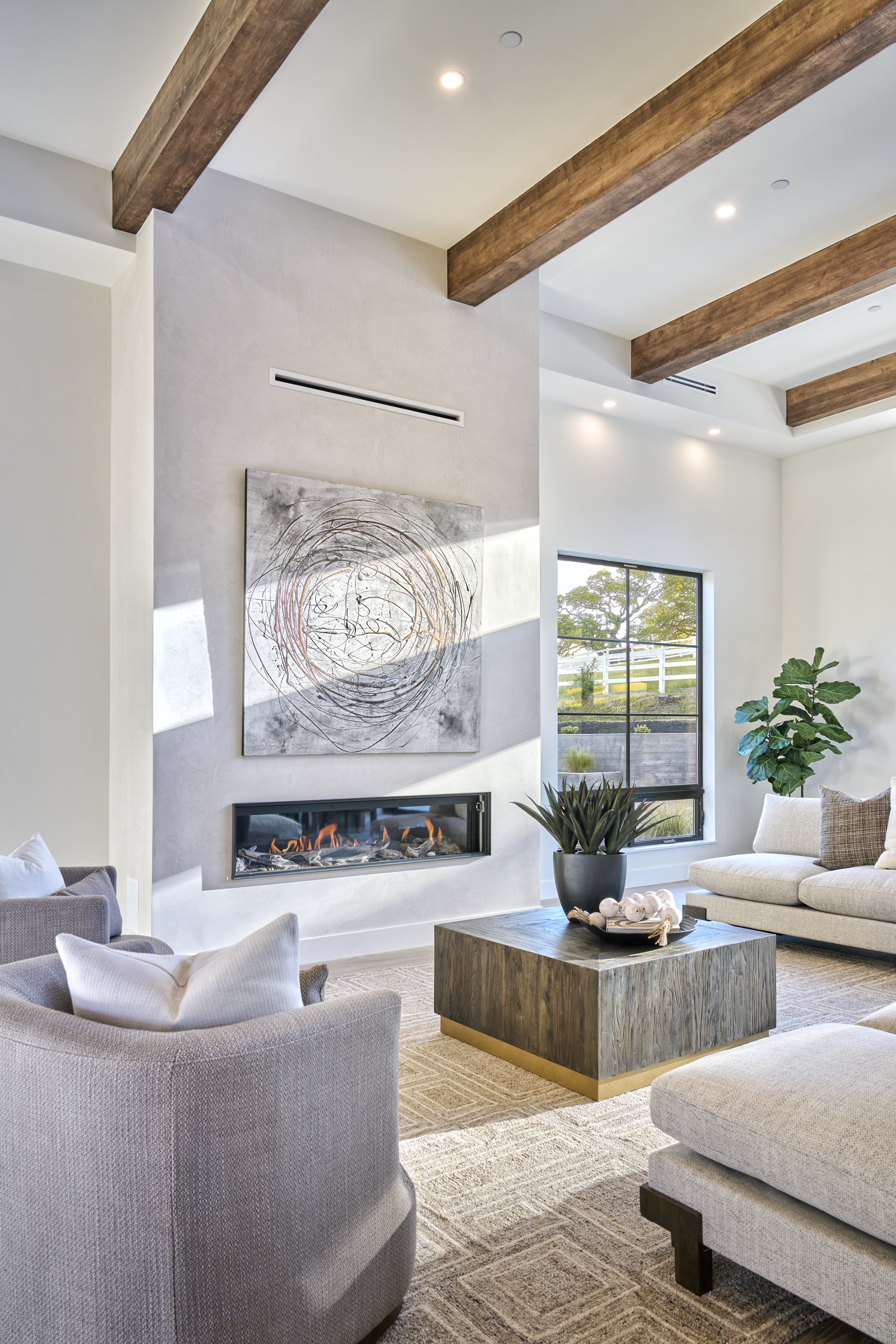
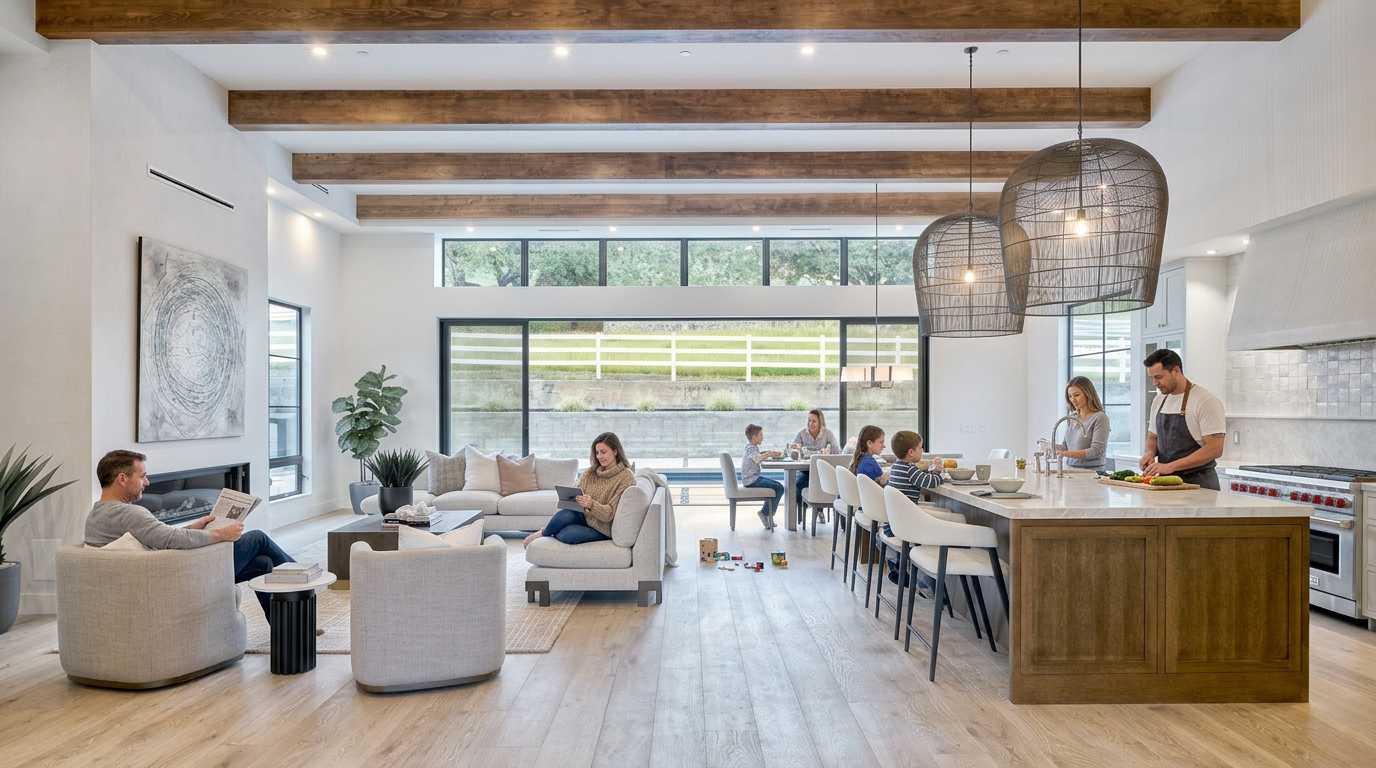
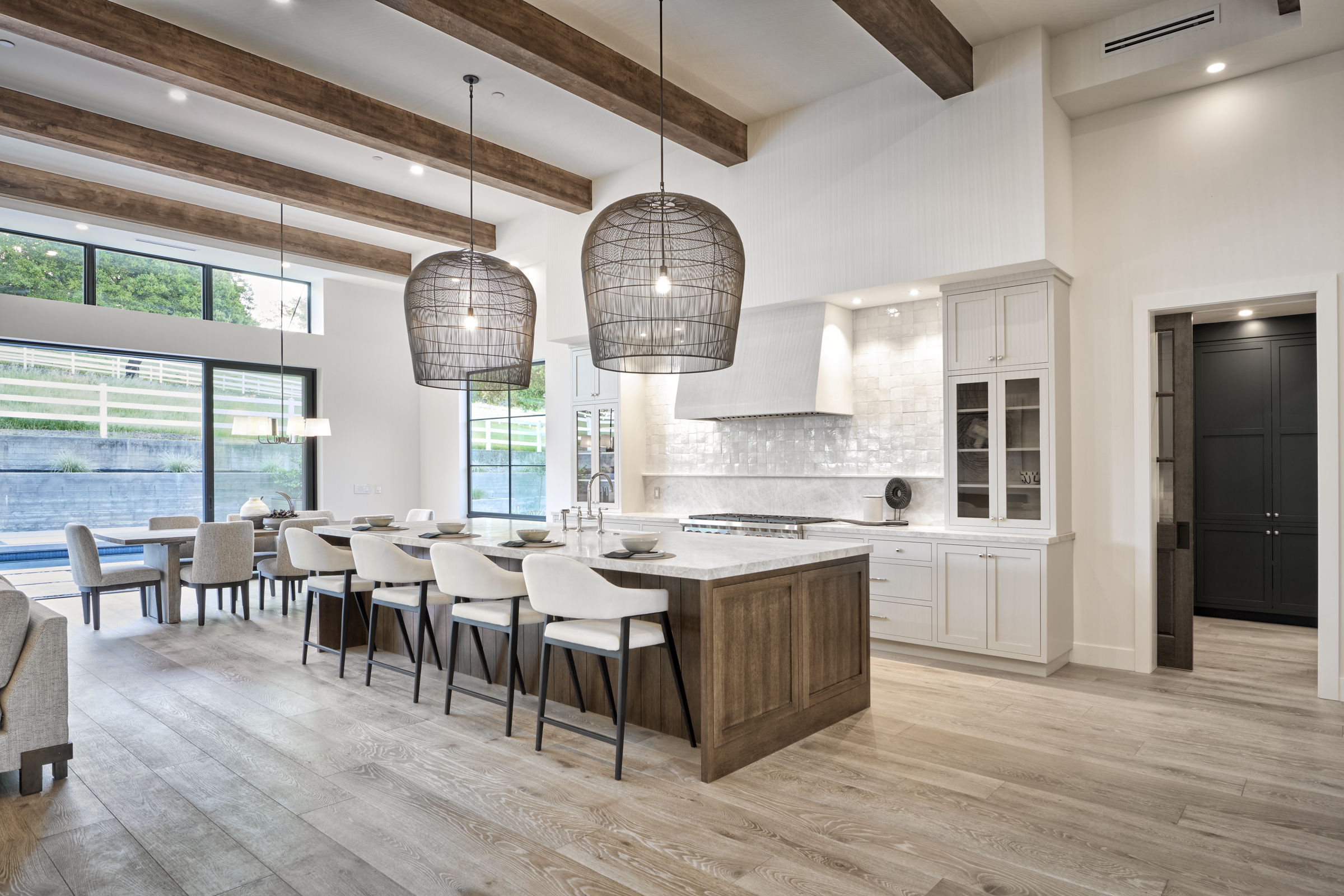
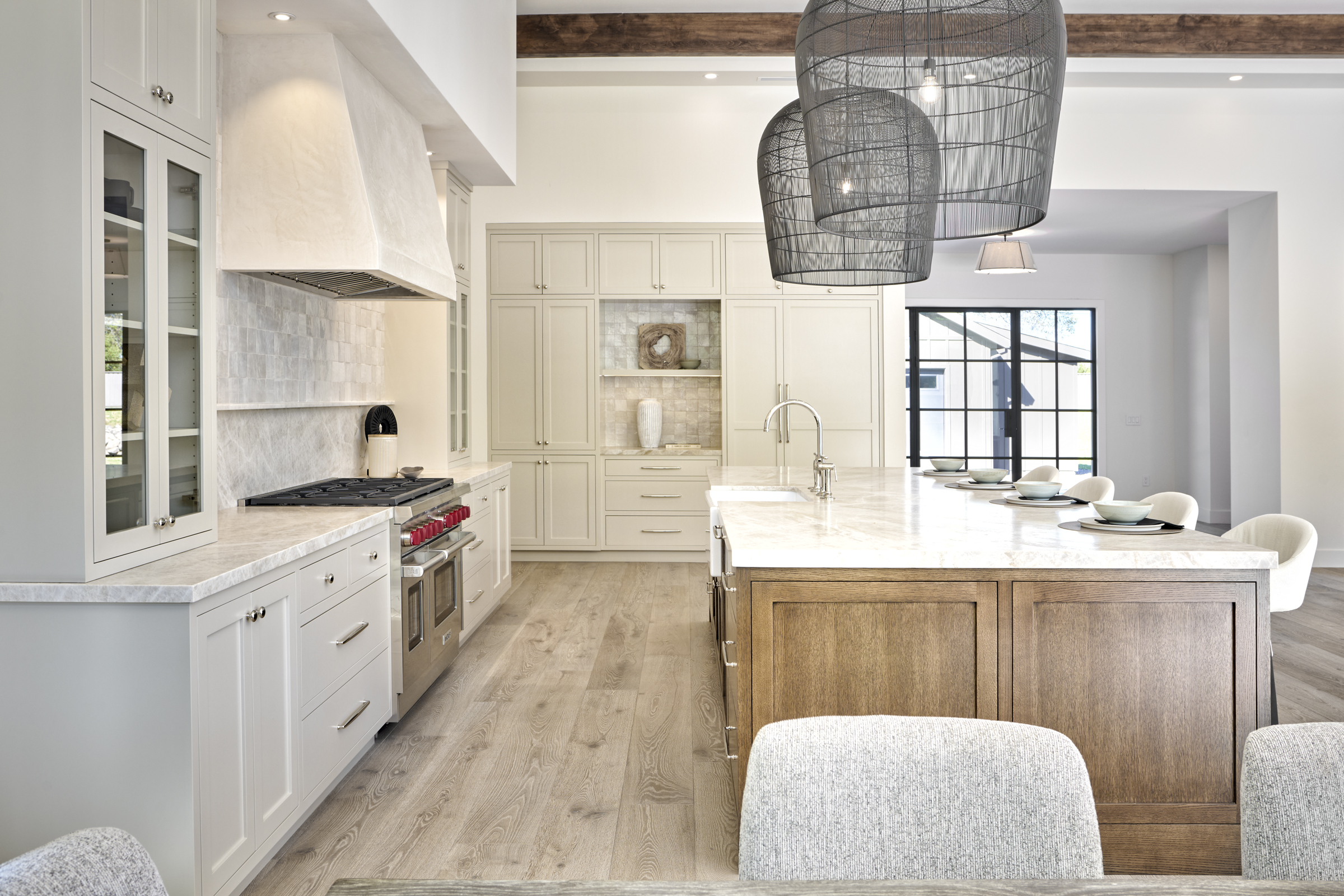
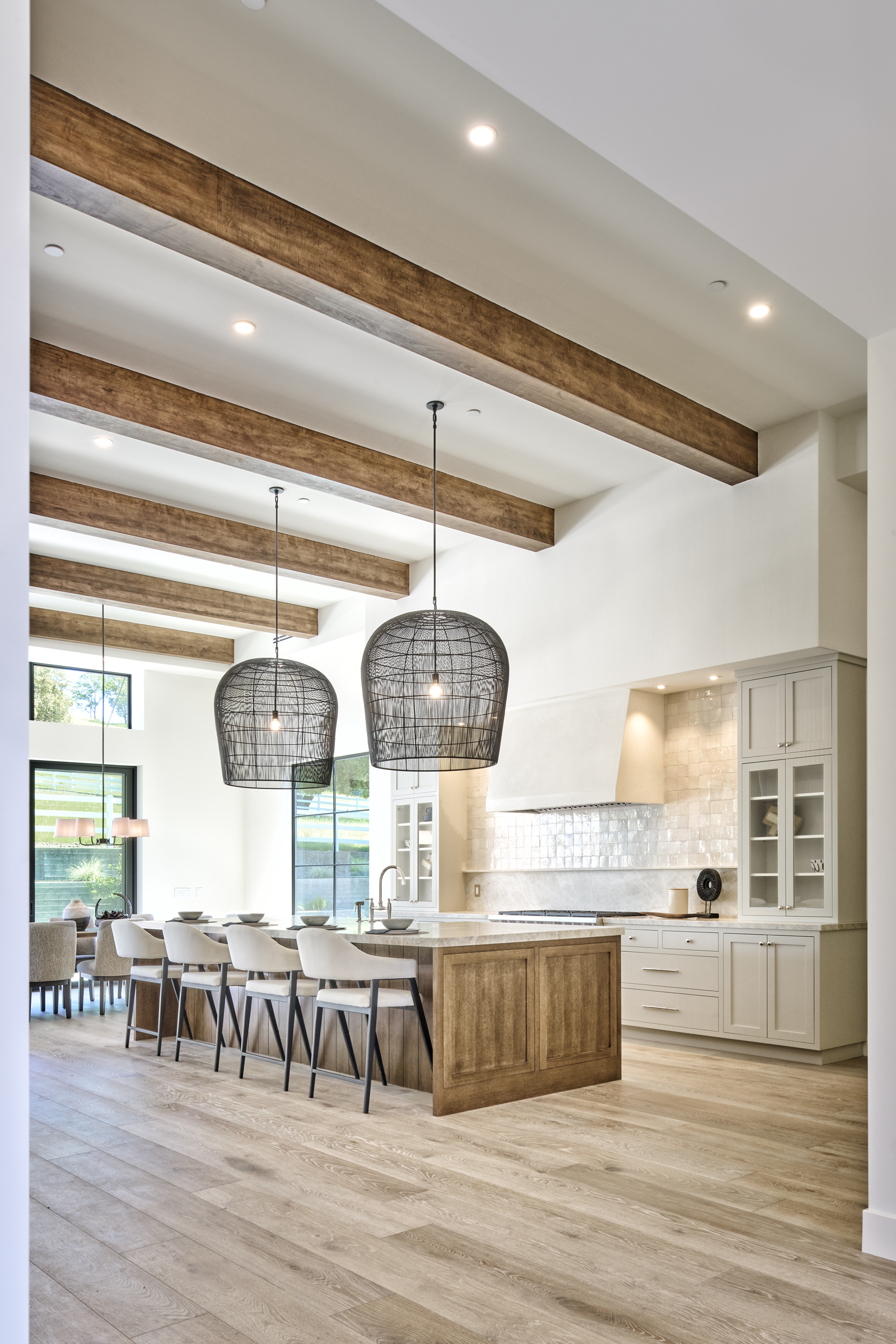
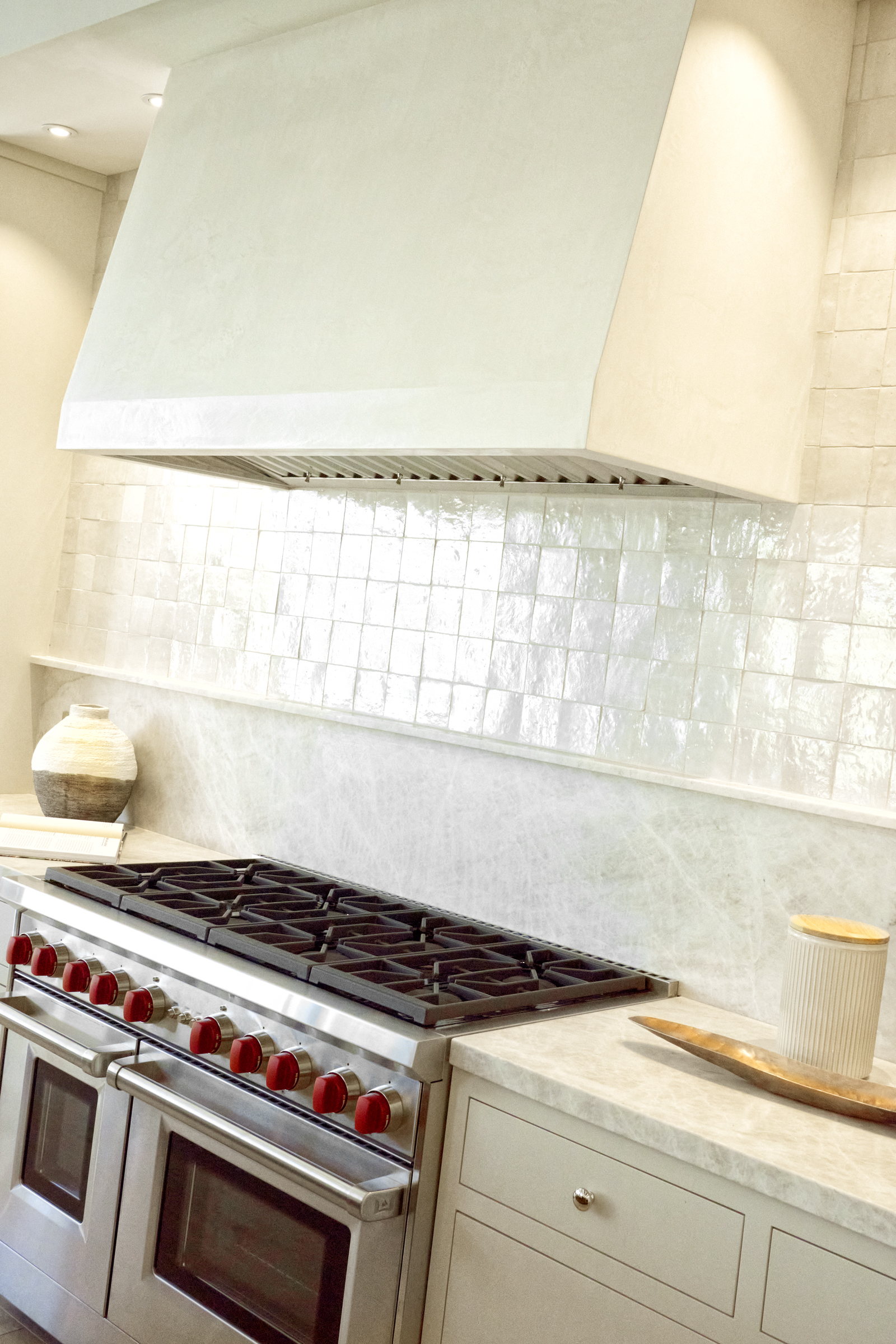
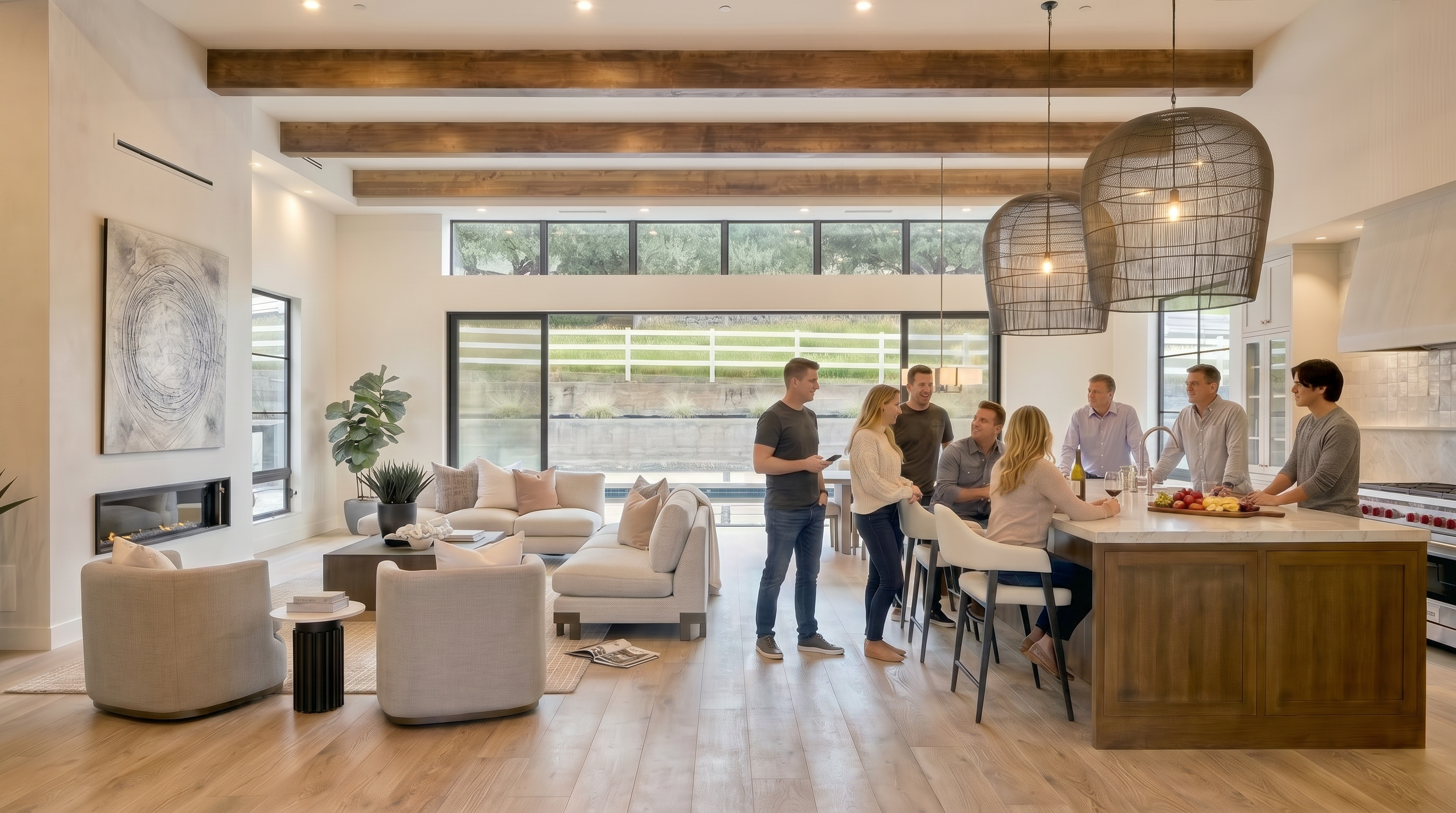
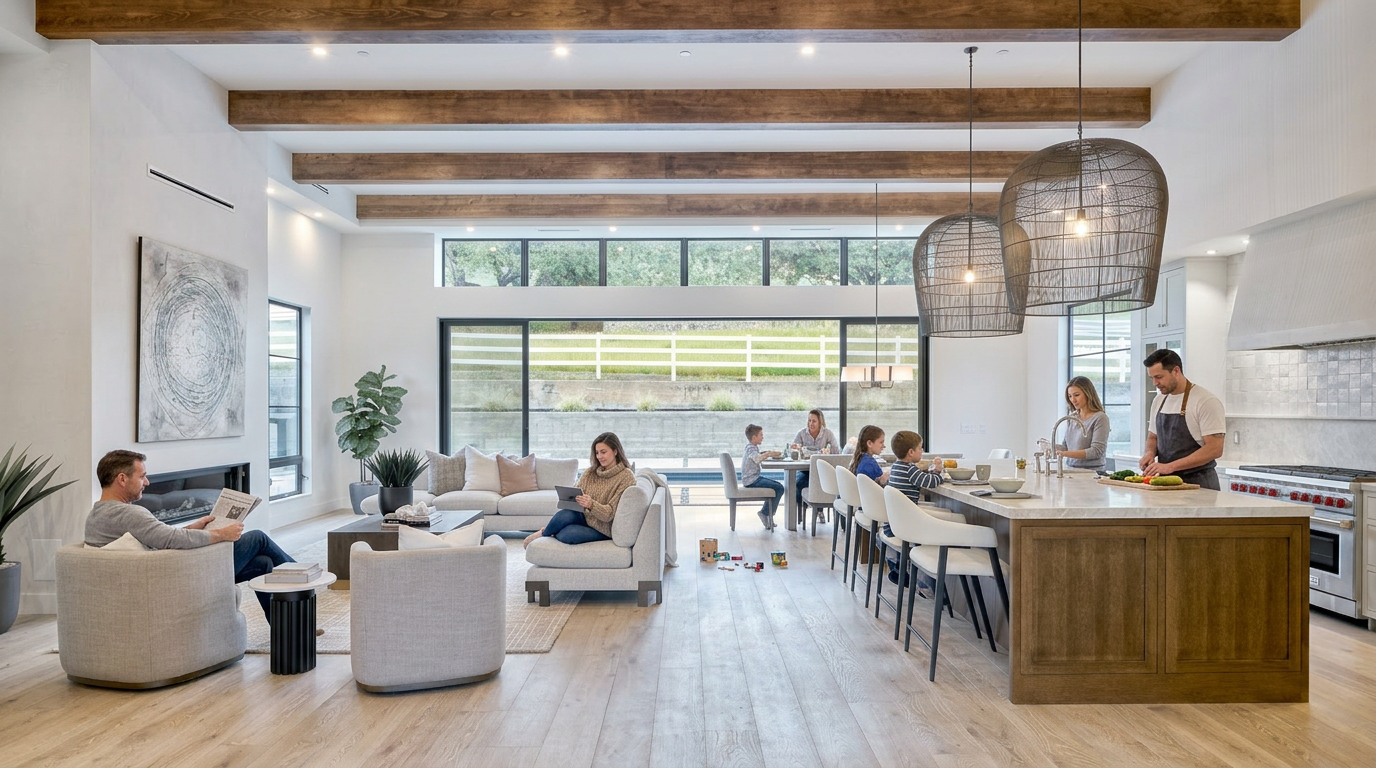
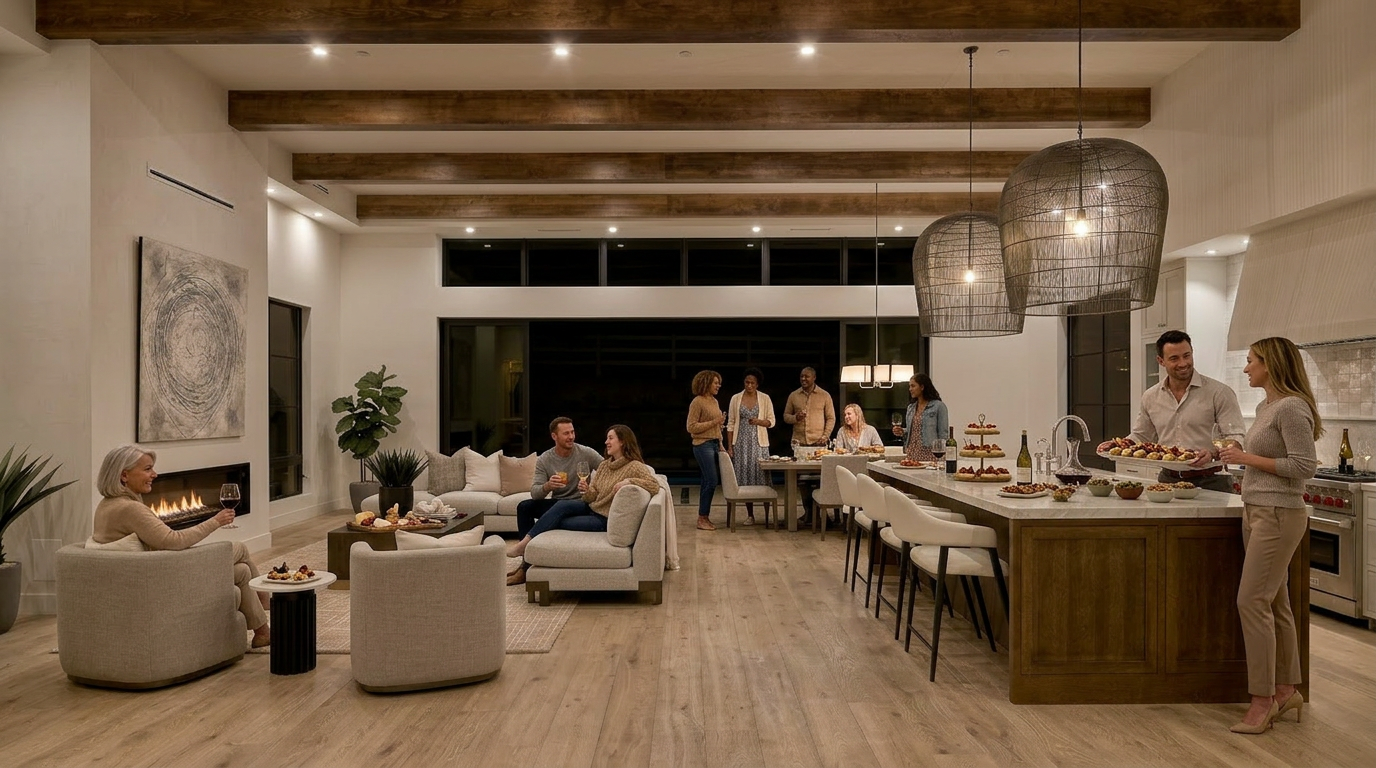
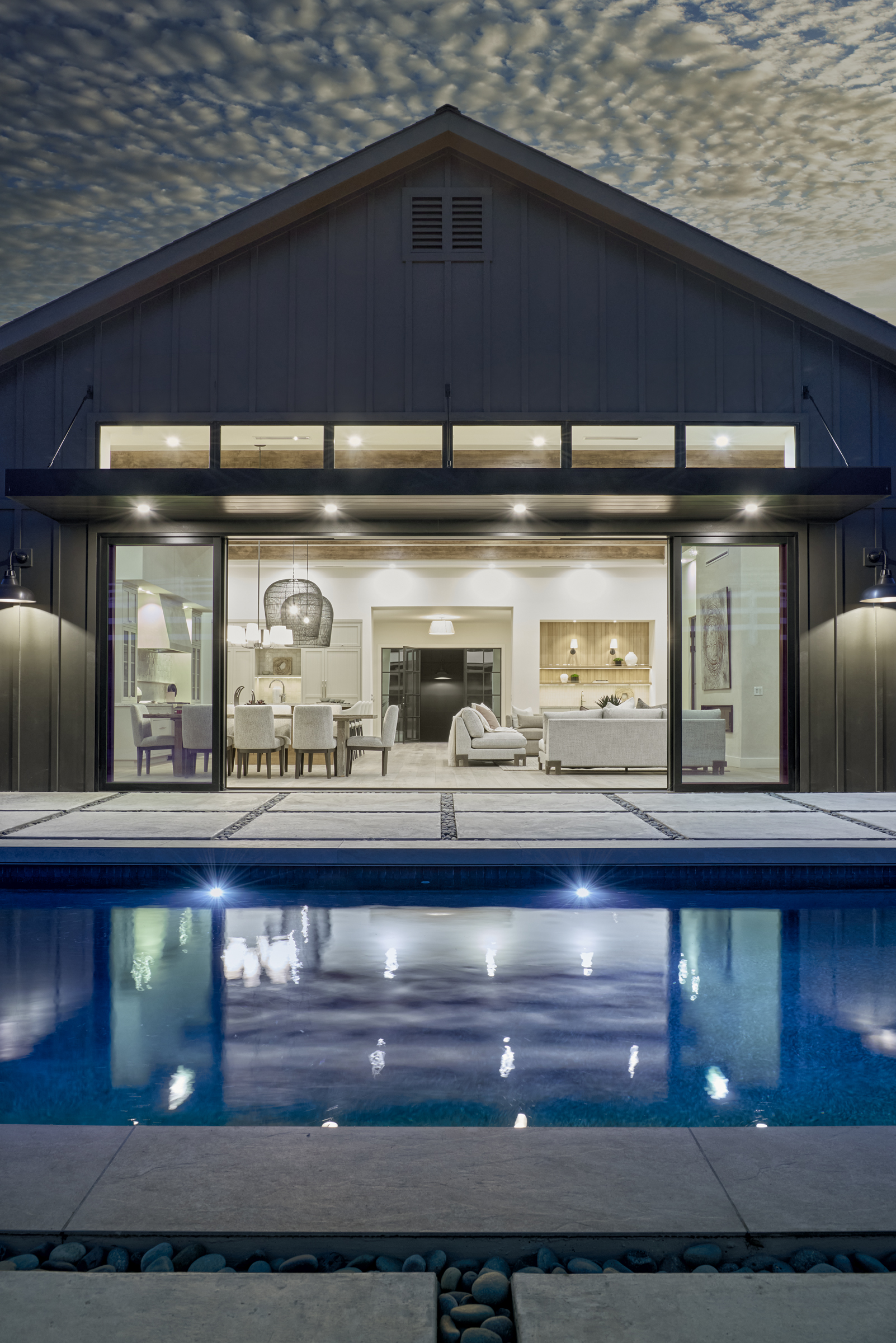
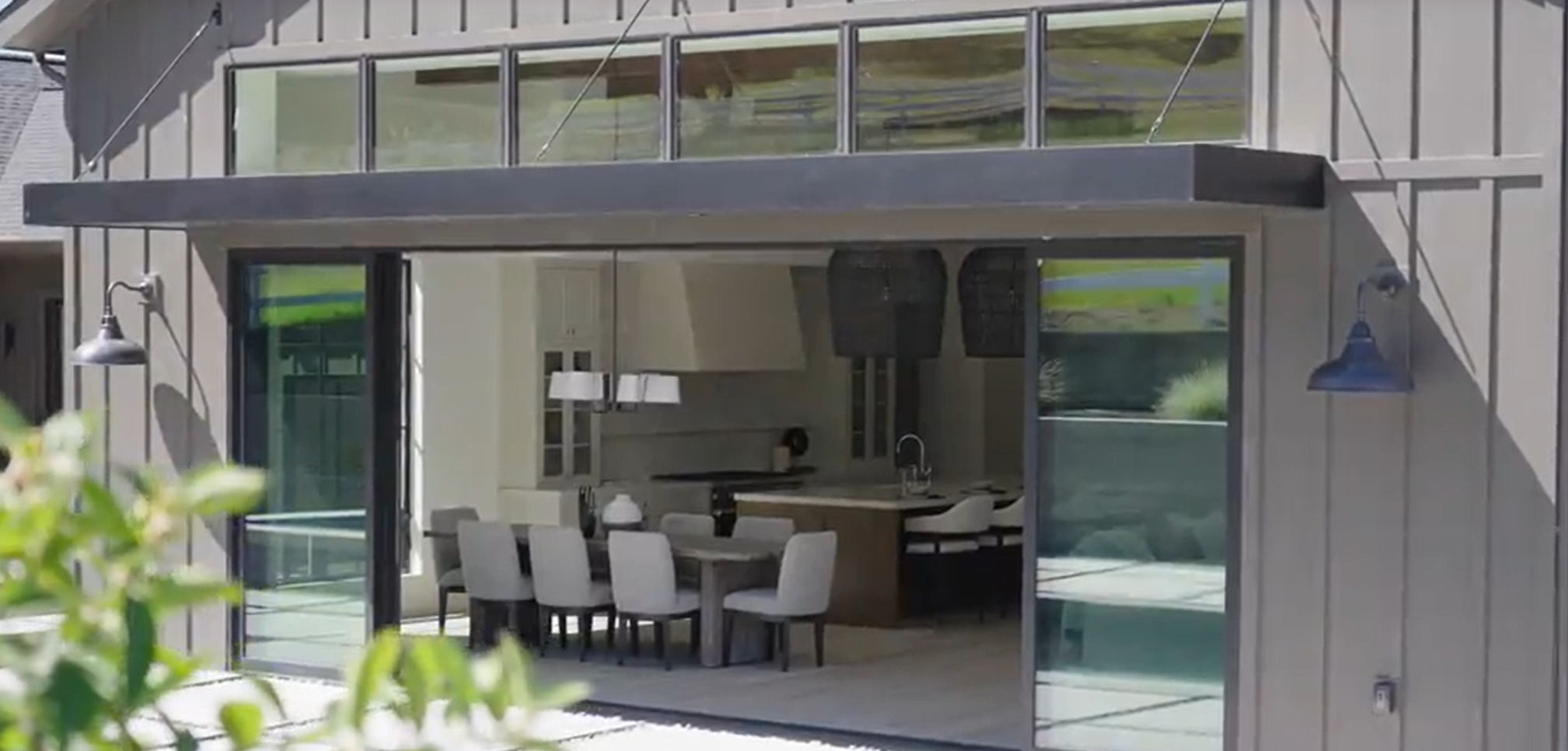
At the heart of the interior is the great room—a space where scale, light, and material converge in a way that is immediately felt. Vaulted ceilings with exposed wooden beams rise above light-toned hardwood floors. A custom plaster range hood crowns a professional-grade range, while oversized wire-mesh pendant lights draw the eye upward and outward. The kitchen island—wood-based, marble-topped, generously proportioned—becomes the natural gathering point, equally suited to quiet mornings and long dinner parties.
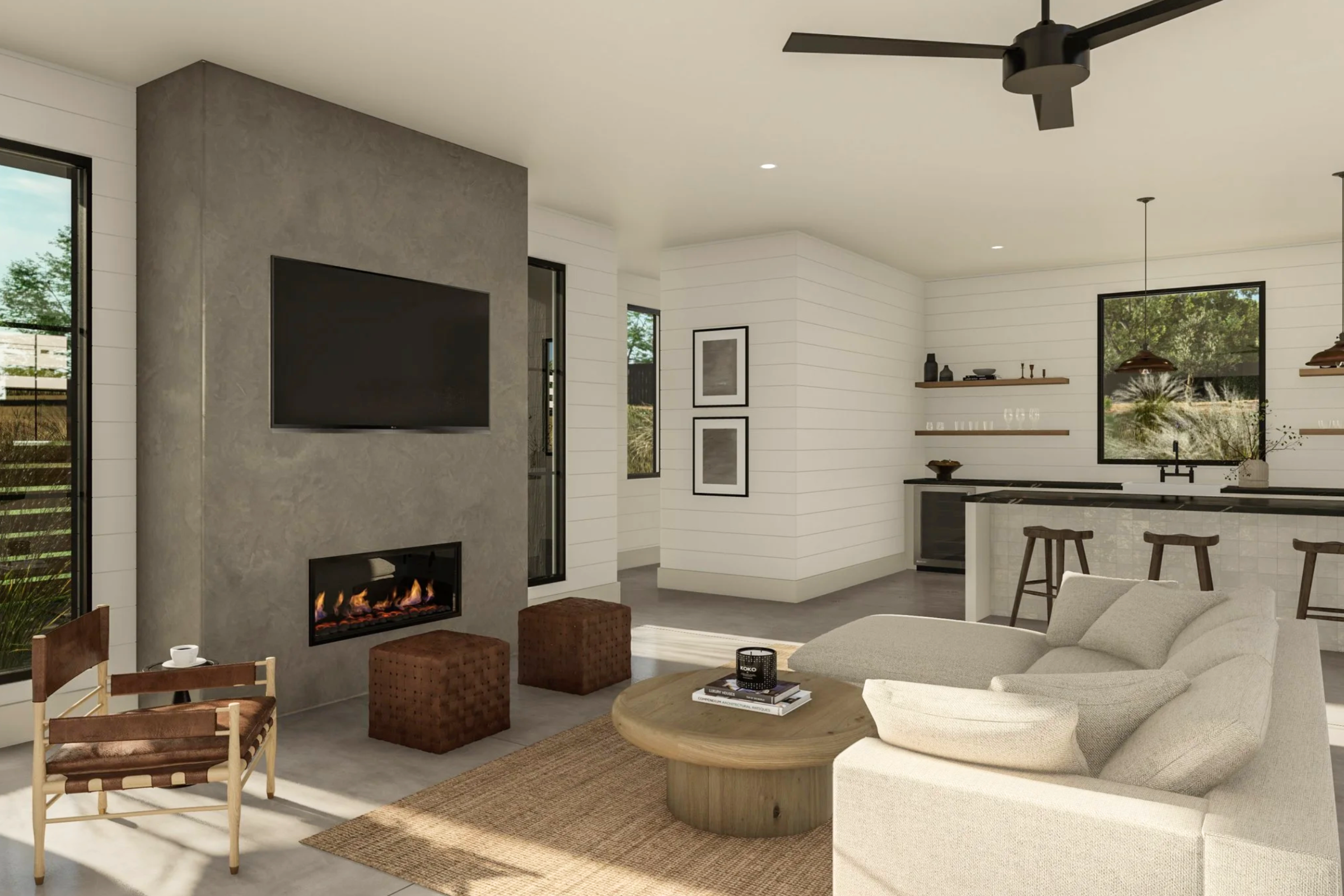
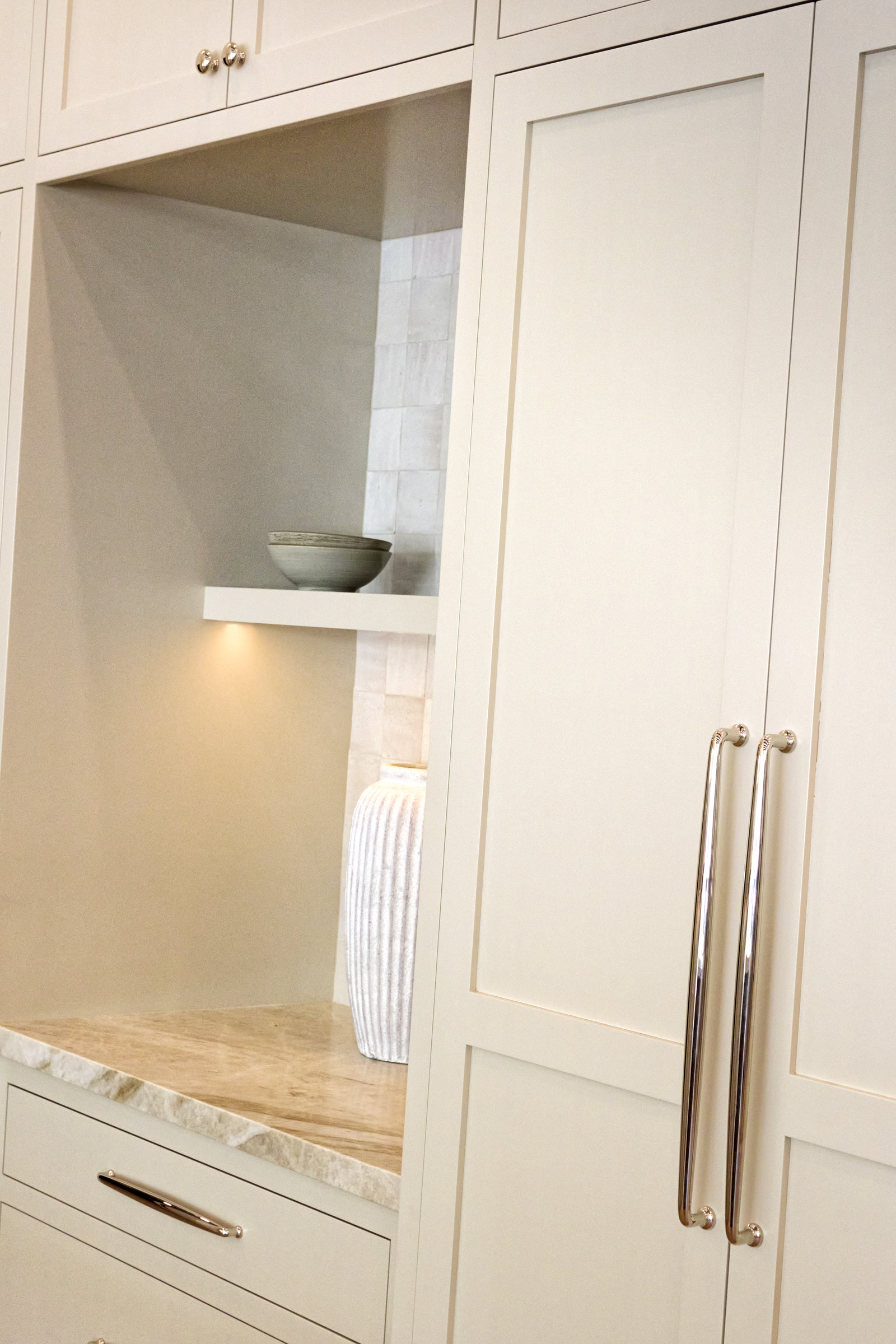
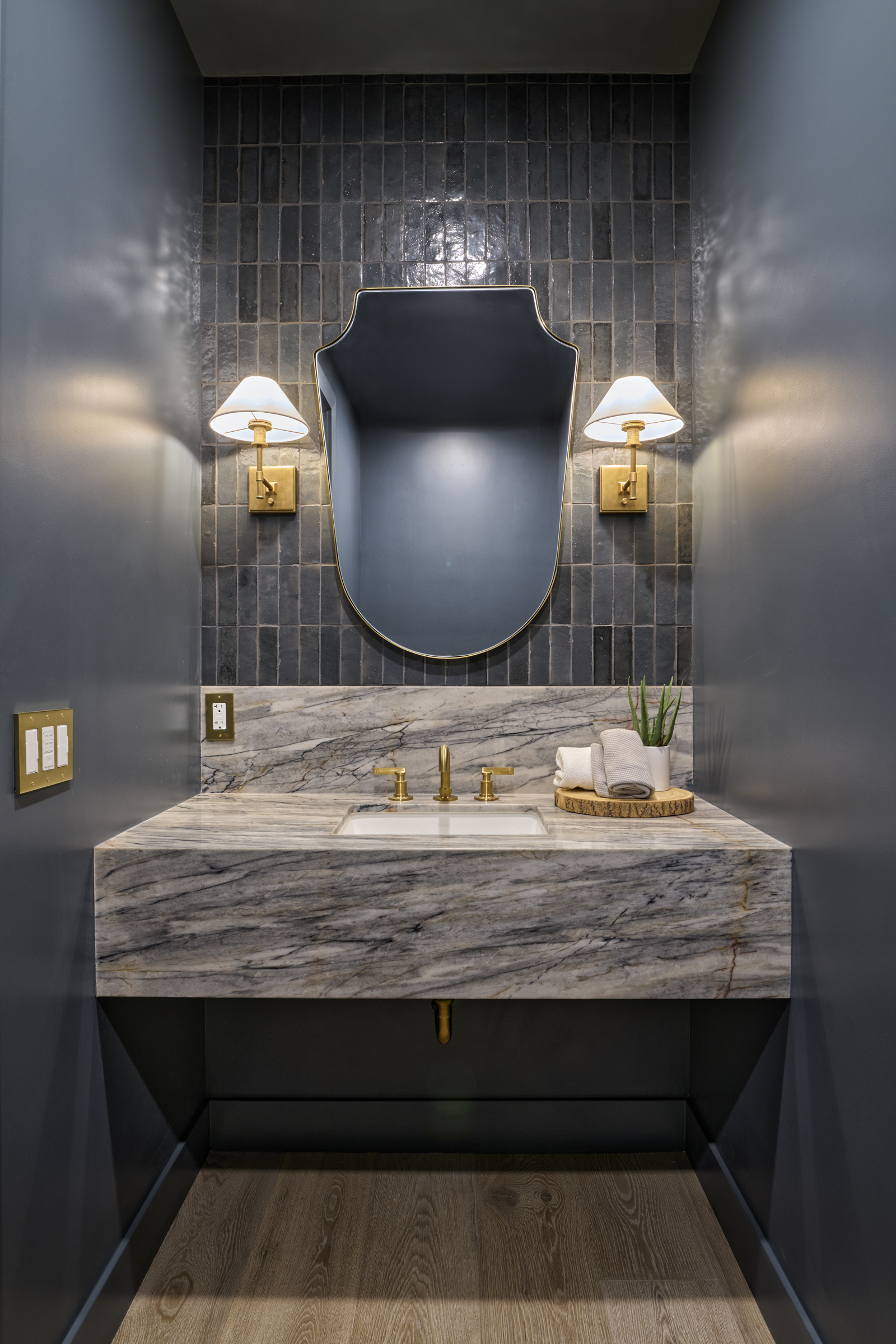
The palette throughout is one of warm restraint. Bespoke cabinetry, refined stone surfaces, and a careful layering of texture and tone—shiplap, concrete, brass, dark-framed glass—create interiors that feel considered without feeling labored. A striking powder room with floating marble vanity and glossy charcoal tile offers a moment of dramatic contrast. A glass-enclosed wine room, glimpsed through black-framed doors from the wet bar, signals that the home understands its setting.
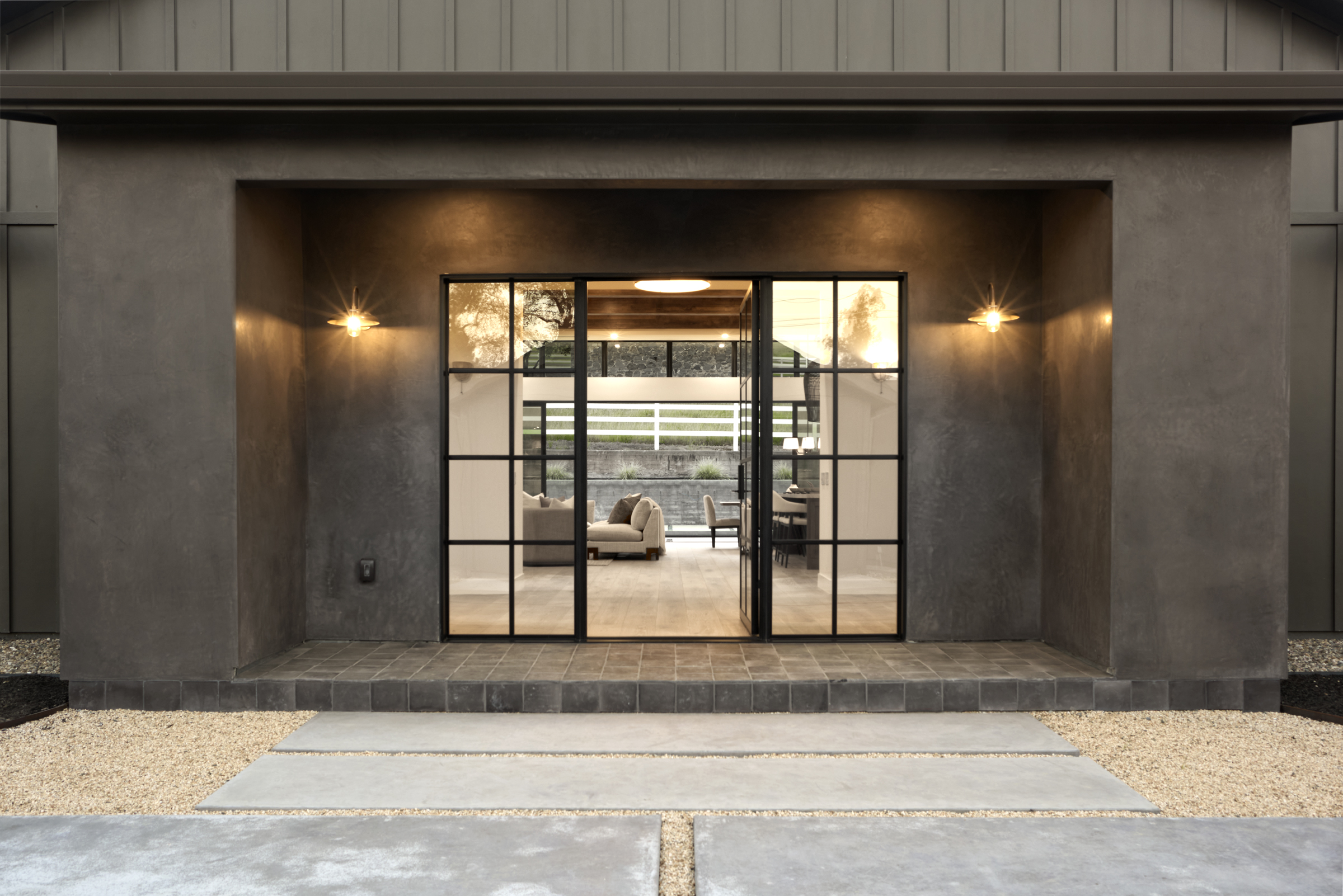
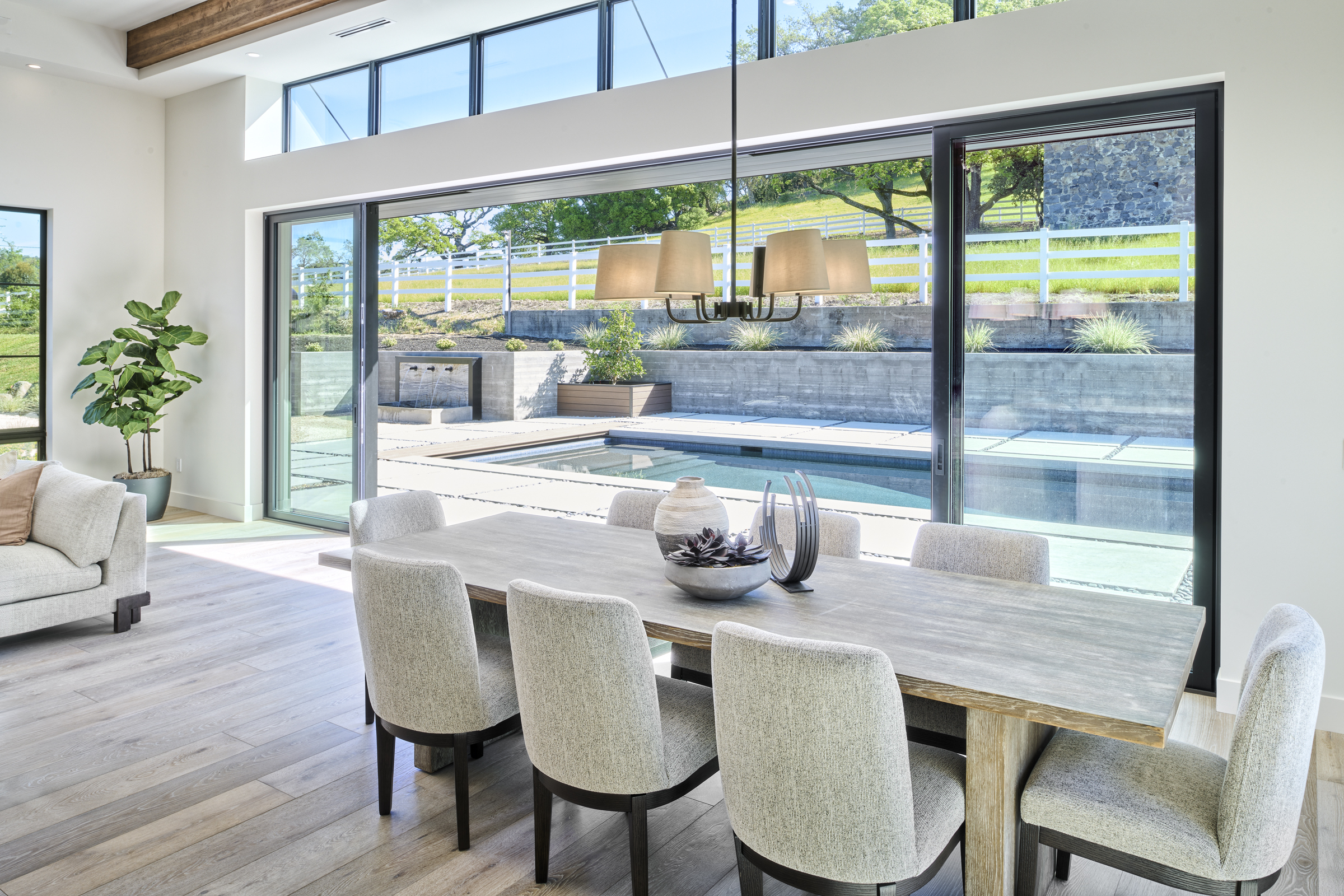
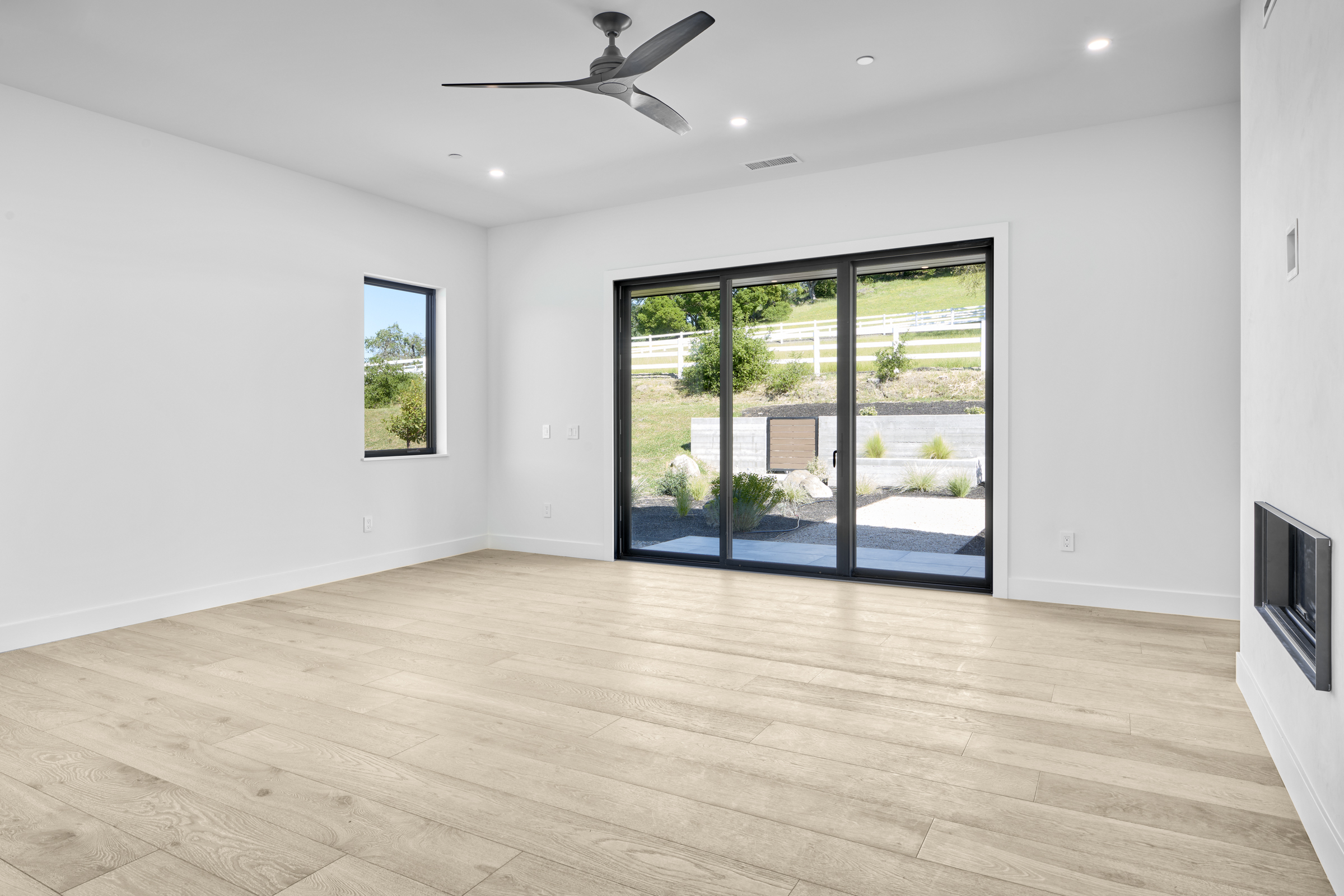
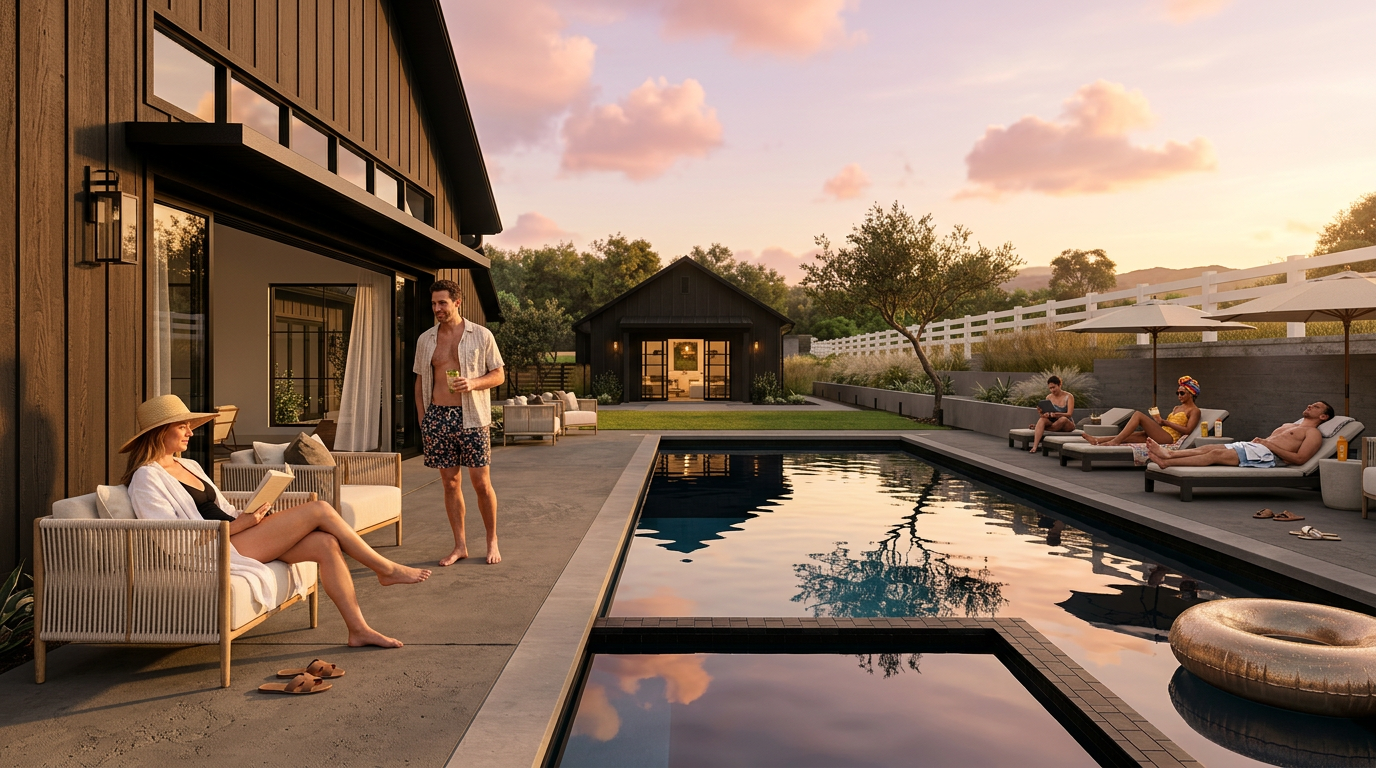
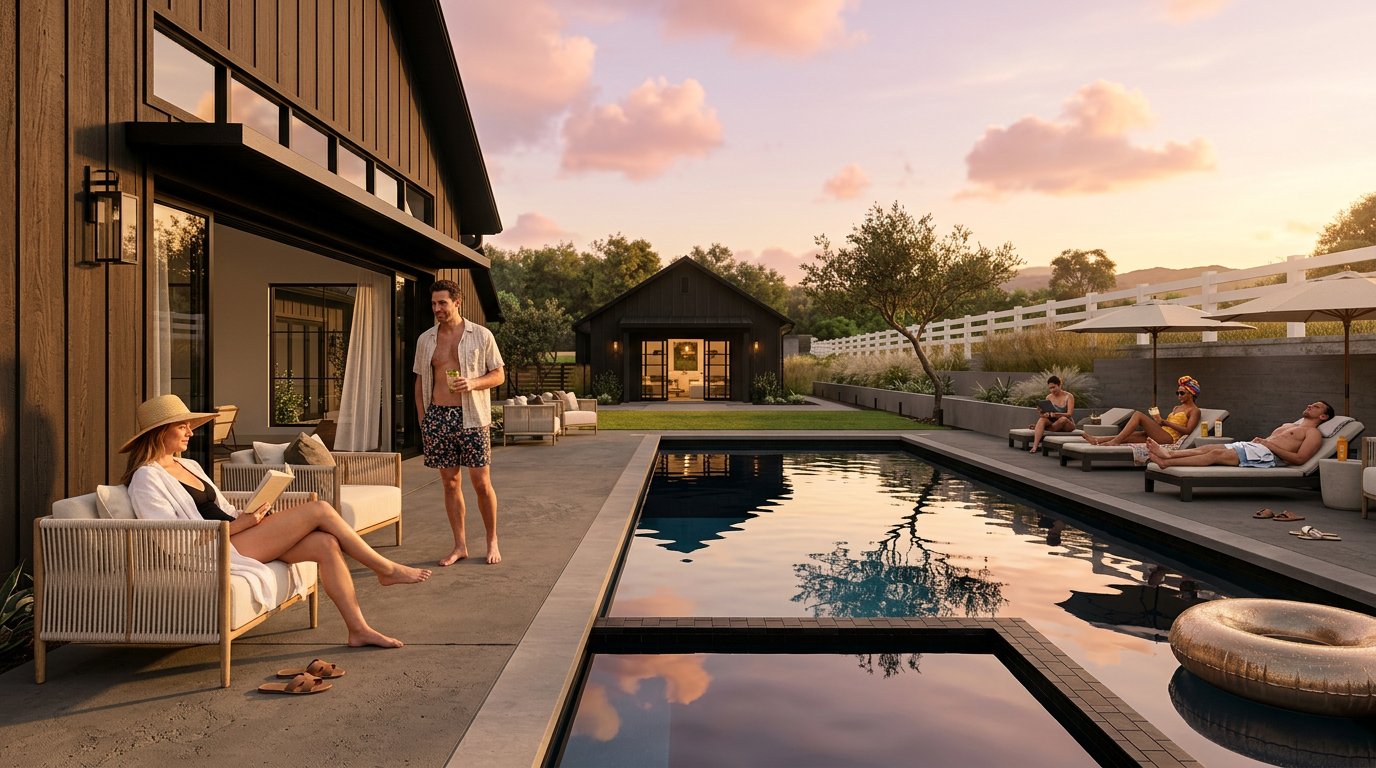
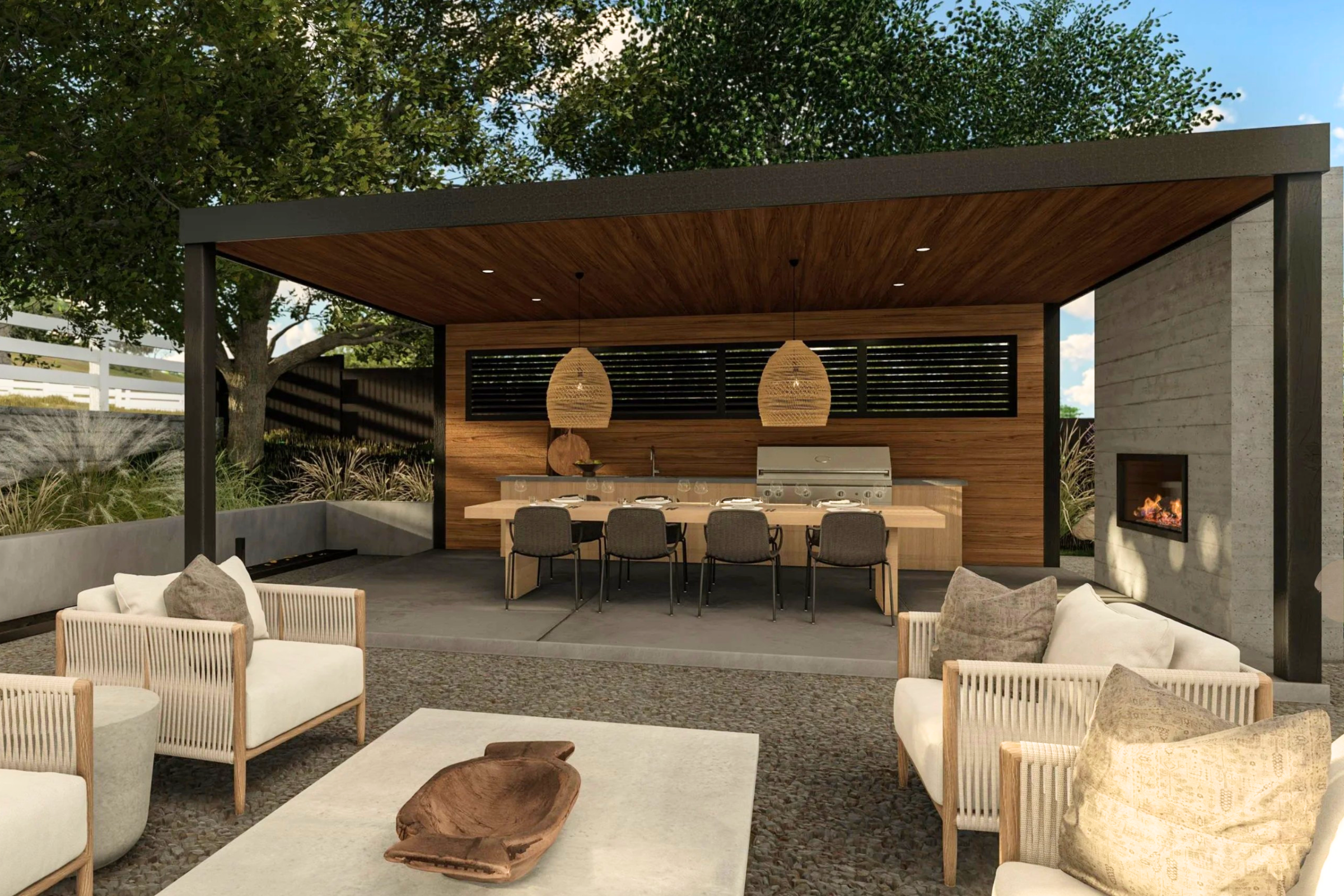
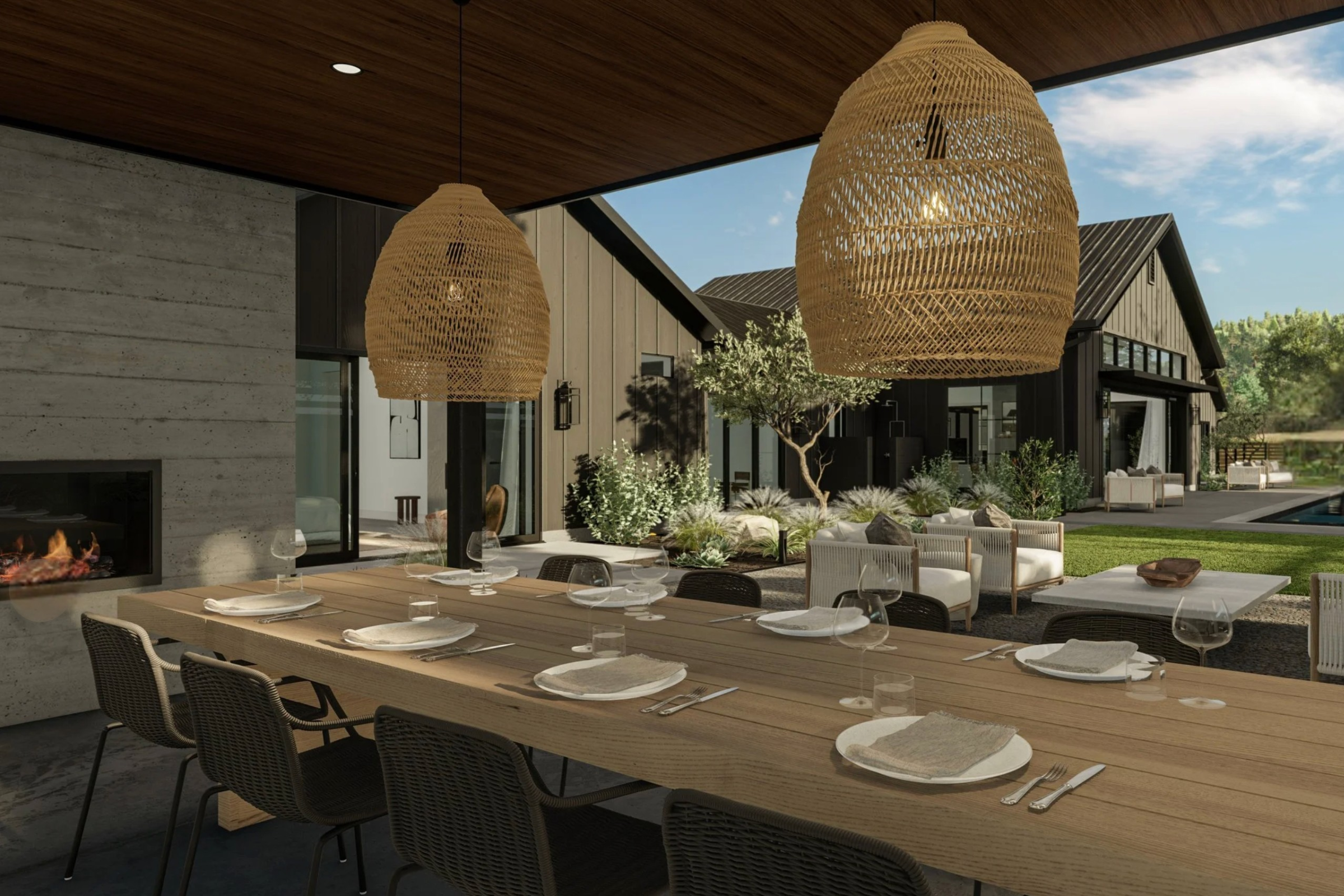
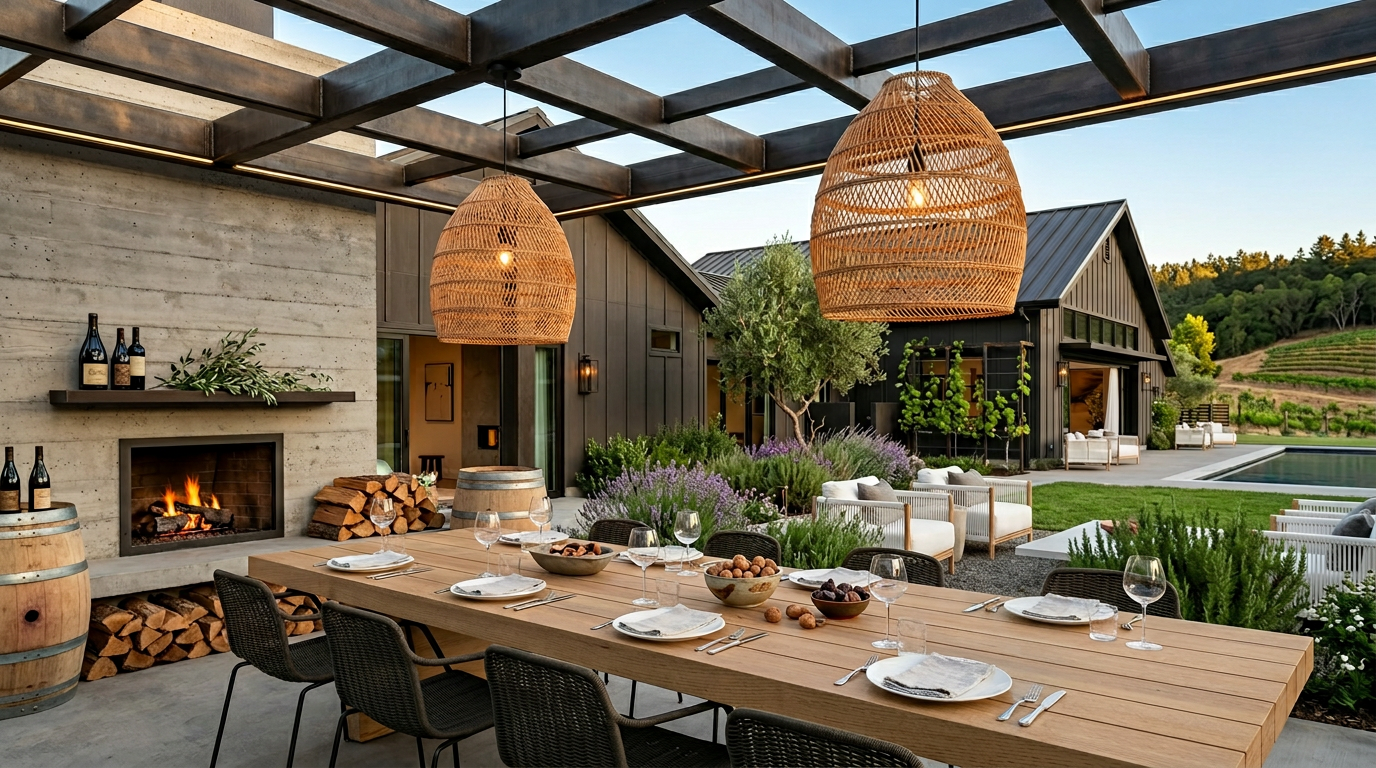
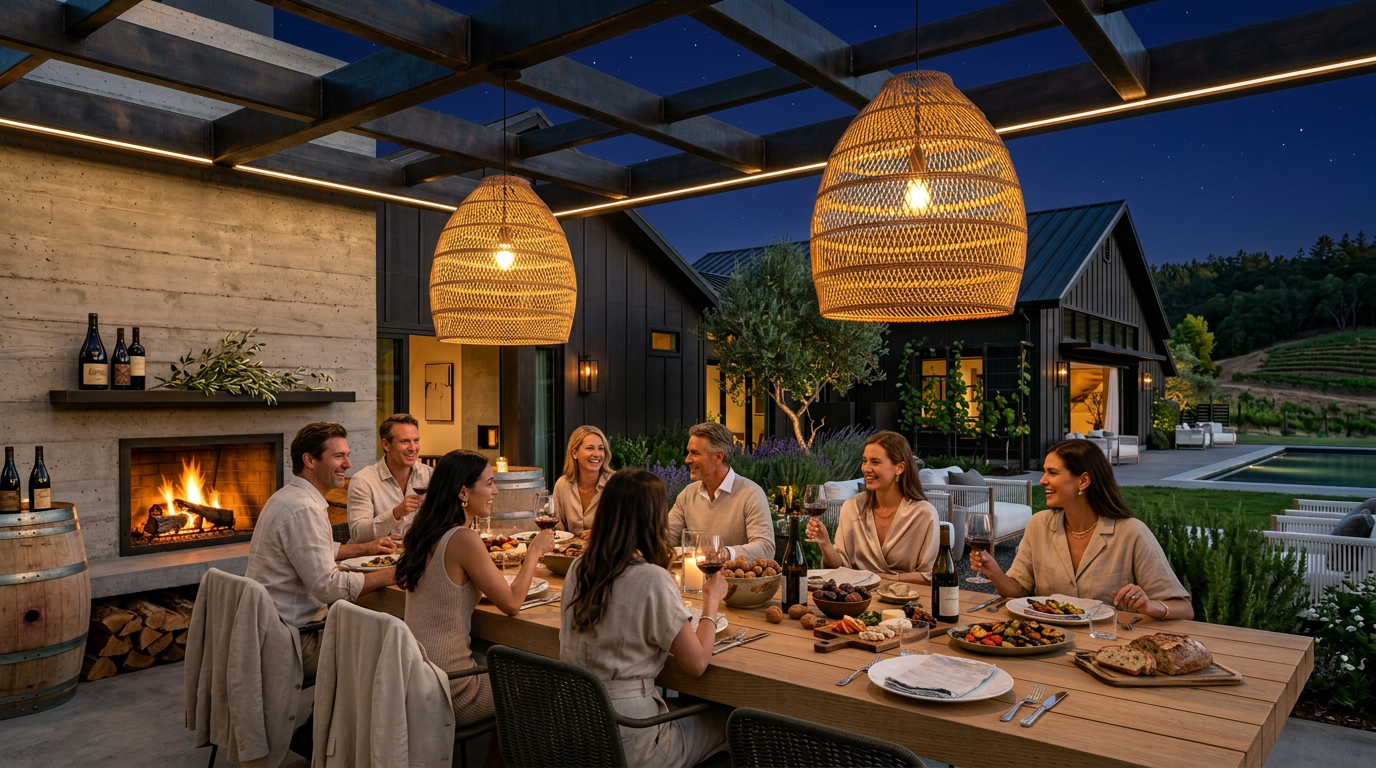
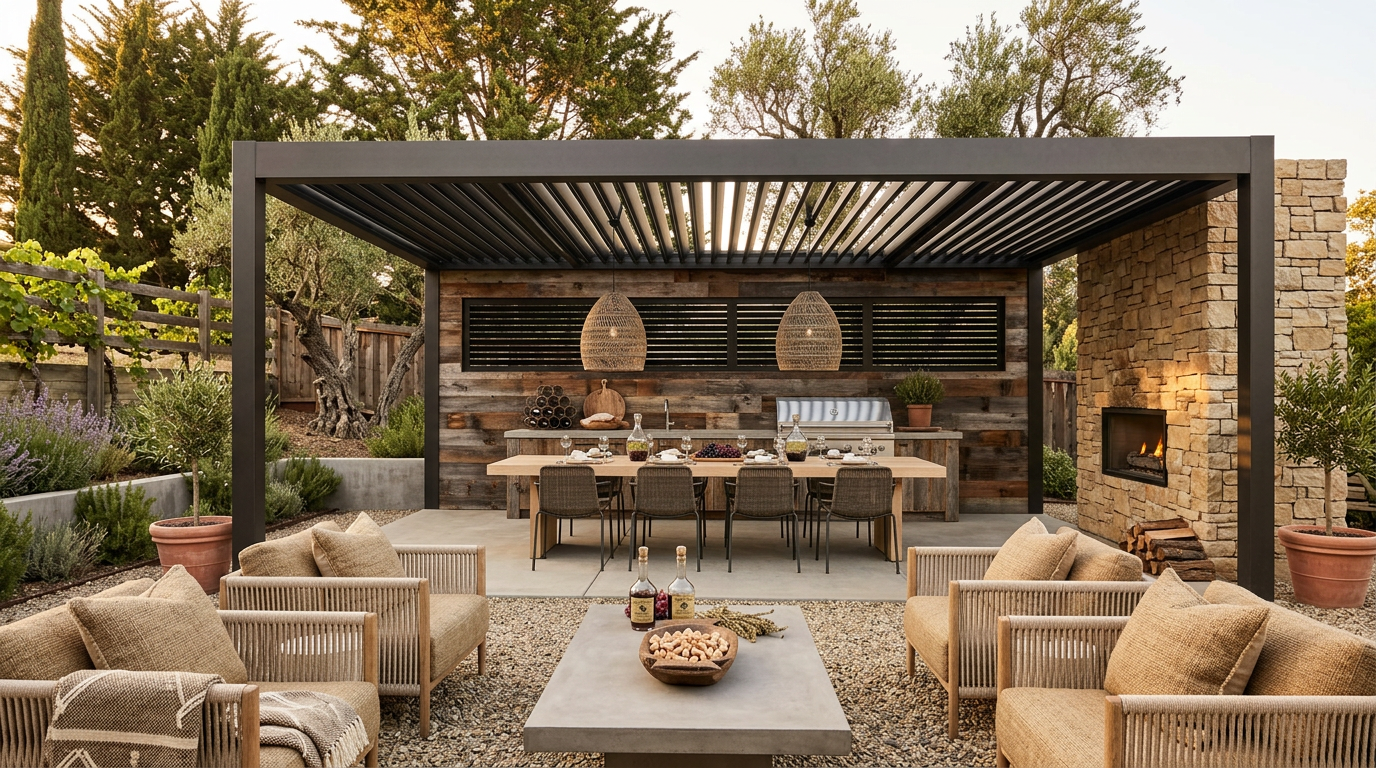
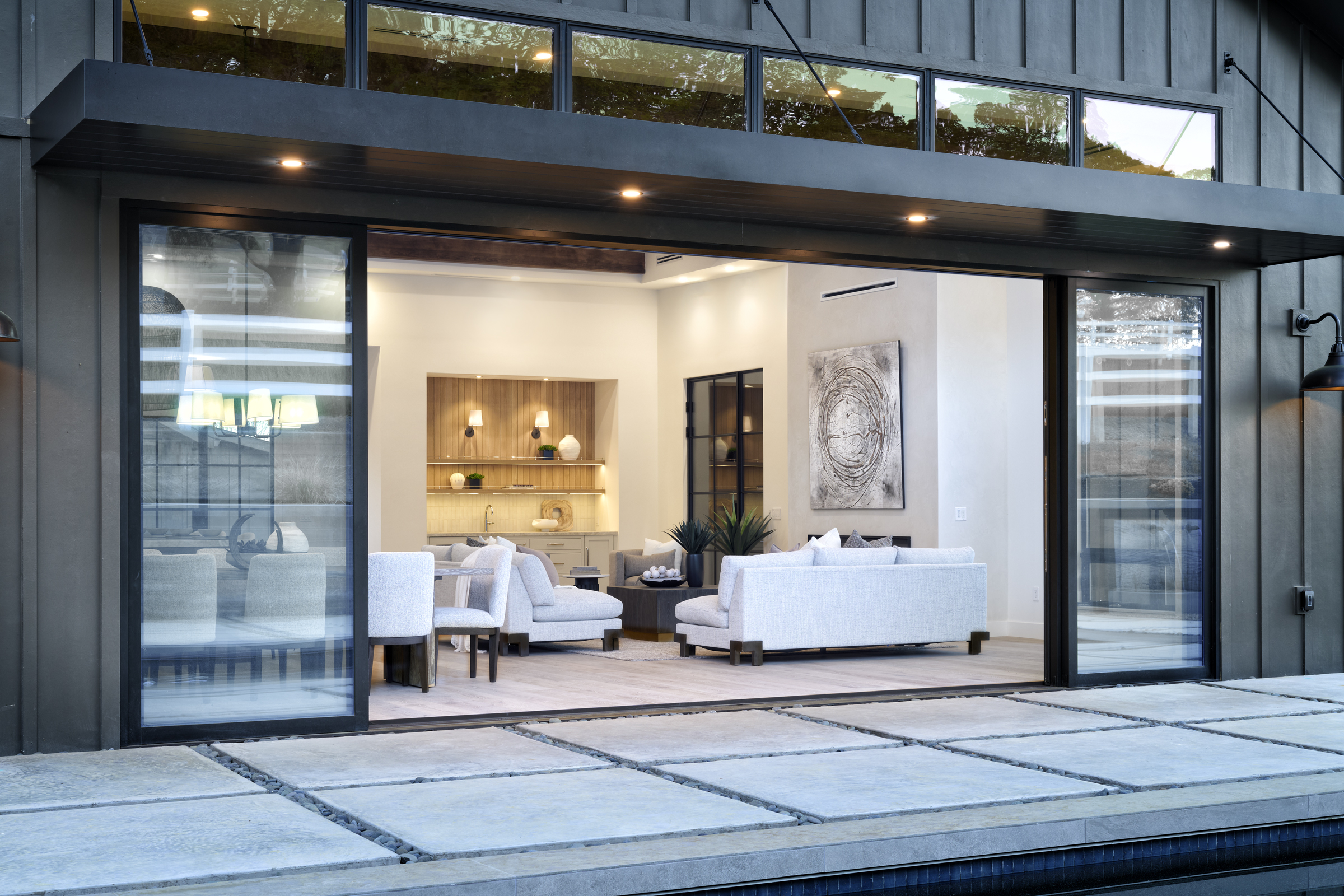
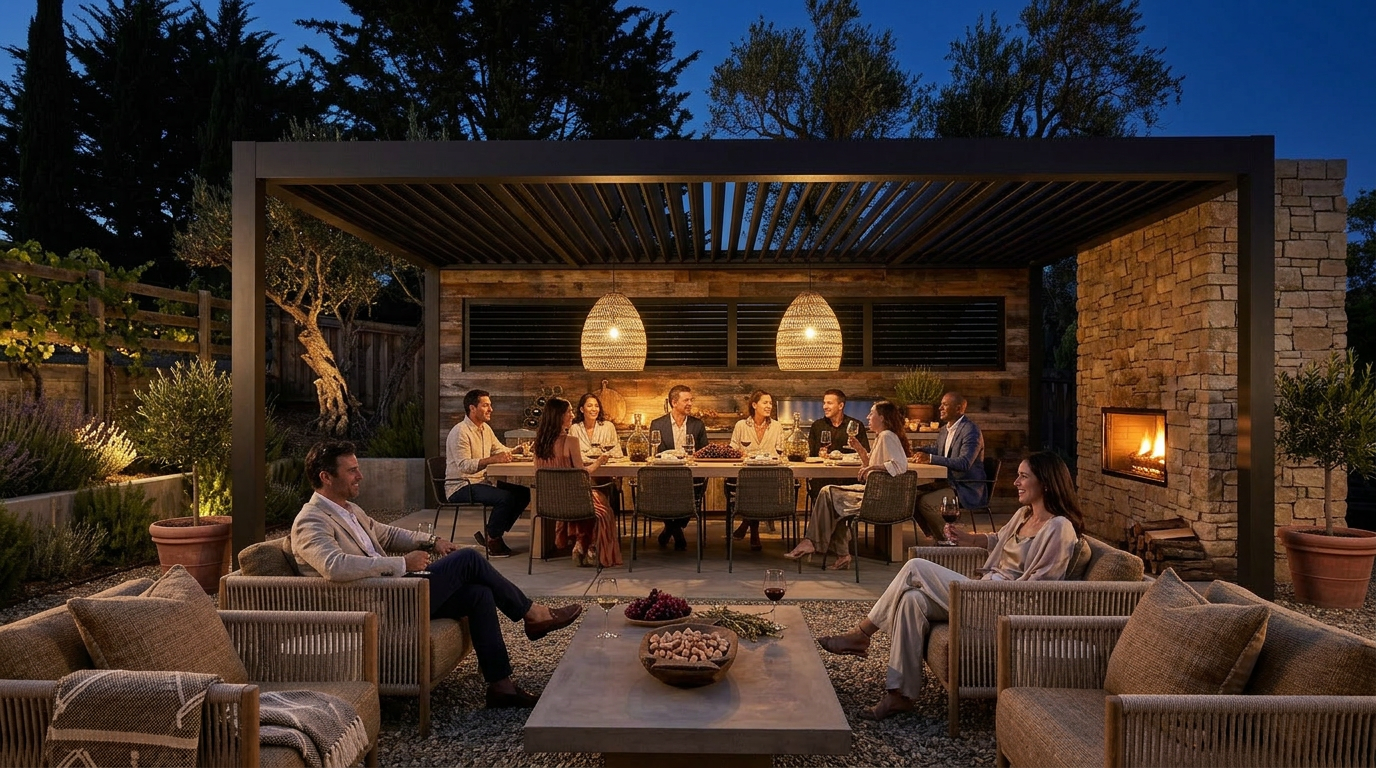
Walls of glass dissolve the boundary between the interior and the outdoors in a way that is less architectural gesture and more lived experience. Slide them open, and the great room extends naturally onto a concrete patio, past a sleek black-bottomed pool that reflects the sky, and into a fully realized outdoor kitchen and covered entertaining pavilion—complete with its own fireplace, woven pendant lighting, and a long dining table designed for evenings that extend well past sunset.
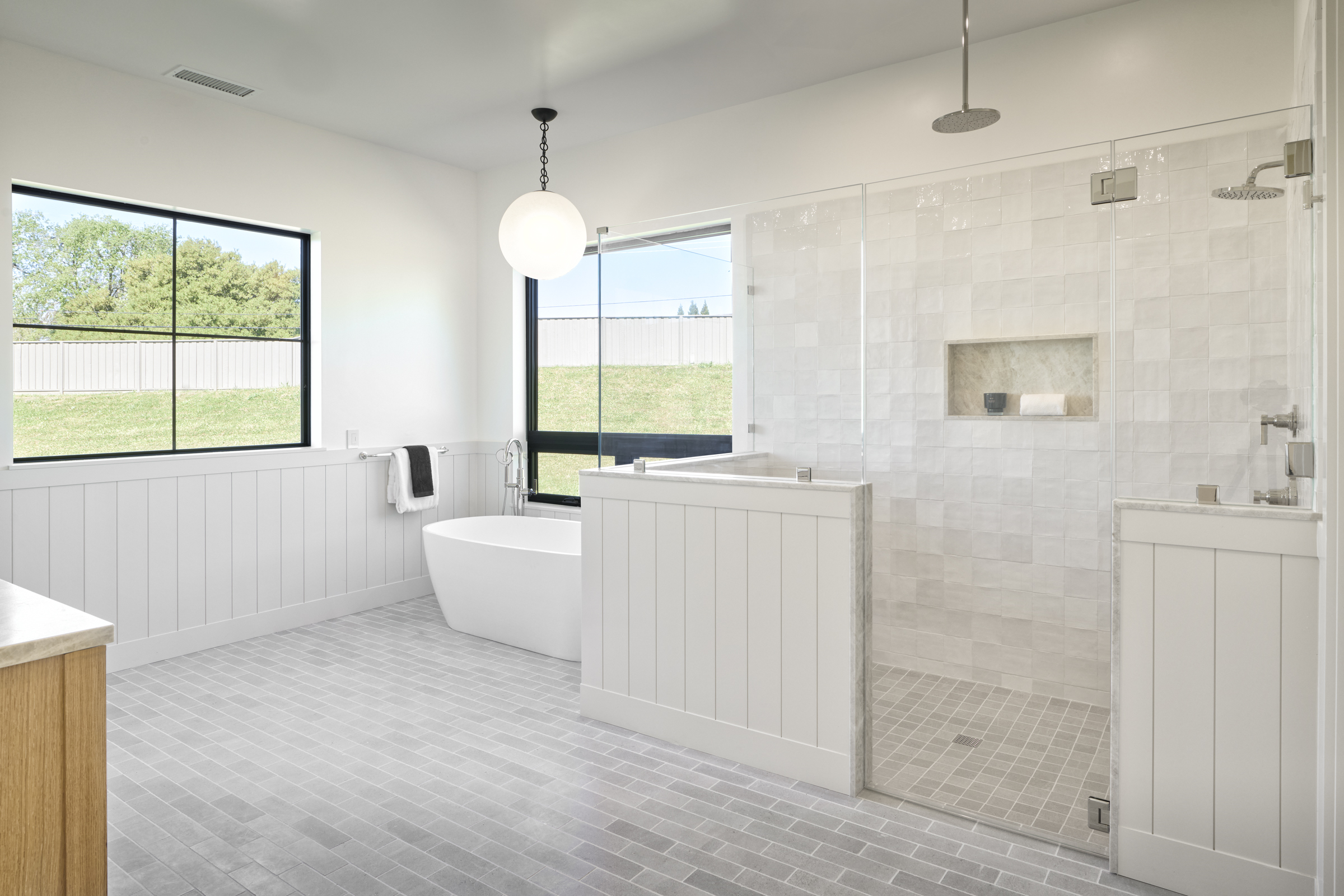
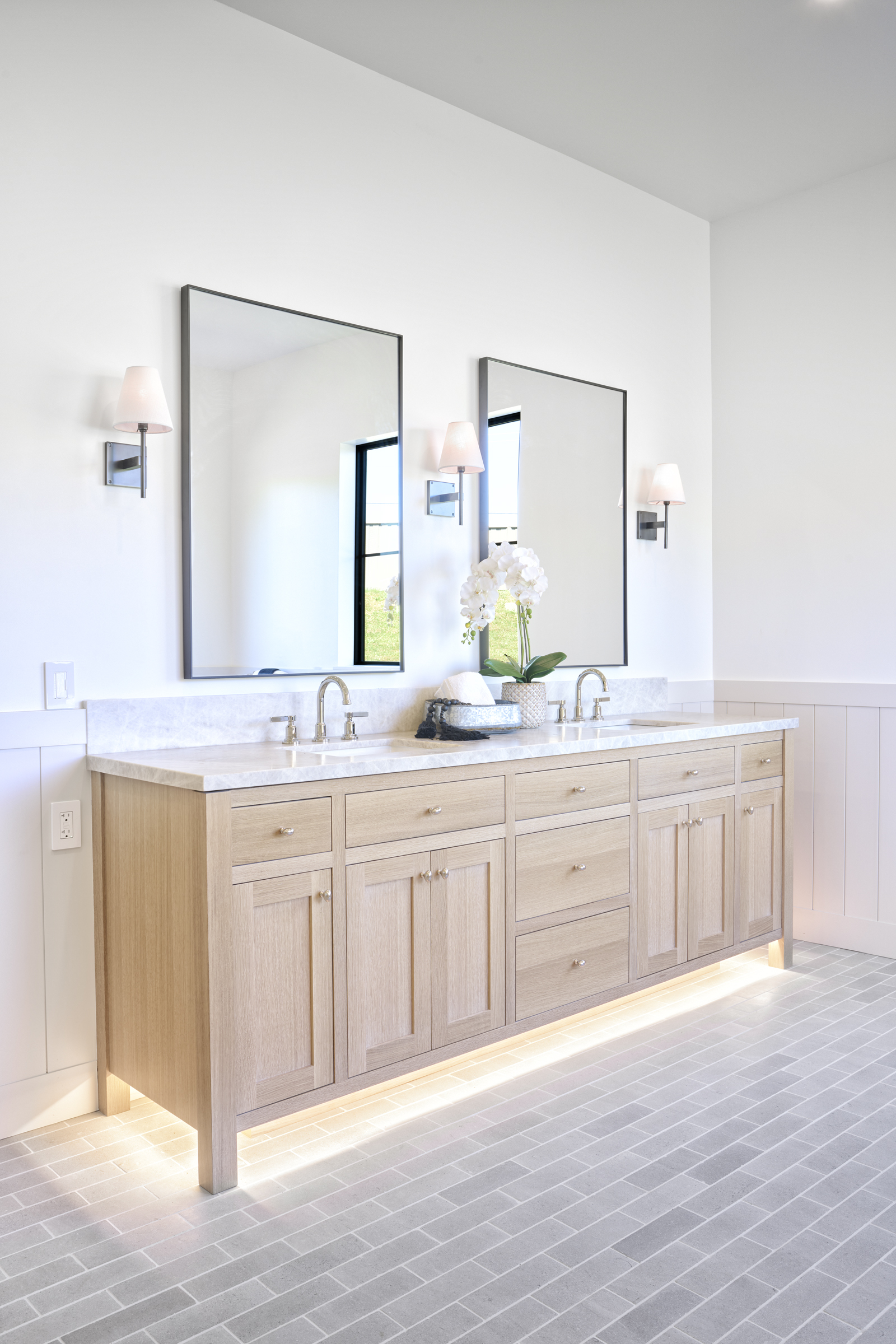
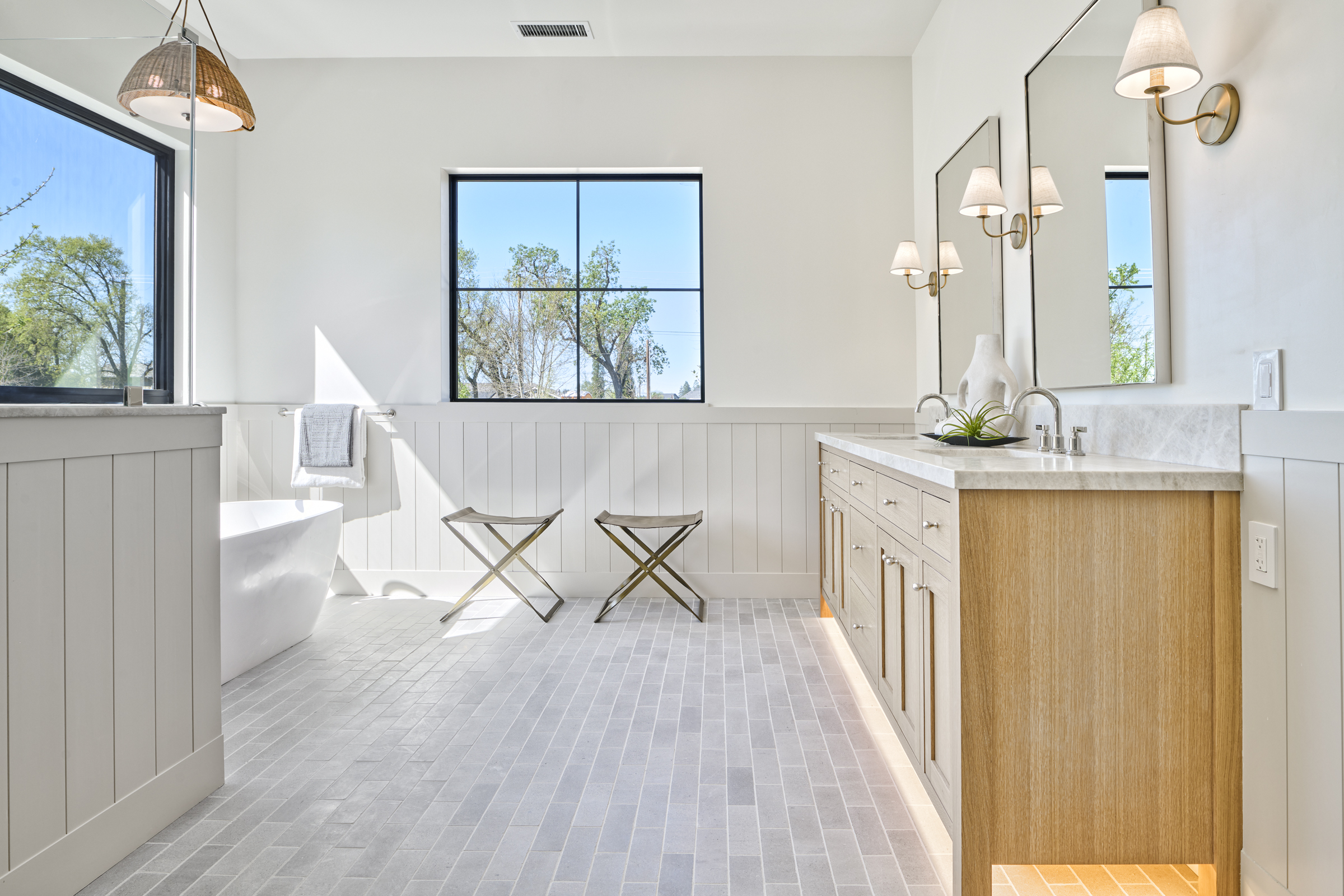
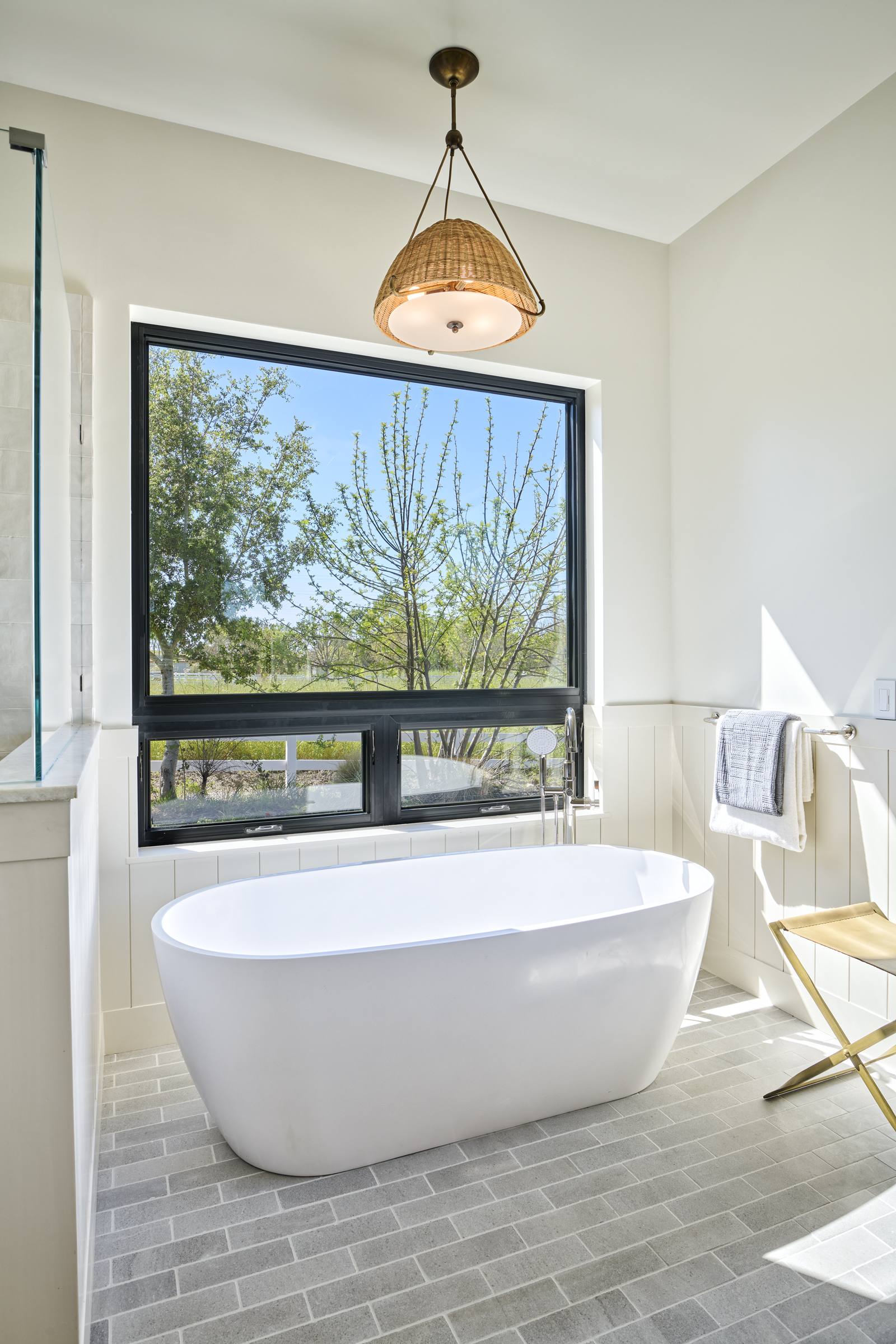
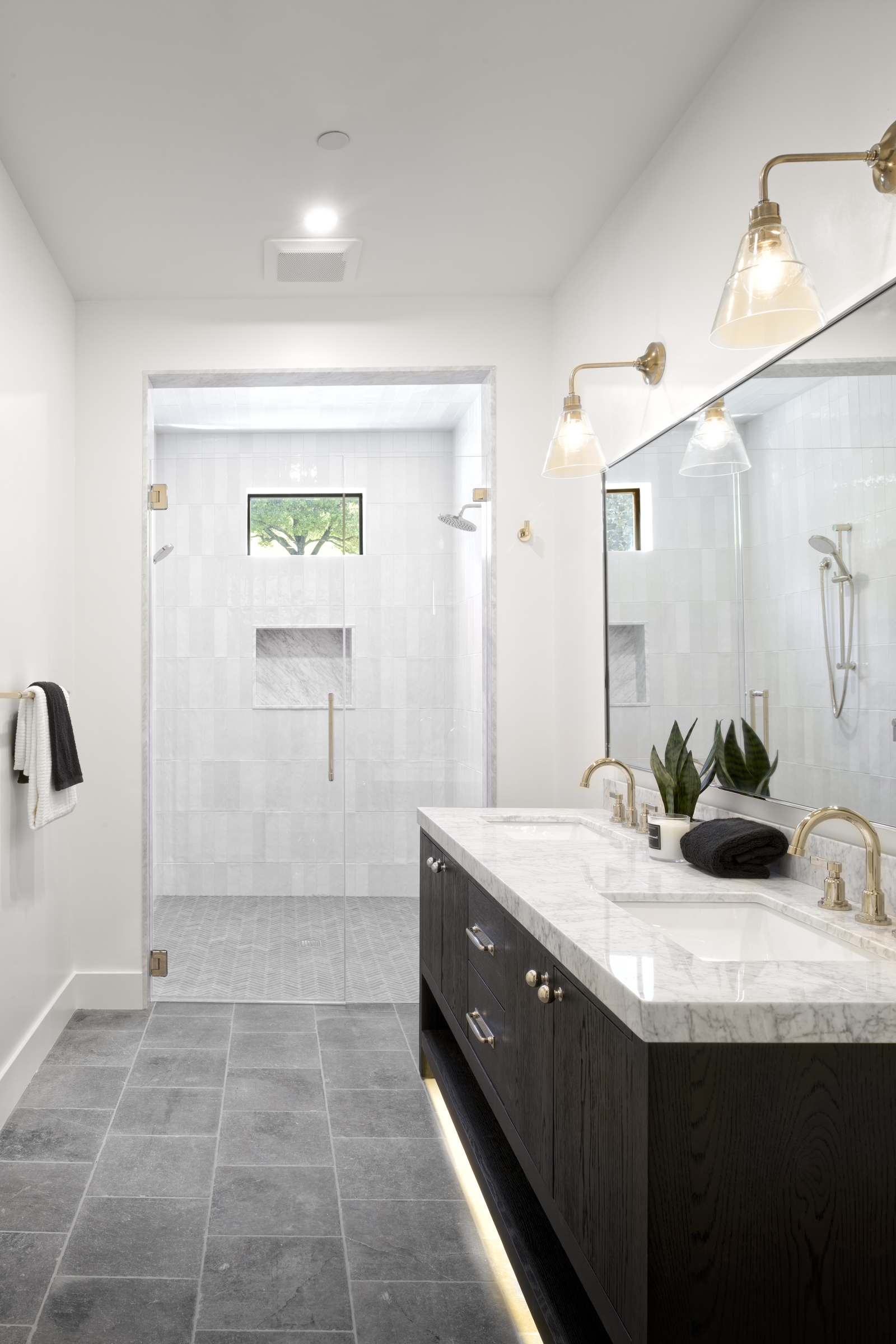
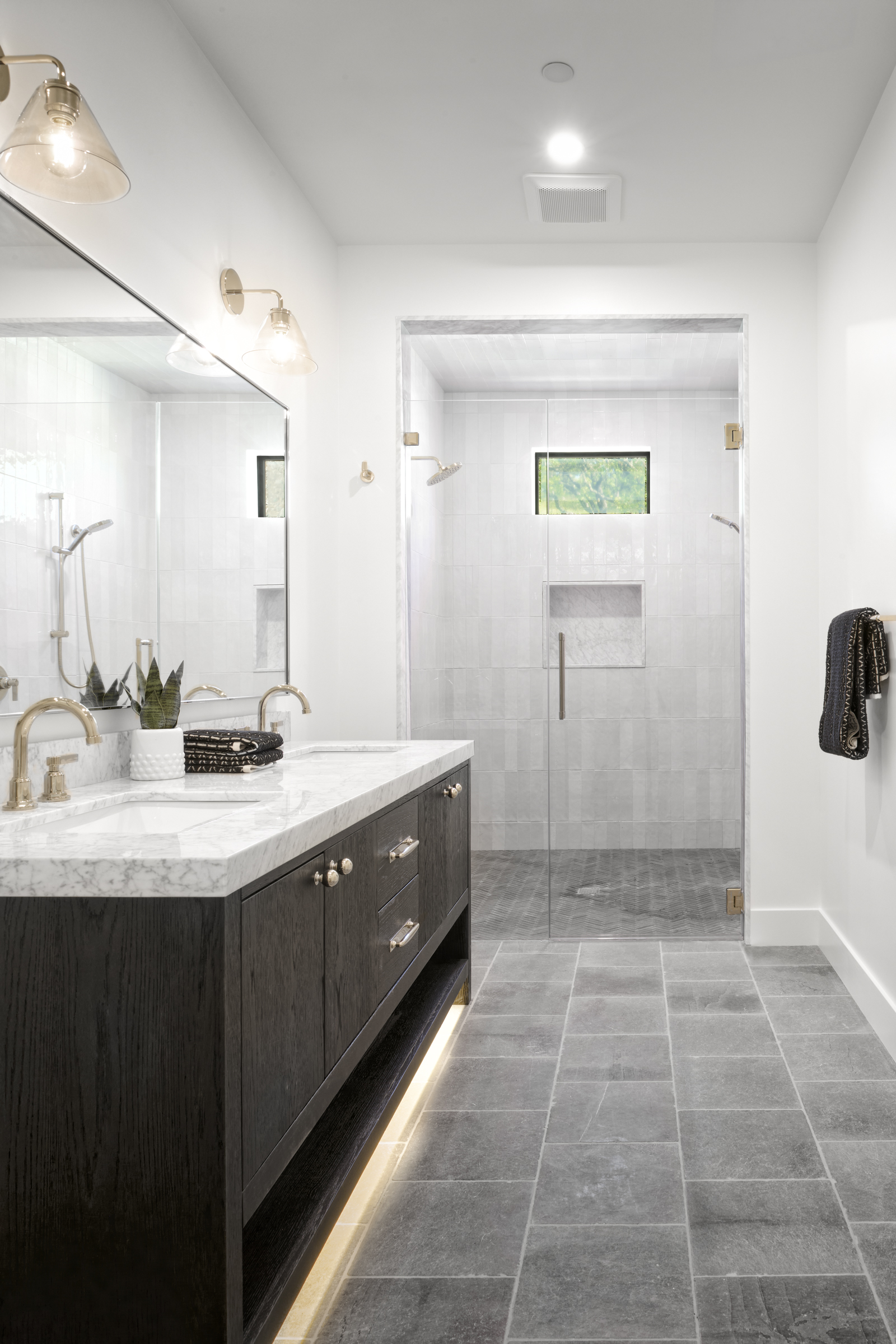
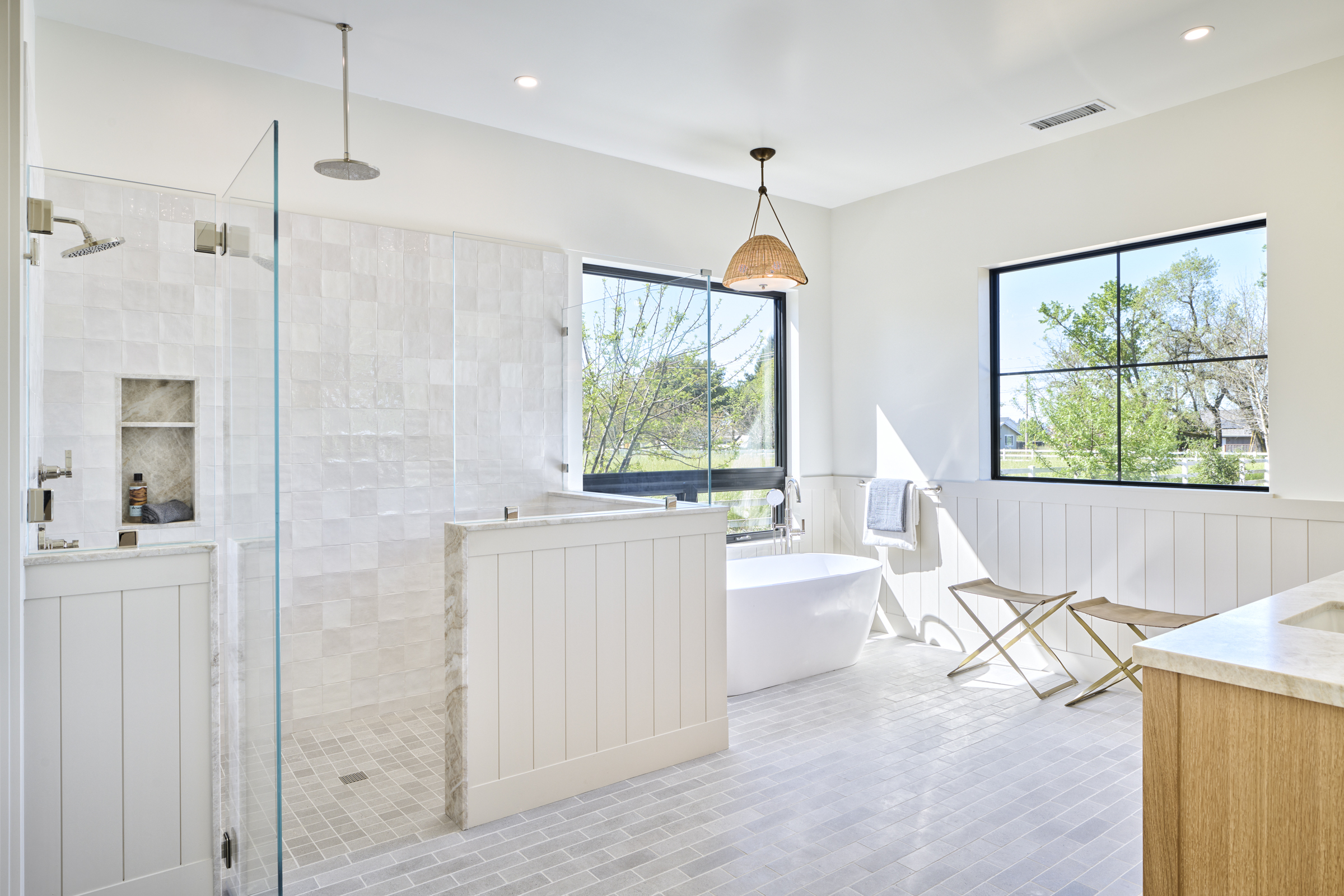
The four en suite bedrooms each offer their own sense of retreat. Primary suites open to private patios through floor-to-ceiling glass, with spa-calibrated bathrooms featuring freestanding soaking tubs, walk-in showers, double vanities in light oak and dark wood, and finishes that balance warmth with modern restraint. A dedicated home gym with polished concrete floors and direct pool access completes the wellness dimension of the home.
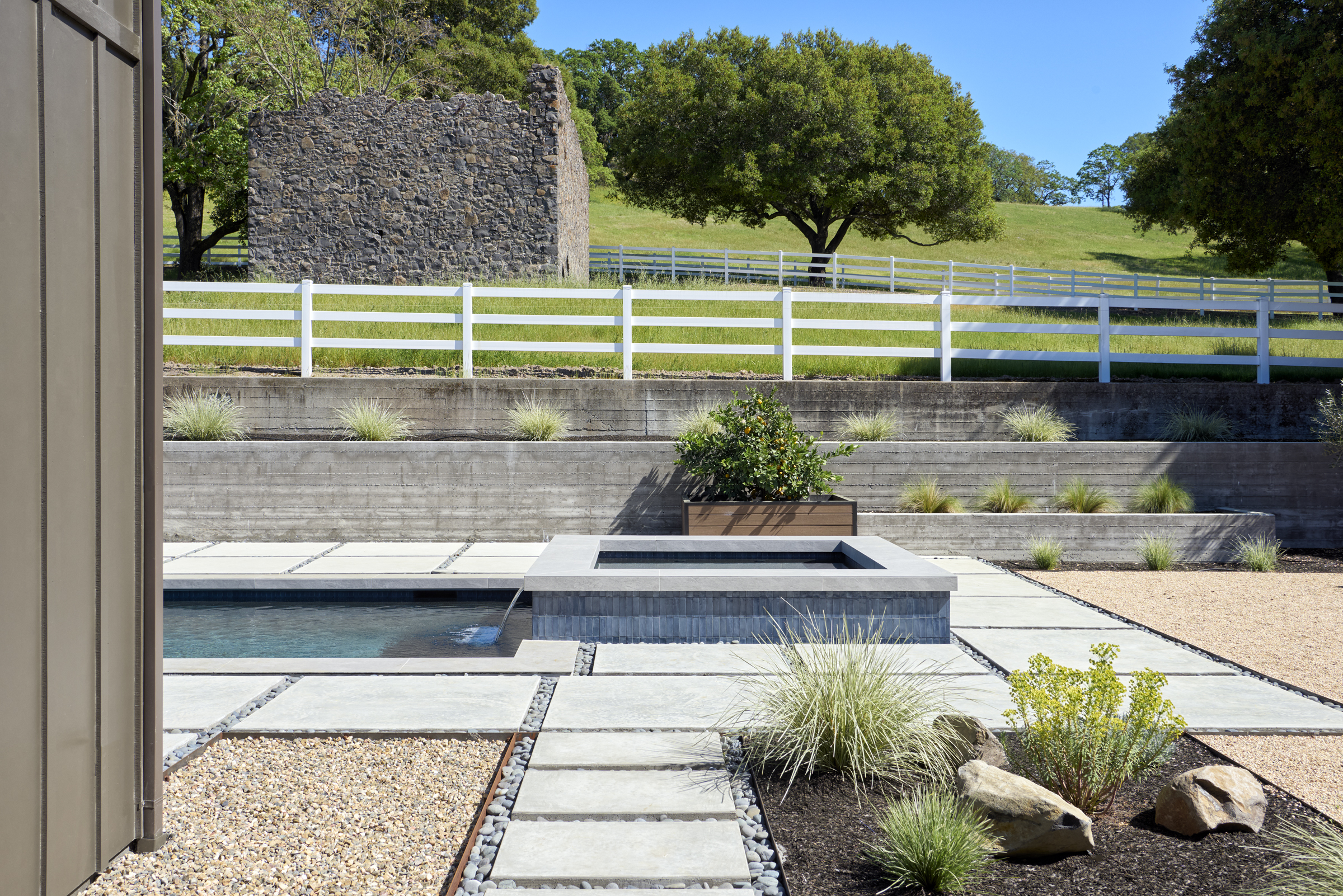
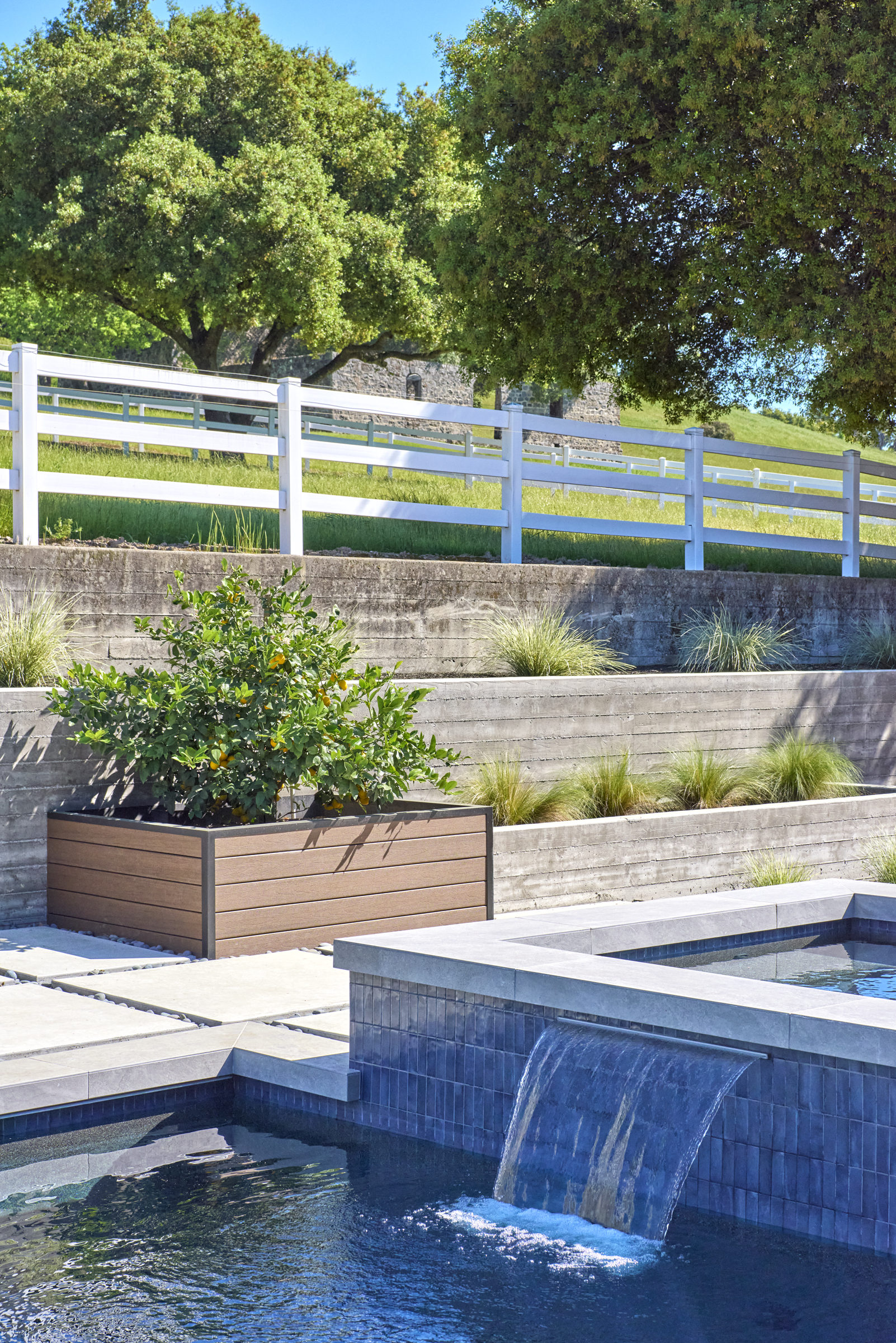
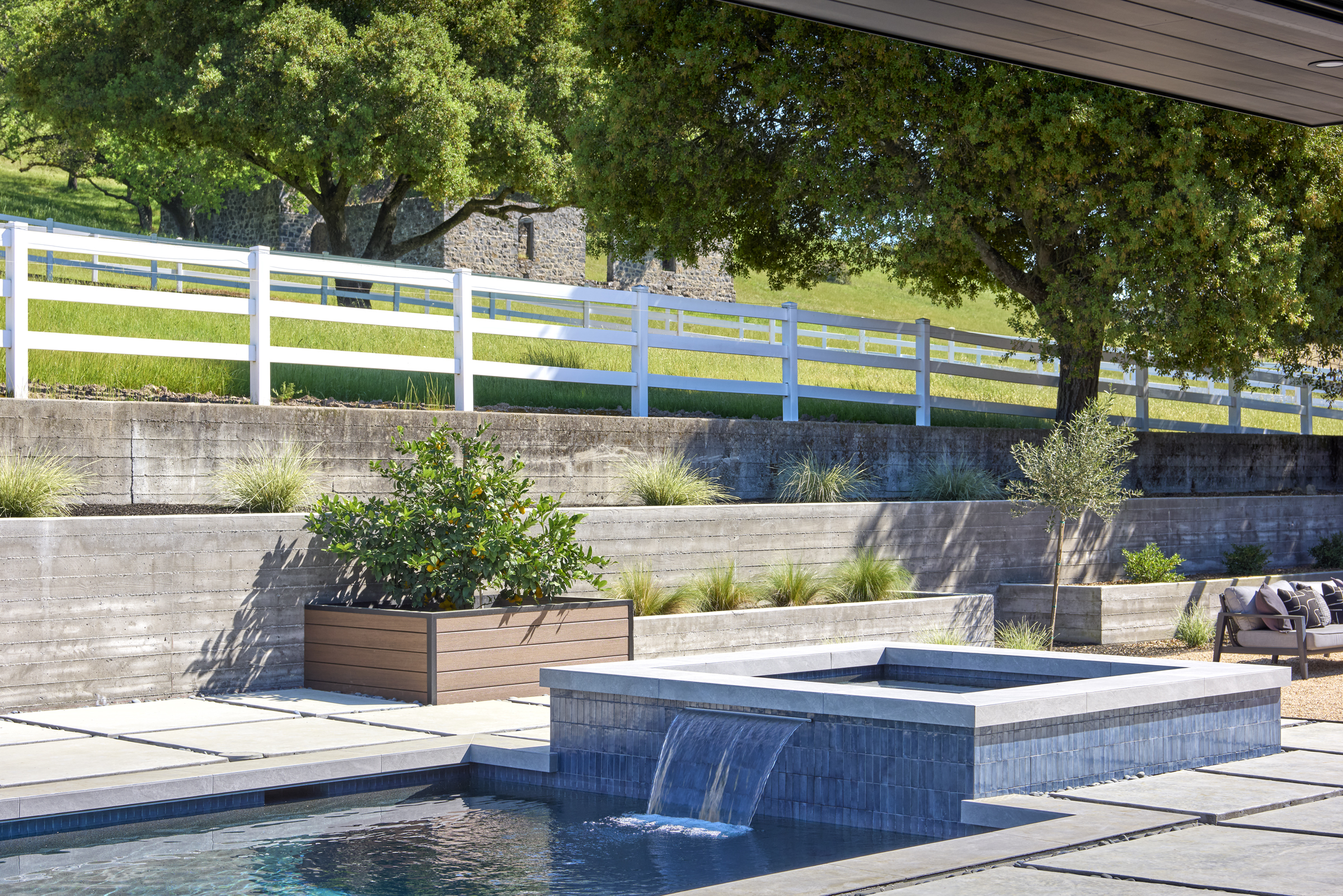
Beyond the pool, tiered concrete retaining walls step down to a gravel seating area where the preserved stone hop kilns of the Finley Hop Ranch come into view—a quiet, defining presence that anchors the entire setting in something larger than the property itself. It is a relationship that feels both grounded and entirely intentional. History, held at a respectful distance. Modernity, built with confidence. The two, coexisting without compromise.
Sonoma County has long occupied a distinct position in the California imagination—neither the polished density of Napa nor the coastal remove of Marin, but something more particular: a region defined by working landscapes, agricultural continuity, and a community that has consistently chosen quality of life over spectacle. It is a place where world-class winemaking shares the road with family-owned orchards, where a historic hop kiln can stand within sight of a newly constructed modern home, and where that juxtaposition feels not like contradiction but like character.
The Finley area of Santa Rosa, situated in the northern reaches of Sonoma County, carries that character with ease. The nearby Finley Hop Ranch is part of the broader agricultural heritage that shaped this region long before the first Pinot Noir vines were planted. Hop farming was once a defining industry across Sonoma County, and the stone hop kilns that remain on the landscape—built to dry and process harvested hops—stand today as durable artifacts of that era. Their preservation is not incidental; it reflects the county's broader commitment to maintaining a living connection to its working past.
Sonoma County Airport—formally known as Charles M. Schulz–Sonoma County Airport—provides direct commercial service to several major domestic hubs, making the property as practical as it is idyllic. For those who move between cities and wine country with regularity, the airport's proximity is not a convenience but a genuine quality-of-life consideration, eliminating the extended drives that define so many rural retreats.
The wine country lifestyle that surrounds the property is among the most celebrated in the world. The Sonoma Valley, Russian River Valley, and Dry Creek Valley appellations are each within easy reach, offering access to some of California's most acclaimed producers—wineries whose tasting rooms range from intimate and appointment-only to sprawling and architecturally ambitious. The region's culinary culture has grown in parallel, with farm-to-table dining woven into the fabric of daily life rather than positioned as a destination experience.
Downtown Healdsburg, one of Sonoma County's most refined small cities, is a short drive north—a walkable plaza surrounded by independent boutiques, acclaimed restaurants, and tasting rooms that draw visitors from across the world without losing the approachable character that defines the best of wine country living. Santa Rosa, the county seat, provides the full infrastructure of a mid-sized city: hospitals, airports, retail corridors, cultural institutions, and everyday conveniences that support a life lived well beyond the property line.
The broader landscape offers trails, open space preserves, and a temperate climate that makes outdoor living not a seasonal indulgence but a year-round reality. Fog rolls in from the coast. Mornings are cool and clear. Evenings, particularly in summer, settle into the kind of warmth that makes a covered patio with a fireplace feel like the most natural place in the world to be.
This is Sonoma County at its most essential—not curated for visitors, but composed for those who choose to live here fully.
Featured Highlights
Curated Content • Presented by Tim DeBellis & Randy Waller