The Story Behind
Hillside Sanctuary Where Considered Design Meets Irreplaceable Austin Views
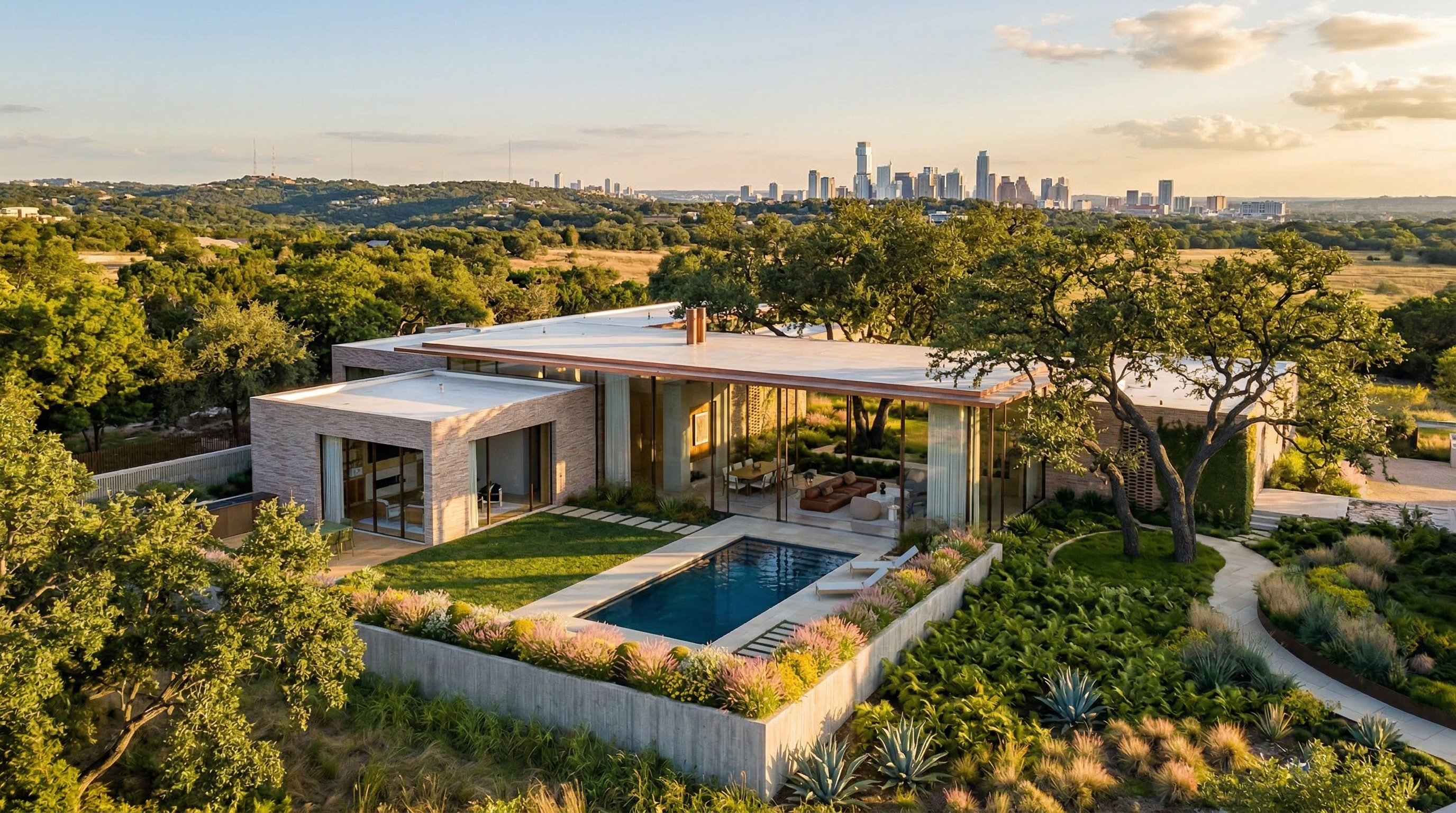
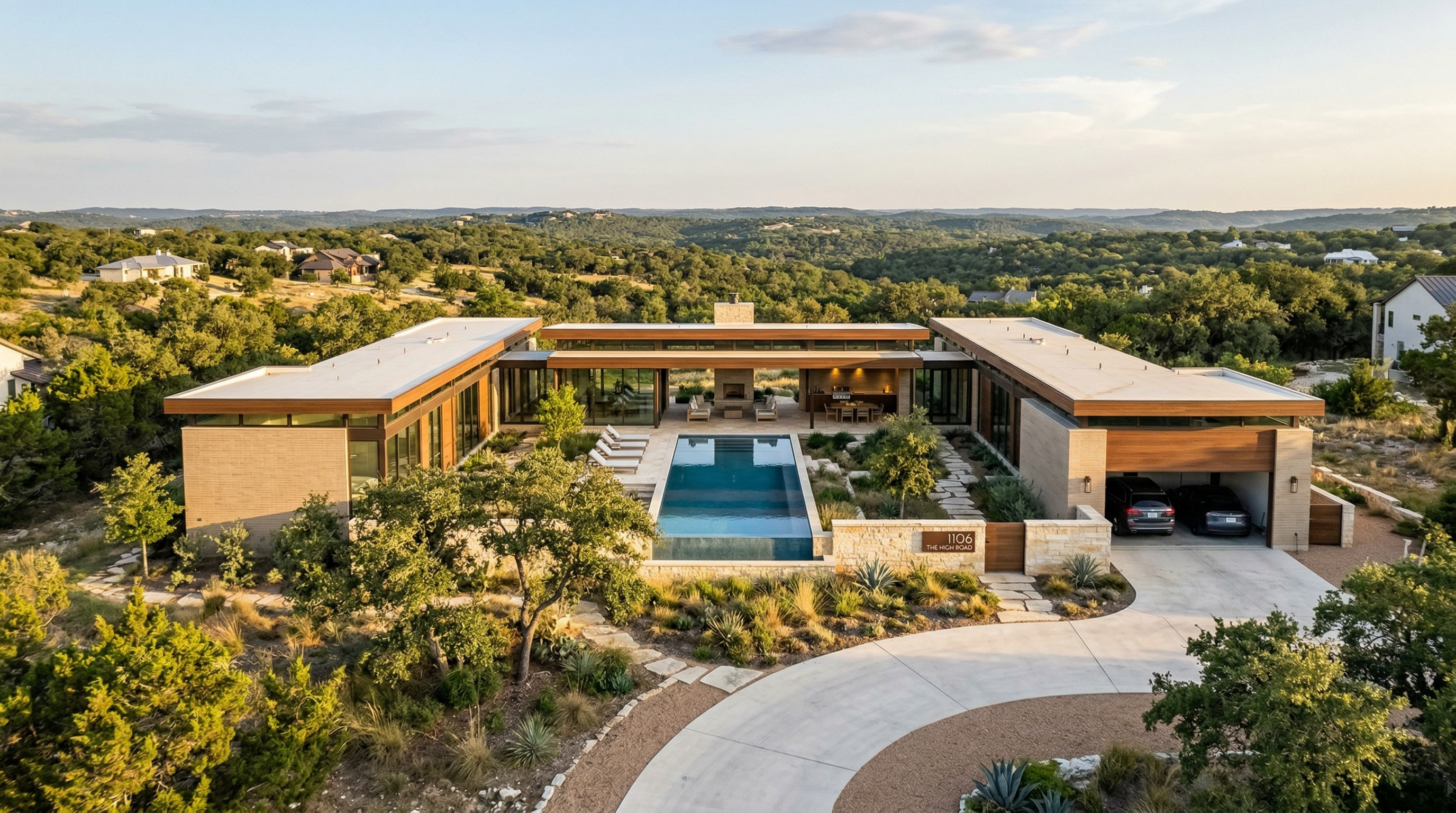
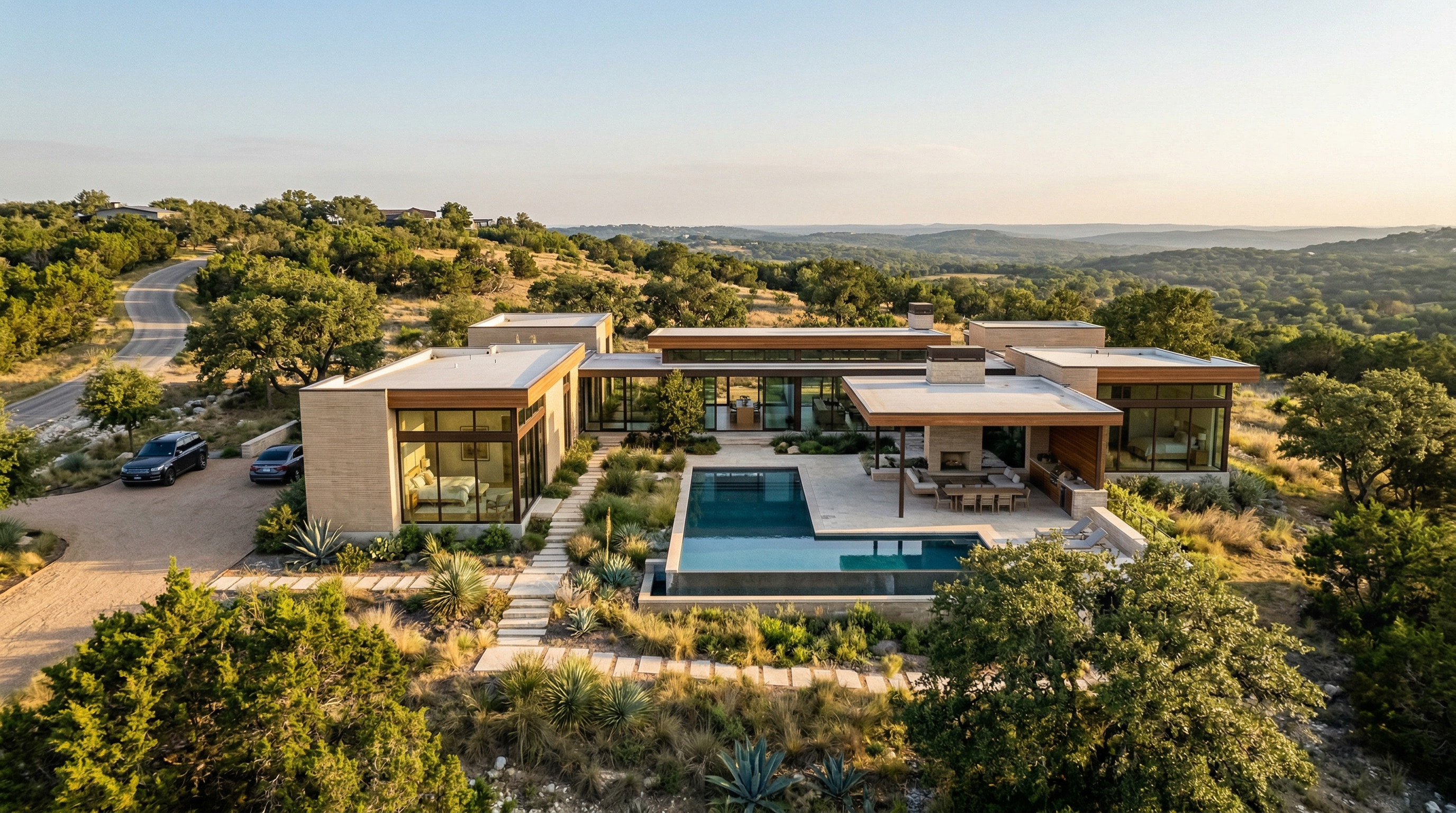
There is a particular discipline required to build a home that defers to its setting without surrendering its own architectural identity. 1106 The High Rd achieves exactly that—a residence whose design vocabulary is confident enough to stand alone, yet generous enough to let the Austin skyline and the surrounding hill country become its most compelling interior feature.
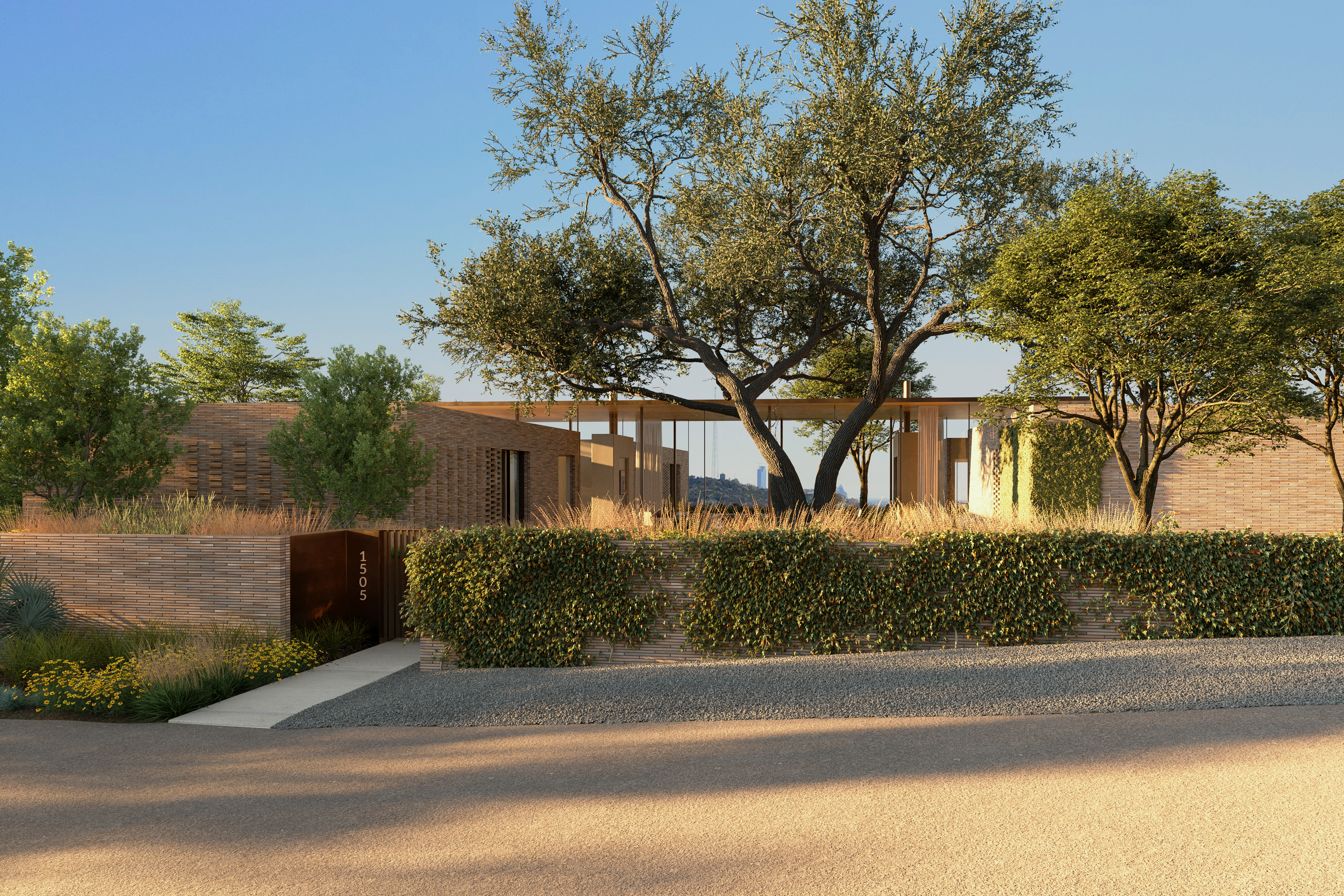
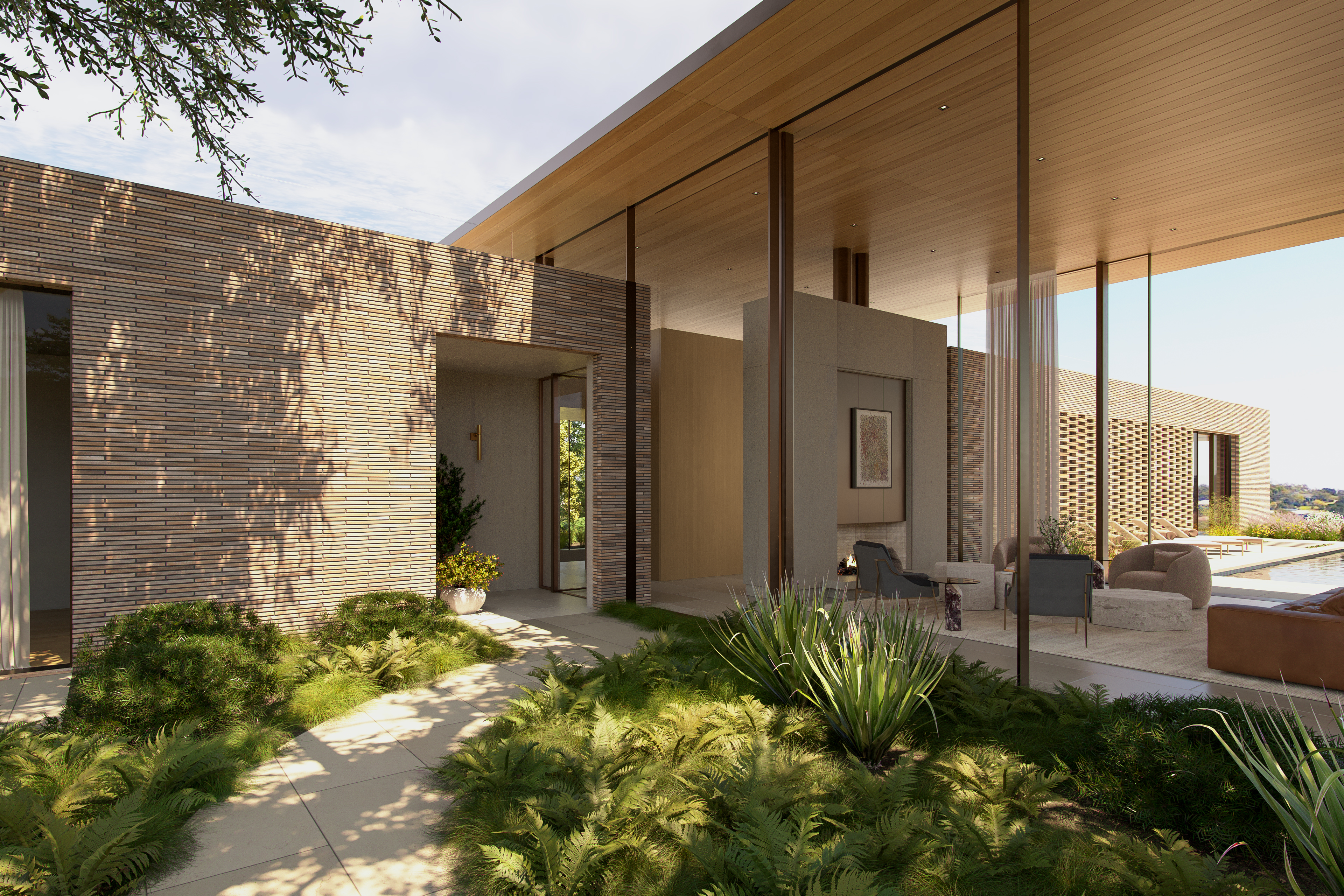
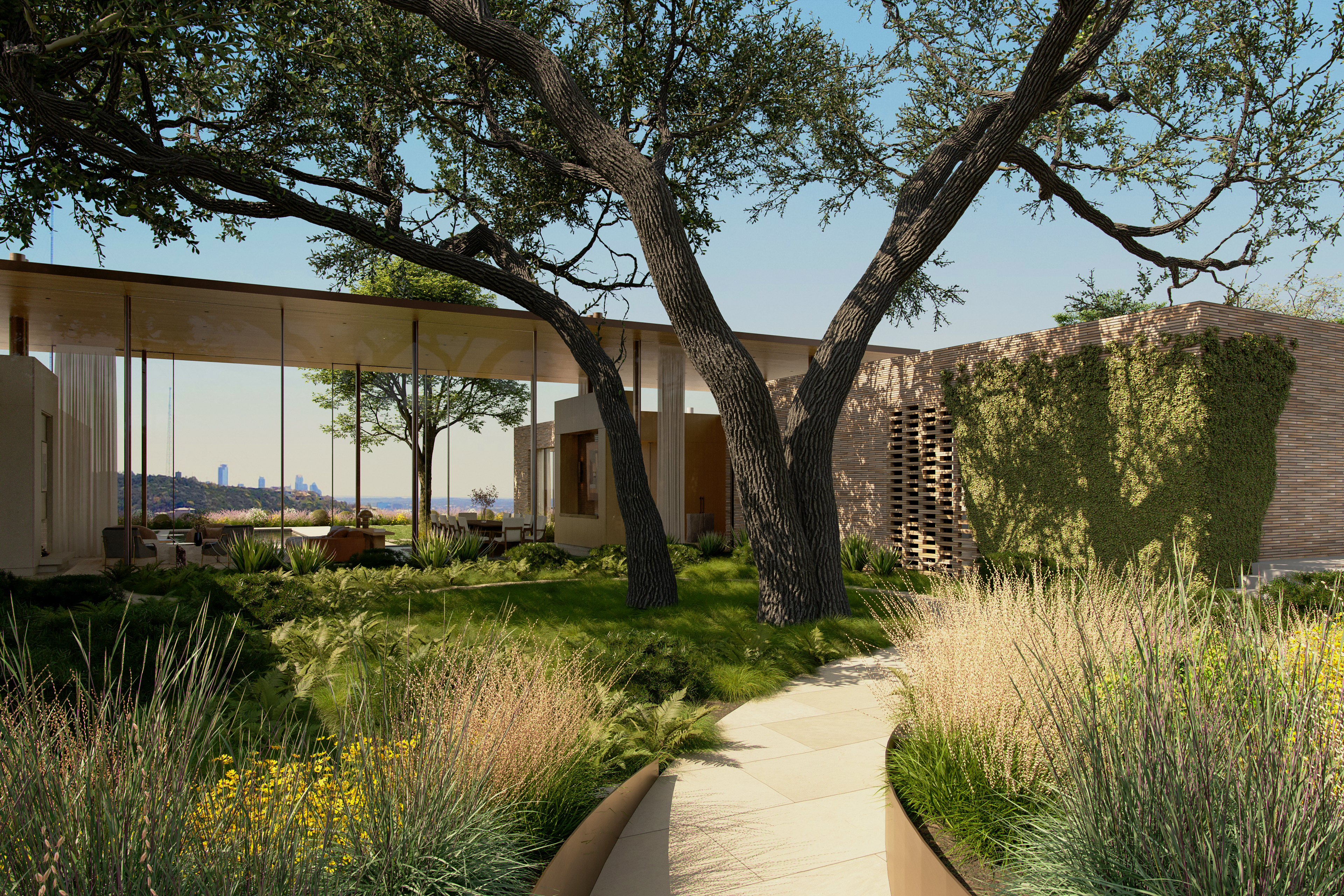
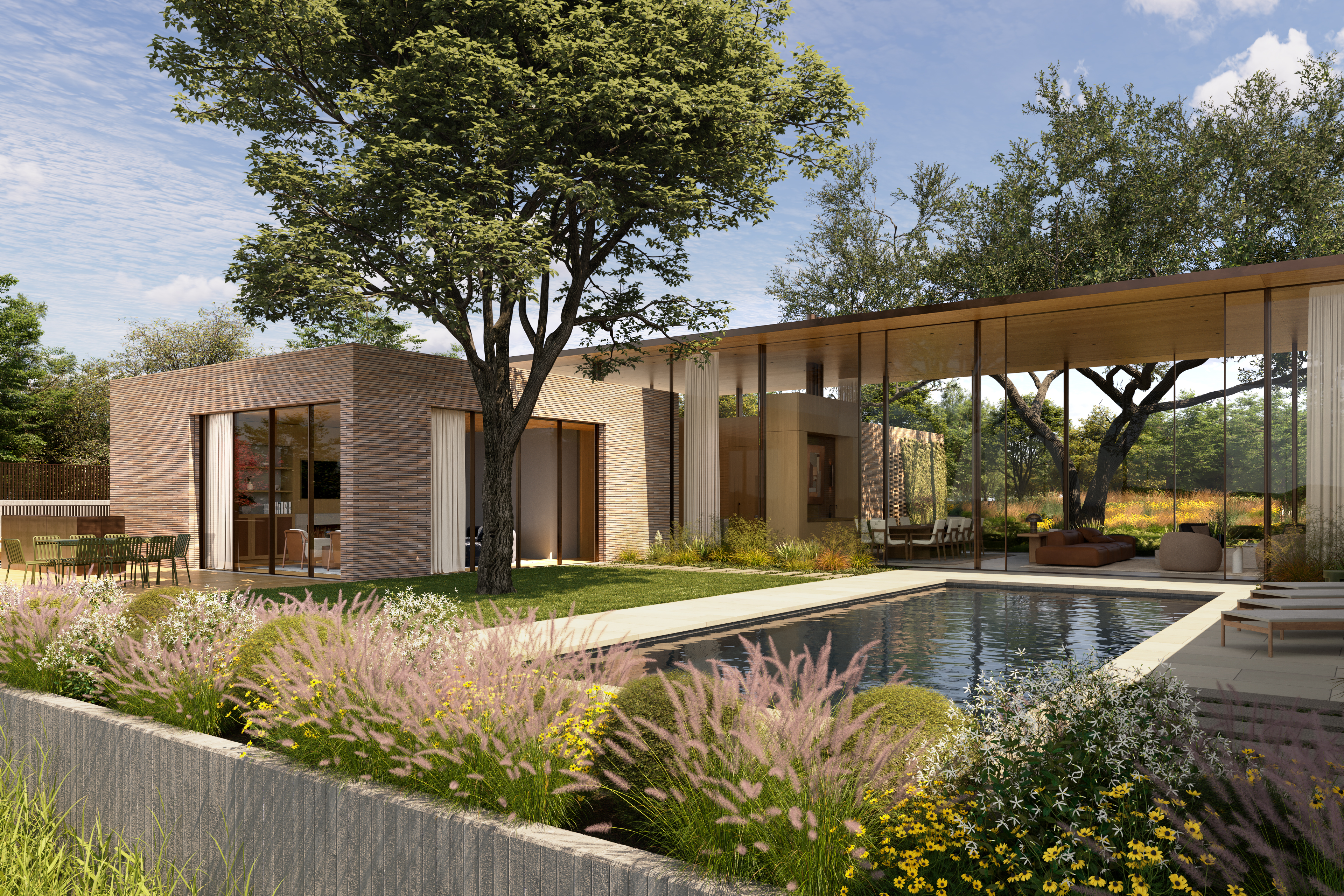
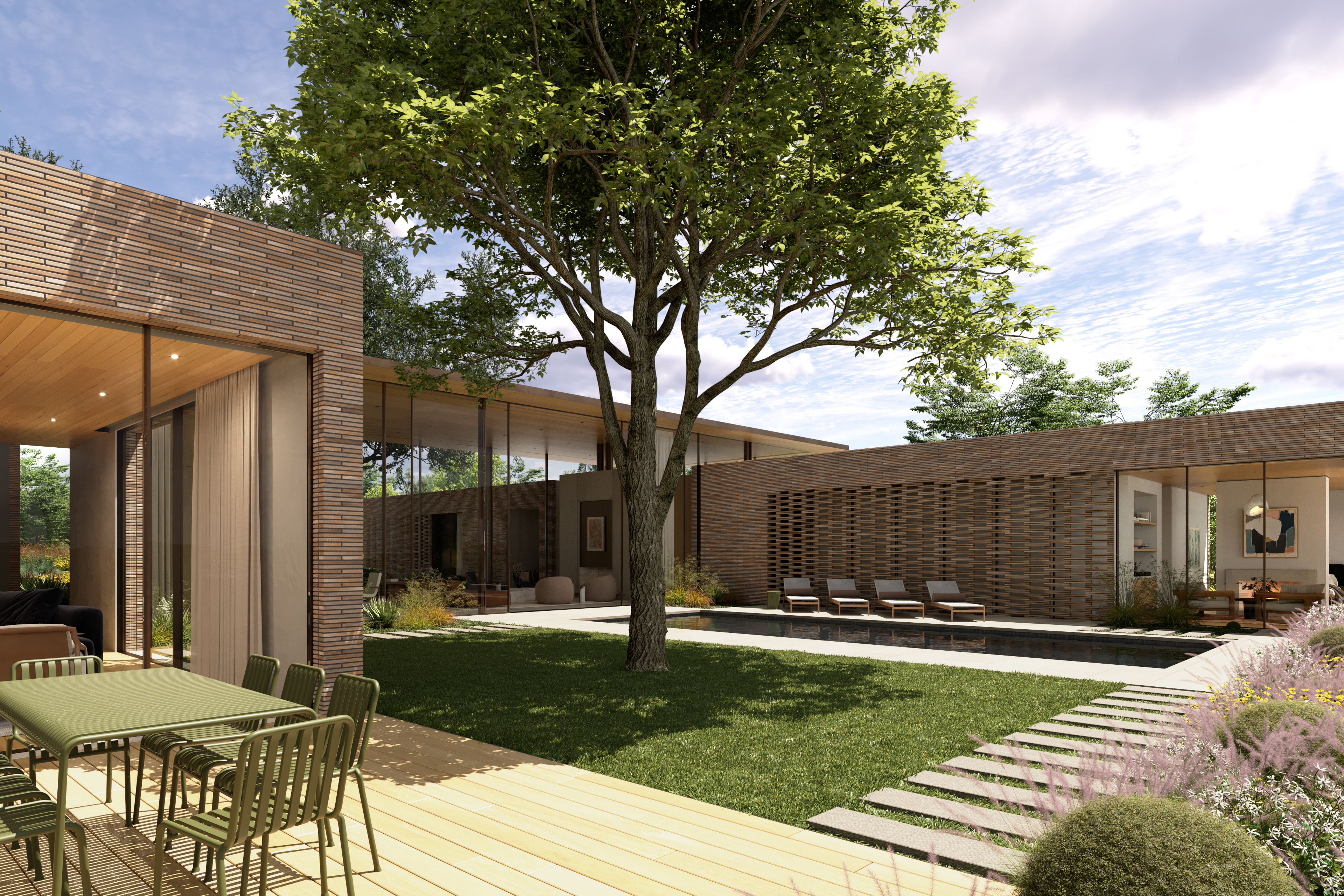
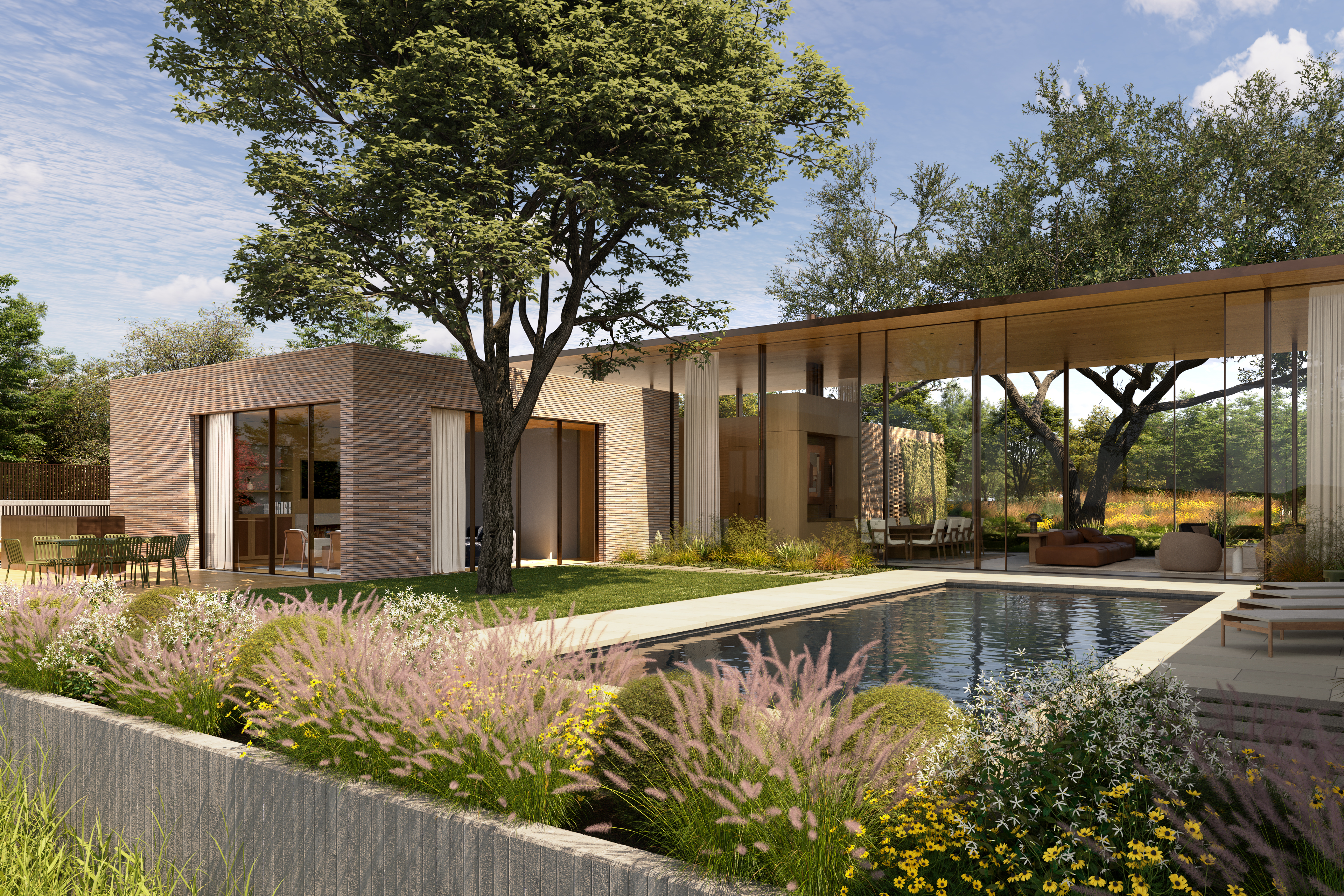
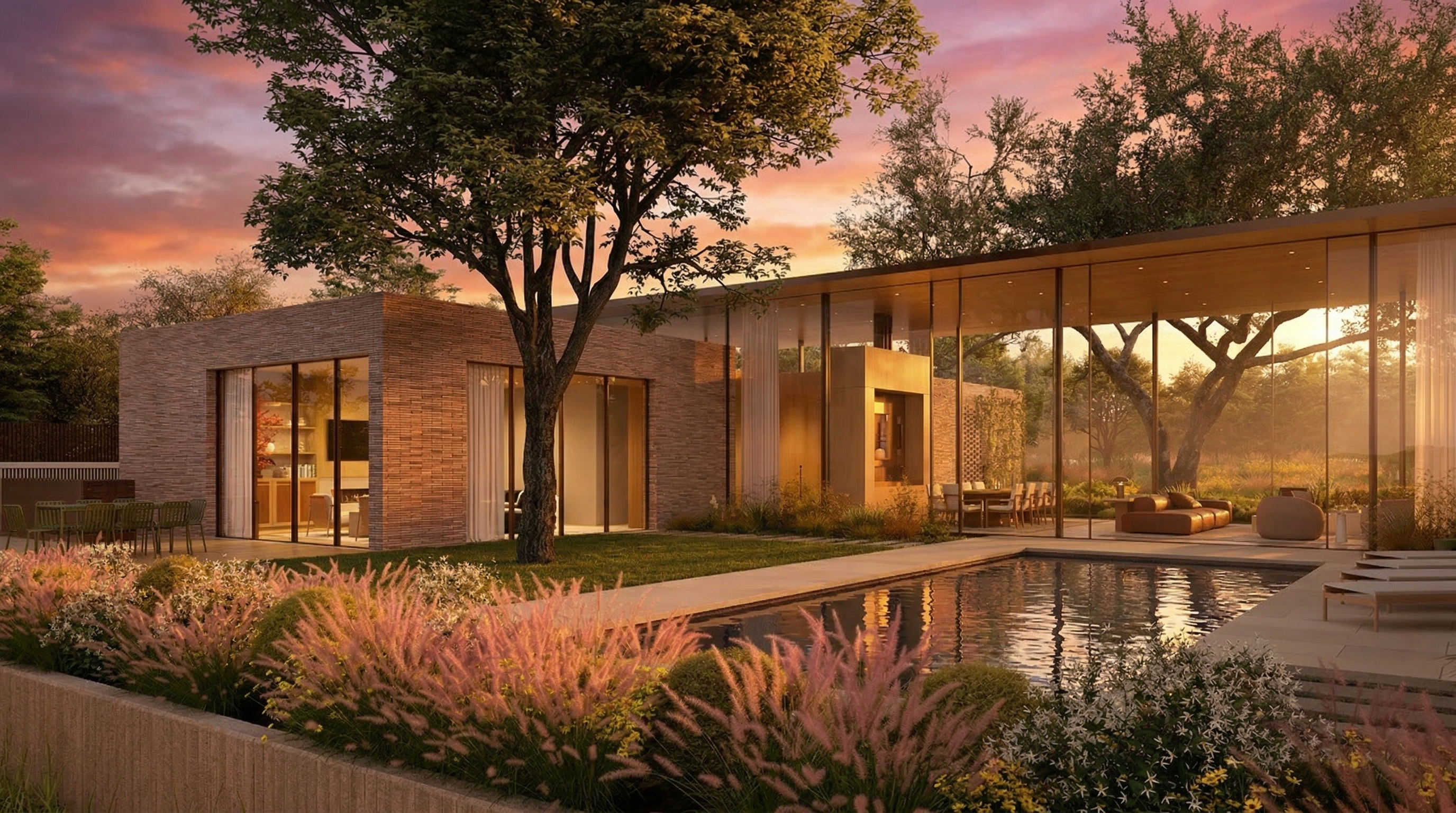
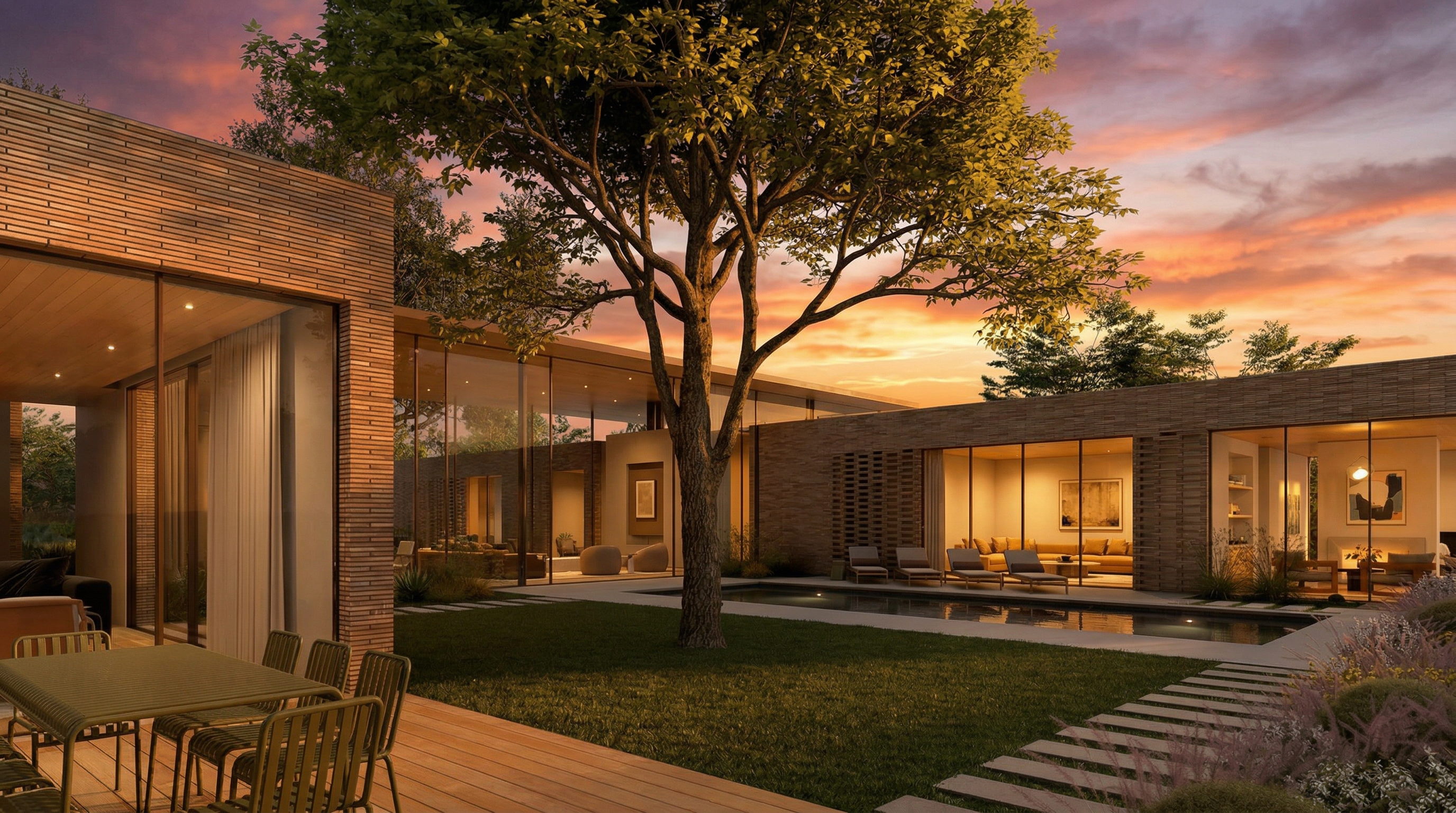
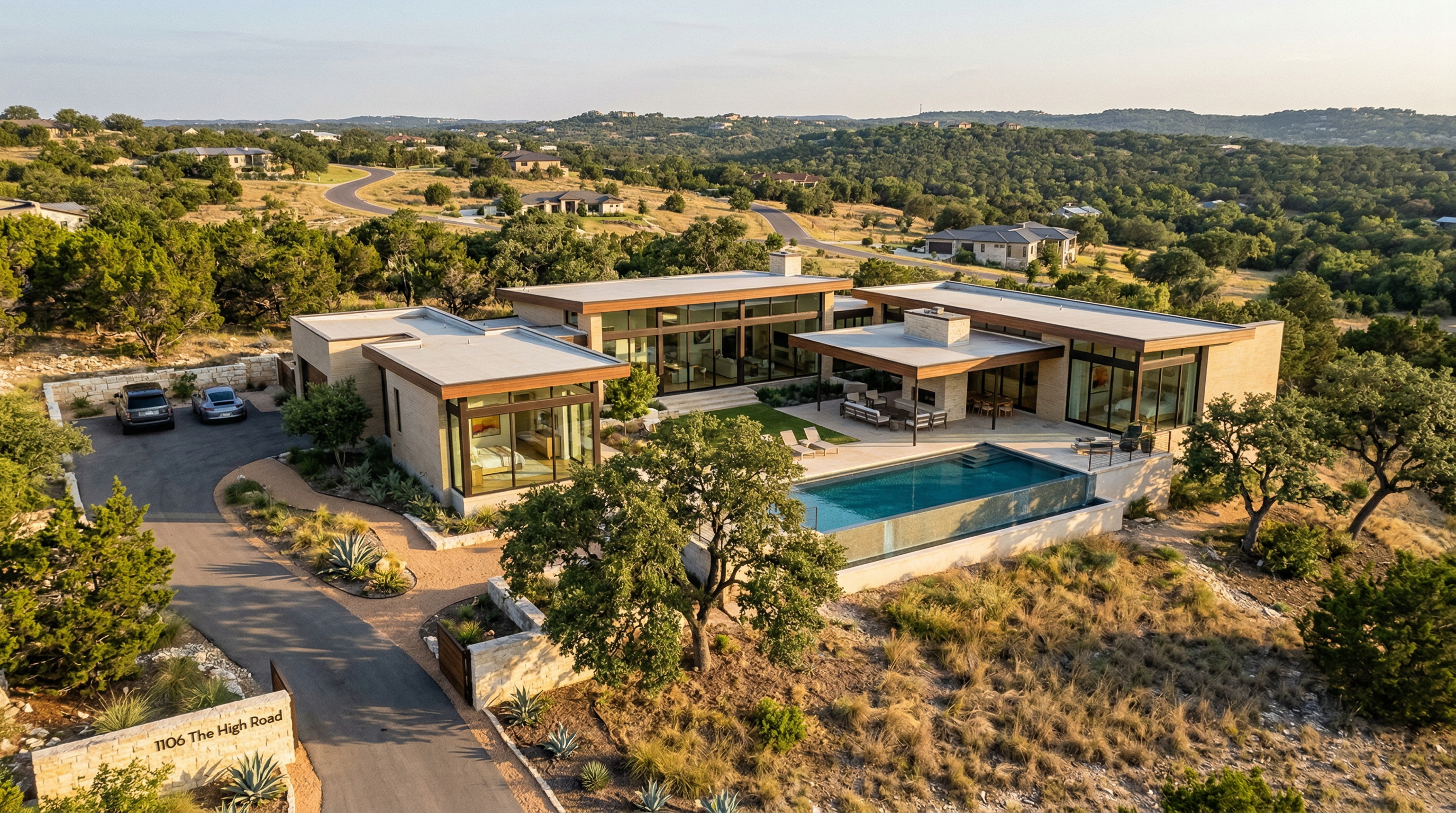
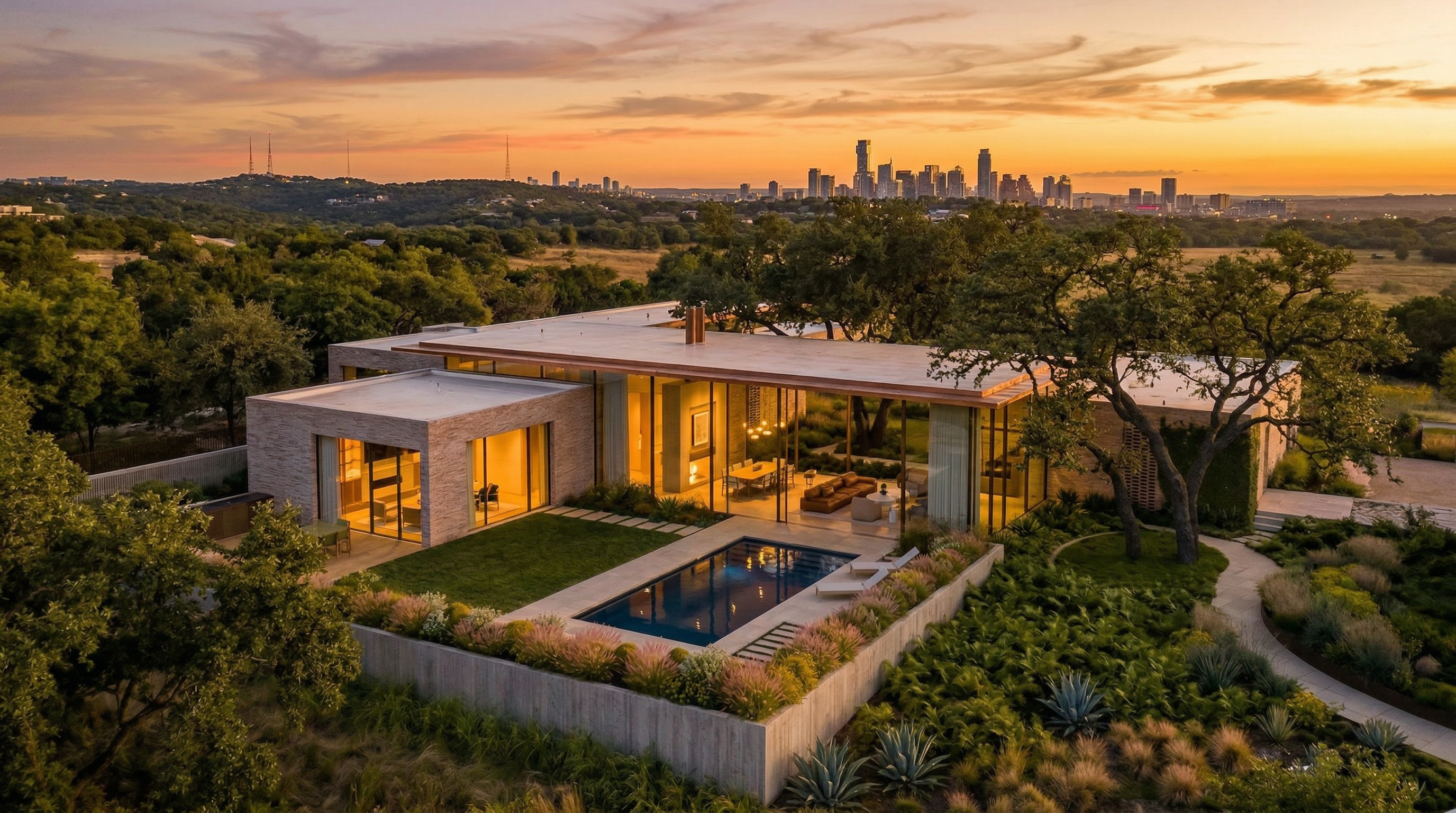
The exterior announces itself with a quiet authority: courses of horizontal brick masonry move across the facade with the precision of a composed sentence, punctuated by expansive glass walls that signal transparency rather than spectacle. The approach, framed by mature oak canopy and a manicured ivy-clad privacy wall, creates a threshold experience—a deliberate decompression before the home fully reveals itself.
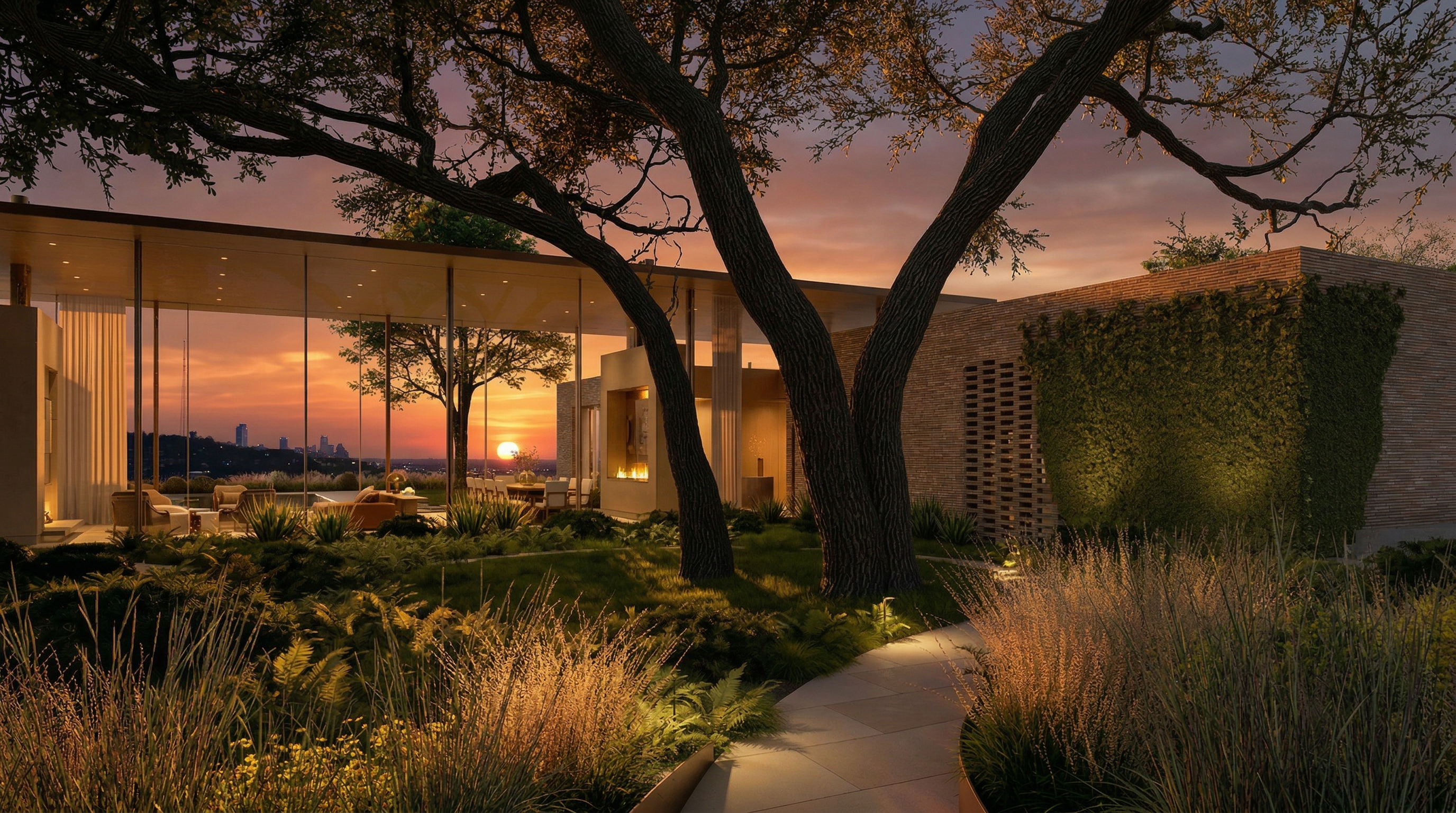
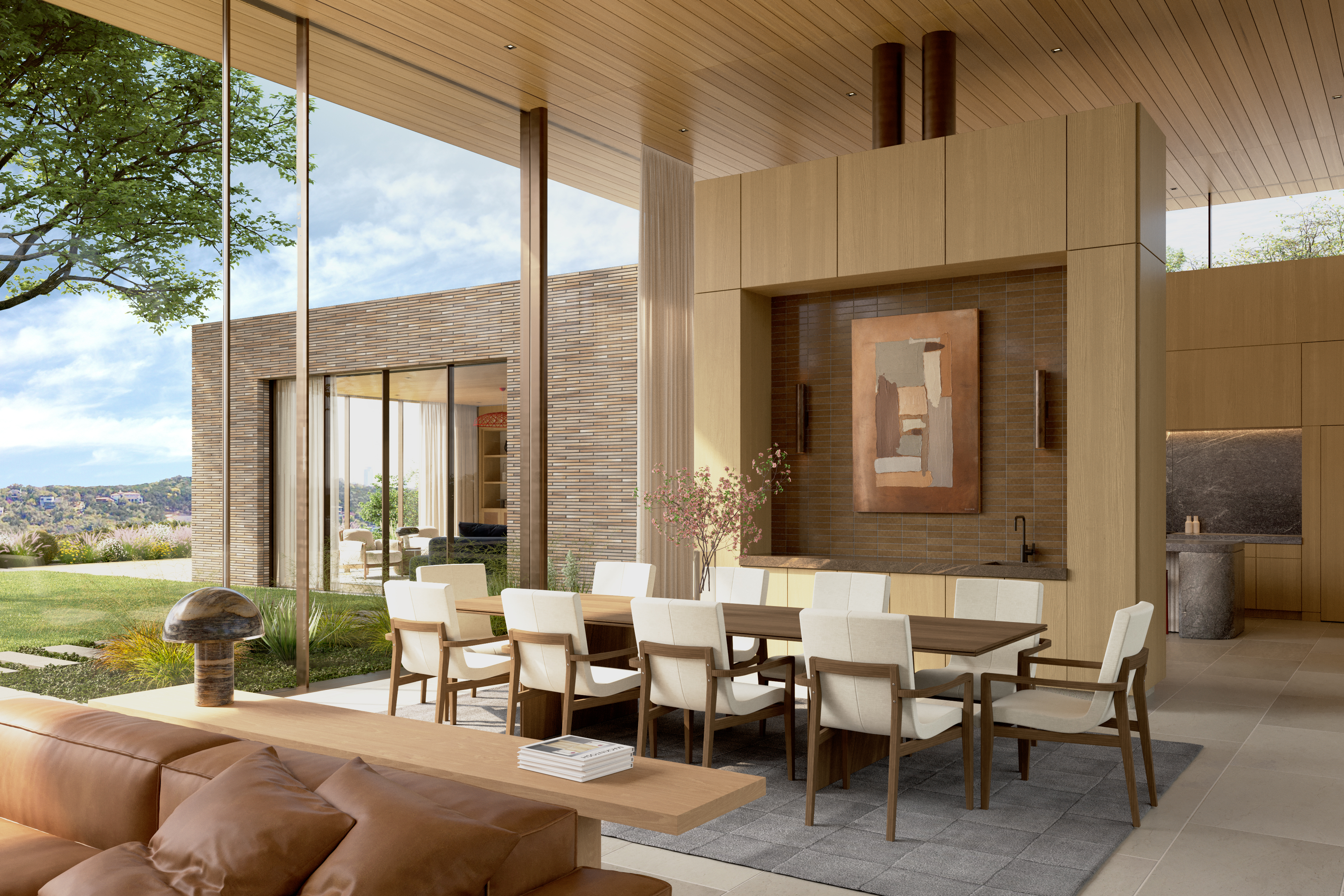
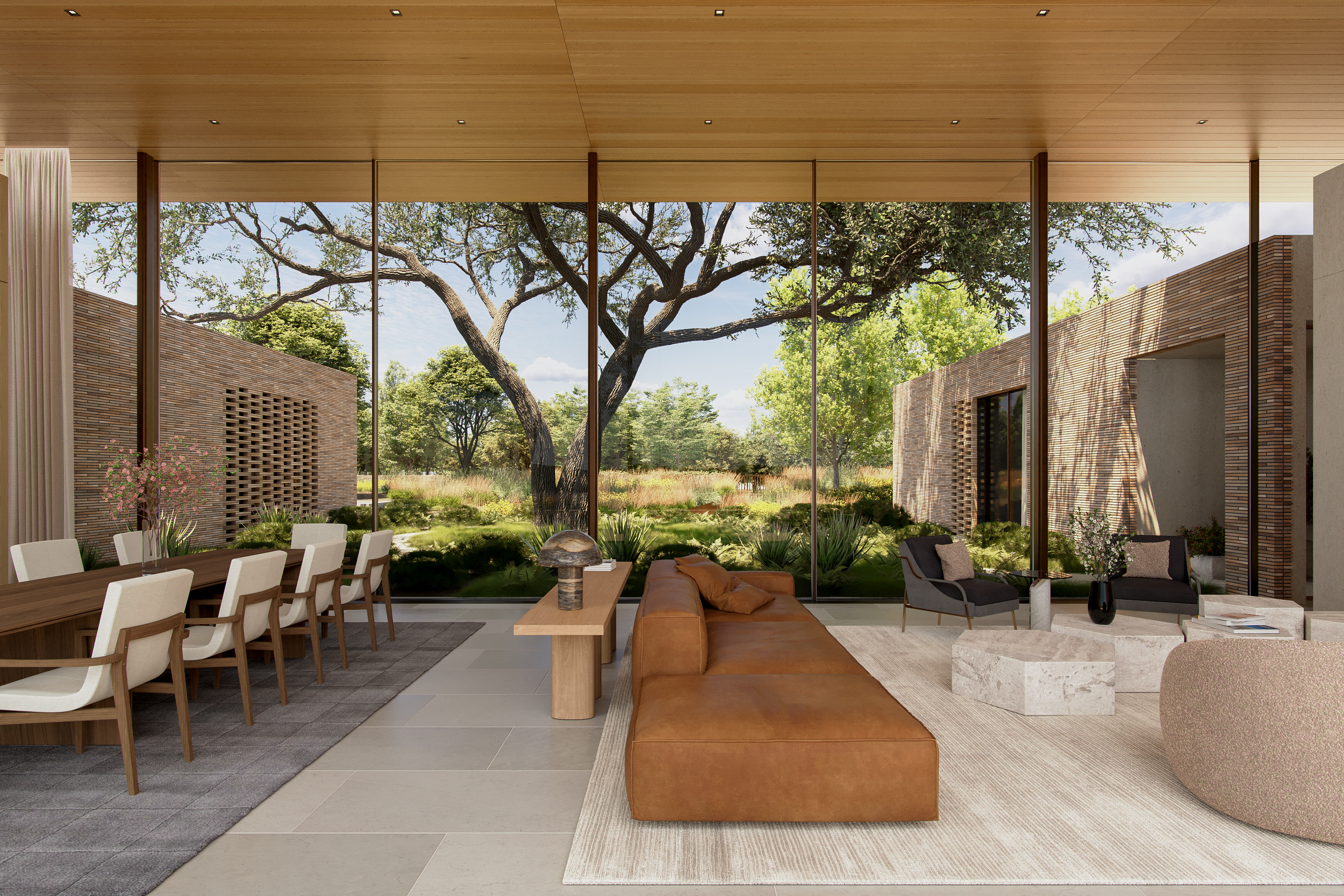
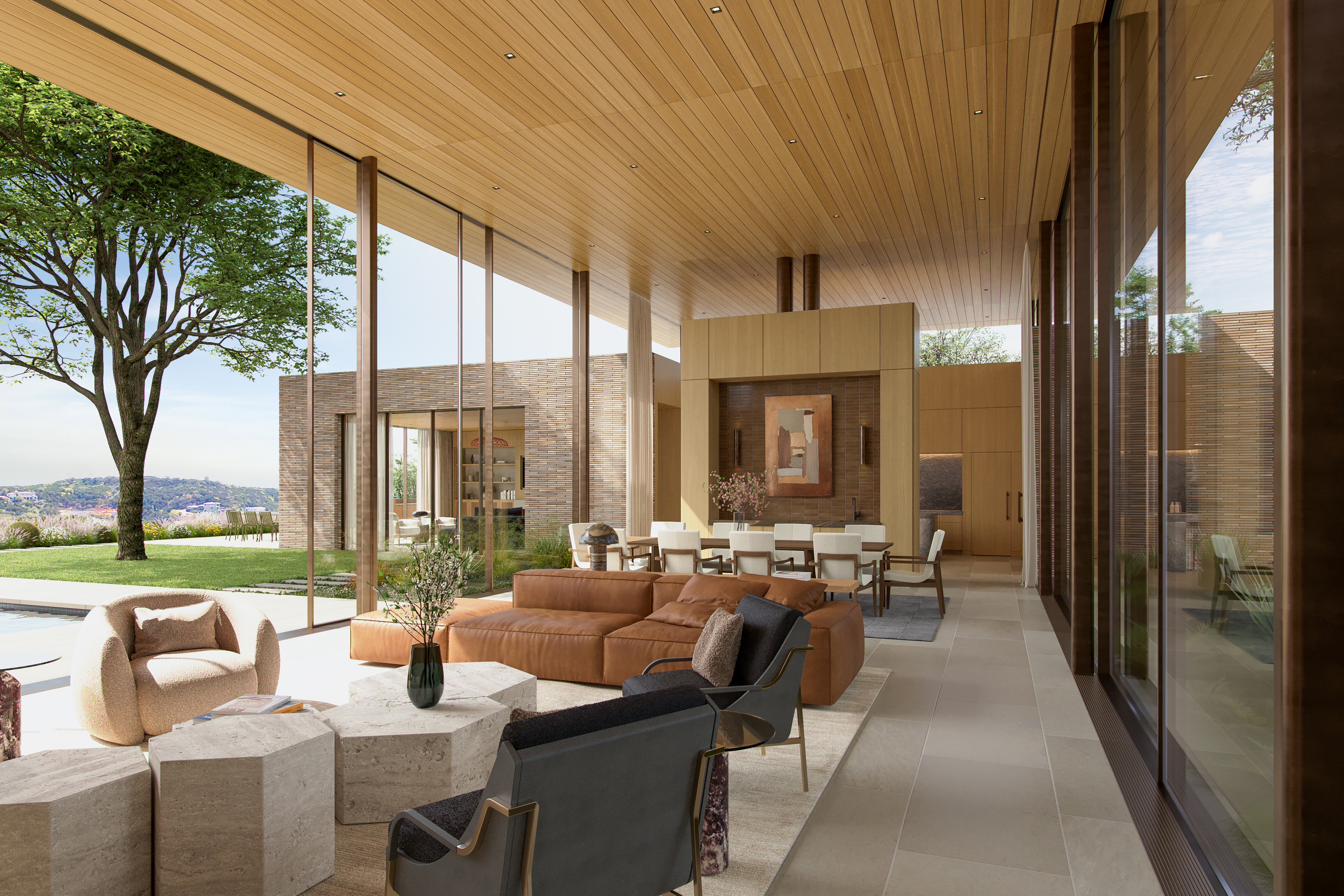
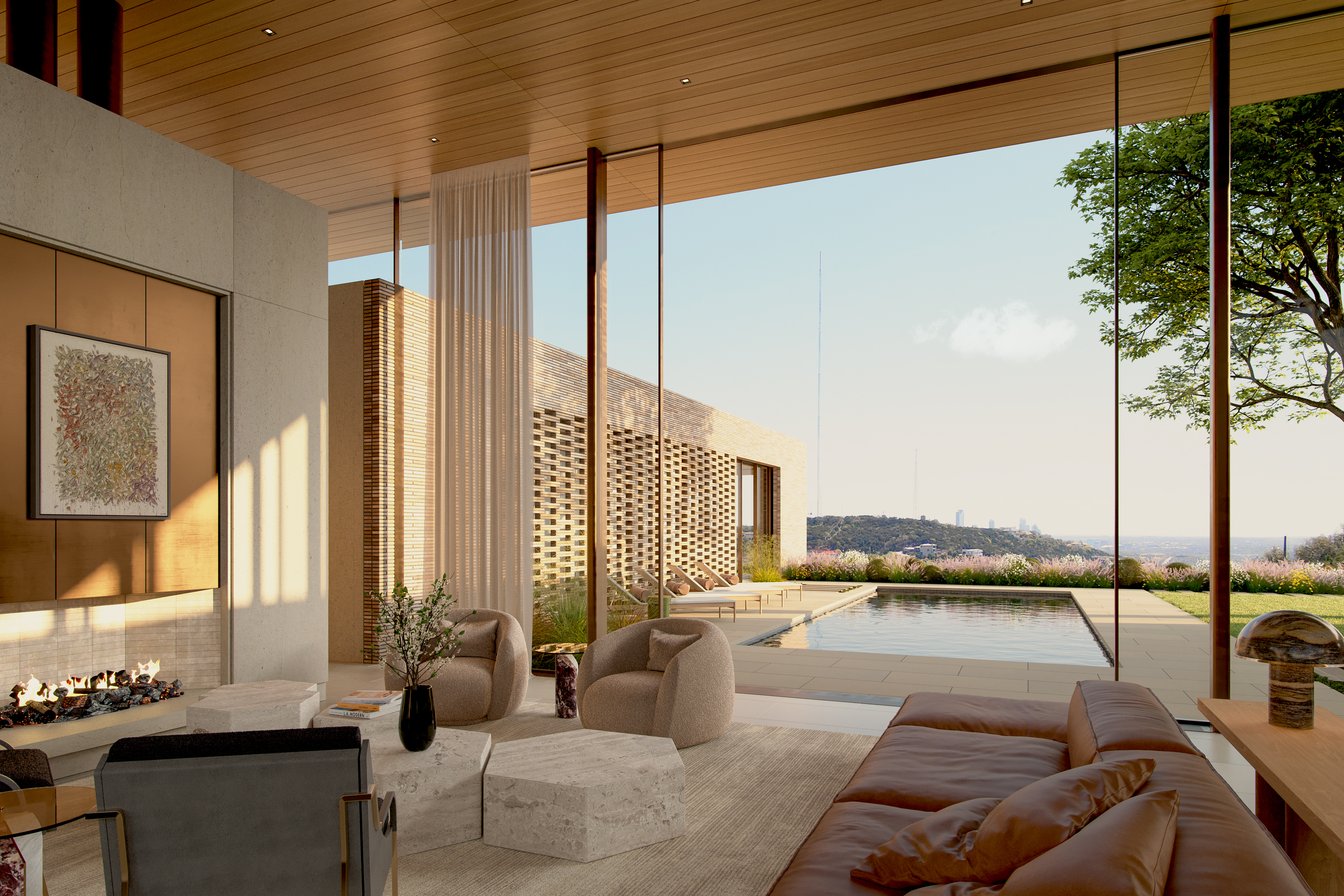
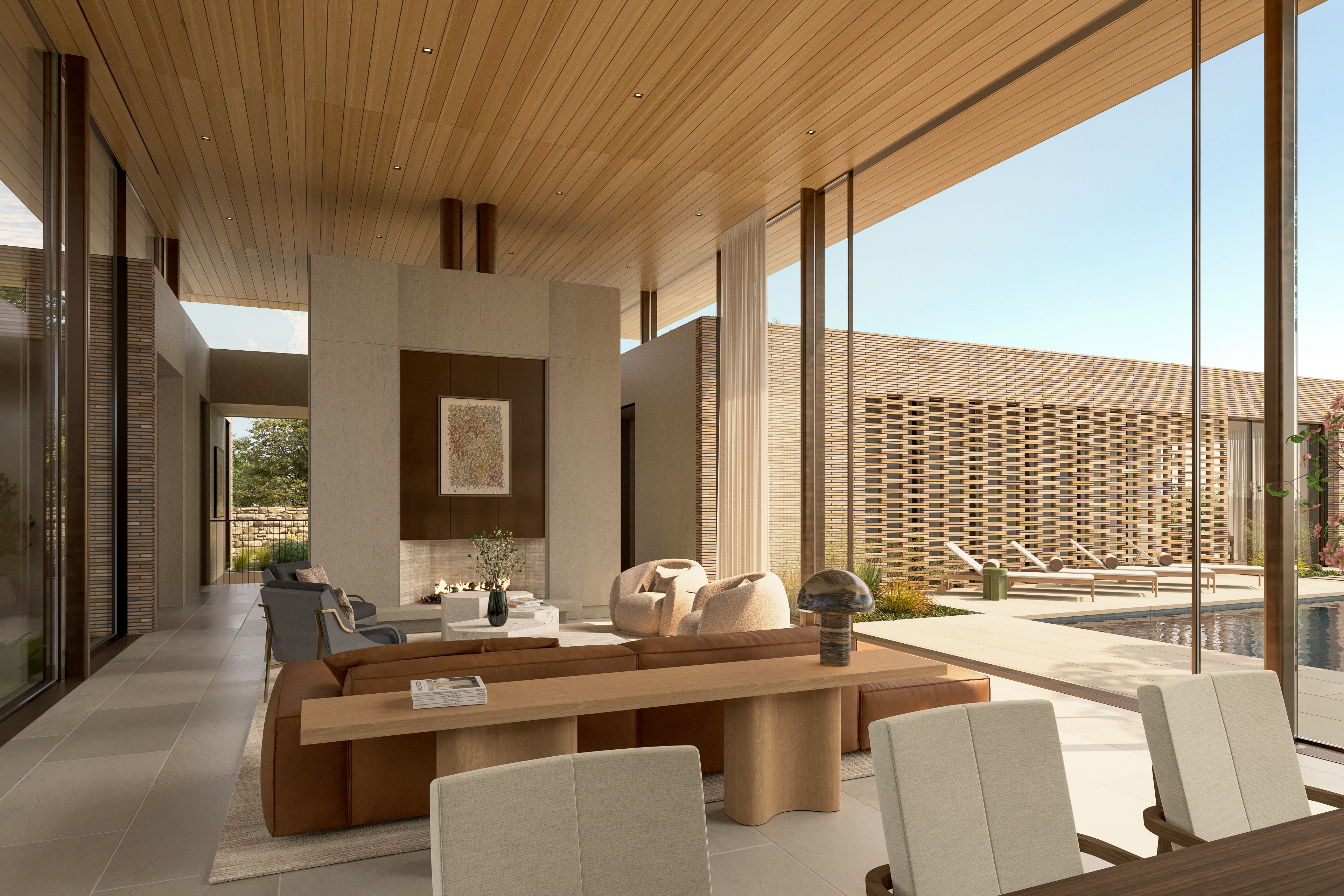
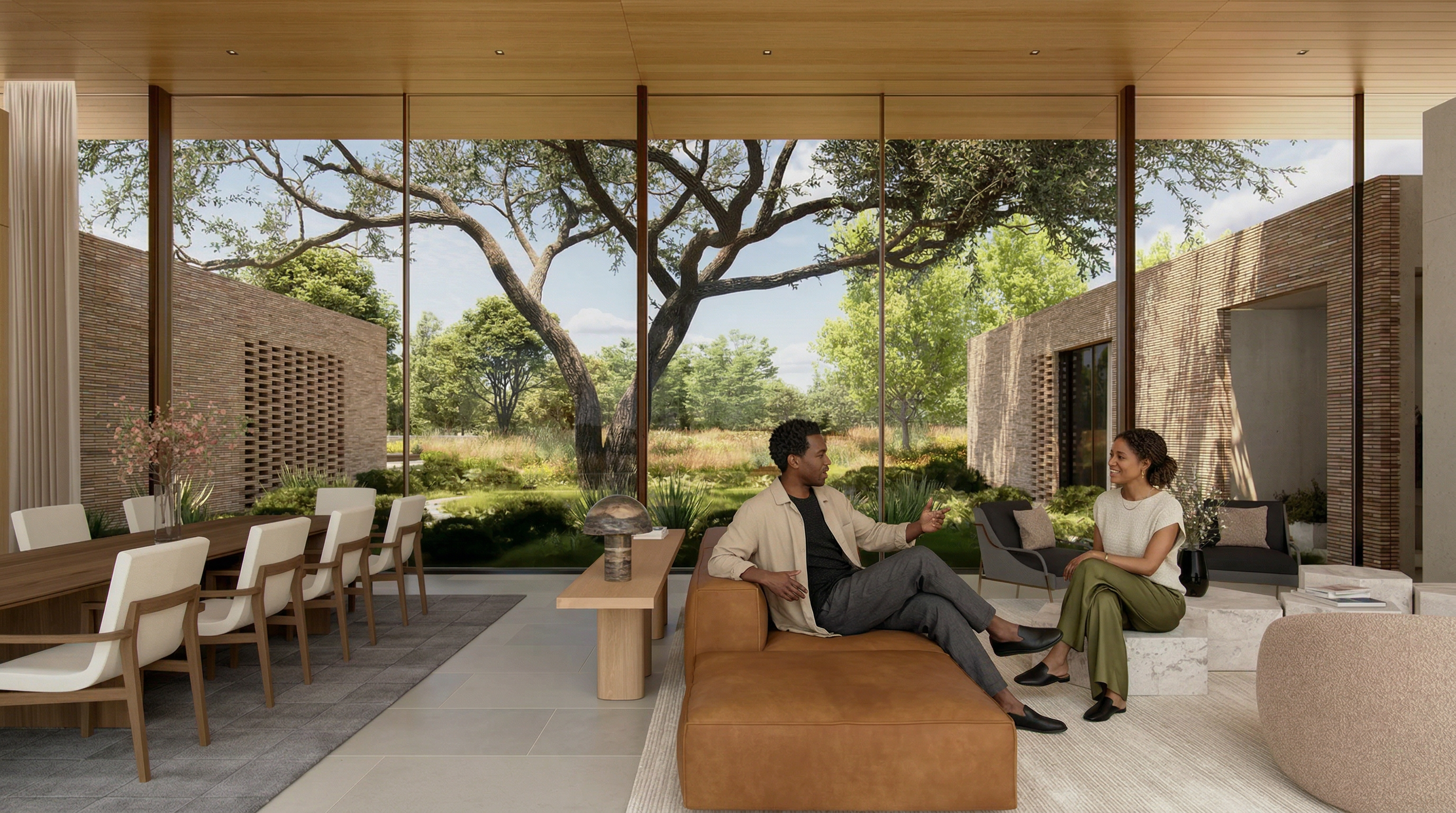
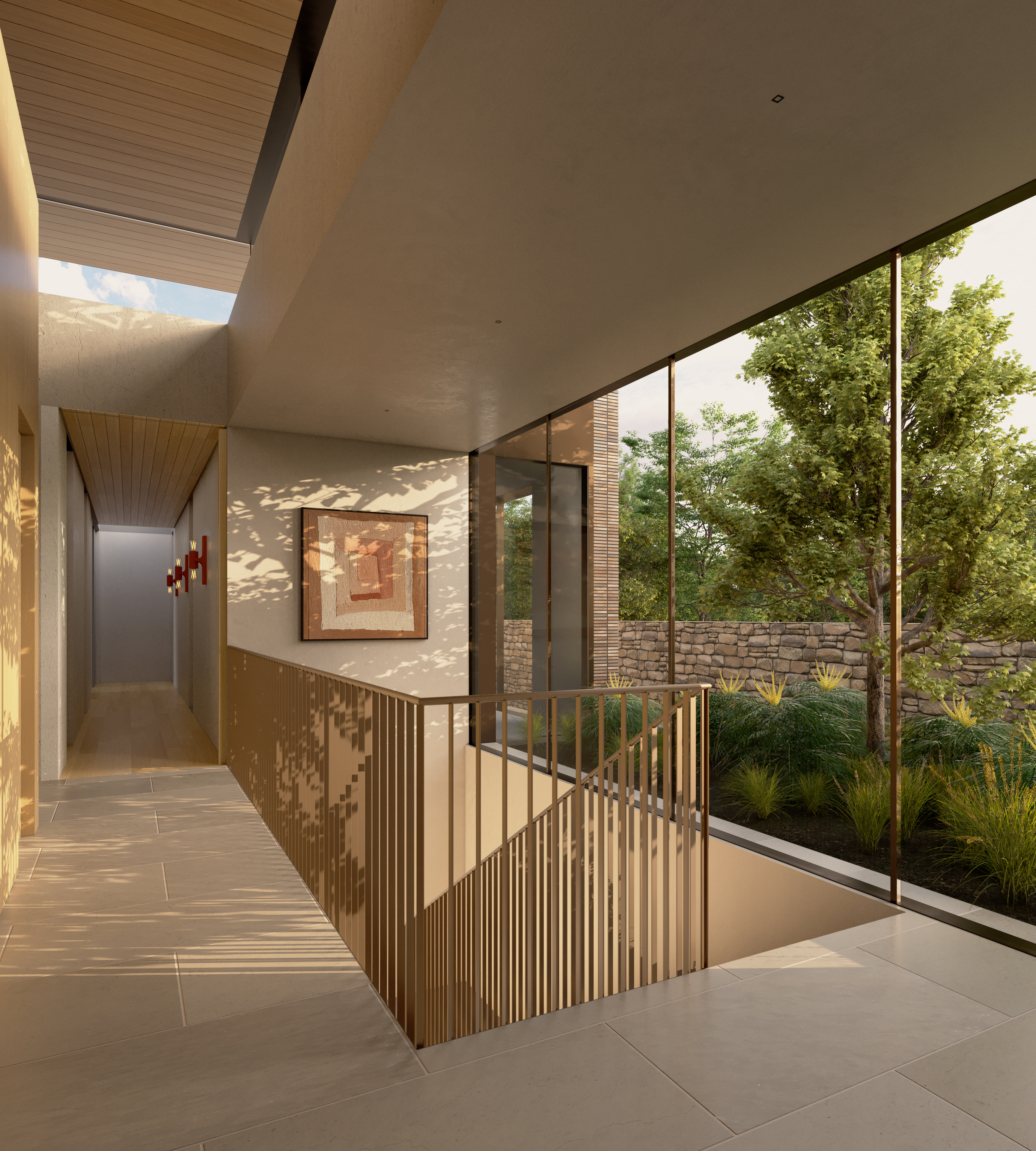
Step inside, and the architecture opens without apology. Wood-paneled ceilings draw the eye forward across a fluid interior landscape, while natural stone flooring—cool, permanent, and quietly beautiful—anchors every space with a sense of geological calm. The floor-to-ceiling glass walls are the home's defining gesture: they do not merely admit light, they invite the hillside inside, making the rolling terrain and the city beyond feel like curated extensions of the living room itself.
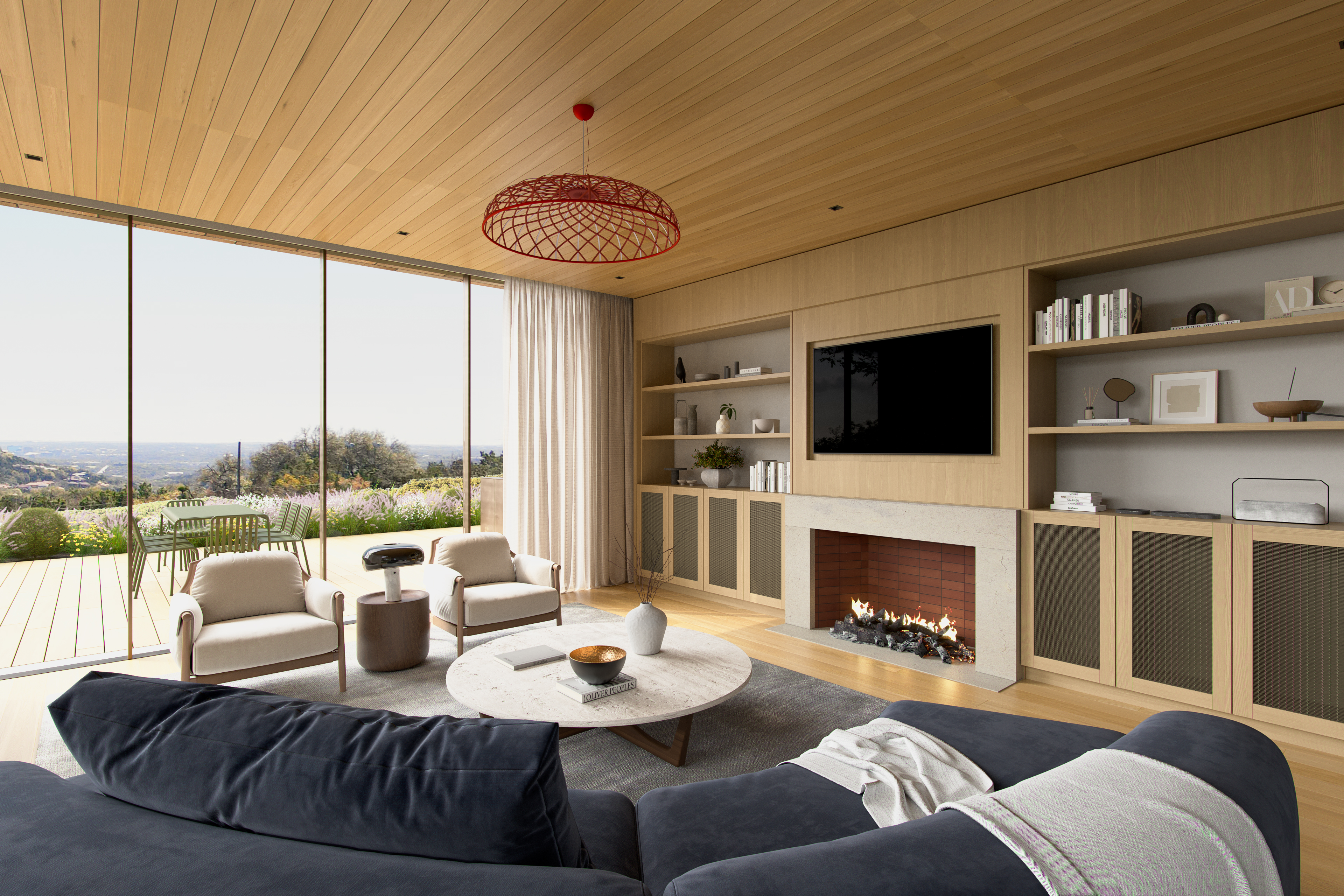
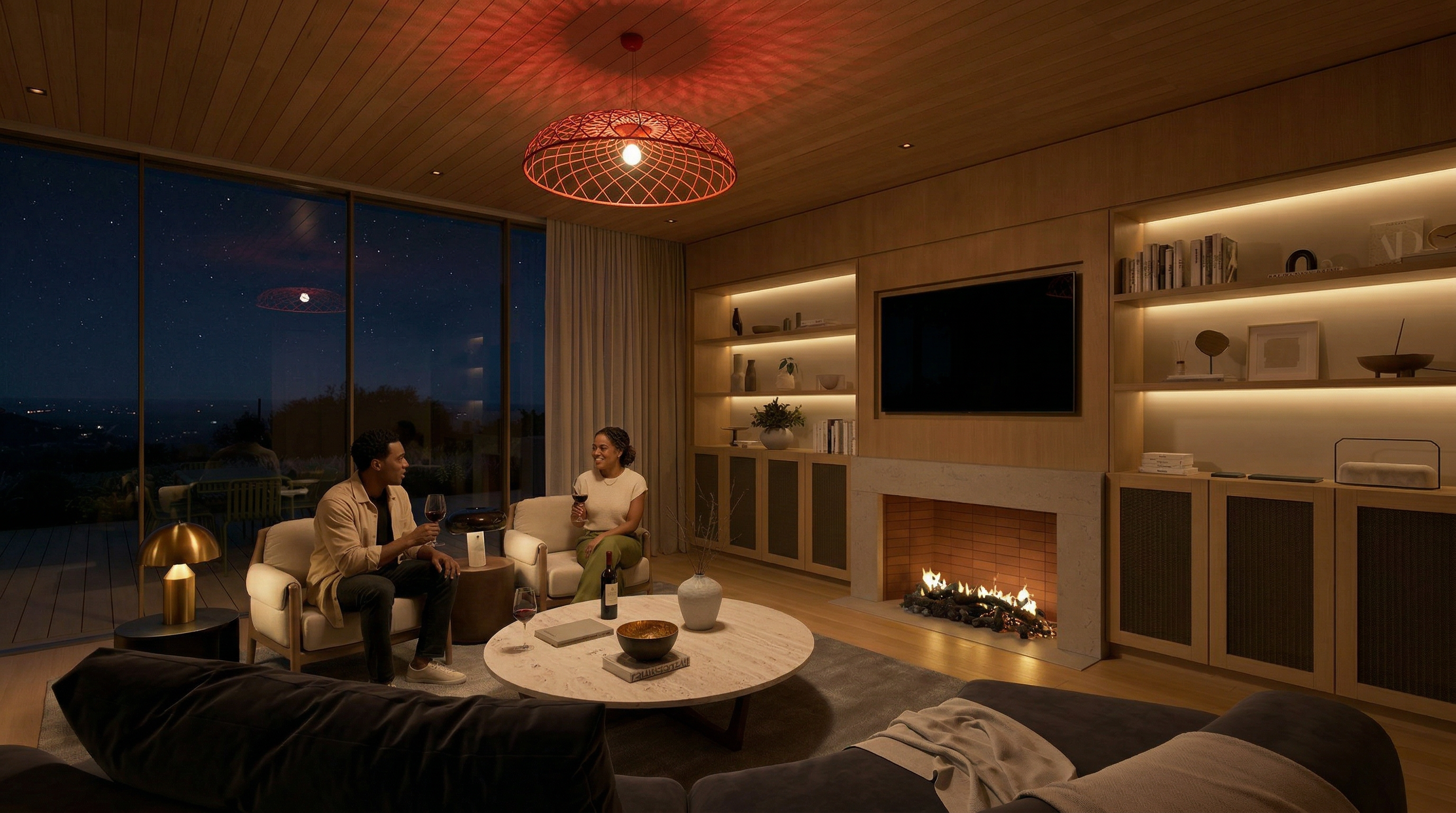
The great room is organized around a stone fireplace flanked by custom light-wood built-in shelving—a composition that balances warmth with architectural precision. The surrounding seating, positioned to capture both the hearth and the panoramic views simultaneously, reflects the home's fundamental philosophy: that comfort and beauty need not compete.
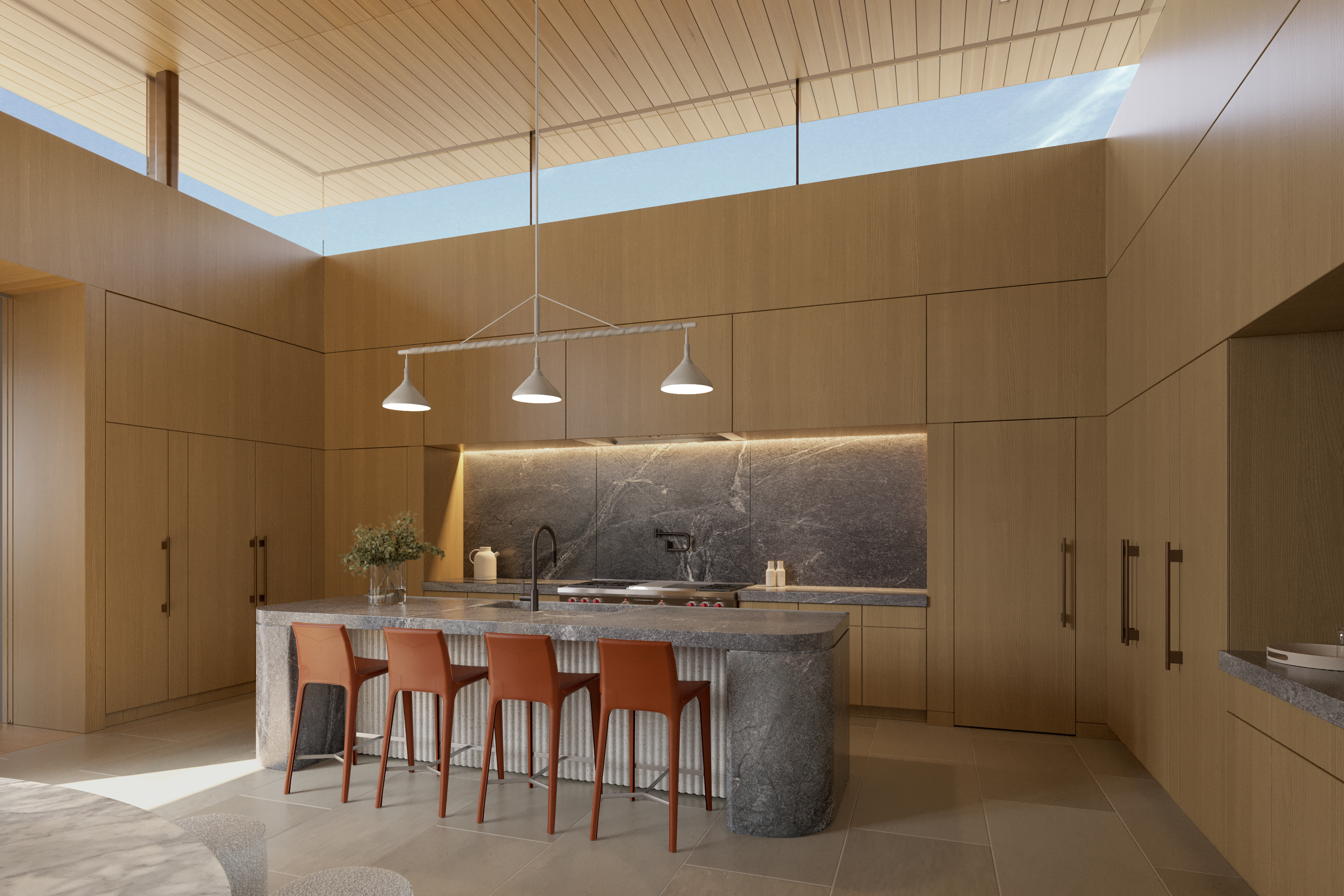
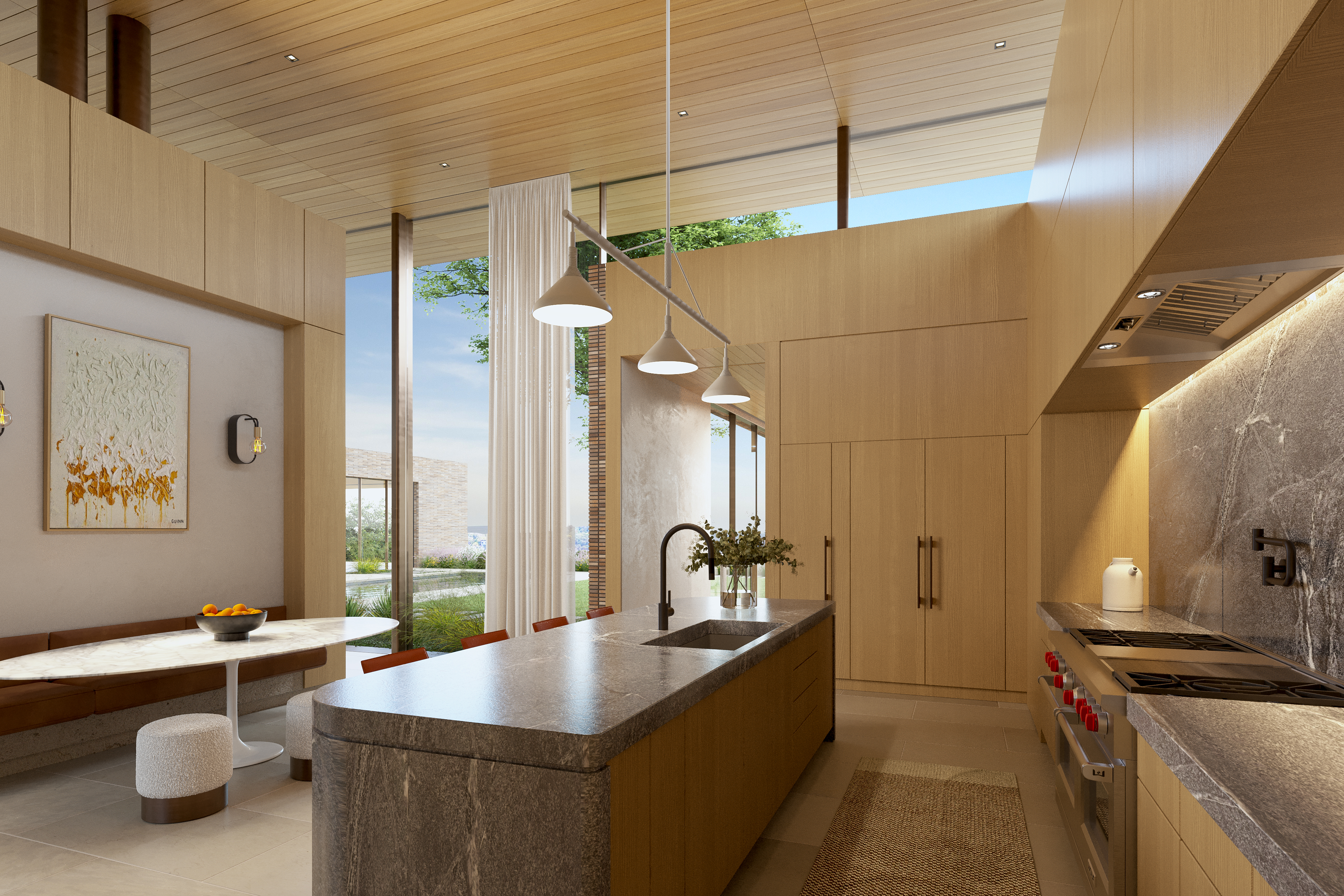
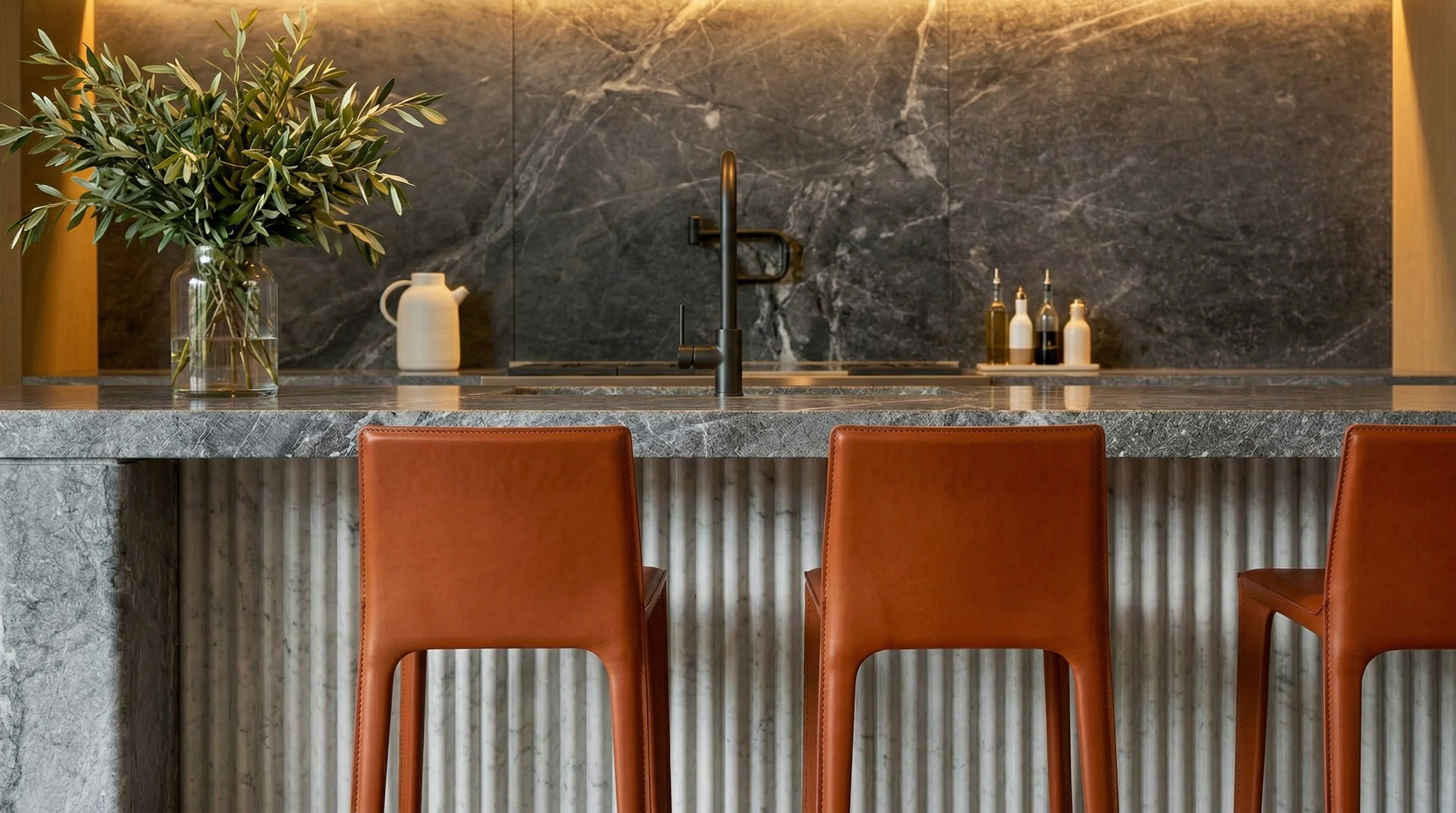
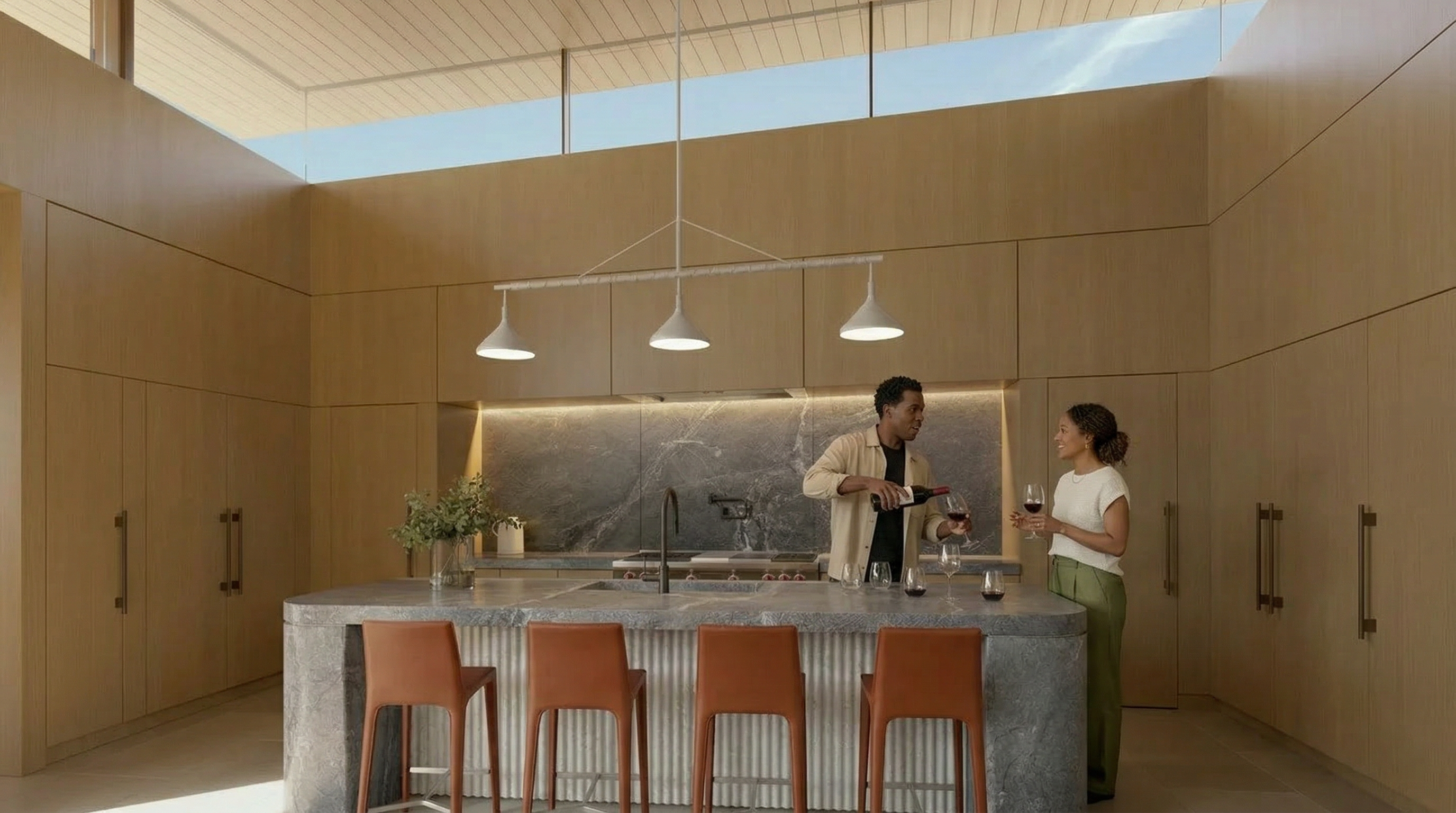
The kitchen is a study in sensory layering. Clerestory windows pull natural light deep into the space, casting it across warm wood cabinetry and a large stone-topped island with distinctive ribbed detailing and rounded ends—an island that functions as both a culinary worksurface and a social gathering point. The dark marble backsplash, illuminated by integrated under-cabinet lighting, provides dramatic counterpoint, while the overall composition rewards the serious entertainer as much as the daily cook.
The open-concept flow between kitchen, dining, and living is seamless, every sight line deliberate—a reminder that the home's designer understood the difference between open-plan and well-planned.
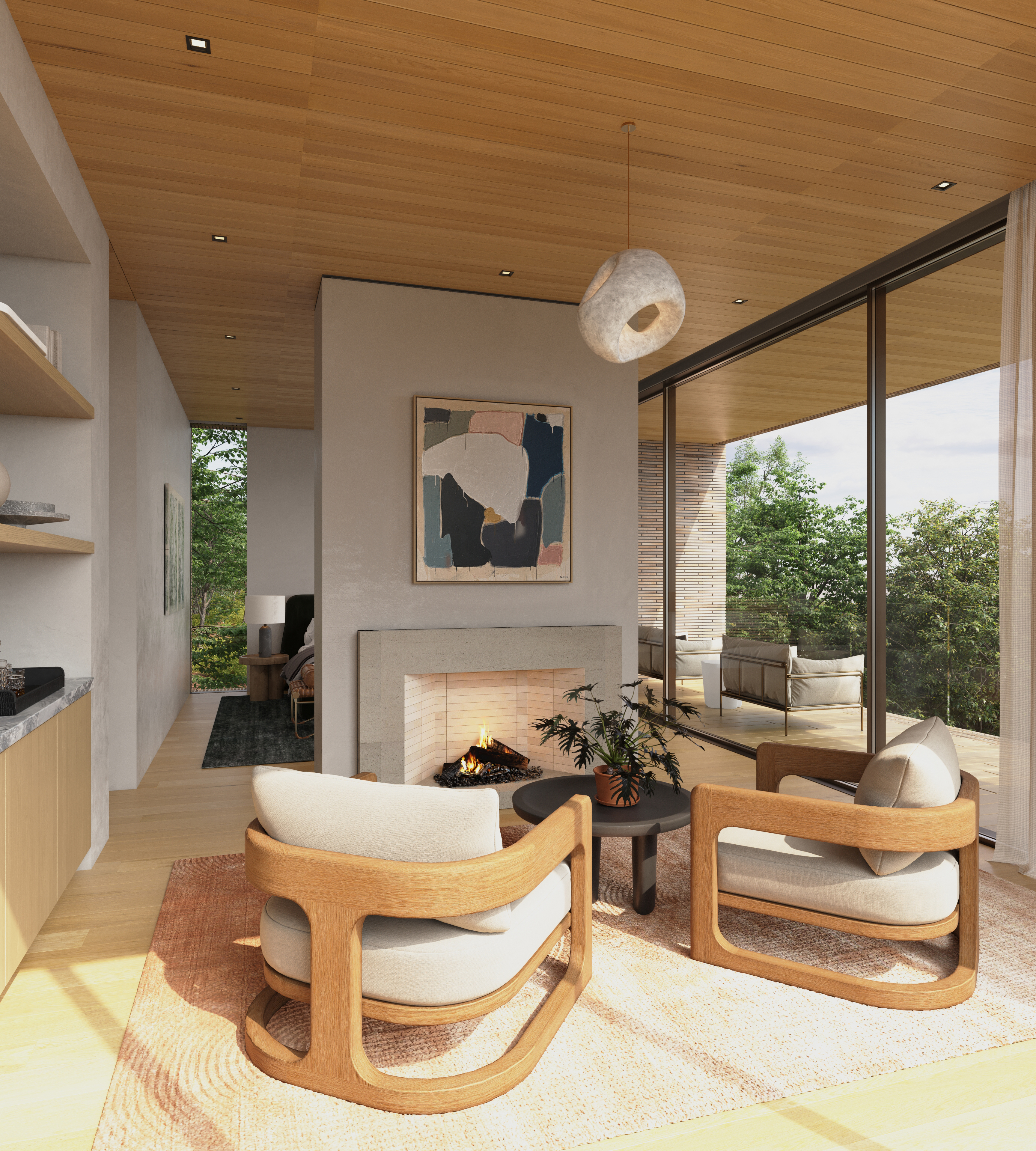
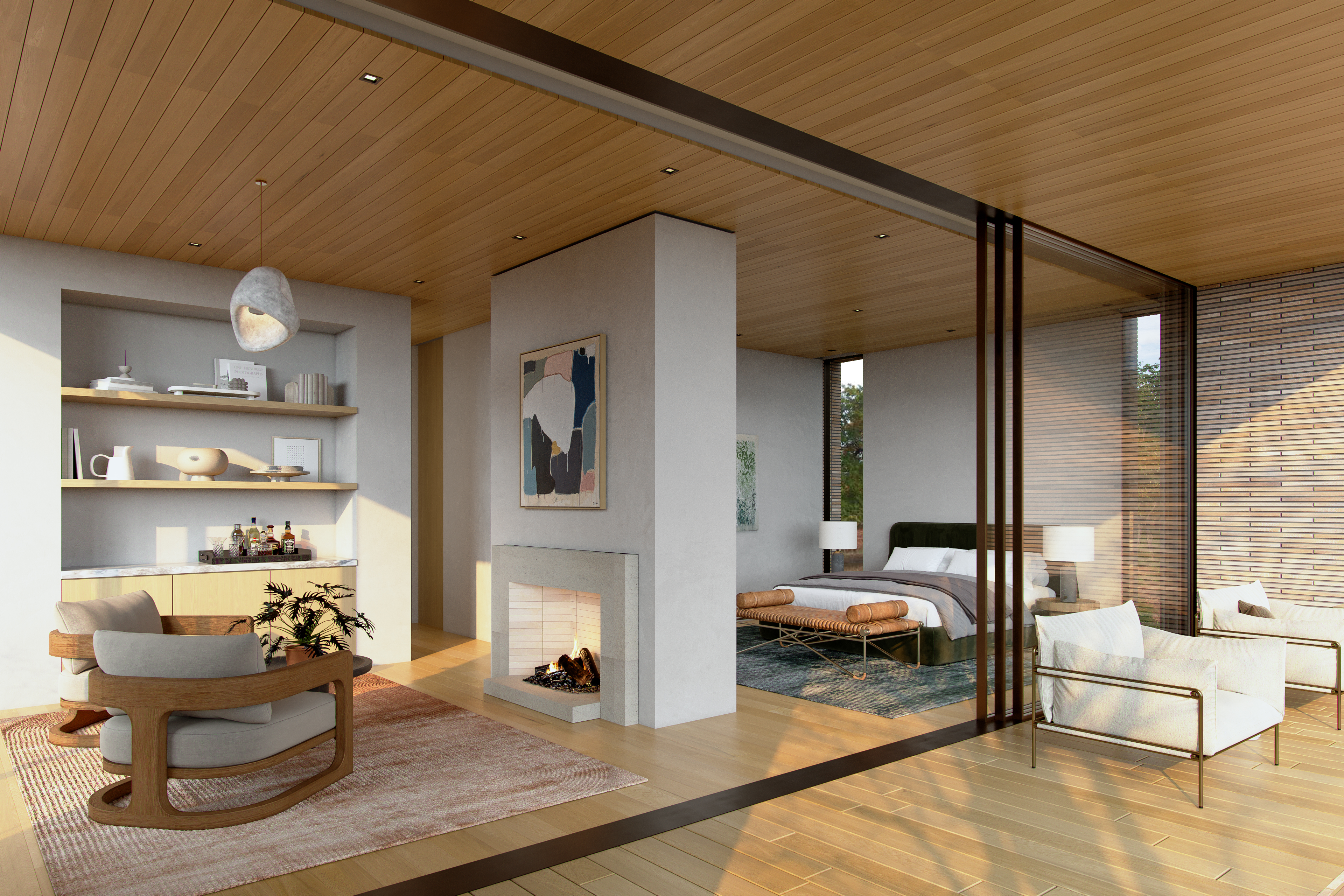
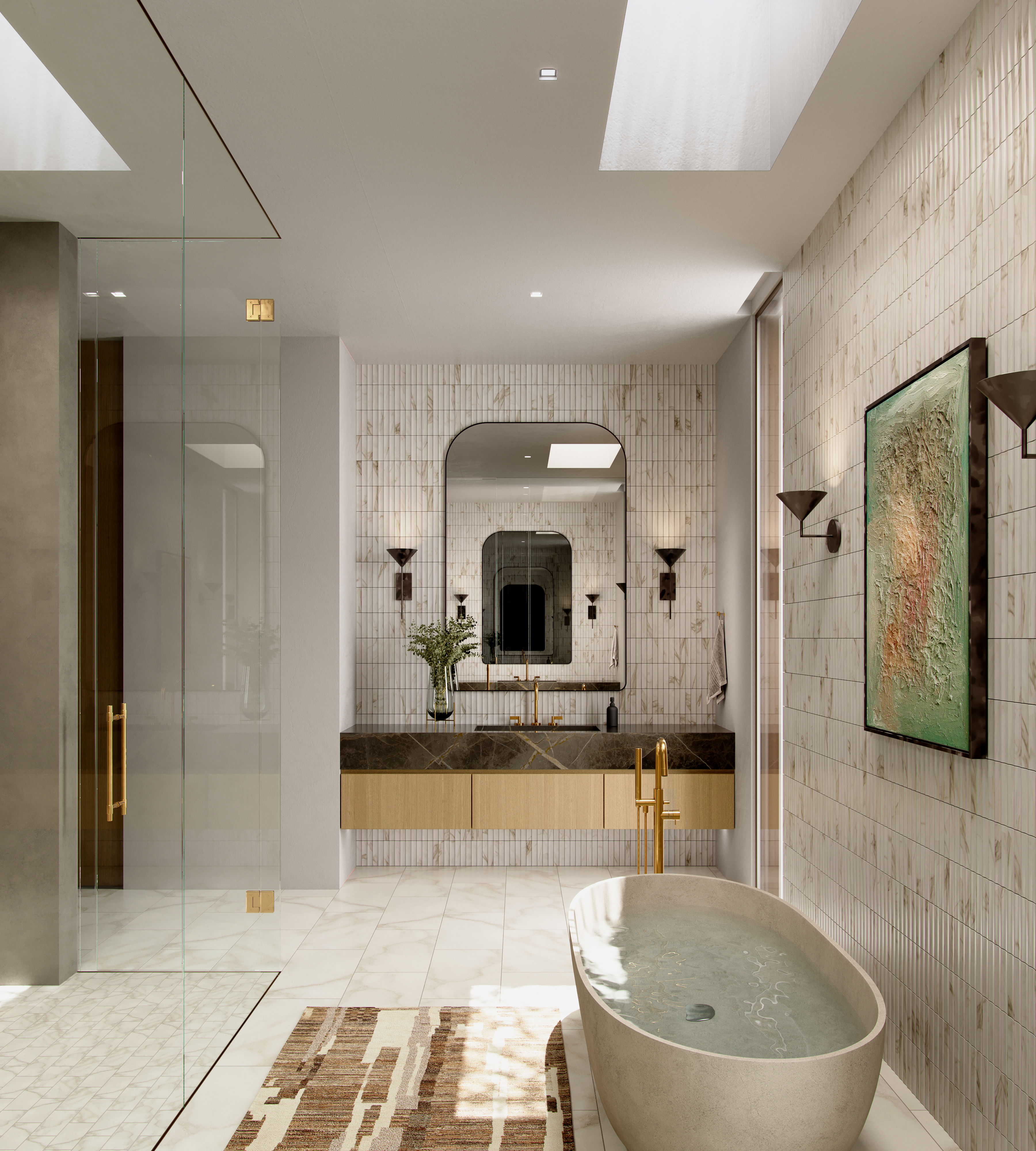
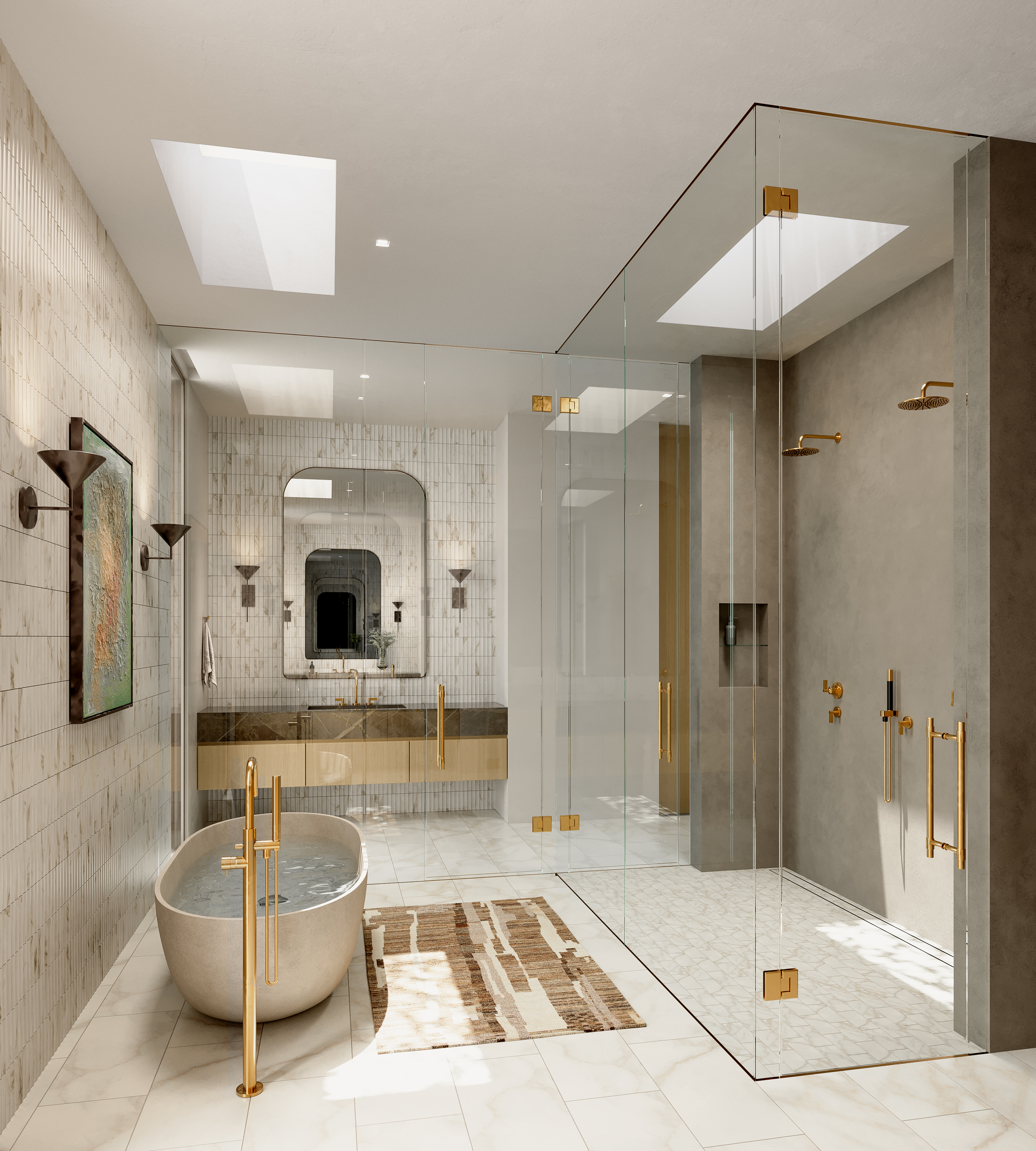
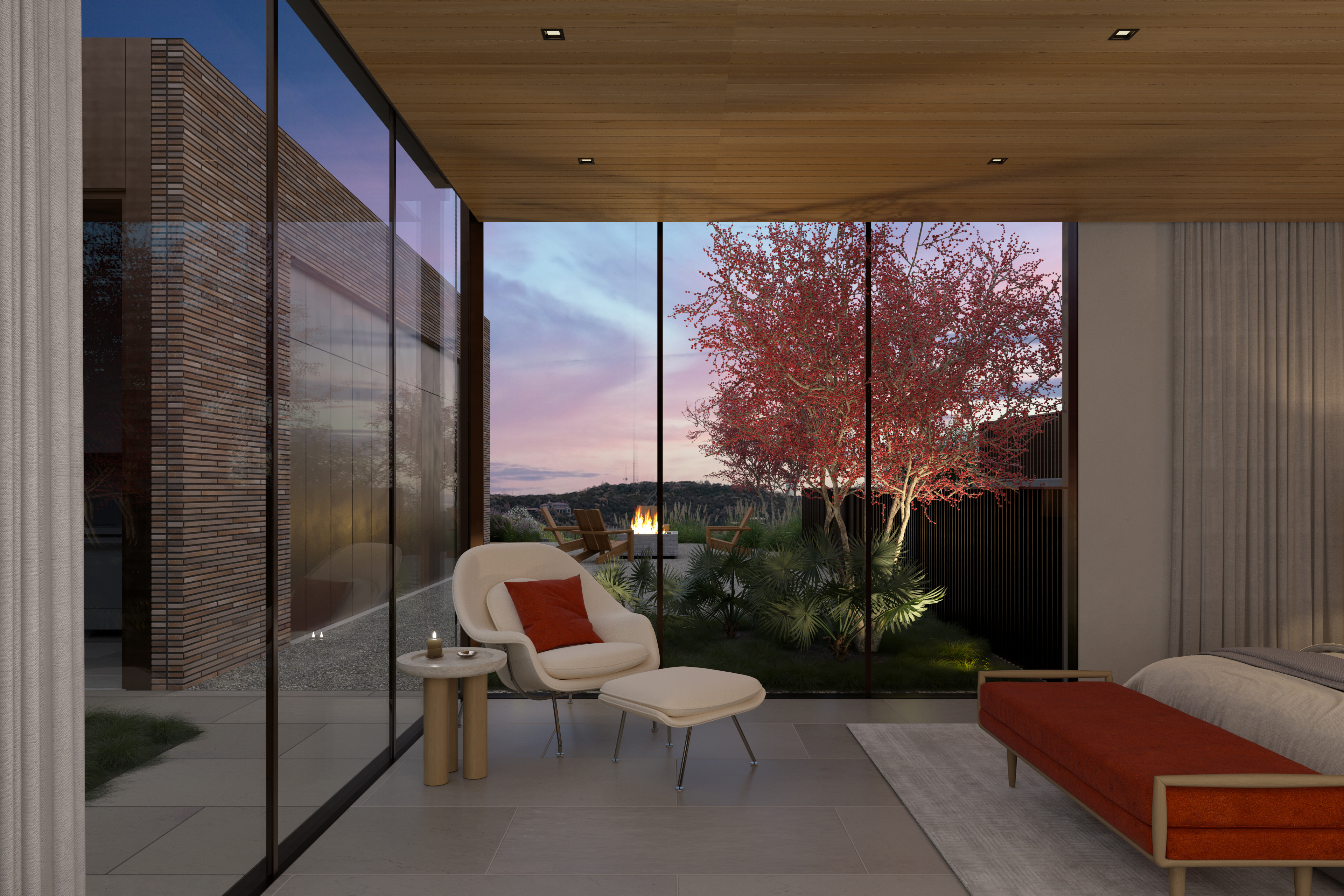
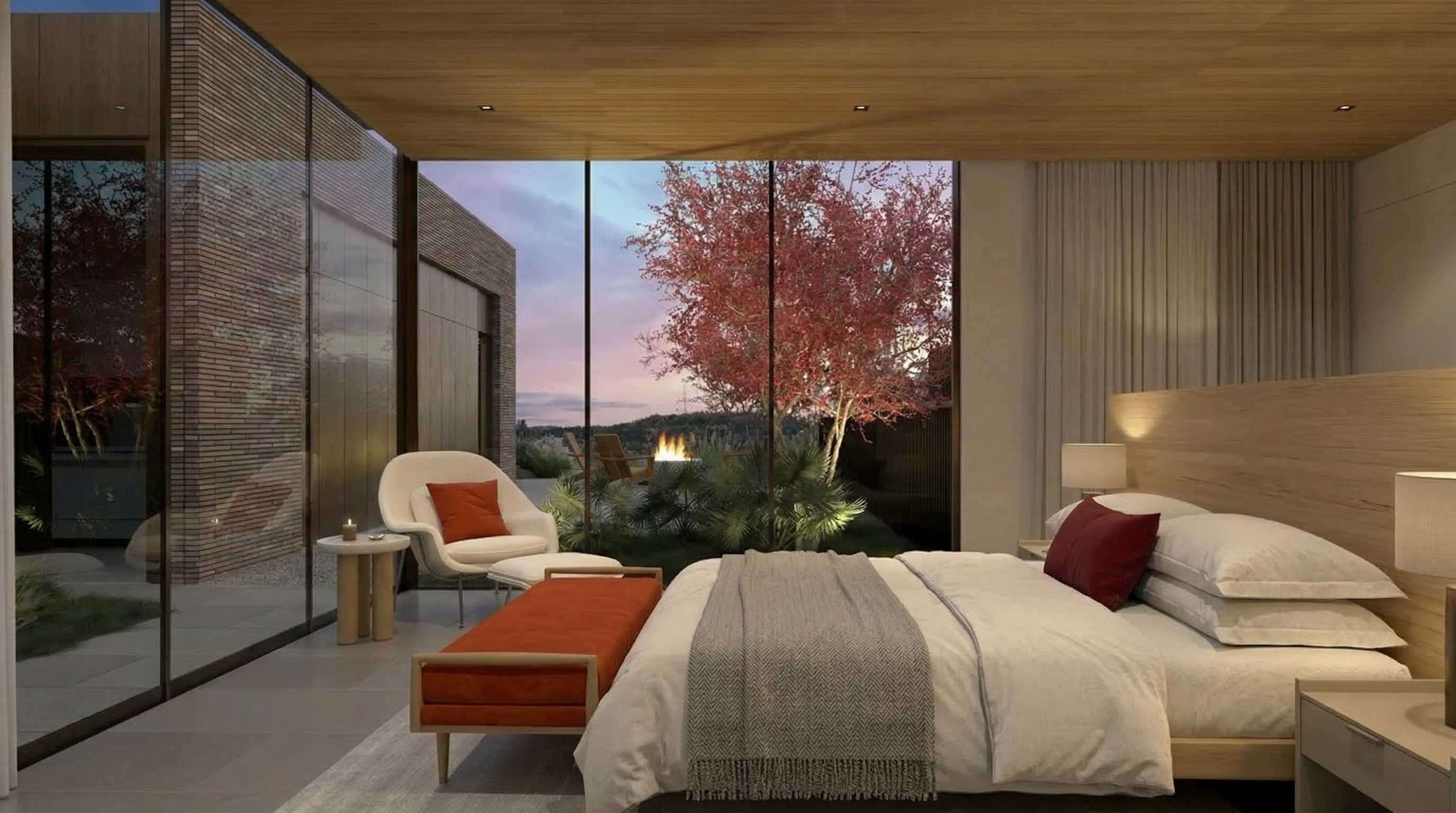
The primary suite continues the language of calm precision. Floor-to-ceiling glass opens directly to a private courtyard, creating an intimate indoor-outdoor dialogue separate from the more expansive views of the main living areas. The spa-caliber bathroom is finished in natural stone throughout, anchored by a freestanding soaking tub positioned beneath dual skylights and complemented by a glass-enclosed walk-in shower and a floating double vanity with brass fixtures—a space that functions as both sanctuary and ritual.
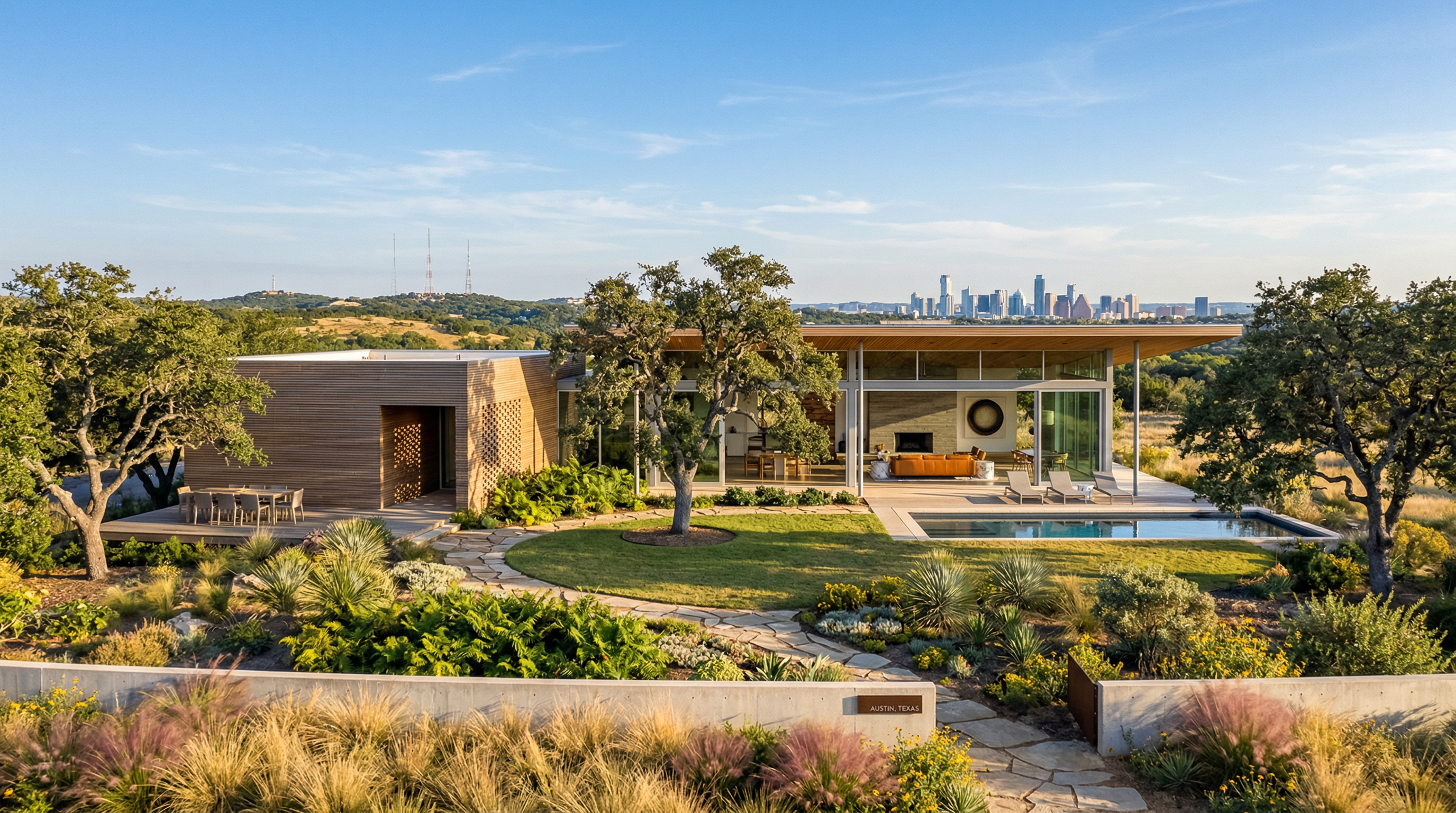
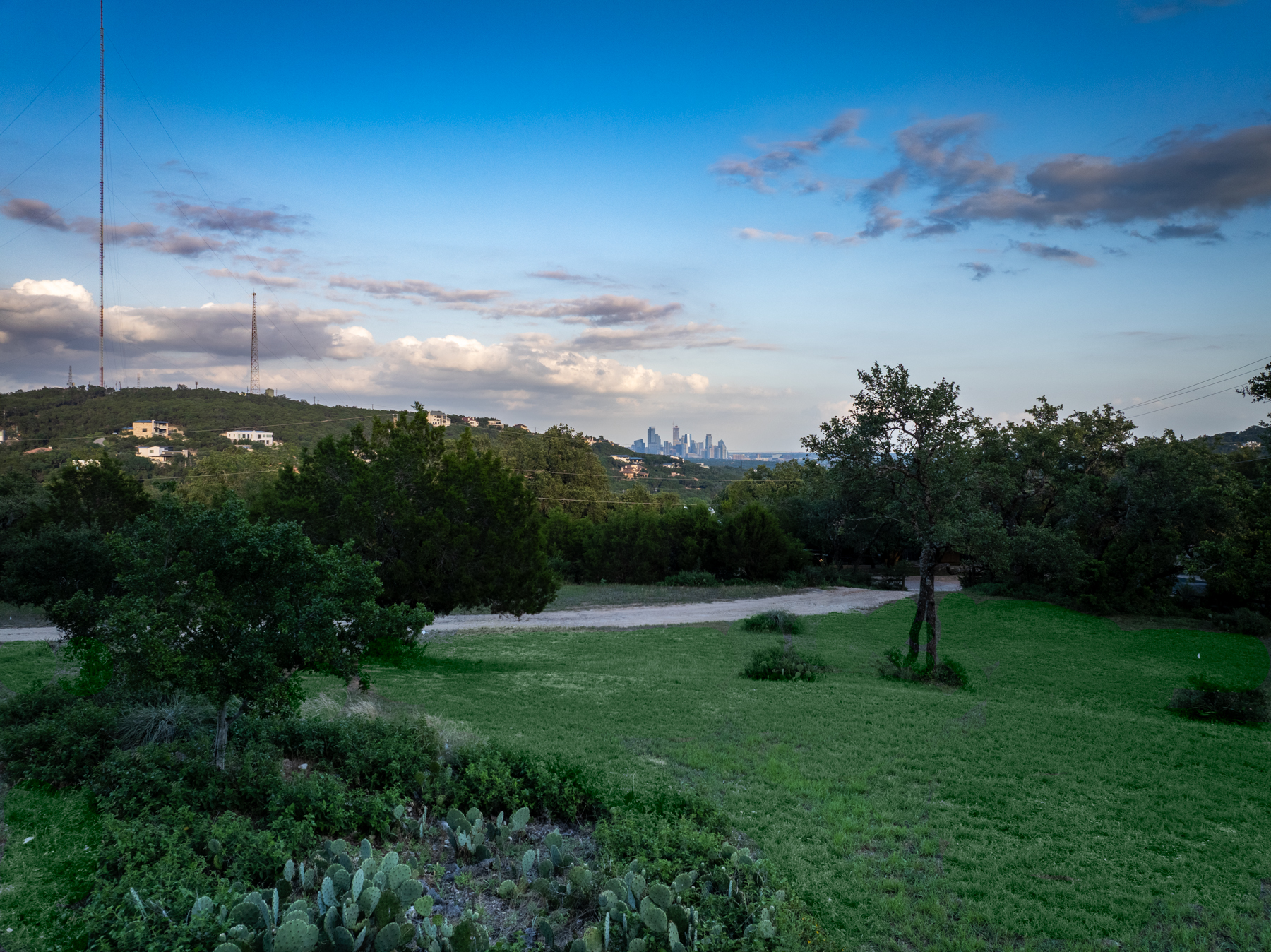
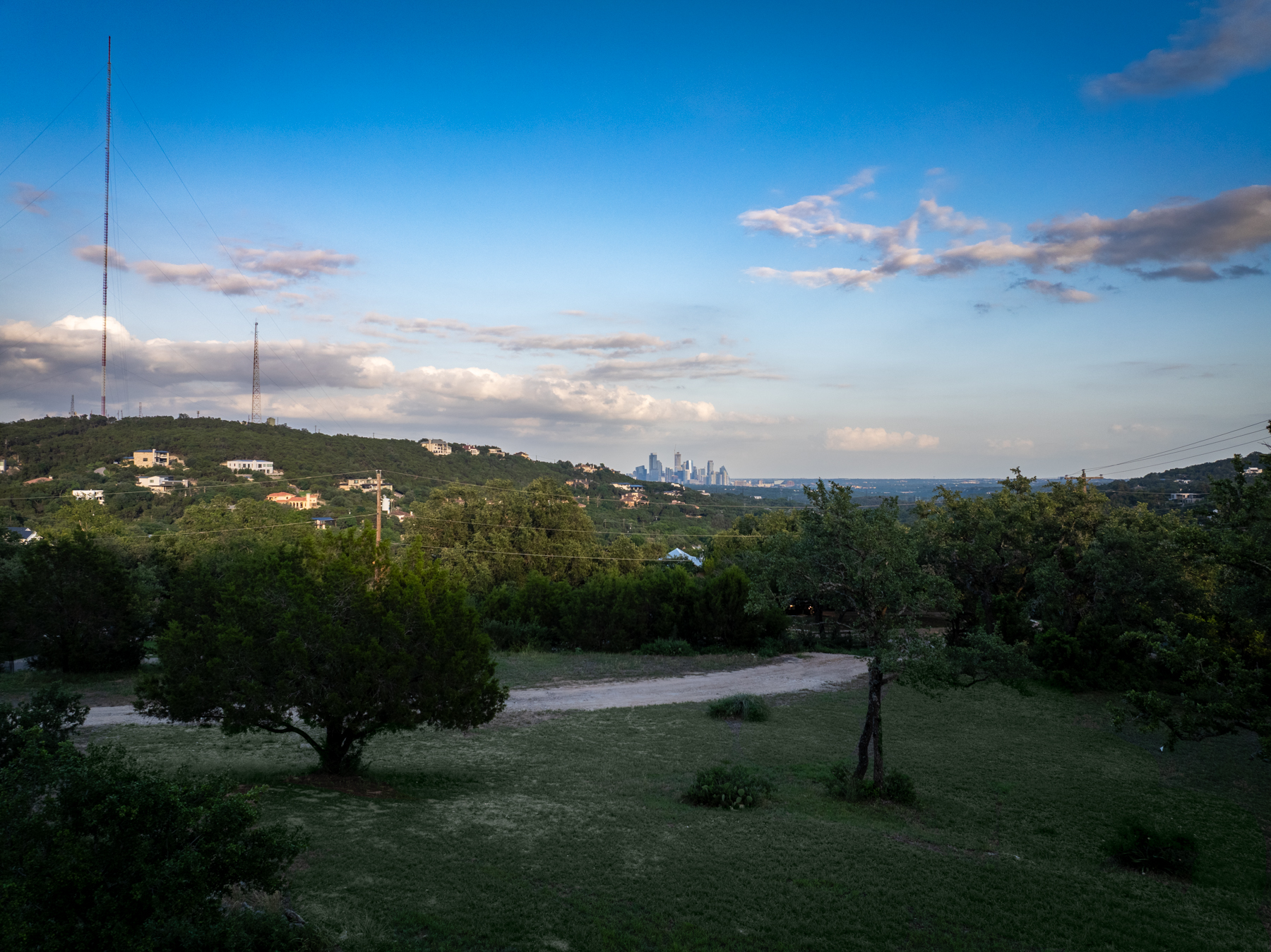
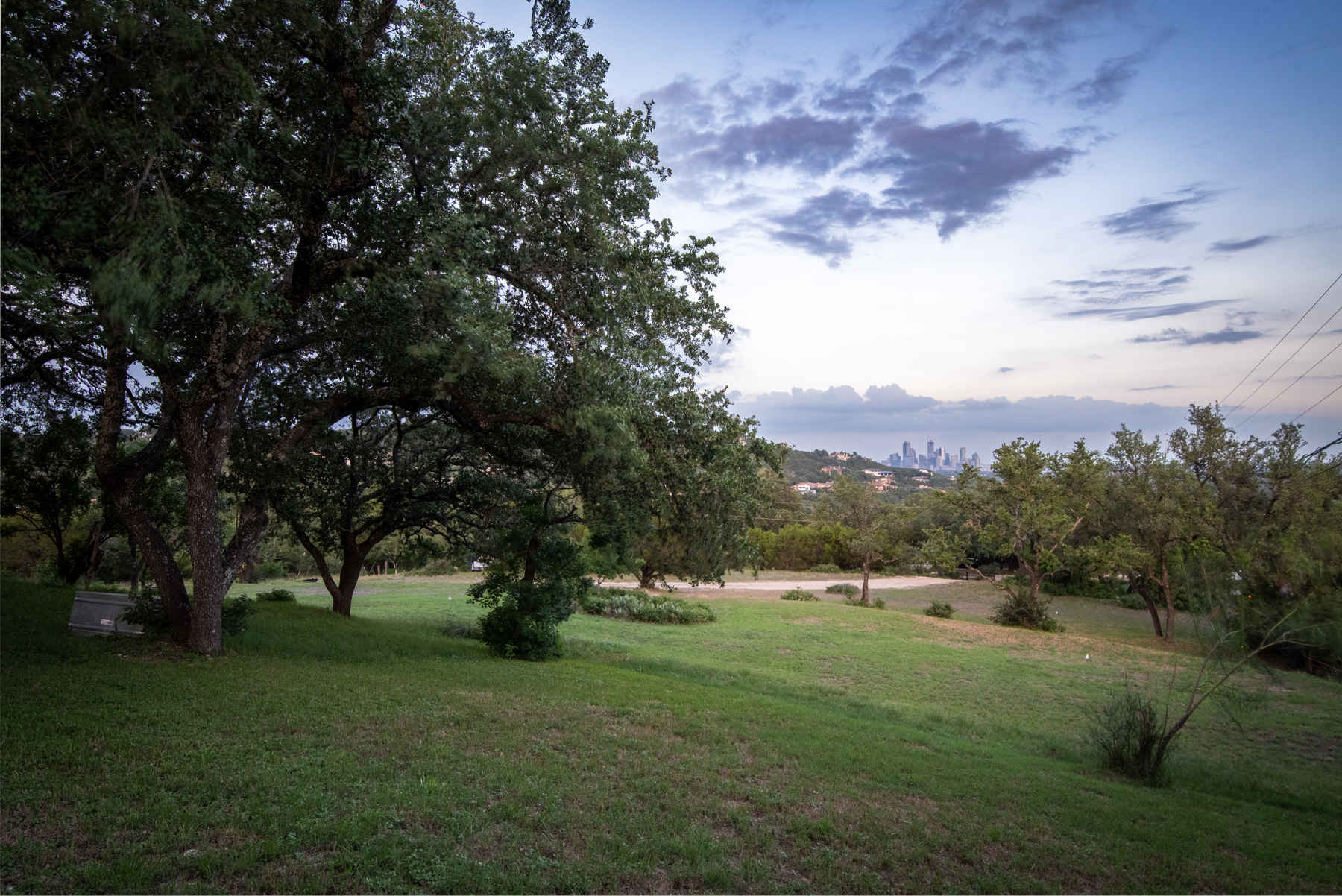
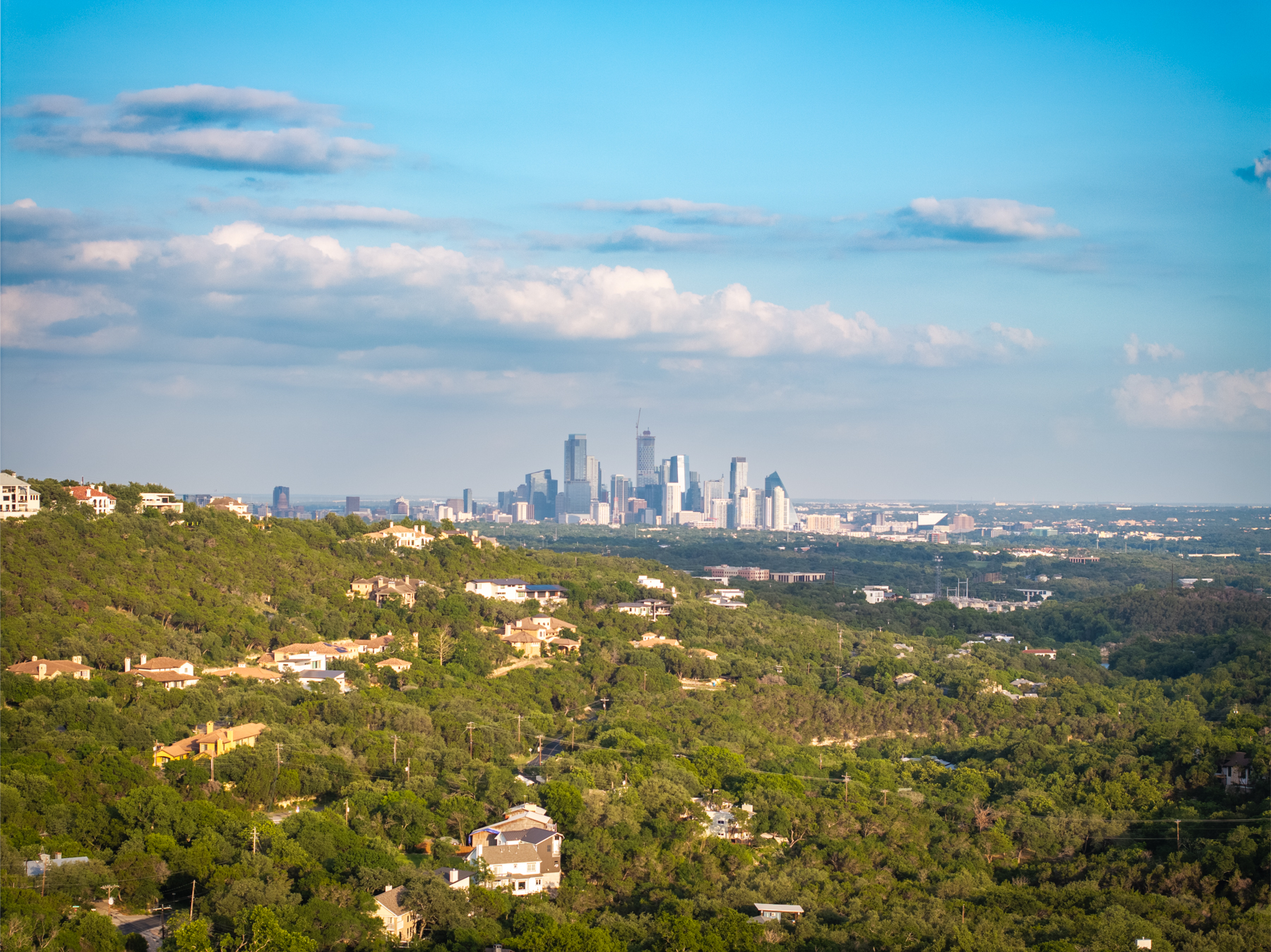
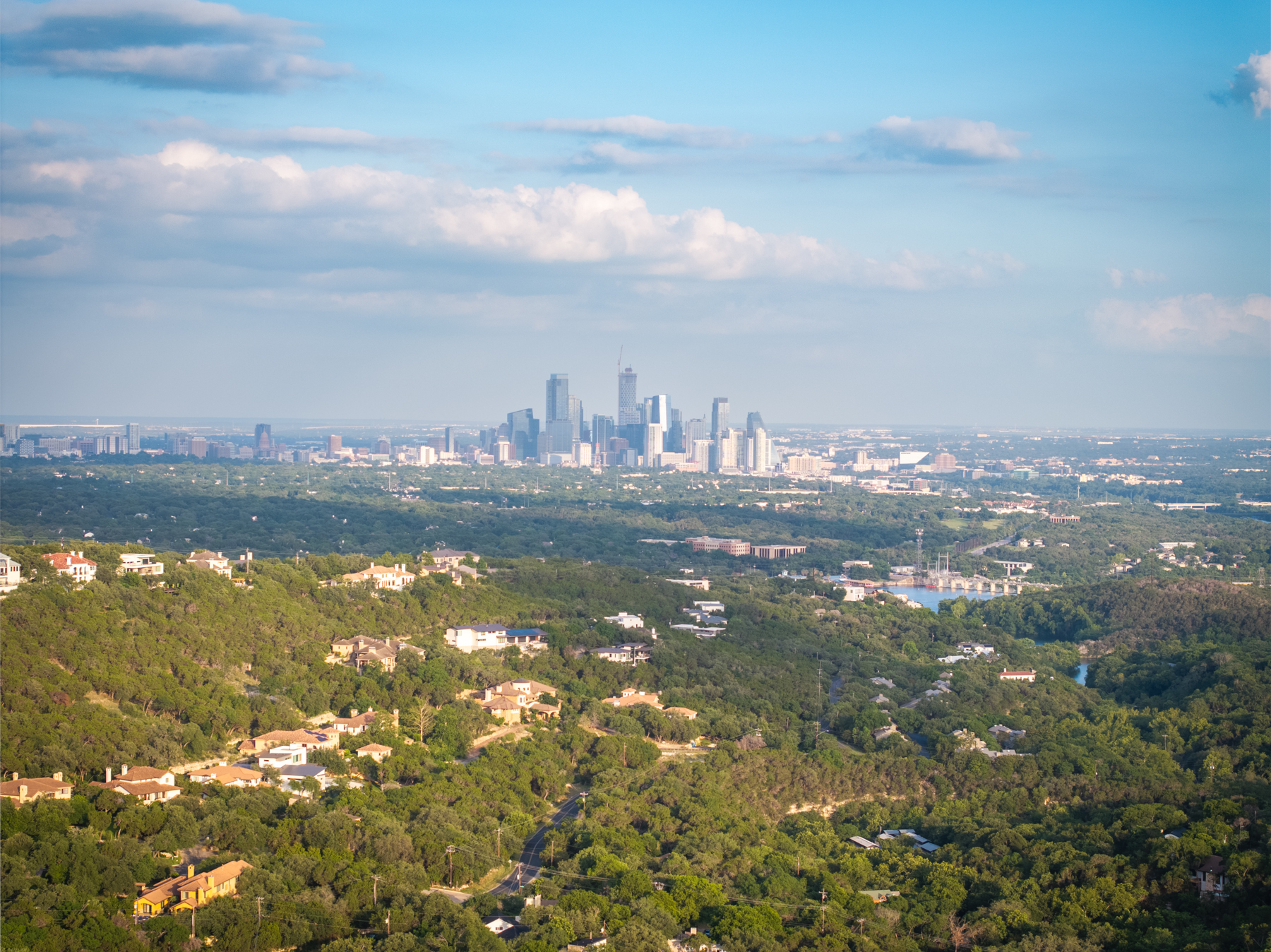
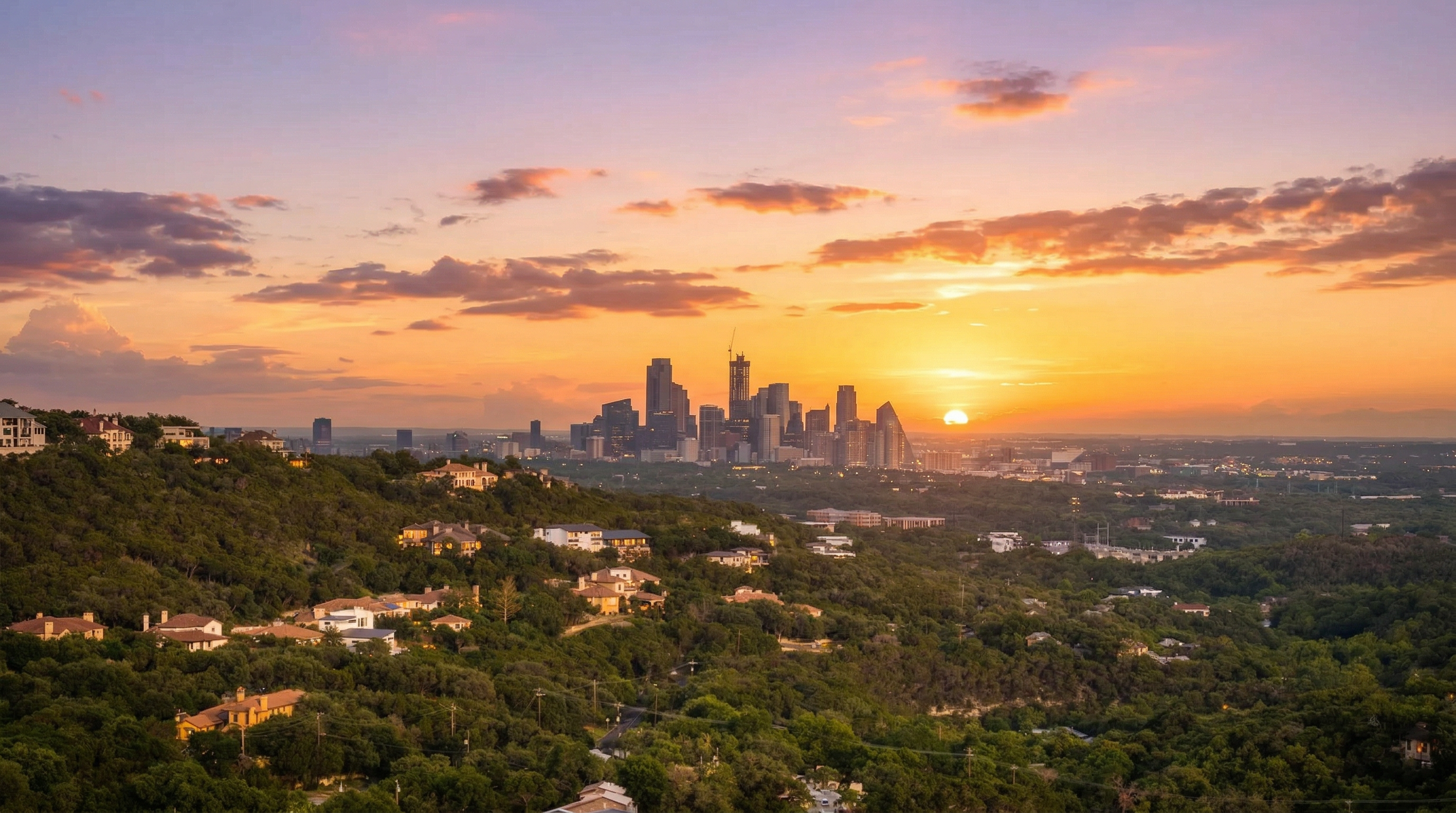
Outside, a clean-lined rectangular pool sits within a grounds composition that balances manicured order with the organic character of mature oaks and native landscaping. A covered outdoor living area extends the home's interior sensibility outward, creating a setting equally suited to solitary morning coffee or an evening gathering under the Austin sky. The skyline shimmers in the distance—always present, never overwhelming.
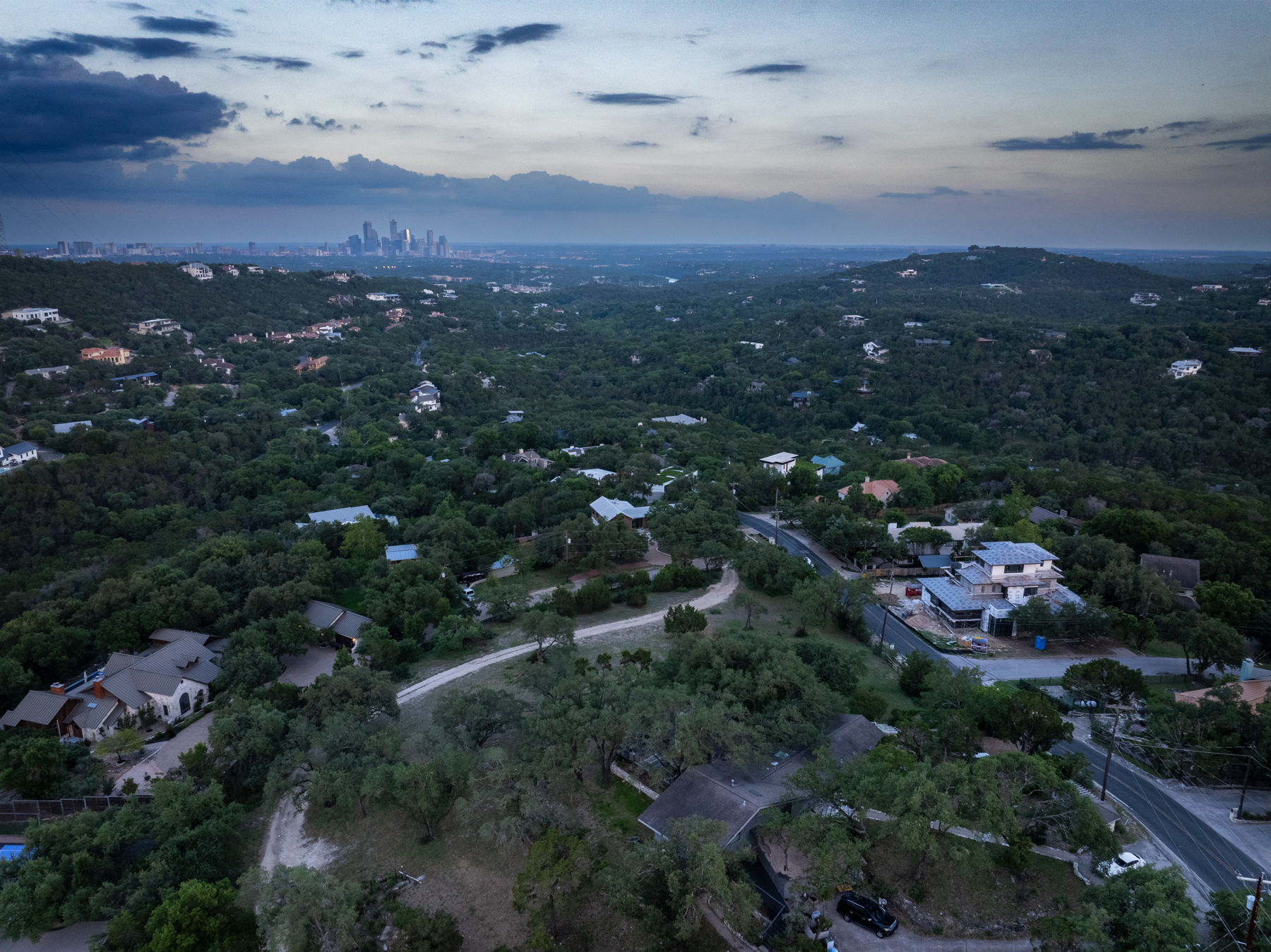
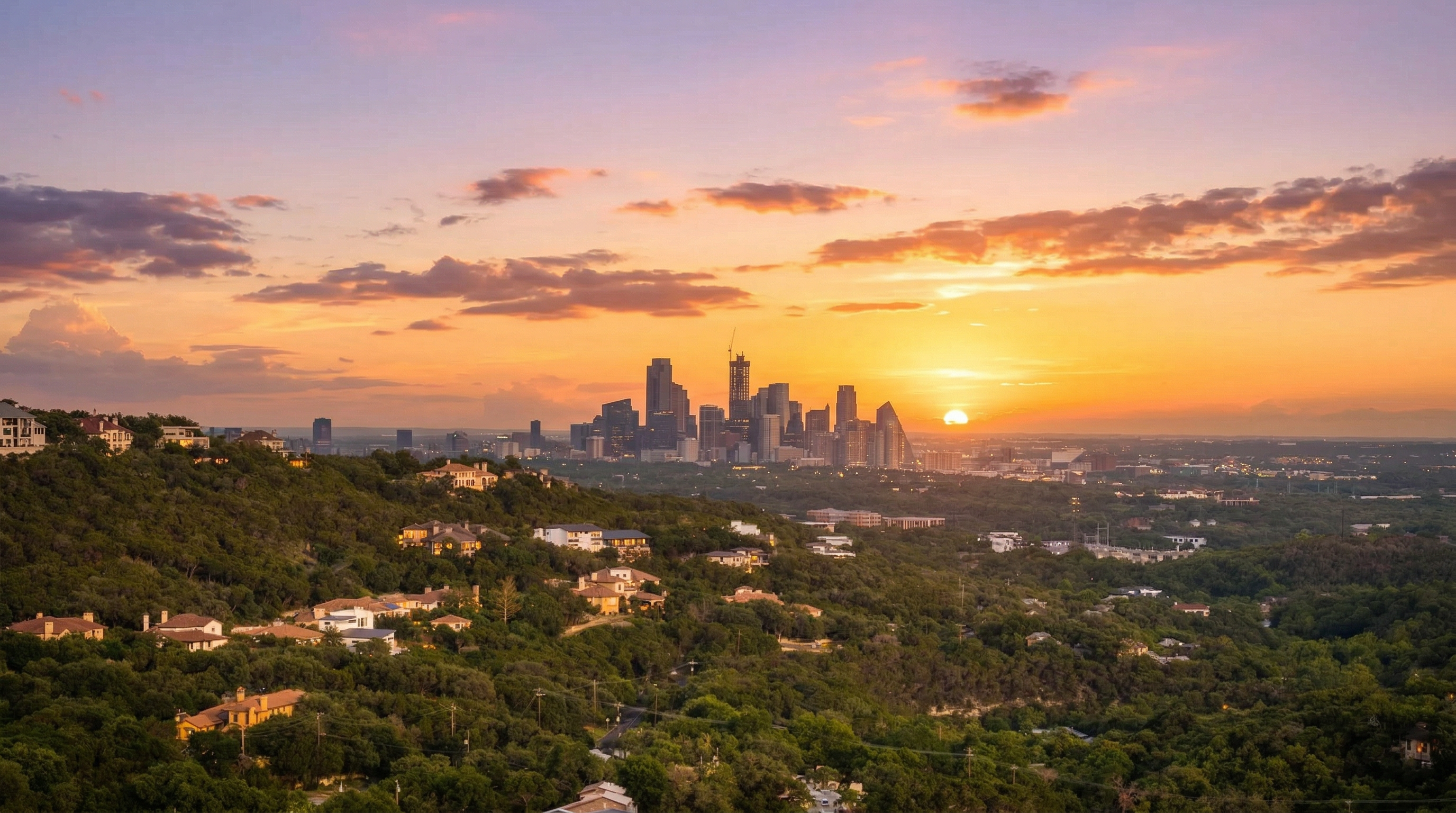
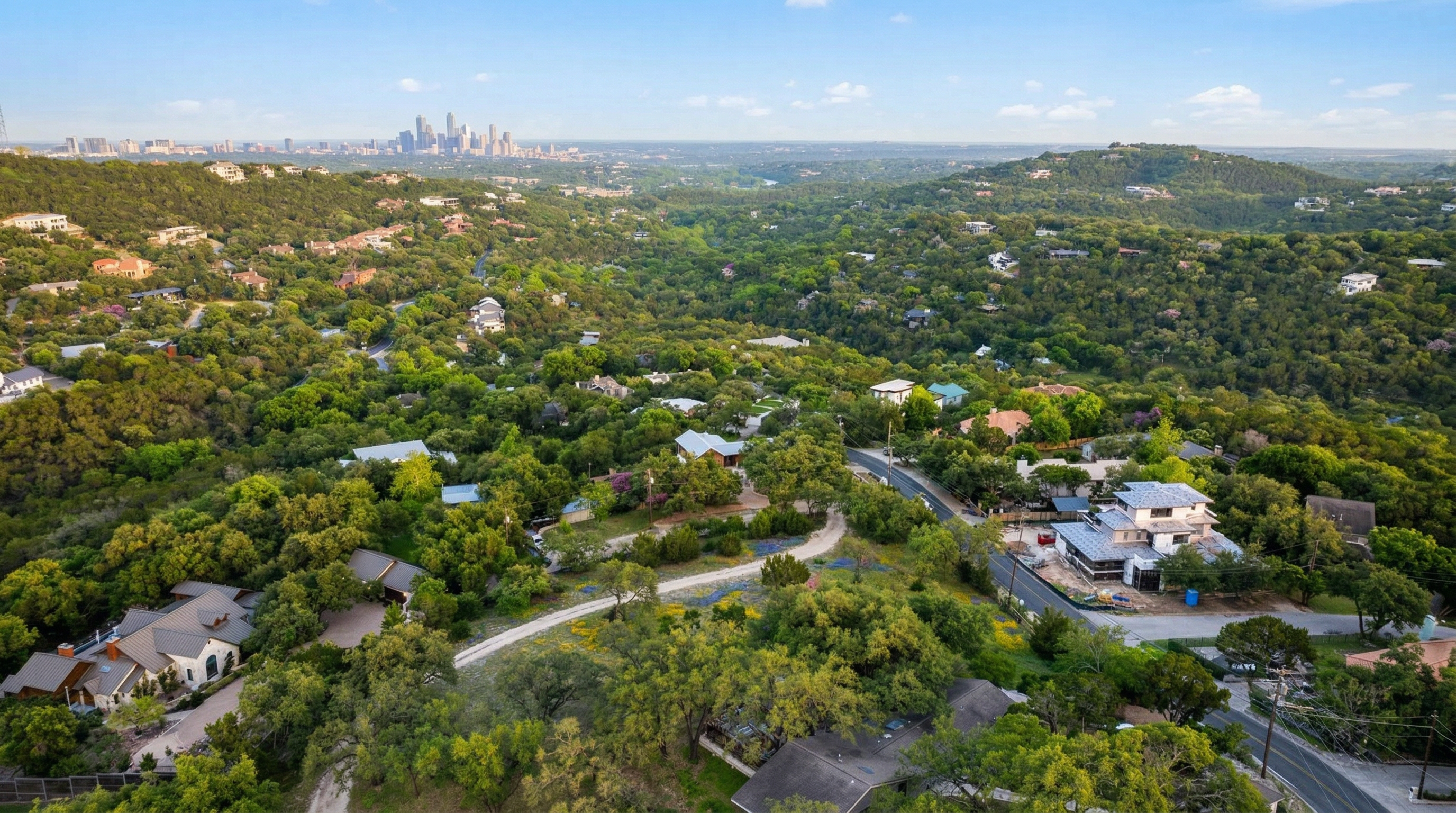
Austin's hillside neighborhoods west and northwest of the city center occupy a particular stratum of the real estate landscape—elevated in every sense of the word. Carved into the limestone bluffs and cedar-studded ridgelines of the Balcones Escarpment, these enclaves offer something the city's flat eastern neighborhoods structurally cannot: altitude, privacy, and the kind of unobstructed views that transform a home from a residence into a vantage point.
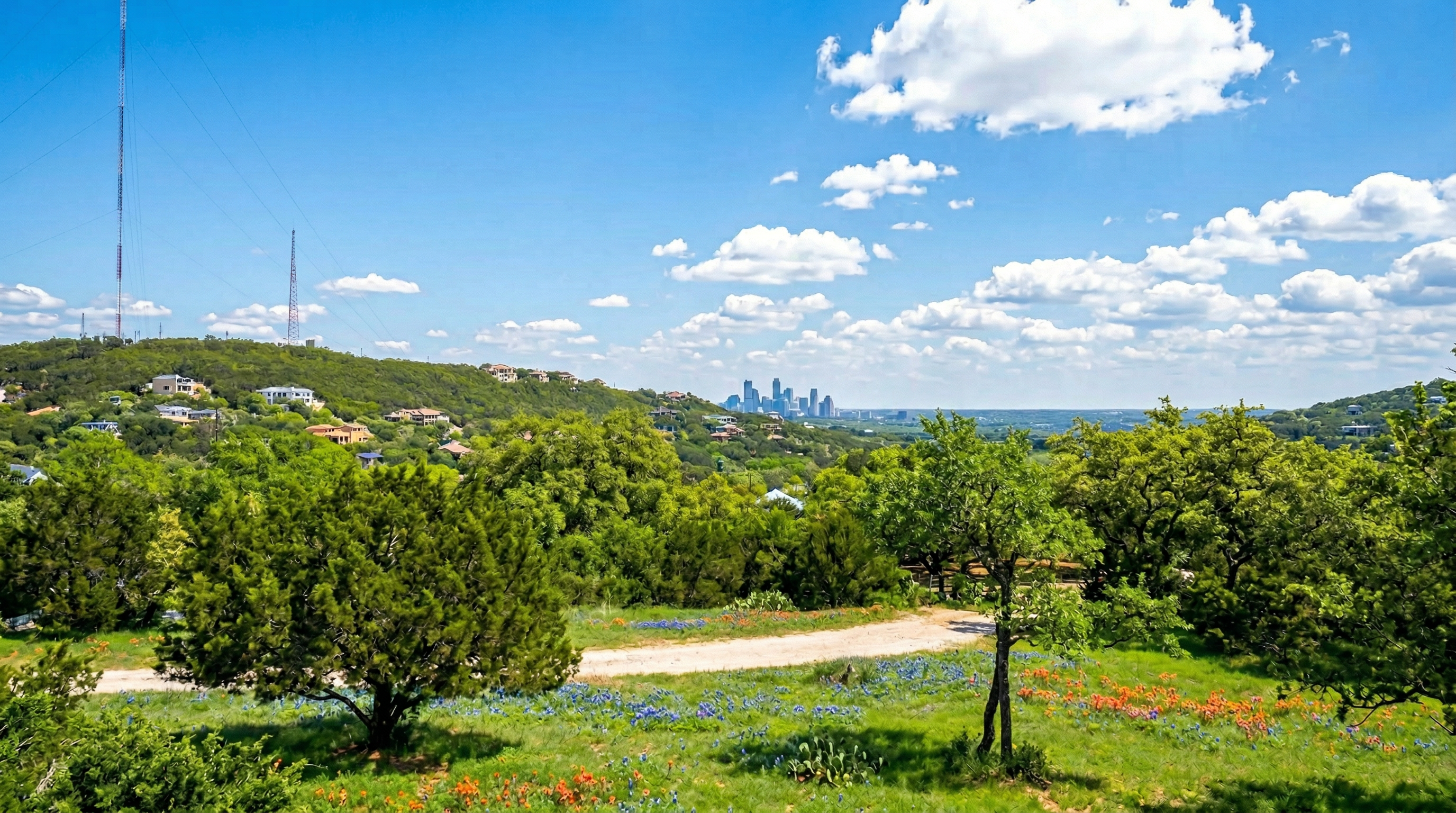
The Hill Country transition zone that defines this landscape is not merely scenic—it is ecologically distinct. The Balcones Escarpment, a fault-line feature running through Central Texas, creates the dramatic elevation changes that give properties like this one their commanding presence above the city grid. The terrain is characterized by native live oaks, cedar elms, Texas mountain laurel, and the limestone outcroppings that give the hill country its geological personality. Spring brings bluebonnets and Indian paintbrush to the surrounding slopes—a wildflower display that has made this corridor one of the most photographed landscapes in Texas.
The broader West Austin and Lake Austin corridor has long been home to some of the city's most architecturally distinguished residential estates. The area's topography naturally encouraged a culture of bespoke, site-specific design—homes that respond to their land rather than simply occupying it. That tradition is visible throughout the neighborhood, where custom architecture is the rule rather than the exception.
Despite the sense of remove that hillside living provides, the location maintains genuine urban connectivity. Downtown Austin's celebrated restaurant and cultural corridor—encompassing the Warehouse District, Second Street, and the expanding domain of South Congress—lies within comfortable reach. The Domain, Austin's northern mixed-use hub, and the tech campuses that line the MoPac and 183 corridors are similarly accessible, making this an address that serves both those who work in the city and those who simply wish to enjoy it.
Austin's cultural life has matured considerably over the past decade. The city supports a robust arts ecosystem anchored by institutions including the Blanton Museum of Art, the Long Center for the Performing Arts, and the Austin Film Society, alongside a live music infrastructure that remains the city's most defining characteristic. The restaurant scene, led by a generation of nationally recognized chefs, has positioned Austin among the most compelling culinary cities in the American South. Barton Springs Pool, Zilker Park, and the Barton Creek Greenbelt provide outdoor recreation of an unusual caliber for a major metropolitan area—miles of limestone swimming holes, hiking trails, and natural swimming destinations that feel entirely at odds with a city of Austin's size and energy.
For families, the area's proximity to several of Austin's most respected private and public educational institutions adds a further dimension of long-term value. The University of Texas at Austin, one of the nation's premier public research universities, anchors the city's intellectual life and contributes to the sustained cultural vitality that distinguishes Austin from its peer cities.
To live at this elevation, in a home of this caliber, is to occupy Austin's most considered address—close enough to engage with everything the city offers, elevated enough to exist entirely apart from it.
Featured Highlights
Curated Content • Presented by Clayton Bullock