The Story Behind
A Triplex Penthouse Above Greenwich Village by Robert A.M. Stern
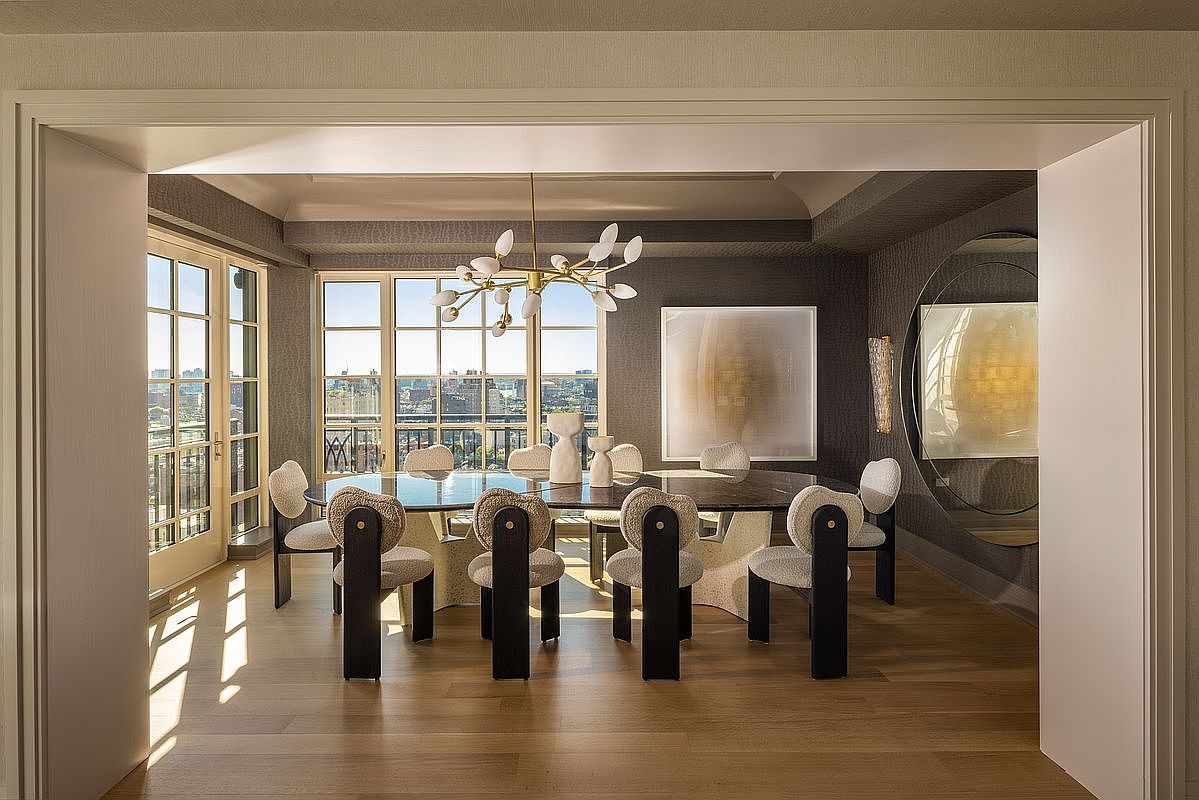
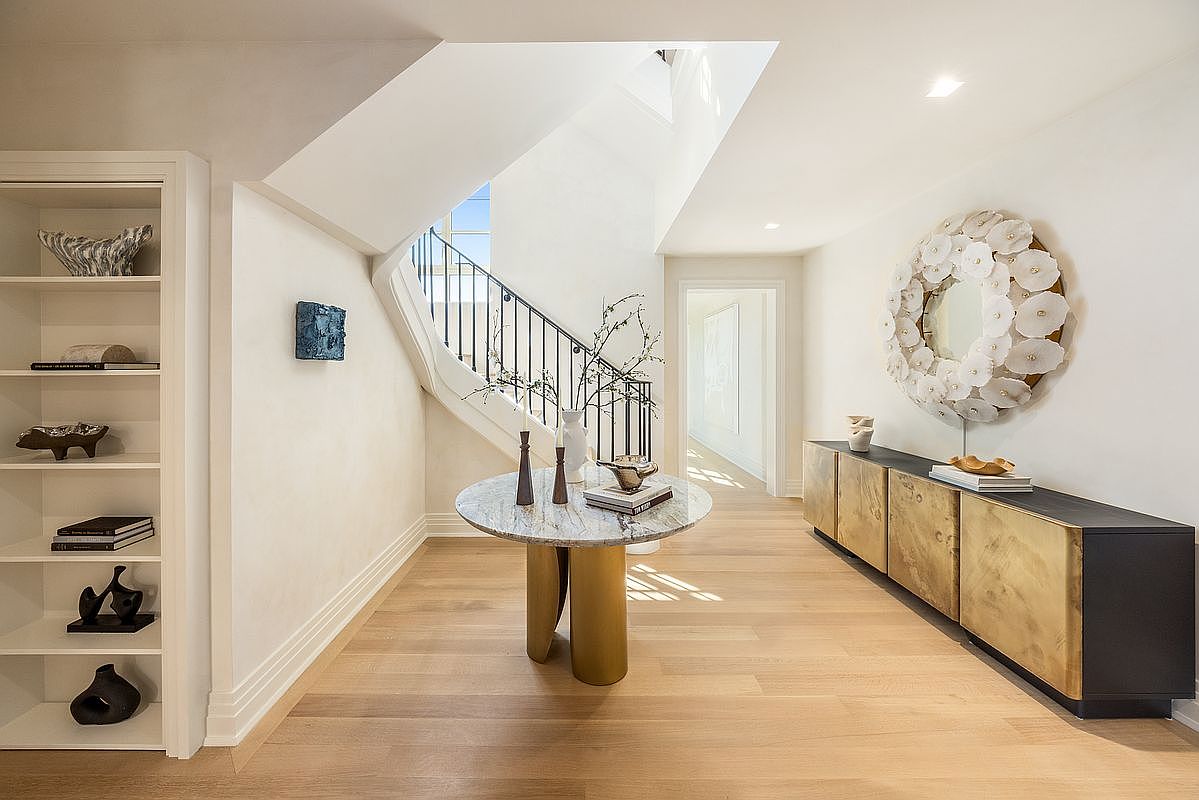
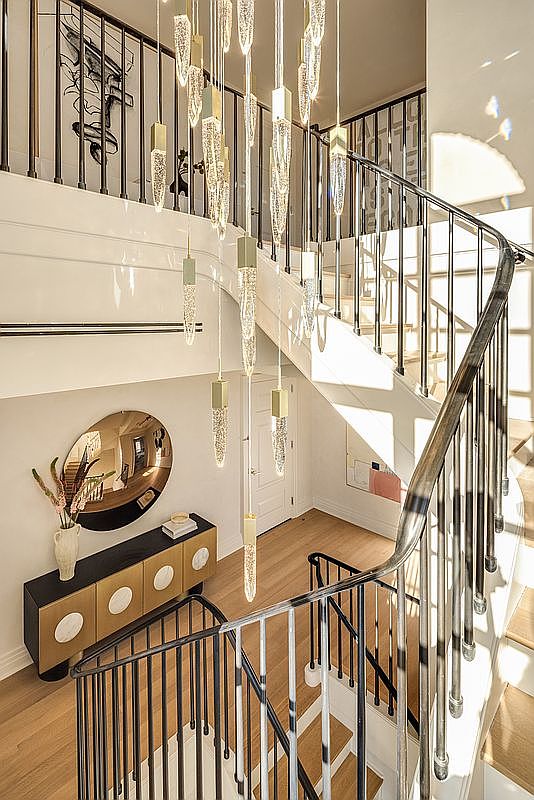
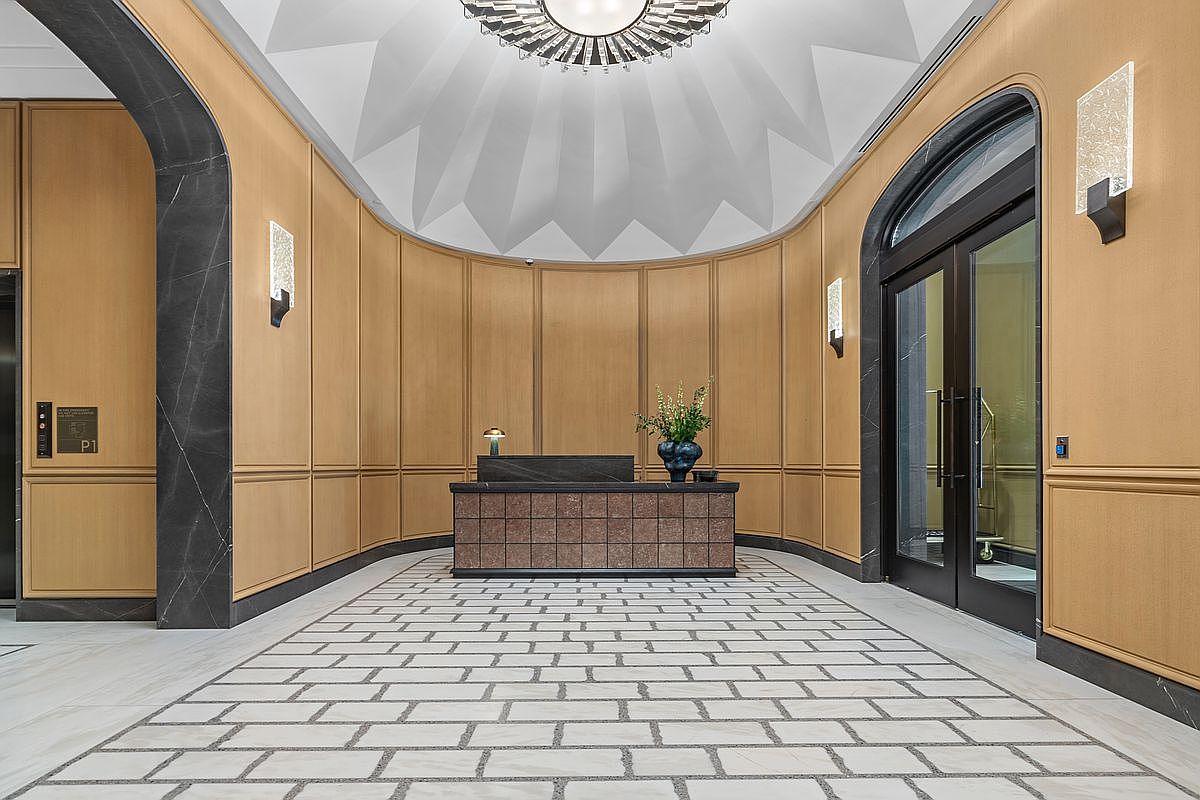
From the moment one steps onto the private landing that introduces Penthouse 1, the residence declares its intentions with absolute clarity. A grand entrance gallery, anchored by a custom windowed architectural staircase, establishes an immediate sense of scale and ceremony — the kind of arrival sequence more commonly associated with a private townhouse than a condominium residence. That distinction, between the verticality of a great home and the grandeur of a building, is precisely what Robert A.M. Stern Architects achieved here: a triplex of genuine domestic magnificence, suspended above one of Manhattan's most beloved neighborhoods.
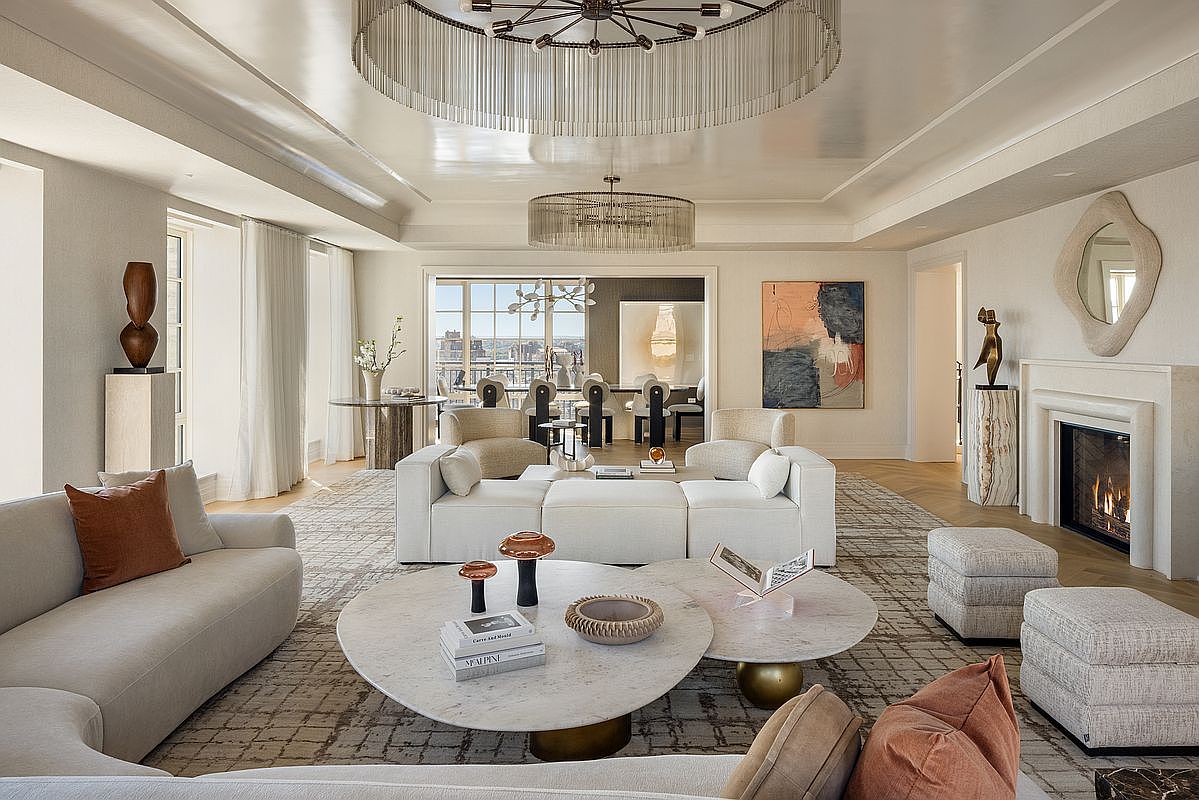
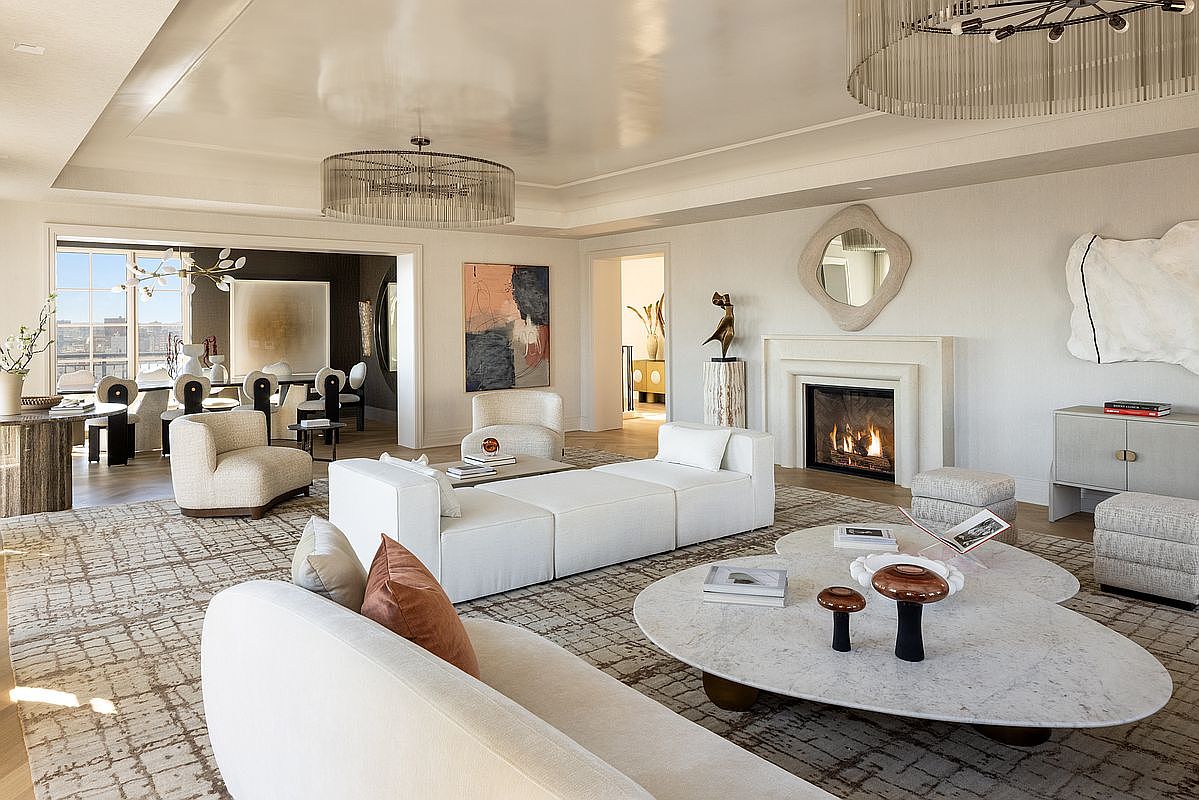
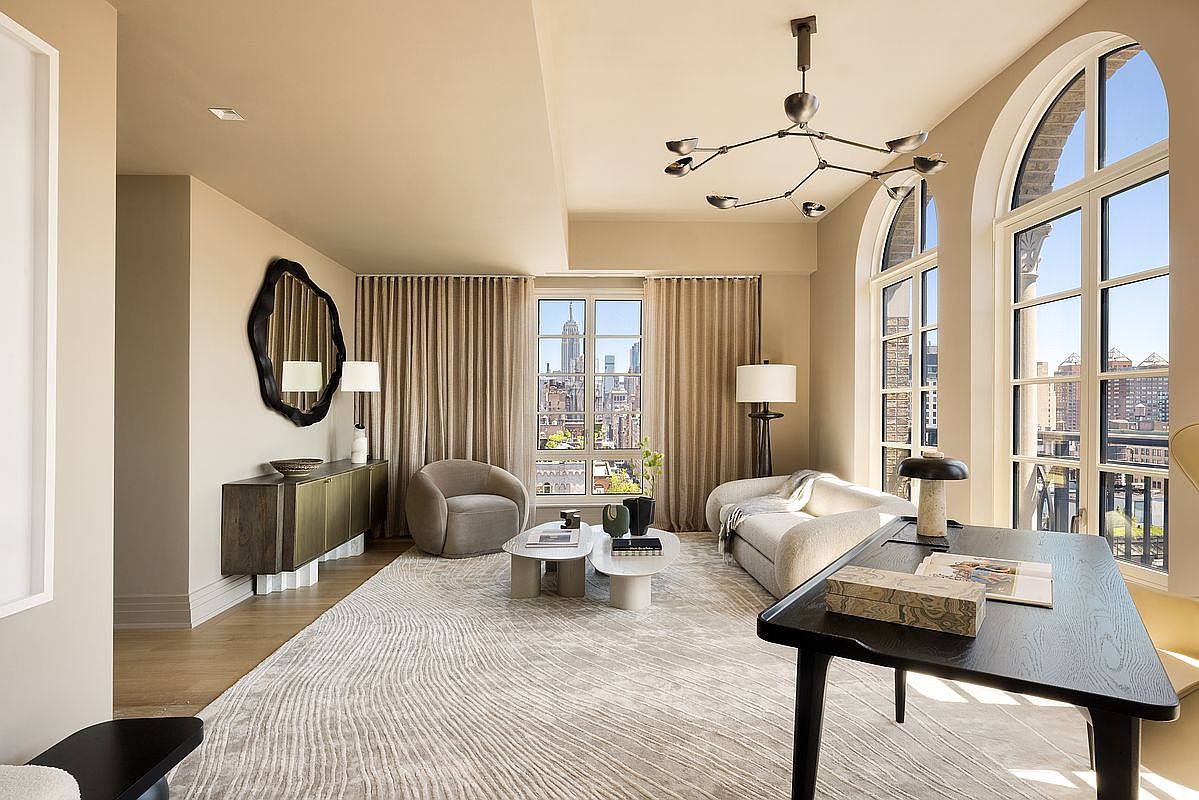
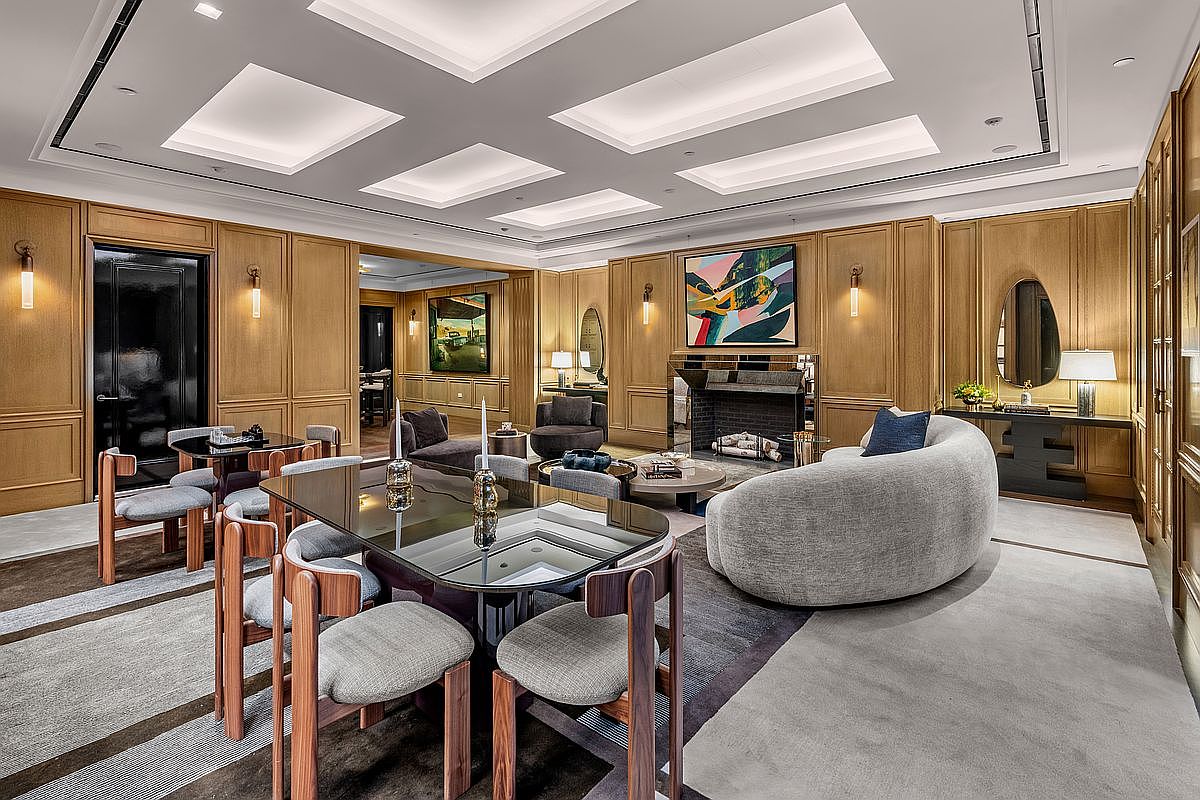
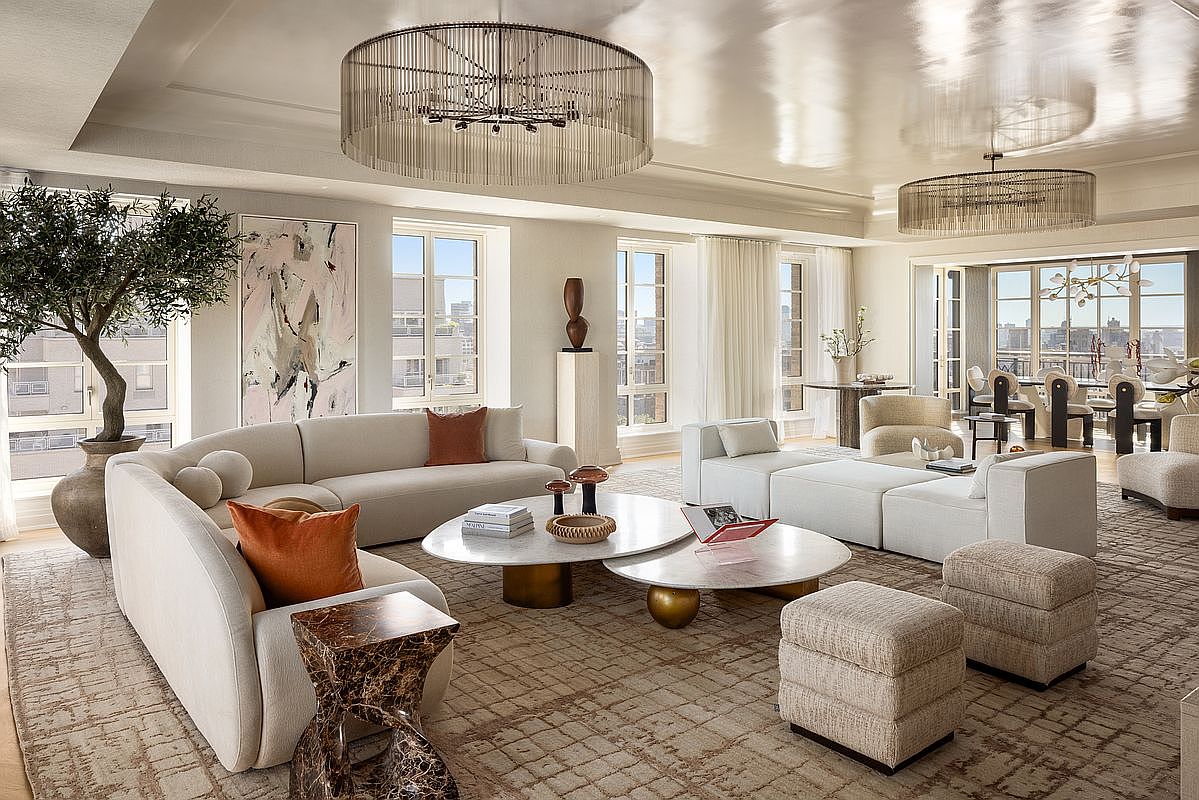
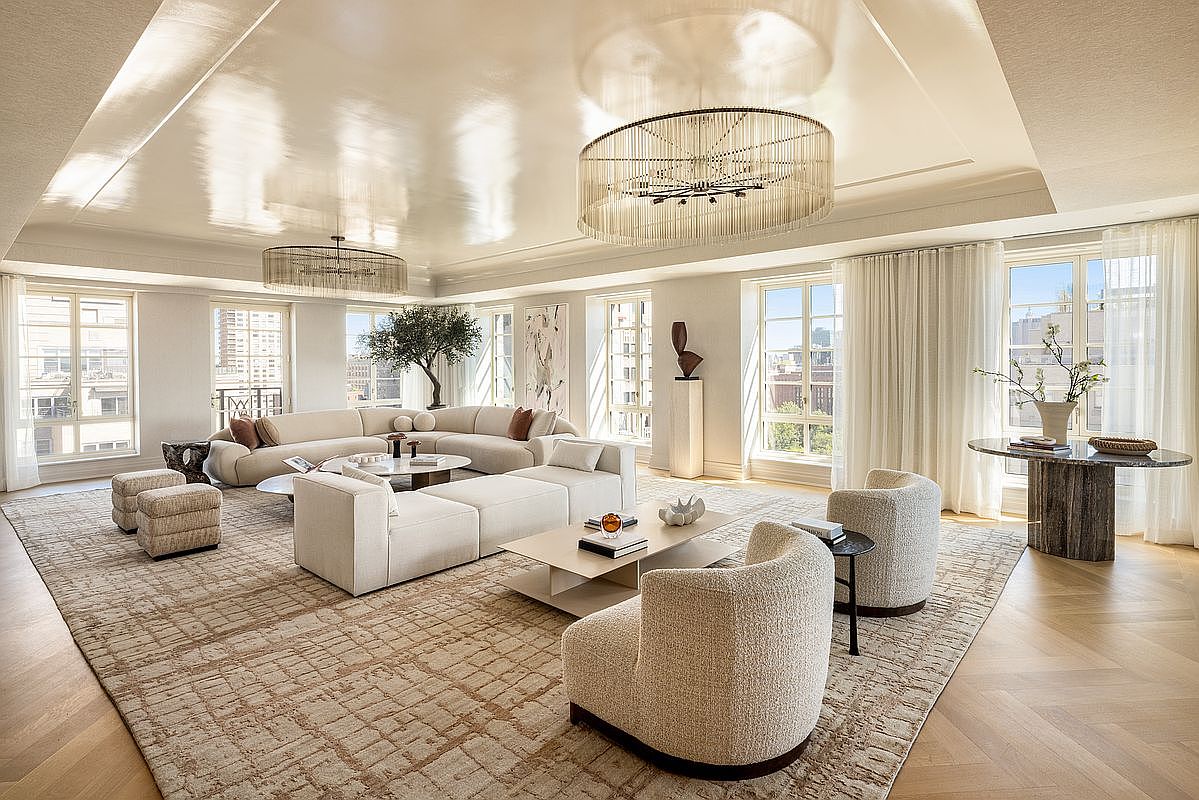
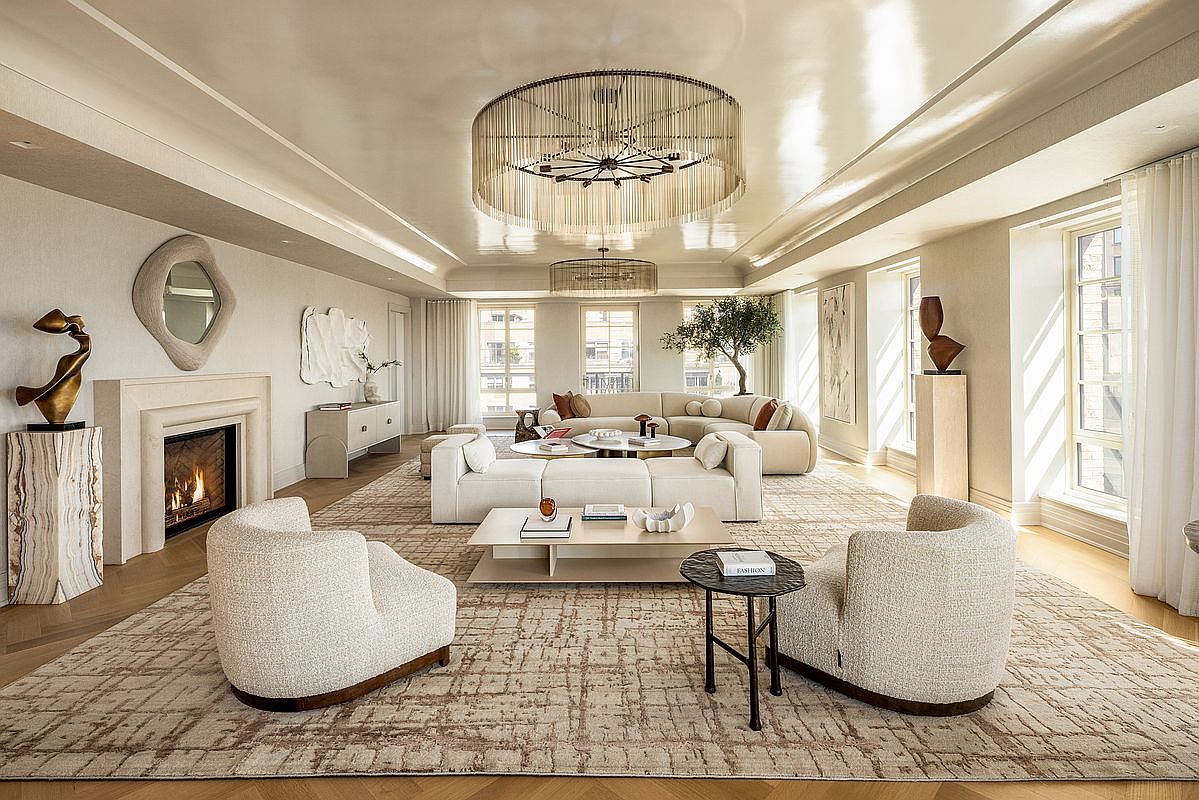
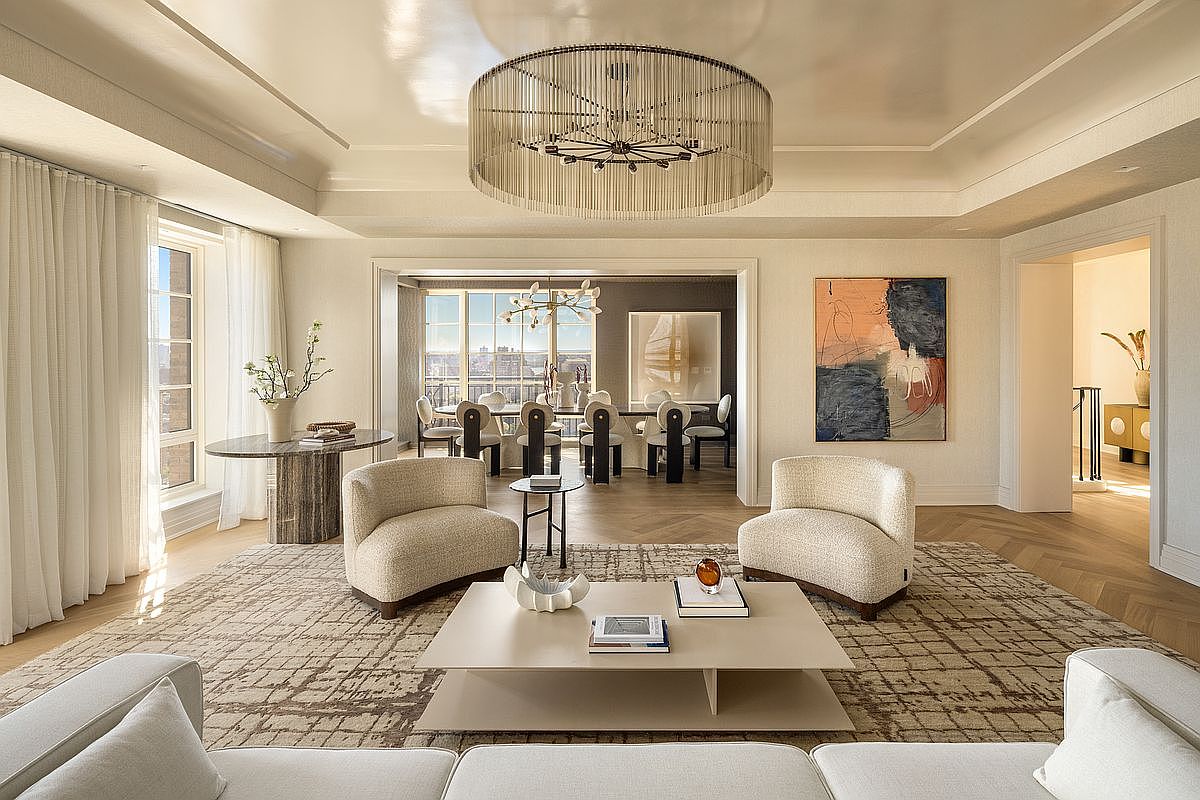
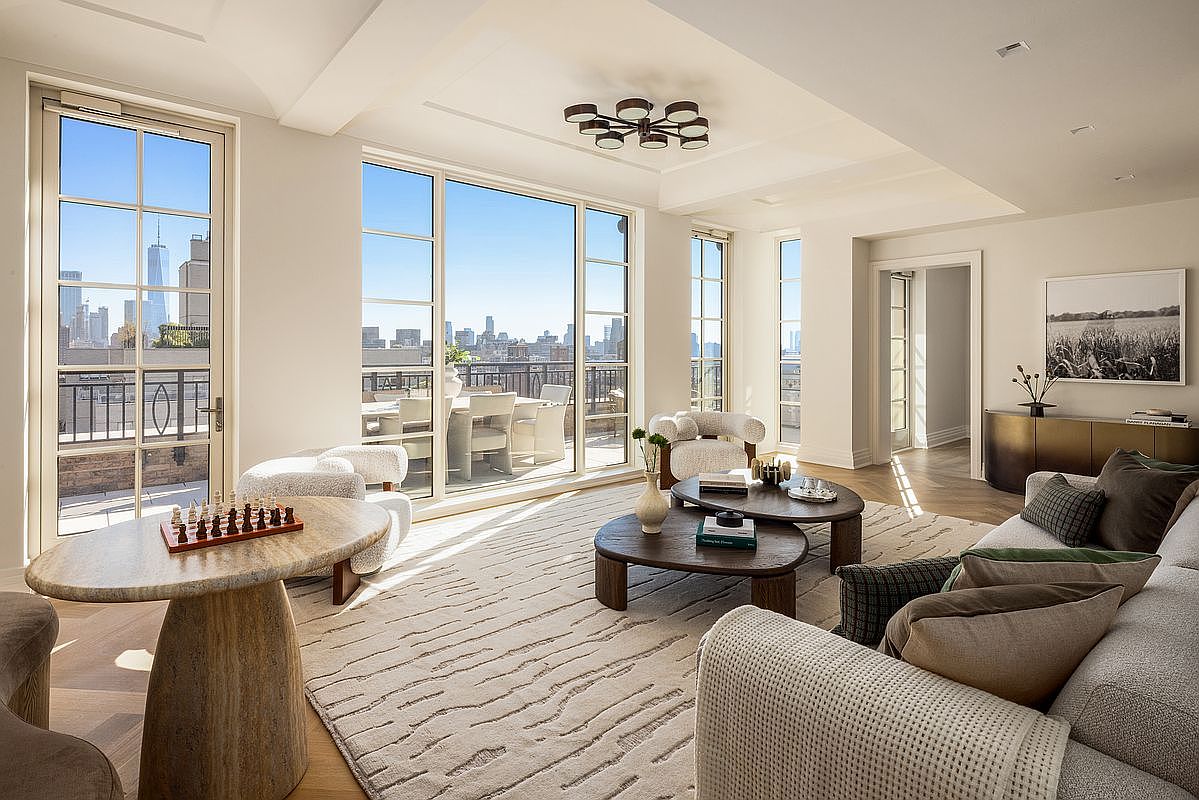
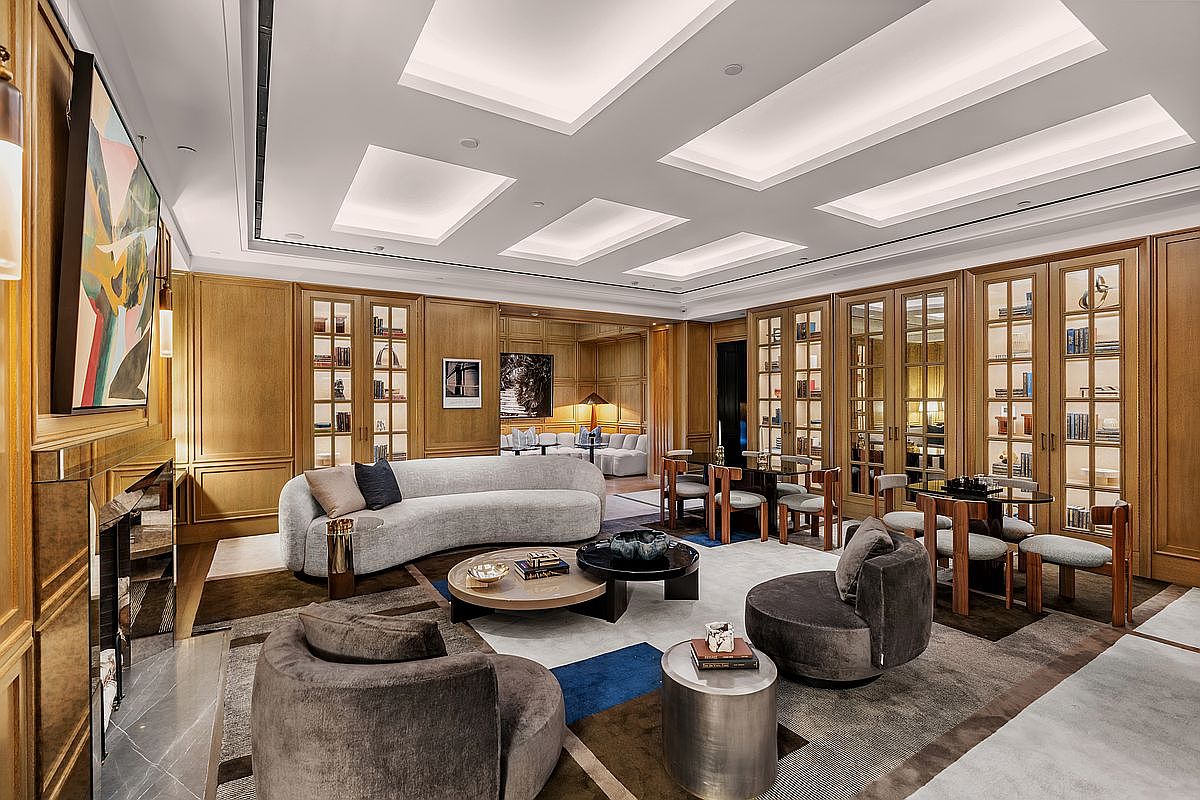
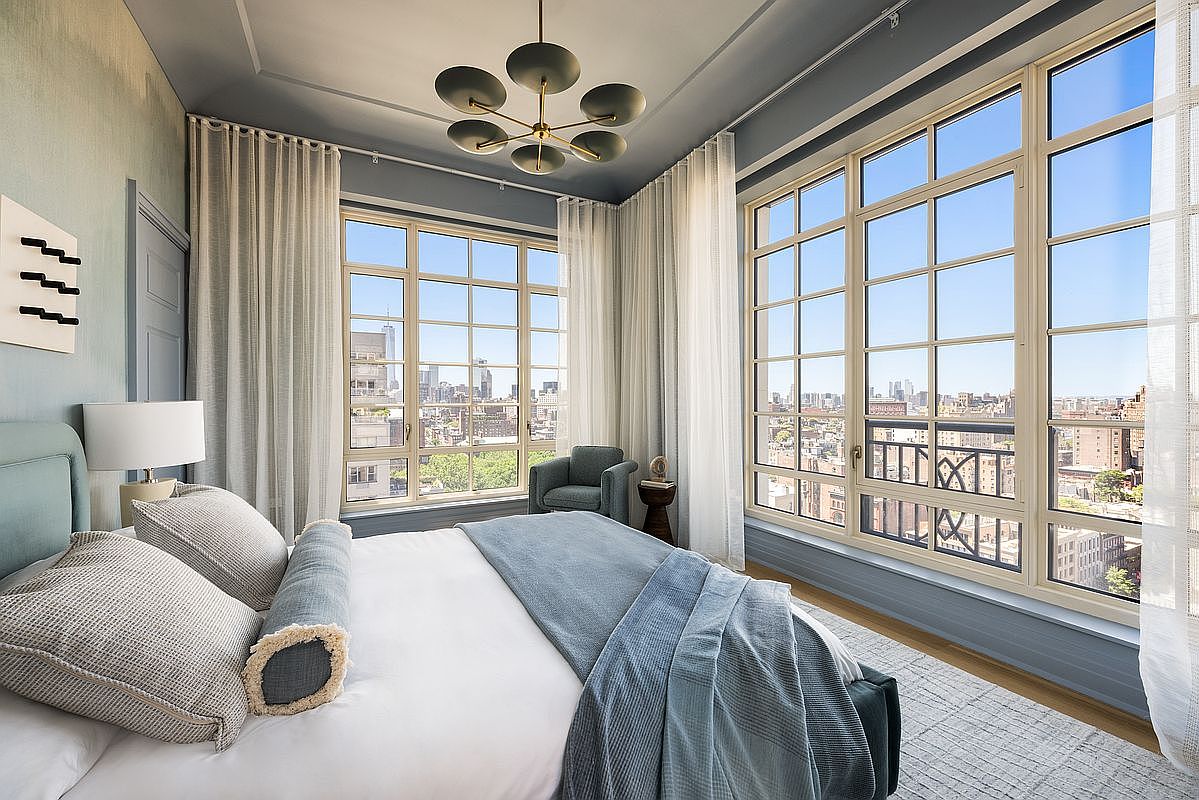
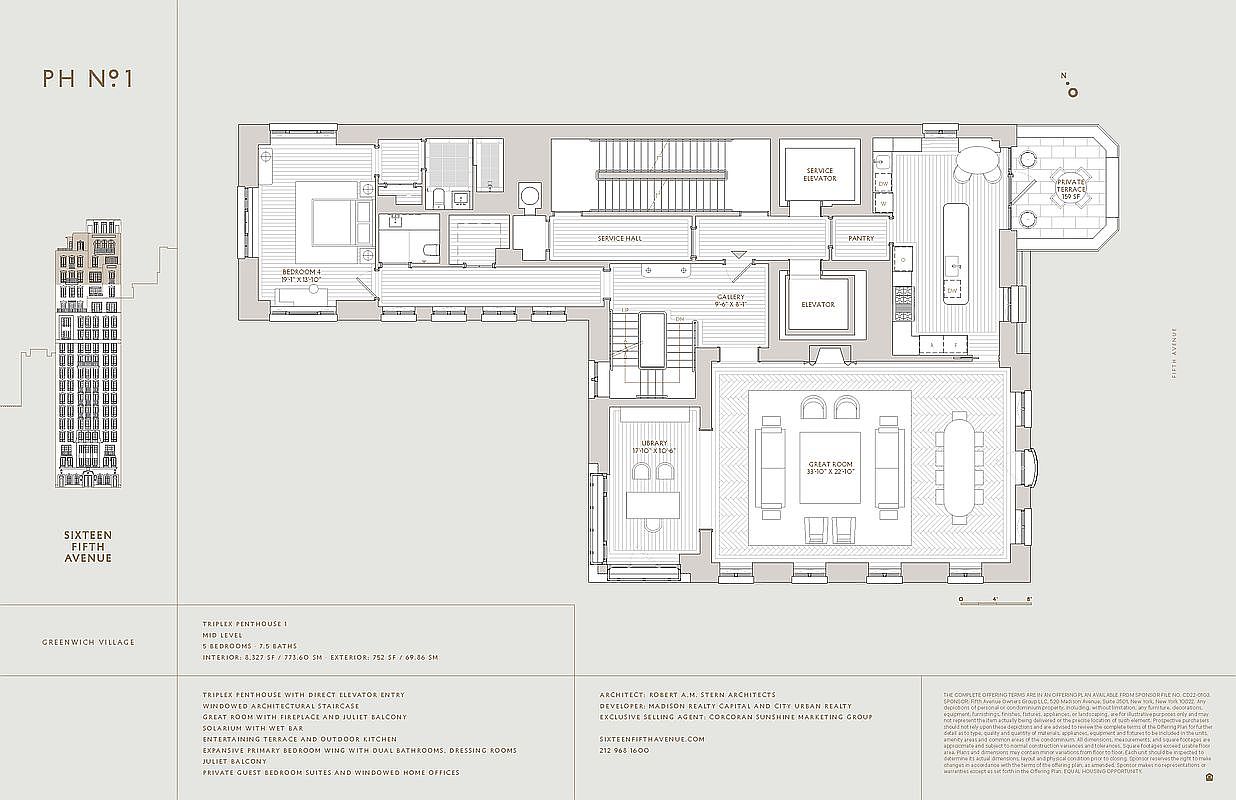
The principal entertaining level is organized around a breathtaking Great Room, where herringbone-laid white oak floors, a stone-clad fireplace, and oversized French casement windows converge to create a space of rare warmth and proportion. Light pours in from four exposures, framing Washington Square Park to the north and the Lower Manhattan skyline beyond — views that shift from pastoral green in the warmer months to a constellation of city lights come evening. A library flows naturally from the living space, offering a quieter counterpoint to the grandeur of the main room without sacrificing any of its refinement.
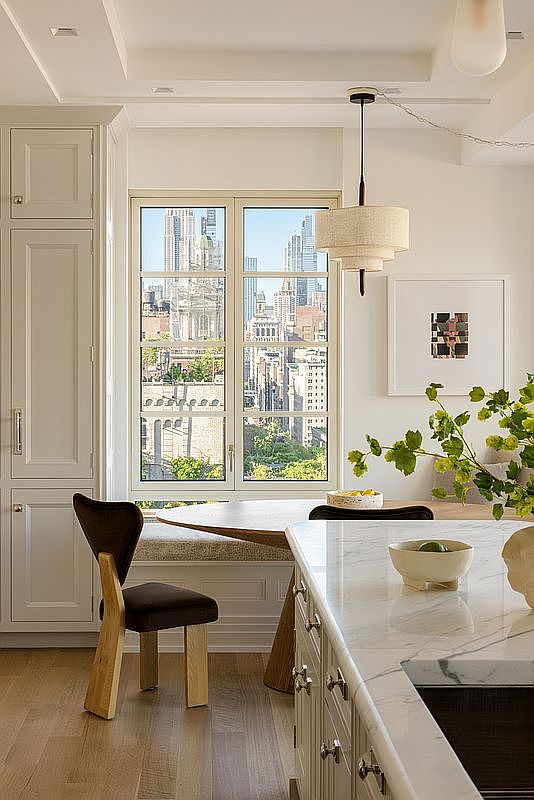
The Christopher Peacock kitchen is, by any measure, a room unto itself: Calacatta Gold marble surfaces, a stone-clad range hood serving as a sculptural focal point, and a full complement of professional Miele appliances combine with a sun-drenched breakfast nook that opens directly onto a private limestone terrace. It is a kitchen designed not merely for function, but for the pleasure of cooking and gathering at the highest level.
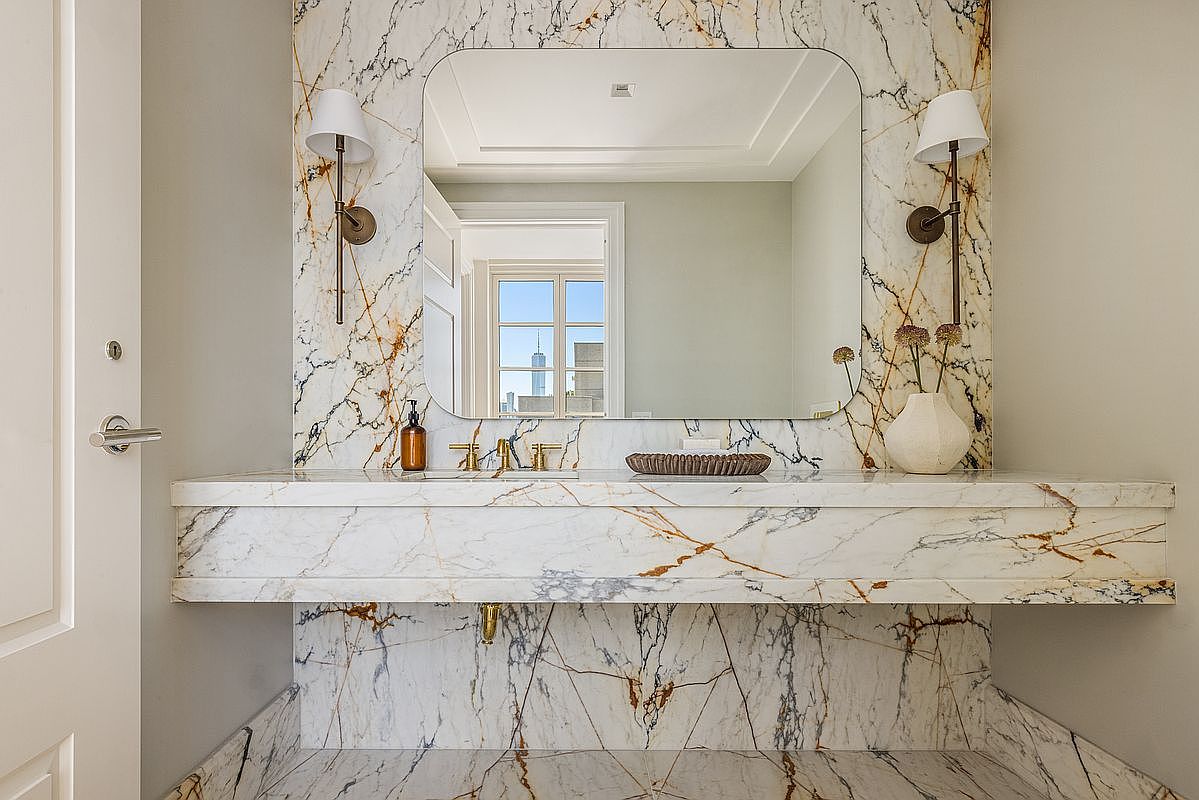
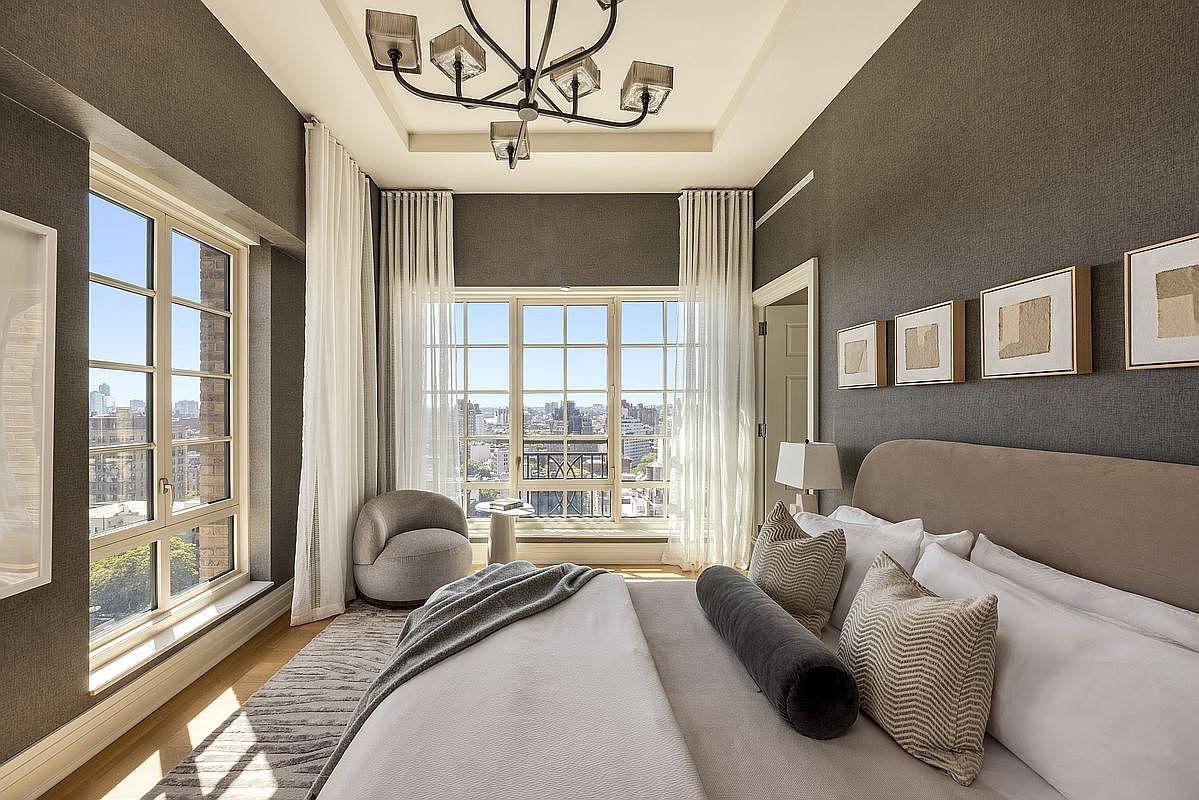
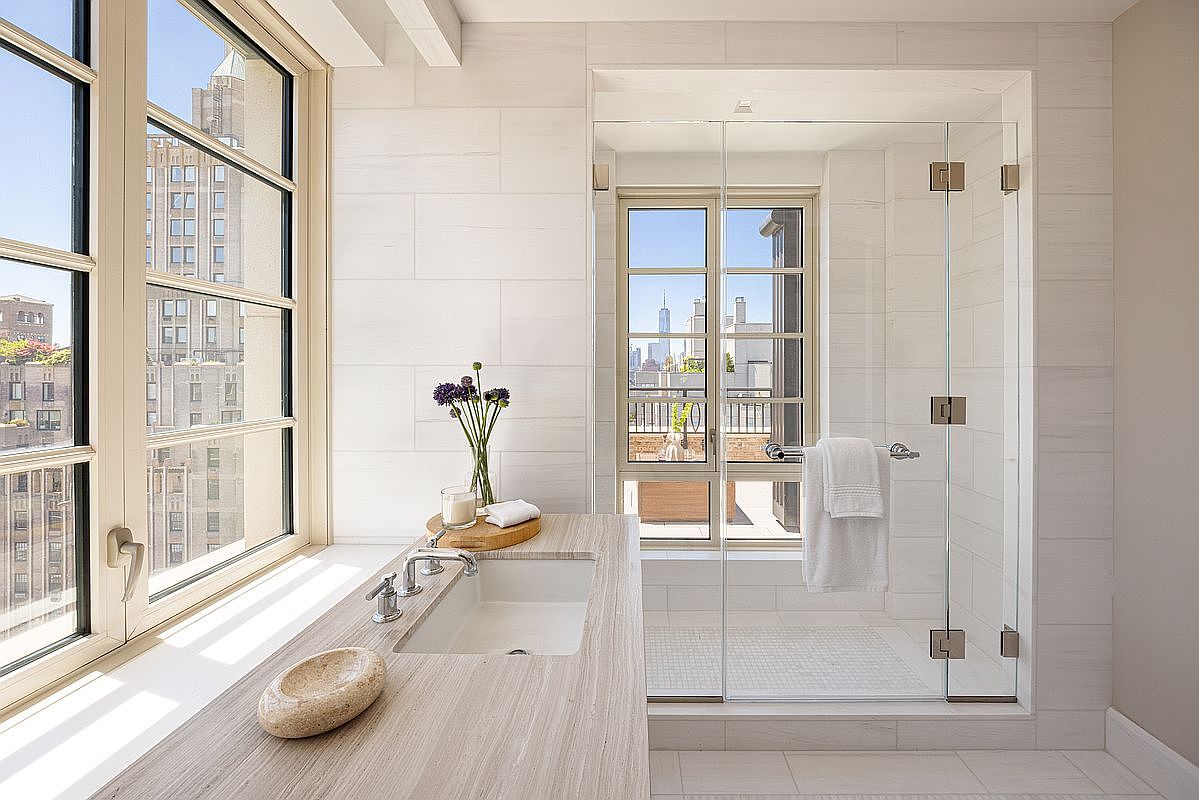
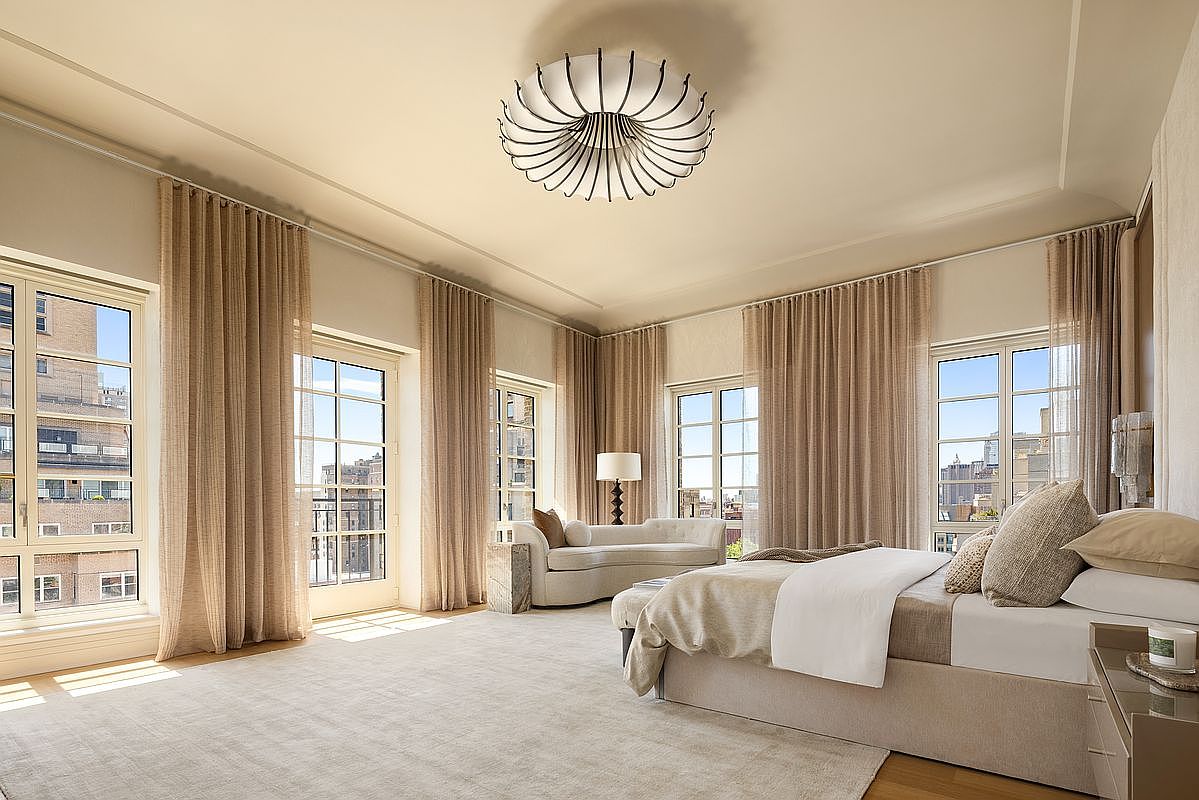
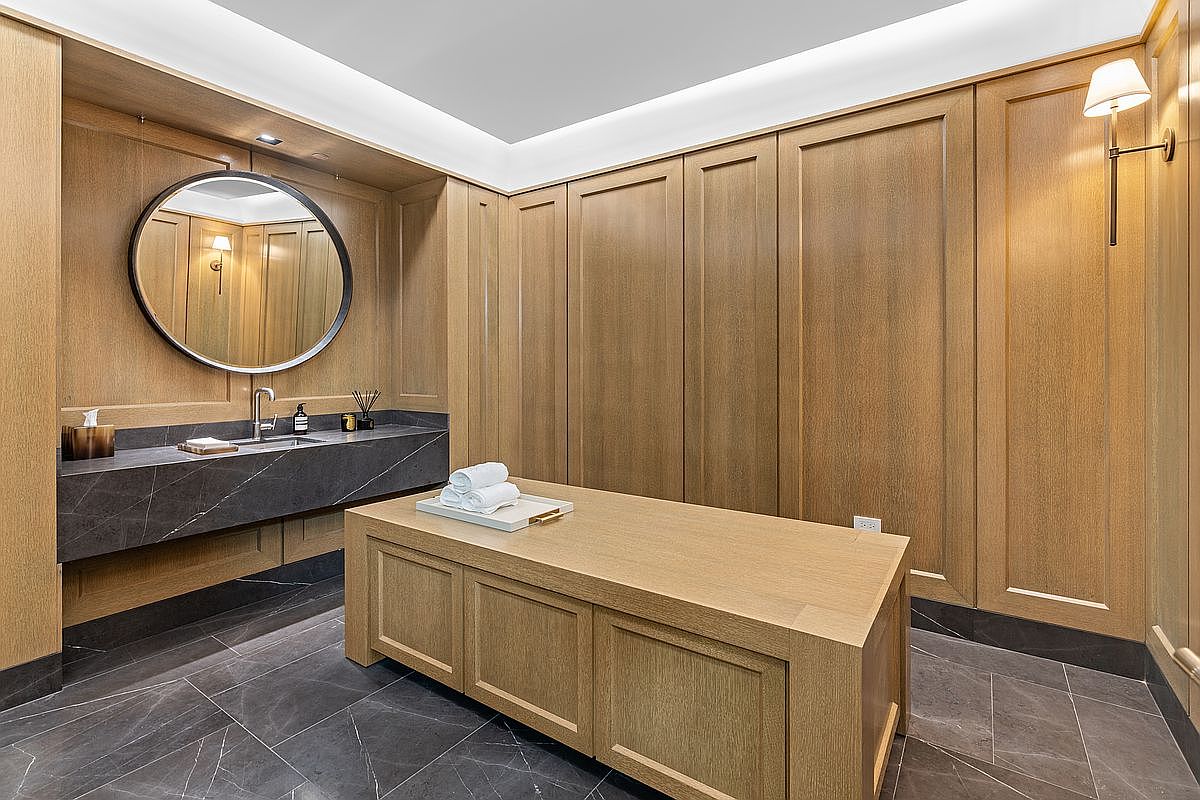
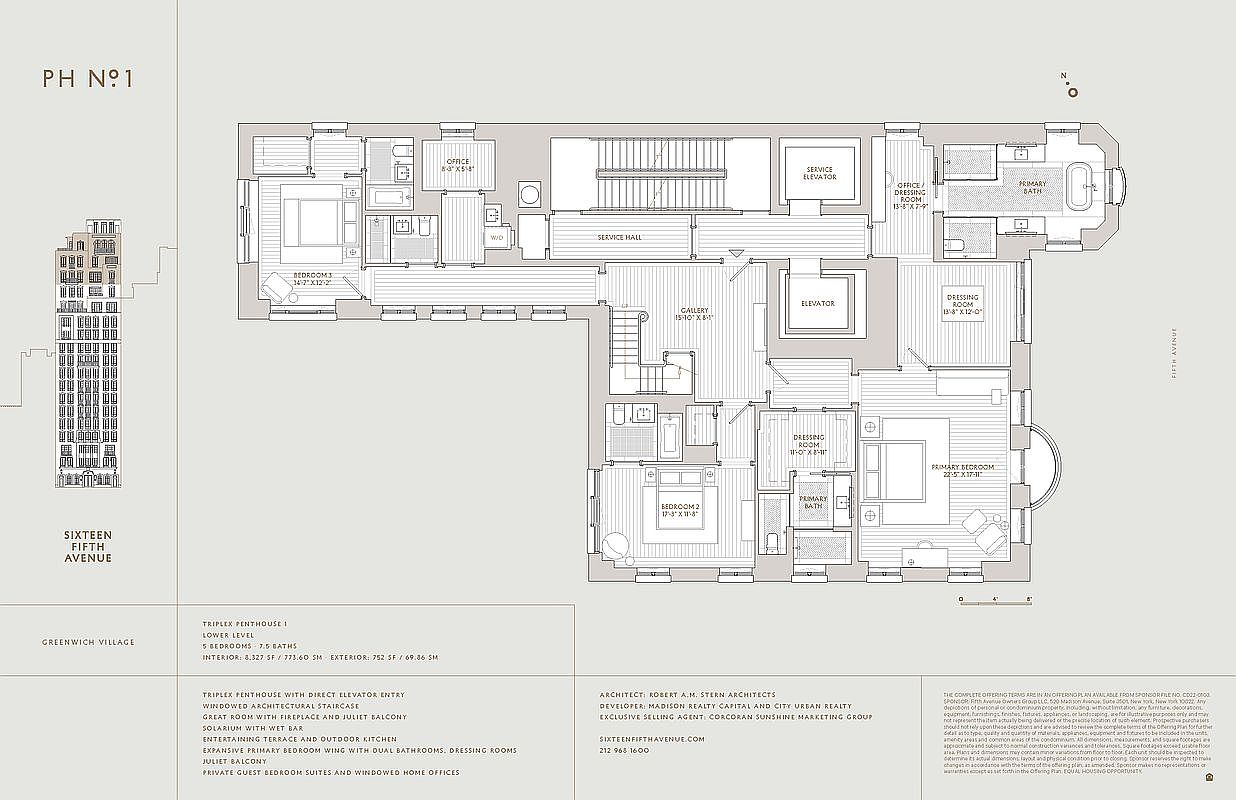
The primary suite occupies its own dedicated floor, a decision that communicates clearly the home's commitment to genuine privacy. Dual spa-caliber marble bathrooms — each with radiant heated floors, a freestanding soaking tub, and bespoke vanities — flank generous dressing rooms, while a private balcony extends the suite outward toward the skyline. The effect is deeply residential: unhurried, enveloping, and entirely removed from the pace of the city below.
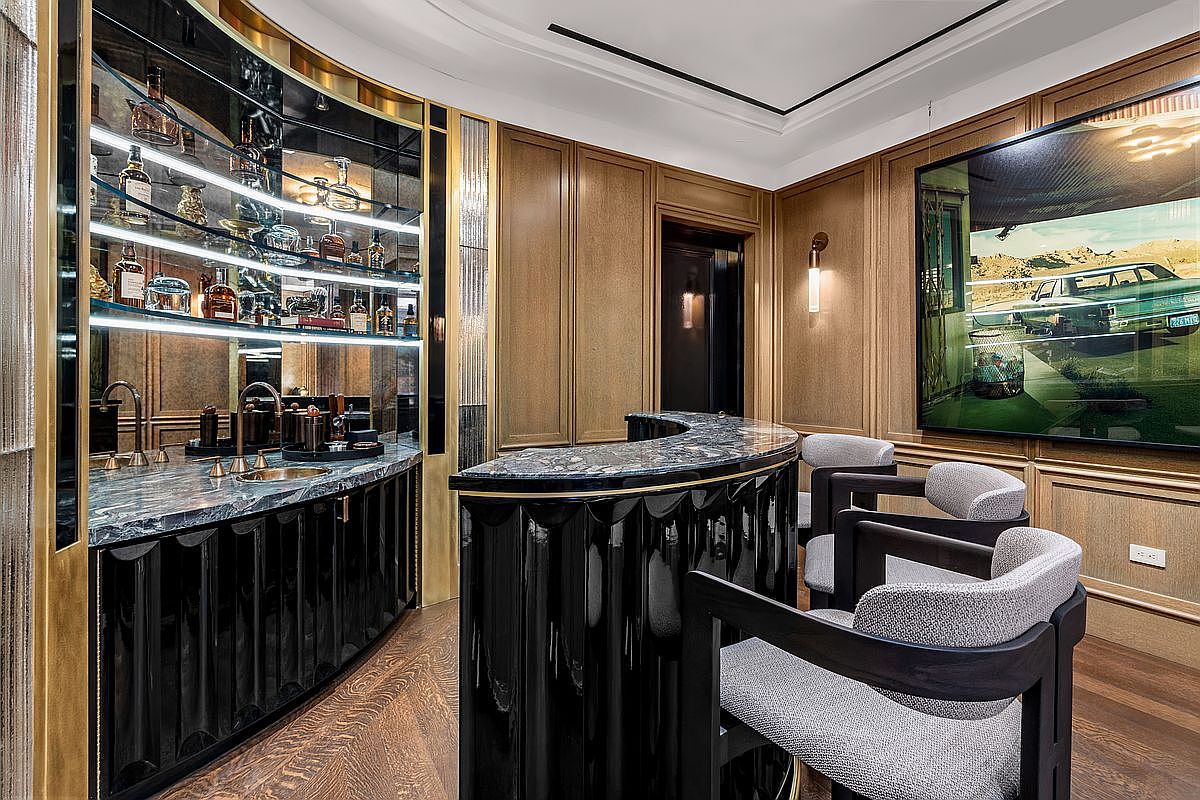
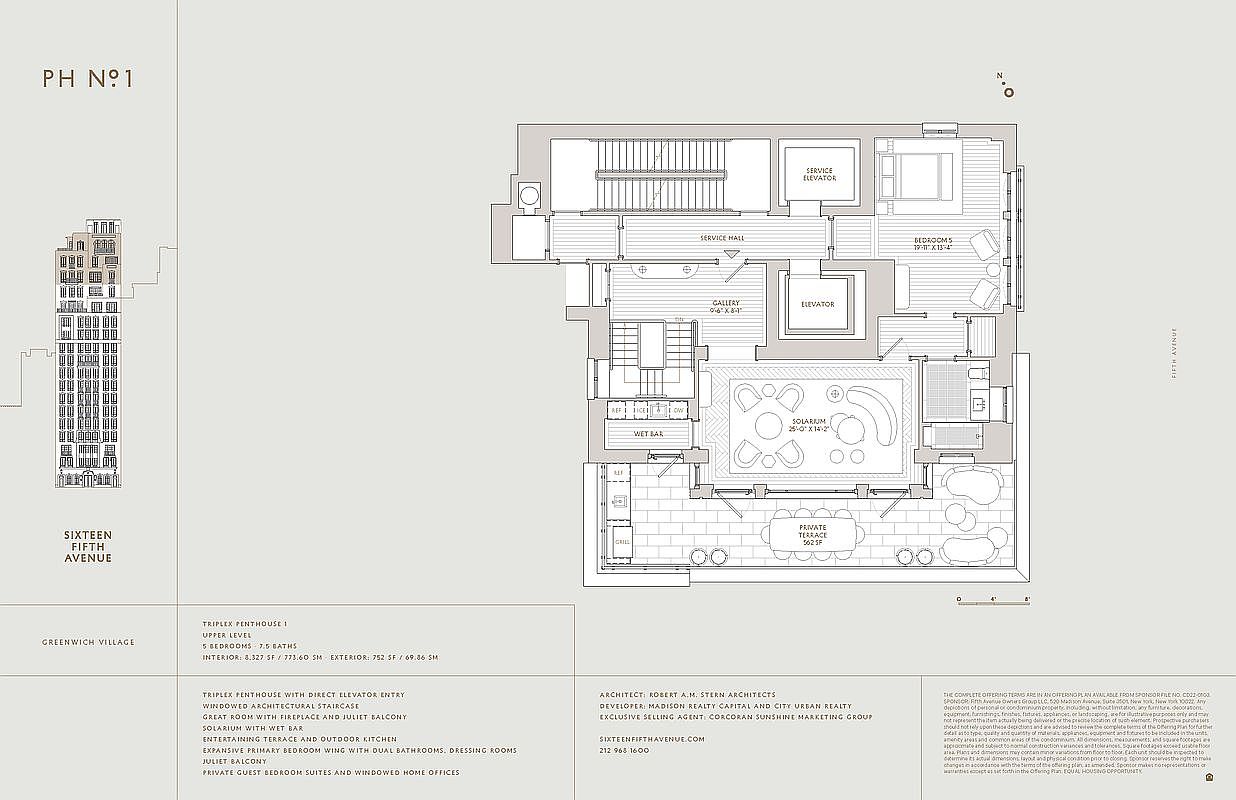
Additional levels accommodate gracious guest suites, windowed home offices, and a private library, each space finished with the same five-inch wide-plank white oak floors and custom millwork that distinguish the residence throughout. The crown of the home, however, belongs to the top-level solarium and its adjoining outdoor terrace — a sun-filled entertaining space complete with a wet bar and a fully equipped outdoor kitchen, framed by views that extend across the rooftops of Greenwich Village toward the towers of Lower Manhattan.
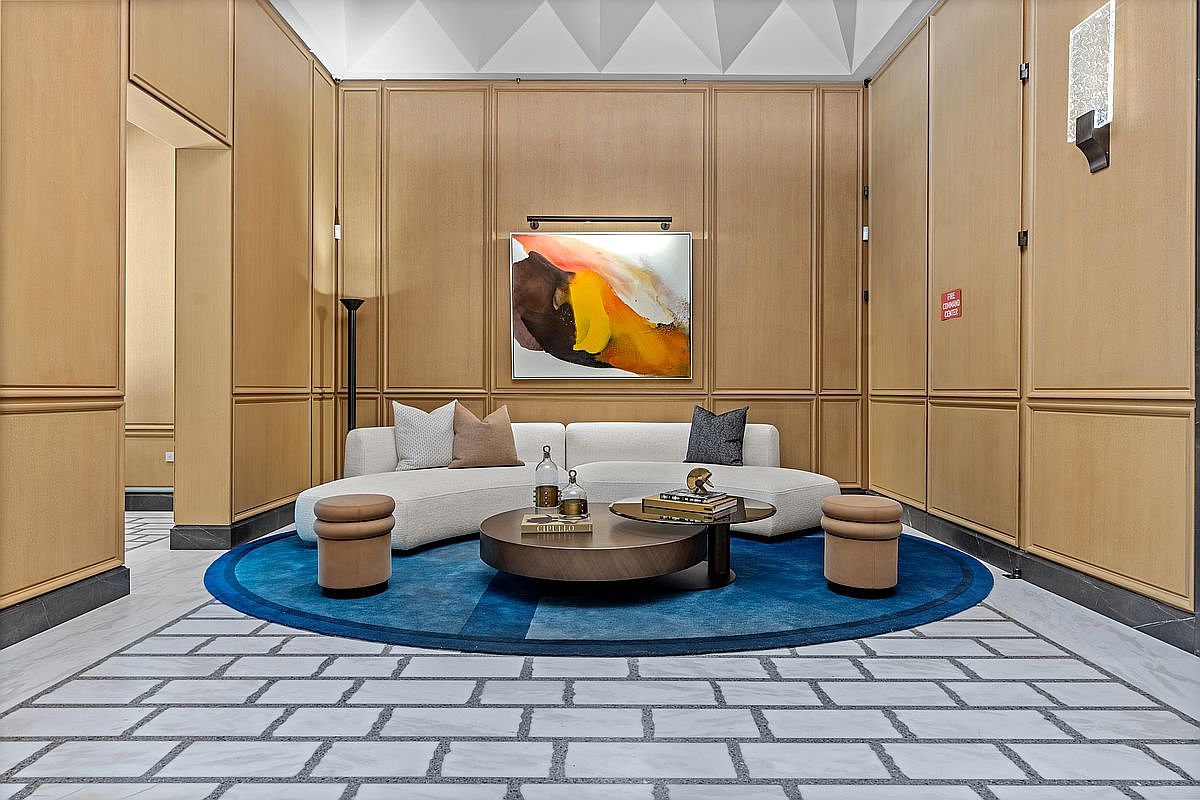
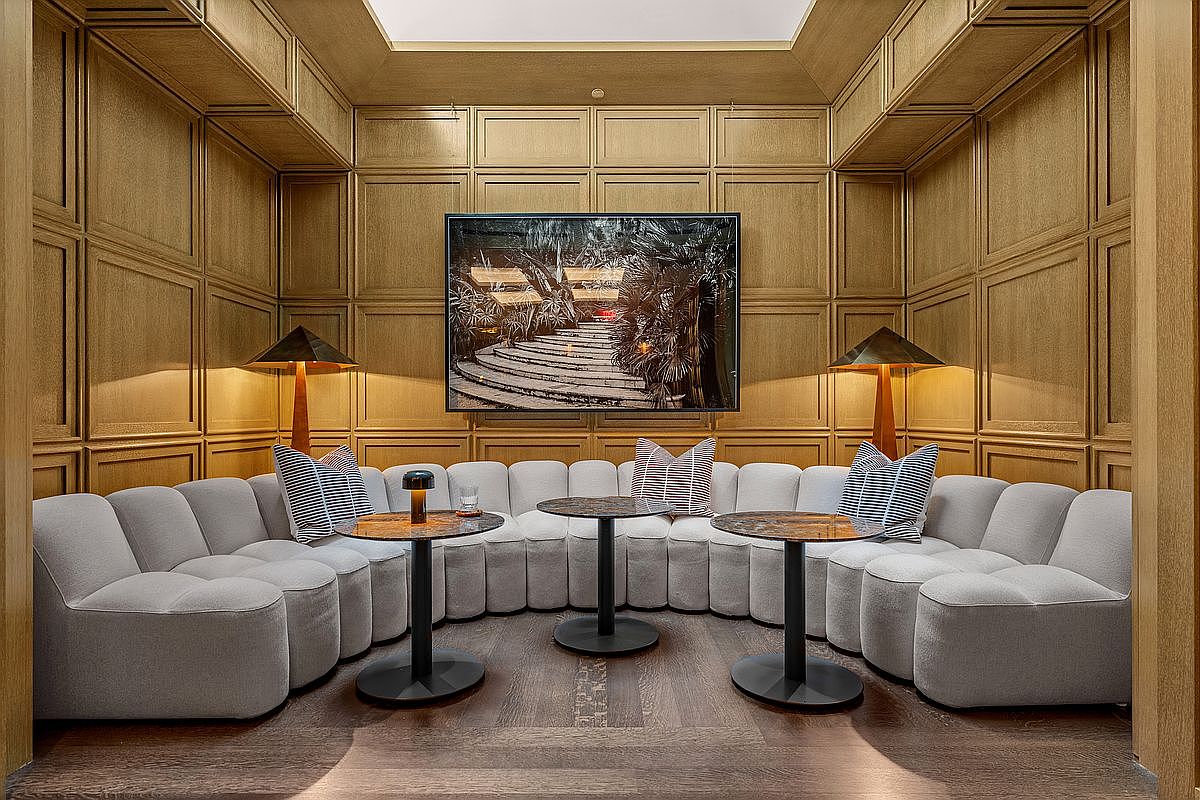
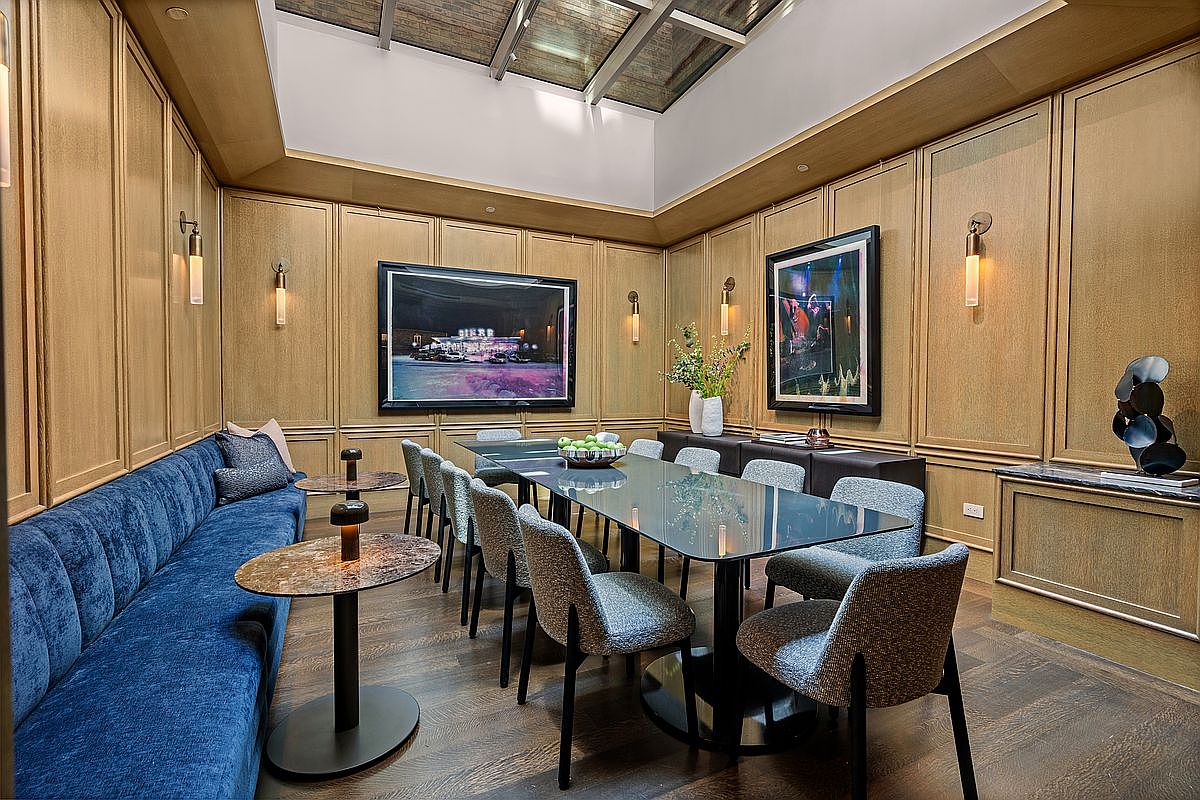
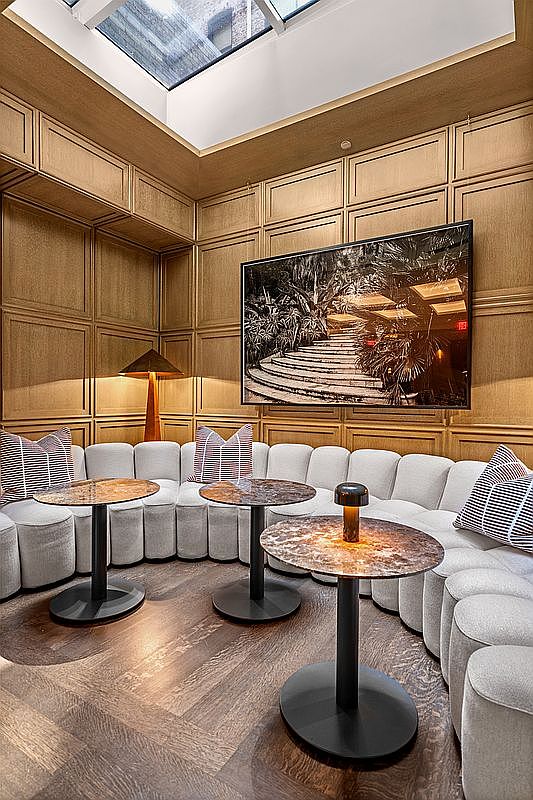
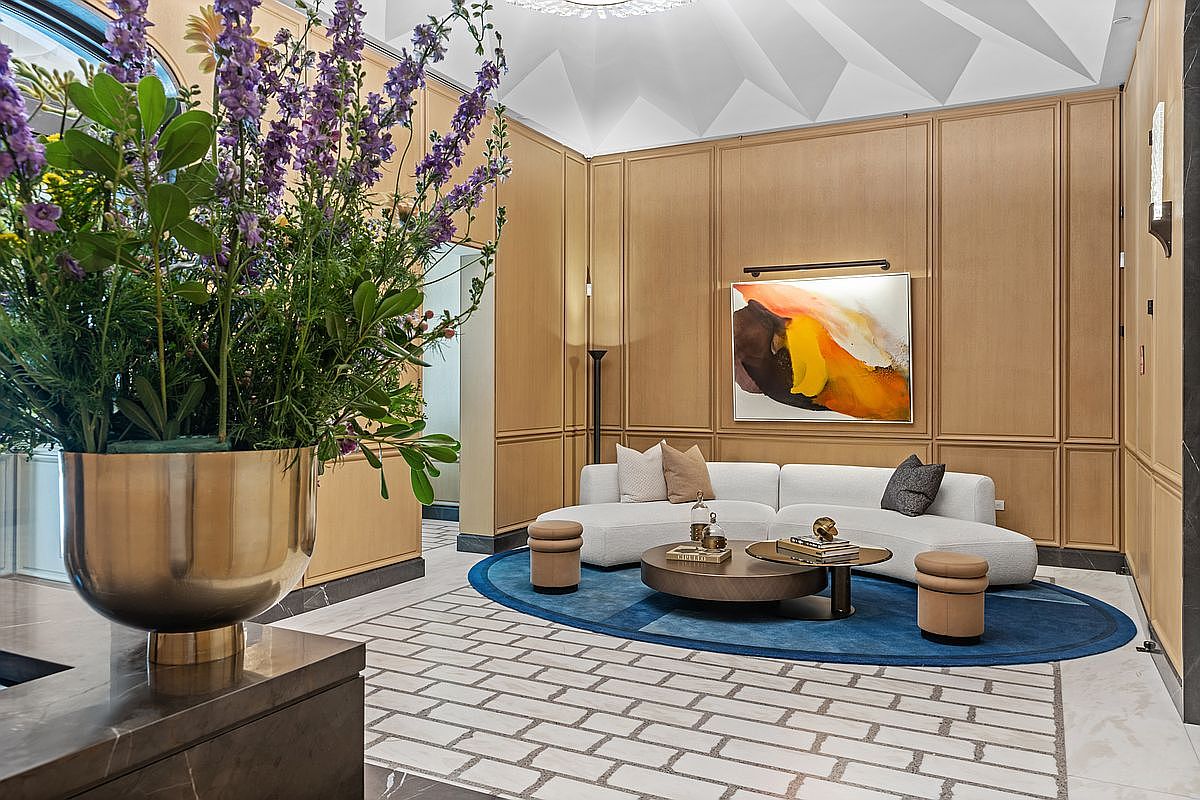
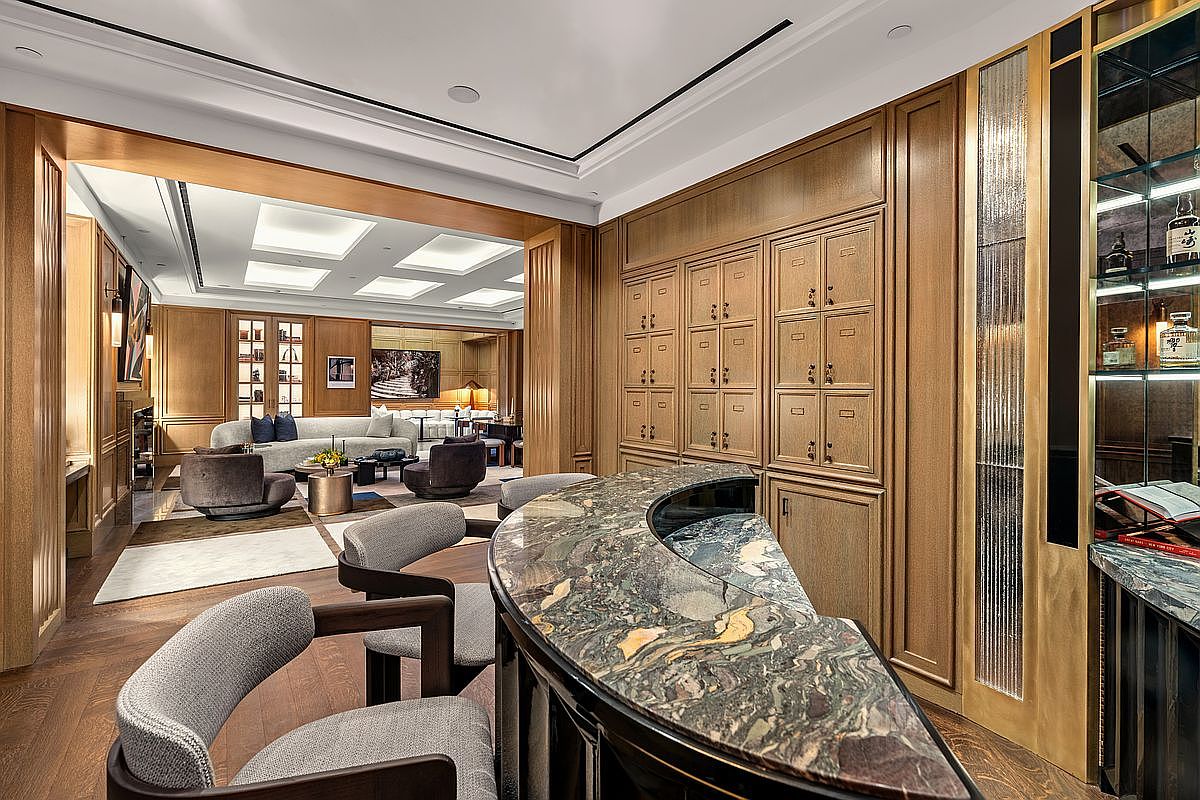
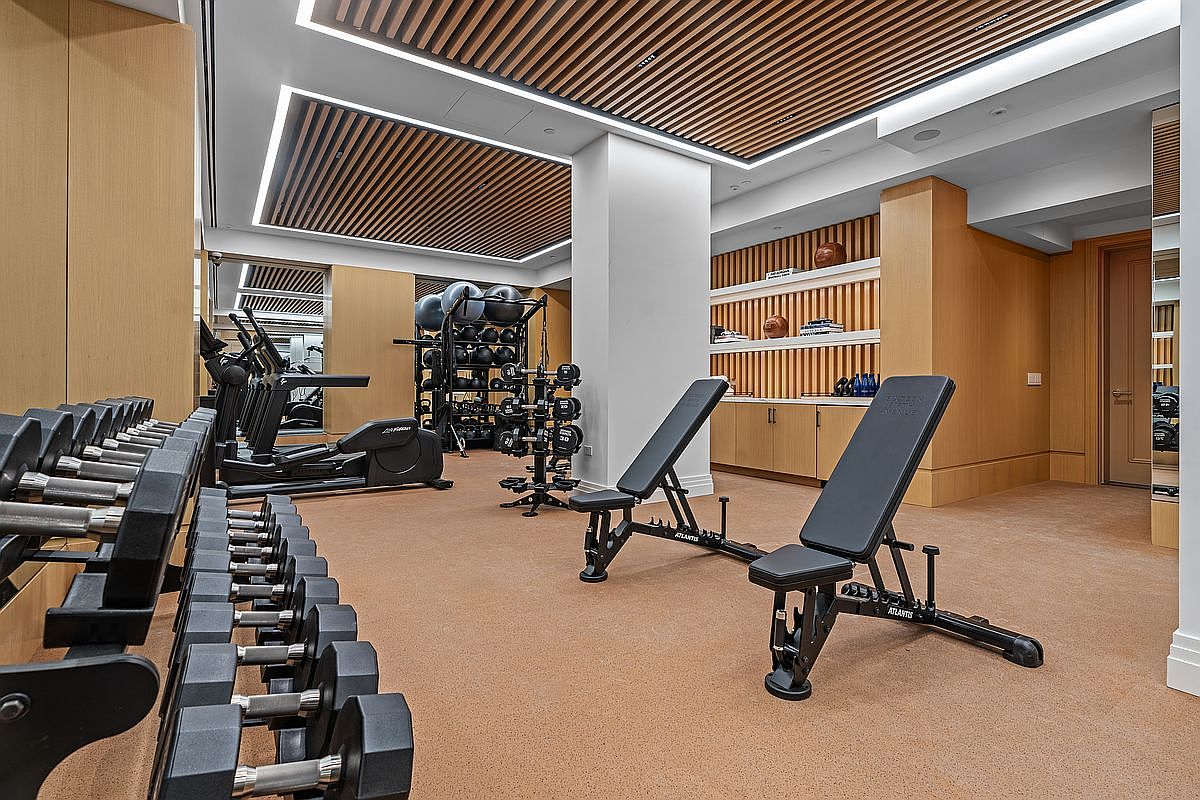
The building's amenities are equally considered: a fitness center curated by The Wright Fit, a library lounge with wine and spirit lockers, an atrium dining room with catering kitchen, a golf simulator, and 24-hour attended lobby service. Decorative Juliet balconies, limestone detailing, and jack-arched windows animate the facade with a classical vocabulary that speaks directly to the neighborhood it crowns.
To live at Sixteen Fifth Avenue is to occupy one of the most culturally layered and architecturally distinguished addresses in New York City. The building sits at the northern edge of Greenwich Village, where lower Fifth Avenue meets Washington Square North — a crossroads that has functioned for more than two centuries as a gathering point for artists, intellectuals, reformers, and the city's most discerning residents.
Washington Square Park, directly at the doorstep of the building, is among the most storied public spaces in the United States. Established as a public park in 1827 on land that served various civic purposes dating to the late eighteenth century, it has long been the social and symbolic heart of Greenwich Village. The park's iconic Stanford White-designed triumphal arch, completed in 1892 to commemorate the centennial of George Washington's inauguration, frames the southern terminus of Fifth Avenue with classical authority. On any given afternoon, the park draws an extraordinary cross-section of New York life — students from New York University, whose campus surrounds much of the square; musicians and performers; families and long-time Village residents — all animated by a spirit of openness that has defined this neighborhood for generations.
Greenwich Village itself carries one of the most resonant identities of any neighborhood in the world. Its irregular street grid, a legacy of its pre-Manhattan-grid origins as a distinct village, produces the kind of intimate, human-scaled streetscape that New Yorkers treasure and visitors find irresistible. The neighborhood's Federal and Greek Revival townhouses, many dating to the early nineteenth century, line blocks that have housed generations of American literary and artistic life — from the salons of the 1910s to the jazz clubs of the 1940s, the Beat gatherings of the 1950s, and the folk revival of the early 1960s. Bob Dylan famously lived and performed in the Village; Henry James set the opening chapters of Washington Square within blocks of this address.
Today, the Village remains one of New York's most desirable residential enclaves, distinguished by its relative quiet, its abundance of tree-lined streets, and the exceptional quality of its retail, dining, and cultural offerings. Bleecker Street, a short walk west, is lined with independent boutiques and acclaimed restaurants. The West Village, just beyond, offers some of the city's finest dining in an intimate neighborhood setting. The High Line, Chelsea's gallery district, and Hudson River Park are all easily accessible, as are the subway lines at West 4th Street and 14th Street that connect the neighborhood seamlessly to the rest of Manhattan.
New York University's presence lends the area a perpetual intellectual energy, while the proximity of landmarks such as the New York Studio School, the Film Forum on West Houston Street, and the Village Vanguard jazz club on Seventh Avenue South ensures a cultural richness that few neighborhoods anywhere can match. For a residence of Penthouse 1's scale and pedigree, no address in New York offers a more fitting backdrop.
Featured Highlights
Curated Content • Presented by Ryan Kaplan