The Story Behind
A Timeless Waterfront Estate Making Its Southampton Village Debut
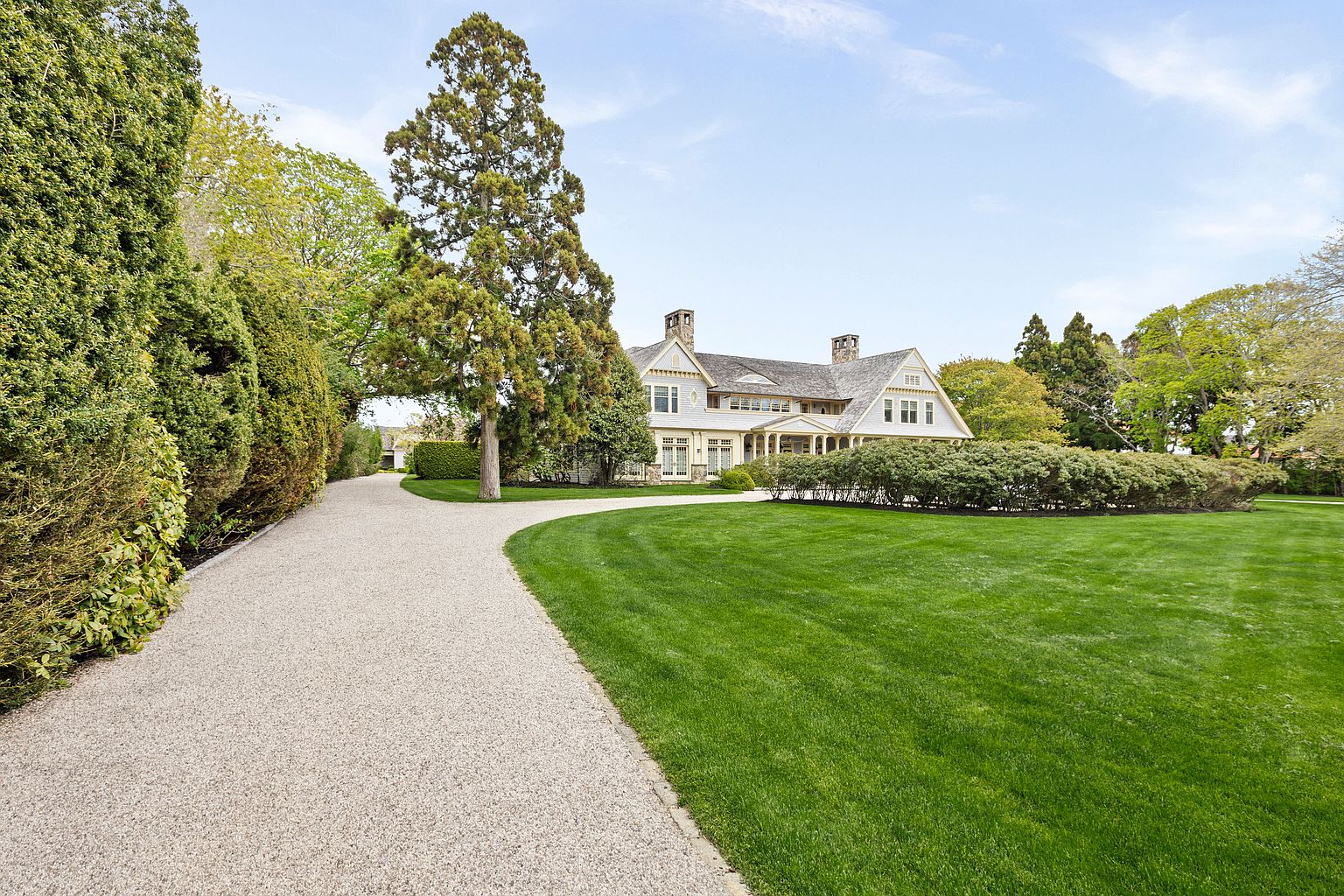
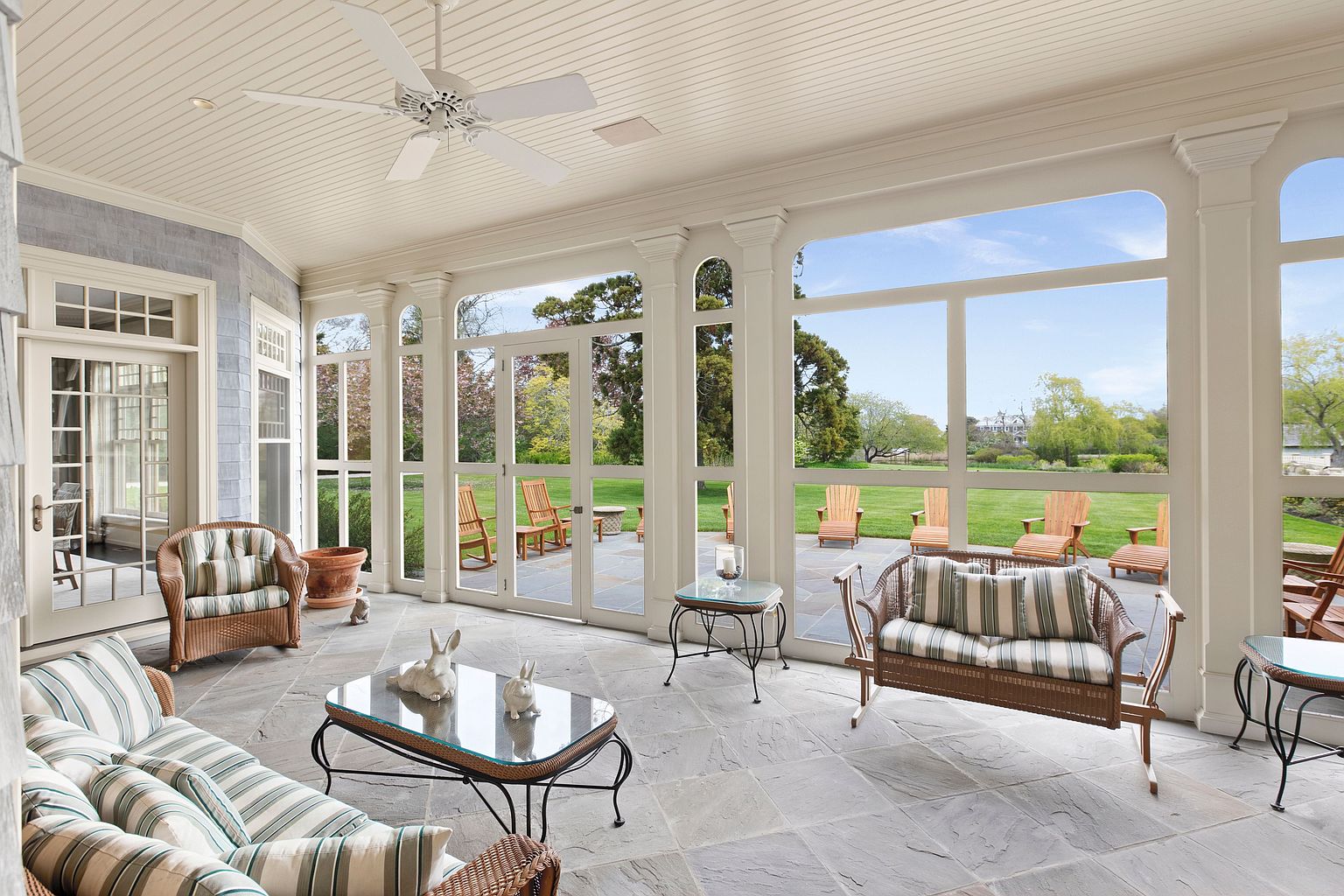
There are properties that announce themselves, and there are properties that reveal themselves slowly — through a winding gravel drive, through the measured rhythm of mature specimen plantings, through the particular quality of light that falls across a screened porch at the end of an August afternoon. 160 Wyandanch Lane belongs entirely to the second category.
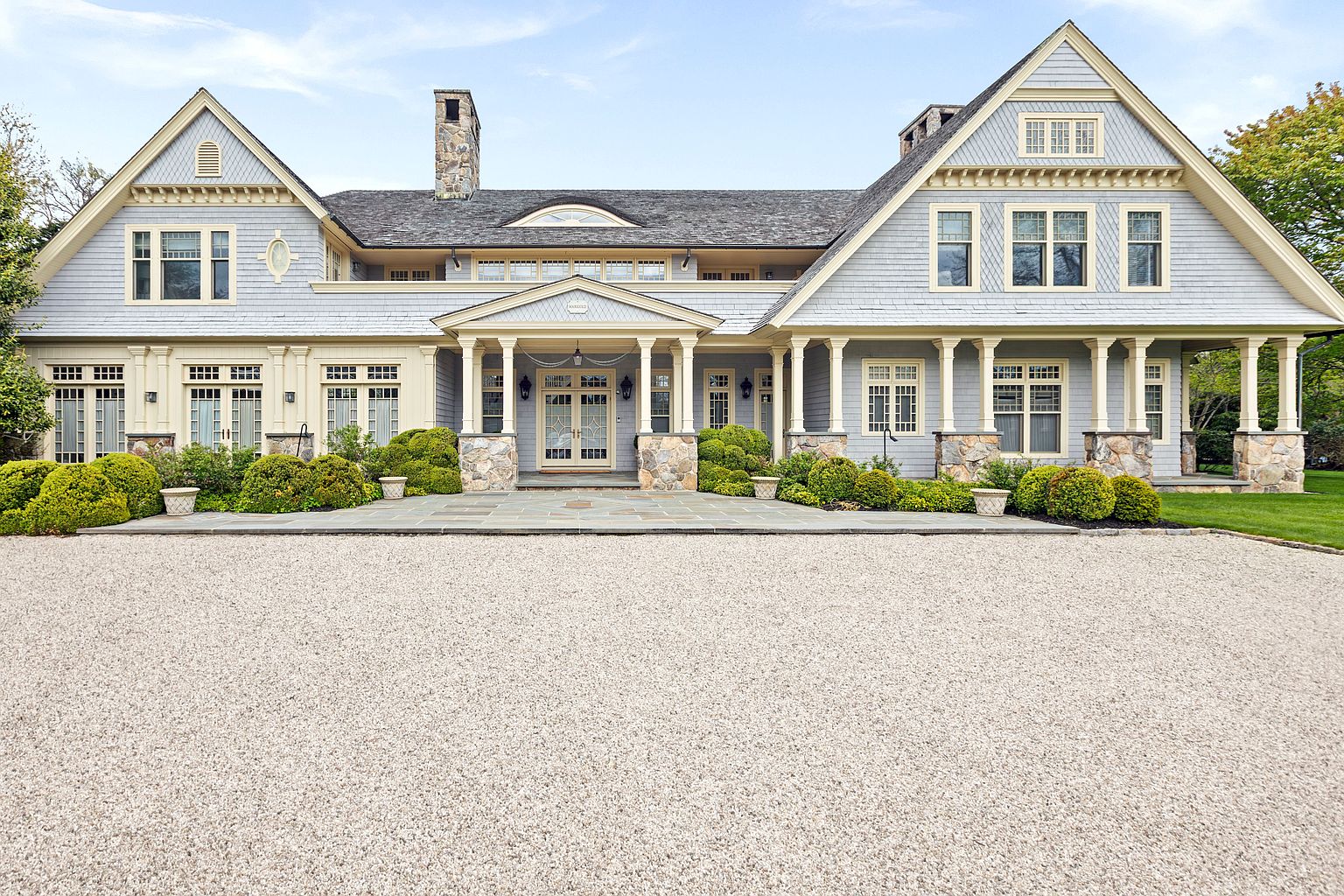
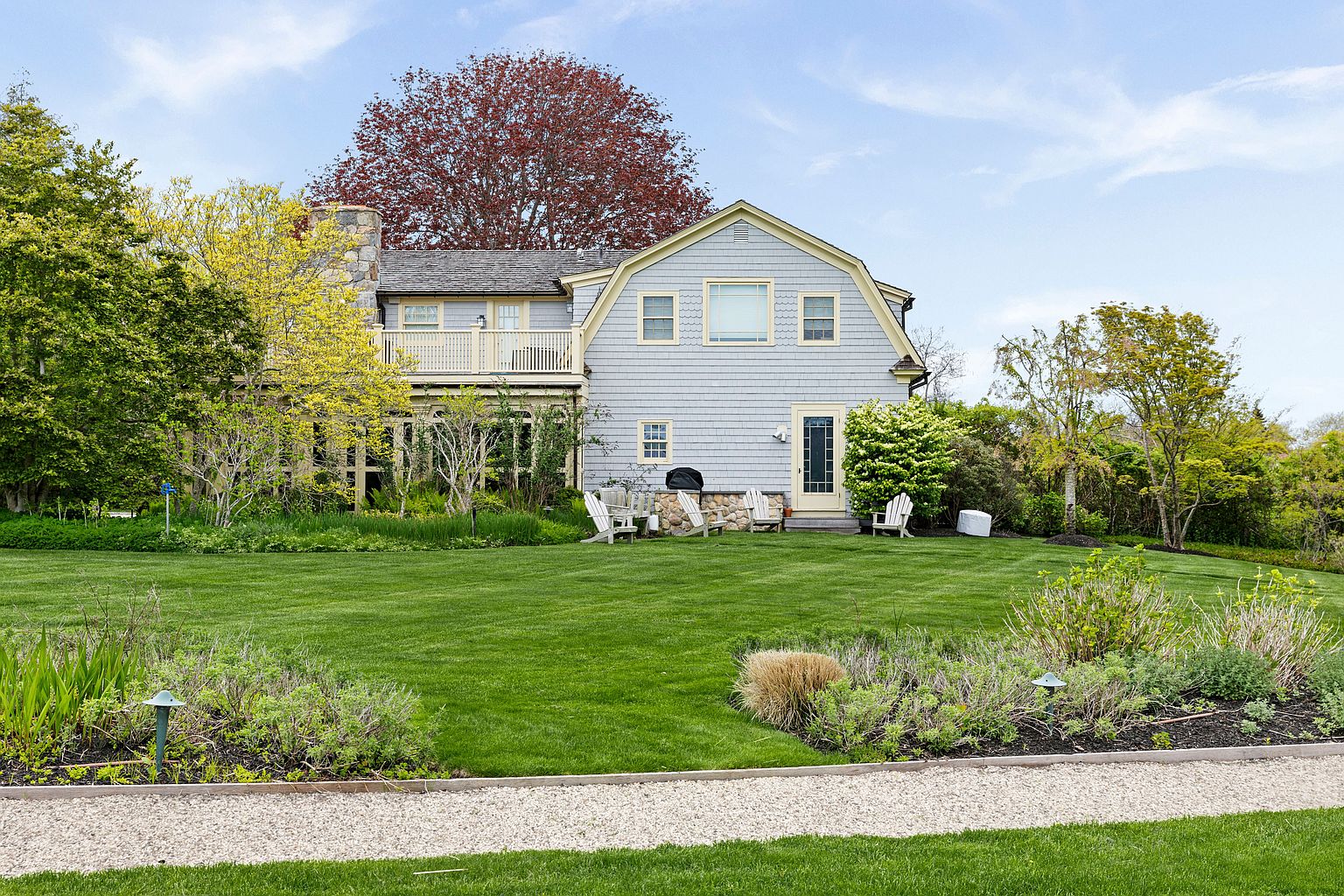
Originally conceived by Francis Fleetwood, the architect whose work has quietly shaped the highest tier of Southampton residential design across several decades, the main residence carries the unmistakable confidence of a home designed without compromise. Its classic shingle-style facade — light blue siding, cream-colored trim, stone column bases, and a symmetrical procession of gables and dormers — situates itself firmly within the great tradition of Hamptons estate architecture while remaining entirely its own. This is a house that understands its place in a landscape.
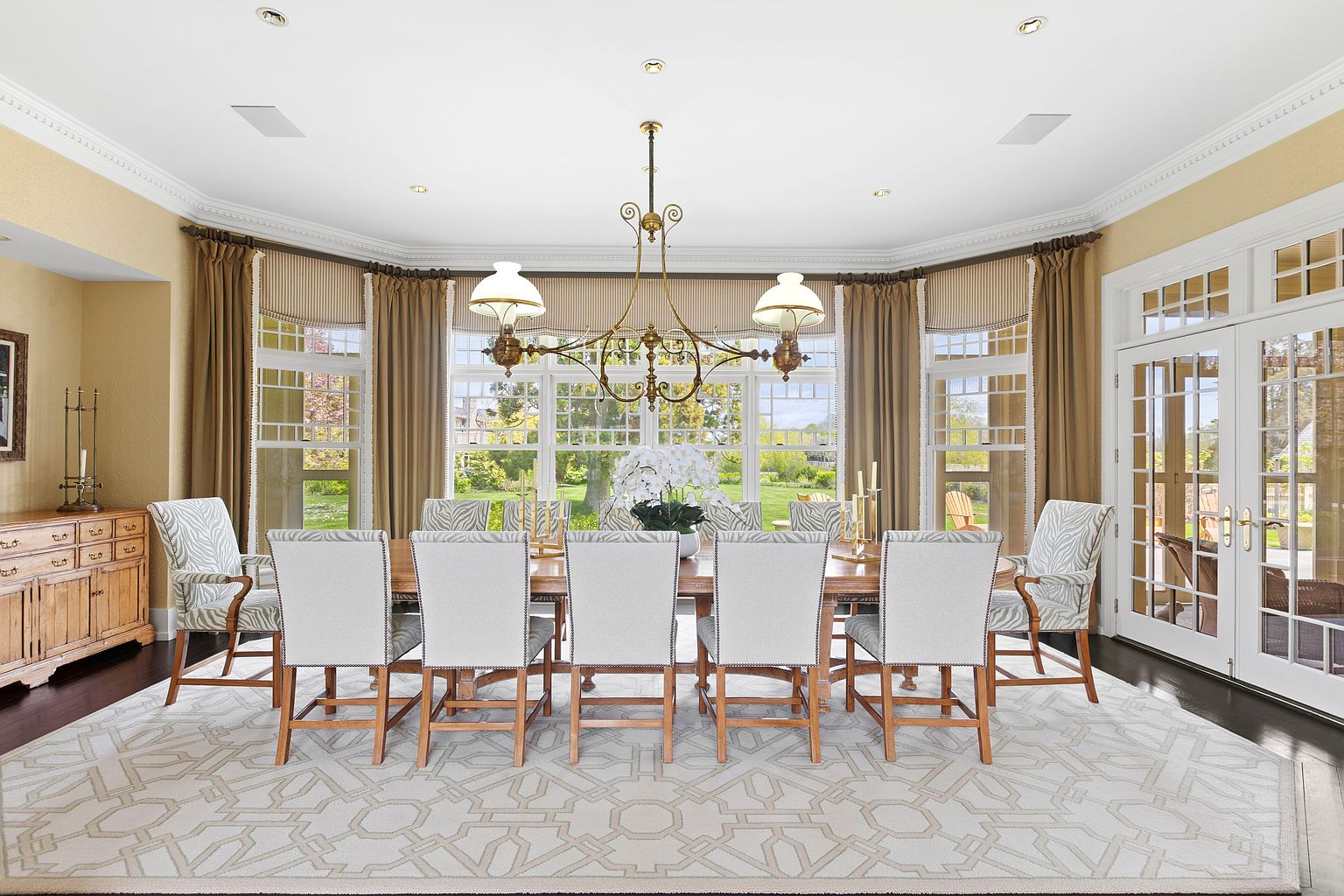
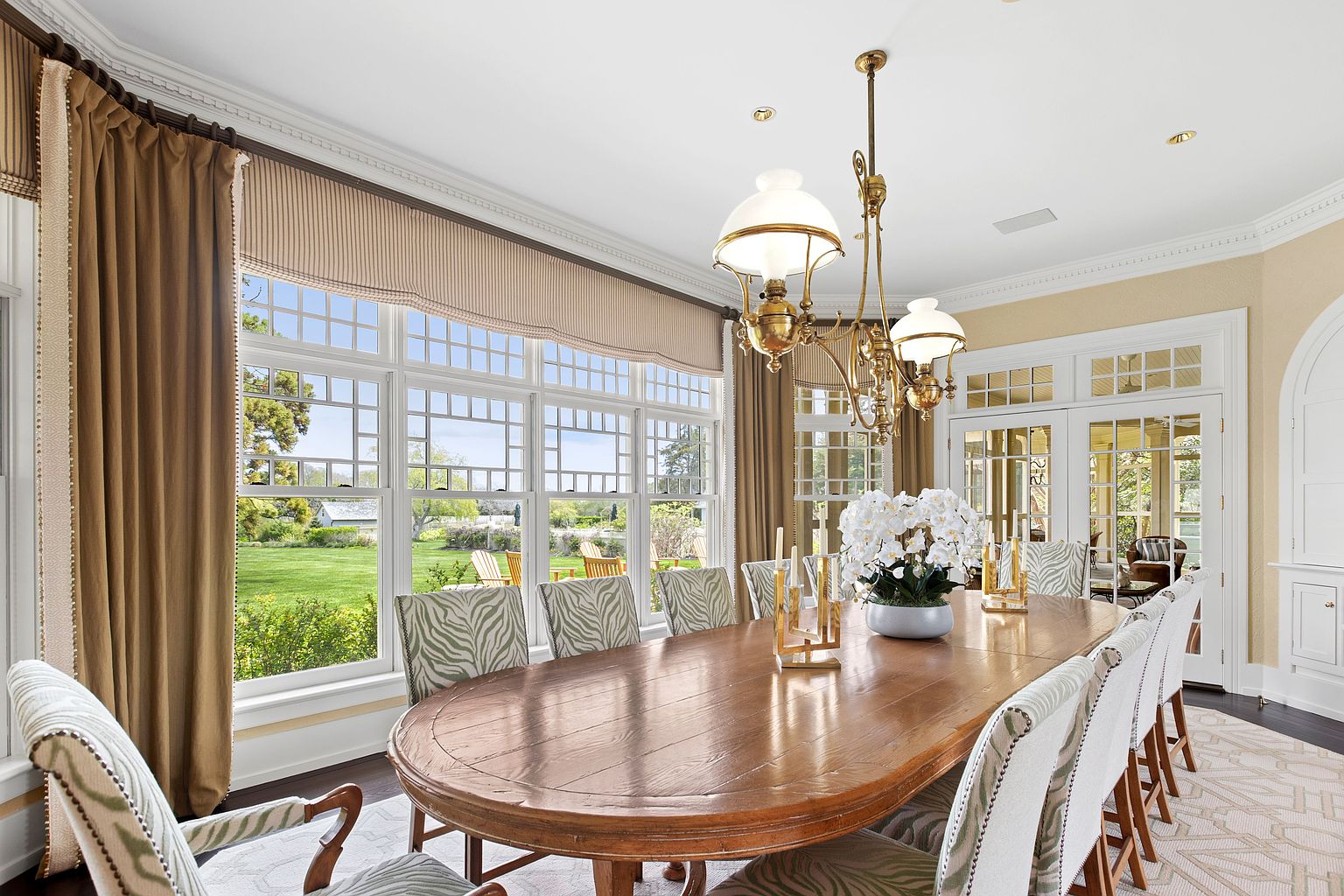
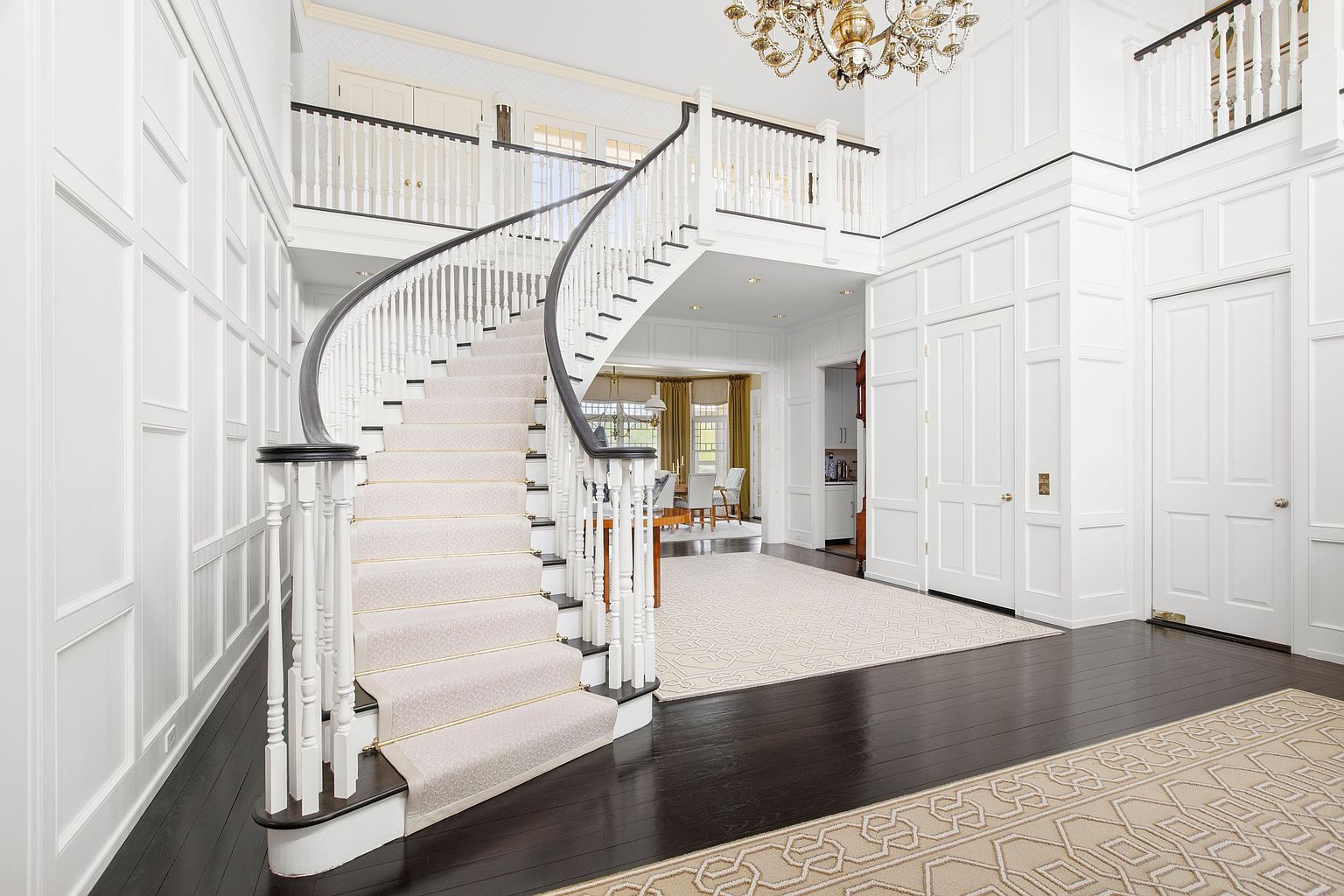
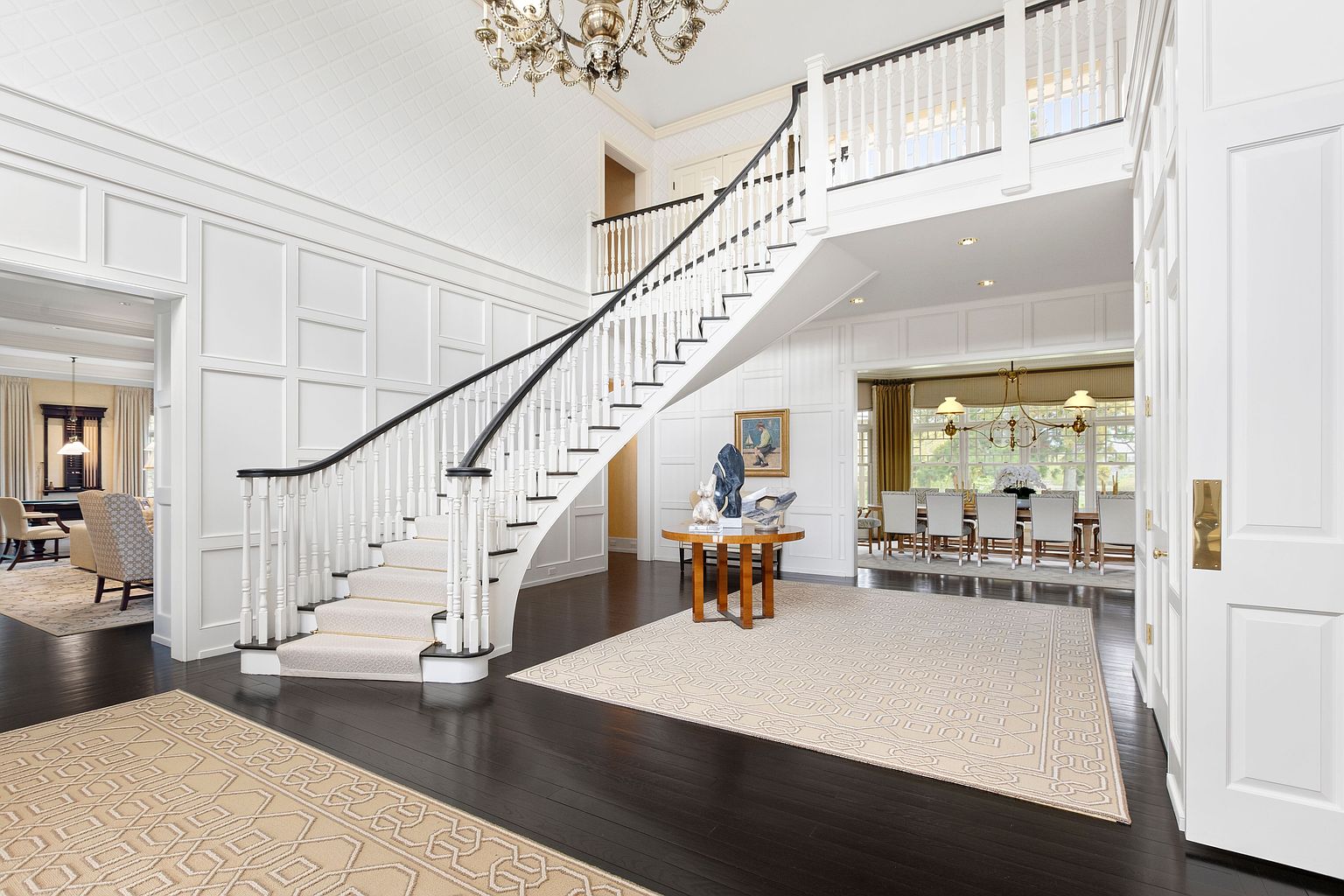
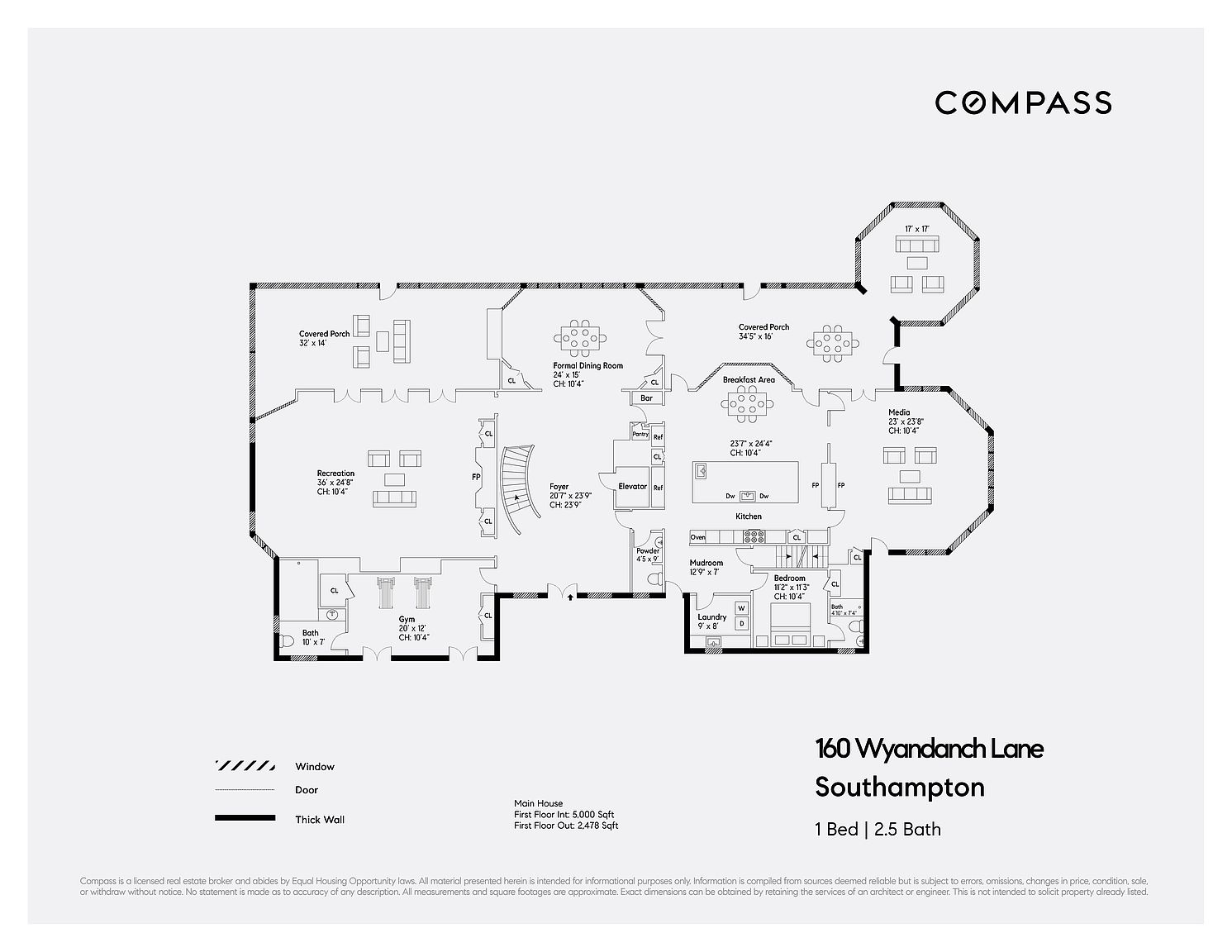
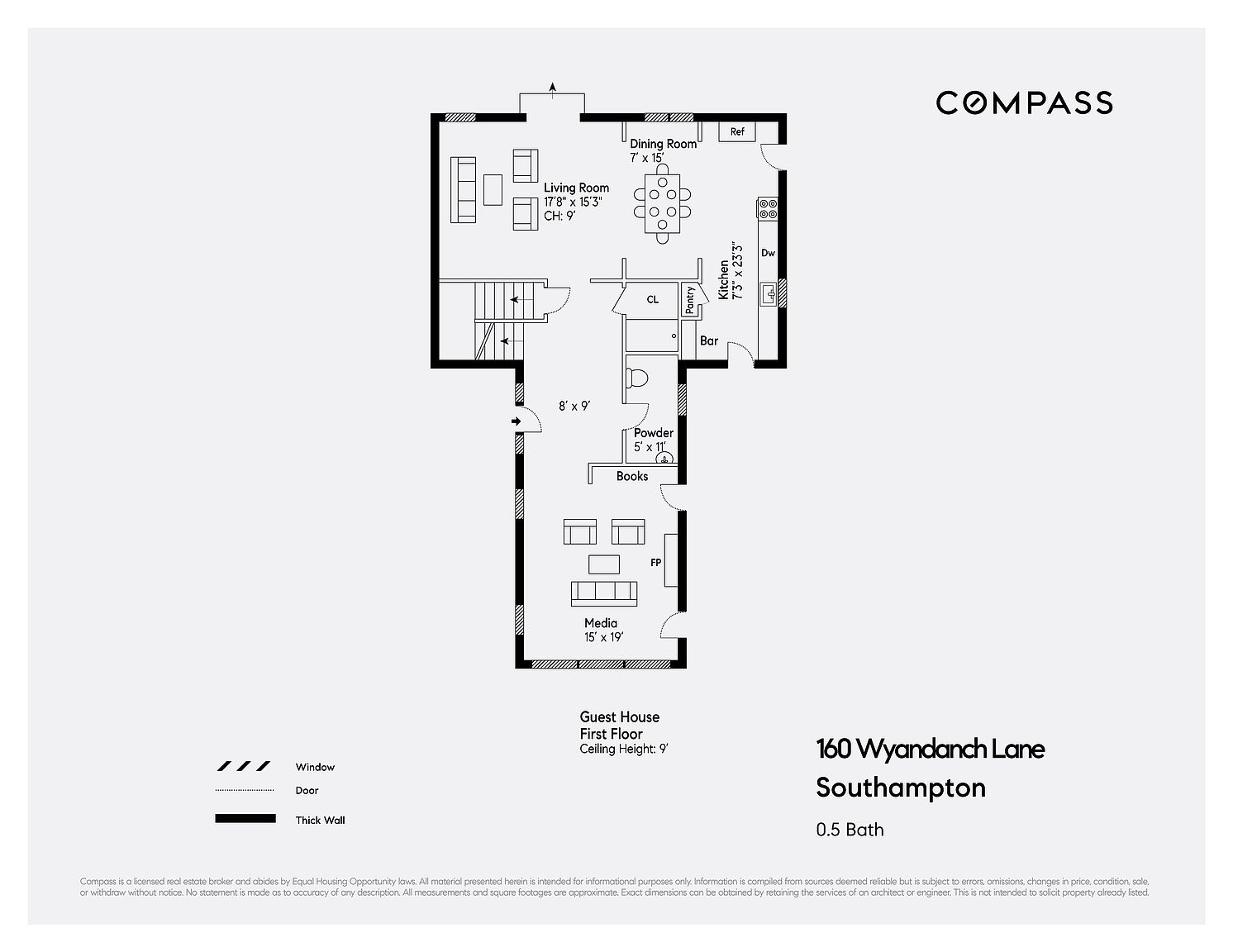
The interior announces its intentions from the moment the foyer is entered: a dramatic curved staircase with dark wood handrail and crisp white balusters rises beneath an intricate chandelier, flanked by extensive wall paneling that establishes the home's tone of refined, unhurried elegance. Oversized windows flood the space with natural light, and the sightlines established here — through to the formal dining room, toward the grand living room — set the scale for everything that follows.
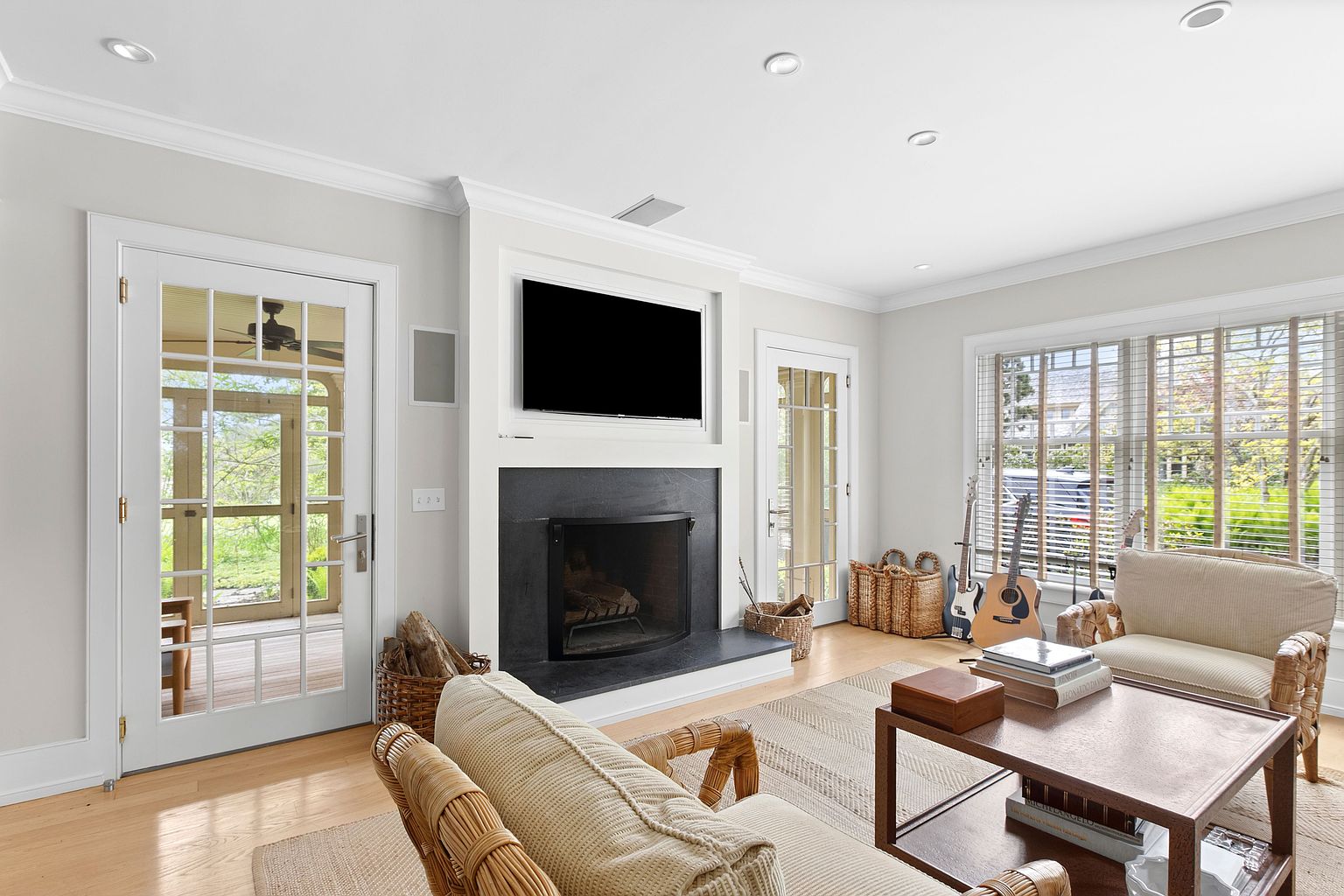
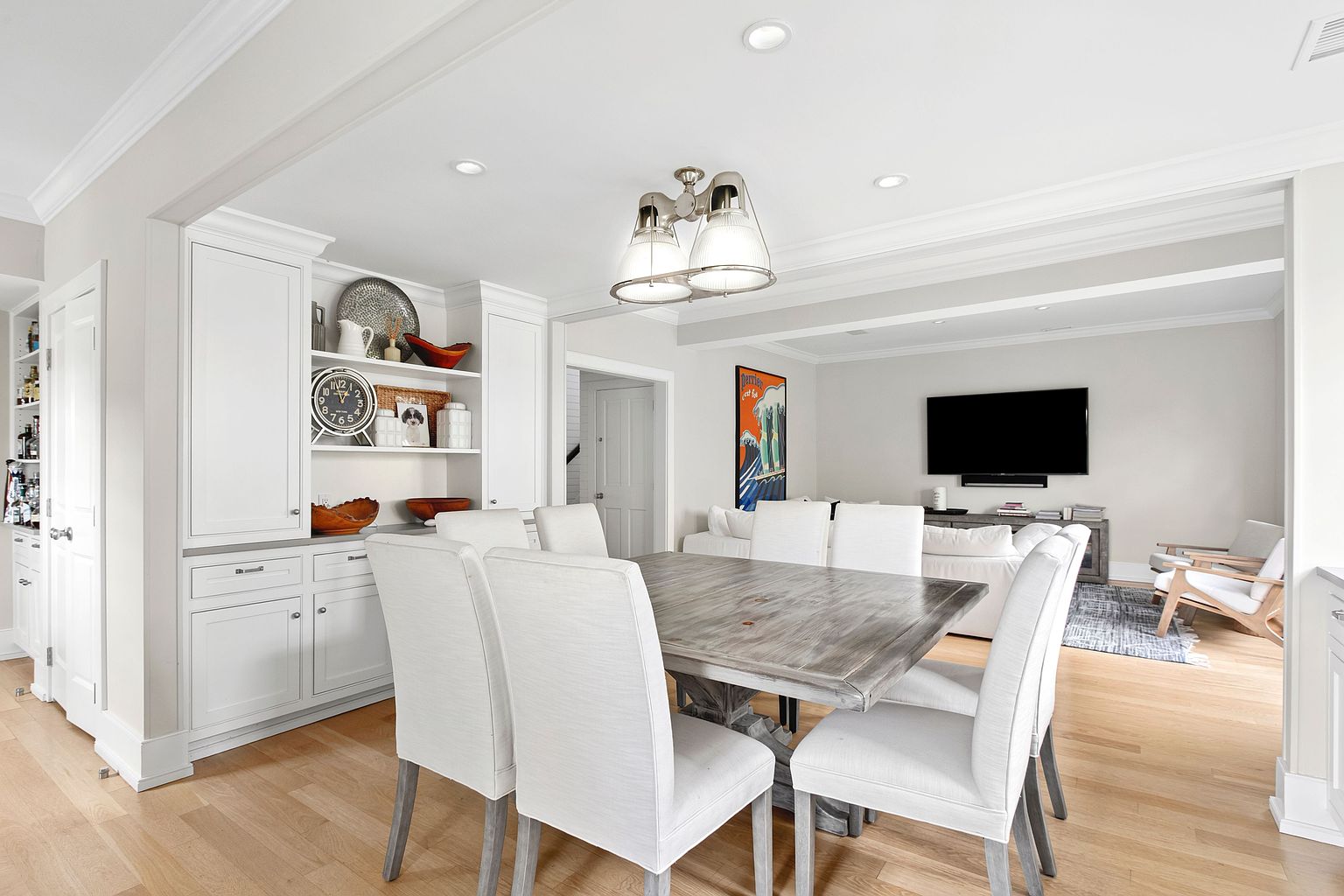
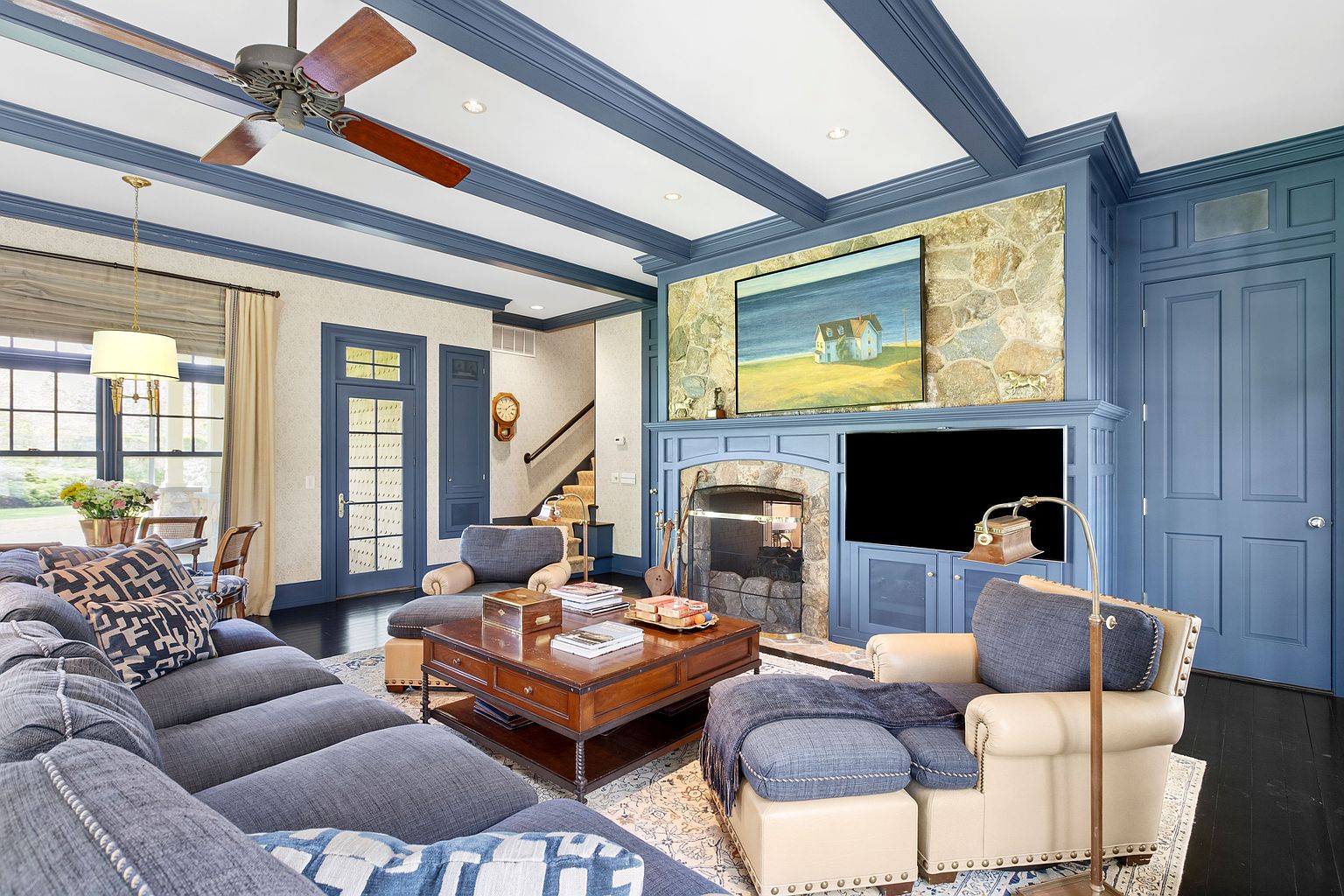
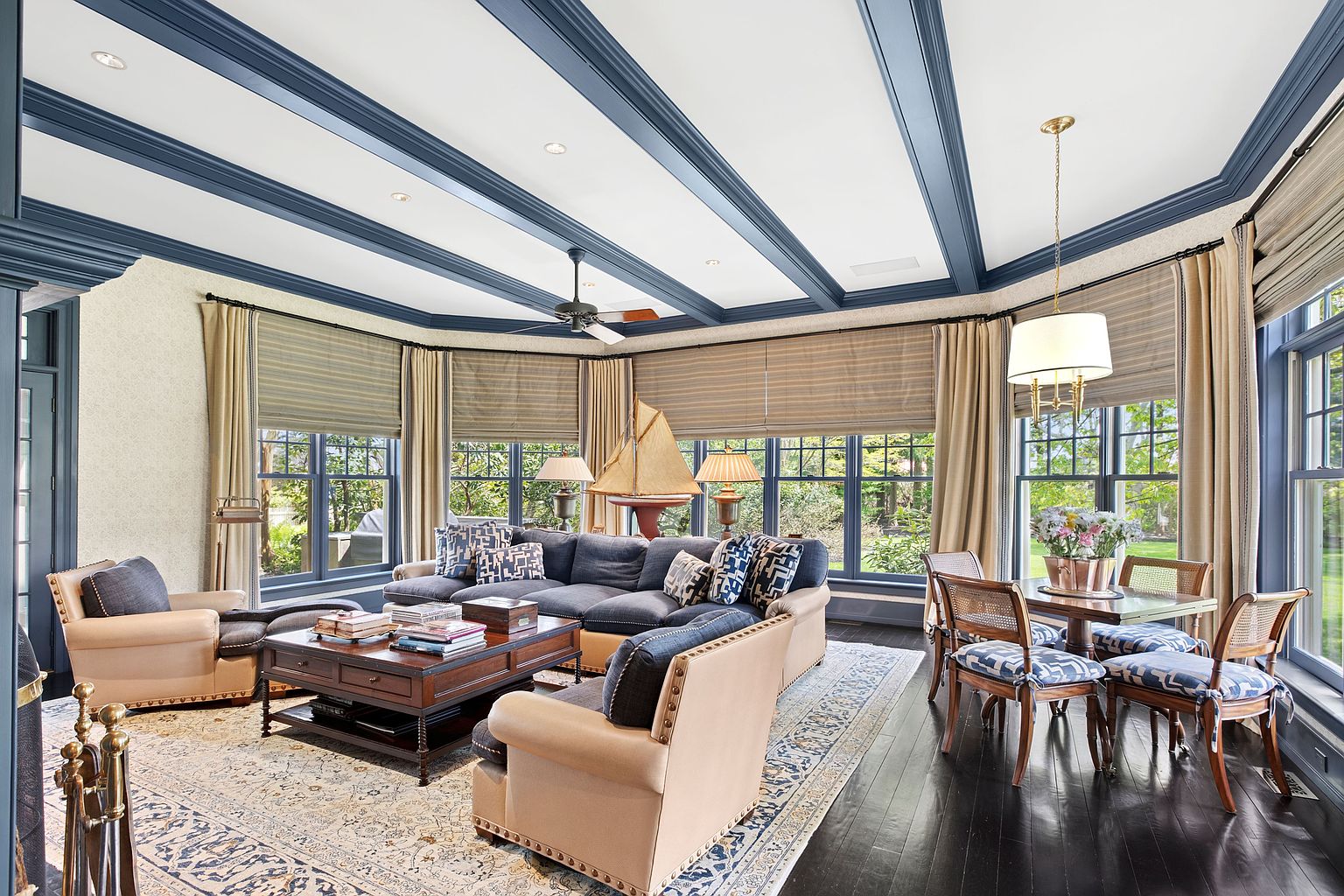
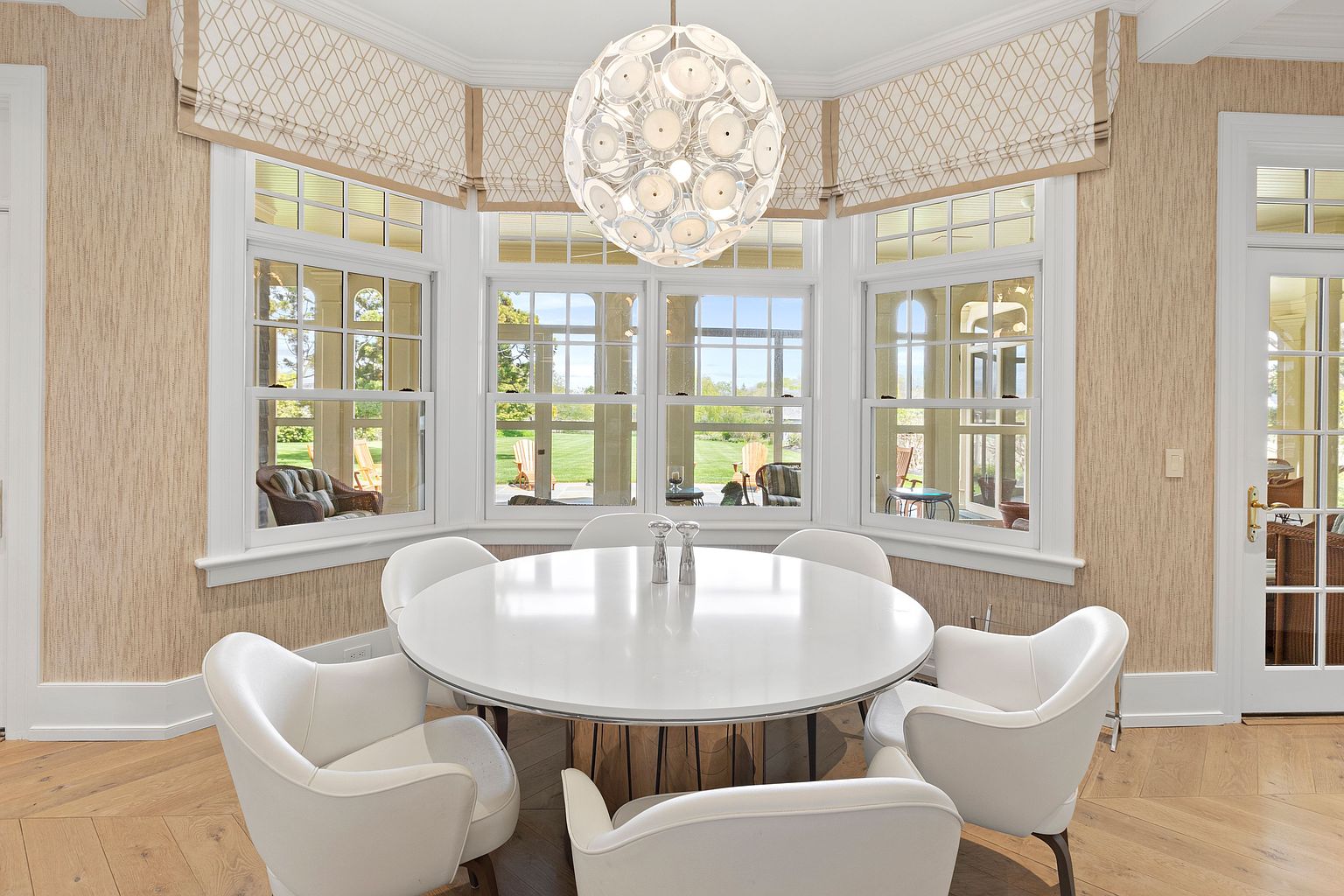
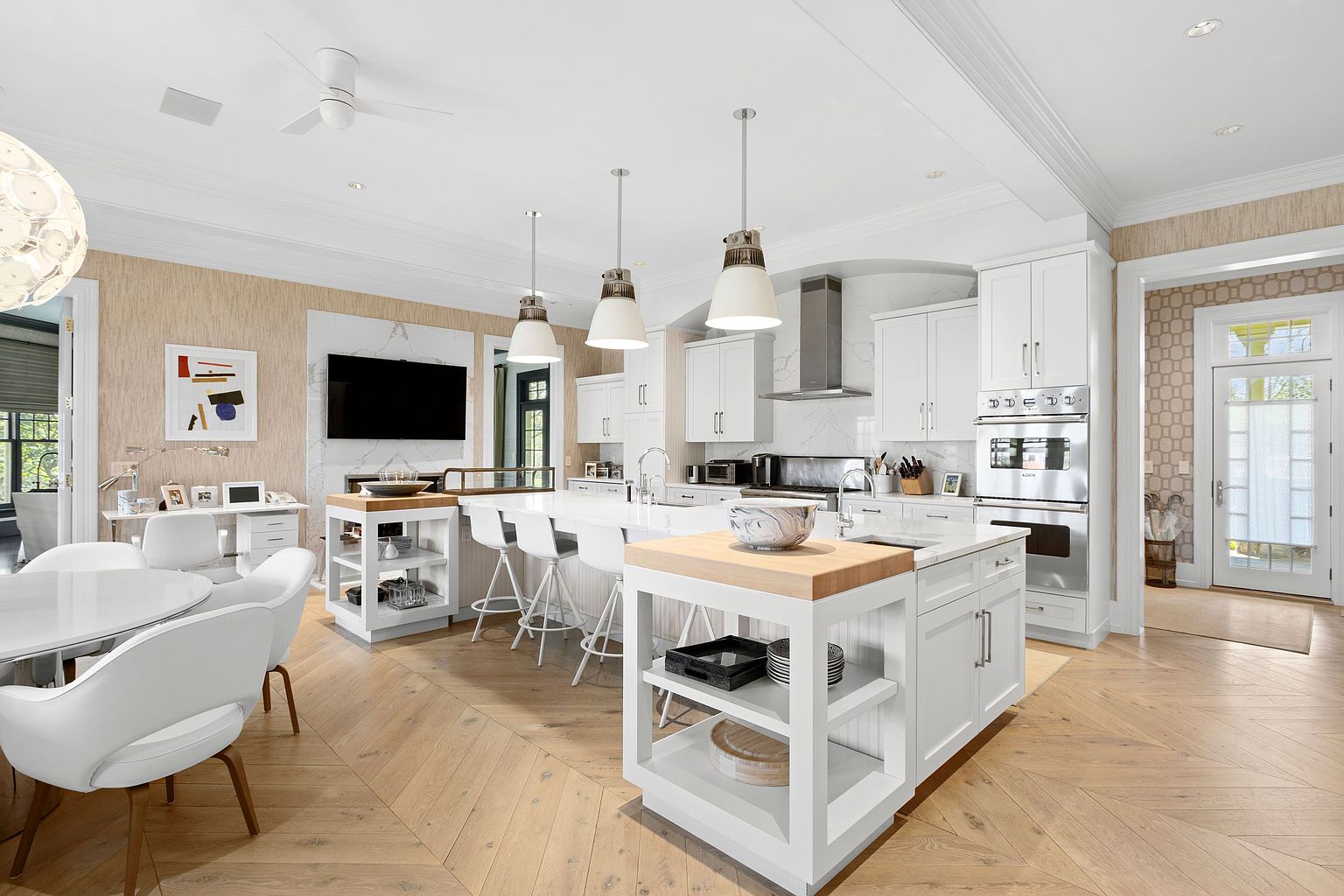
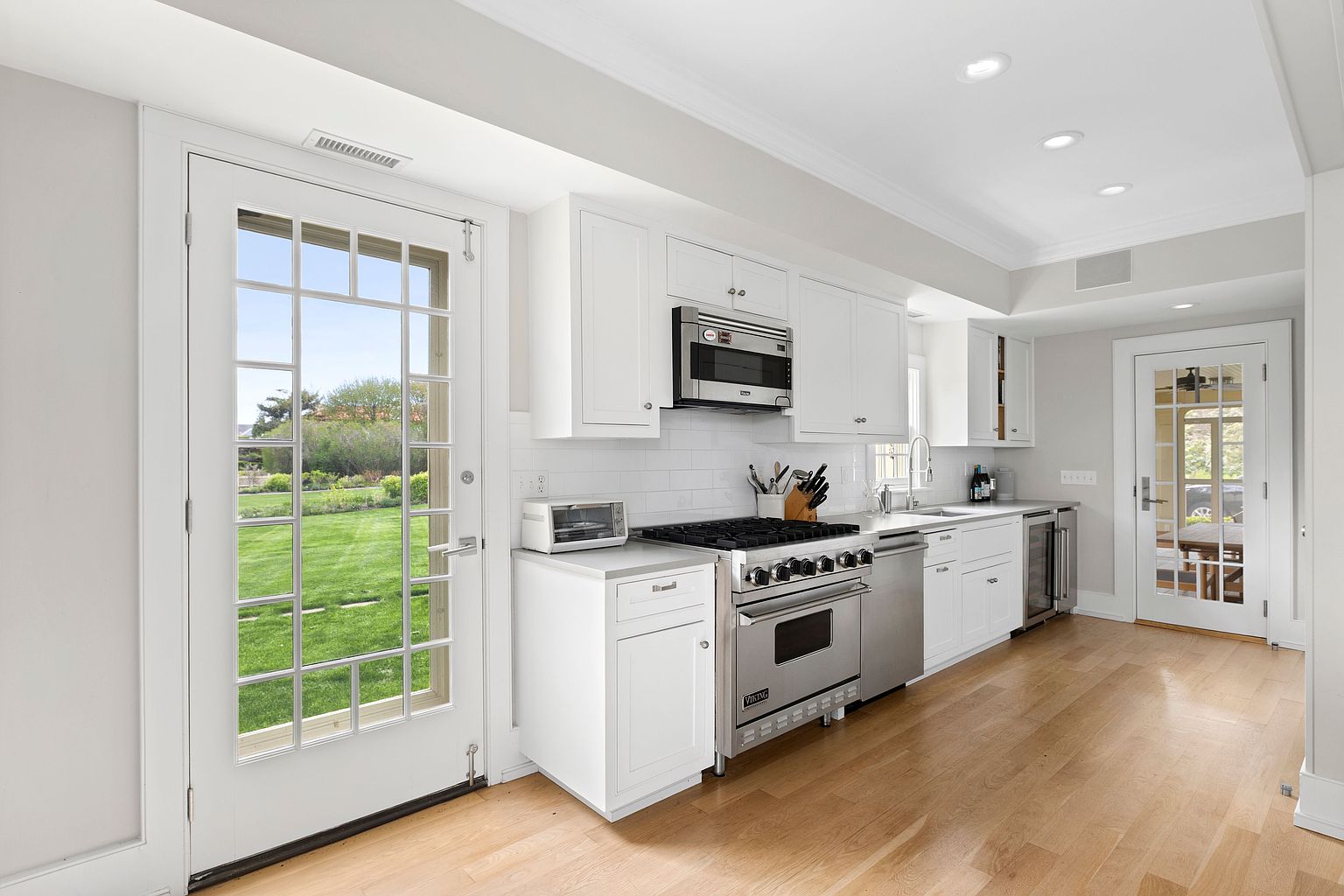
At the heart of the residence, a newly renovated kitchen connects to a vaulted-ceiling den by way of a double-sided fireplace, an architectural gesture that simultaneously unites and defines the two spaces. The fireplace anchors both rooms while preserving each one's ability to function independently — a detail that speaks to the thoughtfulness embedded throughout the home's design. Chevron-patterned light wood flooring, a generous central island with butcher block top, pendant lighting, and a dedicated dining nook complete a kitchen that is as suited to a quiet weekday morning as it is to serious entertaining.
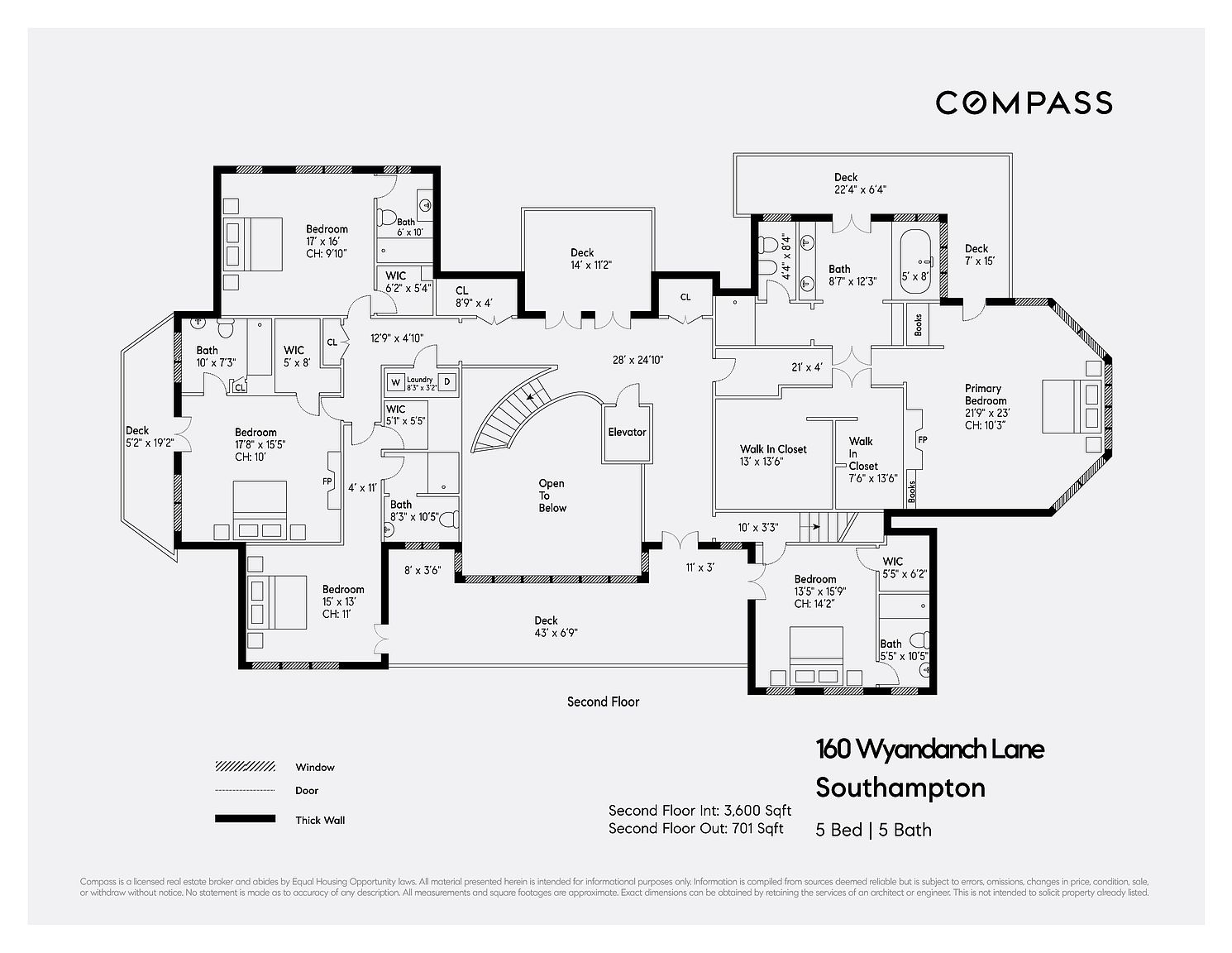
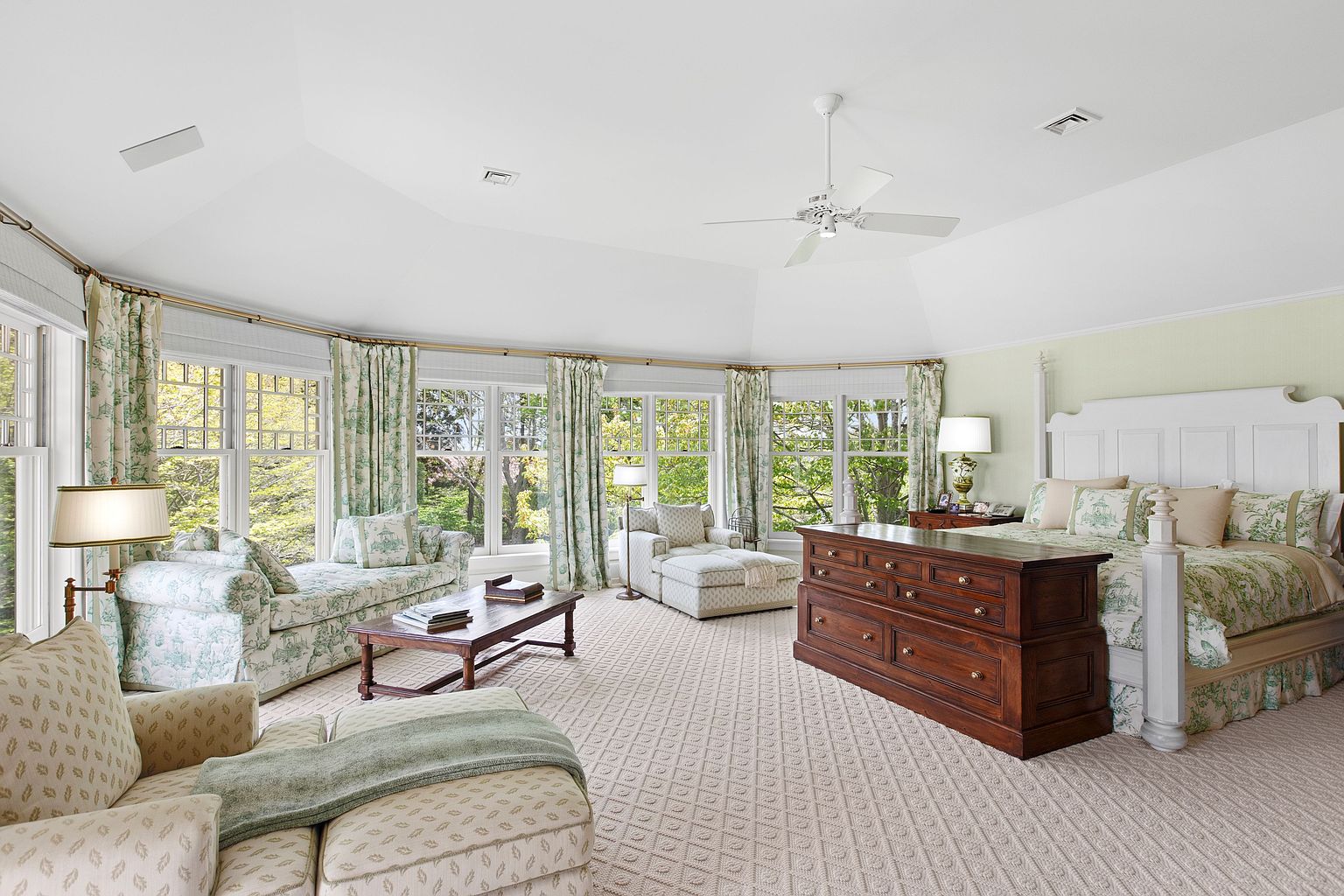
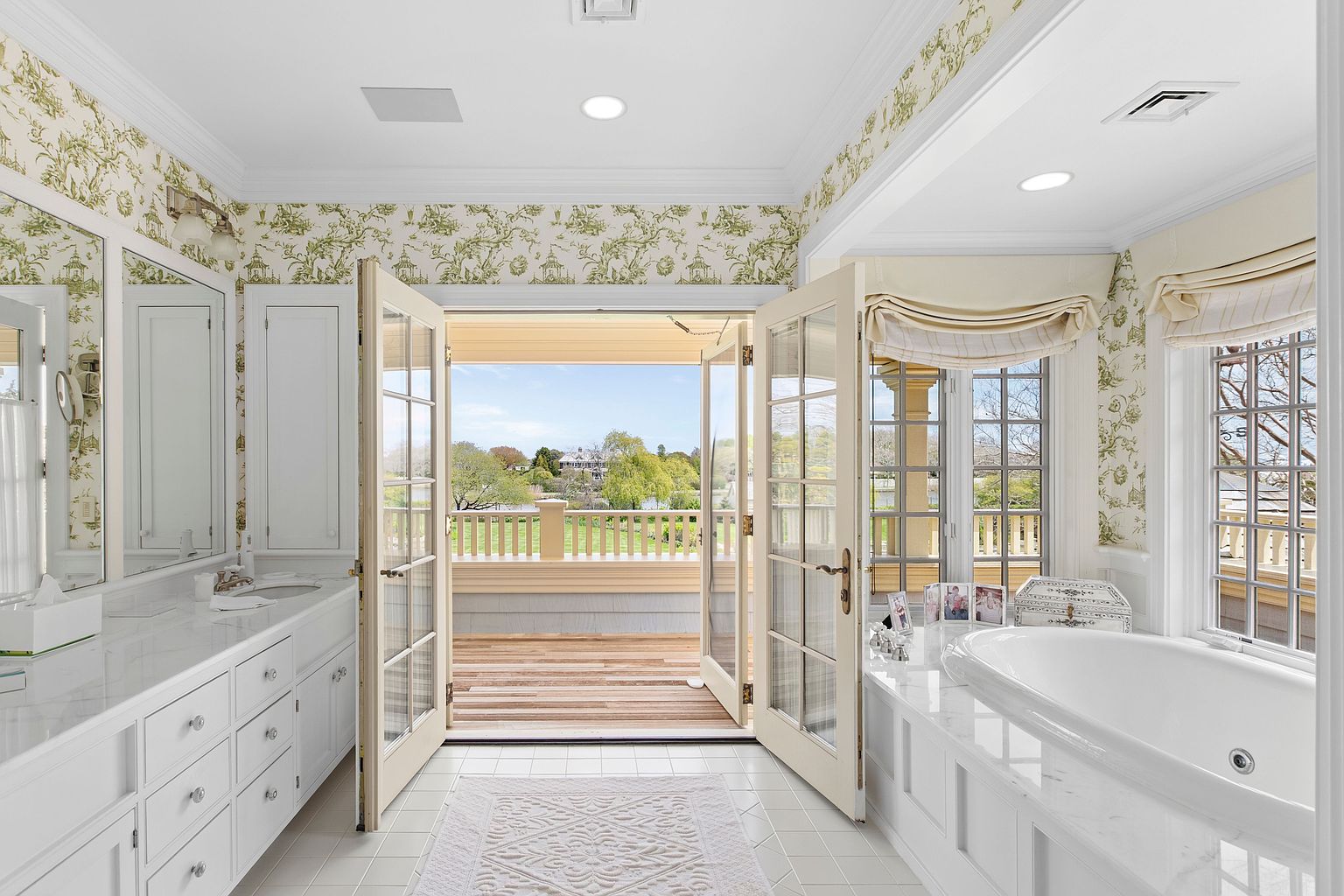
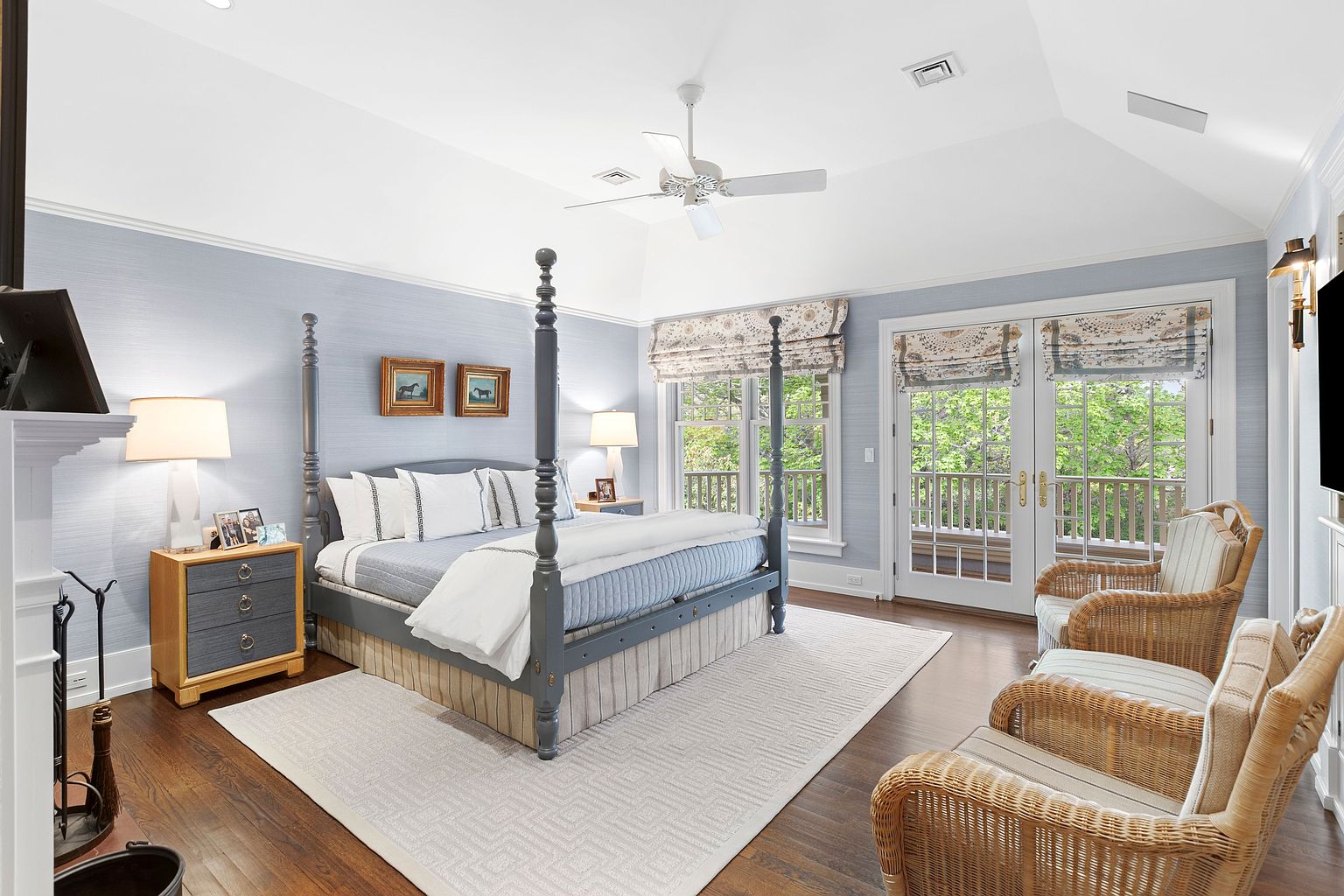
Upstairs, the primary suite commands its setting with a vaulted ceiling, a curved wall of windows, and glass doors that open directly onto a private balcony overlooking the estate's manicured gardens and the water beyond. The primary bathroom — with its double vanity, soaking tub positioned beneath large windows, and French doors to the balcony — dissolves the boundary between interior comfort and the landscape outside.
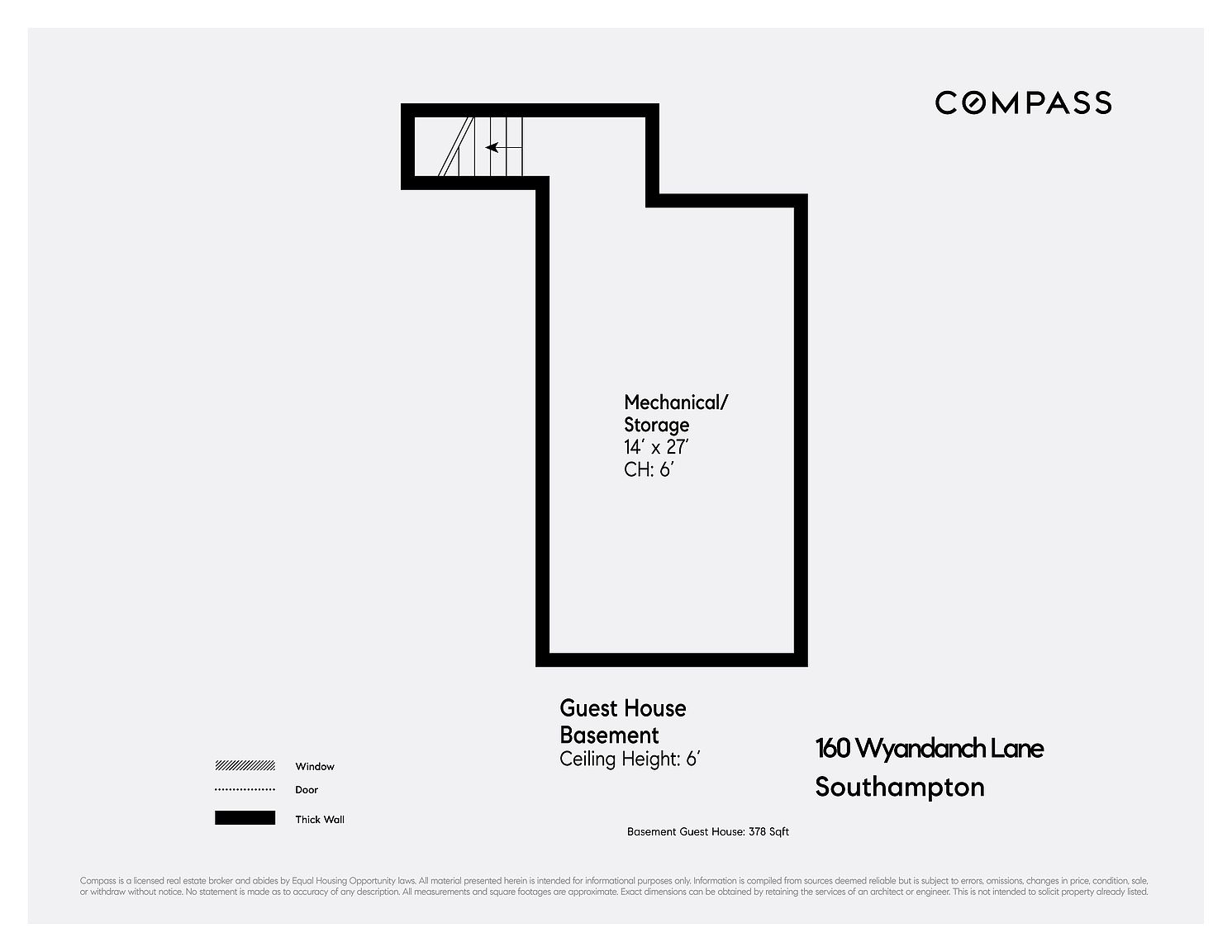
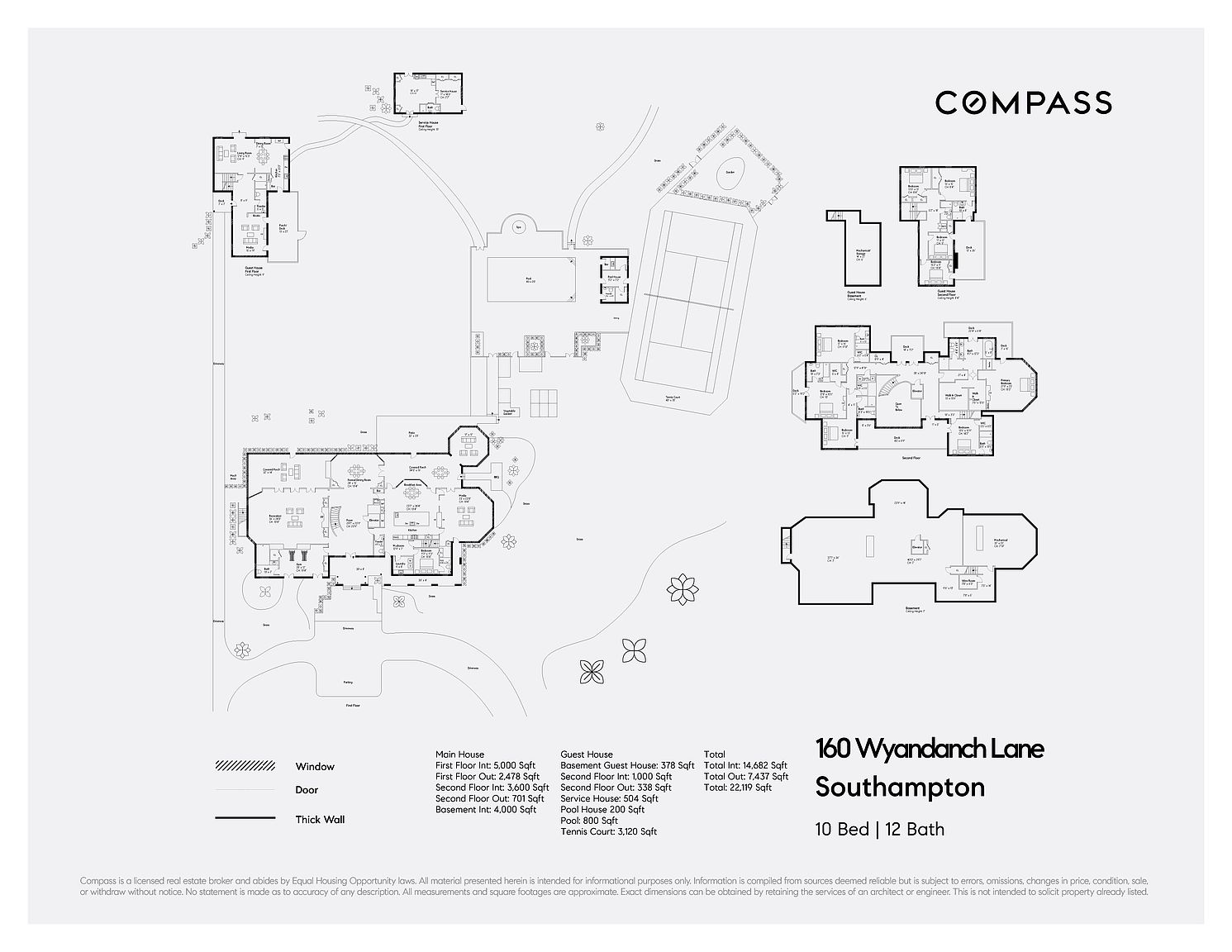
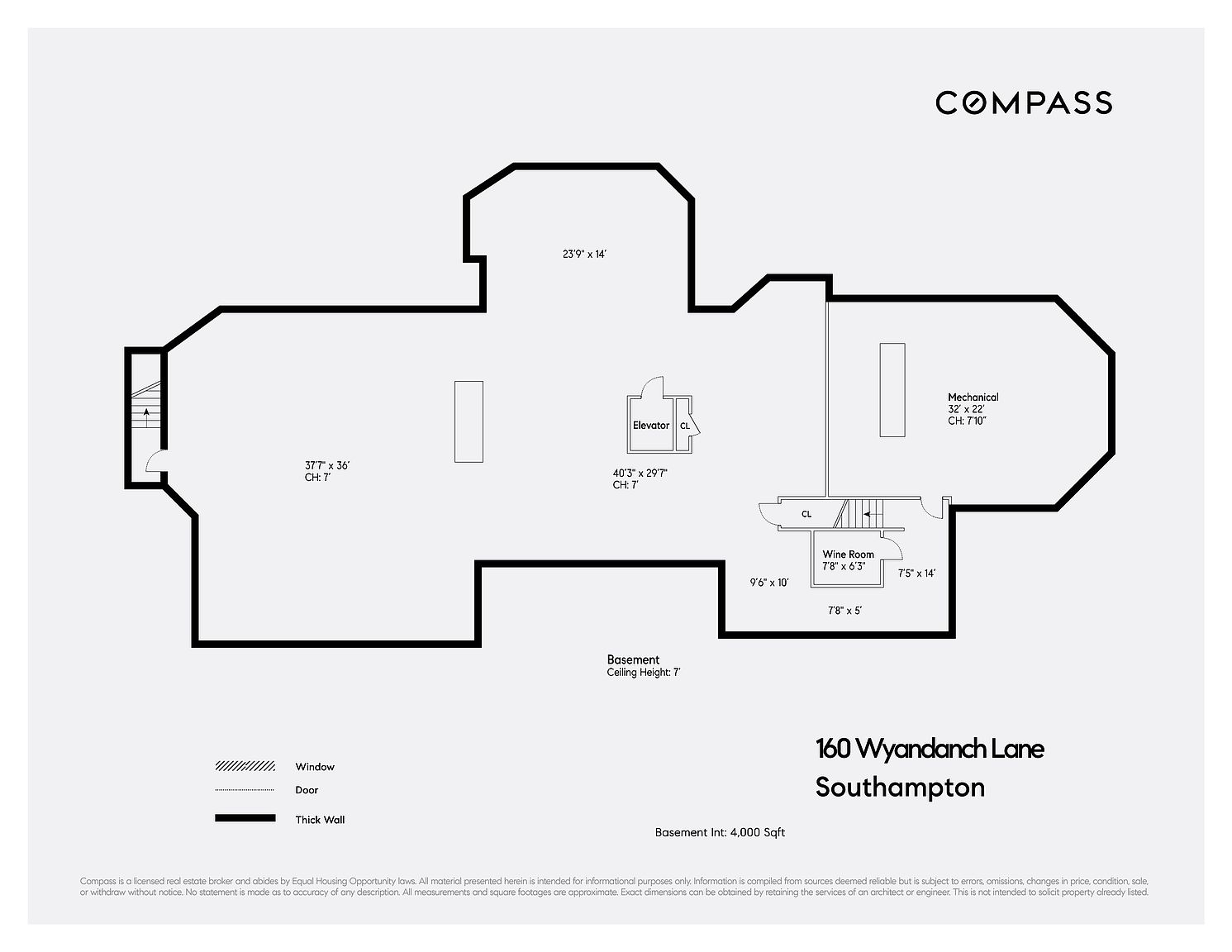
A newly installed elevator integrates seamlessly into the home's architecture, offering effortless movement between floors without disturbing the residence's period sensibility. The unfinished lower level — with a dedicated wine room, mechanical room, and generous open-concept footprint beneath seven-foot ceilings — presents a rare opportunity for the next steward to shape the home's final chapter on their own terms.
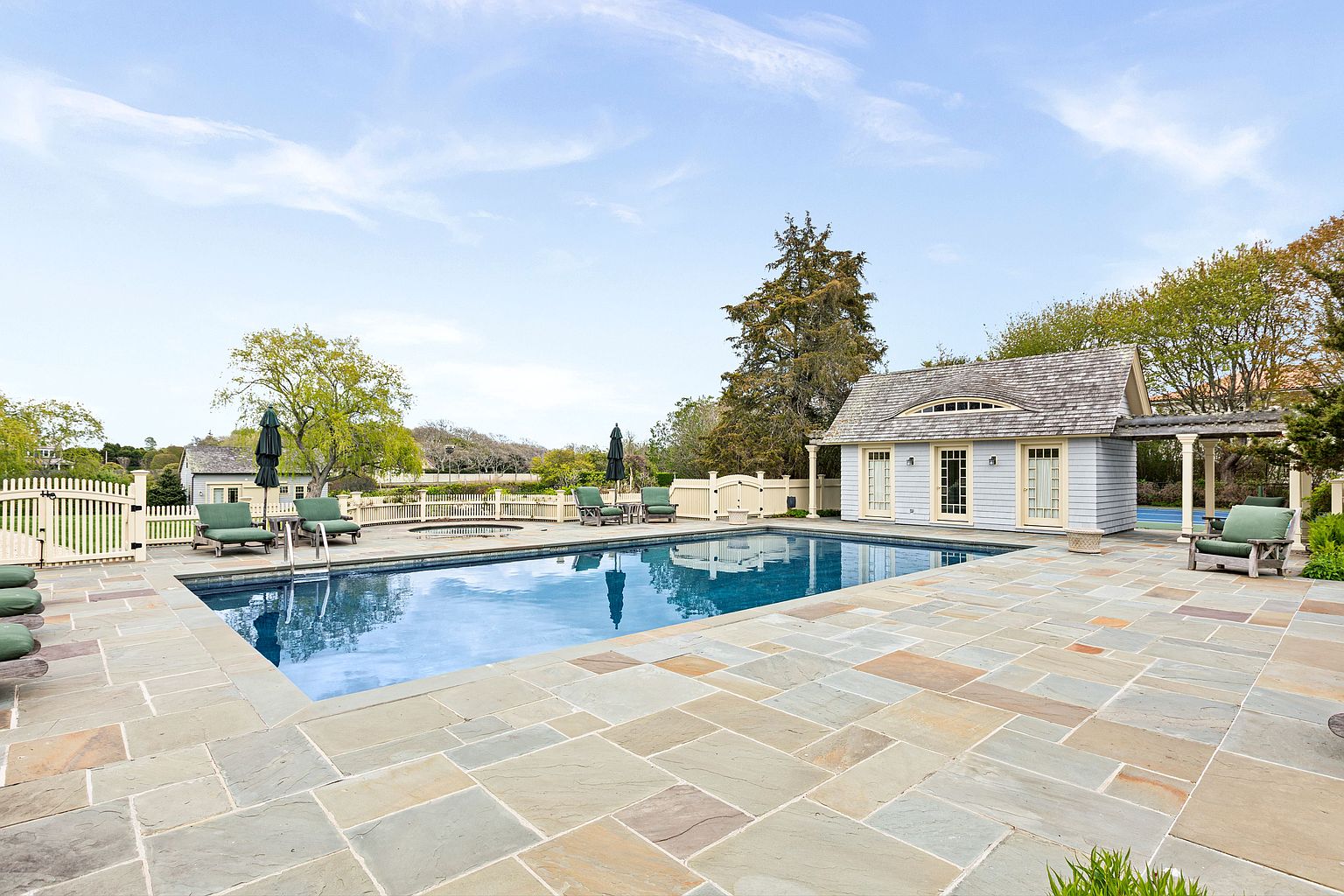
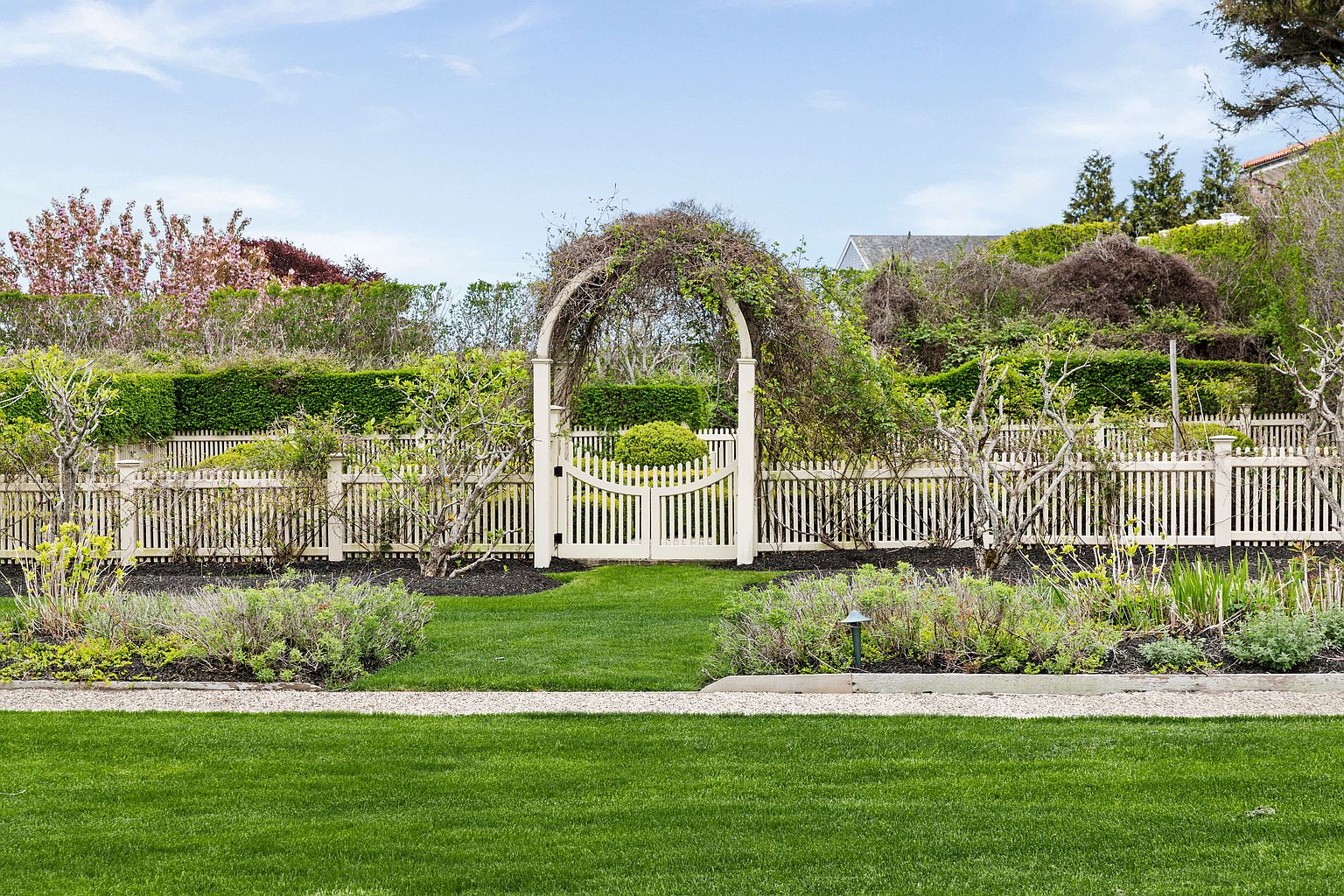
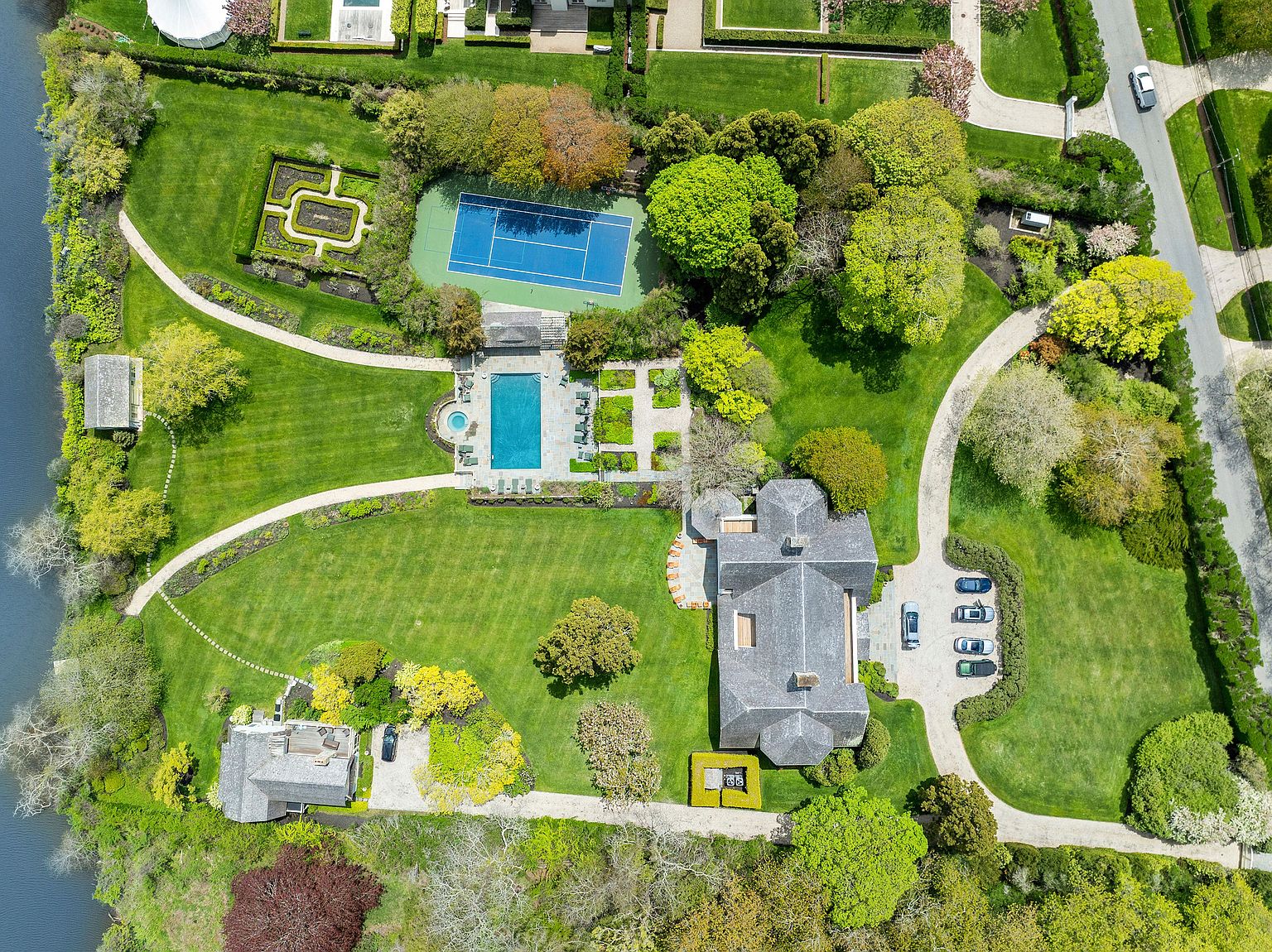
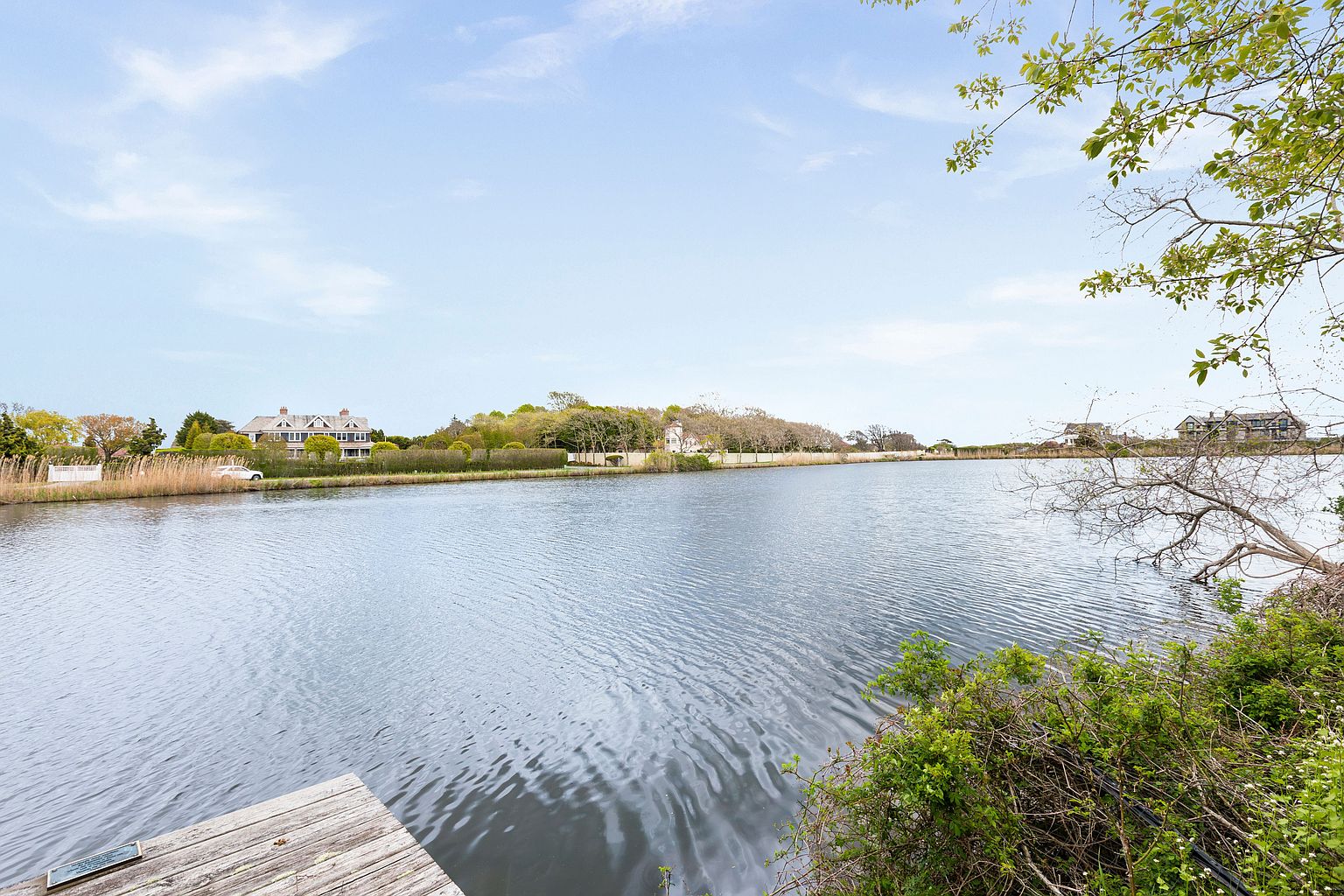
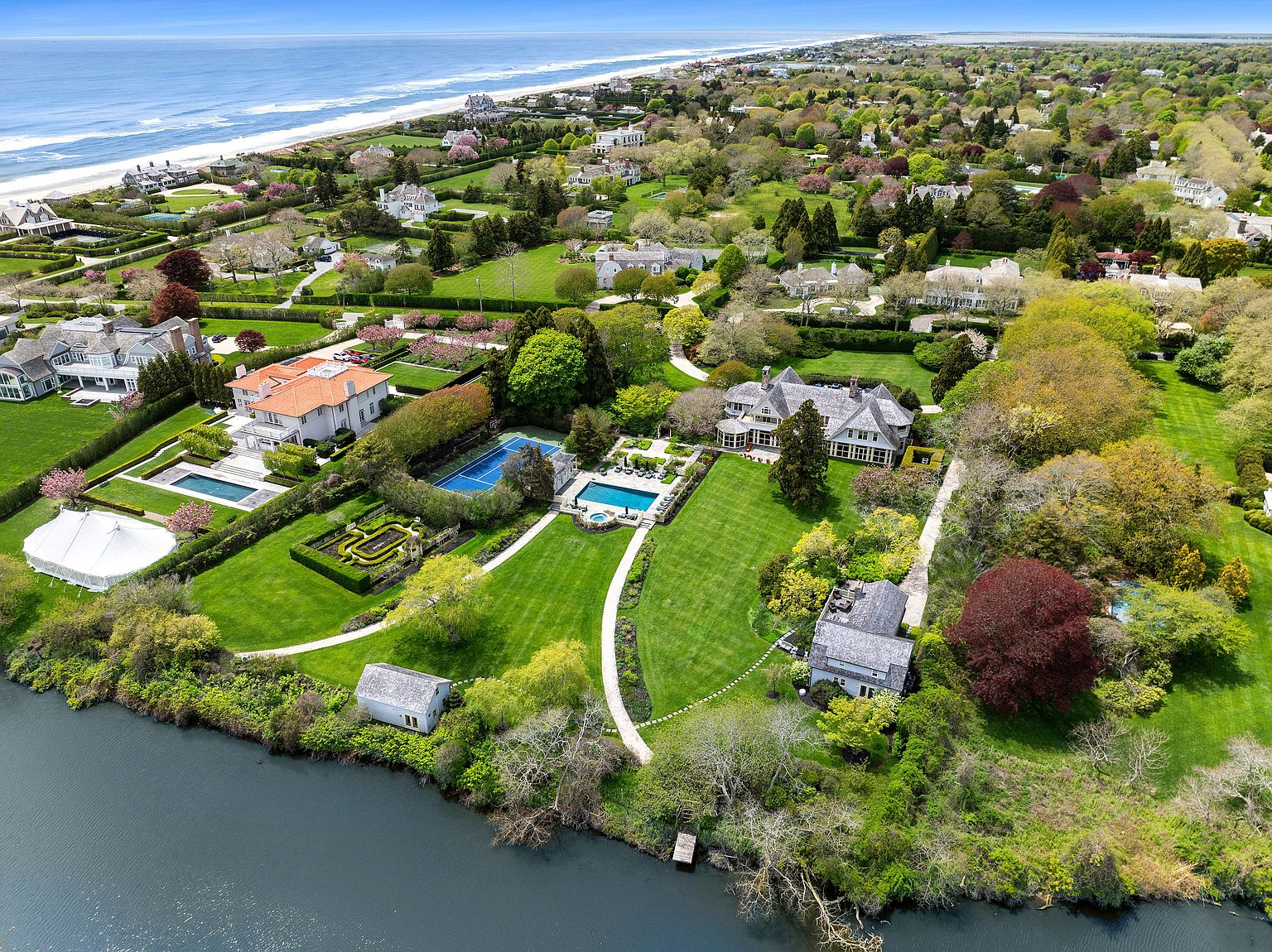
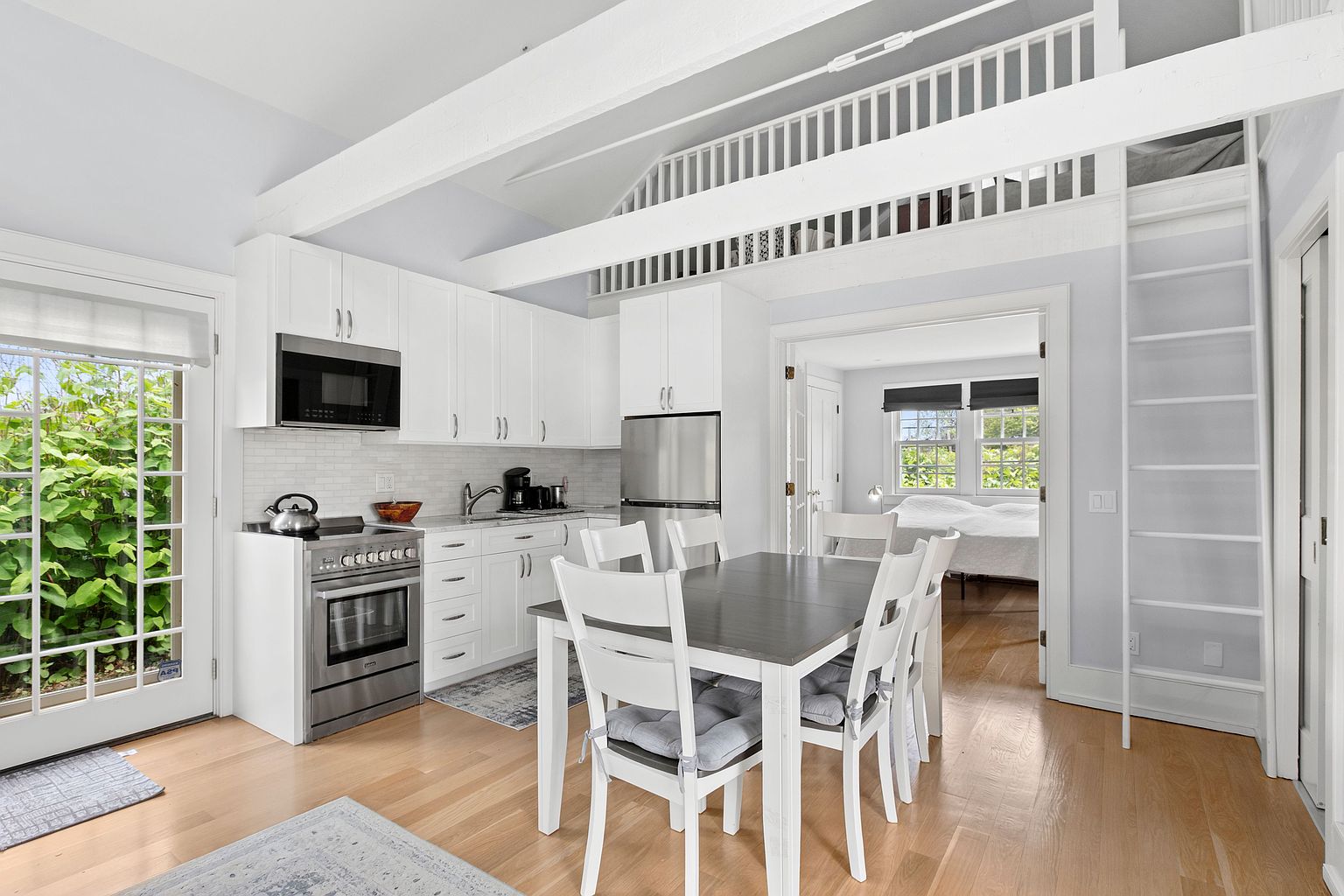
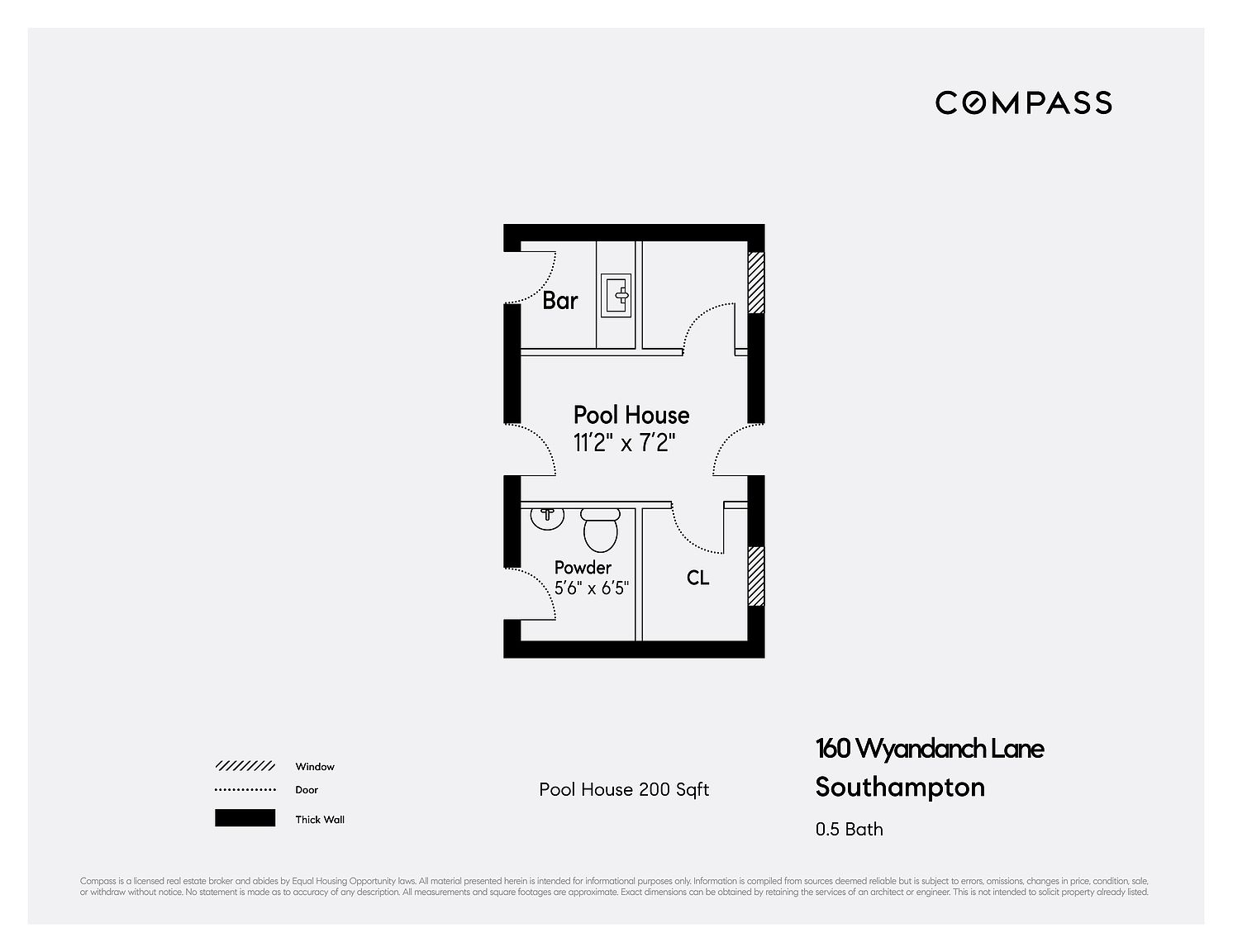
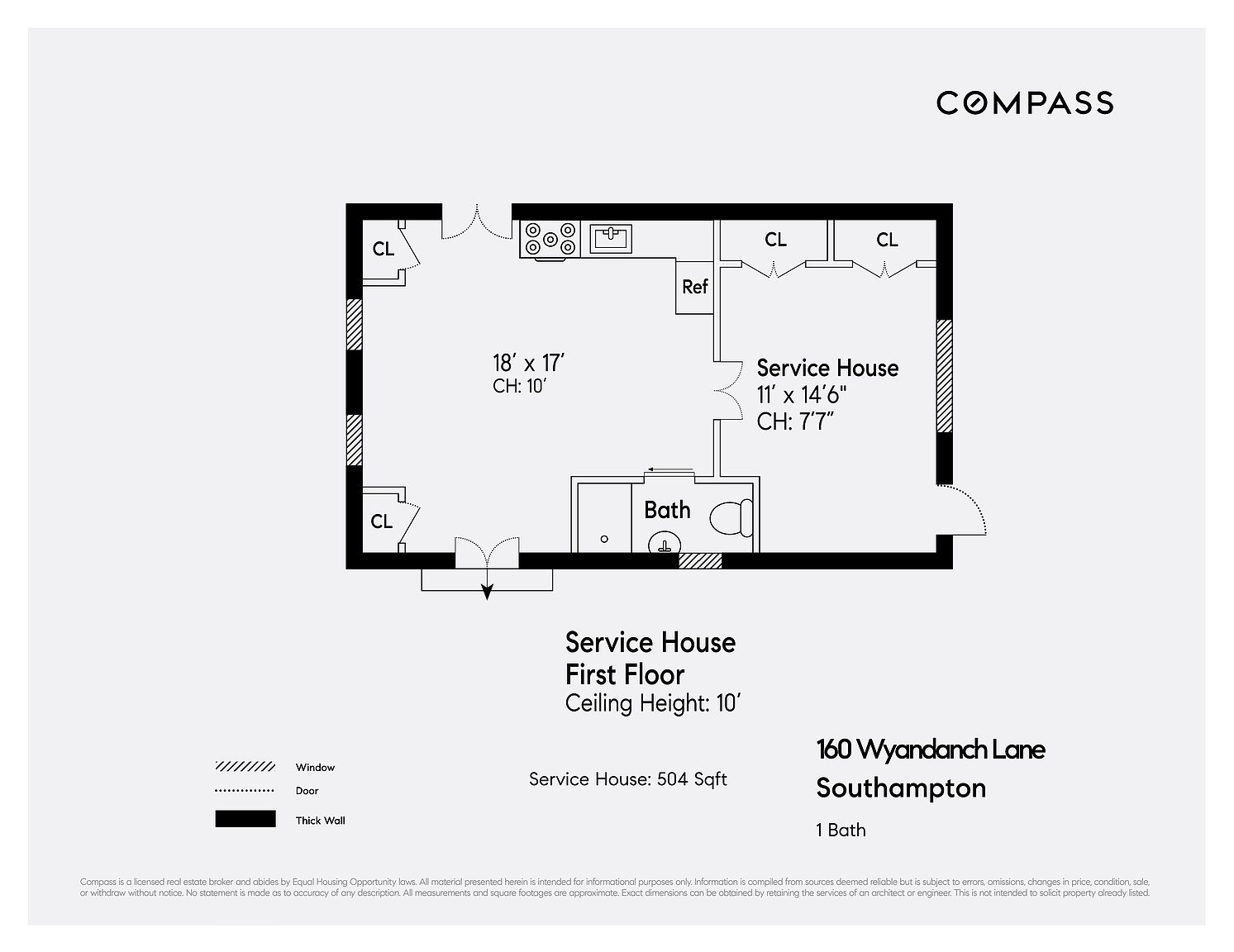
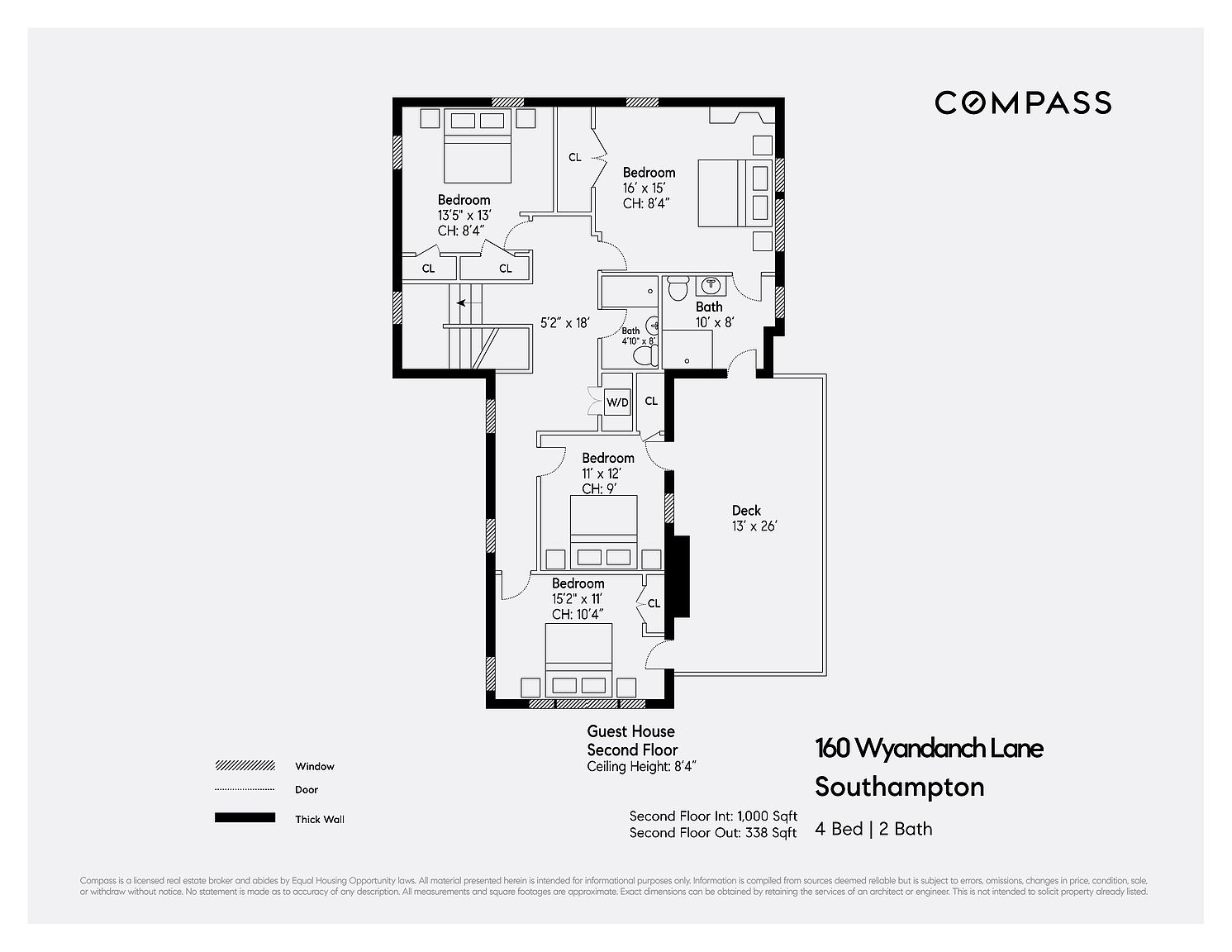
Beyond the main residence, the property's breadth becomes fully apparent: a pool and spa framed by a charming pool house, a tennis and sport court, a boathouse, a guest cottage with four bedrooms across its second floor, and curated vegetable and flower gardens enclosed by white picket fencing and climbing vines. A private dock extends over Old Town Pond, offering the particular tranquility that only direct water access can provide. Taken together, these elements form not merely a collection of amenities, but a complete and self-contained world.
Southampton Village occupies a singular position in the American imagination — and in the American real estate market. Among the communities that comprise the Hamptons, Southampton Village is widely regarded as the most established, its identity rooted in more than three centuries of history that have layered tradition, natural beauty, and cultural significance into something that resists easy comparison.
Settled in 1640 as one of the first English settlements in New York State, Southampton developed through the colonial era as an agricultural community before its distinctive character as a retreat for the cultivated and the affluent began to take shape in the latter half of the nineteenth century. The arrival of the Long Island Rail Road in 1870 opened the village to New York City's professional and artistic classes, and the estates that rose along its lanes in the decades that followed established the architectural vocabulary and social atmosphere that persist today. The village's historic district, anchored by Job's Lane and Main Street, preserves this legacy through a collection of well-maintained Federal and Greek Revival structures that give Southampton its particular sense of civic continuity.
Wyandanch Lane itself is among the village's most quietly prestigious addresses — a lane whose name carries the weight of Southampton's deeper history, drawn from Wyandanch, the seventeenth-century Montaukett leader whose relationship with the early English settlers shaped the region's colonial development. To live on this lane is to occupy a place that the village has always regarded as significant.
The waterfront setting along Old Town Pond adds a dimension that few Southampton Village properties can offer. Old Town Pond is a tidal inlet that connects through Shinnecock Bay, providing a calm, sheltered body of water that rewards both the sailor and the contemplative. The pond's edges are defined by the kind of mature, unhurried landscape — overhanging trees, weathered docks, the particular stillness of brackish water on a clear morning — that cannot be manufactured or accelerated.
The village's amenities are well established and within easy reach. Southampton's Main Street and Job's Lane offer a curated collection of independent boutiques, art galleries, and restaurants that reflect the community's longstanding appreciation for quality and craft. The Parrish Art Museum, relocated to its striking Herzog & de Meuron-designed building in Water Mill in 2012, anchors the region's cultural life and draws exhibitions of national significance. The Southampton Arts Center on Jobs Lane provides additional programming in the visual and performing arts throughout the year.
Southampton Village's ocean beaches — among them the celebrated Cooper's Beach, consistently ranked among the finest beaches on the Atlantic Coast — lie just minutes from Wyandanch Lane, as do the village's tennis facilities, equestrian properties, and the deeply rooted social institutions that have defined Hamptons life across generations.
What Wyandanch Lane and its surroundings ultimately offer is something that no individual amenity can fully account for: the sense of belonging to a place that has been meaningful for a very long time, and that will continue to be meaningful long after the present moment has passed.
Featured Highlights
Curated Content • Presented by Richard Steinberg - Associate Real Estate Broker