The Story Behind
A Self-Contained World Where Architecture Meets Boundless Imagination
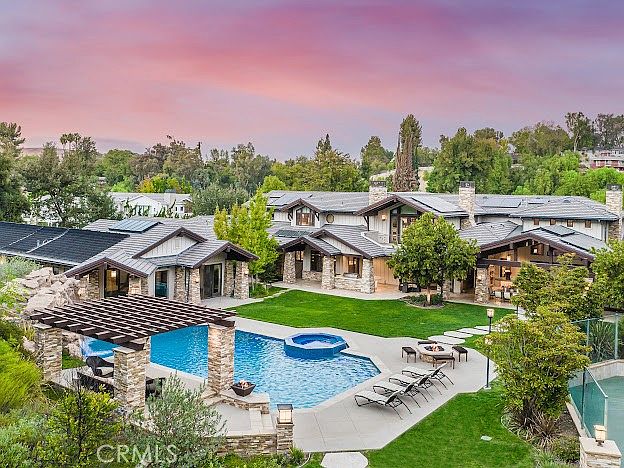
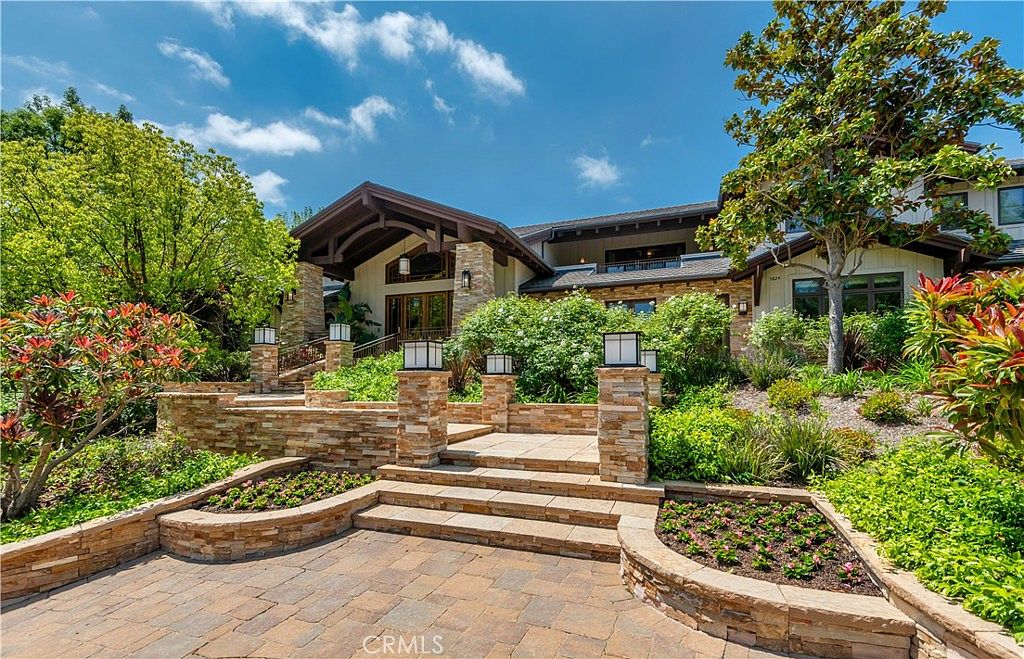
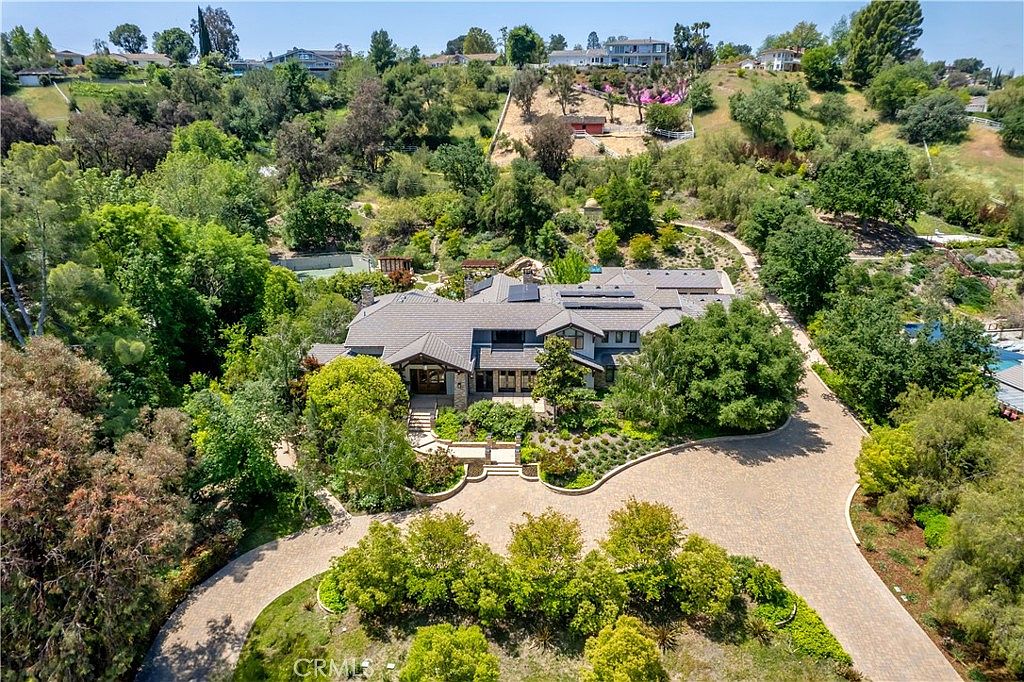
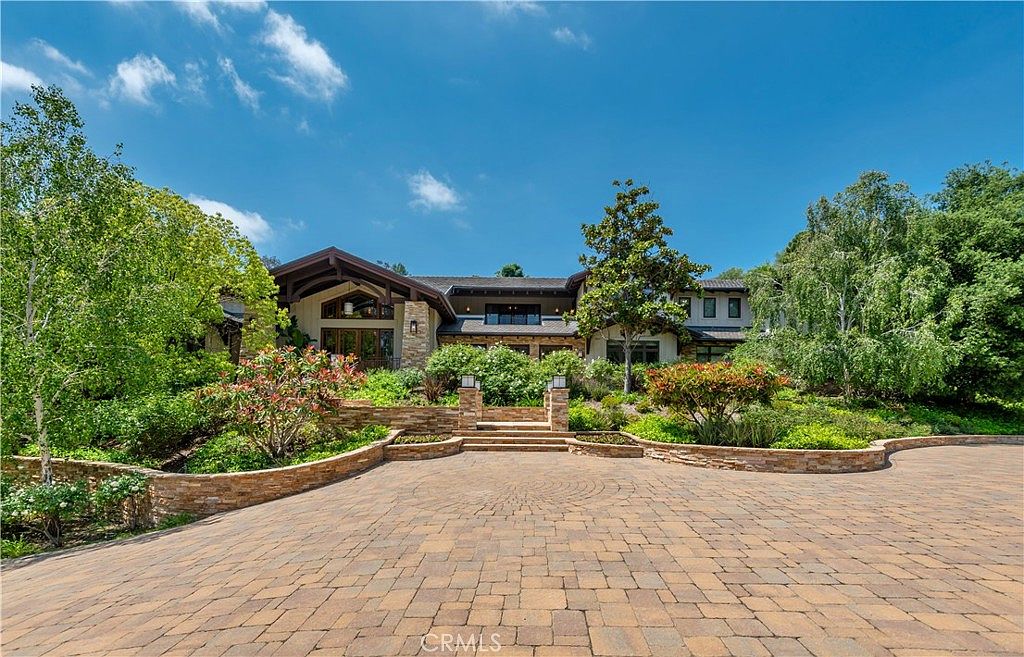
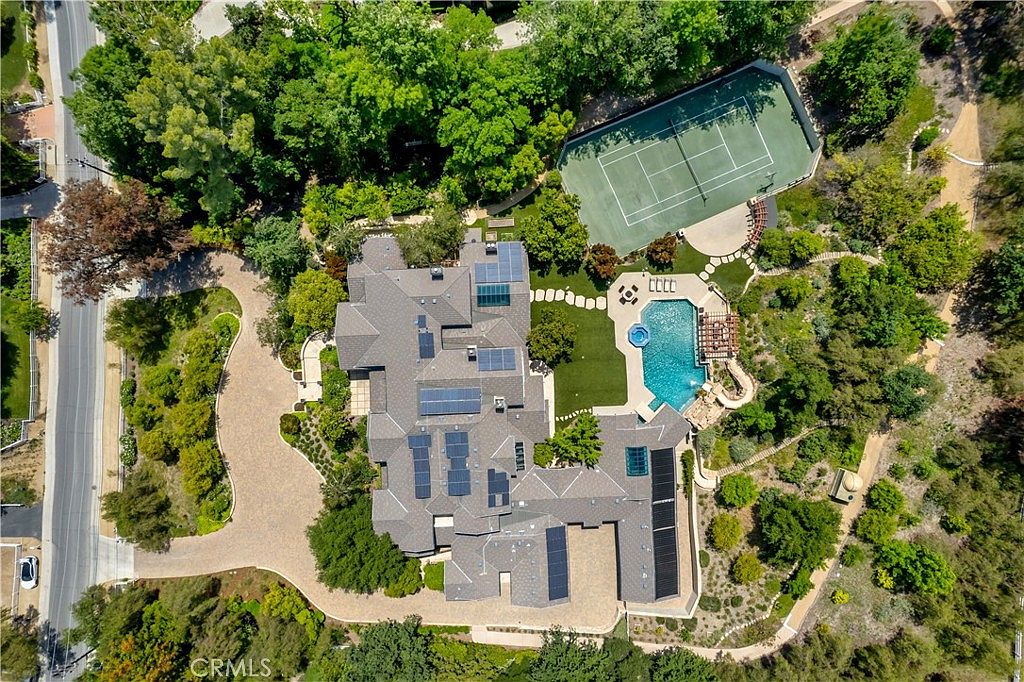
There is a rare category of residence that transcends the language of real estate entirely — properties conceived not as commodities but as personal philosophies rendered in stone, glass, and light. The custom estate at 5824 Jed Smith Road belongs to that category without qualification. Set behind private gates on a gently rolling parcel of nearly three acres, the home announces itself with a multi-gabled roofline of stone and wood, a broad circular driveway, and a tiered stone staircase that rises toward the entrance with quiet ceremony. The architectural vocabulary is immediately singular: the clean, color-block sensibility of Mondrian in conversation with Wright's insistence that structure and landscape should breathe together.
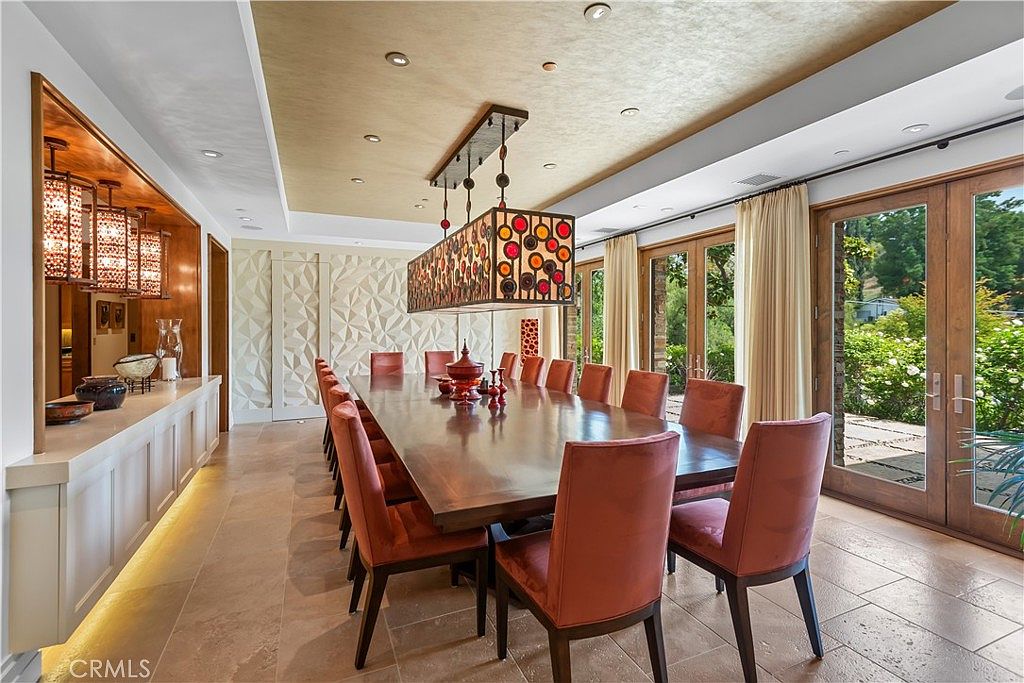
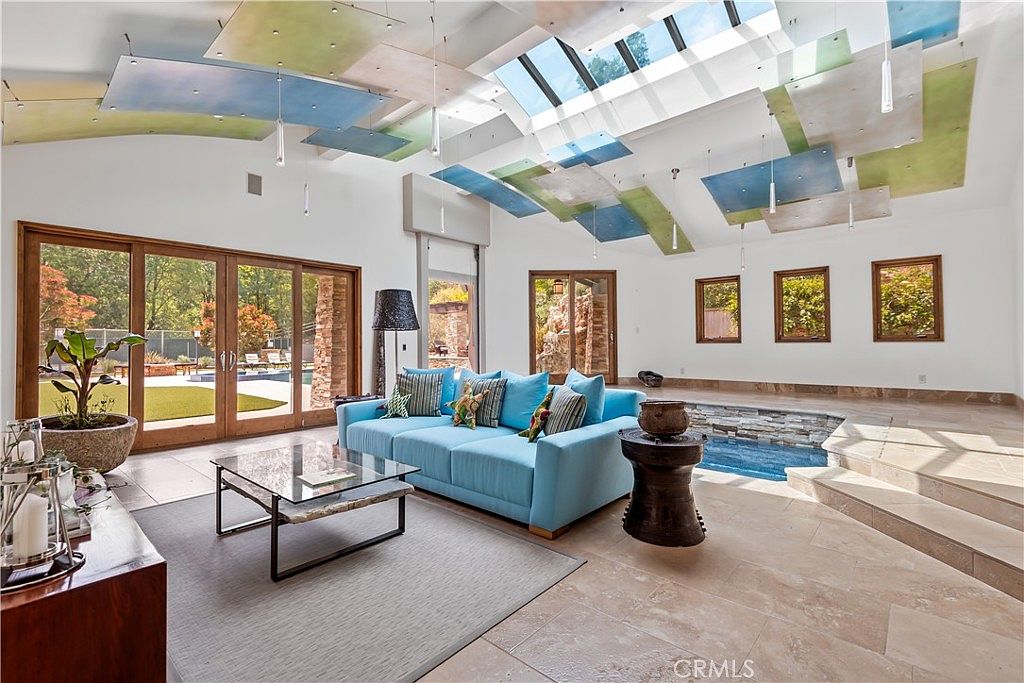
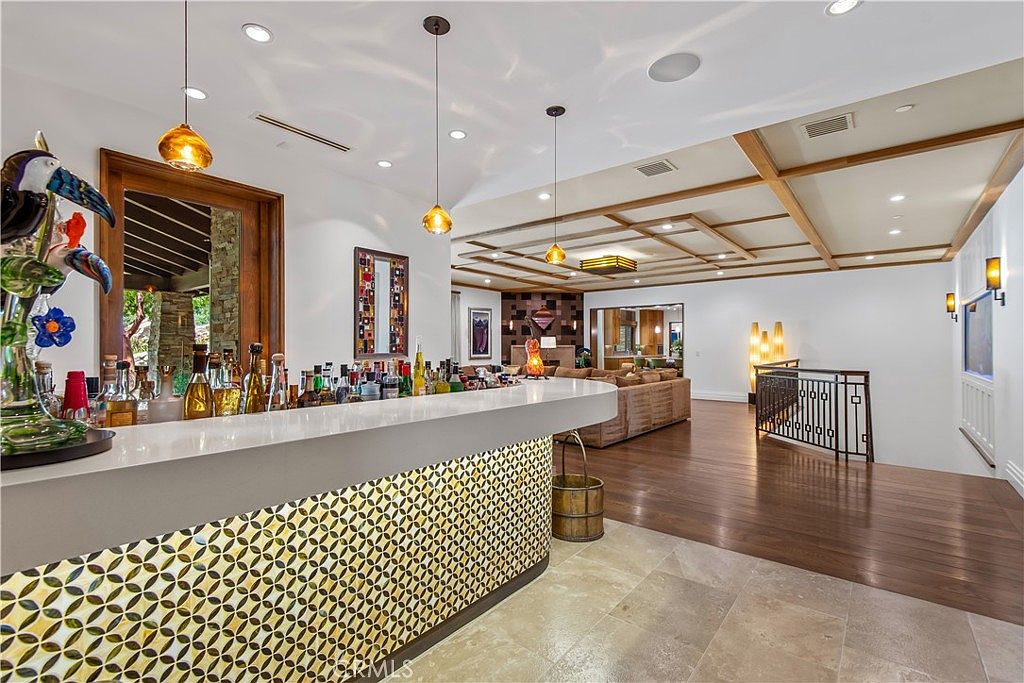
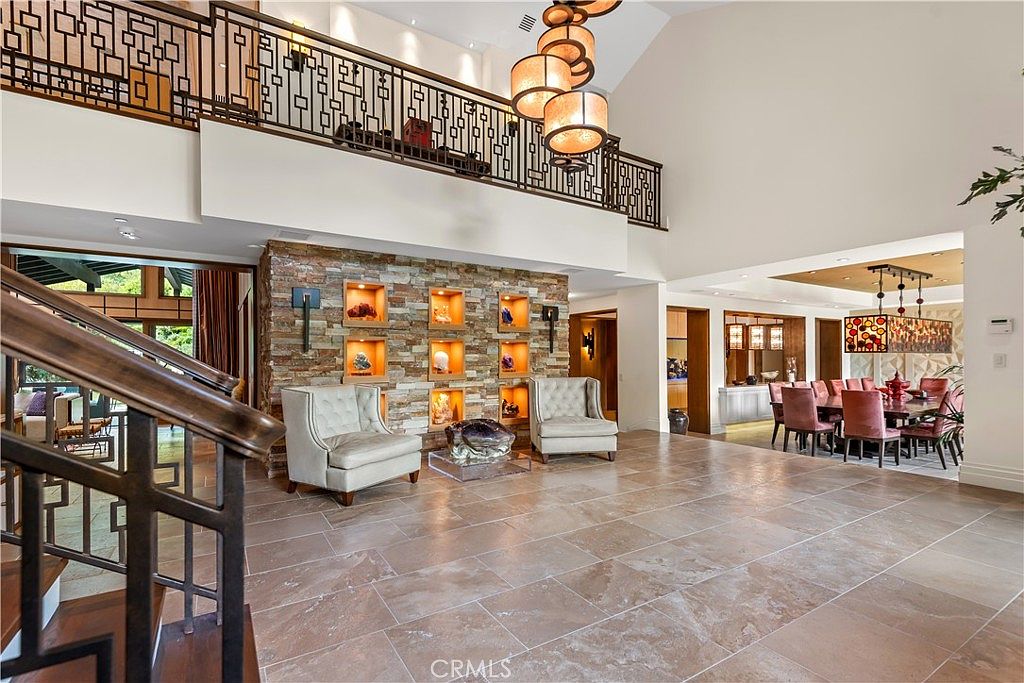
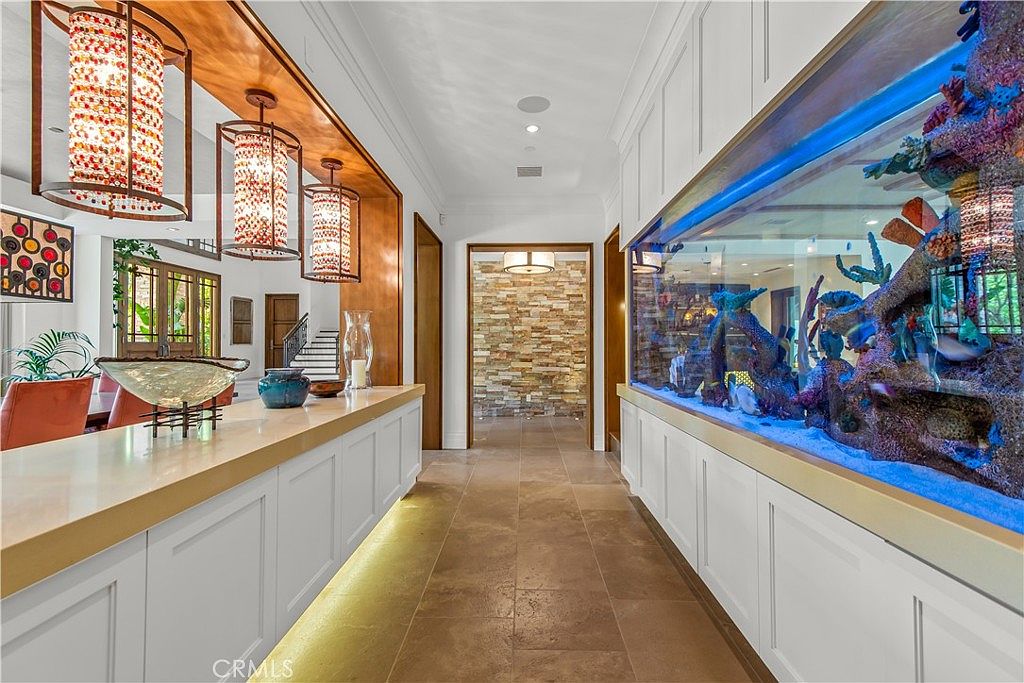
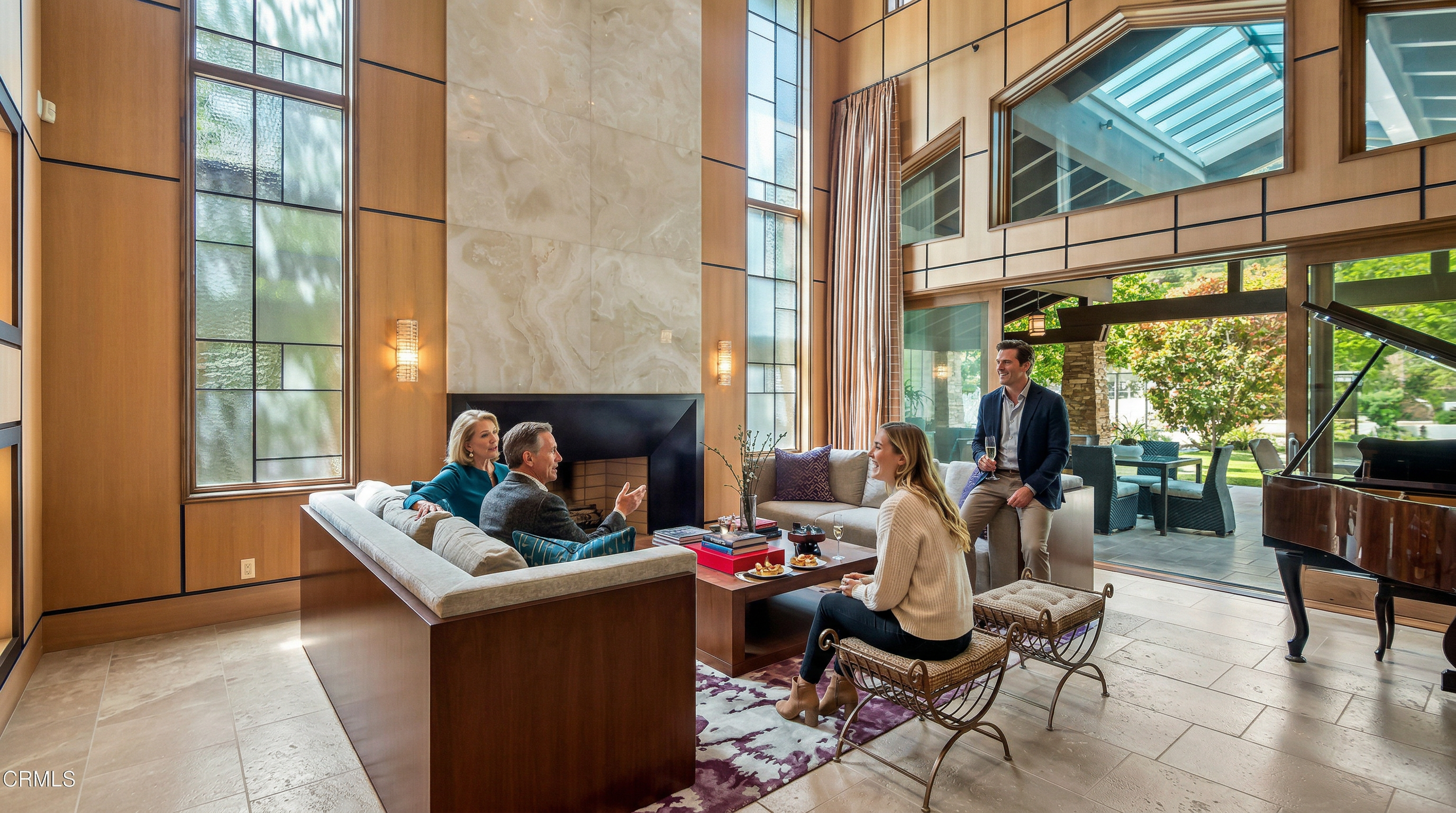
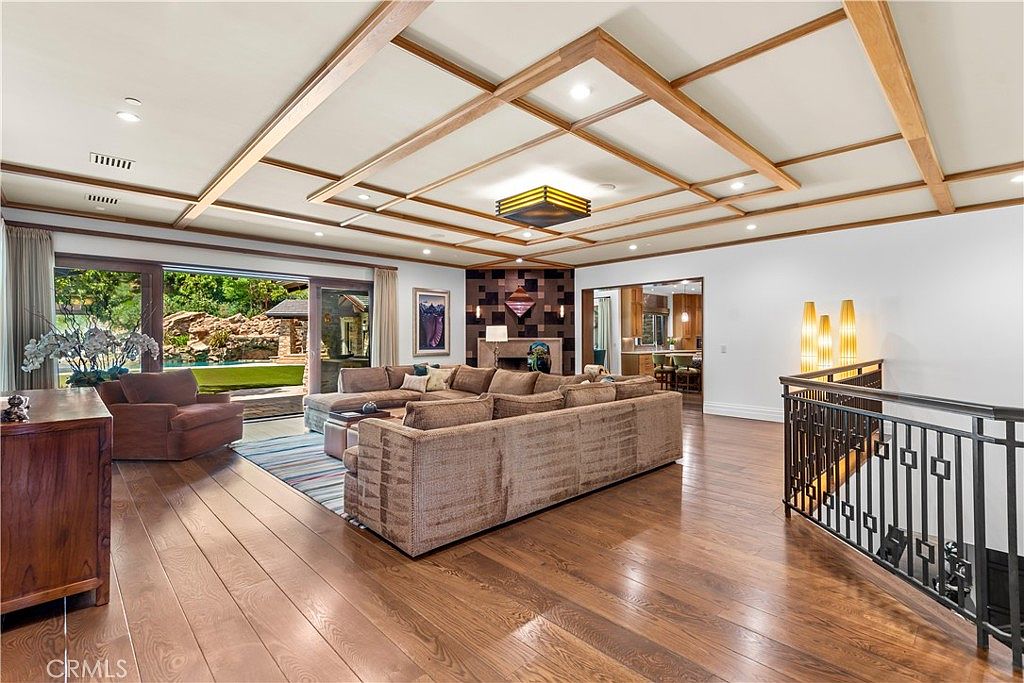
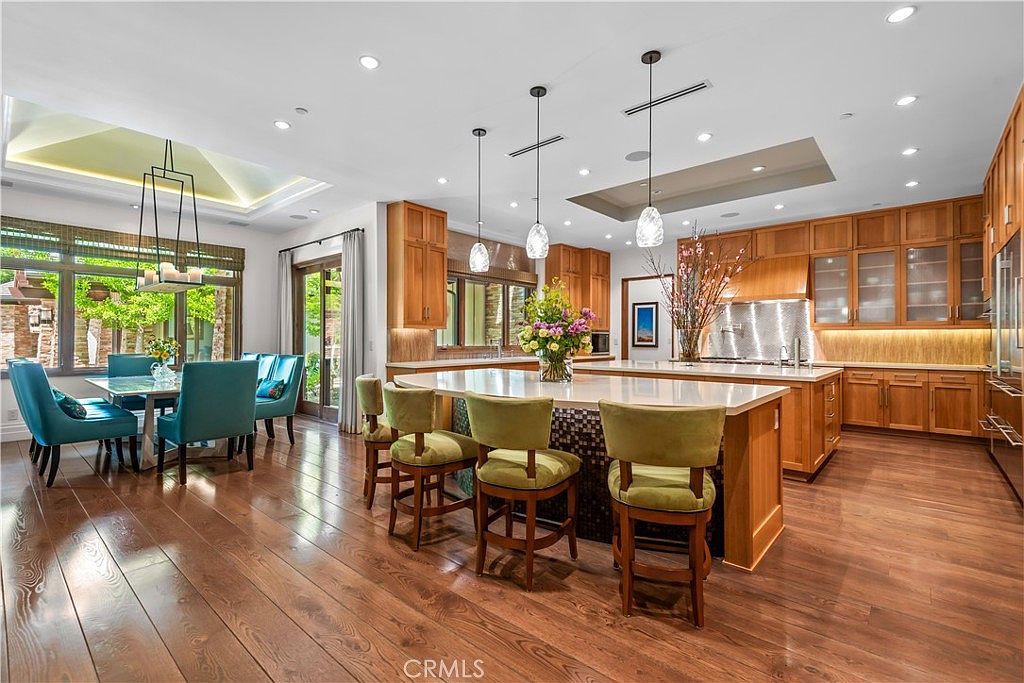
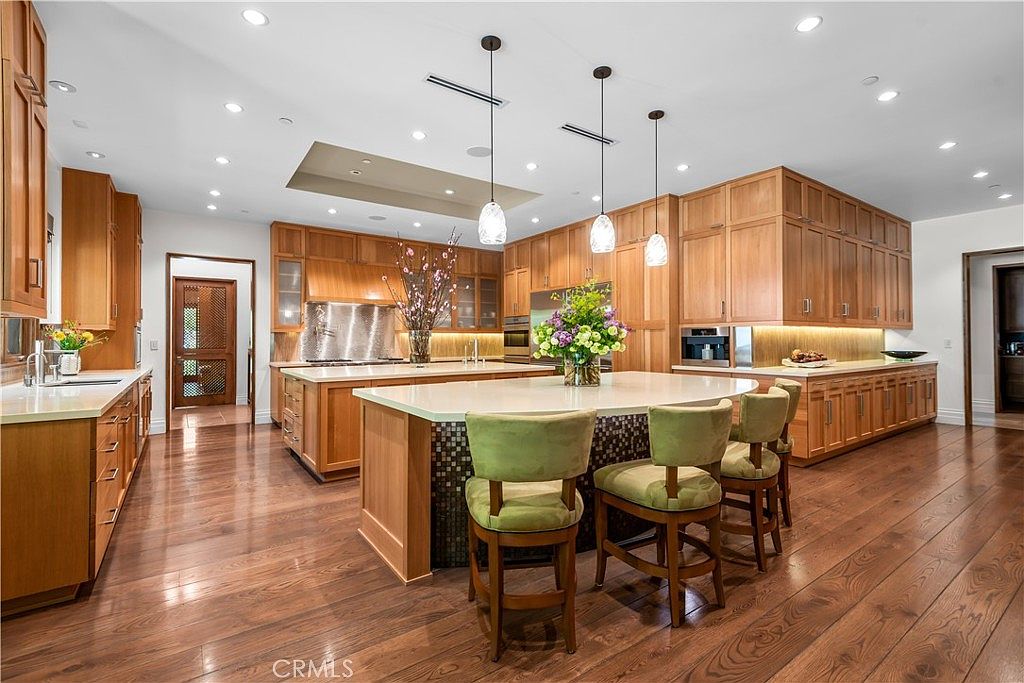
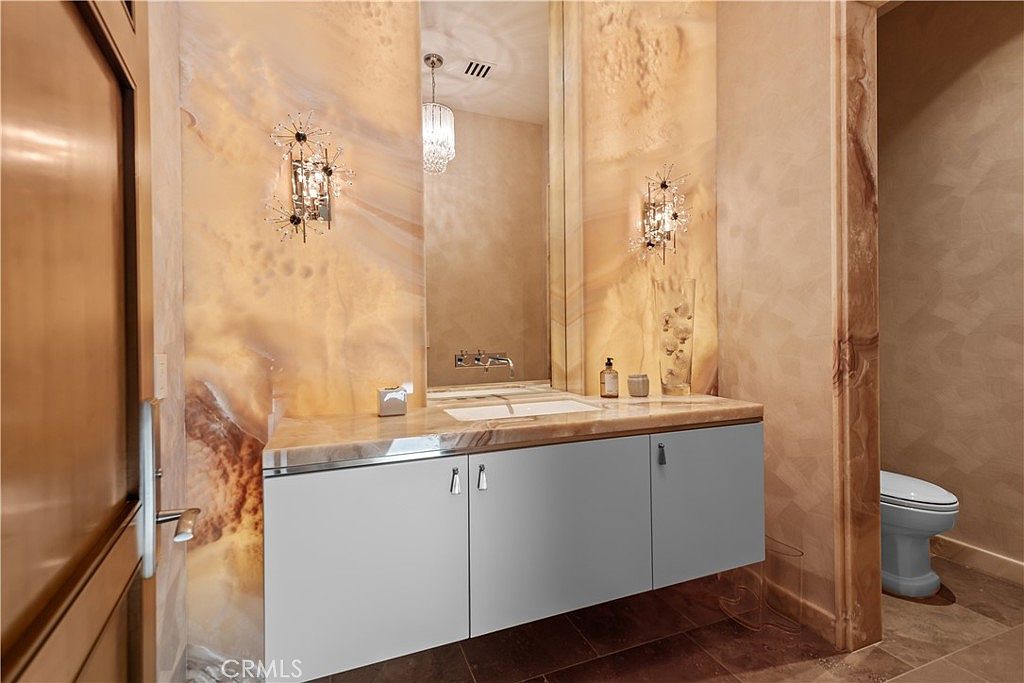
Step through the front door and the scale of the vision becomes clear. A twenty-five-foot ceiling vaults above the living room, where an Onyx accent wall commands the far end of the space with the authority of a gallery installation. A built-in 750-gallon saltwater aquarium lines the adjacent hallway, illuminated by cylindrical pendant lights suspended from a warm wood-paneled ceiling — a detail that blurs the boundary between architecture and living art. The kitchen is configured for serious culinary ambition: dual islands surfaced in white quartz, warm wood cabinetry, and hardwood flooring that flows naturally into the breakfast room and the family room beyond, where sliding walls of glass dissolve the threshold between interior and exterior entirely. A curved wet bar with geometric tile detailing bridges the family room to a dedicated lounge, the kind of considered spatial sequencing that speaks to a designer who understood how people actually inhabit a home during the full arc of an evening.
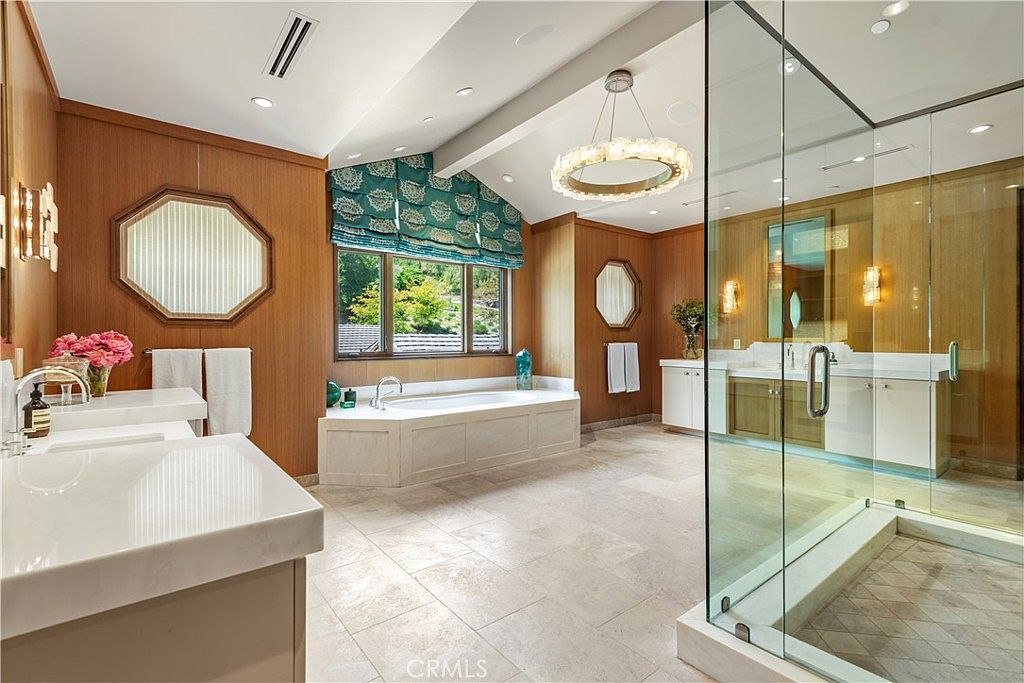
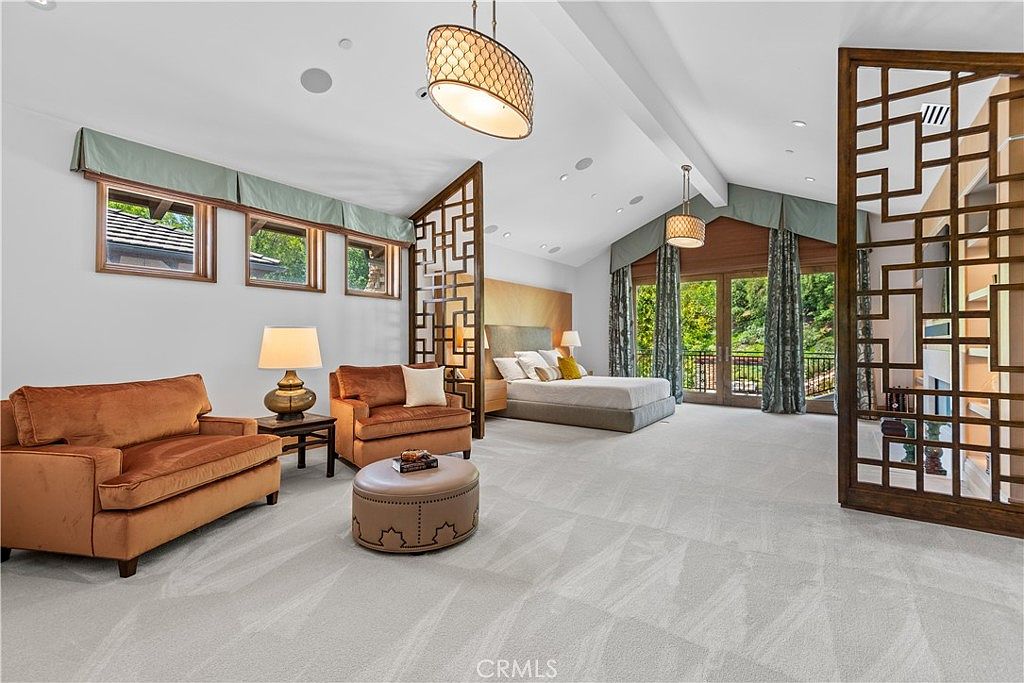
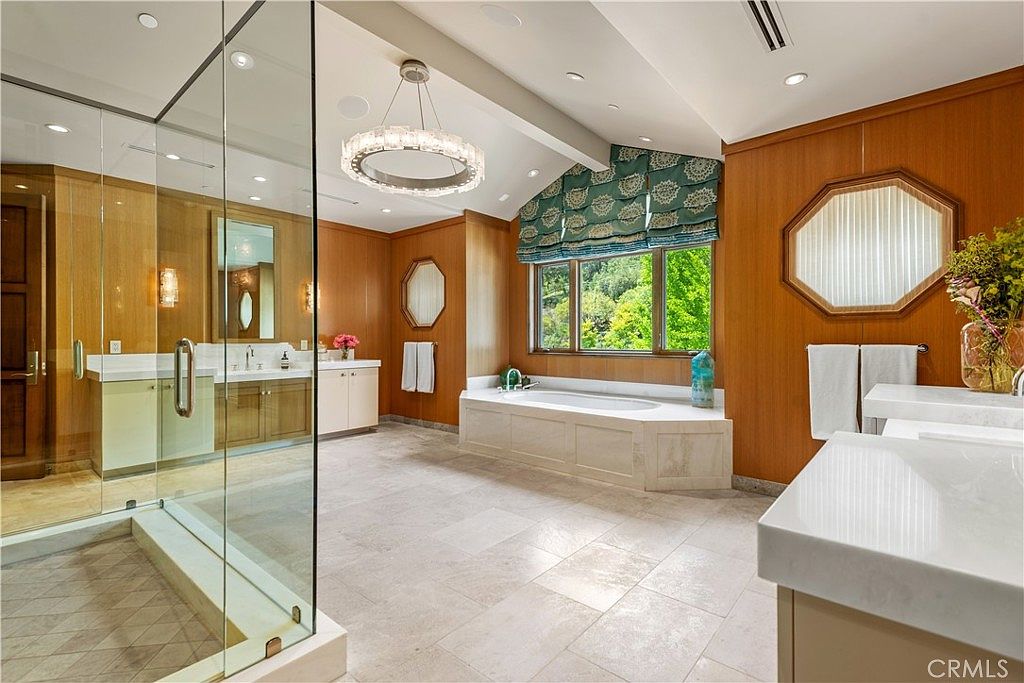
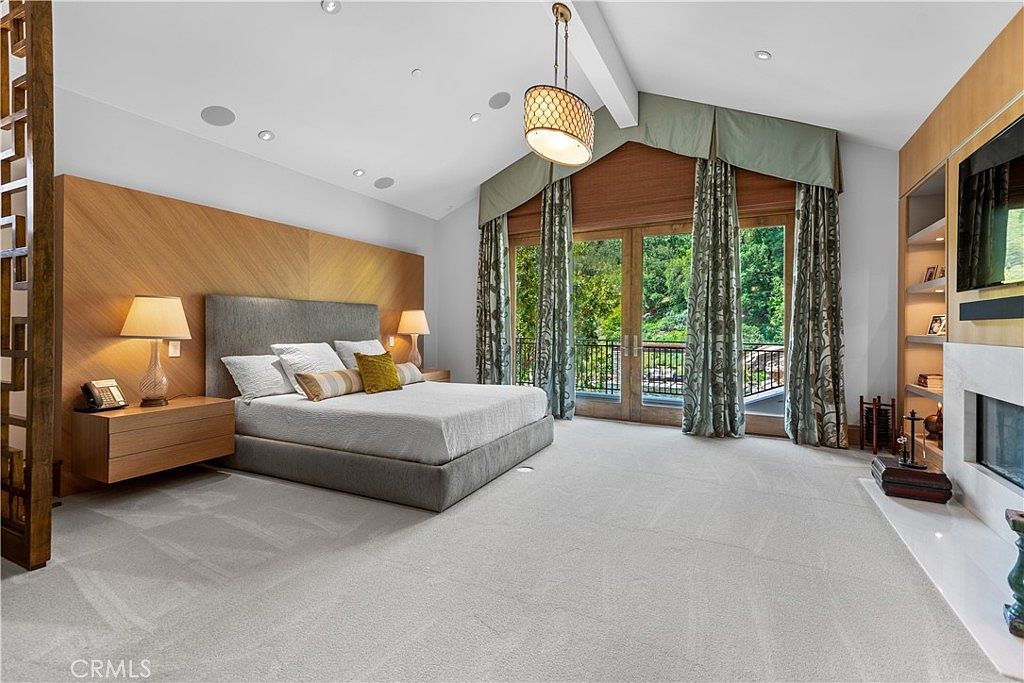
The primary suite is a study in calm authority — a fireplace, a glass-enclosed shower, a deep soaking tub beneath a chandelier, dual vanities, and a walk-out balcony that frames the private grounds like a living painting. Five additional en suite bedrooms accommodate family and guests with equal thoughtfulness.
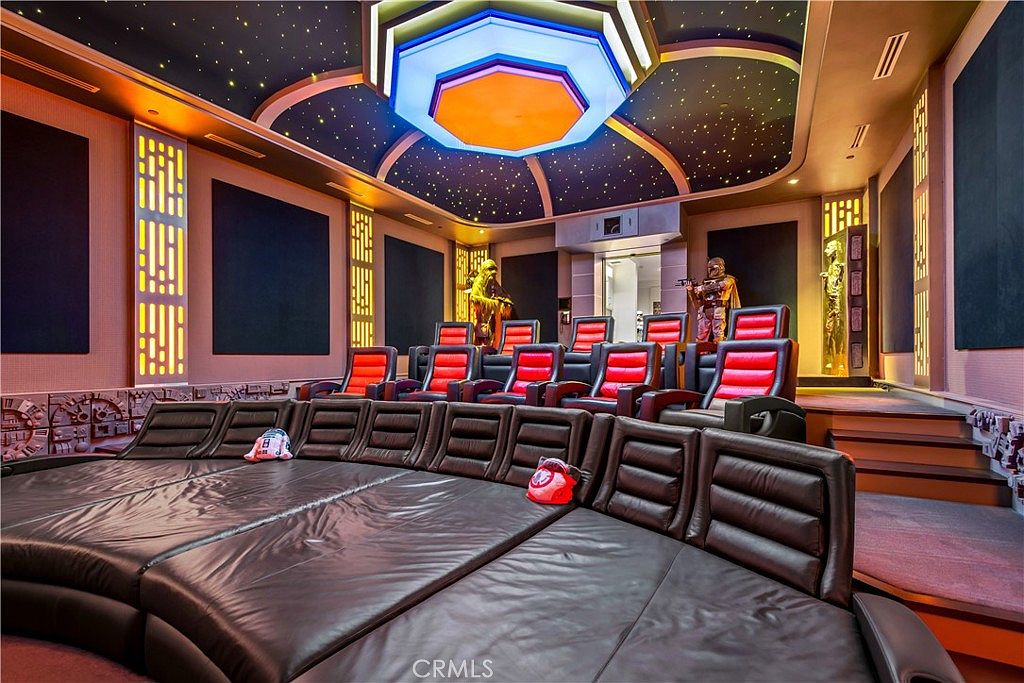
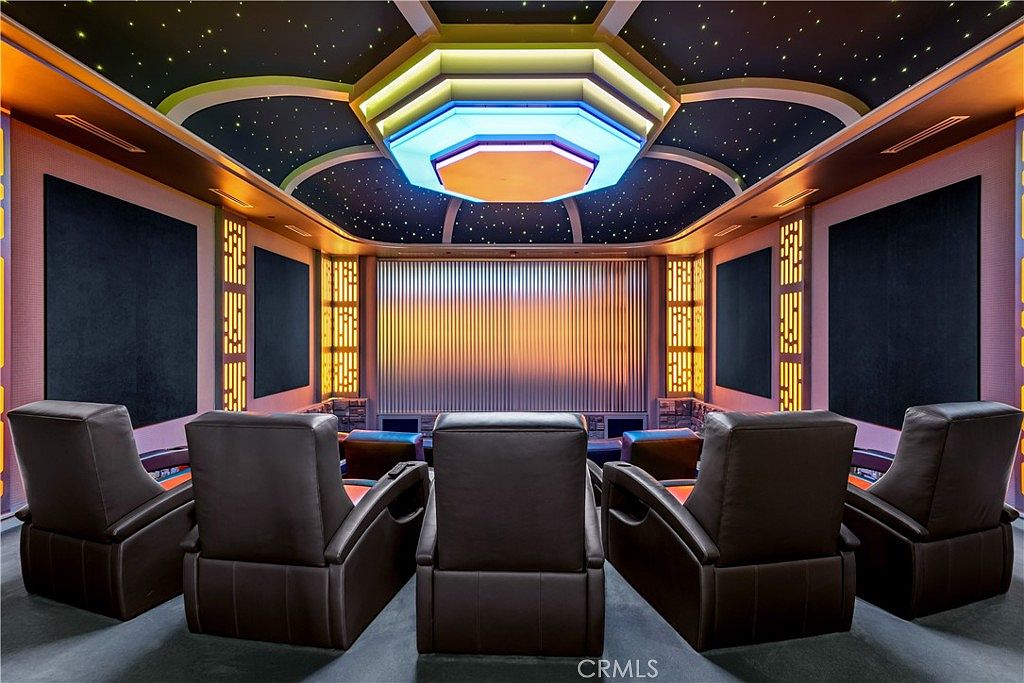
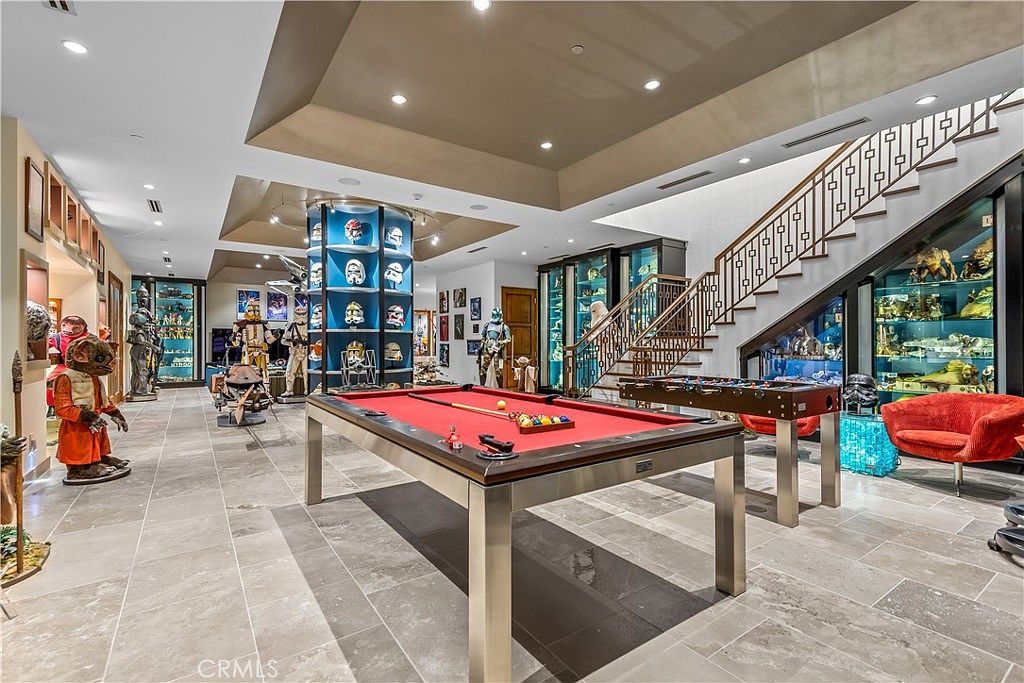
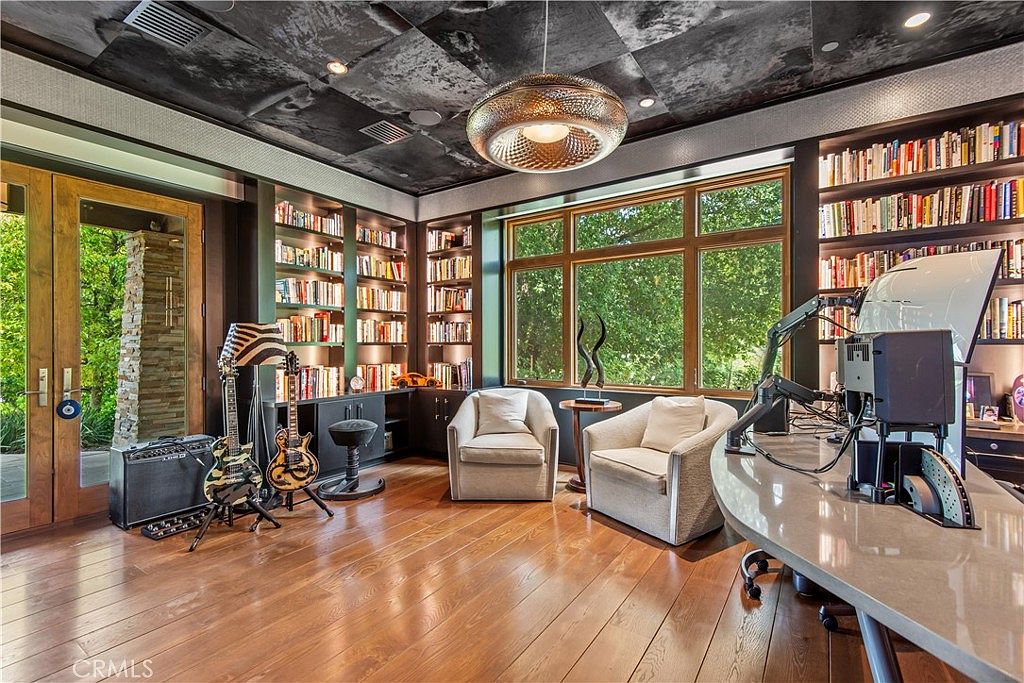
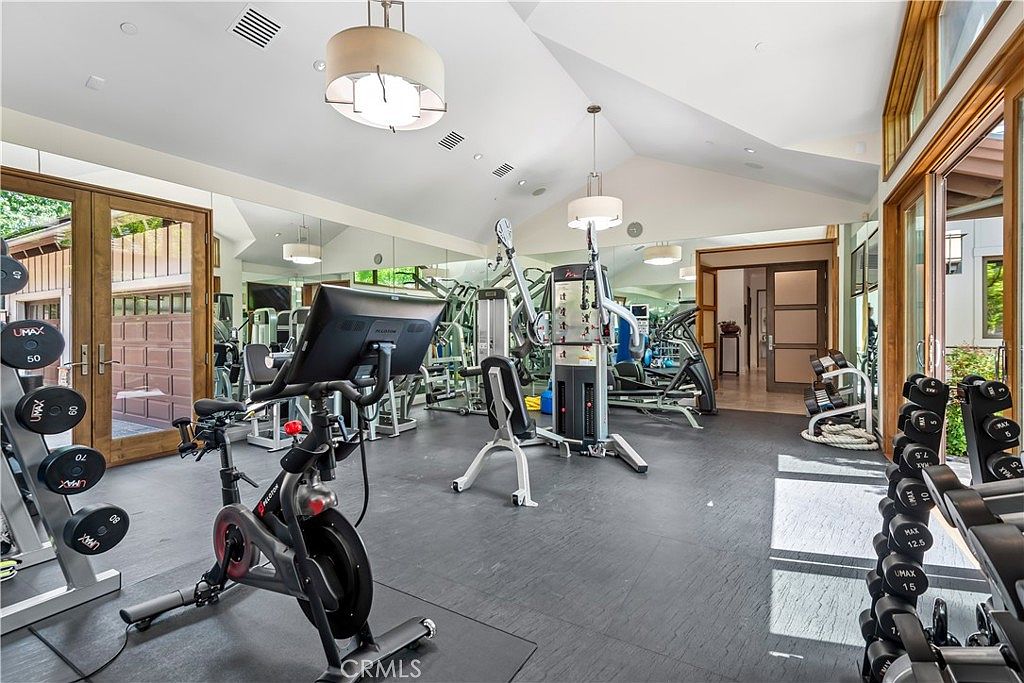
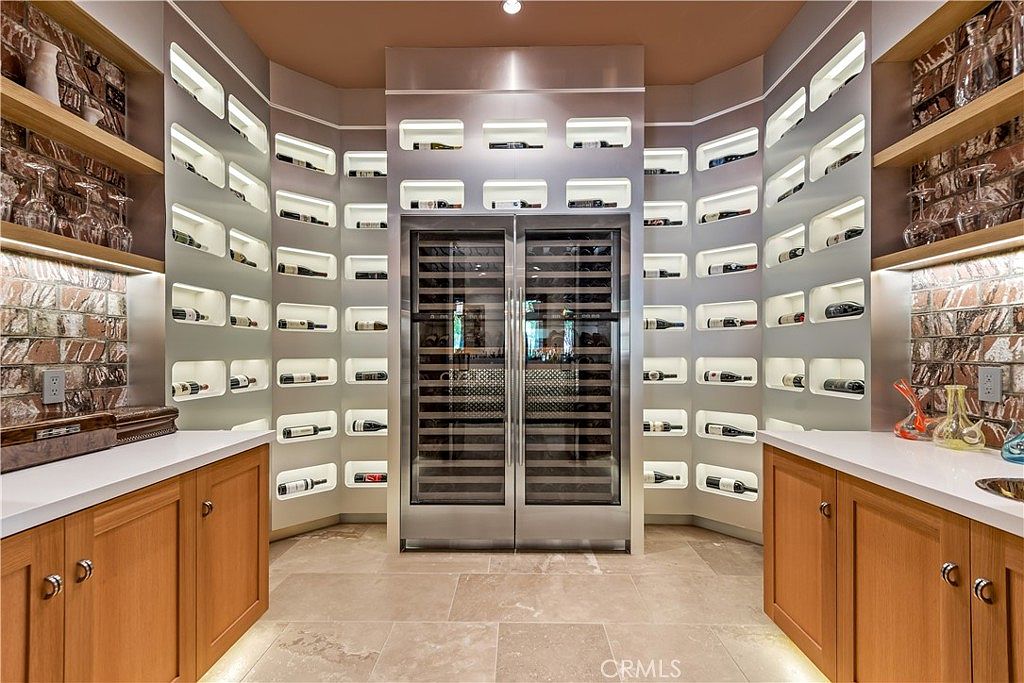
Below the main living level, the home transforms into something closer to a private resort. The home theater is genuinely unlike any other: an immersive, octagonally conceived screening room with a nineteen-foot diagonal screen, tiered leather recliners, a starfield ceiling, and a design aesthetic inspired by a galaxy far, far away — executed with the production quality of a professional venue. A professional-grade game room, a wine room with custom shelving and stainless steel refrigeration, a mirrored gym with a vaulted ceiling and deluge shower, a steam and massage room, an acoustically shielded music room, and a cantina bar complete the lower level's extraordinary inventory.
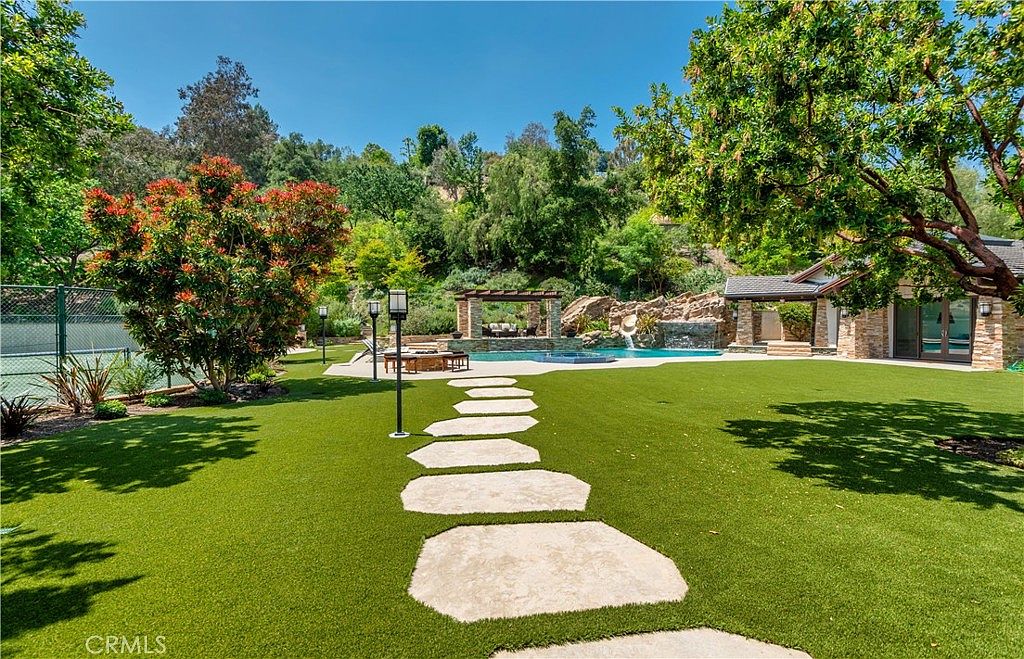
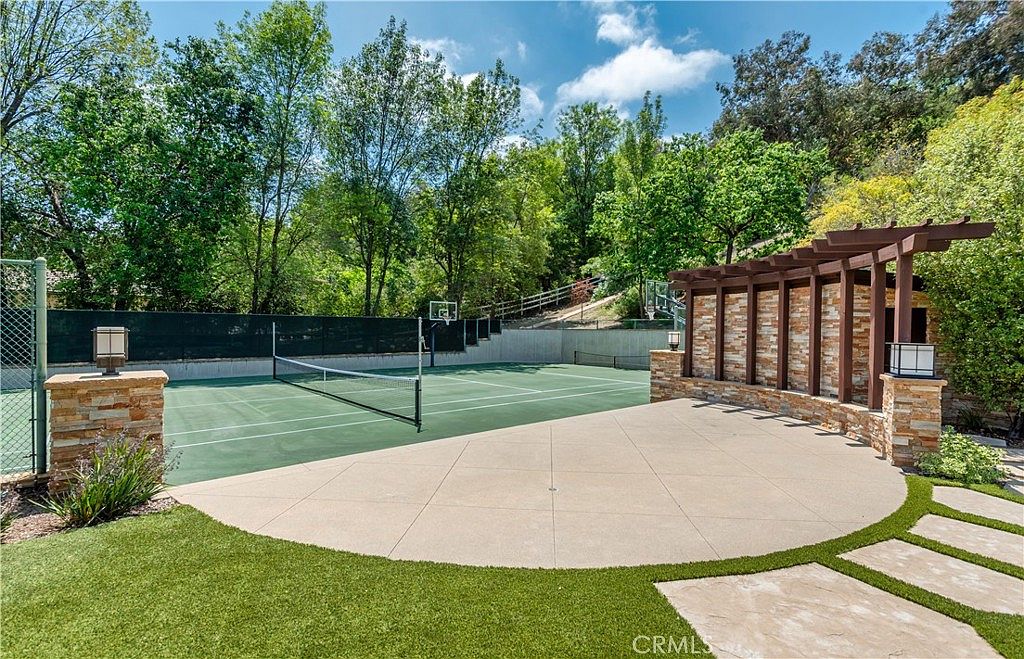
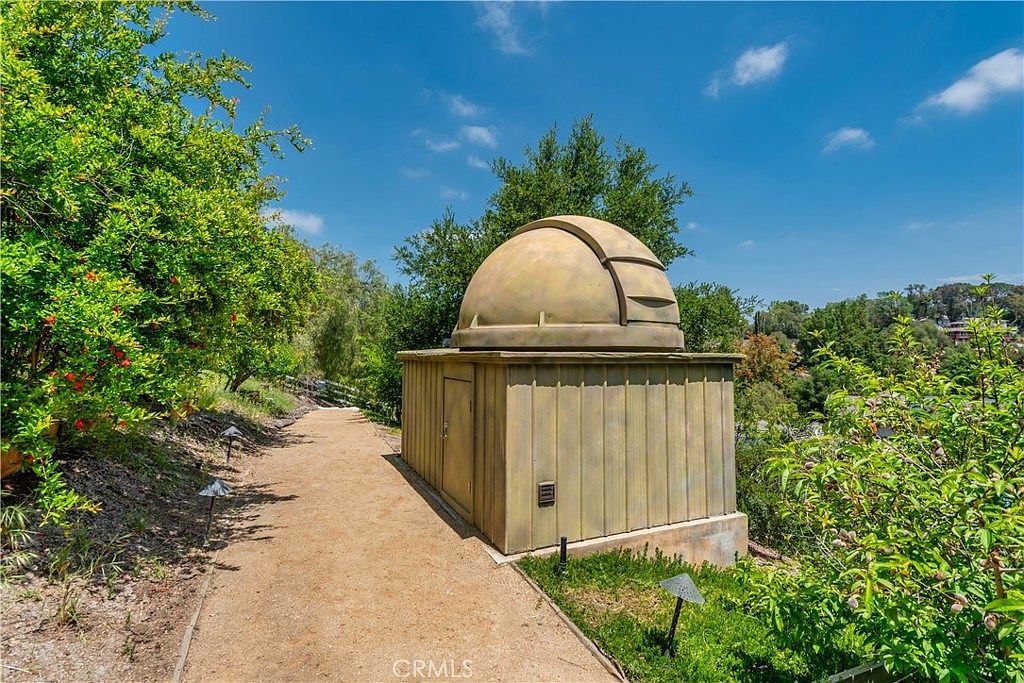
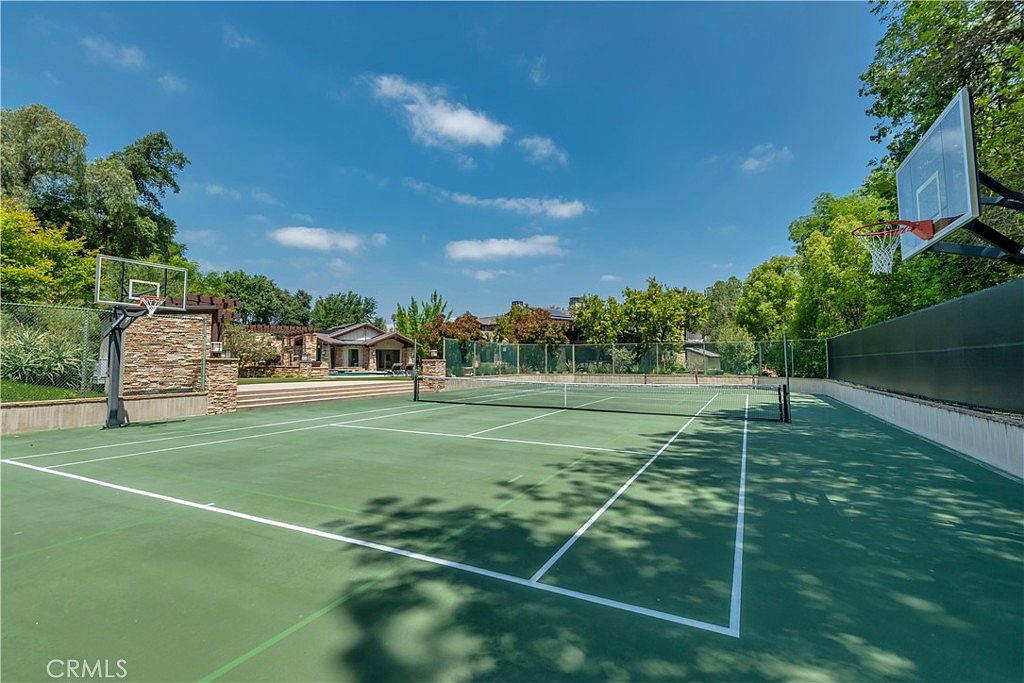
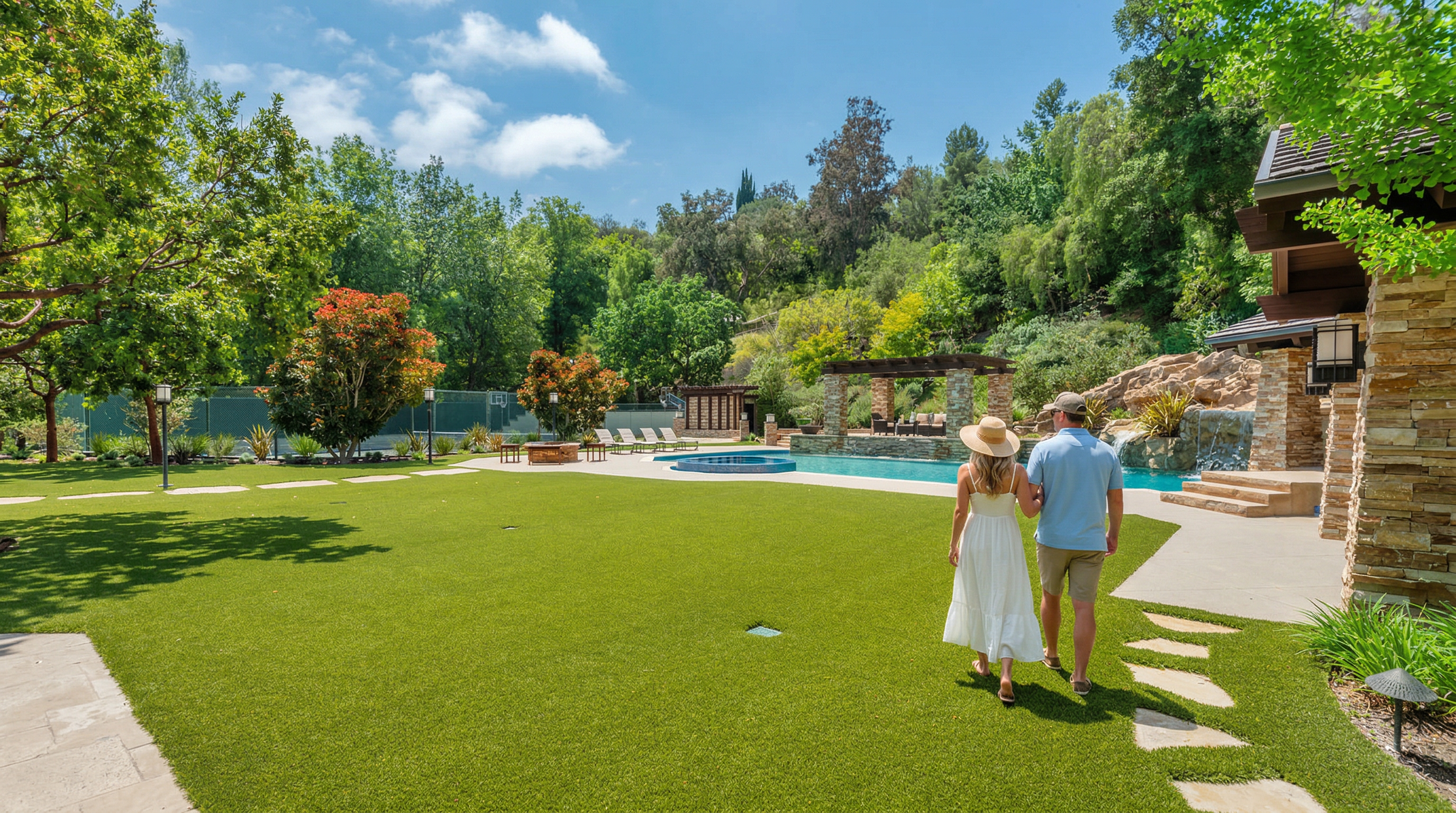
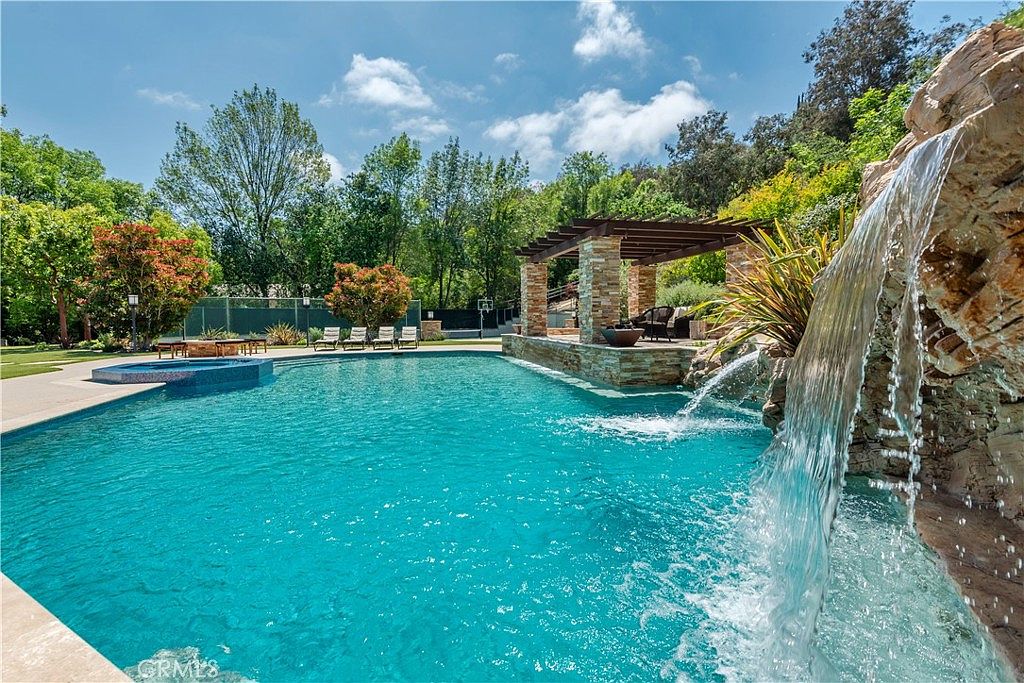
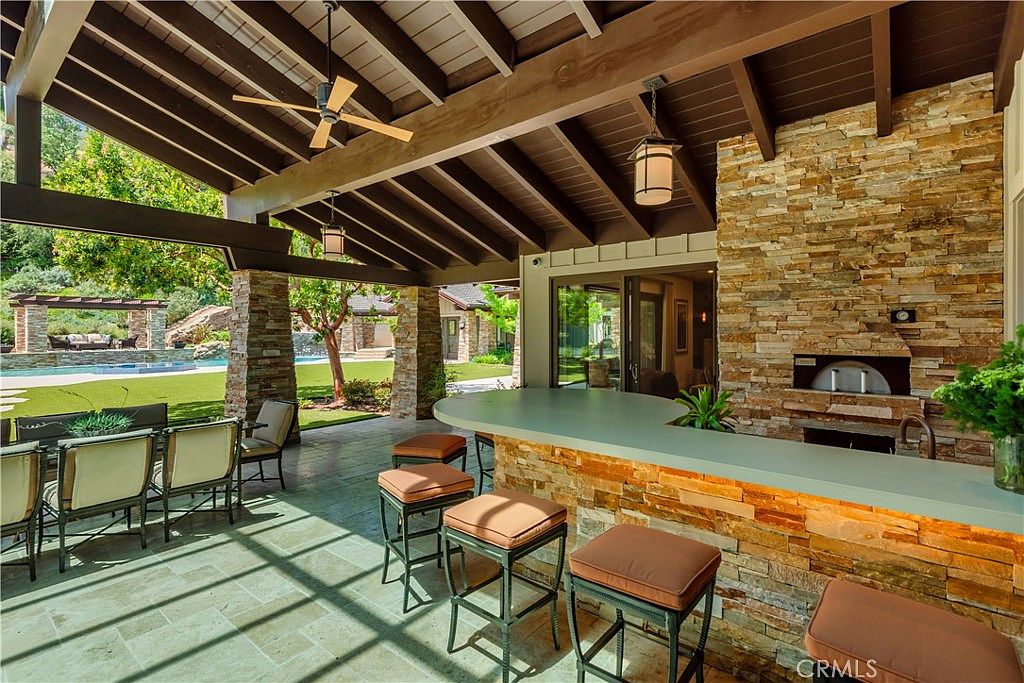
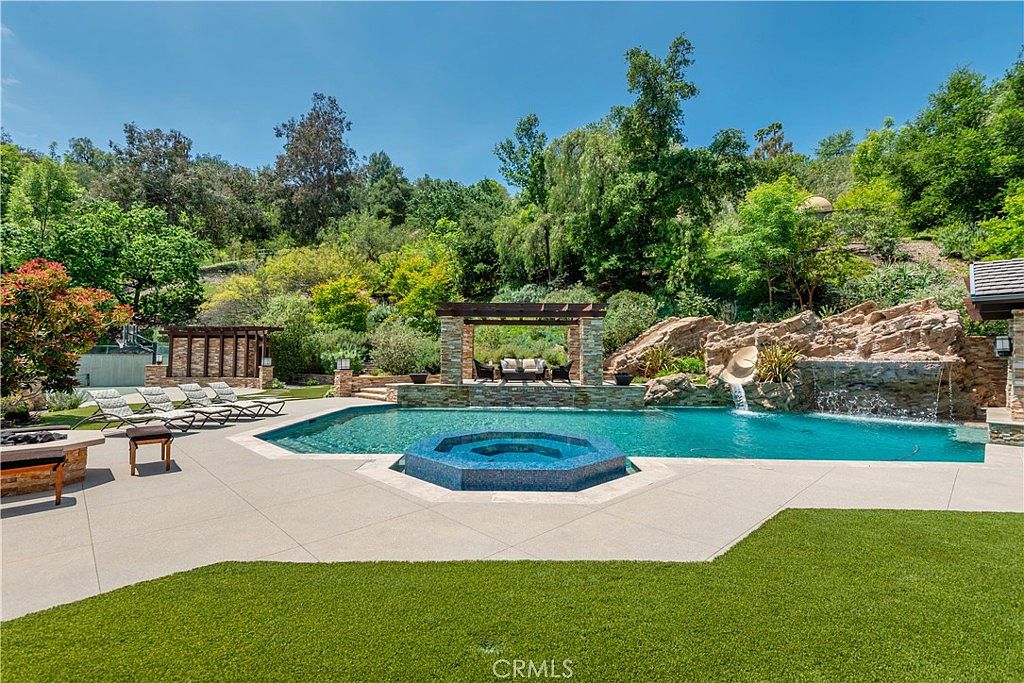
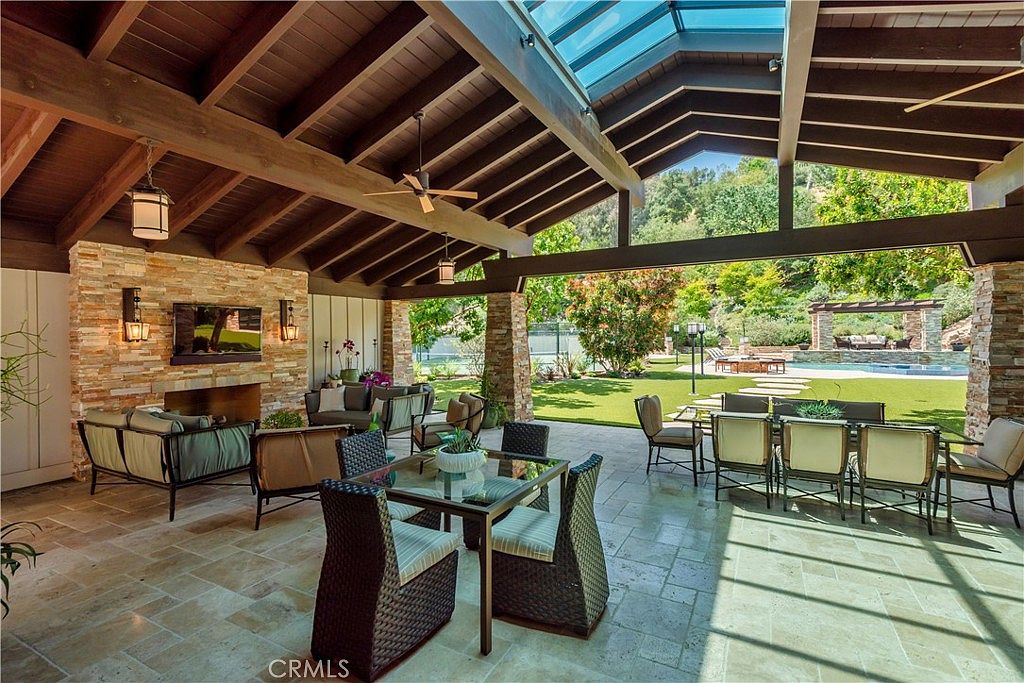
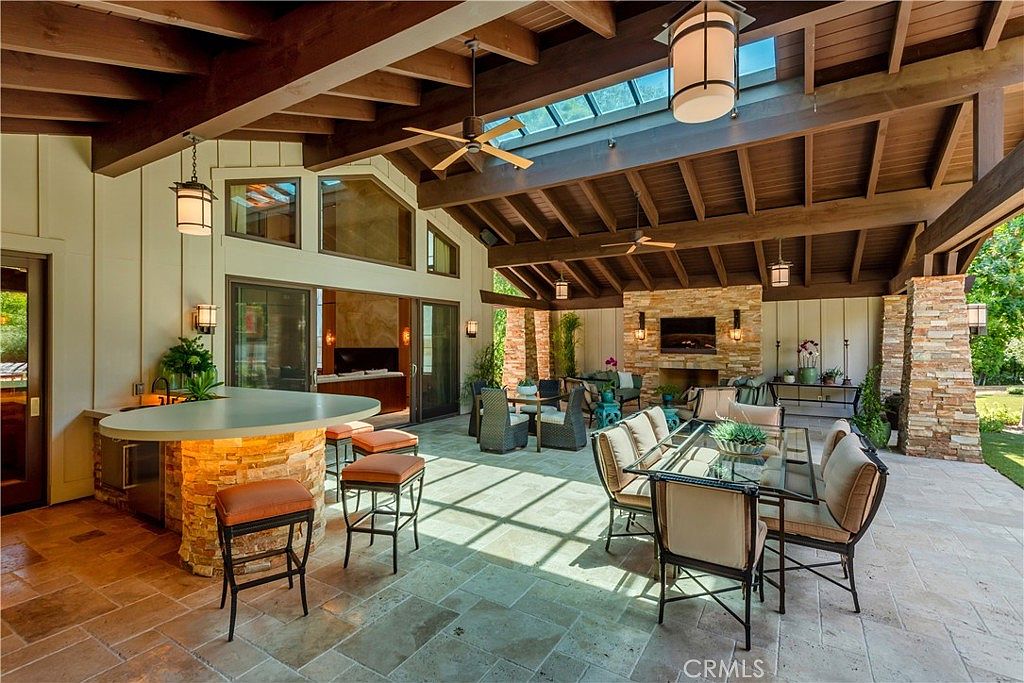
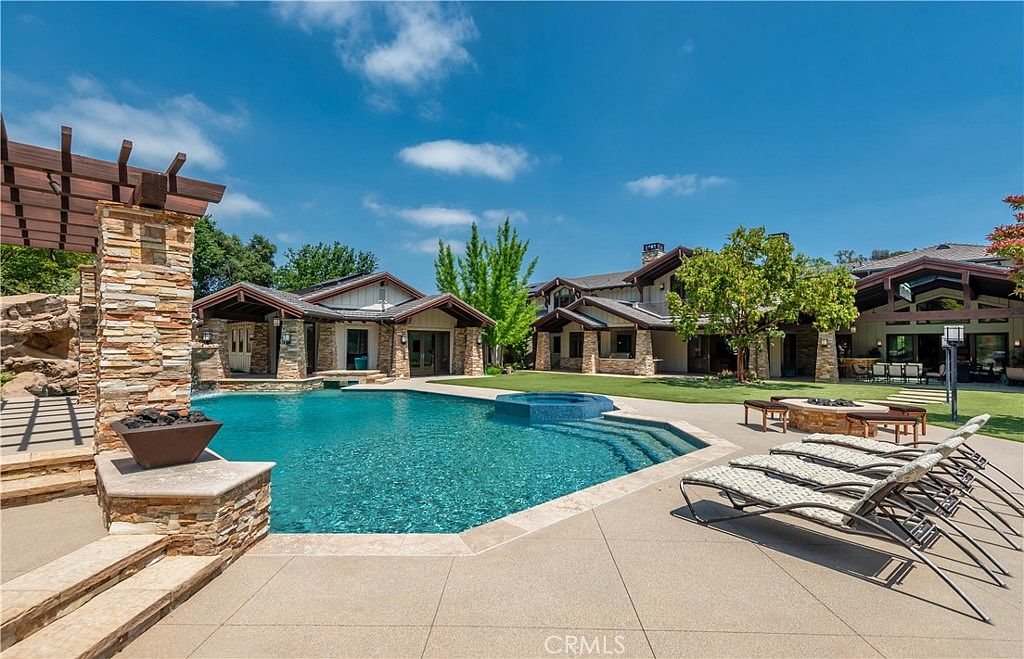
Outside, the grounds read as a resort blueprint: a swim-through indoor-outdoor pool with swim jets, a natural rock waterfall, a waterslide, and an integrated spa anchor the rear of the property. A covered patio with a stone fireplace and wood-beam ceiling, a full barbecue center with wood-burning pizza oven, an indoor-outdoor bar, a fire pit, a tennis court, and a half-basketball court fill out the recreational envelope. A gentle hiking trail threads through more than twenty fruit trees and an organic vegetable garden, ultimately arriving at the domed observatory housing a fourteen-inch reflector telescope — a destination that rewards the walk with the entire night sky.
Practical infrastructure matches the experiential ambition: a 24-kilowatt photovoltaic solar system with energy monitoring, a rooftop solar heating system, a Crestron-controlled smart home platform by Bliss Home Automation, an elevator, and two three-car garages ensure that the estate operates as effortlessly as it impresses.
Hidden Hills is one of the most deliberately preserved communities in Los Angeles County — a fact that distinguishes it sharply from the broader sprawl of the San Fernando Valley and the adjacent developments of the western San Fernando corridor. Incorporated as an independent city in 1961, Hidden Hills was designed from its origins as an equestrian and residential enclave, and that founding intention remains visibly intact today. The city is governed by a homeowners association that enforces strict aesthetic and land-use standards, producing a community of exceptional visual consistency: white-fenced properties, mature tree canopies, horse trails threading between estates, and a notable absence of commercial signage or retail intrusion within the city limits.
The result is a quality of daily life that feels genuinely removed from the pressures of metropolitan Los Angeles, despite the fact that the city sits within comfortable reach of the broader region's cultural and professional infrastructure. The 101 Freeway and the 101-to-405 interchange provide direct access to Santa Monica, Beverly Hills, and the Westside in one direction, and to Ventura County's coastline in the other. Calabasas, the immediately adjacent community, supplies the day-to-day amenities that Hidden Hills' residential-only zoning deliberately withholds: the Commons at Calabasas and the Calabasas Courtyard offer curated retail, dining, and professional services within a short drive, while the Westfield Topanga mall provides comprehensive shopping options nearby.
The landscape itself is a significant part of the address's appeal. Hidden Hills sits at the edge of the Santa Monica Mountains, and the views from elevated properties extend across the valley floor to the ridgelines beyond, particularly compelling at dusk when the light transforms the hills into layered silhouettes. The Santa Monica Mountains National Recreation Area, one of the largest urban national parks in the United States, is accessible from the community's perimeter and offers hundreds of miles of hiking, equestrian, and mountain biking trails — a natural amenity of considerable scale for residents who value outdoor access without the need to travel.
The equestrian culture that shaped Hidden Hills' identity remains active and well-supported. Dedicated horse trails run throughout the city, and many properties — including estates of the scale found on Jed Smith Road — maintain grounds suited to that lifestyle. It is a community where the pace is set by its residents rather than by commercial pressure, and where privacy is understood not as exclusivity for its own sake but as the foundation for a particular quality of life.
For families, the Las Virgenes Unified School District serves the area and has historically maintained strong academic standing within Los Angeles County. The proximity to Malibu — approximately twenty minutes by road through the canyon — adds a coastal dimension to the Hidden Hills lifestyle that few inland communities can claim. Beaches, surf, and the restaurants and culture of the Malibu colony are genuinely within reach on a weekend afternoon, completing a lifestyle profile that balances seclusion, nature, urban access, and coastal proximity in a combination that the Los Angeles region offers in very few places.
Featured Highlights
Curated Content • Presented by Marc Shevin