The Story Behind
A Presidential Legacy Estate Awaiting Its Next Great Chapter
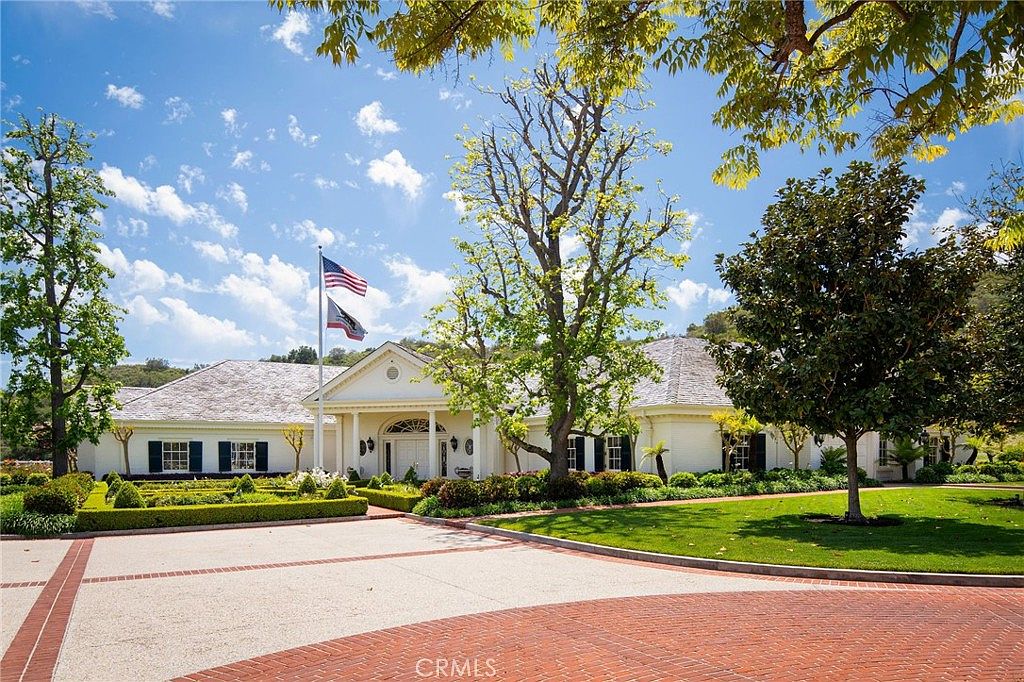
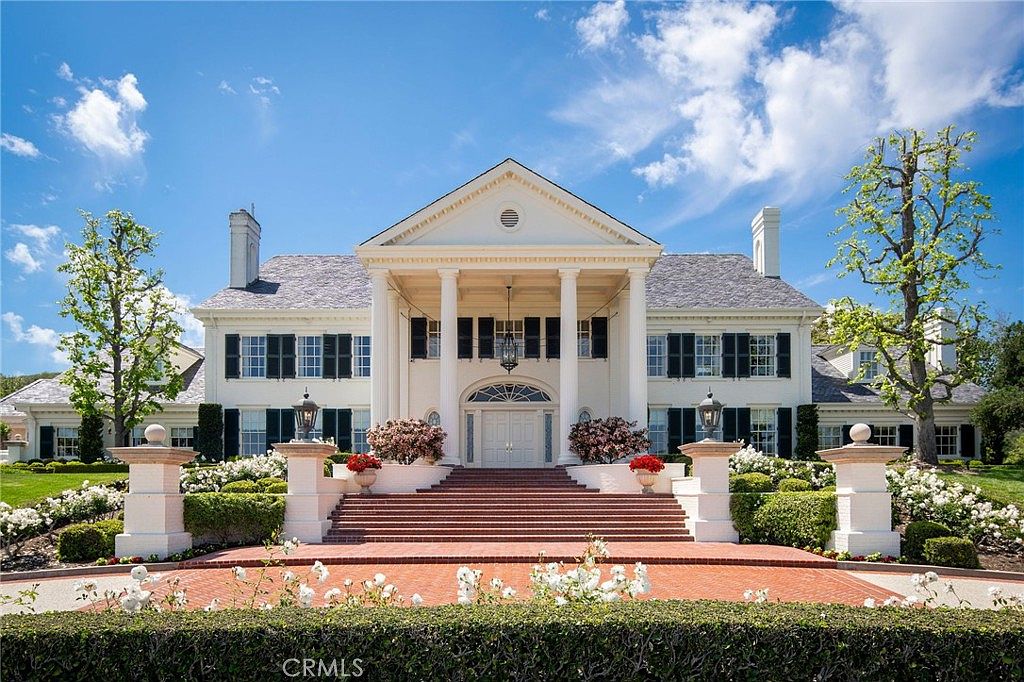
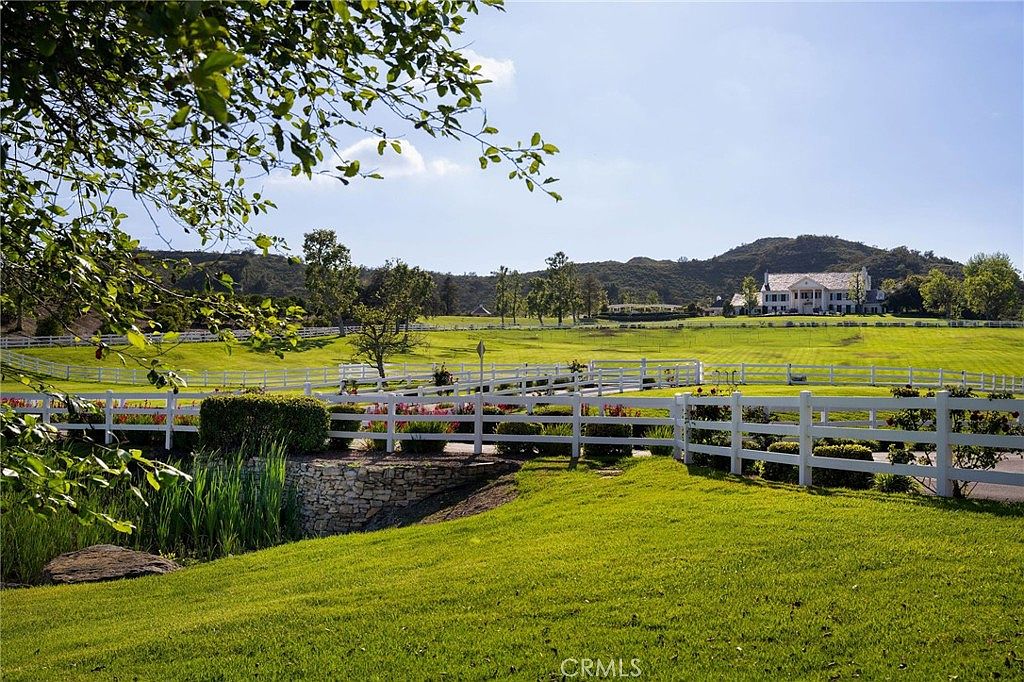
There are estates, and then there is the Lyon Estate — a property so complete in its vision and so deliberate in its execution that it transcends the category of real estate entirely and enters the realm of legacy. Commissioned in 1986 by Major General William Lyon, a decorated US Air Force Reserve Commander and one of Southern California's most consequential real estate developers, the 21,000-square-foot Georgian manor was designed not merely as a residence, but as a statement of a life fully and magnificently lived.
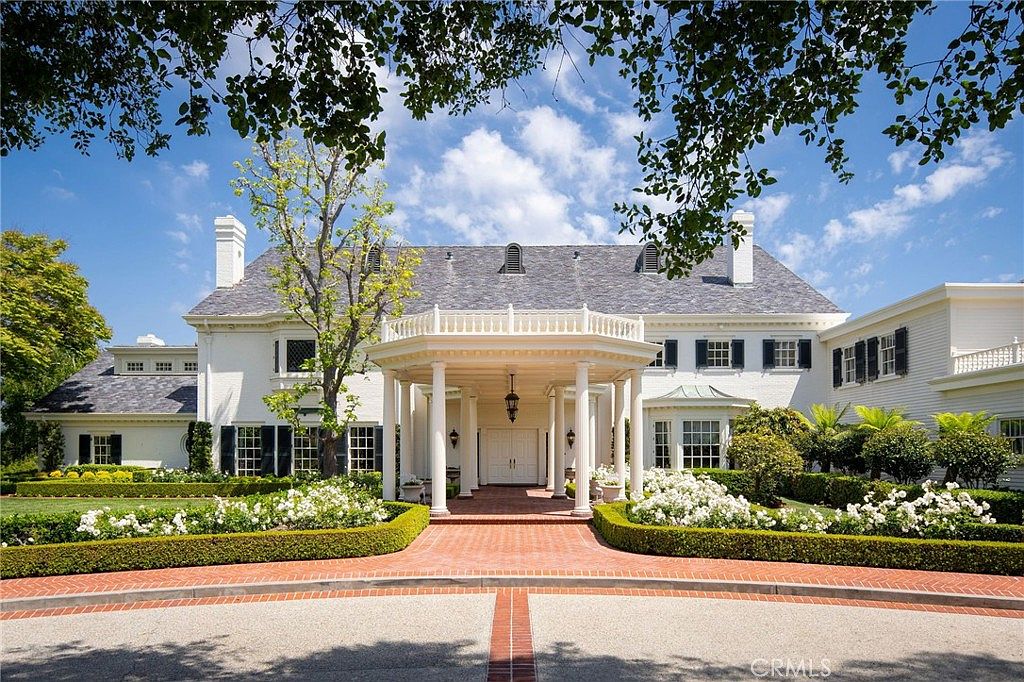
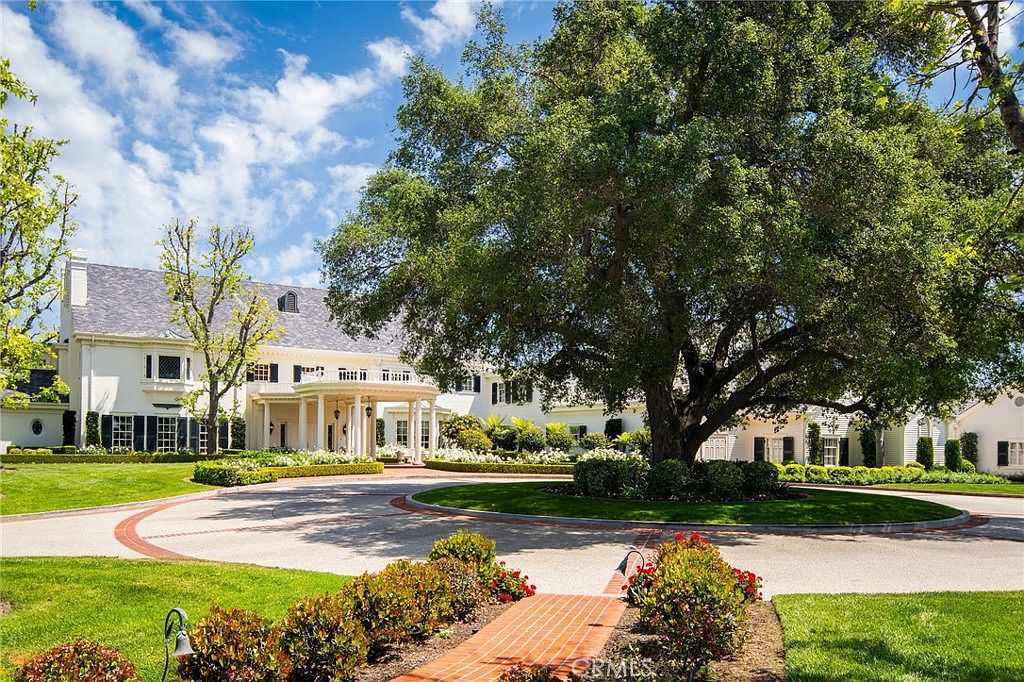
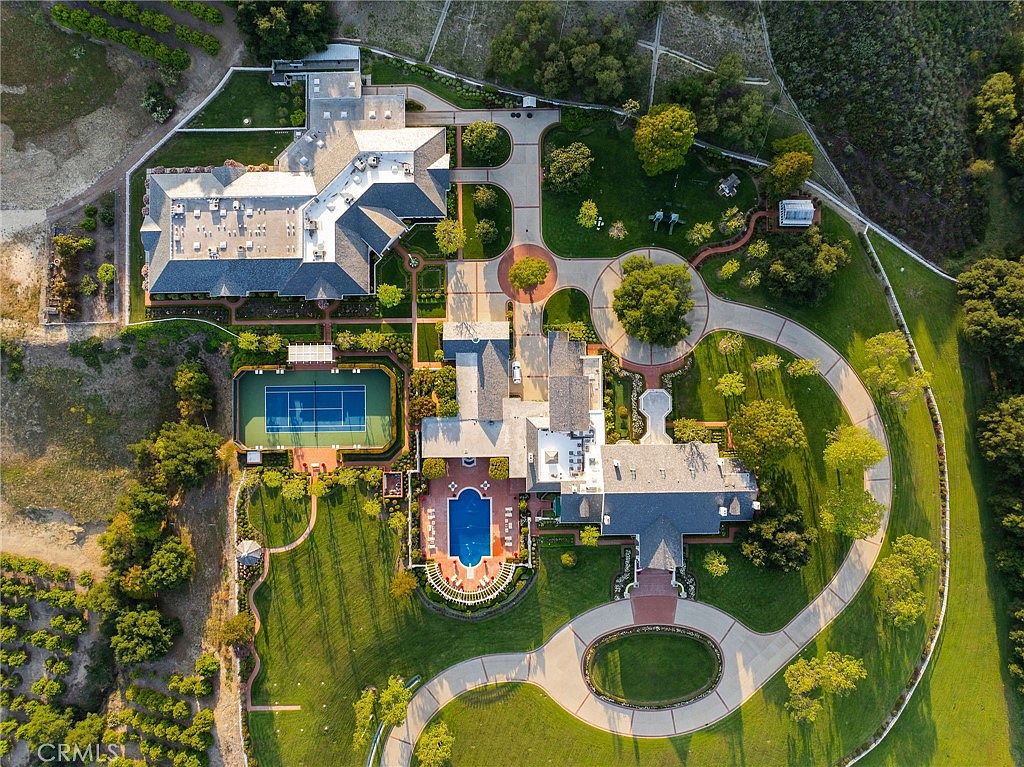
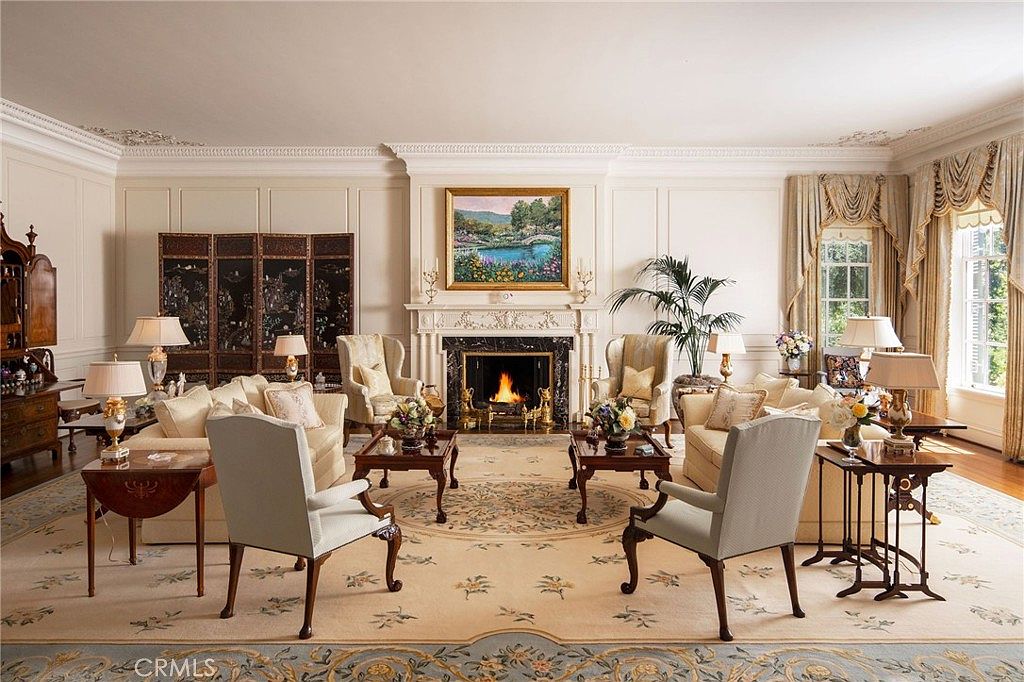
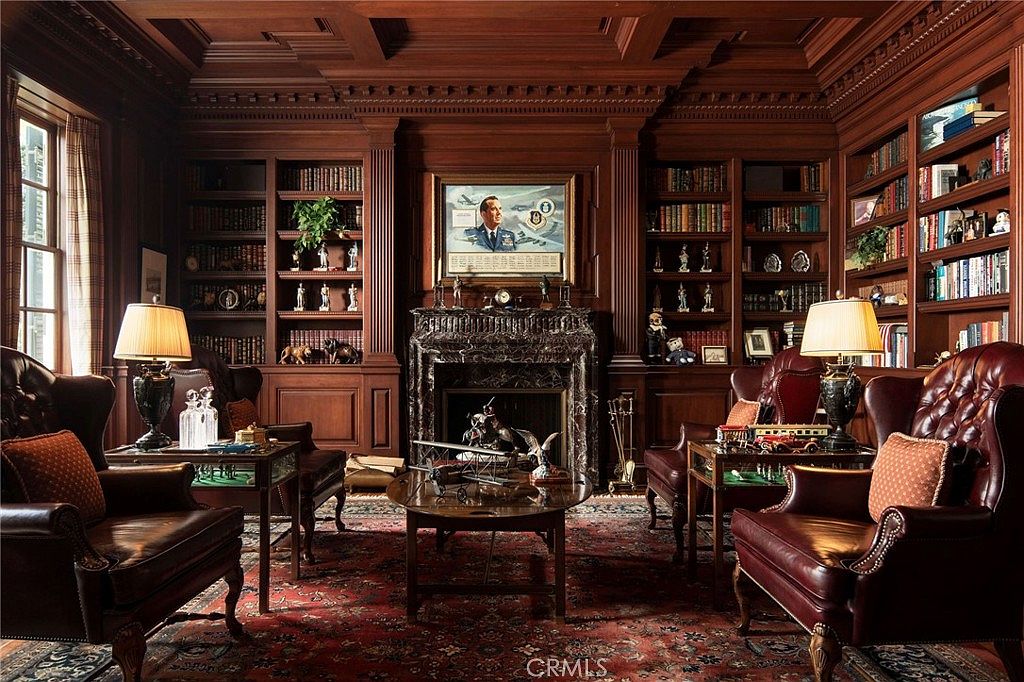
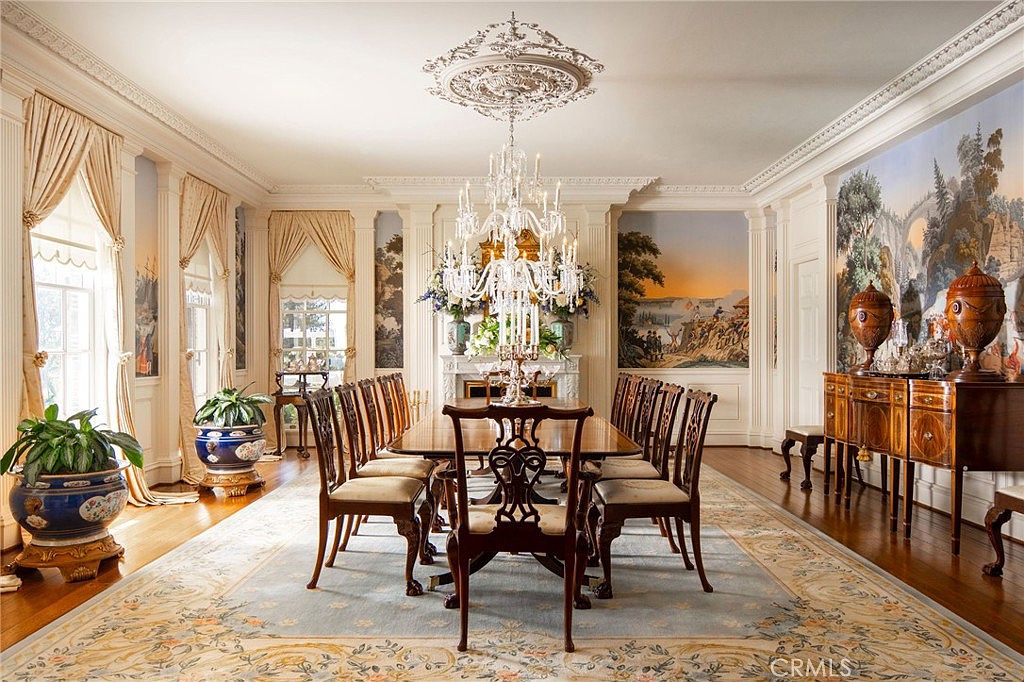
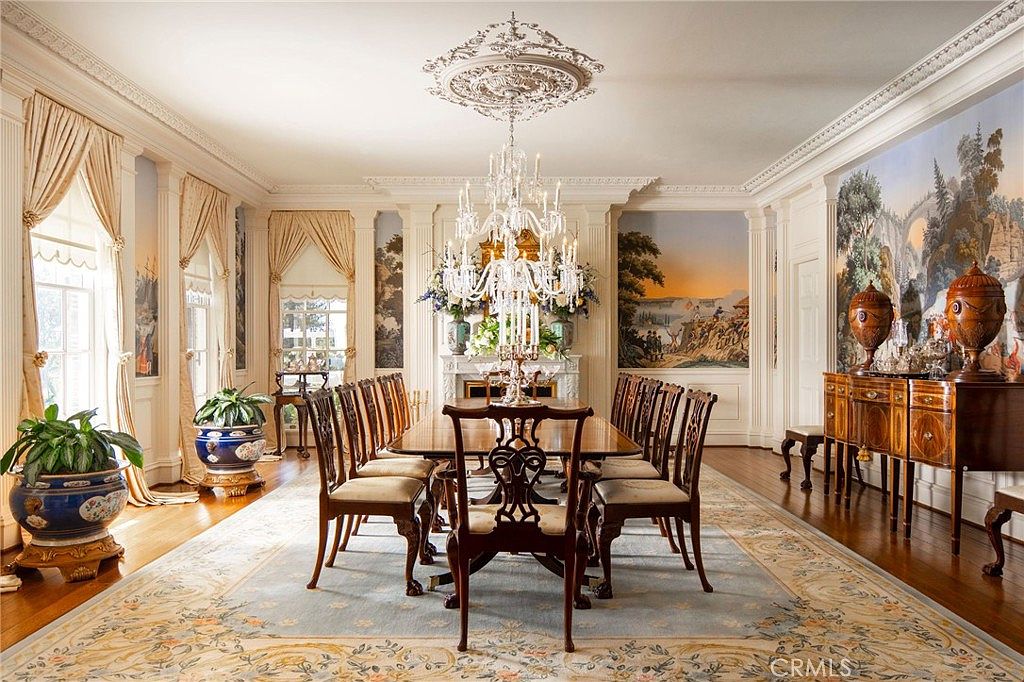
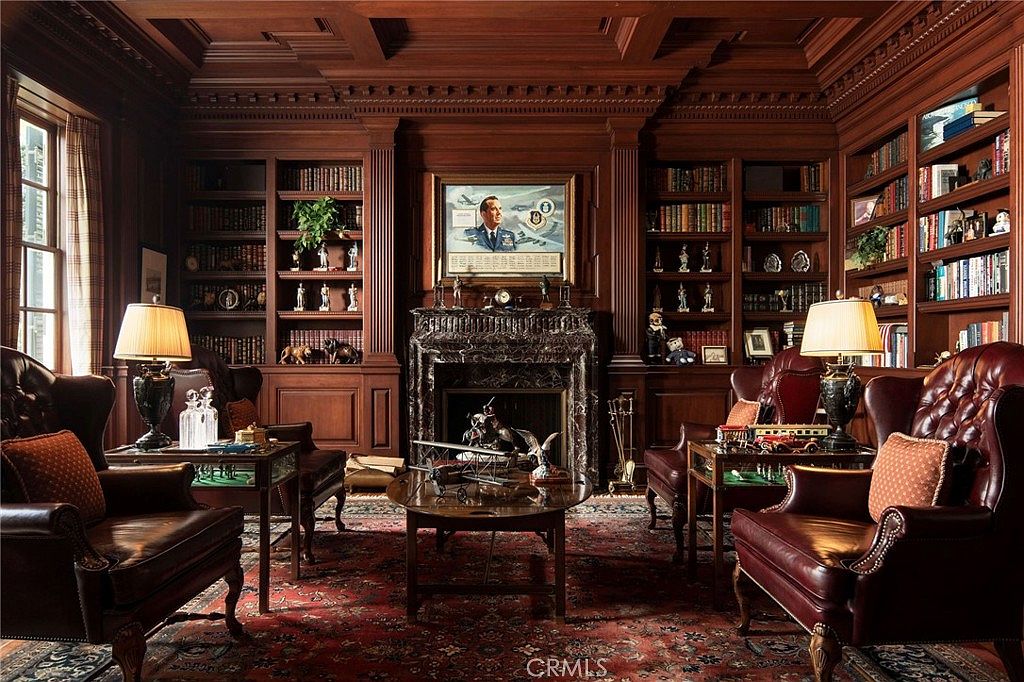
Arrival sets the tone immediately. A sweeping circular drive, accented in brick and framed by mature oaks, leads to a columned portico of commanding symmetry — the kind of entrance that prepares a guest, rather than simply receiving them. Inside, the interplay of coffered wood ceilings, intricate crown moldings, and ornate light fixtures reveals a craftsman's devotion to detail that modern construction rarely attempts. The formal living room anchors itself around a marble-surround fireplace, its plush seating arranged with deliberate symmetry, while the dining room — dressed in scenic wall murals, crystal chandelier light, and tall draped windows — was clearly conceived for gatherings of consequence. The dark-paneled study, lined floor-to-ceiling with bookshelves and centered on a grand marble fireplace, carries an almost palpable sense of history; it is a room where decisions of significance were made.
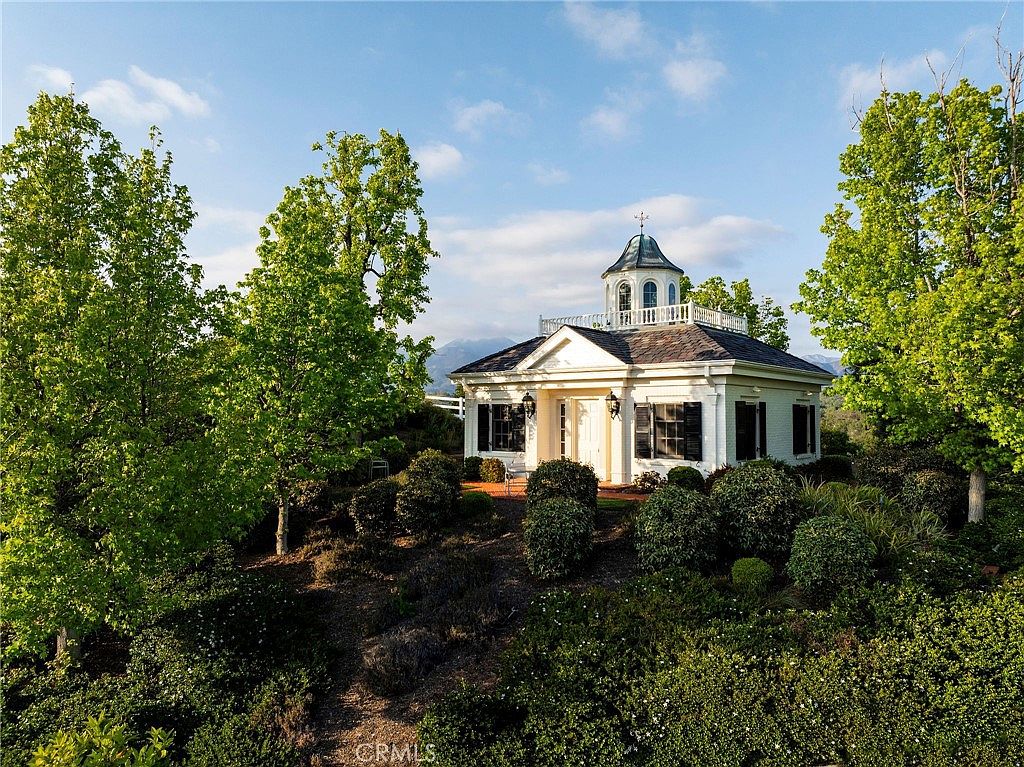
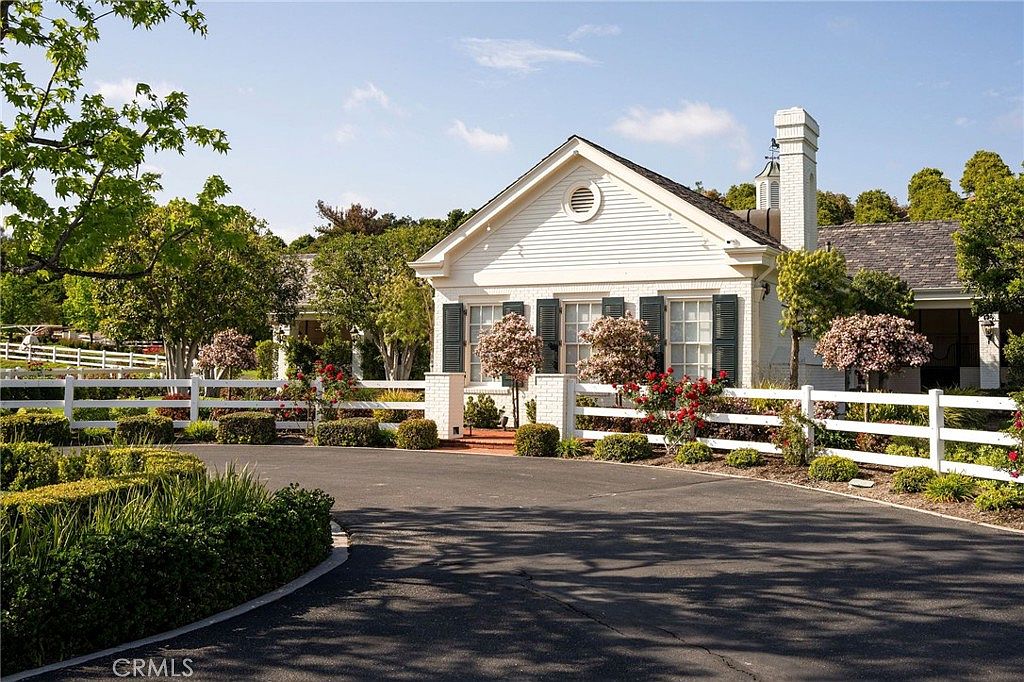
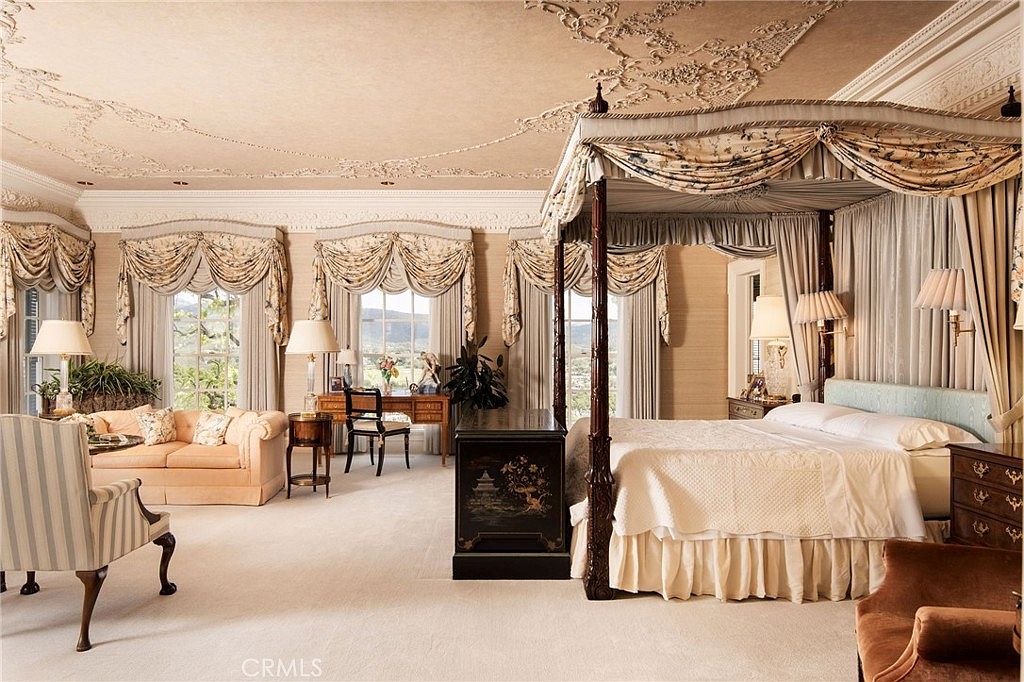
The primary suite offers a four-poster canopy bed, a dedicated sitting area, and walls of windows that draw the surrounding landscape inward. Seven additional bedrooms and eleven bathrooms throughout the three-level residence maintain the same standard of considered luxury. Three separate guest houses — one offering two bedrooms, a full bath, and a complete kitchen; two others each providing a private bedroom and kitchenette — ensure that extended family or staff are accommodated with genuine comfort and autonomy.
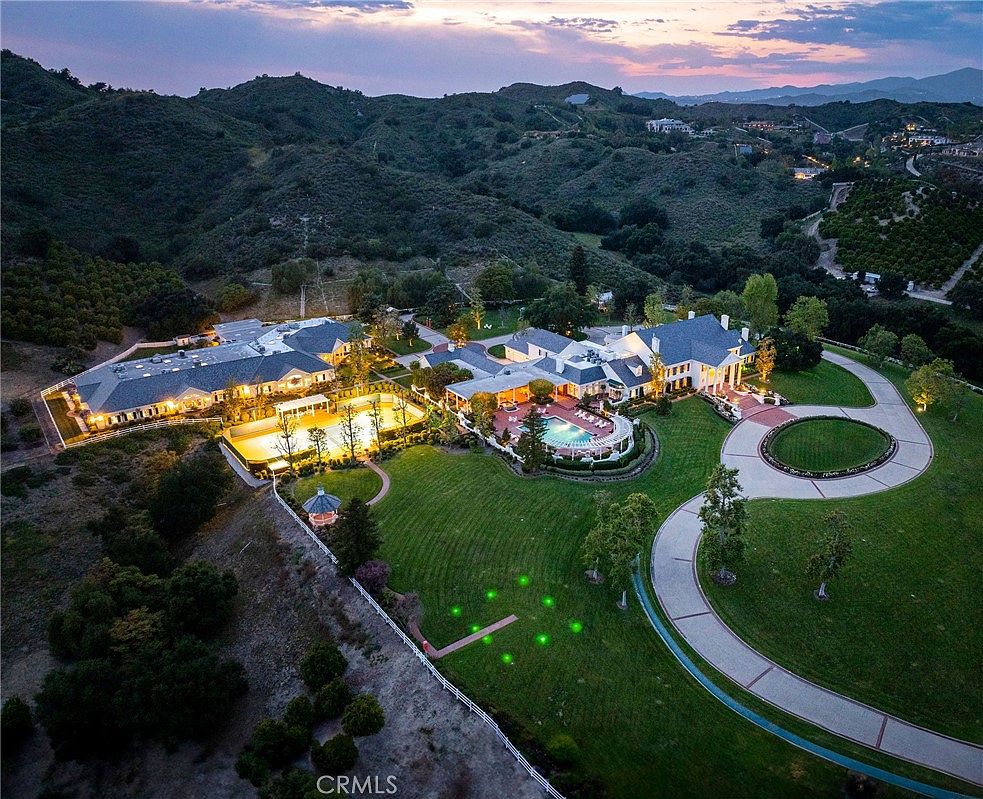
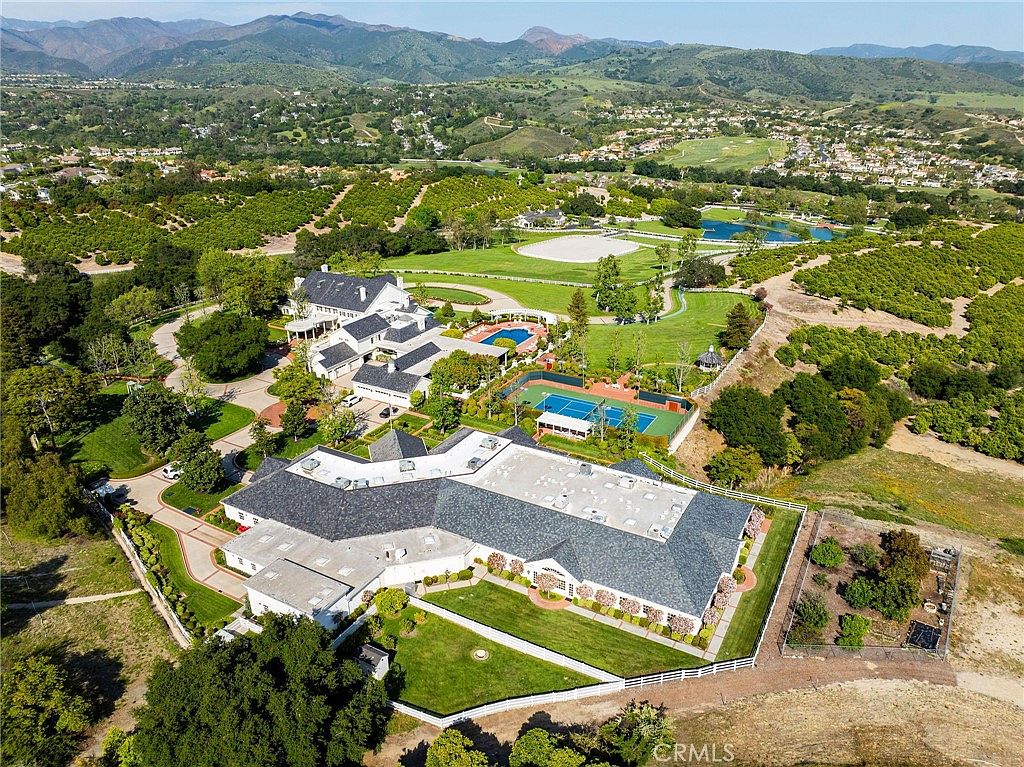
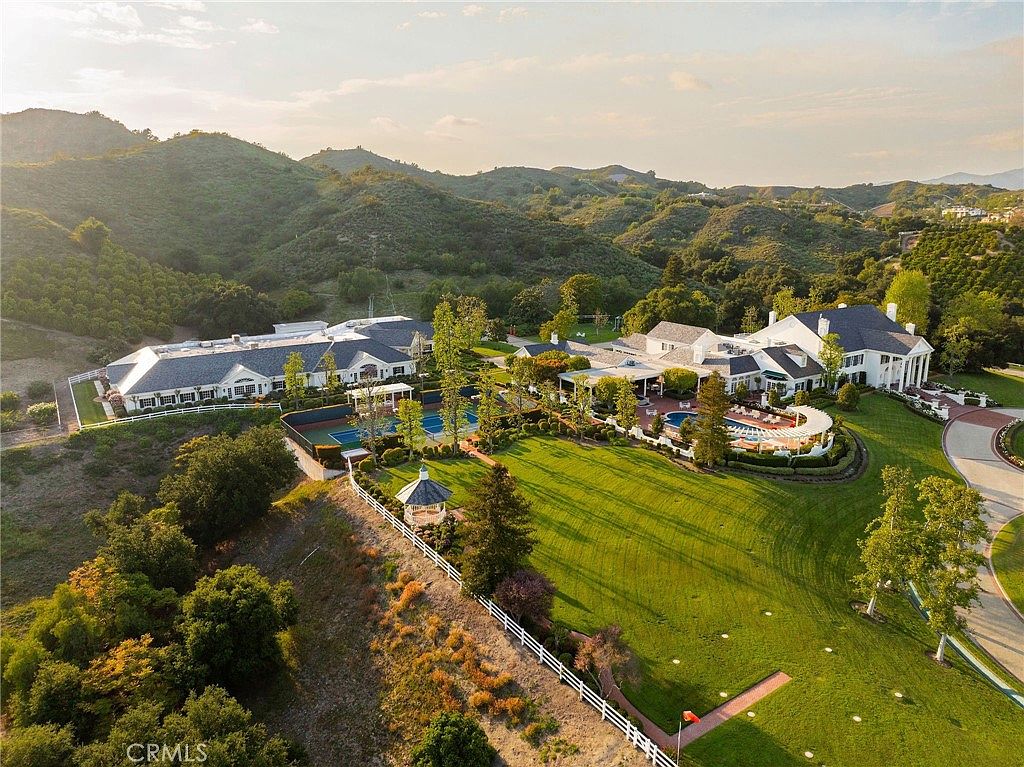
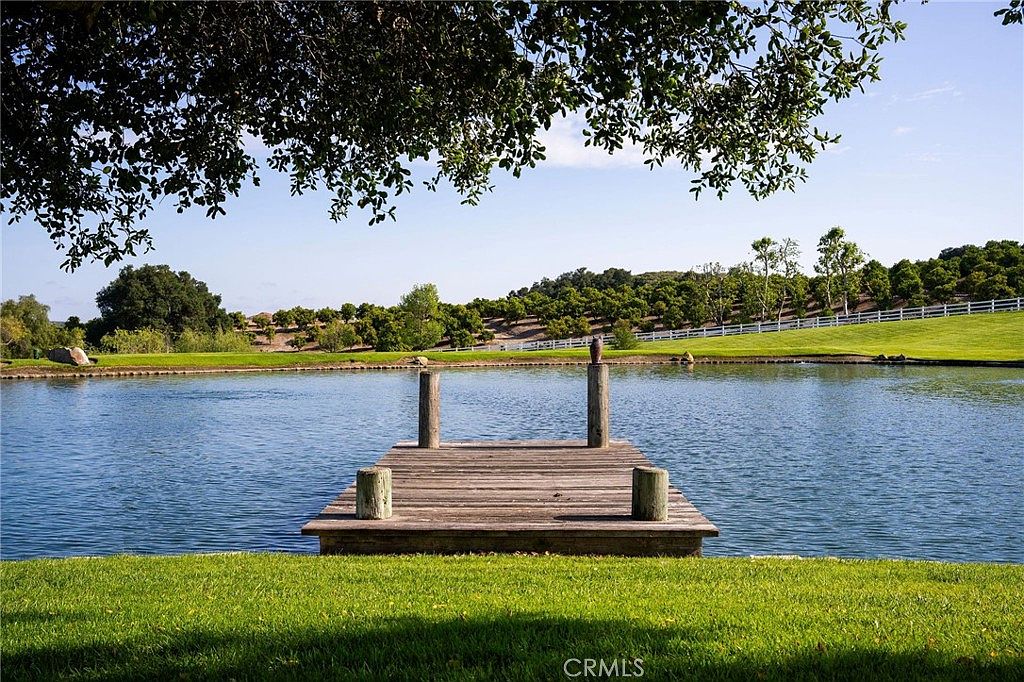
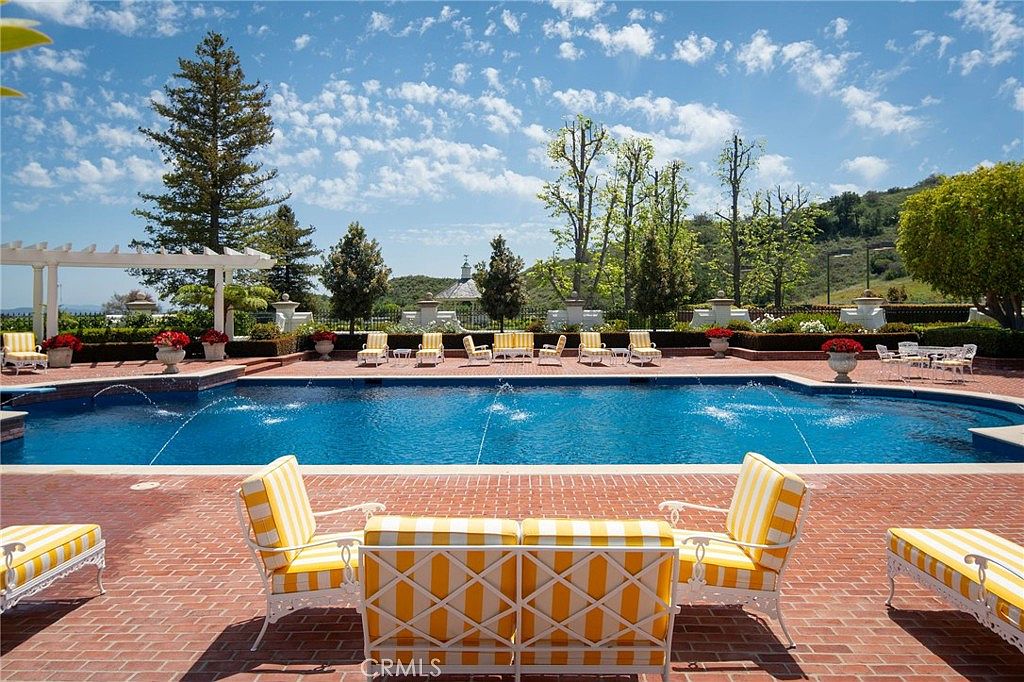
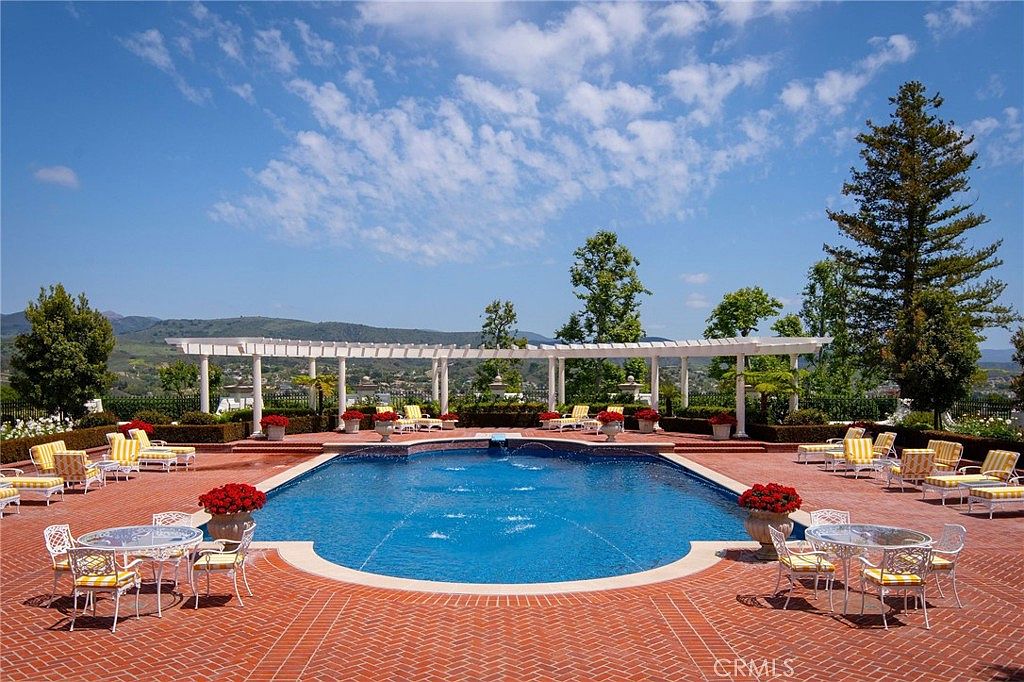
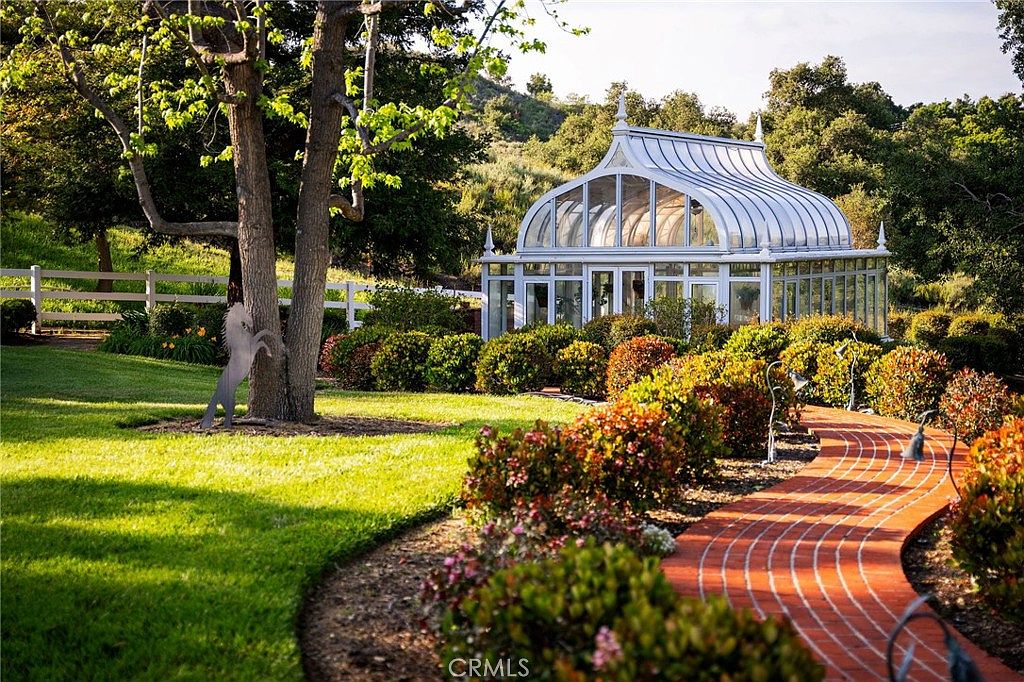
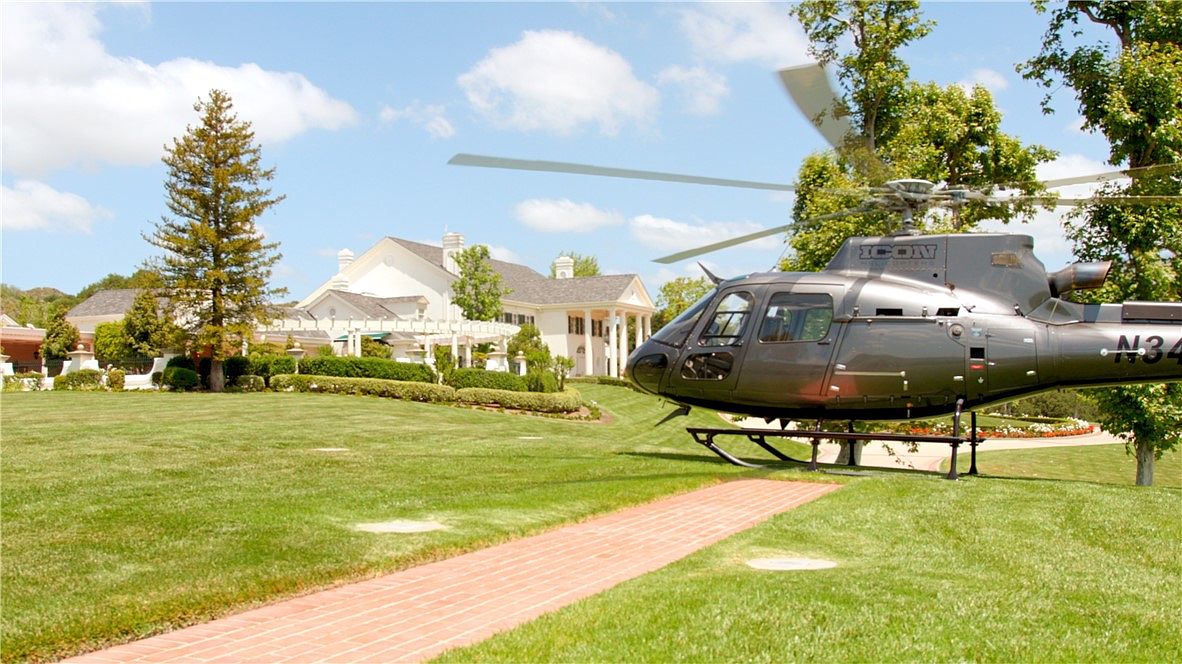
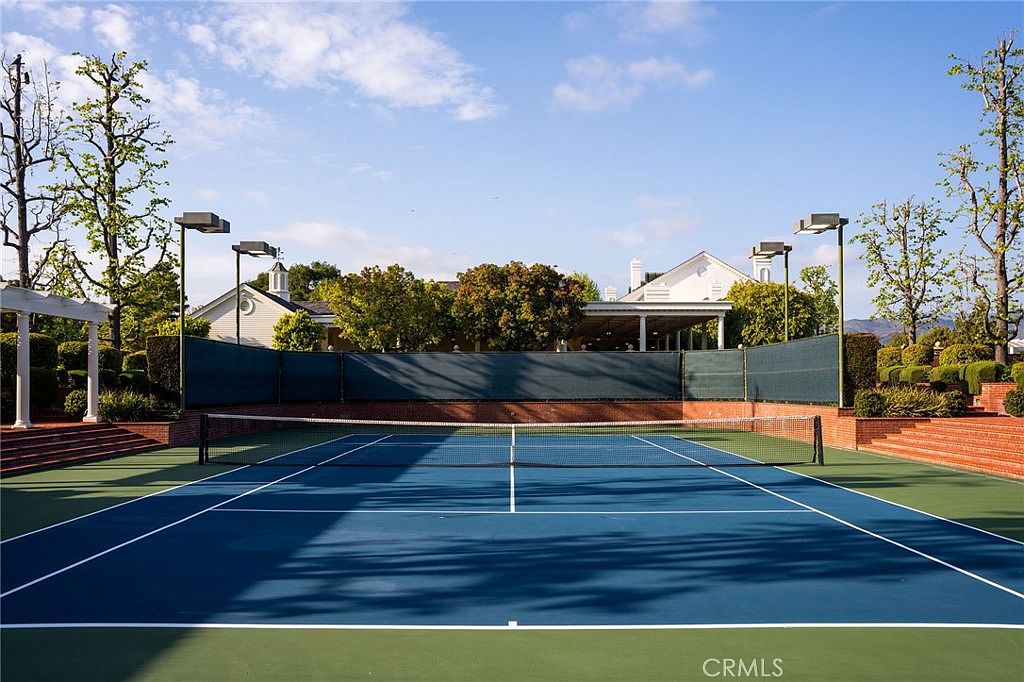
Beyond the residence, the estate's amenity list reads less like a feature sheet and more like the master plan of a private resort. The resort-style pool and spa unfold beneath a white pergola across a classic brick patio, framed by manicured Italian villa-like gardens and distant mountain views. A standalone pool house is complete with a dry sauna and dual bathrooms with changing rooms. A championship tennis court, a glass conservatory, a scenic pond, a private helipad, and a greenhouse round out the outdoor offering.
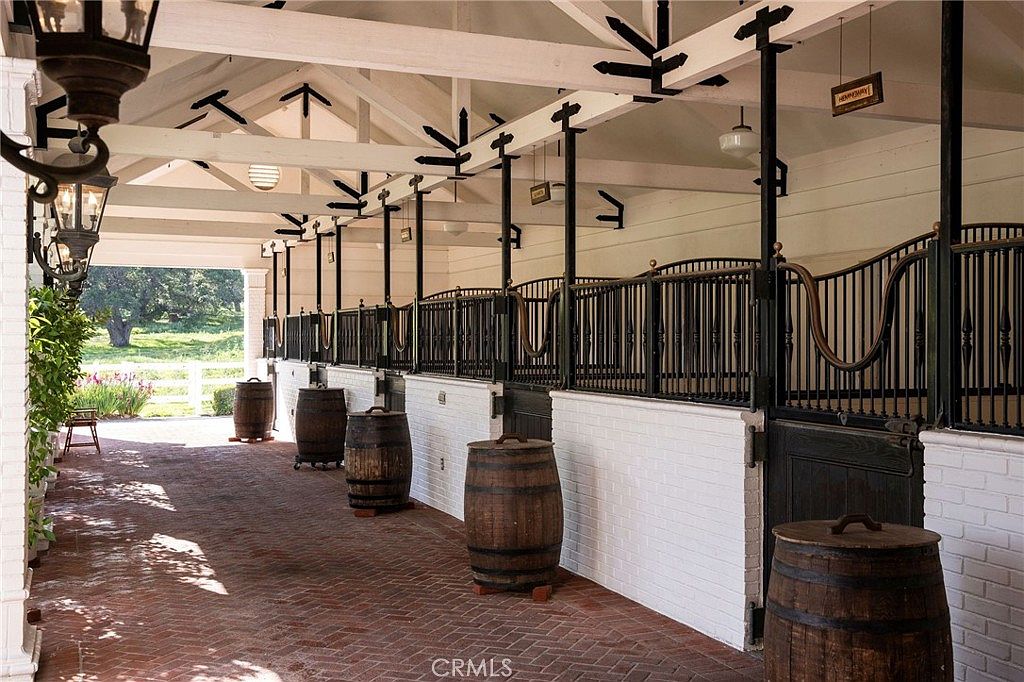
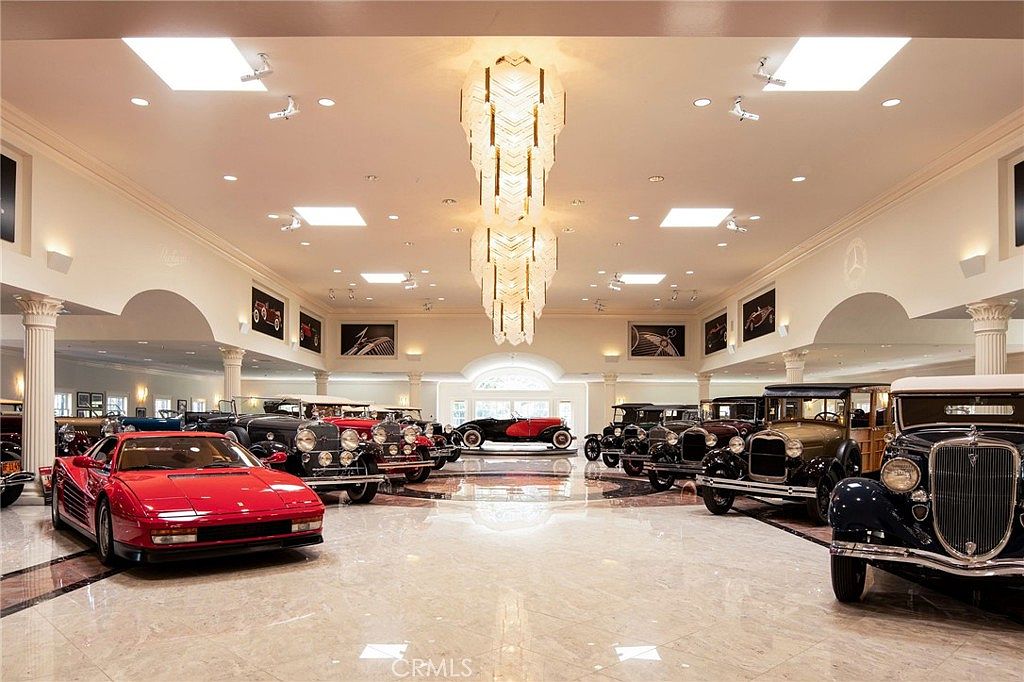
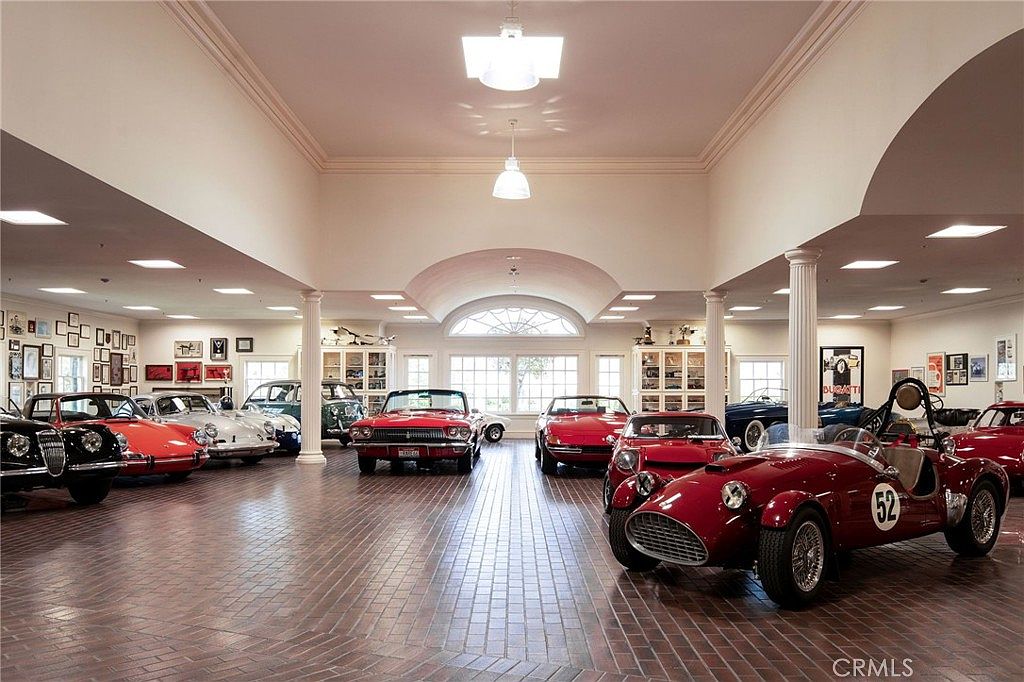
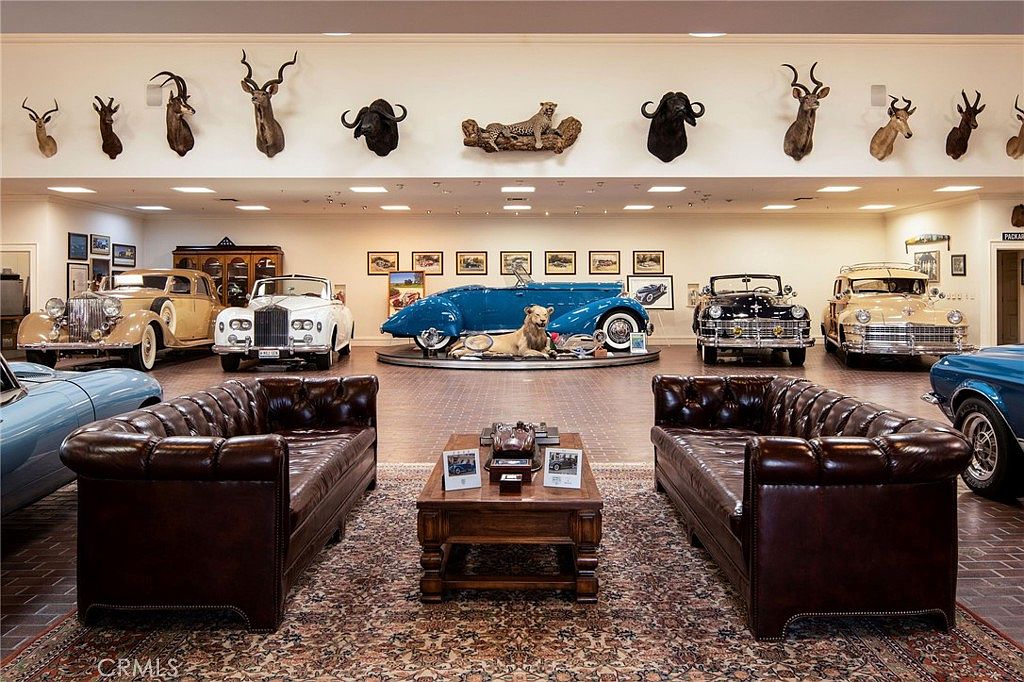
The equestrian facilities are worthy of serious riders: a ten-stall covered barn with a refined brick-floored aisle, rustic barrel accents, and an adjacent riding arena speak to an operation built for both function and aesthetic pleasure. And then there is the car museum — a 23,679-square-foot showroom accommodating seventy vehicles, complete with polished marble flooring, grand crystal chandeliers, a professional auto shop, a recessed lift turntable, and a wash station. It is, quite simply, one of the most extraordinary private automotive spaces in the country.
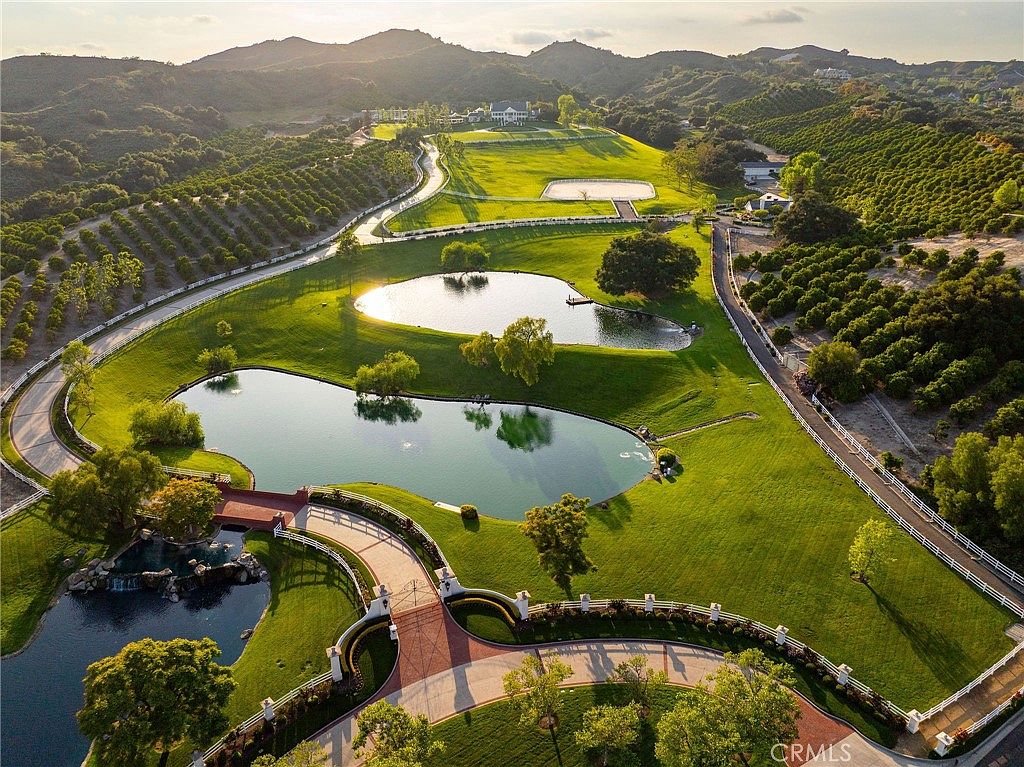
Complementing the built environment are two lakes used for irrigation, a scenic pond, and more than 4,500 Valencia and Navel orange trees that have been quietly thriving for over three decades — a living orchard that roots this extraordinary compound as much in the land as in its architecture.
Coto de Caza occupies a singular position in the Southern California landscape — both geographically and aspirationally. Situated in the foothills of the Santa Ana Mountains within the Trabuco Canyon area of Orange County, this master-planned, fully gated community of approximately 4,000 homes has long been regarded as one of the most prestigious private residential enclaves in California. Its name, loosely translated from Spanish as 'hunting preserve,' traces back to the land's origins as a private game reserve in the early twentieth century, a heritage that lends the community a sense of natural grandeur that no amount of development could manufacture.
The community is governed by the Coto de Caza Golf and Racquet Club, which offers residents access to two championship golf courses — the Gold Course and the Oak Course — along with tennis facilities, a fitness center, and a full-service clubhouse. The club serves as the social heartbeat of the community, hosting events and providing the kind of members-only amenity access that transforms daily life into something more closely resembling a permanent resort stay. The winding, tree-lined roads within the gates — patrolled around the clock — provide a level of privacy and security that is increasingly rare in Southern California's most desirable corridors.
Beyond the gates, the estate's location places residents within easy reach of Orange County's most celebrated coastal destinations. Laguna Beach, renowned internationally for its dramatic cliffs, gallery-lined village streets, and the annual Pageant of the Masters arts festival, is approximately twenty miles to the west. Newport Coast and Newport Beach — home to world-class dining, Pelican Hill Resort, and some of the most coveted waterfront real estate in the nation — are similarly accessible. Dana Point Harbor, with its sailing culture and the Ritz-Carlton Laguna Niguel perched above the Pacific, lies to the south.
For those who travel frequently, John Wayne Airport in Santa Ana provides convenient regional and national connections, while Los Angeles International Airport is reachable within an hour under favorable conditions. The private helipad on the estate grounds, of course, renders such calculations largely academic.
Within Trabuco Canyon and the broader Saddleback Valley, residents enjoy proximity to the Cleveland National Forest, which offers thousands of acres of hiking, equestrian trails, and natural open space — a fitting complement to the estate's own riding facilities. The area's Mediterranean climate, characterized by warm, dry summers and mild winters, ensures that the estate's outdoor amenities and orchards remain inviting throughout the year.
Coto de Caza itself gained broader cultural recognition through its appearance in the early seasons of The Real Housewives of Orange County, though the community's appeal requires no such endorsement. It is a place defined by natural beauty, genuine privacy, and a community of neighbors who have chosen — and who can afford — to live entirely on their own terms. For an estate of the Lyon compound's magnitude, there is simply no more fitting address in Southern California.
Featured Highlights
Curated Content • Presented by Joshua Altman