The Story Behind
A Beacon Hill Landmark, Completely Reimagined for Modern Living
There are buildings that simply occupy a corner, and then there are buildings that define it. 55–57 Hancock Street has belonged to the latter category since it was constructed in 1870, its papyrus-carved entryway columns and commanding Second Empire silhouette establishing it as one of Beacon Hill's most recognizable architectural statements long before the current restoration began. What has emerged from that meticulous process is something rarer still: a home of genuine historic pedigree that has been made entirely, brilliantly new.
The approach alone signals what awaits within. Three magnificent projecting bays articulate the brick façade, their rhythm drawing the eye upward toward a mansard roofline punctuated by ornate dormer windows. A decorative iron fence traces the sidewalk edge, and the papyrus capitals — a detail that has stood in place for more than 150 years — frame the entrance with the quiet authority of a building that knows exactly what it is.
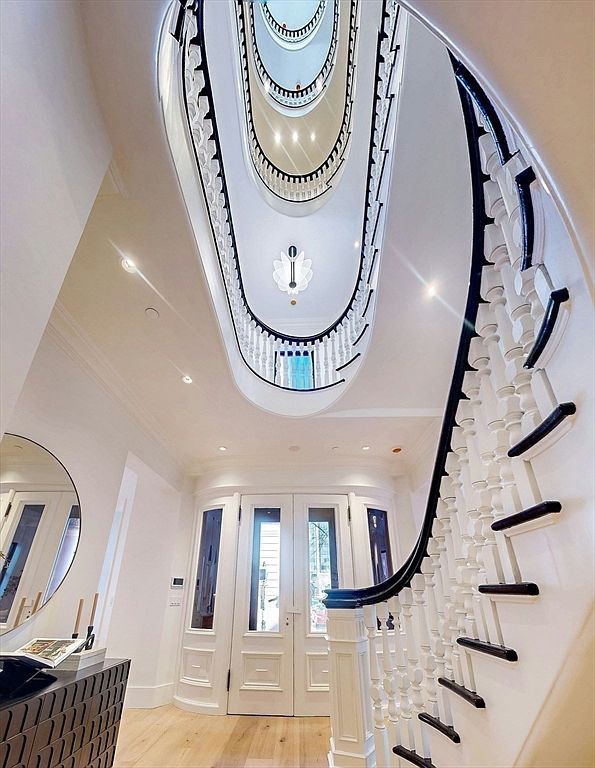
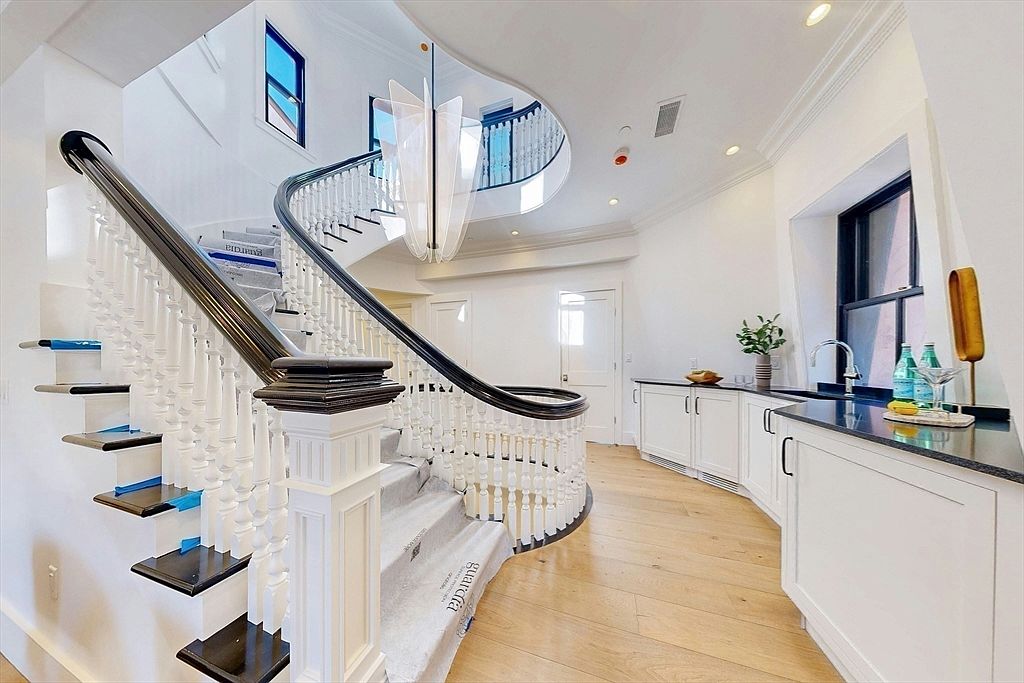
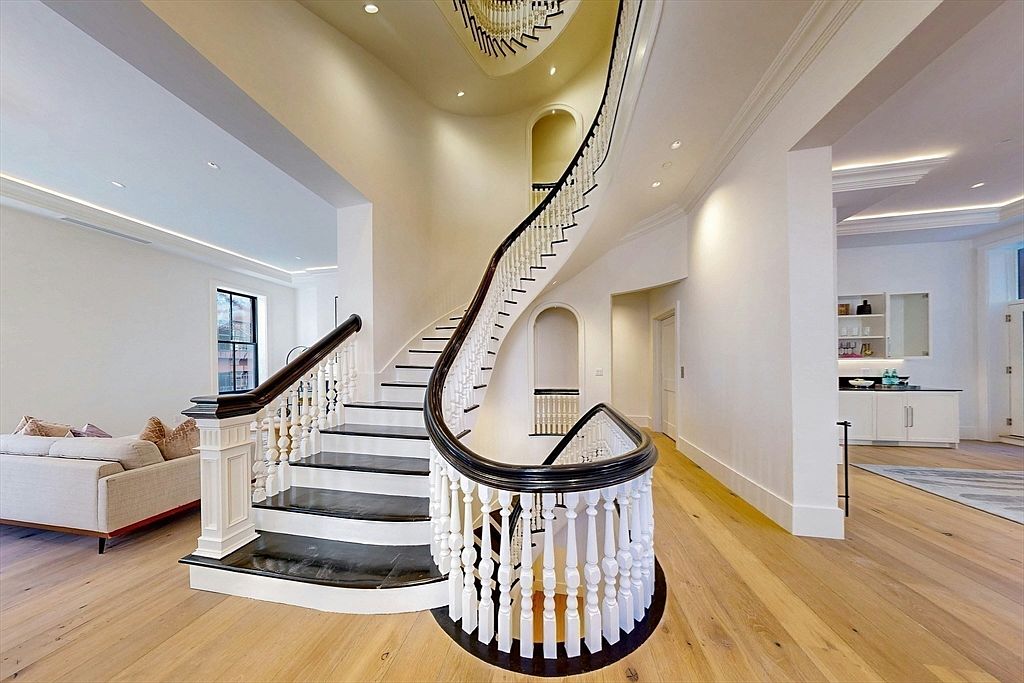
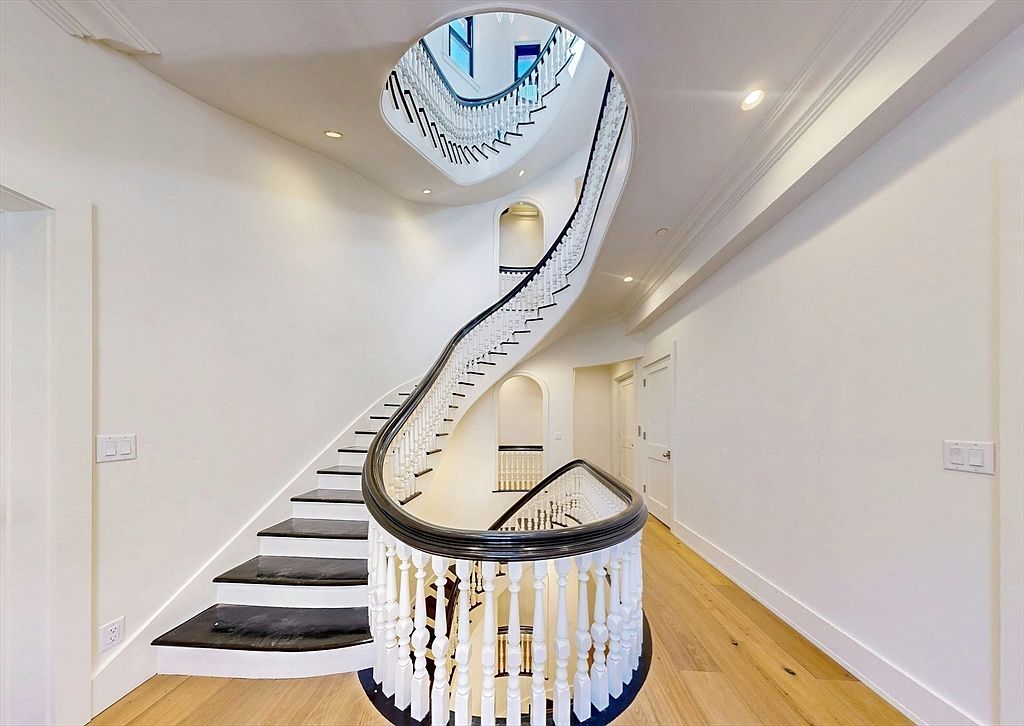
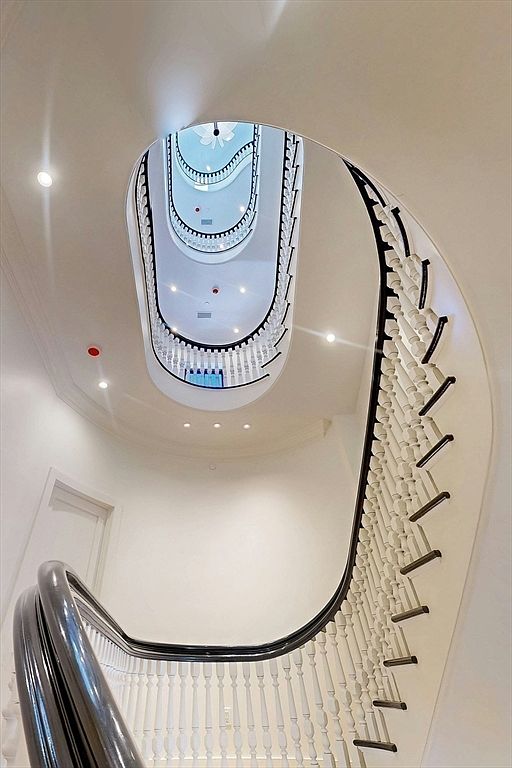
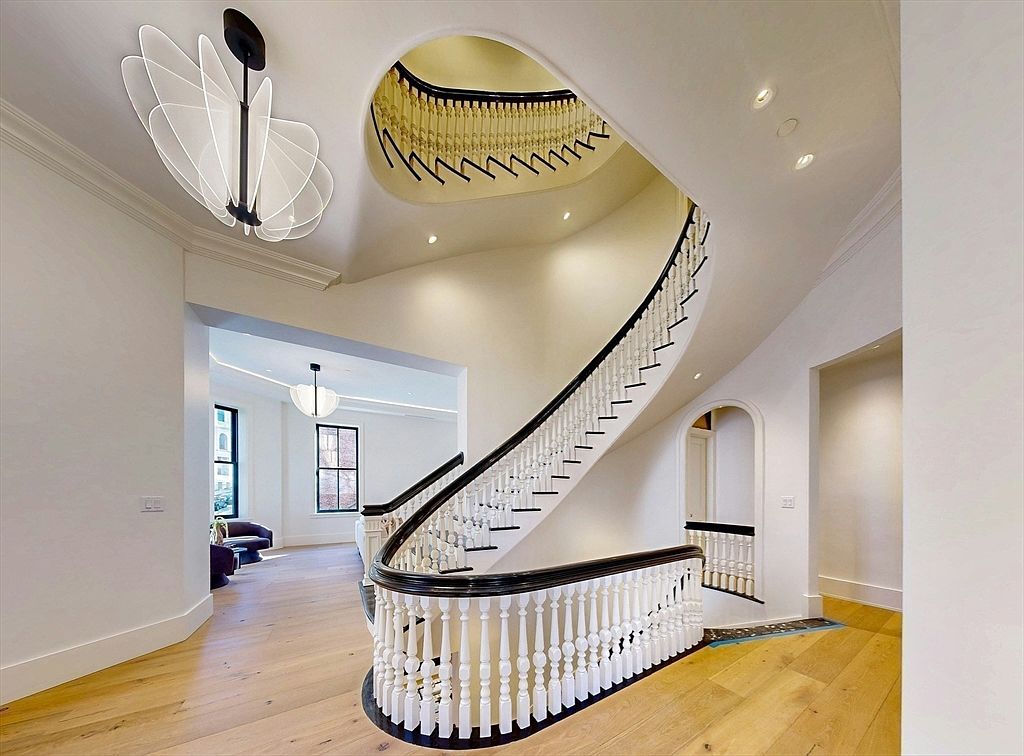
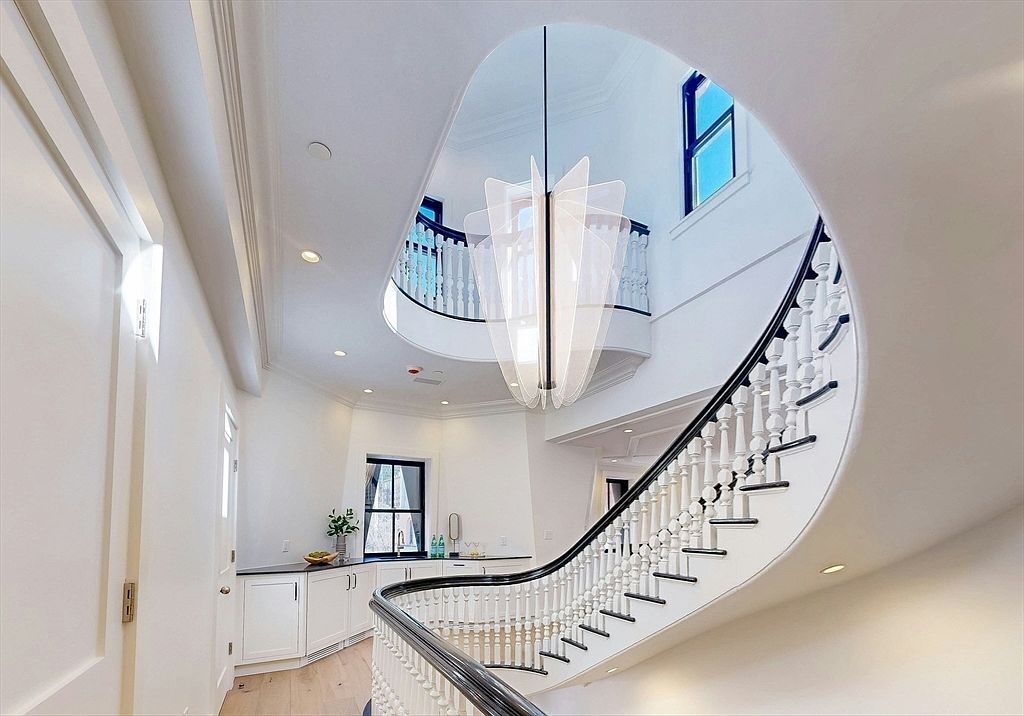
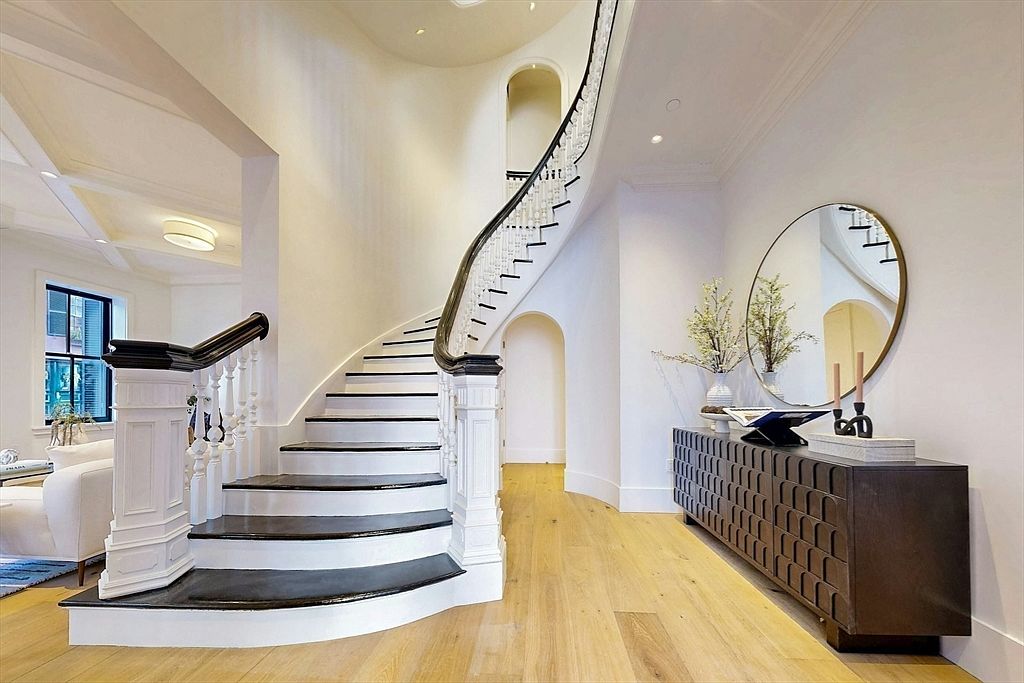
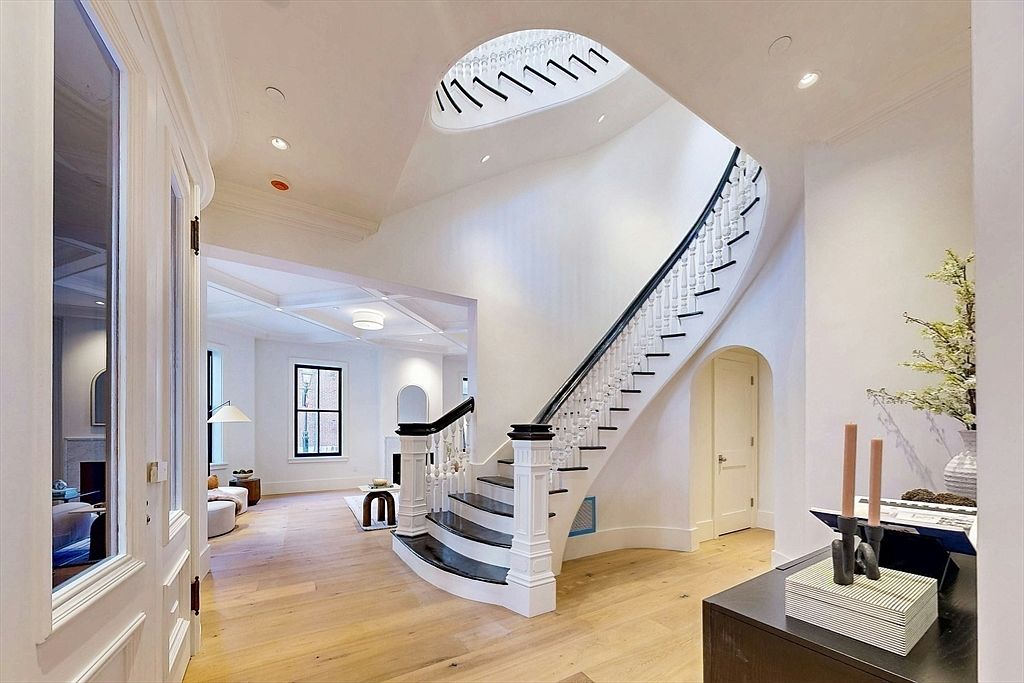
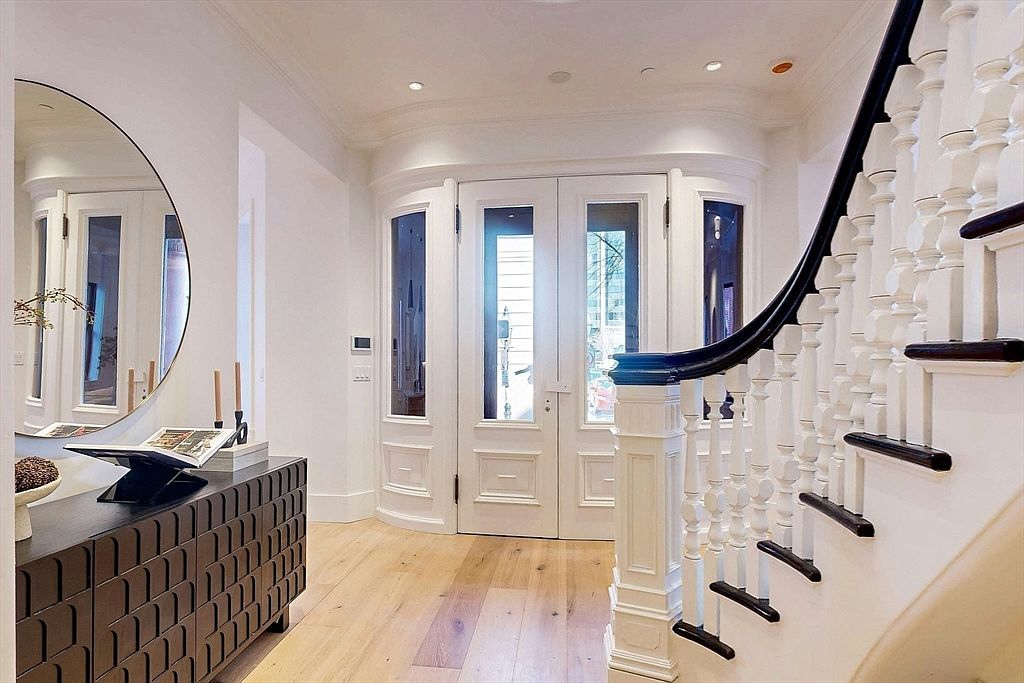
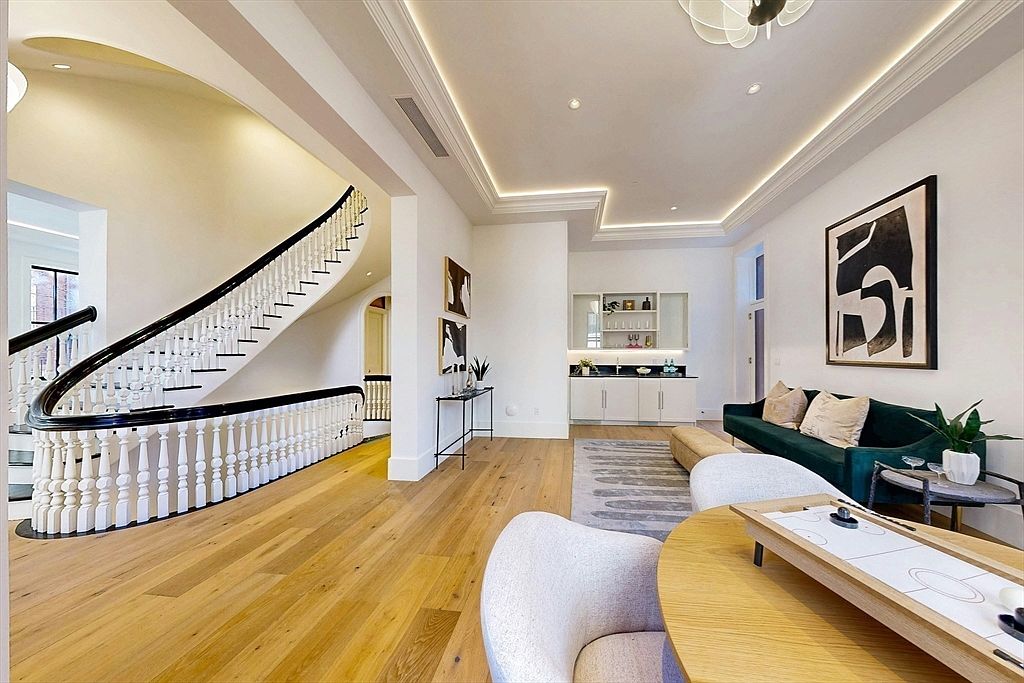
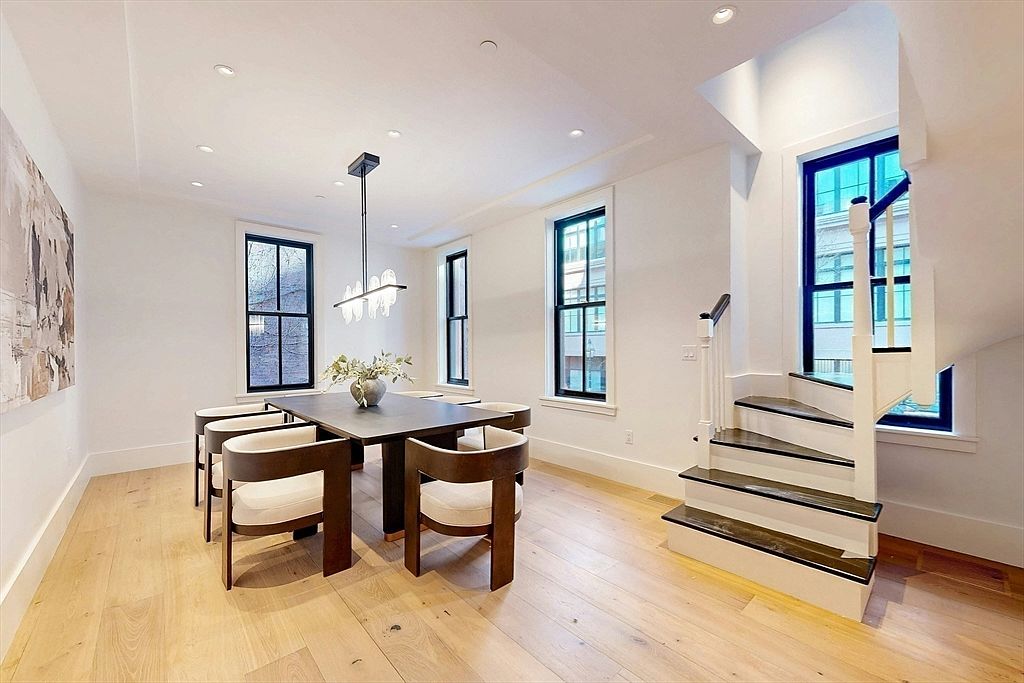
Step through the double doors and the staircase announces itself immediately. Curving upward through every level of the home, its dark-stained treads contrasting against crisp white balusters and walls of extraordinary brightness, it is less a circulation element than a piece of architecture in its own right. The journey it describes — from the grand entry hall, past principal living floors, through the private bedroom levels, and finally into an eight-window cupola suffused with light from three exposures — is one that rewards every ascent. A skylight above the stairwell draws daylight deep into the core of the home, ensuring that the interior glows from morning through late afternoon regardless of the season.
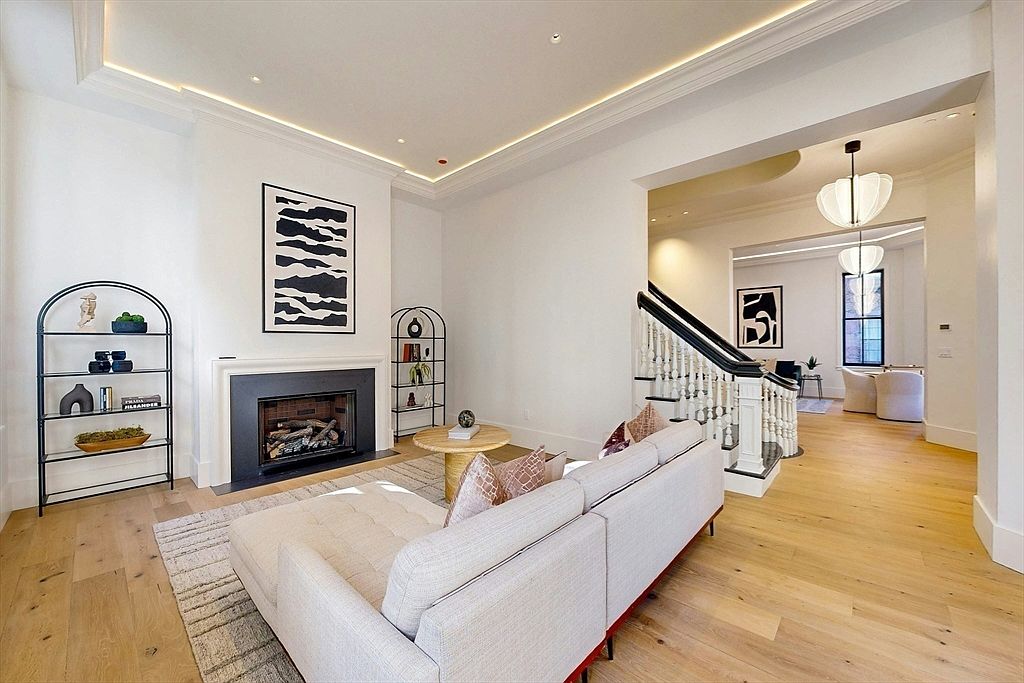
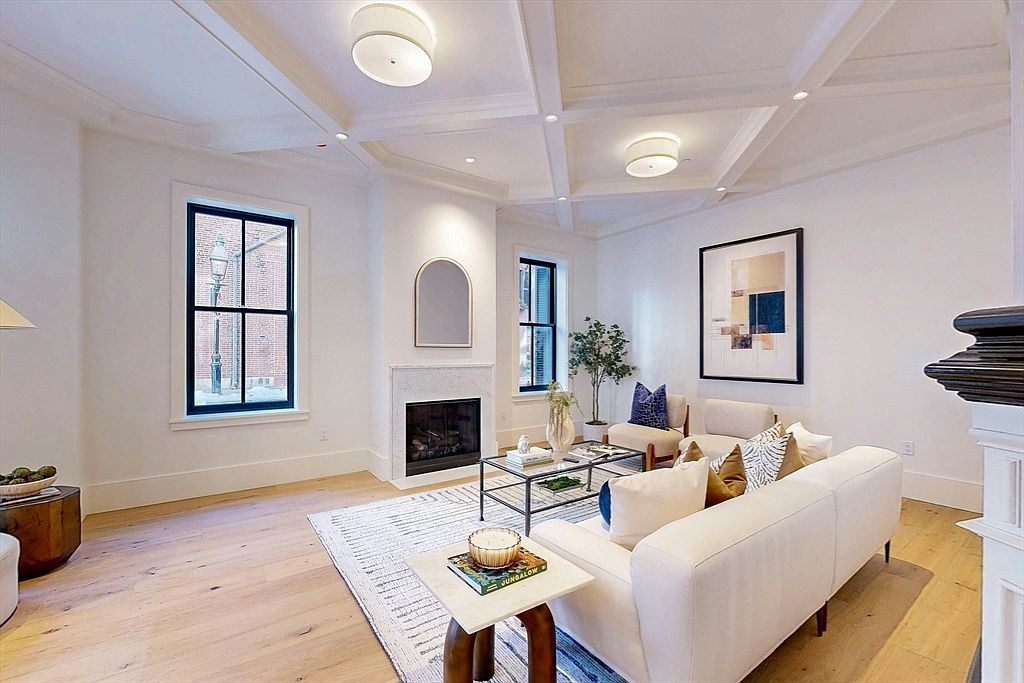
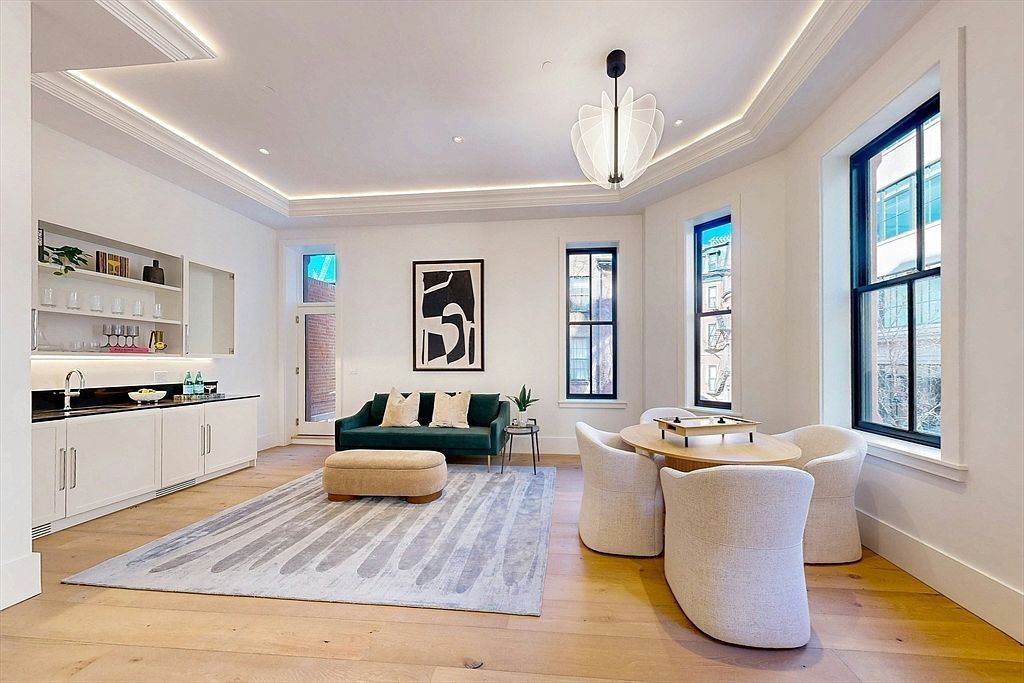
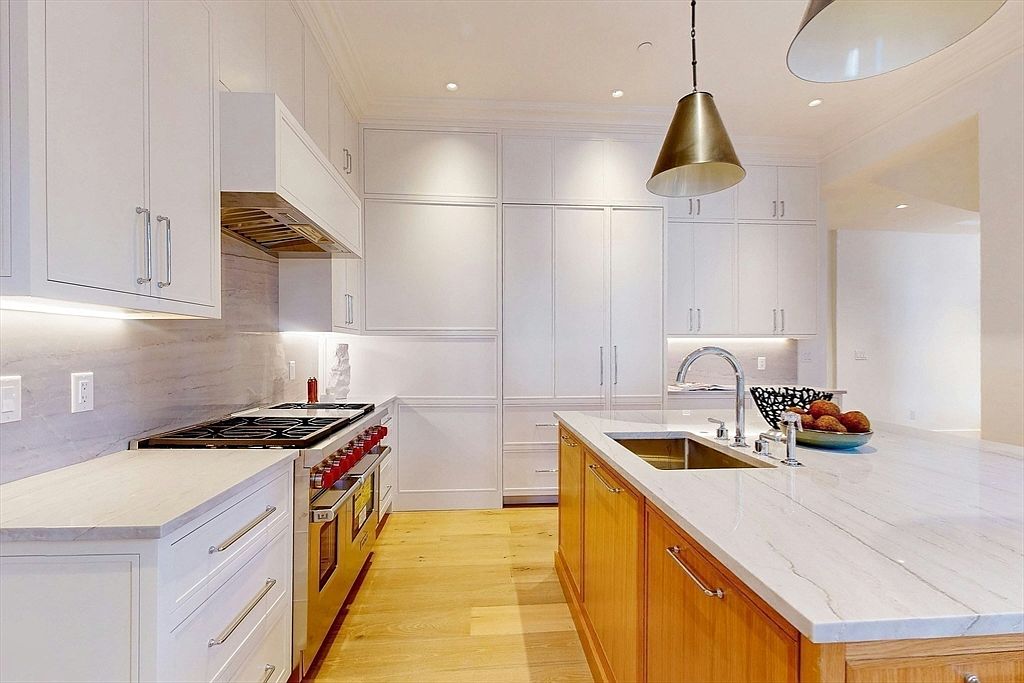
The principal living spaces are defined by coffered ceilings, stone-surround fireplaces, and proportions that accommodate both intimate gatherings and larger entertaining with equal grace. Three gas fireplaces anchor the home's most significant rooms, while two integrated wet bars — one positioned with characteristic elegance directly off the entry hall — ensure that hospitality is never an afterthought. The kitchen presents a professional-grade range, a generous stone-topped island with integrated seating, and dark-framed windows that frame the Beacon Hill streetscape like a living painting.
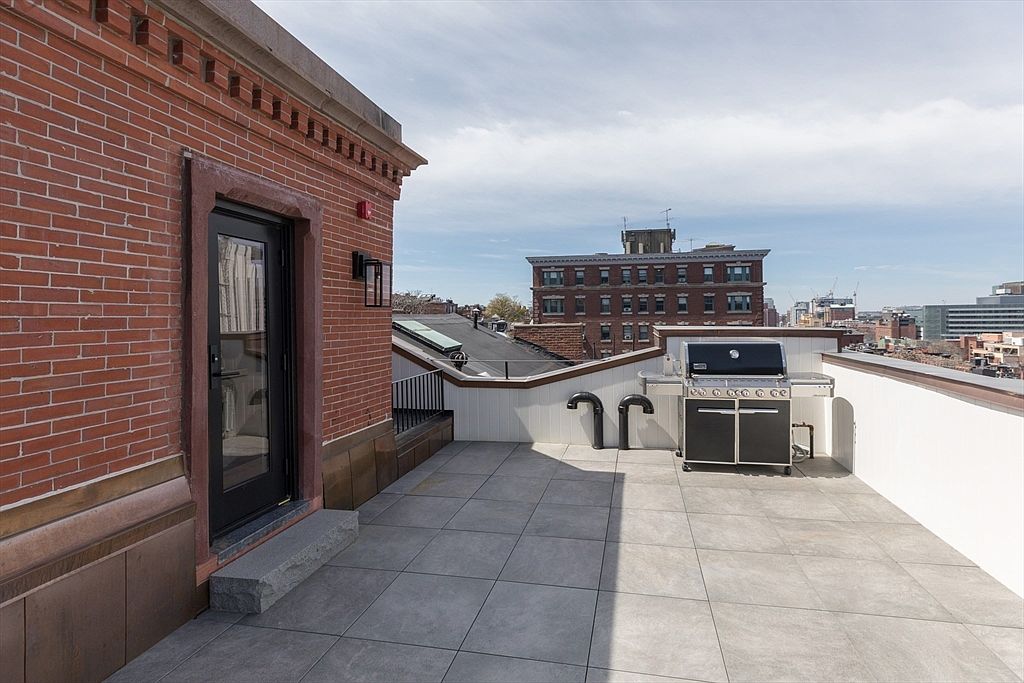
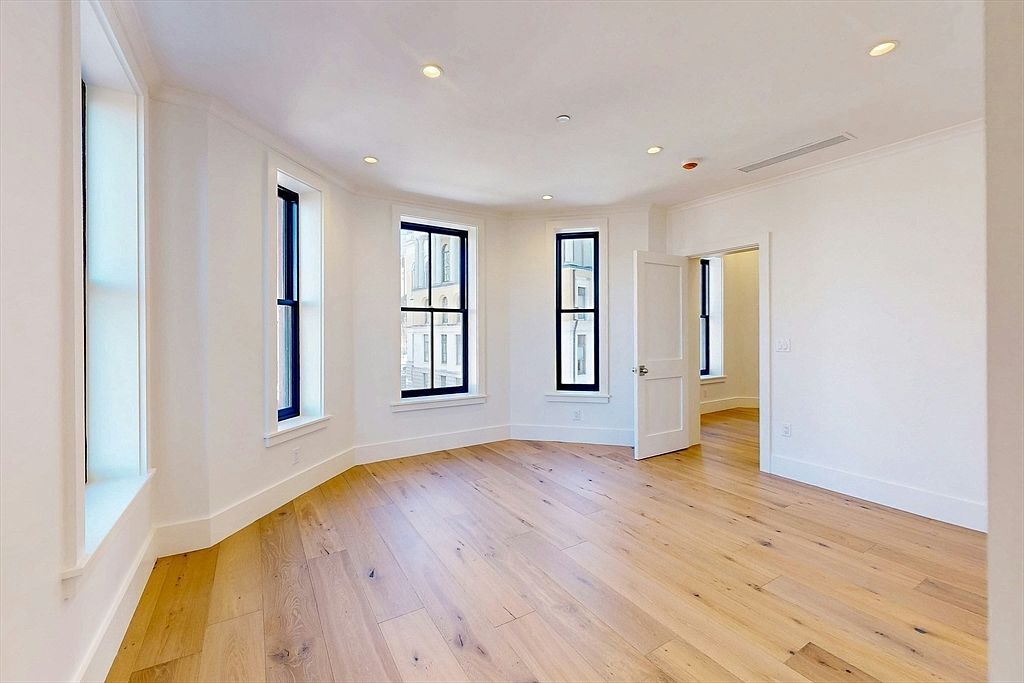
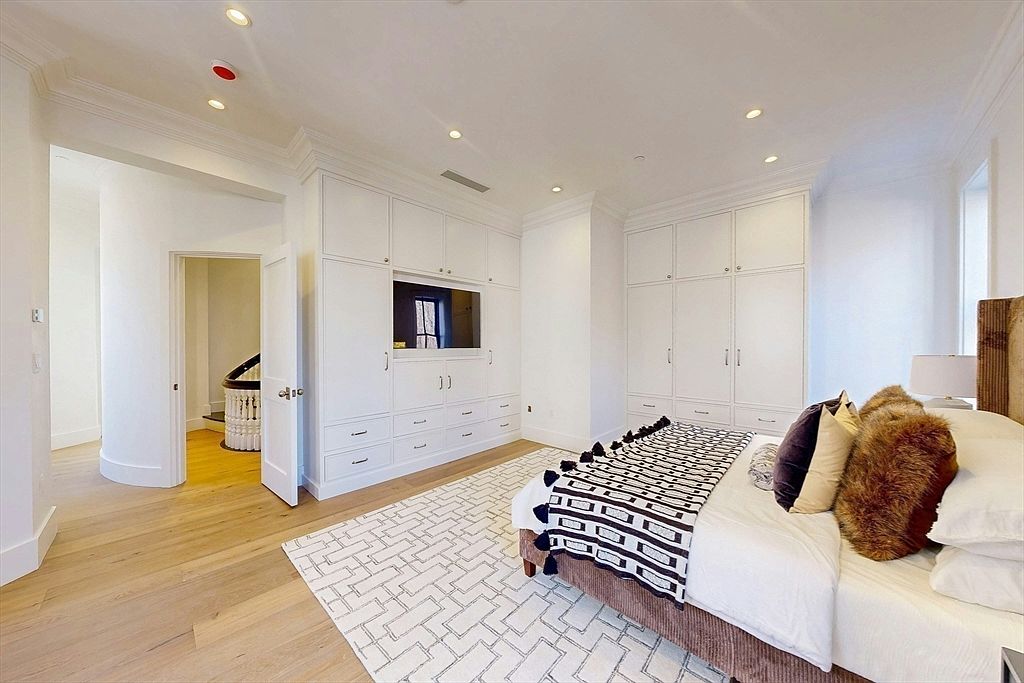
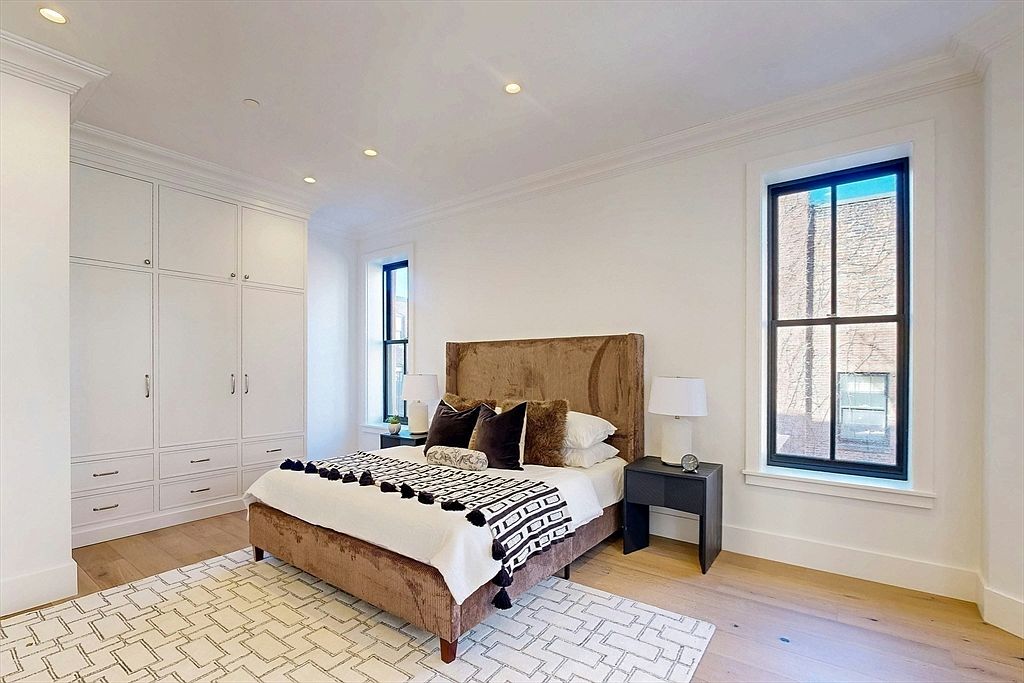
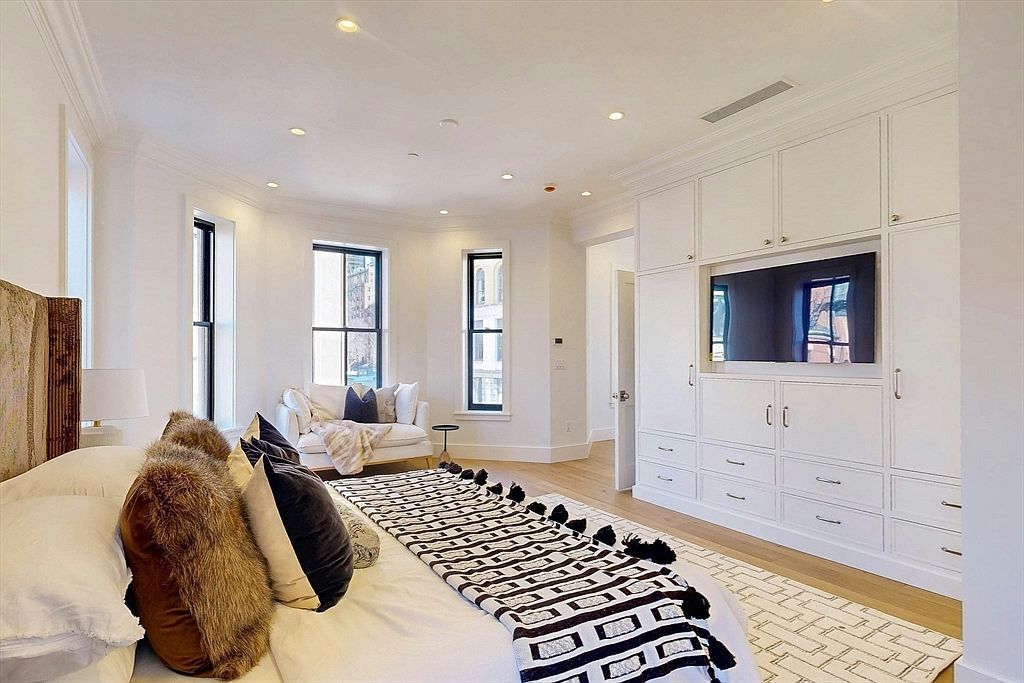
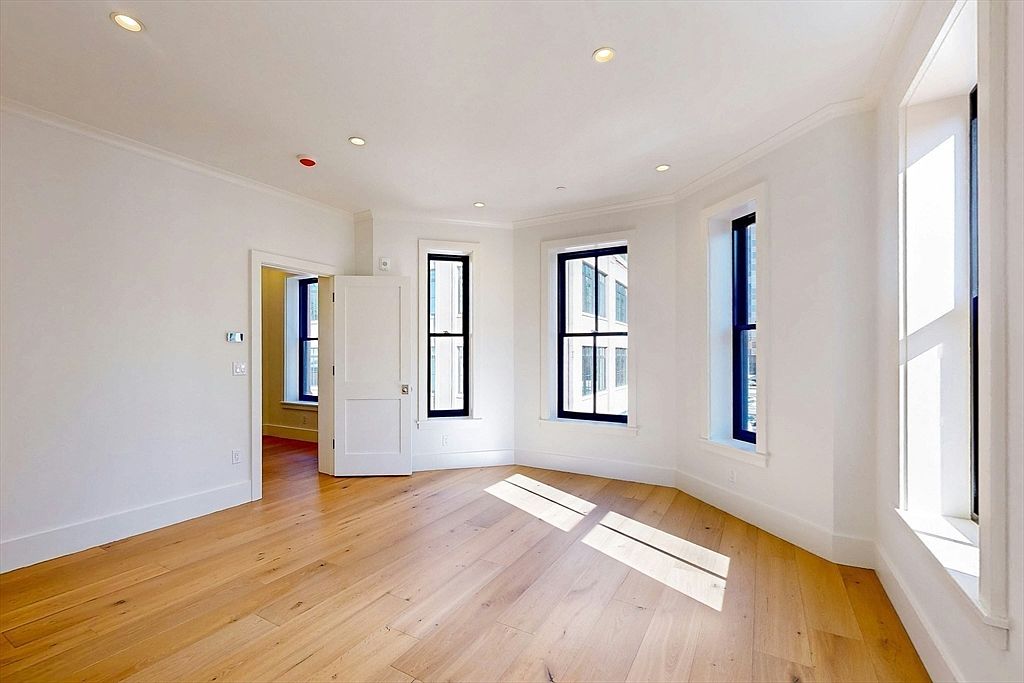
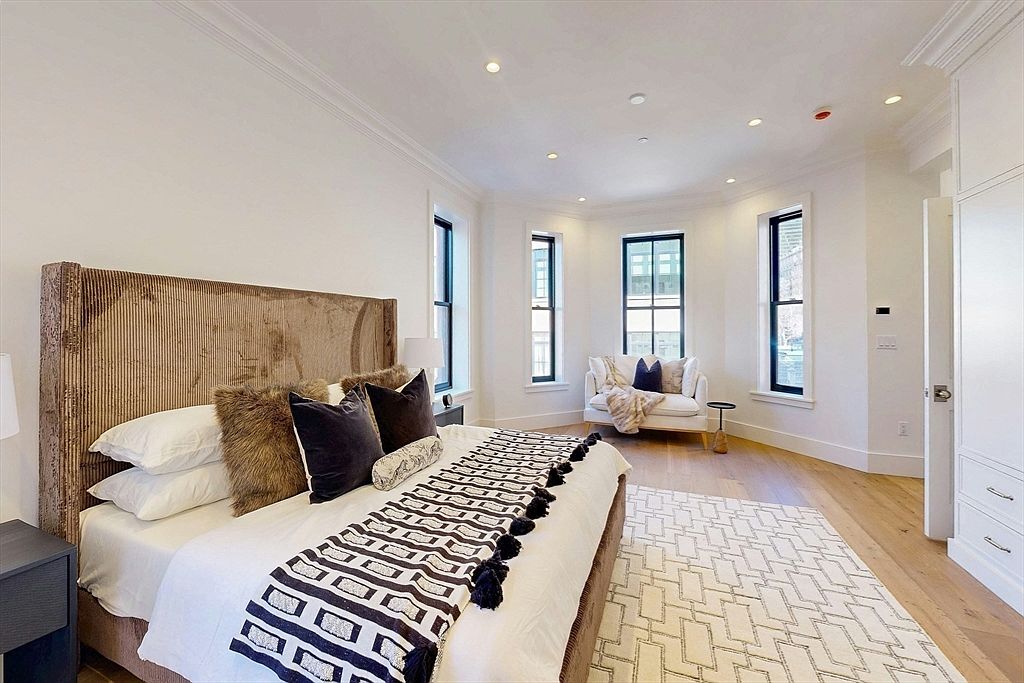
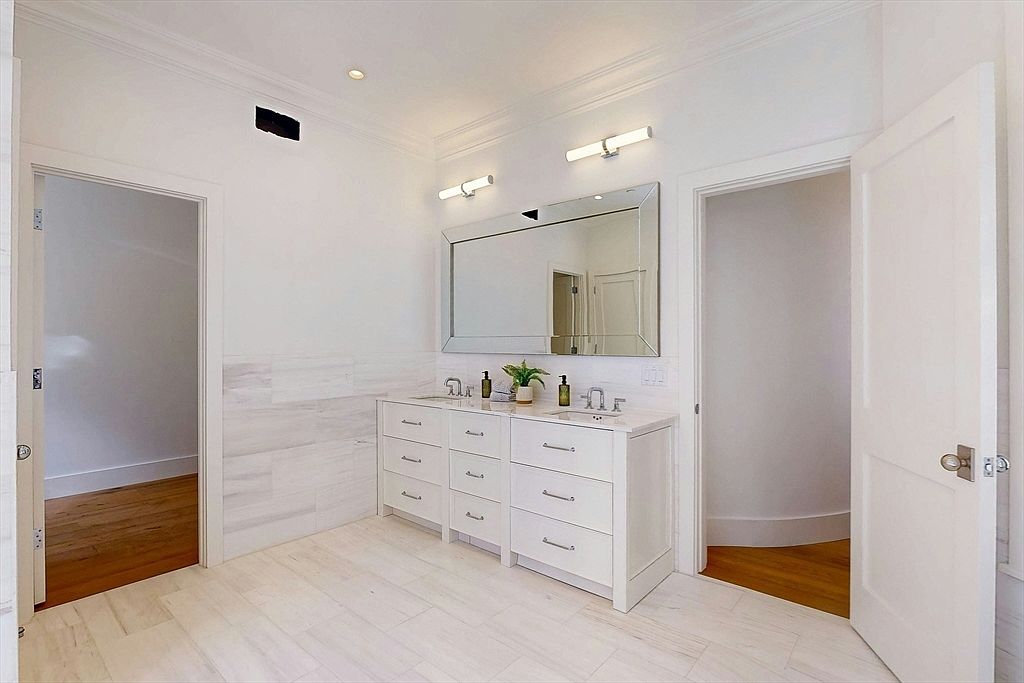
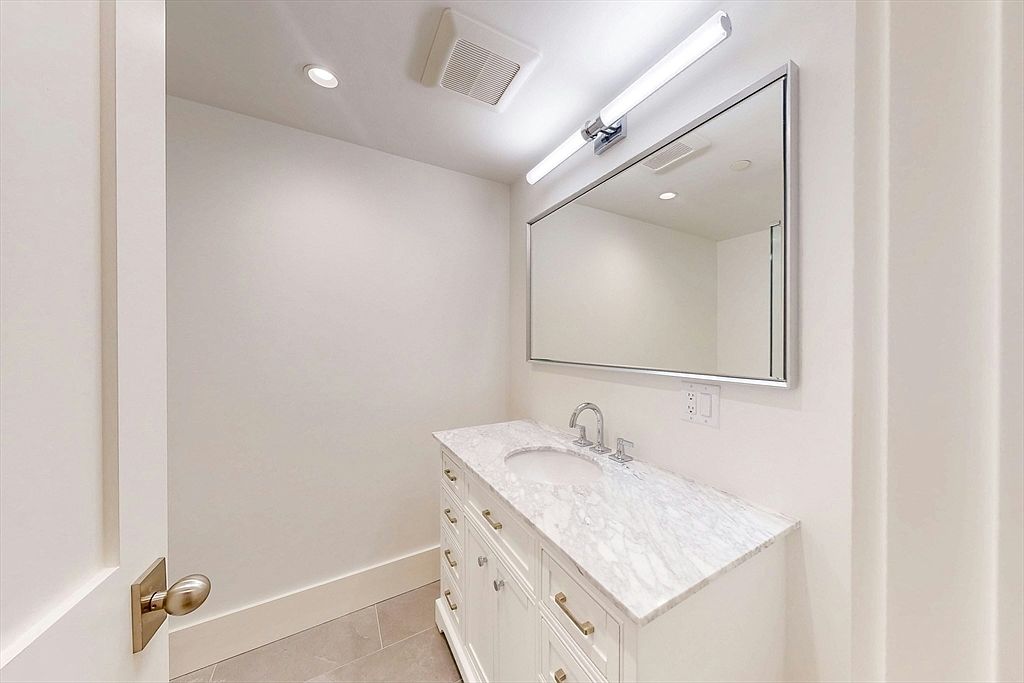
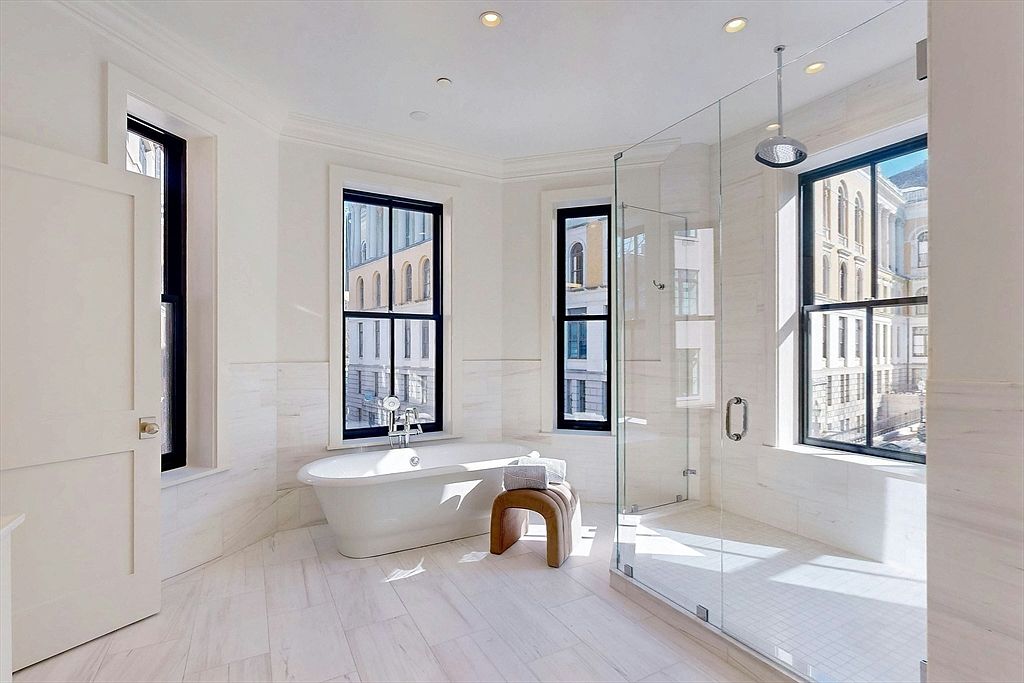
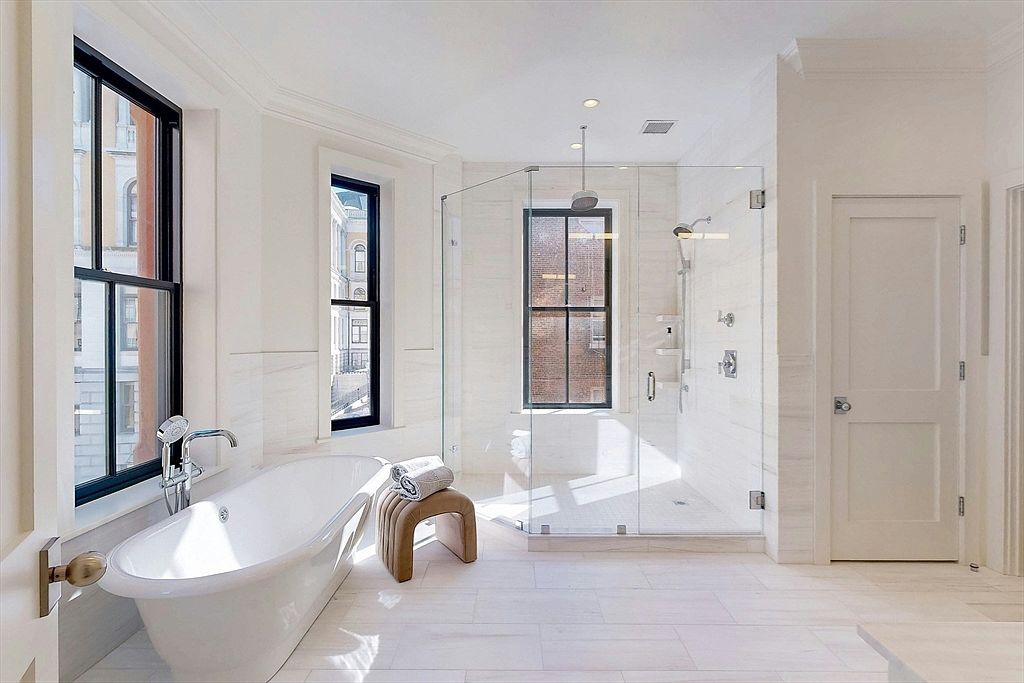
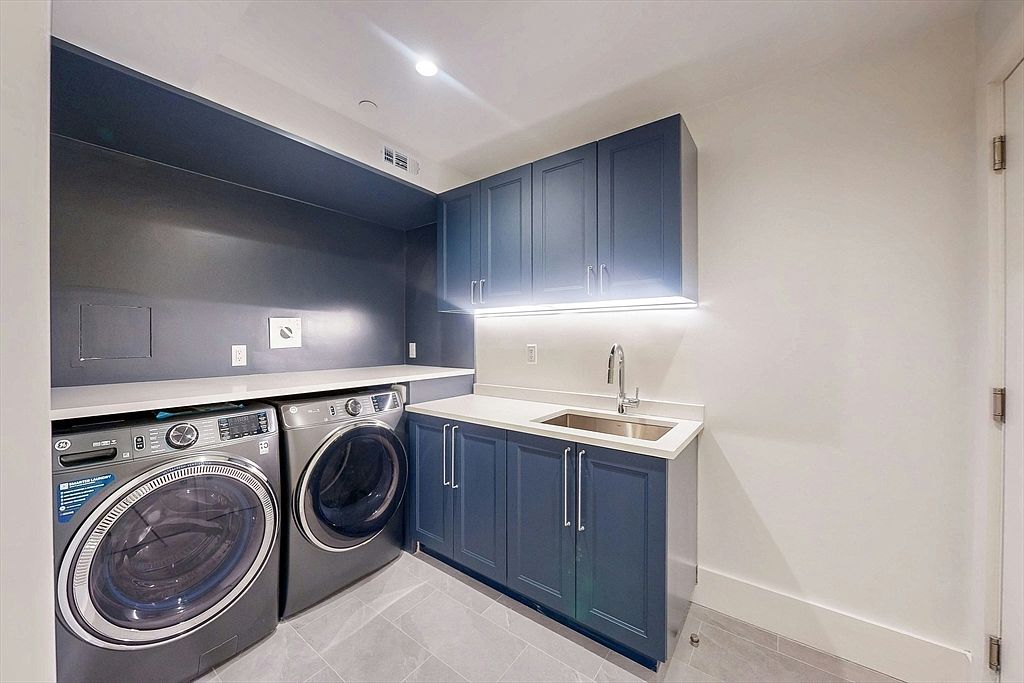
The primary suite occupies its own serene tier, offering custom built-in cabinetry, a spa-caliber bathroom with freestanding soaking tub and glass-enclosed shower, and the kind of quiet that only a thoughtfully designed home can provide. Three dedicated laundry rooms — one on each principal floor — reflect the same commitment to livability that runs throughout. An entertainment club level with its own roof deck extends the home's social vocabulary upward, while a top-floor media room provides a private retreat at the summit. Three separate roof terraces bring the Beacon Hill roofscape into daily life, offering views across one of America's most celebrated urban landscapes. A private courtyard at grade and three secured parking spaces complete a property that truly asks nothing more of its next steward than to inhabit it.
Beacon Hill occupies a singular position in the American urban imagination — a neighborhood of gaslit streets, Federal and Greek Revival row houses, and brick sidewalks that has remained, by deliberate preservation and collective civic will, essentially unchanged in character since the early nineteenth century. Designated a National Historic Landmark District, the Hill's roughly 48 acres represent one of the most intact examples of early American urban planning in the country, a place where the past is not curated but simply present, layered into the very fabric of the streets.
Hancock Street sits at the quieter, more residential eastern edge of the Hill, away from the commercial activity of Charles Street yet within an easy, pleasant walk of everything that makes the neighborhood one of Boston's most enduringly desirable addresses. The Massachusetts State House, with its Charles Bulfinch–designed façade and gilded dome, stands just steps away, its presence a daily reminder of the neighborhood's role at the center of civic and political life in the Commonwealth since 1798. The Boston Common — the oldest public park in the United States, established in 1634 — and the adjoining Public Garden are both within comfortable walking distance, offering more than 75 acres of green space, seasonal programming, and the famous Swan Boats that have operated on the Garden's lagoon since 1877.
Charles Street, the neighborhood's primary commercial spine, provides an exceptional collection of independent boutiques, antique dealers, and acclaimed restaurants within a few minutes' walk. Toscano, Bin 26 Enoteca, and Lala Rokh are among the dining establishments that have earned devoted local followings over many years. The Beacon Hill Hotel and Bistro anchors the corner of Charles and Chestnut, offering a neighborhood gathering place of considerable charm. The street's scale — intimate, pedestrian, entirely resistant to the homogenizing forces that have transformed other city neighborhoods — gives daily life here a texture that residents describe as irreplaceable.
Massachusetts General Hospital, one of the world's leading academic medical centers and a teaching affiliate of Harvard Medical School, is located at the foot of the Hill on Cambridge Street, providing both world-class medical resources and significant institutional employment nearby. The Esplanade, a beloved linear park along the Charles River, is accessible within a ten-minute walk, offering running paths, sailing, and the summer concert series at the Hatch Shell that draws the city together each year. The Red Line and Green Line subway stations at Charles/MGH and Park Street provide direct connections to Cambridge, the Seaport, and beyond.
To live on Beacon Hill is to participate in a particular kind of urban life — one that values architecture, history, walkability, and community in roughly equal measure. The neighborhood's residents have long included academics, attorneys, physicians, and figures from the arts and public life, drawn by the same qualities that have defined the Hill for two centuries: beauty, proximity, and a sense of place that no amount of new construction can replicate. A corner property of the stature of 55–57 Hancock Street becomes available in this context perhaps once in a decade. Its moment has arrived.
Featured Highlights
Curated Content • Presented by Glenn Forger