The Story Behind
Tribeca's Most Singular Urban Compound, Impossibly Reimagined
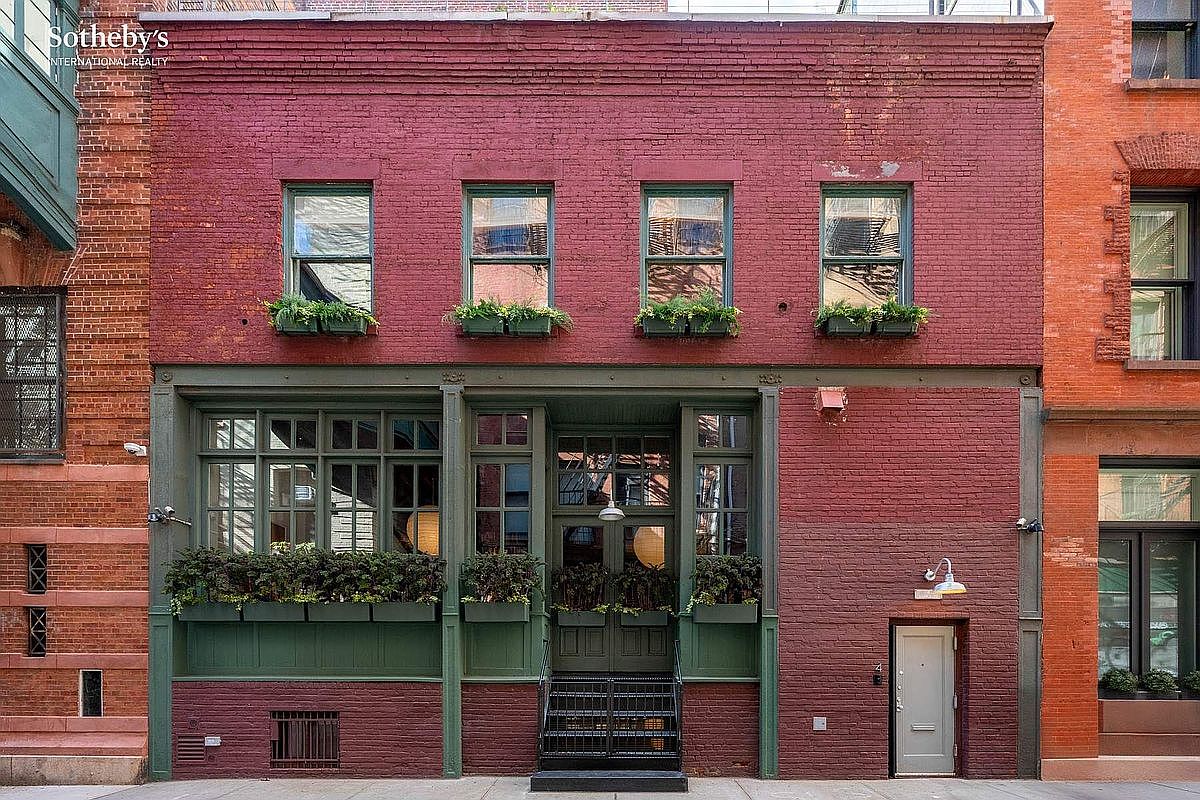
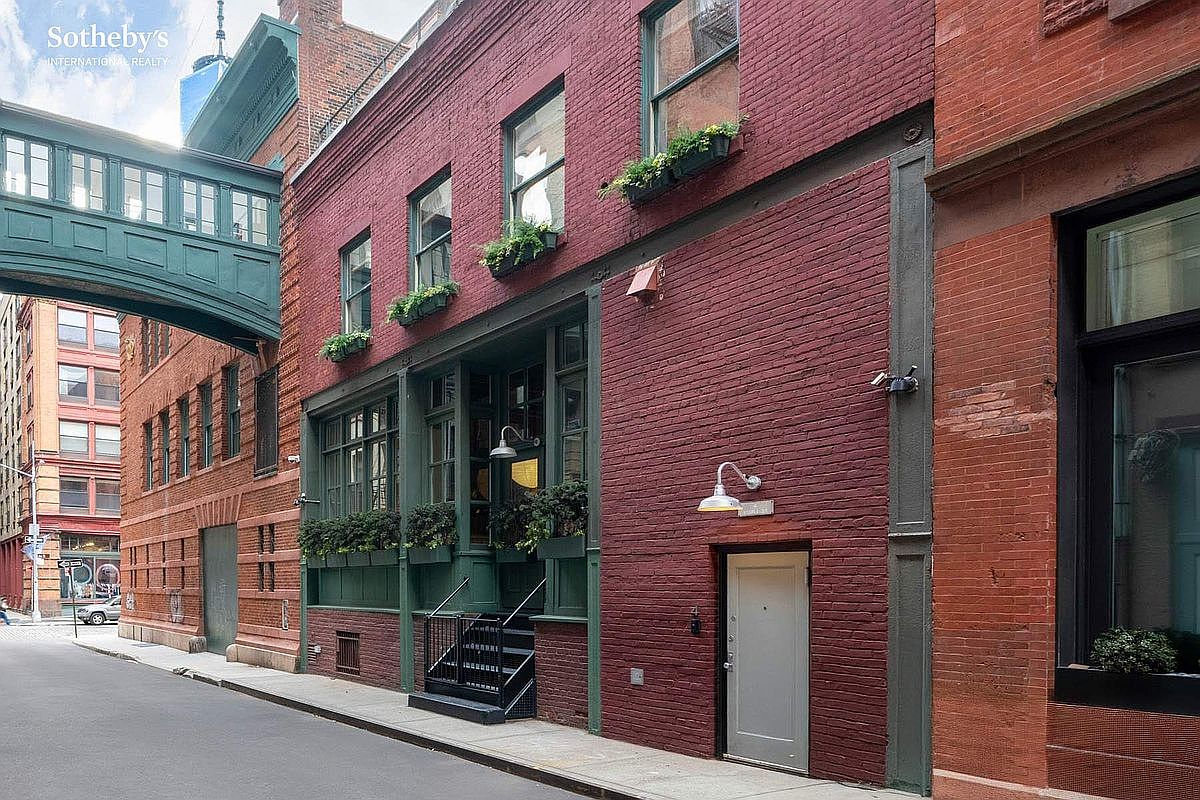
There is a particular quality of silence that settles over Staple Street in the early morning — the kind that feels borrowed from another century, as though the cobblestones and cast-iron facades have conspired to hold the modern city gently at bay. It is into this rare urban stillness that 4 Staple Street announces itself: not with grandeur, but with quiet, absolute confidence.
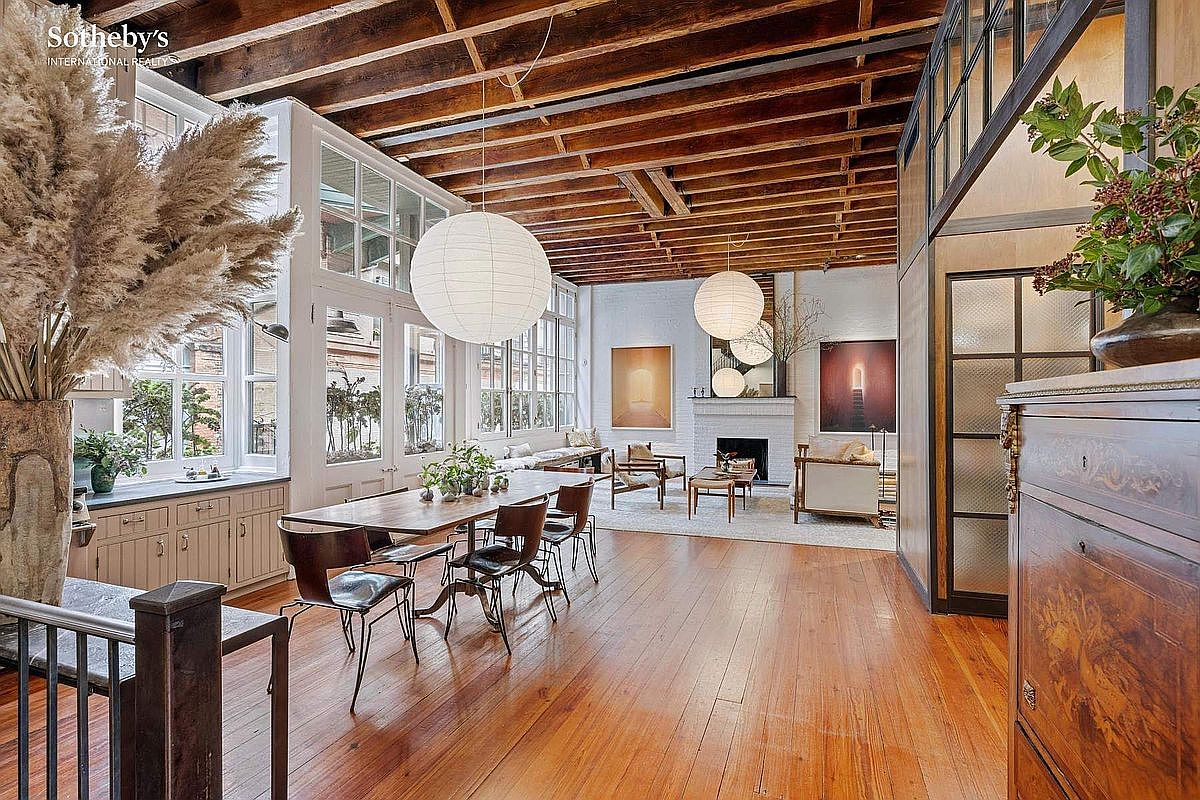
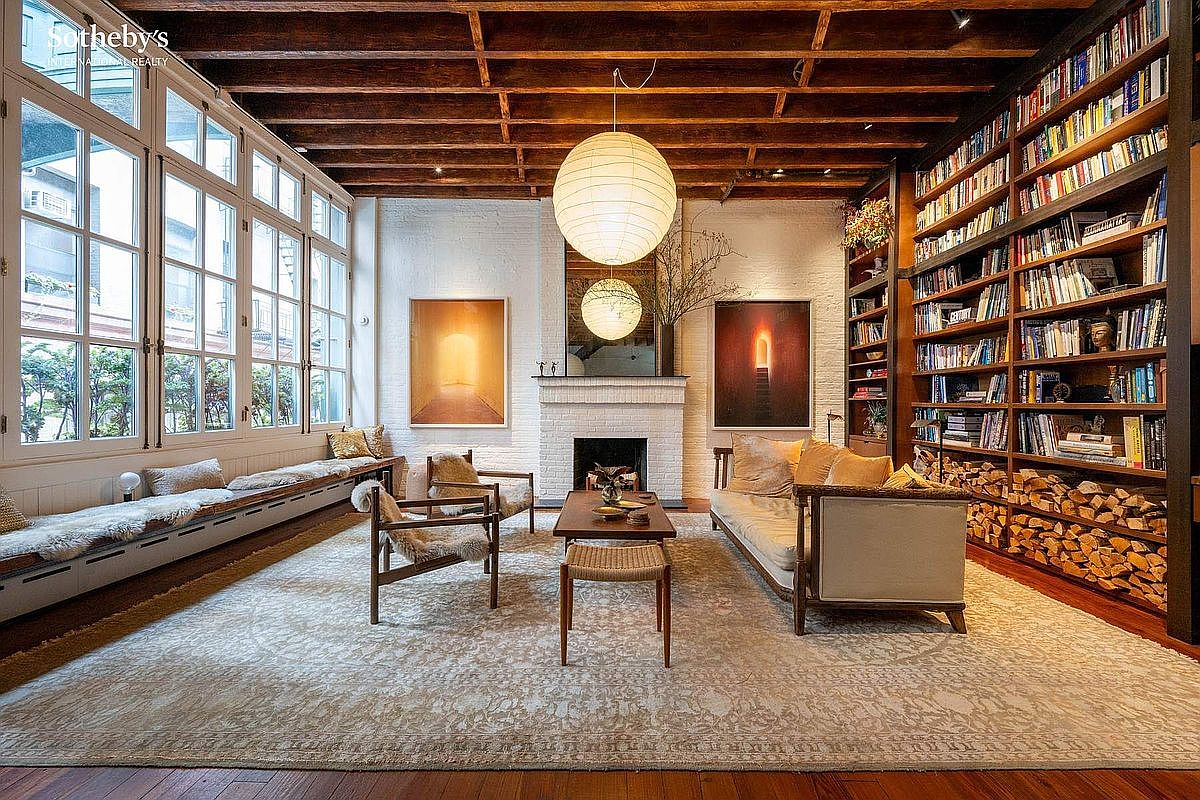
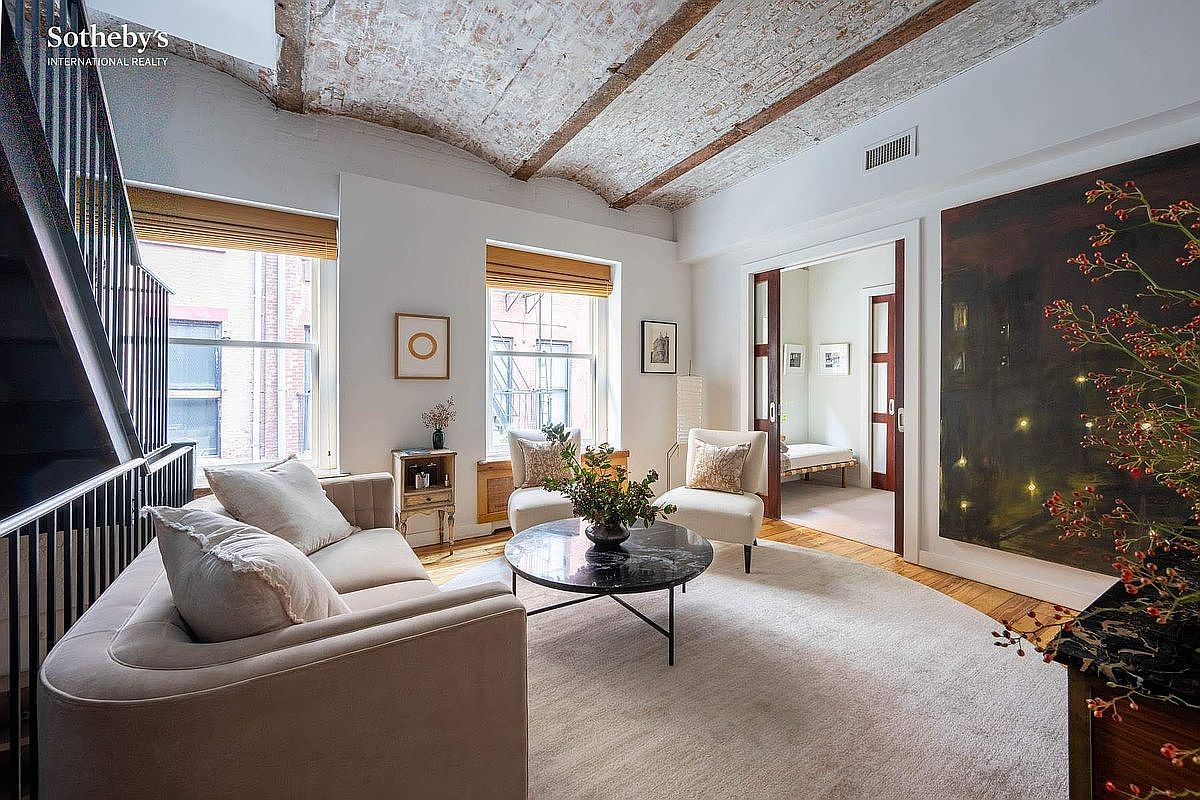
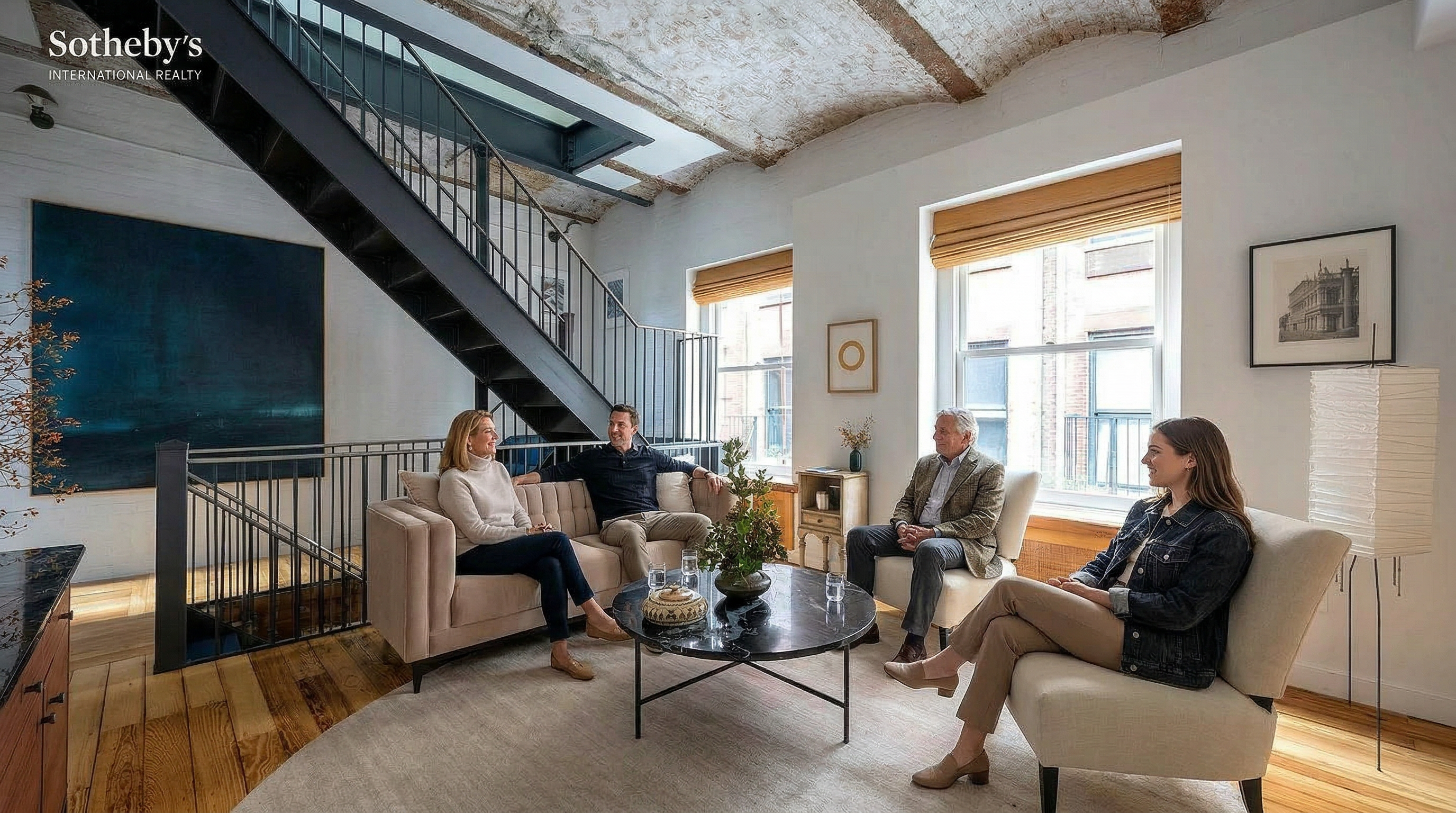
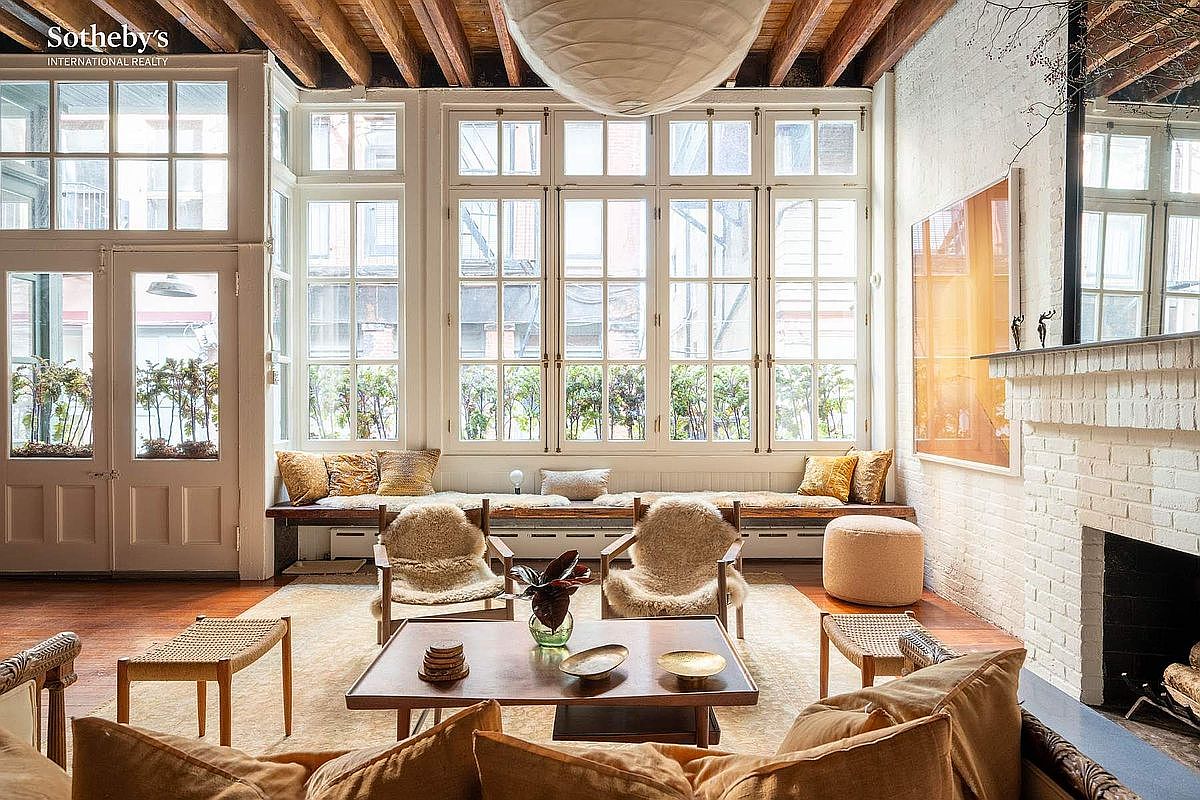
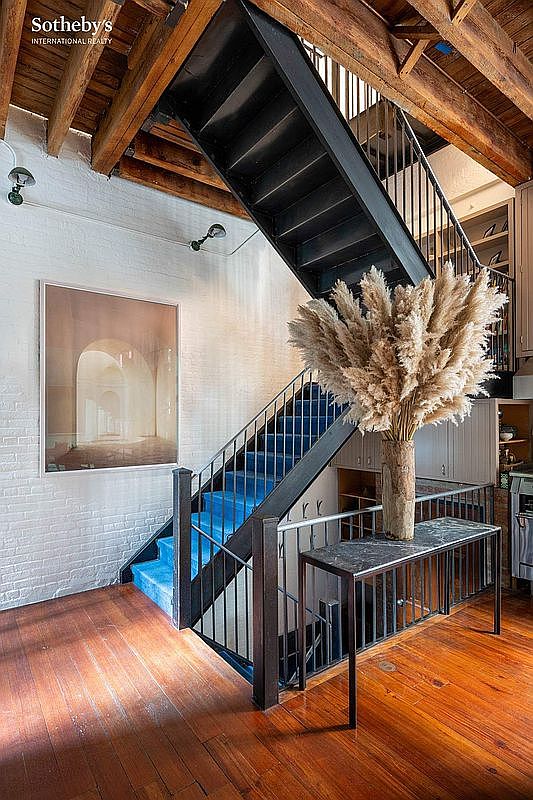
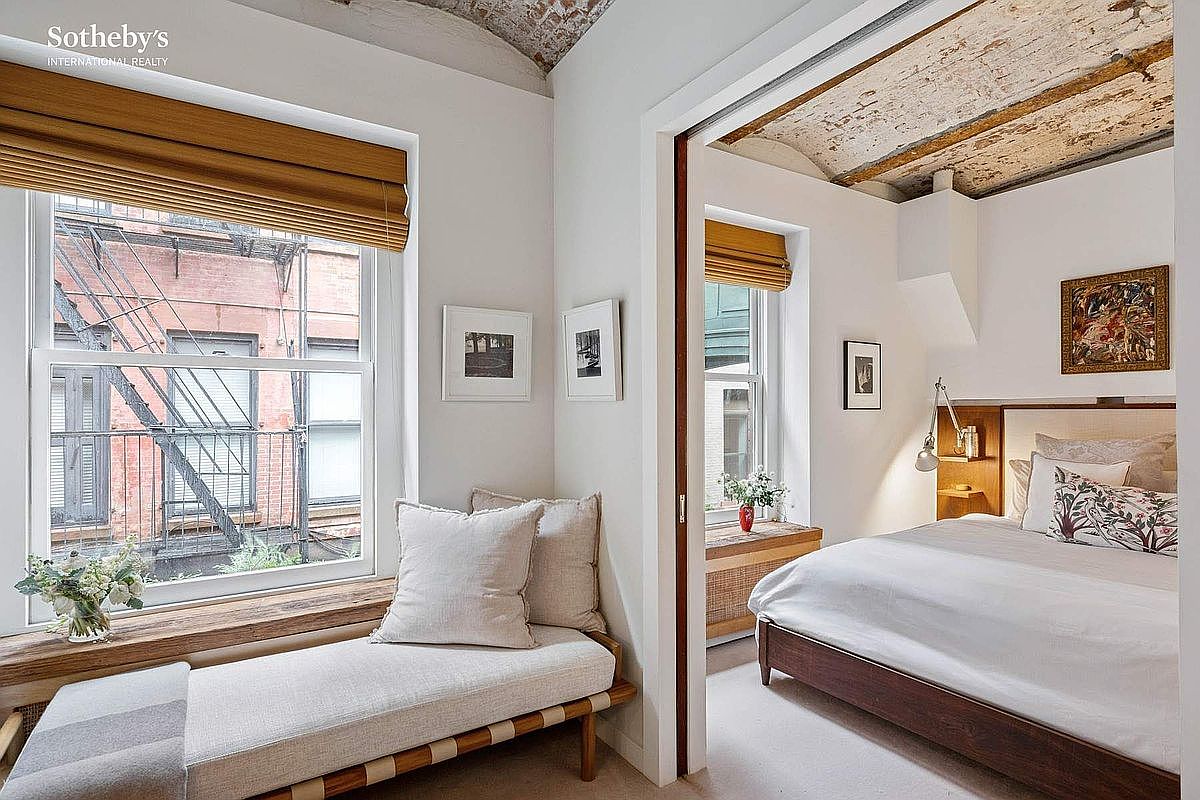
Built in 1868 as a cast-iron storefront and workshop, the two-story brick townhouse has lived many lives. Its most recent and most remarkable transformation came at the hands of award-winning architect Diana Kellogg, whose design philosophy honors the building's industrial soul while elevating every surface, proportion, and detail to the level of fine craft. The result is a home that feels simultaneously excavated and invented — as though it always contained these soaring brick-vaulted ceilings, these original chestnut beams, these oversized windows flooding each level with the particular golden light that only south-facing Tribeca lofts seem to gather.
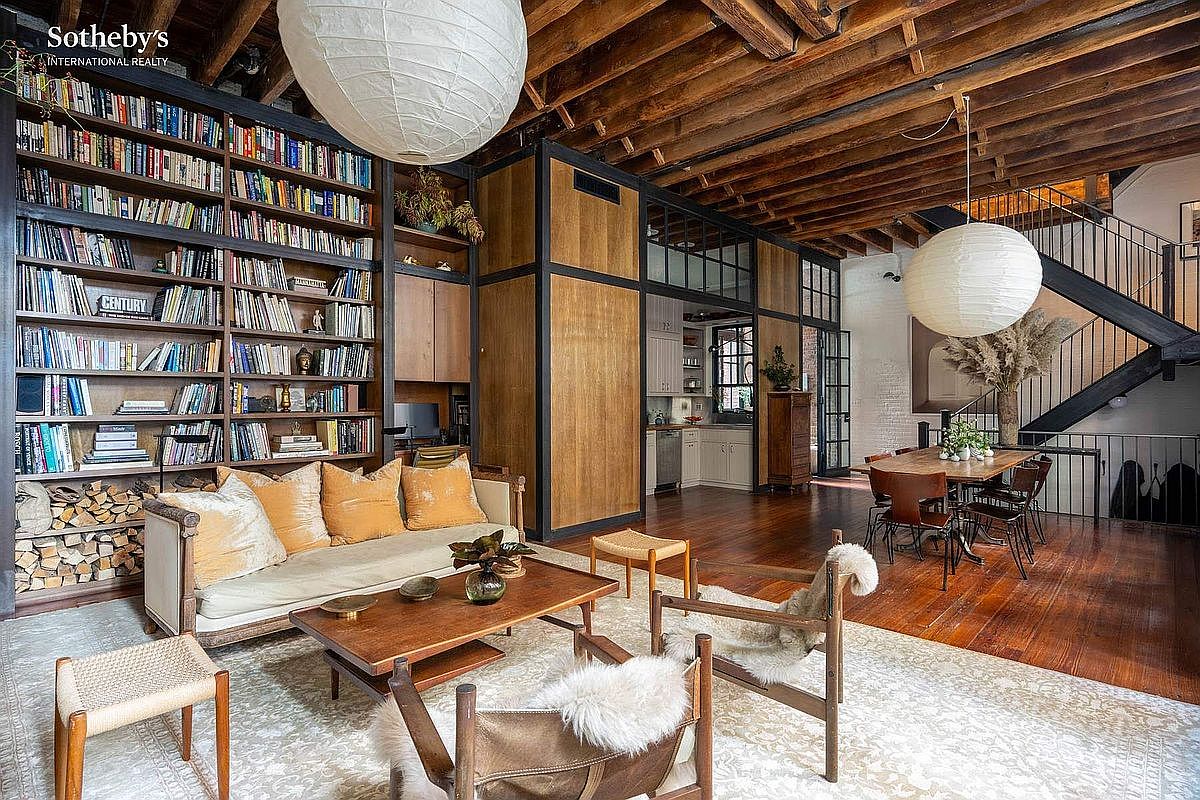
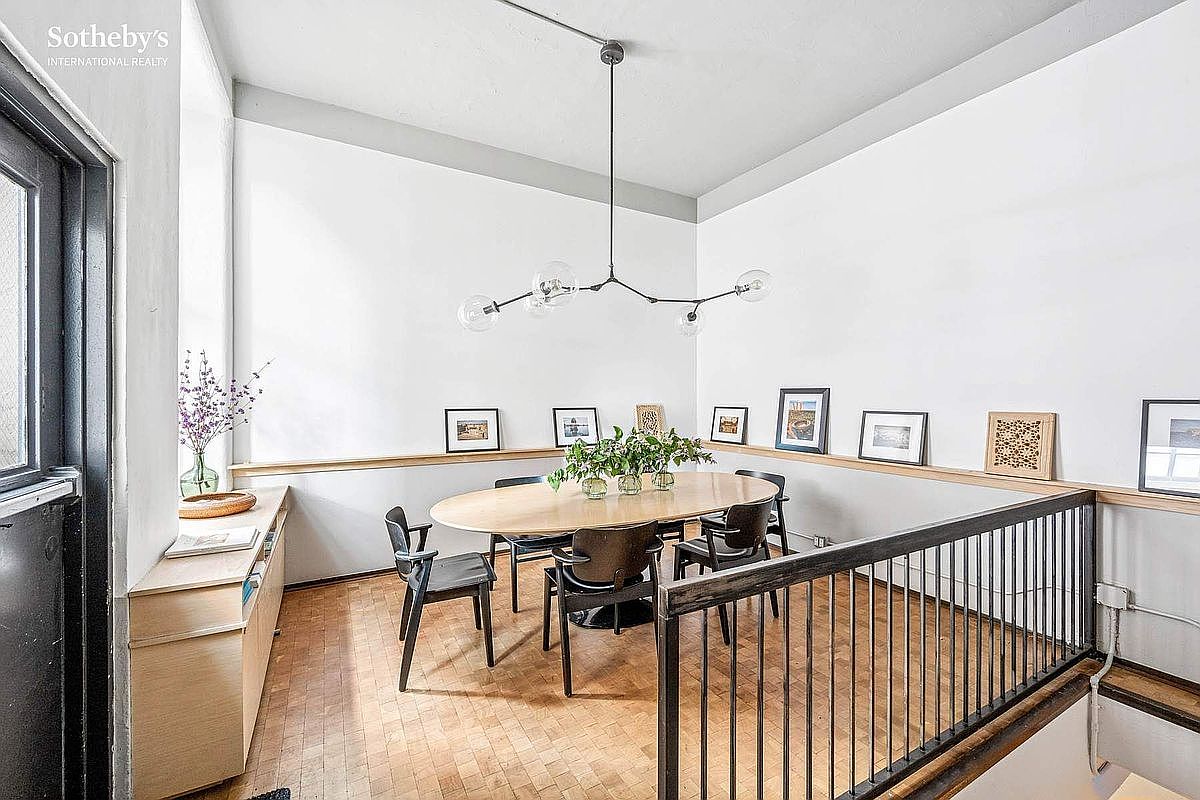
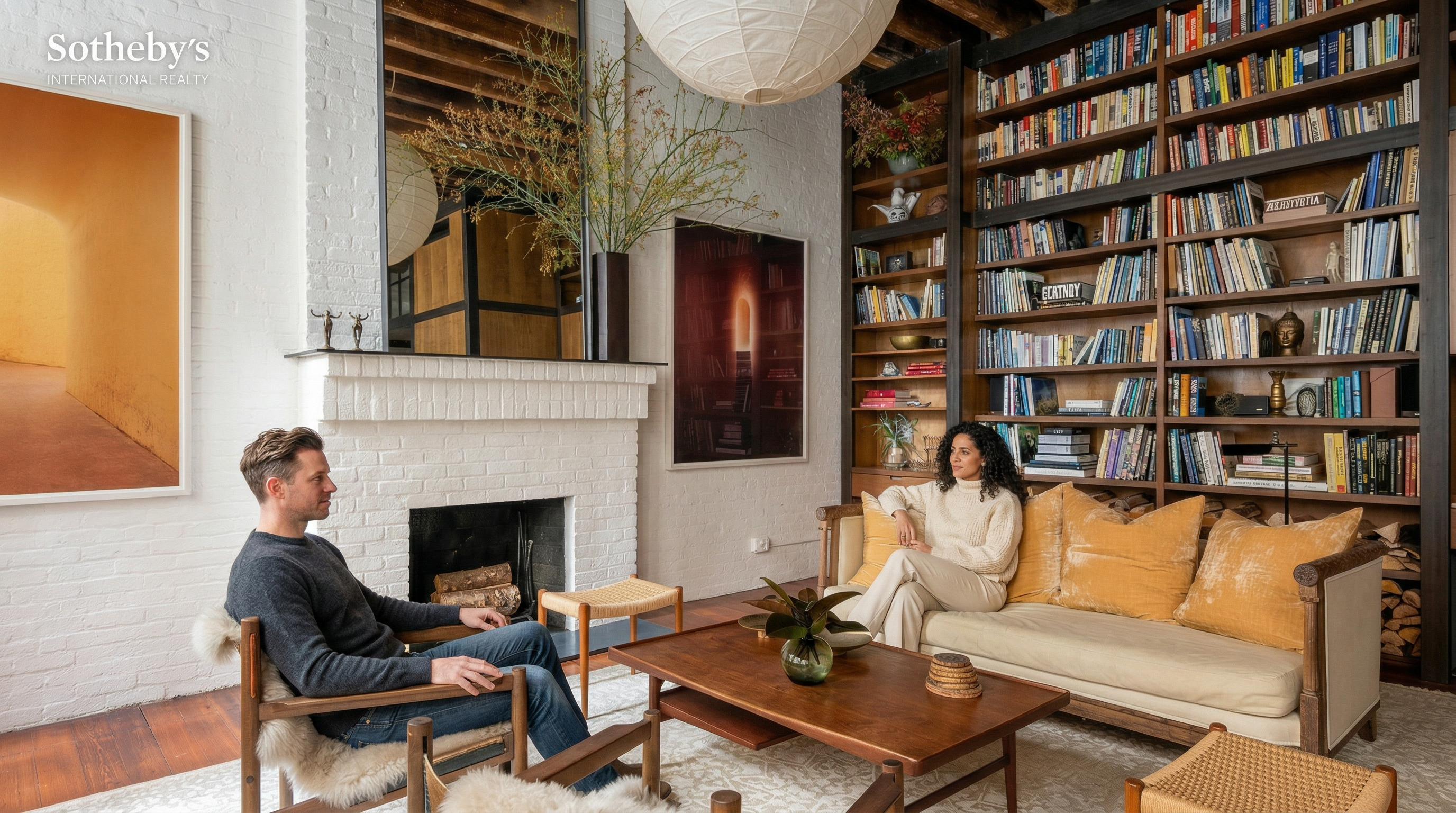
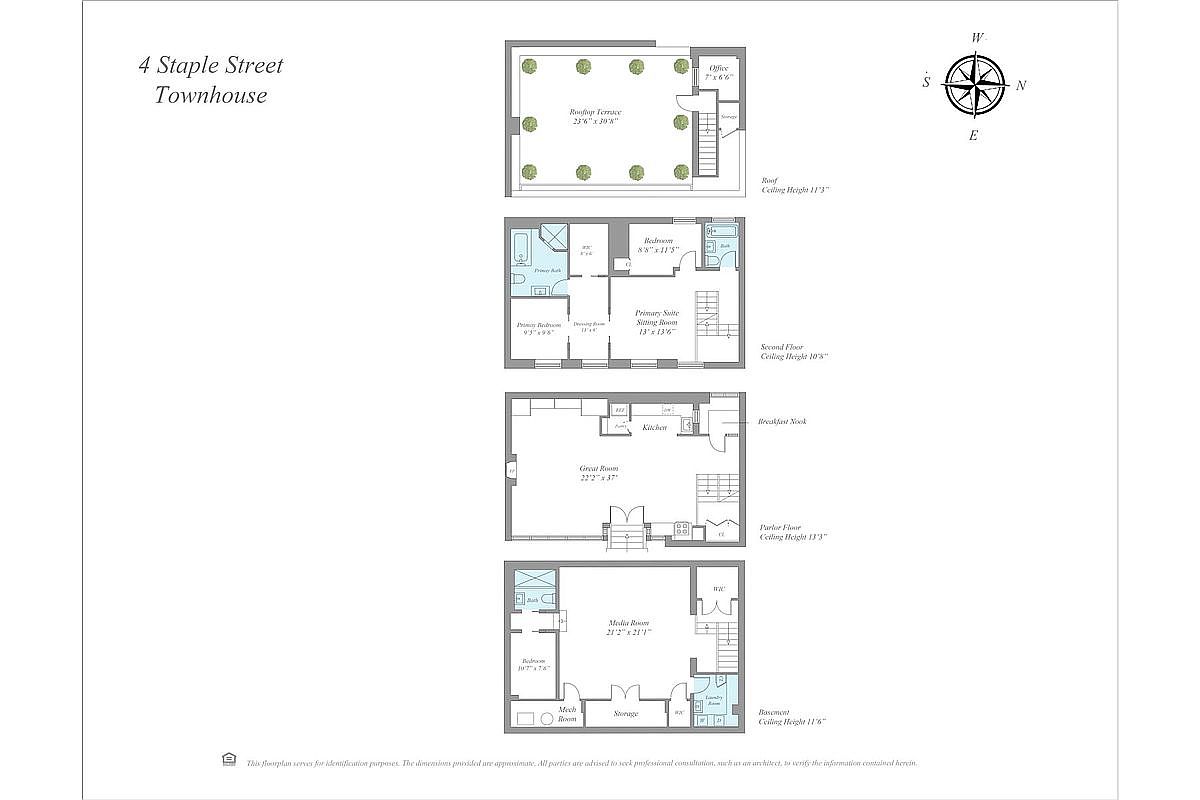
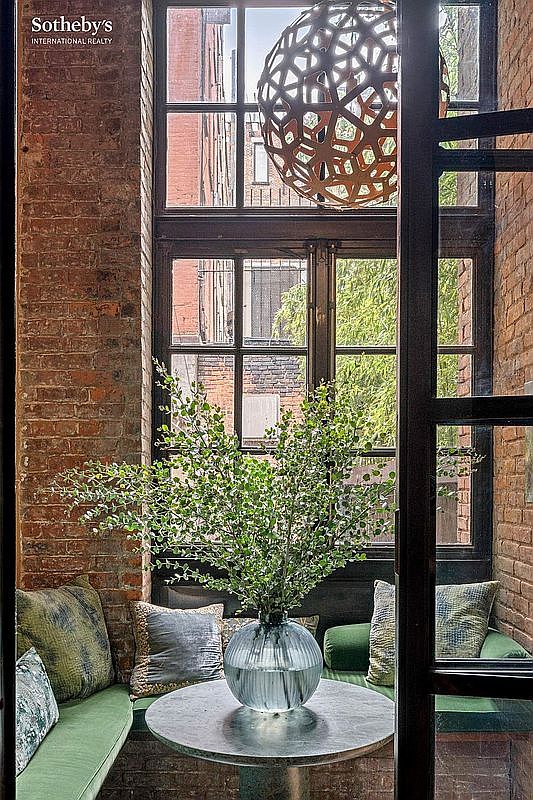
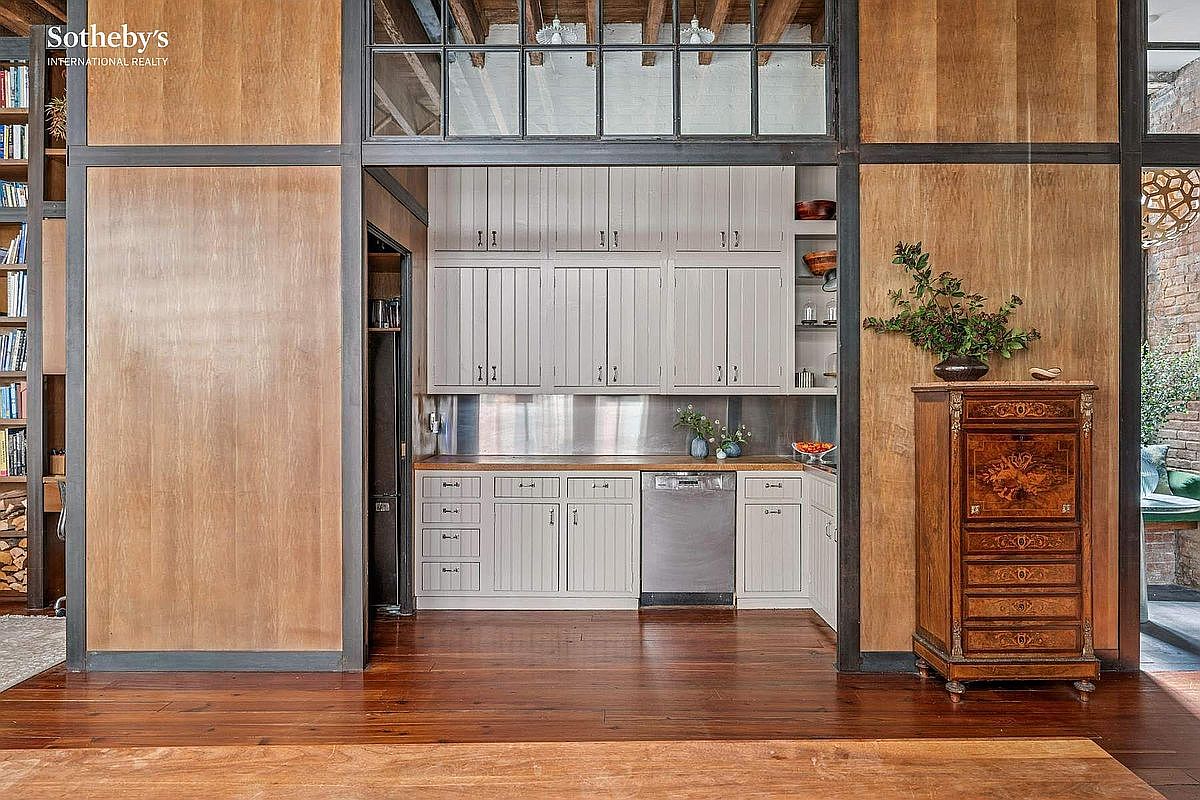
At 4,100 square feet across four thoughtfully arranged levels, the residence unfolds with a sense of ceremony. The main floor, with its thirteen-foot ceilings, centers on an open living and dining volume anchored by a wood-burning fireplace and flanked by custom built-ins. The chef's kitchen is a study in creative reuse: cabinetry fashioned from reclaimed Coney Island locker panels brings a vernacular New York narrative directly into the home's most functional space. A windowed breakfast nook completes the floor with an intimacy that larger rooms rarely achieve.
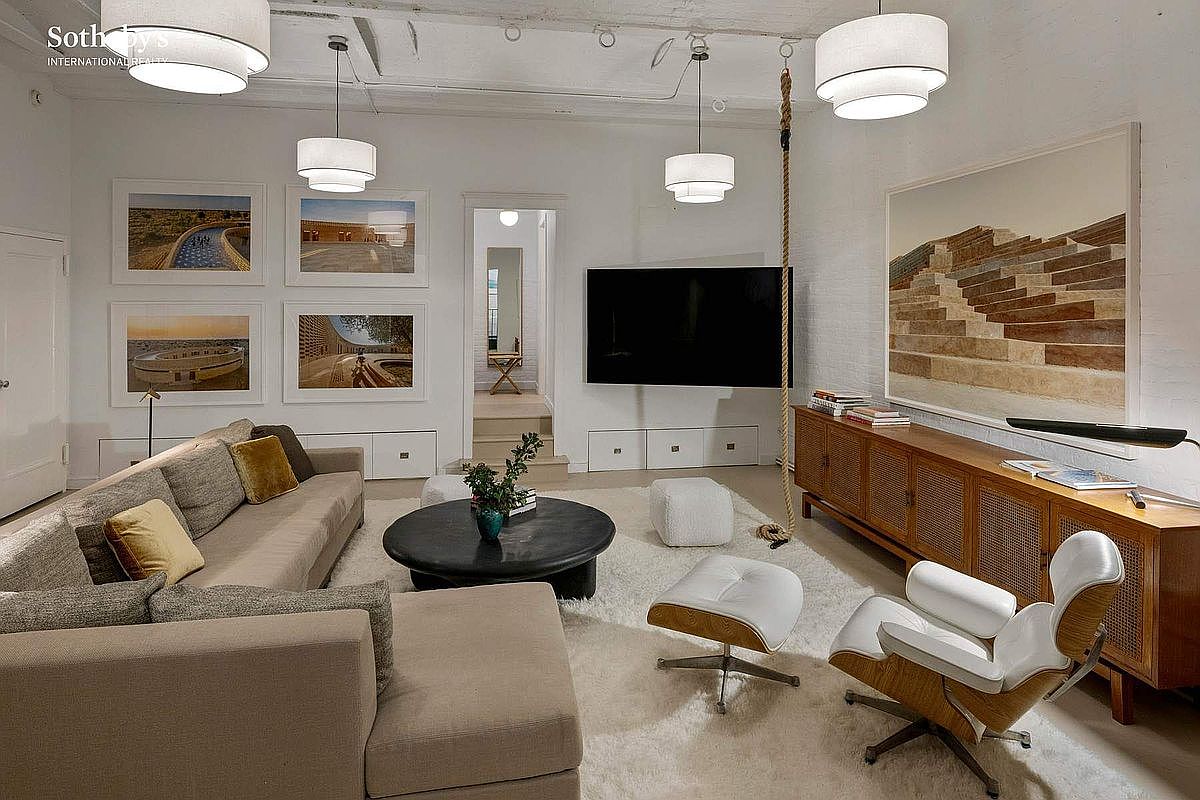
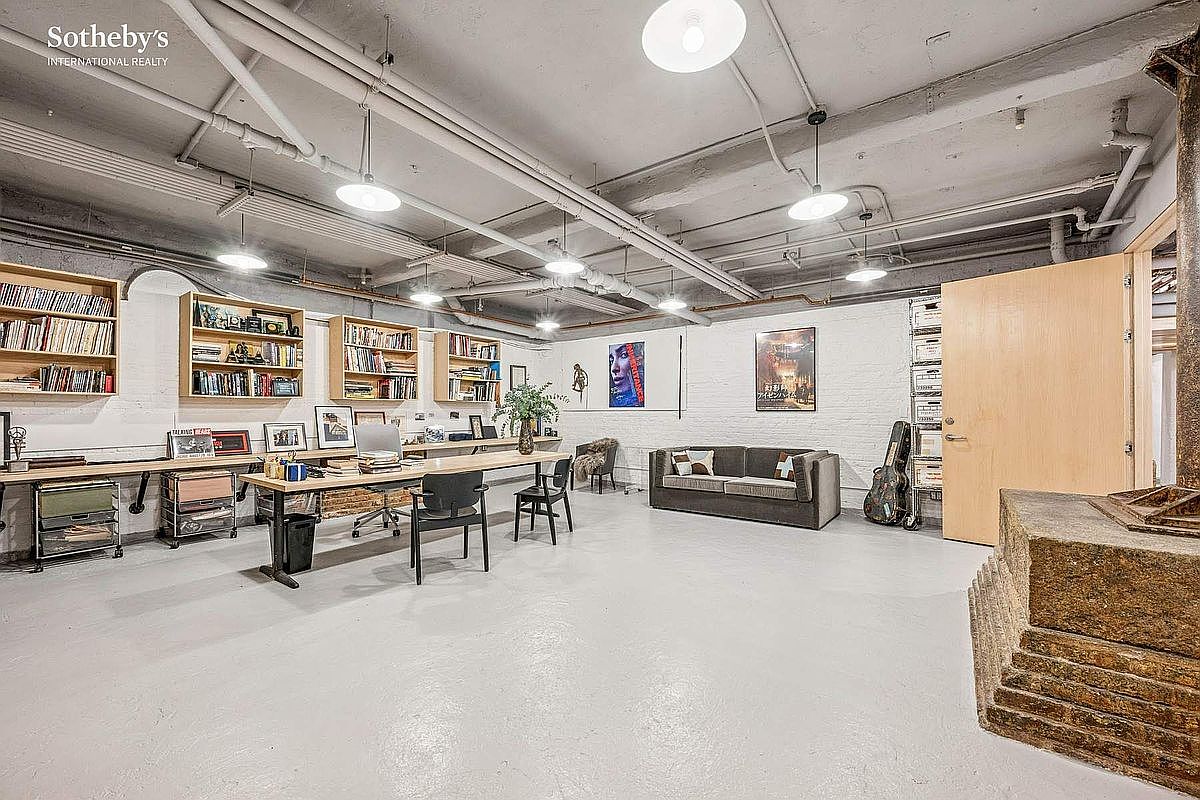
Above, the primary level rises to eleven-foot ceilings and culminates in a suite of genuinely uncommon refinement. The vaulted primary bedroom, walk-in closet, and ensuite bath — featuring a marble sink salvaged from the original Ritz-Carlton Hotel — occupy a register between the historical and the deeply personal. A flexible secondary room and second full bath complete the level. The lower floor, with eleven-and-a-half-foot ceilings, houses a media den, a guest suite with full bath, laundry, and storage, all finished with the same considered attention that distinguishes every corner of the residence.
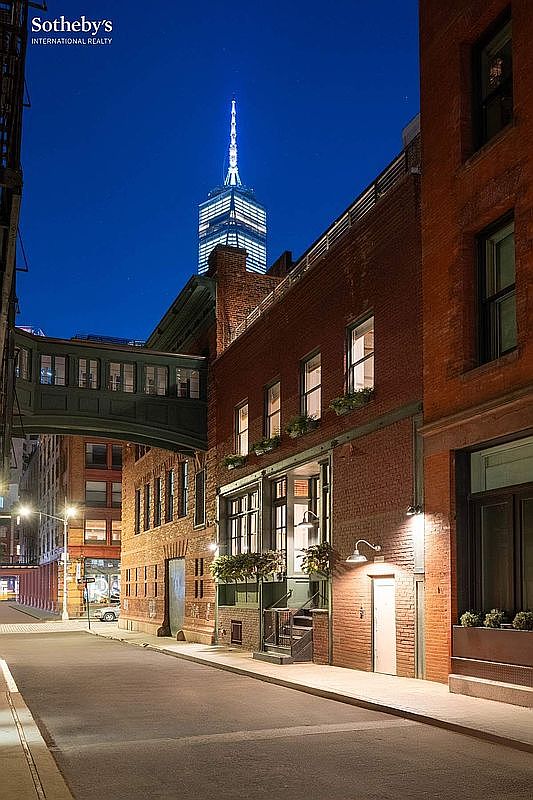
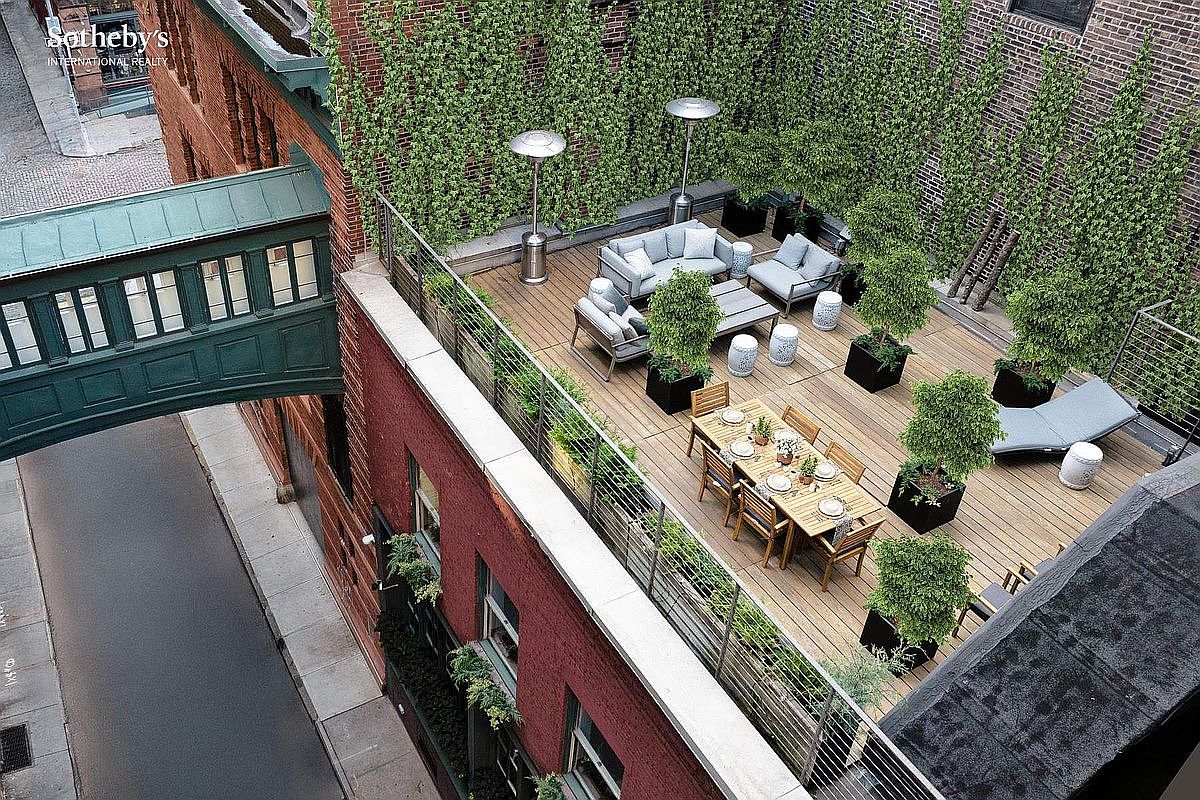
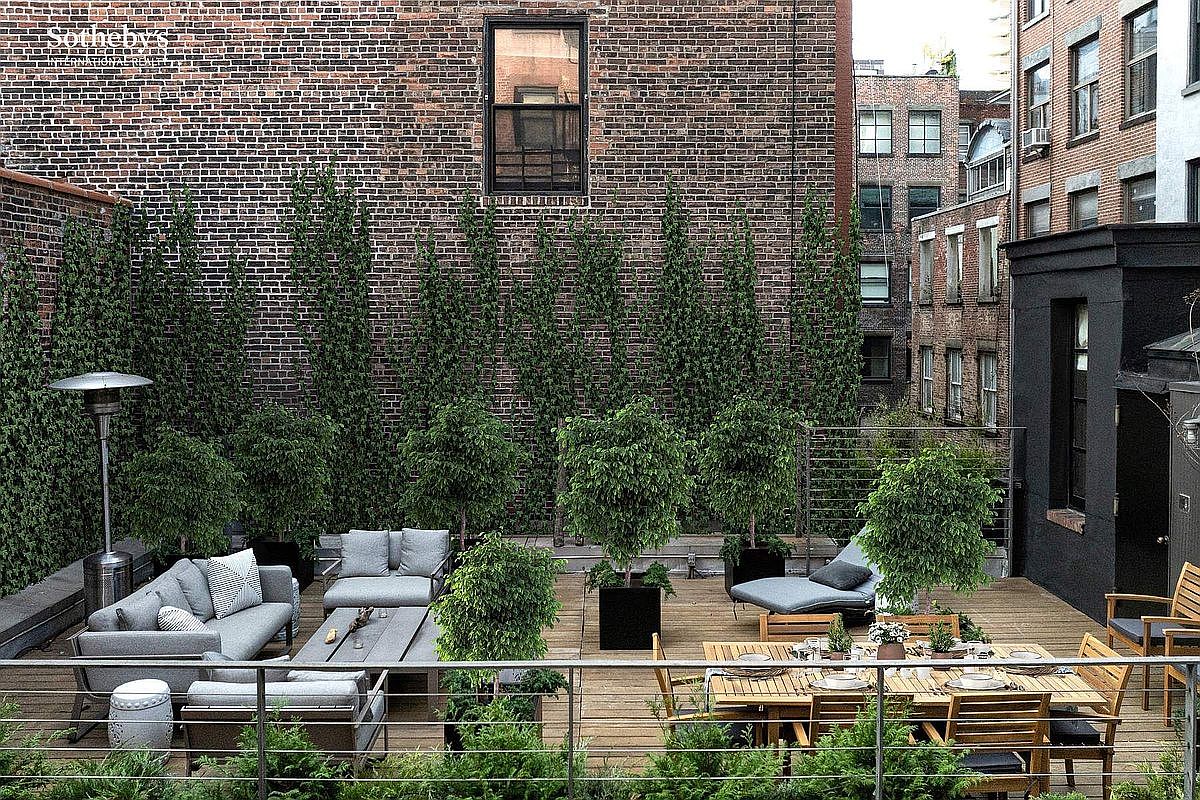
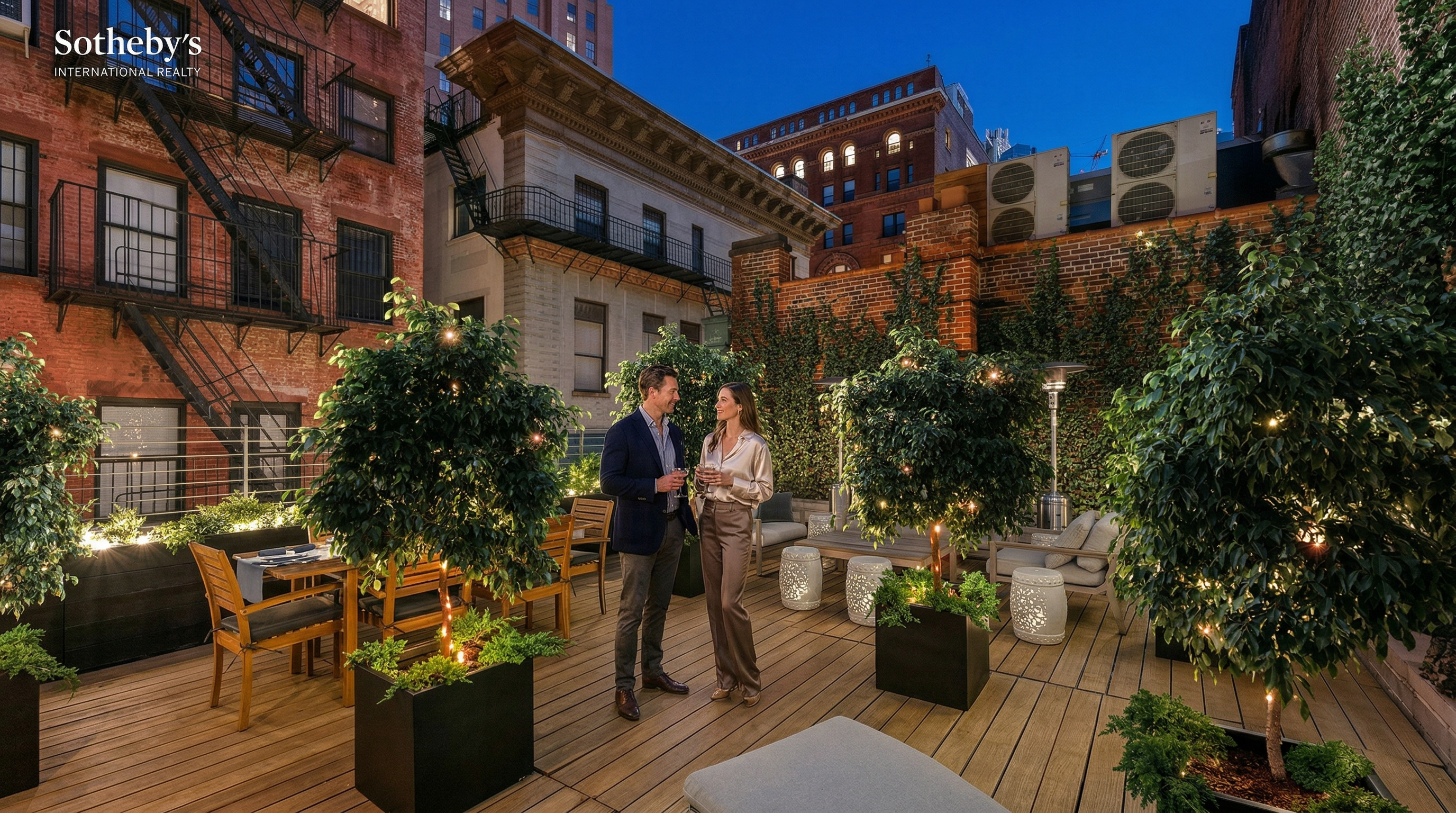
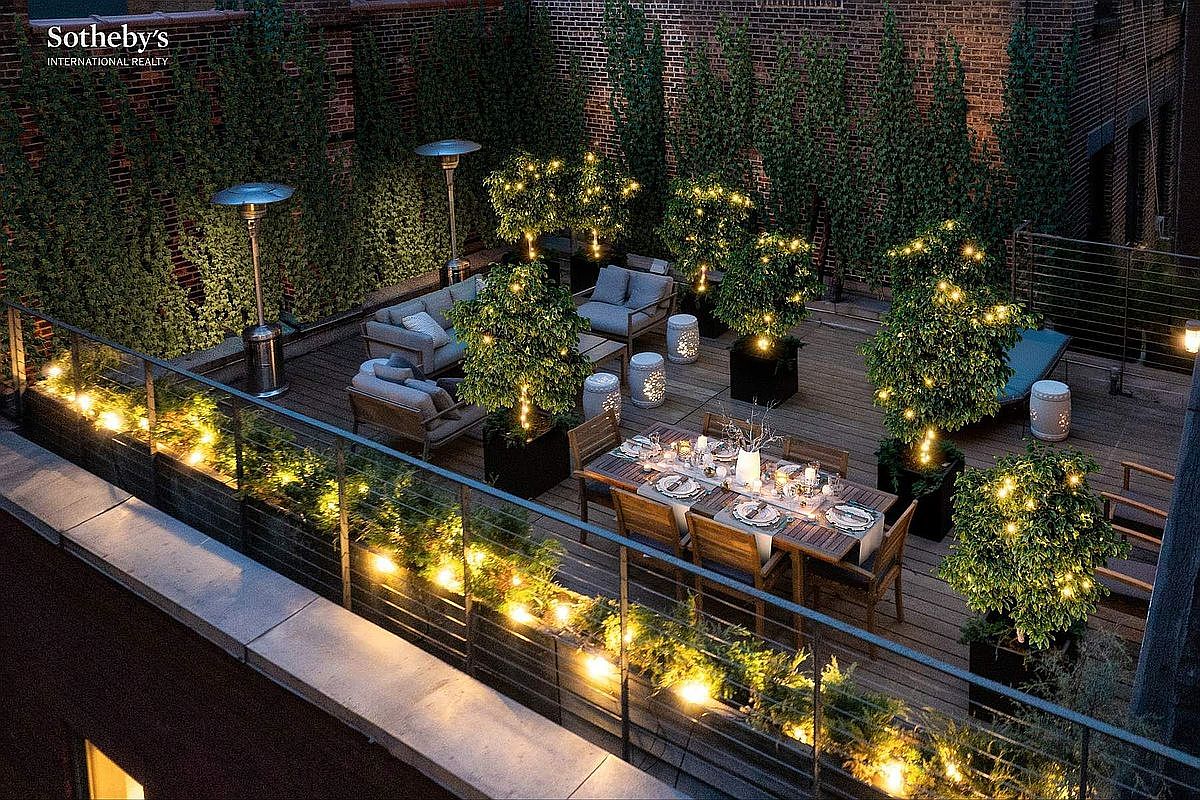
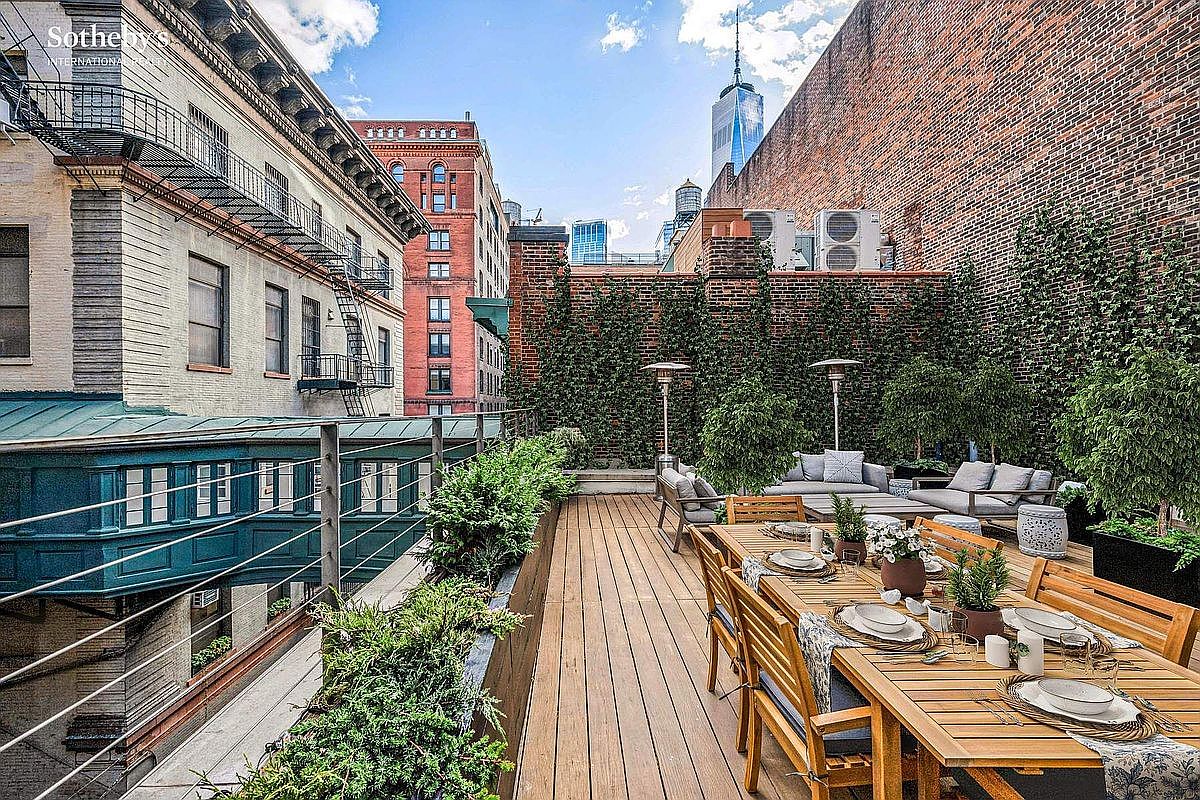
Rising above it all is the roof terrace: one thousand square feet of private outdoor living overlooking Tribeca's iconic cast-iron skybridge, framed by climbing ivy and the quiet geometry of the surrounding rooflines. It is the kind of outdoor space that Manhattan promises and almost never delivers.
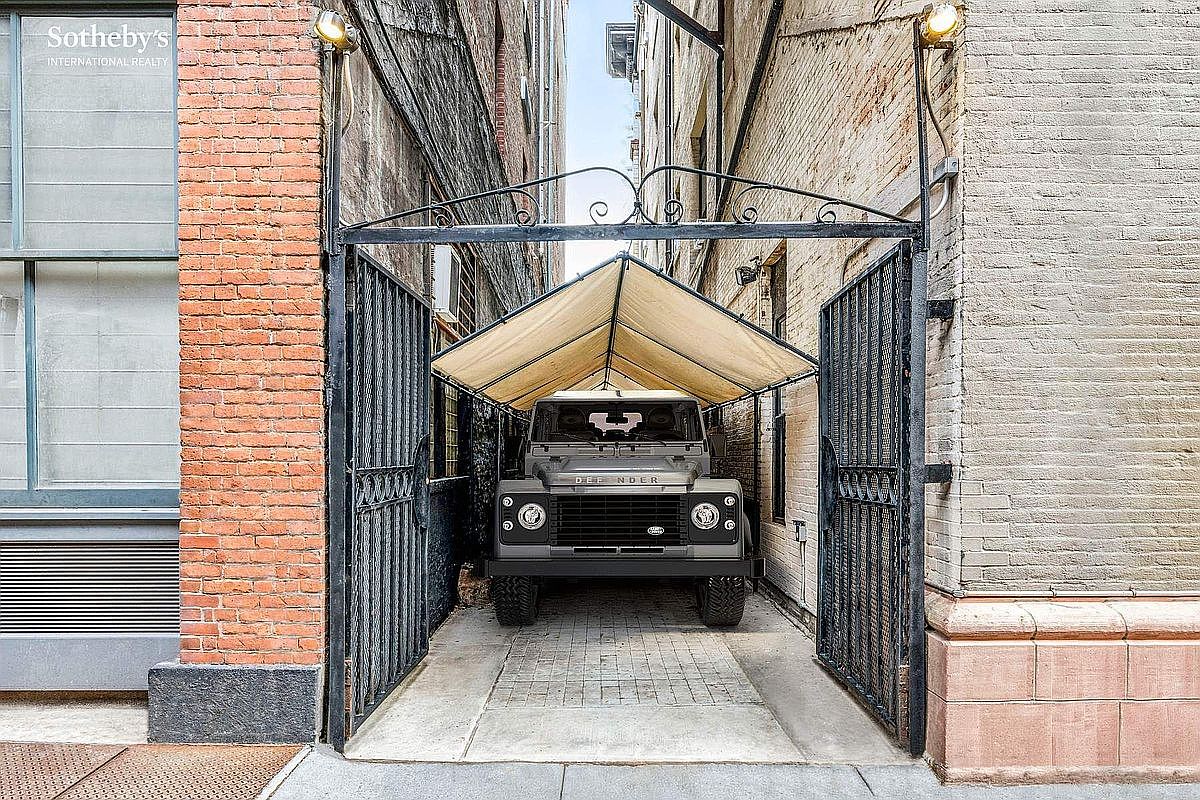
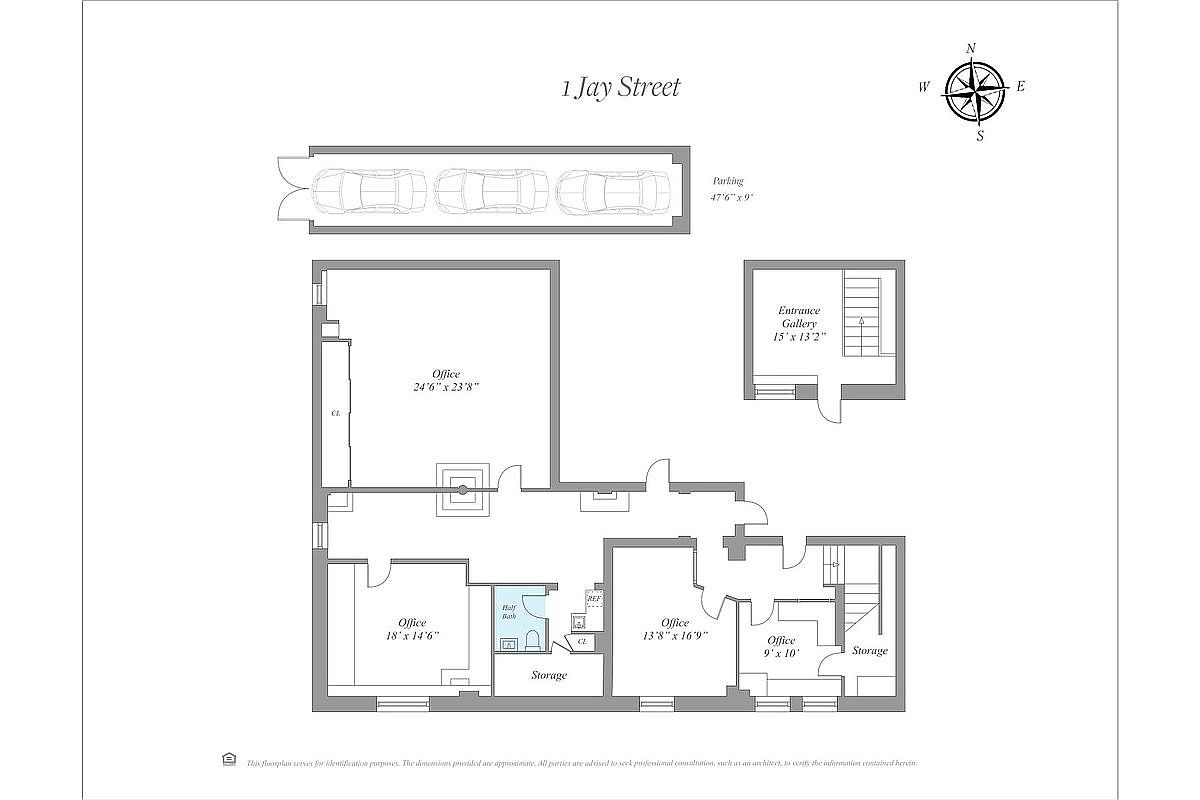
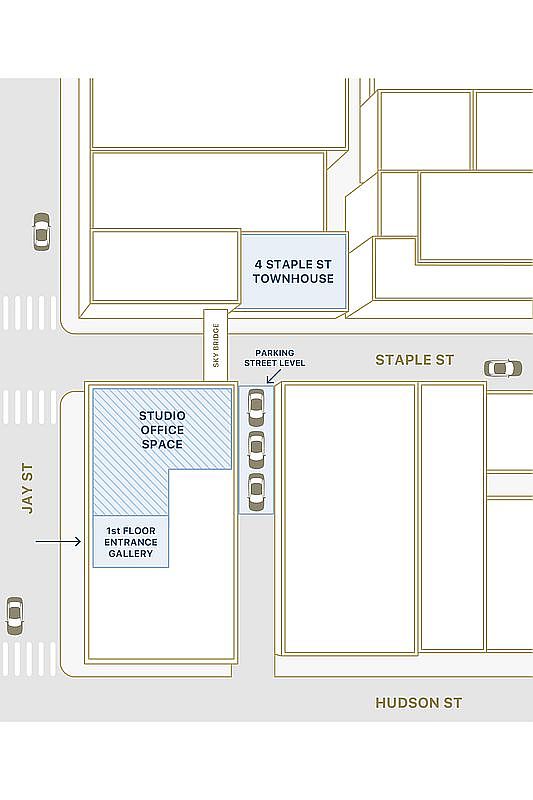
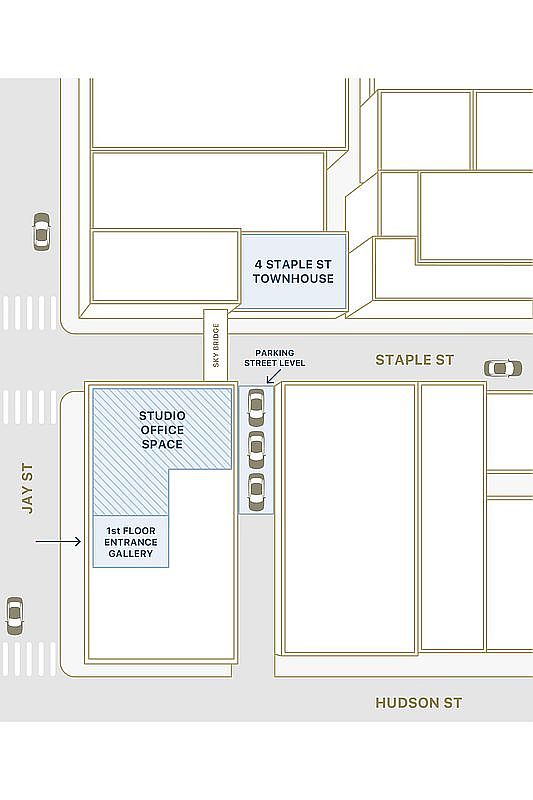
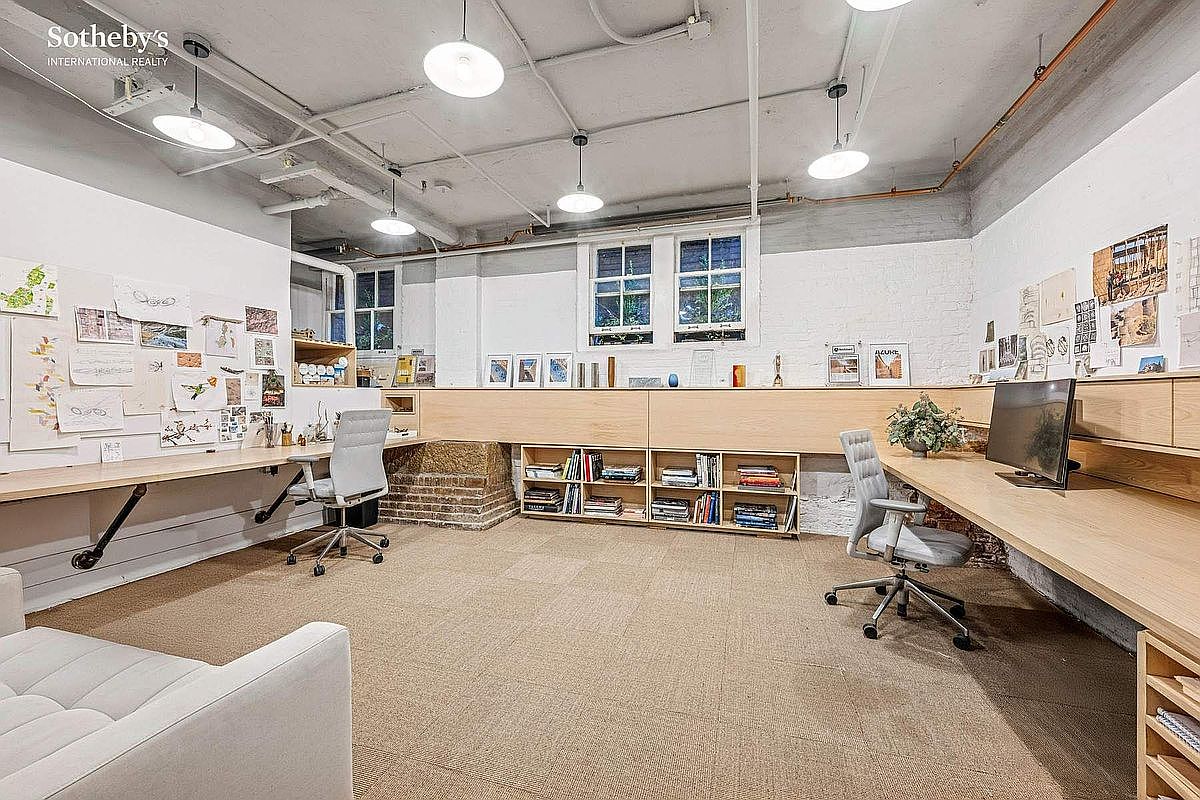
Directly across the street, accessed through a discreet entrance at 1 Jay Street, the creative annex extends the compound's logic into an entirely separate dimension. More than 2,000 square feet of windowed office and studio space — with a reception gallery, kitchenette, full bath, and its own gated parking — transforms what might elsewhere be a simple amenity into a fully realized second world. Permitted for commercial use including restaurant, café, retail, and hospitality applications under C6-2A zoning, the annex is as open-ended as the imagination of its next owner. With potentially available air rights for up to three additional floors on the townhouse itself, the compound's future is written in possibility.
Tribeca — an acronym for Triangle Below Canal Street — occupies a singular position in New York City's cultural and architectural geography. Bounded roughly by Canal Street to the north, the Hudson River to the west, Broadway to the east, and Chambers Street to the south, the neighborhood spent much of the nineteenth and early twentieth centuries as the heart of Manhattan's commercial and mercantile trade, its cast-iron warehouses storing everything from spices to textiles. When those industries migrated and the buildings fell quiet, artists arrived — drawn by the vast floor plates, the industrial light, and the affordable rents of a neighborhood the rest of the city had not yet noticed.
By the 1970s and 1980s, Tribeca had become the creative frontier that SoHo, just to the north, had been a generation earlier. Loft conversions proliferated. Galleries opened. The neighborhood developed its own civic identity, anchored by the Tribeca Film Festival — co-founded by Robert De Niro and Jane Rosenthal in 2002 in the aftermath of September 11th — which transformed the area into an annual gathering point for international cinema and cultural life.
Today, Tribeca consistently ranks among the most desirable residential neighborhoods in the United States, celebrated for its combination of architectural integrity, low-density streetscapes, and exceptional quality of life. The neighborhood's landmarked cast-iron and brick buildings — protected by the Tribeca Historic Districts, designated by the New York City Landmarks Preservation Commission — ensure that its visual character remains among the most coherent and beautiful of any urban neighborhood in the country.
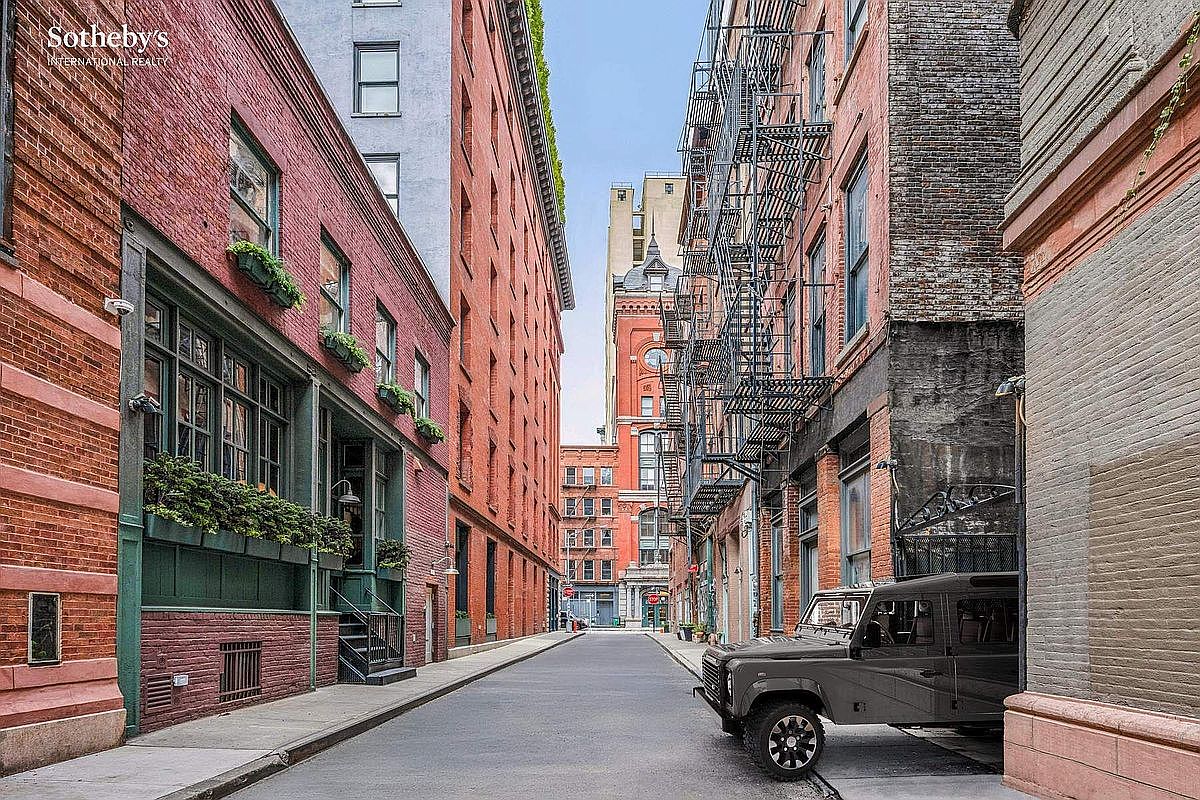
Staple Street itself is a particularly remarkable artifact within this landscape. Just two blocks long, it runs between Harrison and Jay Streets and is spanned by a cast-iron skybridge — one of the last remaining pedestrian sky bridges in Manhattan — that has become arguably the most photographed architectural detail in the neighborhood. The street's narrow sidewalks, original cobblestone texture, and preserved industrial facades create an atmosphere that filmmakers, photographers, and architects return to repeatedly. It is a street that makes the city feel like a set — and yet it is entirely, unmistakably real.
The immediate surroundings offer a lifestyle of effortless sophistication. Hudson River Park, stretching along the waterfront just blocks to the west, provides miles of green space, cycling paths, kayak launches, and the beloved Pier 25 recreational complex. The neighborhood's restaurant culture is among the finest in the city, with celebrated establishments — including Locanda Verde, Frenchette, and The Odeon among many others — offering everything from neighborhood bistro warmth to destination dining. Boutique retail, independent bookshops, and specialty food purveyors line the surrounding streets, while proximity to SoHo extends the shopping landscape northward without effort.
Public and private schools, cultural institutions, and transit connections — including the A, C, E, 1, 2, and 3 subway lines — make the neighborhood as practical as it is beautiful. For the owner of 4 Staple Street, however, the deepest luxury of this location may simply be the walk home: down the most cinematic block in Manhattan, through a gate that closes the city gently behind you.
Featured Highlights
Curated Content • Presented by Jeremy Stein