The Story Behind
A Private Bird Streets Compound Reimagined by Clements Design
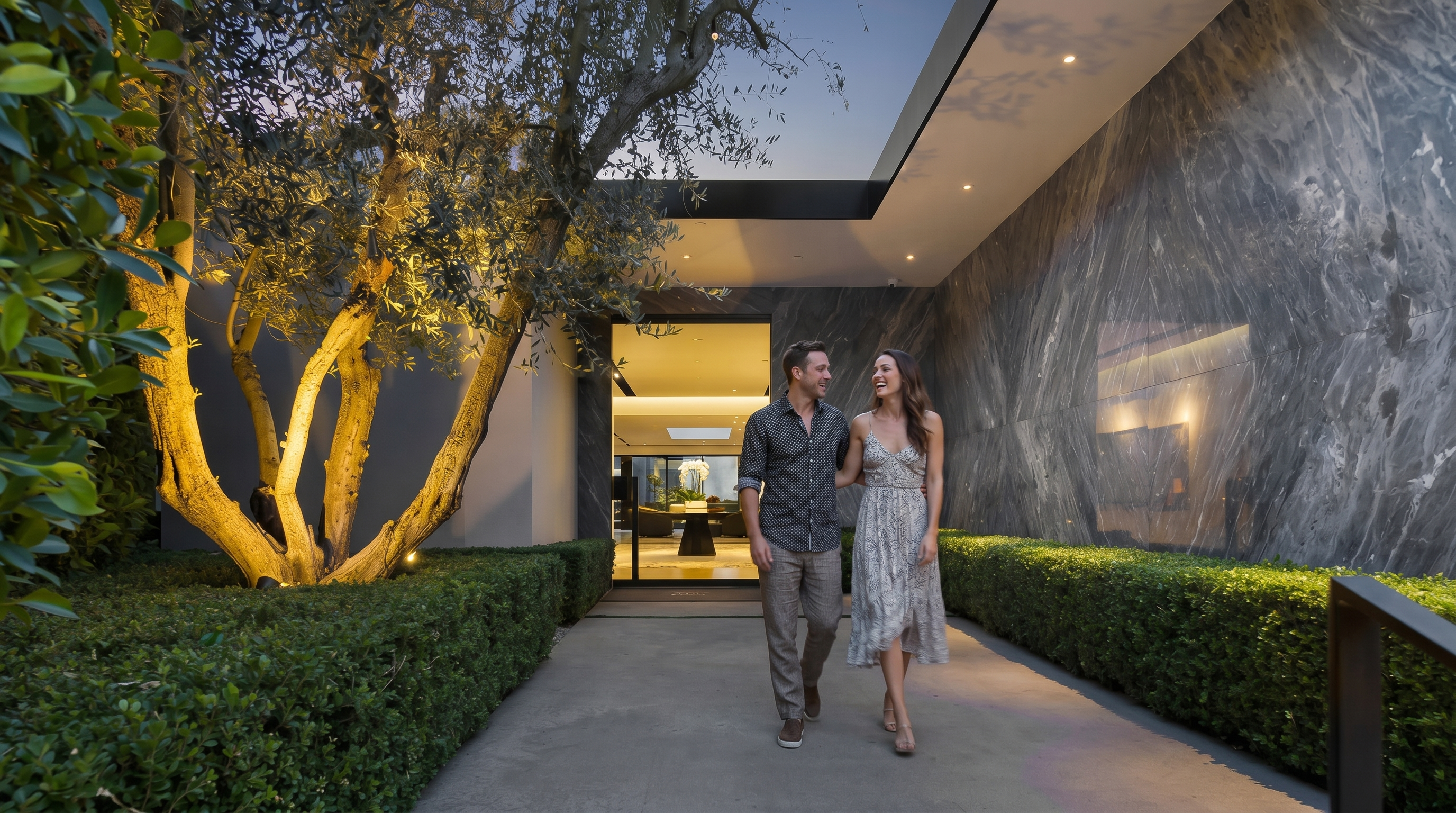
There is a particular discipline required to design a home that feels both monumental in scale and genuinely serene — a balance that 1877 Rising Glen Road achieves with uncommon grace. Conceived by Clements Design, the Los Angeles-based interior architecture firm recognized on Architectural Digest's coveted AD100 list, the residence is the product of a creative philosophy rooted in restraint, materiality, and the art of considered living. The result is a private contemporary compound that reveals itself slowly, its true scale concealed behind a facade of mature landscaping and a minimalist approach to arrival.
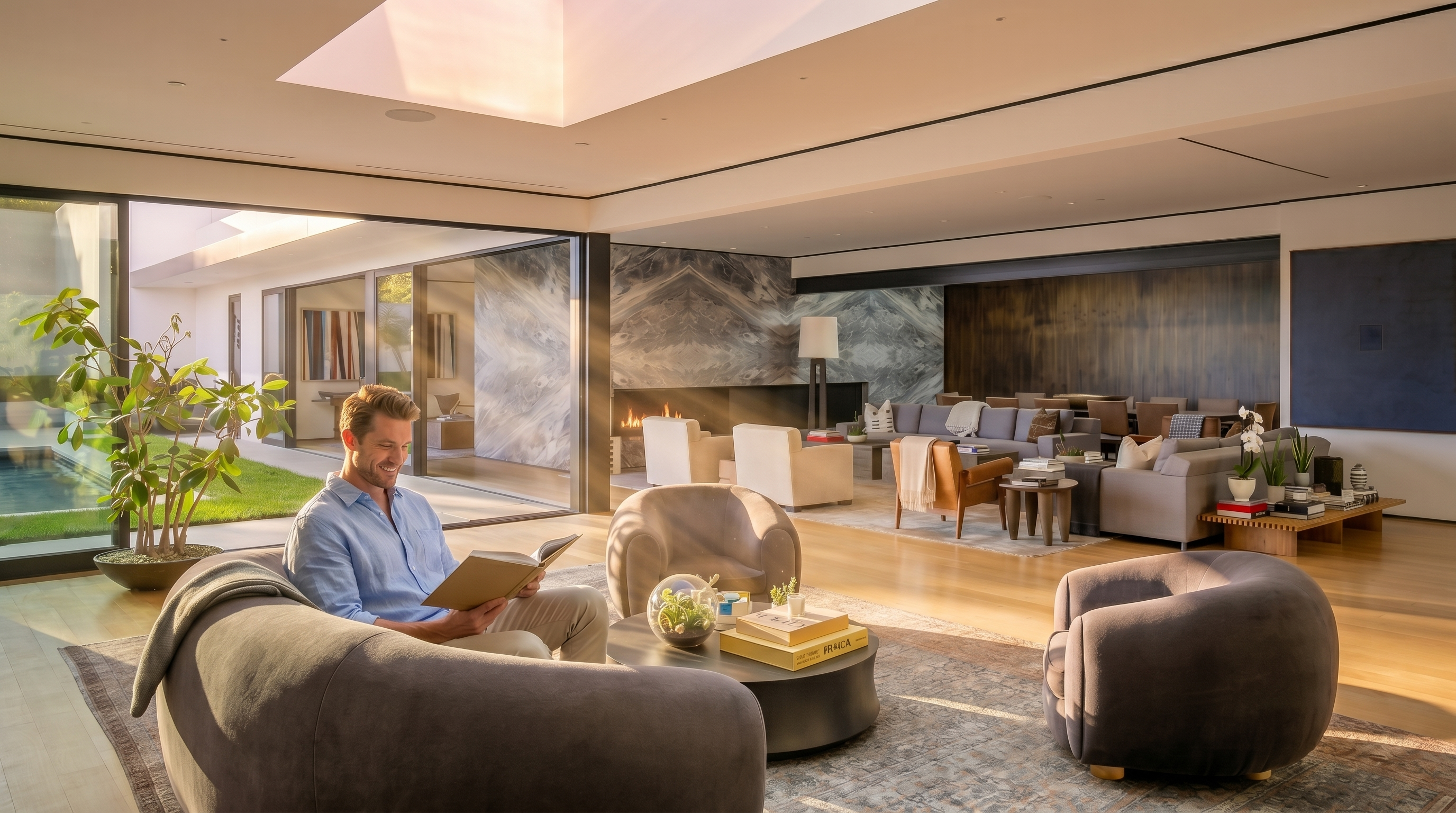
Step through the glass-paneled entry and the home opens dramatically. The great room — anchored by a stone-clad linear fireplace and bathed in light from overhead skylights — sets the tone immediately. Walls of glass dissolve at the touch of a control, erasing the boundary between the interior and the city panorama that stretches to the horizon. The architecture does not compete with the view; it frames it.
The chef's kitchen is a study in functional luxury. A dramatic skylight presides over an oversized island topped in dark stone, while Miele appliances, warm wood cabinetry, and a full butler's pantry ensure the space performs as beautifully as it photographs. A WineMate-cooled wine wall adds a collector's amenity without disrupting the room's clean, considered lines.
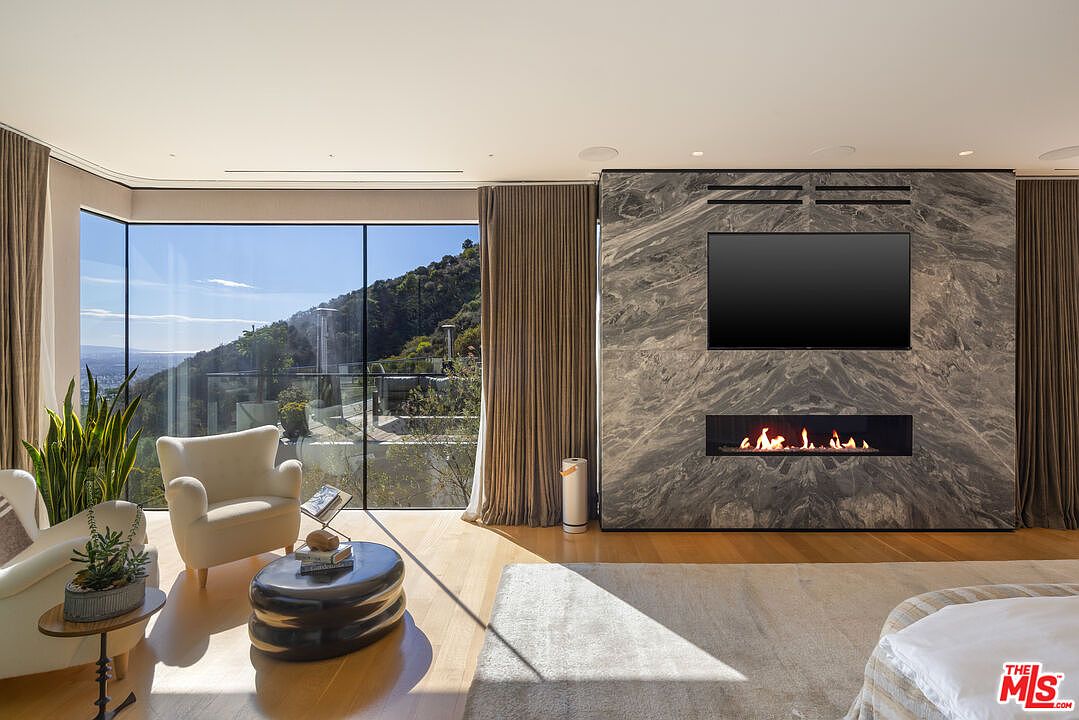
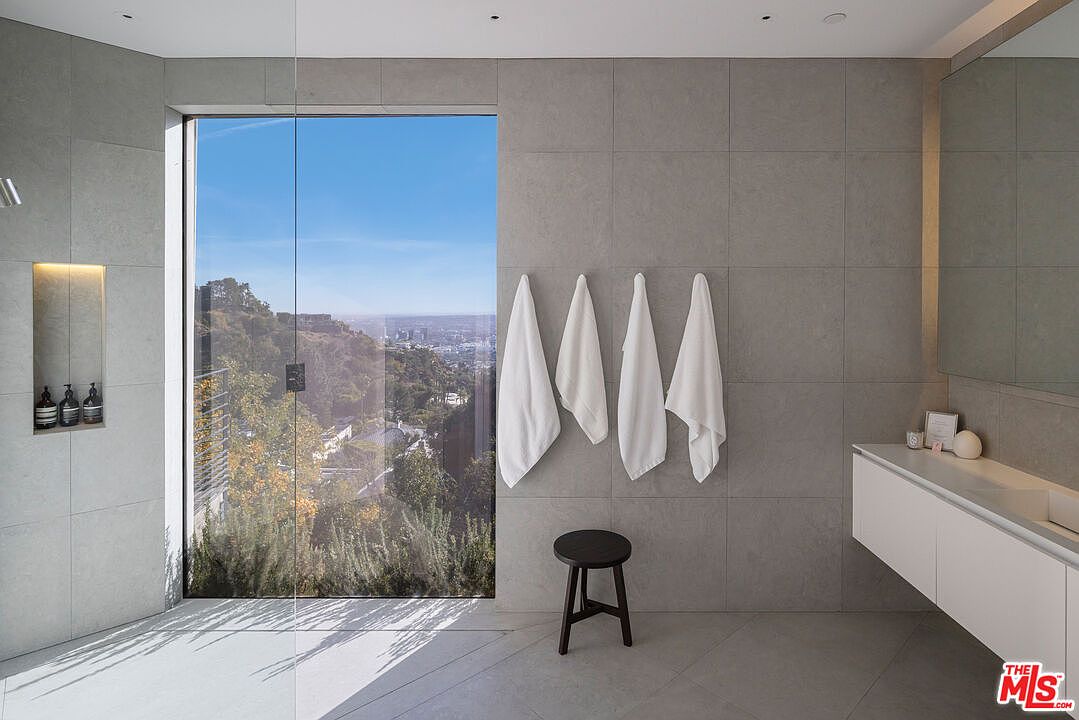
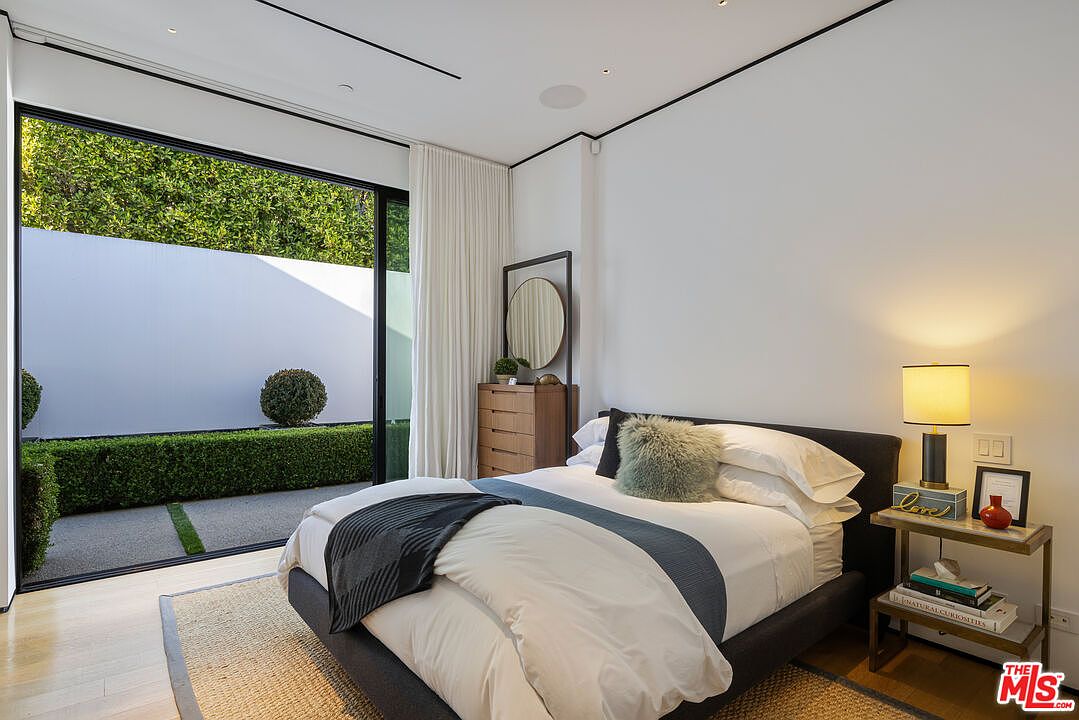
The primary suite occupies its own quiet world. A stone-clad fireplace anchors the room, motorized shades manage the quality of light, and floor-to-ceiling glass opens directly to the grounds. The spa-inspired bath is an exercise in material contrast — dark veined stone walls, a freestanding soaking tub positioned before a window of living greenery, and a glass-enclosed steam shower that opens to hill and sky. The custom walk-in closet, fitted with dark wood cabinetry, integrated LED lighting, and a rolling library ladder, is a space that rewards daily use.
The lower level reads as a self-contained world of entertainment and wellness. A state-of-the-art home theater — tiered seating, cove lighting, heavy acoustic treatments, and an adjacent bar with gold-accented stools — delivers a cinematic experience without leaving the property. The glass-enclosed gym, equipped with professional-grade machines and framed by a sculptural garden, offers a workout environment rarely found outside of hospitality design. A private guest suite with direct outdoor access, a dedicated home office, and a library with floating walnut shelves complete the floor.
Outside, the grounds are a landscape in their own right. An 80-foot pool with a dramatic marble waterfall commands the upper terrace, accompanied by a spa, multiple manicured lawns, and a tiered wooden deck. A thriving vegetable garden, curated by Heart Beet Gardening, brings an element of living craft to the estate. At dusk, ambient lighting transforms the property into something closer to a resort than a private residence — which, in every meaningful sense, is precisely what it is.
The Bird Streets occupy a narrow band of hillside real estate above the Sunset Strip in West Hollywood, and for decades they have represented something specific in the Los Angeles imagination: privacy without remoteness, proximity without exposure. The neighborhood takes its name from the avian street names — Oriole, Nightingale, Thrush, Warbler, Swallow — that wind through the hills above West Hollywood, their tight curves and elevated grades having long served as a natural deterrent to through traffic and an organic enforcer of seclusion.
The area's residential history accelerated through the latter half of the twentieth century as the entertainment industry's creative class sought homes that balanced access to the Sunset Strip's cultural infrastructure with the kind of quiet that the flatlands below could rarely provide. The hills delivered both. Today, the Bird Streets are recognized as one of Los Angeles's most sought-after enclaves, home to a concentration of architecturally significant modernist and contemporary residences that reflect the city's ongoing investment in residential design as a form of cultural expression.
The immediate surroundings reinforce the neighborhood's dual identity. The Sunset Strip — a corridor of cultural history running through West Hollywood — lies moments below, home to storied music venues, acclaimed restaurants, and a hotel landscape that has long attracted an internationally minded clientele. Soho House West Hollywood, the Sunset Tower Hotel, and a succession of destination dining rooms anchor the Strip as a social and culinary hub. The weekly rhythm of the neighborhood draws on this infrastructure without being defined by it; residents engage on their own terms.
Beverly Hills is equally accessible, placing Rodeo Drive's flagship retail, the dining rooms of Beverly Hills proper, and the cultural offerings of the greater Westside within a short drive. Cedars-Sinai Medical Center, one of the most respected medical institutions in the country, is located nearby — a practical consideration that carries real weight for discerning buyers.
West Hollywood itself is a city with a distinct civic identity, incorporated in 1984 and known for its progressive governance, walkable commercial corridors along Santa Monica Boulevard and Melrose Avenue, and a density of design-forward retail and hospitality that reflects the tastes of its creative resident base. The city's Design District, anchored along Melrose and Robertson, provides access to independent galleries, bespoke furniture makers, and international design houses that serve both the trade and the public.
For those drawn to the outdoors, Runyon Canyon Park — one of Los Angeles's most frequented open-space preserves — is accessible within minutes, offering trails that climb above the city grid and deliver views stretching from downtown to the Pacific. The Santa Monica Mountains more broadly form a natural boundary to the north, their preserved ridgelines providing a persistent counterpoint to the urban density below.
What the Bird Streets ultimately offer is the rare convergence of elevated privacy, architectural ambition, and metropolitan access that defines genuine luxury in Los Angeles — a city where location is always personal, and the best addresses are those that make the city feel both entirely available and entirely distant.
Featured Highlights
Curated Content • Presented by Adisa Aditheparot