The Story Behind
Cannon Mountain Views, Custom Craftsmanship, White Mountains Life
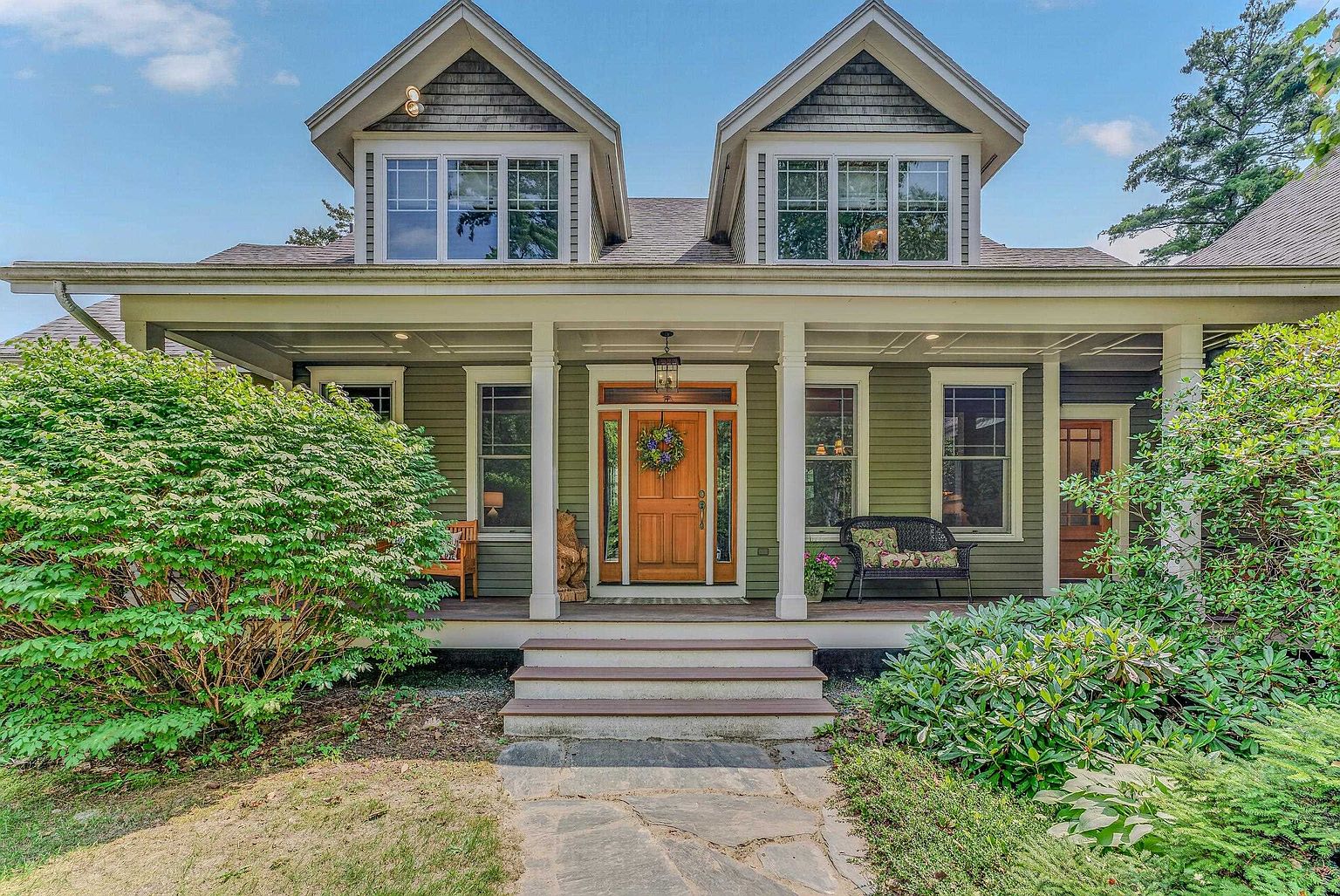
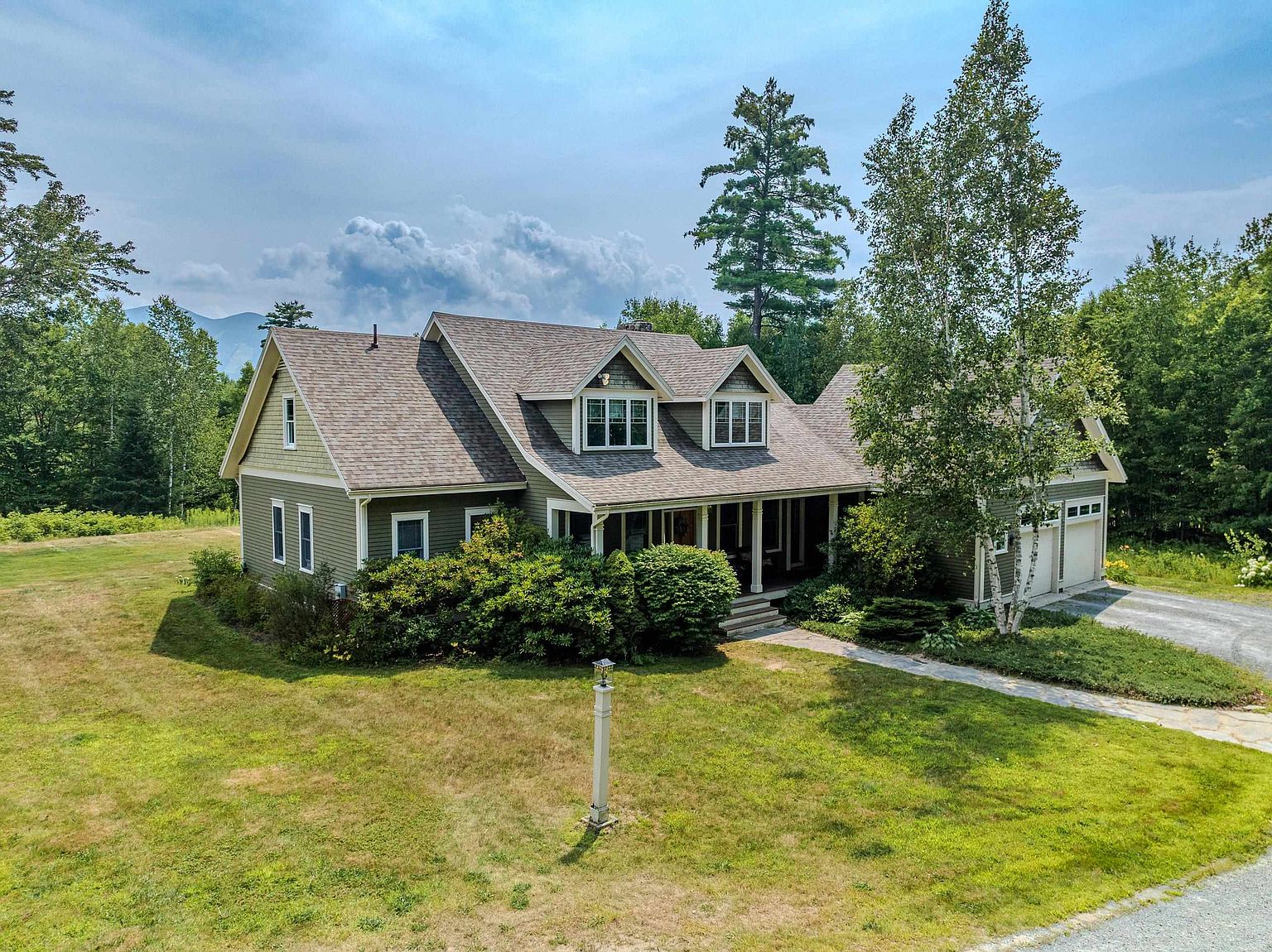
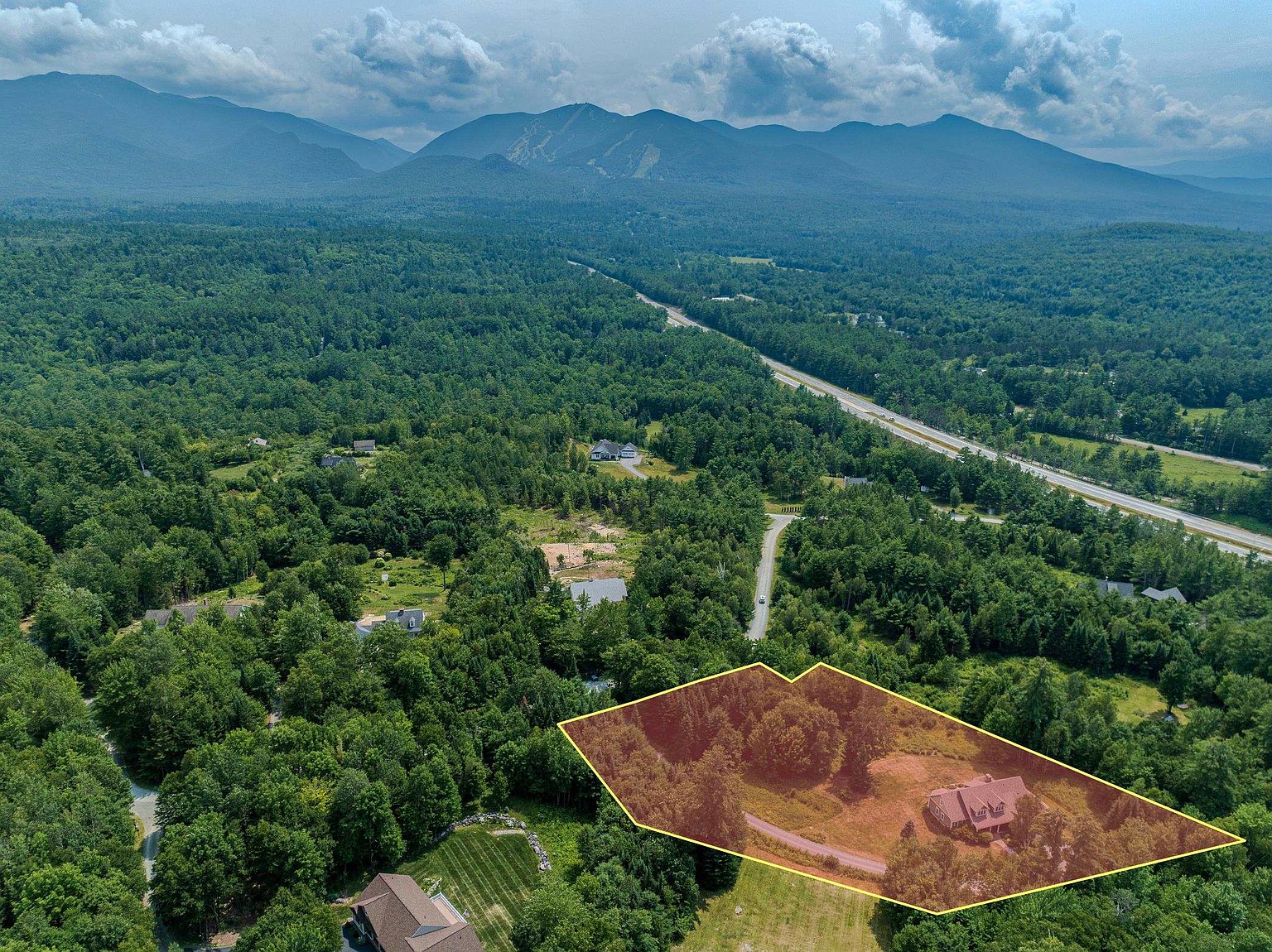
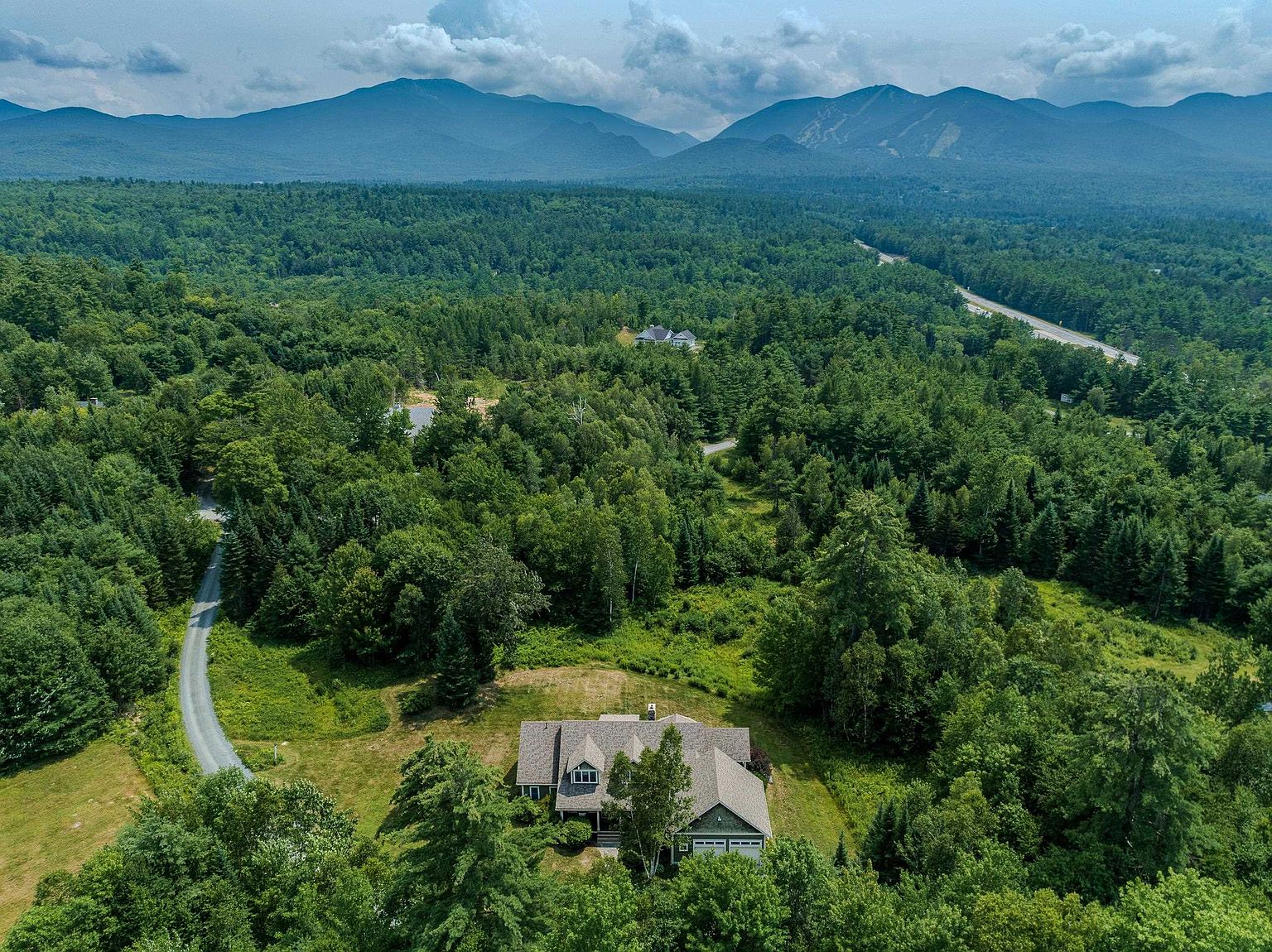
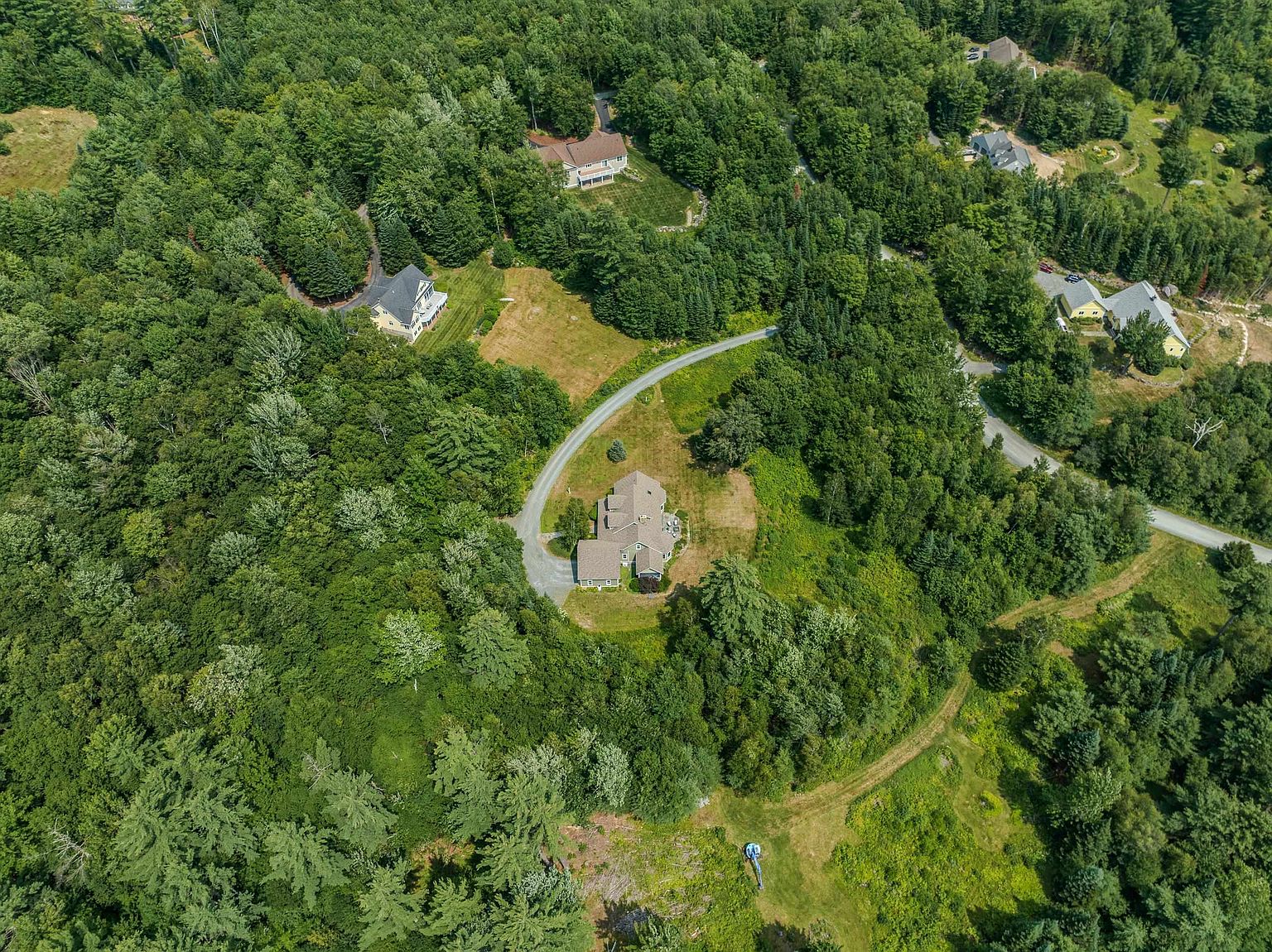
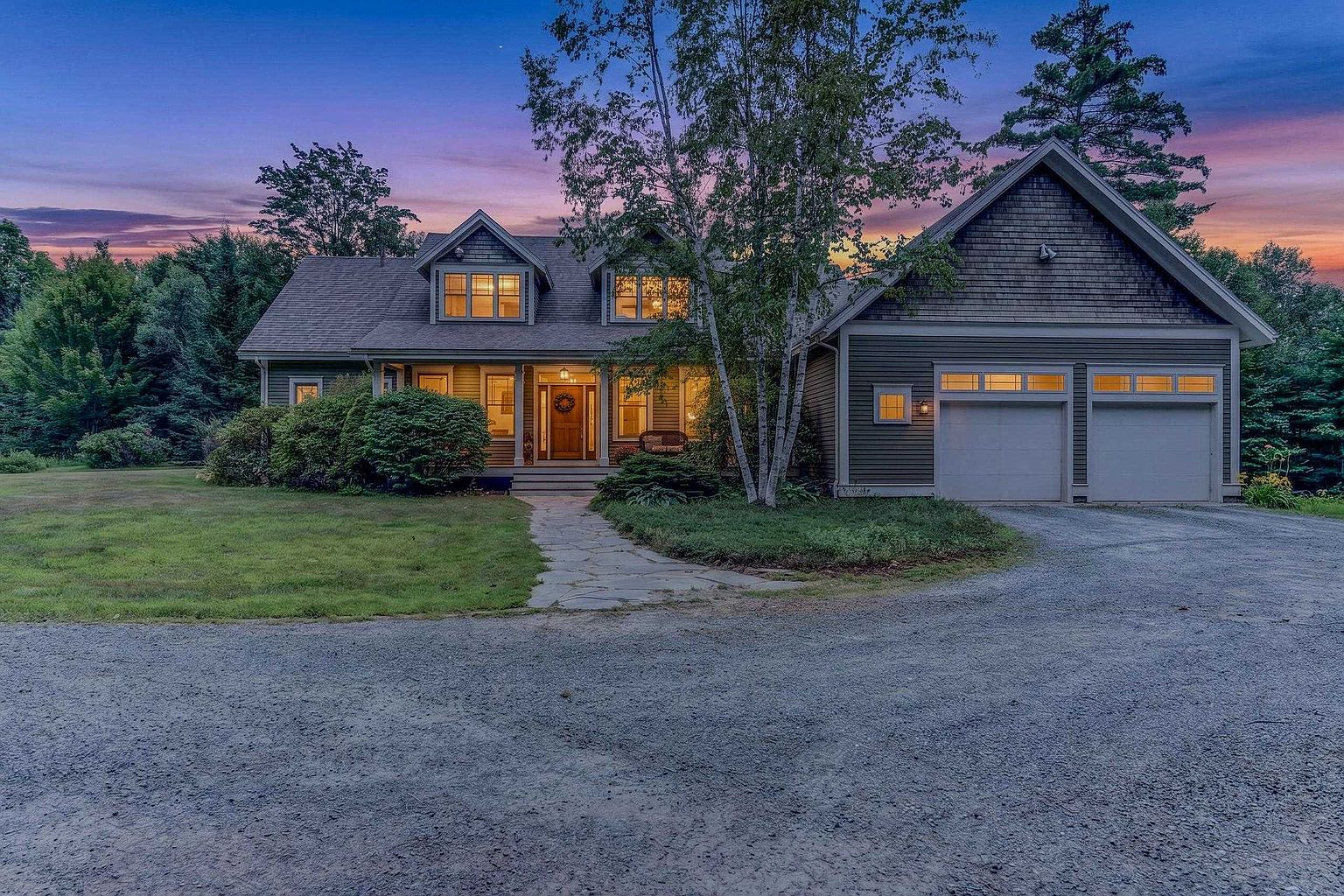
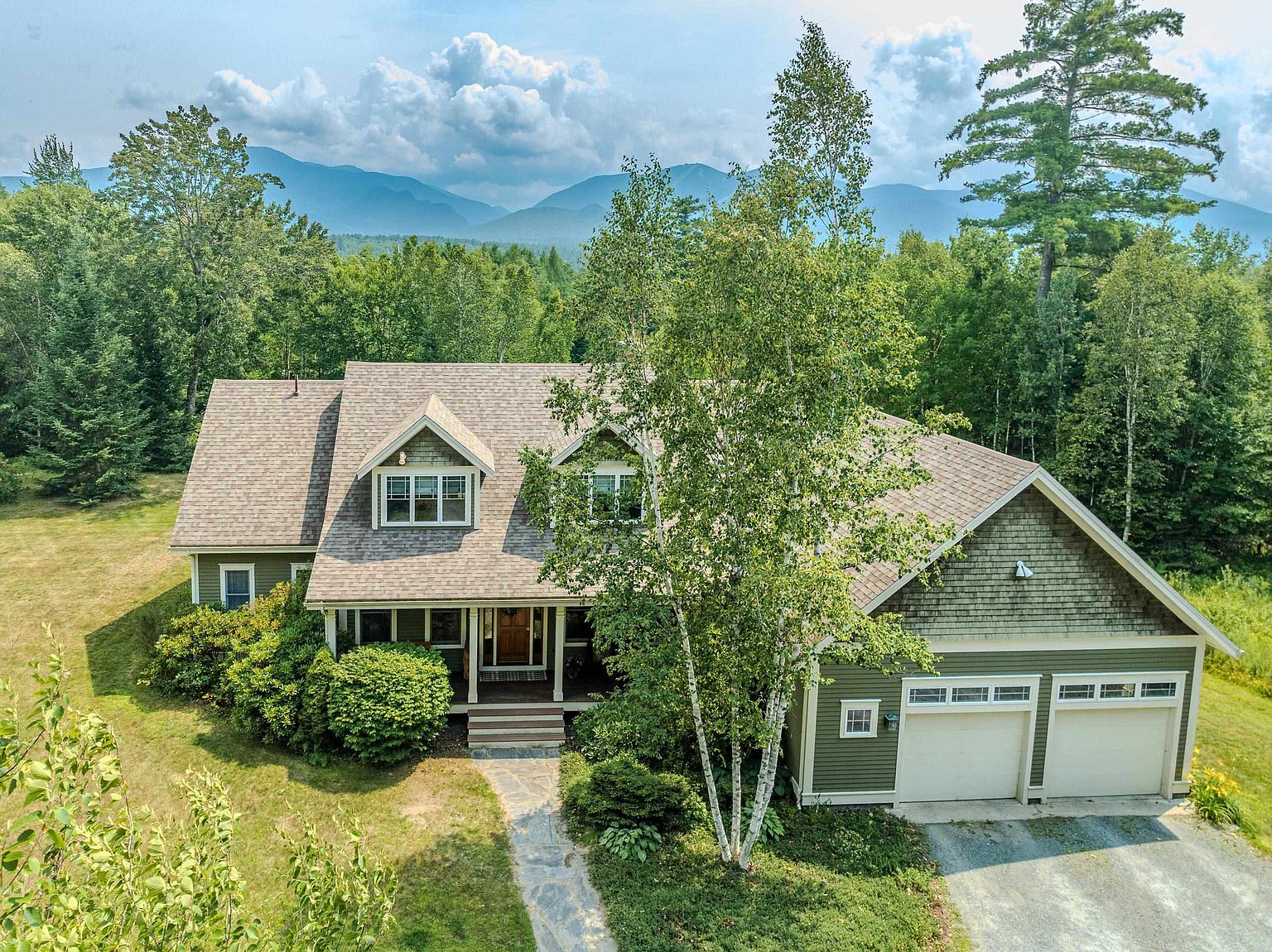
There are homes that gesture toward the mountains, and there are homes that were built in genuine conversation with them. This custom residence on Wintergreen Lane belongs firmly to the second category. Designed and constructed by Steve Chardon — a builder whose name in the White Mountains carries the weight of meticulous, site-specific craft — the house occupies nearly two acres in Forest Hills and orients itself with quiet intention toward Cannon Mountain, which fills the south-facing windows with a drama that changes by the hour and the season.
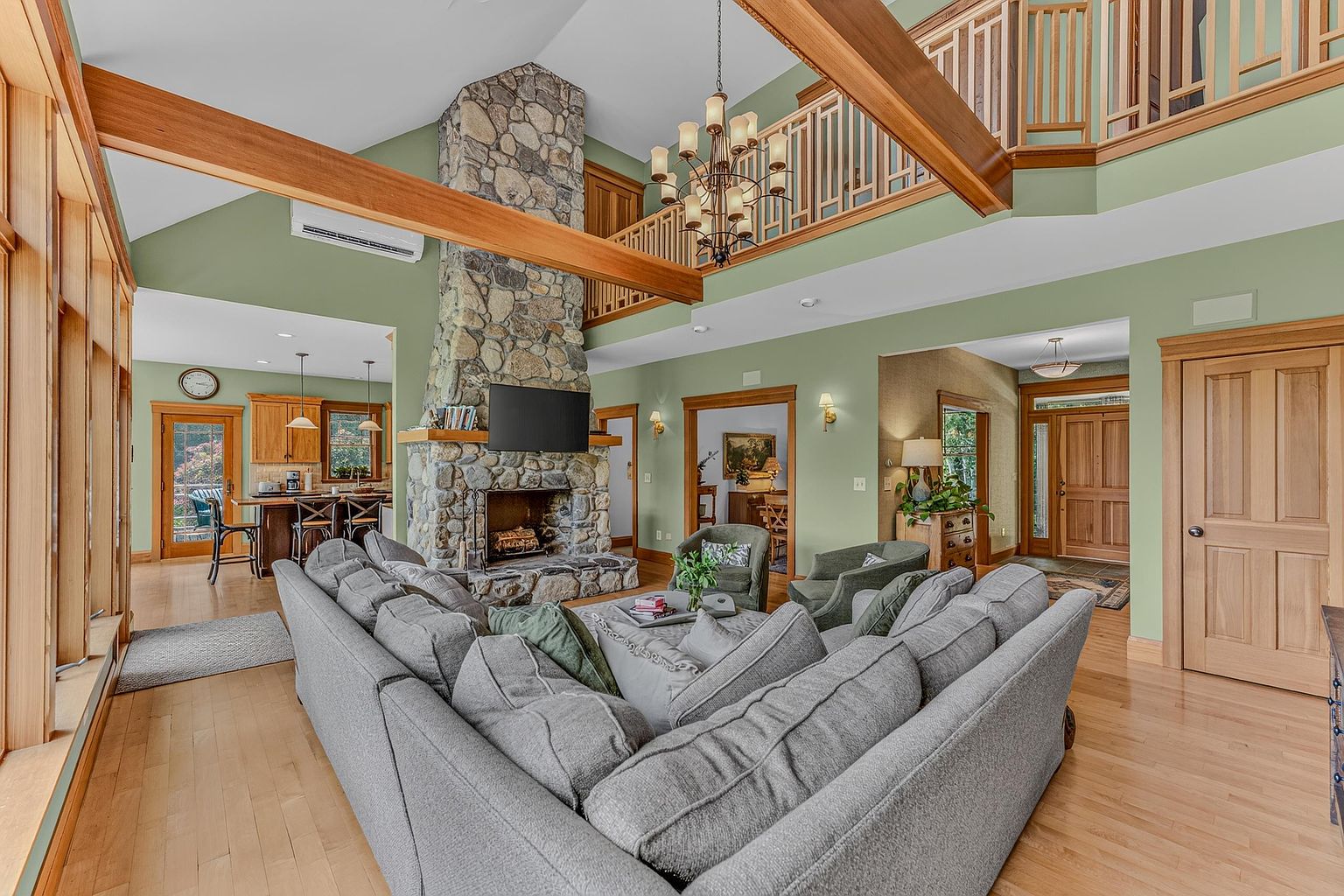
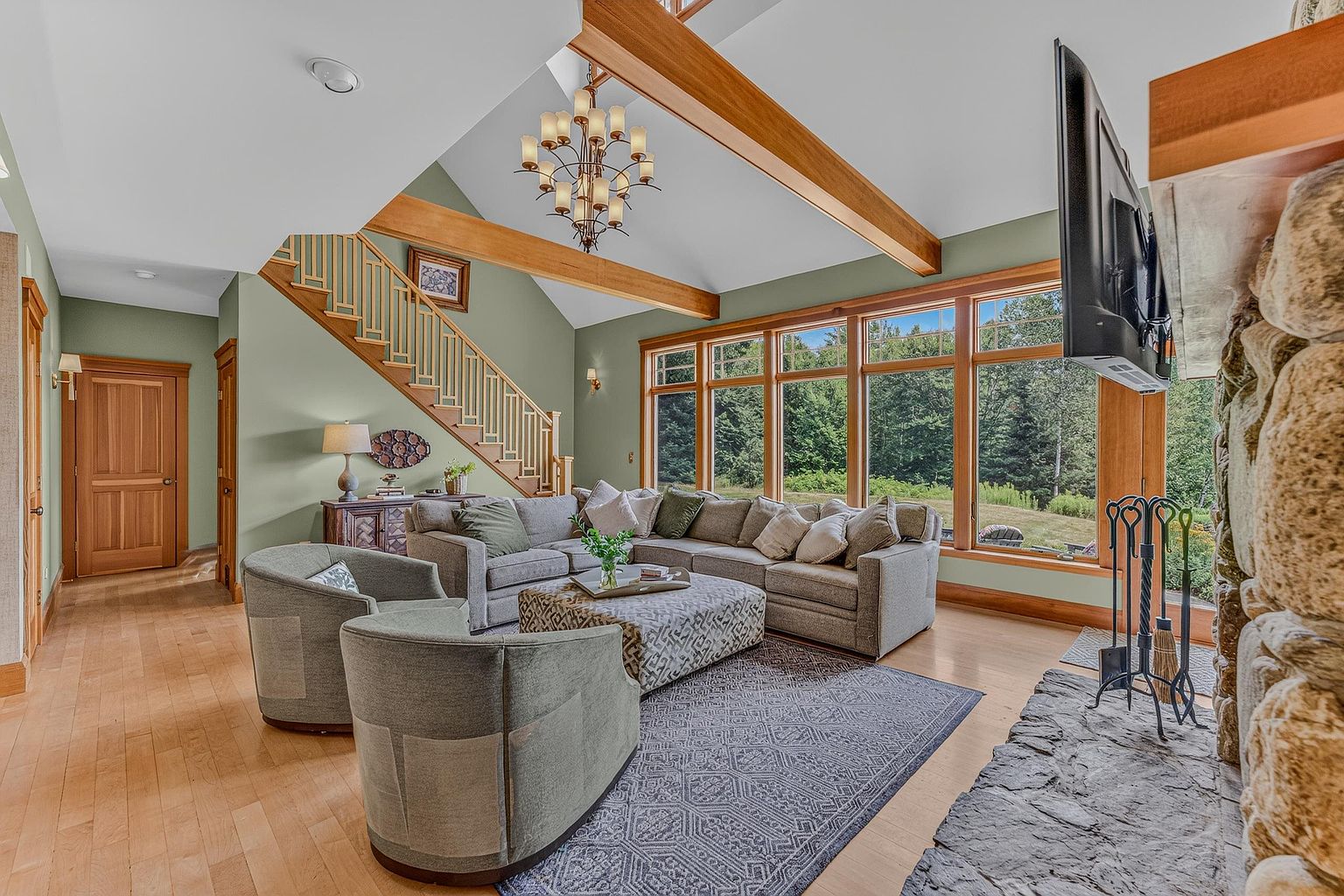
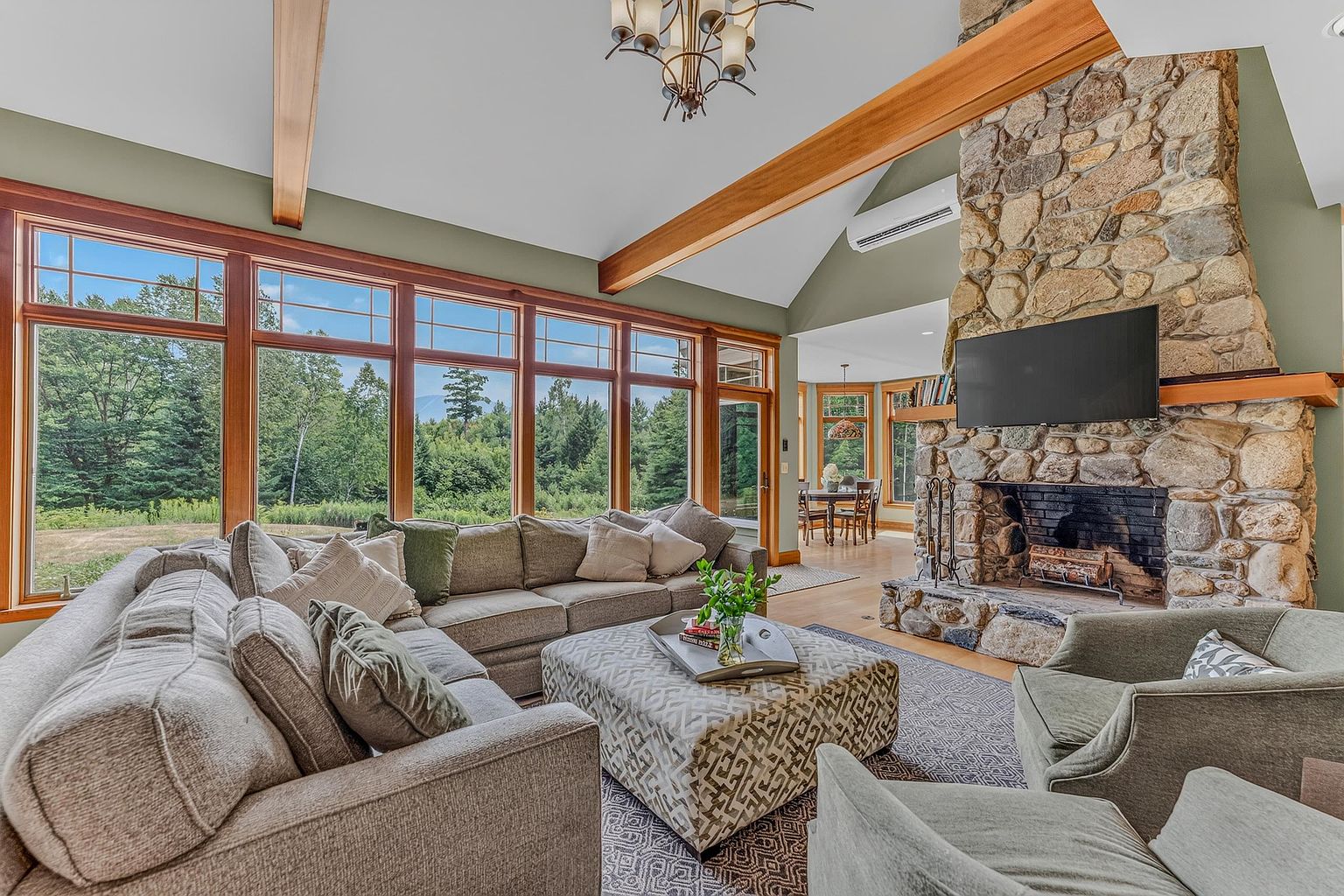
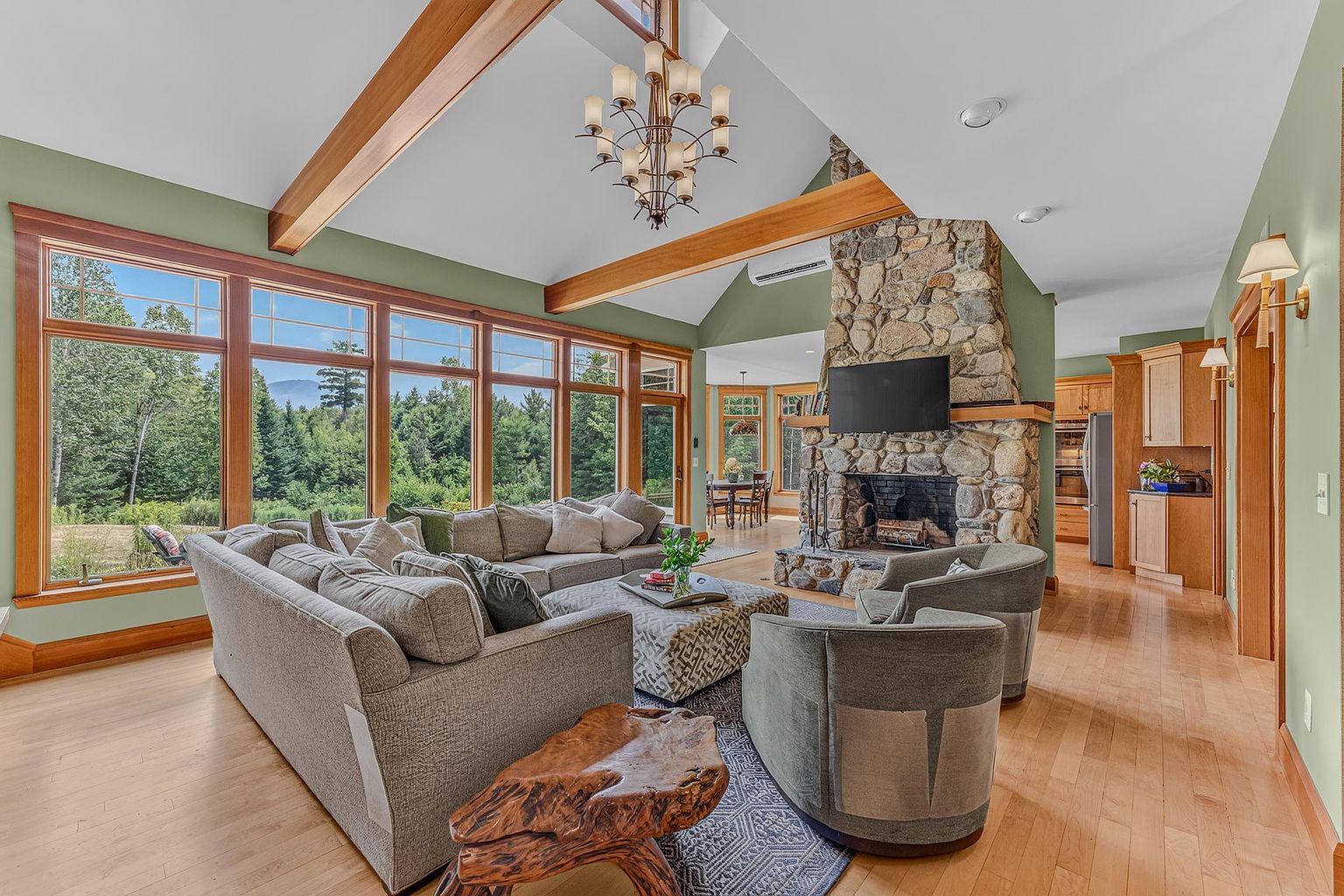
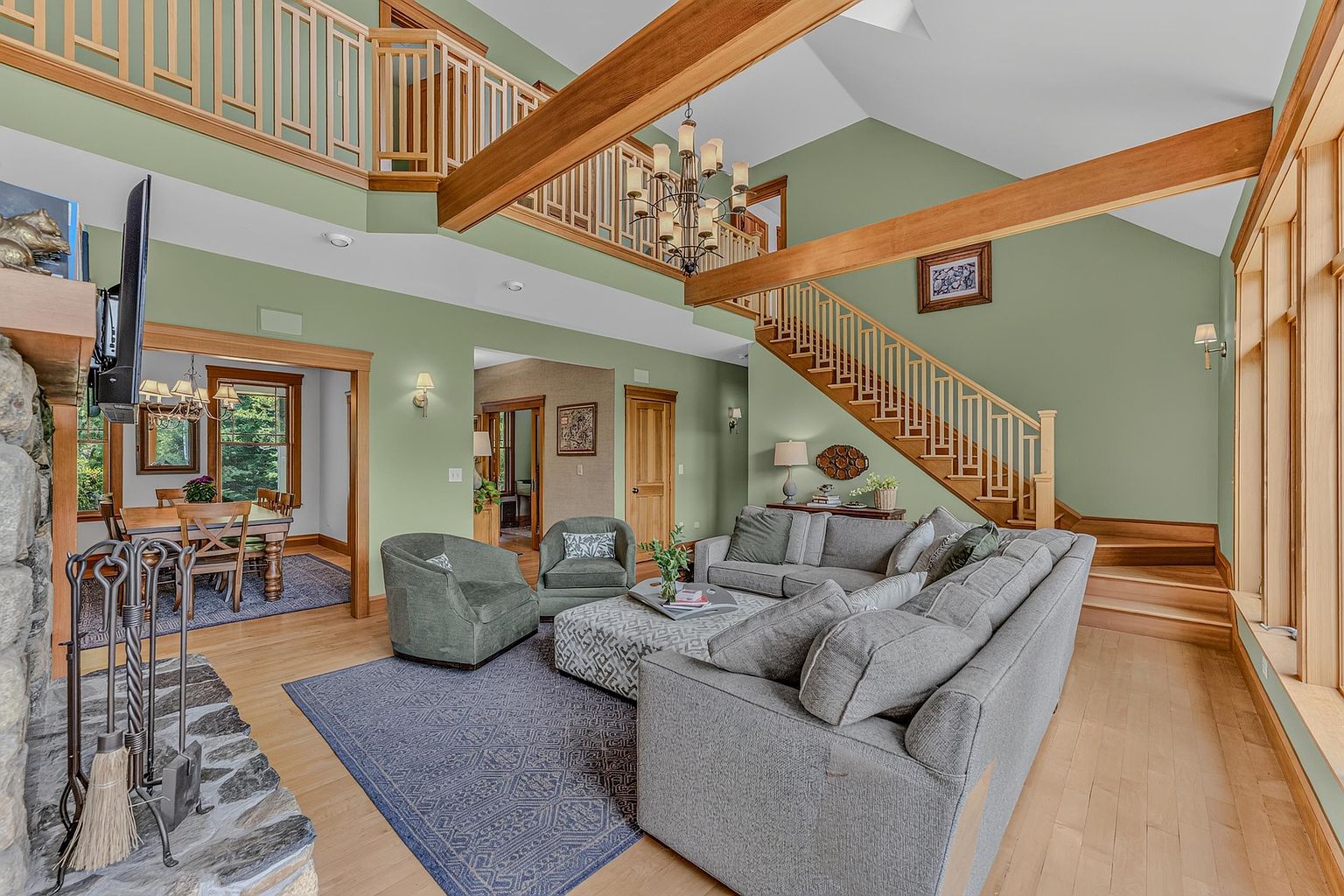
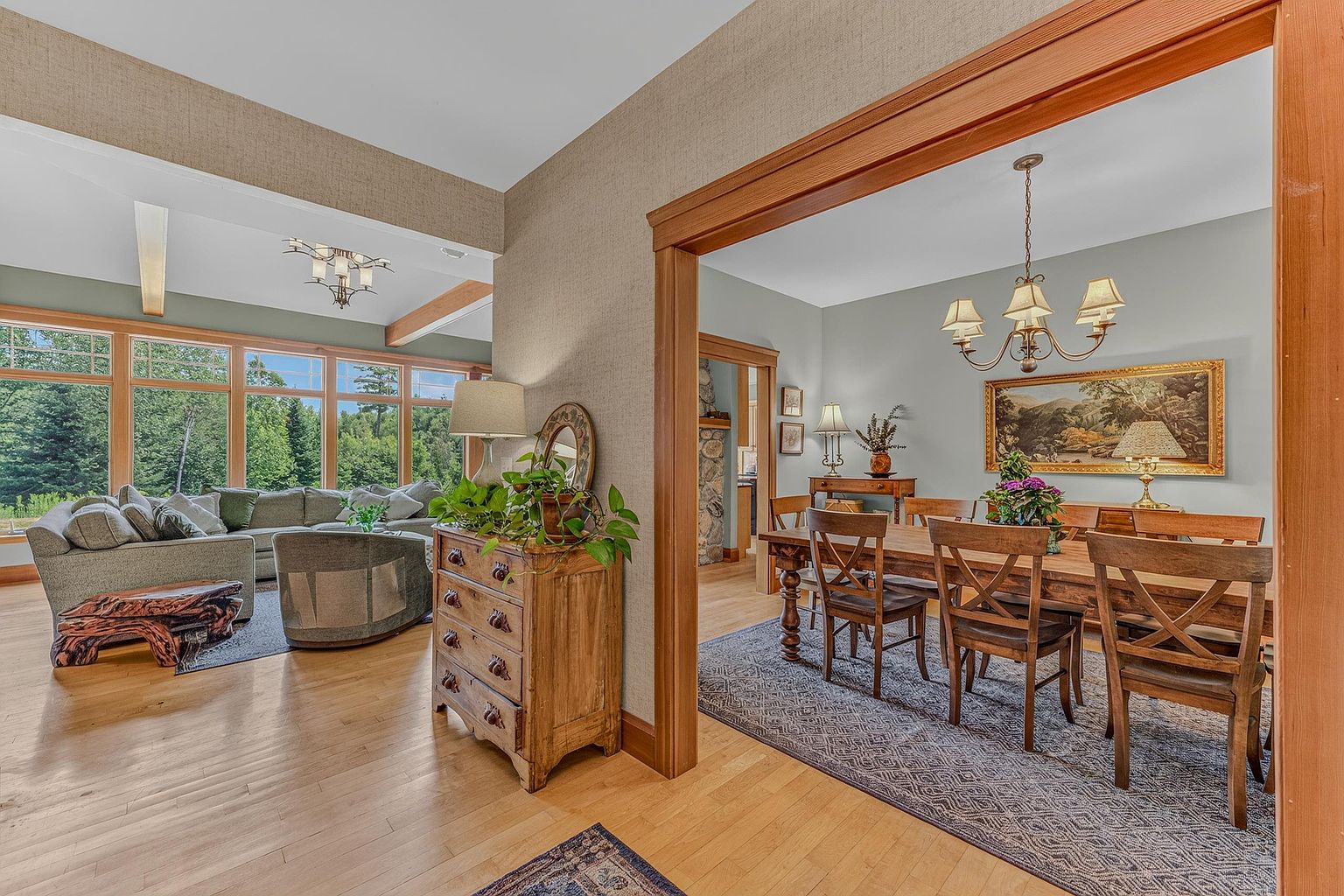
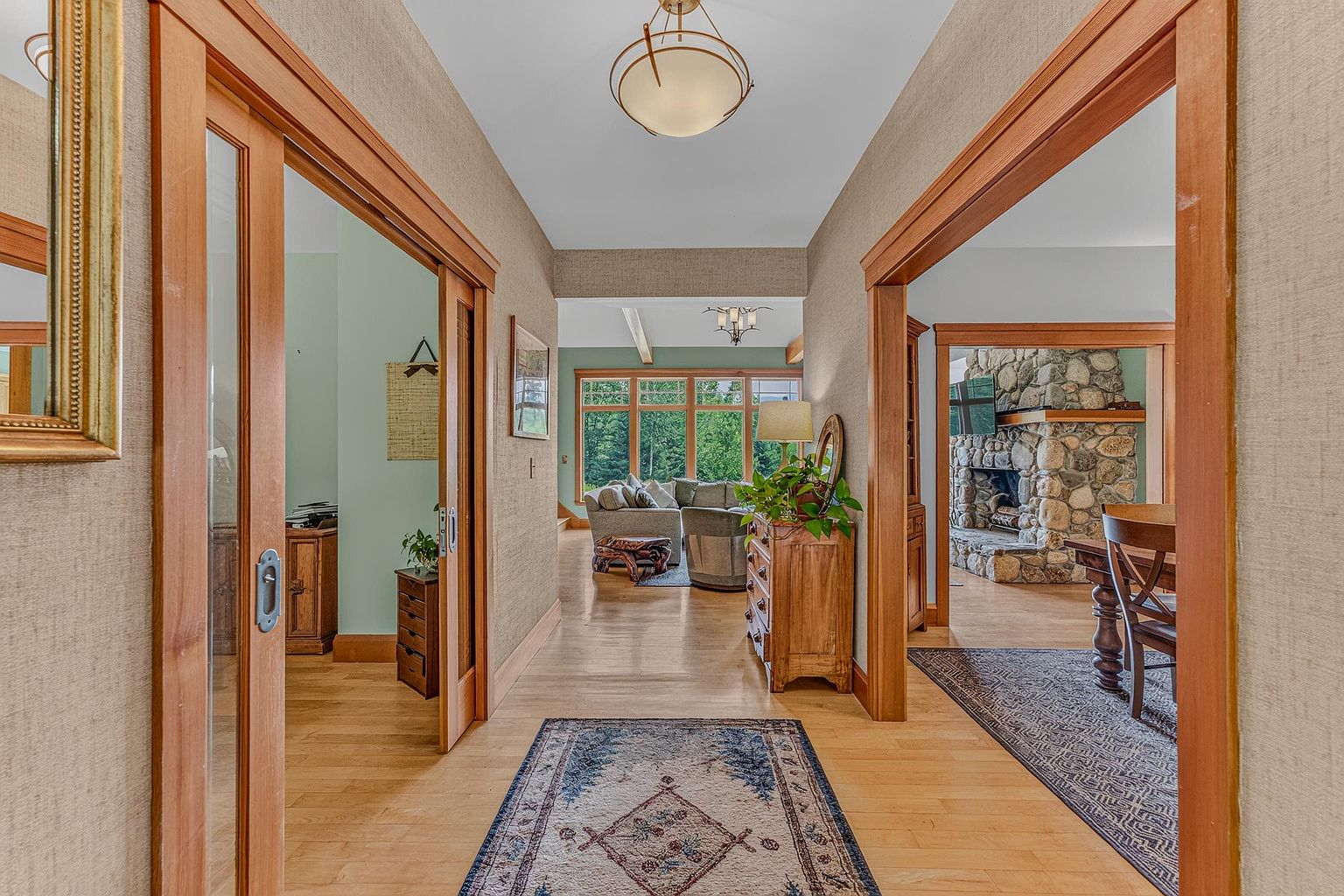
Step inside and the floor-to-ceiling fieldstone fireplace commands immediate attention. It is the kind of architectural gesture that earns its place: substantial, hand-laid, and warm in every sense, it anchors the living room without overwhelming the airy vaulted space above, where exposed wooden beams trace the roofline and draw the eye upward. Beneath your feet, radiant-heat hardwoods run throughout the main level — a detail that reveals itself slowly on a cold February morning and never stops feeling like a small luxury.
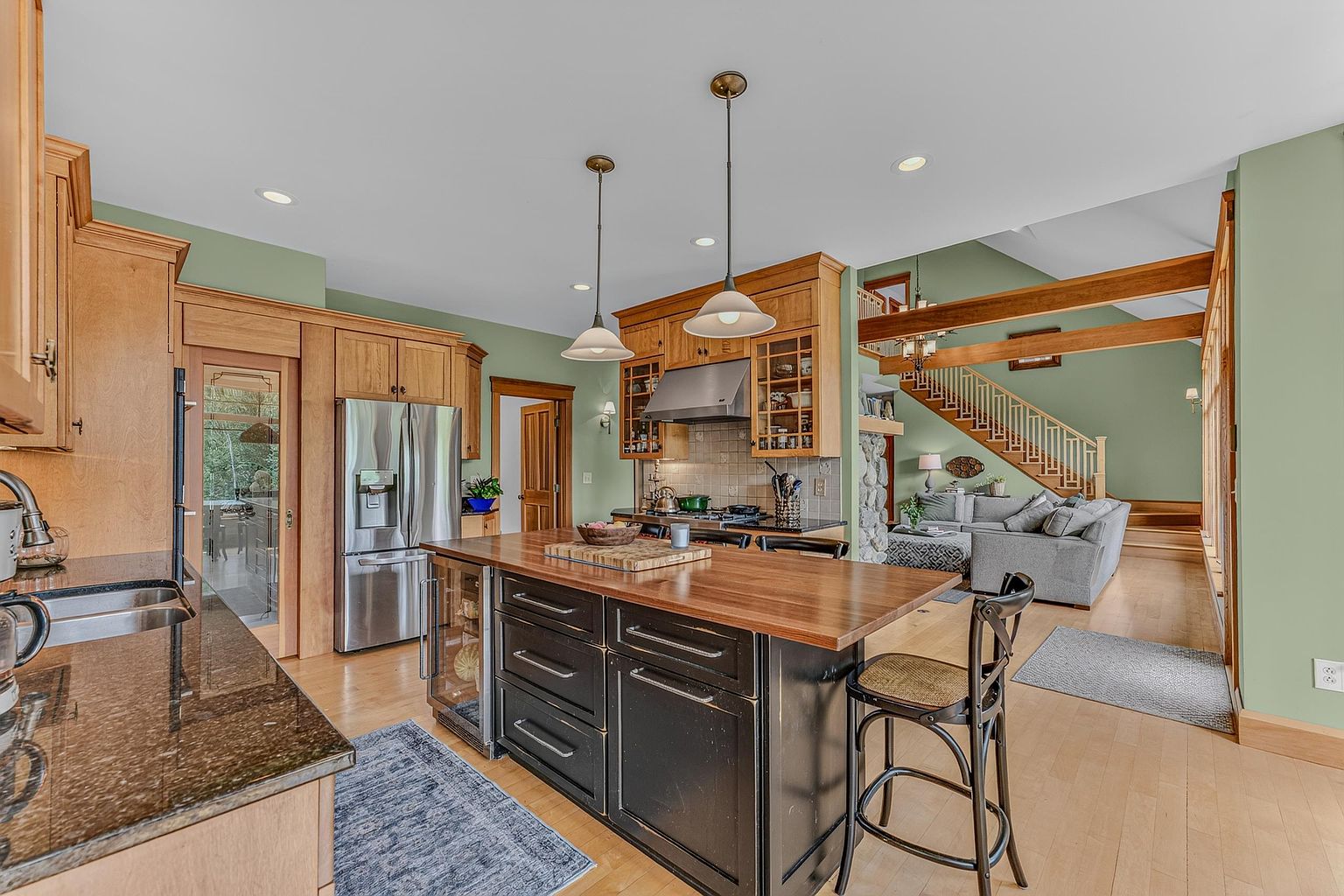
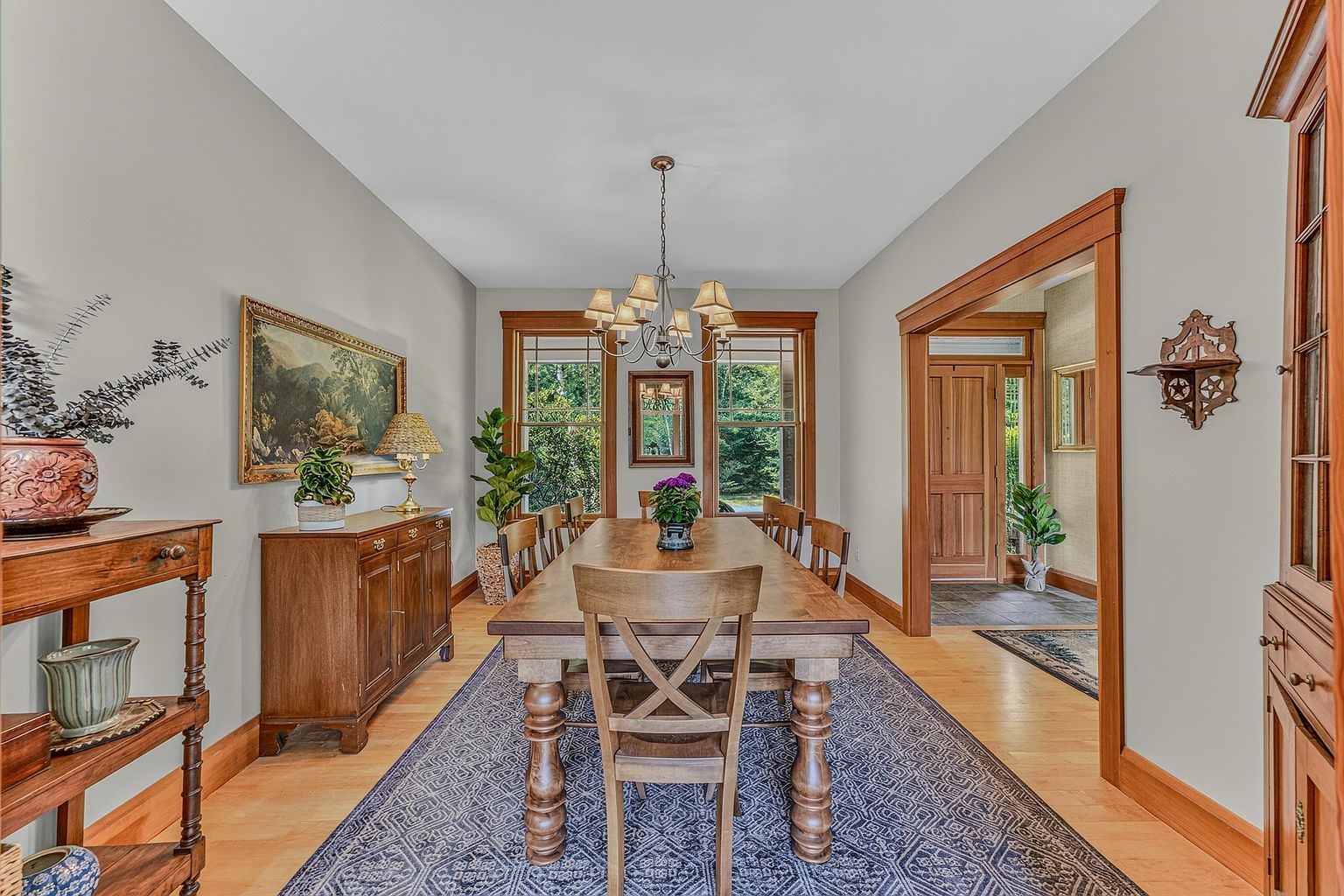
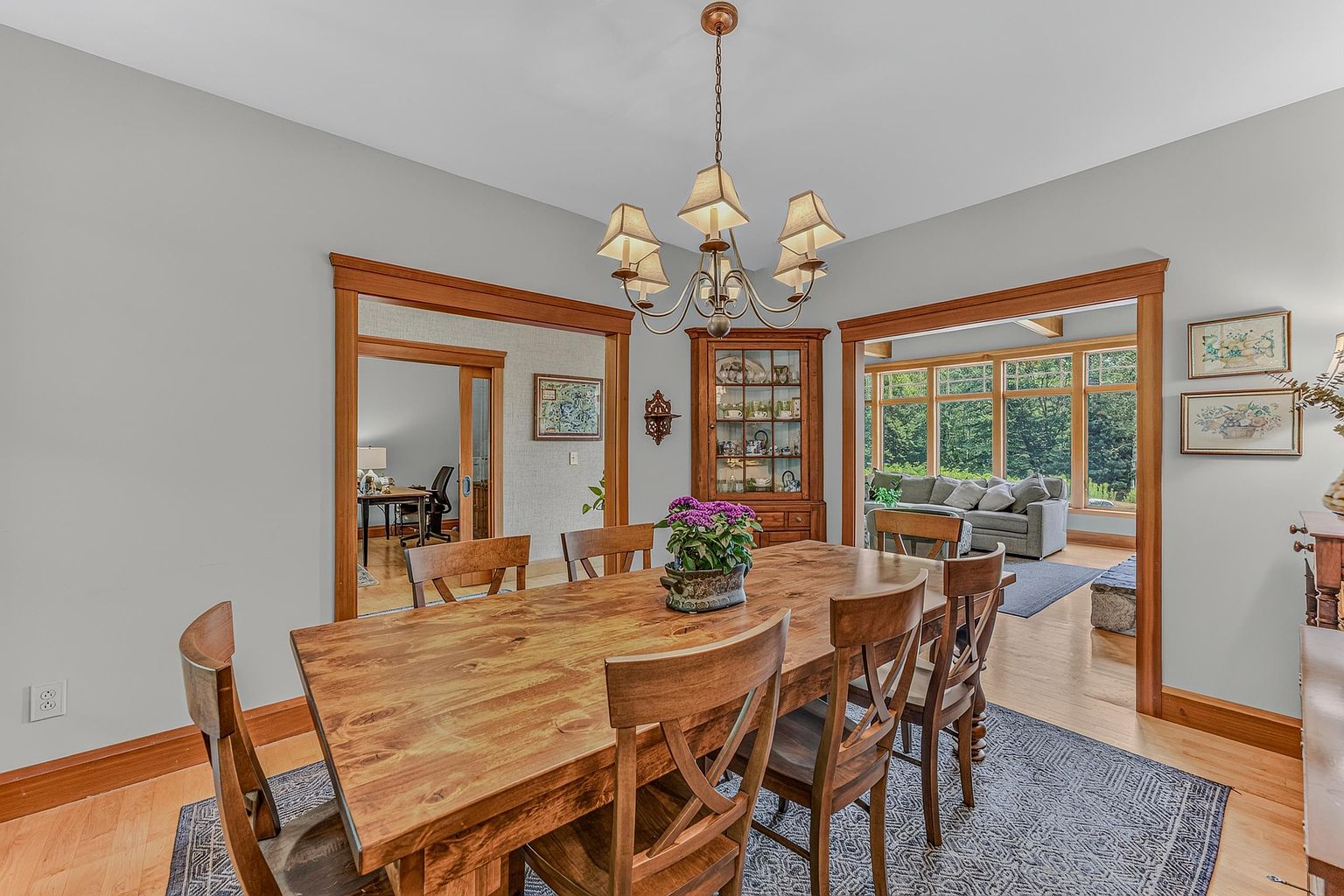
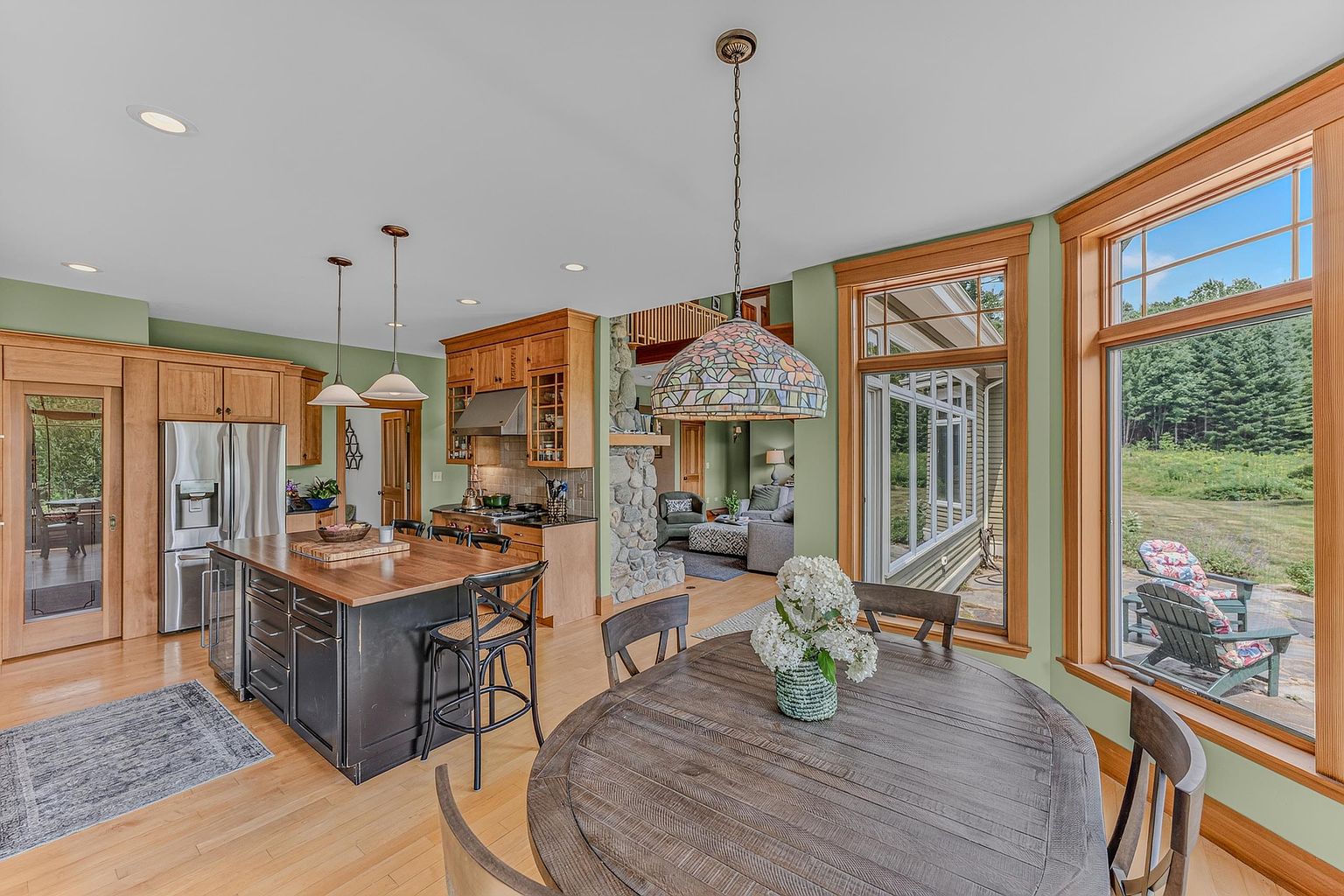
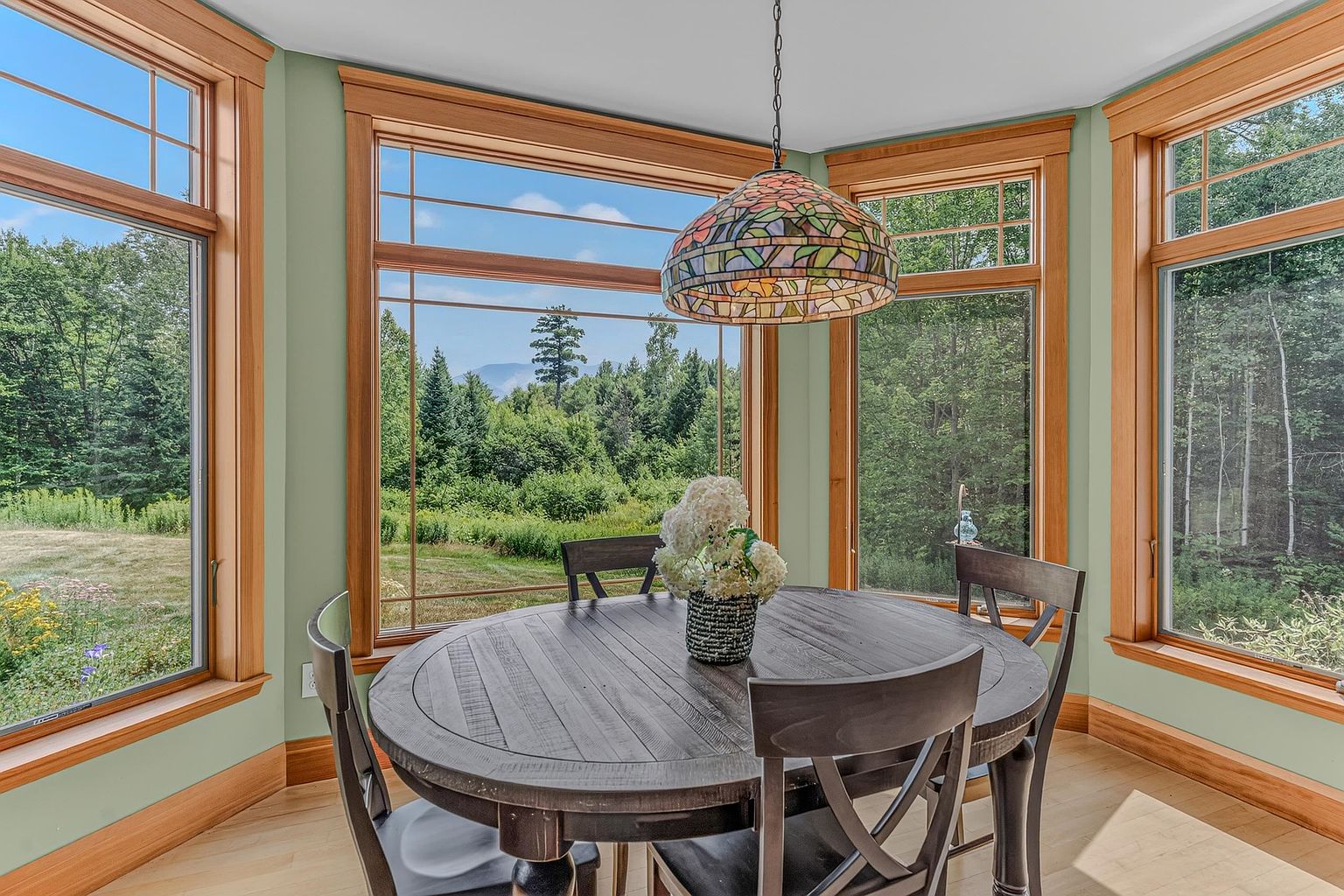
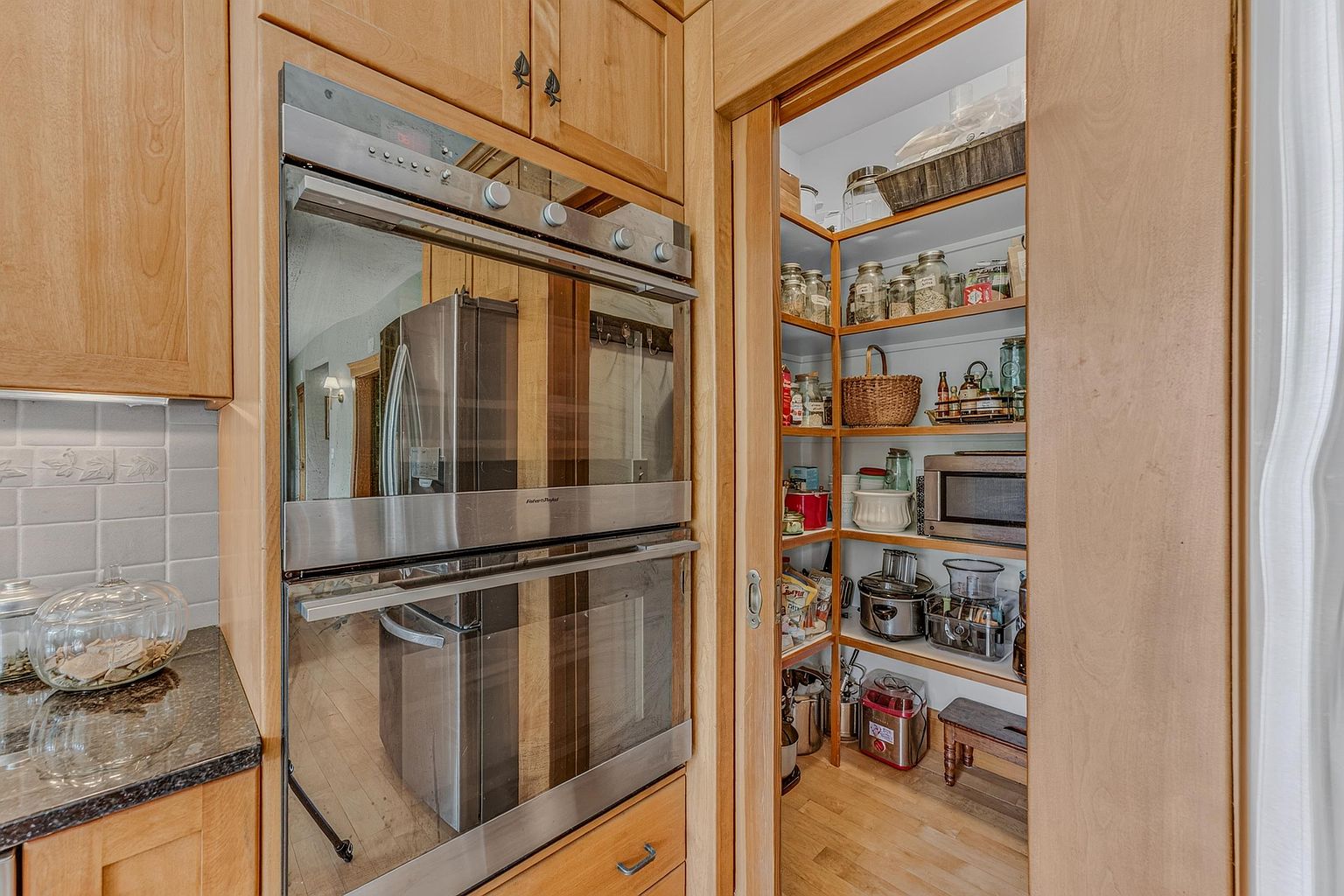
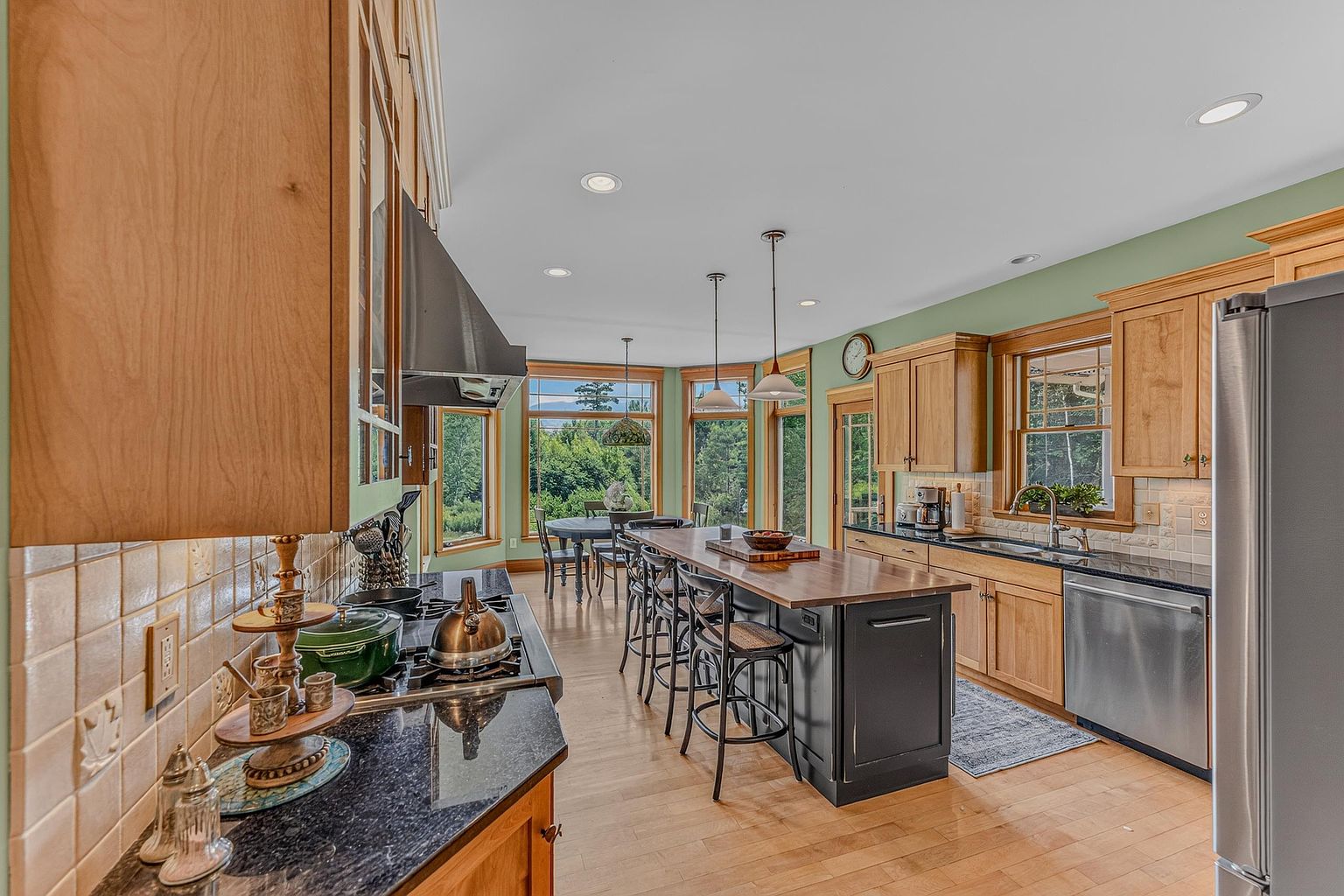
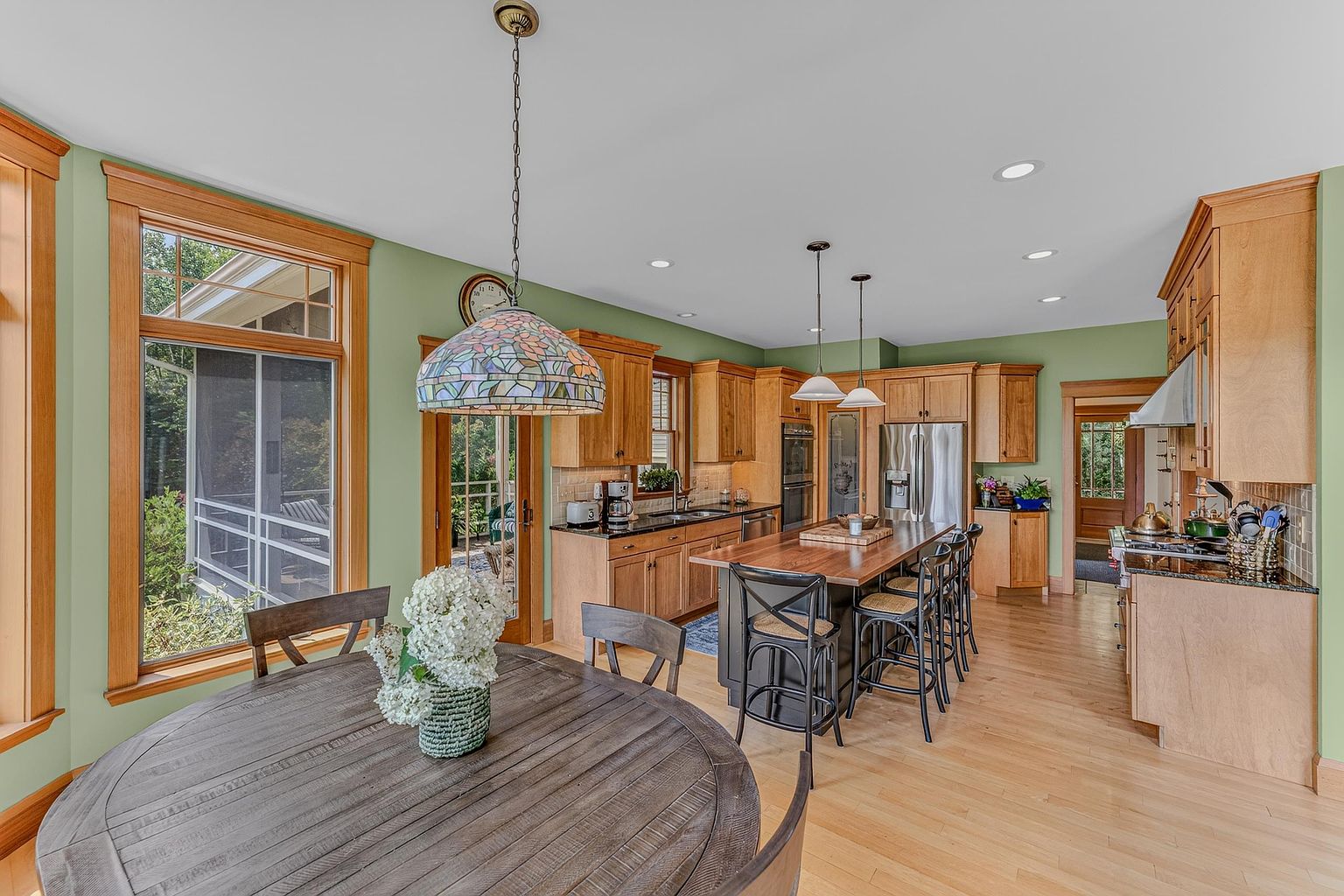
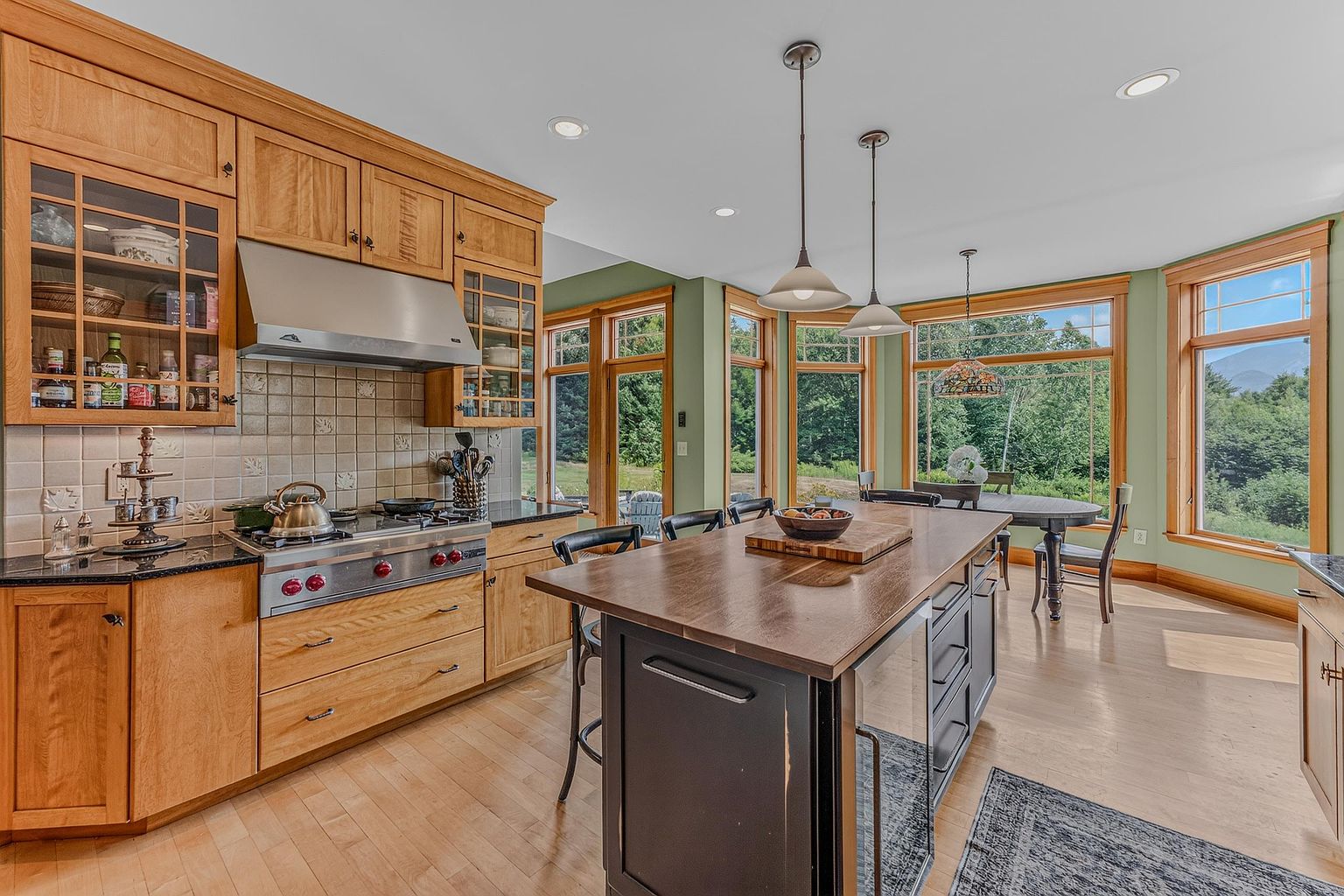
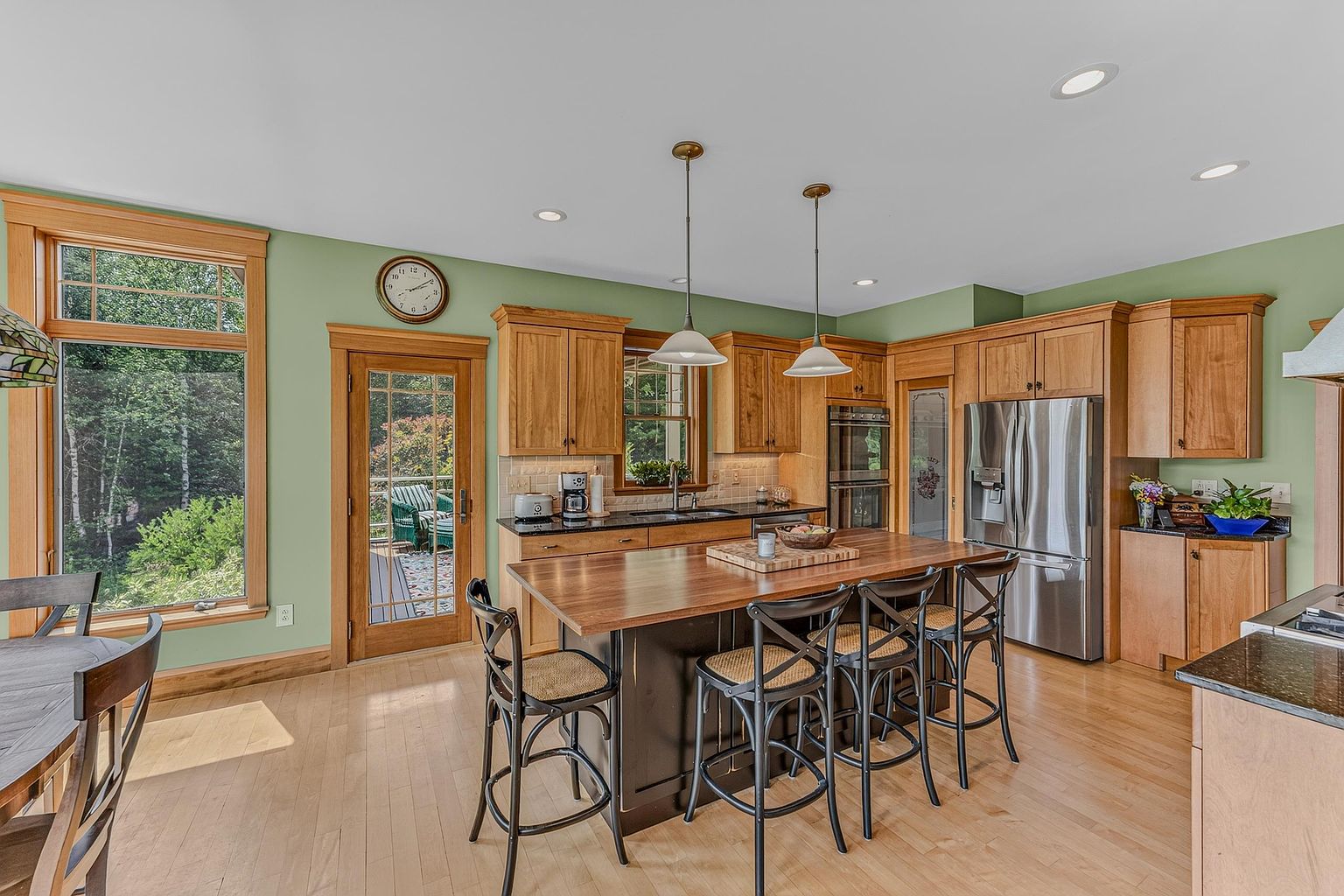
The kitchen is built for people who actually cook. A professional Wolf range sits at its center, framed by fir cabinetry that brings a distinctly New England warmth to the space and dark stone countertops that ground it. A large island with a wood-topped surface provides both workspace and gathering place, and a walk-in pantry — stocked and organized, its shelves deep and its door discreetly positioned beside the double wall ovens — ensures that the room functions as well as it looks. A stained-glass pendant casts soft color over the adjacent dining area, where large windows open the room to the tree line and, beyond it, the mountains.
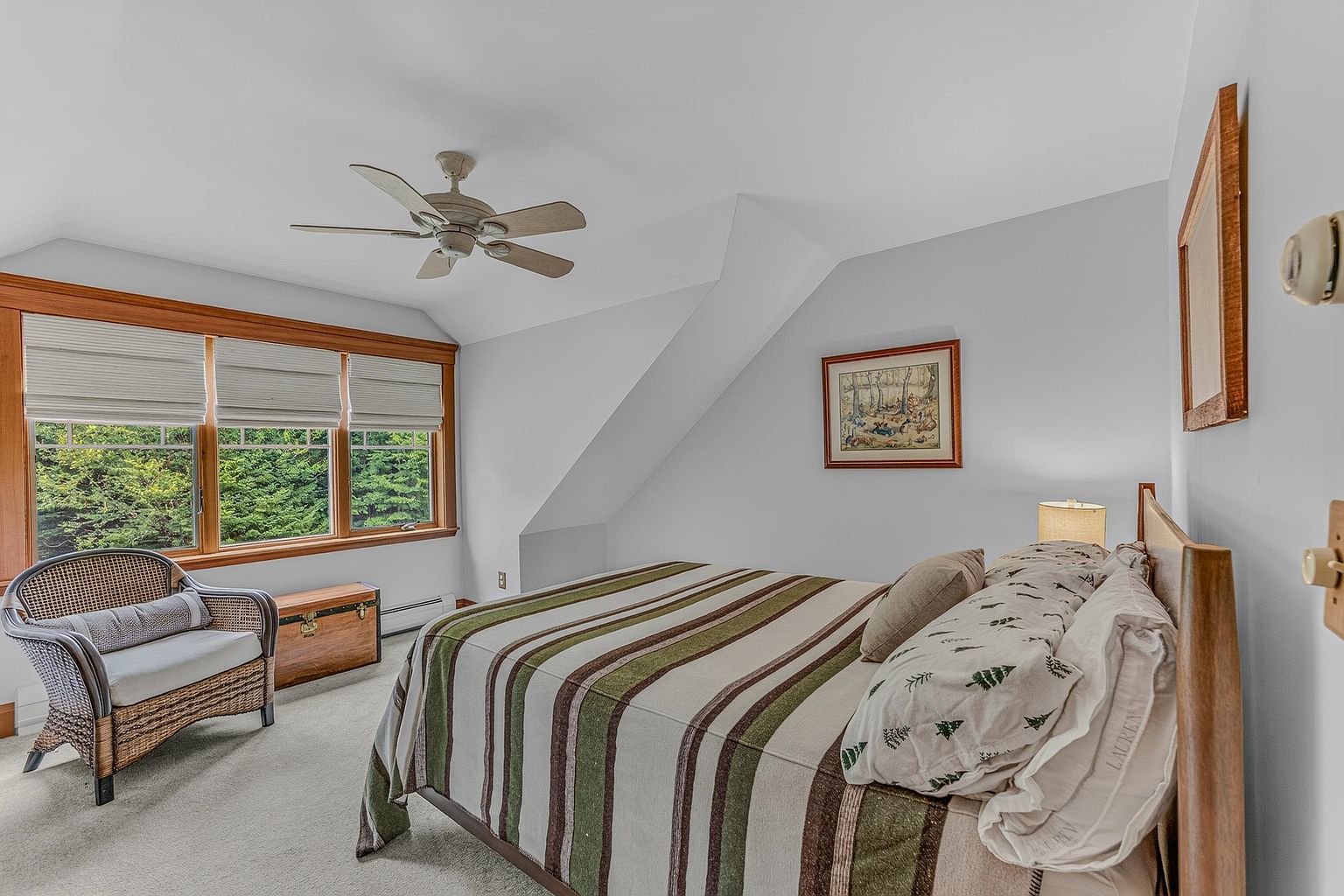
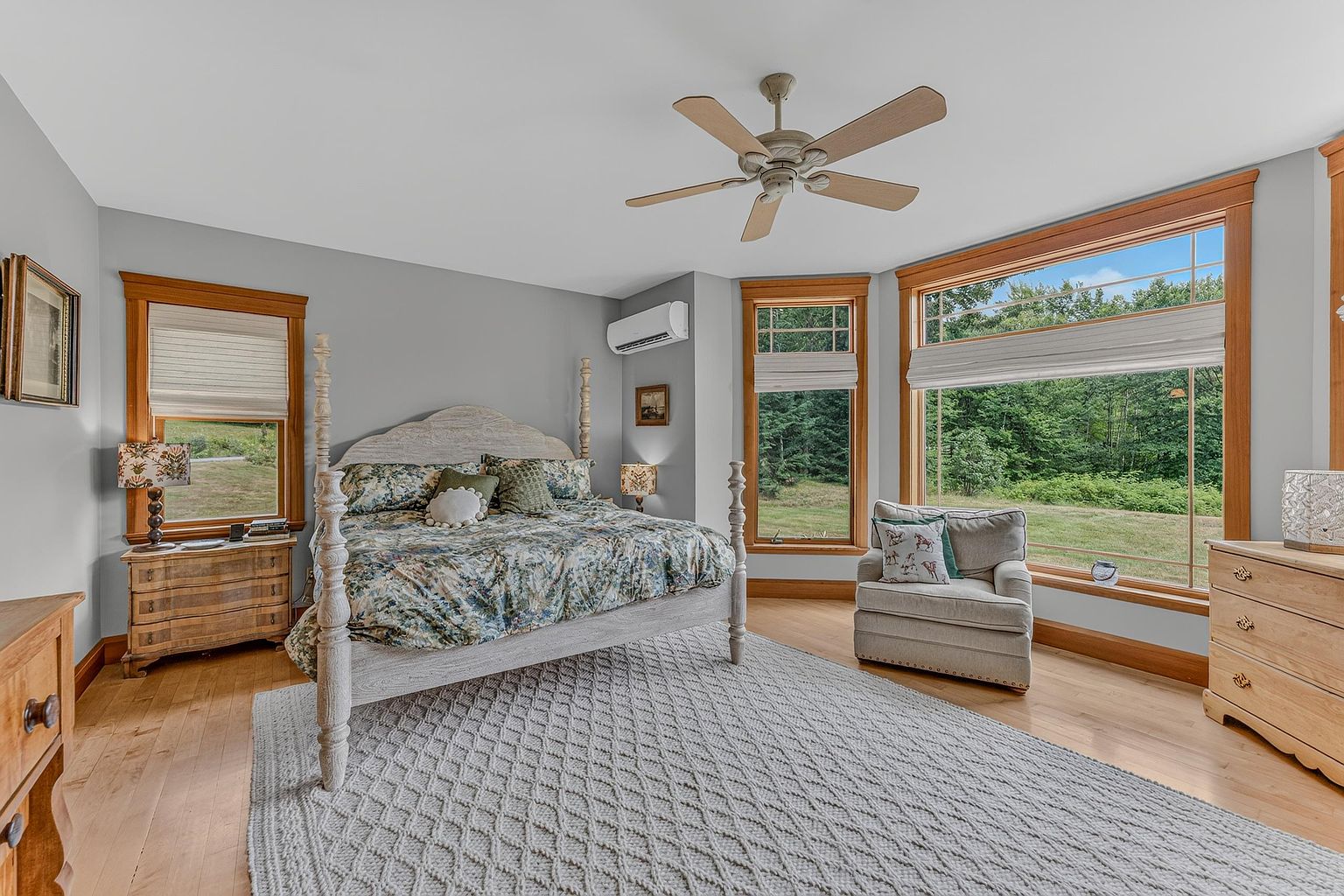
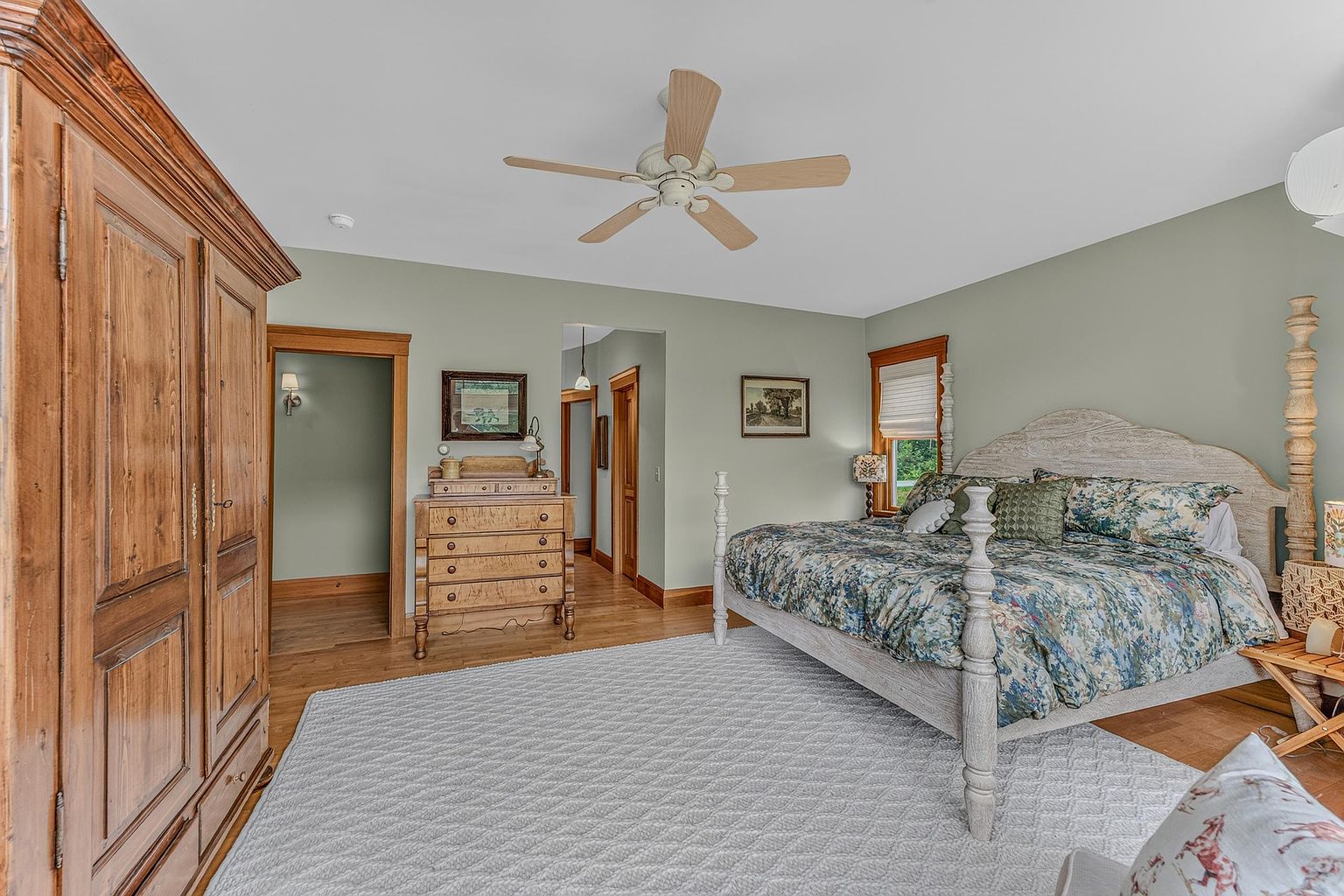
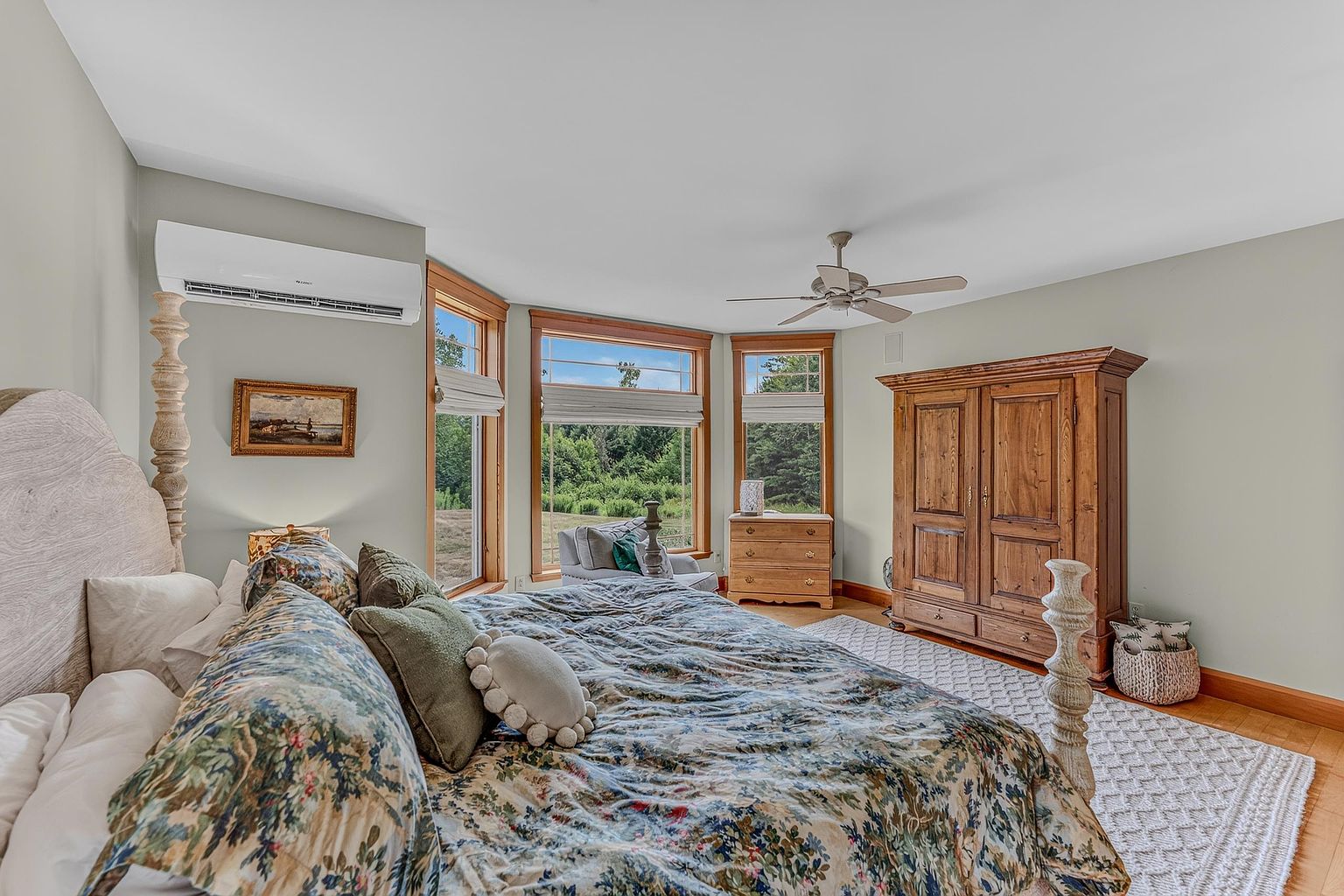
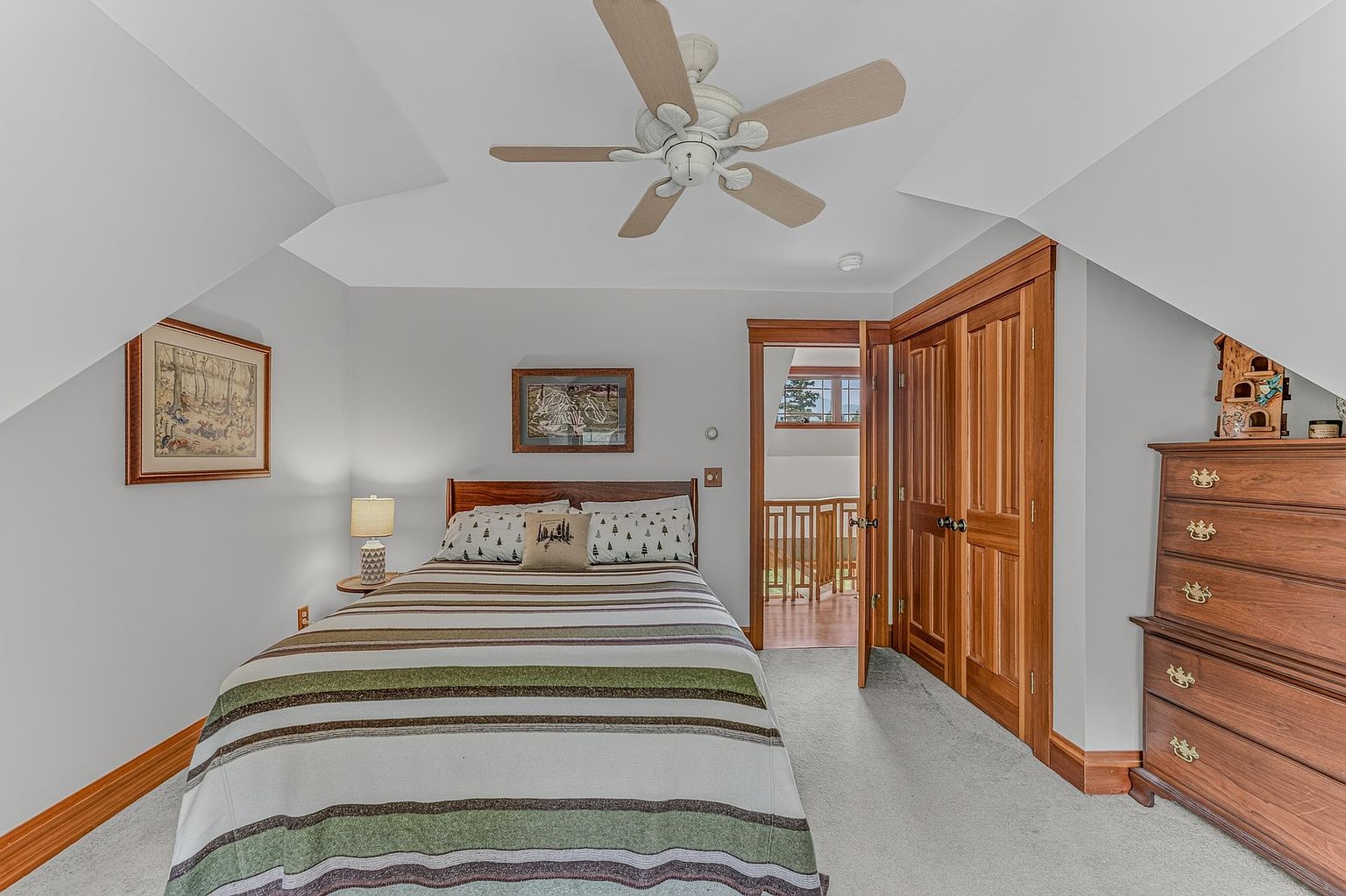
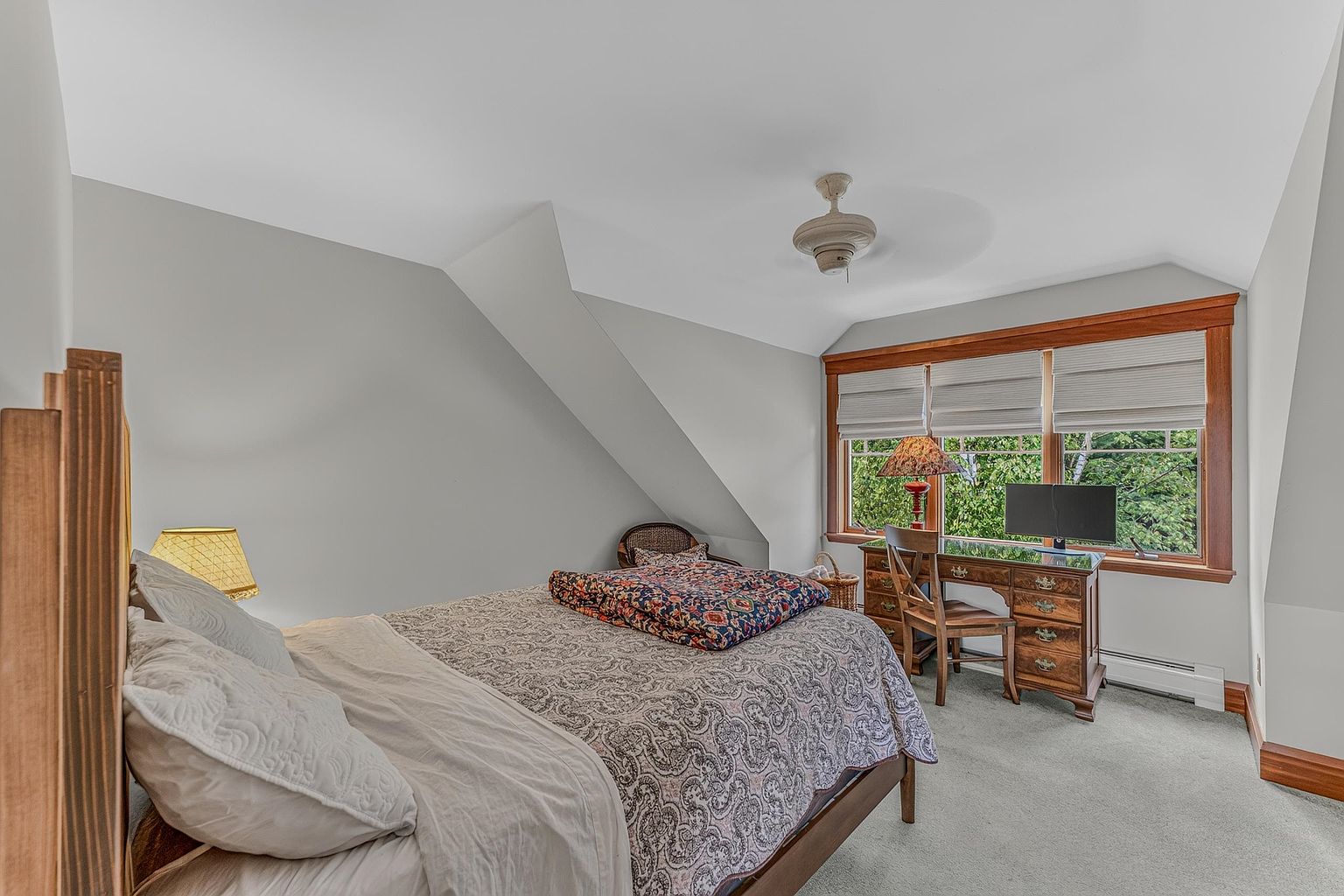
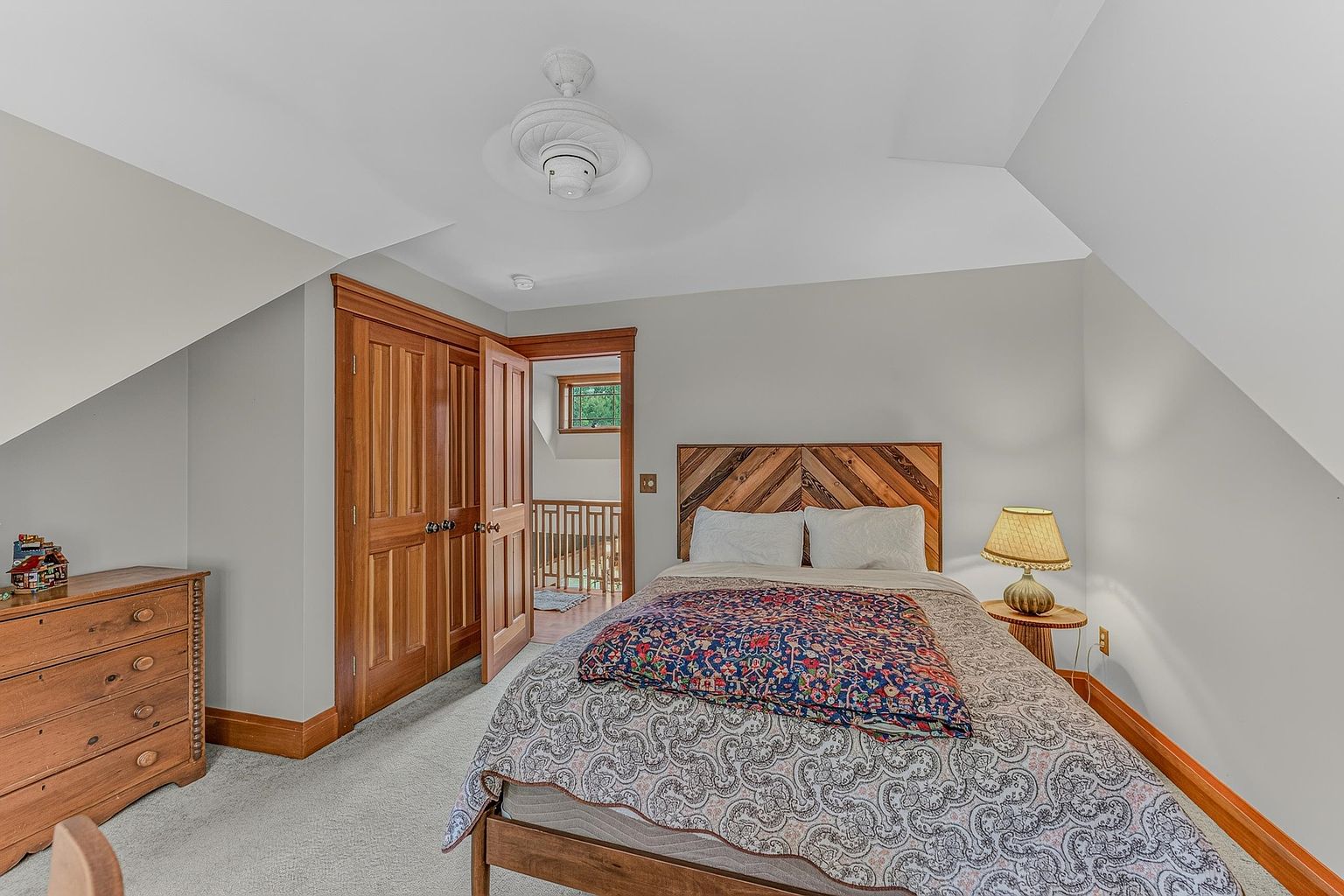
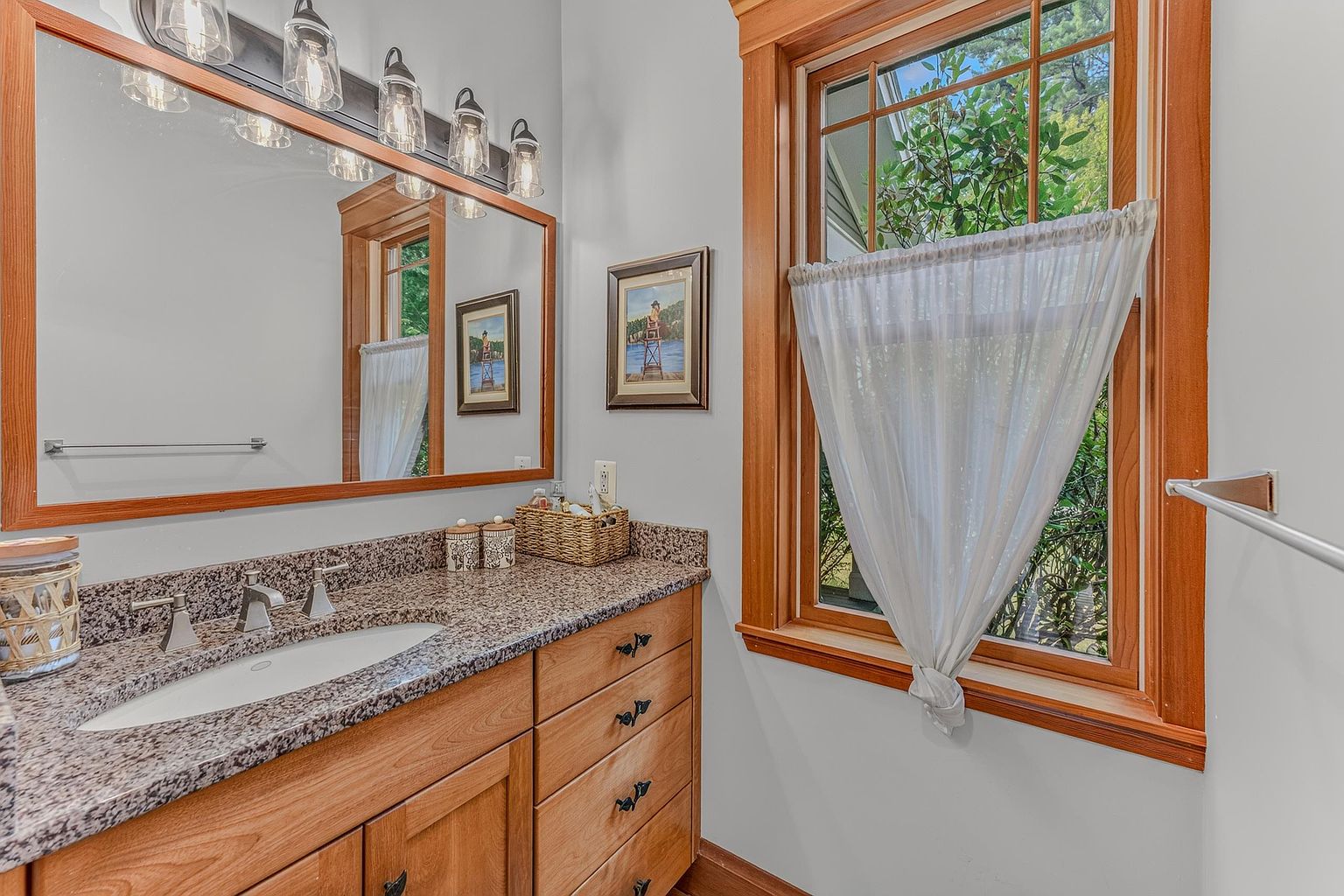
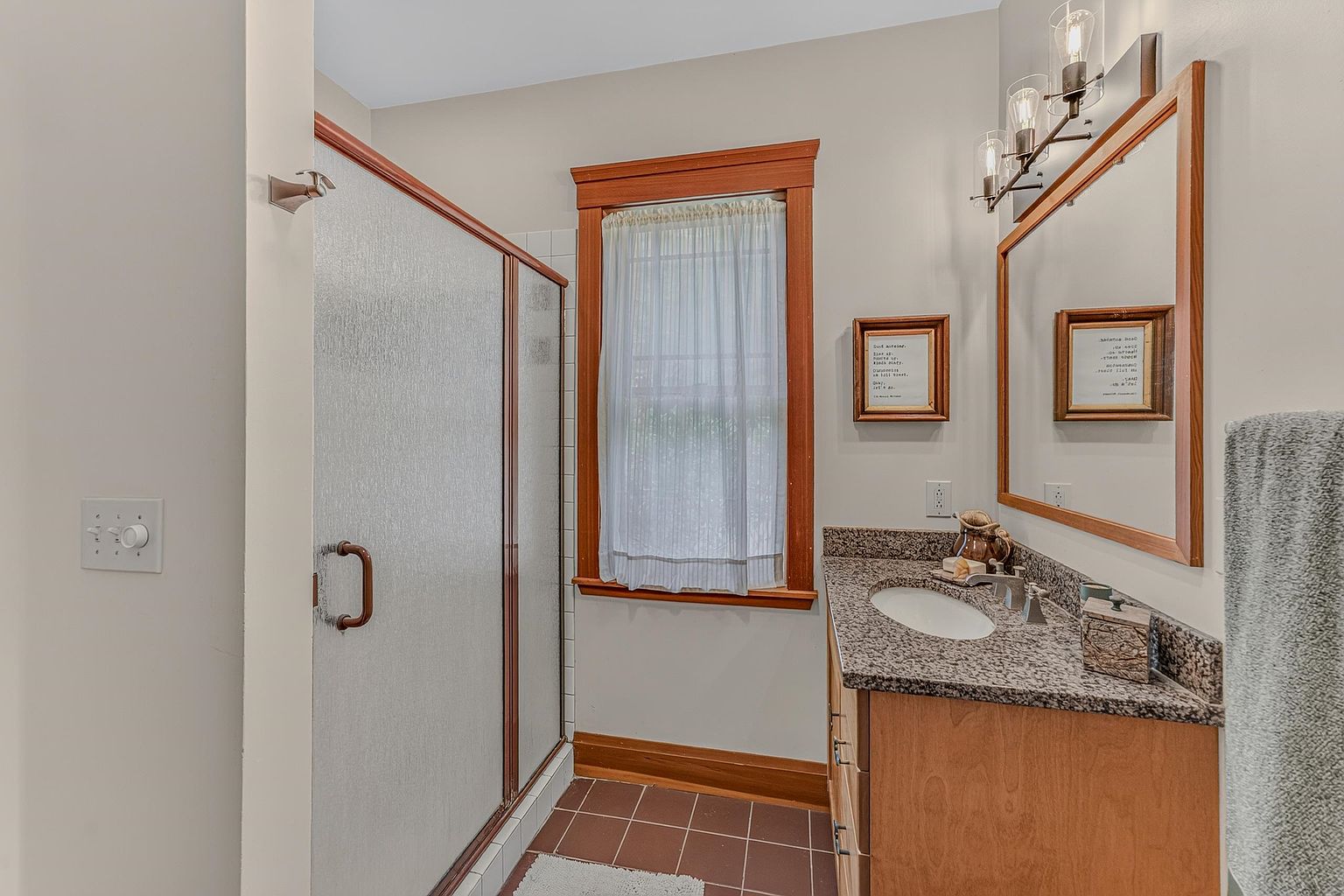
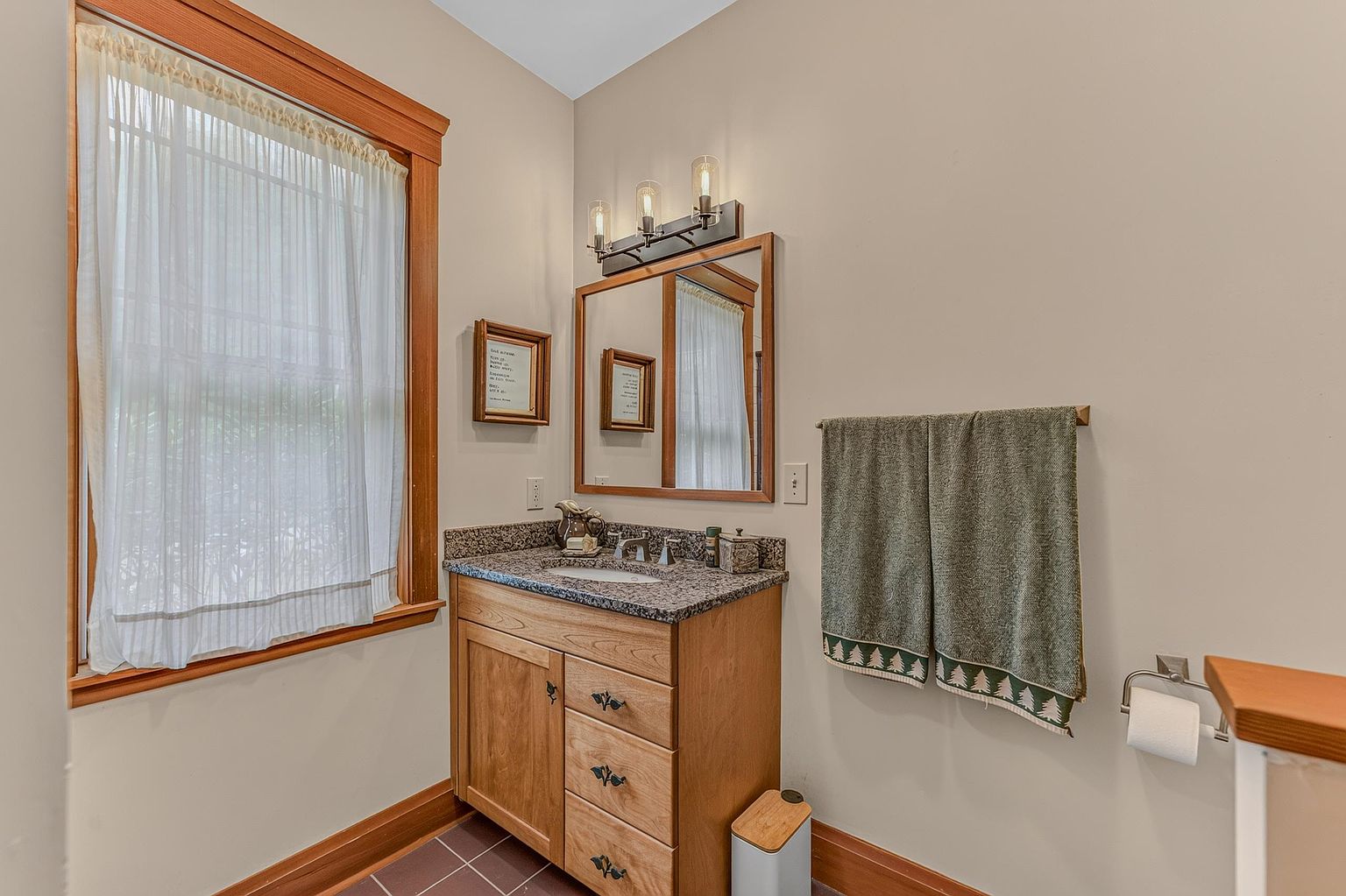
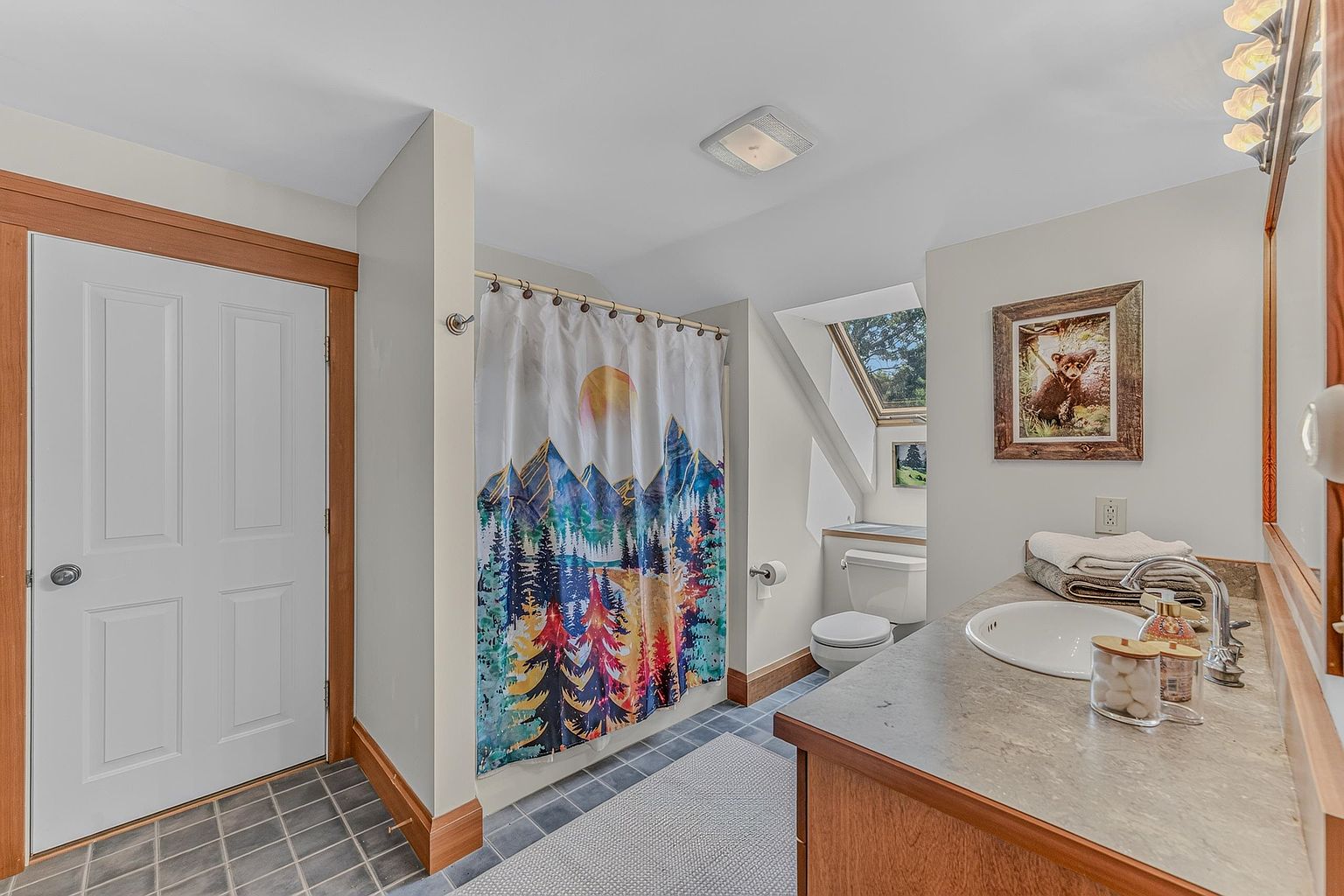
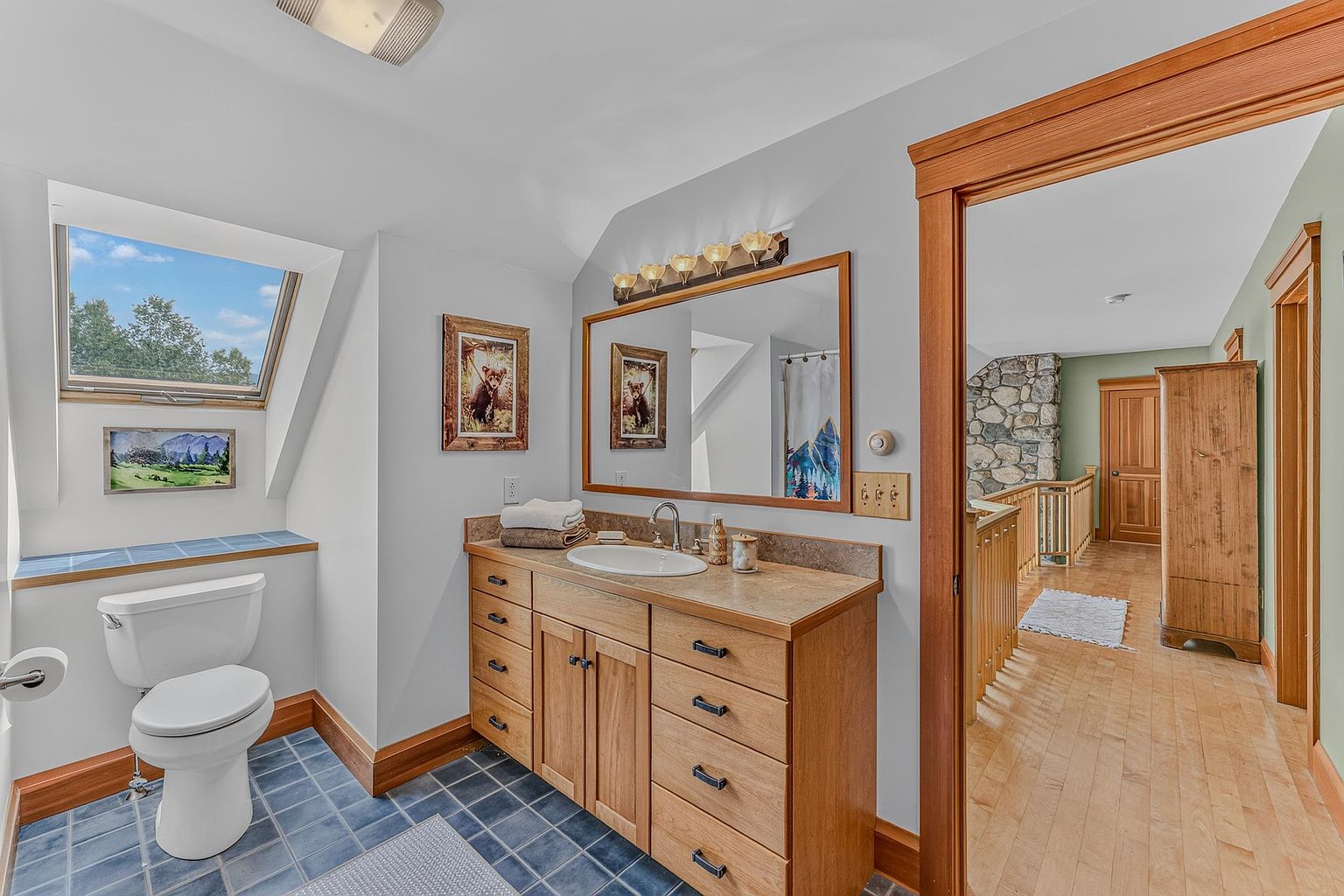
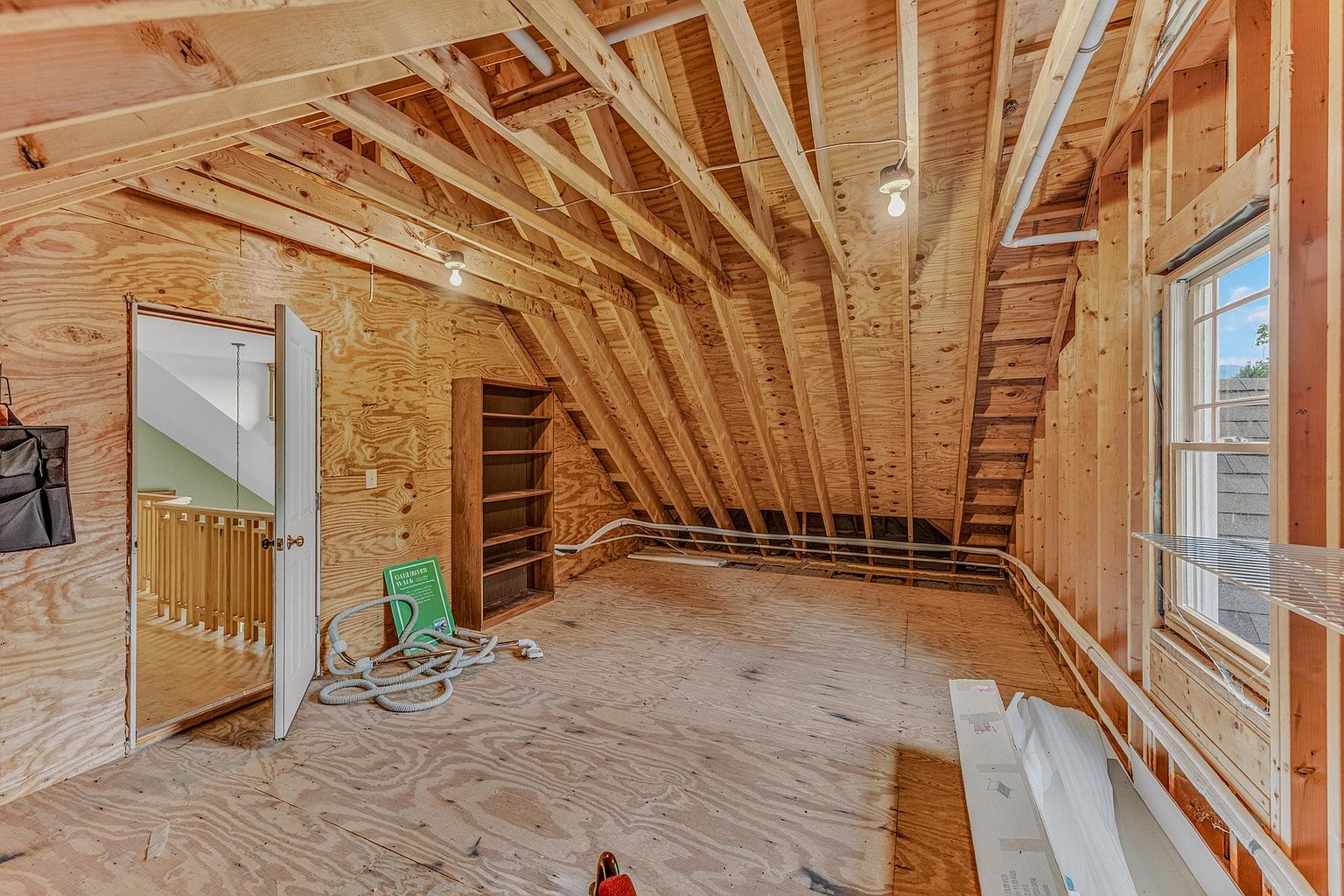
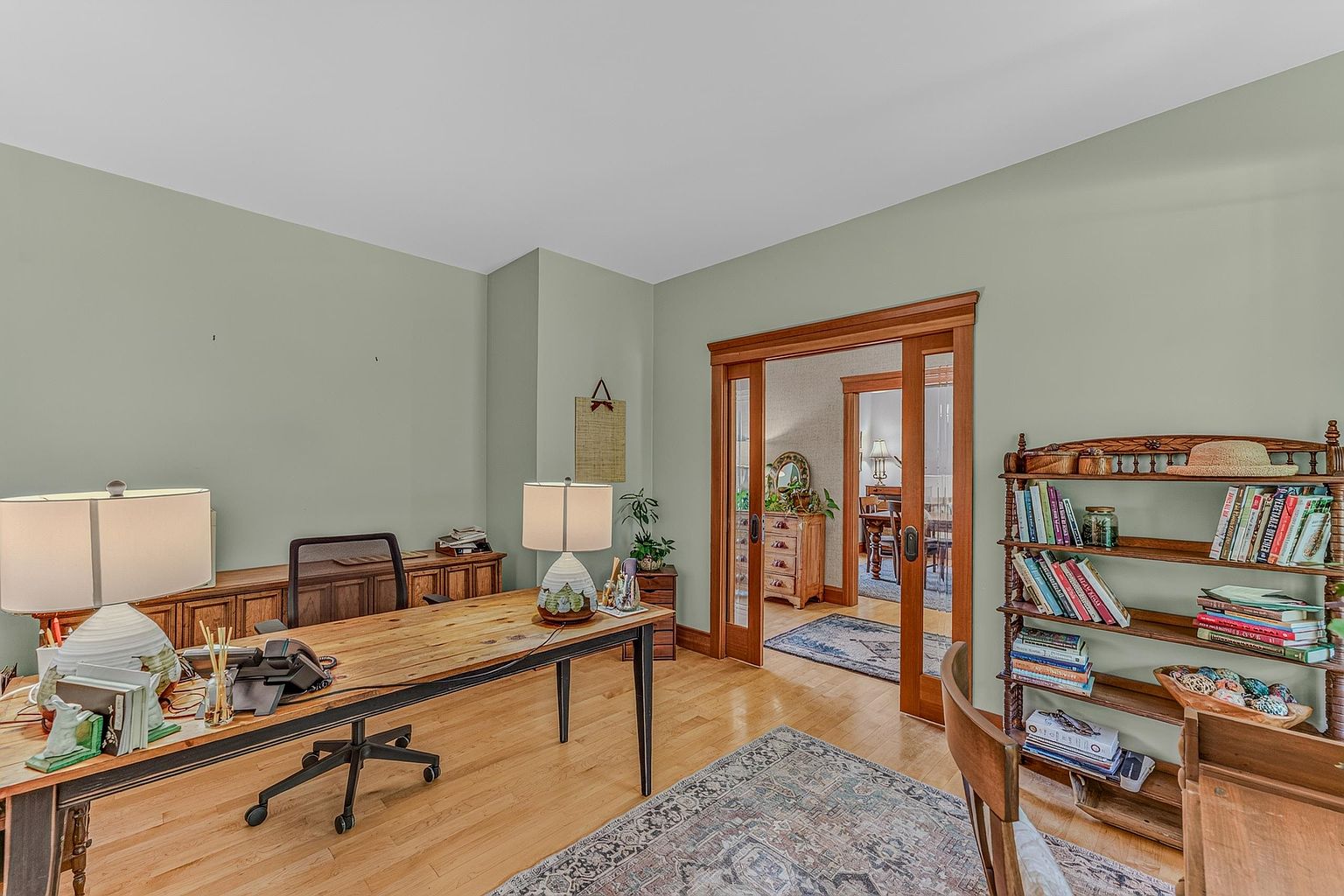
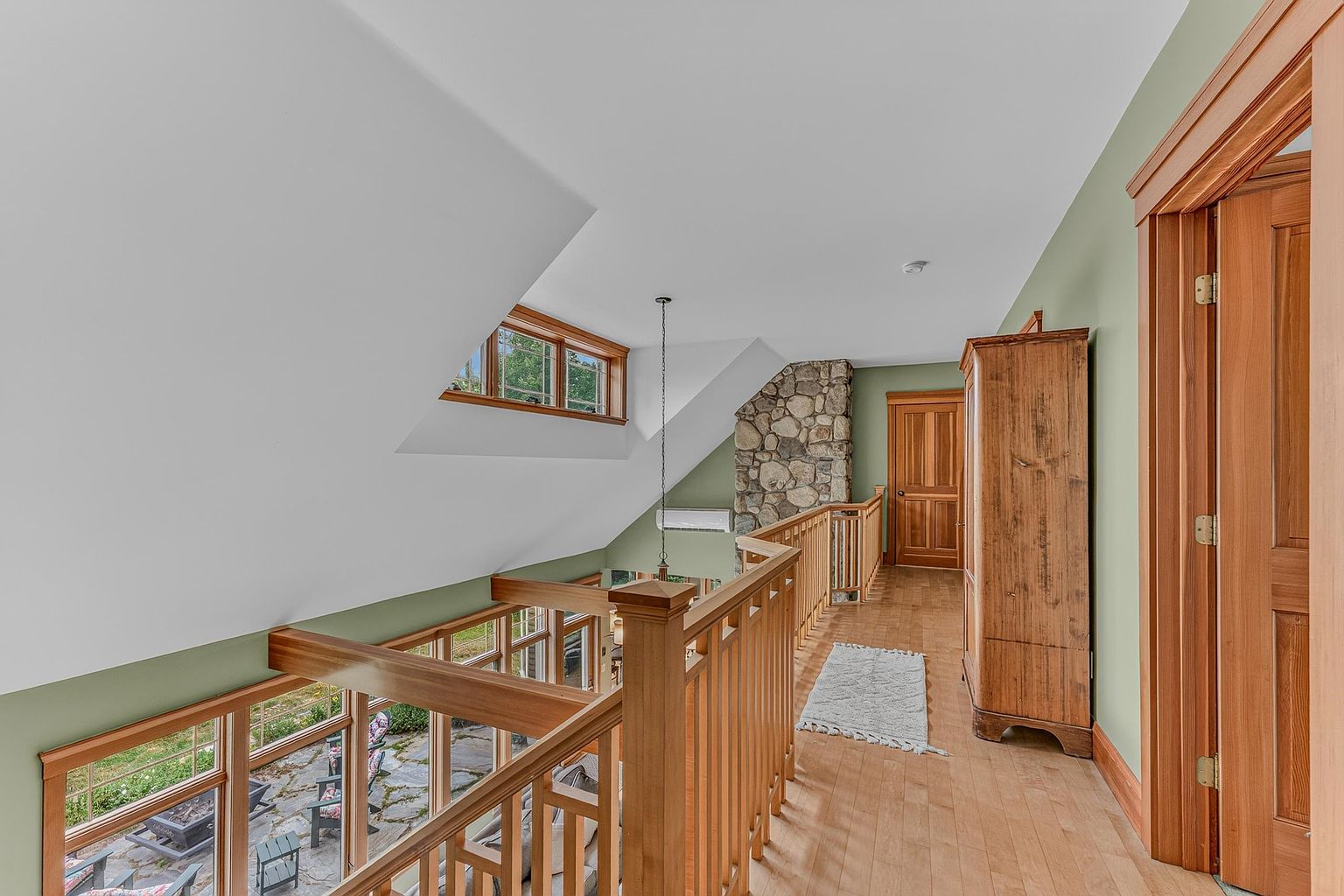
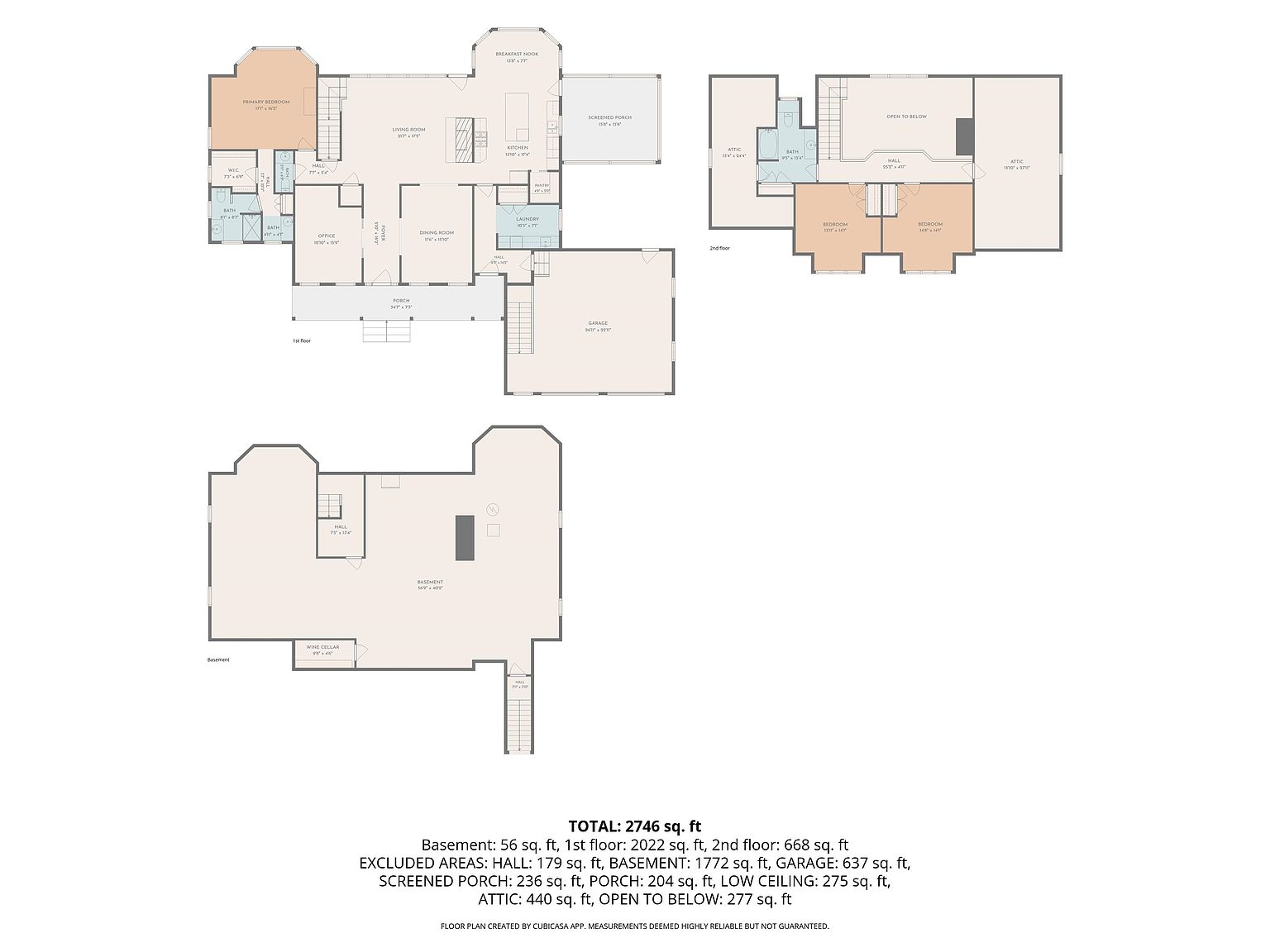
The first-floor ensuite makes single-level living entirely effortless — a genuine asset for those who want flexibility without compromise. Upstairs, two guest rooms offer comfortable privacy, each with its own character, and a full bath serves them well. A bonus room, partially finished and full of potential, presents itself readily as a third bedroom, a bunkroom, a studio, or a quiet den, depending on what life here calls for.
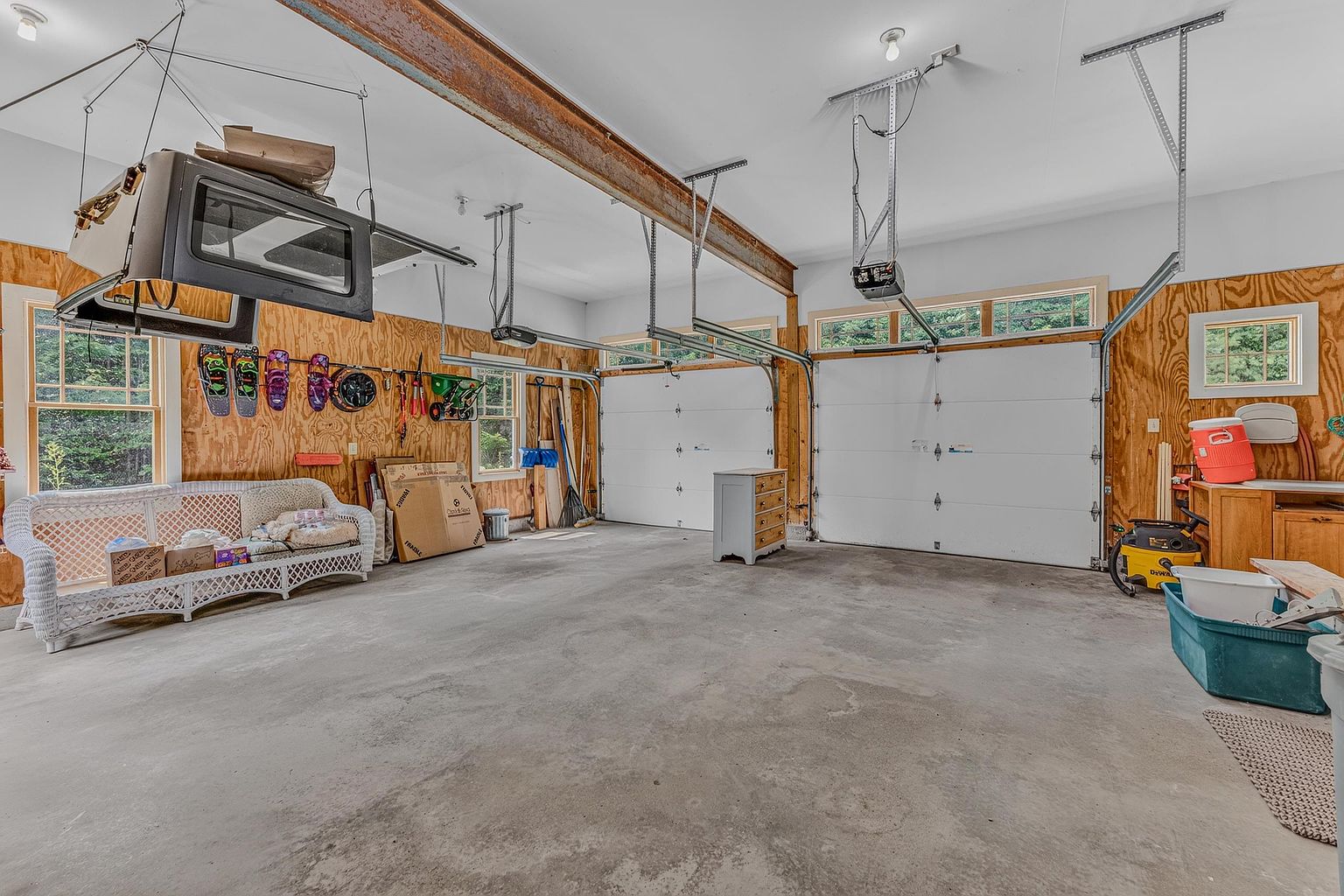
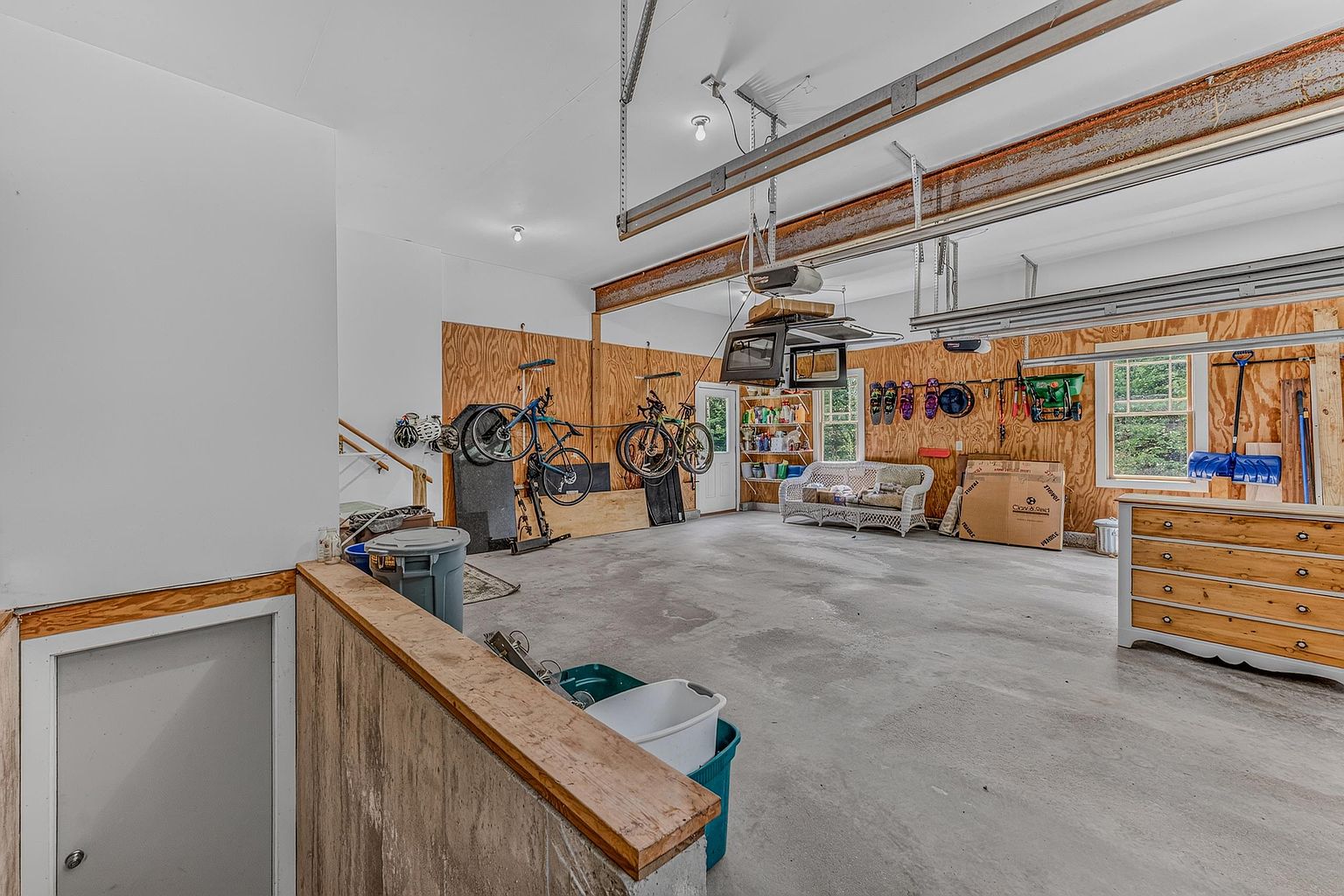
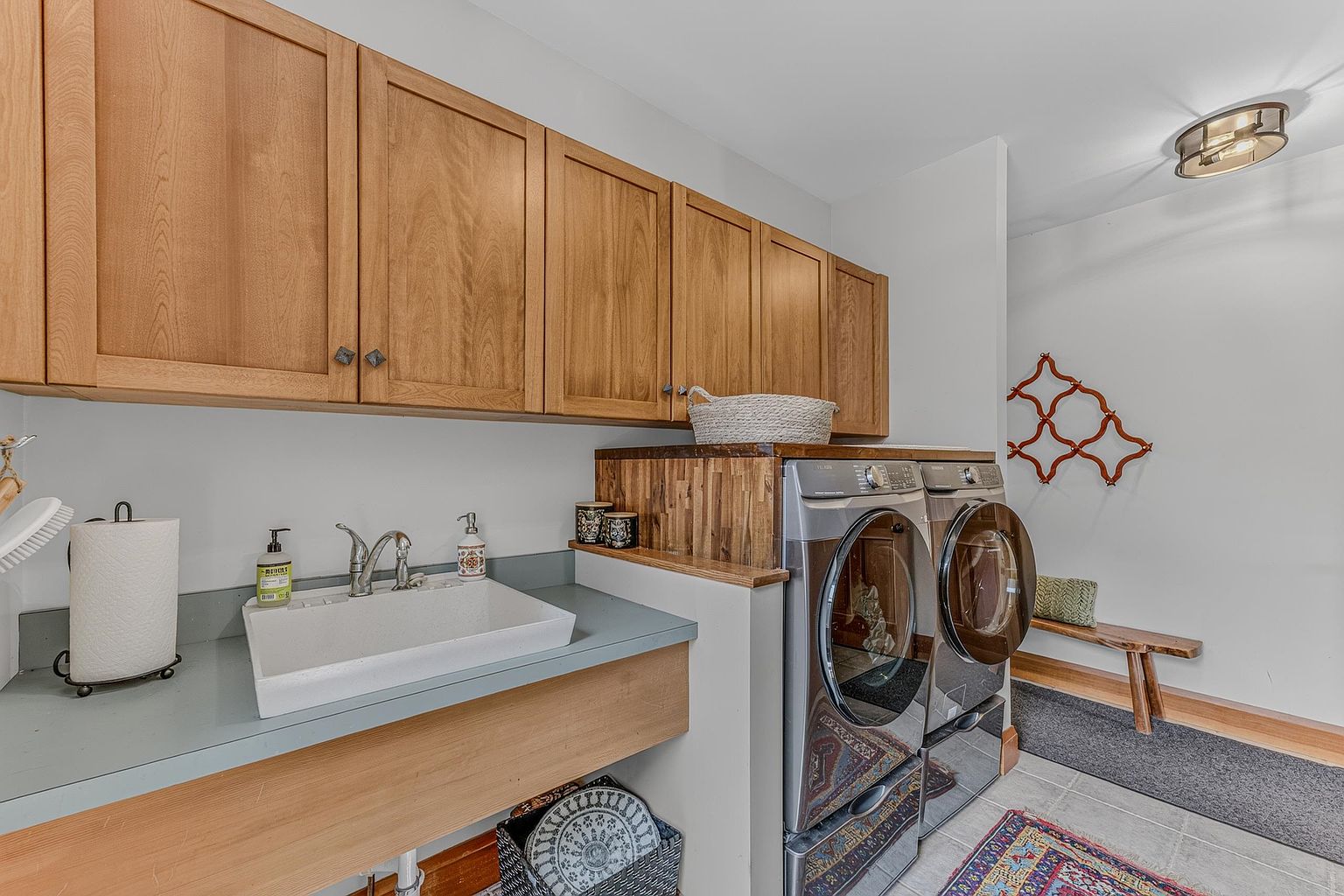
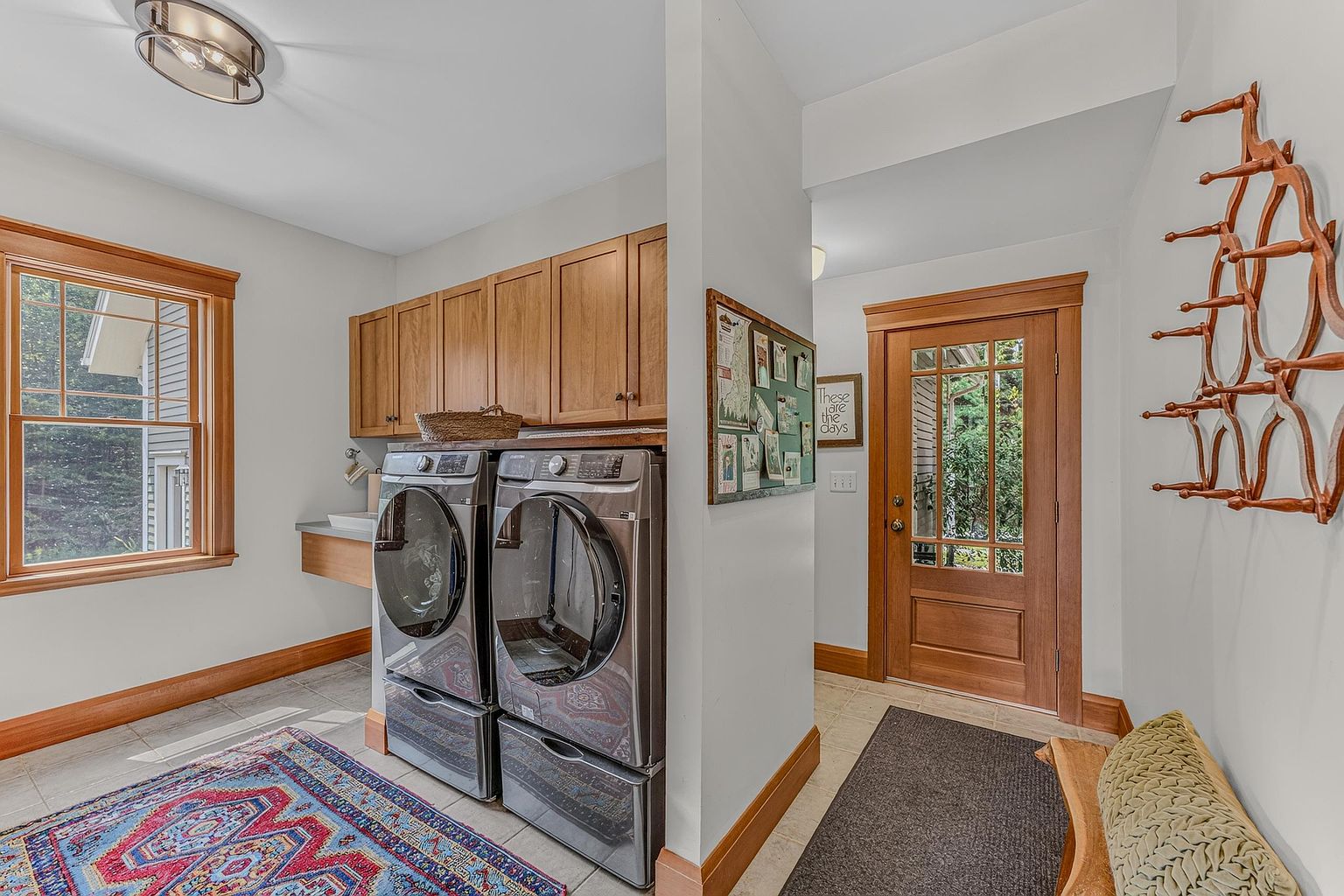
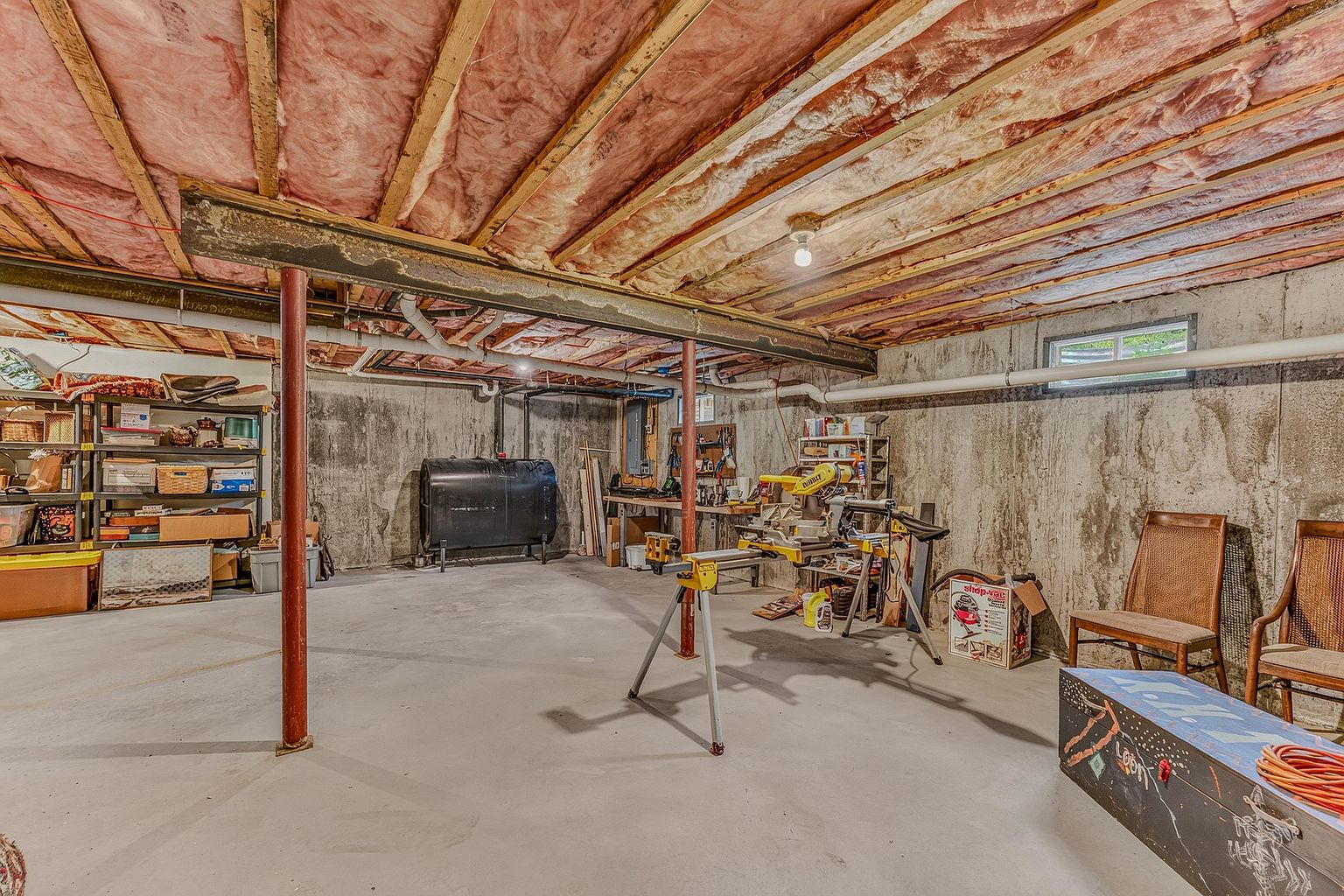
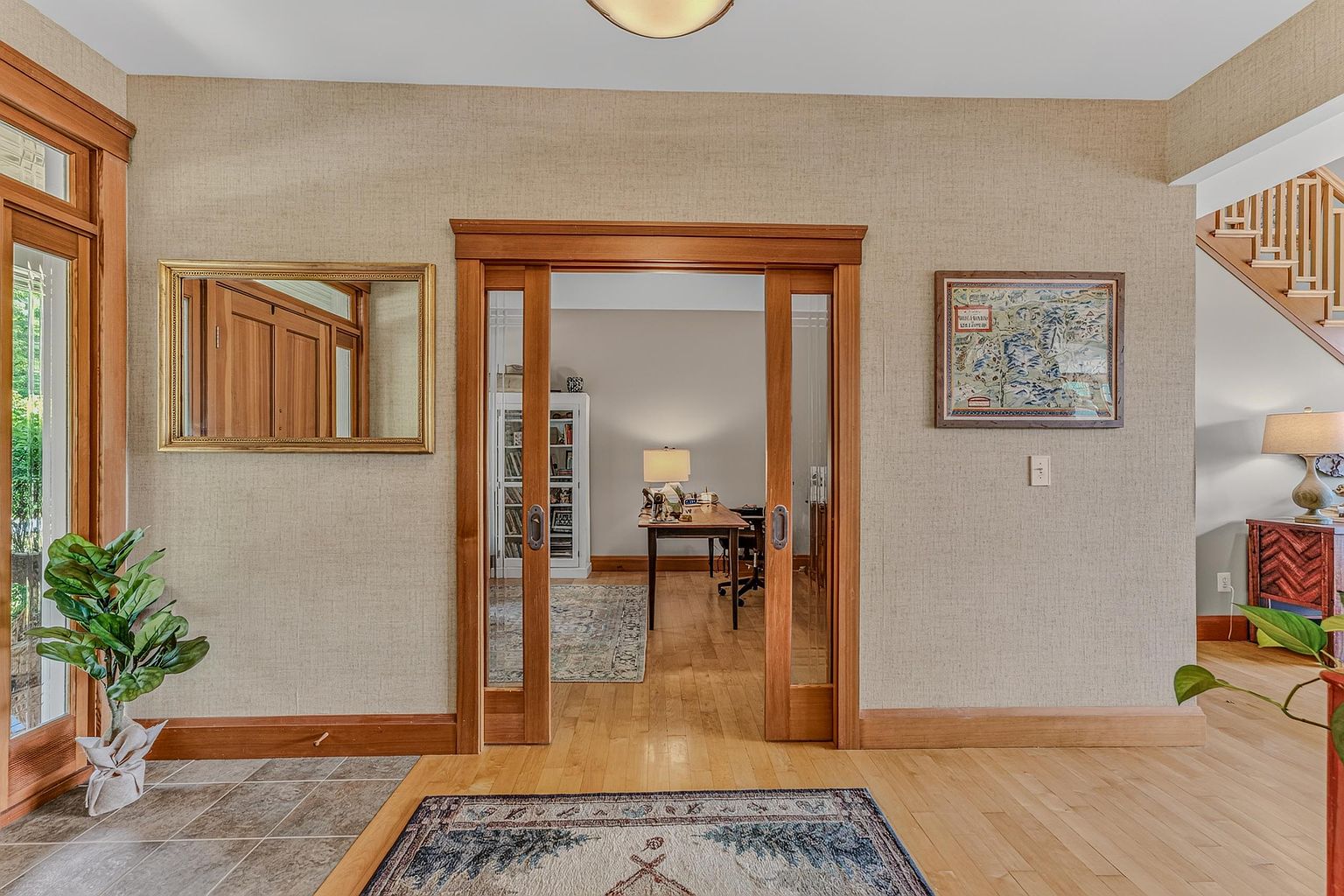
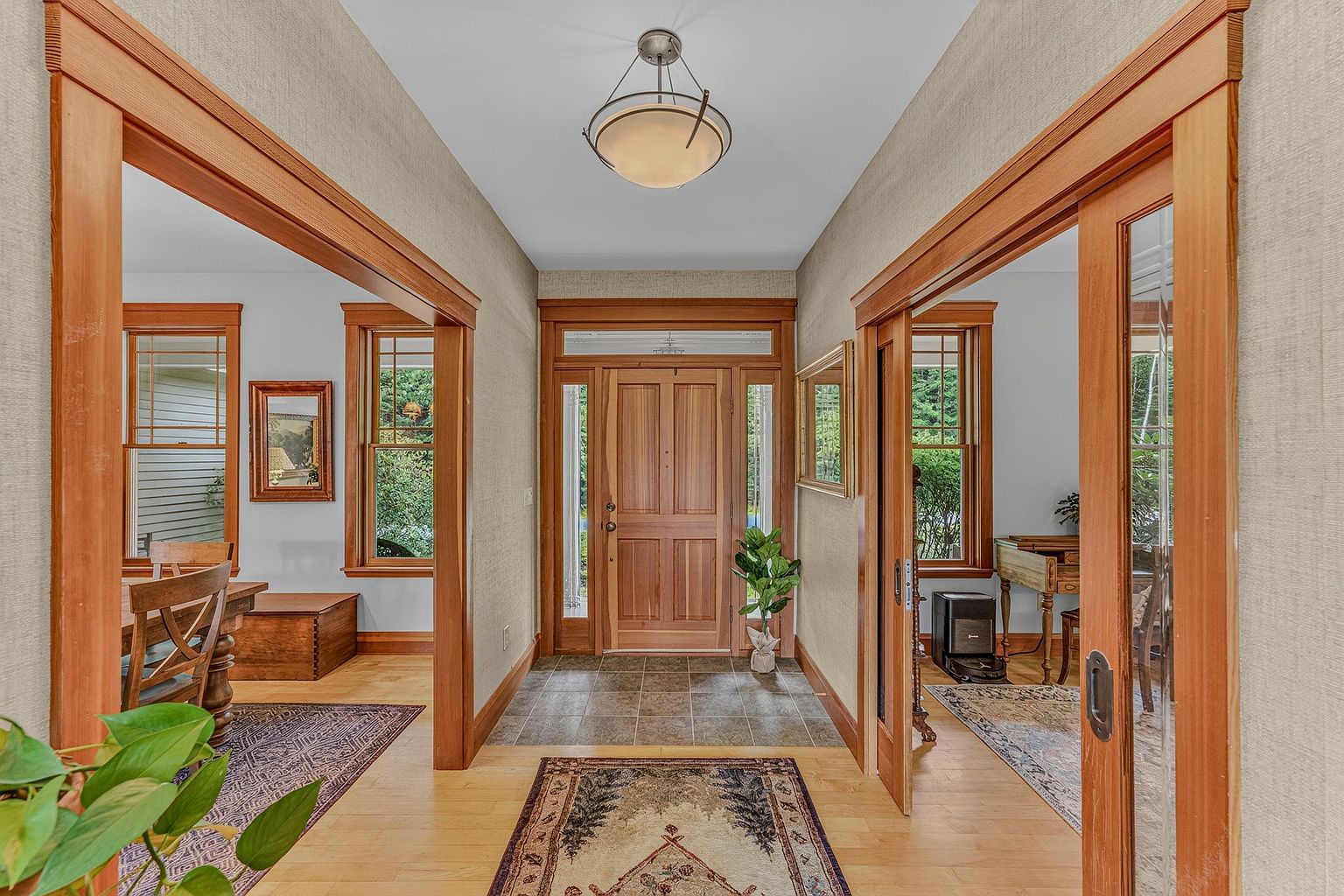
The thoughtful detailing extends throughout. Nine-foot ceilings on the main level give the rooms a sense of ease. Automatic closet lighting, central vacuum, EV hookup, on-demand hot water, and generator wiring speak to a builder who considered not just how a home looks on the day of sale but how it performs over a decade of daily use. The oversized two-car garage connects directly to a mudroom — practical and well-conceived — with basement access beyond.
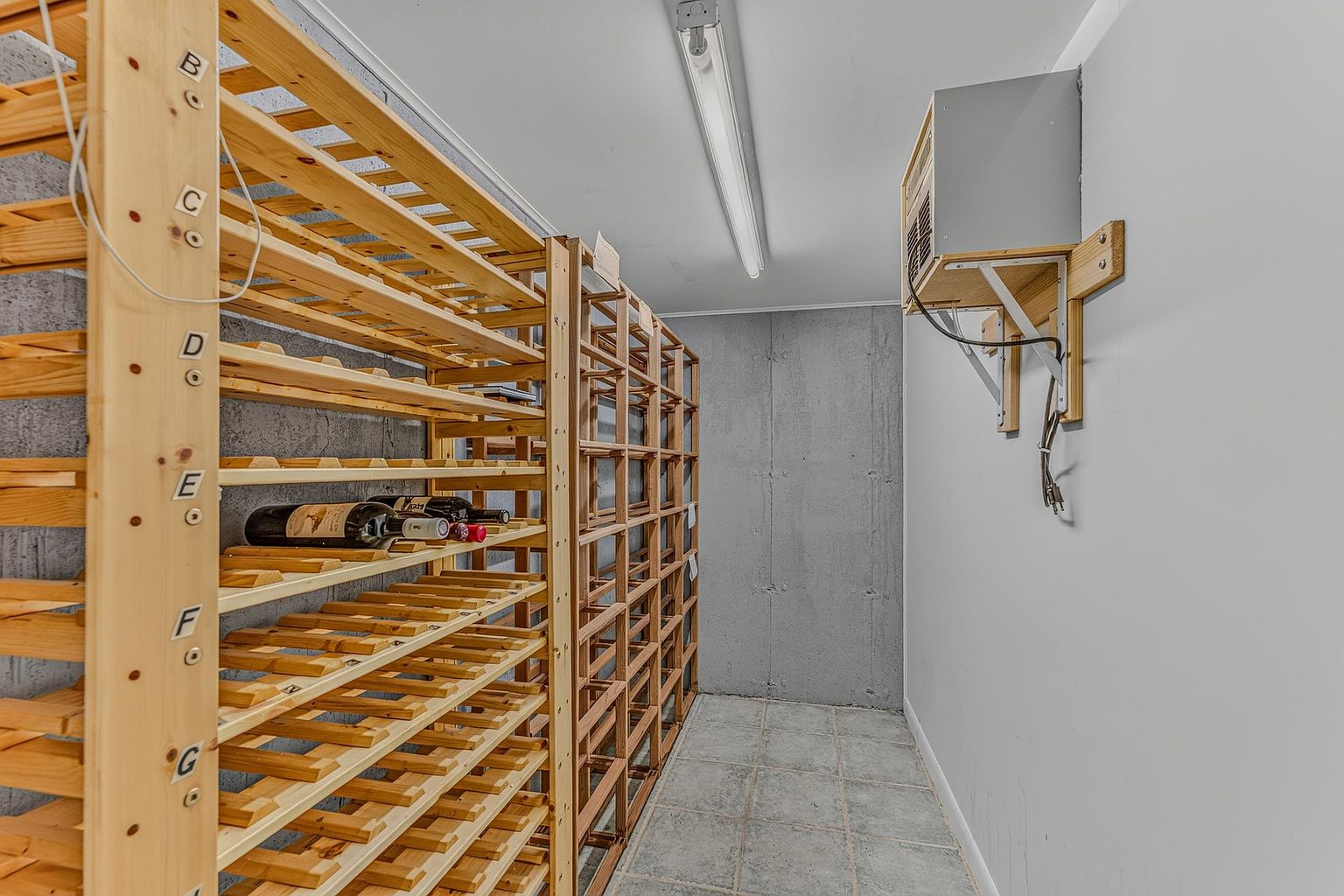
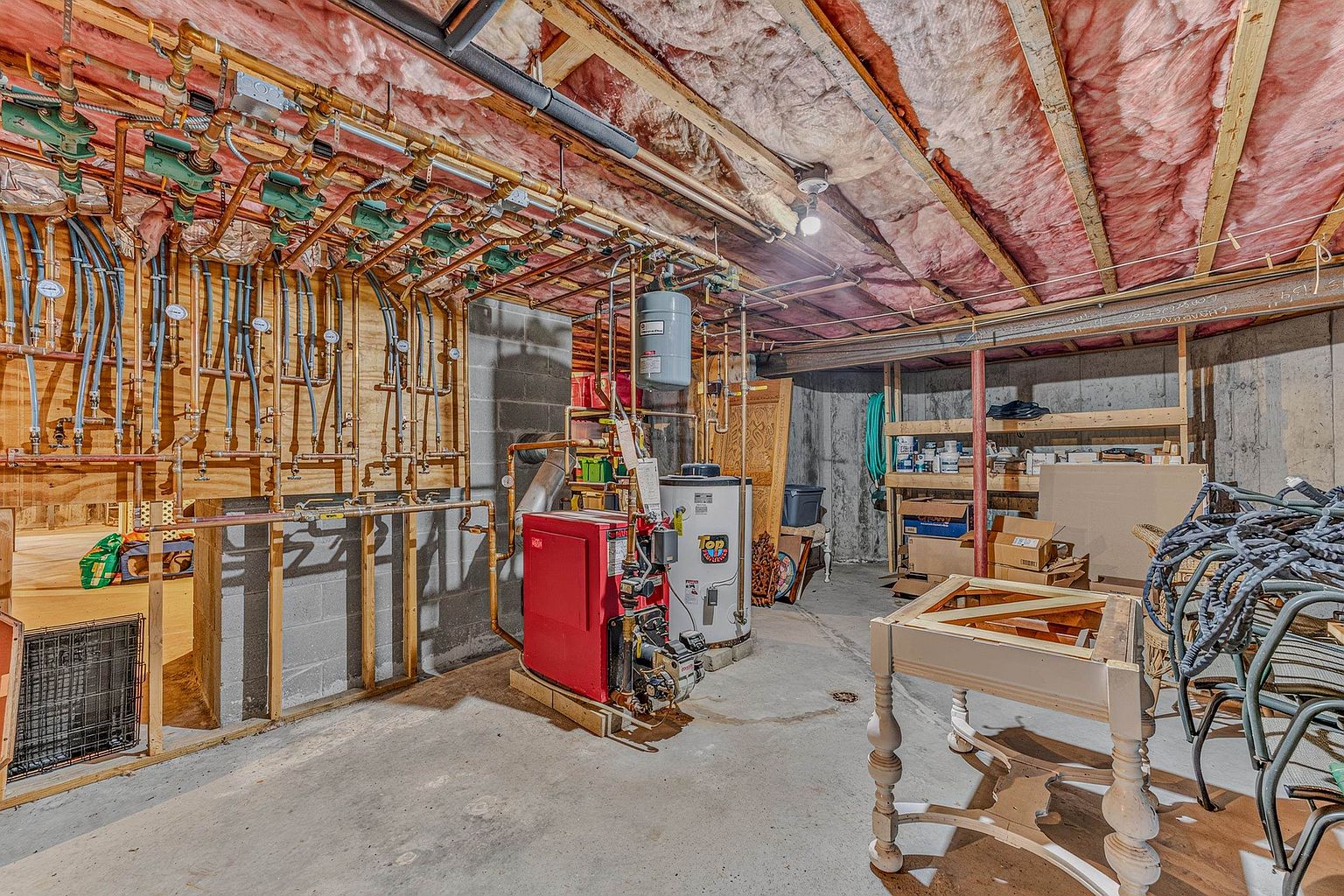
Below grade, the wine cellar is a properly climate-controlled room with custom wood racking, labeled and organized, the kind of space that rewards commitment to a collection. The basement utility area, meanwhile, reveals the home's mechanical heart: a sophisticated hydronic heating system with copper pipework that reflects the same precision evident in every finished room above it.
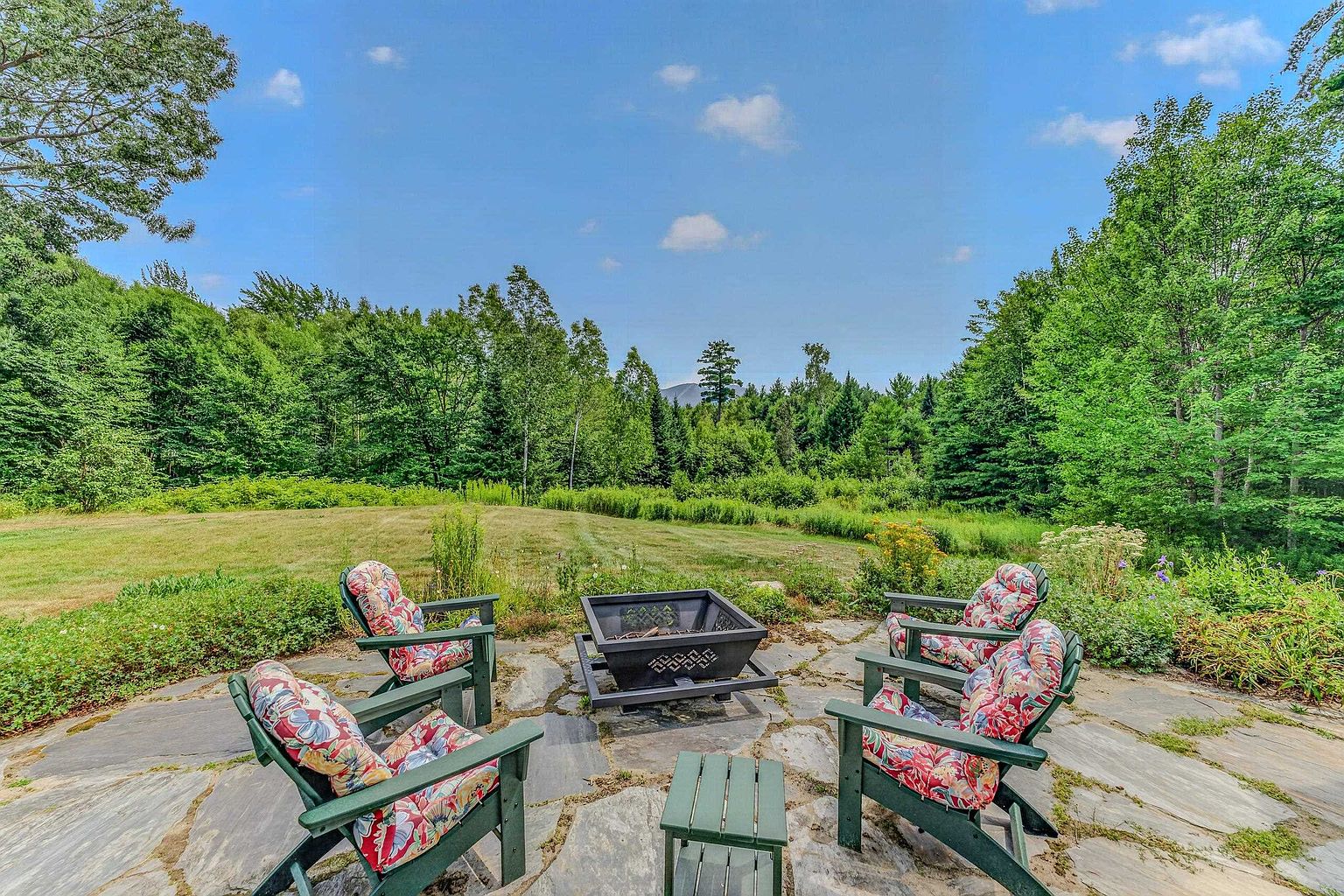
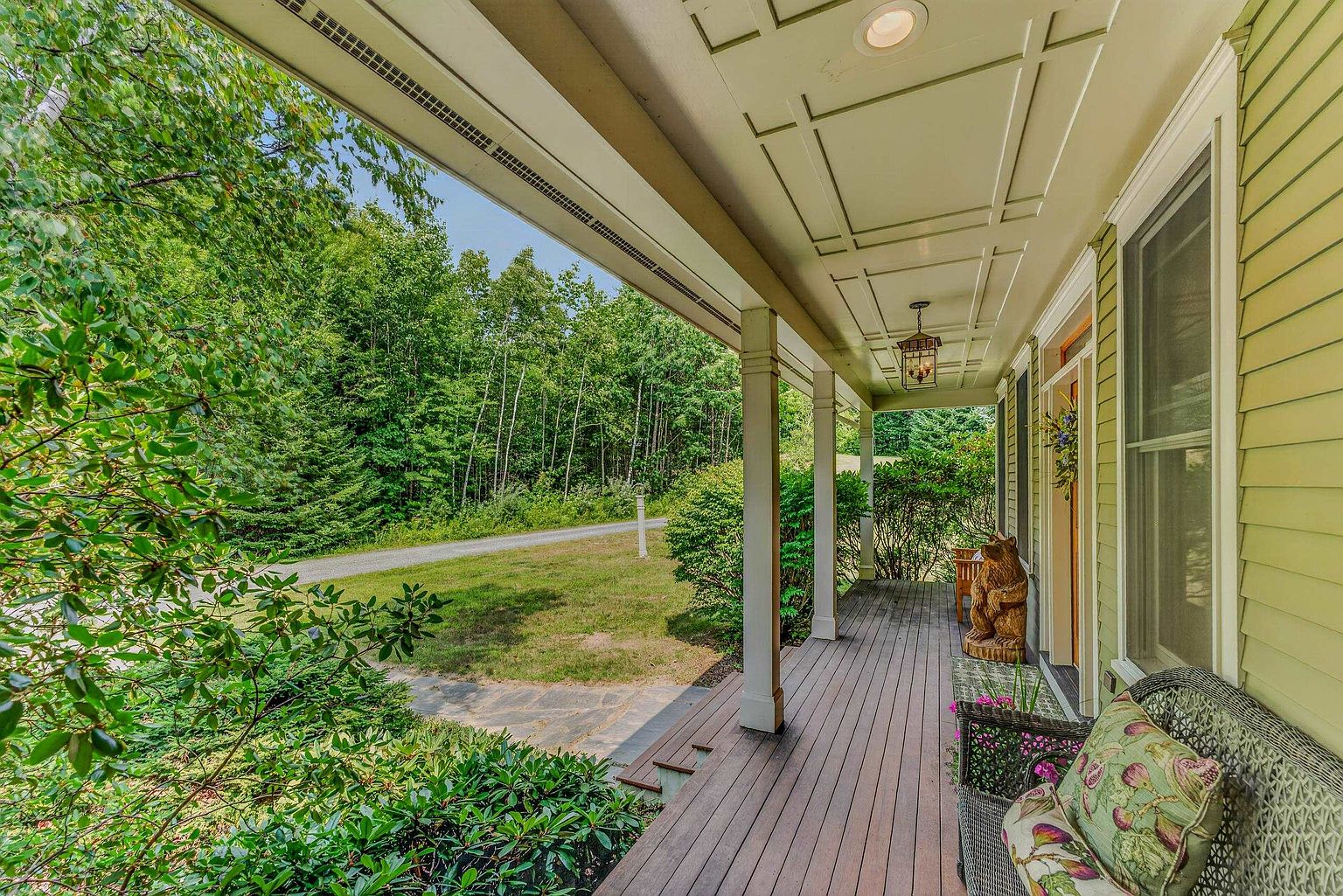
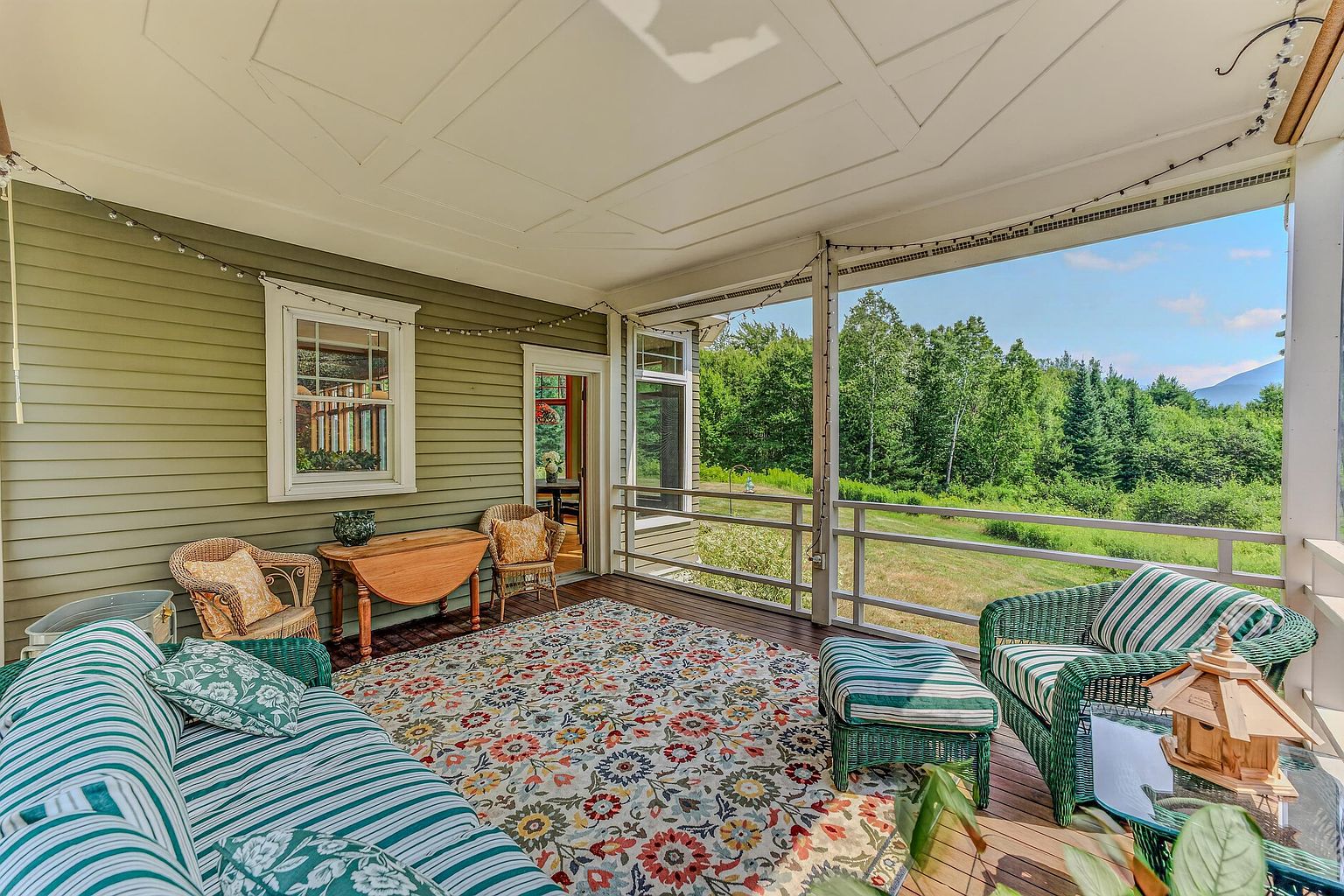
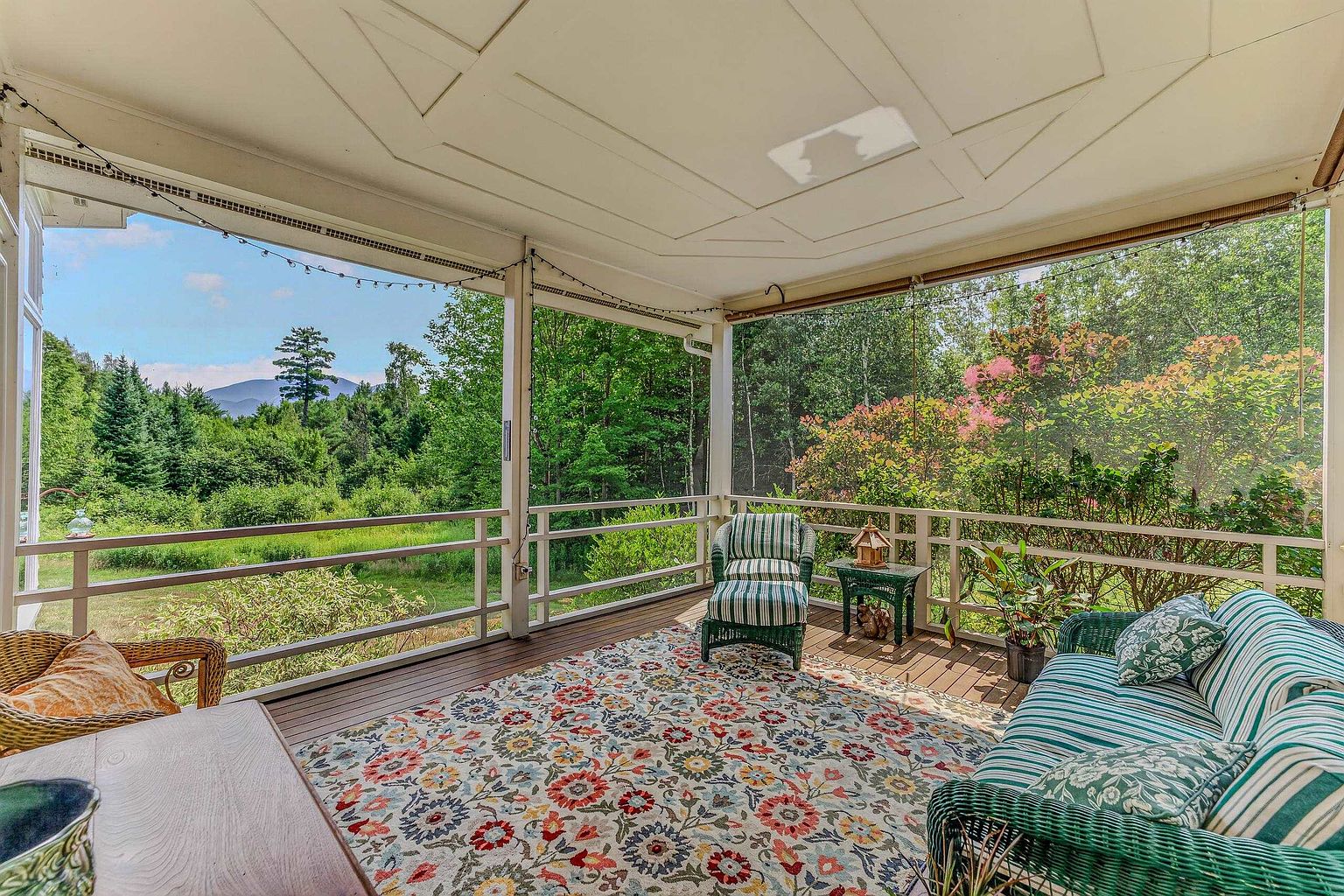
Outside, a stone patio with a fire pit looks out over a broad lawn that fades into forest. The screened porch — furnished with wicker, open to the tree line, and sized for an unhurried dinner with friends — is the room that may well become the most used of all.
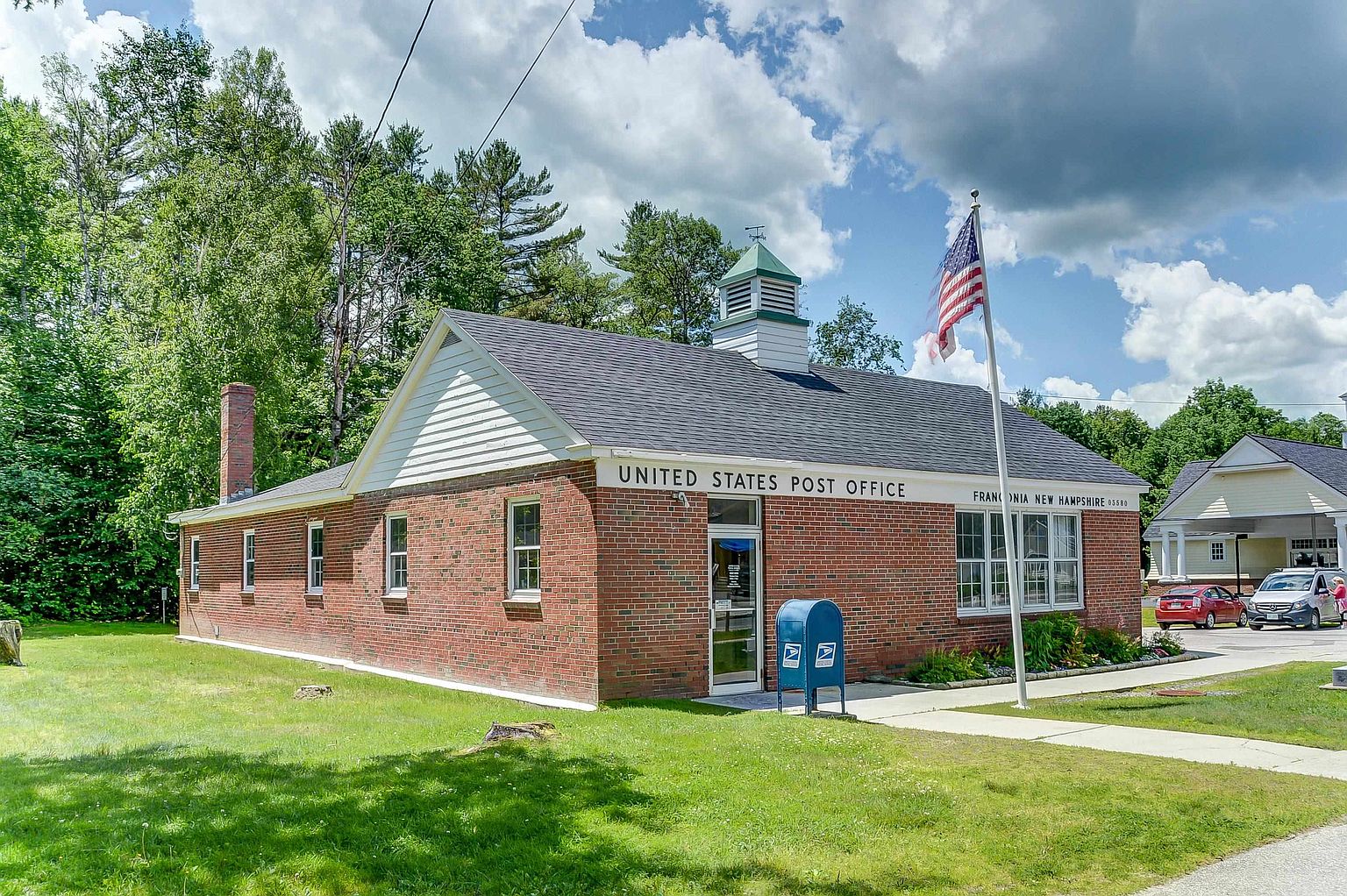
Franconia, New Hampshire is a small town — fewer than 1,200 residents by most recent counts — and it wears that scale with considerable grace. Tucked into the western edge of the White Mountains, it sits at the confluence of two defining geographies: the broad, glacially carved valley of Franconia Notch and the long ridgeline of Kinsman Range, from which Cannon Mountain rises above the village with an authority that locals learn to take as a kind of daily orientation. The mountain is not background here; it is a presence.
Cannon Mountain itself is one of New Hampshire's oldest ski areas, with a history stretching back to 1938, when it opened the first aerial tramway in North America. That tramway — rebuilt and modernized, still running — carries skiers and summer sightseers alike to the 4,080-foot summit, where on clear days the view extends across four states. For a resident of Wintergreen Lane, Cannon is a neighbor in the most literal sense: minutes by car, visible from the living room.
Franconia Notch State Park, which borders the mountain to the east, encompasses some of the most celebrated natural terrain in New England. The Flume Gorge, Echo Lake, the Basin, and the network of recreational trails that lace through the Notch draw visitors from across the region, but for those who live here, they are simply part of the landscape of an ordinary week. Hiking, cycling the Franconia Notch Bike Path, paddling on Echo Lake — these are not weekend excursions so much as habits.
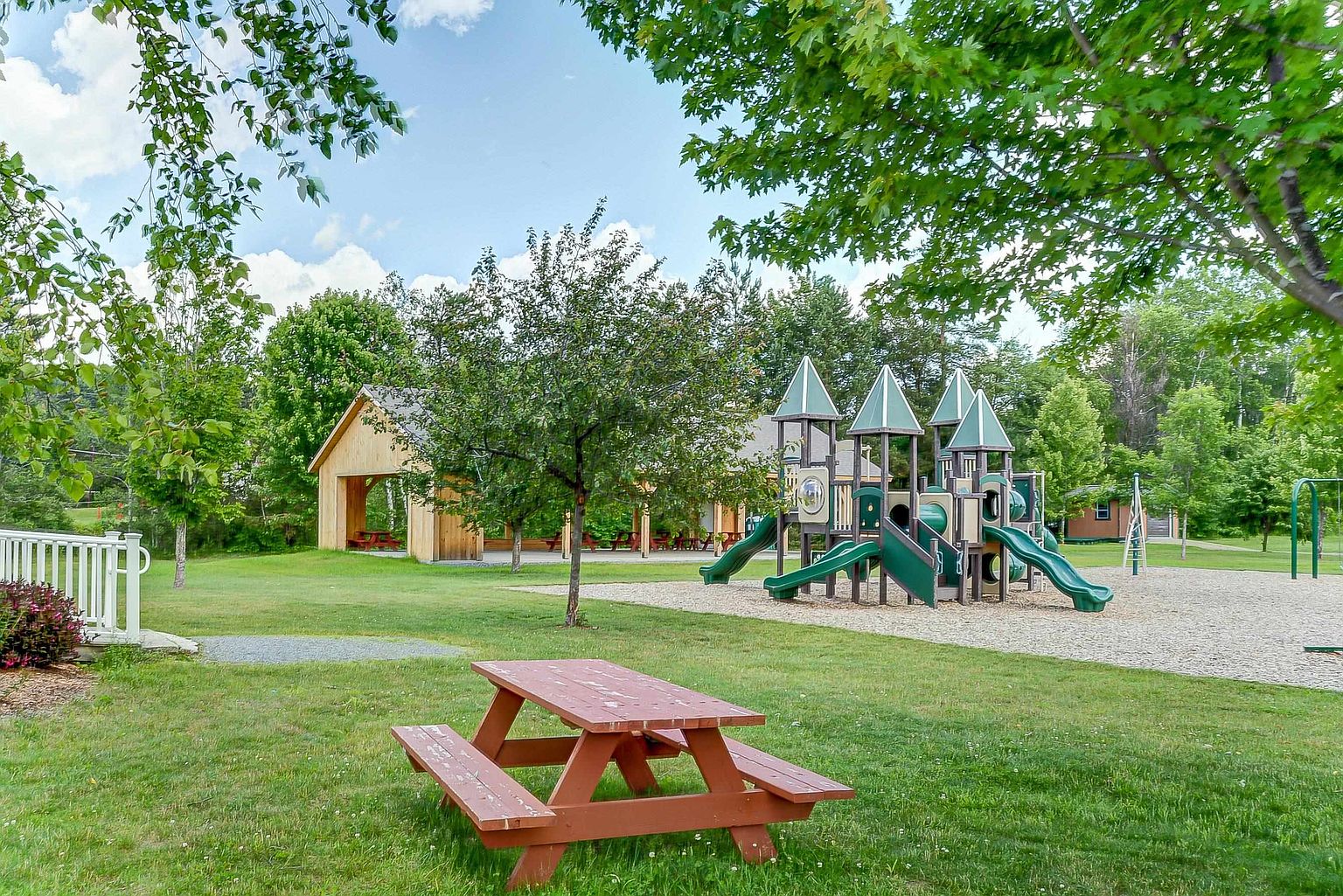
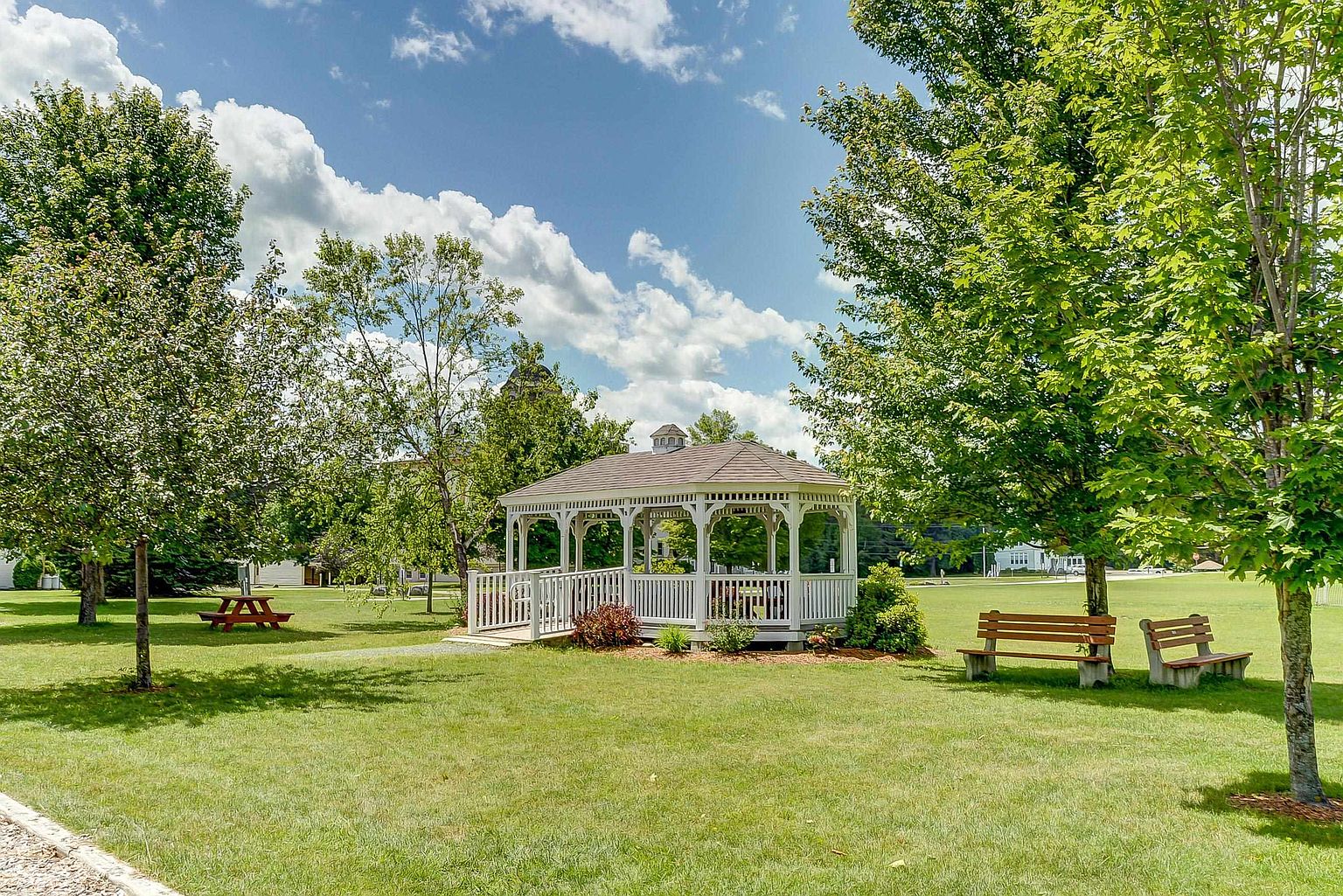
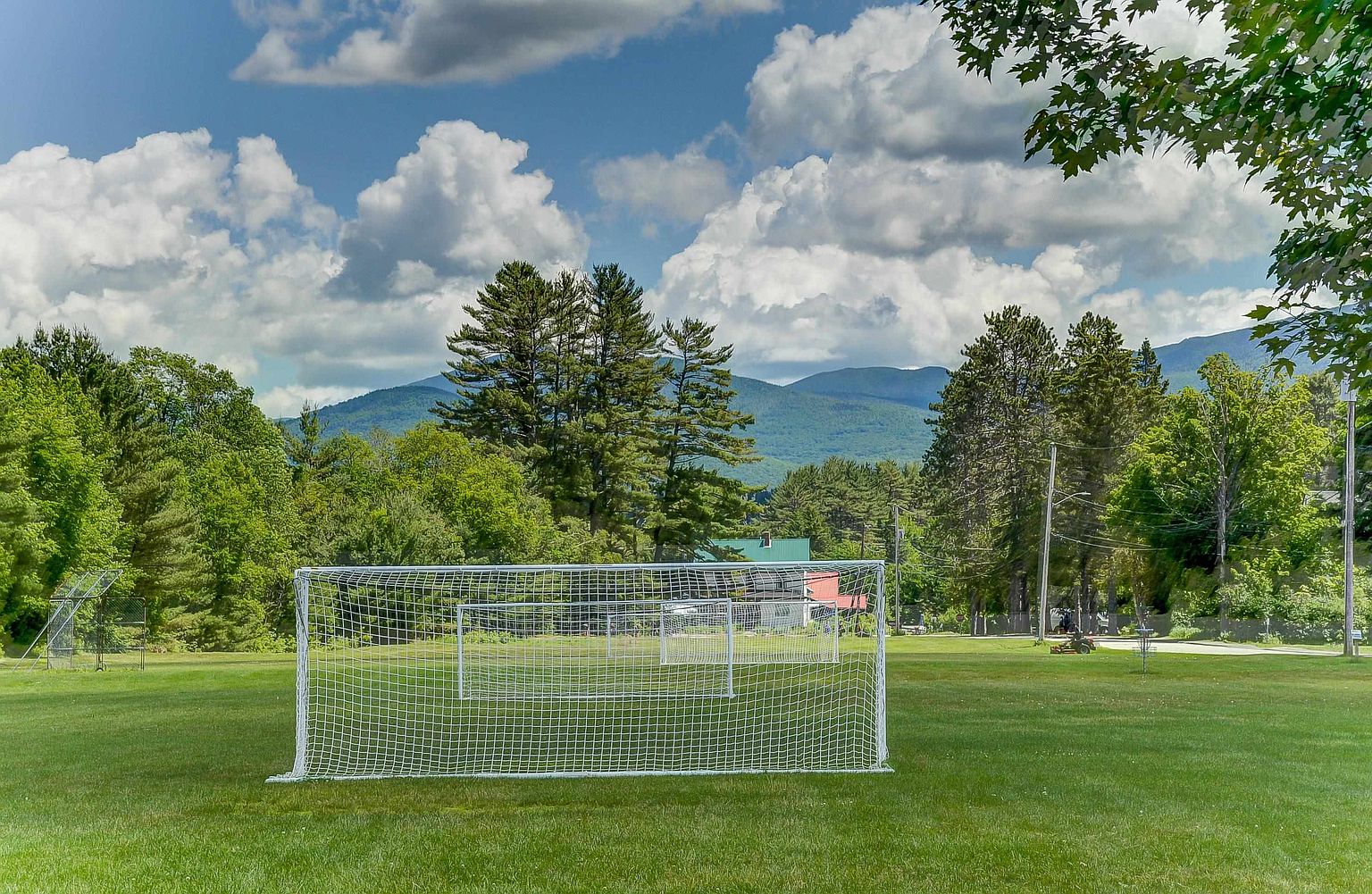
The village itself is the kind of place that sustains the small, essential pleasures of community life with uncommon quality. The Franconia Inn, a historic property on Easton Road, has welcomed guests for generations and remains a center of gracious hospitality in the valley. Iron Furnace Brewing draws a loyal local following alongside visitors. Chef Joe's offers serious cooking in an unpretentious setting. The local market — an institution of the sort that larger towns can rarely sustain — keeps the village self-sufficient in ways that matter. The Abbey Greenleaf Library, small and well-curated, is the kind of library that reminds you why libraries matter. Dow Community Field provides a green gathering space that anchors the town's civic life through the warmer months, with the soccer goals and pavilion that appear in aerial views of the village suggesting a community that shows up for itself.
For families, the local school carries a strong reputation, and the genuine neighborliness of the community — the kind that develops naturally in places where winters are real and people depend on one another — is not a marketing abstraction but a lived reality reported consistently by those who have made the move.
Littleton, just up Interstate 93, extends the practical radius considerably: a full-service town with independent shops, restaurants, and larger services, all within a short drive. Yet returning to Franconia feels, each time, like returning to the right scale of things — a village where the mountains are not decoration but the defining fact of daily life, and where a home like this one is not an escape from the world but a considered way of inhabiting it.
Featured Highlights
Curated Content • Presented by Elizabeth Horan