The Story Behind
A Douglas Burdge Bluff Masterpiece Above Malibu Cove Colony
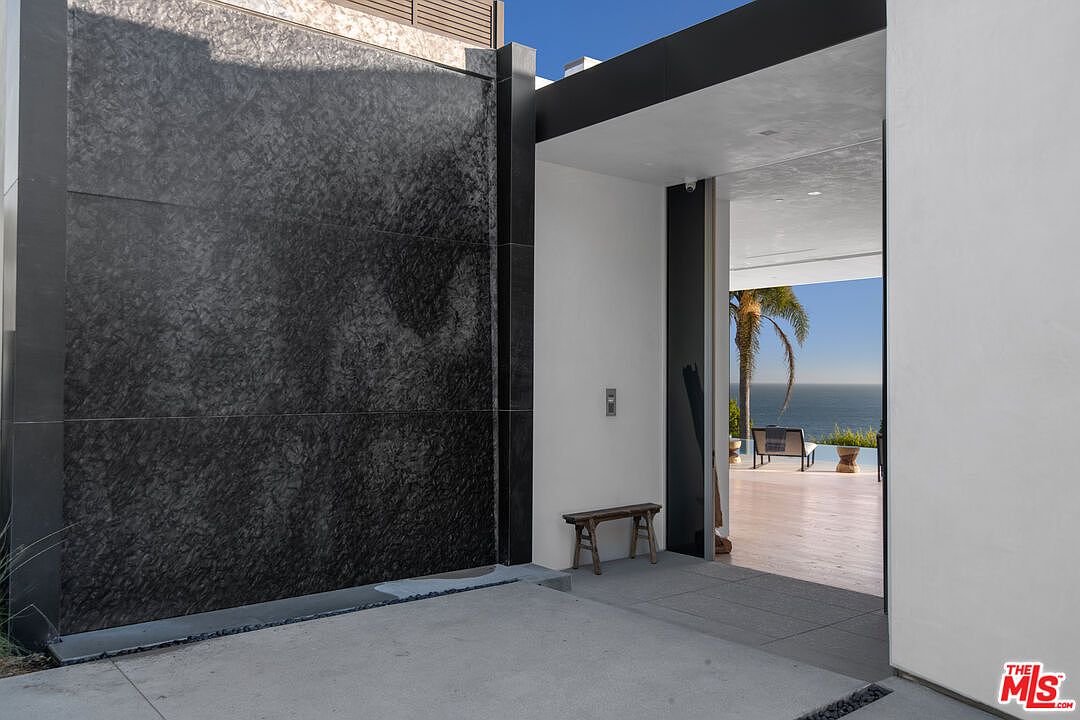
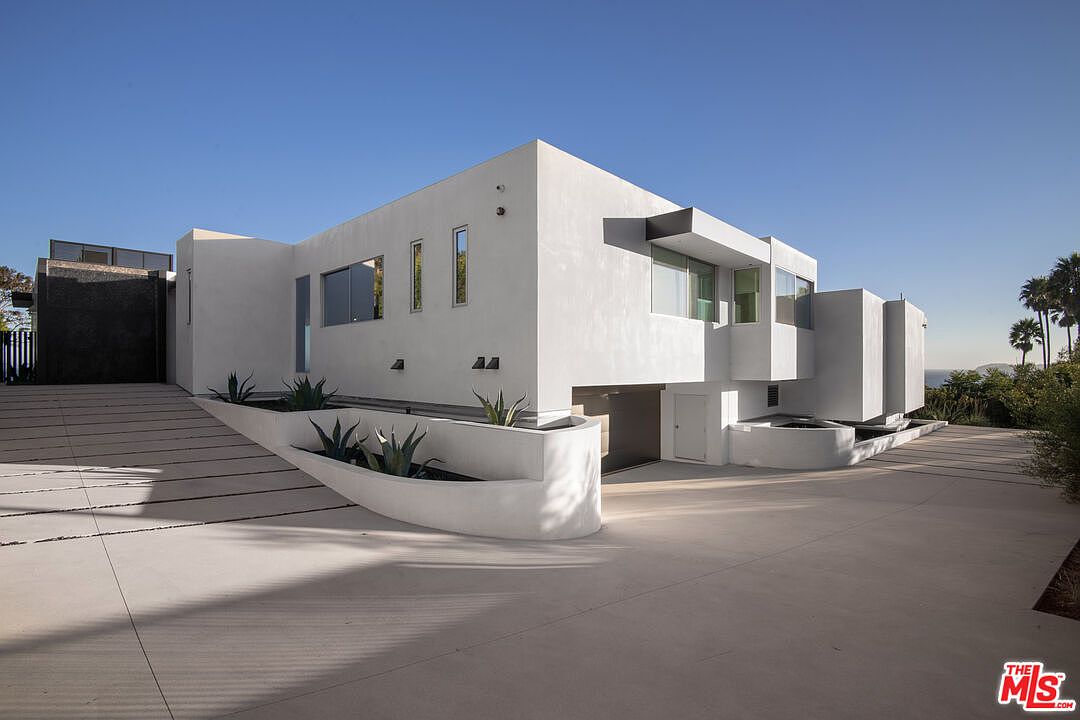
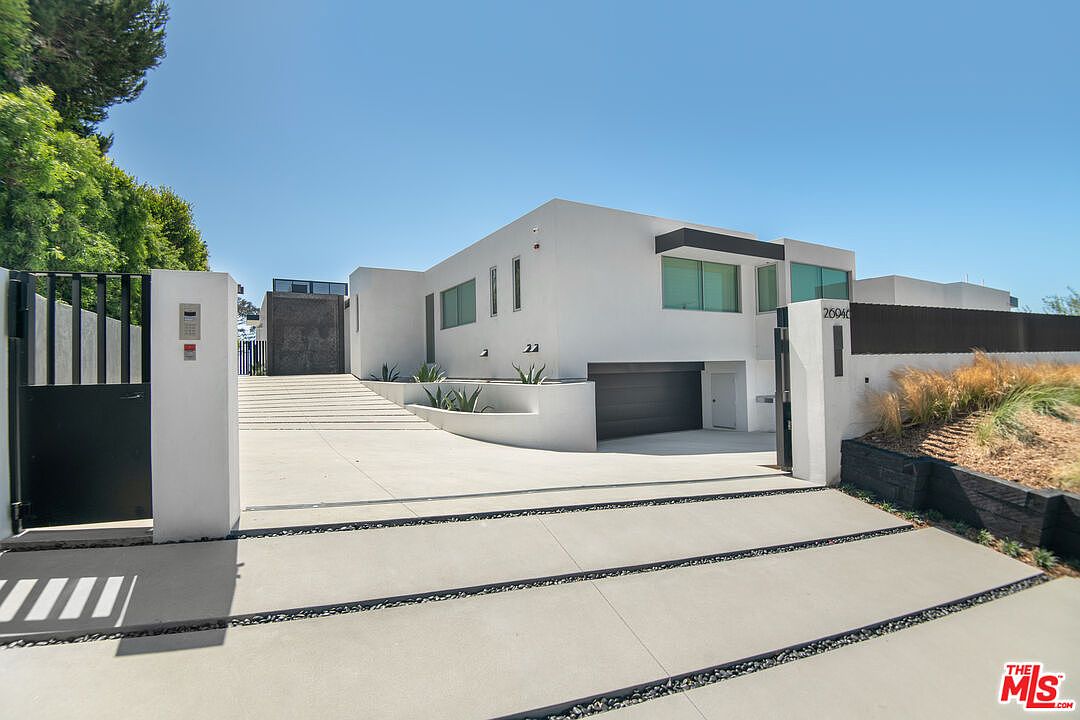
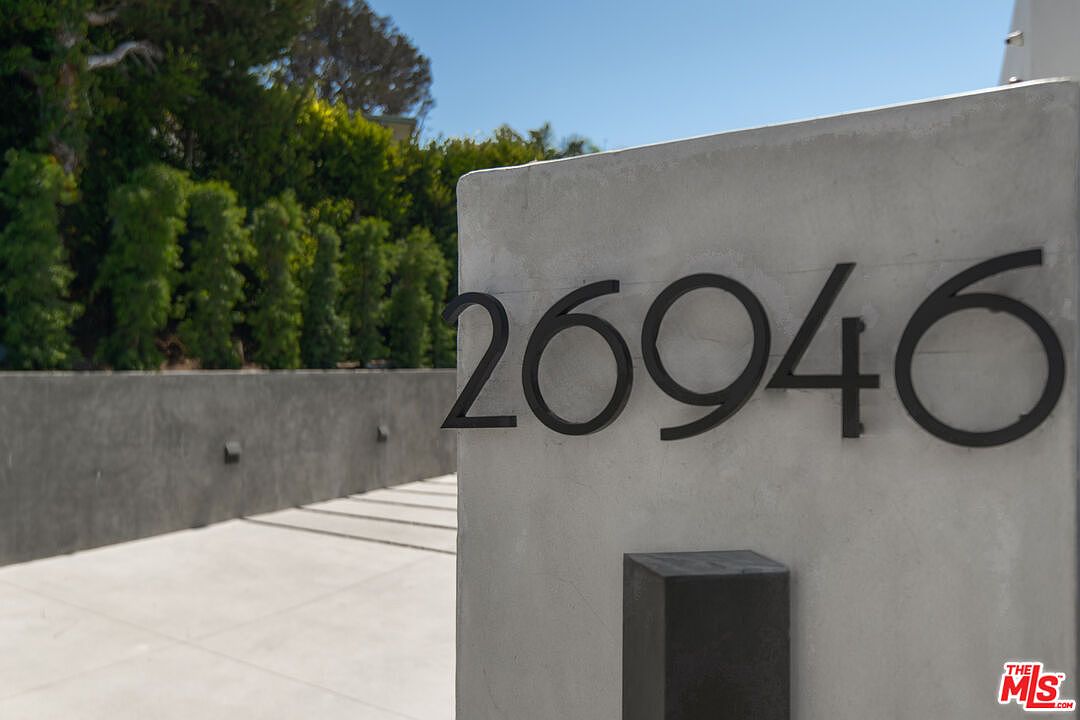
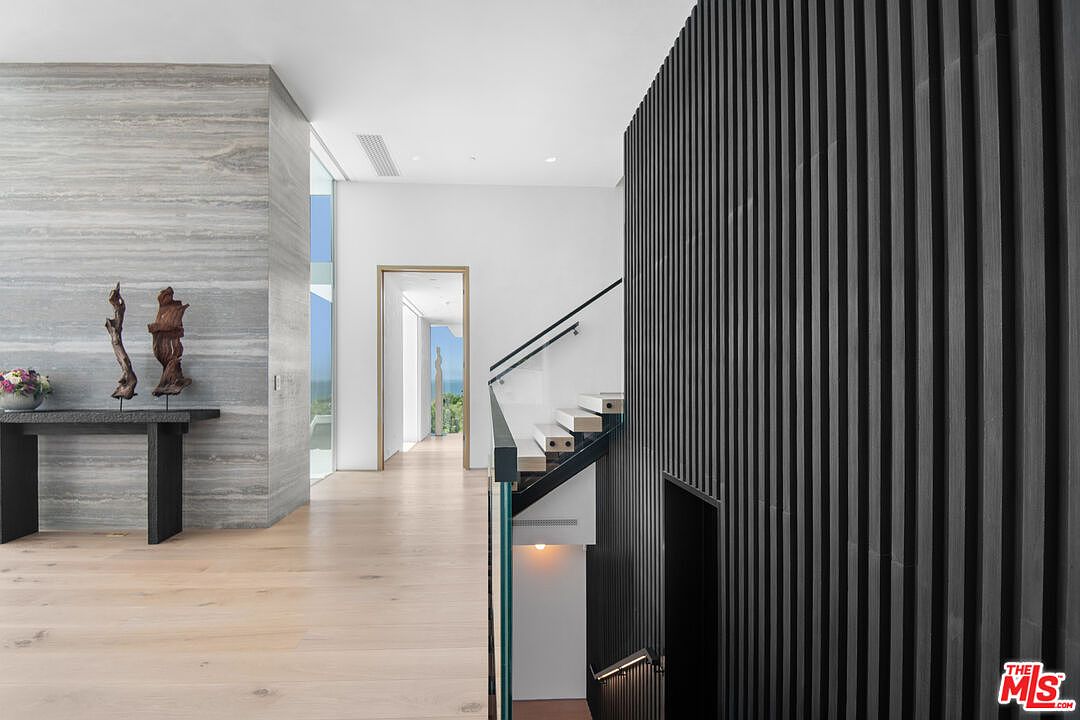
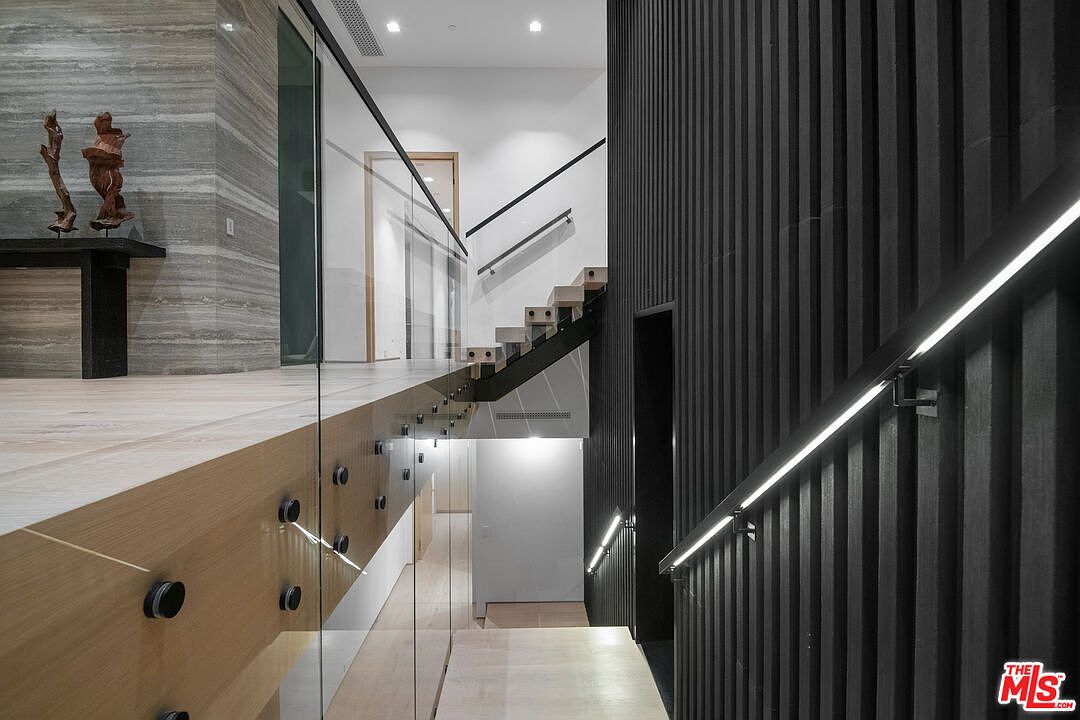
Architecture at this level does not announce itself — it reveals itself slowly, in layers. The approach to 26946 Pacific Coast Highway begins with a concrete pillar bearing the home's address in spare black numerals, a moment of deliberate understatement before the property's full ambition becomes apparent. Past the gated entry, a thirteen-foot black stone water wall sets the tone: textural, monumental, grounded in the earth even as the structure reaches toward the sky and sea beyond. The twelve-foot glass pivot door that follows is not merely an entrance — it is a declaration.
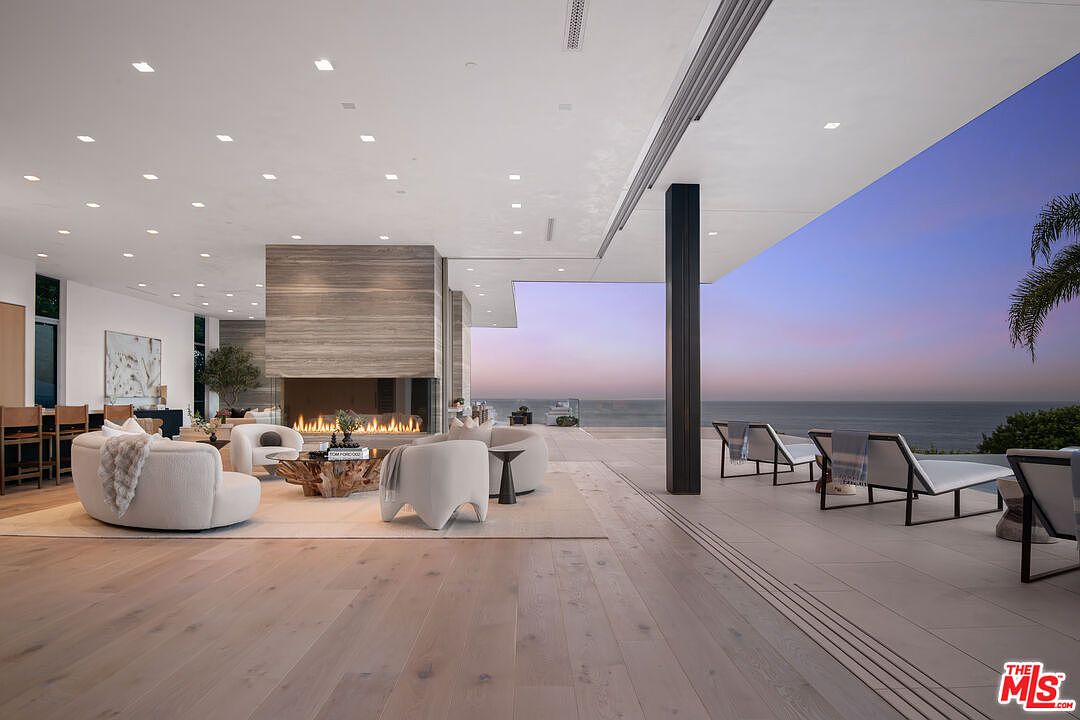
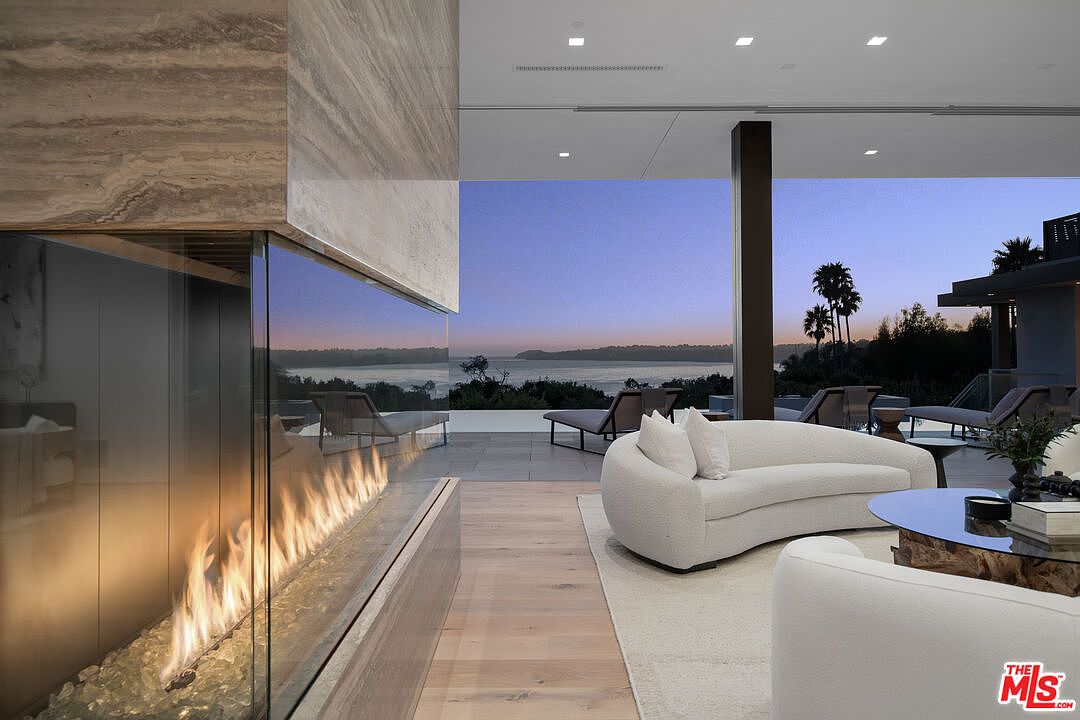
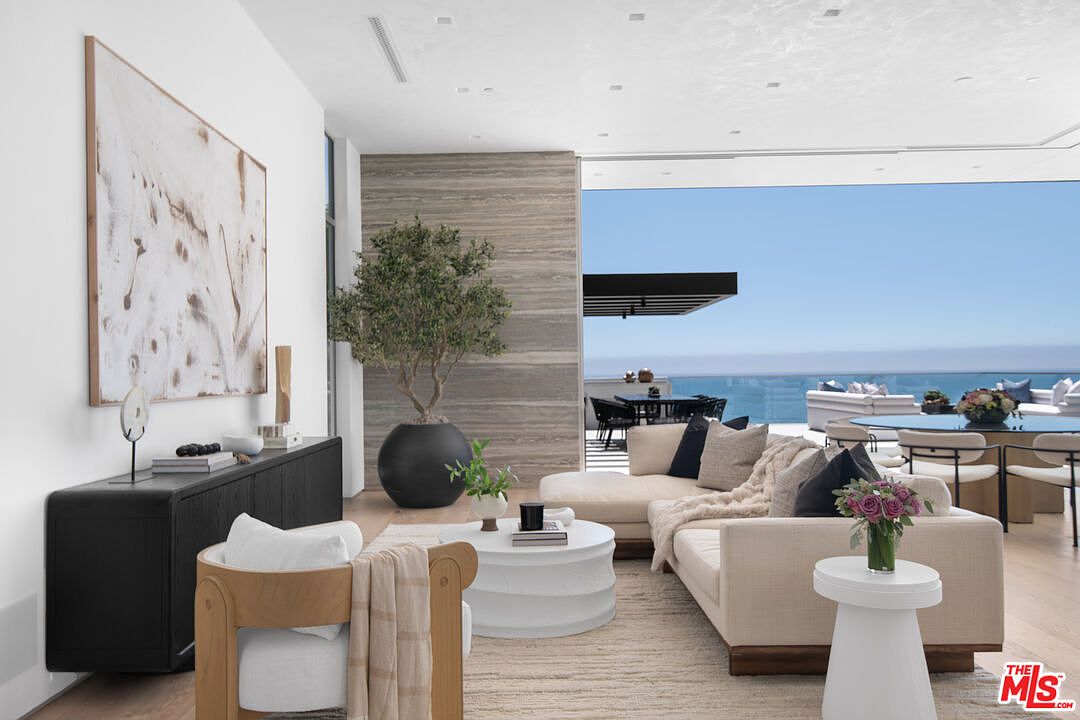
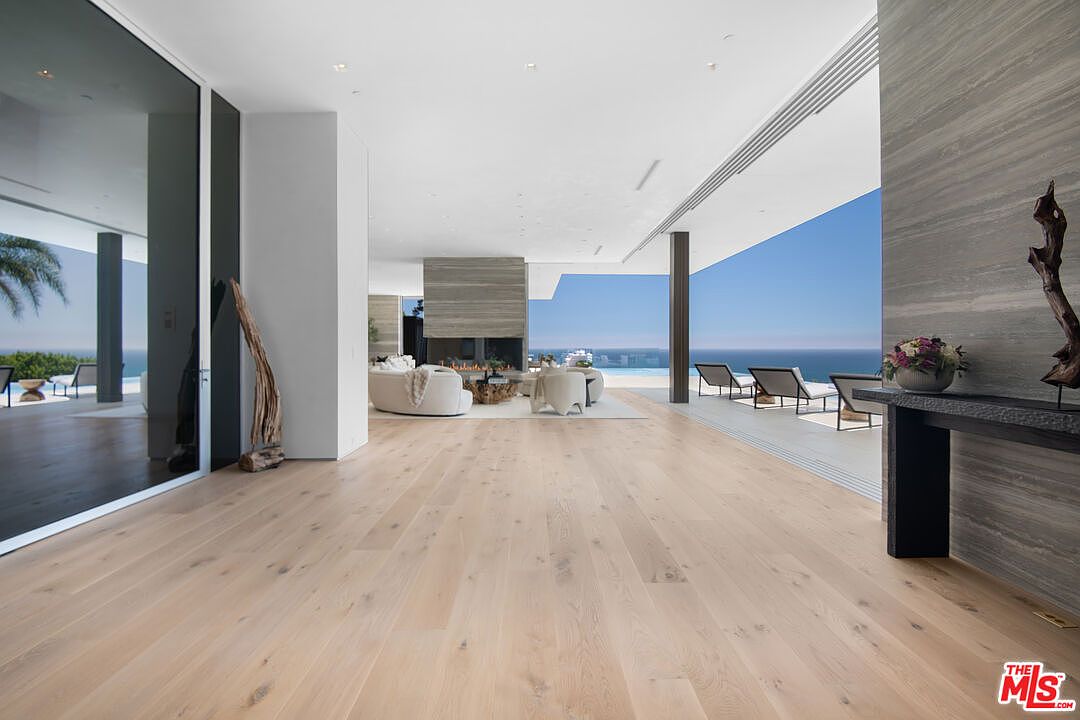
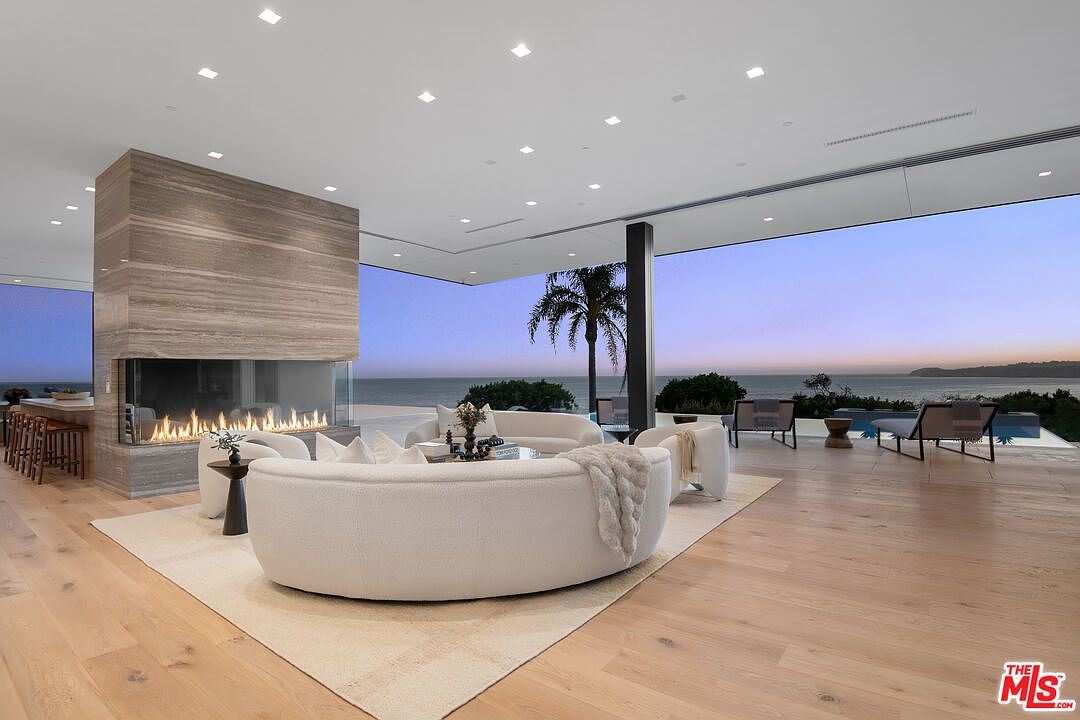
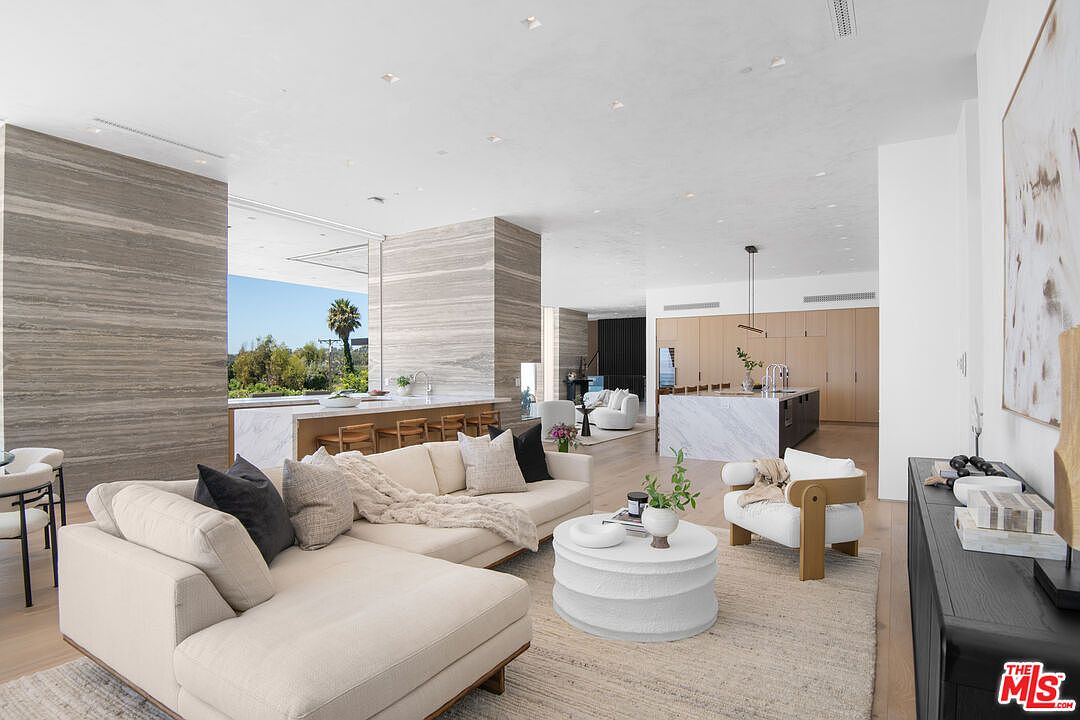
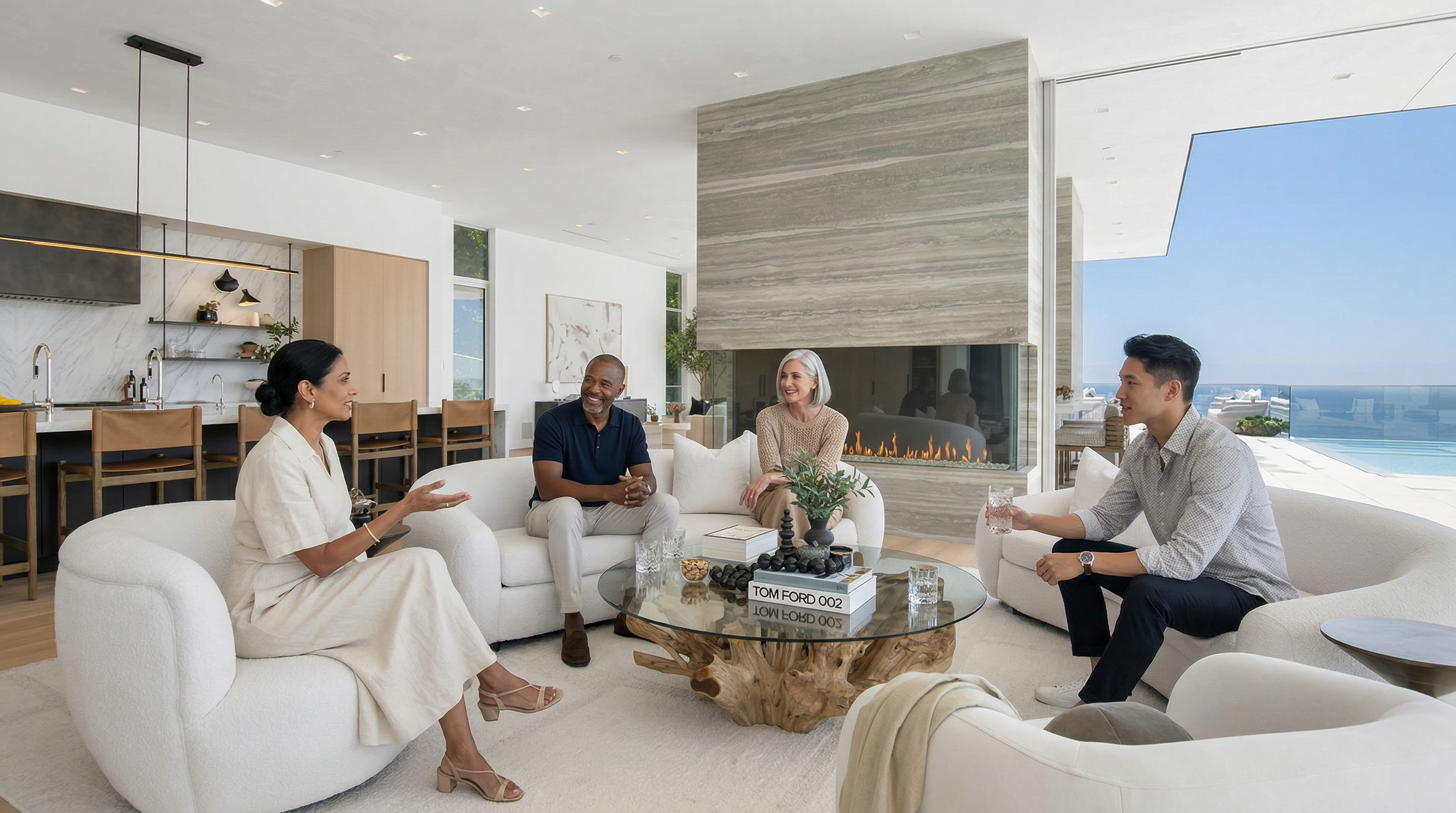
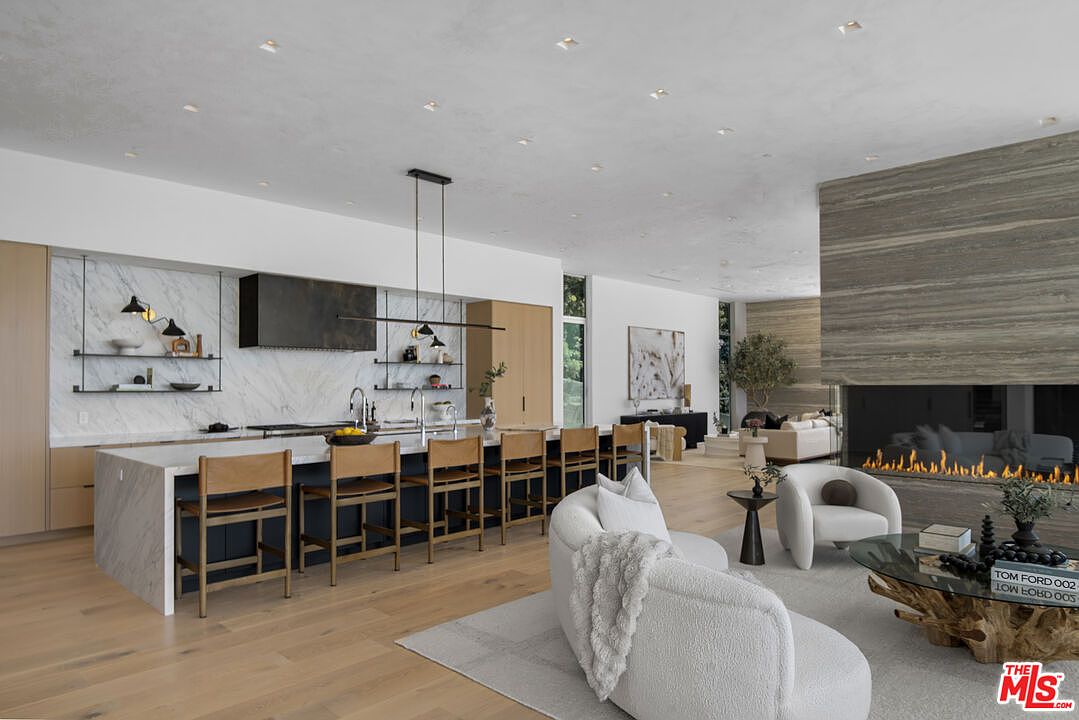
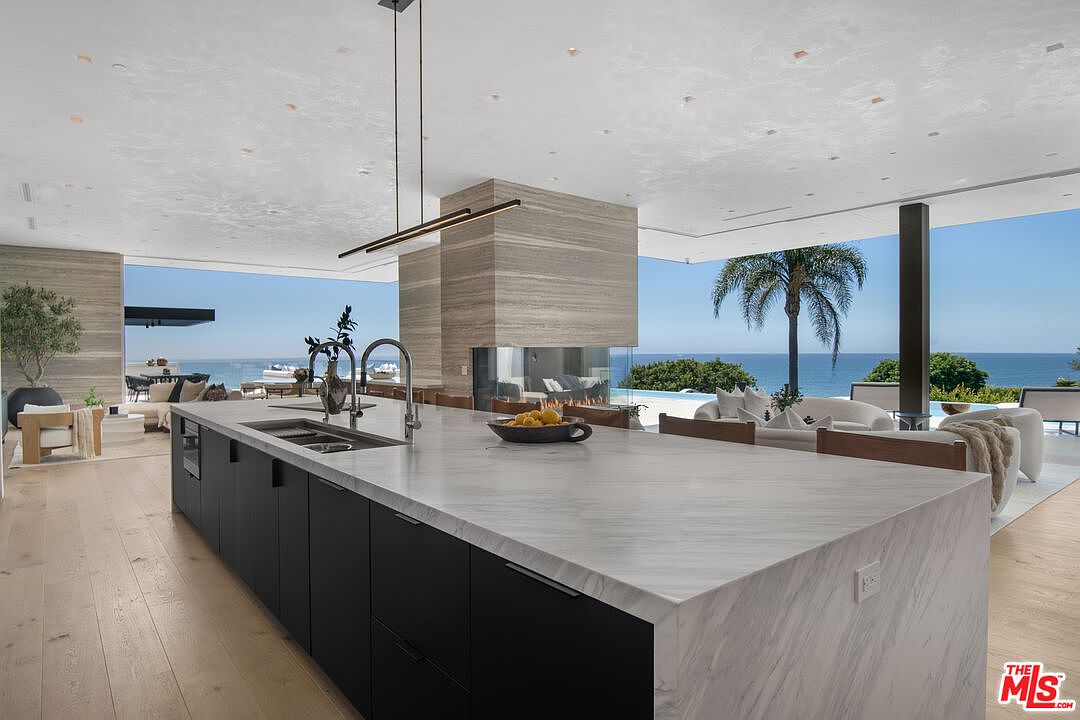
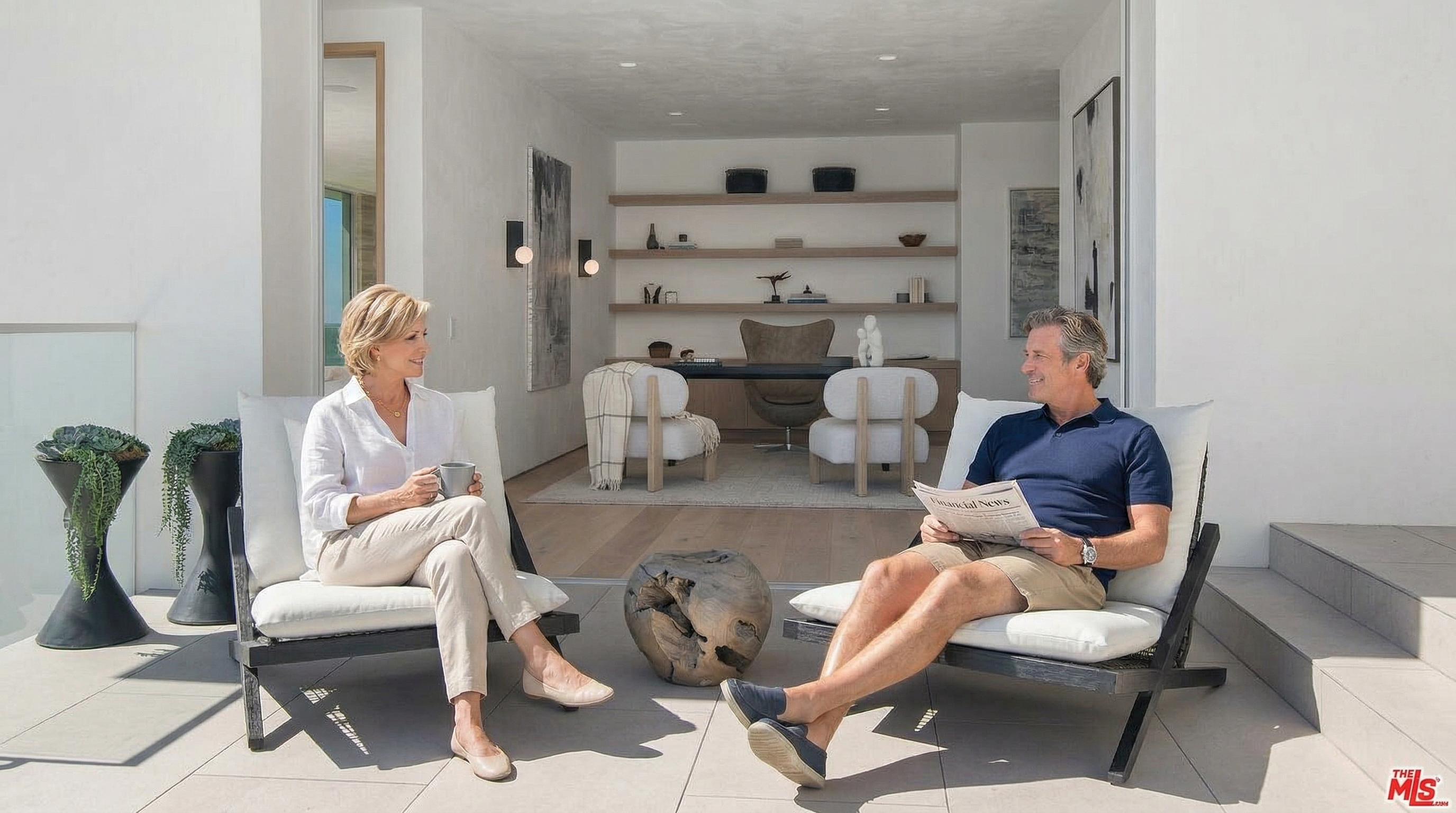
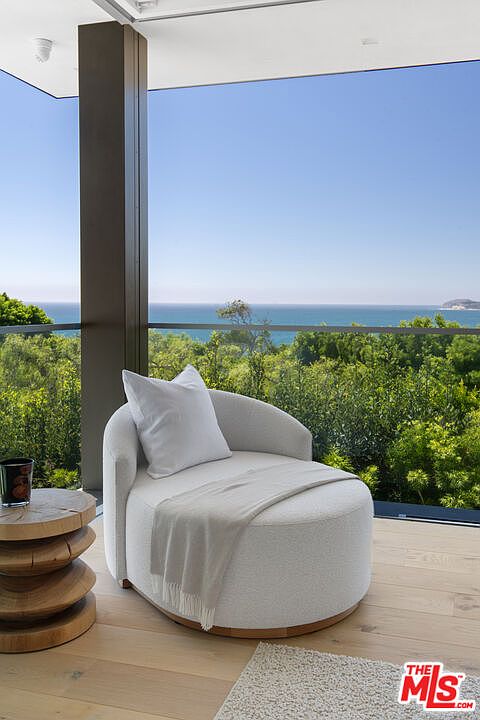
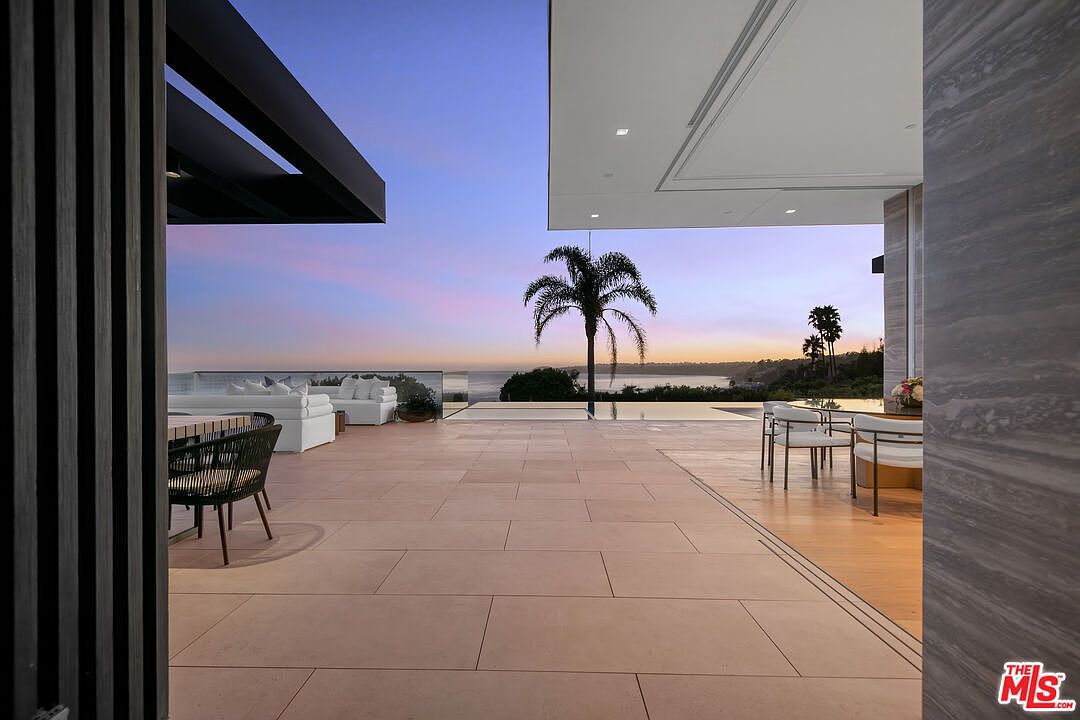
Douglas Burdge AIA has spent decades refining what it means to build on the California coast. His work is characterized by an almost meditative attentiveness to site, light, and the relationship between enclosure and openness. At this bluff residence above Malibu Cove Colony, those principles find perhaps their fullest expression. The great room rises to twelve-foot ceilings, anchored by a floor-to-ceiling stone fireplace that reads simultaneously as sculpture and structure. Light hardwood floors extend toward walls of glass that simply disappear — floor-to-ceiling sliders that vanish into sophisticated stone pocket walls, erasing the boundary between the interior and the Pacific horizon beyond.
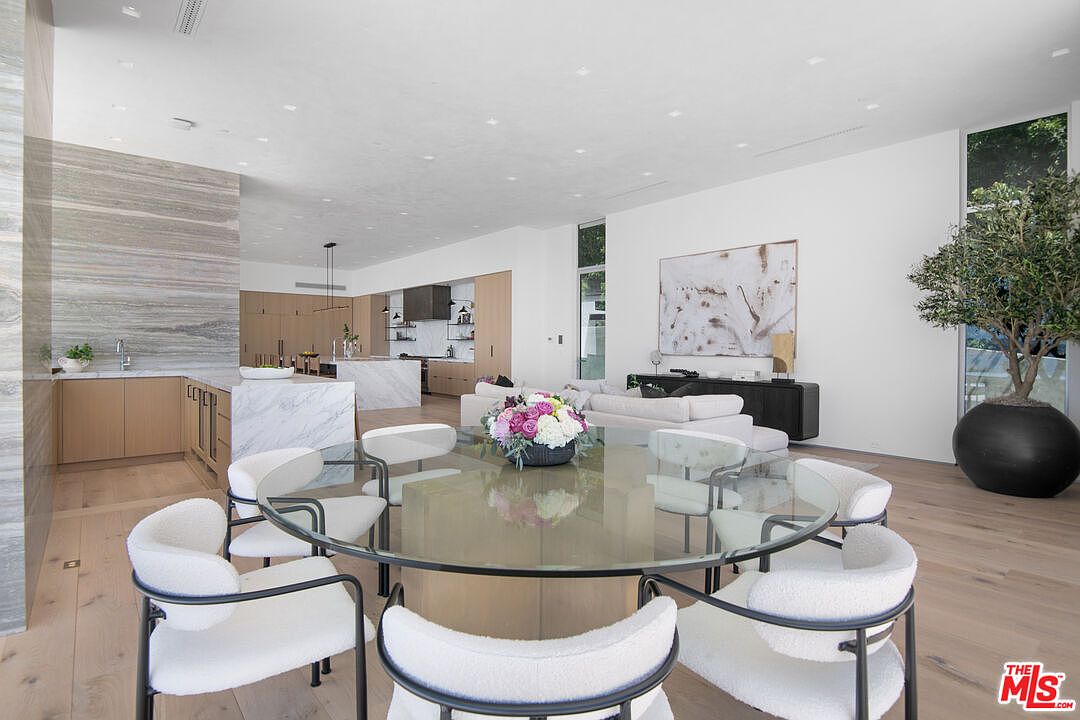
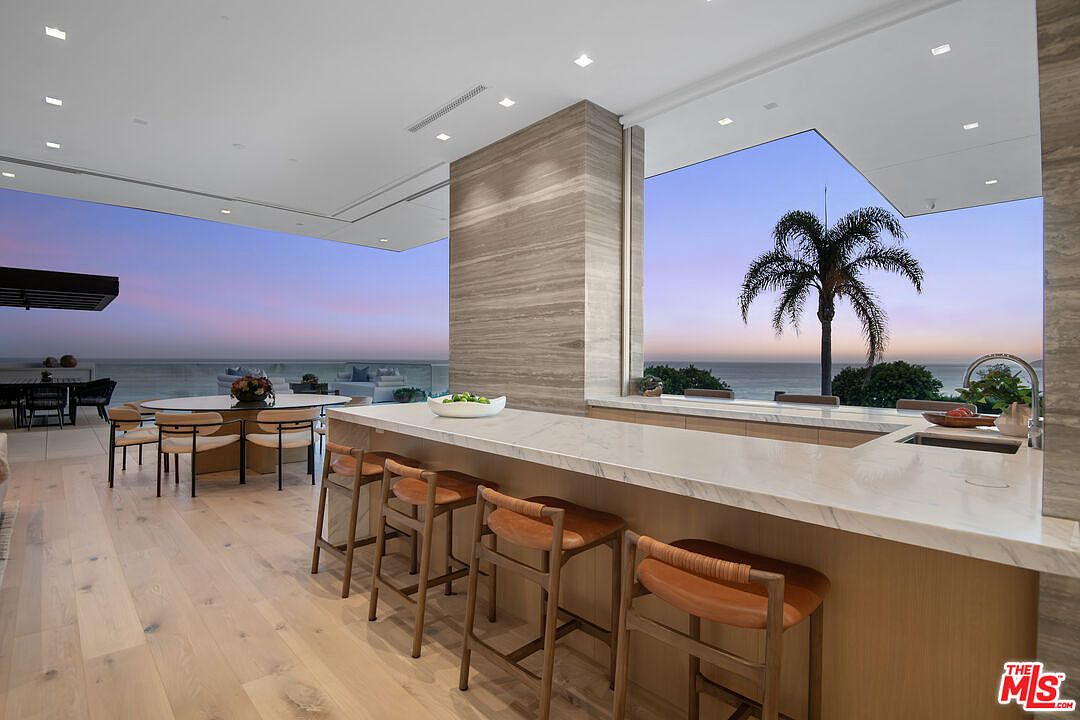
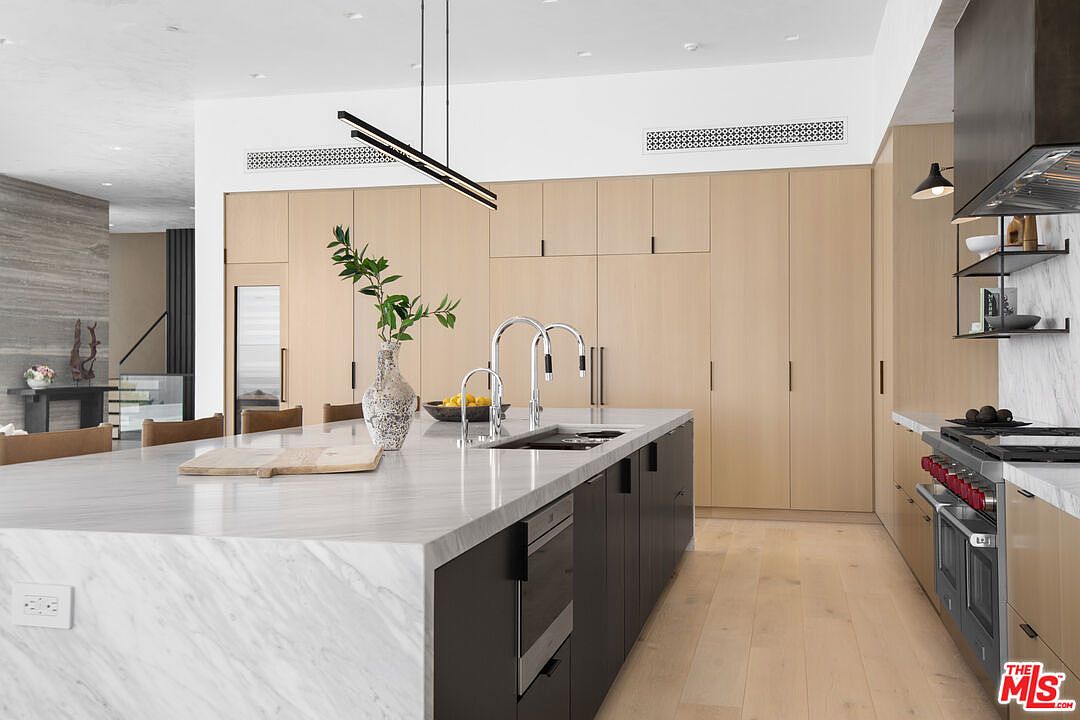
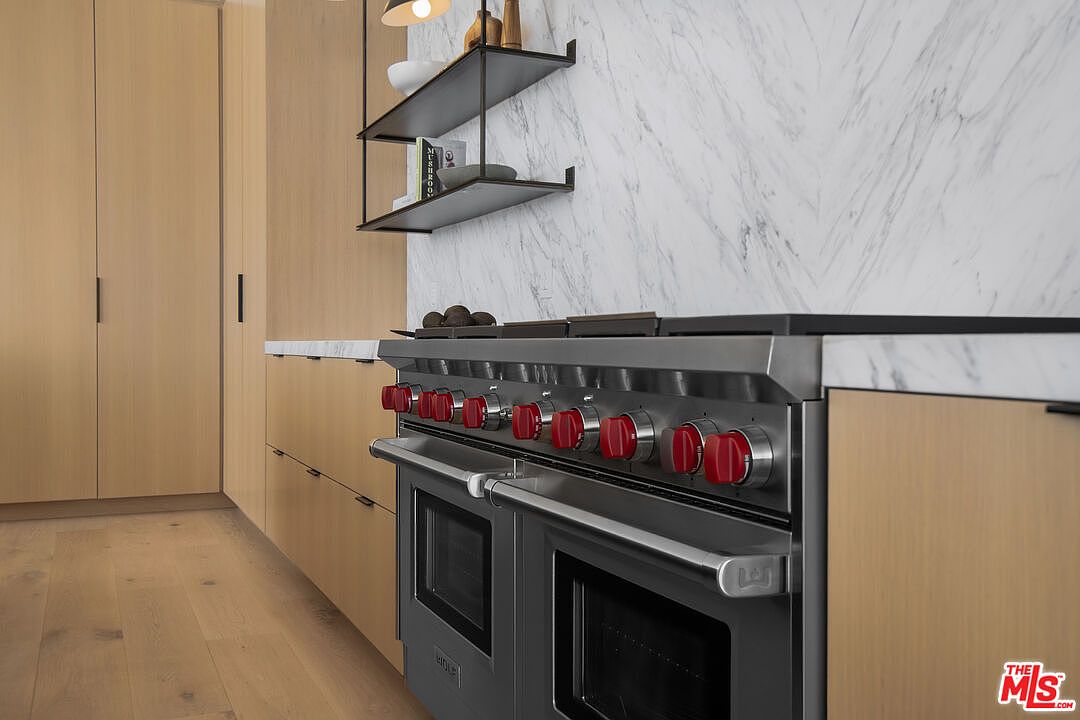
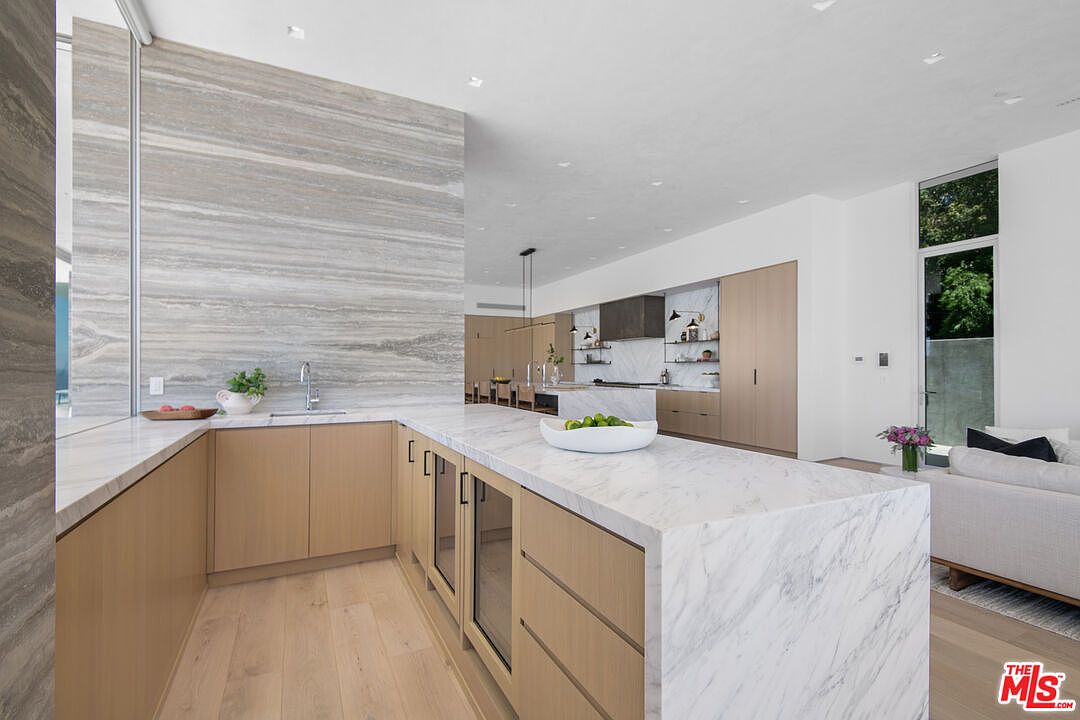
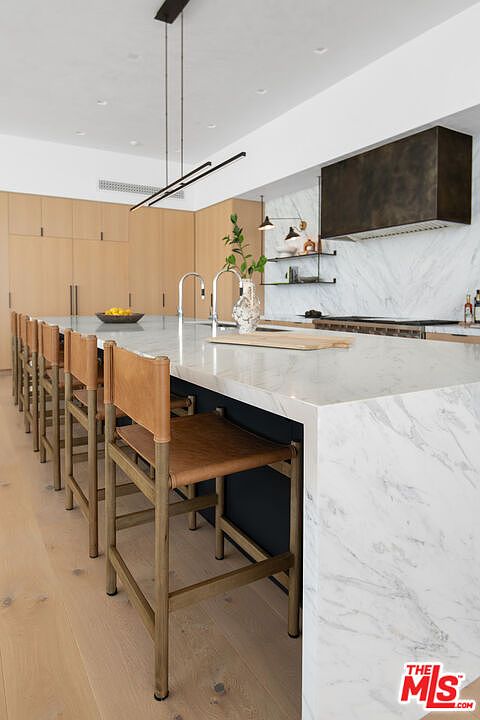
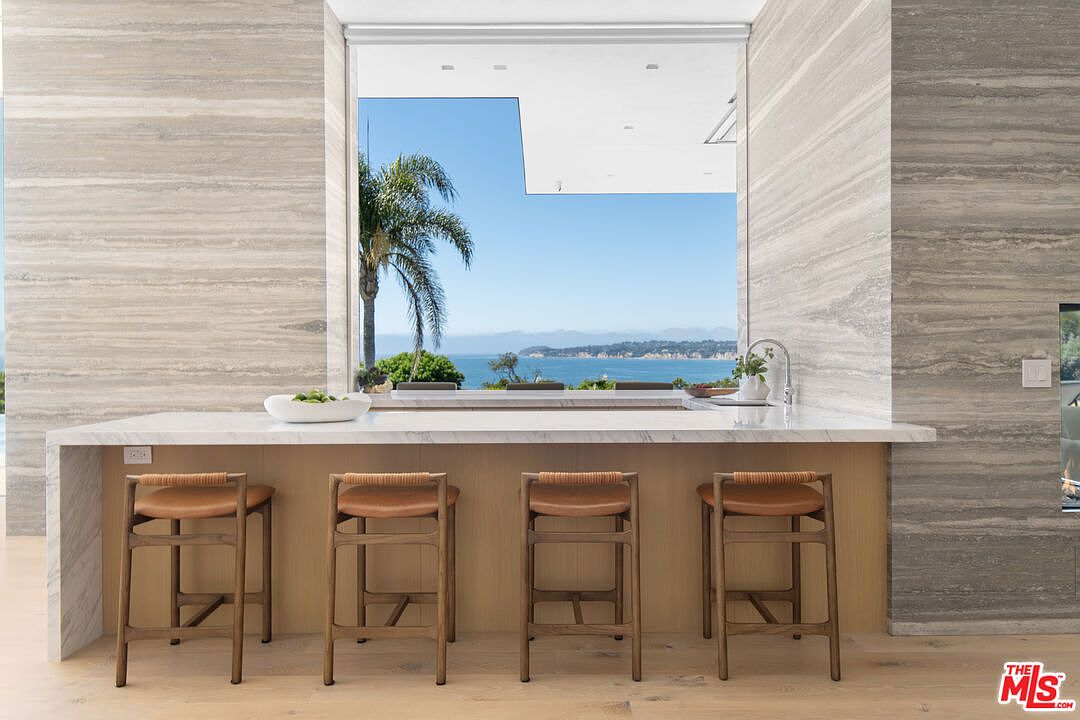
The kitchen is designed as a culinary destination in its own right. An eighteen-foot marble waterfall island — a surface generous enough for both serious cooking and effortless entertaining — anchors the space, flanked by light wood cabinetry and a Wolf range set beneath a dramatic dark metal hood. The entire composition is oriented toward unobstructed ocean views, so that the act of preparing a meal becomes inseparable from the landscape.
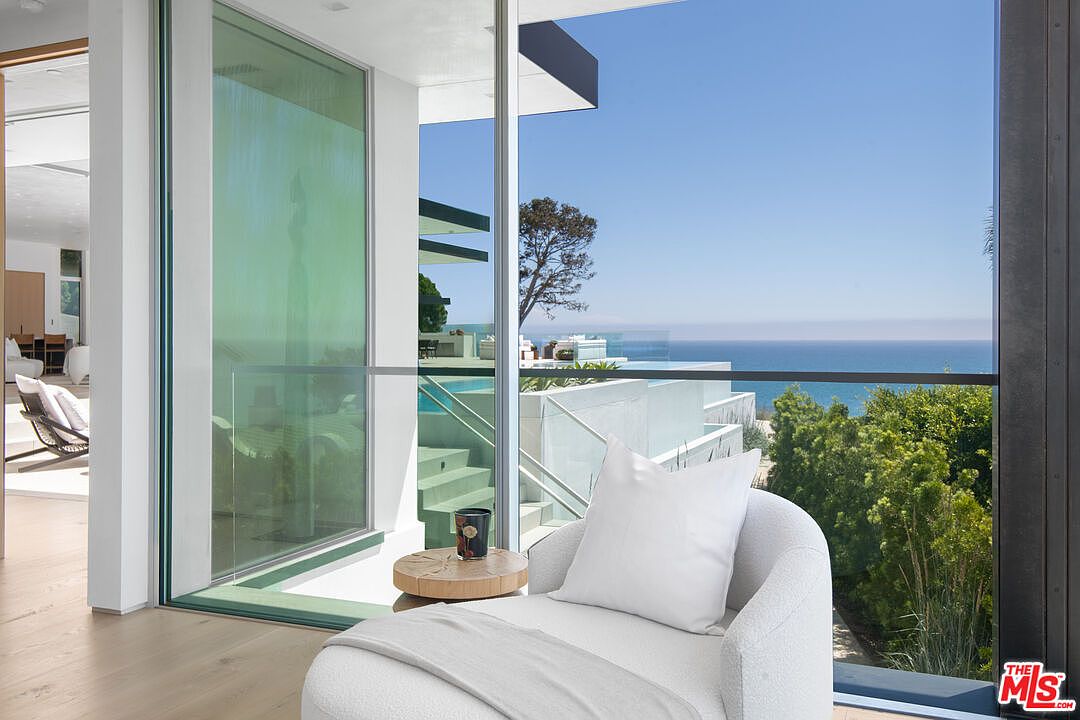
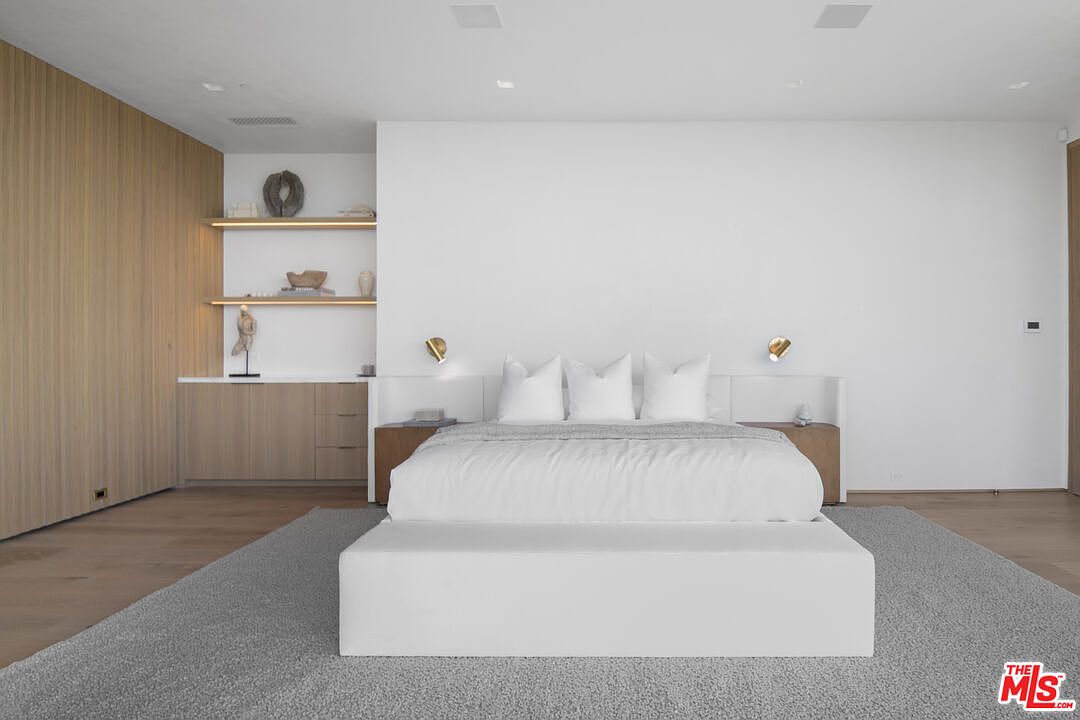
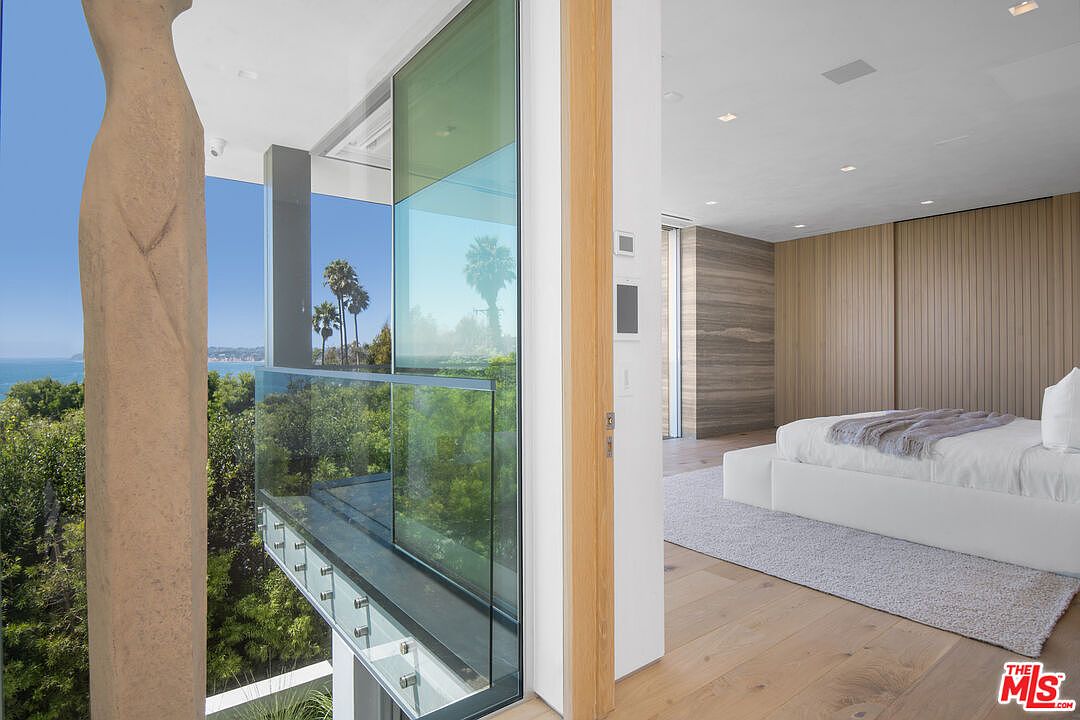
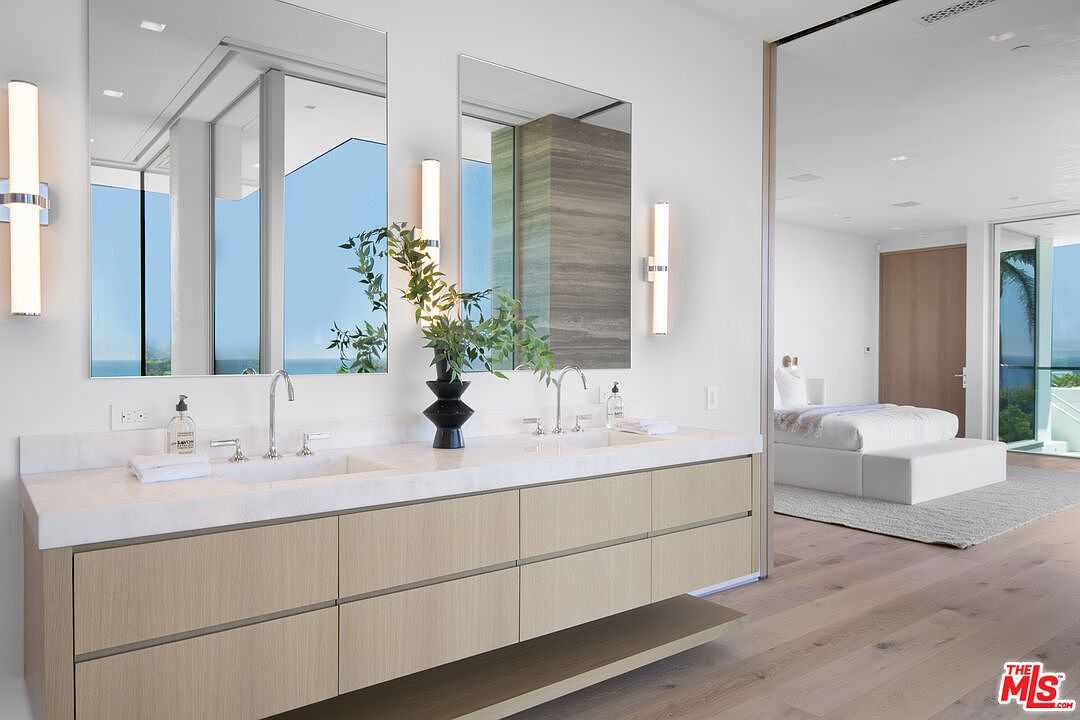
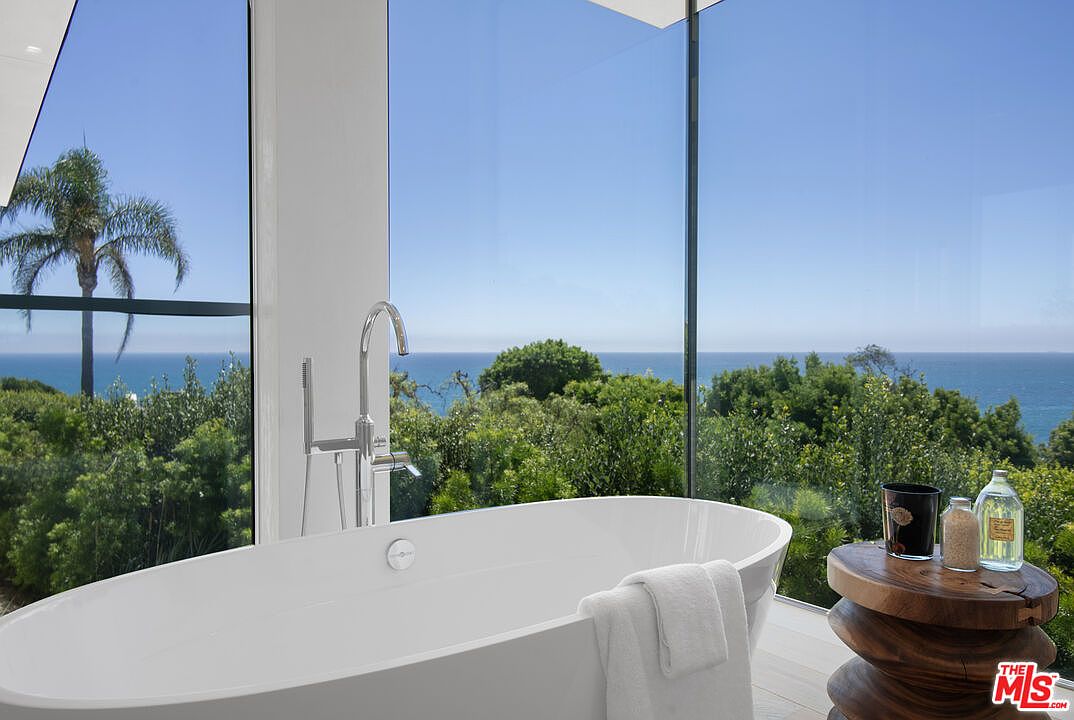
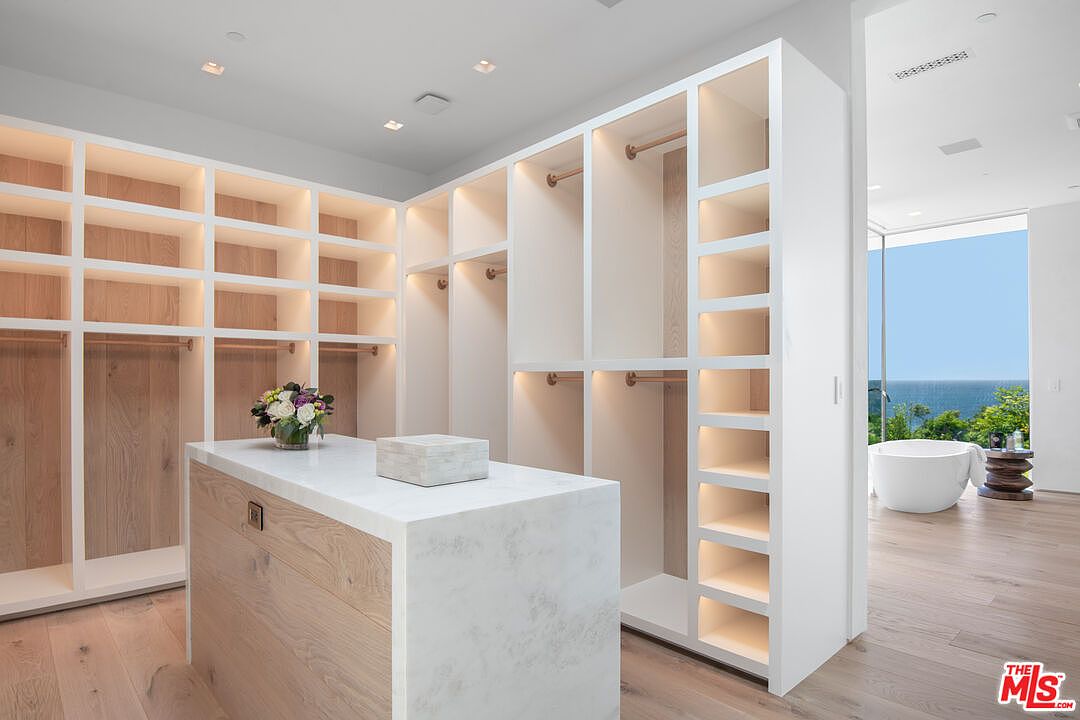
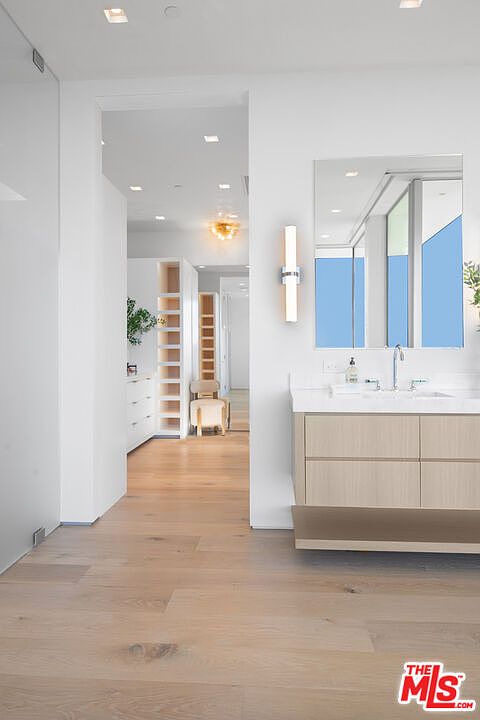
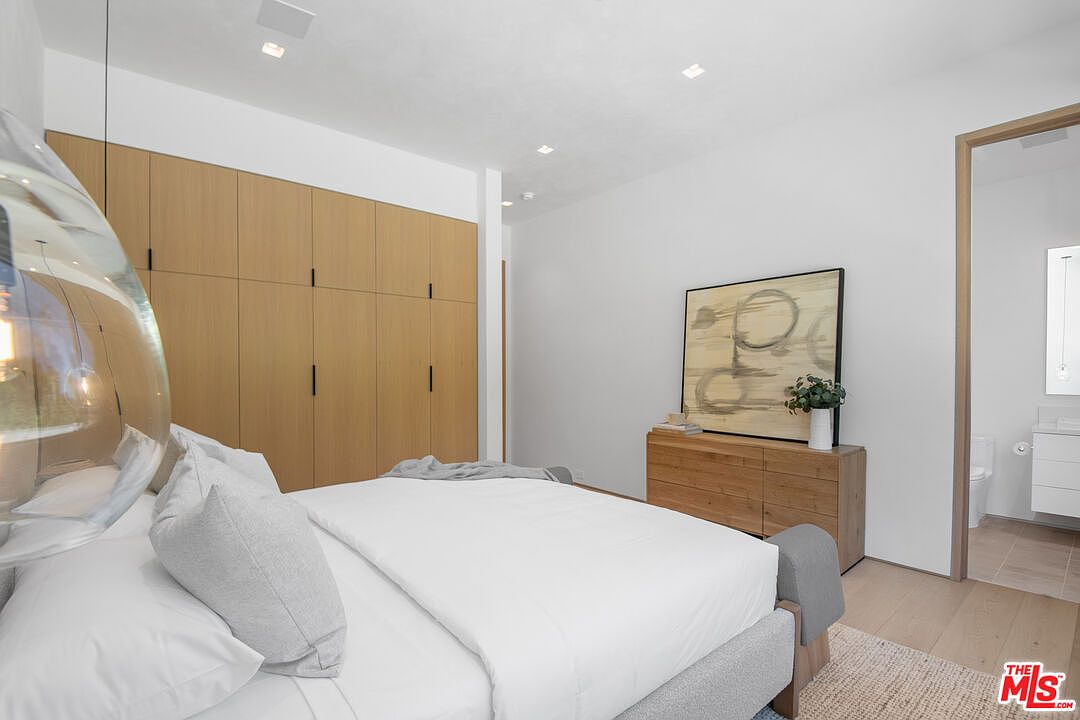
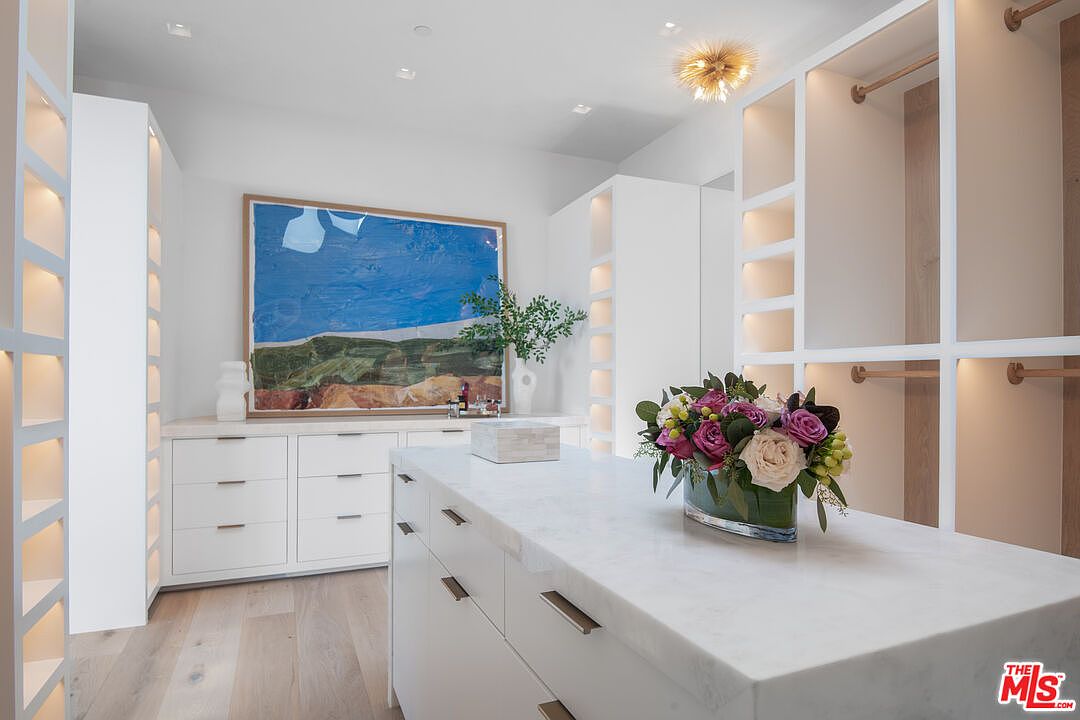
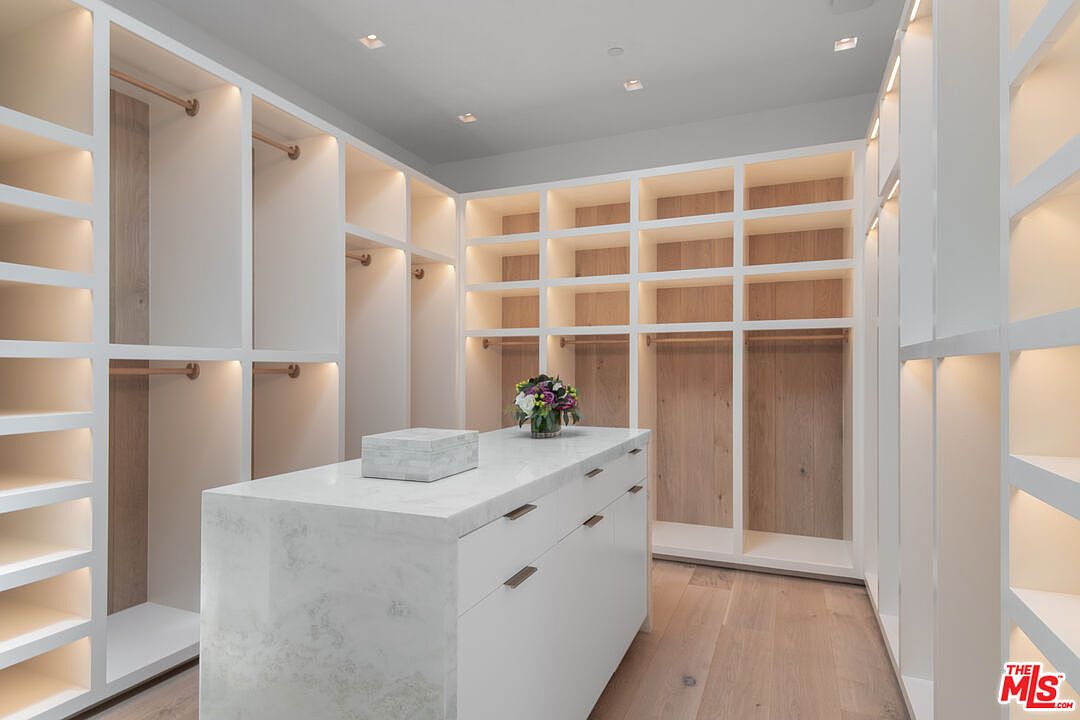
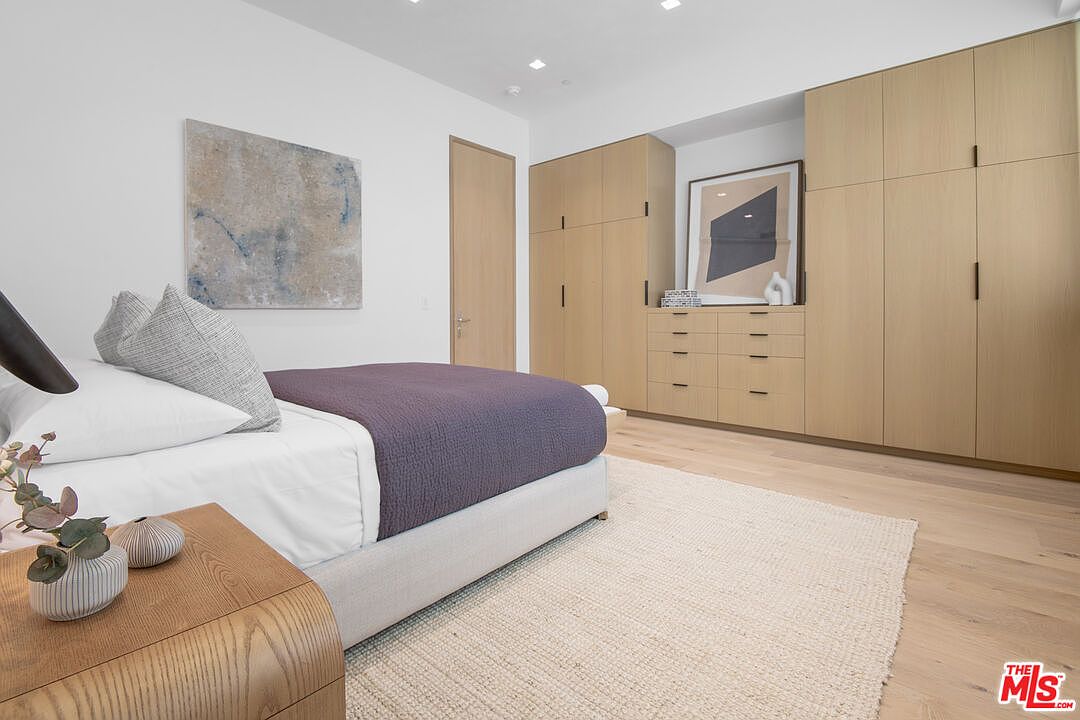
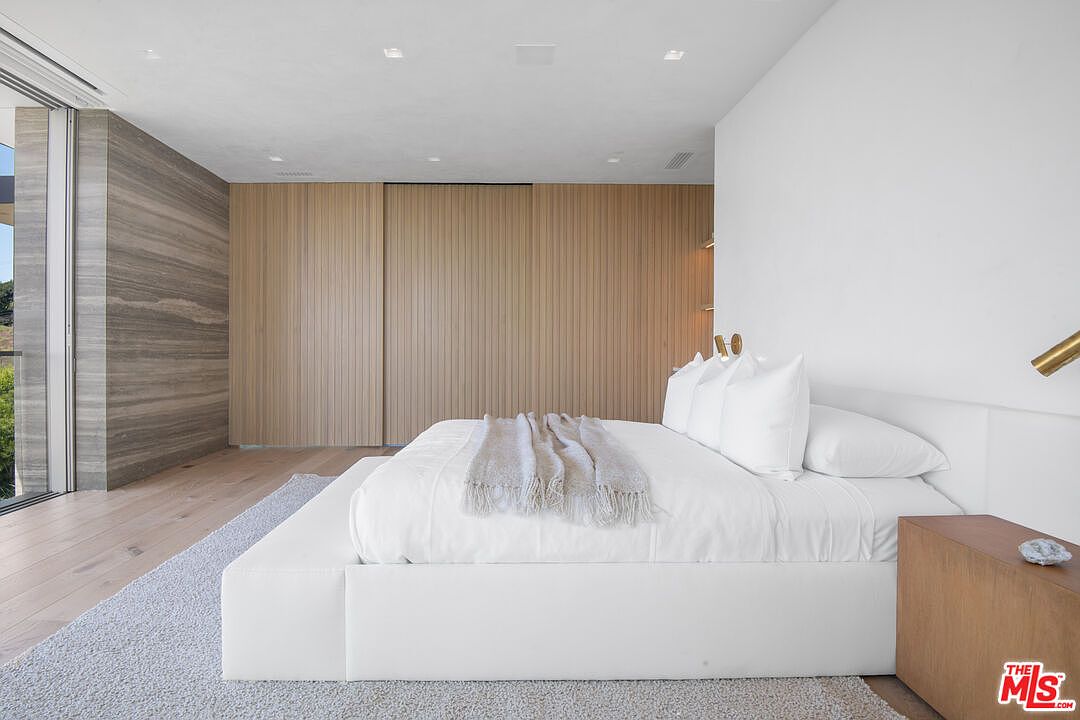
The primary suite occupies a privileged position on the main level, where large glass sliding doors open to a private balcony above the sea. Inside, warm wood-paneled walls and a spa-calibrated bathroom create a sanctuary of considered quiet. The freestanding soaking tub is positioned directly before floor-to-ceiling windows framing the Pacific — an image of such simple, arresting beauty that it requires no further embellishment. A custom walk-in closet, complete with a marble-topped central island and integrated LED cabinetry, completes the retreat with the organizational sophistication the rest of the home demands.
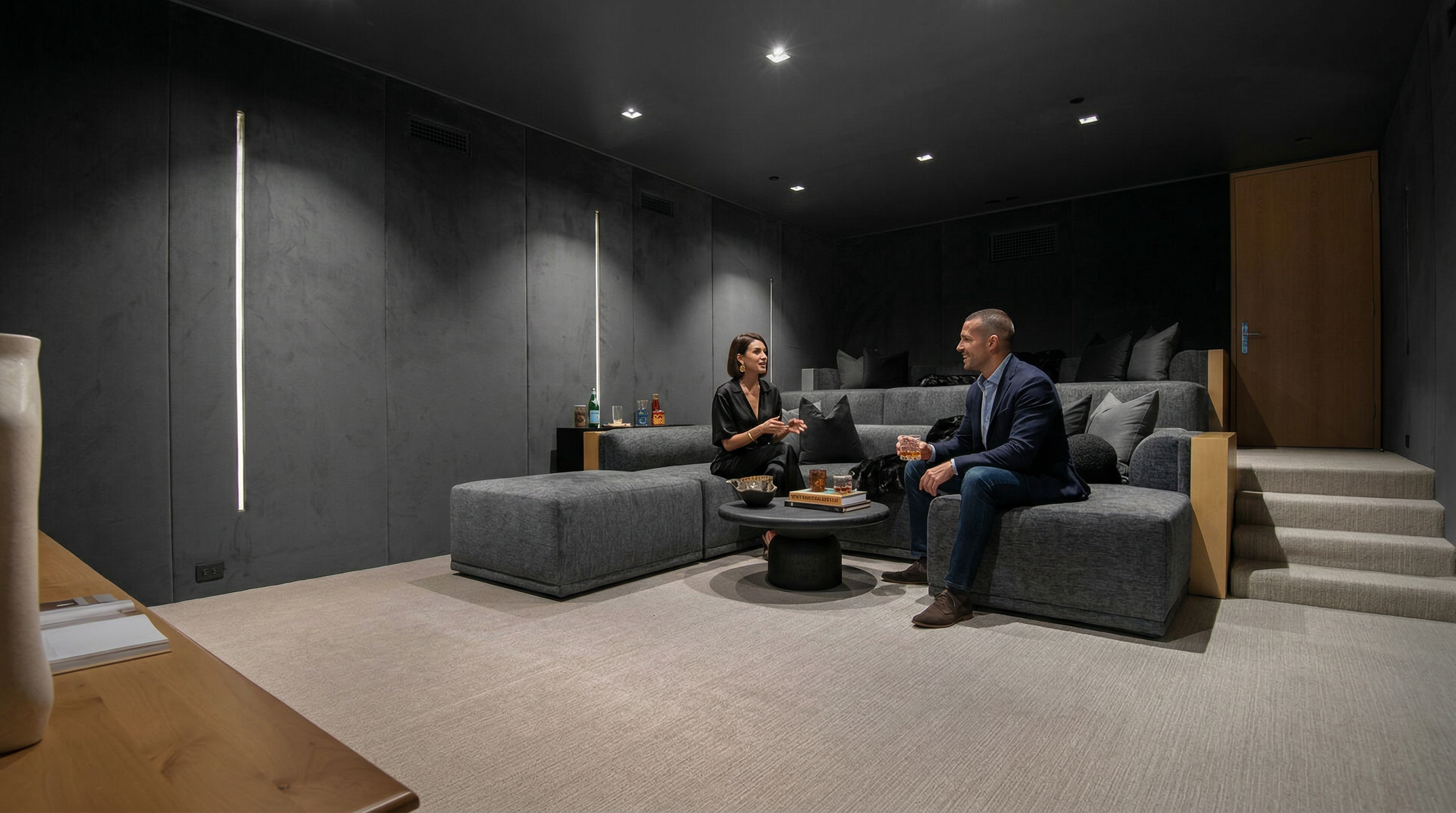
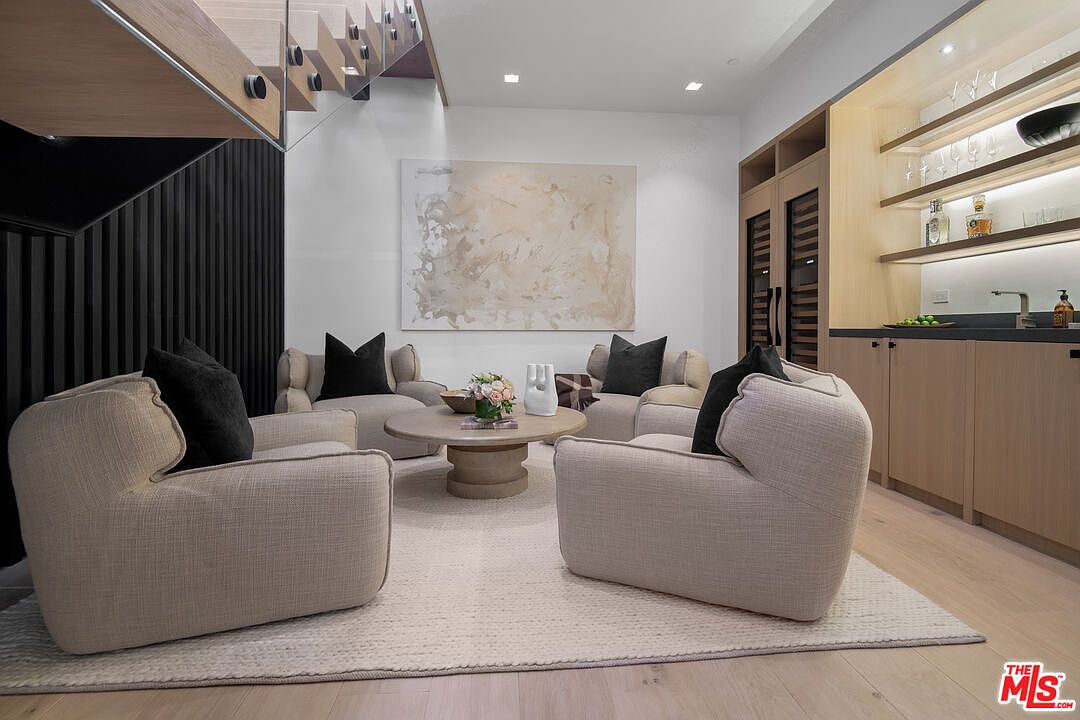
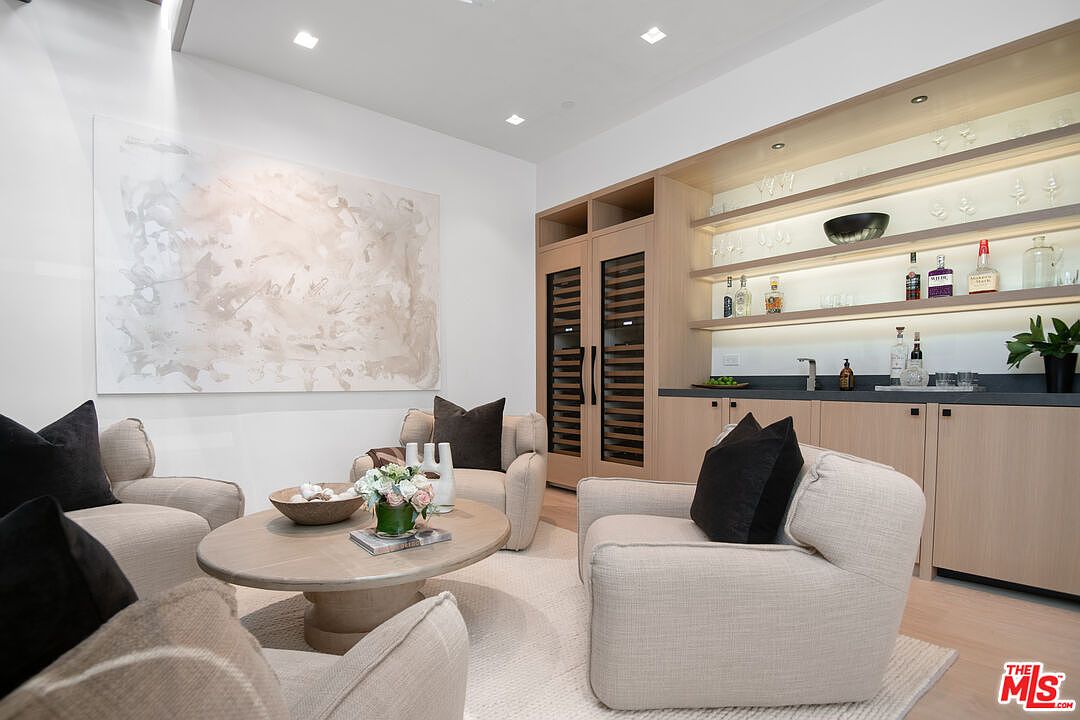
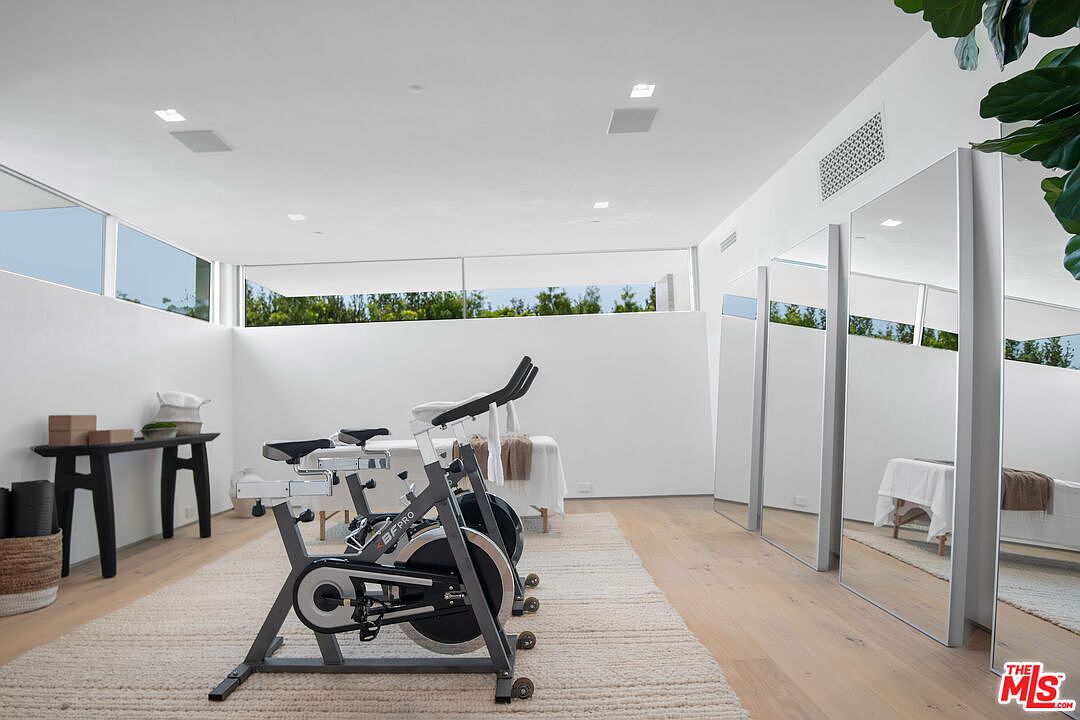
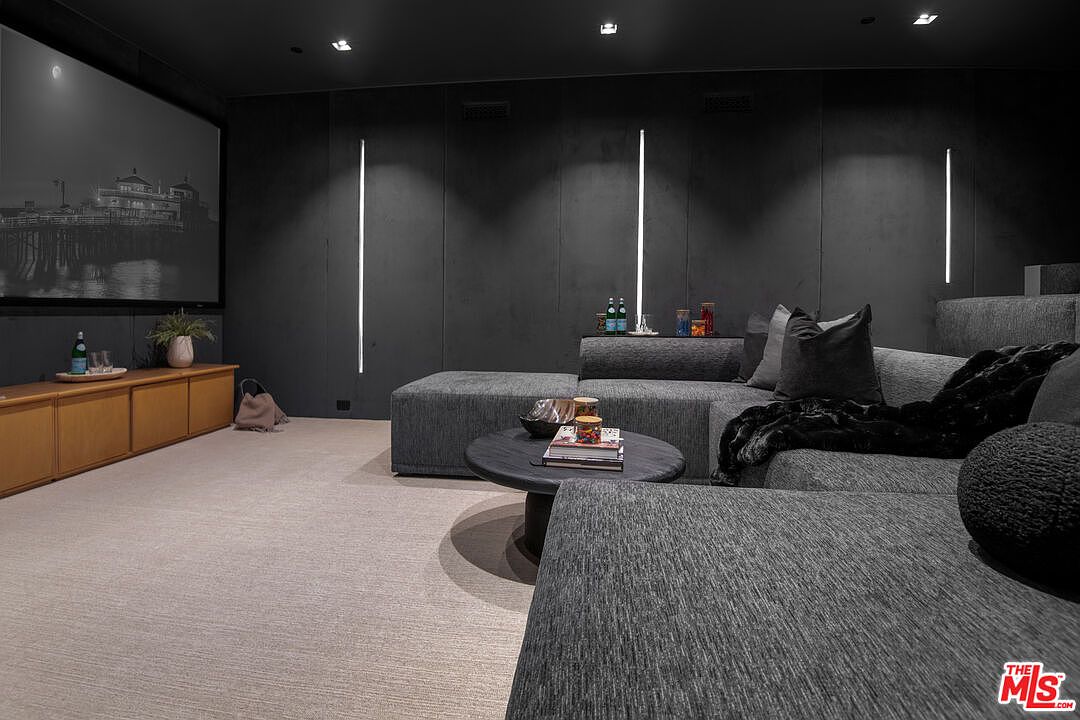
The lower level is its own world: a dedicated home theater with tiered seating and vertical LED wall lighting built for genuine cinematic immersion; a lounge bar with illuminated shelving and integrated wine refrigeration that would distinguish any private members' club; and a light-filled gym with clerestory windows that transforms the daily discipline of fitness into something closer to pleasure.
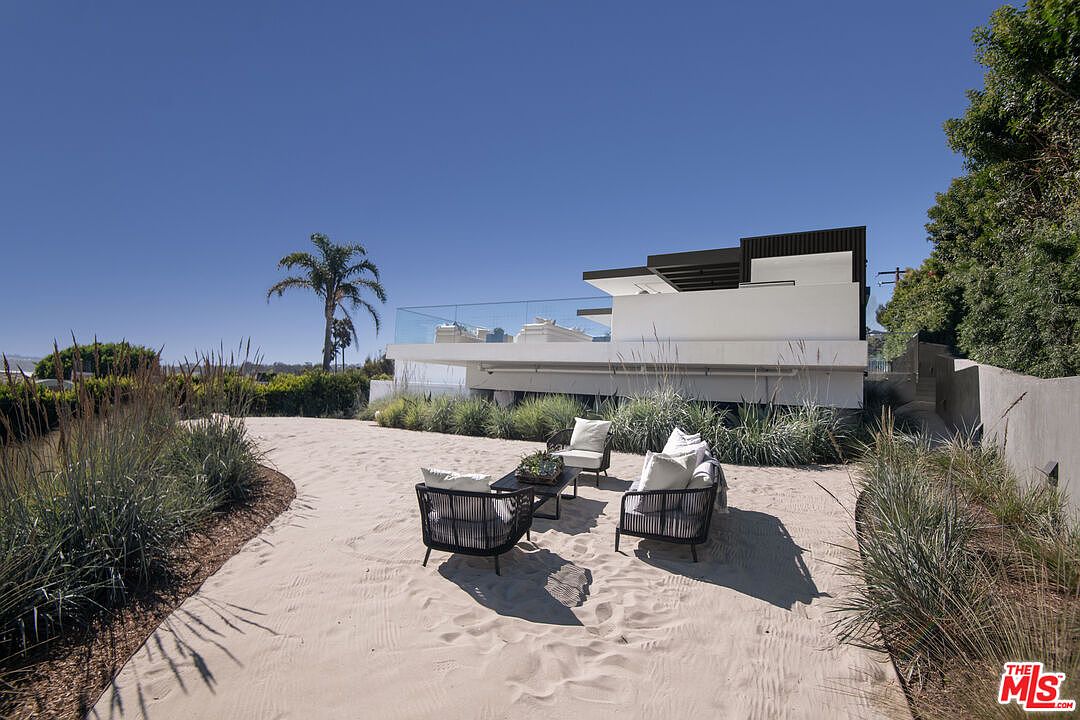
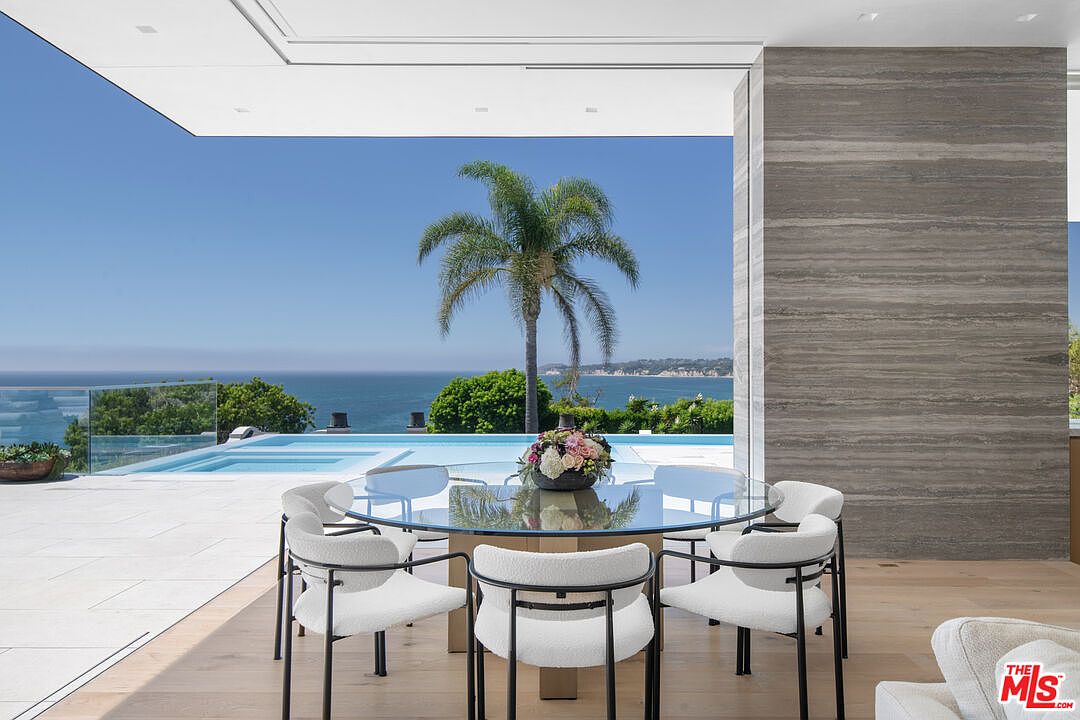
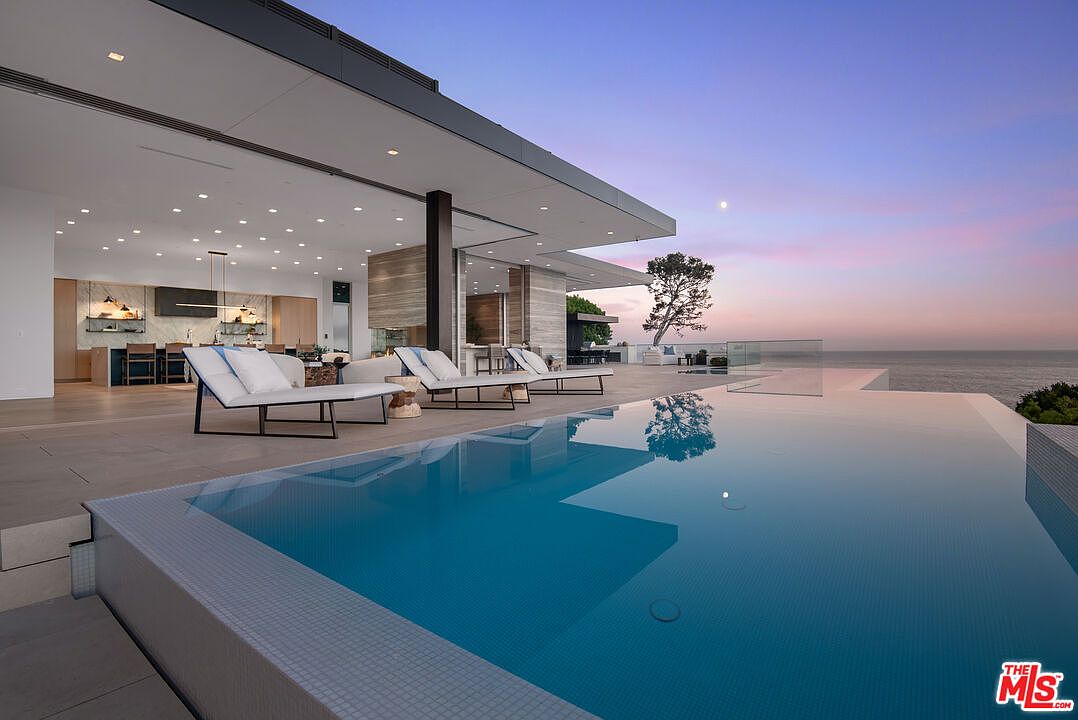
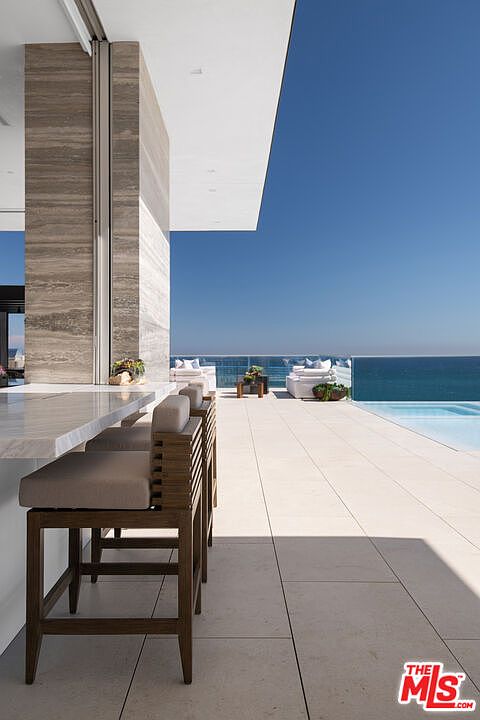
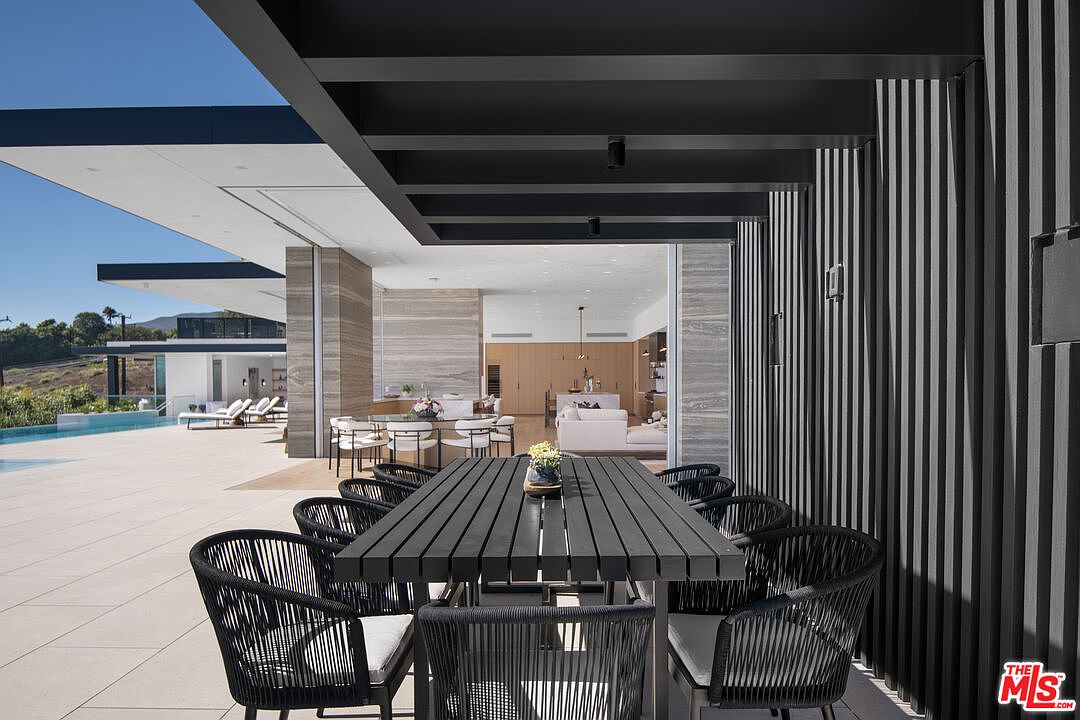
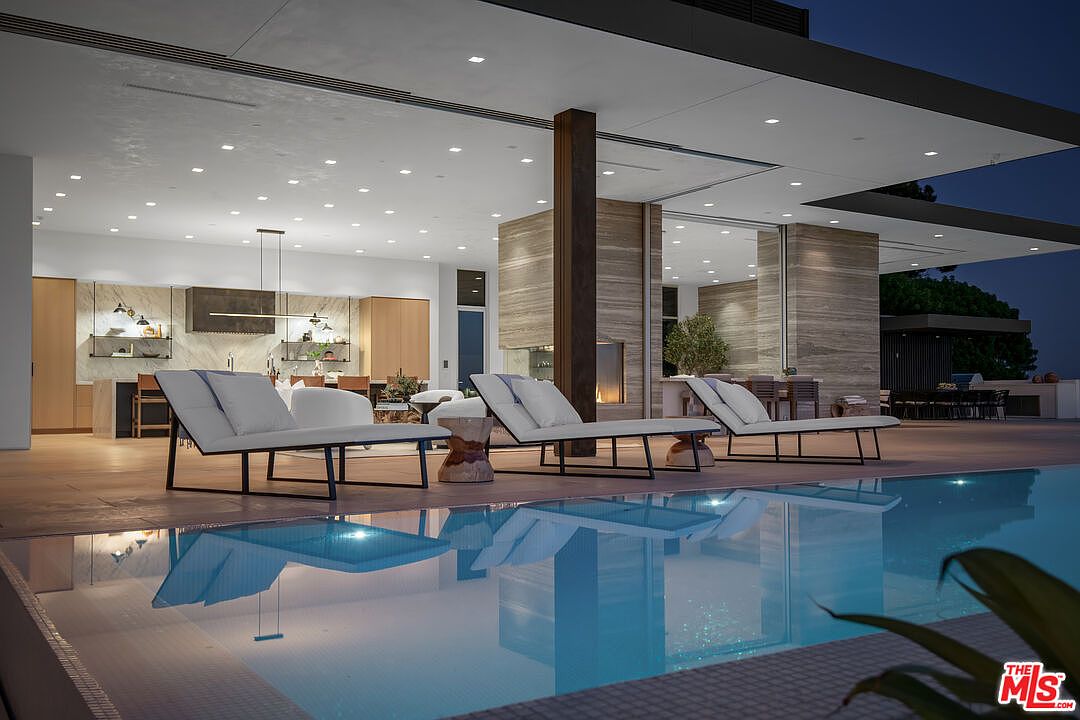
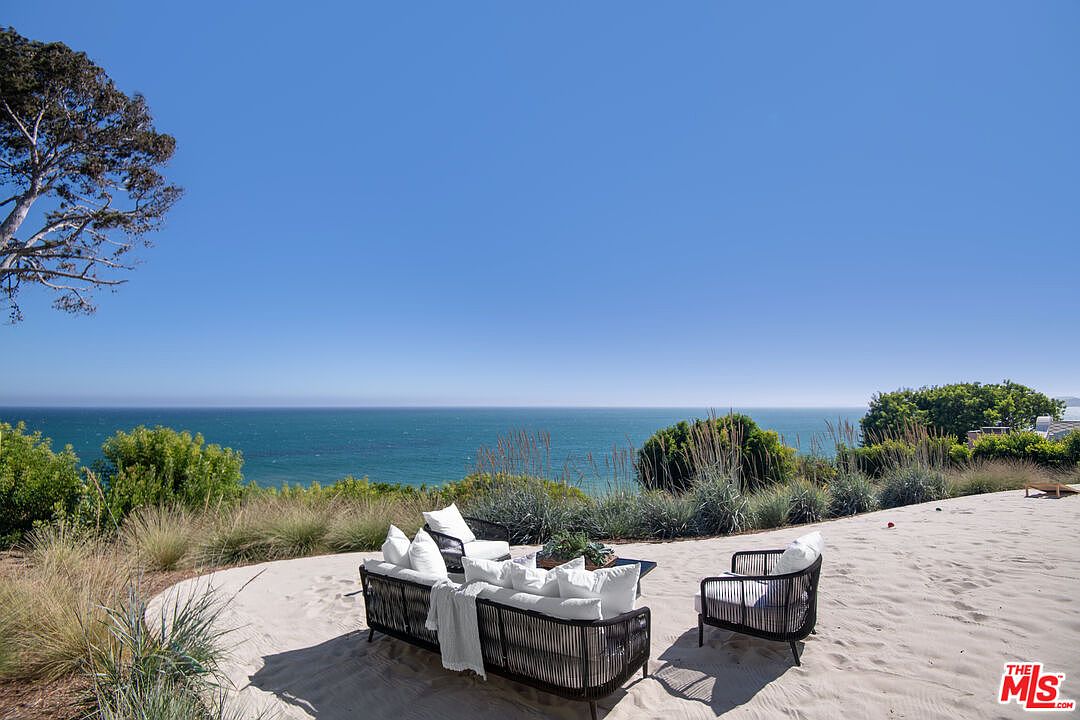
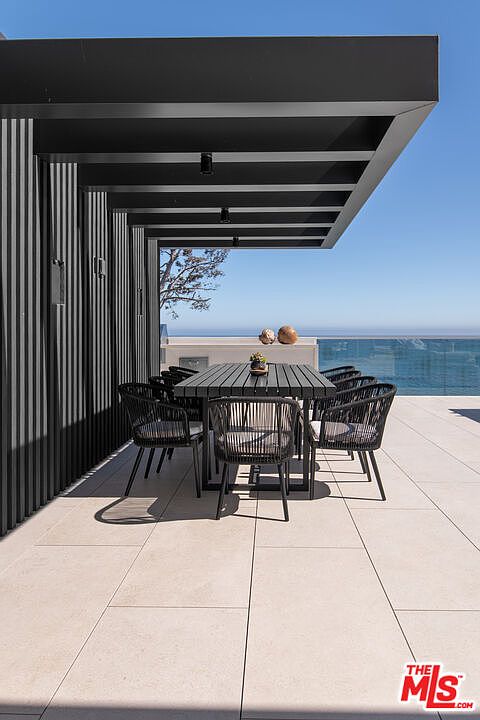
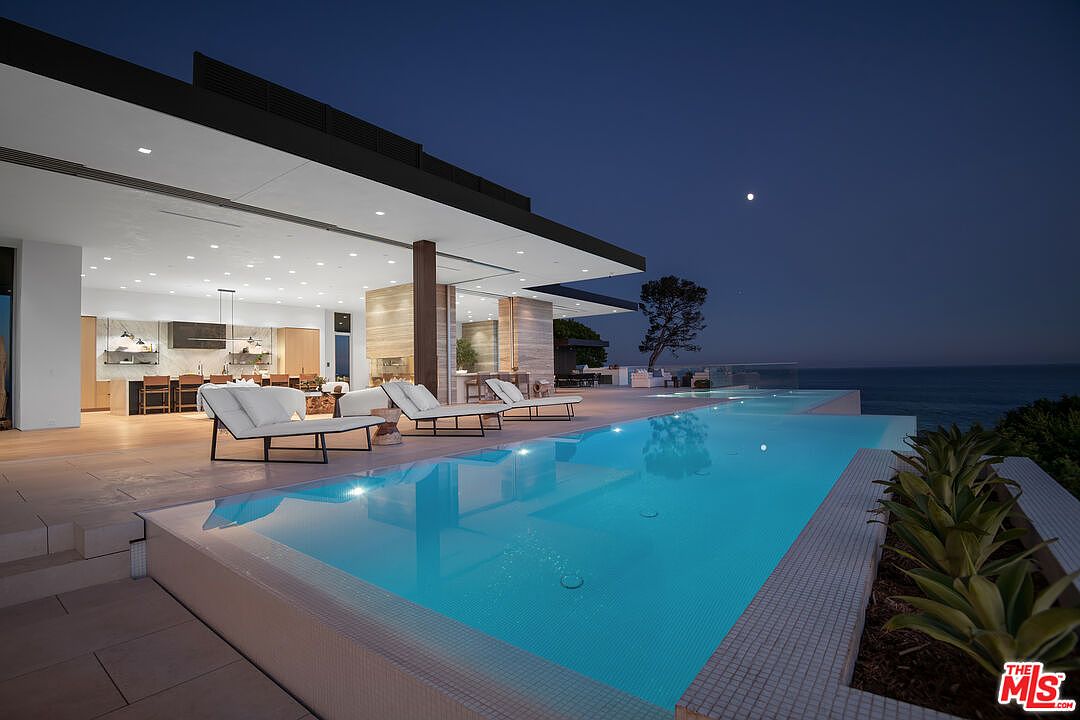
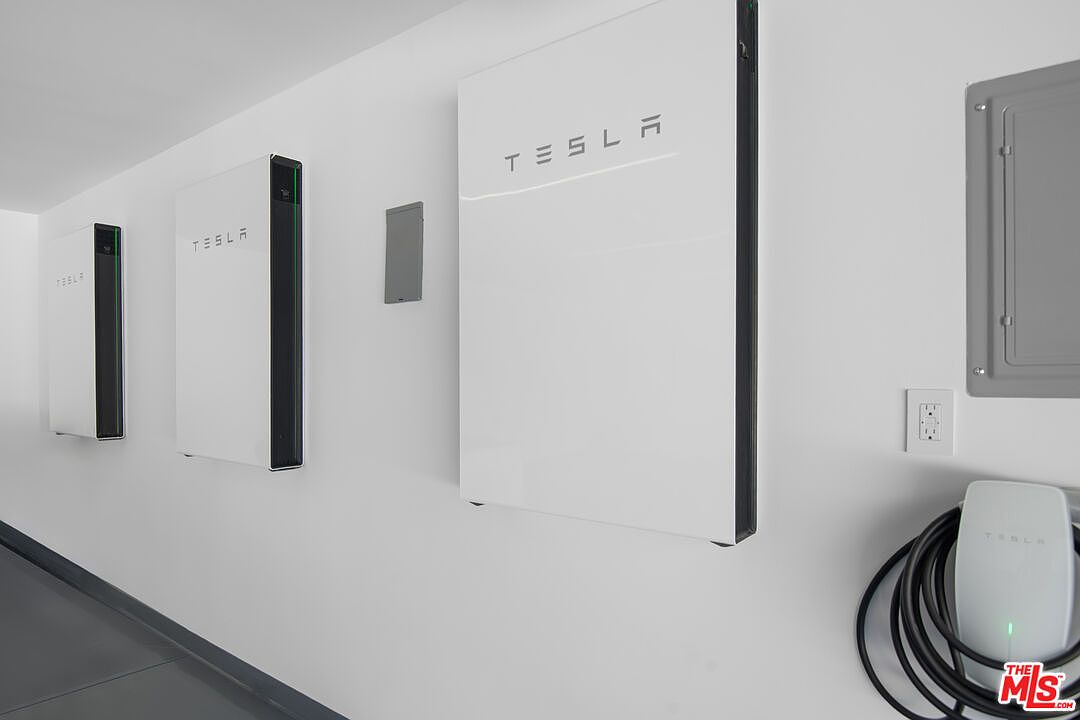
Outside, the wraparound deck extends the residence to its logical conclusion. A ninety-three-foot lap pool, an integrated Jacuzzi, a shallow wading area, a covered outdoor kitchen with professional-grade appliances, and a walk-up indoor-outdoor bar compose an outdoor environment that functions as seamlessly as any interior room — only here, the ceiling is open sky and the view is the Pacific Ocean in its full, uninterrupted breadth. Tesla Powerwall battery infrastructure and a dedicated EV charging station ensure the property meets the expectations of modern, sustainably minded ownership.
Malibu occupies a singular position in the geography of the American coastline — twenty-one miles of Pacific shoreline that has, for nearly a century, drawn those who prize privacy, natural beauty, and an unhurried quality of life that no amount of urban density can replicate. The city's character is shaped as much by what it resists as by what it embraces: strict coastal zoning, limited development corridors, and a population deeply invested in preserving the landscape that defines the place.
Malibu Cove Colony, the community above which this residence is perched, represents one of the most coveted addresses within an already exclusive enclave. A gated, private coastal community, Malibu Cove Colony has long been home to those who seek the full immersion of oceanfront living with a degree of seclusion rarely available elsewhere along the Southern California coast. The immediate neighborhood's character — low-profile, architecturally distinguished, deliberately removed from the commercial corridors of Pacific Coast Highway — reflects the priorities of its residents.
The surrounding Malibu community offers a lifestyle calibrated to those for whom quality supersedes convenience. Nobu Malibu, perched on its own stretch of coastline, has become a destination in its own right — a place where the line between restaurant and experience dissolves over wood-fired Japanese-Peruvian cuisine. Geoffrey's Malibu has anchored the local dining landscape for decades with its clifftop setting and reliably sophisticated California cuisine. Vintage Grocers and the Malibu Country Mart provide day-to-day provisioning with an emphasis on organic, locally sourced goods, while the Malibu Farmers Market offers a weekly rhythm of seasonal produce and community gathering.
For those drawn to the natural landscape, Malibu is exceptionally positioned. The Santa Monica Mountains National Recreation Area — one of the largest urban national parks in the United States — begins effectively at the city's eastern edge, offering hundreds of miles of hiking and equestrian trails through chaparral-covered terrain. Point Dume State Beach and Zuma Beach are among the finest stretches of sand on the Southern California coast, while the Malibu Lagoon State Beach and Surfrider Beach maintain their status as some of the most celebrated surf breaks in the world.
Malibu's cultural life is anchored, perhaps unexpectedly, by the Getty Villa — the J. Paul Getty Museum's campus dedicated to ancient Greek, Roman, and Etruscan art and antiquities, set within a meticulously reconstructed first-century Roman country house above the Pacific Coast Highway. The institution draws scholars, collectors, and curious visitors from around the world, lending the community a cultural gravitas that extends well beyond its coastal reputation.
For families, the Las Virgenes Unified School District serves the area, with Malibu High School consistently recognized for its academic programs and the community investment that surrounds it. Private schooling options in nearby Pacific Palisades and Santa Monica extend the range of educational choices available within a reasonable distance.
The drive to Beverly Hills runs approximately forty minutes under typical conditions, and to Los Angeles International Airport somewhat less — distances that feel entirely reasonable given the quality of life purchased in exchange. In Malibu, and particularly above Malibu Cove Colony, the calculation is simple: this is among the most beautiful places on the California coast, and residences of this architectural caliber within it are genuinely rare.
Featured Highlights
Curated Content • Presented by Linda Kanner