The Story Behind
A Mid-Century Masterwork Perched Above the City
There are homes that shelter, and there are homes that inspire. 111 Edgehill Way has always been the latter. Commissioned in the late 1960s by a visionary San Francisco family and designed by Robert Arrigoni of the celebrated BAR Architects, this mid-century contemporary estate was conceived as something altogether uncommon: a home where bold architectural conviction and genuine livability would not merely coexist, but reinforce one another. More than five decades later, that intention remains fully intact.
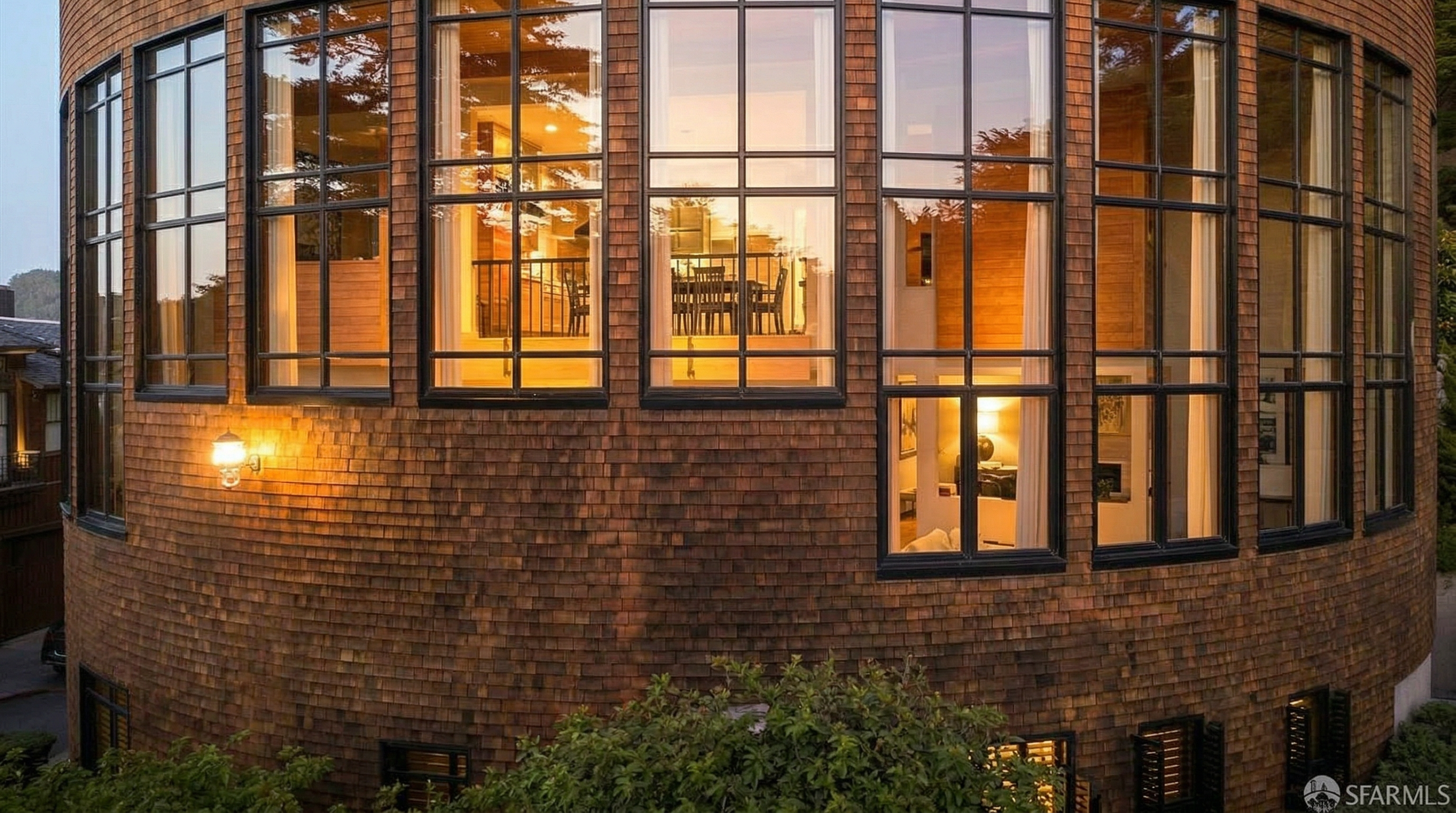
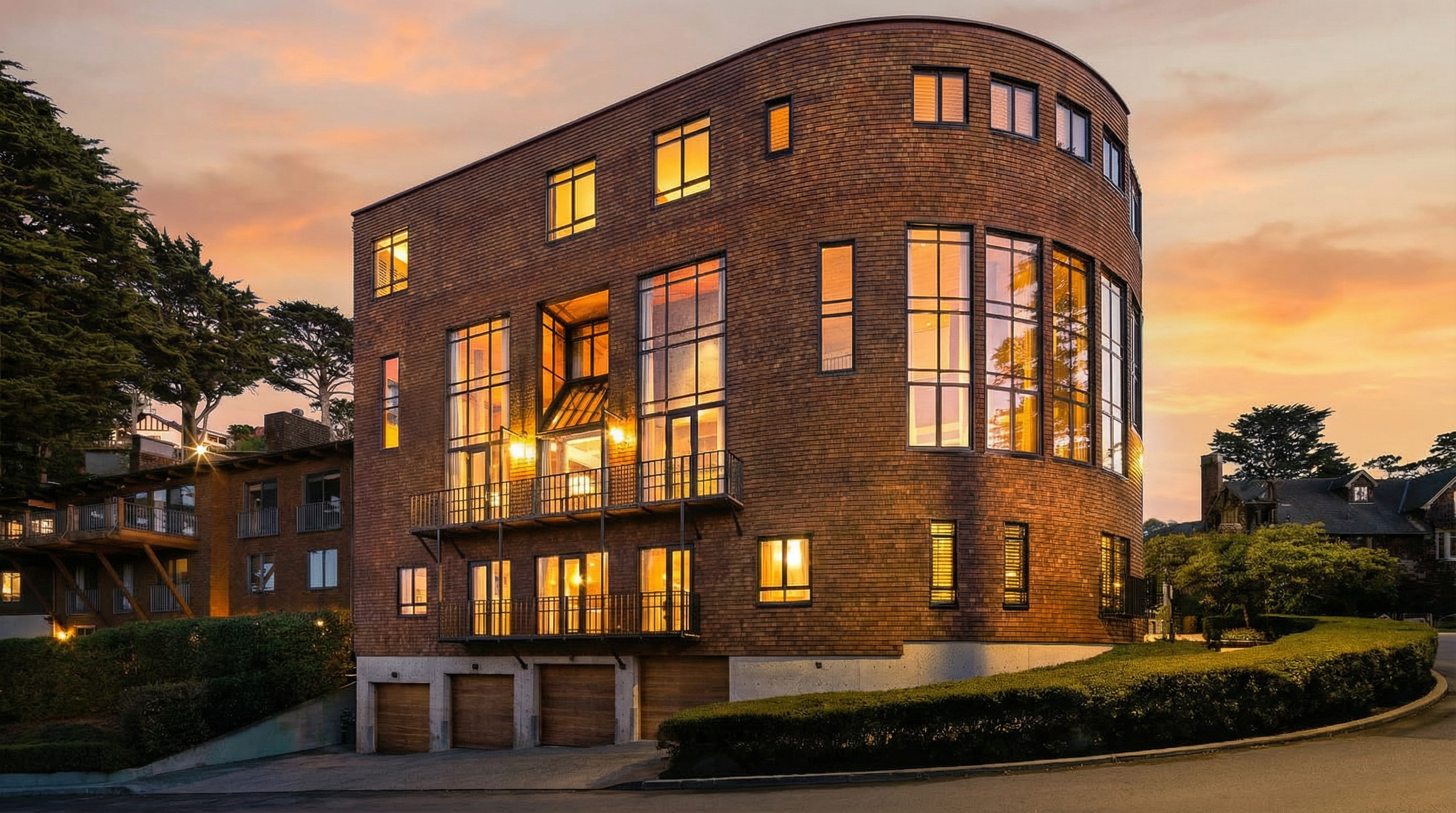
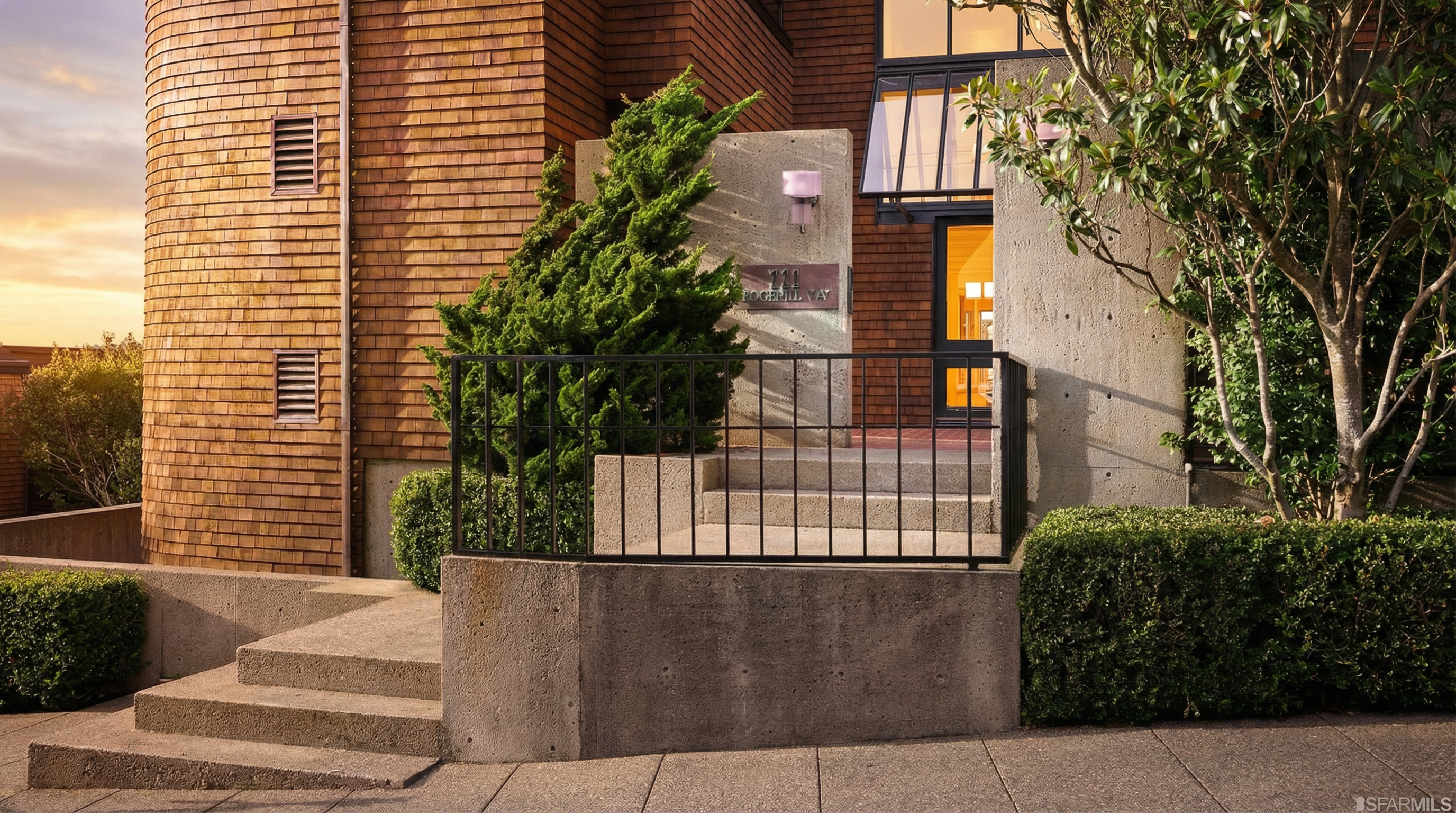
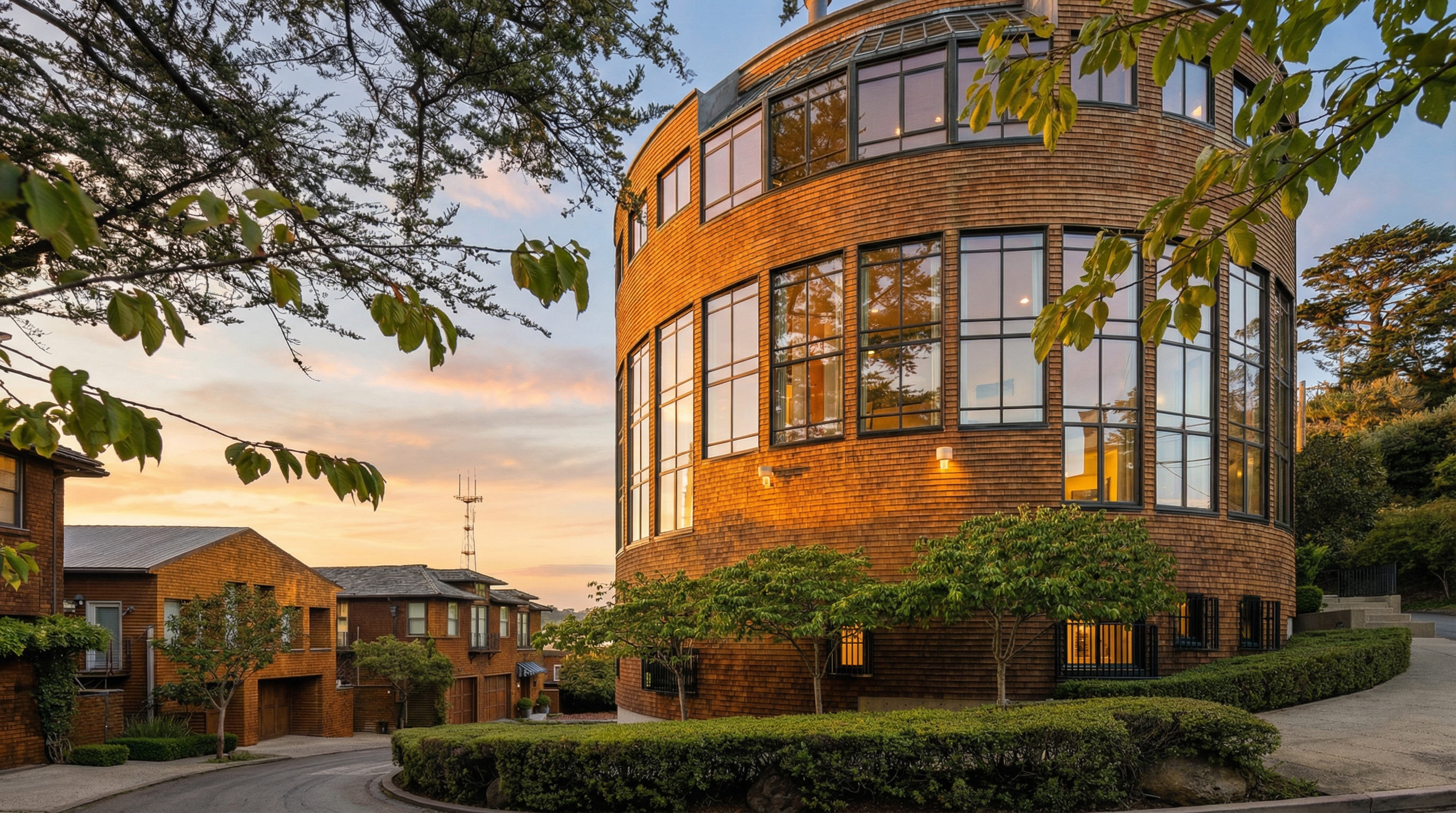
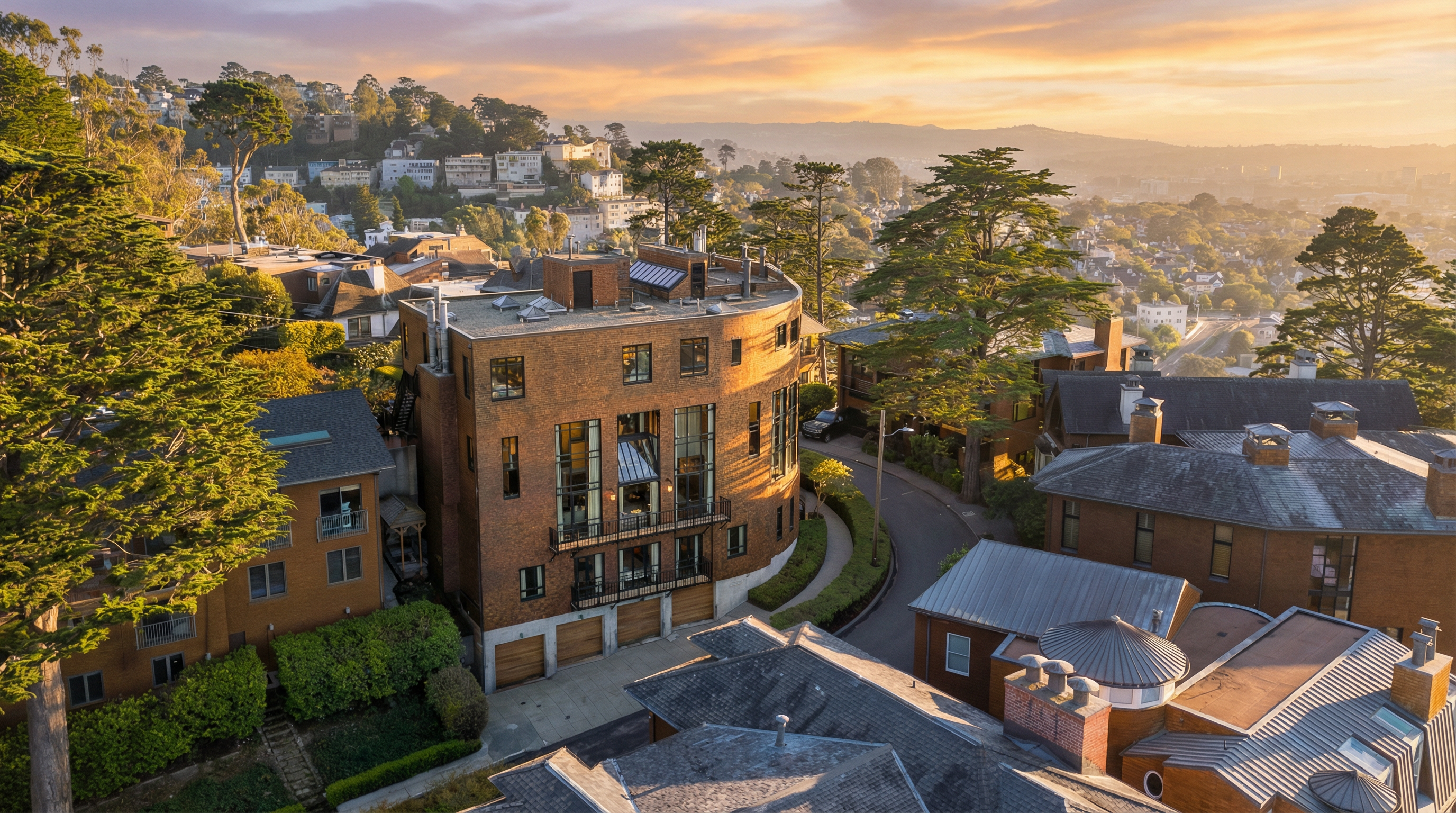
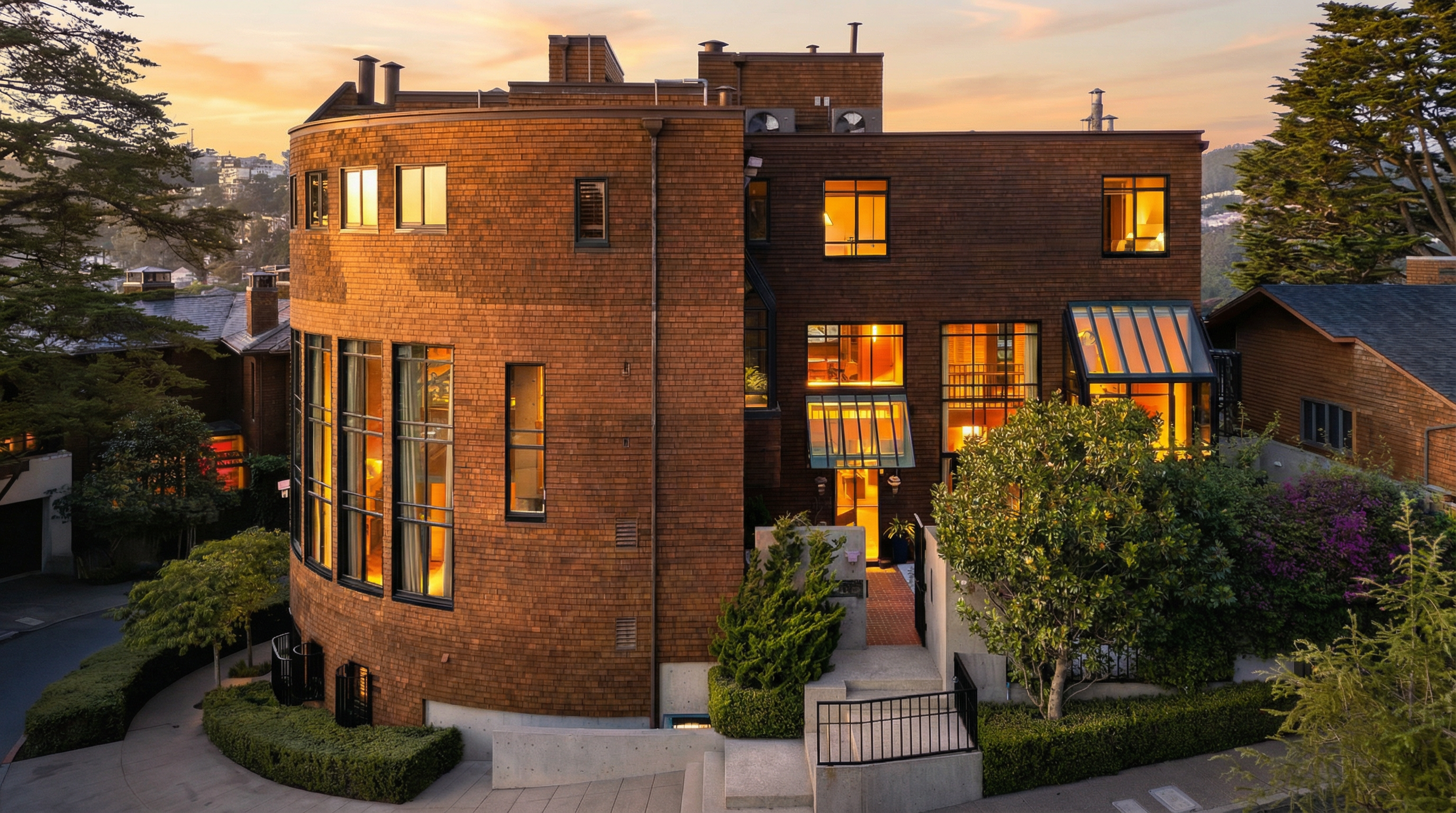
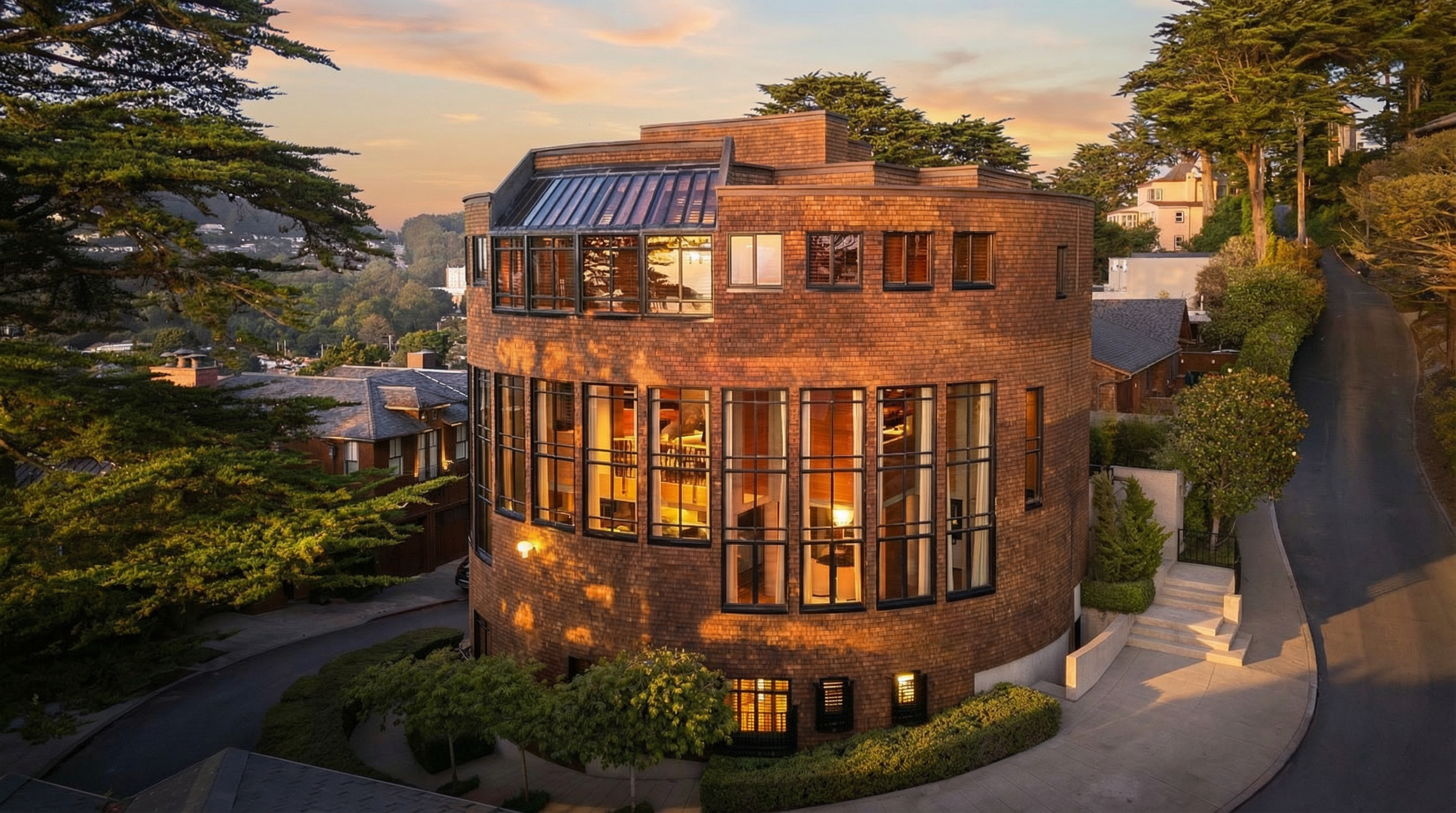
The home announces itself from the street with quiet authority. Its brown shingle facade — a nod to the Bay Region Tradition that shaped so much of Northern California's finest residential architecture — curves gracefully against the hillside, punctuated by ribbons of black-framed windows that read almost as a musical score across the elevation. A manicured circular drive and a concrete entry staircase bordered by verdant landscaping set the tone for what lies within: something considered, curated, and deeply original.
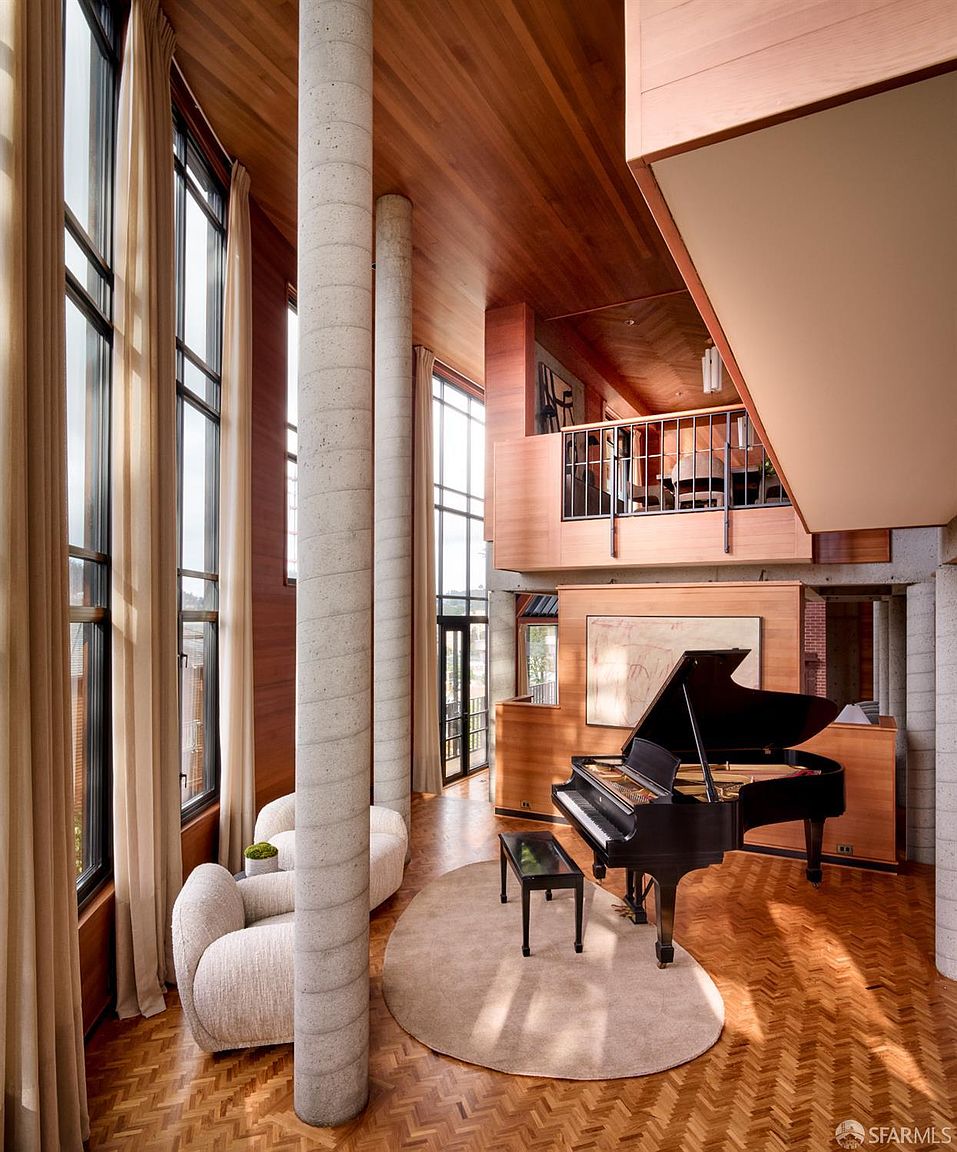
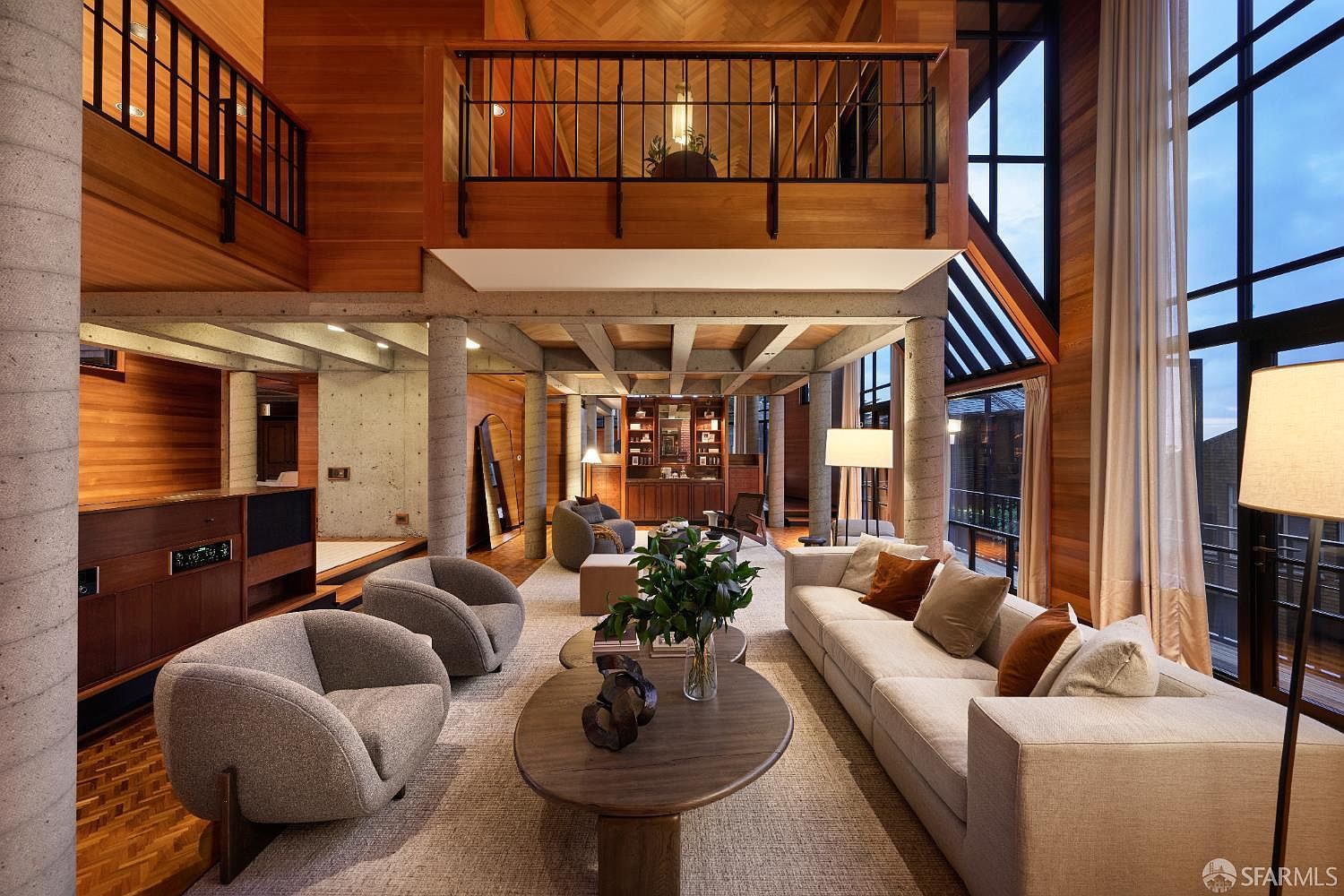
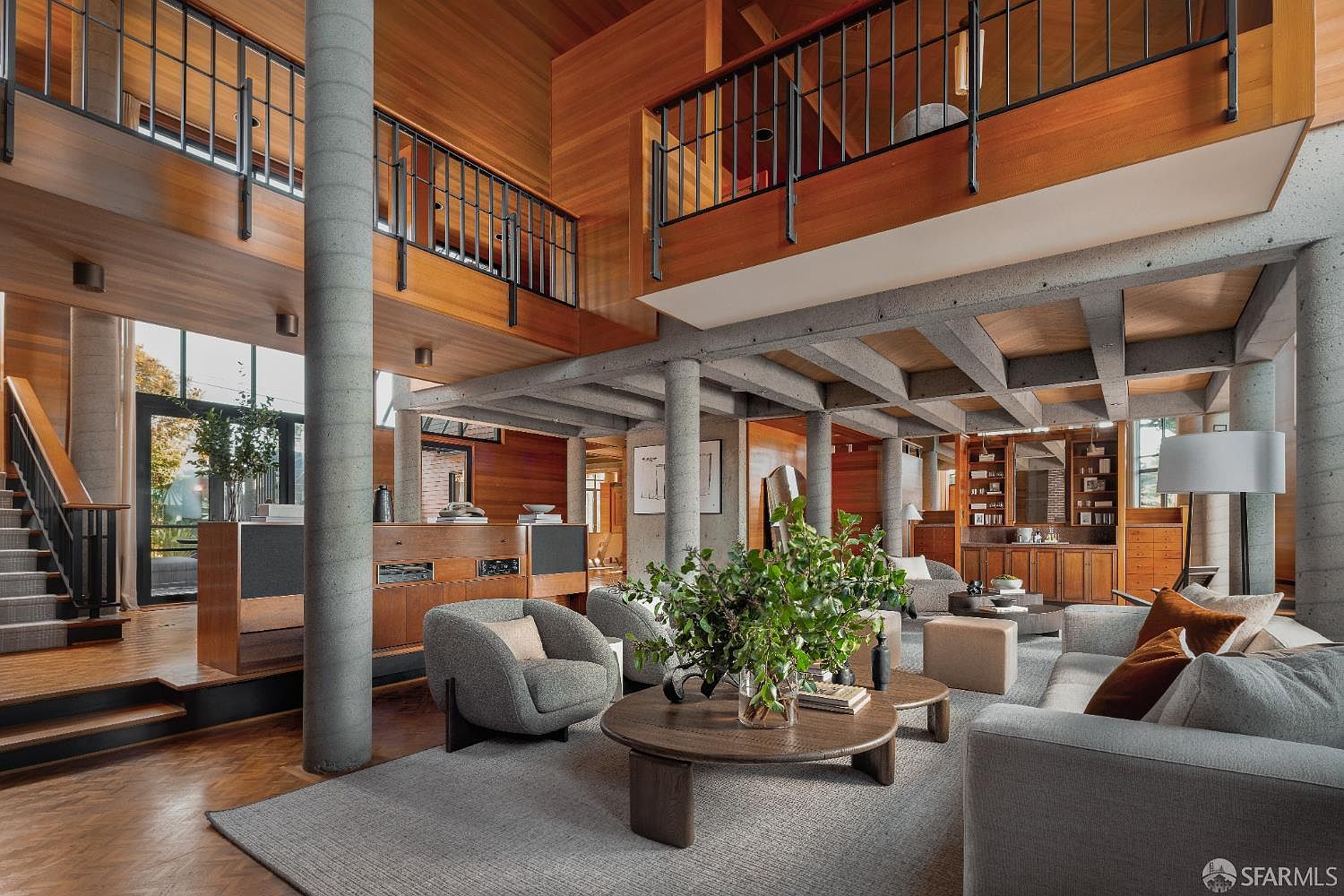
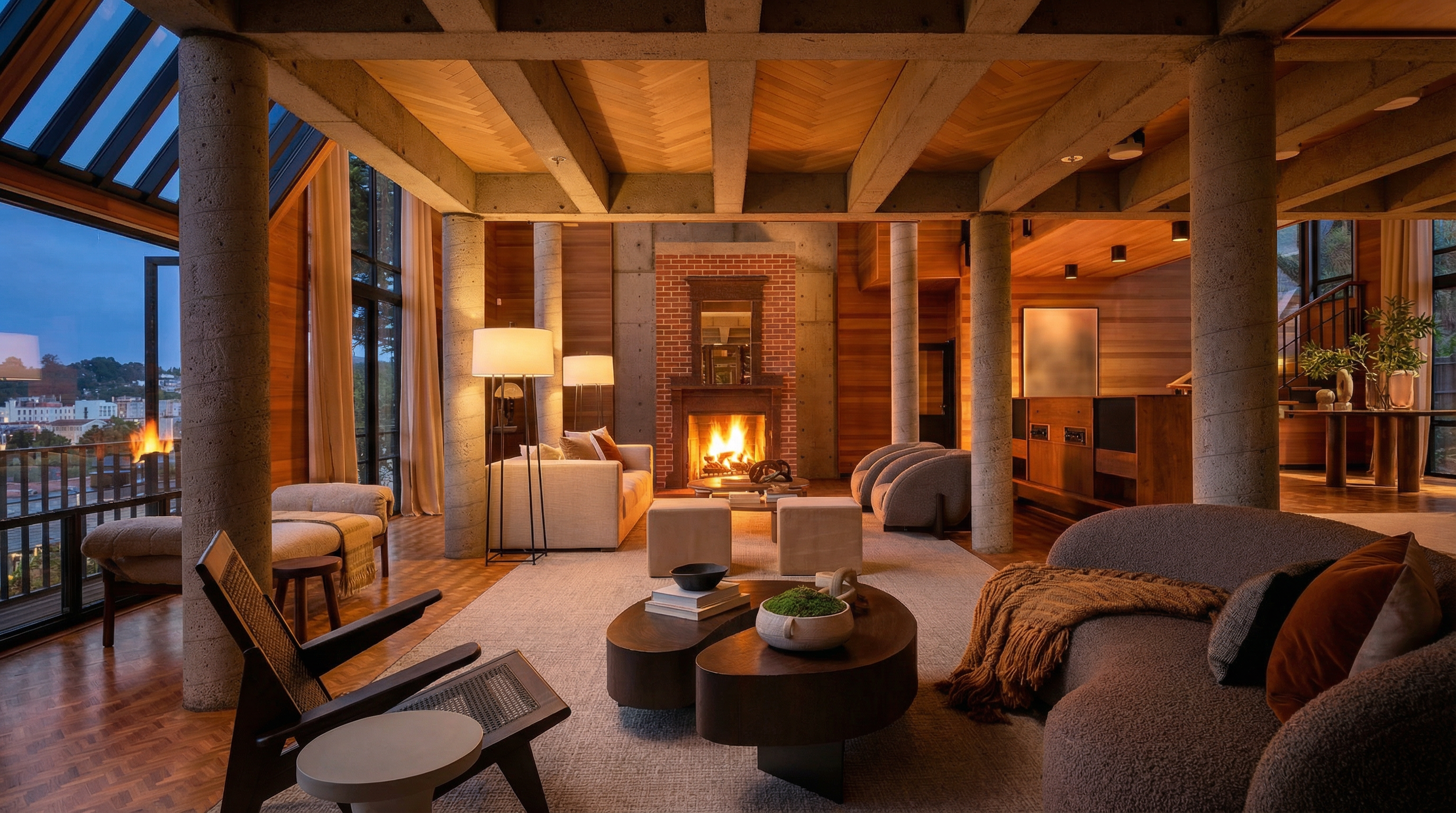
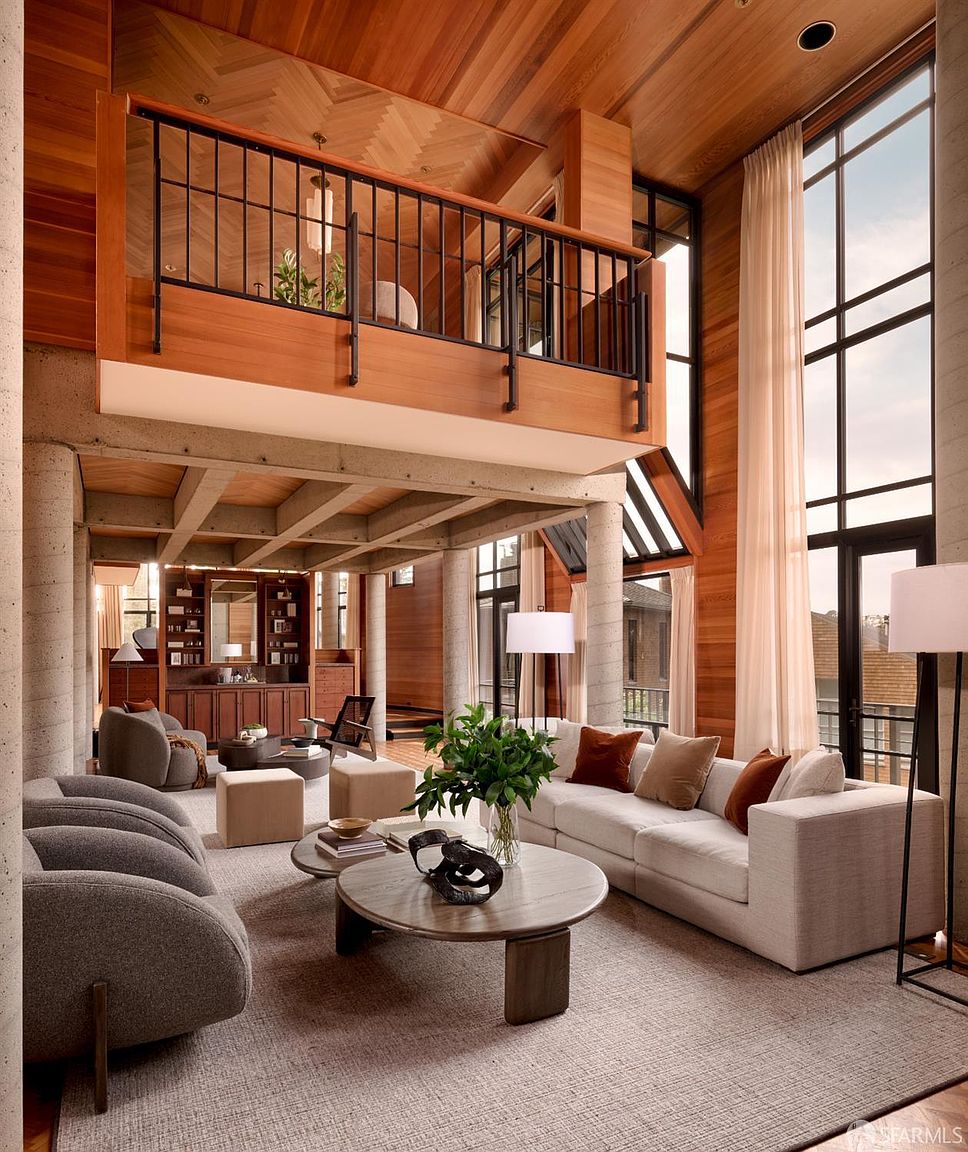
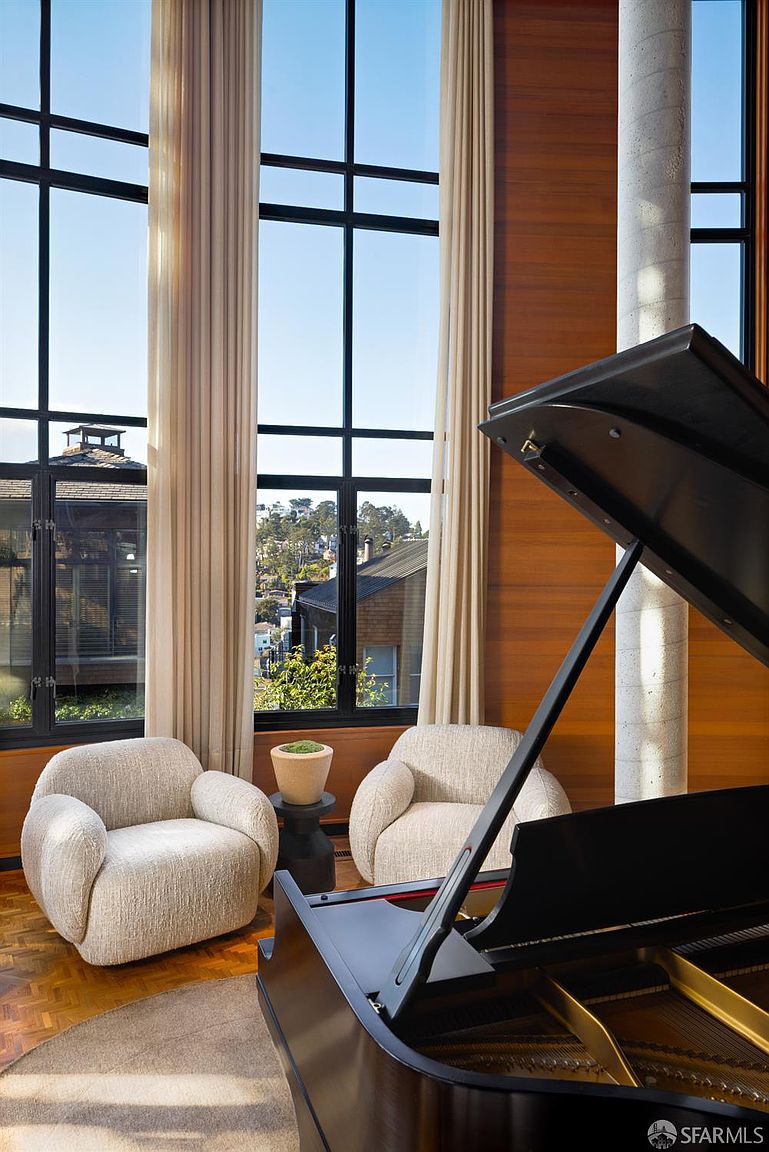
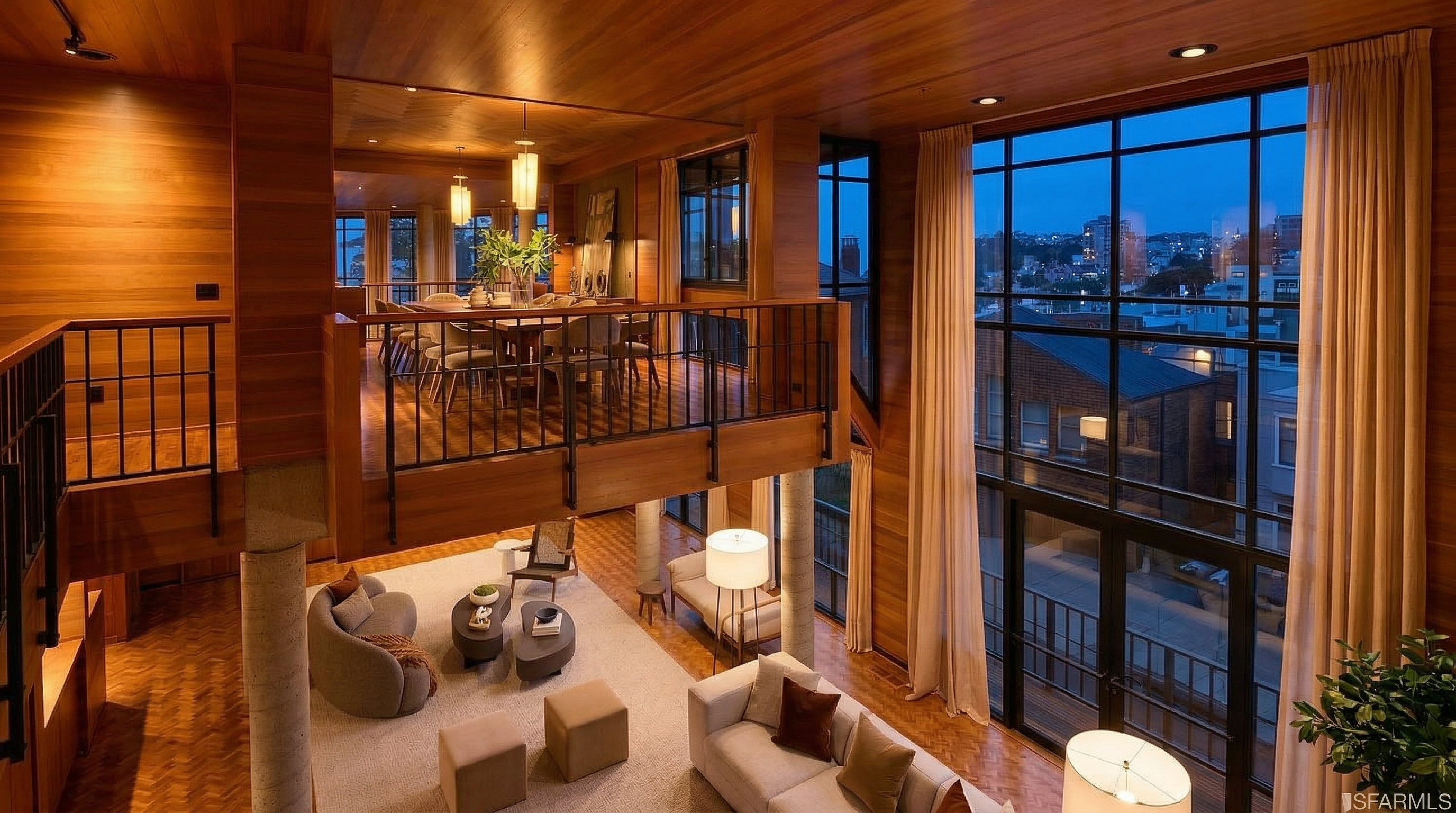
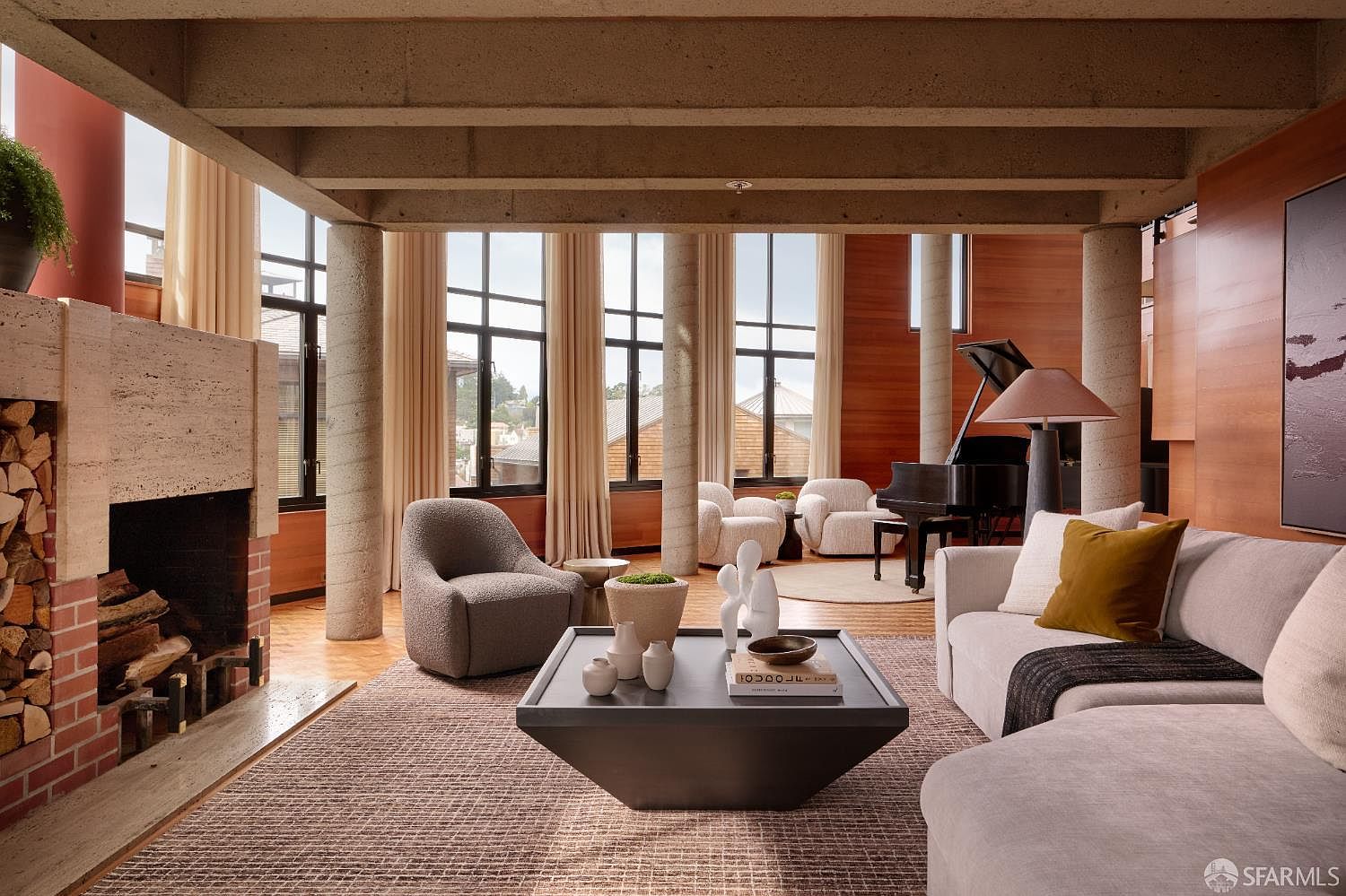
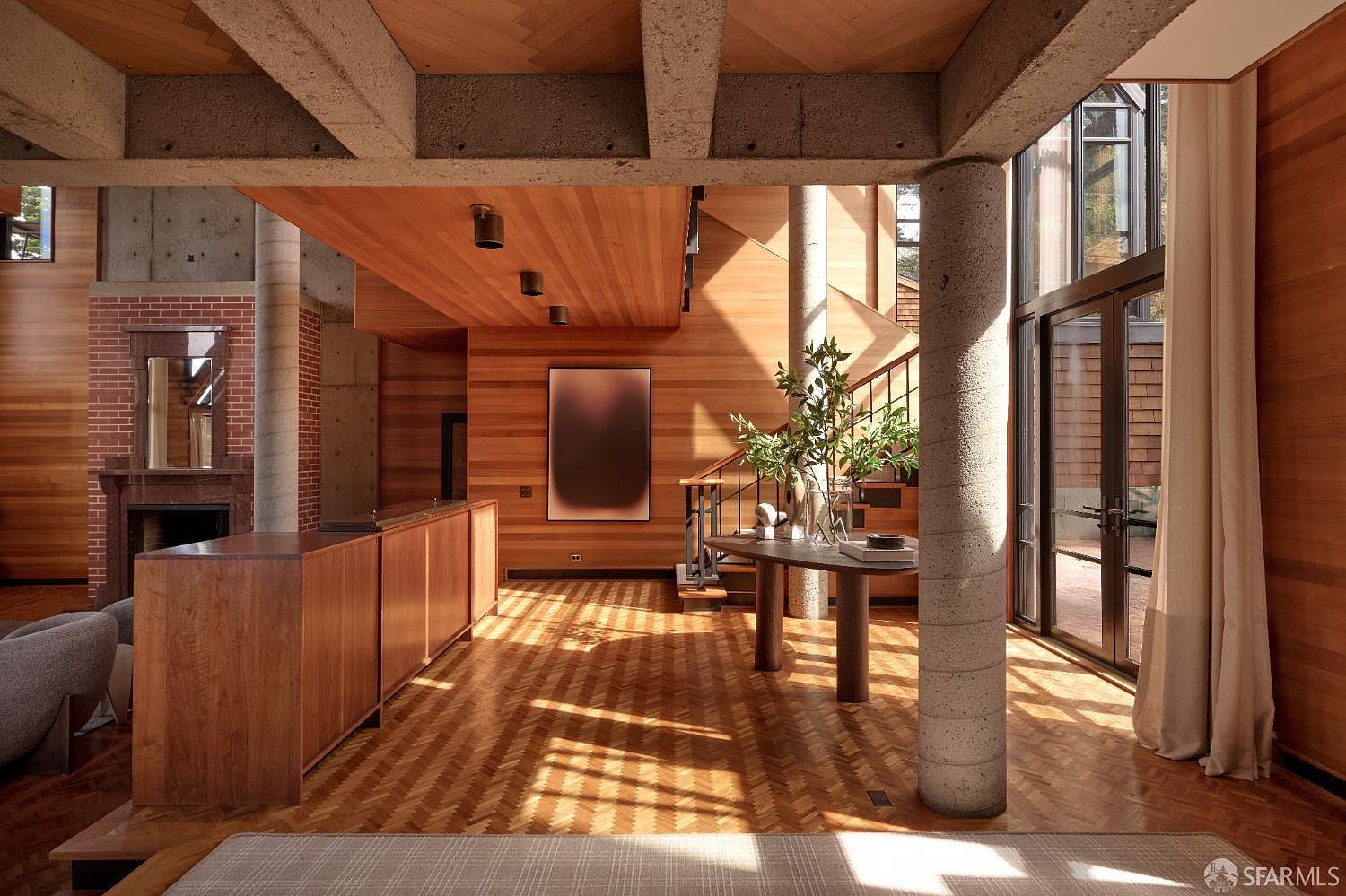
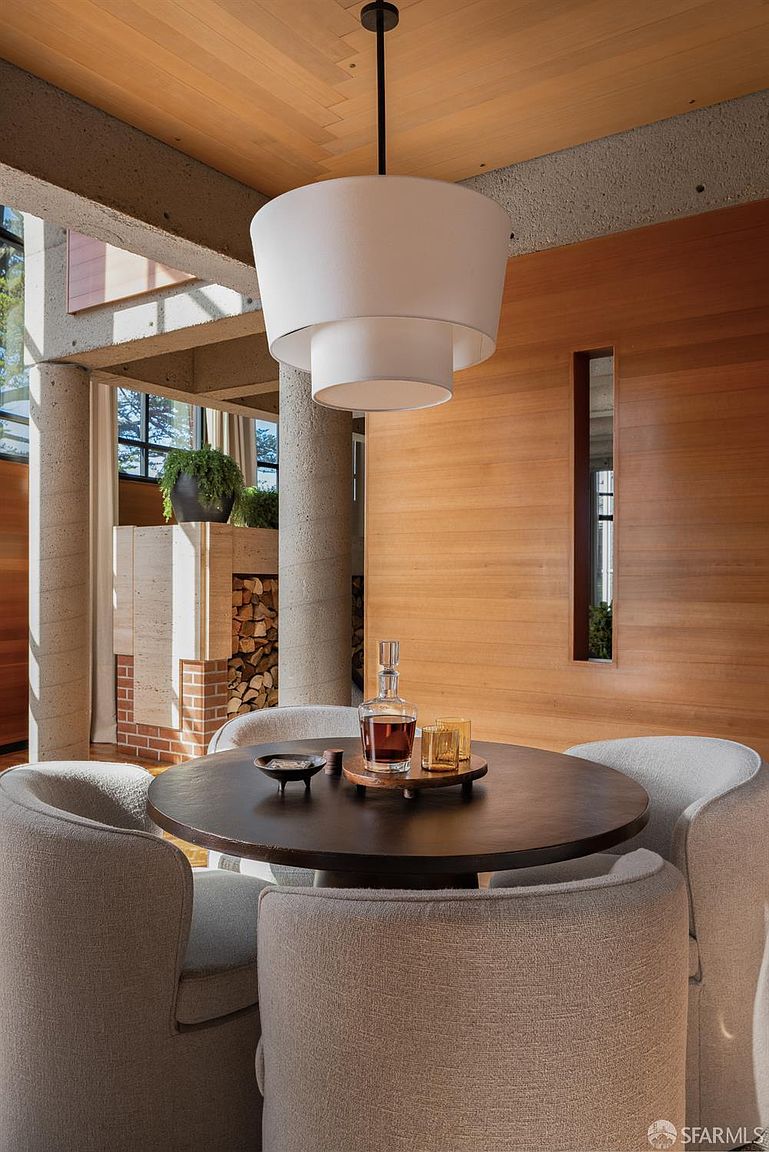
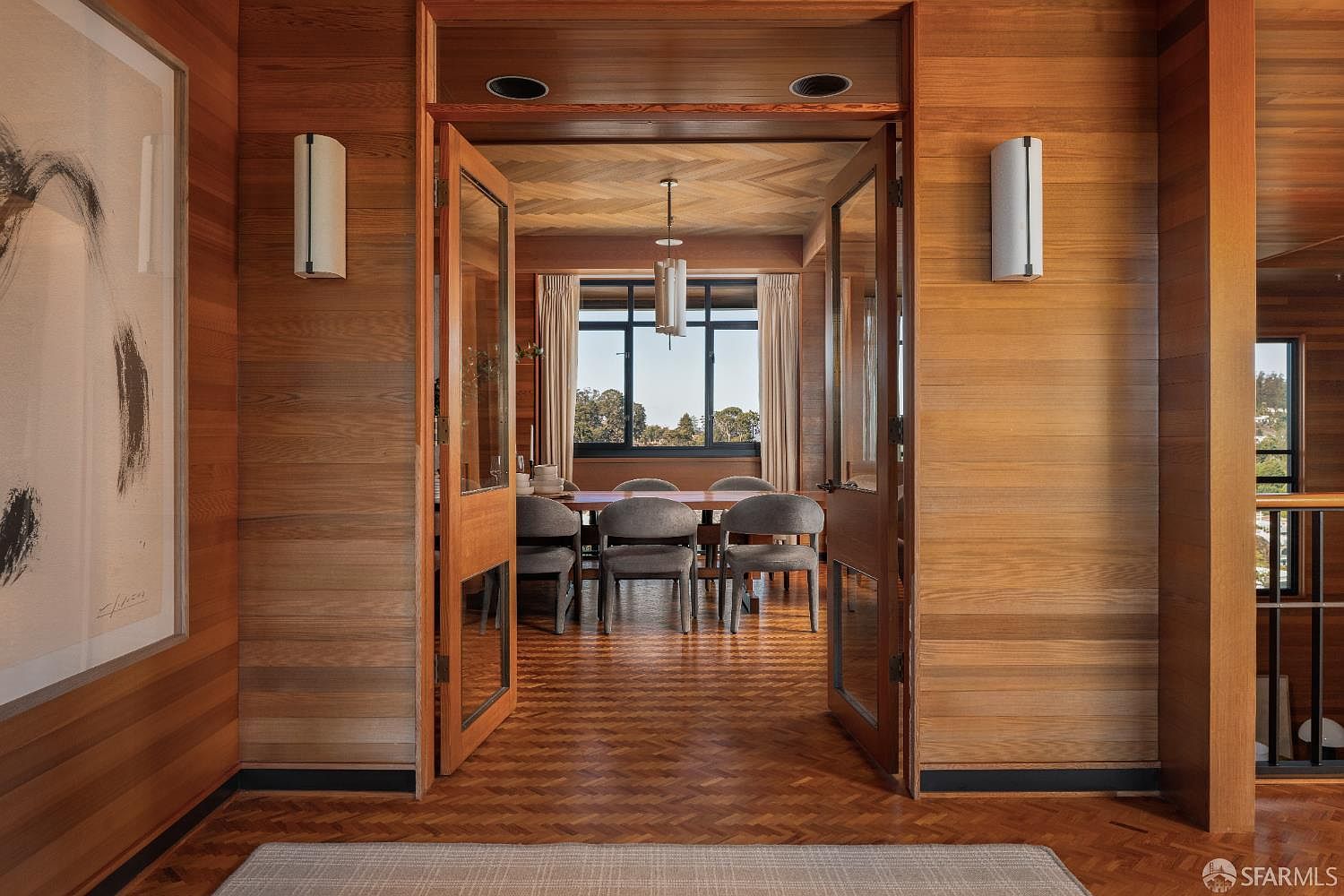
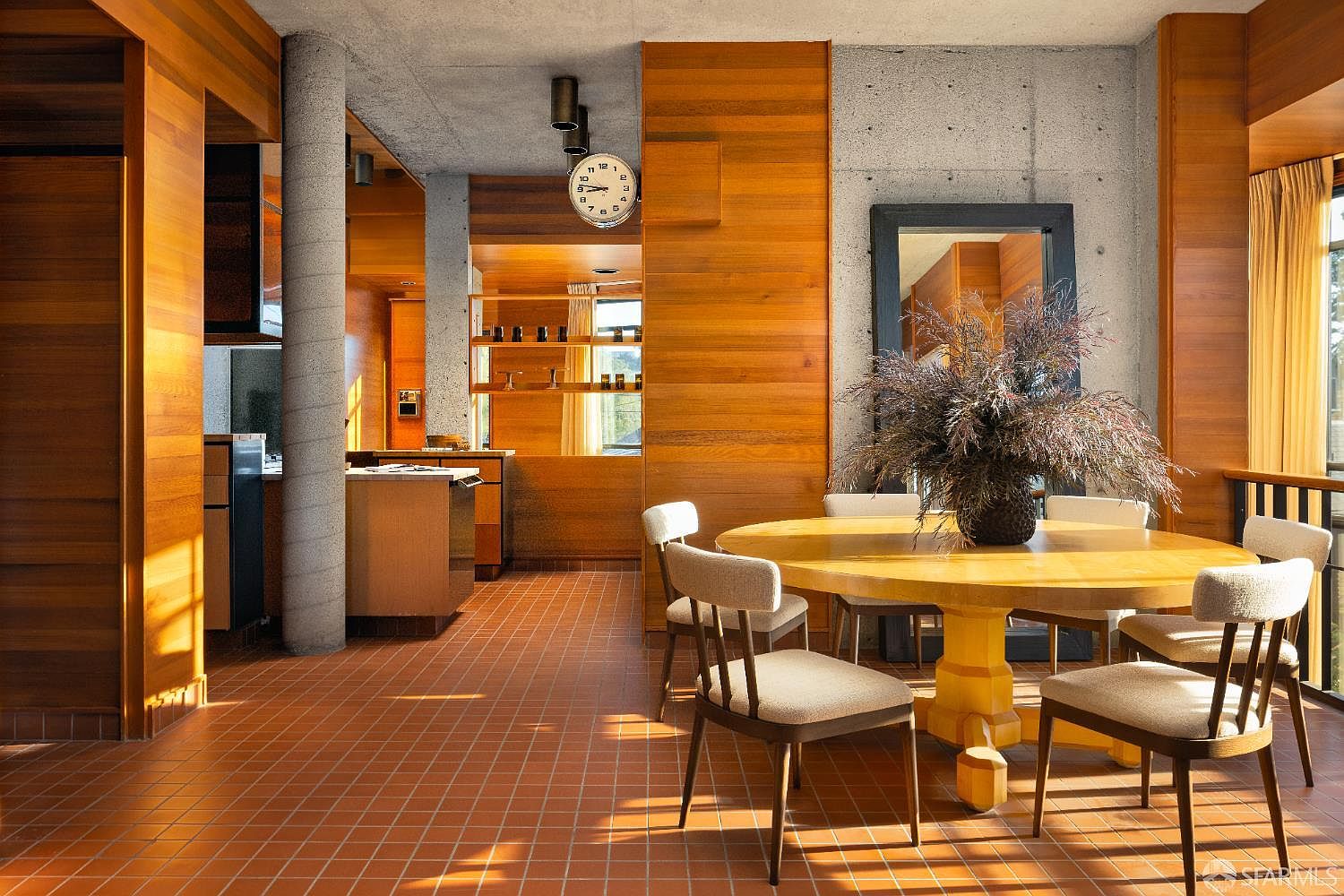
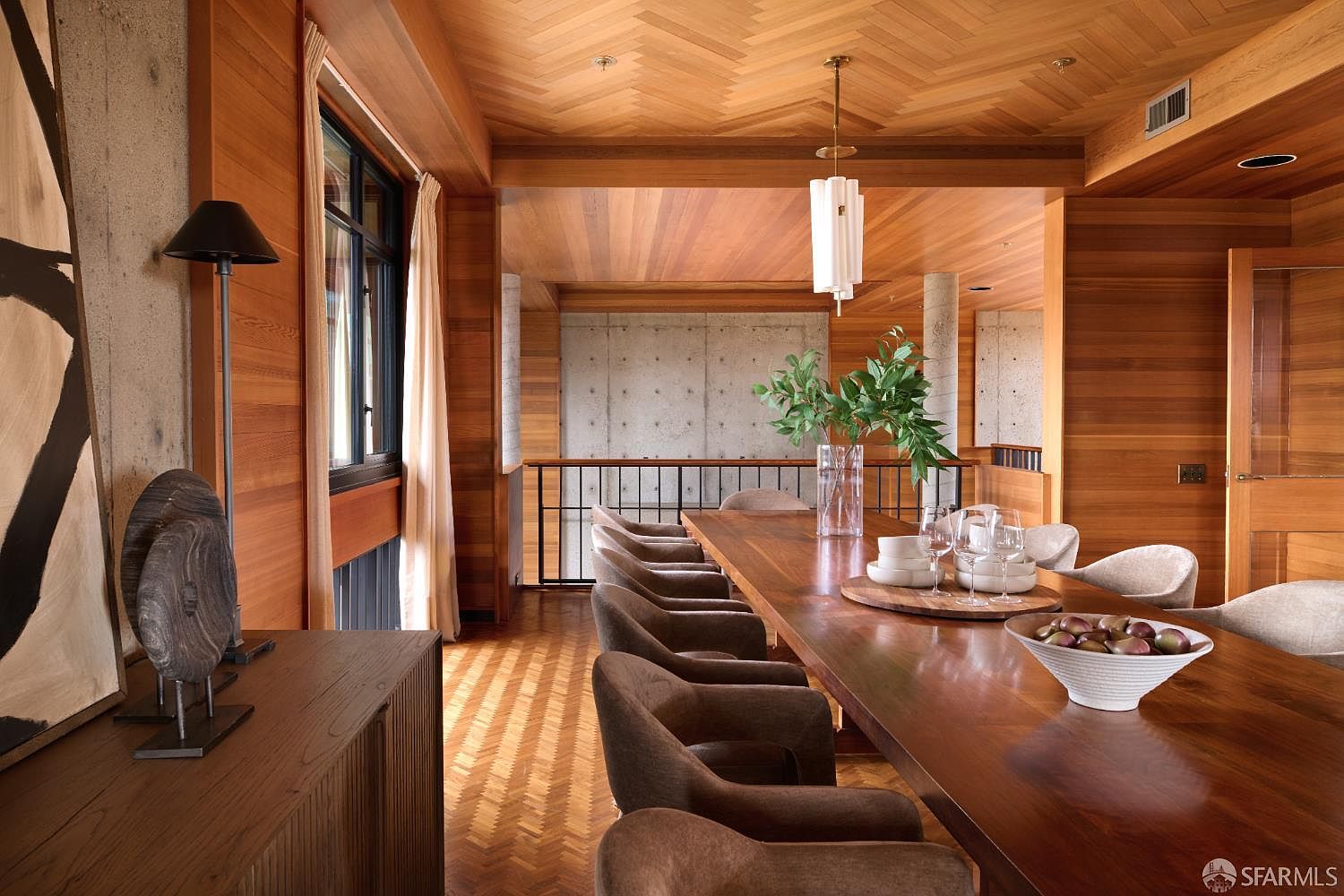
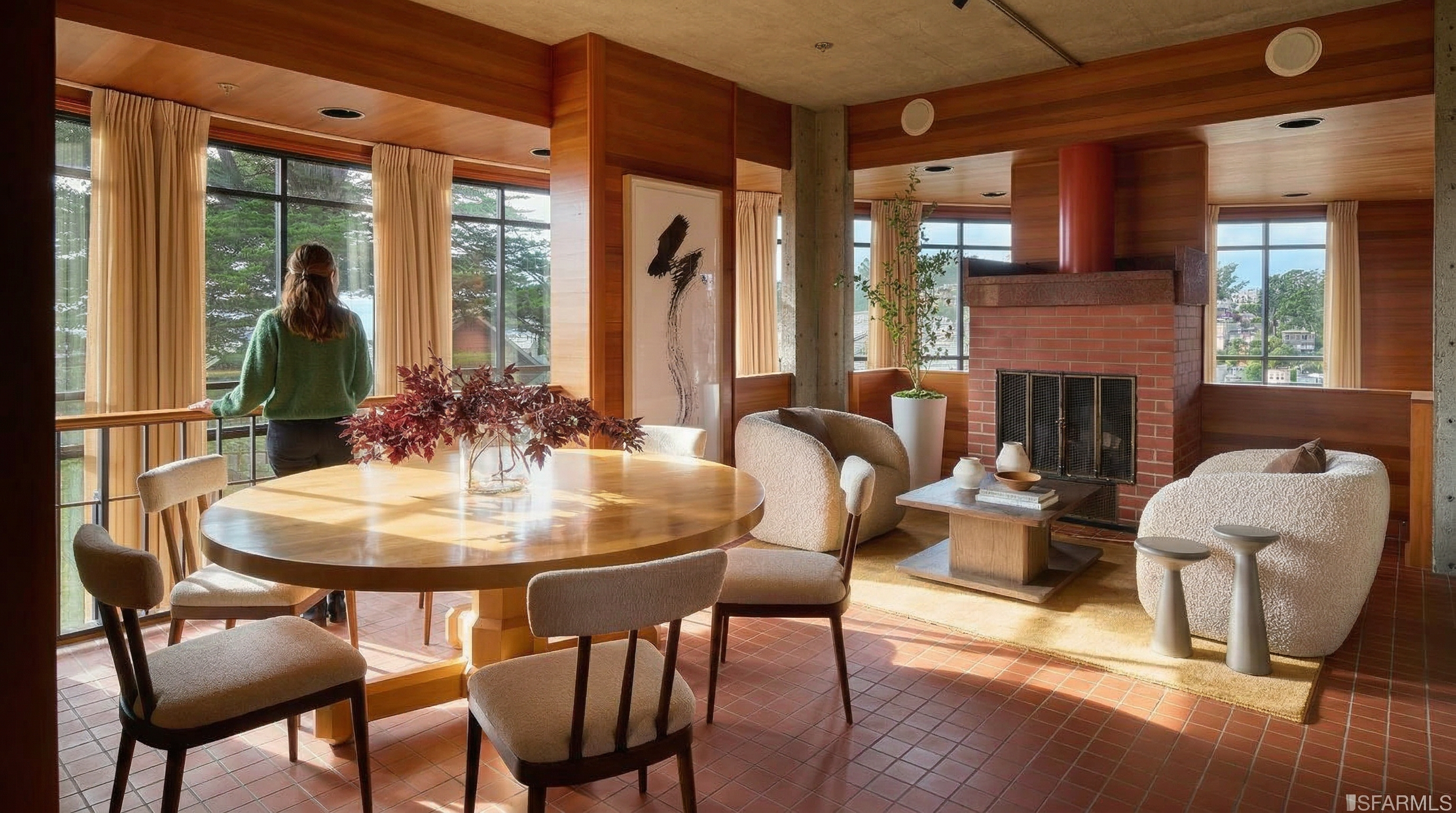
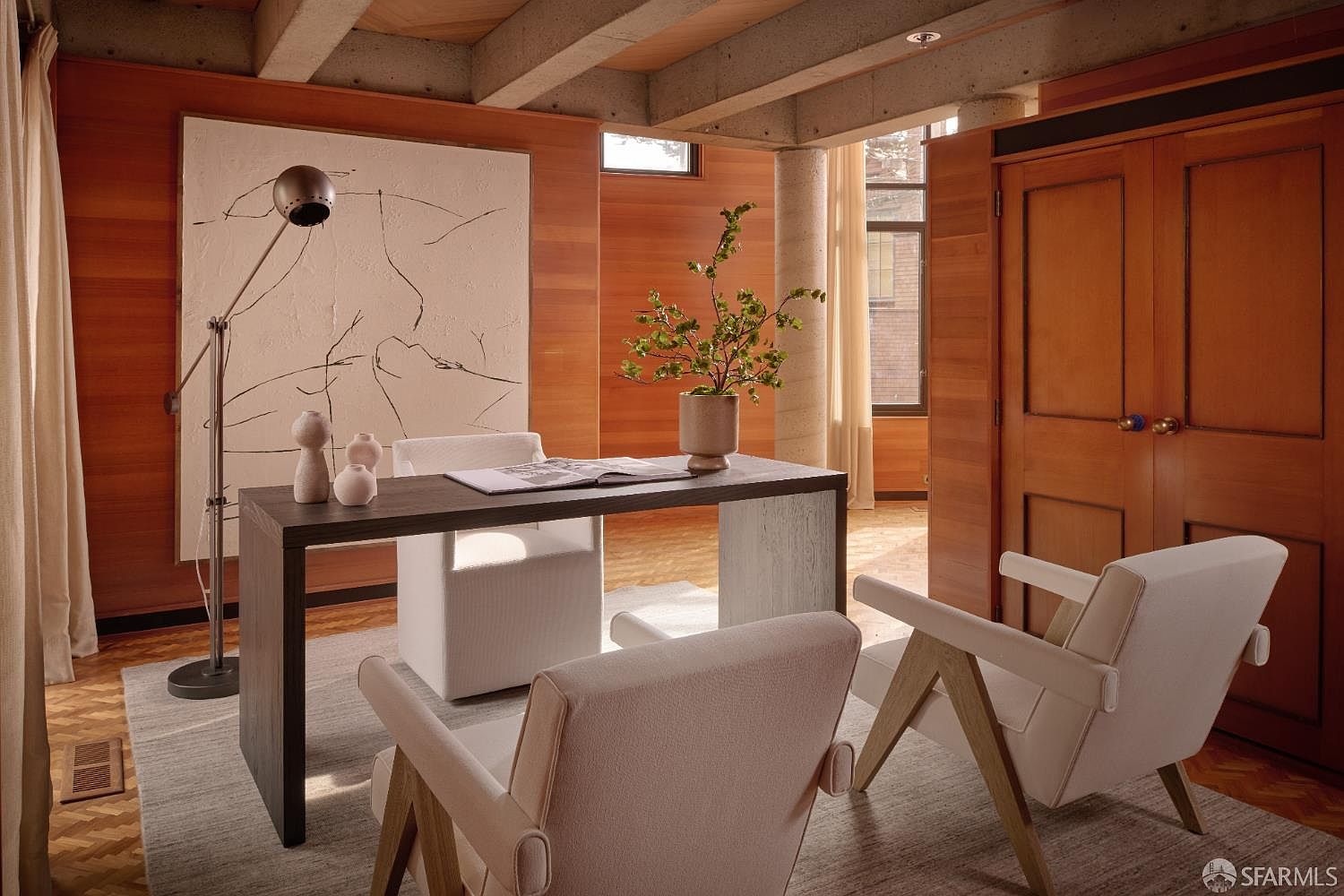
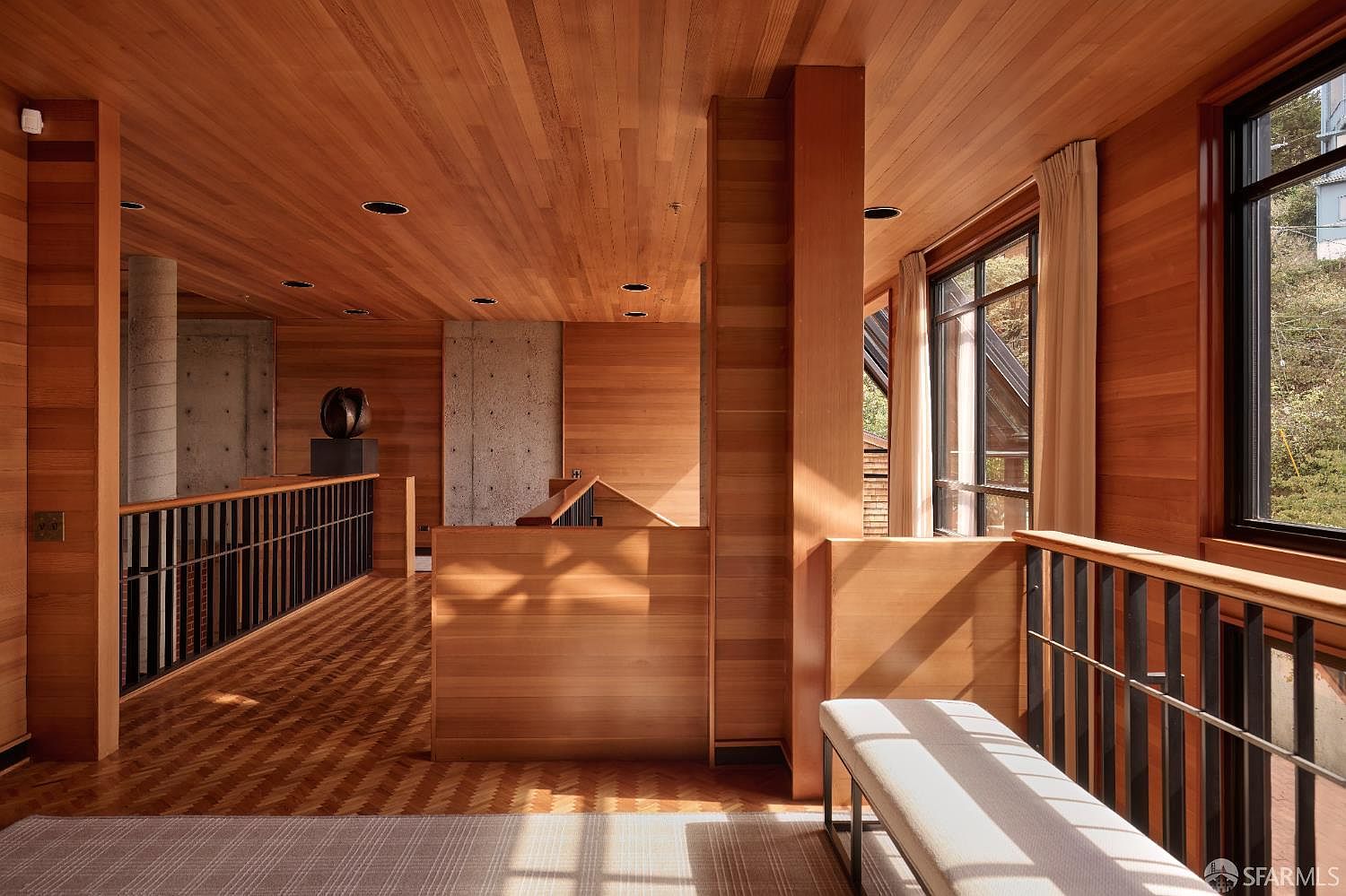
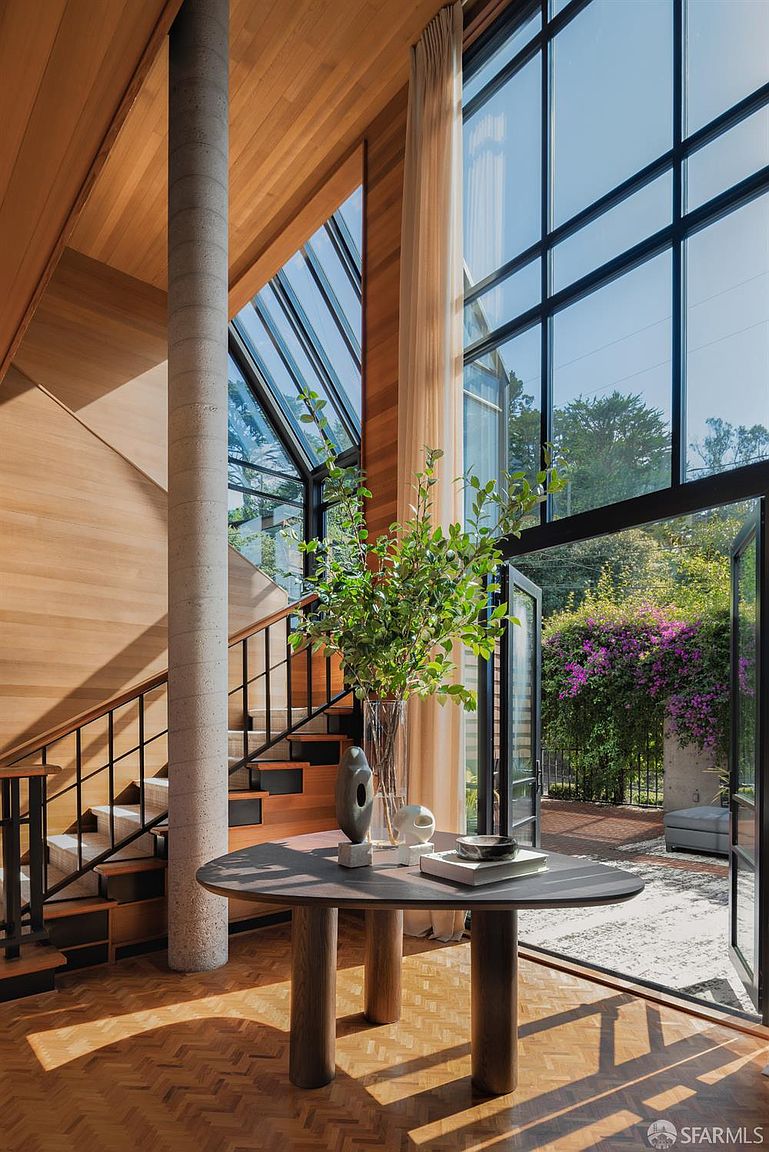
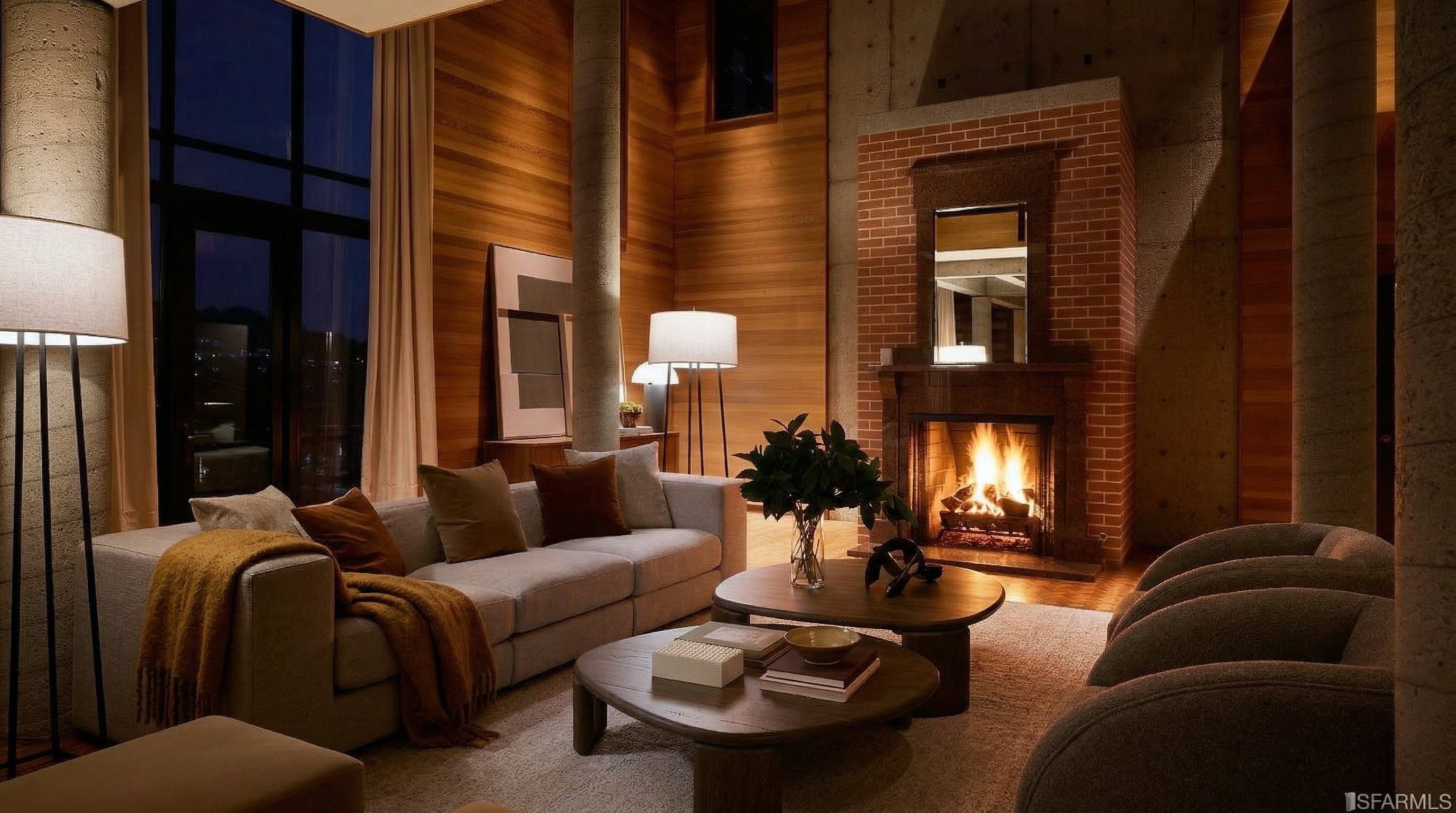
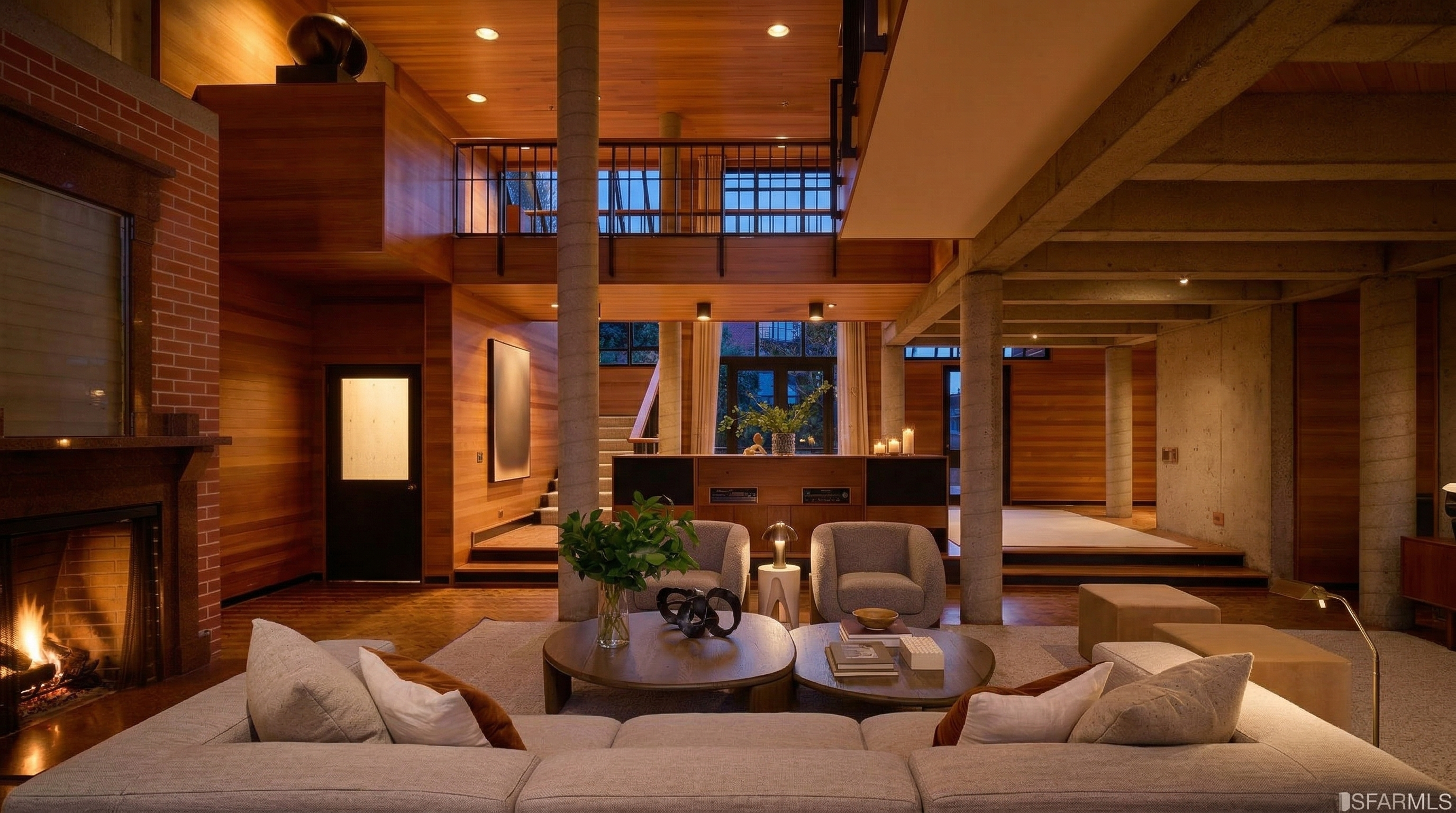
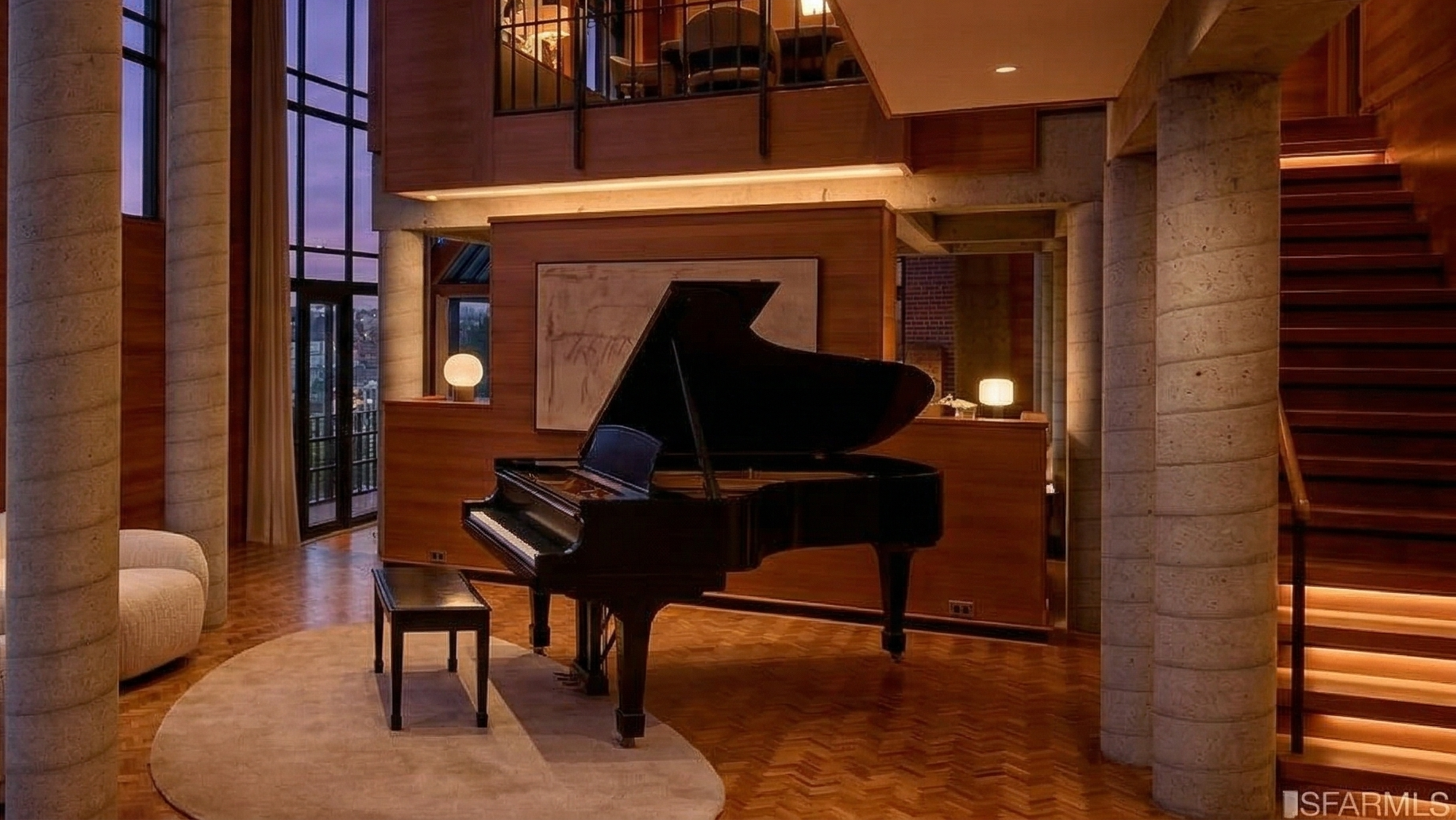
Cross the threshold and the scale is immediate and arresting. Twenty-foot ceilings soar above exquisite herringbone floors, while exposed concrete columns — structural necessities transformed into sculptural statements — anchor the great room with an almost monumental presence. The double-height fireplace commands the space without dominating it, and floor-to-ceiling windows pour natural light across every surface, animating the interplay of warm wood, raw concrete, and carefully chosen stone that defines the home's material palette throughout.
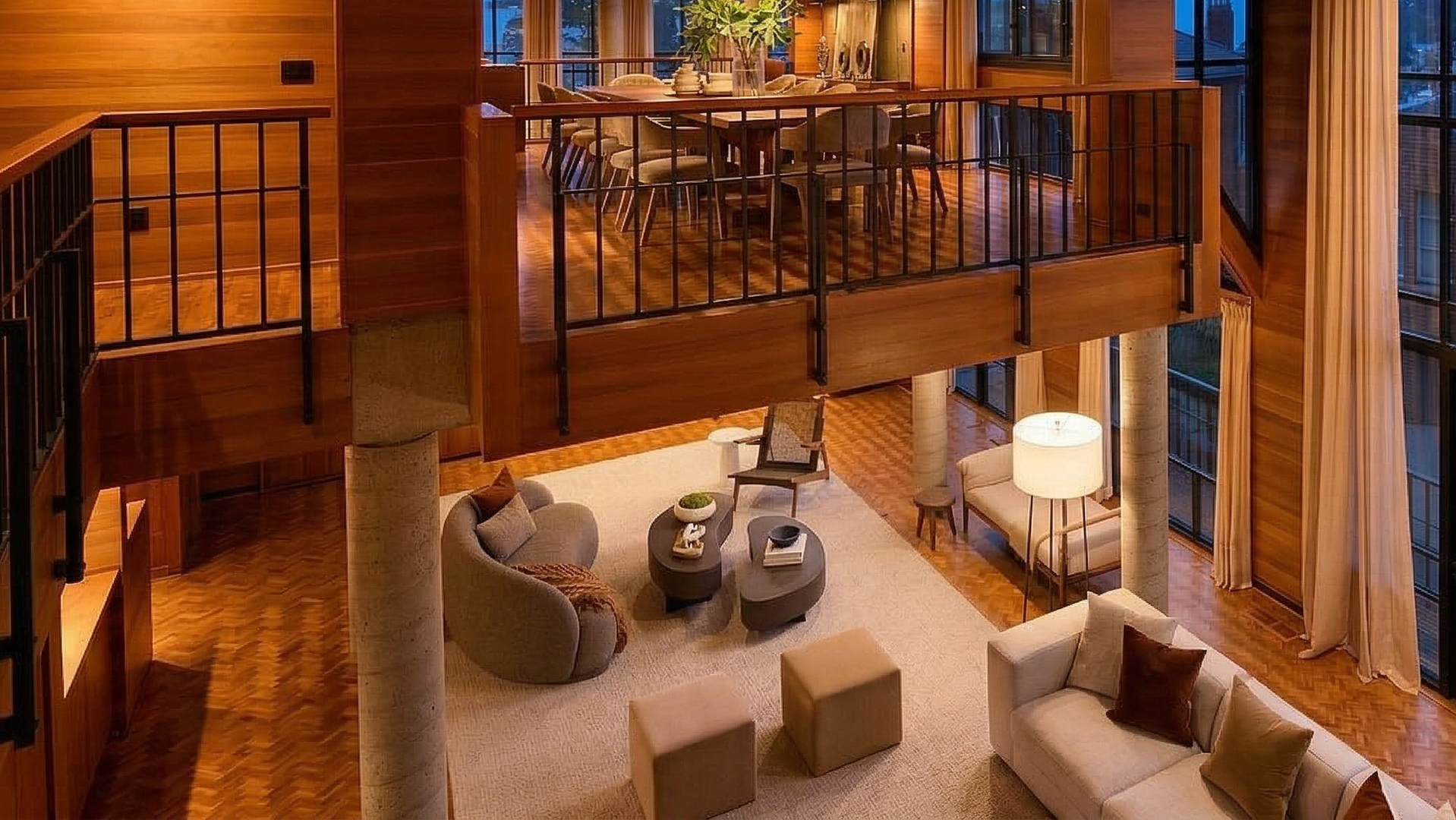
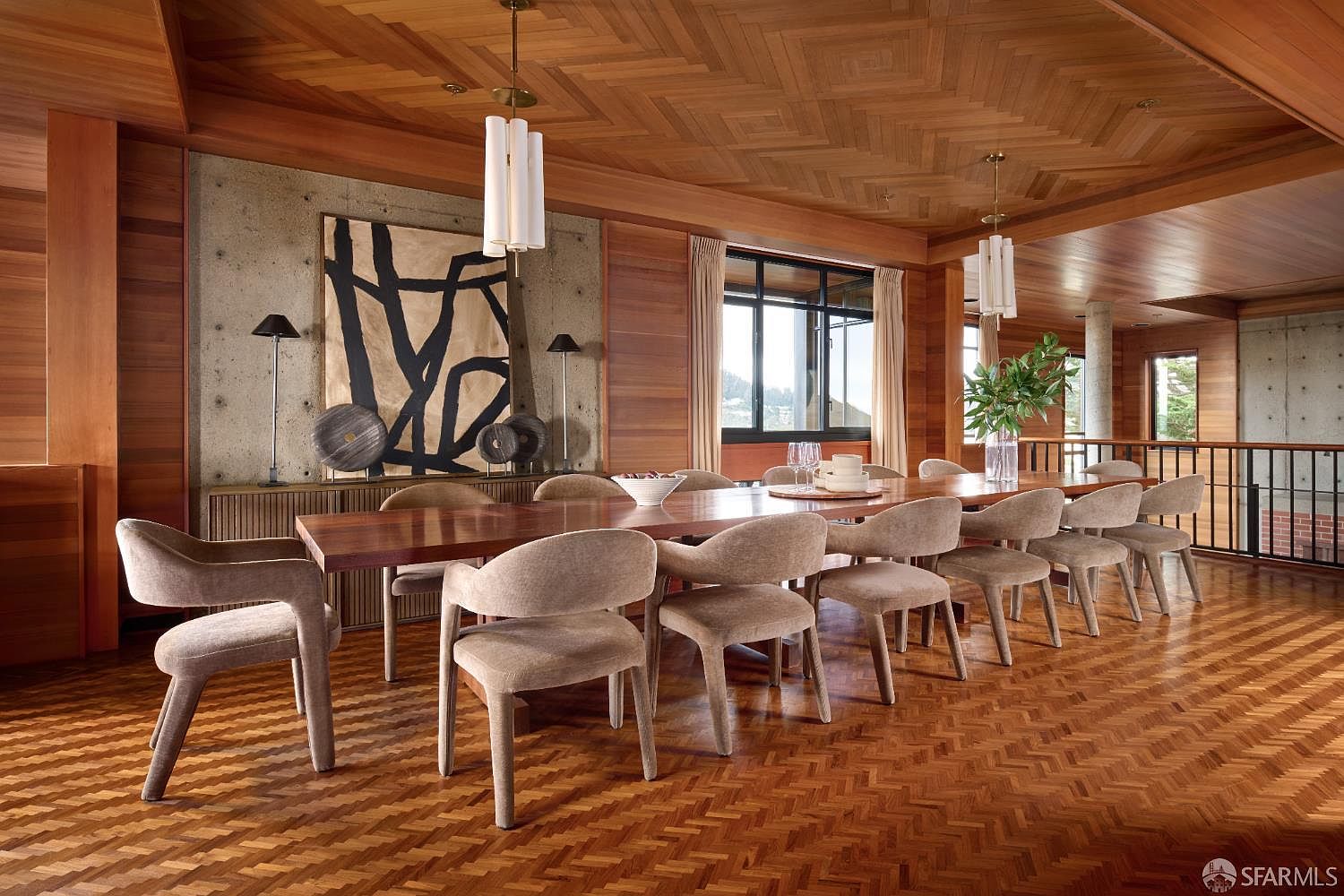
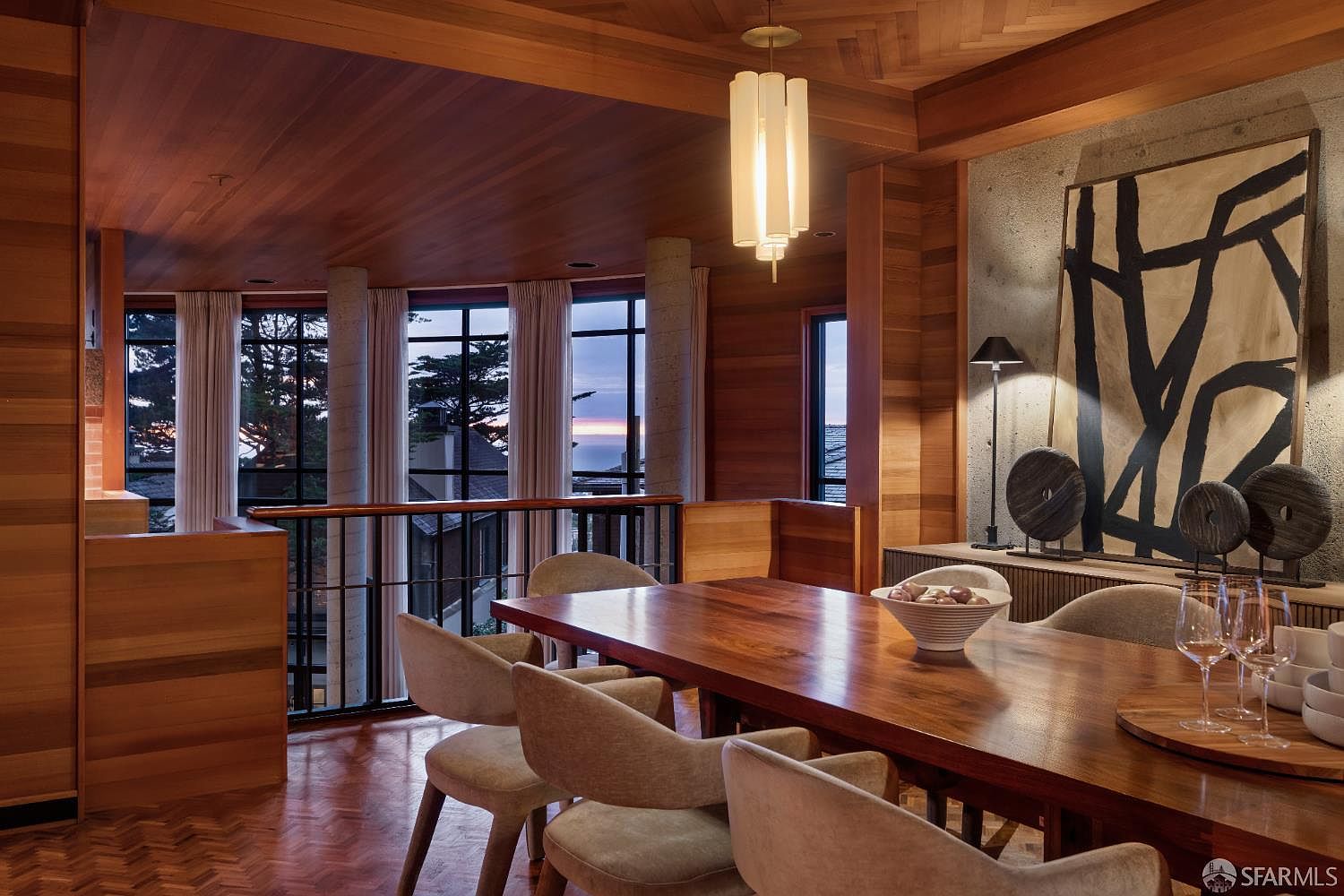
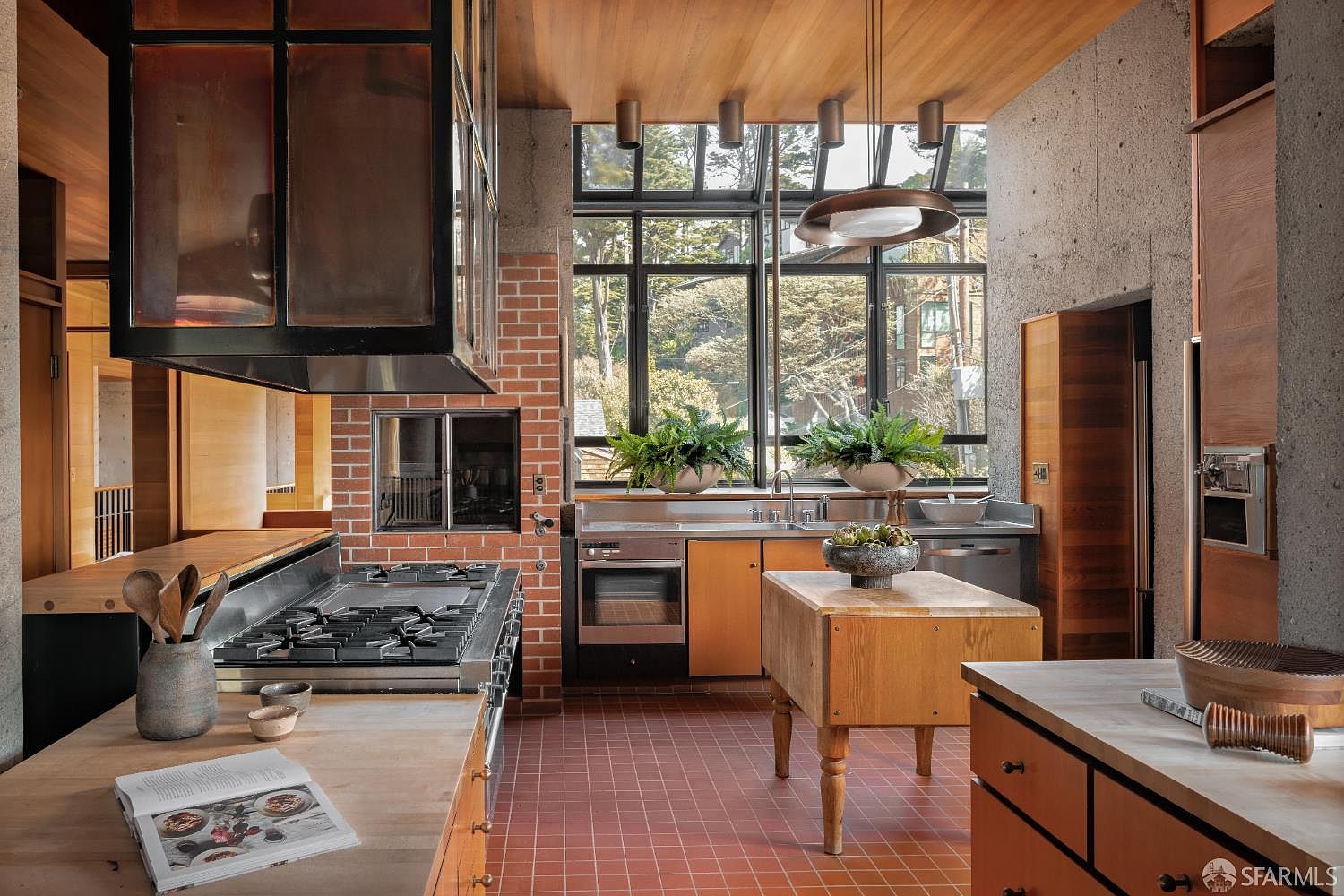
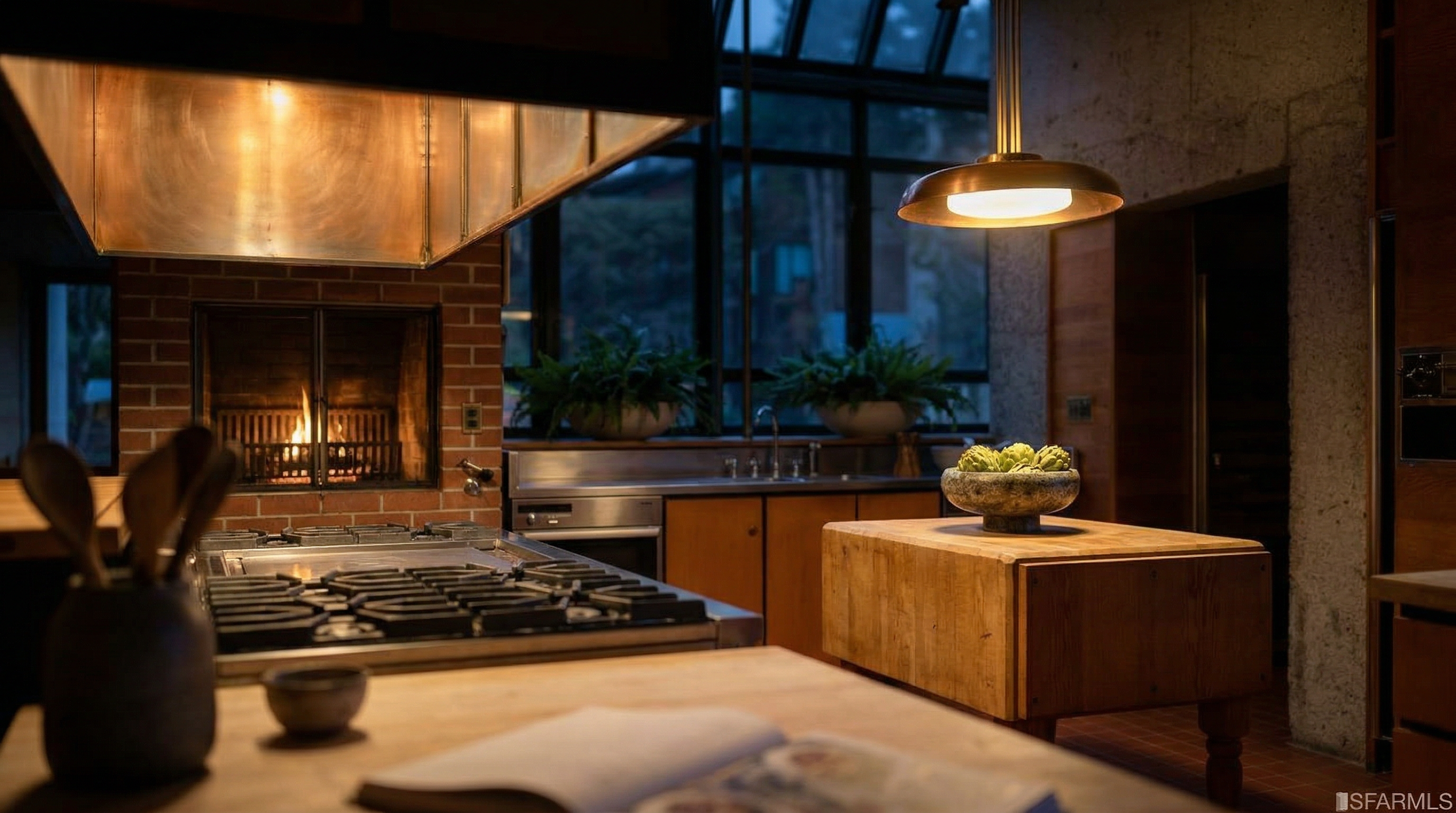
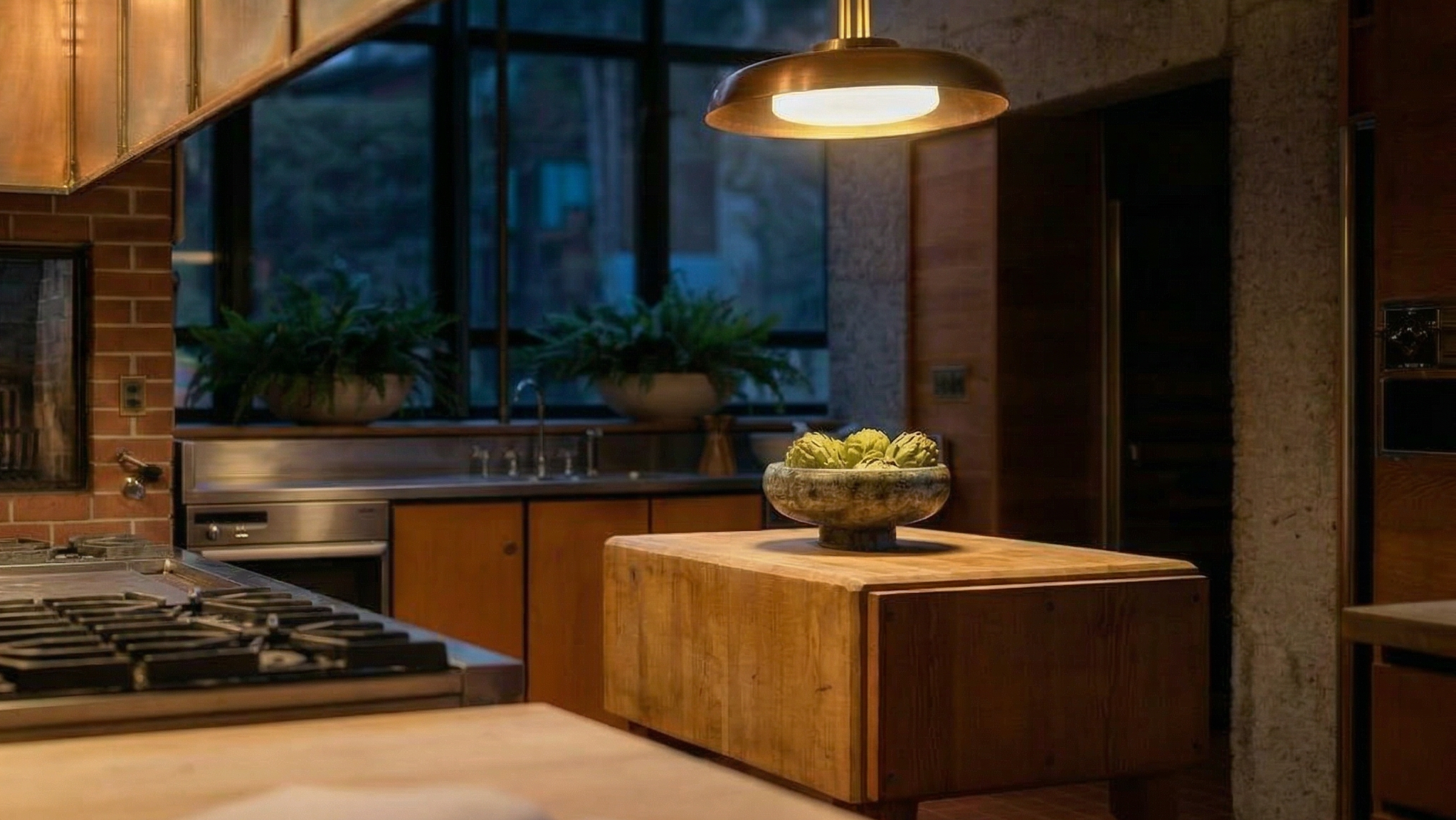
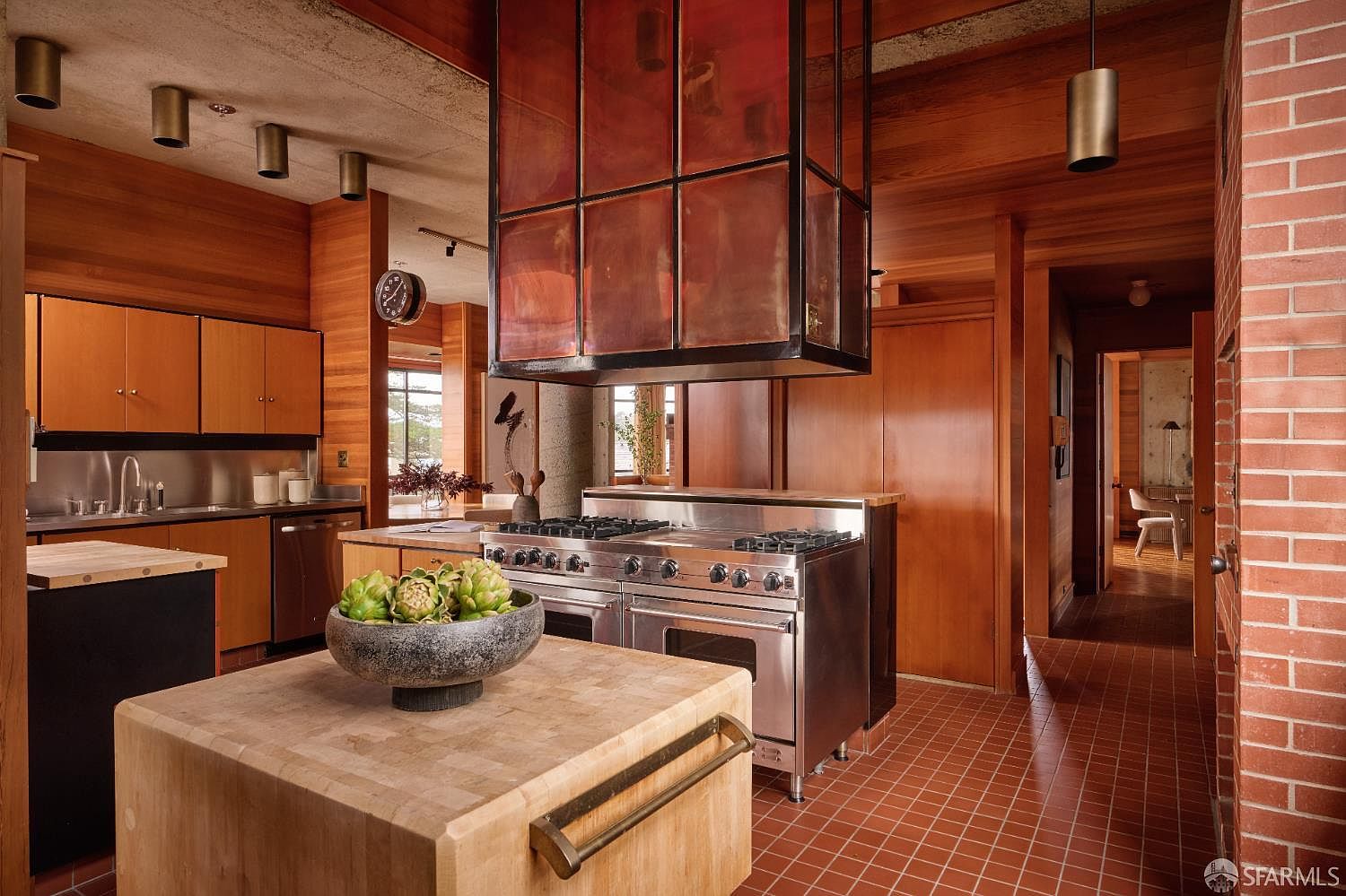
A dramatic bridge walkway — one of the home's most photographed gestures — connects the formal dining room to the chef's kitchen, a culinary theater where brick, concrete, butcher-block, and warm wood cabinetry converge beneath copper-toned range hoods. A large gridded window above frames the greenery beyond and invites the outdoors in, while the adjacent breakfast area opens to ocean views that transform even the most routine morning into something quietly extraordinary.
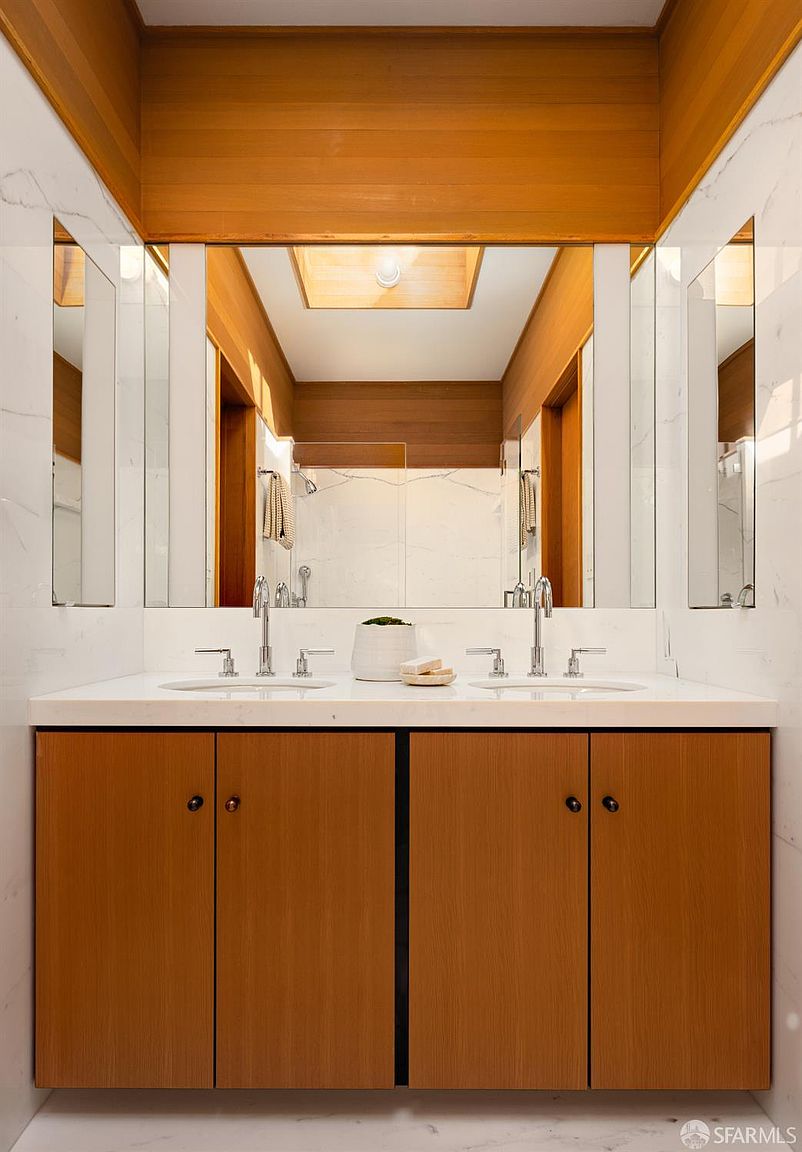
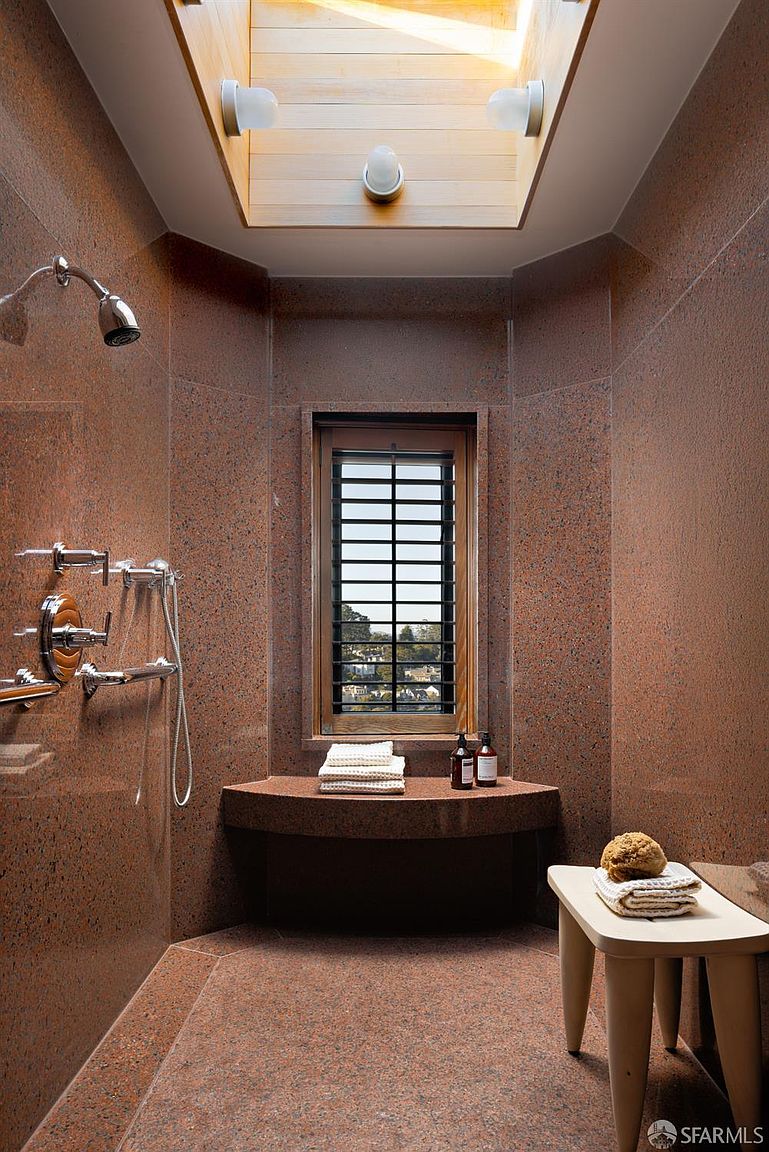
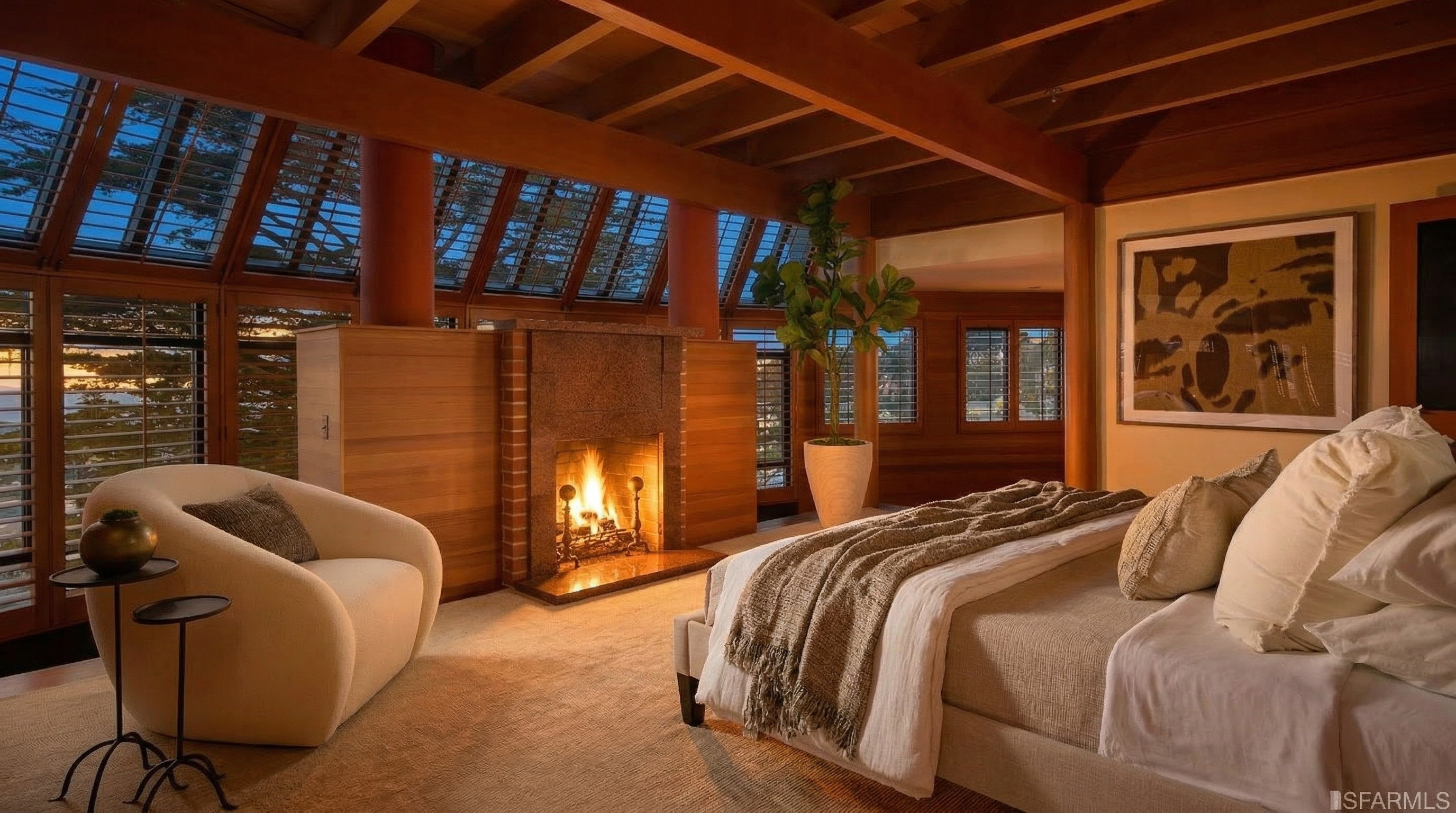
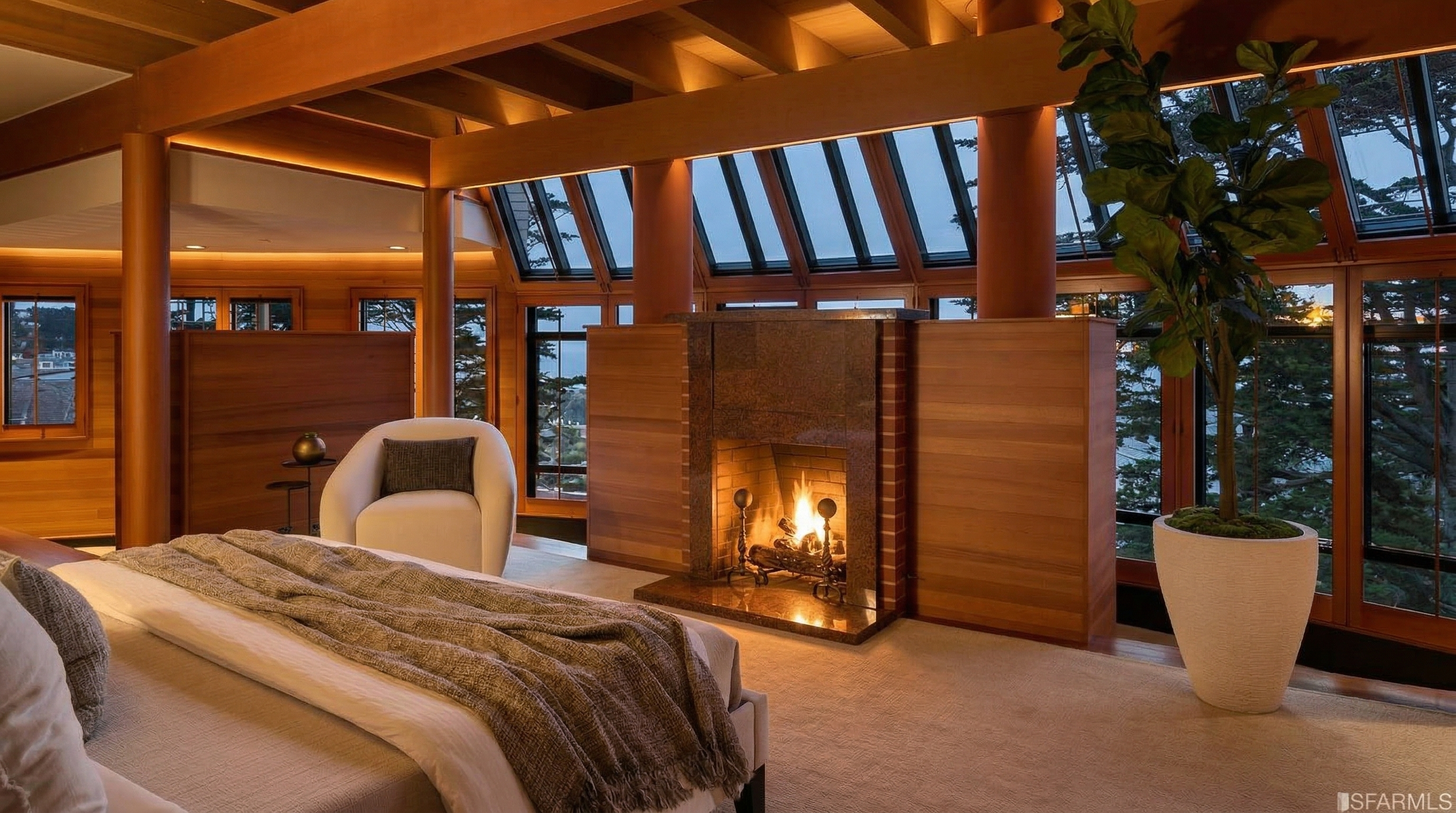
The western wing houses the primary suite, a private sanctuary that spans the entire facade. Floor-to-ceiling windows frame both Pacific horizons and the city's glittering nighttime tapestry, while a brick fireplace and wood-paneled walls bring an intimacy that counterbalances the grandeur. A skylit primary bathroom with double vanity and rich stone finishes completes the retreat.
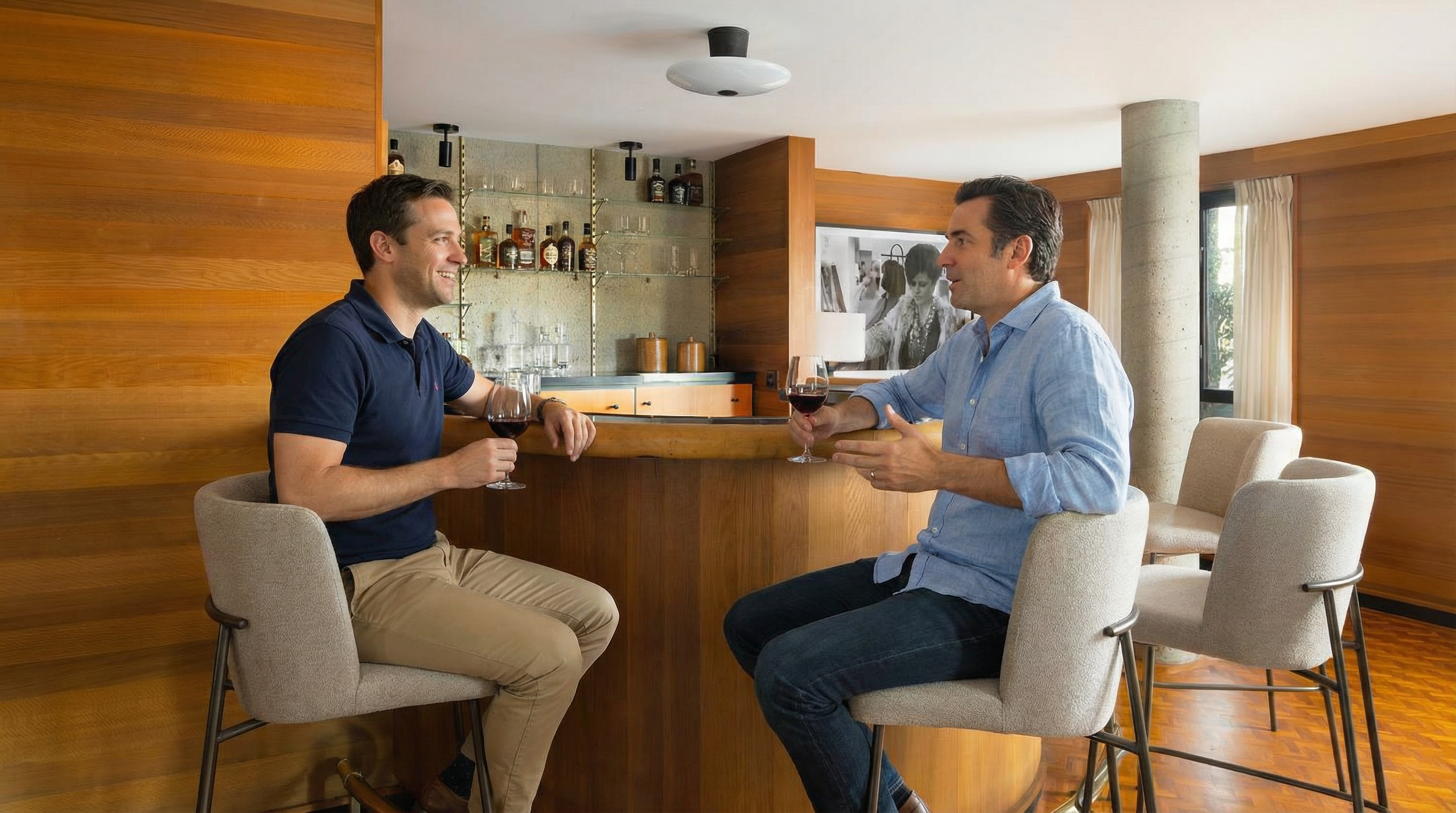
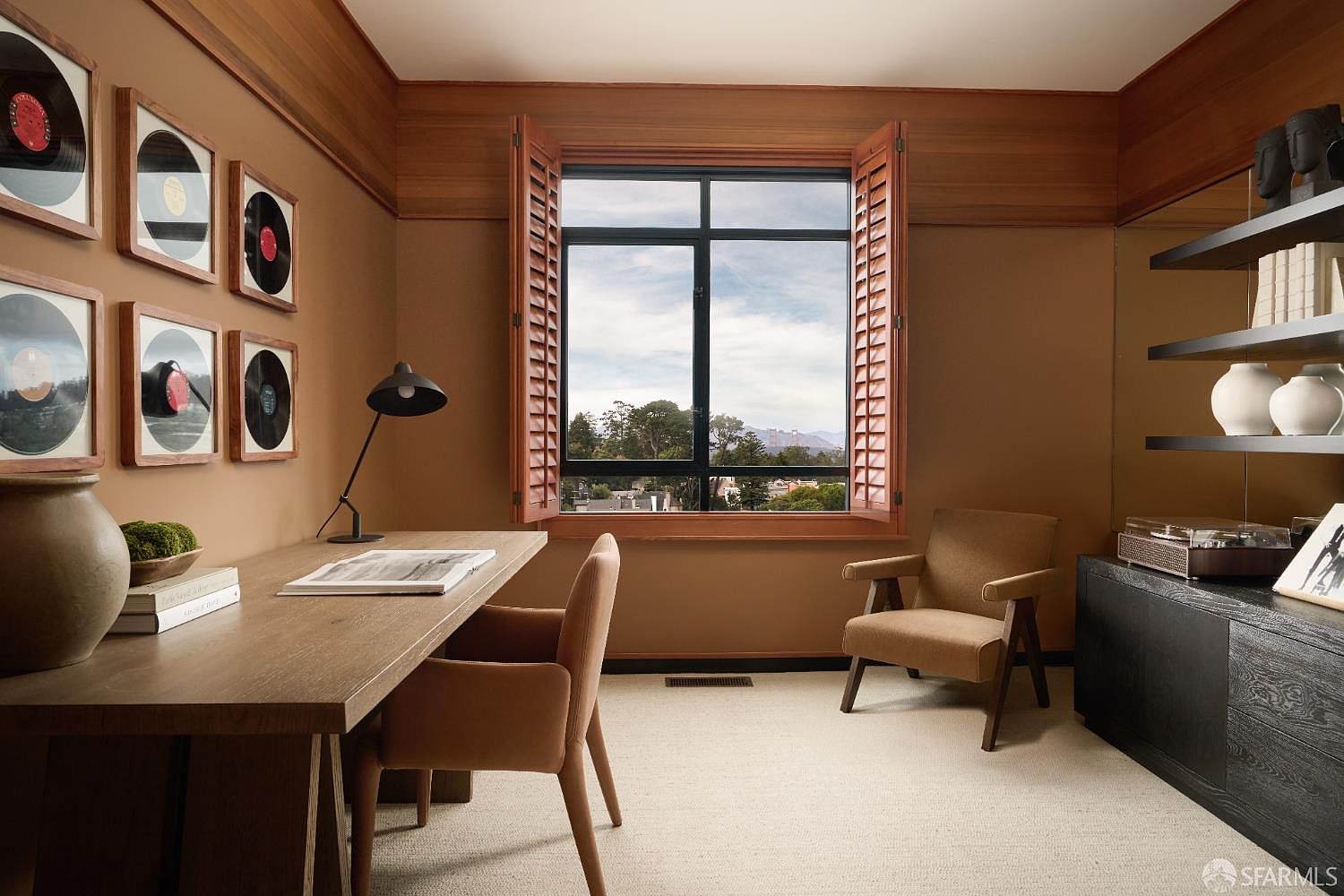
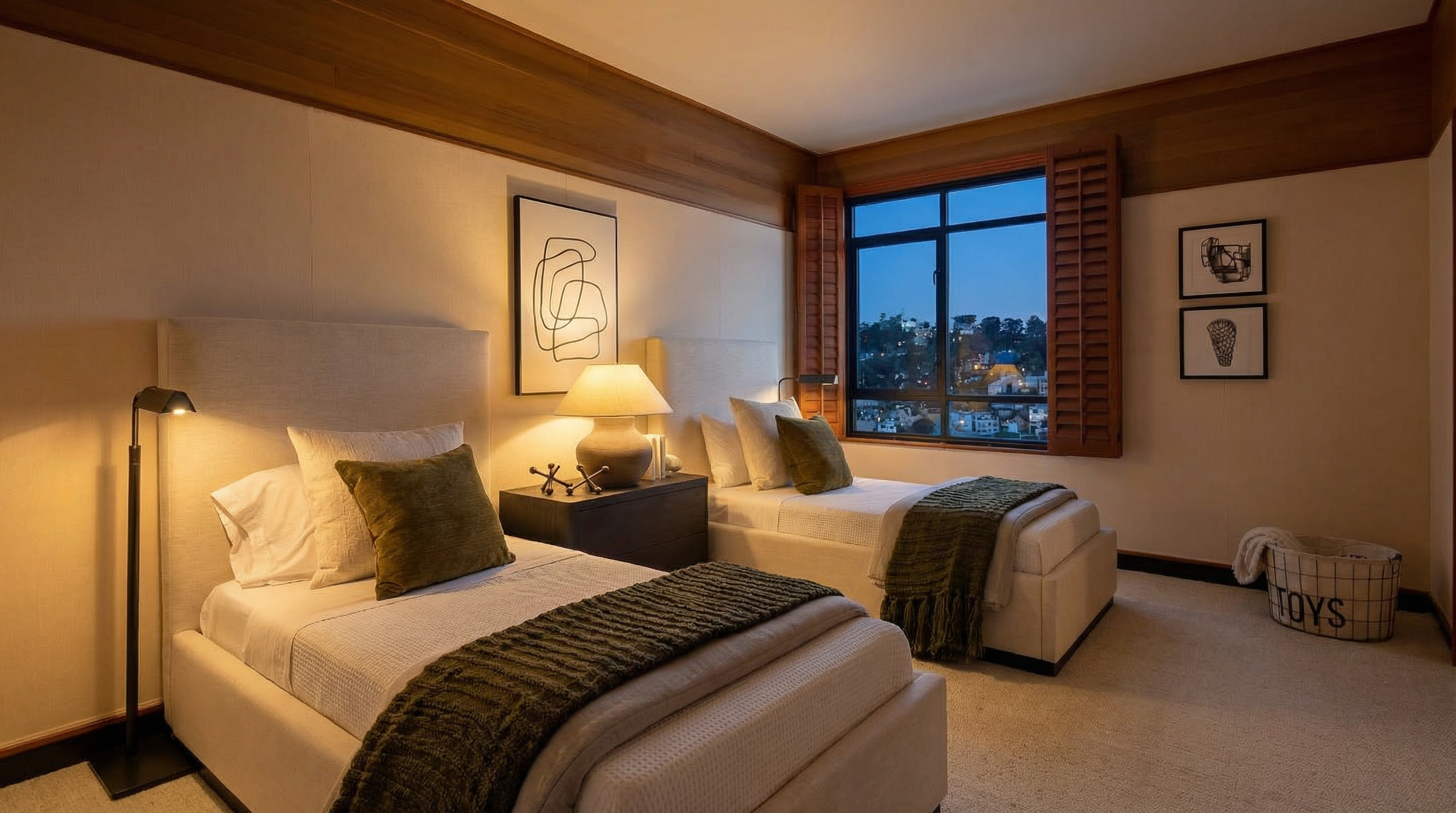
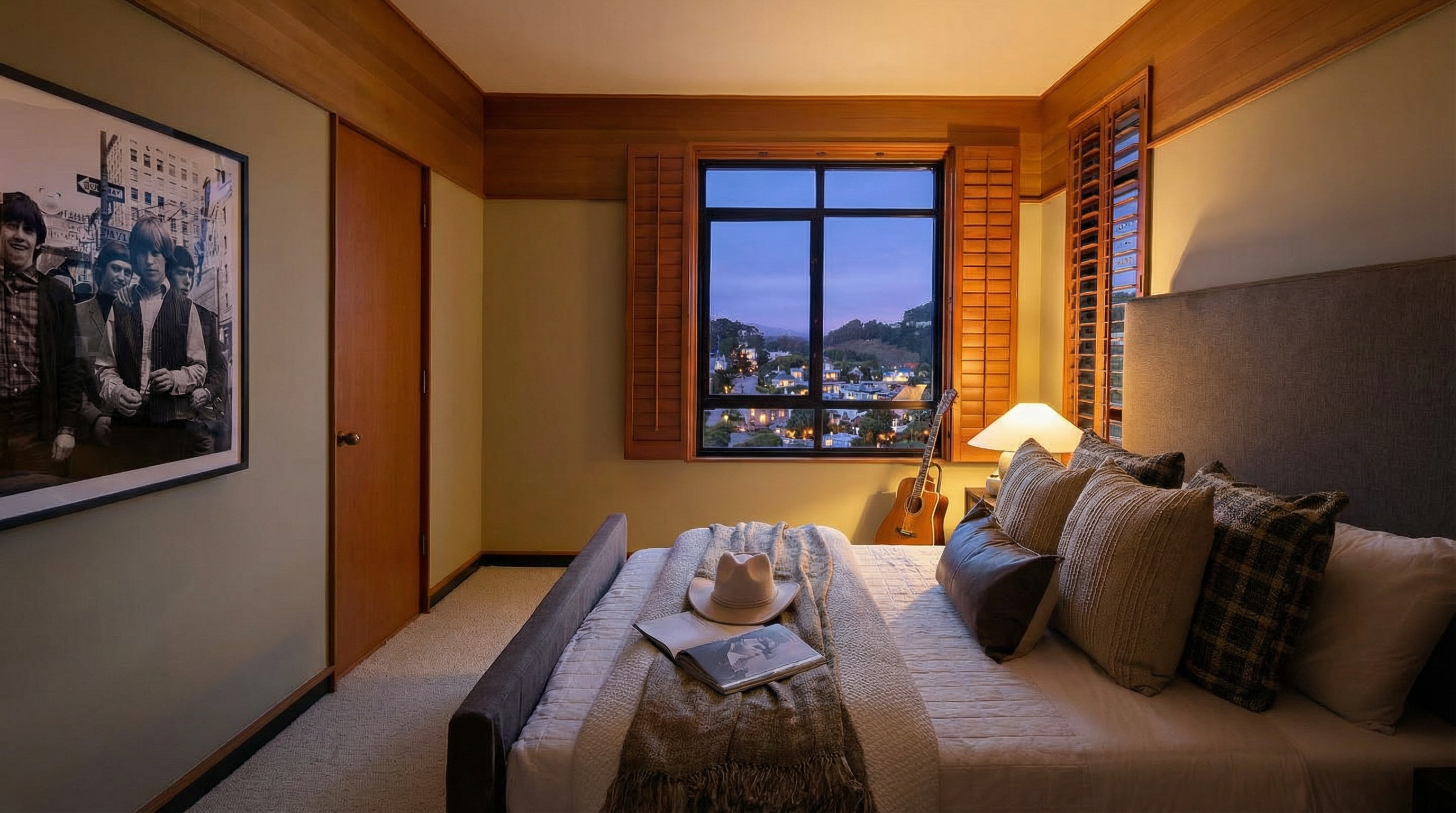
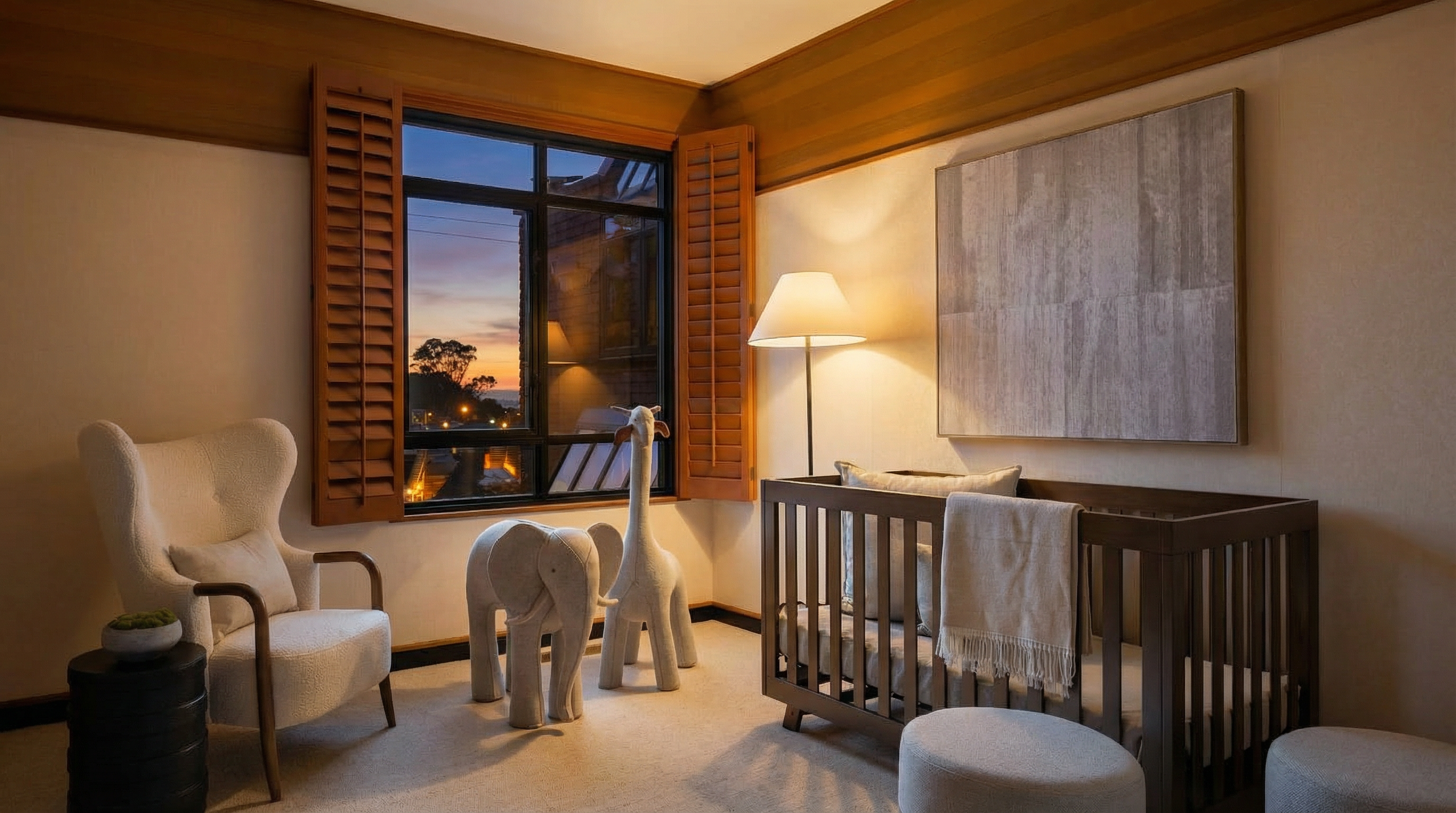
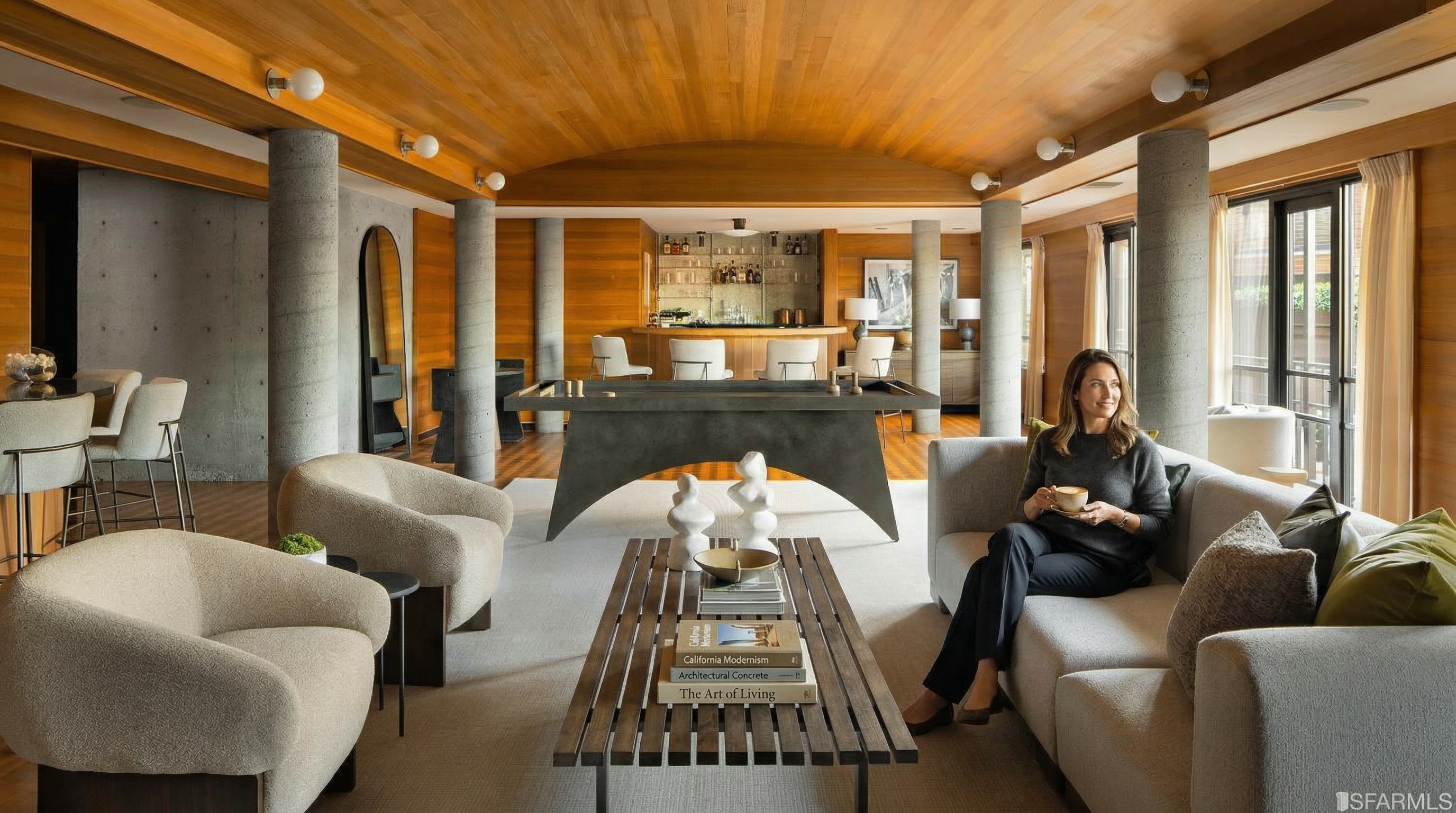
Perhaps most remarkable is the home's rare practicality at architectural scale. Six bedrooms are arranged on a single level — a configuration that speaks directly to the family for whom this home was originally designed. The 2,000-square-foot lower level, complete with a home bar featuring a curved wooden counter and glass shelving, a kitchenette, and two guest suites, offers a world unto itself. A four-car garage and elevator serving all levels complete an offering that is as functional as it is extraordinary.
Arrigoni's design has never been frozen in time — it has aged with the particular grace of architecture that was always meant to endure. 111 Edgehill Way is not a restoration project or a period piece. It is a living estate, fully realized and wholly irreplaceable.
San Francisco is a city of distinct neighborhoods, each with its own geography, character, and sense of self. Edgehill Way occupies a rarefied position among them — a quiet, wooded enclave set high on the slopes of Edgehill Mountain in the West of Twin Peaks area, where the density and urgency of the city below give way to something altogether more serene. At an elevation that places it among the higher residential streets in San Francisco, the neighborhood offers a remove from the urban fabric that feels almost improbable given its centrality.
Edgehill Mountain itself is one of the city's lesser-known natural treasures. The surrounding open space, maintained as part of San Francisco's network of natural areas, is laced with footpaths that wind through native plantings and offer panoramic views stretching from the Pacific to the Bay. Residents of Edgehill Way enjoy immediate access to this greenery in a city where open land is among the scarcest of commodities. It is the kind of setting that rewards early mornings and evening walks in equal measure.
The broader West of Twin Peaks geography places the home within convenient reach of several of San Francisco's most beloved destinations. West Portal, just minutes away, is a charming neighborhood commercial corridor with independent restaurants, cafes, bookshops, and boutiques that have served the surrounding community for generations. The neighborhood retains a genuine village quality — the kind that San Franciscans prize and visitors often discover with some surprise. Forest Hill, adjacent to the area, is home to Forest Hill Station, one of the few remaining above-ground Muni Metro stations, offering straightforward transit connections to downtown and beyond.
Glen Canyon Park, one of the city's most ecologically rich open spaces, is nearby — a deep natural ravine with hiking trails, a recreation center, and a sense of wild remove that belies its urban address. Twin Peaks itself, with its iconic summit views and protected open space, forms part of the immediate landscape backdrop.
Families with children are well served by proximity to several of San Francisco's well-regarded public and private schools, as well as the broader educational ecosystem of a world-class city. Cultural institutions — from the de Young Museum and the California Academy of Sciences in Golden Gate Park to the San Francisco Symphony and Opera downtown — are all within comfortable reach.
For those whose lives extend across the Bay Area, the home's location offers practical advantages as well. Highway 280, consistently ranked among the most scenic freeways in the country, is accessible within minutes, providing a direct corridor to Silicon Valley and the Peninsula. San Francisco International Airport is similarly well-positioned from this part of the city.
What Edgehill Way ultimately offers is something increasingly rare in a city of this density and desirability: genuine quietude, natural beauty, and a sense of elevation — both literal and figurative — that makes each return home feel like an arrival at something singular. For an estate of this architectural ambition, there could be no more fitting address.
Featured Highlights
Curated Content • Presented by Neal Allen Ward