The Story Behind
A Manhattan Penthouse Where Grandeur Meets the Sky
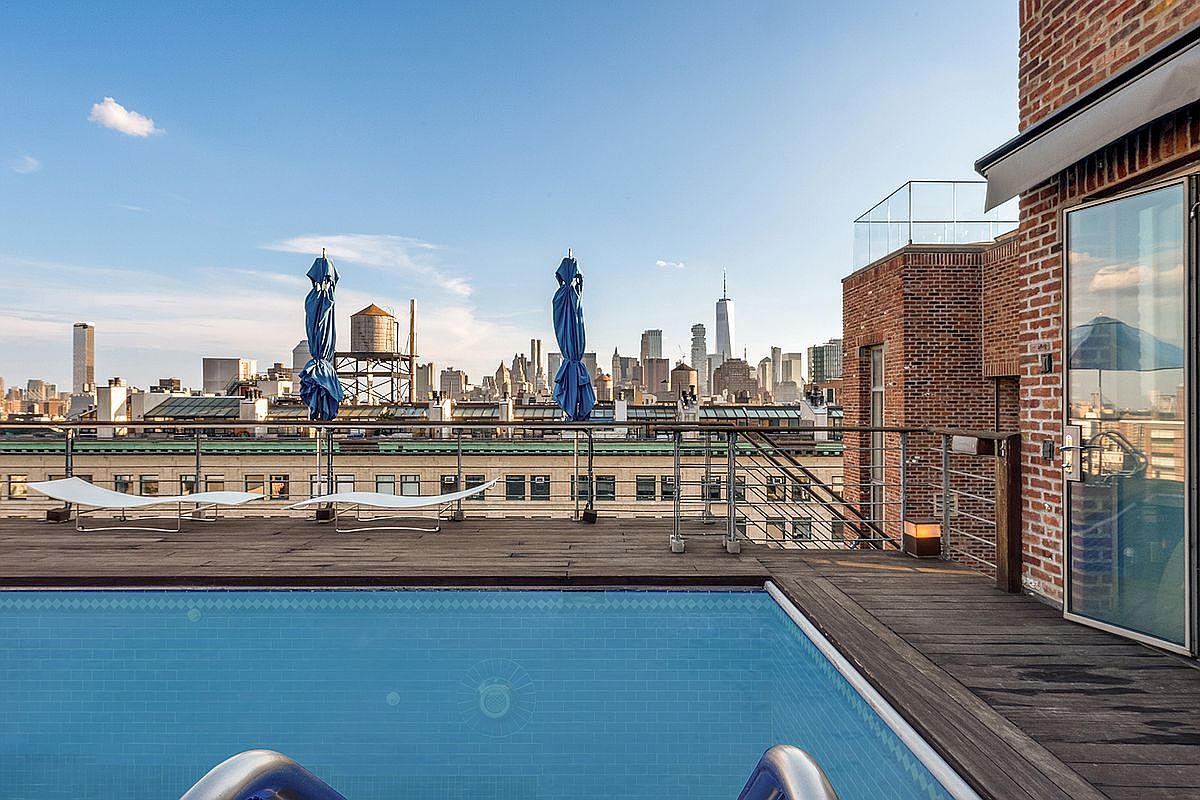
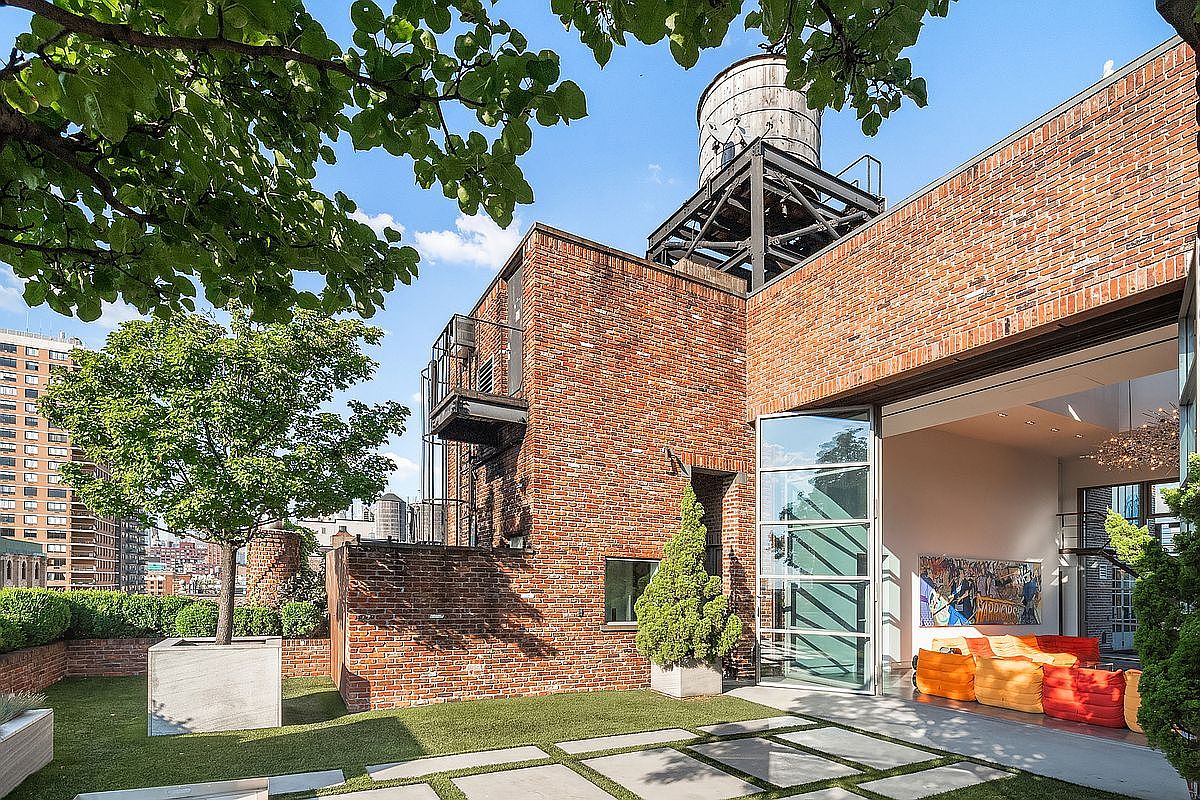
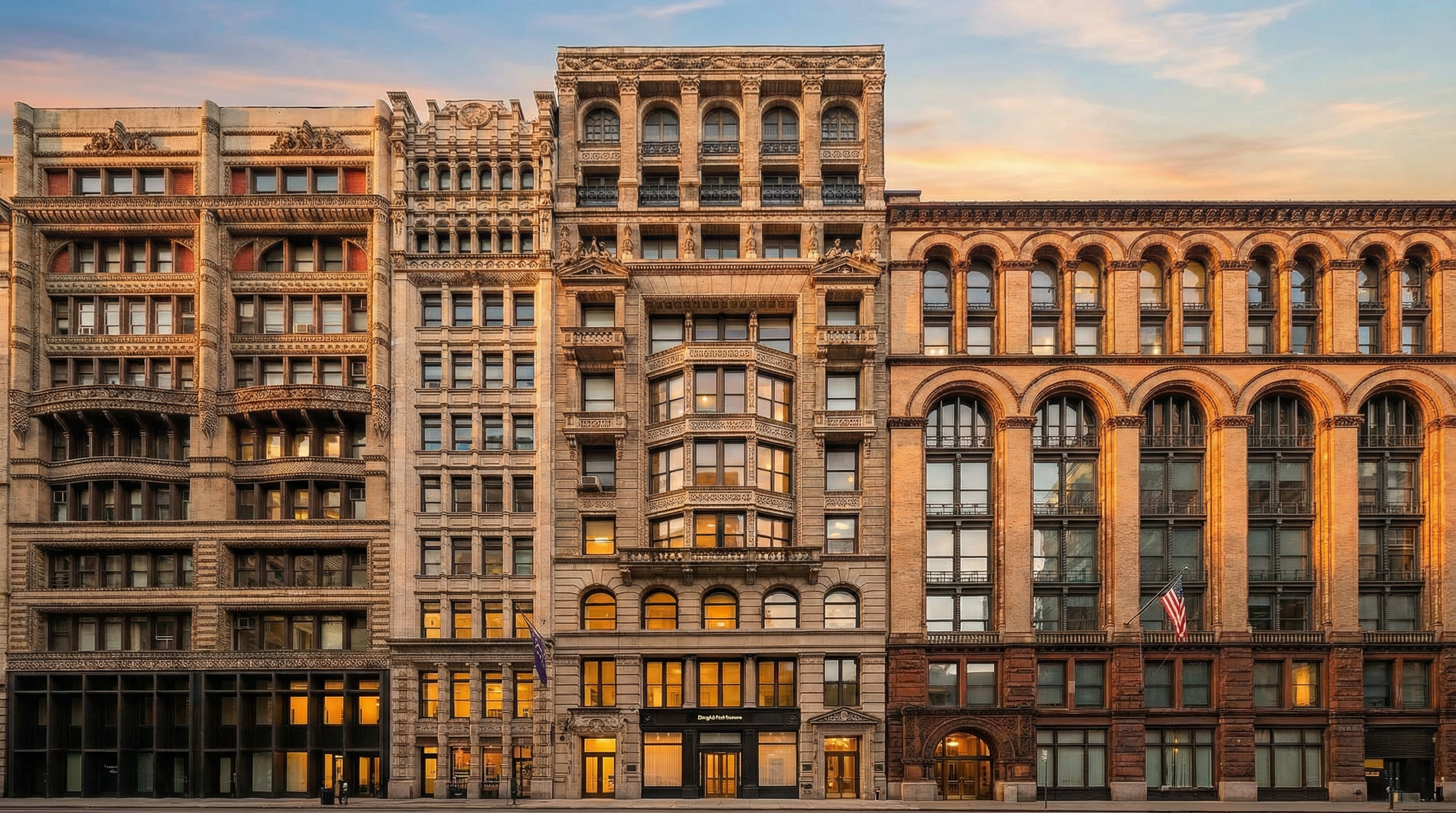
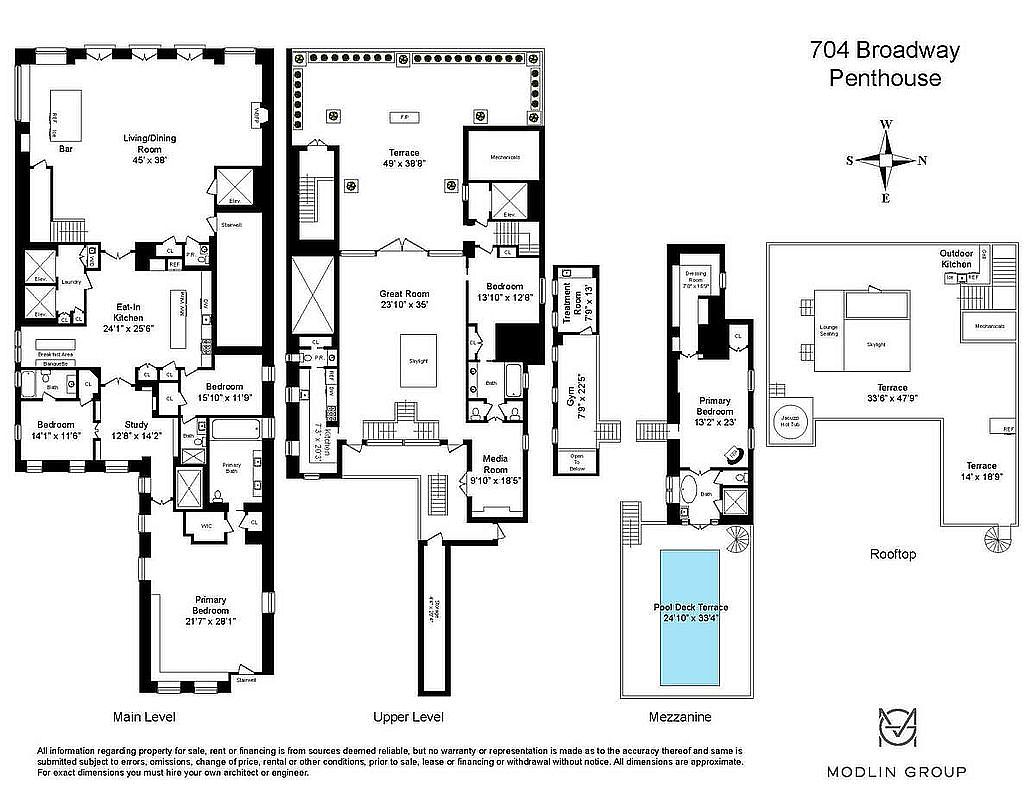
There are penthouses, and then there is 704 Broadway. To step inside this singular residence is to understand immediately that its creators were not merely building a home—they were composing an architectural argument for what urban living, at its most elevated, can become. Spread across the uppermost floors of The Dandy, a ten-story condominium that began its life in 1896 as the Dandy Hat Factory, the penthouse encompasses 8,000 square feet of interior space and more than 4,000 additional square feet of private outdoor living, including two rooftop terraces and a heated swimming pool with unobstructed western views of the Manhattan skyline.
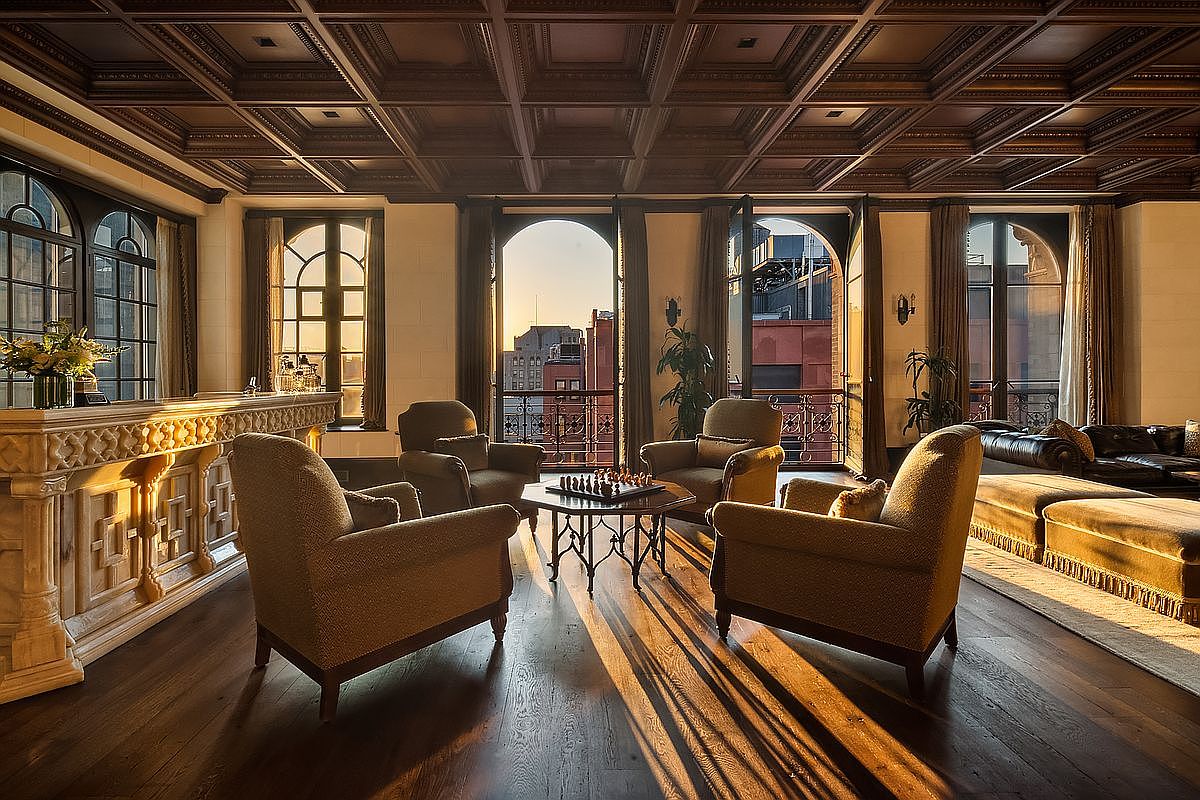
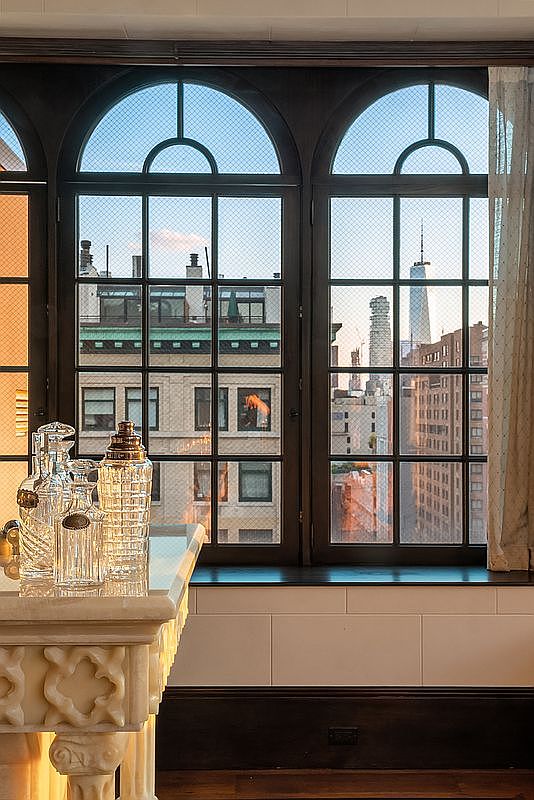
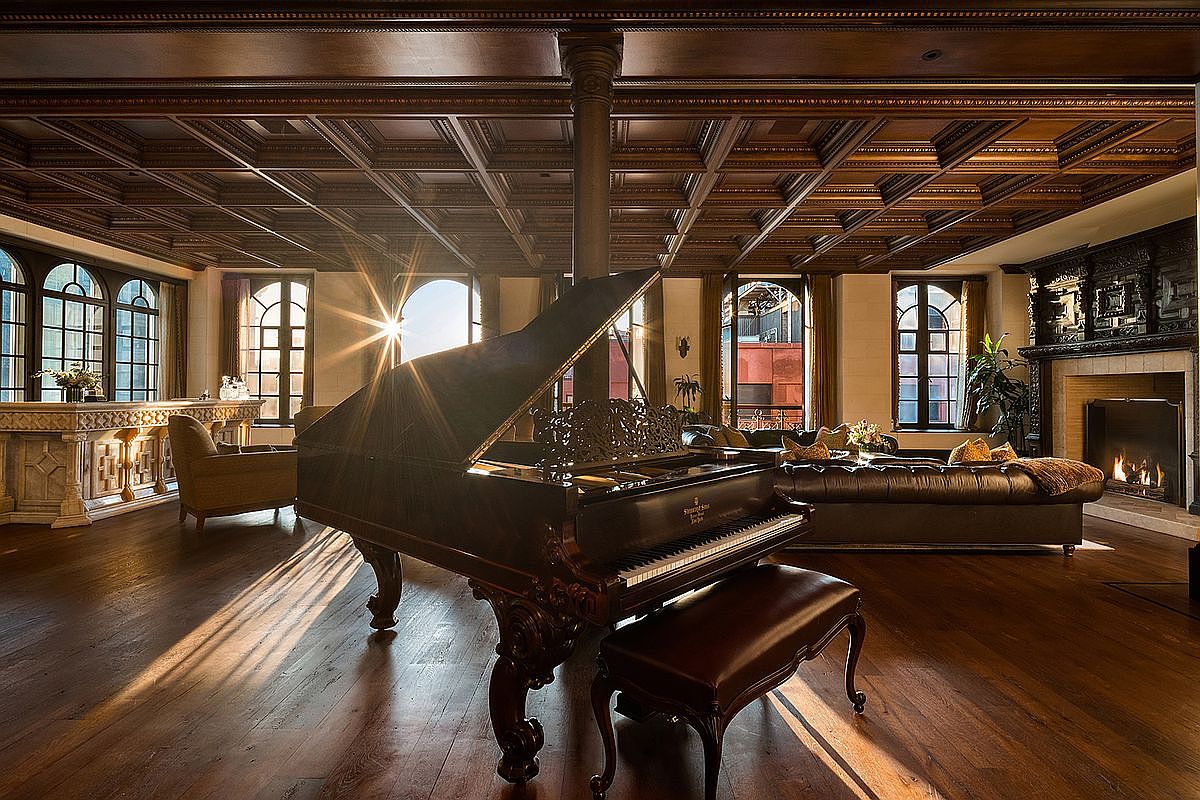
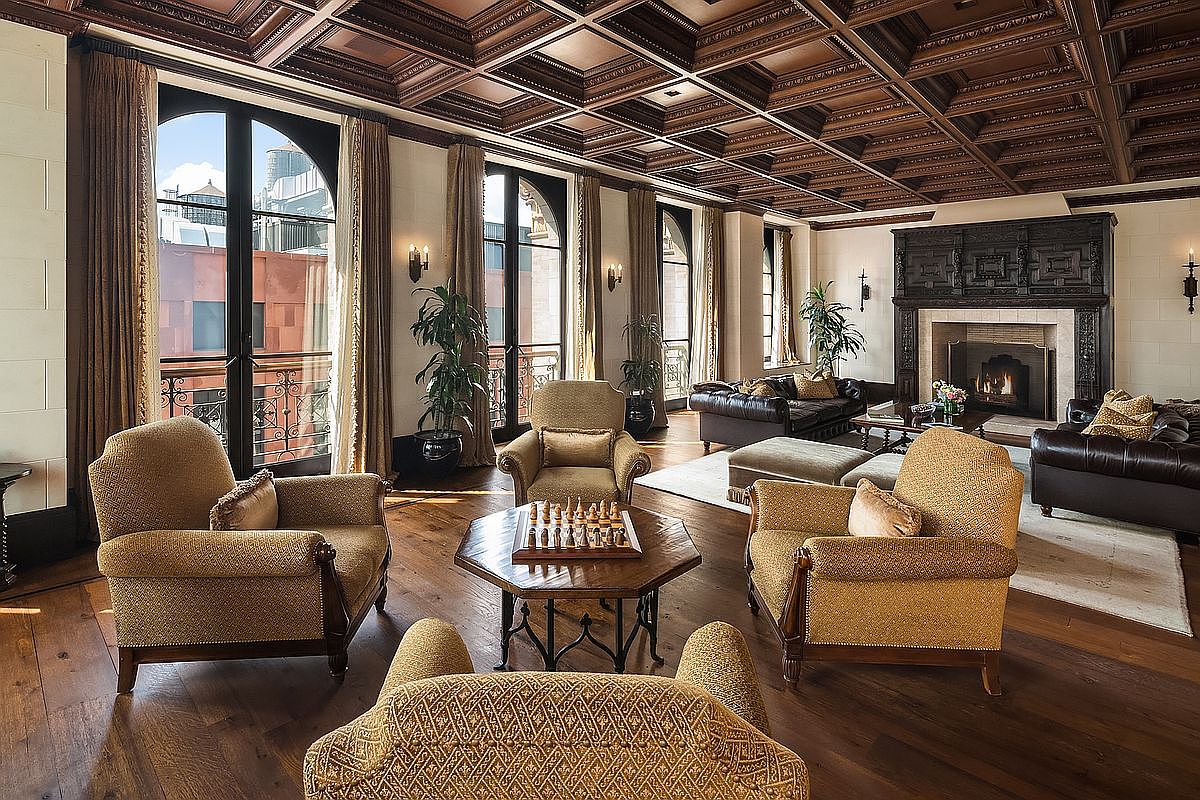
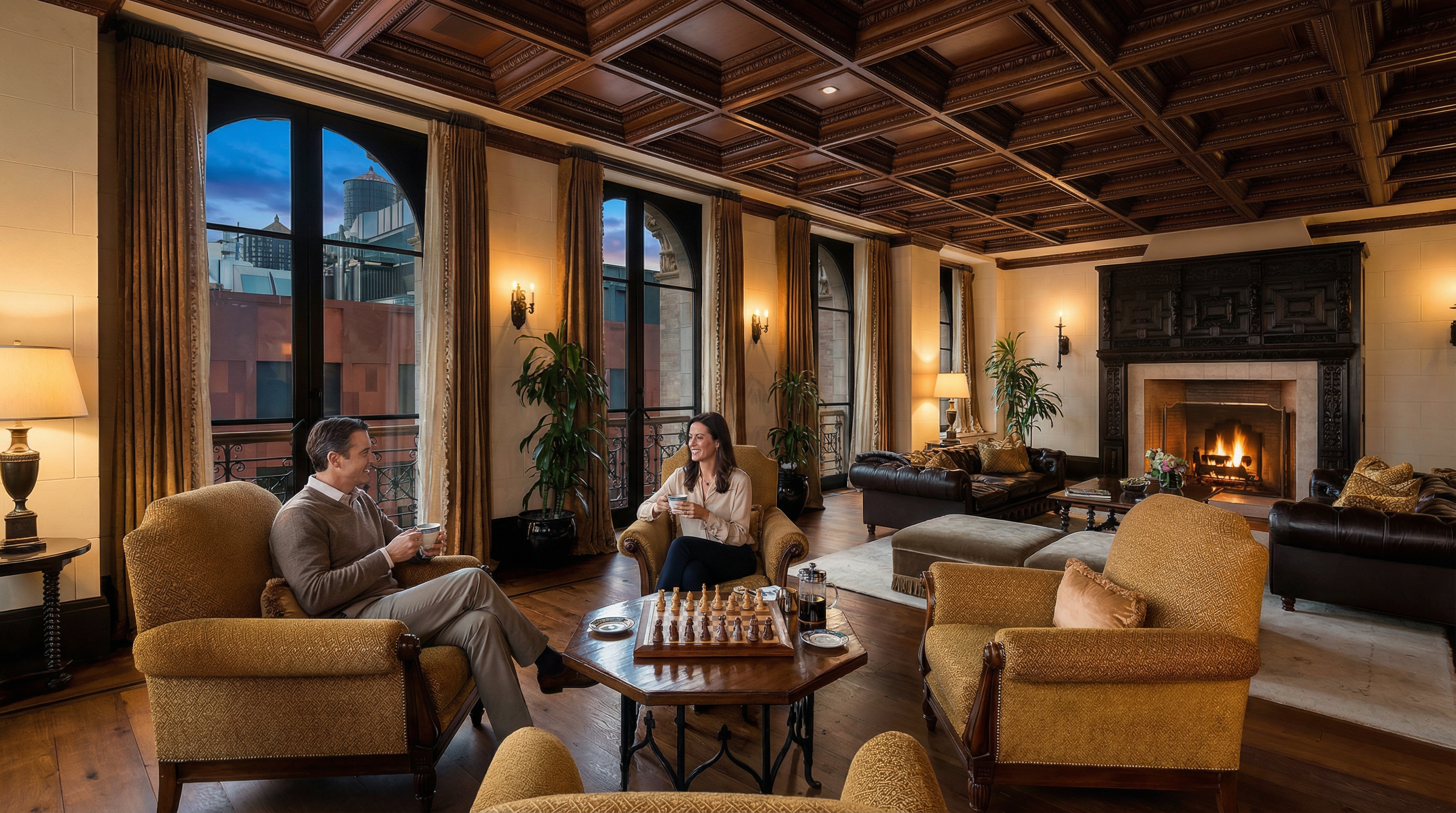
The main level announces itself with the kind of confidence that only genuine craftsmanship can produce. A wall of massive arched windows—original to the building's Beaux-Arts bones—floods the living room with light and frames a hand-carved, backlit onyx bar that serves as both functional centerpiece and sculptural object. An original 17th-century Dutch Tudor fireplace anchors the room with a weight of history that no reproduction could replicate. The effect is of a space simultaneously rooted in the past and entirely of the present.
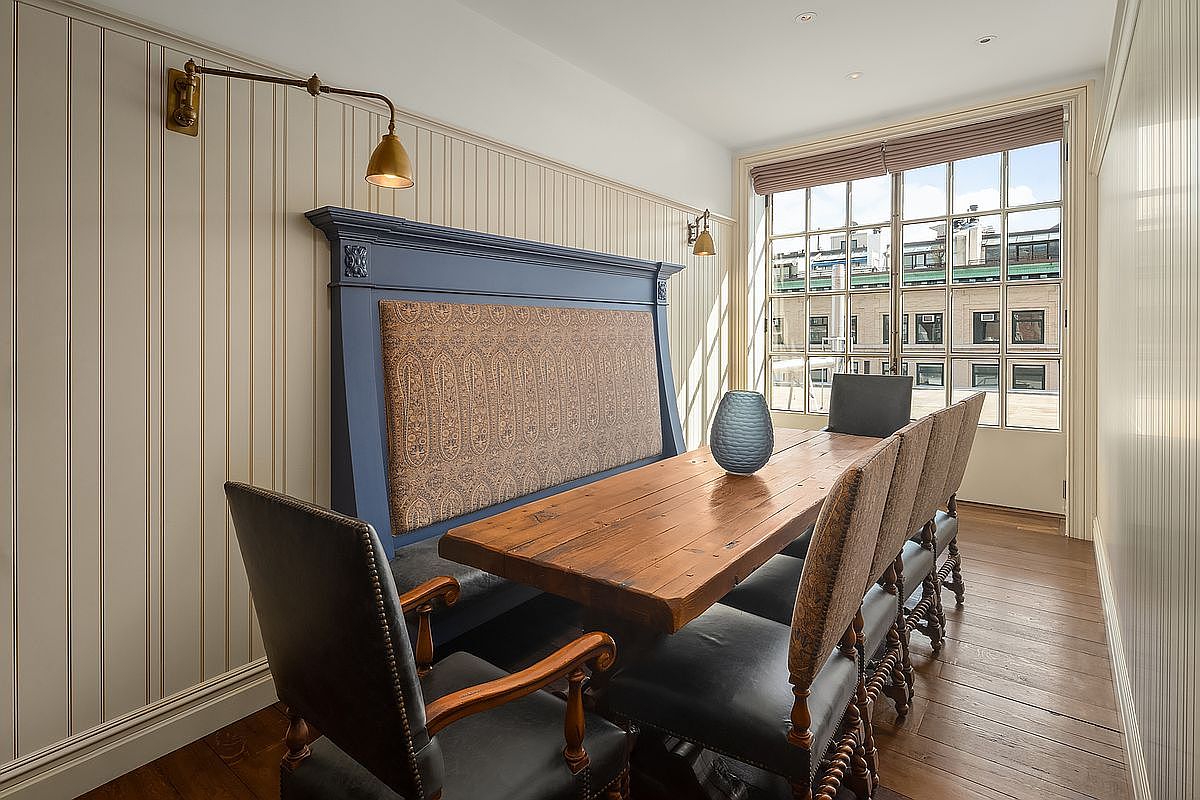
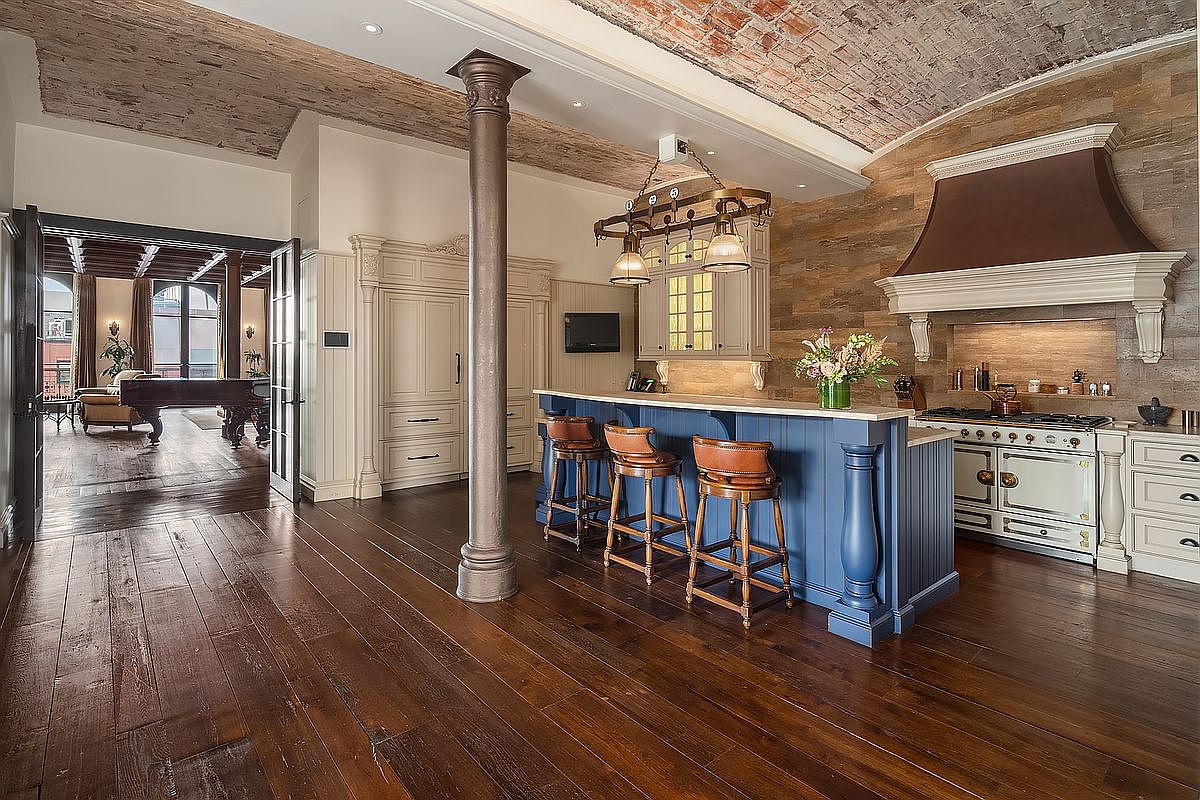
The chef's kitchen draws its inspiration from the French countryside without surrendering an inch of urban sophistication. A barrel-vaulted exposed brick ceiling arches overhead while blue marble tiles—recovered, remarkably, from a convent in France—line the floors beneath a La Cornue five-burner range. A custom-built dining nook with south-facing, floor-to-ceiling French-paned windows transforms the daily ritual of breakfast into something approaching ceremony.
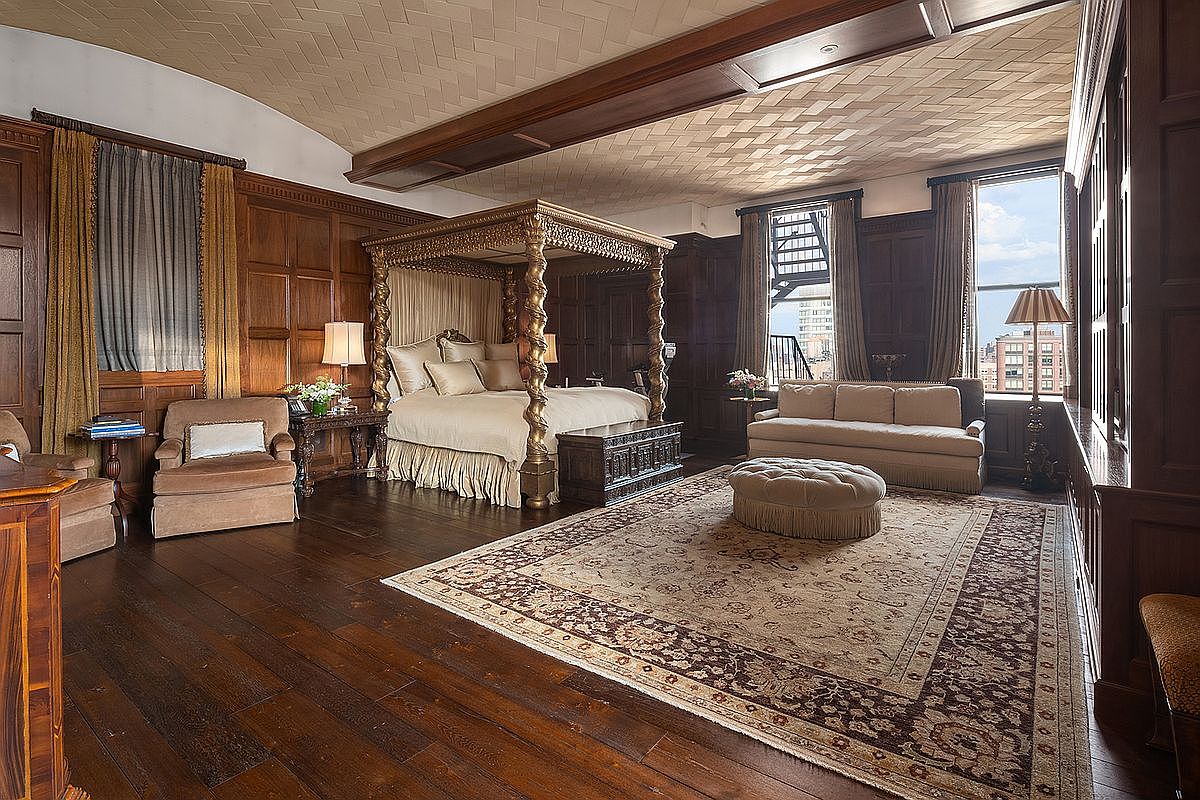
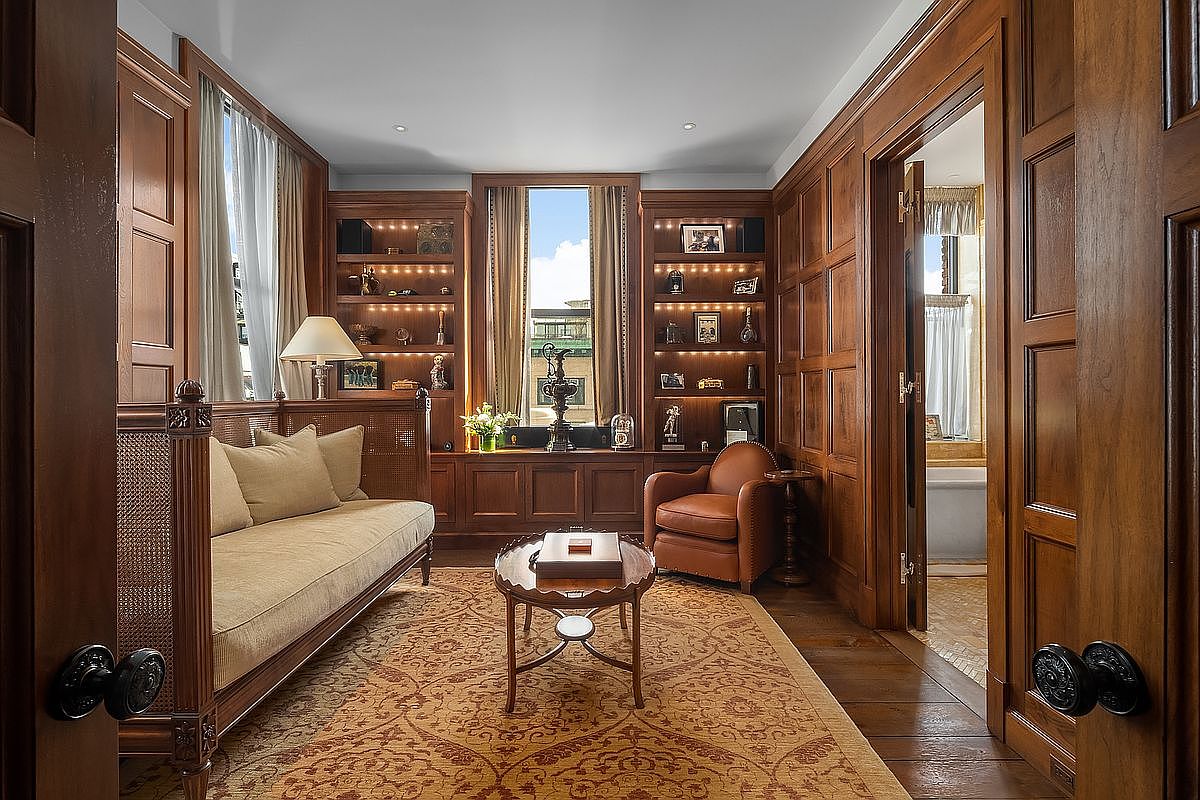
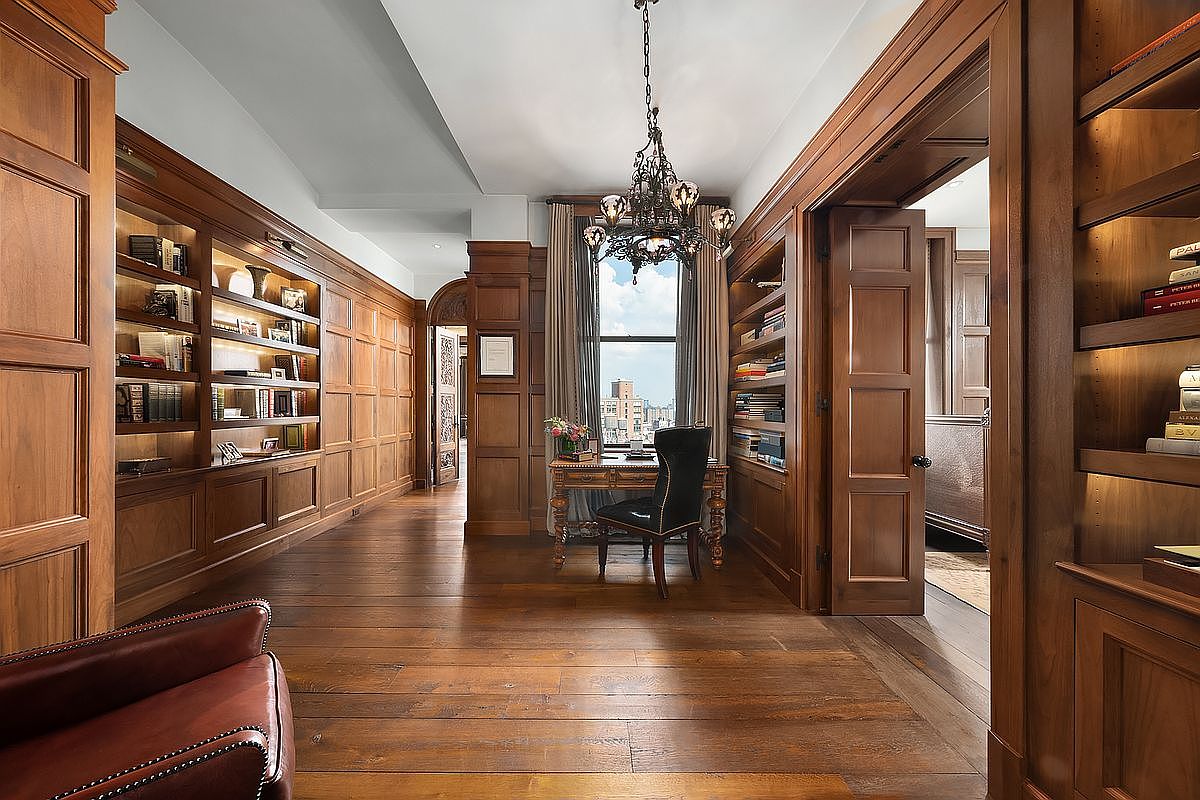
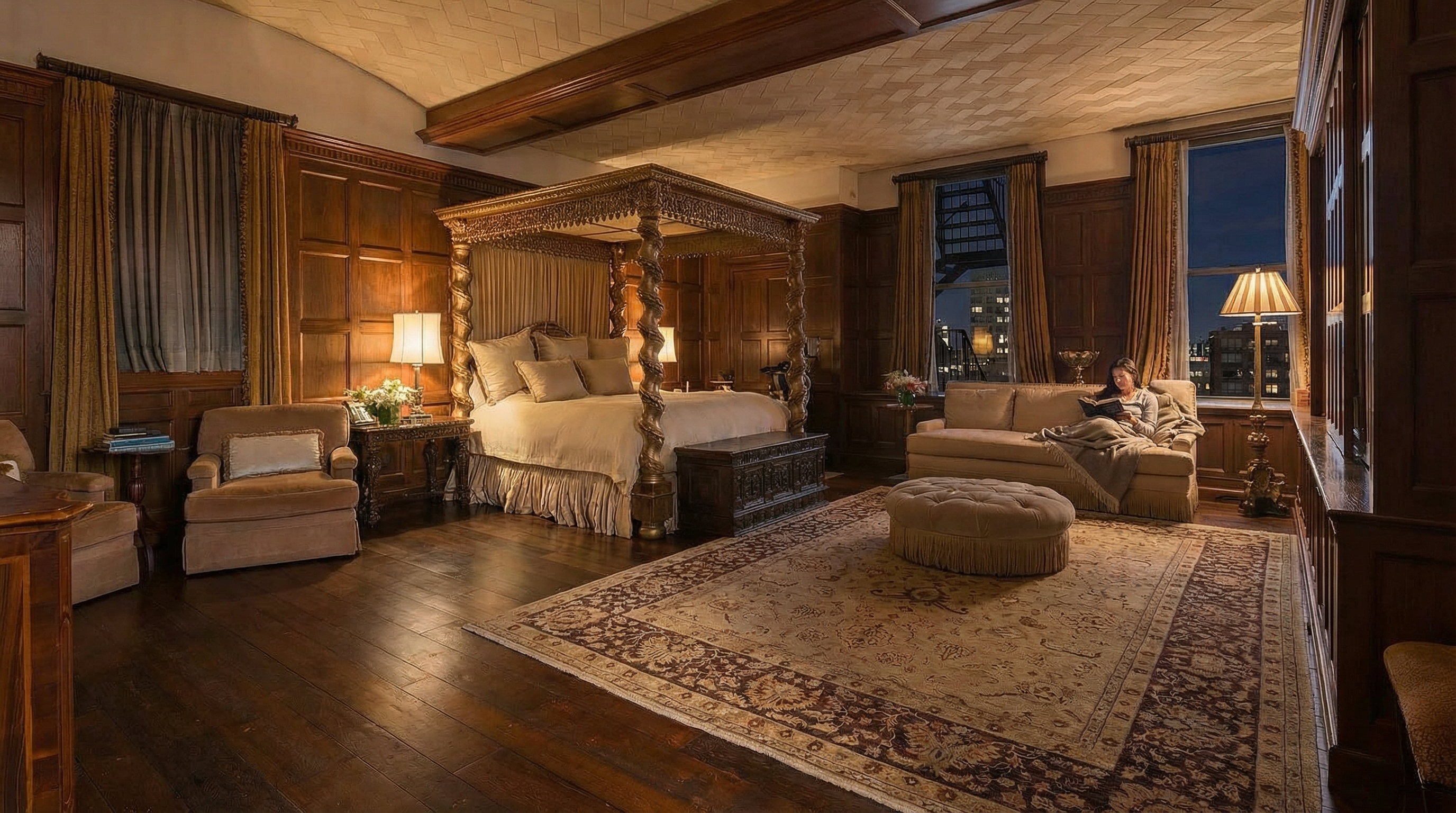
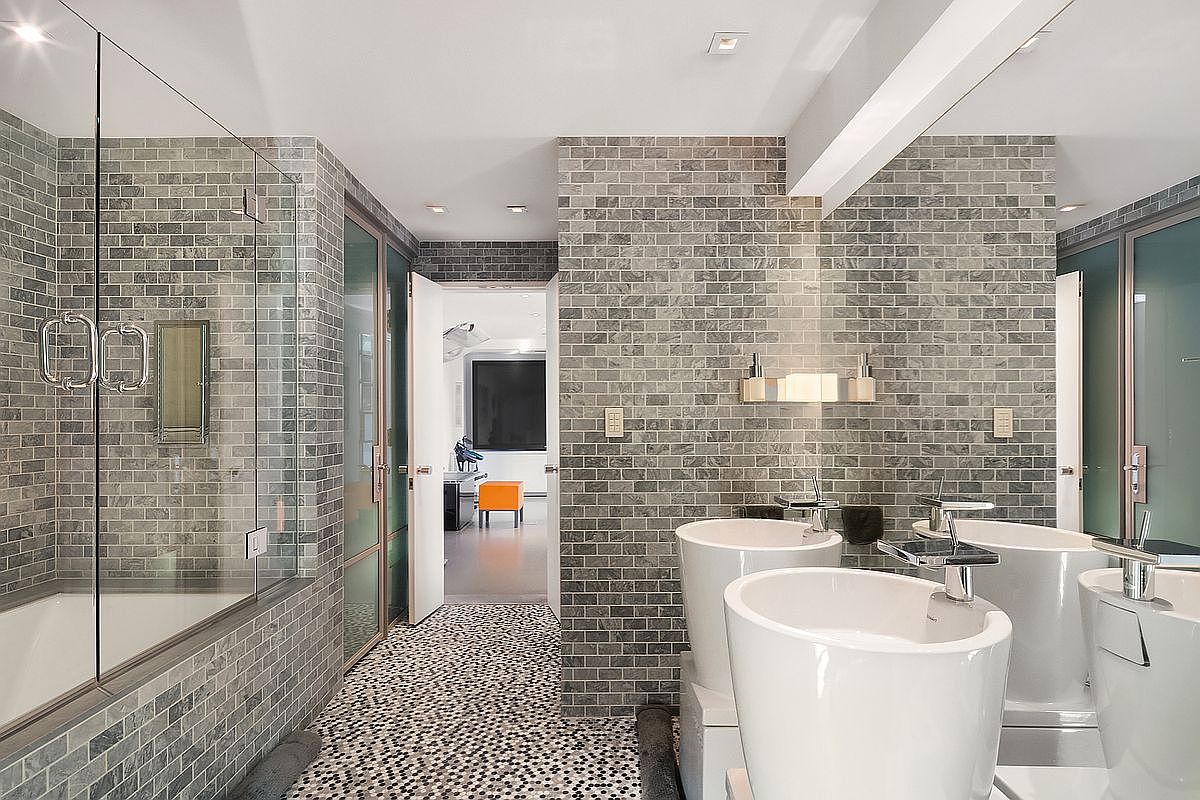
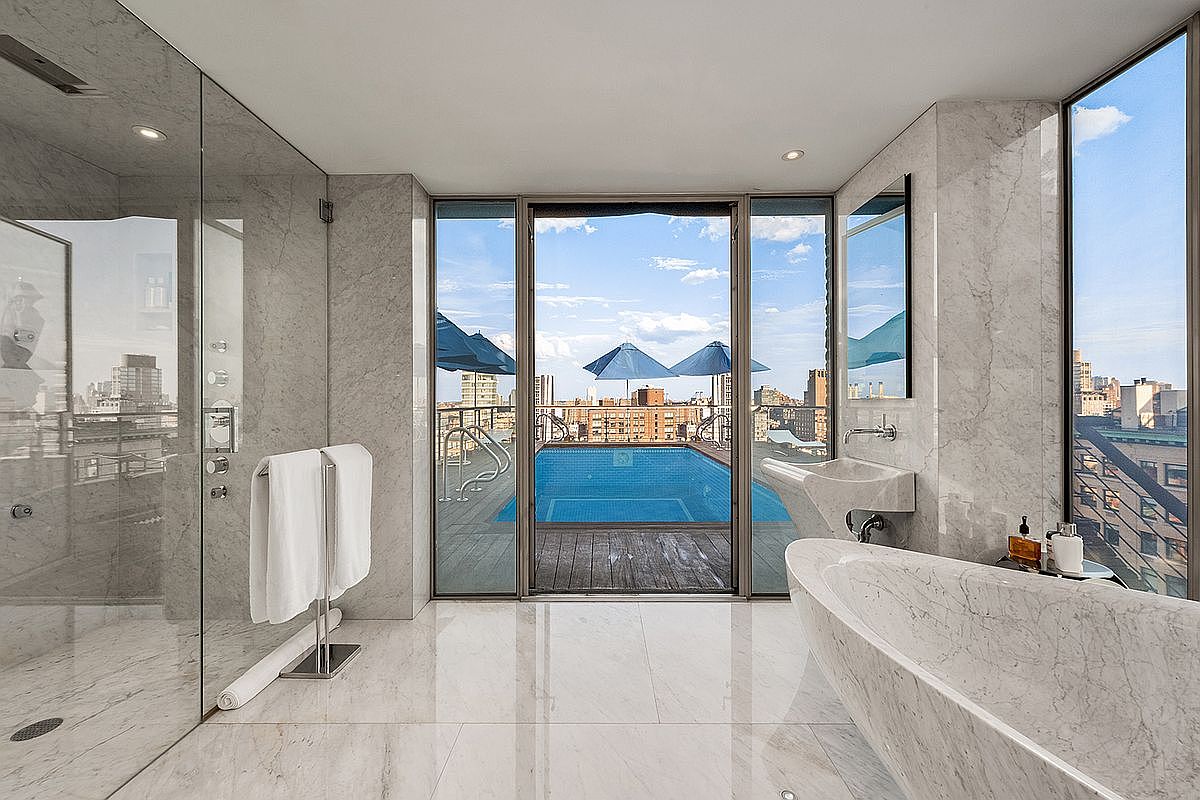
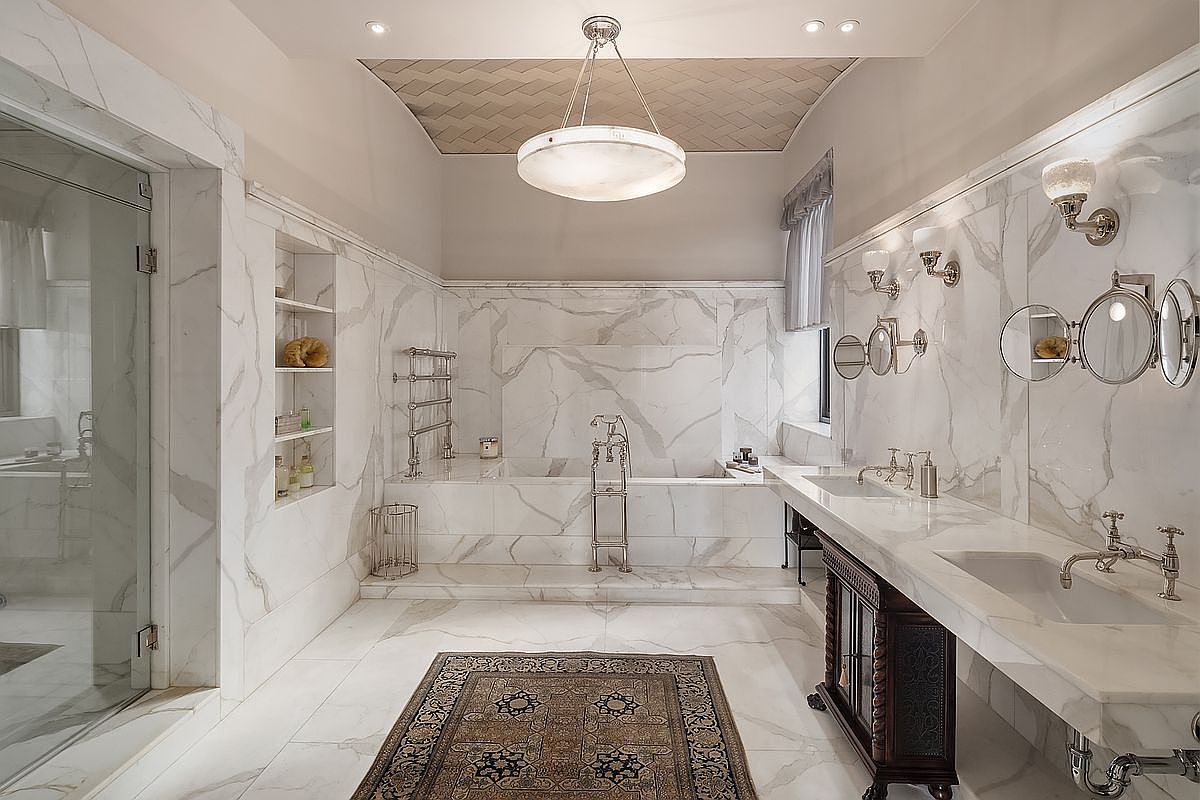
A mahogany-clad library connects the living quarters to the sleeping wing, where the primary suite sits behind one-of-a-kind carved Moroccan wood doors. Inside, a basket-weave wood vaulted ceiling and rich mahogany paneling create a sanctuary of considered quietude, while the Italian marble spa bathroom—complete with soaking tub, double vanity, separate shower, and radiant heat floors—represents the standard of comfort one expects at the finest hotels in the world.
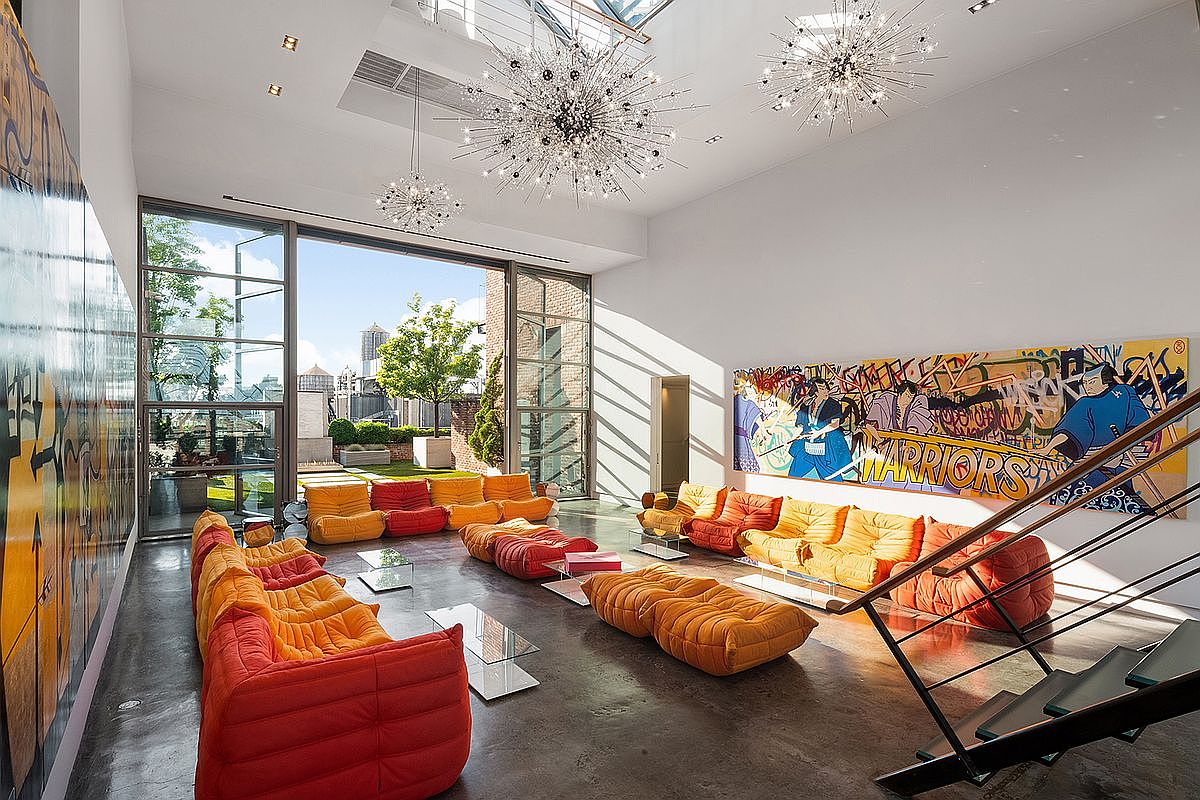
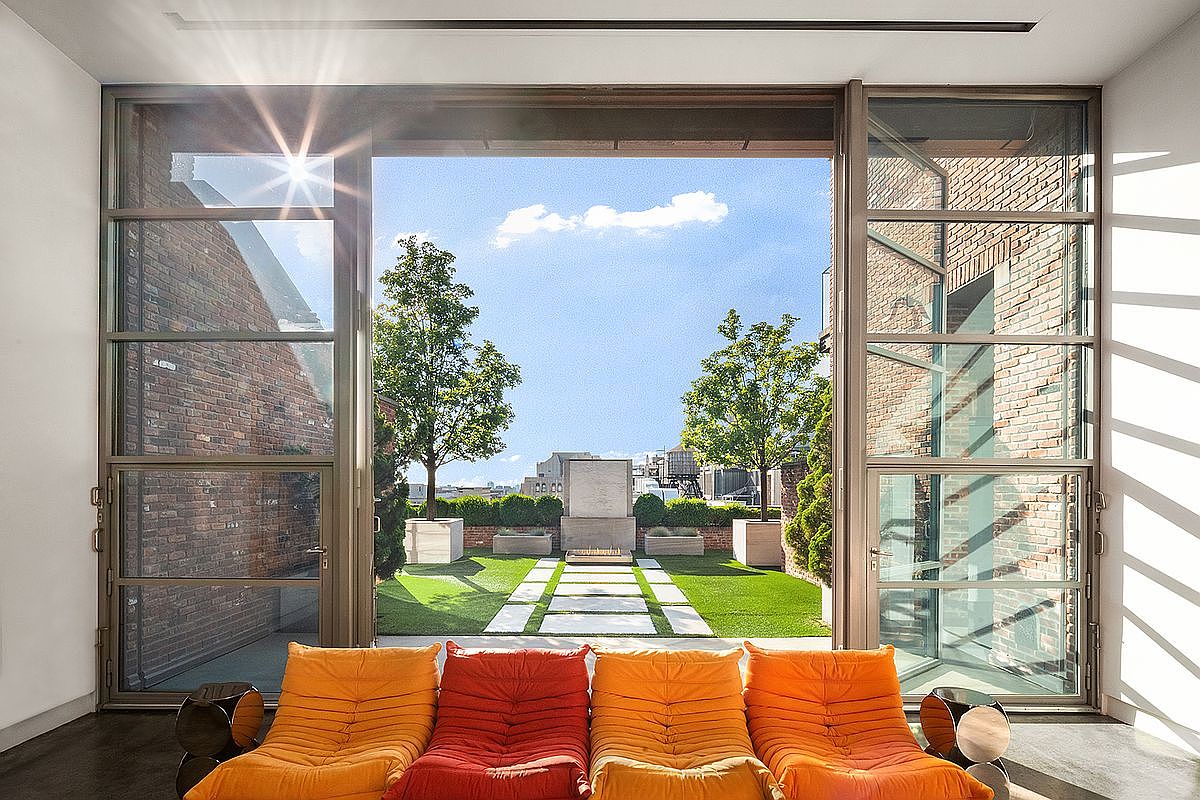
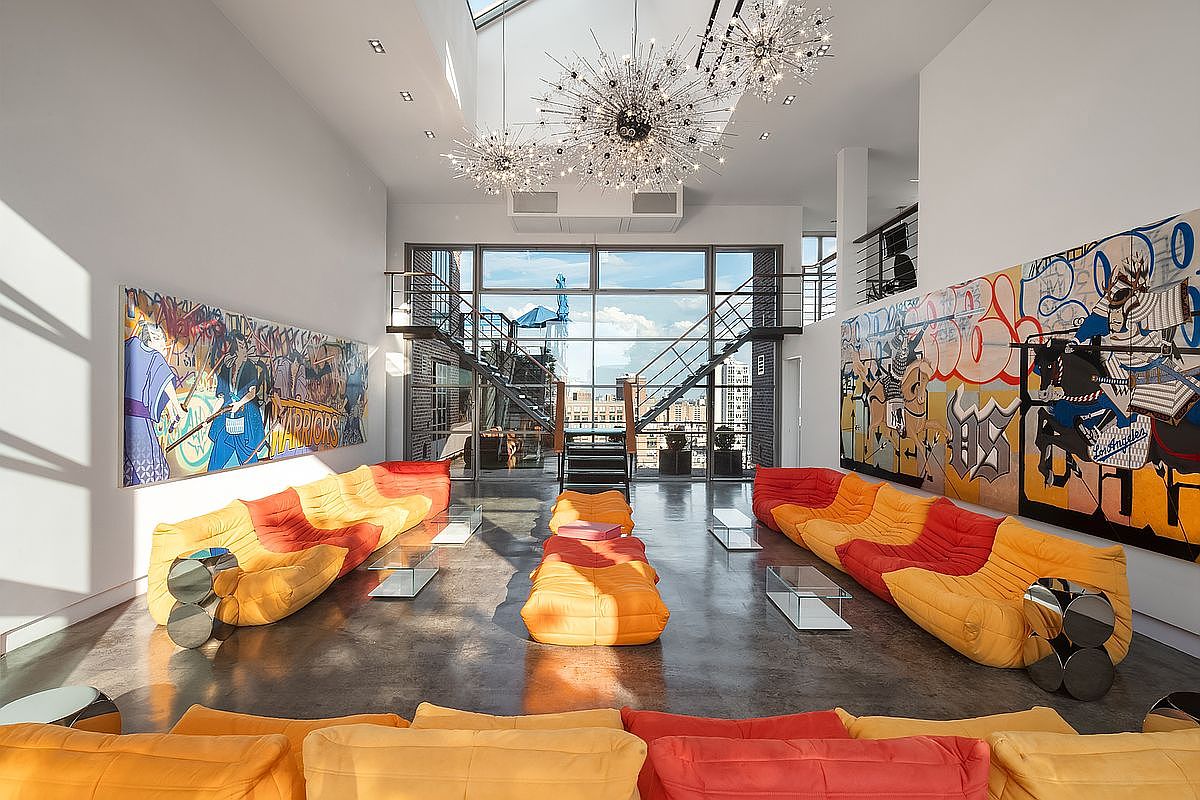
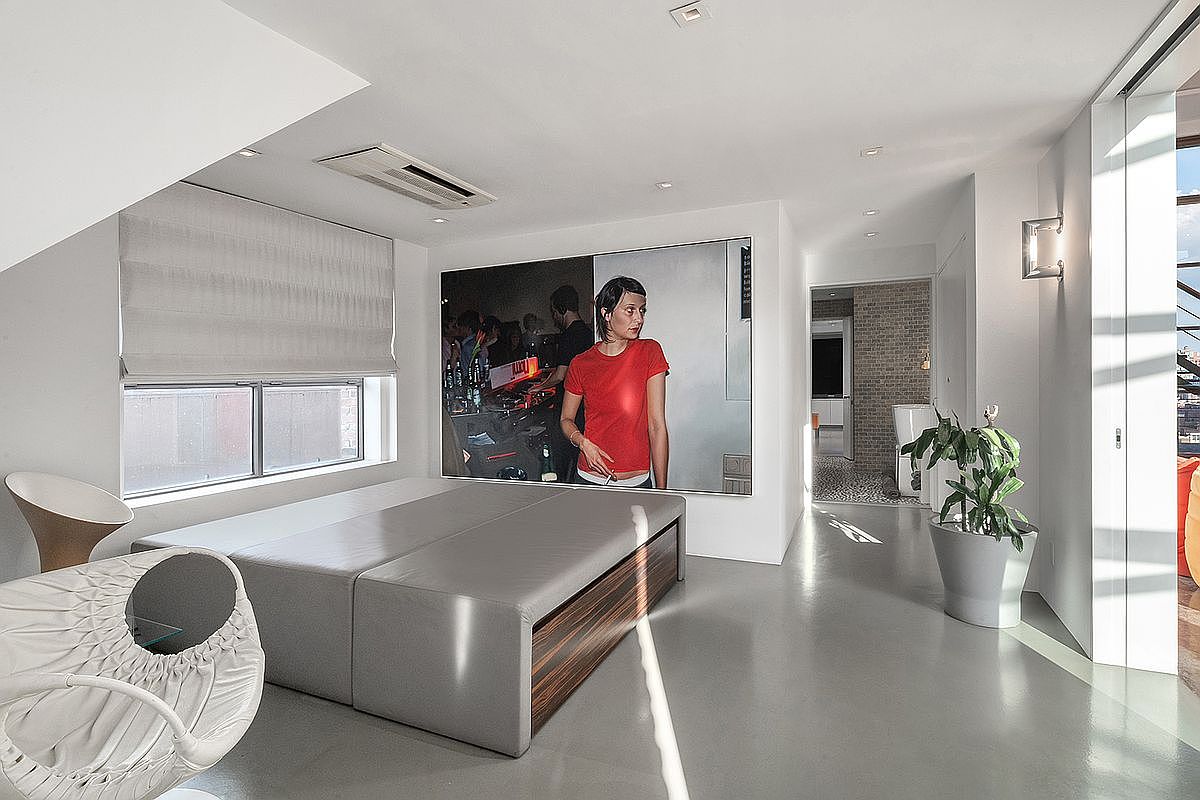
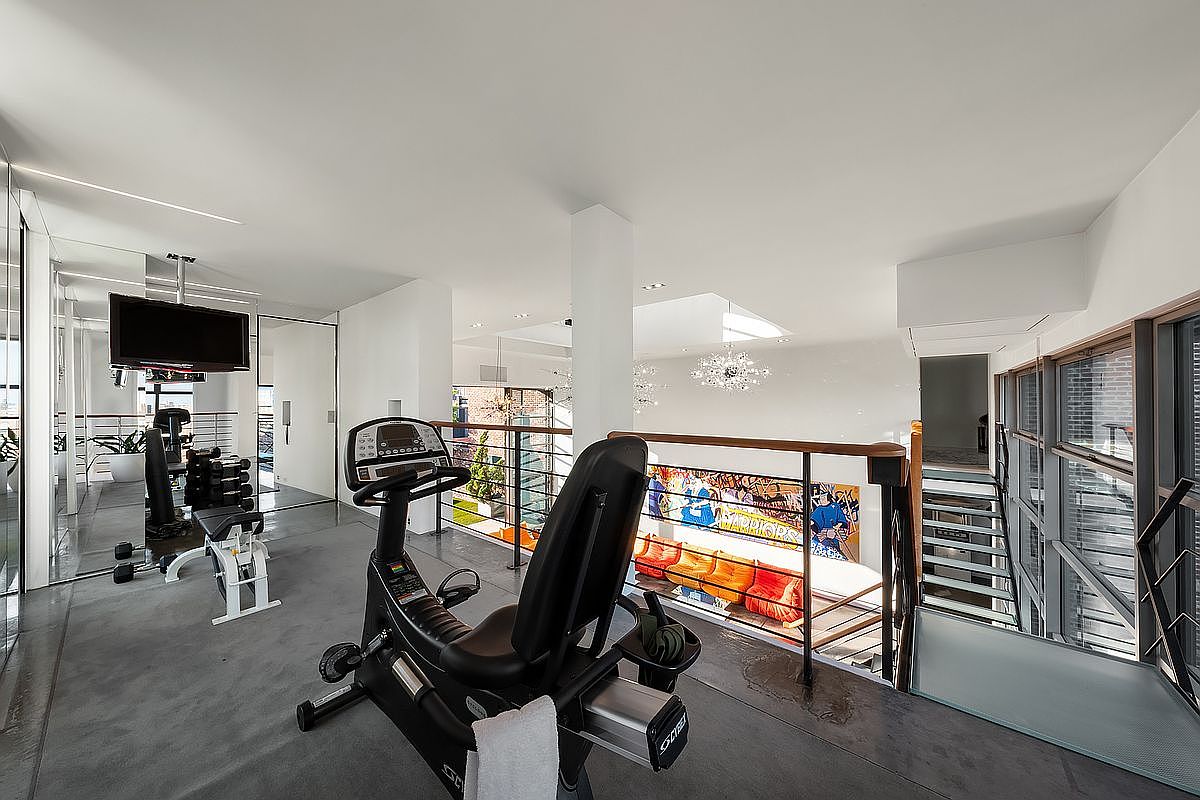
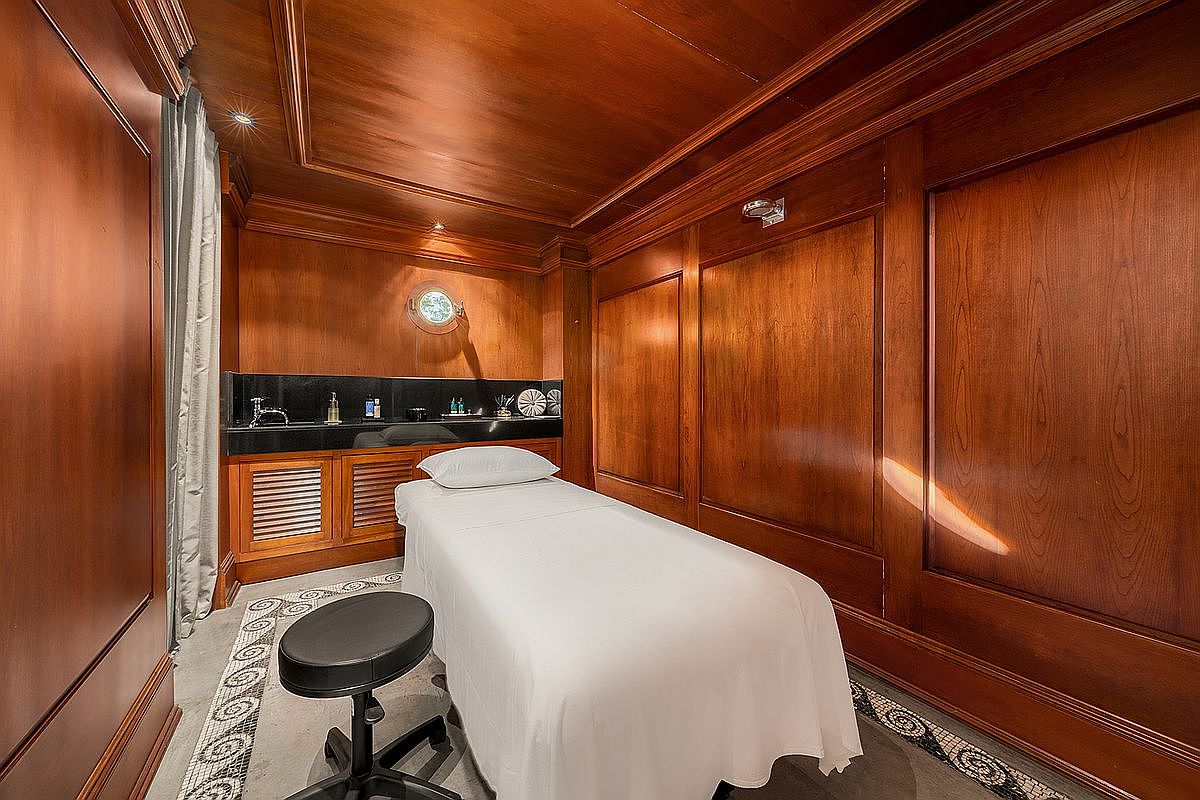
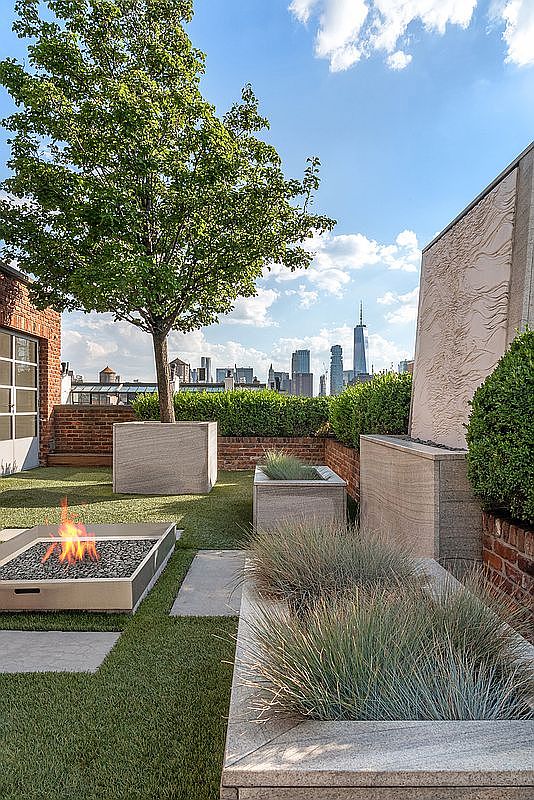
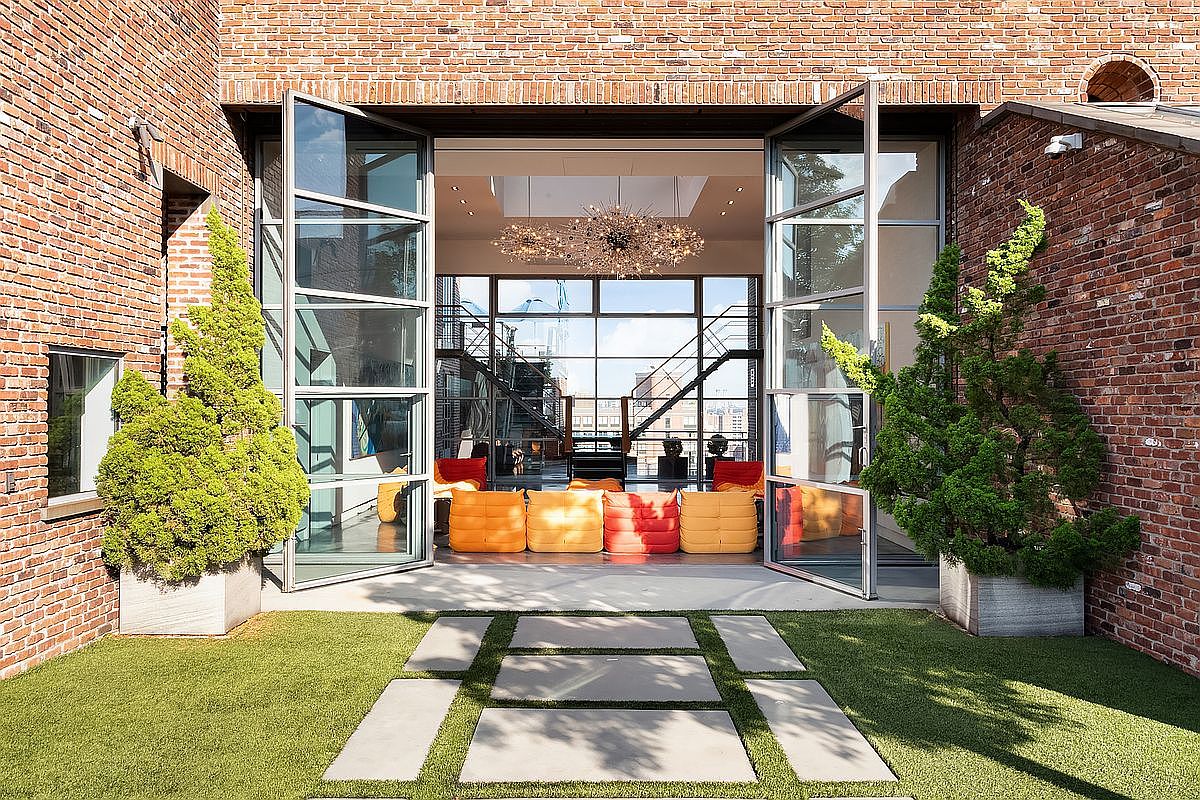
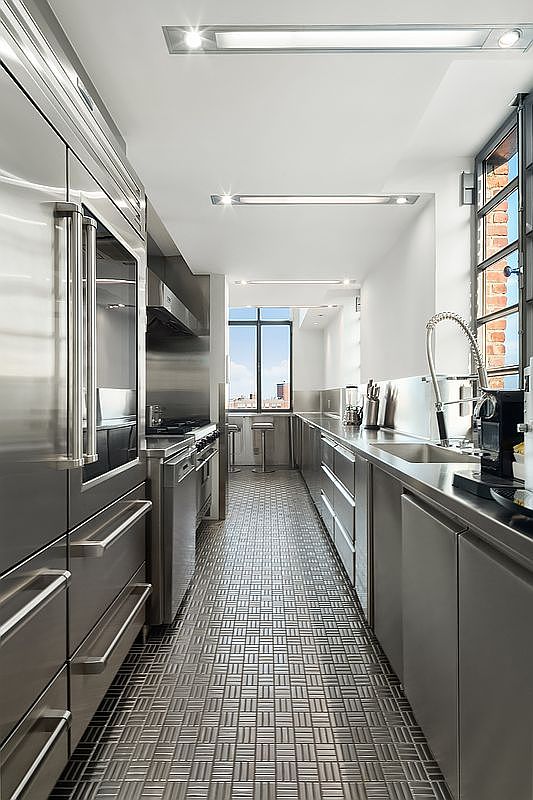
The upper levels, once known as Sky Studios, operate as a self-contained residence accessed by a private keyed elevator or an internal staircase. A colossal, glass-enclosed great room with 17-foot ceilings spills onto a landscaped garden terrace with sweeping western views. A home theater, a mezzanine-level gym, and a dedicated massage room with yacht-inspired teak and mosaic tile detailing round out a floor plan of rare completeness.
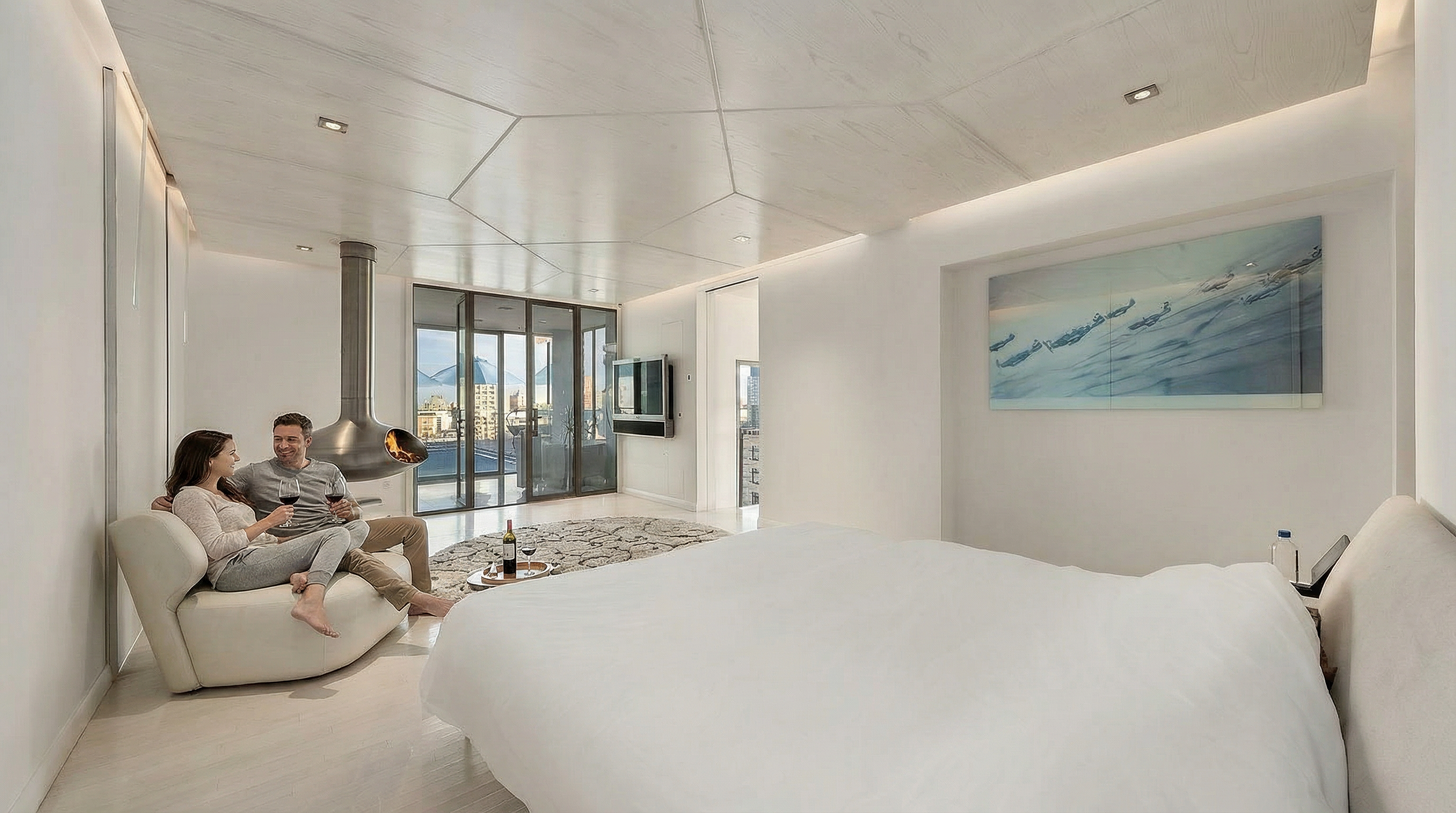
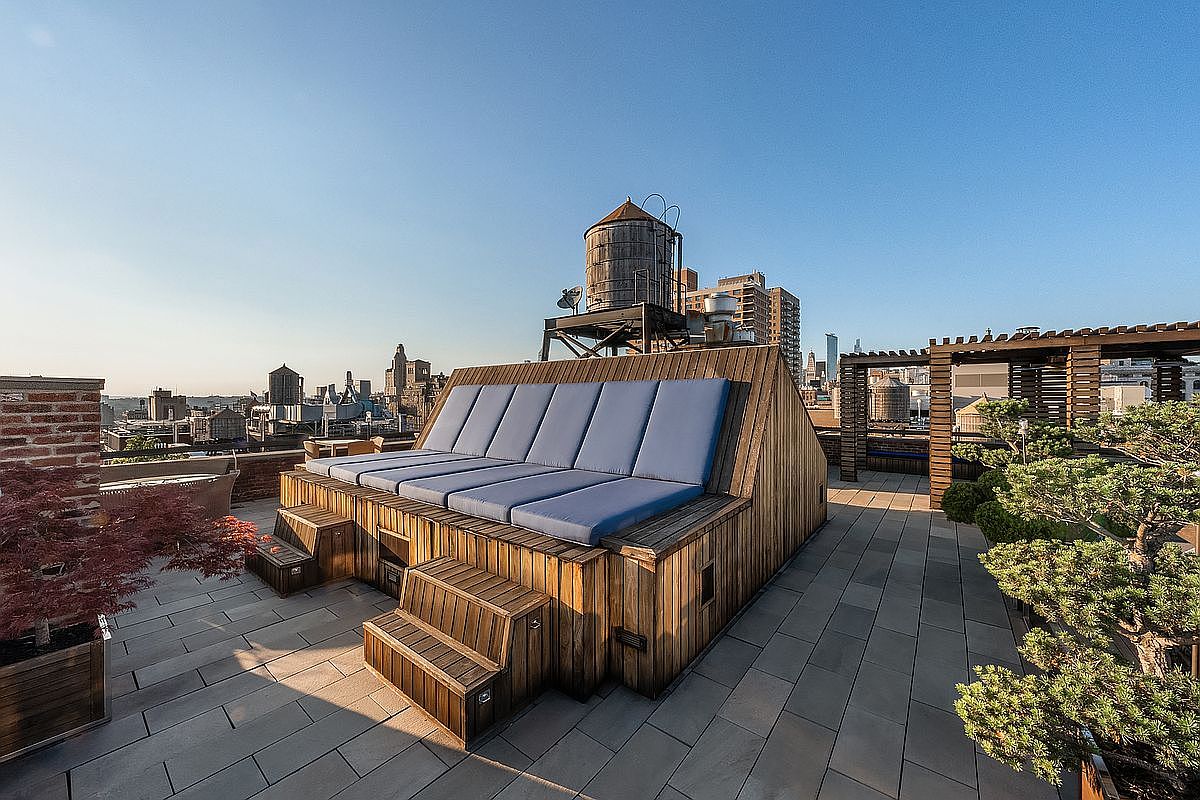
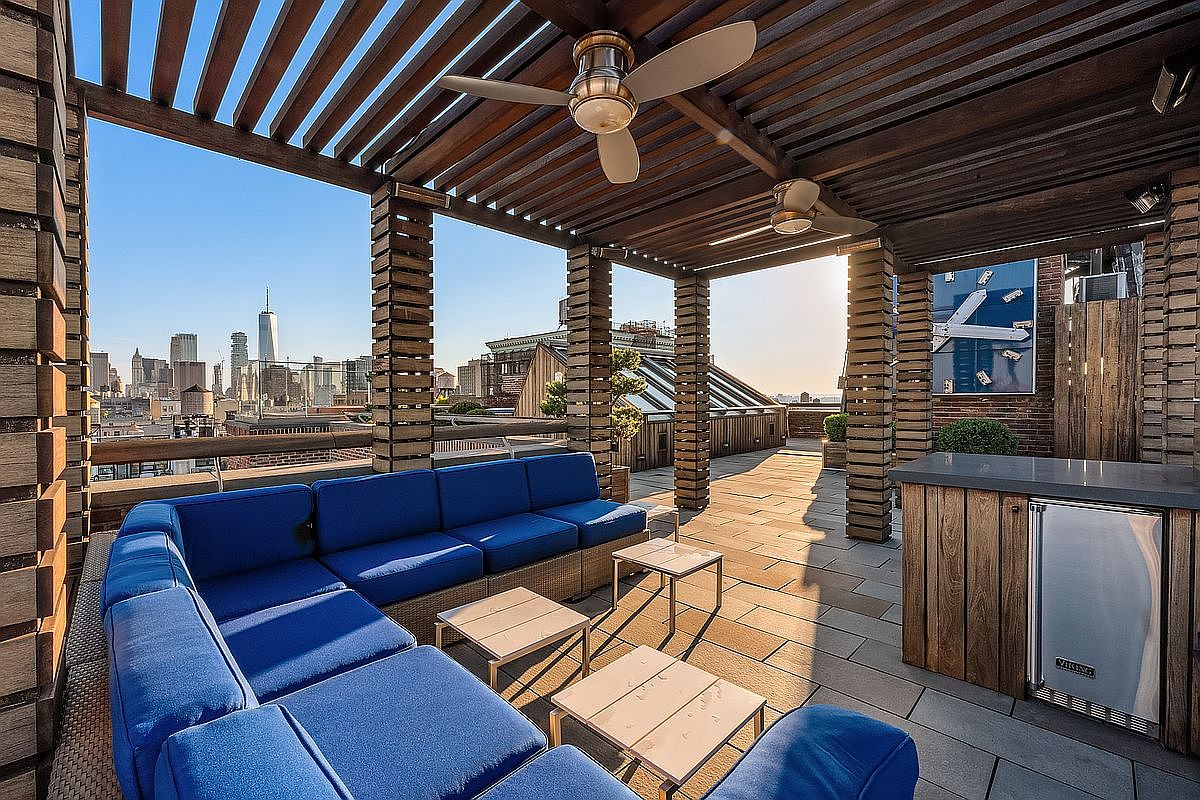
Perched at the very top, the second principal suite—wrapped in floor-to-ceiling Smartglass windows—features White Oak flooring, a contemporary suspended fireplace, and a marble-clad ensuite bathroom whose freestanding white marble soaking tub faces directly onto the heated outdoor pool deck. Above even this, the rooftop terrace finishes in teak, complete with a barrel hot tub, covered pergola, full wet bar, and Lynx outdoor grill. Throughout, Crestron home automation governs lighting, climate, shading, and audiovisual systems with seamless precision. This is a home that has considered everything.
NoHo—short for North of Houston Street—occupies one of the most historically layered and culturally alive corridors in all of Manhattan. Bounded roughly by Houston Street to the south, Bleecker Street to the north, the Bowery to the east, and Broadway to the west, the neighborhood sits at the precise intersection of downtown New York's most compelling enclaves: SoHo, NoLita, the East Village, and the reinvented Bowery. It is a location that offers proximity to virtually everything the city has to offer while maintaining the intimate, human-scaled character of a boutique urban village.
The neighborhood's architectural fabric is among the most distinguished in New York. Cast-iron and Italianate commercial buildings from the mid-to-late 19th century line its streets, many of them converted over the past several decades into loft residences, galleries, and ground-floor retail of the highest caliber. The stretch of Broadway on which The Dandy stands has long attracted the city's creative and cultural vanguard—artists, architects, designers, and entrepreneurs drawn by the neighborhood's rare combination of historic character and contemporary energy.
The dining landscape in and immediately around NoHo is exceptional by any standard. The neighborhood is home to celebrated restaurants and intimate neighborhood institutions alike, with Bond Street, Great Jones Street, and Lafayette Street offering a concentration of culinary ambition that rivals any block in the city. The proximity to the Bowery—once the city's most notorious thoroughfare and now one of its most dynamic—places world-class dining, including the legendary culinary institutions of the East Village, within easy walking distance.
Cultural amenities are equally abundant. The Public Theater on Lafayette Street, one of New York's most important performing arts institutions and the original home of productions including Hair and A Chorus Line, sits just blocks away. The New Museum on the Bowery brings contemporary art of international significance to the immediate neighborhood. Washington Square Park, the historic heart of Greenwich Village and New York University's campus, is a short walk south—a green anchor in a neighborhood of stone and glass.
For daily life, NoHo's retail landscape reflects its residents' refined sensibilities. Independent bookshops, design studios, fashion boutiques, and specialty food purveyors occupy storefronts that, in other neighborhoods, would be given over to chains. The farmers' market tradition of the broader downtown area, including the Union Square Greenmarket a few blocks north, ensures access to exceptional produce and provisions.
Transportation connectivity is quietly exceptional. Multiple subway lines converge within blocks, placing Midtown, the Financial District, Brooklyn, and the airports within straightforward reach. Yet NoHo itself retains a walkability and a quietude that belie its central position—a neighborhood where one can live entirely on foot without sacrificing access to the whole of the city. For the resident of 704 Broadway's penthouse, this is not simply a prestigious address. It is the center of everything.
Featured Highlights
Curated Content • Presented by Adam Modlin