The Story Behind
Architect-Designed Turtle Creek Estate Redefines Contemporary Dallas Luxury
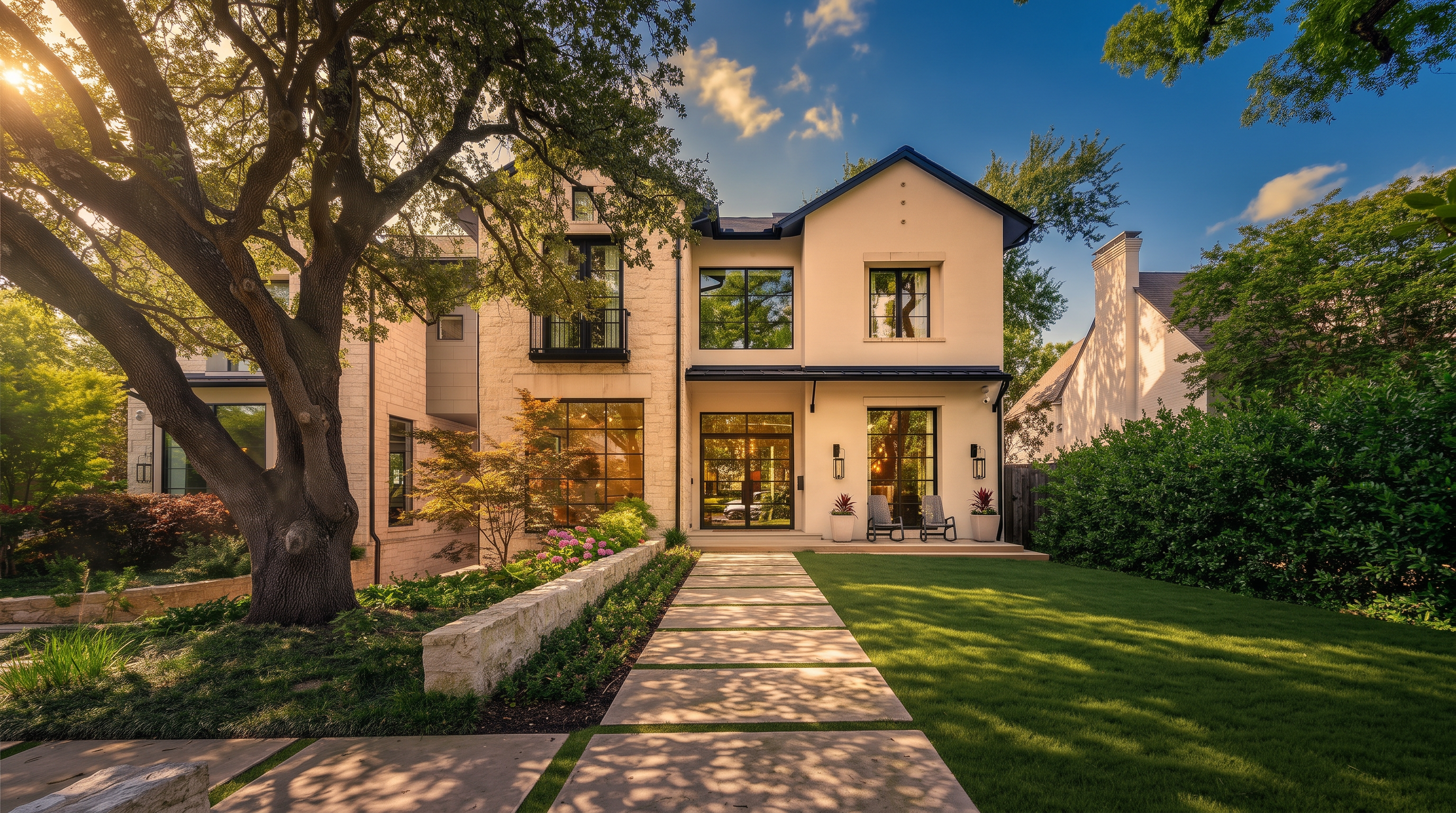
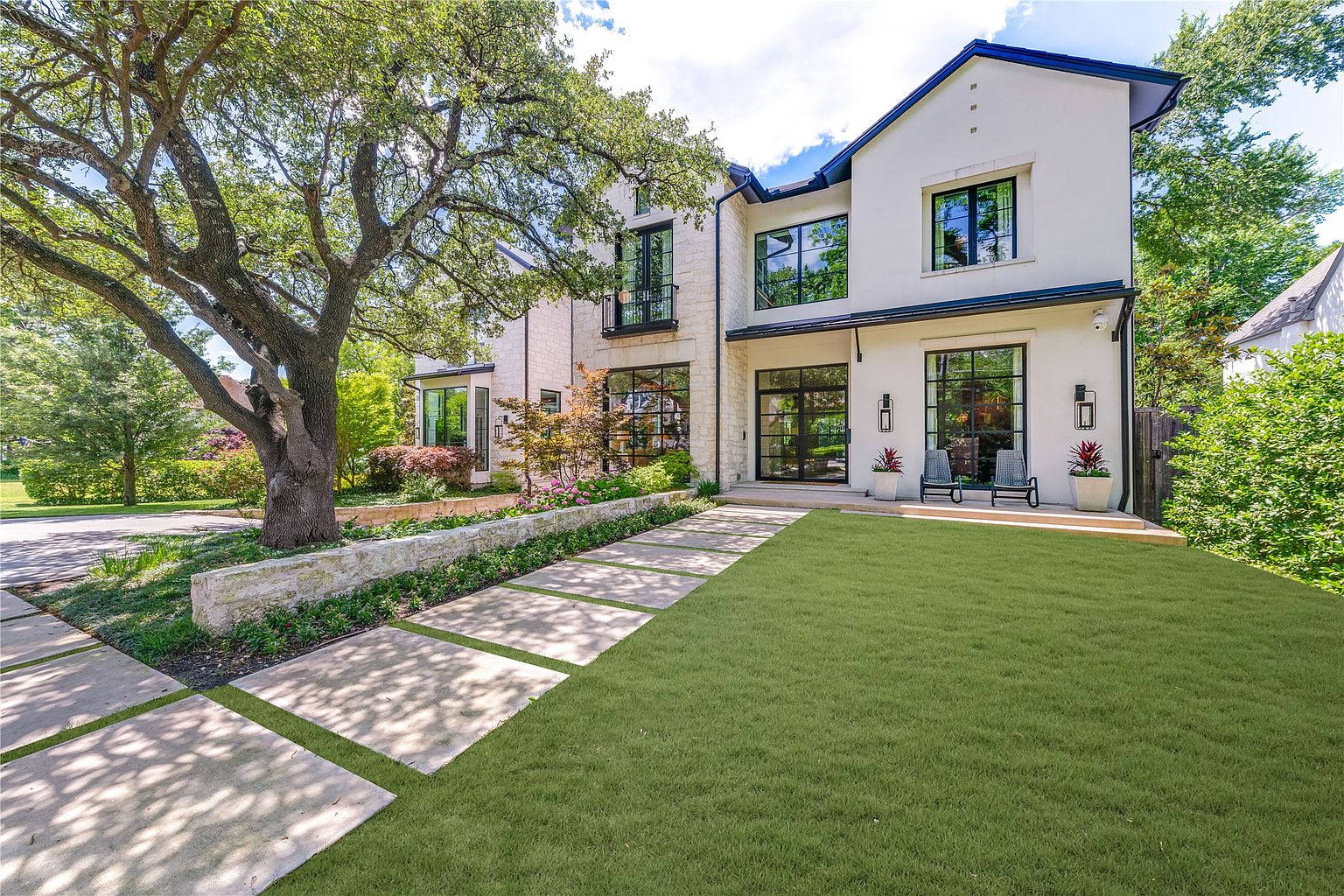
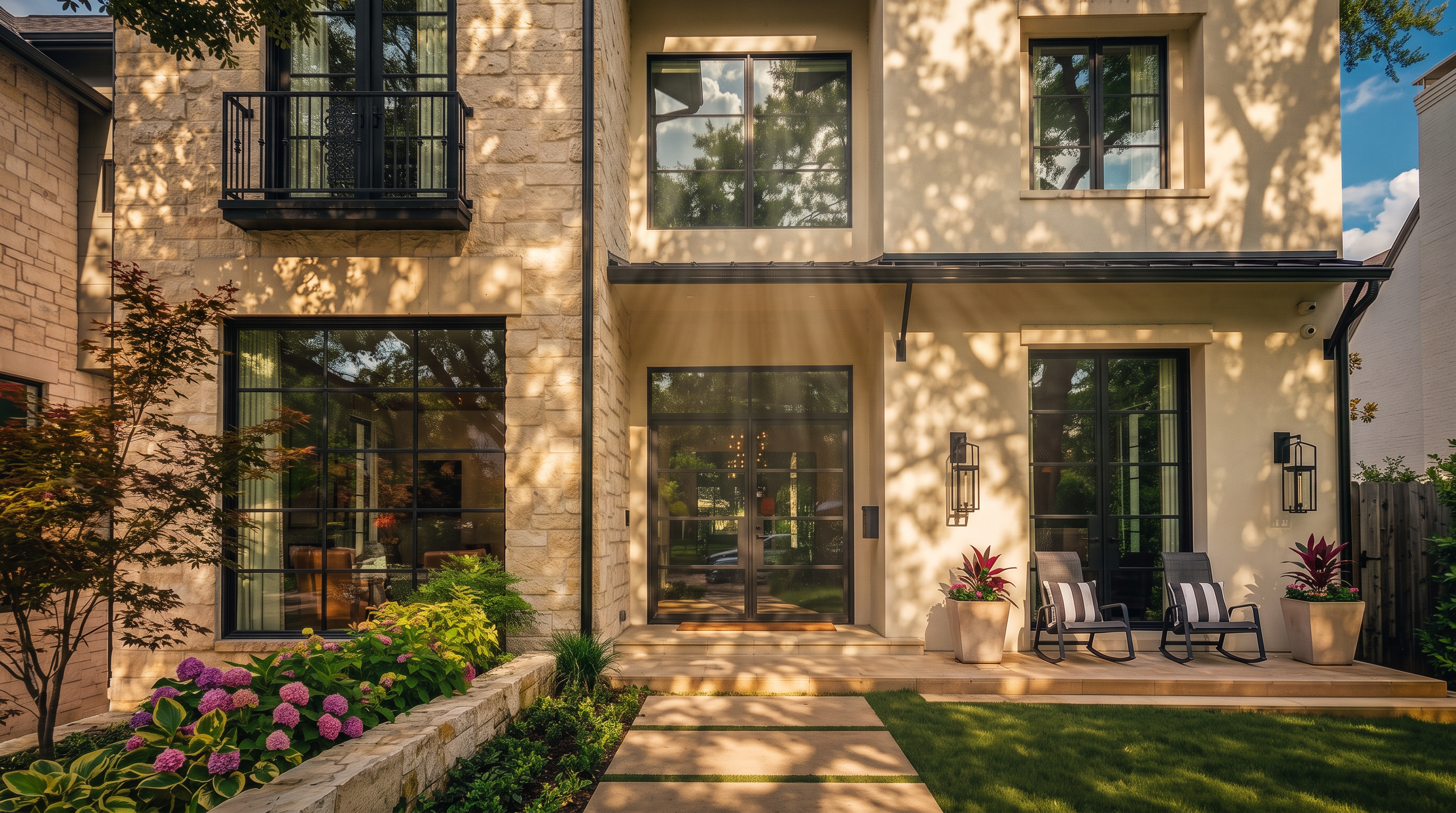
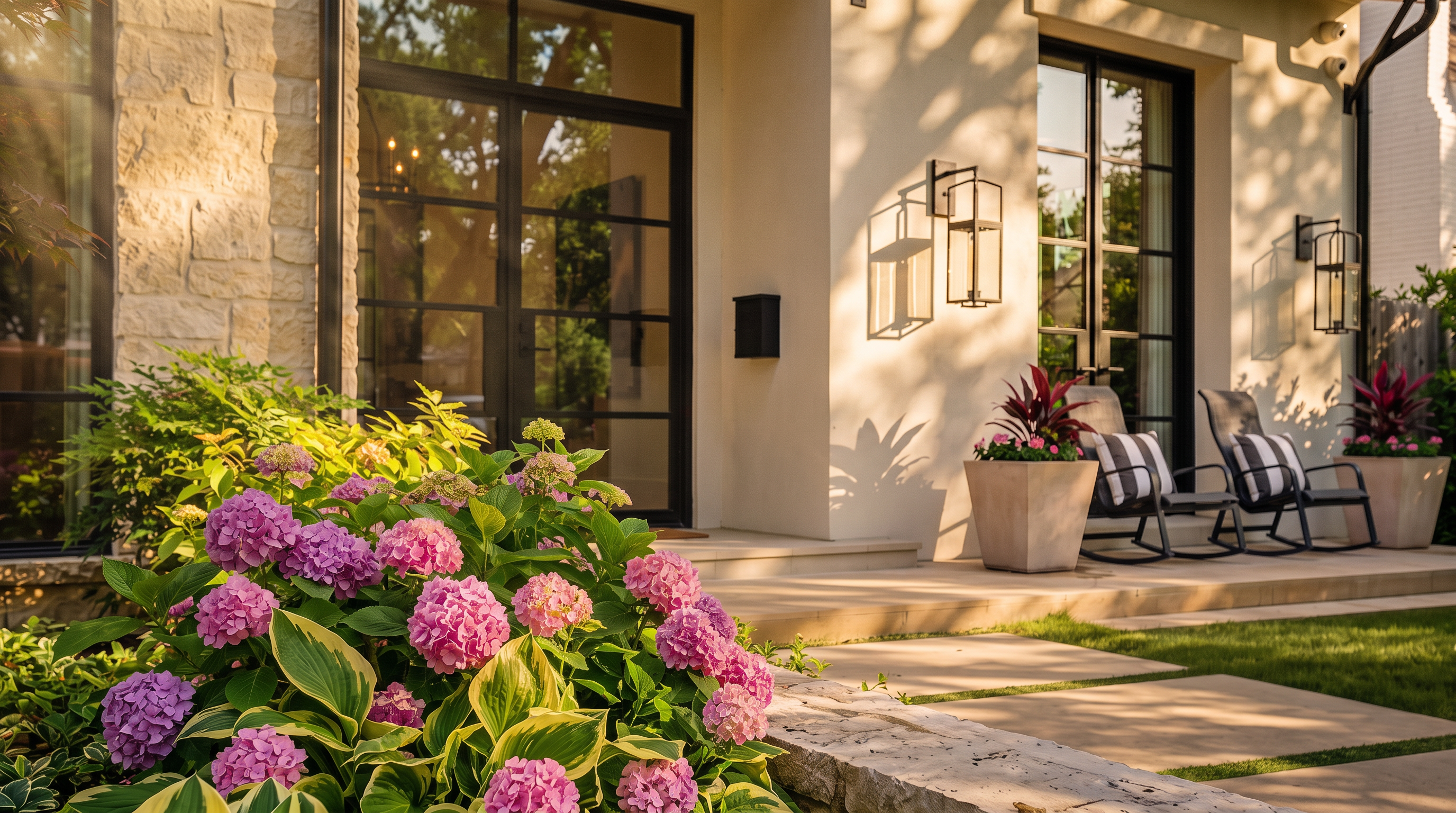
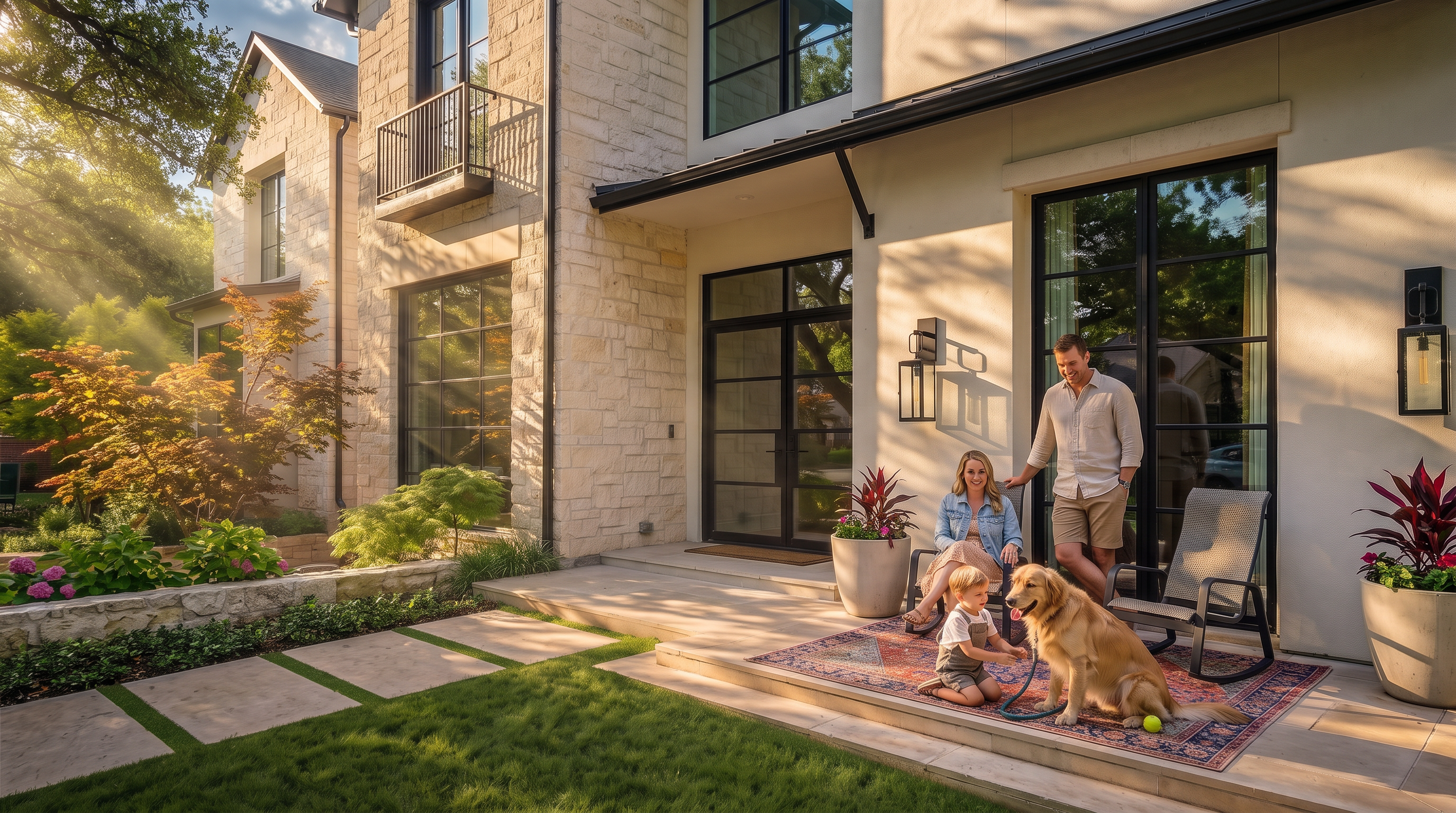
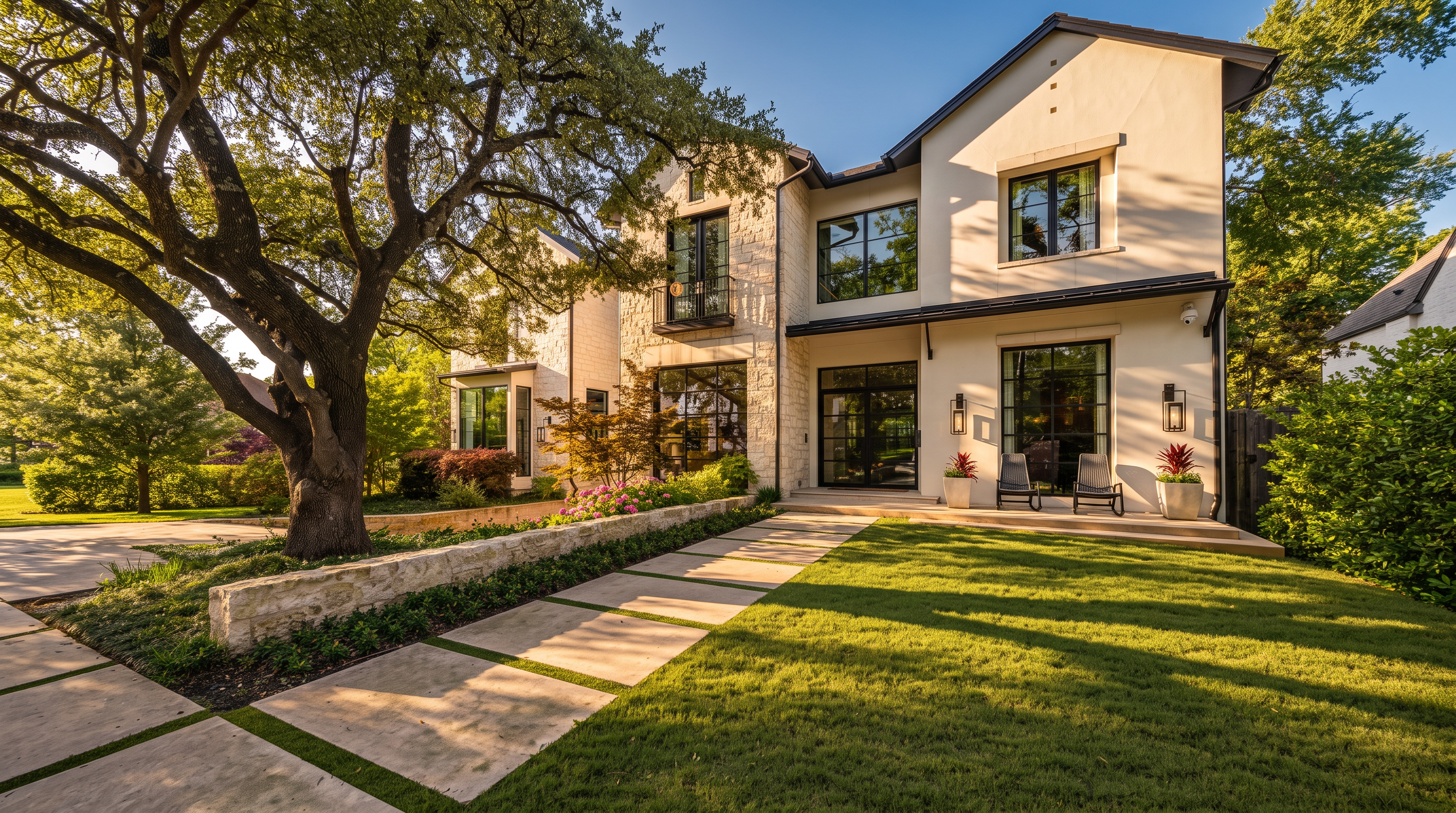
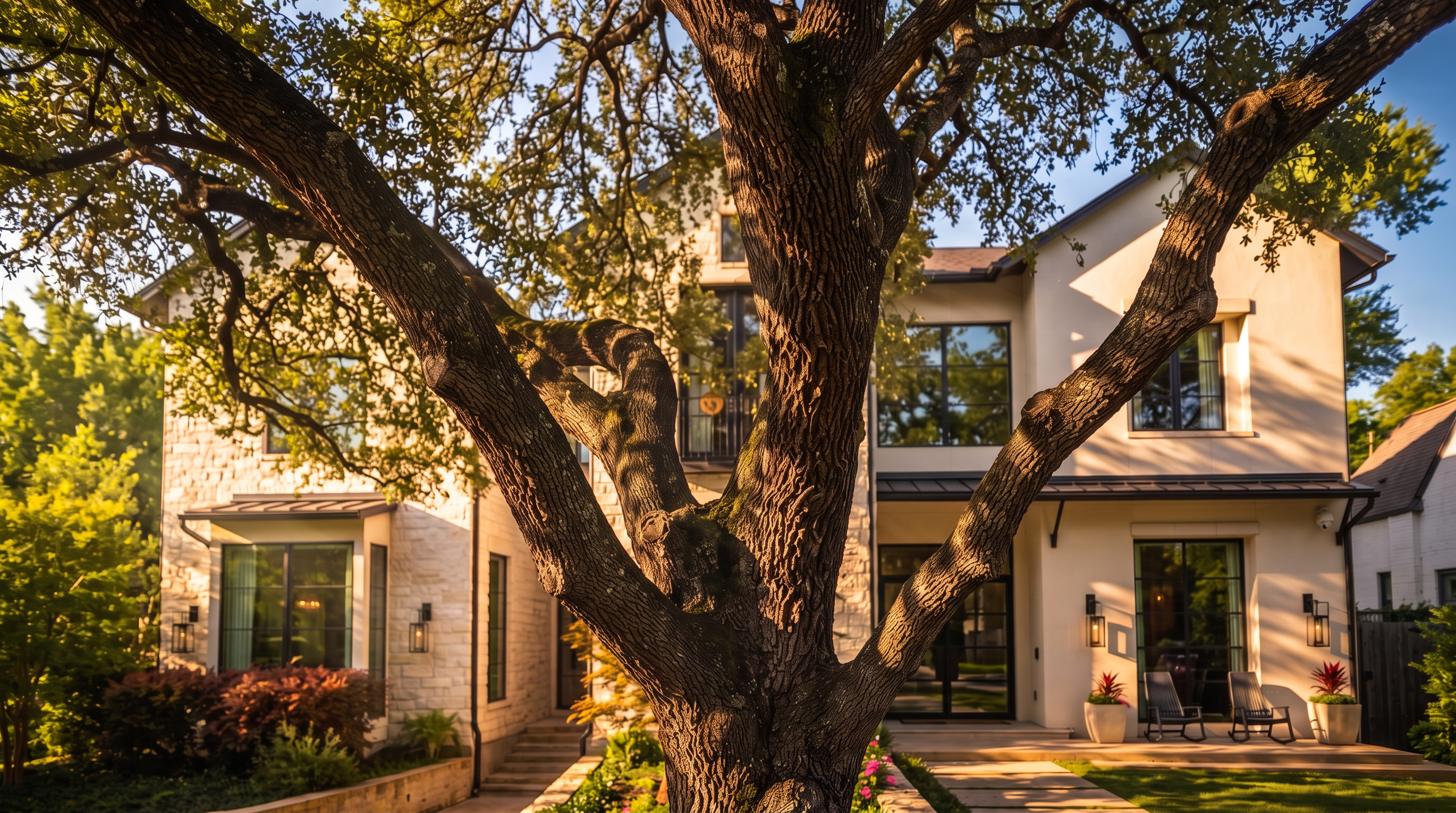
From the moment you arrive at 6715 Golf Drive, the home announces itself with quiet authority. A mature oak anchors the left side of the facade, its canopy casting dappled light across a wide geometric paver walkway that draws the eye toward a central glass-paneled entrance framed by white stucco and light-colored stone masonry. Dark-framed windows punctuate the exterior with precision, their proportions deliberate, their placement a reflection of the architectural rigor that defines every square foot within.
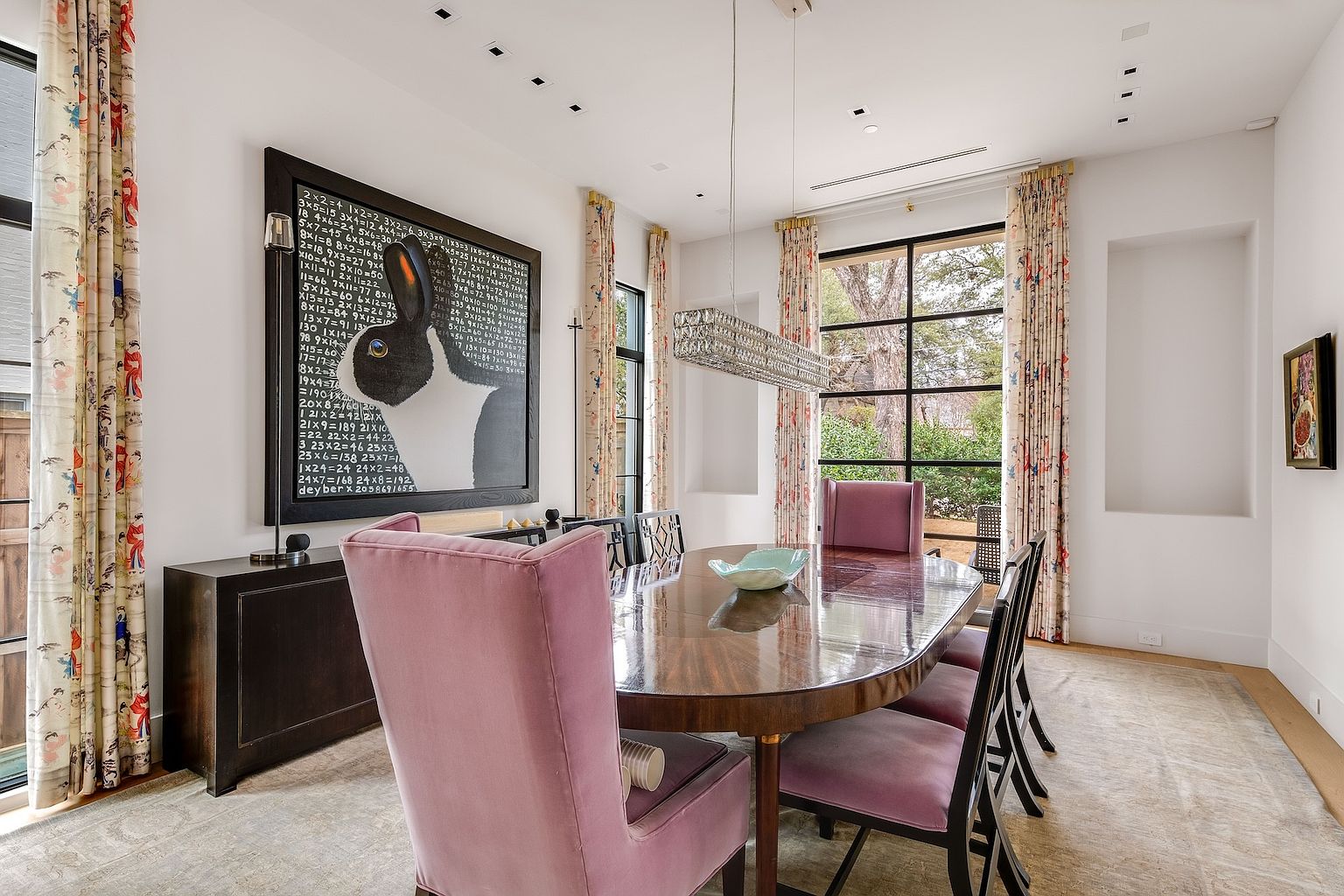
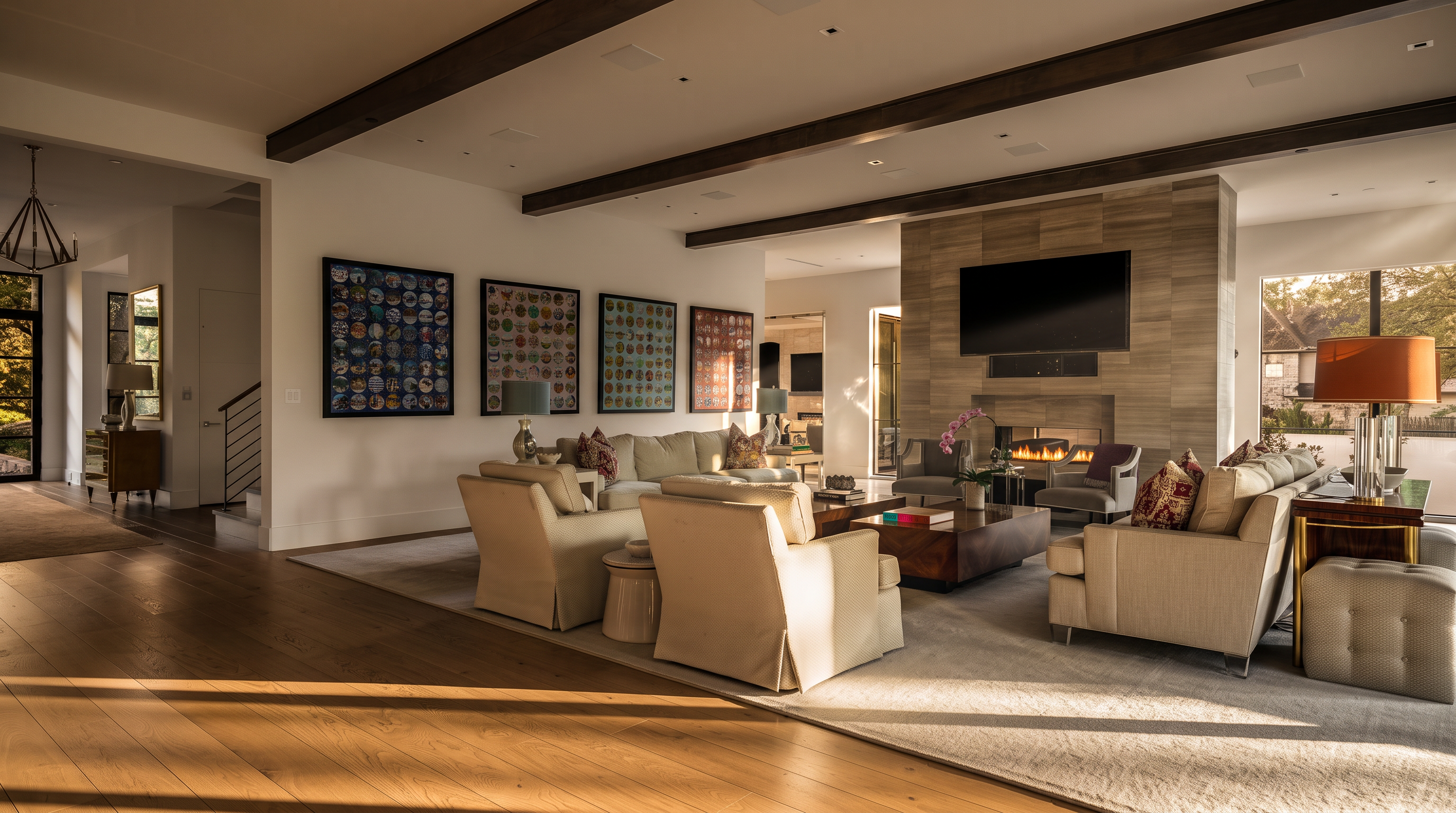
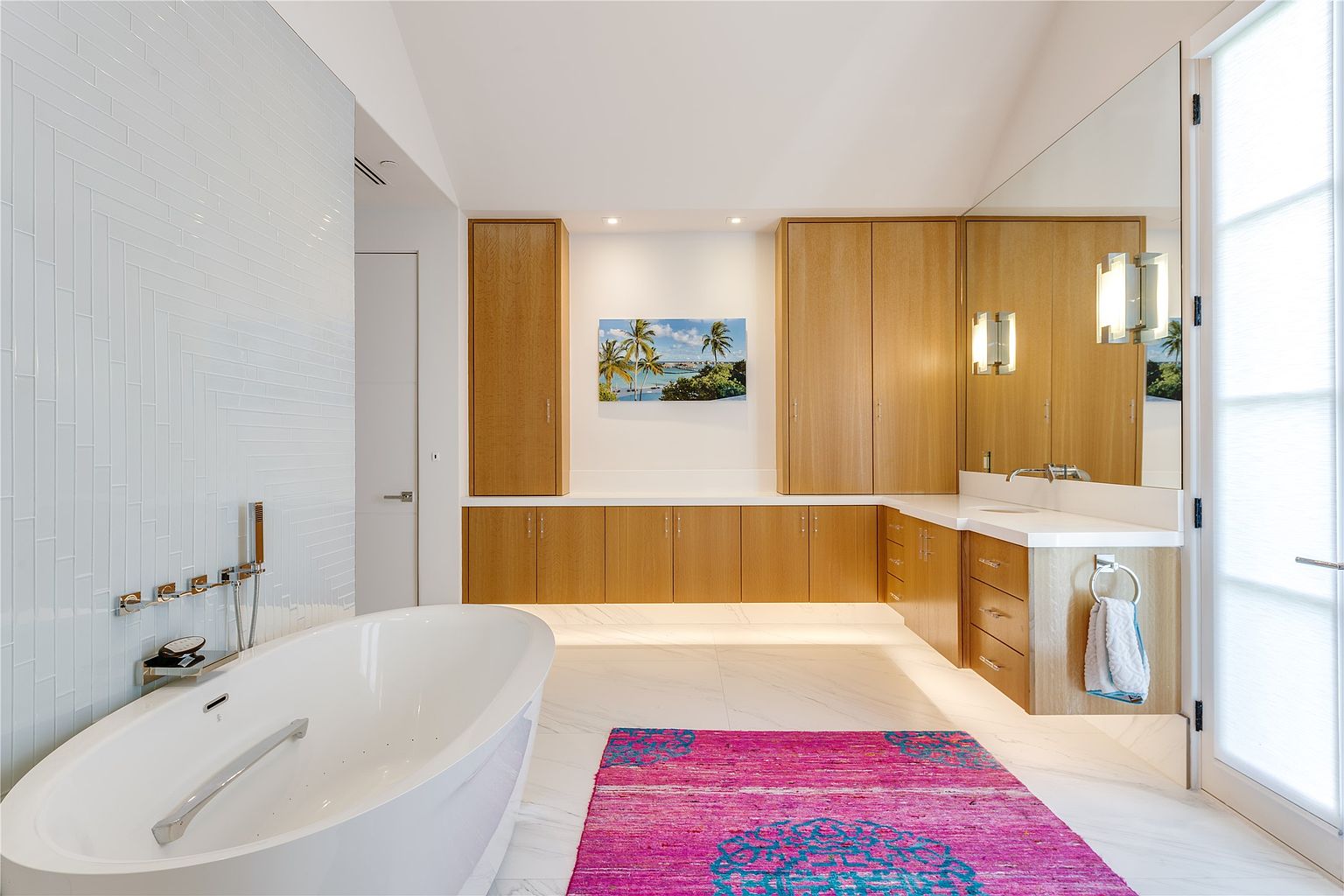
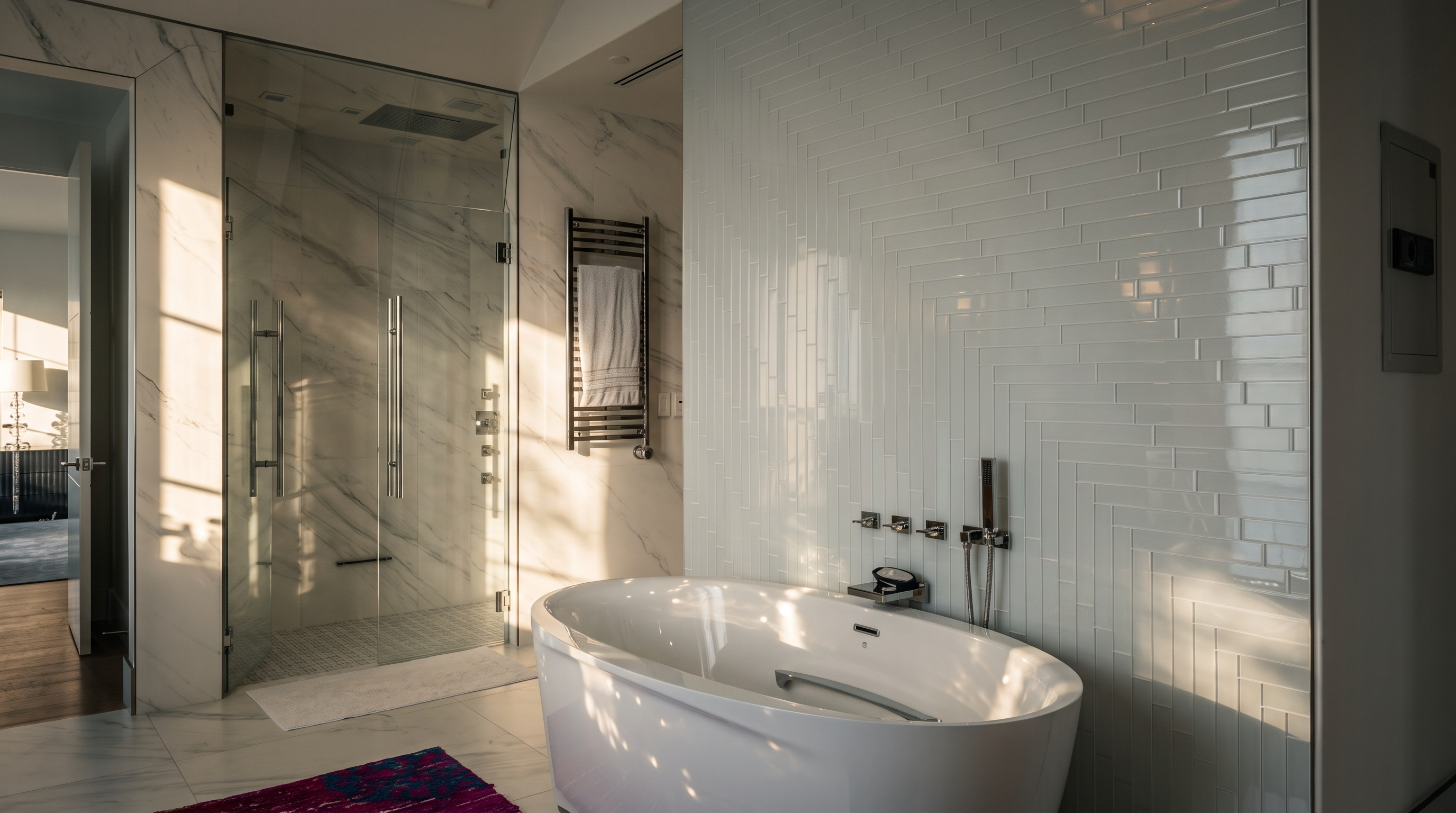
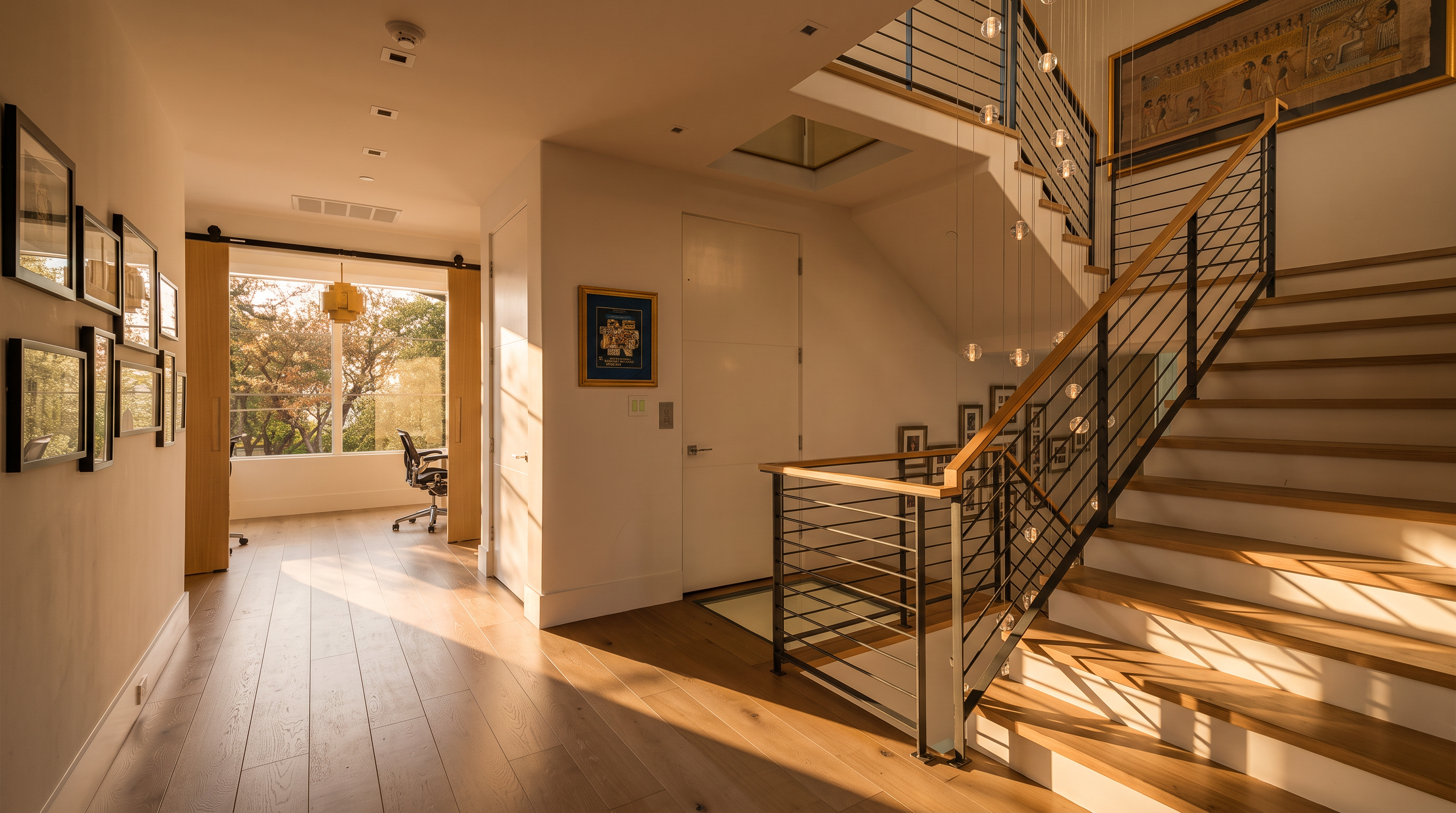
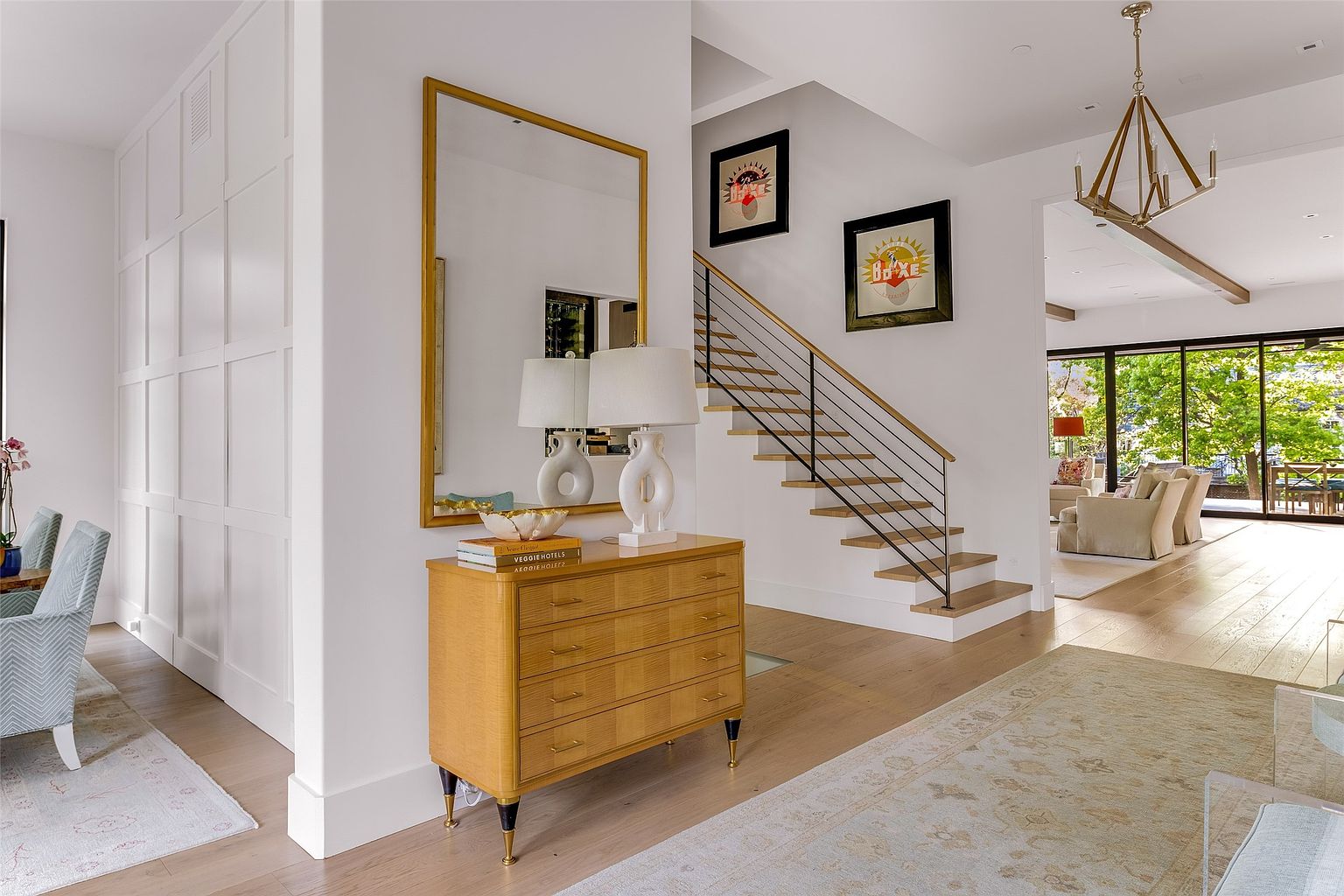
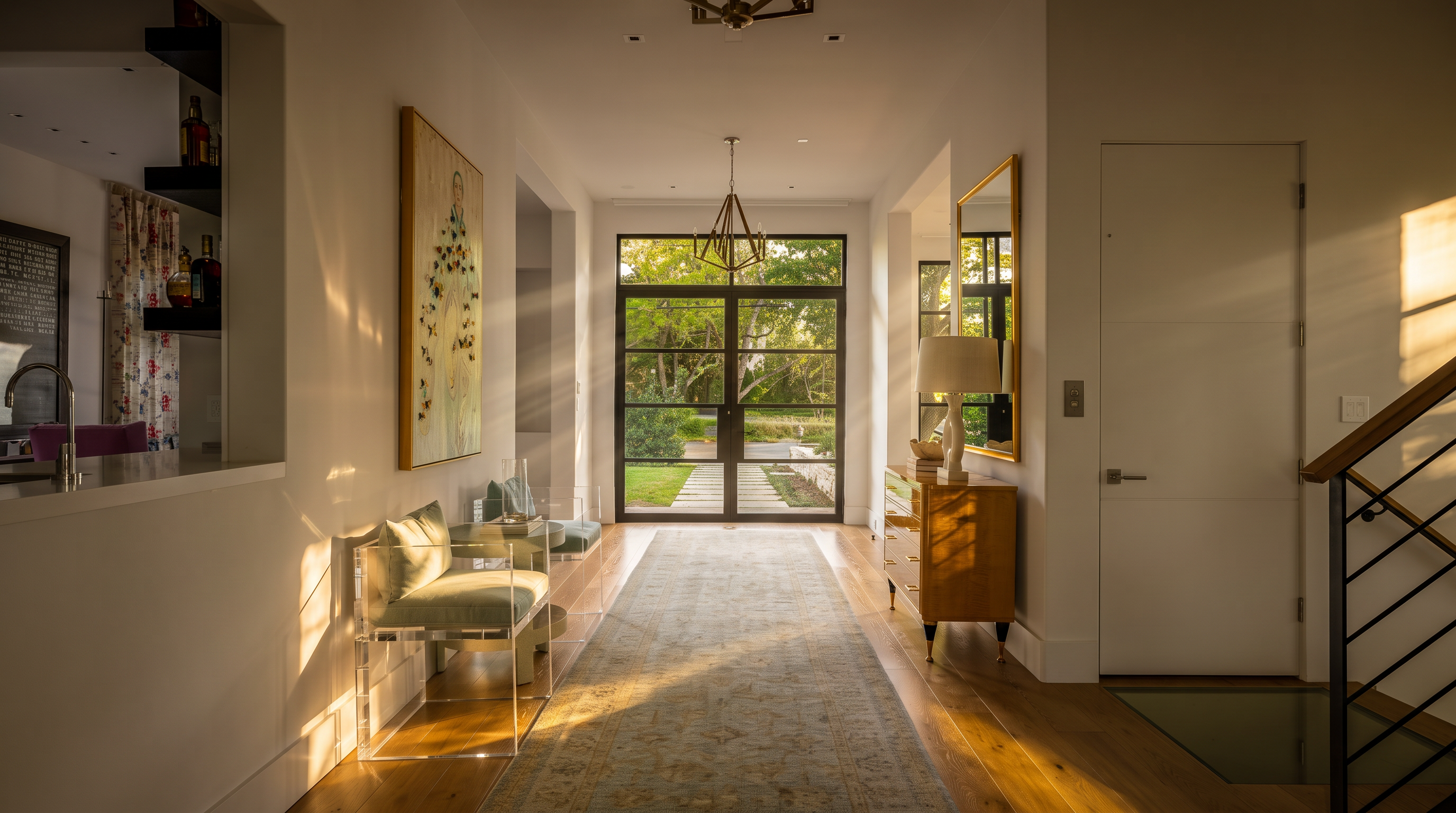
Designed by acclaimed Dallas architect Robbie Fusch, this four-level custom residence spans over 9,517 square feet — a figure that feels less like a statistic and more like a promise of space thoughtfully inhabited. Scandinavian white oak flooring runs throughout, its warm grain grounding rooms of considerable scale, while exposed dark wood ceiling beams overhead lend a sense of crafted permanence. Porcelanosa tile appears with equal care in wet spaces and transitional areas, its texture and finish calibrated to complement rather than compete.
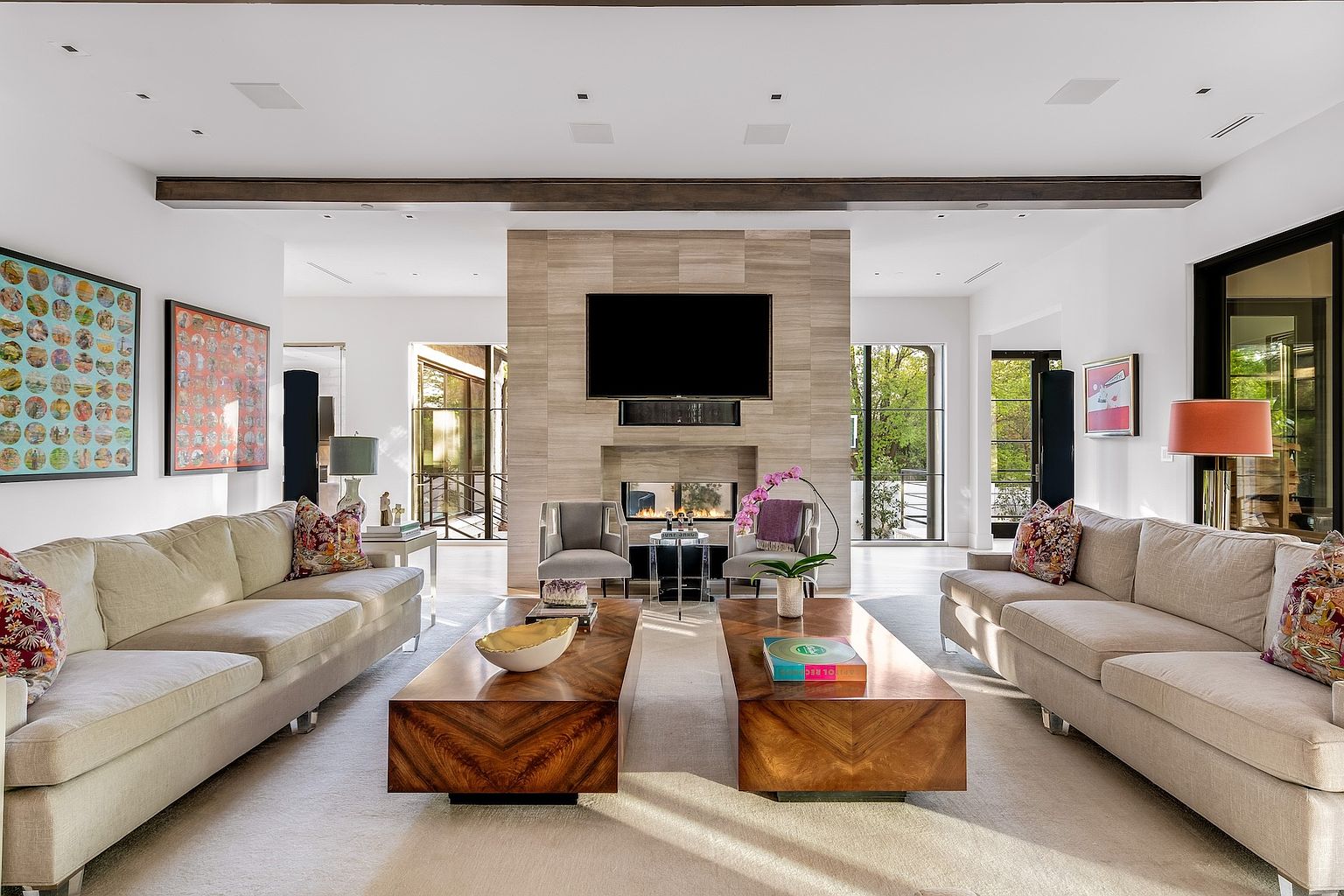
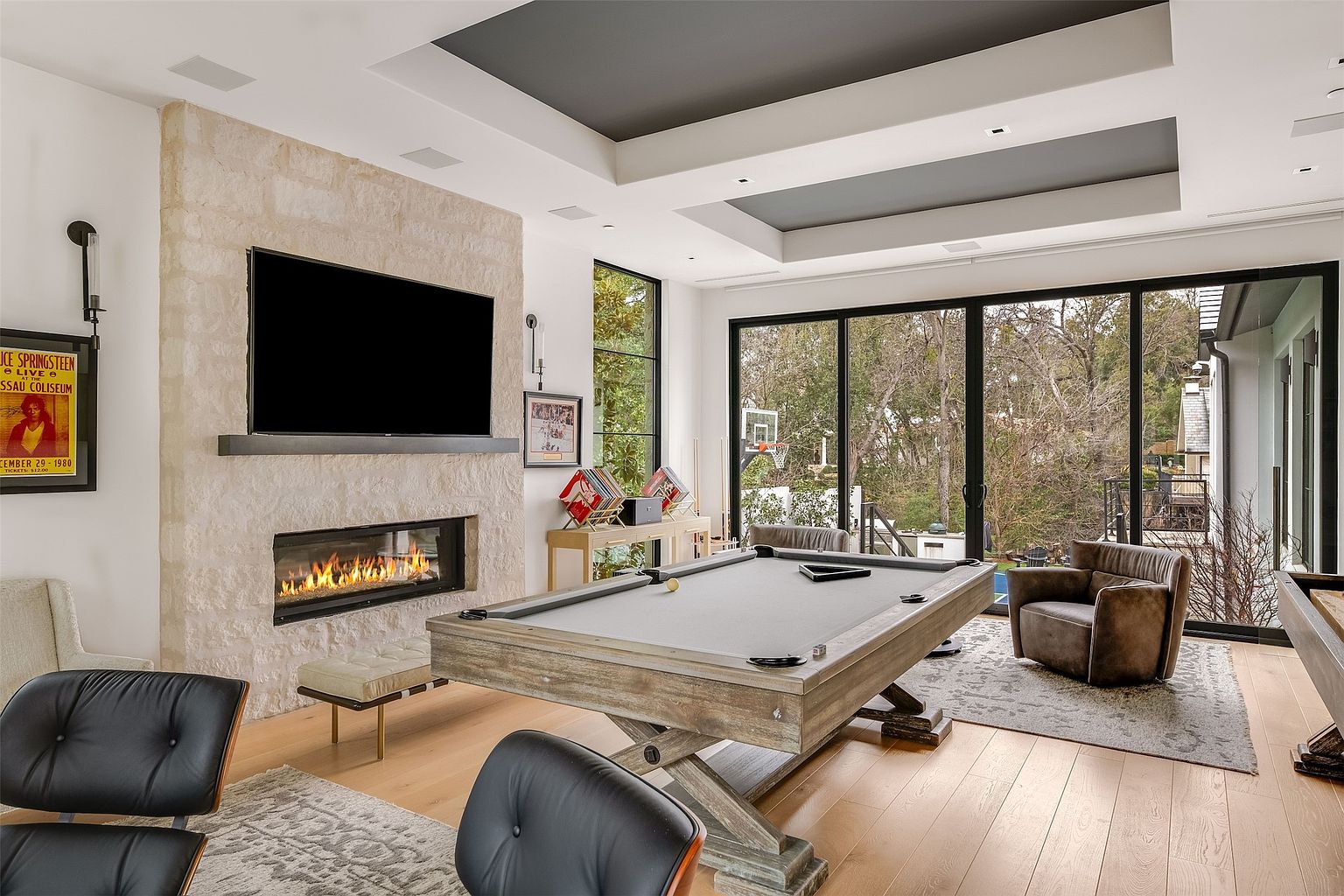
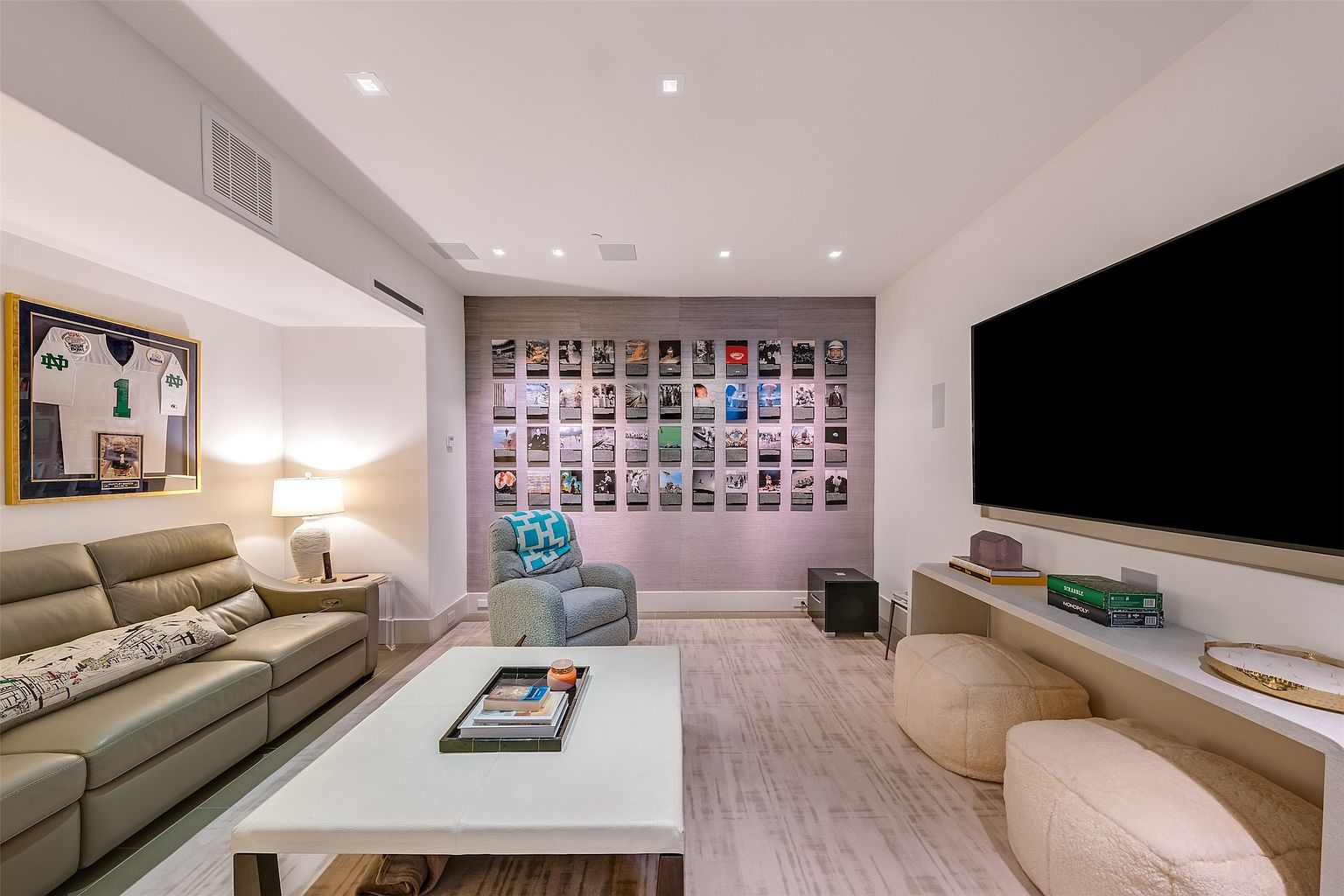
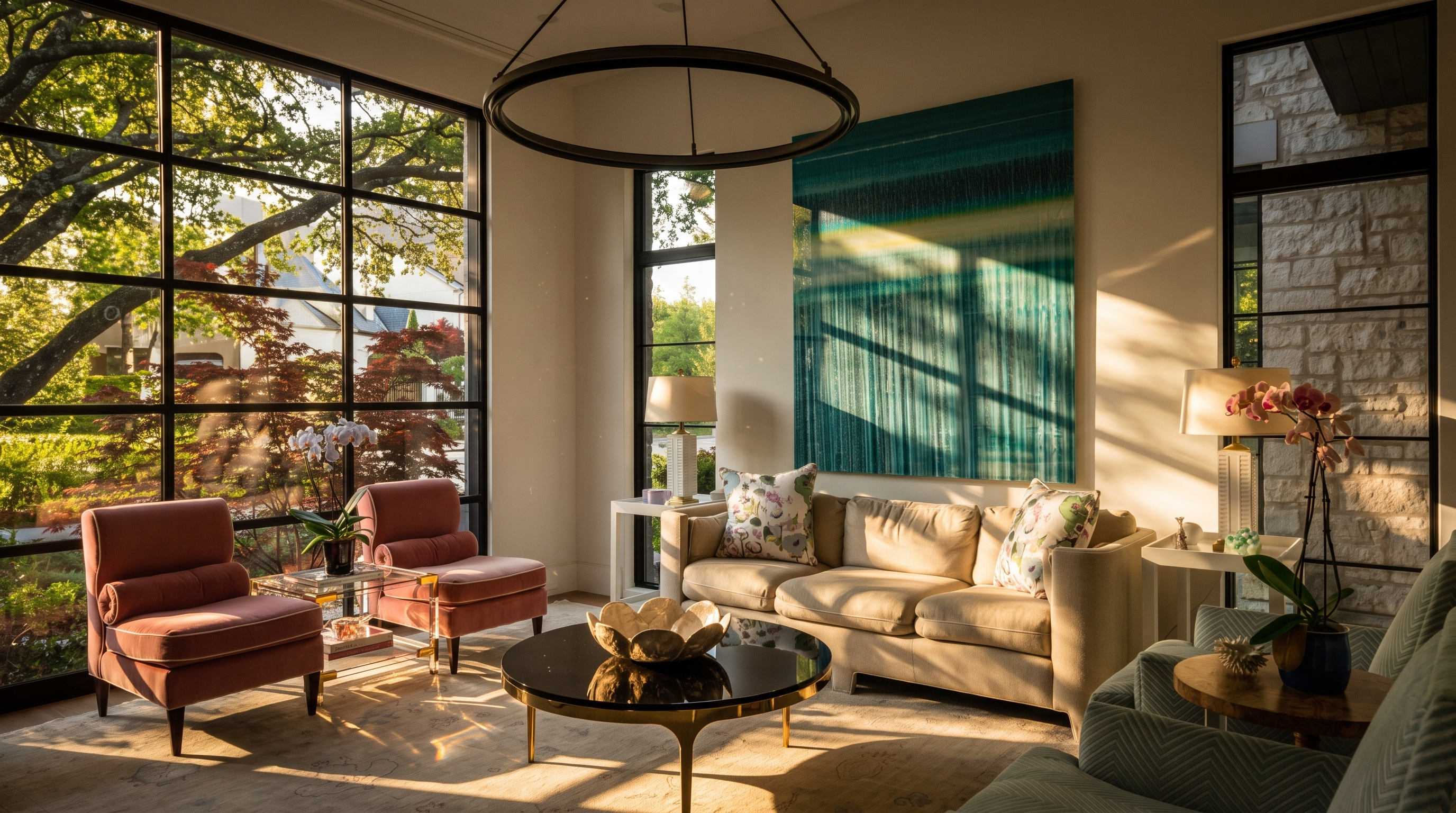
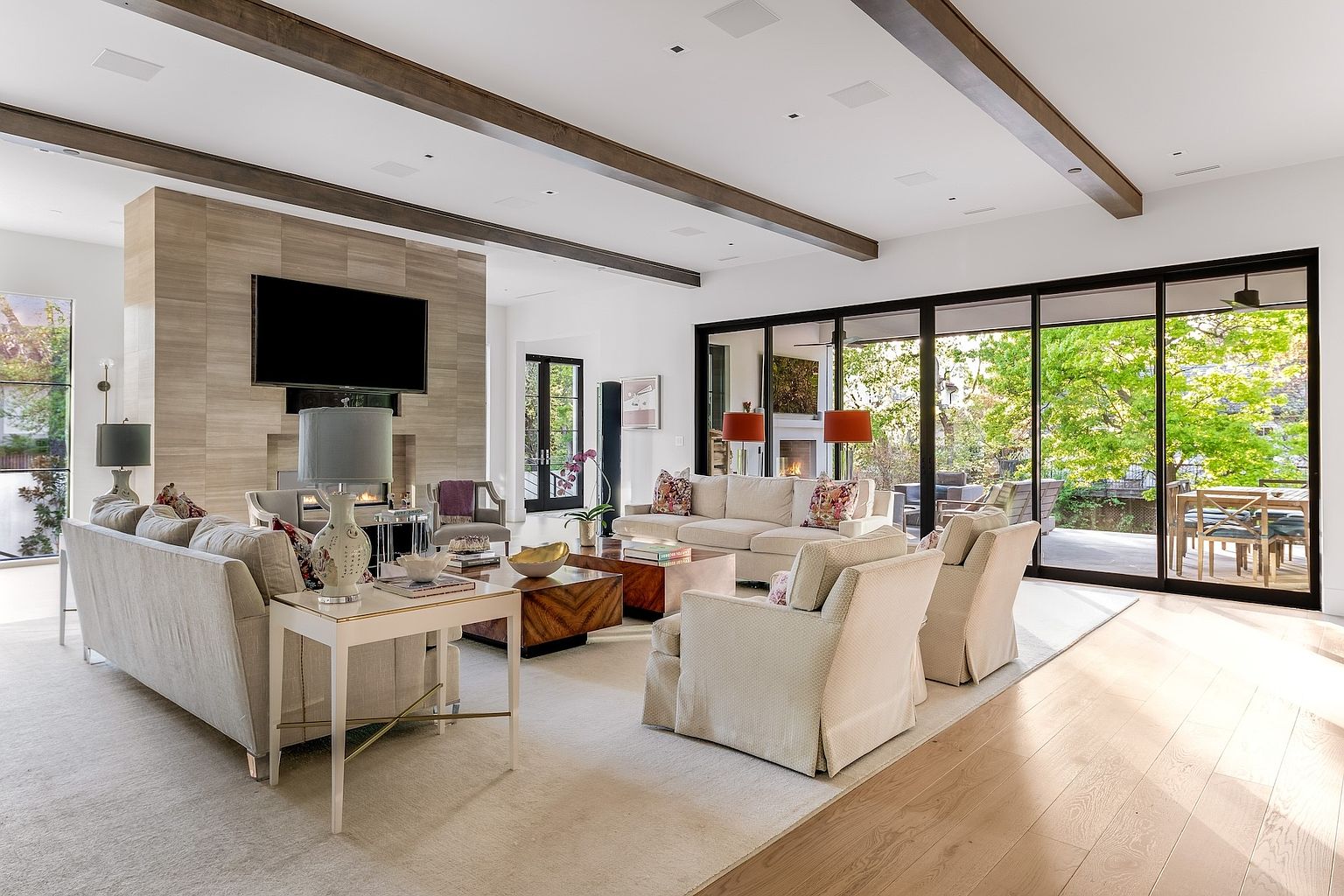
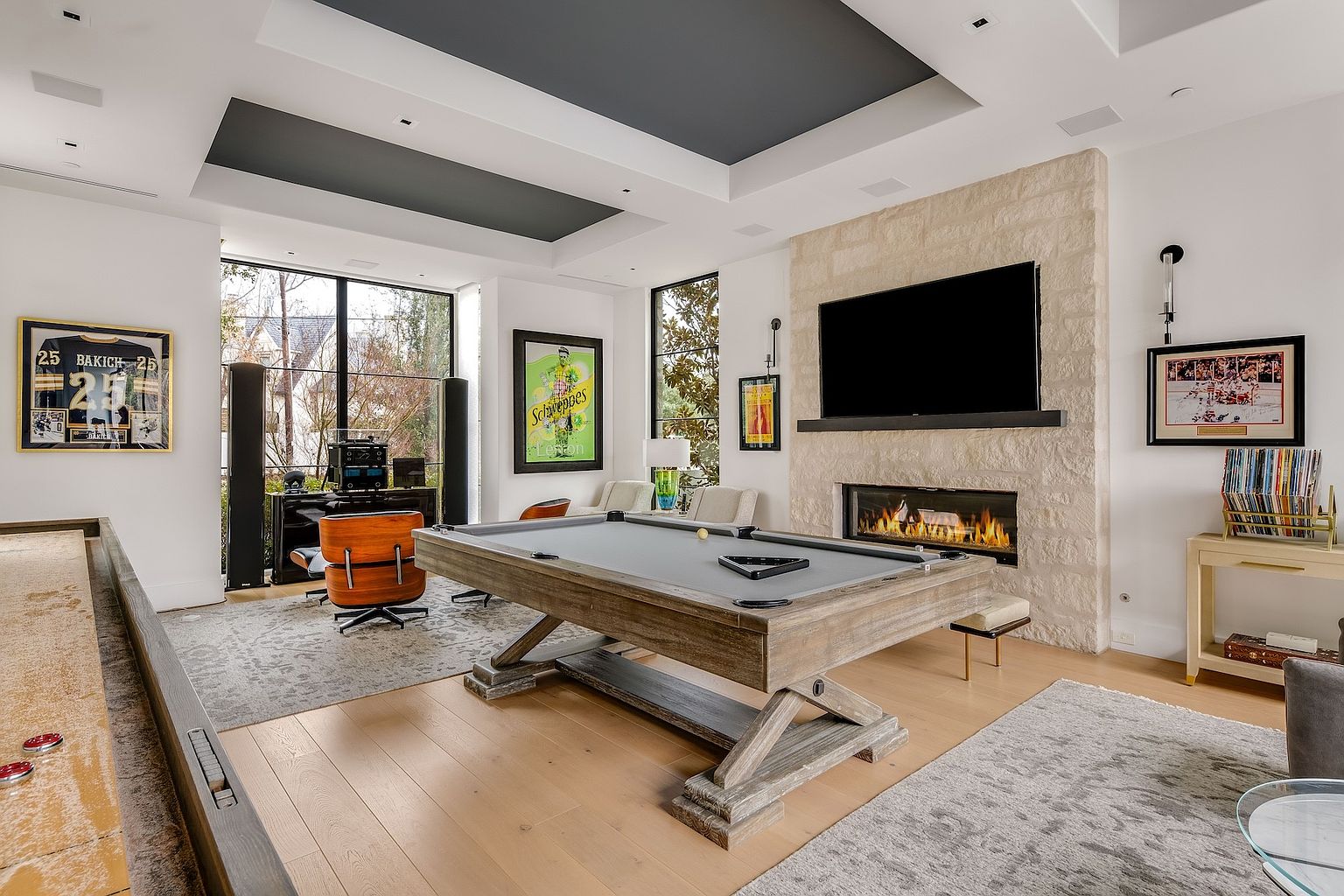
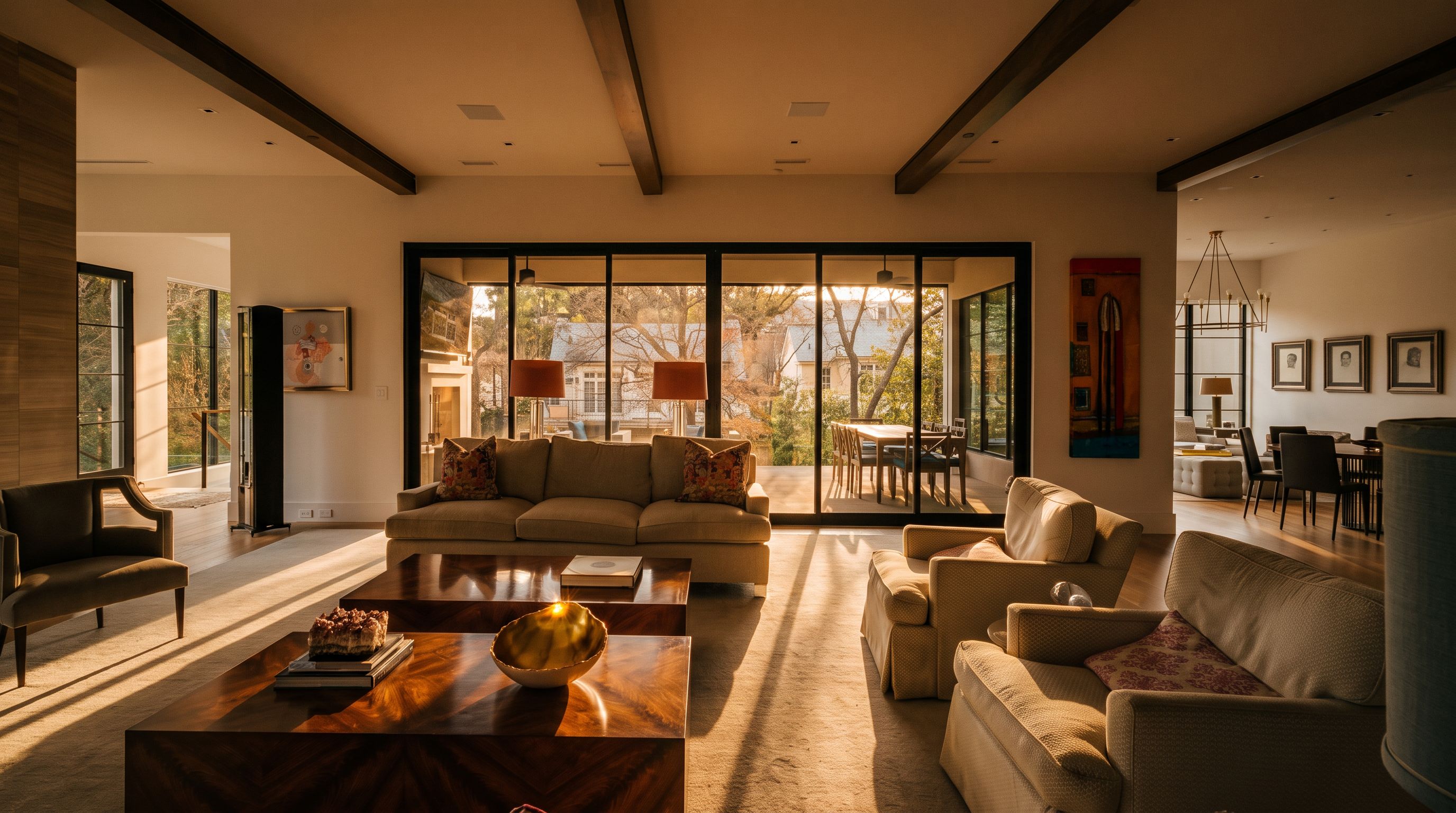
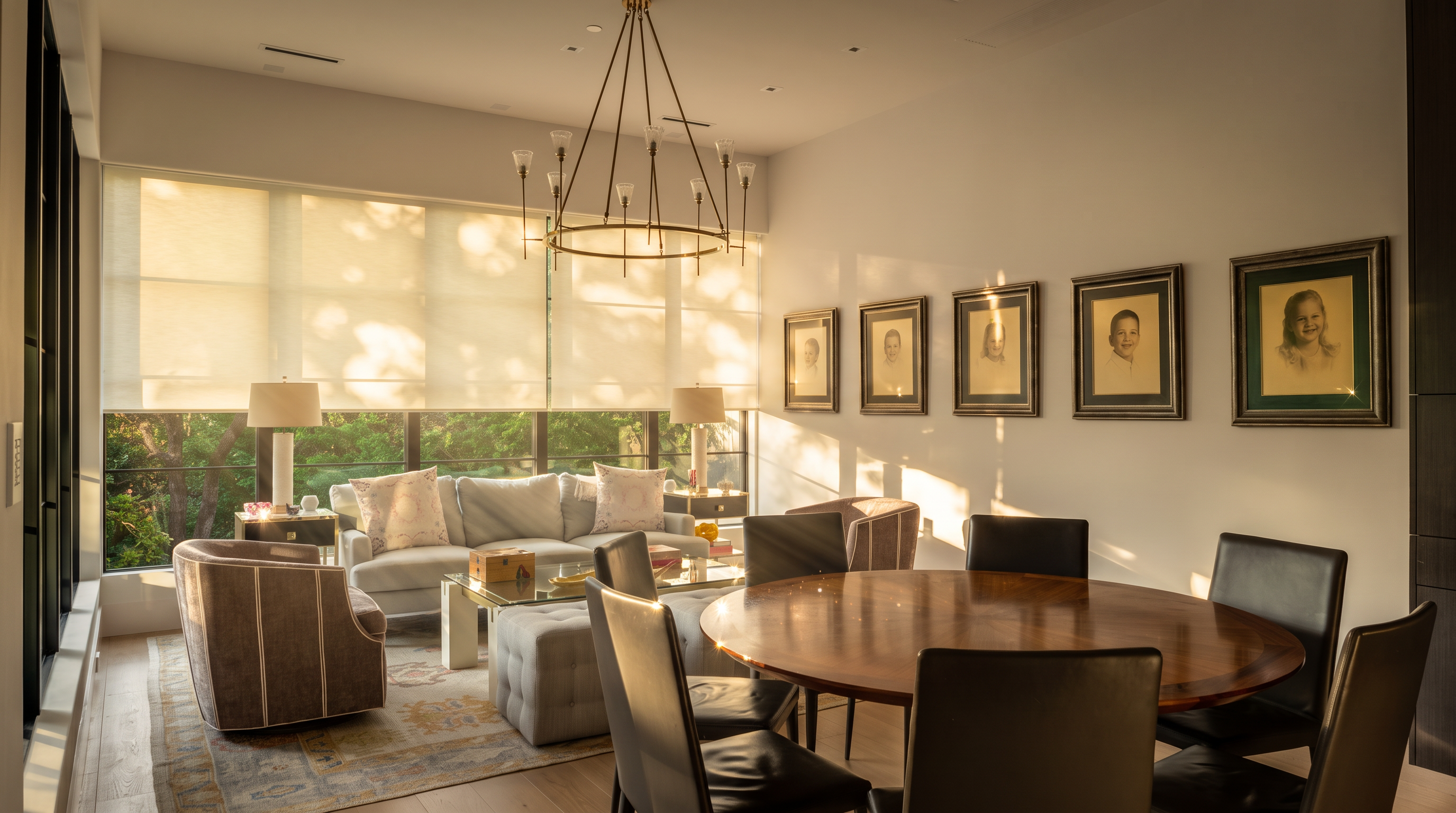
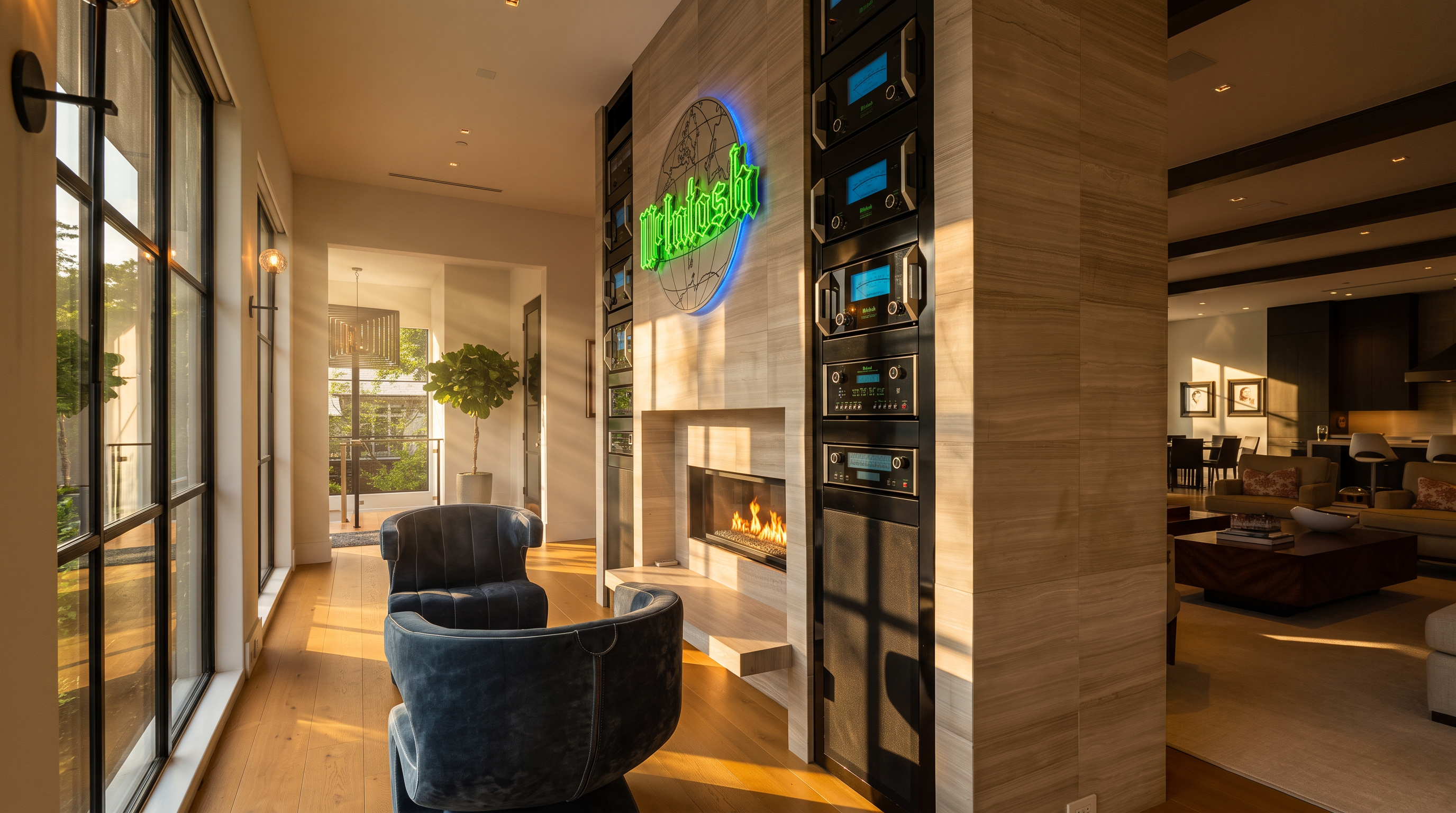
Three expansive living areas unfold across the home's levels, each centered on a stone-clad fireplace that serves as both focal point and gathering place. The symmetrical main living room, with its twin beige sofas flanking a pair of dark coffee tables and large windows on either side, achieves a balance that feels considered rather than composed. A separate game room — furnished with leather armchairs and anchored by its own stone chimney breast and linear fireplace — opens through large glass sliding doors to the wooded backyard, blurring the boundary between interior comfort and natural landscape.
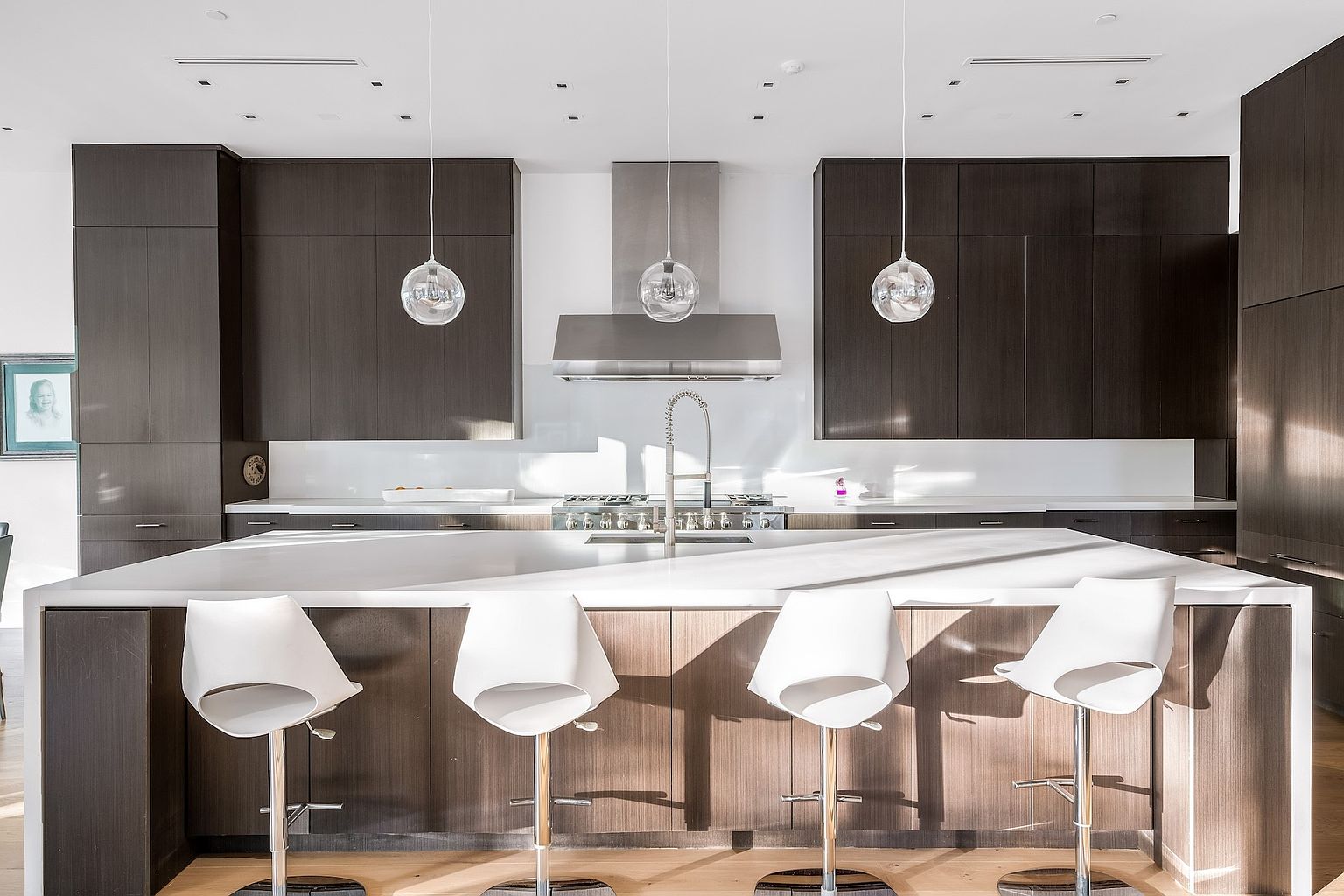
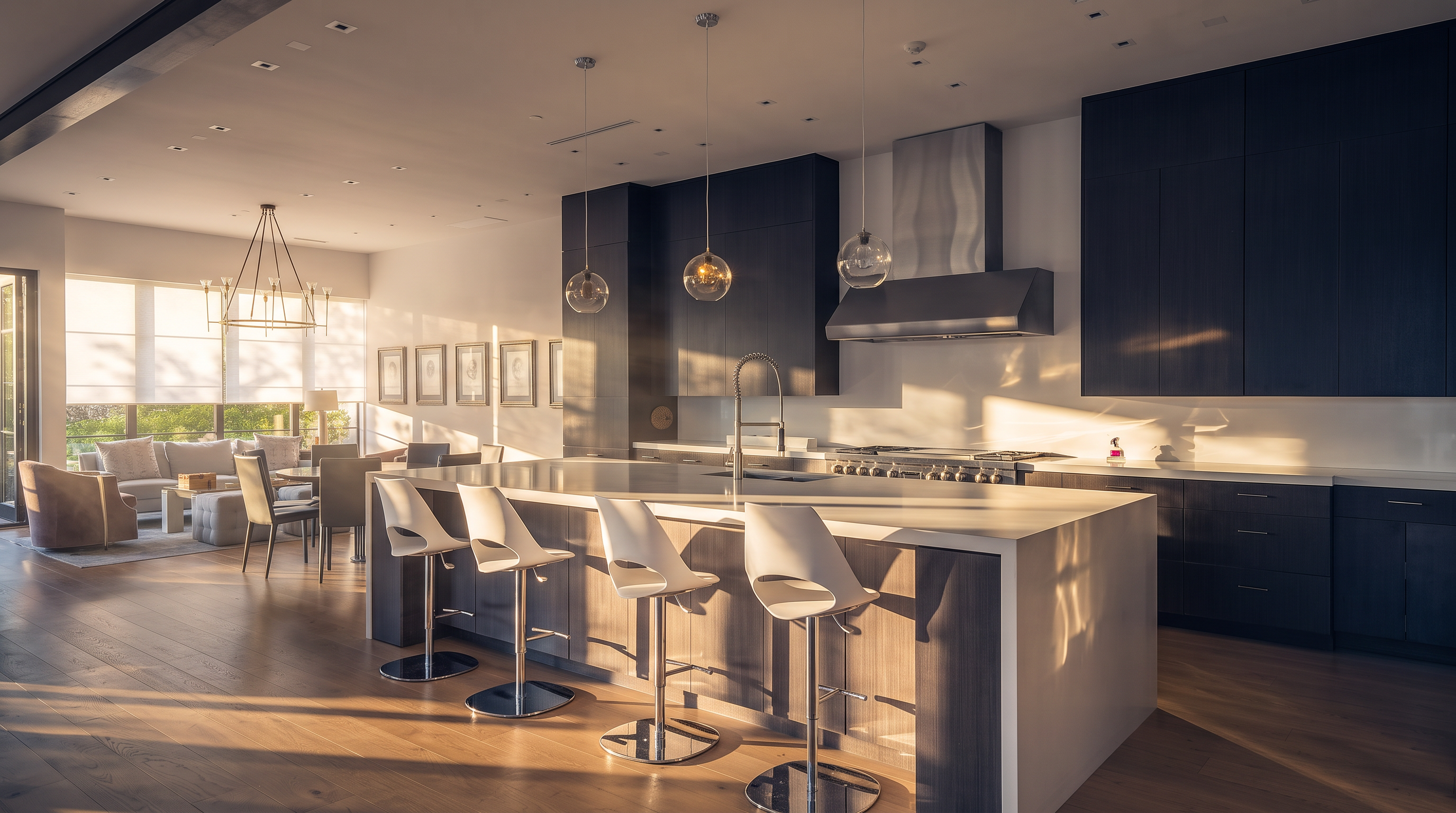
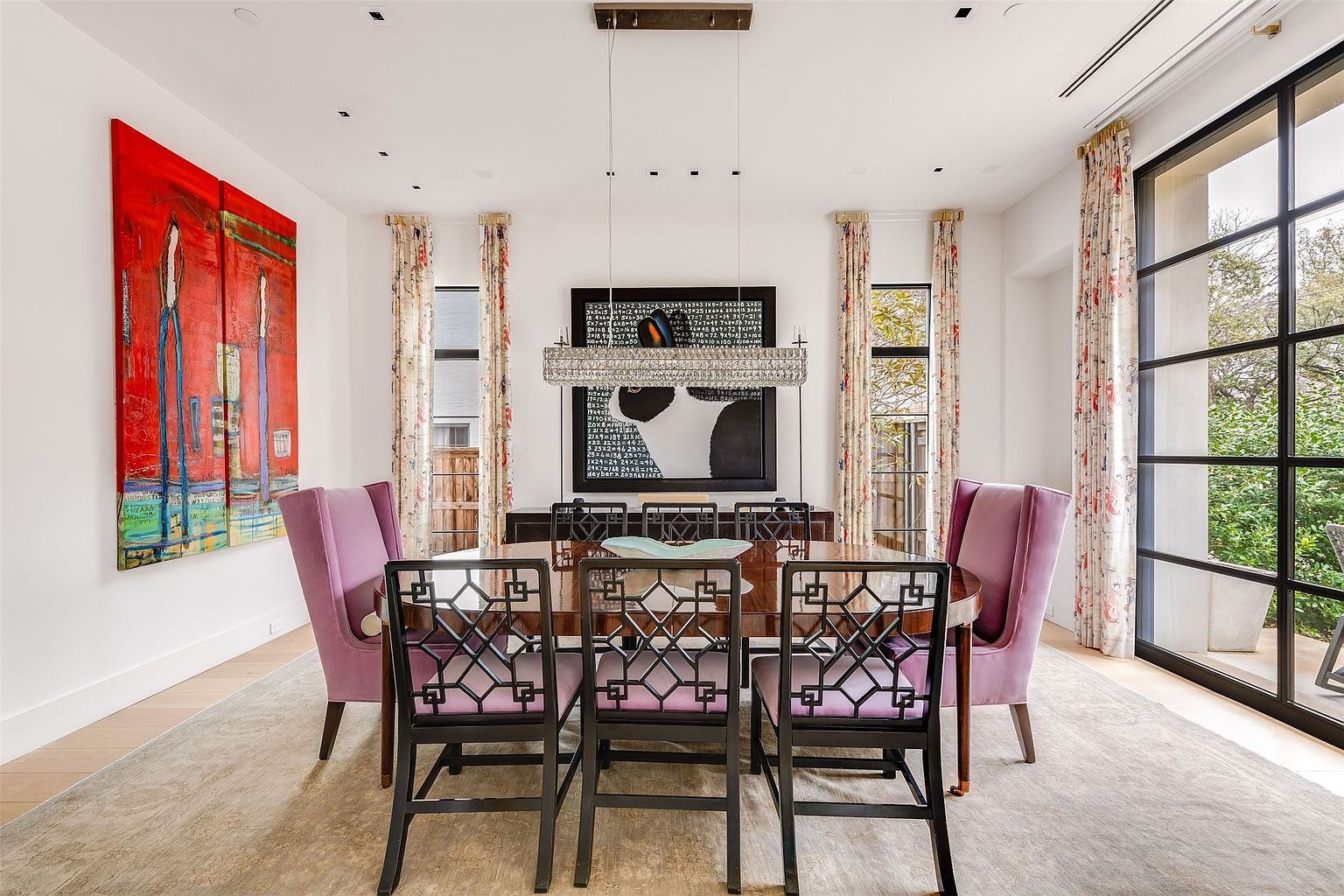
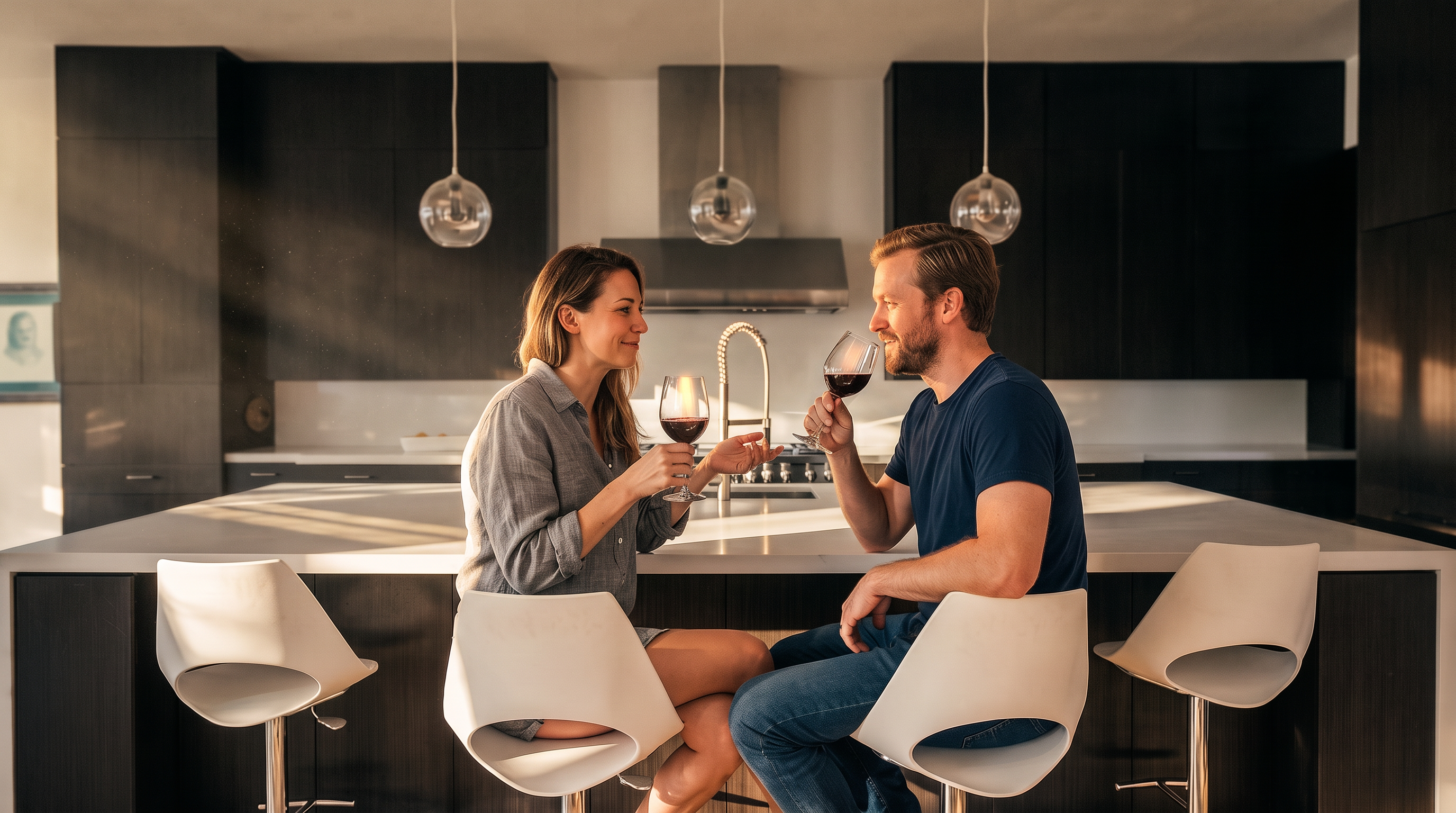
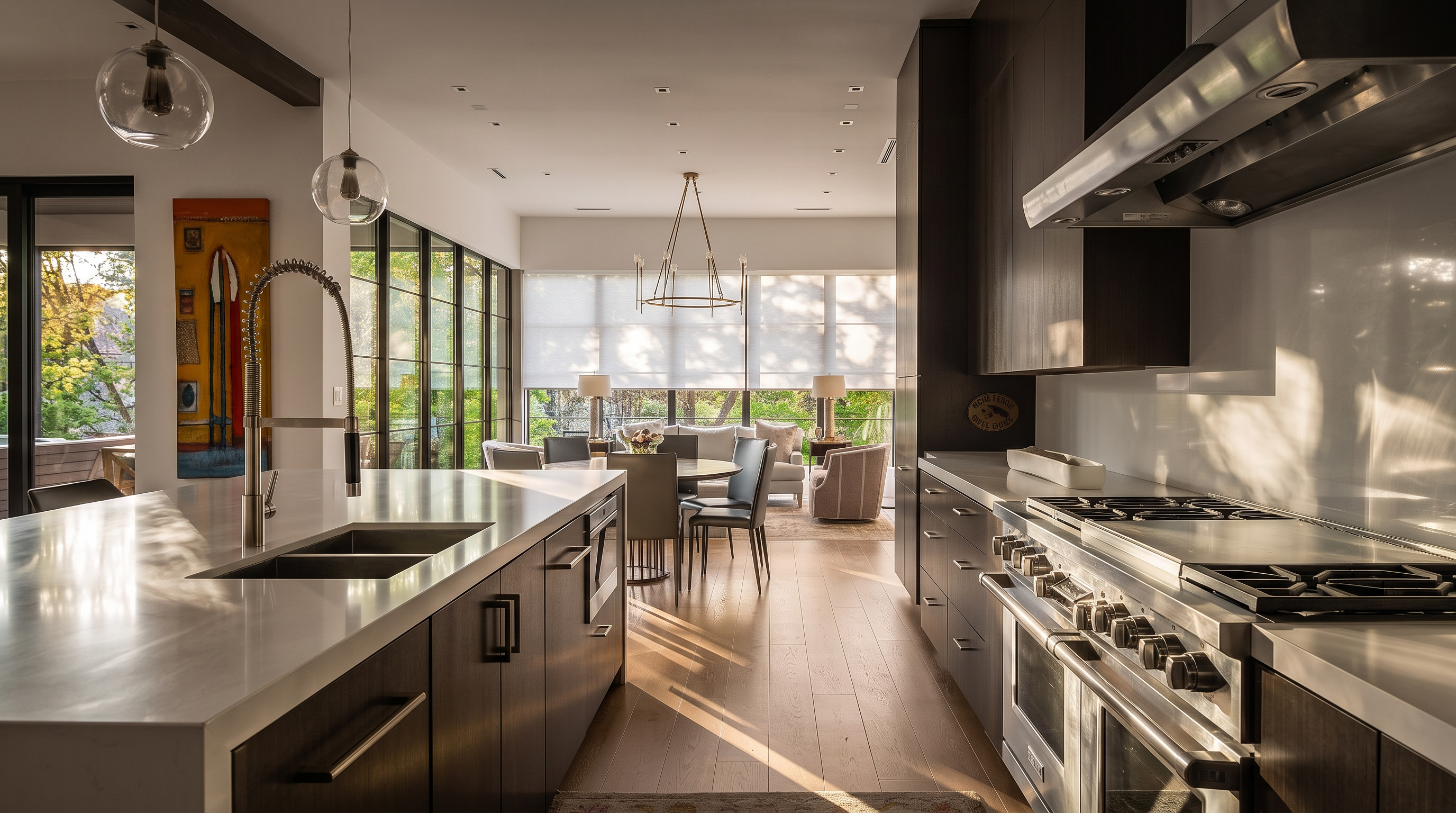
The chef's kitchen is a study in high-contrast sophistication: dark flat-panel cabinetry set against light stone countertops, a professional-grade range beneath a stainless steel hood, glass pendant lights, and a generous island with seating for four. Two dishwashers and a built-in espresso machine speak to the kitchen's dual identity as both working culinary space and social hub. The open-concept design flows seamlessly into adjacent dining and living areas, ensuring that the kitchen remains the connective tissue of daily life.
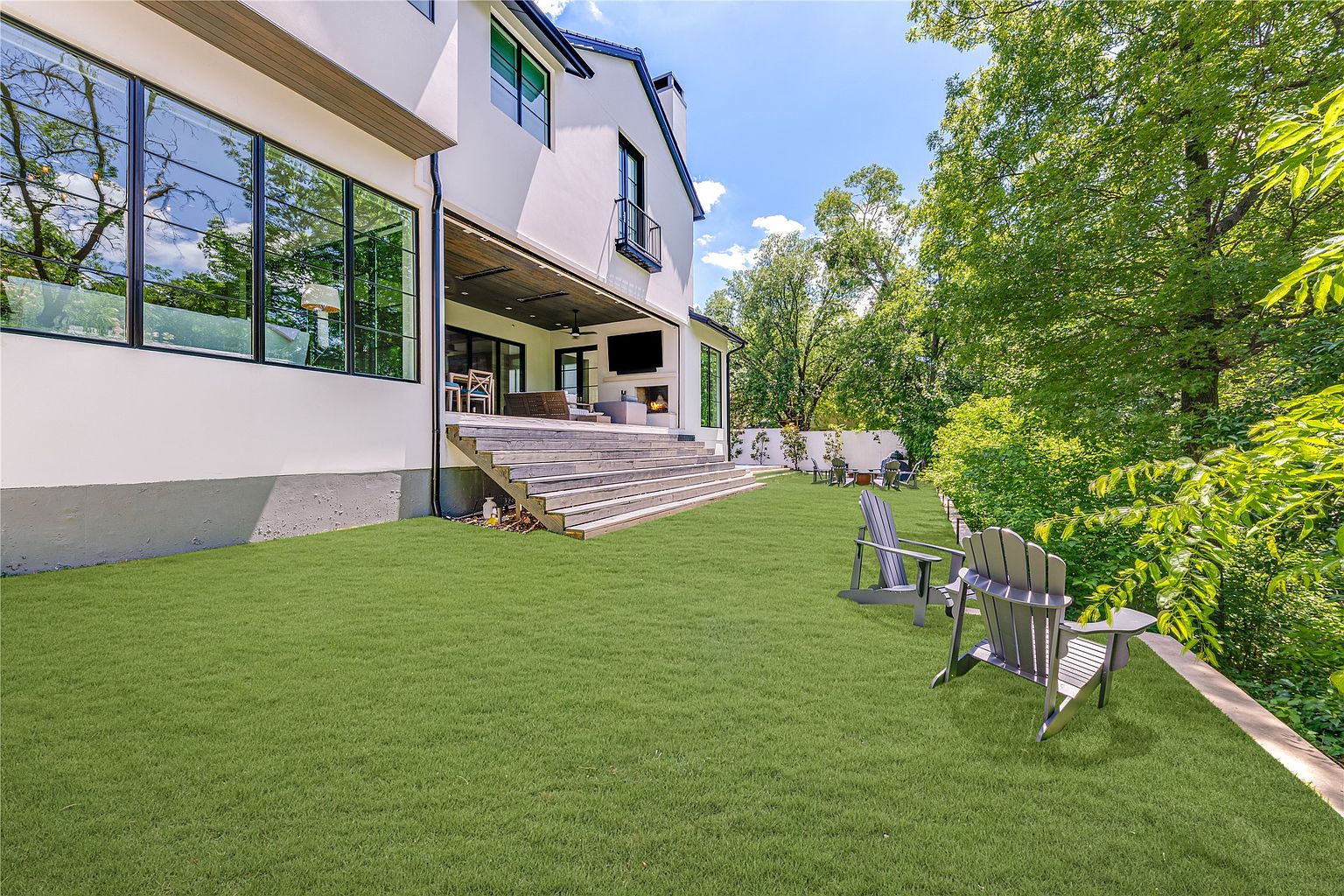
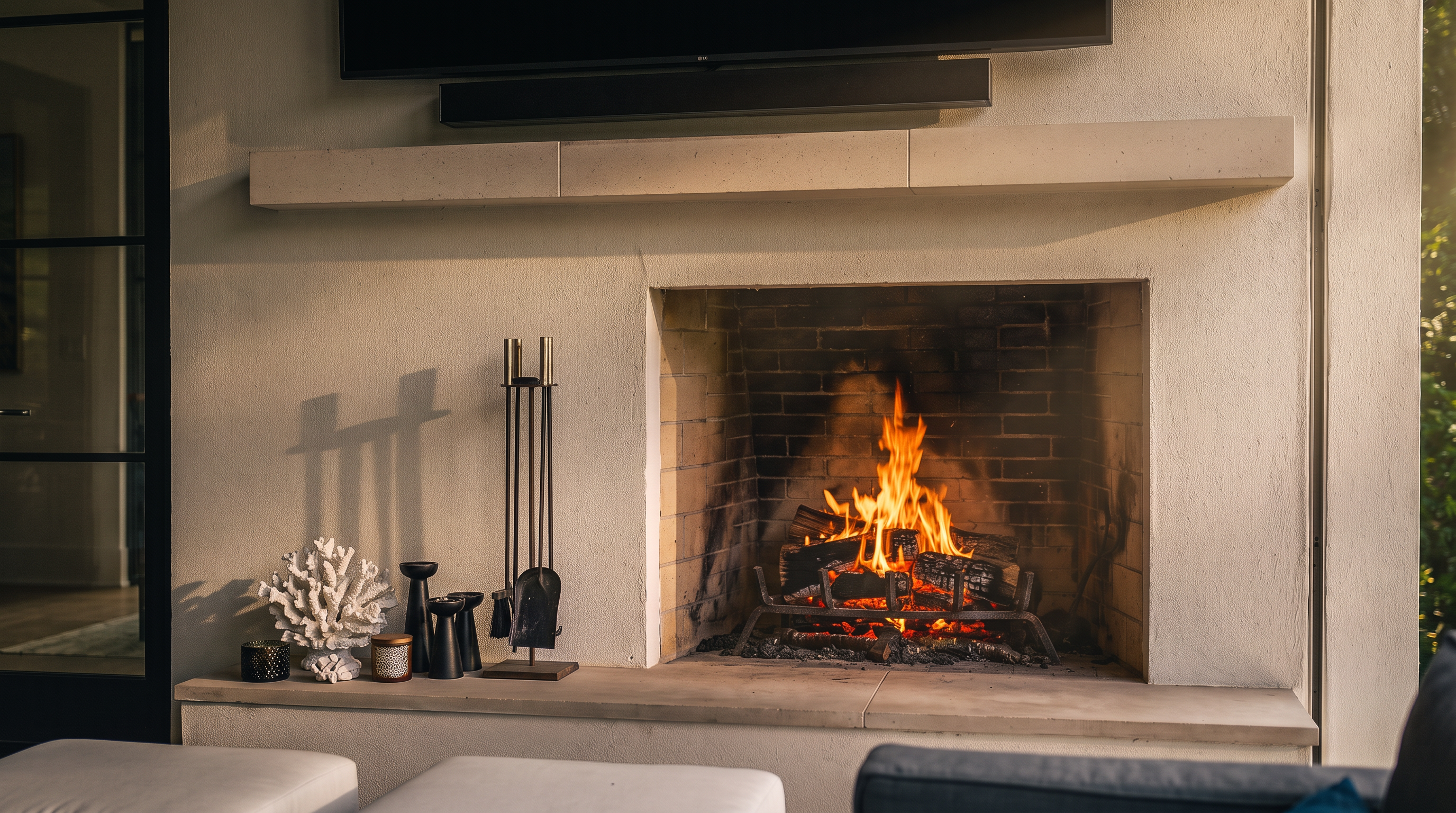
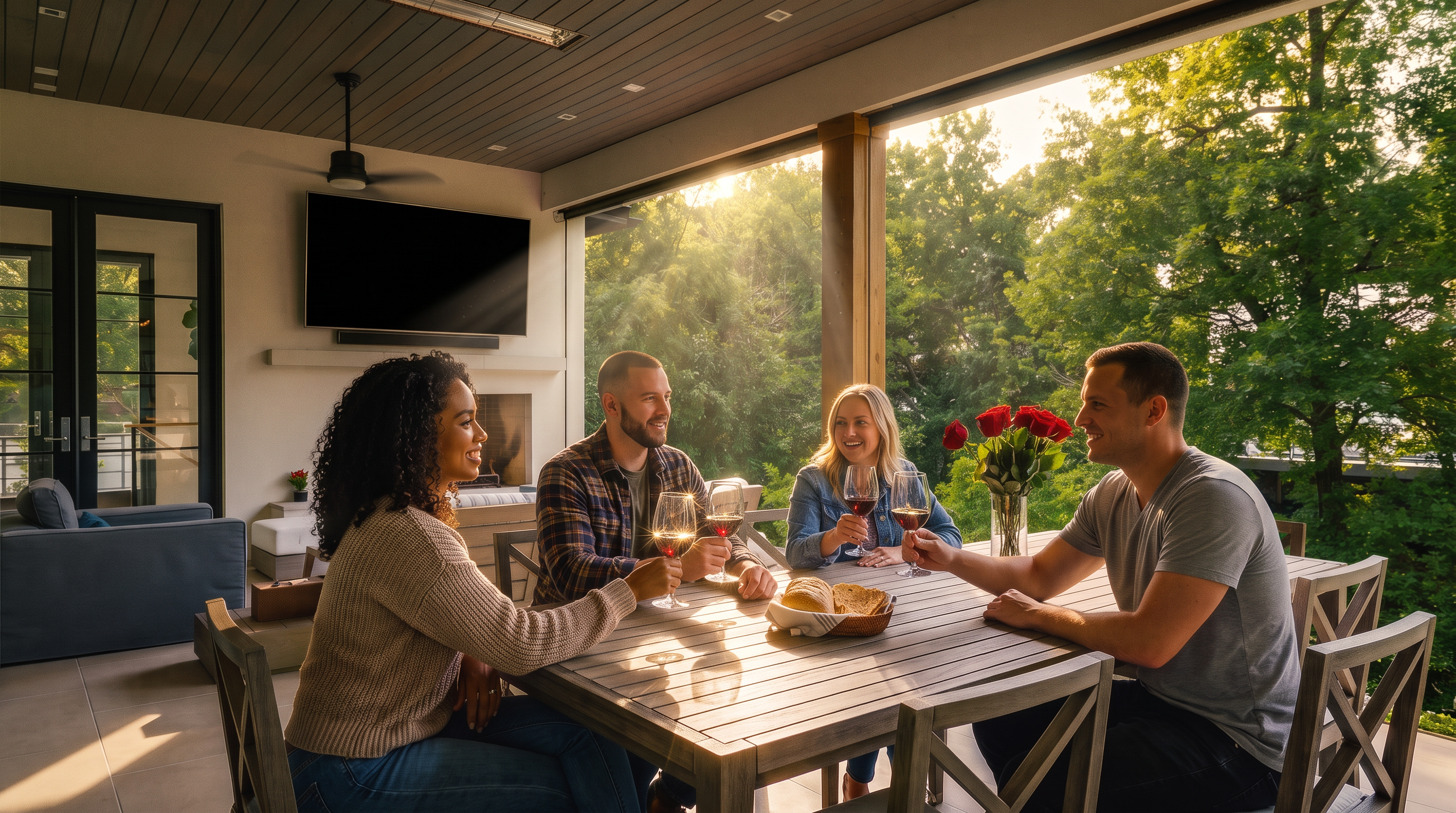
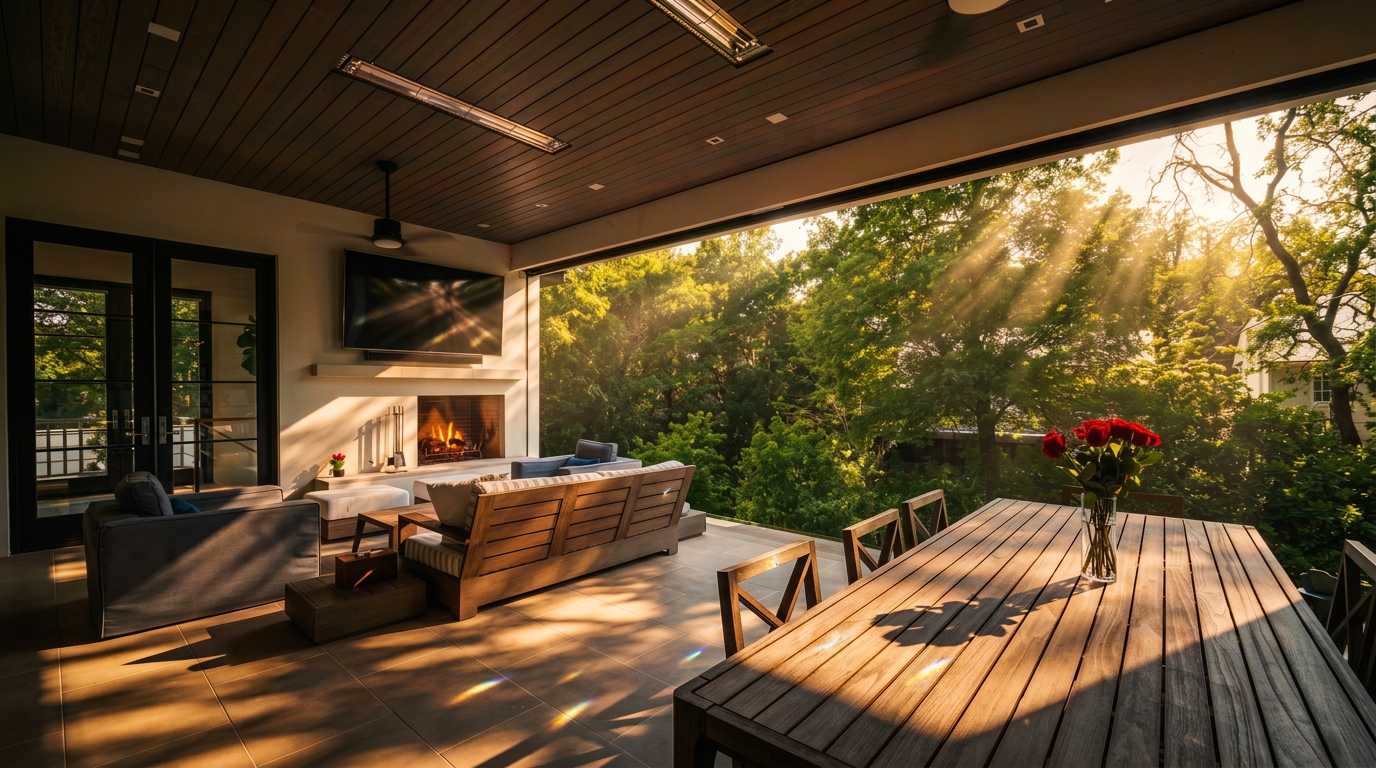
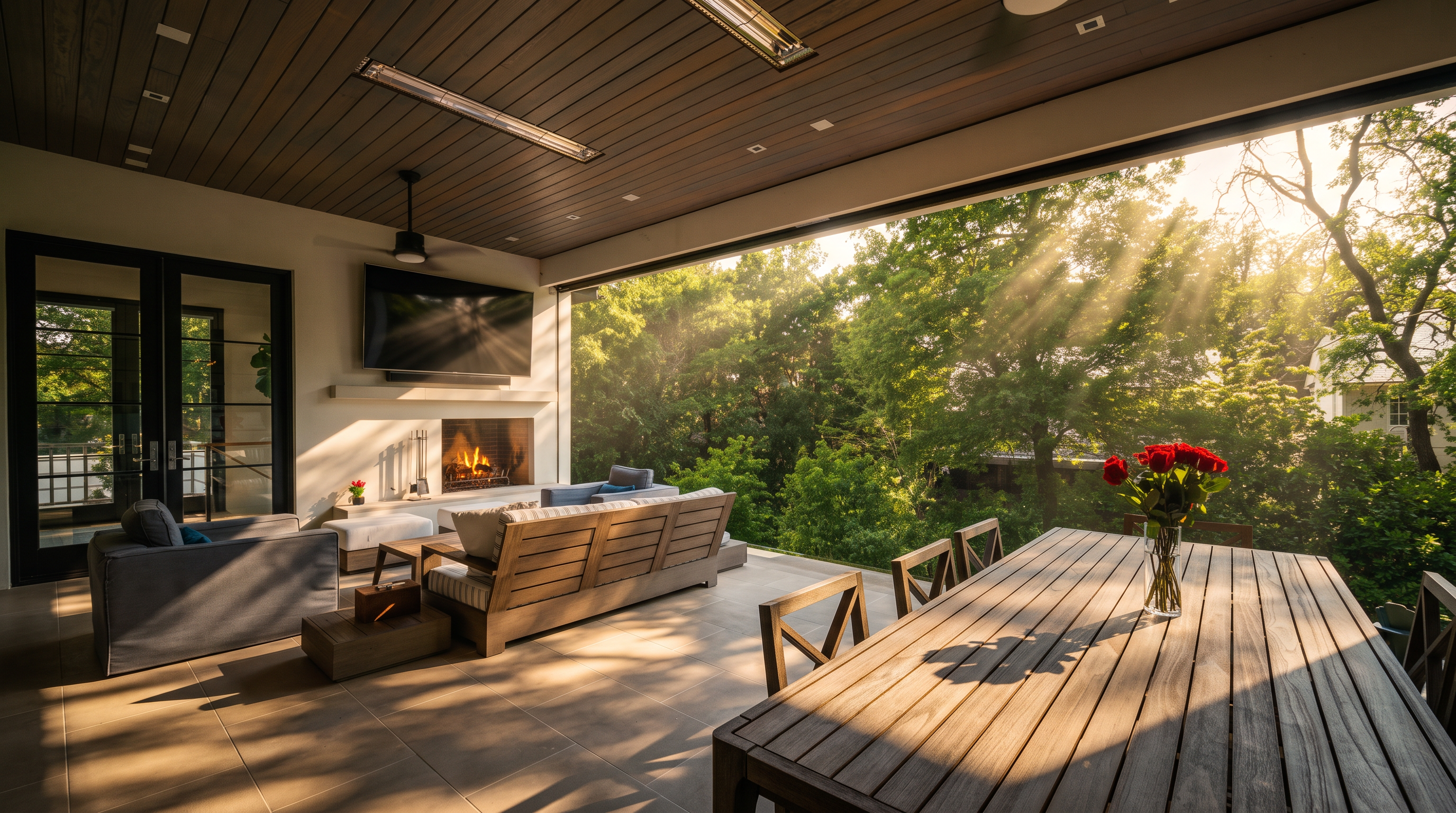
Perhaps the home's most singular architectural gesture is the indoor-outdoor loggia. Sliding Panda doors dissolve the threshold between interior and exterior, revealing a covered space warmed by a fireplace and dual infrared heaters, equipped with a built-in powered screen, and positioned directly along the waters of Turtle Creek. It is a room that changes character with the season and the hour — equally suited to a quiet morning and a spirited evening gathering.
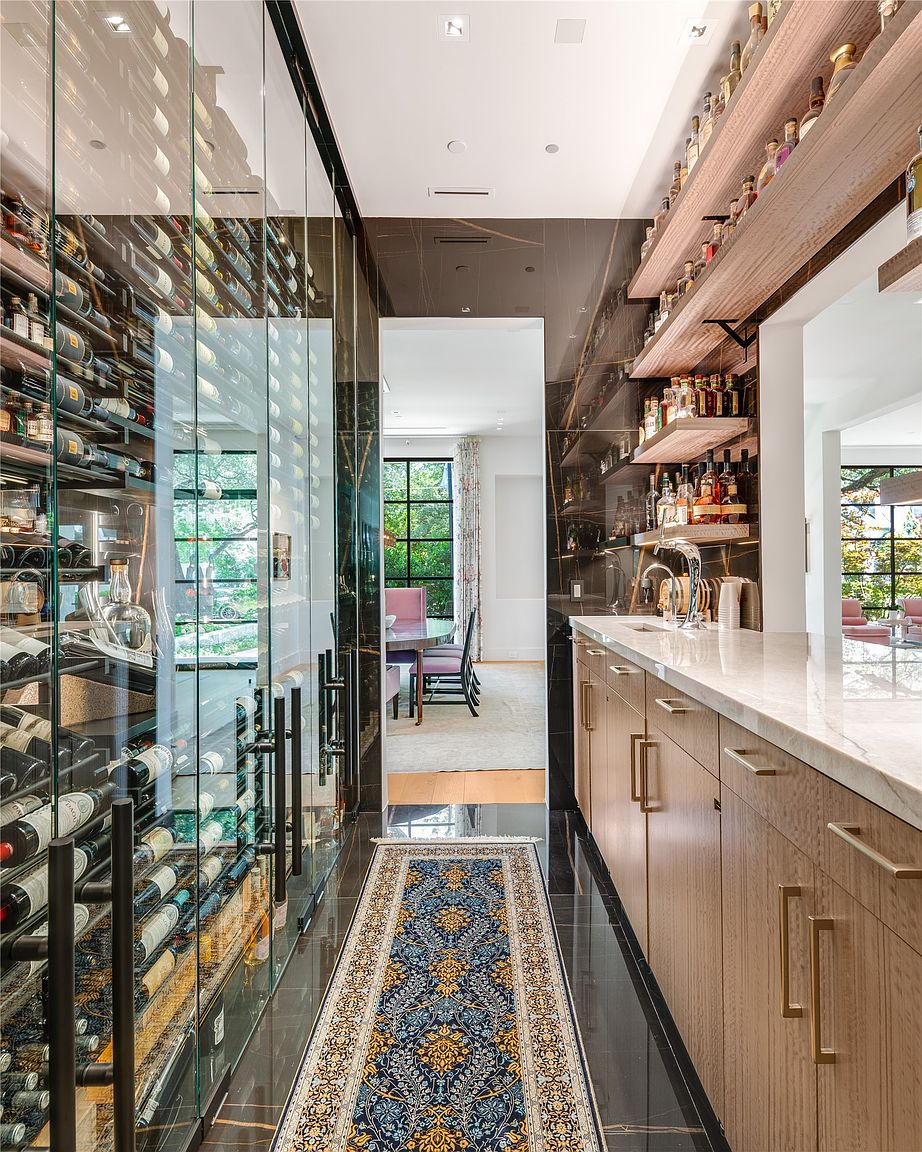
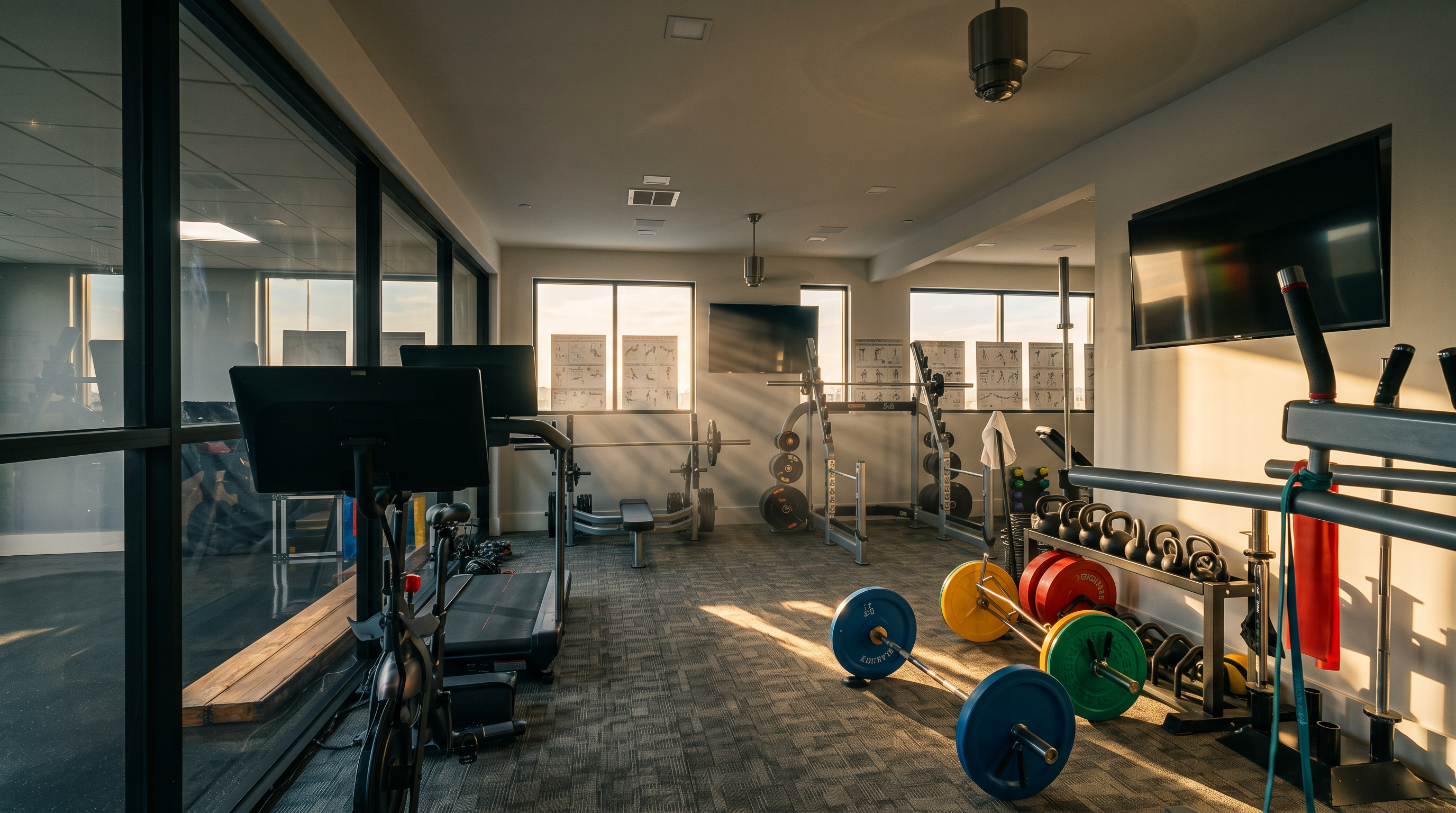
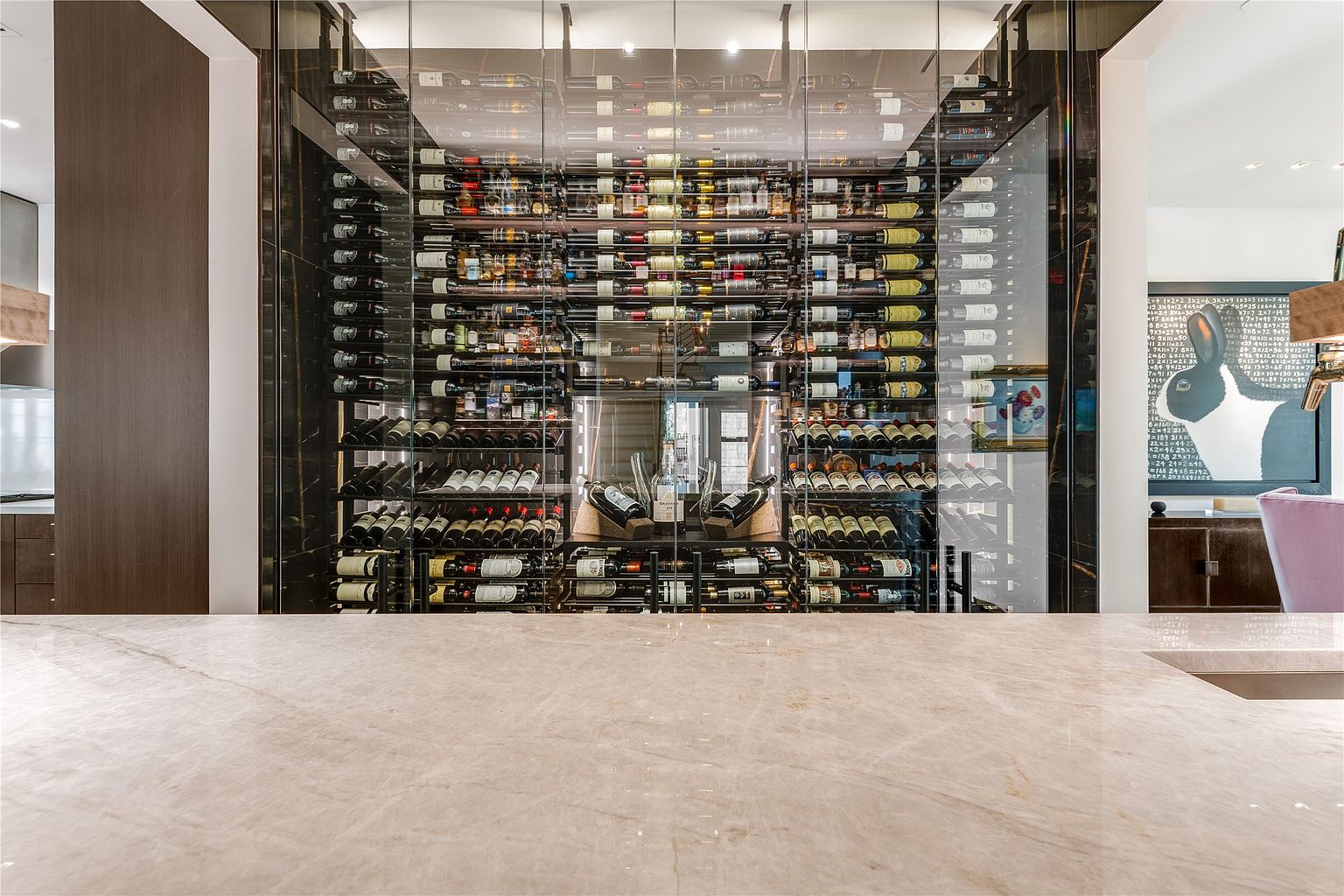
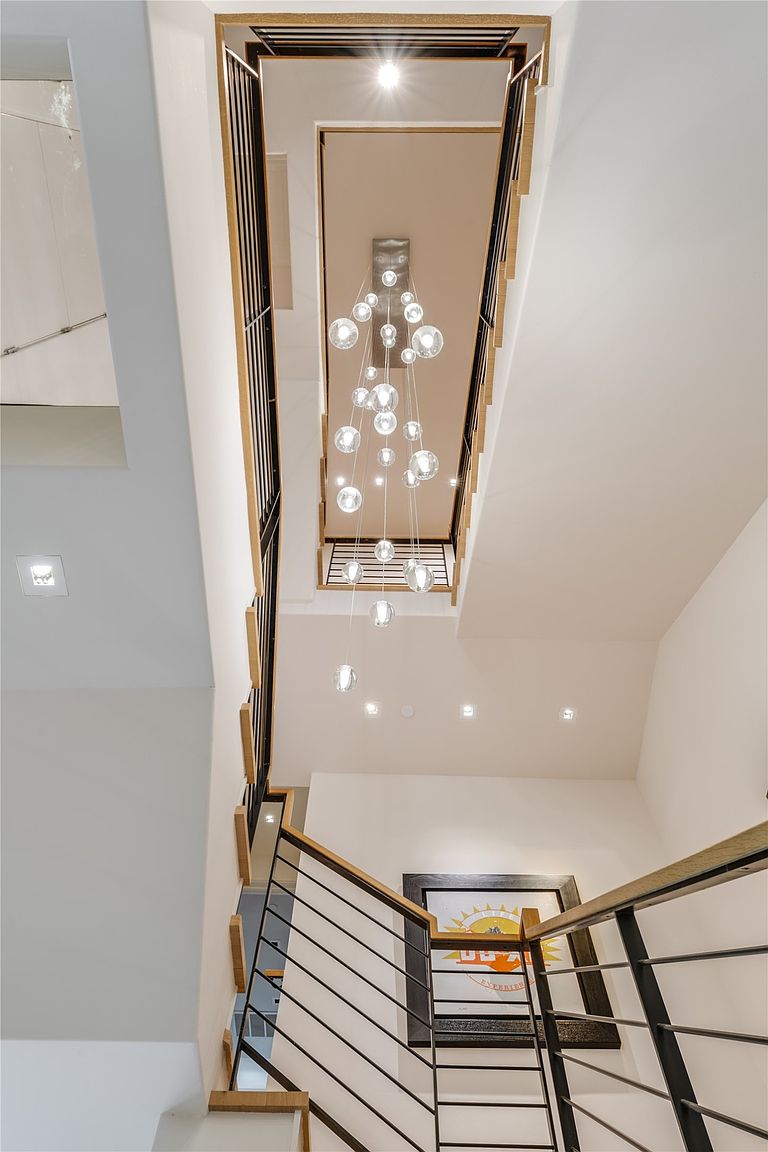
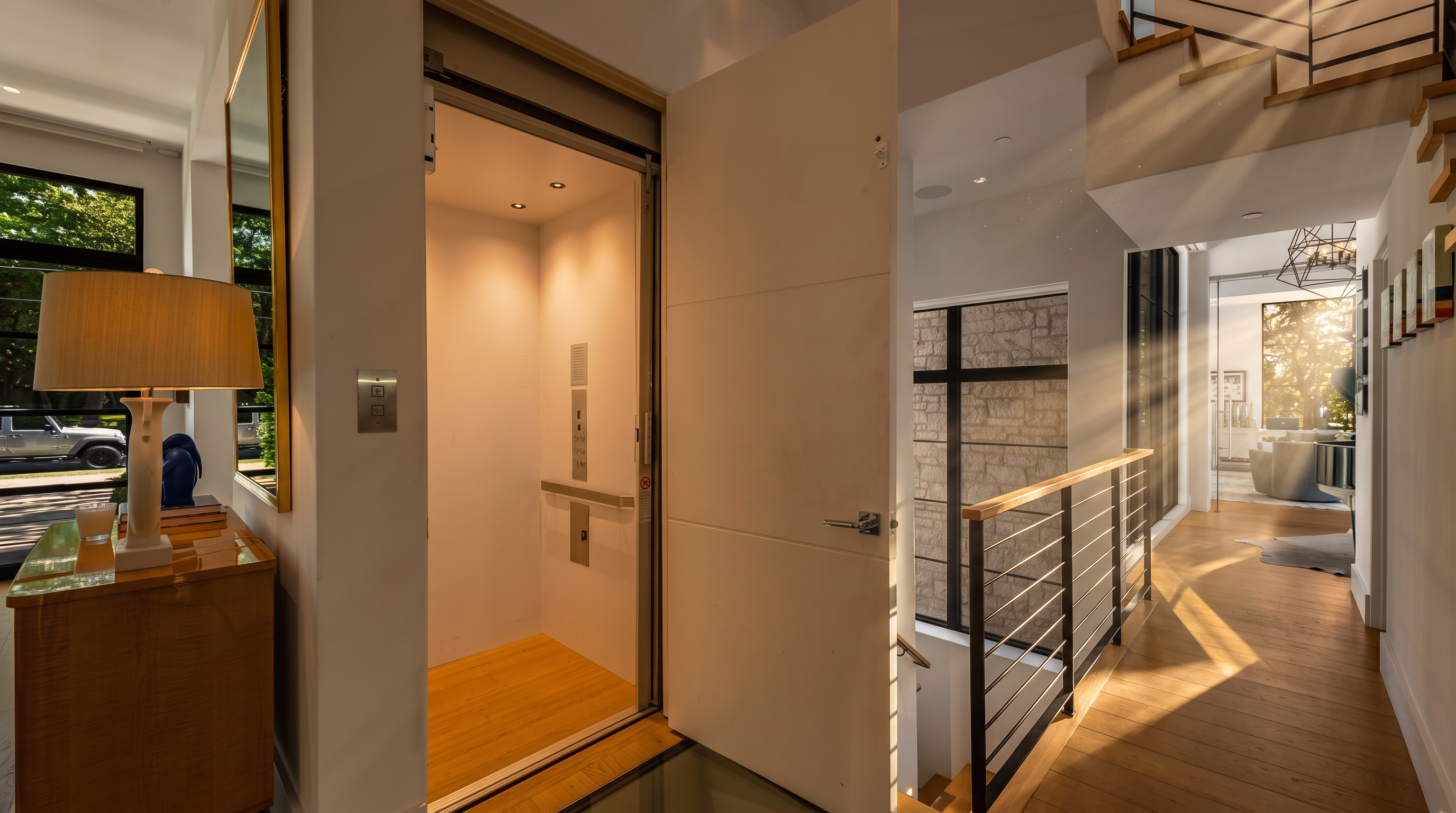
A four-floor elevator connects all levels with ease, including the climate-controlled six-car basement garage with its sealed impermeable floors and LED lighting. The private gym with a full bath, the Canadian-built climate-controlled wine closet with capacity for over 700 bottles, and a cascading glass globe chandelier ascending the multi-story stairwell are among the details that reward closer attention.
Technology is woven into the home's fabric without ever overwhelming it. Savant home automation, Lutron RR2 lighting, 31 automatic window shades, 90-plus built-in speakers, 100-plus Cat 6 data ports, and a Tesla solar roof with Powerwalls and a dedicated generator represent a commitment to intelligent living — systems that serve the home's occupants as fluently as its architecture does.
Golf Drive occupies a quietly privileged position within the M-Streets neighborhood — one of Dallas' most storied and architecturally rich residential districts — running adjacent to Turtle Creek and the verdant corridor that has defined the character of this part of the city for well over a century. The address places residents at the intersection of natural beauty and urban convenience in a way that few Dallas locations can genuinely claim.
Turtle Creek itself is one of the city's most beloved natural features. The creek and its surrounding parkland form a continuous green ribbon winding through the heart of Dallas, offering shaded walking and running trails, mature tree canopies, and a sense of remove from the urban grid that is rare at this proximity to the city center. Turtle Creek Boulevard and the adjacent Reverchon Park — a historic public park established in the early twentieth century — have long made this corridor a destination for residents who value both landscape and lifestyle.
The M-Streets neighborhood, named for its grid of streets beginning with the letter M, developed primarily during the 1920s and 1930s and has retained much of its original character while evolving into one of Dallas' most desirable urban residential enclaves. Its tree-lined streets, architectural variety, and walkable scale have made it consistently sought after by buyers who want proximity to the city's cultural and commercial core without sacrificing neighborhood identity.
Dixie Walker Neighborhood Park and the broader Greenville Avenue corridor are within easy reach, as is Lower Greenville — a stretch known for its independent restaurants, boutique retailers, and neighborhood bars that have made it a focal point of Dallas' dining and social culture. The nearby Knox-Henderson district adds further depth, offering a curated mix of design studios, chef-driven restaurants, and specialty retailers that cater to a discerning residential clientele.
Uptown Dallas lies just to the west, placing world-class dining, luxury retail along McKinney Avenue, and the boutiques and galleries of the West Village within a short drive. The Katy Trail, Dallas' celebrated eleven-mile urban greenway converted from a former railroad corridor, is accessible from this part of the city and connects residents to a broader network of parks and neighborhoods by foot or bicycle.
Downtown Dallas — home to the AT&T Performing Arts Center, the Dallas Museum of Art, the Nasher Sculpture Center, and the Dallas Arboretum and Botanical Garden — is a brief drive south, ensuring that the cultural institutions that define a major American city are genuinely integrated into daily life rather than merely proximate to it.
Highly regarded private and public schools serve the area, and the proximity to Presbyterian Hospital Dallas and medical facilities along the Central Expressway corridor adds practical depth to the neighborhood's appeal. For those who travel frequently, Dallas Love Field is among the closest major airports to this part of the city.
What Golf Drive ultimately offers is a quality of place that money alone cannot manufacture: a specific combination of natural setting, neighborhood character, urban access, and architectural legacy that has made this corridor one of the most enduring addresses in Dallas.
Featured Highlights
Curated Content • Presented by Lucinda Buford