The Story Behind
A Gothic Revival Waterfront Castle Unlike Anything Else in Miami
There are homes that impress, and then there are homes that transform — properties whose architectural ambition is so complete, so committed, that simply crossing the threshold changes how one understands what a residence can be. The estate at 1840 S Bayshore Lane is unequivocally the latter.
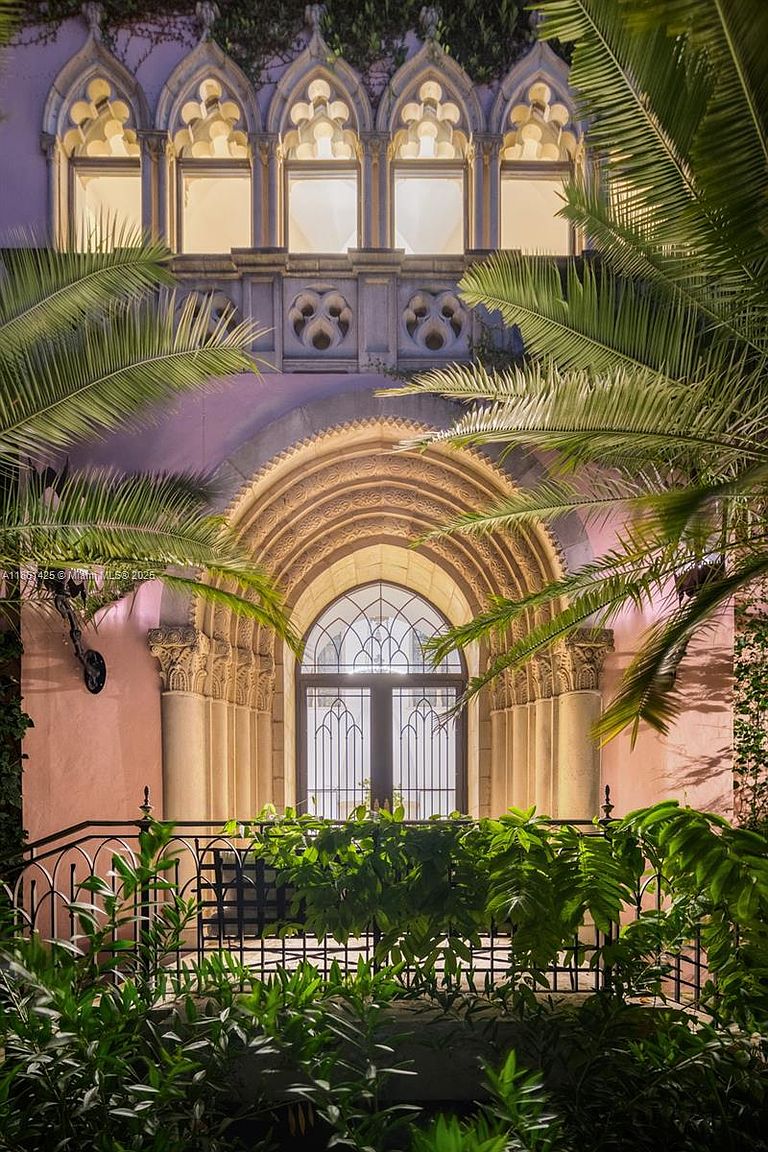
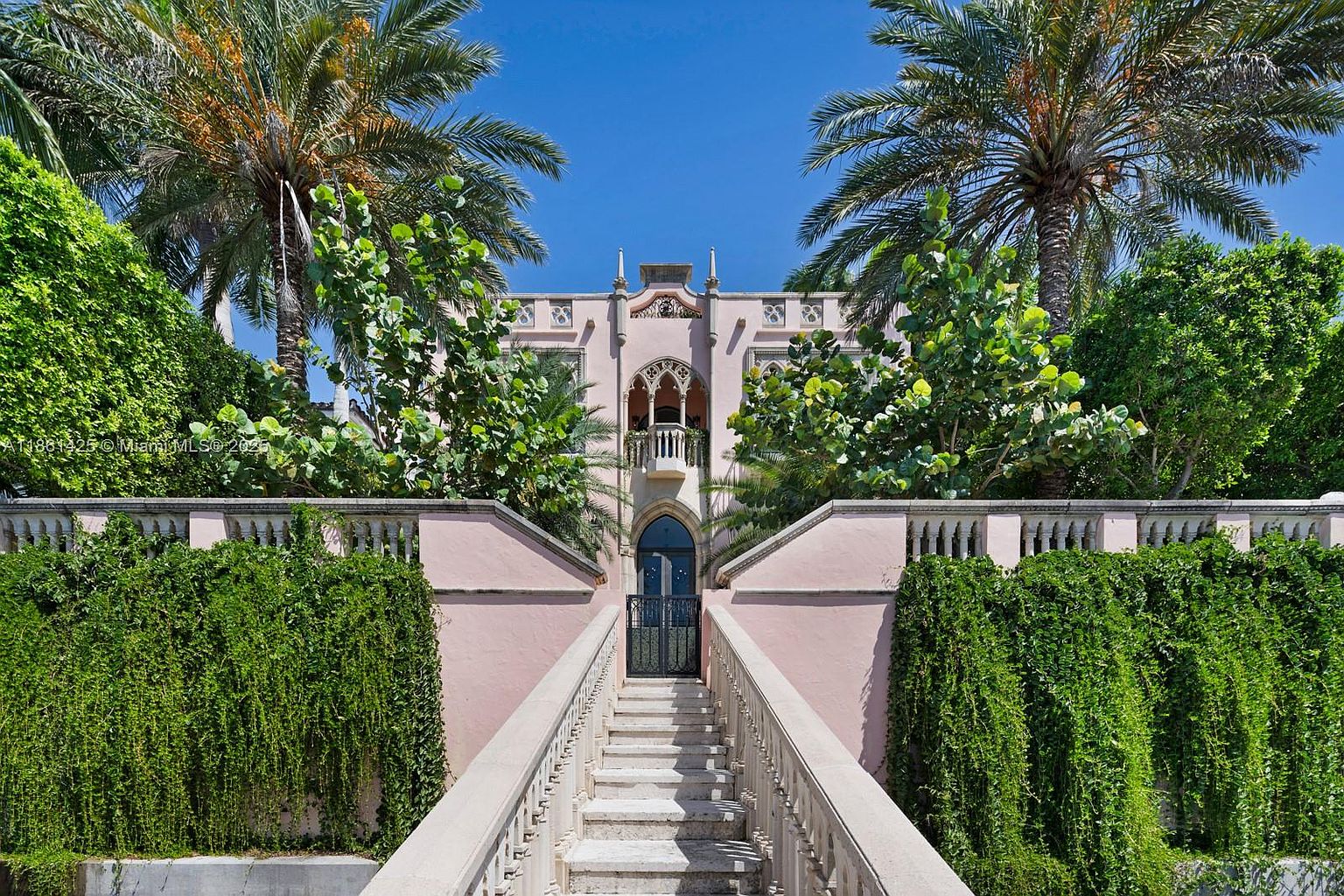
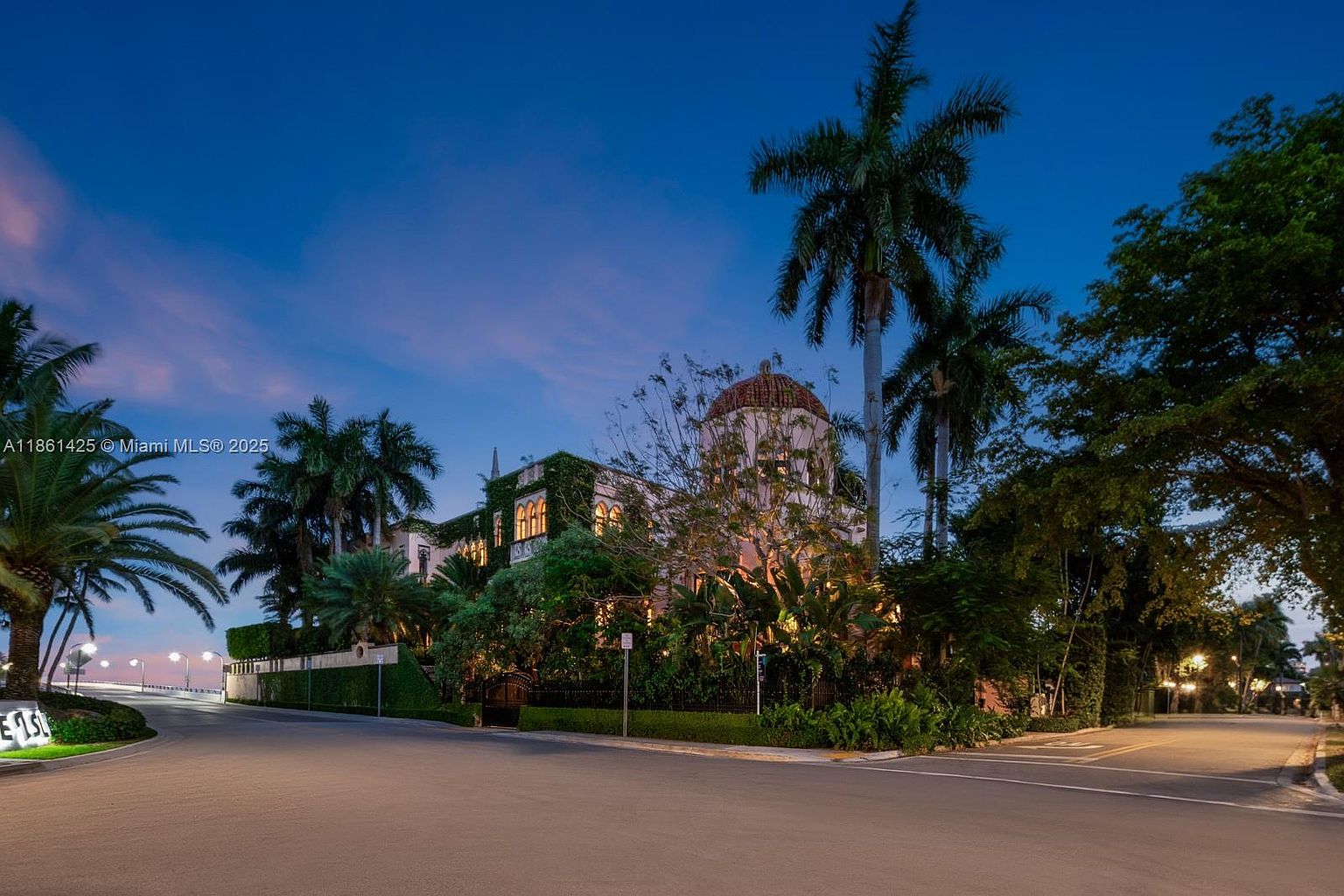
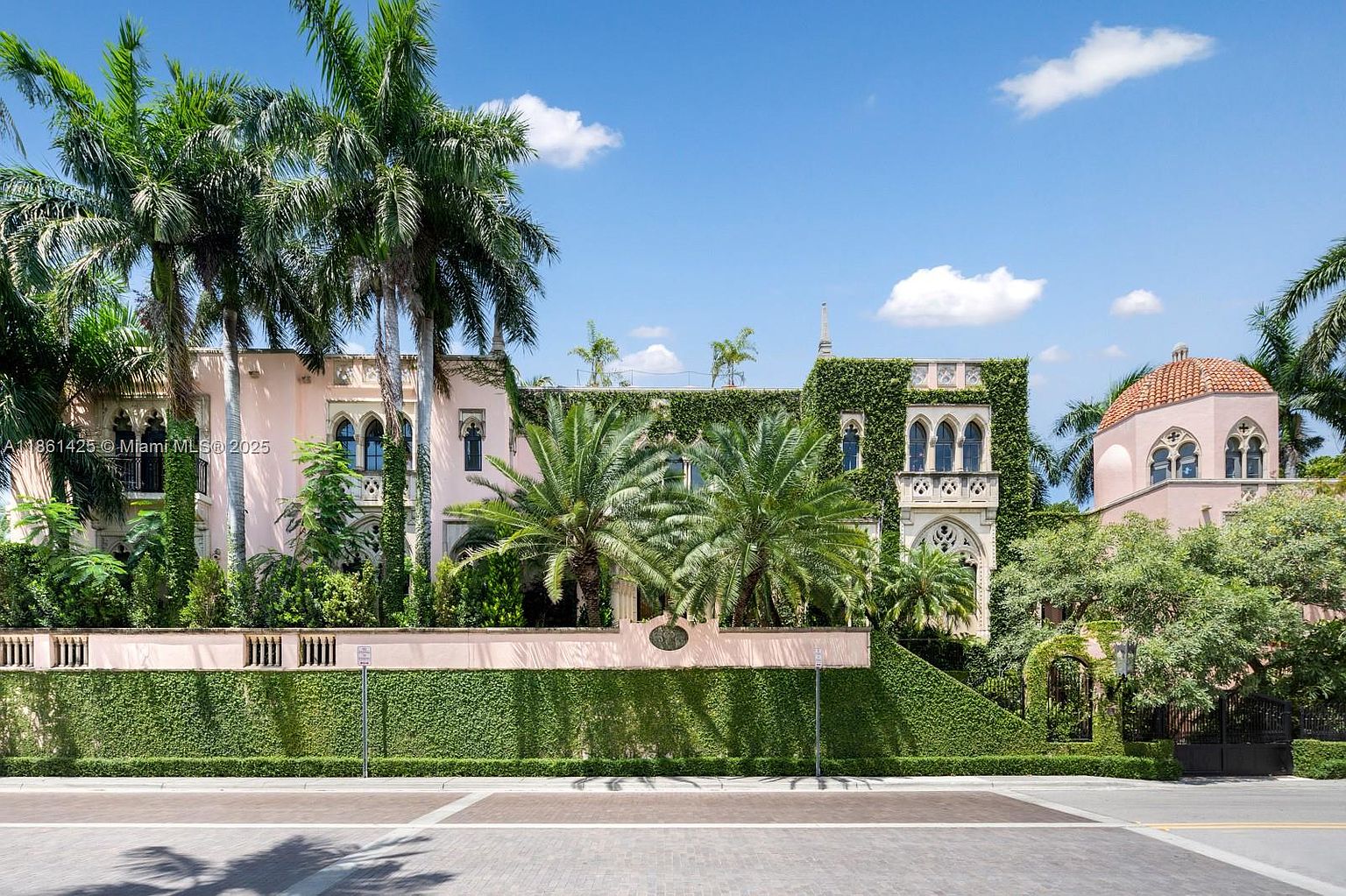
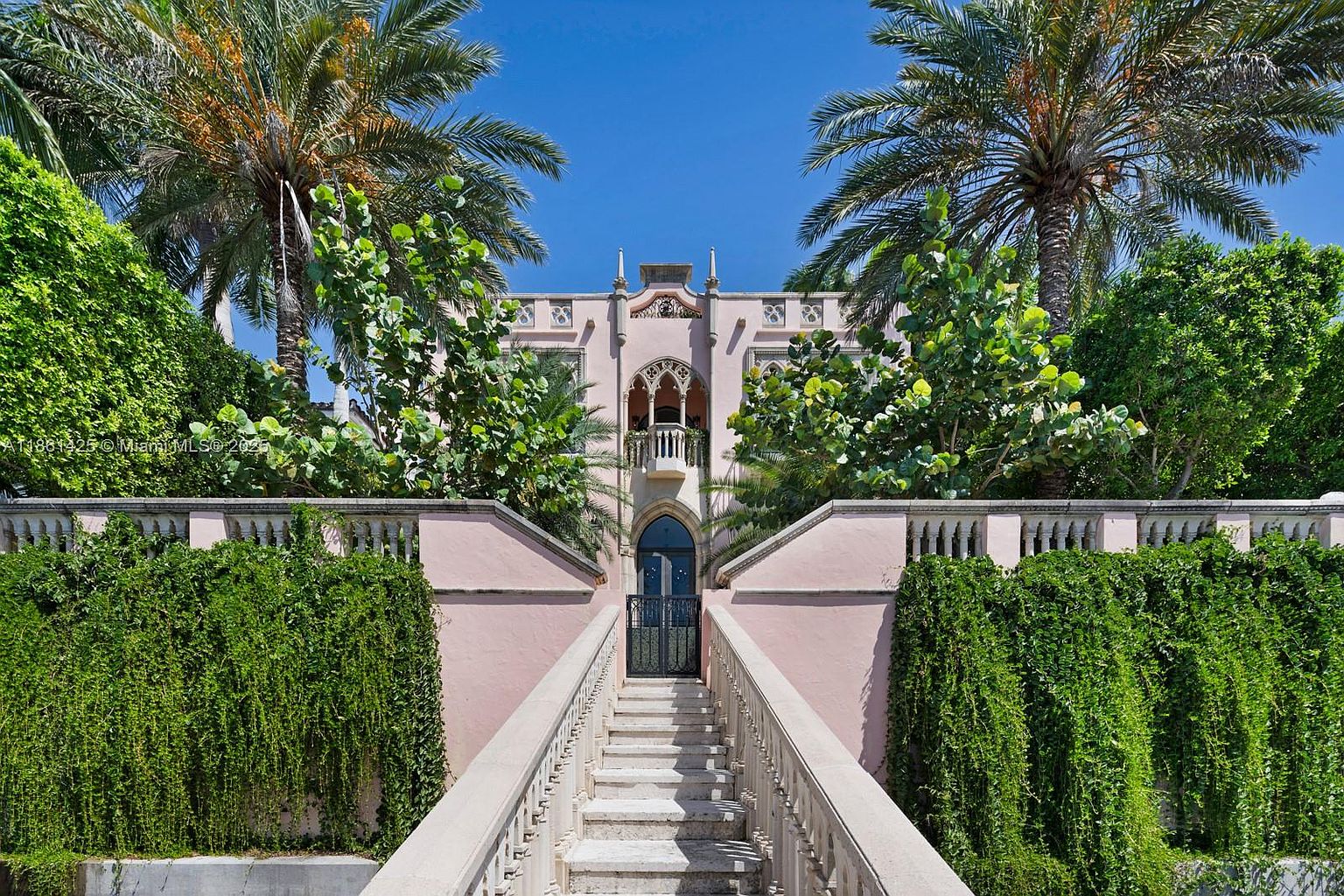
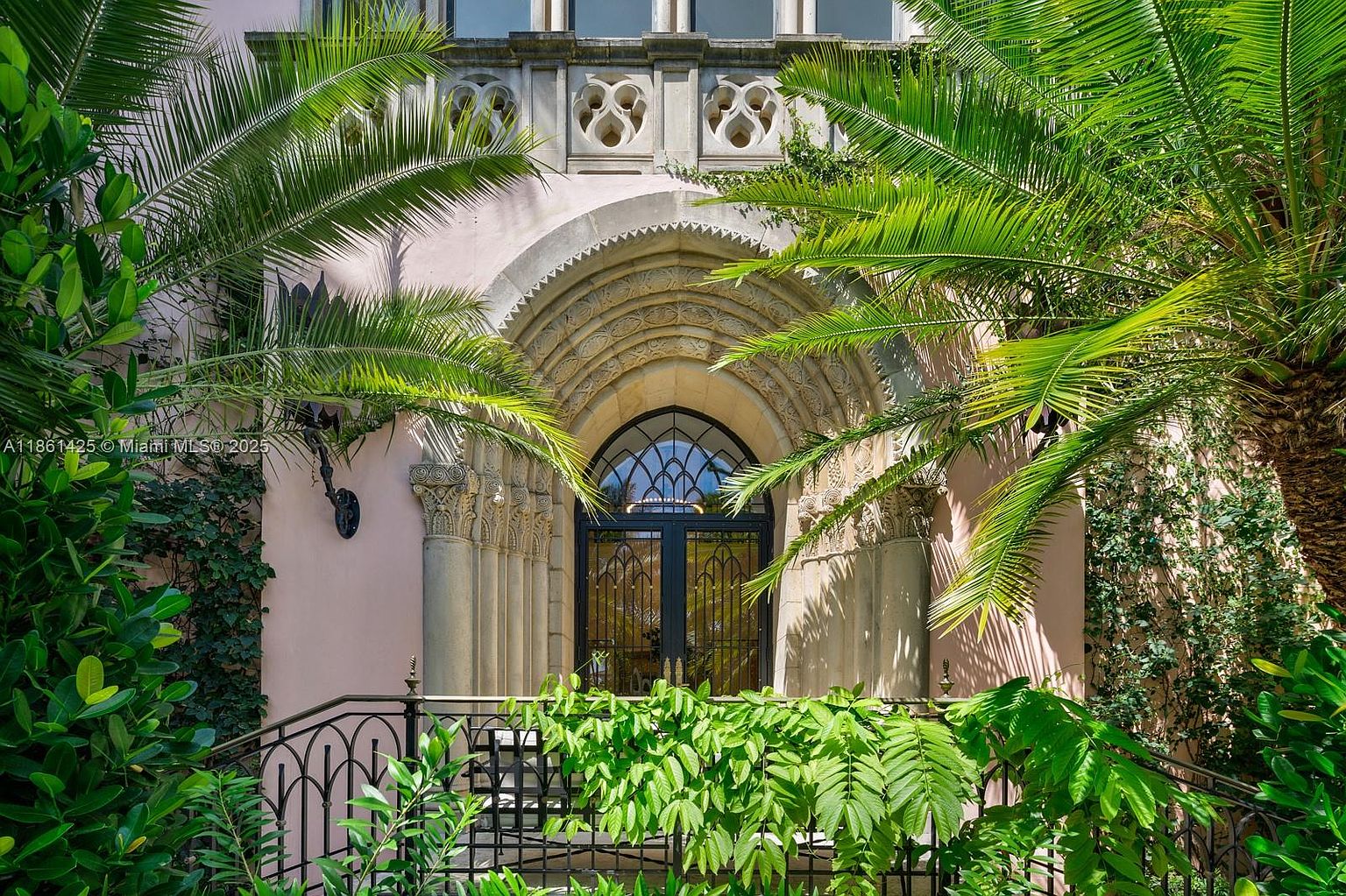
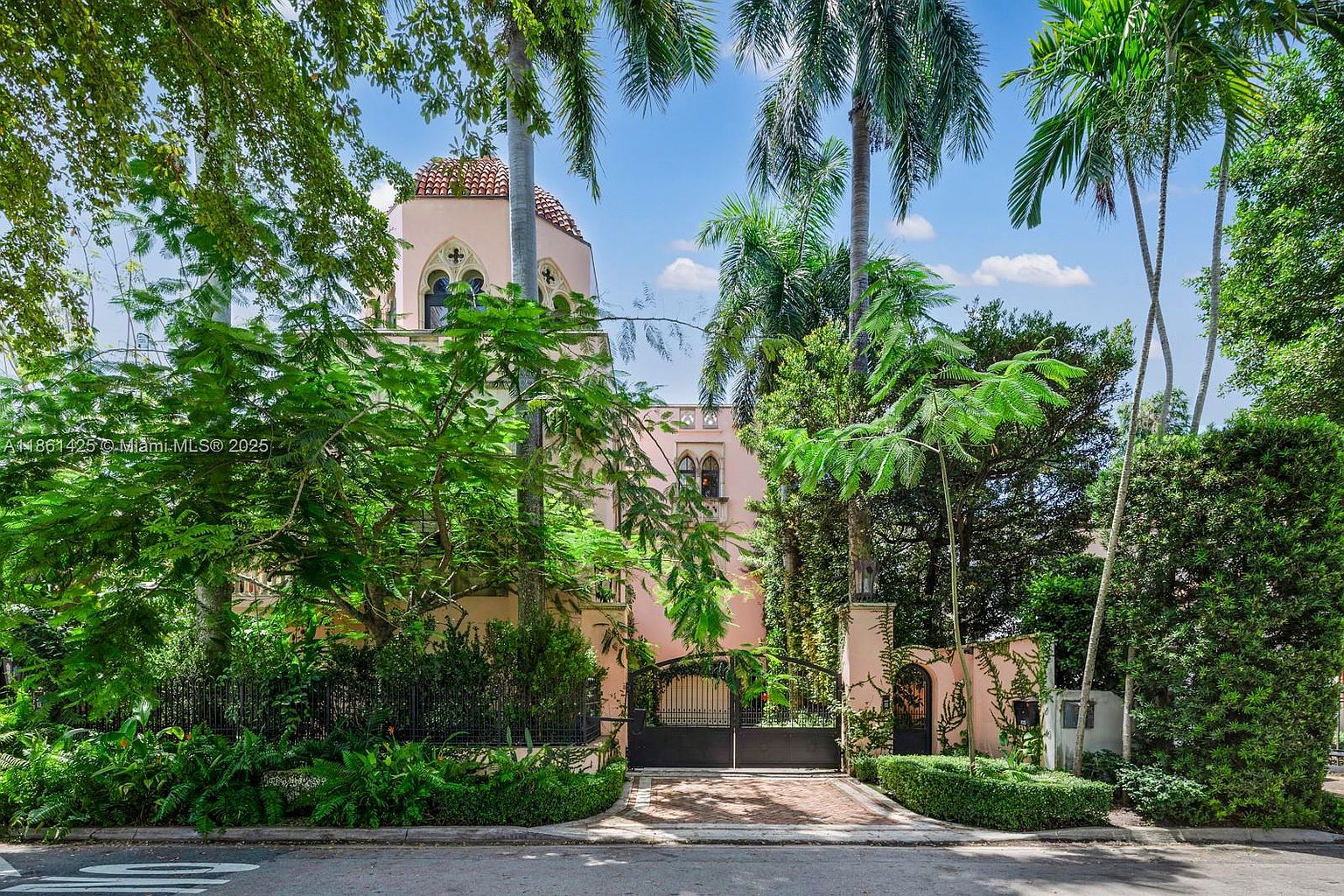
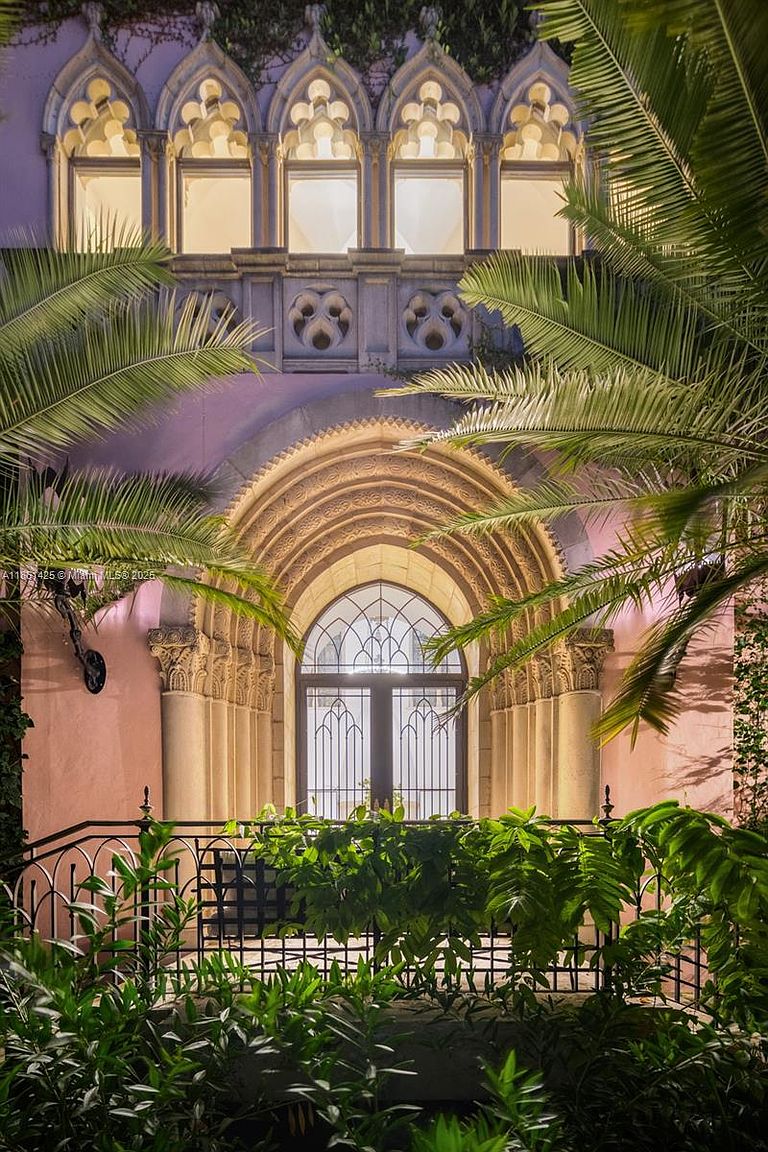
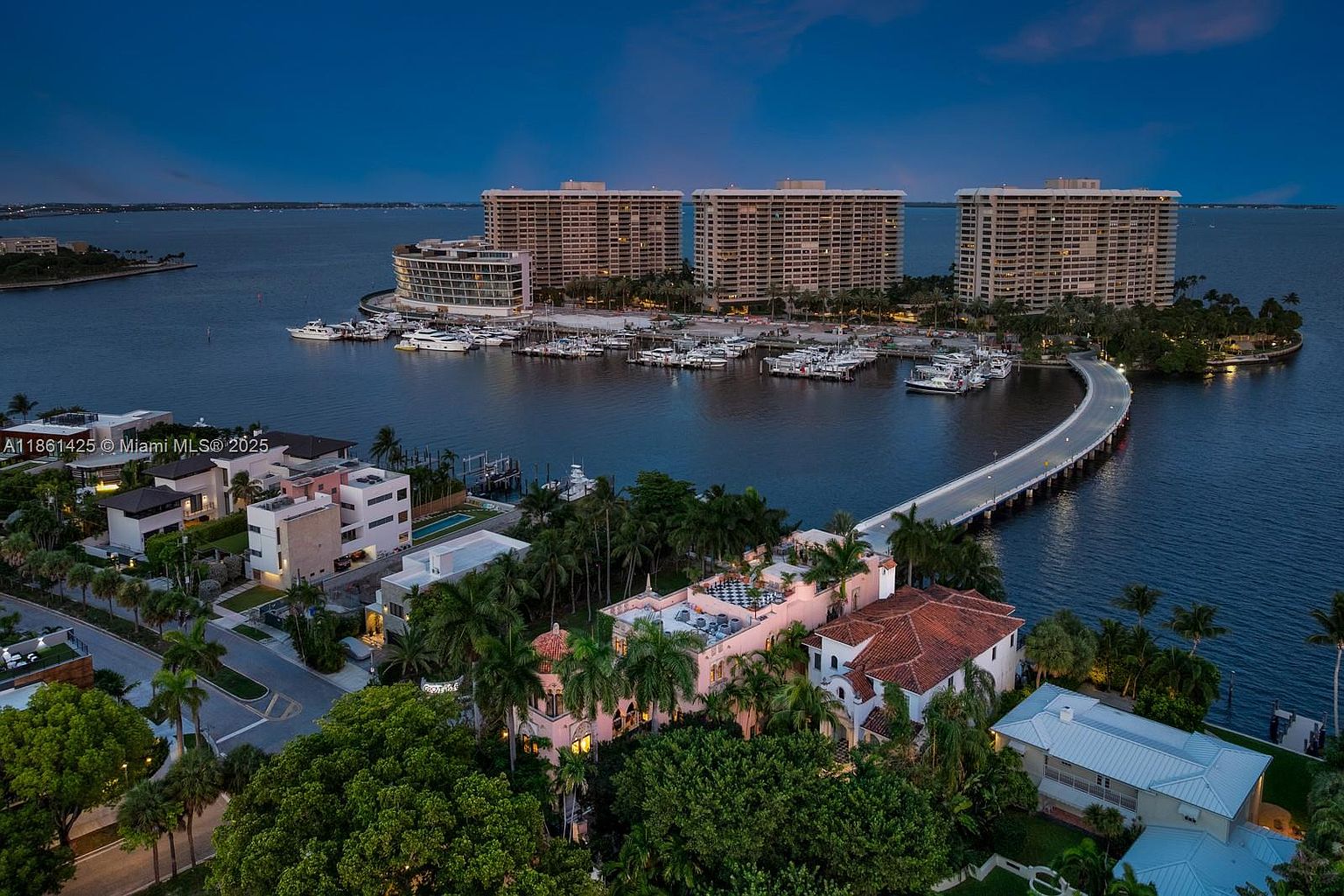
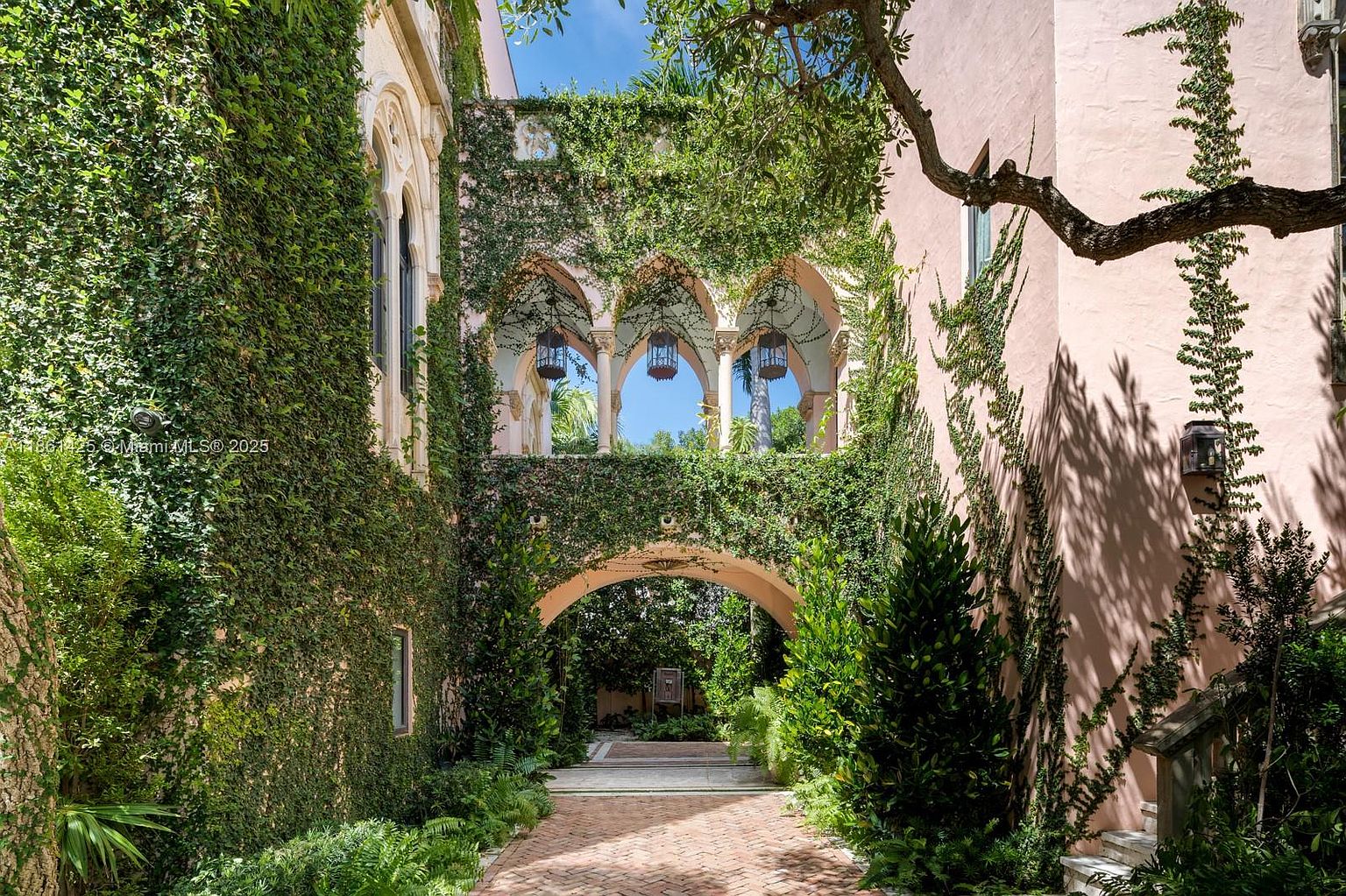
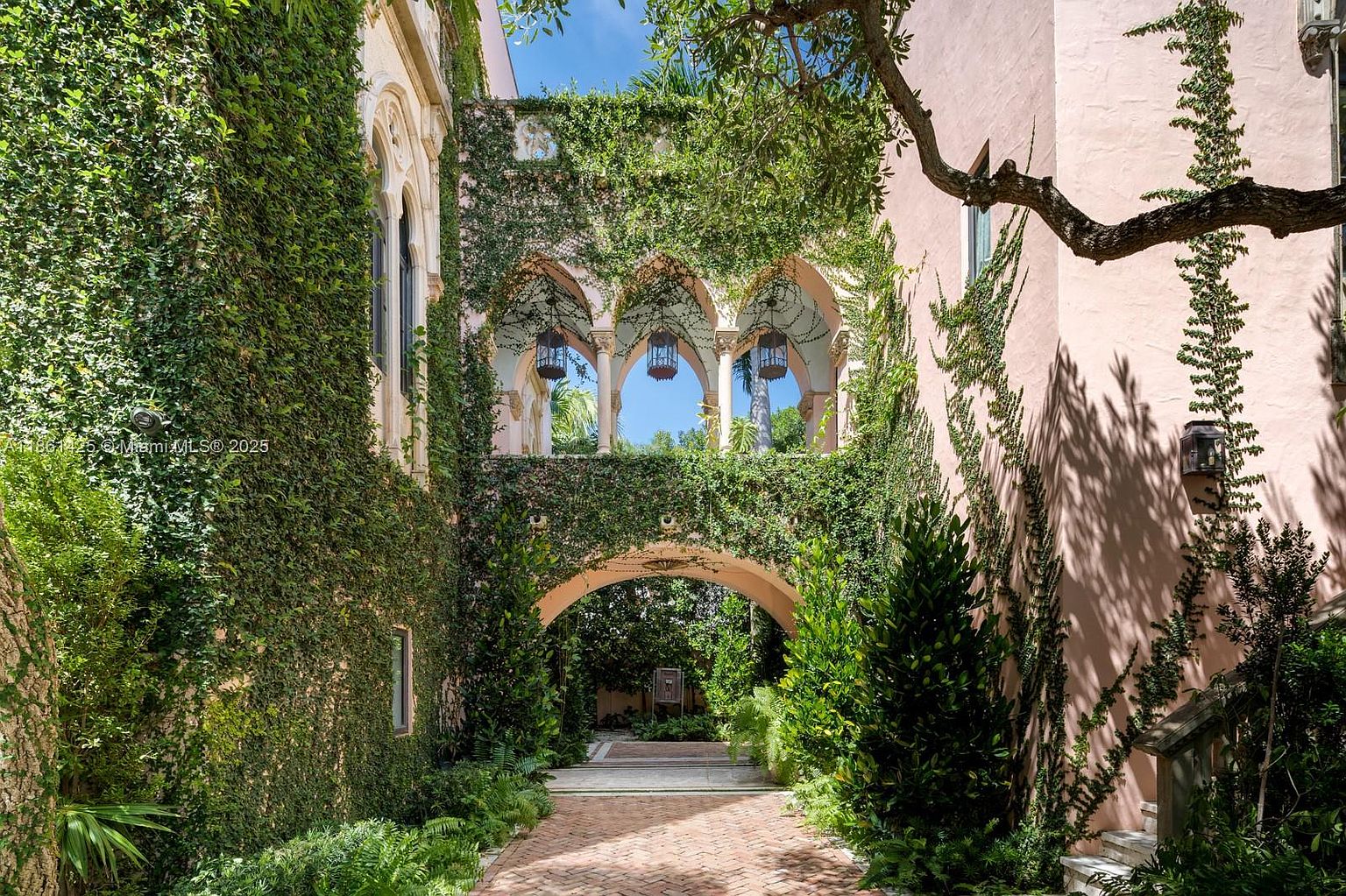
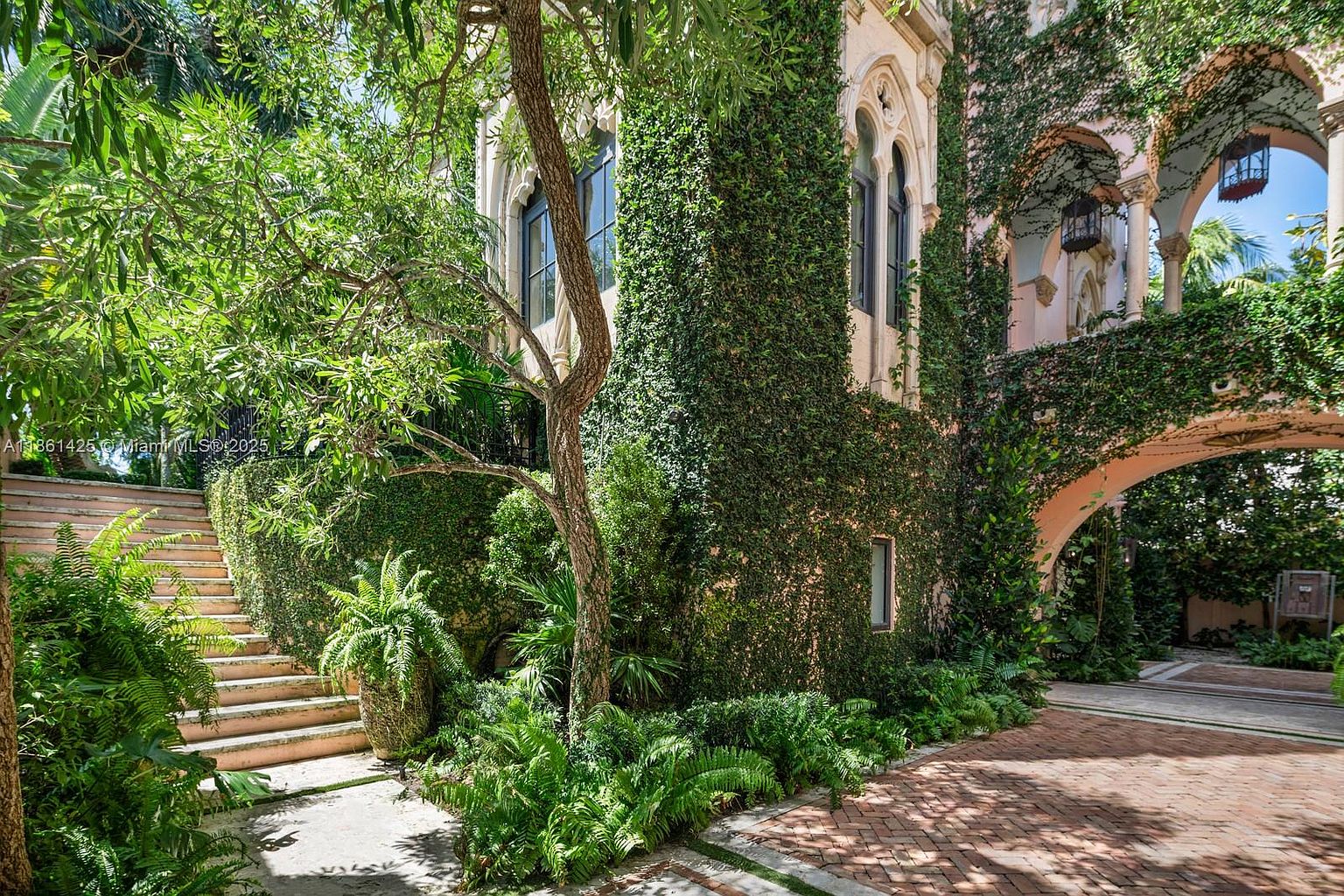
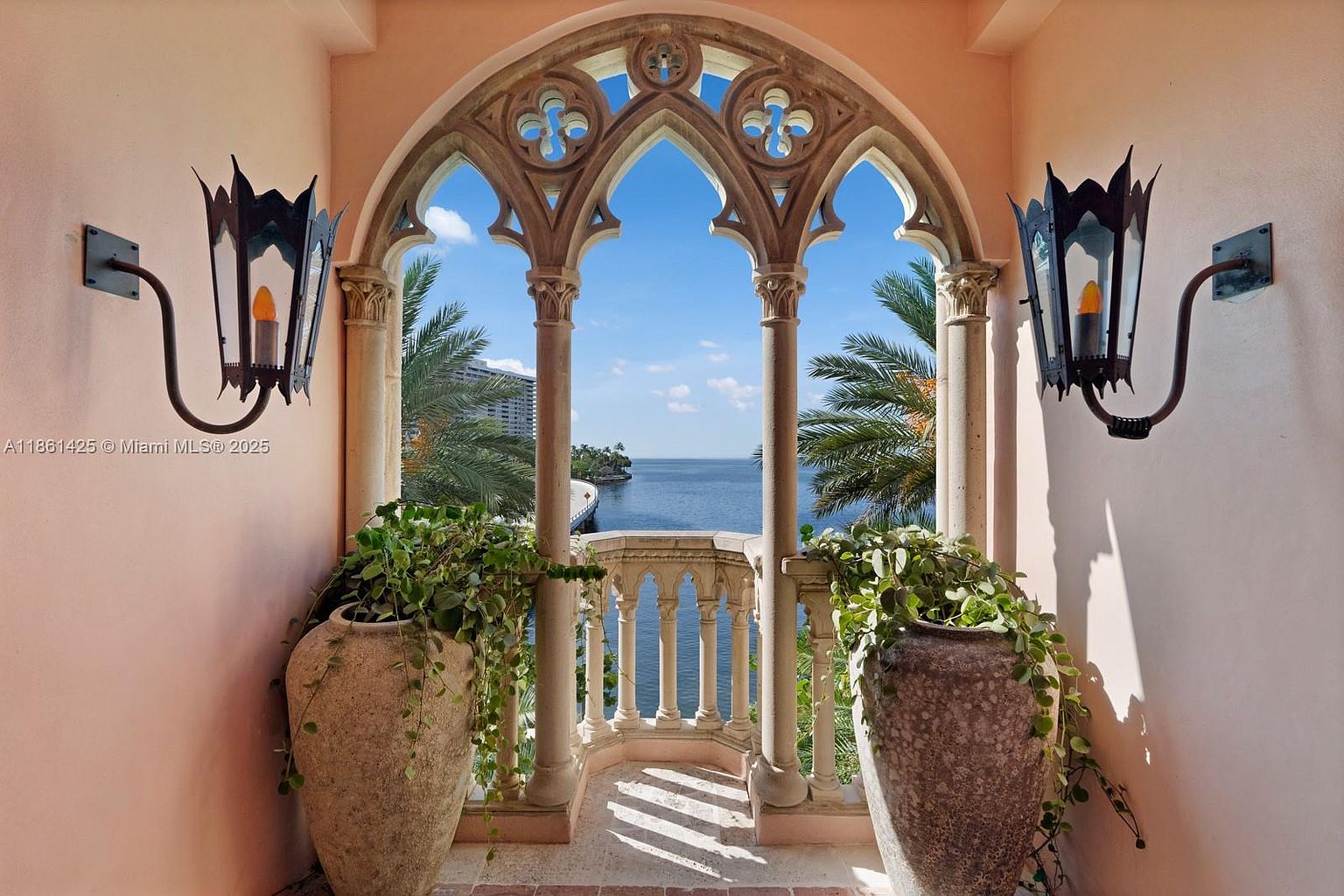
Designed by Miami architect Ralph Portuondo, the home announces its singular identity from the street. A pale pink stucco facade, richly textured by decades of climbing ivy and framed by towering royal palms, rises behind custom metalwork fencing crafted by Belt Designs — bespoke ironwork that sets the tone for the obsessive craftsmanship found throughout. The Gothic-arched entry portal, carved in intricate stone, is less a doorway than a declaration.
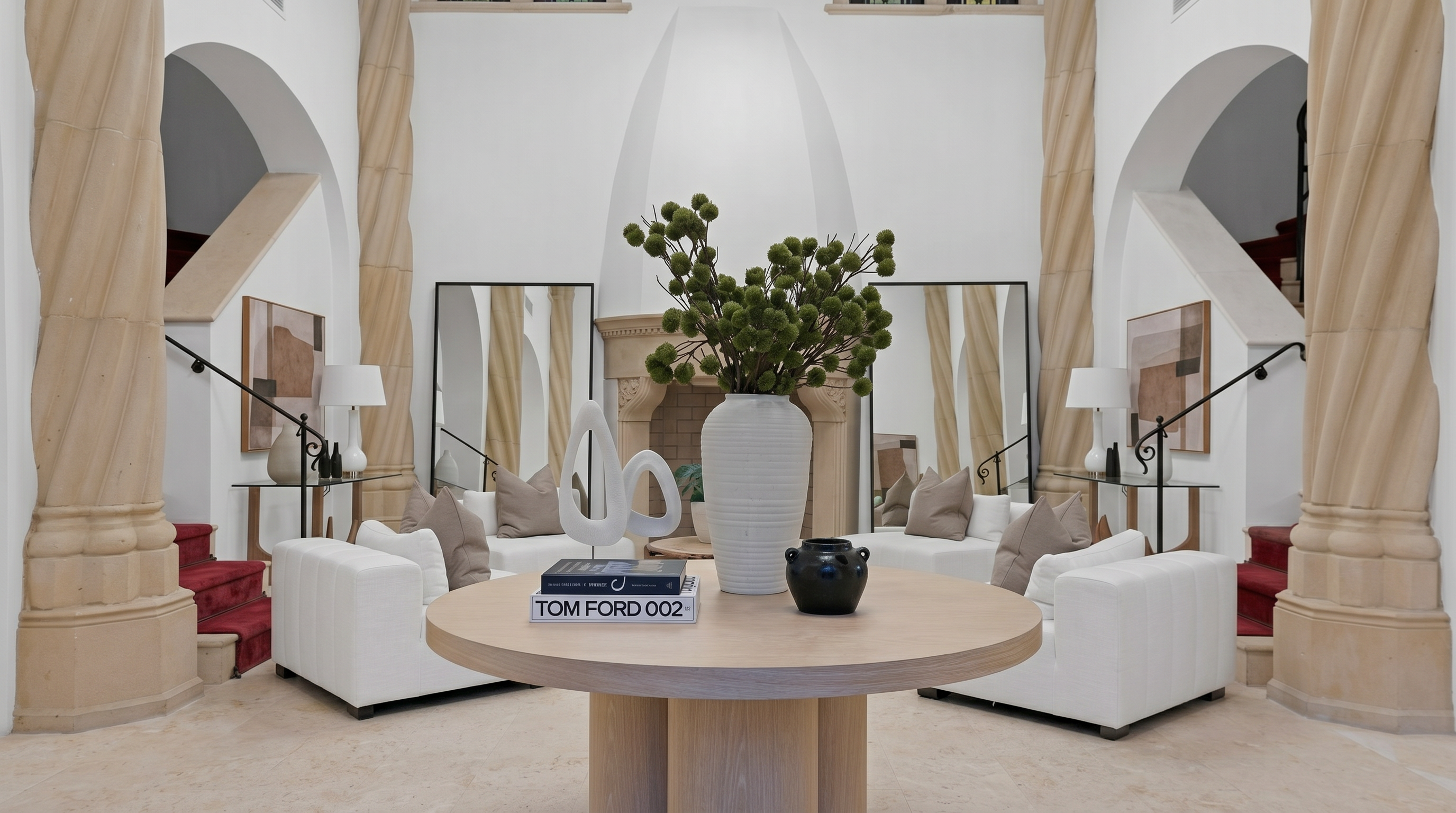
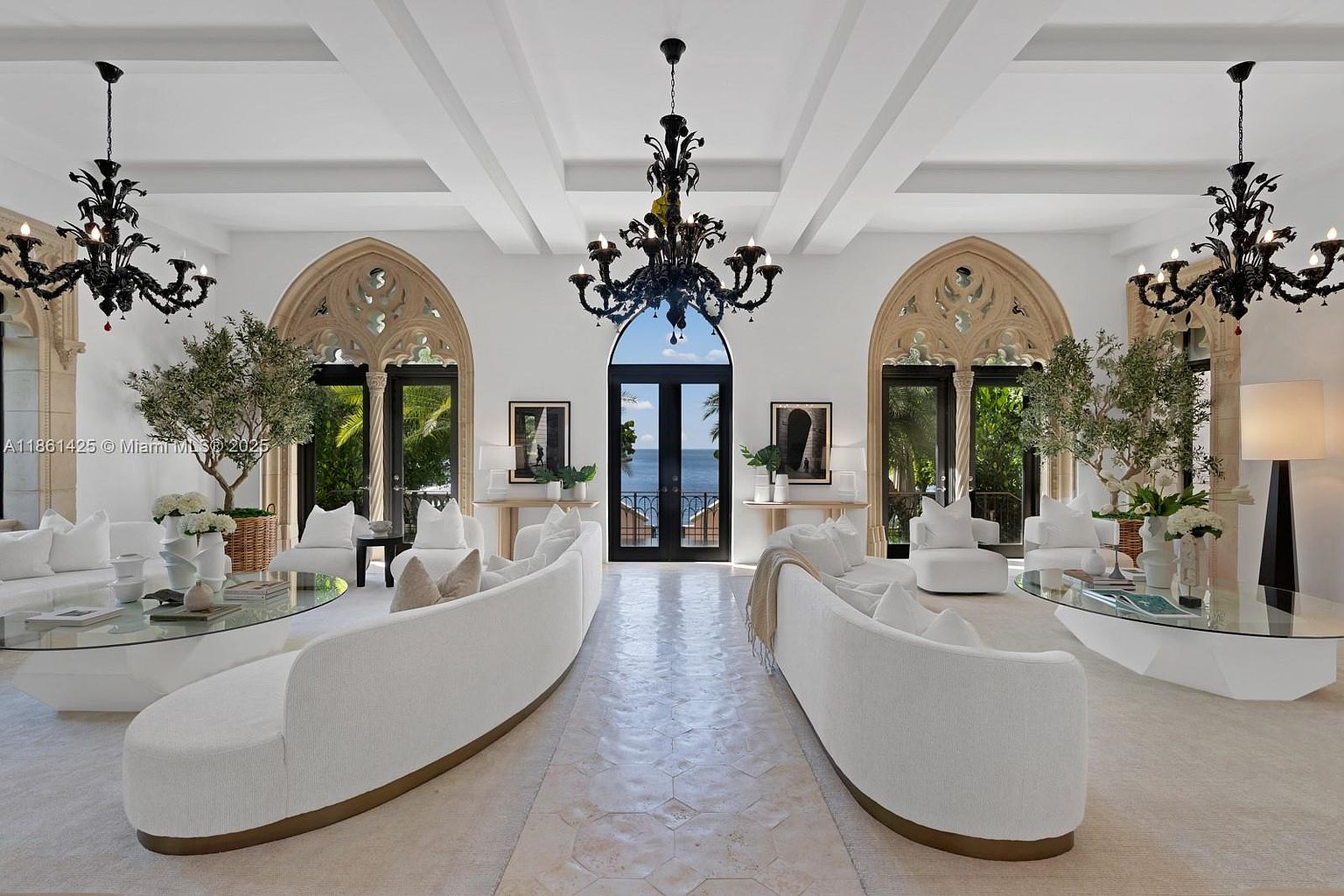
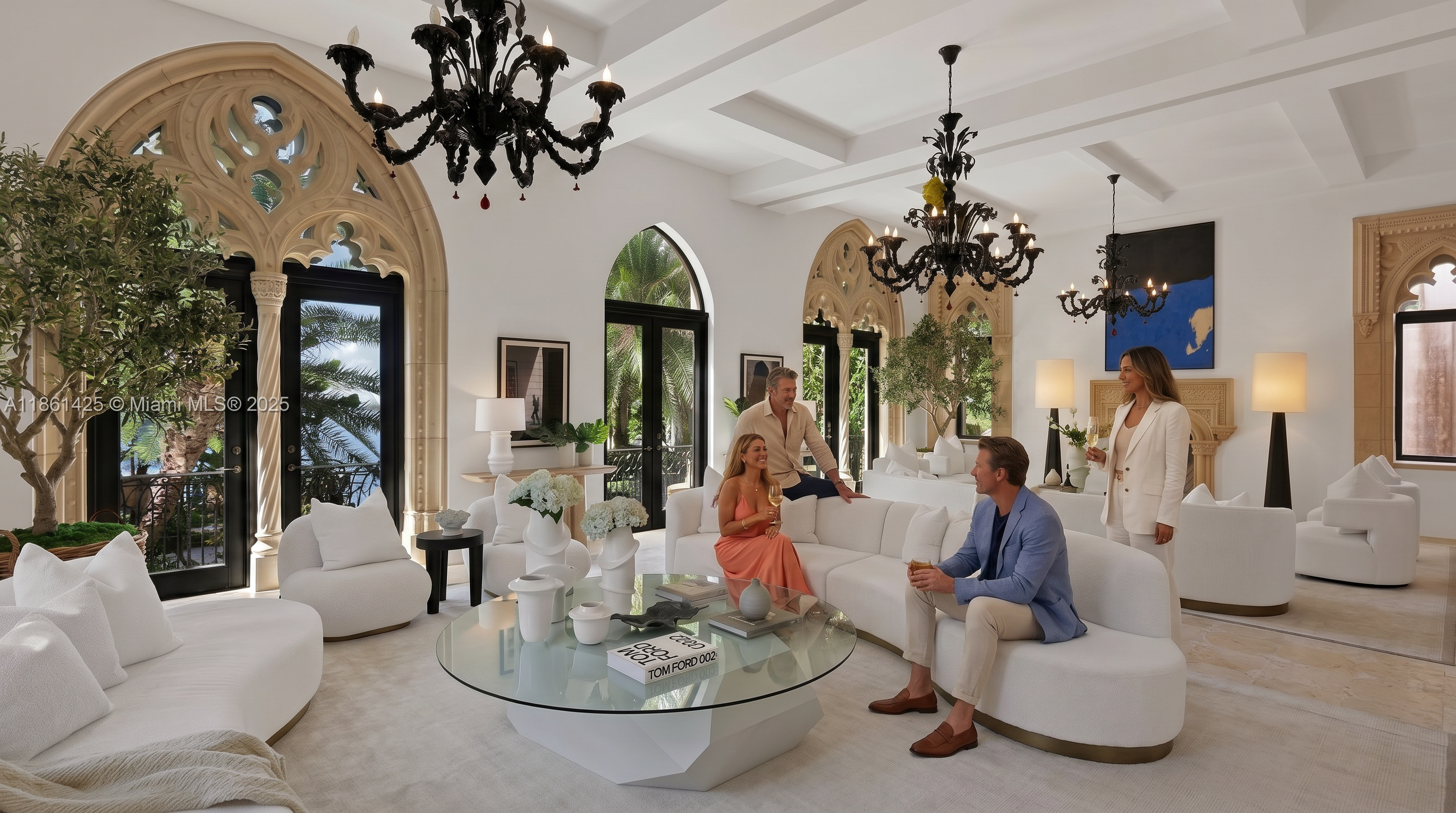
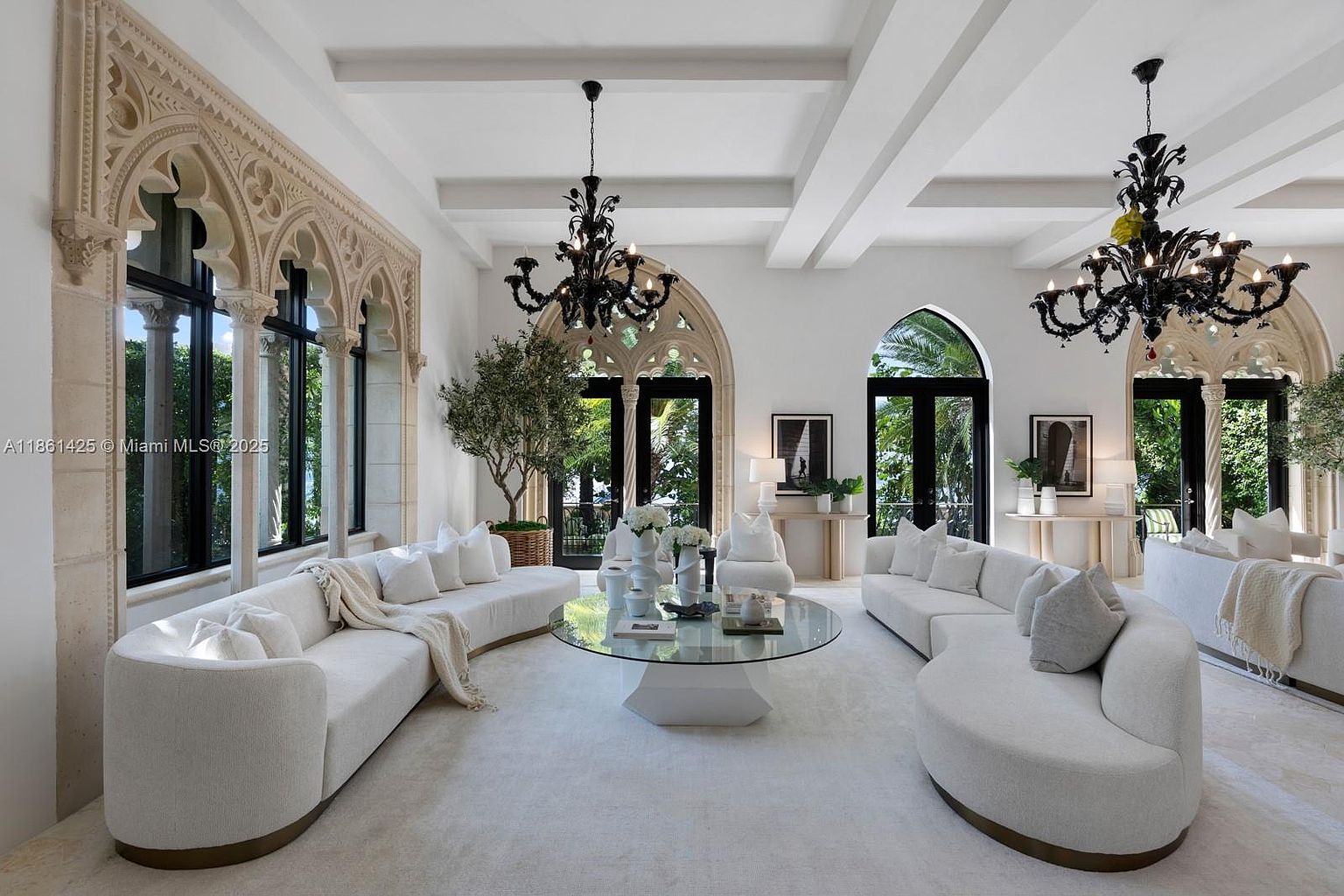
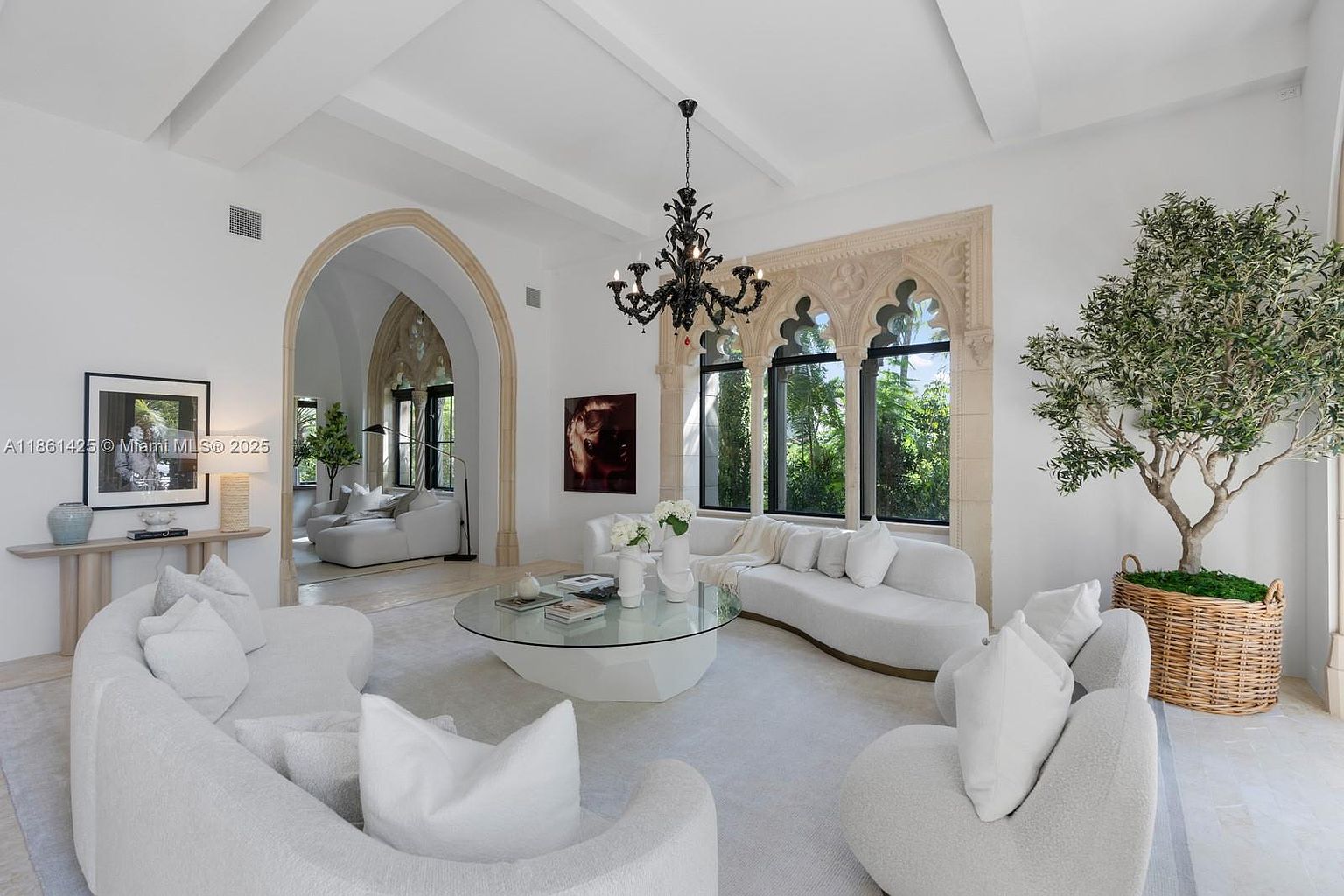
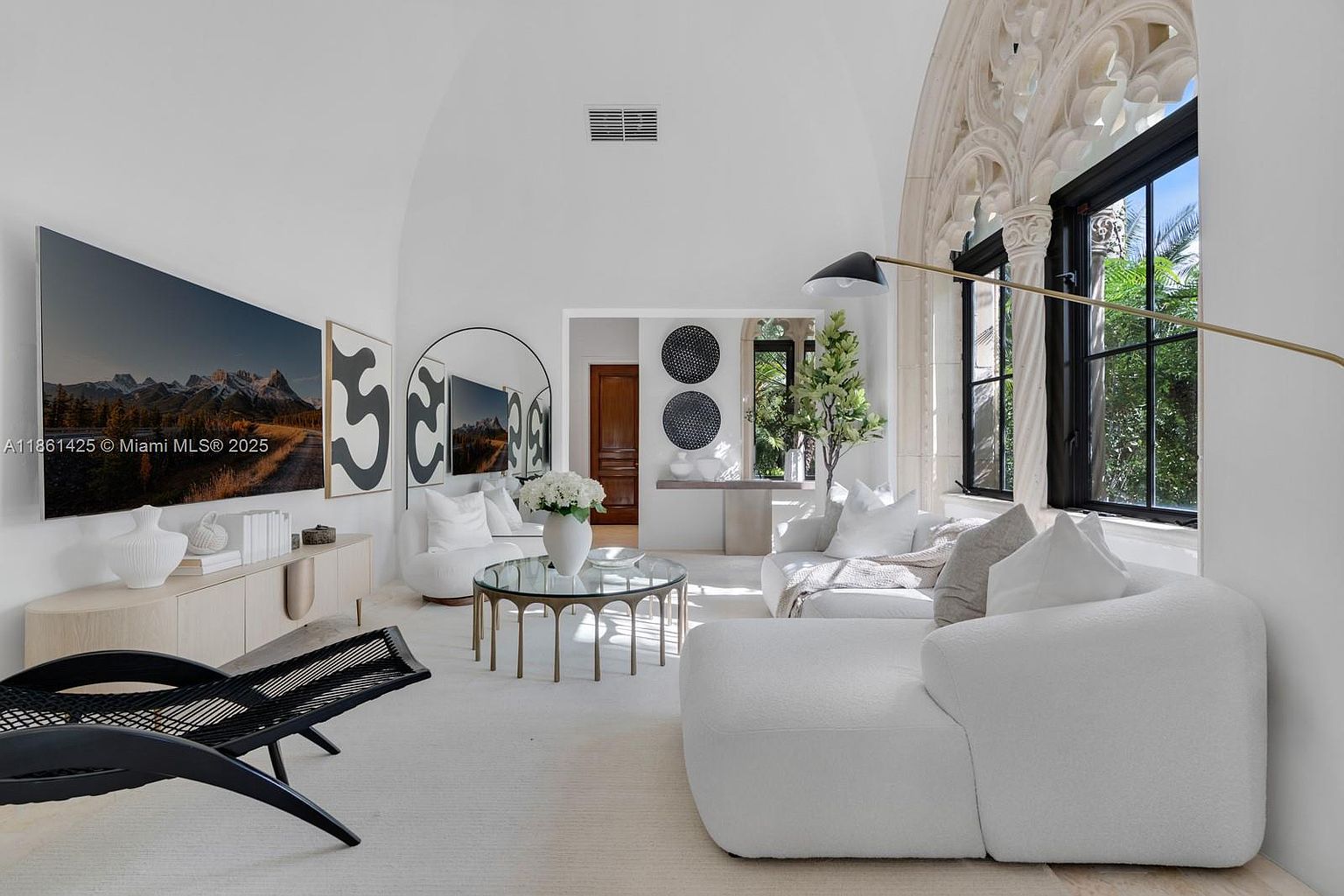
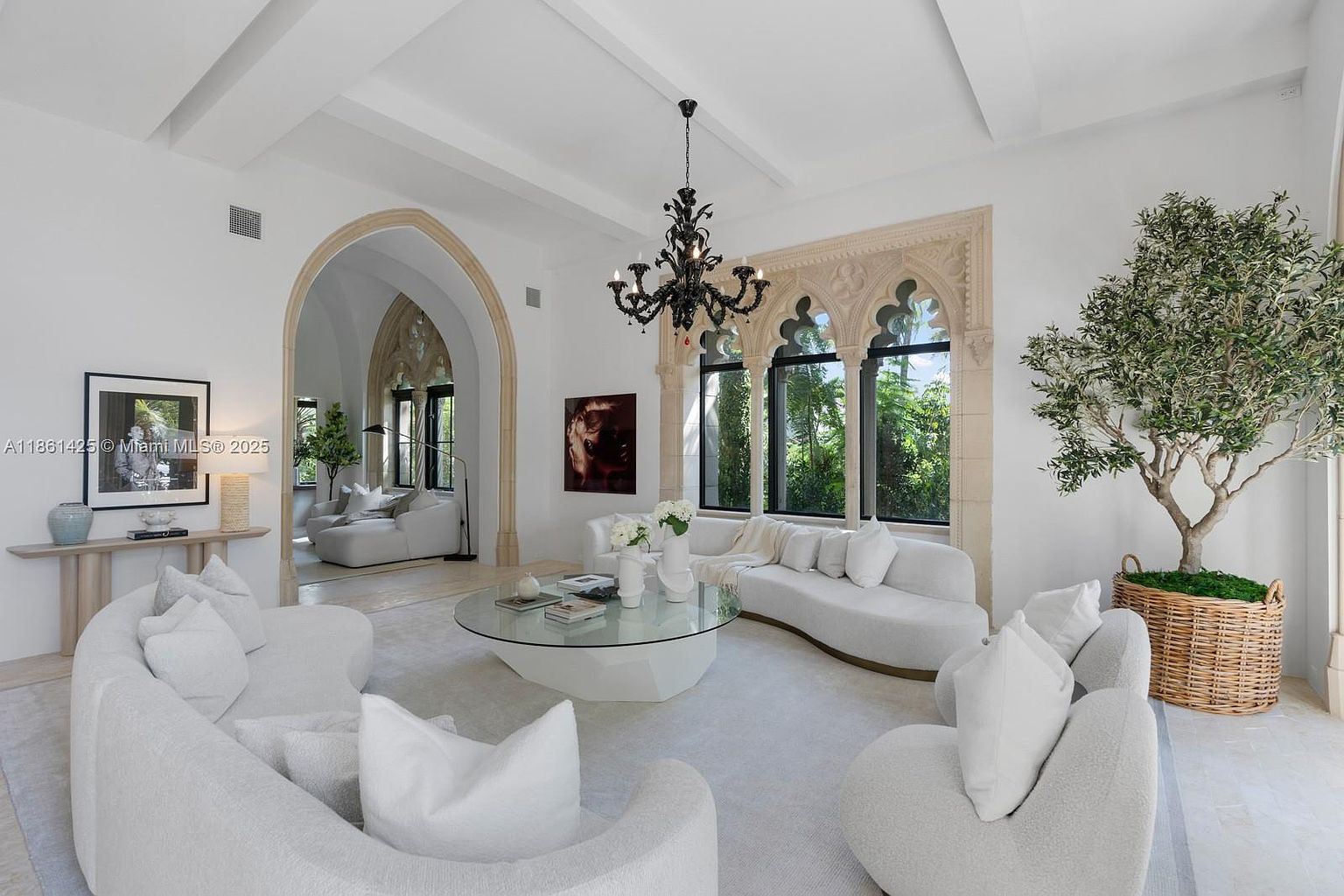
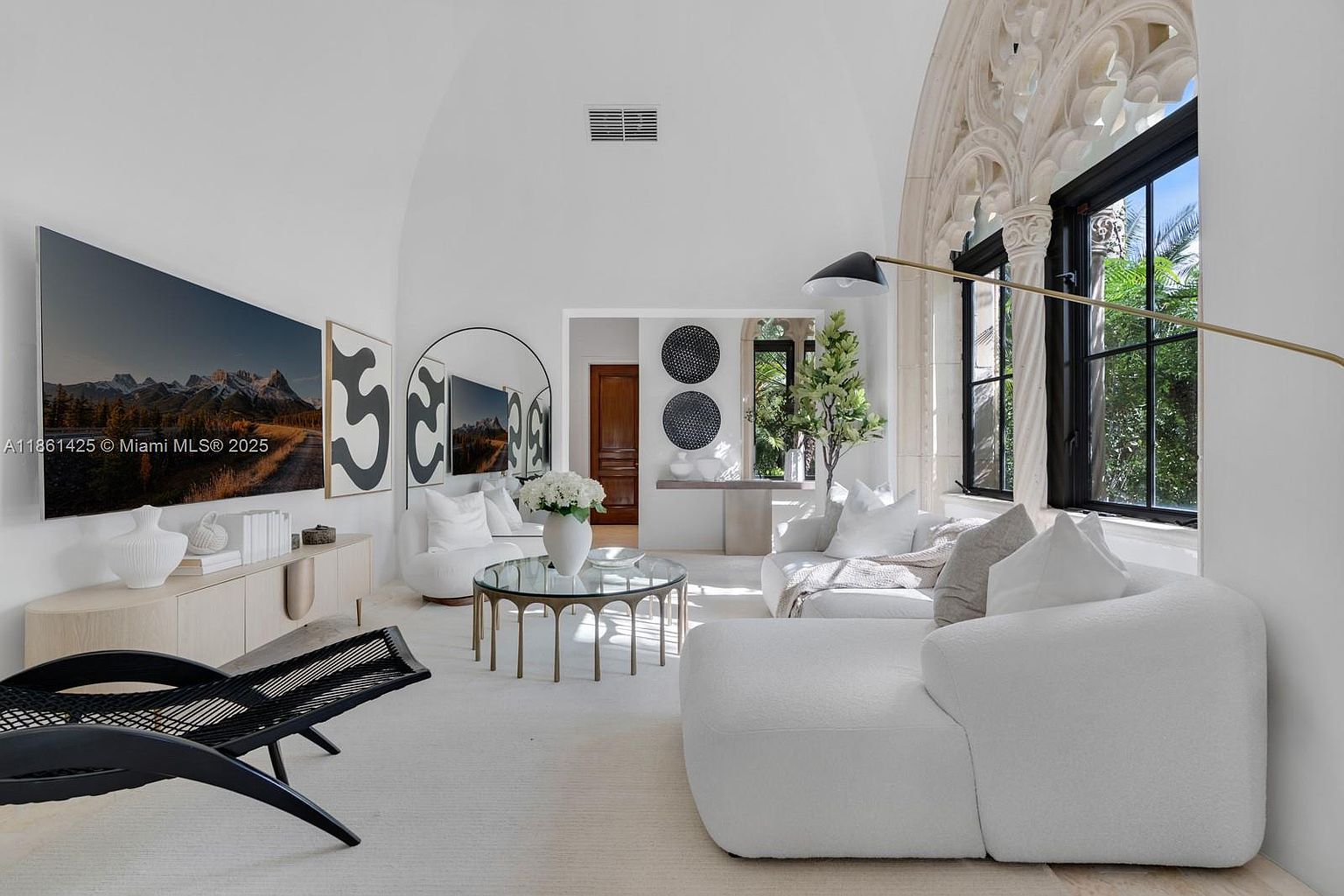
Inside, the Great Hall is among the most dramatic interior spaces in all of South Florida. Thirty-foot vaulted ceilings, washed in a celestial soft blue, soar above spiraling stone columns and antique stained-glass windows that scatter prismatic light across Jerusalem stone floors. French cast bronze chandeliers and Murano glass fixtures by B.F. Signoretti illuminate the space with warmth and gravitas. Stone fireplaces anchor the living areas, while wrought-iron chandeliers cast amber light across rooms designed to accommodate intimate evenings and grand-scale entertaining with equal ease.
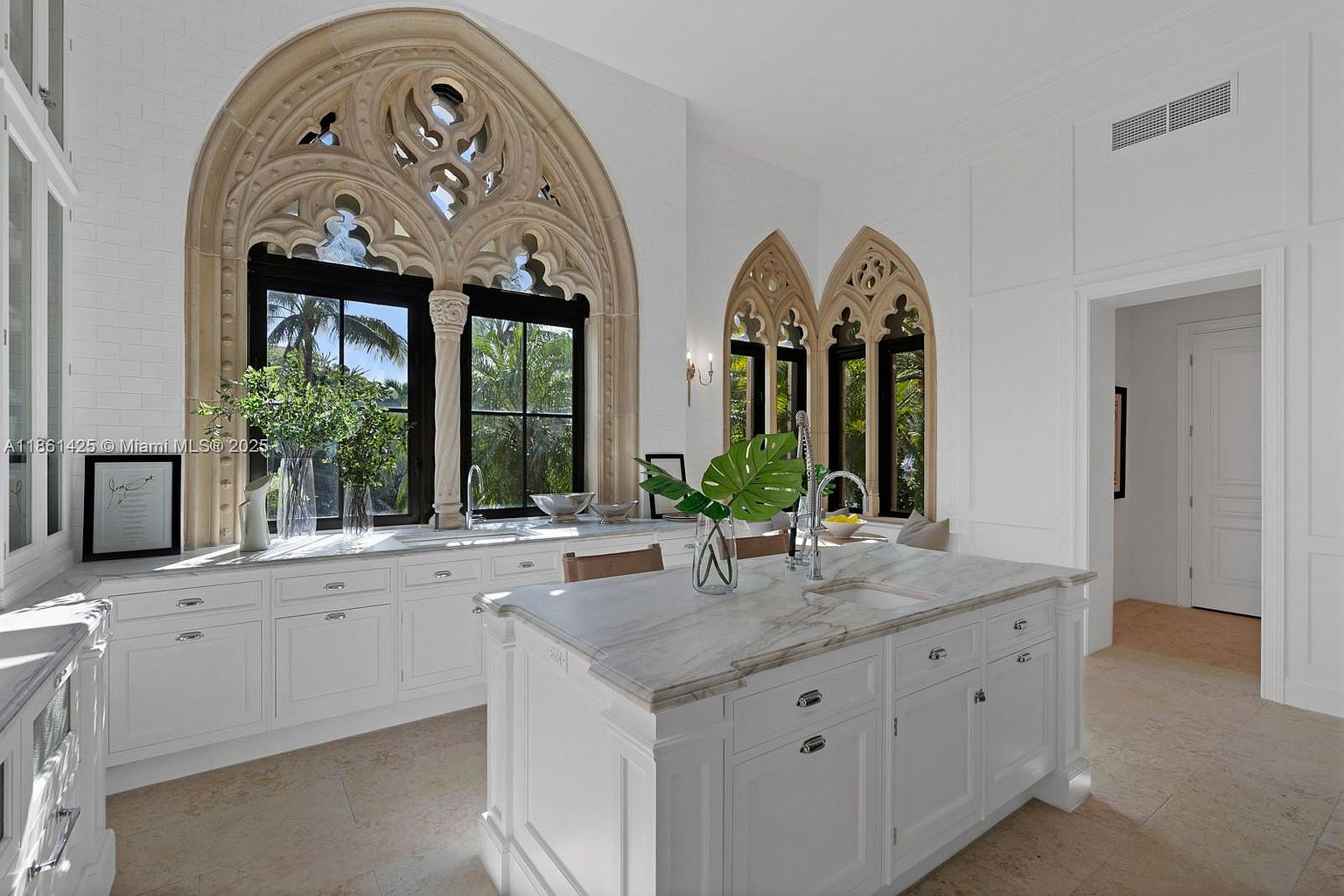
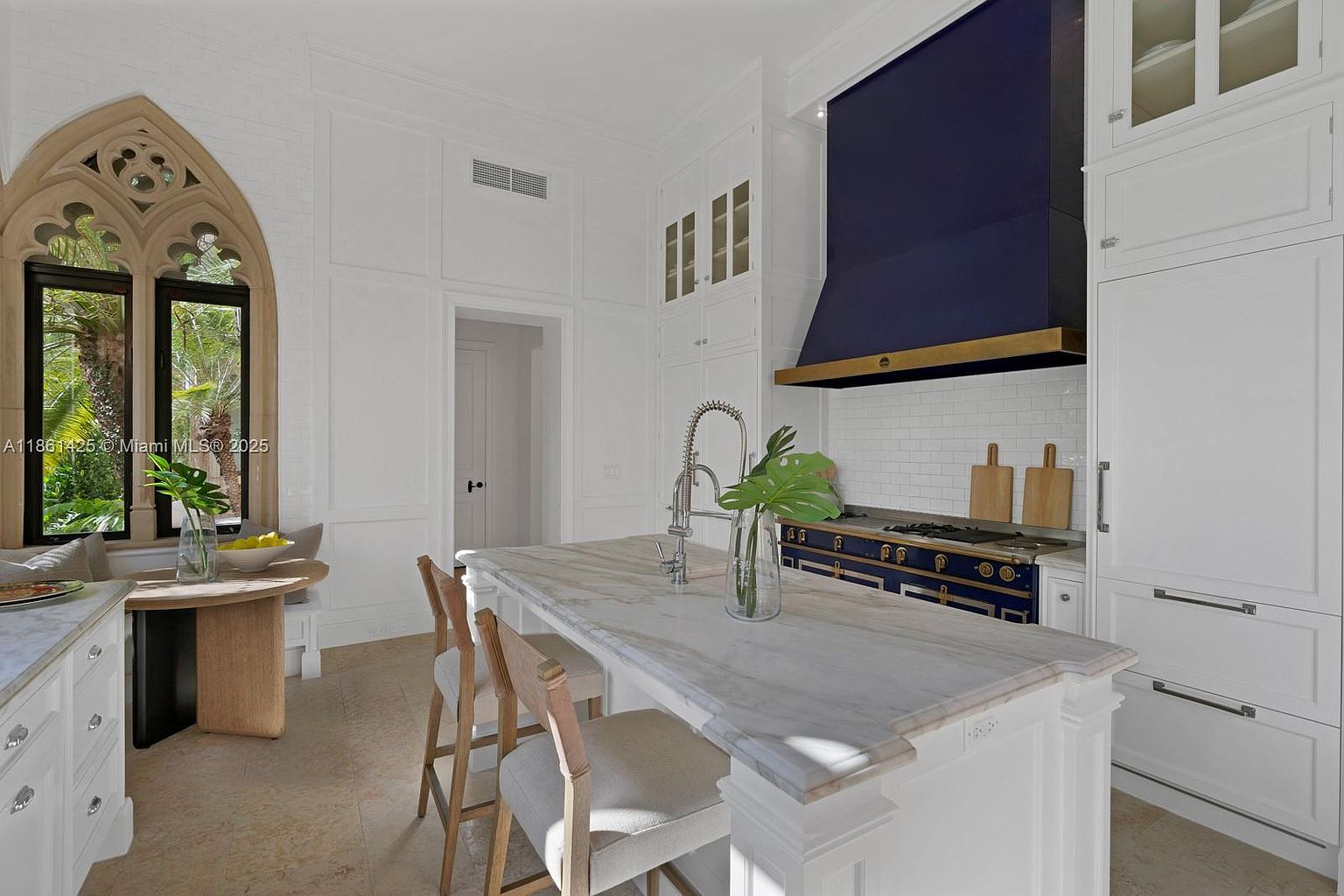
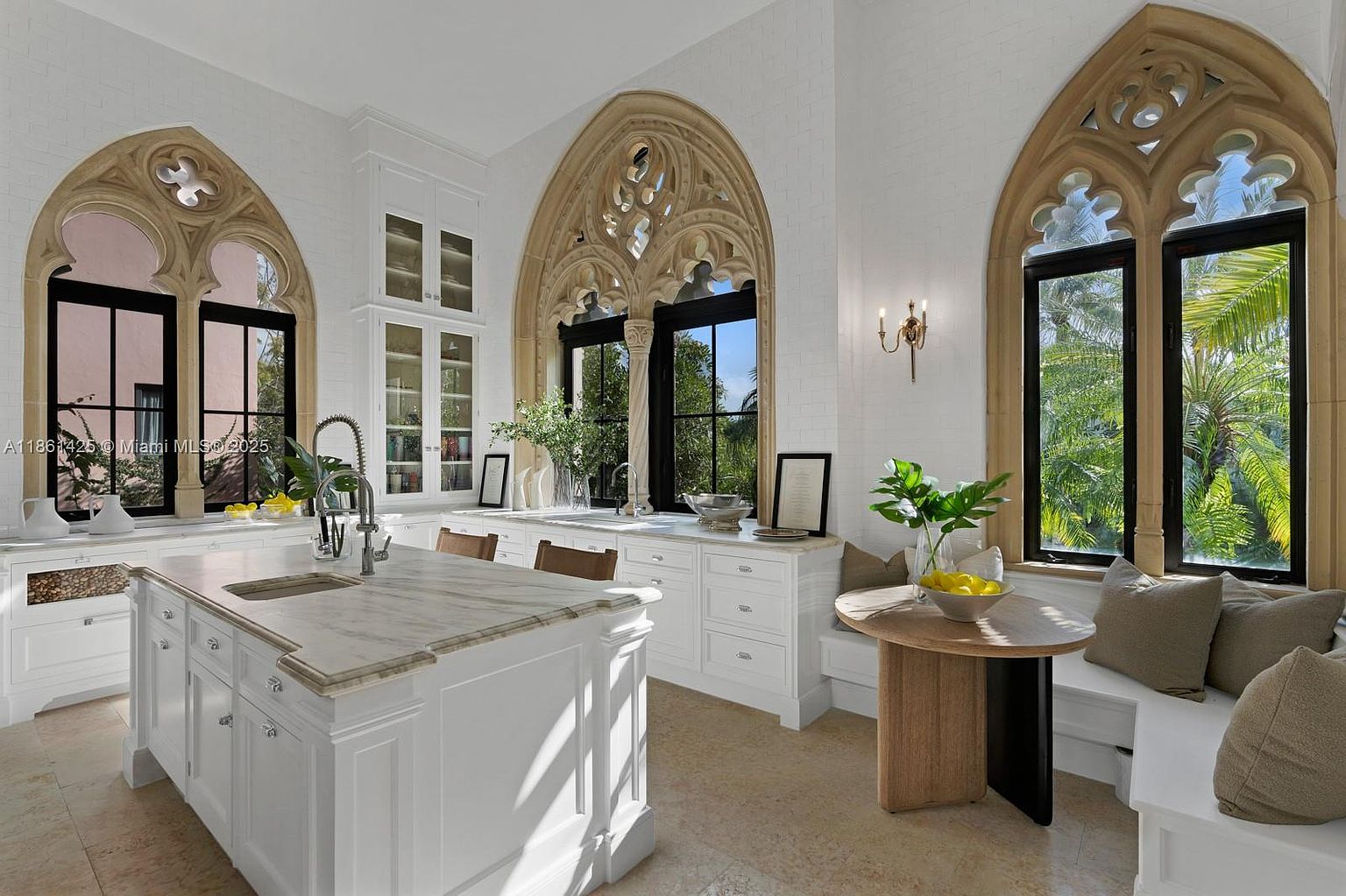
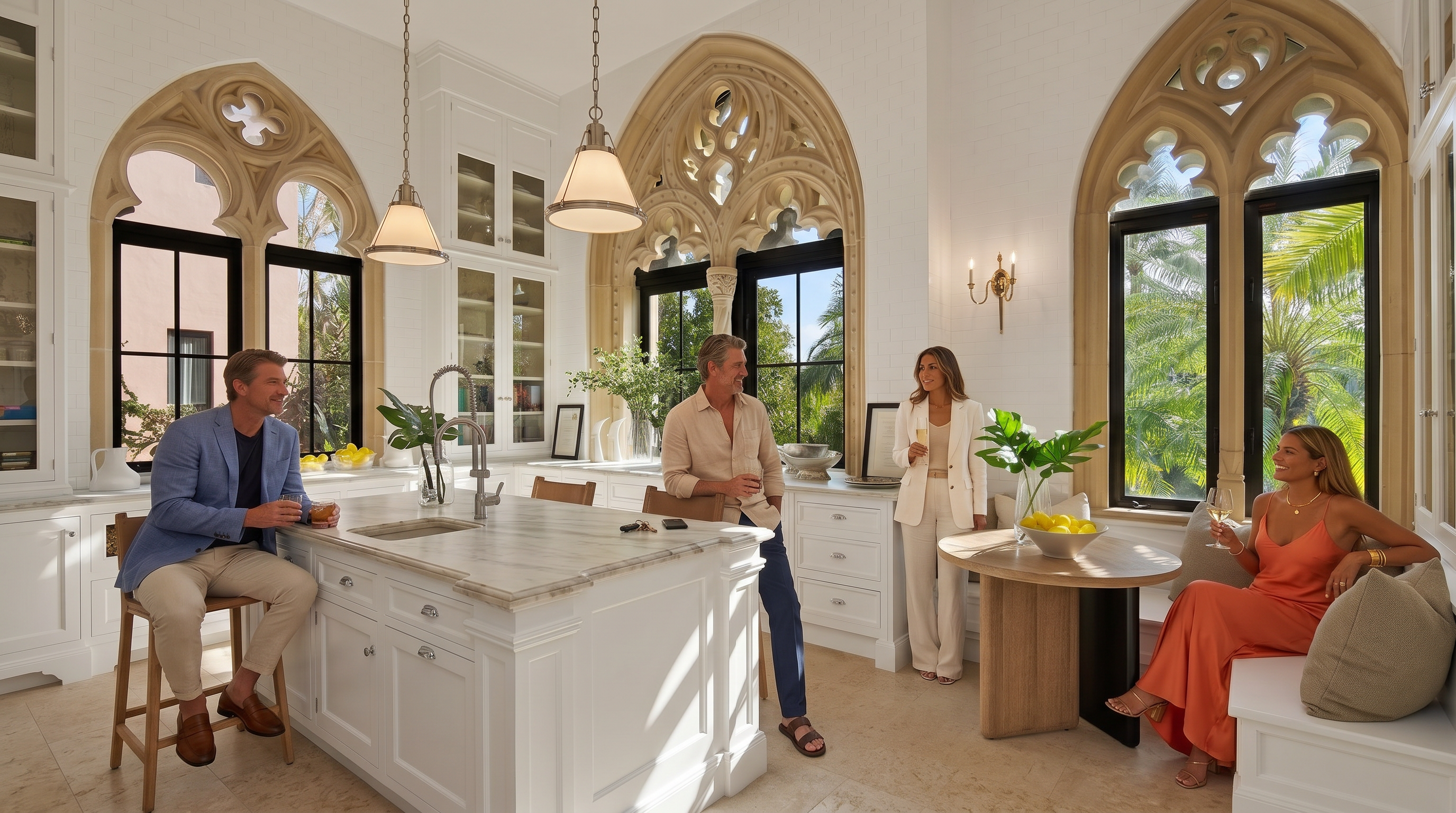
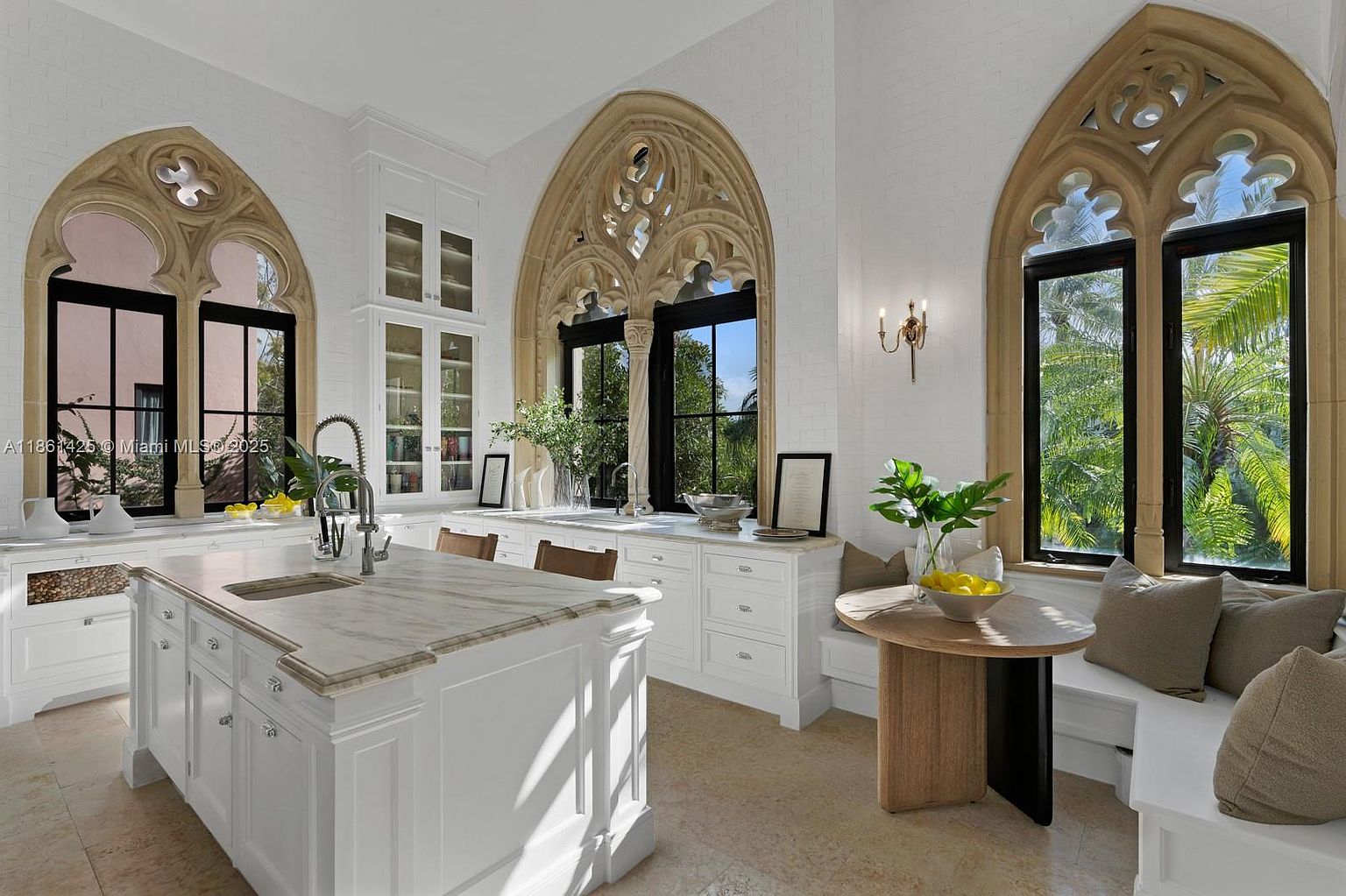
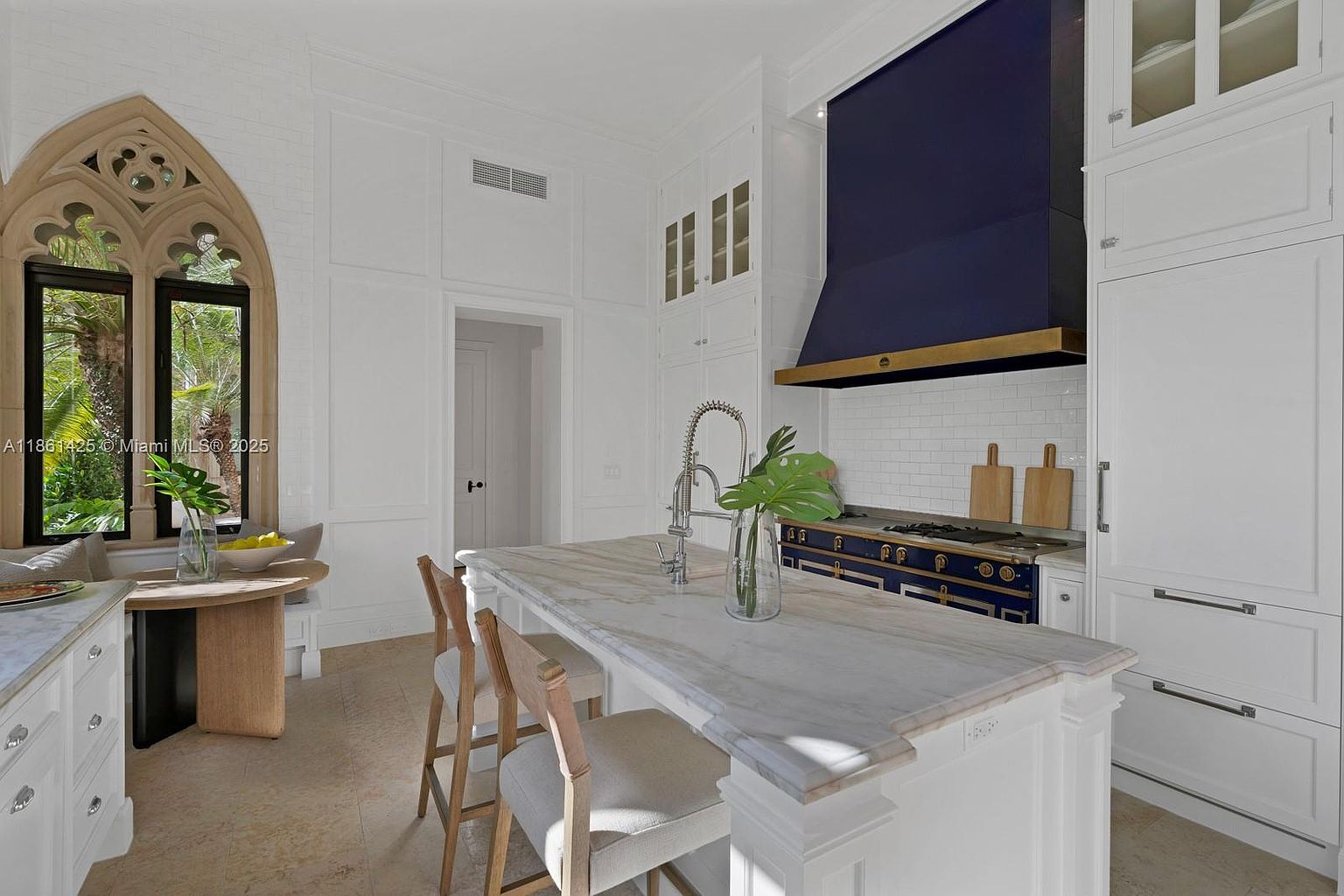
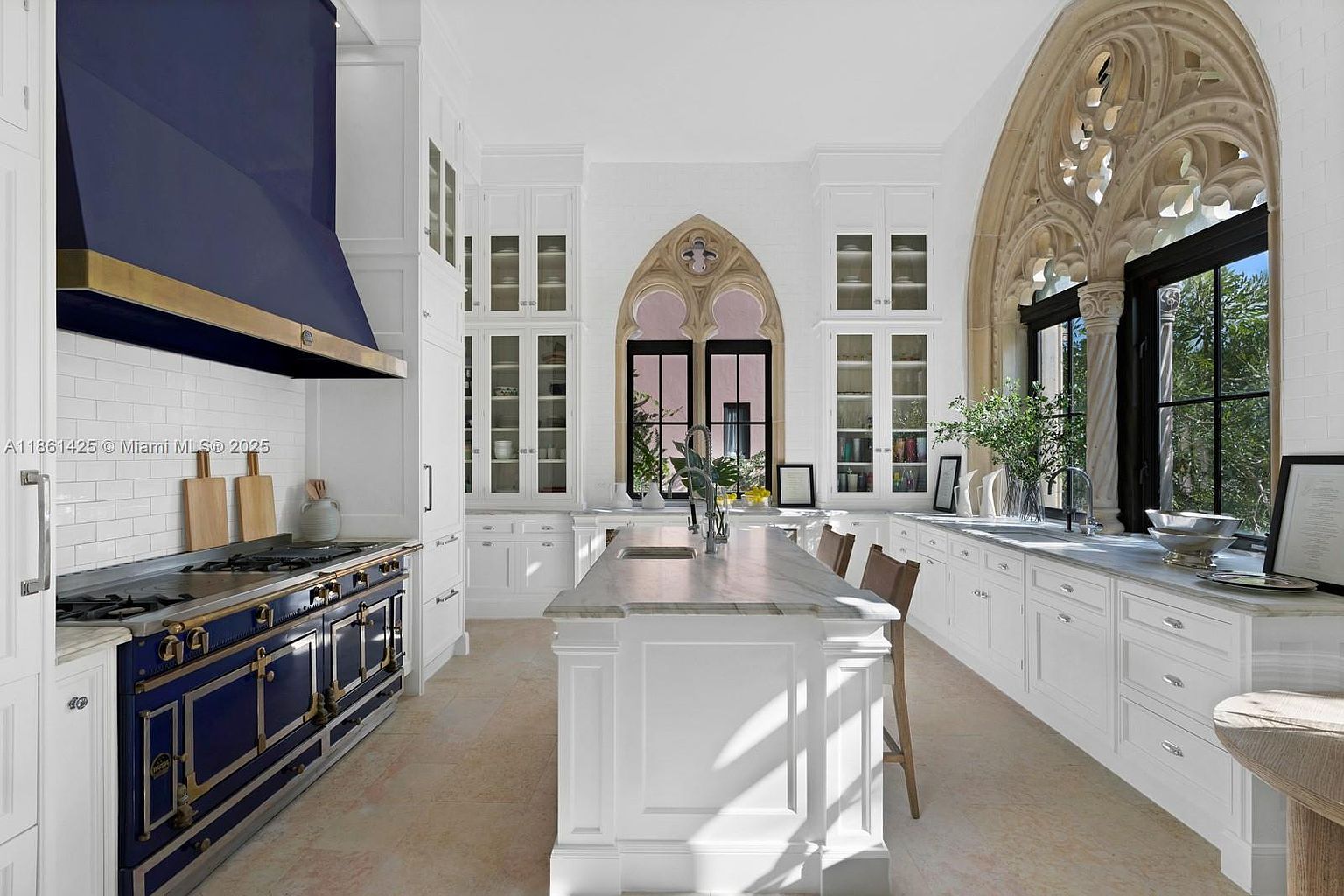
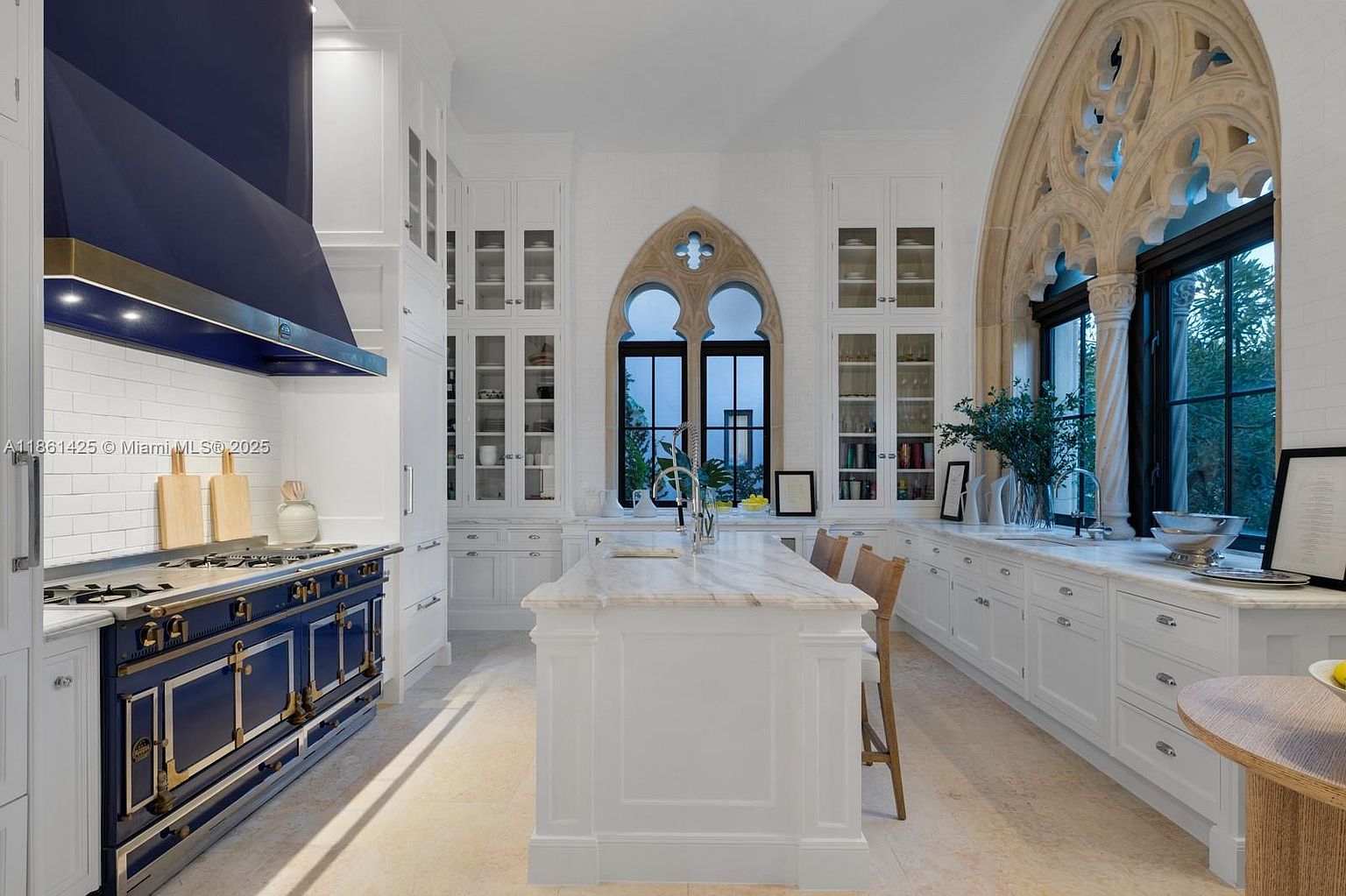
The La Cornue range — the gold standard of professional culinary equipment — anchors a chef's kitchen where Gothic stone window arches frame views of lush tropical greenery. Marble countertops, custom white cabinetry, a generous island, and a sun-drenched breakfast nook complete a space where architectural drama and culinary precision exist in perfect harmony.
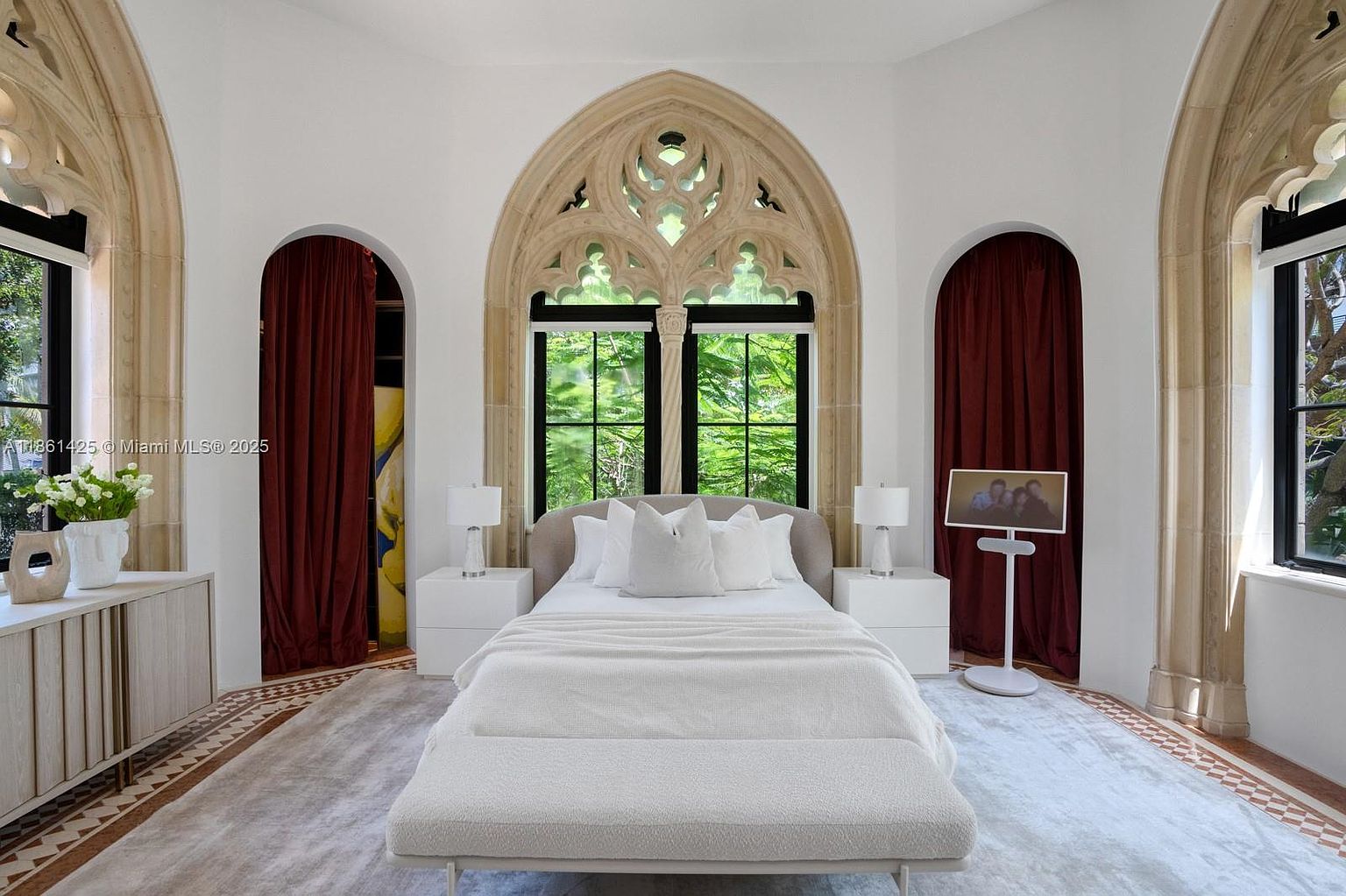
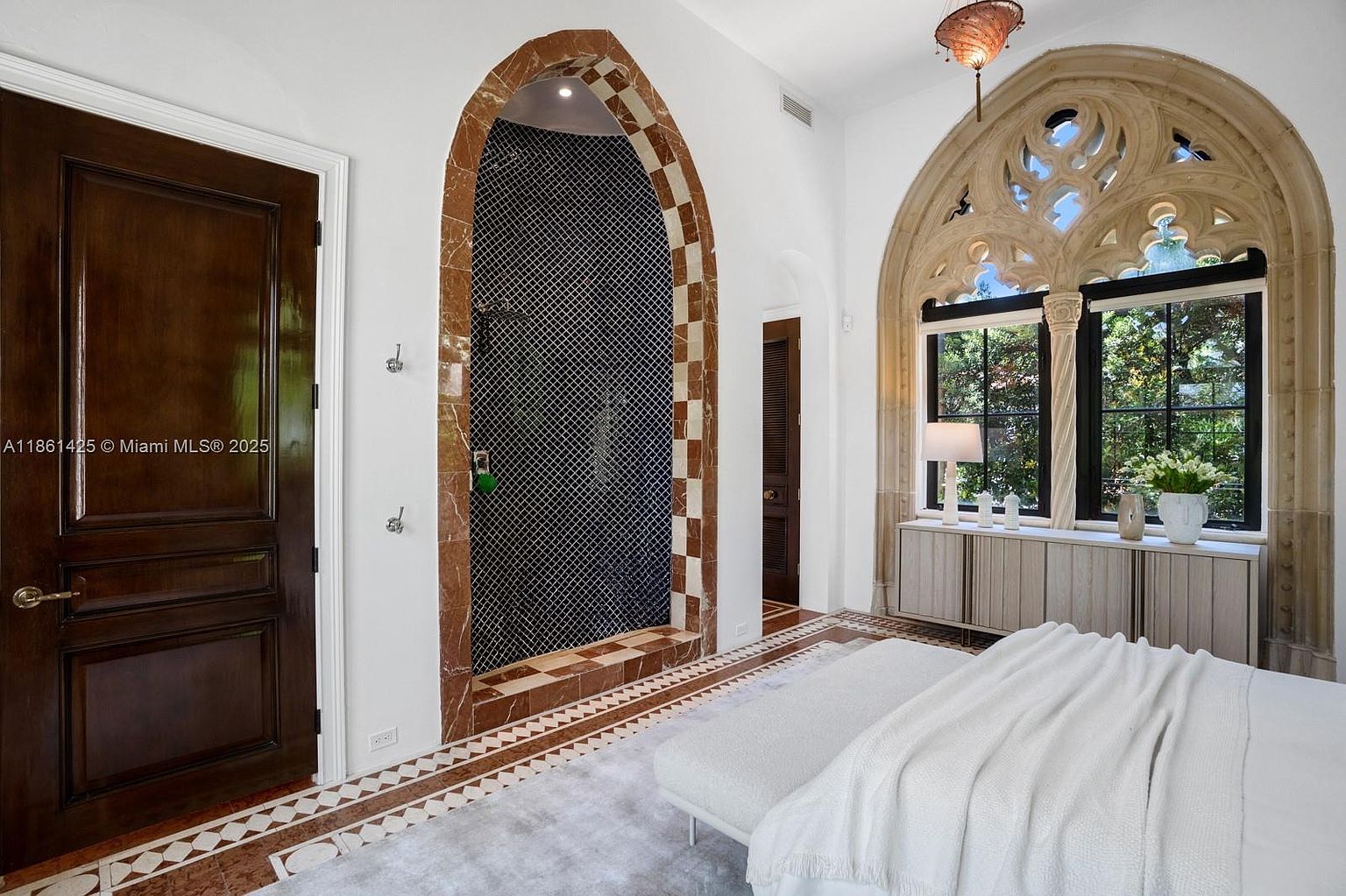
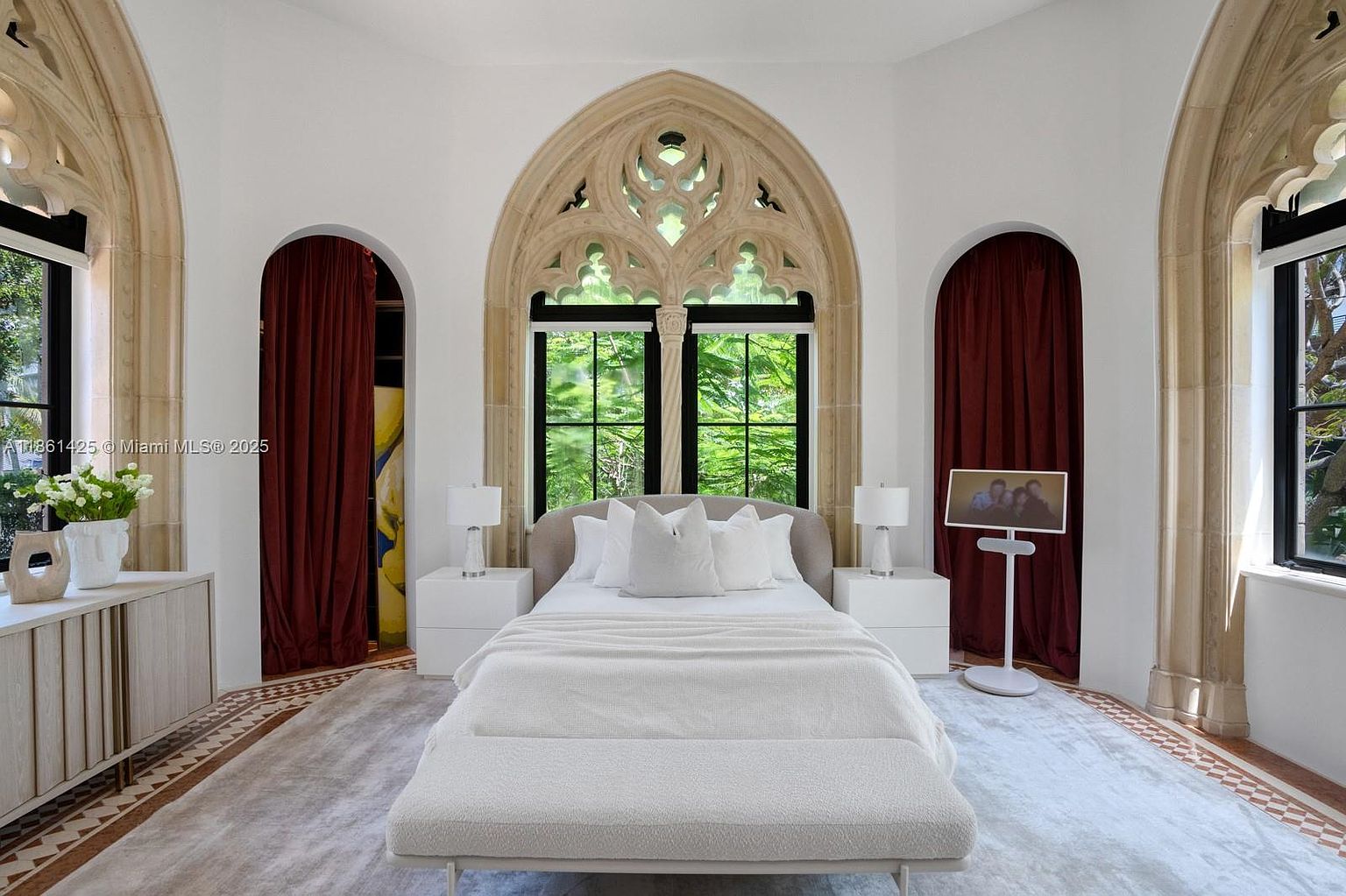
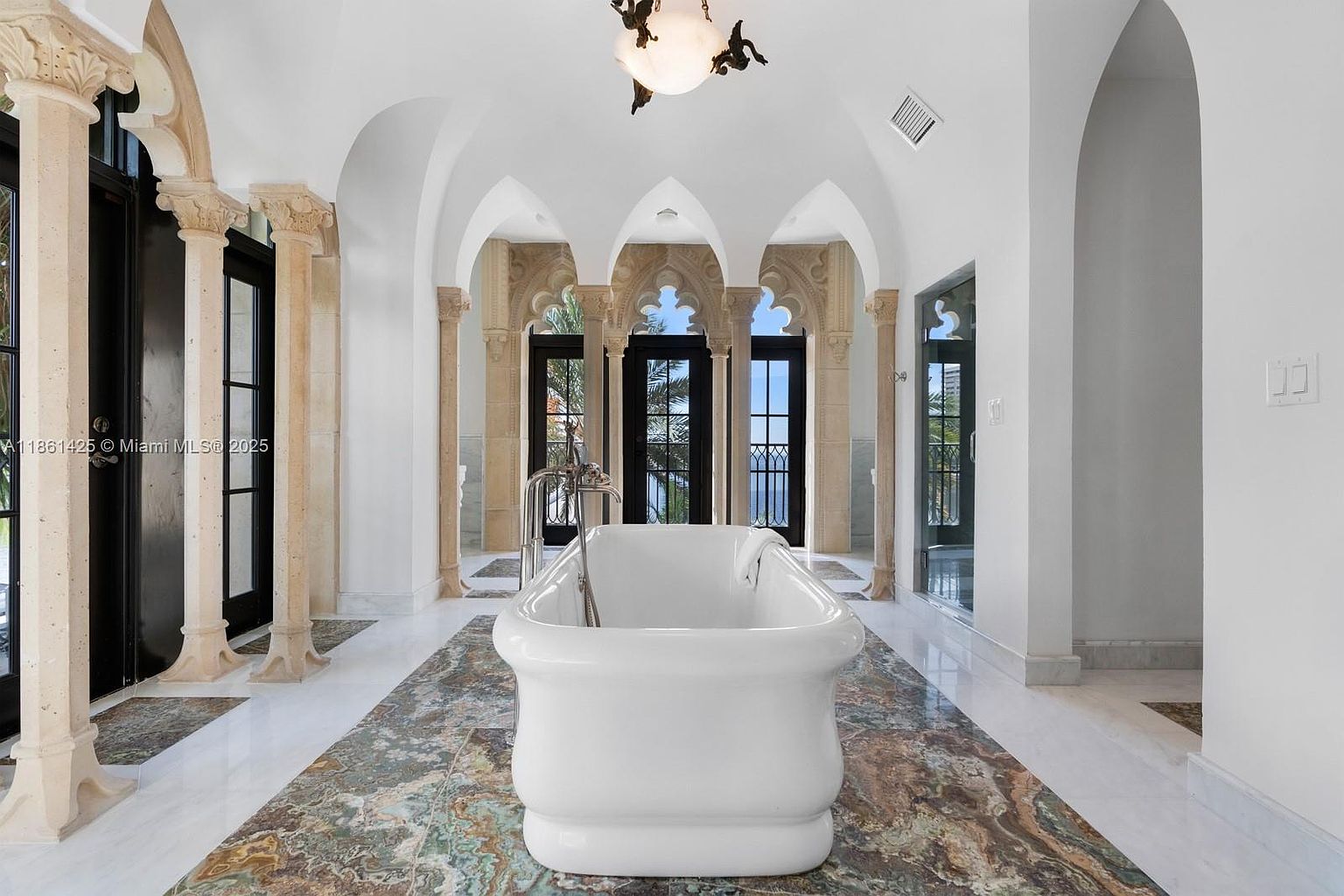
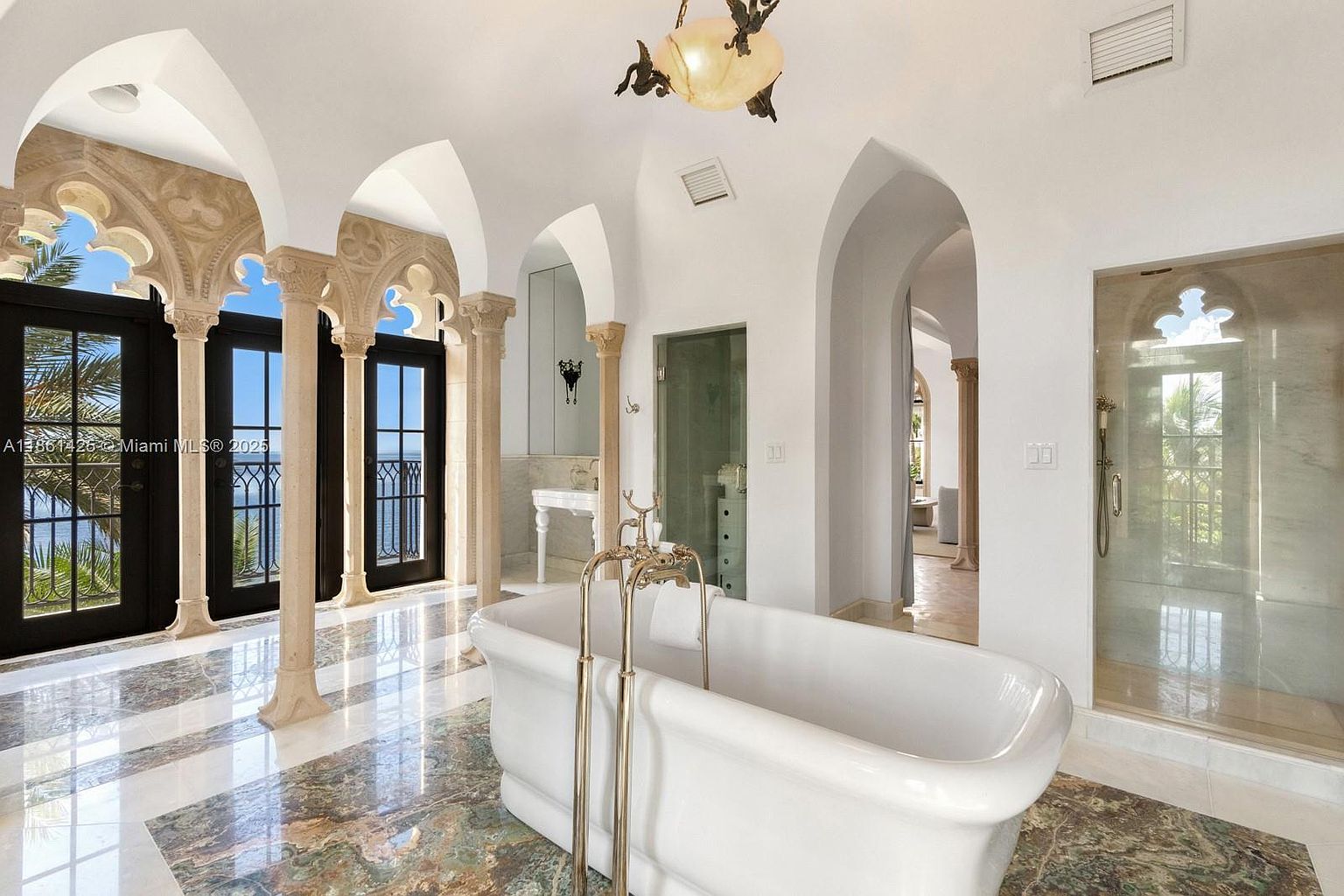
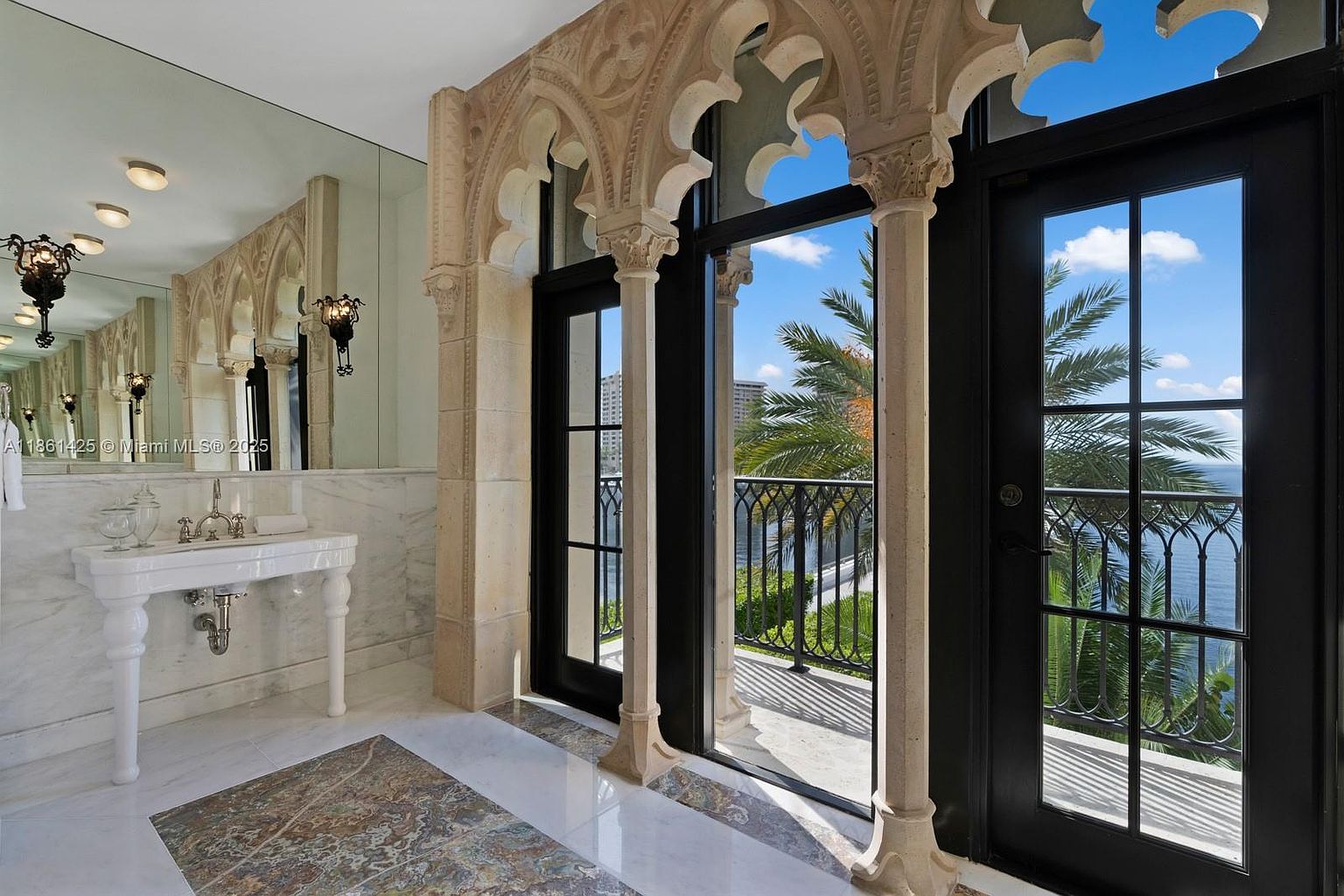
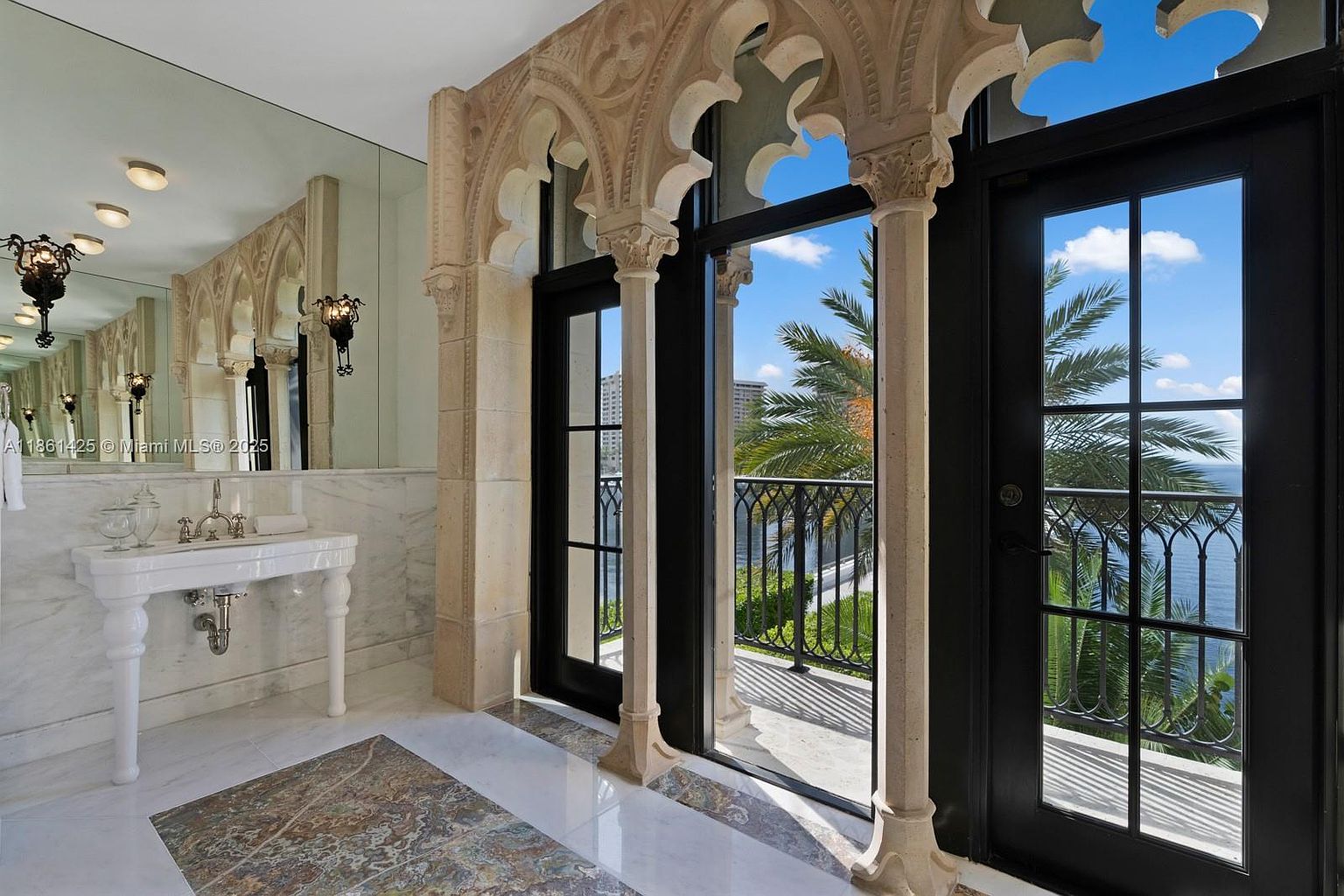
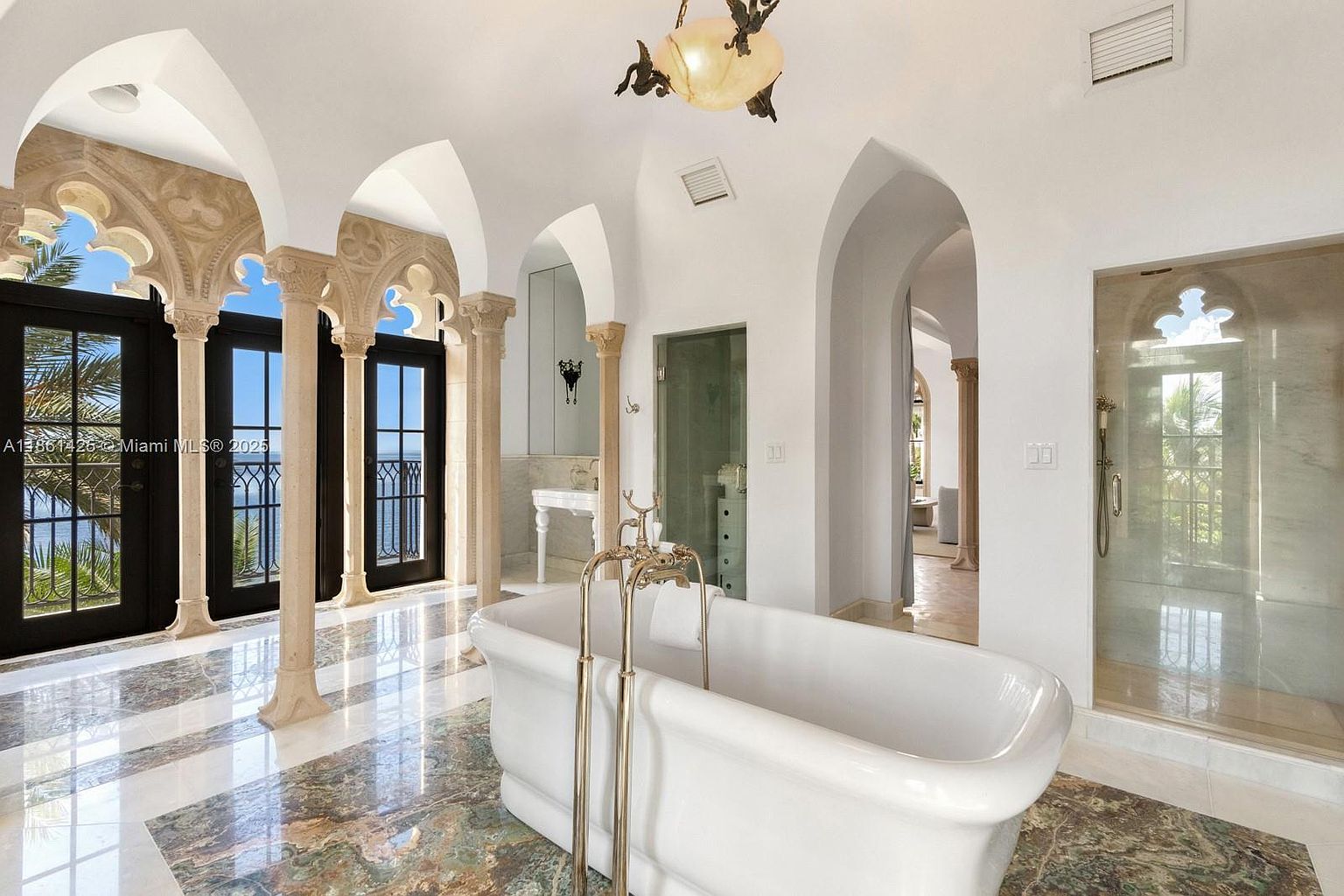
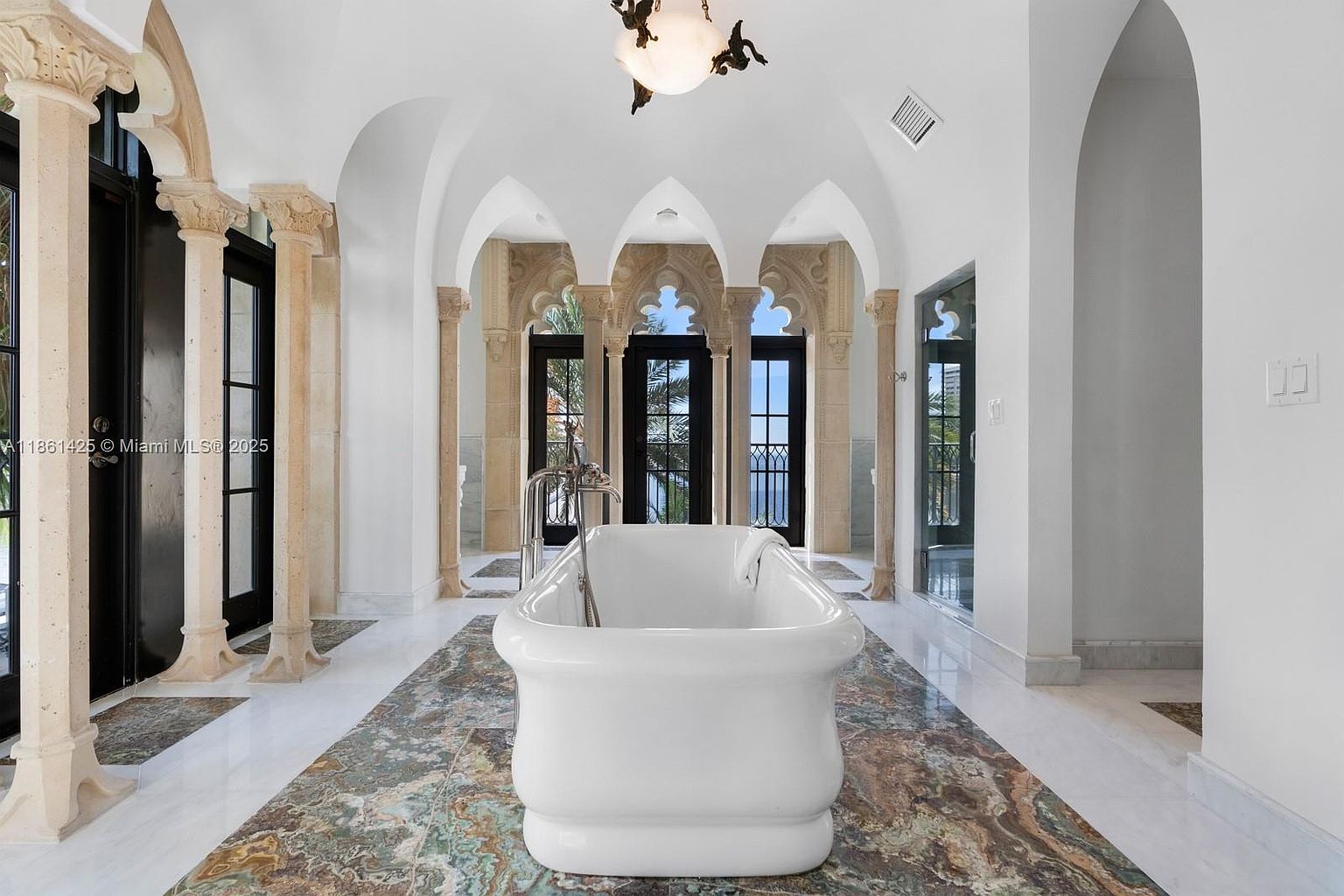
The primary suite is a study in romantic refinement: arched stone window frames, a freestanding soaking tub set on polished marble with intricate inlay work, and glass doors that open directly to ocean views. A dedicated home office, defined by Gothic arched windows on multiple sides and direct terrace access, offers a workspace of rare tranquility and natural light.
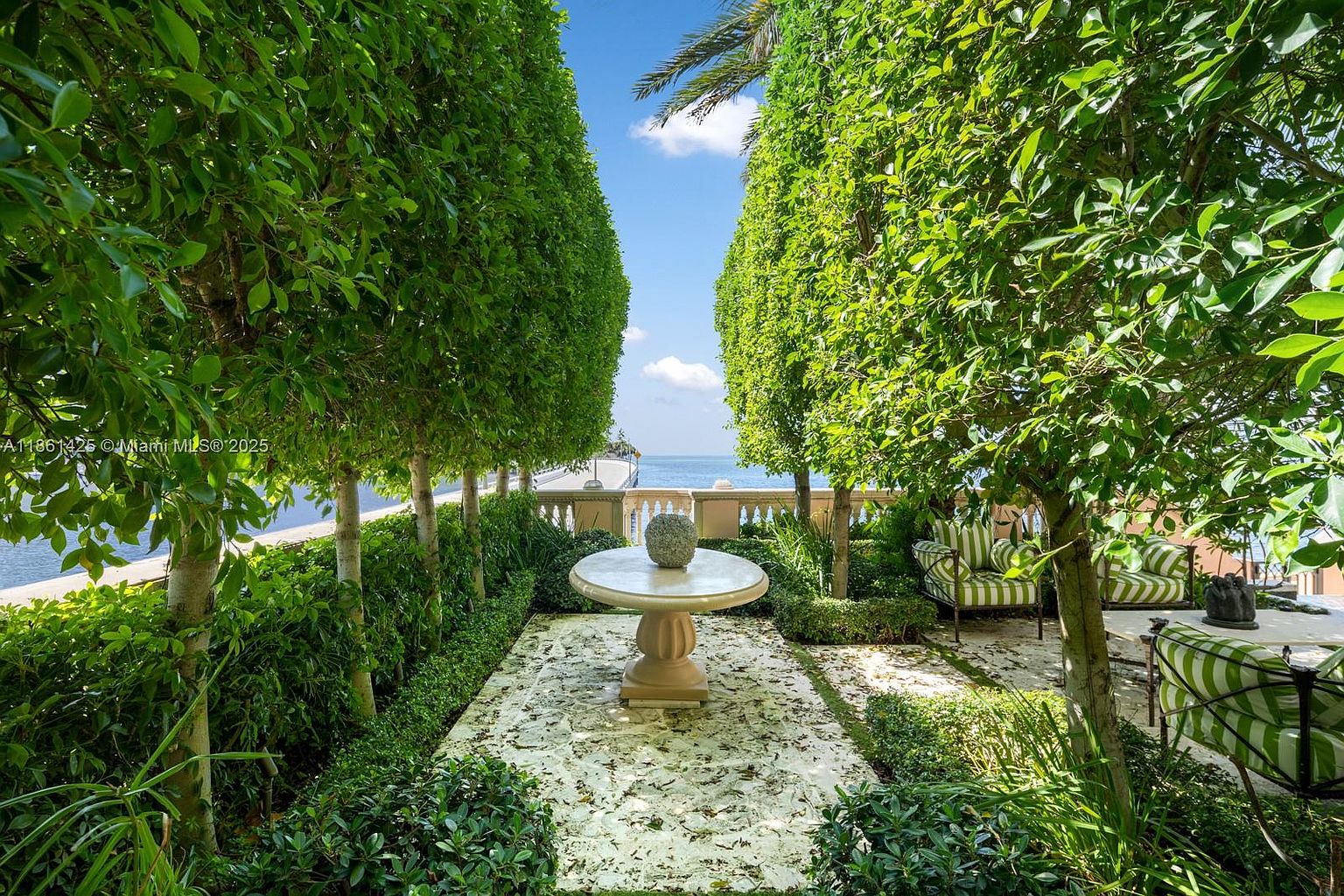
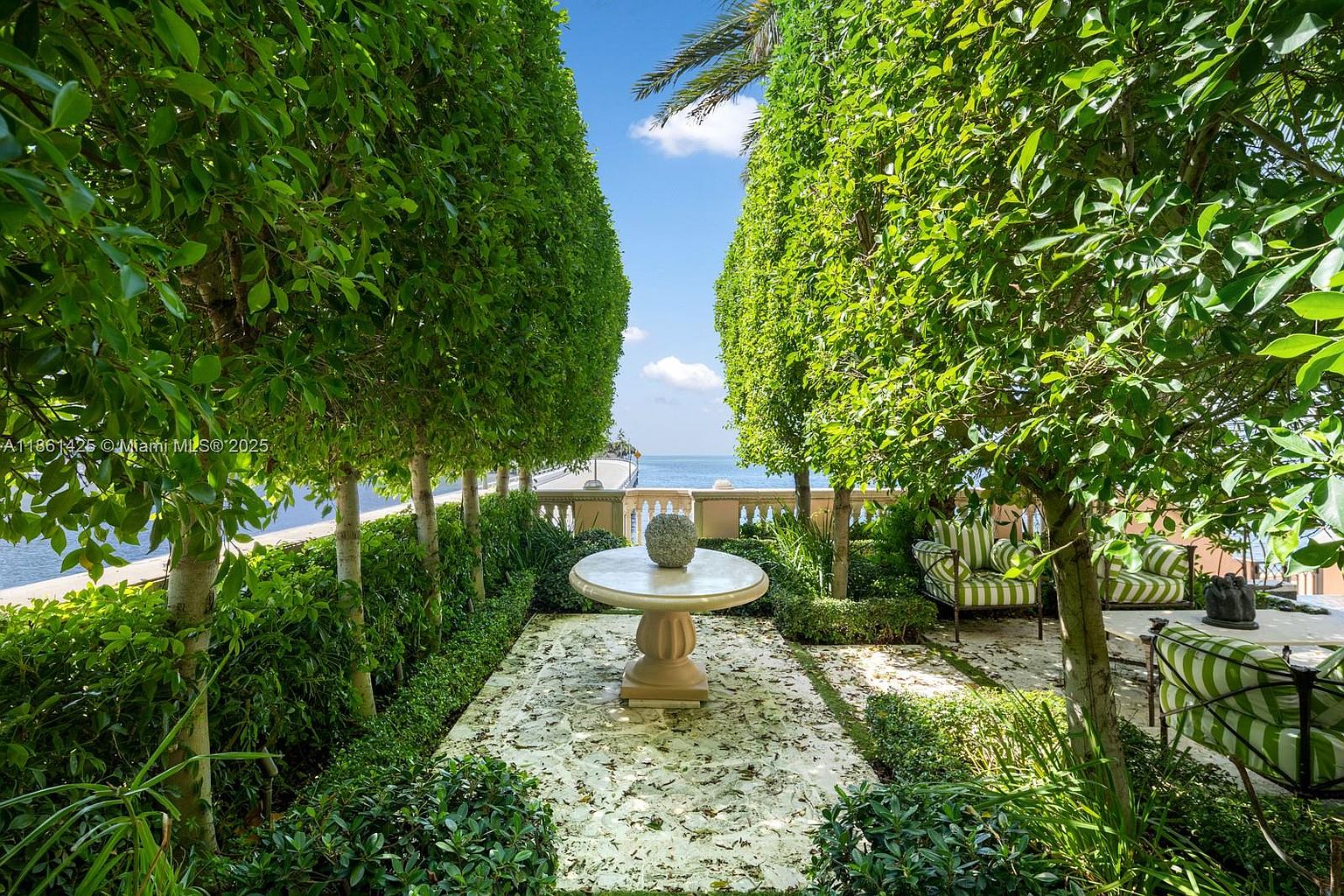
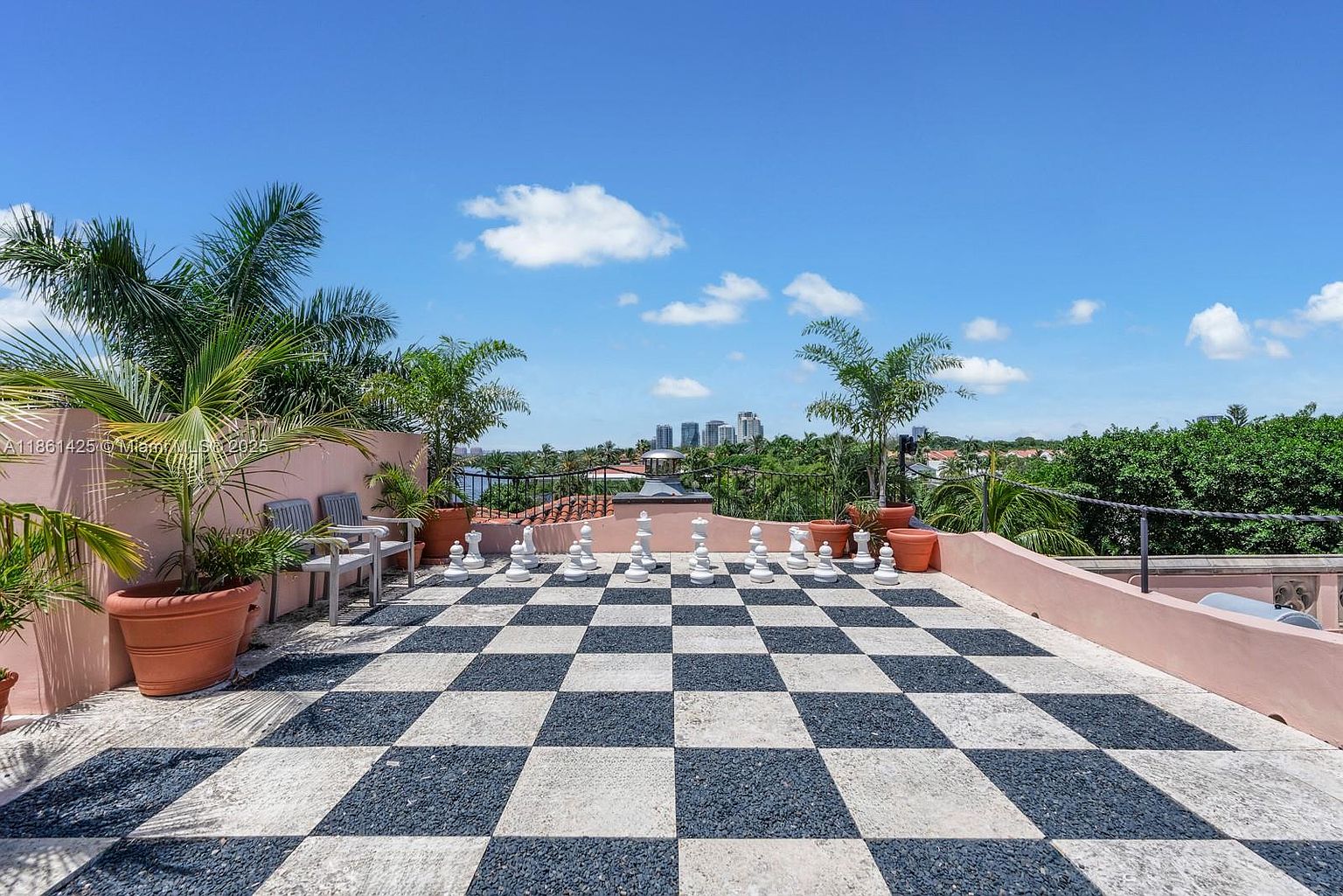
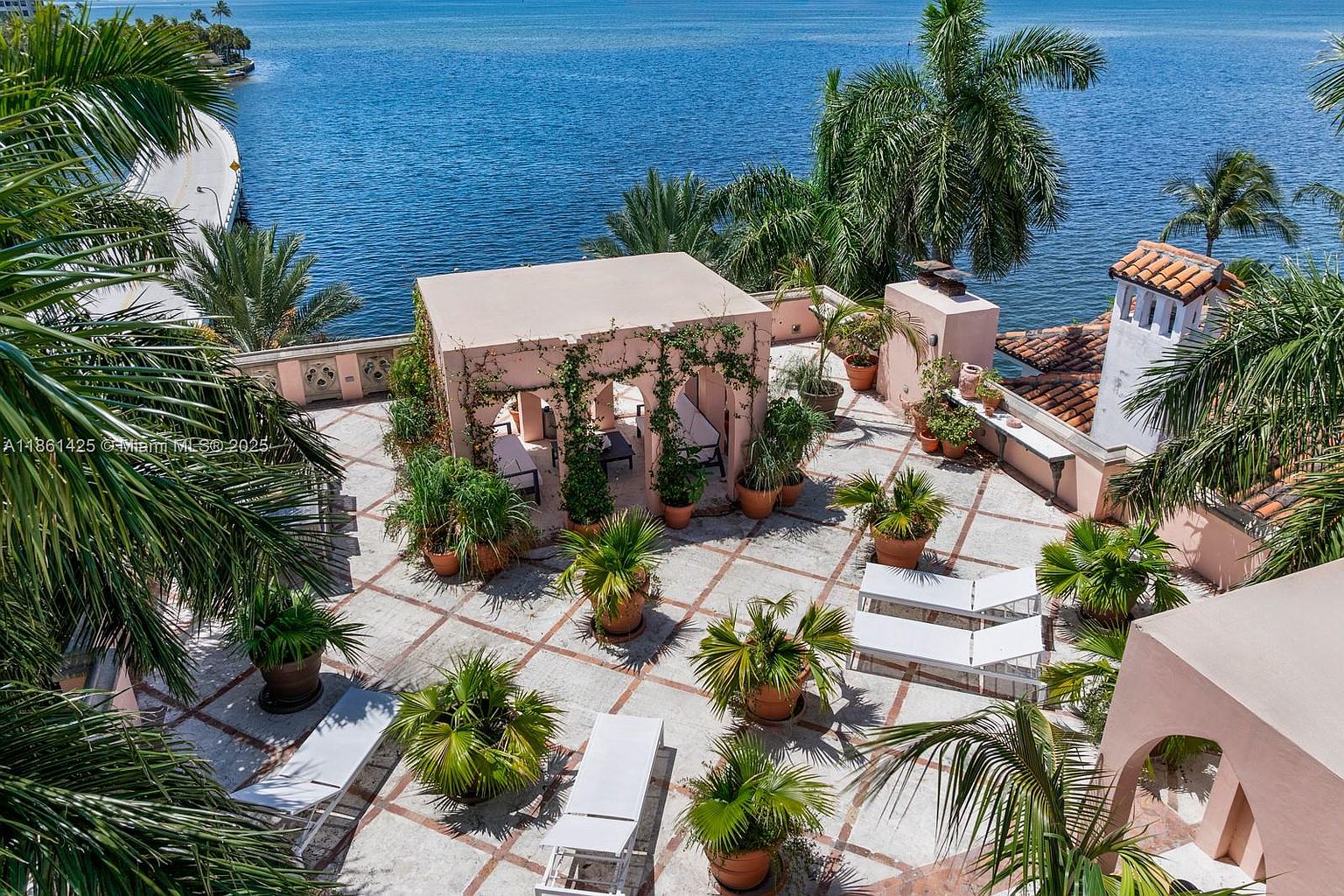
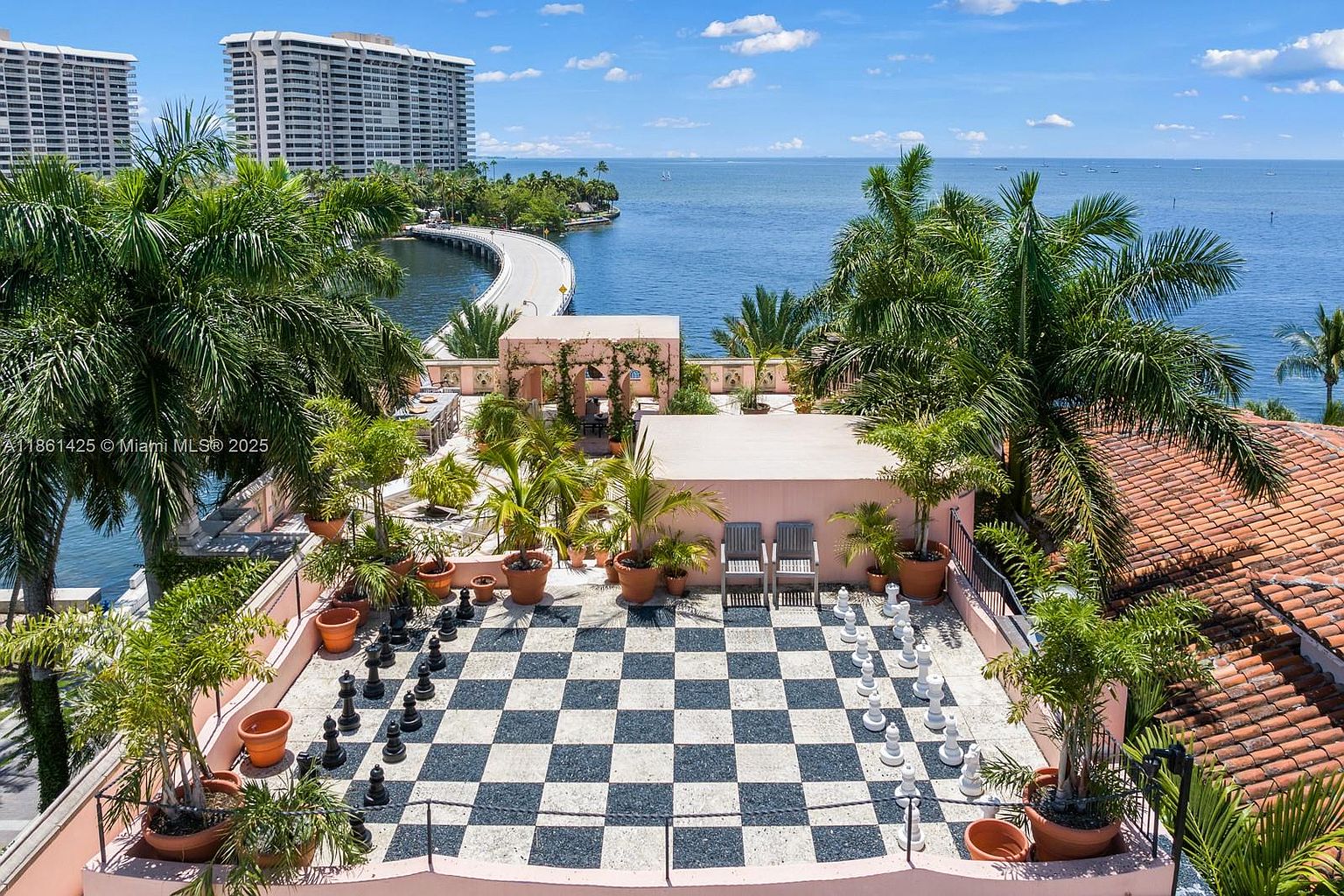
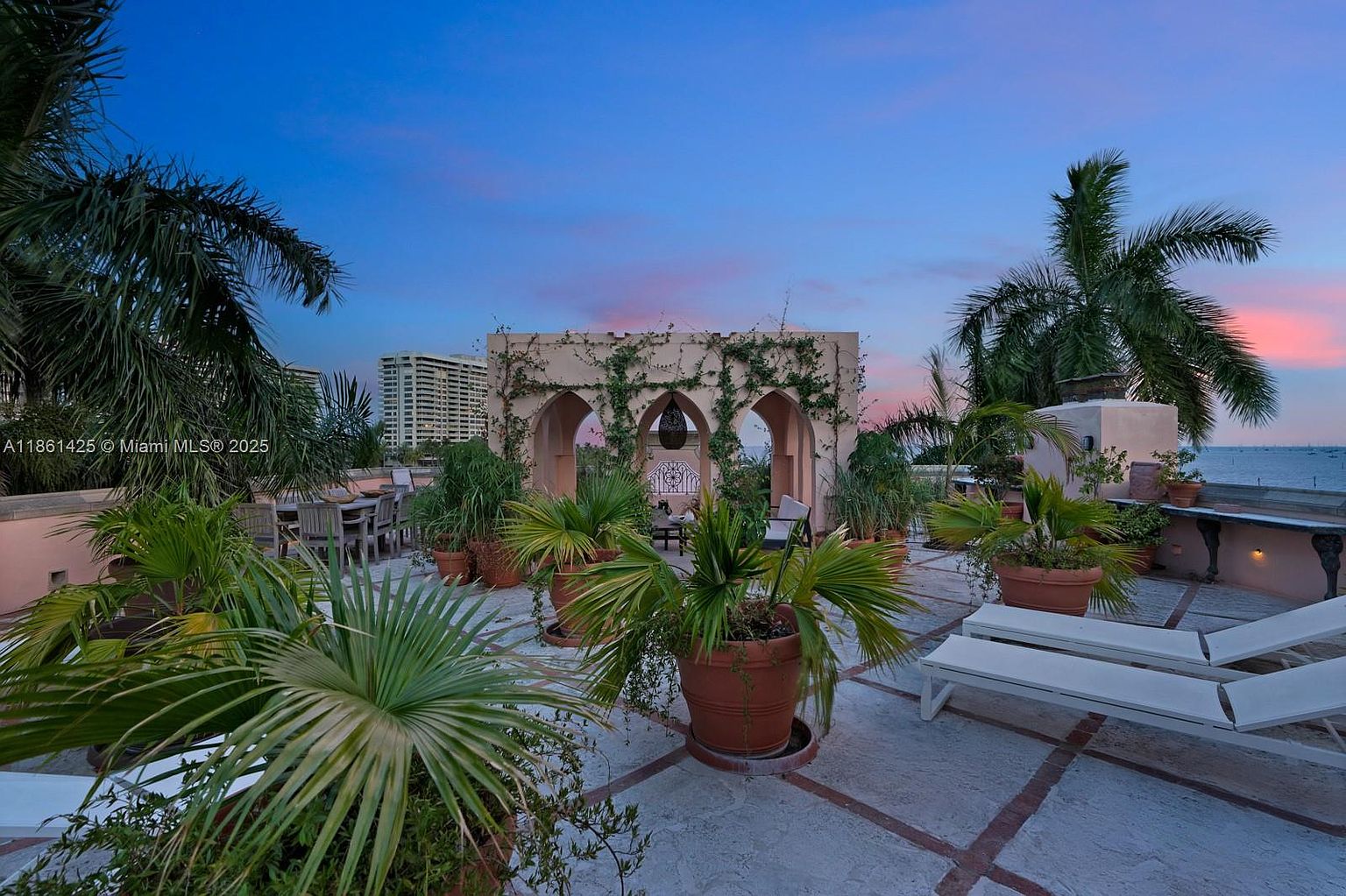
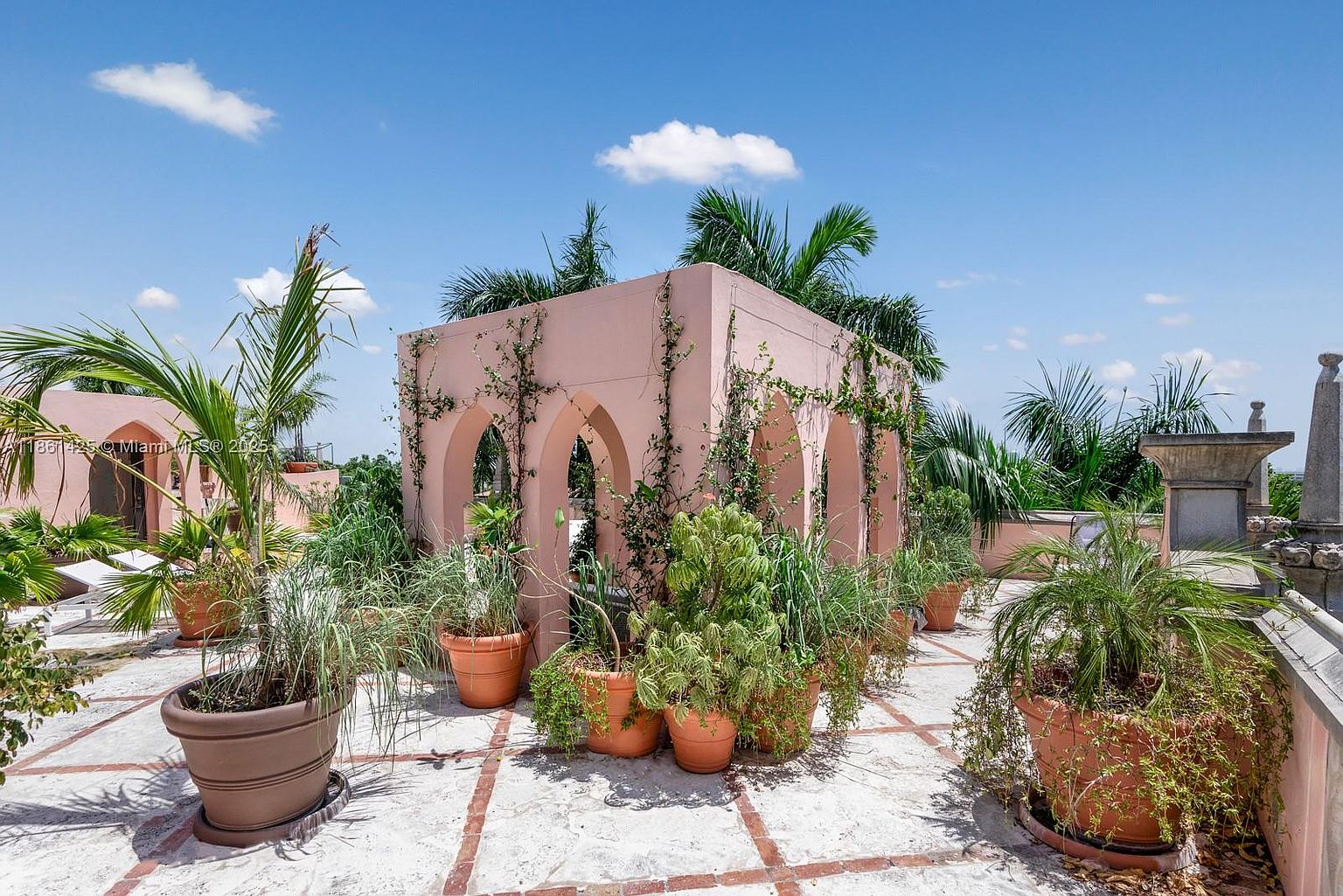
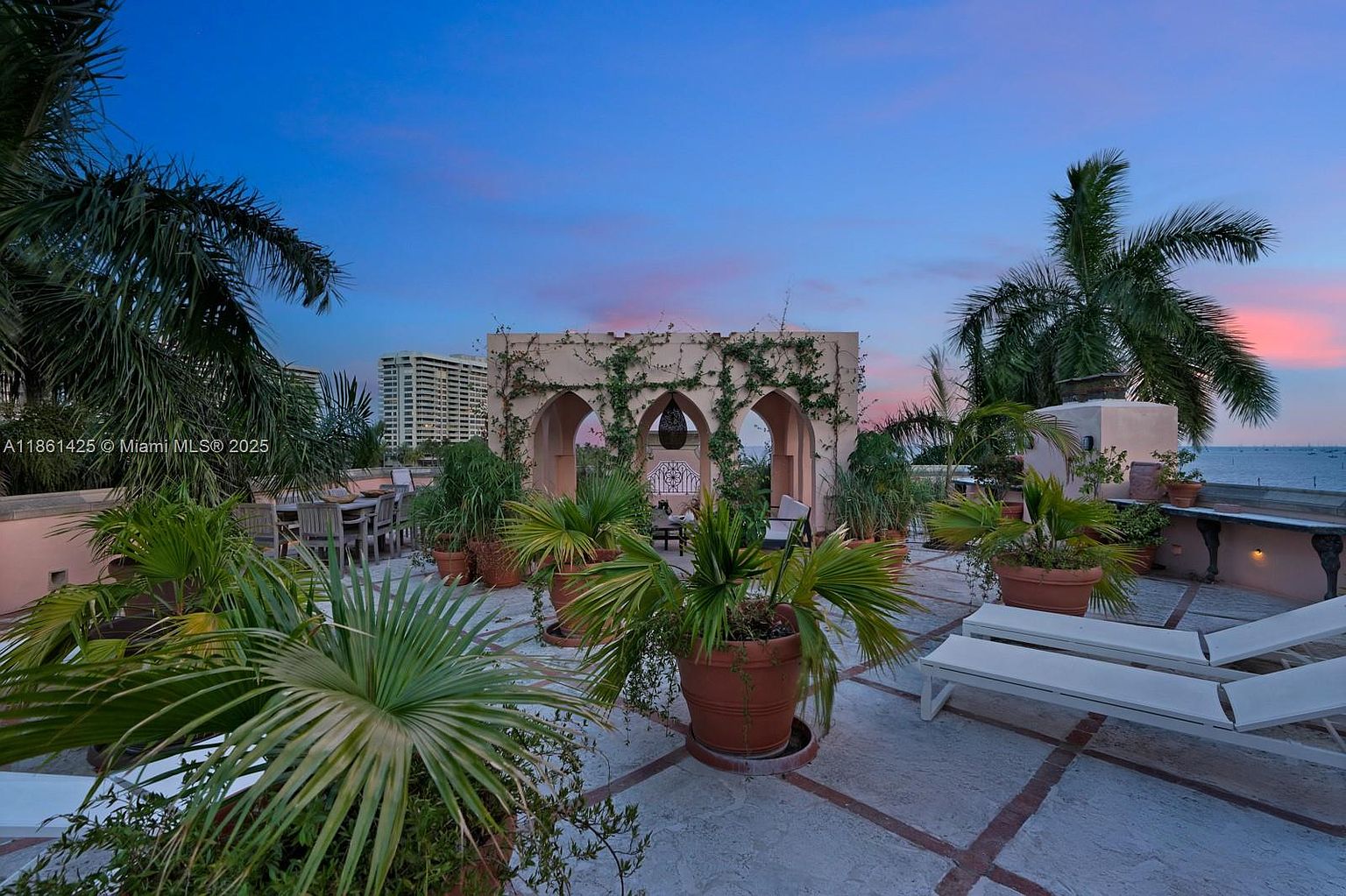
Outdoors, the estate performs with equal conviction. The keystone-edged infinity pool dissolves seamlessly into the waters of Biscayne Bay below, while a private cement dock provides immediate access to open water. The rooftop sundeck — home to a life-sized chess board and panoramic views of the bay and Miami skyline — and a vine-draped pergola terrace create multiple distinct outdoor rooms for living and entertaining at altitude.
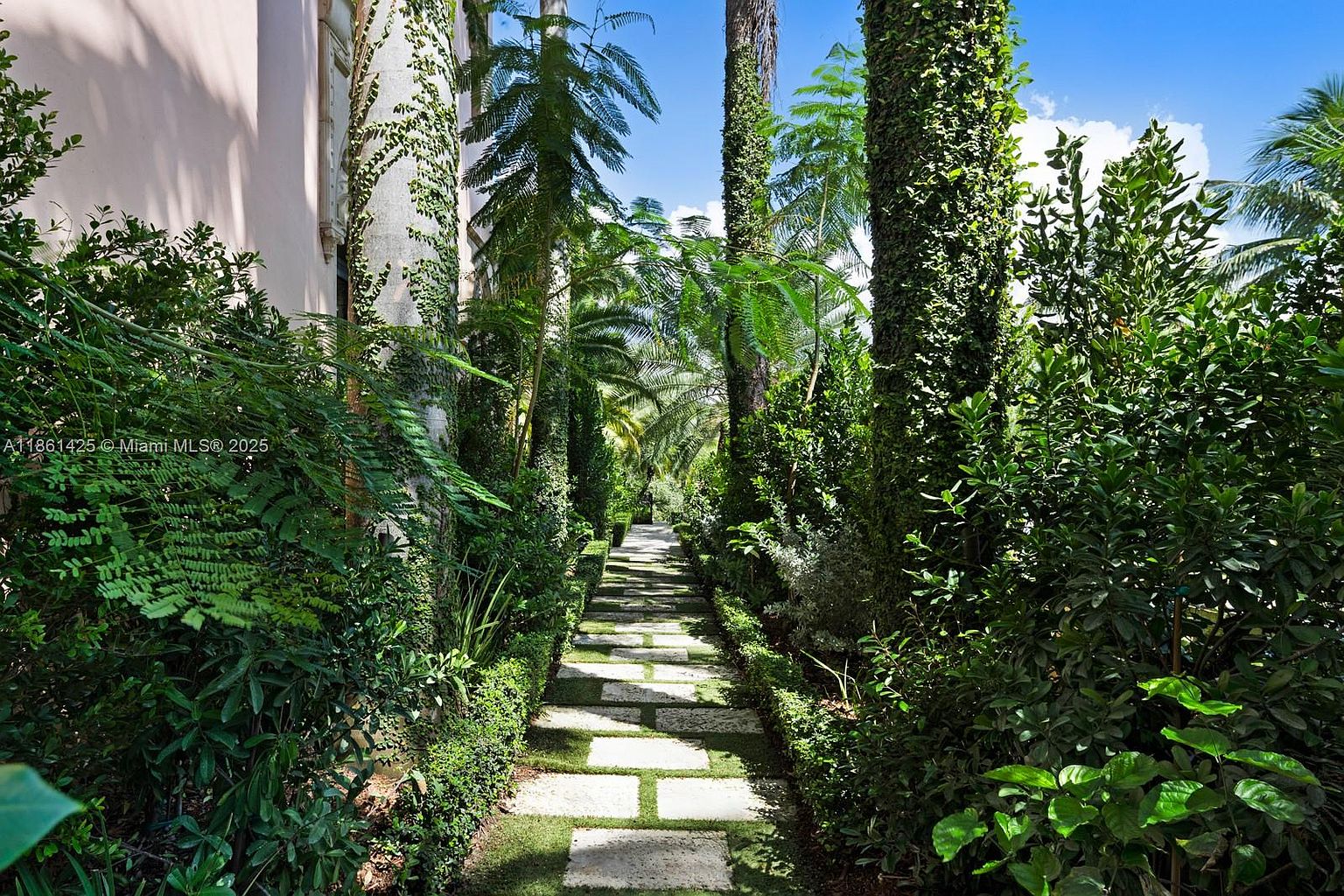
The grounds, landscaped by the celebrated Fernando Wong, are a masterclass in tropical formality: manicured hedges, stone pathways, ivy-covered archways, and garden terraces that feel simultaneously curated and wild. Independent living quarters with a private kitchen, a private motor court, and a 3,000-square-foot unfinished basement — ready to be transformed into a wellness center, wine cellar, or entertainment complex — complete an estate of seemingly limitless possibility.
This is not a home that was built to follow precedent. It is a home that creates its own.
Coconut Grove occupies a singular position in the story of Miami — as the city's oldest continuously inhabited neighborhood, its identity is woven from a rare combination of bohemian history, civic pride, architectural distinction, and natural beauty that no other pocket of South Florida can replicate.
Settled in the 1870s by Bahamian workers, New England intellectuals, and Caribbean fishermen, the Grove developed an independent character long before Miami was incorporated as a city in 1896. That spirit of creative independence has never fully left. Over the decades, the neighborhood has attracted artists, diplomats, architects, and visionaries drawn to its canopy of ancient banyan trees, its proximity to the water, and its genuine sense of community — a rarity in a city that reinvents itself as quickly as Miami does.
Today, Coconut Grove is one of Miami's most desirable residential addresses, prized for its walkability, its mature tree canopy — among the densest urban tree coverage in Florida — and its deeply rooted sense of place. Peacock Park, situated along the bay, offers green space, water access, and a gathering point for the community. The Coconut Grove Sailing Club, one of the oldest yacht clubs in the United States, speaks to the neighborhood's longstanding relationship with Biscayne Bay and the sailing culture that has defined life along this shoreline for generations.
Coconut Grove's commercial village — centered along Grand Avenue and McFarlane Road — offers an intimate, human-scaled collection of independent restaurants, sidewalk cafes, boutiques, and cultural venues quite unlike the high-rise retail corridors found elsewhere in Miami. Restaurants such as Ariete have brought national culinary recognition to the neighborhood, while the CocoWalk development has brought a thoughtfully redesigned open-air gathering place that serves as a social anchor for residents.
Culturally, the Grove punches well above its weight. The Coconut Grove Playhouse, one of Florida's most historic theatrical institutions, has been a cornerstone of the neighborhood's arts identity since 1927. The annual Coconut Grove Arts Festival, held each February along the bayfront, draws hundreds of artists and tens of thousands of visitors and has been ranked among the top outdoor arts festivals in the United States for decades.
For families, the neighborhood offers access to some of Miami's most respected educational institutions, including Ransom Everglades School and the Carrollton School of the Sacred Heart, both situated within the broader Grove area. The proximity to the University of Miami in nearby Coral Gables adds an additional layer of intellectual and cultural energy to the surrounding community.
Biscayne Bay, which forms the eastern boundary of the neighborhood, is the defining natural feature of life in Coconut Grove. From kayaking and paddleboarding to offshore sailing and sportfishing, the bay offers a breadth of water-based recreation that residents access directly from their own docks — as is the case here at 1840 S Bayshore Lane. The downtown Miami skyline, visible across the water on clear evenings, serves as a reminder of the urban energy that sits just minutes away, even as the Grove itself maintains the unhurried, canopied calm that has made it irreplaceable.
Featured Highlights
Curated Content • Presented by Lourdes Alatriste