The Story Behind
A Rafael Viñoly Landmark Reimagined for Singular Urban Living
There are townhouses, and then there are arguments for how one should live. 12 East 94th Street belongs irrevocably to the latter category.
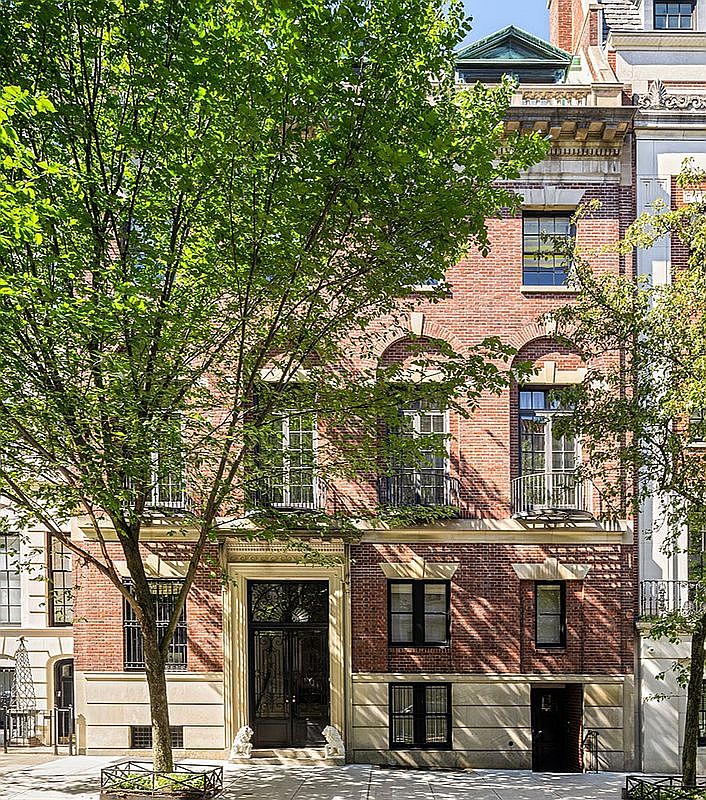
Originally designed by A. B. Ogden & Son for developer John H. Gray as part of a distinguished row of brownstone-faced houses in Carnegie Hill, the residence announced its ambitions early. But it was the comprehensive reimagining by Rafael Viñoly — one of the most celebrated architects of his generation — that elevated 12 East 94th Street from significant to singular. Viñoly's charge was formidable: to honor the gravity and proportion of a 19th-century New York townhouse while infusing it with the rigorous clarity of sculptural modernism. The result is a residence that feels at once timeless and urgently of its moment.
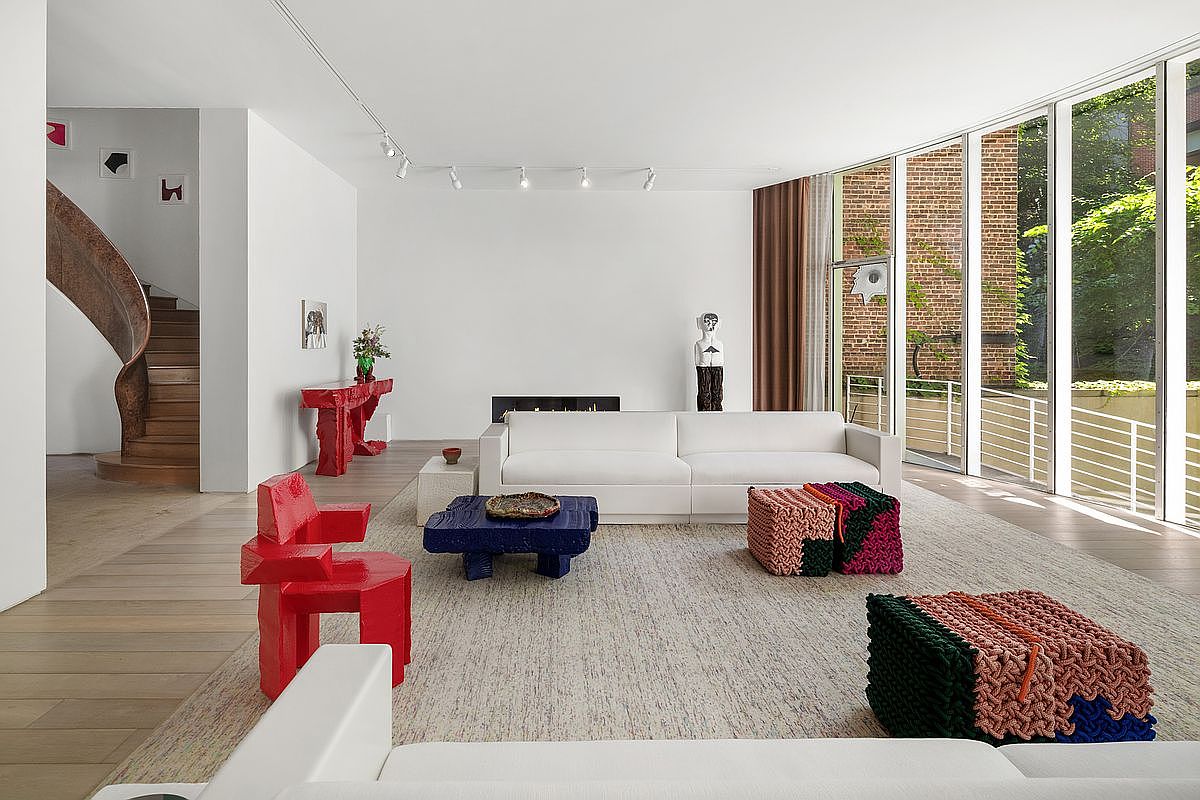
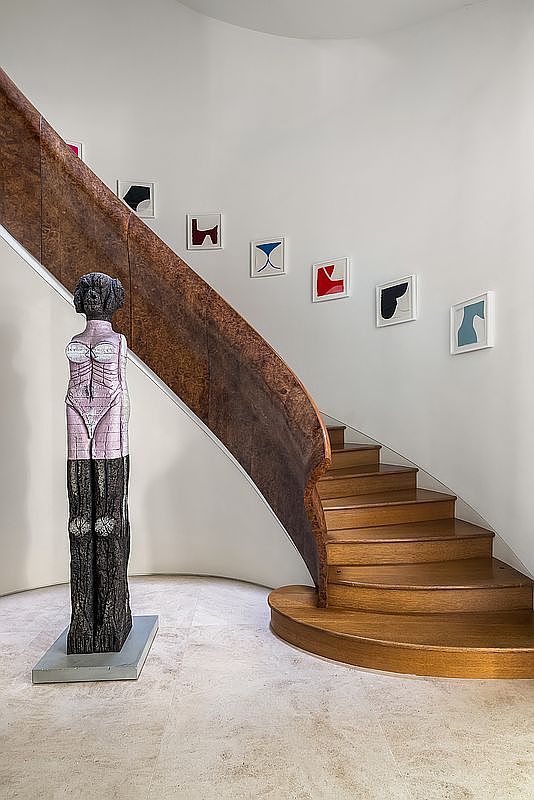
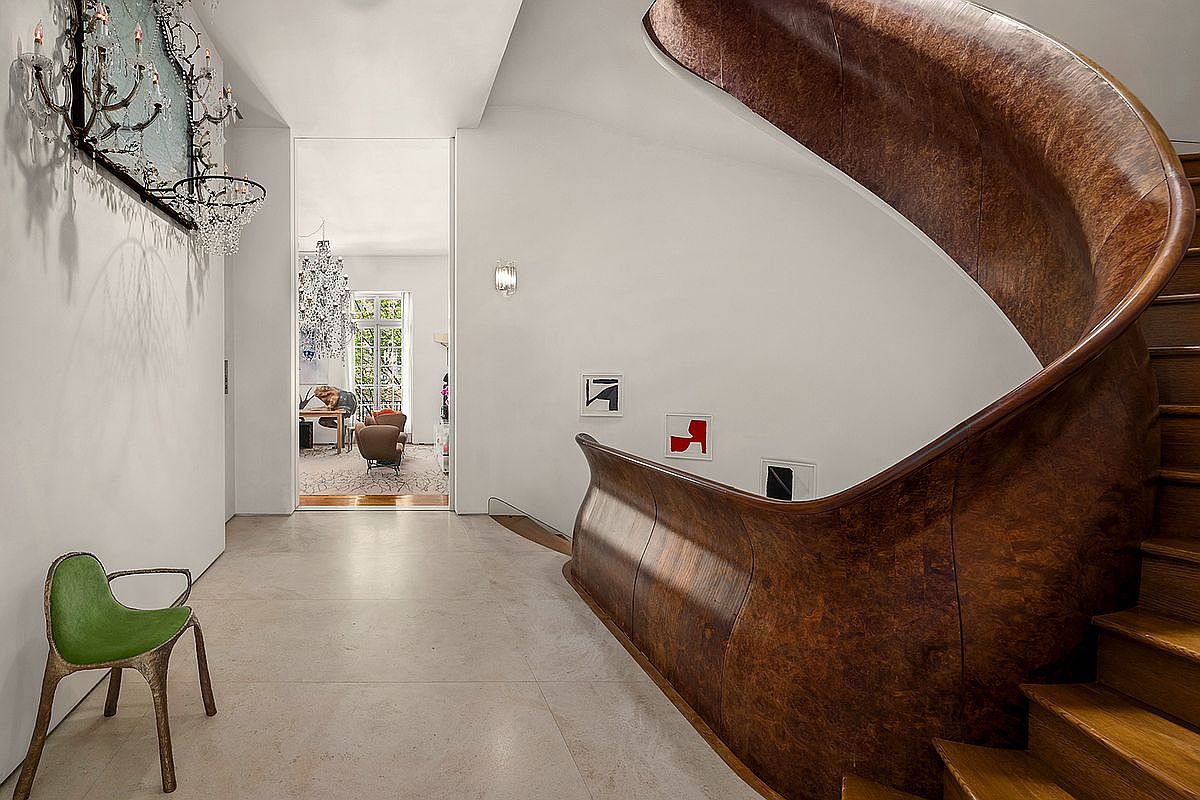
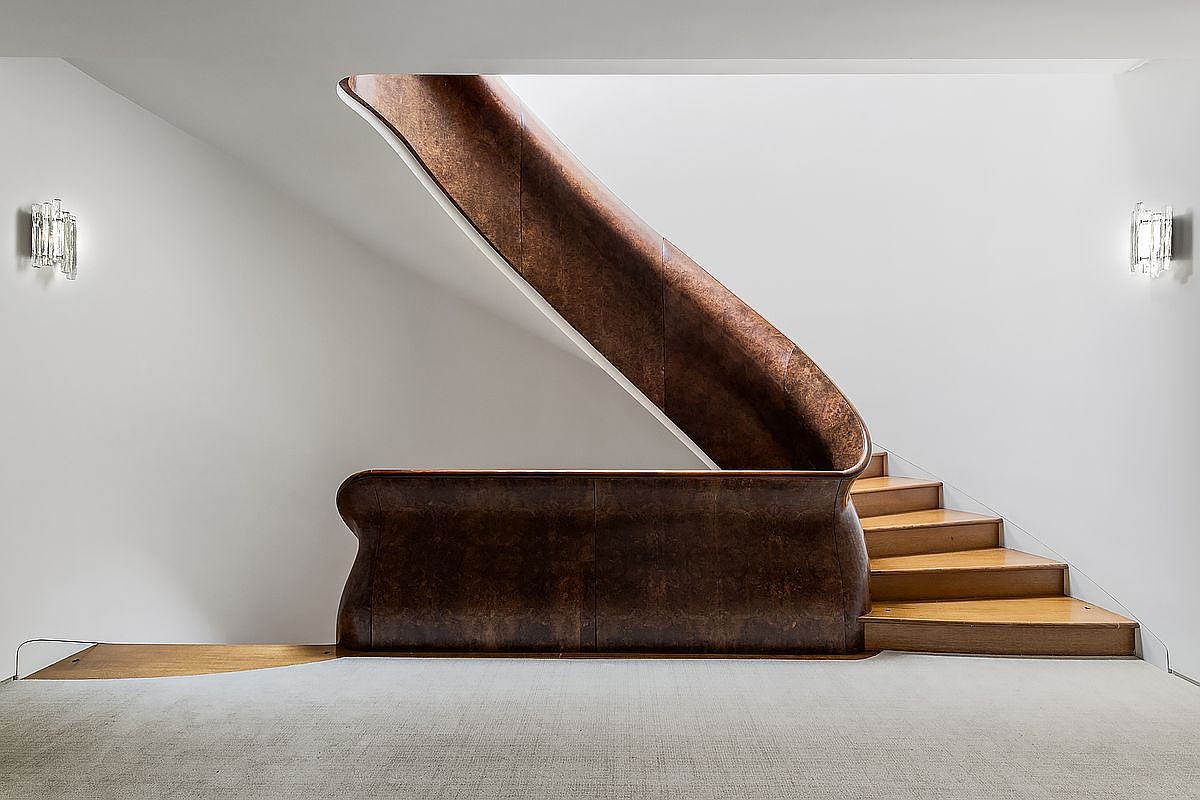
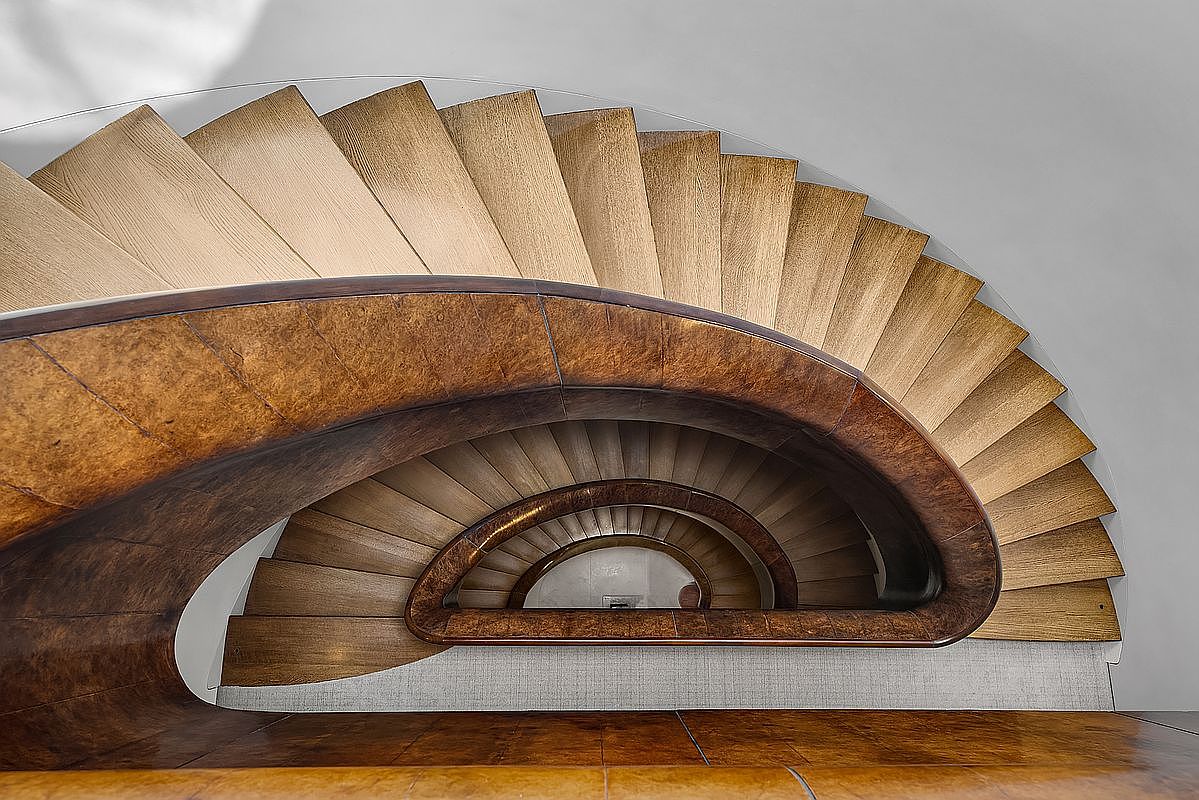
The approach announces the scale of the endeavor. A burr walnut veneer entry door of commanding proportion sets a tone of considered craftsmanship that is sustained through every subsequent room. This is not decoration — it is architecture as biography. That same burr walnut reappears as the cladding of Viñoly's most defining interior gesture: a continuous sculptural staircase that spirals through all four floors, culminating in a crowning skylight that draws natural light in a luminous column through the heart of the home. The material continuity between door and staircase is no accident; it is the kind of deliberate compositional thinking that distinguishes architecture from construction.
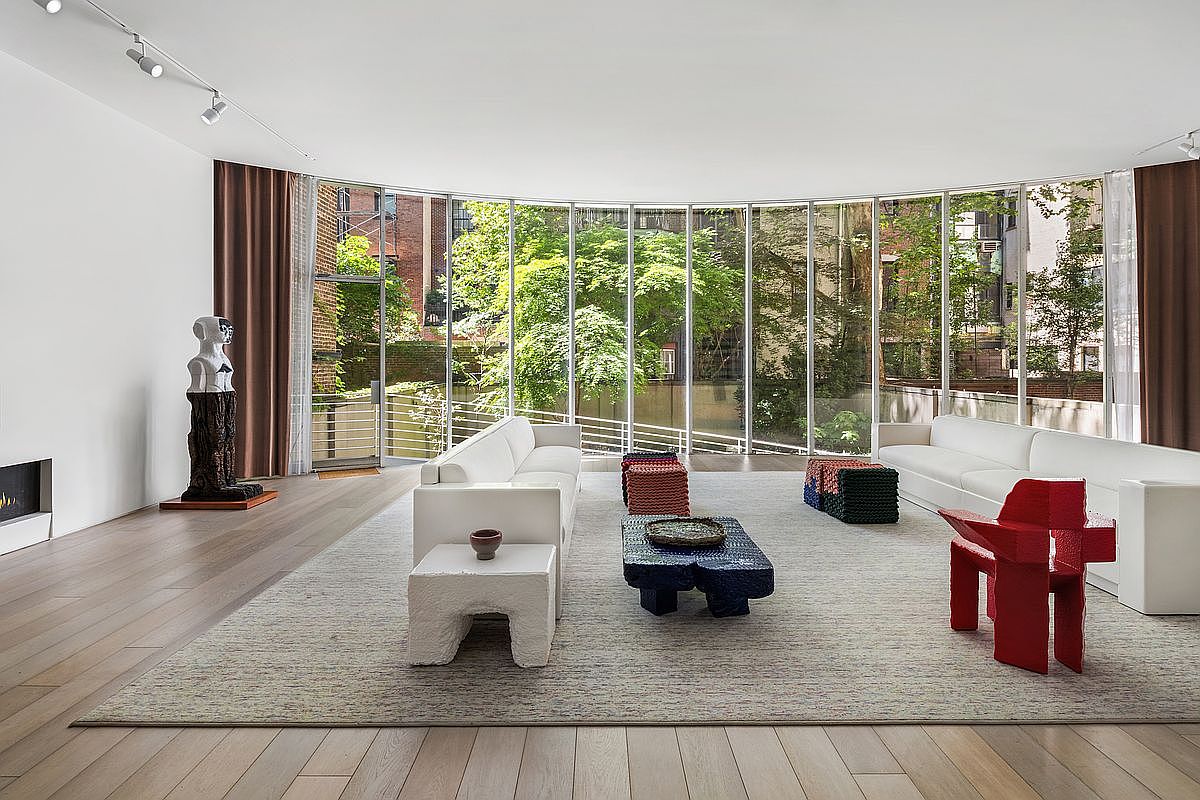
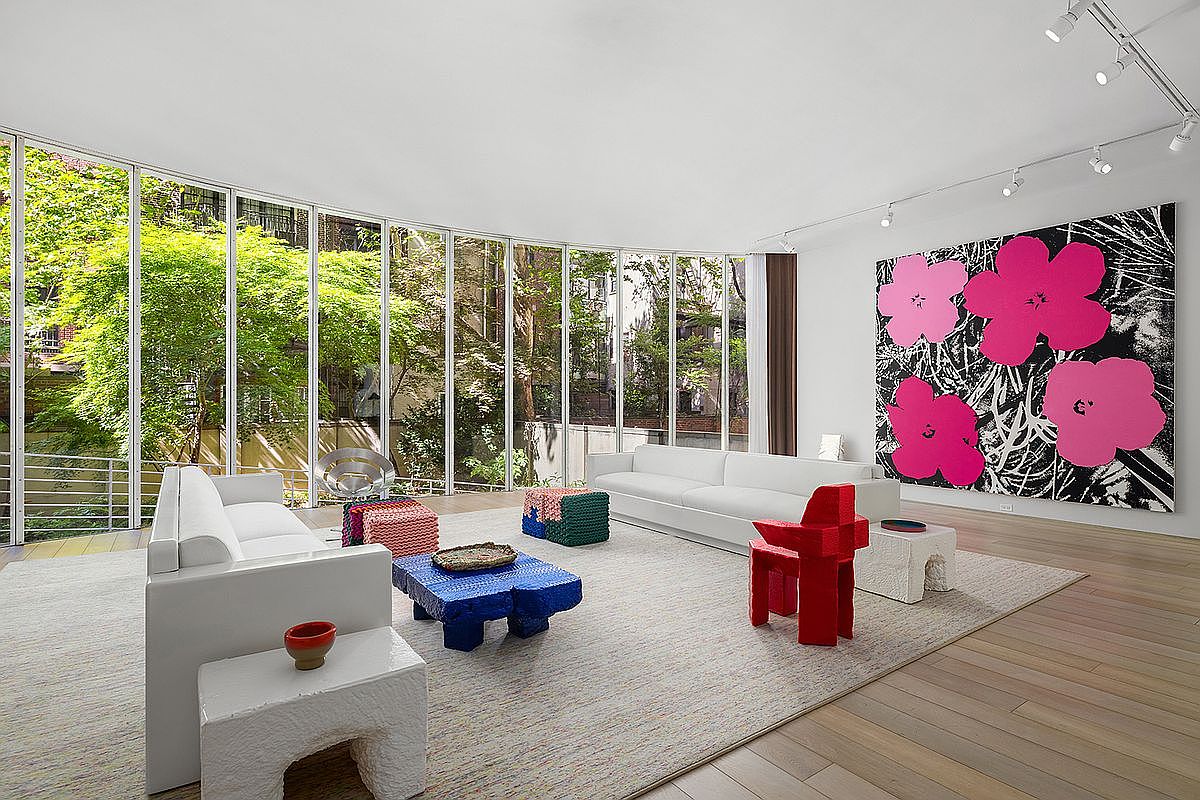
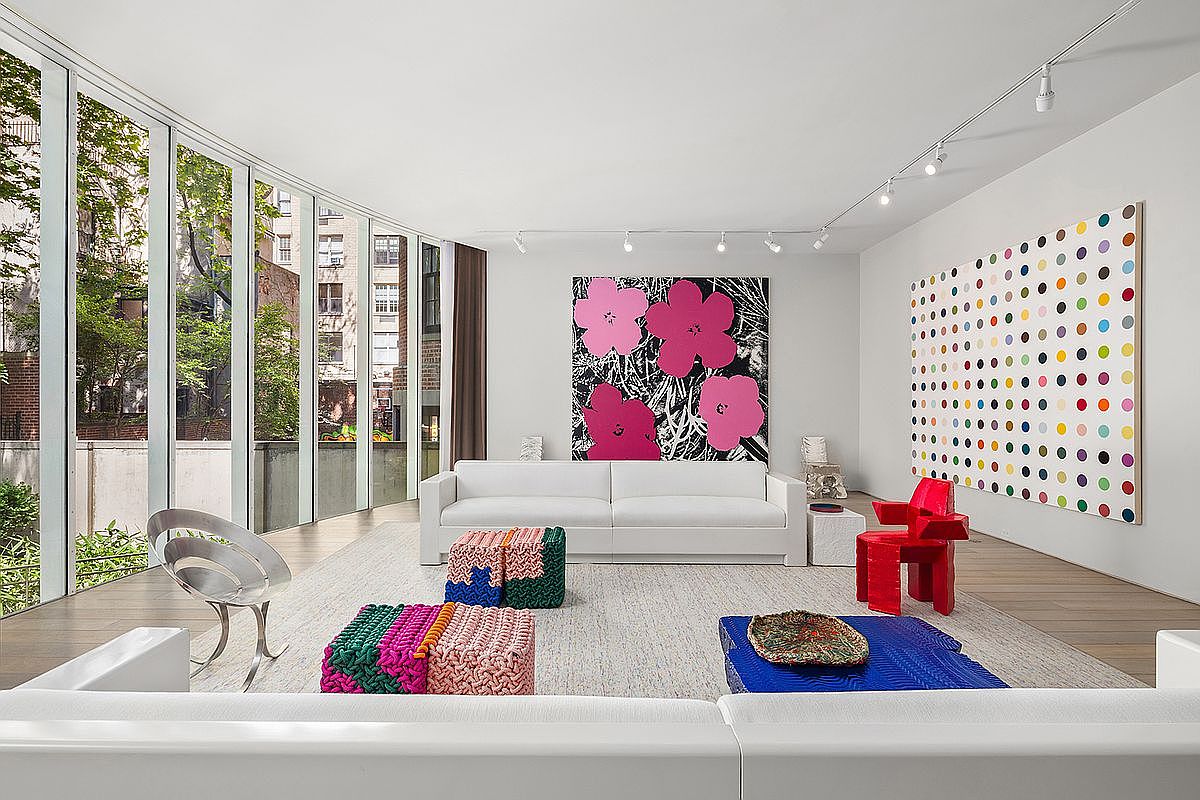
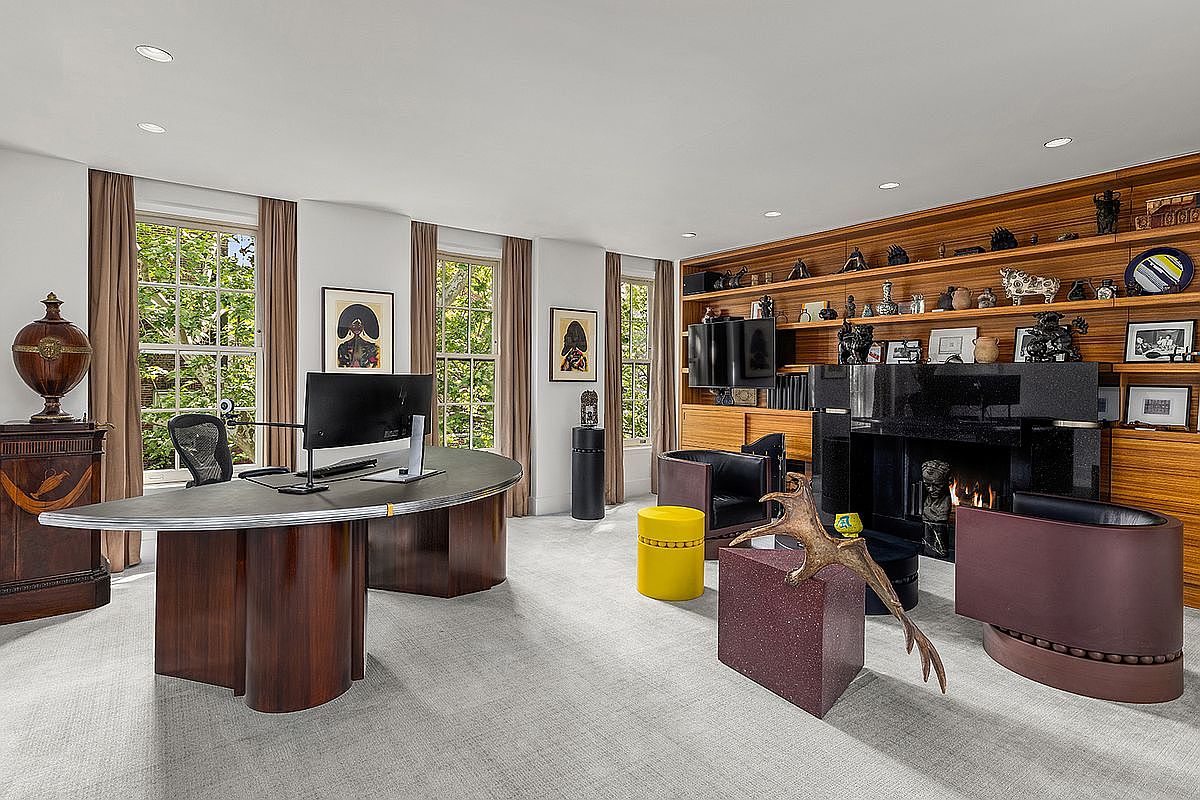
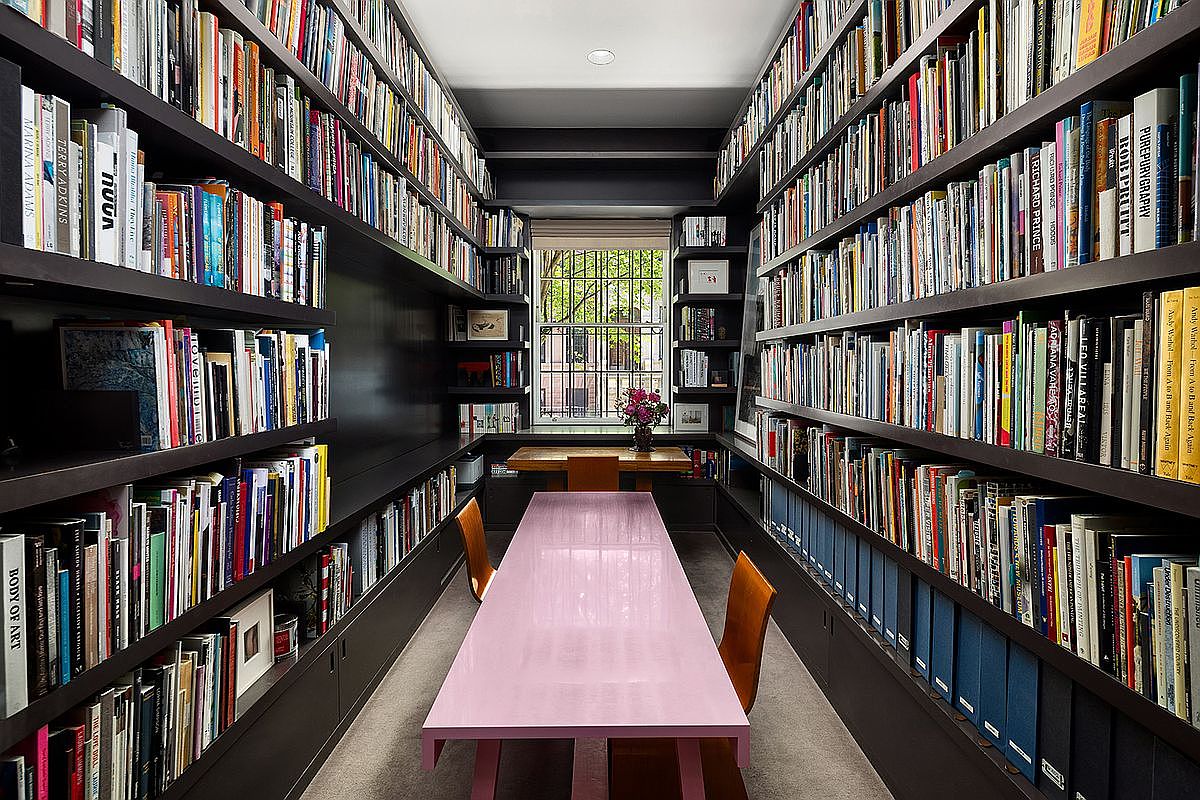
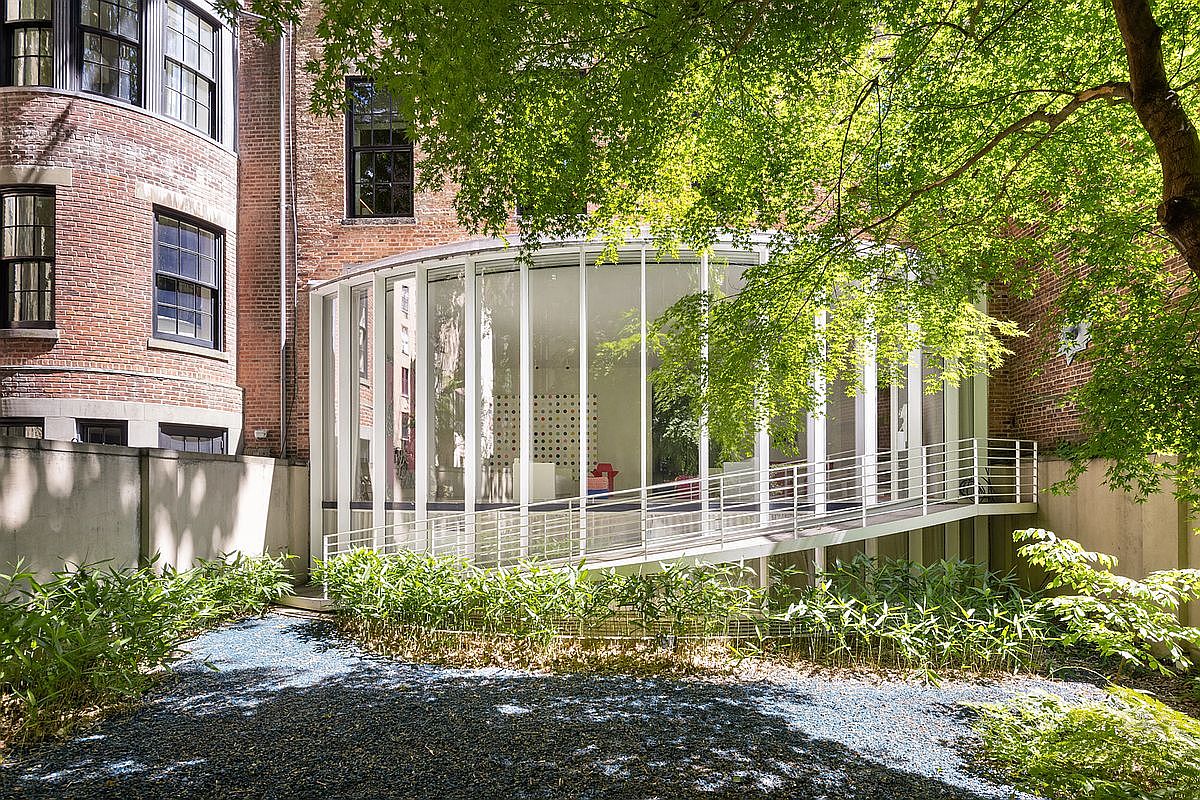
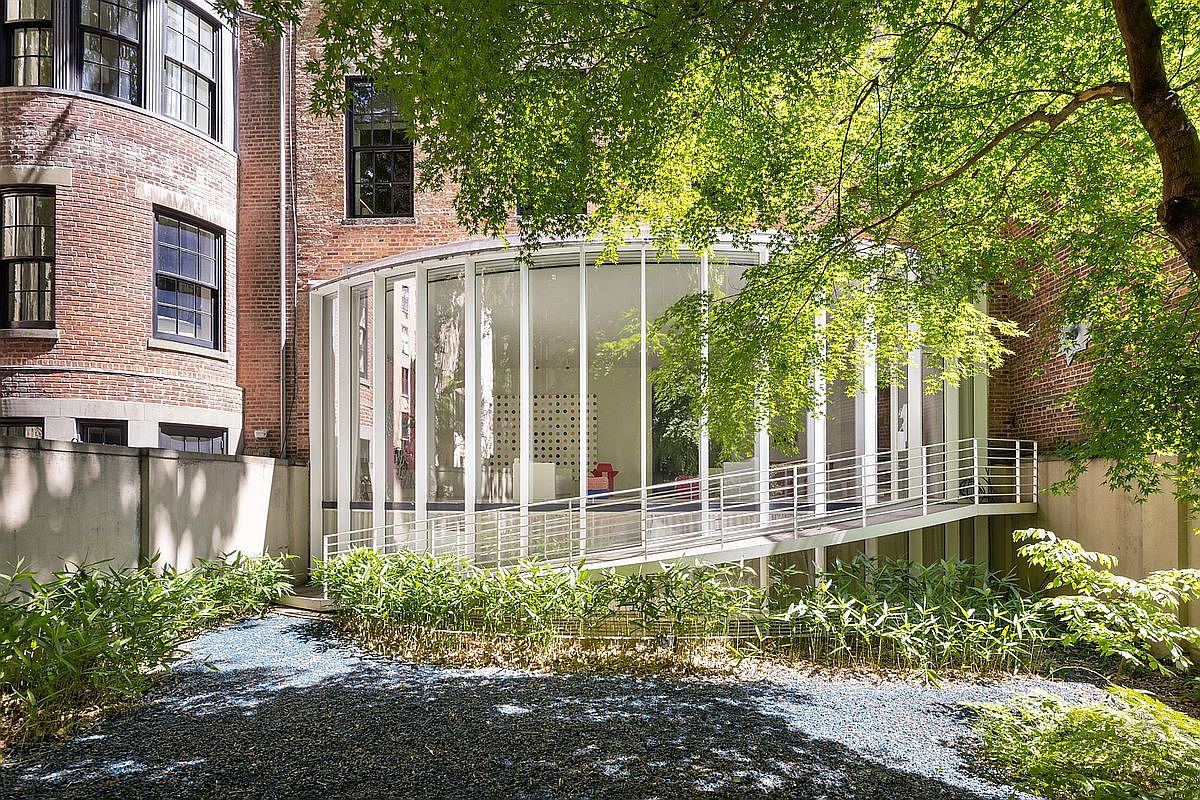
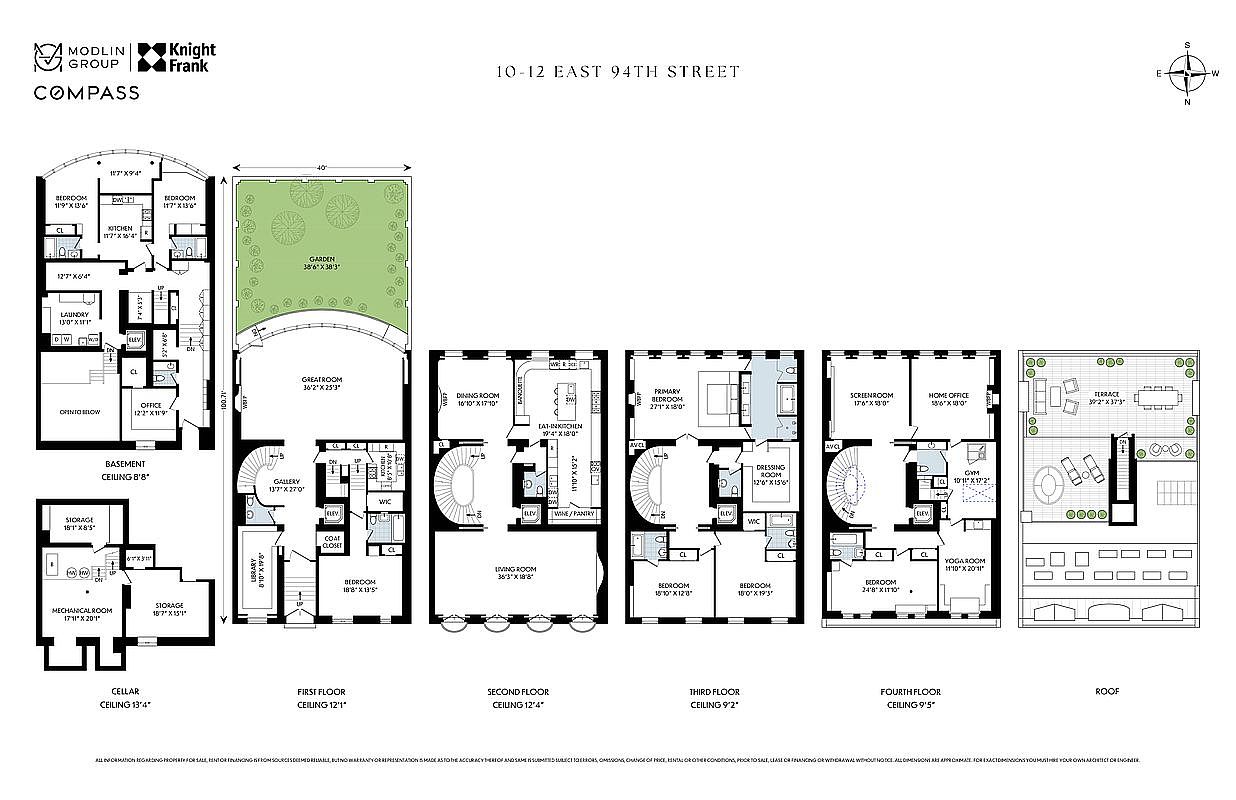
On the first floor, the residence unfolds as a dedicated salon — library office, powder room, and a generous walk-in coat closet in attendance — before revealing Viñoly's most radical and beautiful contribution: a curved glass curtain wall facade that dissolves the boundary between interior and the tranquil private garden below. On the Upper East Side, where townhouses typically turn inward, this gesture of transparency reads as a quiet revolution.
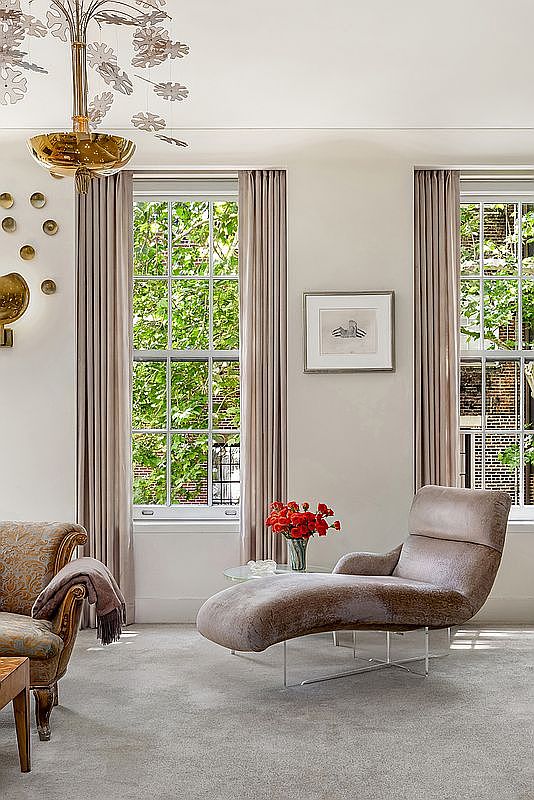
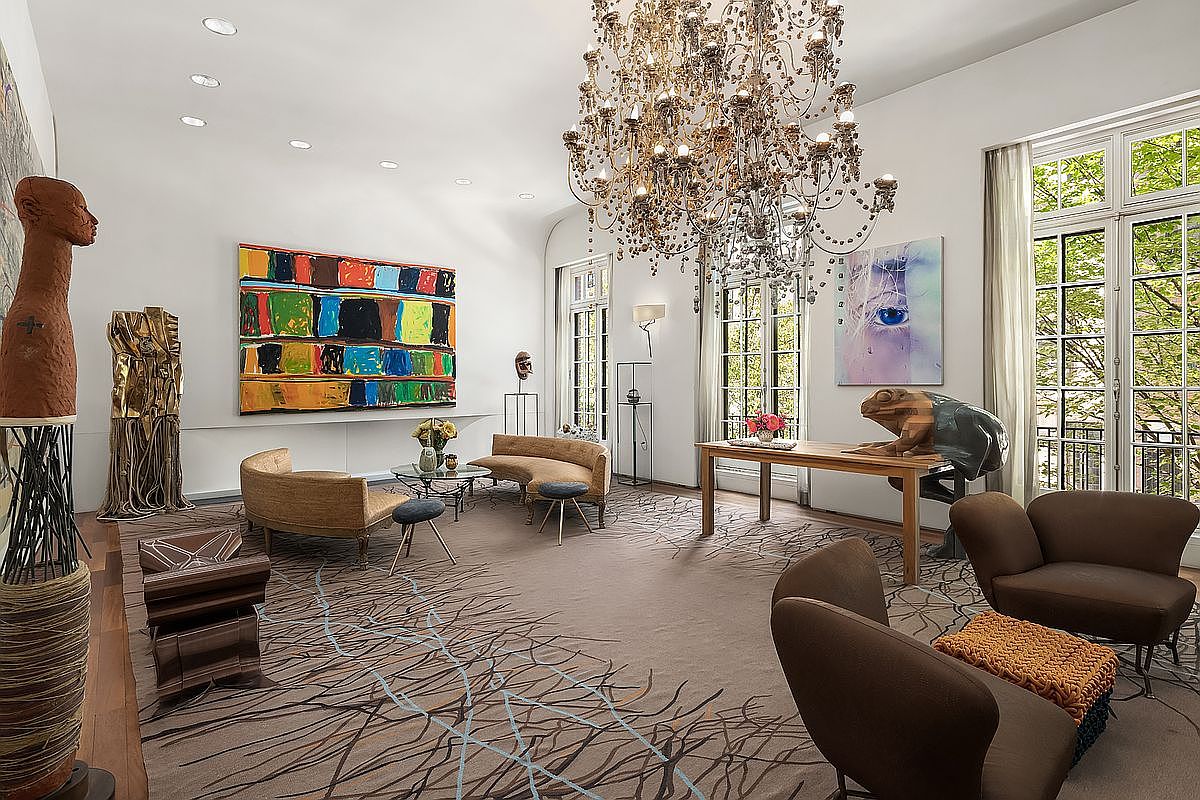
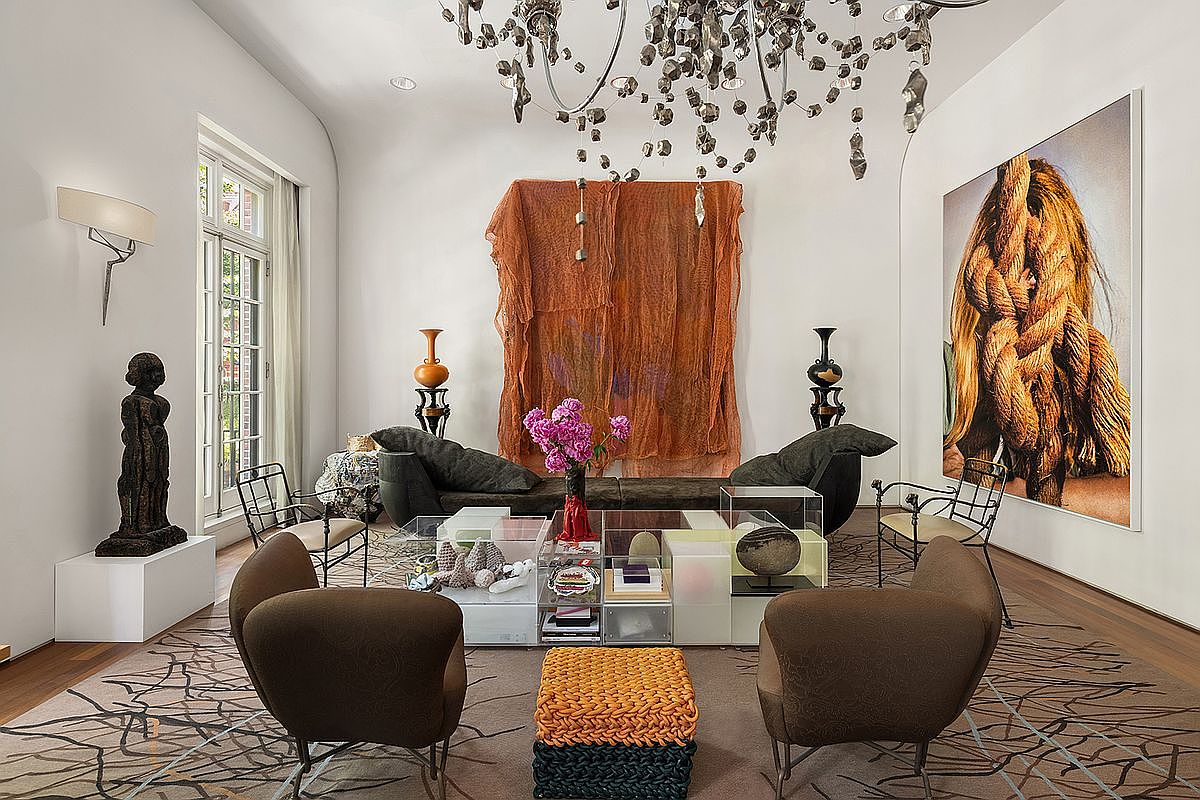
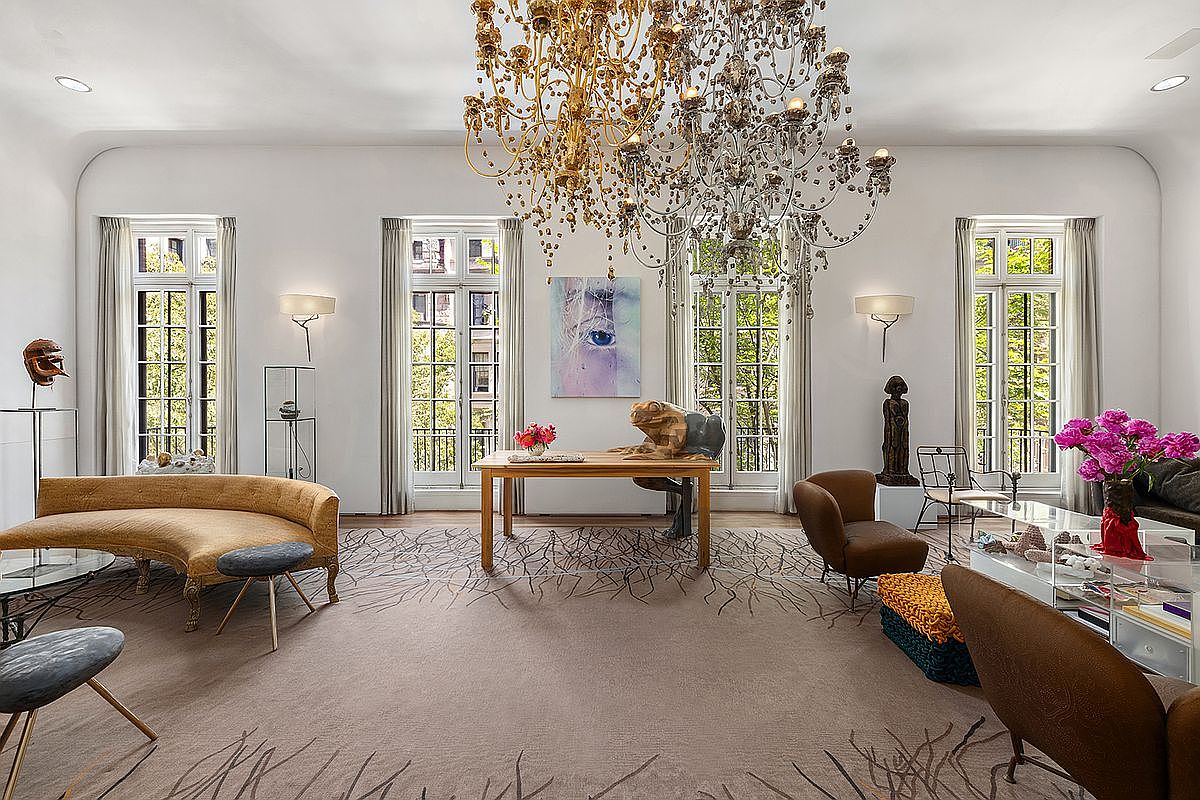
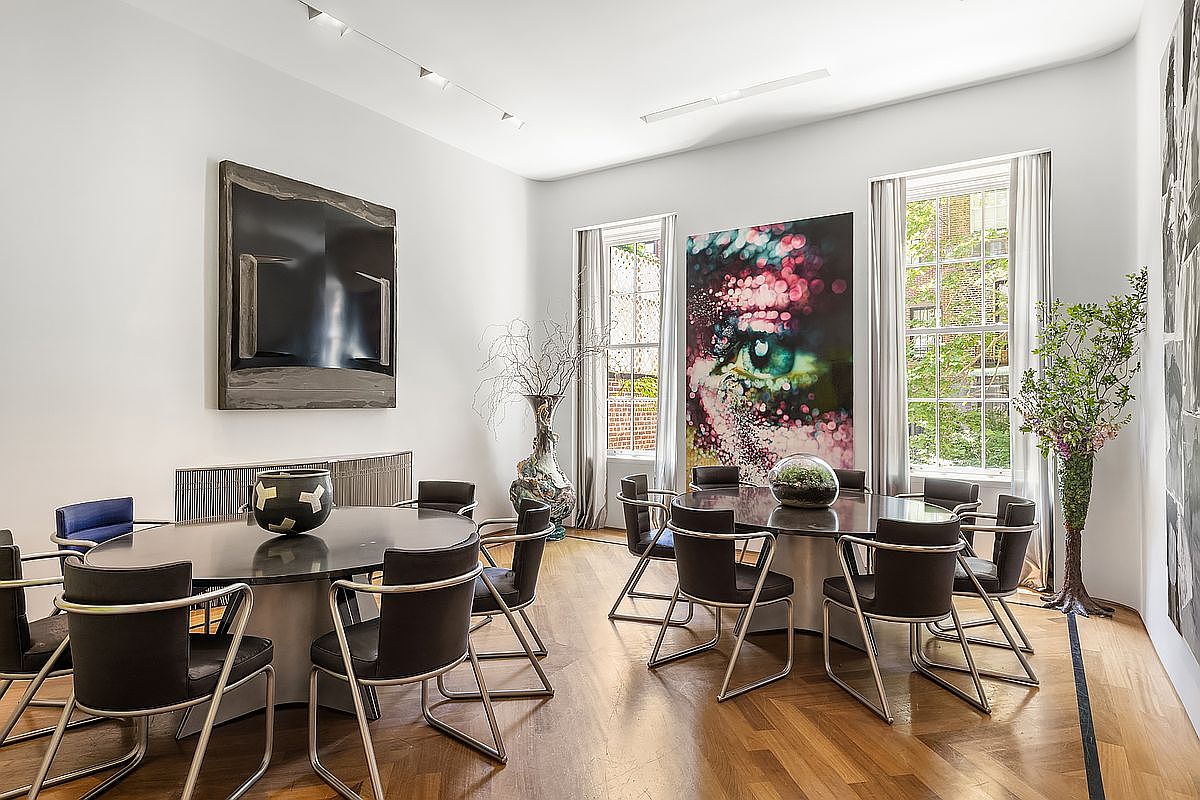
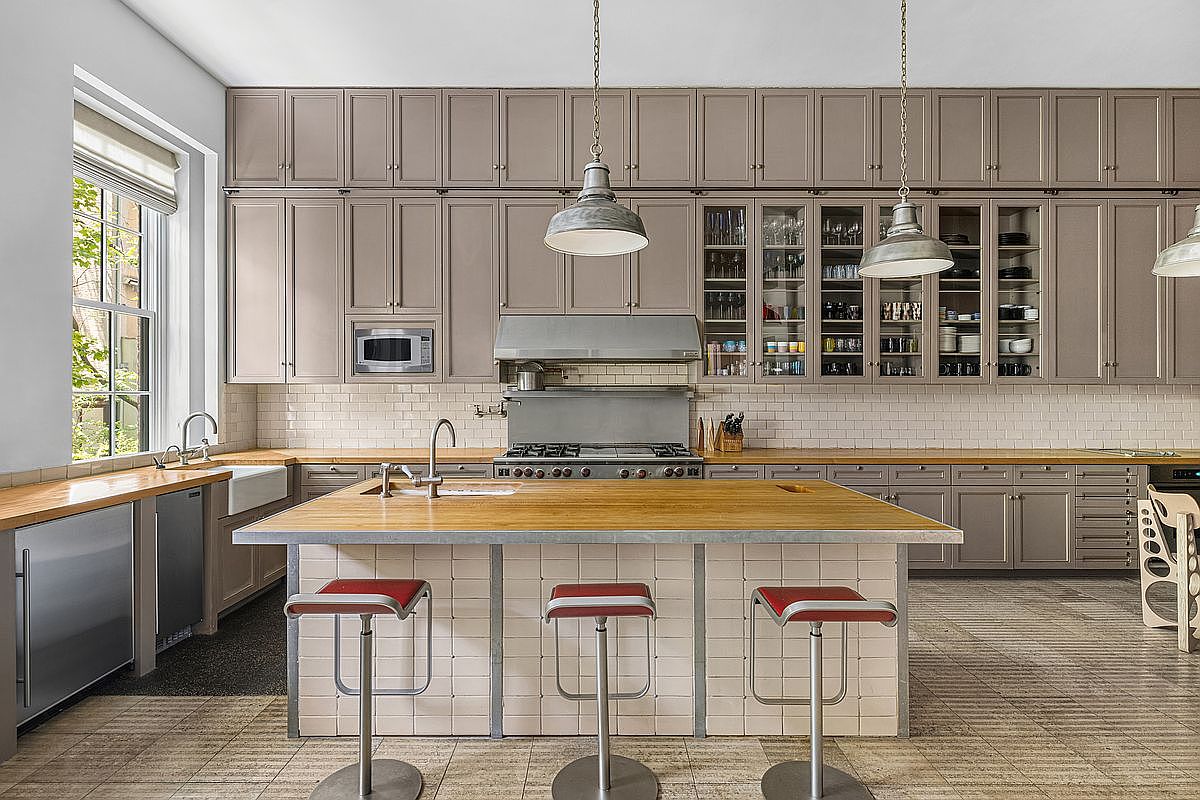
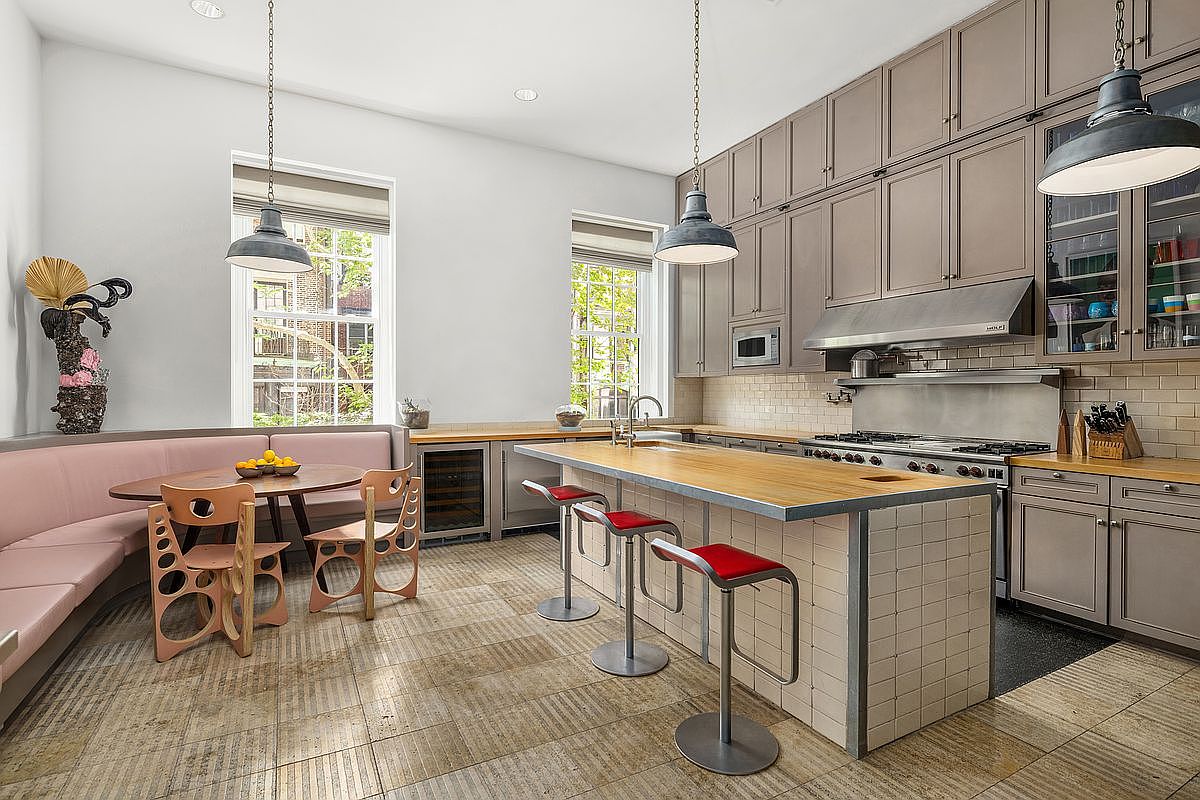
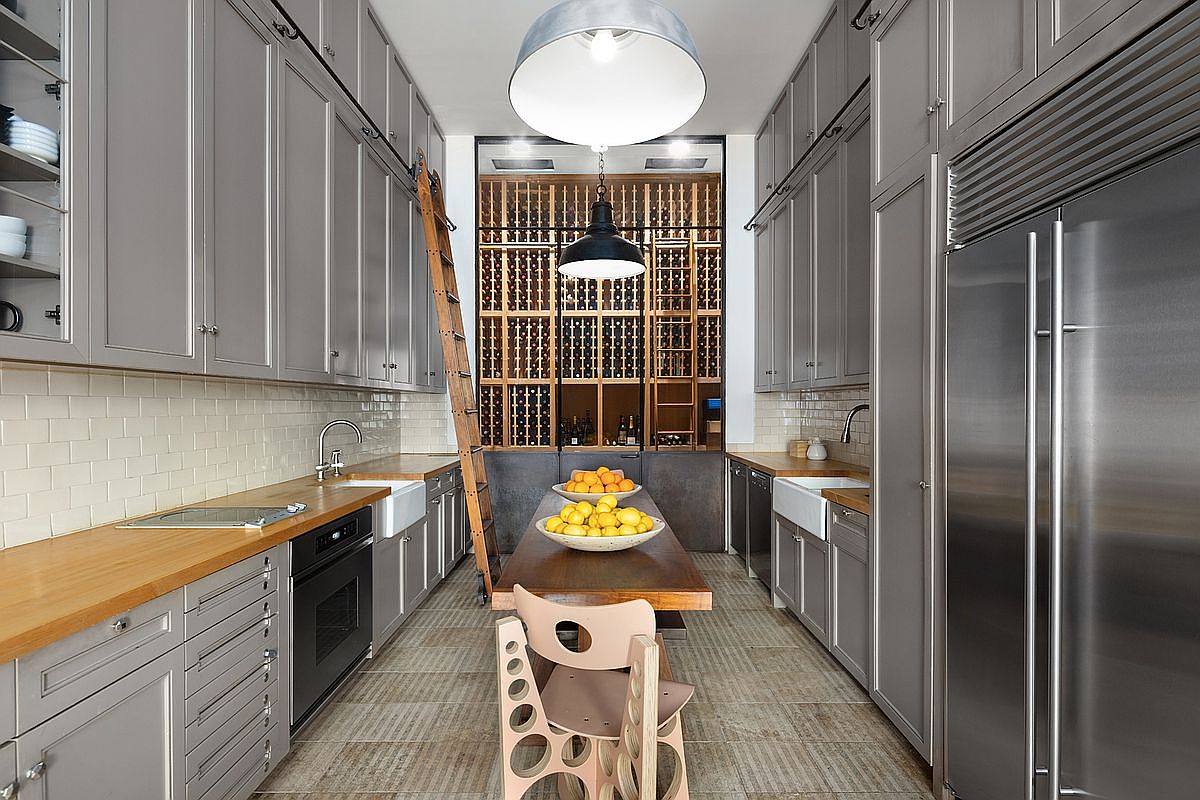
The parlor level rises to the occasion with a formal living room of exceptional ceiling height, its curved plasterwork ceilings designed with the display of significant art in mind. A dining room seating sixteen, two working wood-burning fireplaces, and a pair of elegant pocket doors complete a floor conceived for grand entertaining and equally capable of intimate evenings. The windowed eat-in chef's kitchen — appointed with Wolf and Sub-Zero appliances, custom banquette seating, and a bespoke floor-to-ceiling climate-controlled wine cellar — is a room of both serious culinary function and genuine warmth.
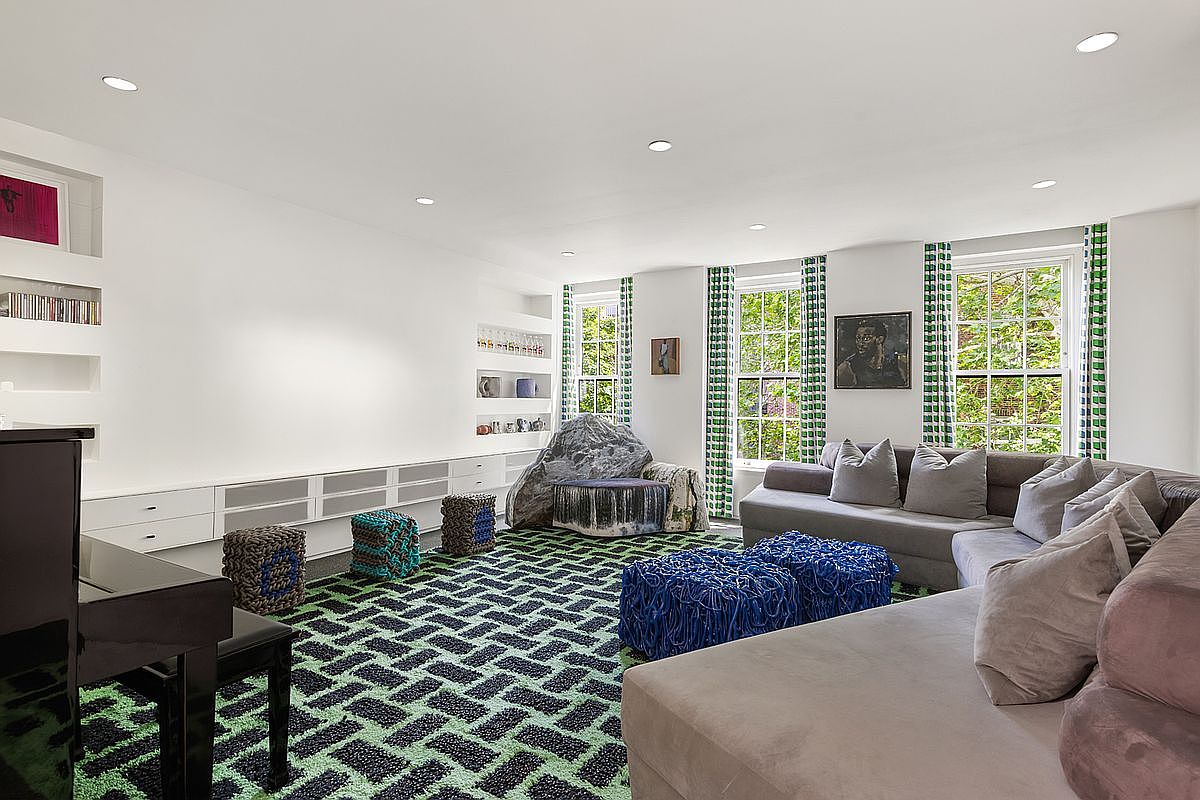
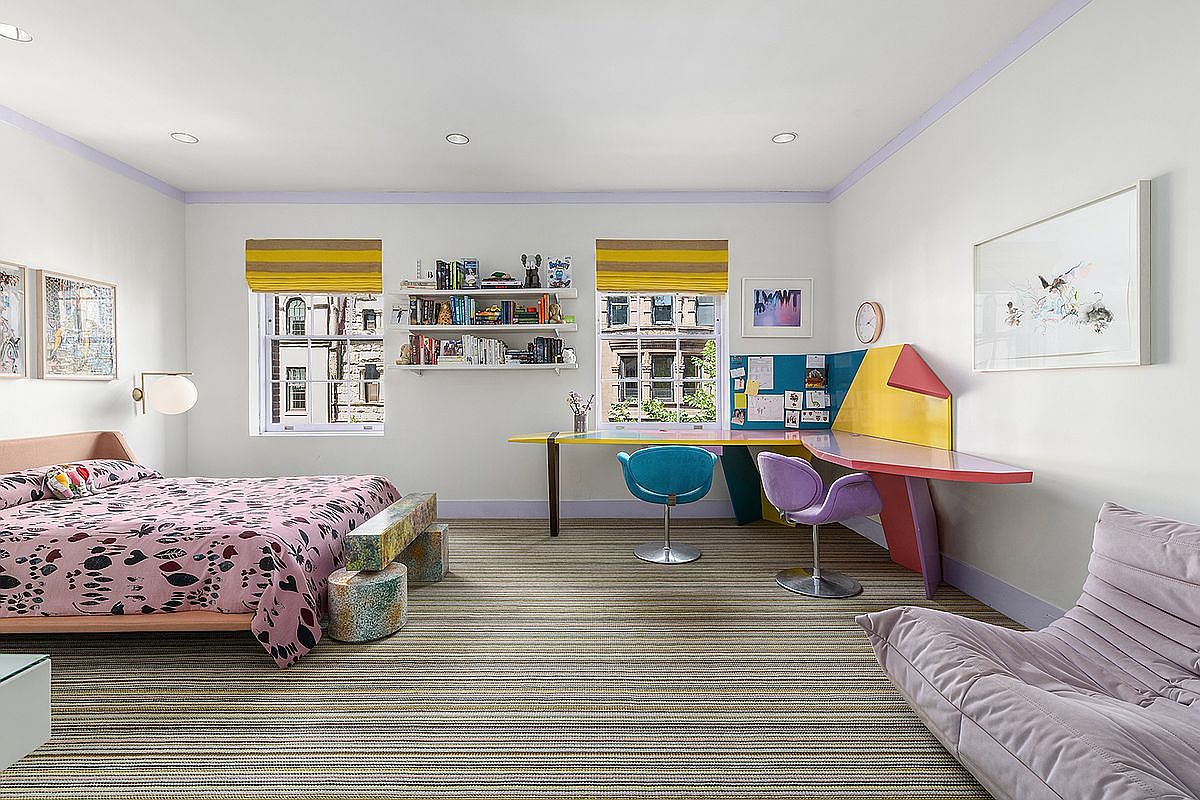
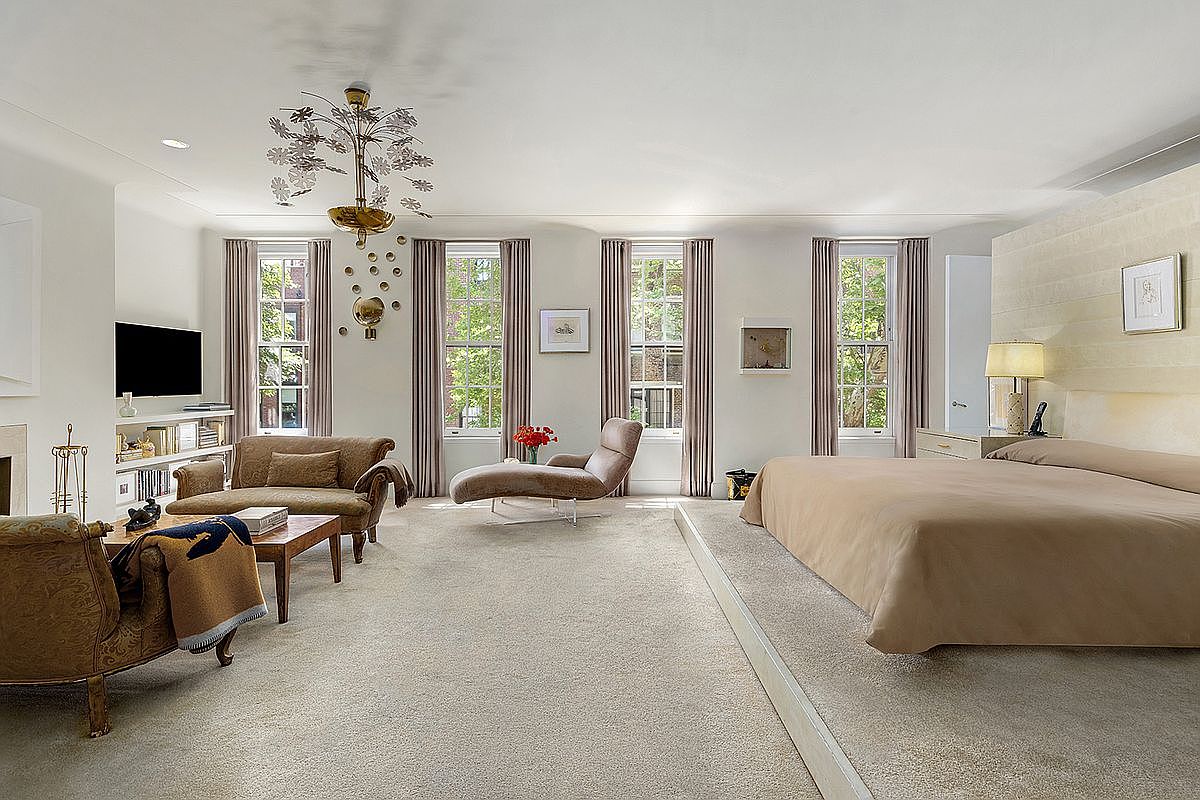
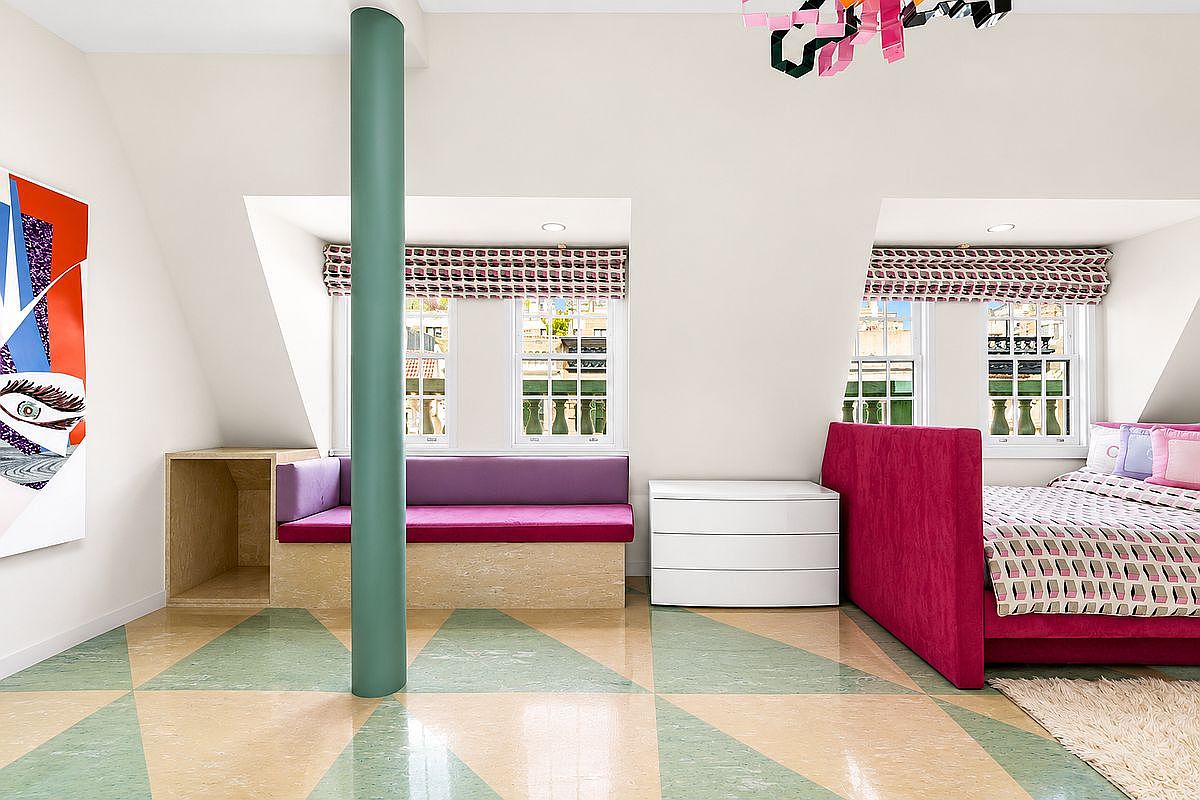
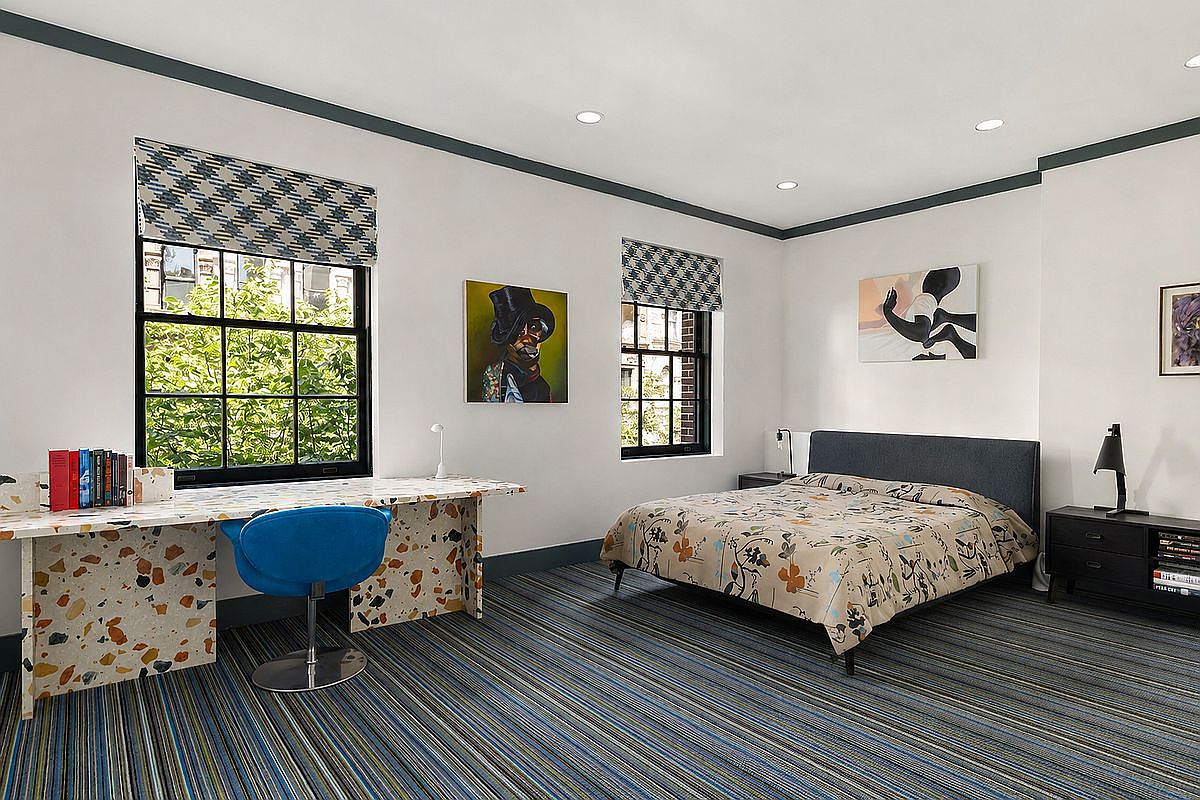
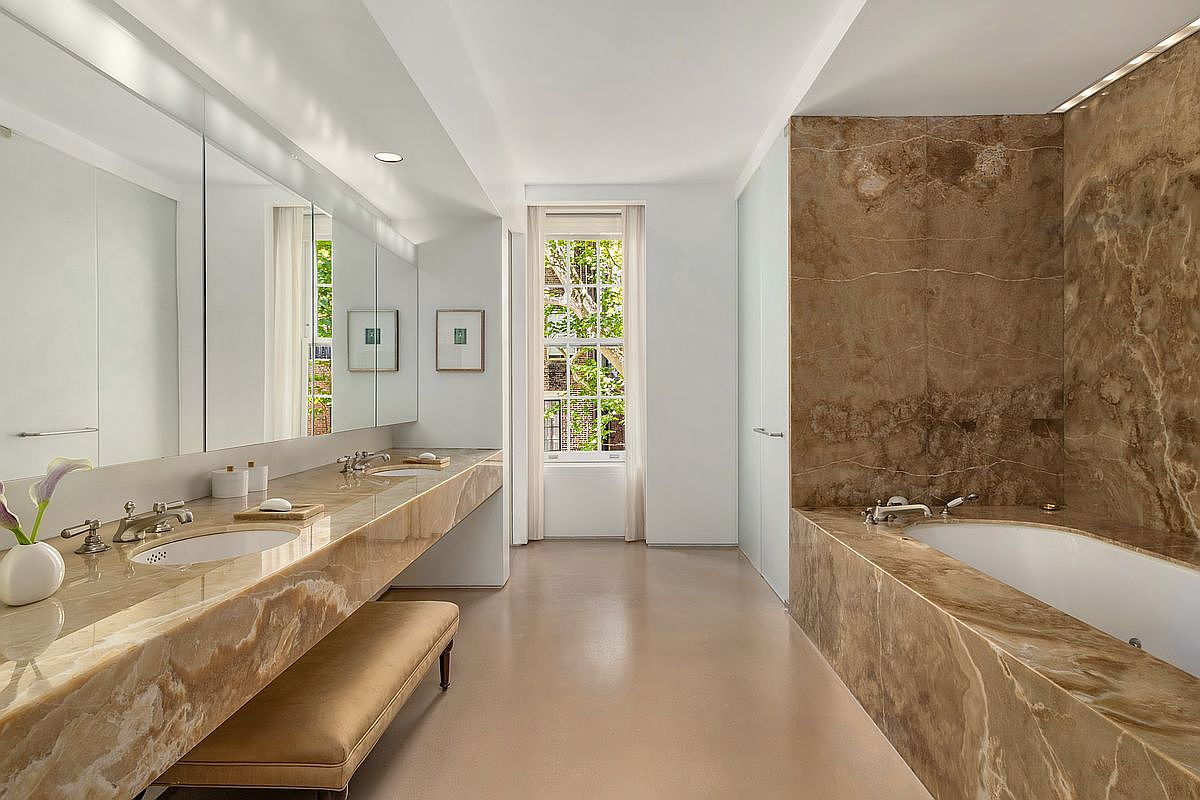
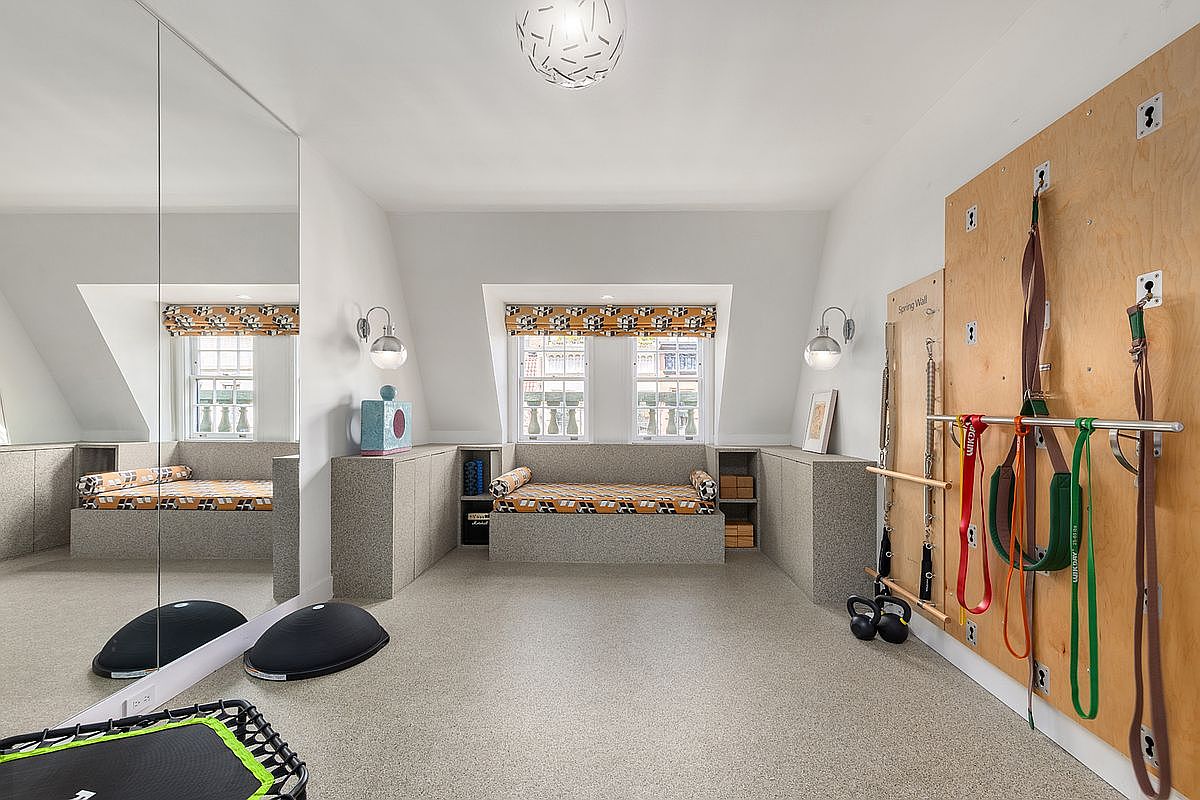
The third floor gathers the family in generous primary and secondary suites, each with private ensuites of refined materiality. The primary suite, oriented toward the garden, is anchored by a windowed bathroom featuring a soaking tub and double shower rendered in richly veined stone. The uppermost floor offers a fitness room, yoga room, media room, study, and a fourth bedroom — spaces that rival the floors below in proportion and light, a genuine rarity in townhouse architecture.
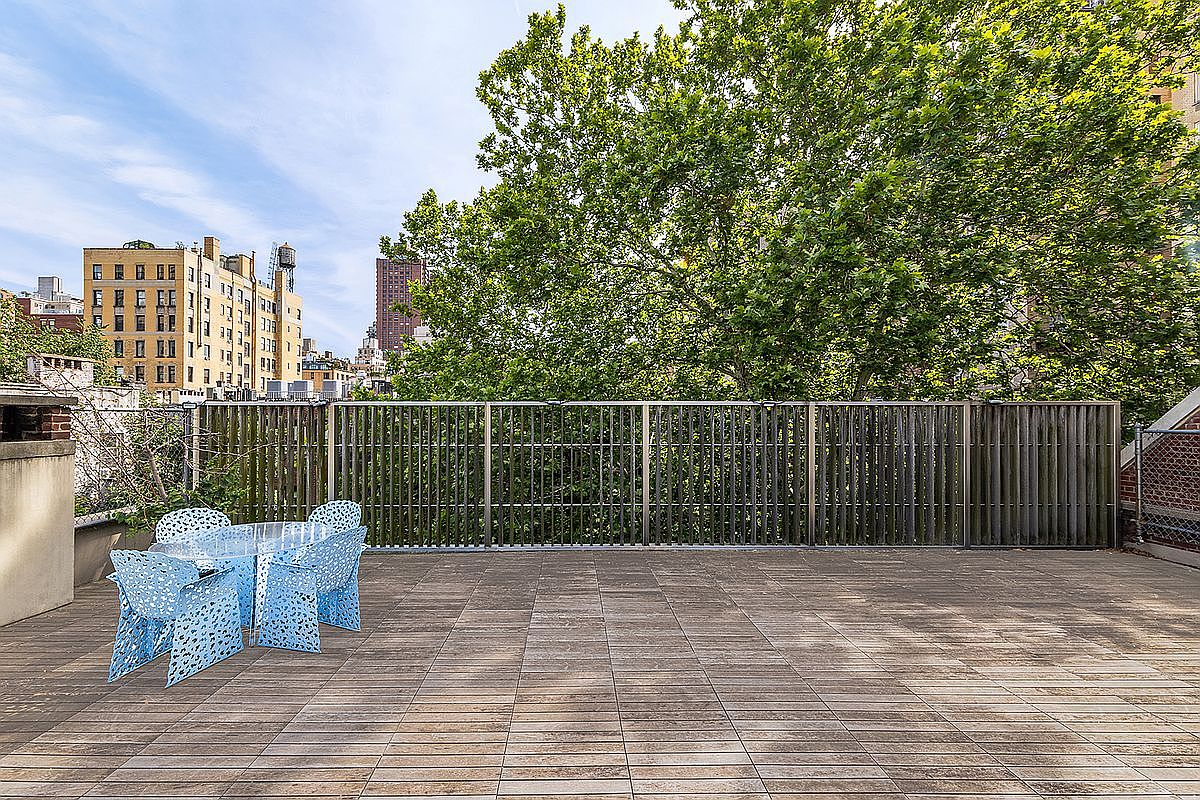
The private rooftop terrace, open to the Carnegie Hill sky, is among the most coveted outdoor spaces on the Upper East Side. A fully equipped basement with laundry and a staff apartment completes a residence that has anticipated every conceivable domestic need.
The first floor's former life as the home of Salon 94 — Jeanne Greenberg Rohatyn's influential contemporary art gallery — lends the property a cultural dimension that cannot be fabricated or replicated. 12 East 94th Street has been a stage for significant art and significant living. It is ready to be both again.
Carnegie Hill occupies a privileged position within the Upper East Side — and within the larger imagination of New York City itself. Roughly bounded by 86th Street to the south, 98th Street to the north, Fifth Avenue to the west, and Lexington Avenue to the east, the neighborhood takes its name from Andrew Carnegie, who built his Georgian Revival mansion at Fifth Avenue and 91st Street in 1902. That mansion is now home to the Cooper Hewitt, Smithsonian Design Museum, and its presence established a tone of cultural seriousness and architectural aspiration that the neighborhood has sustained ever since.
Carnegie Hill is, by any measure, one of Manhattan's most architecturally coherent residential enclaves. Landmark-designated blocks of townhouses and prewar apartment buildings line streets shaded by mature trees, creating a sense of settled permanence rare in a city that perpetually reinvents itself. The neighborhood's historic district designation has preserved much of its 19th and early 20th-century fabric, ensuring that the scale and character of streets like East 94th remain intact. Walking these blocks, one encounters the work of distinguished architects across generations — a living anthology of New York residential design.
Culturally, Carnegie Hill and its immediate surroundings constitute one of the densest concentrations of world-class institutions anywhere on earth. The Metropolitan Museum of Art, anchoring Museum Mile at 82nd Street and Fifth Avenue, is a short walk south. The Guggenheim Museum — Frank Lloyd Wright's spiraling masterwork — sits at 89th Street. The Jewish Museum, the Museum of the City of New York, El Museo del Barrio, and the Cooper Hewitt line Fifth Avenue to the north, forming a cultural corridor of extraordinary breadth and depth. For a resident of 12 East 94th Street, the world's greatest collection of art and design is, quite literally, a neighborhood amenity.
Central Park, the 843-acre masterwork of Olmsted and Vaux, is steps to the west, offering not merely green space but an ever-changing landscape for running, cycling, rowing, and cultural programming throughout the year. The Reservoir, the Conservatory Garden, and the Great Lawn are all within easy reach — as are the park's celebrated playgrounds, beloved by families who have chosen Carnegie Hill in part for the quality of its public and private schools.
The neighborhood's dining and retail landscape reflects the tastes of its residents: considered, unpretentious by Manhattan standards, and genuinely excellent. Madison Avenue between 86th and 96th Streets offers a curated selection of boutiques, galleries, and cafés. Café d'Alsace, Caravaggio, and a range of neighborhood establishments have made Carnegie Hill a destination for those who prefer a convivial local scene to the more performative dining corridors downtown.
For families, Carnegie Hill is home to some of New York's most sought-after independent schools, including Dalton, Nightingale-Bamford, and others within easy walking distance. The combination of cultural institutions, parkland, architectural beauty, and educational excellence makes Carnegie Hill not merely a prestigious address but a genuinely considered choice — a neighborhood that rewards its residents with the full richness of urban life at its most refined.
Featured Highlights
Curated Content • Presented by Adam Modlin