The Story Behind
San Francisco Landmark No. 55: A Victorian Masterpiece in Pacific Heights
To step through the wrought-iron gate of 1818 California Street is to cross a threshold between the present and a more deliberately beautiful past. Built in 1876 and designated San Francisco Landmark No. 55, the Sloss-Lilienthal House is not merely old — it is significant, a carefully preserved artifact of the city's Victorian ambitions that has endured earthquake, transformation, and time with its character entirely intact.
The exterior announces itself with quiet authority. Gray horizontal siding, ornately carved cornices, and projecting bay windows rise above a stone staircase and a decorative wrought-iron fence, composing a facade that is at once restrained and deeply expressive. The Italianate vocabulary — with its bracketed eaves, elongated windows, and sculptural woodwork — speaks to the craftsmanship of an era when building was considered an act of civic pride.
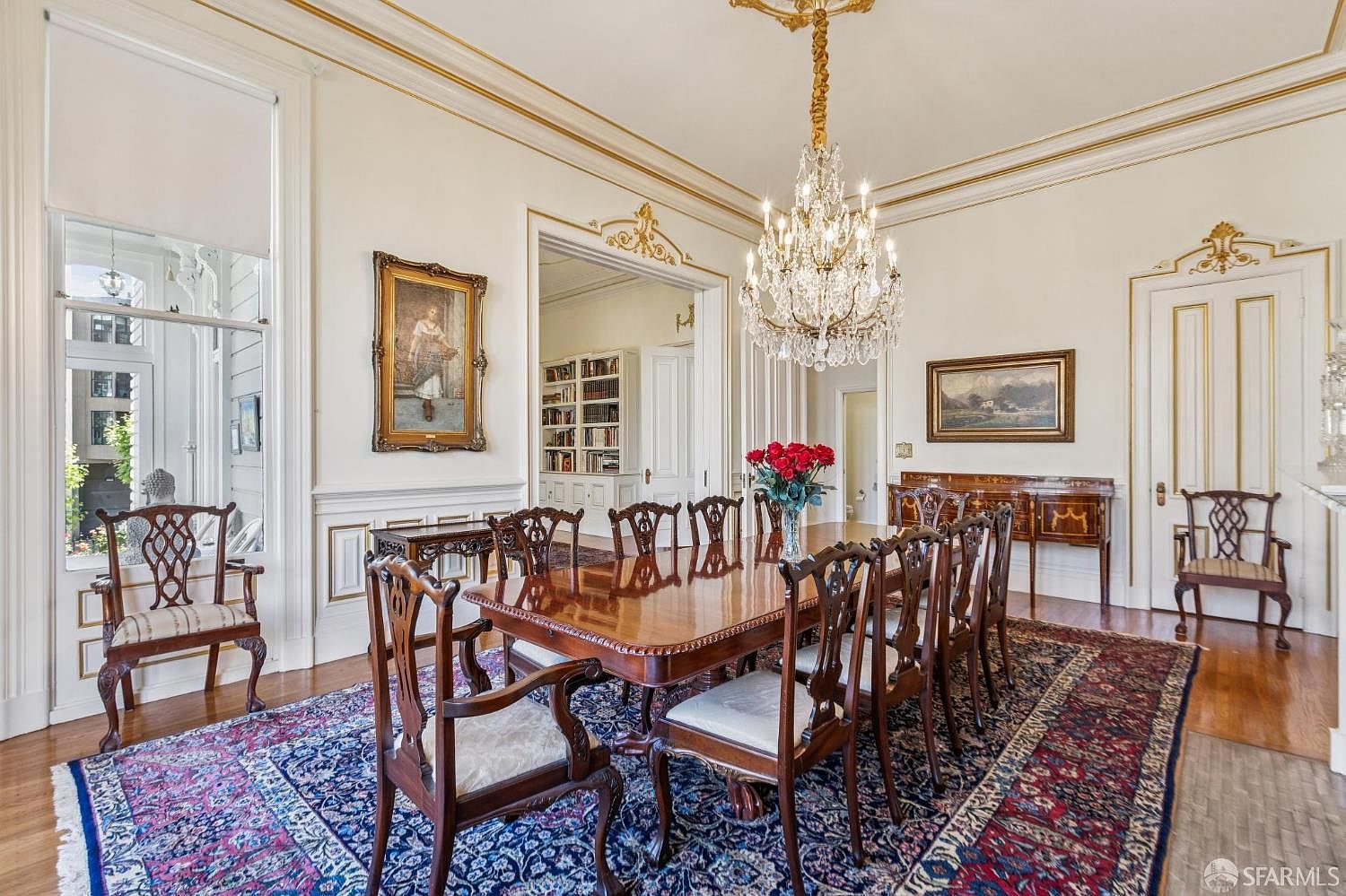
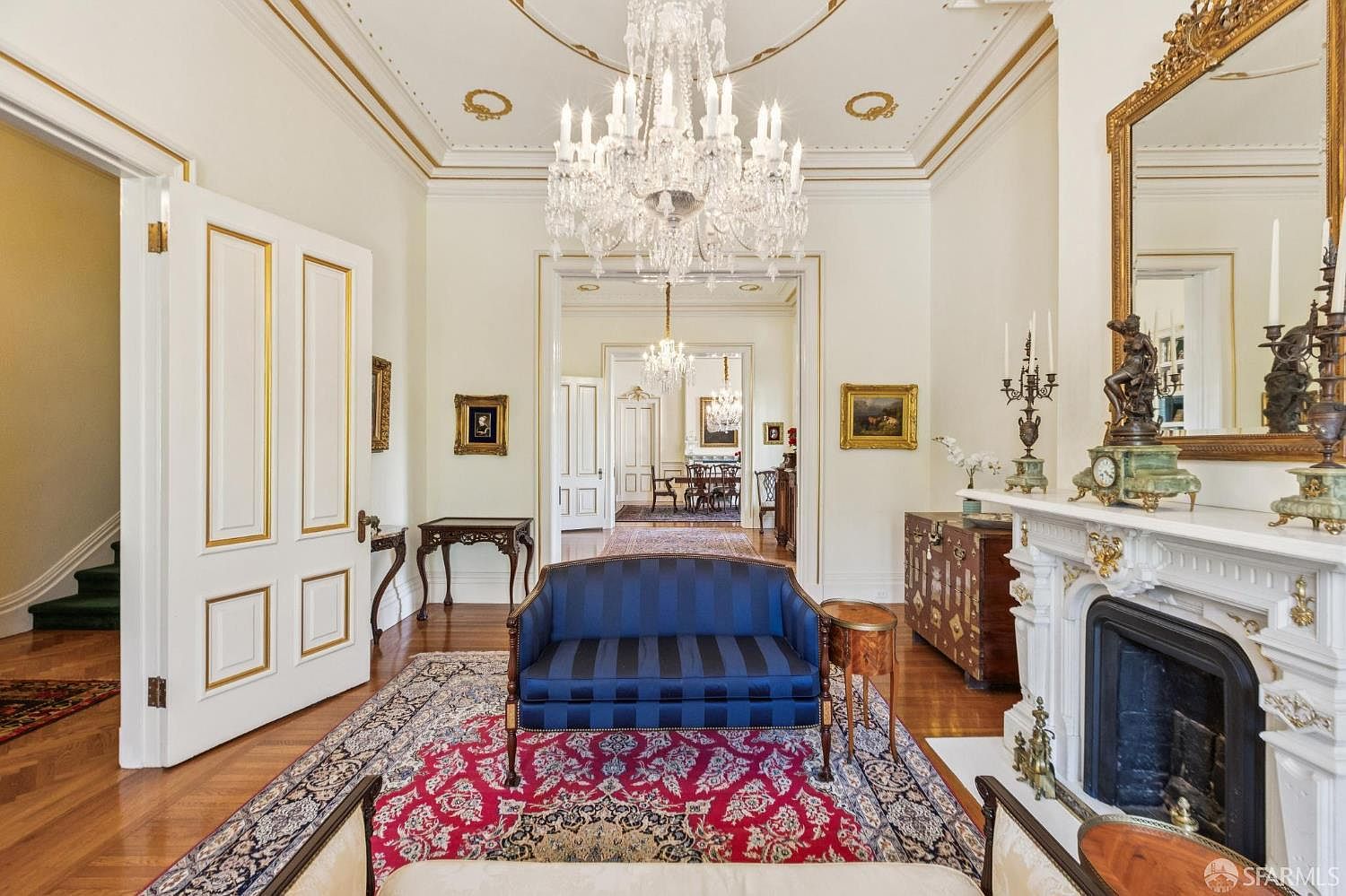
Inside, the dramatic formal entry sets an immediate and unforgettable tone. Herringbone-patterned hardwood floors extend beneath a sweeping grand staircase, its dark wood railings and turned balusters ascending toward upper floors bathed in natural light. A crystal chandelier presides overhead, casting prismatic warmth across crisp white walls and gold-trimmed moldings that continue, with remarkable consistency, through the living and dining rooms beyond.
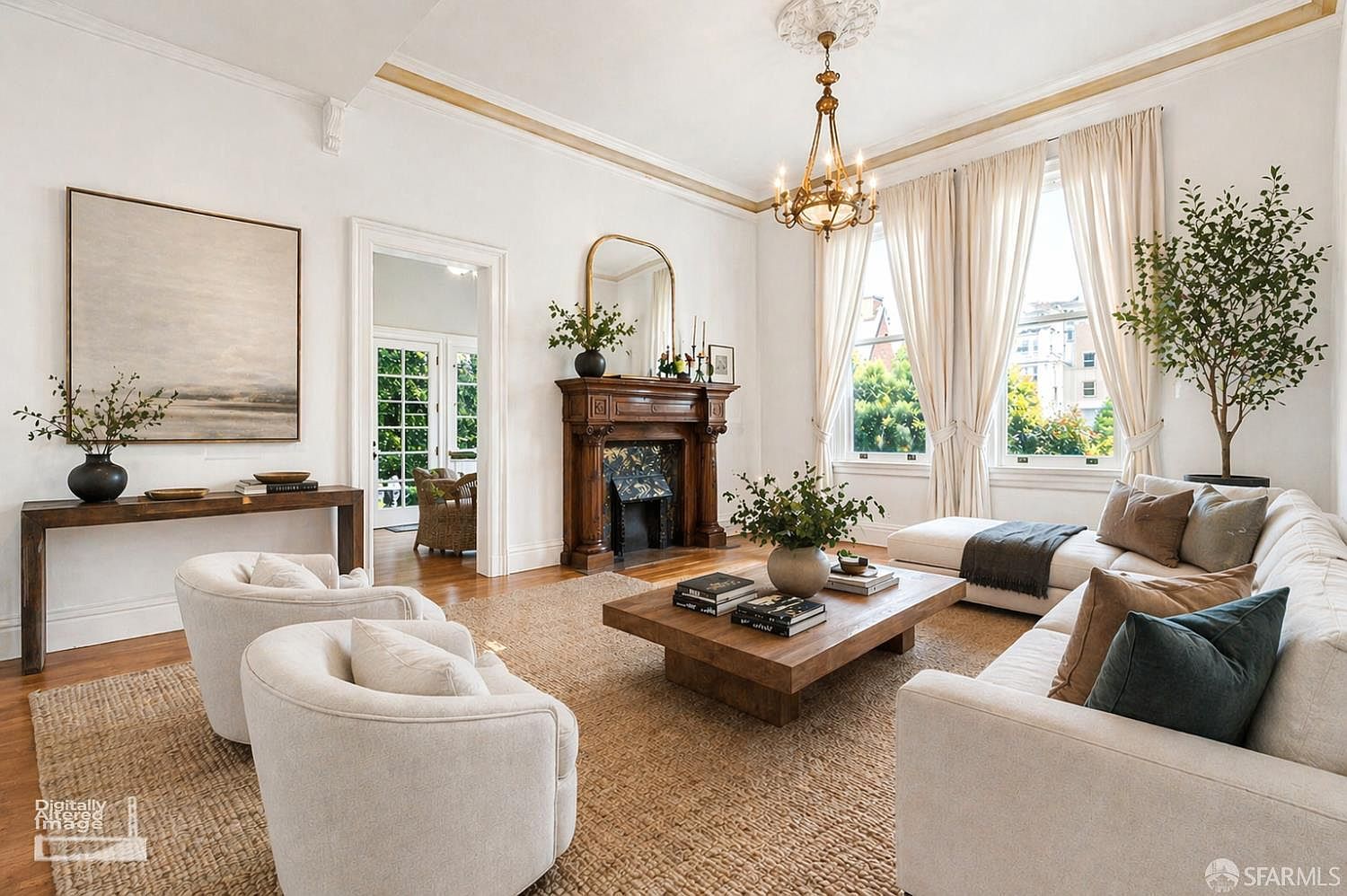
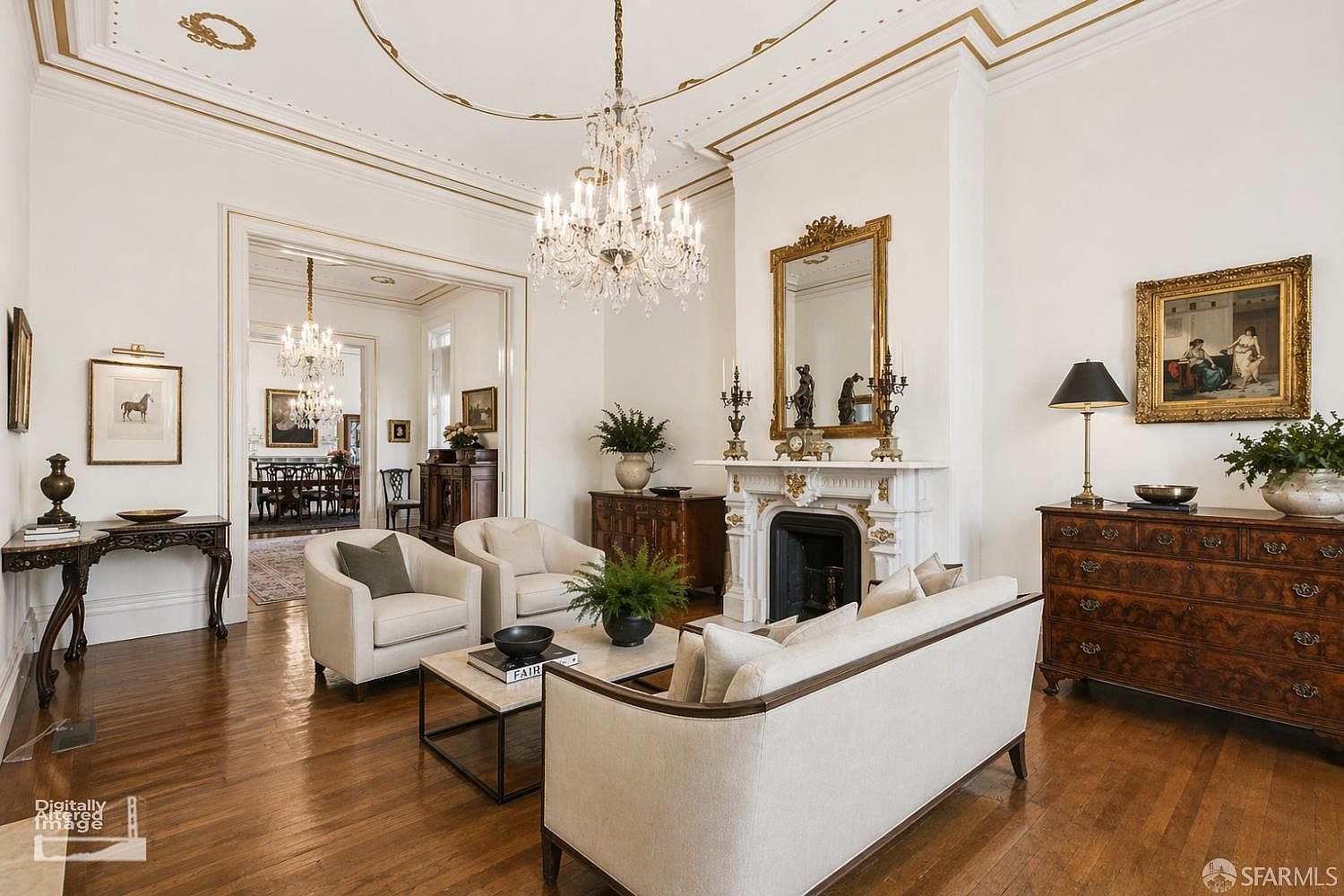
At thirteen feet, the ceilings do more than impress — they breathe. Intricate plaster medallions anchor each chandelier; decorative fireplace mantels anchor each principal room. The formal living room, with its tufted seating, polished floors, and tall curtained windows, offers a setting of composed elegance. The dining room, anchored by a grand table beneath another crystal chandelier, opens through wide doorways into adjacent spaces, reinforcing the home's exceptional suitability for entertaining at scale.
The handsome library — its built-in shelving framed by gold-trimmed moldings and polished wood floors — provides one of the home's most intimate and compelling spaces, a room that rewards stillness and invites conversation in equal measure.
The updated chef's kitchen represents a considered and successful integration of modern function within a historic framework. Granite countertops, a professional Wolf range, generous preparation space, and a dedicated butler's pantry serve the practical needs of contemporary living without disrupting the home's architectural integrity. An adjoining informal lounge softens the transition between the kitchen's working energy and the house's more formal registers.
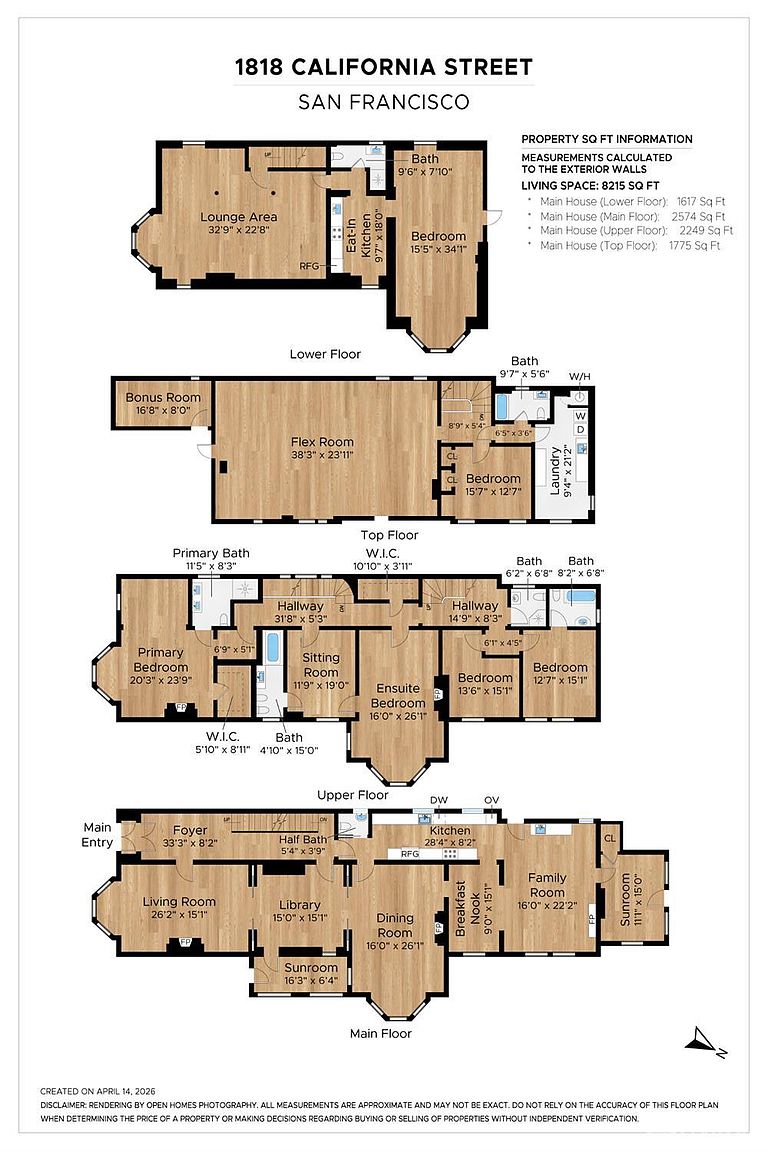
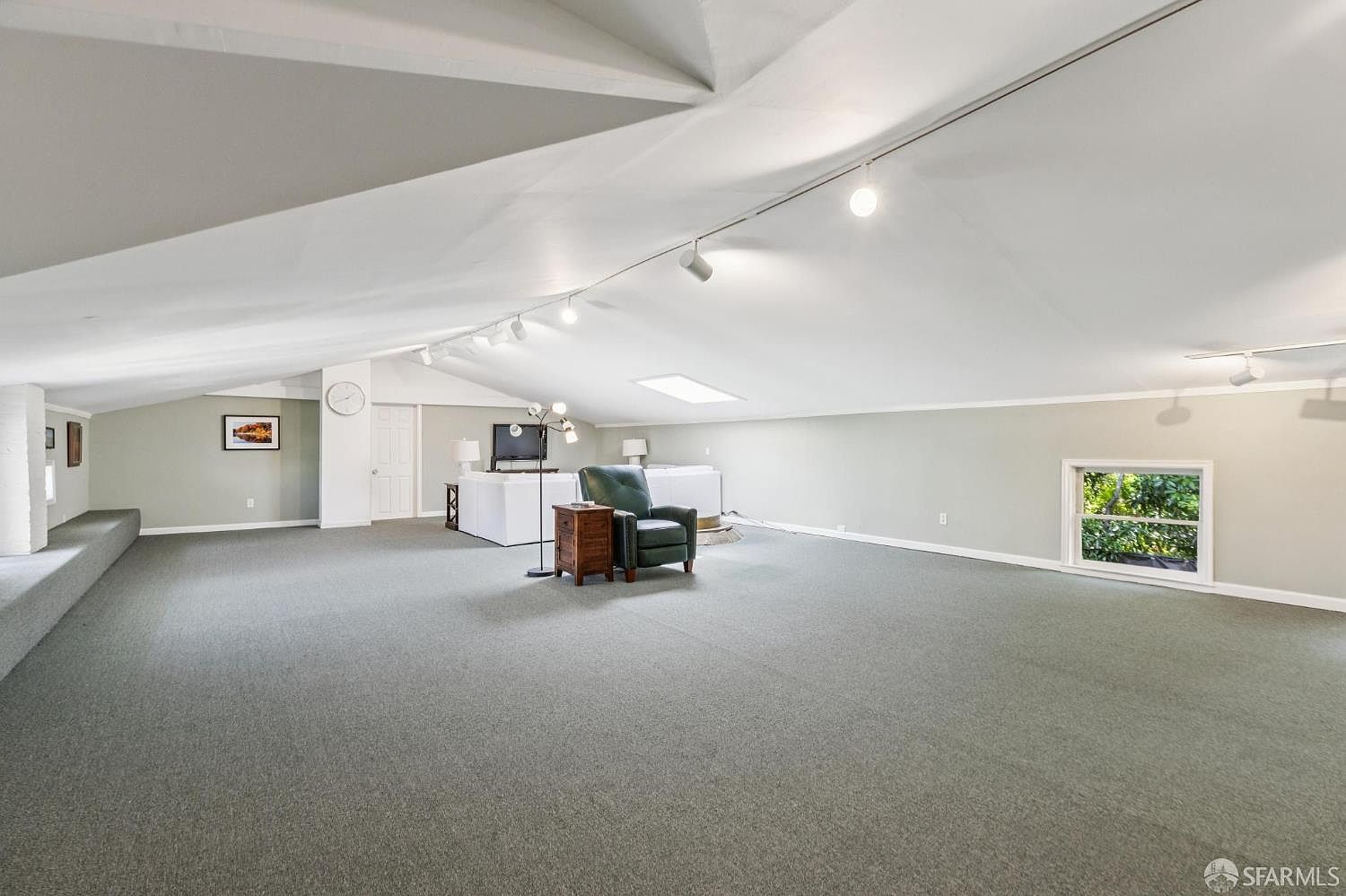
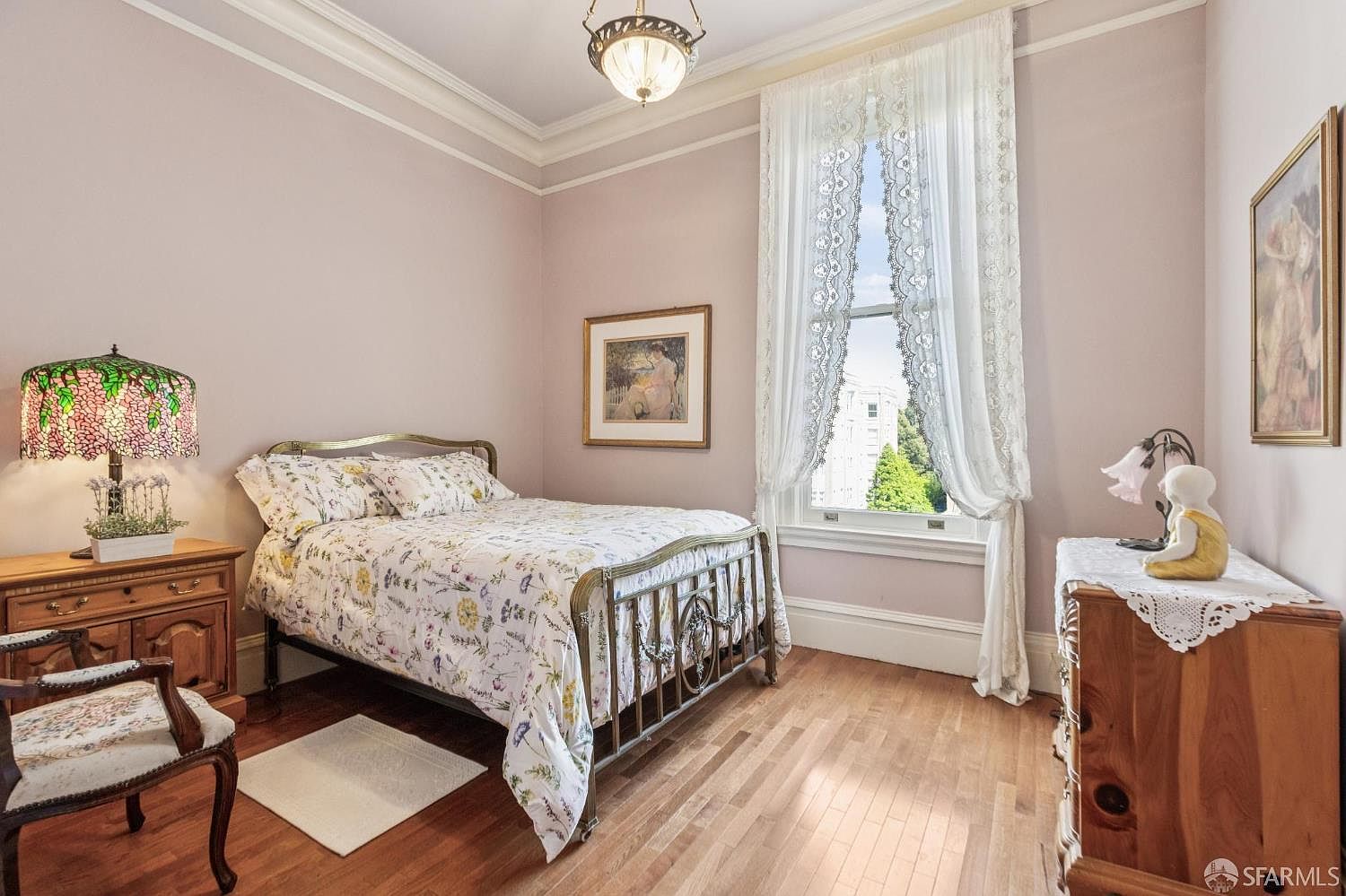
Six bedrooms — including a gracious primary suite with skyline views, tall draped windows, a crystal chandelier, and a serene sitting area — offer accommodation of genuine distinction. The vaulted uppermost level, illuminated by a generous skylight, adapts effortlessly to a range of uses: home office, fitness studio, guest quarters, or private recreation.
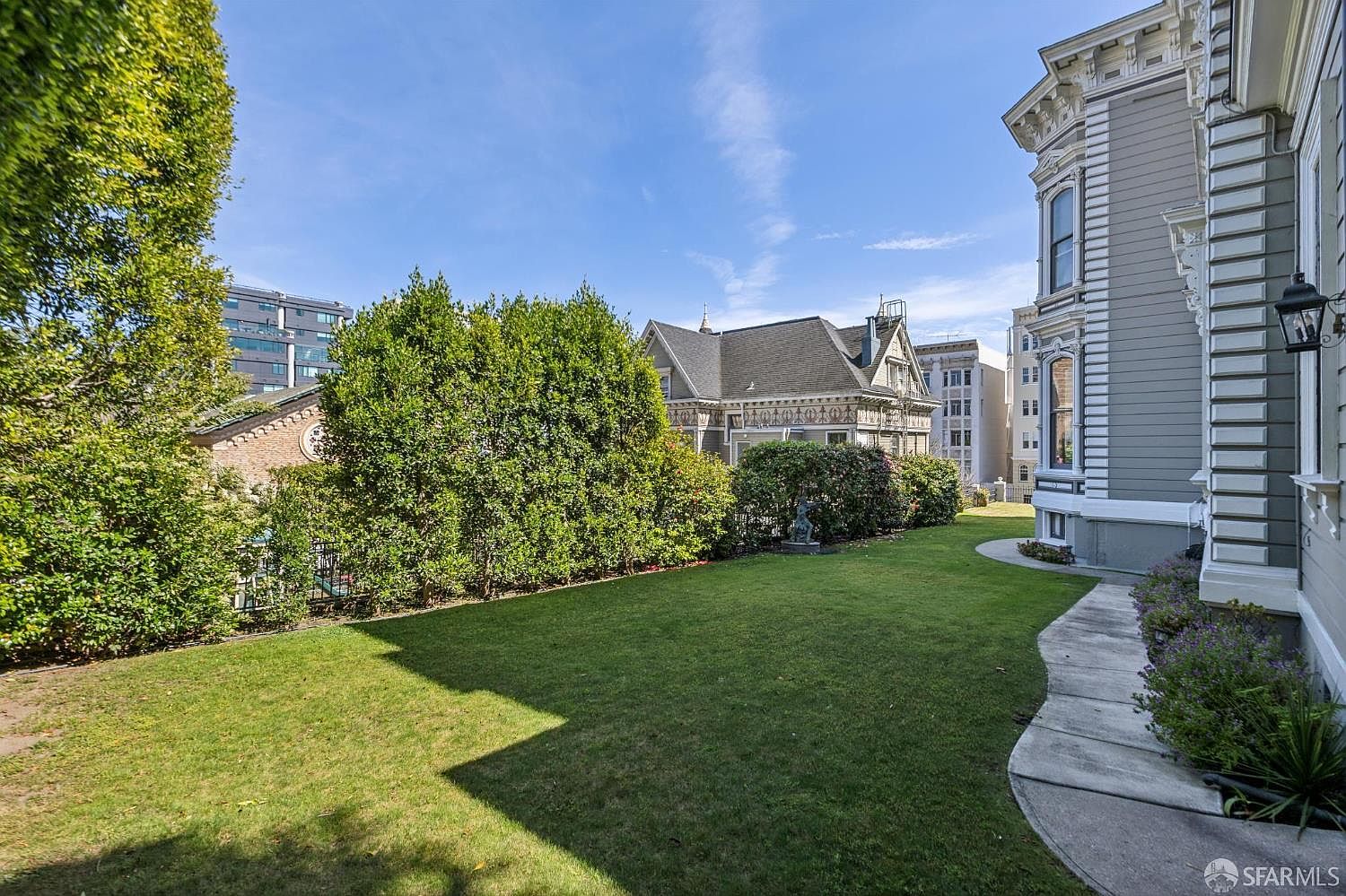
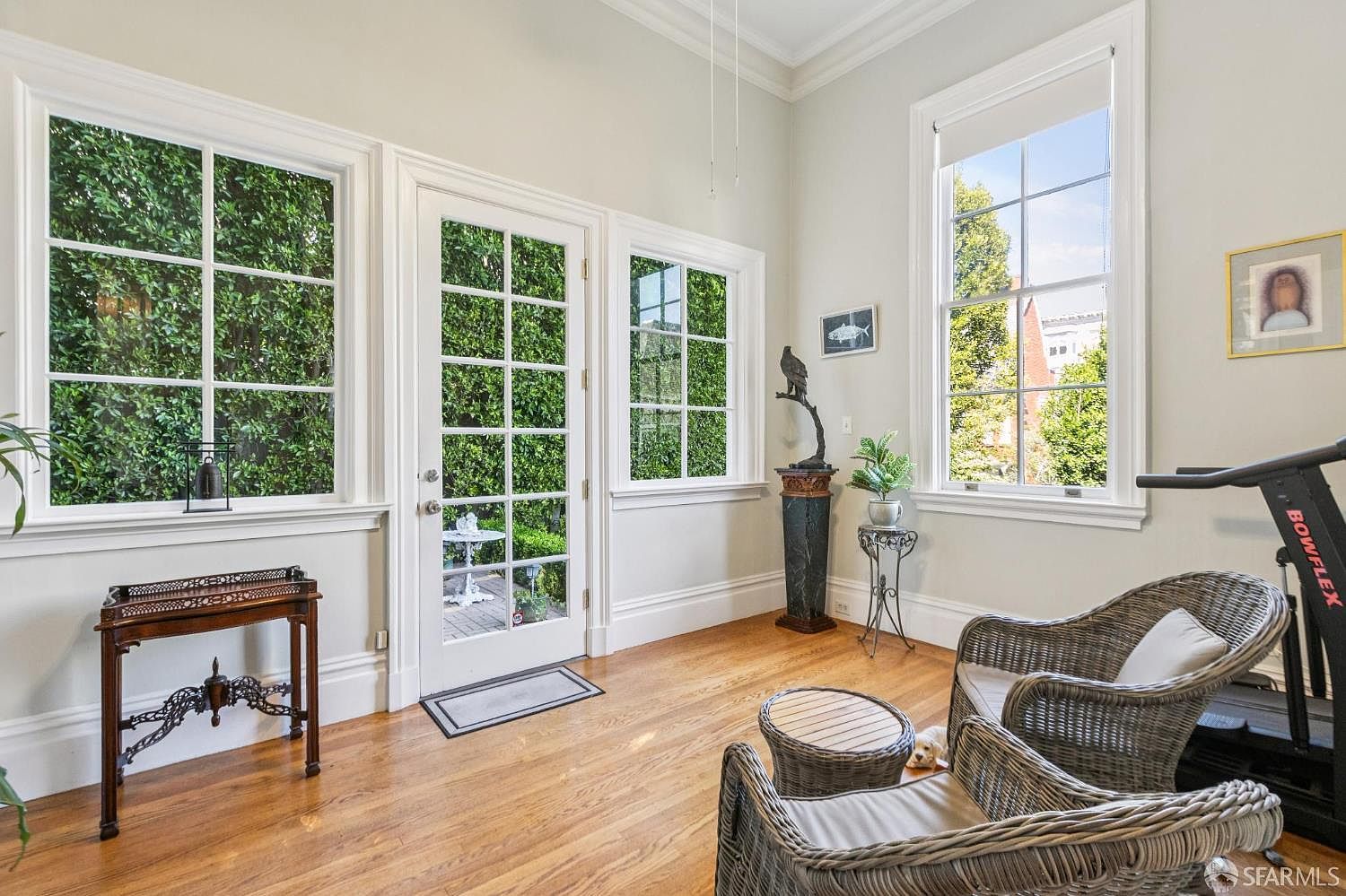
Outdoors, beautifully landscaped gardens and a brick-paved patio create private spaces for retreat and entertaining, framed by mature greenery that softens the urban context without diminishing the sense of place. A four-car garage completes an offering that is, in every meaningful respect, without parallel.
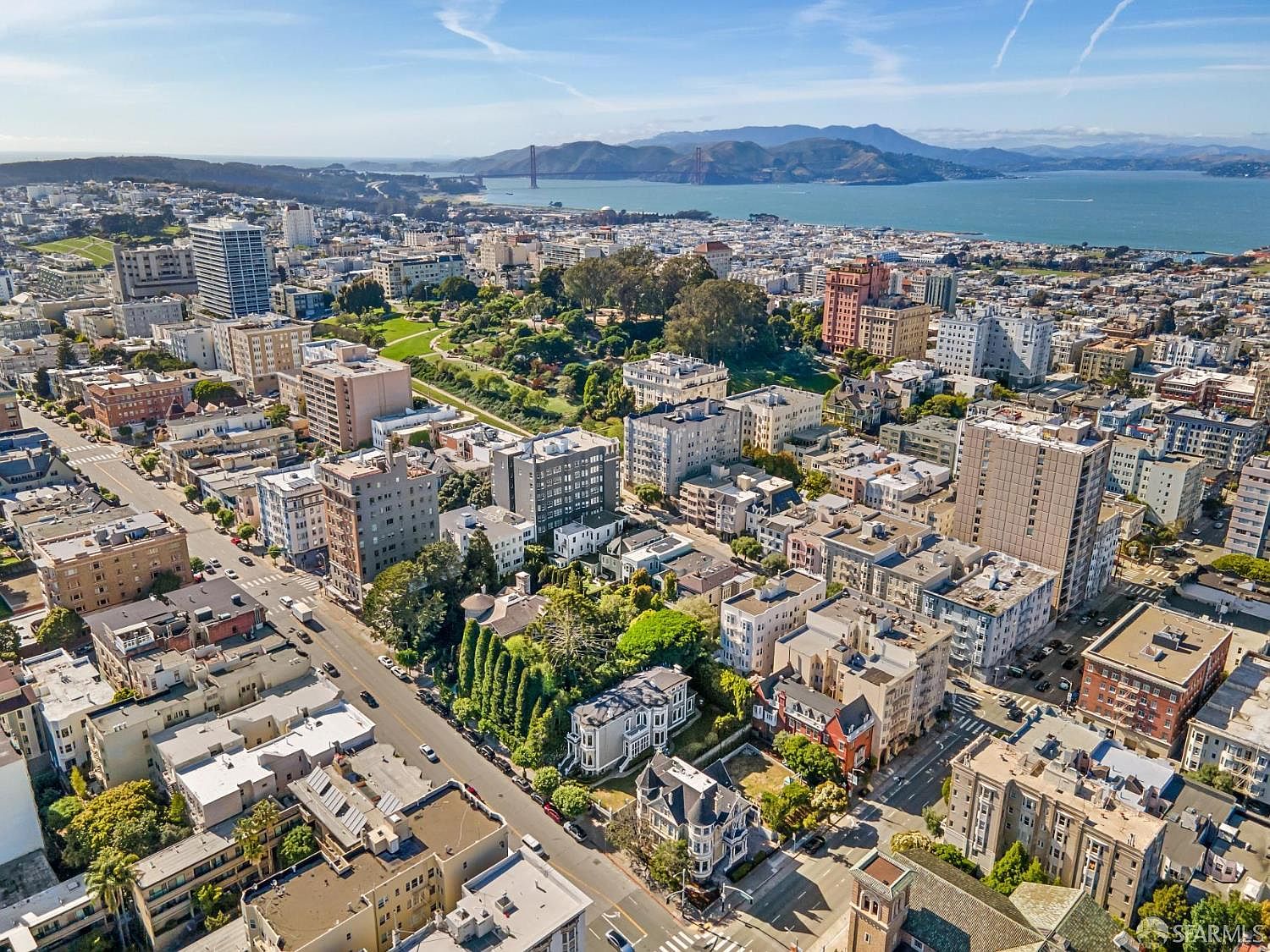
Pacific Heights occupies a singular position in the geography and mythology of San Francisco — a hilltop neighborhood of sweeping bay views, immaculately preserved Victorian and Edwardian architecture, and a residential culture defined by discretion, beauty, and enduring civic investment. Bounded roughly by Broadway to the north, California Street to the south, Divisadero to the west, and Van Ness Avenue to the east, the neighborhood developed rapidly following the 1870s as the city's merchant and professional classes moved uphill from the congested downtown core, commissioning the elaborate houses that still line its streets today.
The result is one of the most architecturally coherent residential neighborhoods in the American West — a place where Italianate, Queen Anne, and Classical Revival facades stand in genuine dialogue with one another, block after carefully maintained block. The city's Historic Preservation Program has recognized numerous structures in the area, and the neighborhood's built fabric remains one of its most compelling and actively protected assets.
1818 California Street sits at the southern edge of Pacific Heights, a position that places it at the intersection of neighborhood prestige and exceptional everyday convenience. Fillmore Street — the neighborhood's primary commercial corridor — lies within easy reach, offering an edited collection of boutique retail, acclaimed restaurants, specialty food purveyors, and the kind of neighborhood-scaled commerce that rewards proximity. From destination dining to a morning coffee ritual, Fillmore Street functions as a genuine village main street embedded within a major city.
Two of San Francisco's most beloved urban parks frame the immediate surroundings. Lafayette Park, a terraced hilltop green space just blocks away, offers open lawns, mature trees, and panoramic views of the bay and city skyline. Alta Plaza Park, designed in a series of ascending terraces with commanding vistas toward downtown and the water, serves as a gathering place for the neighborhood's residents and their families. Both parks host regular community activity and contribute meaningfully to the quality of daily life in the area.
Japantown — one of the oldest and most culturally significant Japanese American communities in the United States — lies immediately to the south and west, offering cultural institutions, distinctive dining, and a sense of neighborhood diversity and vitality that enriches the broader context. The nearby Fillmore District carries its own deep cultural history as a onetime center of jazz and African American cultural life in the Bay Area, a heritage acknowledged and celebrated by the neighborhood today.
Families are well served by proximity to several of the city's most respected independent and public schools, and the practical conveniences of daily life — including a Whole Foods Market — are accessible on foot or by a brief drive. The neighborhood's relatively flat interior streets, combined with its hilltop position, make it navigable and livable in ways that not all of San Francisco's famously demanding topography allows.
To live at 1818 California Street is to inhabit one of the city's most storied addresses, in a neighborhood that has consistently represented the highest expression of San Francisco residential life for nearly one hundred and fifty years.
Featured Highlights
Curated Content • Presented by Anne Laury