The Story Behind
A Pritzker Prize Vision, Realized Across Three Magnificent Floors
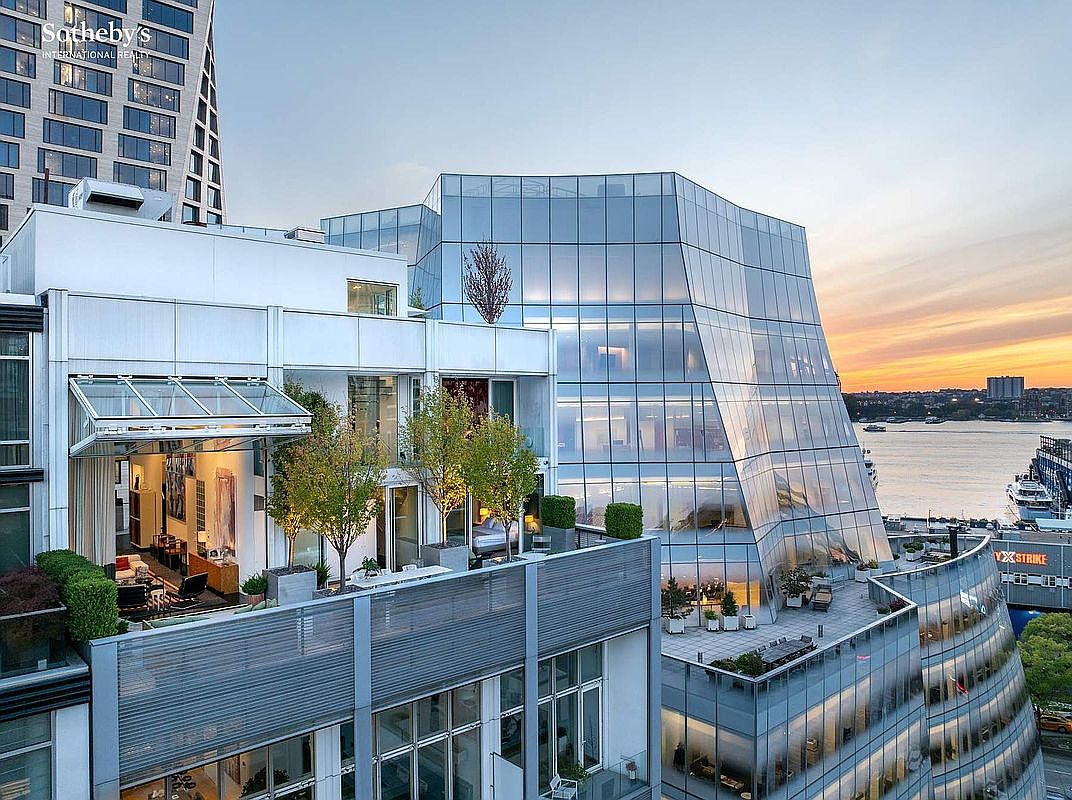
There are apartments that are well-designed, and then there are apartments that constitute a statement about what architecture can achieve when vision, craft, and restraint converge without compromise. The penthouse at 524 West 19th Street belongs emphatically to the latter category.
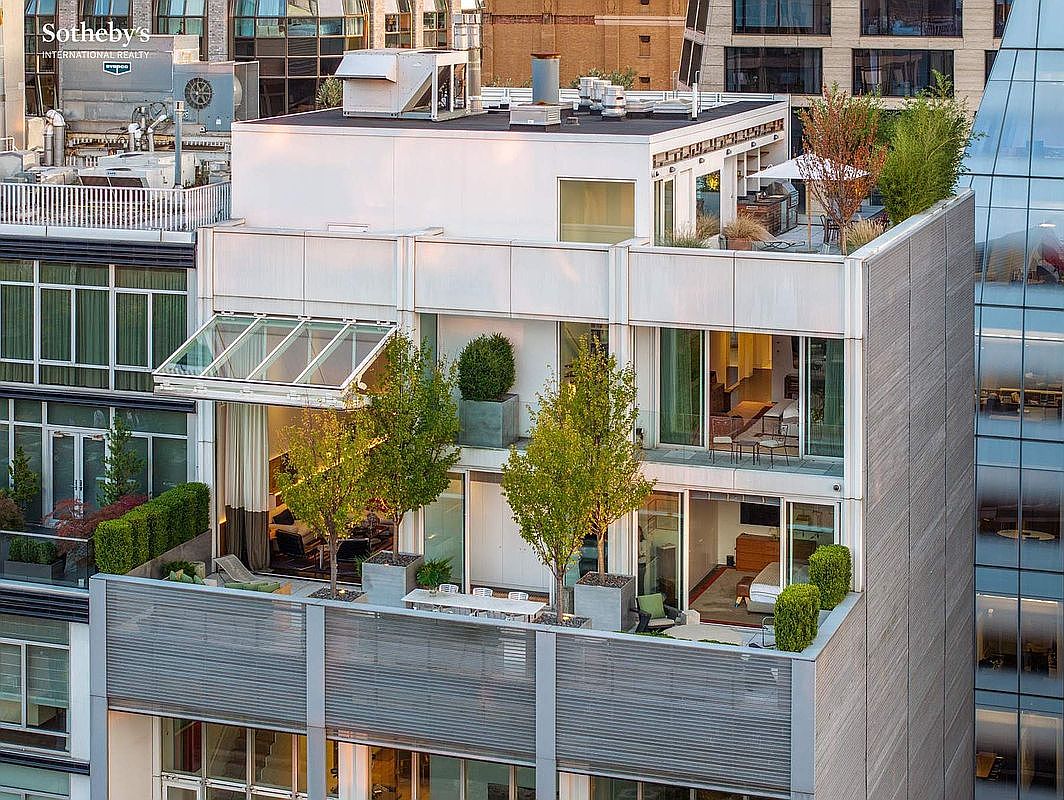
The Metal Shutter Houses is the work of Shigeru Ban, the Japanese architect whose Pritzker Prize — the Nobel of the built world — reflects a career defined by structural ingenuity and humanistic warmth. His signature motorized metal shutters, which define the building's facade, are not merely aesthetic gestures; they are a living, functional element that calibrates privacy and light with the precision of a finely tuned instrument. Inside, the interiors were entrusted to Andre Mellone of Studio Mellone, whose AD 100 designation signals his standing among the most influential designers working in America today. The result of this collaboration is a home where every surface, proportion, and material decision feels both inevitable and quietly extraordinary.
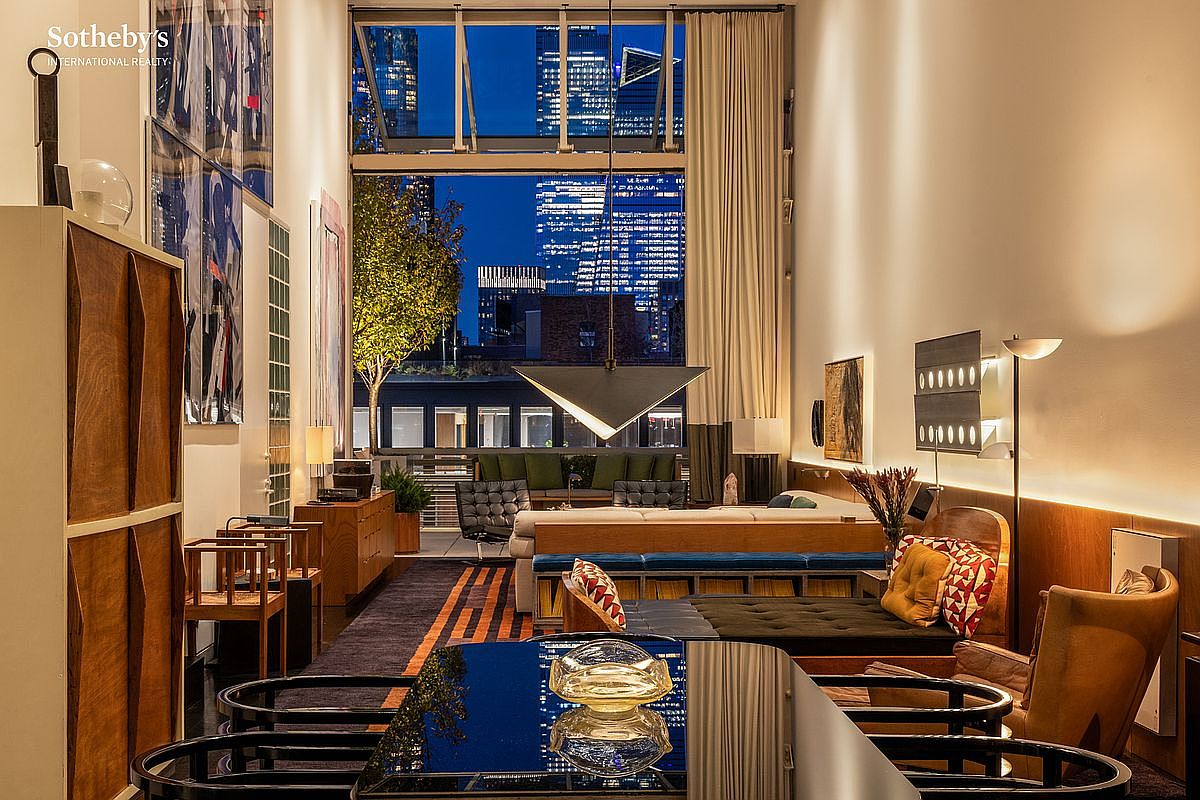
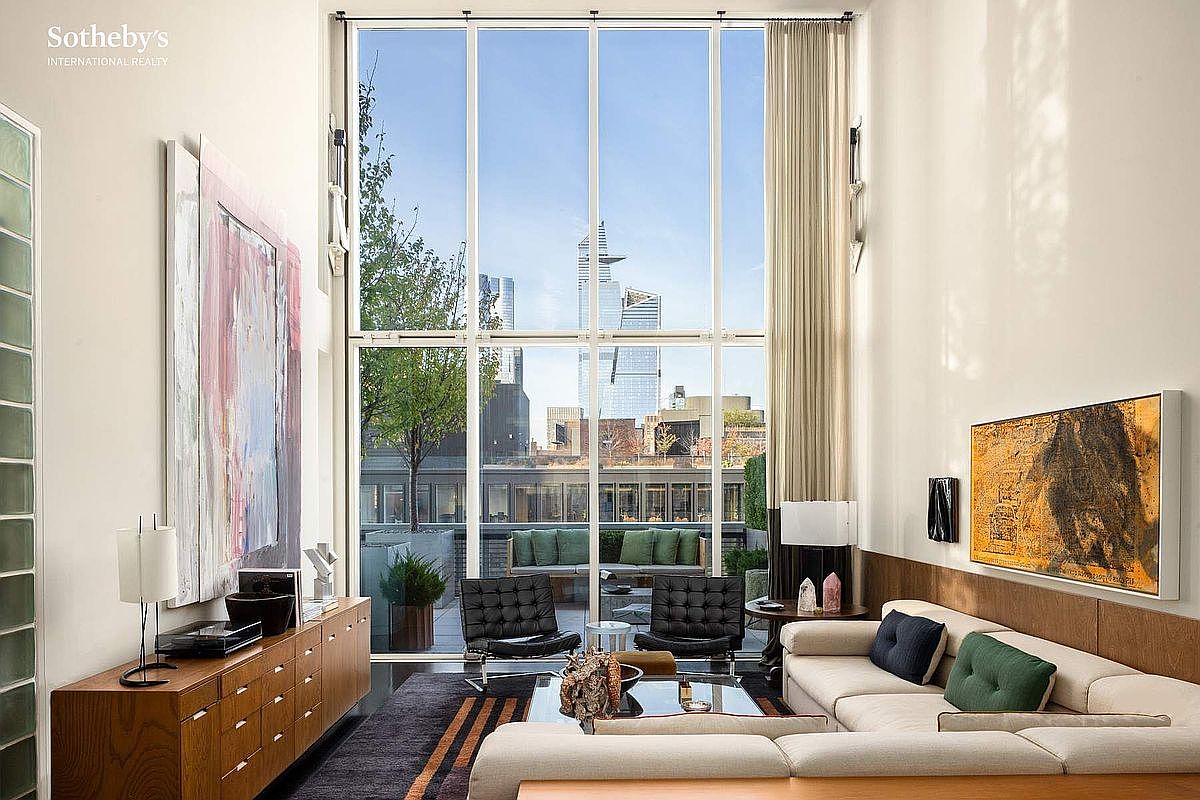
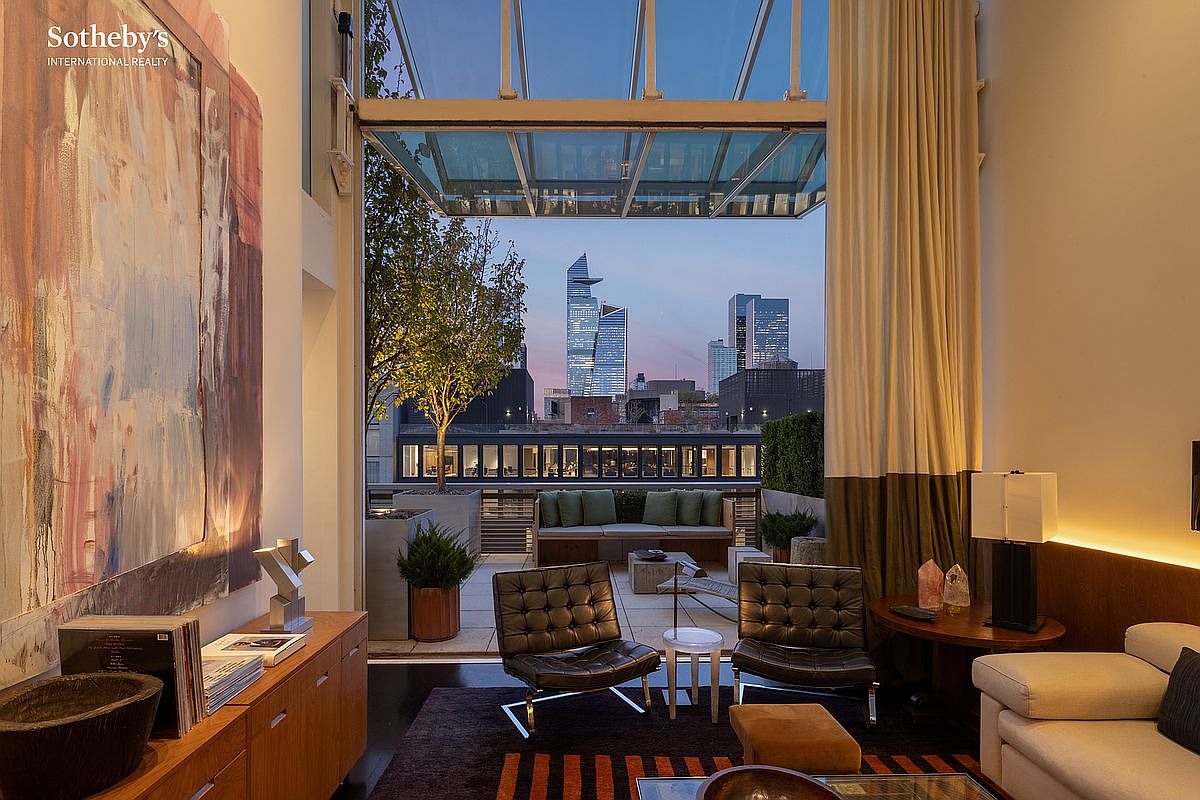
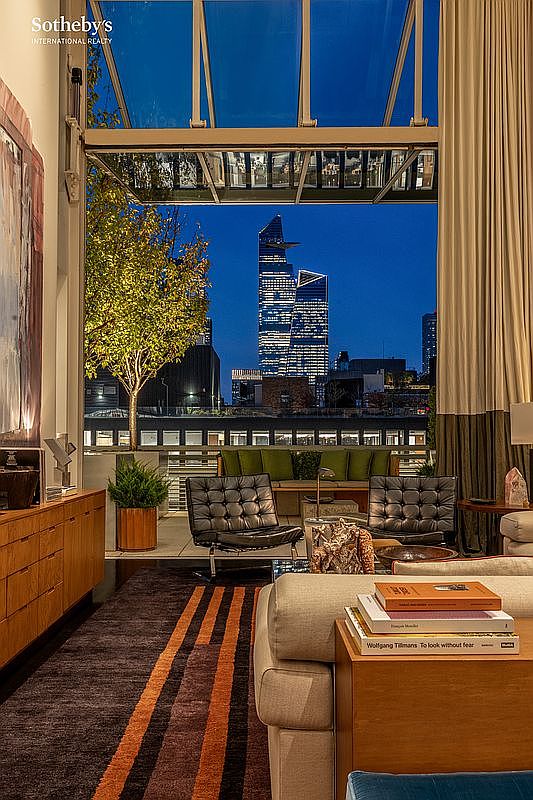
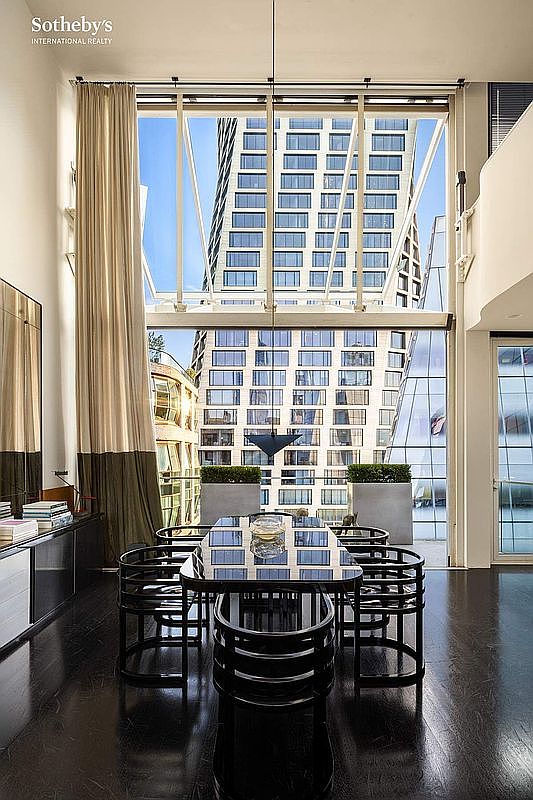
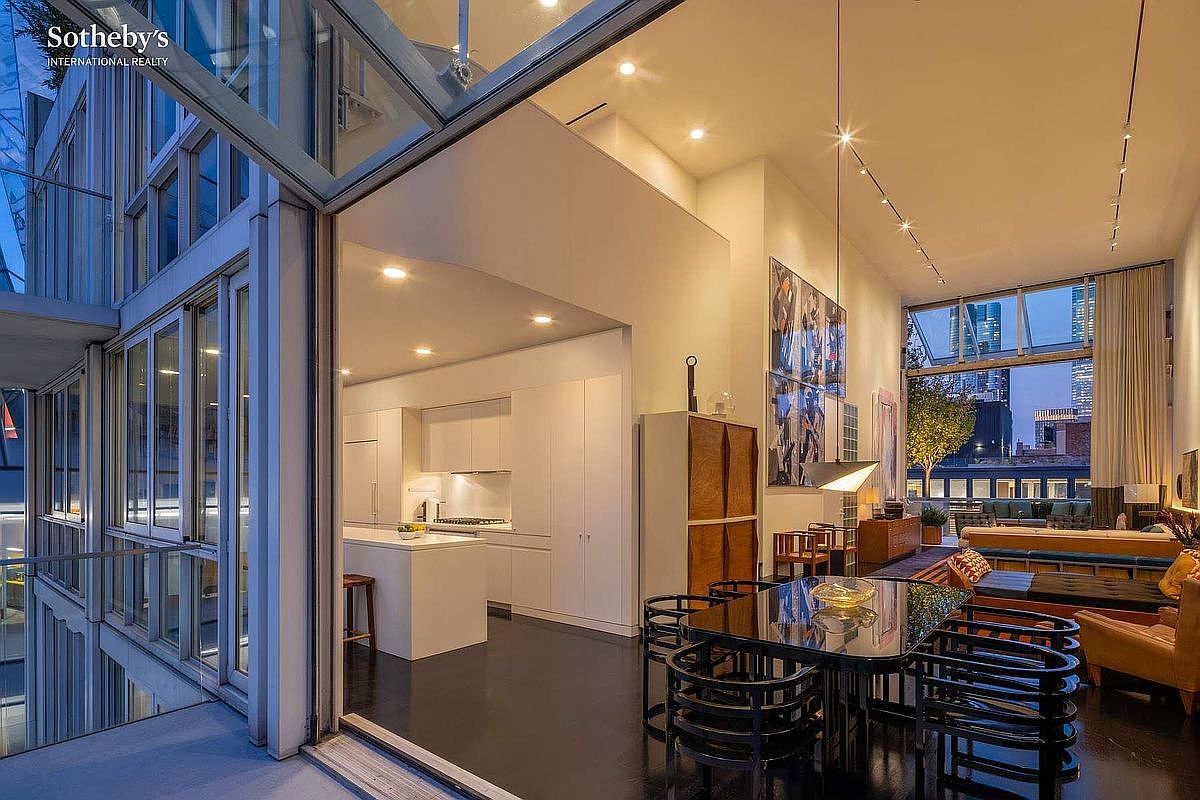
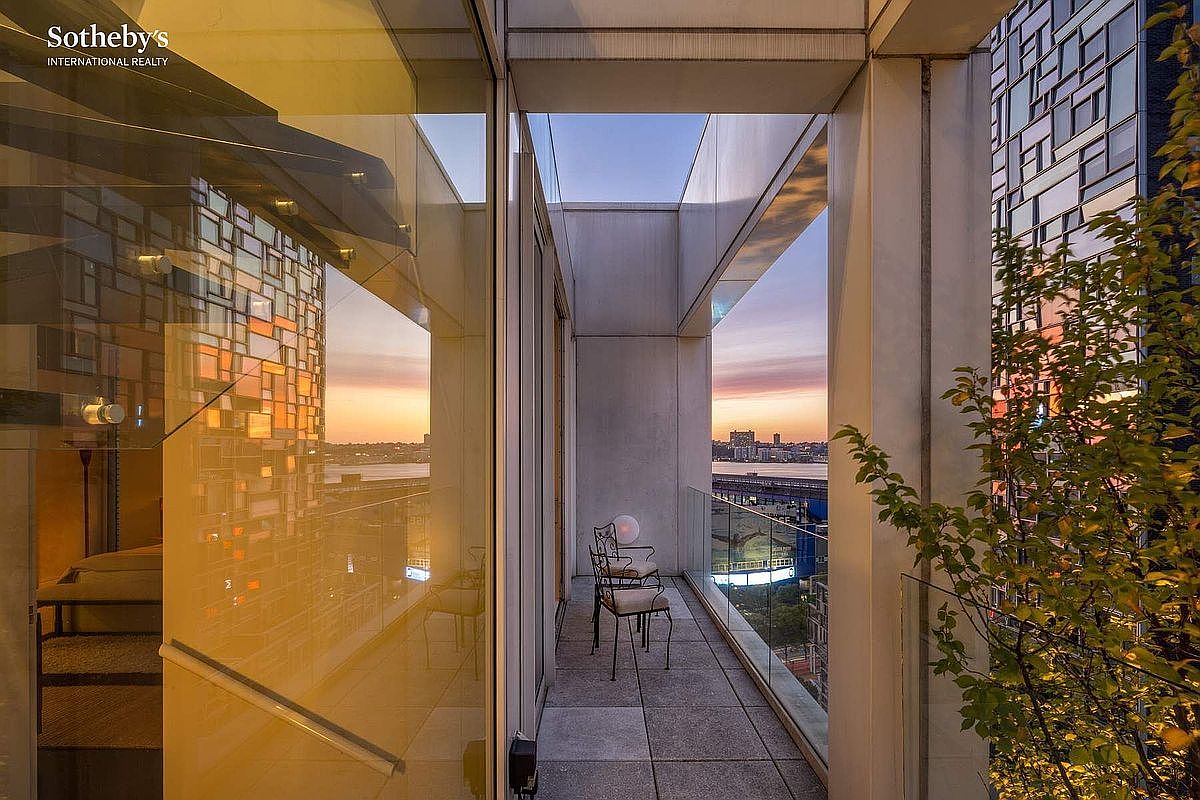
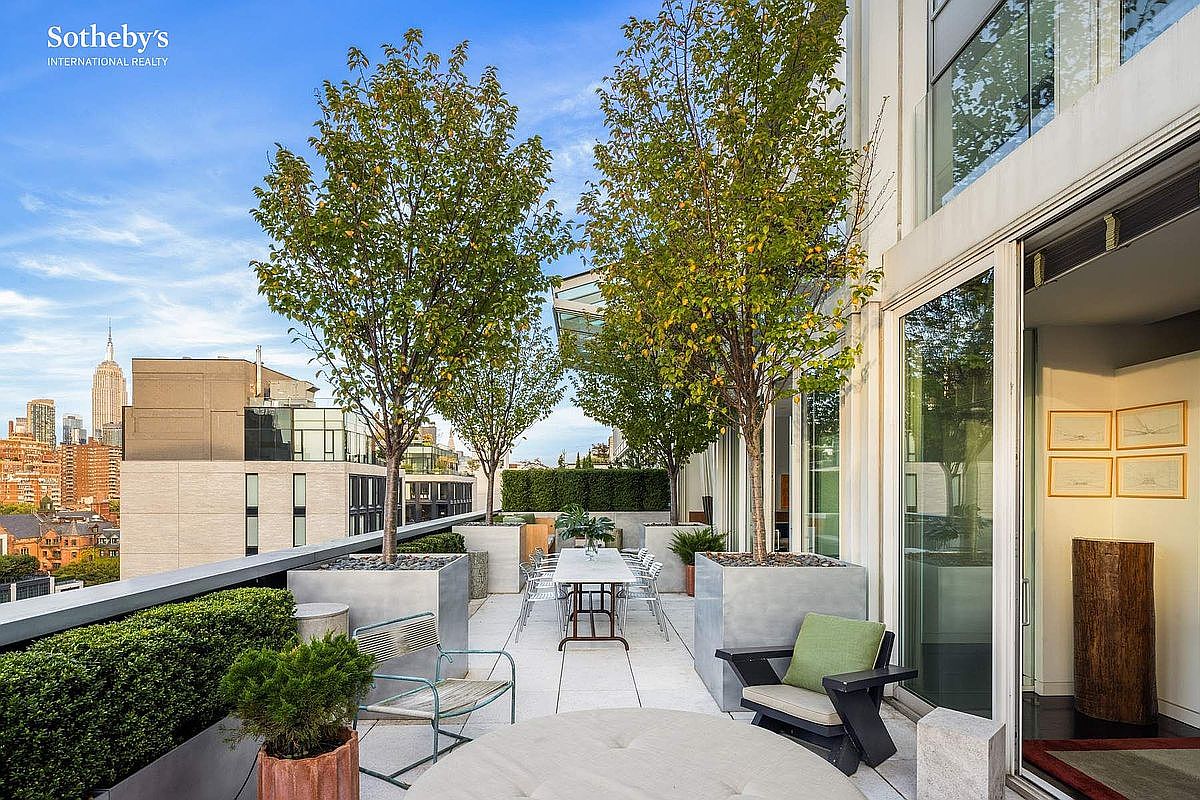
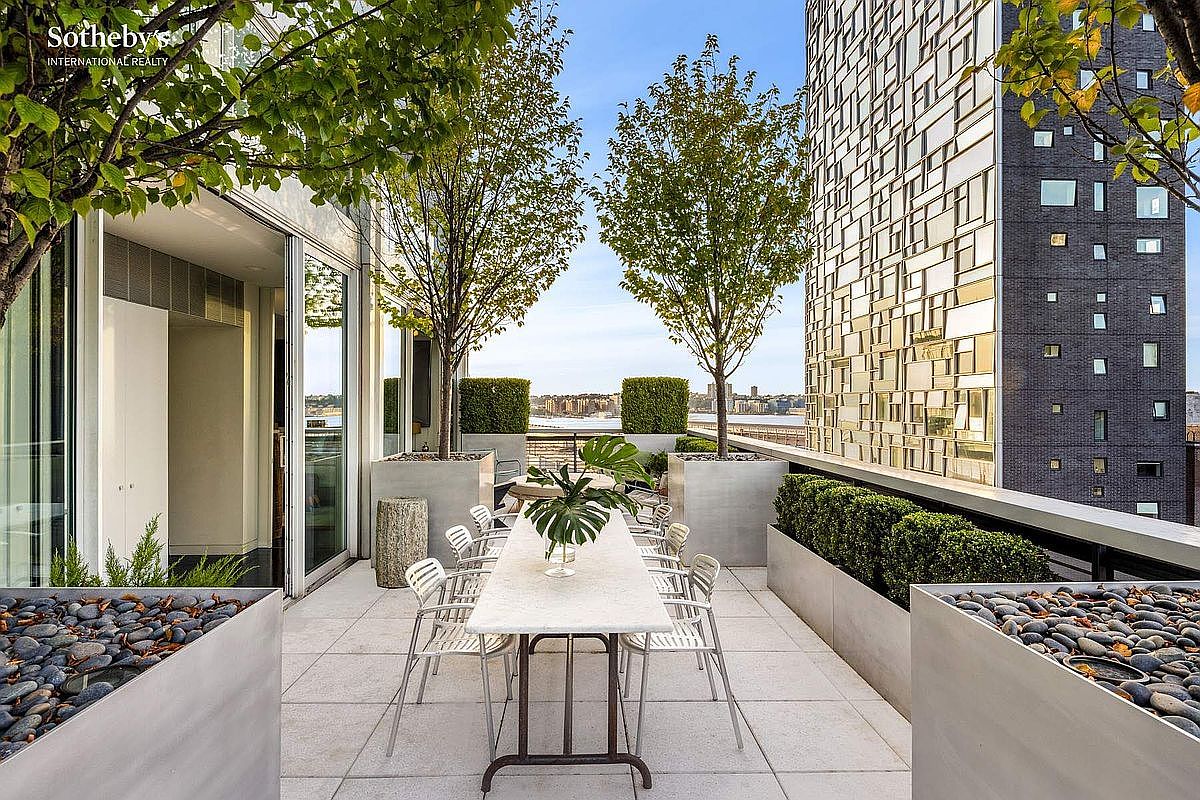
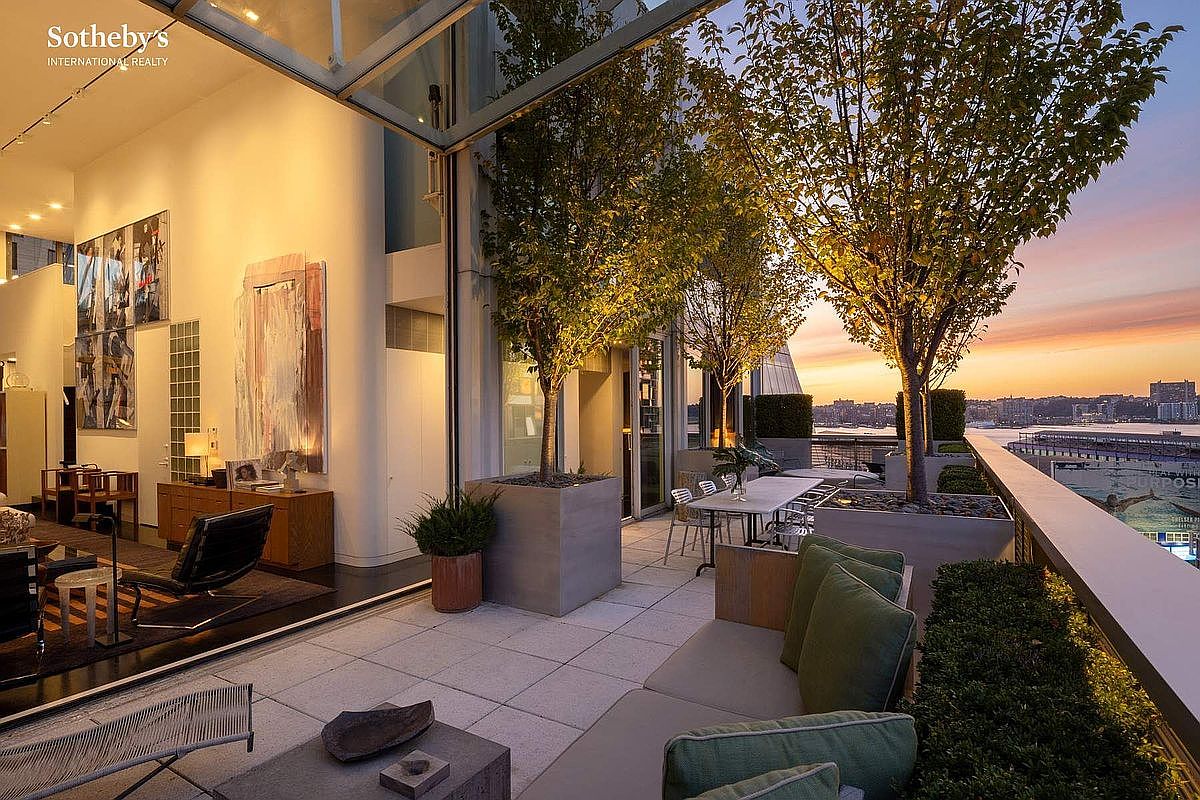
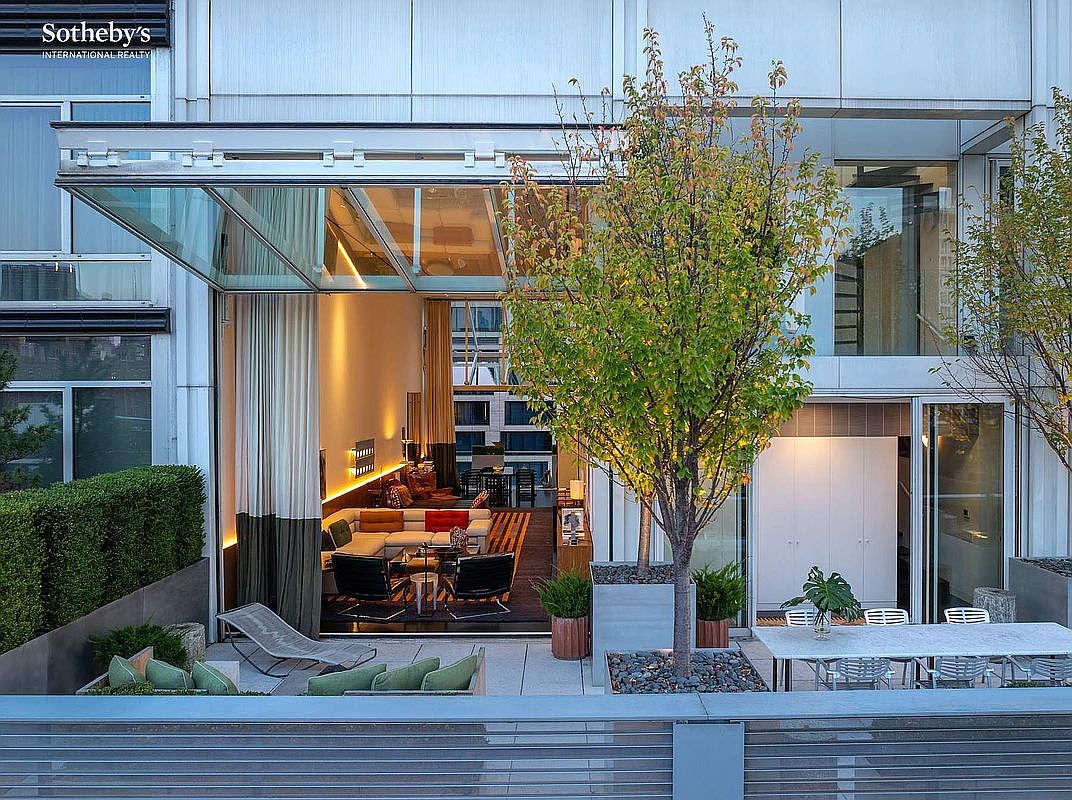
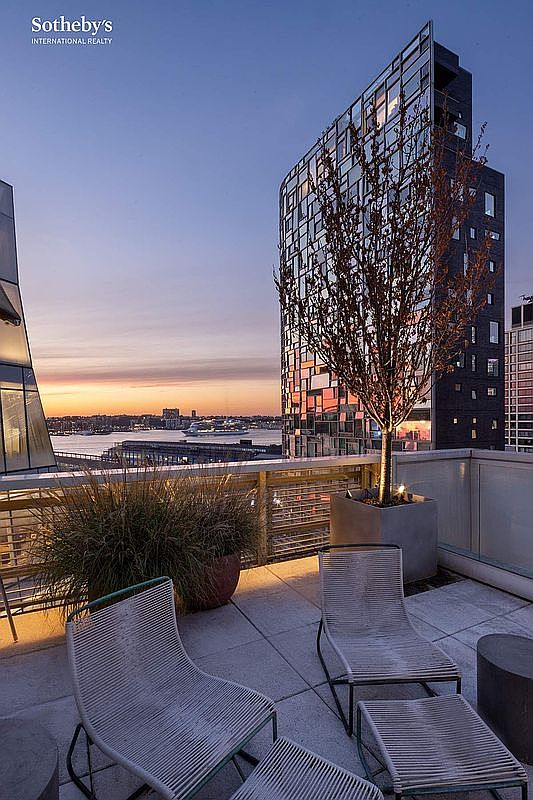
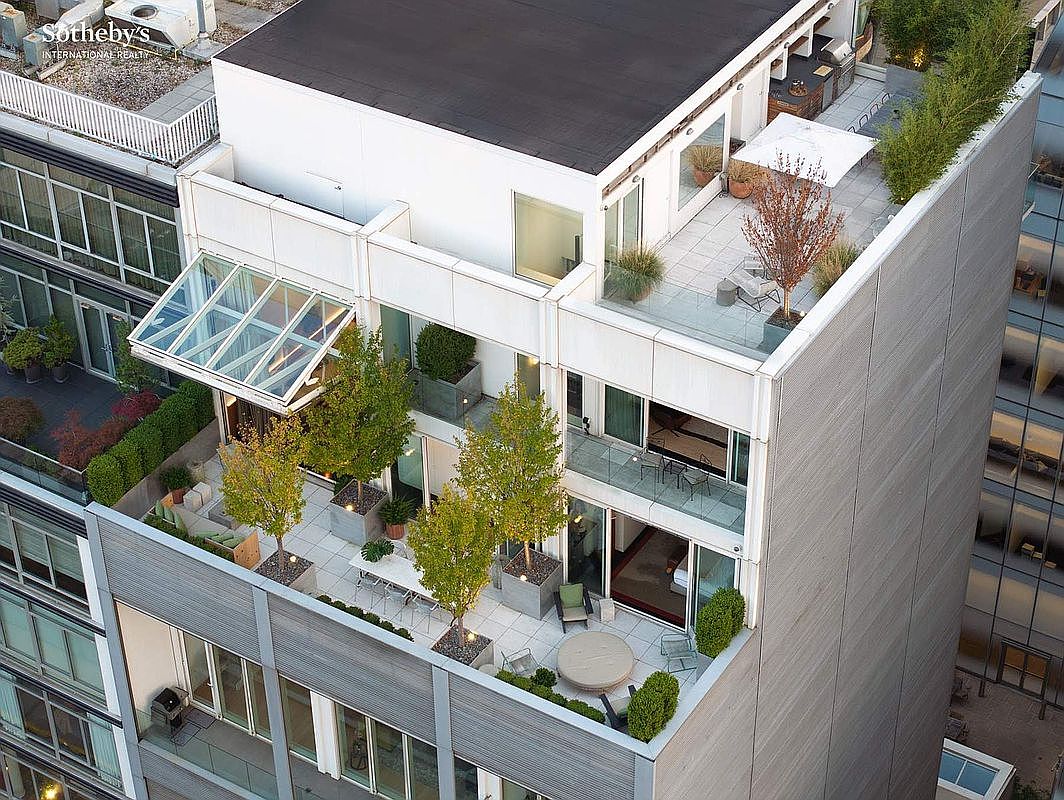
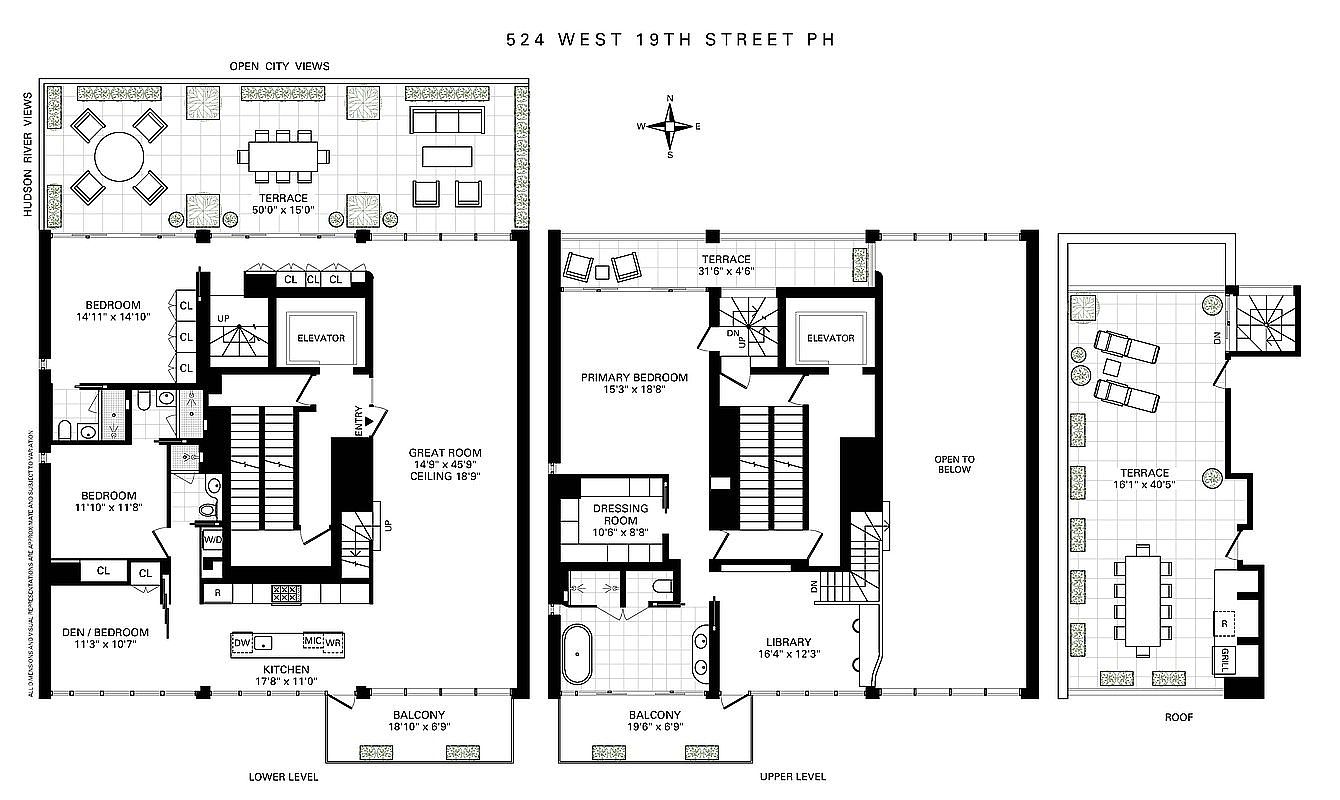
The residence is entered via private elevator, which opens directly onto the penthouse landing — an arrival sequence that sets the tone immediately. What greets you is scale: a 46-foot great room with soaring ceilings that draws the eye across solid oak floors toward two full 20-foot walls of glass framing the skyline at both ends. To the south, a pivoting glass wall retracts entirely, erasing the threshold between interior and terrace and transforming the great room into an open-air pavilion above the city. The northern and southern terraces together compose a 48-by-15-foot entertaining canvas, landscaped with mature plantings and oriented to capture light across every hour of the day.
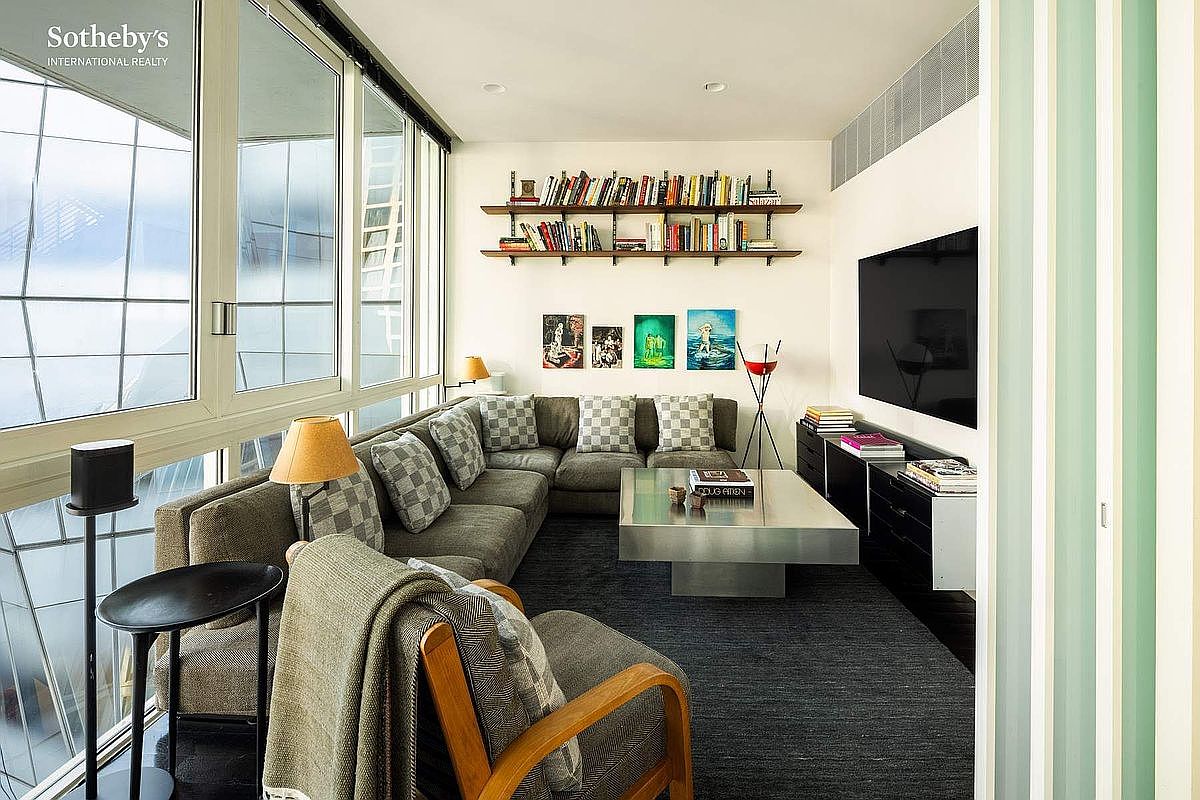
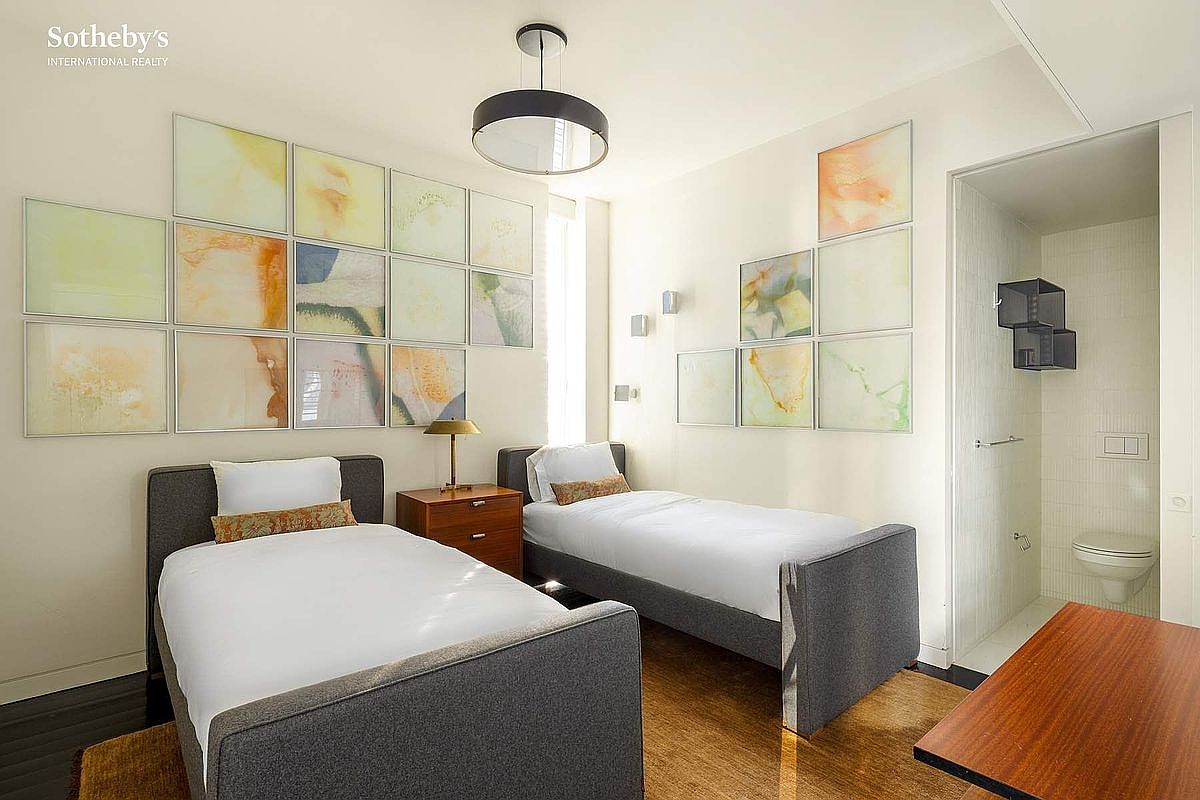
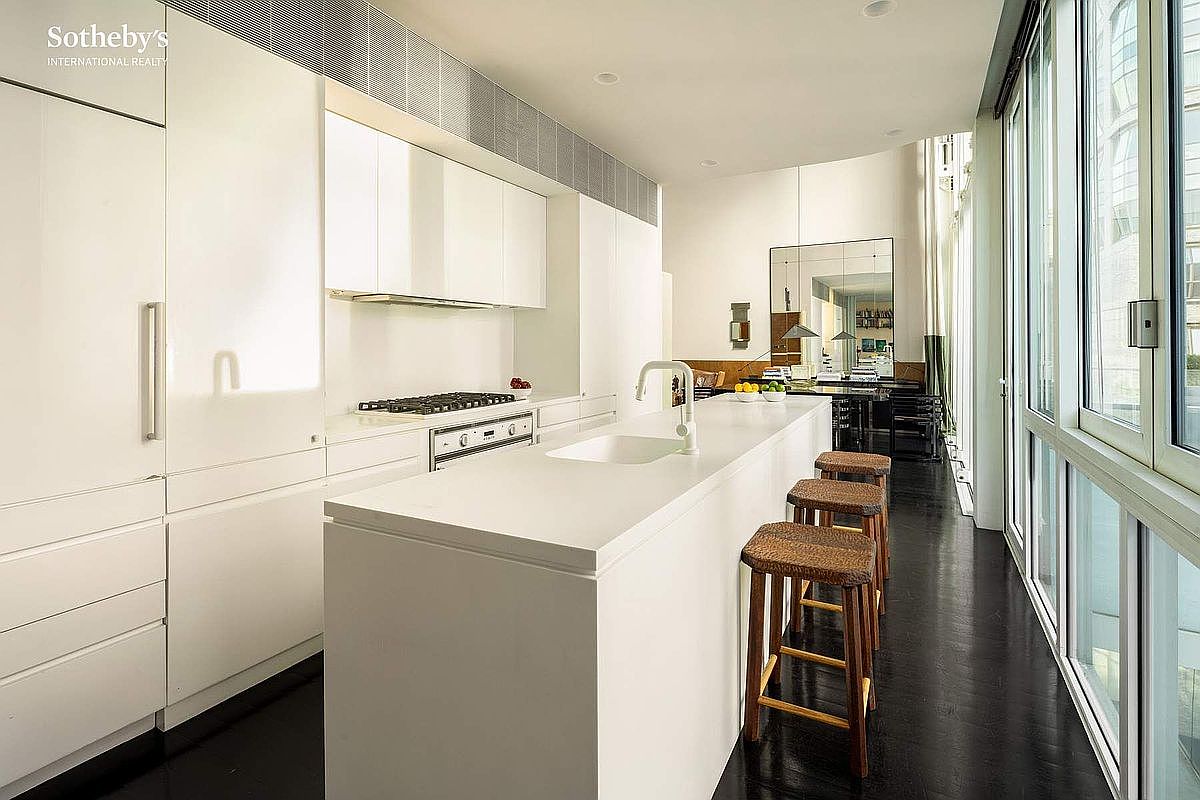
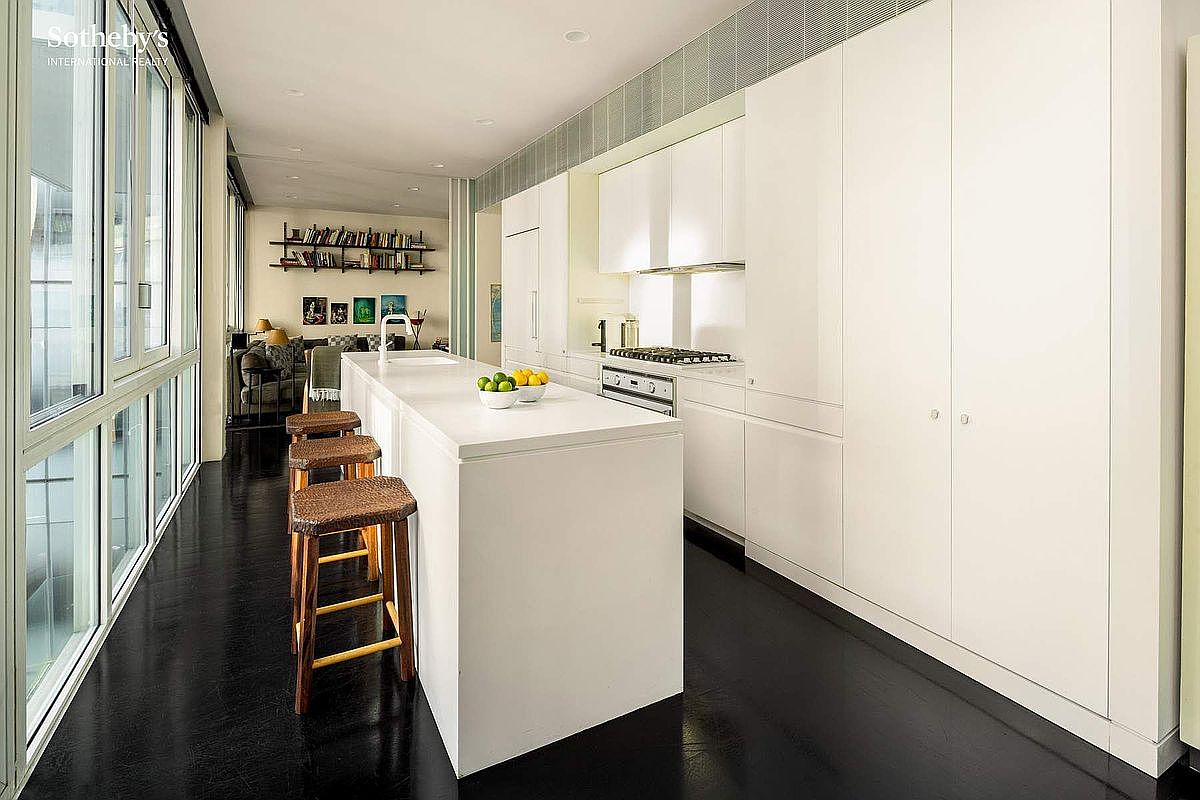
The Shigeru Ban-designed kitchen is a study in architectural discipline — white Corian countertops, a central island, high-gloss cabinetry, and top-of-the-line appliances arranged with the clarity of a well-composed drawing. It flows seamlessly into the surrounding living spaces, including an adjoining den that functions equally well as a fourth bedroom with its own bath.
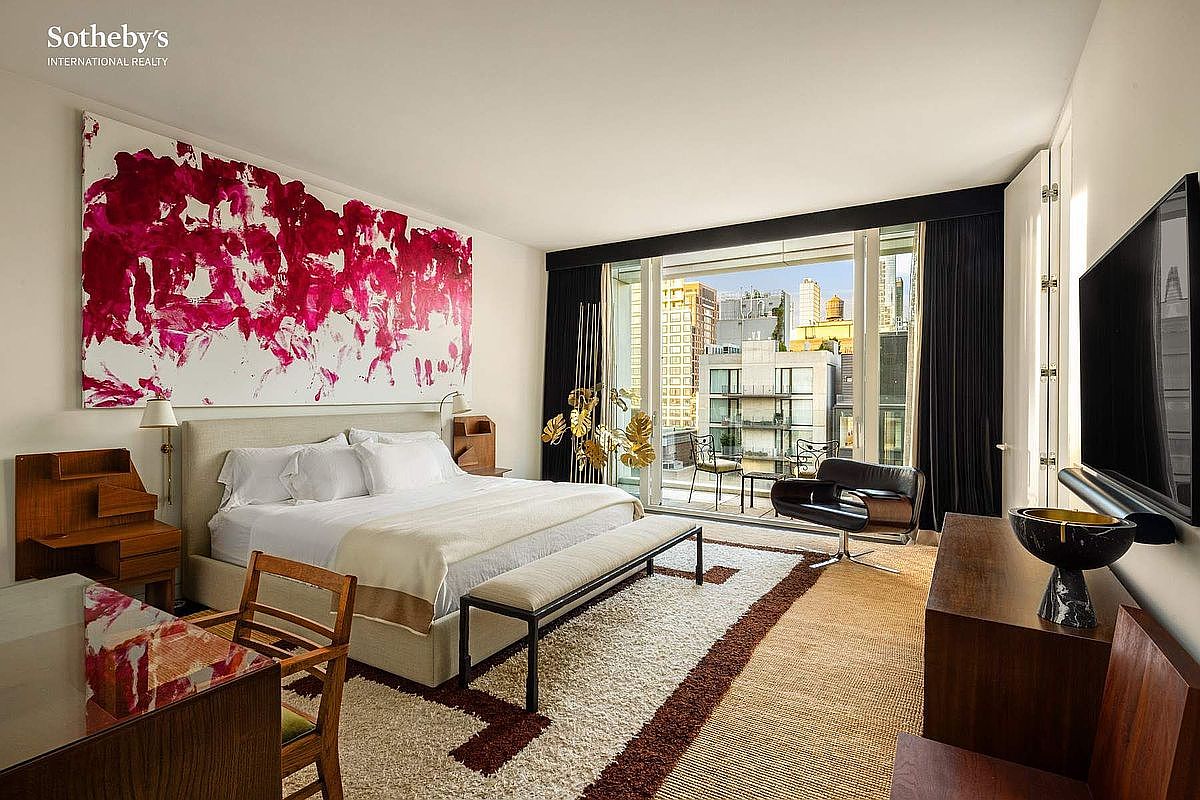
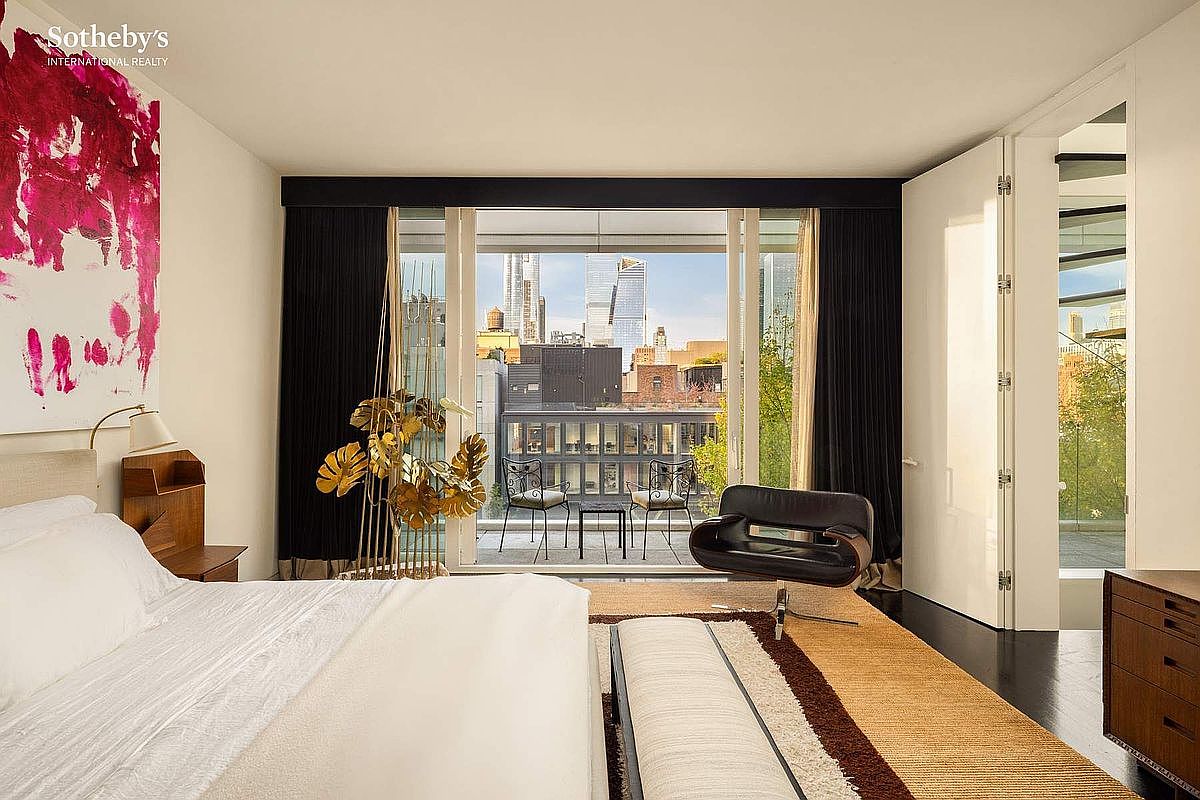
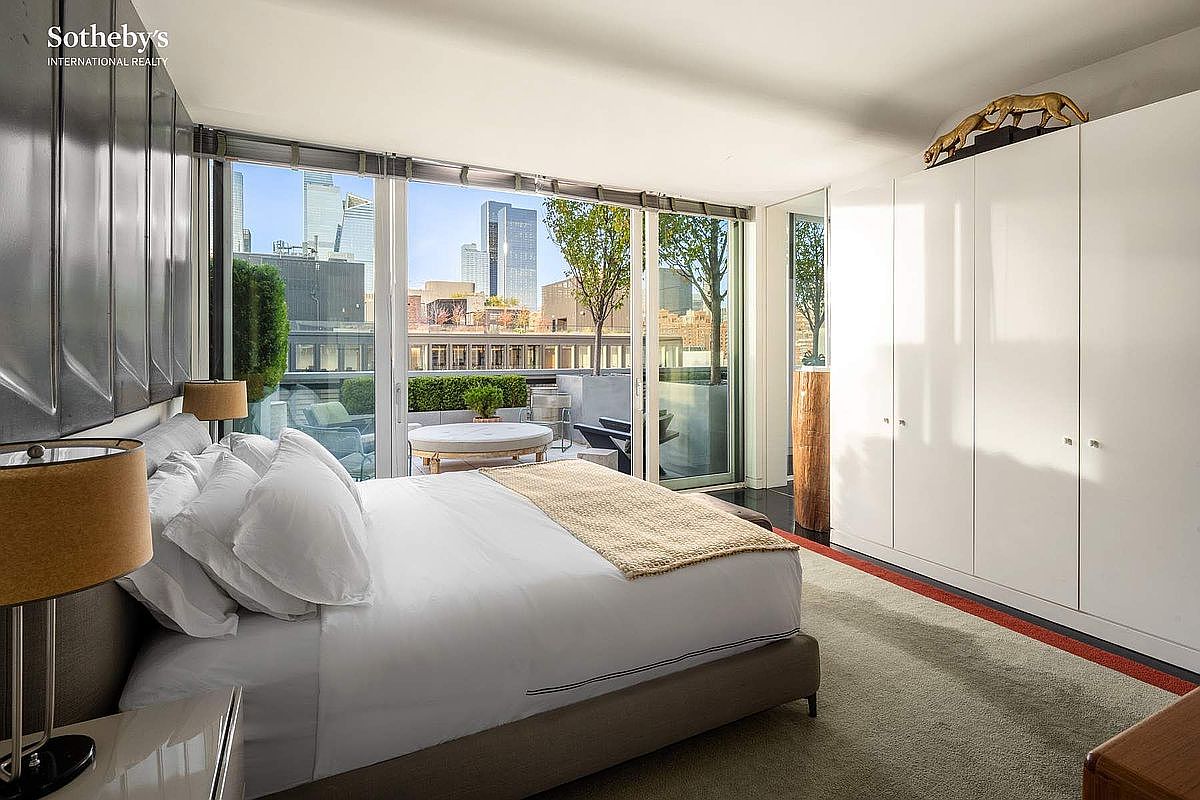
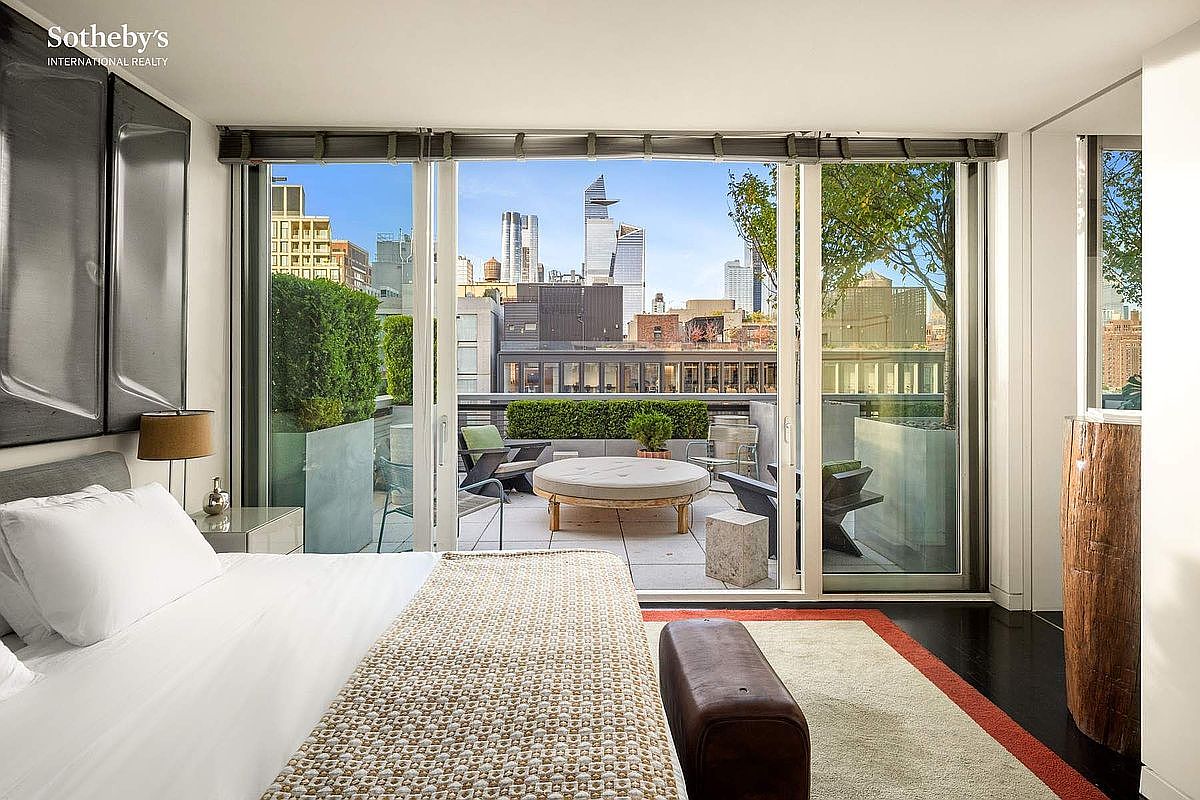
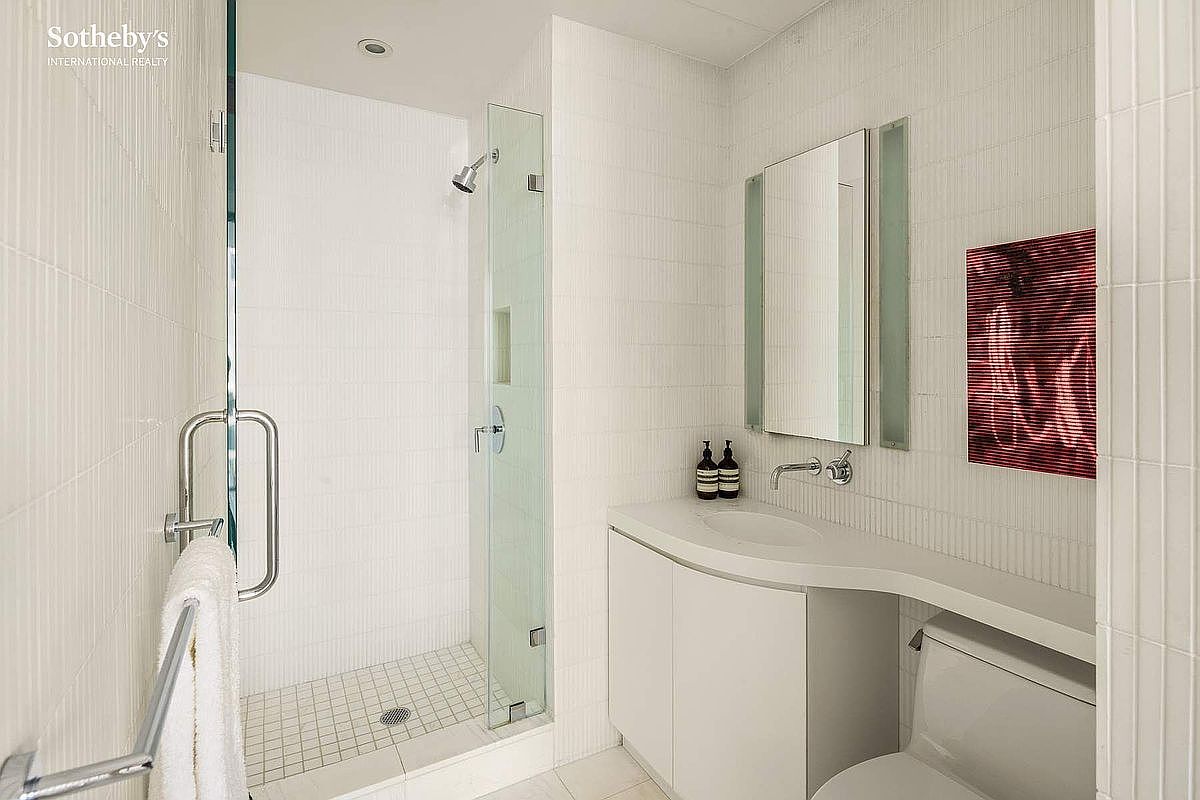
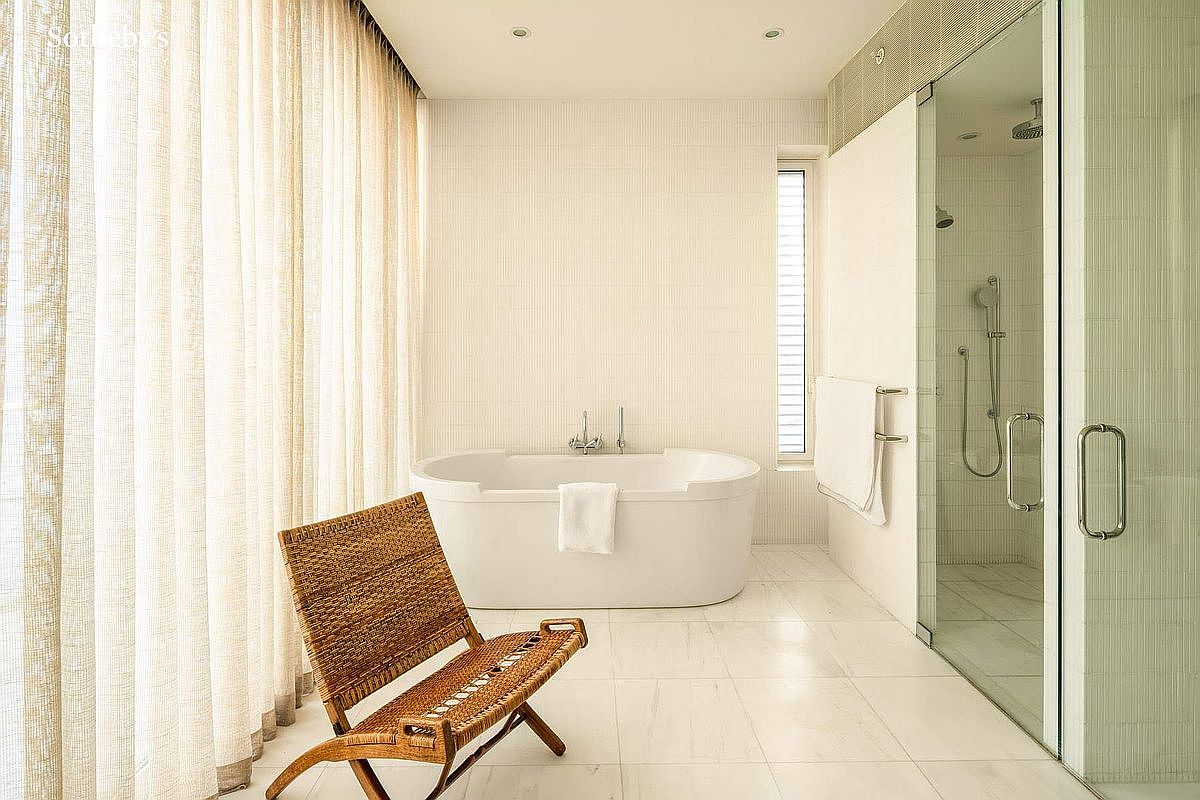
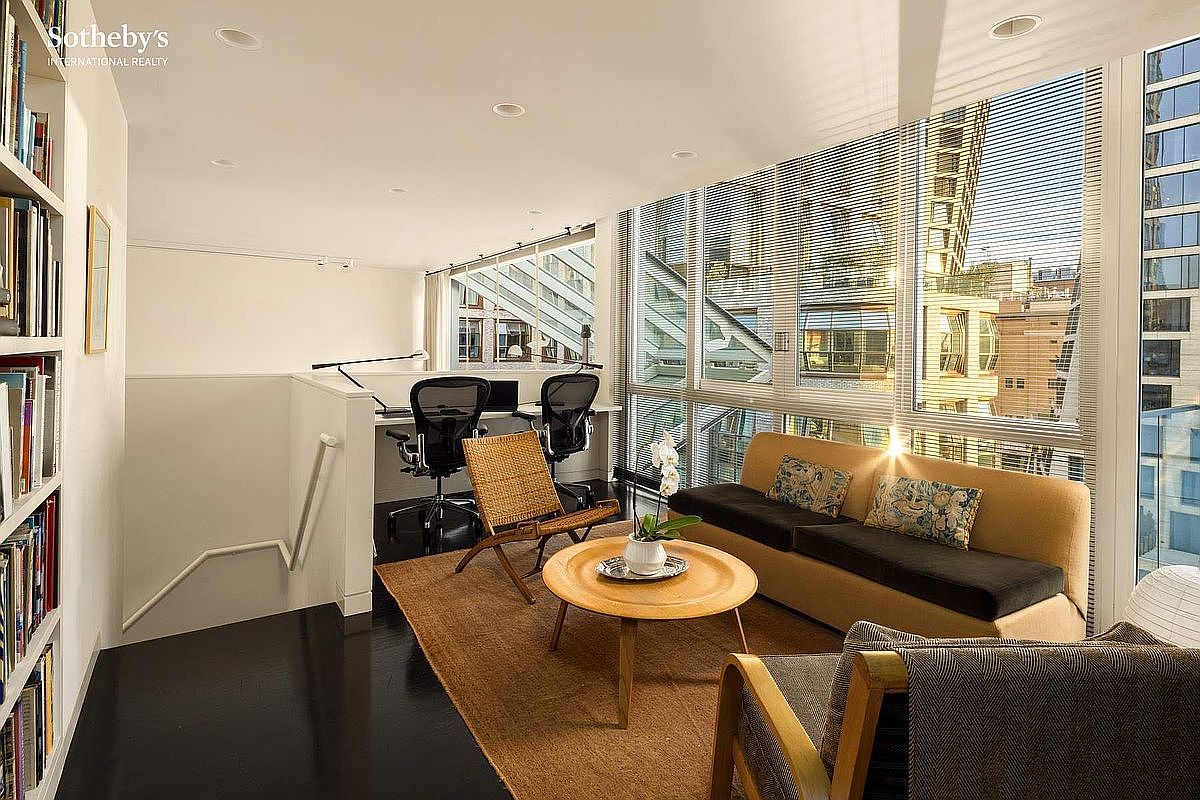
The upper floor is devoted entirely to the primary suite, a private world unto itself. Floor-to-ceiling sliding glass doors open onto two separate terraces, filling the bedroom with unobstructed northern and southern light. The primary bathroom is finished in Bianco Dolomiti marble slab flooring with radiant heat beneath, white mosaic glass tile walls, a custom Corian double vanity, a deep soaking tub, and a glass-enclosed shower — a composition that is simultaneously spare and deeply luxurious. A study overlooks the great room below, offering an elevated perspective on the full sweep of the home.
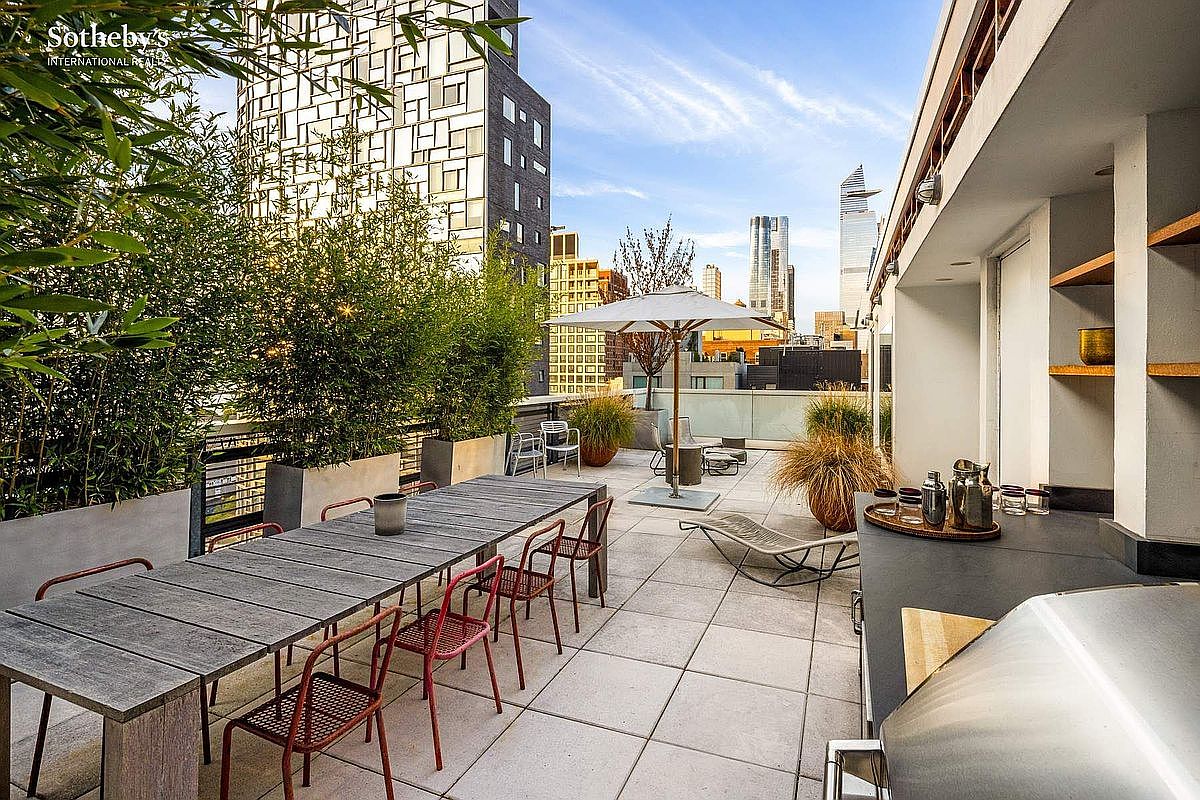
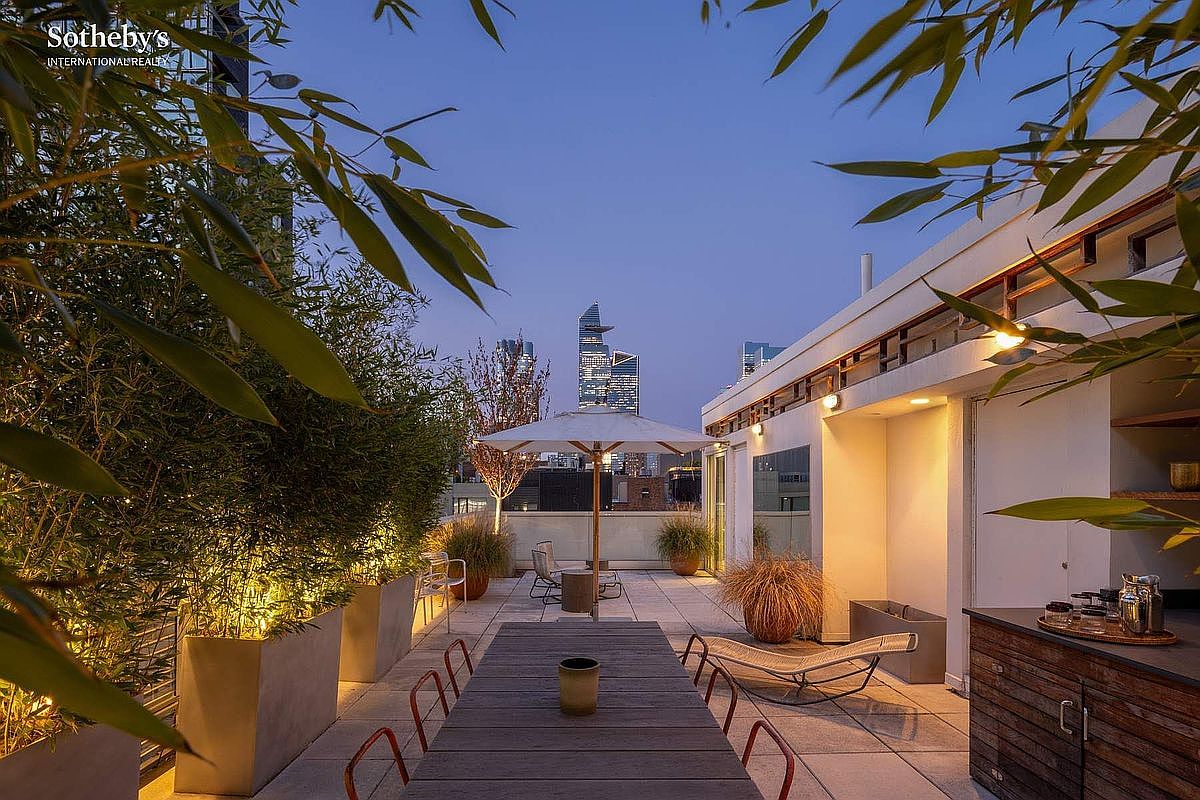
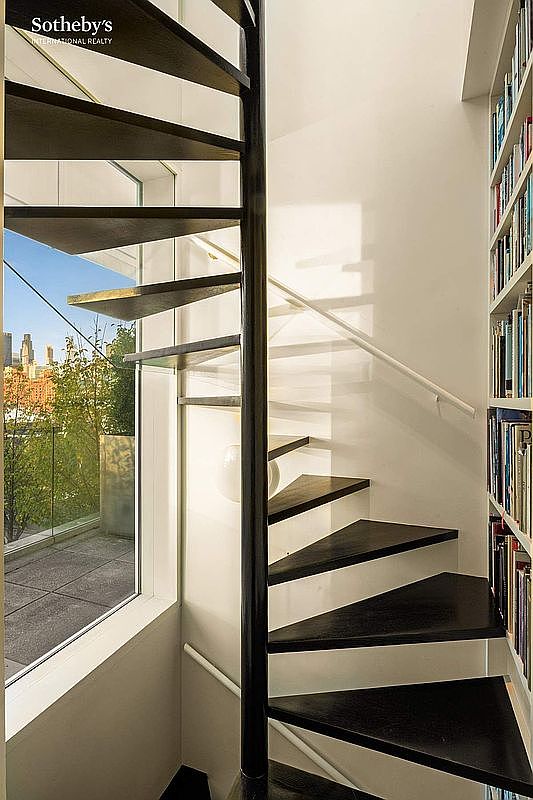
An oak spiral staircase — sculptural in its own right — ascends to the private landscaped rooftop terrace, where panoramic views stretch from the Hudson River across to the Empire State Building and the full arc of the Midtown skyline. Mature bamboo planters, a dining table, and a lounge area make this rooftop not merely a view platform but a destination. Three private storage rooms transfer with the residence, and solid oak floors run continuously throughout, grounding every space in warmth and material coherence.
In a building of only nine residences across eleven floors, this penthouse occupies its singular position at the top with an ease and authority that is rarely achieved — and even more rarely available.
West Chelsea is one of the few neighborhoods in Manhattan that has undergone a genuine cultural transformation within living memory, and the result is a district that feels both energetically contemporary and quietly established — a rare combination in a city that tends to produce one or the other.
The neighborhood's identity was reshaped significantly by the opening of the High Line, the celebrated elevated linear park that runs along the former rail corridor of the West Side. Stretching from Gansevoort Street through Hudson Yards, the High Line draws millions of visitors annually and has become one of the most consequential pieces of public infrastructure built in New York in the twenty-first century. Its presence along West 19th Street is felt not as a tourist intrusion but as a genuine urban amenity — a ribbon of landscaped public space that provides a rare form of horizontal movement through the city at elevation, with Hudson River views and rotating public art installations throughout.
The gallery district that surrounds 524 West 19th Street represents the highest concentration of contemporary art galleries in the world. Streets between Tenth and Eleventh Avenues from the low to mid-twenties are lined with spaces representing artists of international significance, and the rhythm of openings, exhibitions, and cultural programming gives the neighborhood a creative pulse that is constant and self-renewing. The Whitney Museum of American Art, located at the southern end of the High Line at Gansevoort Street, anchors the cultural district with a building designed by Renzo Piano and a collection that spans American art from the twentieth century to the present.
Chelsea Market, the beloved food and retail hall occupying the former Nabisco factory on Ninth Avenue, offers one of Manhattan's most distinctive everyday amenities — a destination for specialty food purveyors, restaurants, and market vendors that has sustained genuine neighborhood character while attracting a global audience. Hudson River Park, which runs the length of the West Side waterfront from Battery Park City to 59th Street, provides direct access to the water's edge, with piers devoted to recreation, performance, and open-air gathering.
The dining landscape in West Chelsea and the adjacent Meatpacking District has matured considerably, with established and critically recognized restaurants offering everything from intimate neighborhood dining to destination-level culinary experiences. The Faena Hotel, situated nearby, has added a significant hospitality presence to the area, drawing an international cultural community.
Transportation access is exceptional. The A, C, and E subway lines at 23rd Street and Eighth Avenue, along with the 1 train at Seventh Avenue, place Midtown, downtown, and the broader city within easy reach. The West Side Highway and Hudson River Park's dedicated cycling infrastructure offer additional options for movement through and beyond the neighborhood.
What distinguishes West Chelsea from comparable luxury addresses is the texture of its daily life — the proximity to serious art, genuine green space, architectural ambition, and waterfront access, all within a neighborhood that has retained a sense of human scale despite its cultural prominence. For the resident of this penthouse, the neighborhood is not backdrop. It is a living extension of the home itself.
Featured Highlights
Curated Content • Presented by Daniela Sassoun