The Story Behind
A Legacy Estate of Artisan Craftsmanship and Panoramic Wine Country Views
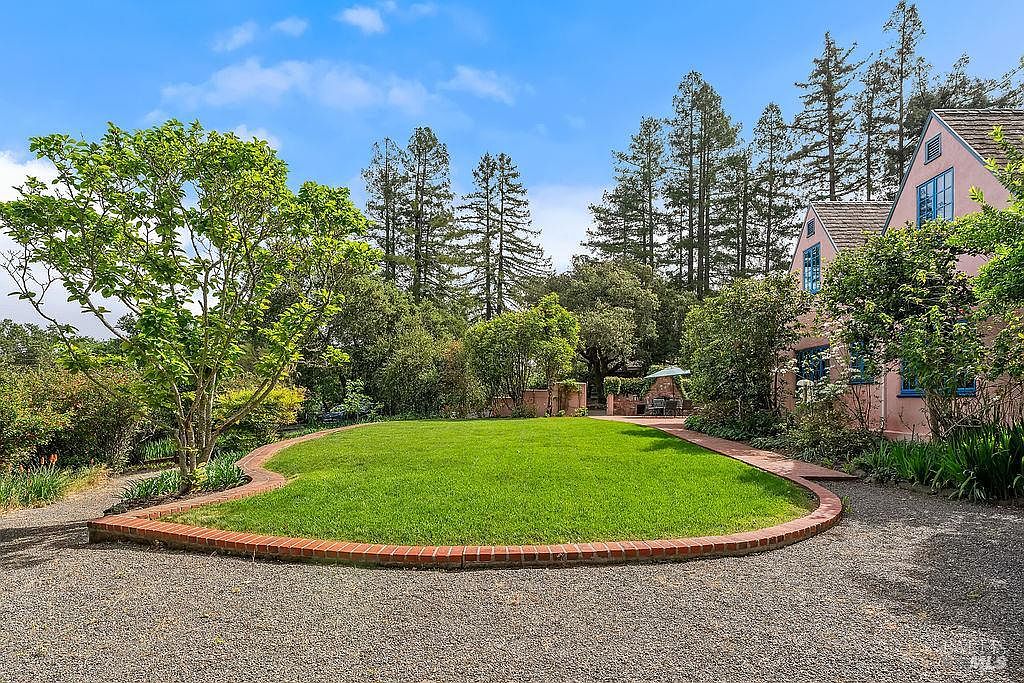
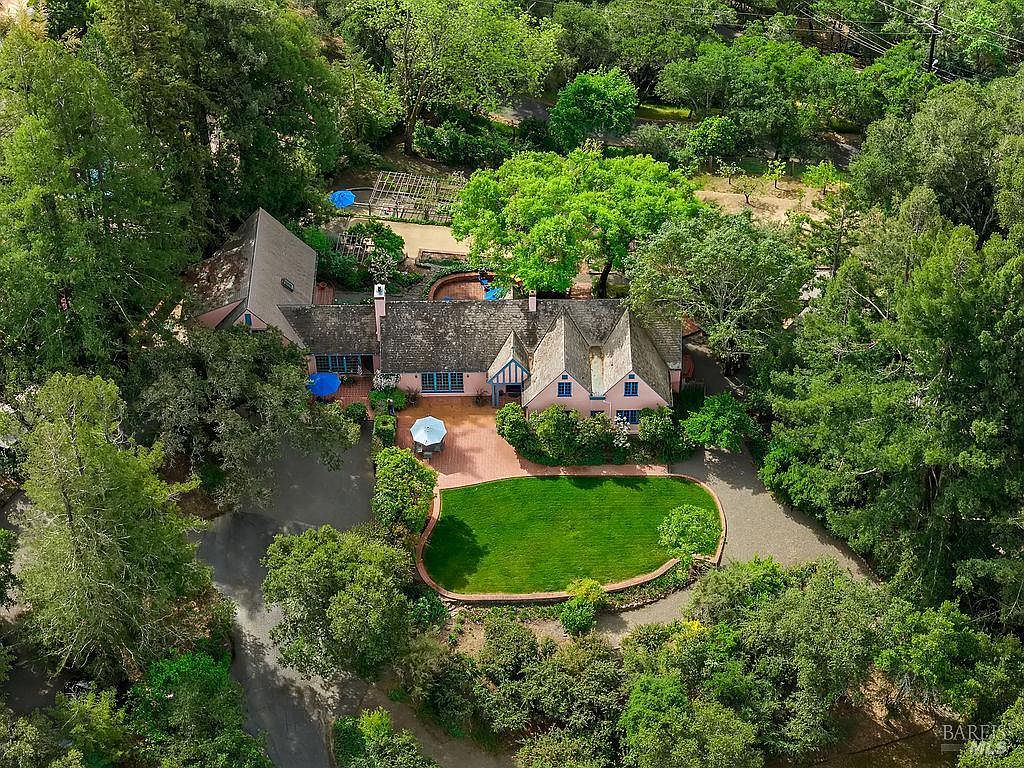
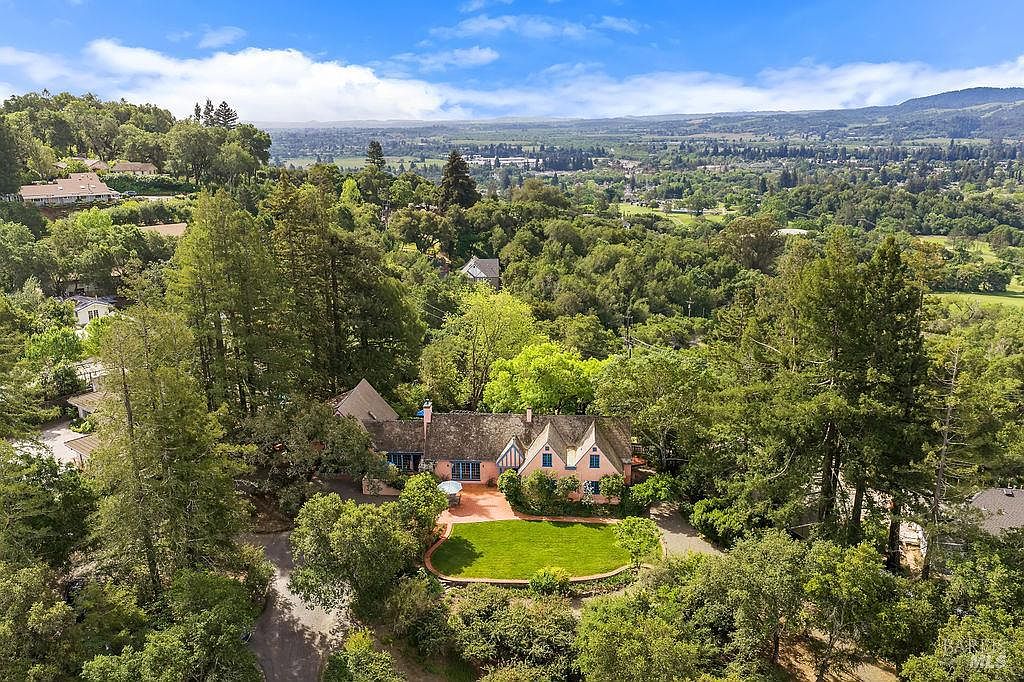
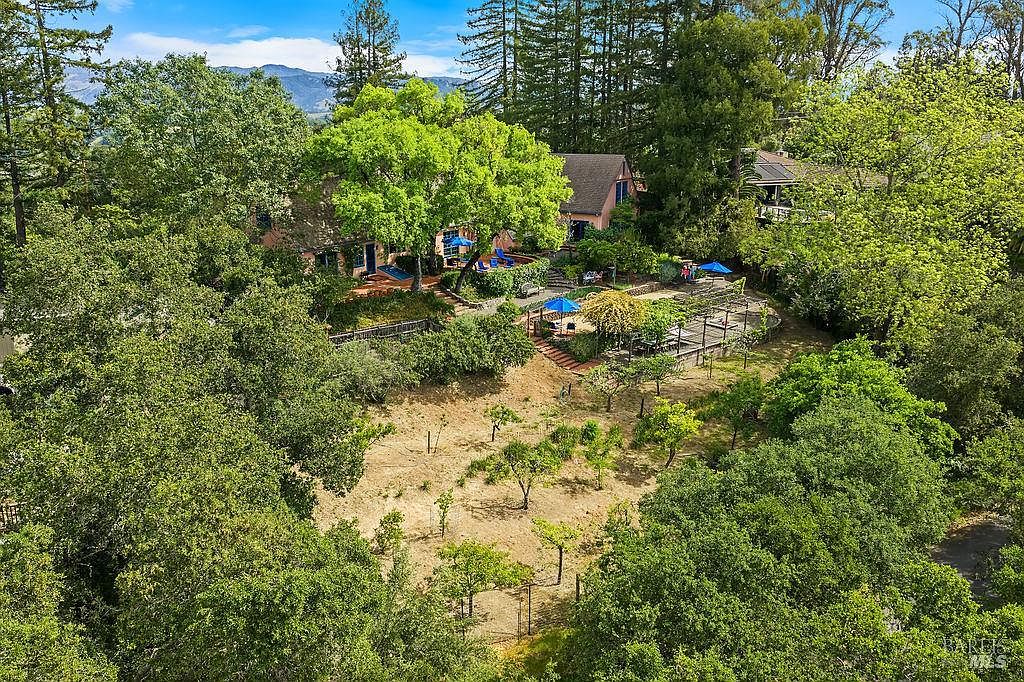
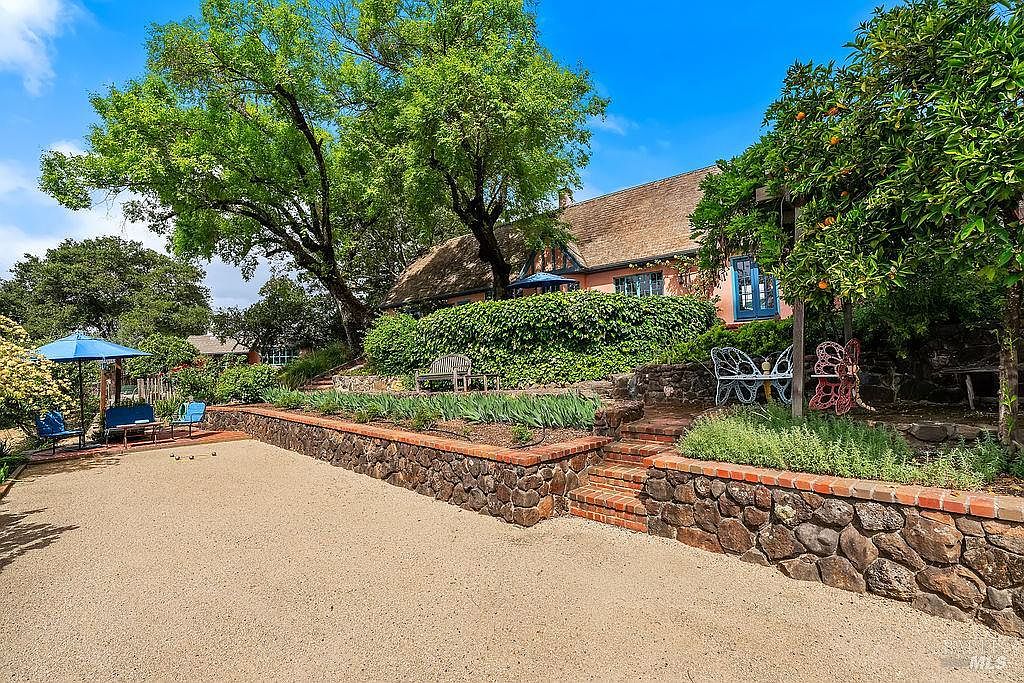
There is a particular quality of intention that separates a house that has been decorated from one that has been genuinely conceived. At 1212 N Fitch Mountain Road, that distinction is evident from the moment the pink stucco facade appears through the trees — a structure that reads less as an imposition on the hillside than as something the hillside has always accommodated.
Built in 1934 and subsequently shaped with deep fidelity to the principles of C.F.A. Voysey — the late-Victorian British architect celebrated for his steep gables, horizontal massing, and a belief that domestic architecture should feel at once modest and quietly alive — the residence has been the subject of a three-decade restoration and expansion by the founding principal of AXIA Architects. The result is a home where every decision carries weight, and where no detail exists without purpose.
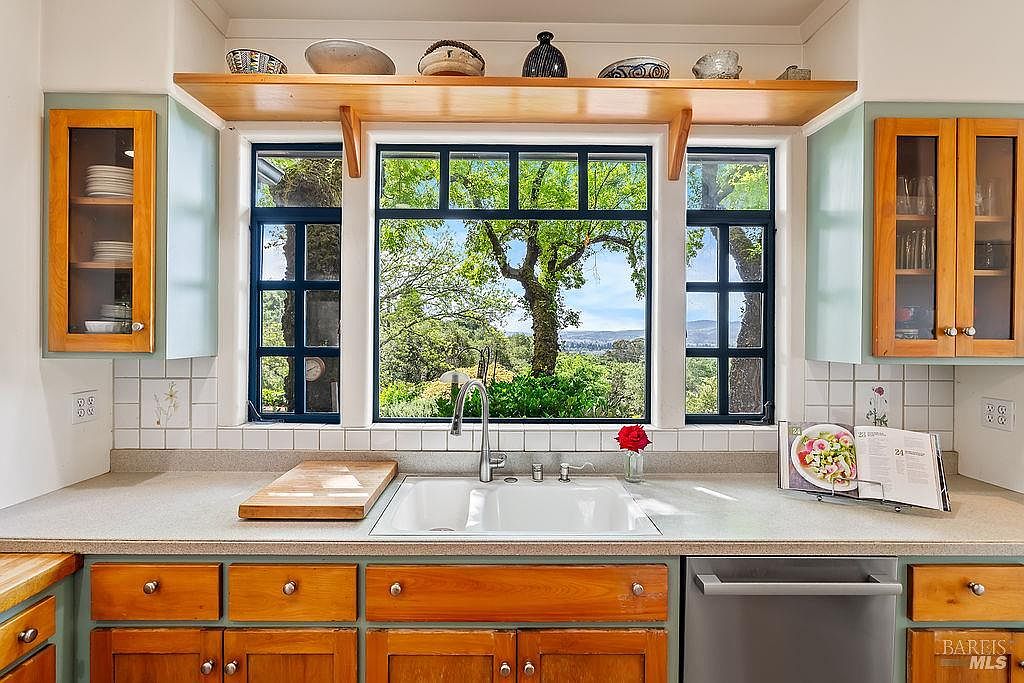
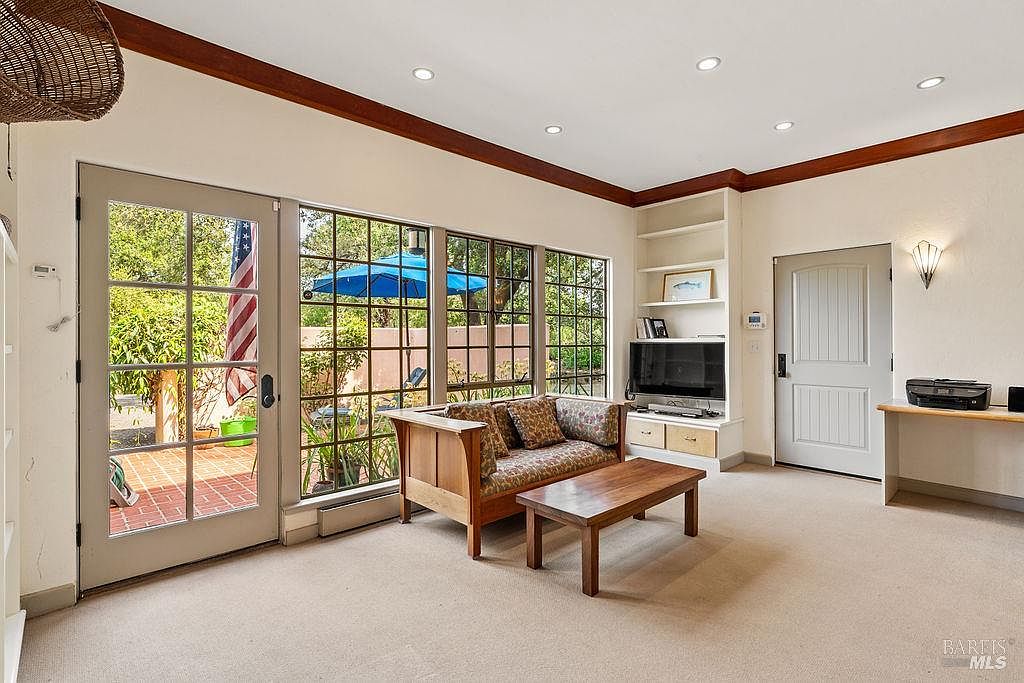
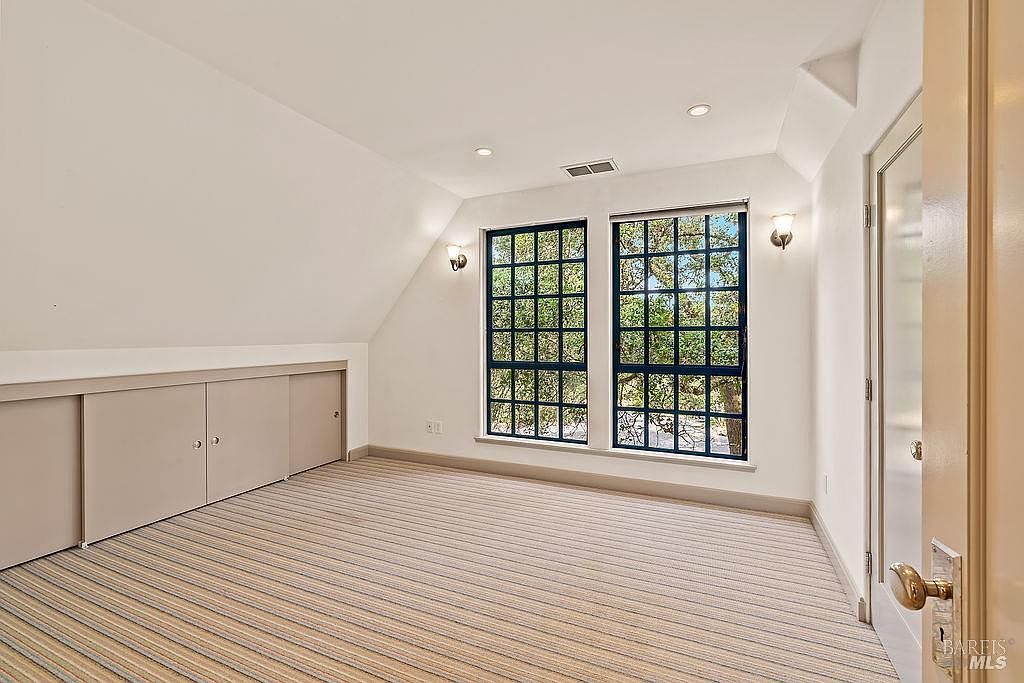
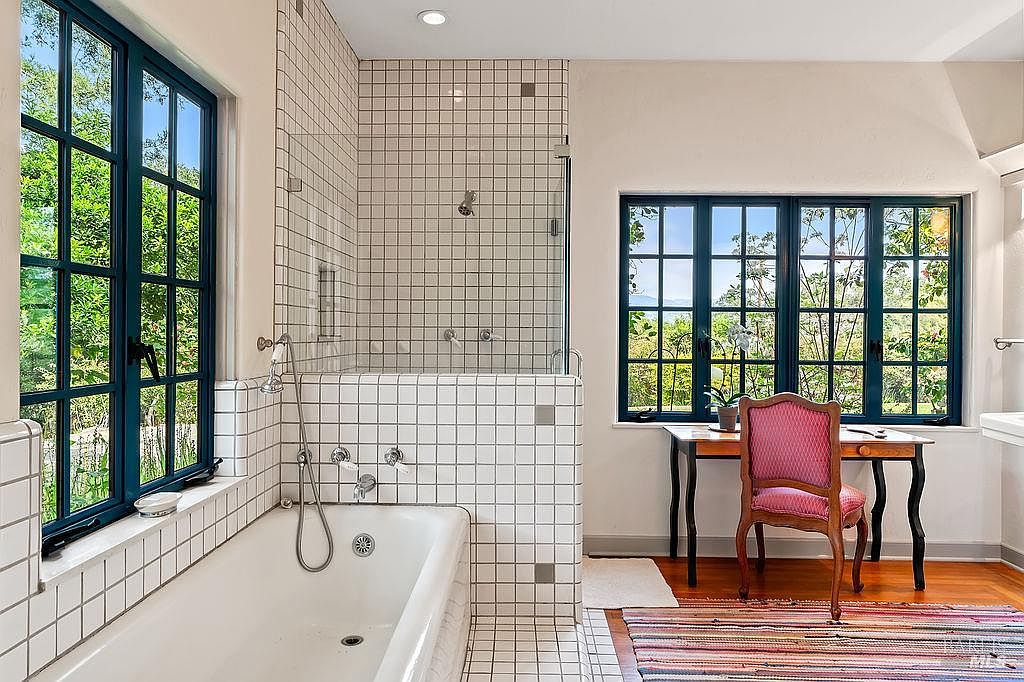
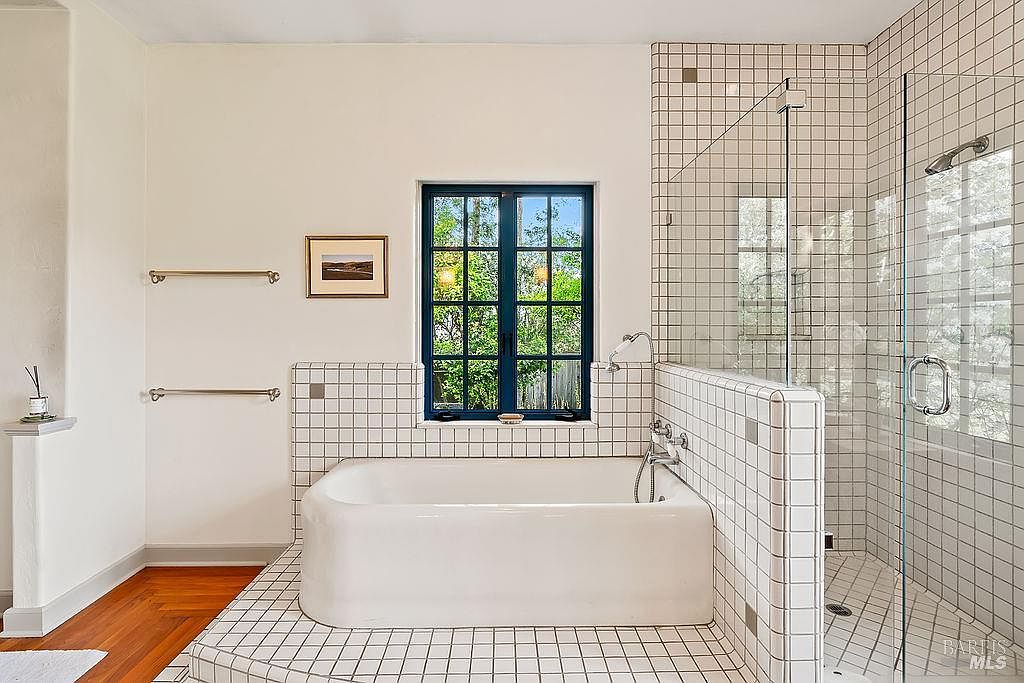
Divided-lite steel windows are positioned on at least two sides of every principal living space, a deliberate strategy that saturates interiors with natural light throughout the day and ensures that the surrounding landscape — the Russian River Valley, the Alexander Valley, the Mayacamas — is never far from view. The windows are trimmed in blue, a signature color that recurs throughout the property and lends the exterior its quietly distinctive character.
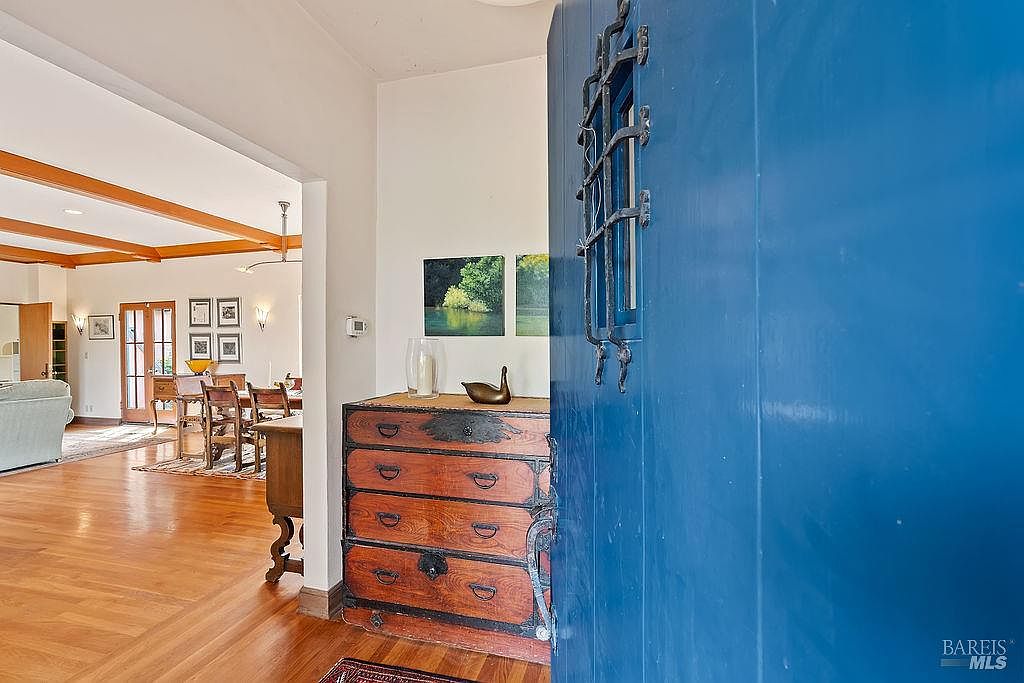
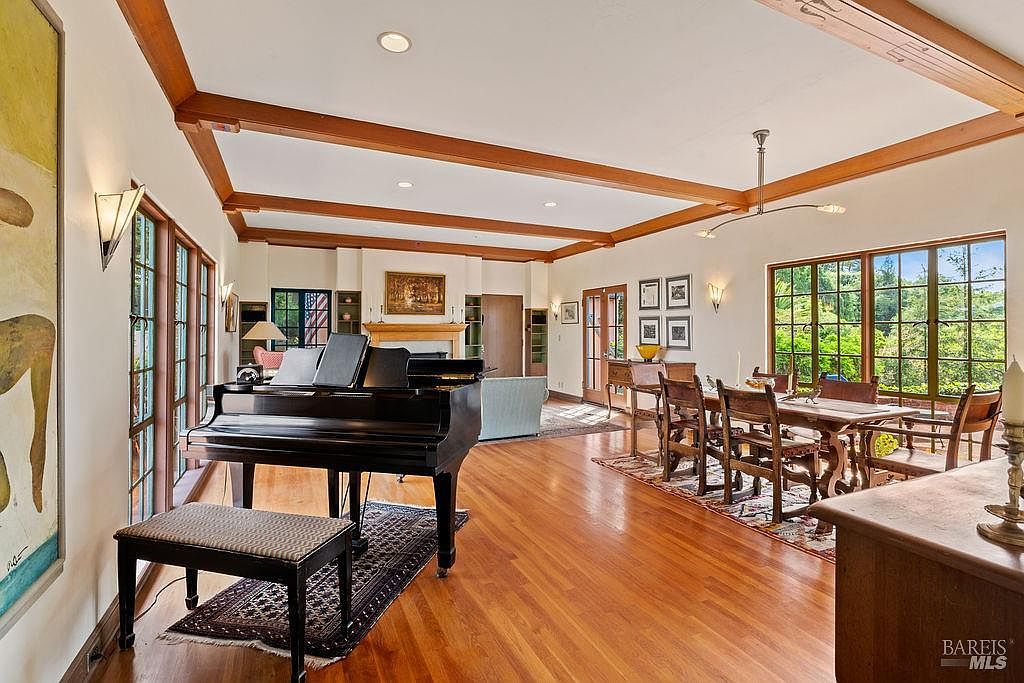
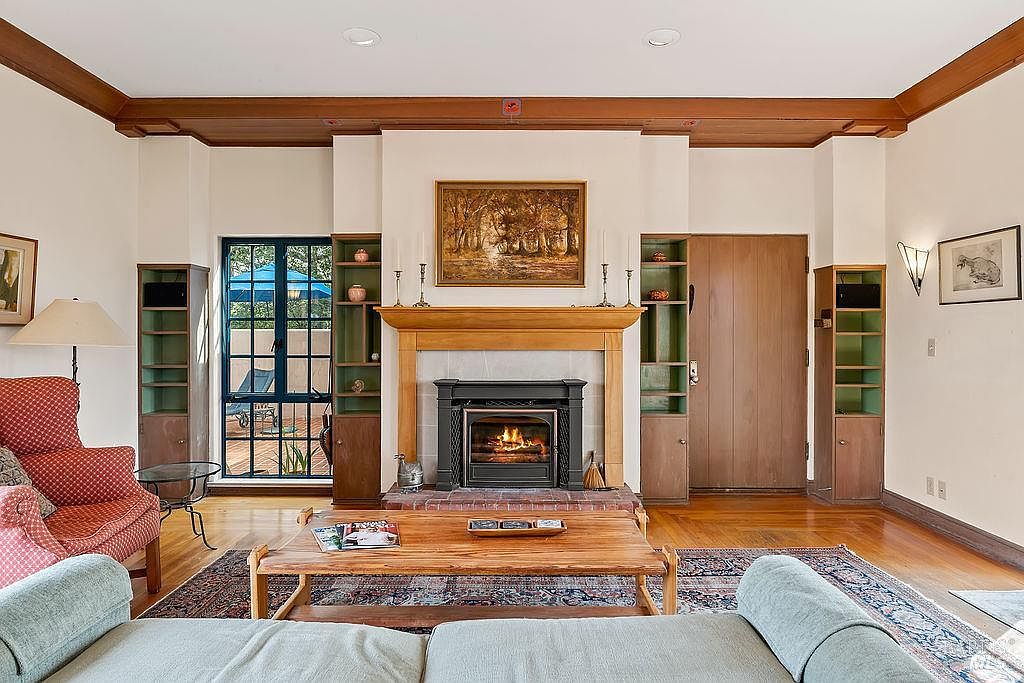
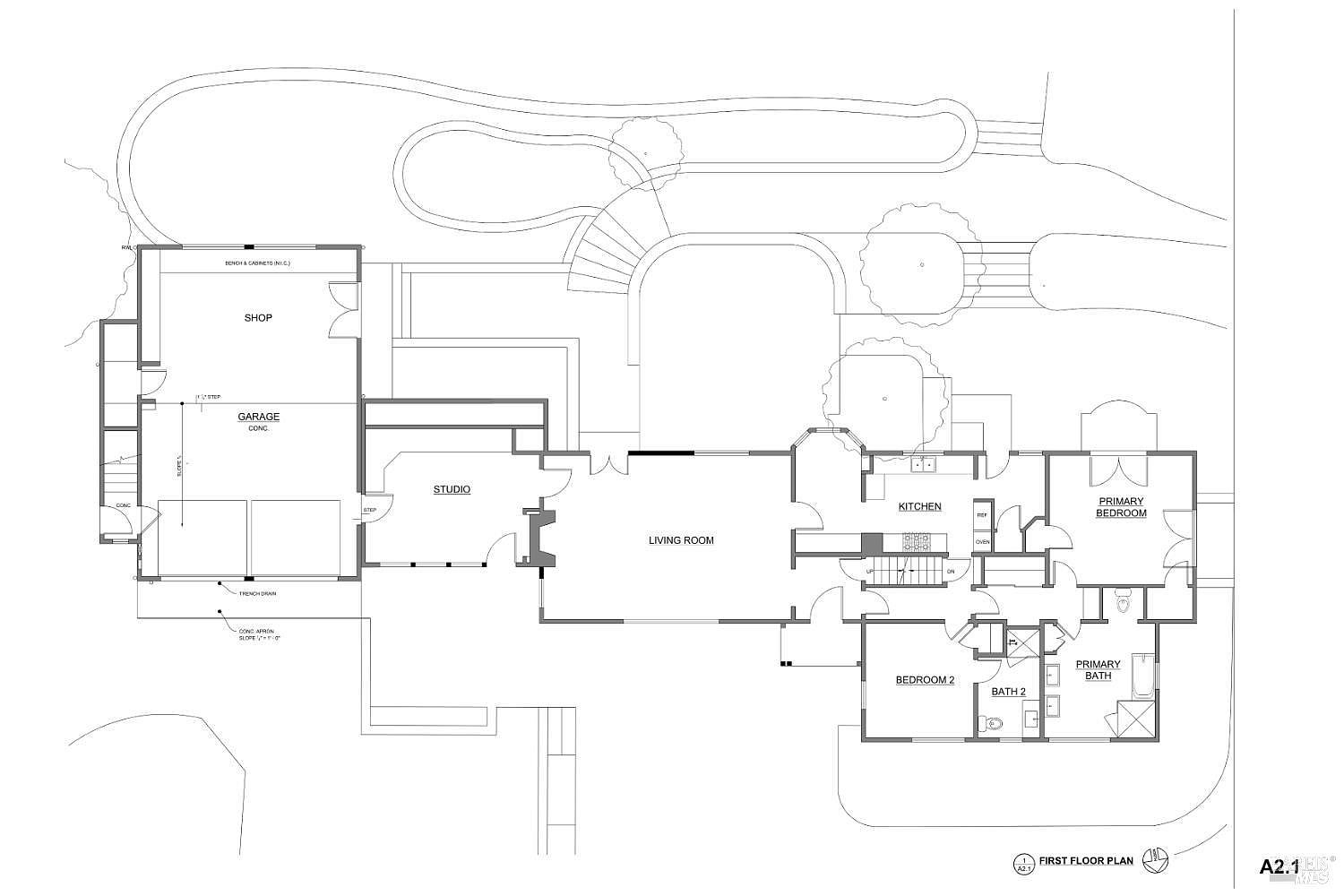
Inside, the living room announces the register of craftsmanship that governs the entire residence. Coffered ceilings with exposed wood beams — several featuring a hand-painted poppy motif — sit above warm hardwood floors. A traditional fireplace with a wooden mantel anchors one wall, while Italian pendant lights and handmade sconces provide illumination that feels considered rather than merely functional. The entry, framed by a striking blue door with decorative iron grille, sets the tone immediately: this is a home with a point of view.
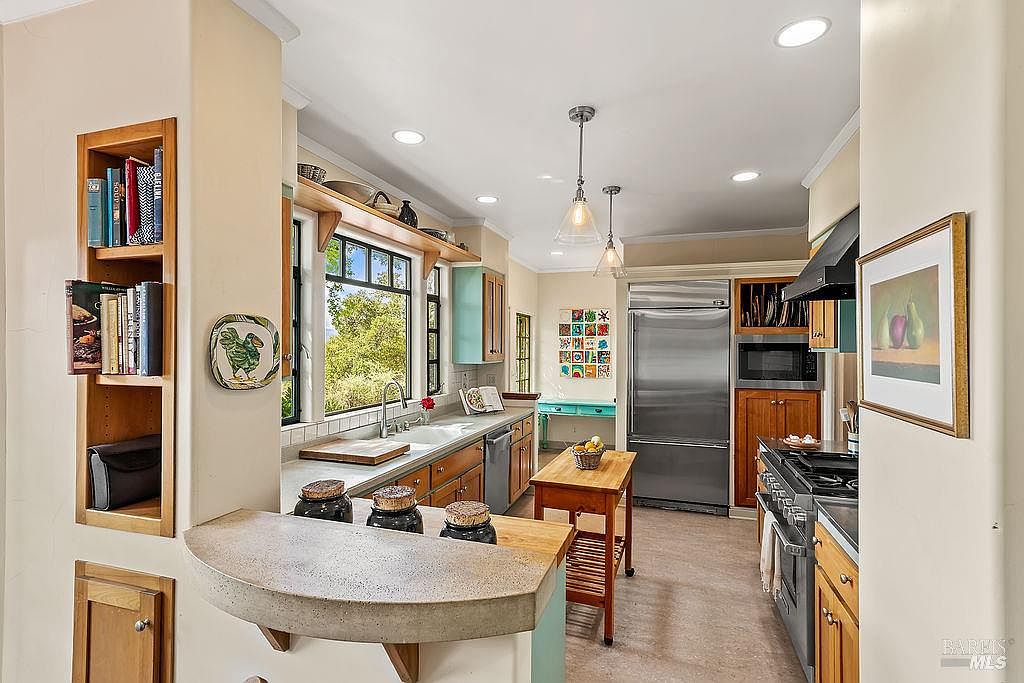
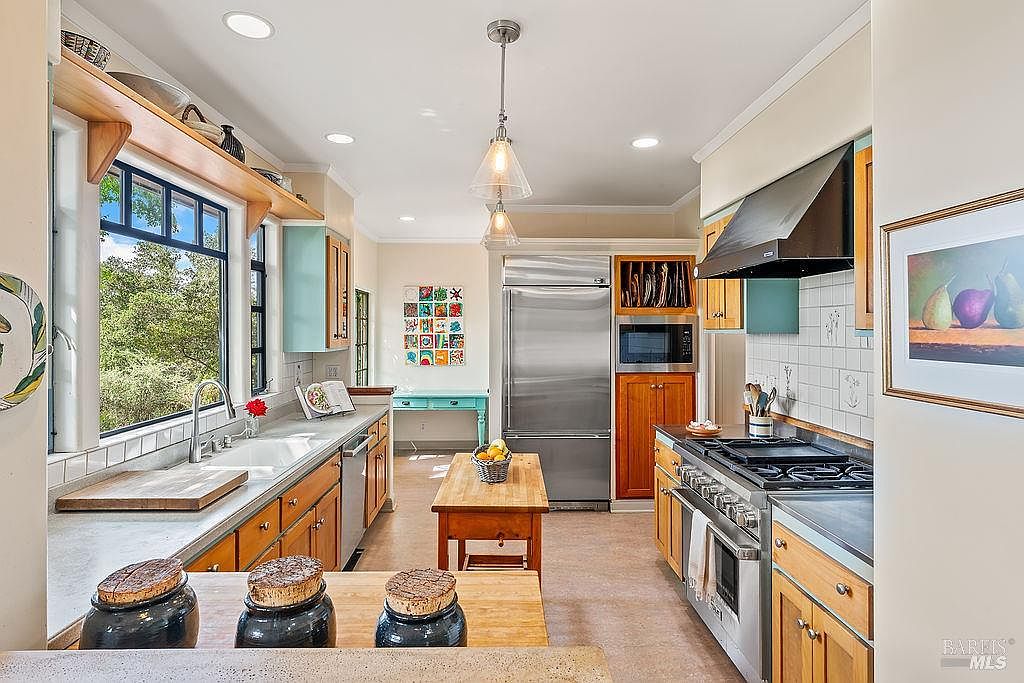
The kitchen is a particular pleasure. Hand-painted Italian wildflower tiles form the backsplash behind a professional-grade range, while a butcher-block island, warm wood cabinetry with teal-painted frames, and a large window above the sink — framing a view of the garden and rolling hills beyond — create a space that functions equally well for quiet morning coffee and an evening centered on cooking. A dining area with a round wooden table sits adjacent, connected to the living spaces in a manner that encourages the unhurried movement of a day.
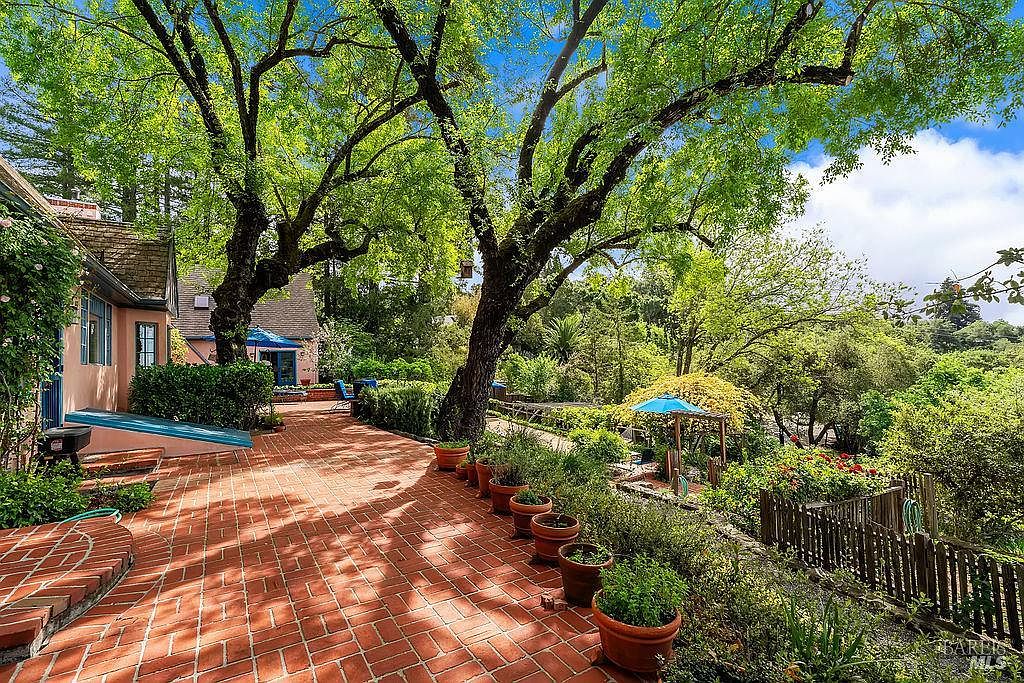
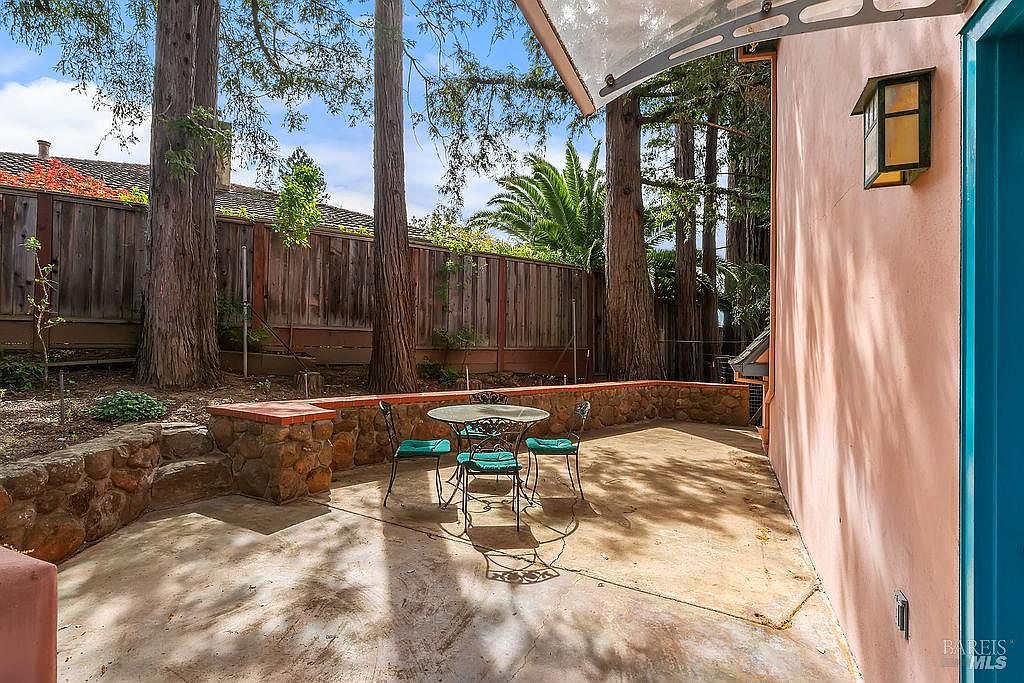
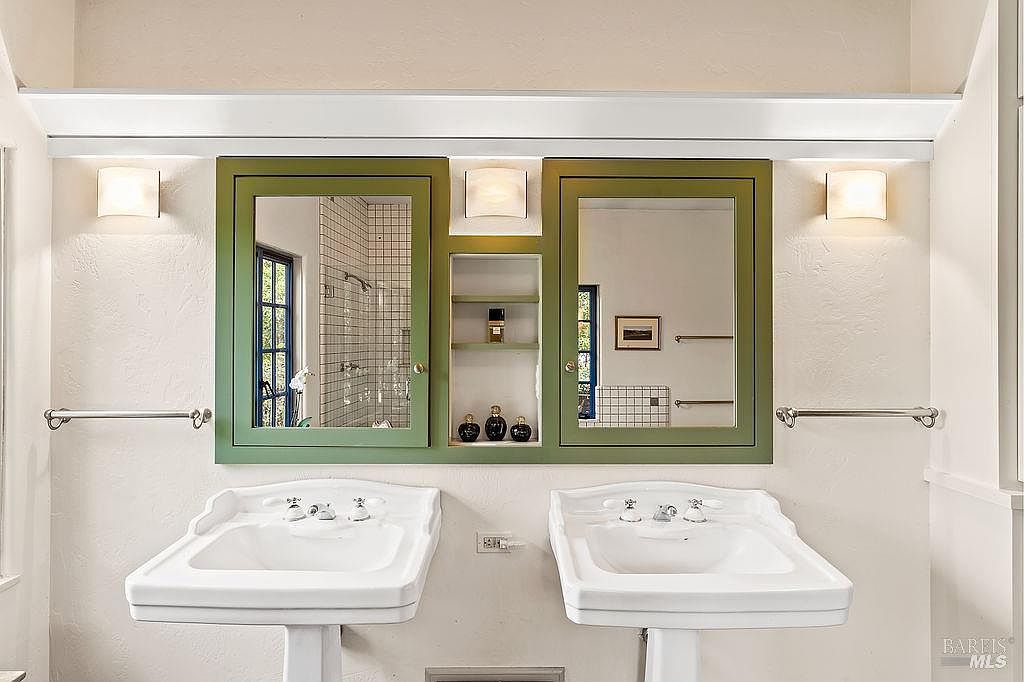
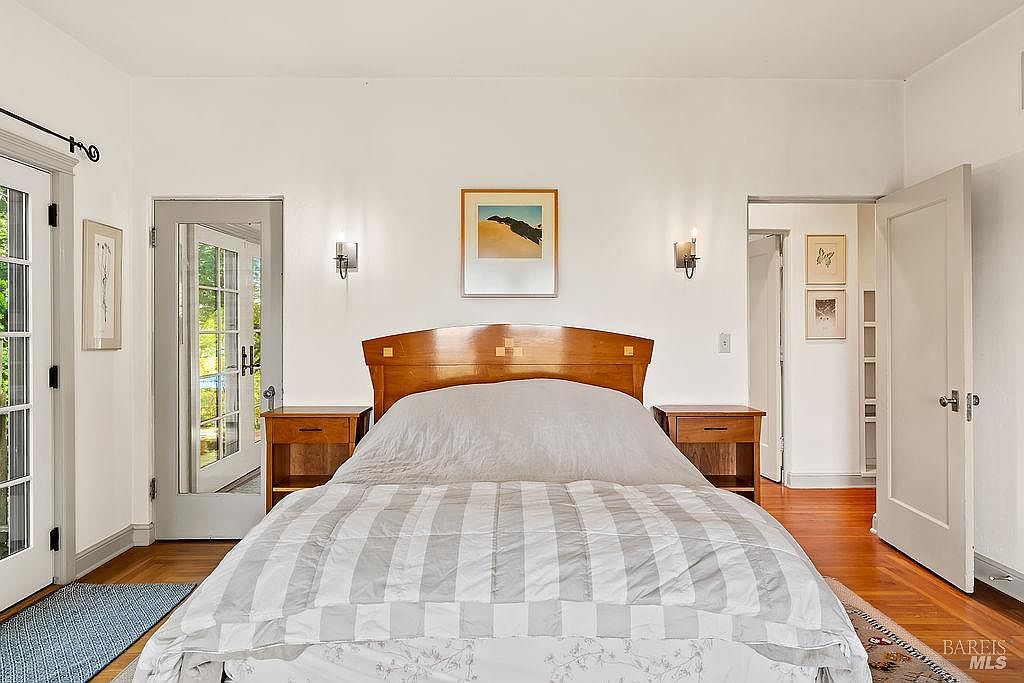
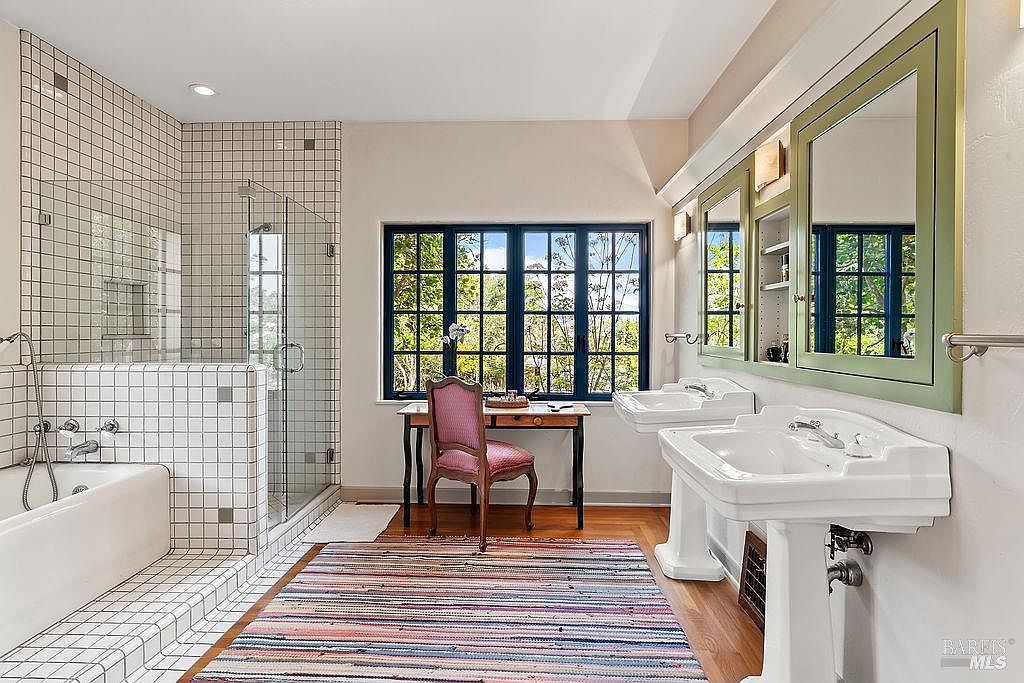
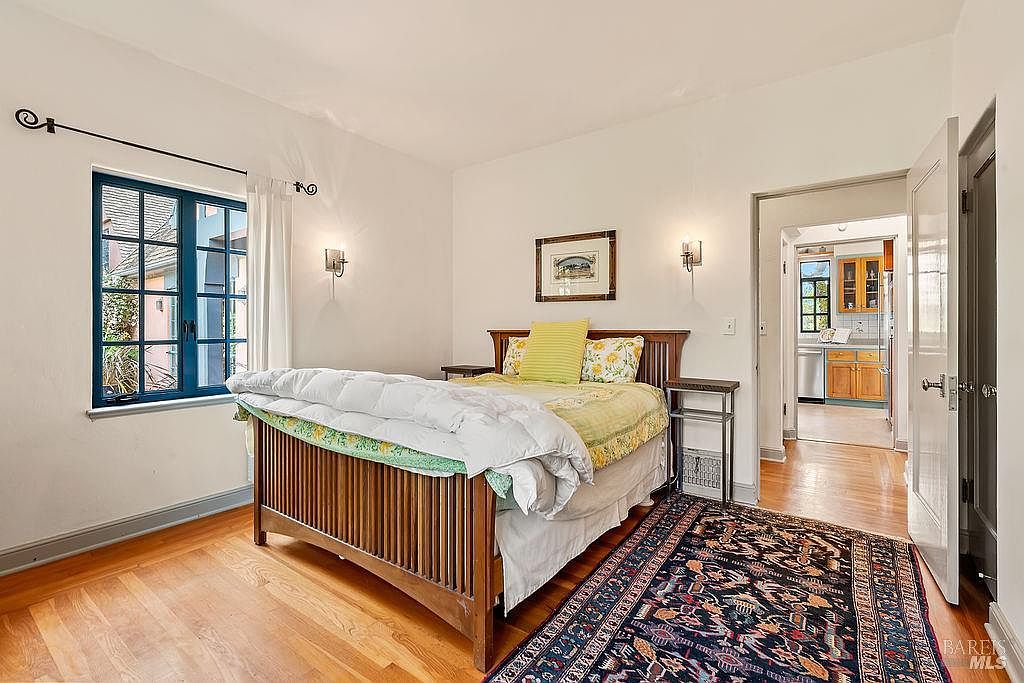
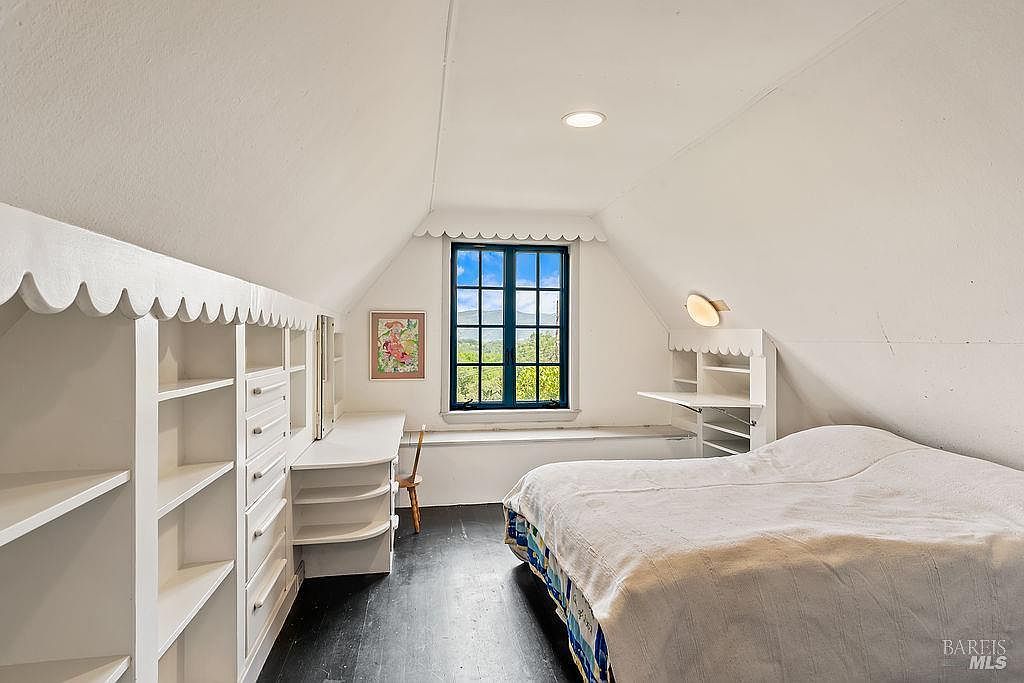
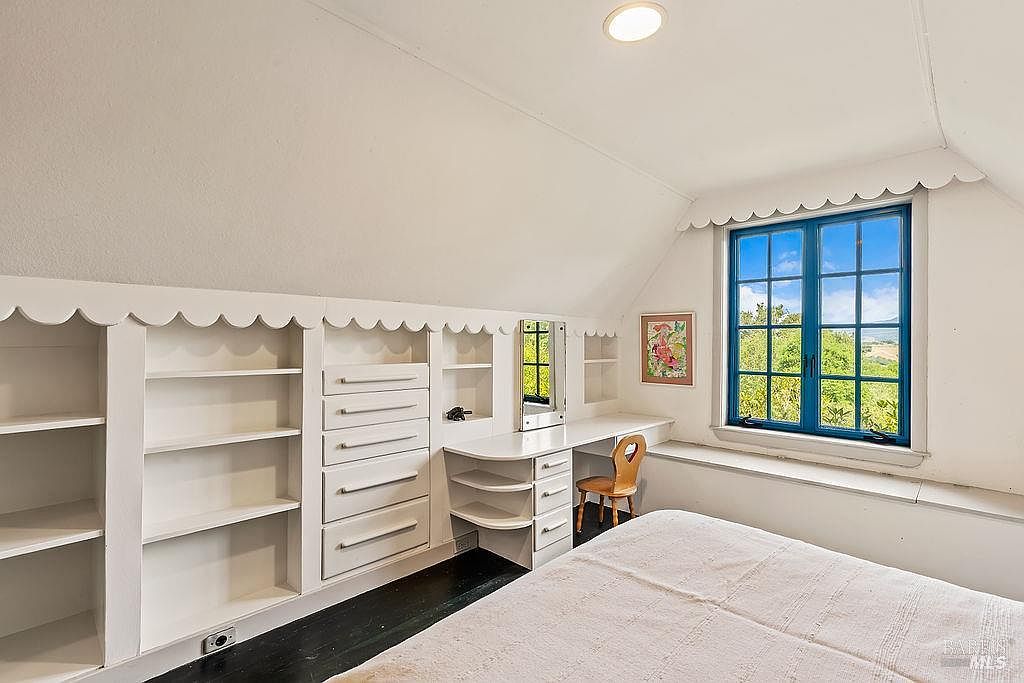
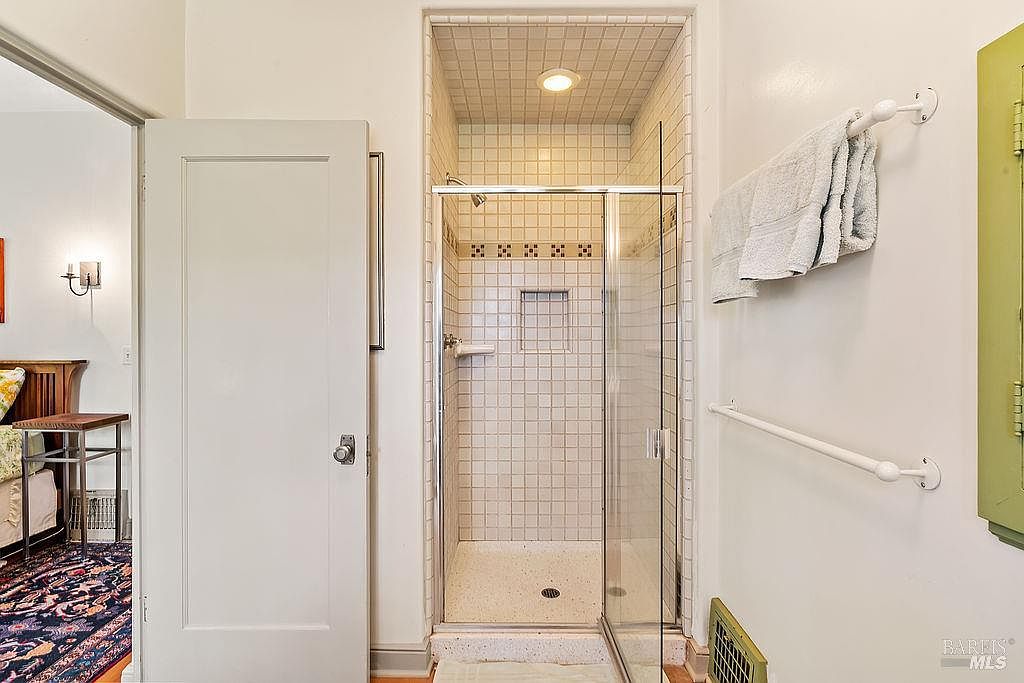
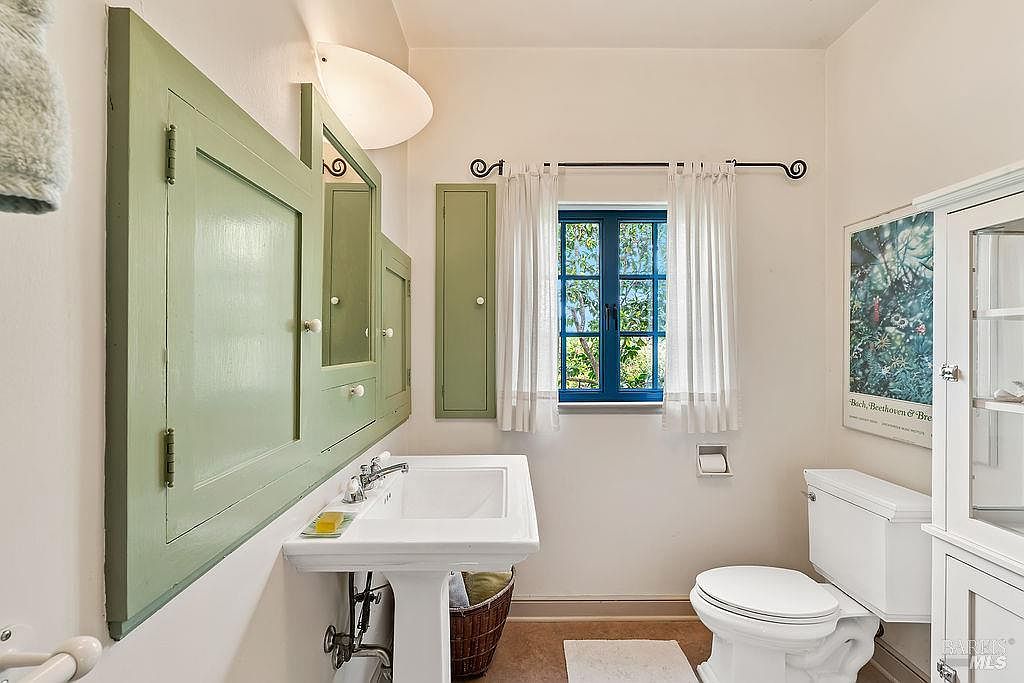
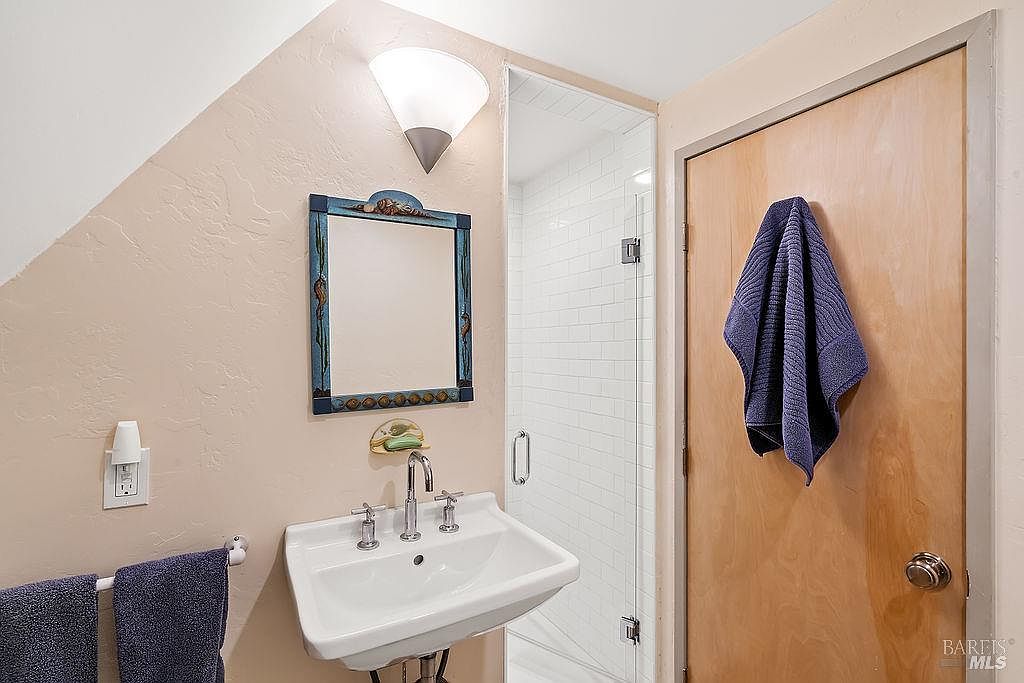
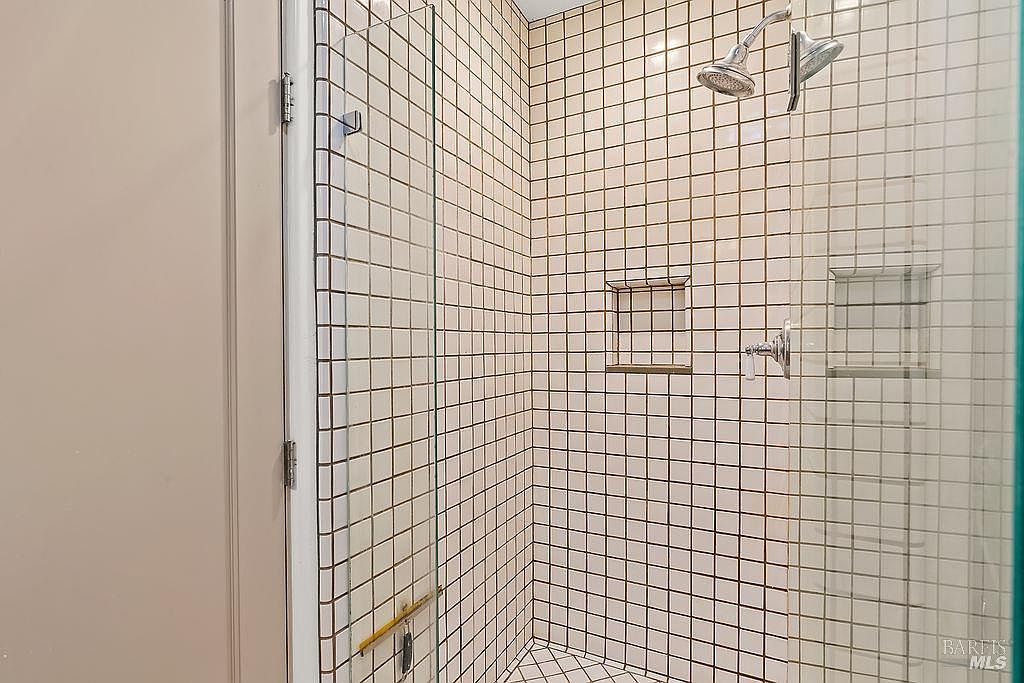
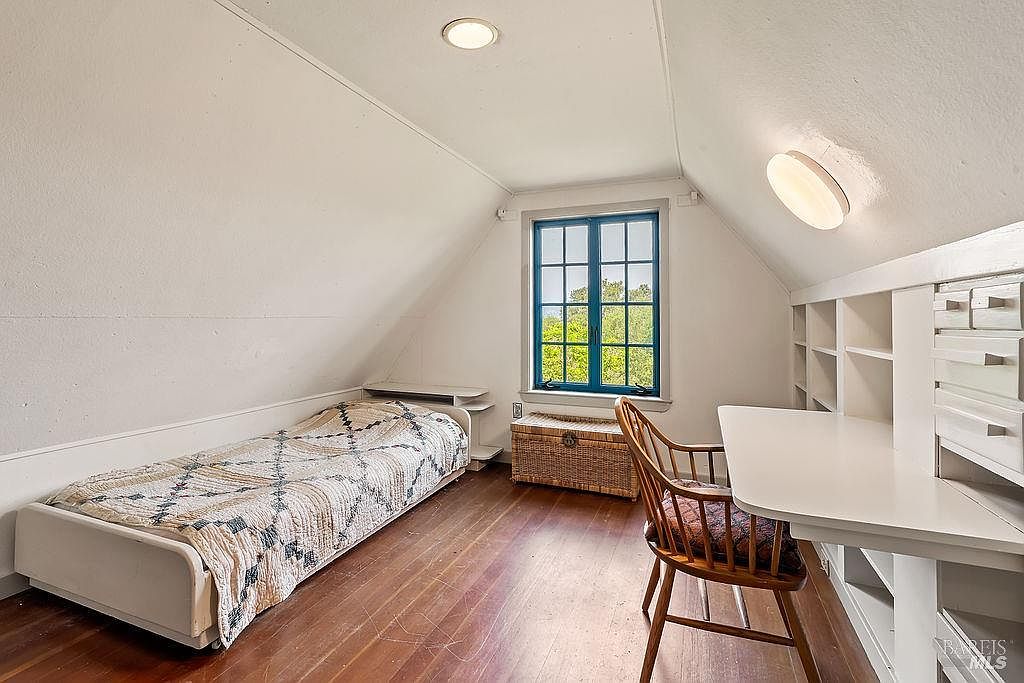
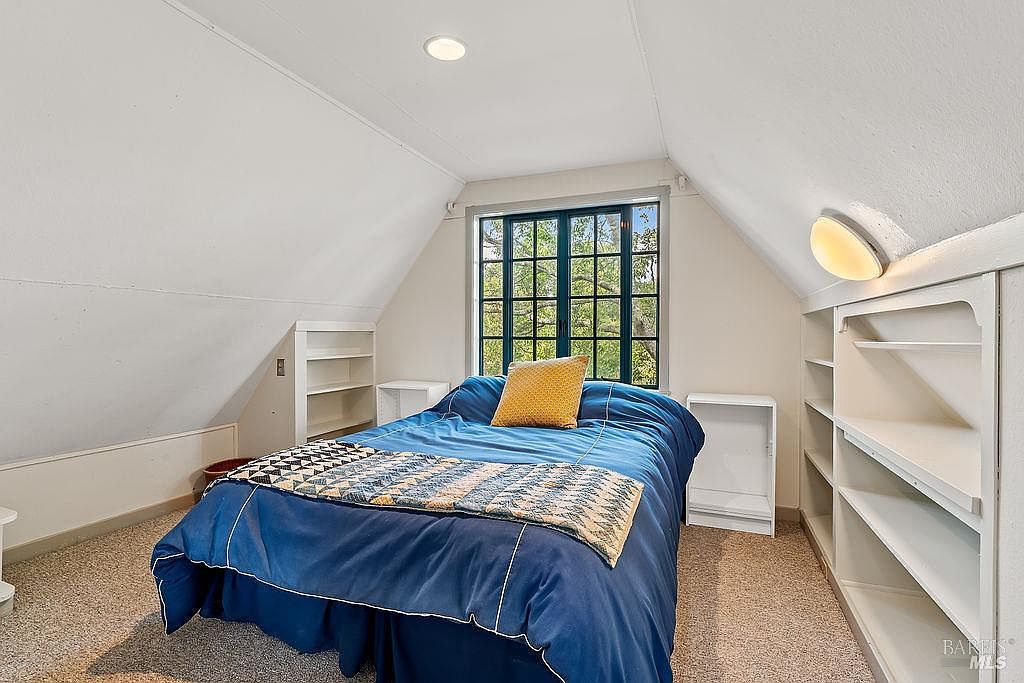
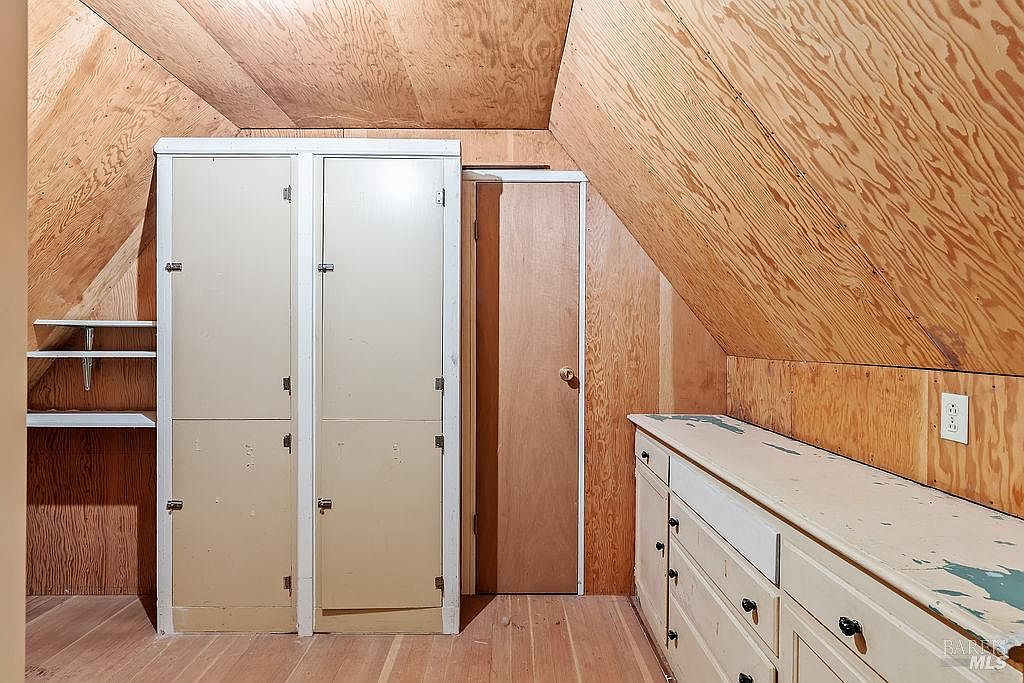
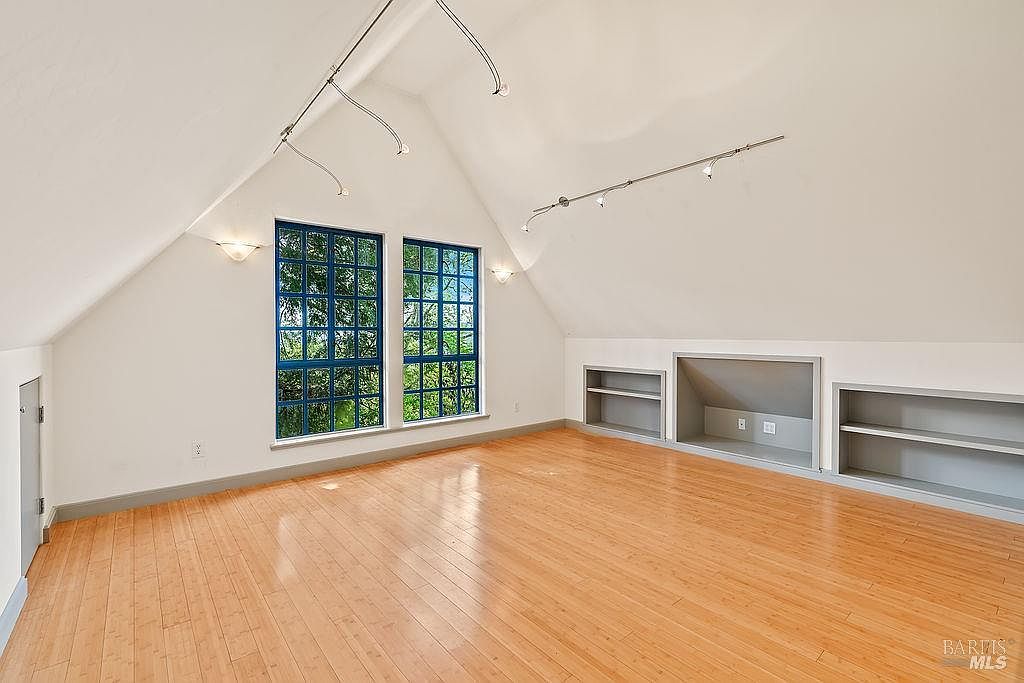
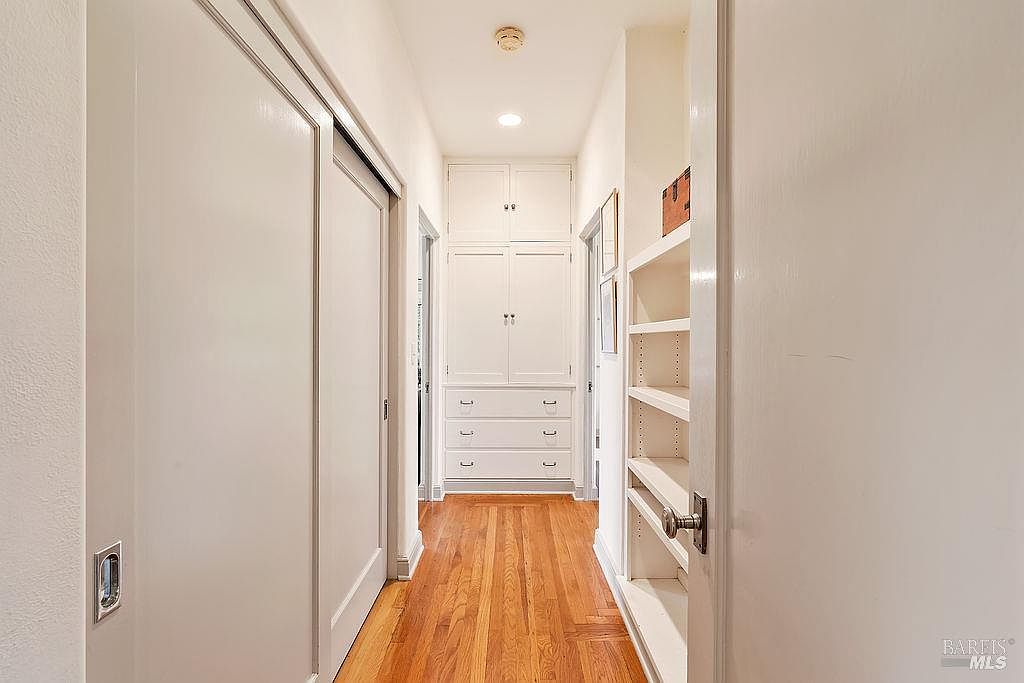
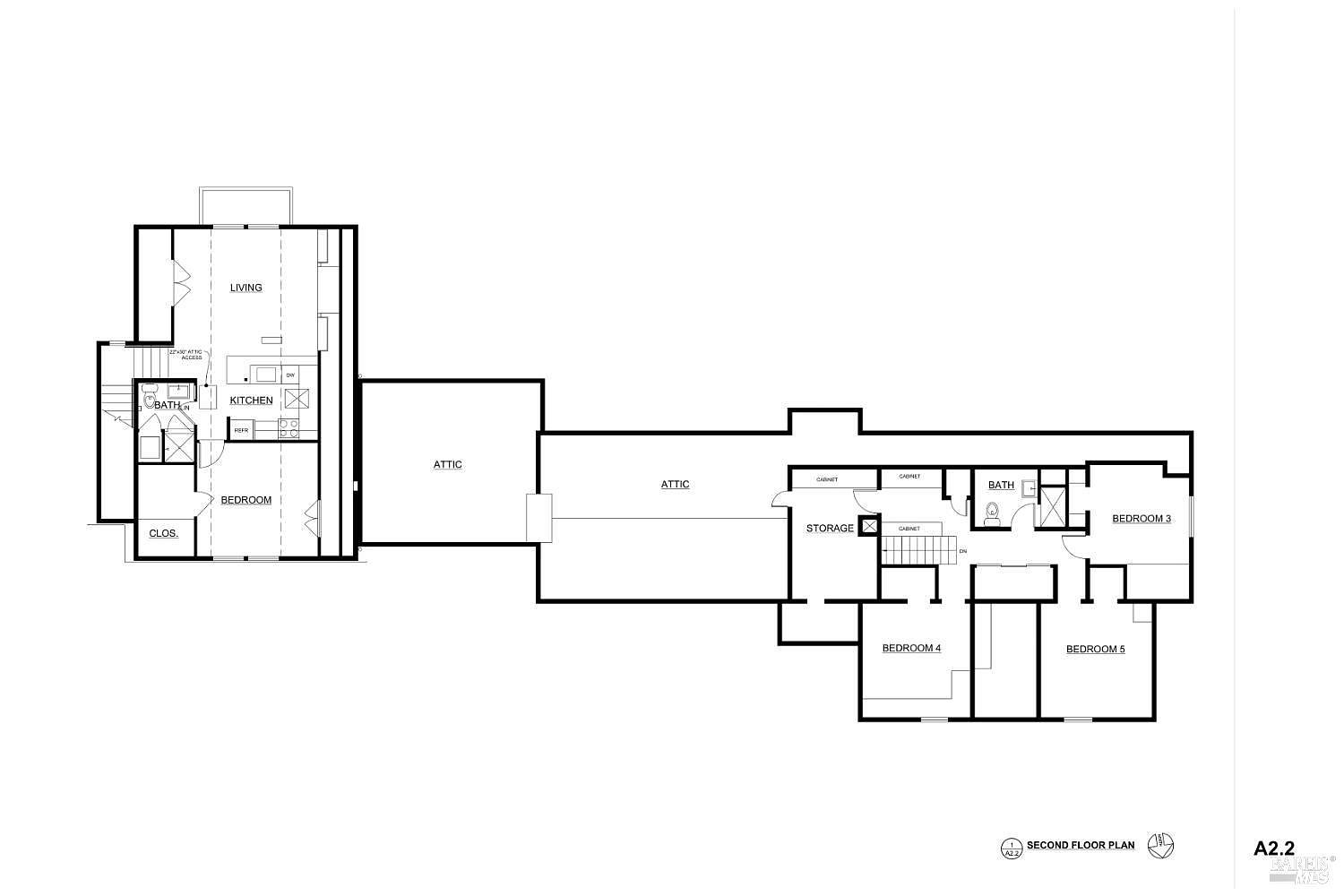
The primary bedroom opens directly to the rear brick patio through French doors, collapsing the boundary between interior rest and the garden beyond. Its bathroom is generously scaled, with a six-foot soaking tub, walk-in shower, double pedestal sinks beneath a custom-framed mirror, and warm wood flooring. Upstairs, three bedrooms feature built-in bookshelves and cabinetry, their sloped ceilings and grid-paned windows giving them the quality of rooms one remembers from childhood — intimate, purposeful, suffused with light.
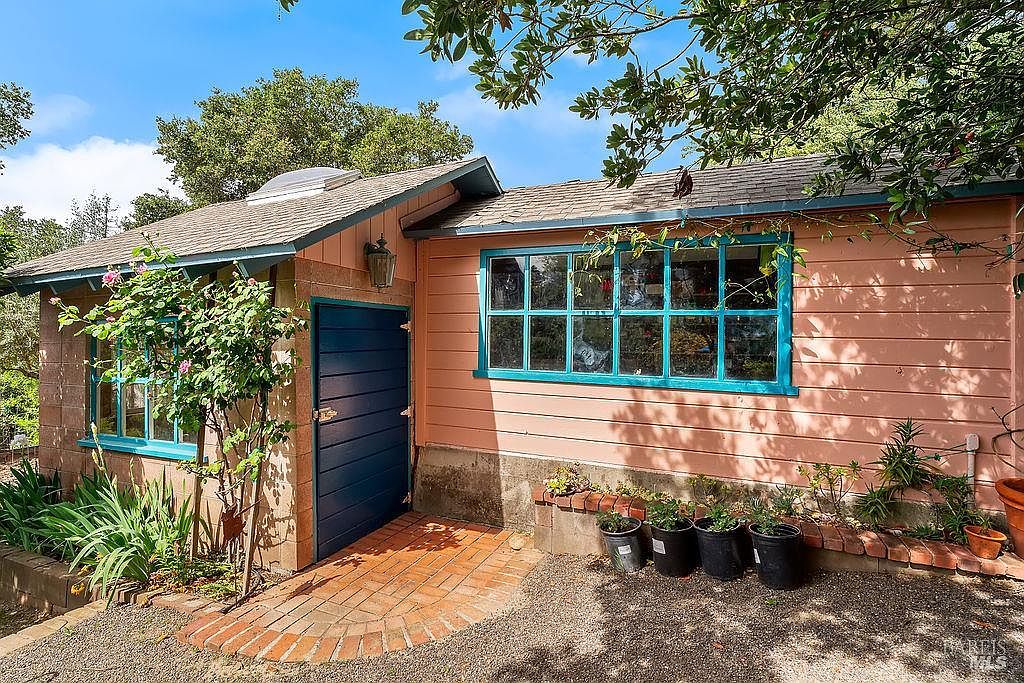
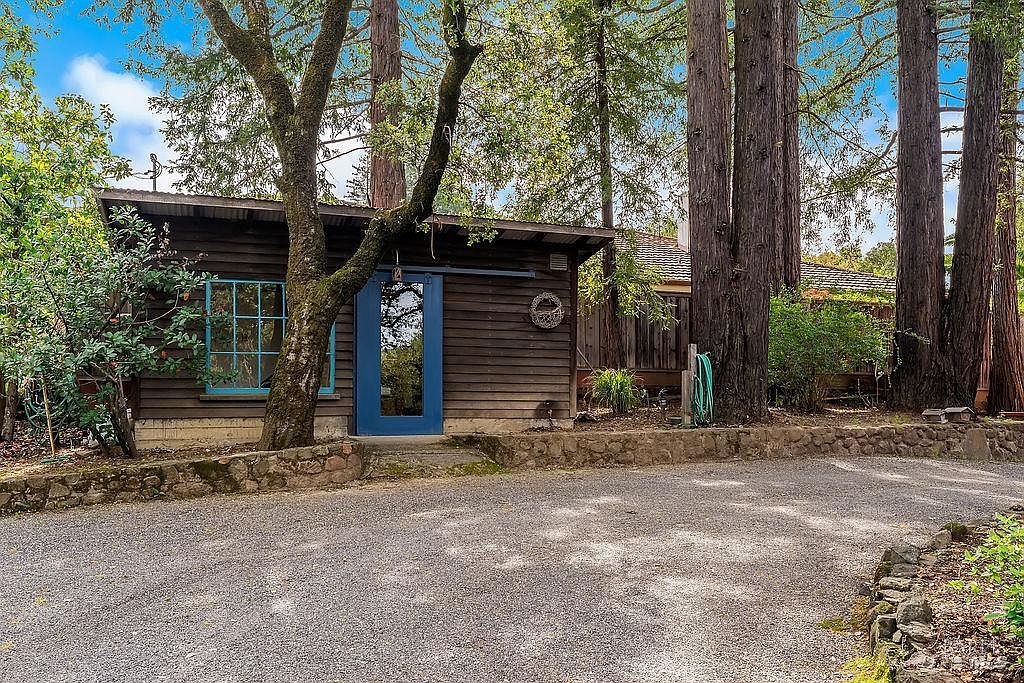
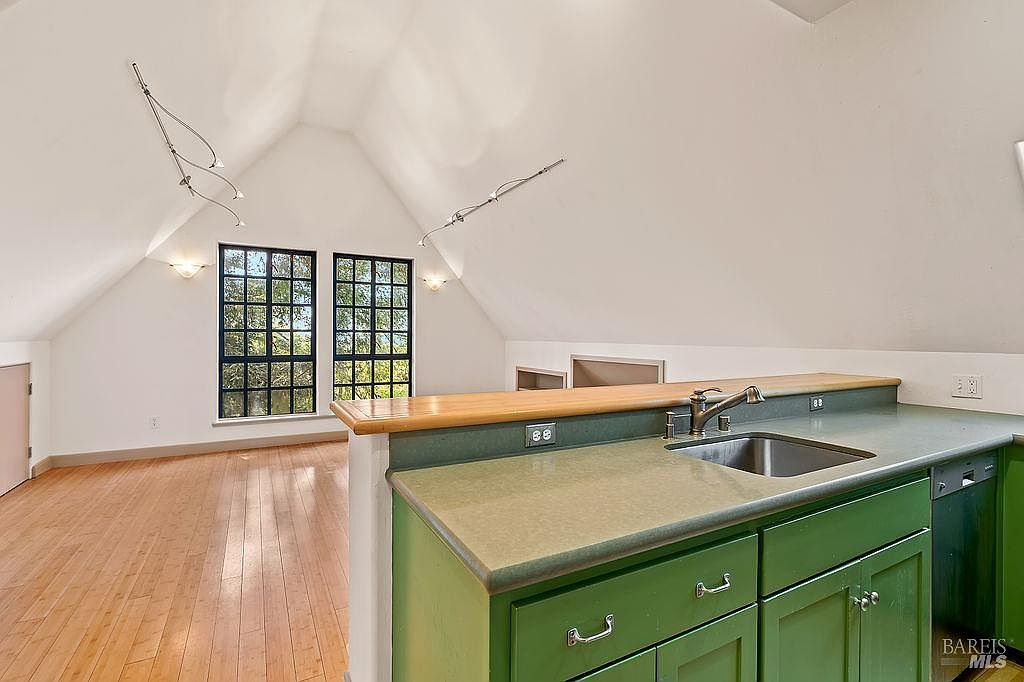
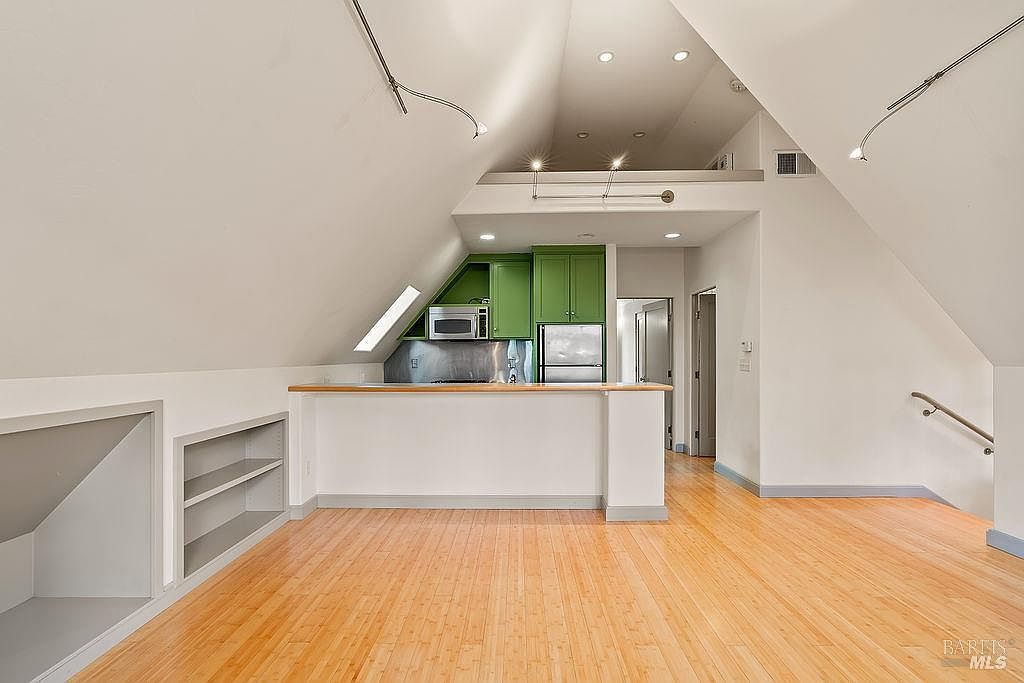
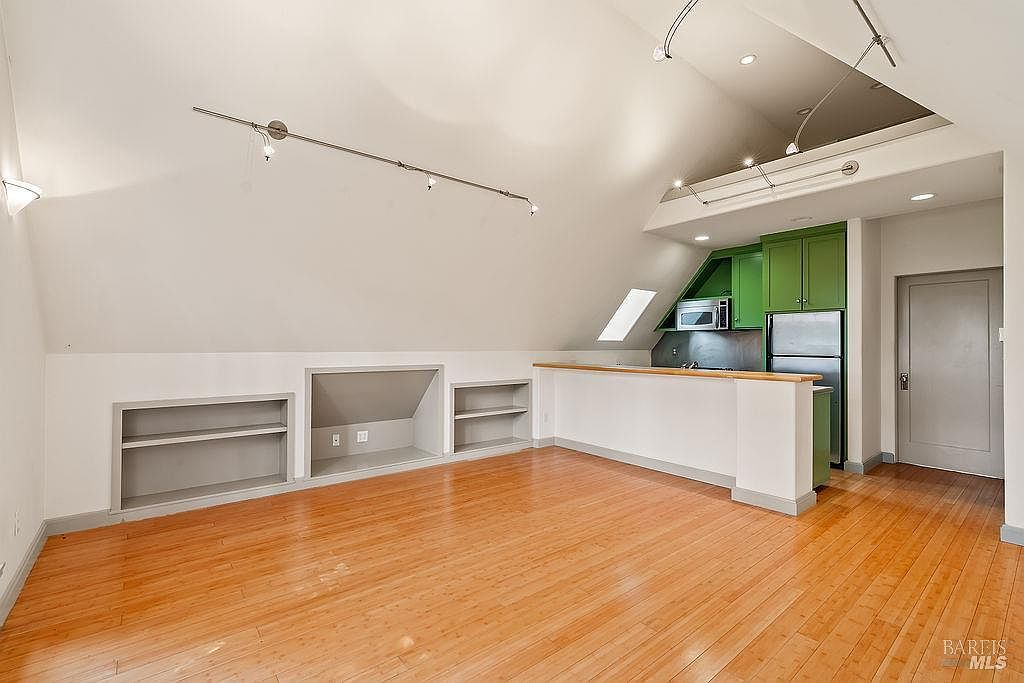
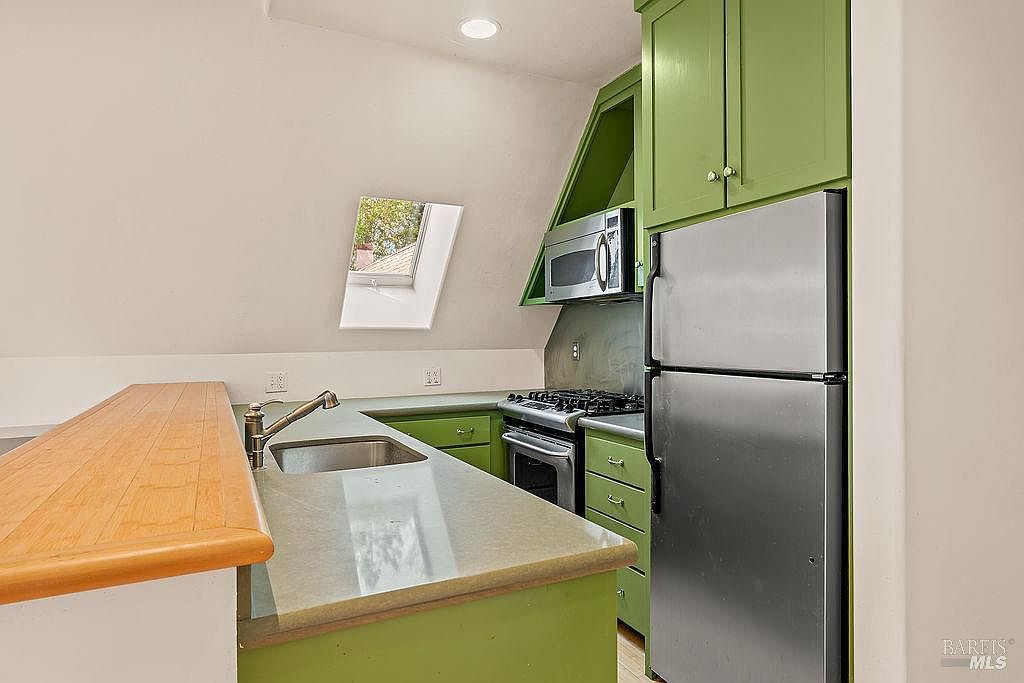
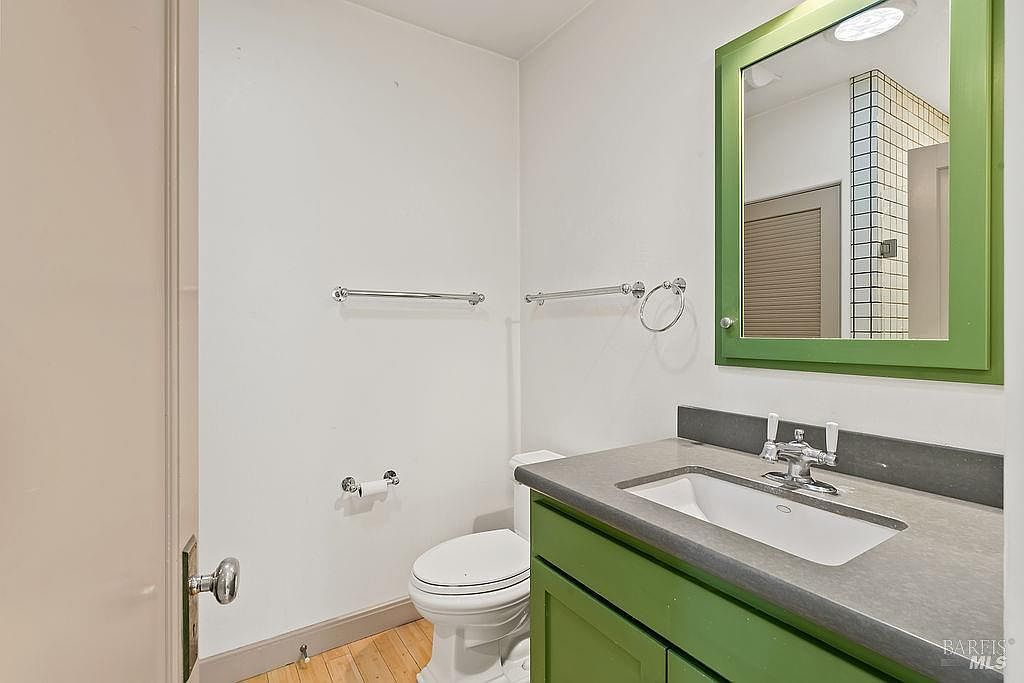
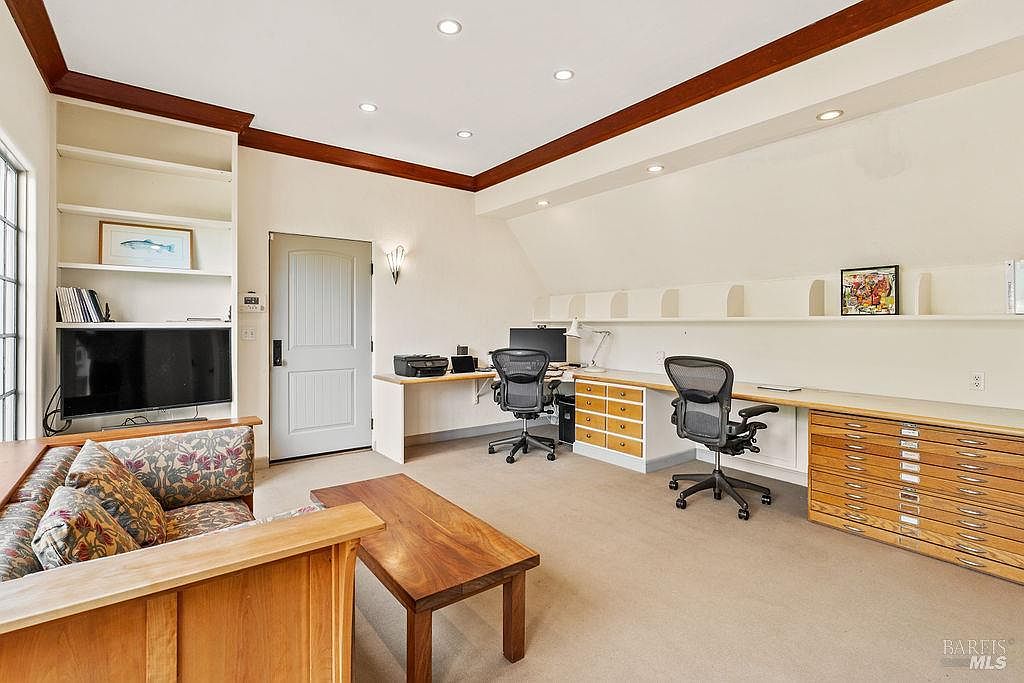
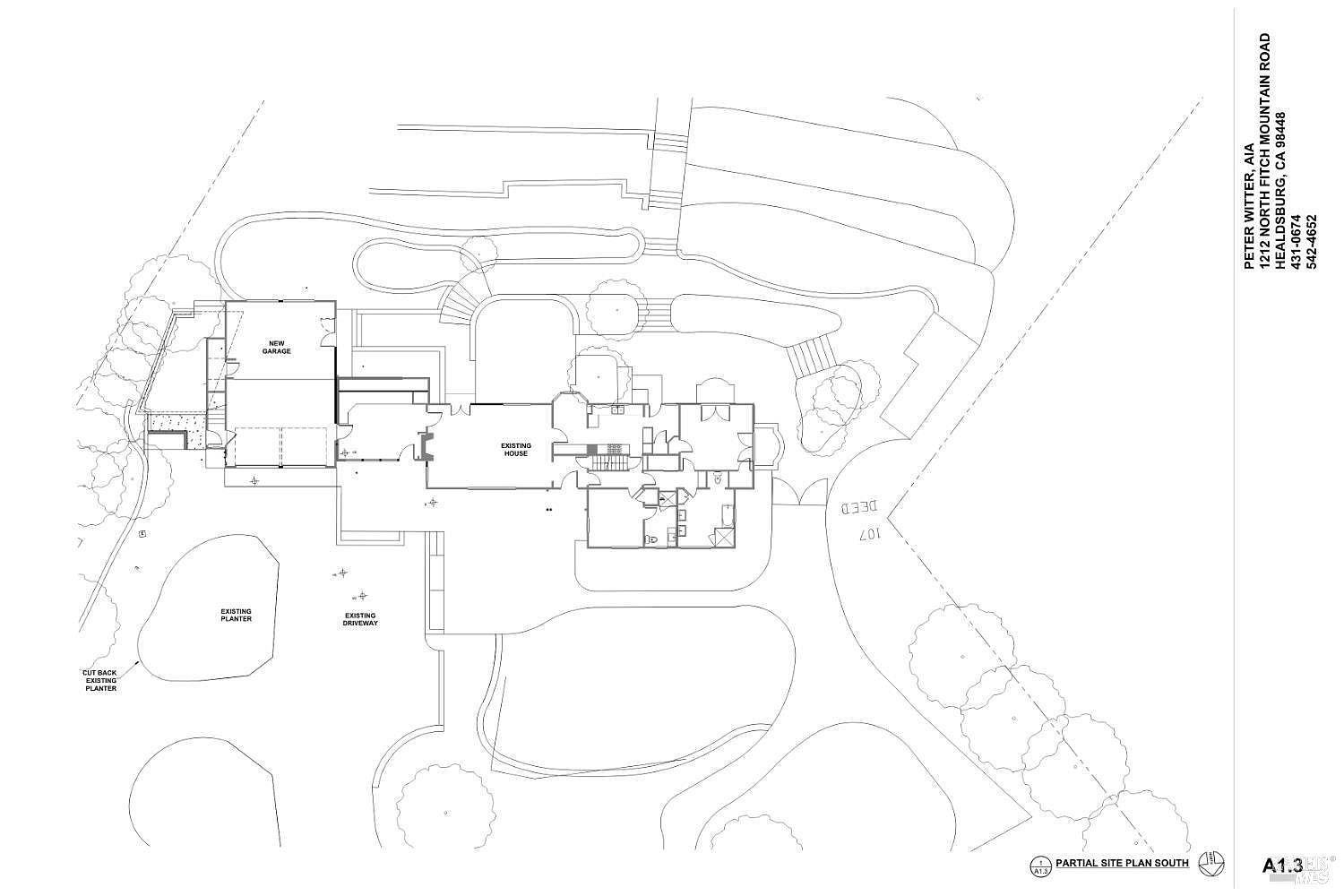
In 2012, the estate was expanded with a substantial garage structure topped by a private 860-square-foot one-bedroom ADU. With its own vaulted living space, green cabinetry kitchen, and skylit interior, the unit functions equally well as a guest house, a dedicated remote workspace, or a caretaker's residence. The garage below offers room for a workshop, exercise studio, or additional storage.
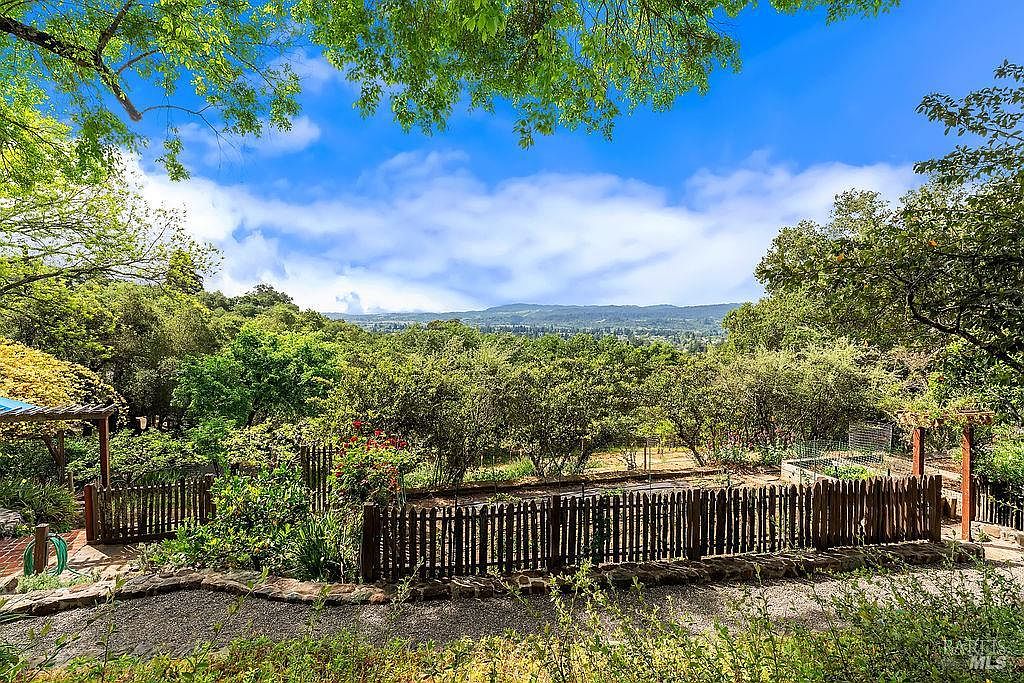
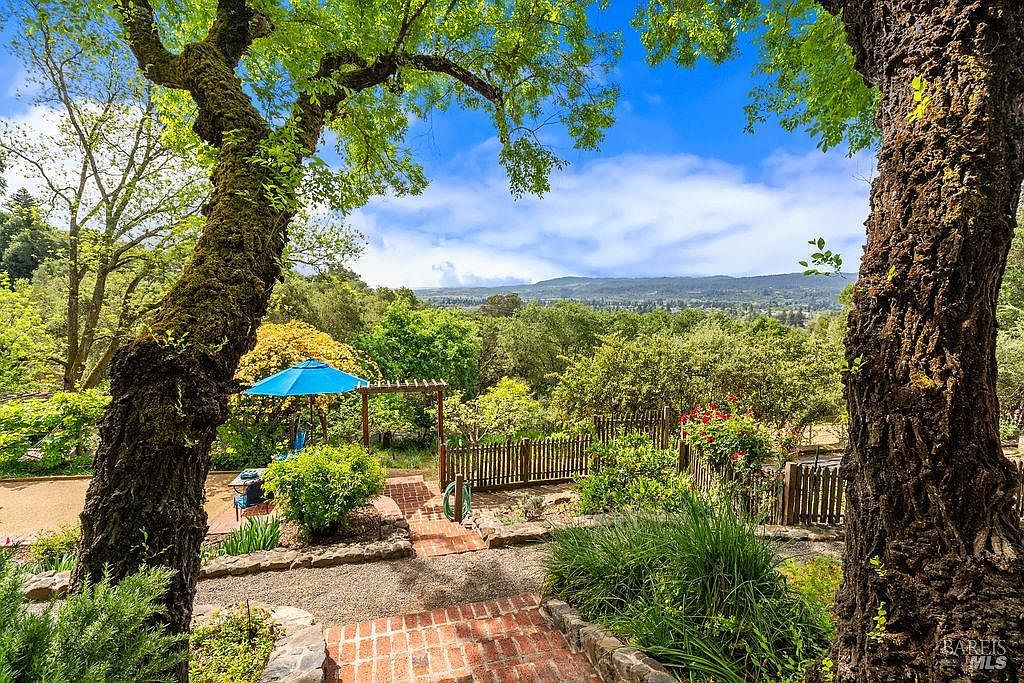
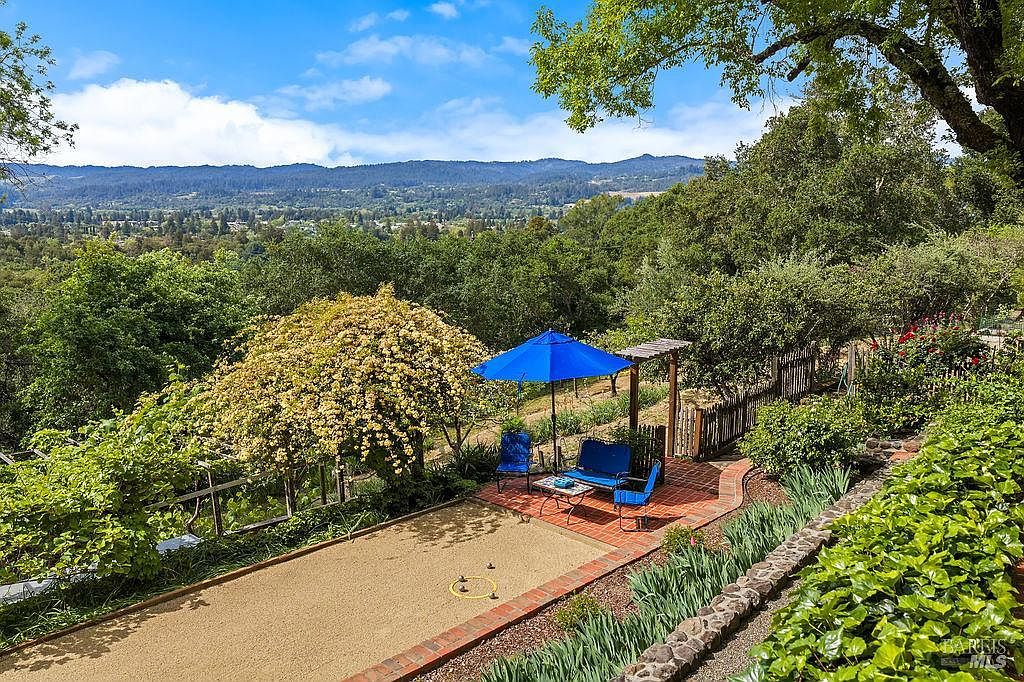
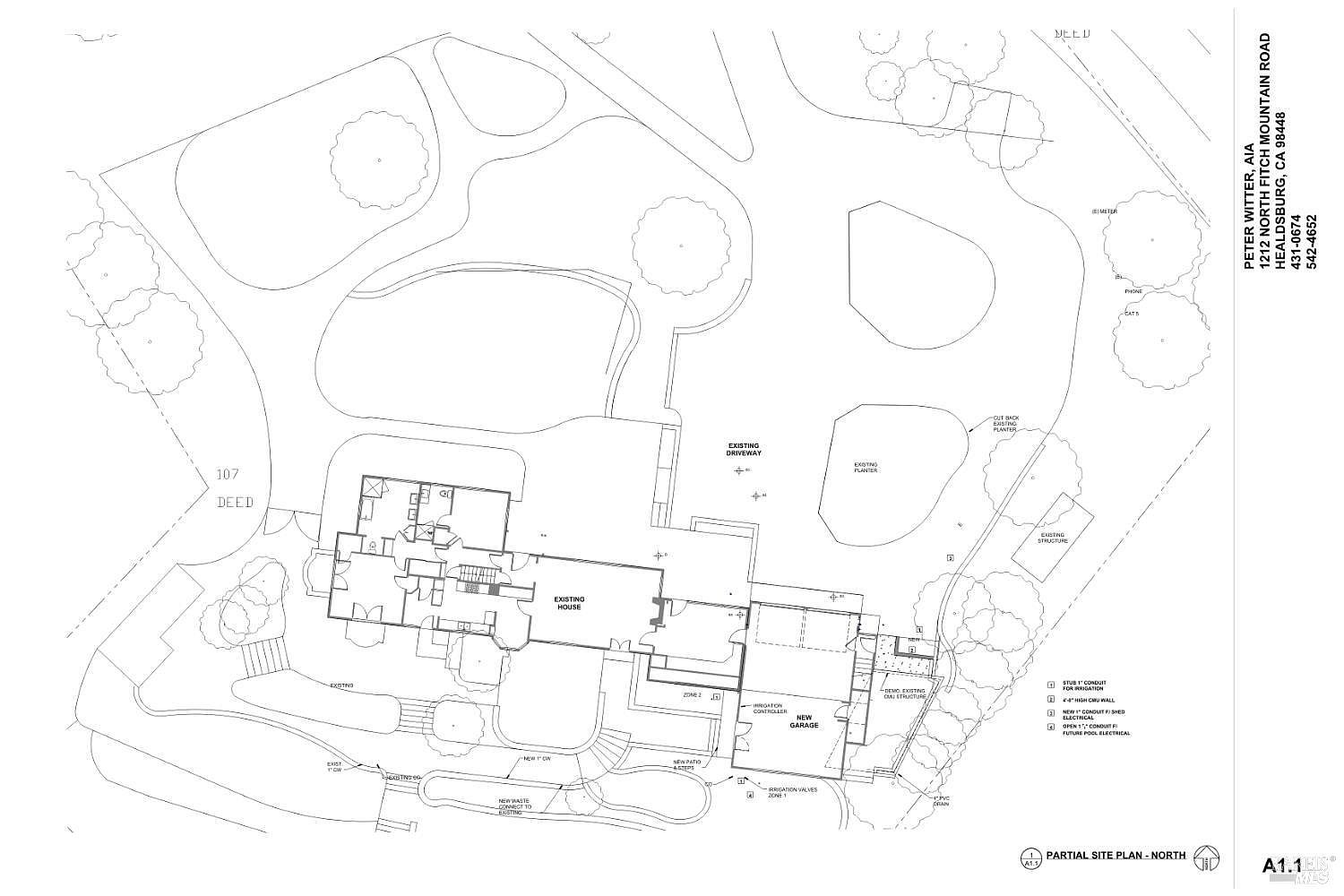
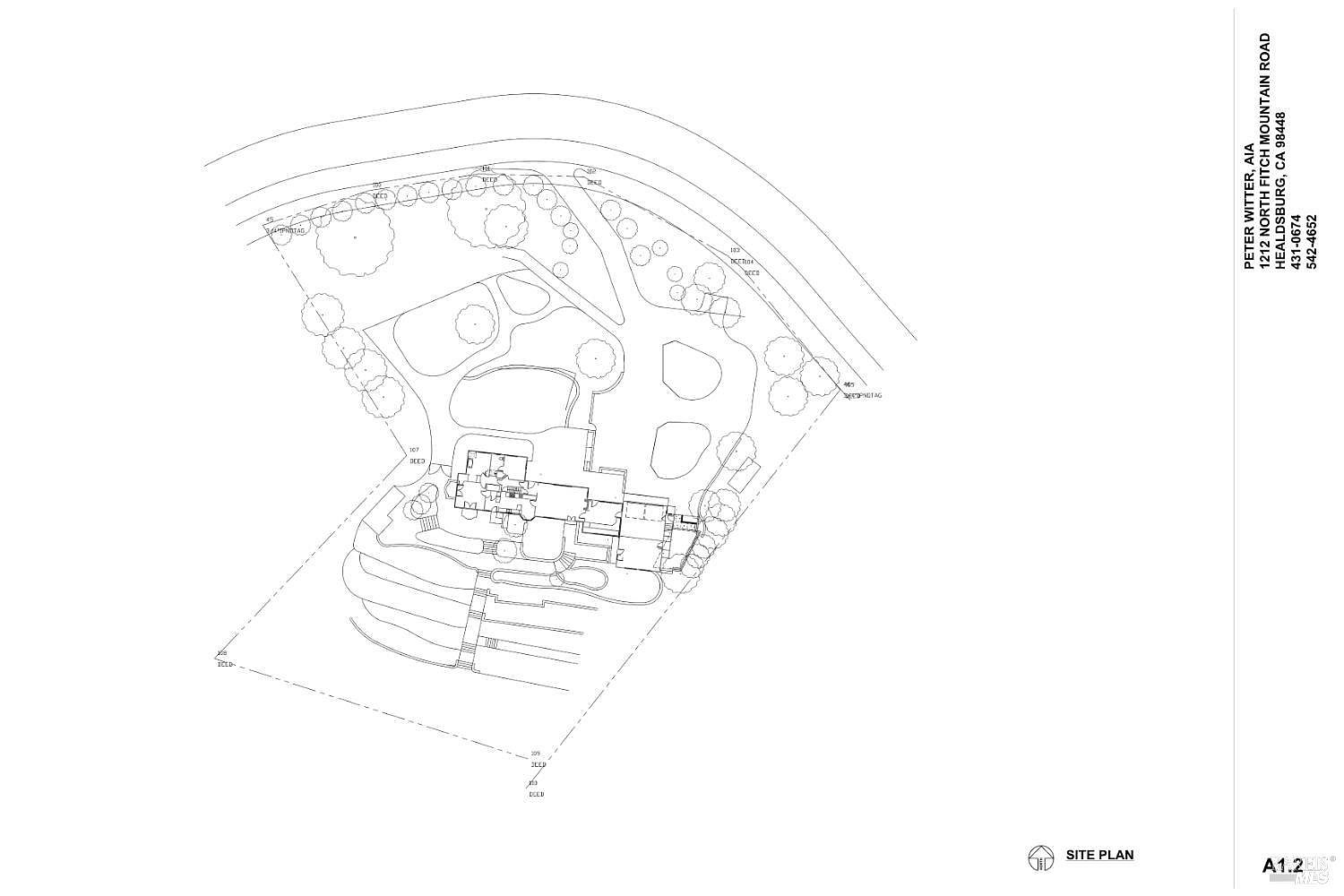
The grounds complete the picture: a south-facing terrace overlooking Healdsburg and the Russian River Valley, a north patio with a stone fireplace and fishpond looking toward Alexander Valley, a pétanque court, a pergola-shaded dining area, rose gardens, fruit trees, and a vegetable garden. The zoning accommodates a pool and pool house, as well as several additional expansion options — meaning the estate's full potential has not yet been reached.
Healdsburg occupies a particular position in the geography of California wine country — one that residents and frequent visitors tend to describe not in terms of what it offers, but in terms of what it has managed to remain. It is a small city of approximately twelve thousand people, positioned at the confluence of three distinct appellations — the Russian River Valley, Dry Creek Valley, and Alexander Valley — and yet it has retained the proportions and rhythms of a town rather than a destination, despite considerable outside interest over the past two decades.
The central Plaza, a tree-shaded square surrounded by restaurants, tasting rooms, independent boutiques, and a year-round farmers' market, functions as the community's genuine gathering point. It is walkable, unhurried, and genuinely local — the kind of civic space that most American towns have lost. From 1212 N Fitch Mountain Road, it is approximately five minutes by car.
Fitch Mountain itself is a forested hill that rises directly from the eastern edge of Healdsburg, bordered on two sides by the Russian River. Its lower slopes are home to a small number of residences, and its upper reaches constitute Fitch Mountain Road County Park — a network of hiking trails that provide access to redwood groves, river overlooks, and a level of quiet that is unusual for a location so close to town. The adjacent Healdsburg Memorial Beach and dog park sit at the foot of the mountain along the river, offering swimming, picnicking, and recreation within easy reach.
The surrounding wine country is, of course, the defining feature of the region's identity. Alexander Valley — visible from the north patio of the property — is one of Sonoma County's most storied appellations, known particularly for its Cabernet Sauvignon and the warmth of its inland climate. Dry Creek Valley, just to the west, has long been regarded as exceptional terrain for Zinfandel and Sauvignon Blanc. The Russian River Valley, whose fog-cooled mornings produce some of California's most acclaimed Pinot Noir and Chardonnay, begins effectively at the base of Fitch Mountain. The result is that the property sits at the center of a triangle formed by three of the state's most respected wine-producing regions.
Healdsburg's restaurant culture has evolved significantly over the past fifteen years, with a concentration of serious kitchens — drawing from the agricultural abundance of Sonoma County — operating within and around the Plaza. The city also supports a number of working studios and galleries, a reflection of the creative population it has attracted. The Healdsburg Museum, housed in a Carnegie library building near the Plaza, documents the area's history as a ranching and farming community dating to the mid-nineteenth century.
For families, the Healdsburg Unified School District serves the community, and the proximity to Santa Rosa — approximately twenty-five minutes south — extends the range of available services, medical facilities, and educational options. San Francisco is roughly ninety minutes away, making the property viable as a primary residence for those who commute selectively.
What the location ultimately offers is the particular freedom of being genuinely embedded in a place — close to everything the town provides, set apart from it by the privacy of the hill, and oriented toward a landscape that changes with the season and the hour.
Featured Highlights
Curated Content • Presented by Grace Lucero