The Story Behind
Architect-Designed Coastal Estate Within an Exclusive Malibu Enclave
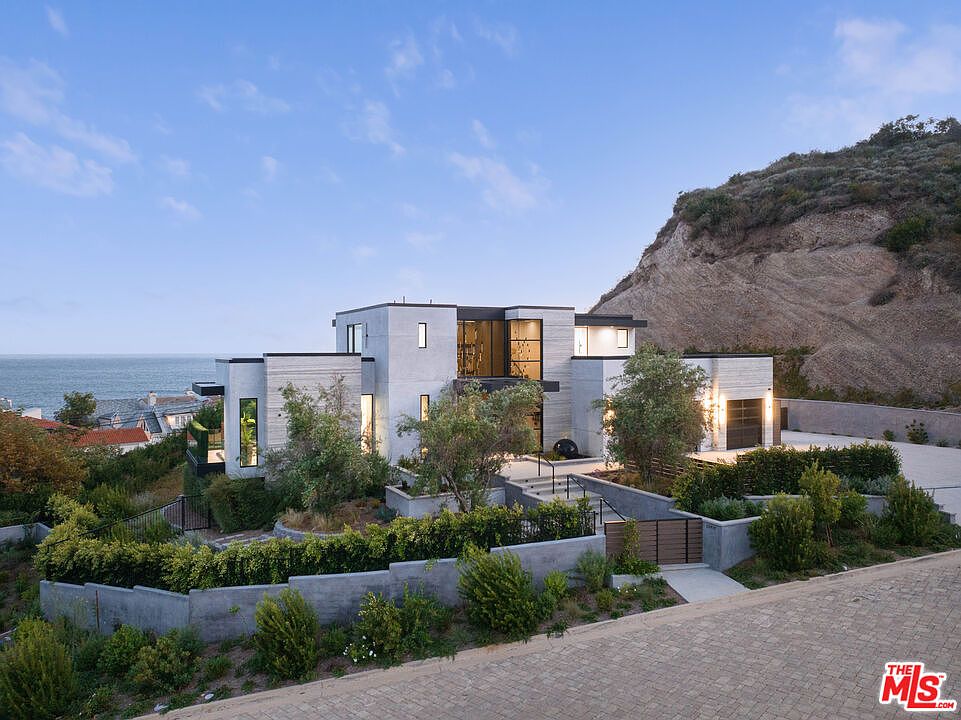
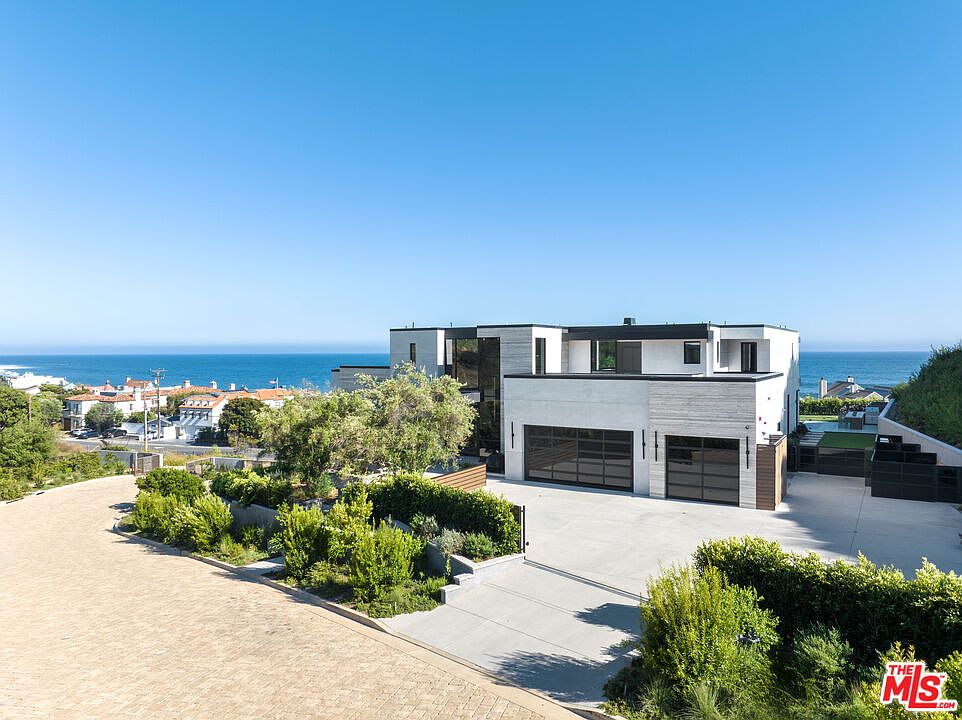
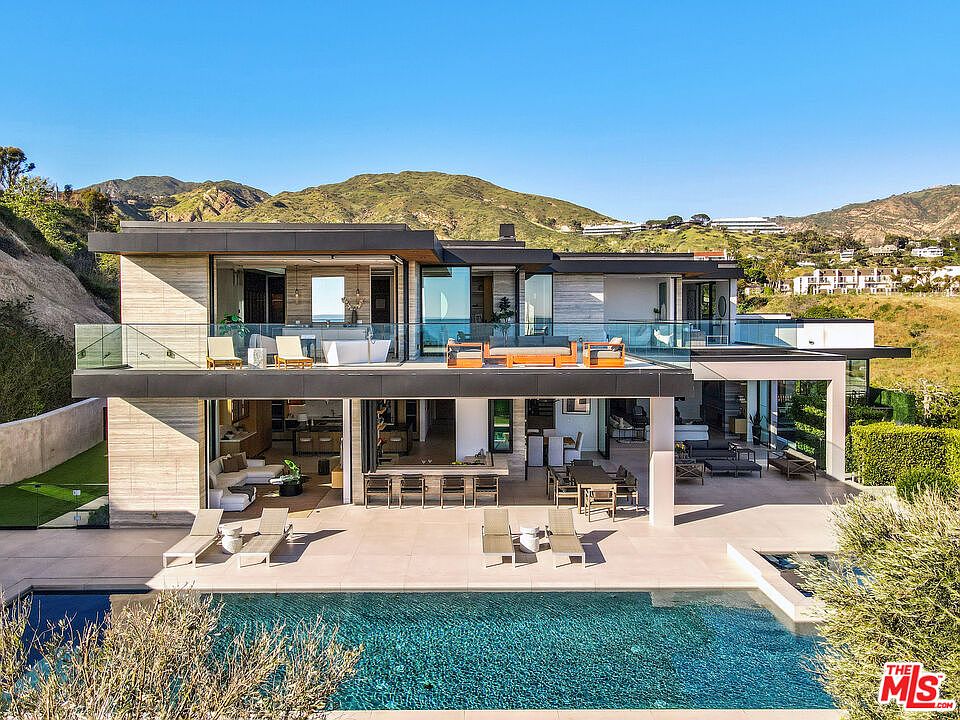
There is a particular discipline required to design a home that neither competes with nor surrenders to the Pacific Ocean. Douglas W. Burdge, AIA — whose four-decade body of work has made him one of Malibu's most celebrated residential architects — understands this balance instinctively. At 23917 Malibu Road, the result is a residence that orients every principal space toward the water while remaining architecturally resolved on its own terms.
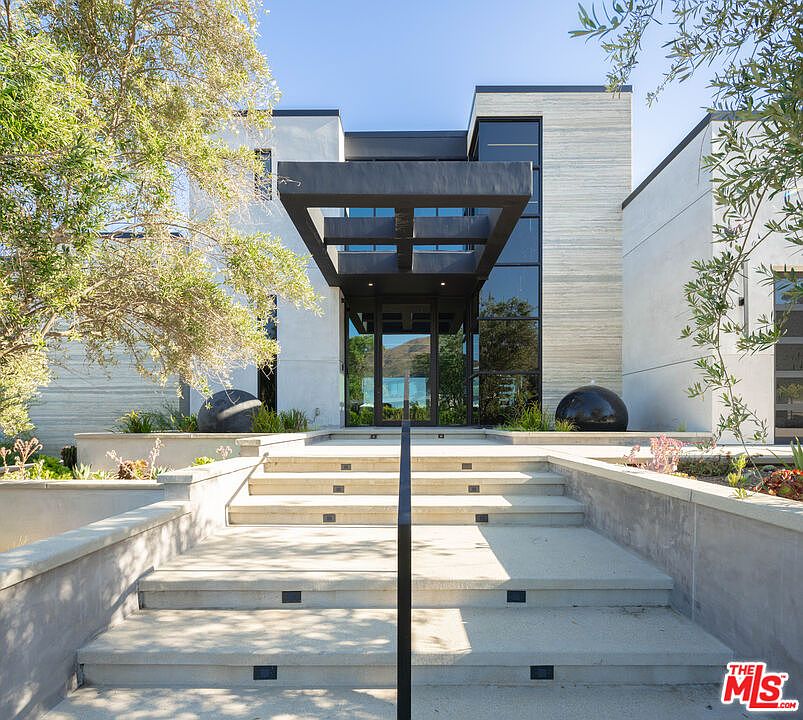
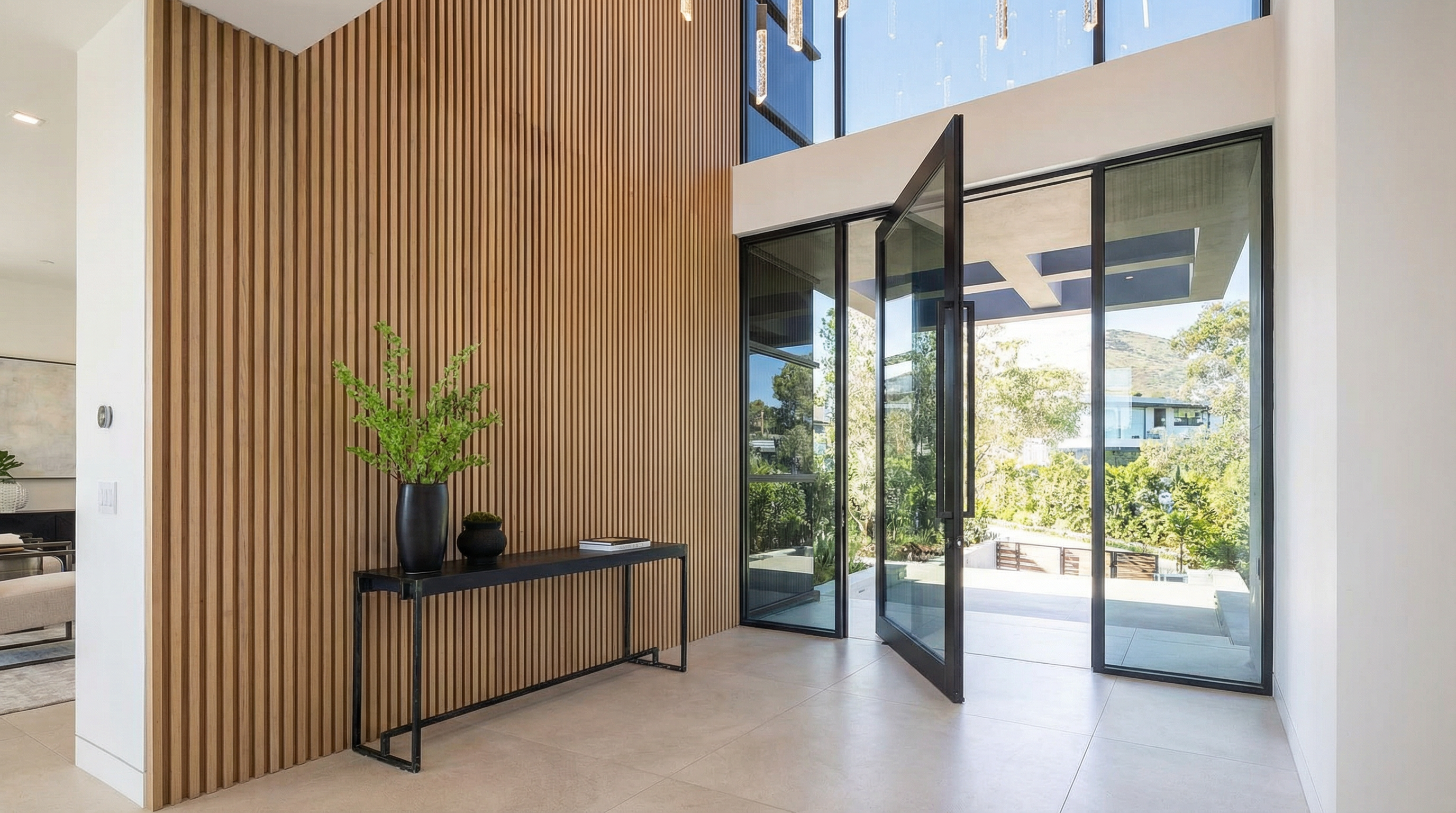
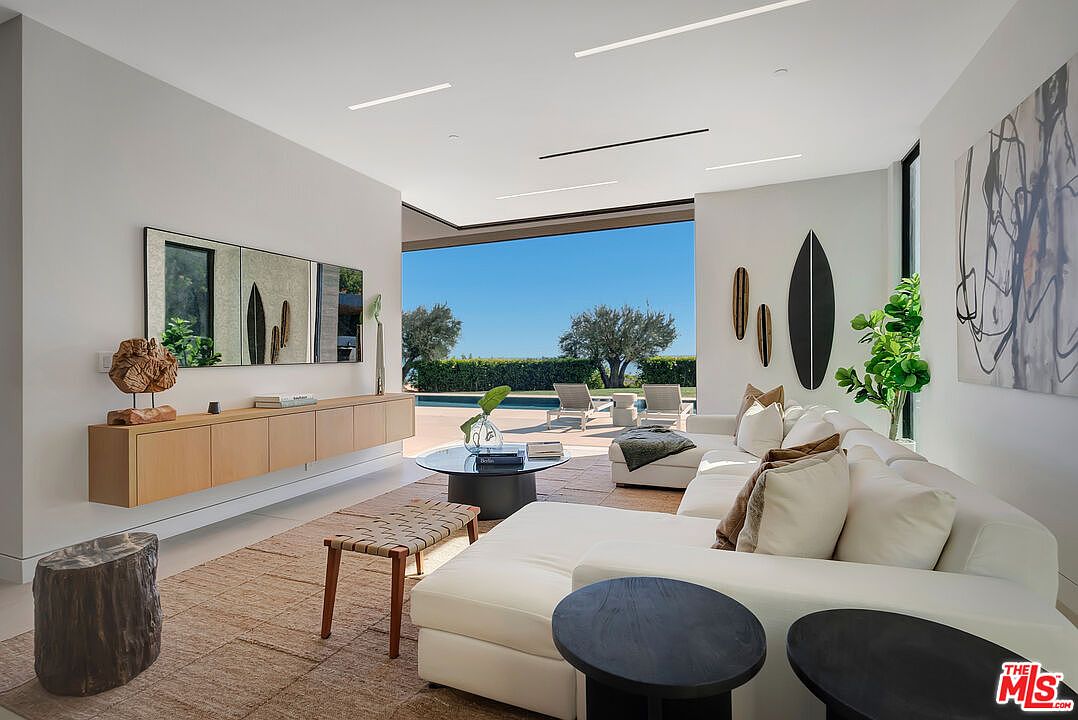
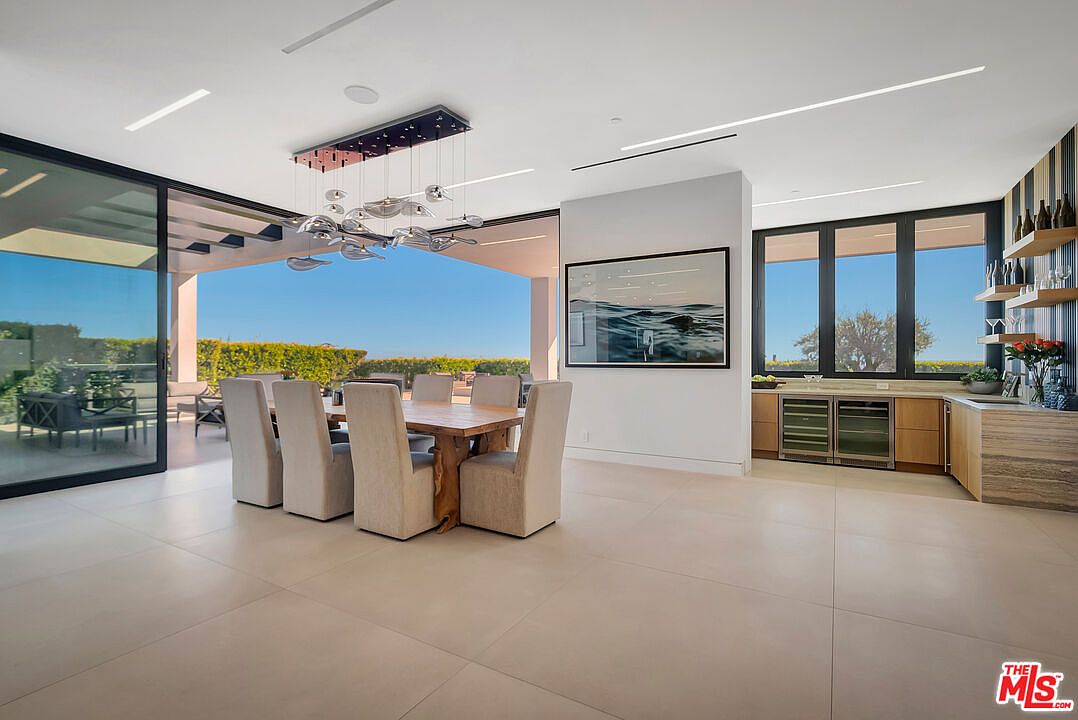
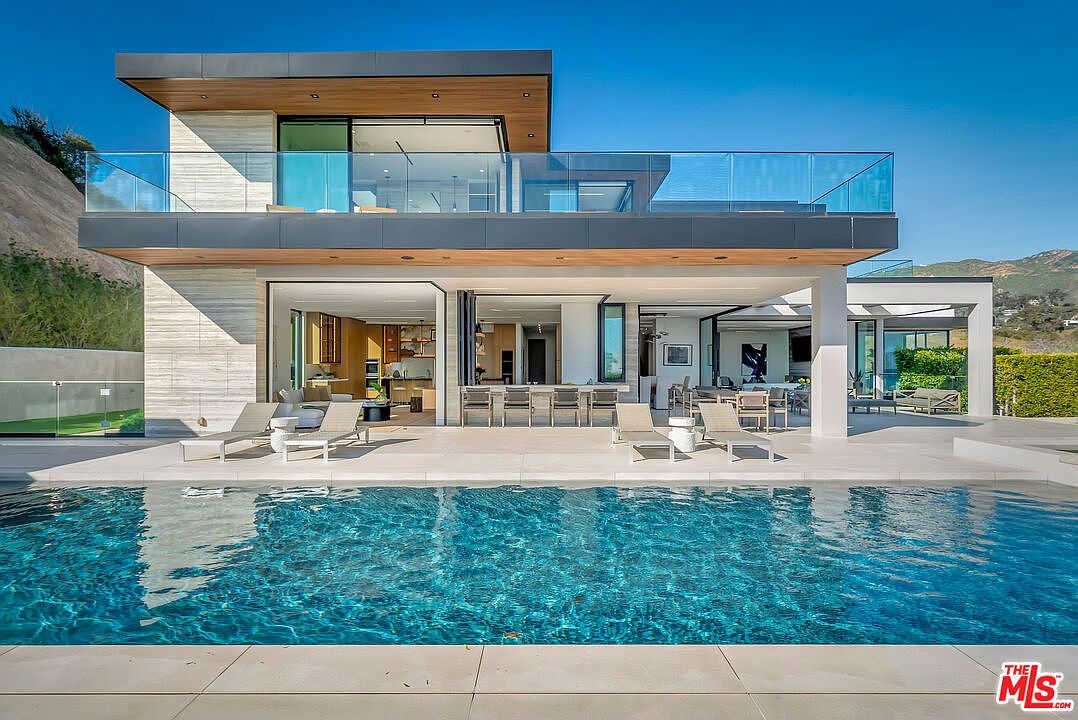
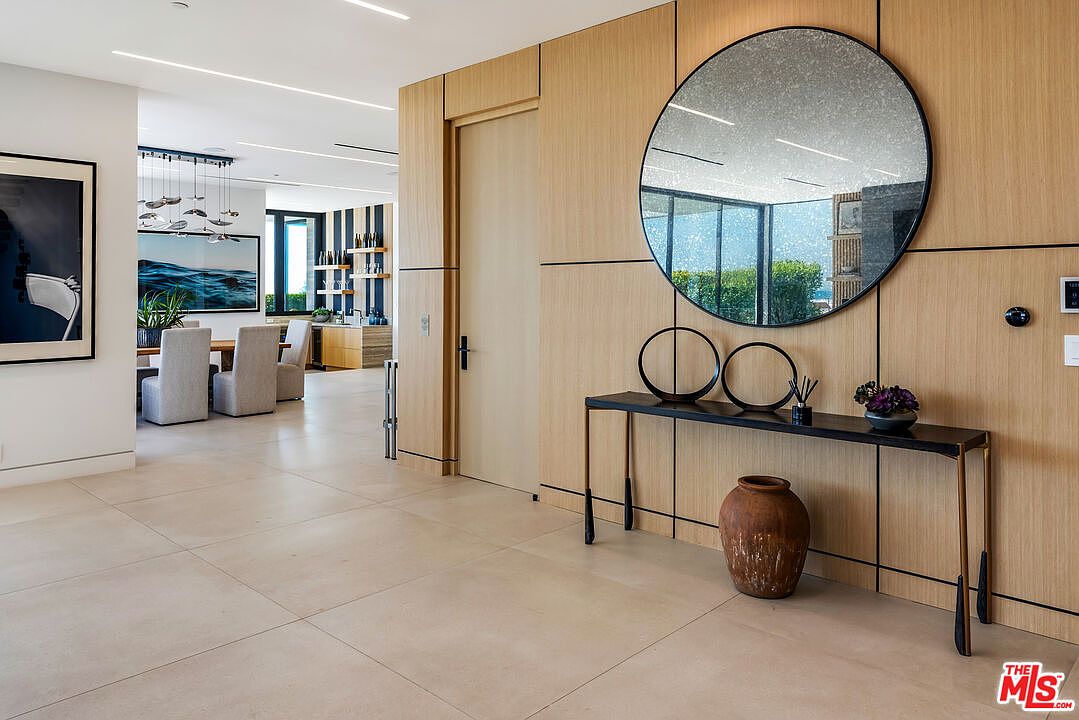
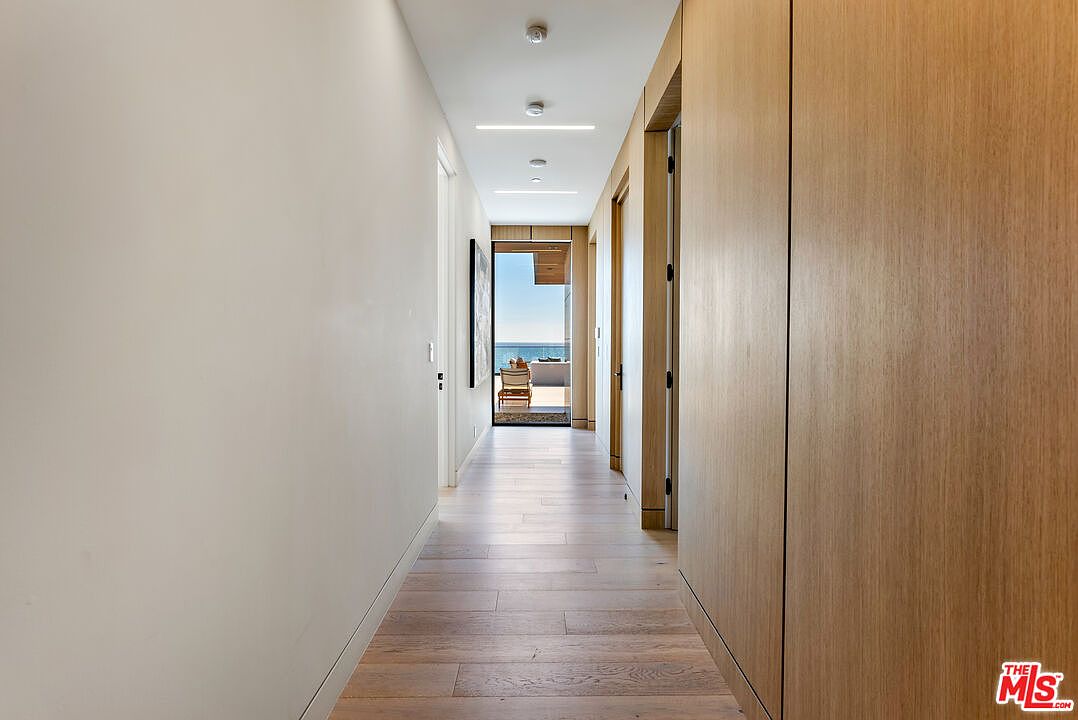
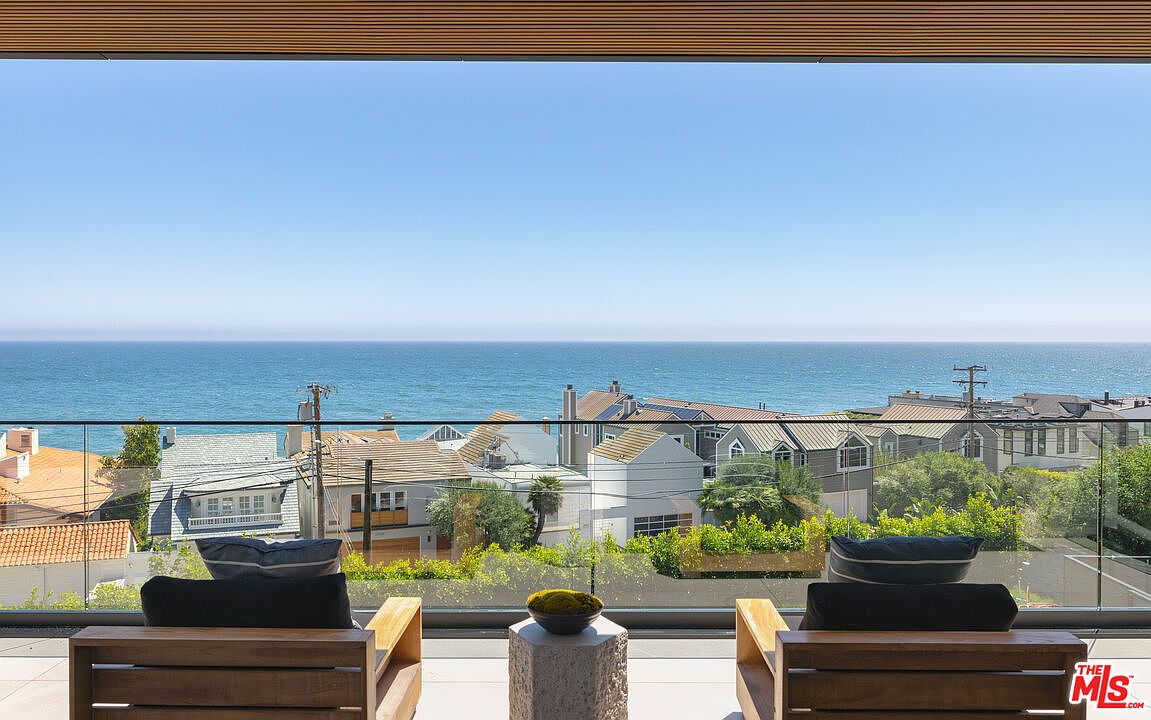
The approach sets the tone immediately. A dramatic pivot door, framed by sculptural water features and a bold geometric overhang, opens into a double-height entry where vein-cut travertine floors and soaring ceilings establish the home's material language before the eye travels outward to the horizon. The transparency is deliberate: expansive glass walls dissolve the boundary between interior and exterior, so the Pacific registers as a constant, quiet presence throughout the main level.
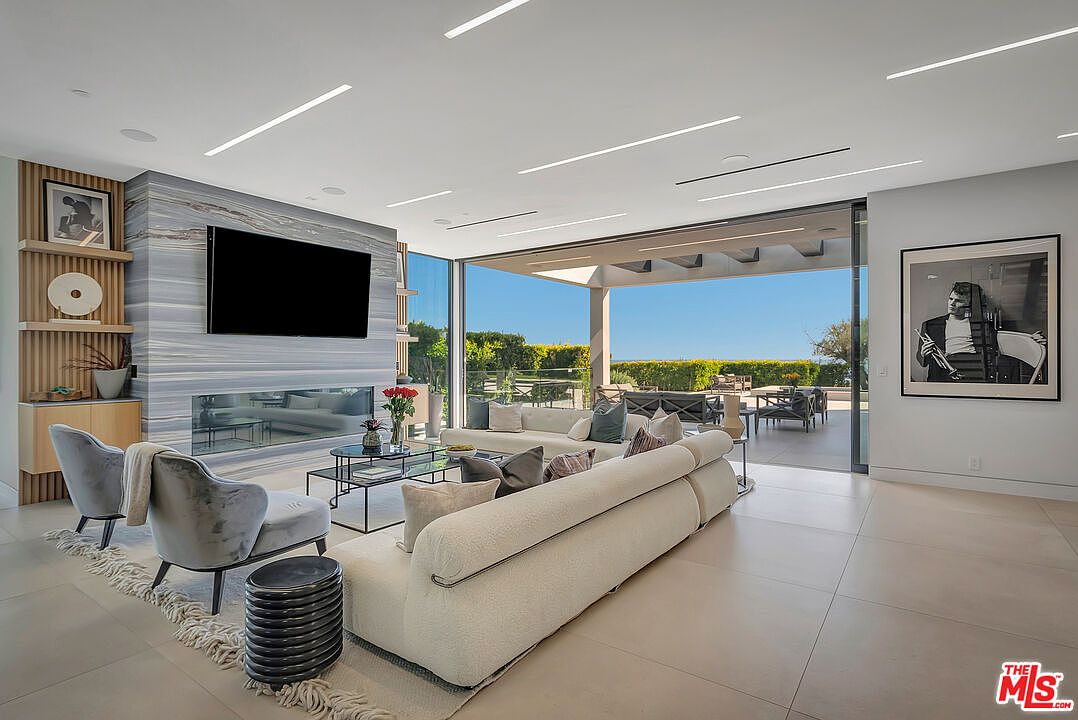
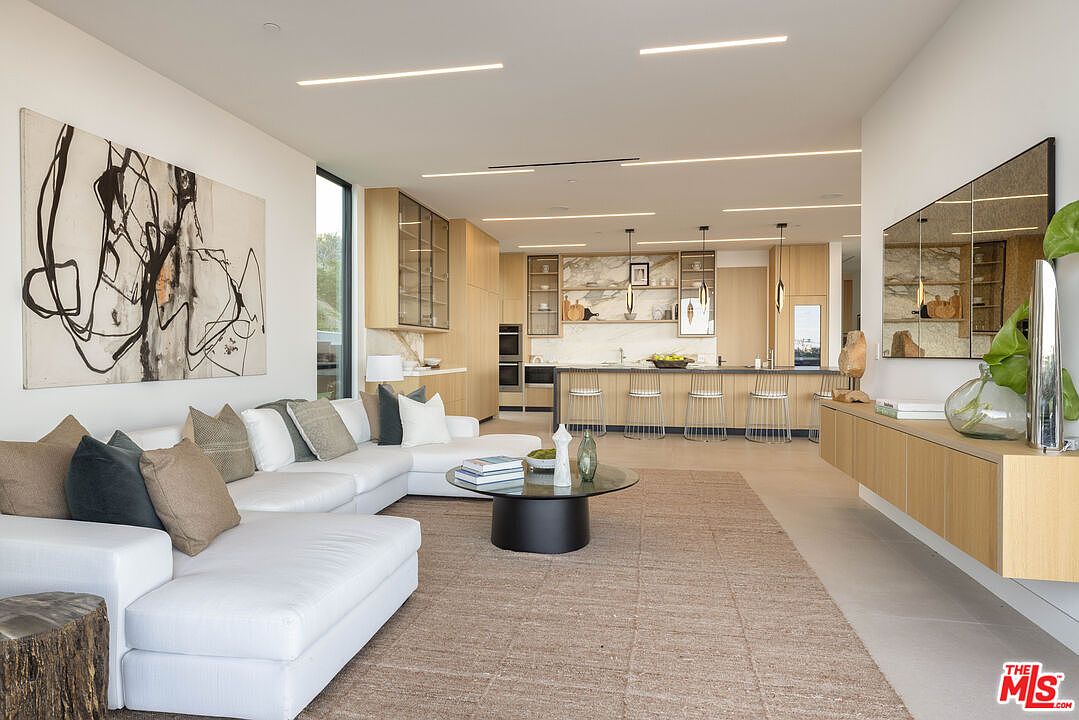
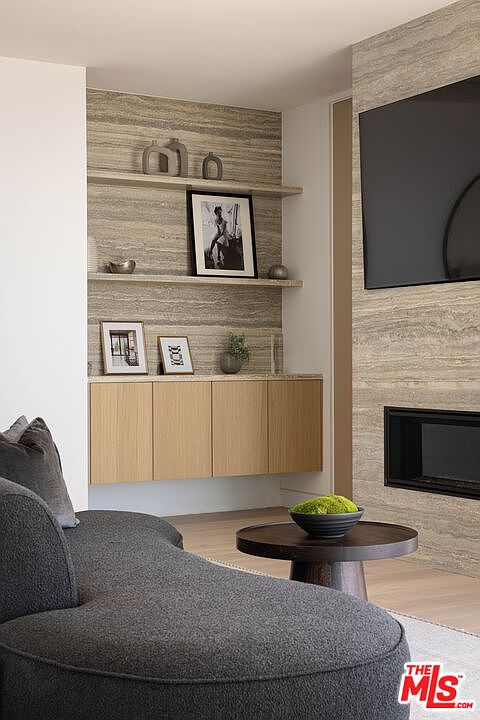
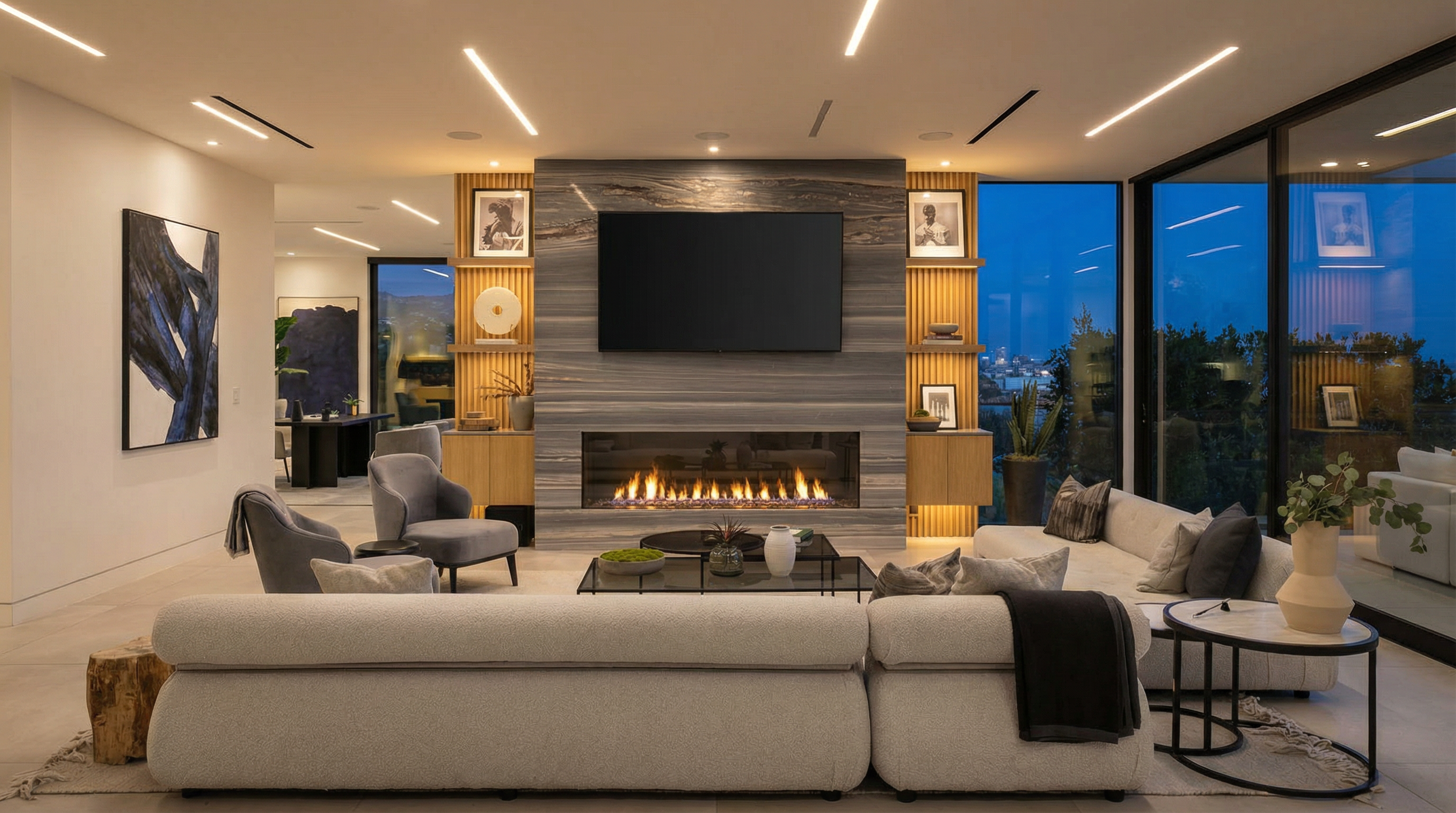
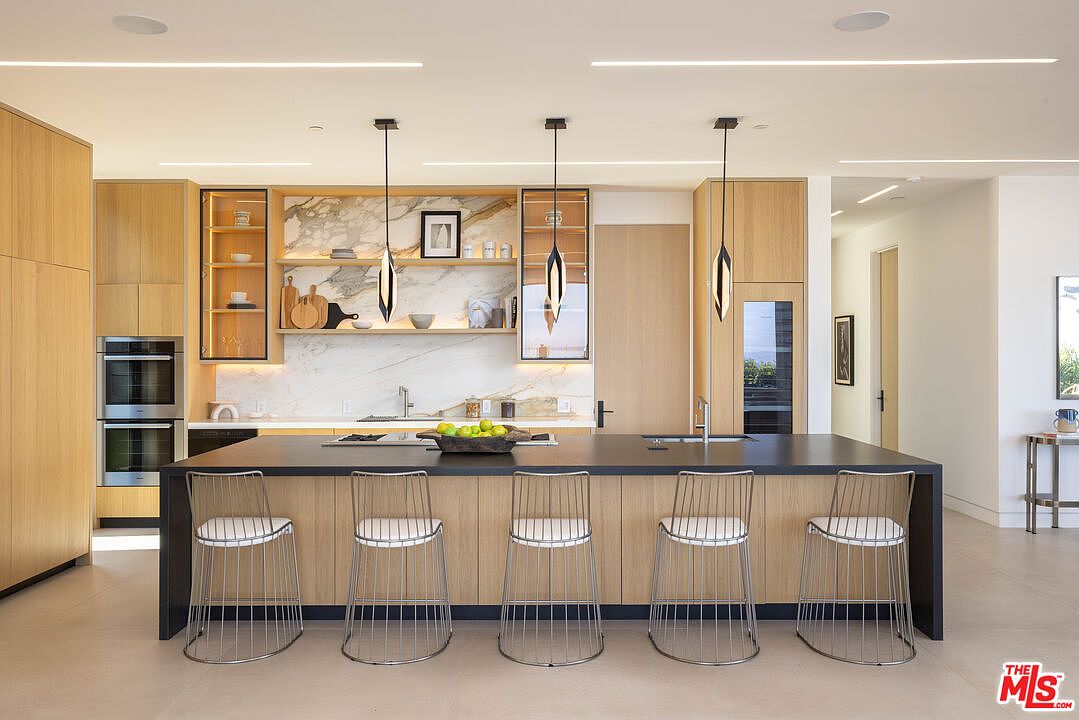
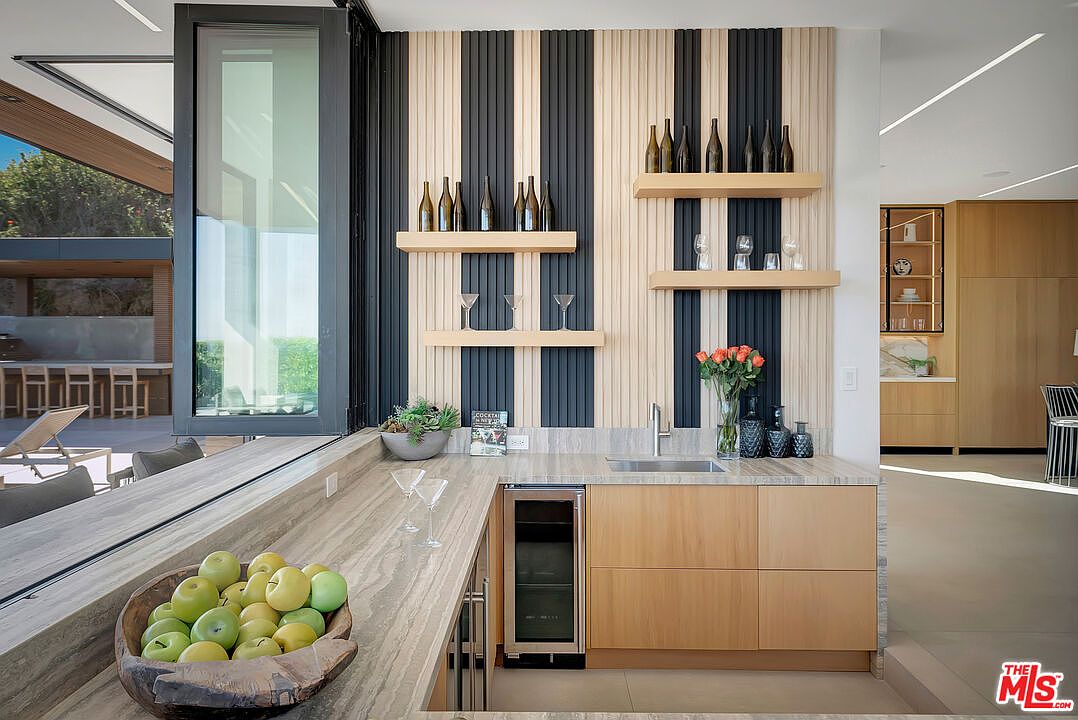
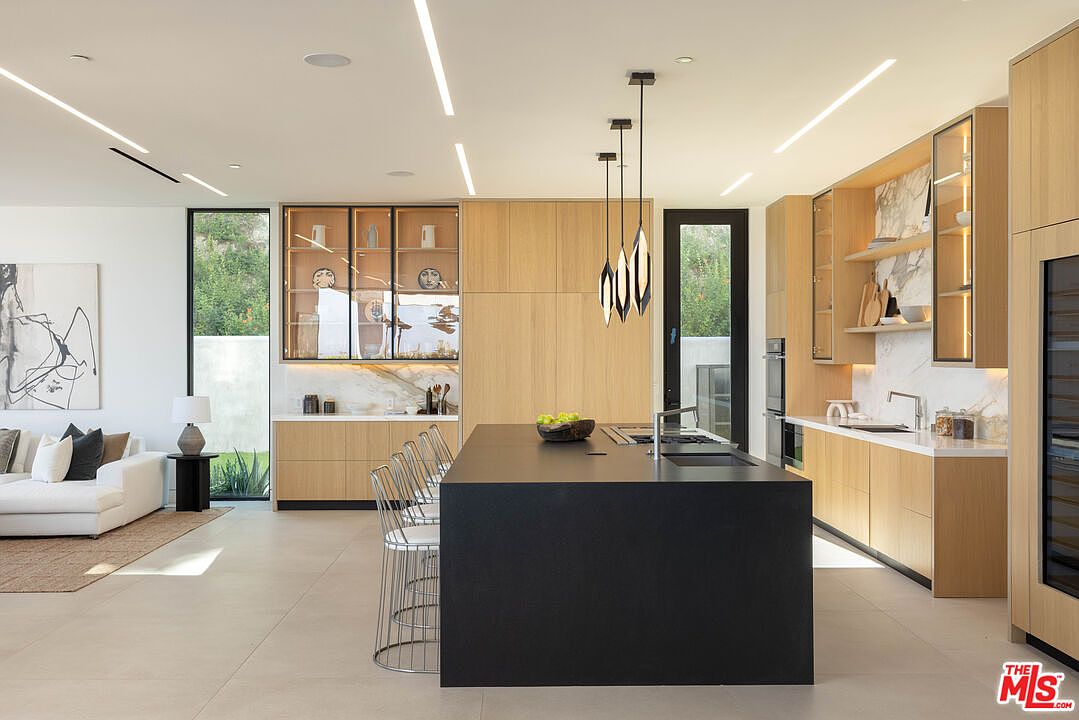
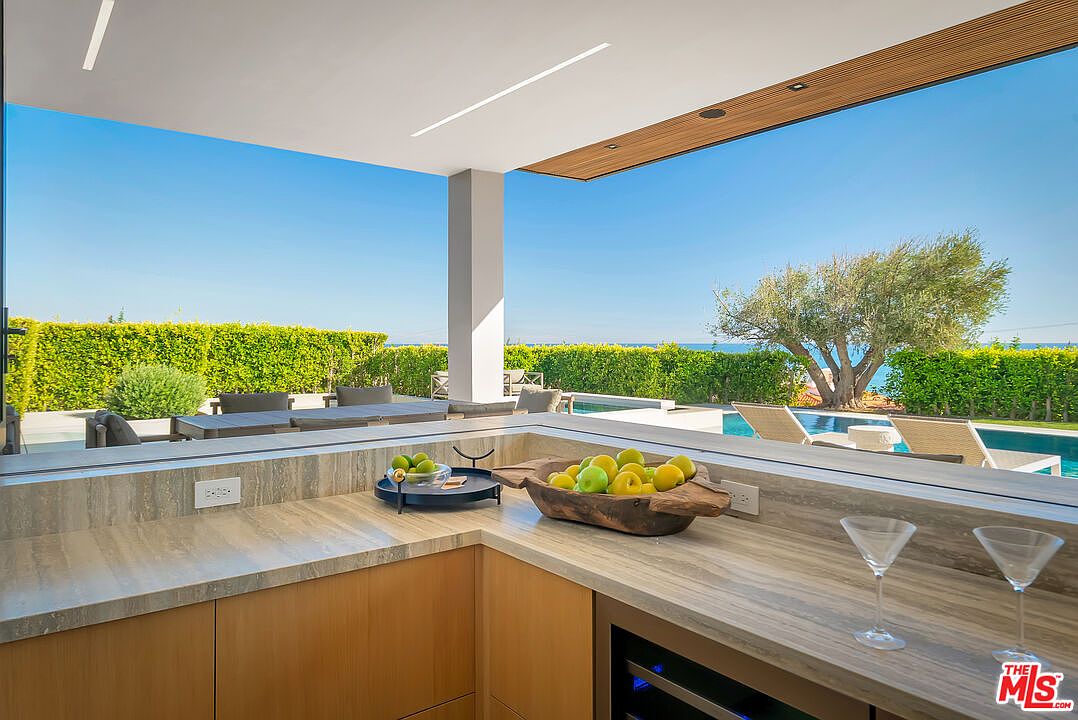
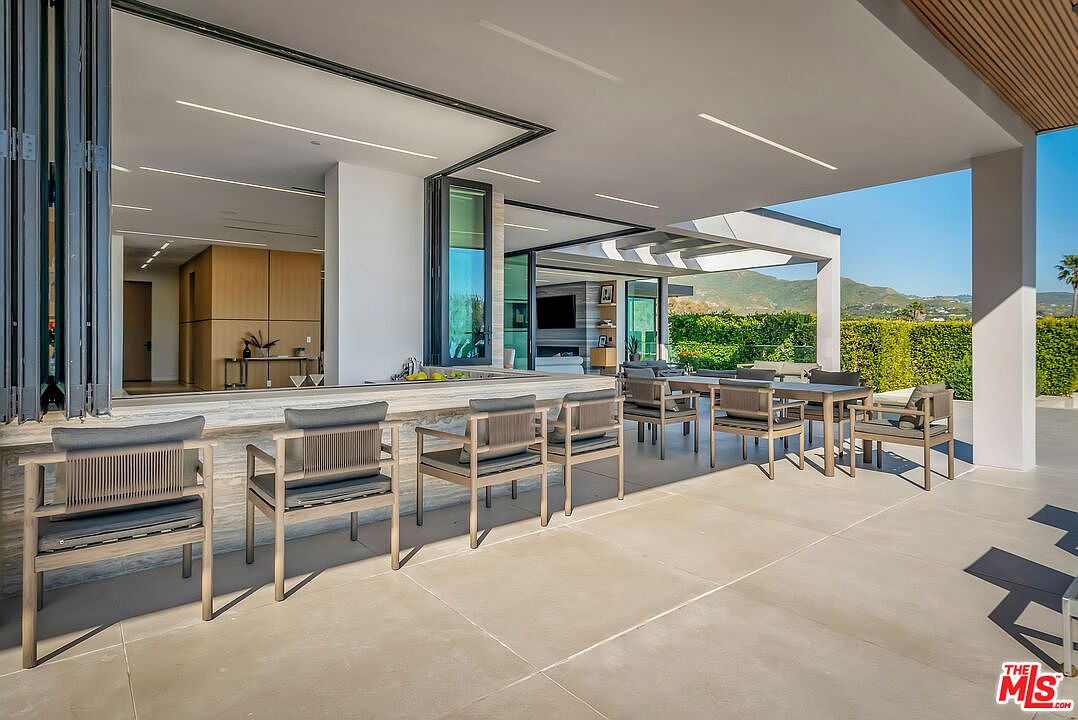
In the grand living room, a floor-to-ceiling fireplace clad in rare Blue Bibas marble serves as the room's anchor — a vertical gesture of texture and warmth that holds its own against the vastness beyond the glass. Adjacent, the gourmet kitchen is fitted with top-of-the-line appliances and custom backlit cabinetry, with a Calcutta Gold stone palette that bridges warmth and precision. A full bar with bifold doors opens directly to the patio, collapsing the distance between the interior entertaining program and the outdoor one.
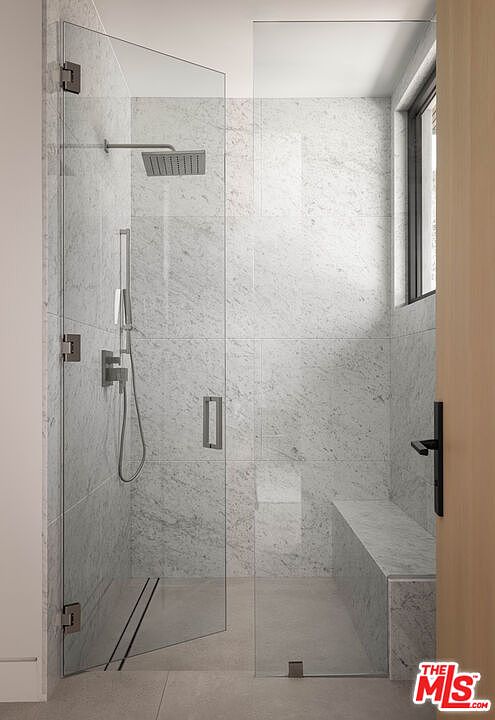
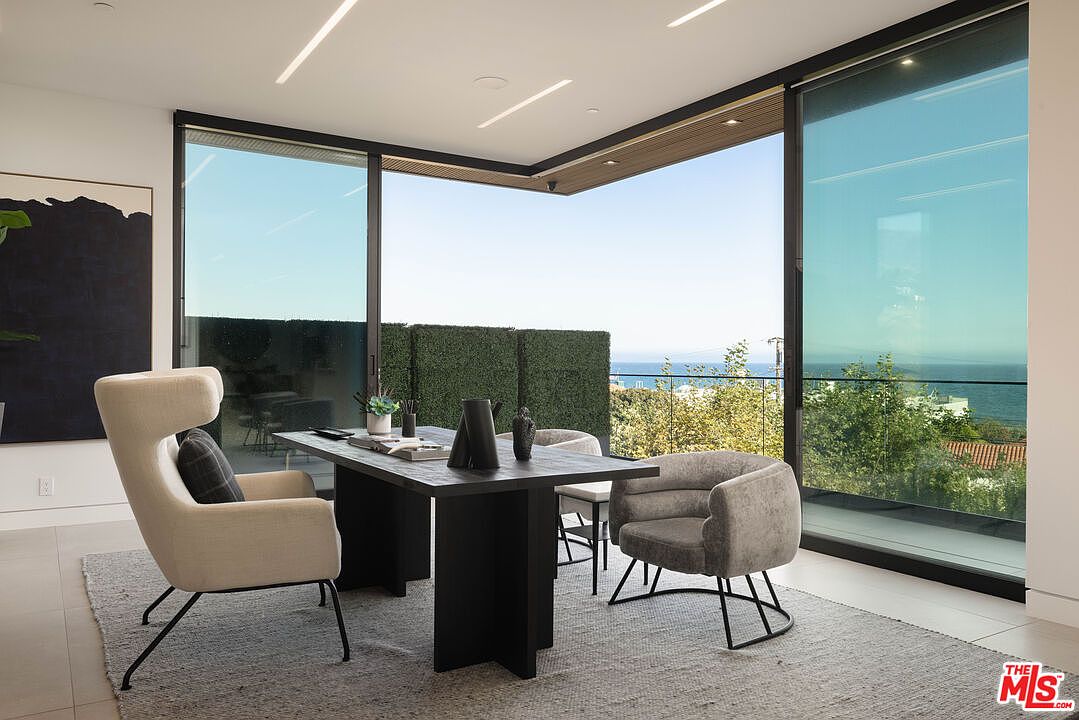
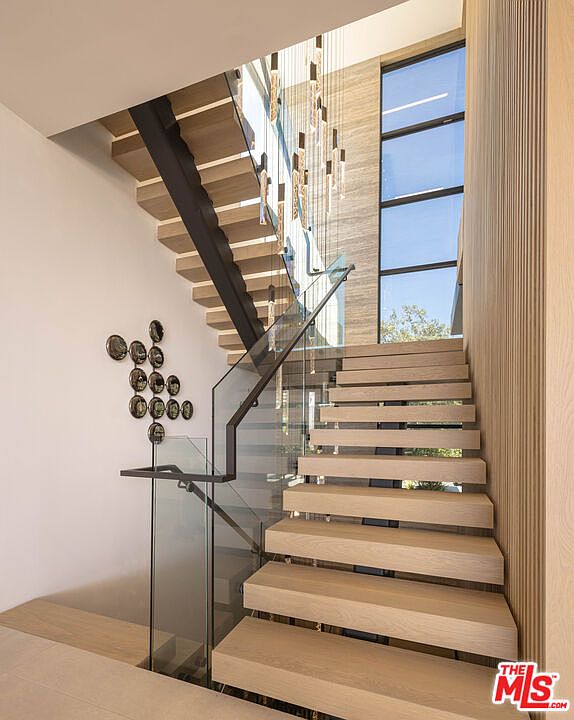
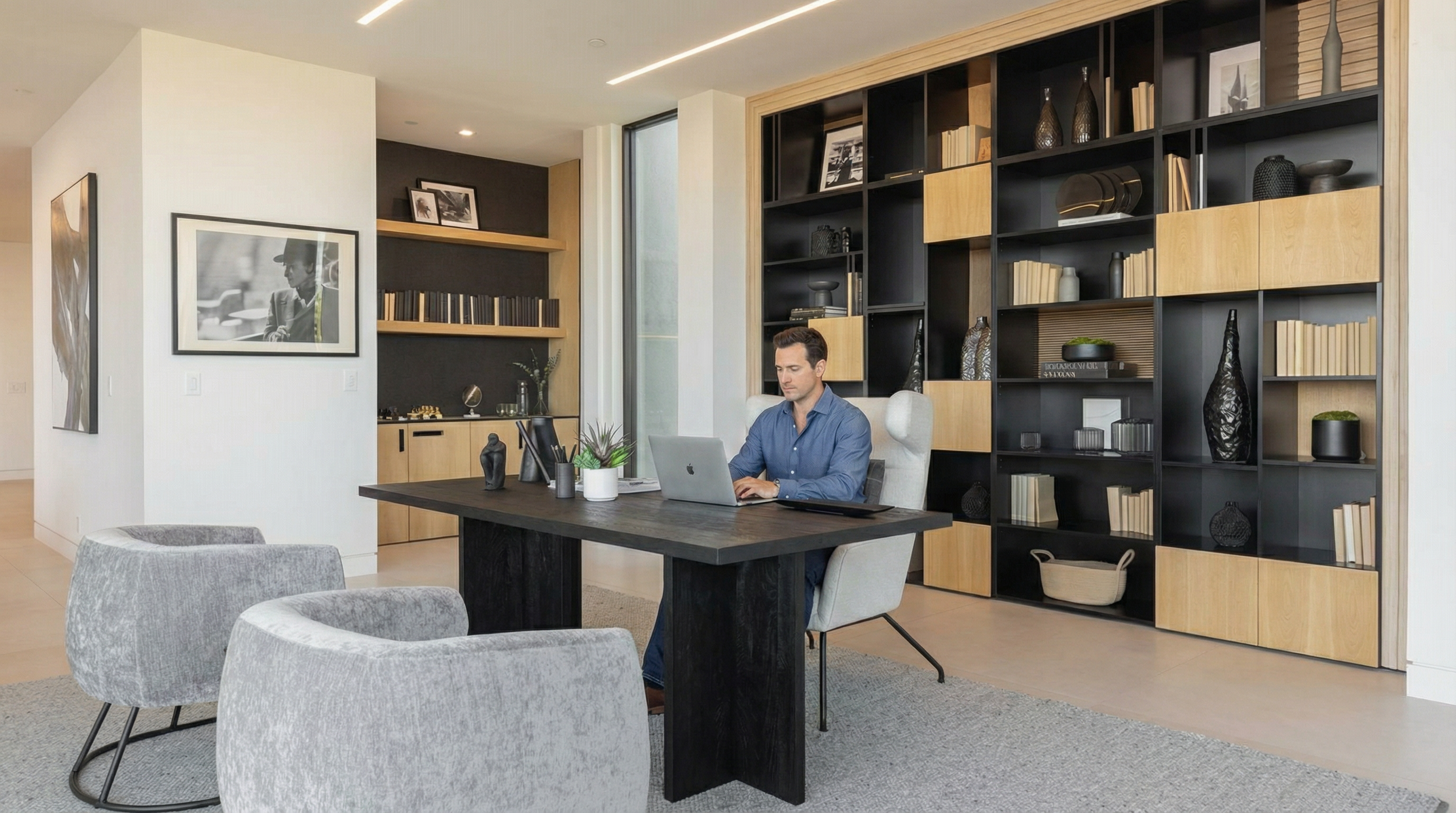
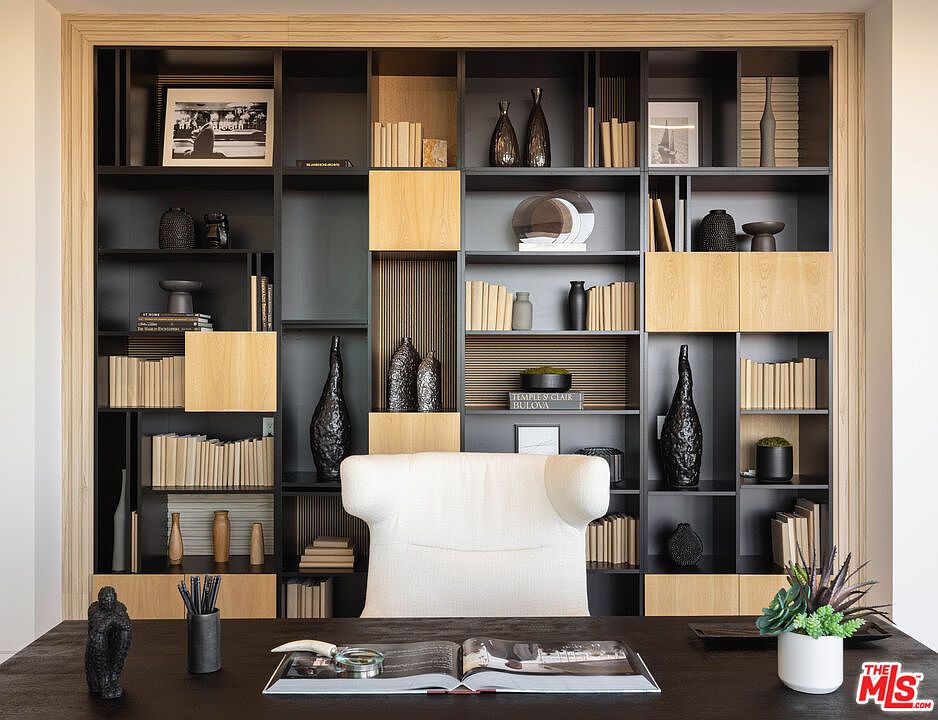
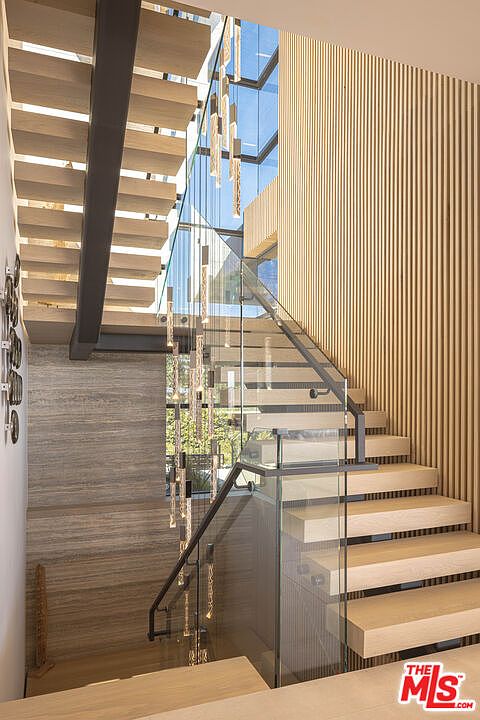
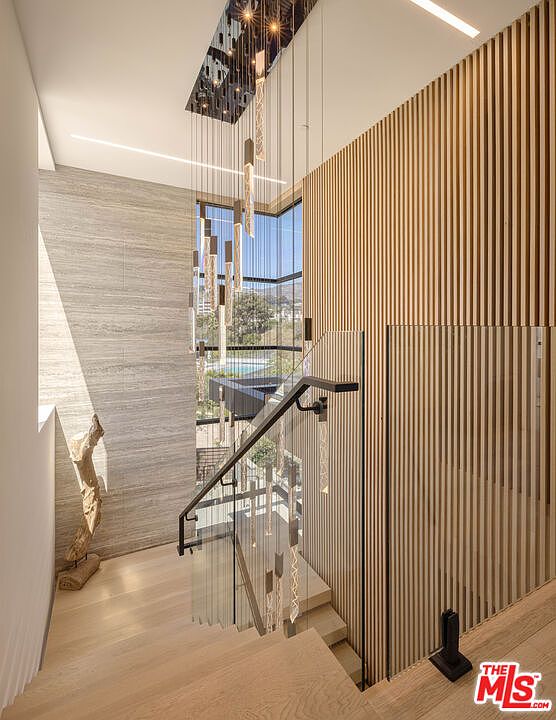
A private office with unobstructed ocean views and a guest suite with en-suite bath complete the main level's considered hierarchy of space. The floating staircase — light wood treads, glass railing, a multi-tiered chandelier descending through the full height of the stairwell — is itself a sculptural event.
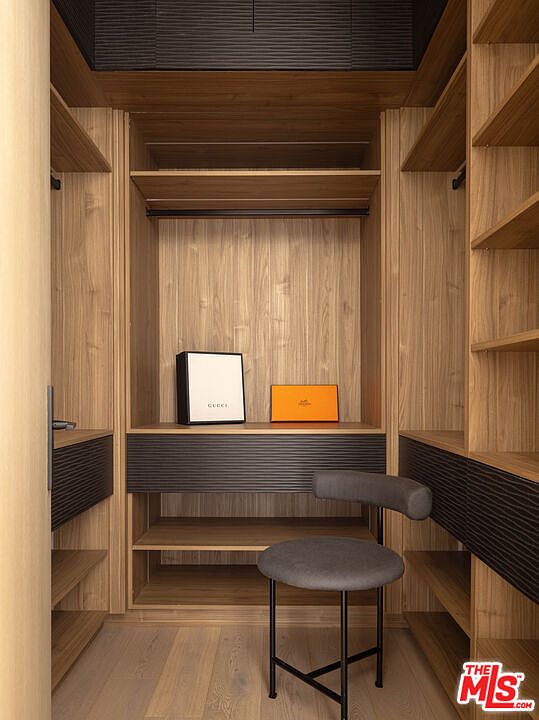
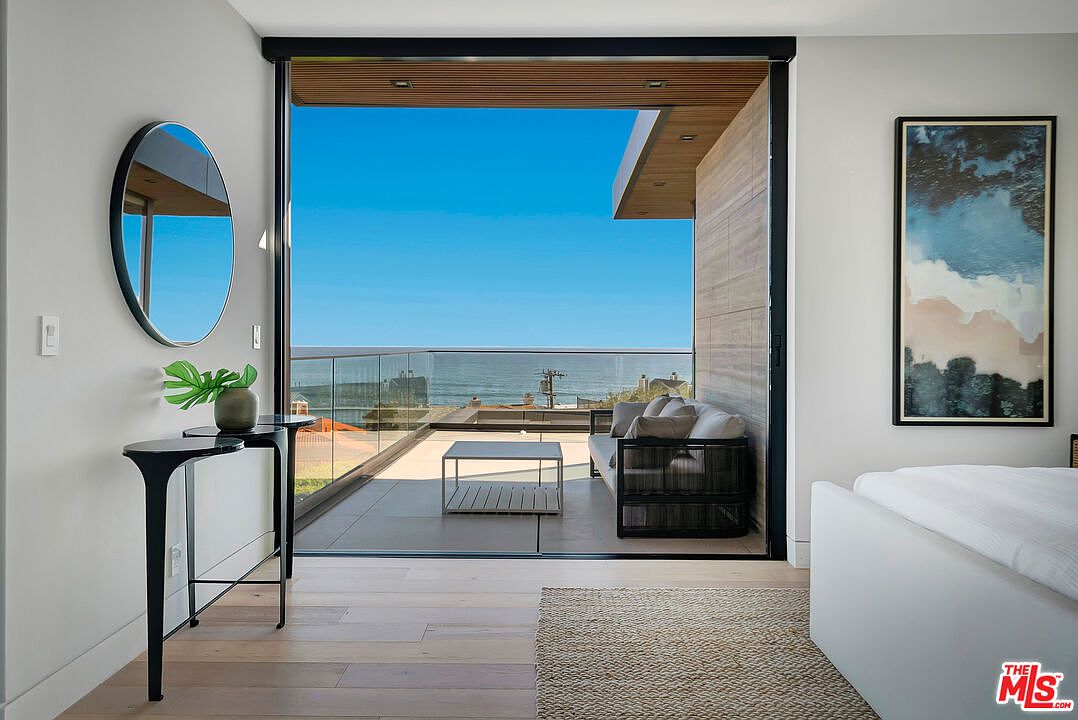
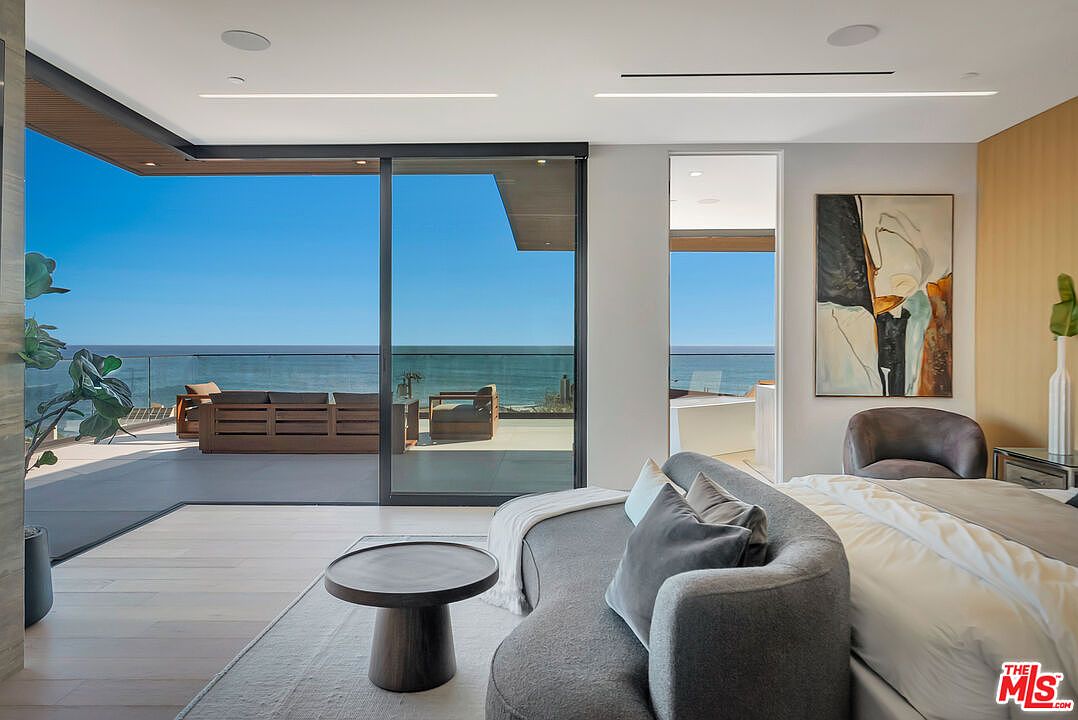
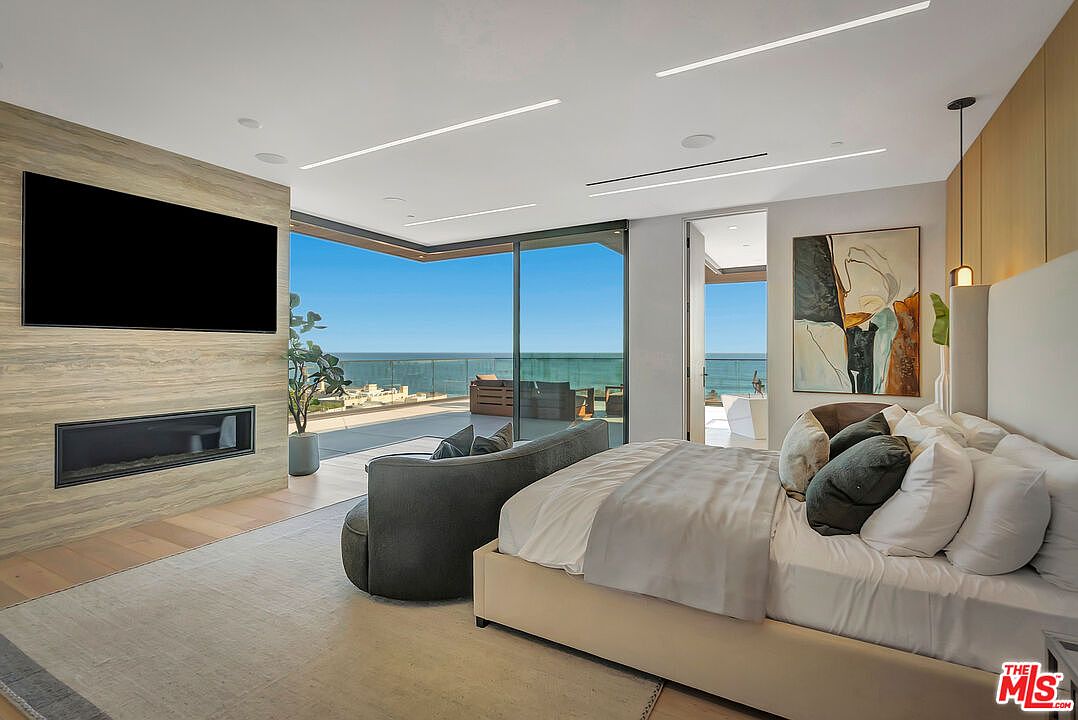
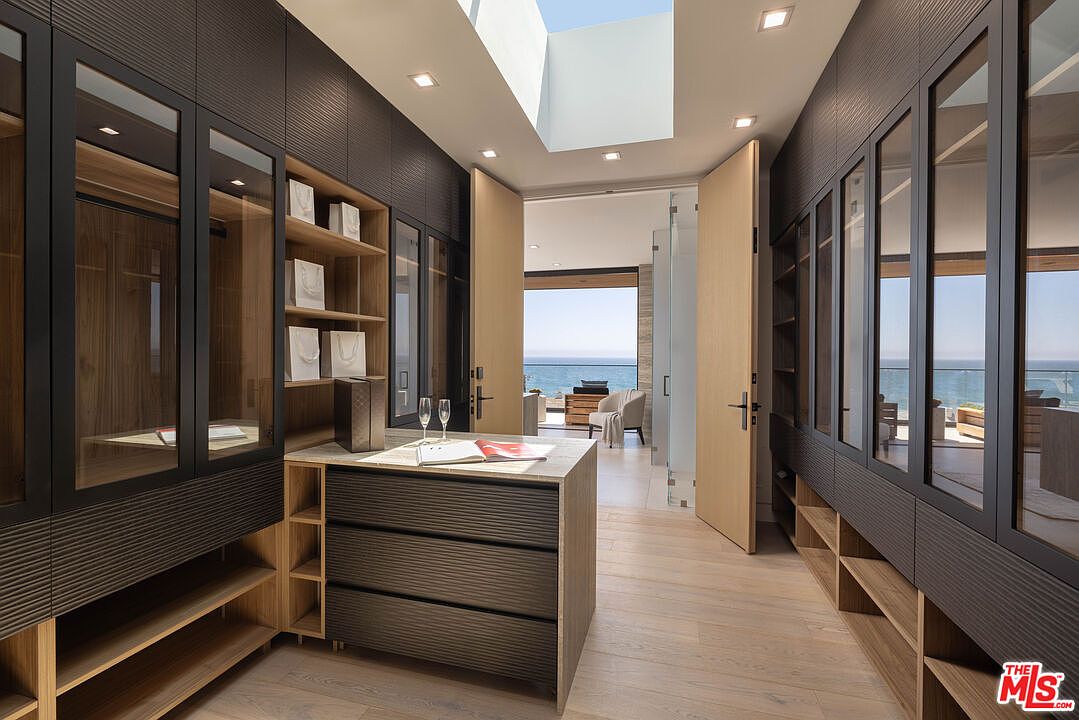
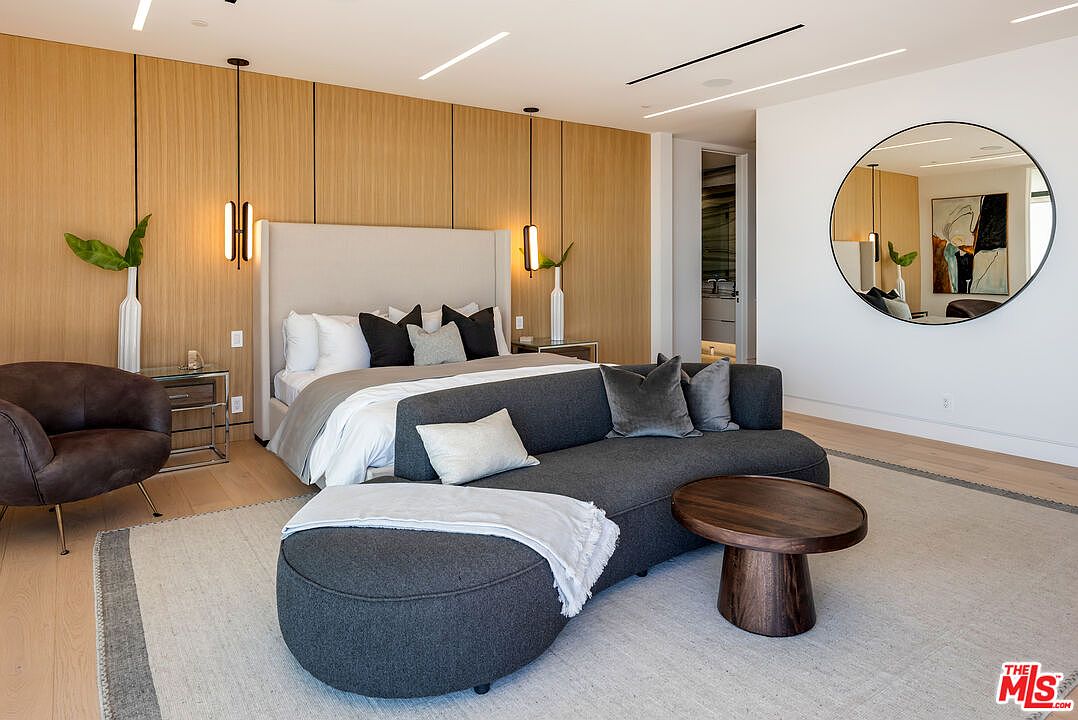
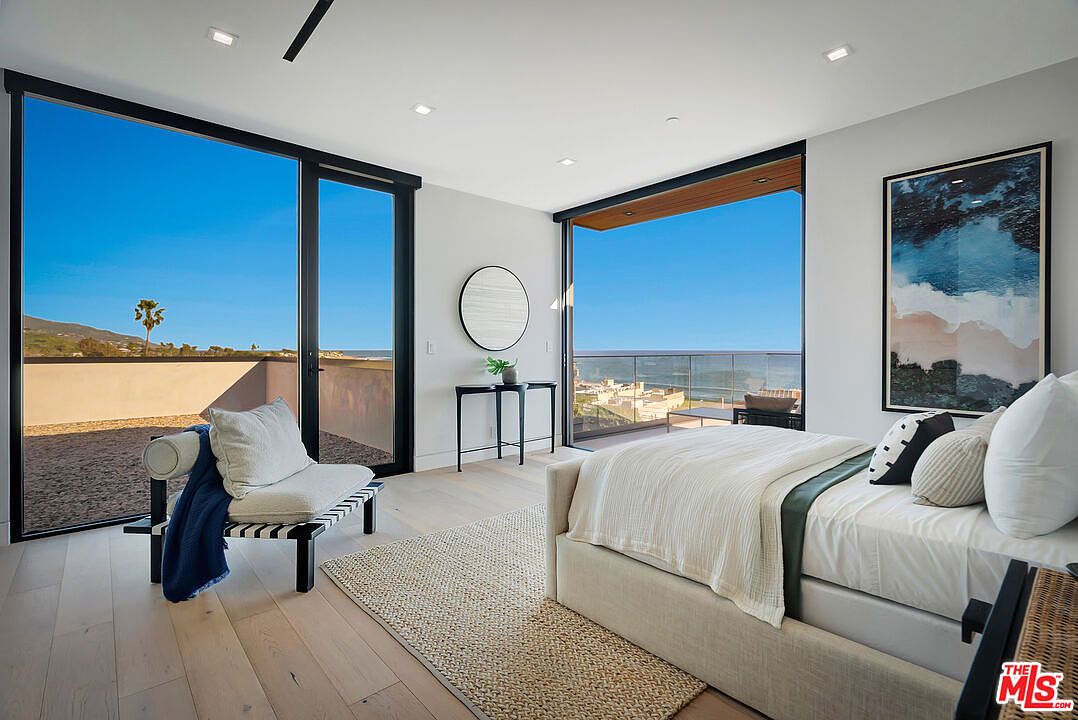
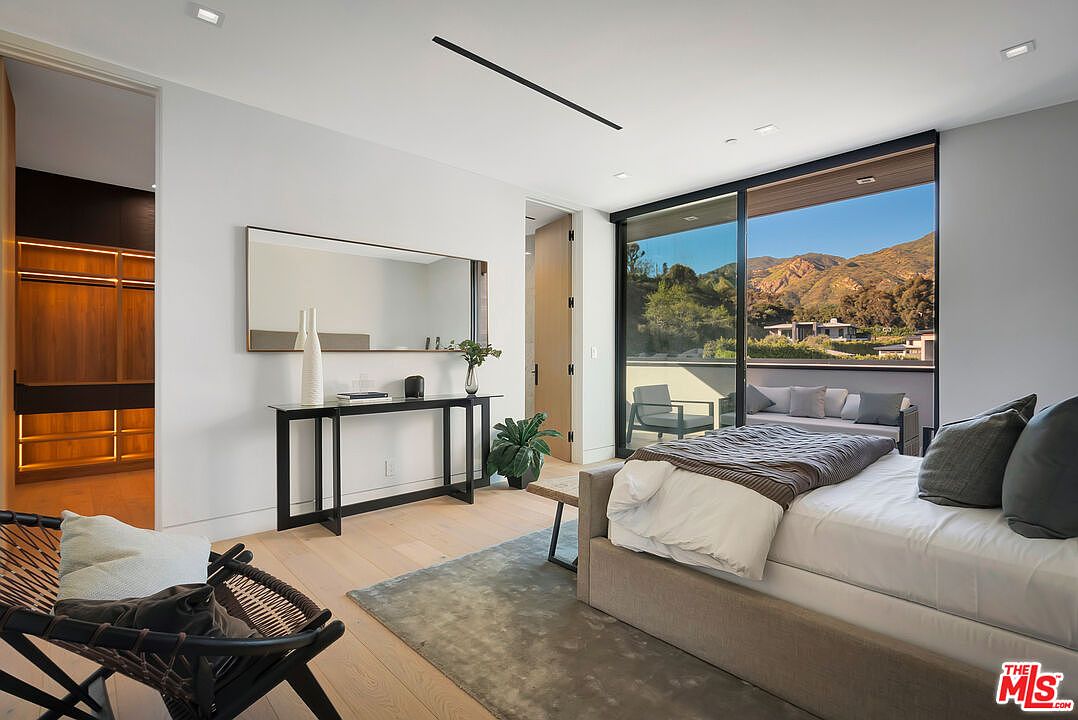
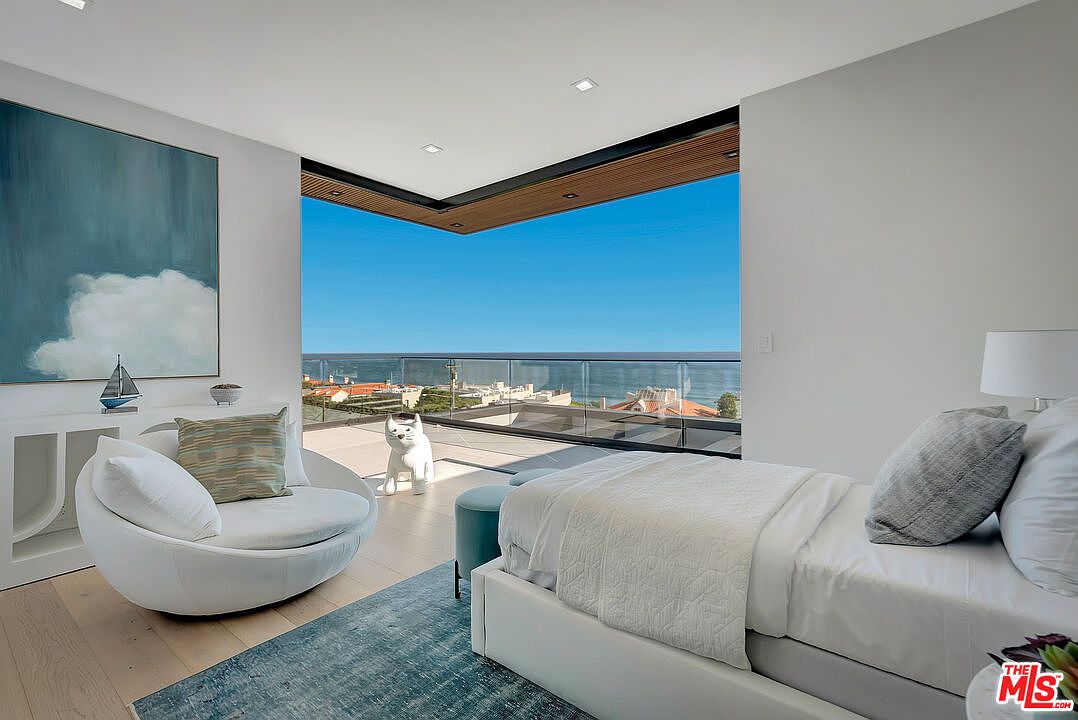
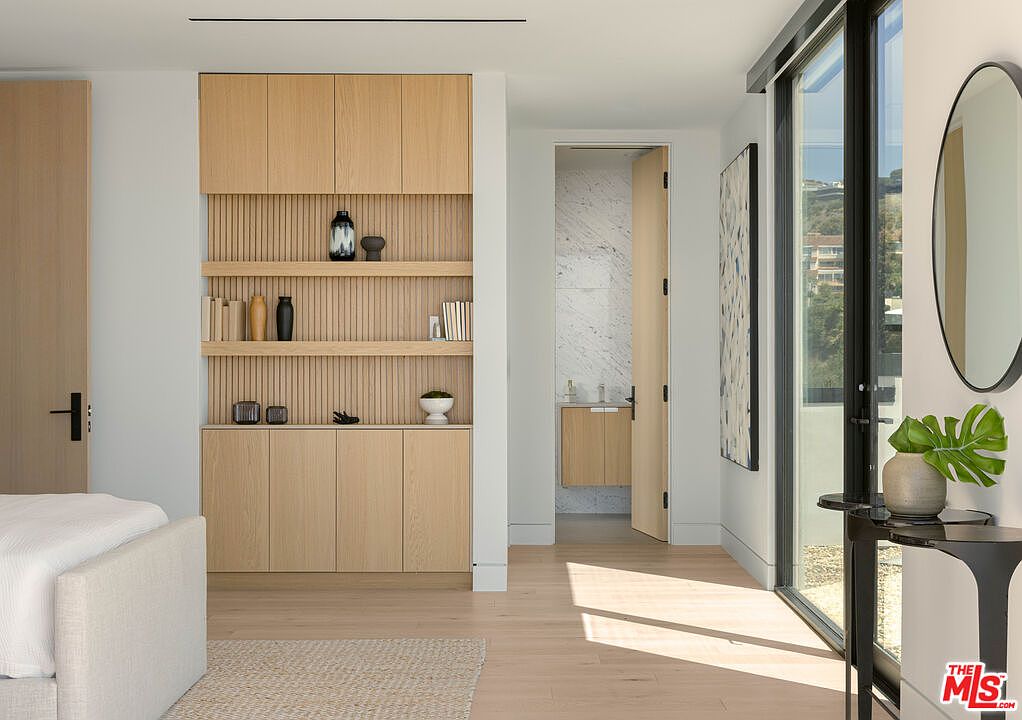
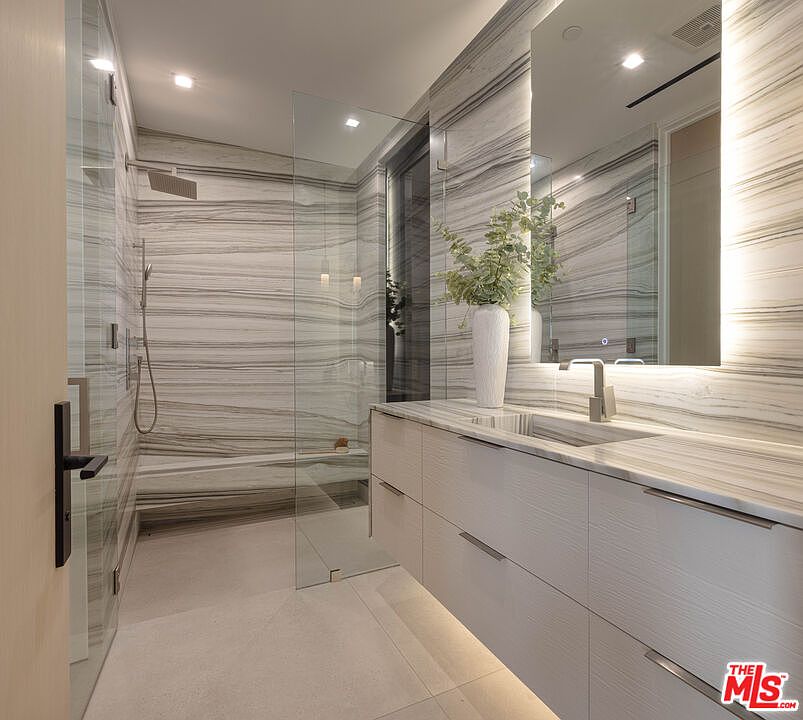
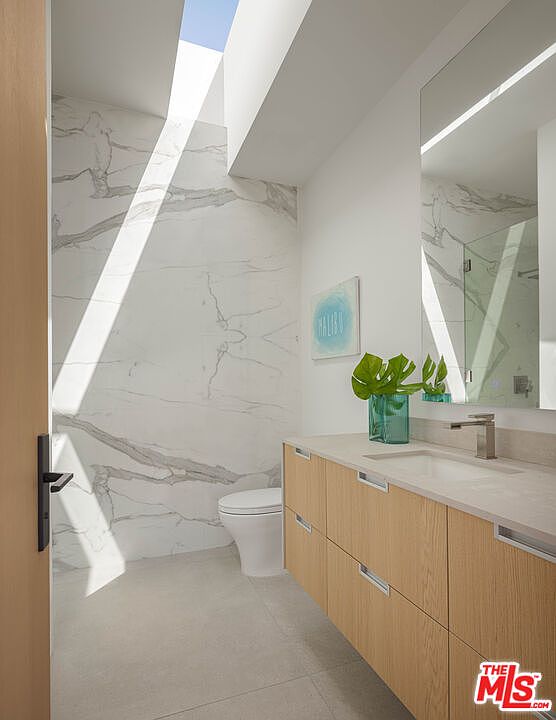
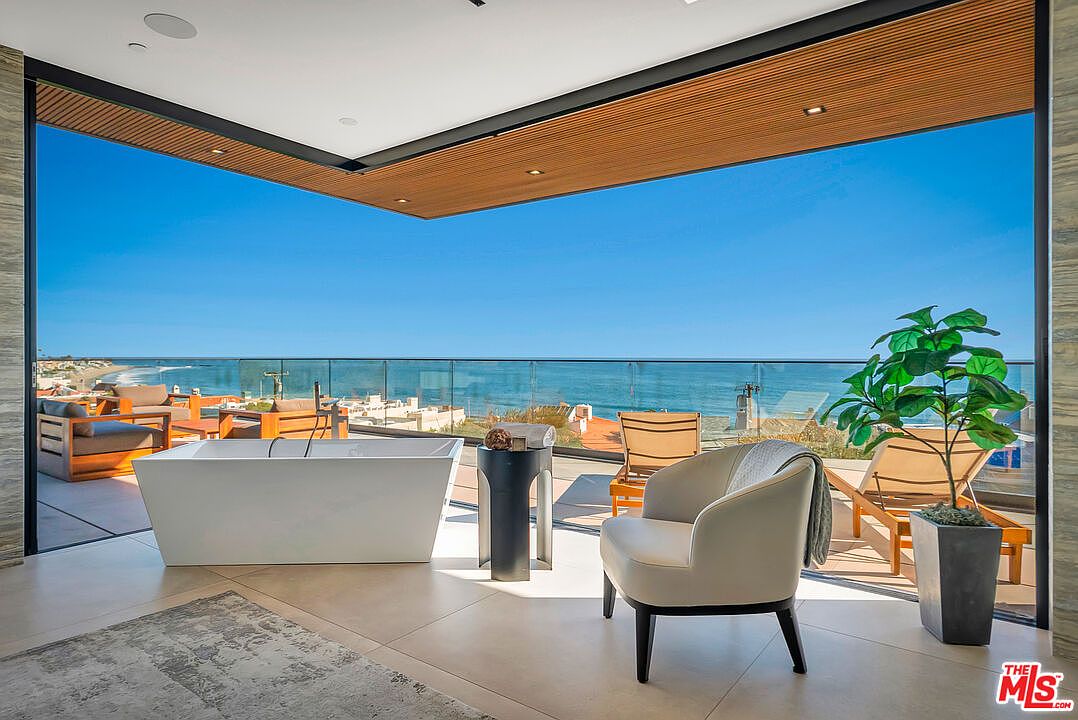
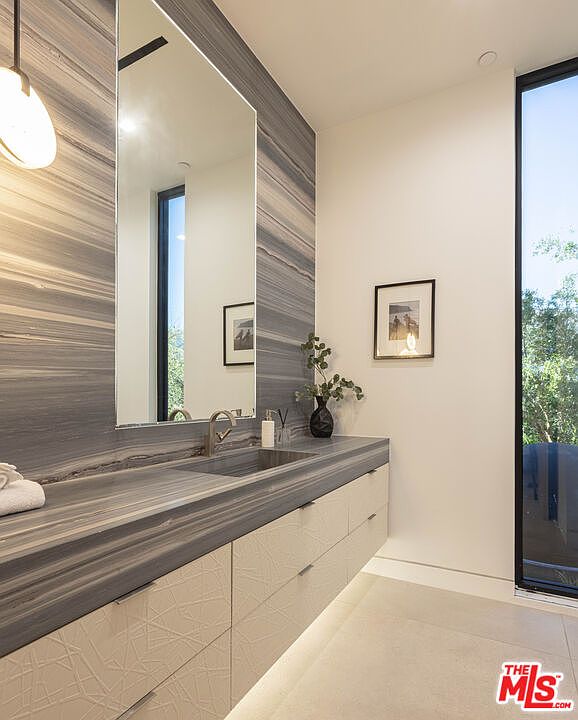
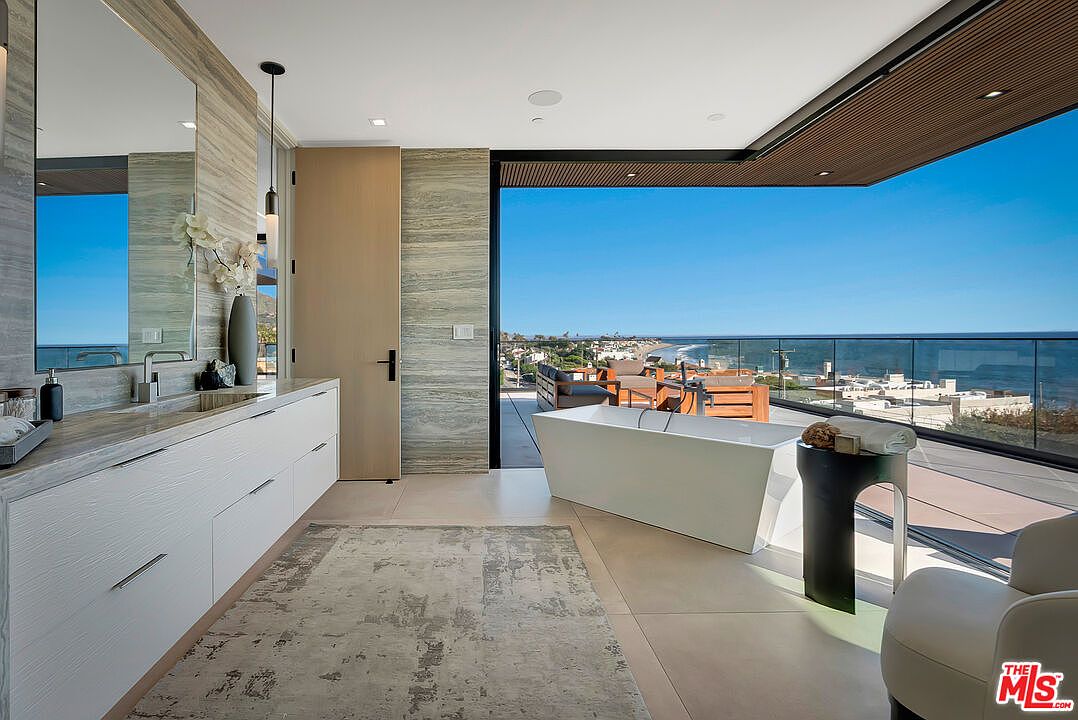
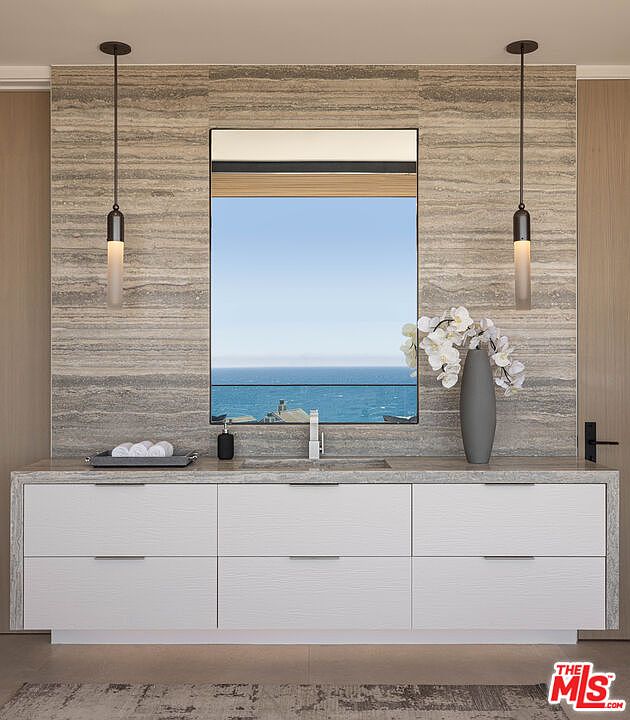
Upstairs, the primary suite is genuinely retreat-caliber. Panoramic water views greet you from the moment you enter; two spa-inspired bathrooms finished in book-matched marble offer separate but equally refined sanctuaries; and expansive walk-in closets with custom cabinetry bring an atelier sensibility to daily routine. Three additional en-suite bedrooms on the upper level ensure that the home's generosity of spirit extends fully to family and guests.
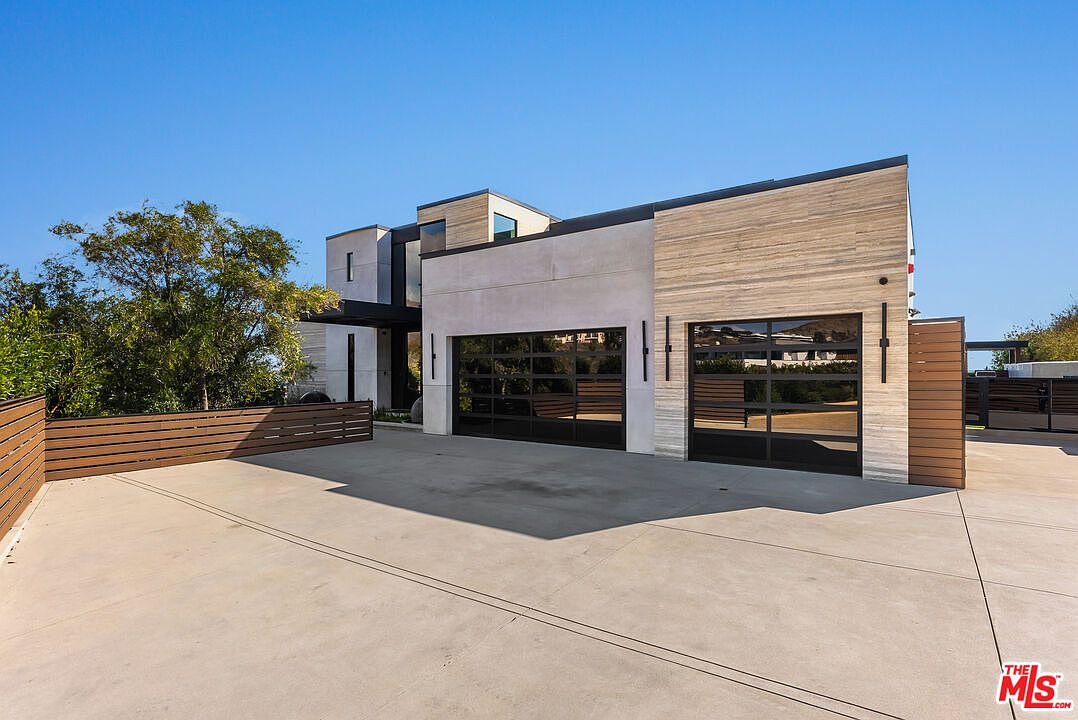
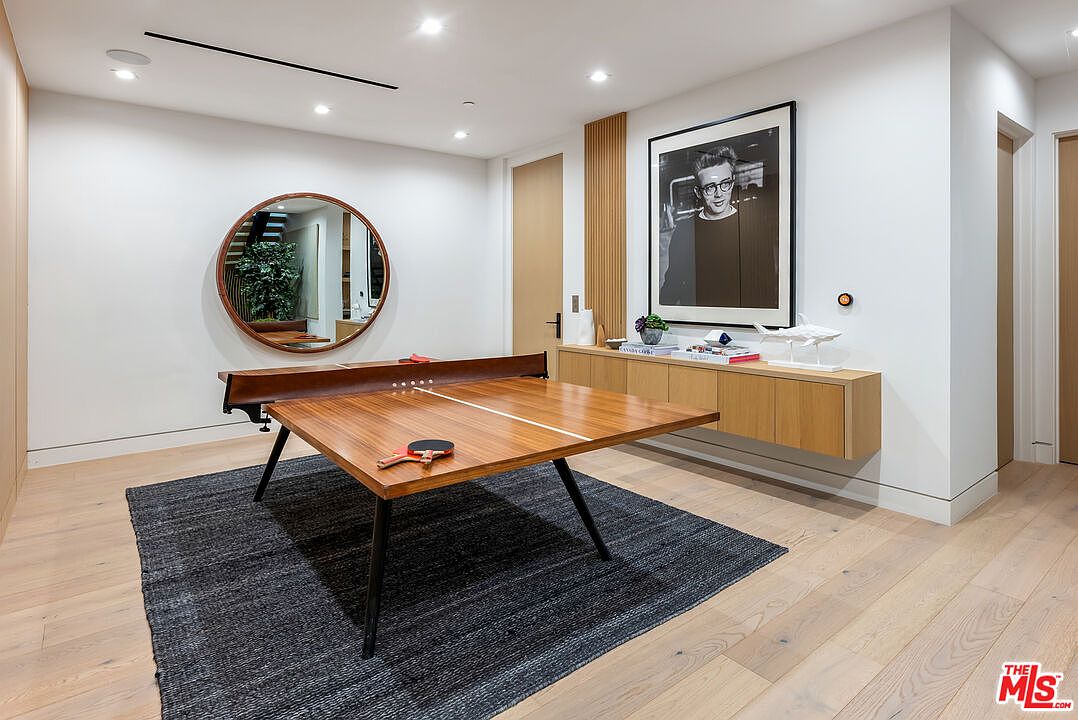
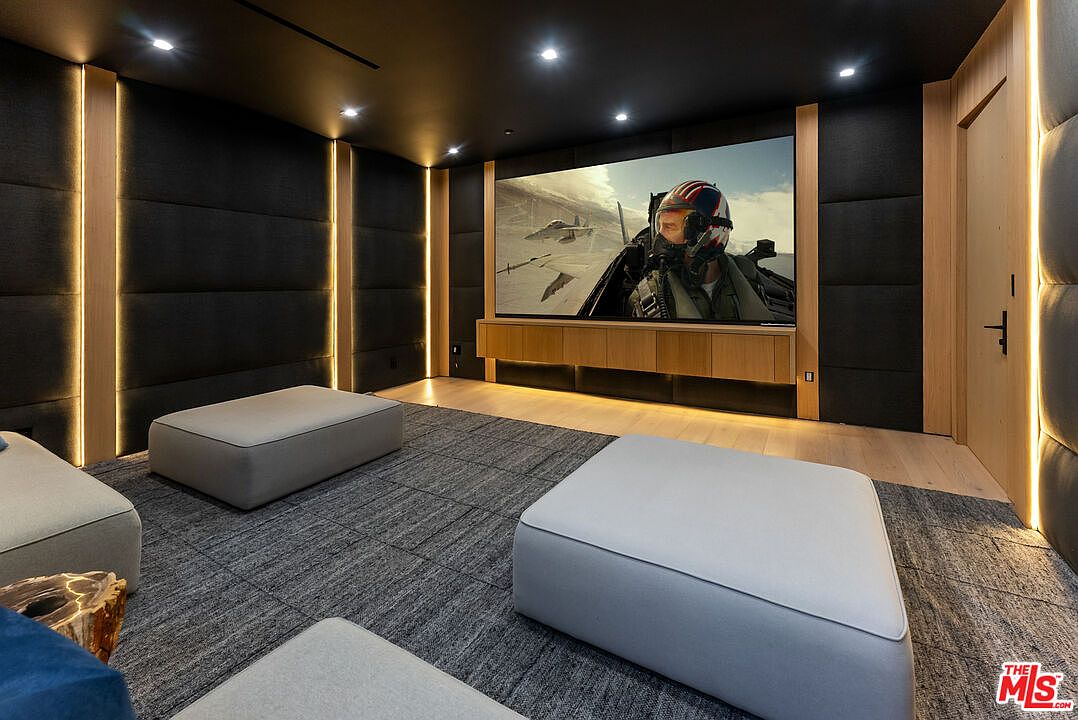
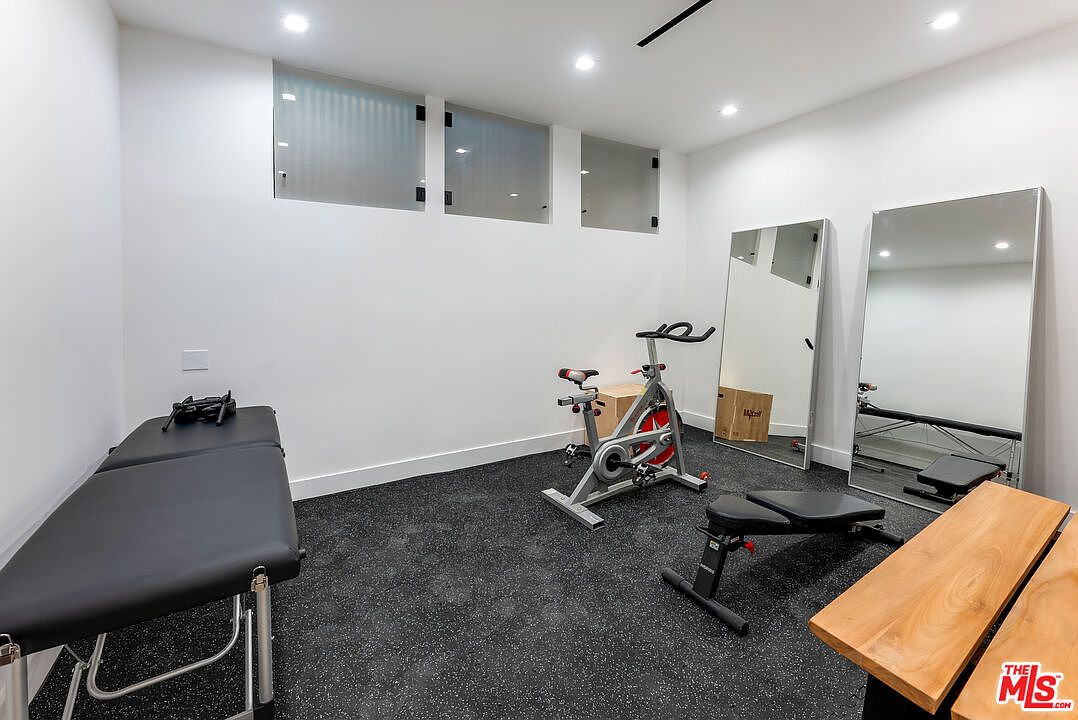
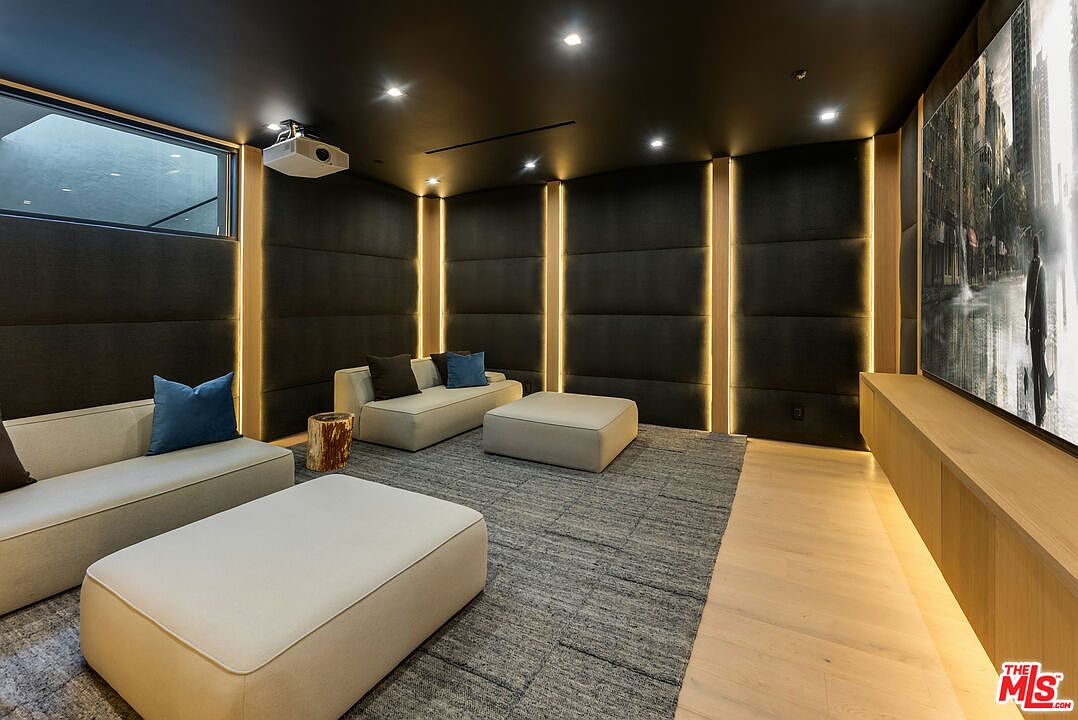
The lower level is designed for serious, sustained enjoyment: a private home theater with upholstered acoustic wall panels and a full projection system, a game room, a dedicated gym, and a flex space with large bath suitable as a sixth sleeping area. The home is served by an elevator connecting all three levels, a three-car garage, and ample additional parking — practical infrastructure that disappears into the architecture without friction.
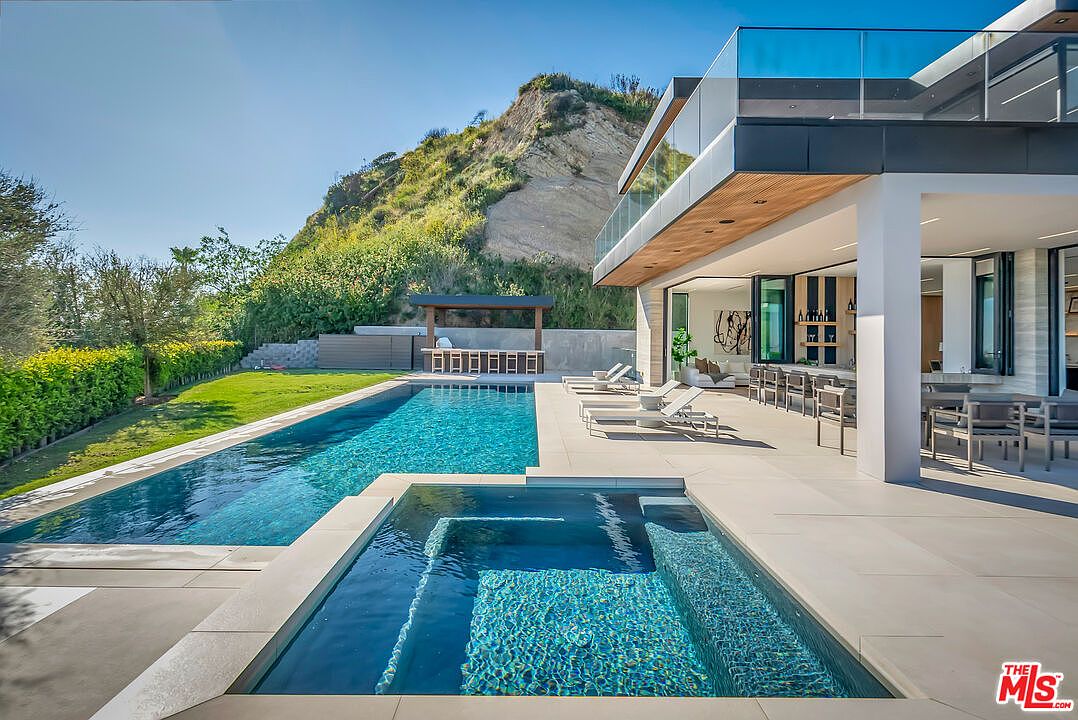
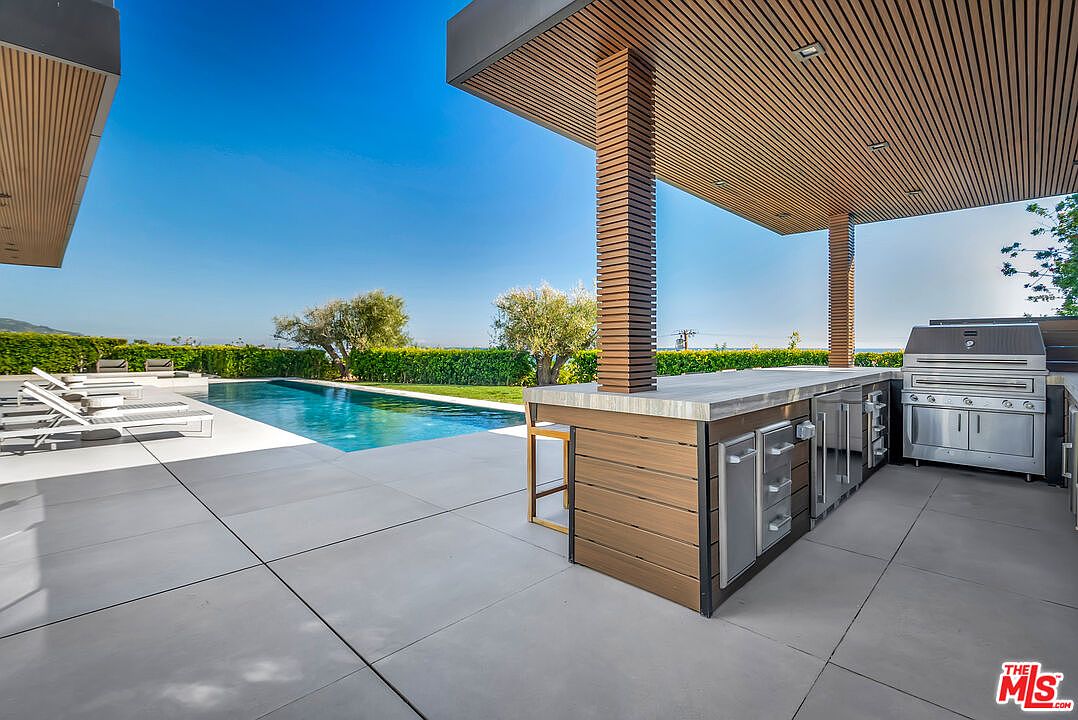
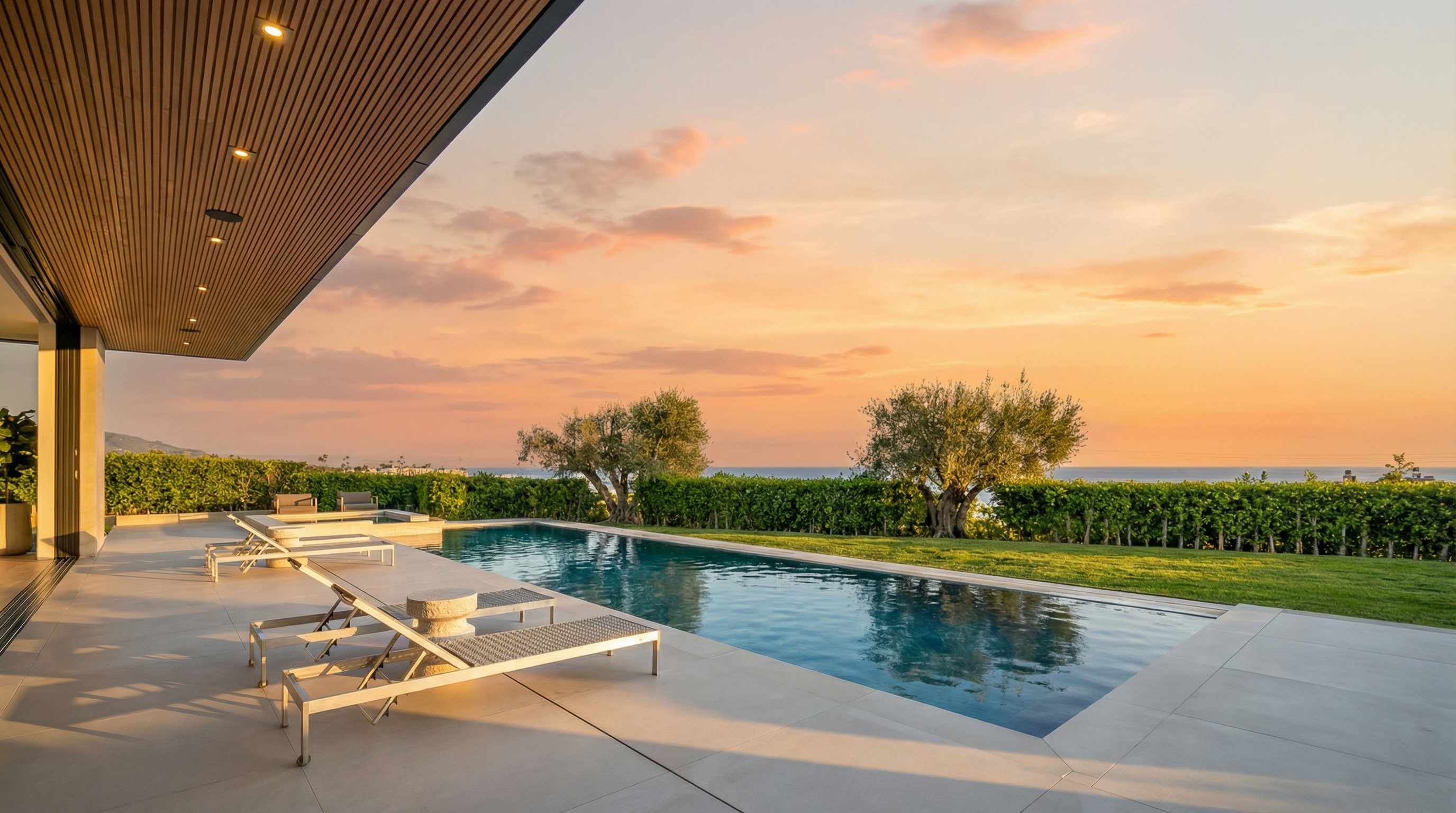
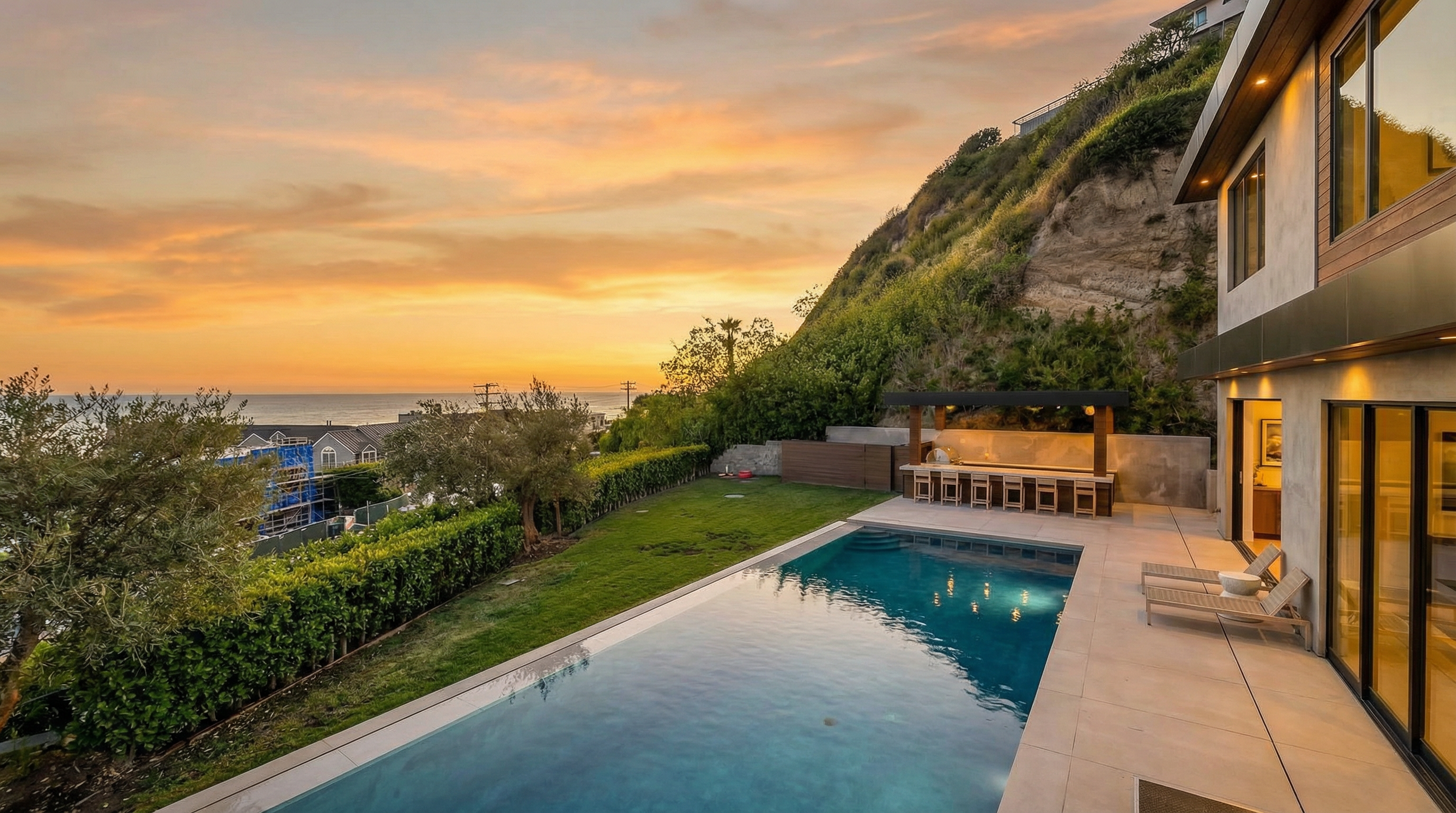
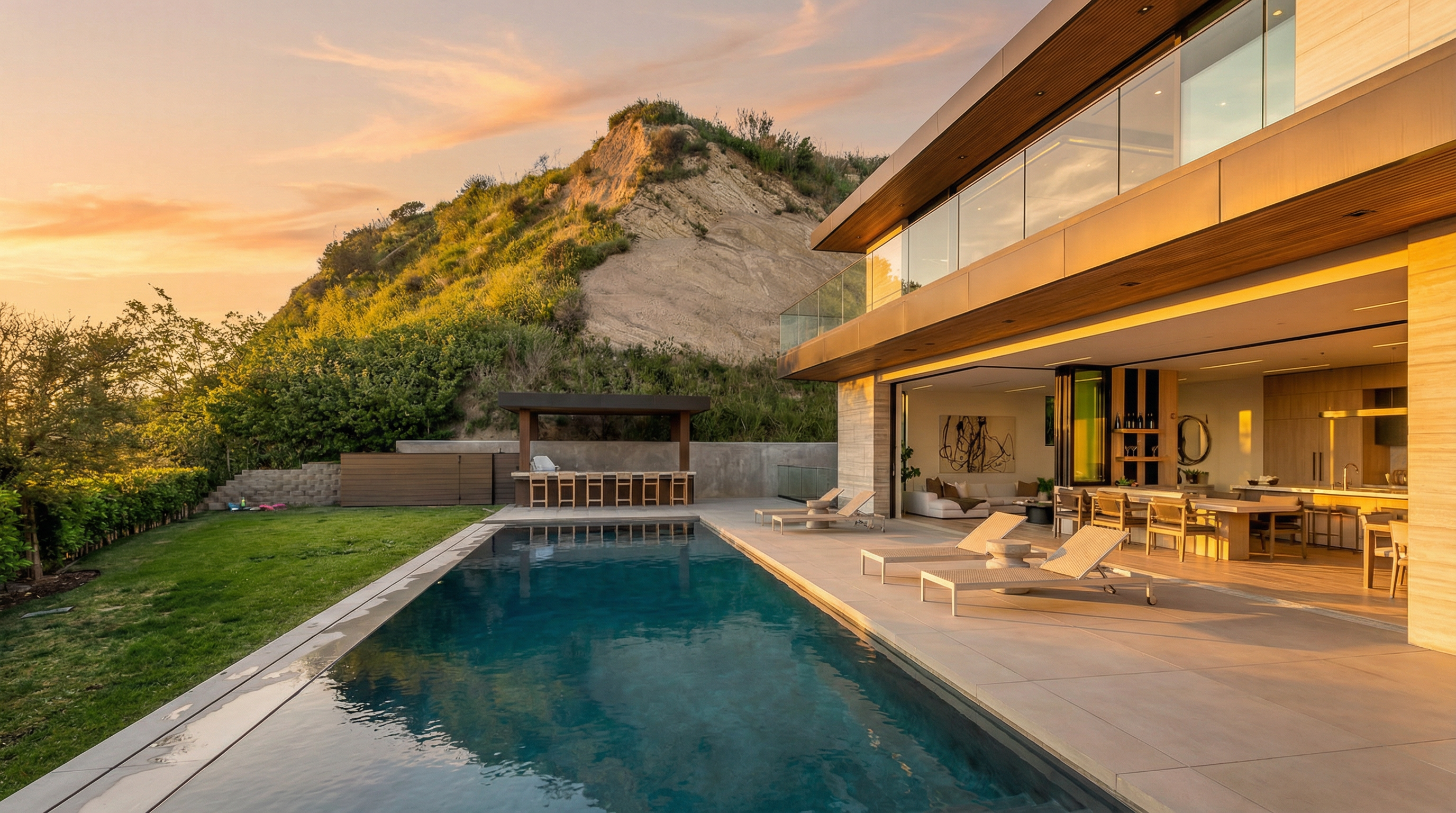
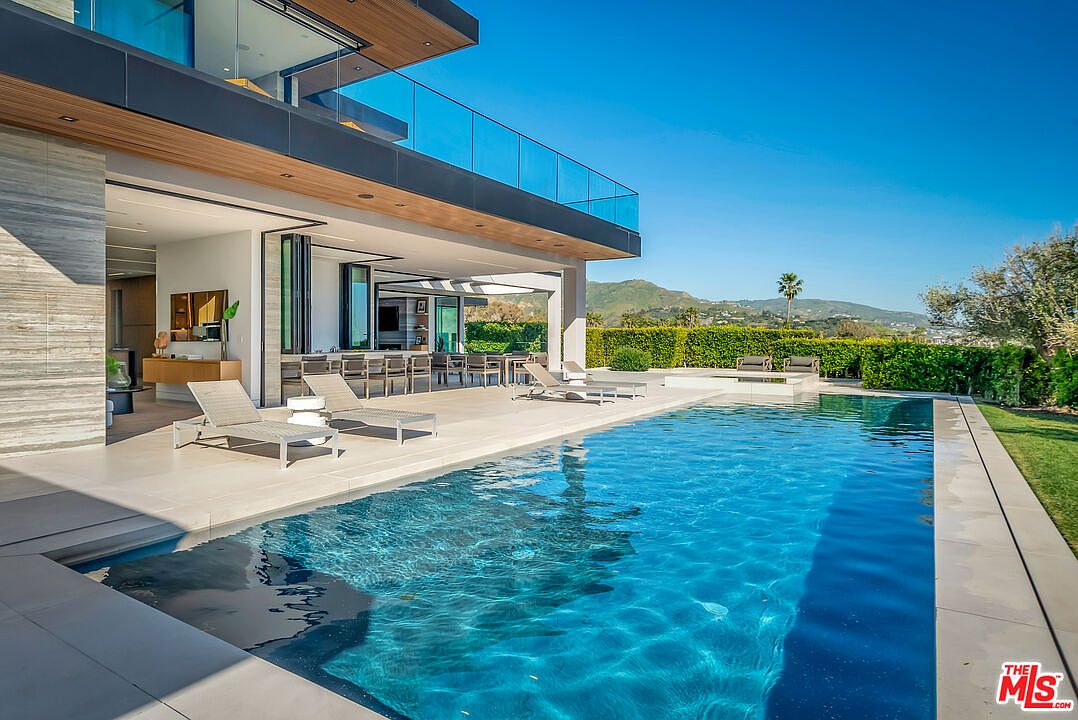
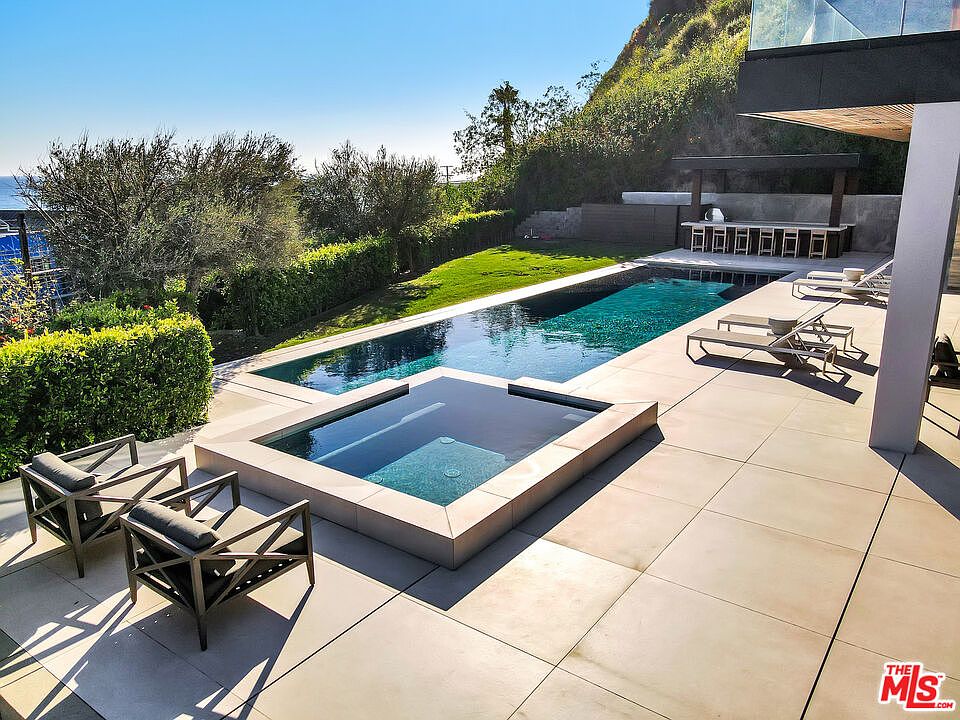
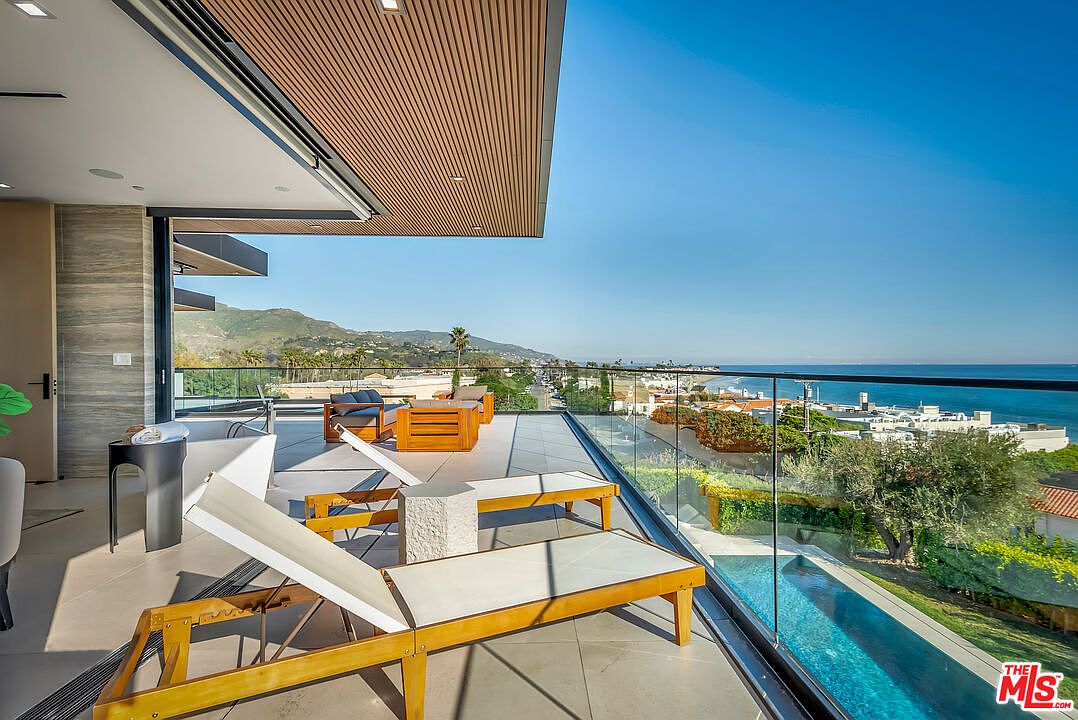
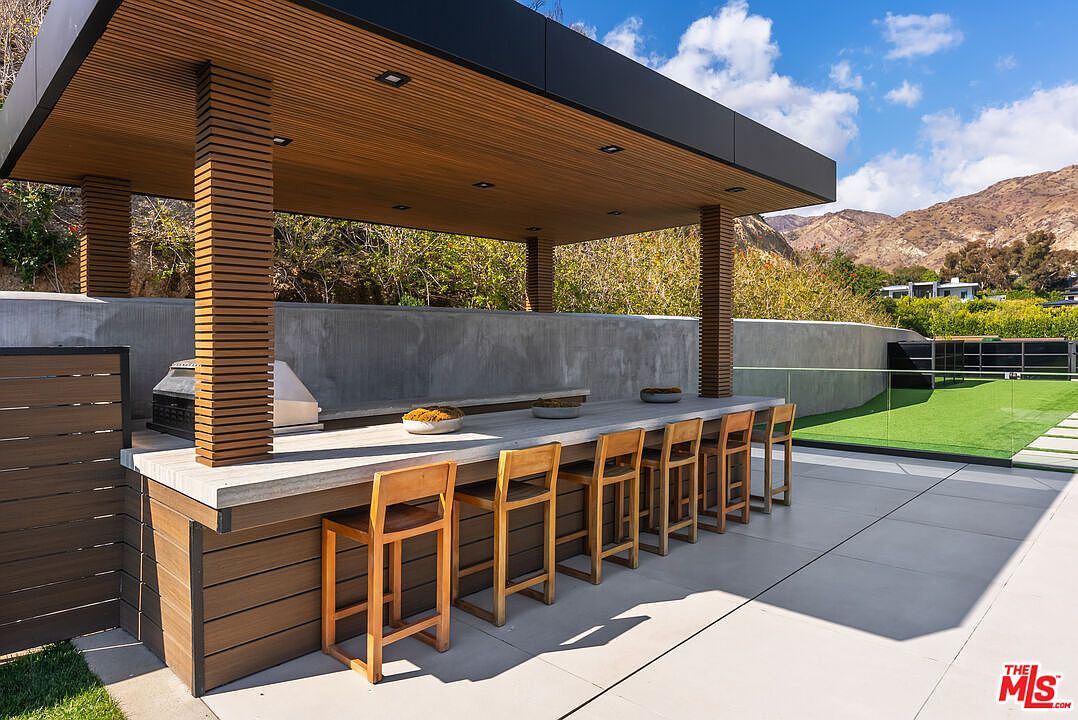
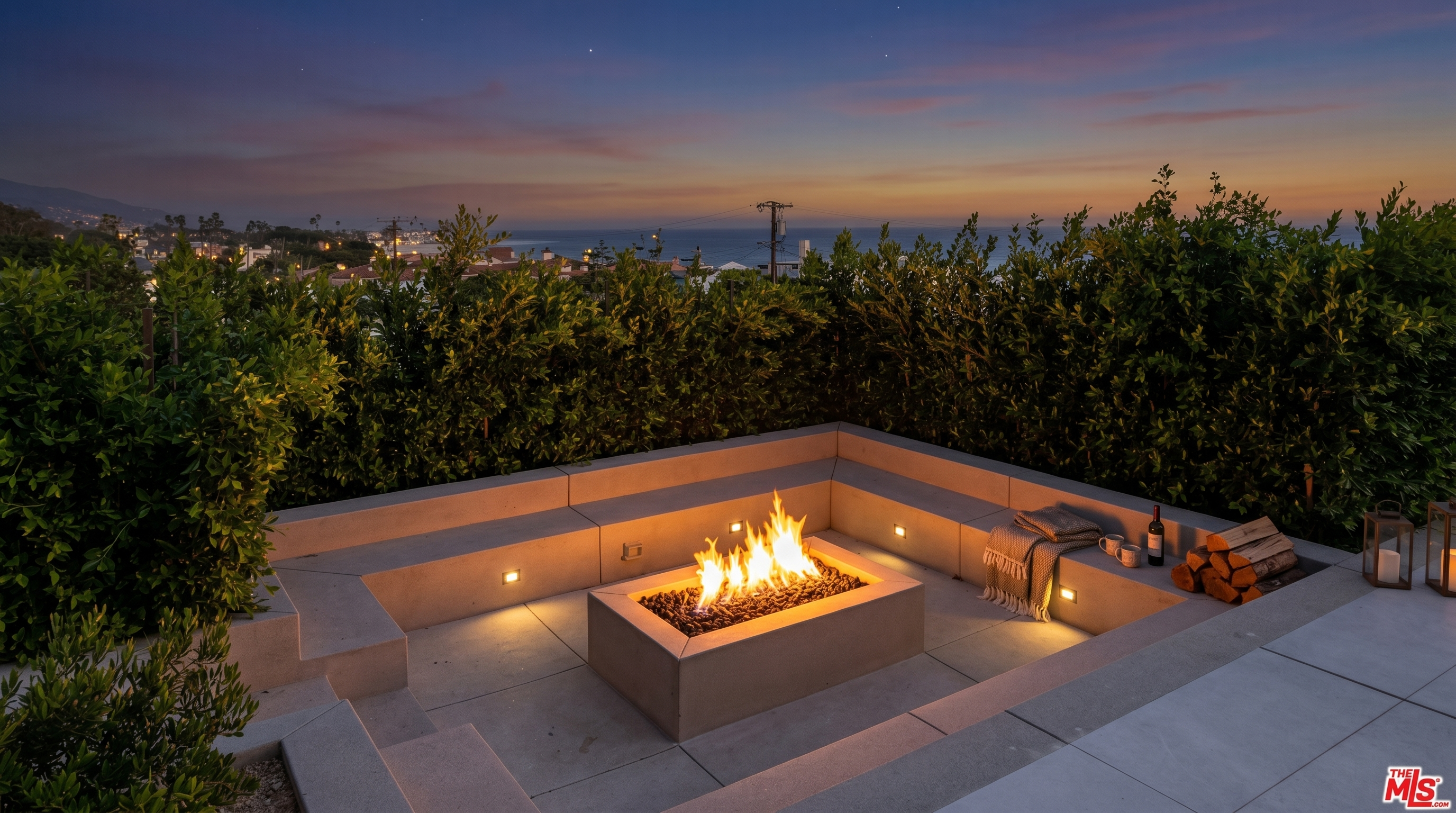
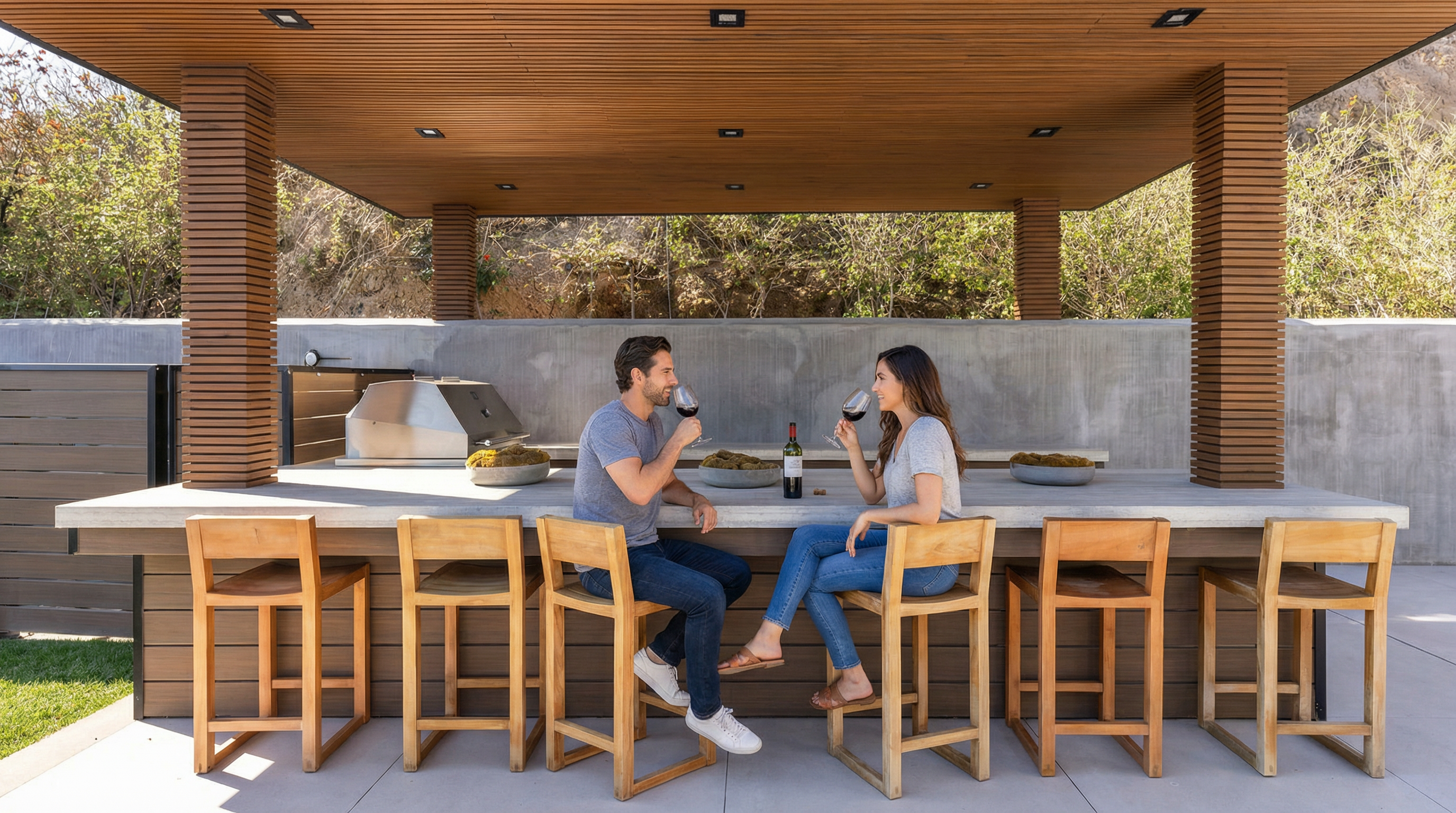
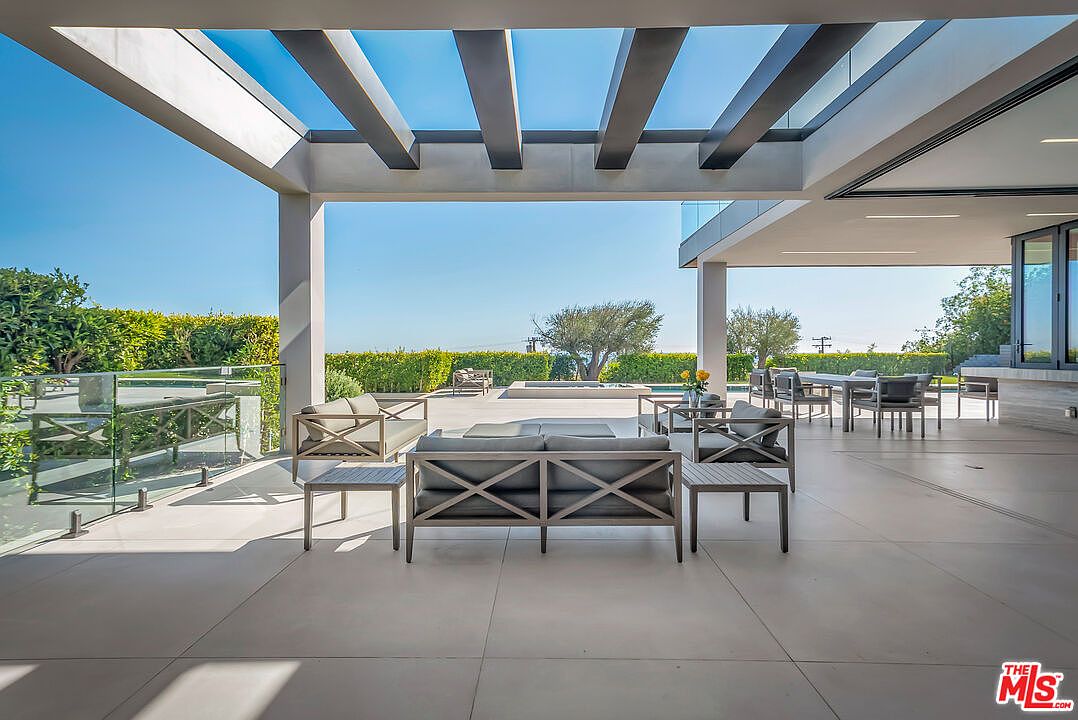
Outside, the outdoor program matches the interior in ambition. The infinity-edge pool and spa dissolve into the hillside landscape, while a covered bar with seating for six, a firepit with built-in banquet seating, and a fenced lawn compose an exterior living suite that functions as a self-contained destination. Underground utilities and a central sewer connection ensure the surrounding landscape remains clean and unencumbered — a detail that speaks to the thoroughness with which this estate was conceived from the ground up.
Malibu Road is among the most storied addresses on the California coast. Running parallel to the Pacific Coast Highway along a narrow strip of land between the highway and the ocean, it has long attracted those who understand that true coastal privacy in Los Angeles is both rare and finite. The road itself carries a quiet mythology — a place where the shoreline is close enough to feel like a personal possession and the density of the surrounding city feels genuinely remote.
Malibu Colony Estates, the gated enclave of four homes in which this property sits, represents the most exclusive expression of that mythology. With private gates and an optional guard, the community offers a level of security and seclusion that is genuinely uncommon even by Malibu standards. The cul-de-sac setting, combined with underground utilities, preserves both the visual integrity of the surroundings and the sense that one has arrived somewhere deliberately apart from the ordinary.
Malibu itself is a 21-mile coastal city incorporated in 1991, though its character as a destination was established long before that. The city encompasses some of the most ecologically significant and scenically protected coastline in Southern California, including portions of the Santa Monica Mountains National Recreation Area — the largest urban national park in the United States — which provides an enduring natural backdrop to the north and east. The interplay between mountains and ocean defines Malibu's particular geography and gives the area its dramatic, layered quality of light.
The shoreline near Malibu Road includes access to some of the region's most celebrated beaches. Malibu Lagoon State Beach and the surf break at Malibu Point — commonly known as Surfrider Beach — are recognized internationally and carry a cultural history that extends back to the origins of California surf culture in the mid-twentieth century. Carbon Beach, a short distance away, has long been associated with the highest tier of coastal real estate in the country.
For everyday life, Malibu's central corridor along Pacific Coast Highway offers a thoughtfully curated range of amenities that reflect the community's dual identity as both a working residential town and a destination. Nobu Malibu, Soho House Malibu, Malibu Farm, and Taverna Tony represent a dining landscape that balances global sophistication with local, coastal ease. Cross Creek Road and the Malibu Country Mart provide boutique retail, wellness studios, and specialty food markets within a walkable, village-scaled environment. The Malibu Lumber Yard shopping complex adds additional retail and dining options in a relaxed architectural setting.
The Malibu Pier, a historic landmark extending into the Pacific since 1905, anchors the community's sense of place and offers a tangible connection to the area's longer history as a working coastal settlement. The surrounding public lands — including Topanga State Park and Malibu Creek State Park — make world-class hiking, mountain biking, and equestrian trails accessible within minutes of the property.
For families, the Santa Monica-Malibu Unified School District serves the area, and several well-regarded private schools are accessible within reasonable proximity. The address places residents comfortably between the cultural and professional infrastructure of Santa Monica and West Los Angeles to the south and the quieter reaches of the Ventura County coastline to the north — a position that offers genuine flexibility without sacrificing any of Malibu's irreplaceable sense of remove.
Featured Highlights
Curated Content • Presented by Megan Mondavi Whitcomb