The Story Behind
The Highest Home on the West Coast, Above It All
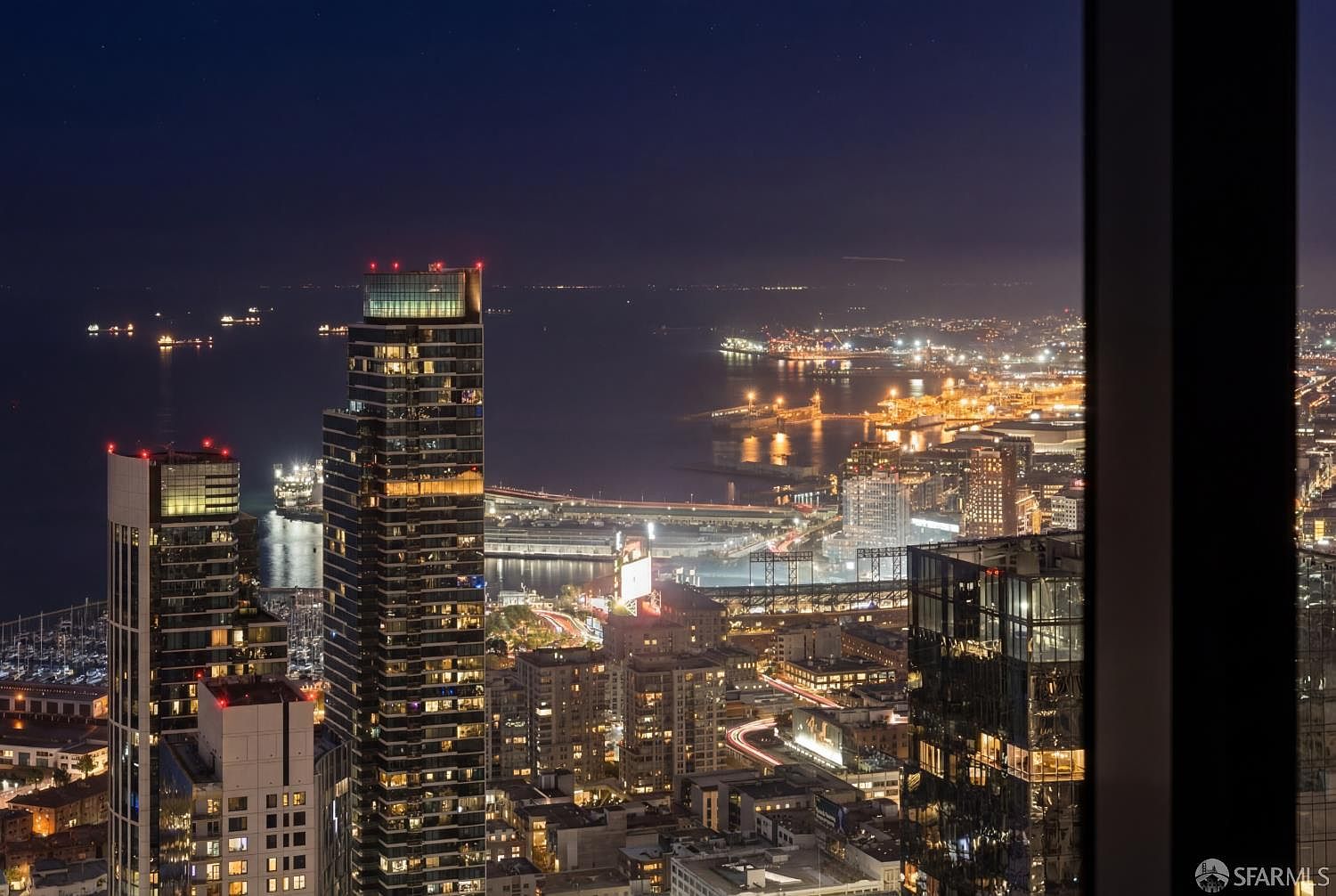
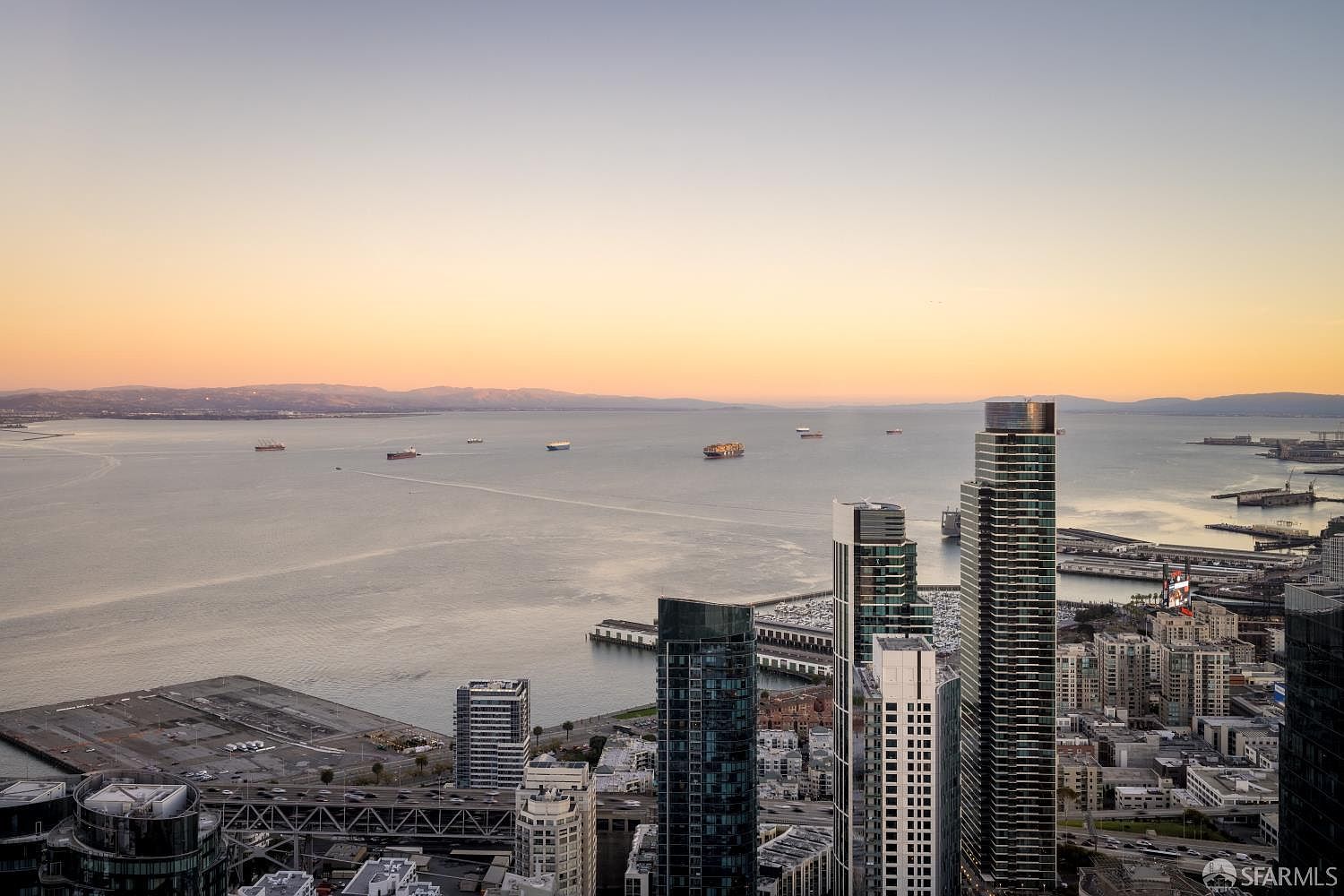
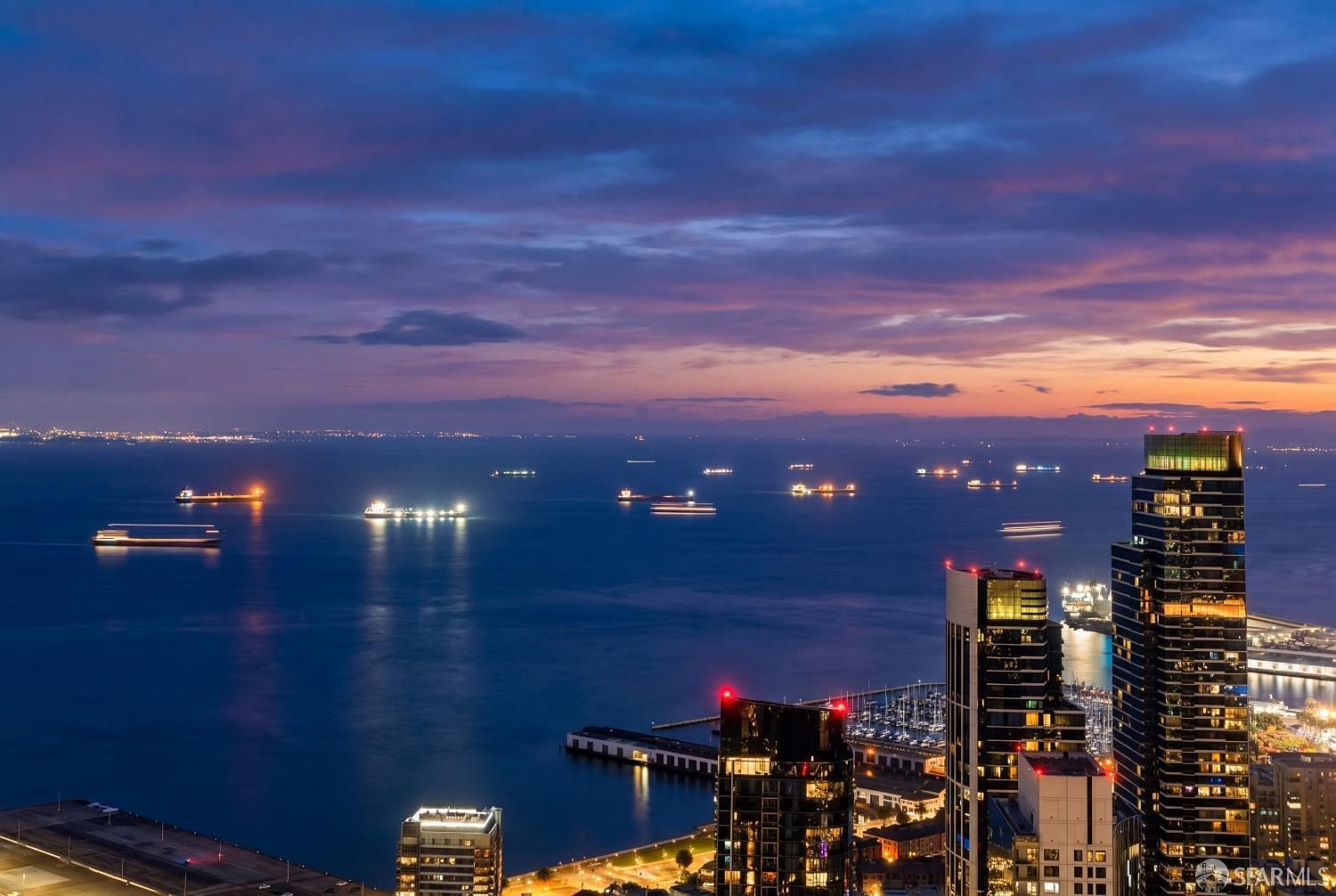
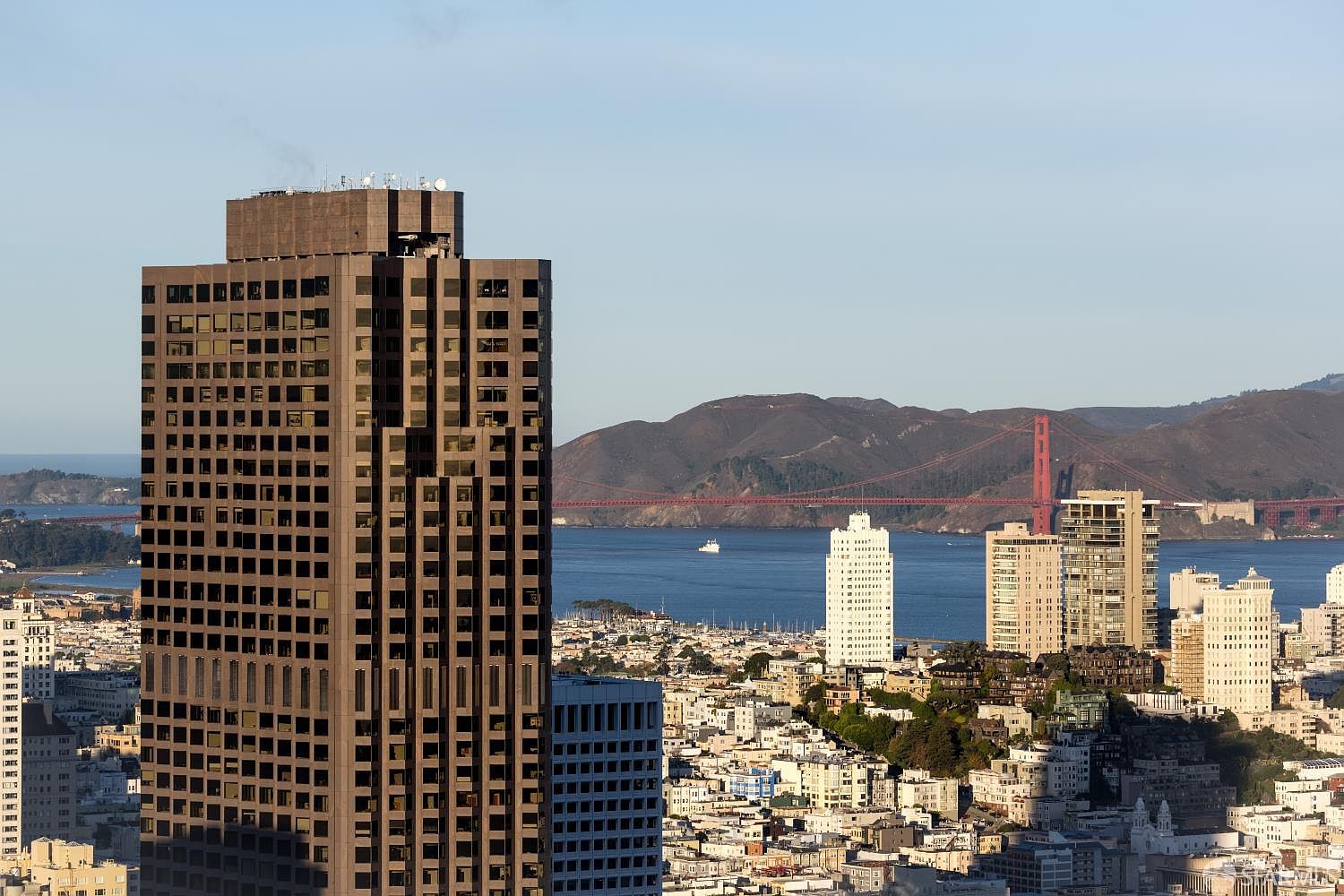
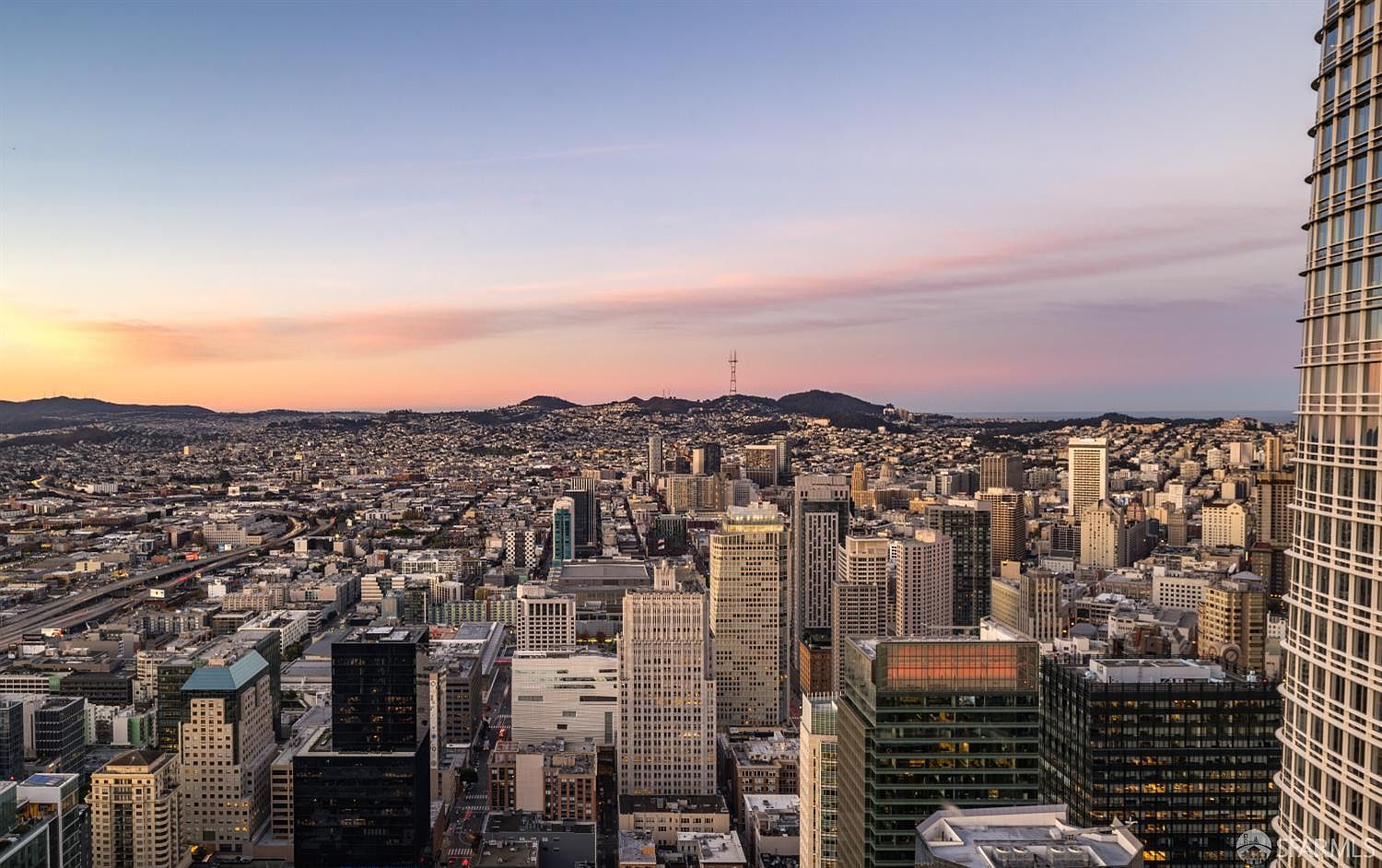
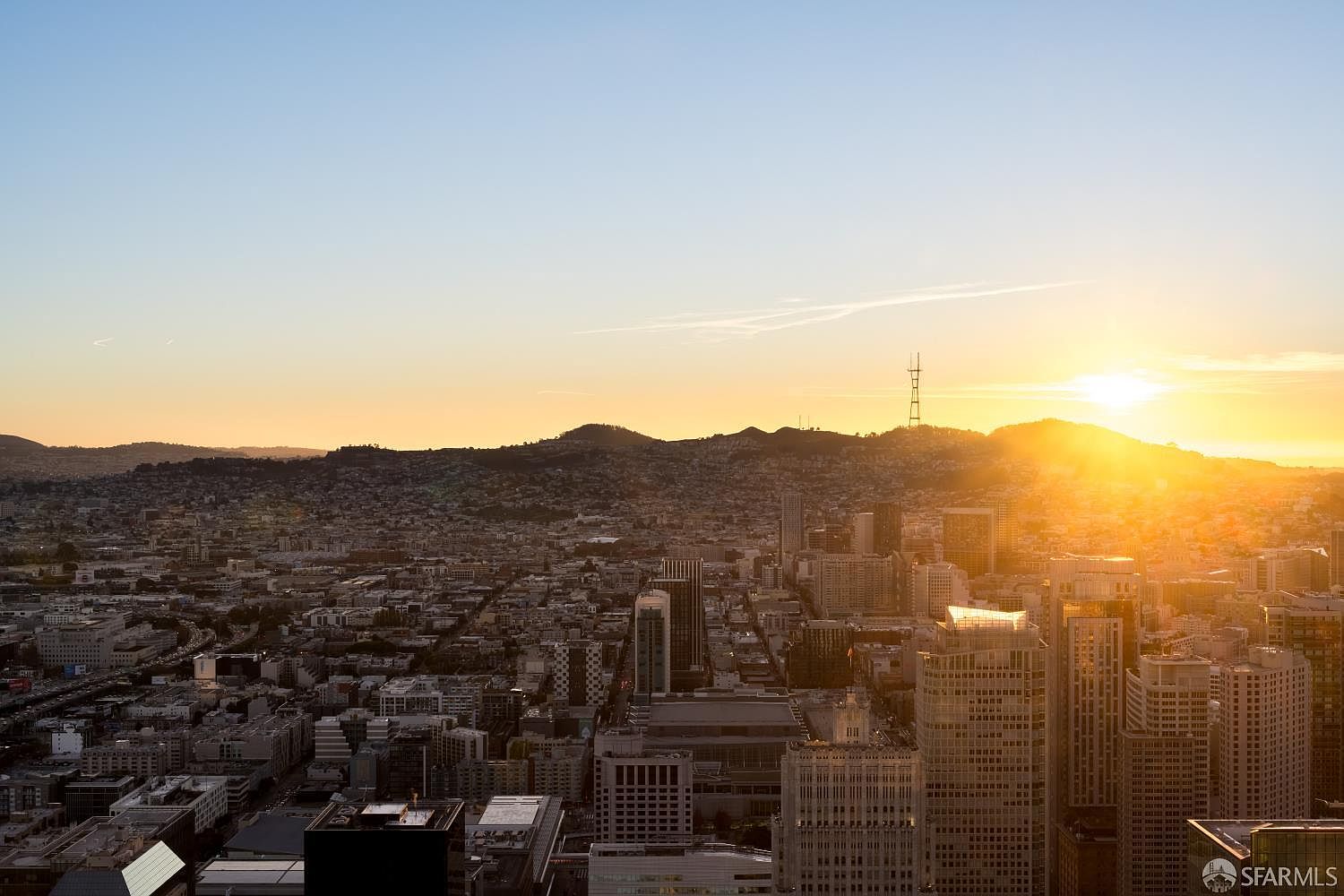
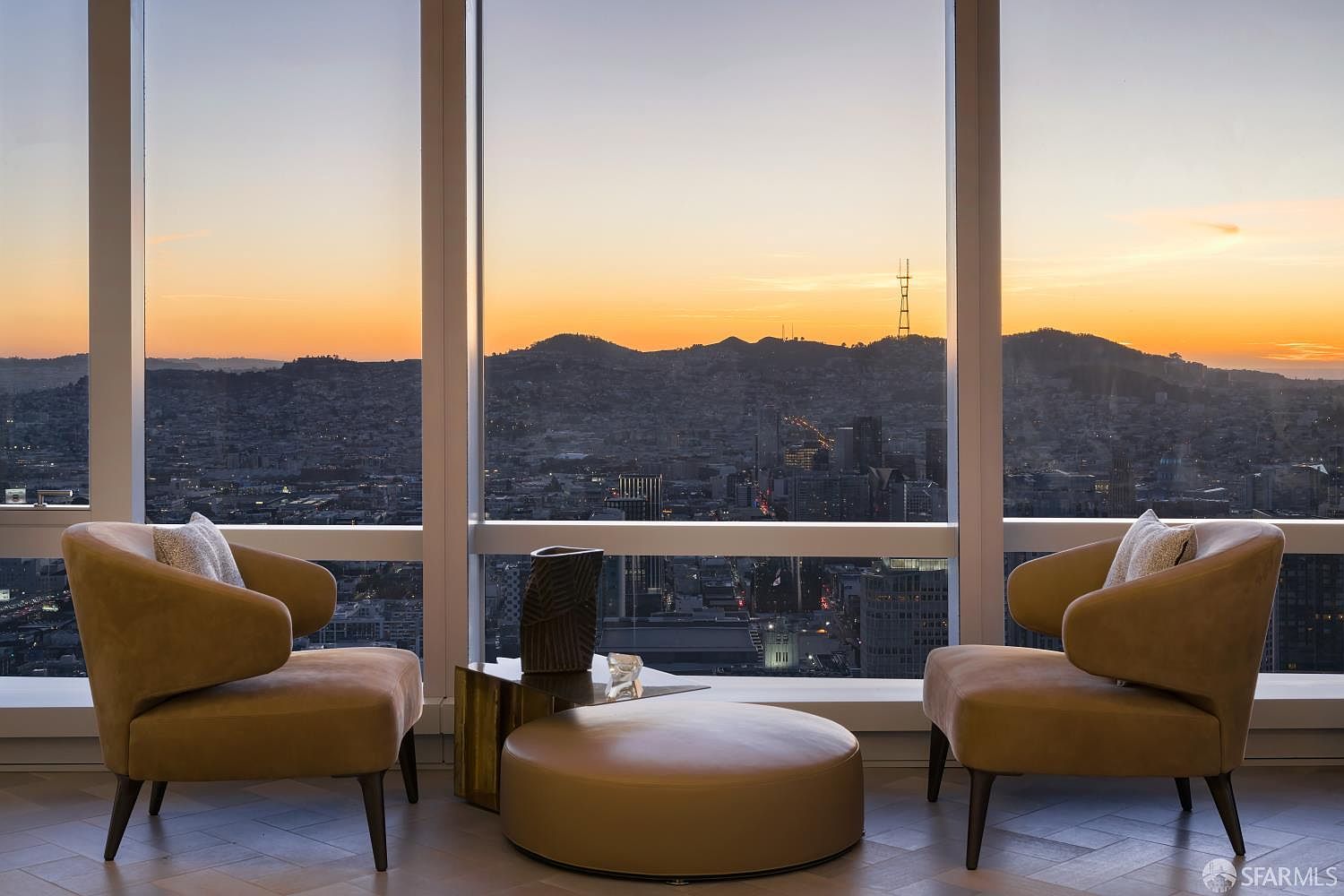
There is a moment, stepping from the private elevator into the Grand Penthouse at 181 Fremont, when the city simply falls away. Dark polished stone flooring stretches beneath your feet, rich wood-paneled walls rise on either side, and then — suddenly, completely — the world opens before you. From 700 feet above San Francisco, the horizon belongs entirely to you.
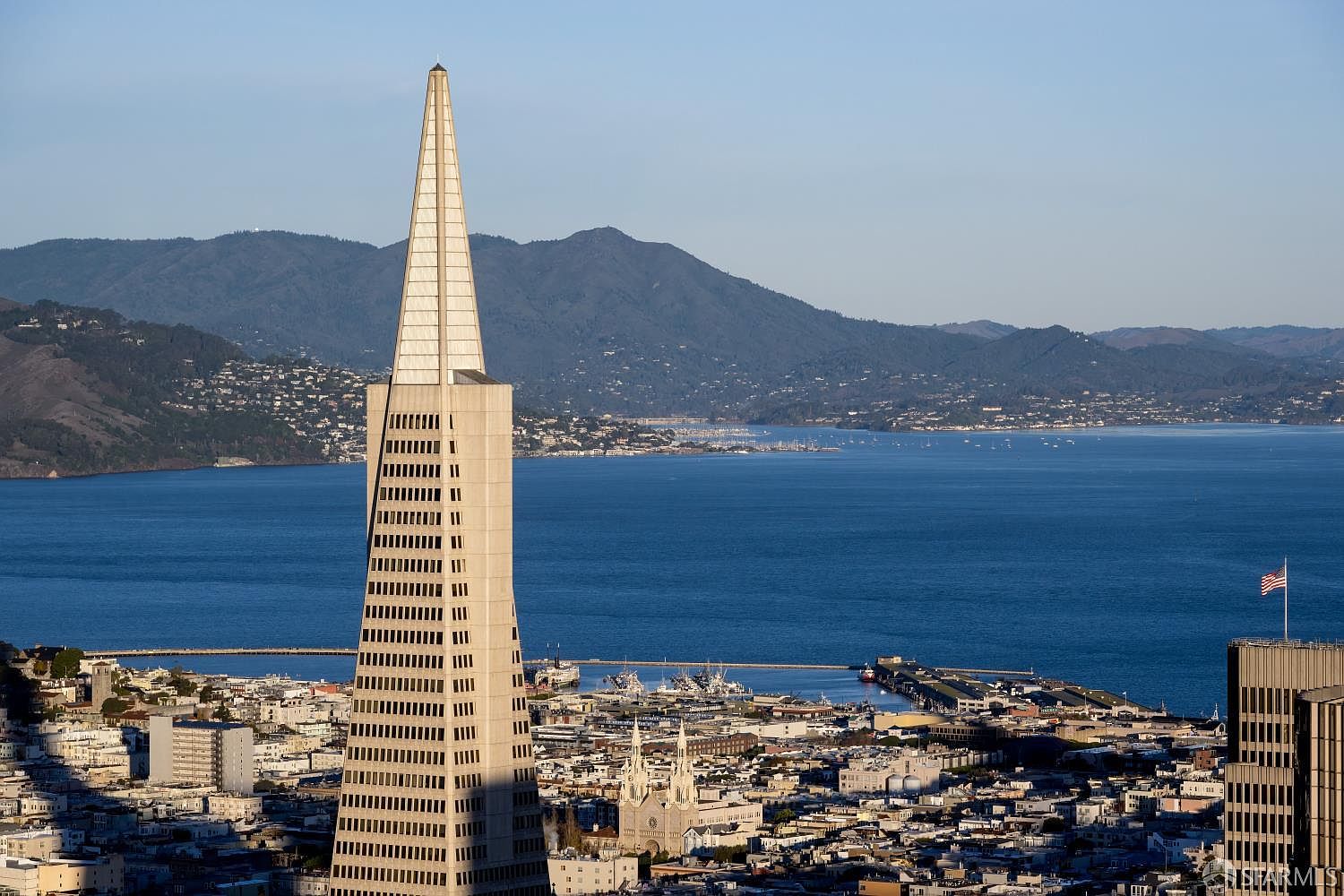
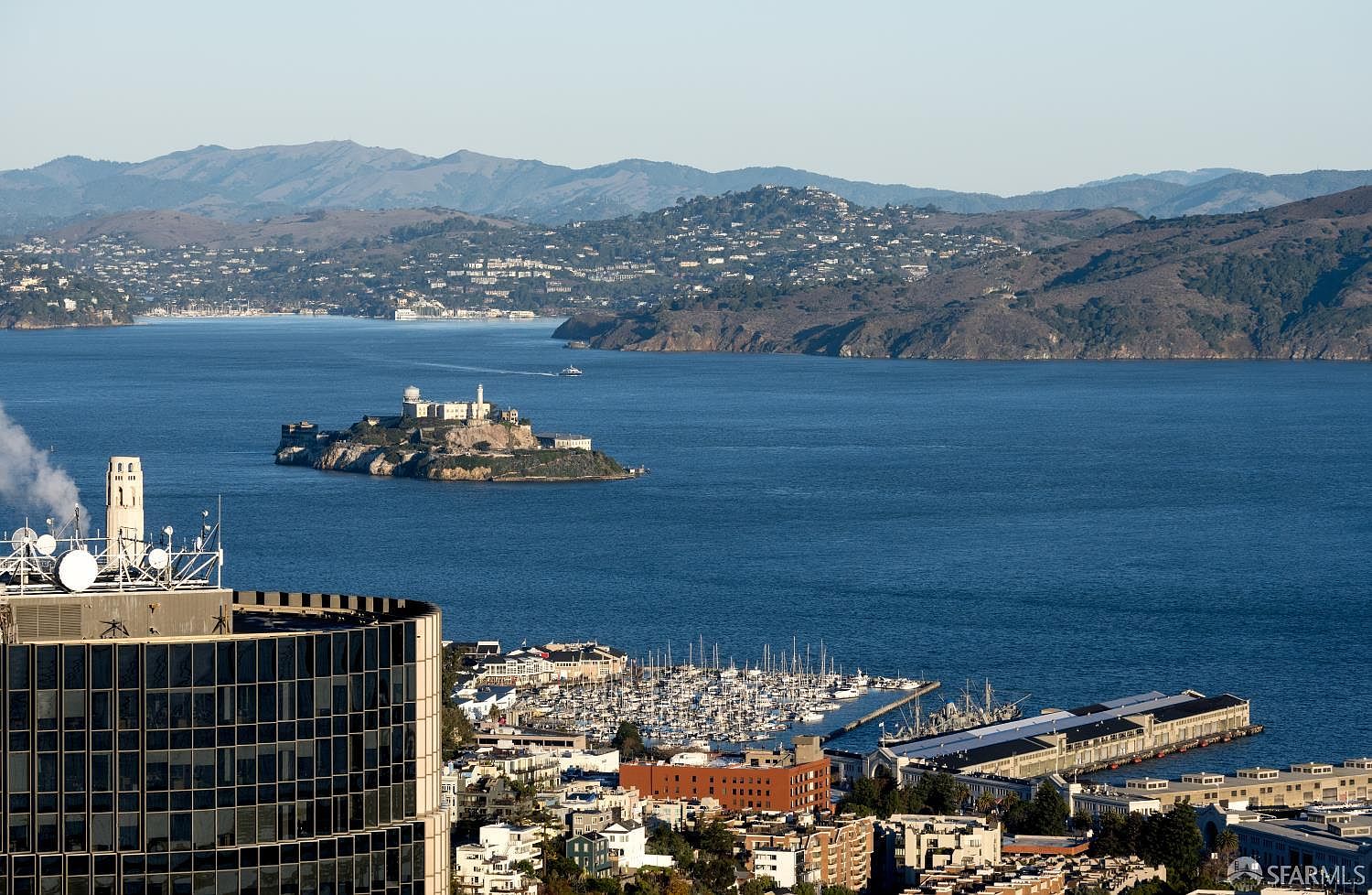
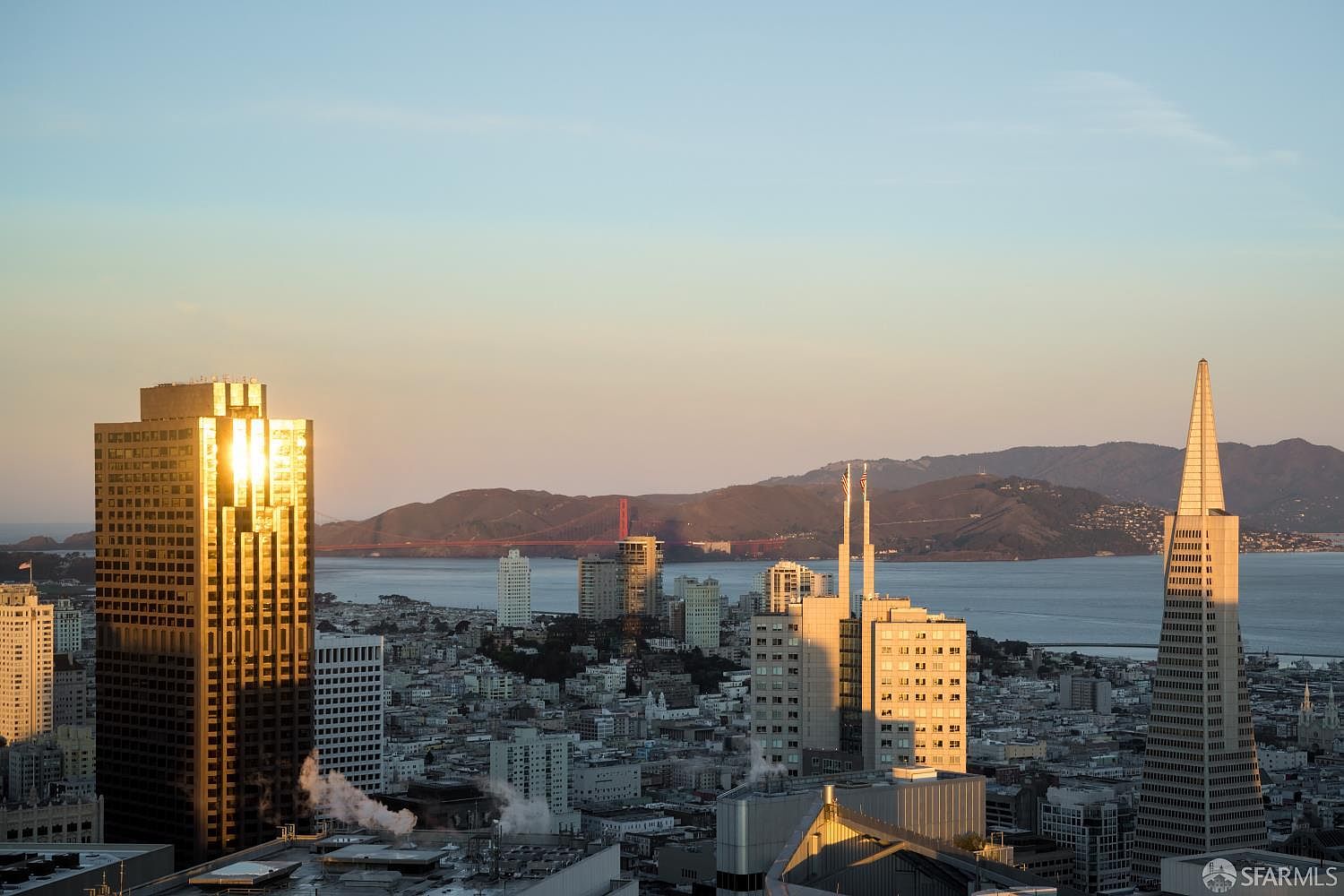
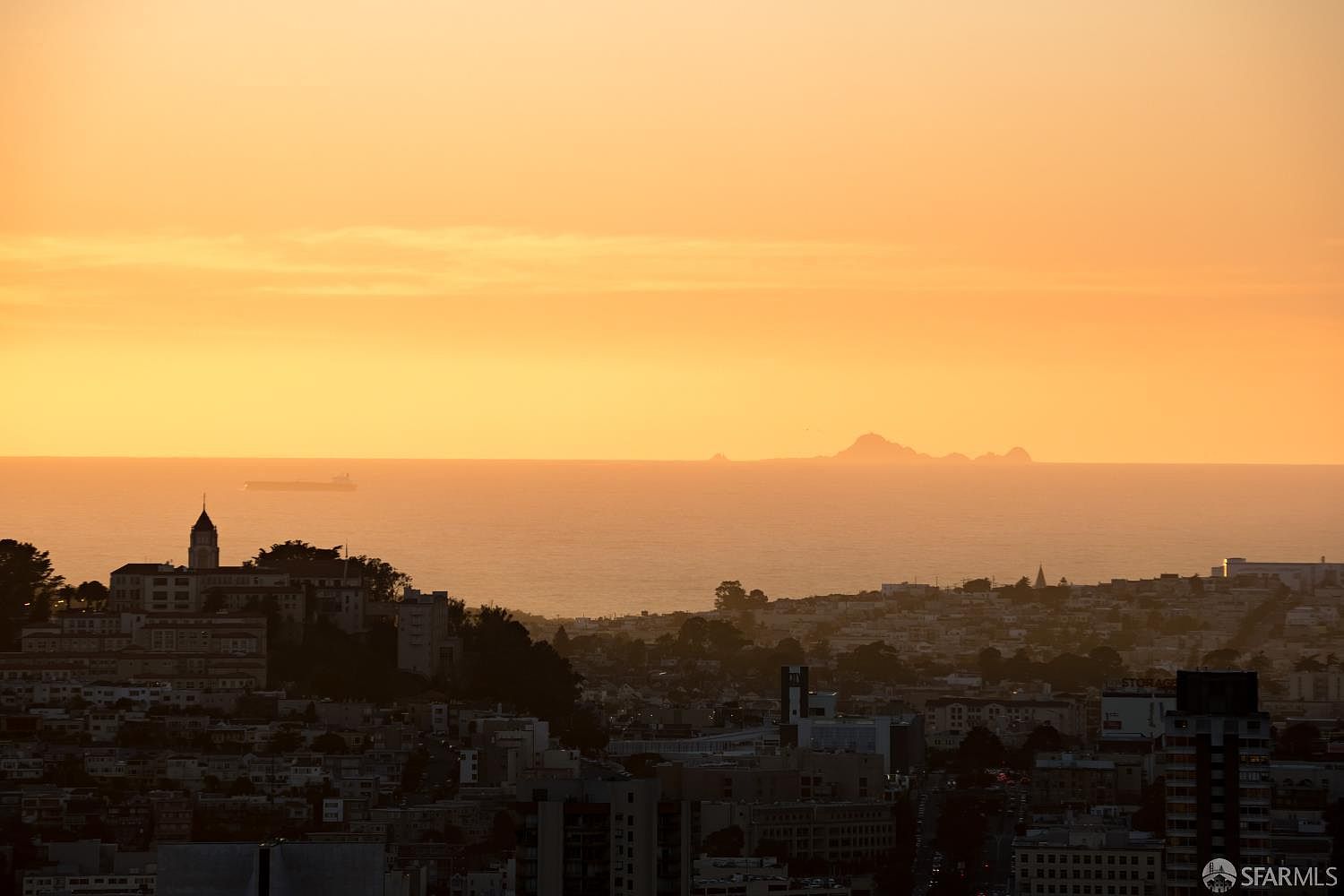
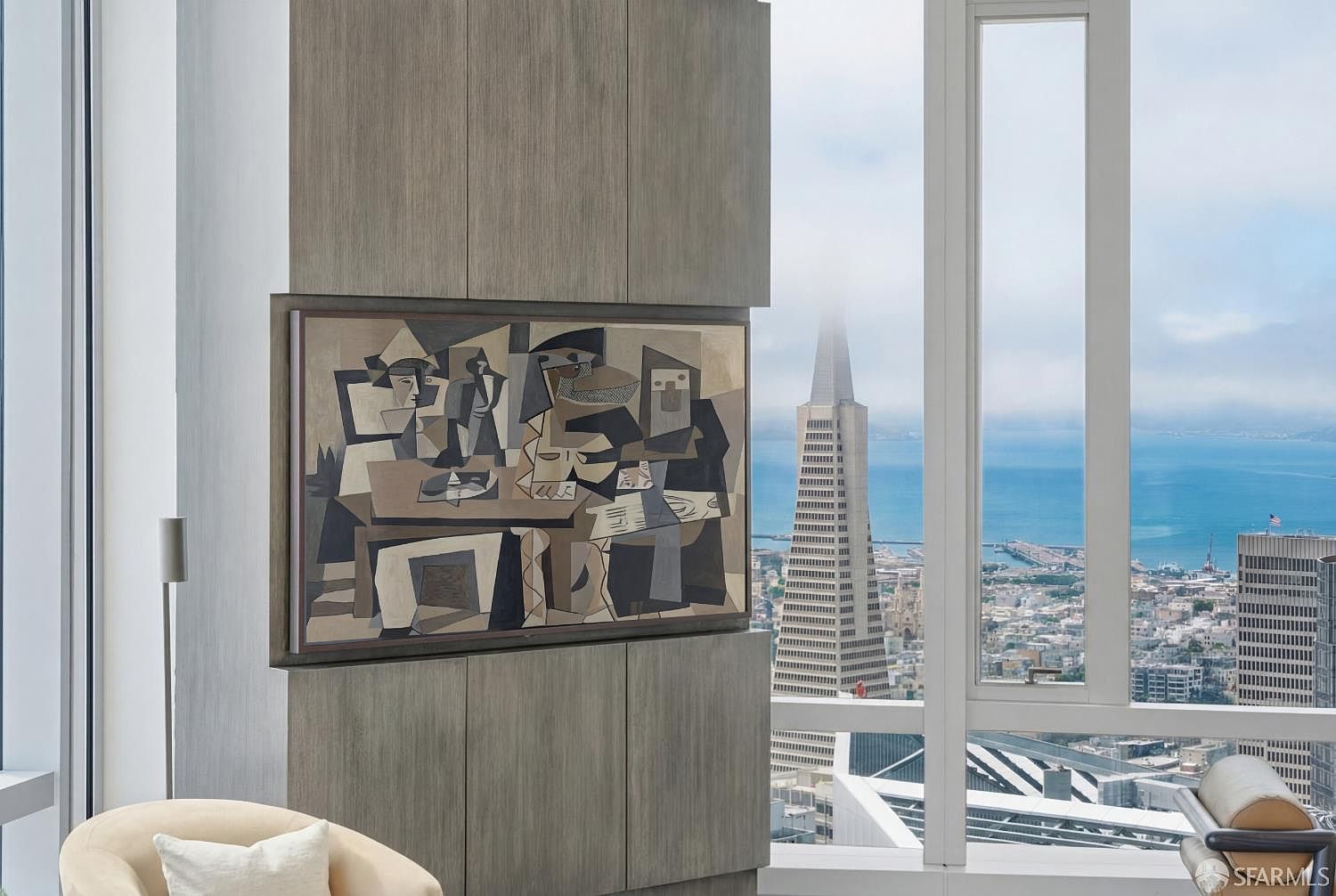
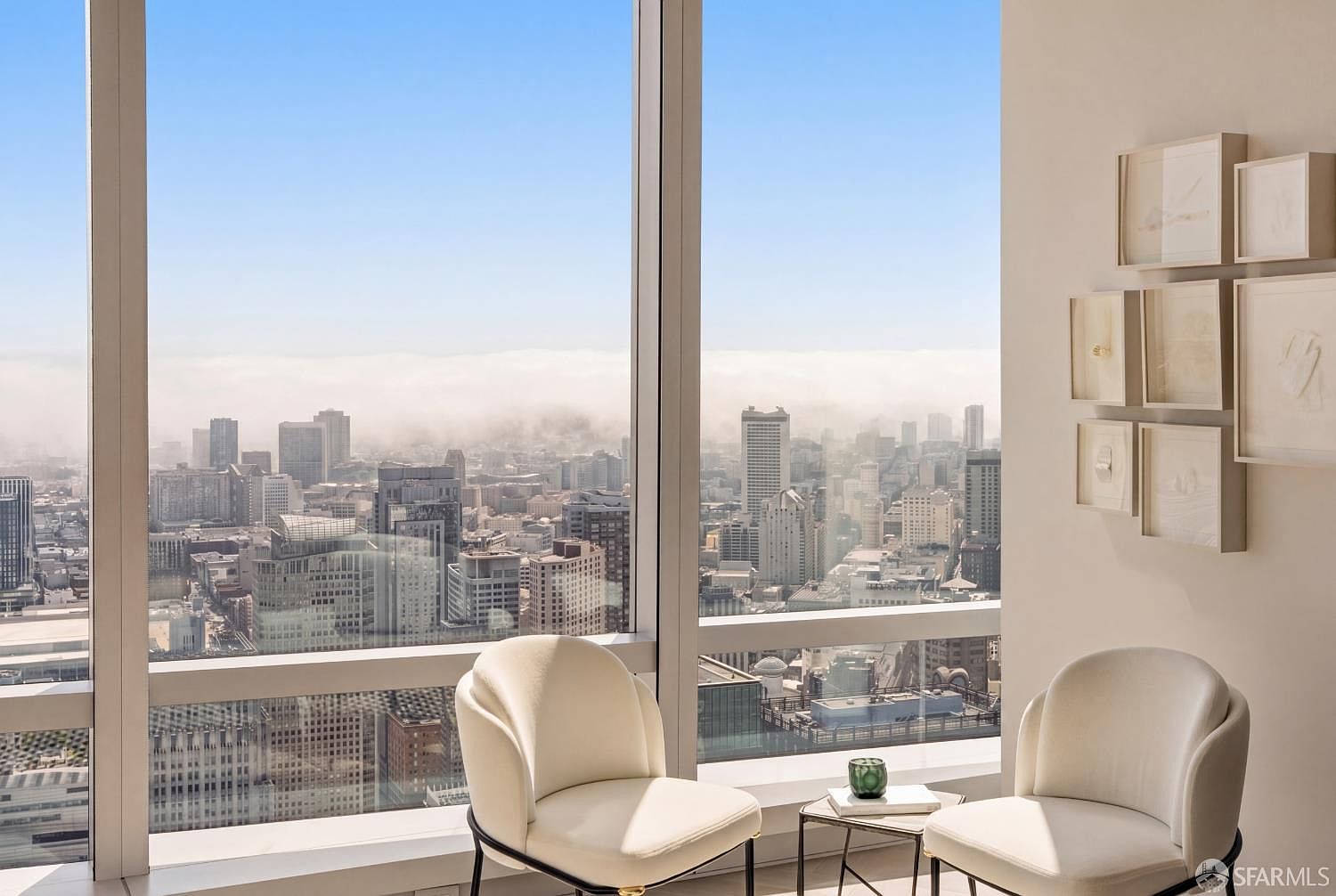
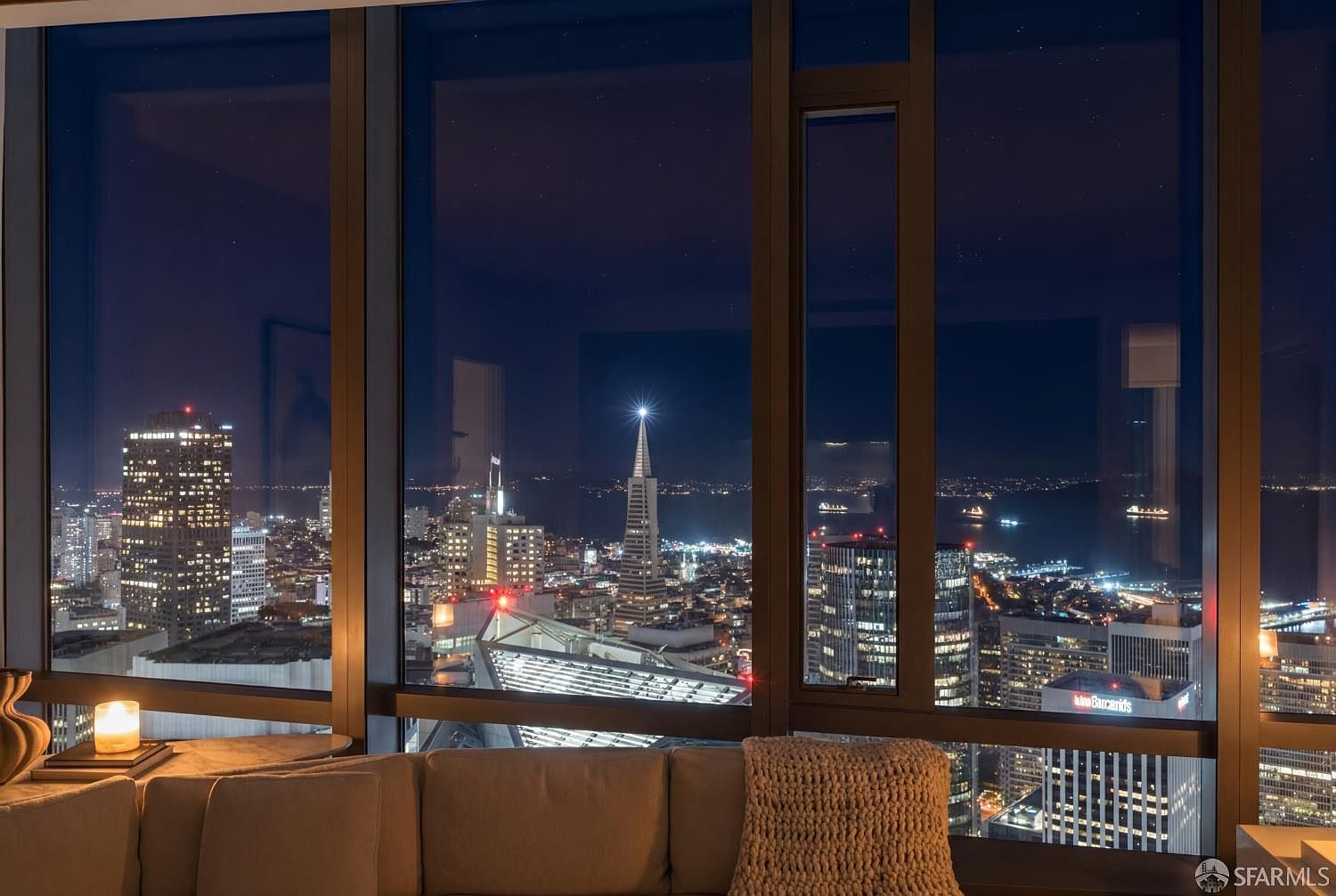
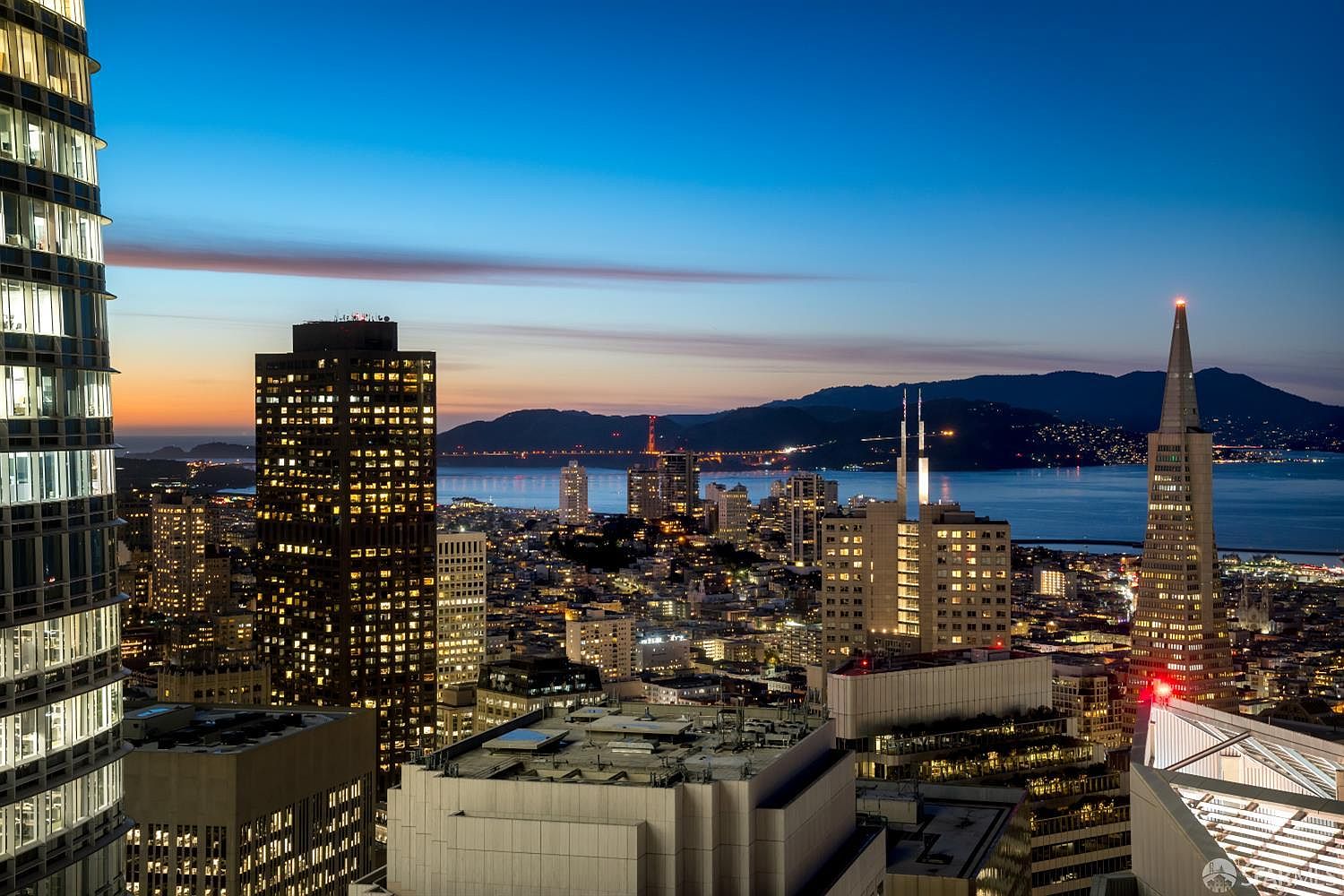
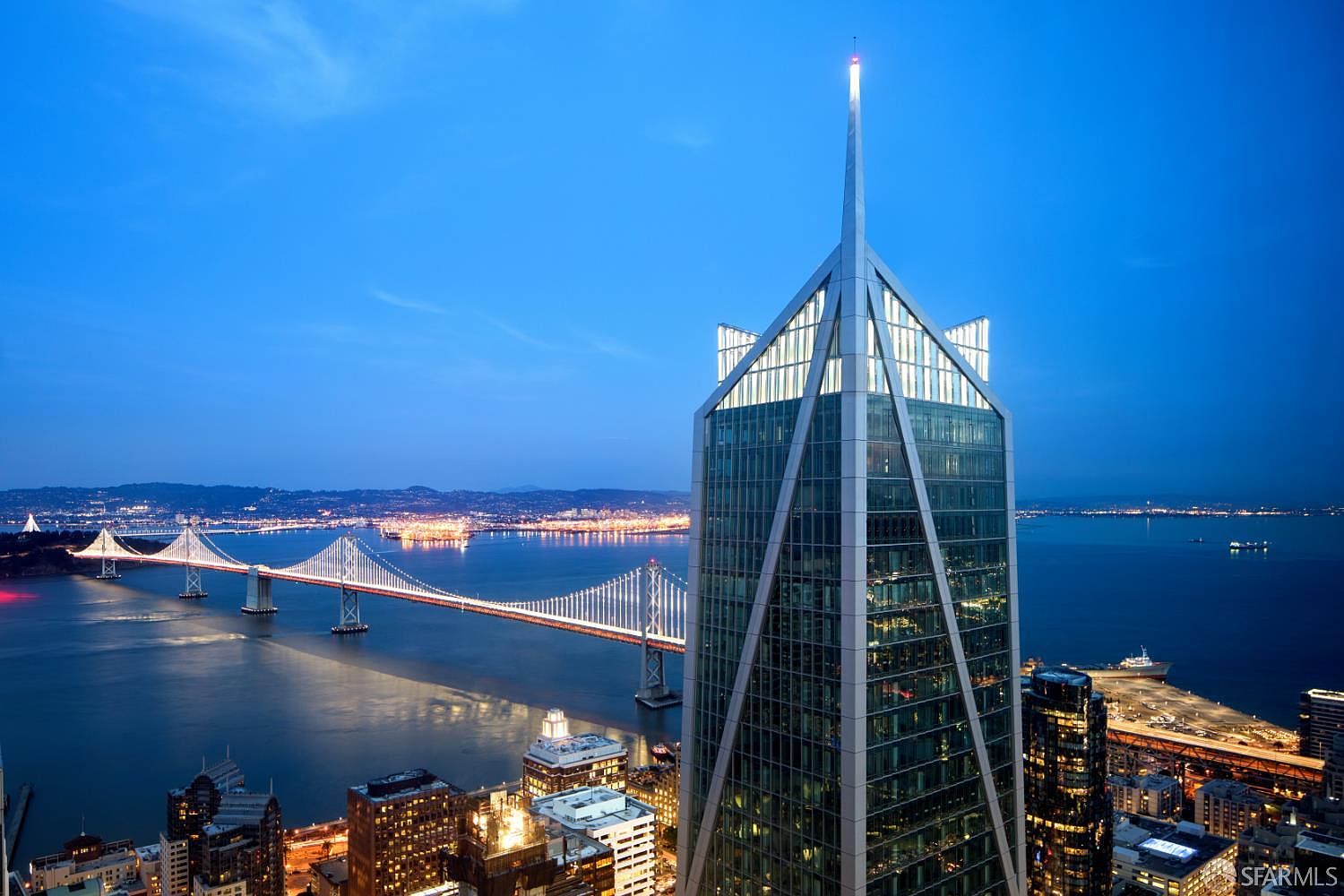
The residence commands the full footprint of the 70th floor, a distinction that is both architectural and philosophical. With 6,941 square feet configured around four bedrooms, a den, and six and a half baths, the floor plan was conceived not merely for comfort, but for grandeur. Living spaces unspool with quiet intention — each room positioned to capture a different facet of the panorama, each transition calibrated to surprise and inspire. The Golden Gate Bridge anchors the west. The Bay Bridge arcs to the east. The Transamerica Pyramid rises to the north. The Pacific dissolves into the horizon beyond.
The exhibition kitchen is a study in restraint and precision. A monumental dark stone island anchors the space, its integrated cooktop flush with the surface and its generous counter seating inviting both formal and informal gathering. Reflective upper cabinetry amplifies the flood of natural light, while floor-to-ceiling windows ensure that even the act of cooking unfolds against one of the most extraordinary backdrops on earth.
The living room is organized around a stone-clad chimney breast housing a linear fireplace — a grounding element that adds warmth and architectural weight to a space otherwise defined by lightness and glass. Curved sofas and cane-backed seating introduce texture and human scale, while a tiered stone coffee table and polished stone flooring maintain the residence's commitment to material excellence.
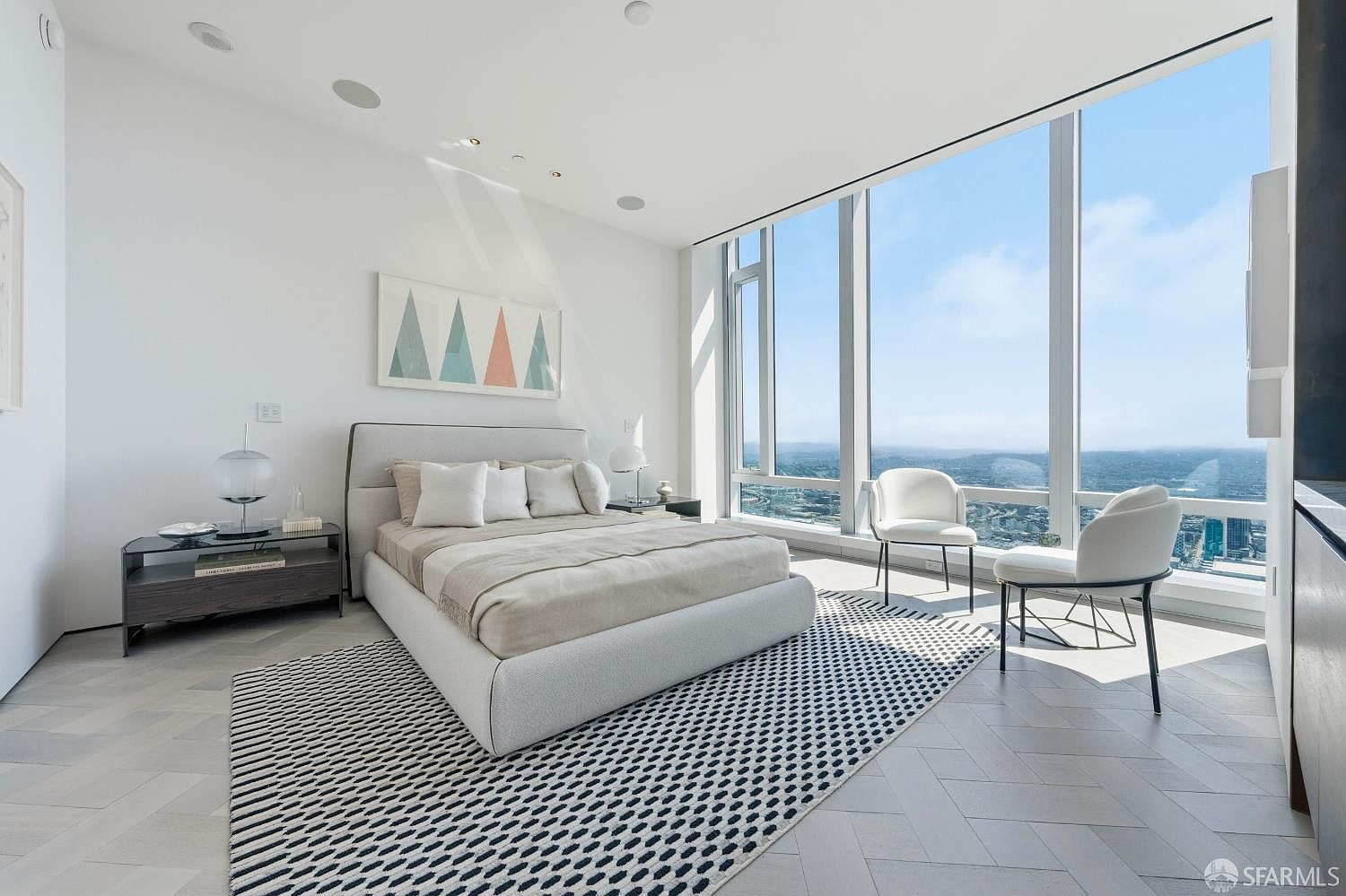
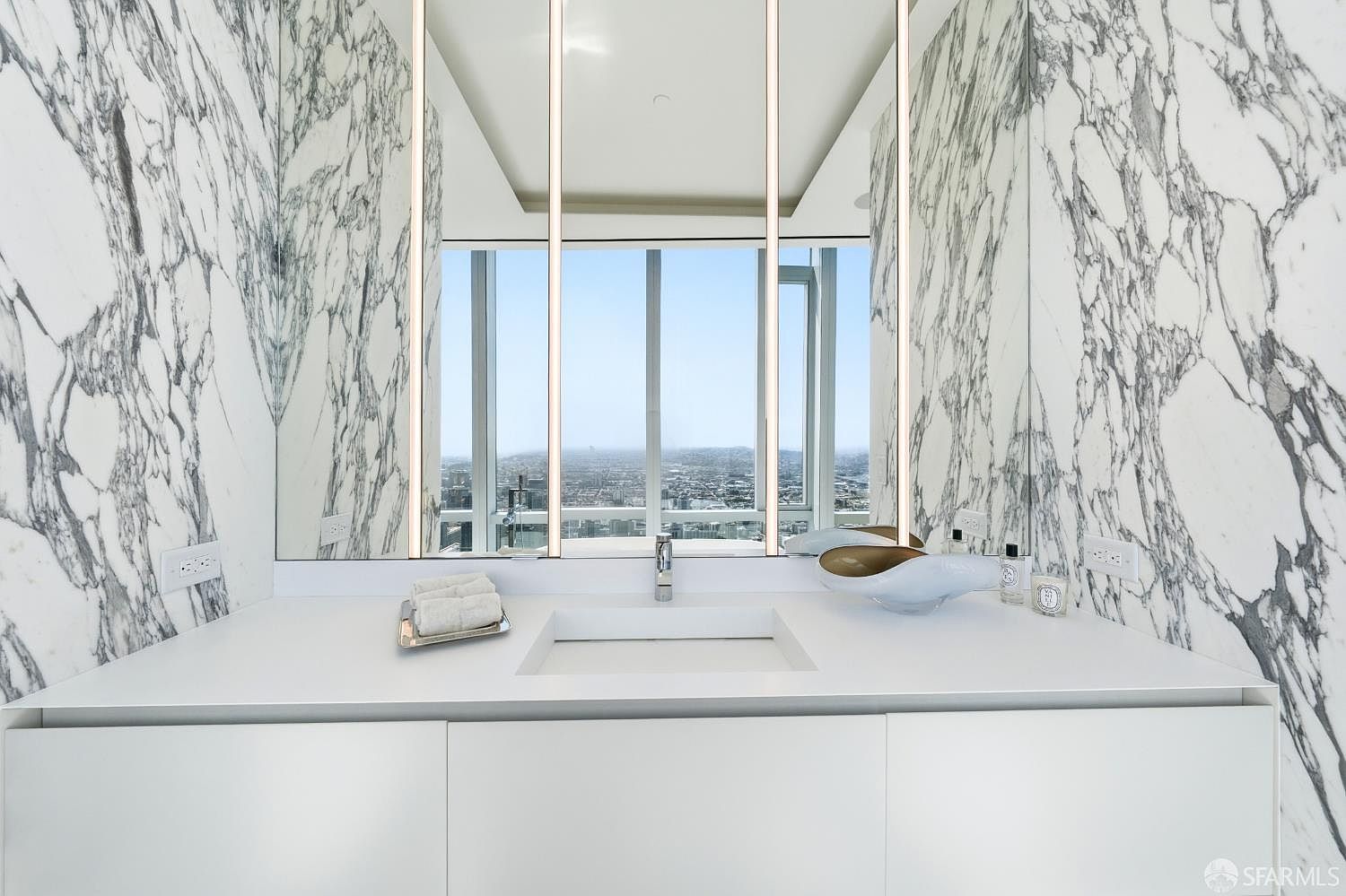
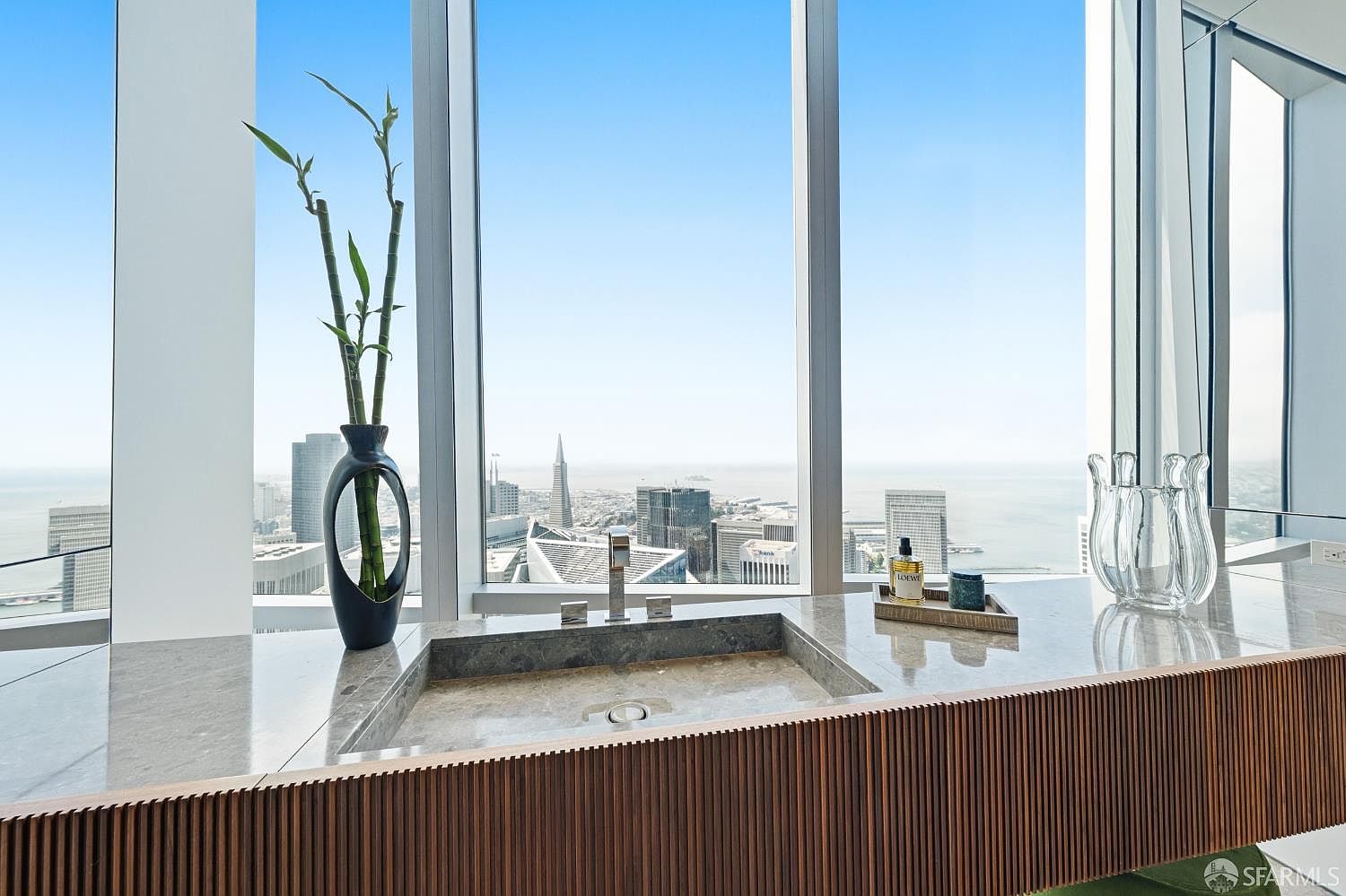
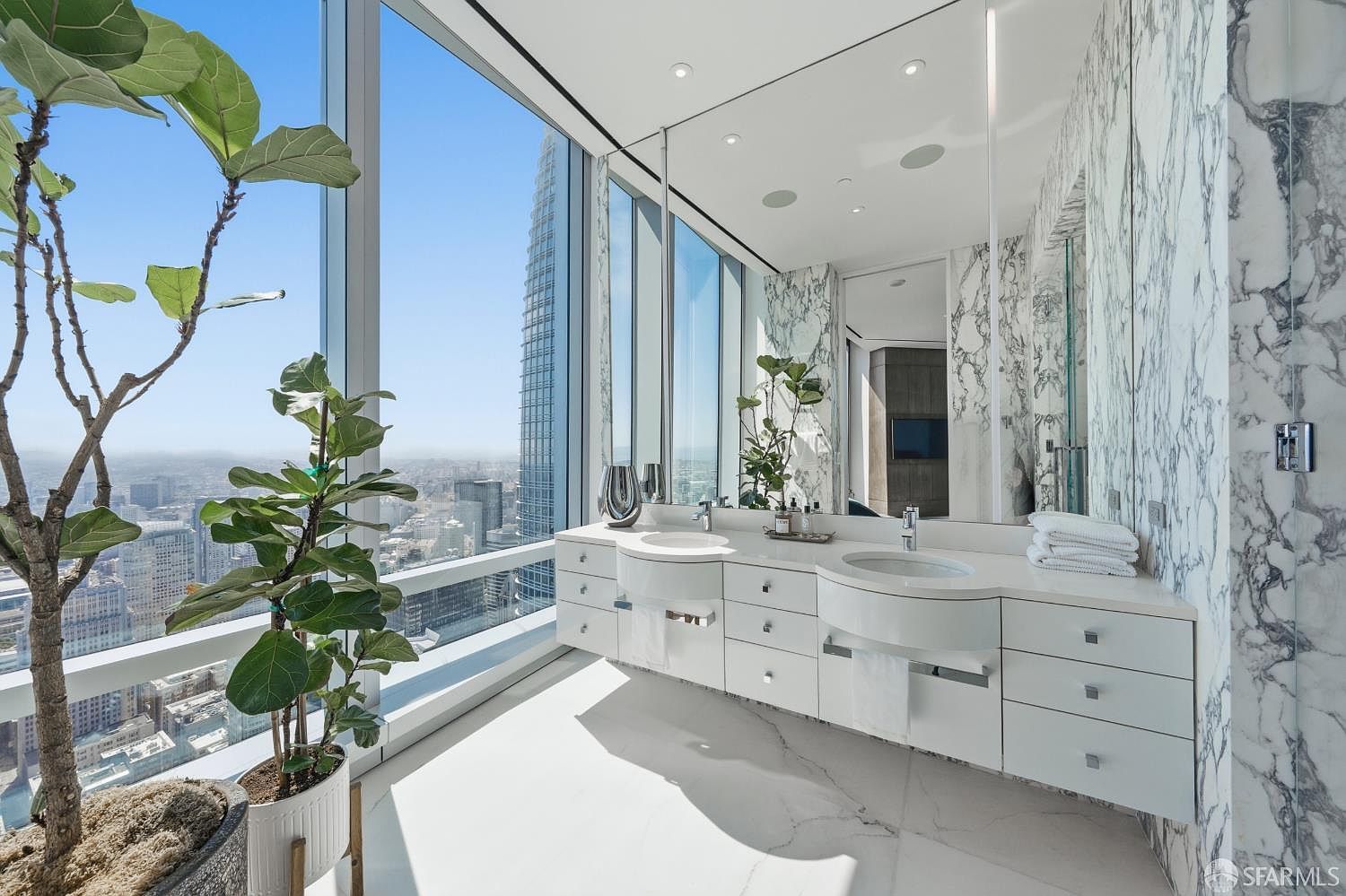
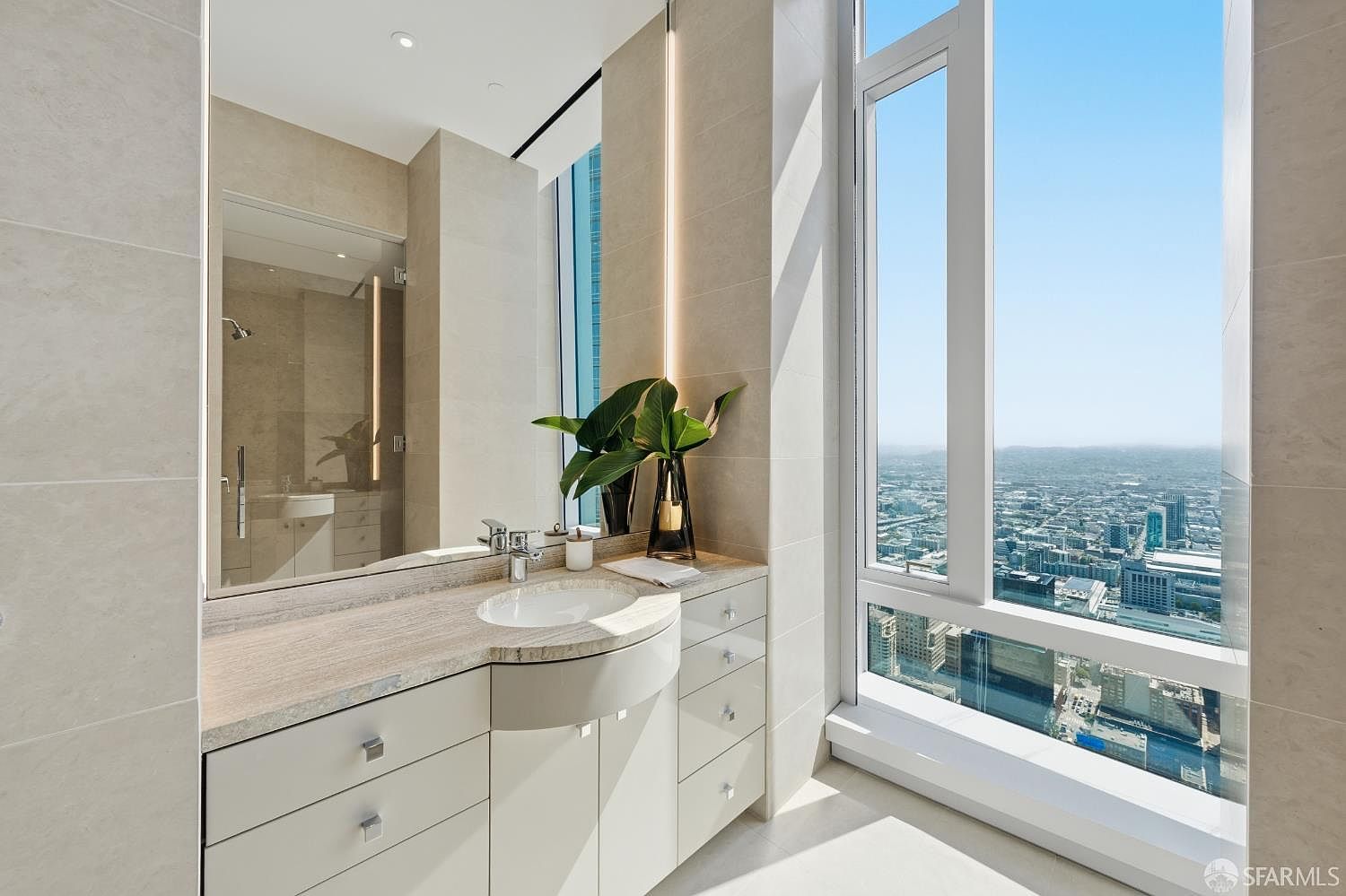
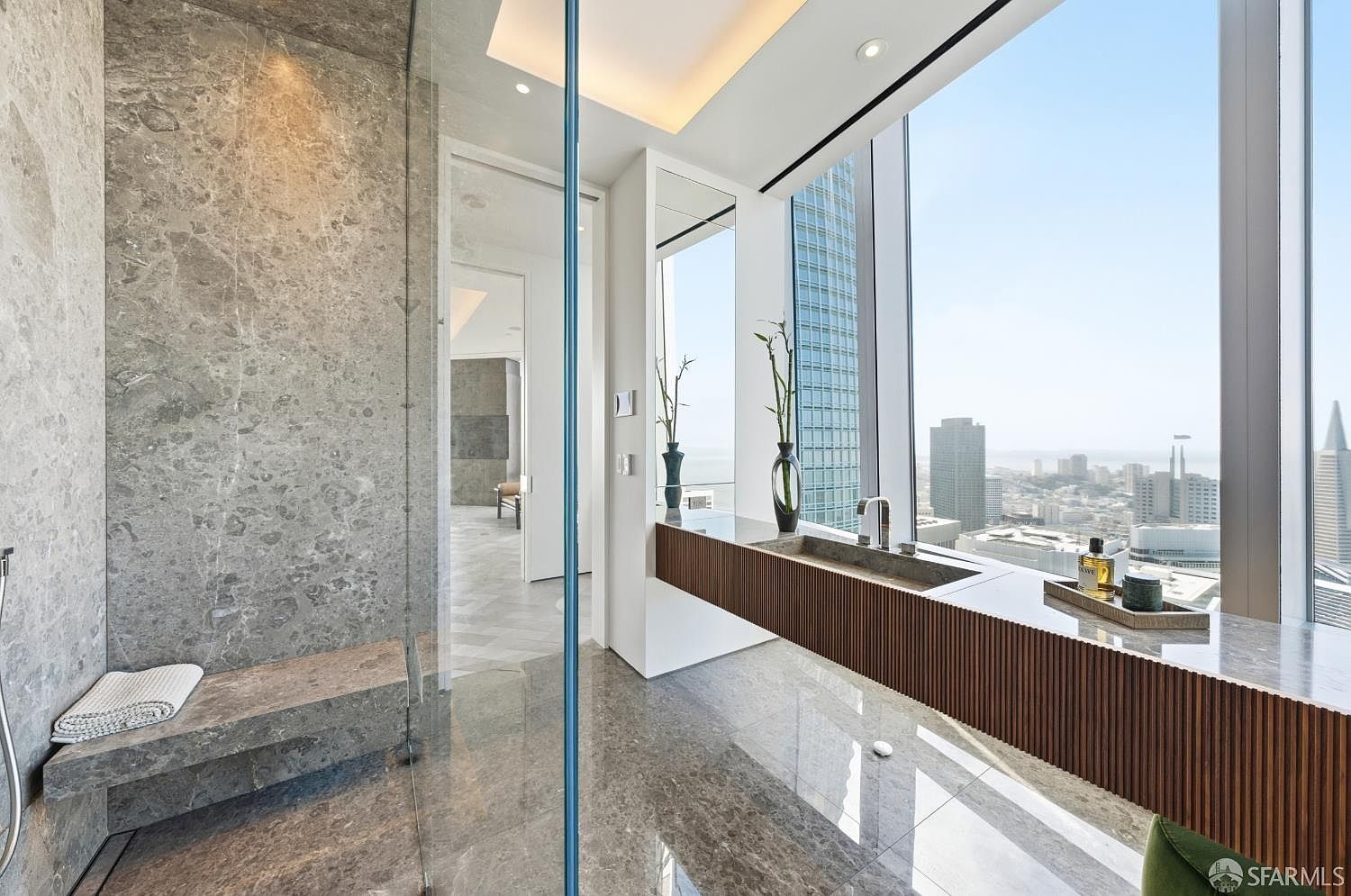
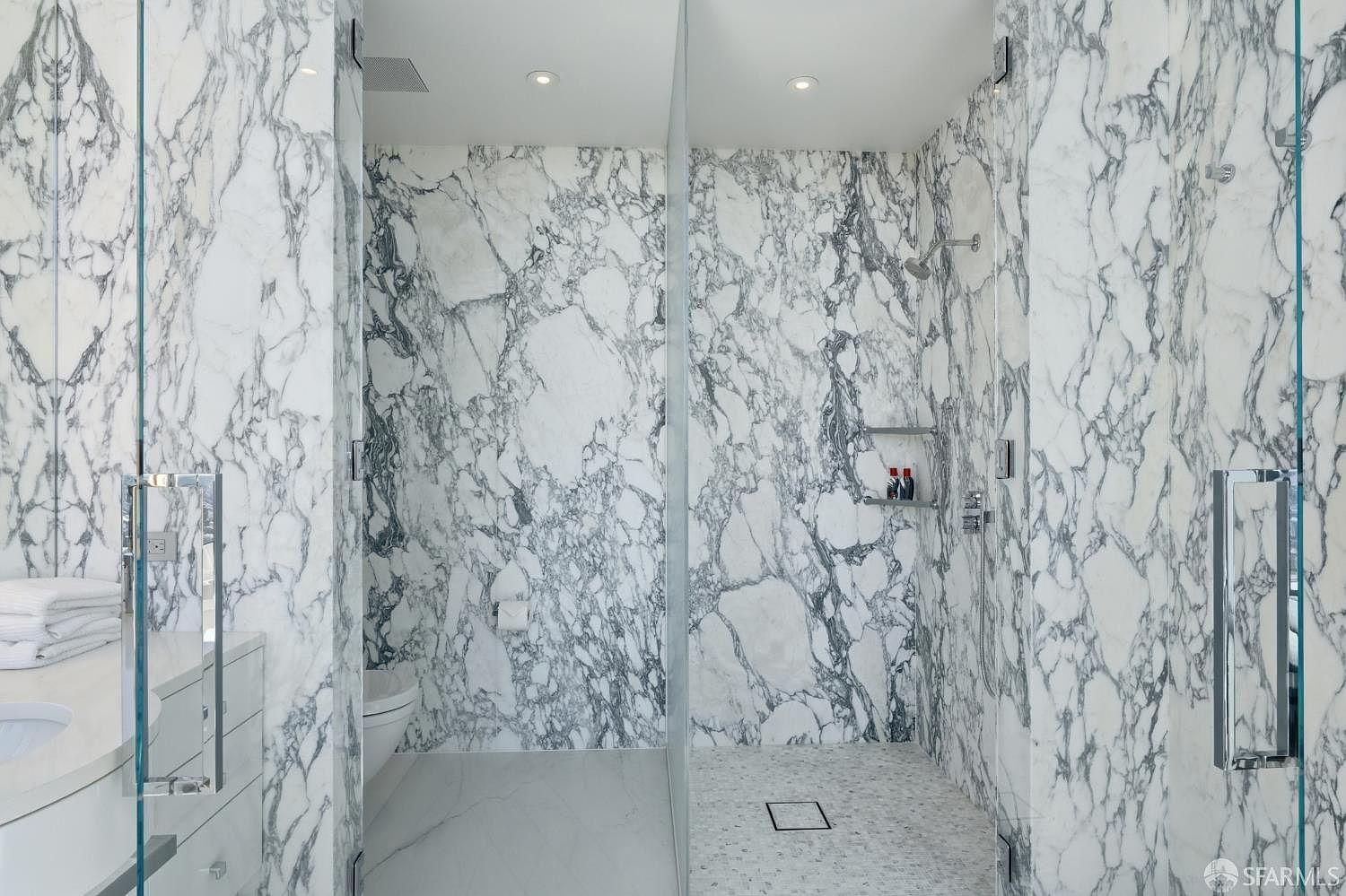
The primary suite is its own world. Herringbone wood flooring, a full-height stone feature wall, and north- and west-facing exposures combine to create a sanctuary of rare serenity. Dual spa baths — each appointed with freestanding soaking tubs, glass-enclosed showers, floating vanities with slatted wood bases, and stone countertops — face the skyline directly, transforming the most private rituals of the day into something approaching ceremony.
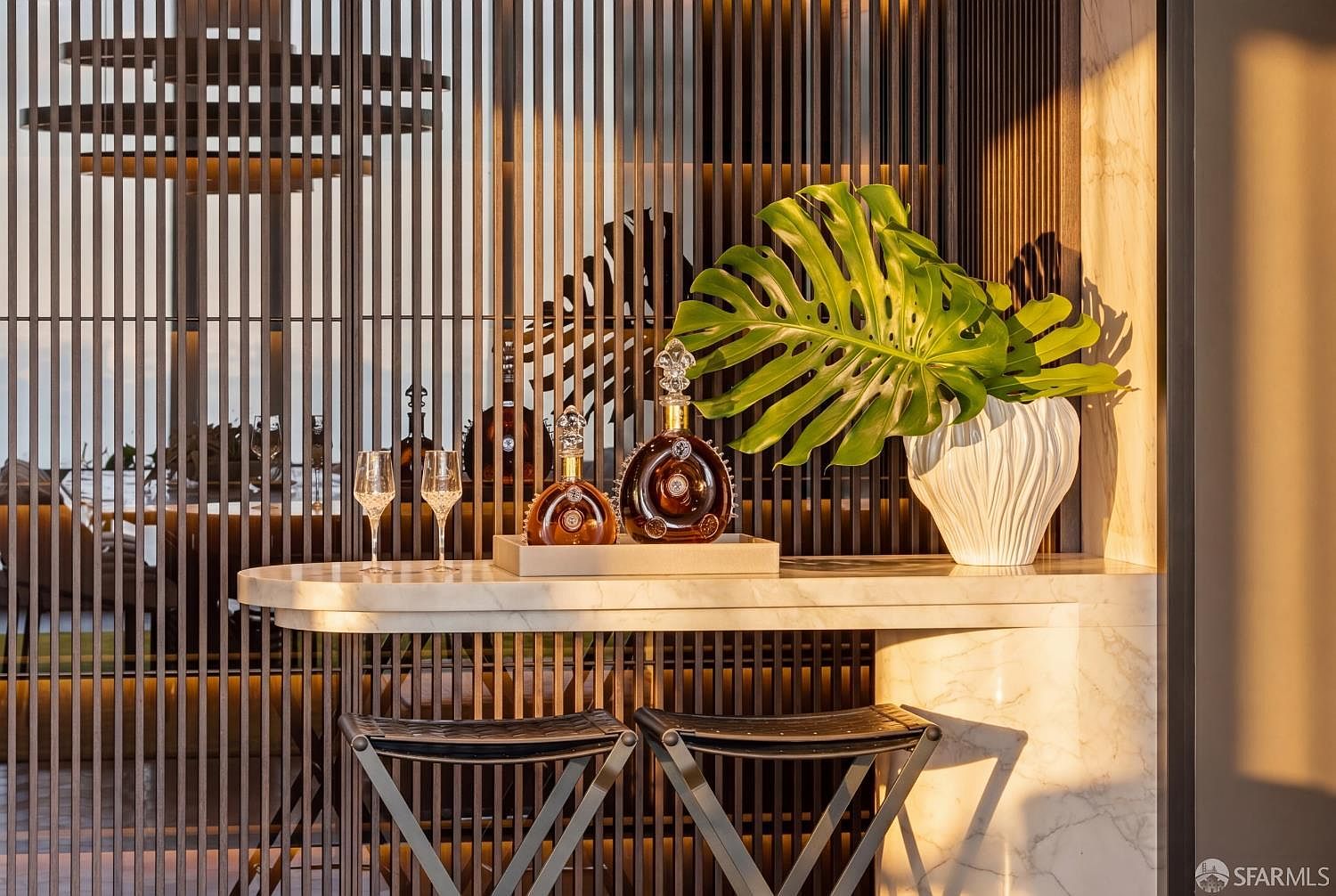
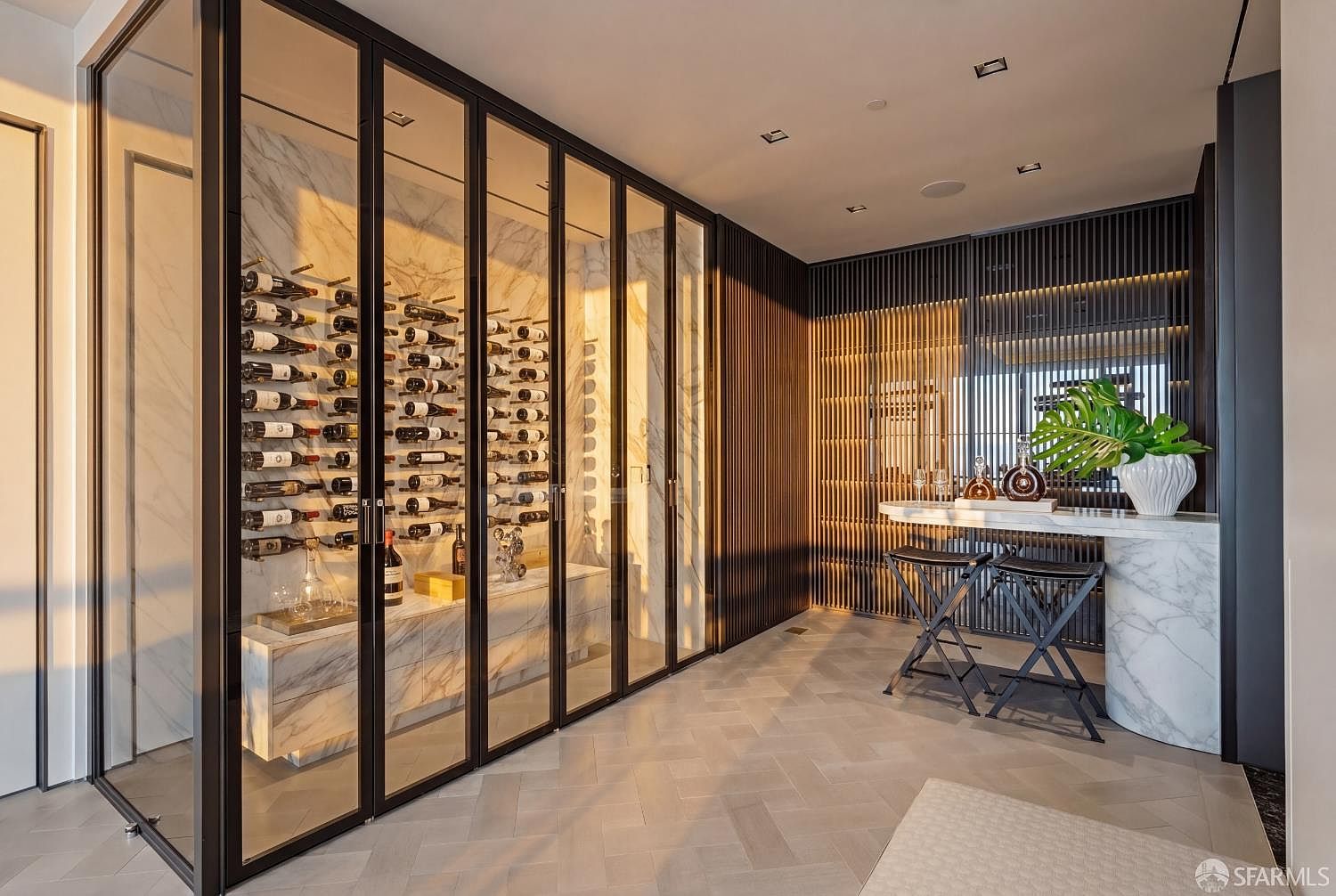
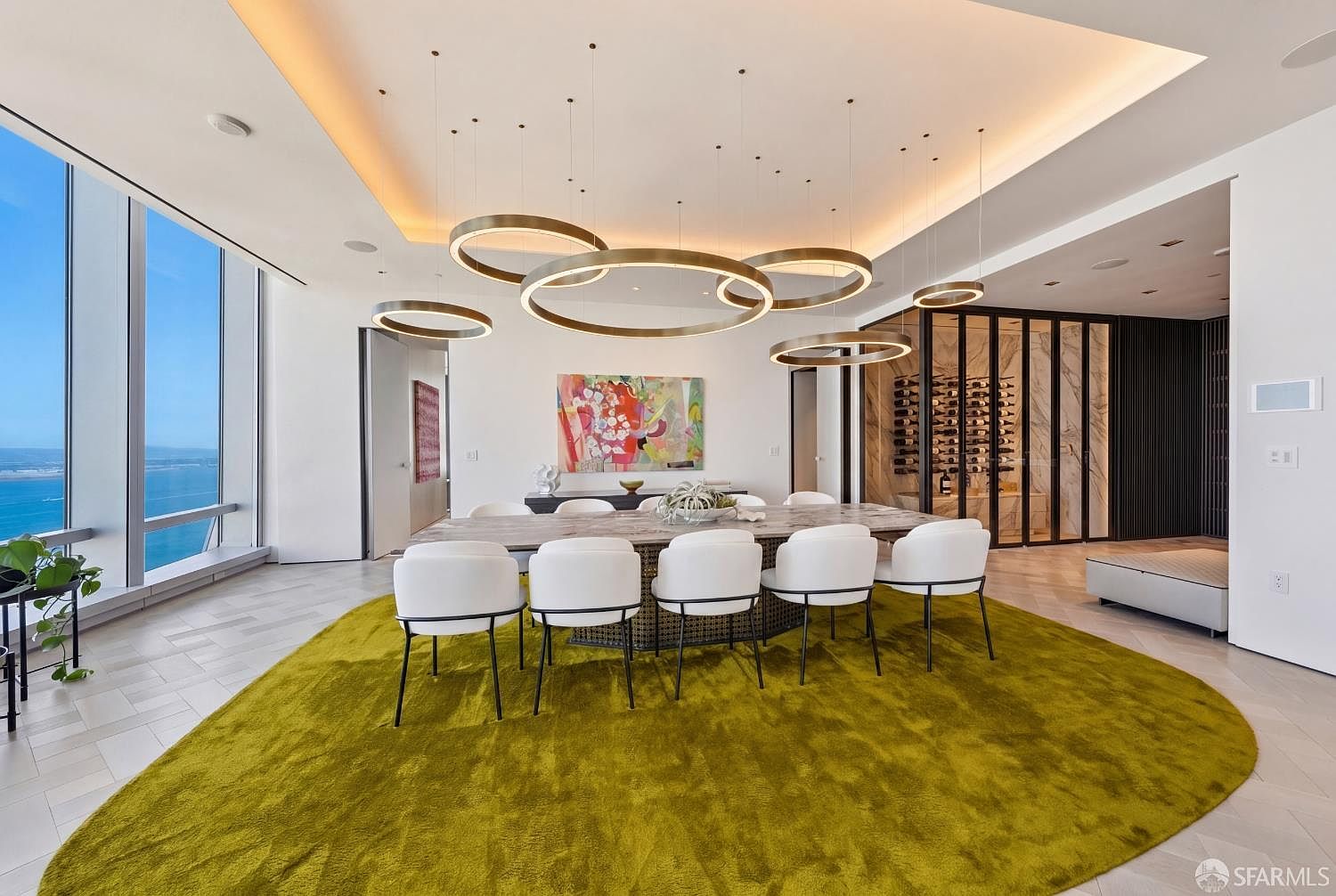
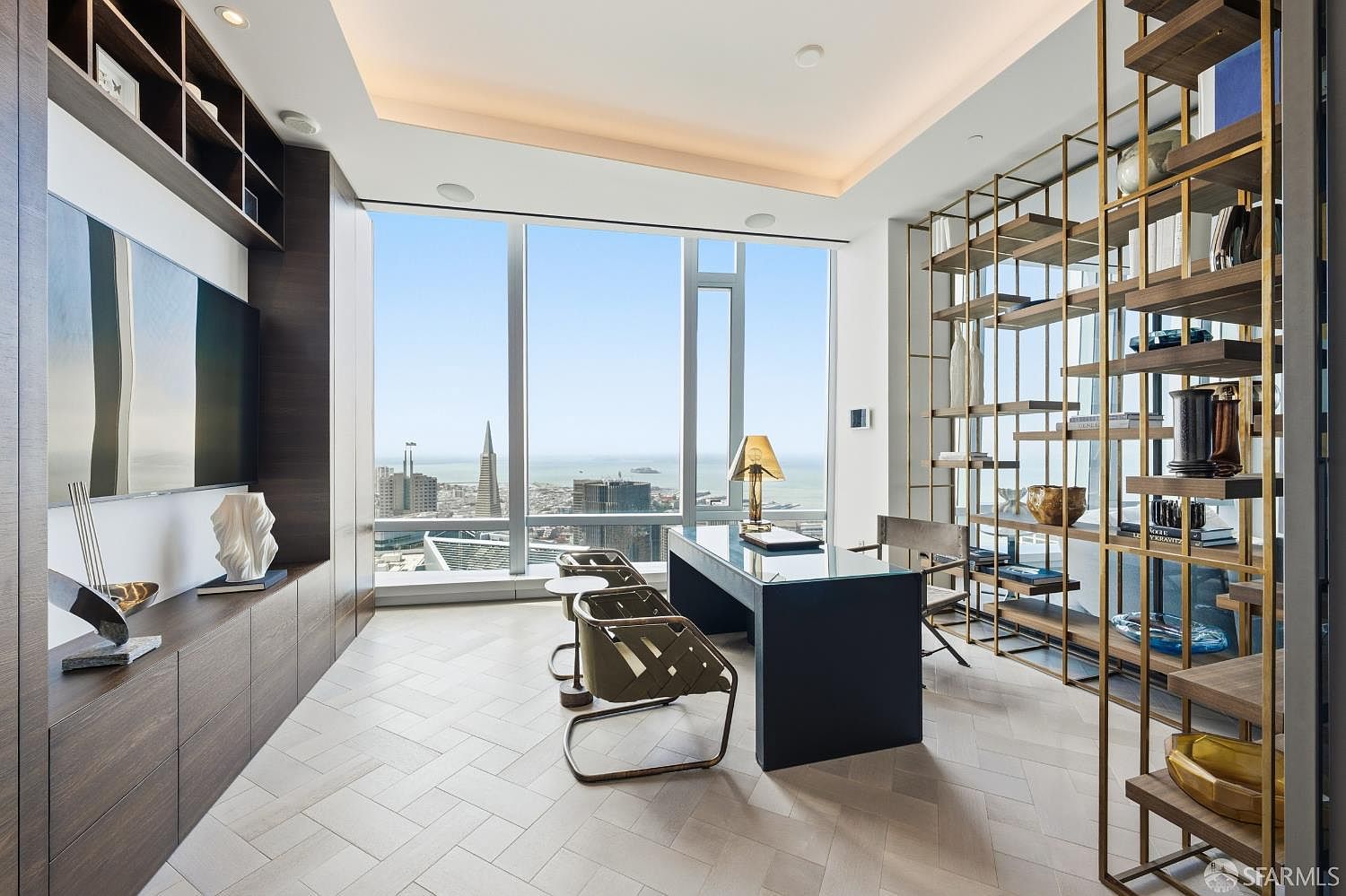
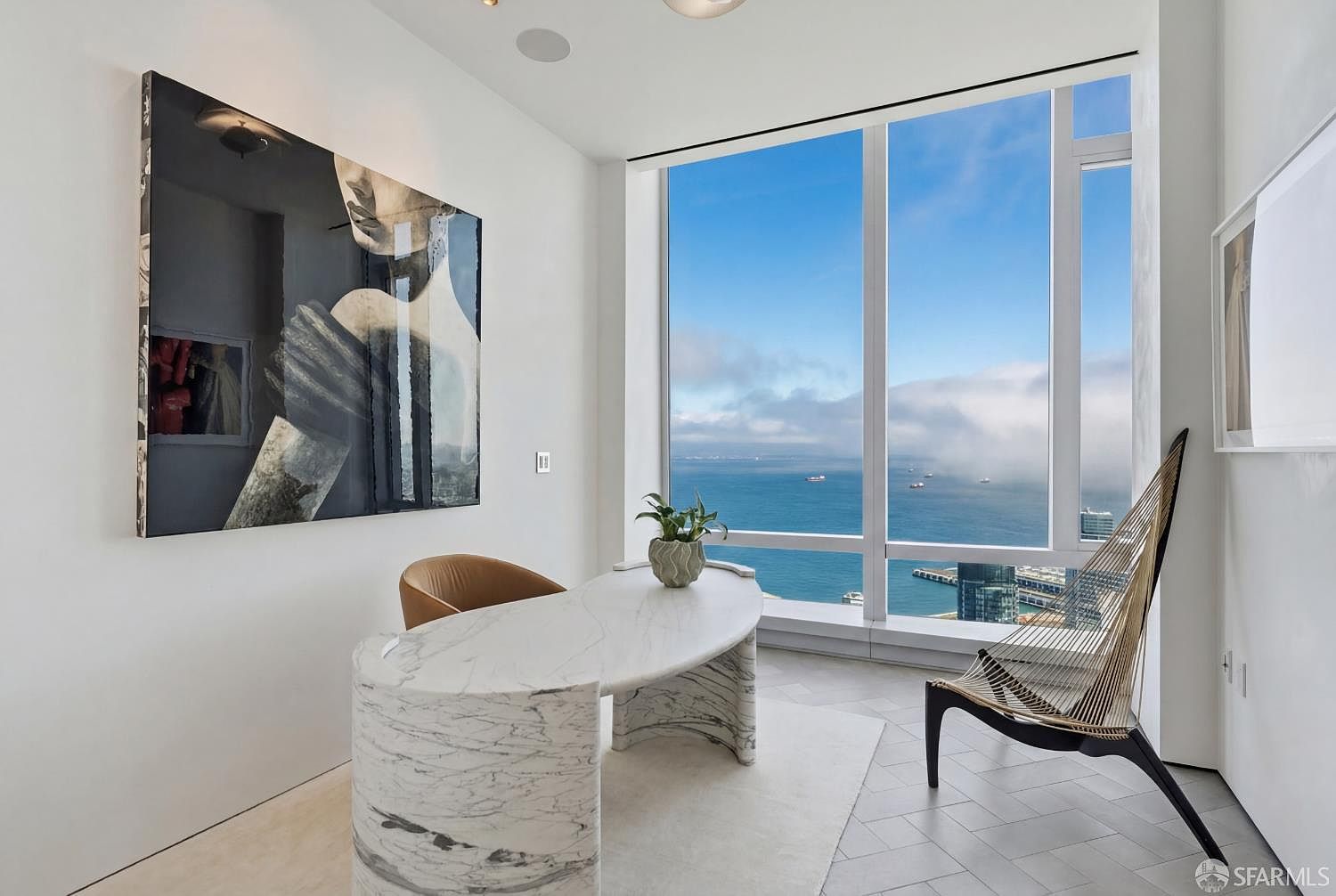
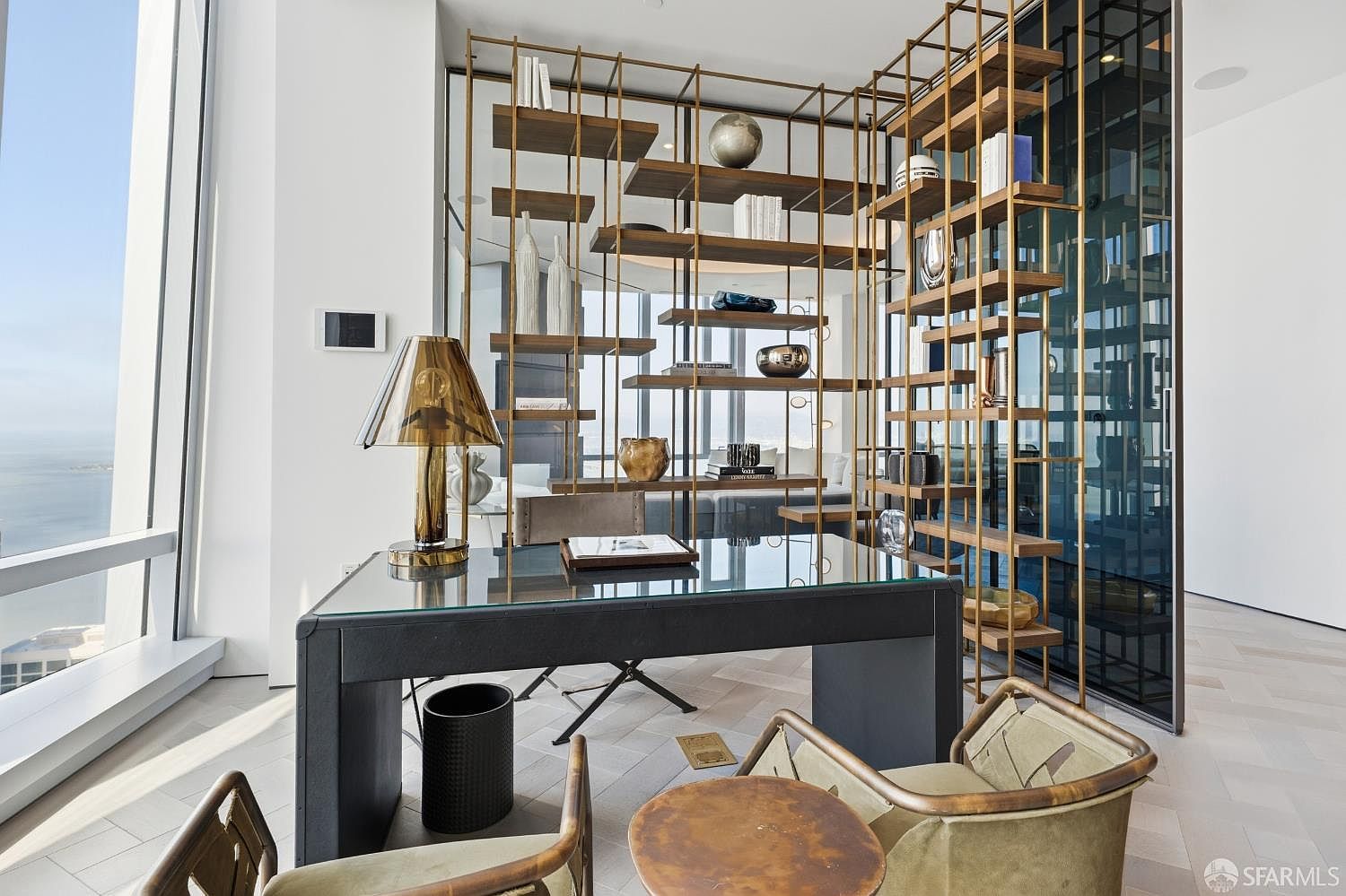
Beyond the primary suite, a wine cellar with glass-enclosed display and an adjacent stone-topped bar, a private gym, a sophisticated home office with curved stone desk and panoramic bay views, and a grand dining room with circular pendant lighting and chartreuse area rug each contribute to a residence of exceptional depth and variety.
The building itself is an architectural statement of equal ambition. The 800-foot exoskeleton-framed tower — the tallest mixed-use structure on the West Coast — was engineered to exceed California's most rigorous seismic standards, its distinctive diagonal steel lattice as structural as it is sculptural. The Grand Penthouse is offered complete with all furnishings and two Ateliers units, a turnkey acquisition of rare completeness. There is, by definition, only one.
San Francisco's Transbay neighborhood, which stretches along the eastern edge of the downtown financial district toward the waterfront, represents the most consequential urban transformation the city has undertaken in a generation. Once a zone of surface parking lots and underutilized parcels left over from the demolition of the elevated Embarcadero Freeway in the early 1990s, the district has been remade over the past two decades into a vertical, transit-connected urban quarter of genuine global significance.
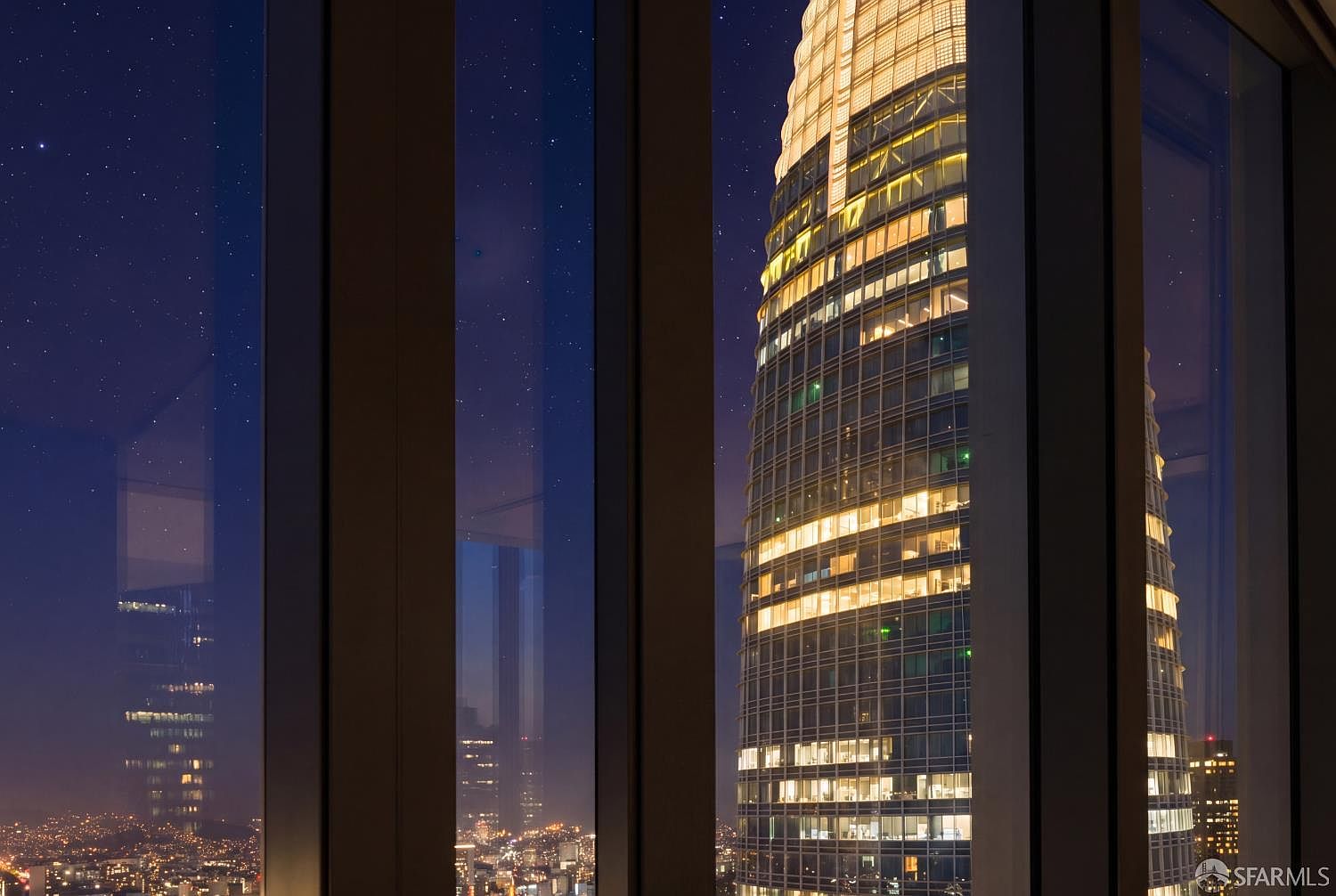
At the heart of this transformation is the Salesforce Transit Center, which opened in 2018 and serves as the city's primary regional transit hub, connecting Muni, AC Transit, Golden Gate Transit, and future Caltrain and California High-Speed Rail service beneath a five-and-a-half-acre rooftop park. That park — Salesforce Park — is accessible directly from 181 Fremont via a dedicated skybridge, placing residents steps from a curated landscape of gardens, lawns, and public programming suspended above the city streets. It is one of the more genuinely unusual amenities available to any urban resident anywhere in the country.
The immediate surroundings are defined by the institutions and experiences that have made San Francisco's eastern waterfront one of the most desirable addresses in the American West. The Embarcadero, a short walk north, traces the edge of the bay from the Ferry Building — a Beaux-Arts landmark housing an acclaimed farmers' market and permanent collection of artisan food vendors — past the historic piers to the base of Telegraph Hill. The Ferry Building's Saturday market is among the finest in the country, drawing producers from across Northern California's extraordinary agricultural hinterland.
The financial district's restaurants, bars, and cultural institutions are immediately accessible on foot. The San Francisco Museum of Modern Art, one of the largest modern art museums in the United States, is within easy walking distance, as are the galleries, performance venues, and public spaces that animate this part of the city. The Embarcadero waterfront connects by foot or bicycle to the Caltrain station at Fourth and King, to Oracle Park, and to the Mission Bay campus of UCSF, one of the world's leading medical research universities.
For travel, San Francisco International Airport is approximately fourteen miles to the south, reachable by BART from the Embarcadero or Transbay Terminal in under thirty minutes. The building's valet parking and dedicated concierge service ensure that the transition between the penthouse and the wider world is frictionless.
And then there is the view — which is, ultimately, inseparable from the place. San Francisco is a city whose geography is its identity: the bay, the bridges, the hills, the fog, the quality of light in the late afternoon when the sun drops toward the Pacific and the city glows amber and gold. From the 70th floor of 181 Fremont, that geography is not a backdrop. It is the foreground, the middle distance, and the horizon all at once. To live here is to inhabit the city's most essential image of itself, every hour of every day.
Featured Highlights
Curated Content • Presented by Olivia Decker