The Story Behind
Six Floors of Turnkey Splendor Between Madison and Park
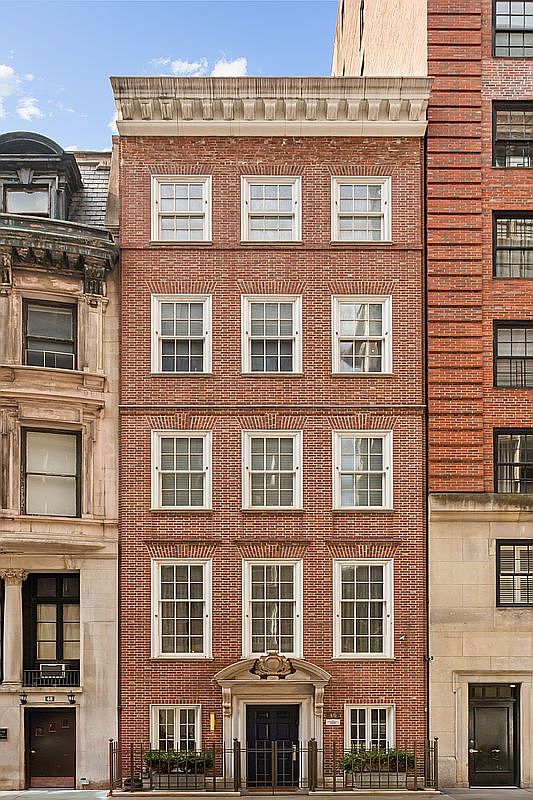
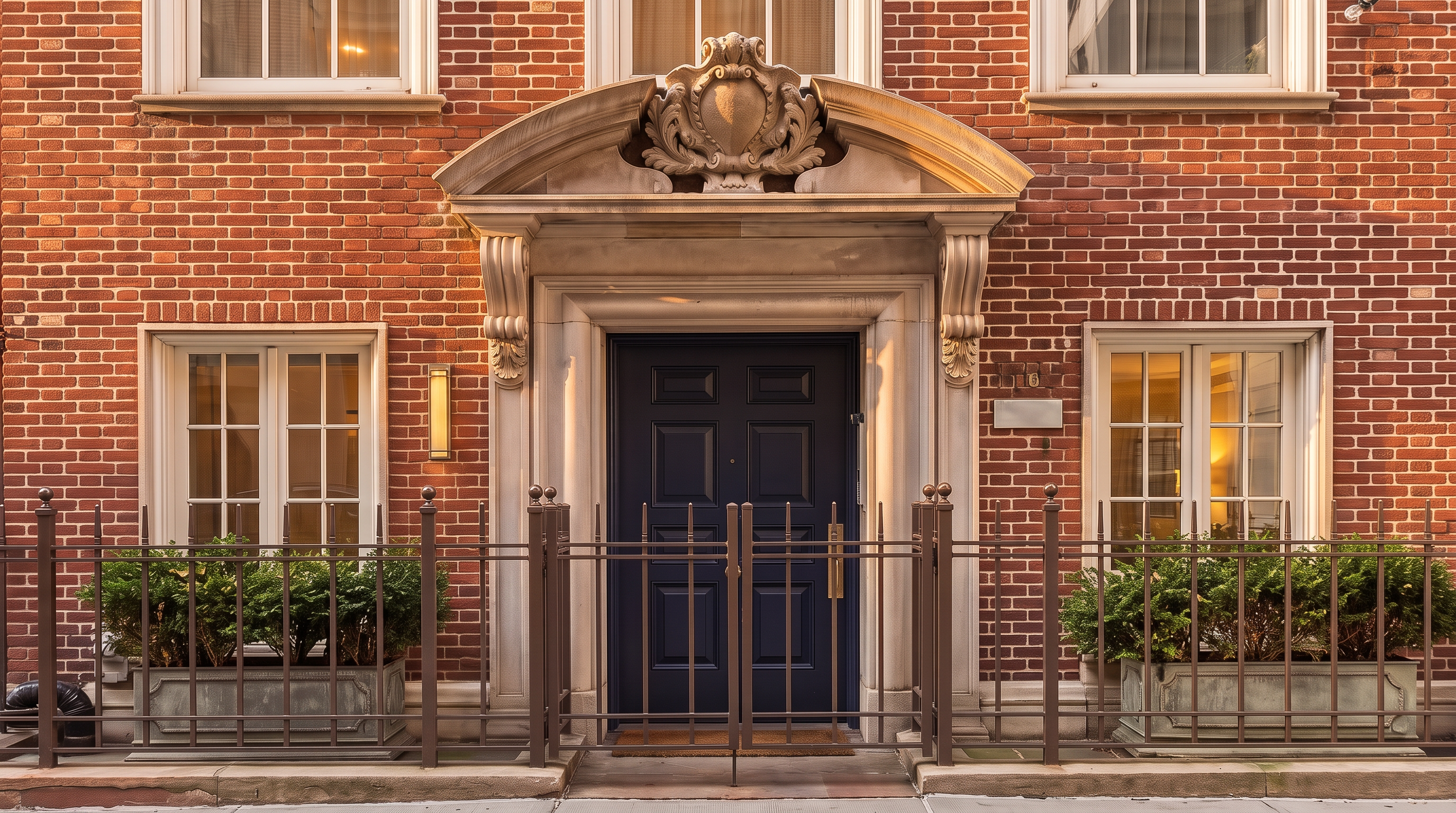
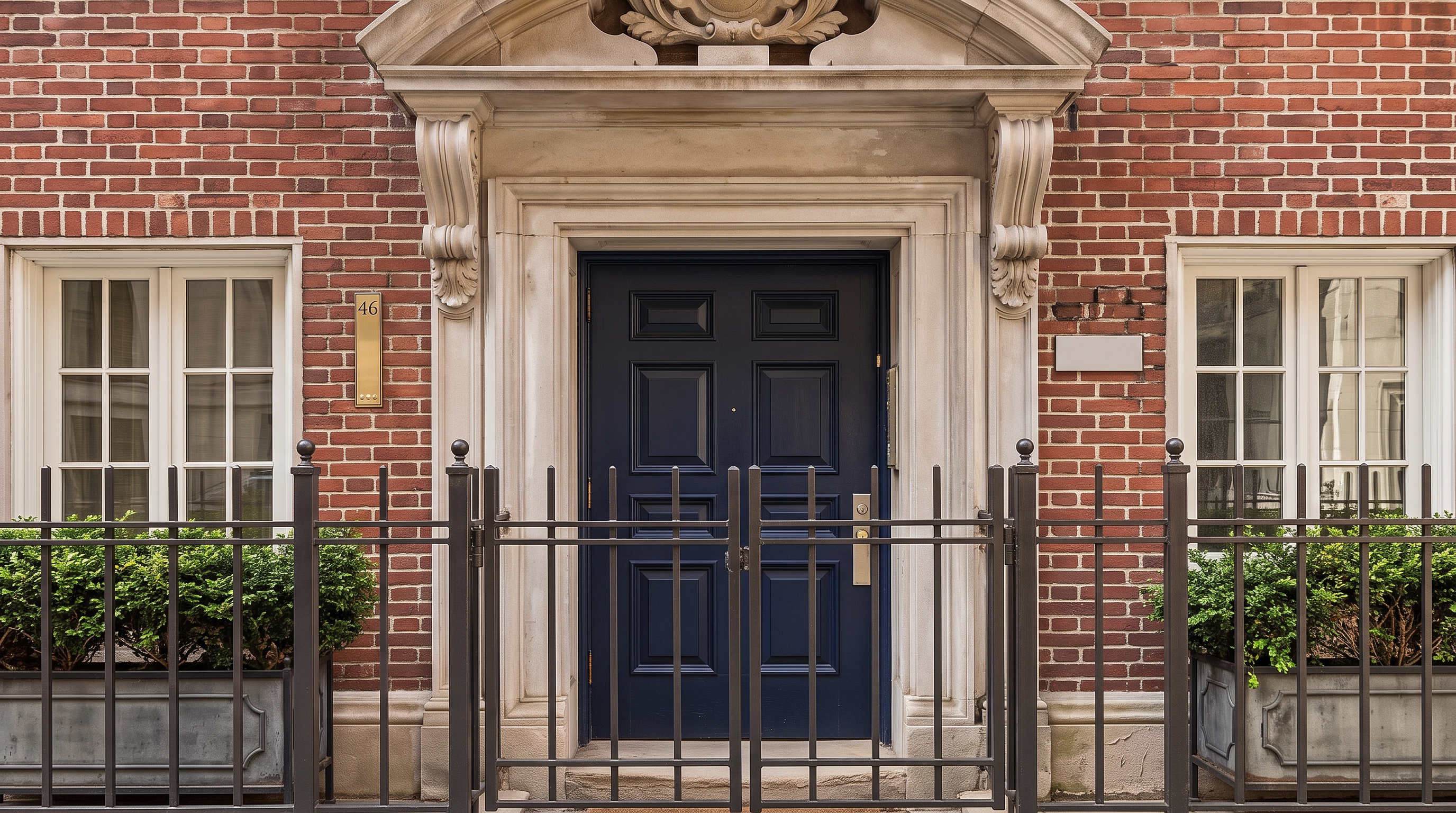
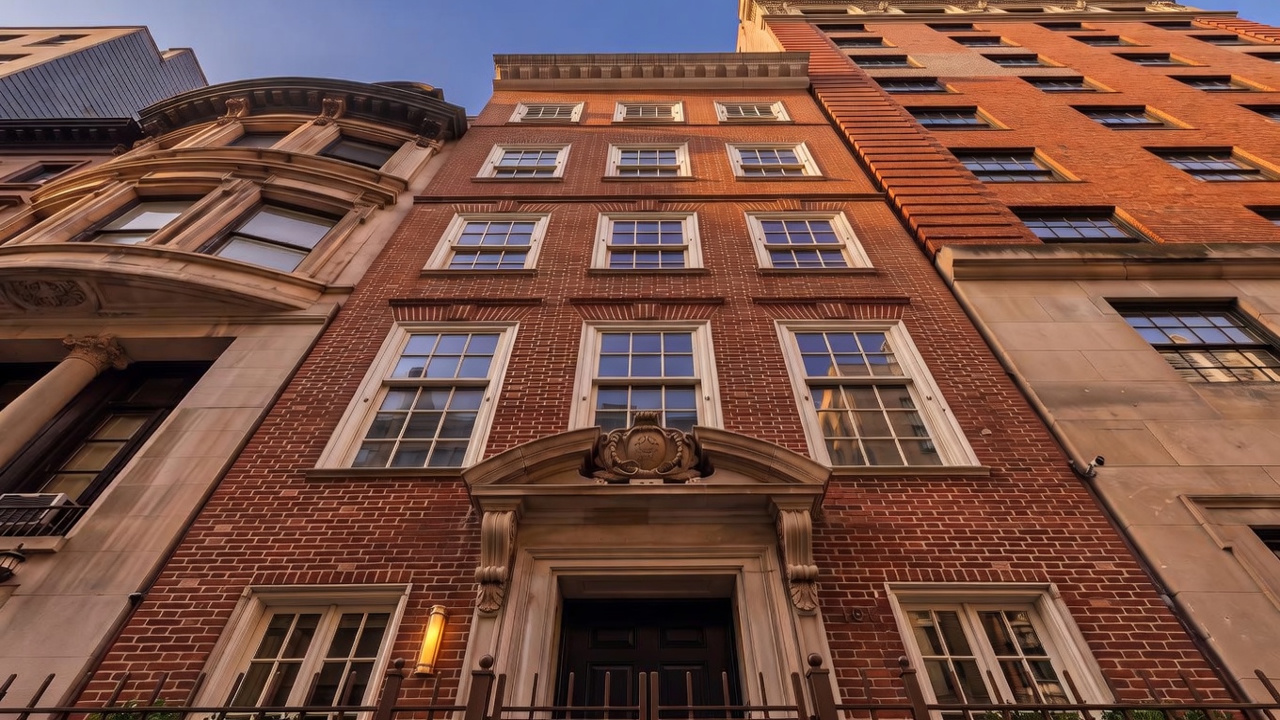
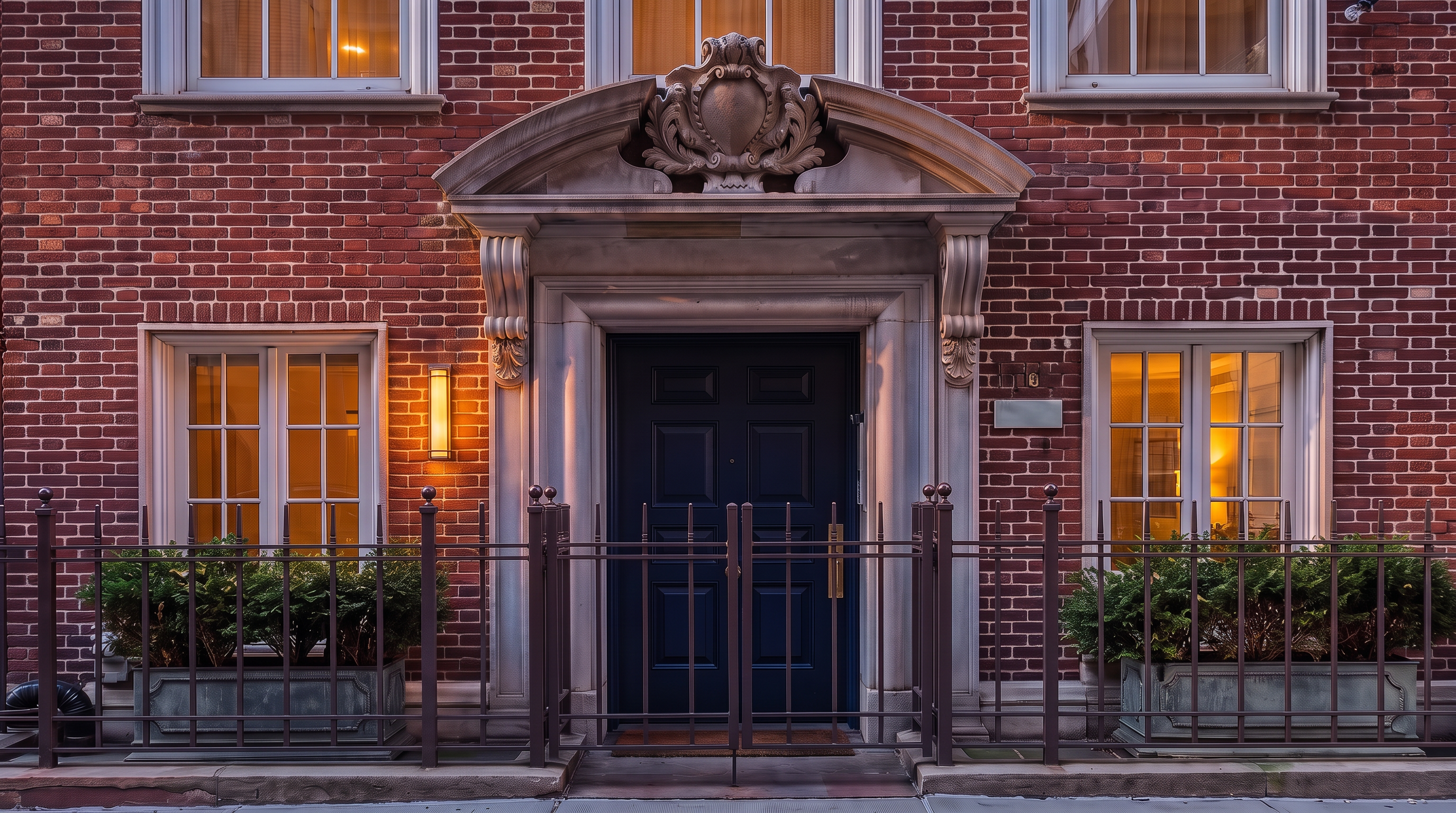
There is a particular kind of restraint that defines true luxury — the confidence to let quality speak for itself rather than announce it. At 46 East 66th Street, that restraint is evident from the very first impression. The classic red-brick facade, accented by a carved limestone cartouche and set behind a private iron gate, offers little away to the passerby. What lies within is another world entirely.
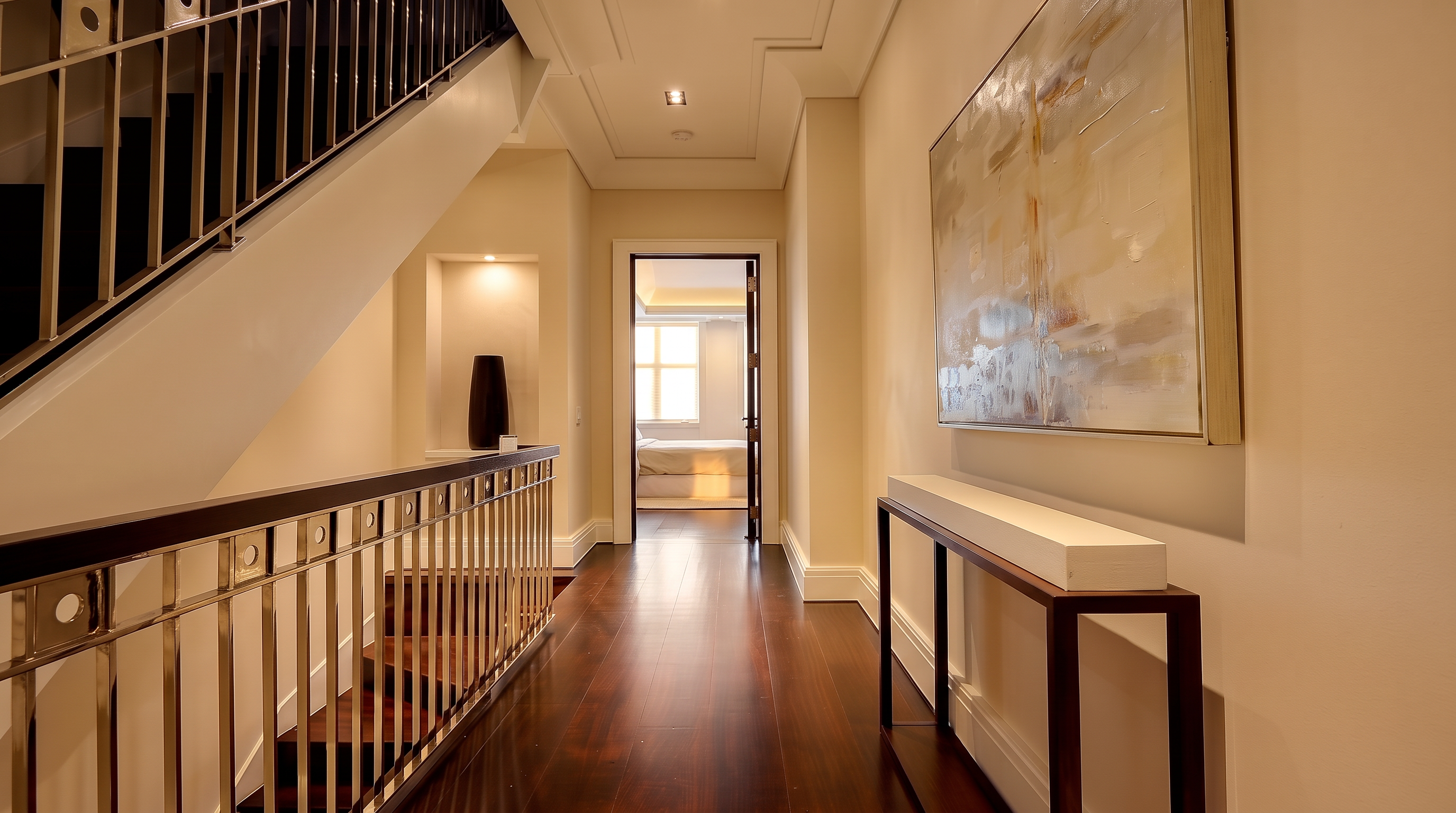
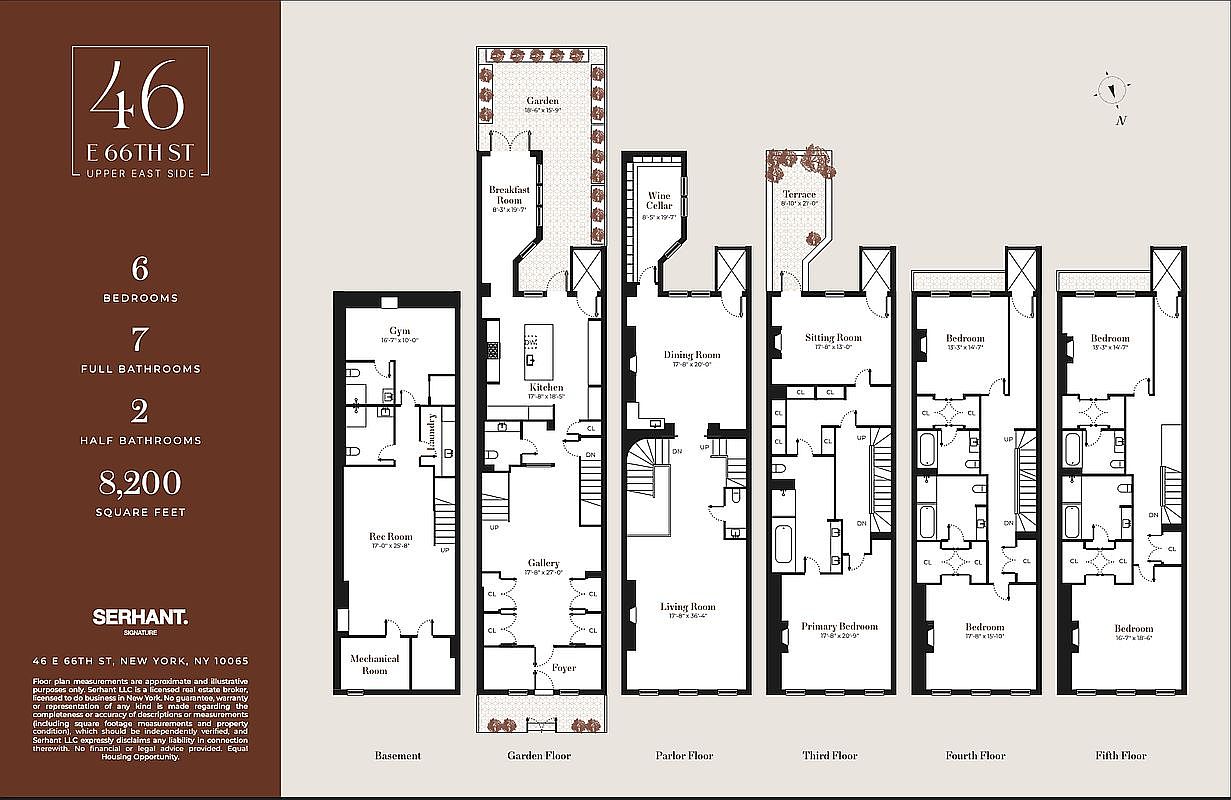
The collaboration between HJ Development and Mojo Stumer, a firm with a global reputation for bespoke residential design, has produced a home of rare coherence. Spanning six floors and approximately 8,200 square feet, the townhouse has been recently renovated and upgraded throughout — not merely refreshed, but reimagined from the ground up using premium, purpose-selected materials. The result is a residence that feels simultaneously timeless and entirely of the moment.
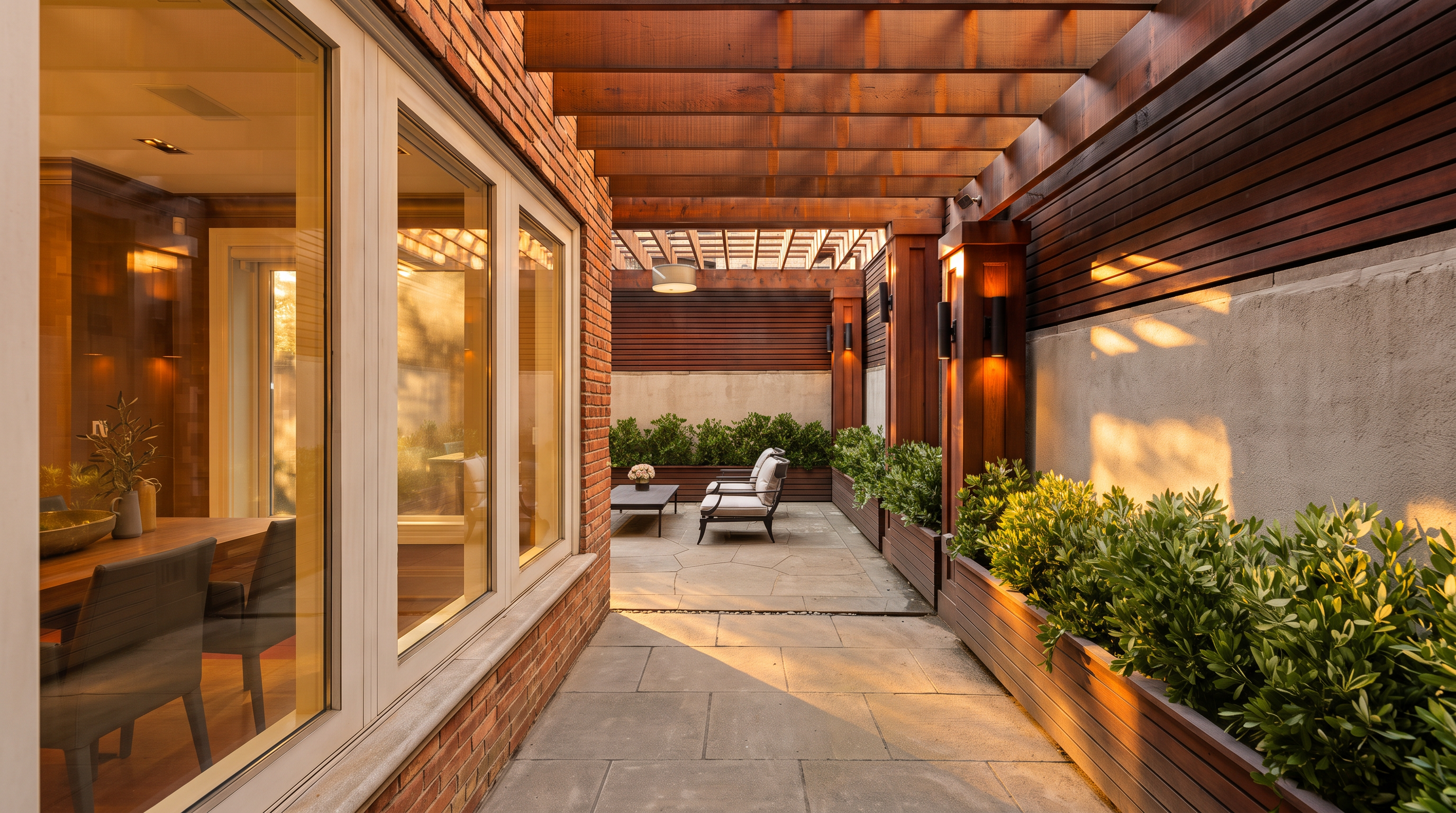
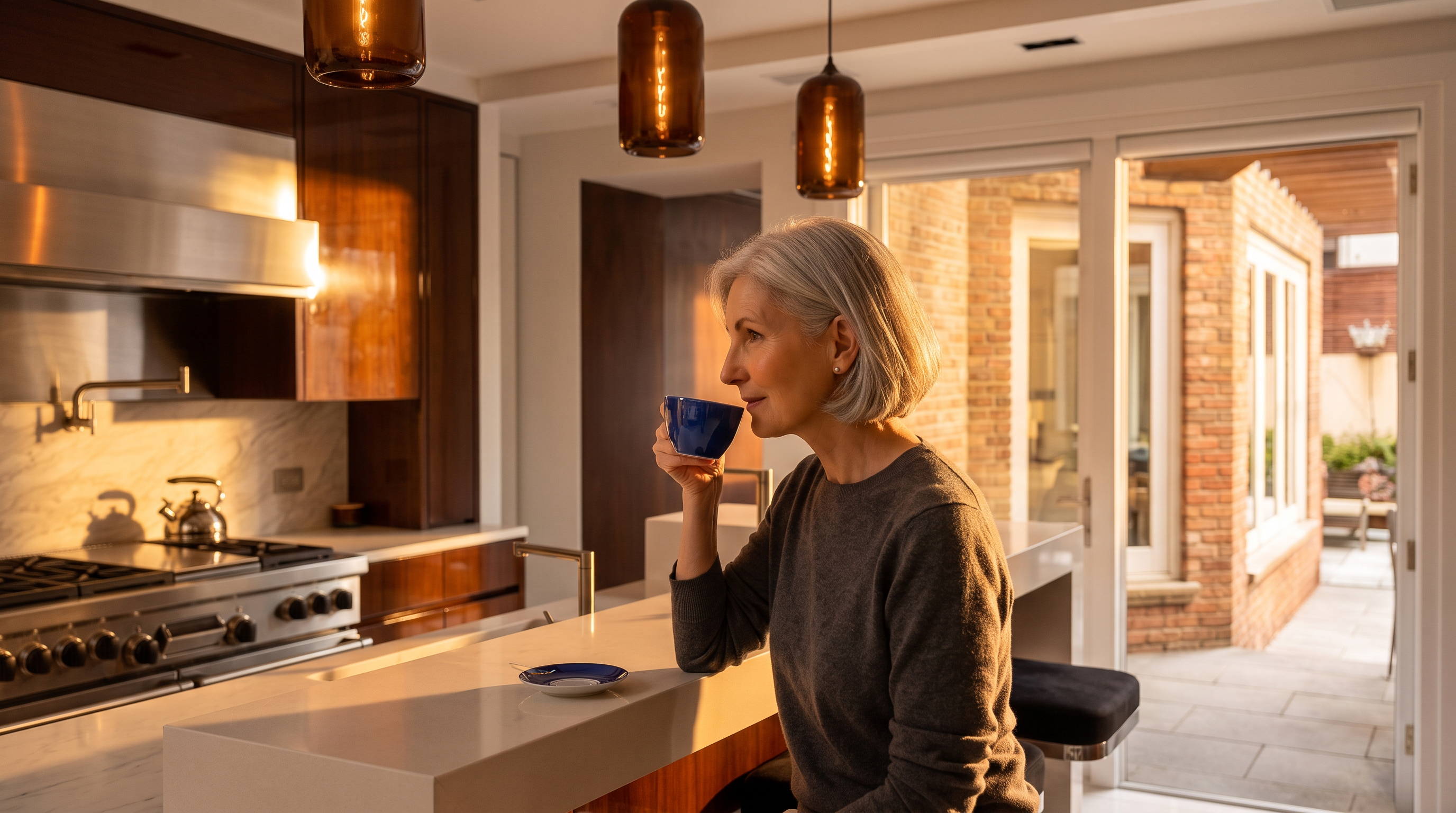
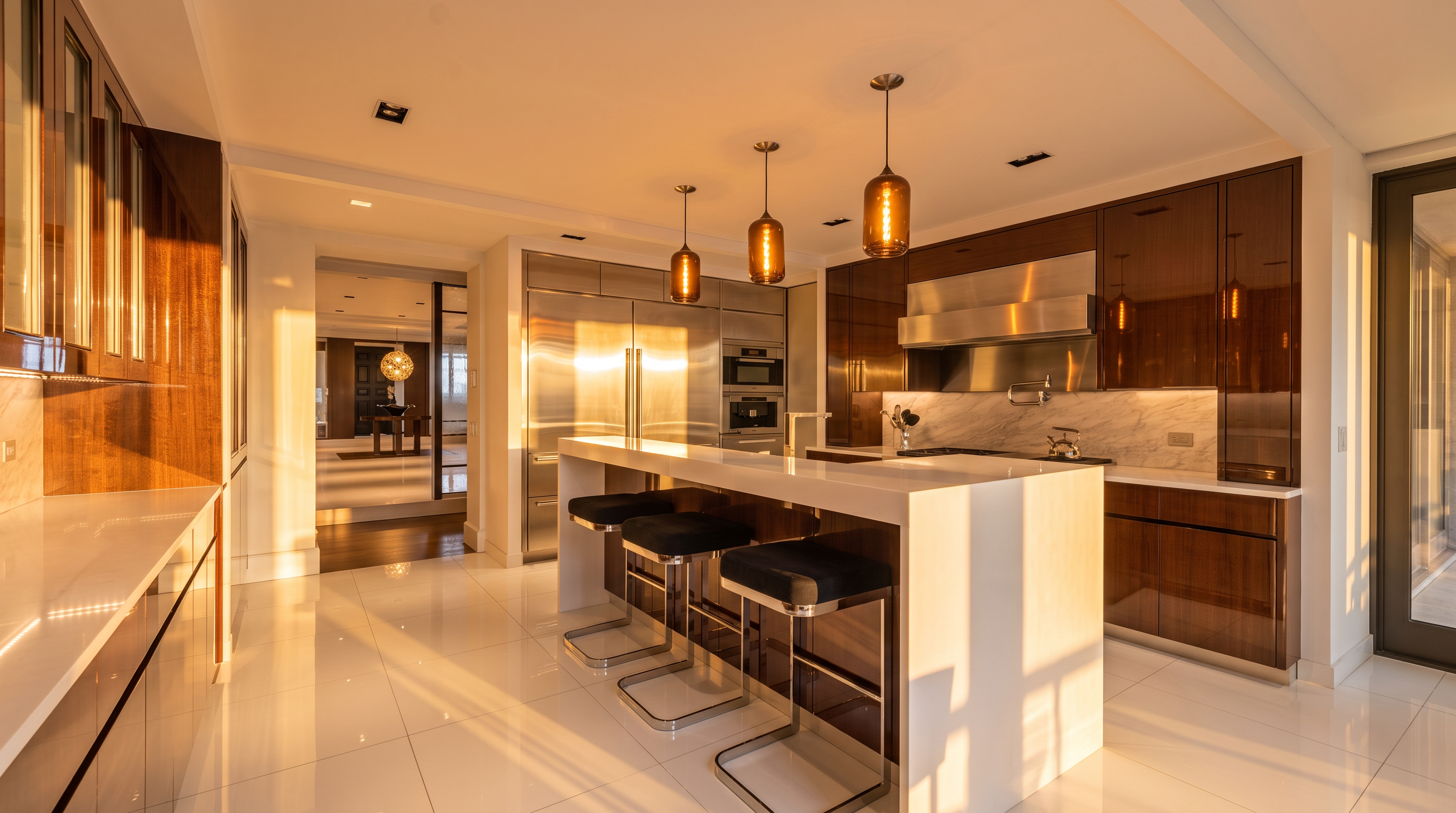
Radiant heated floors run throughout, a quiet luxury that sets the tone from the gracious entry foyer. The custom chef's kitchen is appointed with Glassos countertops, a Calacatta Nuvolato marble backsplash, and a professional suite of Sub-Zero, Wolf, and Miele appliances alongside a built-in Nespresso system. A sun-filled breakfast room opens to the private rear garden, creating an effortless connection between interior comfort and outdoor calm.
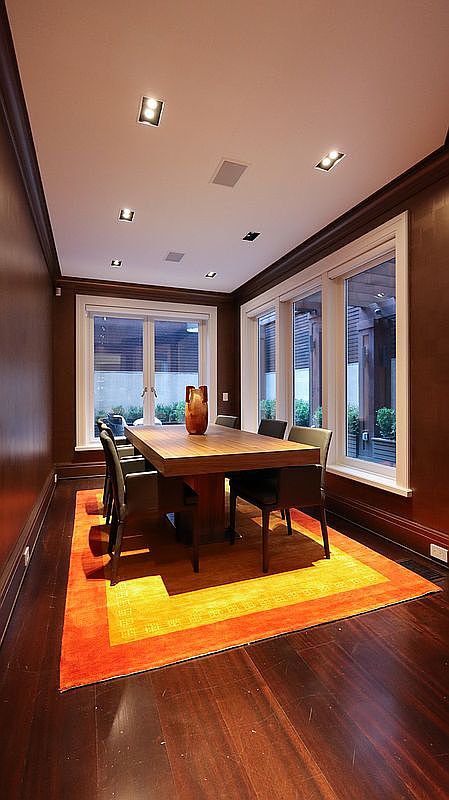
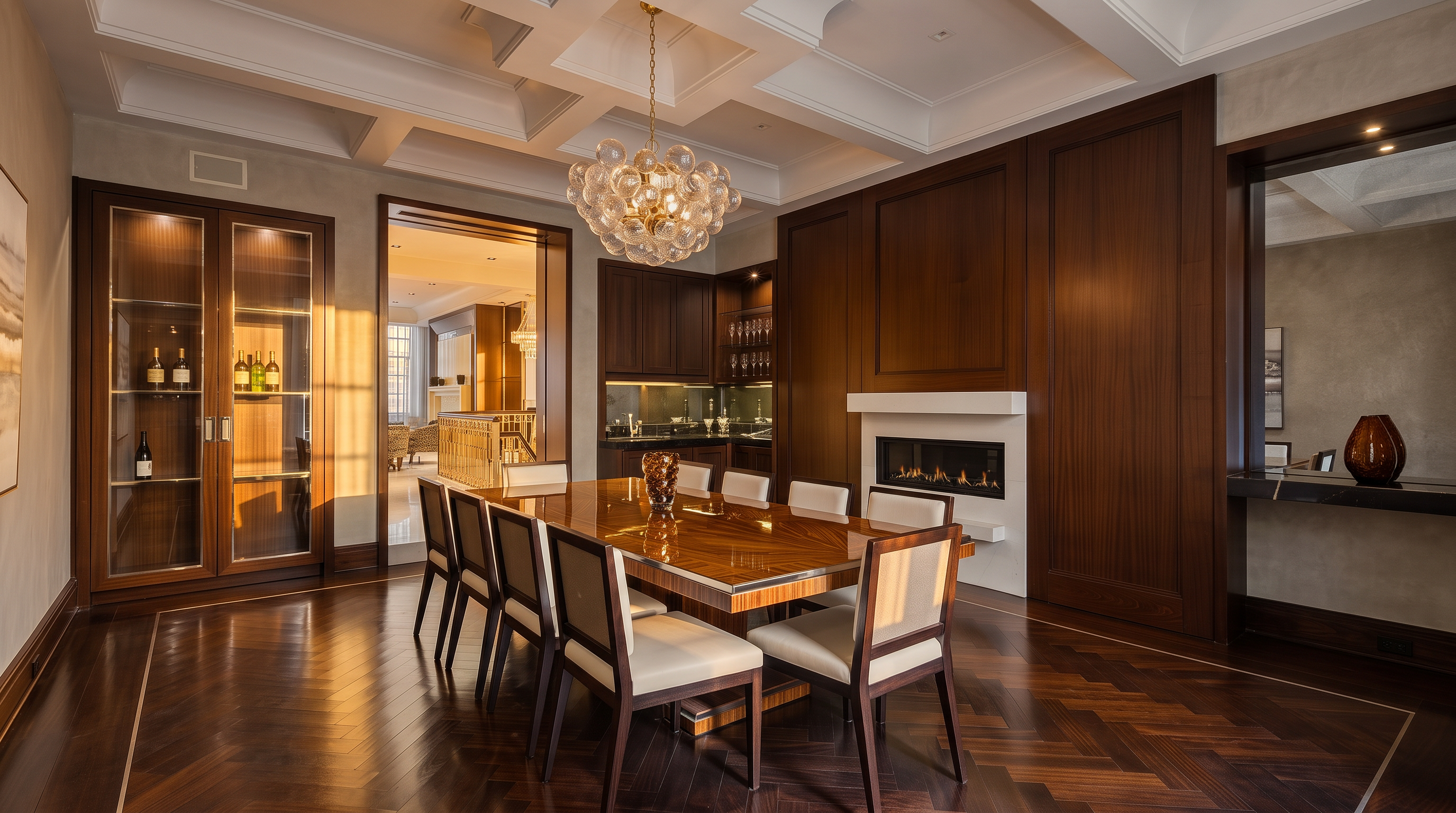
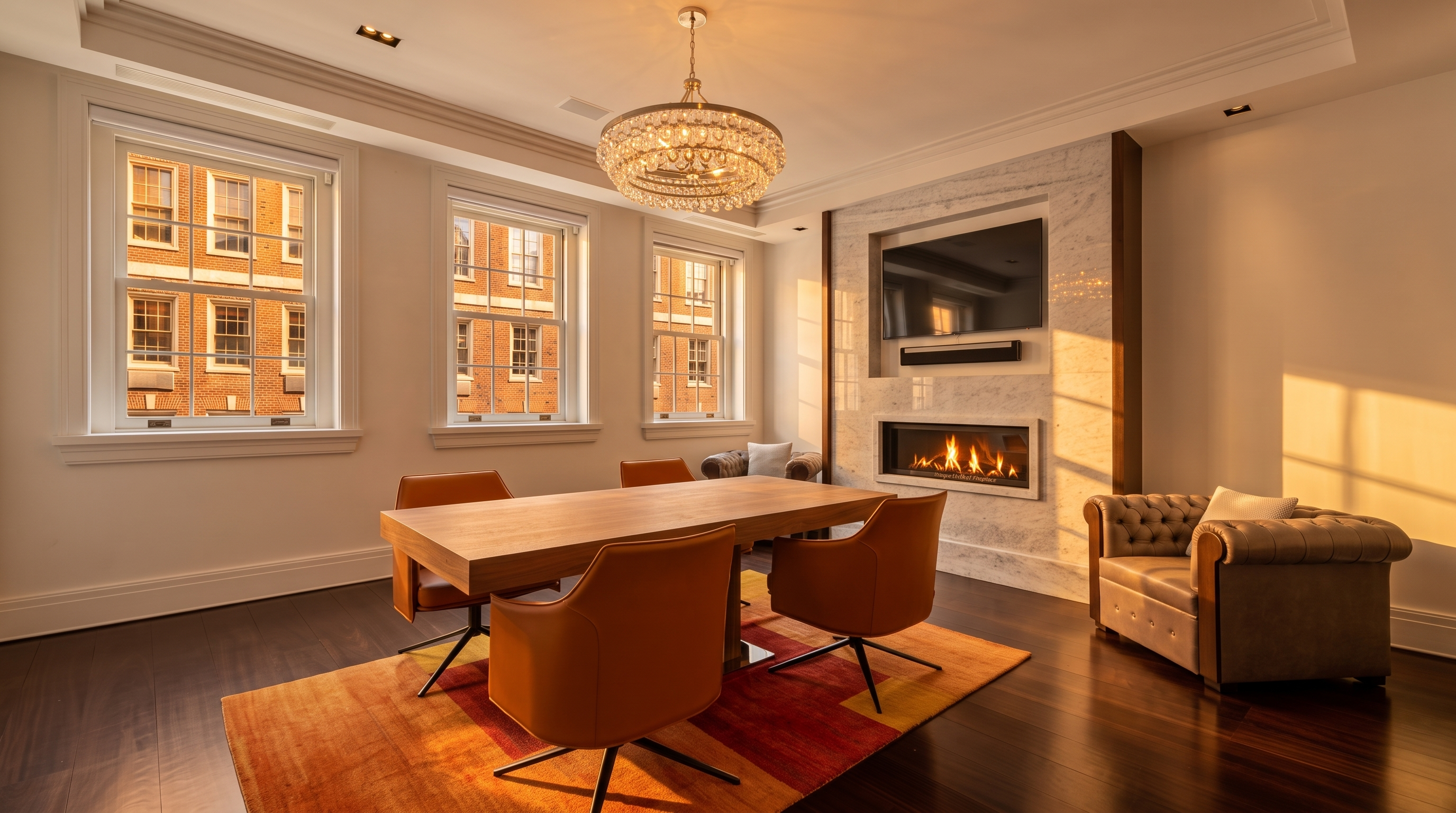
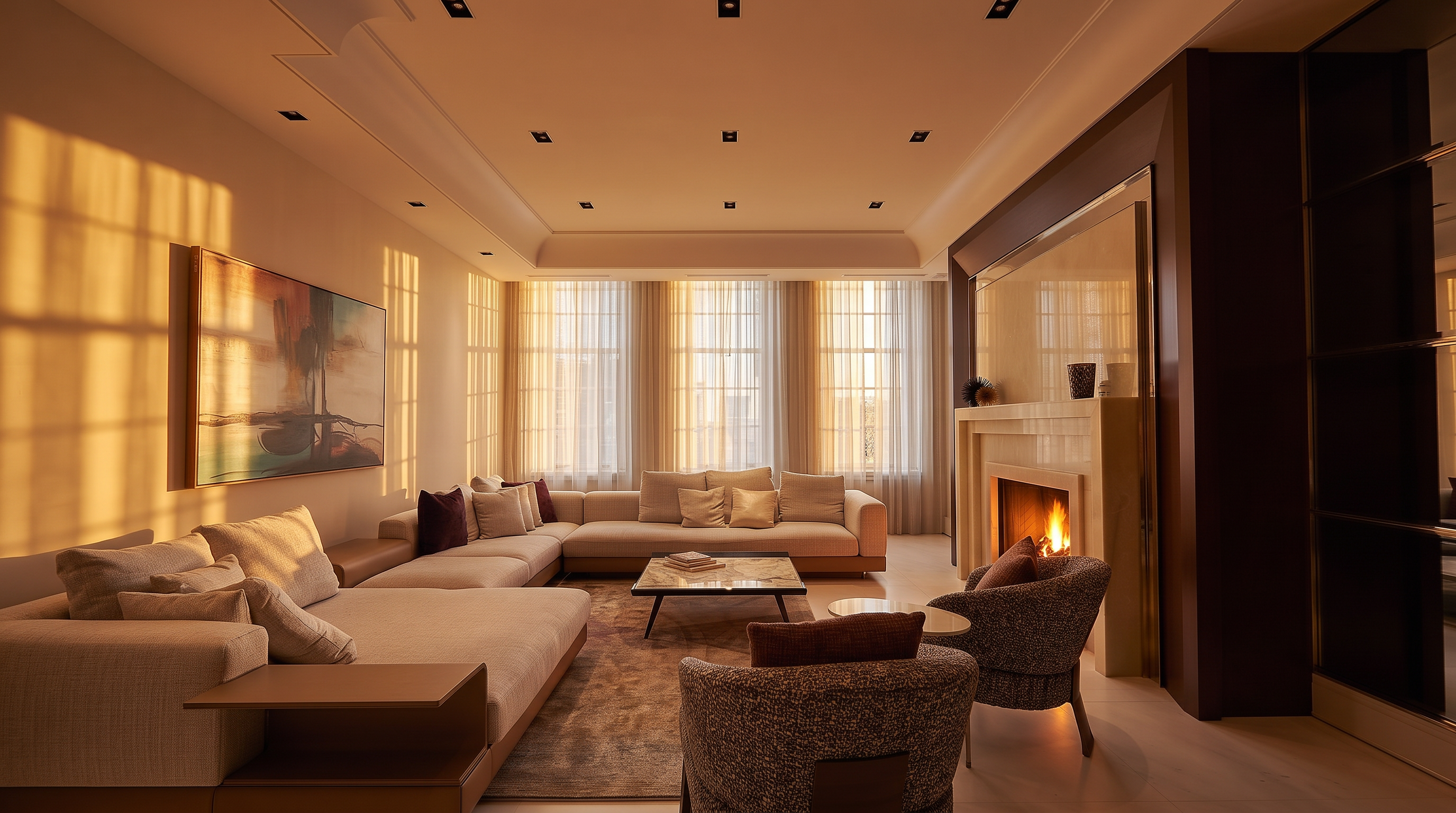
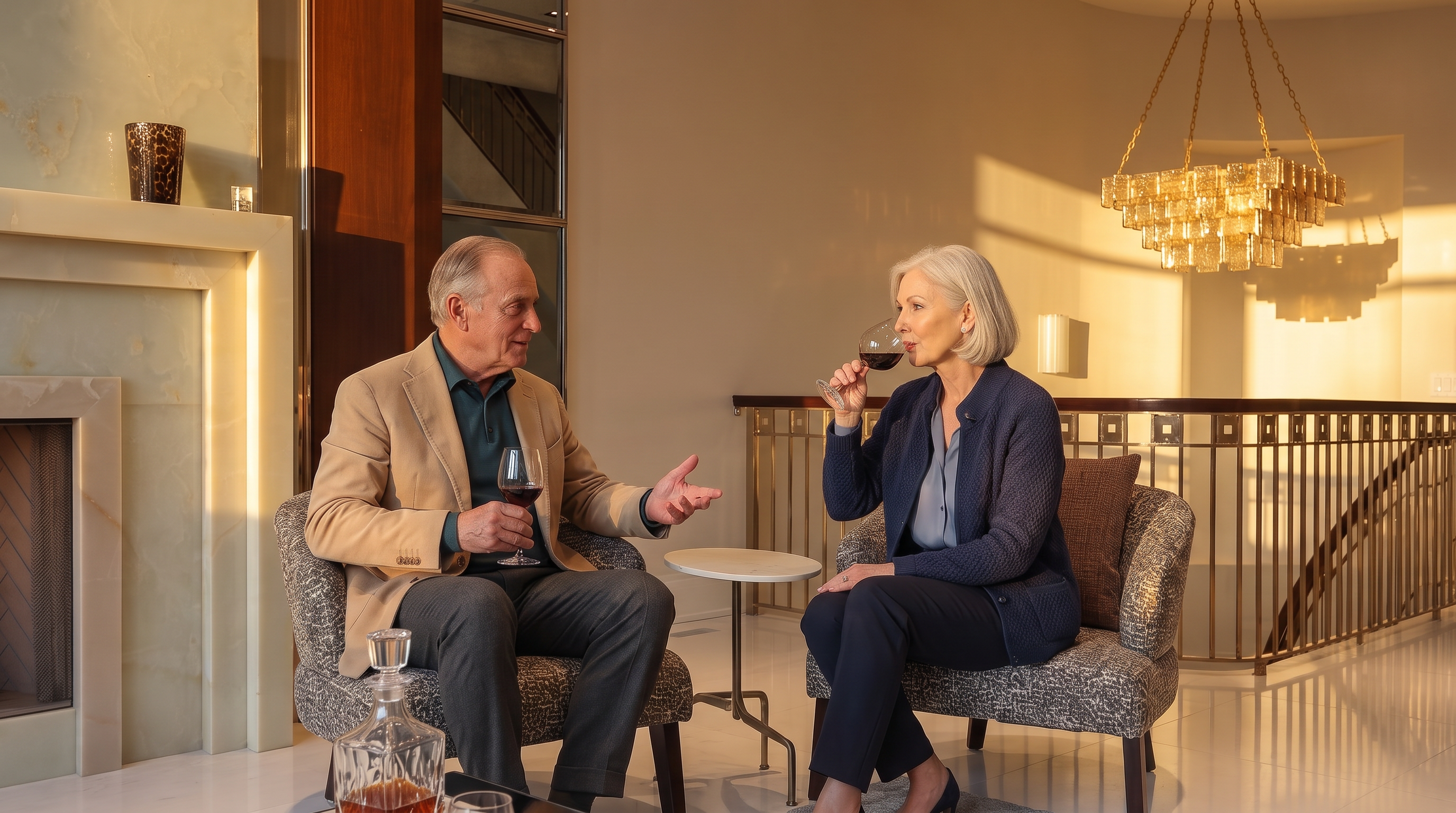
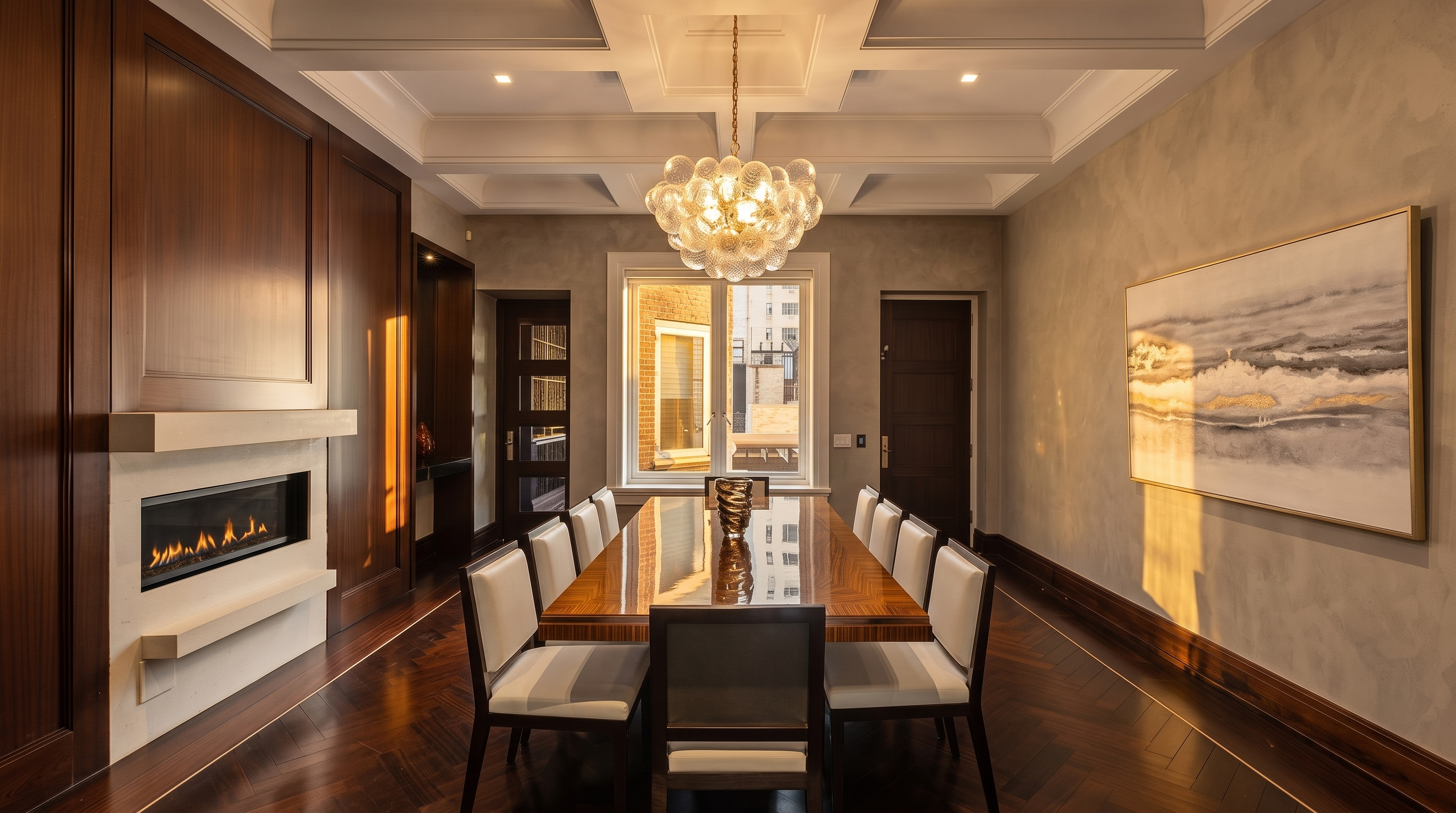
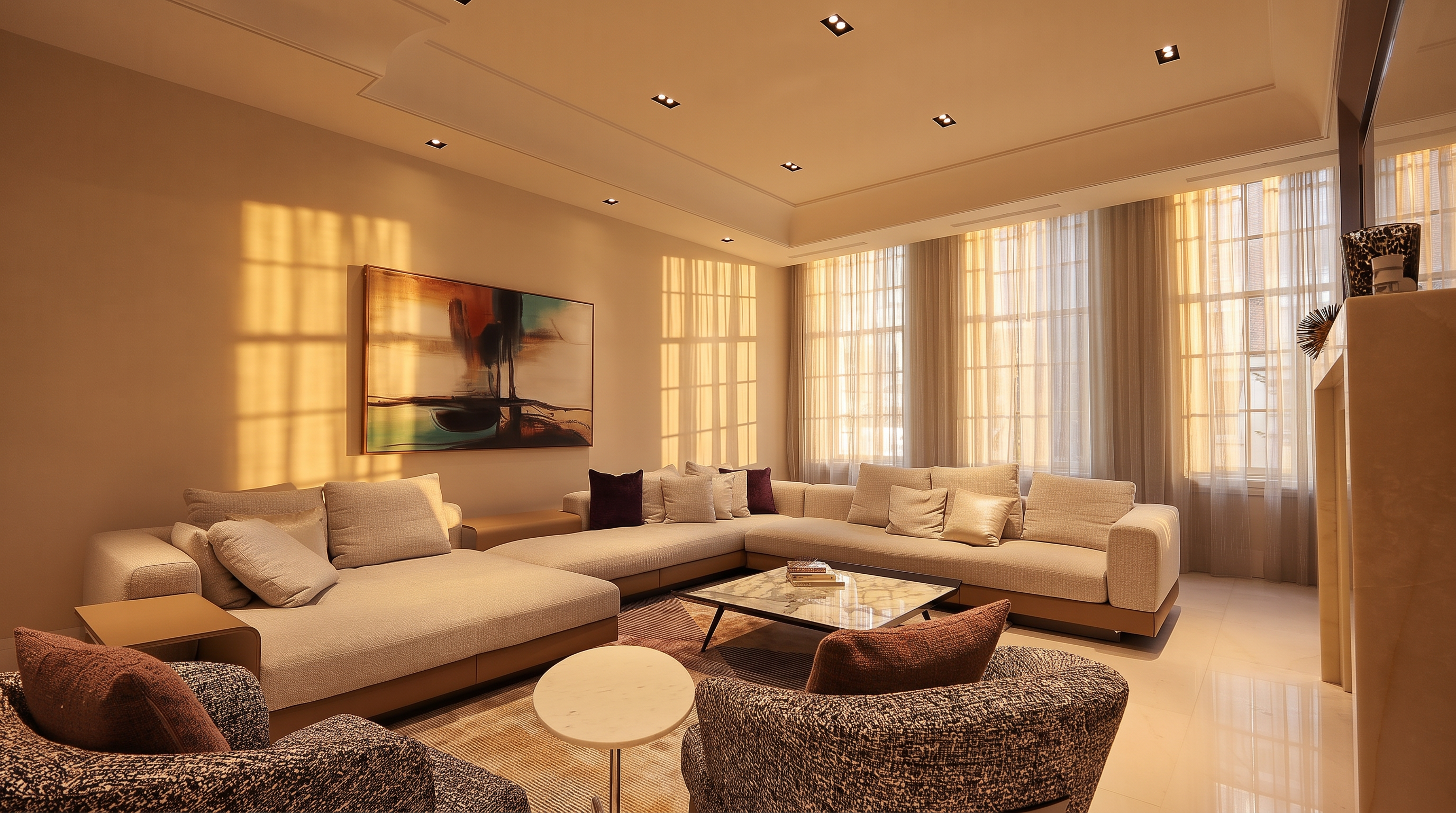
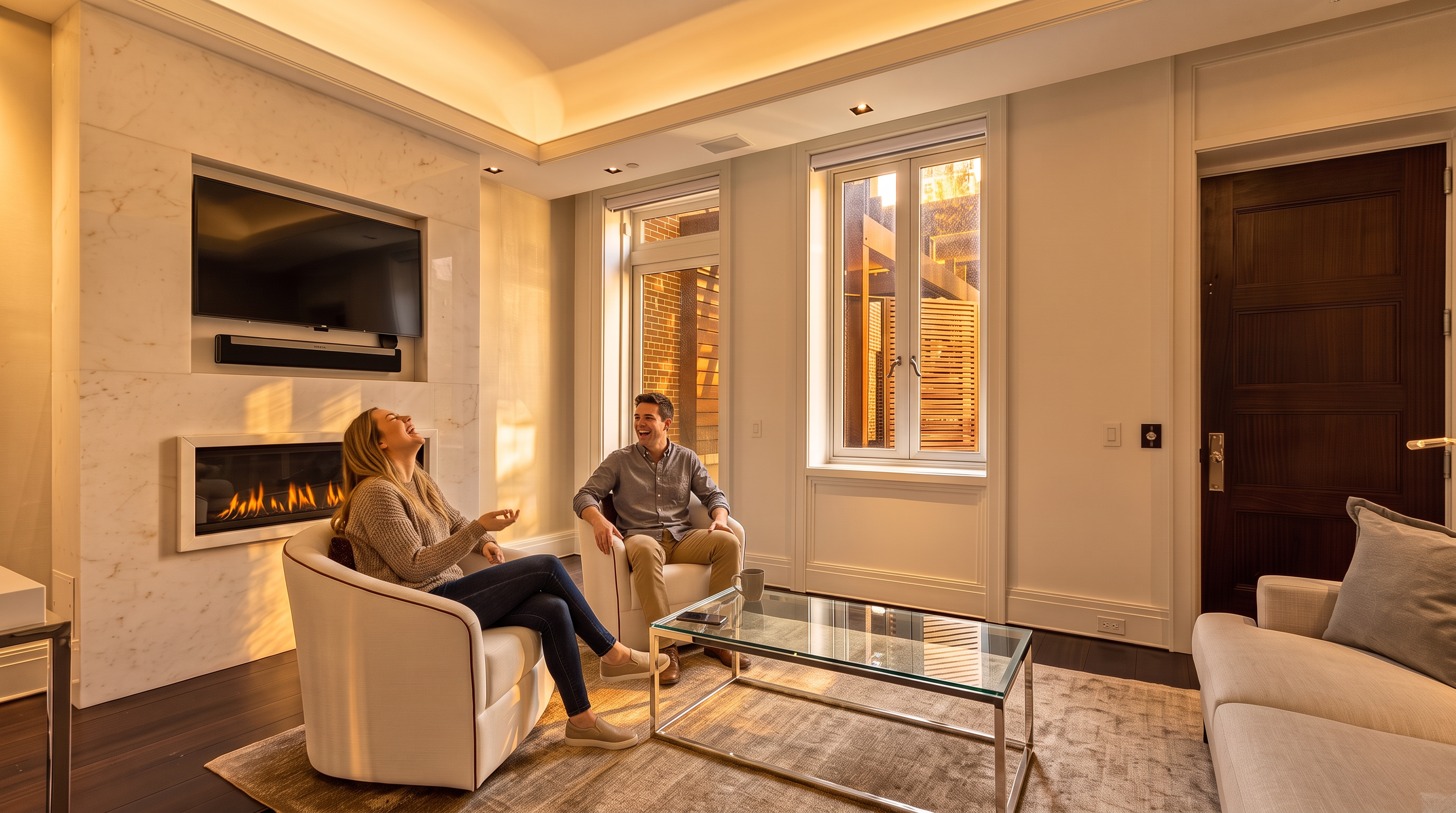
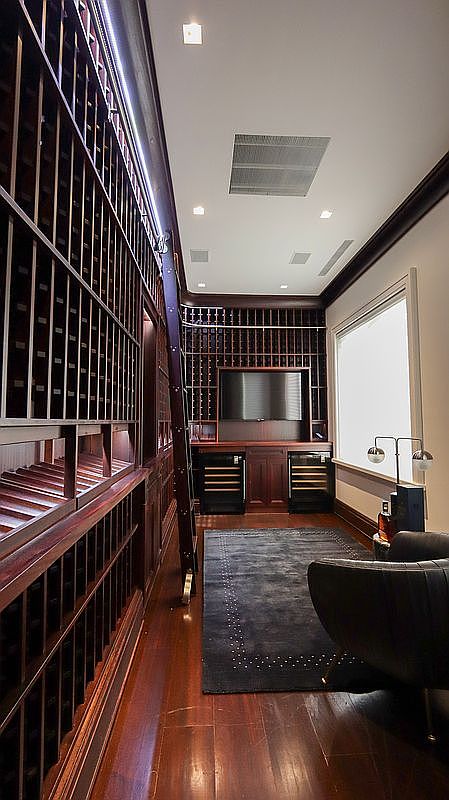
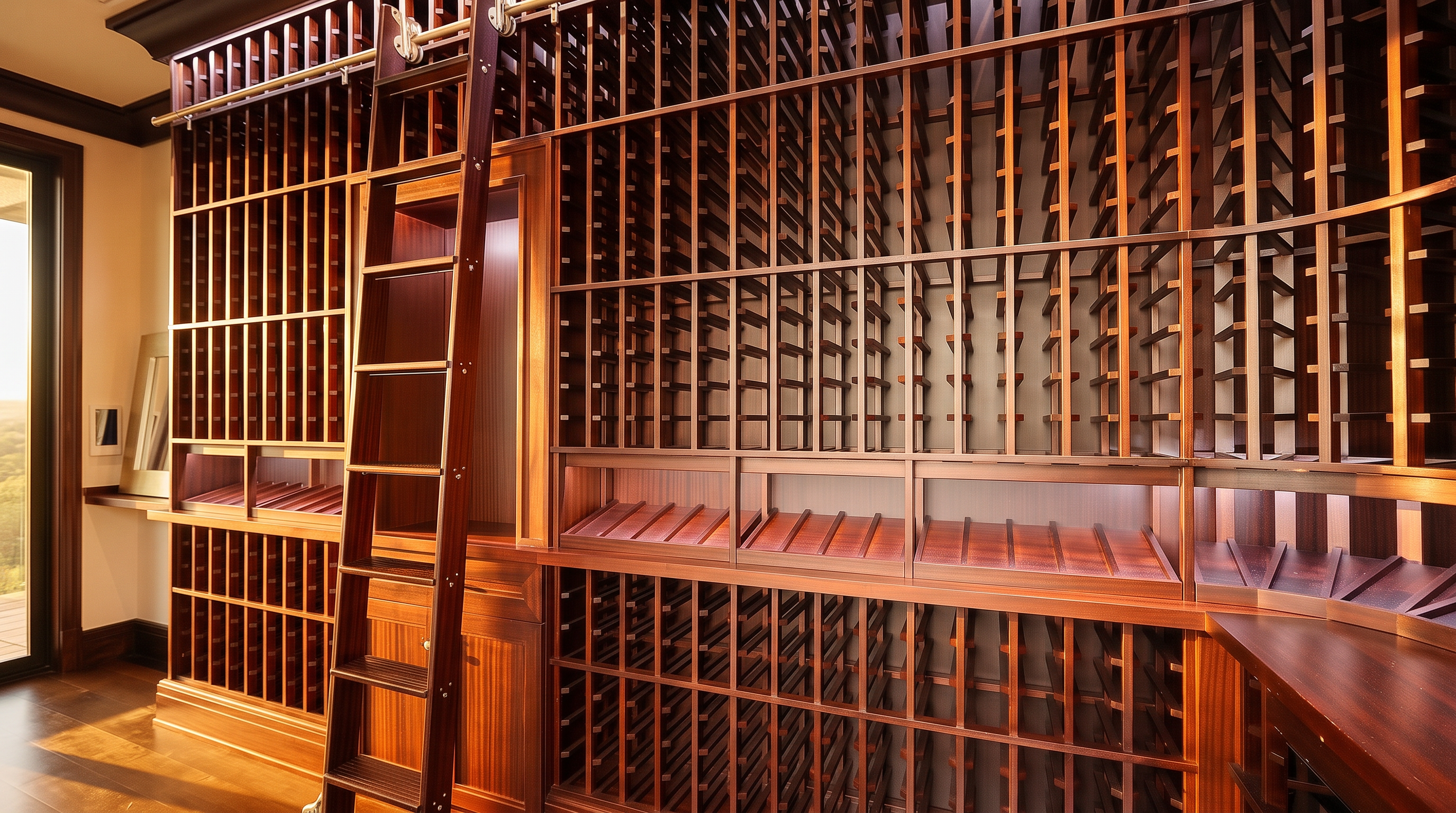
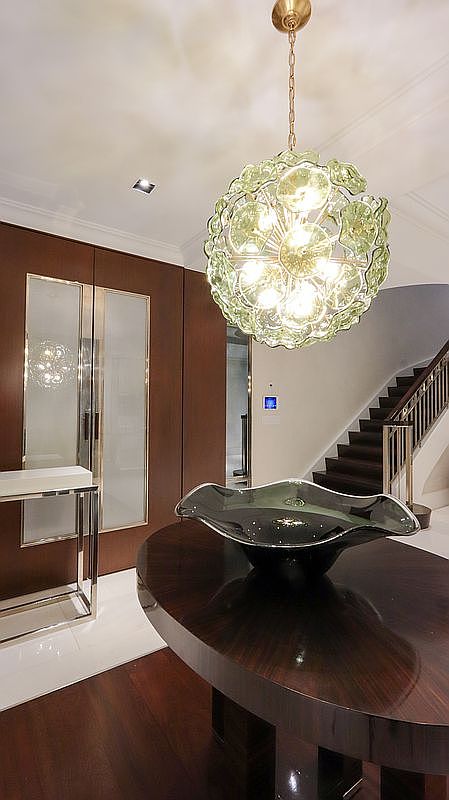
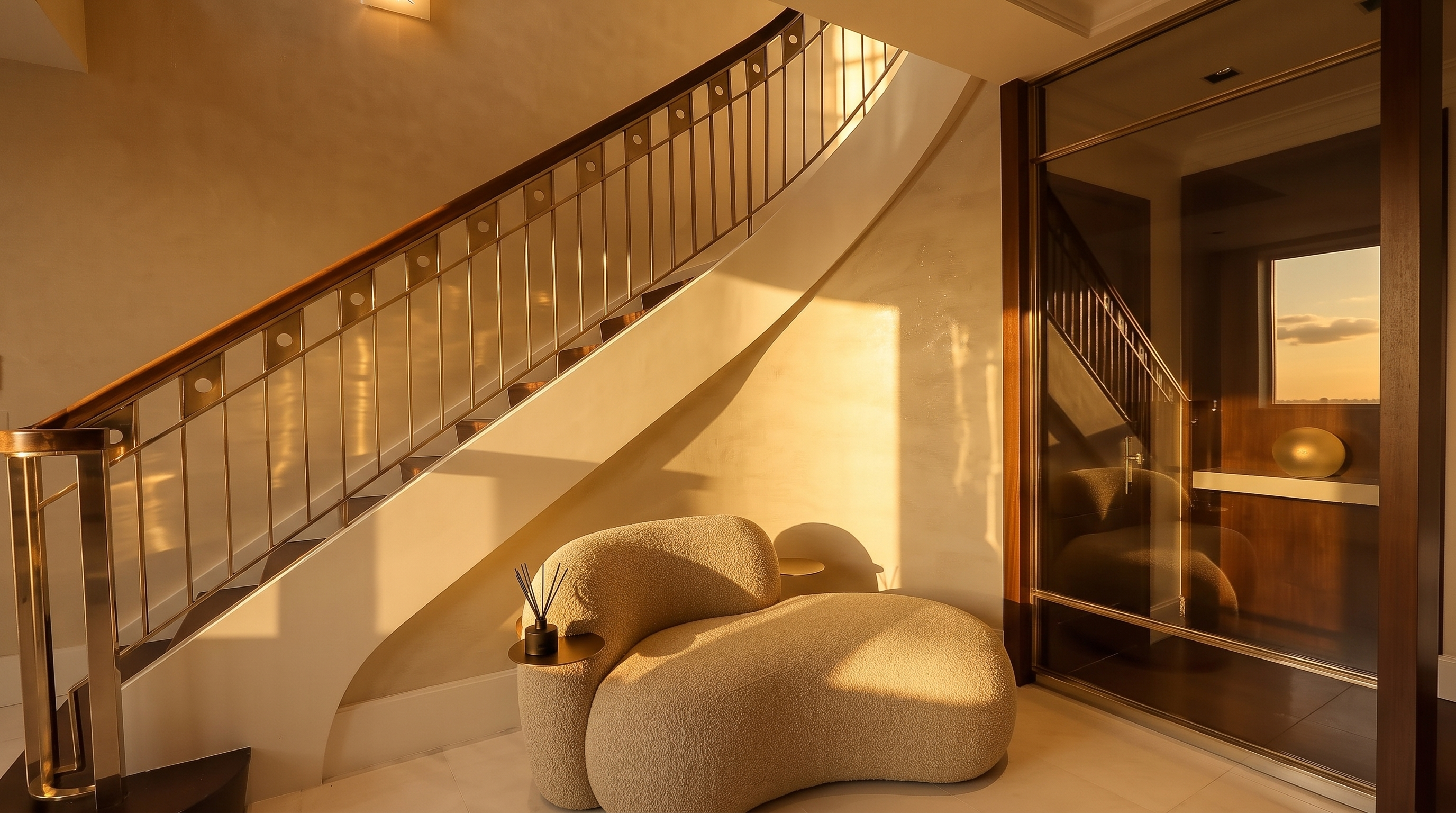
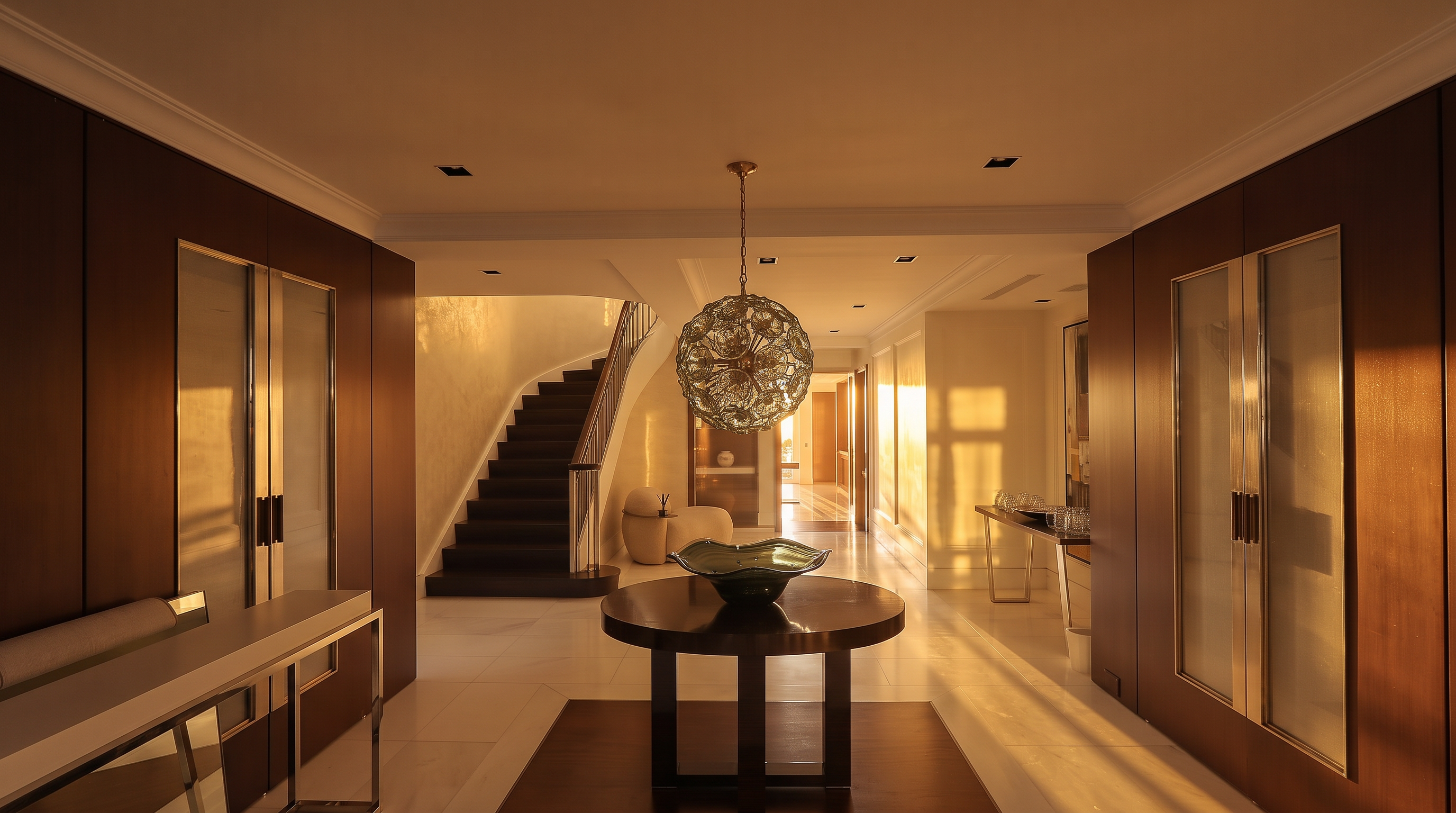
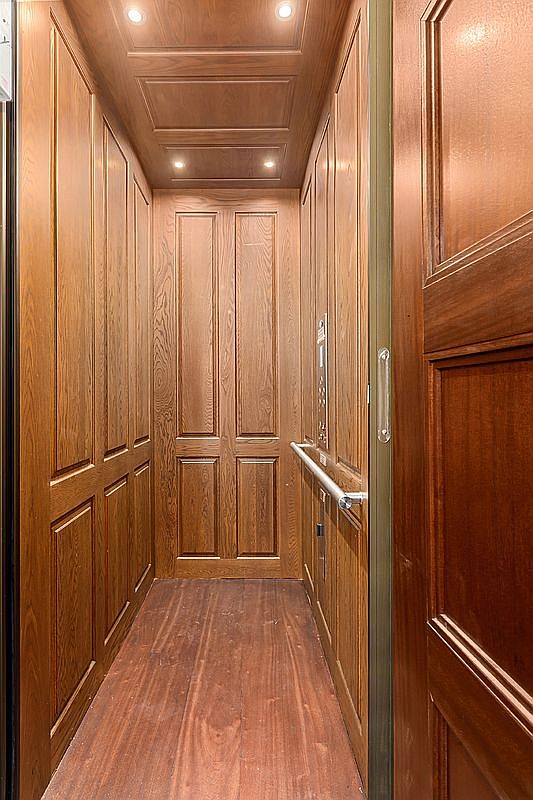
The entertaining floor, reached by either the sculptural staircase or the wood-paneled private elevator, operates on a different register altogether. Soaring ceilings above eleven feet lend the formal rooms a sense of occasion that few Manhattan residences can match. The dining room — herringbone hardwood floors, coffered ceiling, gas fireplace, and a glass bubble chandelier casting warm light across dark wood paneling — is a room designed for evenings that linger. Adjacent, the wine lounge with custom racking for over one thousand bottles and a rolling library ladder is as functional as it is theatrical. The living room offers its own counterpoint: oversized windows, a wood-burning fireplace framed in white onyx and mahogany, and an atmosphere of considered ease.
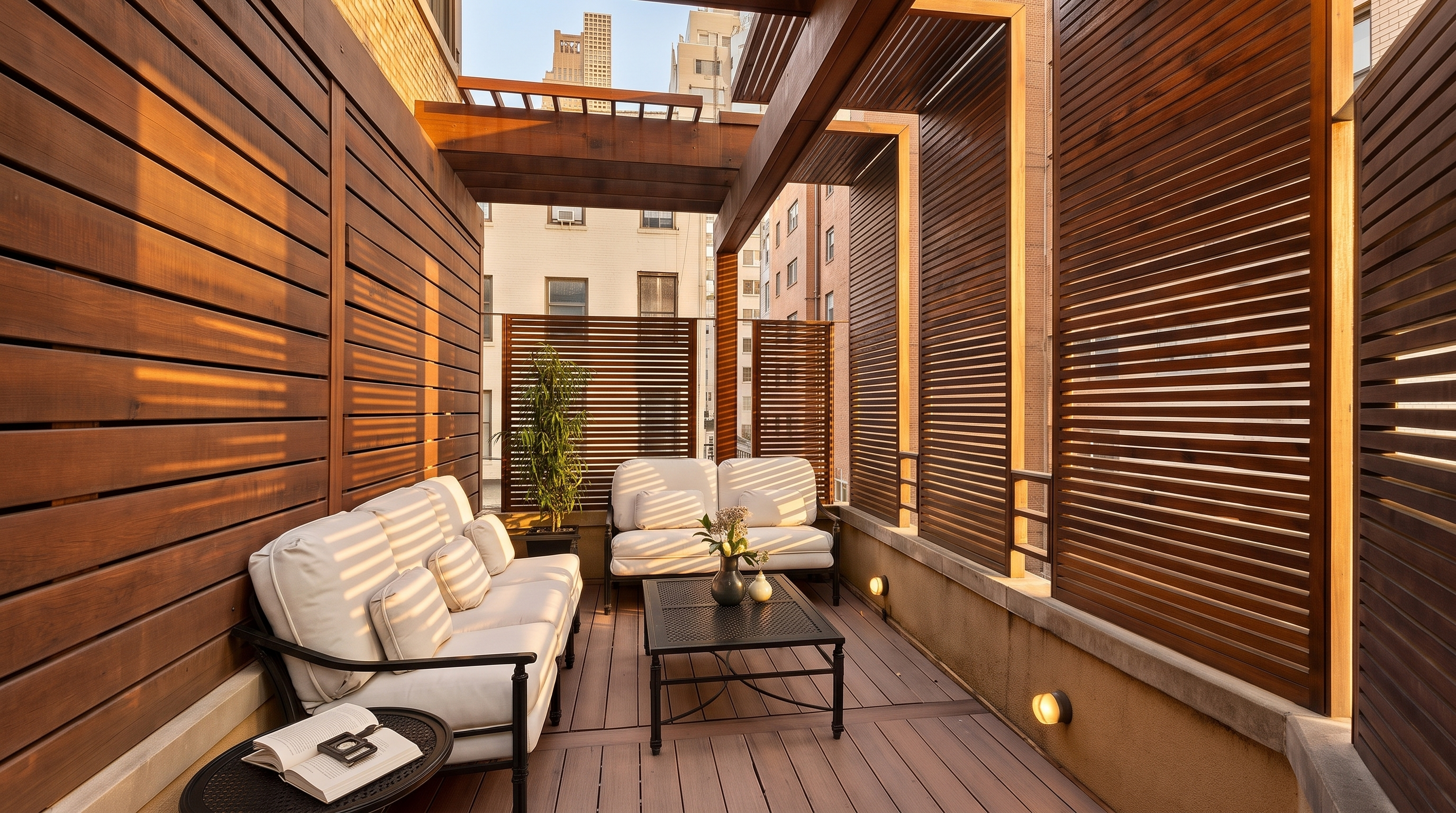
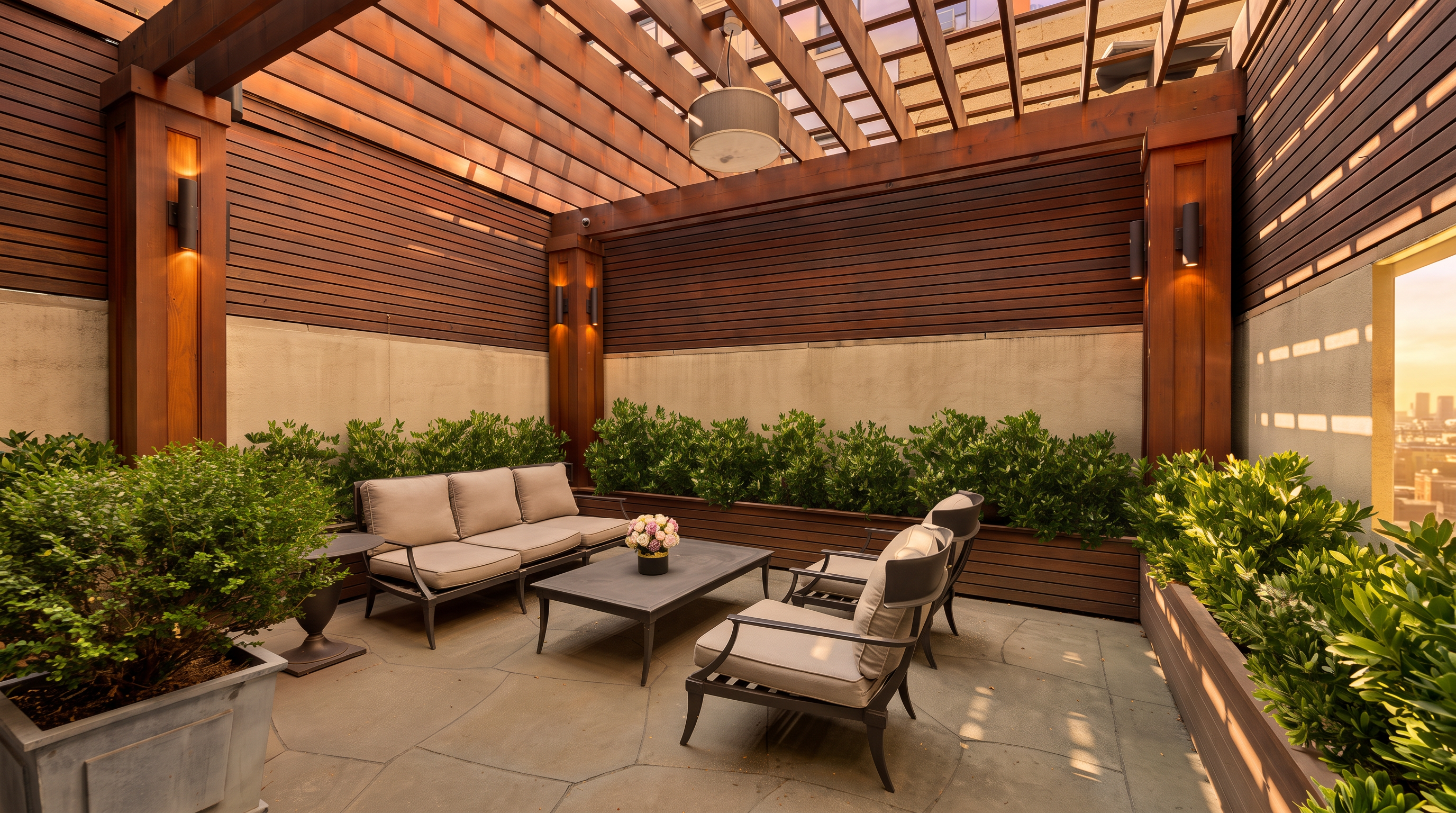
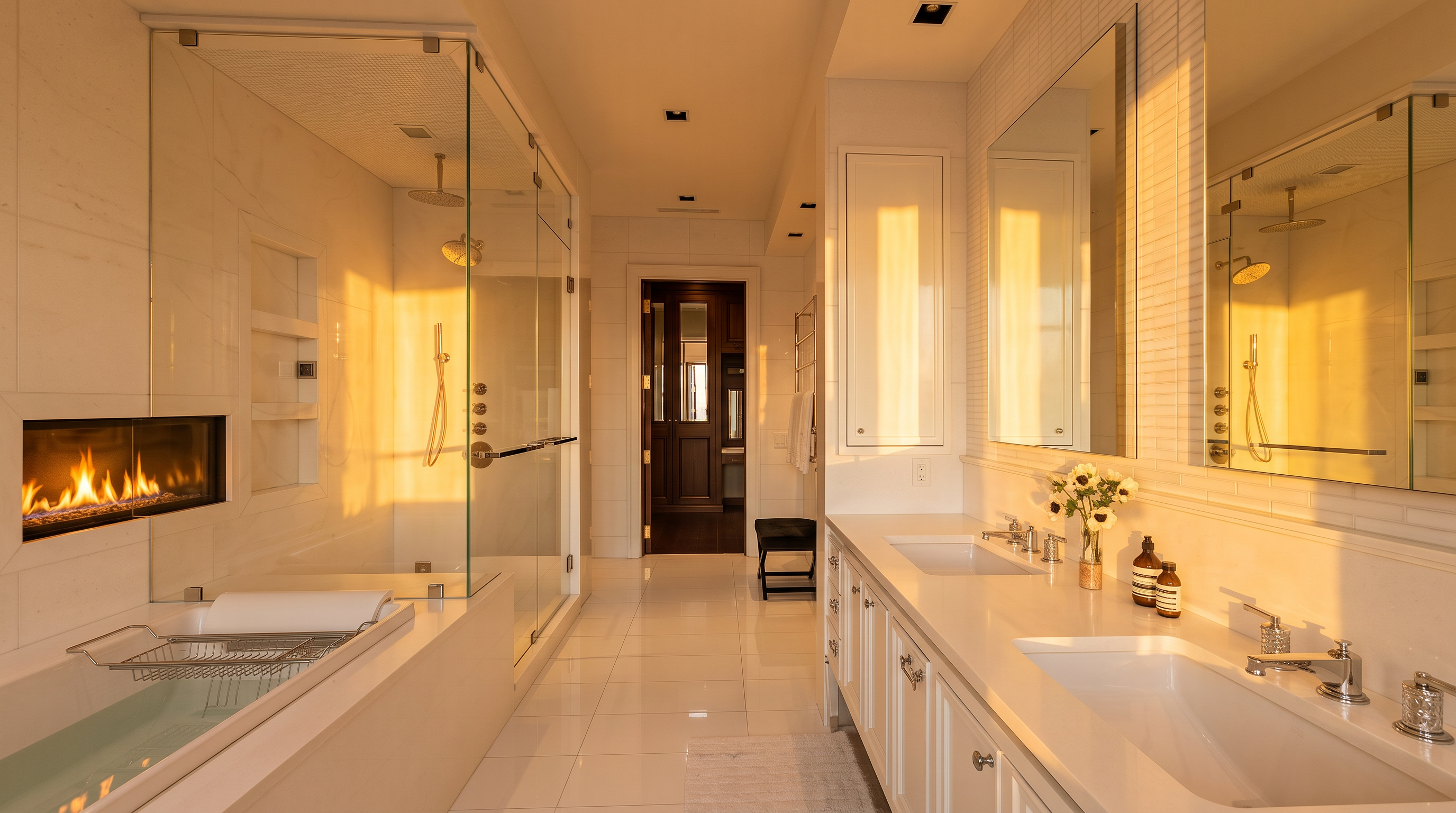
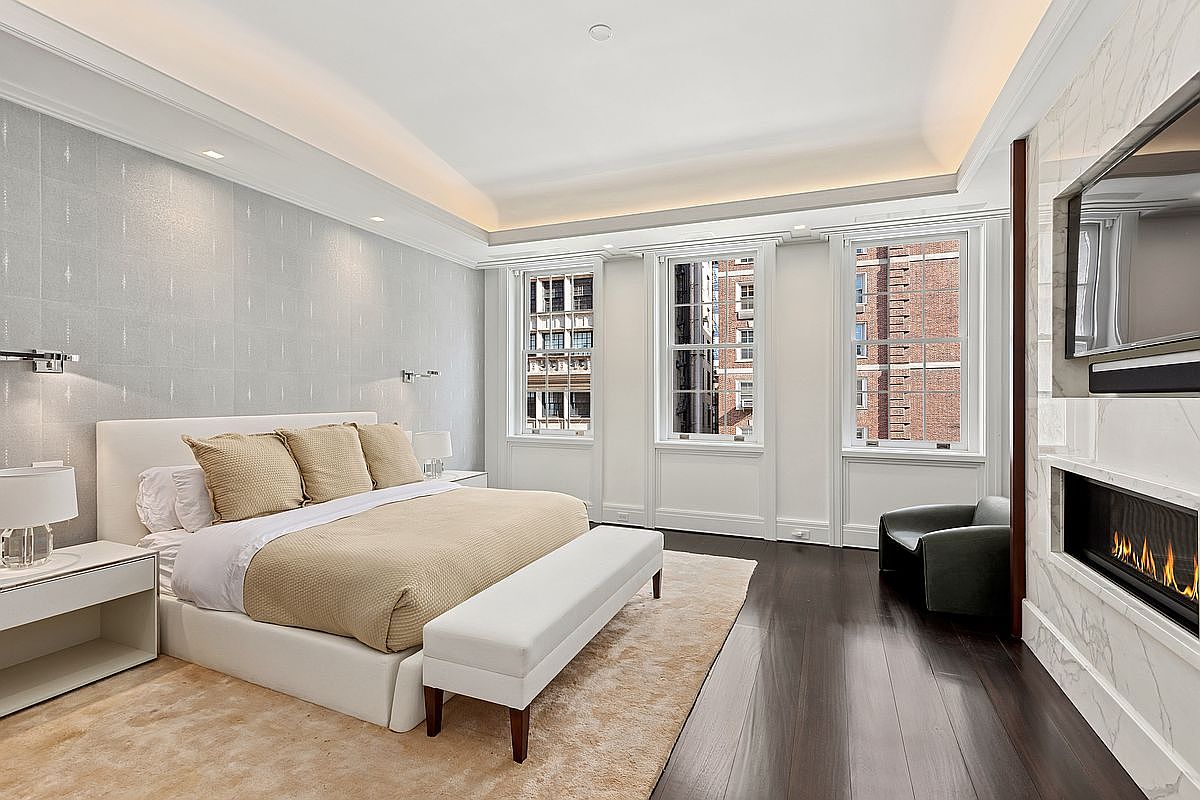
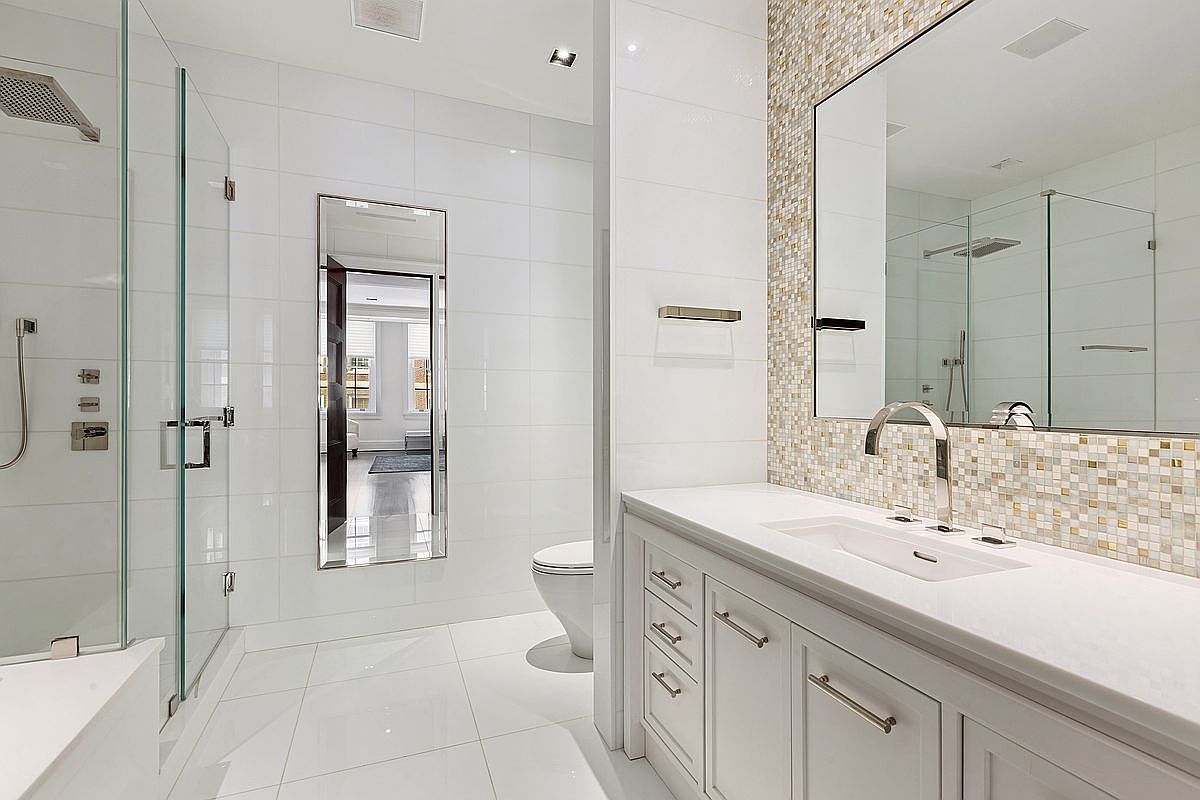
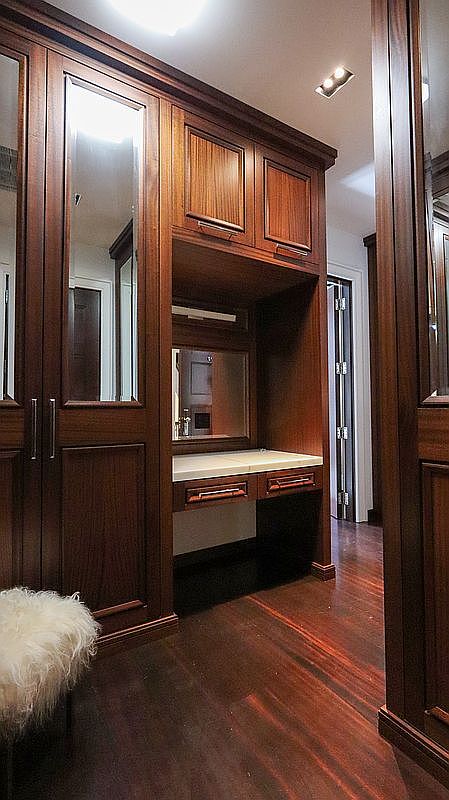
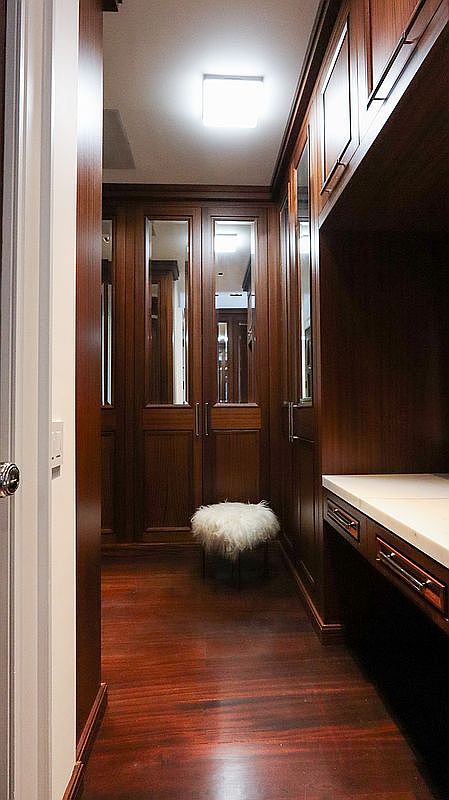
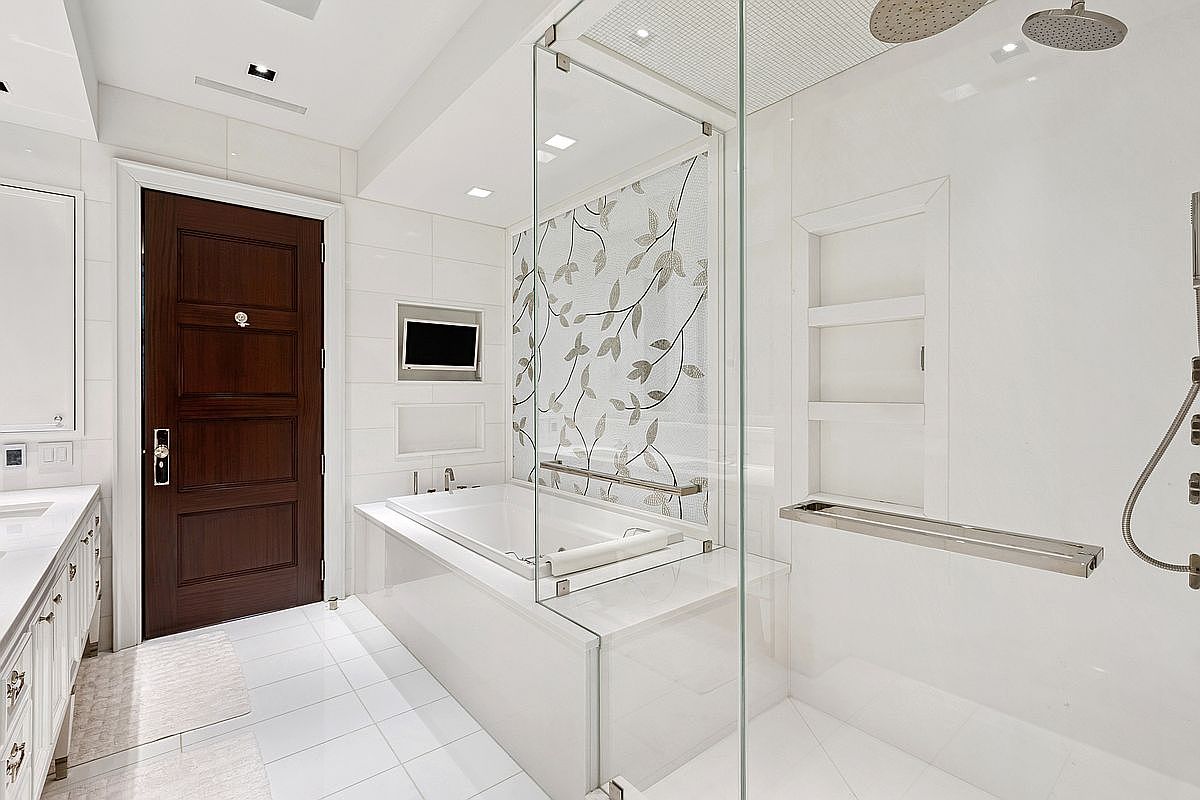
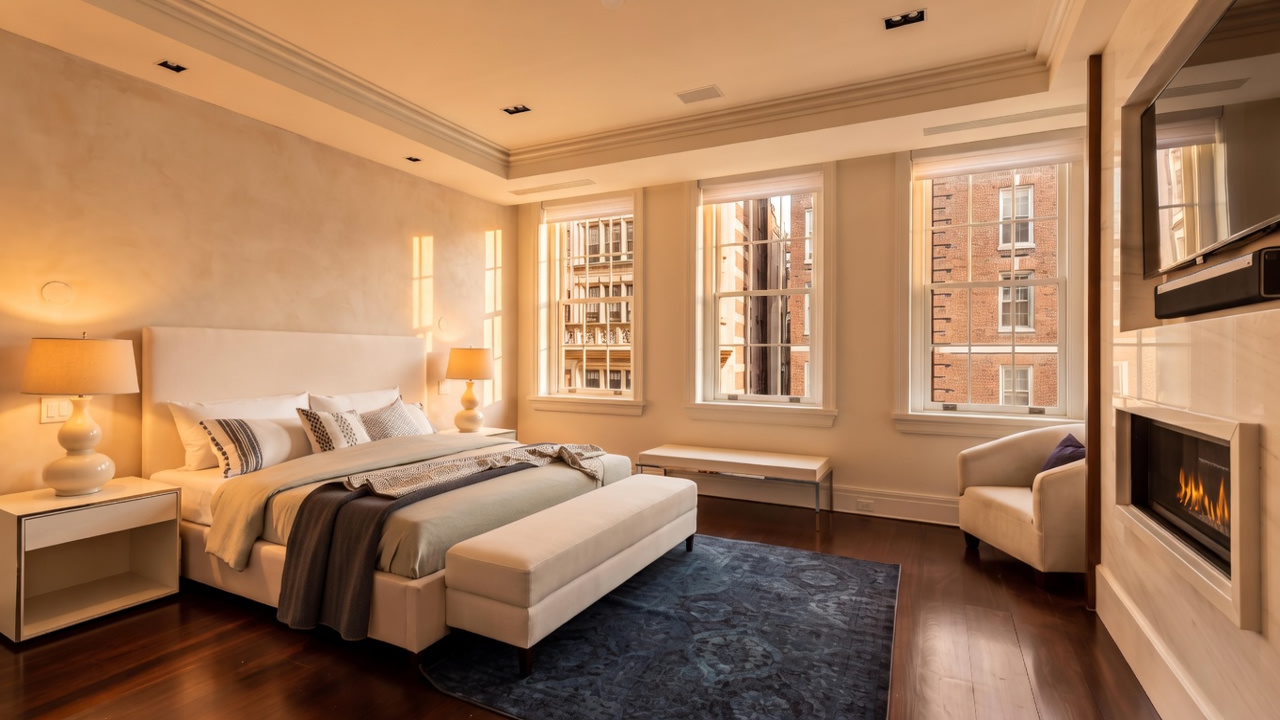
The entire third floor is given over to the primary suite — a decision that speaks to the home's underlying philosophy of genuine livability. Eleven-foot ceilings, a gas fireplace, and a private terrace establish the bedroom itself as a destination. The spa bathroom, finished in Thassos marble with a steam shower, deep soaking tub, and fixtures by Fantini and THG, offers the quality of a five-star retreat without ever leaving home. The custom dressing room, with floor-to-ceiling millwork and integrated mirrored panels, is both visually striking and impeccably organized.
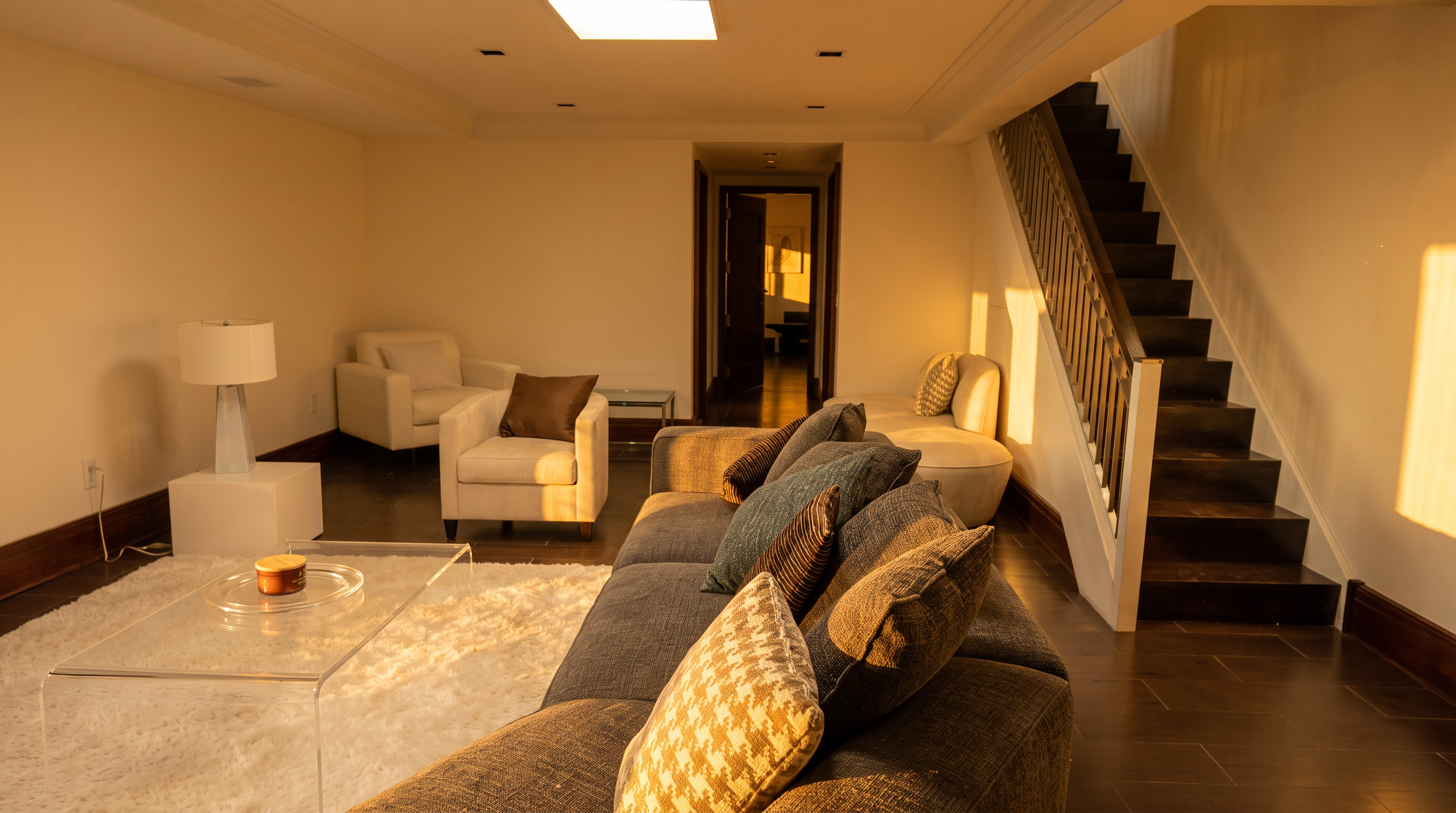
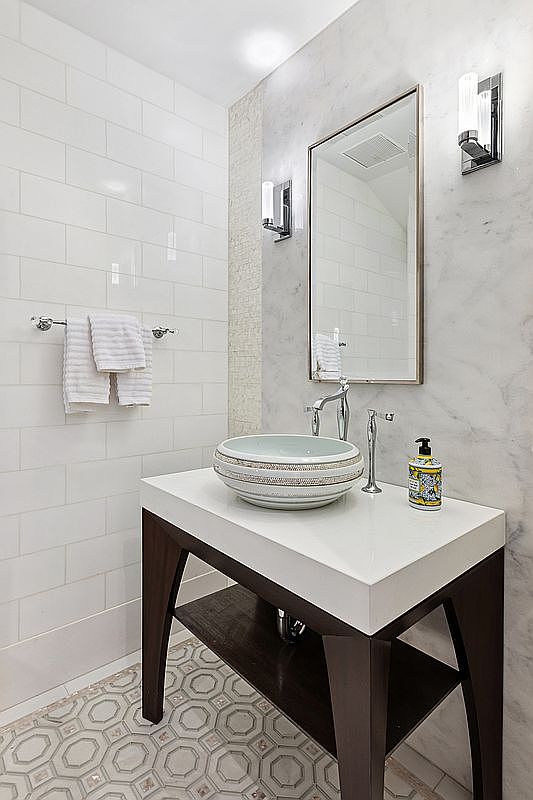
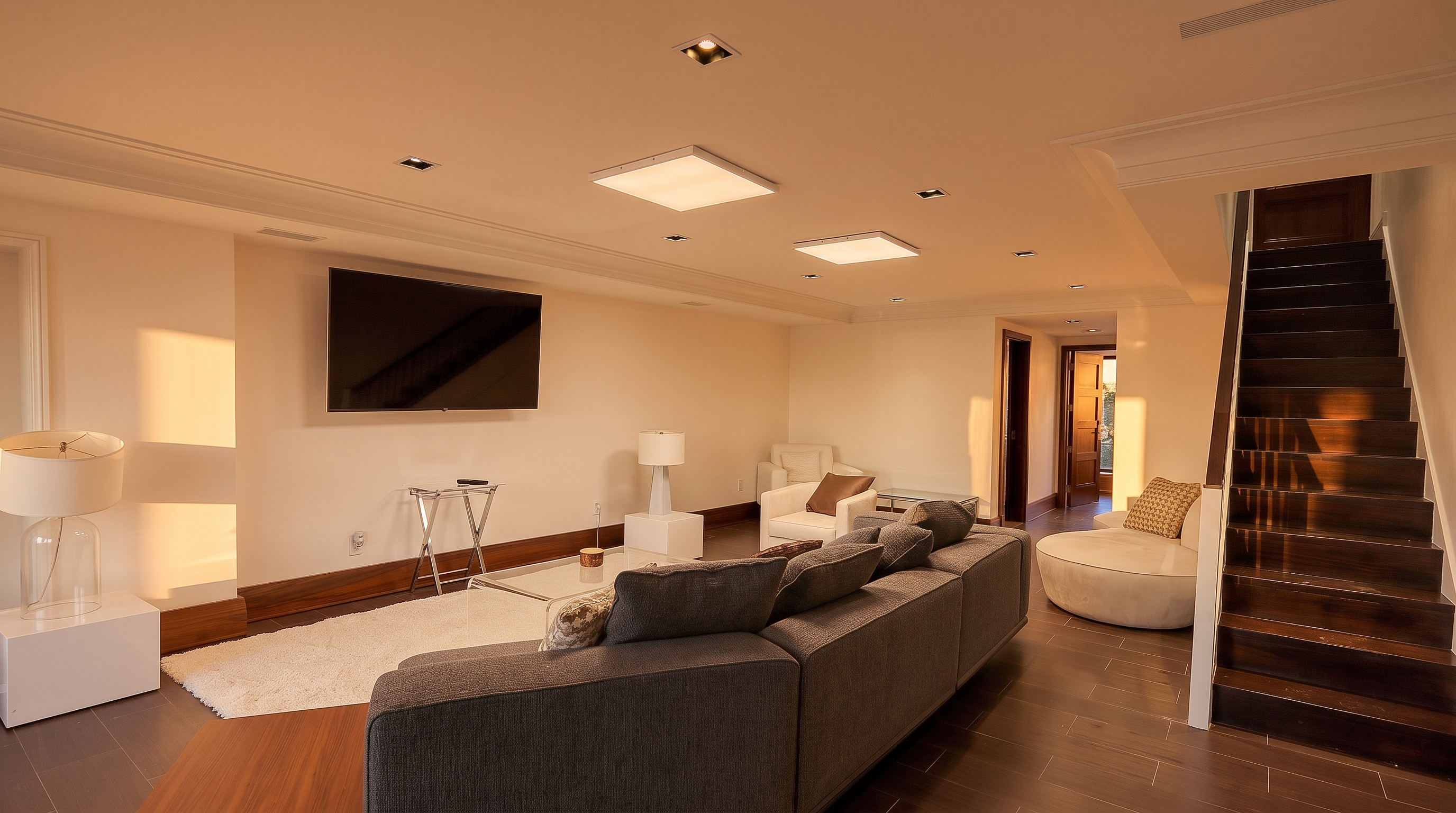
The upper floors house four additional bedrooms, each with en-suite bathrooms, gas fireplaces, and radiant heat — spaces that offer guests and family members the same level of privacy and comfort as the primary suite. The finished lower level completes the picture with a home gym, recreation space, and two full bathrooms.
Technology is woven invisibly throughout: lighting, climate, Sonos surround sound, motorized shades, and security are all controllable via in-wall iPads or smartphone. A whole-home Generac gas generator ensures uninterrupted power. Fully furnished and offered in turnkey condition, the home requires nothing but its next chapter.
The Upper East Side has long occupied a singular position in the geography of New York City — not simply as a prestigious address, but as a neighborhood with a genuine sense of identity, continuity, and urban grace. East 66th Street, situated between Madison and Park Avenues, sits at the very heart of this world, on a block that represents the neighborhood at its most refined.
Park Avenue, one block to the east, is among the most recognizable residential corridors in the world — a broad, tree-lined boulevard defined by its pre-war cooperative buildings and a sense of architectural permanence that few streets anywhere can match. Madison Avenue, one block to the west, offers an entirely different energy: a thoroughfare lined with the flagship boutiques of the world's leading luxury houses — Loro Piana, Hermès, Ralph Lauren, Chanel — alongside acclaimed galleries, independent bookshops, and some of the city's most celebrated restaurants and cafés. To live between these two avenues is to occupy a position of rare urban equilibrium.
The cultural infrastructure of the surrounding neighborhood is exceptional by any standard. The Metropolitan Museum of Art, one of the great encyclopedic museums of the world, sits at the northern edge of Central Park just minutes away. The Frick Collection, housed in its original Gilded Age mansion on Fifth Avenue, offers one of the most intimate and celebrated fine art experiences in the country. The Neue Galerie, dedicated to early twentieth-century German and Austrian art and design, occupies a landmark Beaux-Arts mansion nearby. Together, this concentration of cultural institutions along what has come to be known as Museum Mile places residents in immediate proximity to a breadth of artistic life that most cities cannot approach.
Central Park itself is moments from the front door — 843 acres of Frederick Law Olmsted's masterwork, offering everything from the formal pathways and reflecting pools of the south end to the wilder landscapes of the Ramble. For morning runs, afternoon walks, weekend cycling, or simply the restorative experience of green space within one of the world's densest cities, the park functions as an extension of the neighborhood itself.
The Upper East Side is equally well served by practical infrastructure. Excellent private and independent schools are concentrated throughout the area, making it a long-established choice for families. The neighborhood's dining scene ranges from the convivial energy of neighborhood bistros along Lexington Avenue to the formal dining rooms that have anchored the area for decades. Grocery and specialty food options — including Eli's Manhattan and Grace's Marketplace — cater to a discerning residential population.
The 6 train runs along Lexington Avenue, providing direct access to Midtown and downtown Manhattan, while the crosstown buses along 66th and 72nd Streets connect residents efficiently to the West Side and Lincoln Center.
What defines the Upper East Side most, however, is less any single amenity than the cumulative quality of daily life it offers — the tree-lined sidewalks, the architectural scale, the cultural density, and the sense that this is a neighborhood built not for transience but for permanence. At 46 East 66th Street, that permanence is precisely what awaits.
Featured Highlights
Curated Content • Presented by Sara Melissa Cuc