The Story Behind
A Georgian Legacy Rising Above Pacific Heights
There are houses that shelter, and there are houses that endure. 2090 Vallejo Street belongs unmistakably to the second category — a residence that has presided over Pacific Heights for more than a century, accumulating the kind of quiet authority that only genuine craftsmanship and architectural integrity can produce.
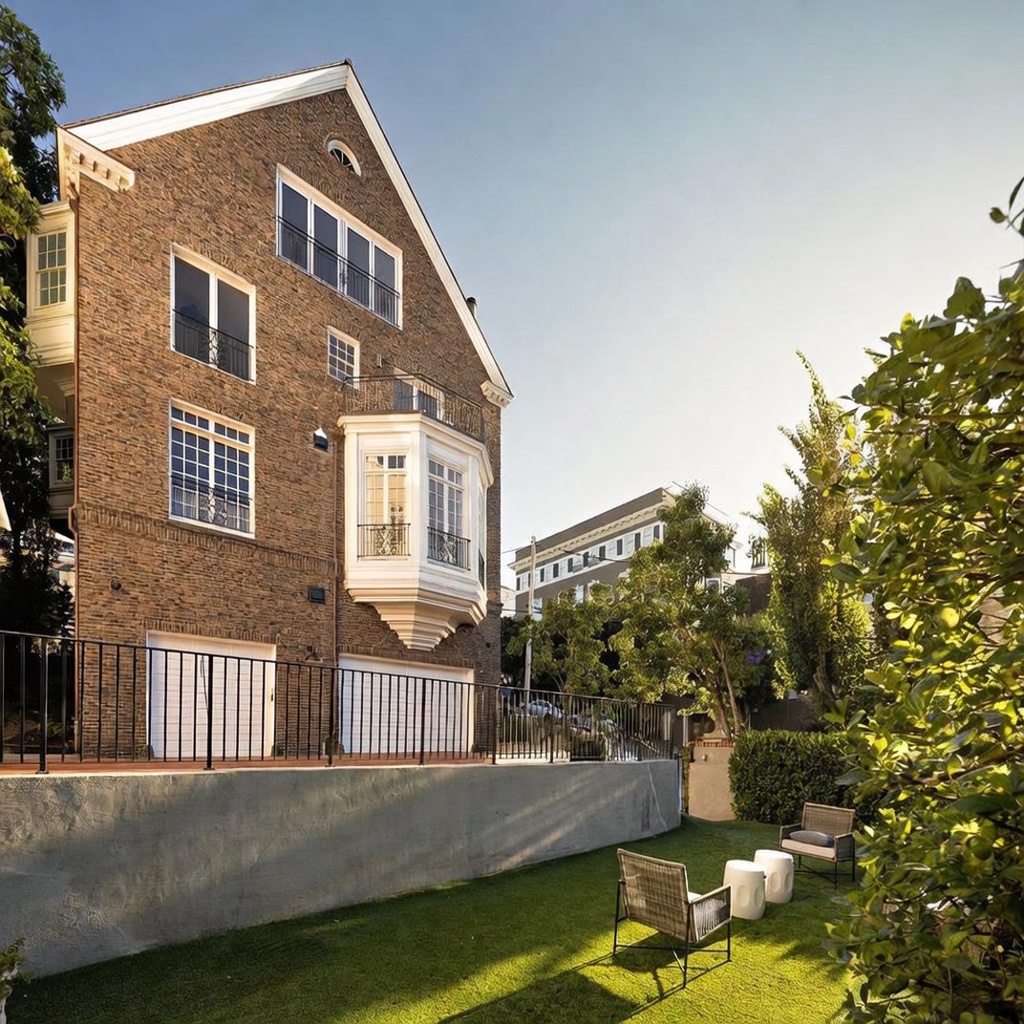
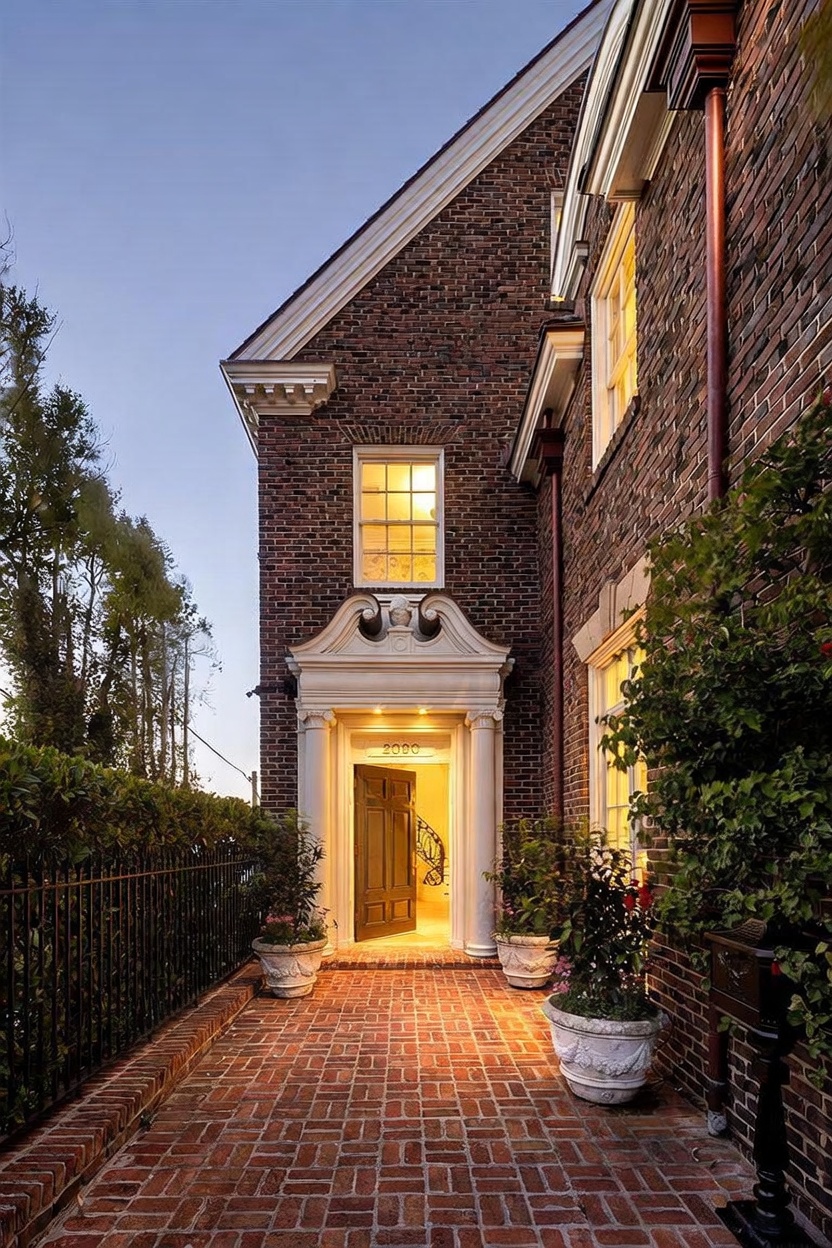
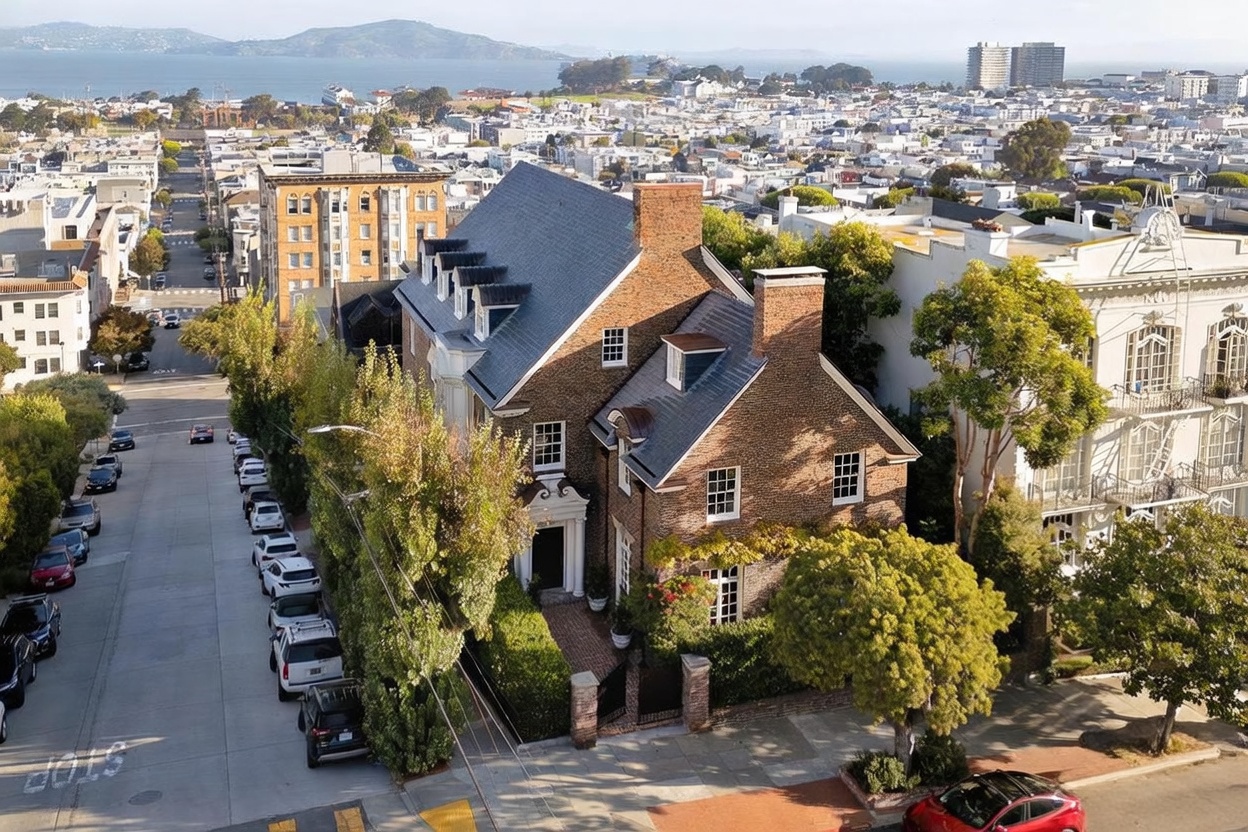
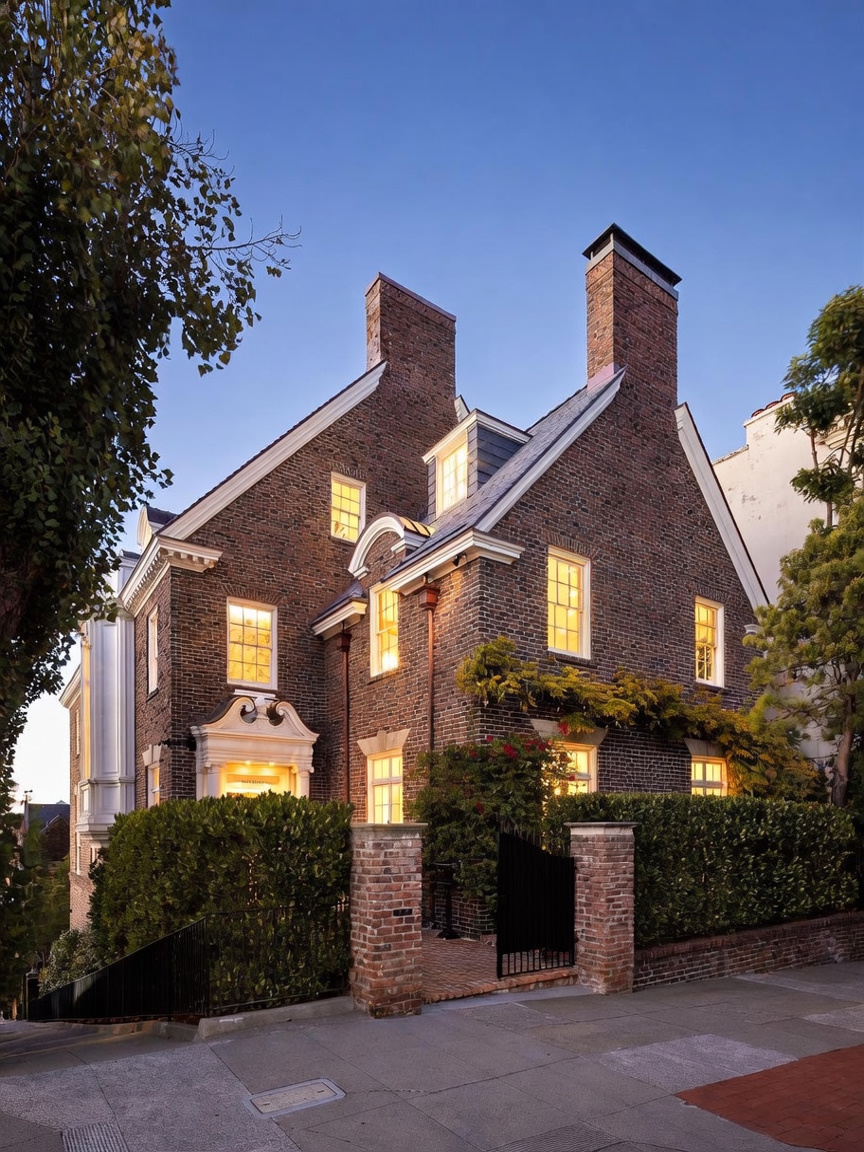
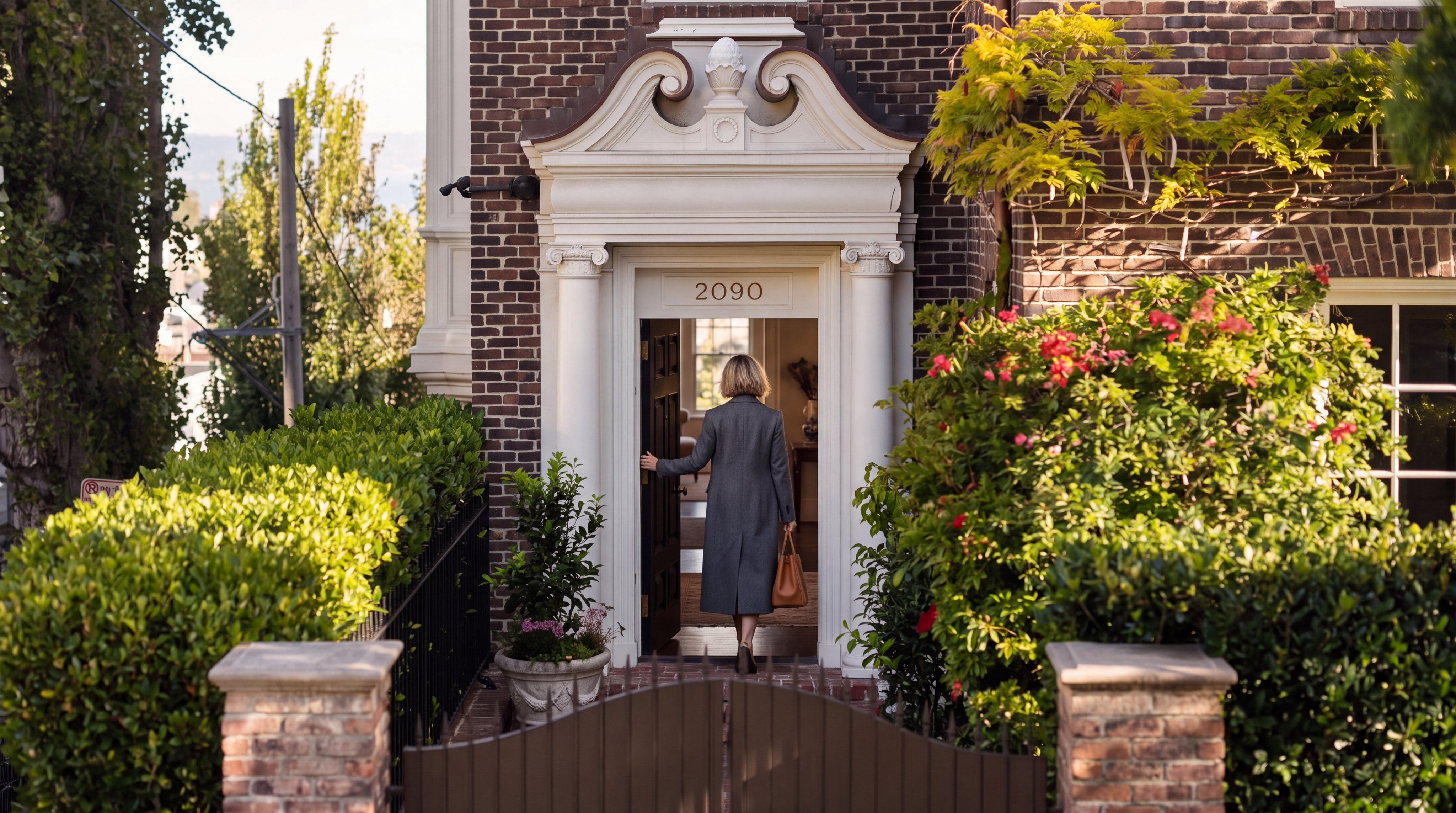
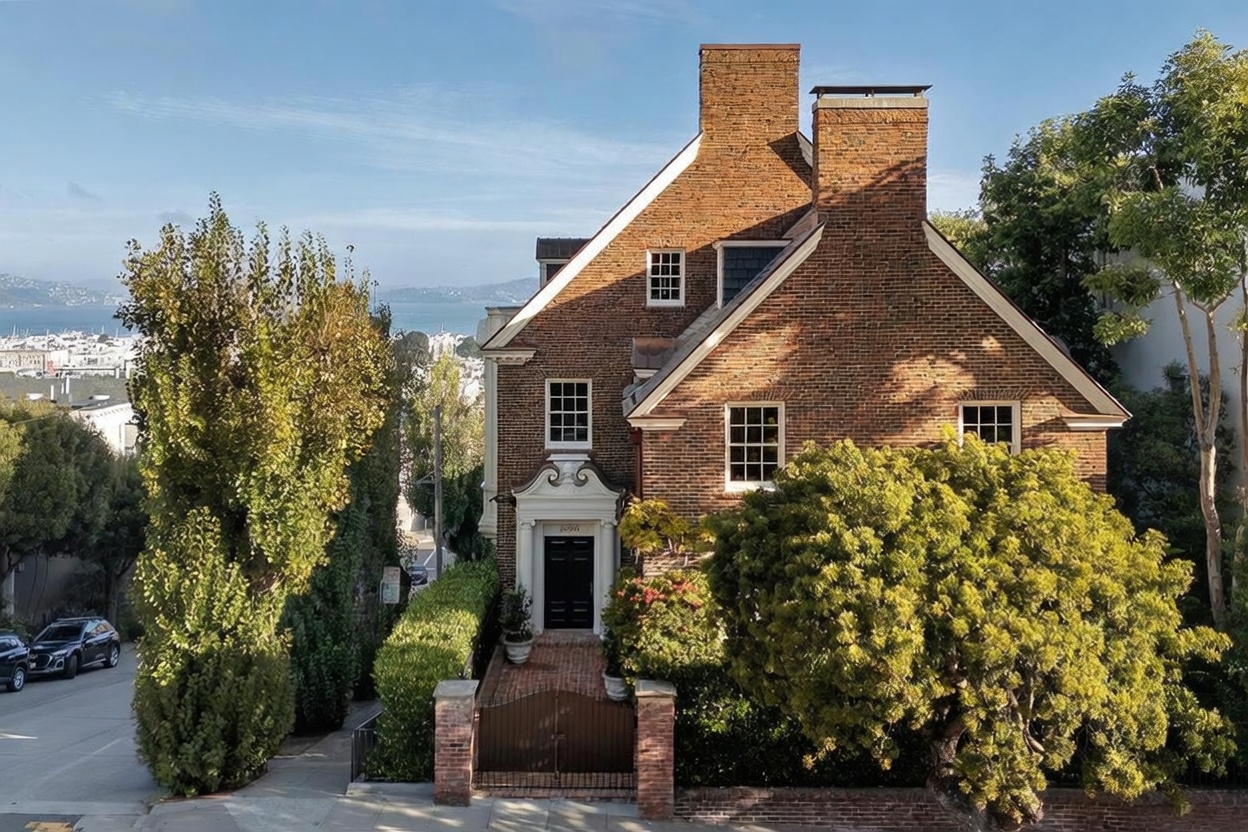
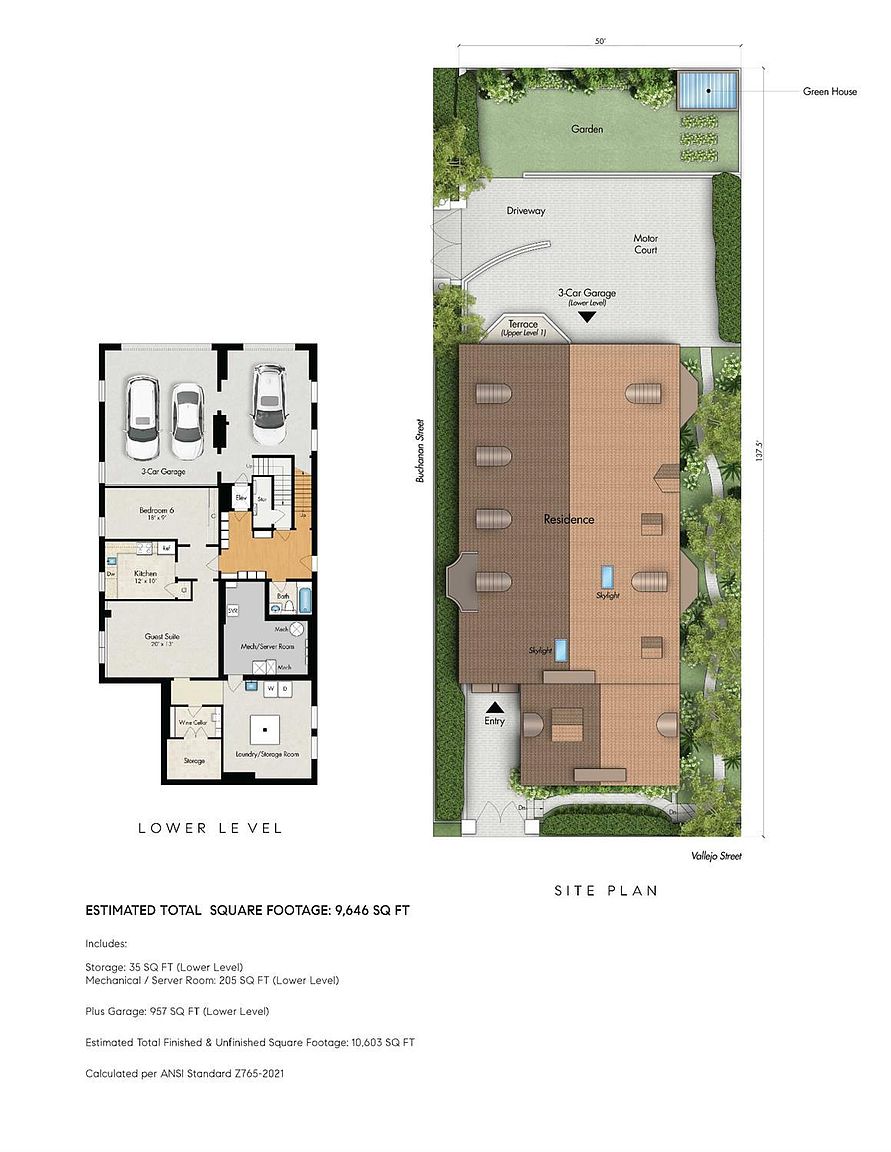
Built in 1919, the home is the sole known San Francisco commission of architect Clarence A. Tantau, and it announces that singularity from the street. The dignified brick facade rises behind a gated brick courtyard, its classical columns and ornate white pediment framing a front door that glows warmly against the twilight sky. Set on an extra-wide lot with an impressive 50-foot frontage, the residence is detached on all four sides — a genuine rarity in the city — allowing natural light to move freely through every level and every room.
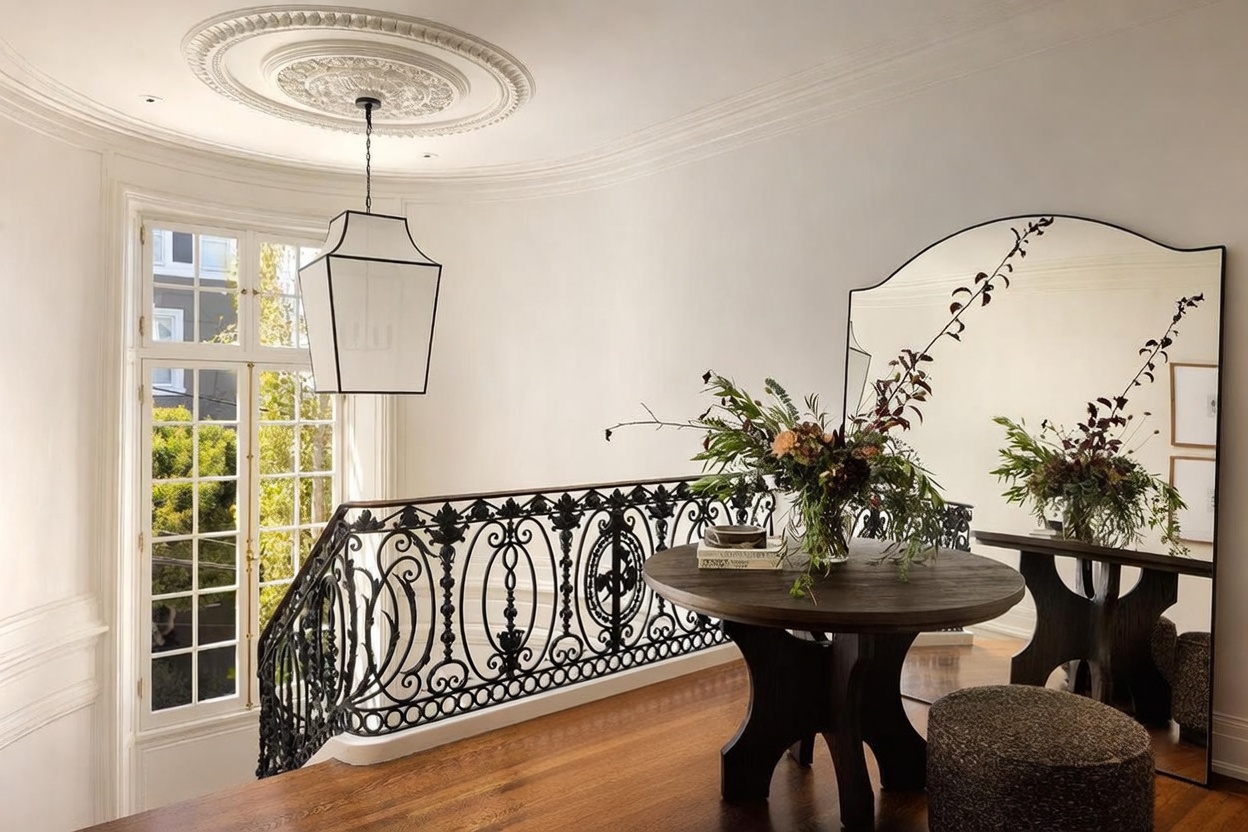
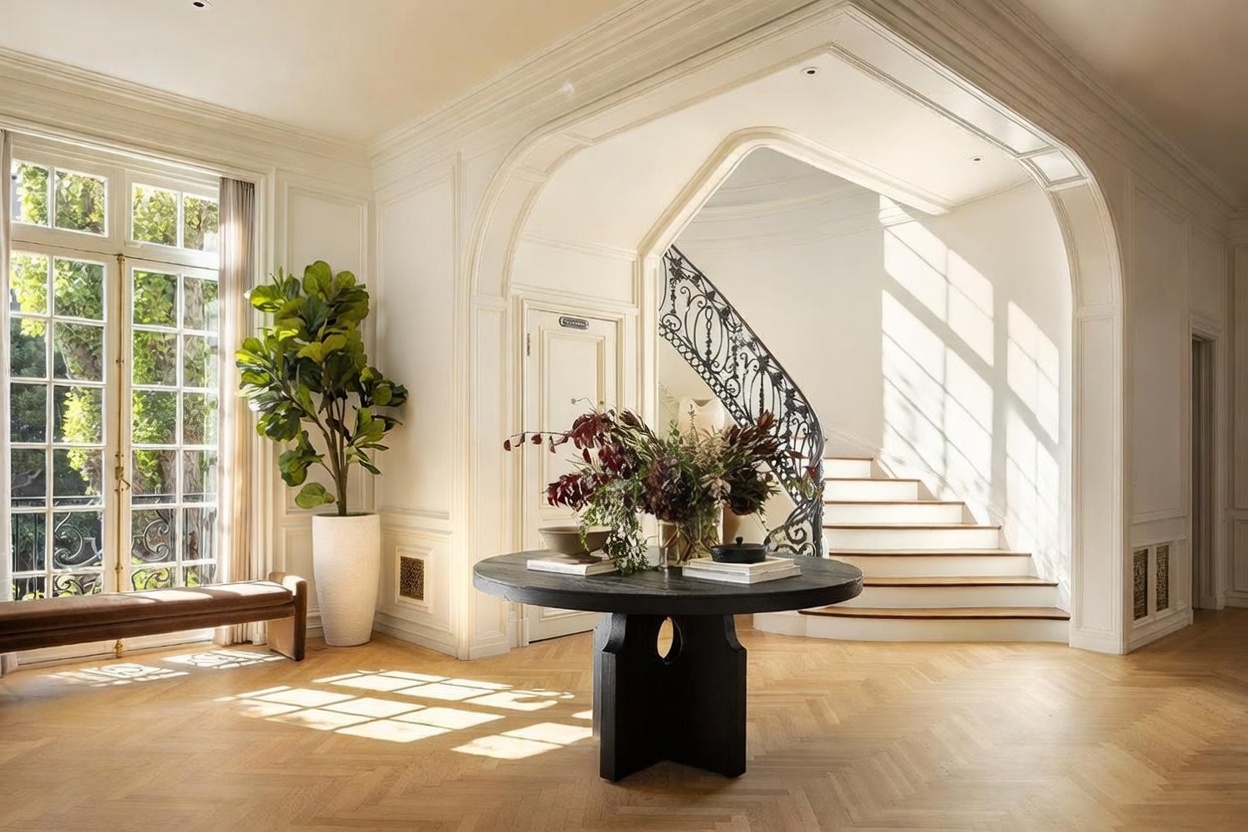
Step inside and the entrance hall establishes the register immediately. Light wood herringbone flooring anchors the soaring space, while a sweeping elliptical staircase rises with quiet drama, its delicately leafed iron balustrade catching the light from tall windows above. A large circular table bearing fresh florals occupies the center, beneath a ceiling medallion of meticulous plasterwork detail.
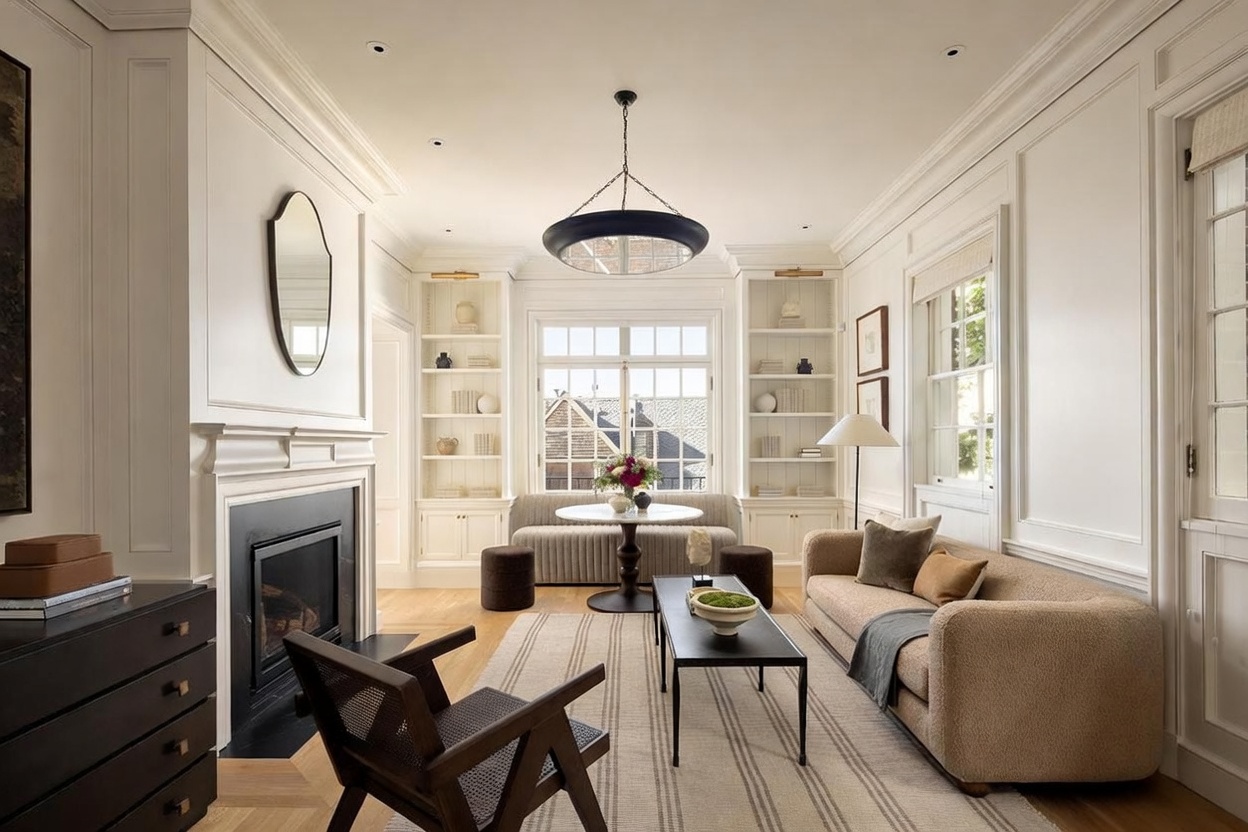
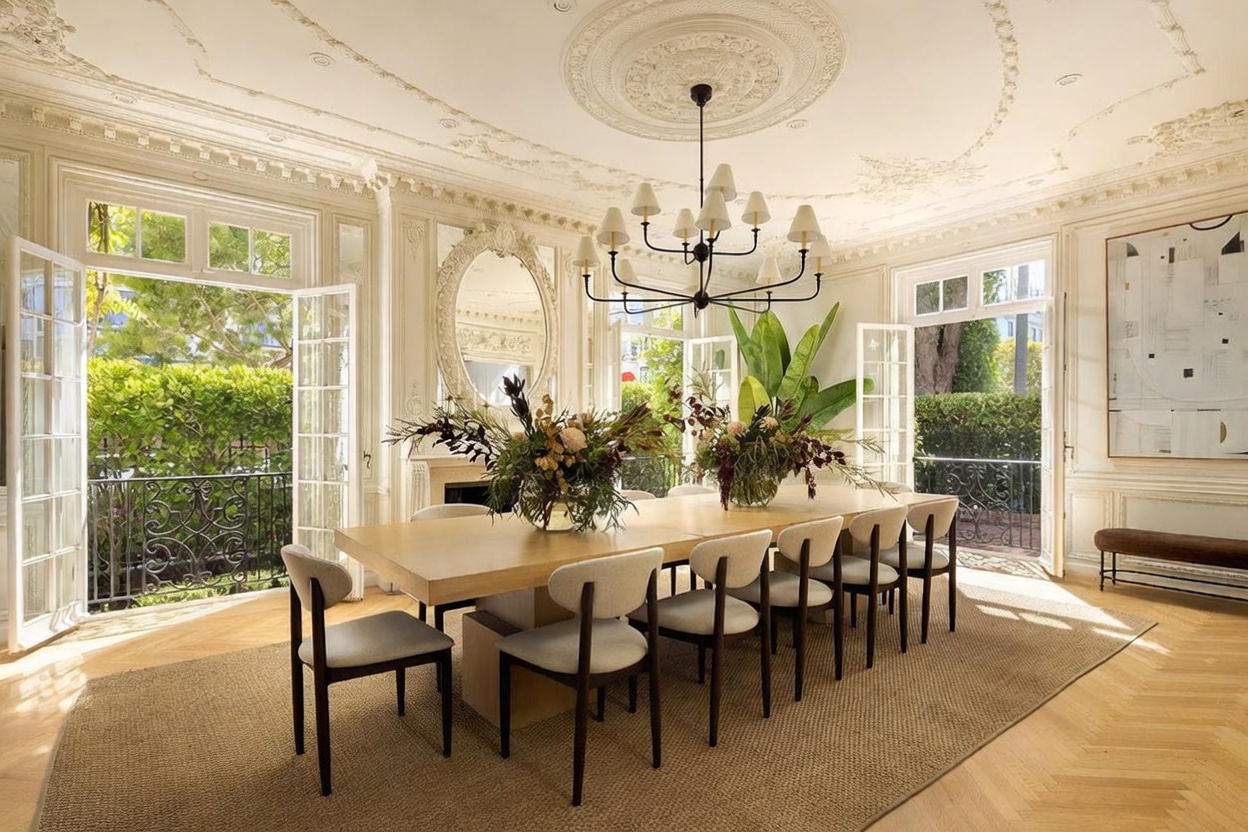
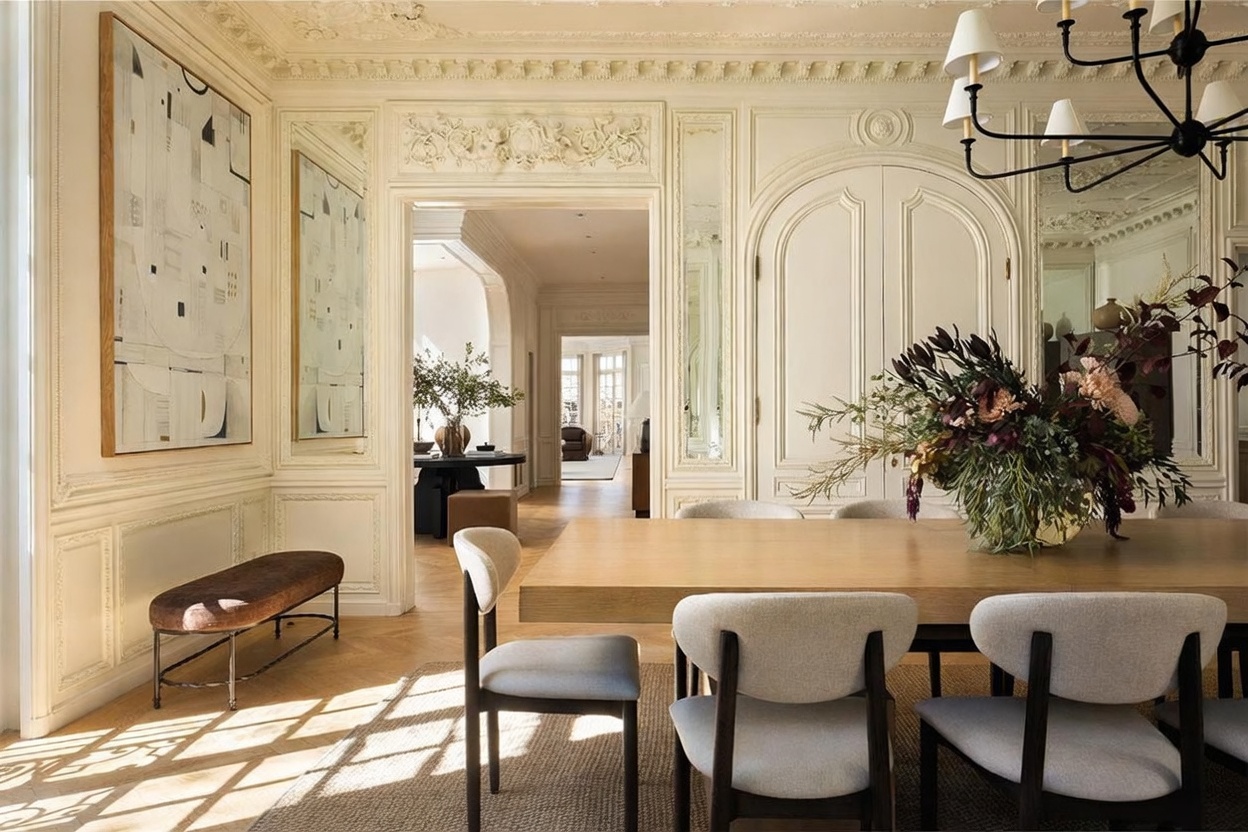
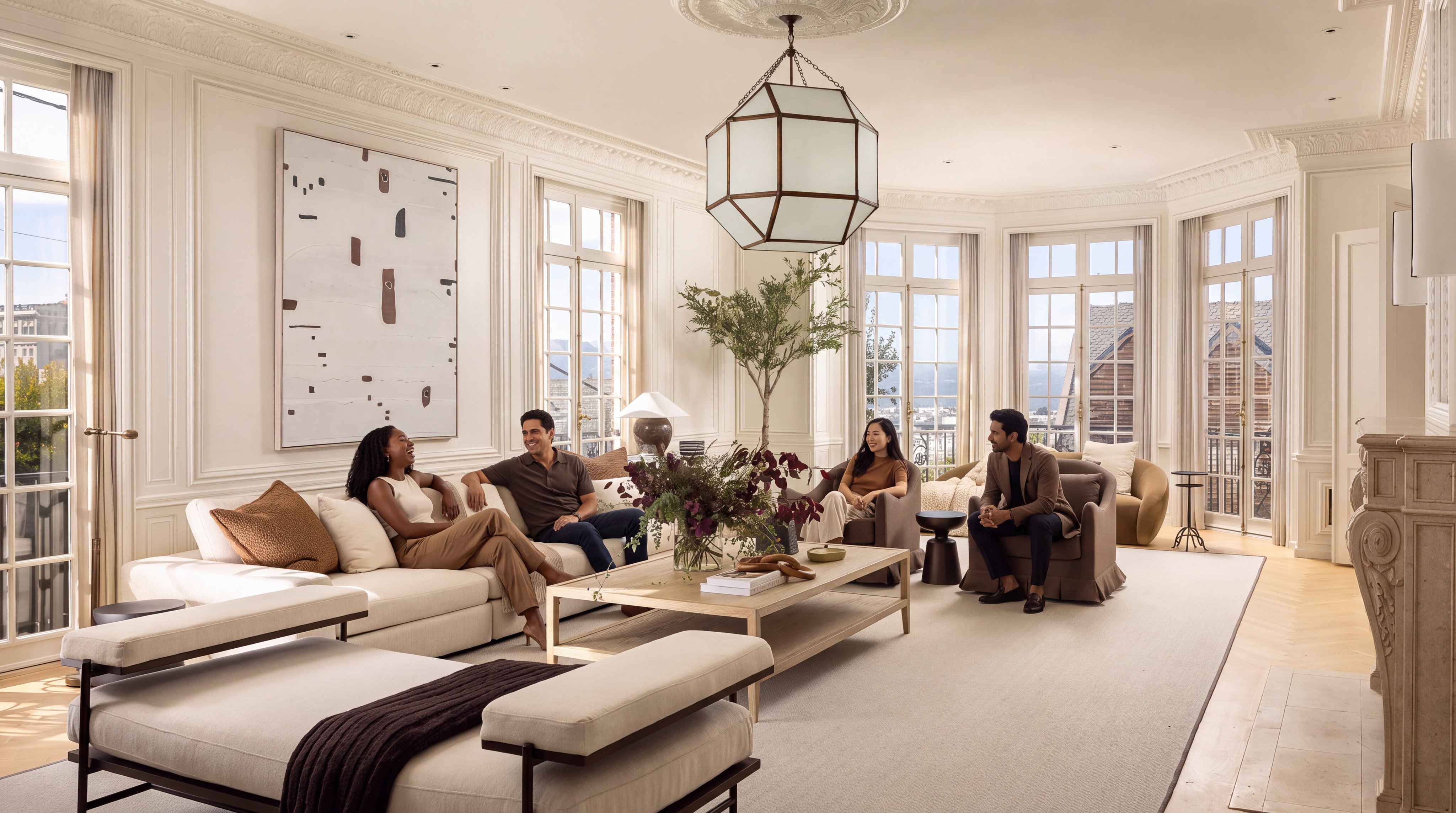
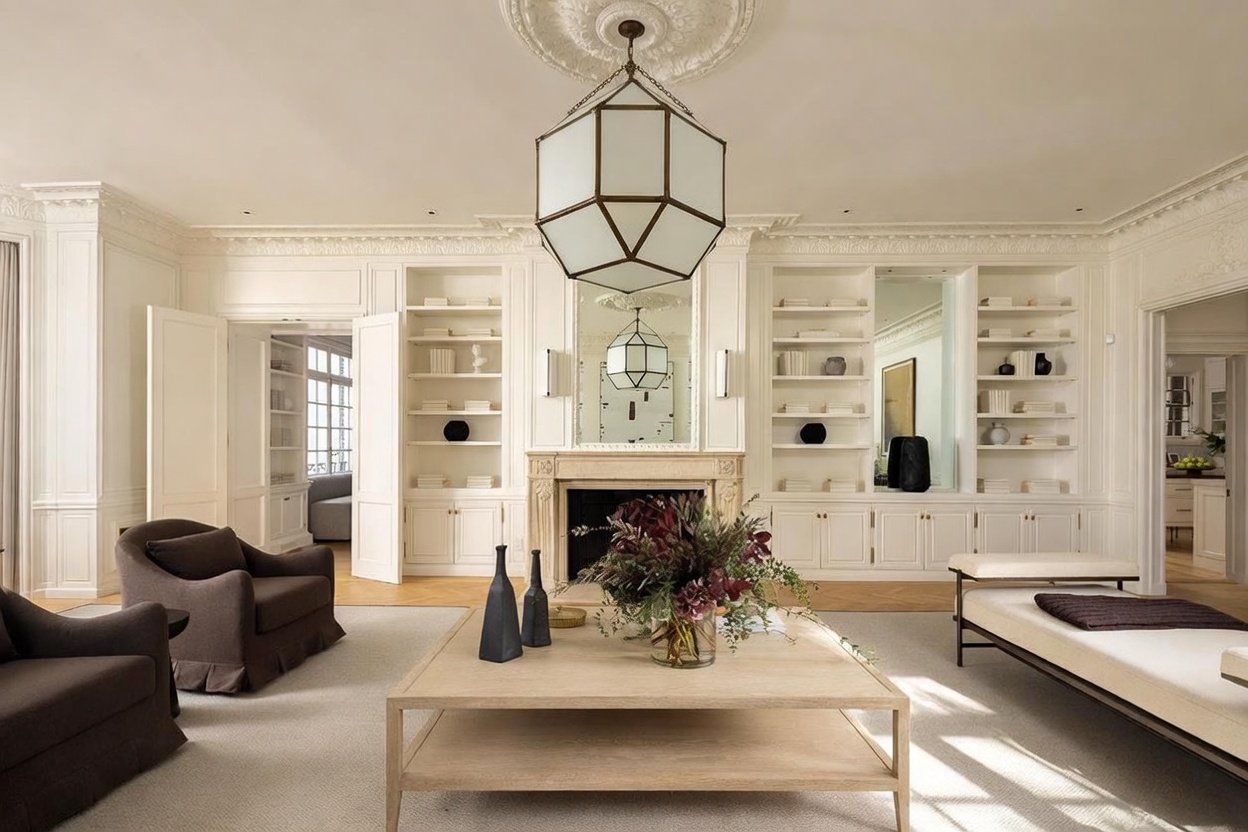
The formal rooms that follow are grand without feeling remote. In the living room, acanthus-leaf moldings trace the perimeter, custom built-in cabinetry flanks the stone fireplace, and a geometric pendant light descends from a decorative medallion above. Large multi-paned windows line the rear wall, filling the space with natural light and framing views that stretch across the Bay. The dining room, adorned with sculptural plasterwork and four sets of French doors opening to a lush garden, offers a setting of genuine theatrical beauty — one equally suited to an intimate dinner or a celebration of scale.
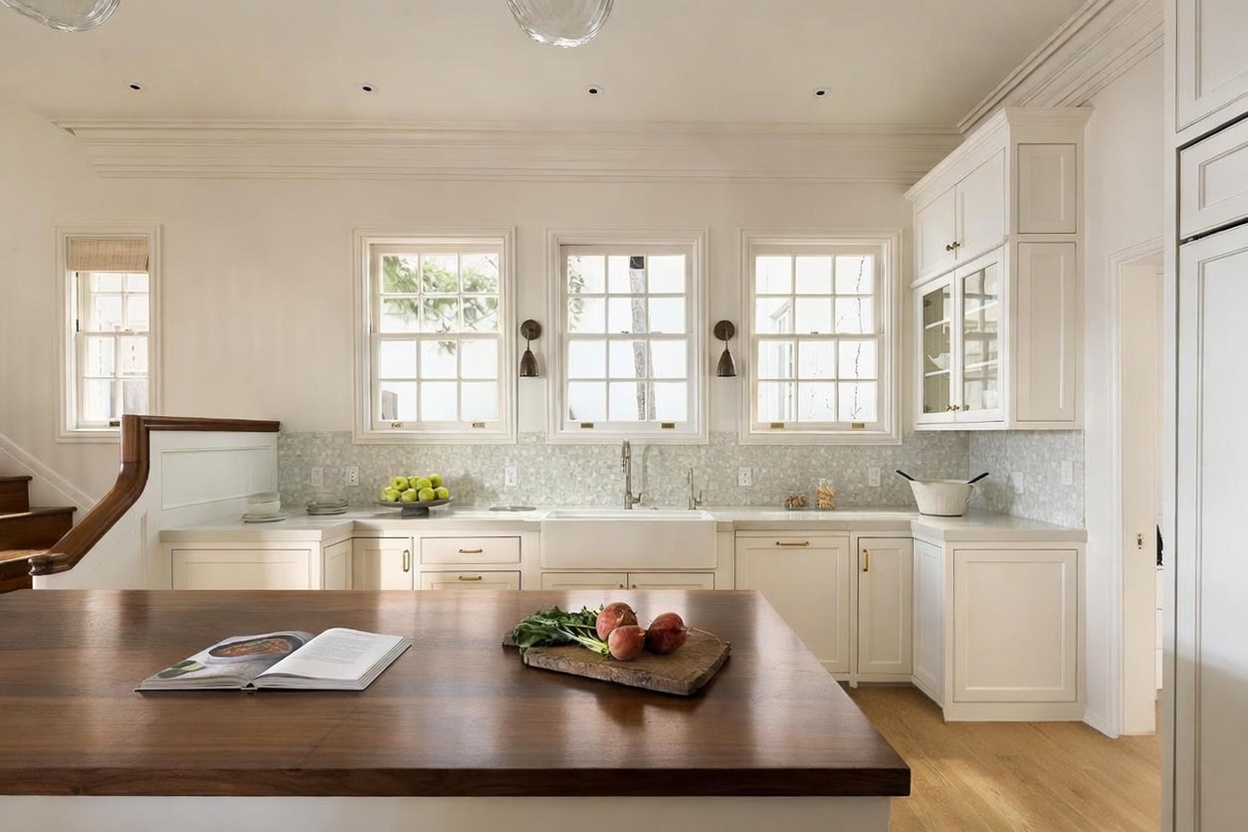
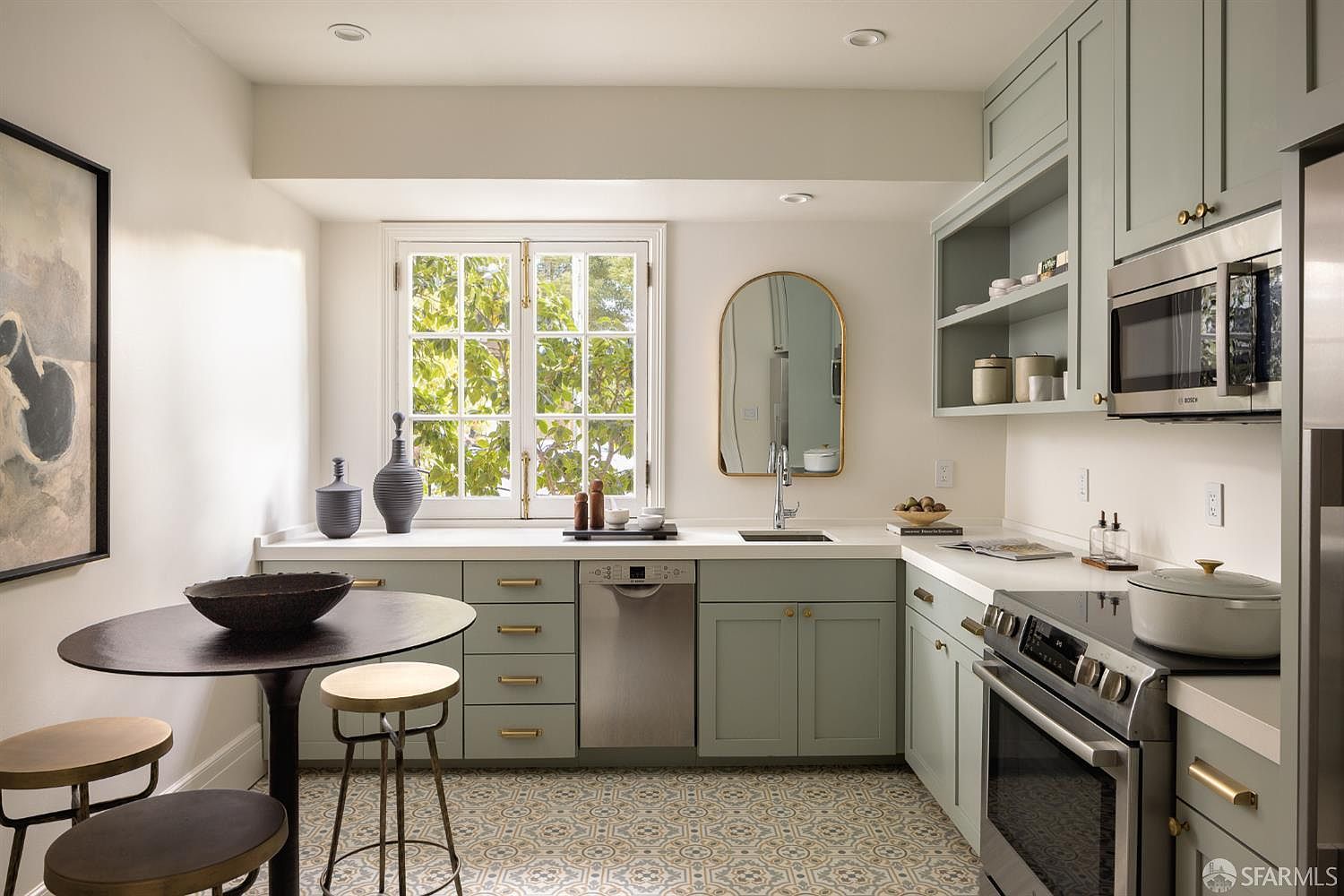
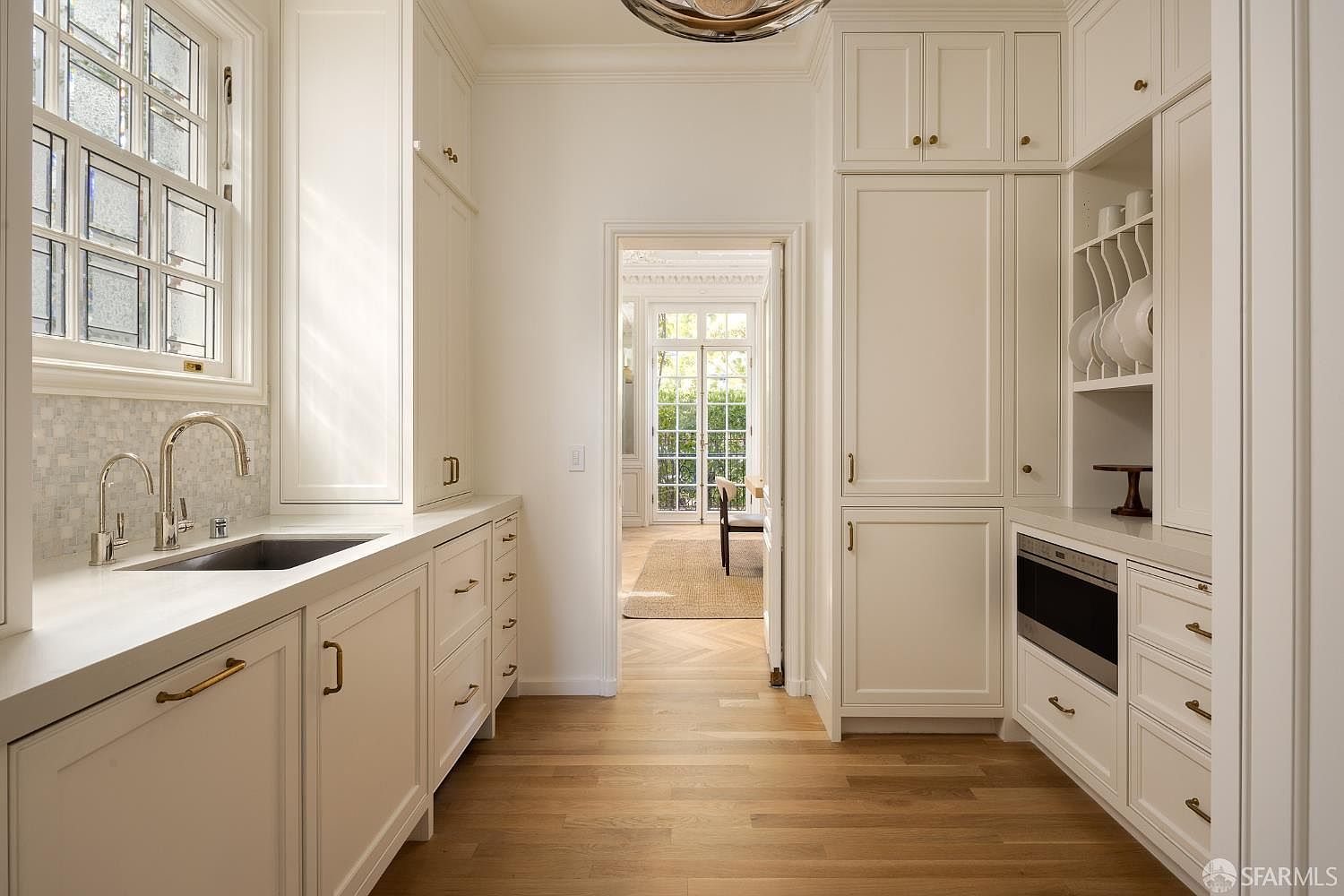
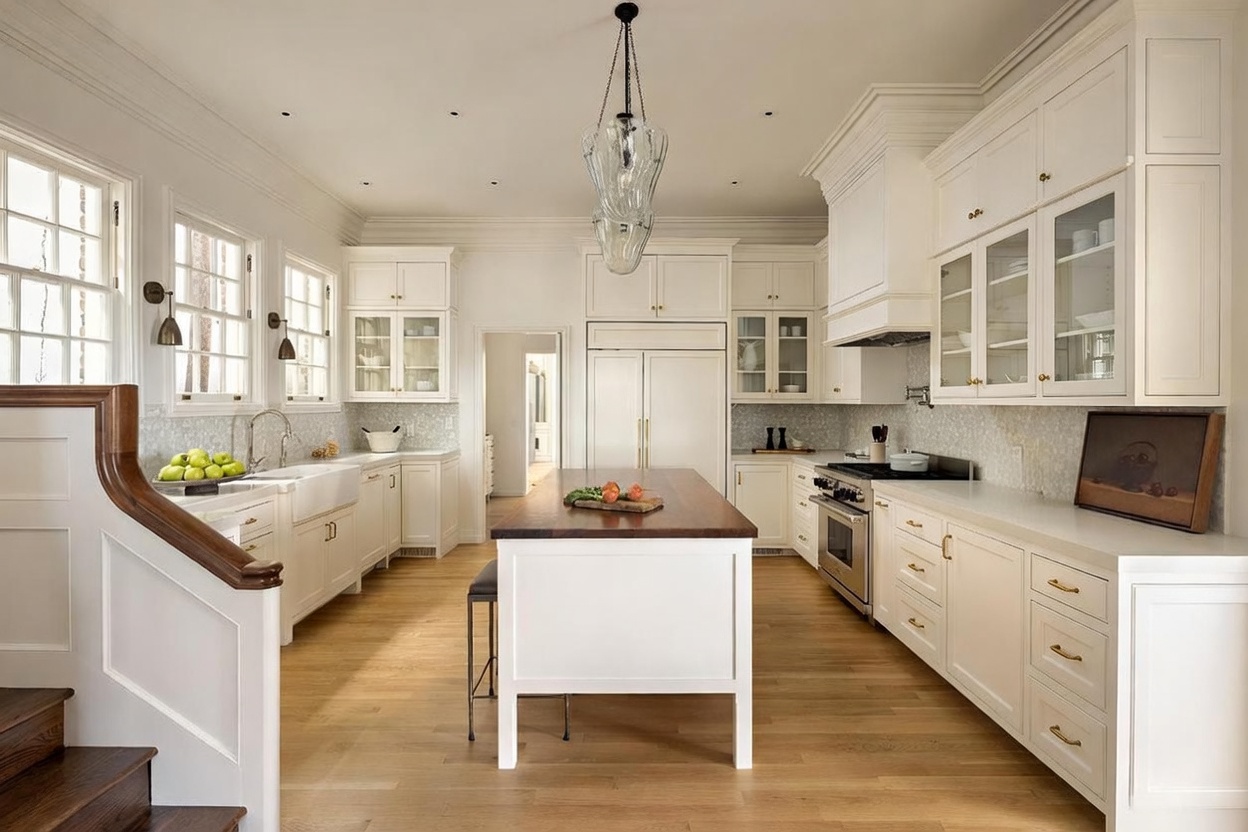
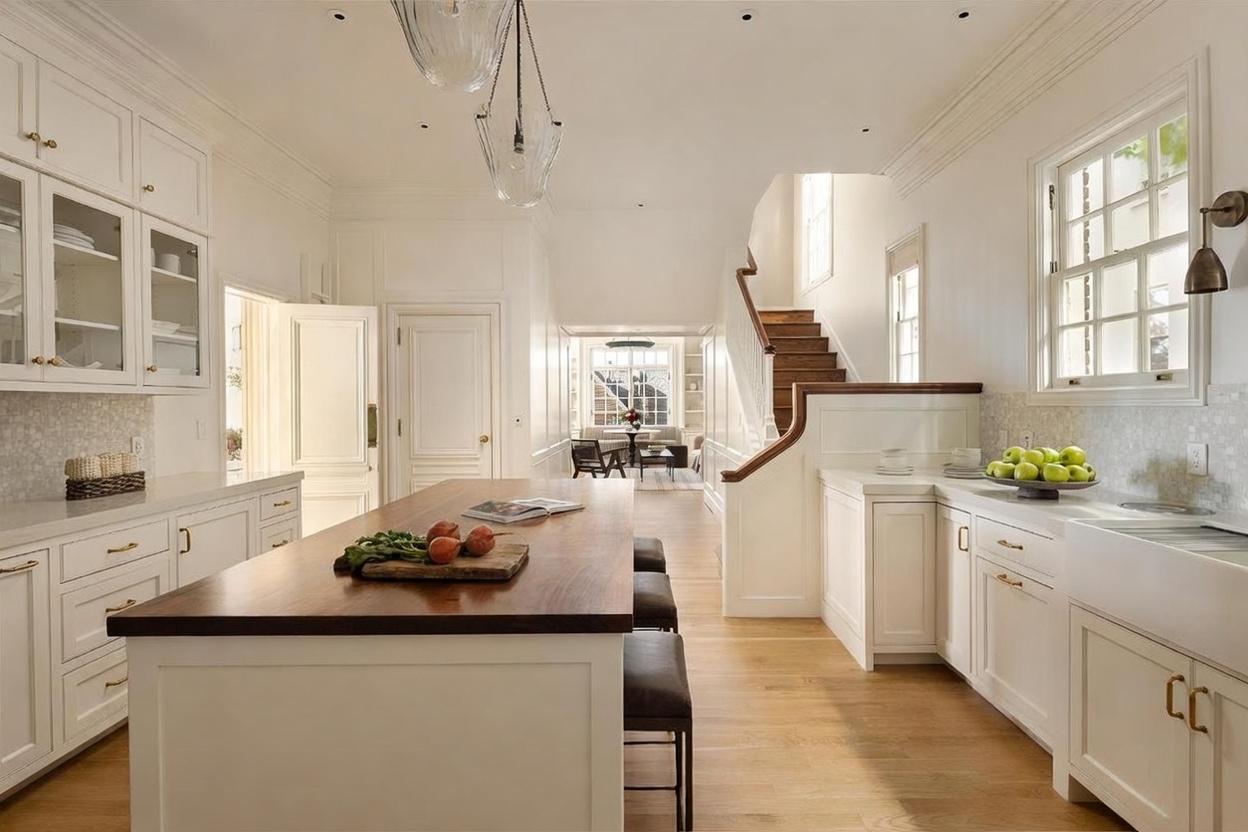
The kitchen brings a note of relaxed elegance: crisp white cabinetry, a dark wood island, a farmhouse sink set beneath three windows, and a mosaic tile backsplash that adds texture without disrupting the room's clean, classical logic. A butler's pantry — with its own integrated sink, stone countertop, and generous built-in storage — extends the kitchen's functionality with the same refined finish.
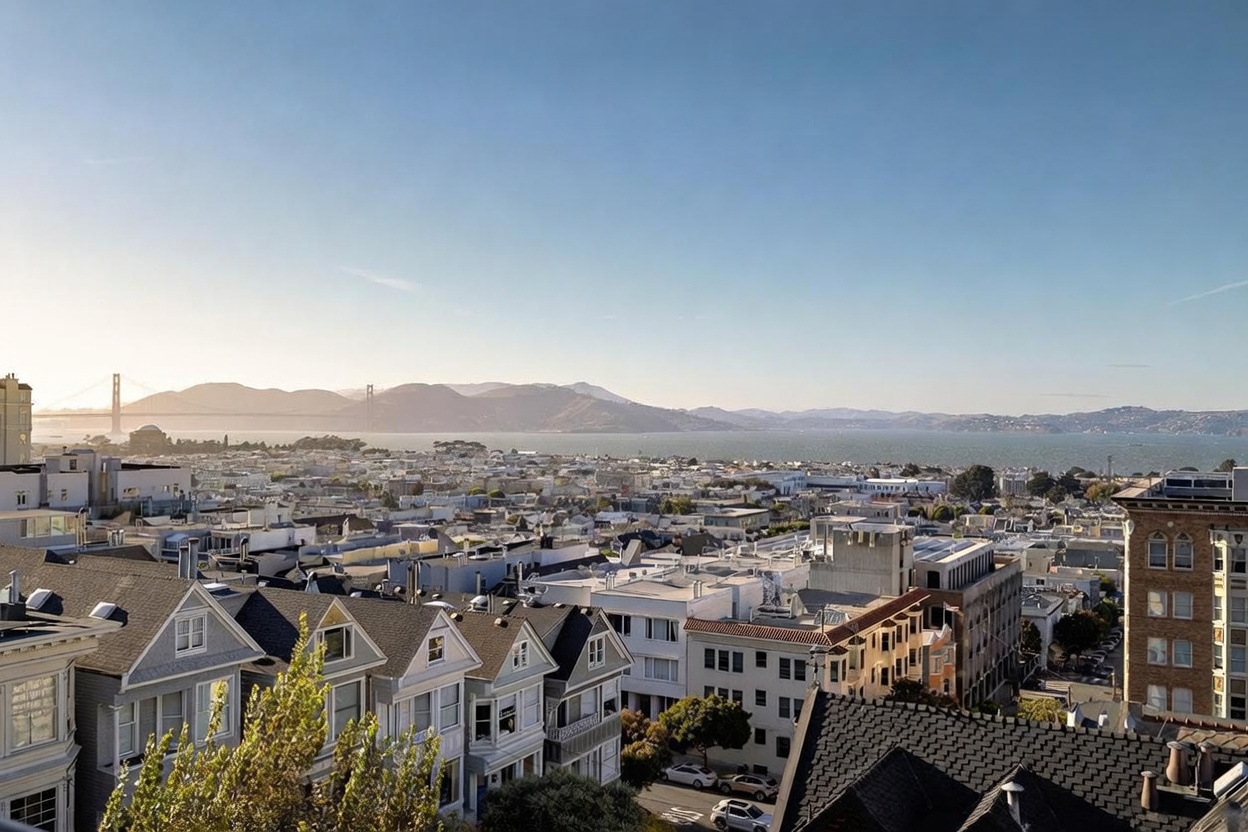
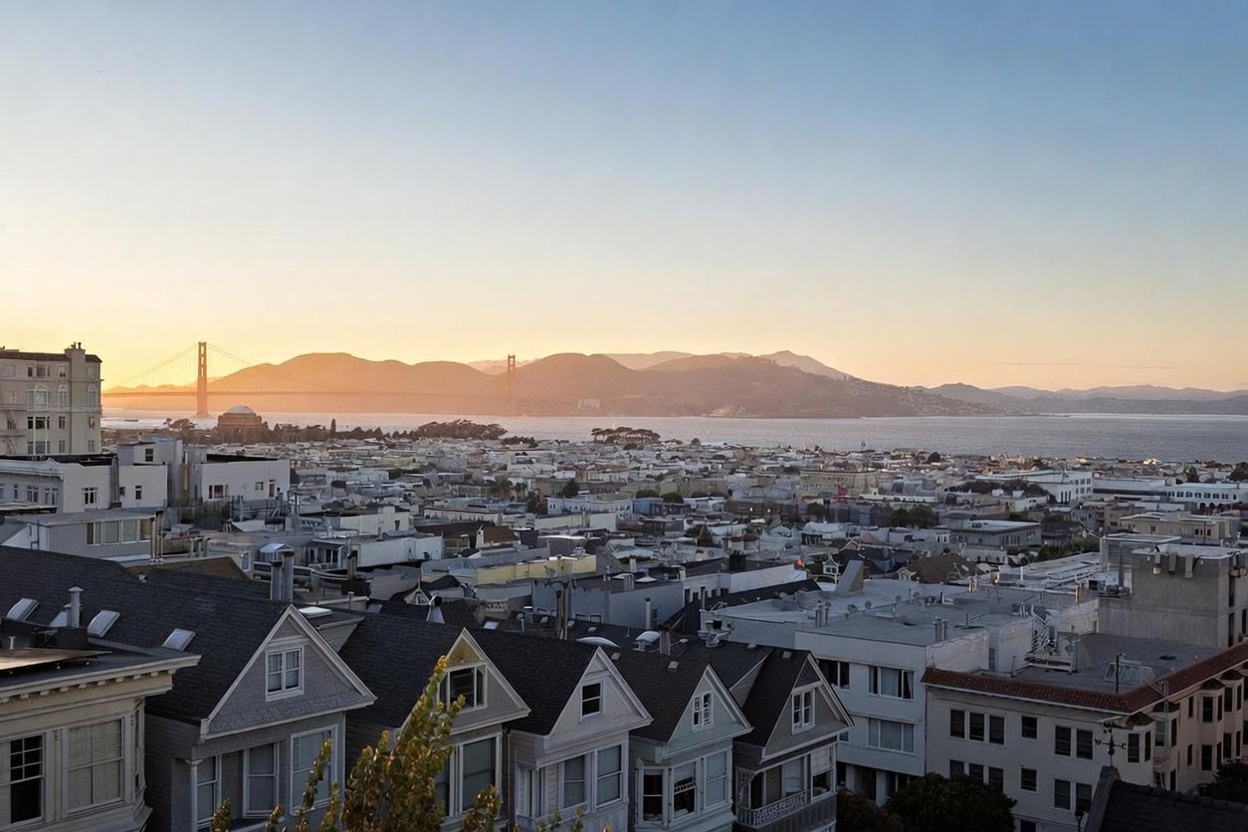
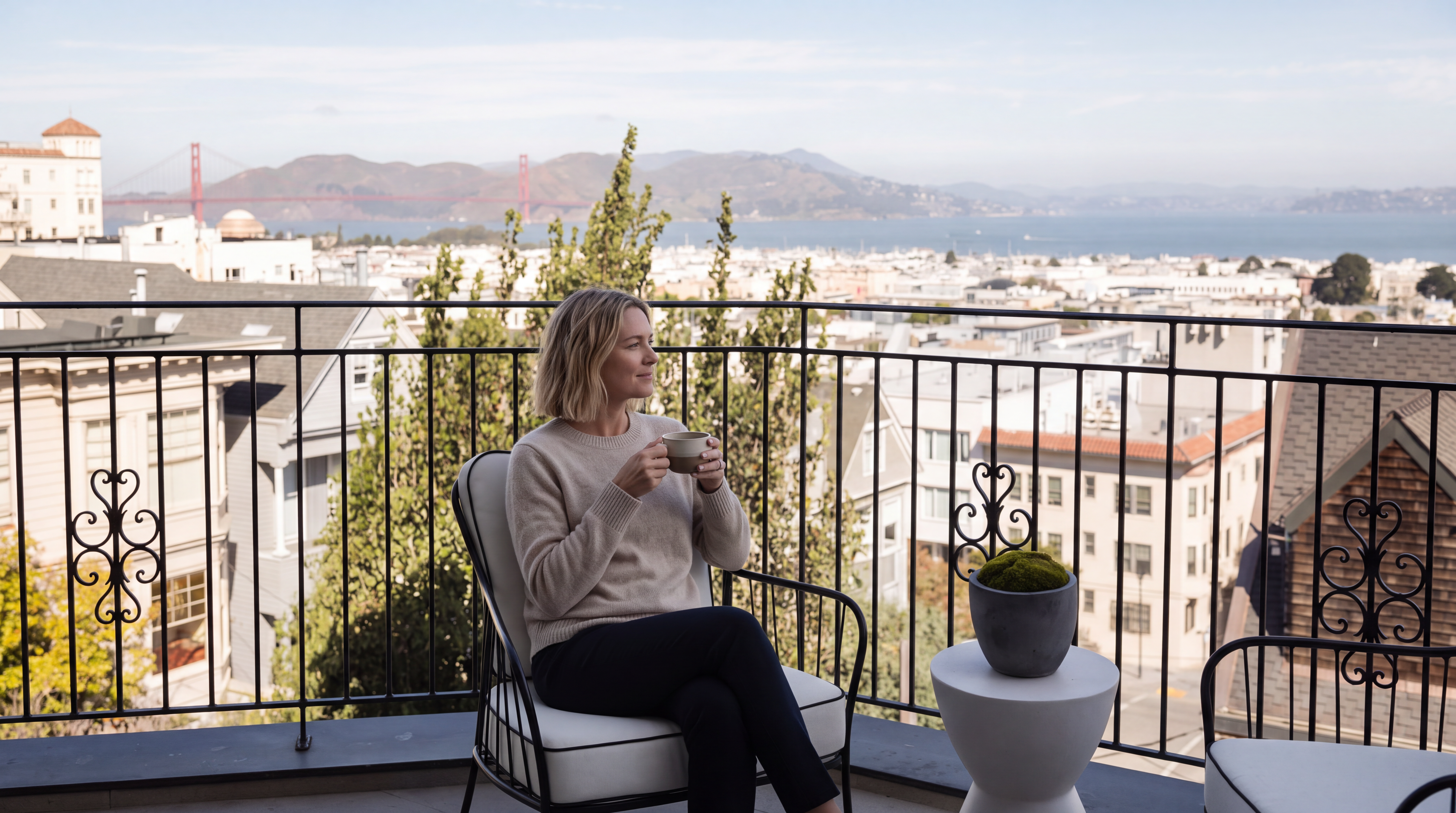
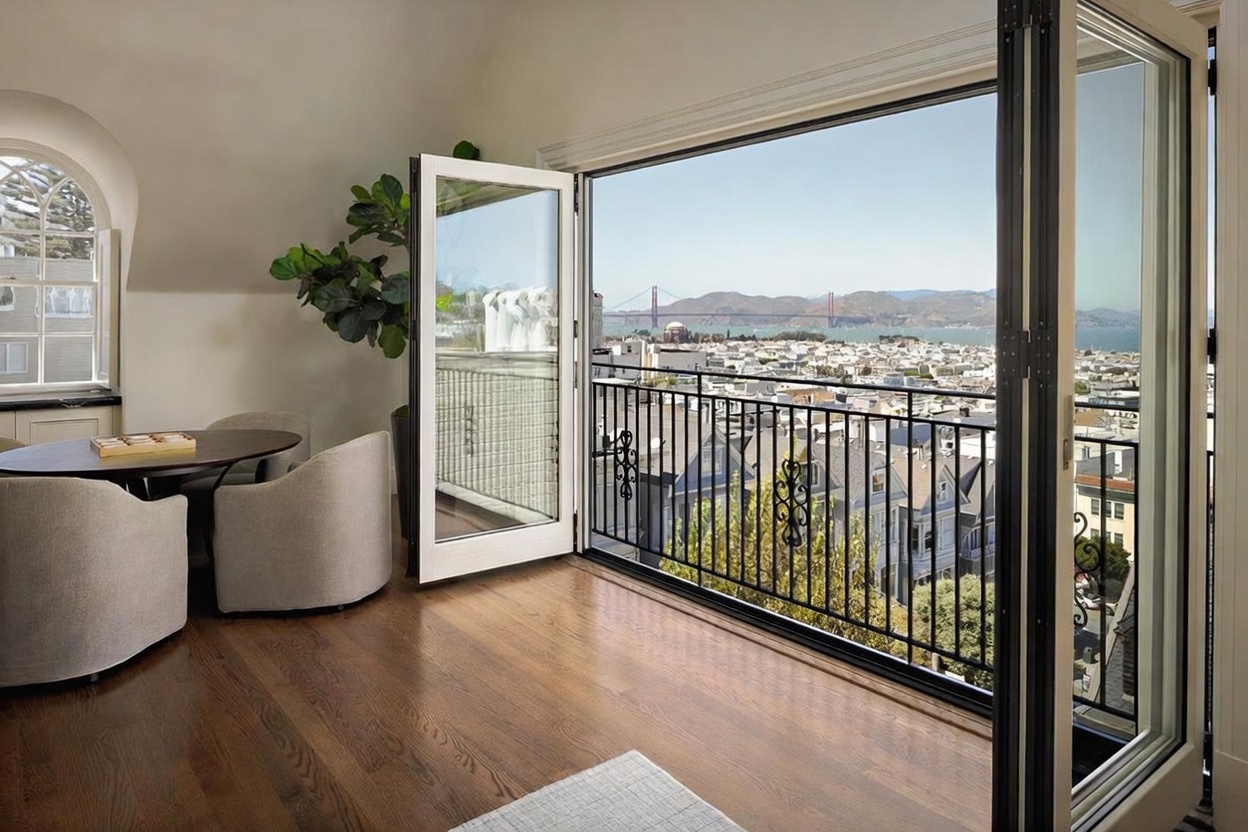
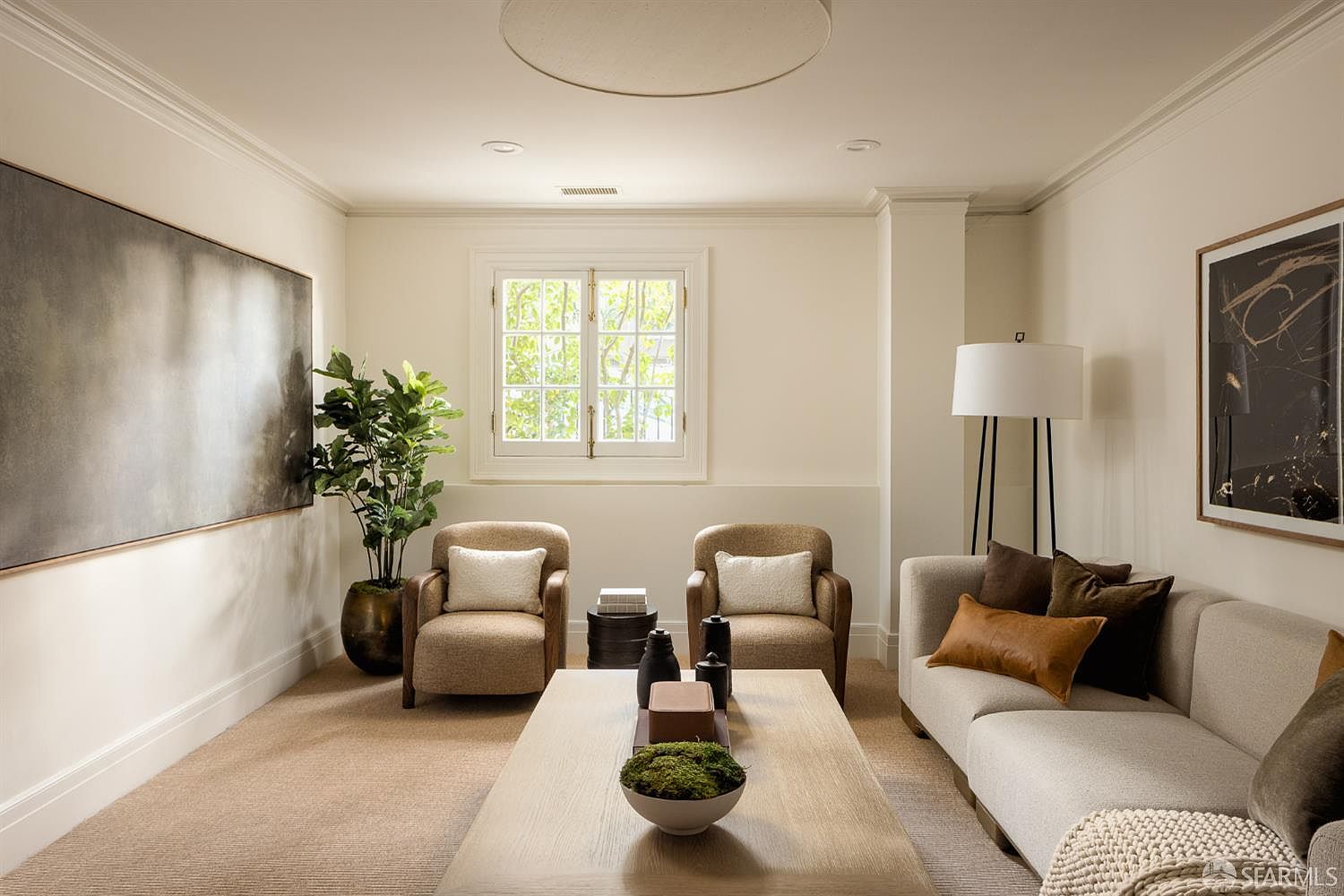
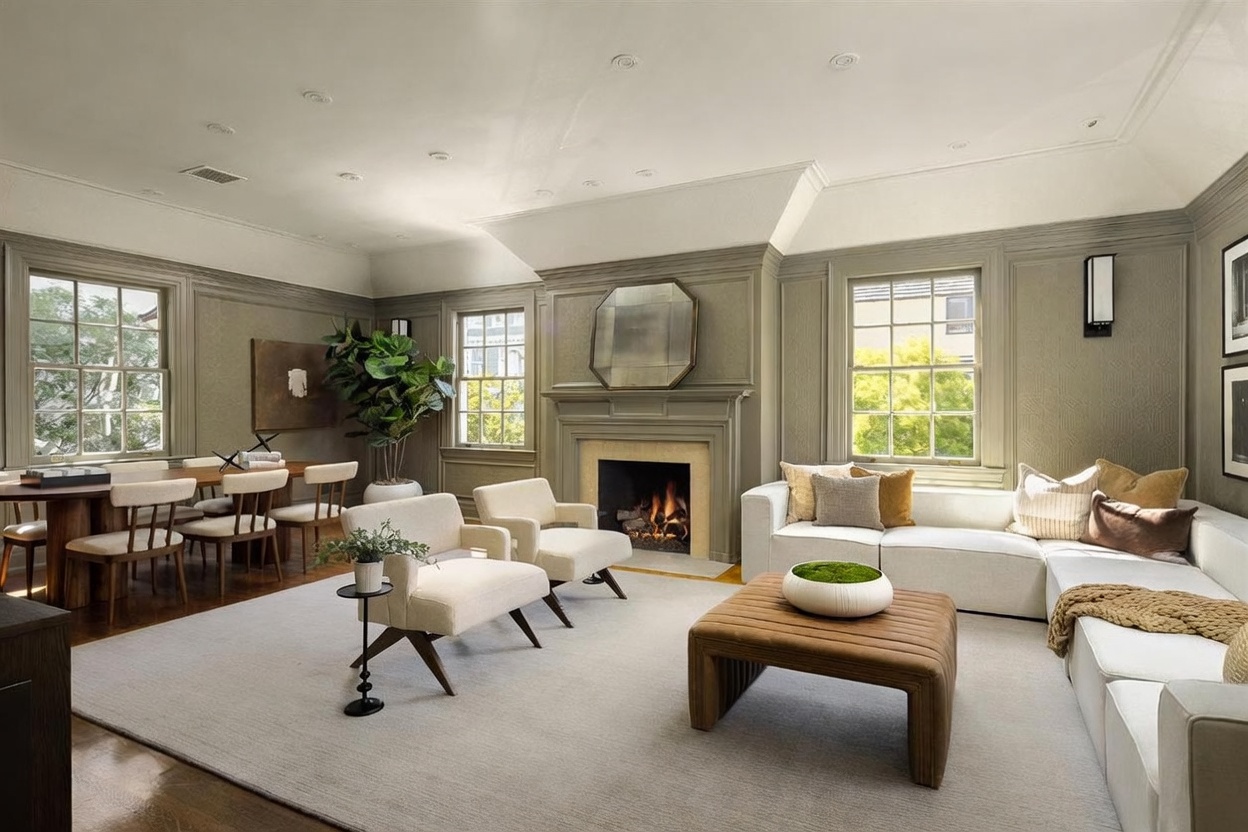
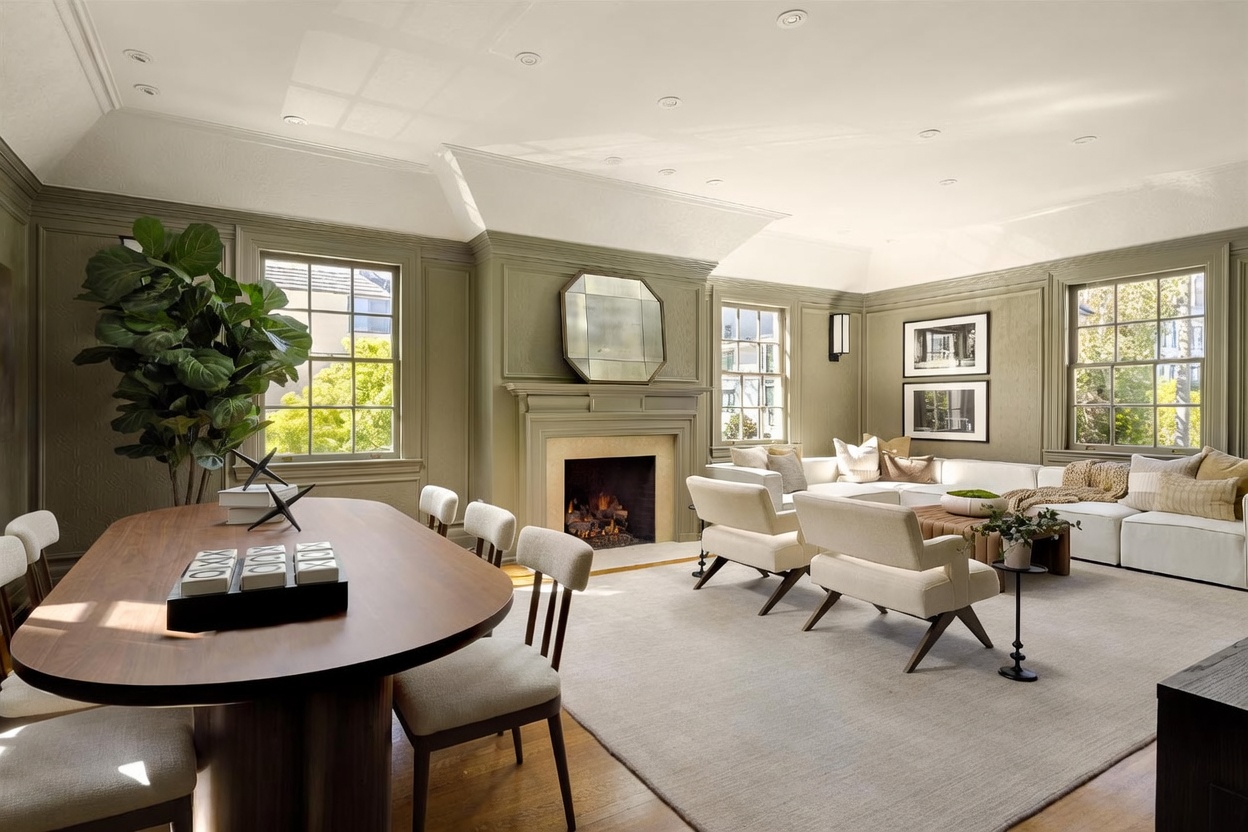
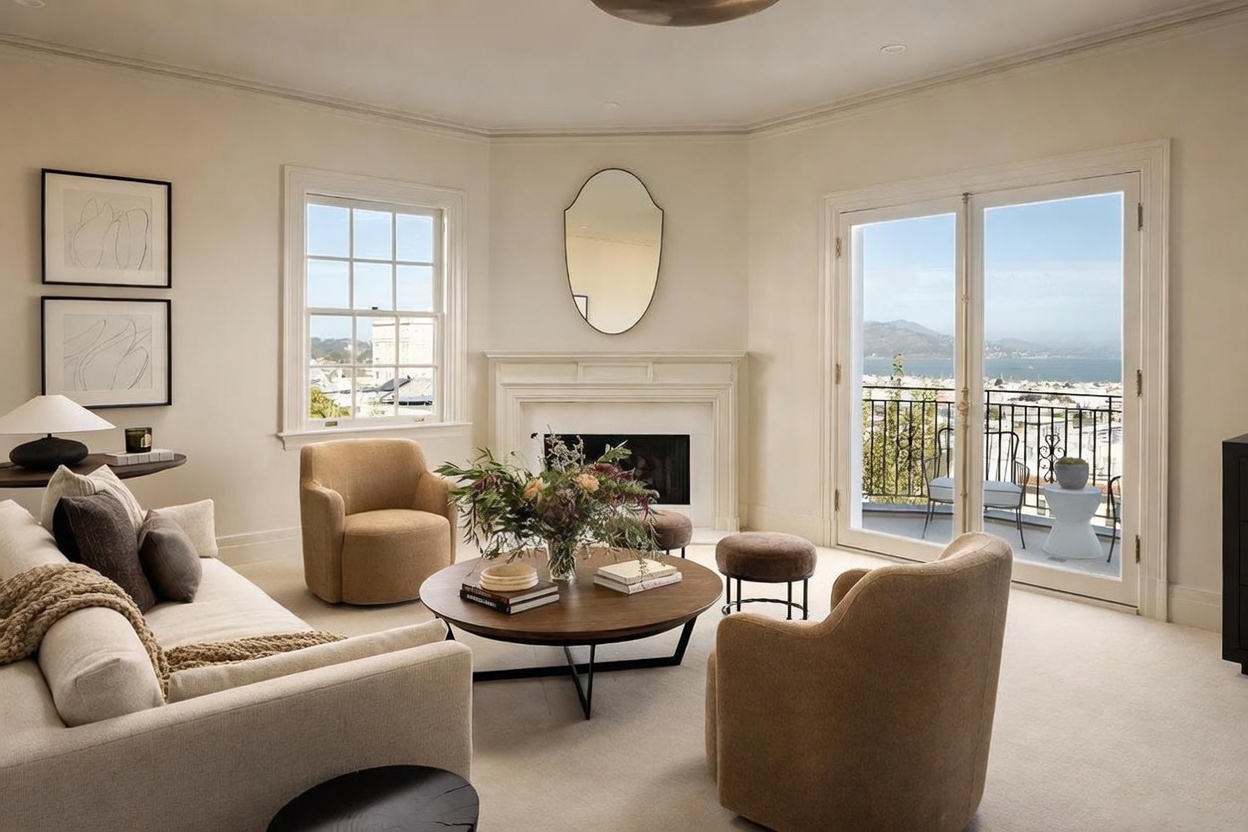
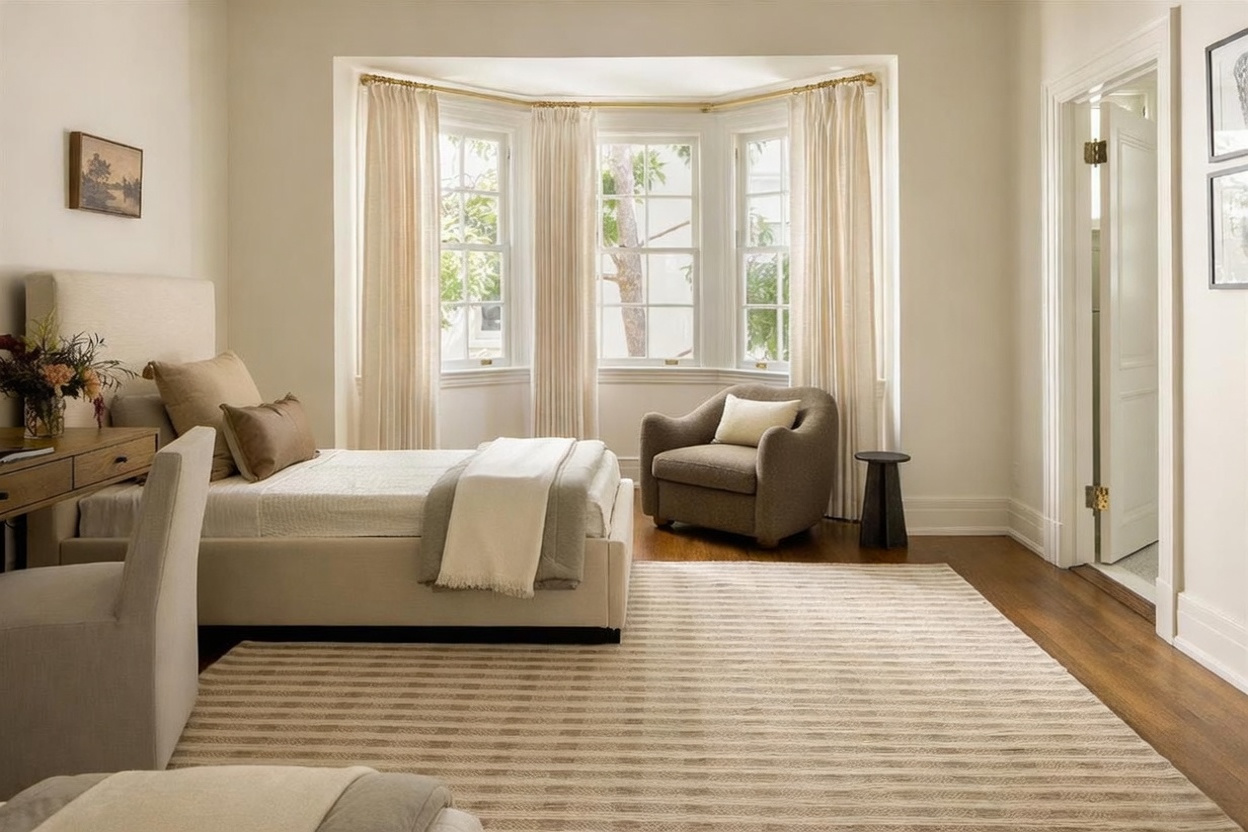
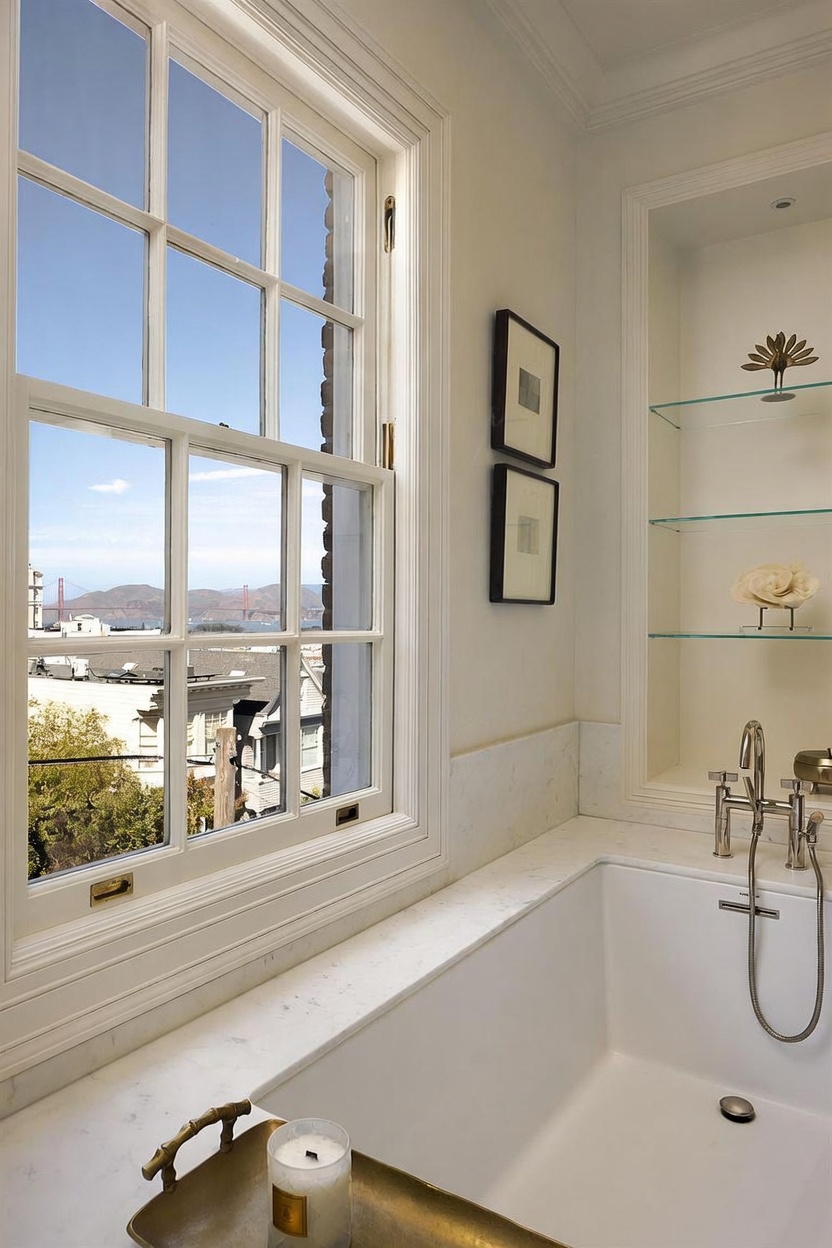
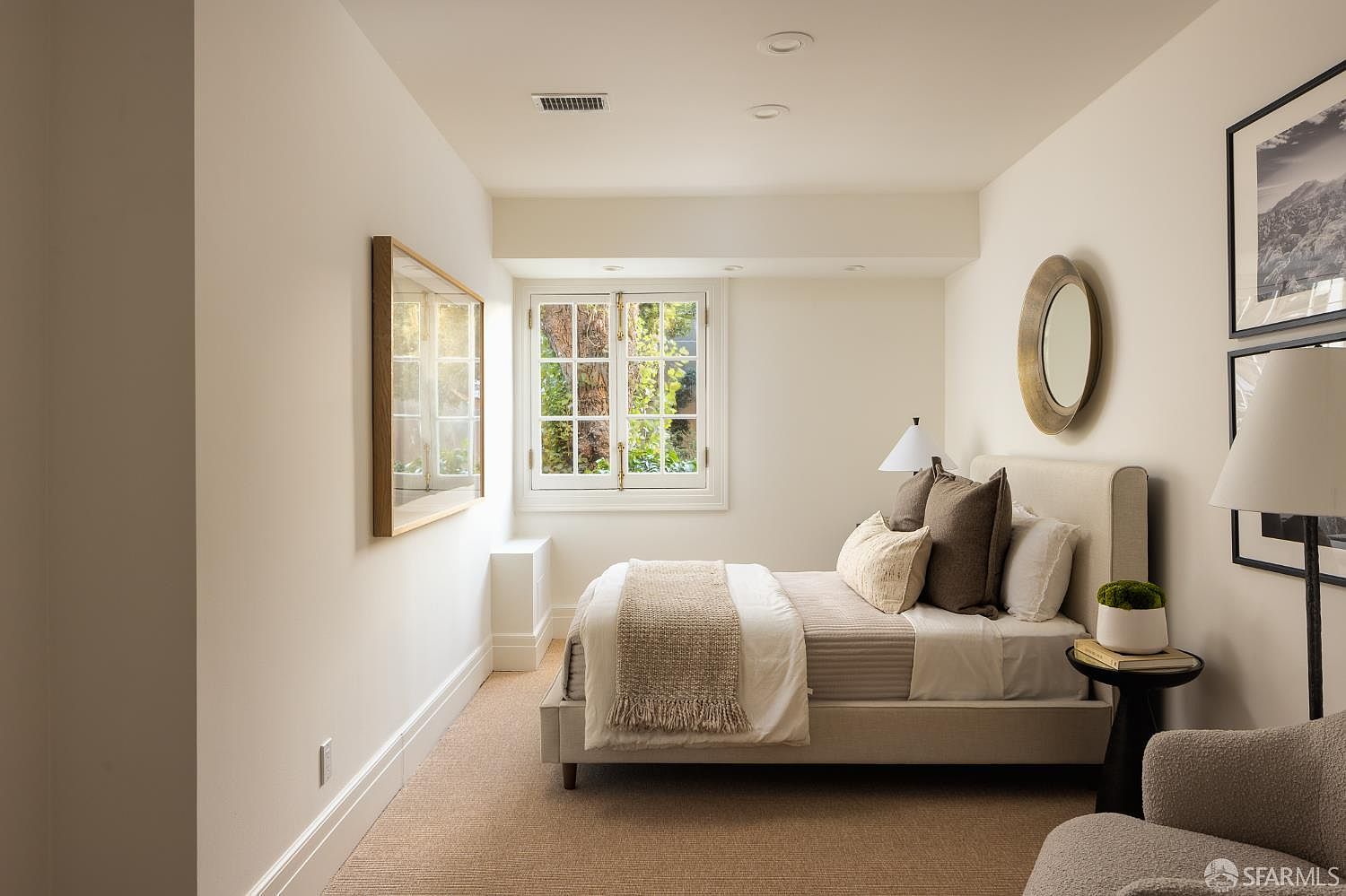
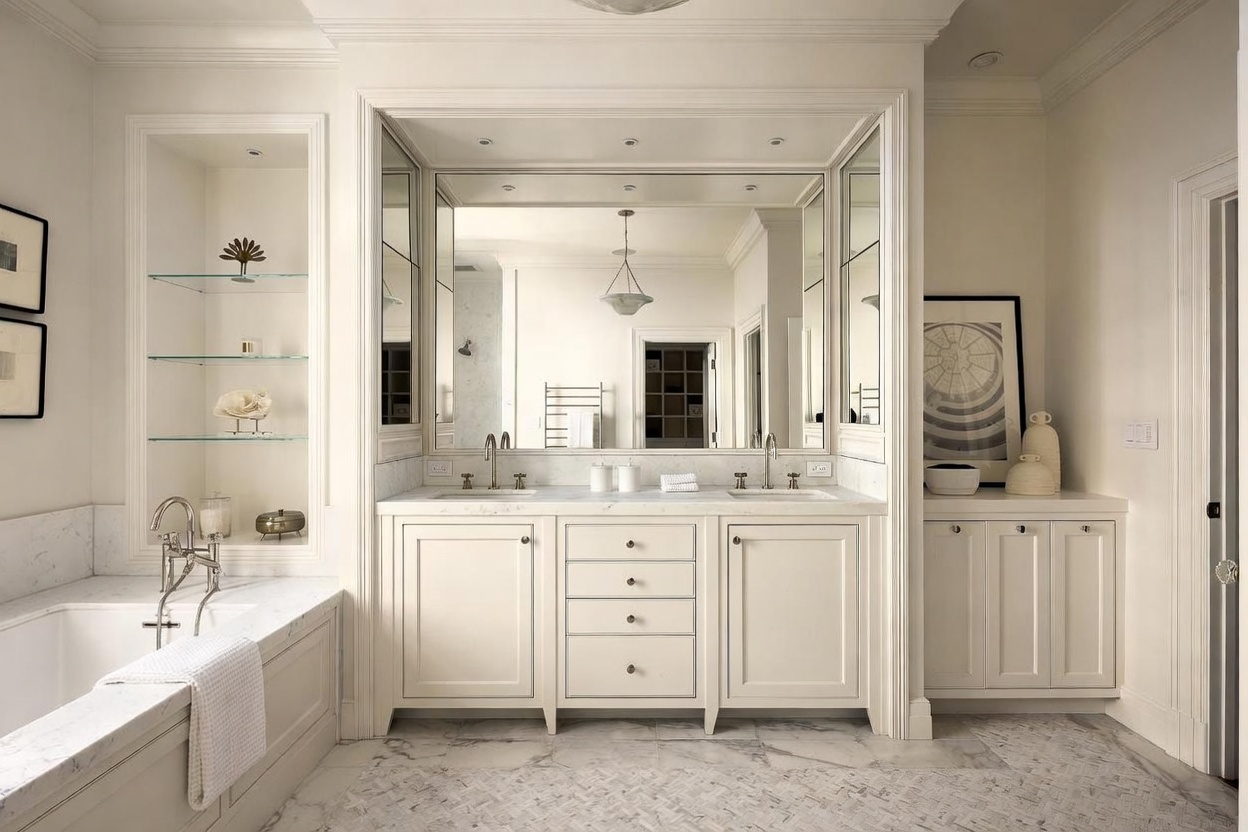
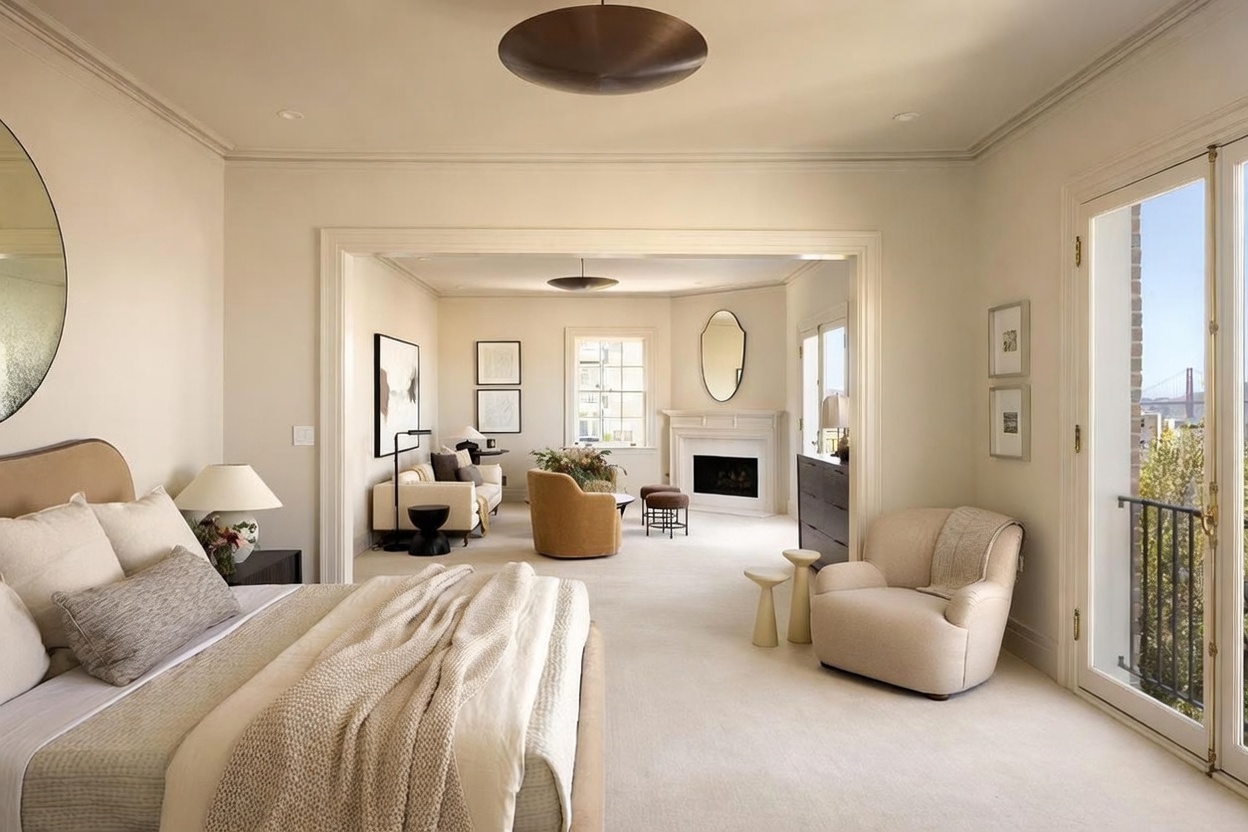
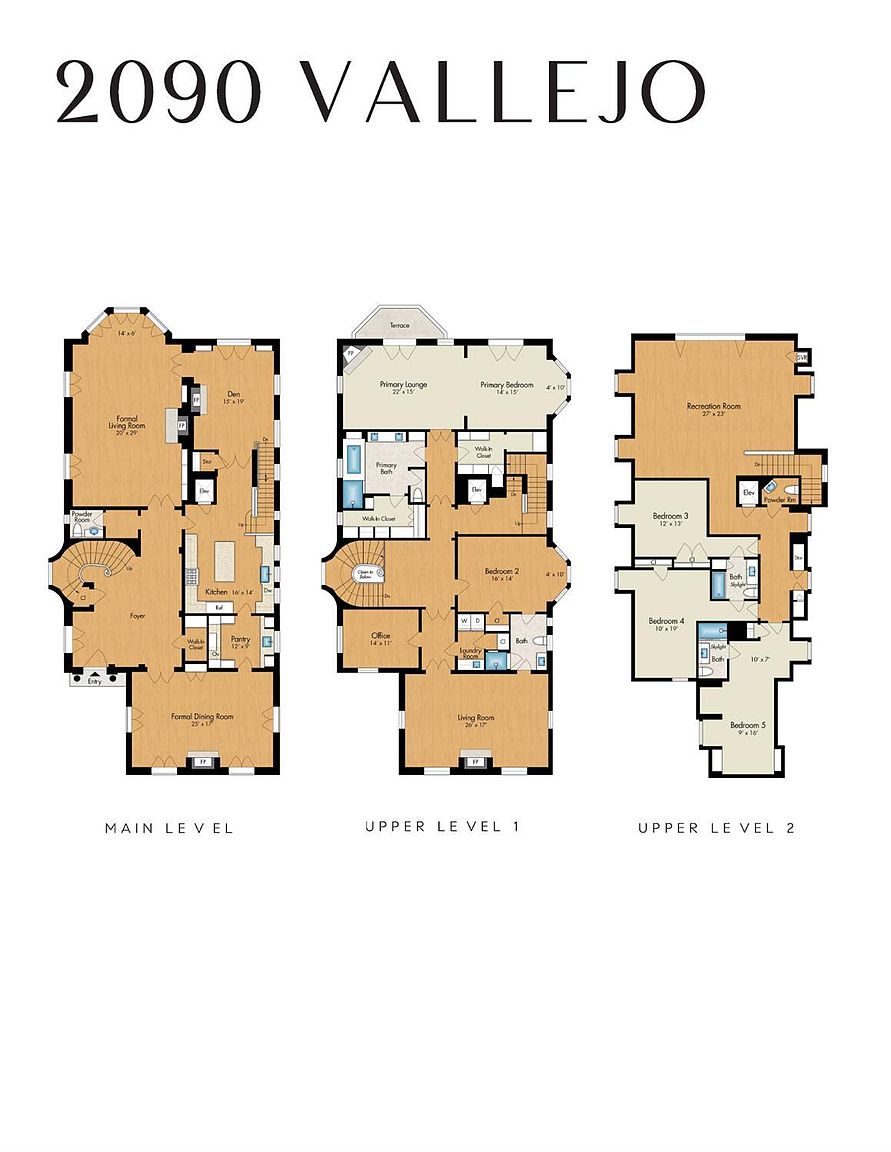
Across four levels connected by a private elevator, the residence offers six bedrooms and gathering spaces of exceptional variety. The full-width primary suite unfolds into a sitting area where a fireplace glows beneath a decorative mirror, before glass doors open onto a private terrace where the Golden Gate Bridge, Marin Headlands, Alcatraz, and Russian Hill compose one of the most celebrated urban panoramas in the world. The primary bathroom answers that view with a stone double vanity, a built-in soaking tub, and a window that frames the bridge as if it were a painting commissioned for the room.
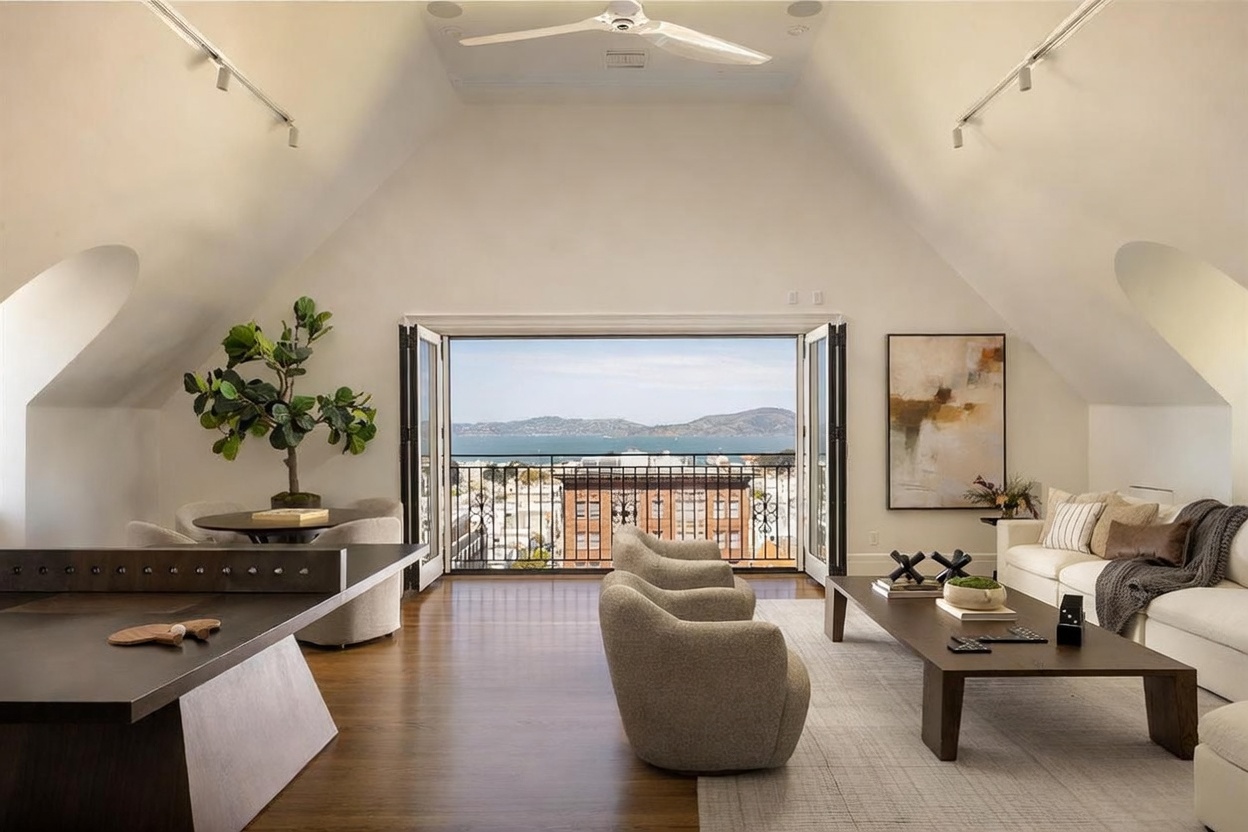
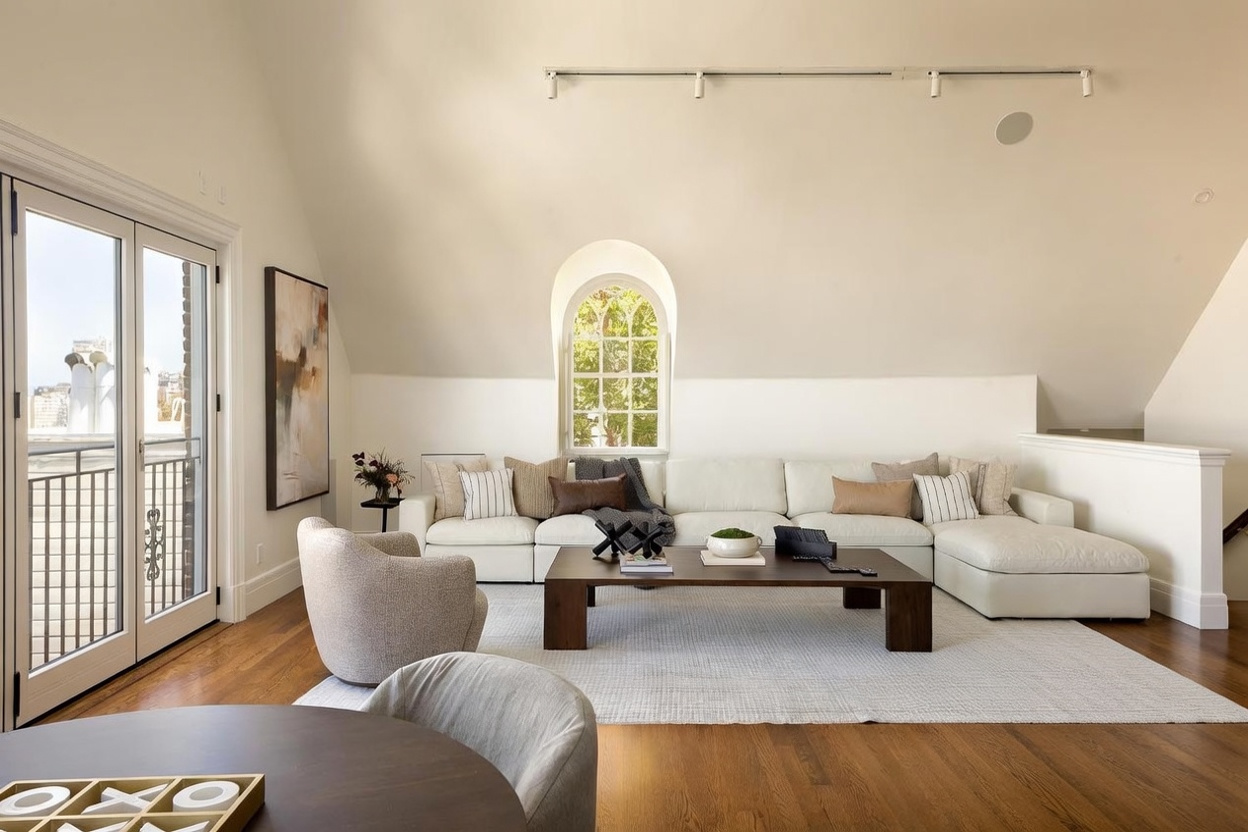
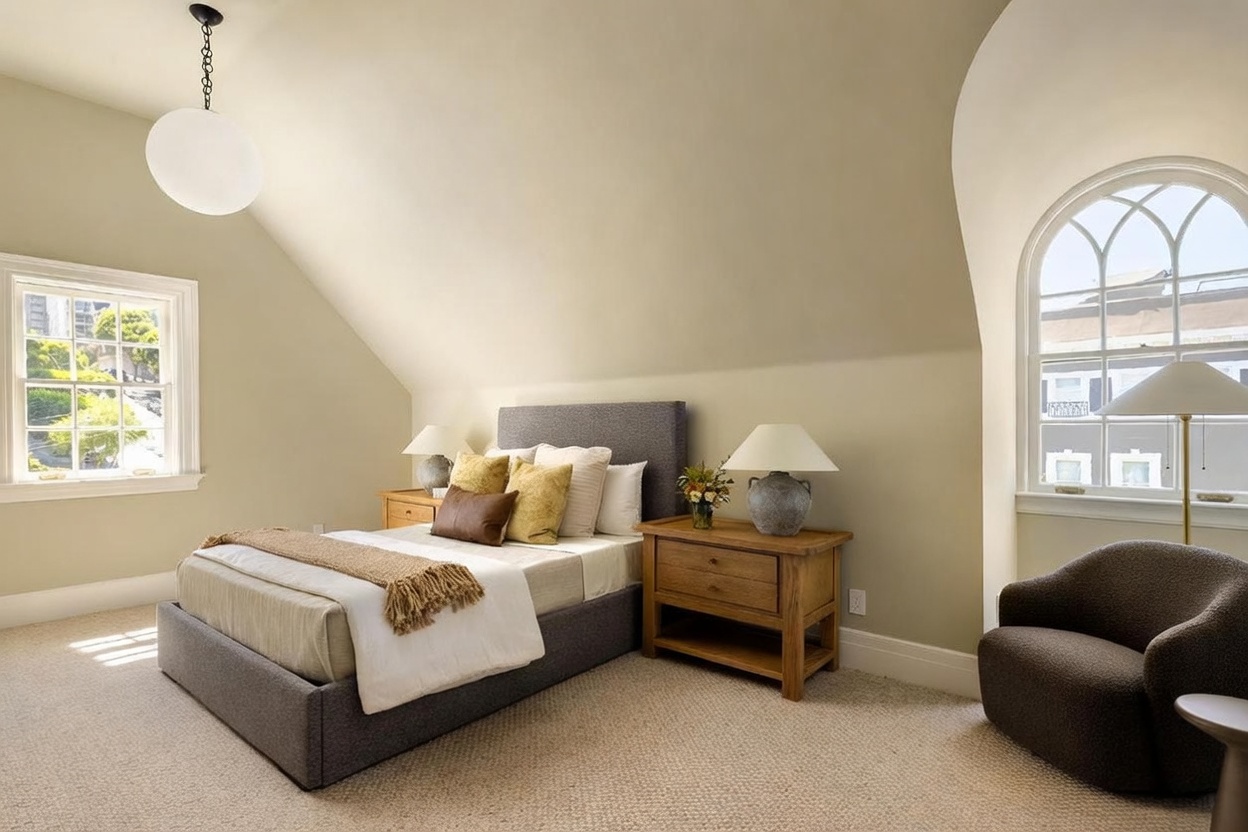
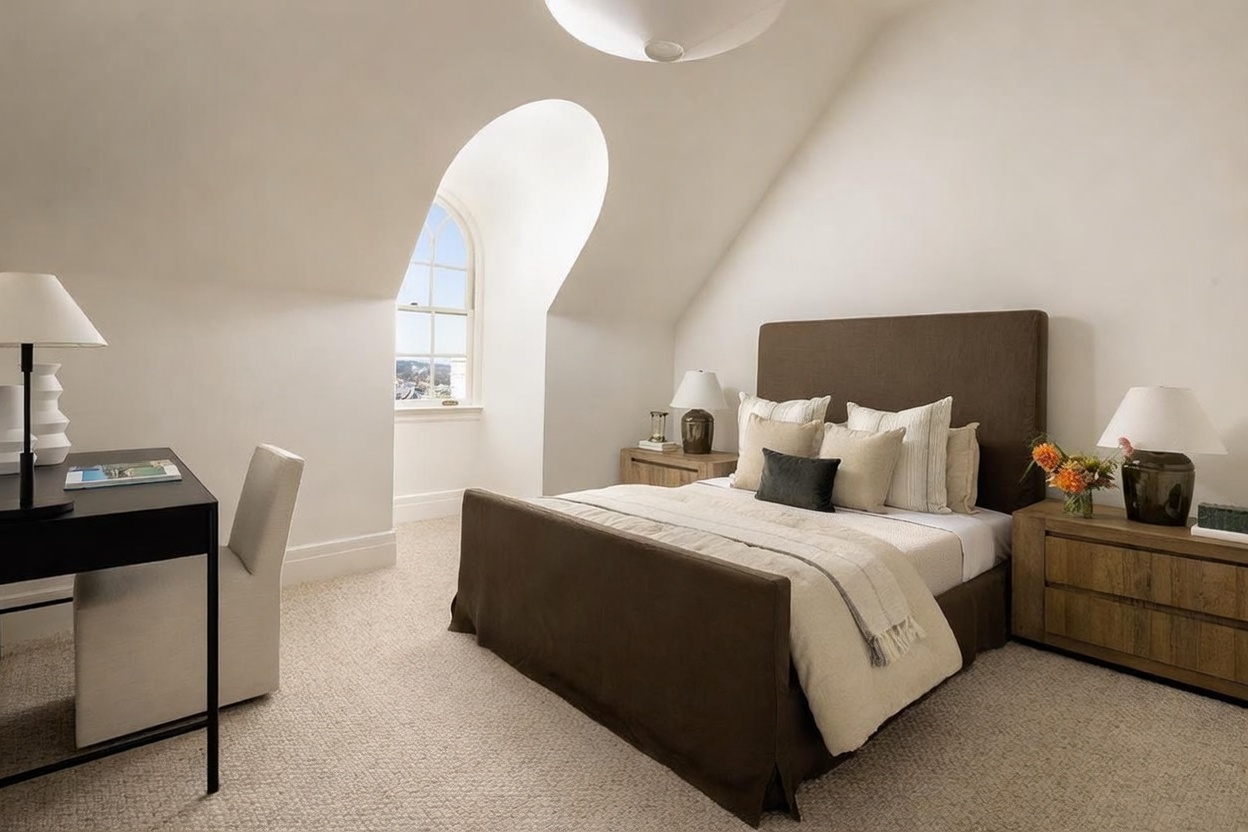
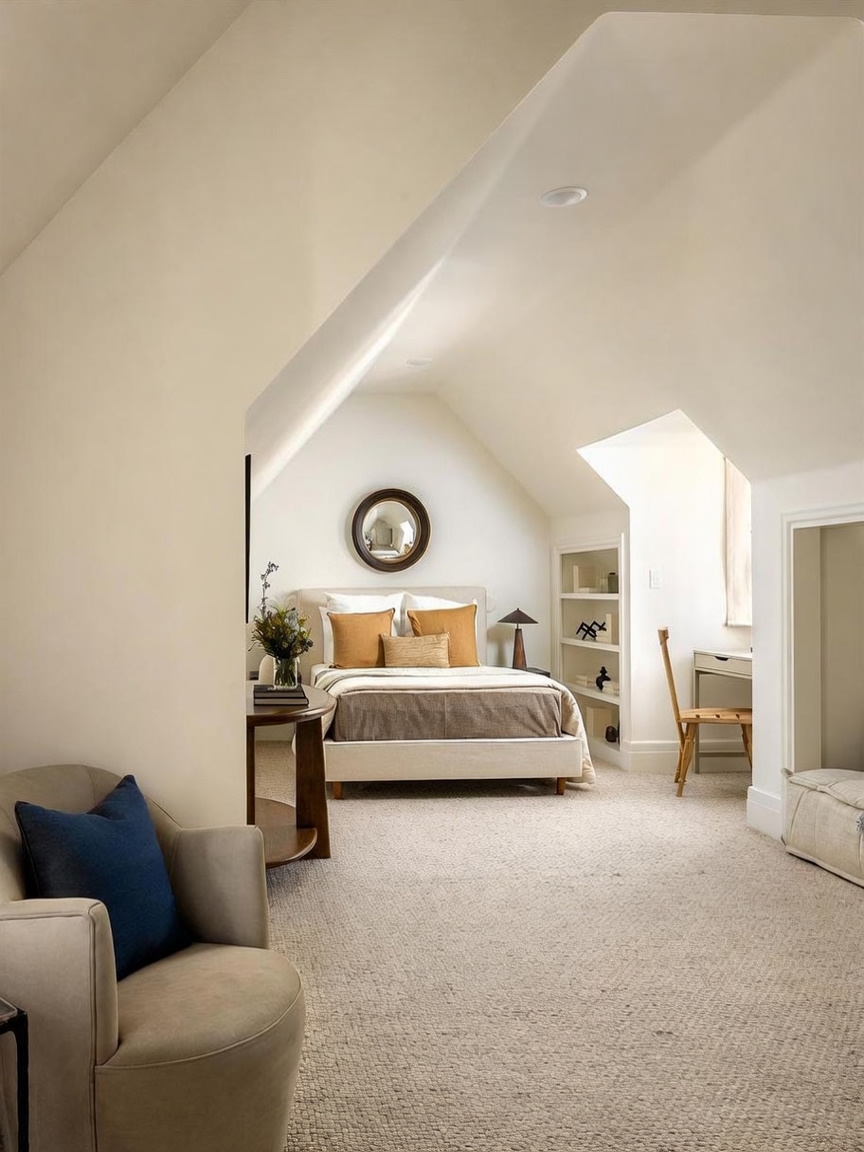
Above it all, the pent-room with its cathedral ceilings and sweeping Bay views crowns the residence — a space of dramatic proportions and quiet wonder. Below, a separate guest suite, wine cellar, and three-car garage complete a home that has anticipated every need of the life lived well within it.
Pacific Heights occupies a long ridge above the city, and its position is more than topographical — it is the foundation of an identity that San Francisco has cultivated for well over a century. Stretching between Van Ness Avenue to the east and Divisadero Street to the west, the neighborhood commands some of the most unobstructed views in the city: the Golden Gate Bridge to the northwest, the Bay and Marin Headlands beyond, Alcatraz in the middle distance, and the downtown skyline to the east. On clear days — and Pacific Heights, sheltered from the fog that settles over the western neighborhoods, enjoys a disproportionate share of them — the panorama is simply without rival in San Francisco.
The neighborhood developed rapidly following the 1906 earthquake and fire, as San Francisco's most prosperous families moved west and north toward the elevated lots that had survived the disaster largely intact. What followed was a period of ambitious residential construction that drew architects of genuine ambition and clients of considerable means. The result is a streetscape of extraordinary variety and consistent quality: Edwardian mansions, Georgian and Colonial Revival residences, Beaux-Arts apartment buildings, and the occasional modernist intervention, all coexisting along tree-lined blocks of unusual width and calm.
Vallejo Street itself is one of Pacific Heights' most distinguished addresses, running east to west across the ridge with the easy confidence of a street that has never needed to prove itself. The blocks near Broadway and the Gold Coast — as the stretch of grandest homes along Broadway, Vallejo, and Jackson Streets is informally known — represent the neighborhood's highest concentration of architectural ambition.
The lifestyle Pacific Heights affords is one of rare urban completeness. Fillmore Street, the neighborhood's primary commercial corridor, offers a thoughtfully curated selection of boutiques, galleries, restaurants, and cafés that balance neighborhood intimacy with genuine sophistication. The stretch between Sacramento and Jackson Streets is particularly well regarded, with independent bookshops, wine bars, and long-established restaurants giving the street the character of a European quarter transplanted to the California coast.
For cultural life, the neighborhood sits at a natural crossroads. The San Francisco Symphony, Opera, and Ballet perform at Davies Symphony Hall and the War Memorial Opera House at the southern edge of Van Ness, less than two miles away. The San Francisco Museum of Modern Art, the de Young Museum in Golden Gate Park, and the Legion of Honor are all within comfortable reach. Golden Gate Park itself — 1,017 acres of gardens, trails, museums, and open meadows — begins just blocks to the west of the neighborhood's boundary.
For families, the proximity to several of the city's most respected independent schools, including those along Broadway and in the adjacent Presidio Heights, represents a significant practical consideration. The Presidio National Park, with its trails, forests, and shoreline along the Bay, offers a scale of natural access that few urban neighborhoods anywhere can match.
To live in Pacific Heights — and specifically on Vallejo Street — is to occupy one of the city's most enduring addresses: elevated in every sense, rooted in history, and oriented toward a view that has defined San Francisco's sense of itself for generations.
Featured Highlights
Curated Content • Presented by Missy Wyant Smit