The Story Behind
Where Presidential History Meets Unrivaled Biscayne Bay Frontage
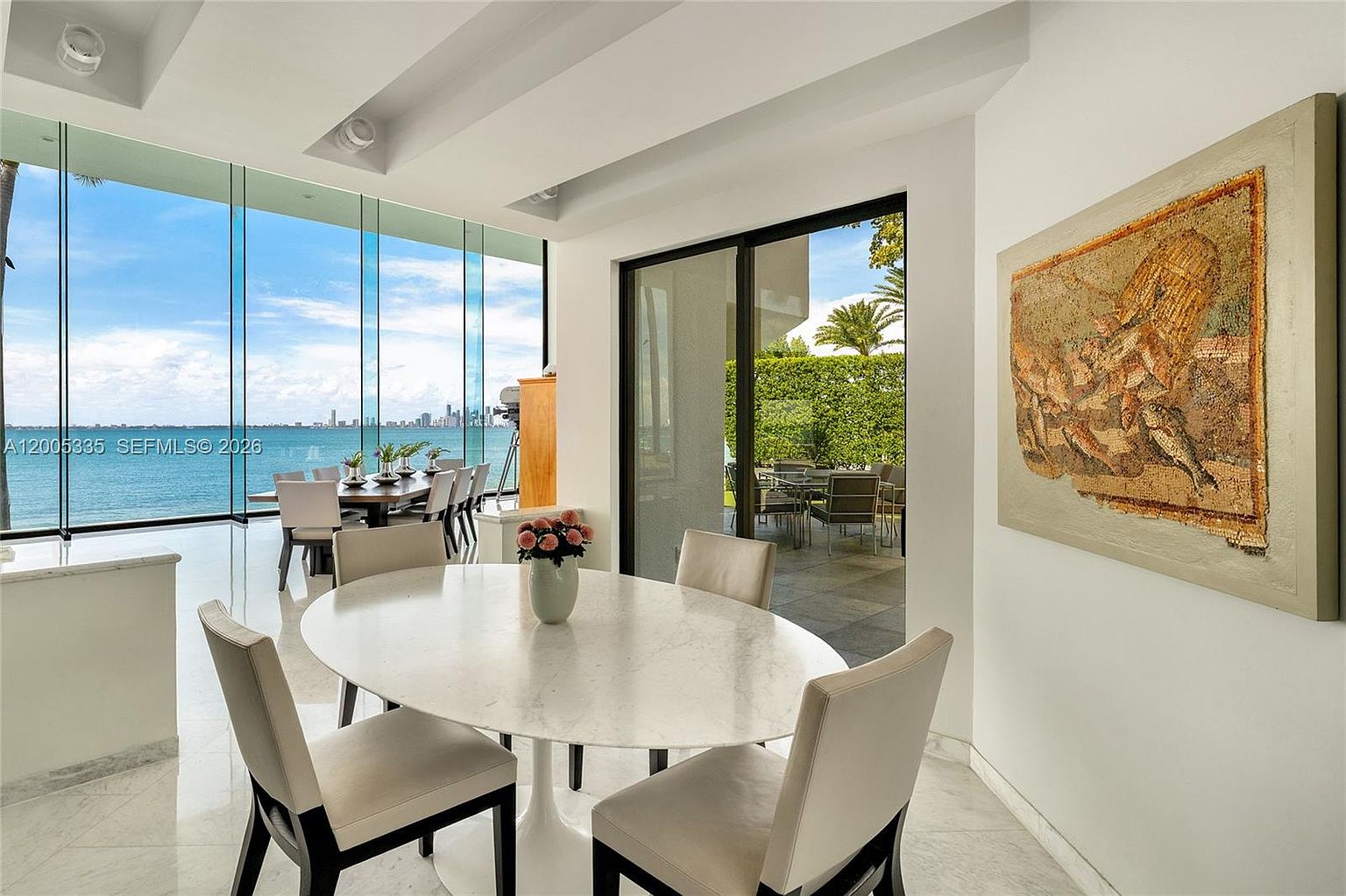
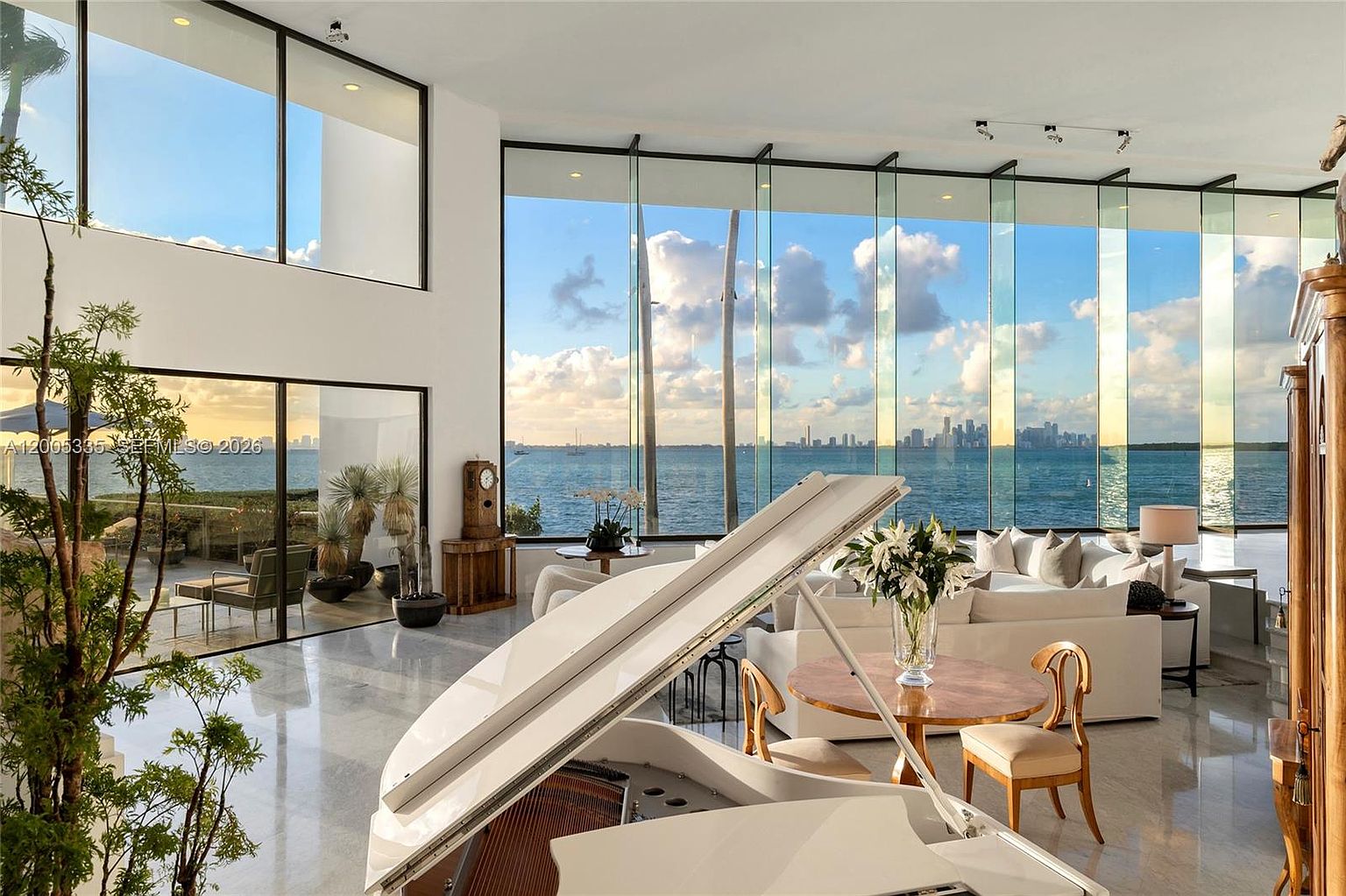
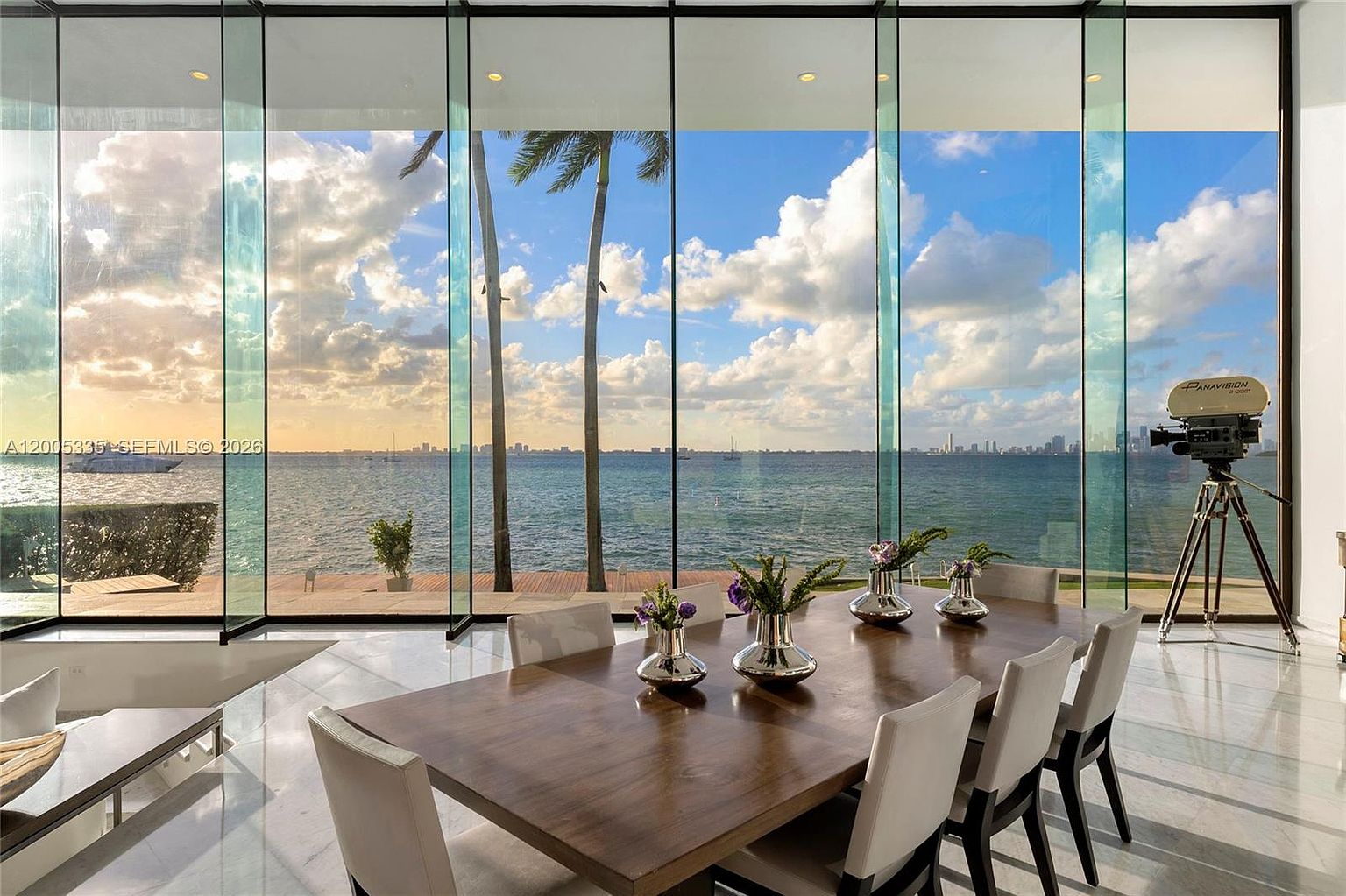
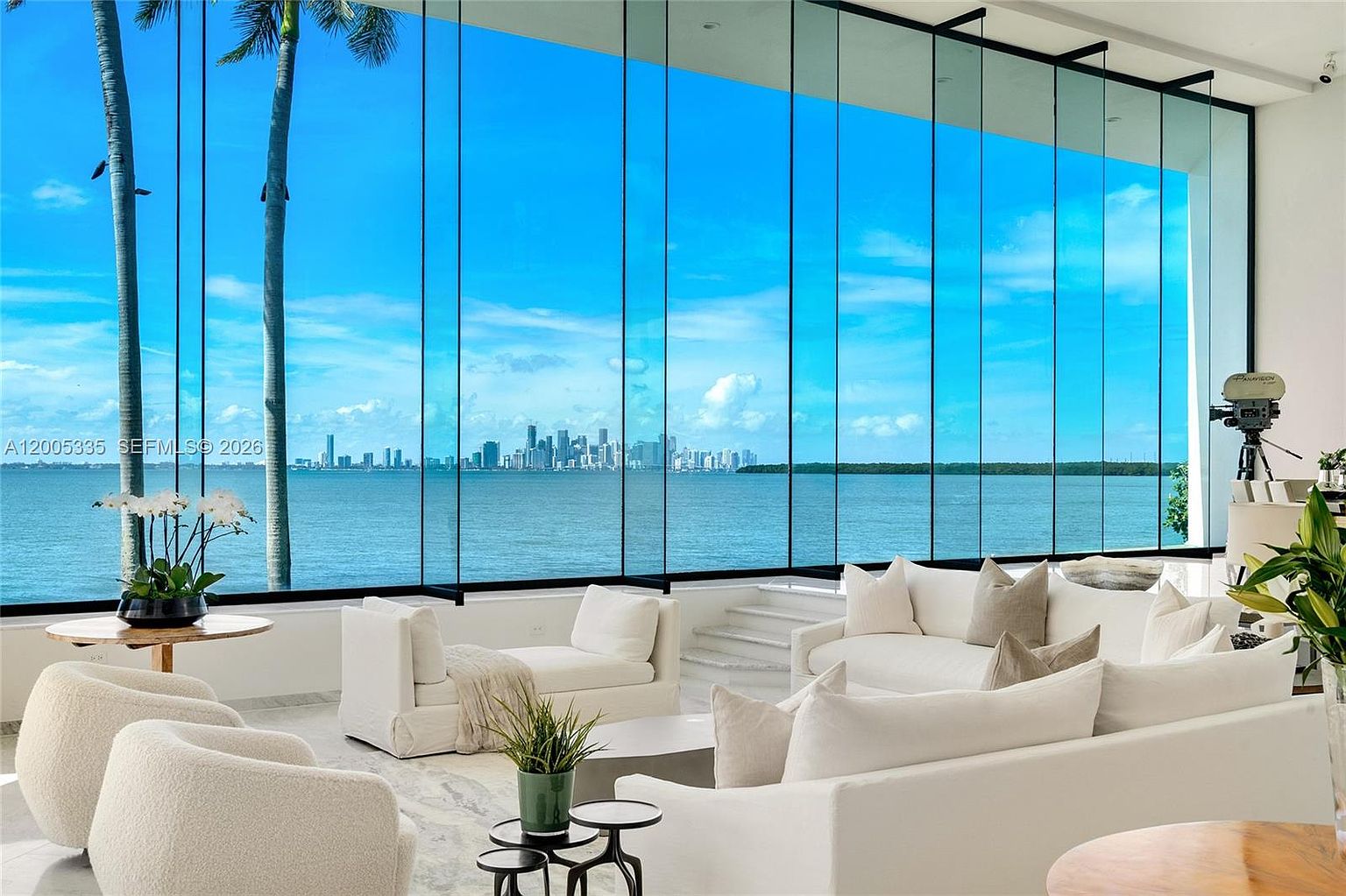
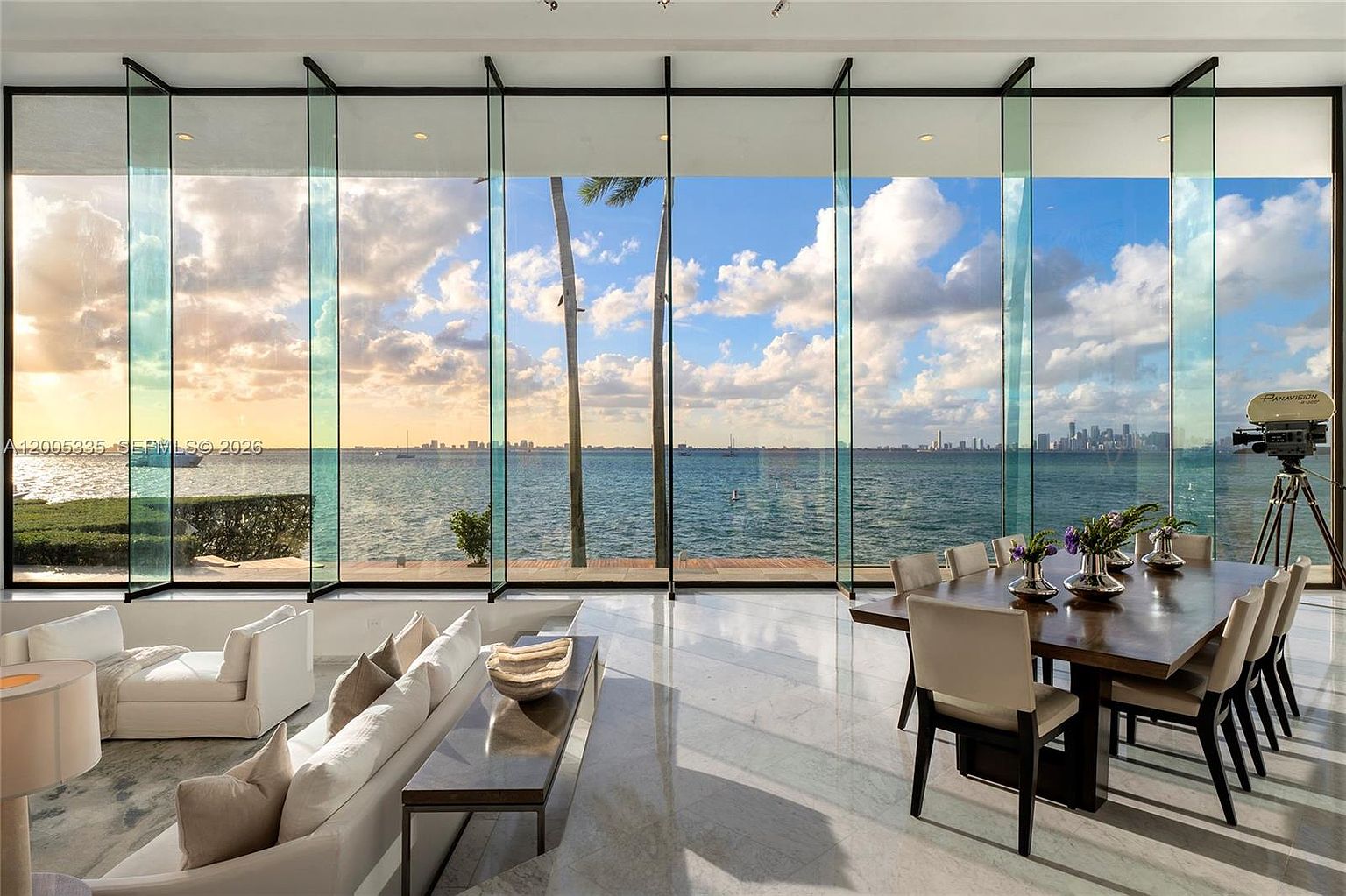
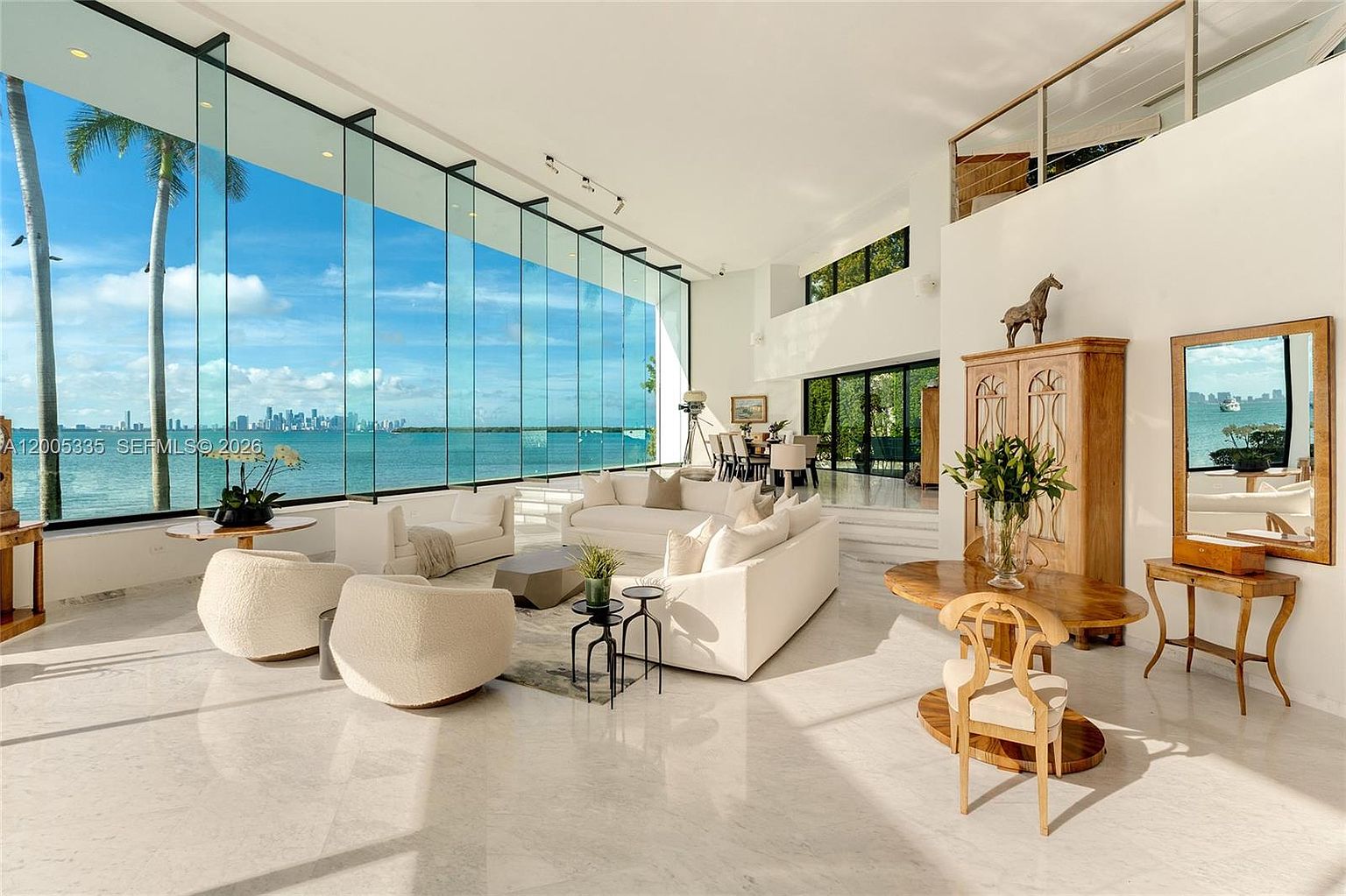
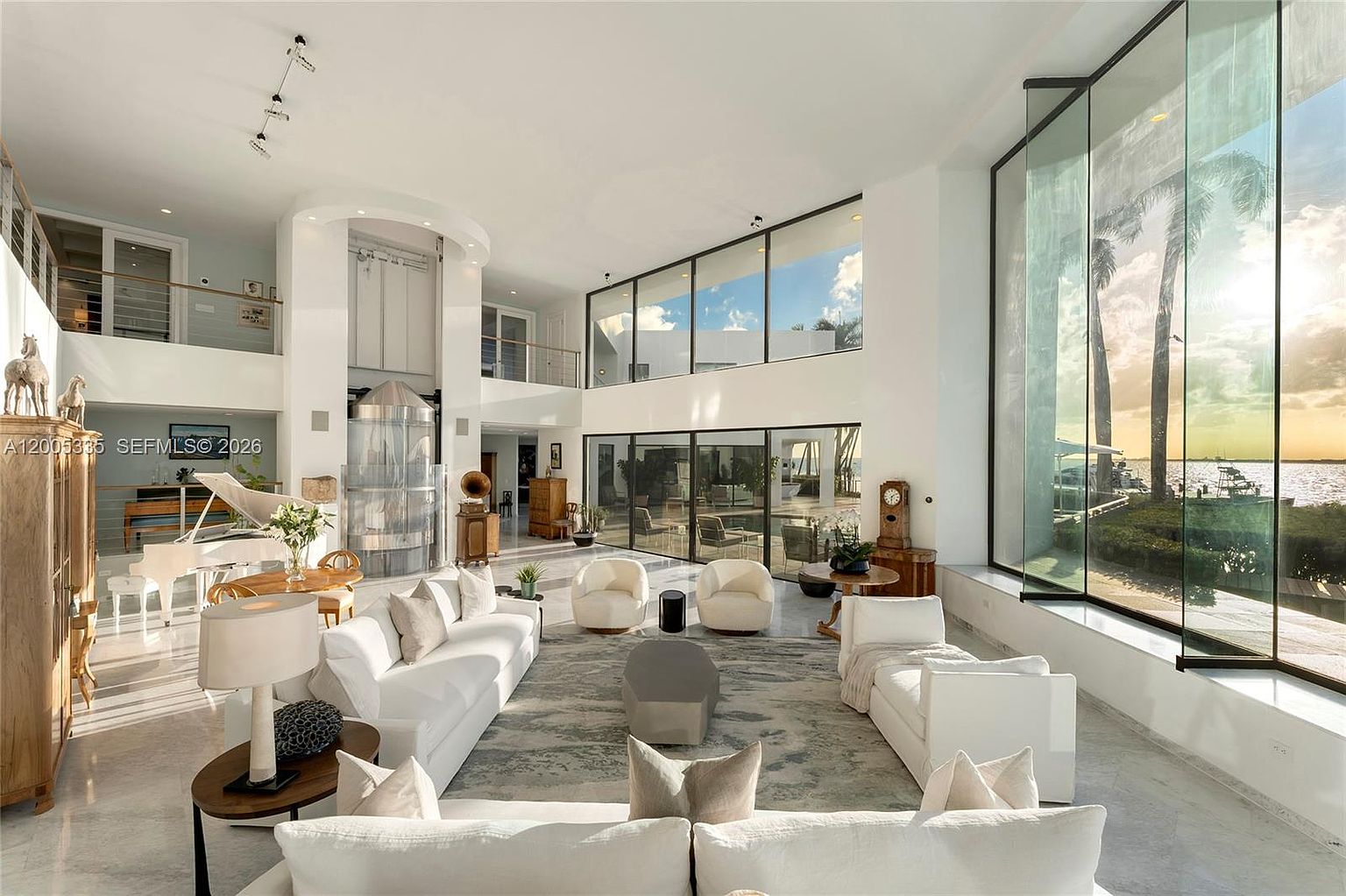
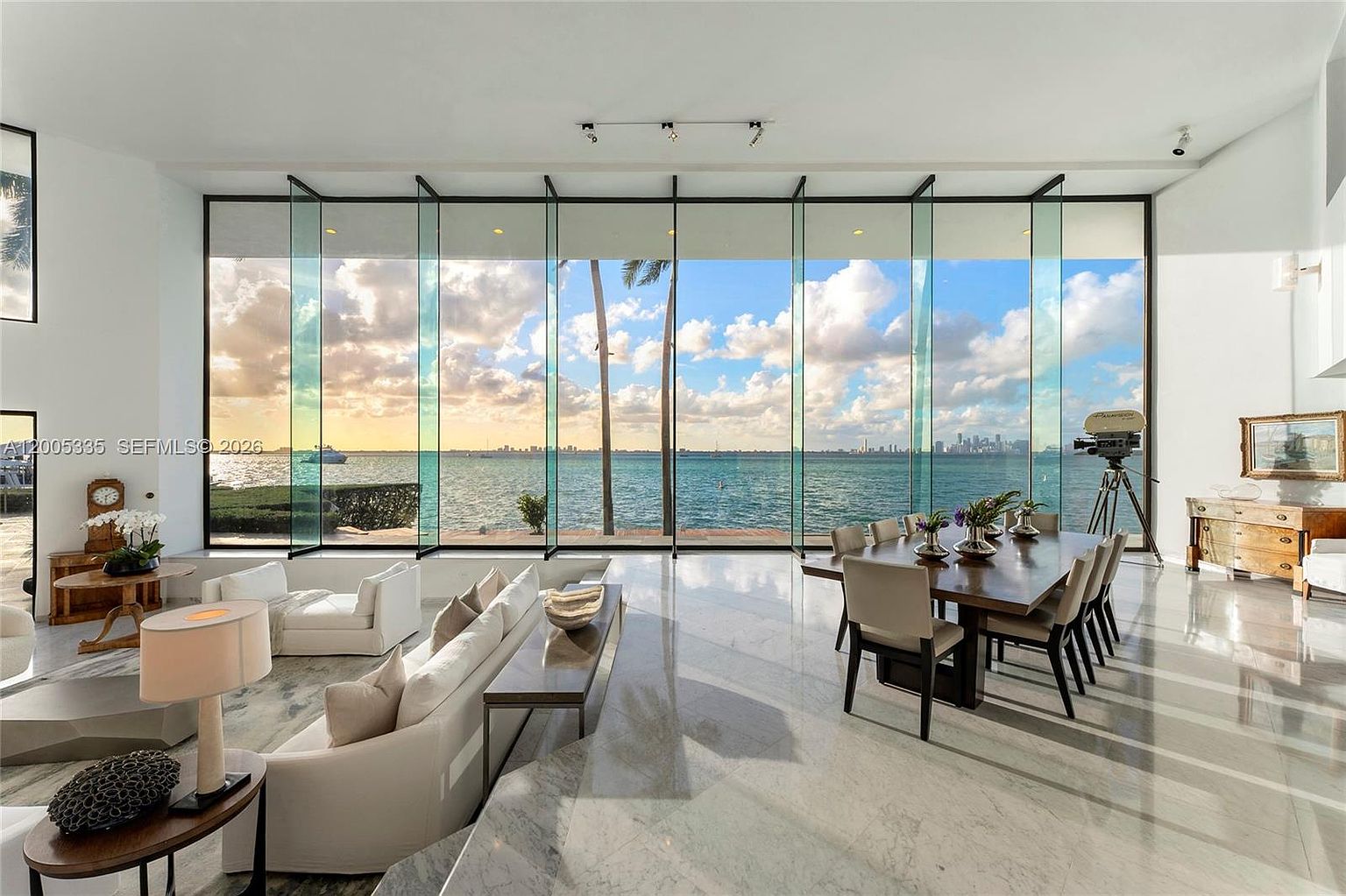
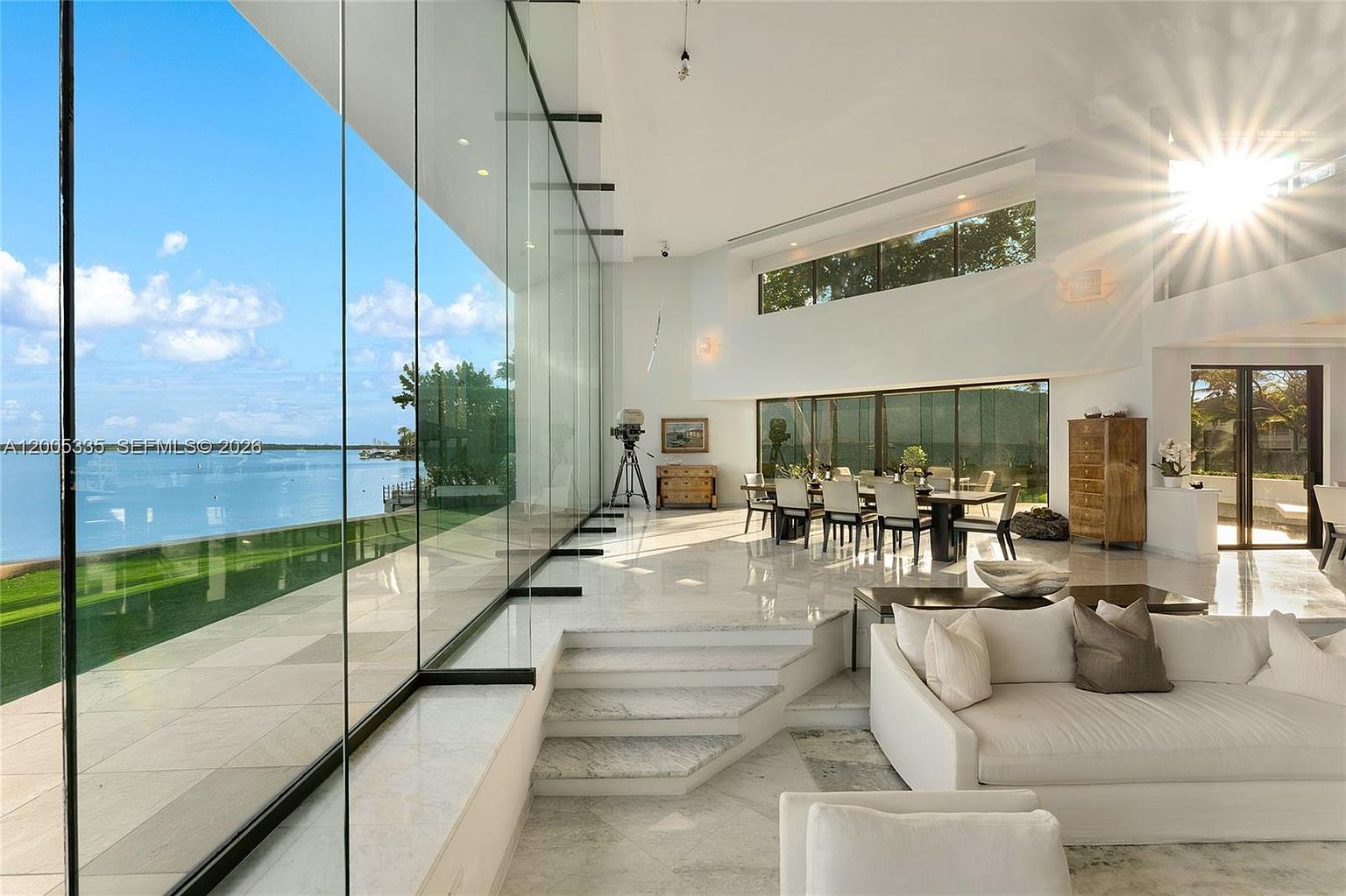
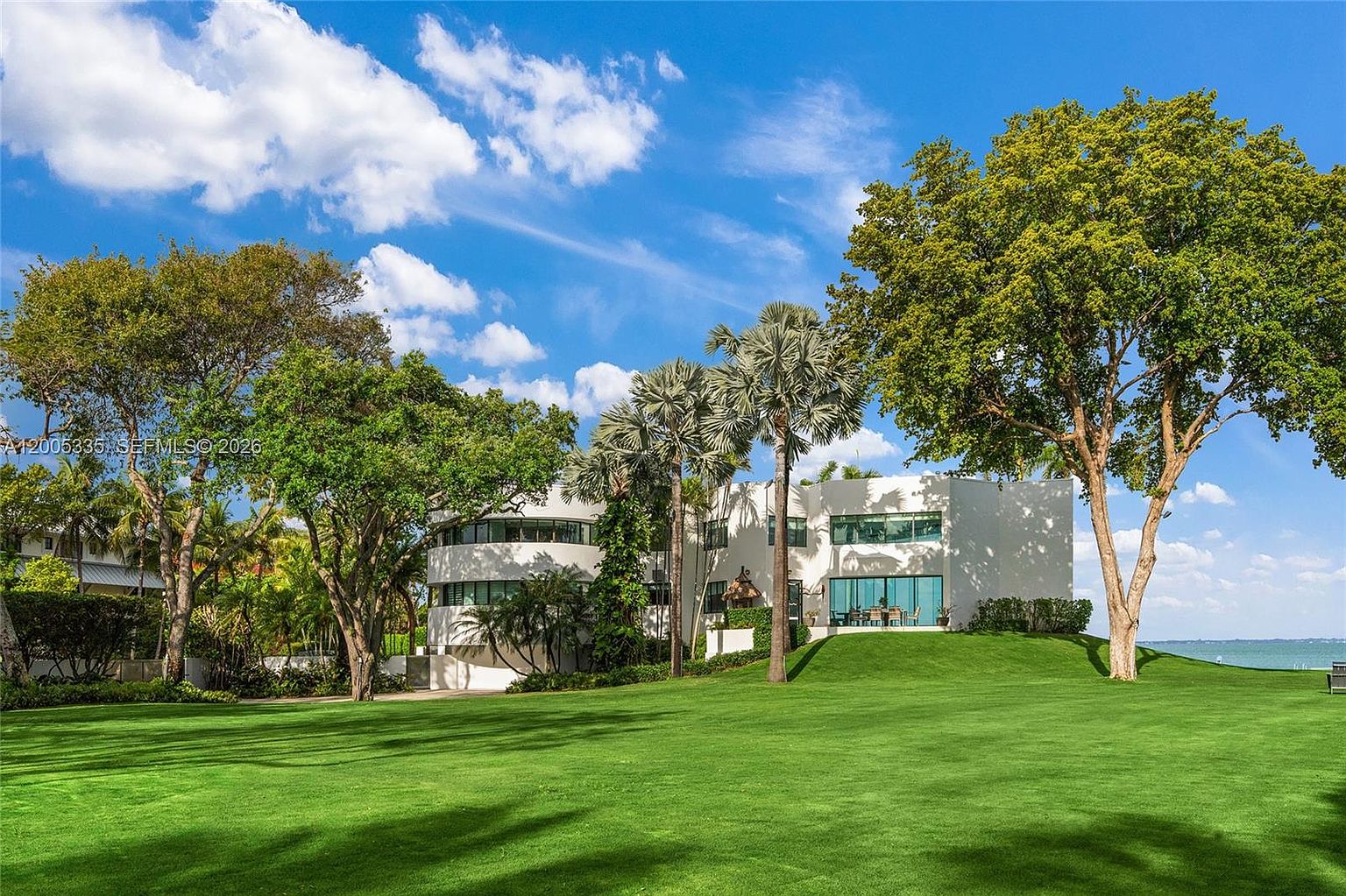
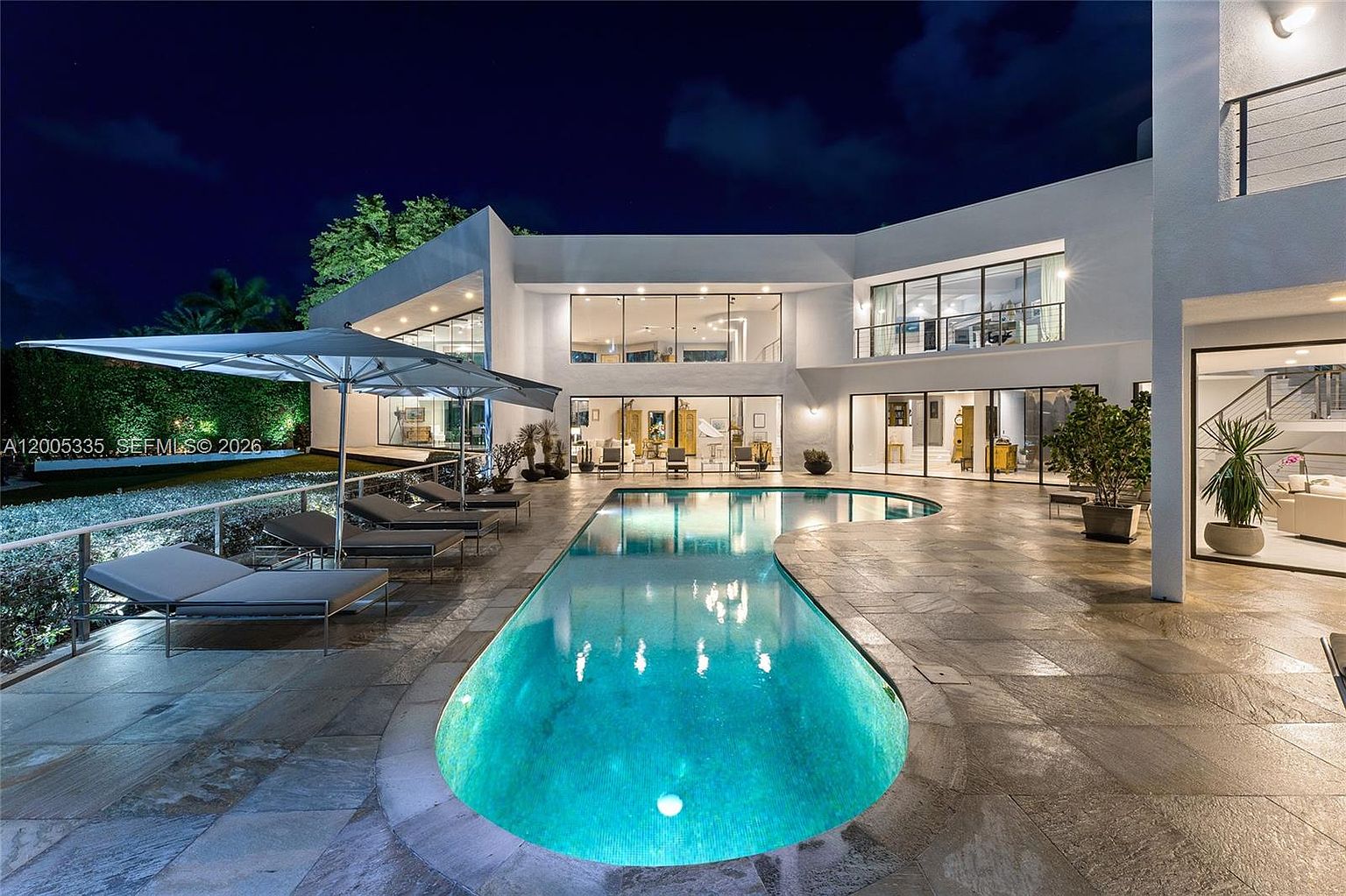
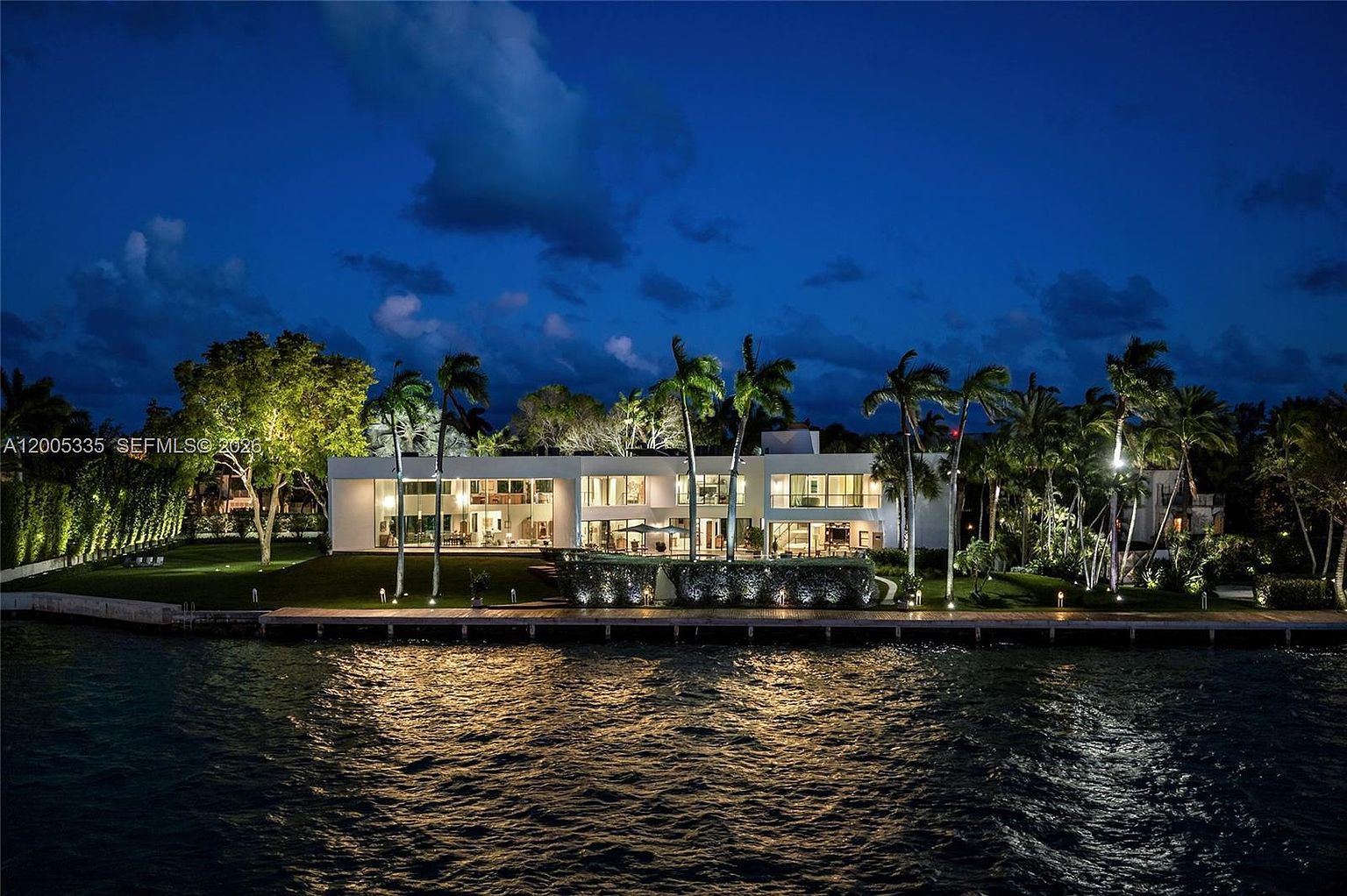
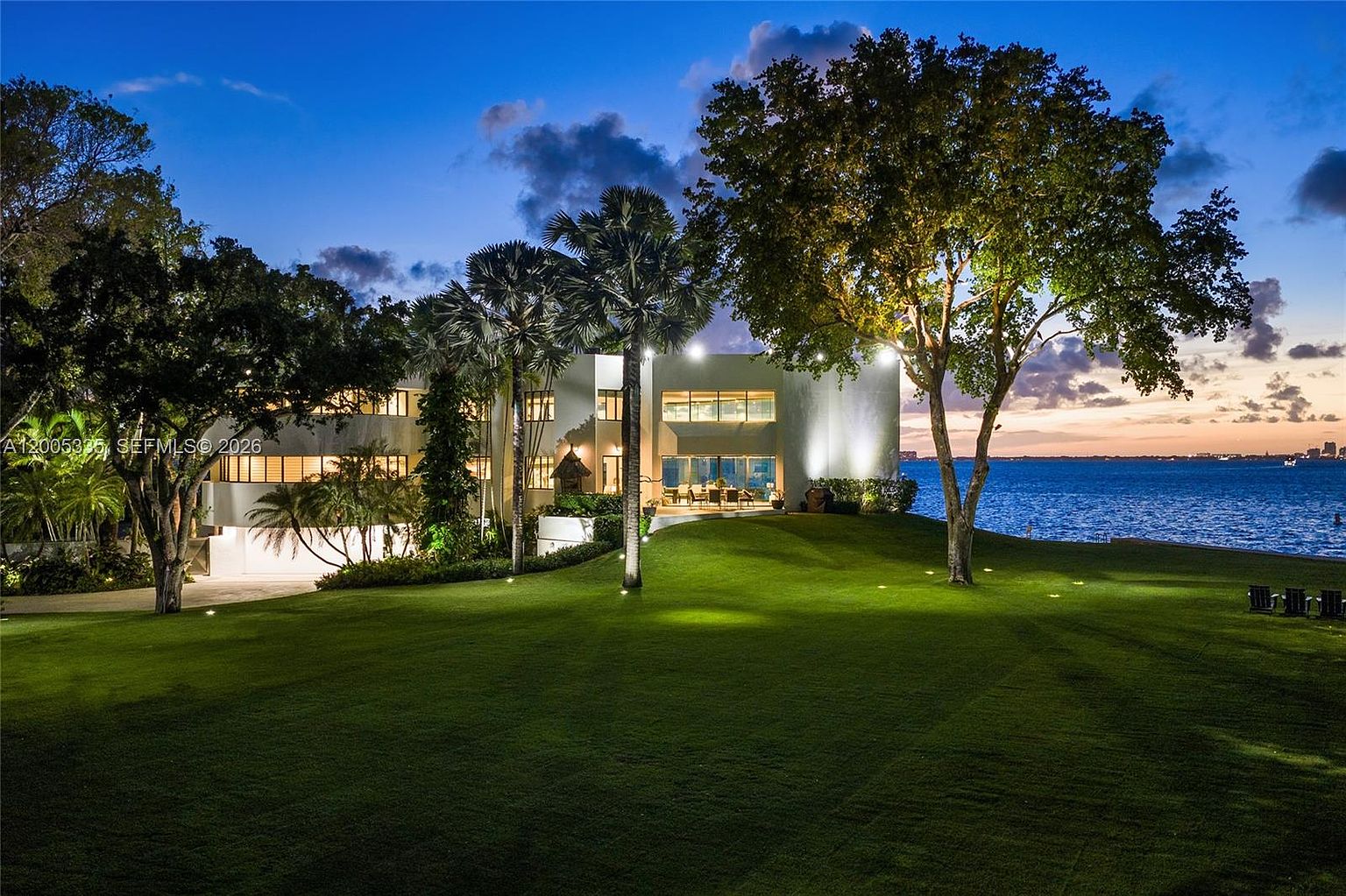
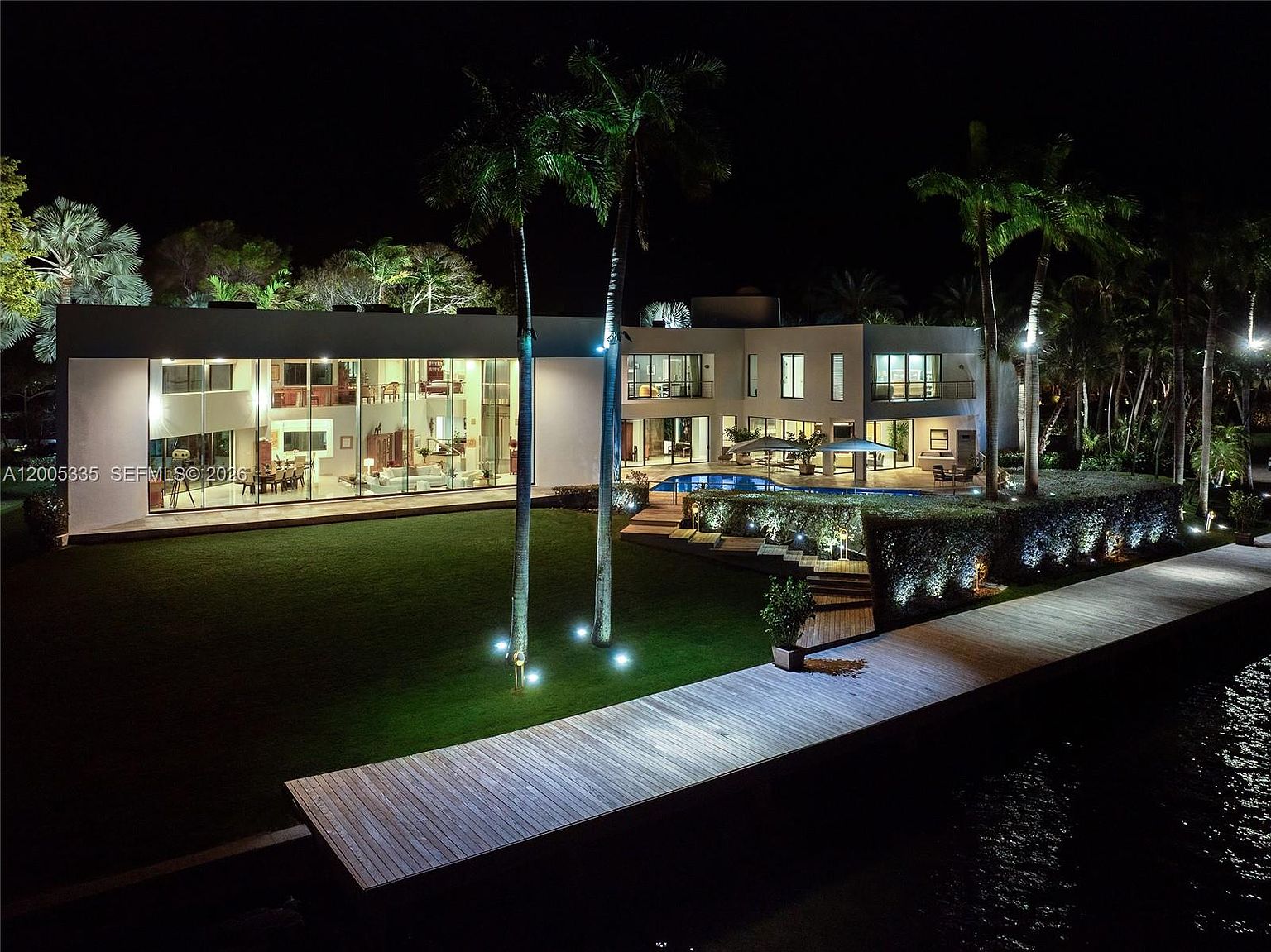
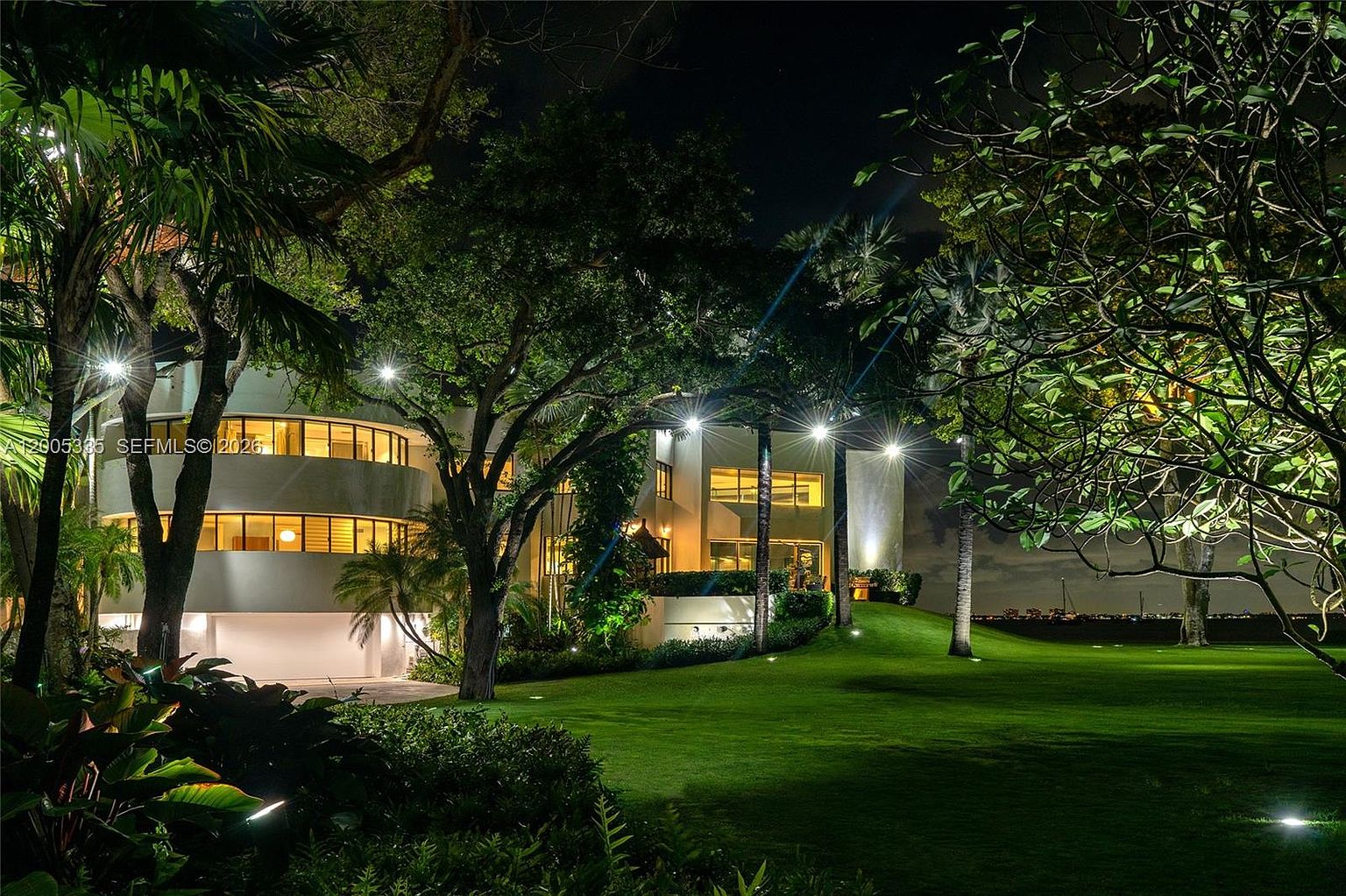
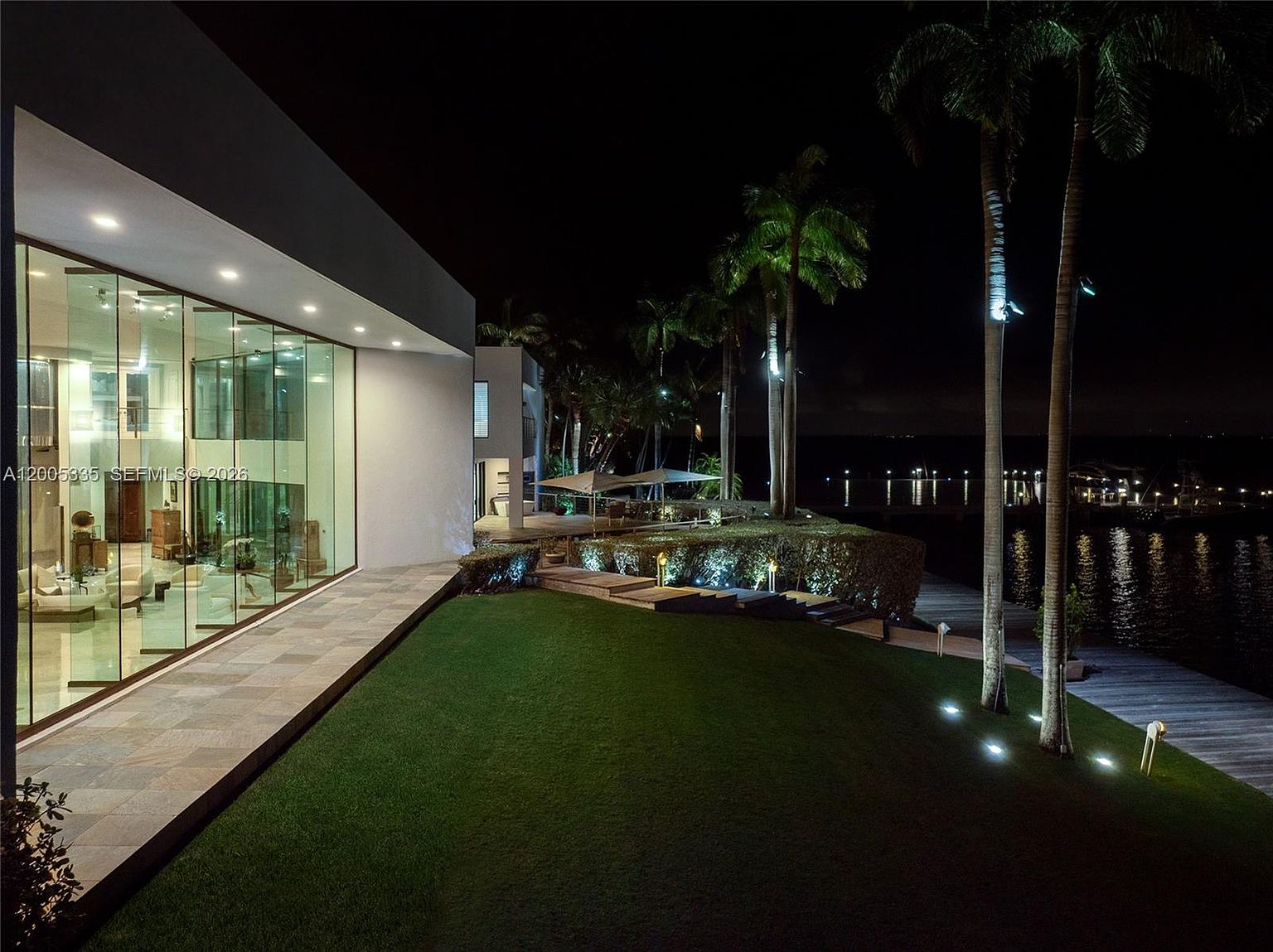
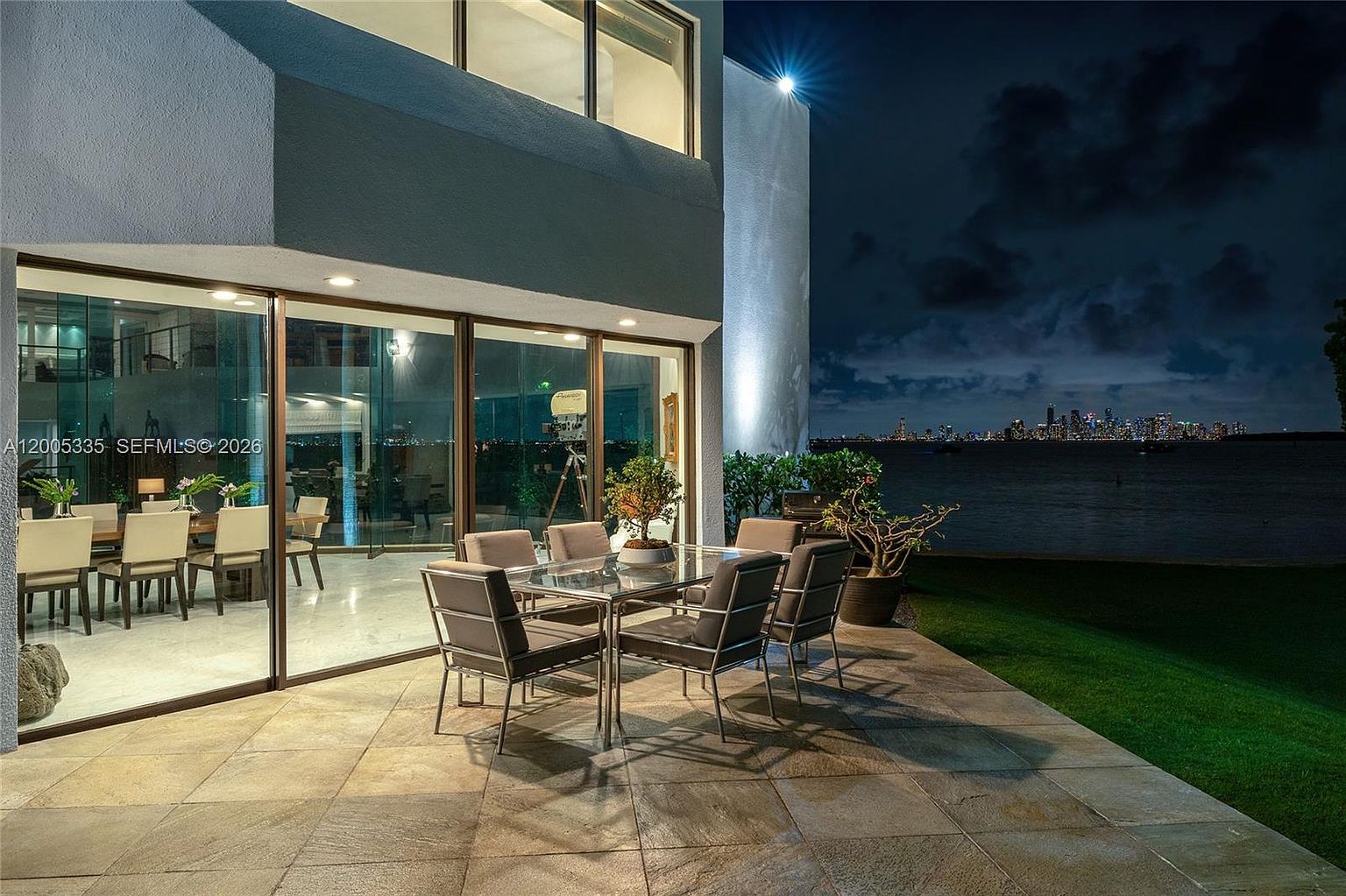
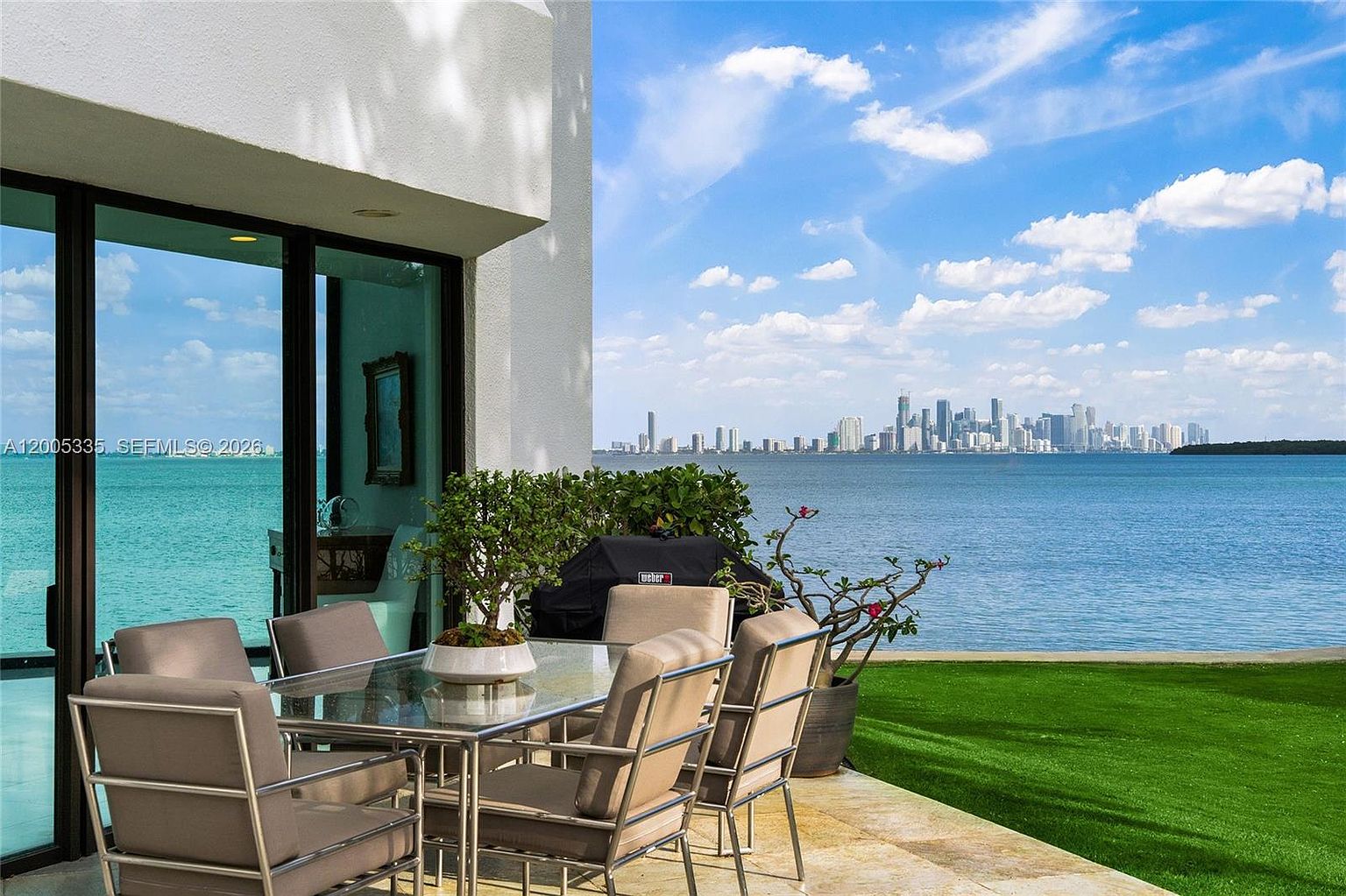
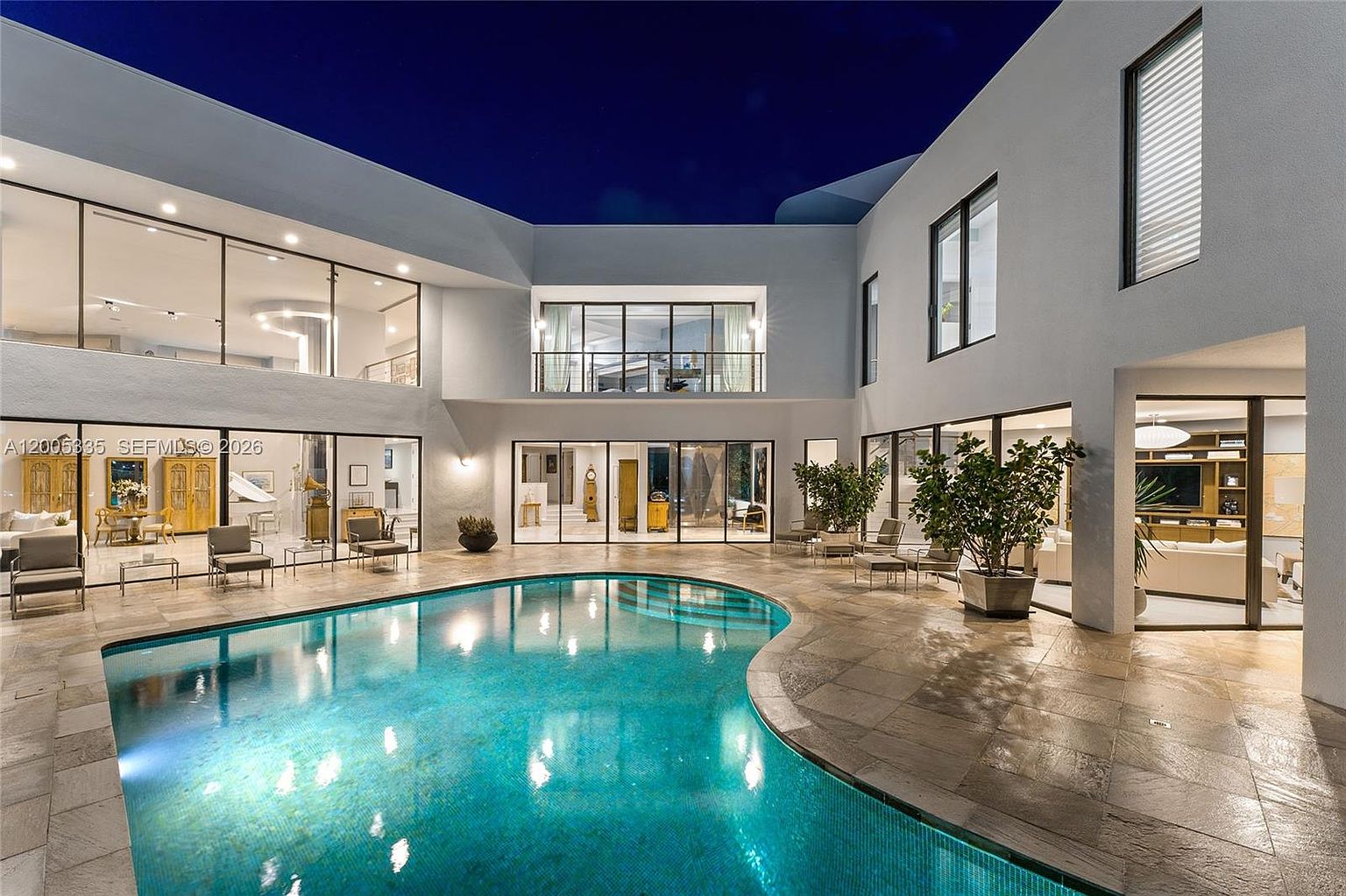
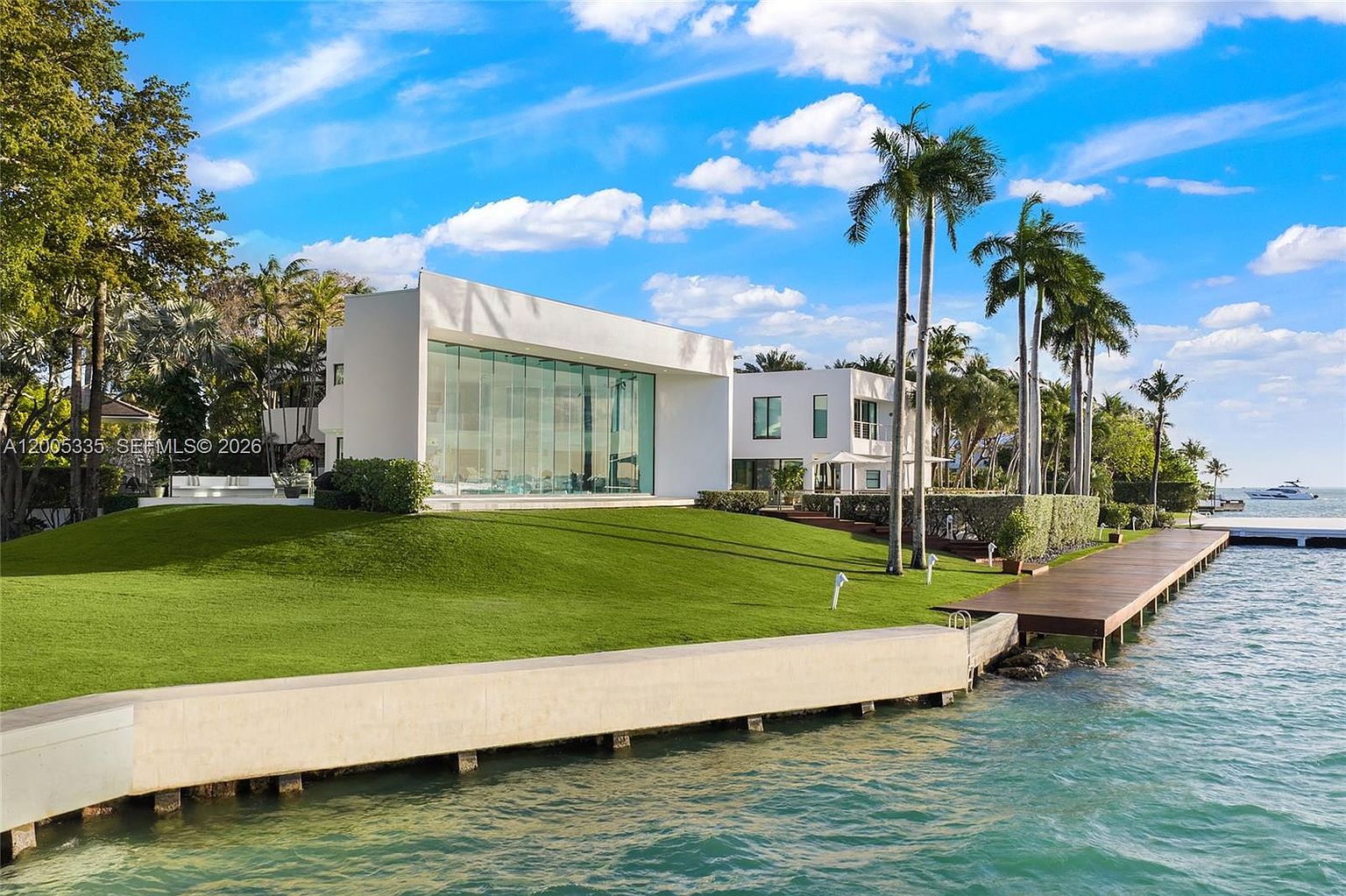
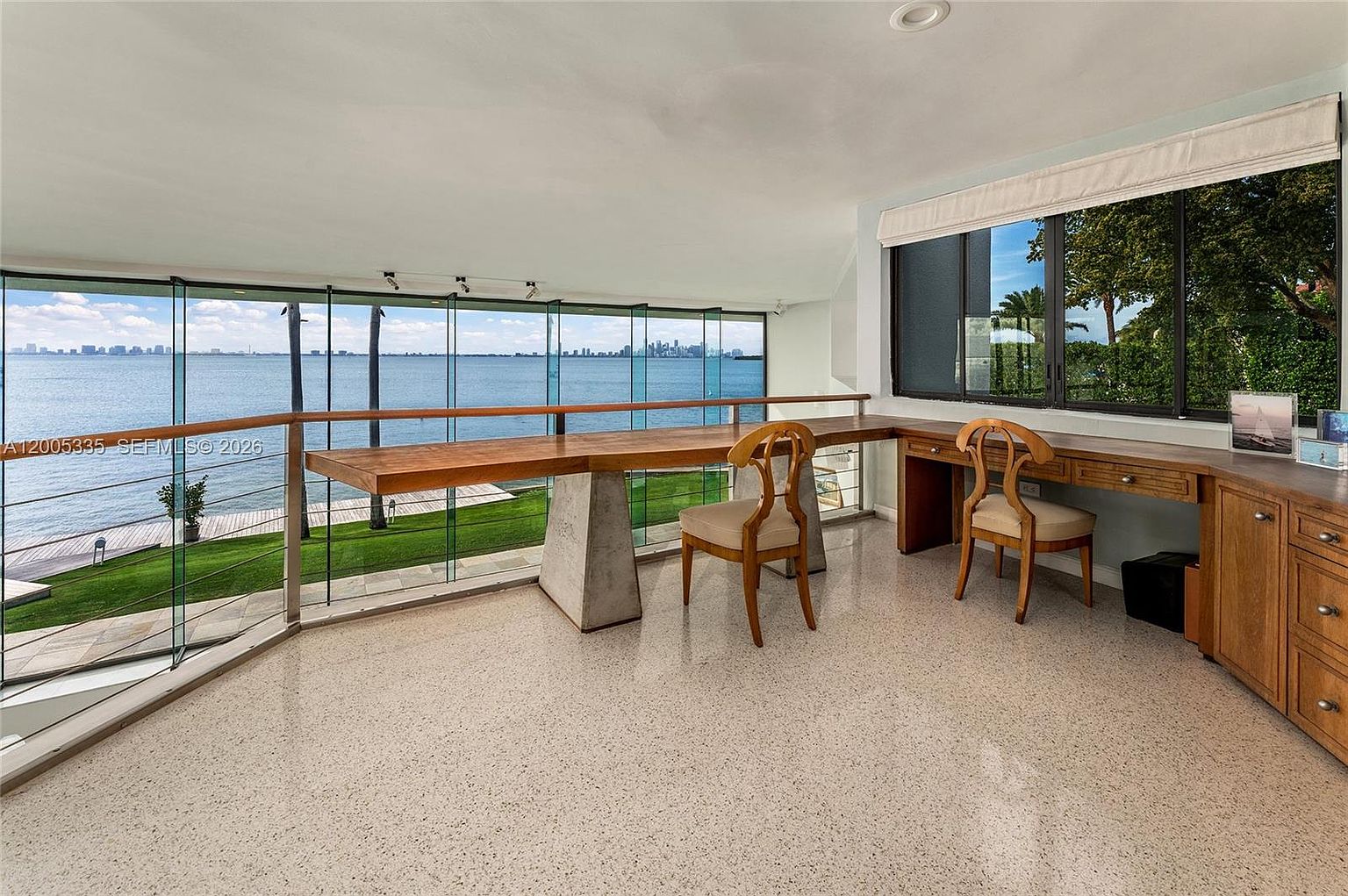
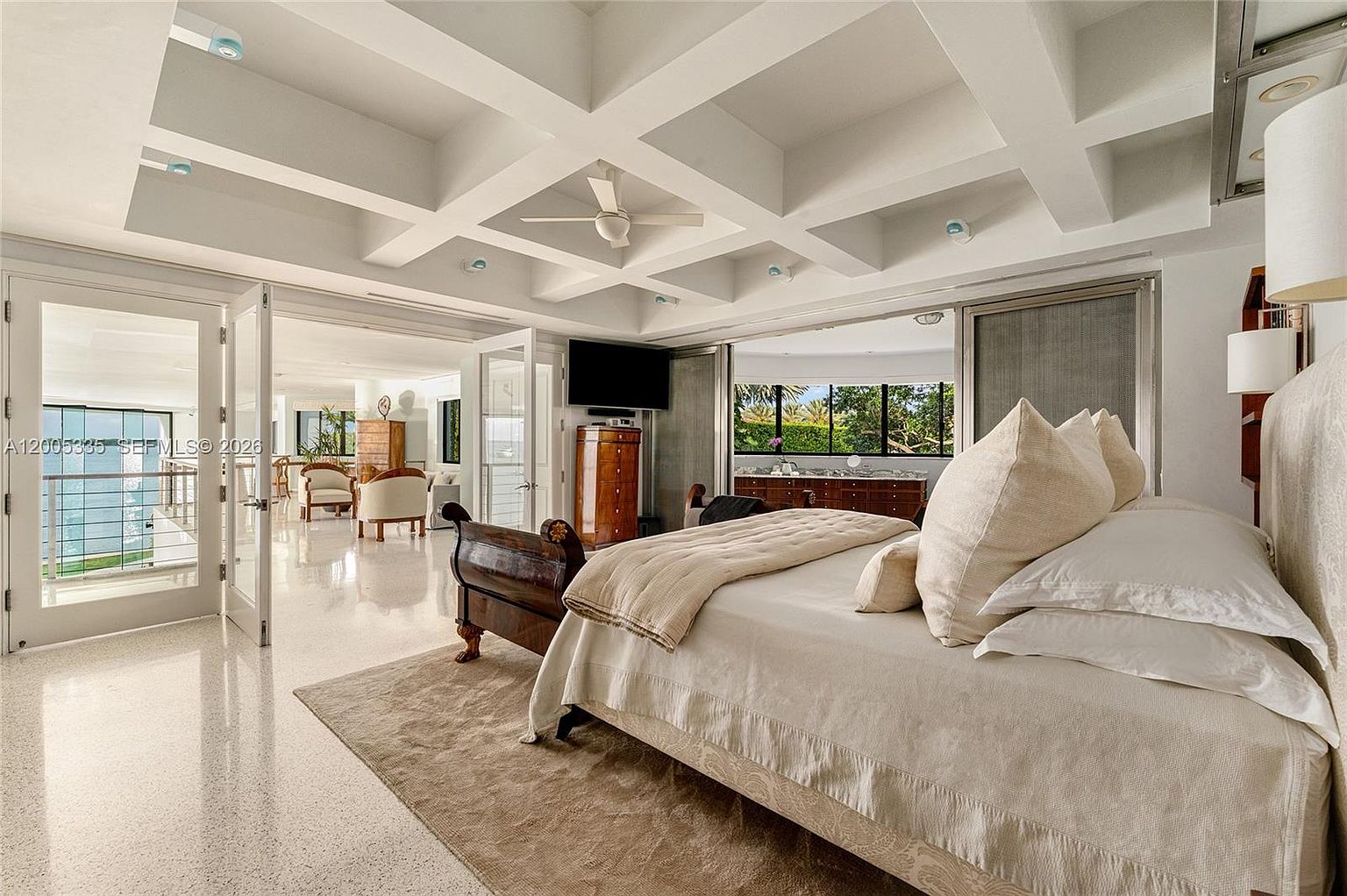
There are properties that simply occupy a waterfront, and then there is 485 West Matheson Drive — an estate that has shaped history as much as it has witnessed it. The distinction is felt immediately upon approach. A grand stone entrance, framed by manicured tropical landscaping and mature palms, sets a tone of permanence and consequence that few residential addresses in the world can claim. Inside, the architecture does not whisper its ambitions. Ceilings soar past twenty-four feet through the principal living volumes, and walls of floor-to-ceiling glass dissolve the boundary between interior and bay with a conviction that feels both effortless and deliberate. Light enters these rooms with the full, unfiltered authority of South Florida — panoramic, constant, and deeply cinematic. The polished marble floors extend through expansive living and dining areas that were designed not merely for daily life, but for moments of consequence: state dinners, grand gatherings, private contemplation against one of the most spectacular waterfront backdrops on the Eastern Seaboard.
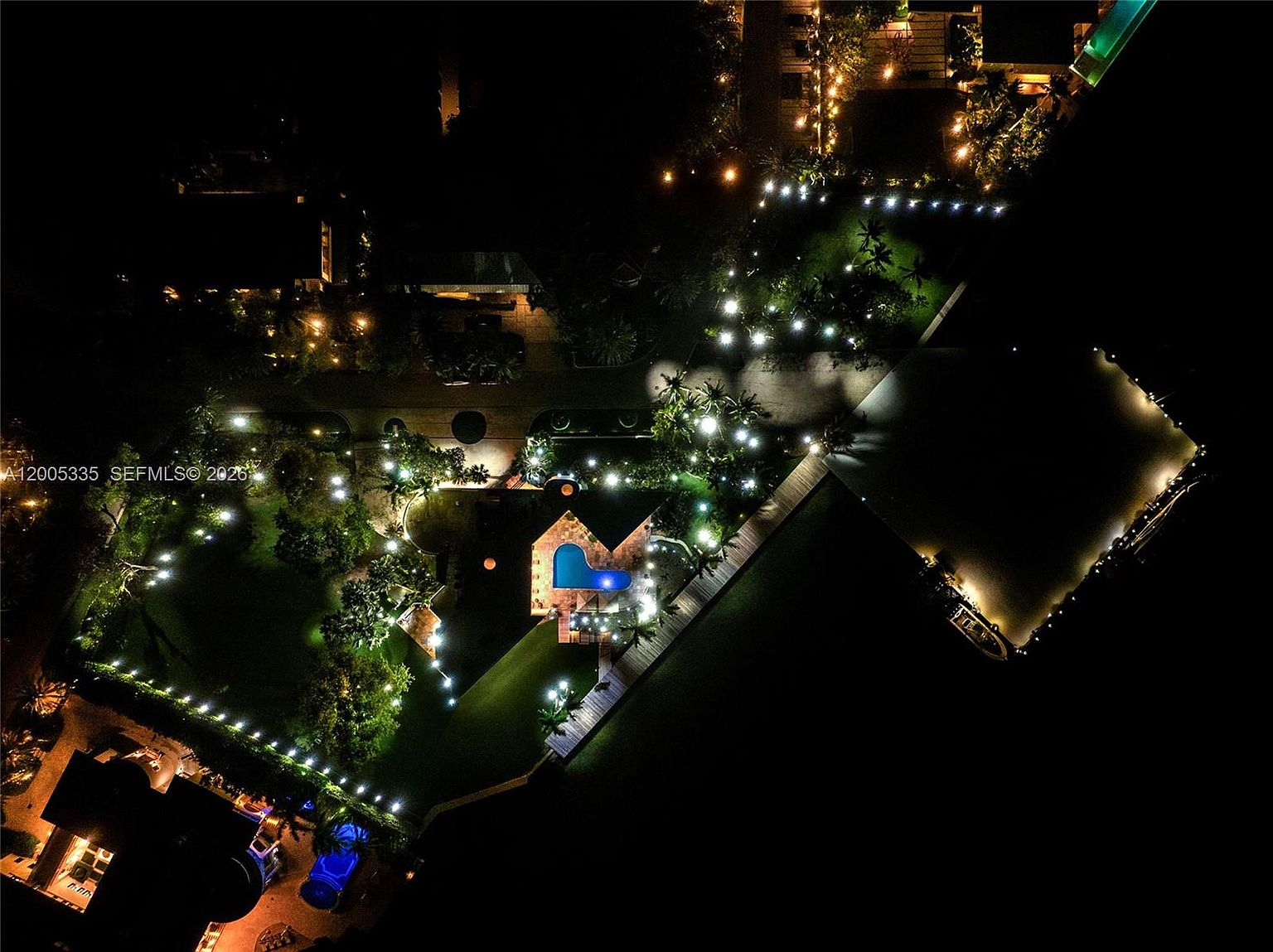
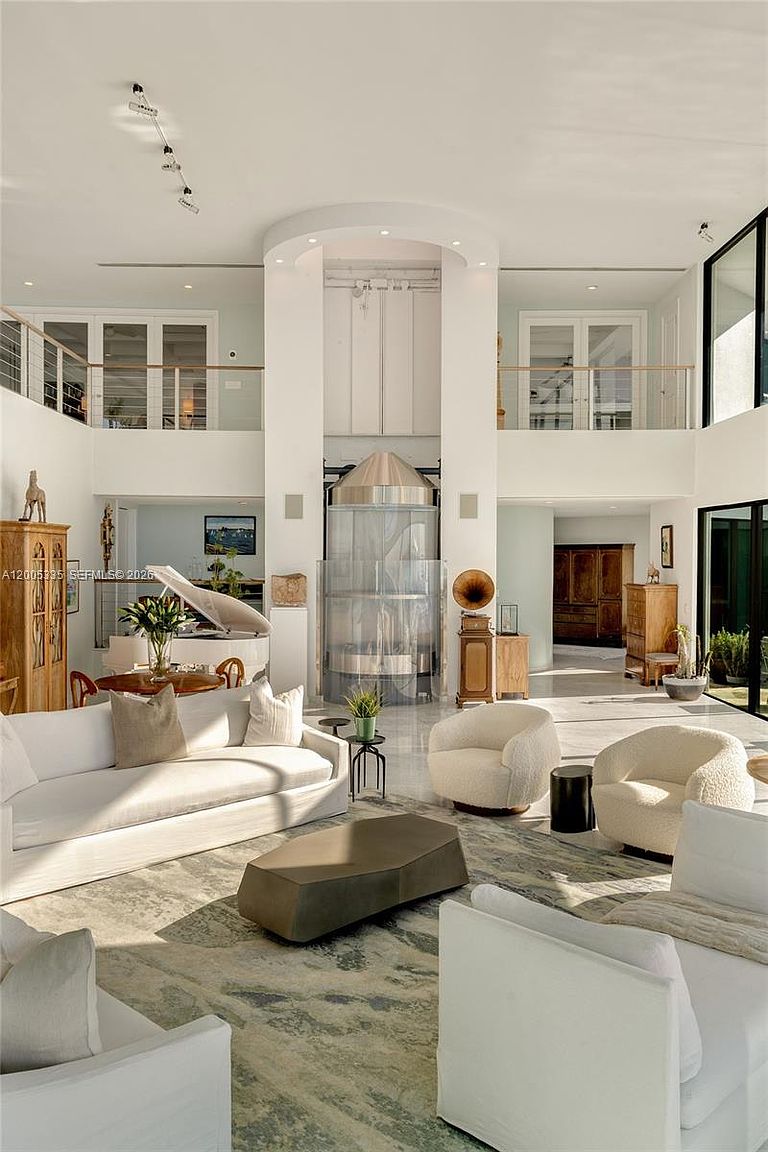
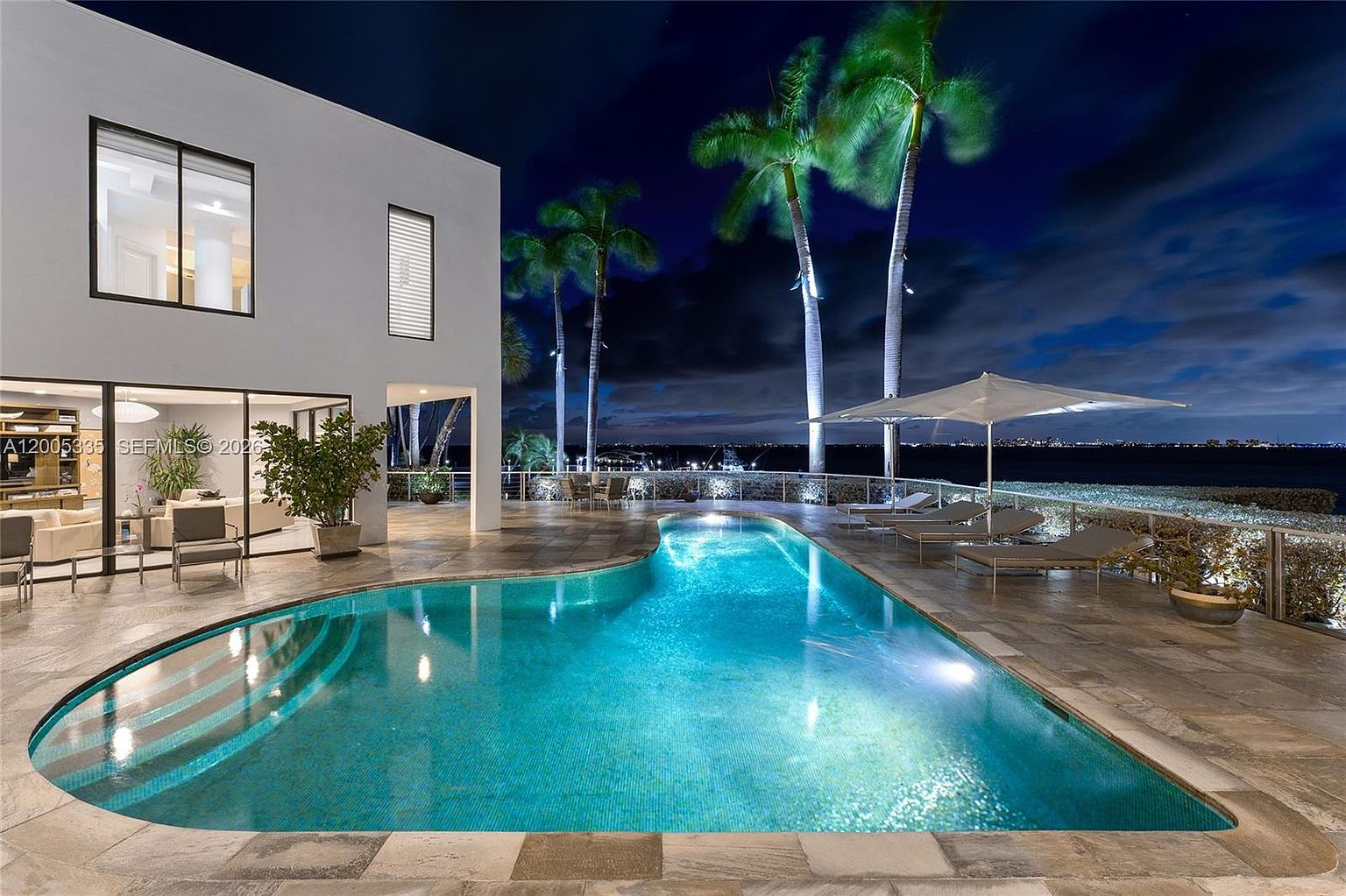
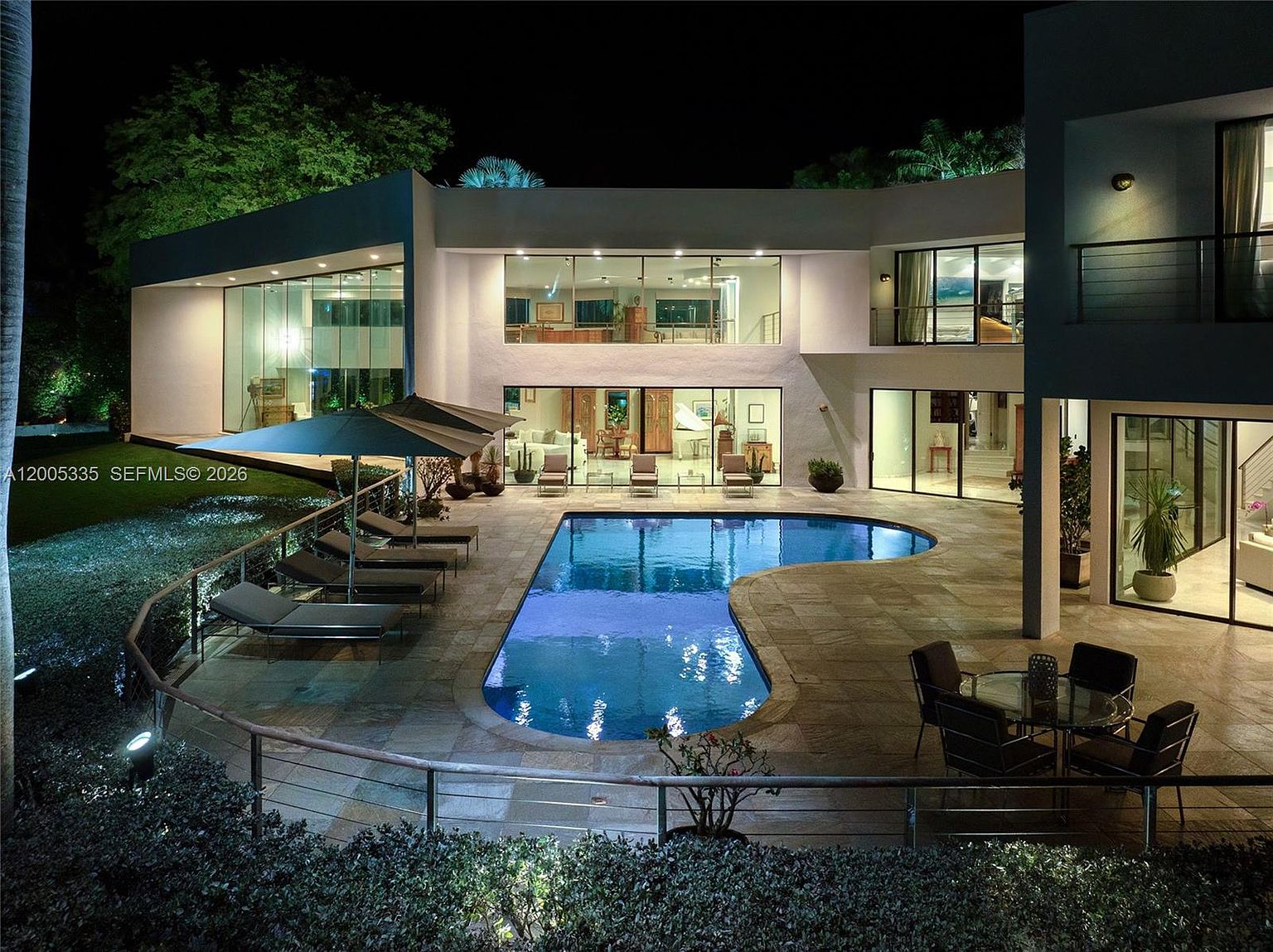
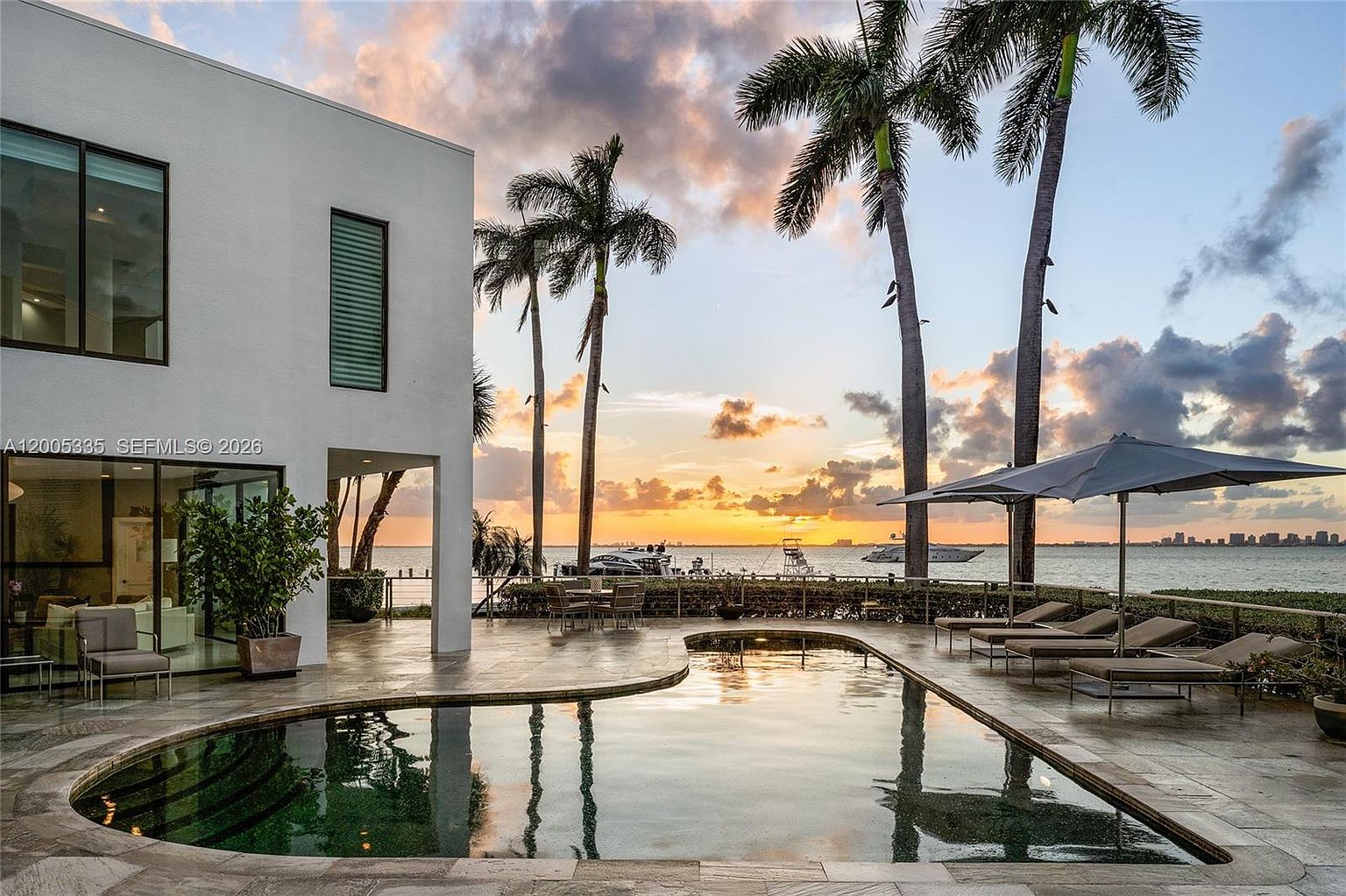
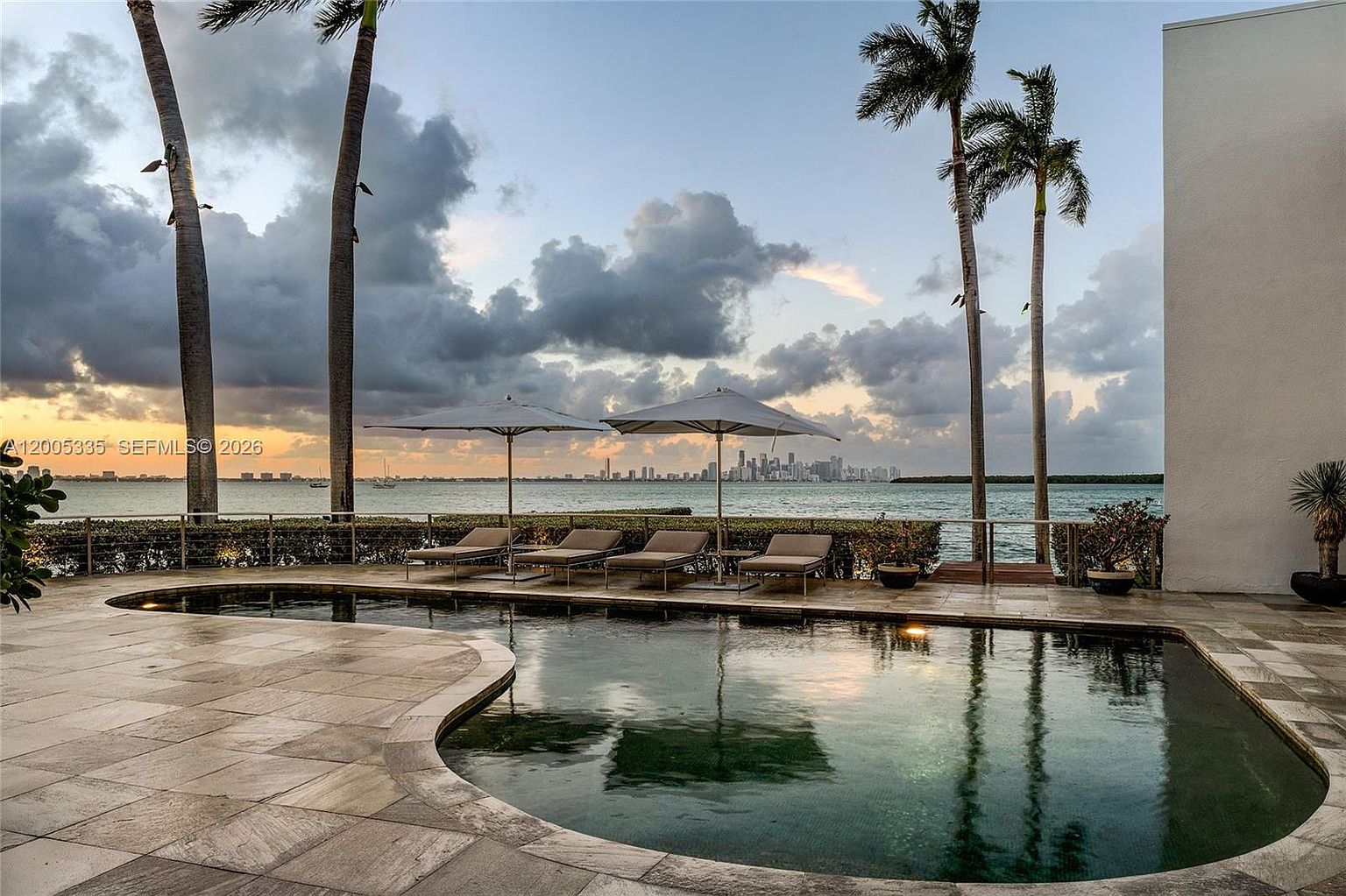
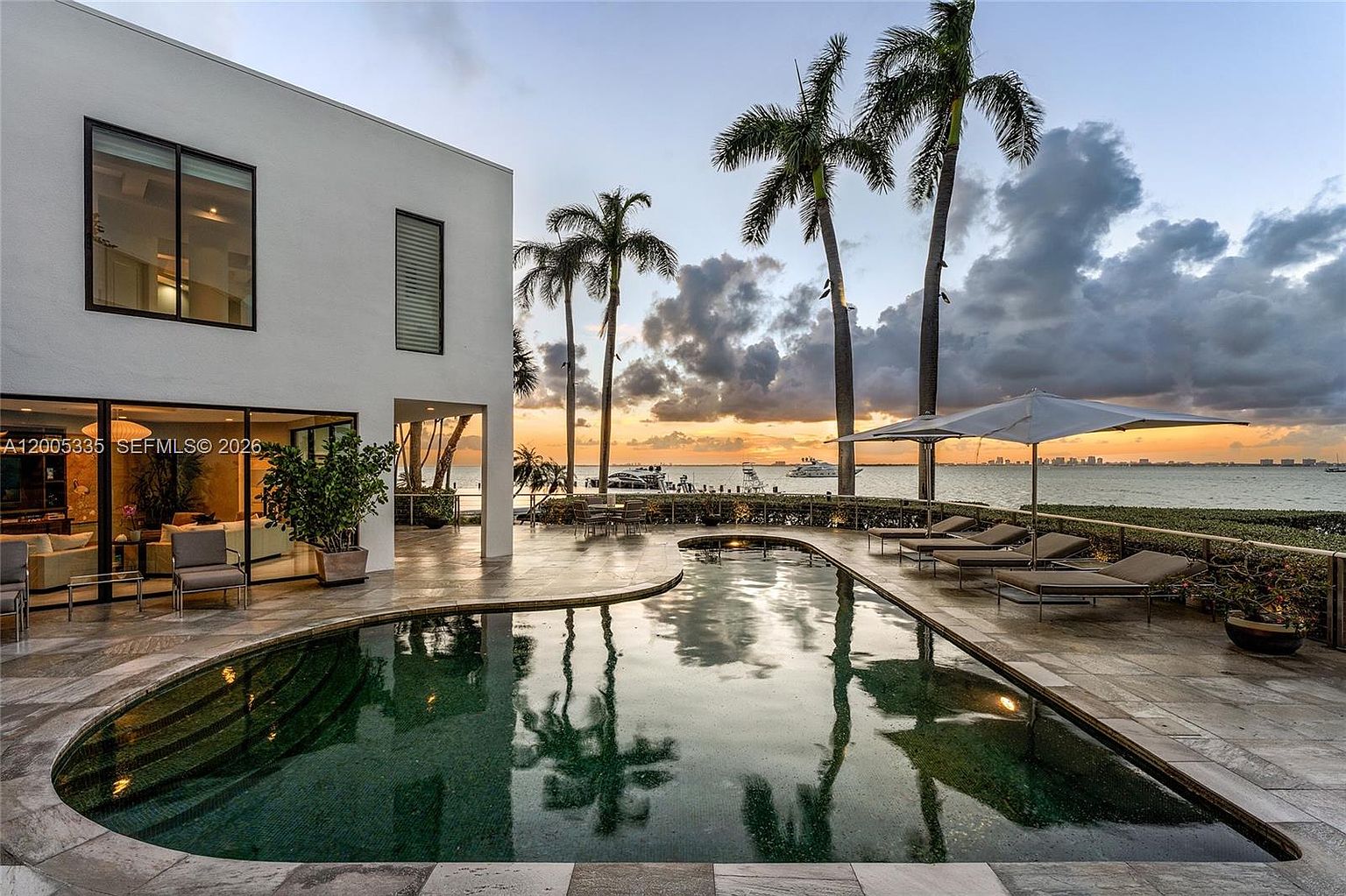
The estate's most celebrated architectural signature — the original glass elevator — remains preserved across all three levels, a tangible thread connecting the property's present to its storied past. It appeared on screen during the filming of Scarface and stood in service during the estate's tenure as a presidential winter residence, and it continues today as both a functional element and an irreplaceable piece of American cultural history. The piano-shaped saltwater pool, positioned to capture the full panorama of Biscayne Bay, is equally memorable — a design gesture that speaks to the original owners' sense of theater and their understanding that a property of this scale demands details commensurate with its ambition.
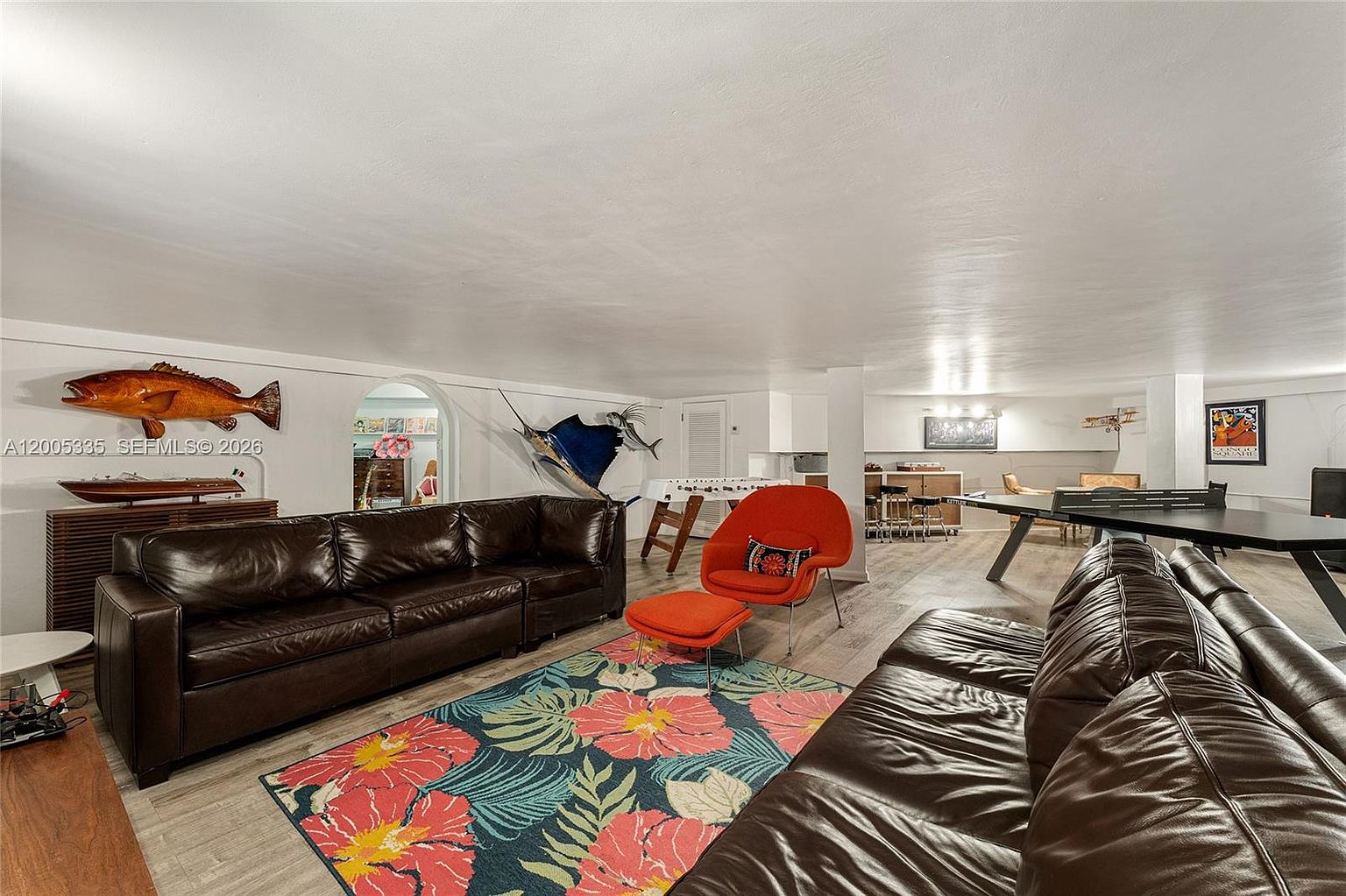
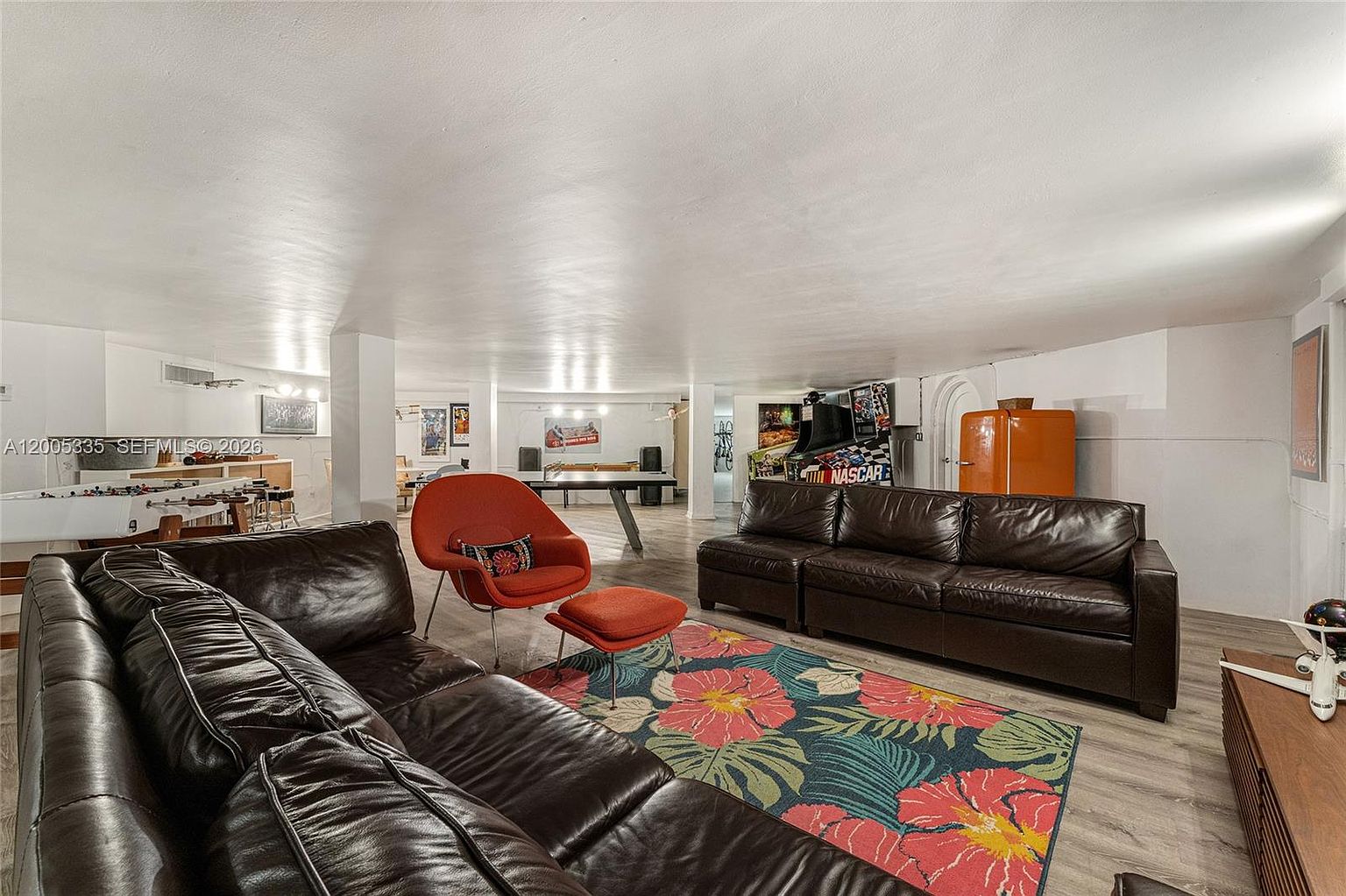
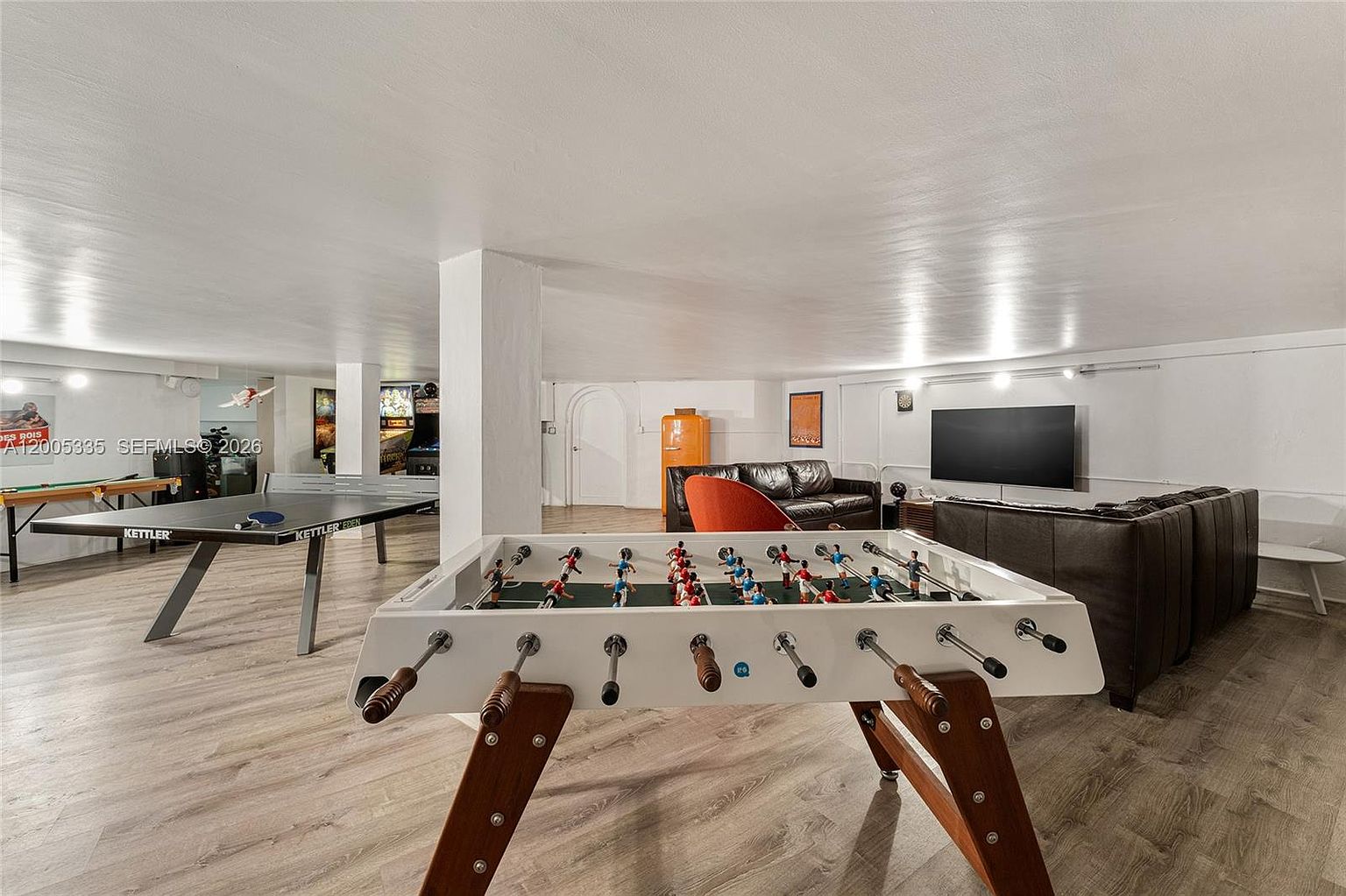
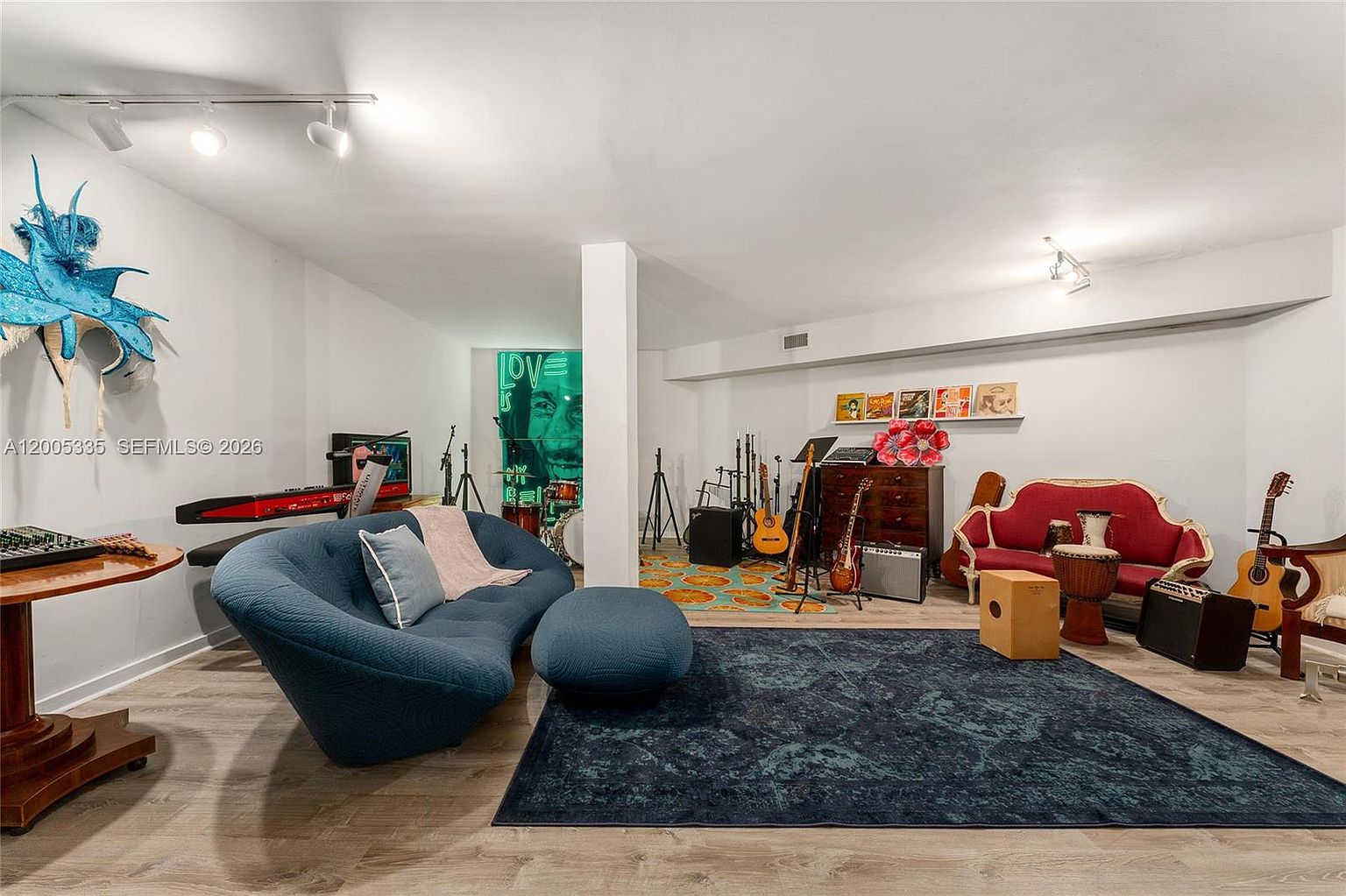
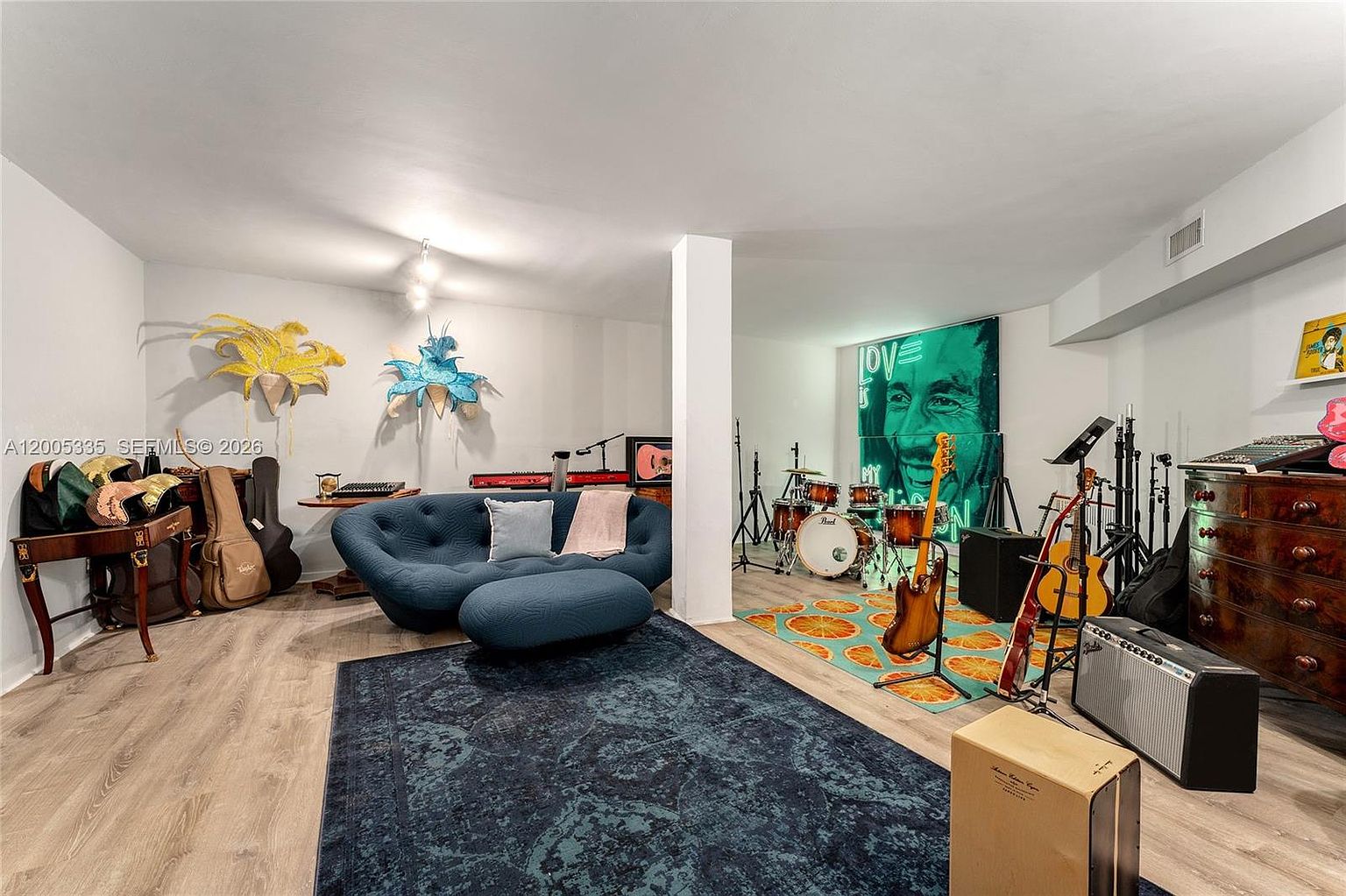
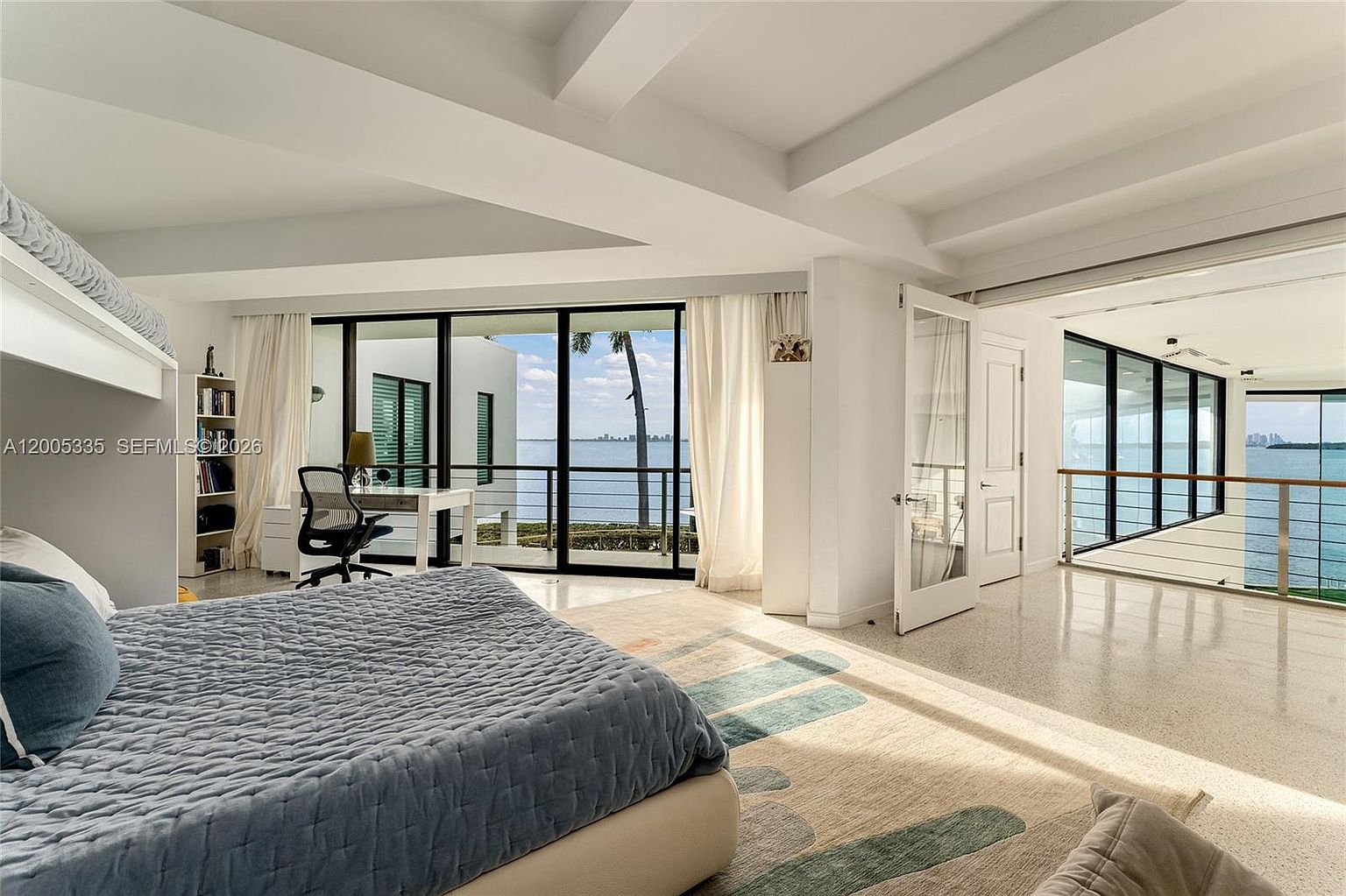
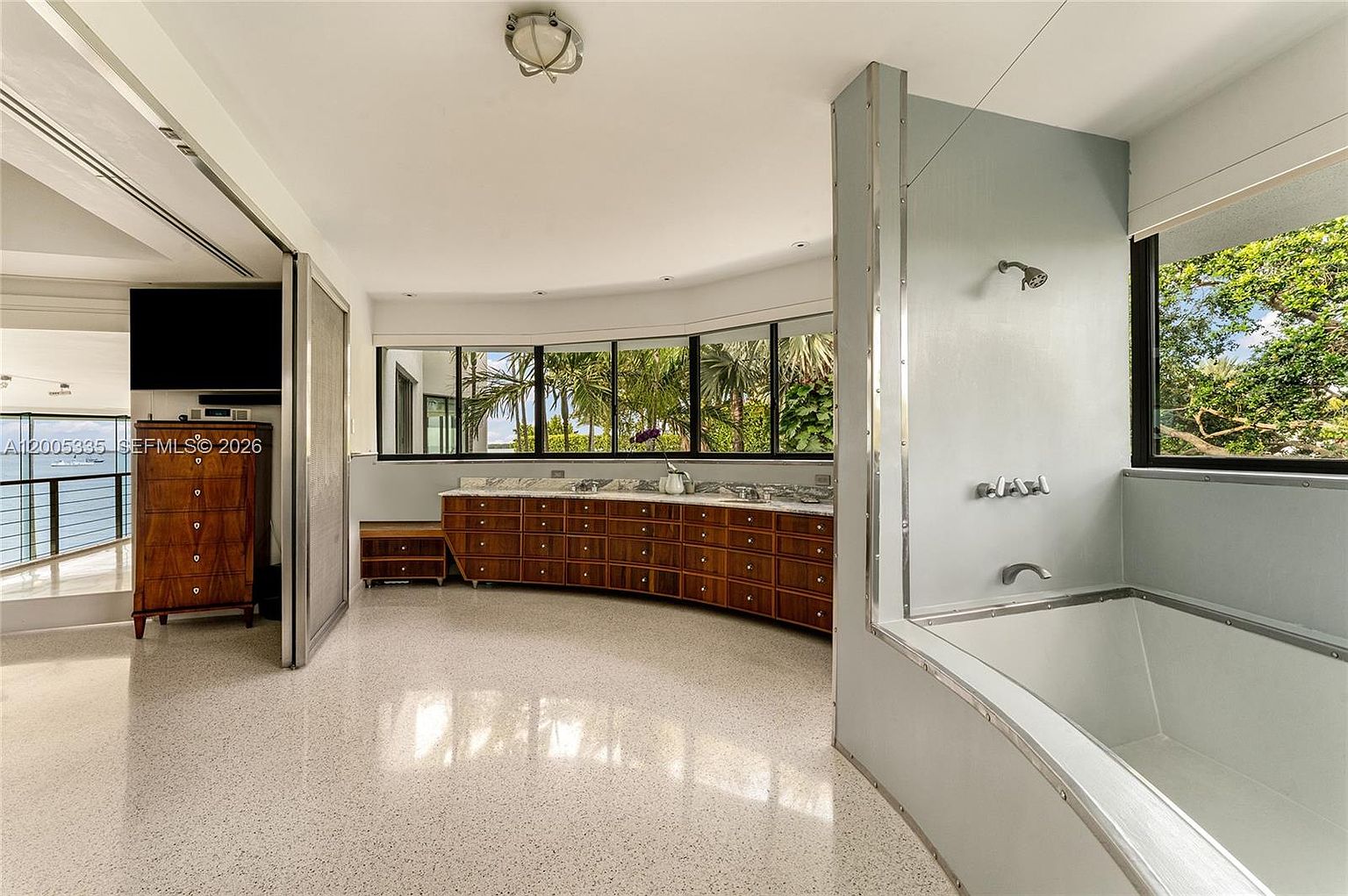
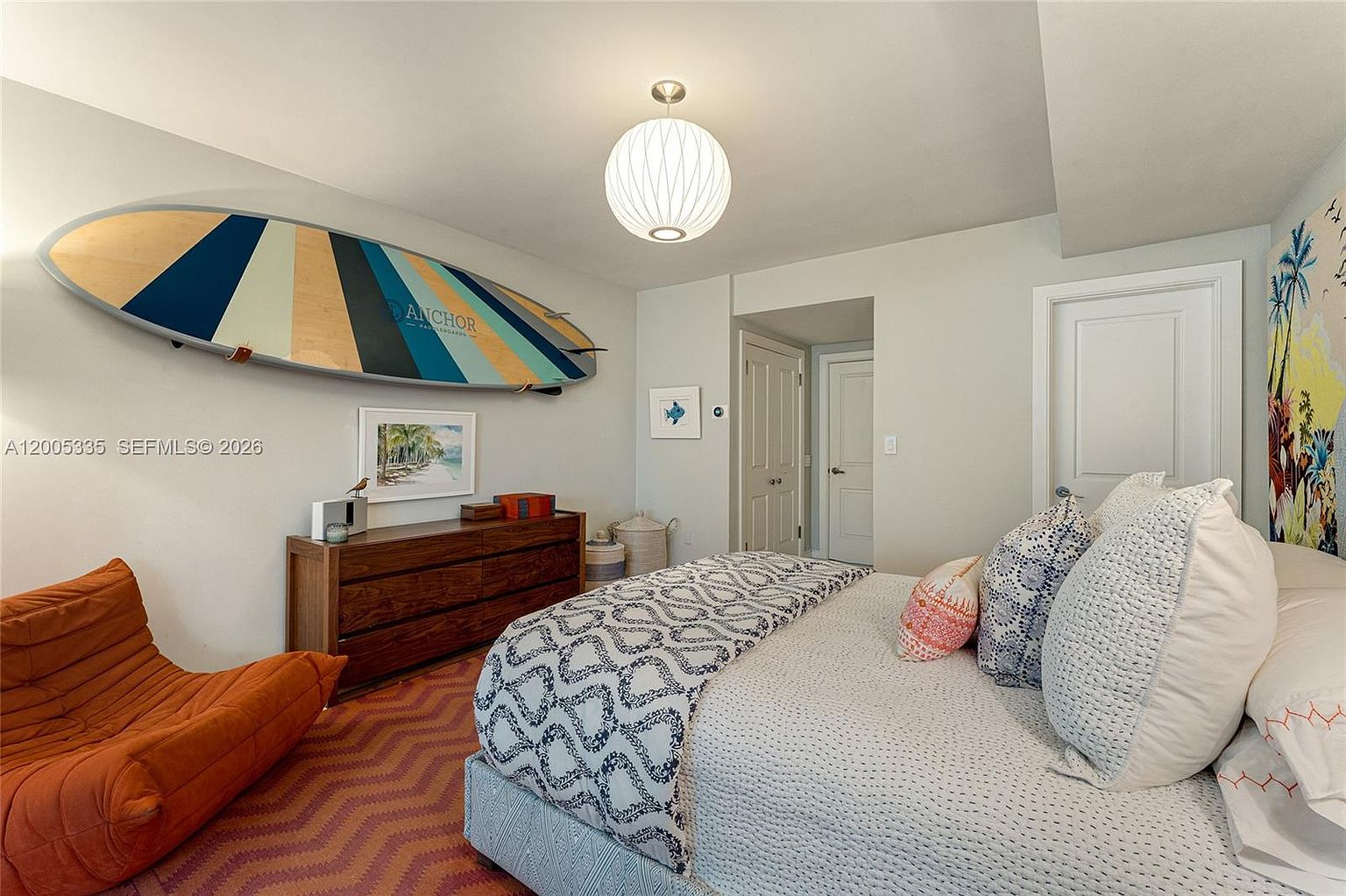
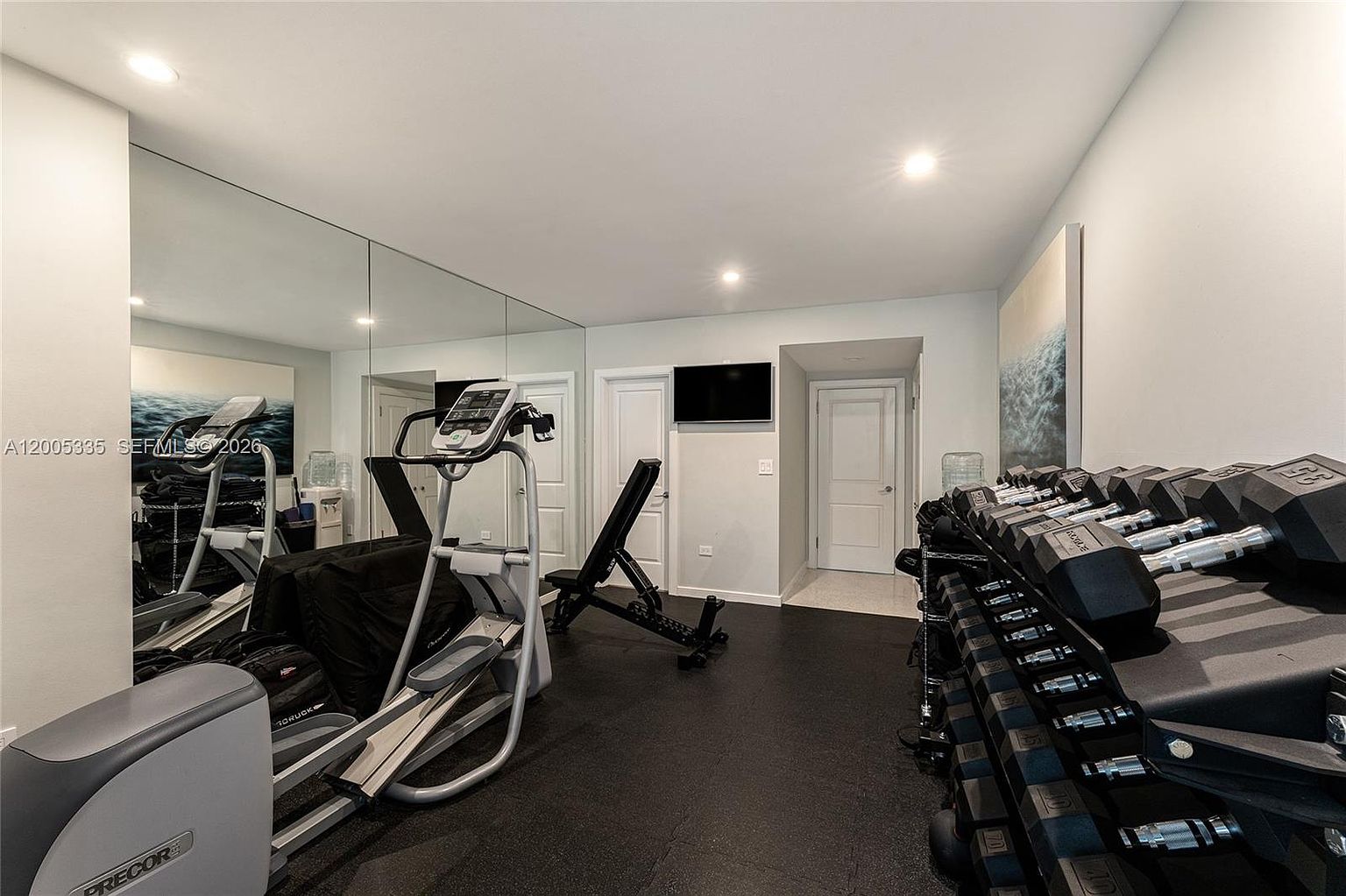
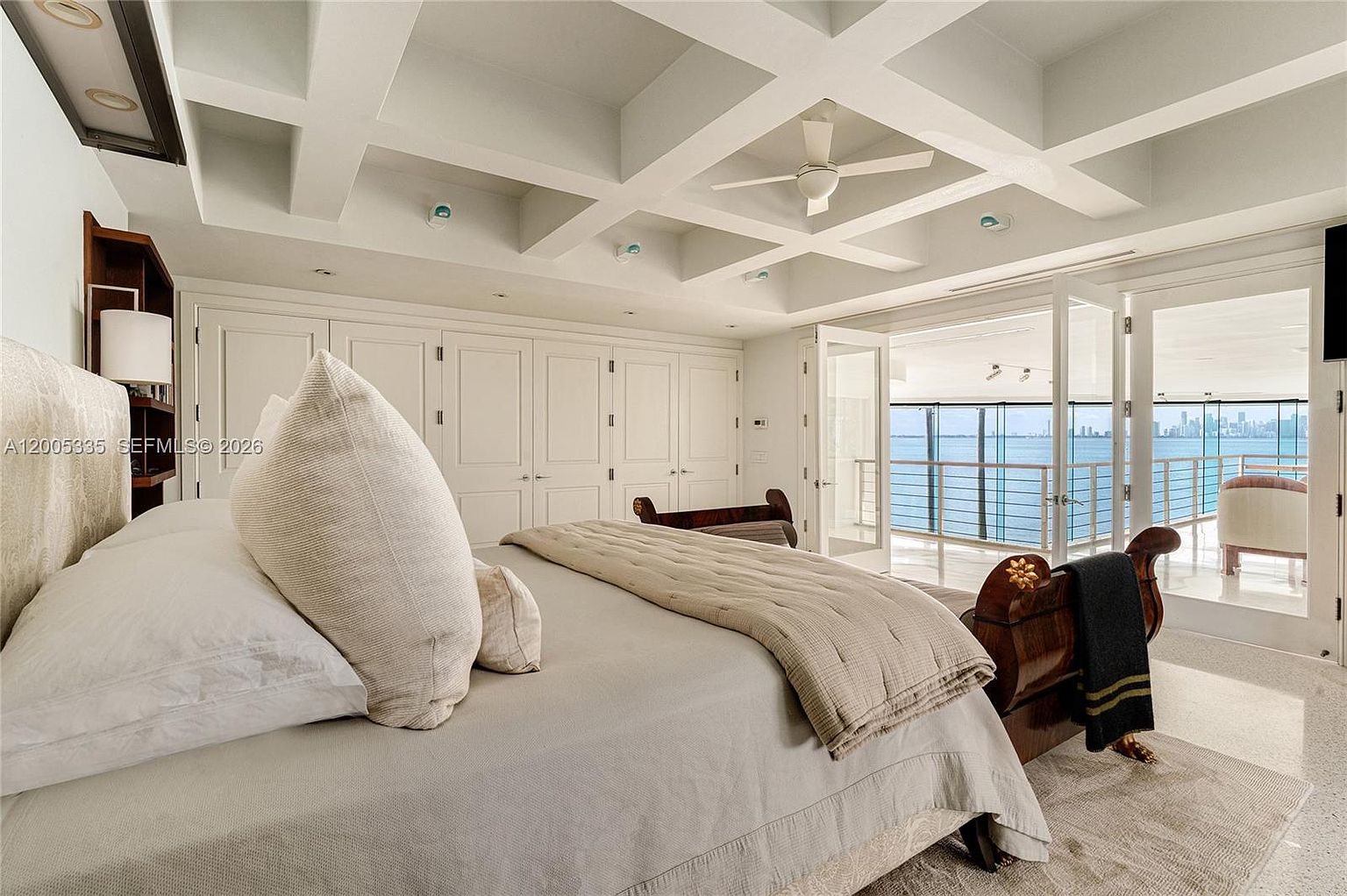
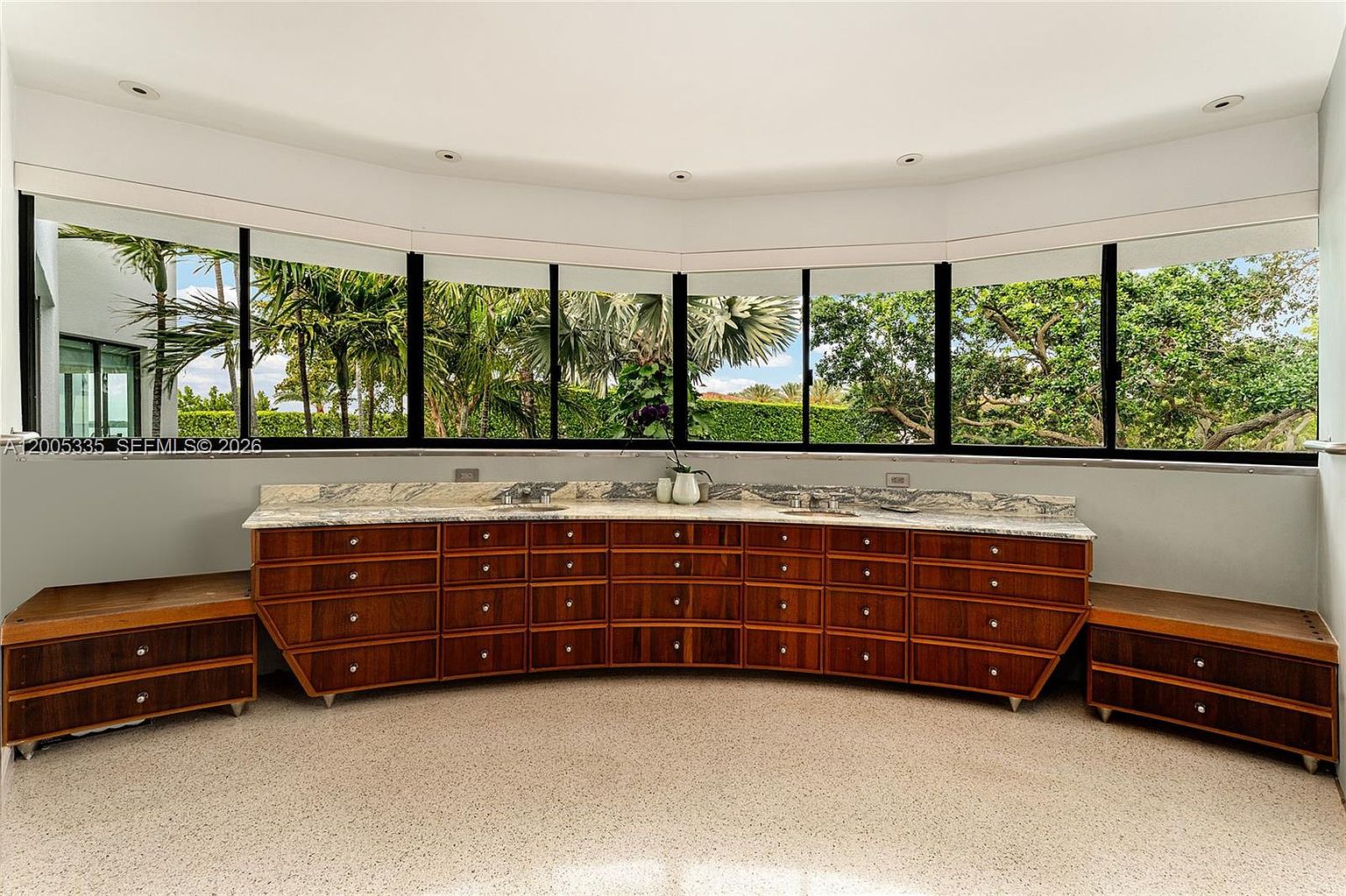
The residence offers five bedrooms and a dedicated gym — easily converted to a sixth bedroom — along with seven full and two half baths distributed thoughtfully across the three levels. A mezzanine landing overlooks the double-height living room, where a grand piano anchors one end and floor-to-ceiling glass commands the other. The kitchen is outfitted in a professional-grade stainless configuration suited to both the private chef and the serious home cook, while the principal bedroom suite opens onto a private balcony with unobstructed water views and access to a graciously proportioned primary bath.
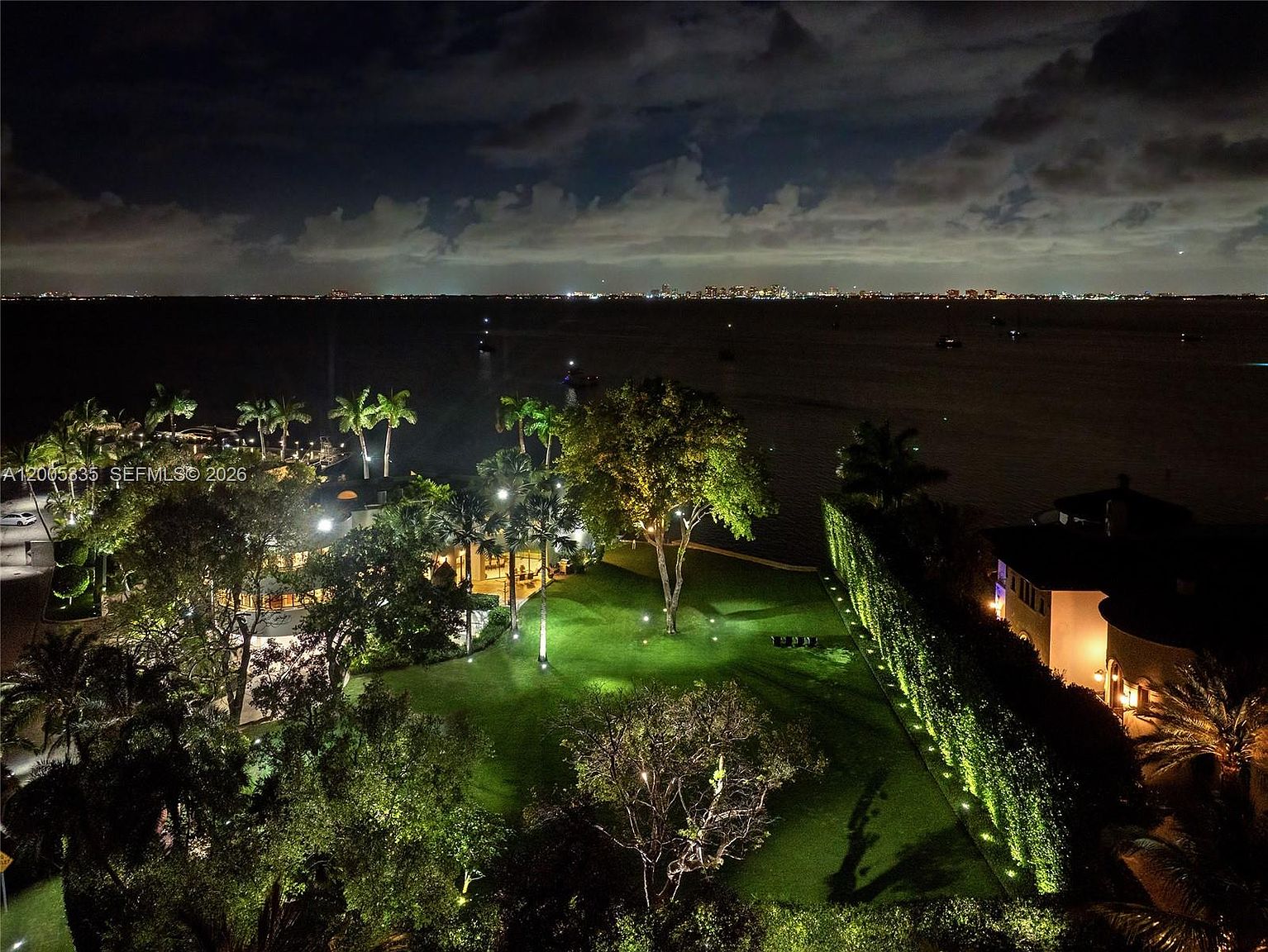
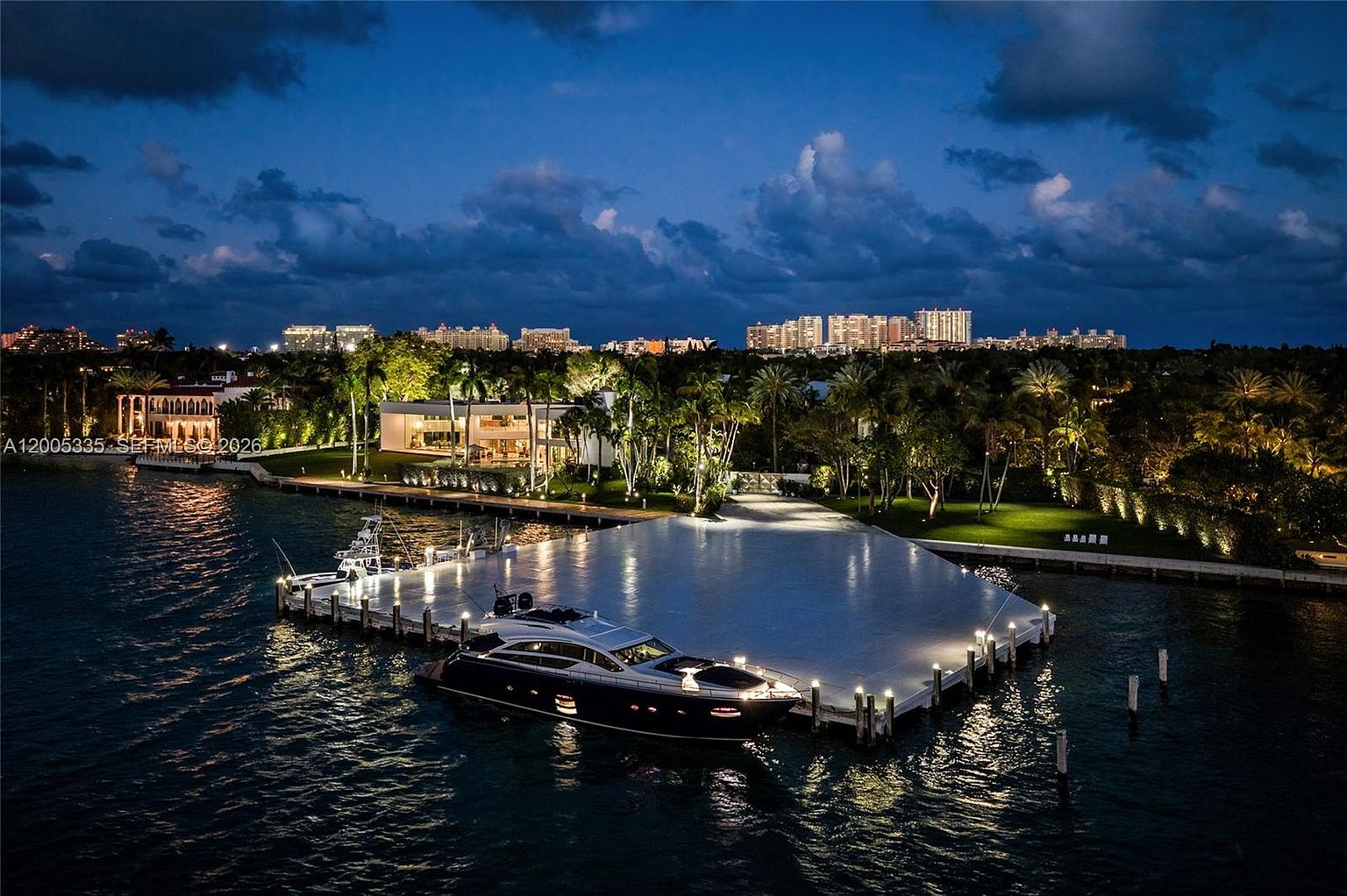
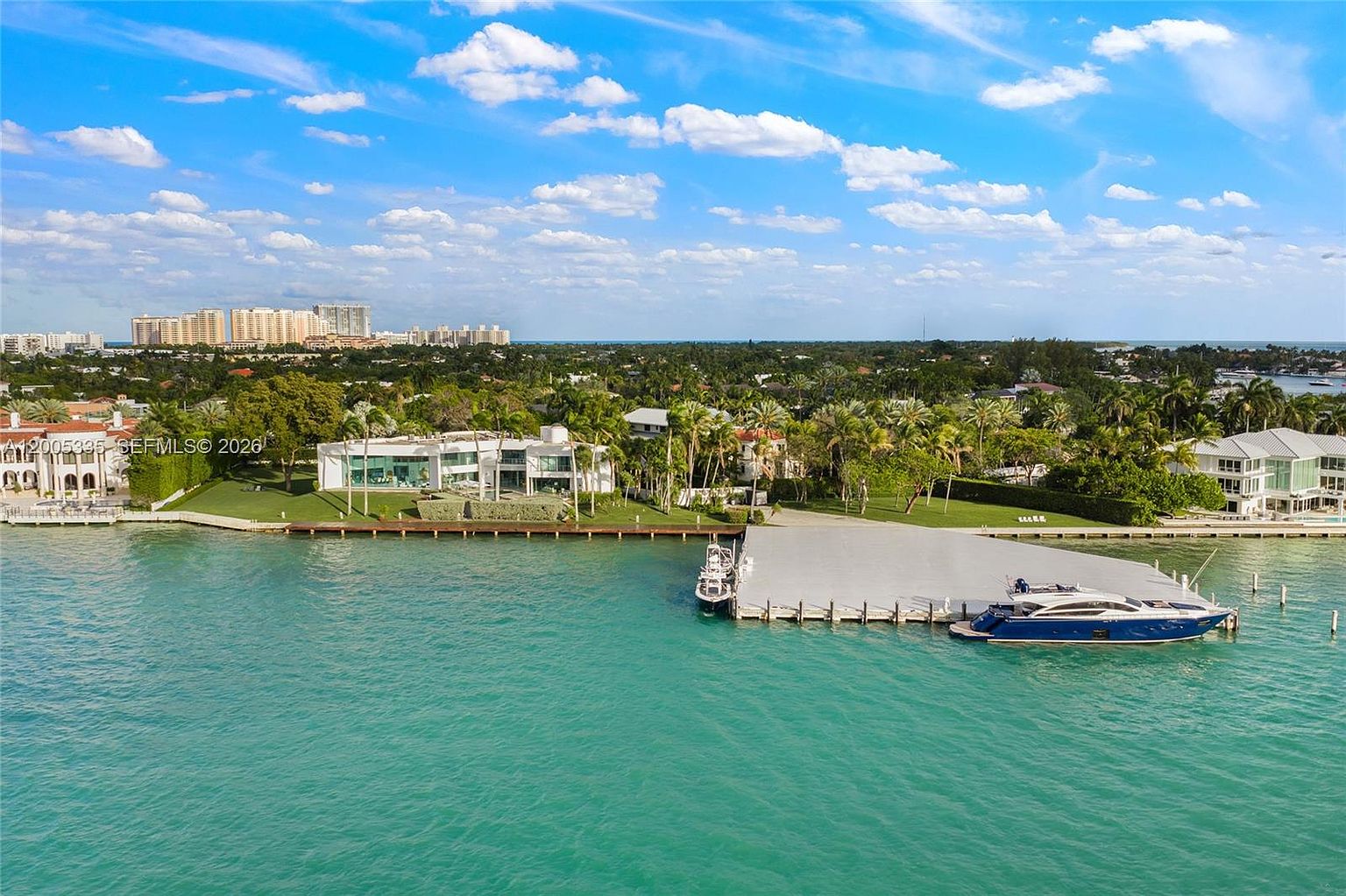
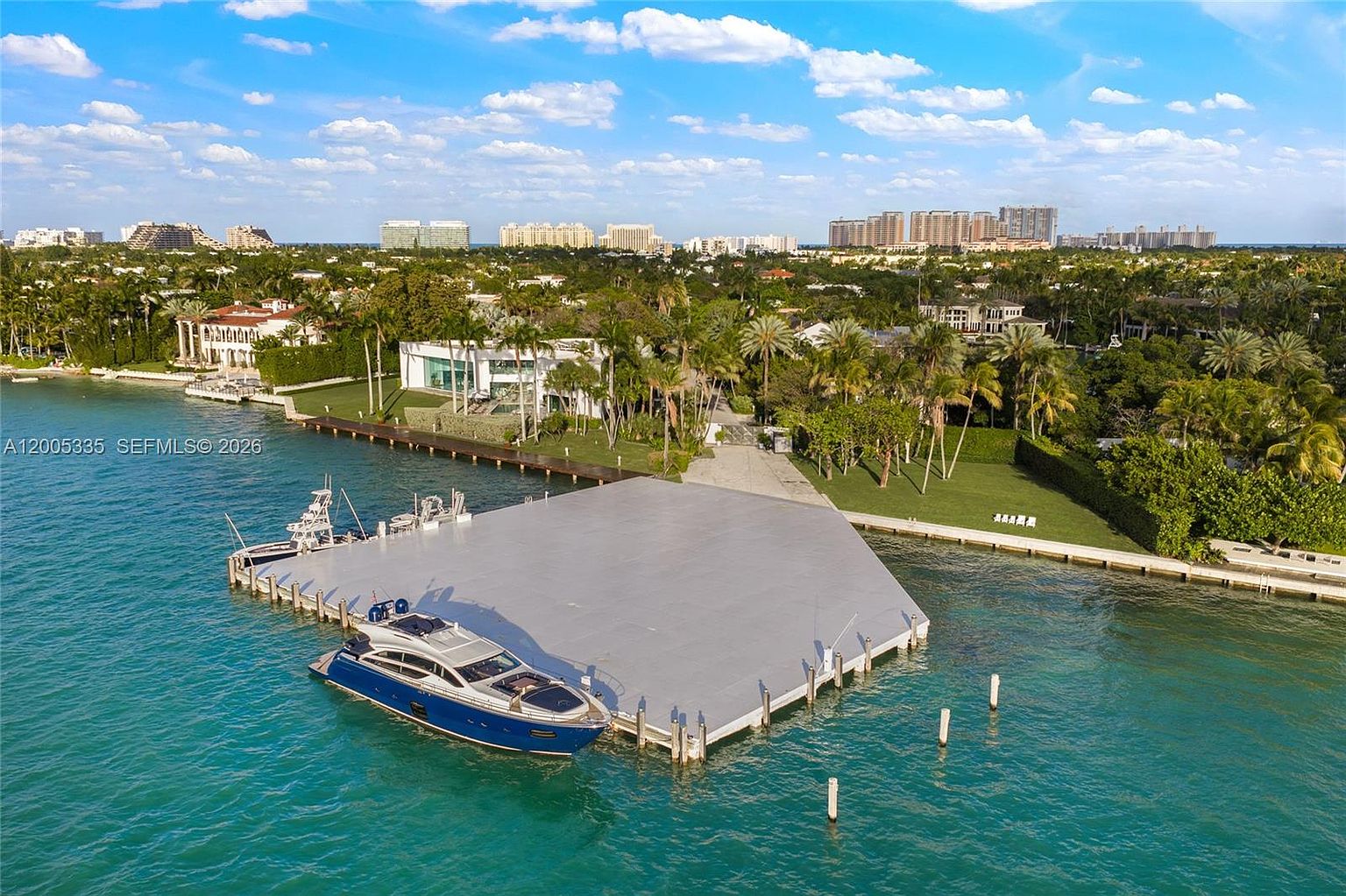
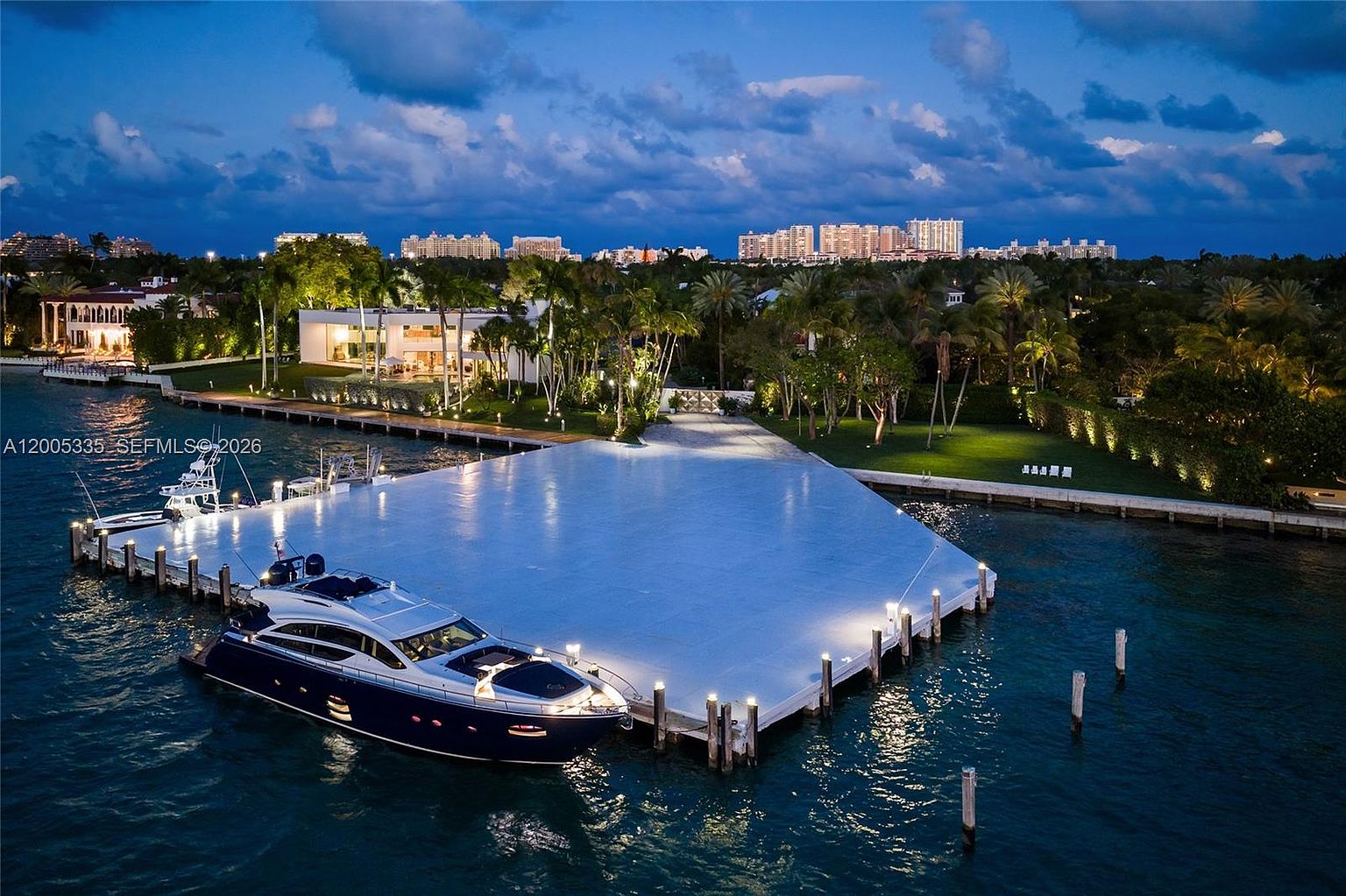
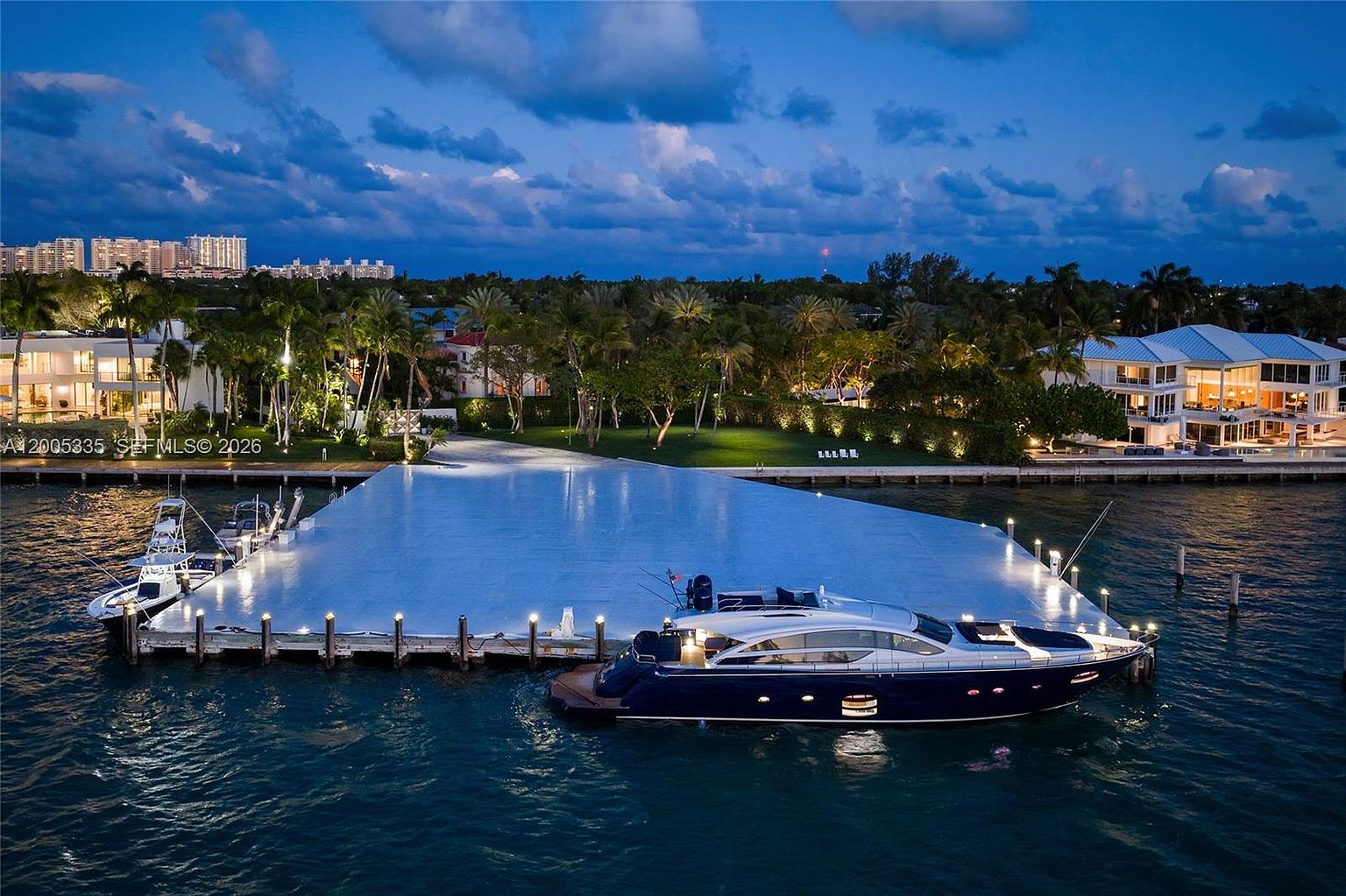
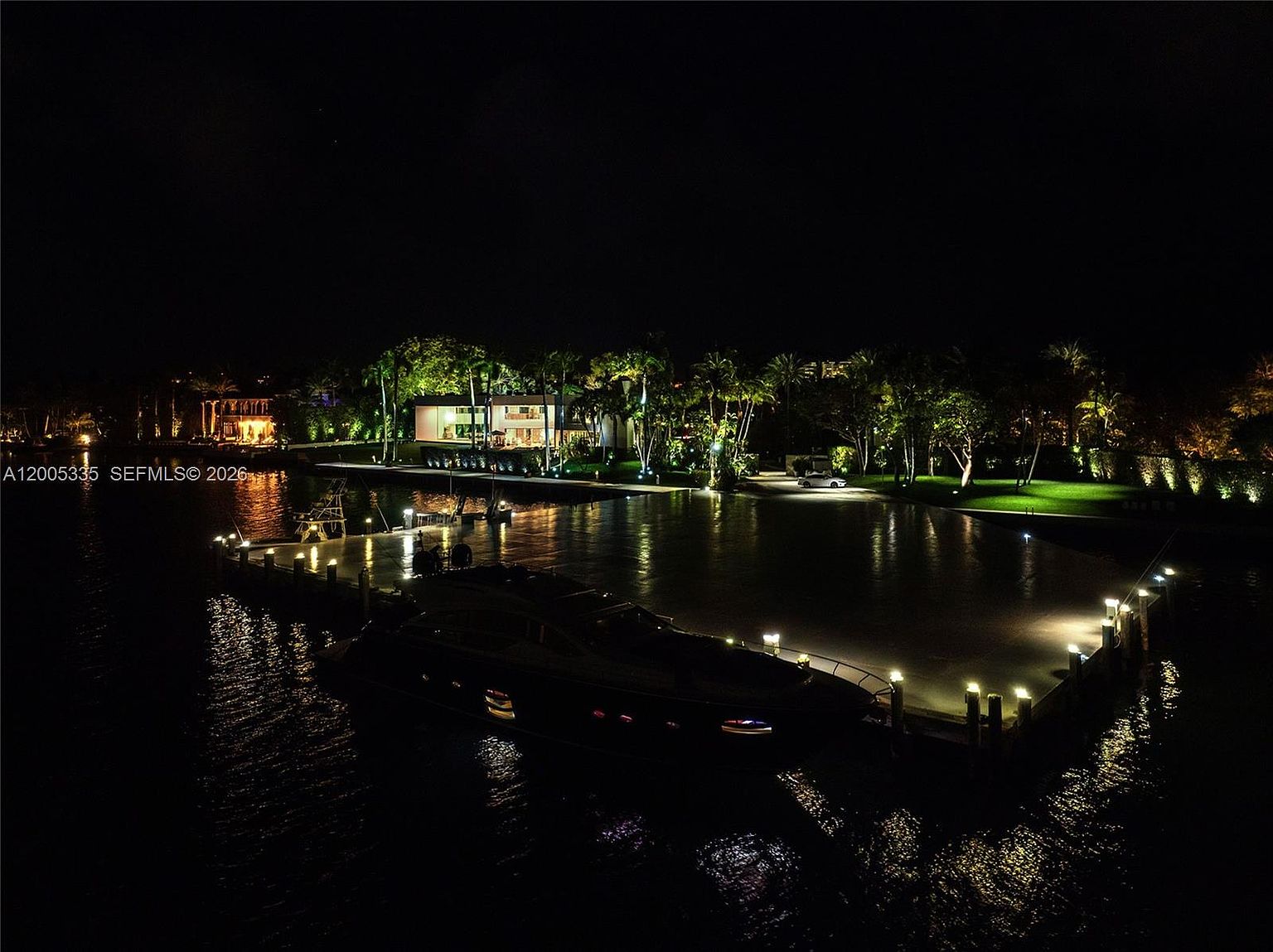
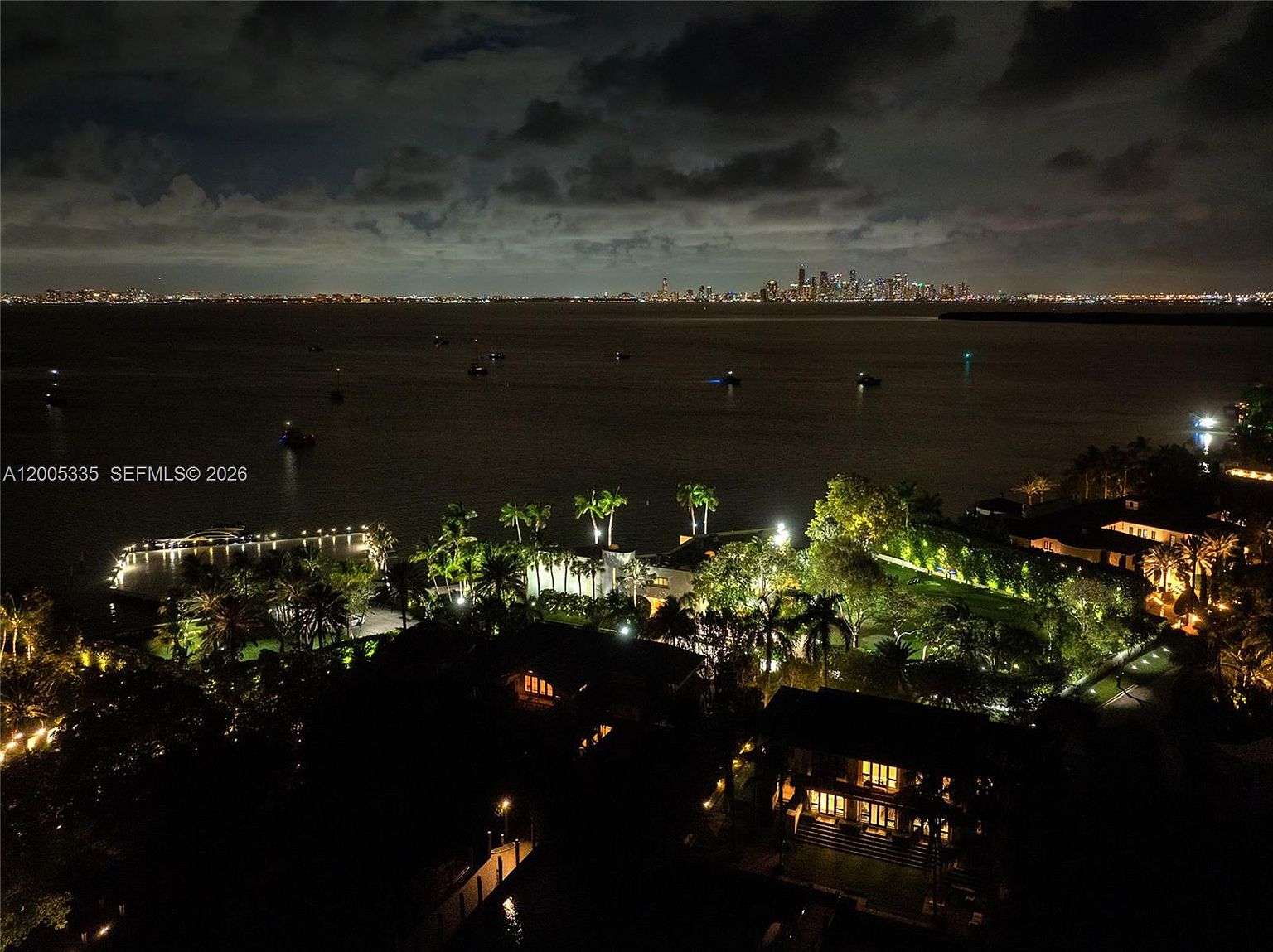
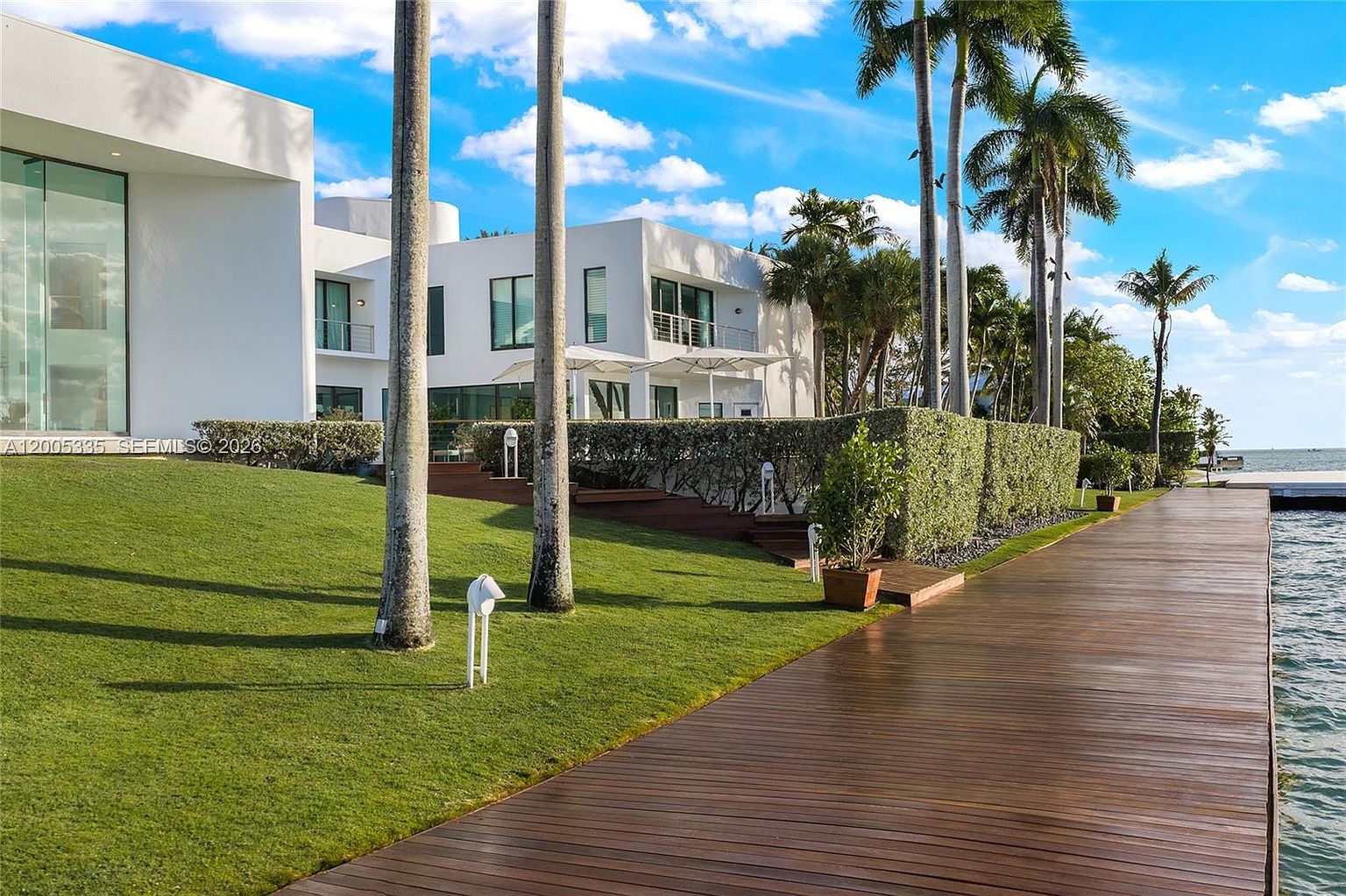
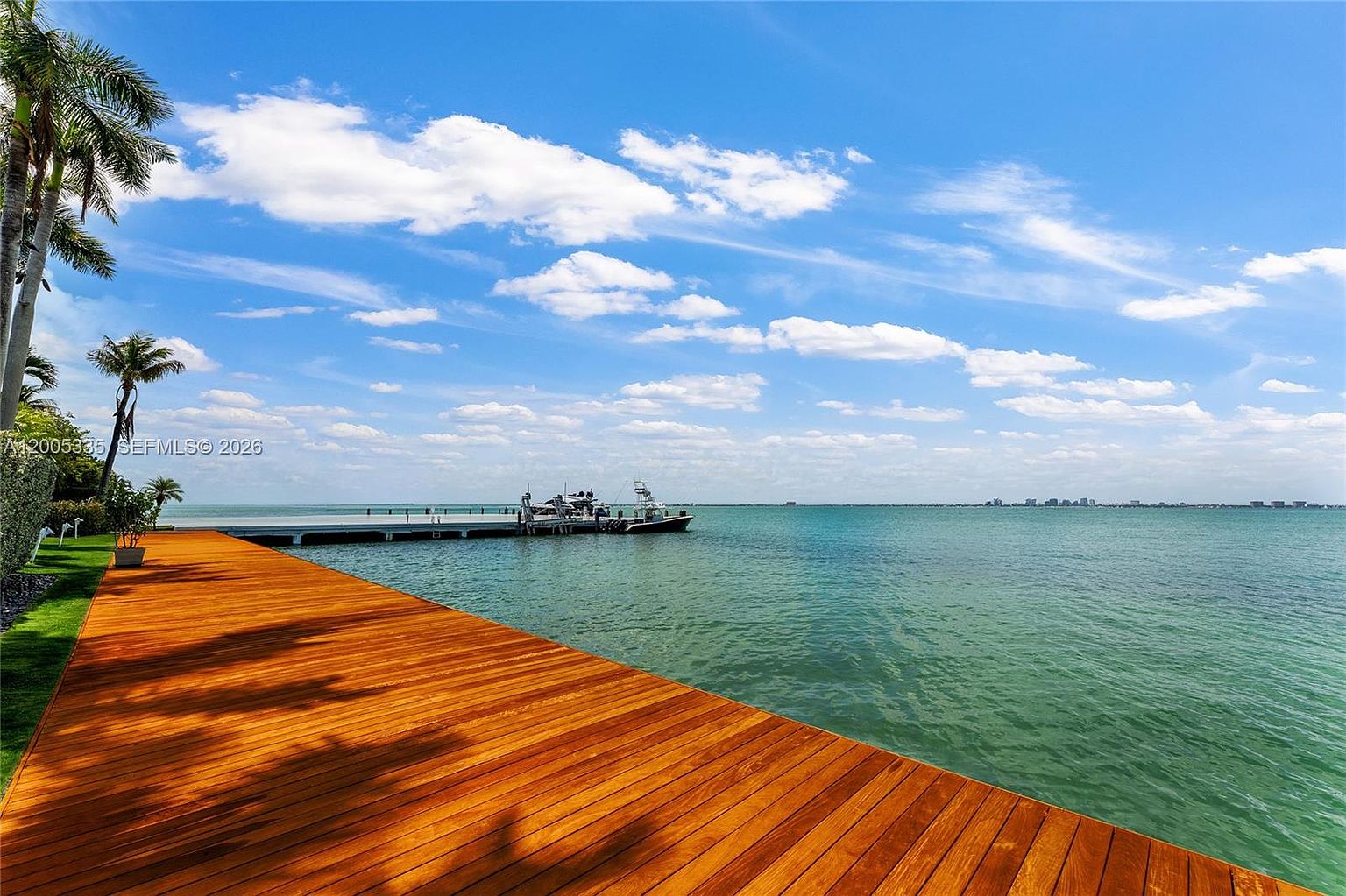
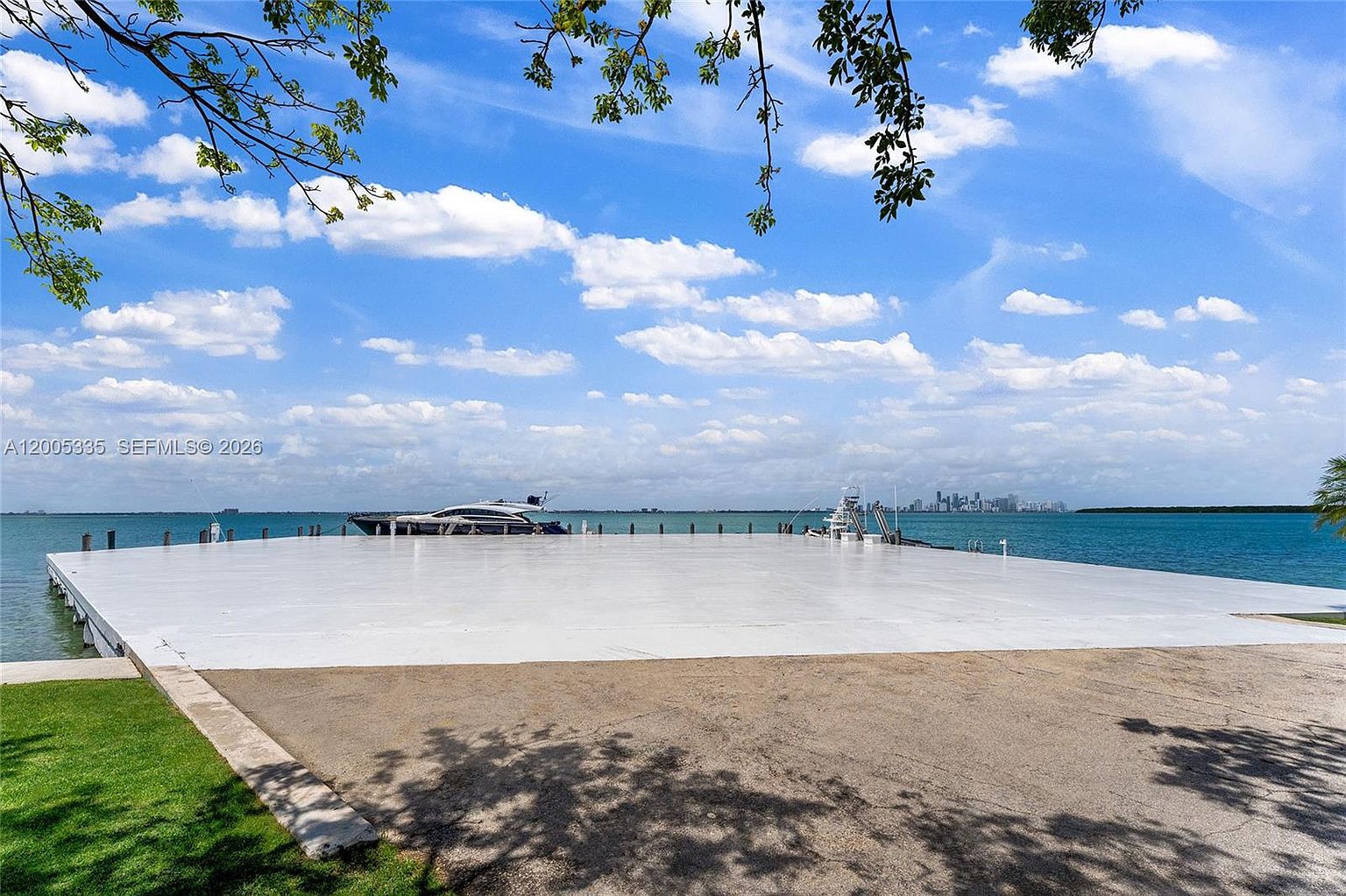
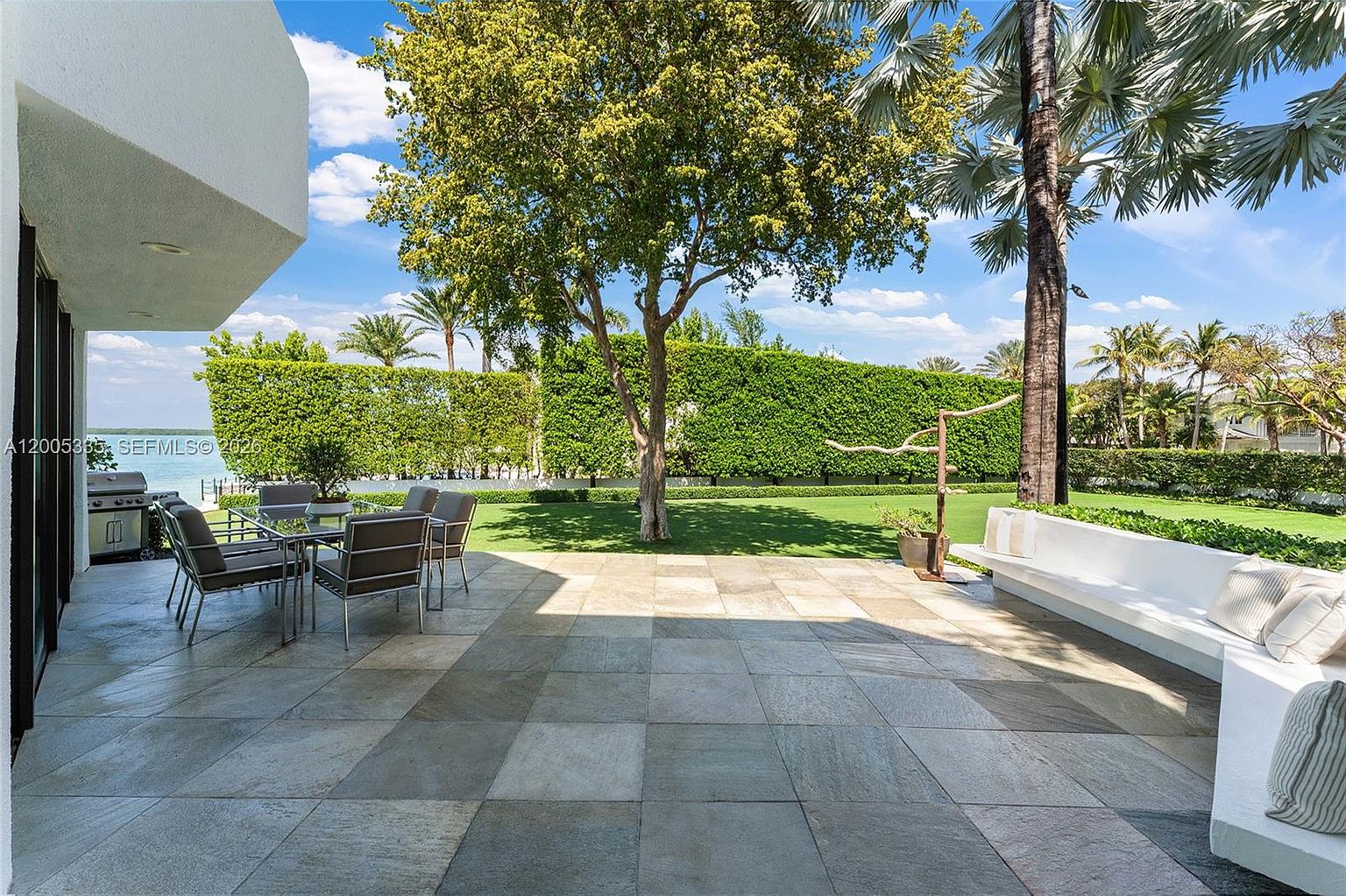
The grounds extend the estate's presence far beyond the walls of the residence. Artfully integrated landscape lighting carries the property's atmosphere well past sunset, illuminating lush tropical plantings, expansive lawn areas, and the cabana bath adjacent to the pool. The private marina — constructed on the footprint of a former presidential helipad — is among the most significant in South Florida: engineered with rare three-phase power, capable of accommodating yachts up to 200 feet, and supported by over 34,000 square feet of submerged land. It is, in every meaningful sense, a private yacht facility attached to a private residence — a combination that is, at this scale, effectively without parallel in the Miami market.
Key Biscayne occupies a singular position in South Florida — geographically, culturally, and aspirationally. Connected to the mainland by the Rickenbacker Causeway, the barrier island sits just four miles from downtown Miami yet operates at a remove from the city that feels far more profound than its physical distance. It is this paradox — proximity to one of the world's great urban centers paired with the tranquility of a self-contained island community — that has long drawn heads of state, captains of industry, and those who require the very best of both worlds.
The island's history is layered with significance. Key Biscayne served as the winter White House for President Richard Nixon, whose 'La Casa Pacifica' compound drew the world's attention to the island during the early 1970s, cementing its reputation as a place of political consequence and quiet power. That legacy of discretion and distinction has endured. Today, Key Biscayne remains one of Miami-Dade County's most exclusive and sought-after residential enclaves, home to a close-knit community of approximately 13,000 residents who prize the island's combination of natural beauty, walkability, and civic character.
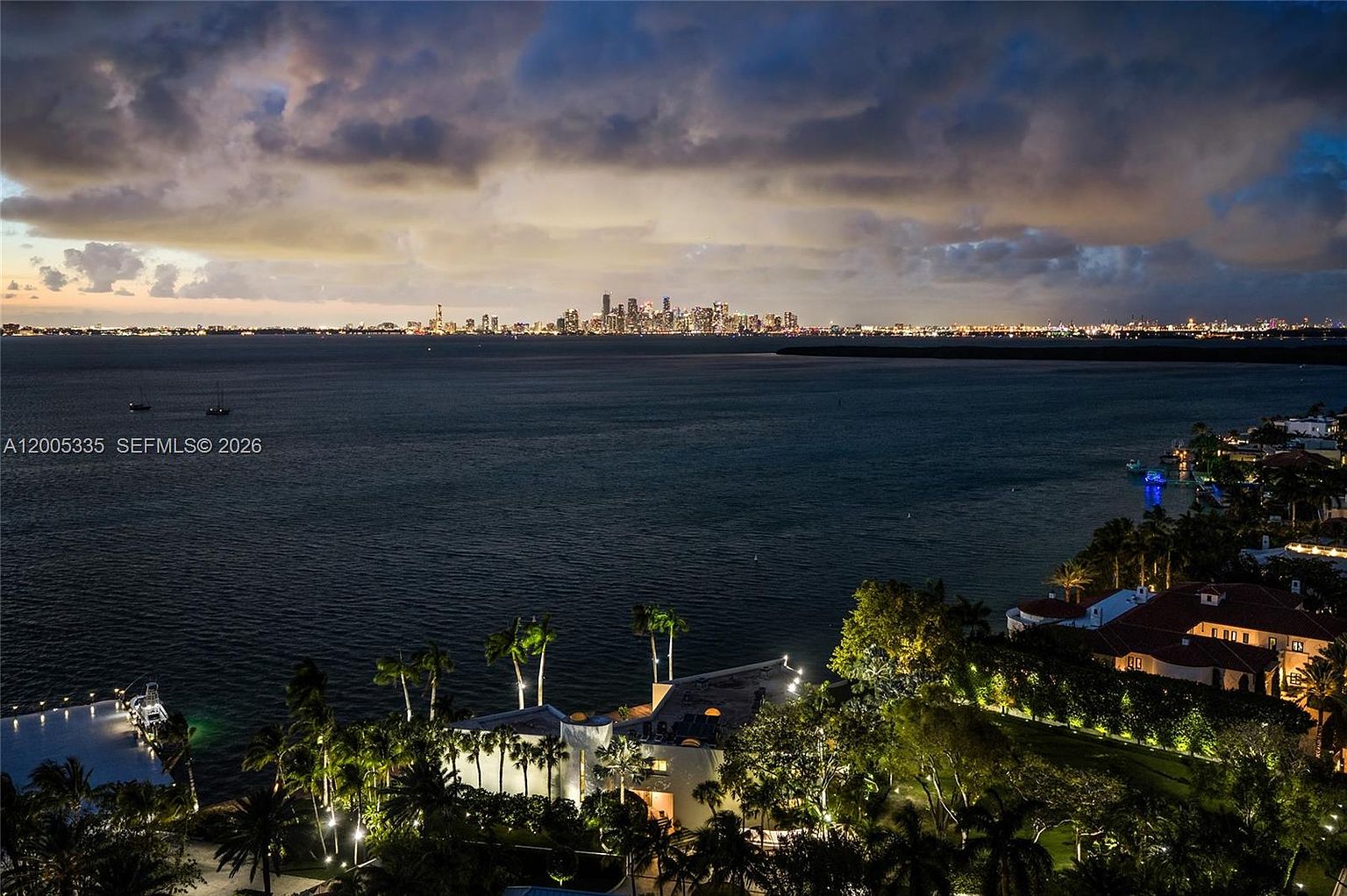
Biscayne Bay, which frames the island to the west, is one of the defining natural features of South Florida — a shallow, luminous body of water that connects to the Atlantic through Government Cut and serves as both a recreational resource and an ecological sanctuary. The bay's waters are home to Biscayne National Park, the largest marine park in the United States National Park System, protecting coral reefs, mangroves, and marine life within sight of the Miami skyline. For the estate's residents, the bay is not a backdrop — it is a daily companion, its light and color shifting with the hours and seasons in ways that never become ordinary.
Within the island community itself, Key Biscayne offers a level of walkable amenity unusual for a barrier island of its size. The Village of Key Biscayne's compact commercial district provides boutique dining, specialty retail, and everyday conveniences within easy reach. Crandon Park, one of Miami-Dade's premier public parks, occupies the northern portion of the island and offers miles of Atlantic-facing beach, nature trails, and sports facilities, including the Crandon Park Tennis Center — host to the Miami Open, one of the premier events on the ATP and WTA tours. Bill Baggs Cape Florida State Park anchors the island's southern tip, preserving the historic Cape Florida Lighthouse, which dates to 1825 and stands as the oldest structure in Miami-Dade County.
For those oriented toward the water, Key Biscayne's position at the confluence of Biscayne Bay and the Atlantic offers world-class sailing, sportfishing, kiteboarding, and cruising conditions. The island's marinas and yacht clubs serve a community of serious boaters, and the deep-water access available from the estate's private marina places virtually any destination in the Caribbean within comfortable reach. Miami International Airport is approximately twenty-five minutes by car, ensuring that the island's sense of remove never becomes inconvenience.
Featured Highlights
Curated Content • Presented by Jill Eber