The Story Behind
A Victorian Masterwork Reimagined for the Cinematic Age
There are Victorian homes, and then there is 2115 Bush Street — a property that wears its 1900s origins with quiet authority while delivering an interior experience that feels unmistakably of the present. The Queen Anne Italianate architecture, with its layered facade of light blue horizontal siding, ornate white trim, and arched windows, announces itself with the measured confidence of a building that has always known its own worth. The vibrant red double doors — framed by seasonal greenery and flanked by white railings — offer the first hint that what lies within will not disappoint.
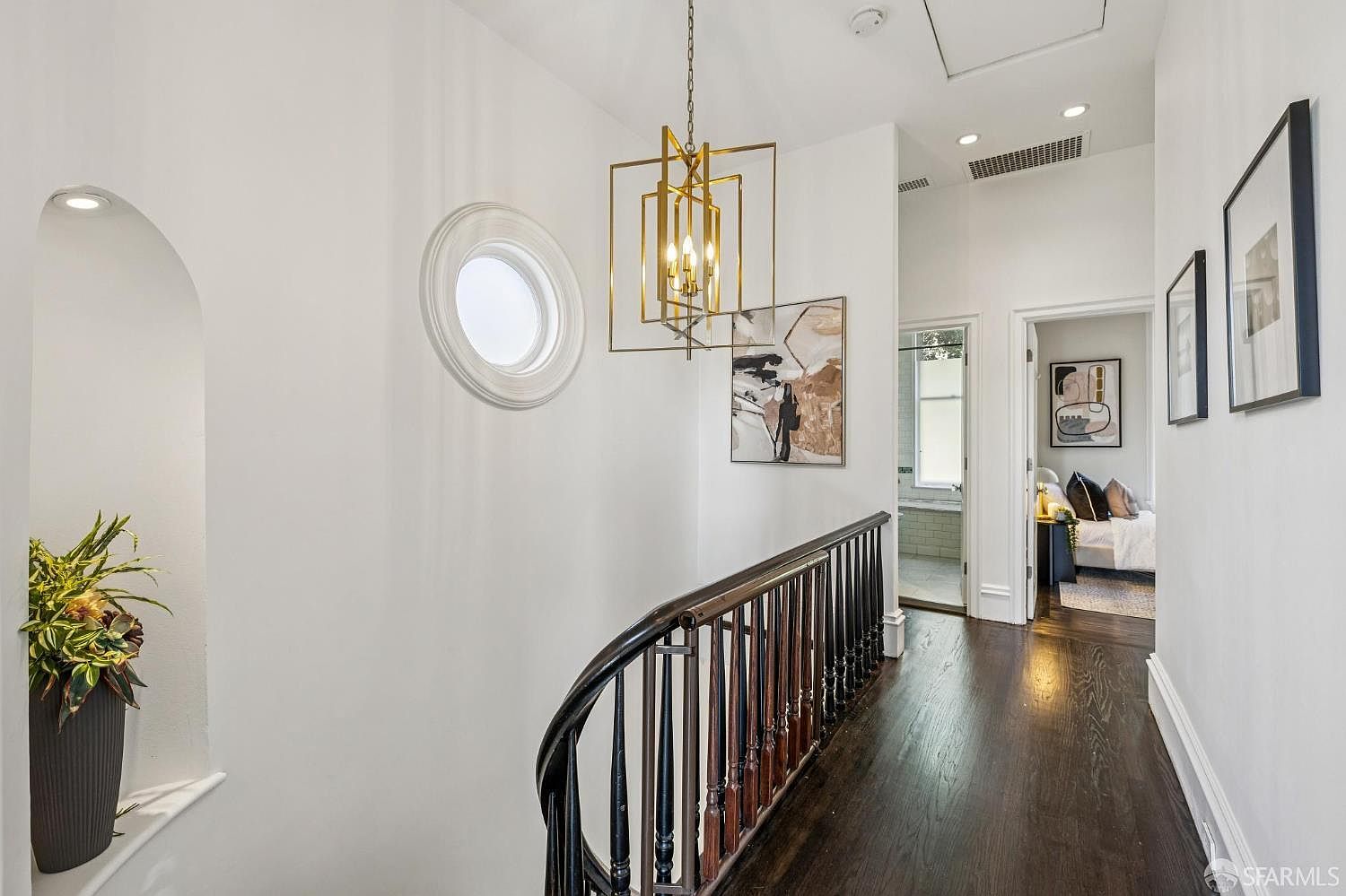
Step across the threshold and the home's intentions become immediately clear. Dark hardwood floors extend from the entry foyer, where a classic hanging lantern fixture casts warm light over a grand central staircase dressed in a bold patterned runner. The ornate newel post finial — a clear glass sphere with an embedded gold floral motif — is the kind of detail that rewards a second look, a small declaration of the craftsmanship philosophy that governs the entire residence.
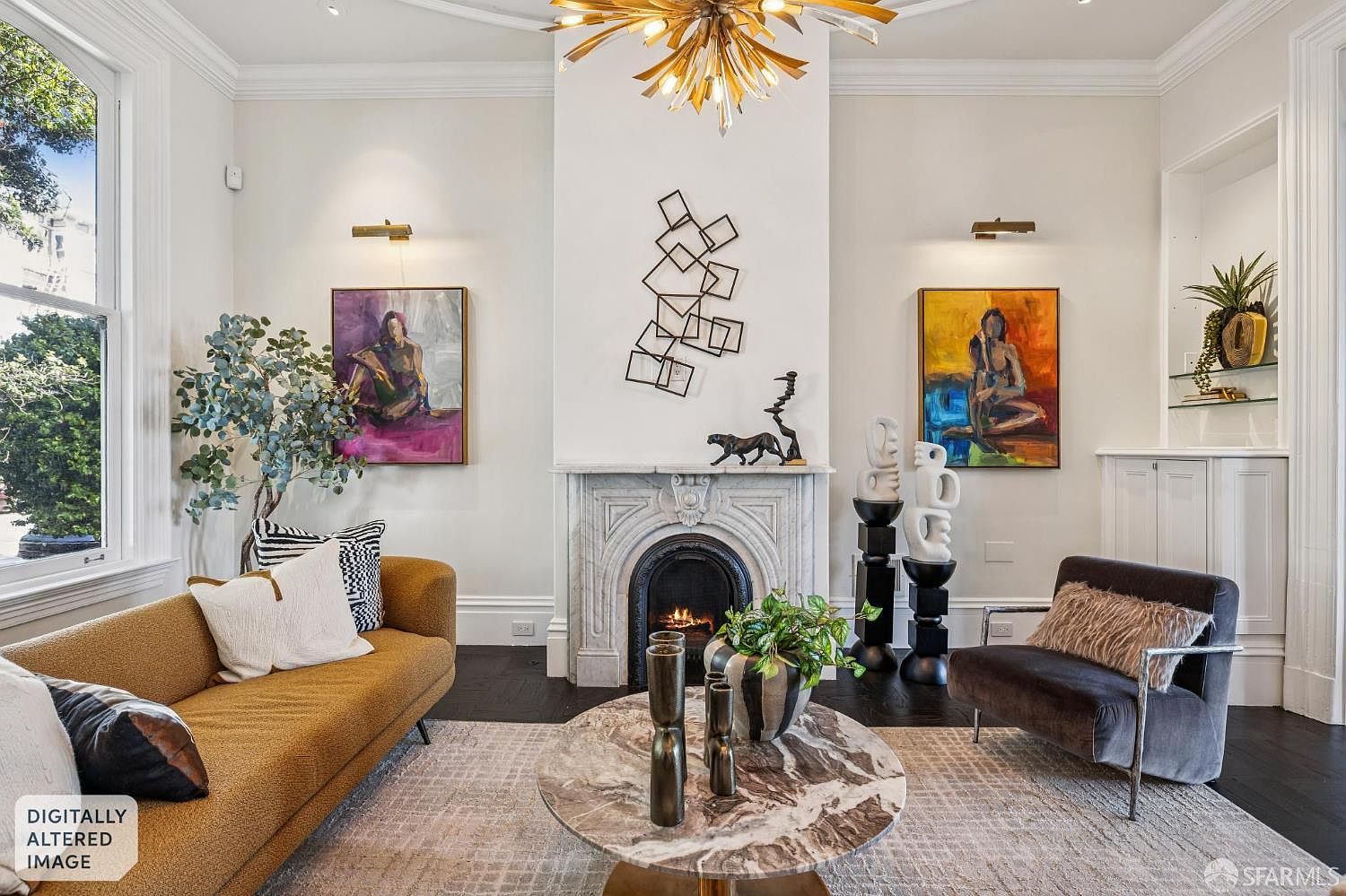
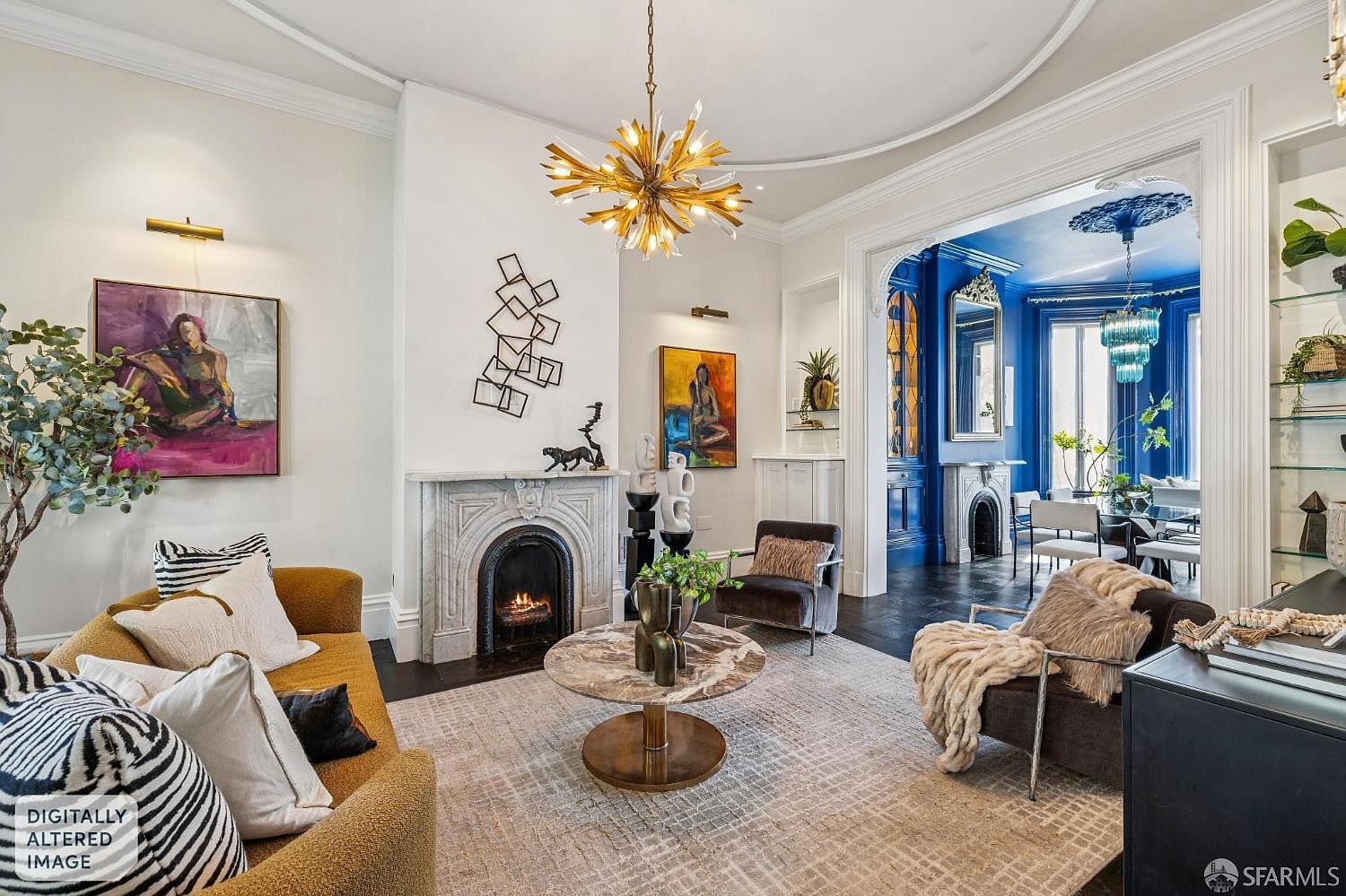
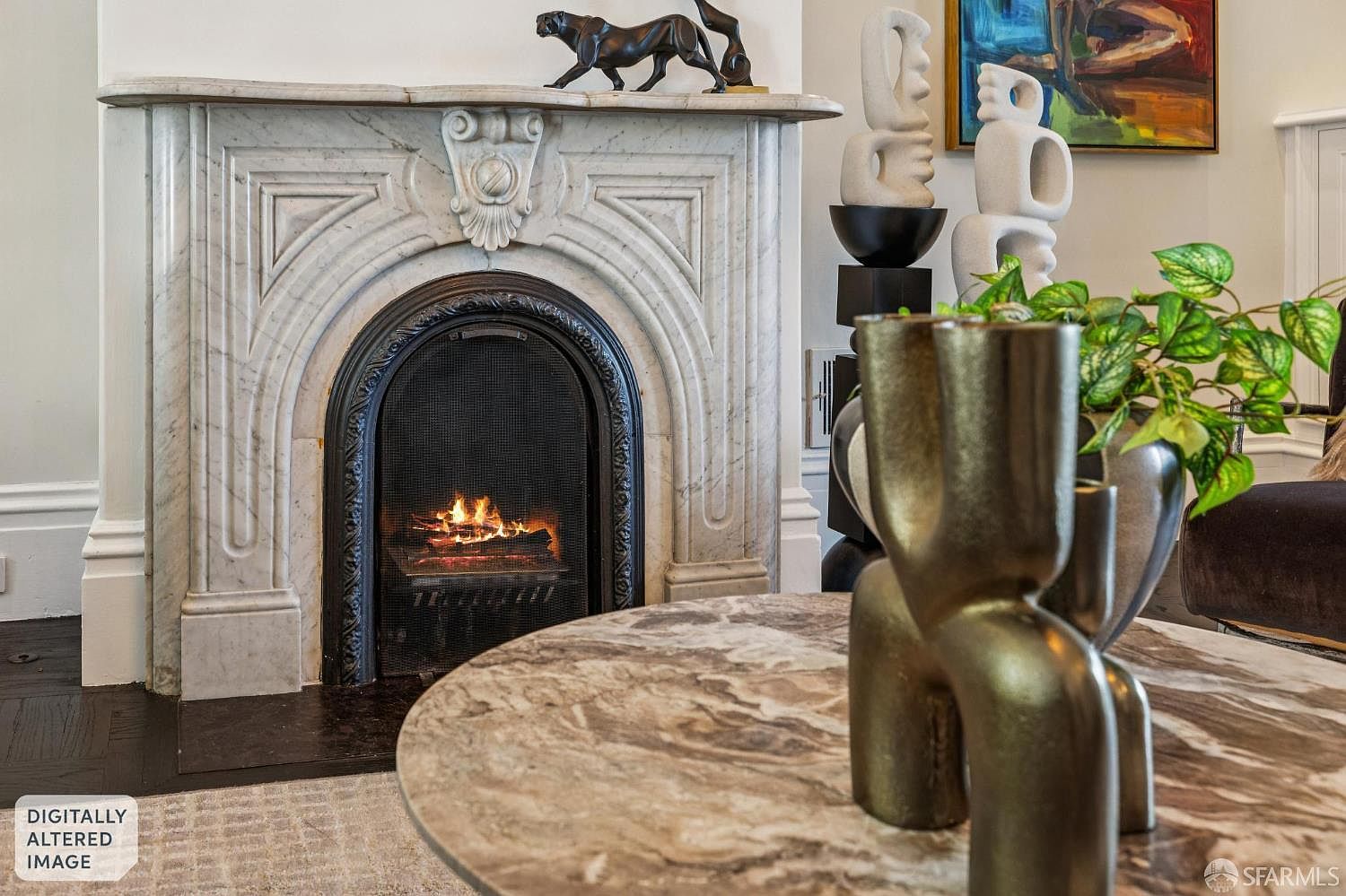
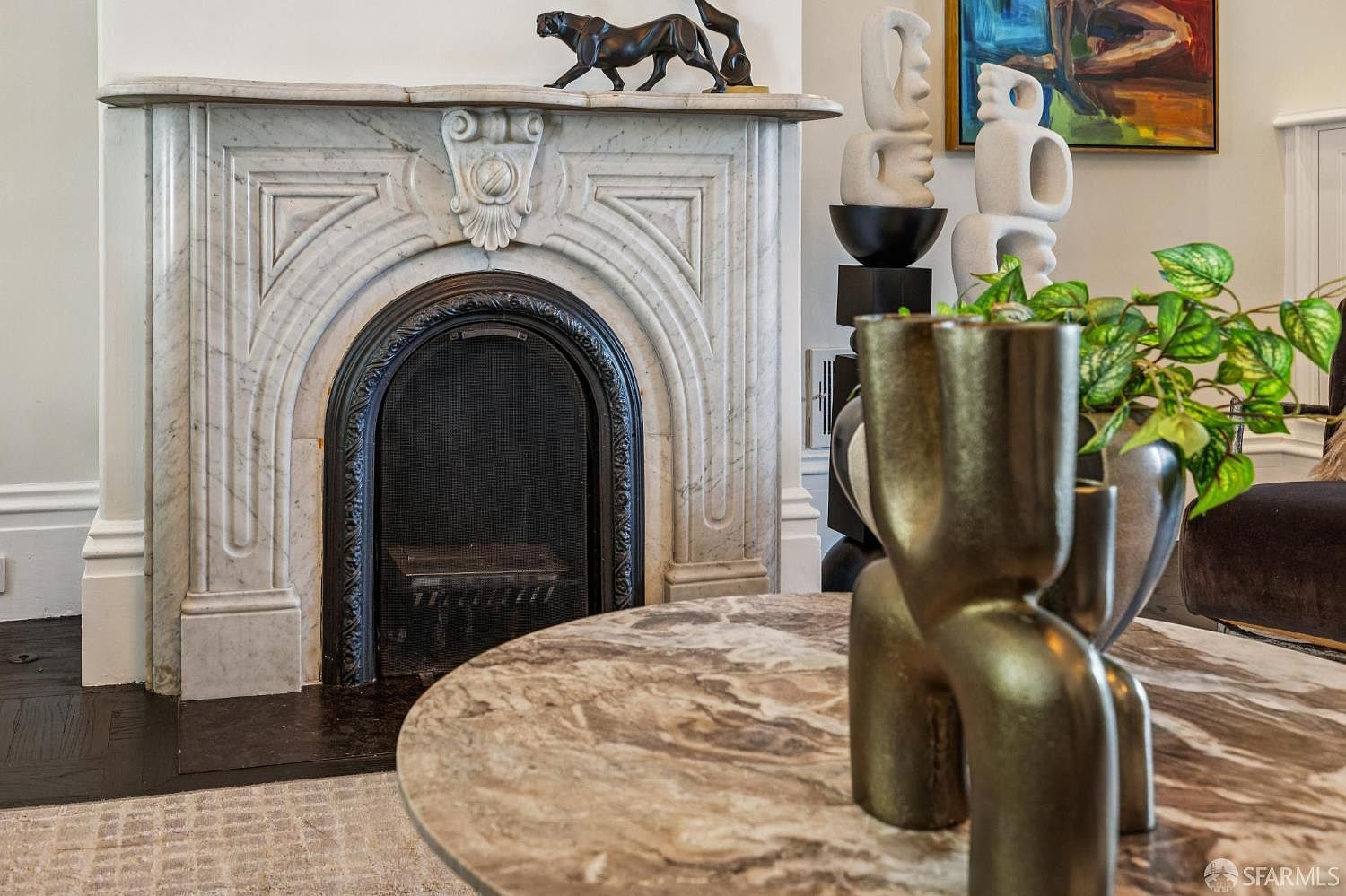
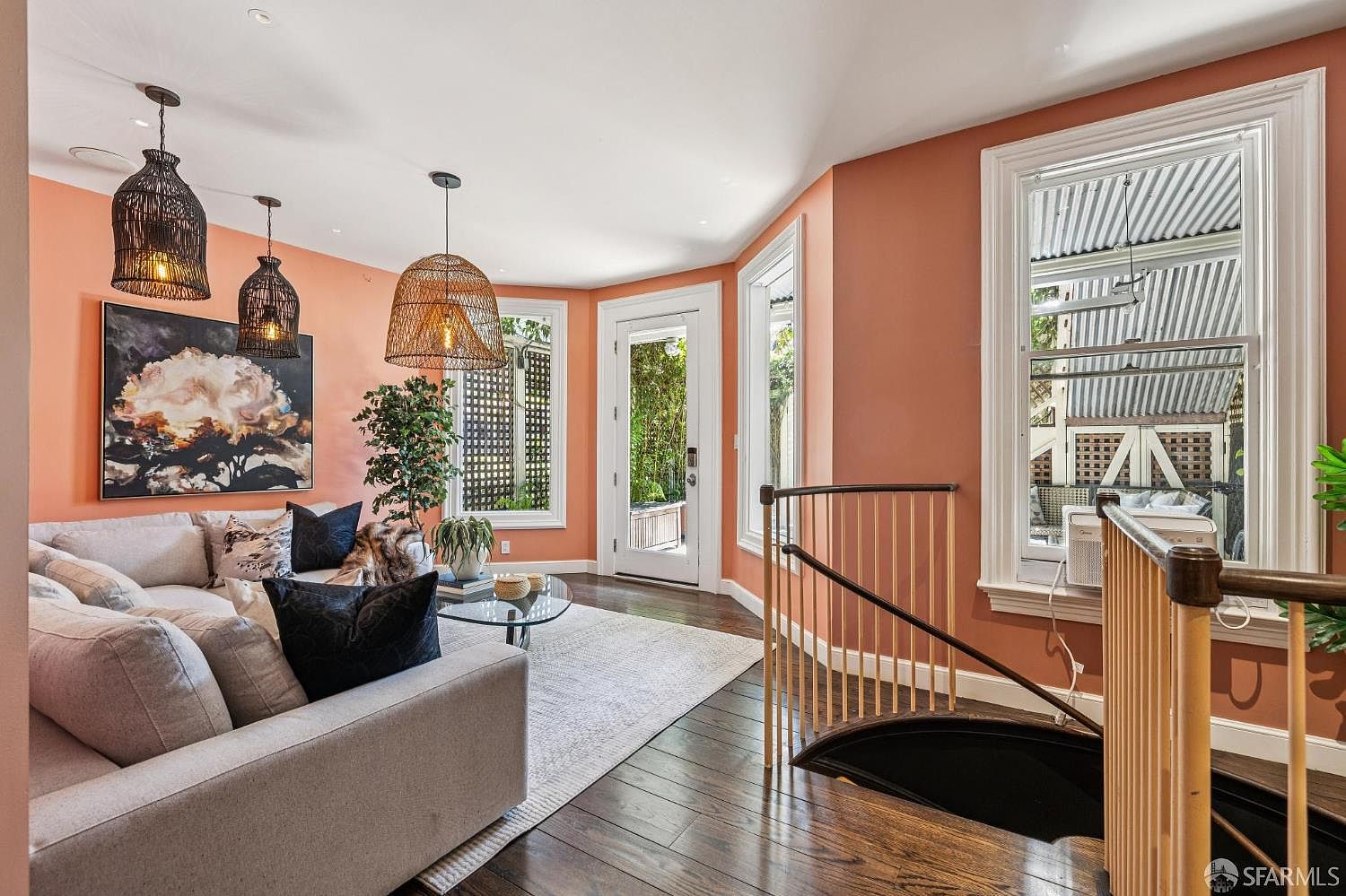
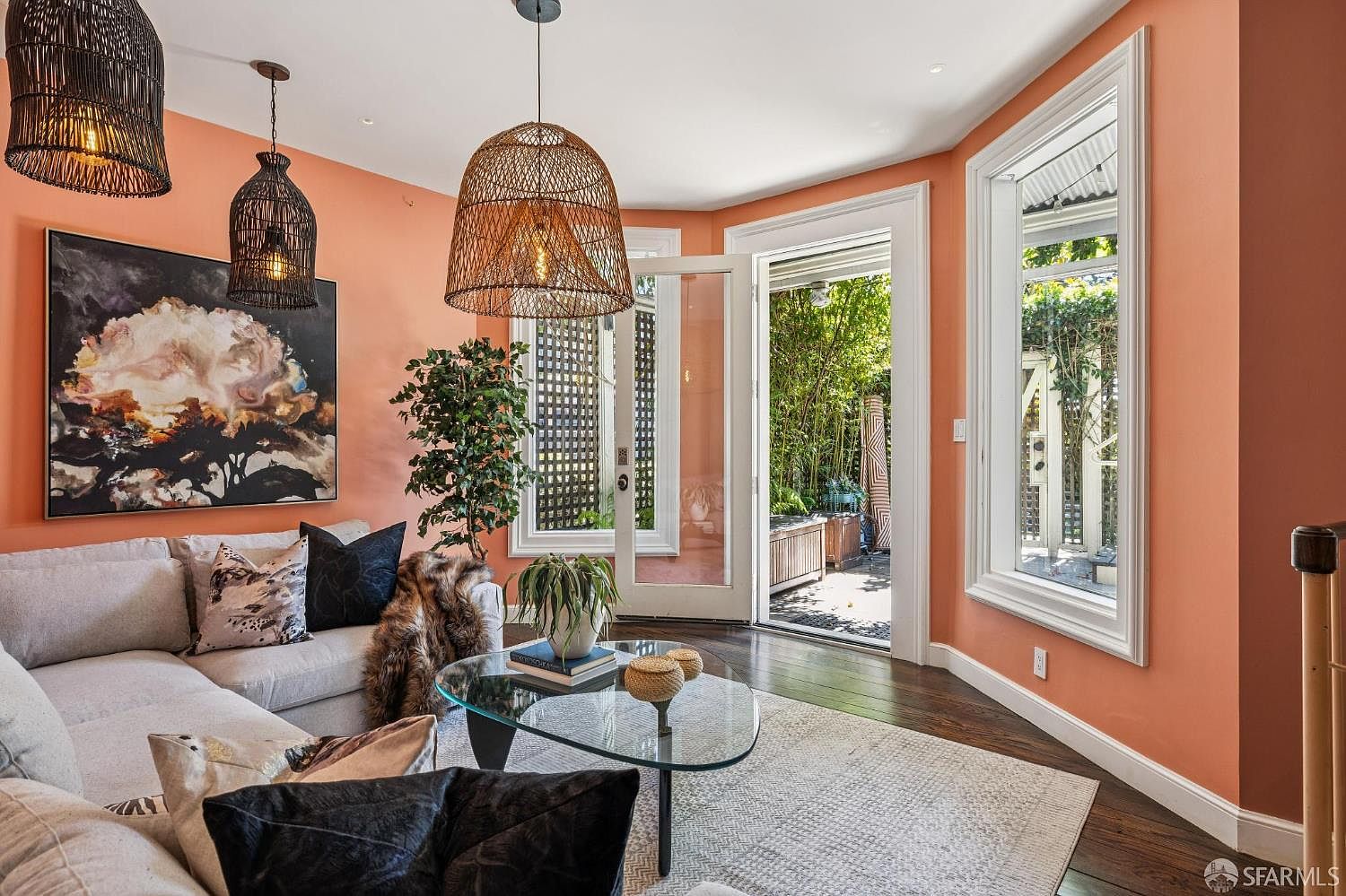
The living room commands its space with cathedral ceilings and a carved stone fireplace surround of considerable architectural presence. A gold starburst chandelier anchors the room from above while a mustard-toned sofa, dark velvet armchair, and circular stone-topped coffee table compose a seating arrangement that feels both curated and genuinely livable. The room's scale is generous without being overwhelming — a difficult balance that the designer has navigated with evident skill.
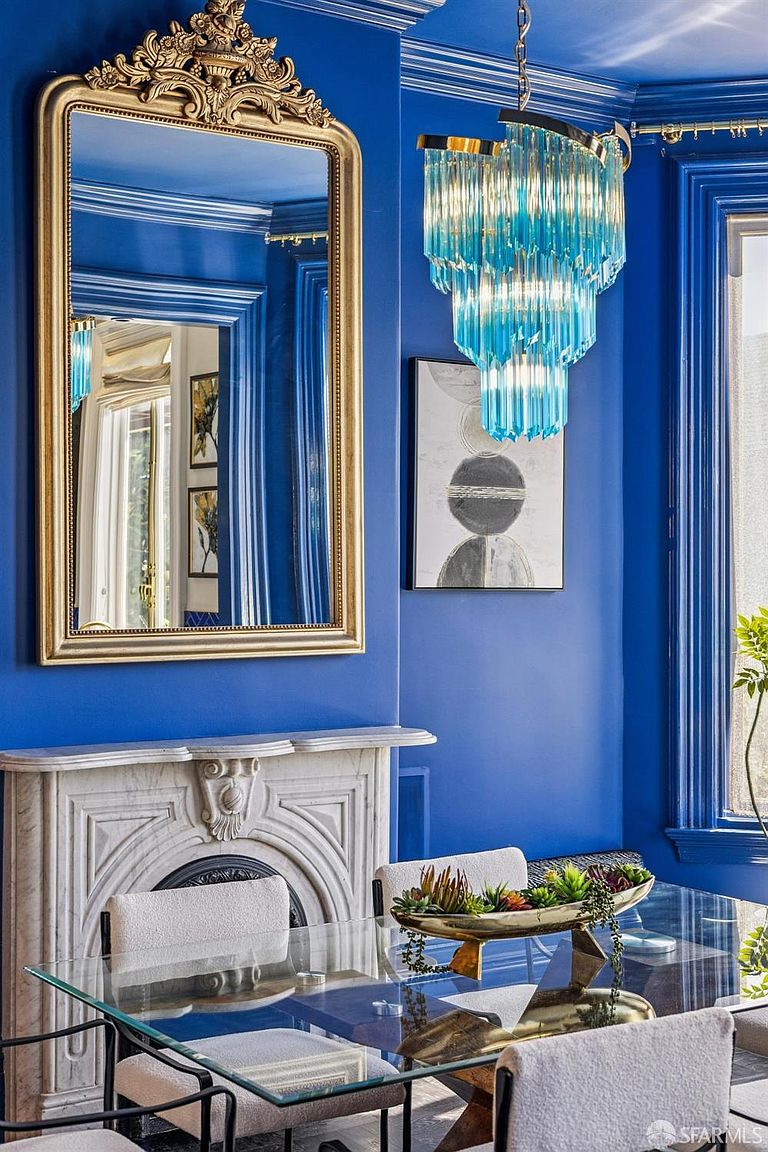
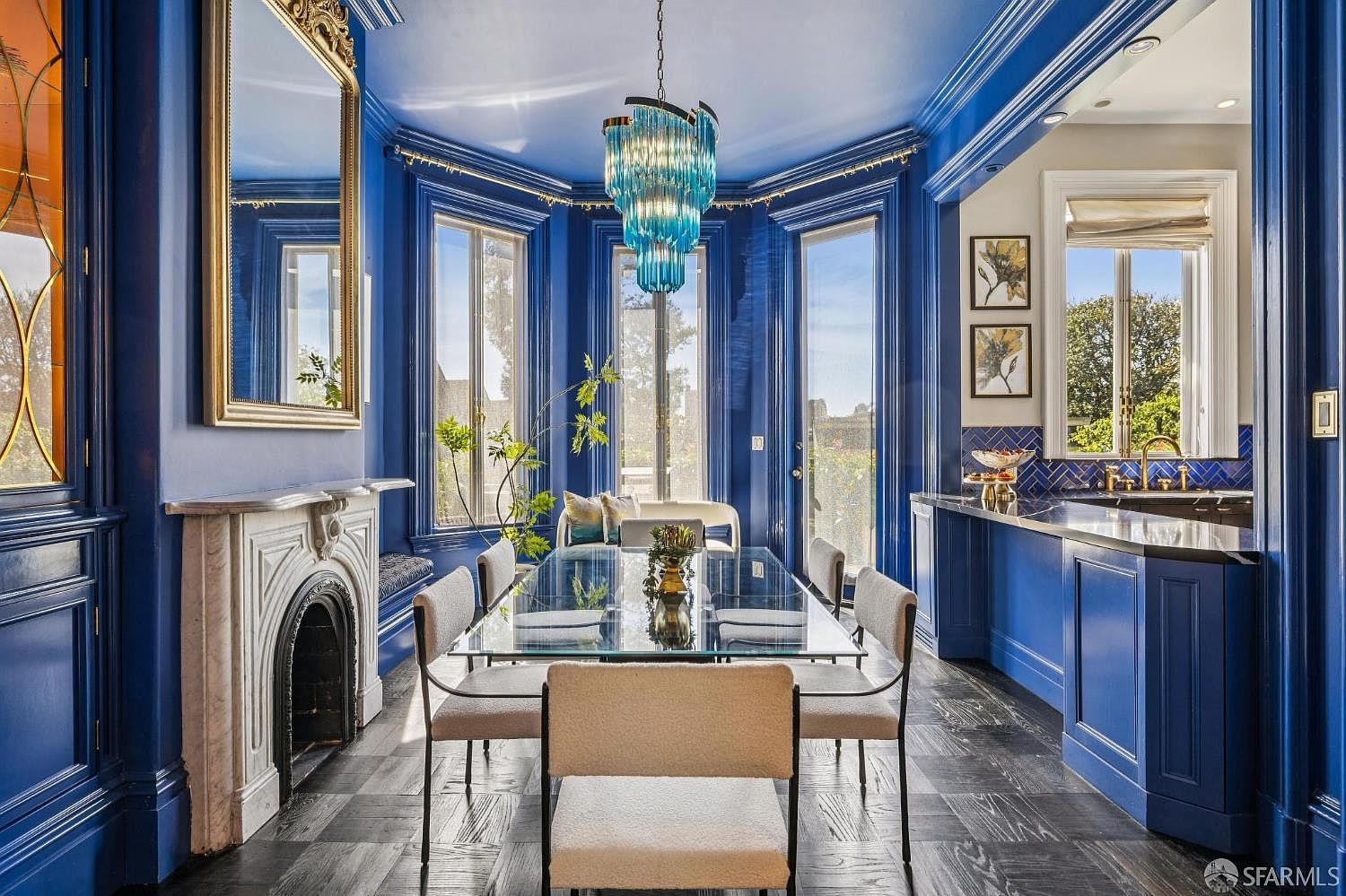
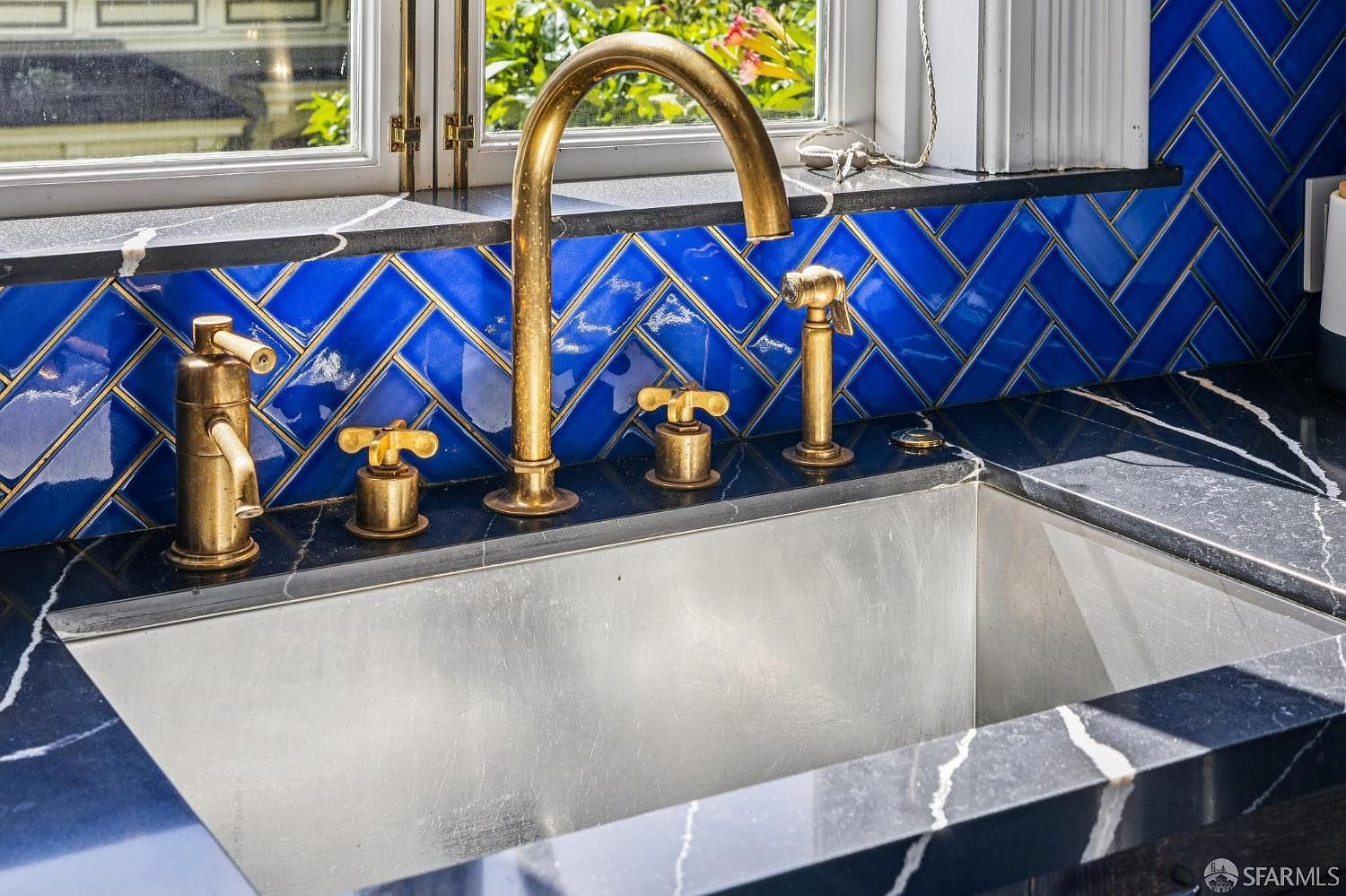
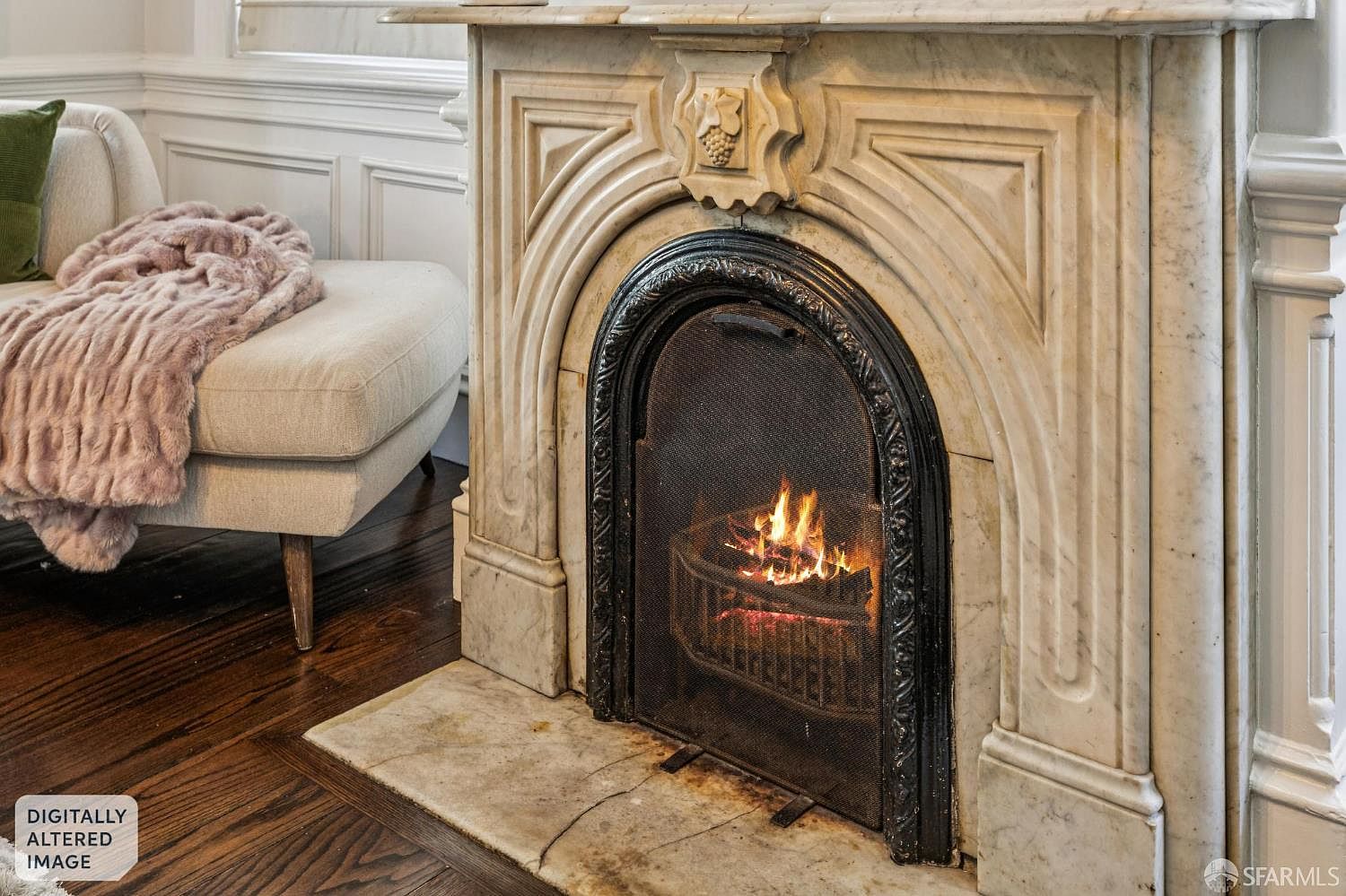
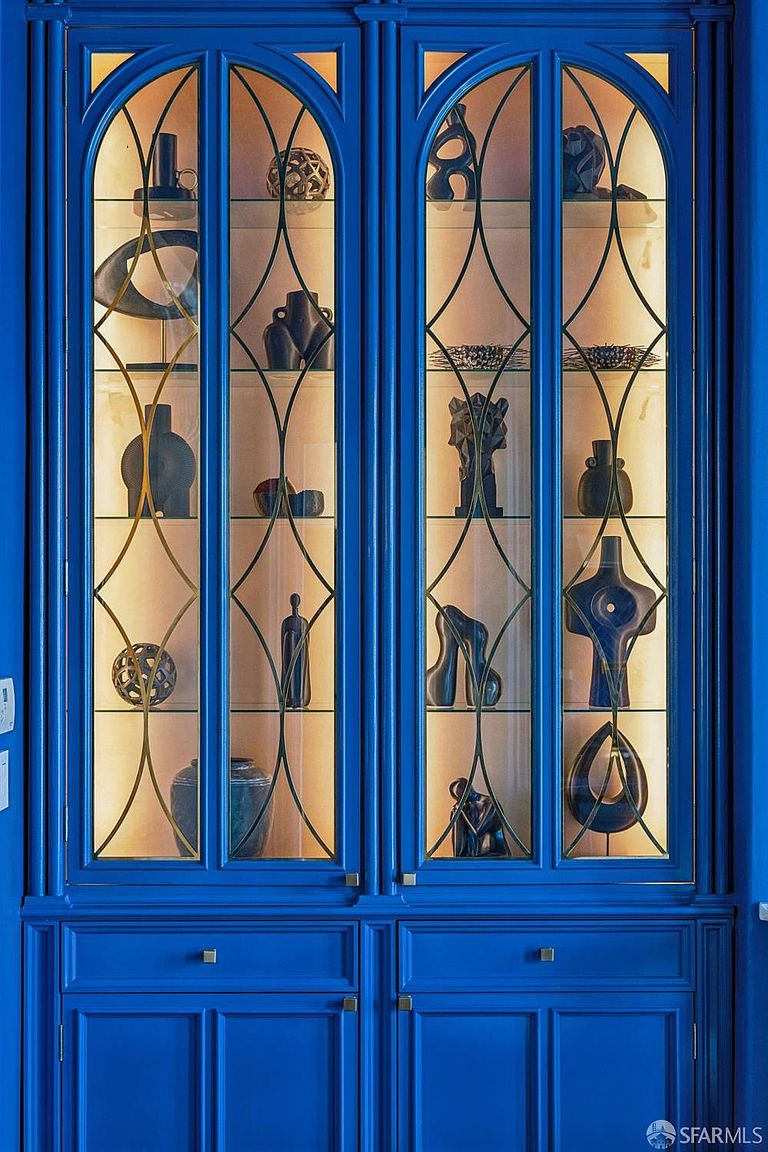
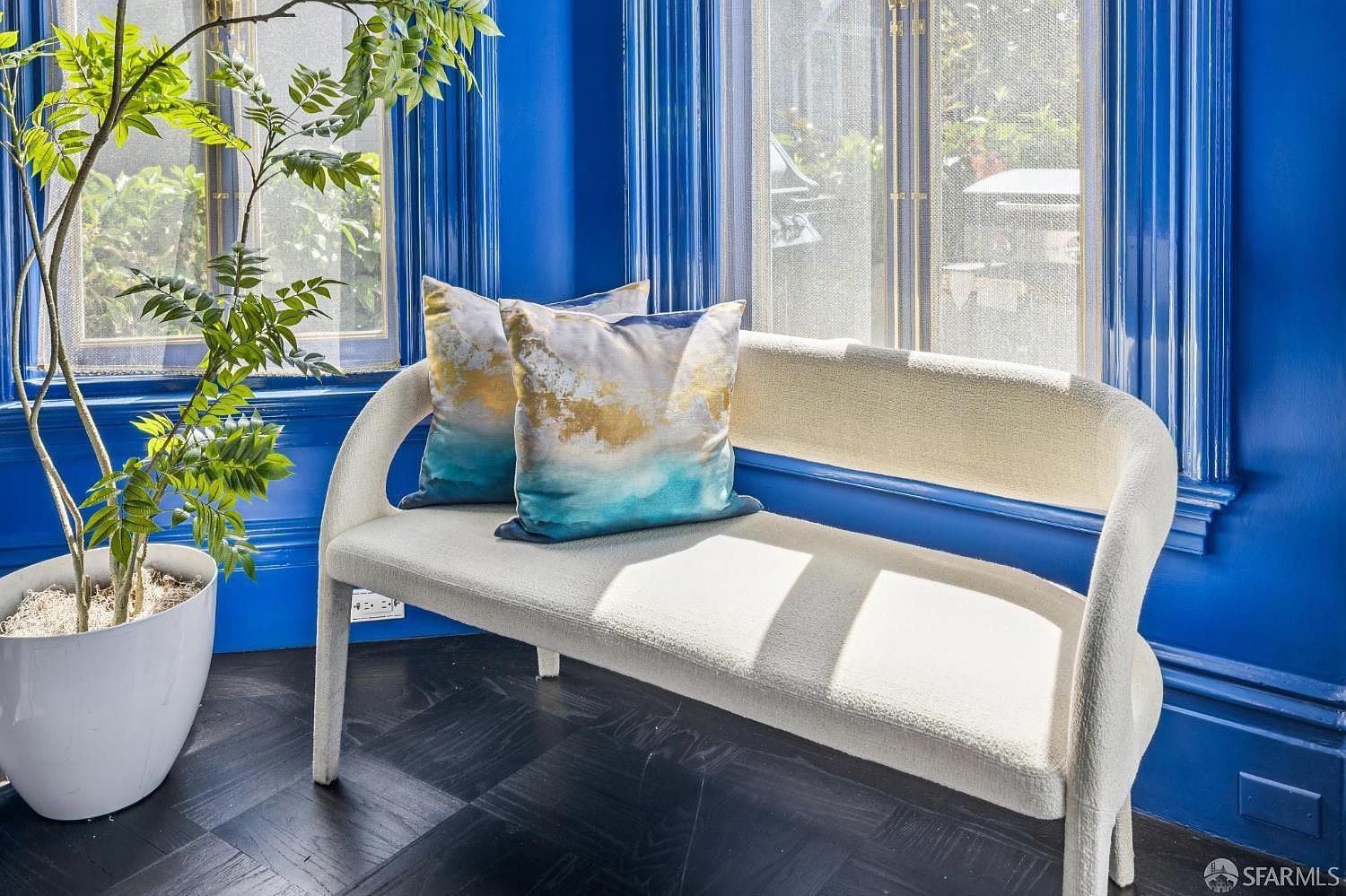
The dining room is the home's most theatrically conceived space. Deep blue walls and matching trim create a room that feels both intimate and grand, the monochromatic commitment broken only by a tiered blue glass chandelier suspended from an ornate ceiling medallion, a marble fireplace surround, and a built-in wet bar finished with blue herringbone tile. A glass-topped table and light-upholstered chairs provide the necessary counterpoint, preventing the room from tipping into excess.
The kitchen continues the chromatic dialogue — dark stone countertops with white veining, professional Wolf range, brass pot filler, and that same compelling blue herringbone backsplash that reads as both bold and considered. It is a kitchen designed for serious cooking and serious entertaining in equal measure.
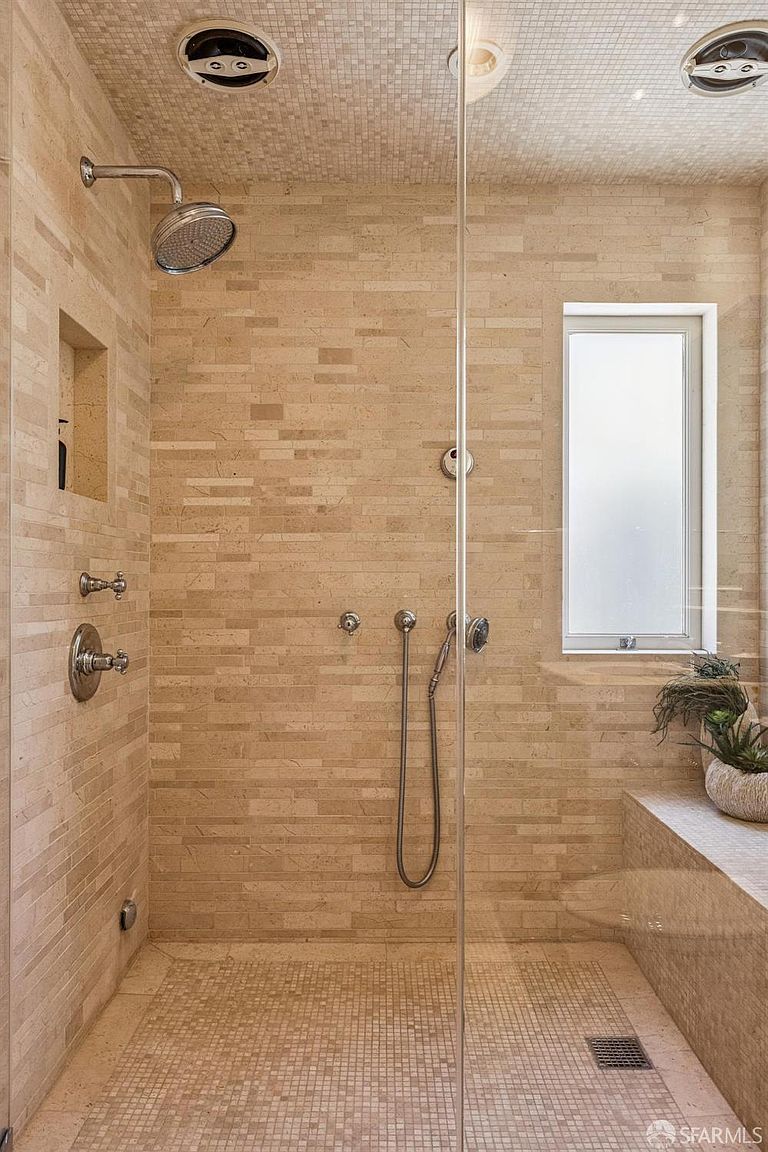
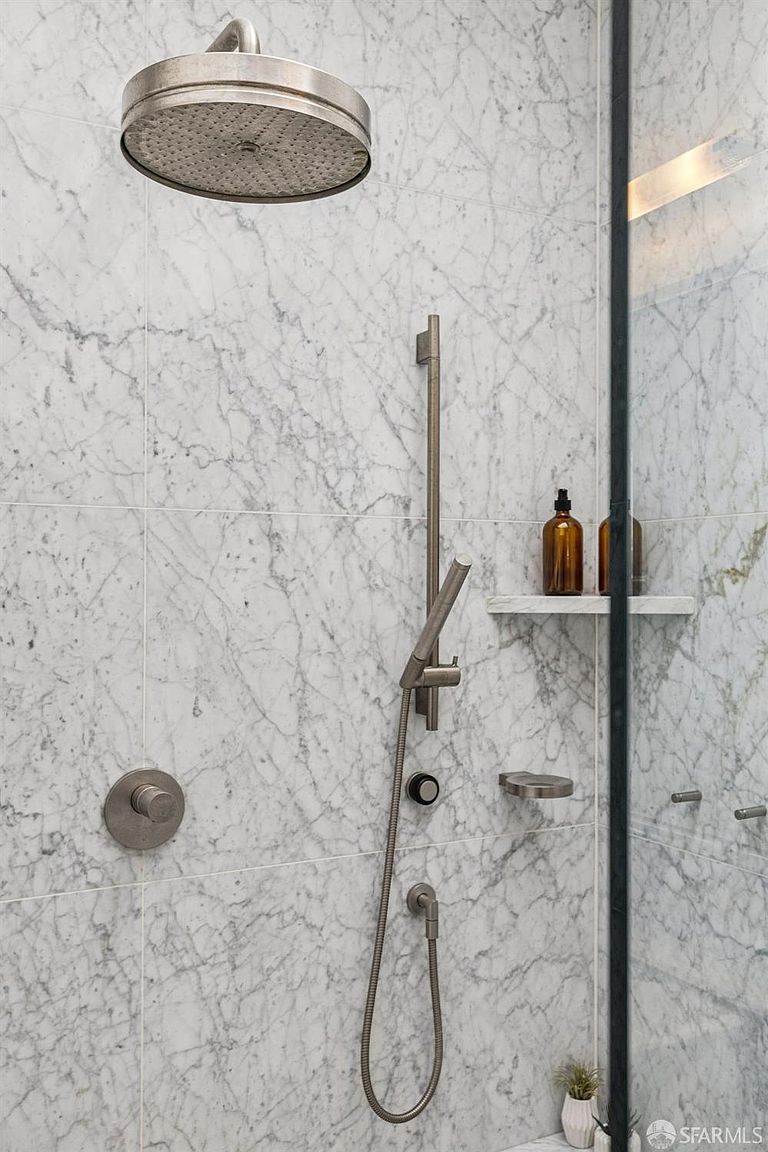
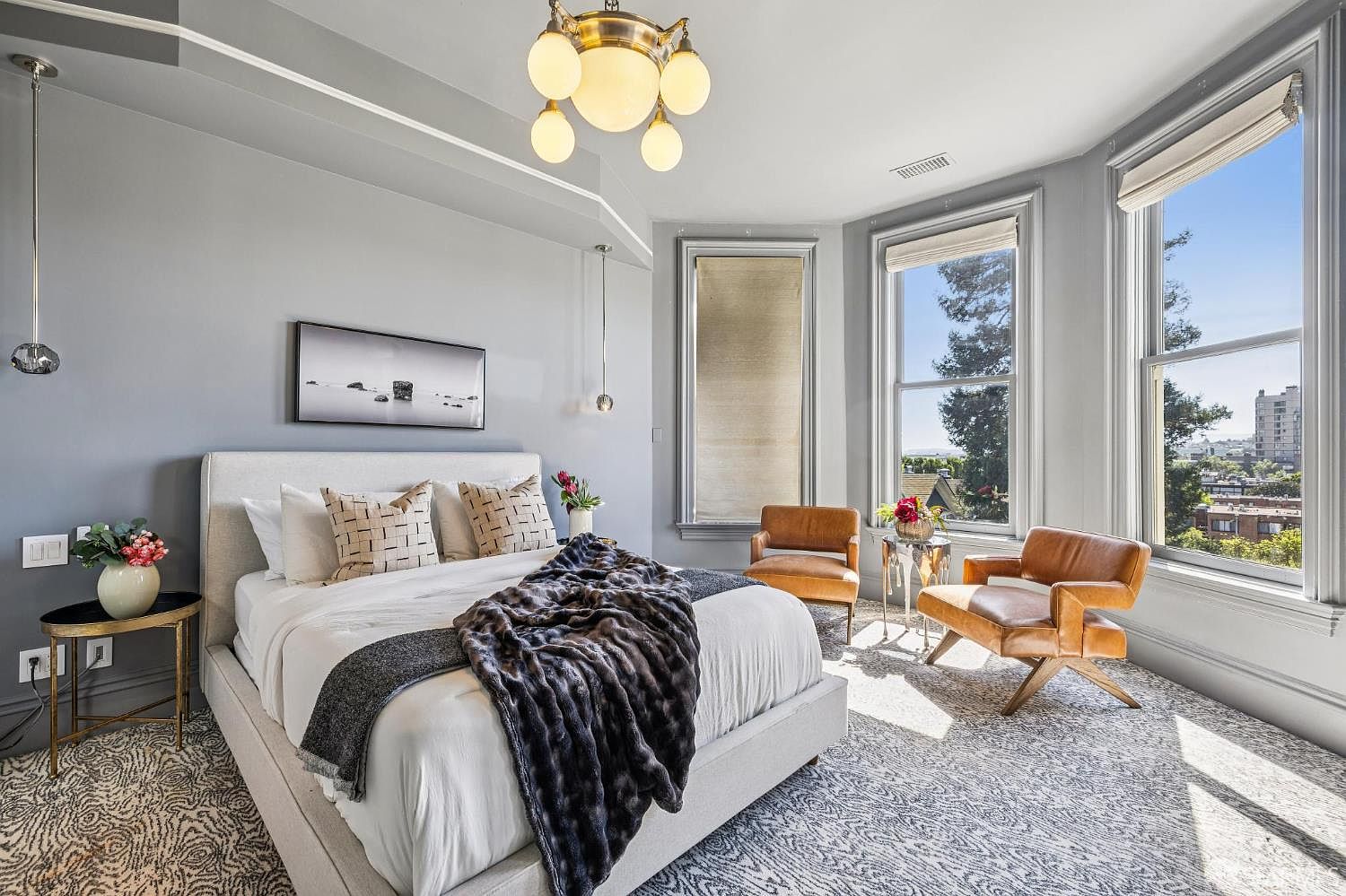
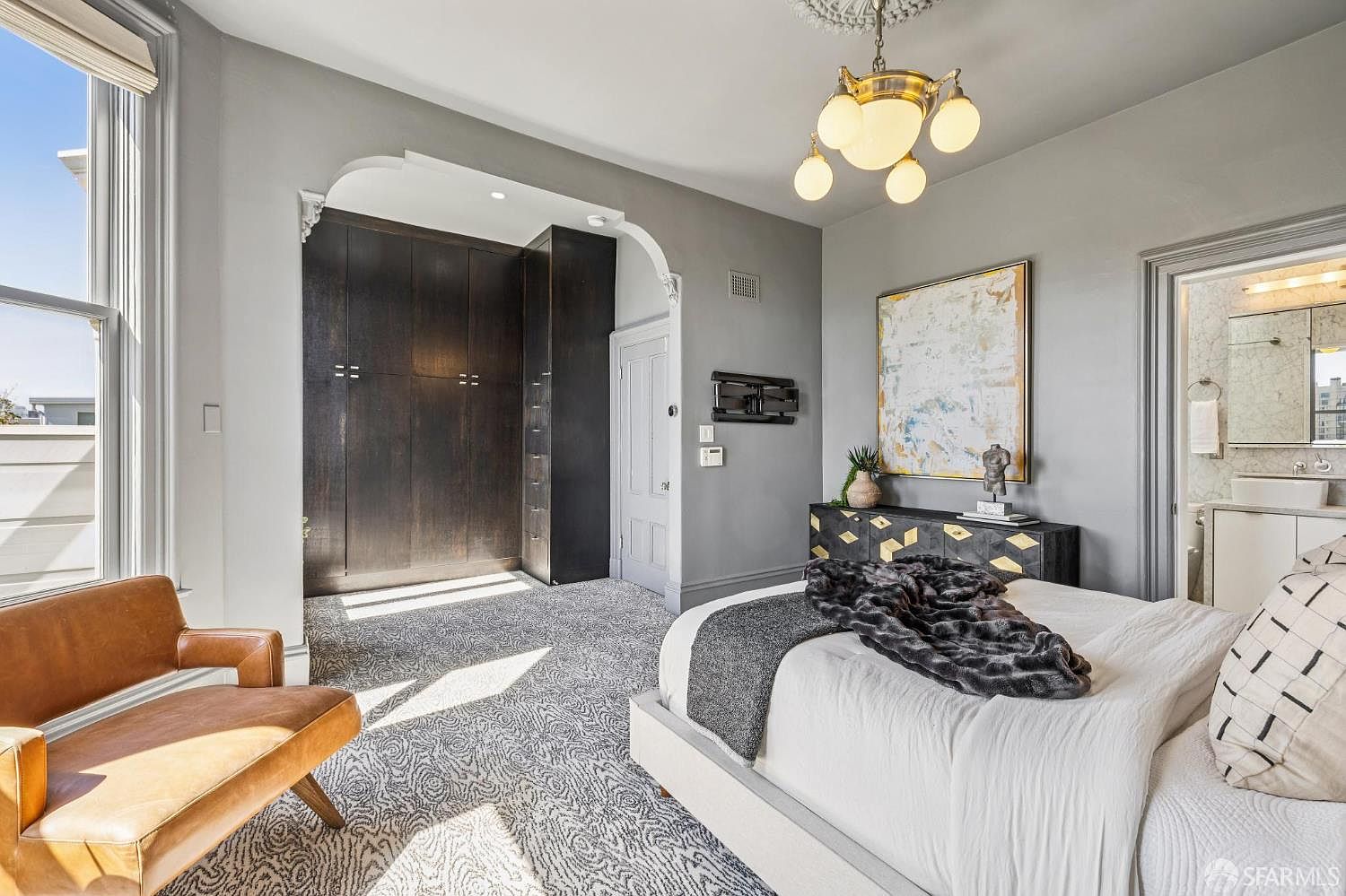
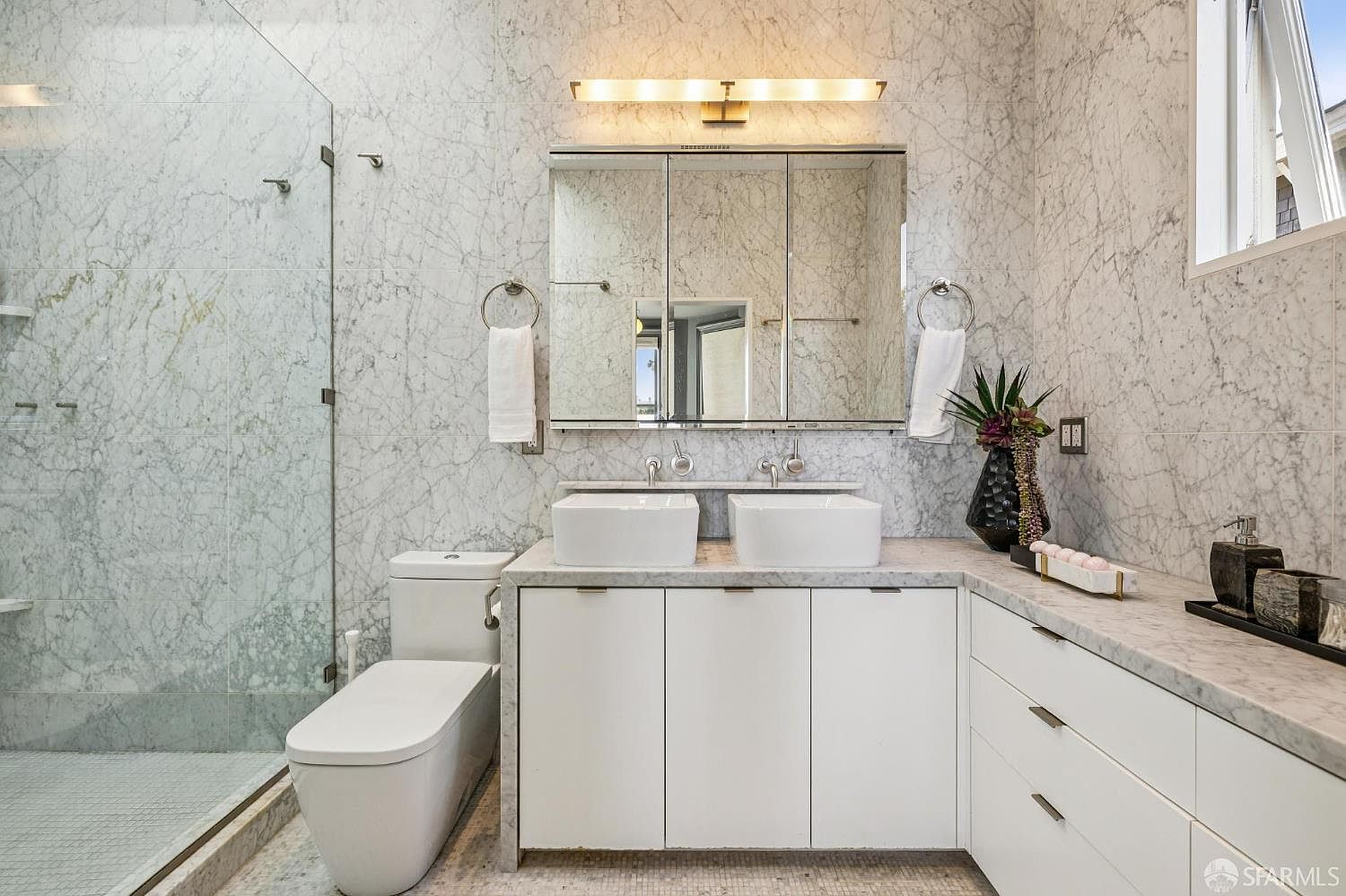
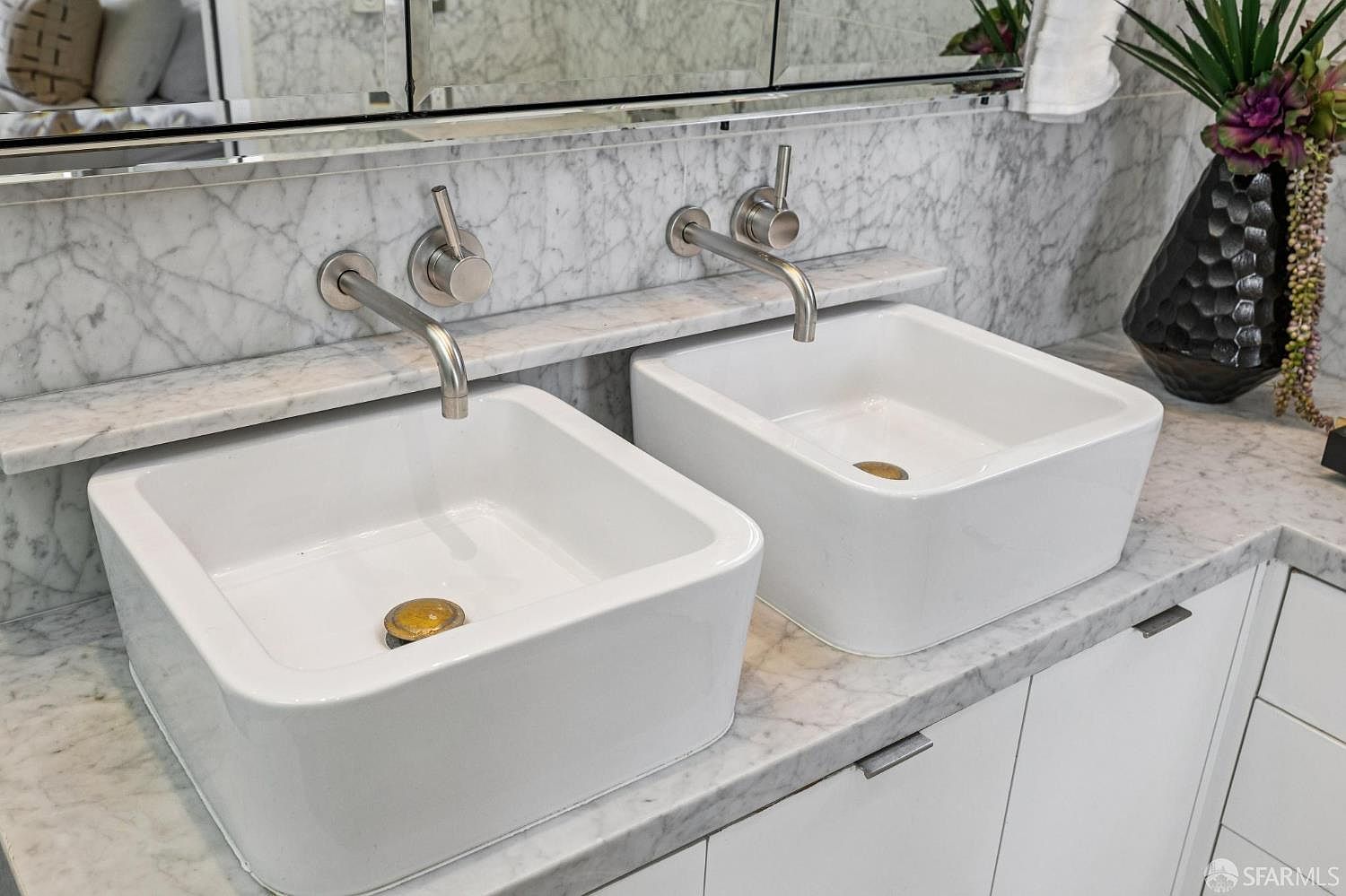
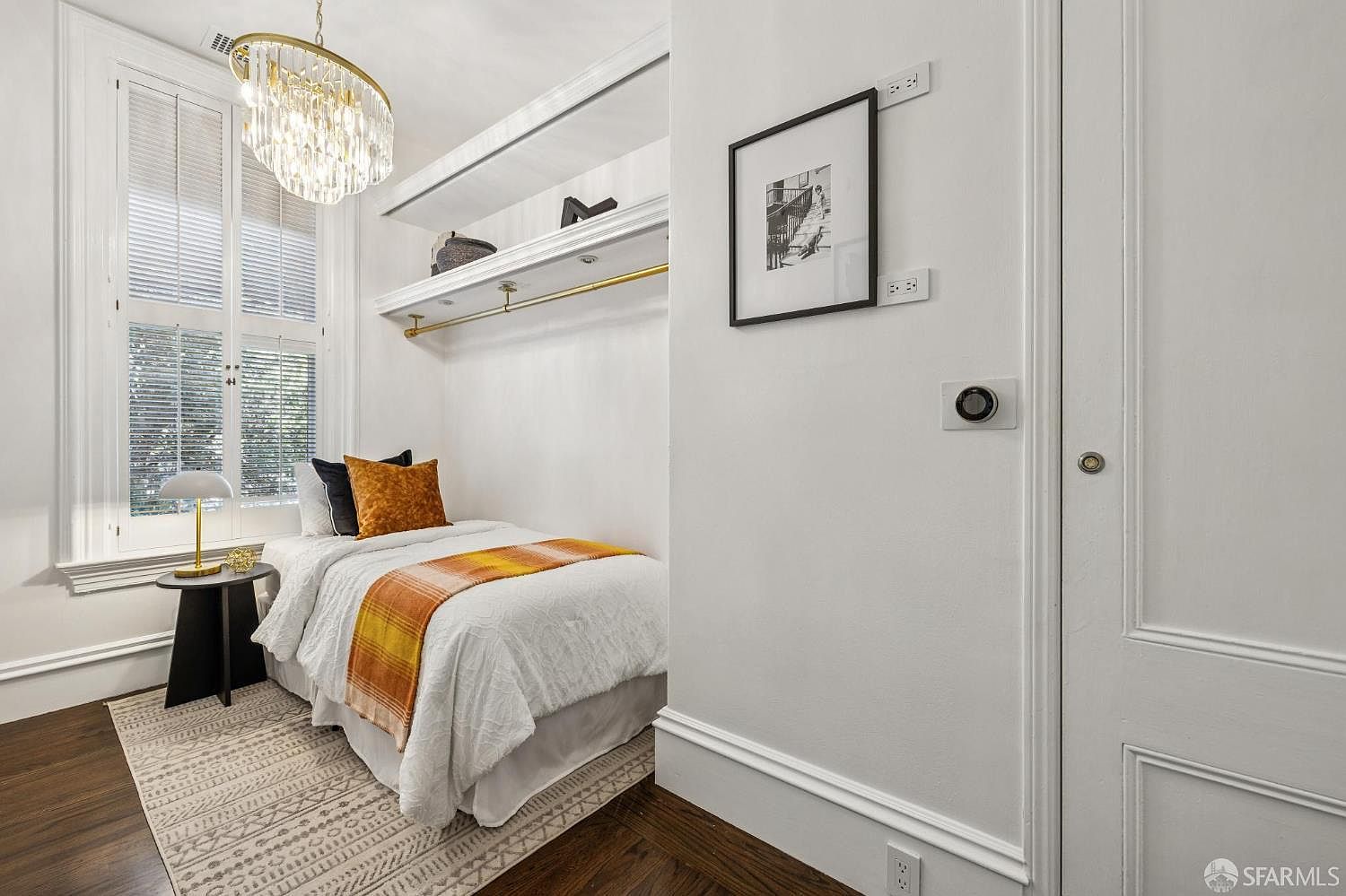
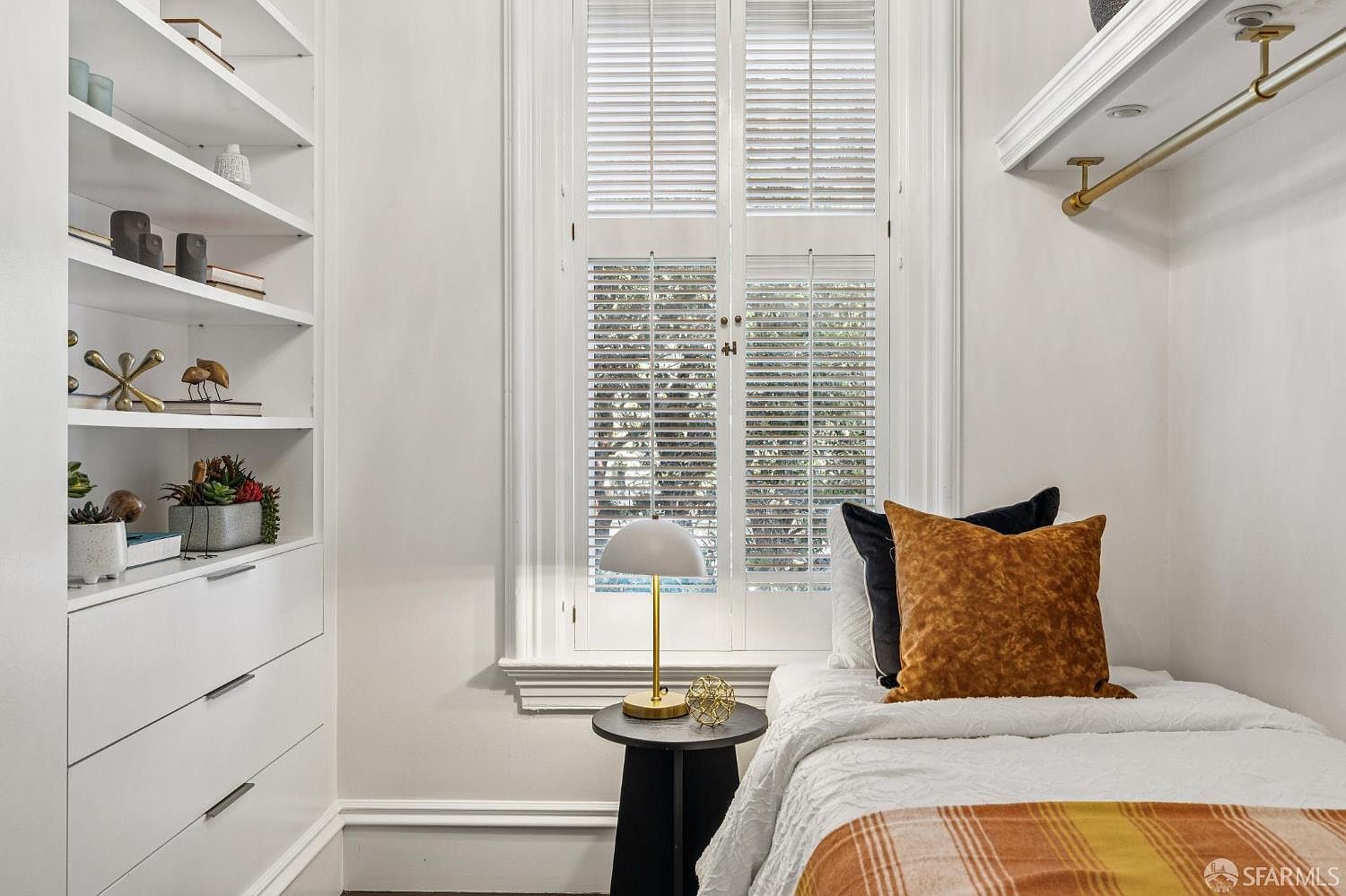
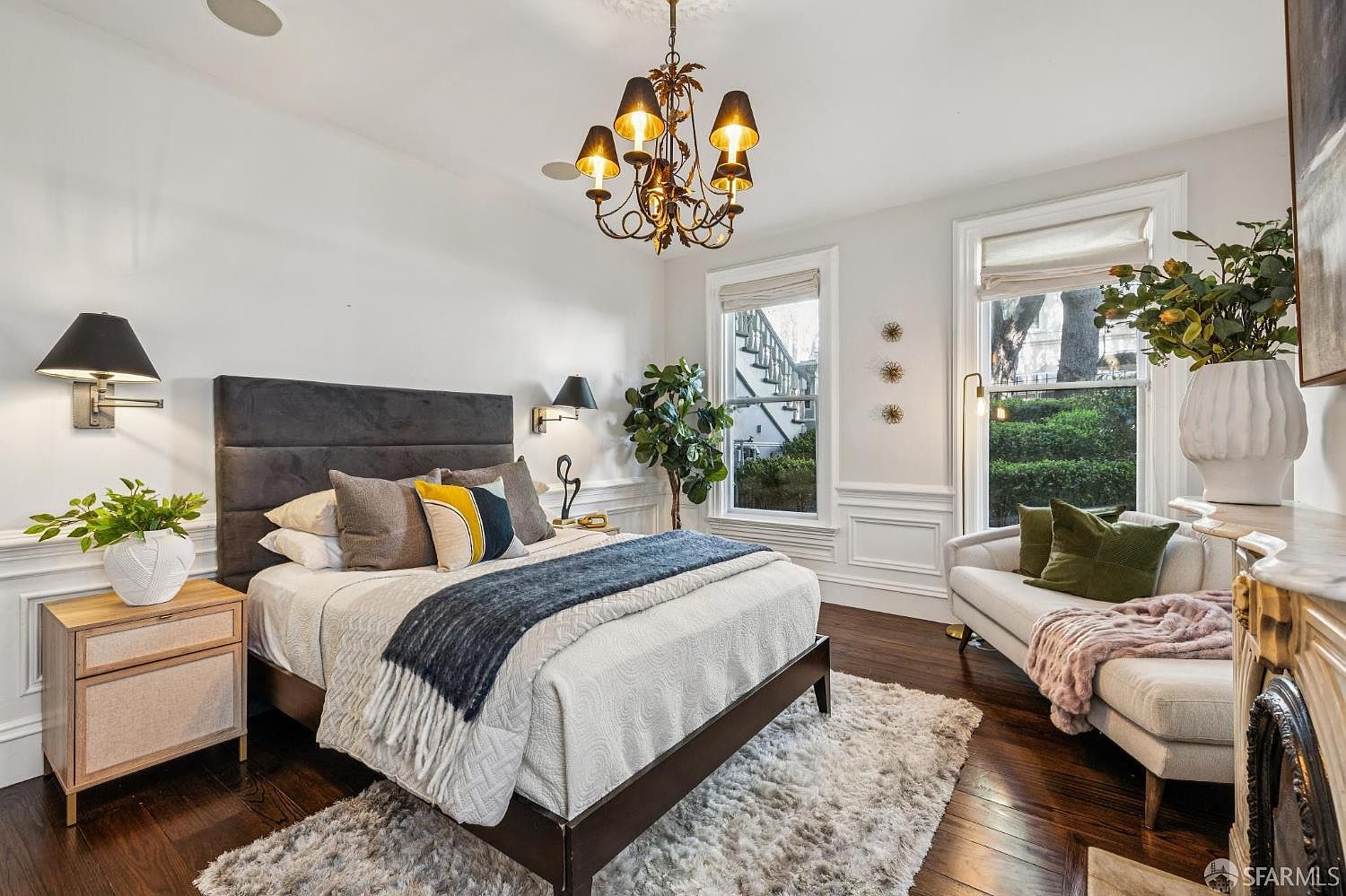
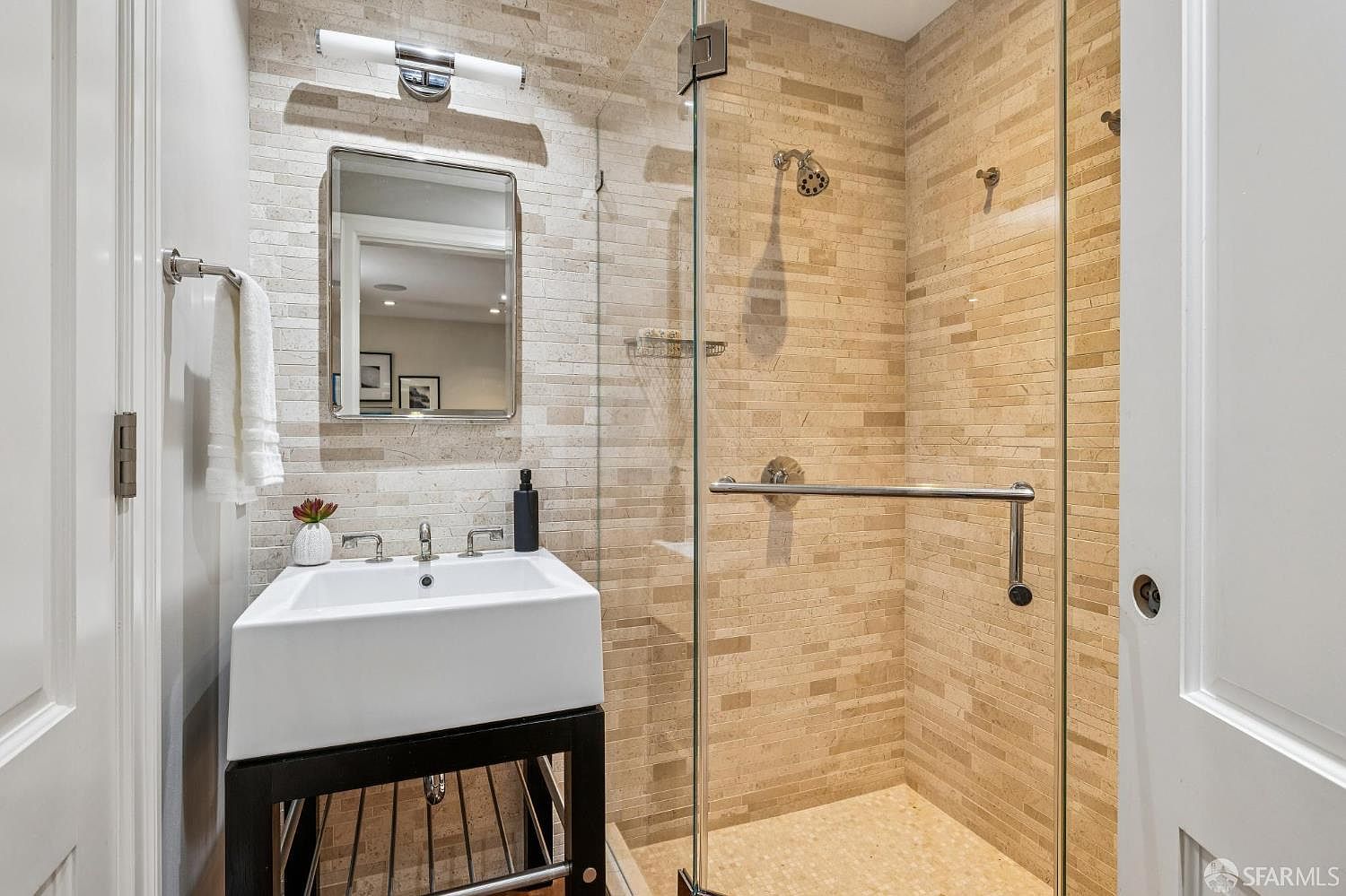
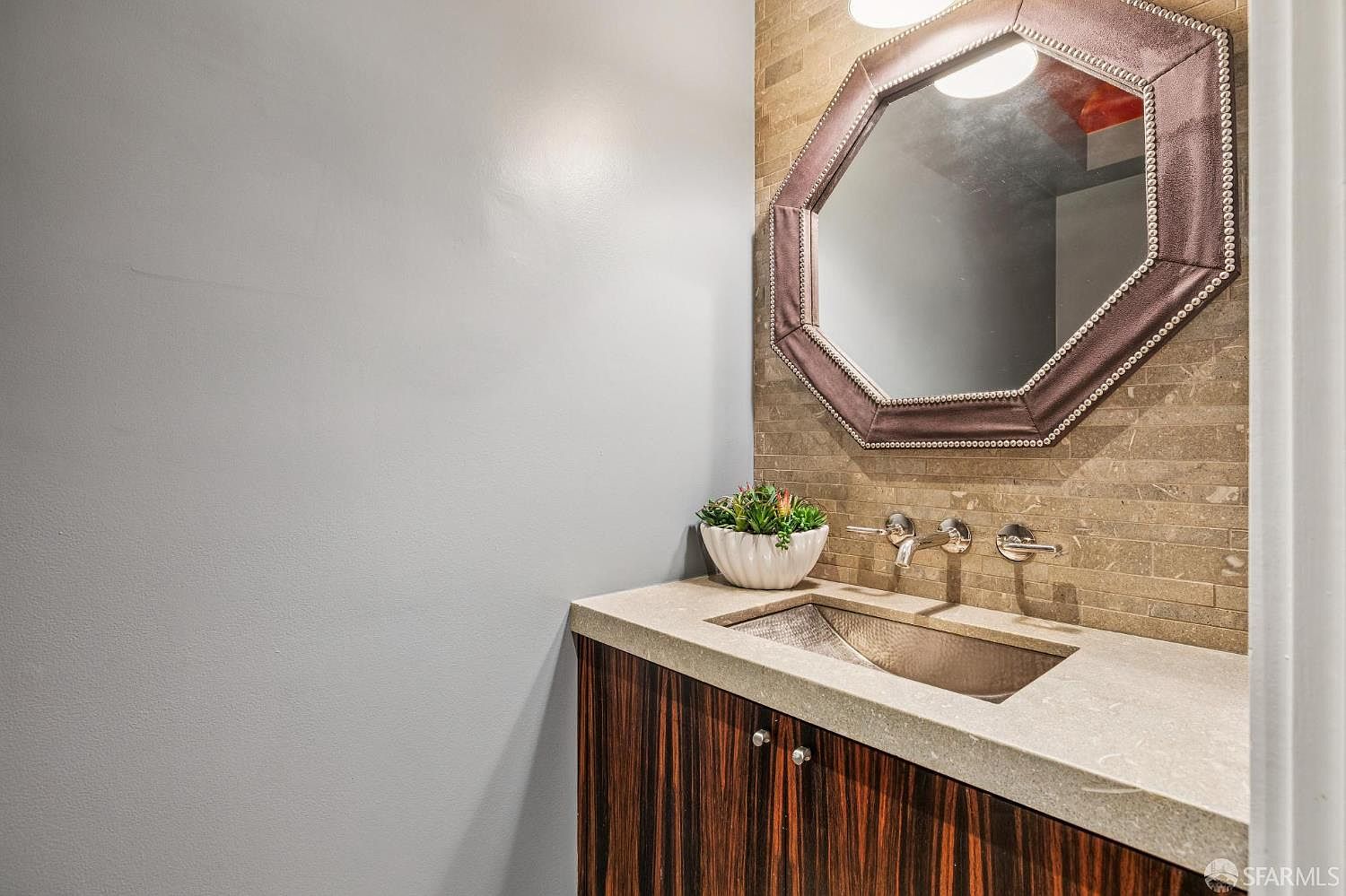
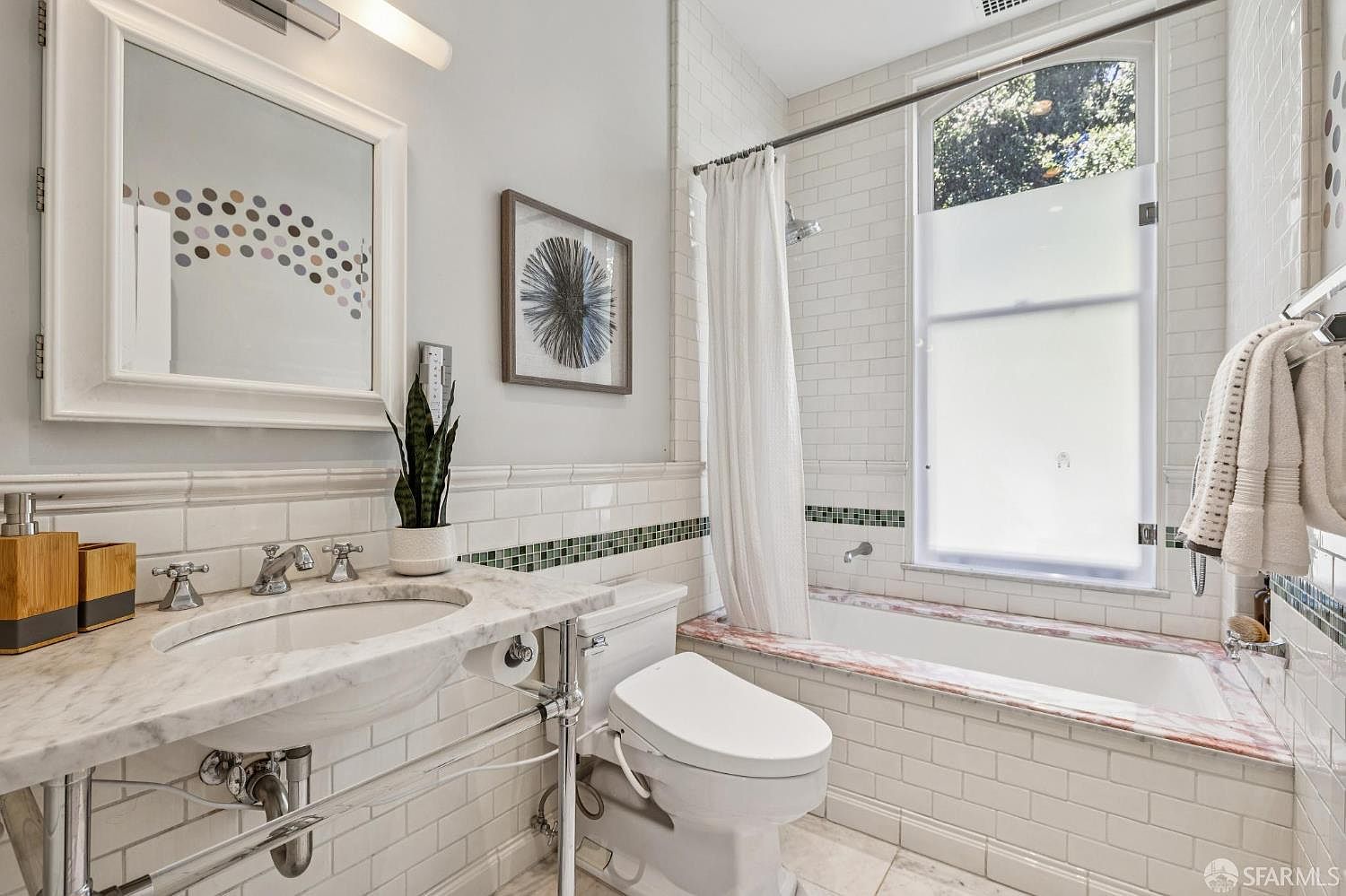
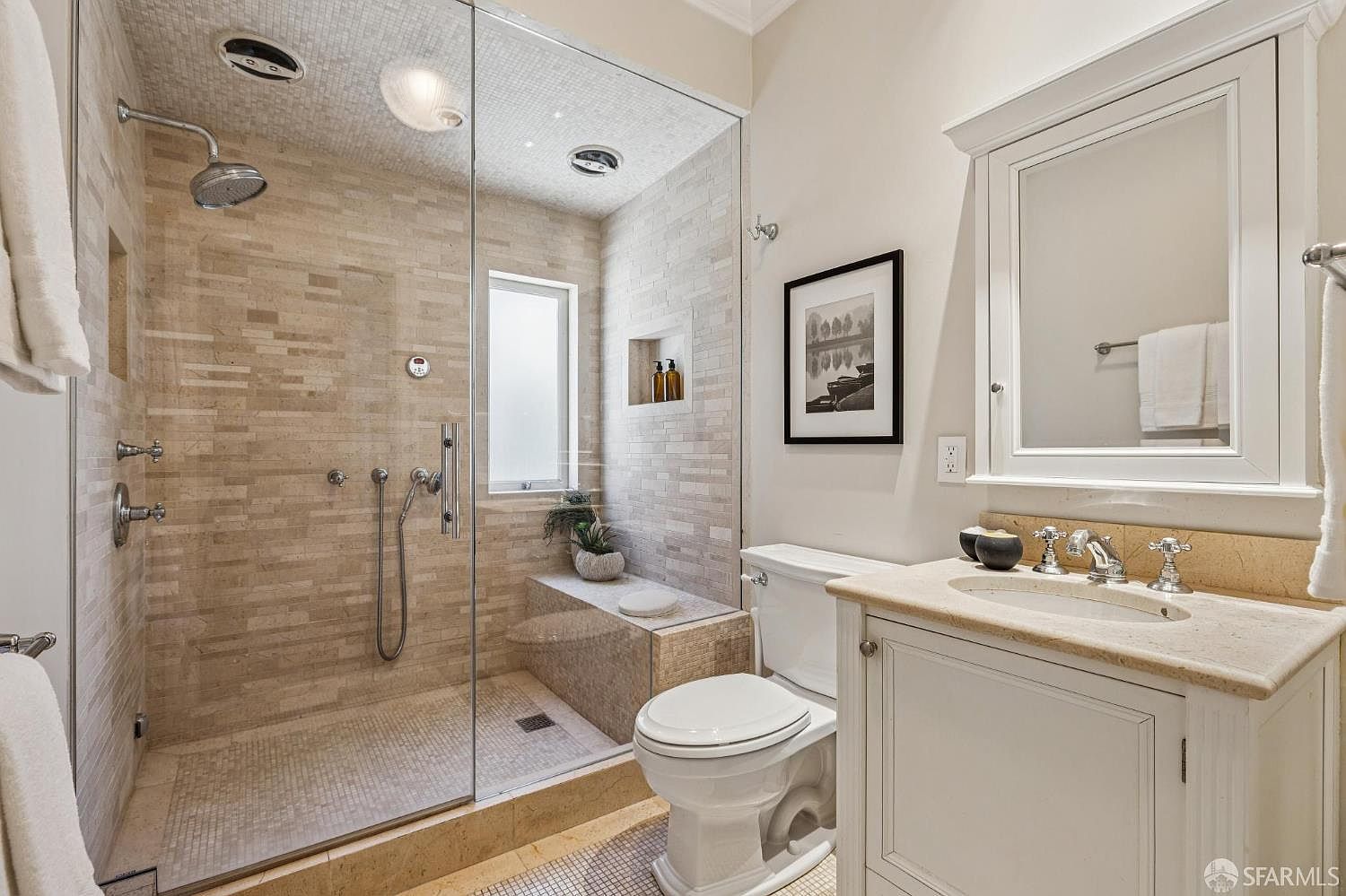
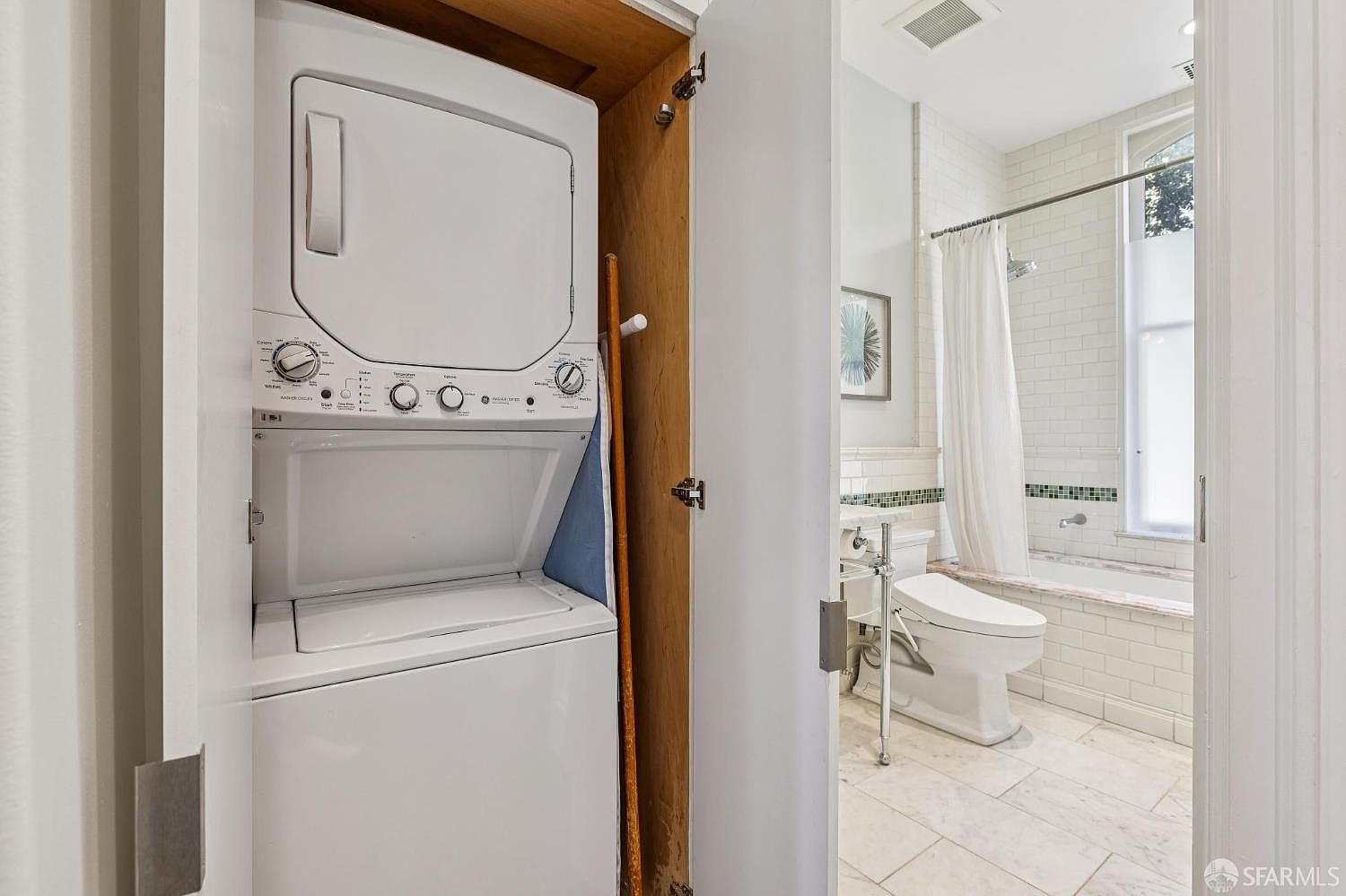
The primary suite, with its southern exposure, walk-in closet with dark wood cabinetry, and spa-caliber bathroom featuring a rainfall shower and double vanity in veined stone, offers the kind of retreat a demanding schedule requires. Additional bedrooms and bathrooms are finished with the same attention to material quality and spatial proportion.
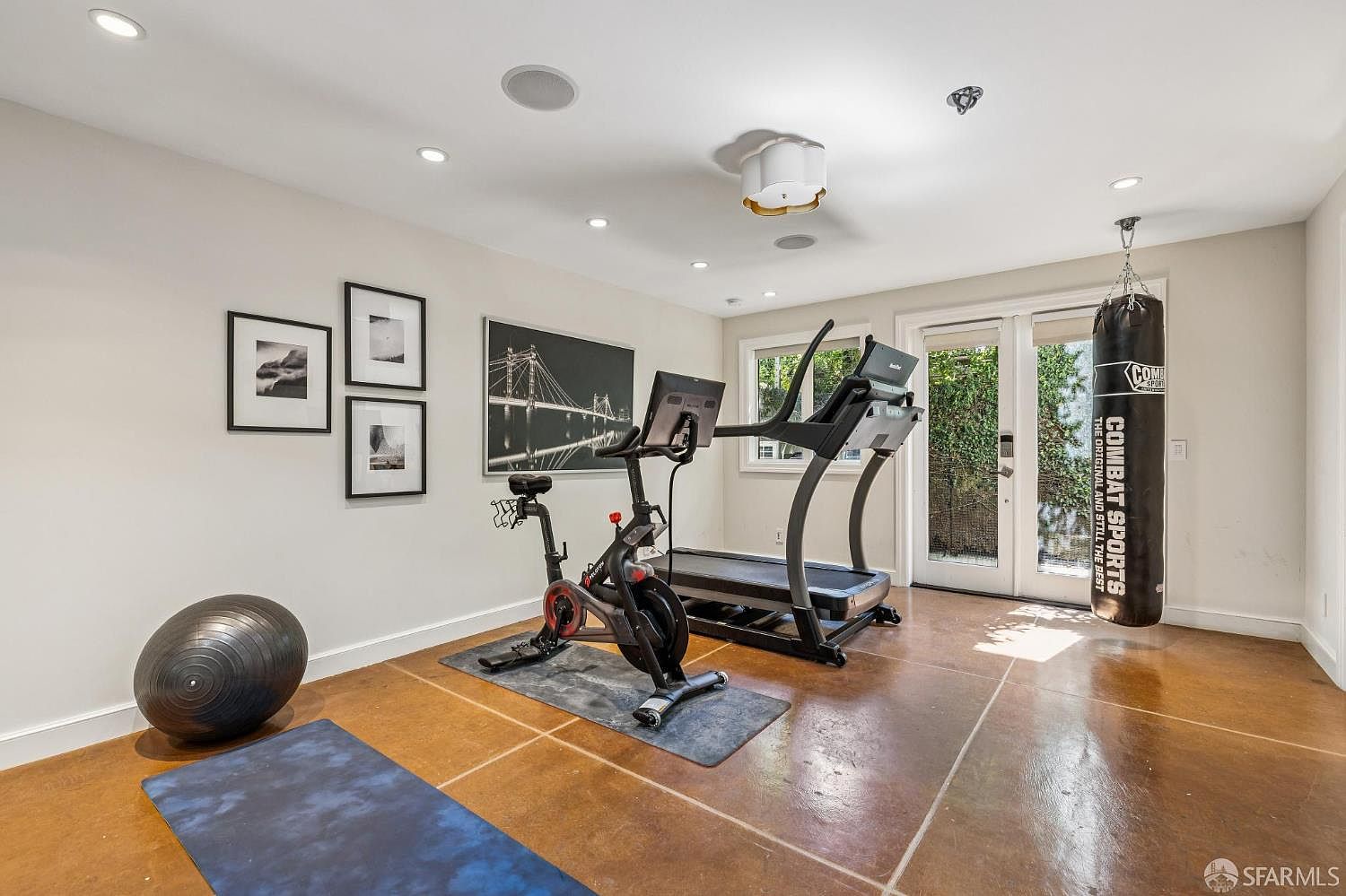
Descend to the lower levels and the home reveals its most singular gesture: a private cinema with tiered rows of dark reclining seats, acoustic wall paneling, recessed ceiling lighting, and a Dolby-inspired audio and video system that renders the experience genuinely immersive. Adjacent to the cinema level, a dedicated fitness room with full bath and direct rear egress completes an amenity program more commonly associated with properties twice this home's footprint.
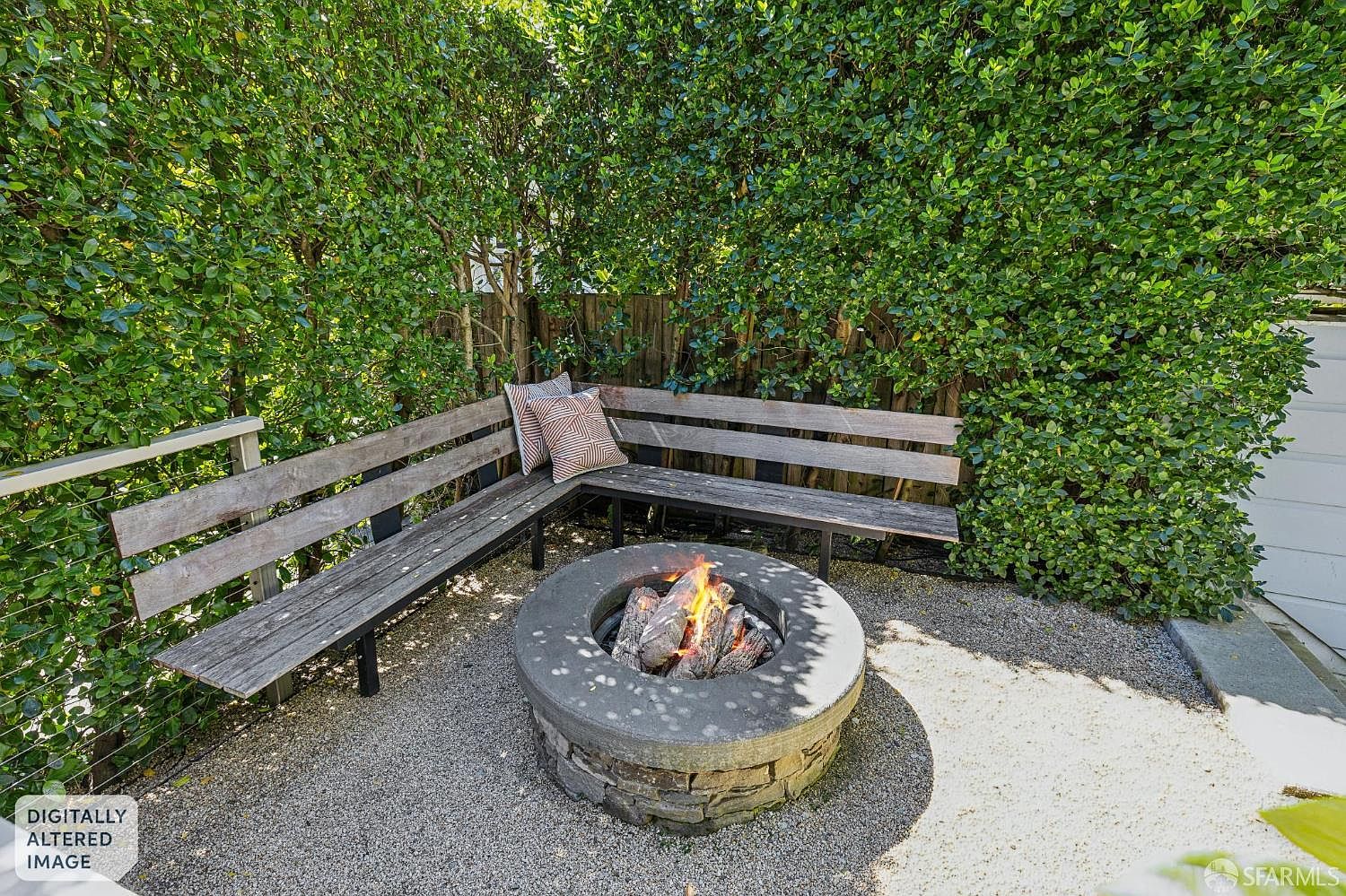
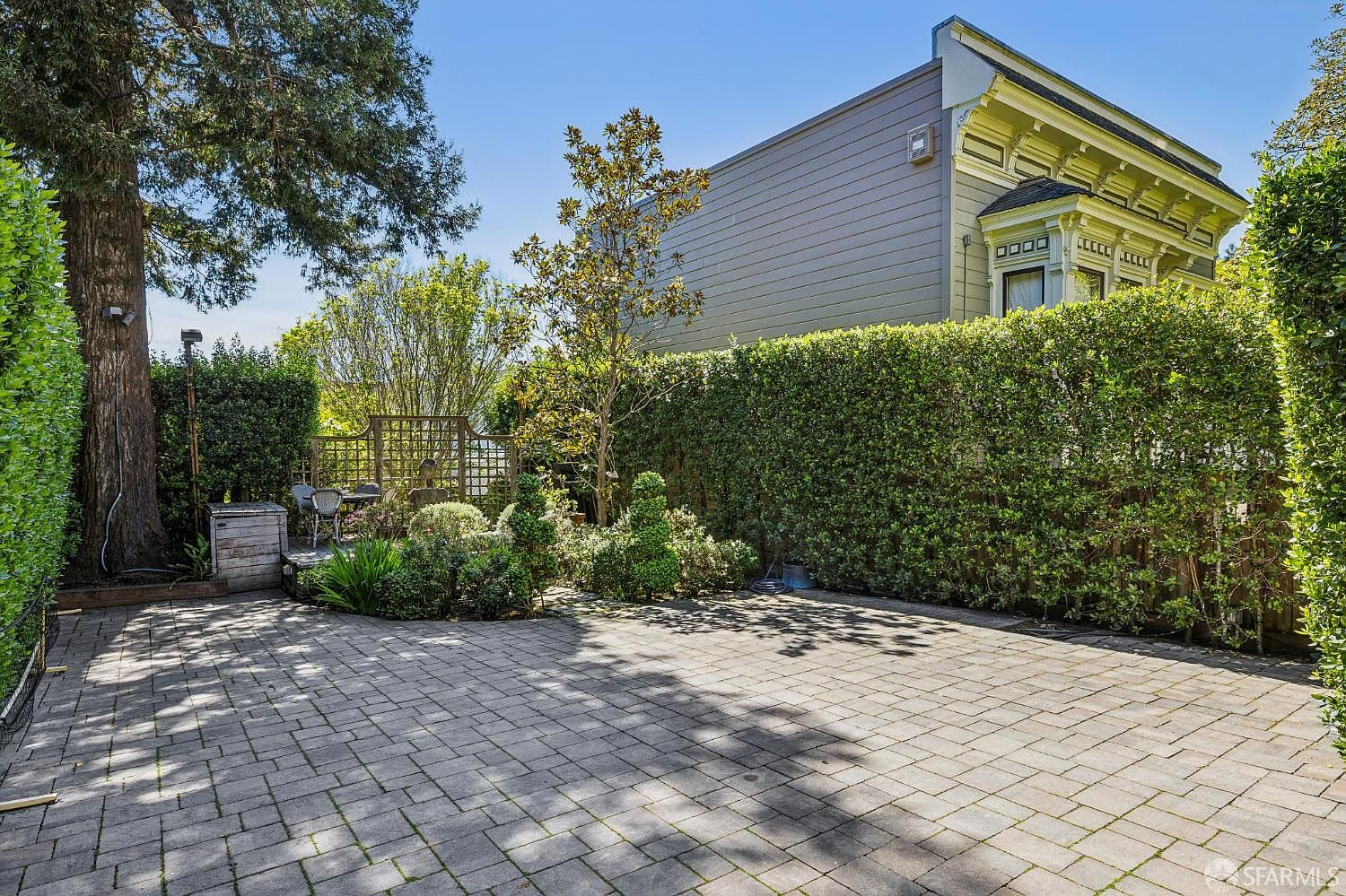
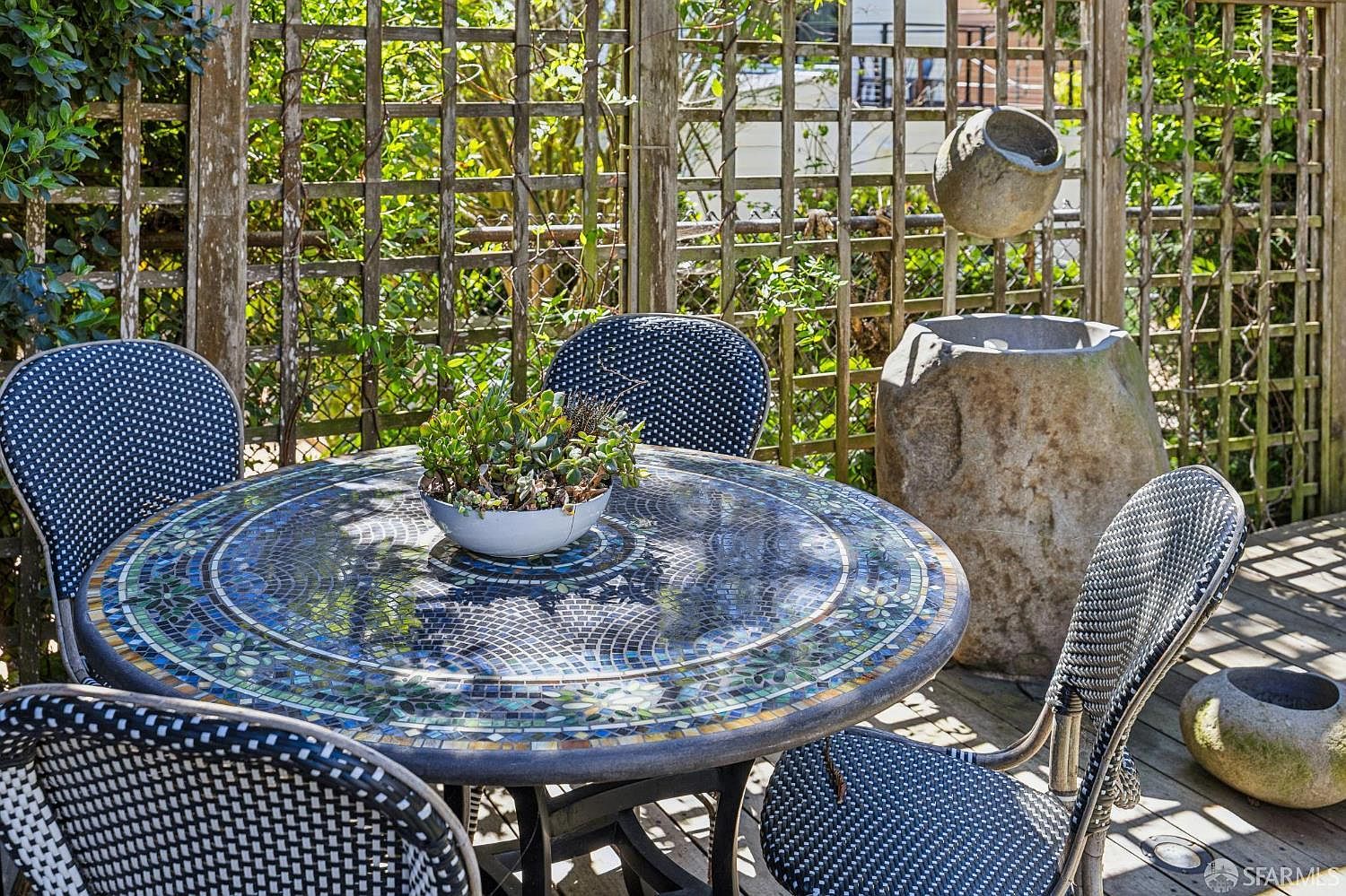
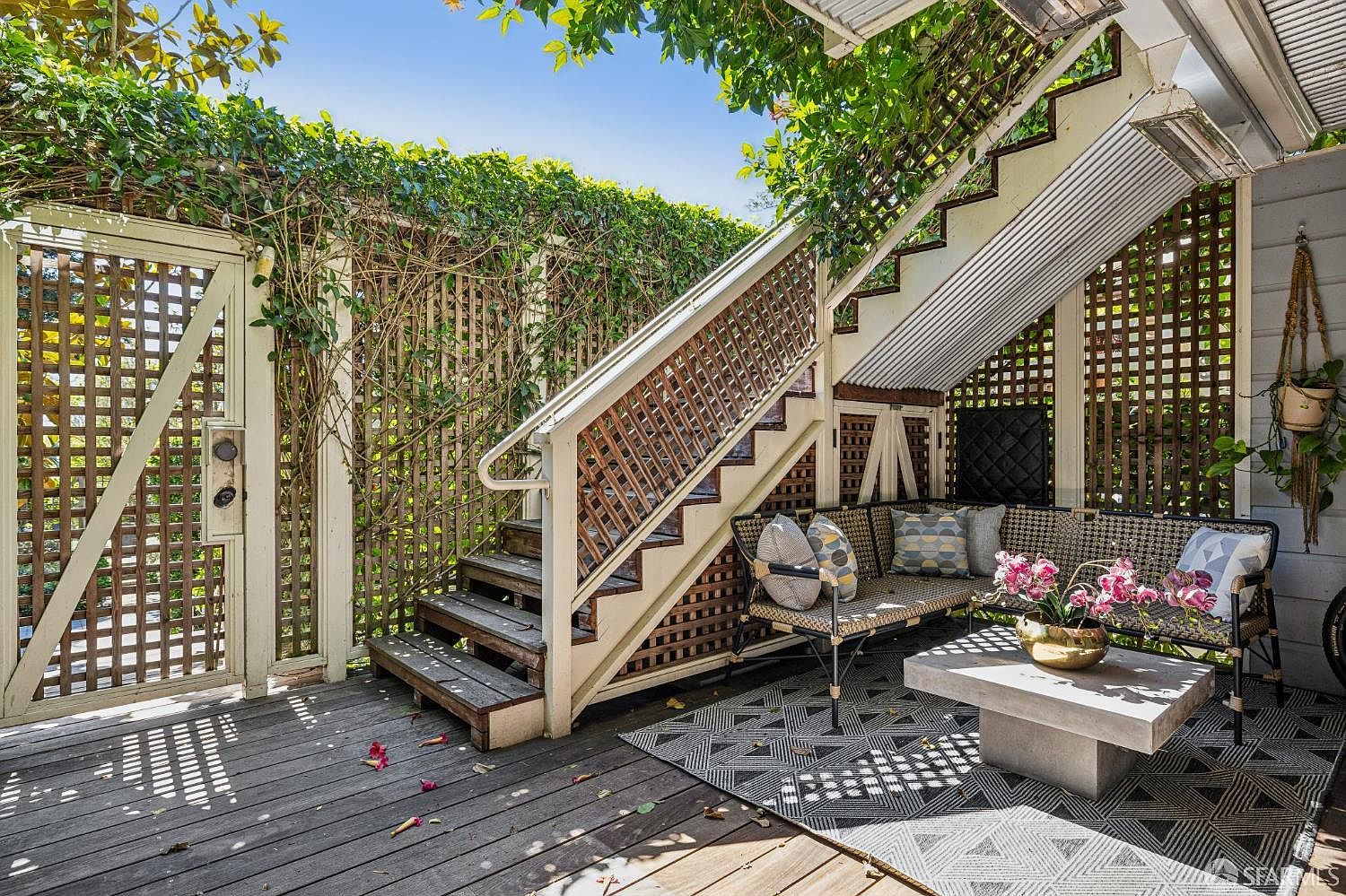
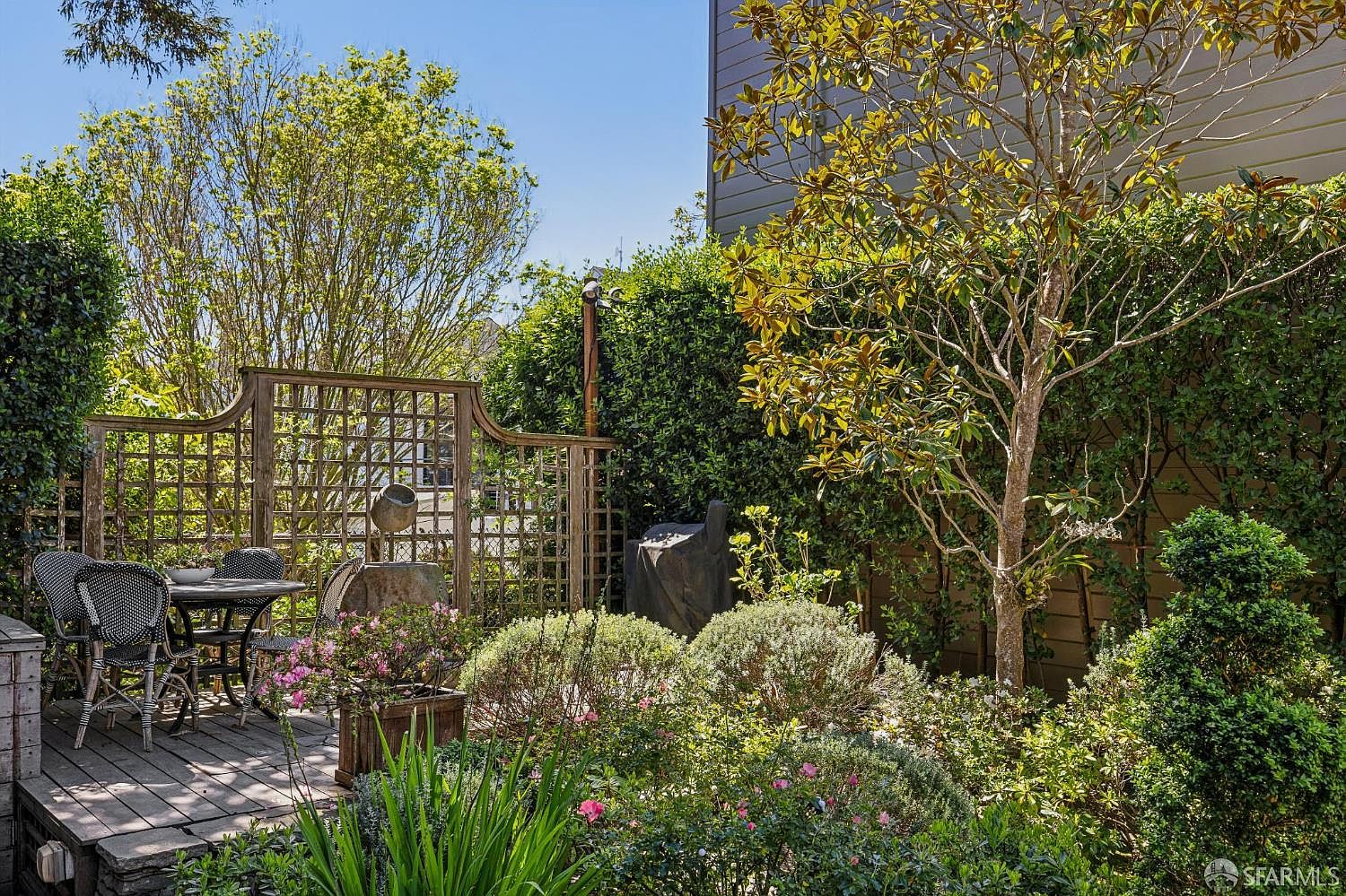
Outside, a covered private deck, fire pit seating area, and manicured garden enclosed by tall hedges create an urban retreat of rare privacy — a sequence of outdoor rooms that extend the home's livability well beyond its walls.
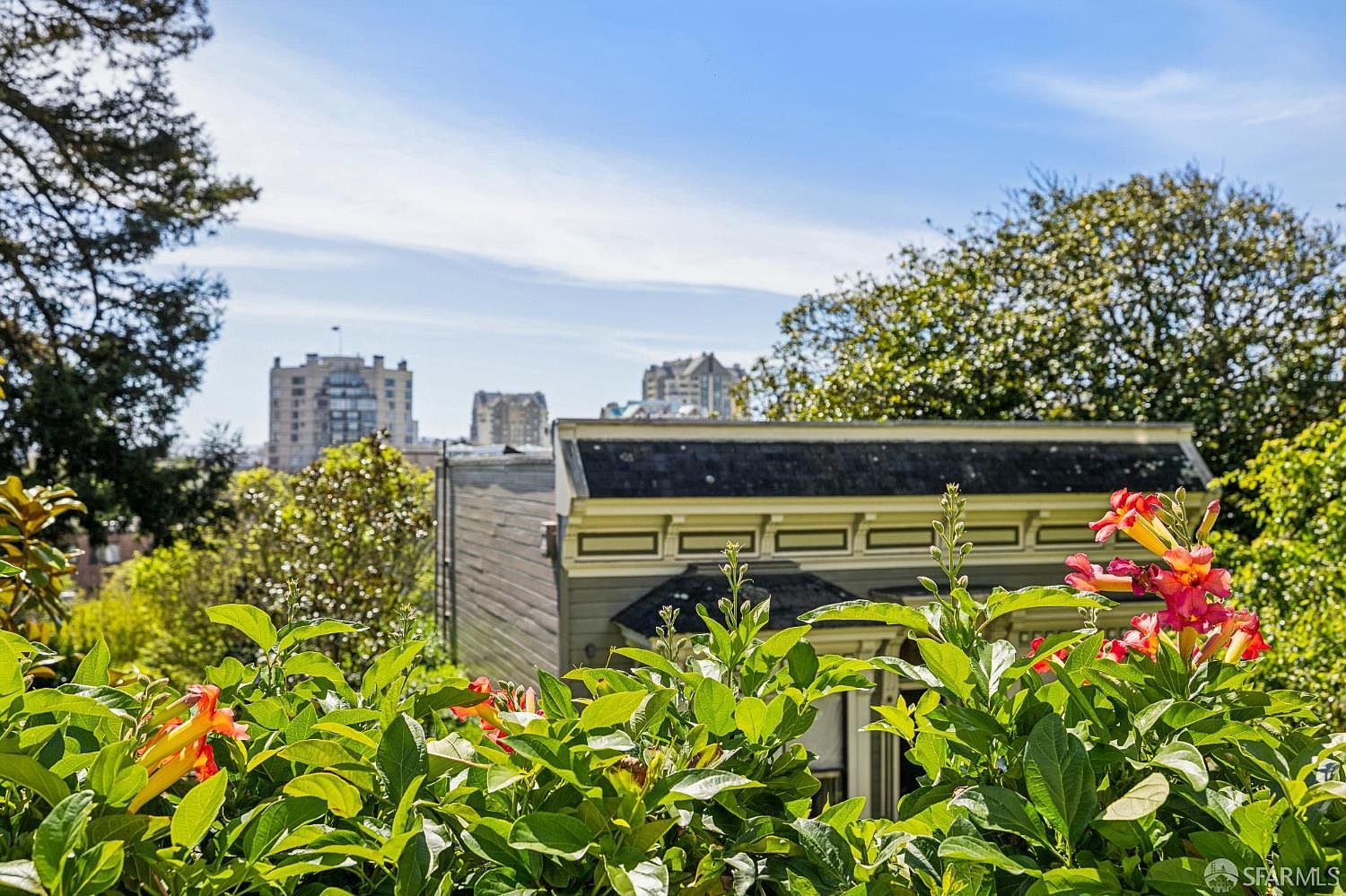
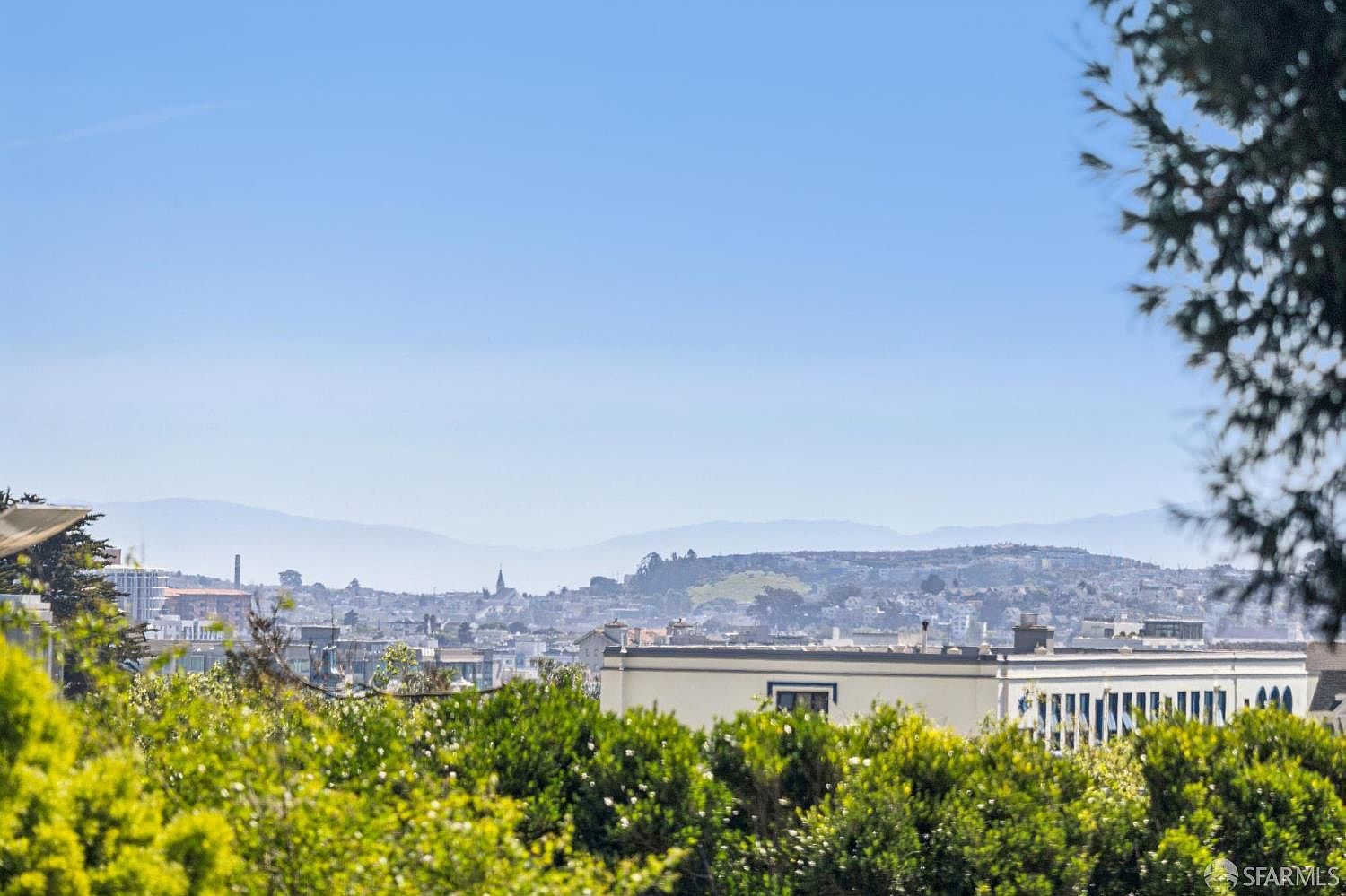
Lower Pacific Heights occupies one of San Francisco's most enviable residential positions — elevated enough to capture city views, central enough to place virtually every significant neighborhood within easy reach, and established enough to carry the kind of architectural character that newer districts simply cannot manufacture. The neighborhood sits between the more densely trafficked corridors of Fillmore Street to the east and Divisadero Street to the west, with Bush Street running through its heart as one of the area's most gracious residential addresses.
The district's history is deeply woven into San Francisco's broader narrative. Many of its Victorian and Edwardian homes survived the 1906 earthquake and fire that devastated much of the city, lending the neighborhood a sense of continuity and historical gravitas that residents hold in genuine esteem. Walking the blocks surrounding 2115 Bush Street is to move through one of the most intact collections of late 19th and early 20th century residential architecture remaining in San Francisco — a living record of the city's pre-earthquake prosperity and ambition.
Fillmore Street, just steps from the property, functions as Lower Pacific Heights' primary commercial artery and one of the city's most celebrated neighborhood corridors. Its concentration of independent restaurants, wine bars, specialty food shops, and boutiques reflects the refined tastes of the surrounding residential community. The stretch has long been a destination for San Franciscans from across the city, with establishments ranging from long-standing neighborhood institutions to newer arrivals that have found the street's character a worthy platform for ambitious concepts.
The neighborhood's proximity to Pacific Heights proper — one of the city's most prestigious residential enclaves — confers additional cachet without the full premium that addresses on Broadway or Vallejo Street command. Lafayette Park, a four-acre hilltop green space within easy walking distance, provides one of the neighborhood's most valued amenities: a quiet, tree-lined retreat with tennis courts and city views that serves as the social commons for the surrounding blocks.
AltaMed and Sutter Health's California Pacific Medical Center campuses are both accessible from the neighborhood, a practical consideration for families and older buyers alike. The area is also well-served by public transit, with multiple Muni lines providing connections to downtown, the Financial District, and the broader city without requiring a car for daily errands.
For families, the neighborhood falls within proximity of several well-regarded schools, both public and independent, that draw from the surrounding Pacific Heights and Western Addition communities. The cultural institutions of the broader city — the San Francisco Museum of Modern Art, the de Young Museum in Golden Gate Park, the San Francisco Symphony at Davies Symphony Hall — are all within a reasonable distance, making this a genuinely metropolitan address in the fullest sense.
What Lower Pacific Heights ultimately offers is something increasingly rare in San Francisco: a neighborhood that feels like a neighborhood — walkable, architecturally coherent, socially engaged, and possessed of the kind of layered identity that only accumulates over generations. For a home of 2115 Bush Street's character and ambition, it is precisely the right setting.
Featured Highlights
Curated Content • Presented by Tim Curran