The Story Behind
La Vid: A Sovereign Estate Above the Valley of the Moon
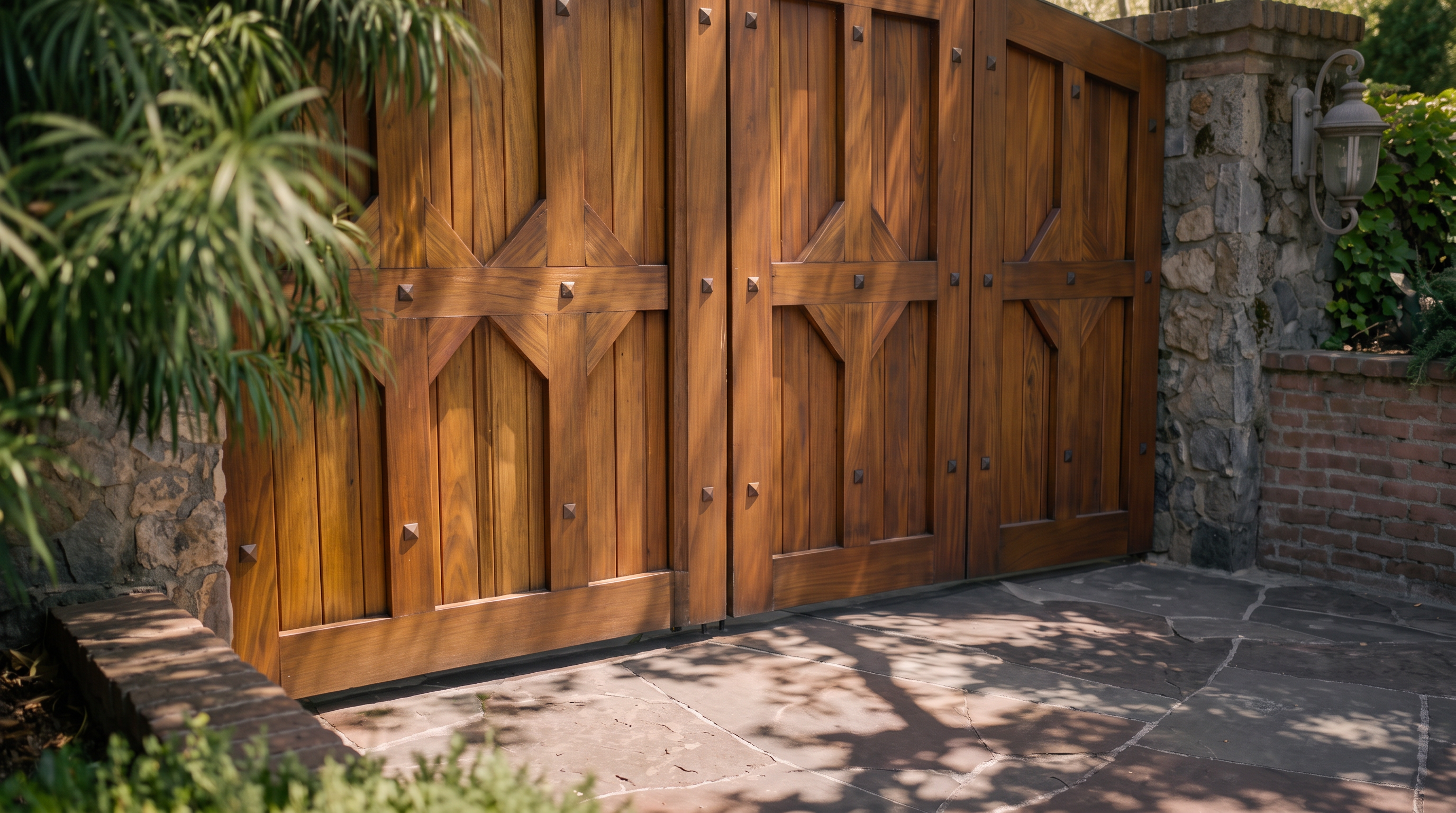
La Vid does not announce itself. It reveals itself slowly, along a drive lined with ancient olive trees that filter afternoon light and signal, with each passing moment, that what lies ahead belongs to a different category of place altogether. The wooden gates, set into hand-laid stone pillars, open onto an estate of 151 acres where the architecture and the land are in genuine conversation with one another.
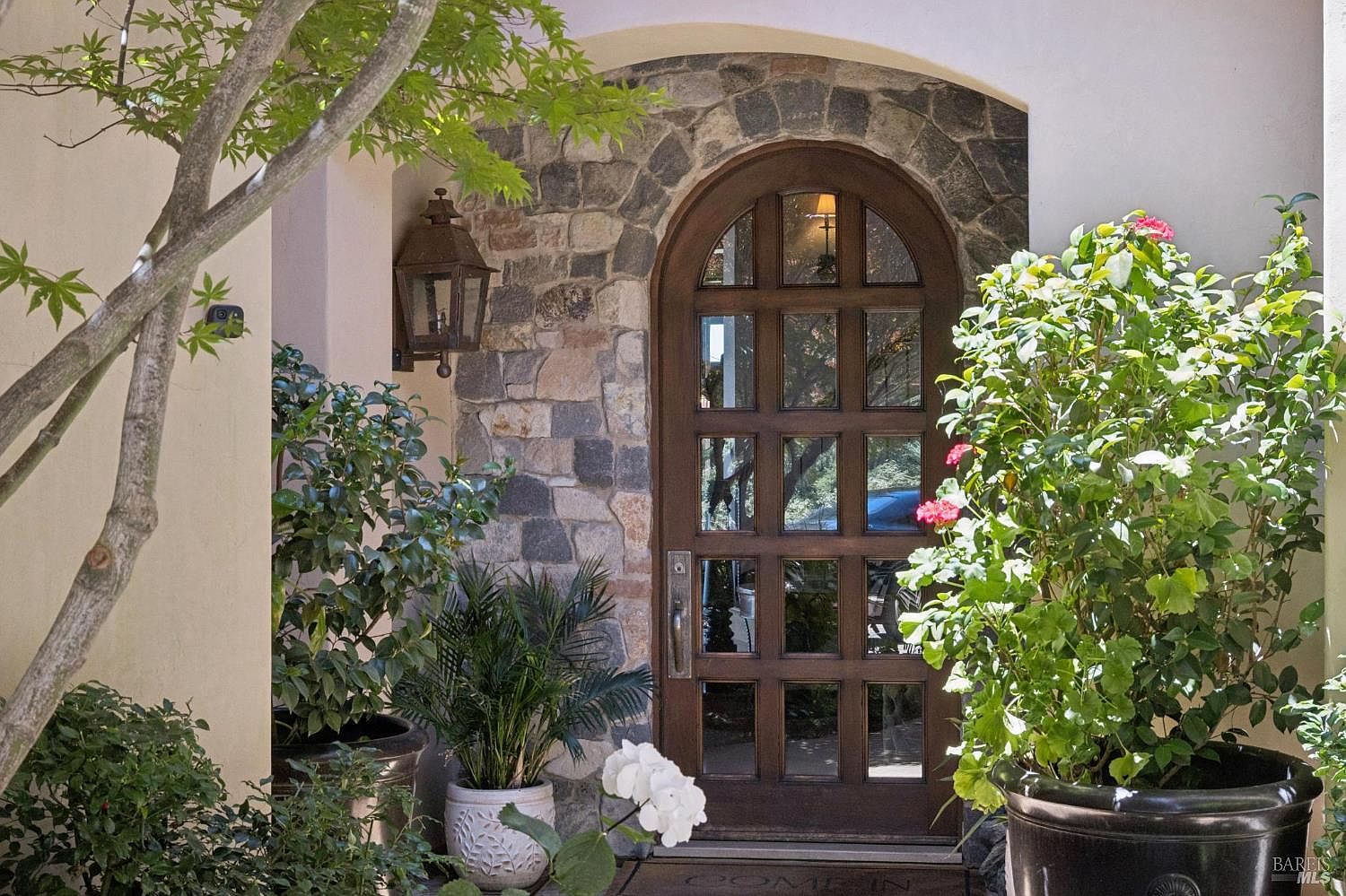
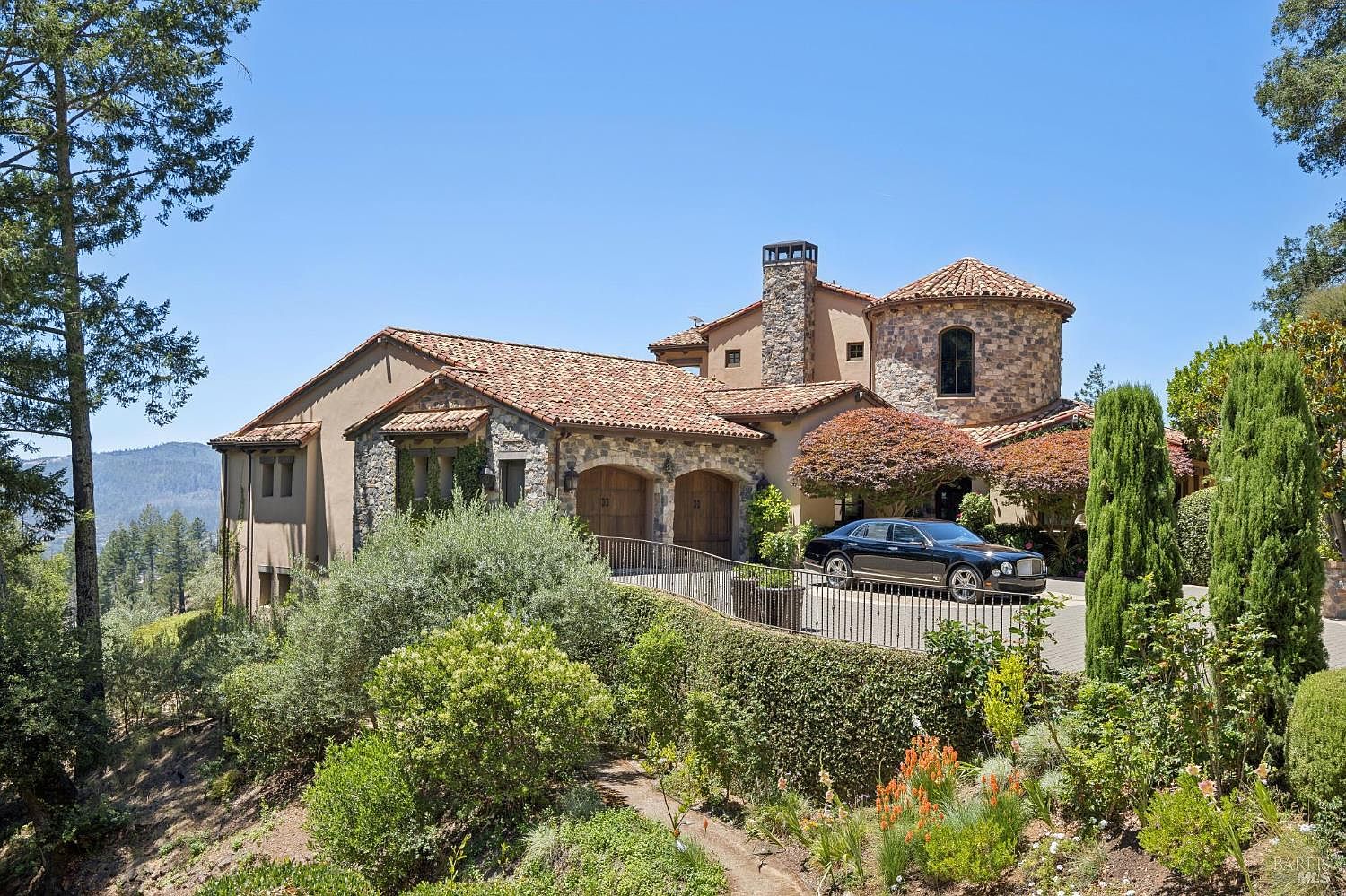
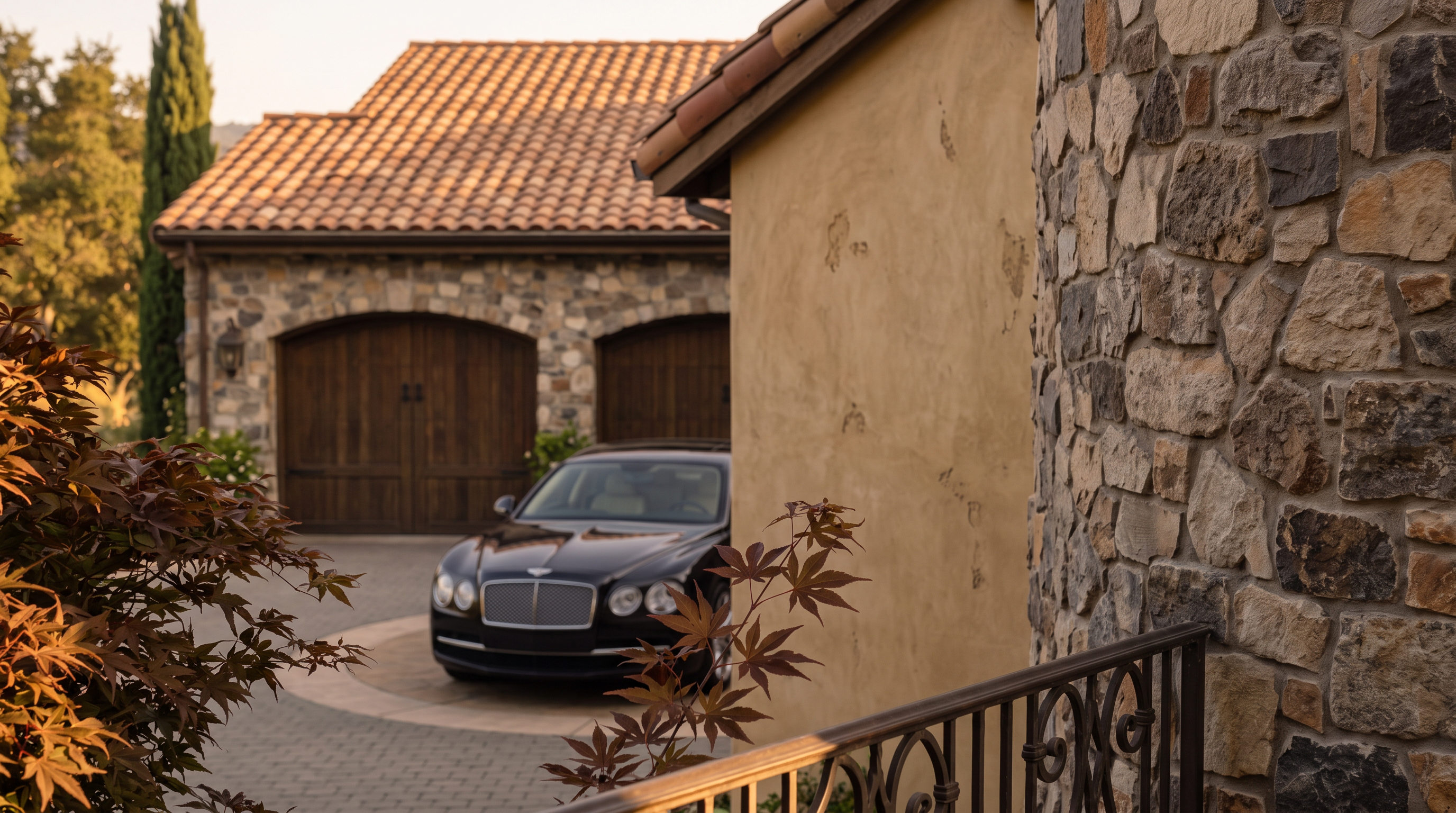
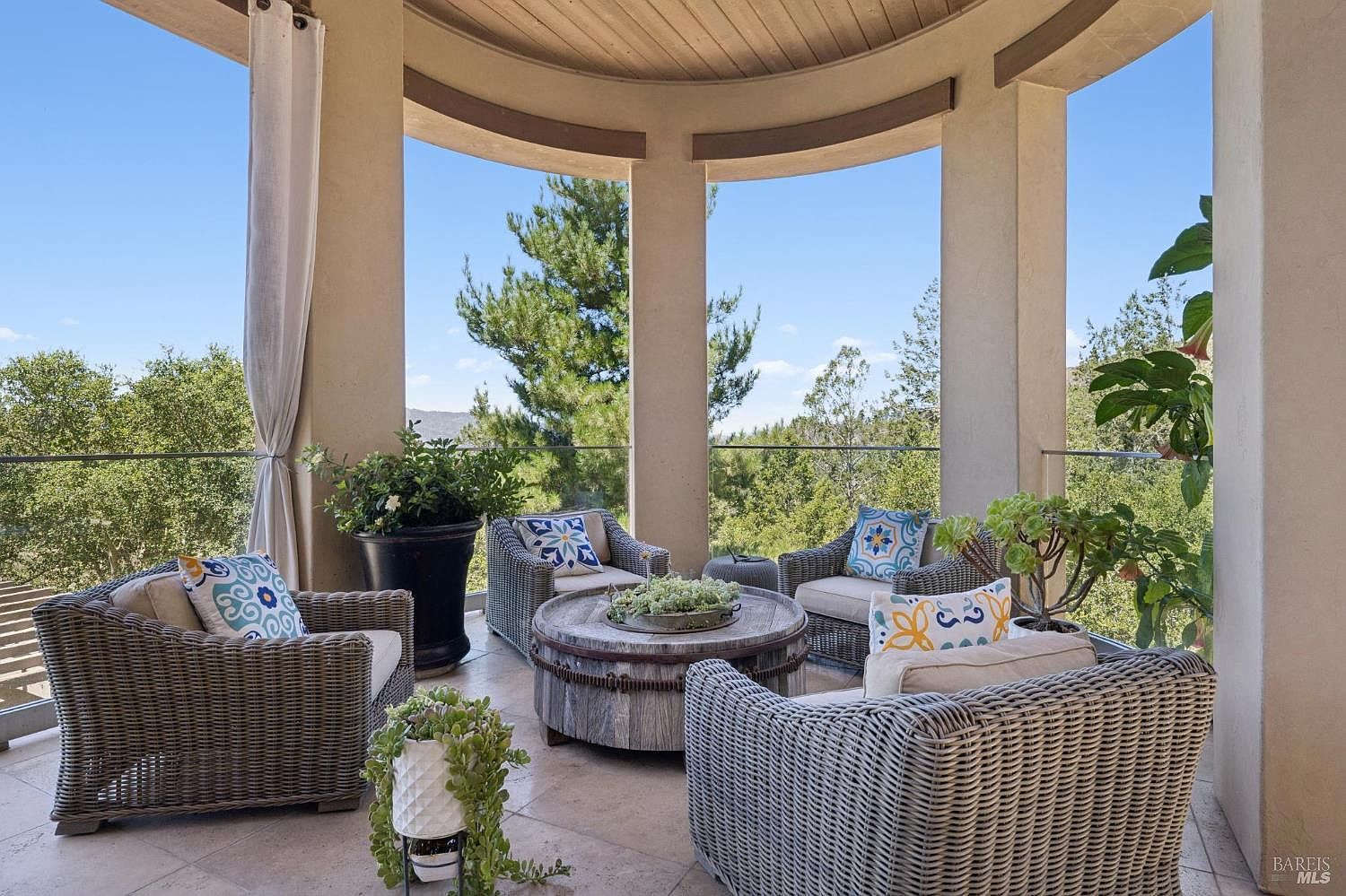
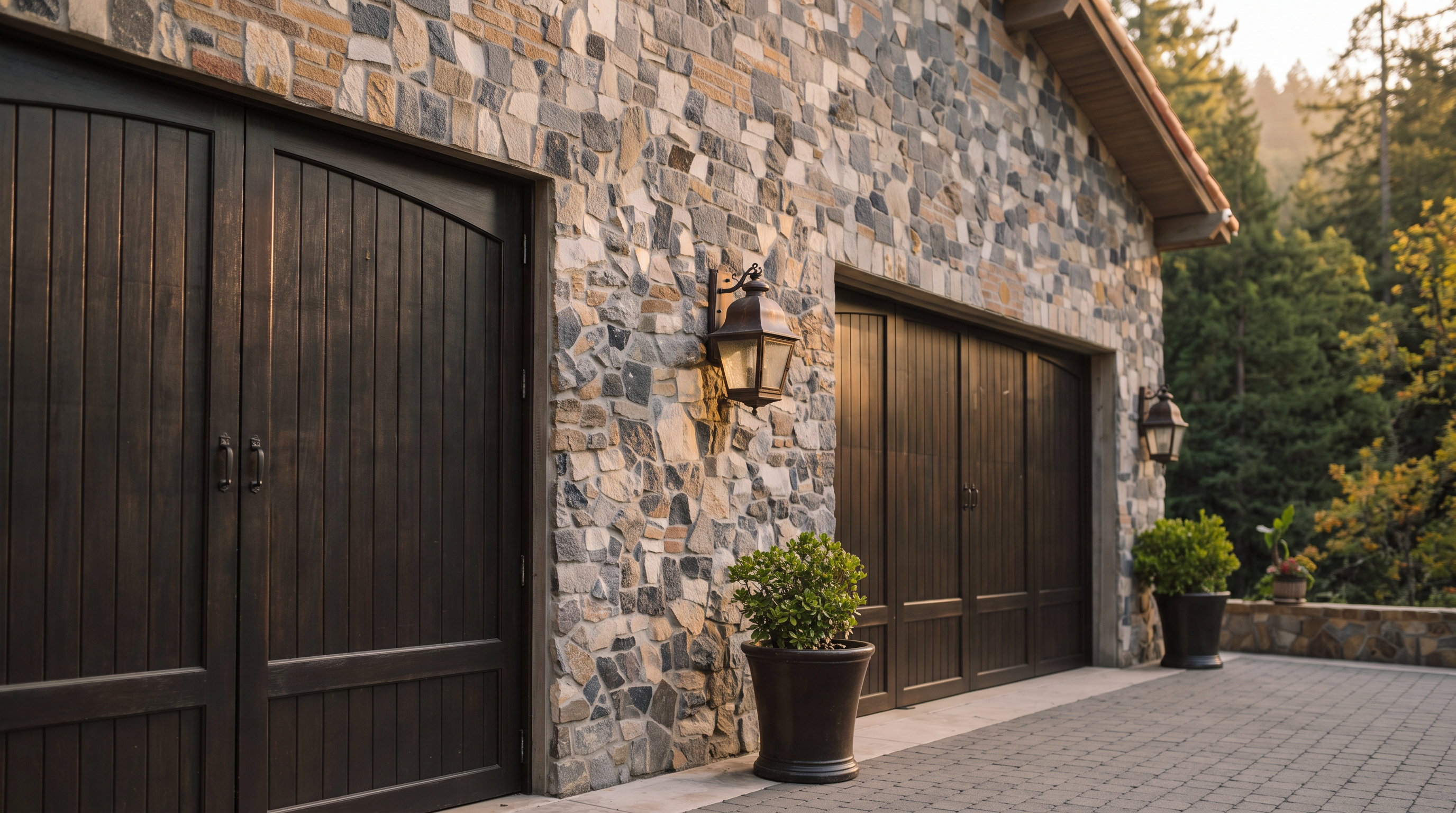
The villa itself is built in the European tradition — stone-clad exterior walls, a terracotta tile roof, a circular tower element that gives the structure its quiet authority on the hillside. The scale is immediately apparent: multiple levels, a paved motor court, and a detached garage of matching stone and tile that speaks to the same care applied throughout. But it is the interior where the design philosophy becomes most legible.
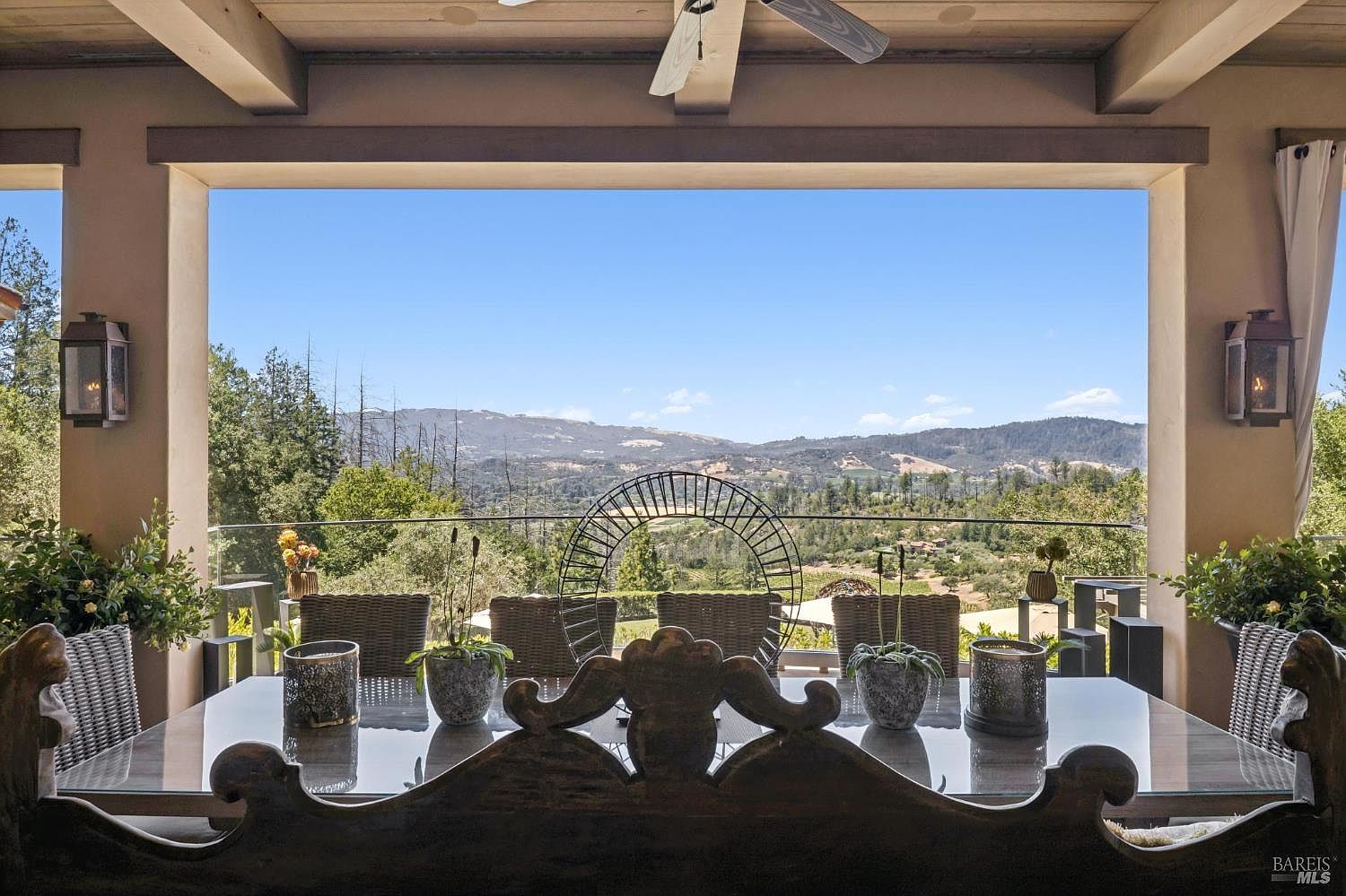
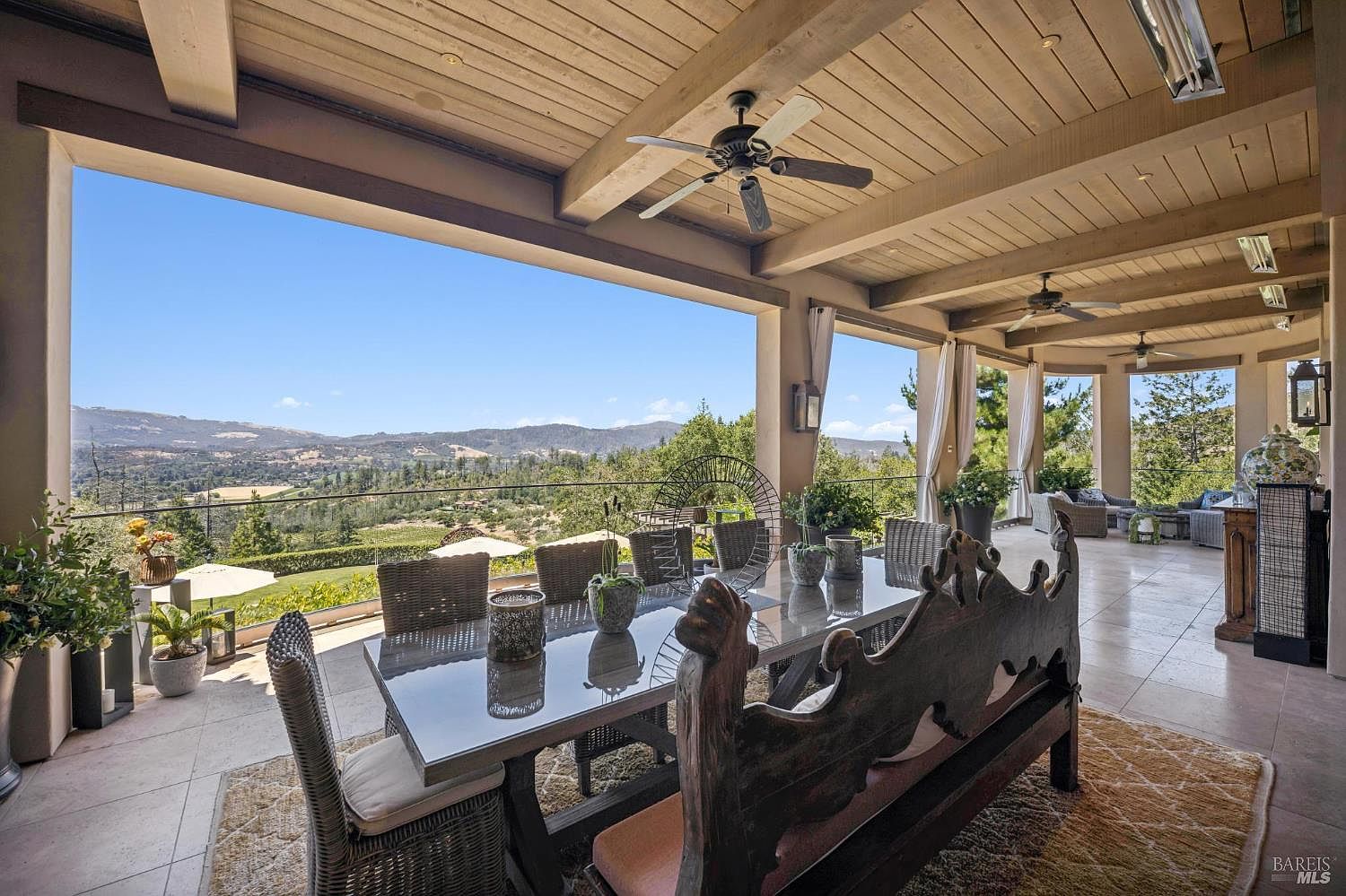
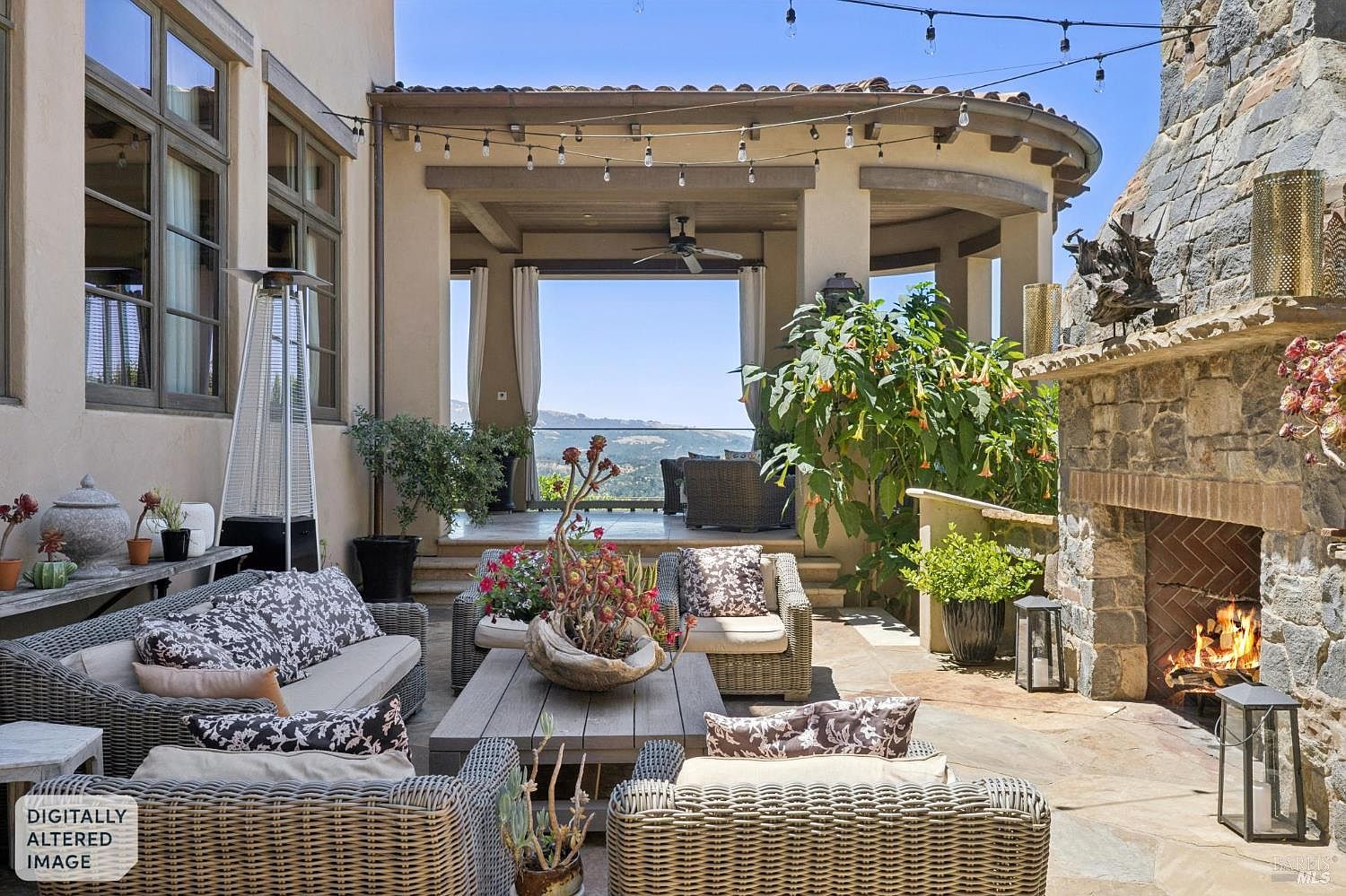
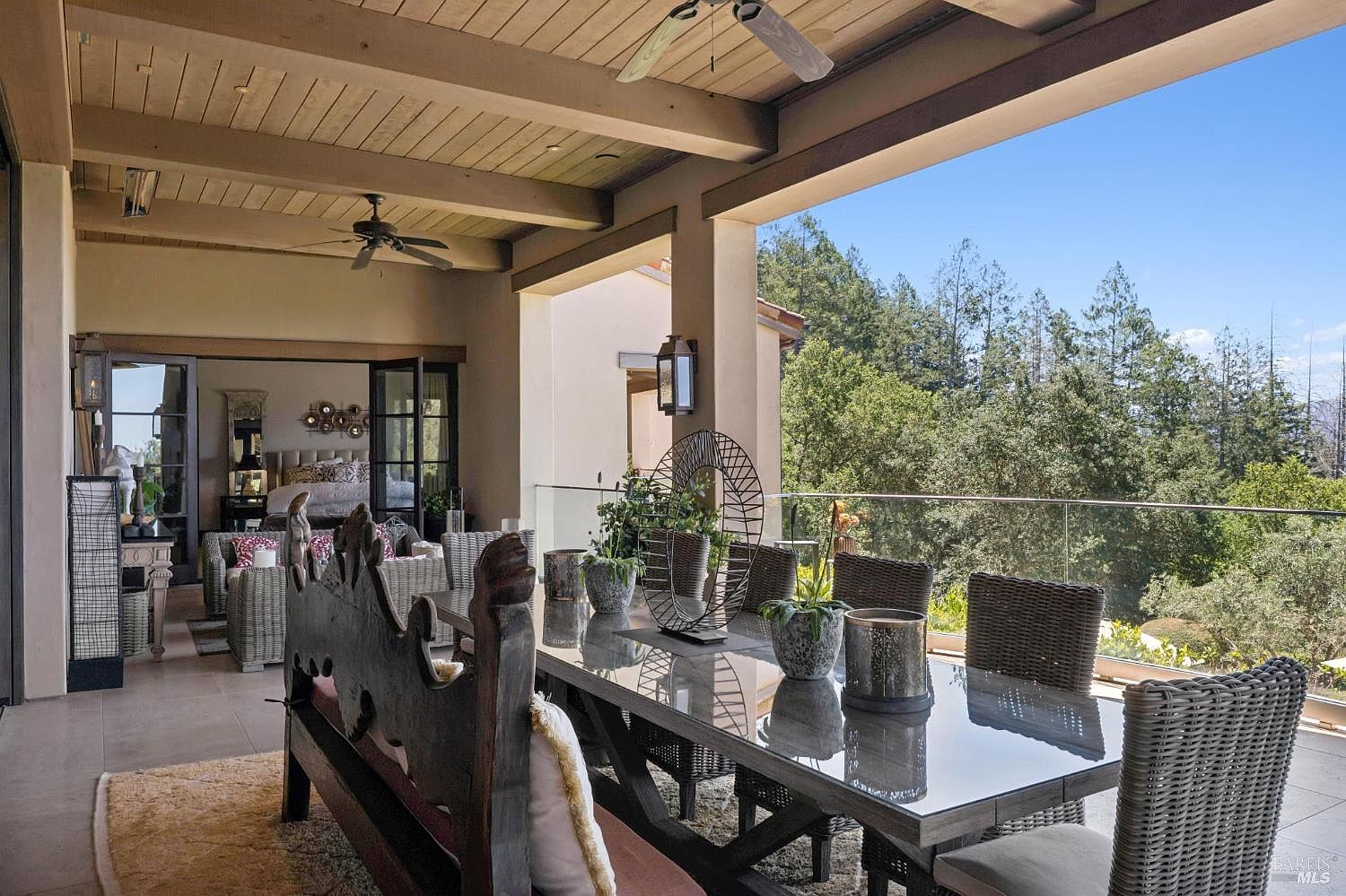
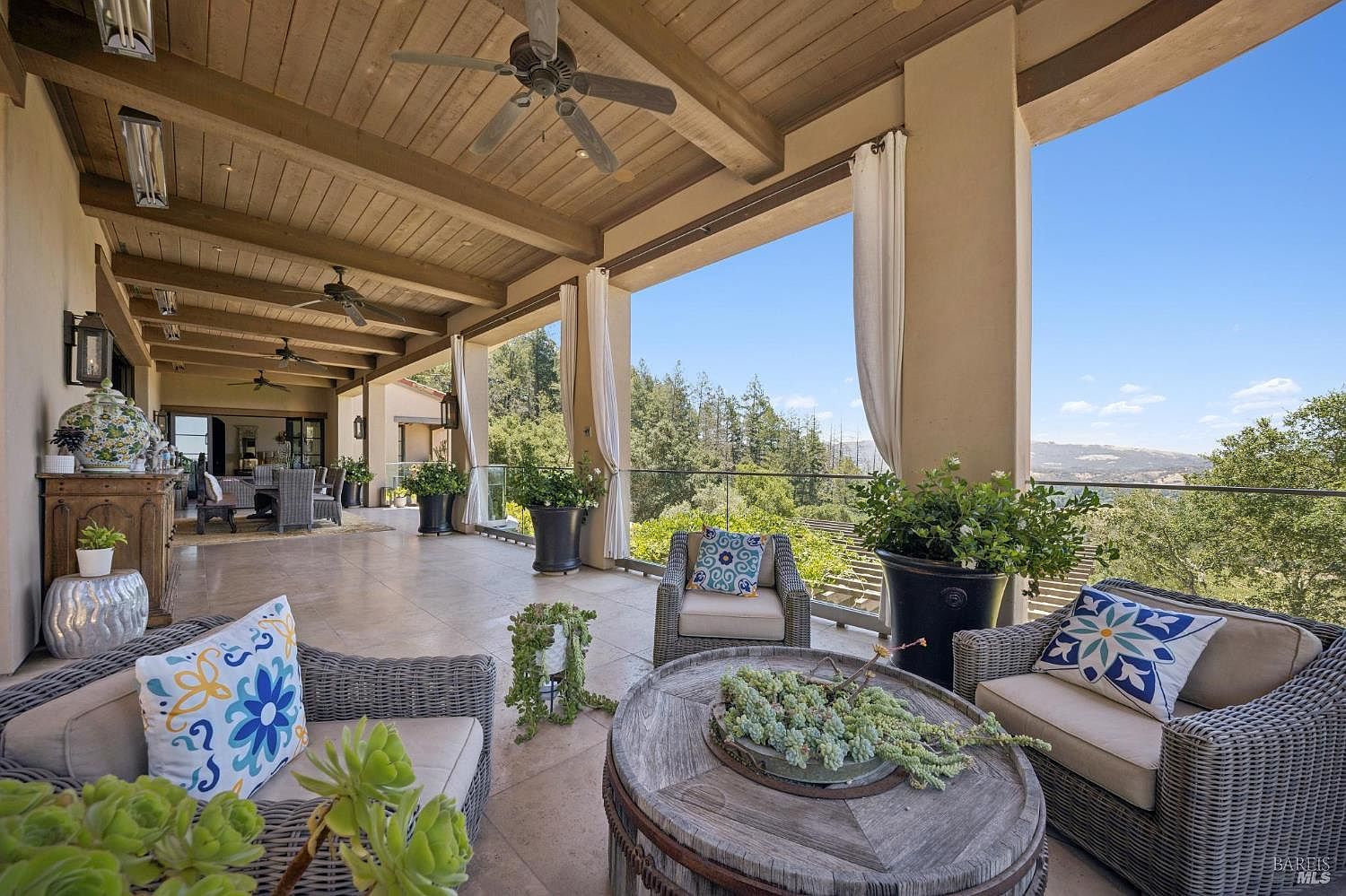
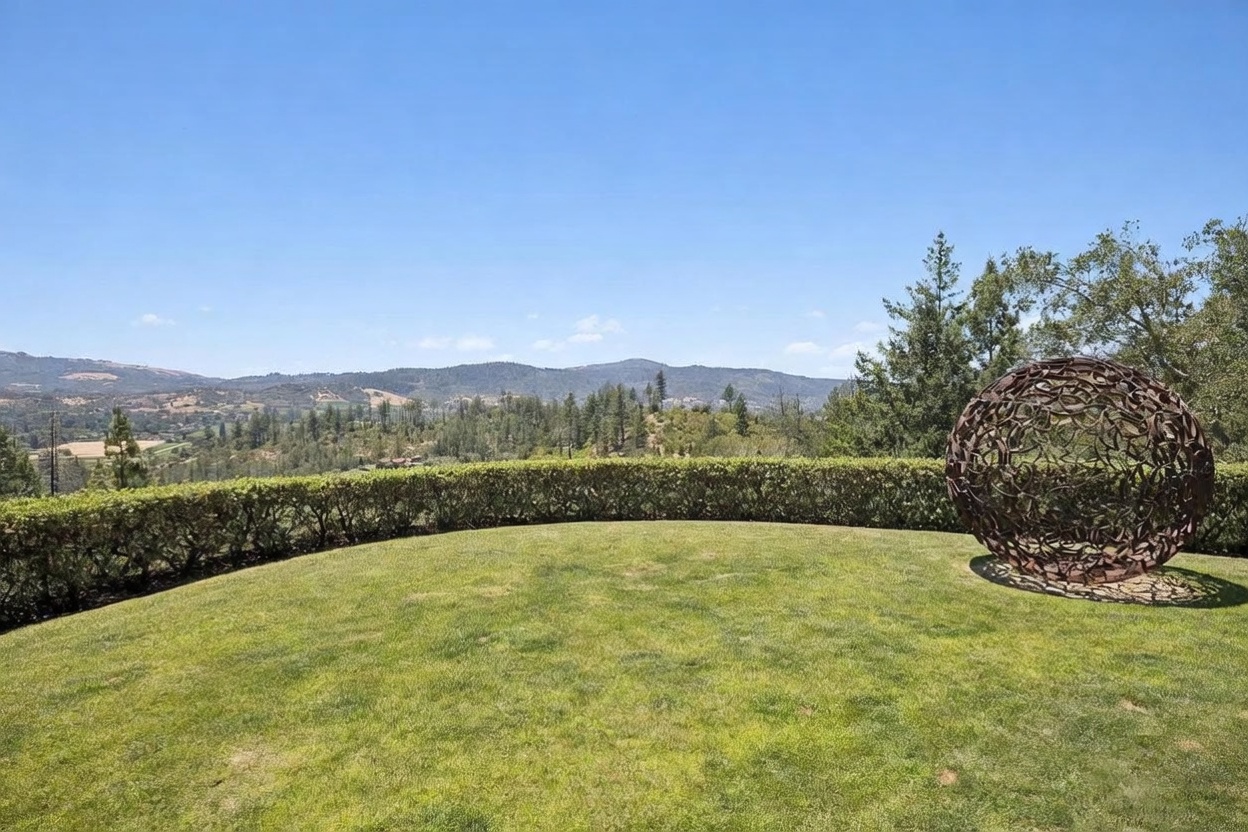
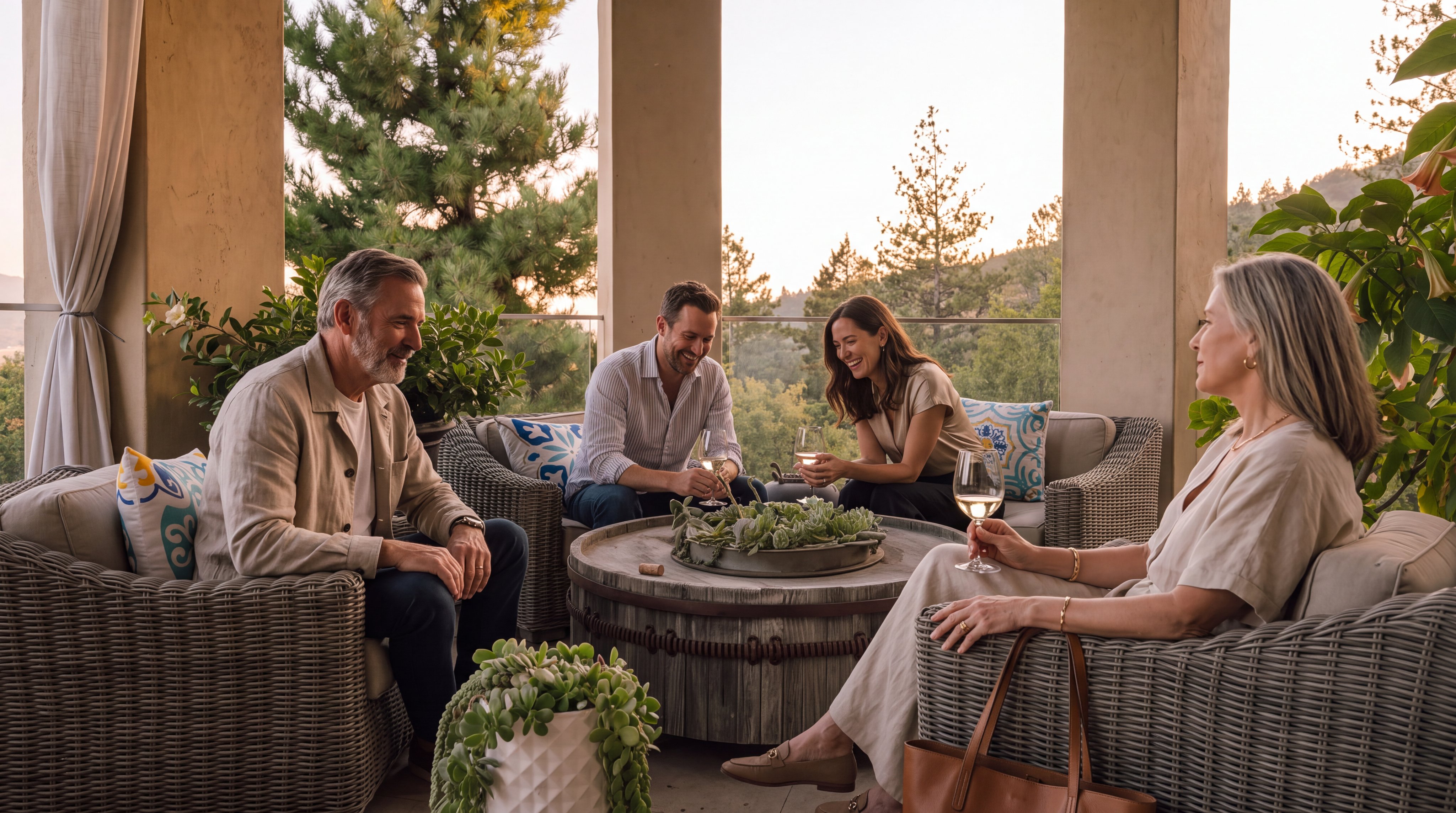
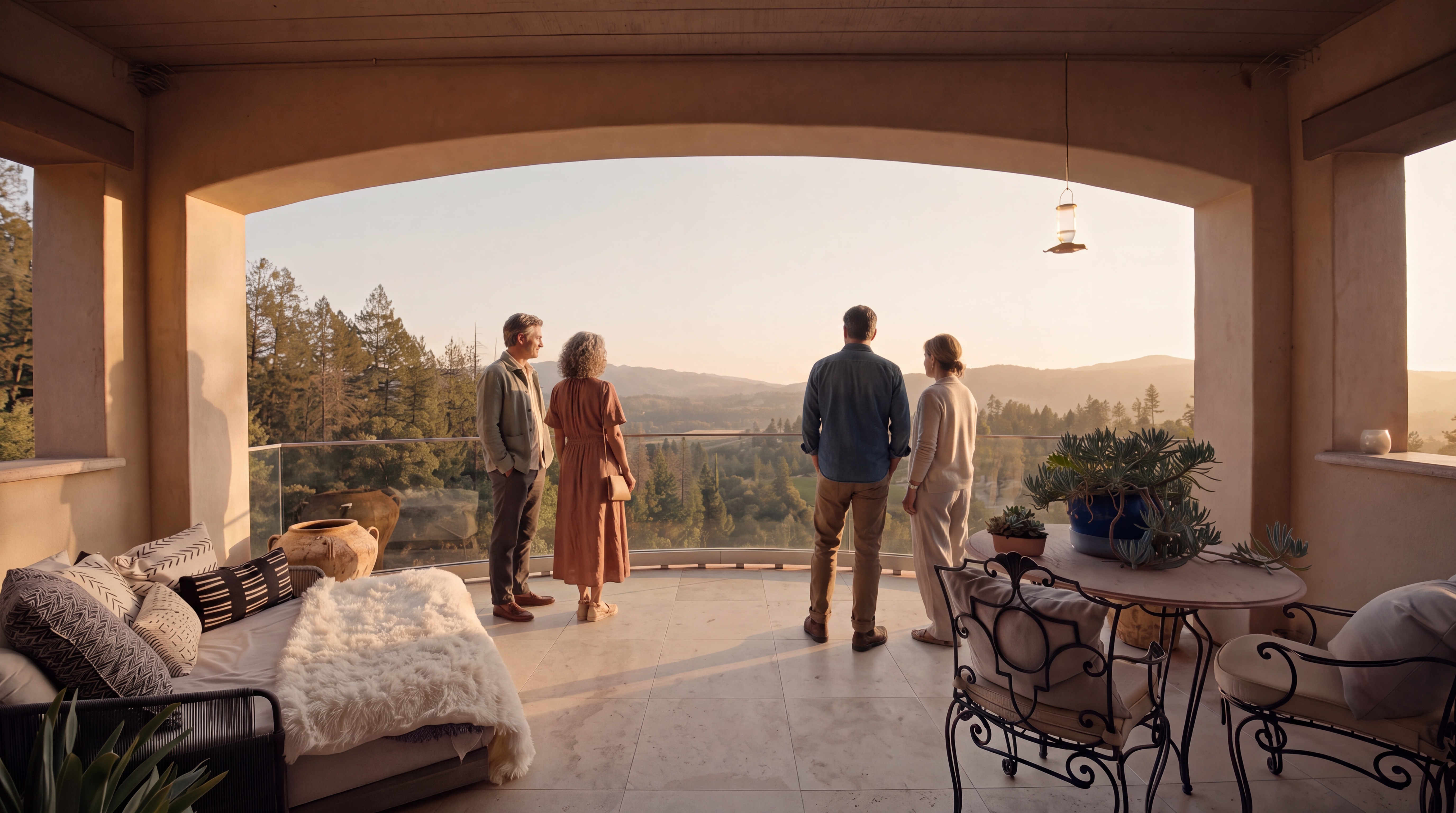
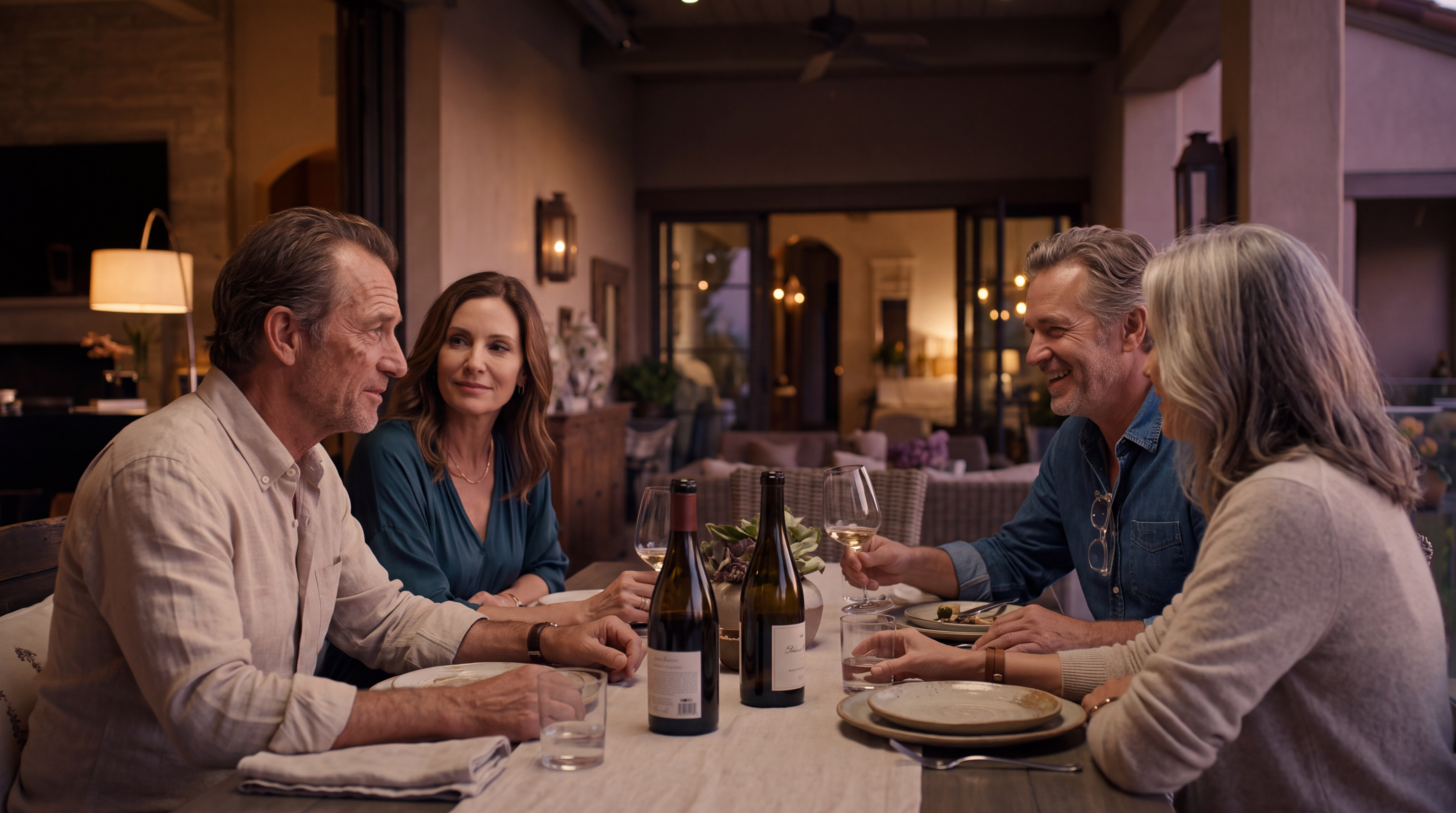
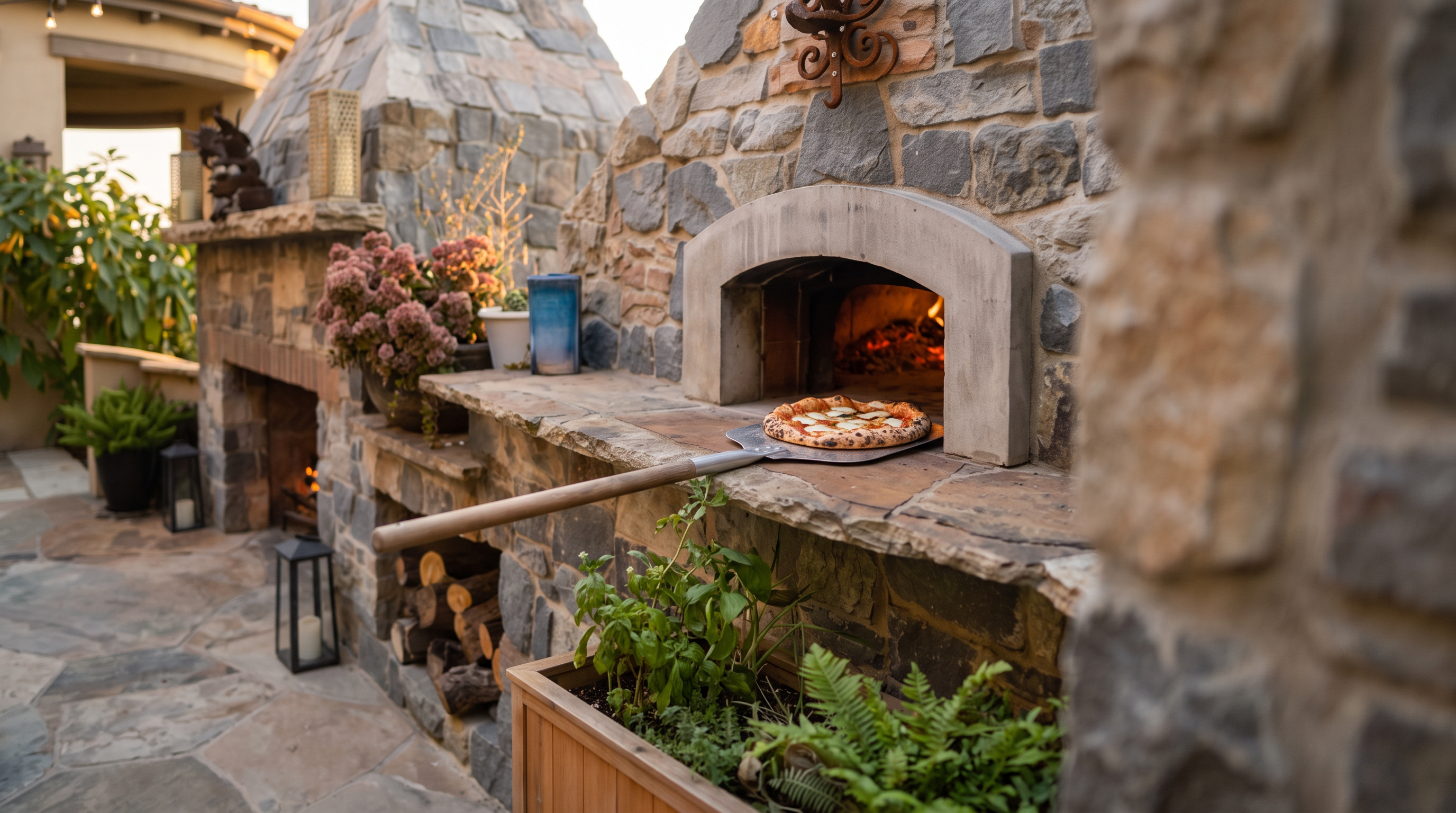
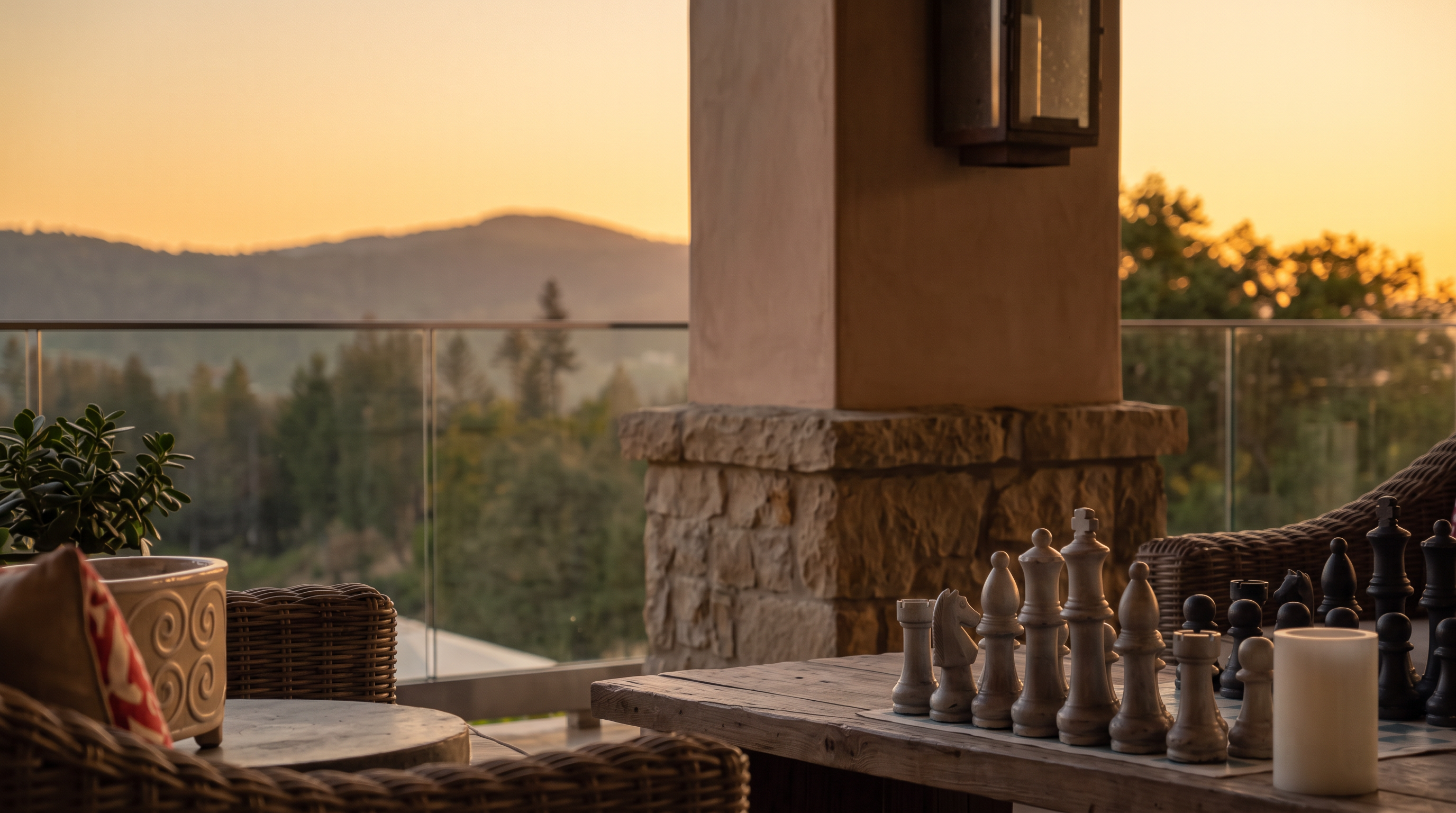
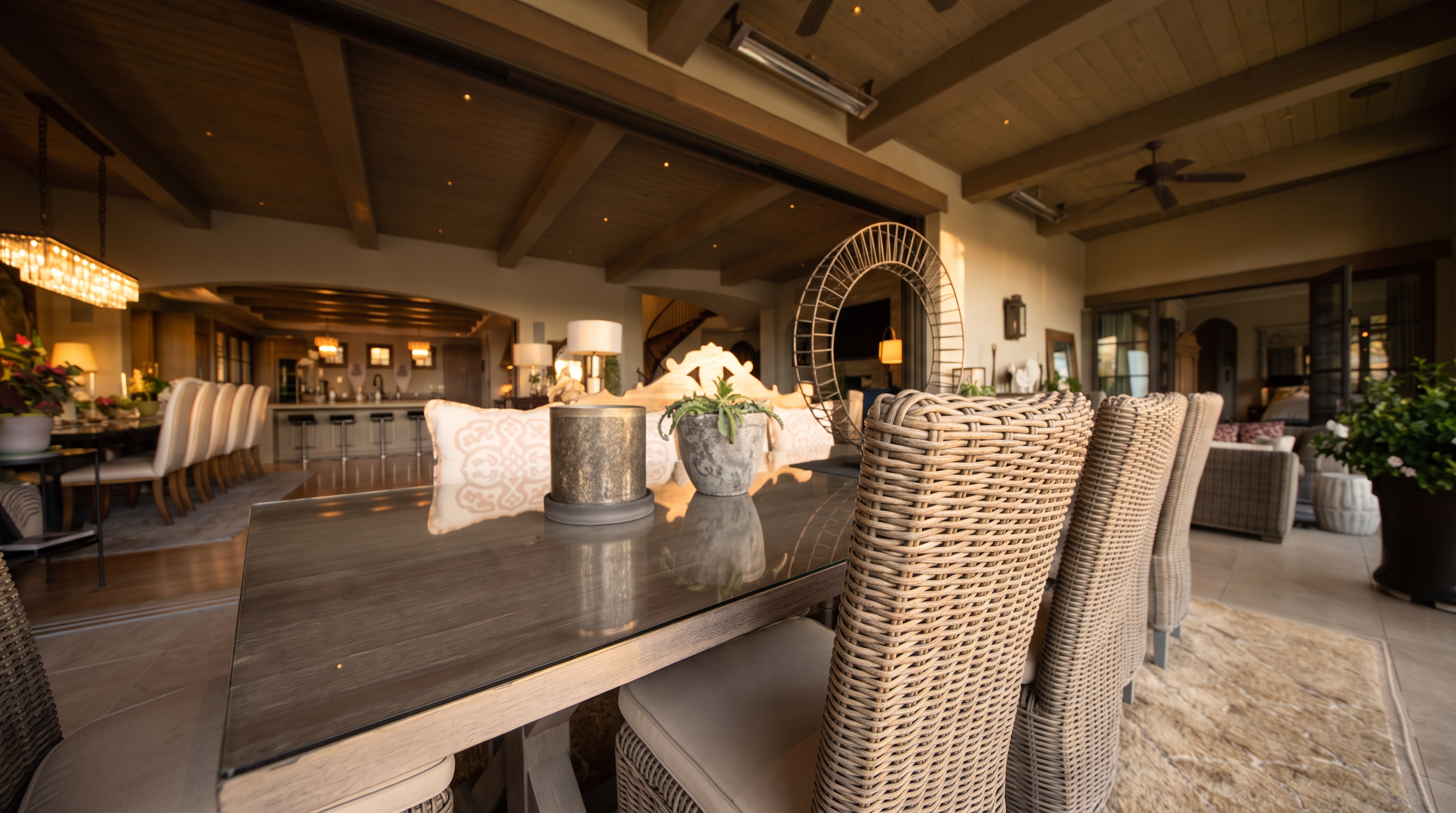
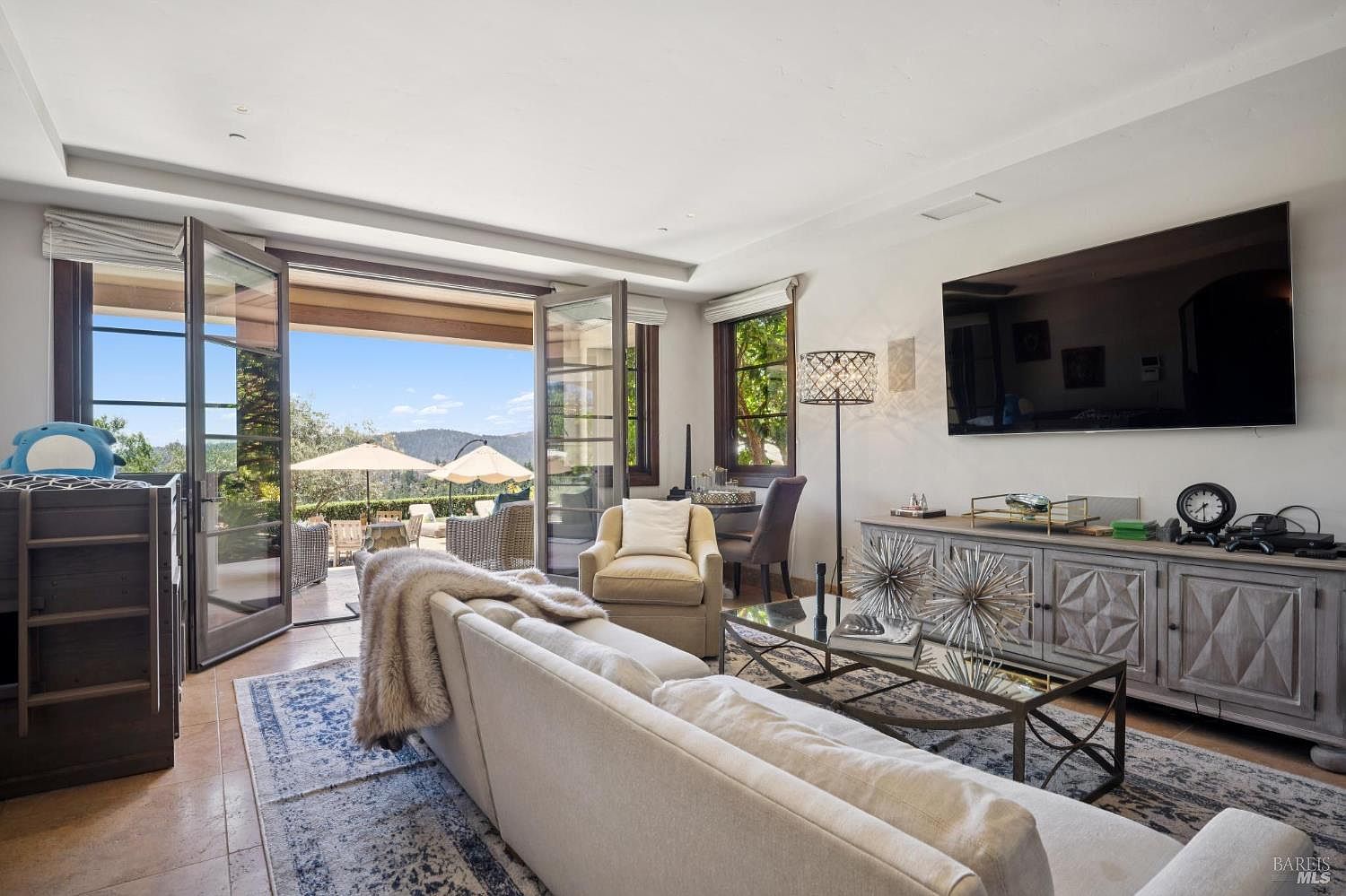
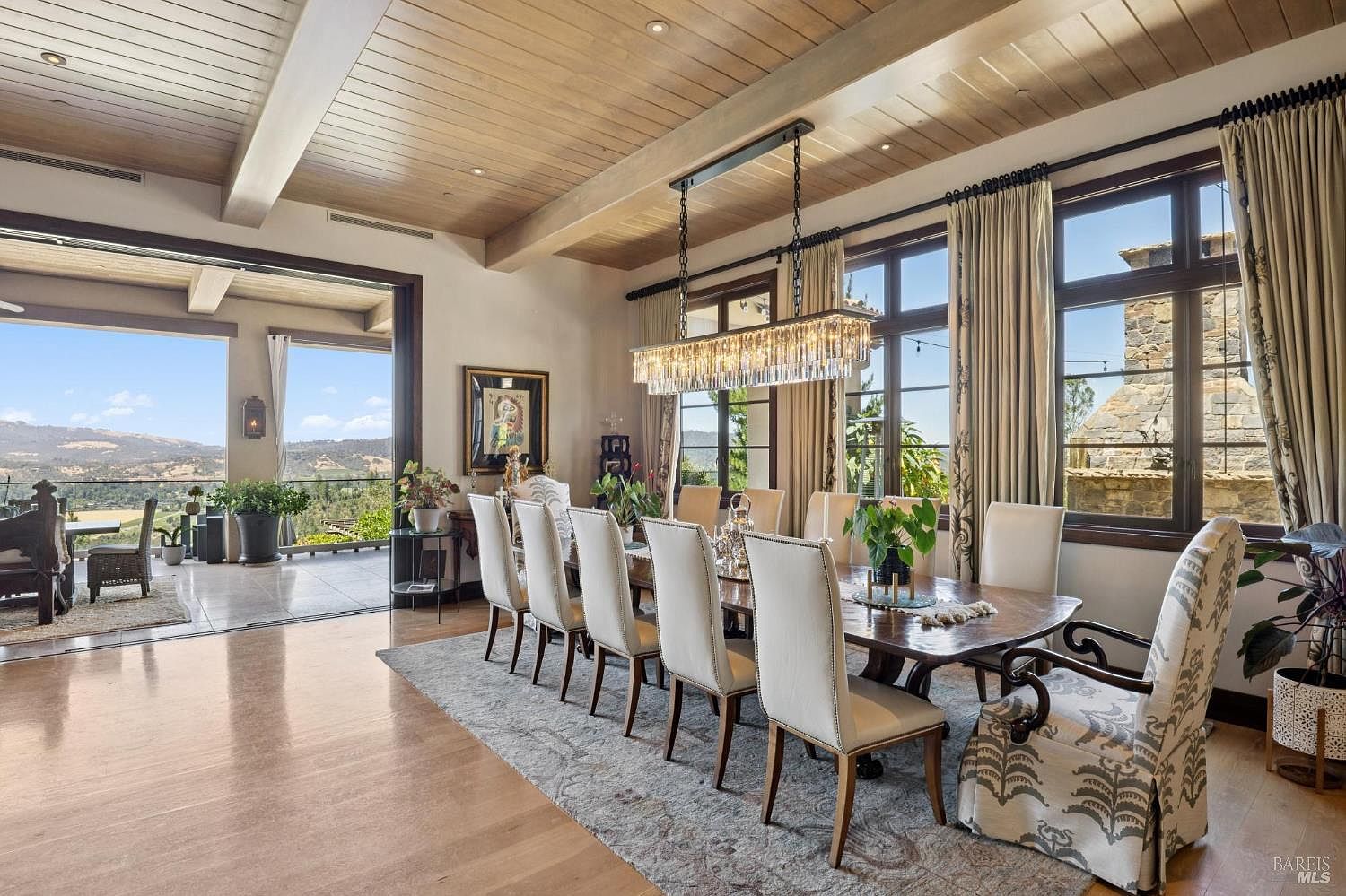
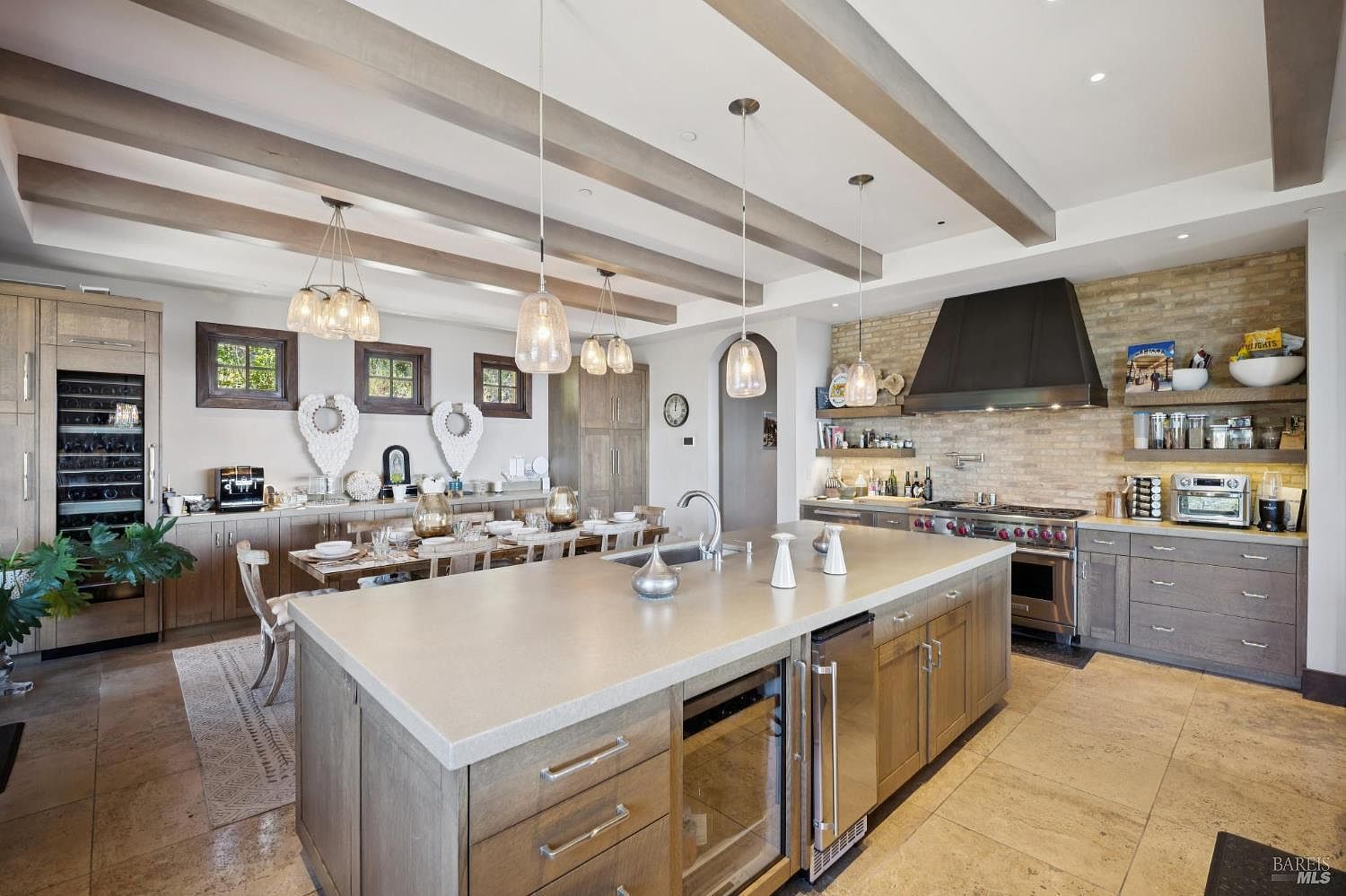
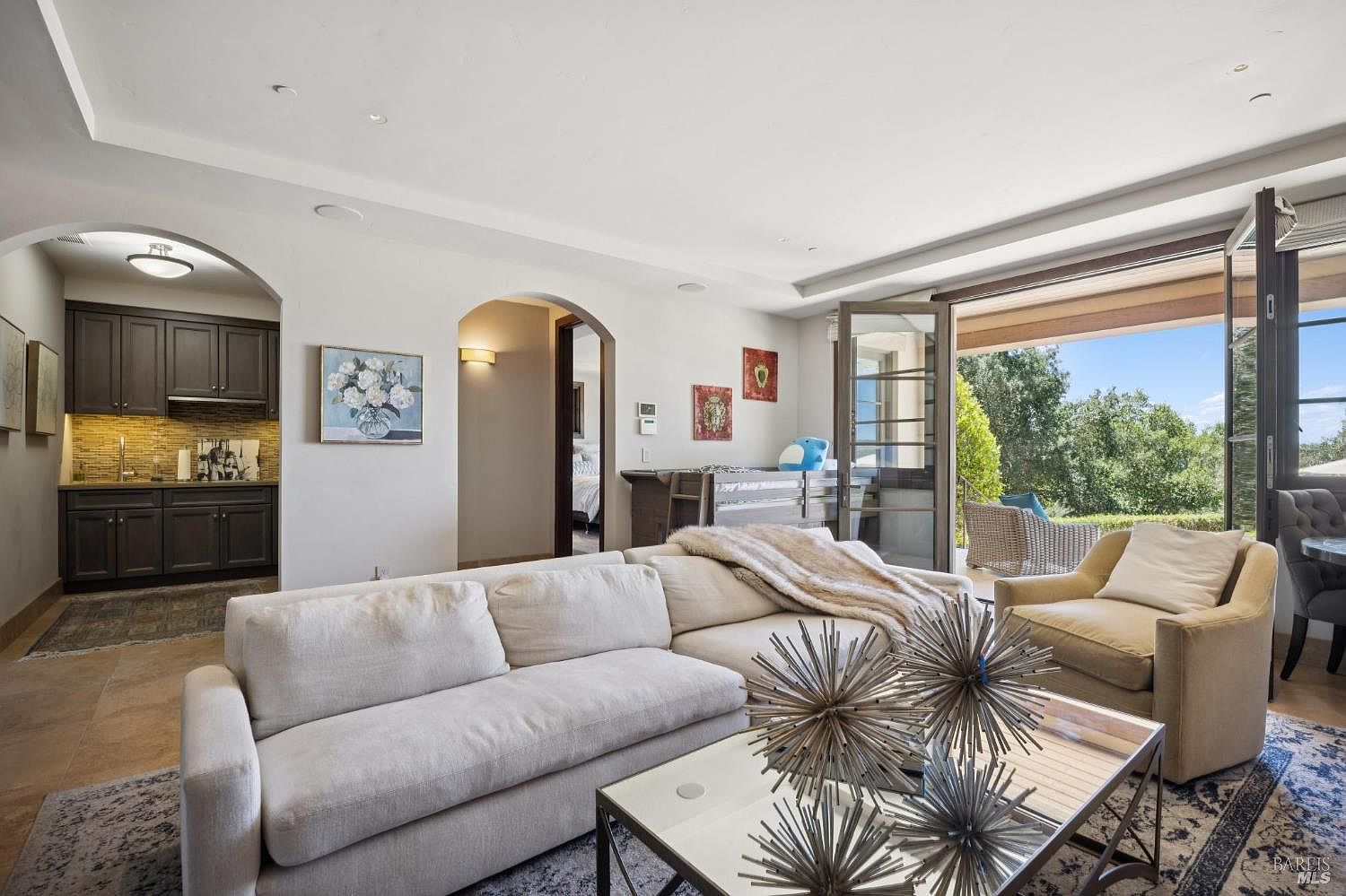
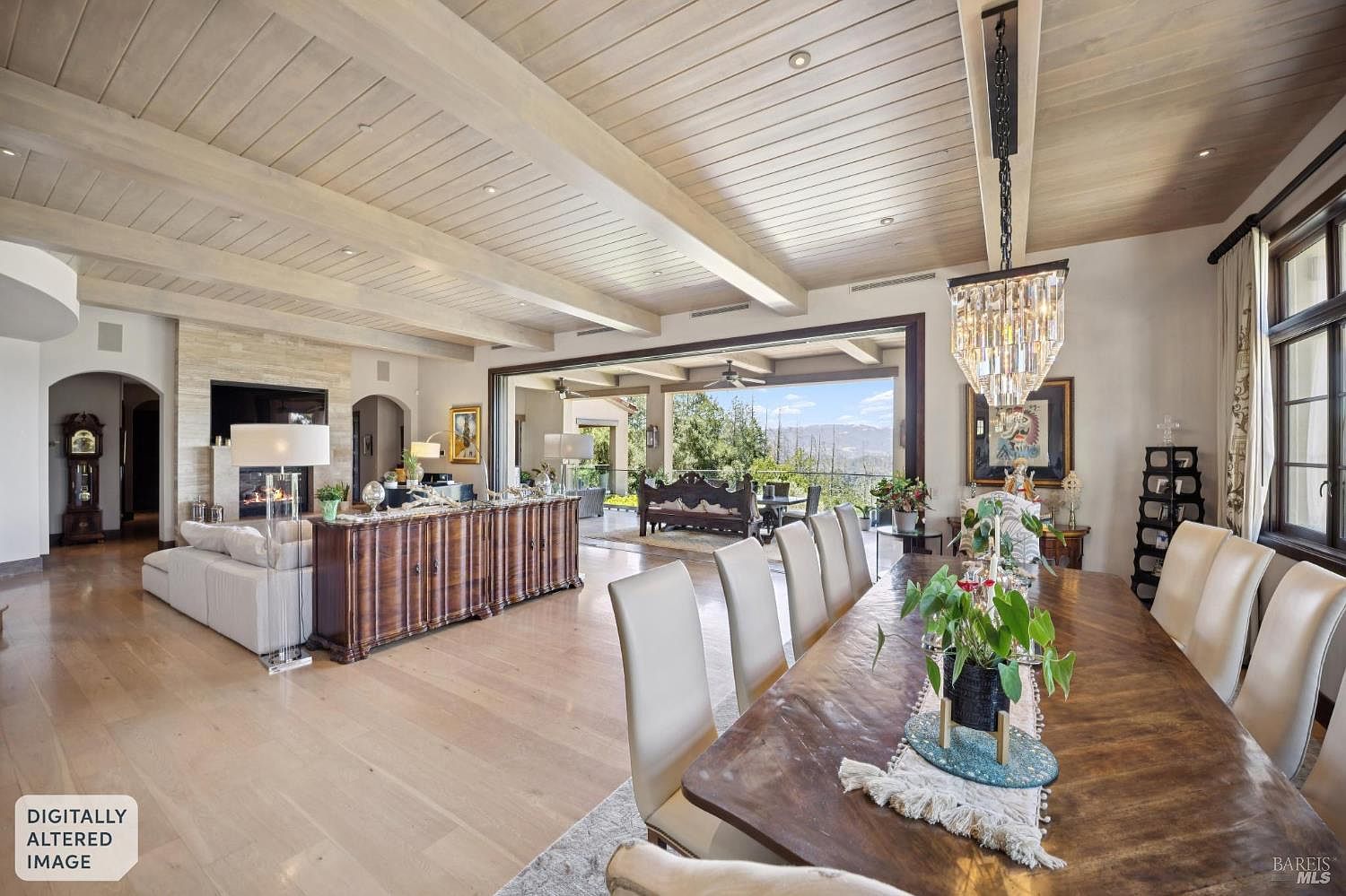
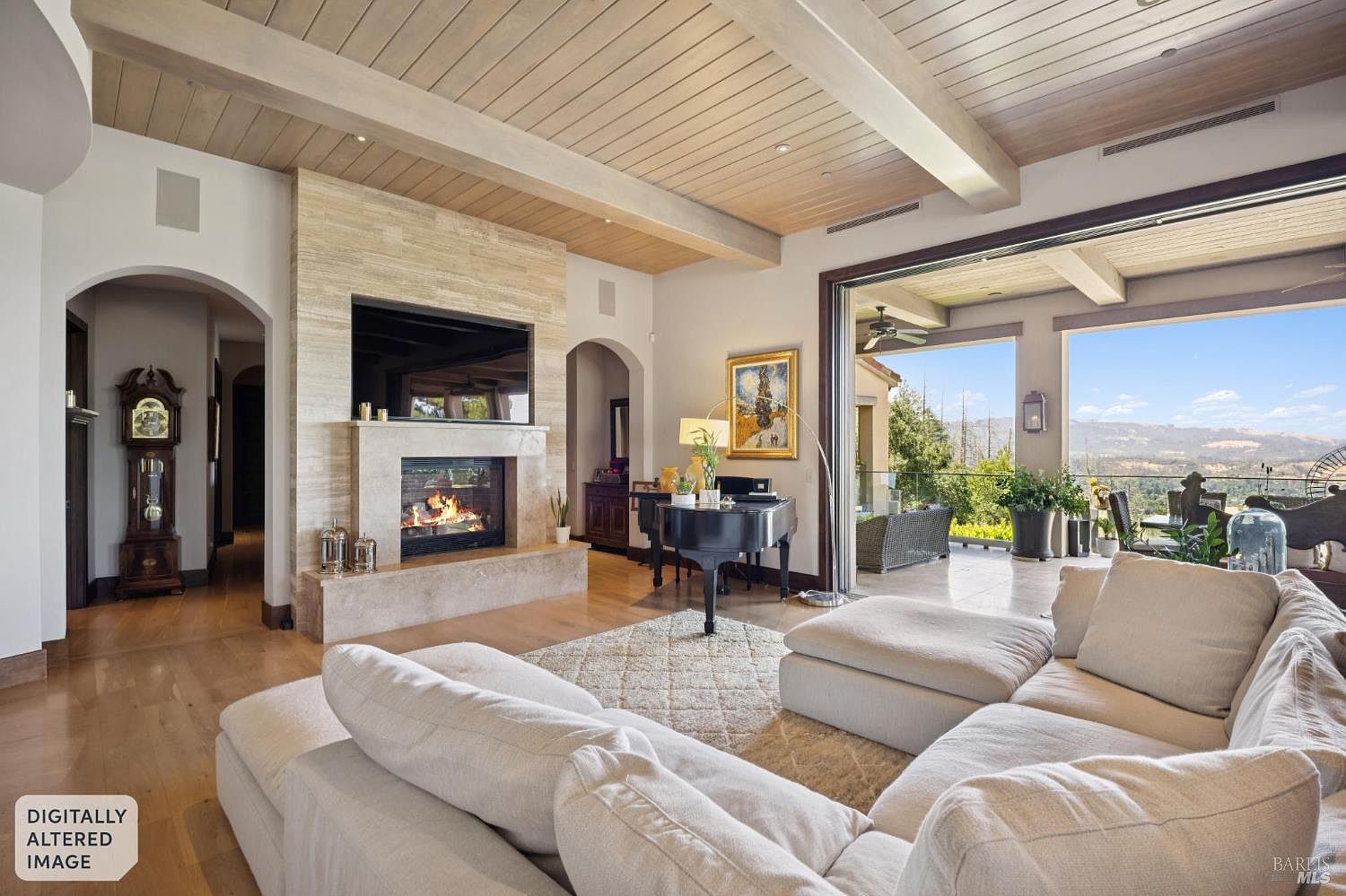
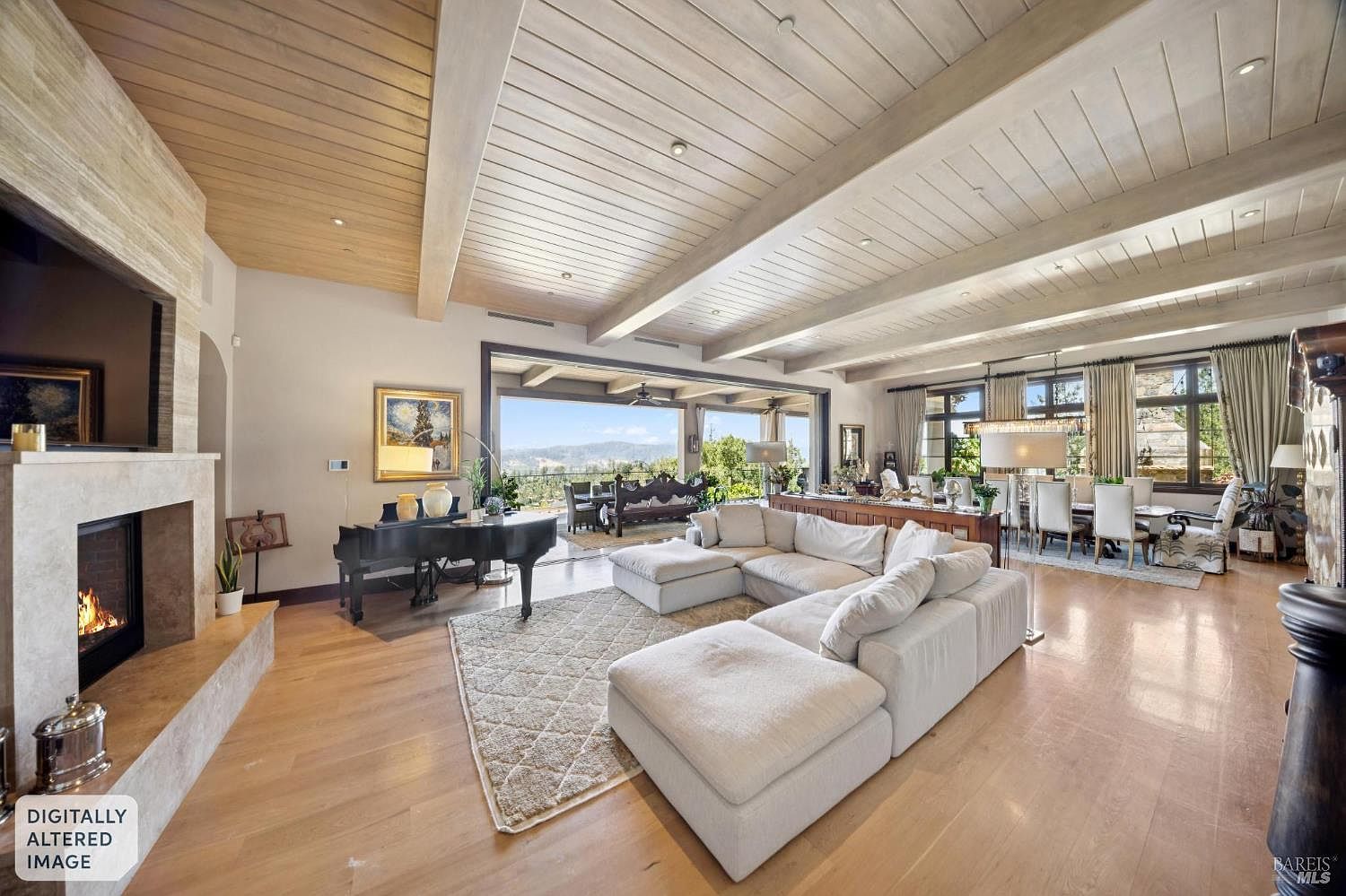
The great room is organized around the view. Twenty-four feet of sliding glass disappear entirely, removing every barrier between the interior and the loggia beyond, where the Sonoma Mountain range fills the horizon. A fireplace anchors one end of the room; a wood-fired pizza oven occupies the outdoor terrace, its stone surround framed by stacked firewood and climbing greenery. The kitchen features dual islands in light-toned stone, exposed wooden ceiling beams, warm cabinetry, and a professional-grade range beneath an oversized hood — a space designed for serious cooking and unhurried gathering in equal measure.
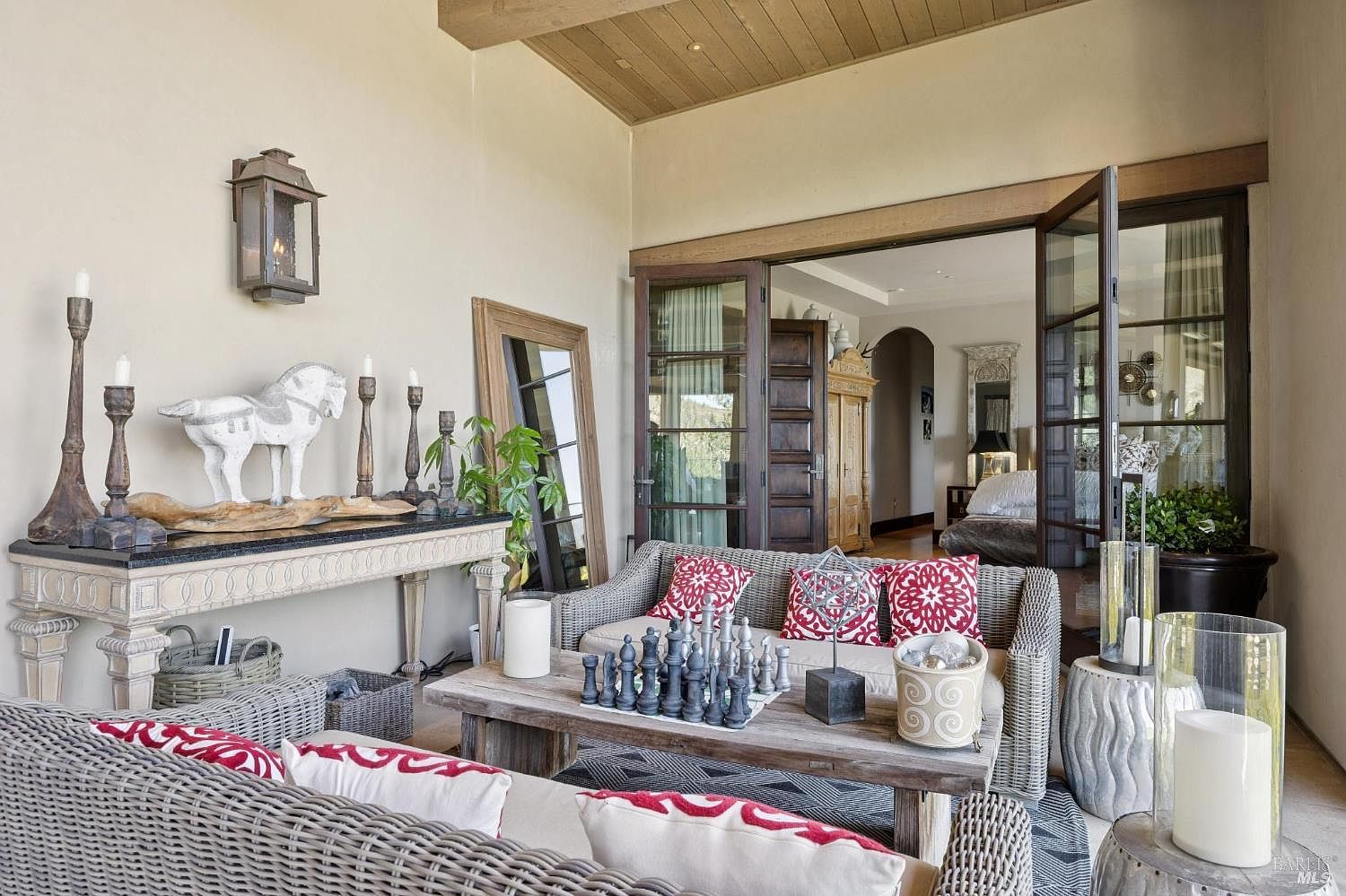
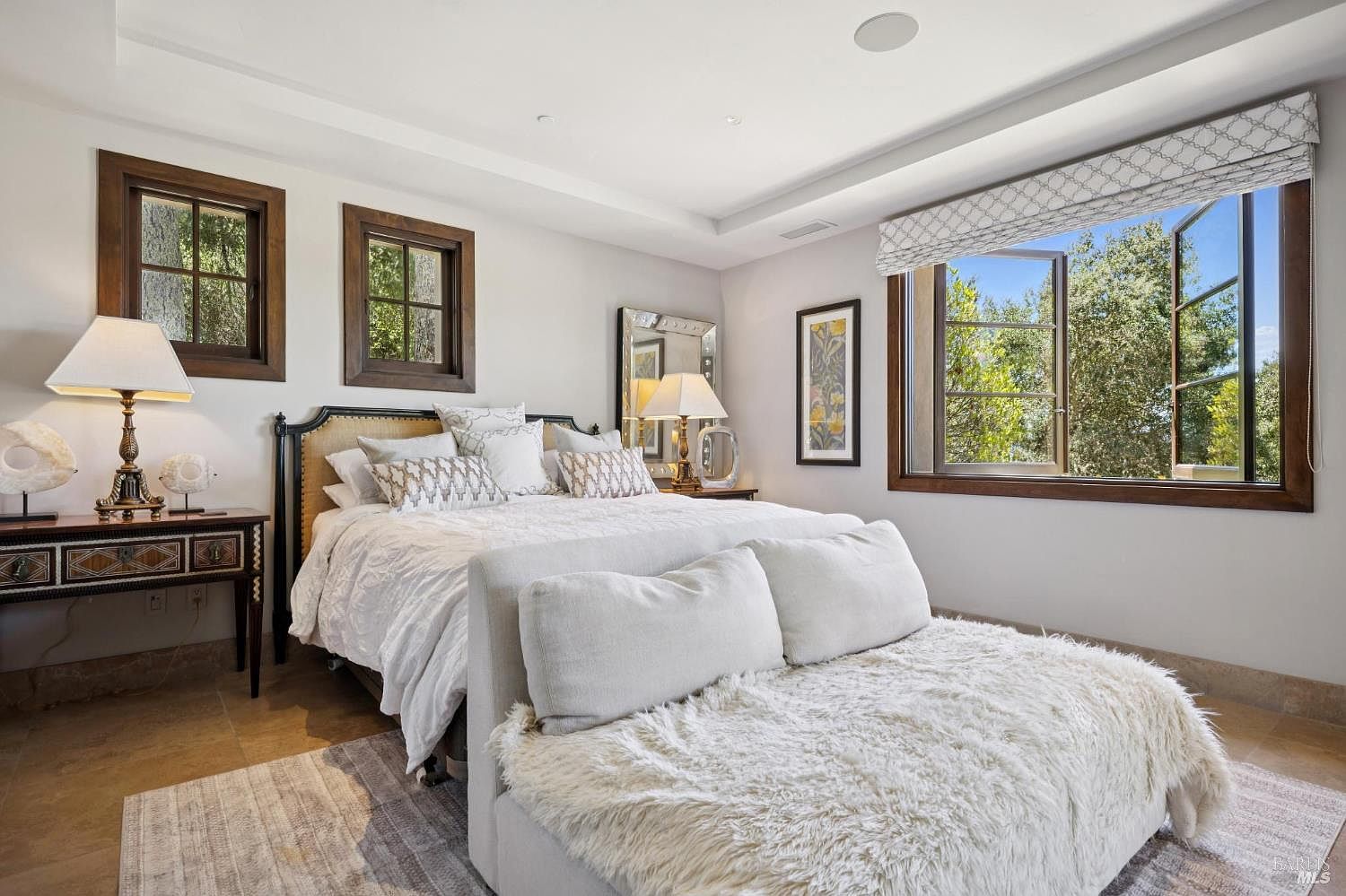
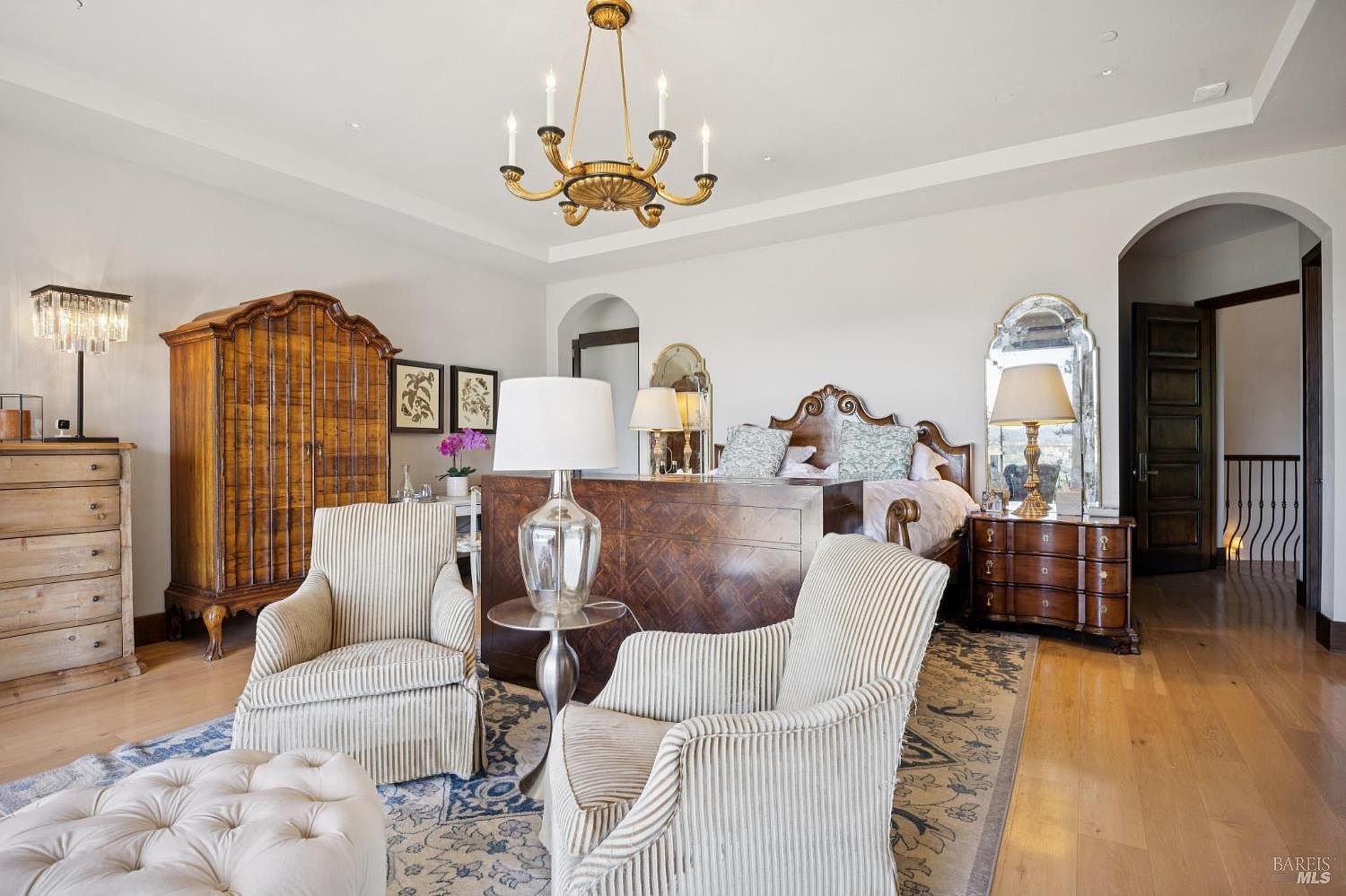
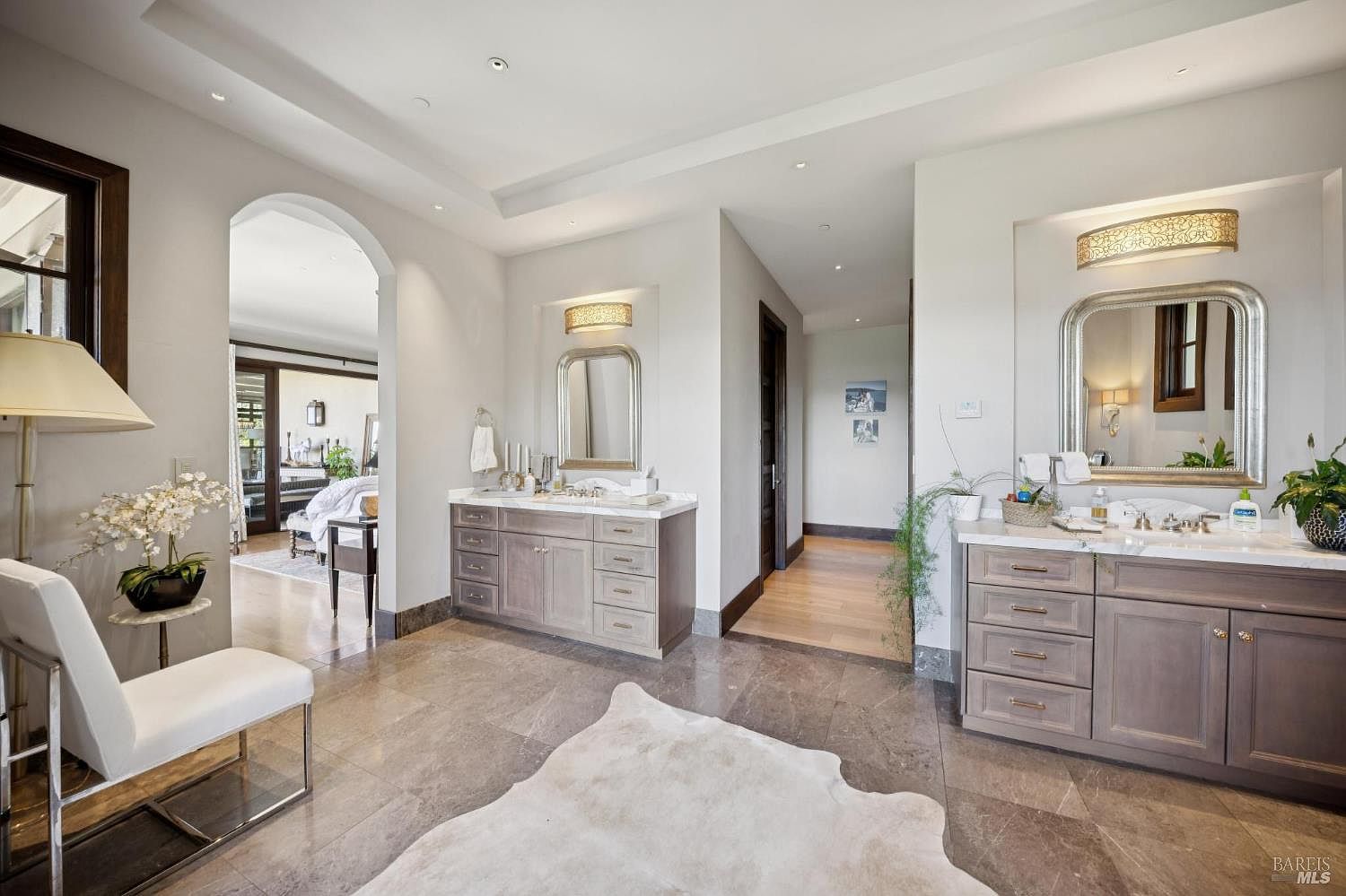
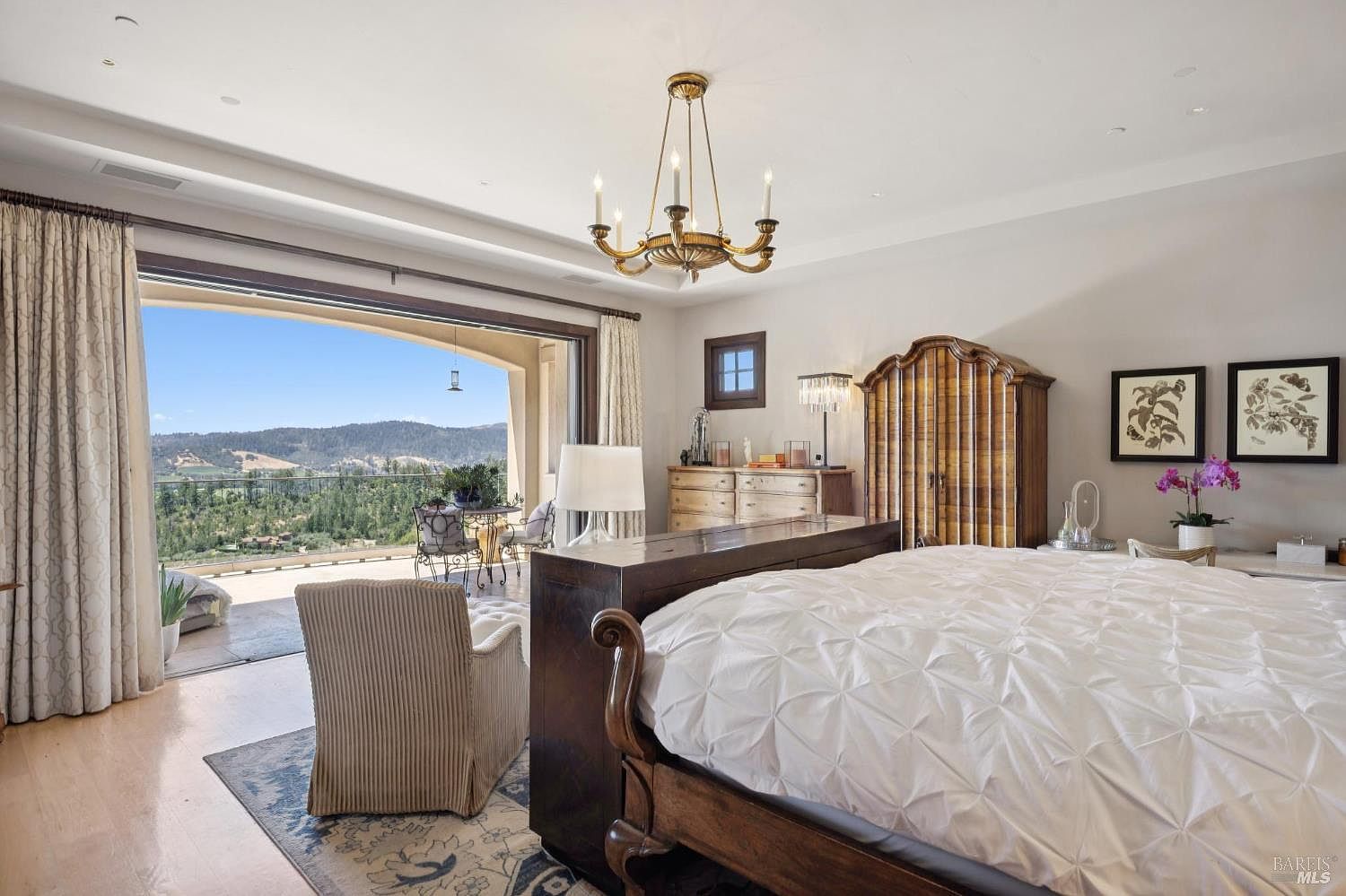
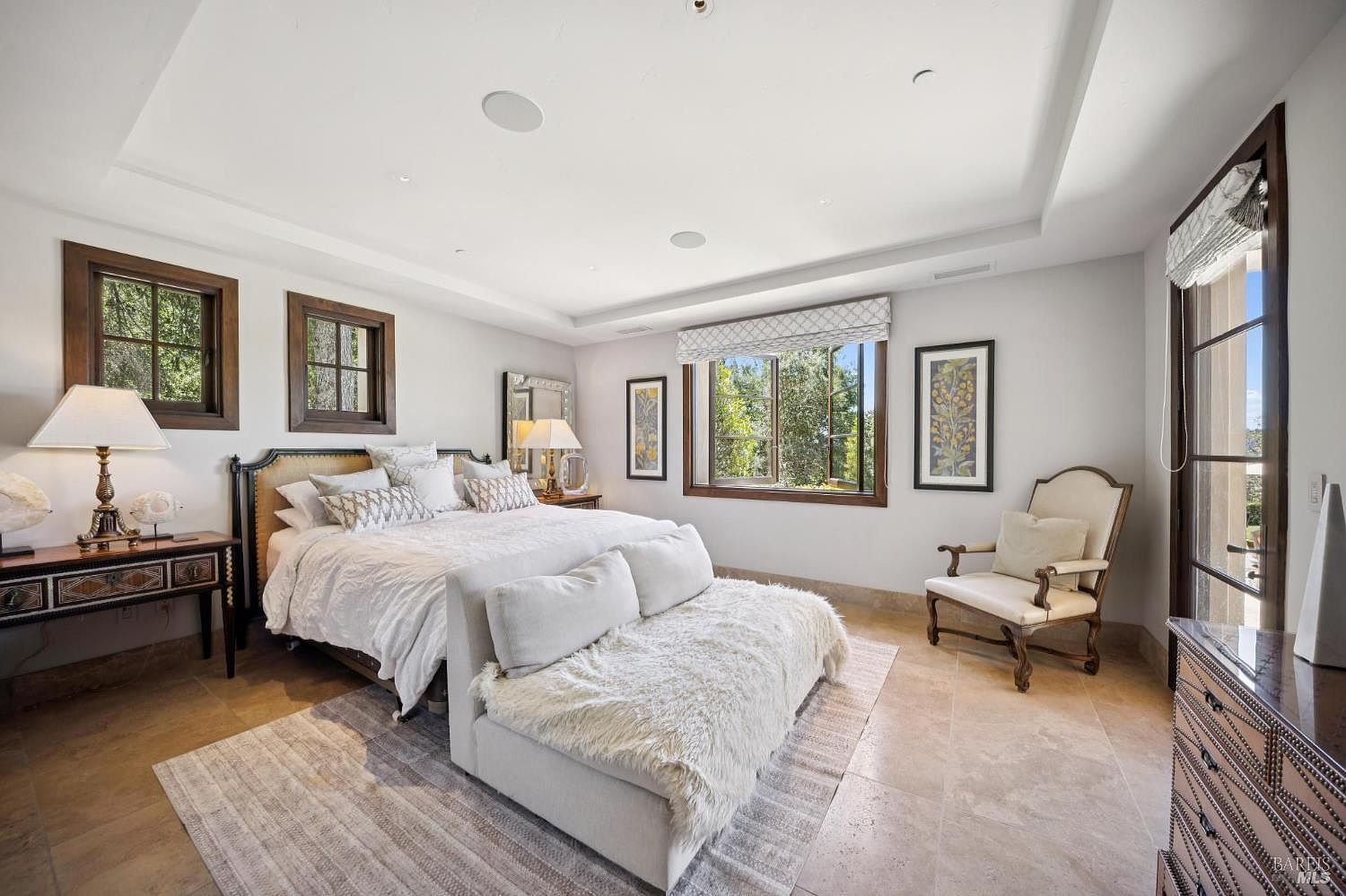
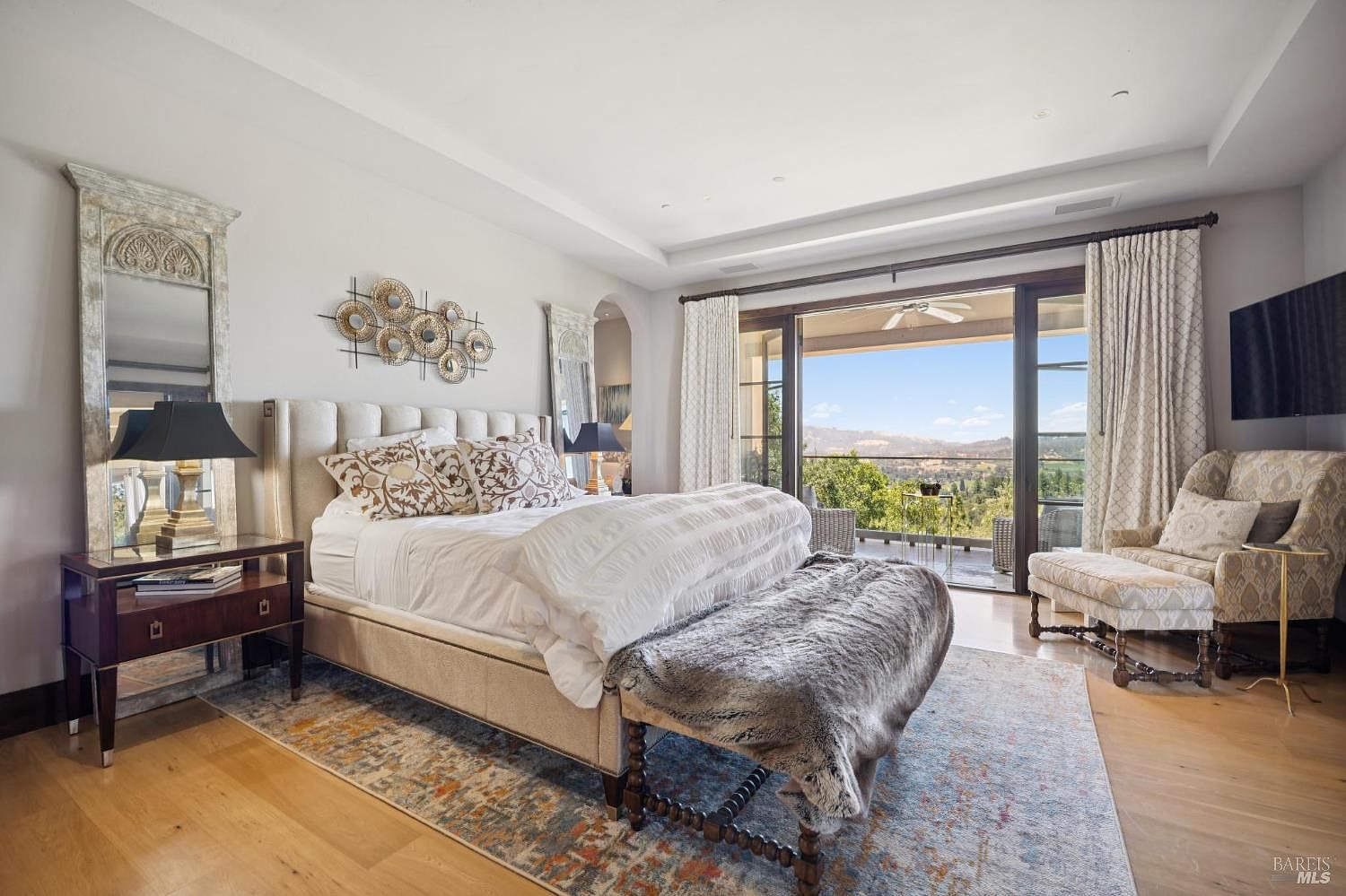
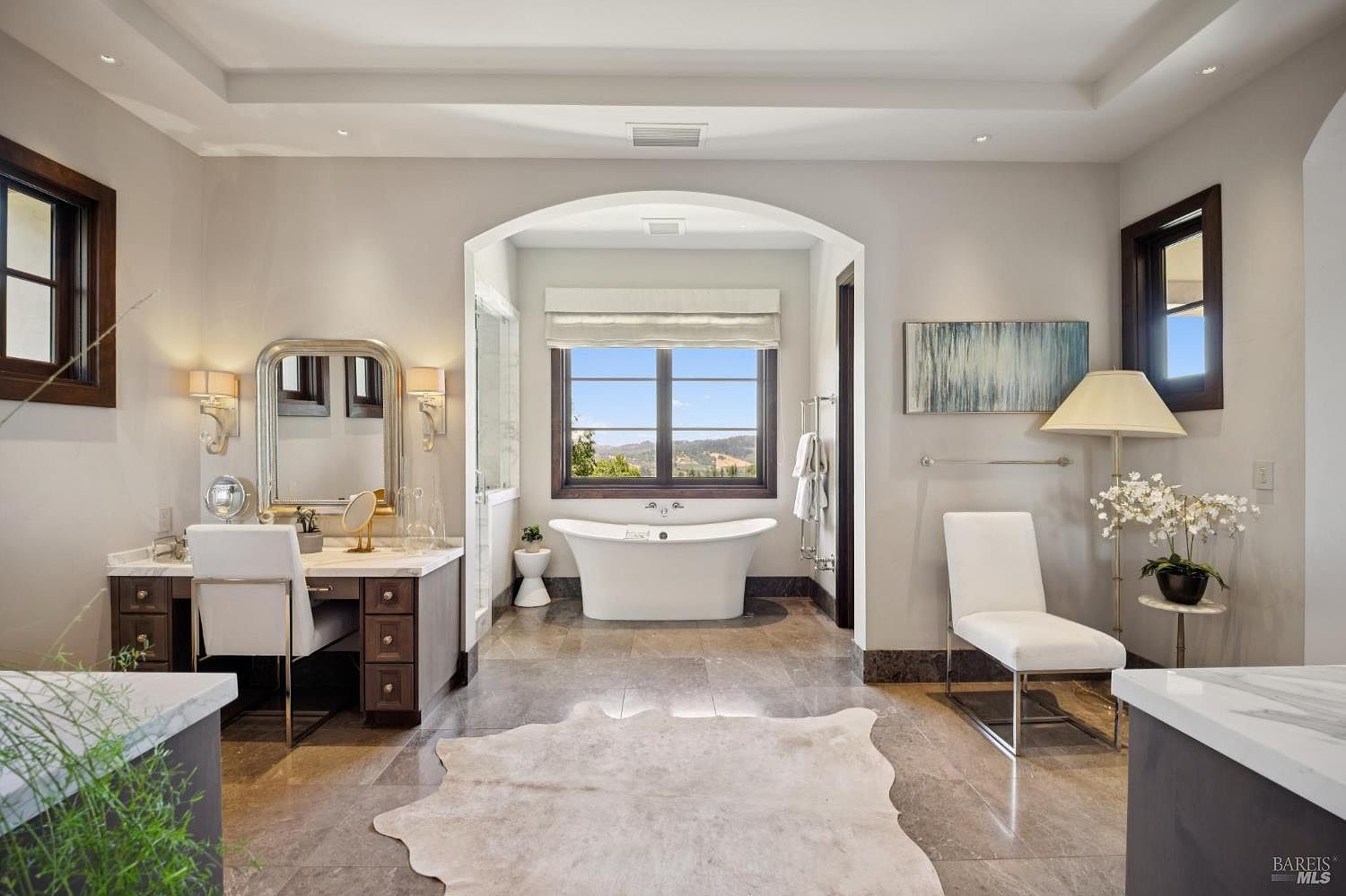
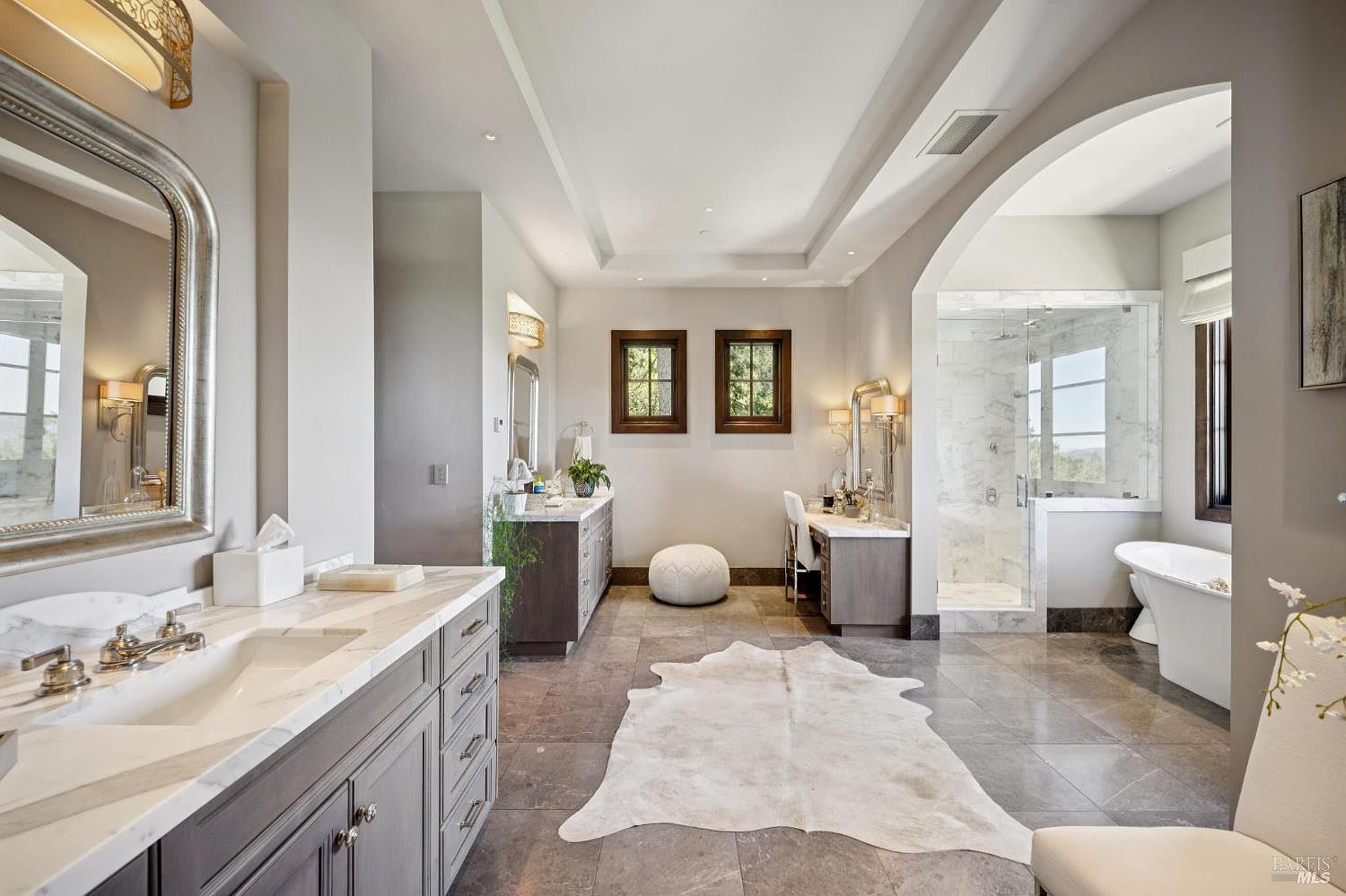
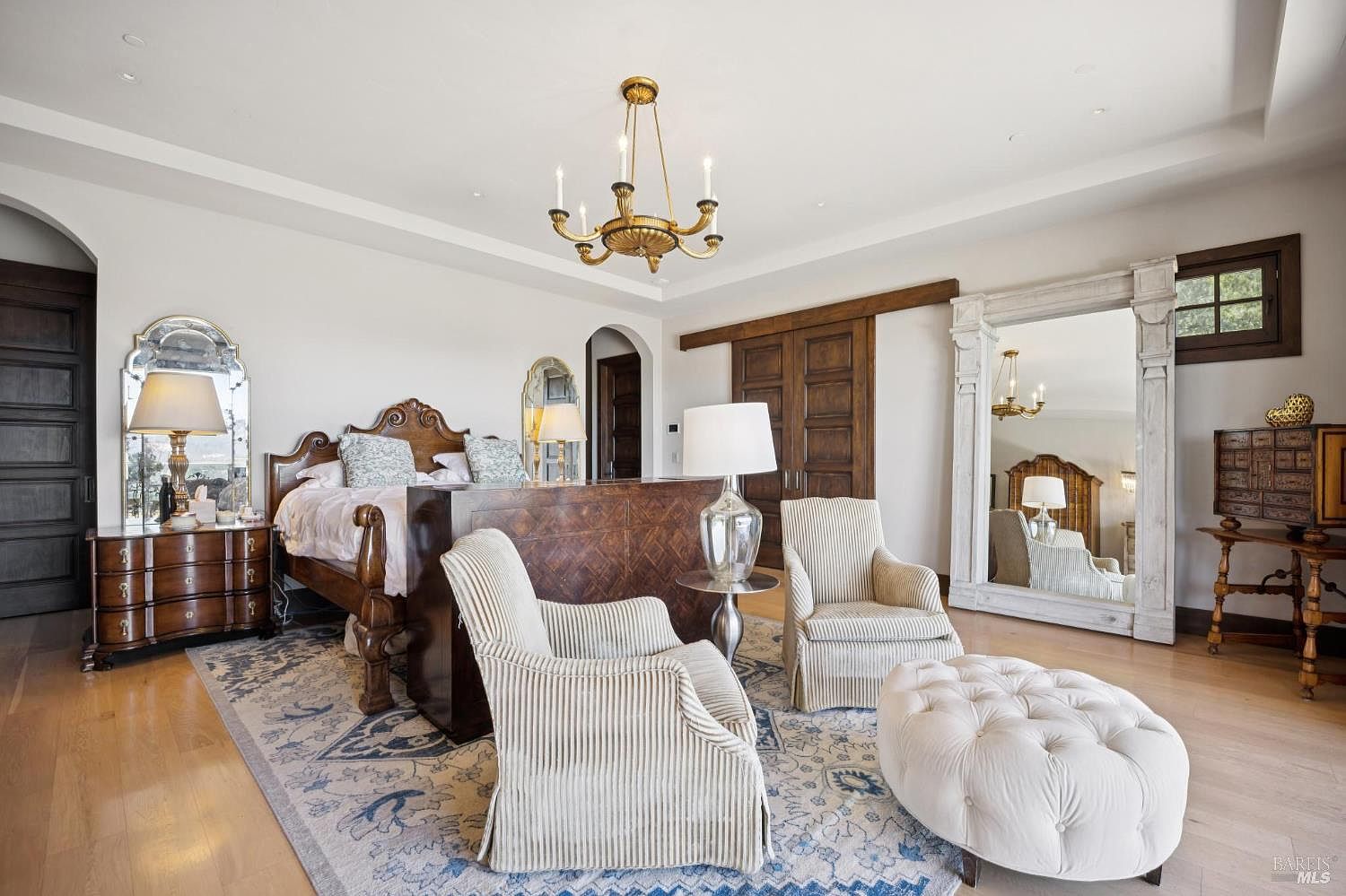
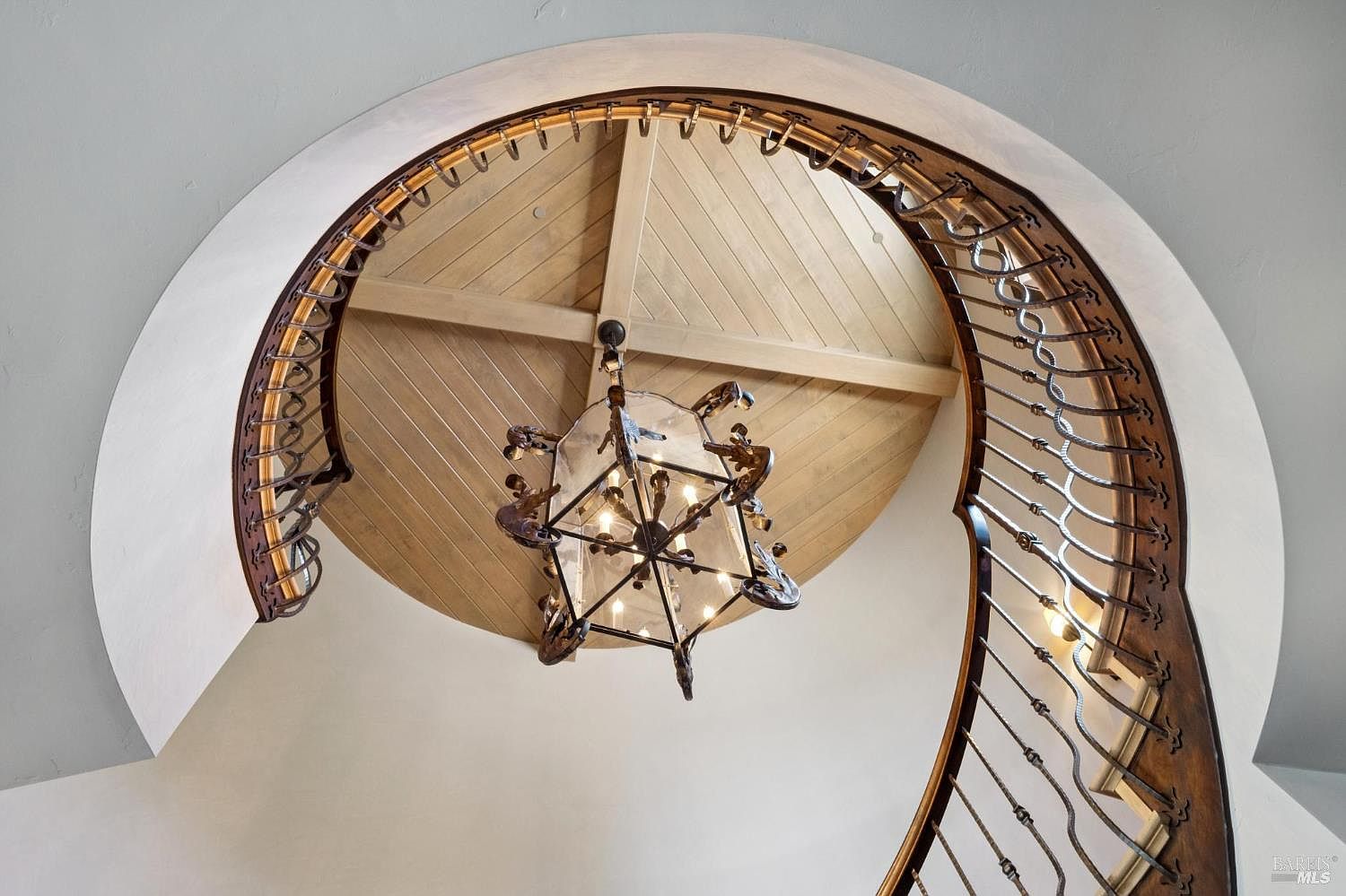
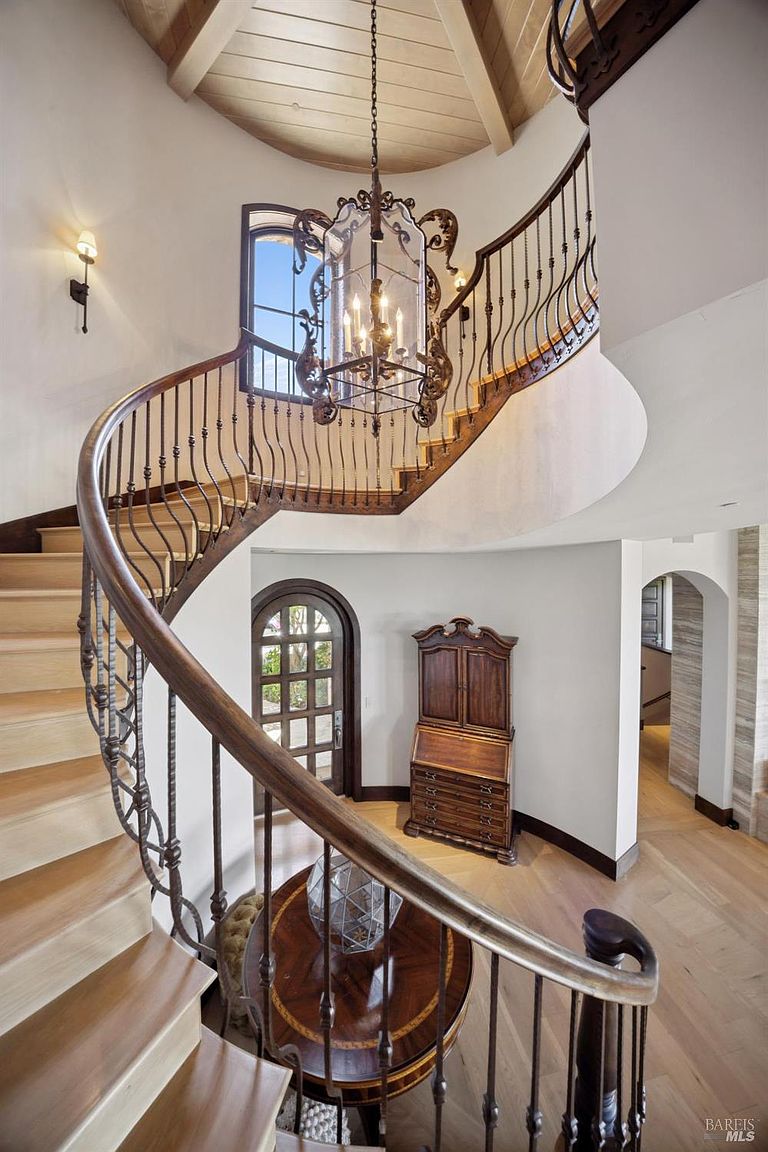
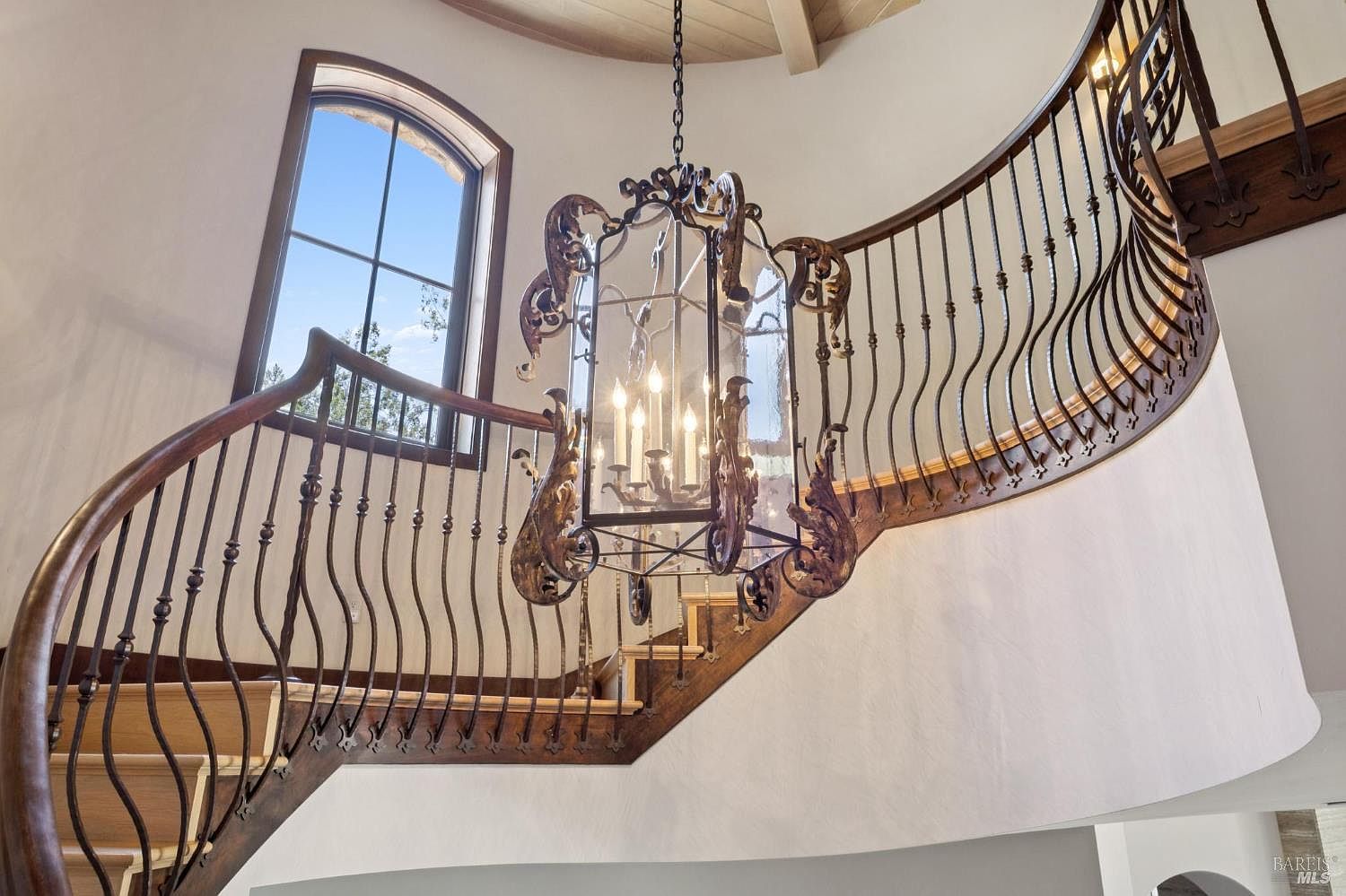
The grand staircase, with its sweeping curve, ornate dark metal railings, and warm wood treads, rises beneath a multi-tiered chandelier toward four ensuite bedrooms, each thoughtfully composed in neutral palettes with generous windows and, in several cases, private balconies that frame the surrounding hills and tree canopy. Primary bathrooms offer freestanding soaking tubs positioned beneath arched alcoves and scenic windows, dual stone-topped vanities, and walk-in glass showers — spaces that read as genuinely restorative.
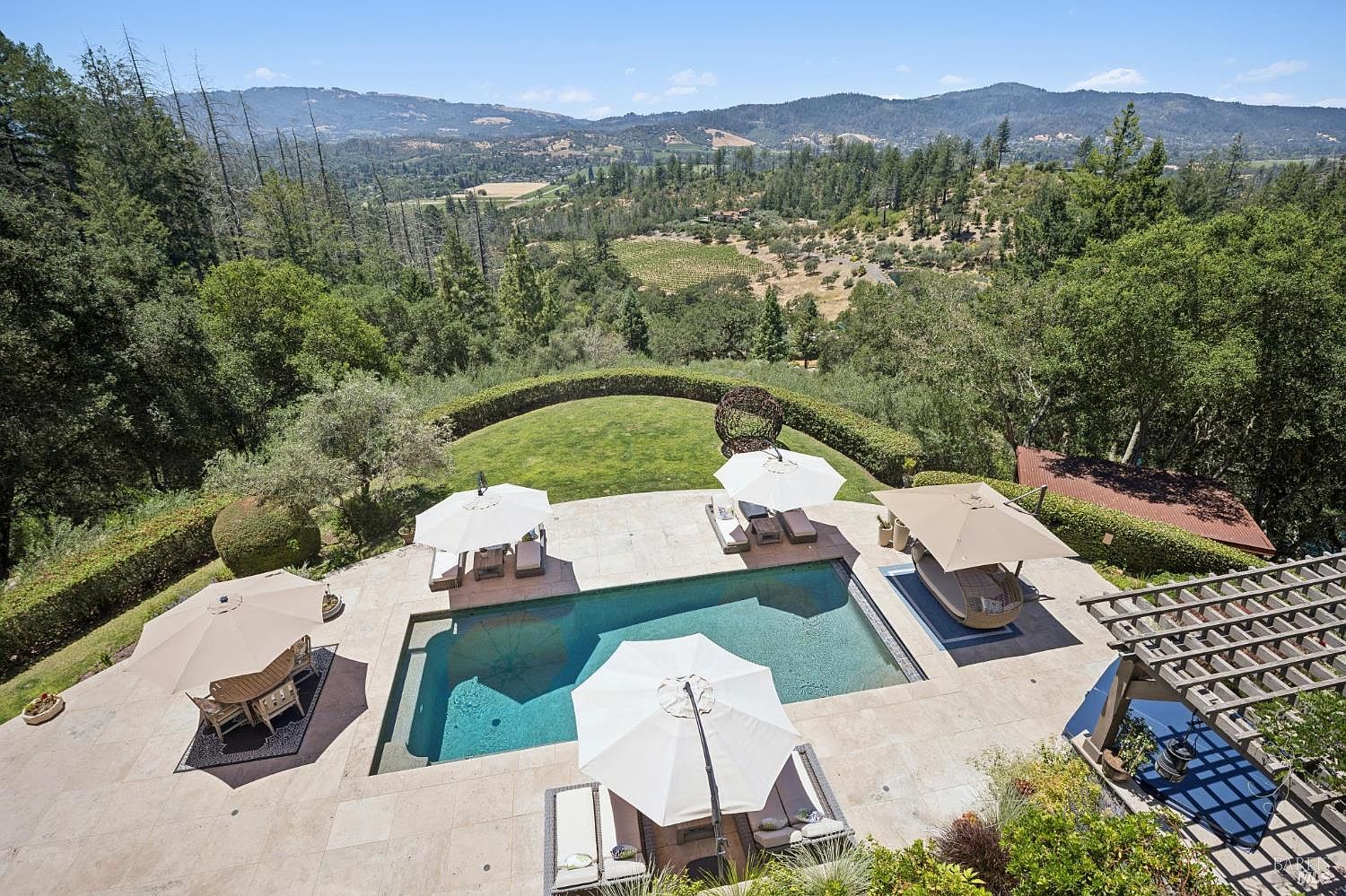
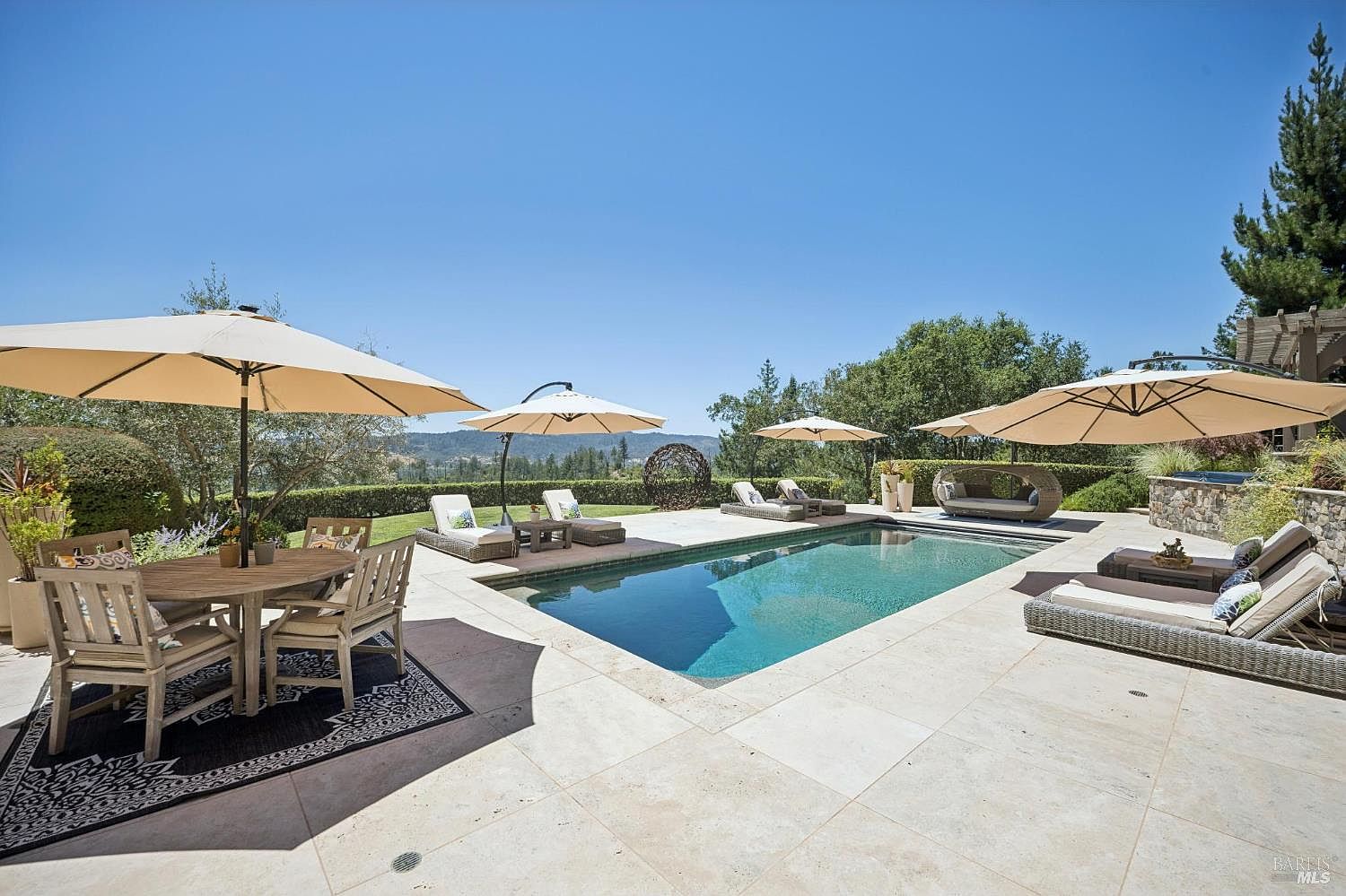
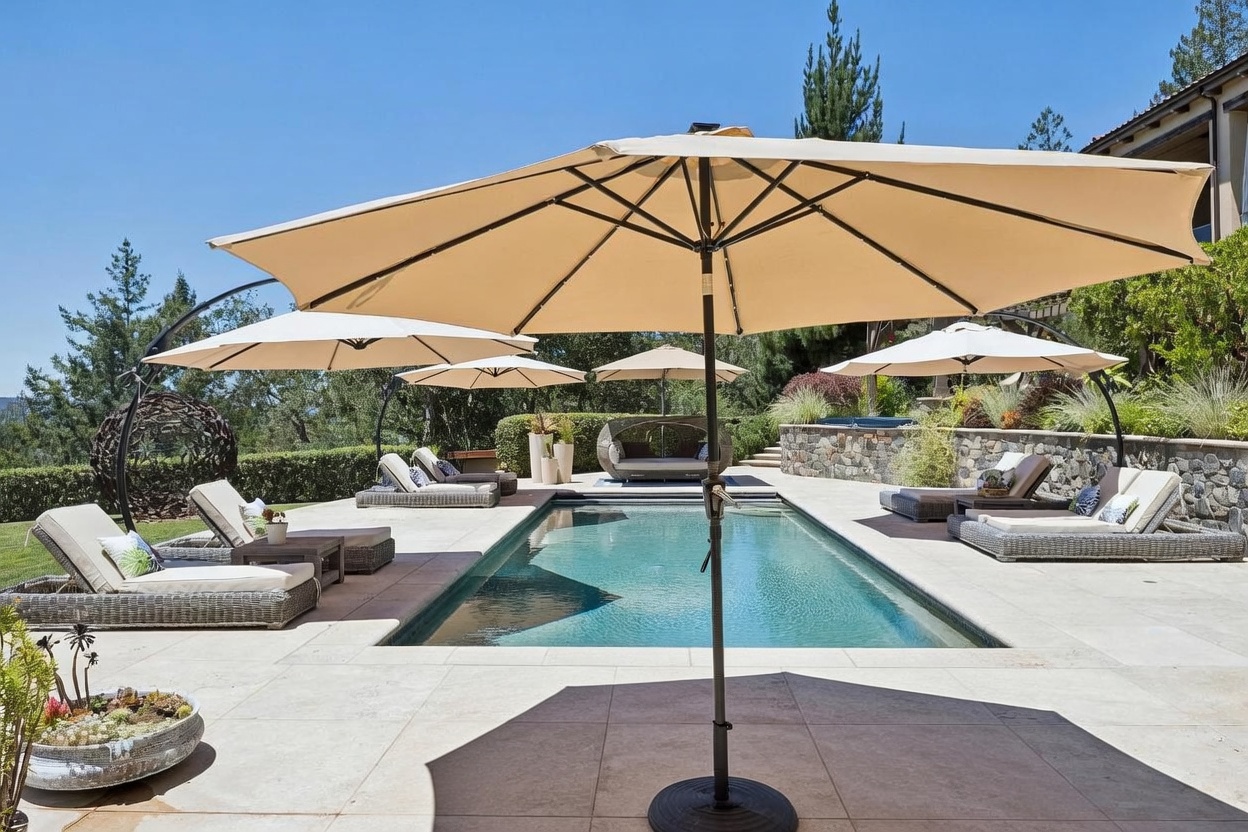
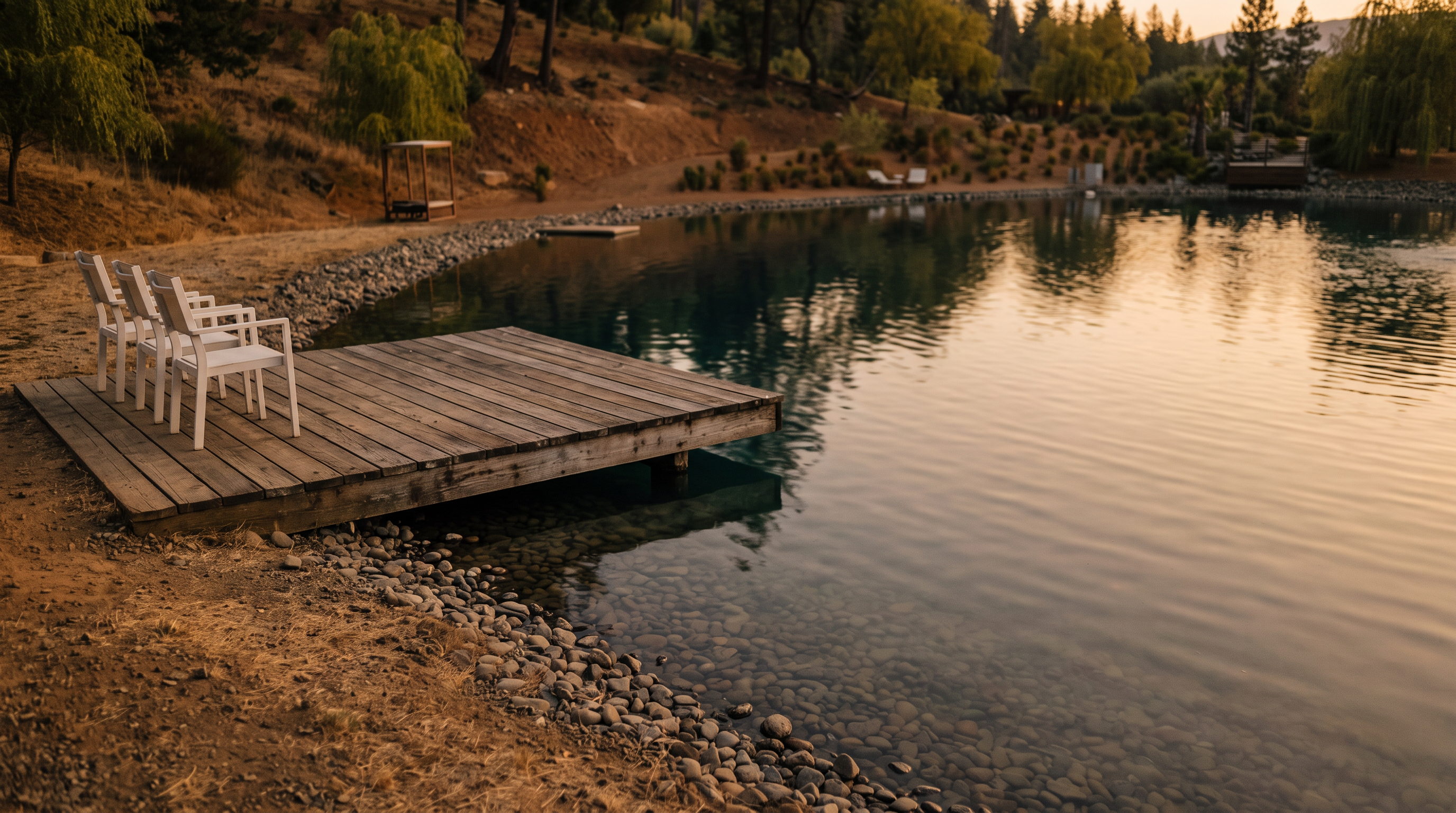
The pool terrace is among the estate's most considered gestures. Set into stone decking and oriented directly toward the vineyard valley and open sky, the rectangular pool and spa are ringed with lounge areas and shaded pergolas — a resort-caliber environment that functions as a private one. Farther out on the property, a lake offers fishing and water recreation. Bocce and pickleball courts occupy another corner of the grounds.
A large barn — versatile enough to serve as an automotive vault, art gallery, or fitness studio — extends the estate's functional footprint considerably. Solar panels, natural Sonoma materials, and the working olive trees that produce the estate's own oil reflect a commitment to ecological integrity that feels earned rather than decorative.
The offering includes not only Villa Casa Sol on approximately 104 acres but also the adjacent parcel, Casa Paraiso, at approximately 47 acres, with existing plans for a future villa. La Vid was developed by the visionary behind Las Ventanas al Paraiso, and the ambition of that lineage is evident in every considered detail.
Kenwood occupies the southern end of the Sonoma Valley, tucked between the Mayacamas Mountains to the east and Sonoma Mountain to the west, in a corridor that has long been regarded as one of California's most quietly distinguished wine country addresses. The Valley of the Moon — a name drawn from Jack London's time in these hills — is not a marketing invention but a geographic and atmospheric reality: on certain mornings, the low fog moves through the valley floor in a way that is genuinely unlike anywhere else in Northern California.
The appellation itself, Sonoma Valley AVA, encompasses some of the state's oldest continuously farmed viticultural land. Kenwood sits at its heart, surrounded by estates and wineries that have shaped the modern American wine industry. Kenwood Vineyards, Kunde Family Winery, and St. Francis Winery are among the well-established names within the immediate vicinity, while the broader Sonoma Valley corridor extends toward the historic Sonoma Plaza to the south — a California State Historic Landmark anchored by Mission San Francisco Solano and the Sonoma Barracks, both preserved reminders of the region's deep Spanish colonial and Mexican rancho heritage.
The area around Kenwood has long attracted those who value privacy, scale, and natural beauty without sacrificing access. San Francisco lies approximately an hour to the south, making the estate genuinely practical for those who require proximity to the city while preferring to live at a remove from it. Charles M. Schulz Sonoma County Airport in Santa Rosa offers private aviation access within a short drive, further extending the estate's connectivity.
Jack London State Historic Park, bordering the estate's general landscape, preserves the ranch where the author wrote prolifically and spoke often of the land's power to restore and inspire. The park's trails wind through redwood forest, past the ruins of Wolf House, and across the same rolling terrain that London documented in his letters and novels. That literary and agrarian legacy pervades the entire valley, lending the landscape a cultural depth that purely residential enclaves rarely possess.
The broader Kenwood community is small and intentional — defined more by the rhythms of viticulture and the changing seasons than by commercial density. Farm stands, olive oil producers, and artisan food makers operate throughout the valley. The Sonoma Valley Visitors Bureau notes that the region draws visitors year-round for its combination of outdoor recreation, culinary culture, and wine heritage, yet Kenwood itself has retained the character of a working agricultural community rather than becoming a destination in the conventional sense.
Golf, hiking, equestrian trails, and cycling routes are woven into the surrounding landscape. The future Soho House Ranch, noted in the property's materials as a forthcoming addition to the valley, will bring a new dimension of curated hospitality to the corridor. For those who choose La Vid, all of this exists at a deliberate distance — close enough to engage, far enough to ignore entirely.
Featured Highlights
Curated Content • Presented by Michael J. King