The Story Behind
French Palatial Manor Reimagined Above the Pacific
There is a particular kind of architecture that does not simply occupy a site—it enters into a conversation with it. At 3 Island Vista, that conversation has been ongoing for years, but it found its most articulate expression in 2025, when this French palatial manor was comprehensively reimagined to honor both its European bones and its extraordinary California context.
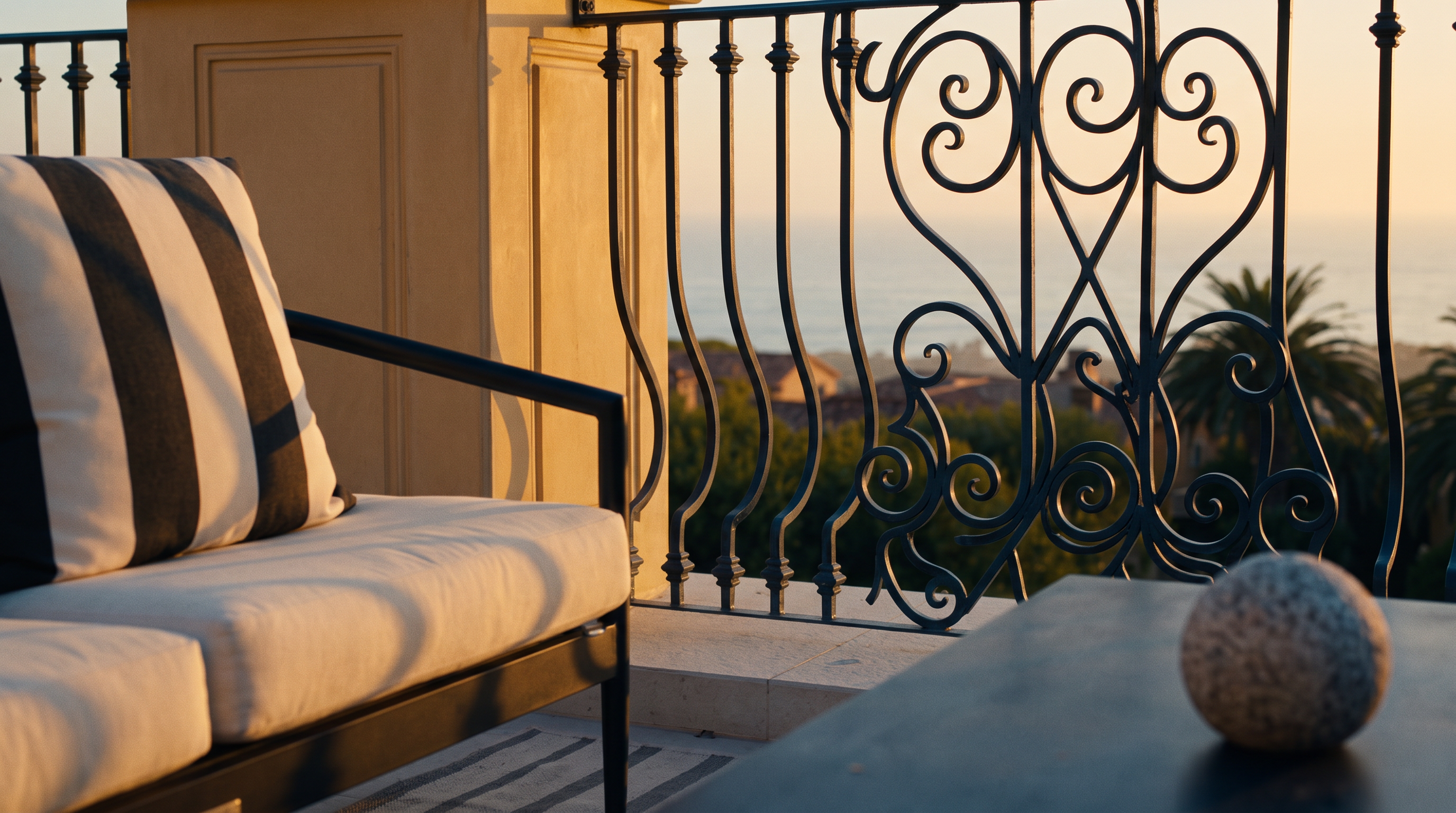
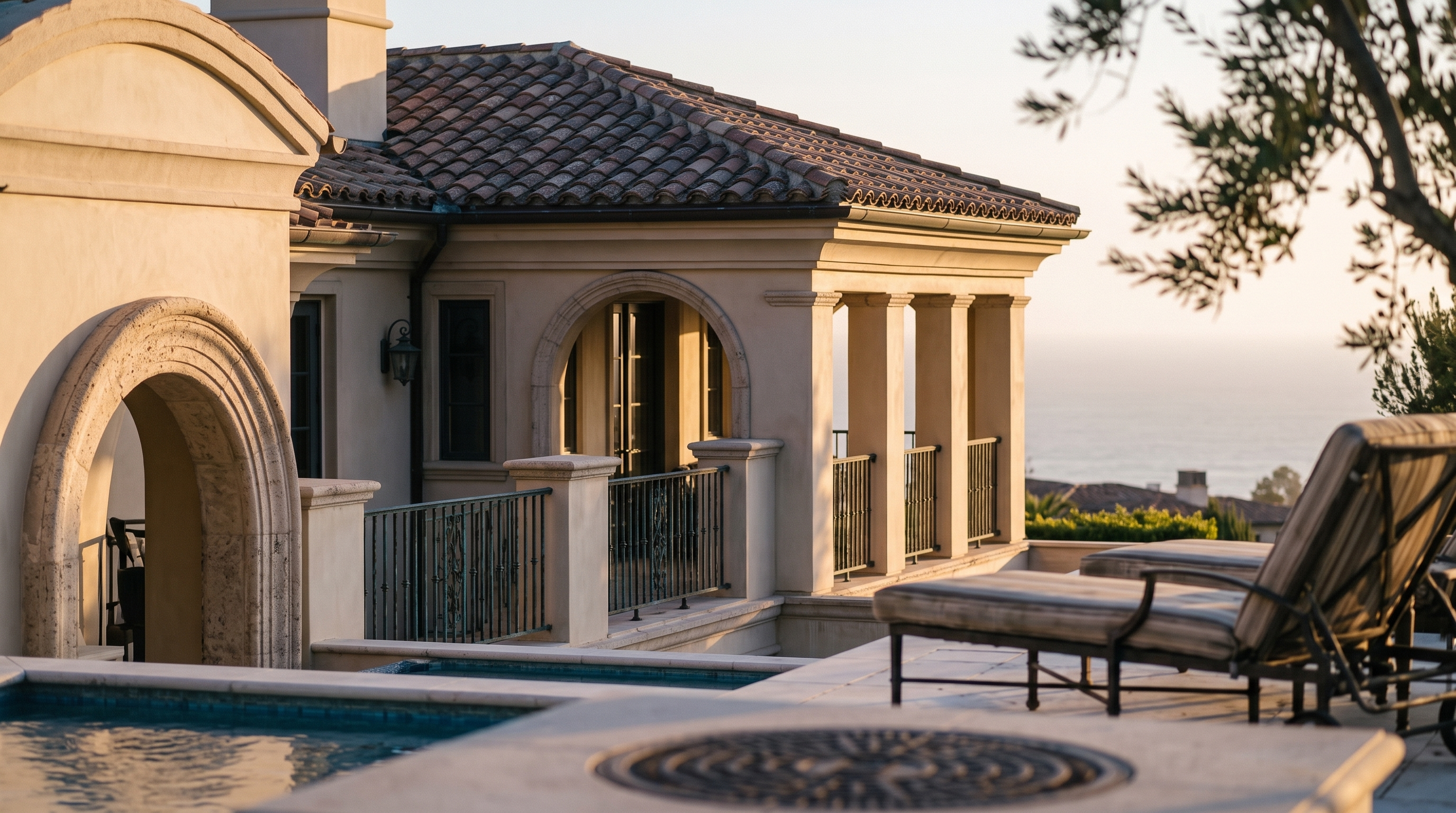
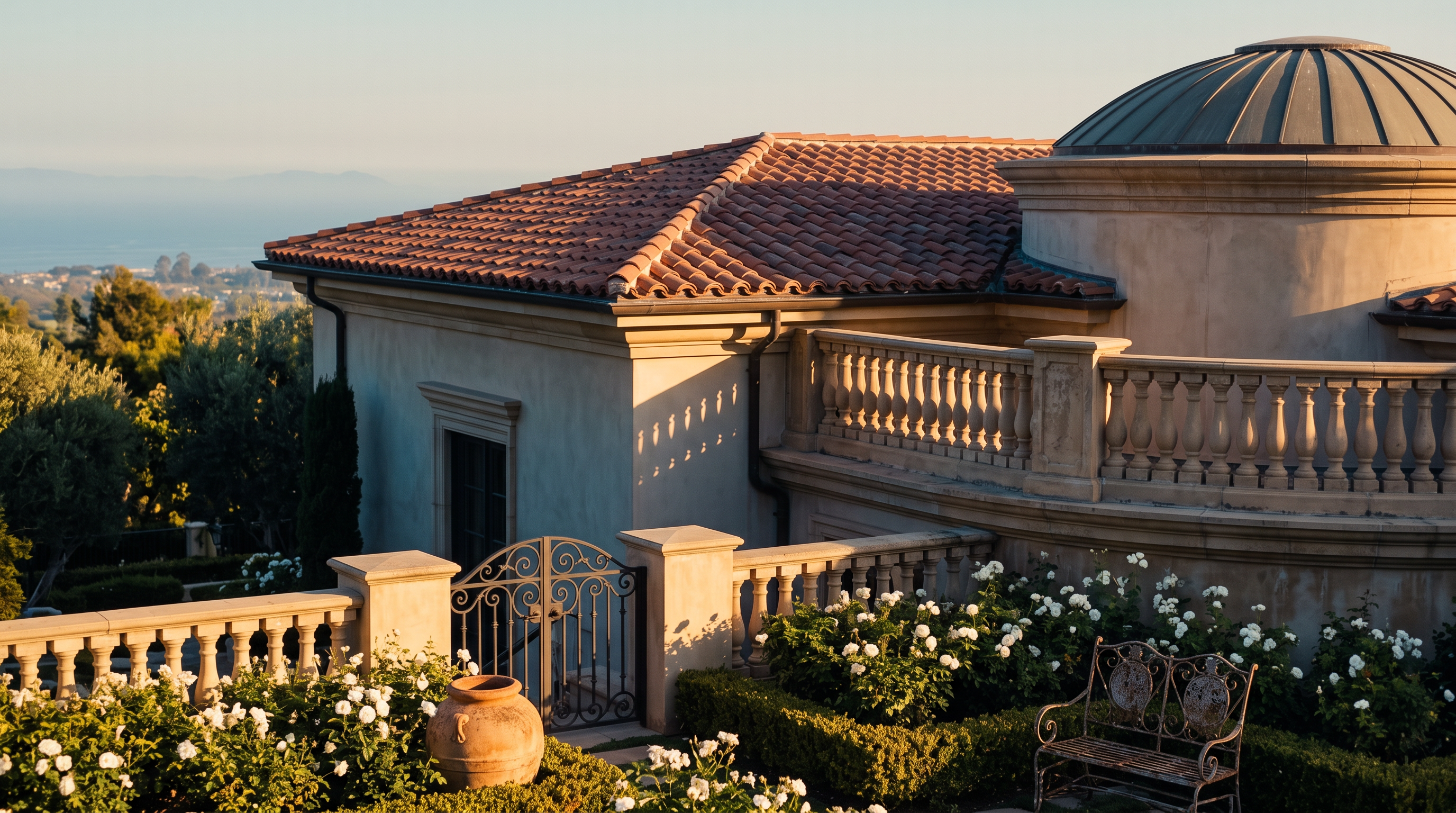
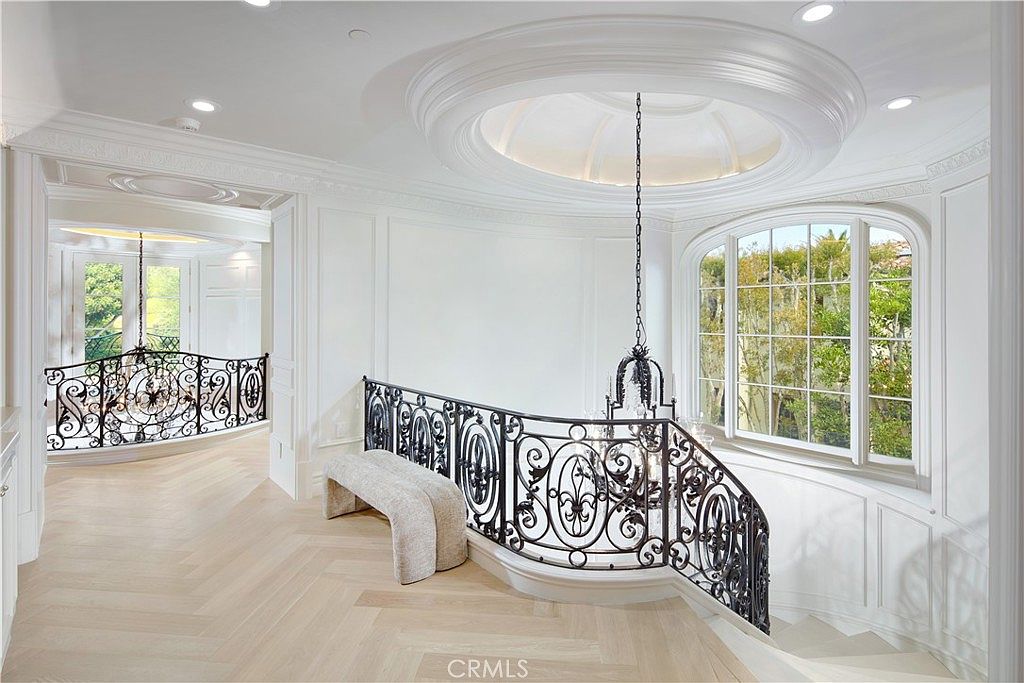
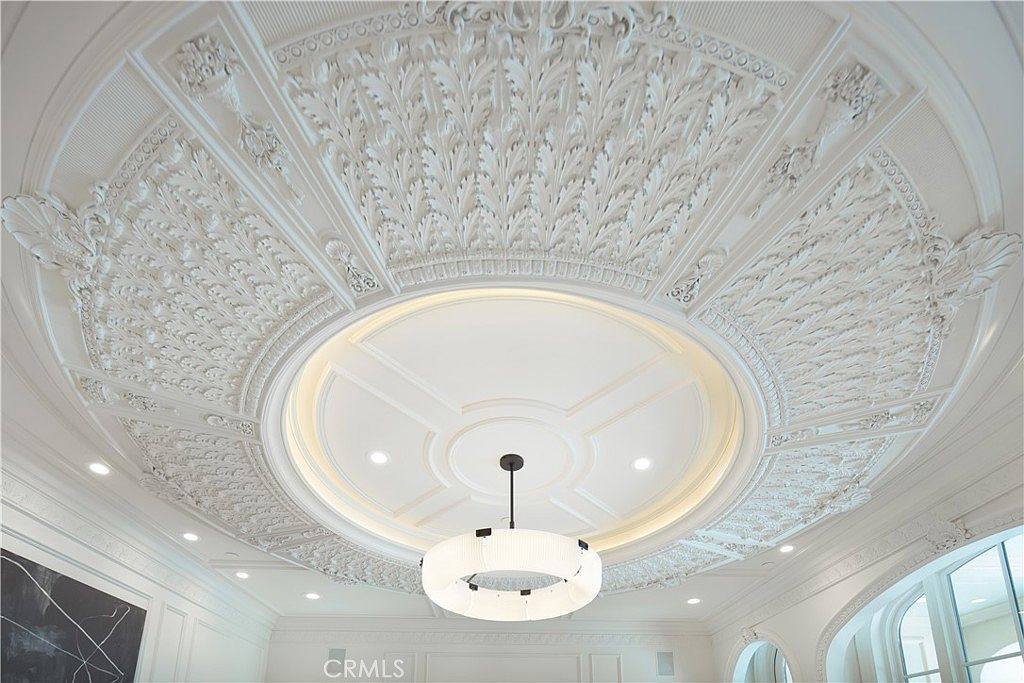
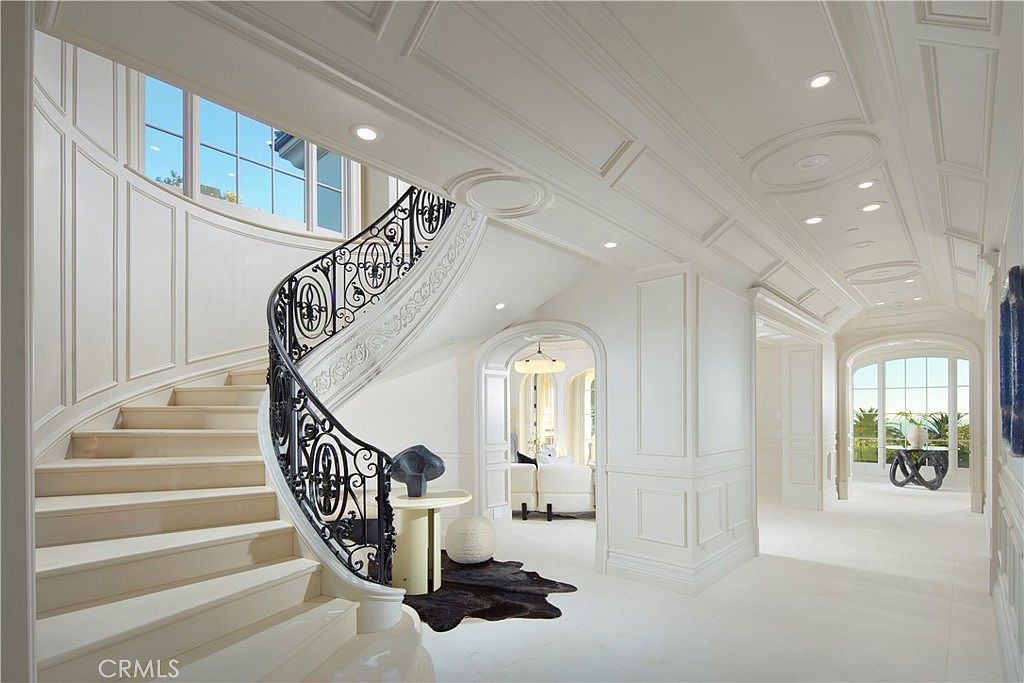
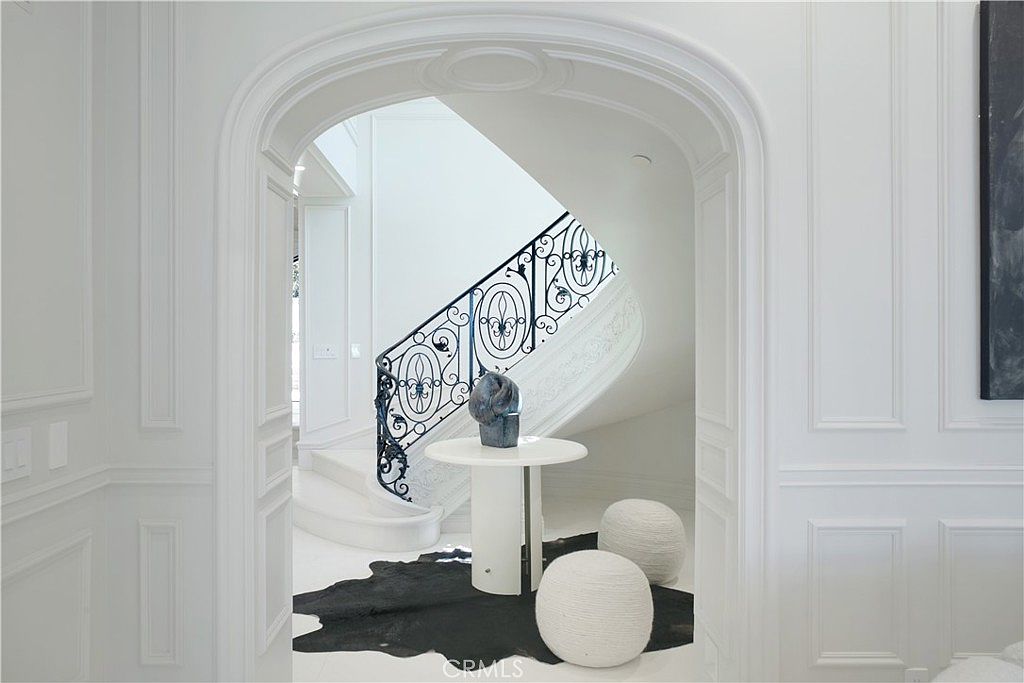
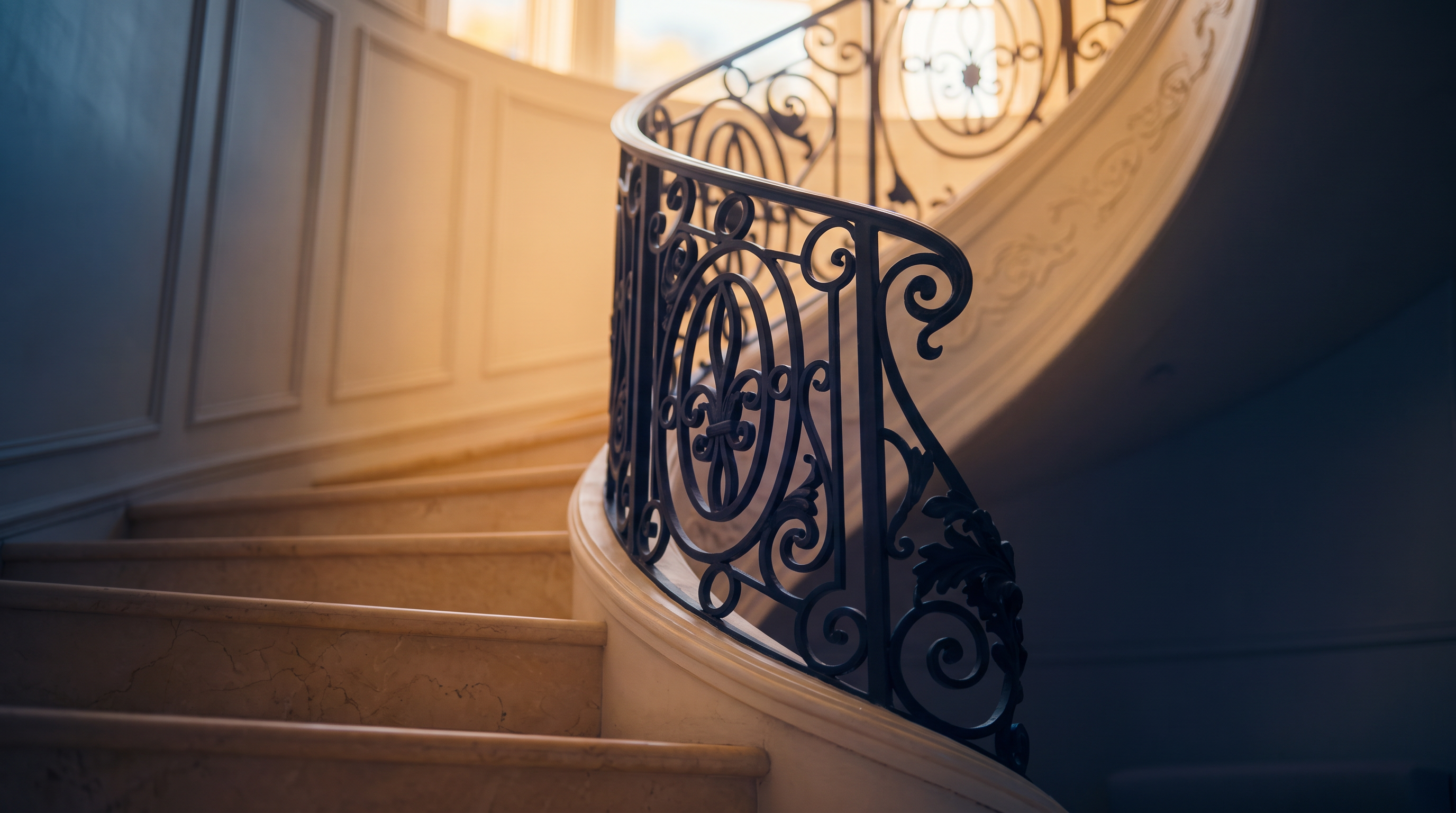
The approach sets the tone. A manicured motor court and symmetrical facade—its arched windows, ornate iron balconies, and terracotta-inflected roofline composed with the confidence of classical European design—announce a residence of serious architectural intent. Step inside and a two-story foyer confirms that ambition immediately. A dramatic curved staircase with intricate wrought-iron railings rises beneath an antique chandelier suspended from an elaborate carved ceiling medallion, its plasterwork radiating outward in concentric rings of classical leaf molding. The floors beneath are laid in white oak herringbone, a pattern that moves through the principal rooms with quiet authority.
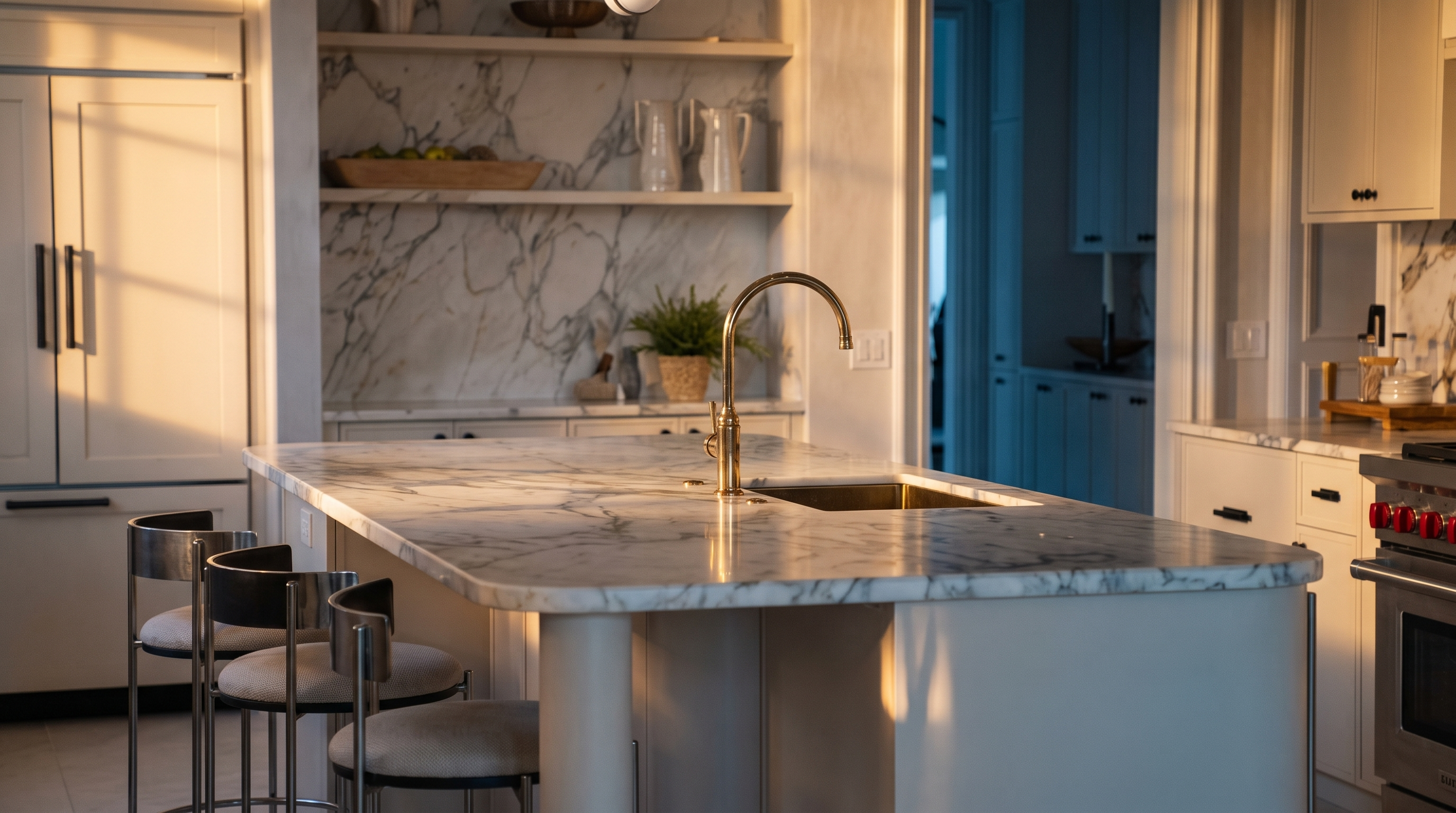
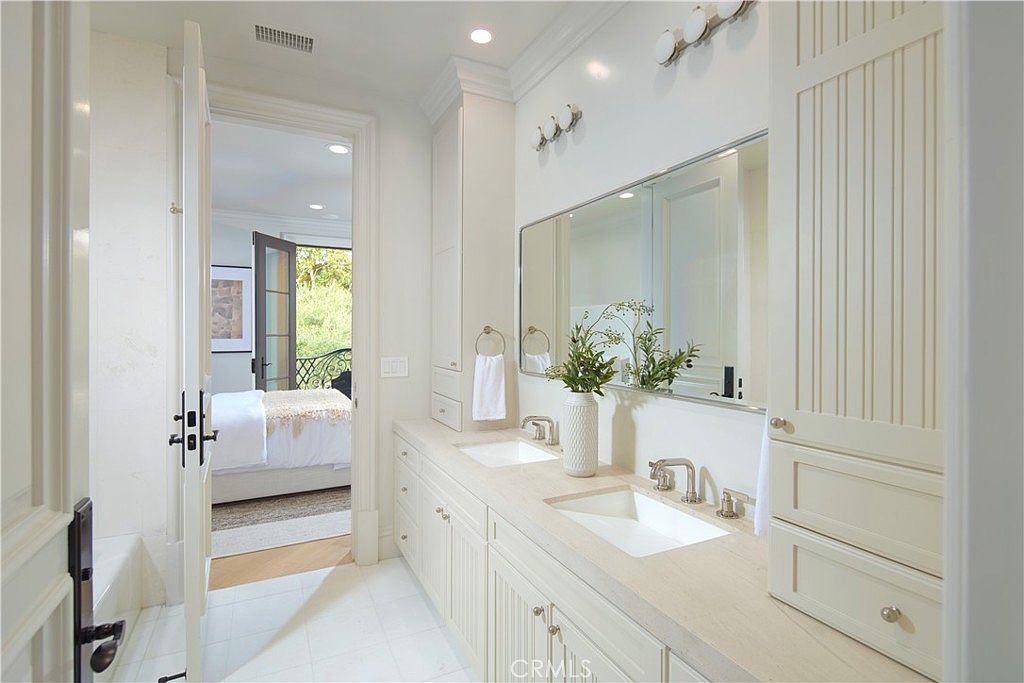
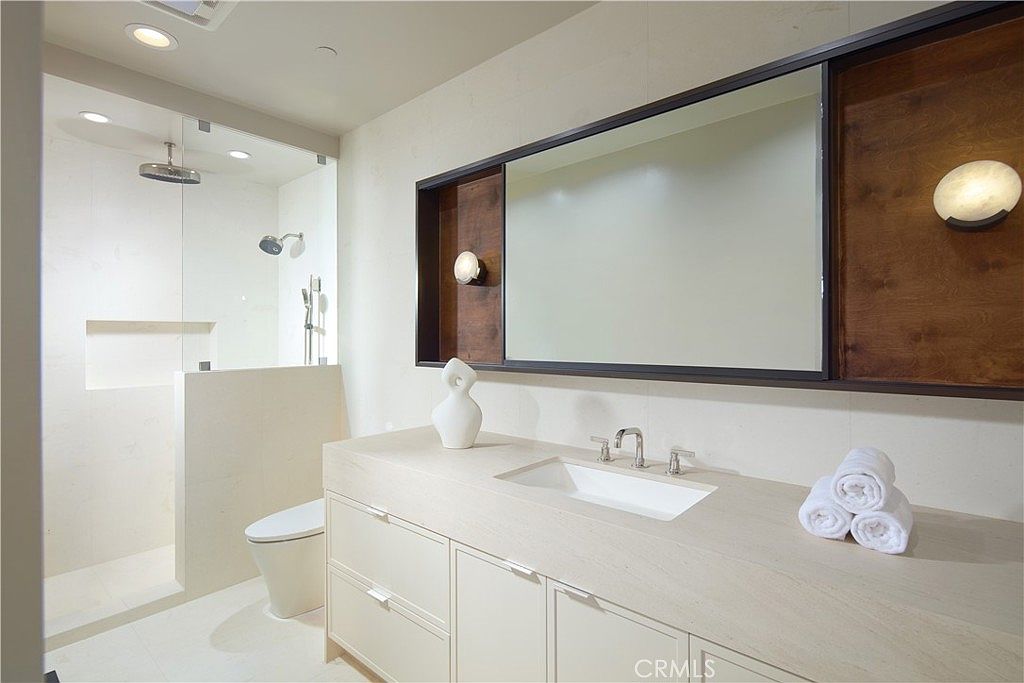
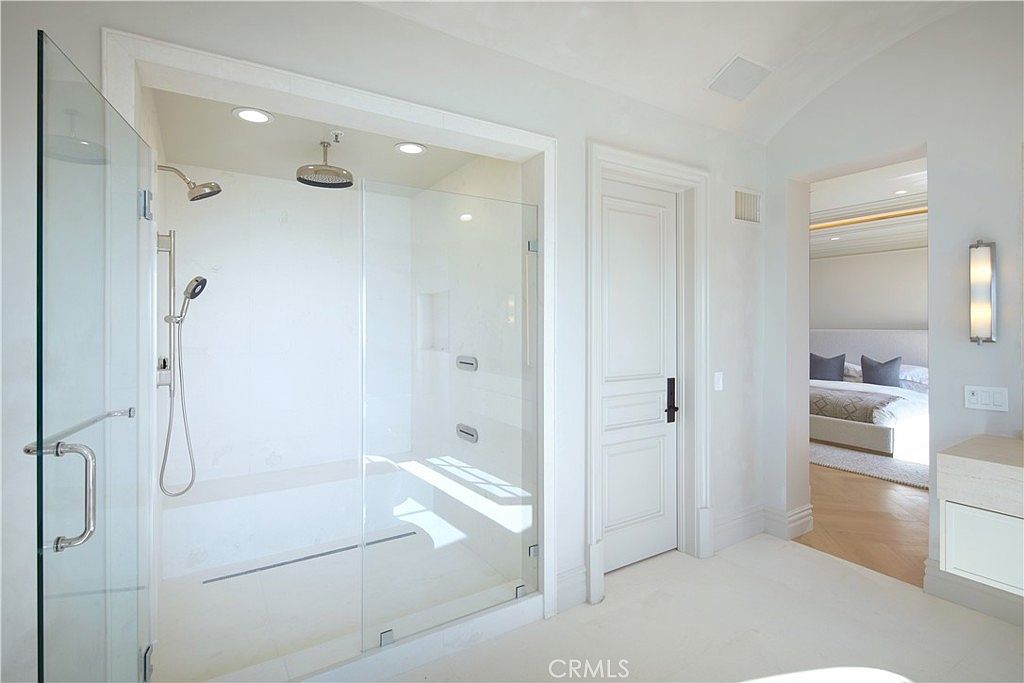
The material selections throughout reflect a designer's understanding that restraint and richness are not opposites. Natural limestone grounds the entry and wet areas. Venetian plaster, applied by hand and brushed to a soft luminosity, gives the walls depth without weight. In the kitchen and primary bath, Calacatta Vagli marble introduces its characteristic grey-gold veining against custom cabinetry in tones that feel both timeless and entirely of this moment. Bespoke hardware in oil-rubbed bronze and polished nickel appears throughout—small decisions that, accumulated over thousands of square feet, add up to a coherent and considered whole.
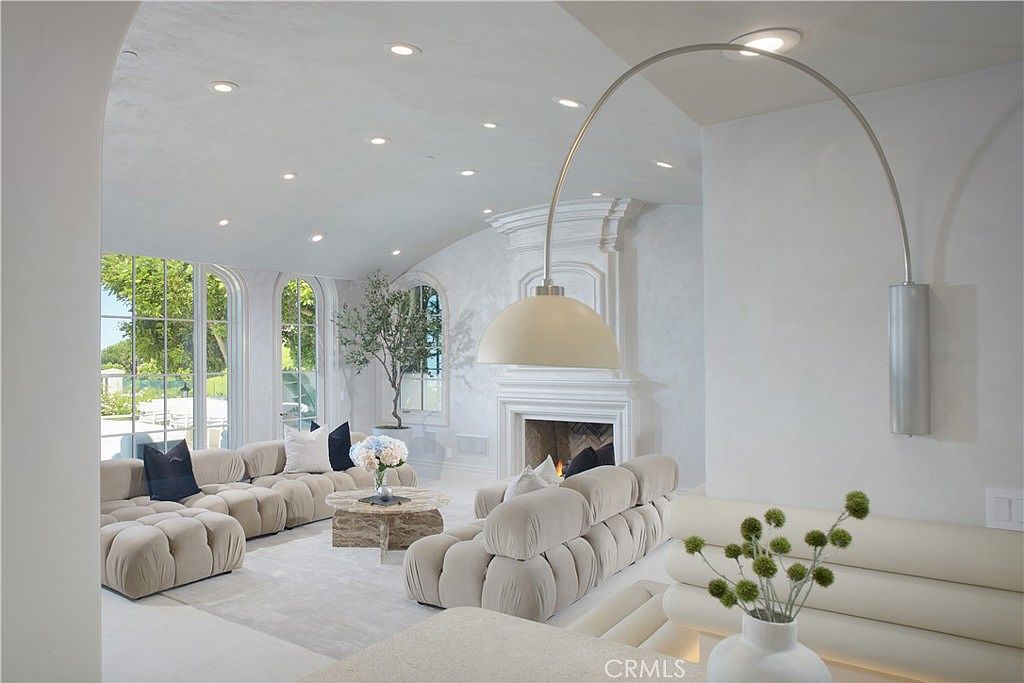
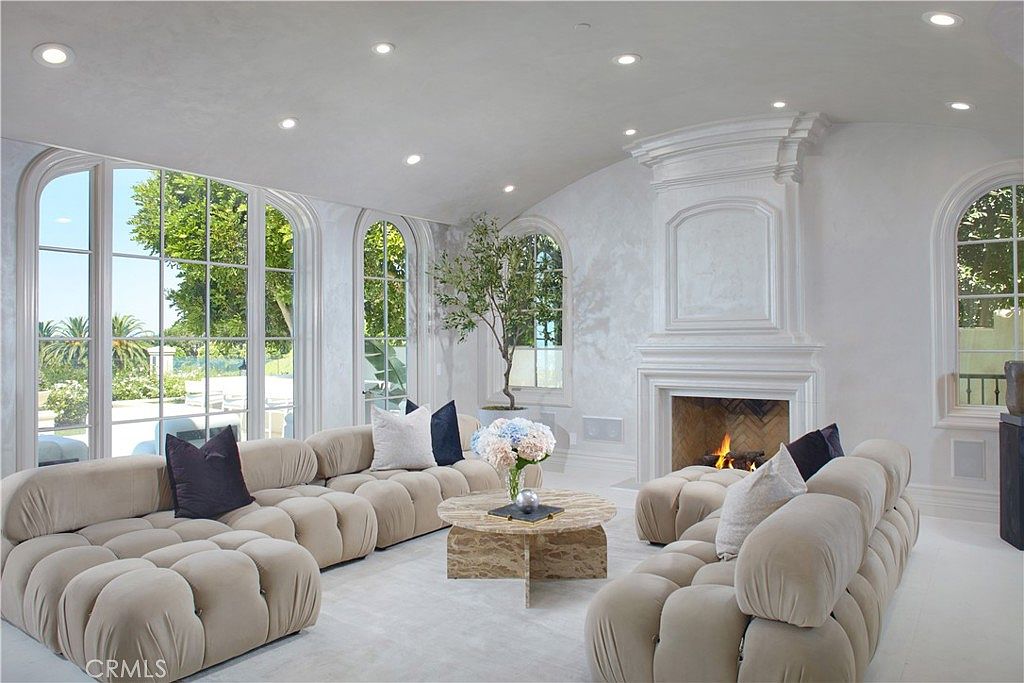
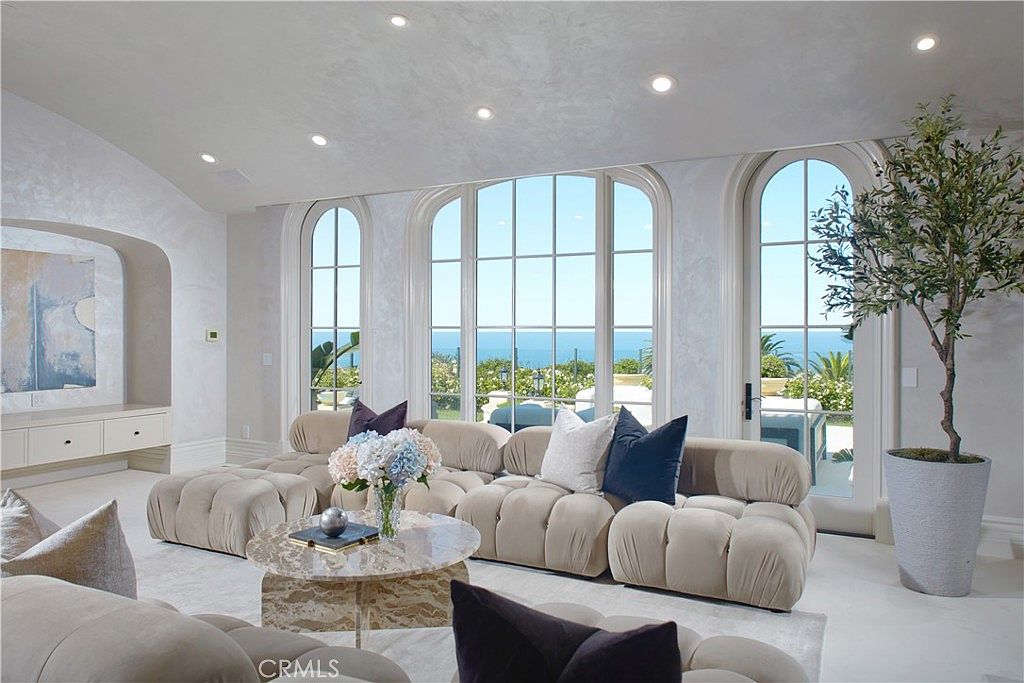
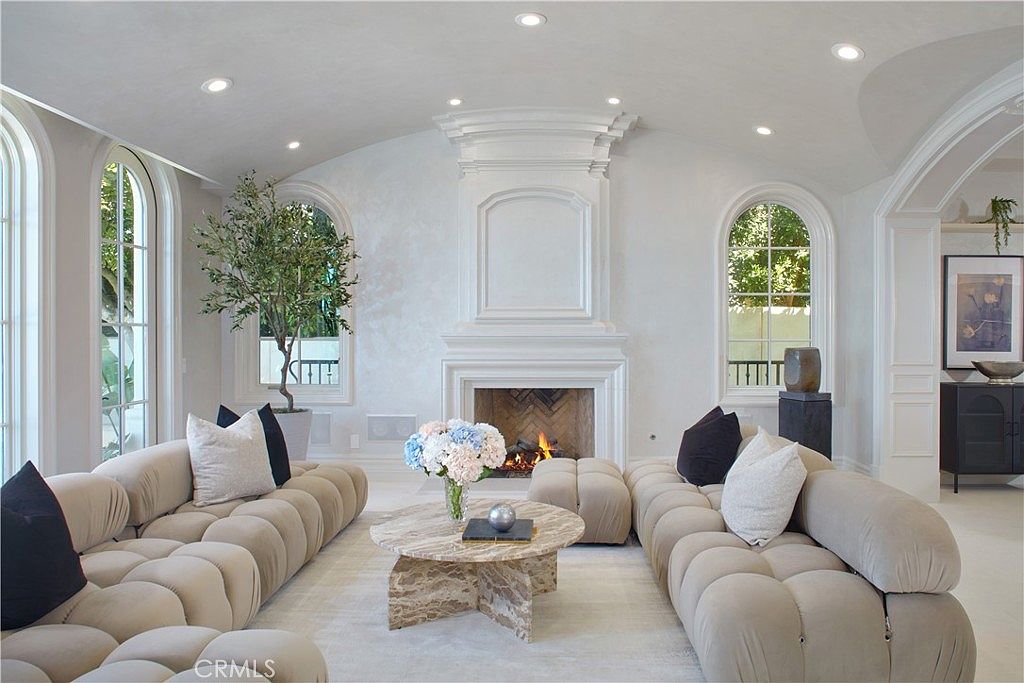
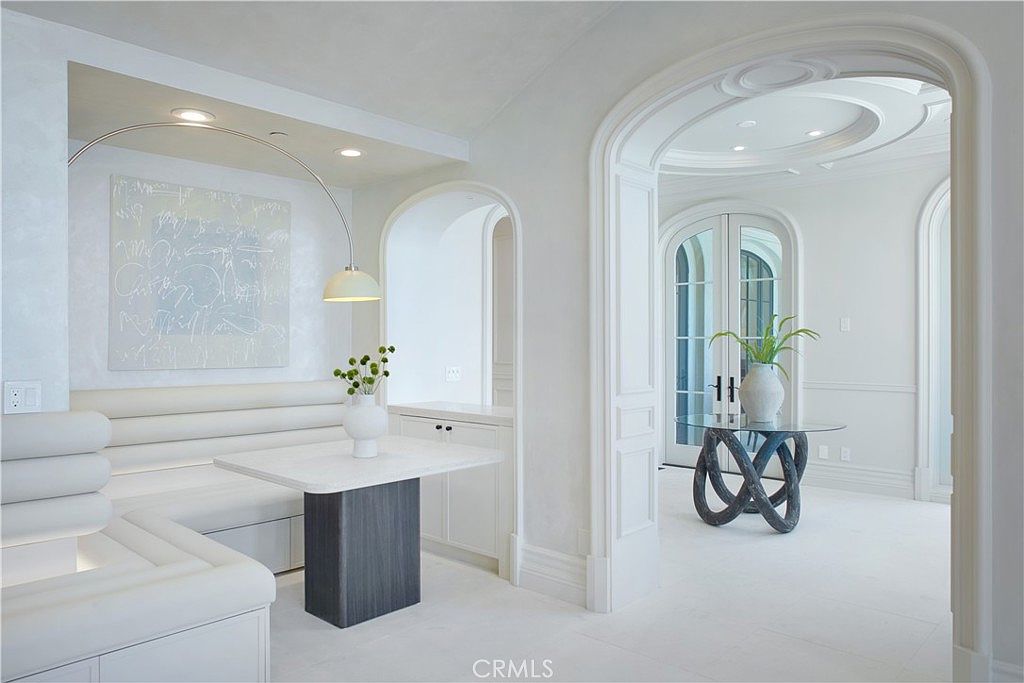
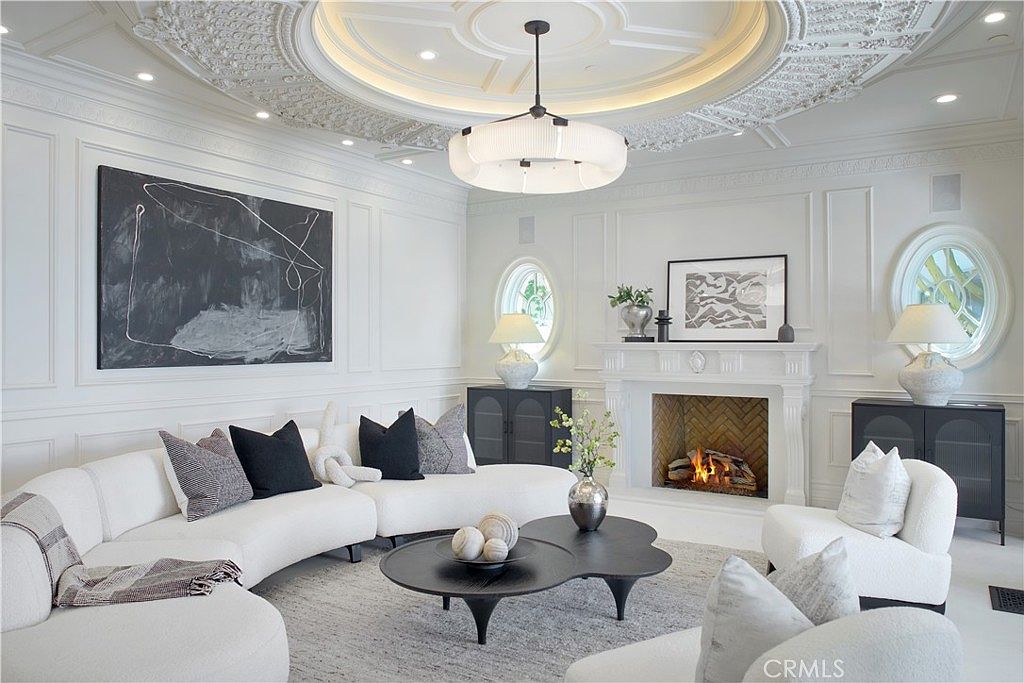
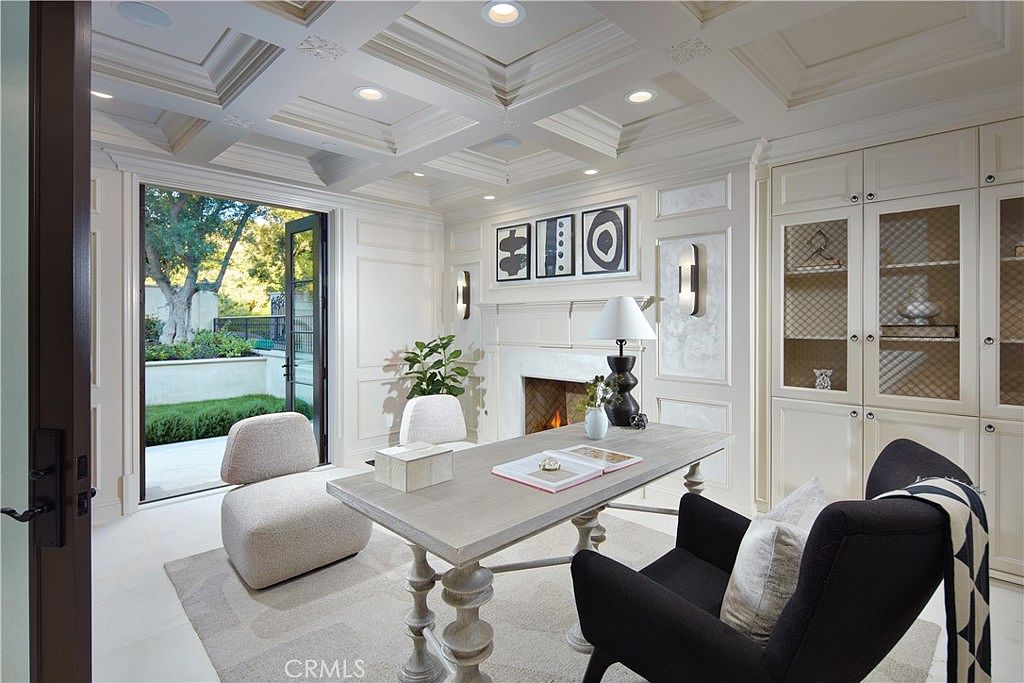
The formal rooms—living, dining, and a richly paneled library—carry the European register of the architecture with custom fireplaces and proportions that reward genuine entertaining. But the house is equally fluent in the California vernacular of indoor-outdoor living. The family room opens directly to the kitchen and, beyond it, to the view. The kitchen itself, appointed with dual refrigerators, professional-grade appliances, and a built-in upholstered banquette positioned to face the ocean, is designed as much for the pleasure of the morning light as for culinary performance.
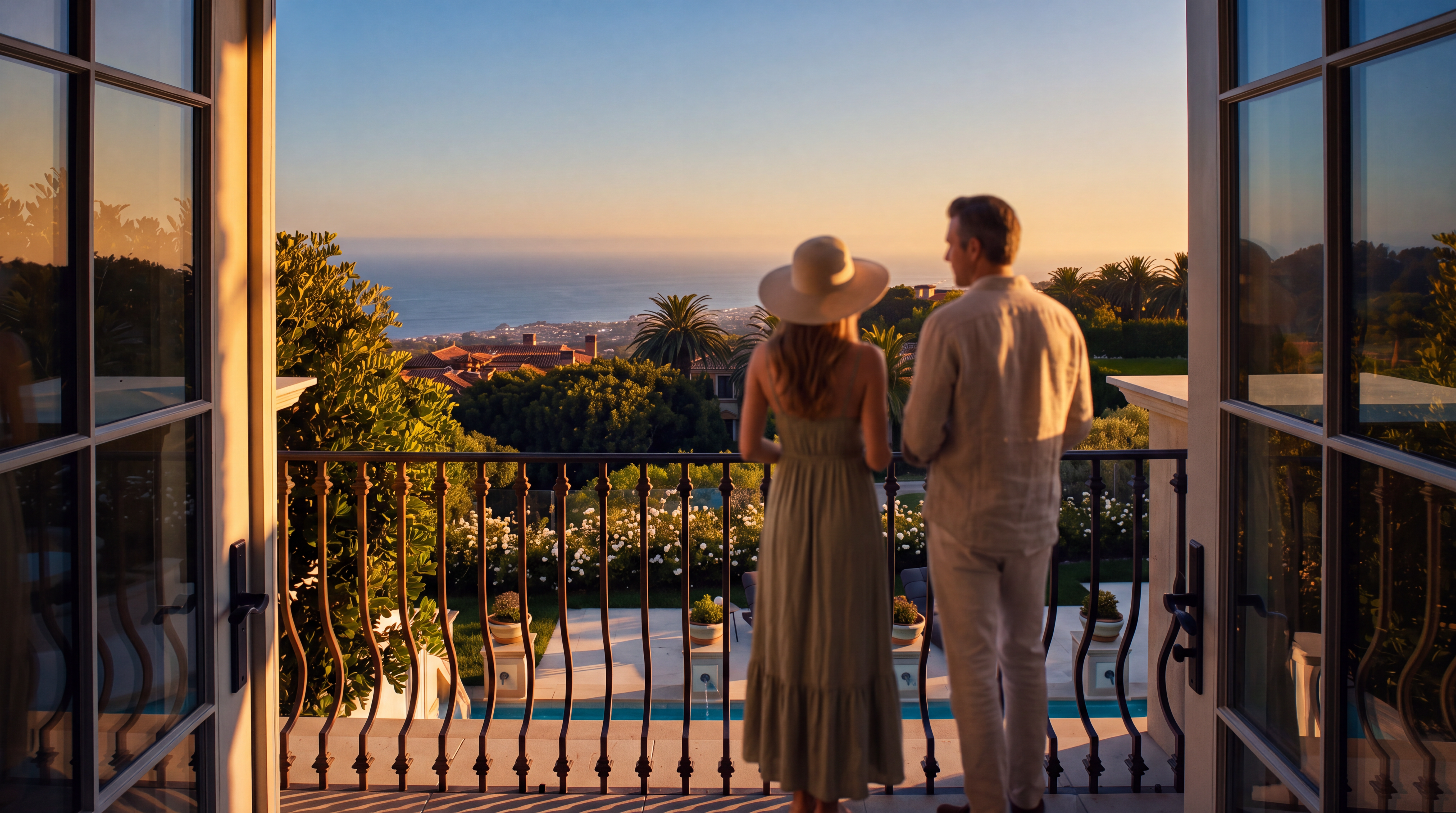
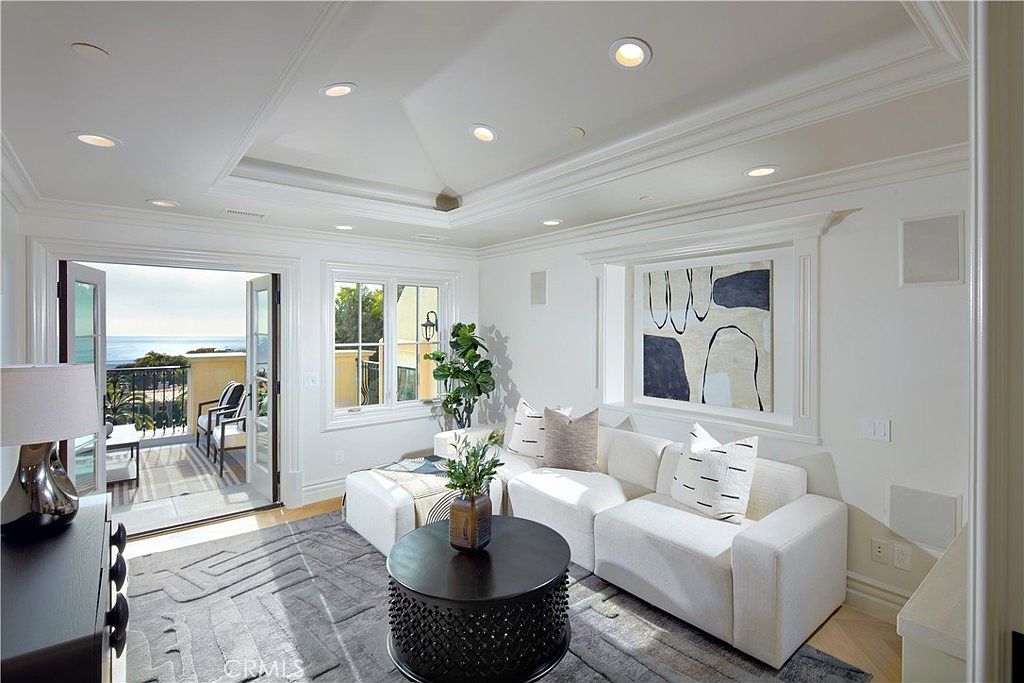
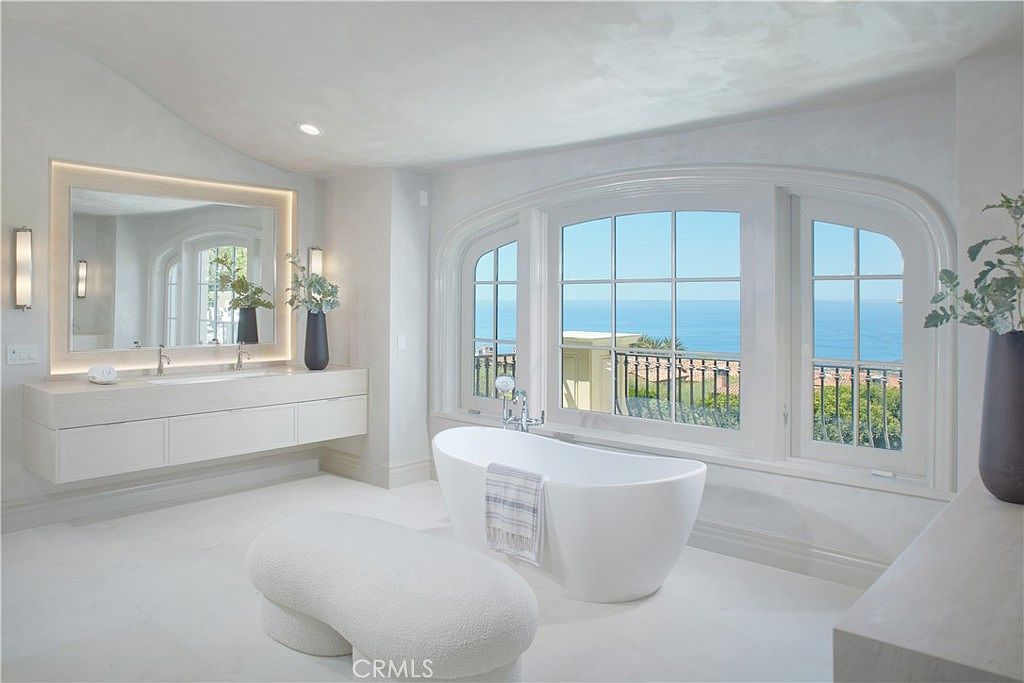
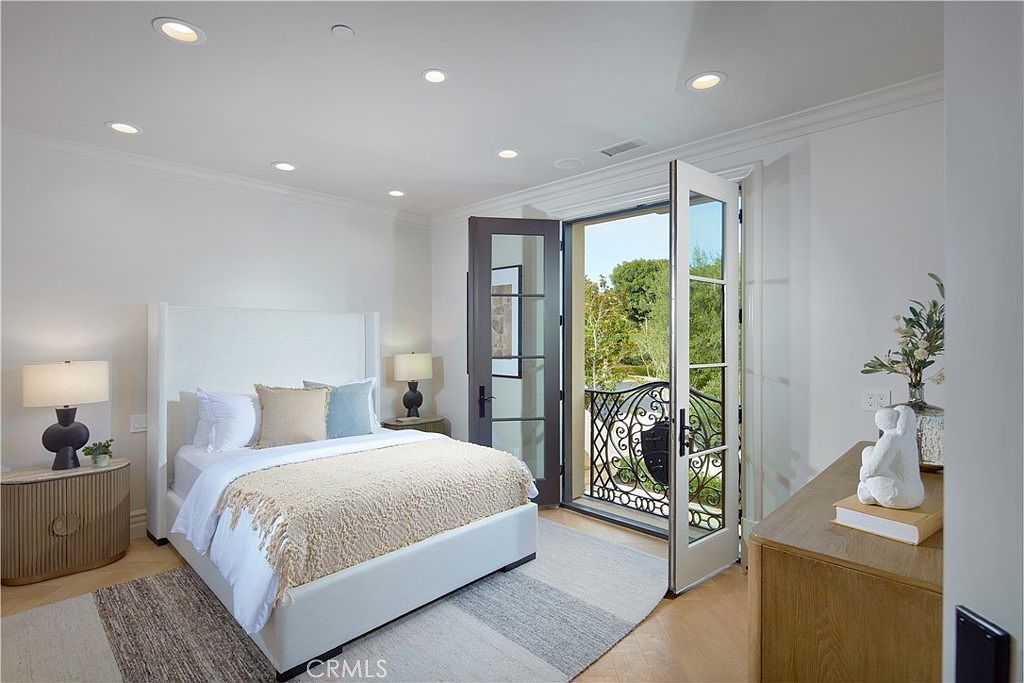
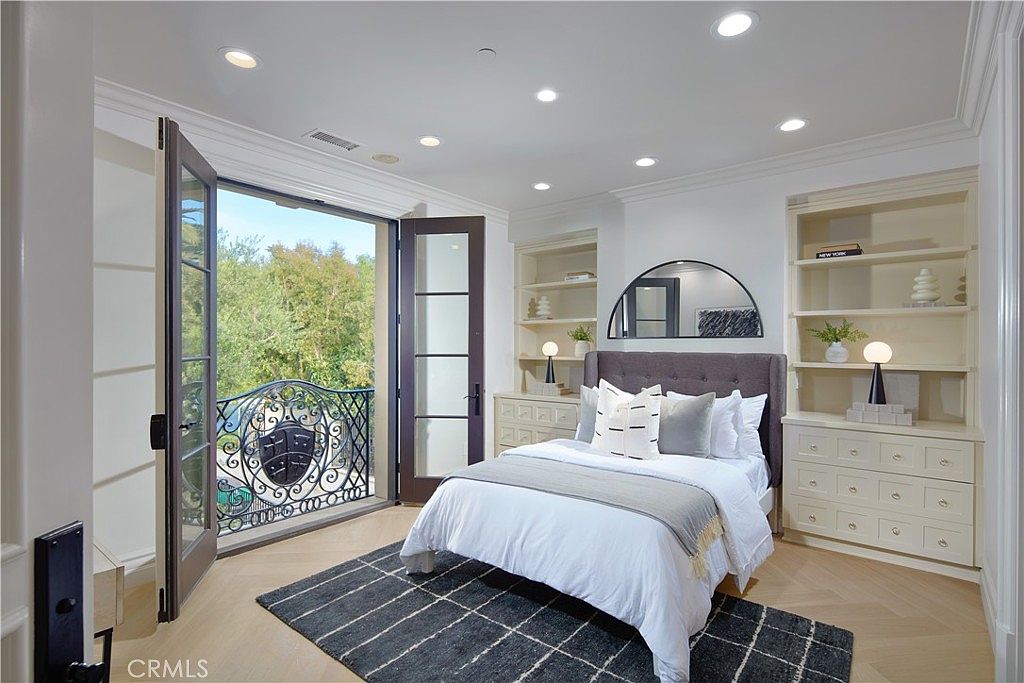
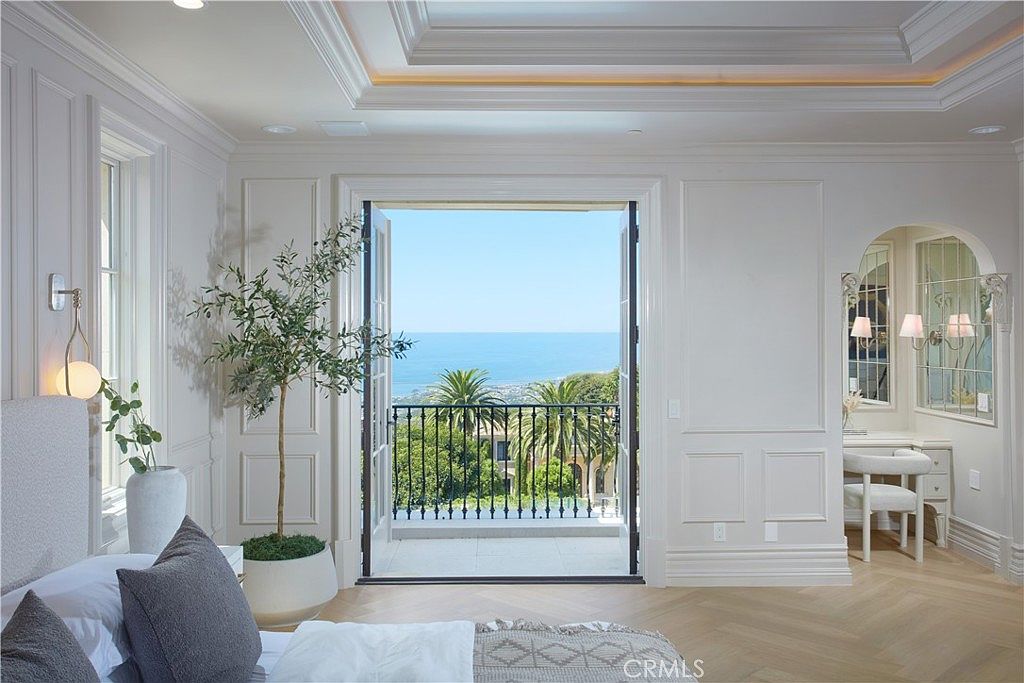
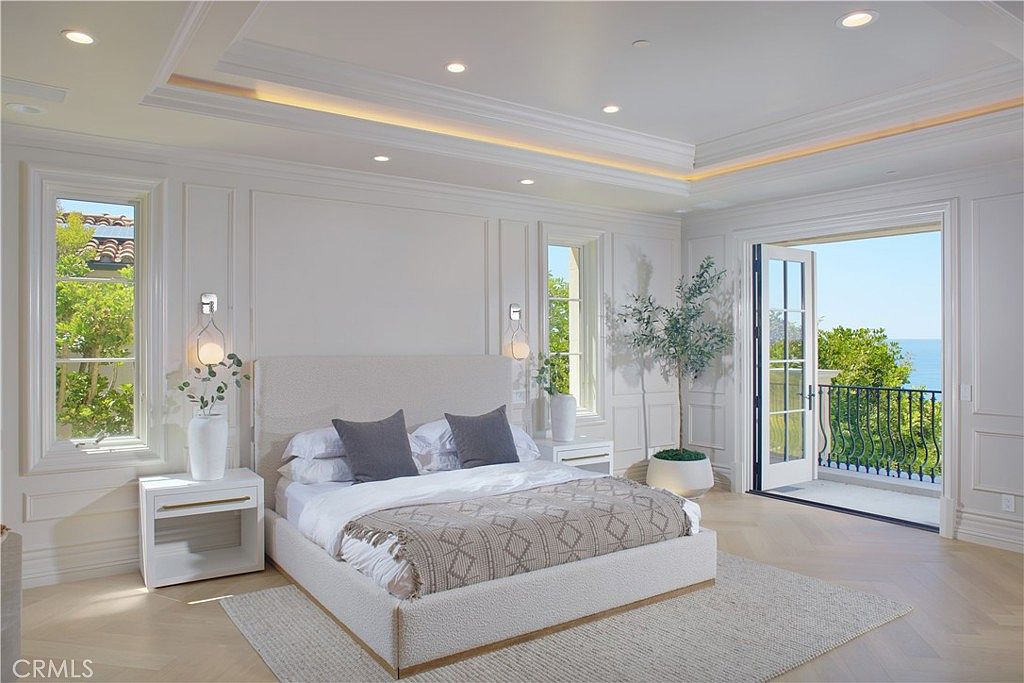
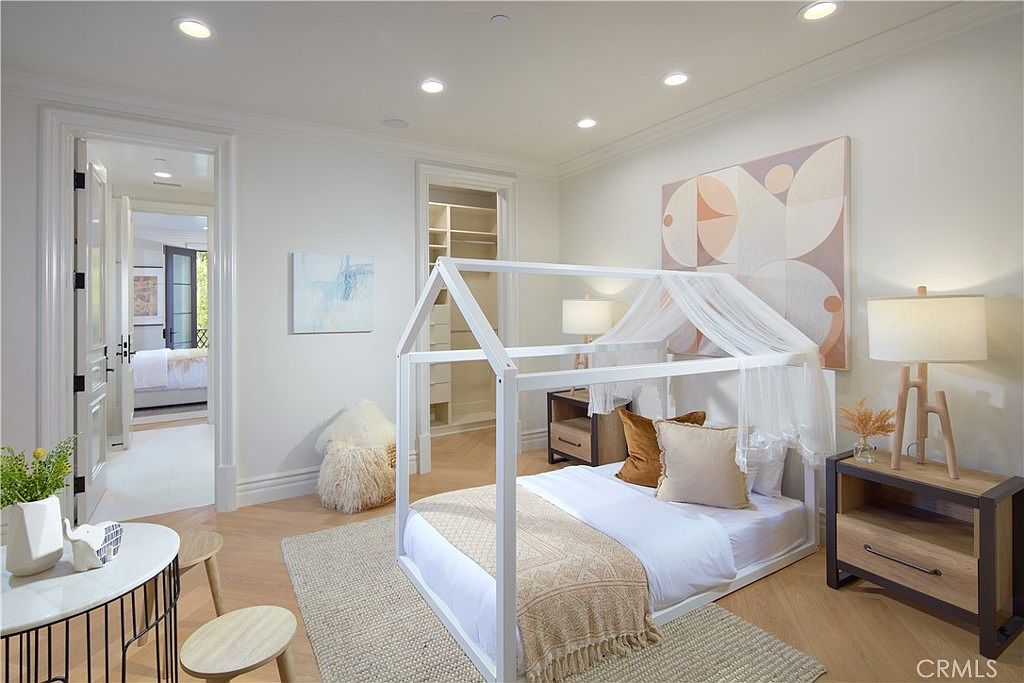
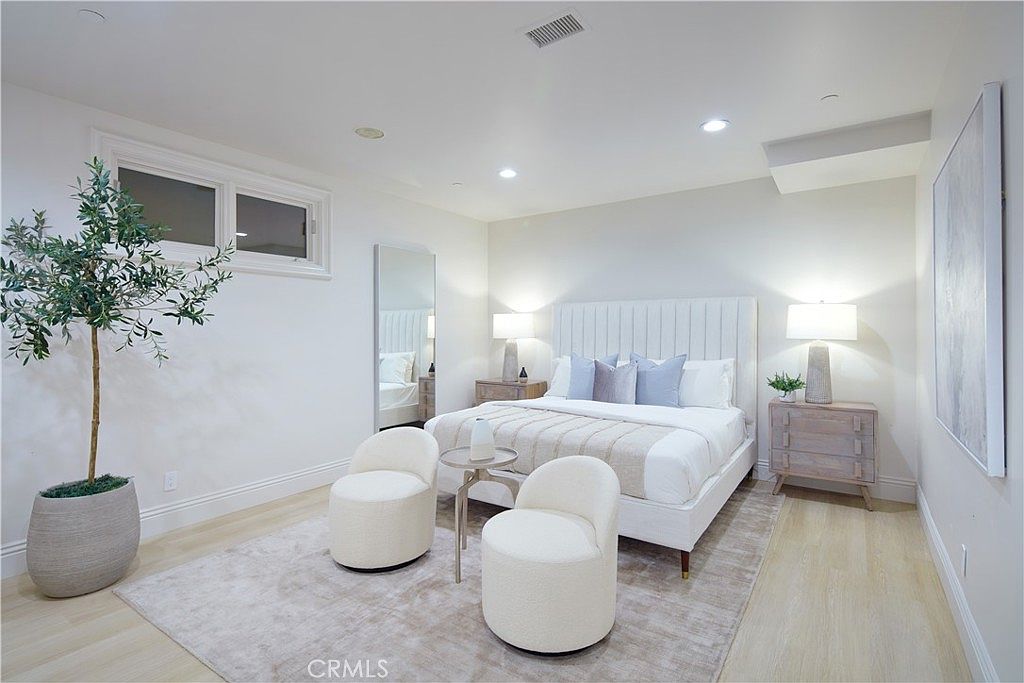
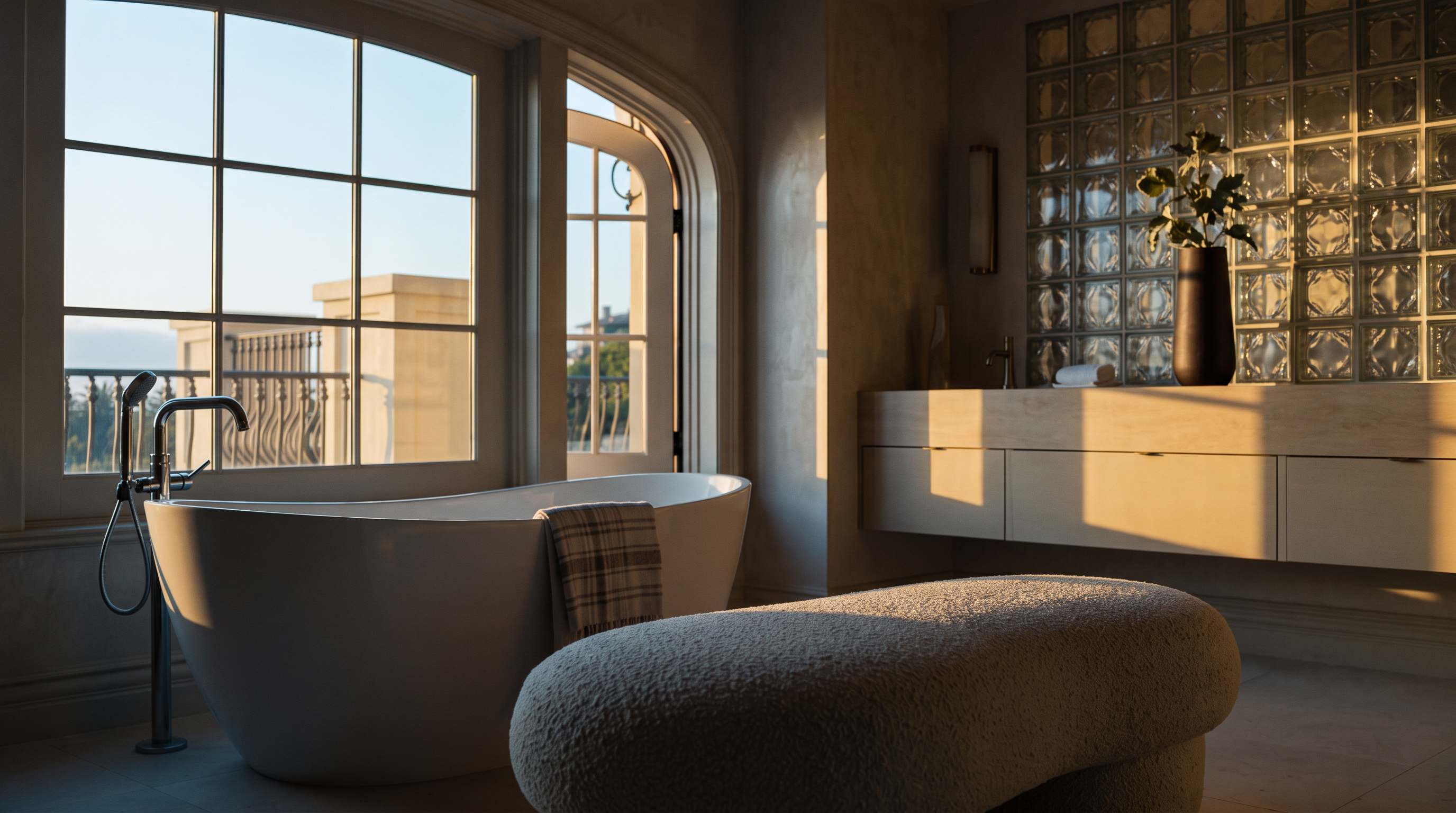
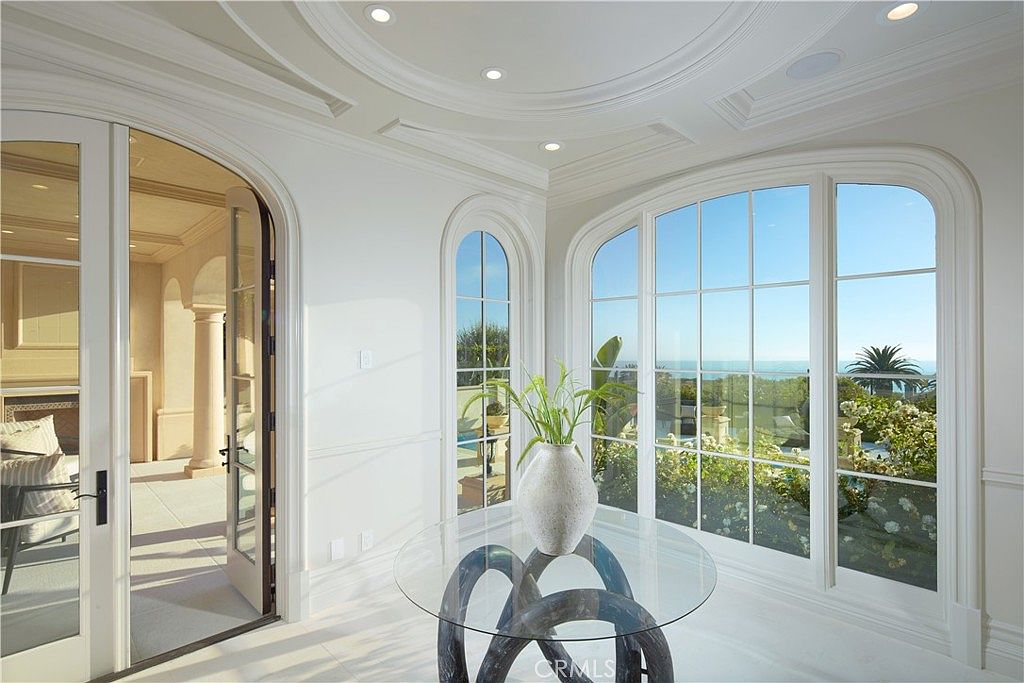
The primary suite is a study in considered luxury: a fireplace anchors one wall, French doors open onto a private ocean-view balcony, and the spa bathroom places a freestanding soaking tub directly before an arched window, so that the act of bathing becomes inseparable from the spectacle of the Pacific. Architectural glass-block accents diffuse natural light in ways that shift through the day. Five additional bedroom suites, each with its own character and generous proportions, extend the home's hospitality across multiple levels.
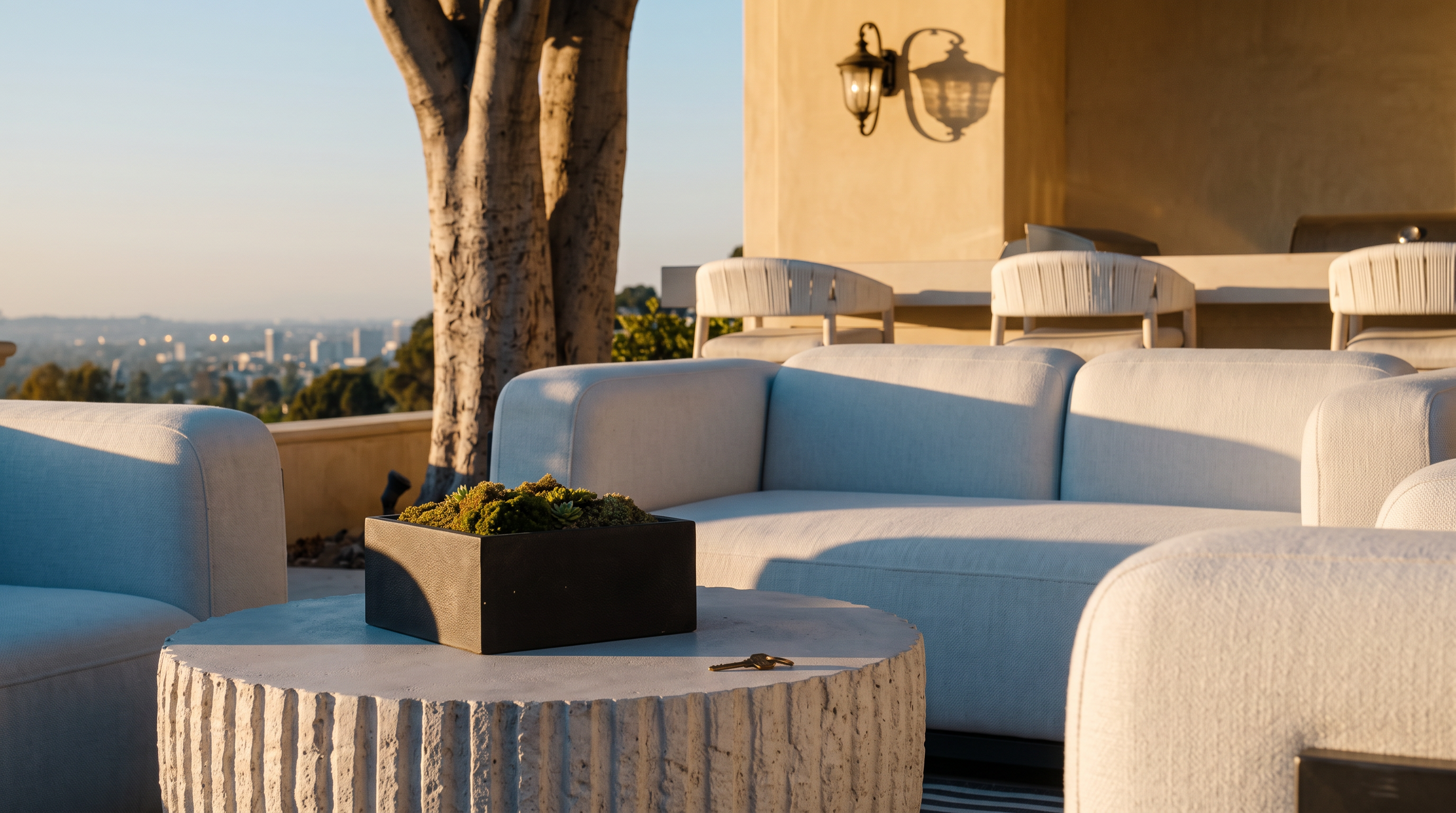
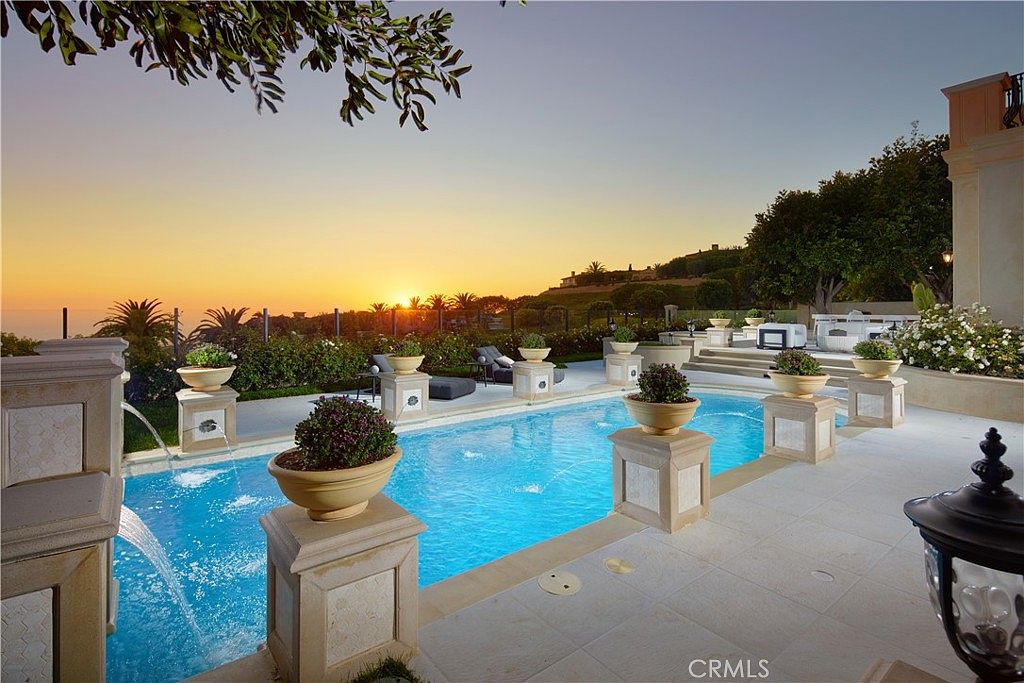
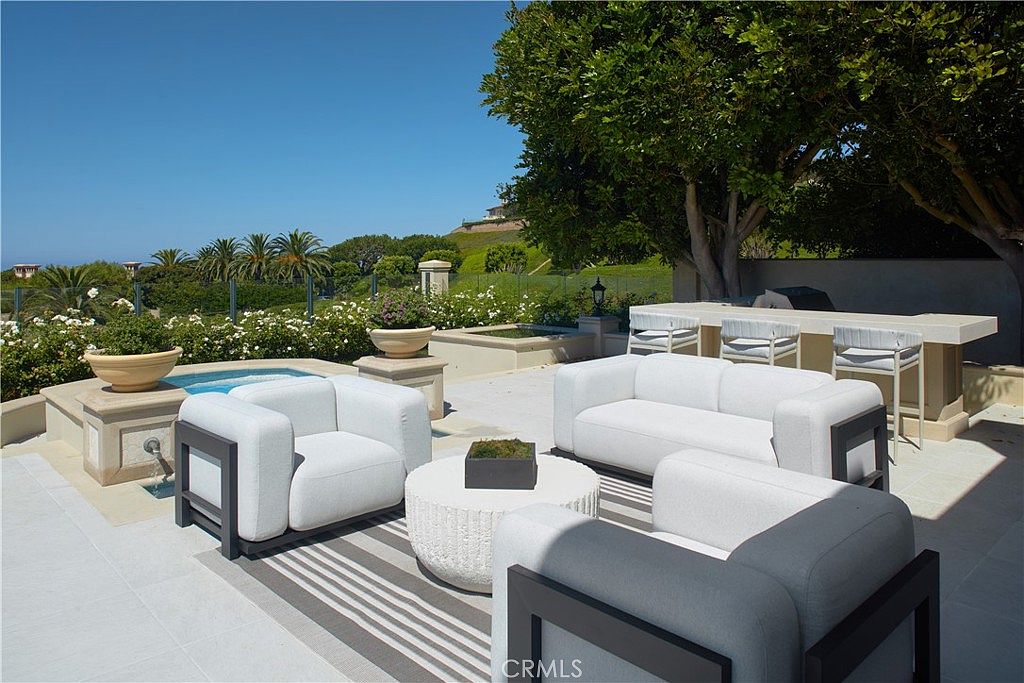
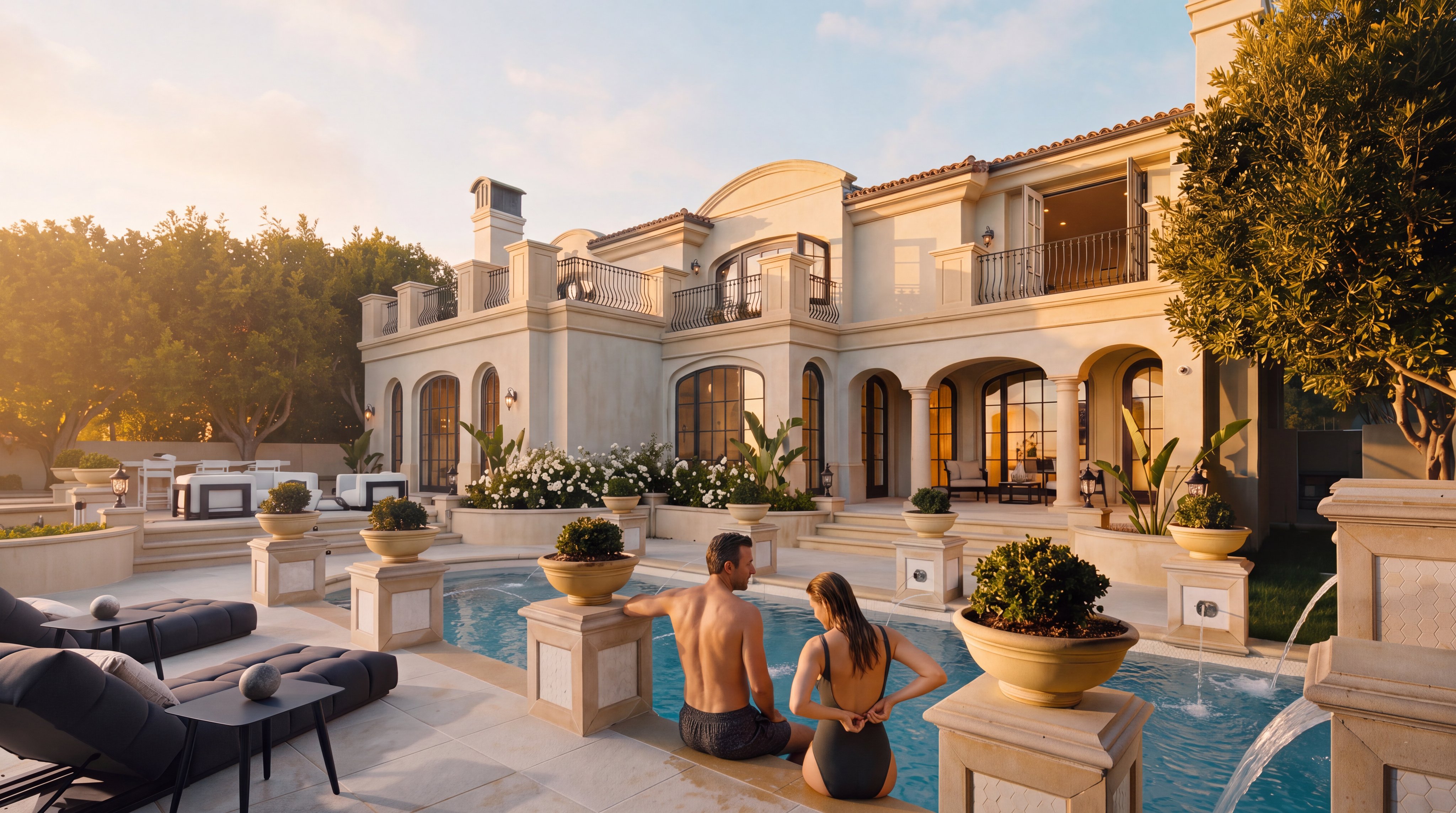
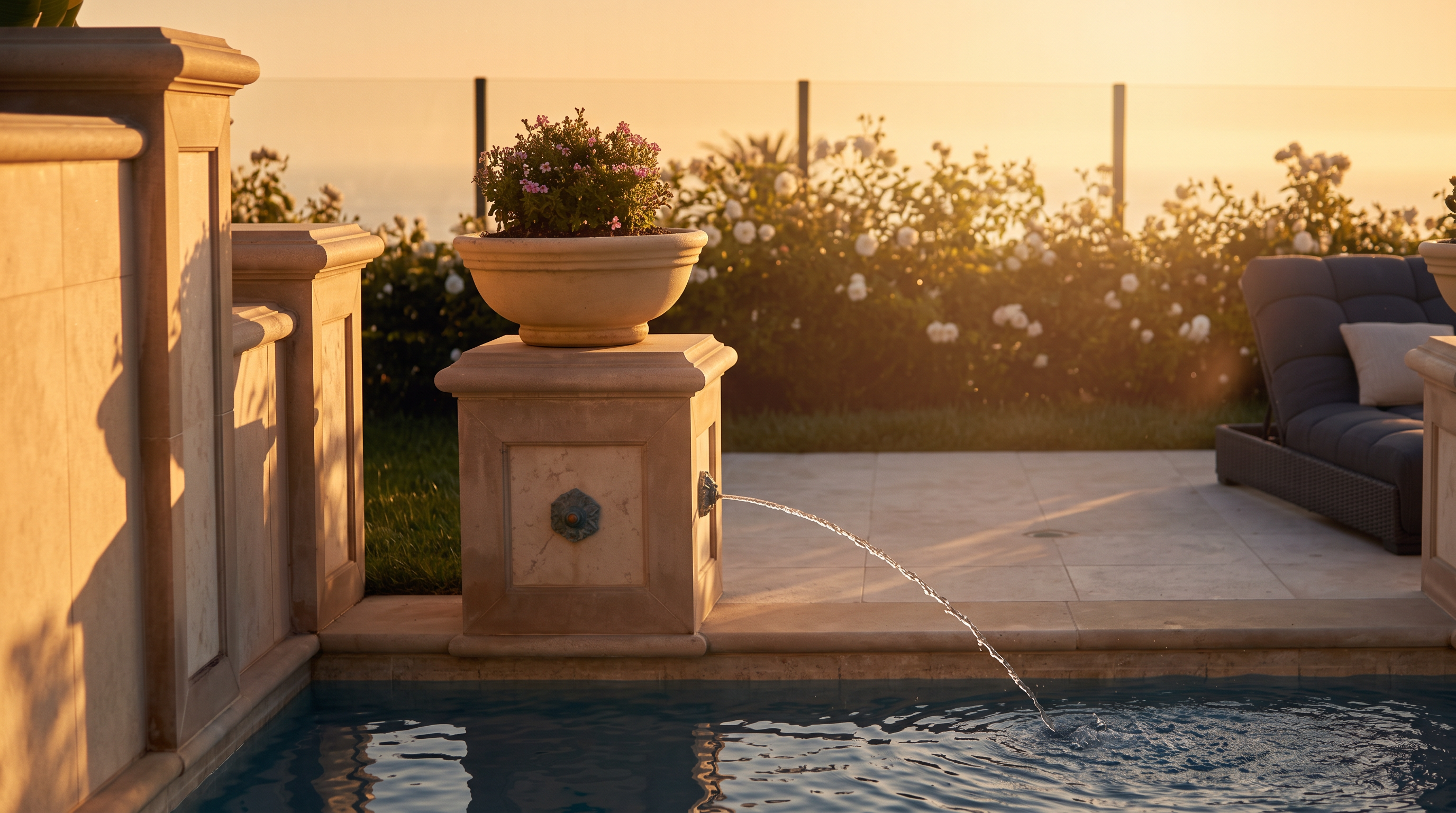
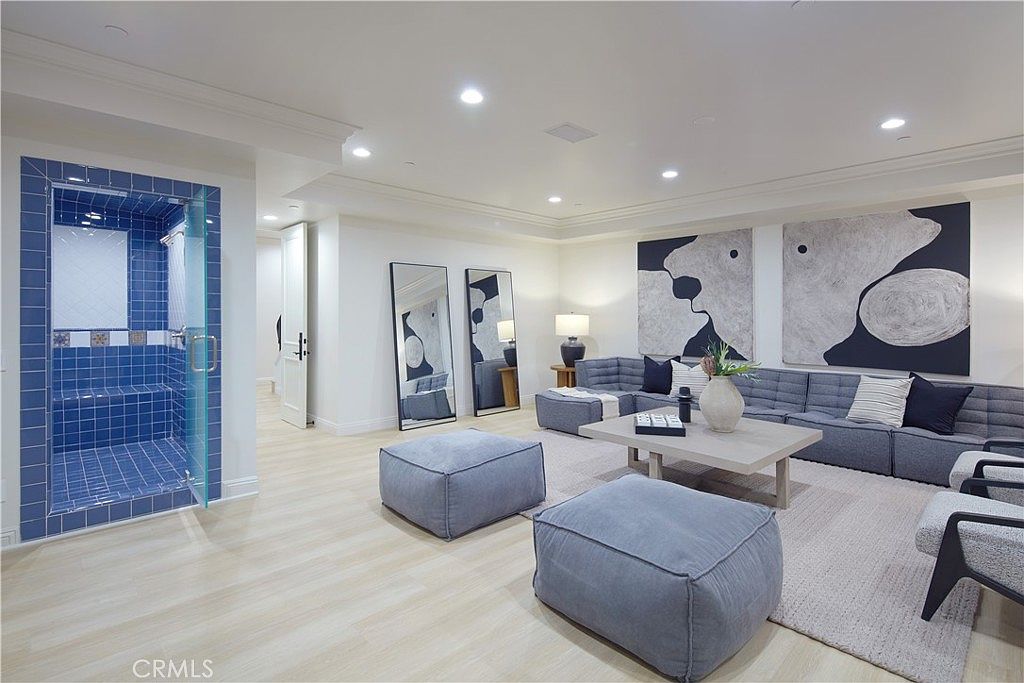
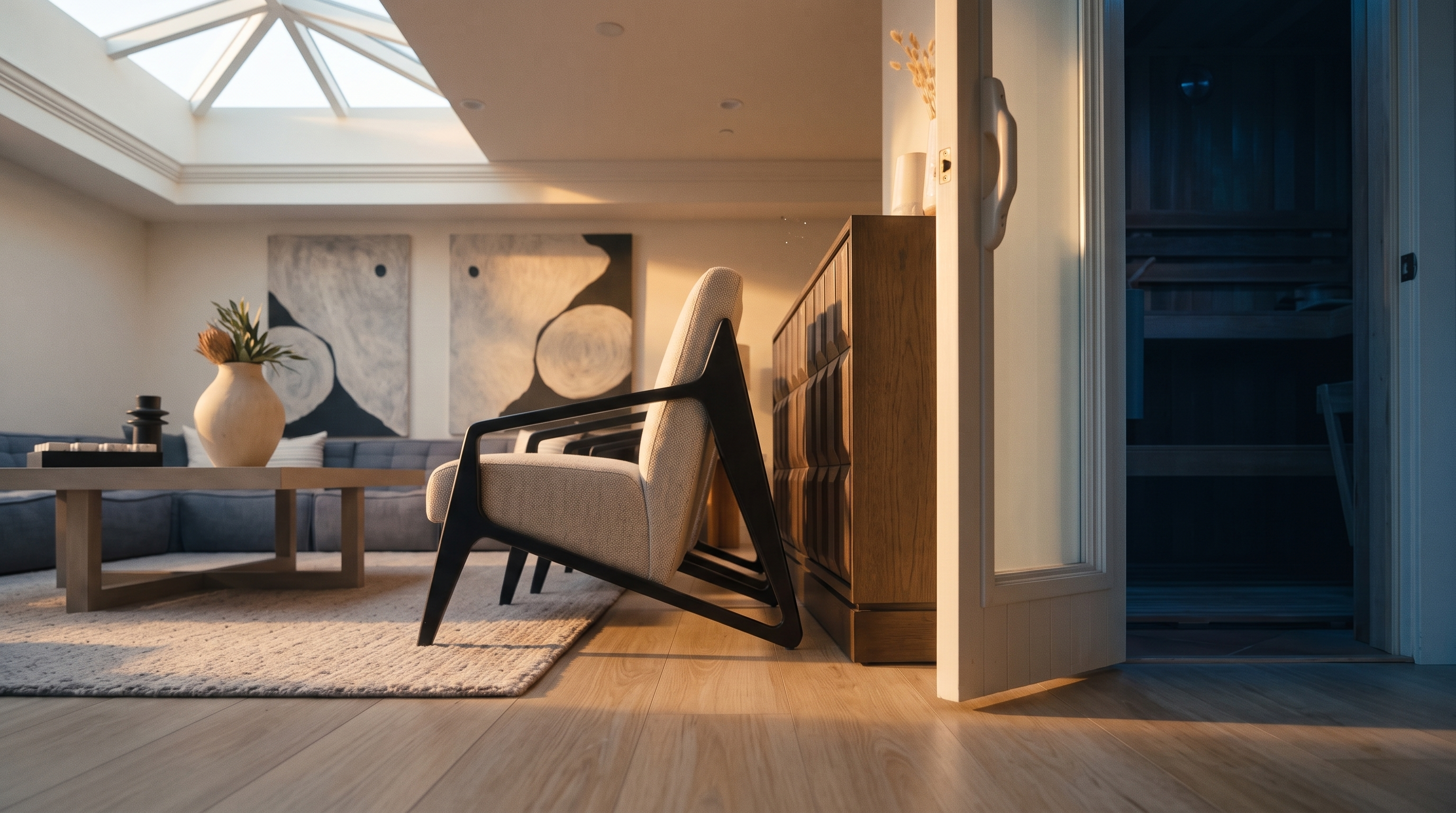
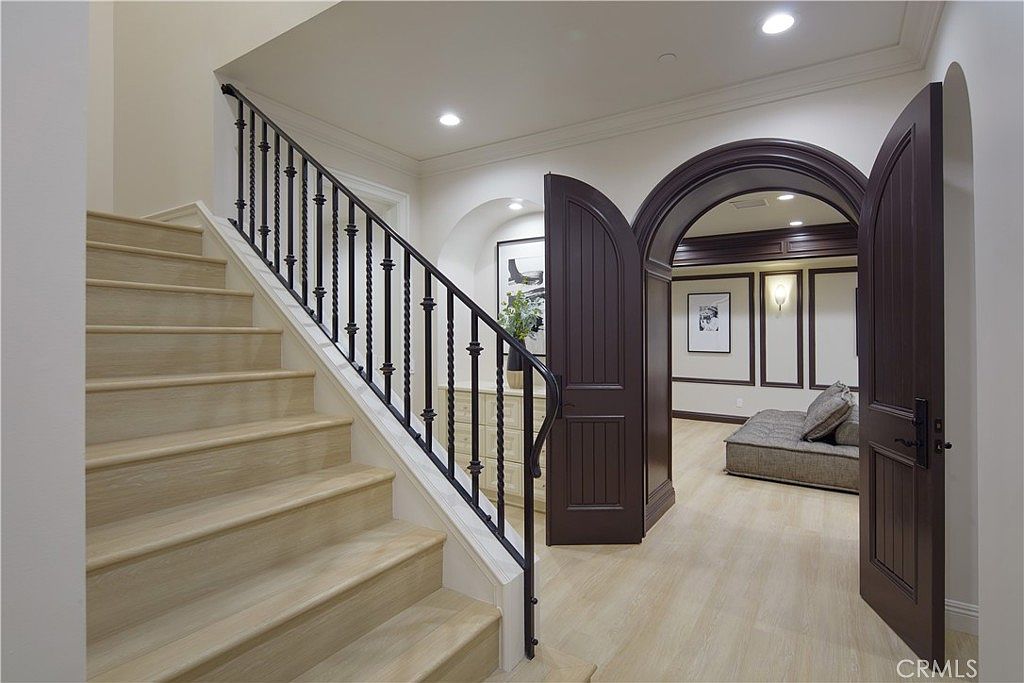
Below grade, a tiered home theater with plush seating and a built-in wet bar, a dedicated fitness space, a cedar-lined sauna, and a steam room form a private wellness and entertainment wing. A subterranean seven-car garage—practical in its purpose, extraordinary in its scale—completes the interior. Outside, a saltwater pool and spa overlook the coast from a stone-paved terrace, framed by a BBQ kitchen with natural stone countertops and a covered loggia with its own fireplace. The entire outdoor sequence is oriented, as everything here is, toward the water.
Newport Coast occupies a stretch of Orange County coastline that was, for most of the twentieth century, simply called the Irvine Coast—undeveloped coastal bluffs and canyons held by the Irvine Company as part of one of the largest privately held landholdings in California history. Residential development began in earnest in the 1990s, when the Irvine Company began master-planning a community that would take full advantage of the site's topographic drama: hillsides descending toward the Pacific, with sightlines extending to Catalina Island on clear days and, on exceptional ones, beyond.
Pelican Crest is among the most exclusive addresses within that master plan. A guard-gated enclave positioned at elevation, it is defined by large parcels, architectural consistency, and a sense of remove from the activity below—while remaining within easy reach of everything Newport's coastline has to offer. The community sits adjacent to the Pelican Hill Resort, the Four Seasons-managed property whose Tom Fazio-designed golf courses have become a benchmark of Southern California resort golf. The circular pool at the resort, modeled on the Pantheon in Rome, has become something of an architectural landmark in its own right.
Crystal Cove State Park borders Newport Coast to the north, preserving roughly 2,400 acres of coastal canyon and three miles of public beach in a condition that resists the development pressures surrounding it. The historic Crystal Cove cottages—a collection of early-twentieth-century beach structures now operated as a state-managed retreat—offer a tangible connection to the coast's earlier history. The beach itself, with its tide pools and relatively uncrowded stretches, is a resource that Newport Coast residents value in direct proportion to its rarity.
Fashion Island, the open-air regional shopping center in Newport Beach, sits a short drive south and west. Its tenant mix—Neiman Marcus, Bloomingdale's, and a broad collection of independent restaurants and boutiques arranged around an outdoor promenade—reflects Newport Beach's position as one of Southern California's most affluent communities. The Balboa Peninsula and Newport Harbor, visible from the estate's principal rooms, host one of the largest recreational boating harbors on the West Coast, with a marine culture that extends from competitive sailing to leisurely harbor cruises.
The dining scene in Newport Beach has grown considerably in recent sophistication over the past decade. Nobu Newport Beach, at the Fashion Island Hotel, and a number of chef-driven independents have established the area as a credible culinary destination rather than merely a convenient one. Nearby Corona del Mar—the small-scale, walkable village immediately adjacent—offers a more intimate alternative, with independent restaurants, boutiques, and a farmers' market that draws residents from across the surrounding communities.
For families, the Newport-Mesa Unified School District and a collection of well-regarded private institutions serve the area. John Wayne Airport, officially Orange County Airport, is approximately fifteen minutes by car, offering both domestic and select international service without the scale or congestion of Los Angeles International. The balance Newport Coast strikes—between natural beauty, community privacy, resort amenity, and urban access—is one that takes considerable geographic good fortune to achieve, and very few places along the Southern California coast manage it as convincingly.
Featured Highlights
Curated Content • Presented by John Cain