The Story Behind
A Private Tribeca Sanctuary With Its Own 50-Foot Pool
There are residences that impress, and then there are residences that genuinely astonish. Townhome A at 11 Beach Street belongs to the latter category—a work of architectural conviction realized by Thomas Juul-Hansen, the Danish-born designer whose portfolio has come to define a certain strain of refined New York luxury: materials-driven, spatially generous, and quietly extraordinary.
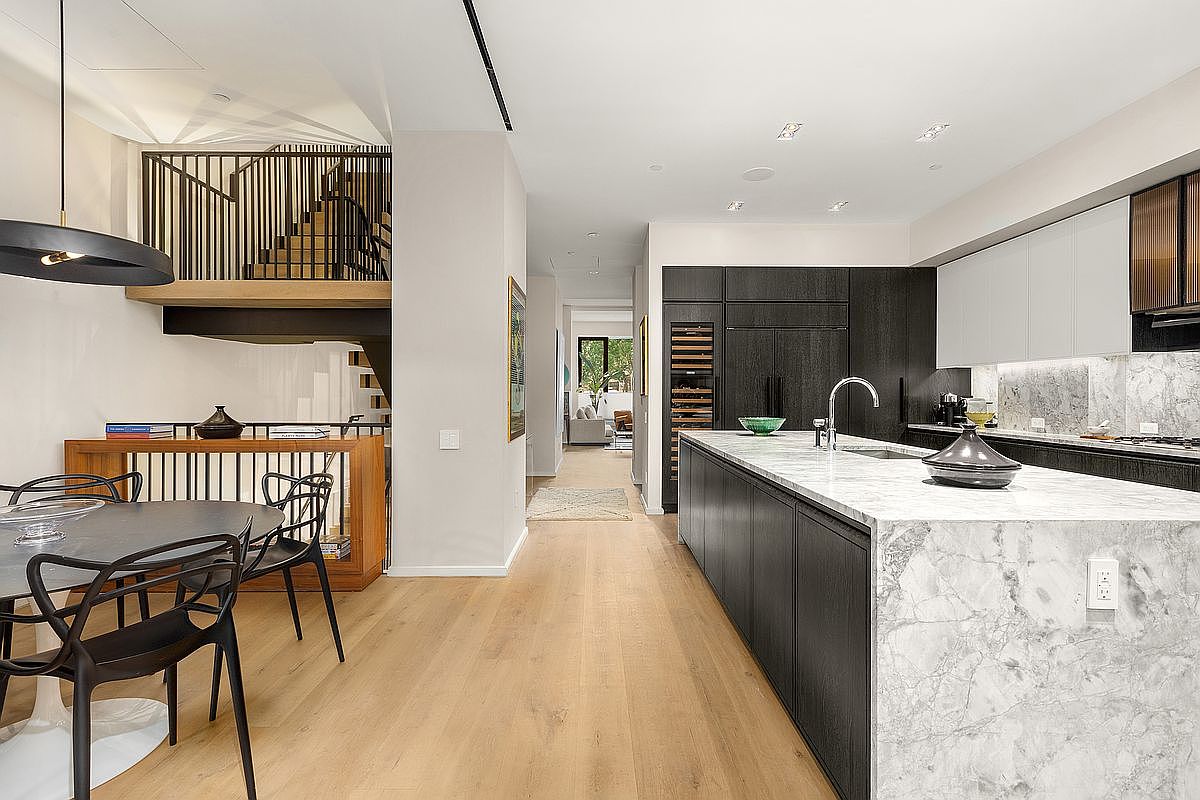
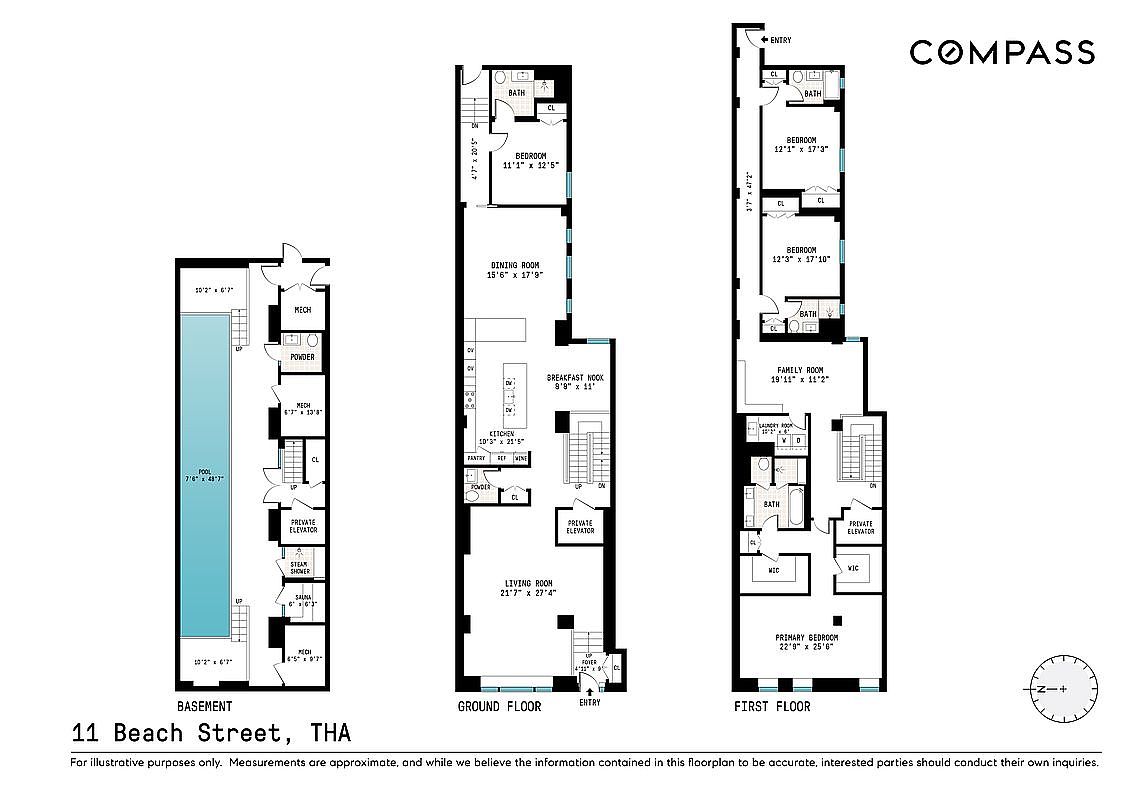
The residence announces itself from the street through a private steel-canopied entrance, a gesture that immediately establishes its dual identity: the autonomy of a townhouse, the infrastructure of a first-class condominium. From here, the journey inward unfolds across three levels connected by both a beautifully detailed staircase and a private in-unit elevator—each transition a considered act of design.
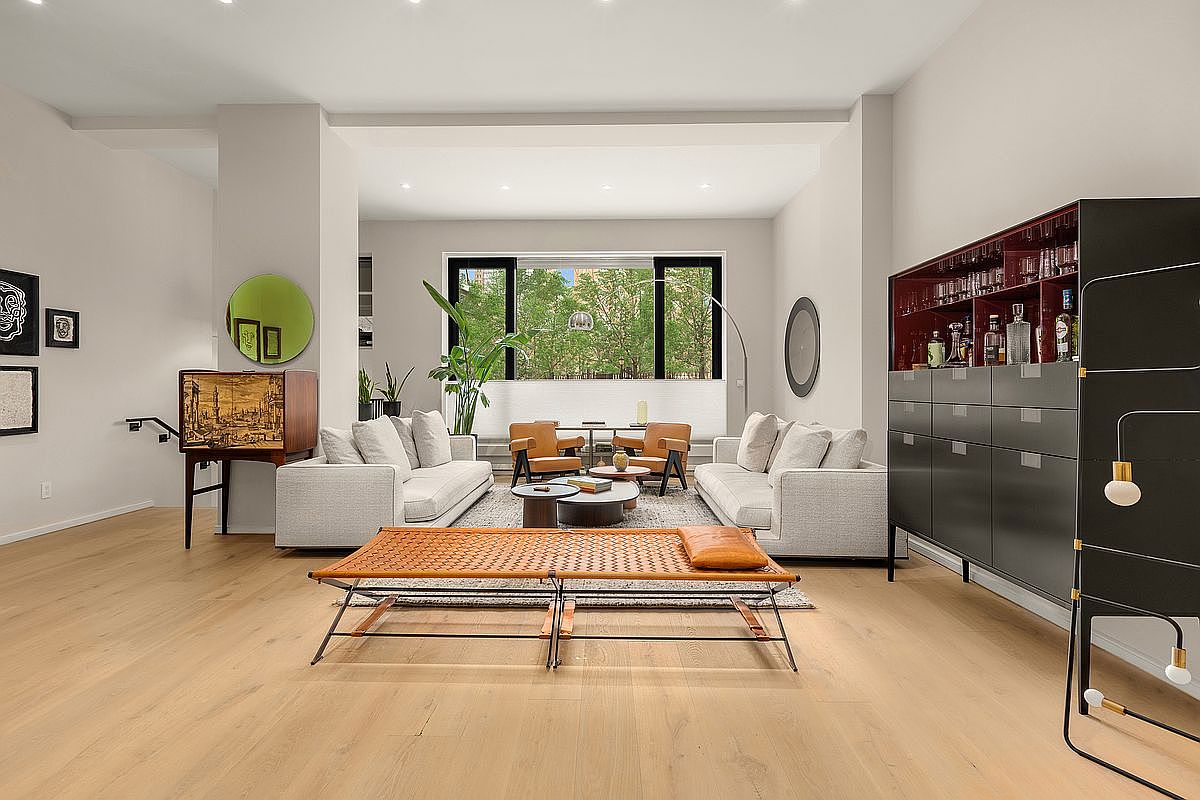
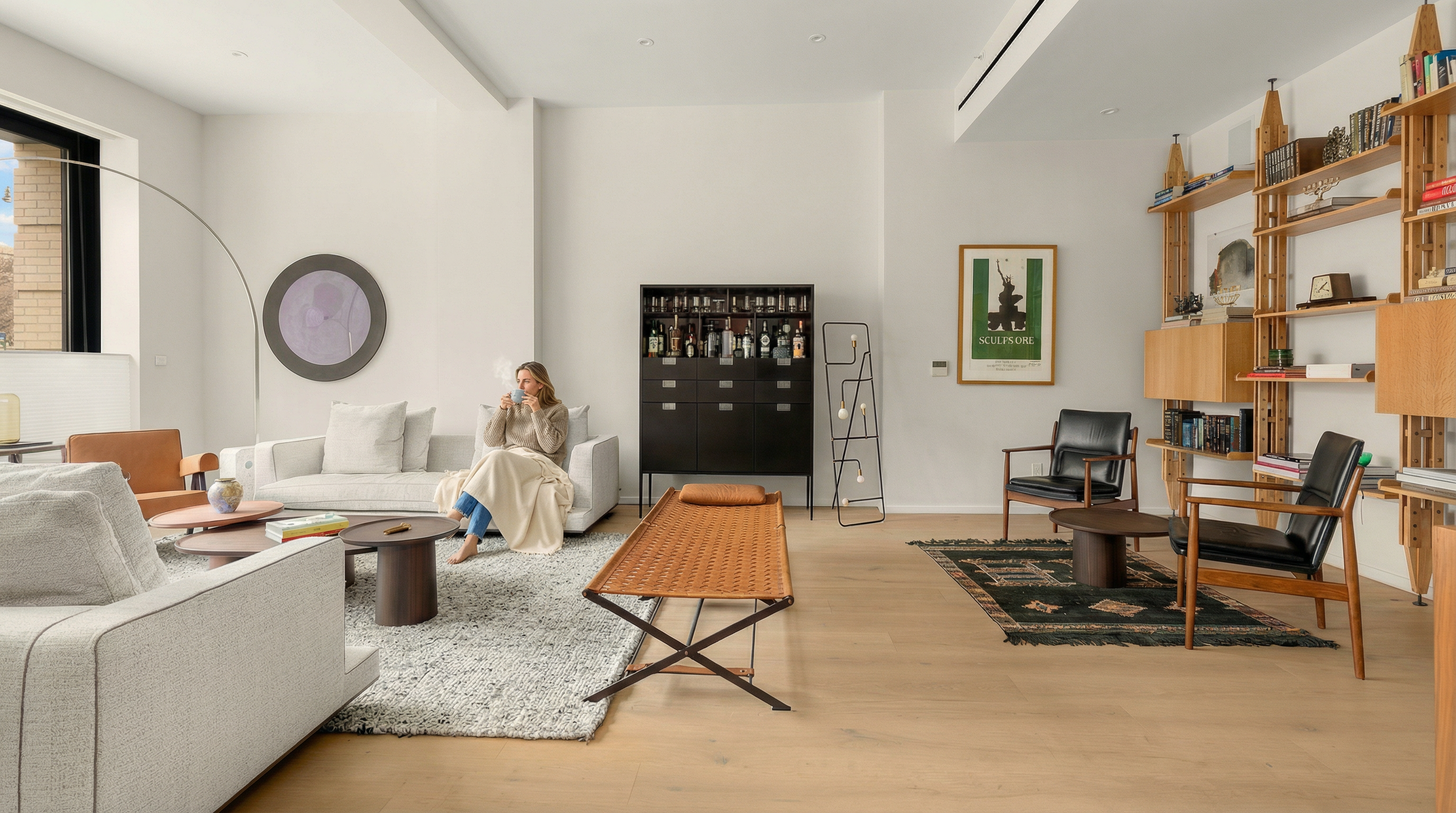
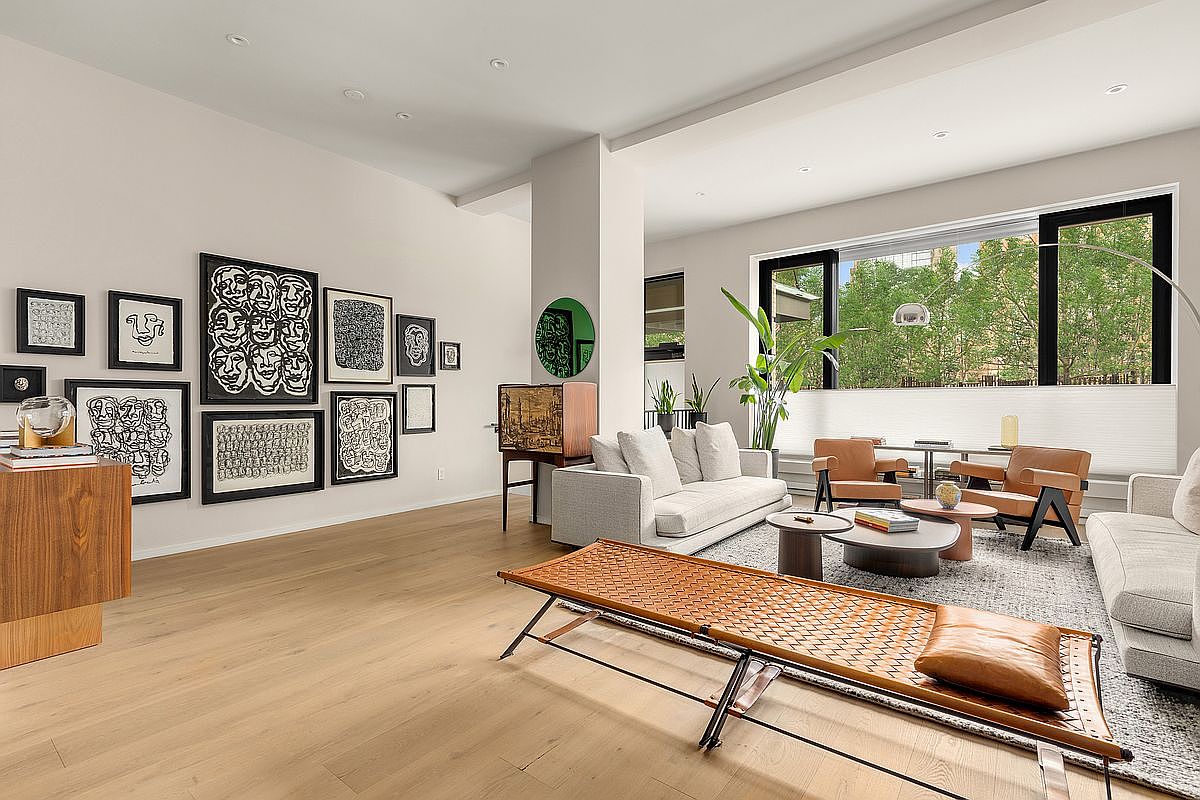
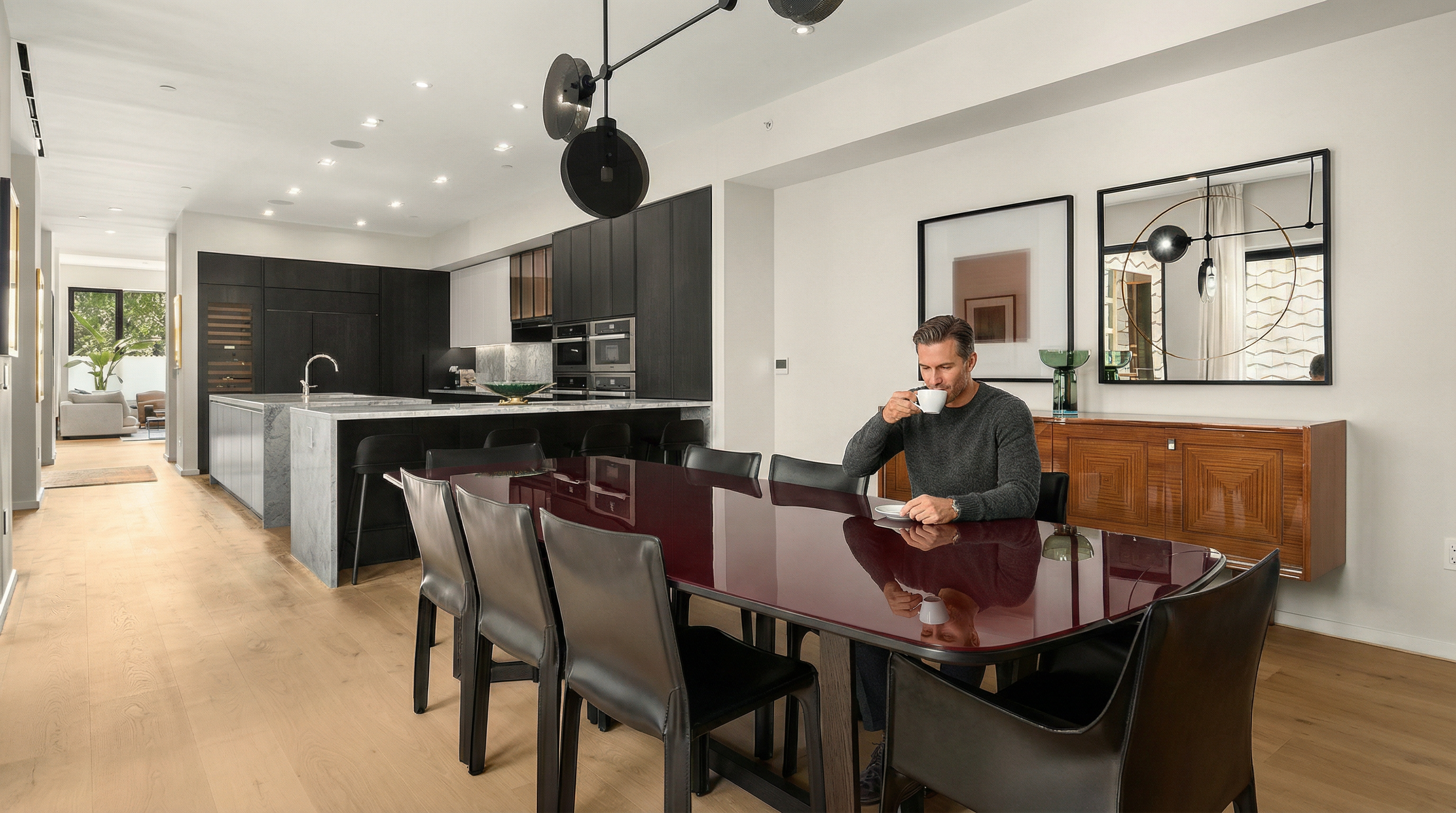
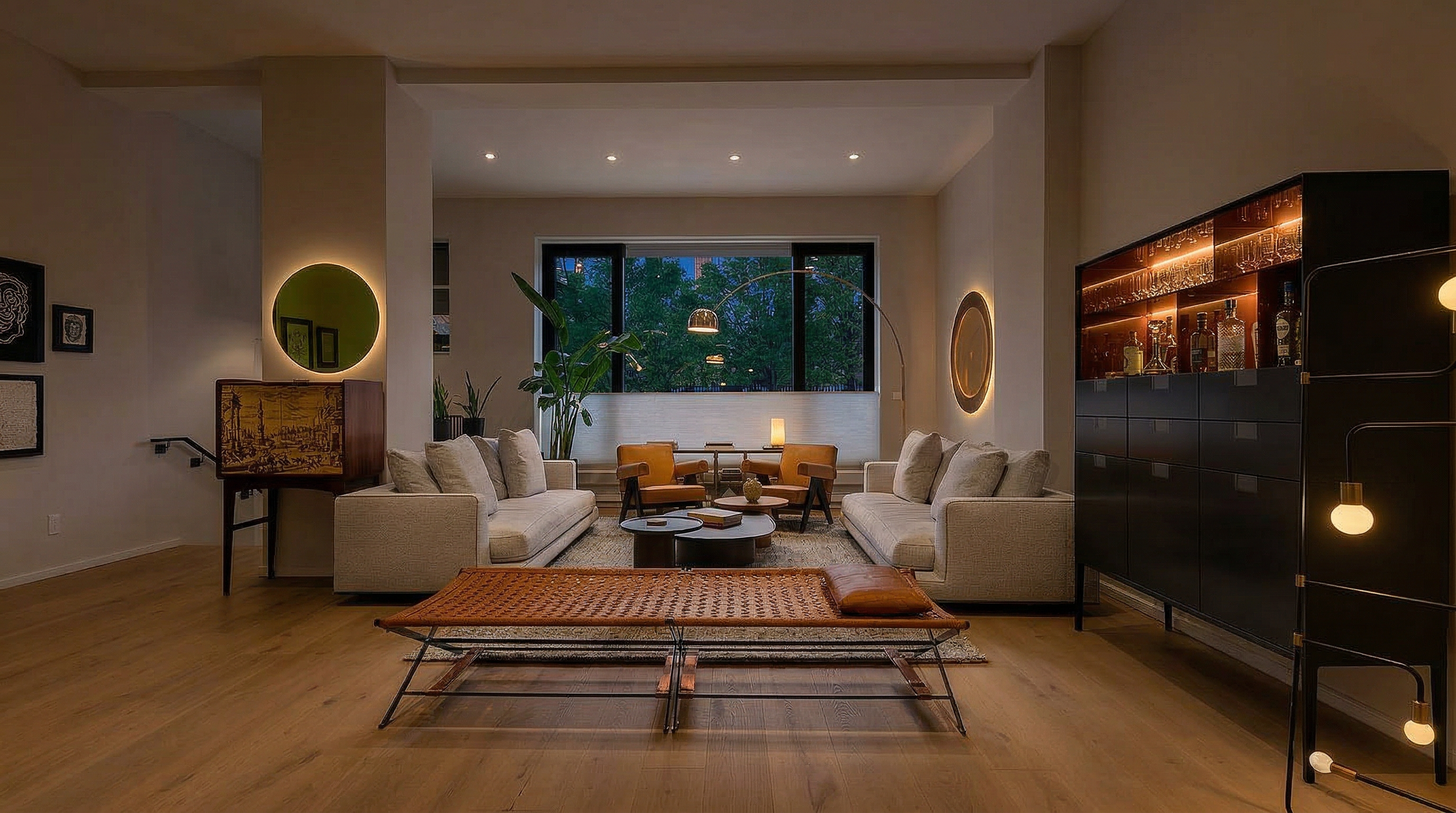
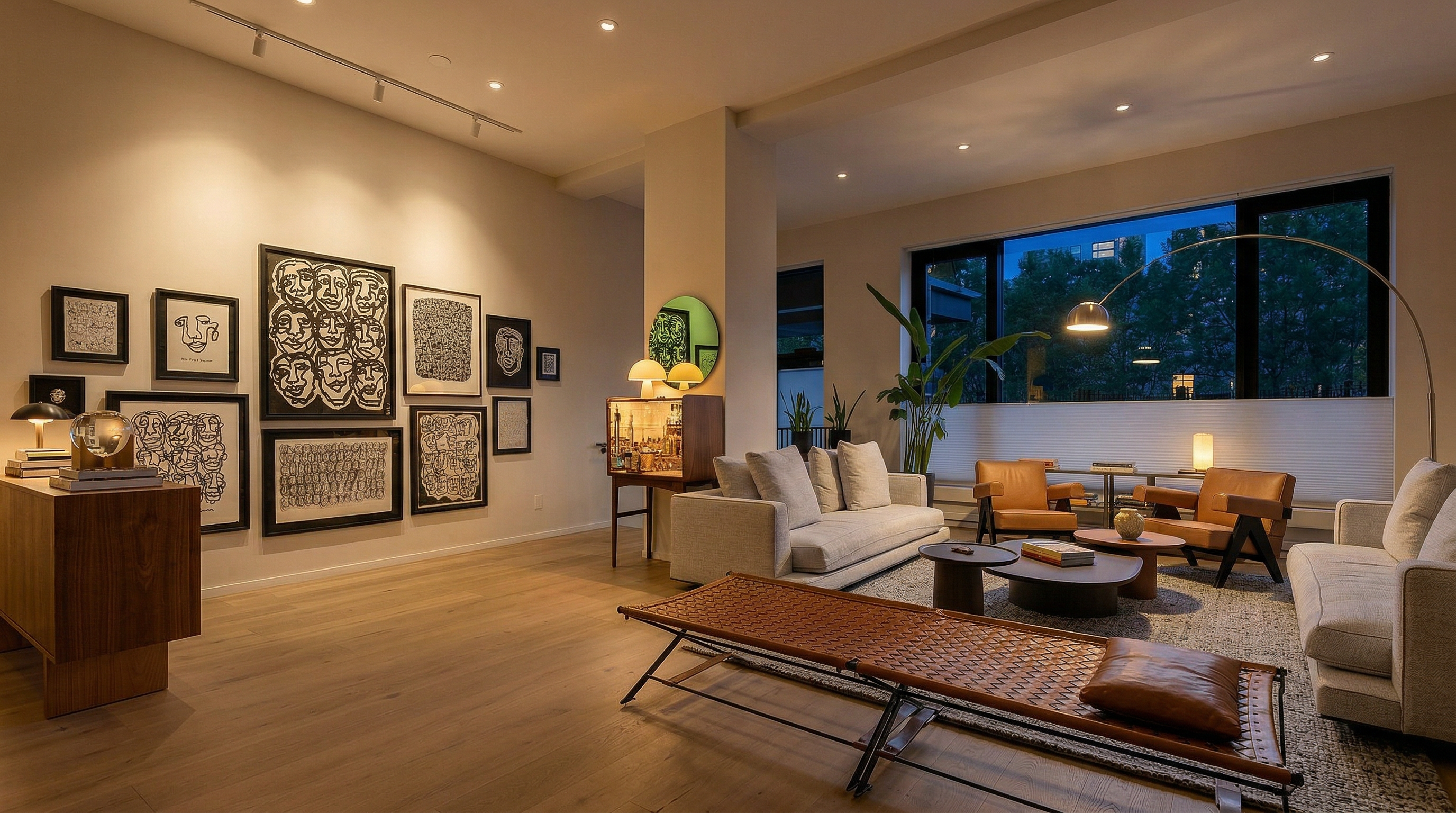
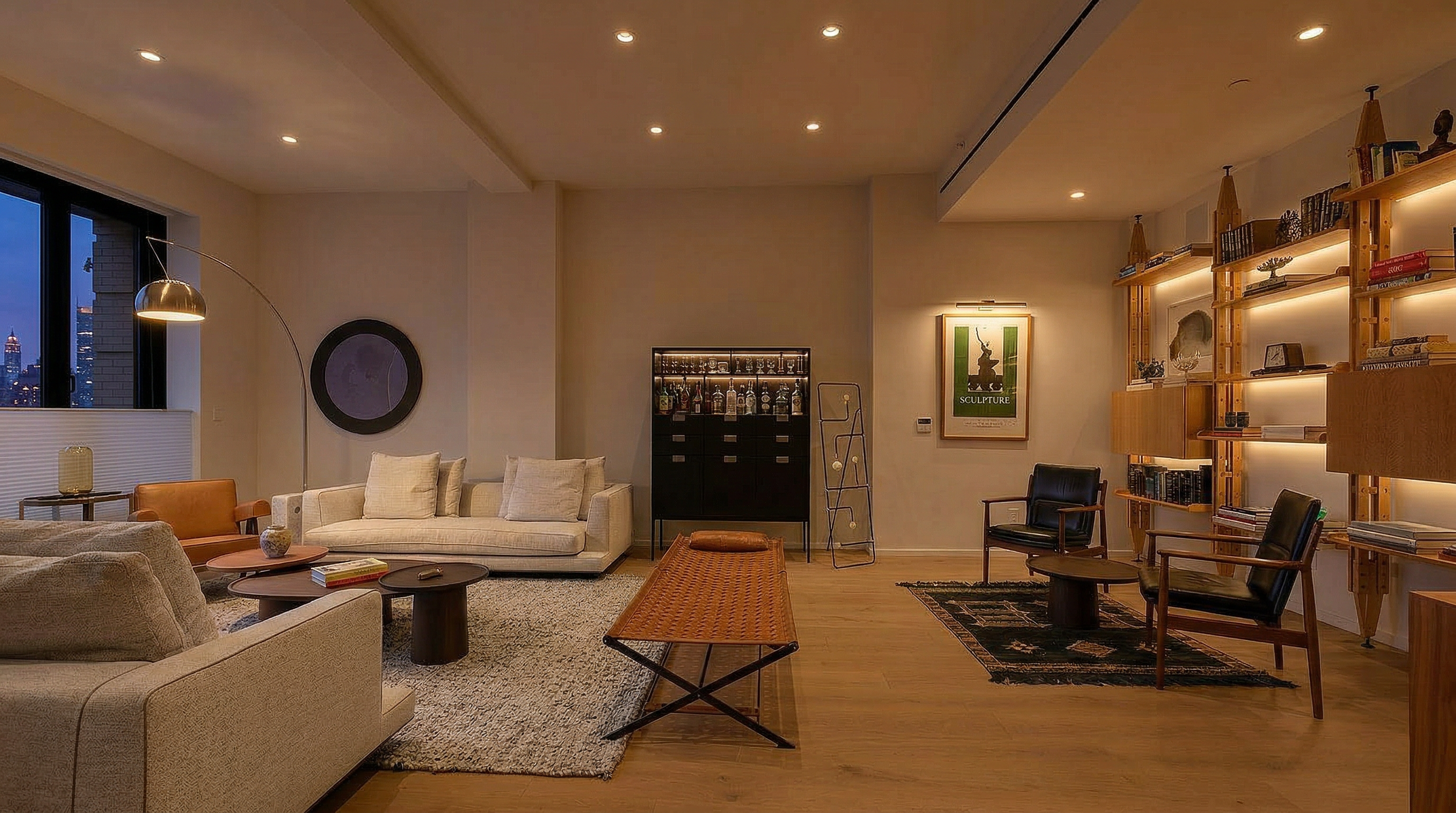
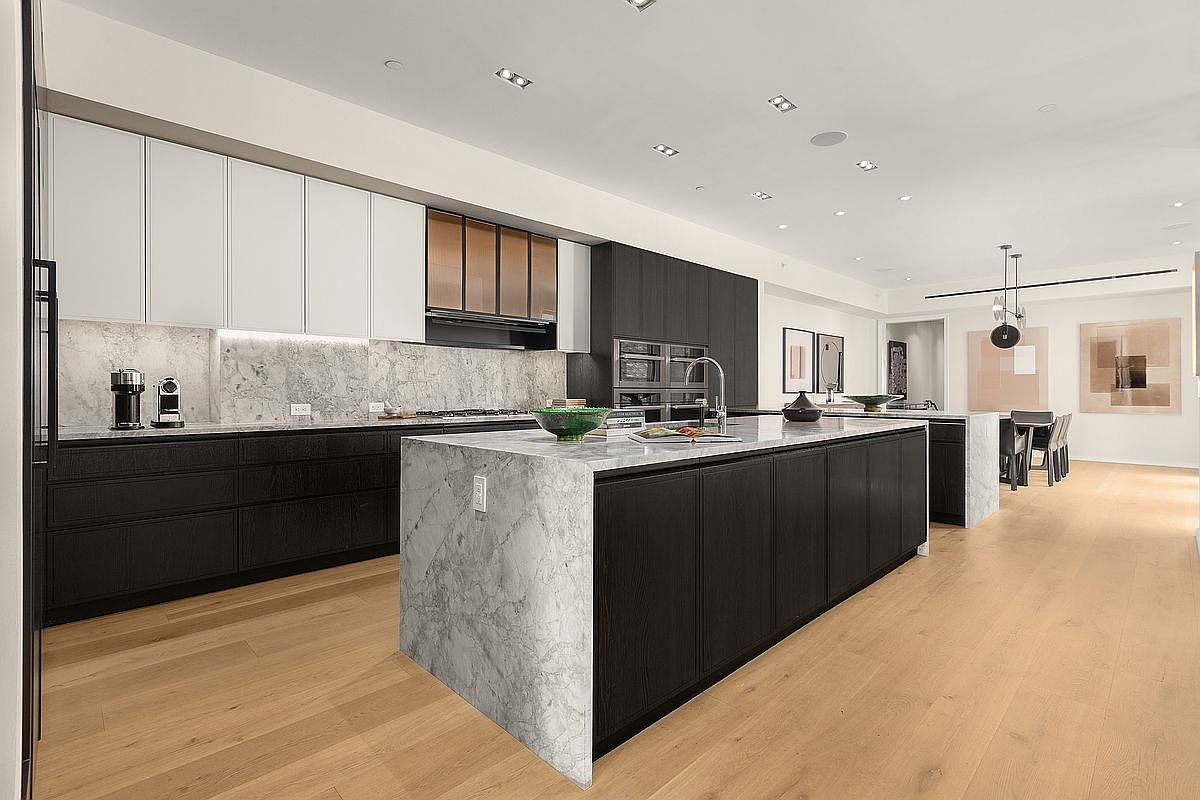
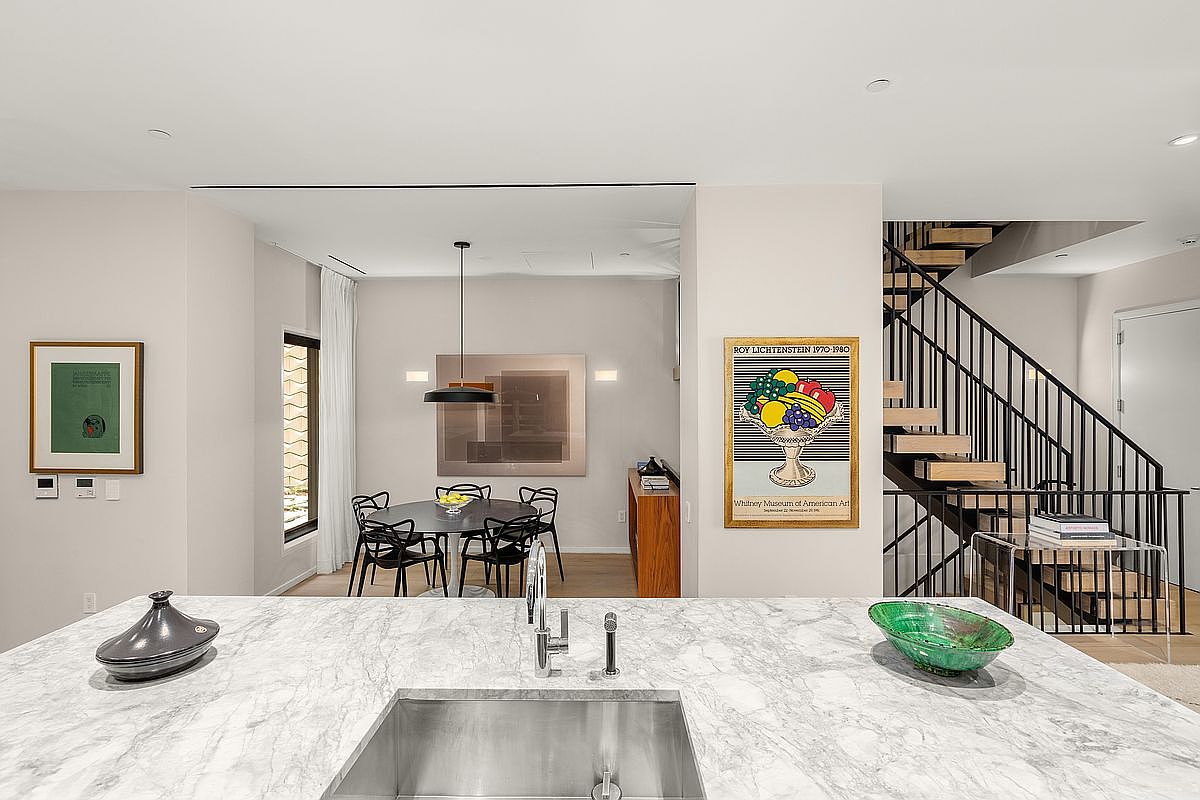
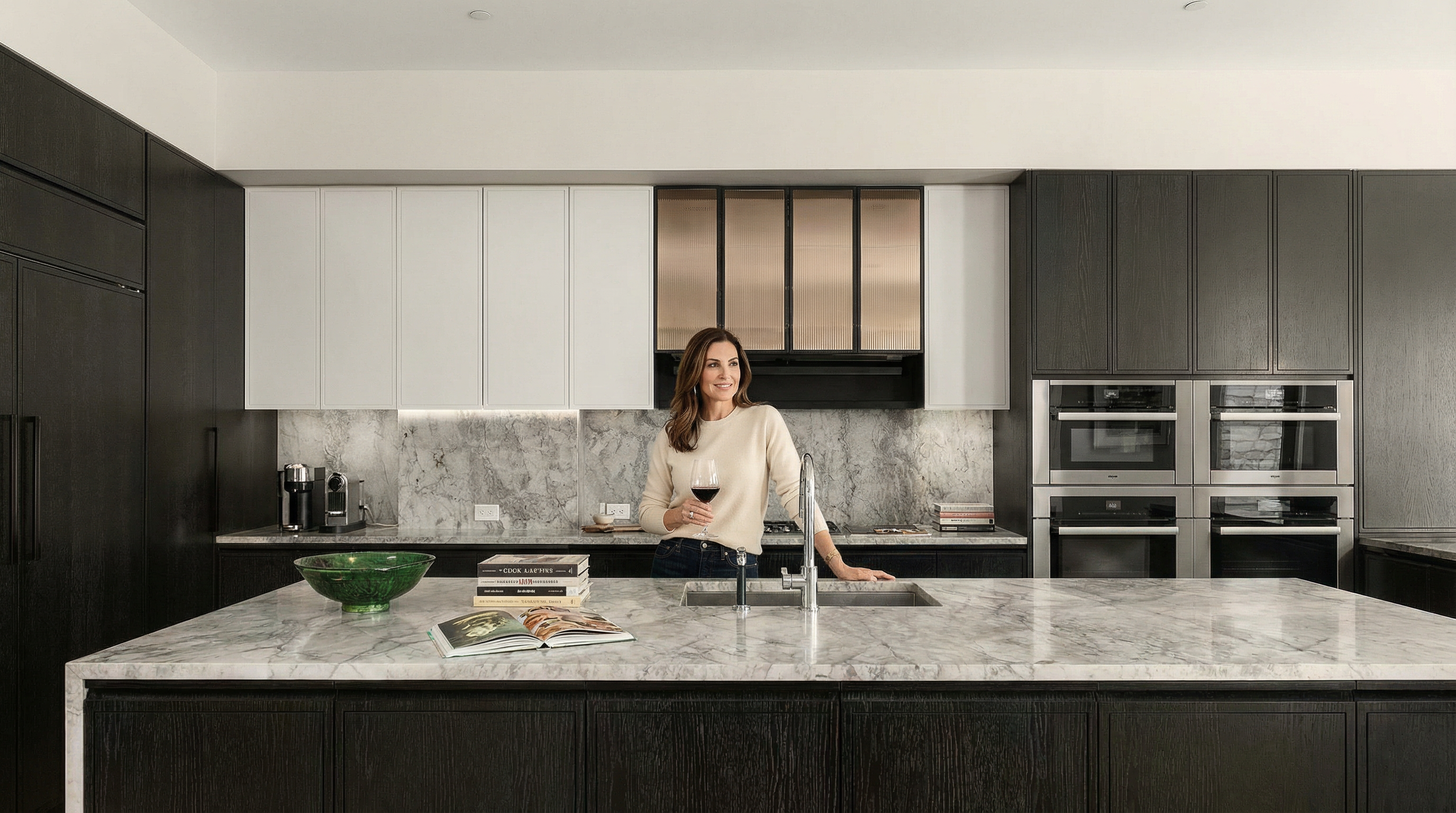
The main level orients itself around a soaring great room, where ceiling heights and an architectural restraint in material selection create an atmosphere of understated grandeur. The chef's kitchen is a study in professional-grade functionality dressed in residential elegance: a large cooking island, handcrafted cabinetry, and a curated suite of Sub-Zero and Miele appliances—dual wall ovens, side-by-side refrigerators, a wine fridge, and oversized dishwashers—speak to a kitchen conceived for serious cooking without sacrificing aesthetic coherence. A central atrium draws natural light deep into the plan, illuminating the eat-in kitchen area and an adjacent guest bedroom in a way that dissolves the boundary between interior volume and open air.
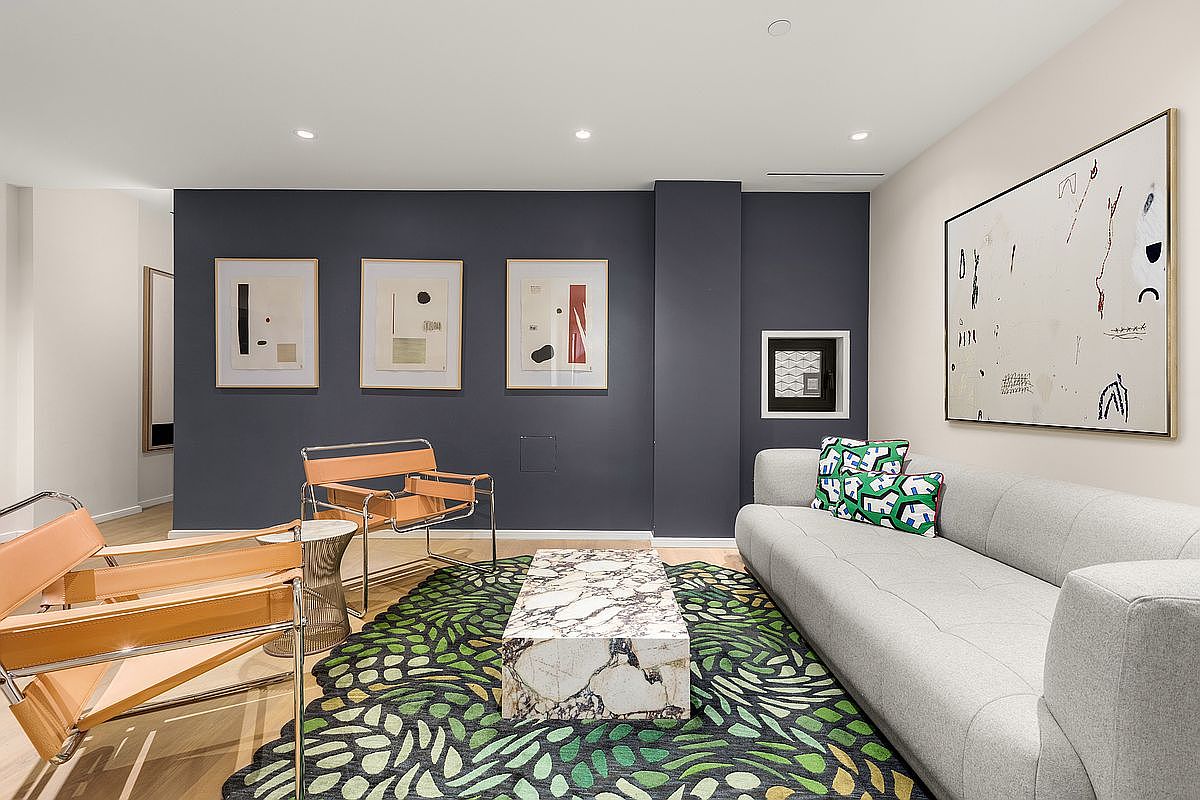
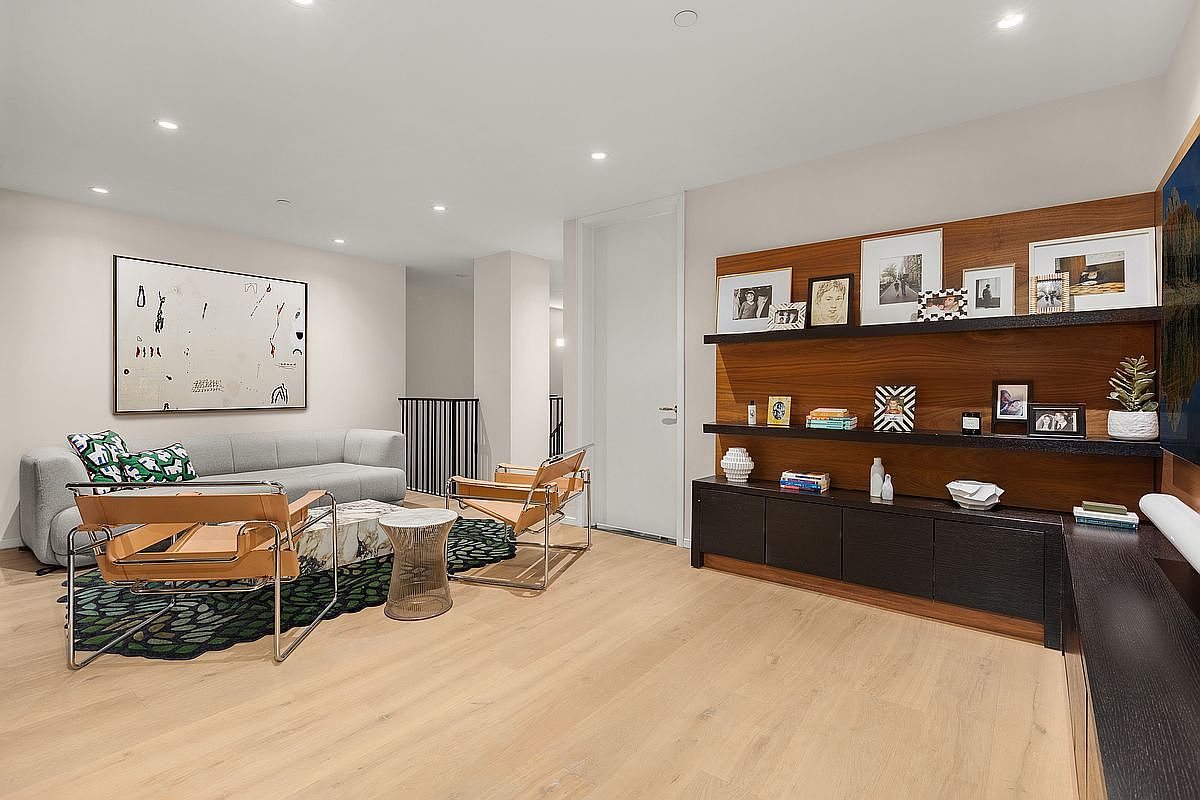
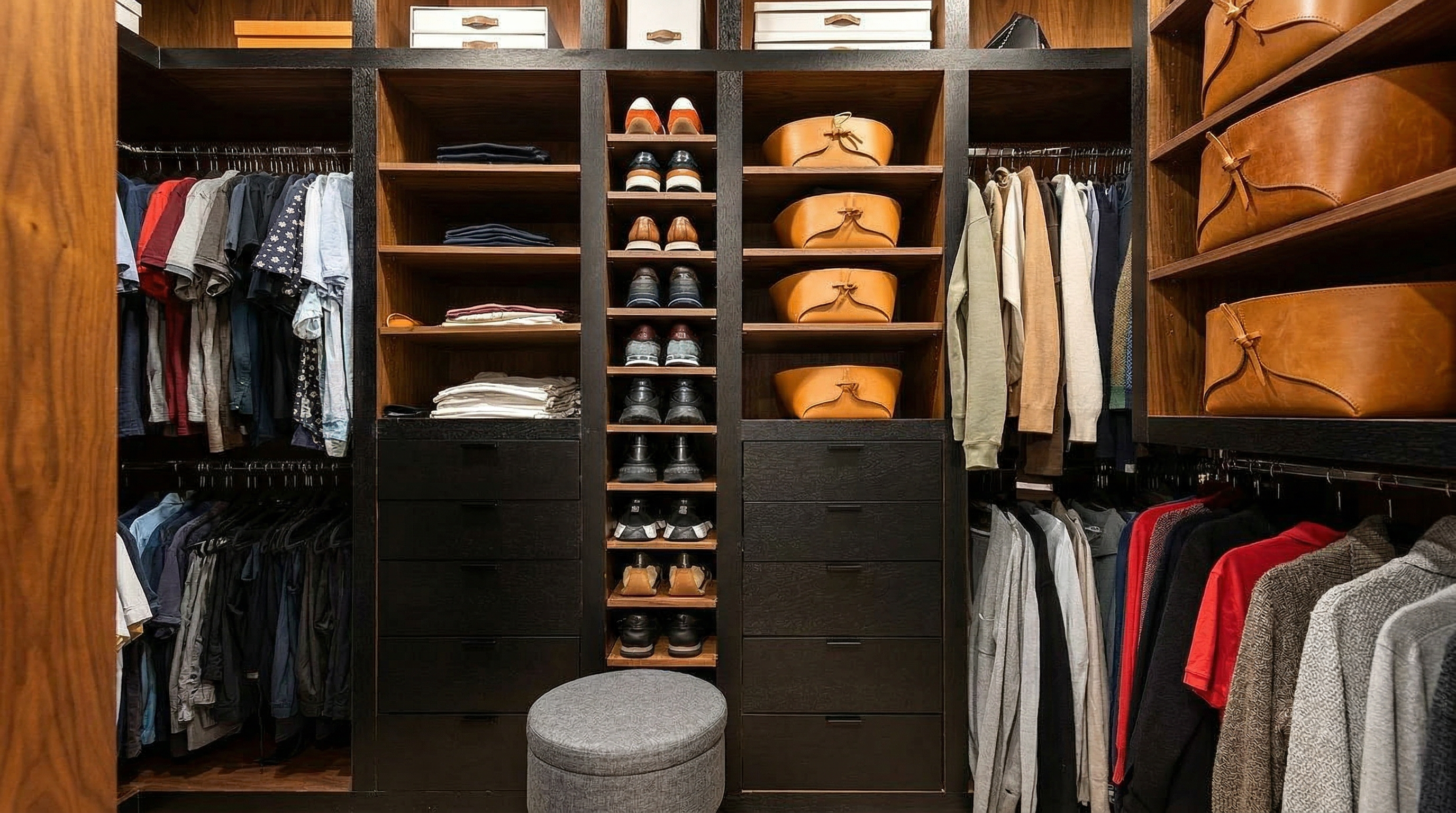
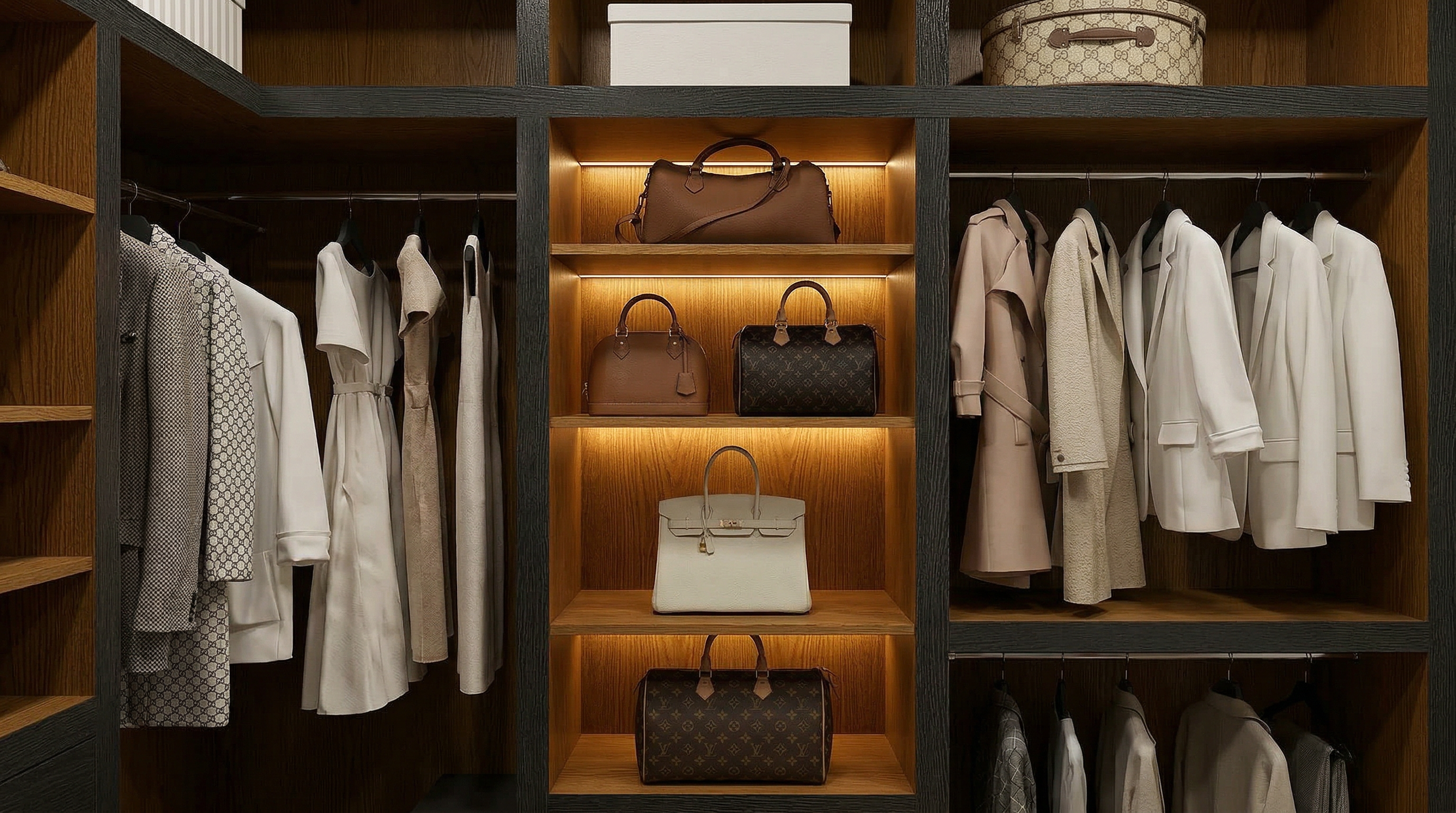
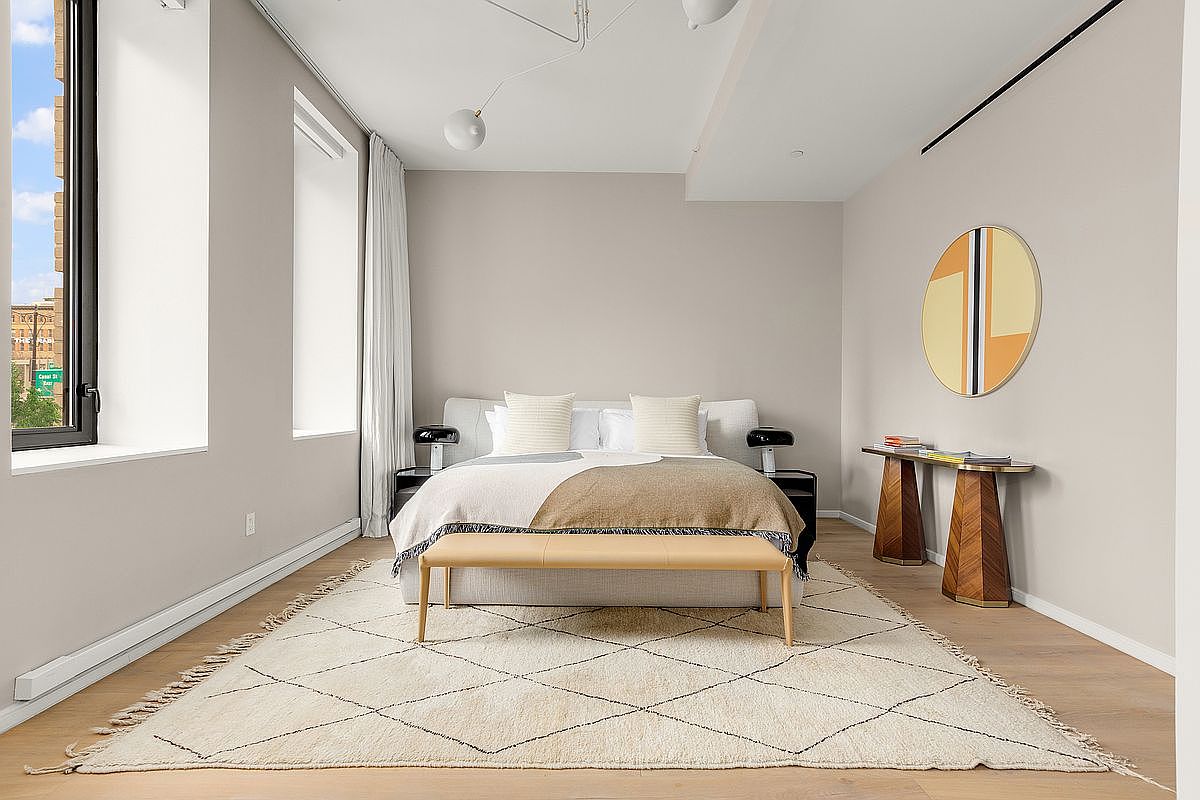
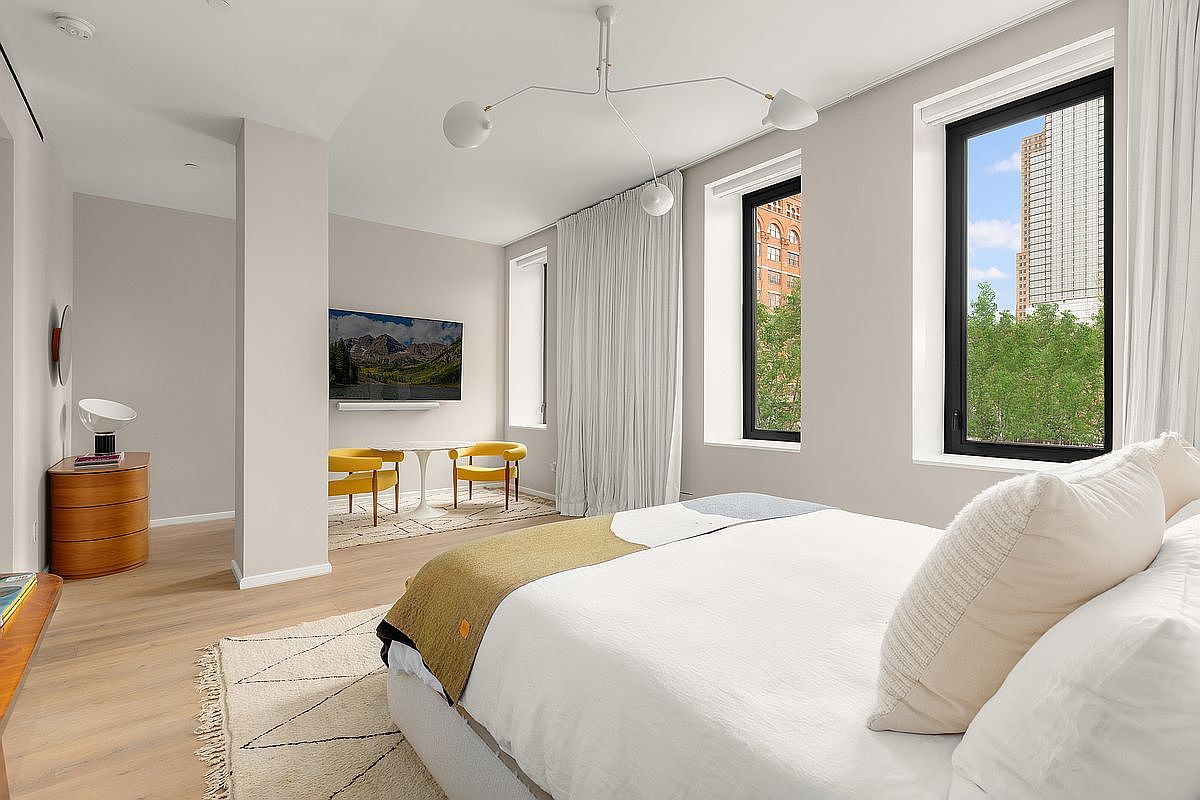
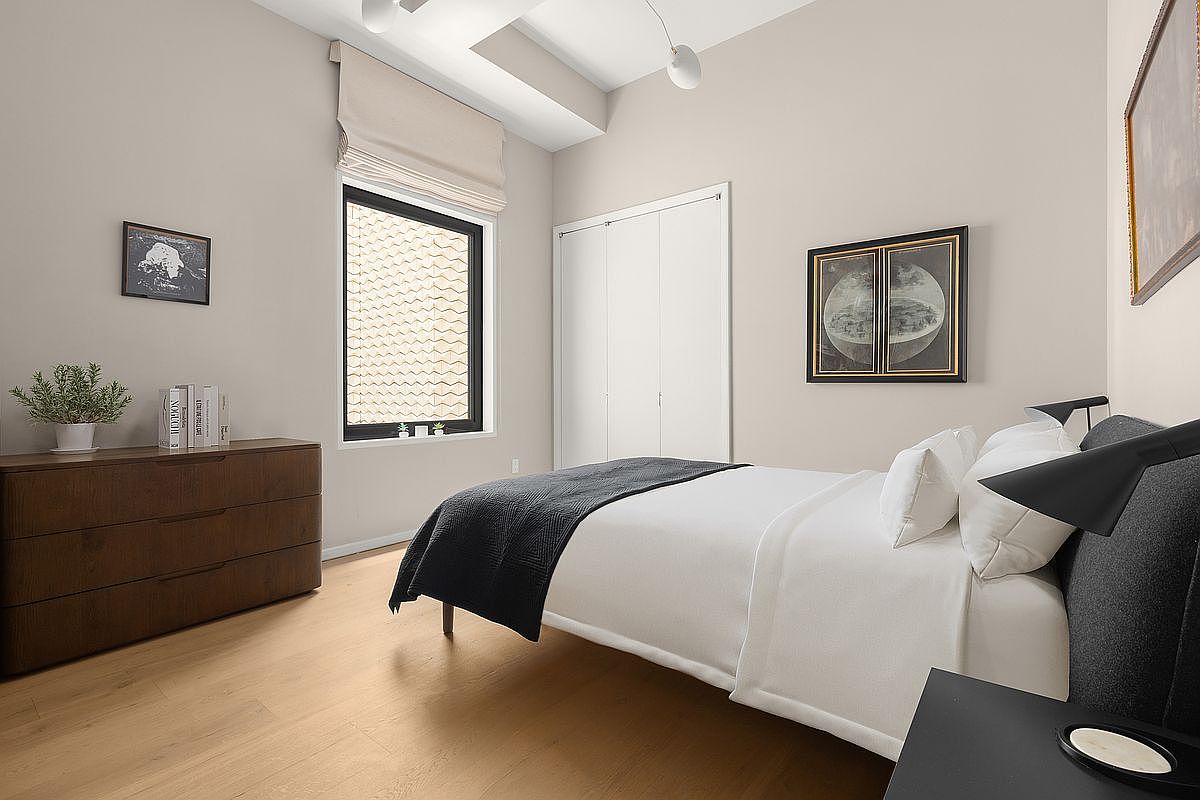
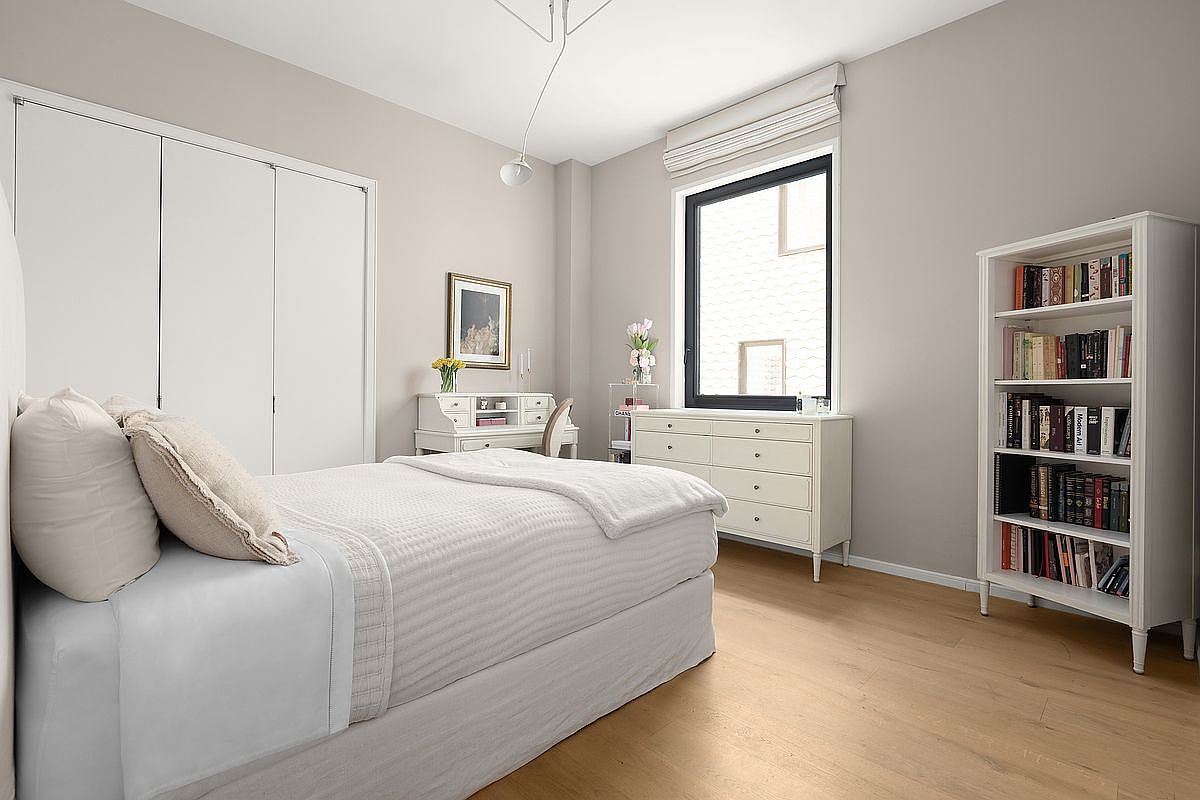
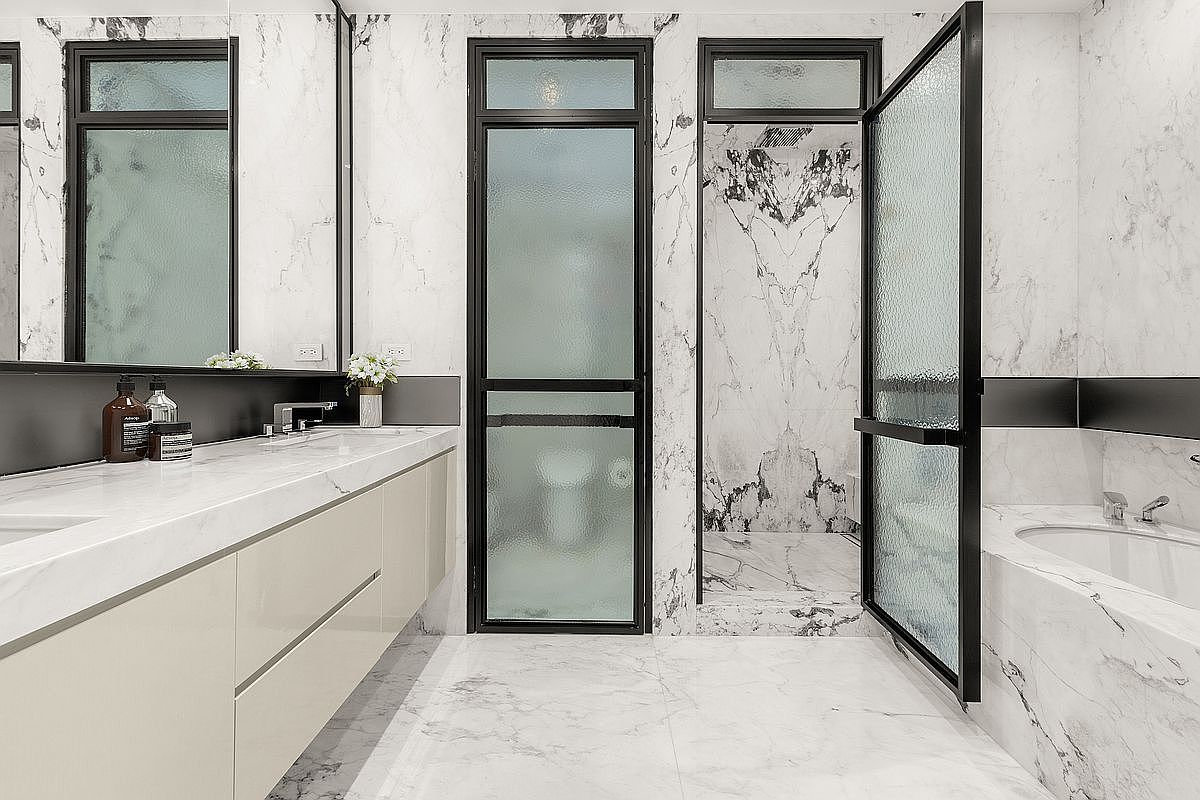
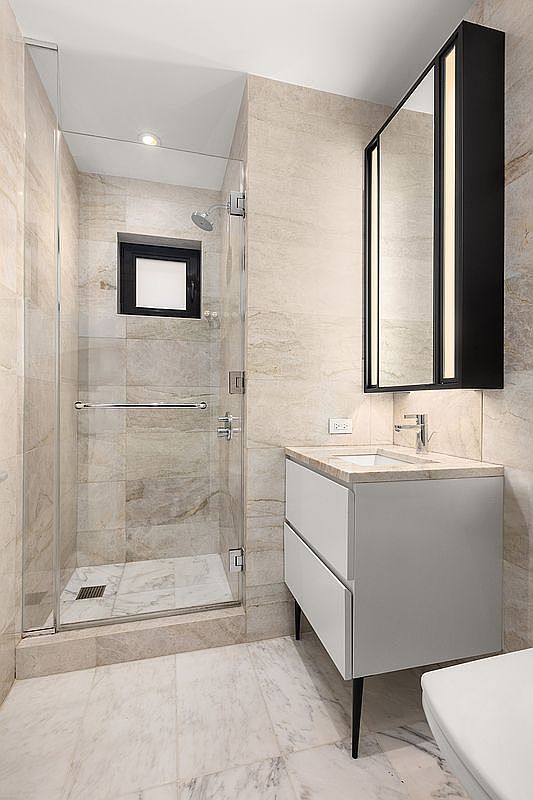
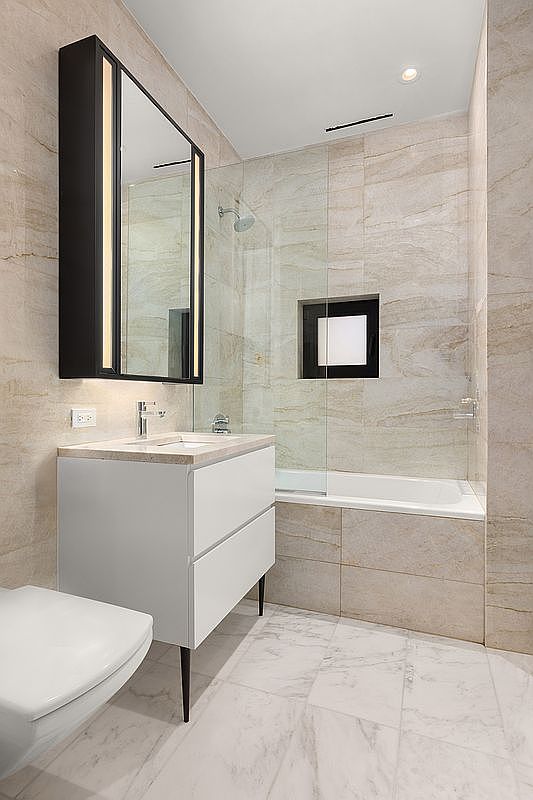
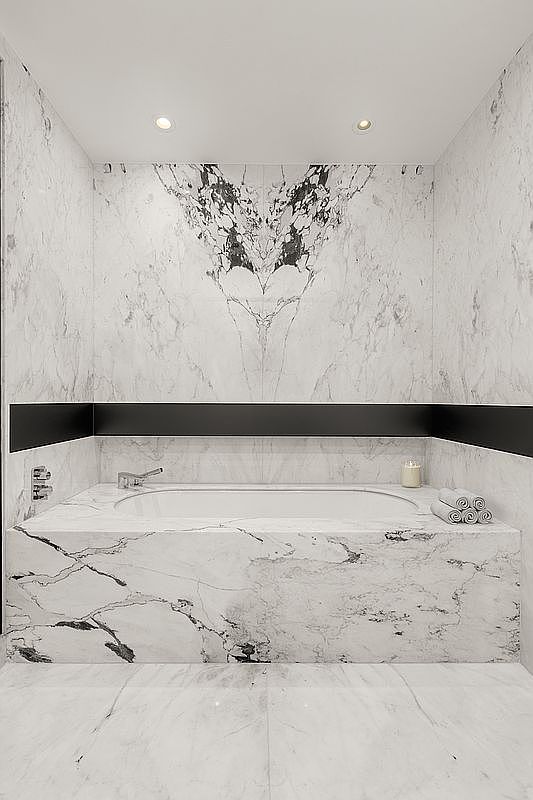
The second level is given over to private life. The primary suite is expansive and serene: a sprawling bedroom, two generous custom closets with museum-quality organization, and a spa bathroom sheathed in hand-selected stone, where dual sinks, a glass-enclosed shower, a deep soaking tub, and Dornbracht fixtures compose a space that rivals the finest hotel suites in the world. Two additional en-suite bedrooms—each with custom closets and elegantly appointed bathrooms—and a generous media room complete a floor that feels simultaneously ample and intimate.
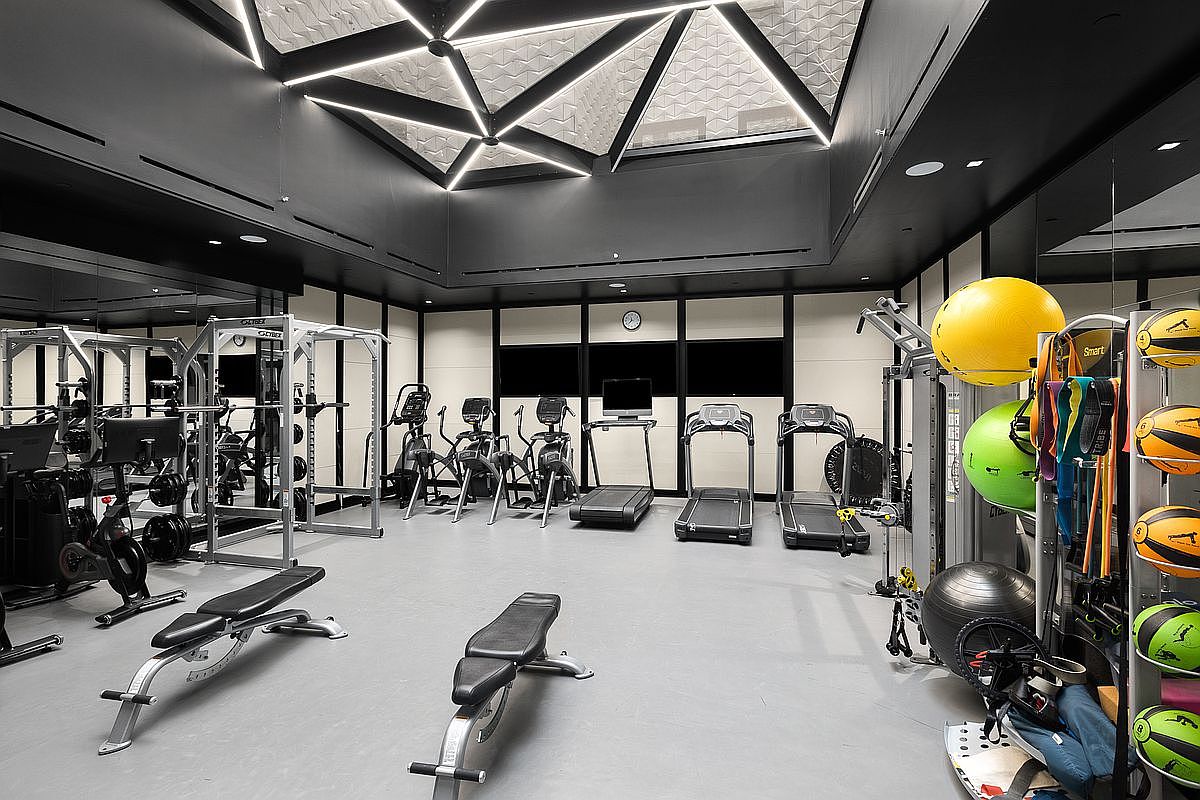
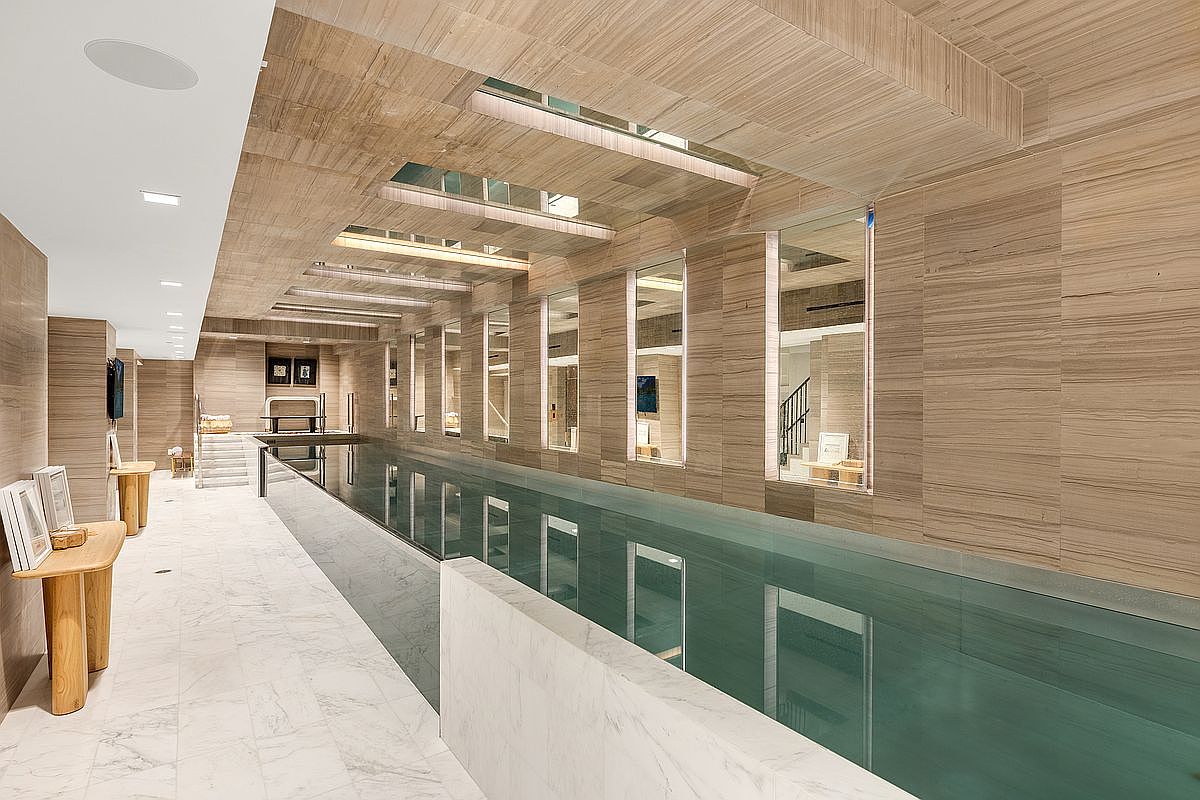
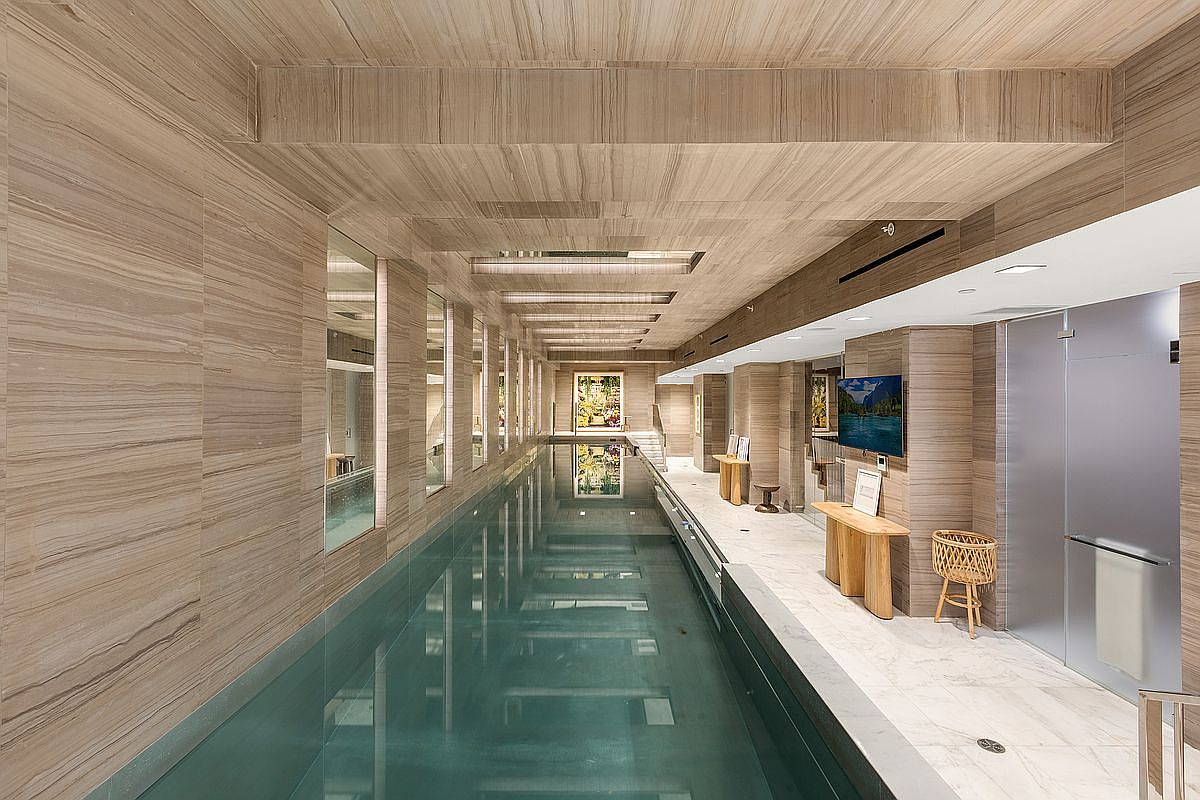
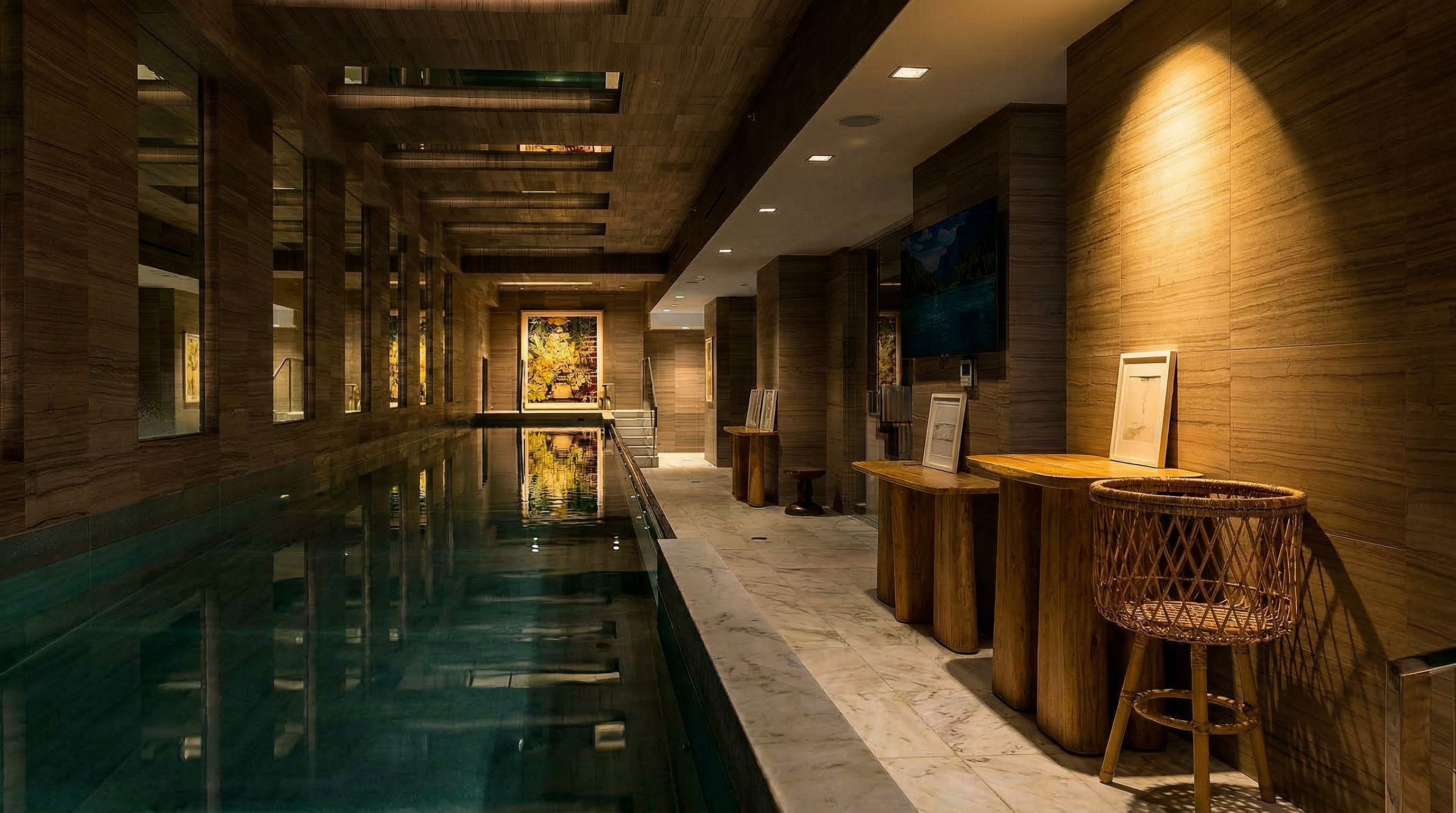
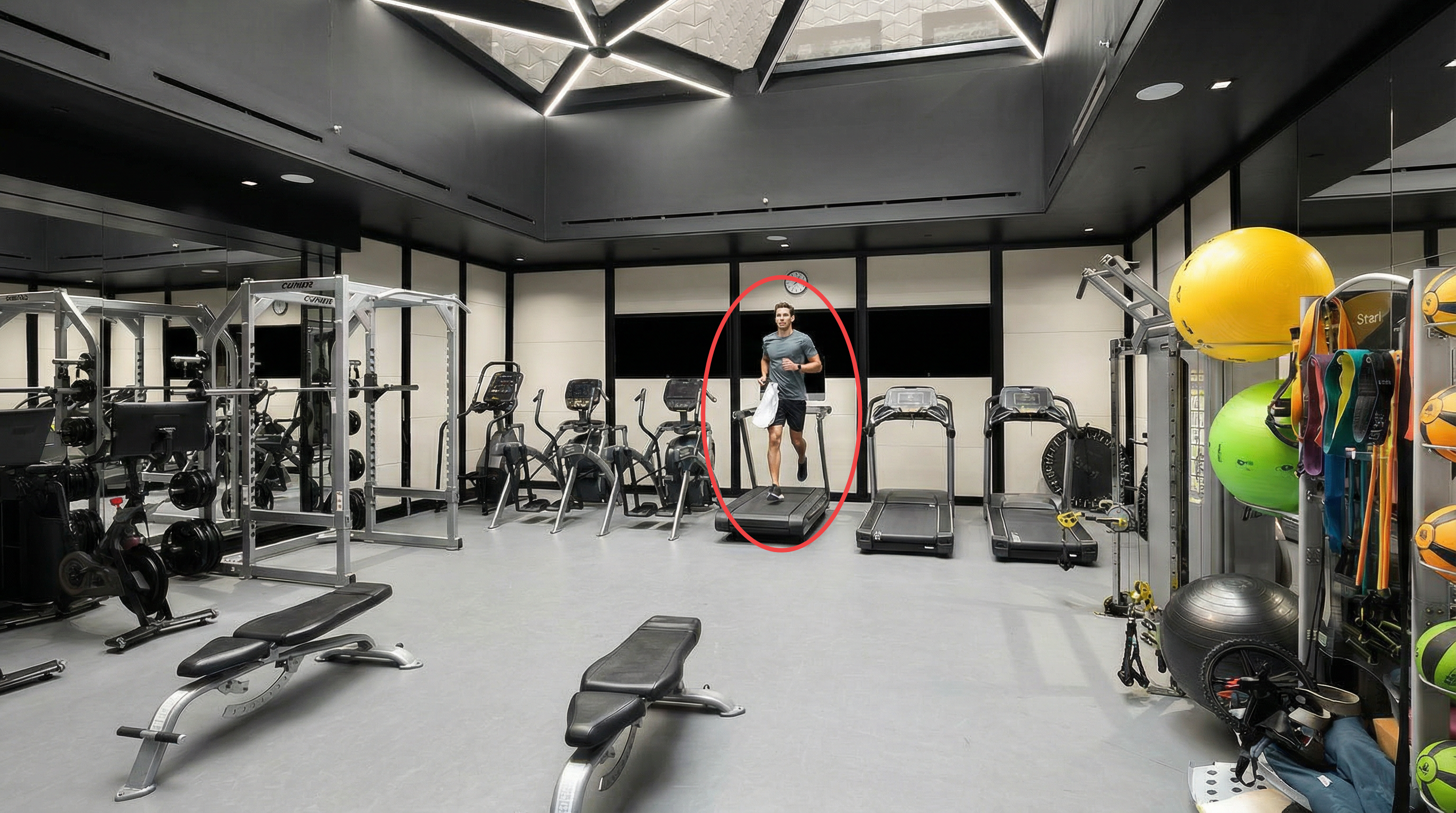
Yet it is the lower level that elevates Townhome A into a category entirely its own. Descending to what might be called a private wellness estate, the space is wrapped floor-to-ceiling in imported stone, its surfaces and proportions calibrated to evoke a sense of sanctuary far removed from the city above. A steam room, sauna, and rainforest shower anchor one zone; lounge and fitness areas extend the program. At the center of it all—quite literally the defining feature of this home—is a 50-foot custom stainless steel swimming pool, one wall given entirely to glass, the water catching and refracting light in a way that transforms the everyday act of swimming into something approaching the sublime.
This is architecture as lived experience: each material chosen, each detail resolved, each space sequenced to serve both the eye and the spirit of those fortunate enough to call it home.
Tribeca—an acronym for Triangle Below Canal Street—occupies a particular place in the geography of New York City's imagination. Once a commercial and light-industrial district defined by its cast-iron warehouse architecture and cobblestone streets, the neighborhood began its residential transformation in the 1970s, when artists and creative professionals were drawn by the availability of large, raw loft spaces and the area's quiet remove from the density of Midtown. What emerged over the following decades is one of Manhattan's most coveted residential enclaves: a neighborhood that has retained its architectural character and human scale while attracting some of the city's most discerning residents.
The streetscape along Beach Street and its surrounding blocks speaks to this layered history. Landmark cast-iron and brick warehouse buildings from the late 19th and early 20th centuries line the streets, their facades now housing galleries, boutique studios, and the kinds of ground-floor establishments that tend to follow a certain quality of resident. The cobblestones—preserved rather than replaced—lend the neighborhood a texture and quietude unusual for lower Manhattan, a sense that time moves at a slightly different pace here.
The dining culture of Tribeca is among the finest in New York. Locanda Verde, Andrew Carmellini's celebrated Italian-American restaurant at the Greenwich Hotel, draws a devoted following for its refined rusticity. Frenchette, the lauded French brasserie from Riad Nasr and Lee Hanson, has become a cornerstone of the neighborhood's culinary identity since opening in 2018. Bâtard, helmed by Markus Glocker and recipient of a Michelin star, offers one of downtown's most accomplished tasting menus. The area's restaurant density—complemented by coffee roasters, wine bars, and specialty food shops—means that daily life here is organized around genuine culinary pleasure.
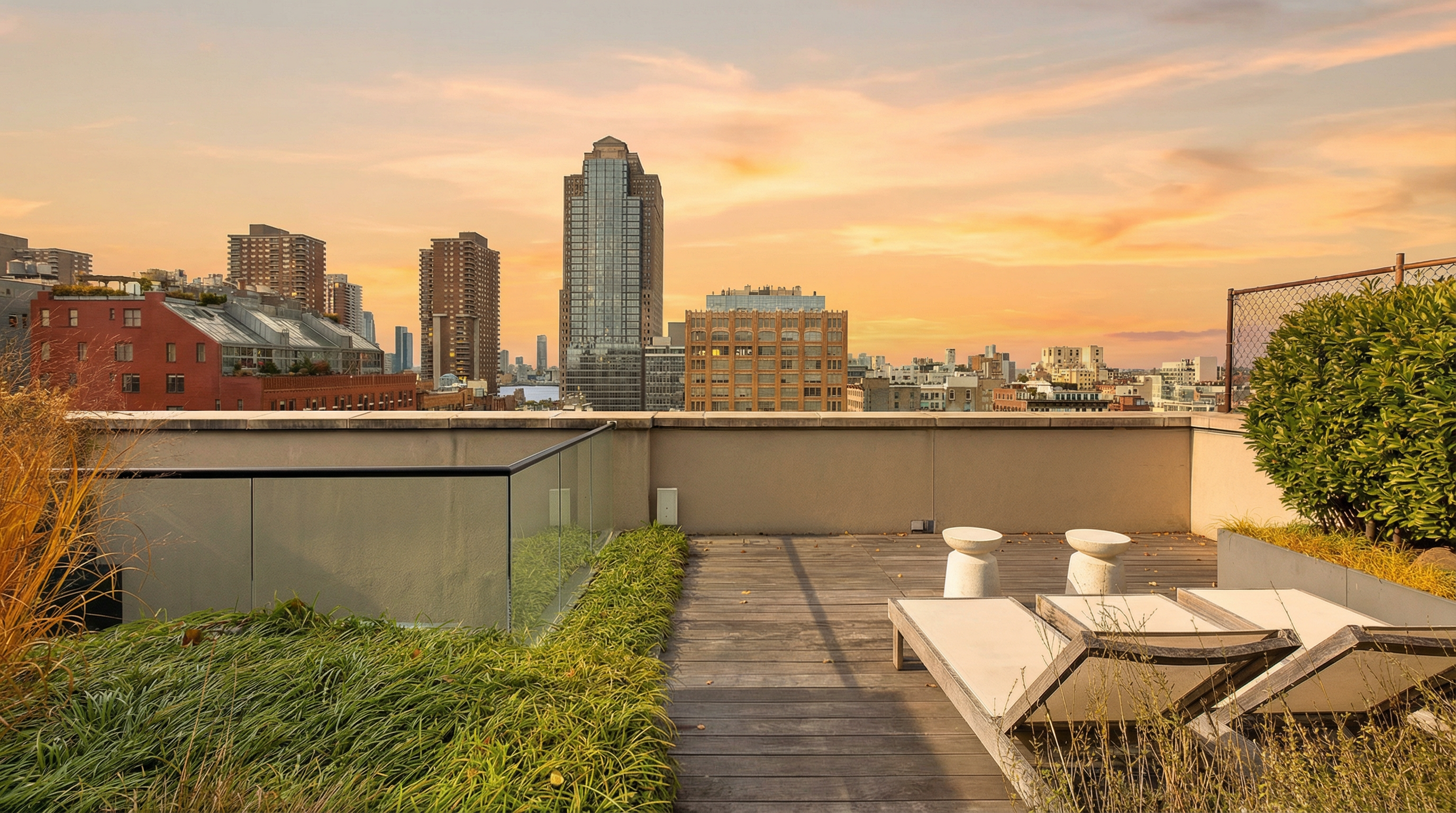
For those who require broader retail and cultural infrastructure, the proximity to Brookfield Place provides access to high-end retail, dining, and regular cultural programming within easy walking distance. SoHo, with its concentration of international fashion houses and independent boutiques, is immediately adjacent to the north. Hudson River Park, stretching along the western edge of lower Manhattan, offers green space, cycling paths, and waterfront access that feels improbably tranquil given the surrounding density of the city.
Connectivity is exceptional. The A, C, and E lines at Canal Street, the 1, 2, and 3 lines at Chambers Street, and the R and W lines are all within proximity, placing virtually every corner of Manhattan within straightforward reach. The Holland Tunnel, connecting lower Manhattan directly to New Jersey, is minutes away—a practical advantage for those whose lives extend beyond the island. For international travel, both the West Side Highway and the Battery Tunnel provide direct access to area airports.
The community that has formed in Tribeca over recent decades is one of the most stable and intentional in New York—families who chose the neighborhood for its schools, its scale, and its particular quality of urban life, and who have remained. It is a neighborhood that rewards long acquaintance, revealing its character gradually and generously to those who take up residence within it.
Featured Highlights
Curated Content • Presented by Randall Baruh