The Story Behind
A Limestone Estate on Mohawk That Defines East Lincoln Park
There are homes that impress, and then there are homes that endure — residences so thoughtfully conceived and meticulously executed that they transcend the moment of their construction and become, in time, something closer to legacy. The limestone estate at 1755 N. Mohawk Street belongs to the latter category.
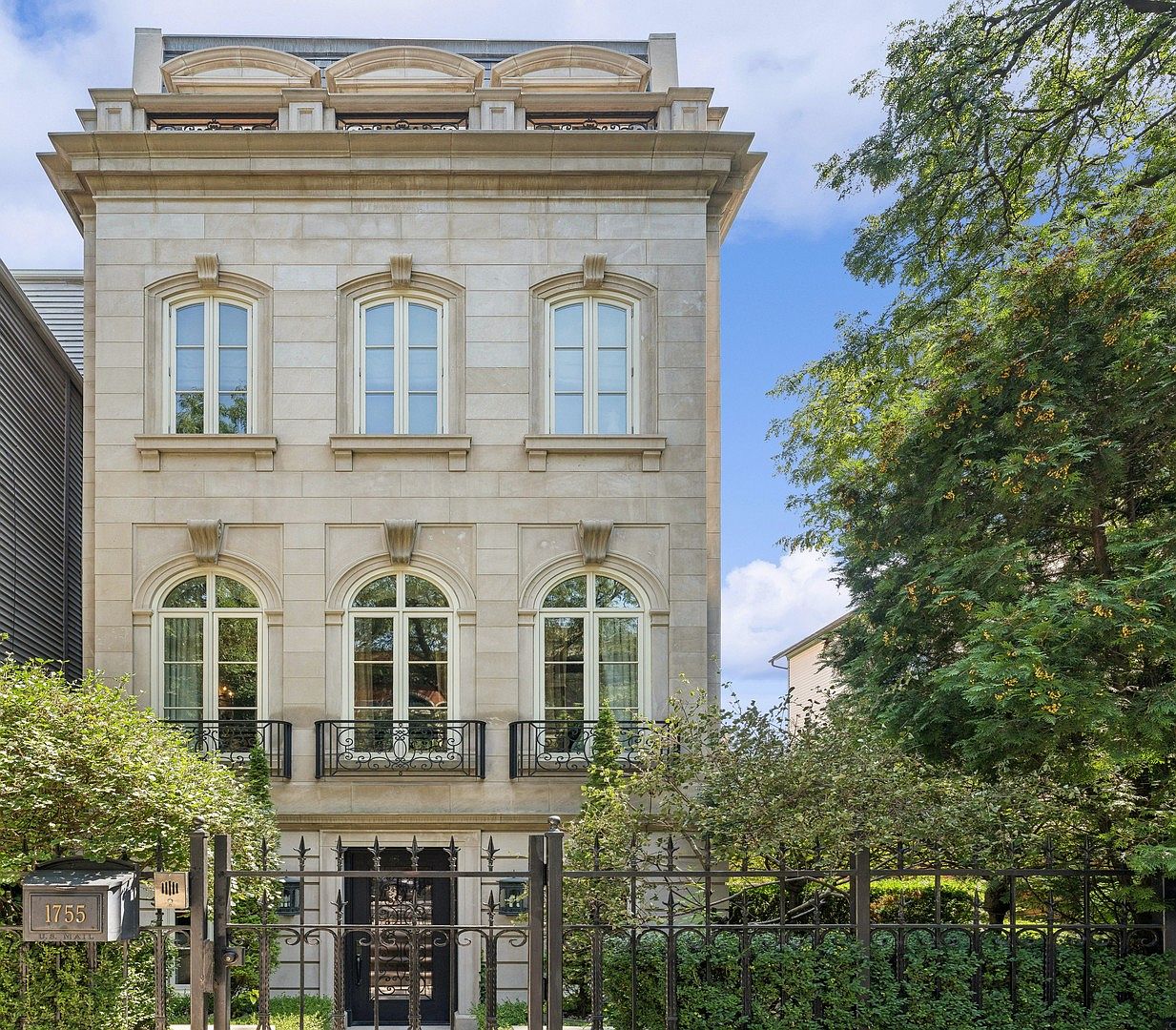
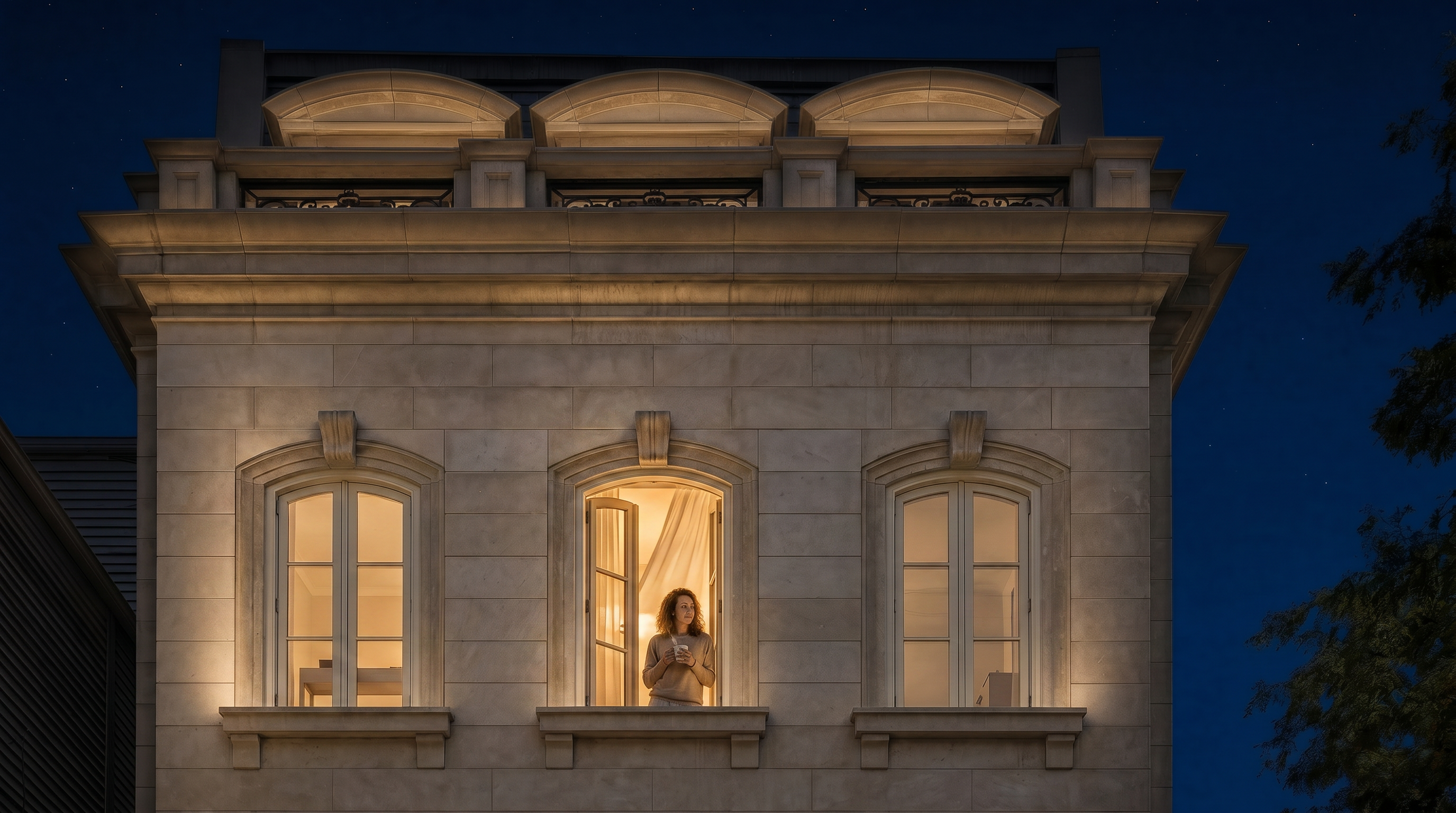
Built by the celebrated Chicago builder Hewitt Horn and occupying a rare double lot on one of East Lincoln Park's most quietly prestigious streets, this custom masonry residence announces itself with the confidence of classical architecture: a symmetrical limestone facade, arched windows with ornate stone keystones, wrought-iron balconies and a gated front entry that signals, unmistakably, that what lies beyond is something apart. The address has been in the hands of its original owners since completion — a testament not merely to sentiment, but to the rarity of what they understood they had.
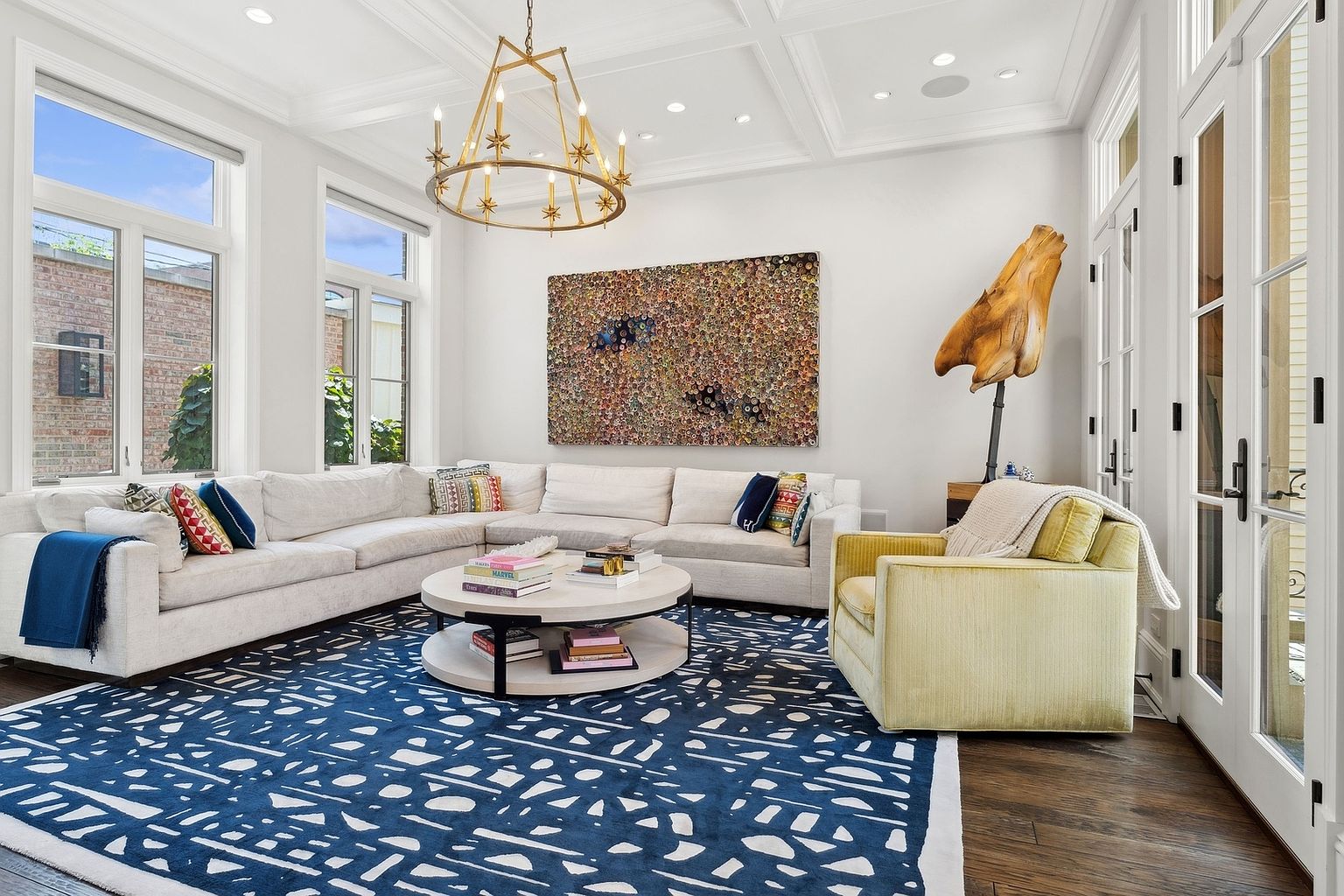
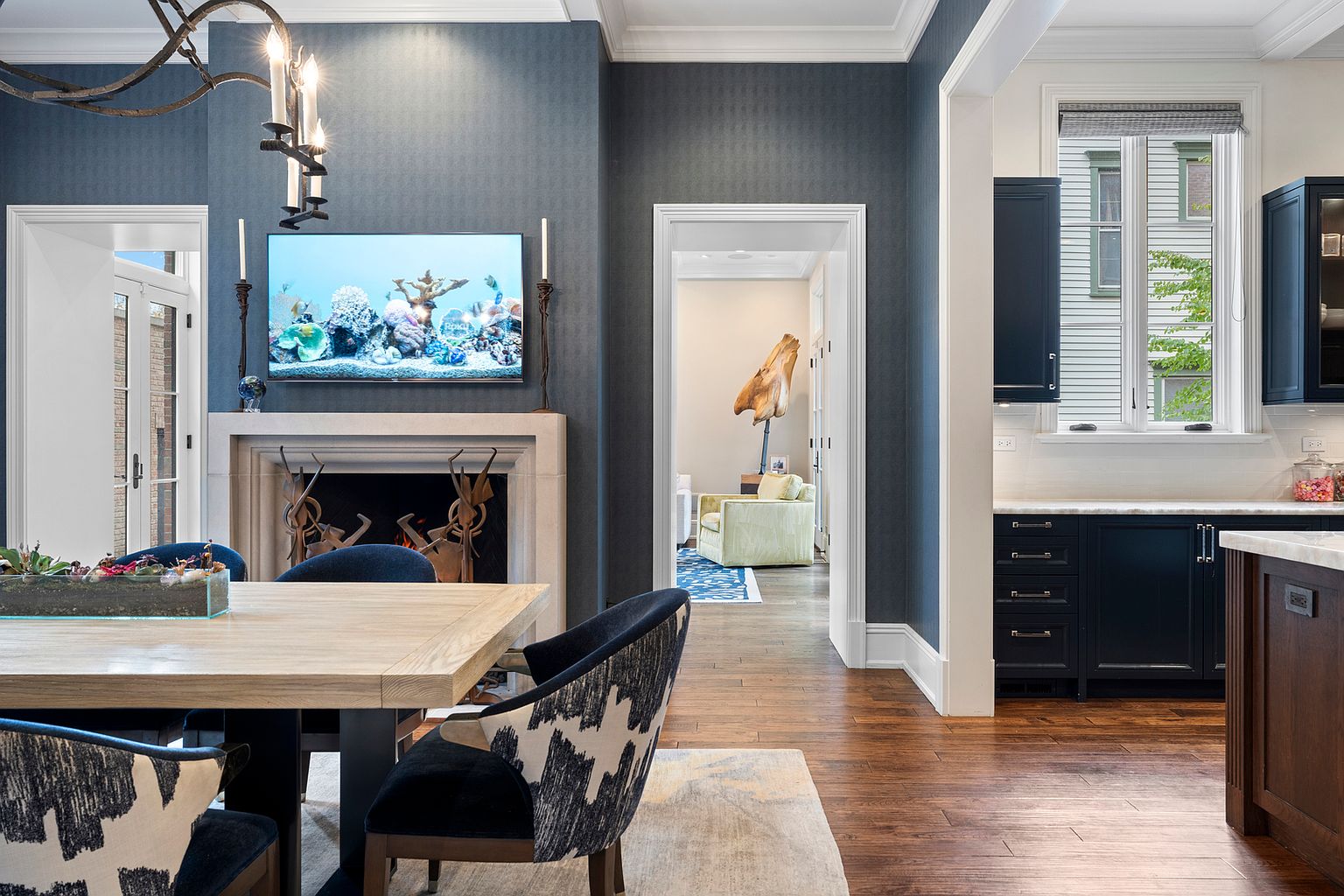
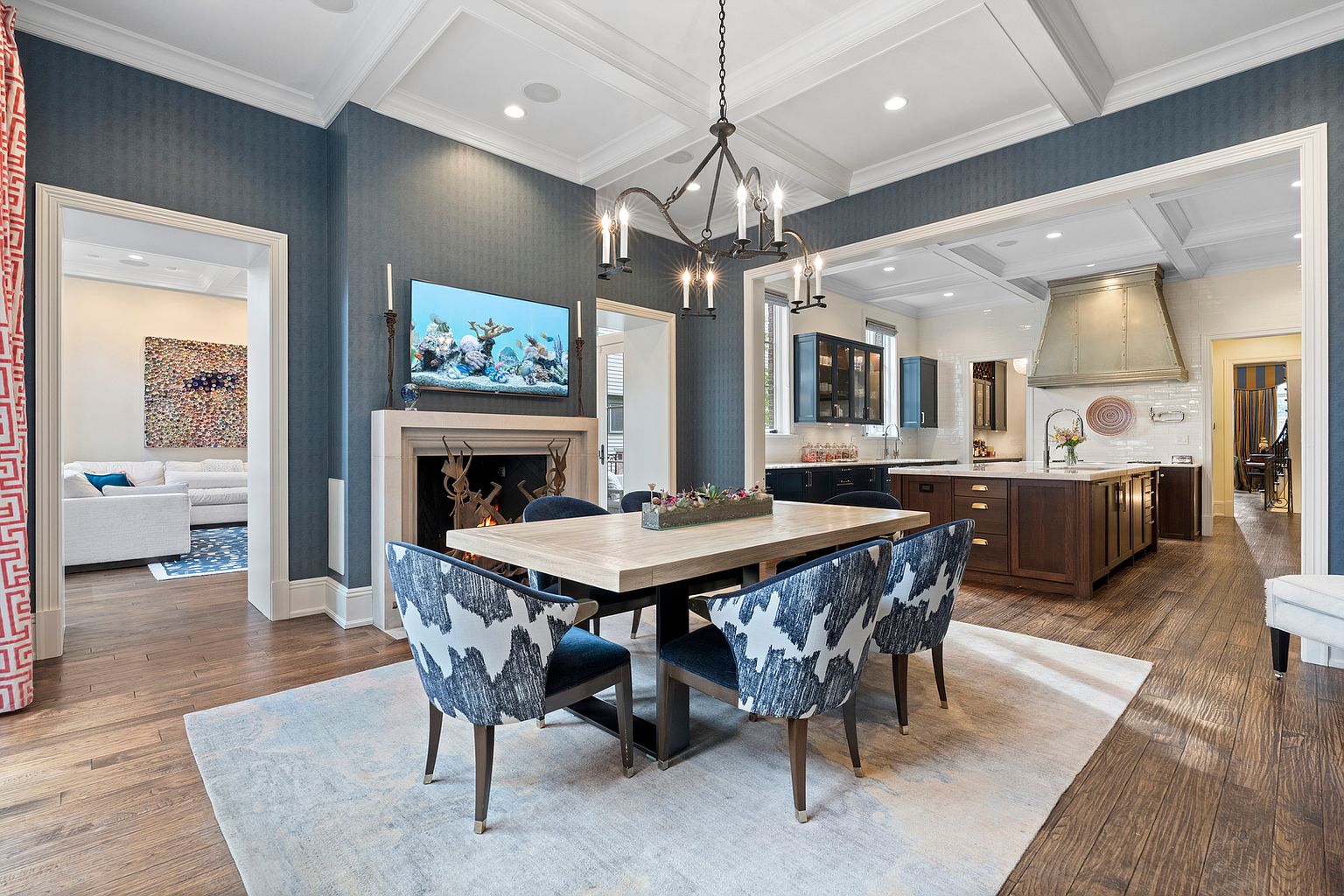
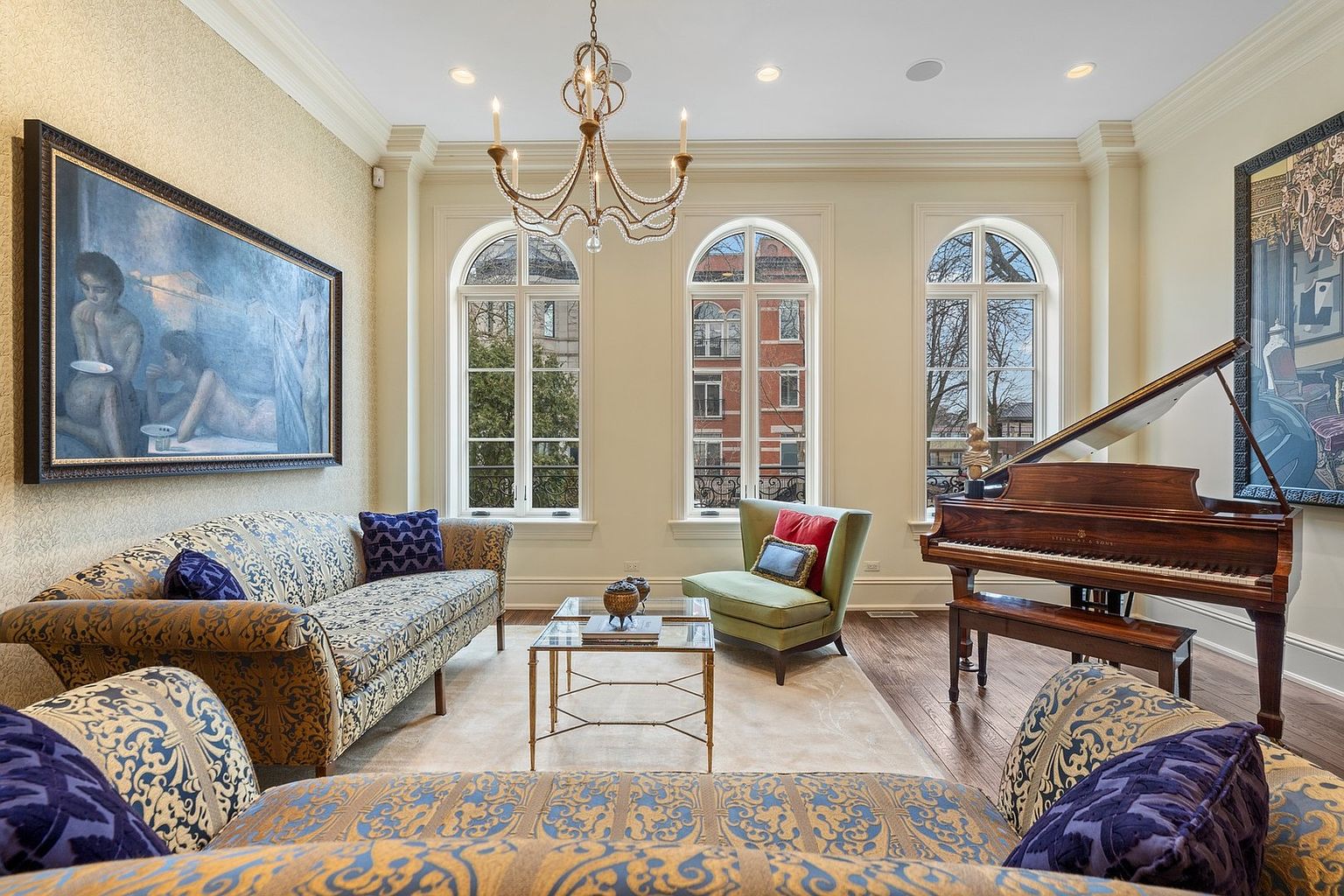
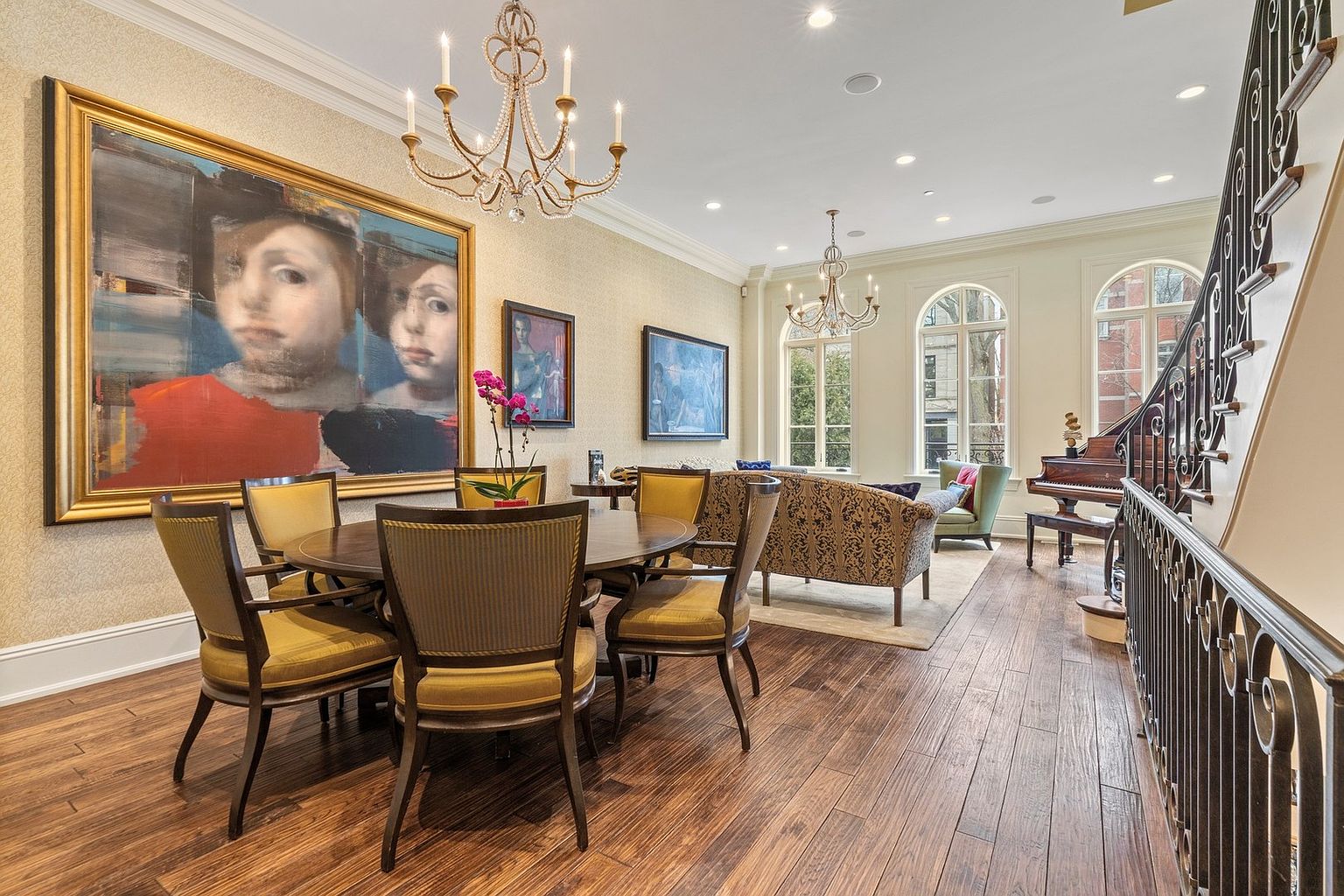
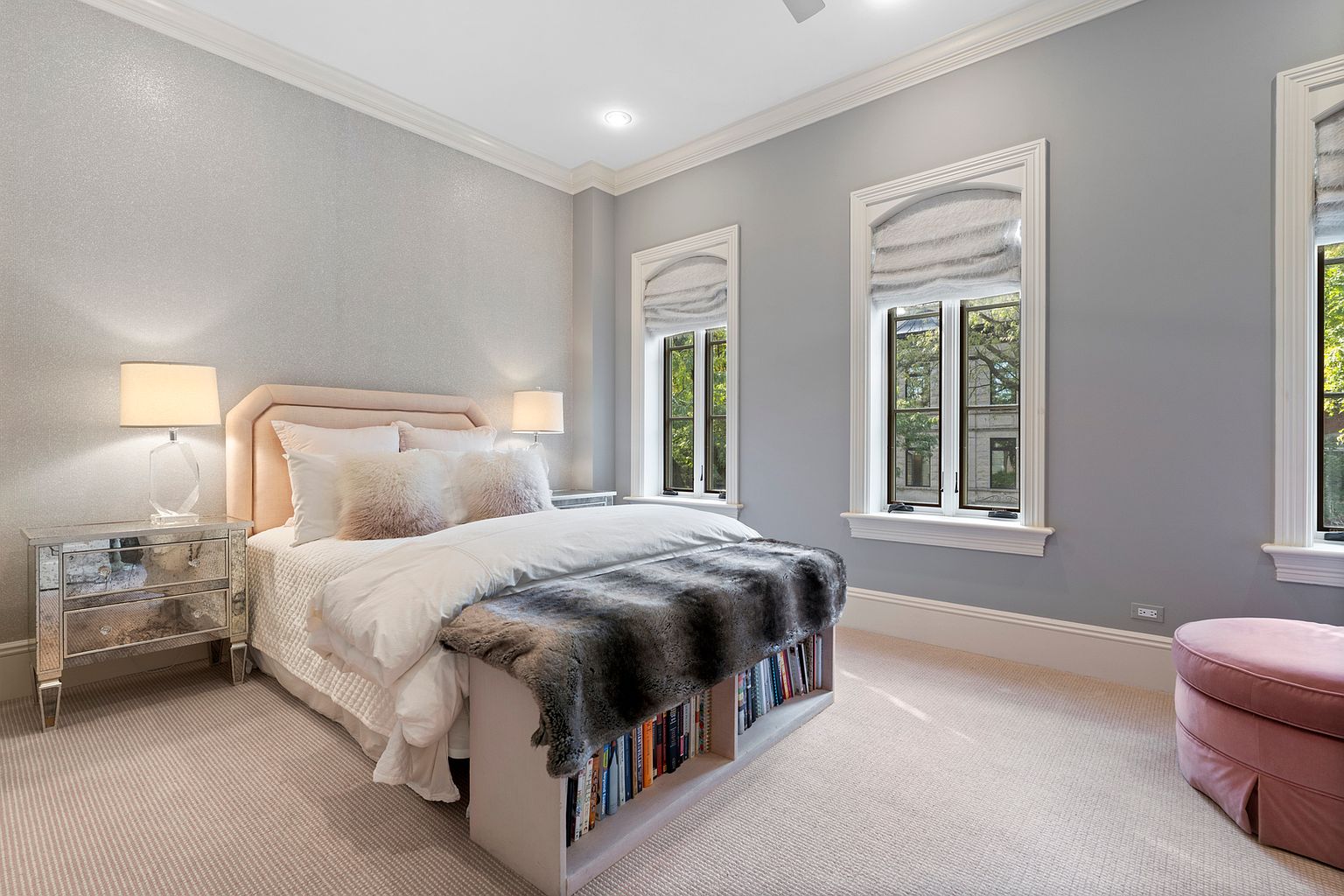
Inside, the home unfolds across more than 6,500 square feet of south-facing living space, organized with the kind of considered logic that distinguishes architecture from mere construction. Soaring ceilings and wide-plank hardwood floors establish the register immediately — this is a home that breathes. The open layout moves with purpose, every sight line and transition calibrated for both intimacy and grandeur. A passenger elevator connects all four levels with the ease the home's scale demands.
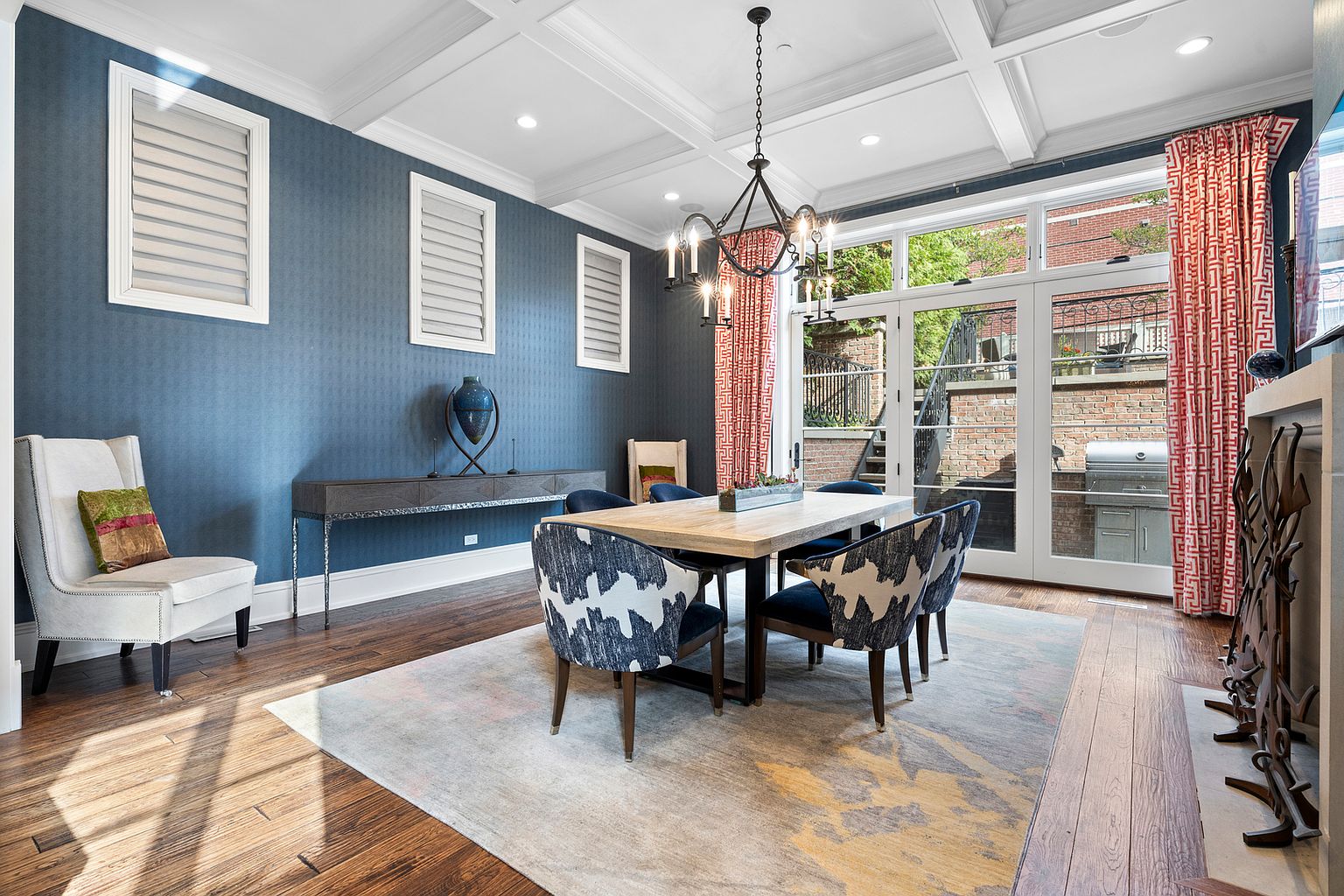
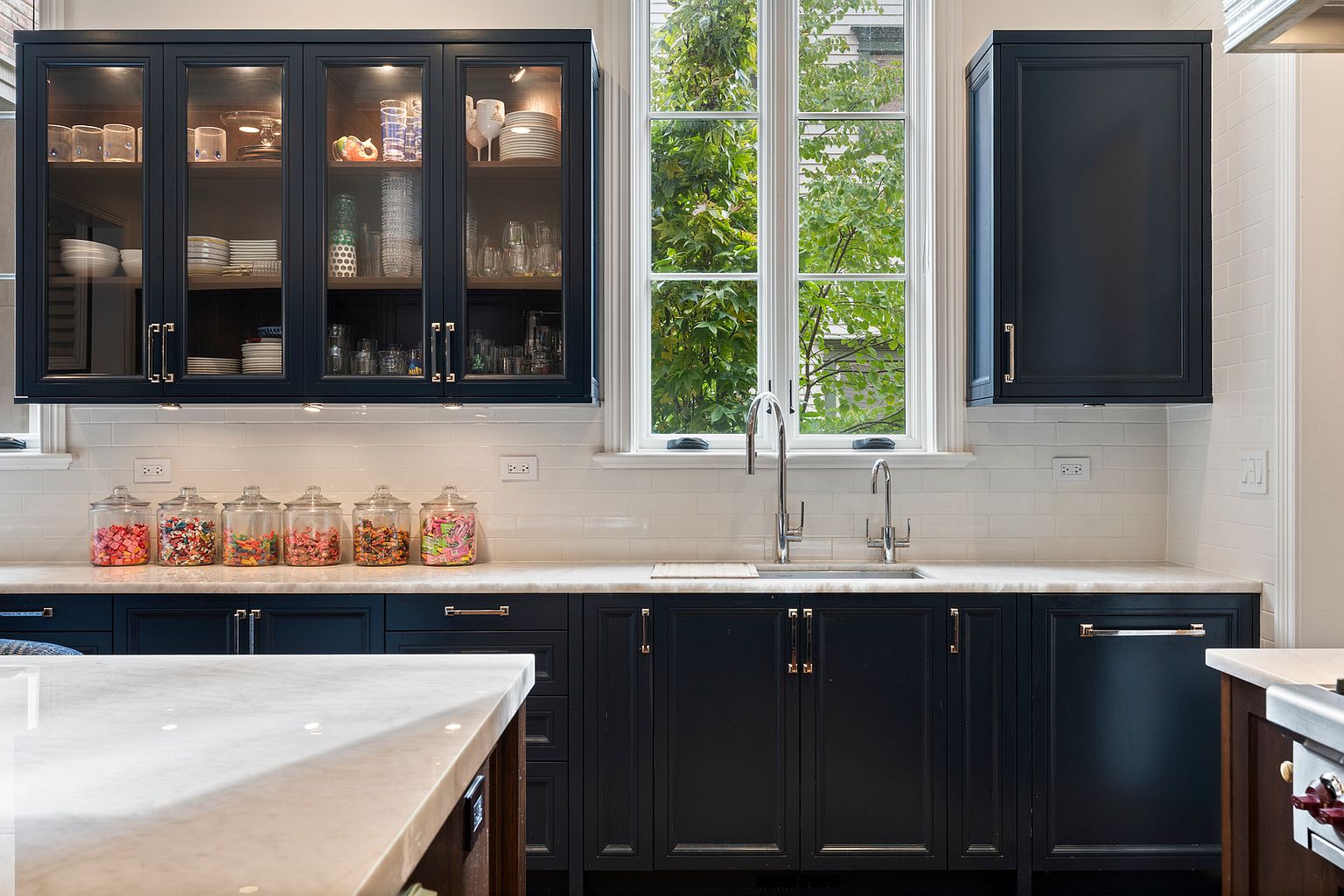
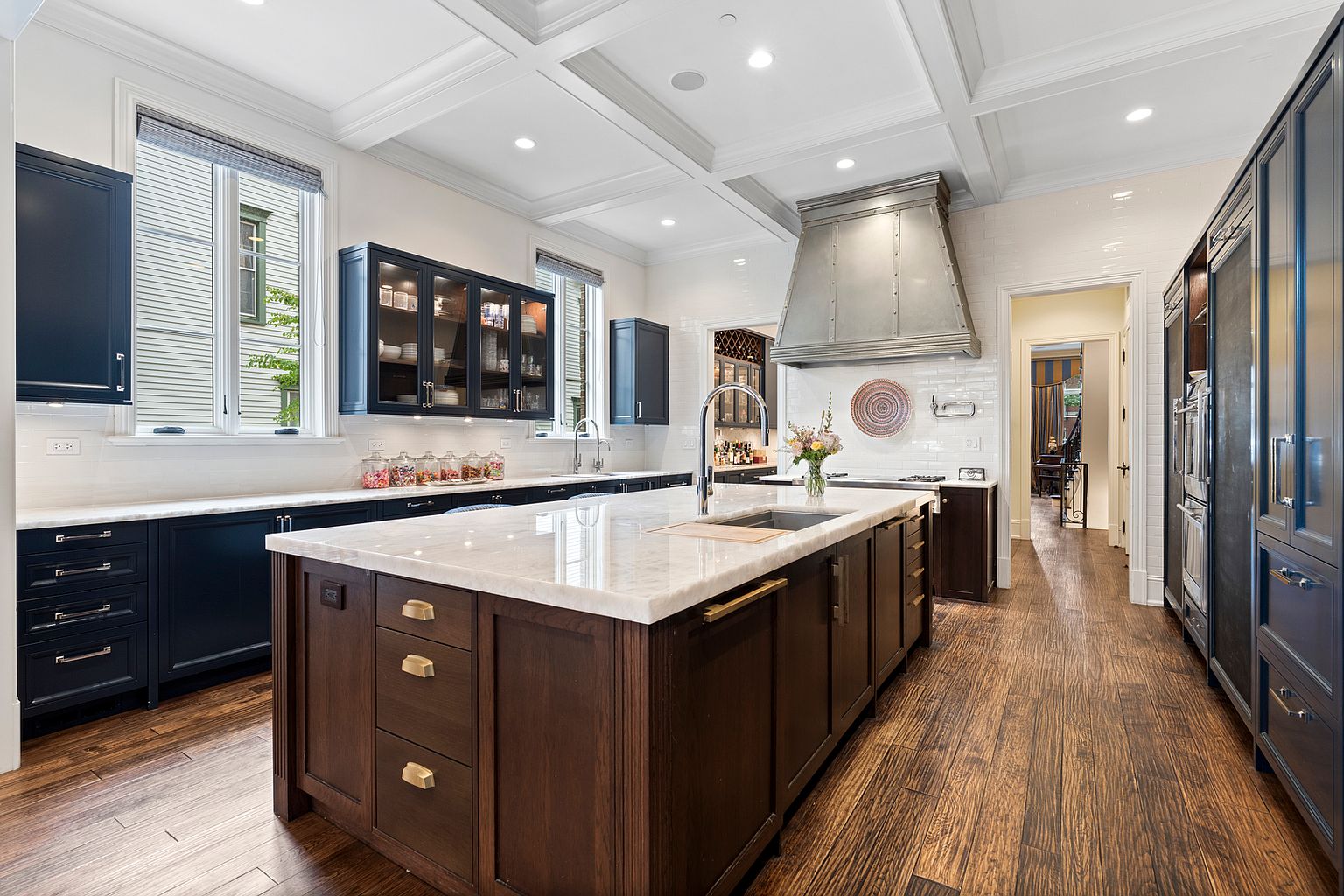
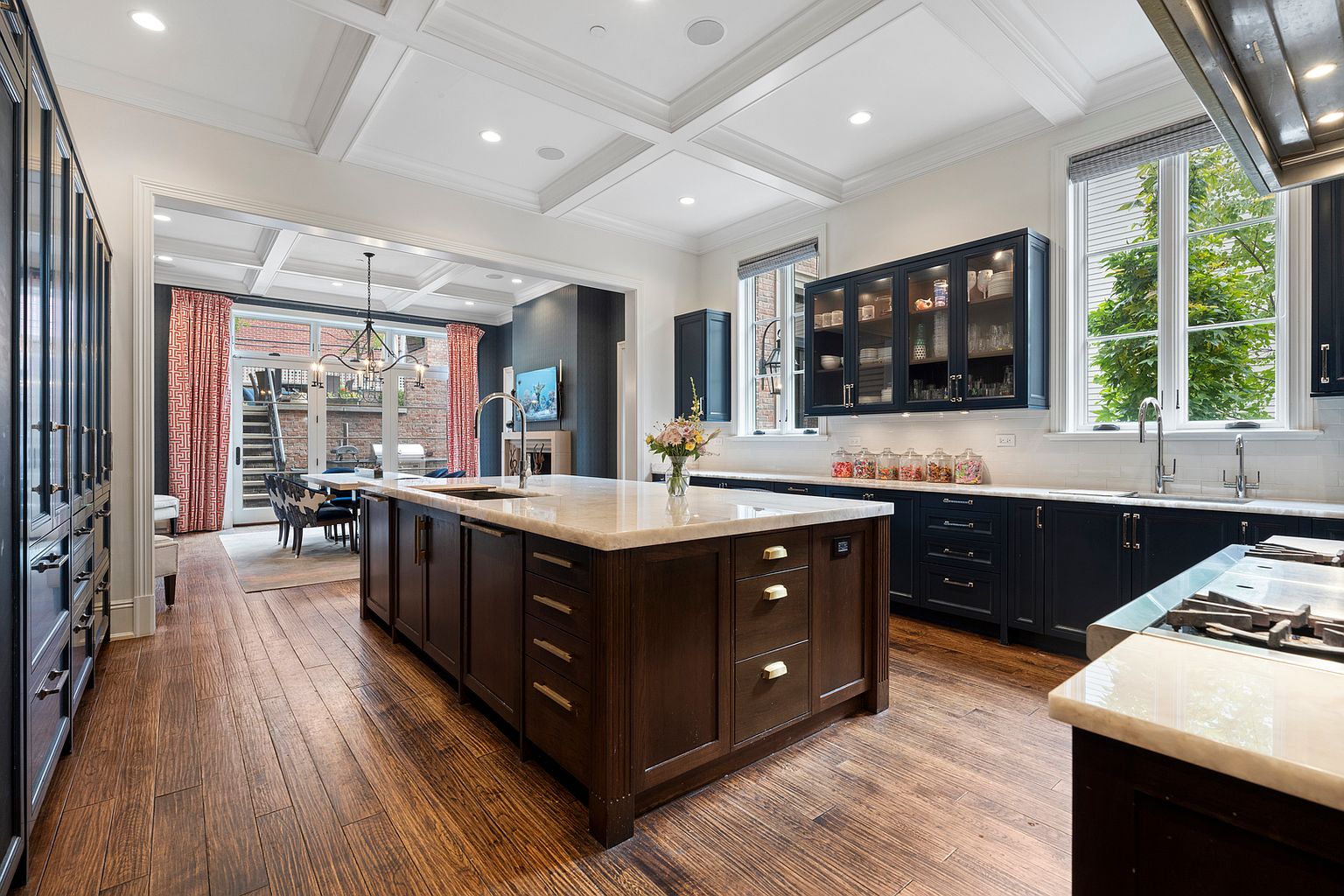
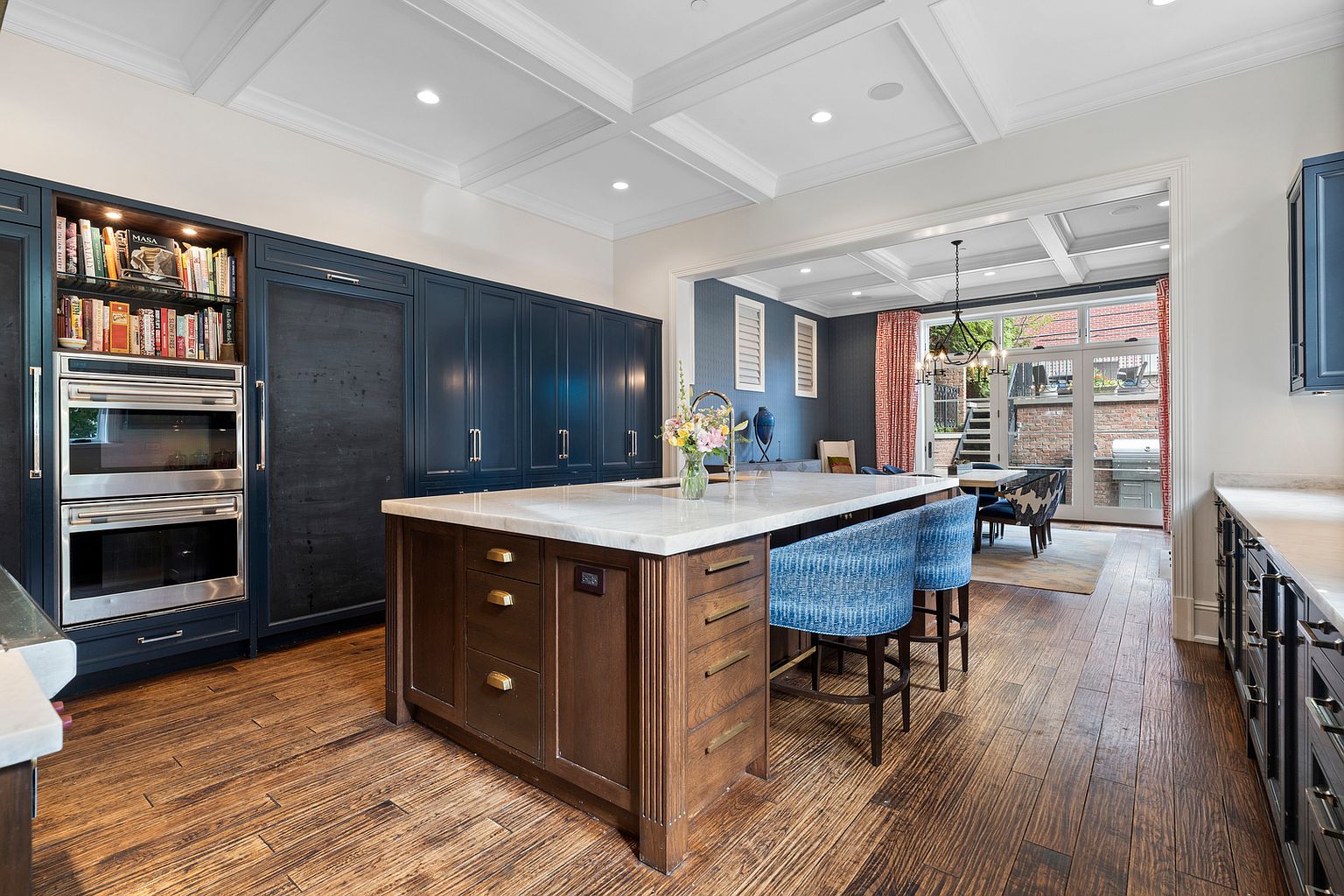
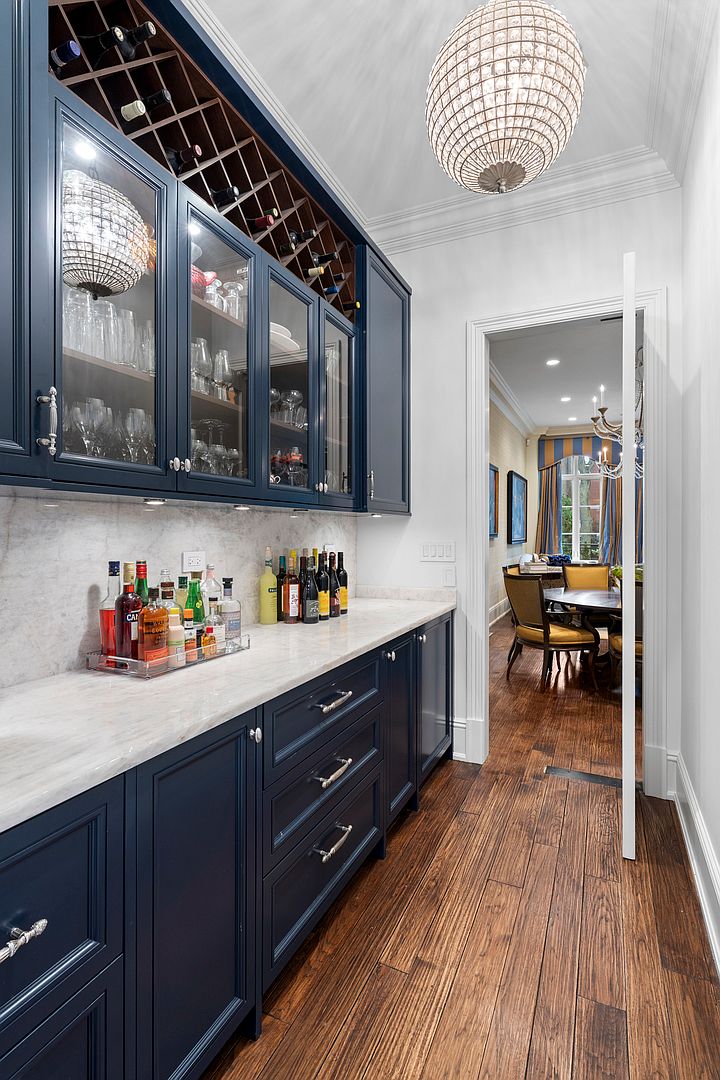
At the heart of the residence, the newly remodeled gourmet kitchen is a study in elevated restraint. Inset lacquered and walnut cabinetry, Iceberg quartzite countertops, an oversized center island, and a suite of top-tier appliances compose a culinary environment that is as beautiful to inhabit as it is functional to work in. The adjacent butler's pantry — outfitted with deep blue cabinetry, glass-front uppers, an integrated wine rack, and a crystal chandelier — provides the kind of considered service infrastructure that serious entertaining requires.
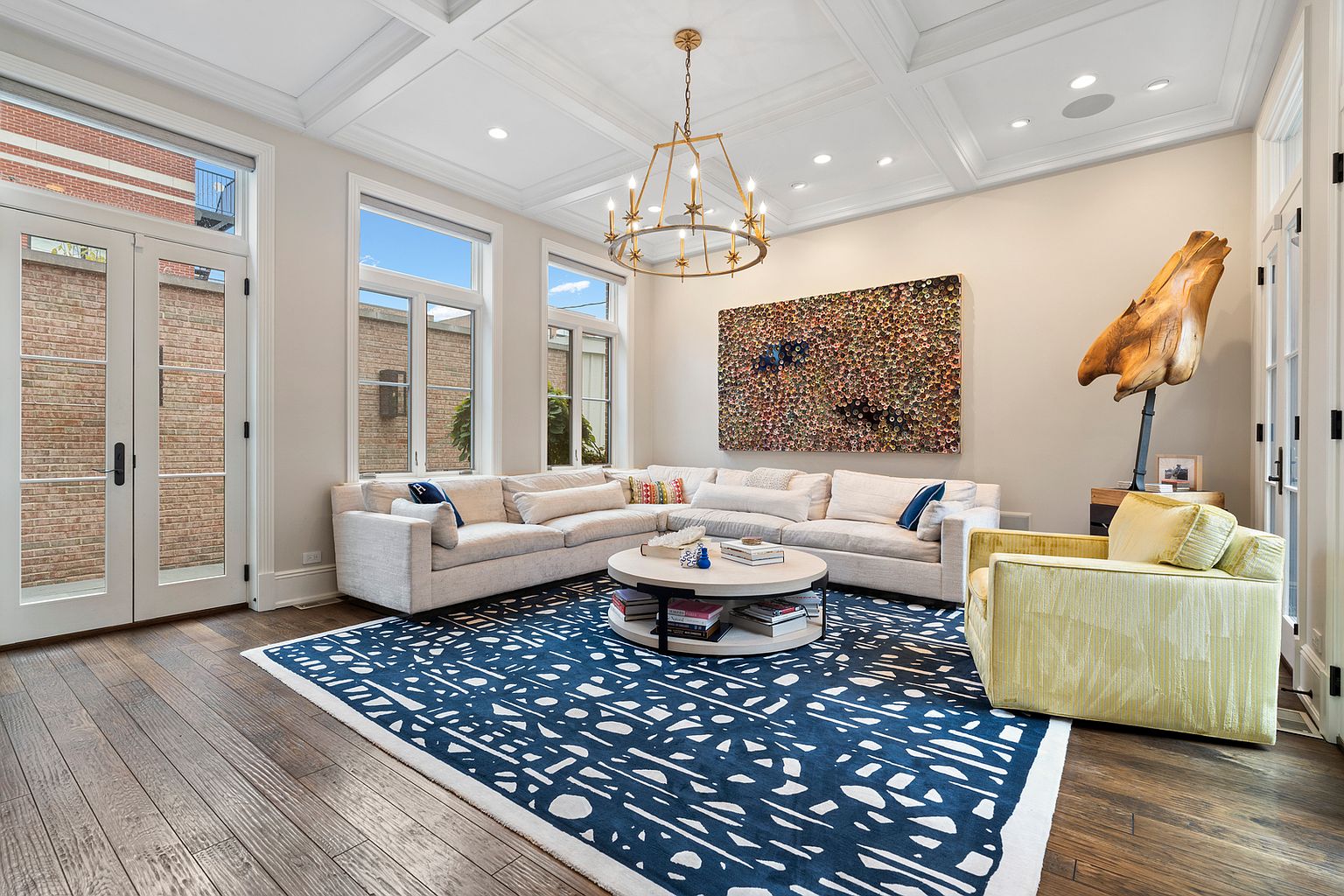
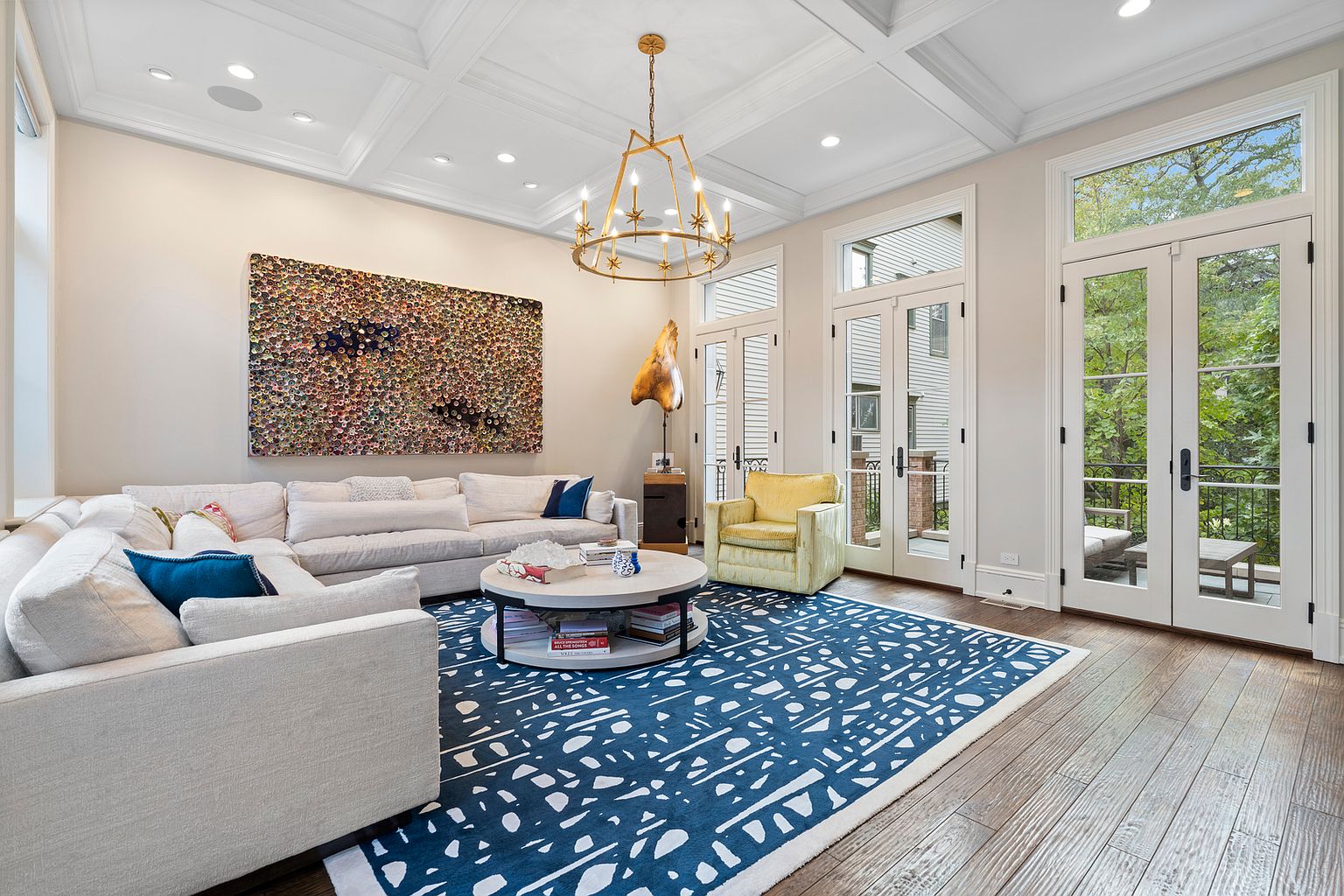
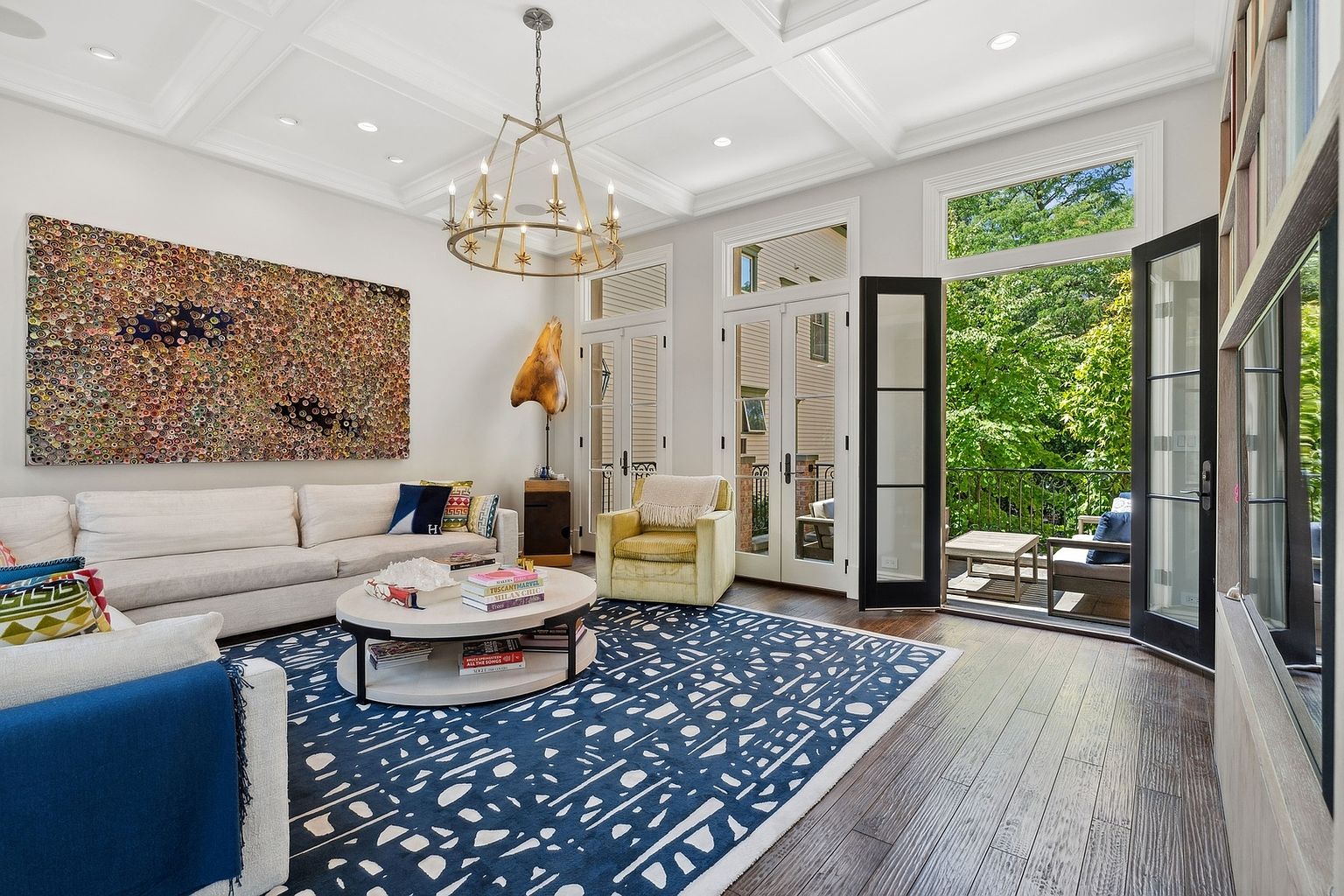
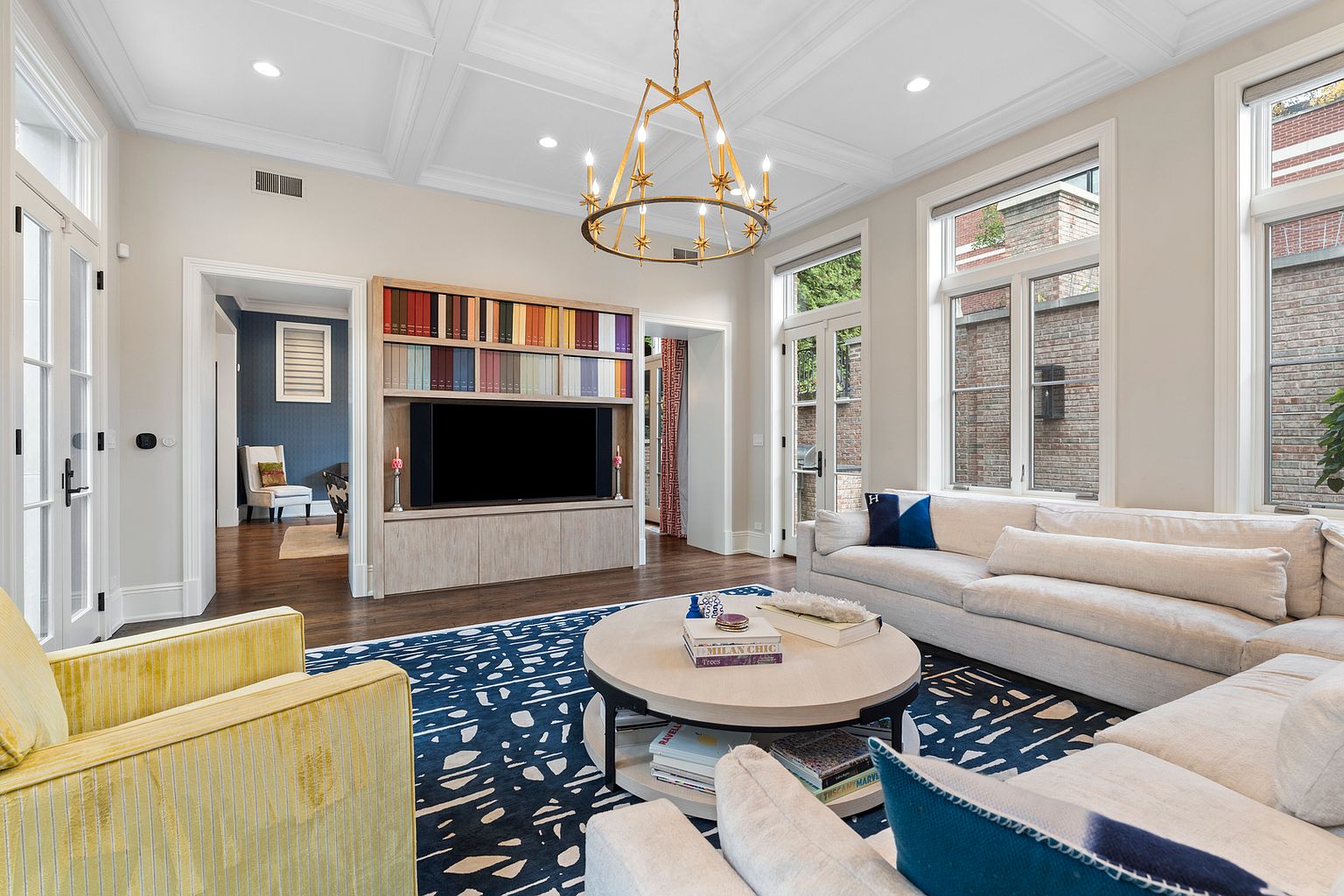
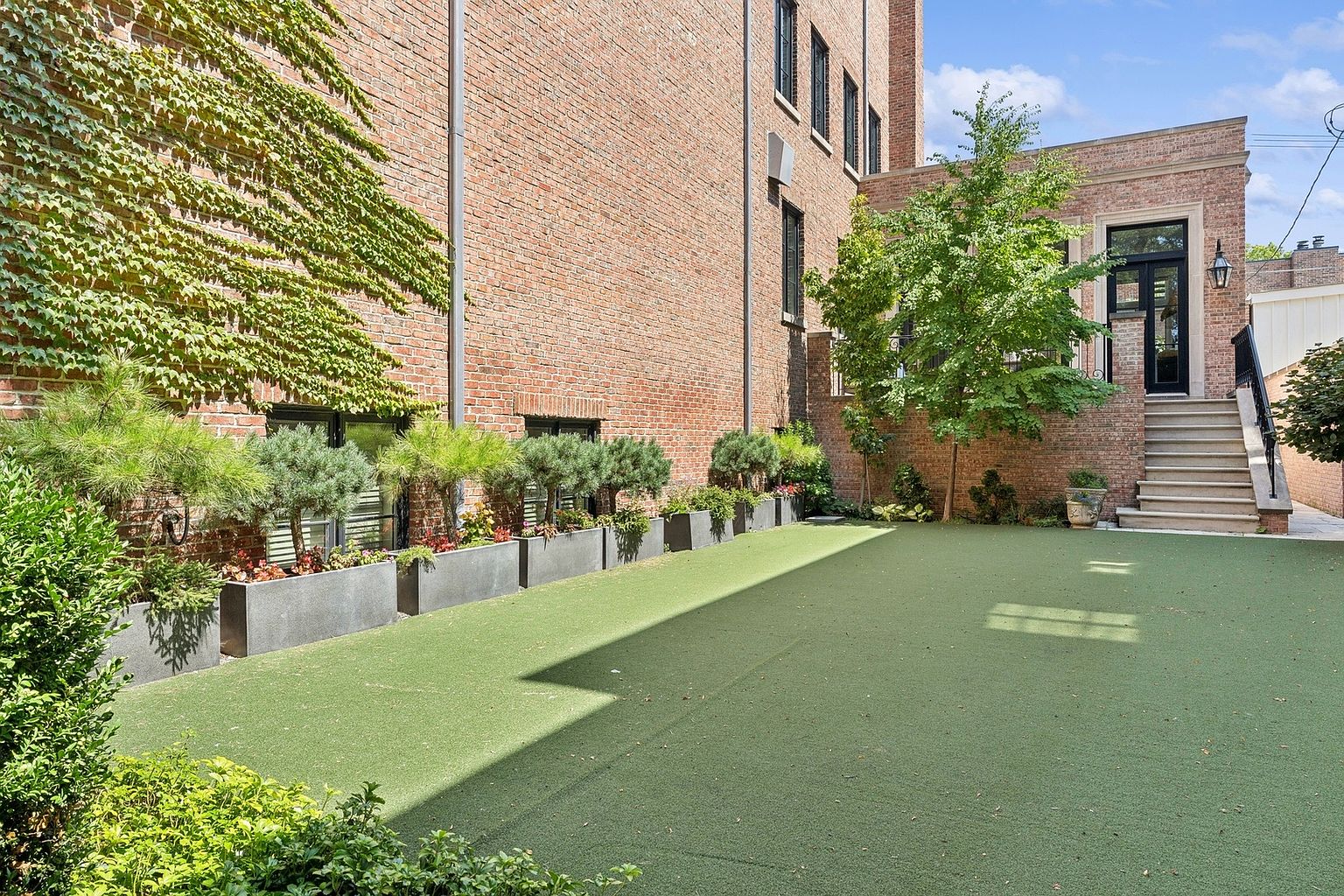
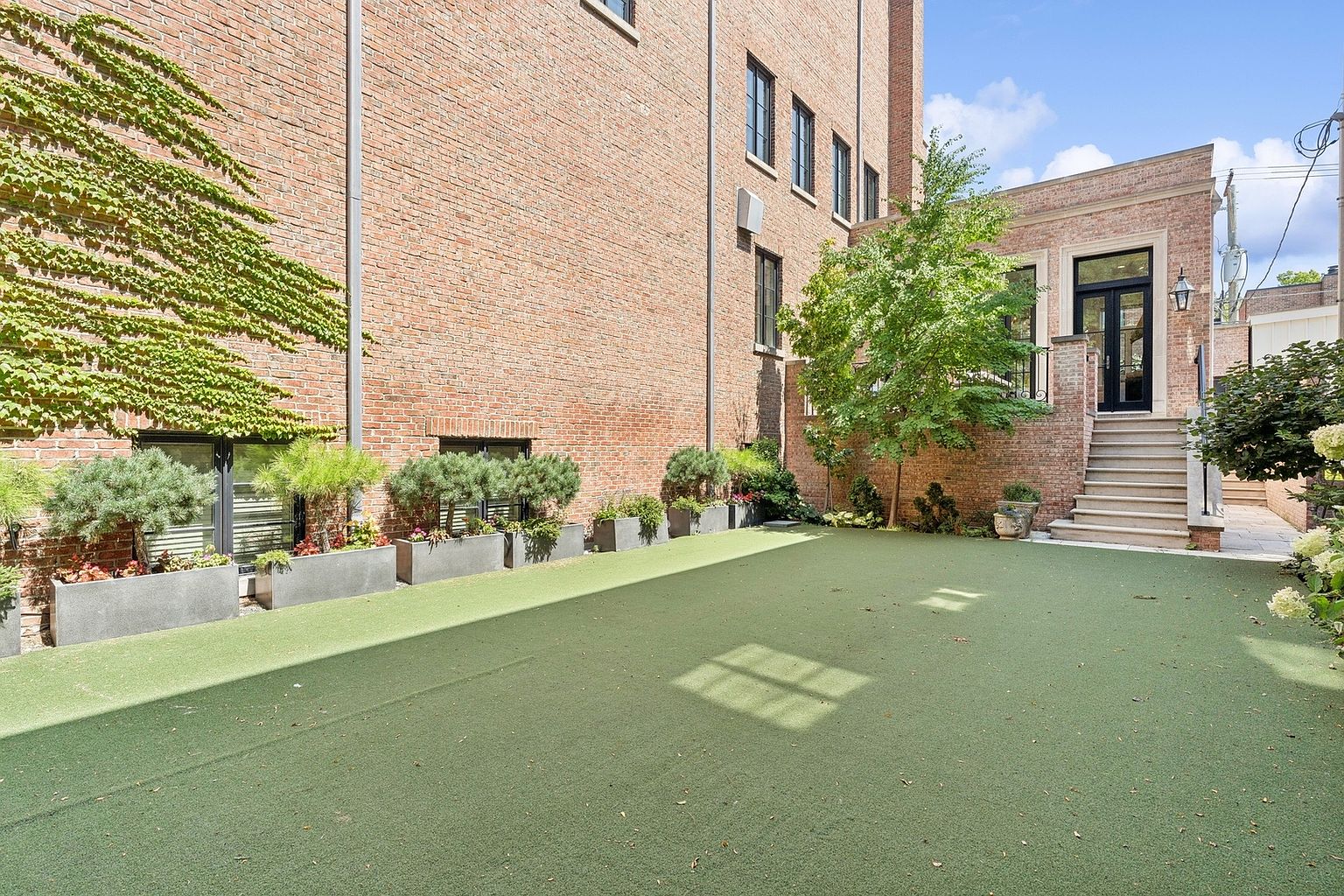
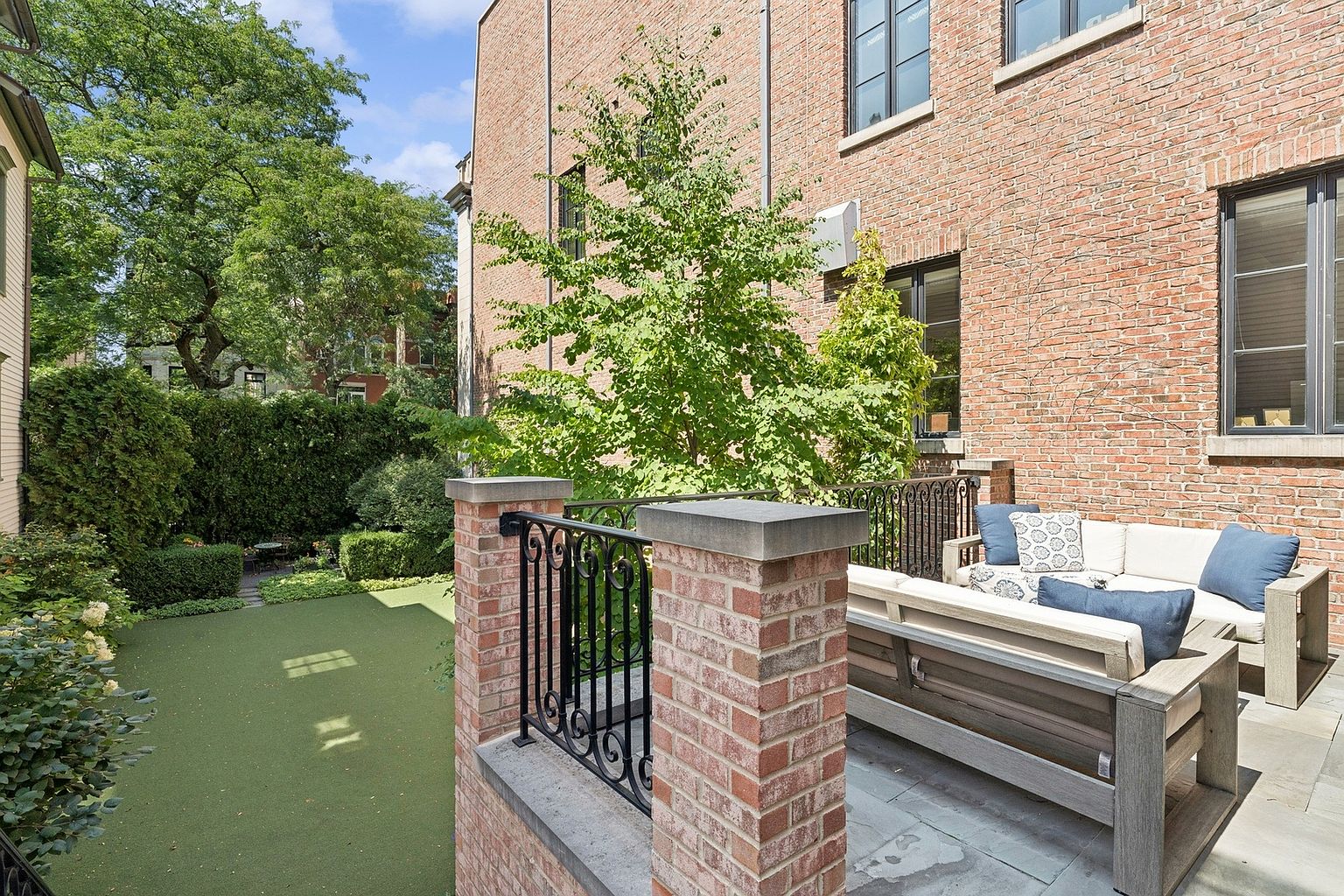
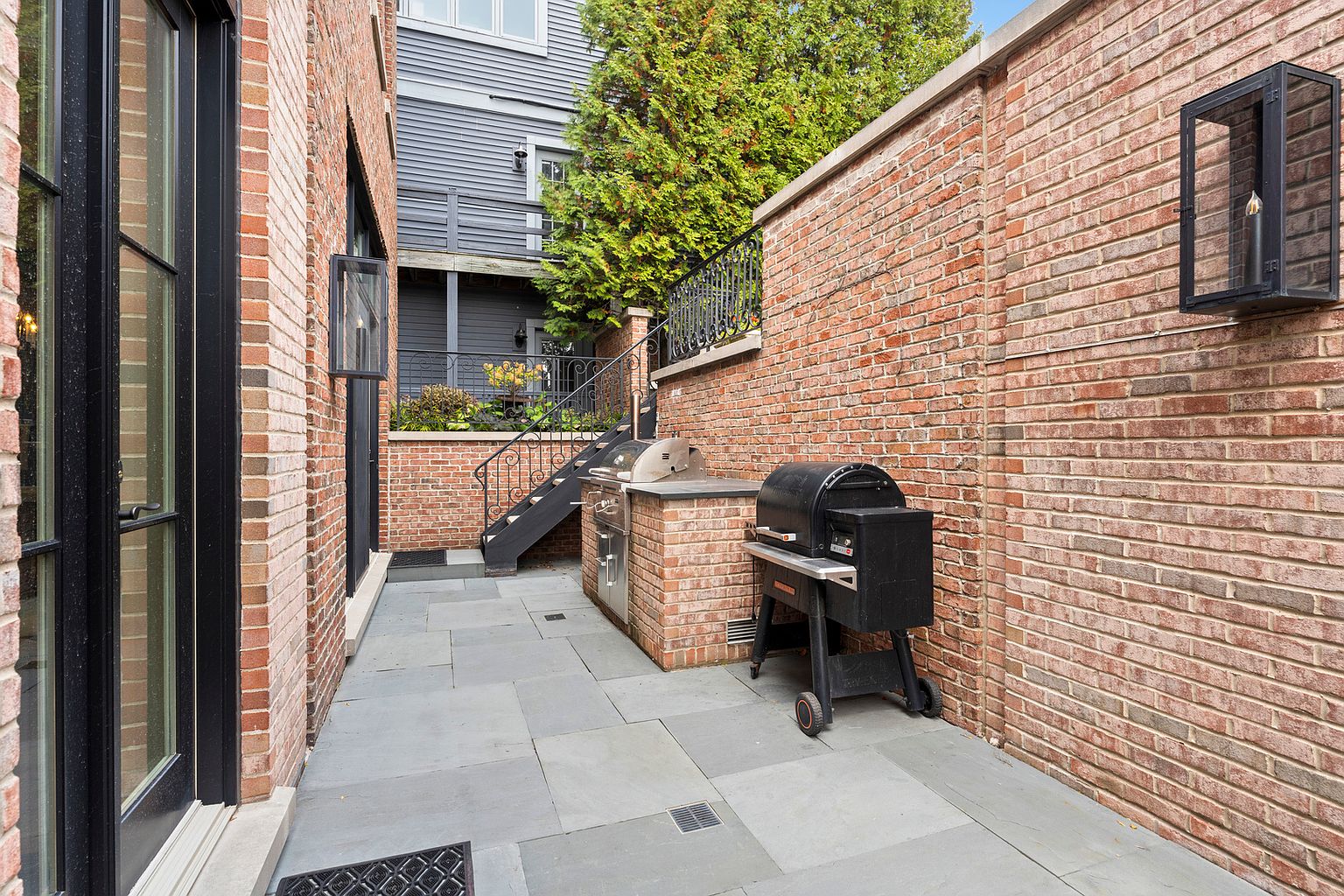
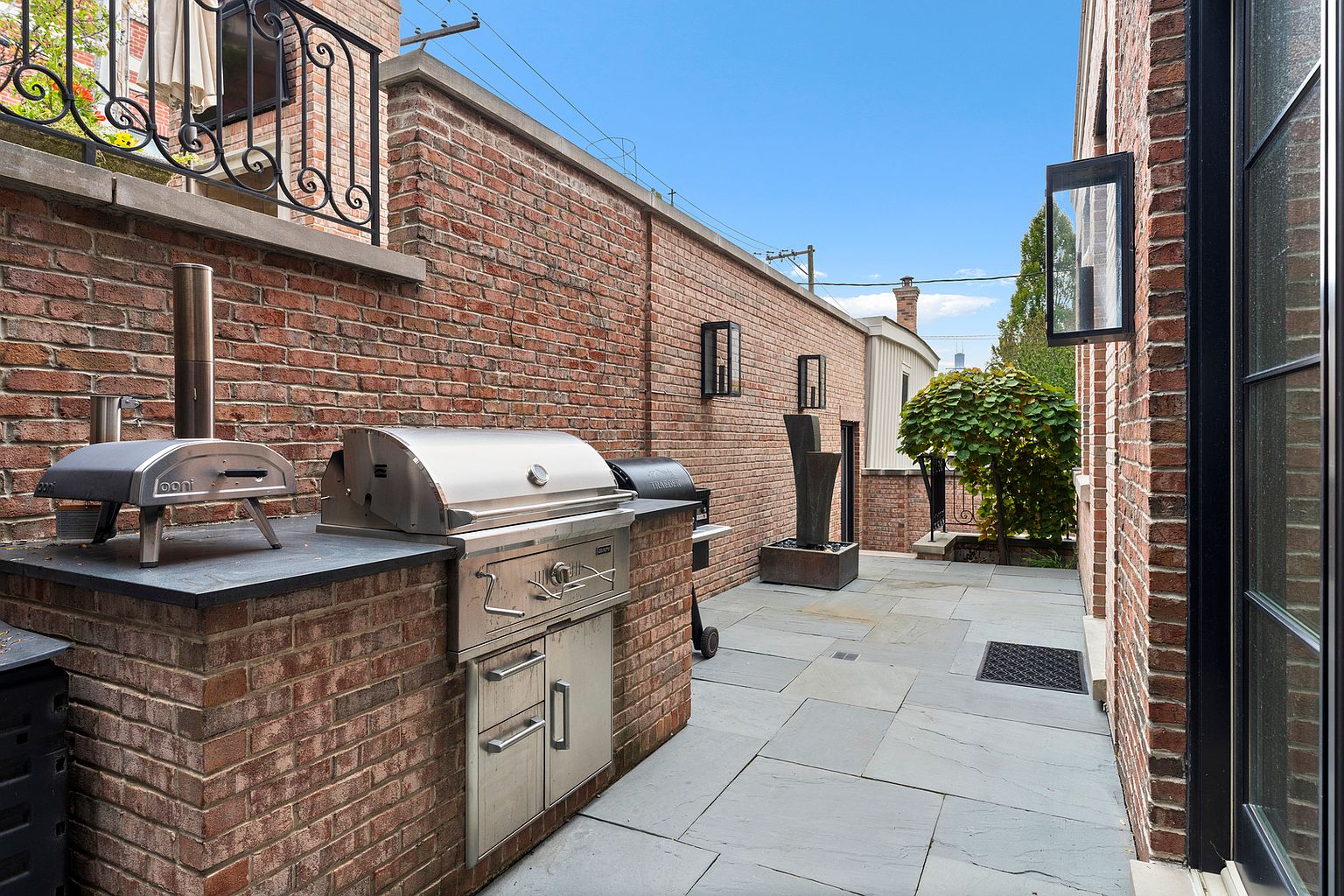
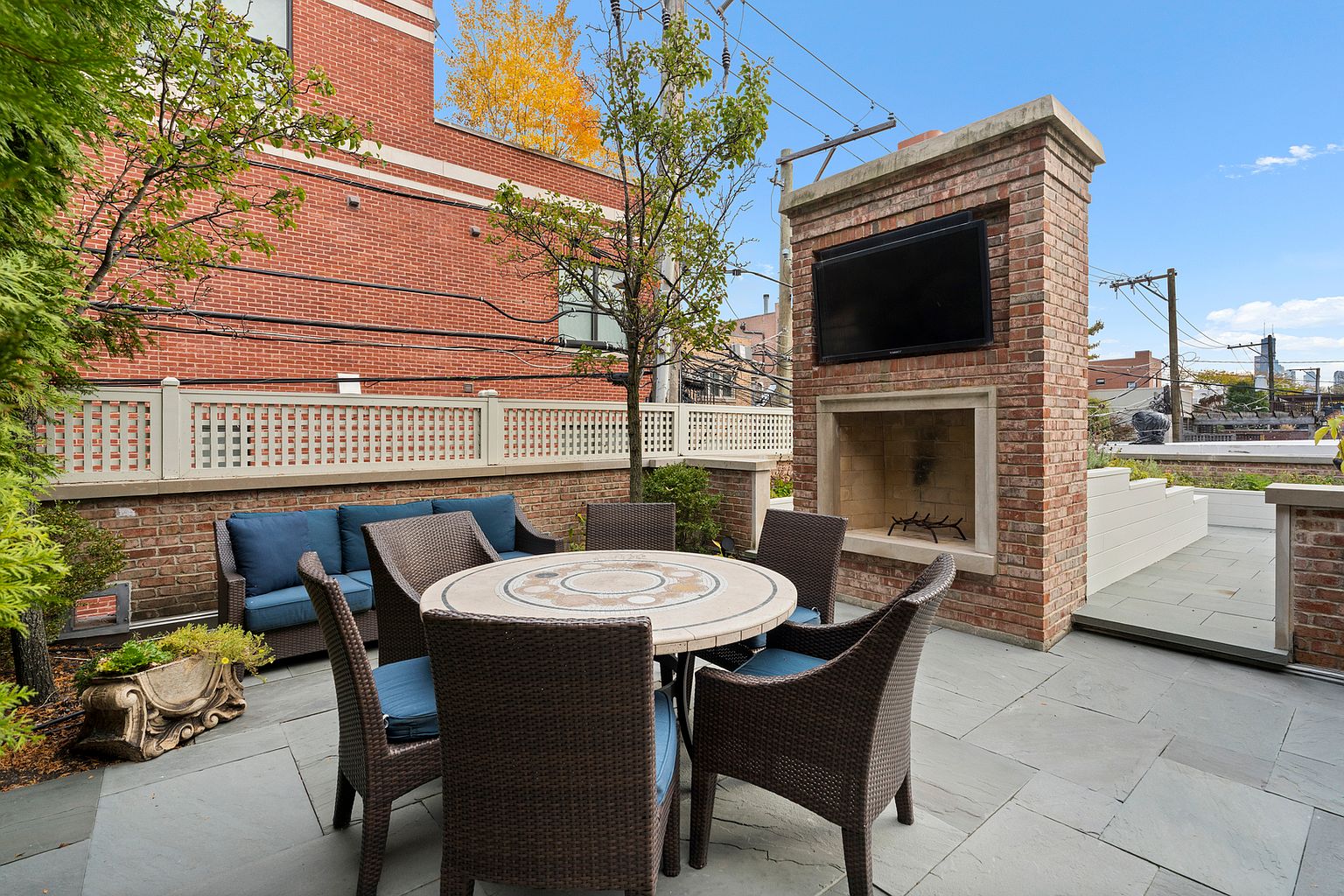
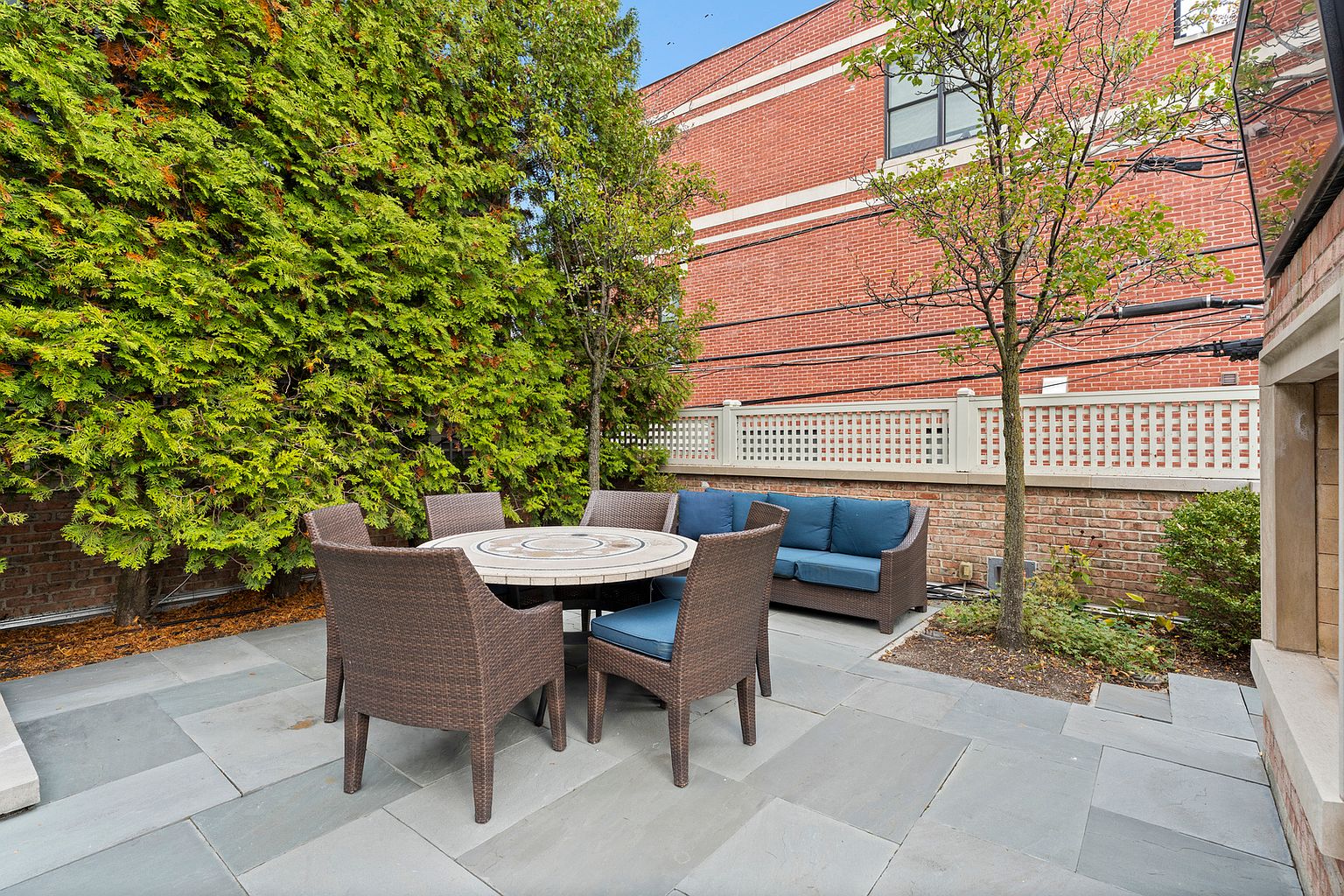
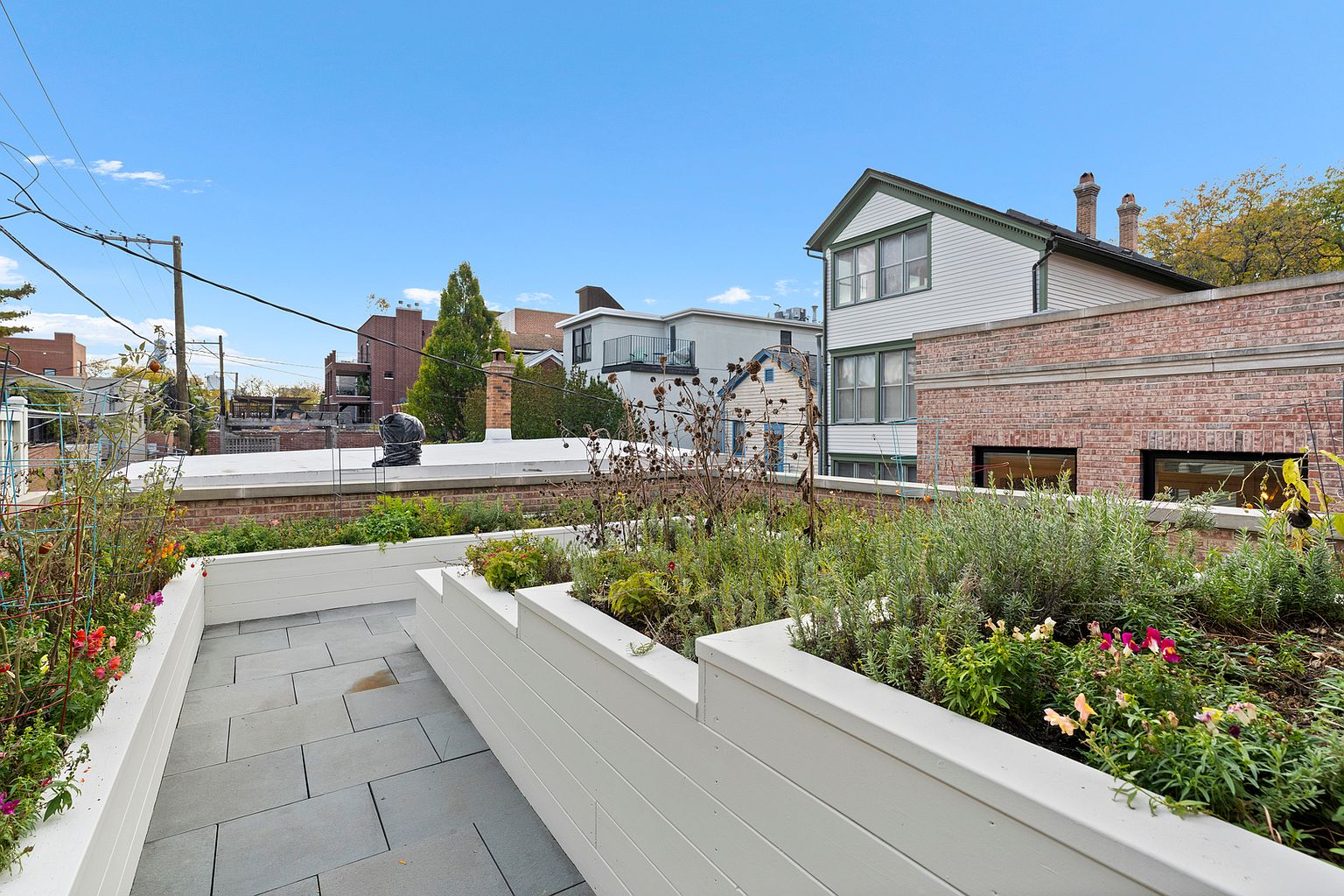
The newly built great room addition extends the home's entertaining vocabulary further still. With its high ceilings, custom built-ins, and seamless connection to the outdoor spaces beyond, it dissolves the boundary between interior and exterior with architectural fluency. Multiple patios, custom irrigated planting beds, a built-in grill station, and a serene turf-lined courtyard framed by ivy-clad brick walls create a private urban sanctuary of remarkable depth and variety.
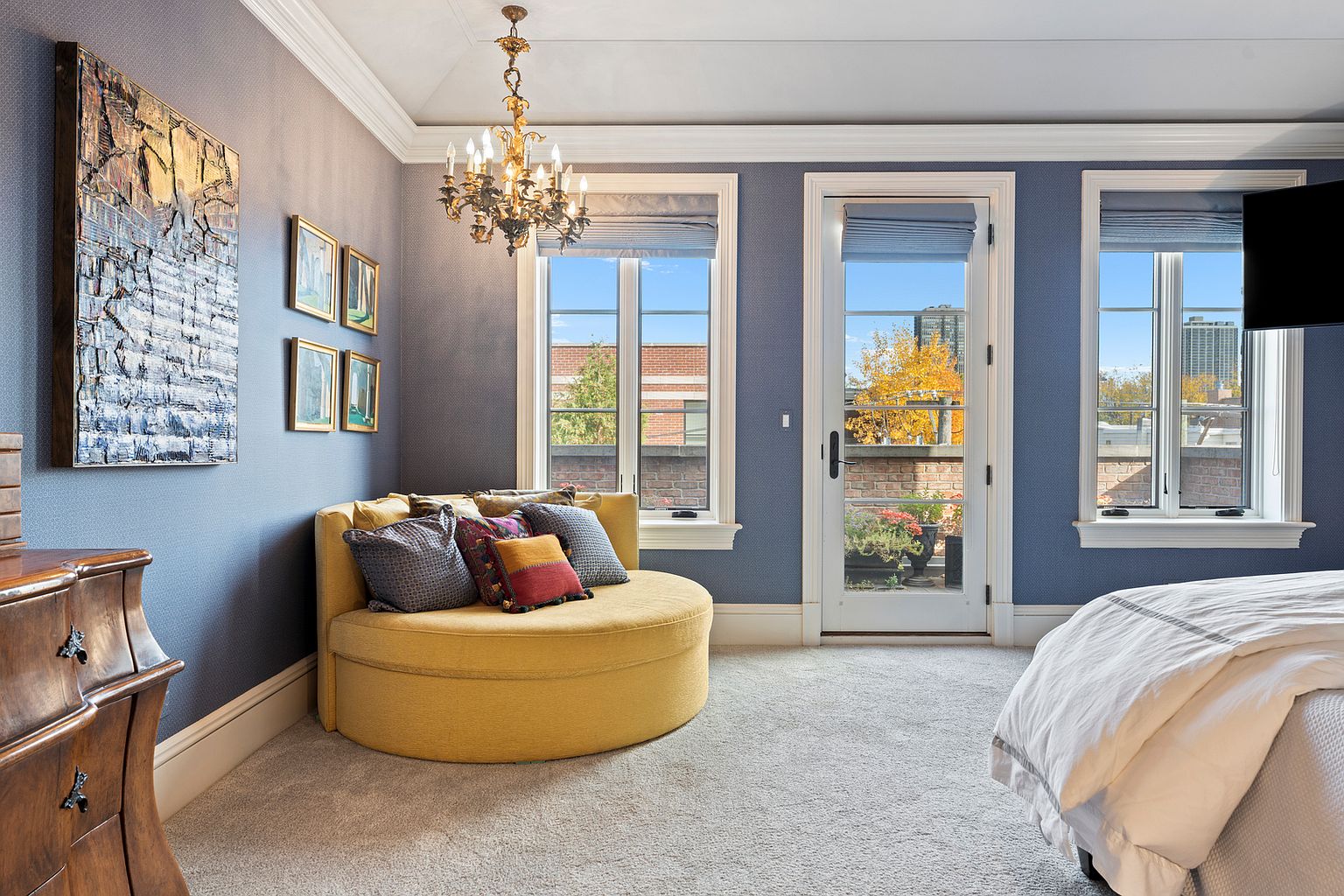
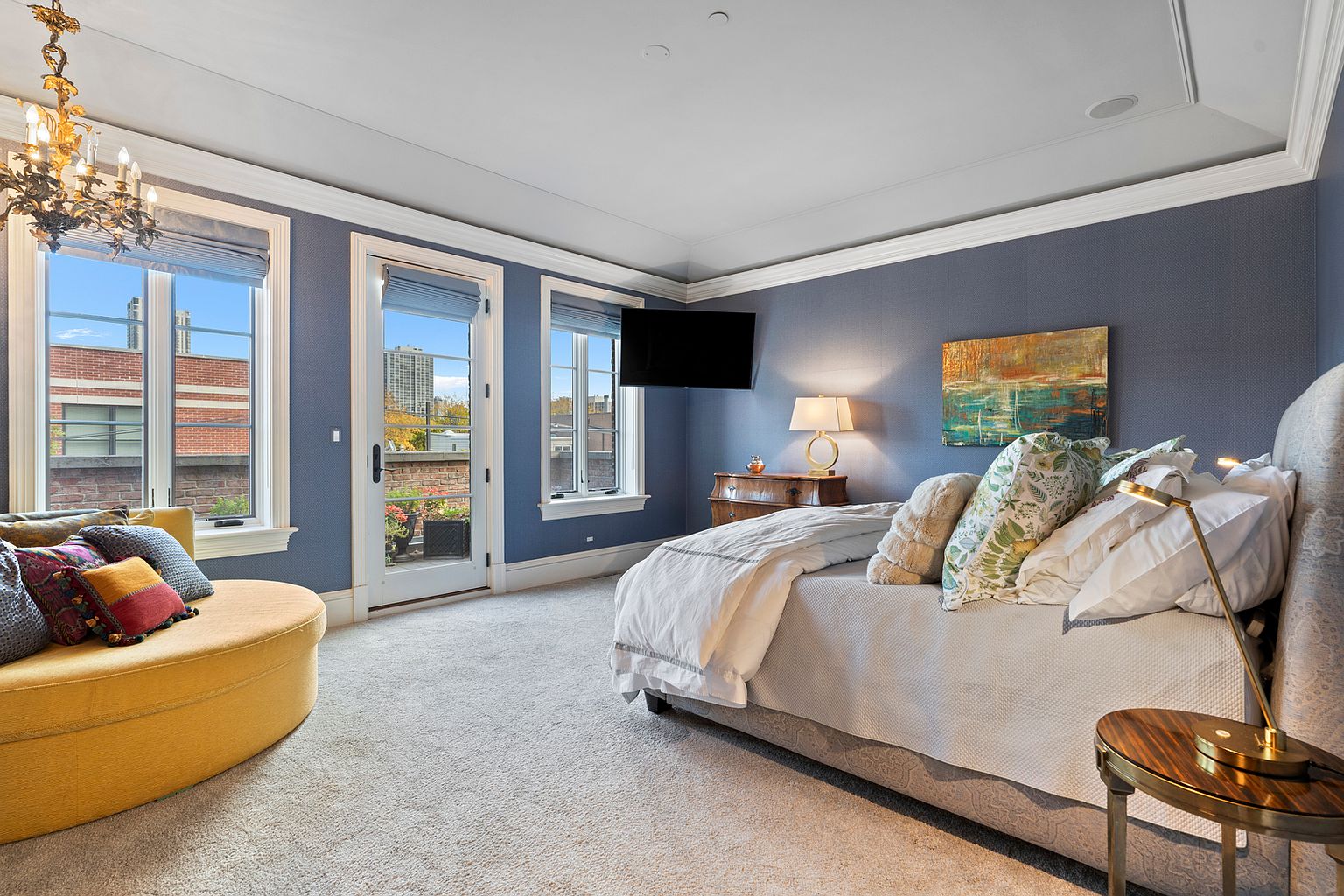
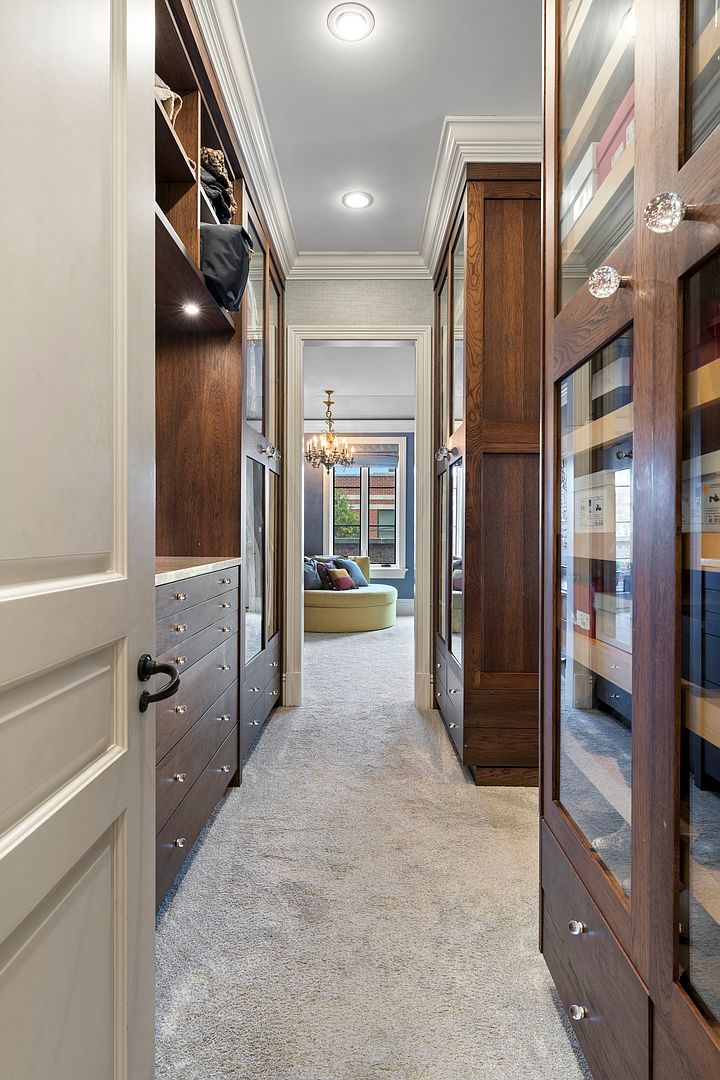
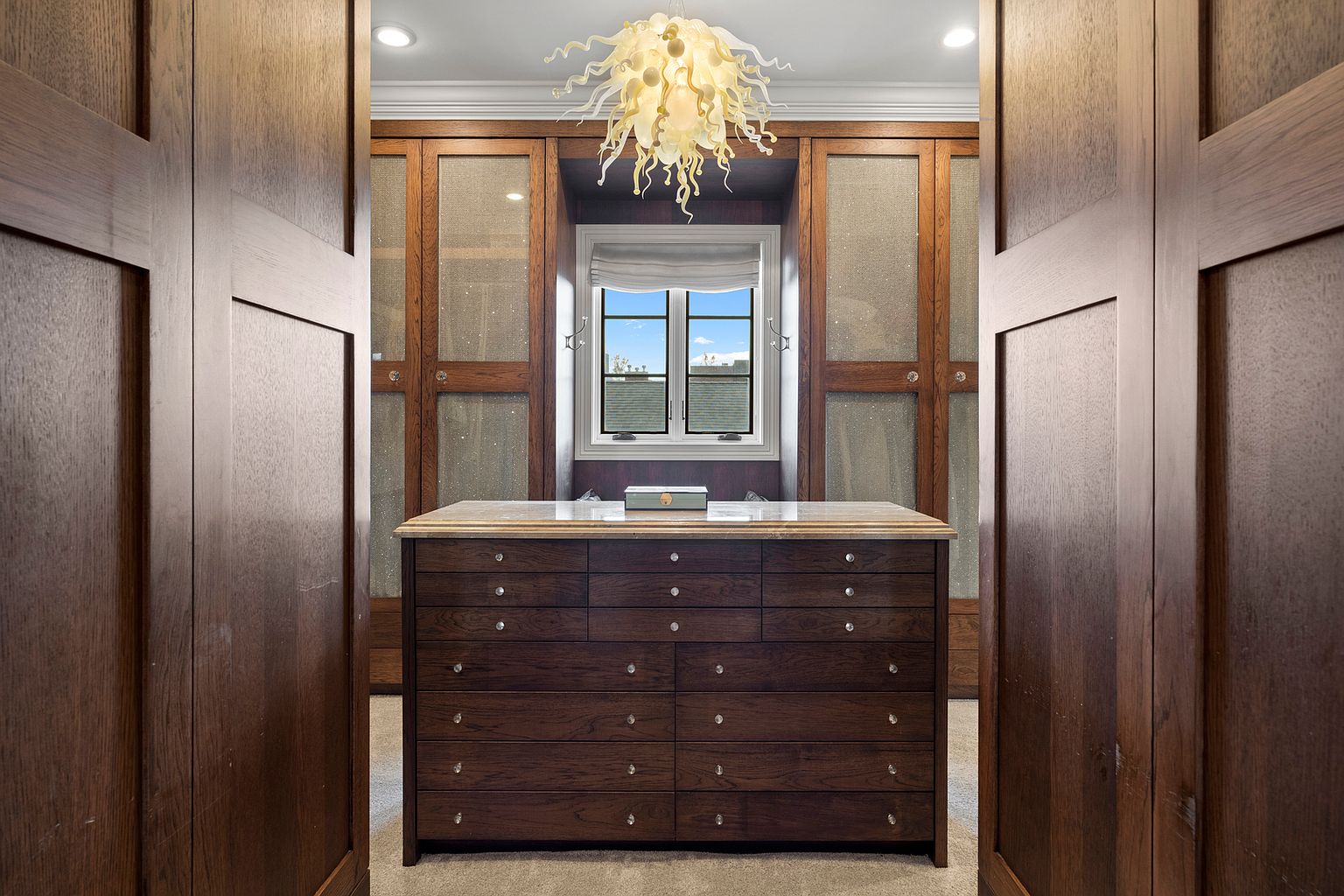
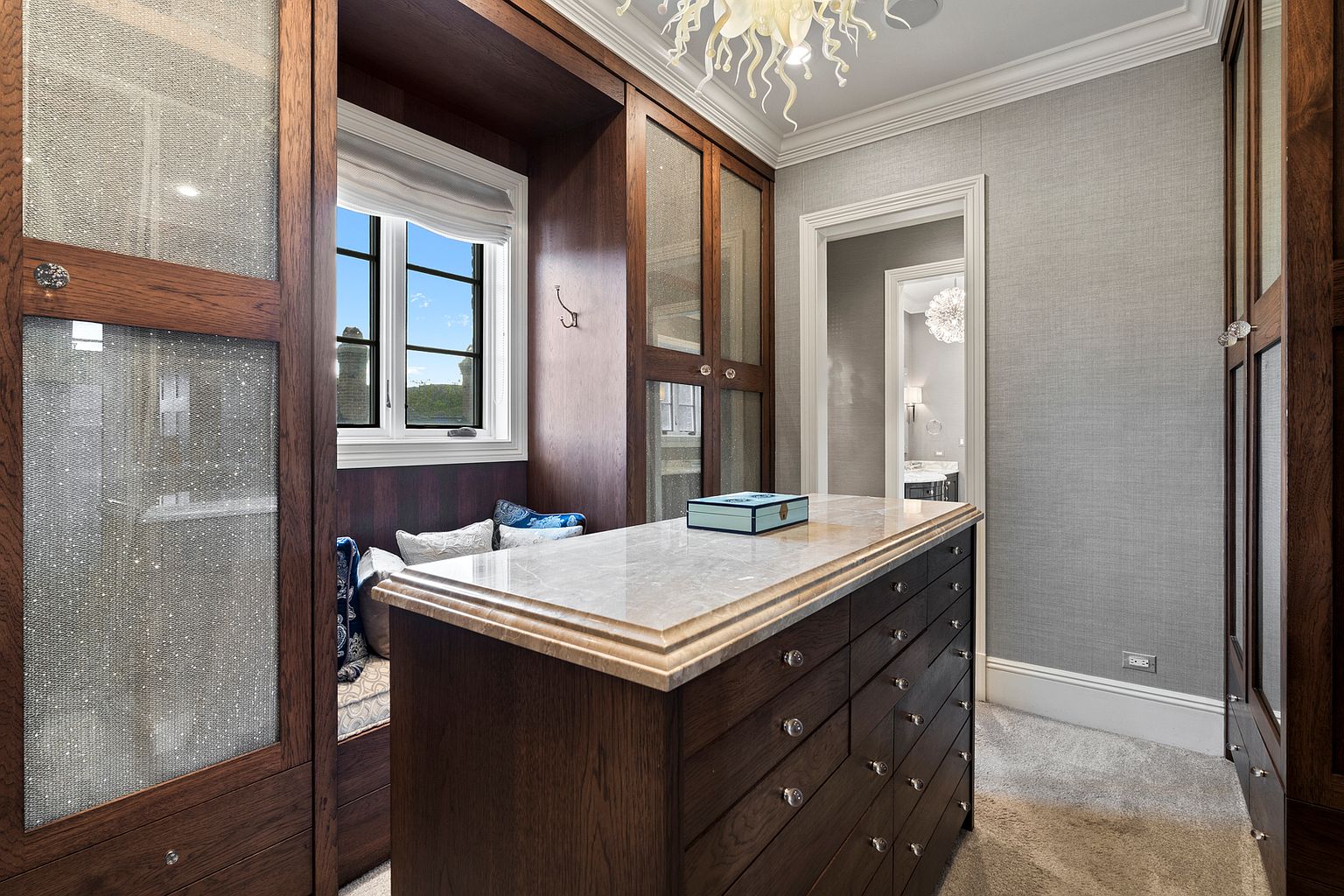
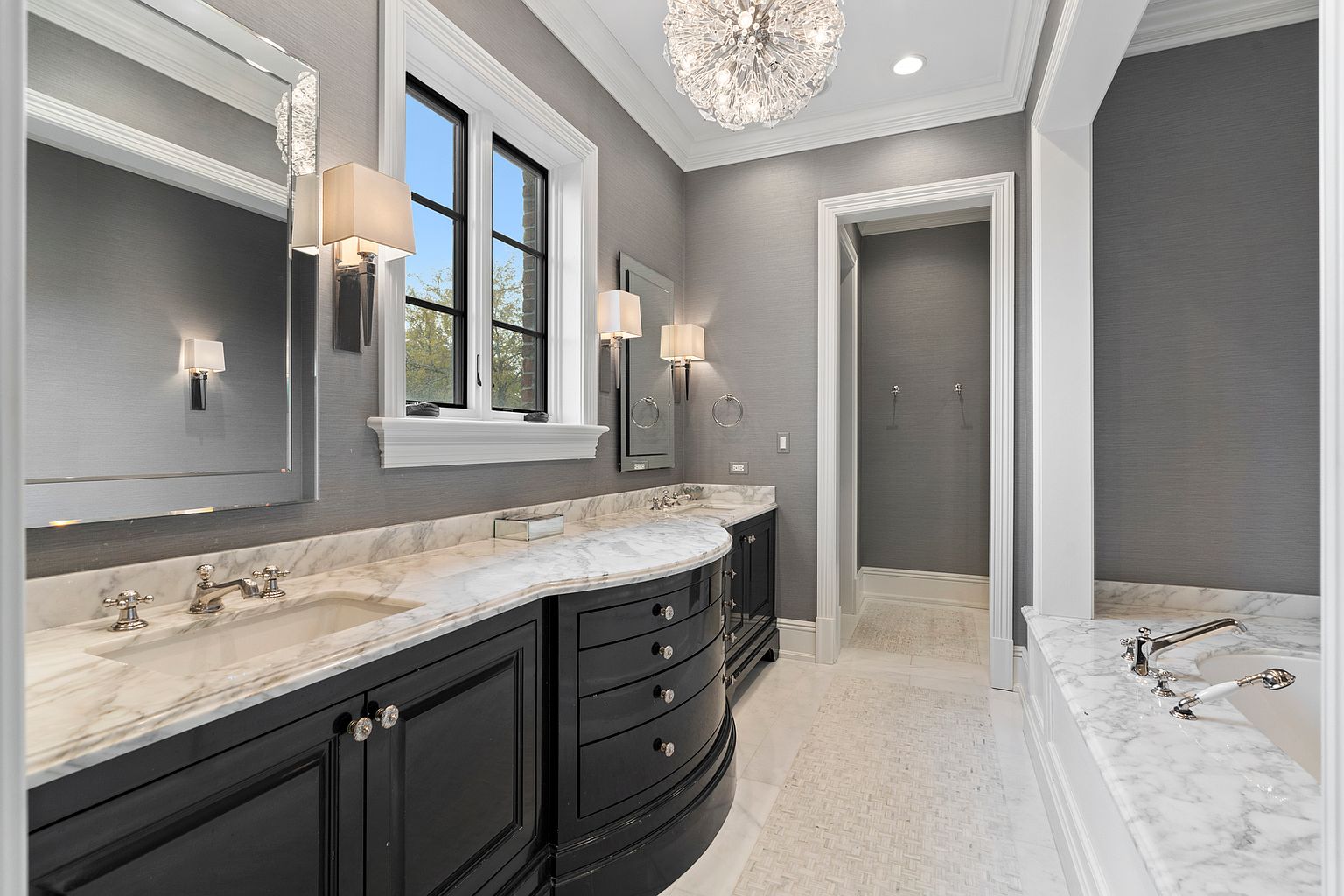
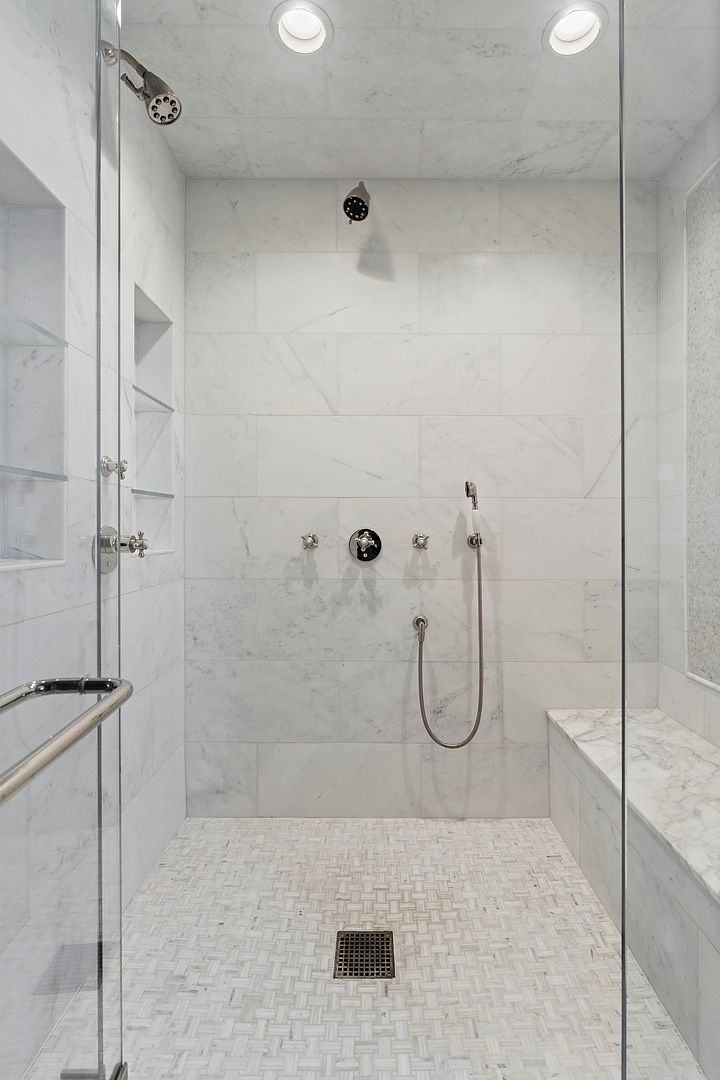
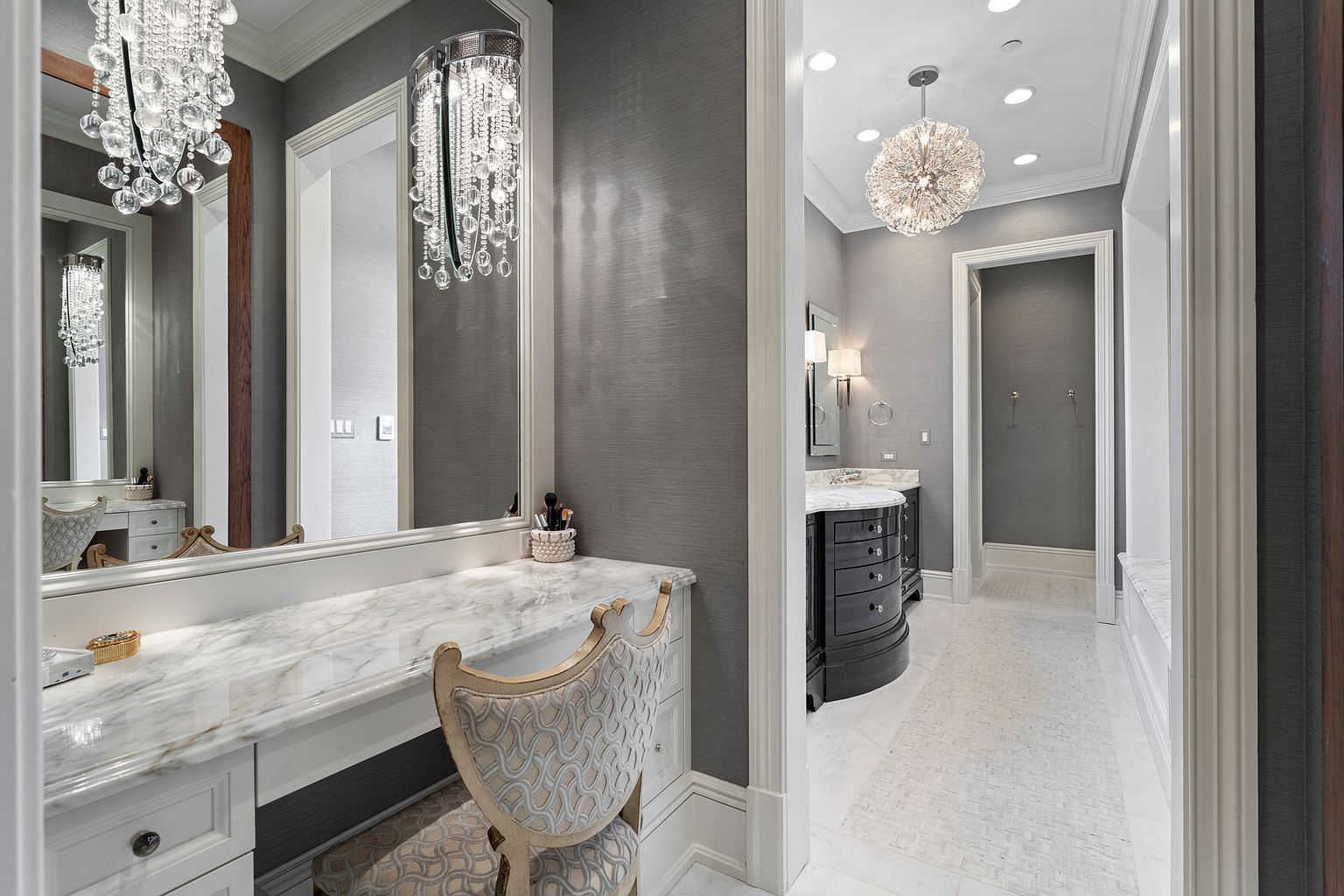
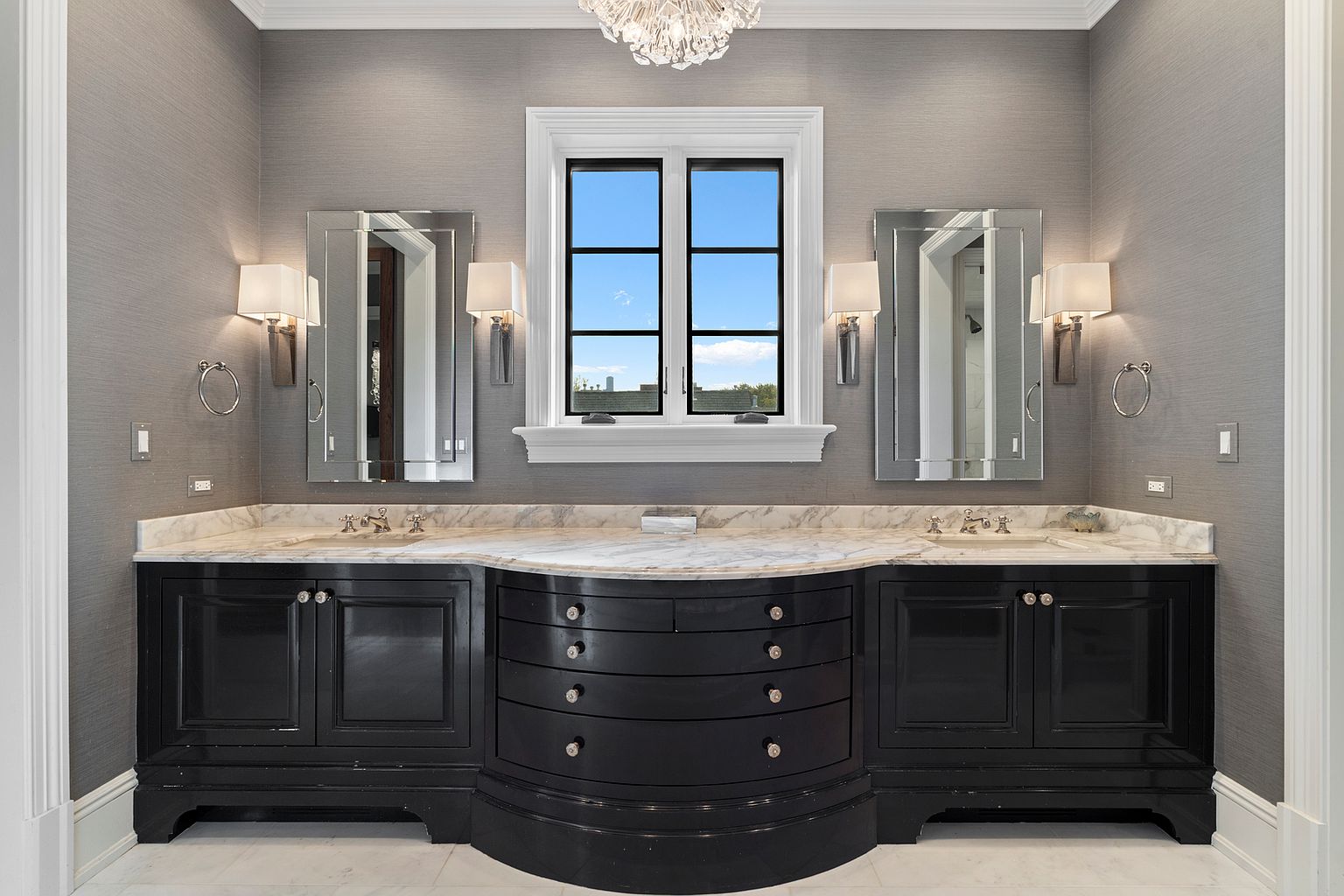
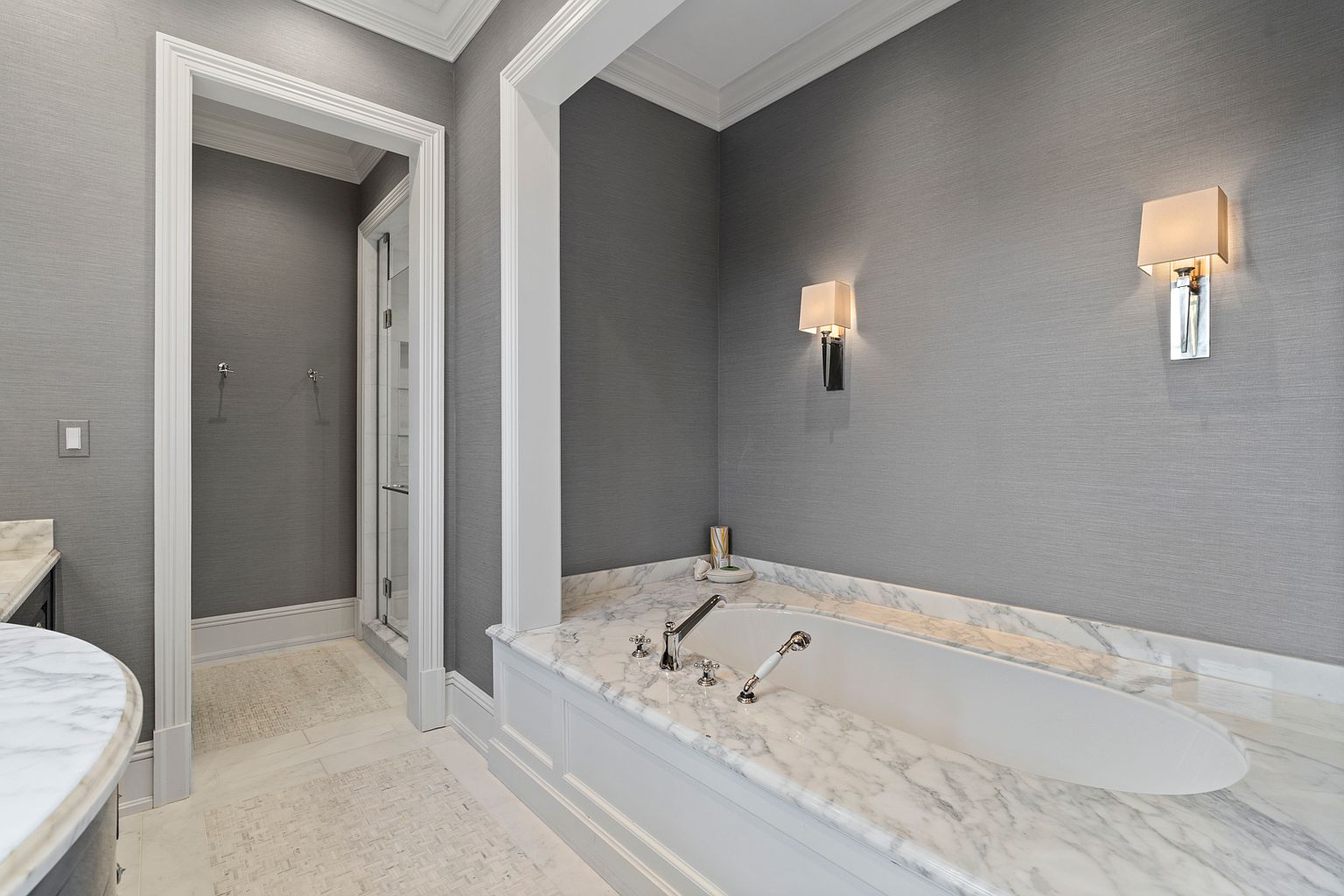
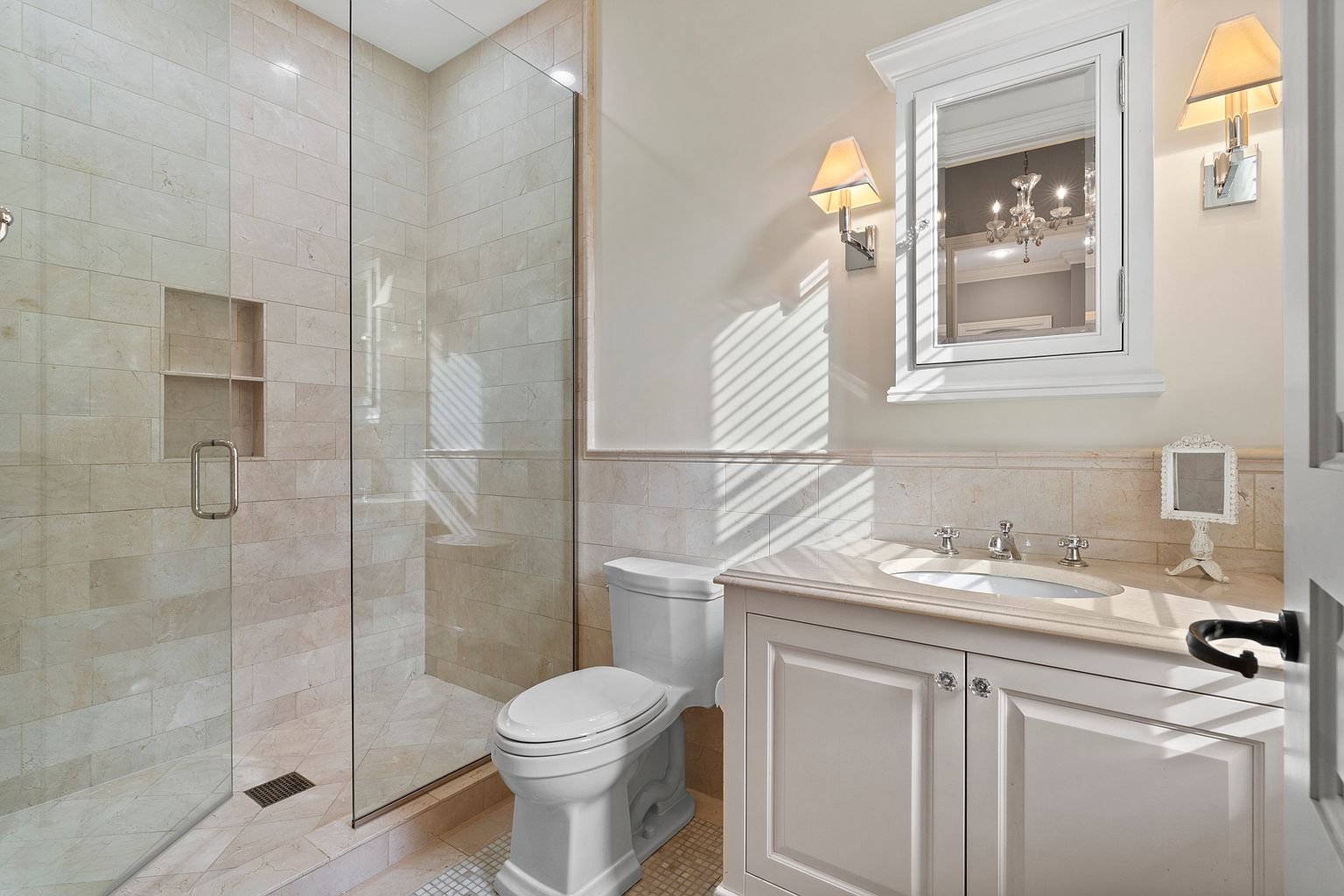
The full-floor primary suite commands the upper level with the authority of a five-star retreat. Iconic Chicago skyline views frame the room; boutique-quality custom built-out closets — centered on a stone-topped island beneath a sculptural chandelier — set a standard for residential dressing that few homes approach. The newly remodeled spa-caliber white marble bath, with its curved dual vanity, soaking tub, multi-head walk-in shower, and lacquered cabinetry, completes the sanctuary. An adjoining office finished in exquisite custom millwork overlooking serene Mohawk Street provides a private perch for work or reflection.
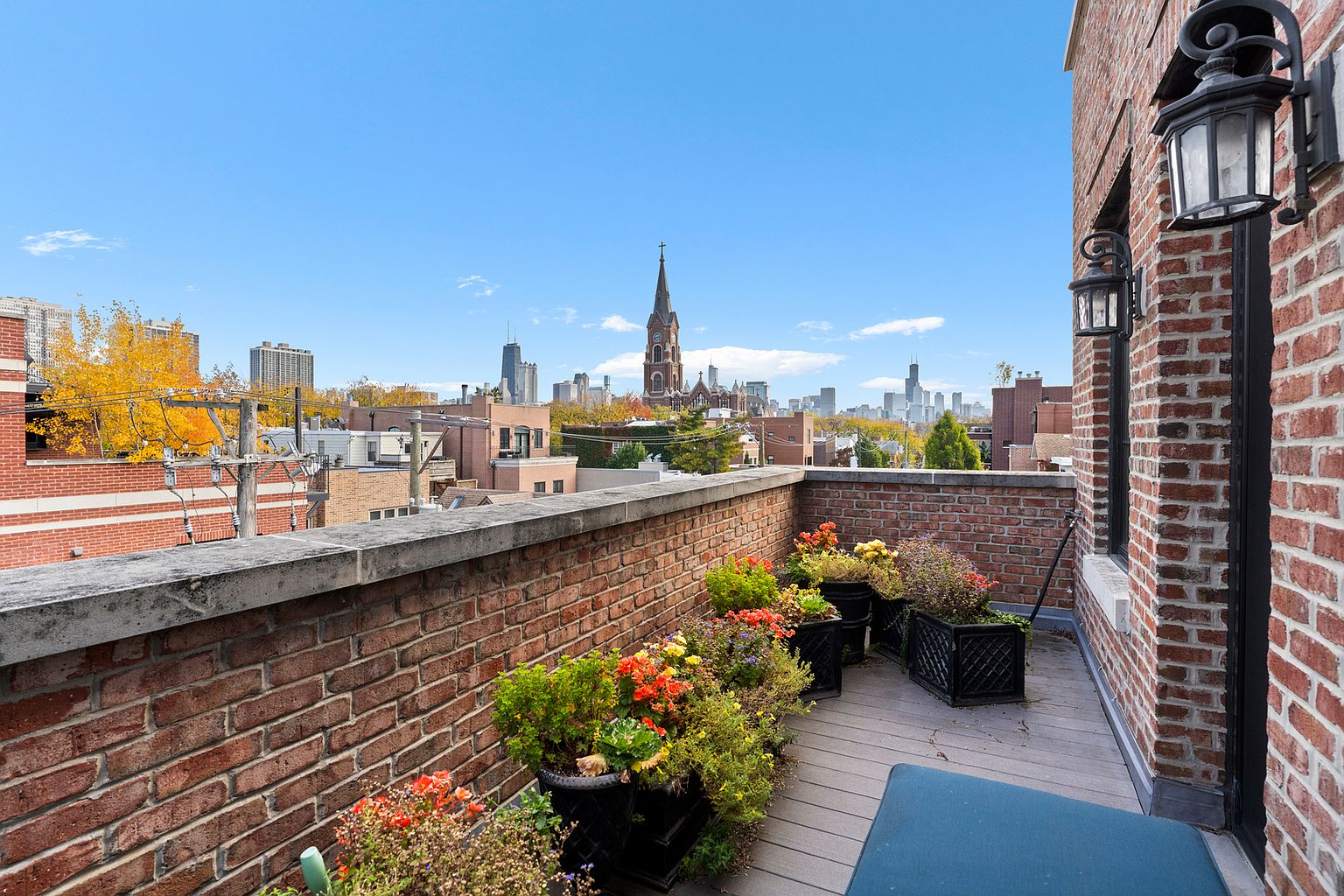
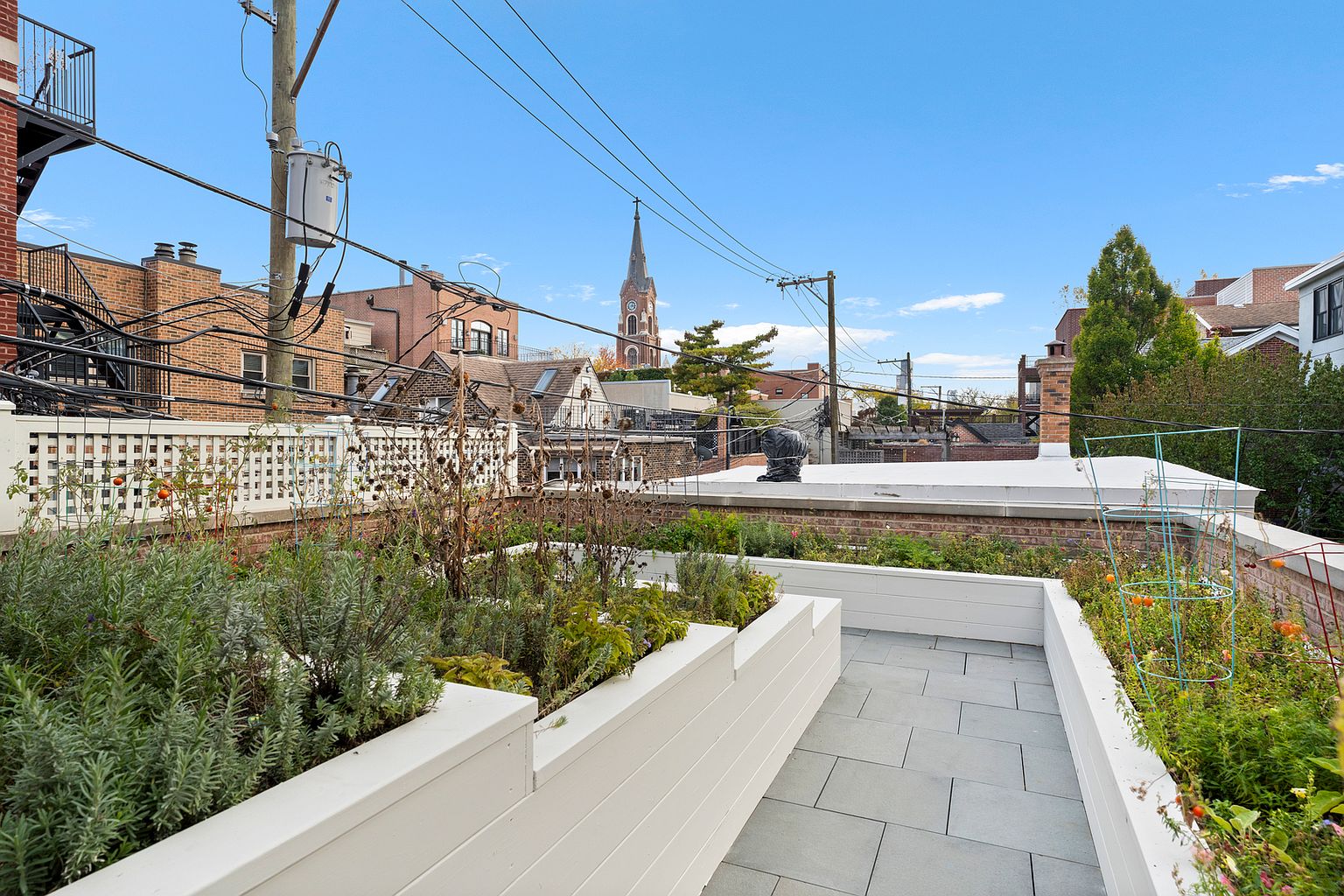
The radiant-heated lower level adds two additional bedrooms and a fully built-out theater room. And above it all, the rooftop deck — outfitted with a fireplace and commanding panoramic skyline views — extends the home's living space into the sky, offering one of the most compelling outdoor rooms in Lincoln Park.
Mohawk Street occupies a particular place in the imagination of those who know East Lincoln Park well. Running north through one of Chicago's most storied residential neighborhoods, it is the kind of street where mature trees form canopies over wide sidewalks, where limestone and brick facades reflect more than a century of architectural aspiration, and where the pace of city life softens perceptibly into something more considered. To have a double-lot address here is not merely a real estate distinction — it is a statement about the kind of life one intends to live.
Lincoln Park, as a neighborhood, has long been among Chicago's most desirable. Its boundaries encompass the eponymous park itself — one of the largest urban parks in the United States, stretching along the lakefront for miles and encompassing the Lincoln Park Zoo, the Lincoln Park Conservatory, Peggy Notebaert Nature Museum, and miles of lakefront trails and green space. The park is, in the most literal sense, an extension of the neighborhood's living room: a place for morning runs, weekend farmers markets, summer concerts, and the kind of unhurried outdoor life that urban residents the world over seek and rarely find so completely.
The immediate surroundings of 1755 N. Mohawk reflect the neighborhood's particular genius for combining the cosmopolitan and the residential. Armitage Avenue, steps away, is a destination in its own right — a corridor of independently owned boutiques, design studios, and specialty retailers that has cultivated a devoted following among Chicago's most discerning shoppers. Halsted Street and Clark Street extend the retail and dining landscape considerably, offering acclaimed restaurants, neighborhood cafés, wine bars, and markets that serve the community with the quality and variety one expects of a world-class city.
For families, the location carries additional weight. The home sits within the Lincoln Elementary School district, one of Chicago's most sought-after public school assignments. Francis W. Parker School and The Latin School of Chicago — two of the city's most prestigious independent schools — are both within walking distance, reflecting the neighborhood's long-standing commitment to educational excellence at every level.
Directly adjacent to the property is Bauler Playlot Park, a beloved neighborhood green space that has served generations of Lincoln Park families. Its proximity is the kind of detail that transforms a fine address into a genuinely livable one — the difference between a home that photographs beautifully and one that sustains a life.
The broader Old Town neighborhood borders Lincoln Park to the south, adding the cultural texture of the Second City comedy theater, North Wells Street's dining scene, and the historic architecture of one of Chicago's earliest residential enclaves. The combination of Lincoln Park's green space and Old Town's urban energy creates a neighborhood ecosystem of unusual richness.
What 1755 N. Mohawk ultimately offers is not simply proximity to the best of Chicago — it is immersion in it. The lakefront, the park, the schools, the restaurants, the boutiques, and the quiet dignity of Mohawk Street itself conspire to create a life that is, by any measure, exceptionally well-placed.
Featured Highlights
Curated Content • Presented by Natasha L Motev