The Story Behind
A Legacy Penthouse at the Heart of Vail Village
There are properties defined by their interiors, and there are properties defined by their position in the world. 228 Bridge Street, Penthouse F/G, belongs to a rare category that commands both — a residence whose architecture, materials, and design philosophy are in complete conversation with the mountain landscape that surrounds it.
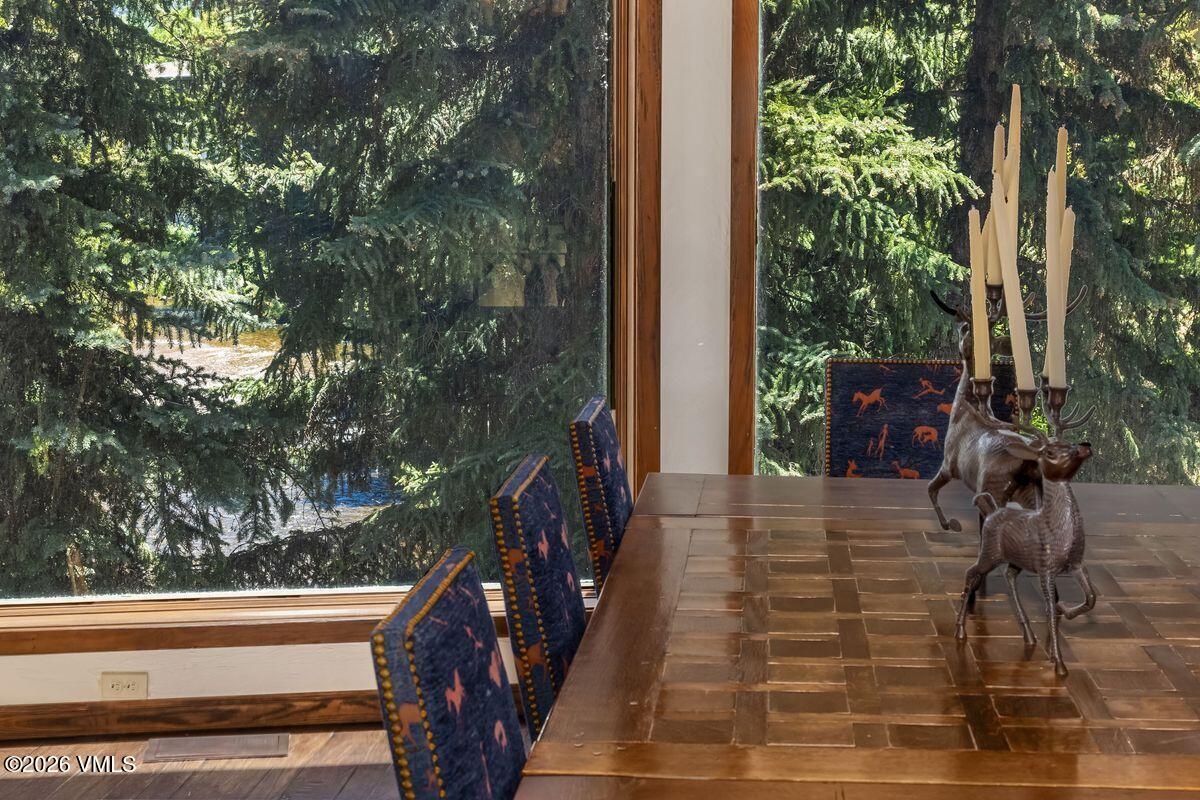
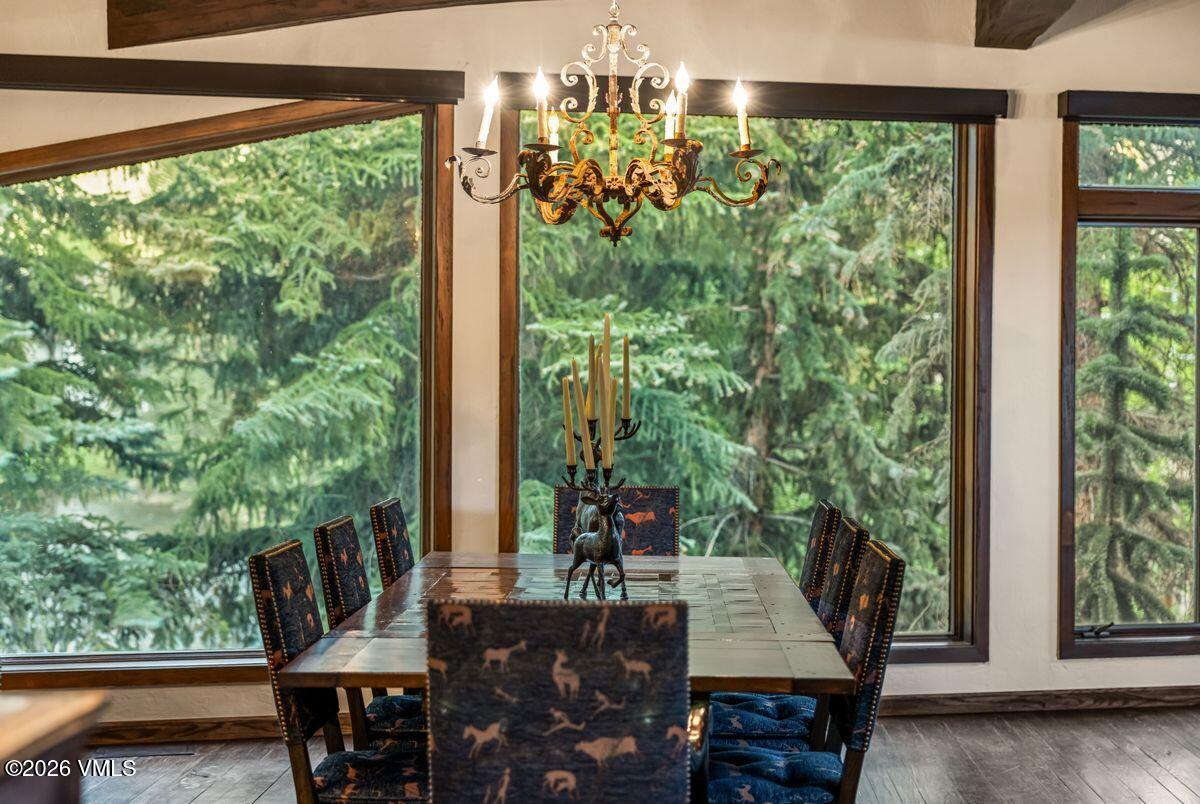
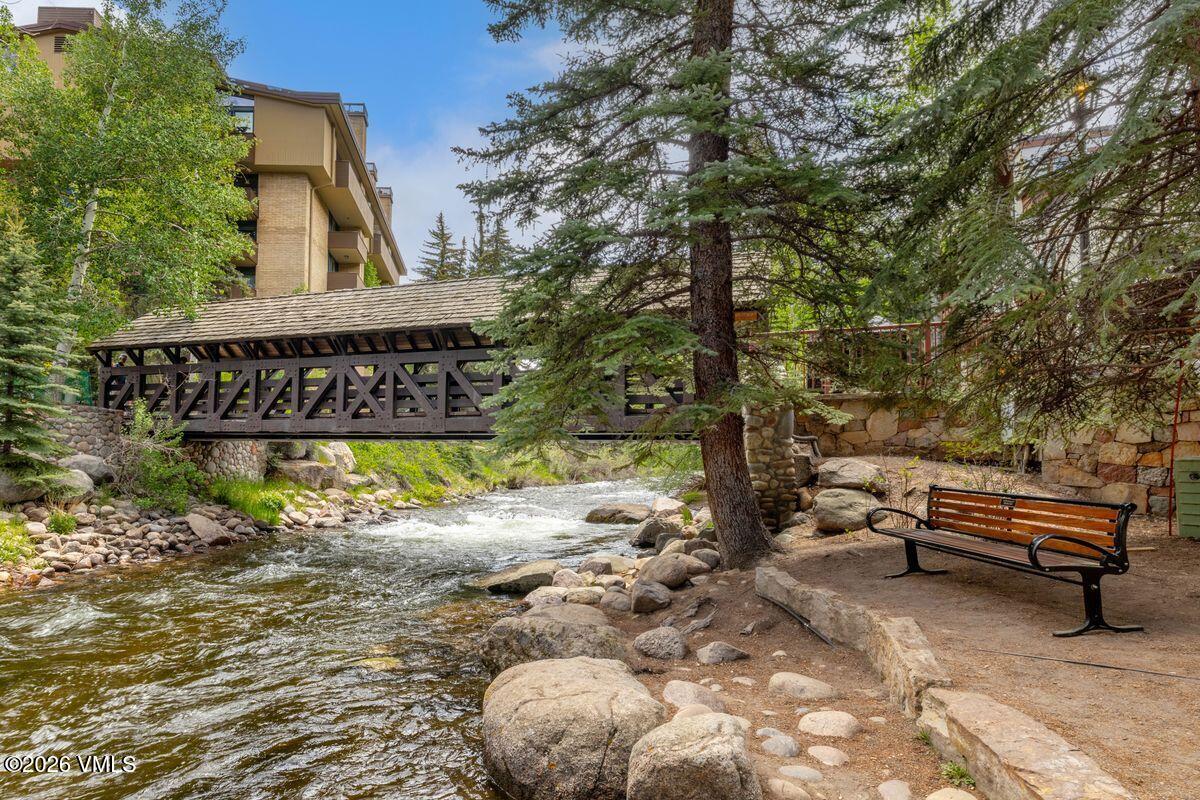
The building's light stucco and dark timber façade is a study in alpine authenticity, its exterior language drawn directly from the European ski village aesthetic that has distinguished Vail since its founding in the early 1960s. Positioned directly alongside Gore Creek, the structure feels less like a building inserted into the landscape and more like one that grew organically from it — the rushing water audible from the residence, the towering pines framing every eastward view.
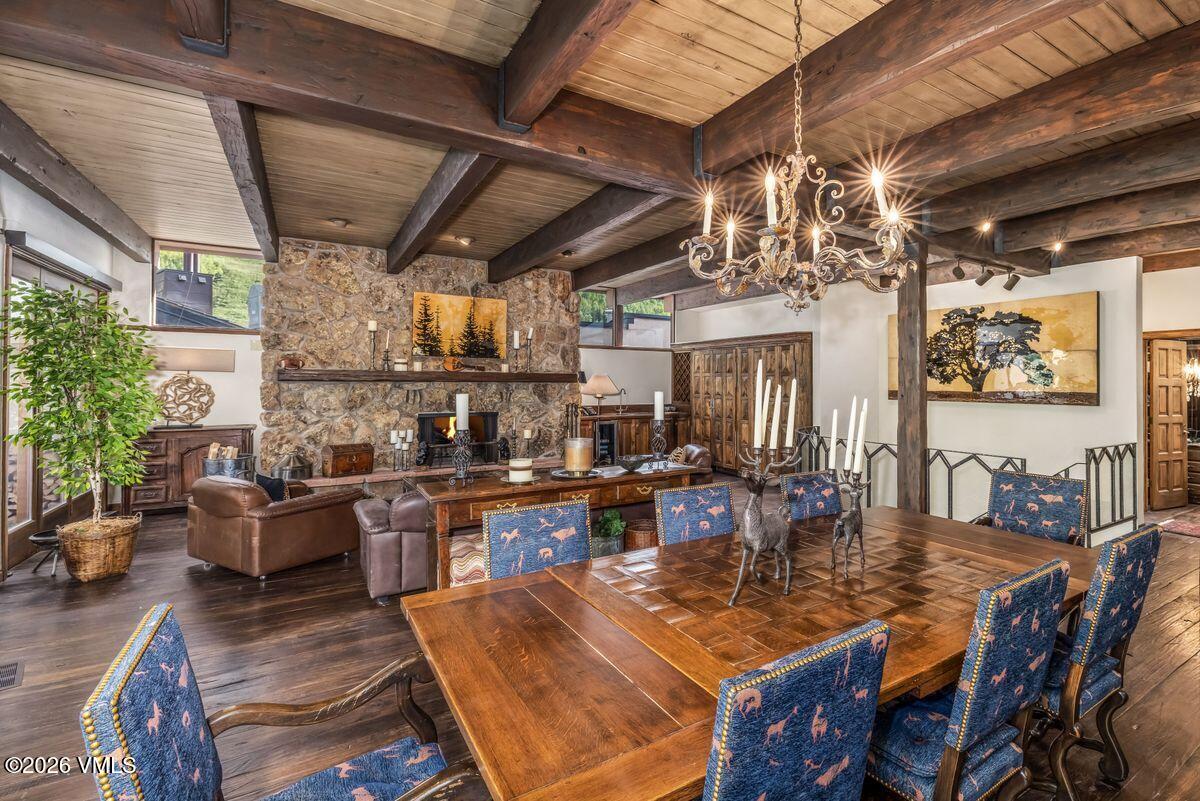
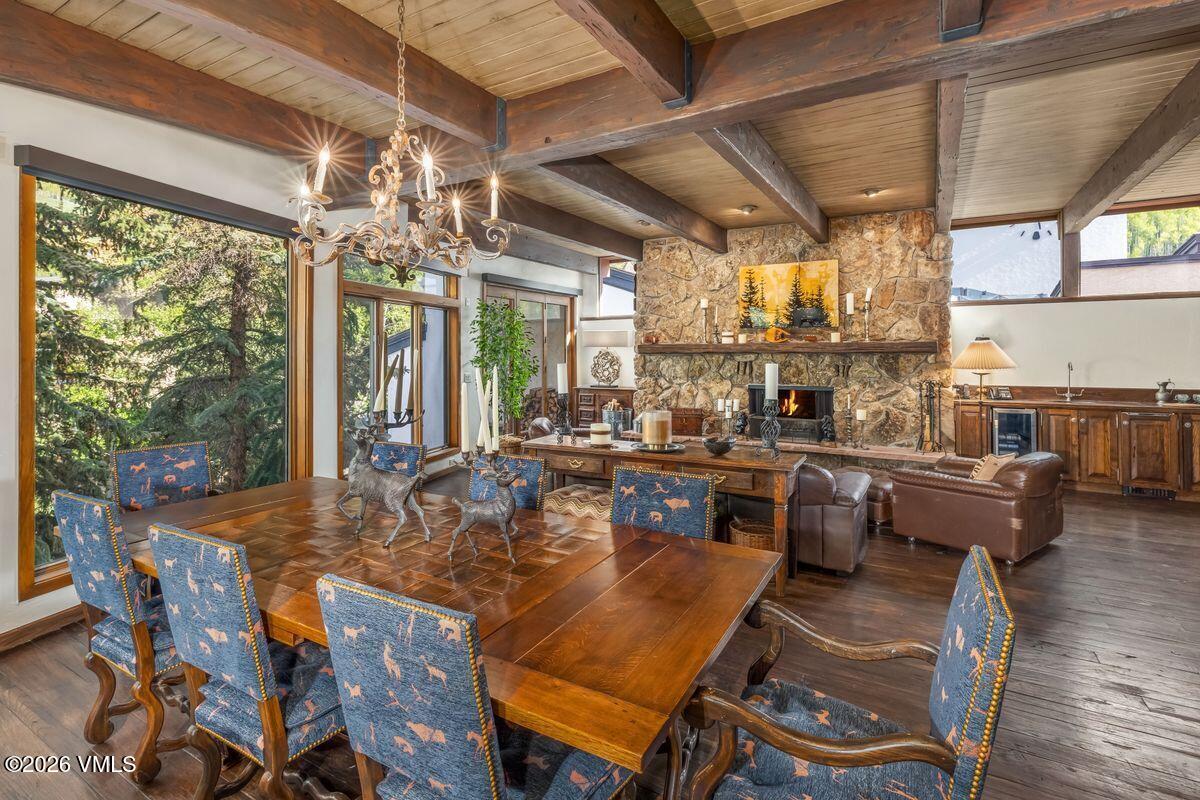
Inside, the penthouse is anchored by a living room of genuine architectural presence. Exposed dark wood ceiling beams span the full width of the space, referencing the mountain vernacular without reducing it to ornament. A full-height chimney breast, clad entirely in natural stone, commands the room with quiet authority, while a wet bar with integrated wine cooler speaks to the residence's equal facility for intimate evenings and generous entertaining. Dark hardwood flooring runs throughout, lending warmth and visual continuity to the open plan.
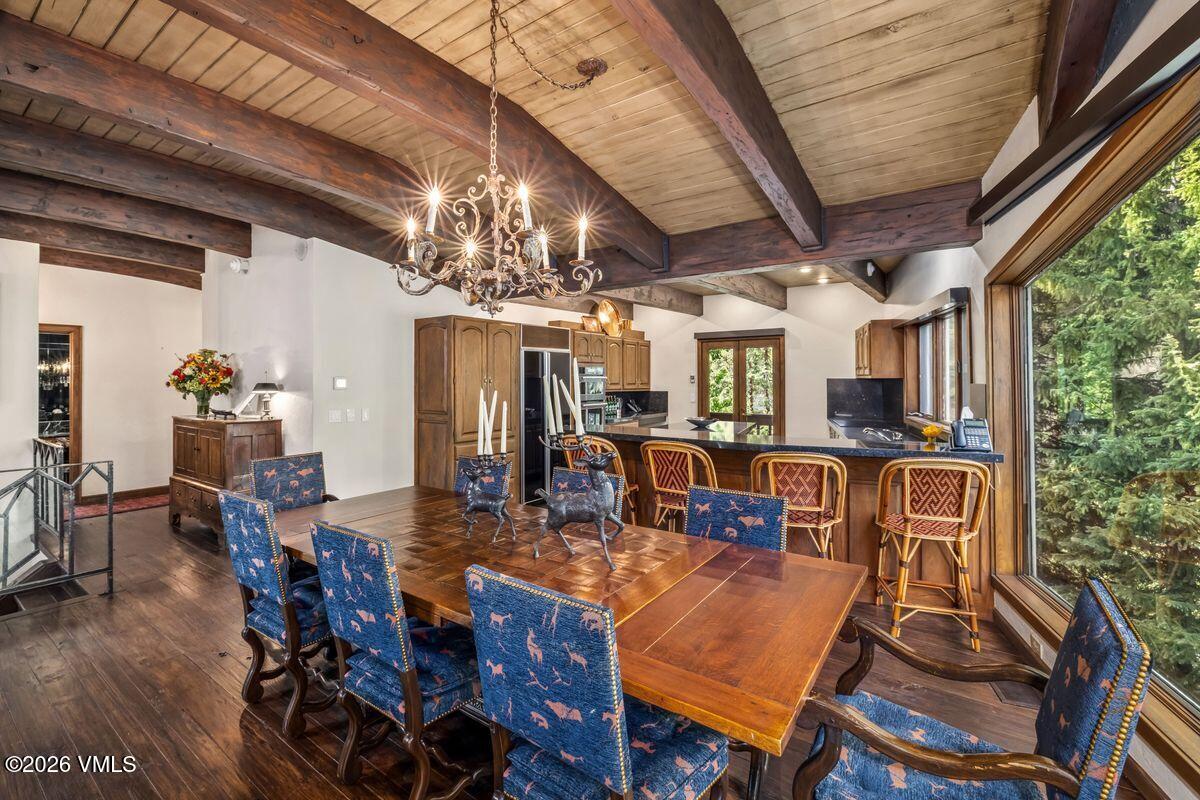
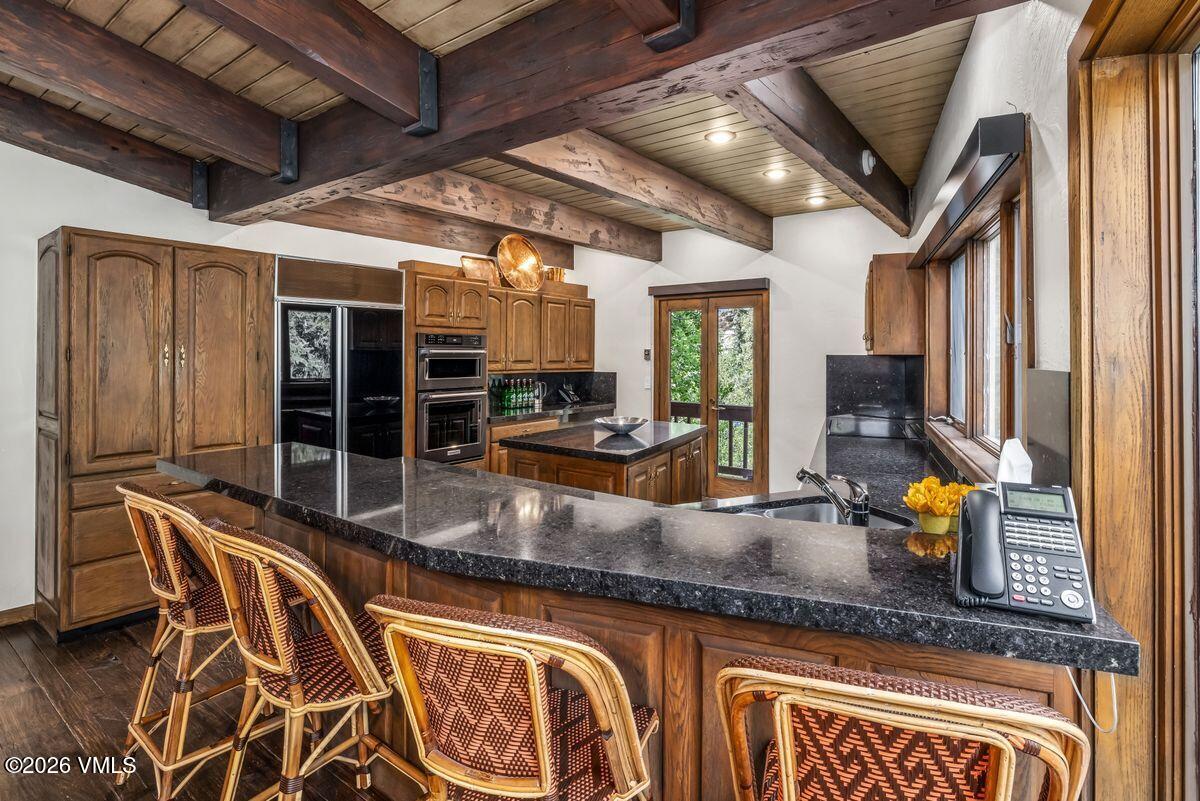
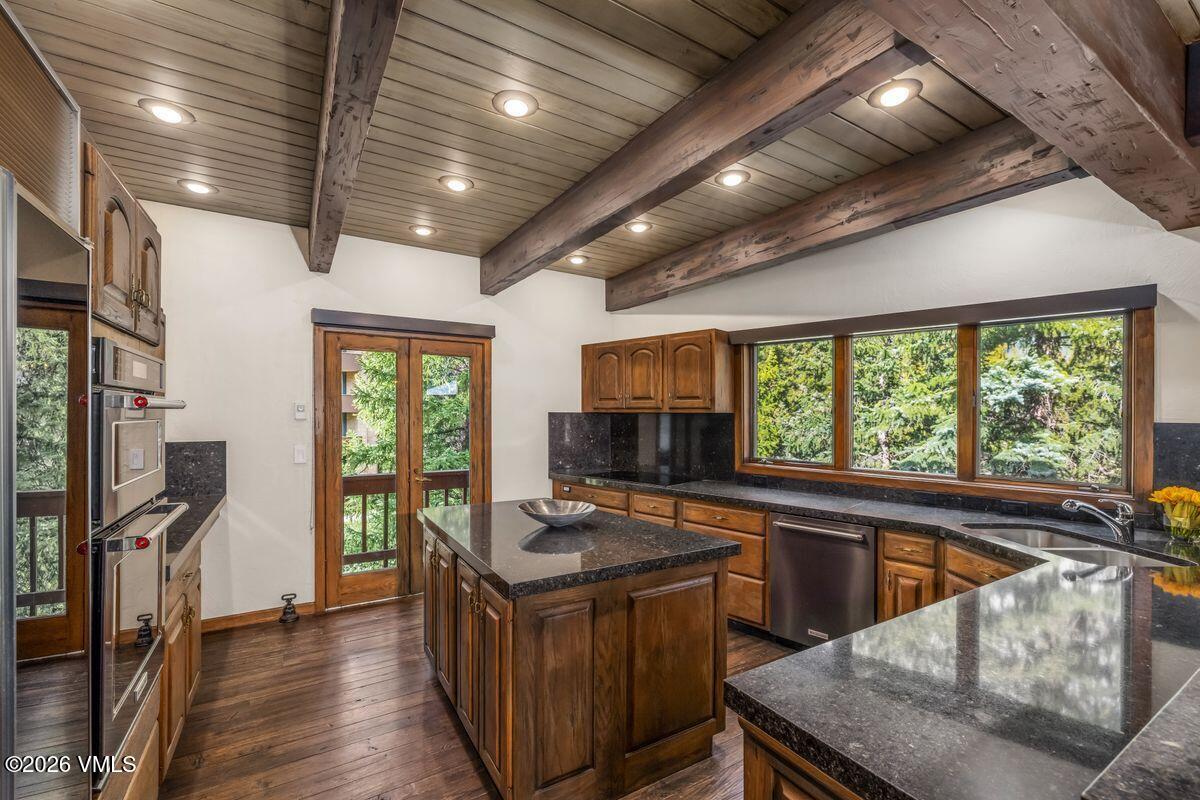
The kitchen is designed around a central island with bar seating — a natural gathering point that keeps the cook at the center of the conversation. Warm wood cabinetry and dark speckled stone countertops maintain the material palette established in the living spaces, while a glass-paned door opens directly to the outdoors, collapsing the boundary between interior comfort and alpine air.
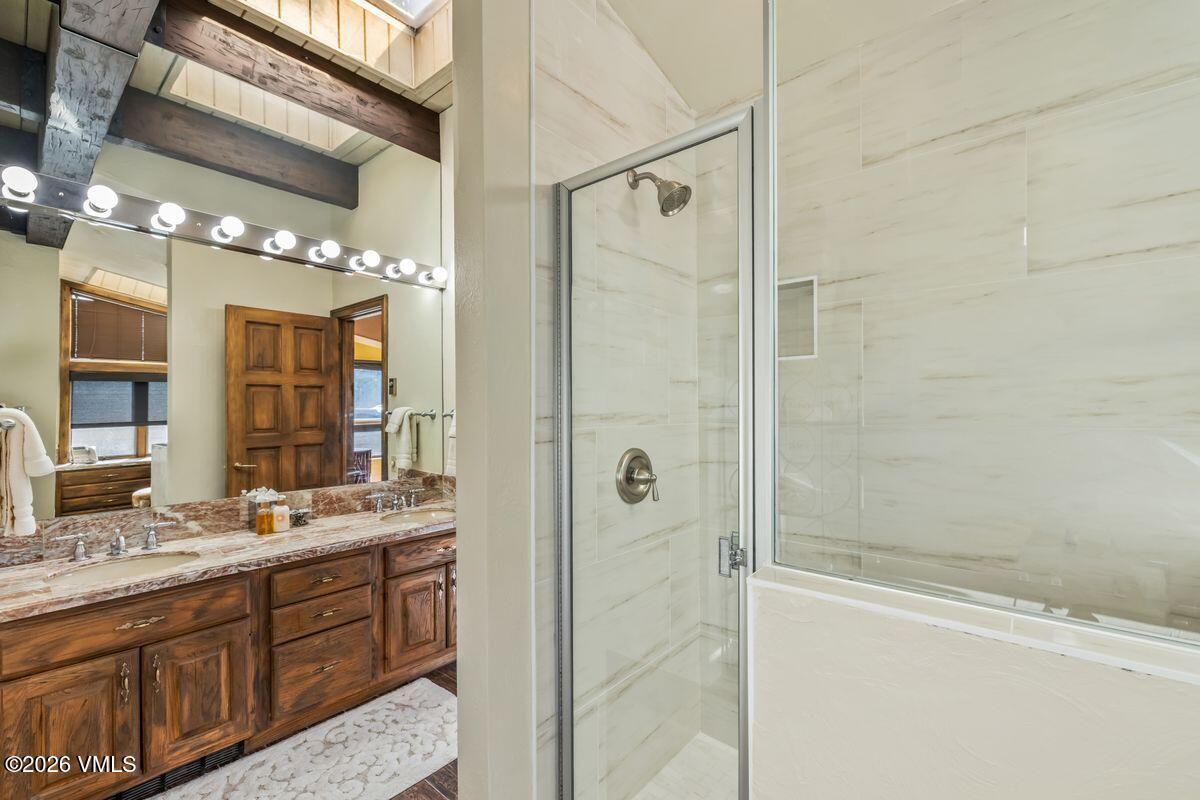
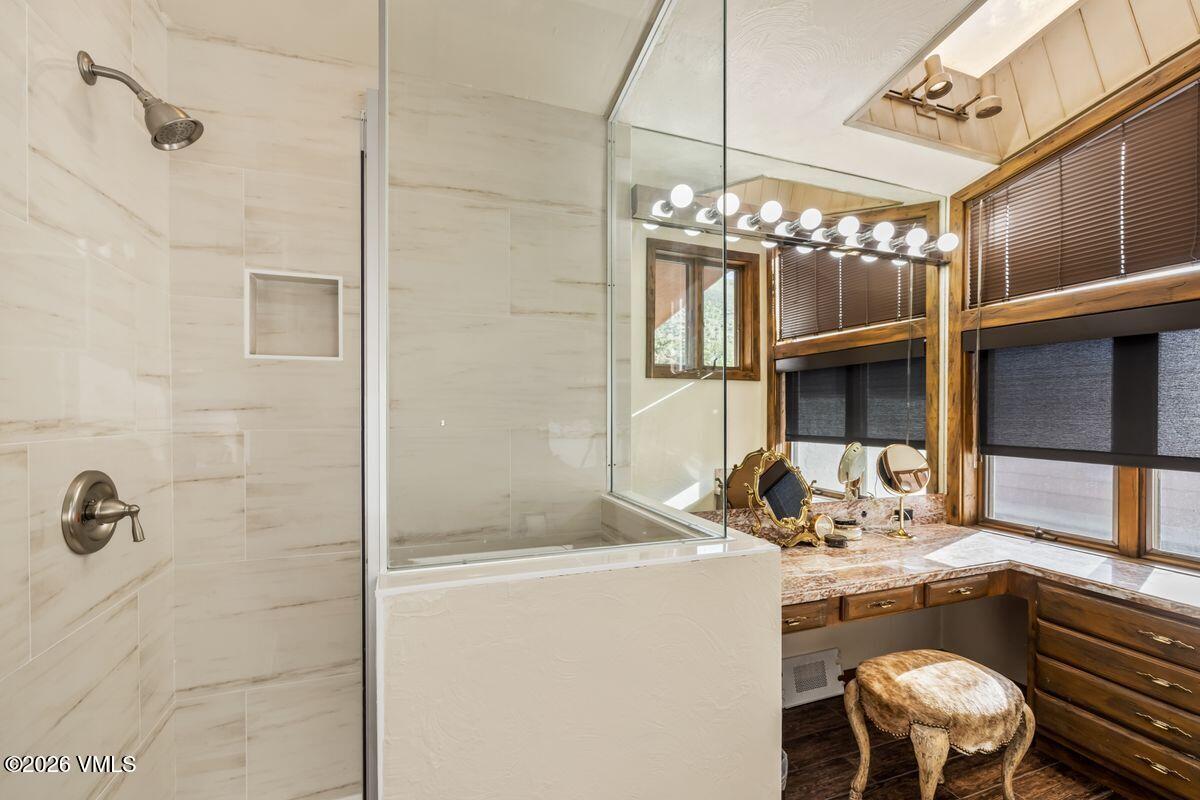
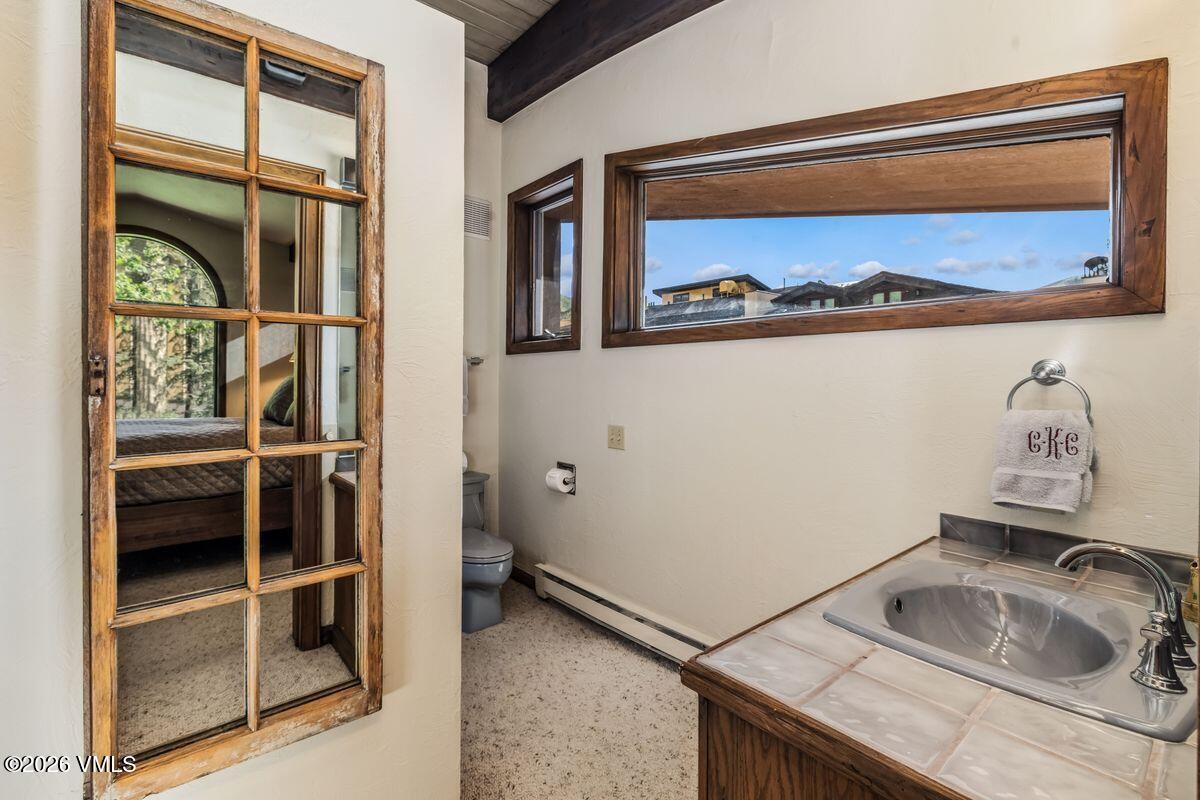
The primary suite rises to a vaulted beam ceiling, its clerestory windows positioned to draw in the particular quality of mountain light that shifts through the day — pale and crystalline in the mornings, deeply golden by late afternoon. Four additional bedrooms carry the same exposed beam detailing, each with arched windows that frame views into the surrounding forest canopy, offering a sense of privacy and immersion that belies the property's central village location.
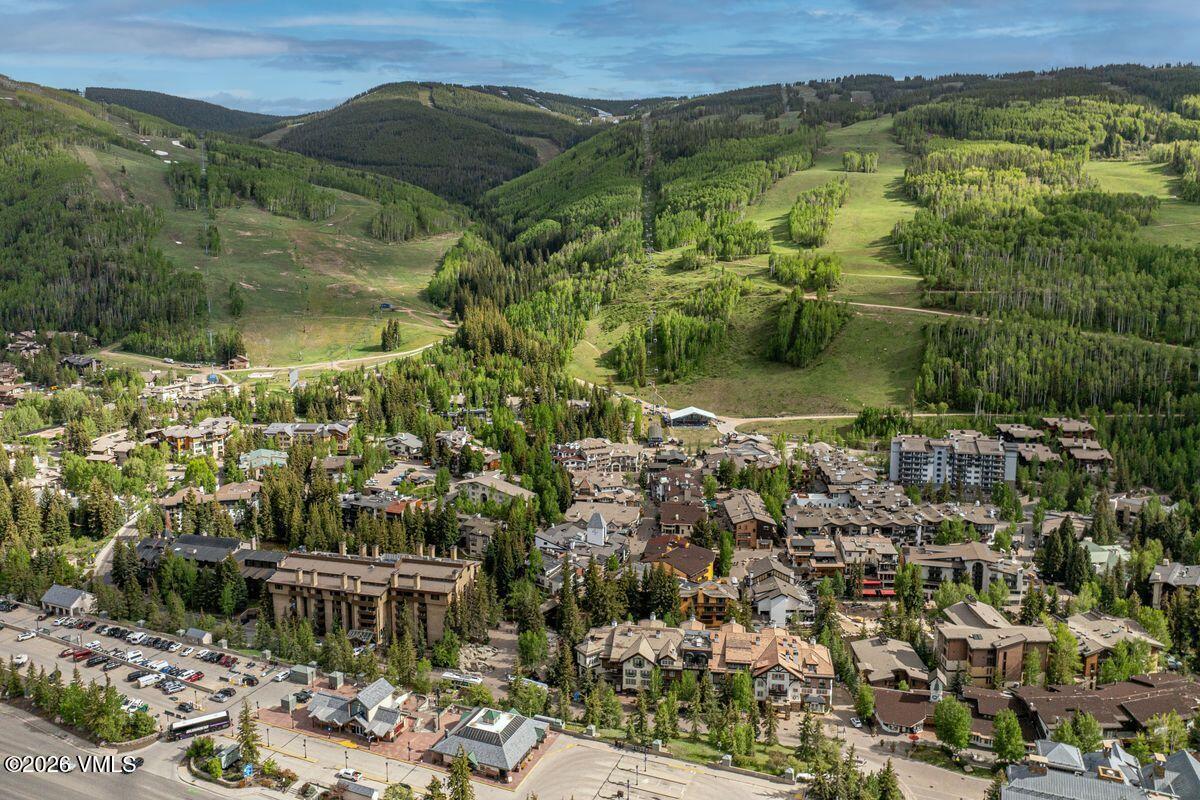
Above it all, the rooftop deck is the penthouse's defining statement. Dark stone pavers underfoot, open sky overhead, and an unobstructed panorama of Vail Mountain's green ski slopes and the village below — this is a space that renders the full context of the property's position legible in a single sweeping view. The Covered Bridge anchors the foreground, the Clock Tower marks the heart of the village, and the mountain begins at the horizon. Few rooftop terraces anywhere in the world offer a vista so precisely aligned with the history and character of their surroundings.
This is a penthouse that has been held quietly for over forty years. Its reemergence on the market is, by any measure, a singular event.
Bridge Street is not simply a road through Vail Village. It is the connective tissue of one of the most deliberately designed alpine communities in the American West — a pedestrian corridor that has served as the social and cultural spine of Vail since the village's earliest days in the 1960s.
Vail itself was founded in 1962, developed by Pete Seibert and a group of investors who envisioned an American ski resort modeled after the great mountain villages of the European Alps. The architecture, the pedestrian-only village core, the concentration of dining and retail along a walkable main street — all of it was conceived from the outset as an integrated whole, a place where the built environment and the mountain landscape would reinforce one another. Bridge Street, running from the base of Vail Mountain toward the Golden Peak area, was central to that vision from the beginning.
The Covered Bridge, one of Vail's most photographed landmarks, sits just steps from 228 Bridge Street and has long served as an informal threshold between the village and the mountain — the point at which skiers cross Gore Creek on their way to and from the slopes. The Clock Tower, equally iconic, marks the heart of the commercial village and has appeared in decades of imagery documenting Vail's evolution from a nascent ski resort into a world-class four-season destination.
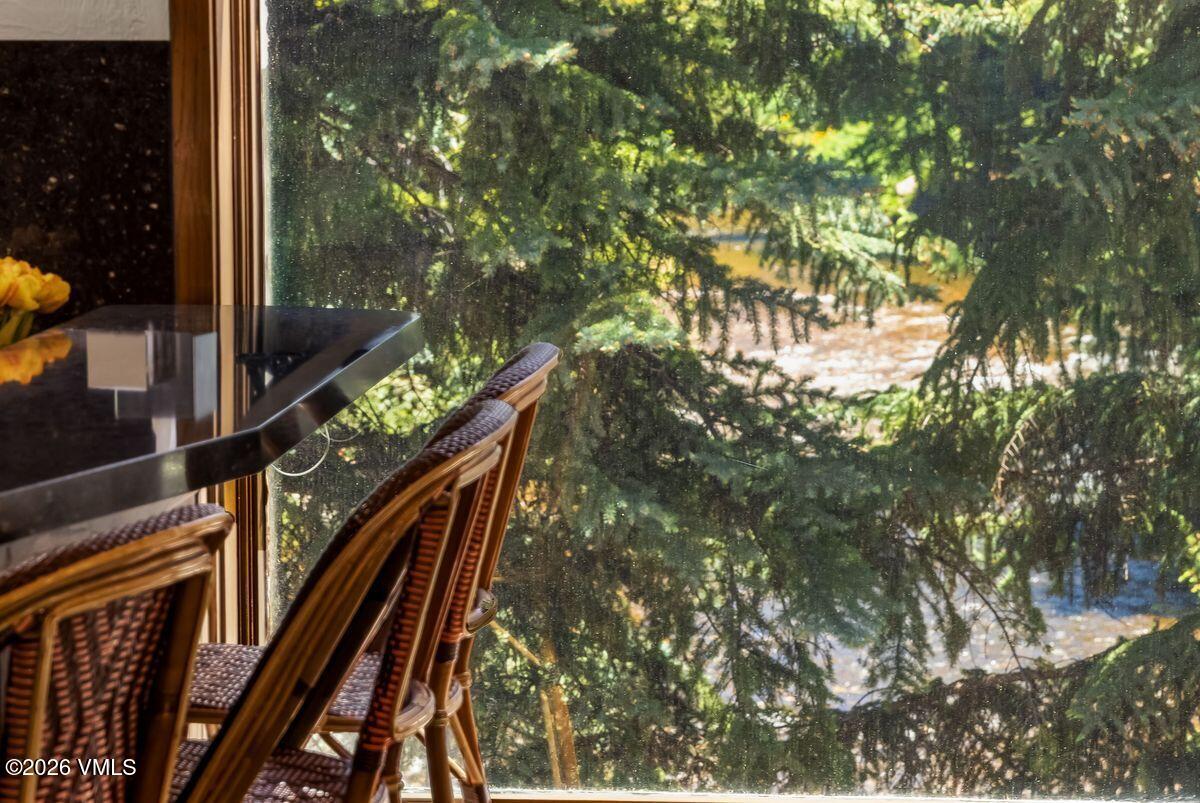
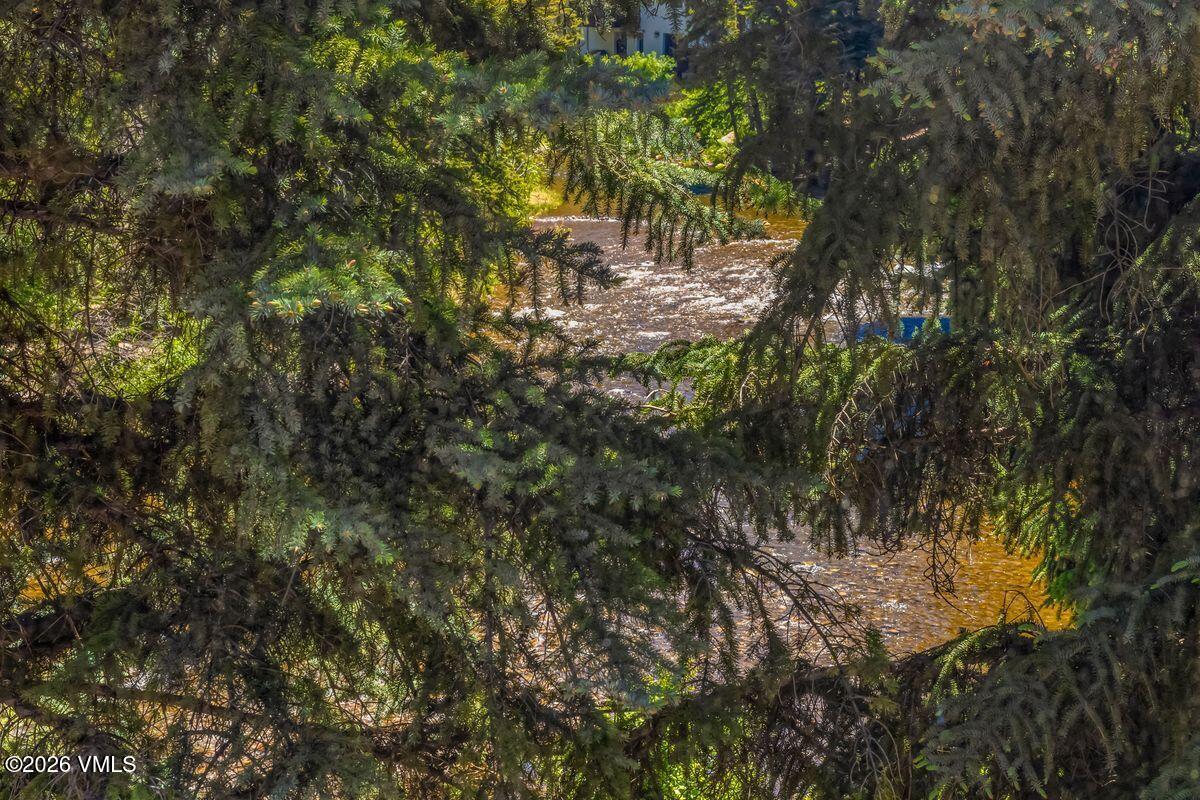
Gore Creek itself runs alongside and behind the property, its clear mountain water and the sound of its current providing a natural counterpoint to the energy of the village. The creek corridor, lined with cottonwood and pine, creates a ribbon of natural landscape that moves through the center of the village — a feature that distinguishes Vail from many comparable mountain resorts and contributes significantly to the character of properties fortunate enough to sit directly alongside it.
Beyond its immediate surroundings, the property sits within walking distance of Vail Mountain's primary base areas, including Gondola One at Lionshead and the Golden Peak portal to the east. With more than 5,000 acres of skiable terrain and an average annual snowfall exceeding 350 inches, Vail Mountain consistently ranks among the premier ski destinations in North America. In summer, the same terrain transforms into a network of hiking and mountain biking trails, while the village hosts the Bravo! Vail music festival, the GoPro Mountain Games, and a robust calendar of cultural programming.
The dining and retail landscape along Bridge Street and the surrounding village reflects Vail's position as a genuinely international destination — a concentration of acclaimed restaurants, independent boutiques, art galleries, and hospitality that would be notable in any context, and is remarkable for a mountain village of its scale.
To acquire 228 Bridge Street, Penthouse F/G, is to acquire not merely a residence but a position within this story — a front-row seat to the landmarks, the seasons, the mountain, and the village life that have made Vail one of the enduring icons of alpine living.
Featured Highlights
Curated Content • Presented by Heather McInerny & George Streeter