The Story Behind
A Masterfully Restored Mediterranean Estate on Palm Island's Waterfront
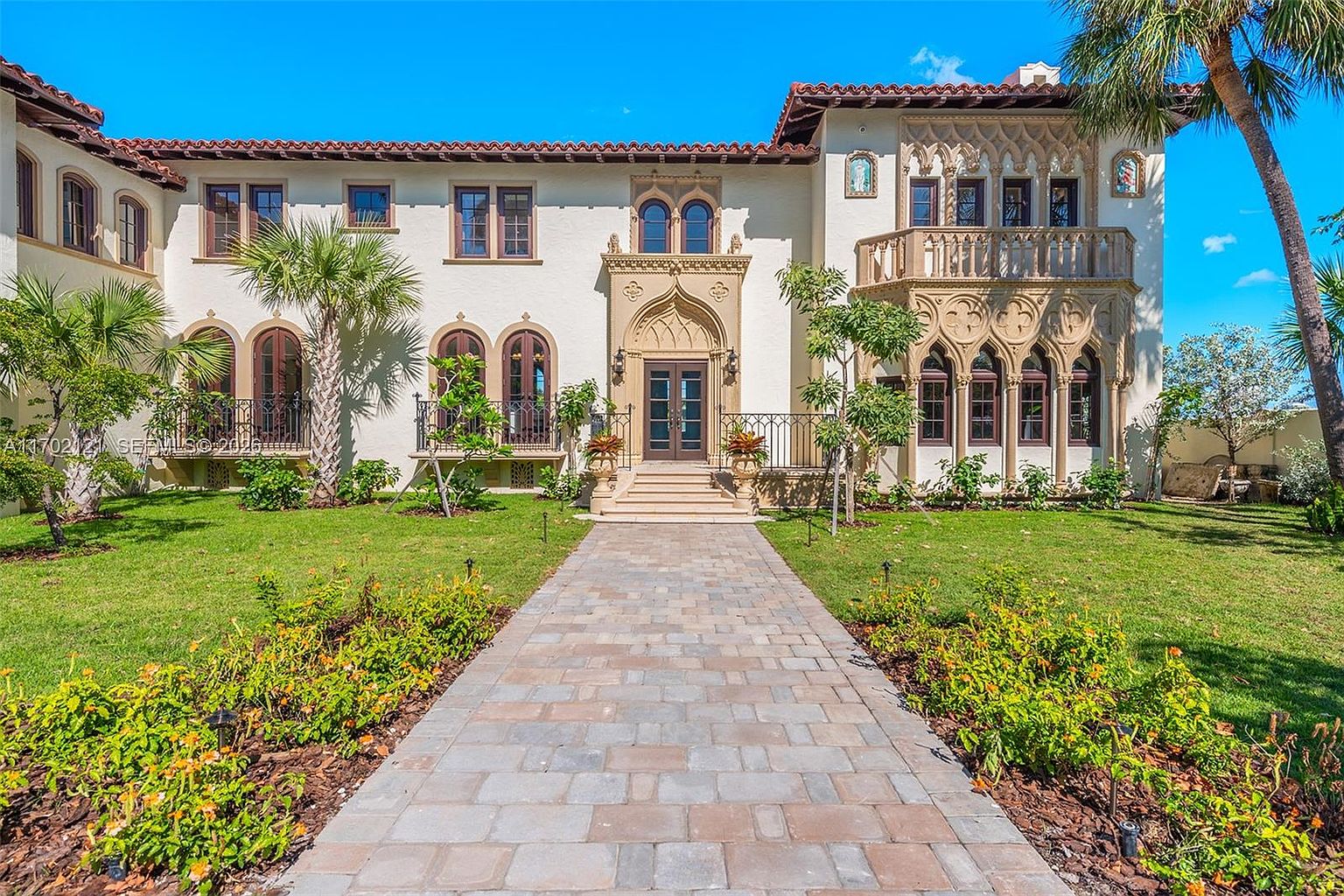
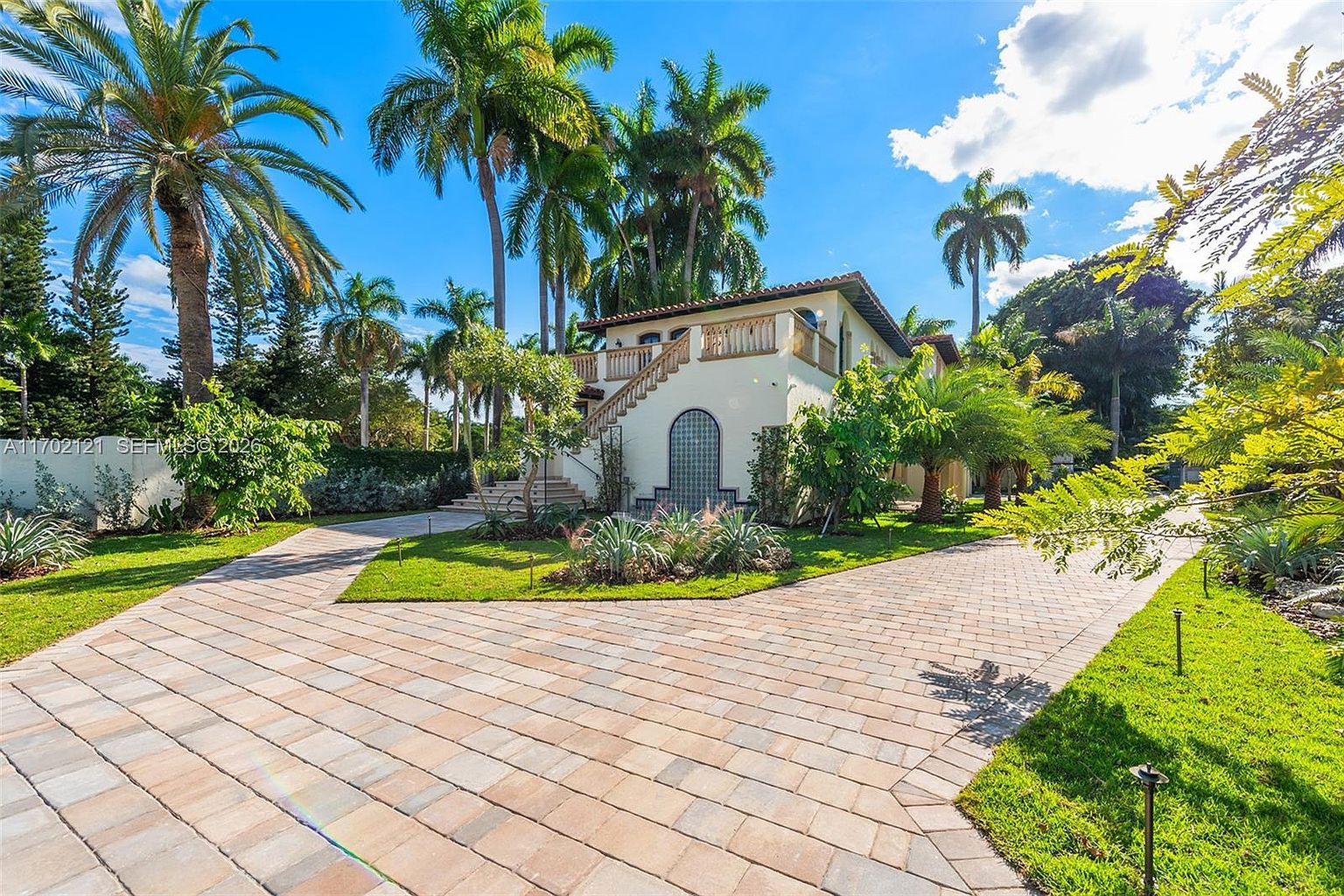
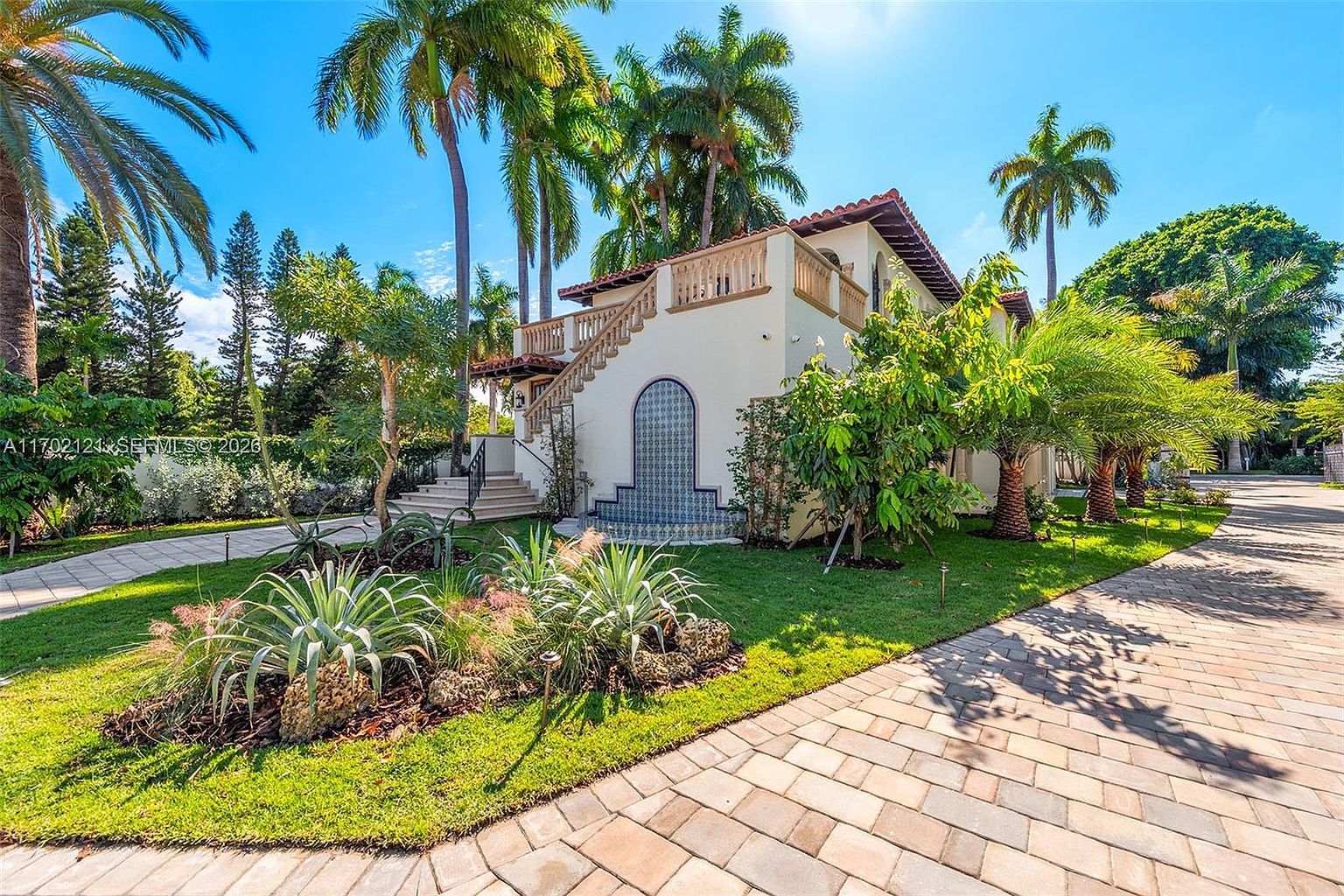
There are properties that are merely impressive, and then there are those that possess a genuine soul. The estate at 49 Palm Avenue belongs emphatically to the latter category. From the moment one passes through the grand motor court and approaches the symmetrical stucco facade — its red-tiled roof and ornate stone balustrades glowing warmly in the South Florida sun — it becomes clear that this is a residence of uncommon distinction.
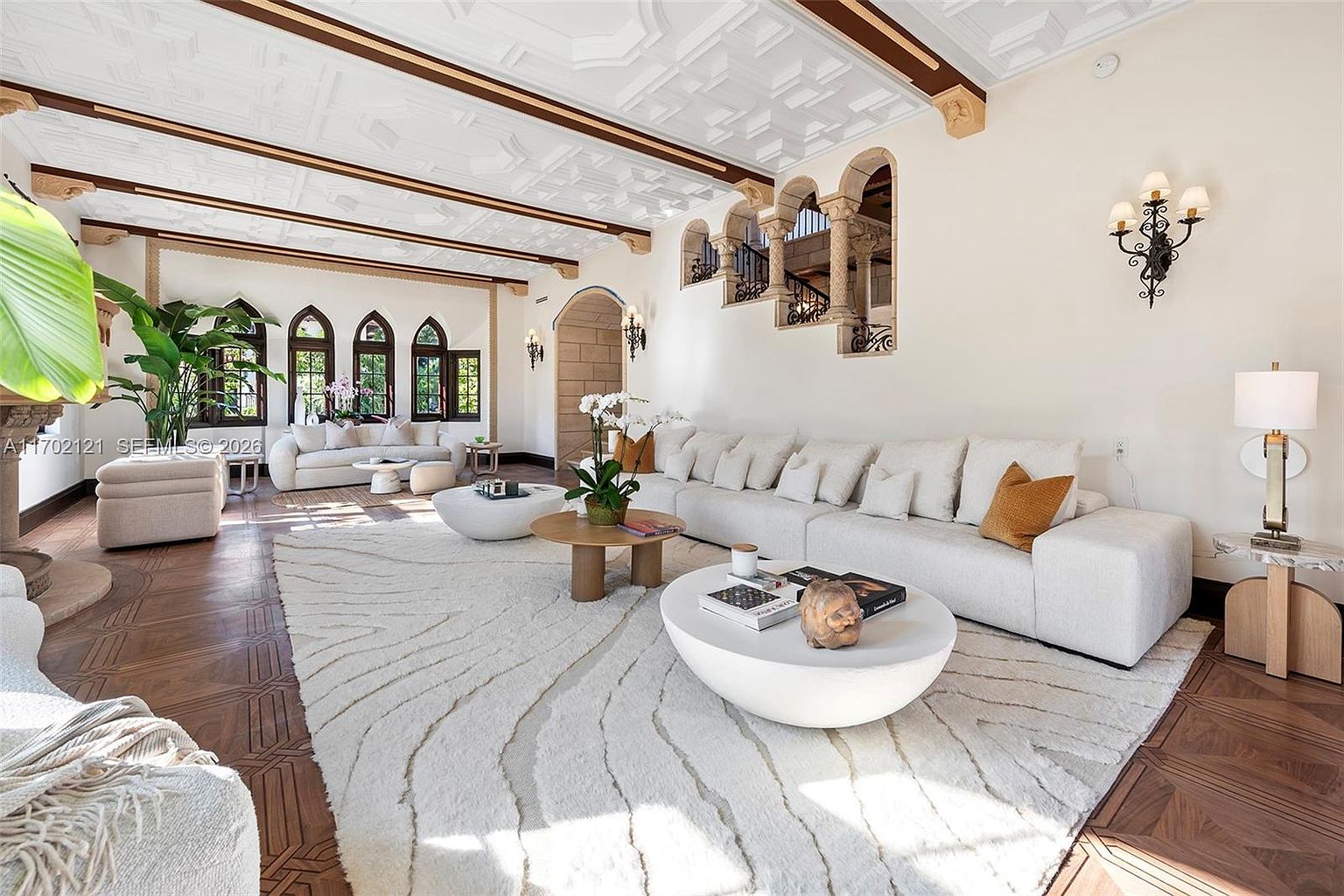
The restoration was undertaken with rare reverence. Rather than erasing the home's Mediterranean provenance, the craftsmen engaged to revive it chose instead to honor every original detail while threading modern technology and contemporary comfort invisibly throughout. The result is a residence that feels both timeless and entirely alive. The barrel-vaulted stone entryway announces the home's intentions immediately: this is architecture that commands the senses. Beyond it, a dramatic stone staircase with ornate wrought-iron railings ascends beneath soaring coffered ceilings supported by dark wood beams, while arched stone openings frame the procession of rooms that follow with a cinematic sense of arrival.
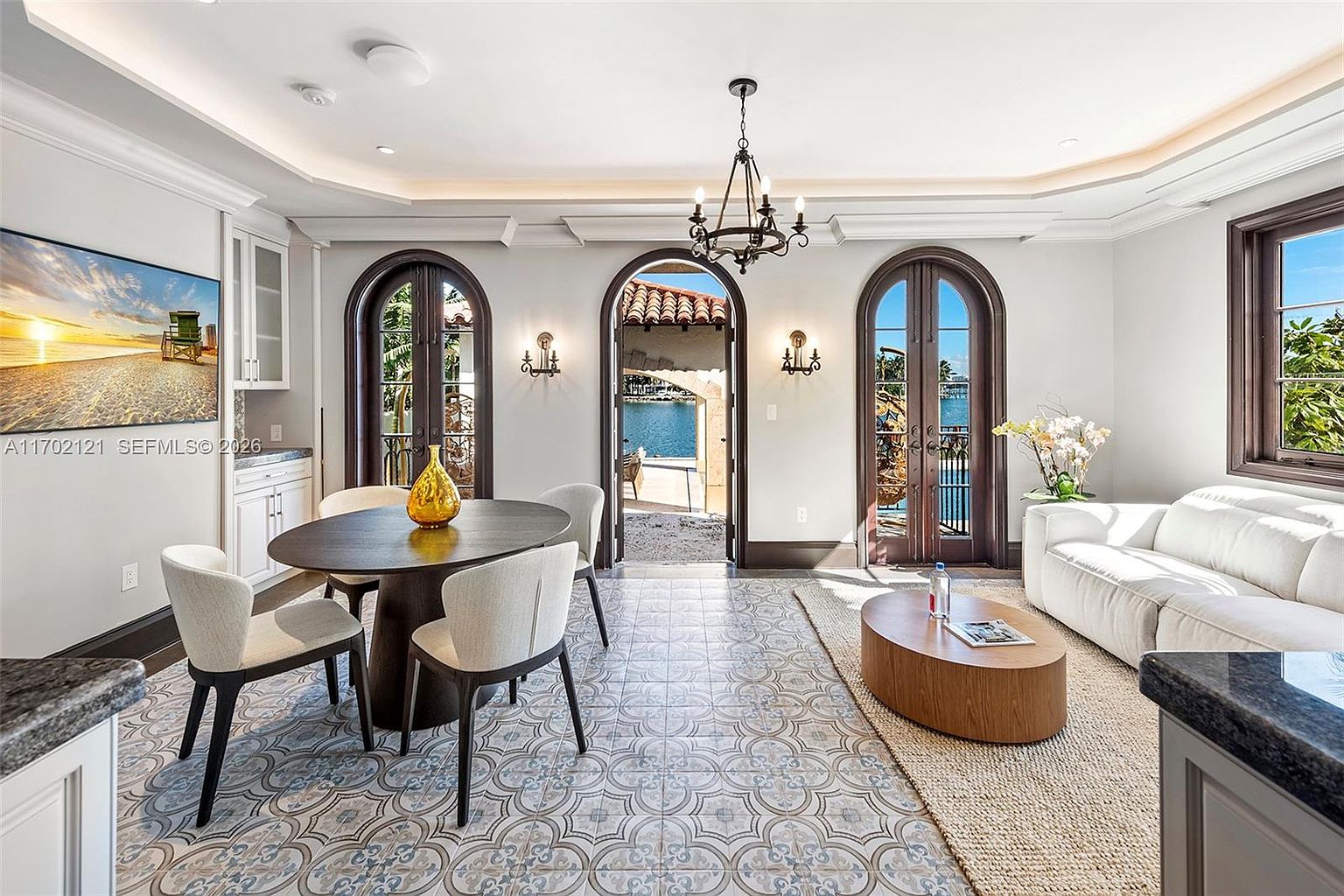
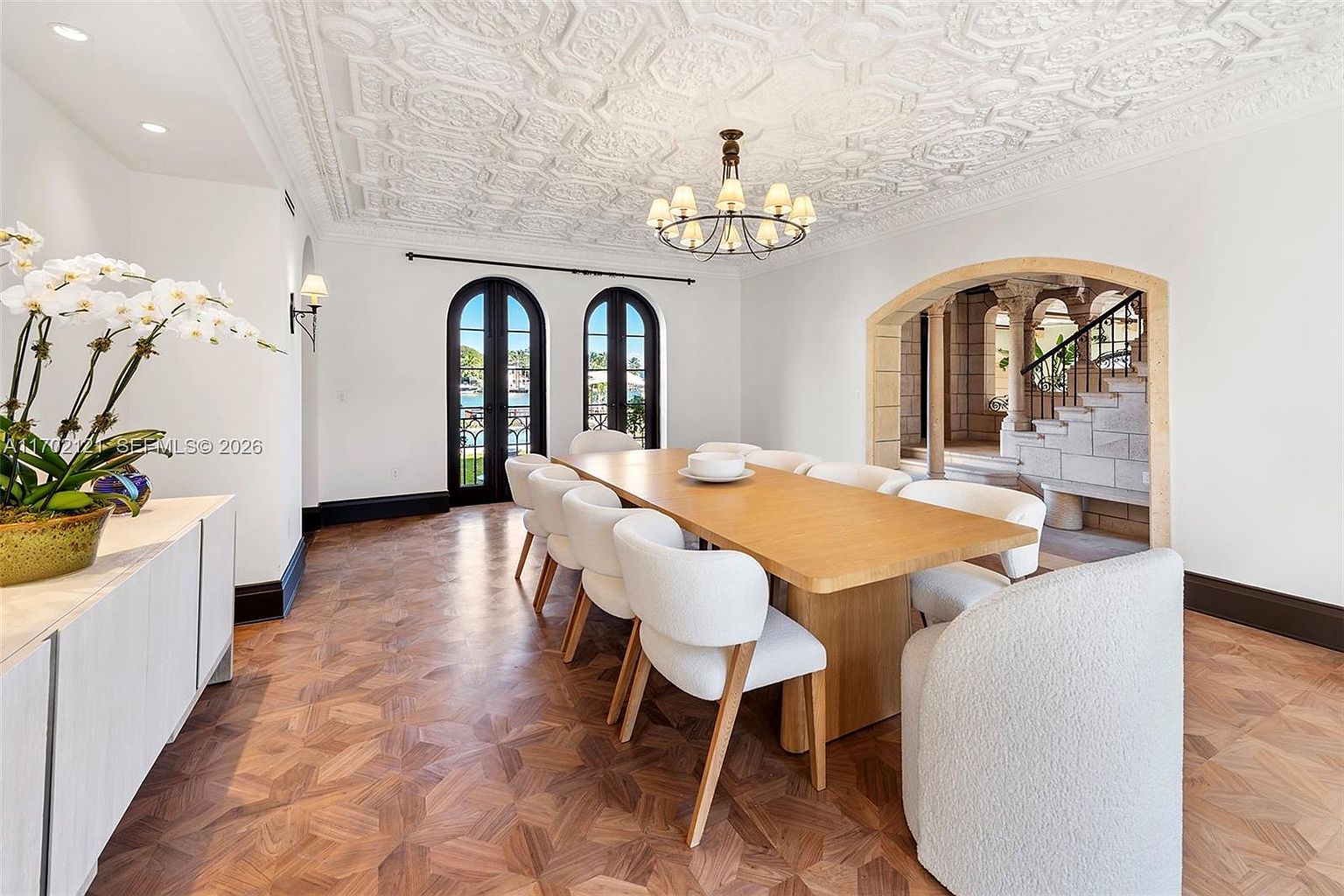
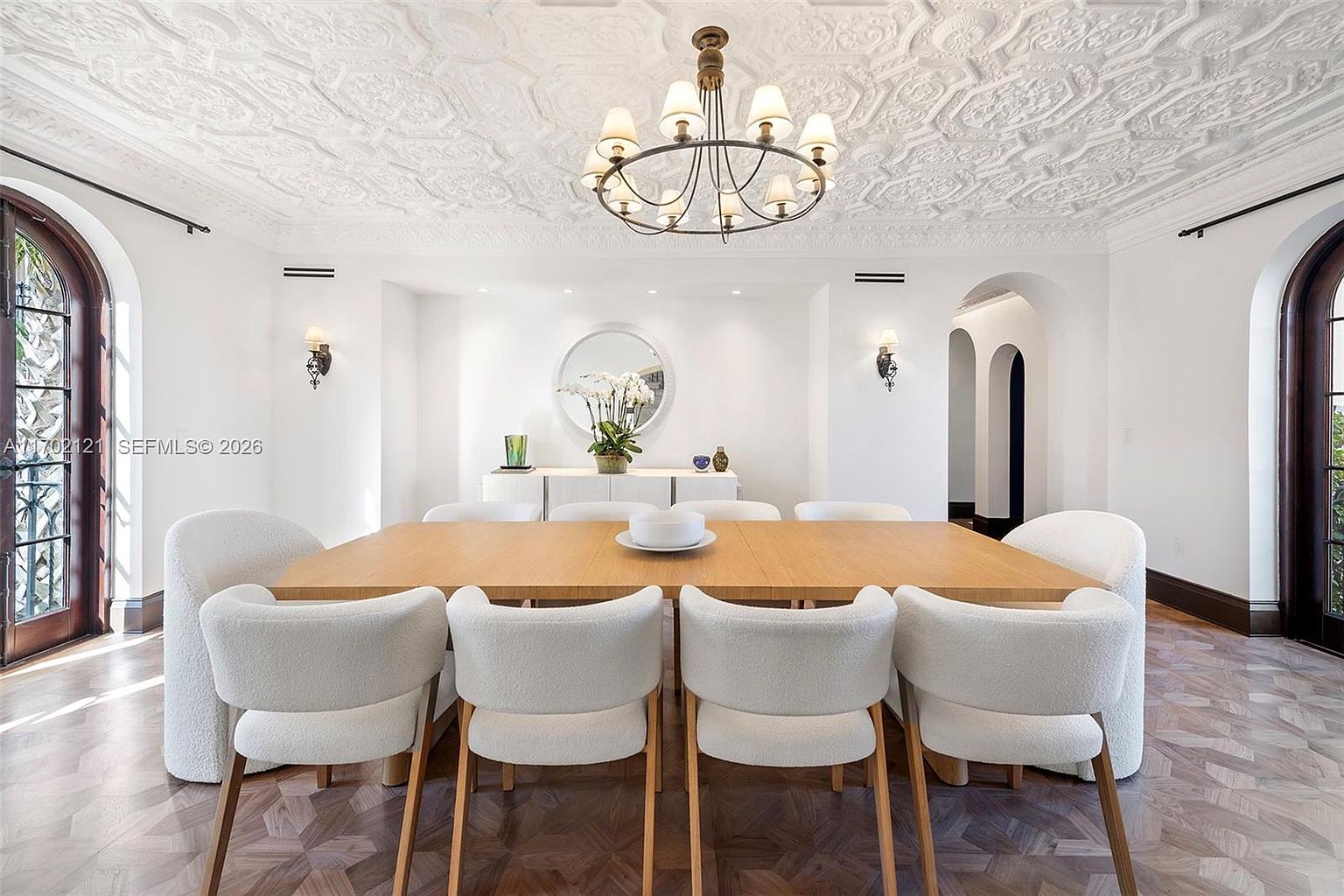
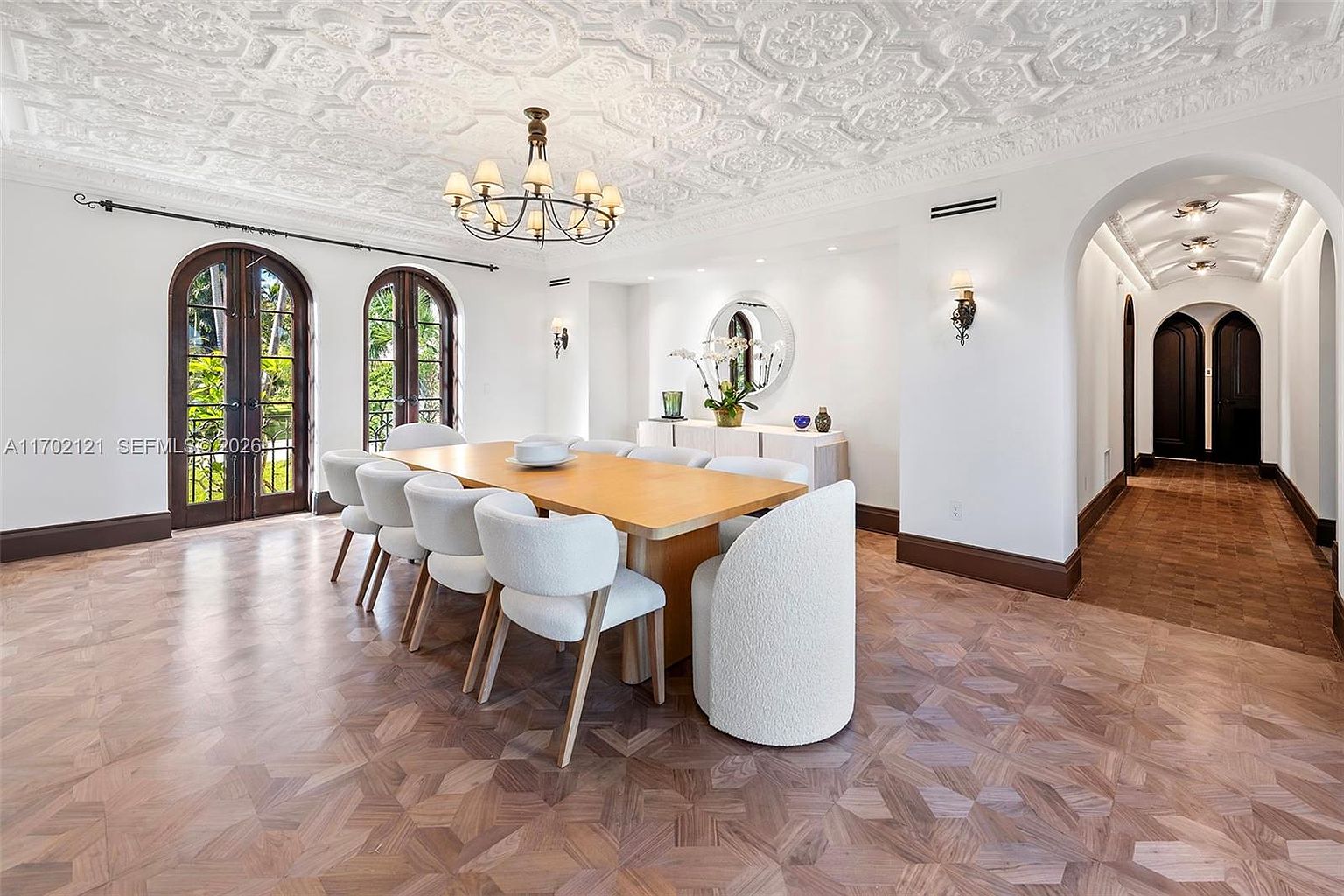
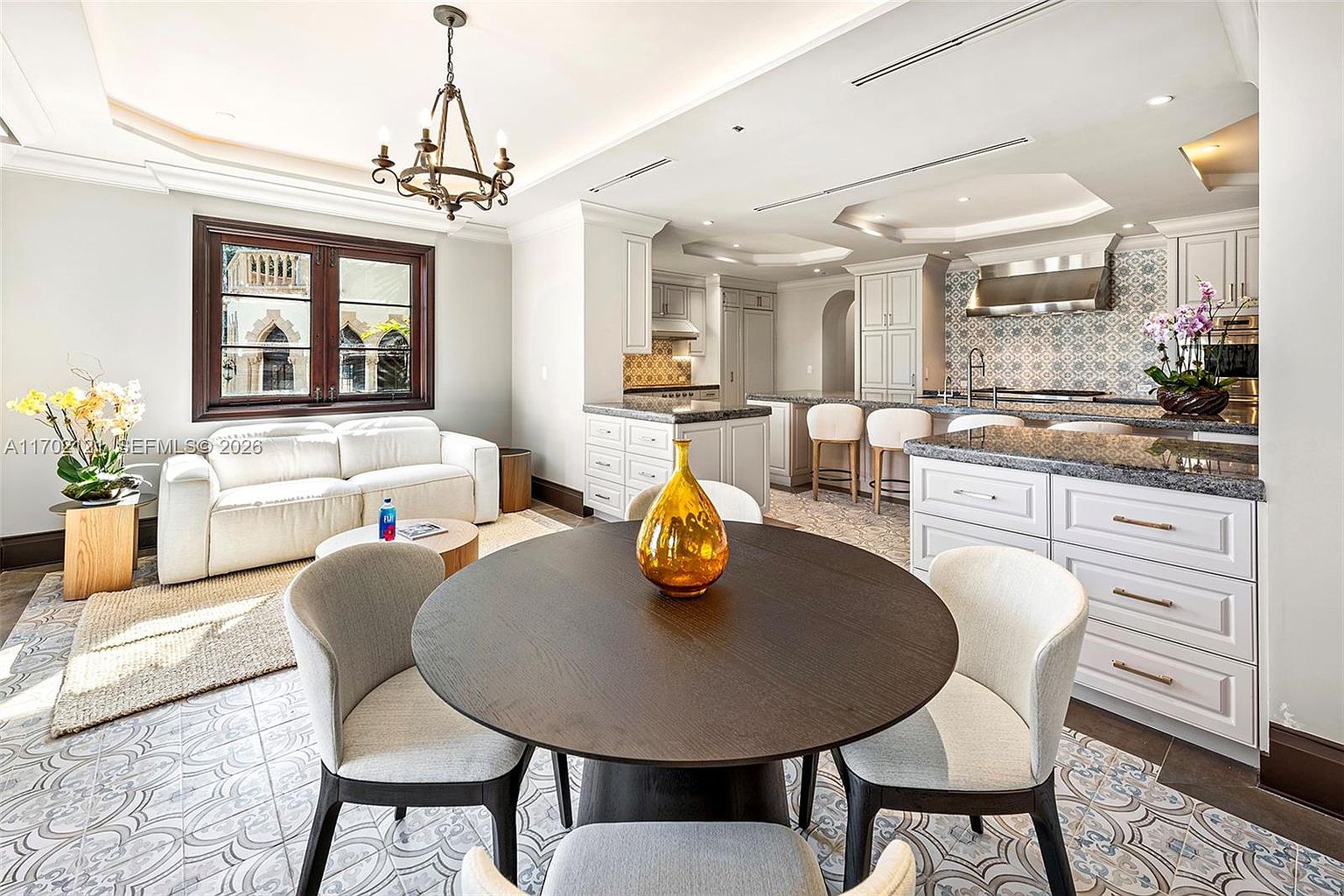
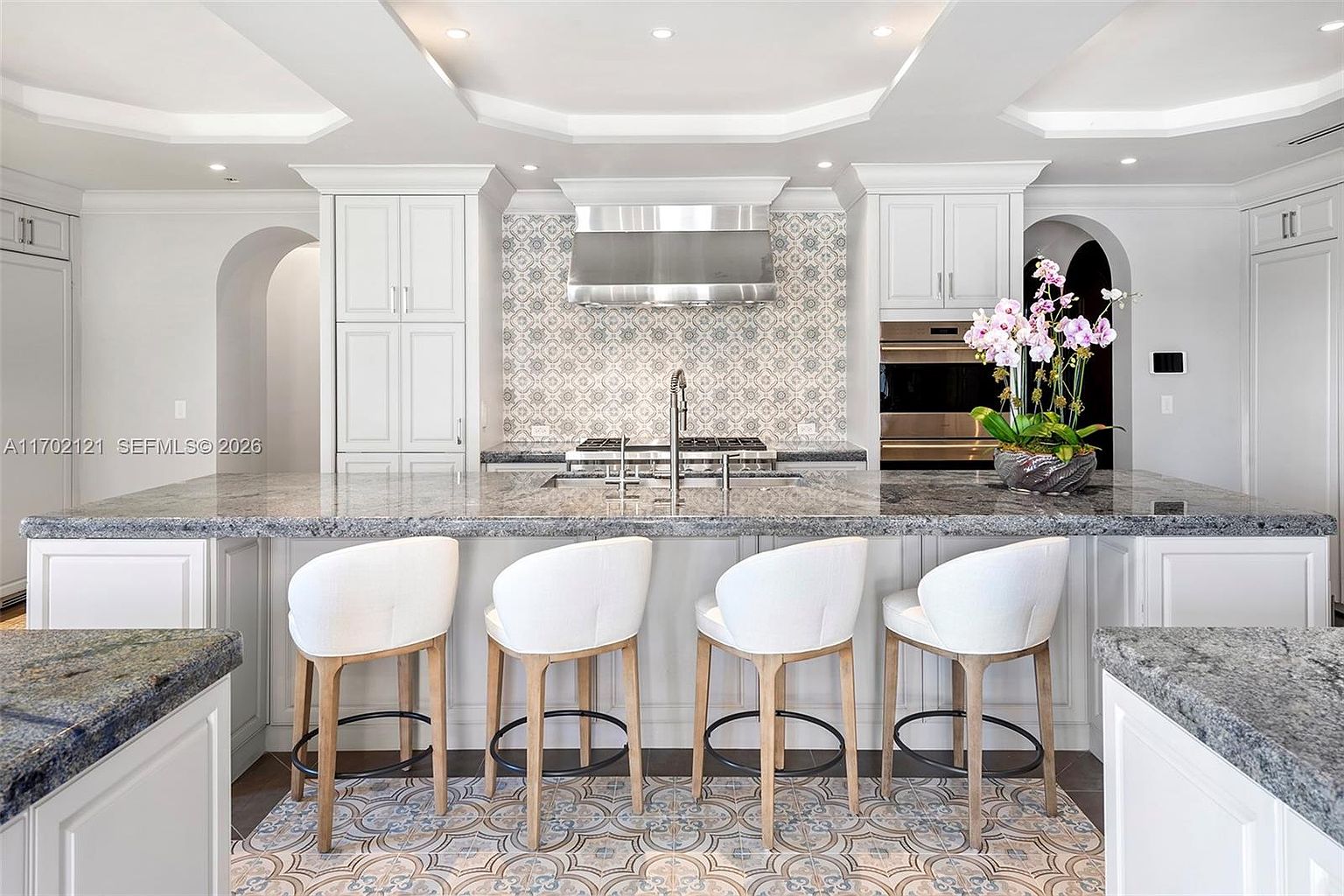
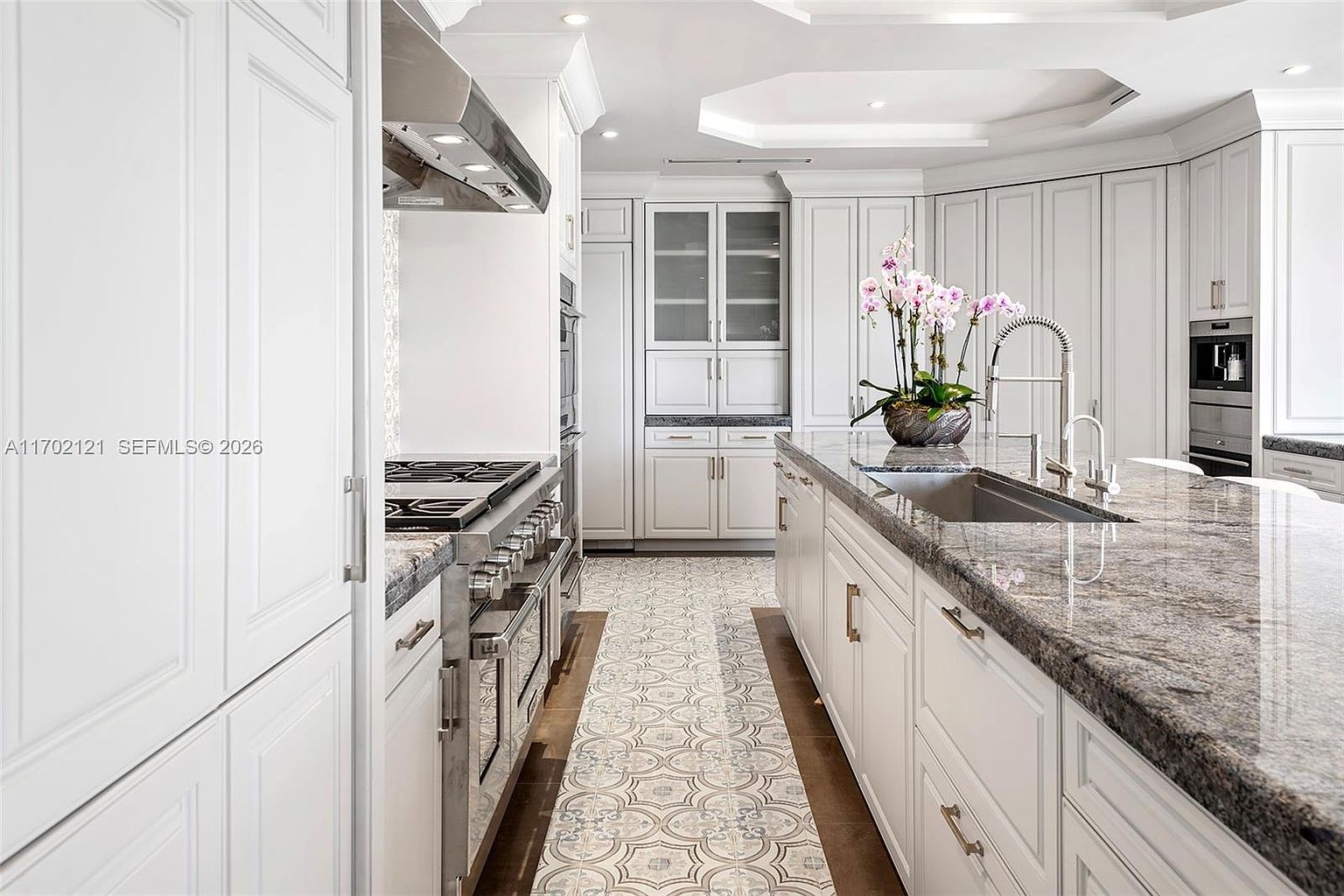
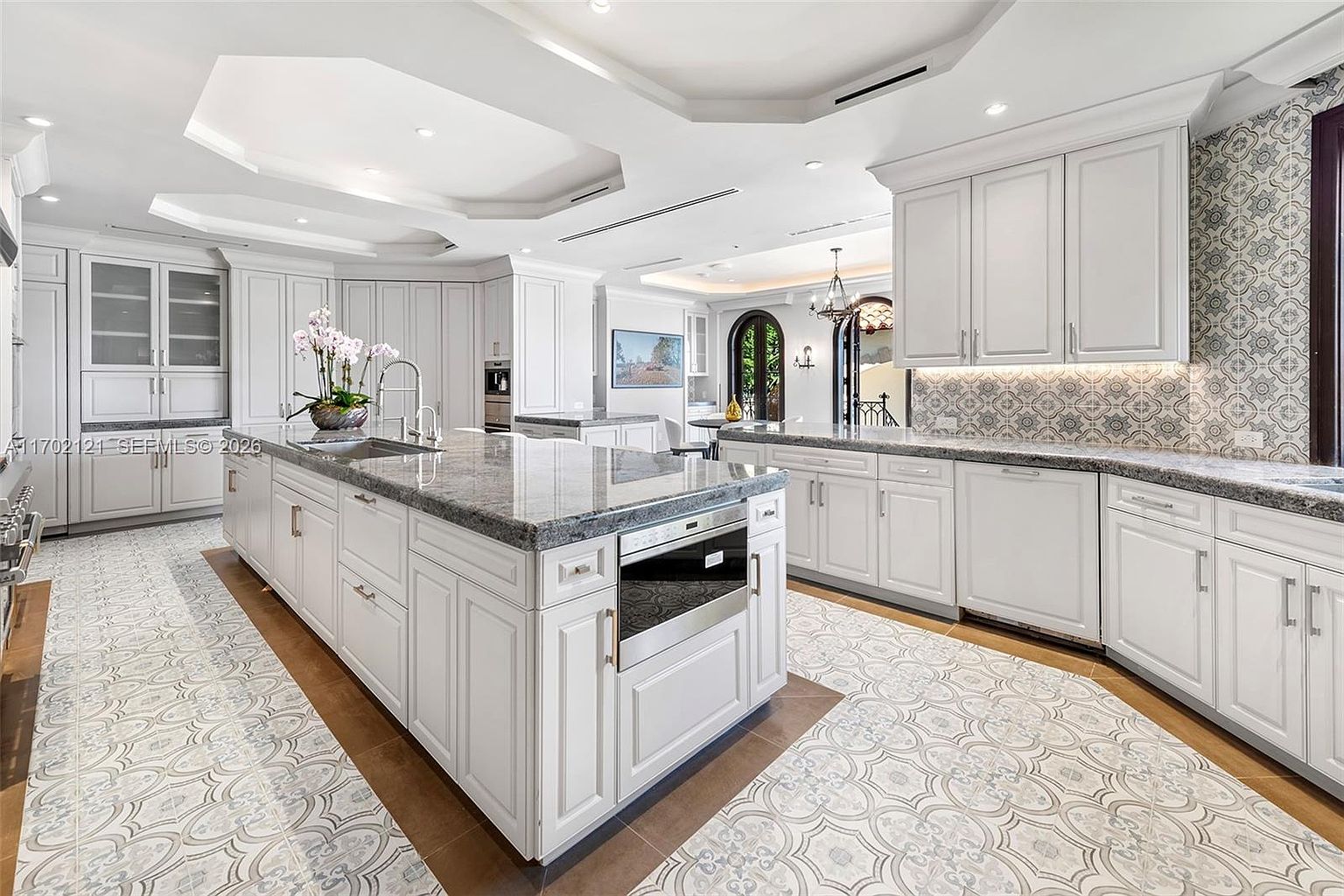
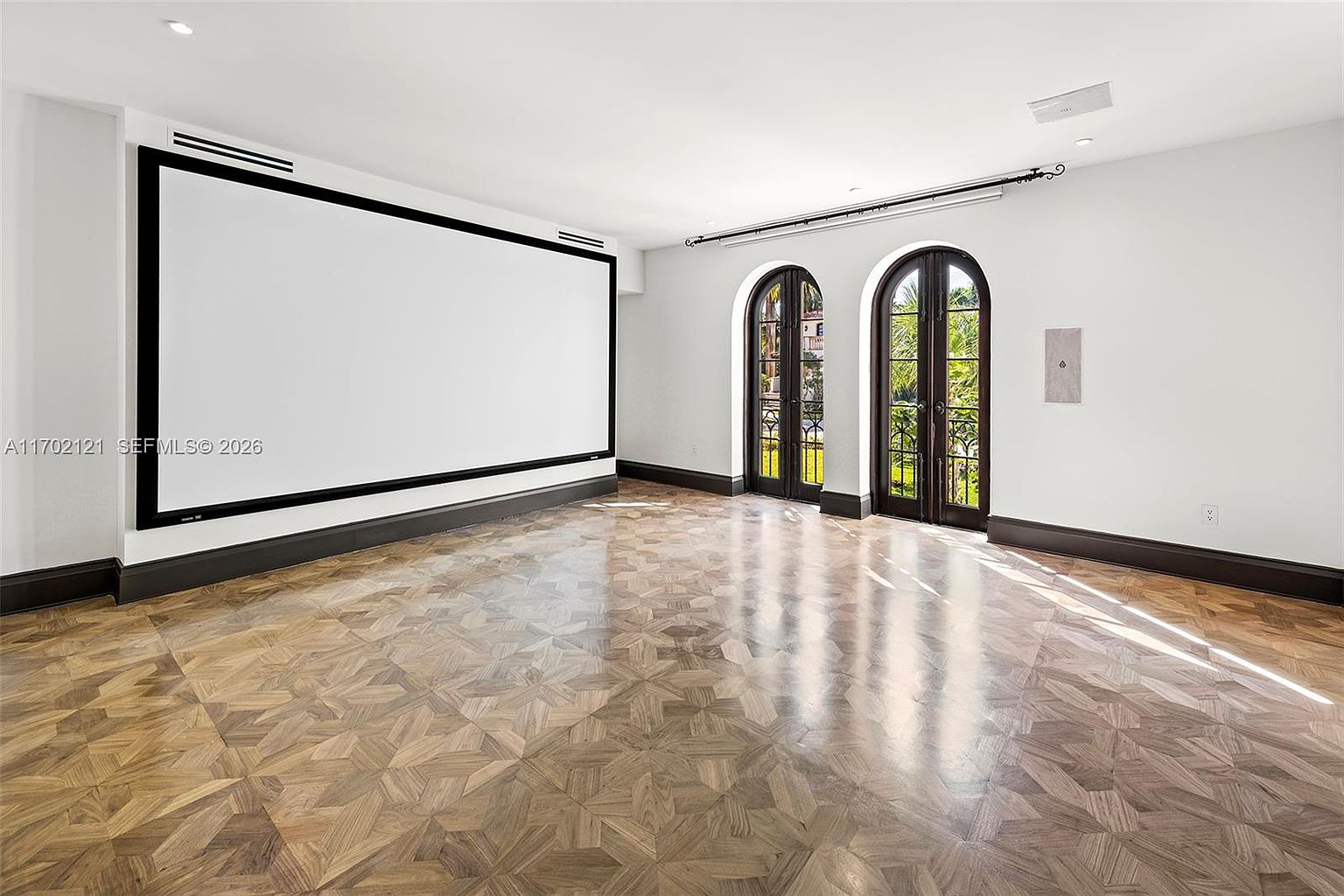
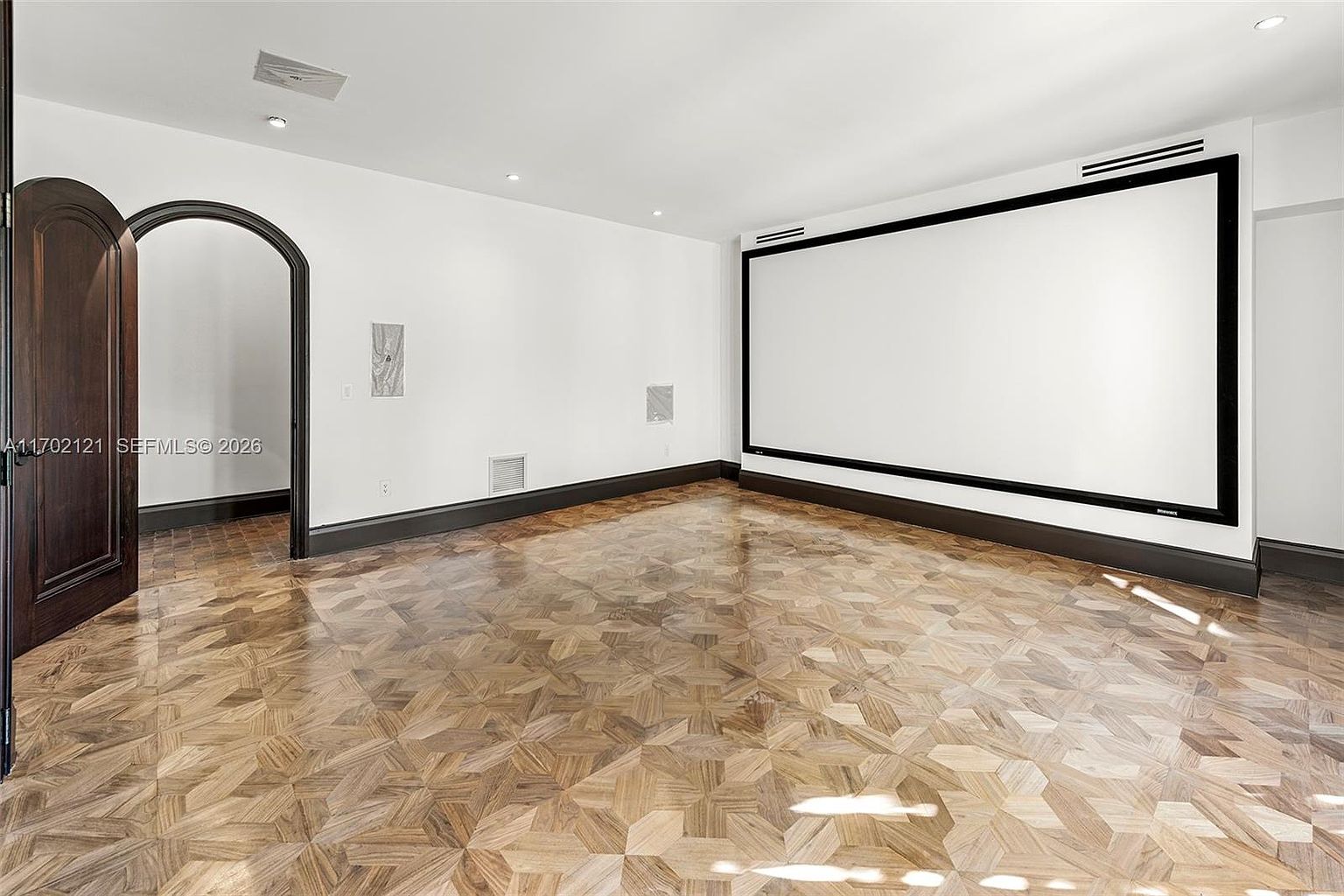
Across the principal level, parquet and intricate patterned wood floors anchor a succession of grand formal spaces — a palatial grand saloon, a formal dining room beneath an ornate chandelier and detailed ceiling molding, a dedicated cognac room, and a private art gallery — each connected by barrel-vaulted corridors that reinforce the home's deeply considered architectural continuity. The chef's kitchen is a study in professional-grade ambition: three Wolf gas ranges, Sub-Zero refrigeration, and a commanding stone waterfall-edge island anchor a space that opens generously to a family room and a secondary dining area, designed as much for intimate family mornings as for elaborate catered events.
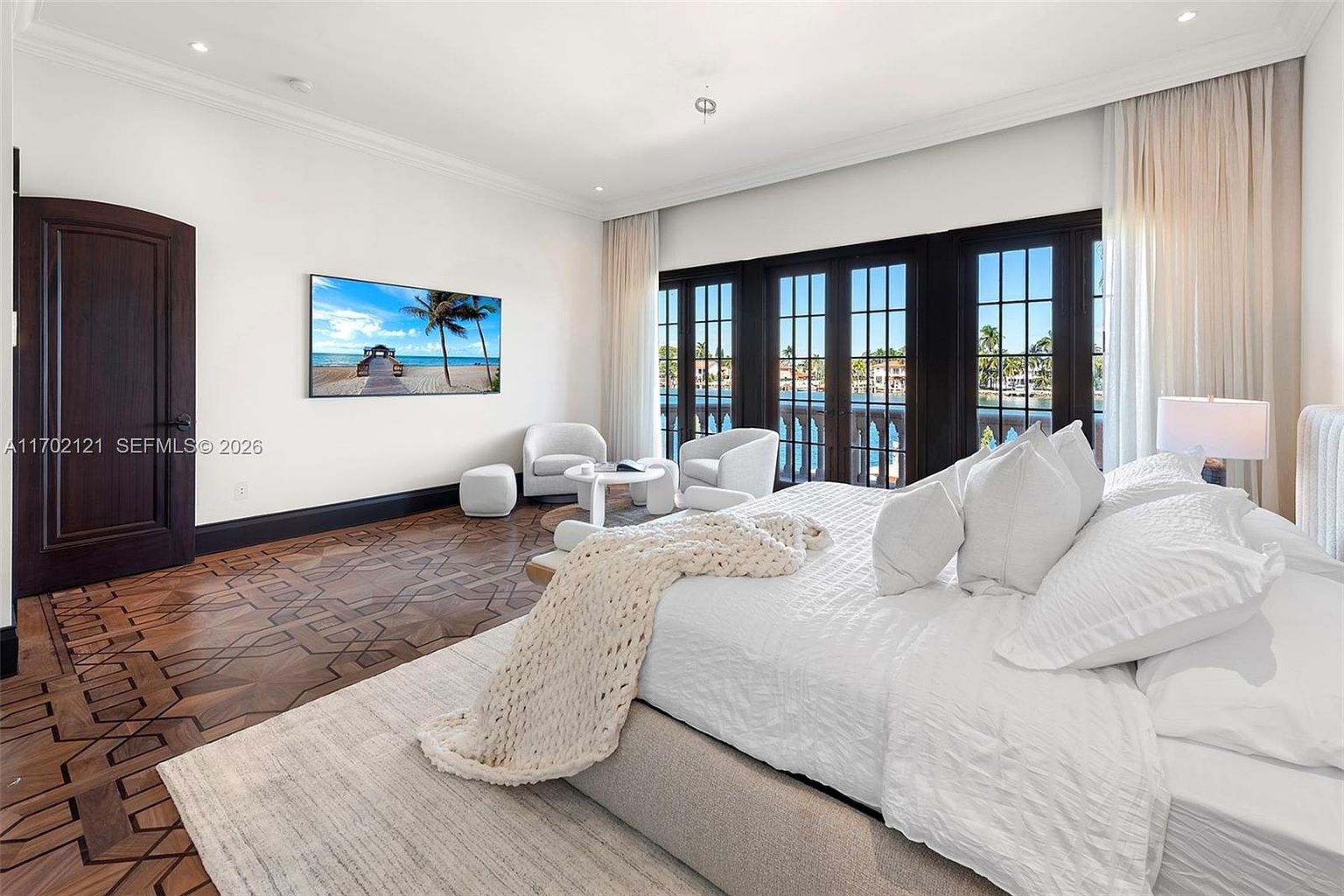
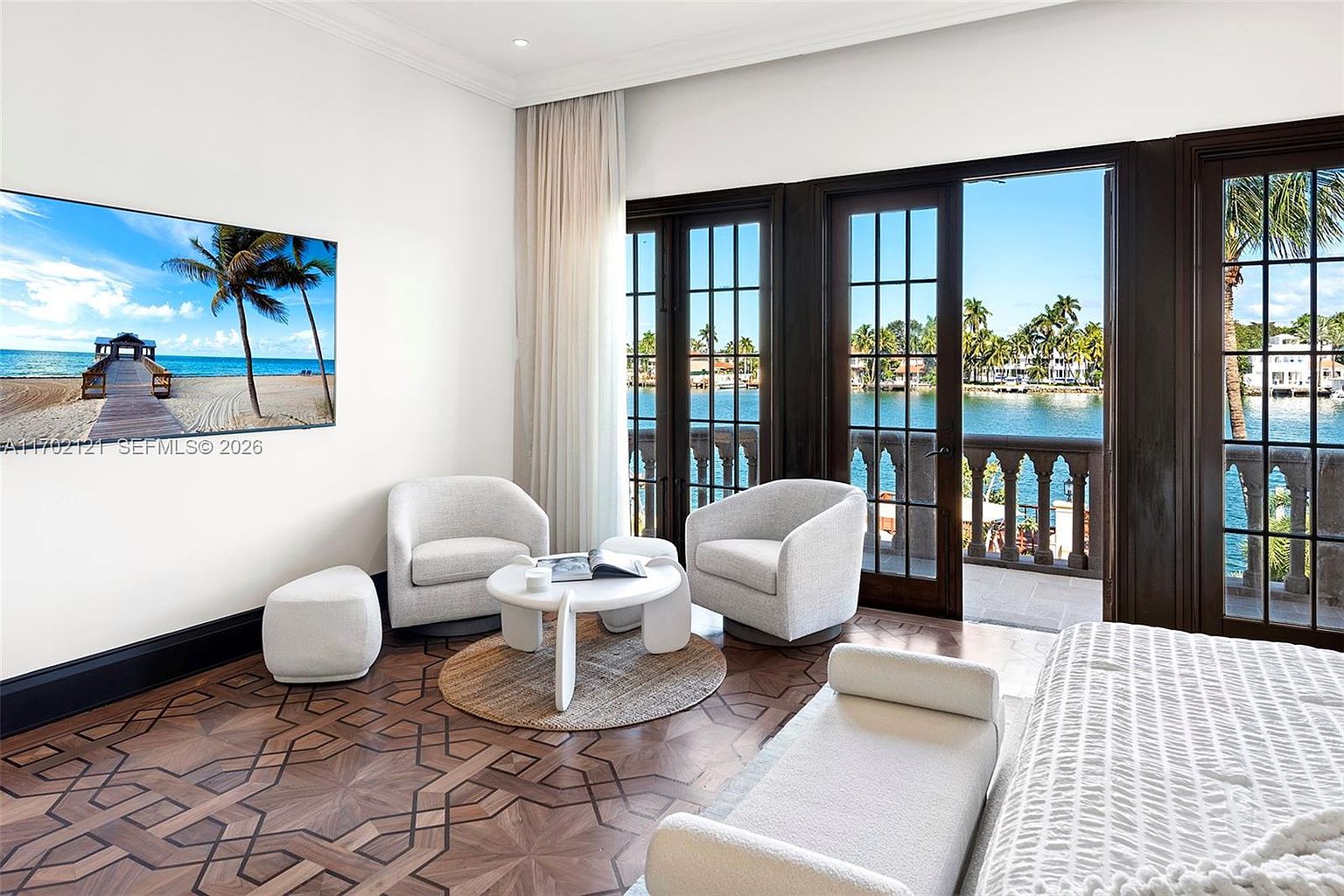
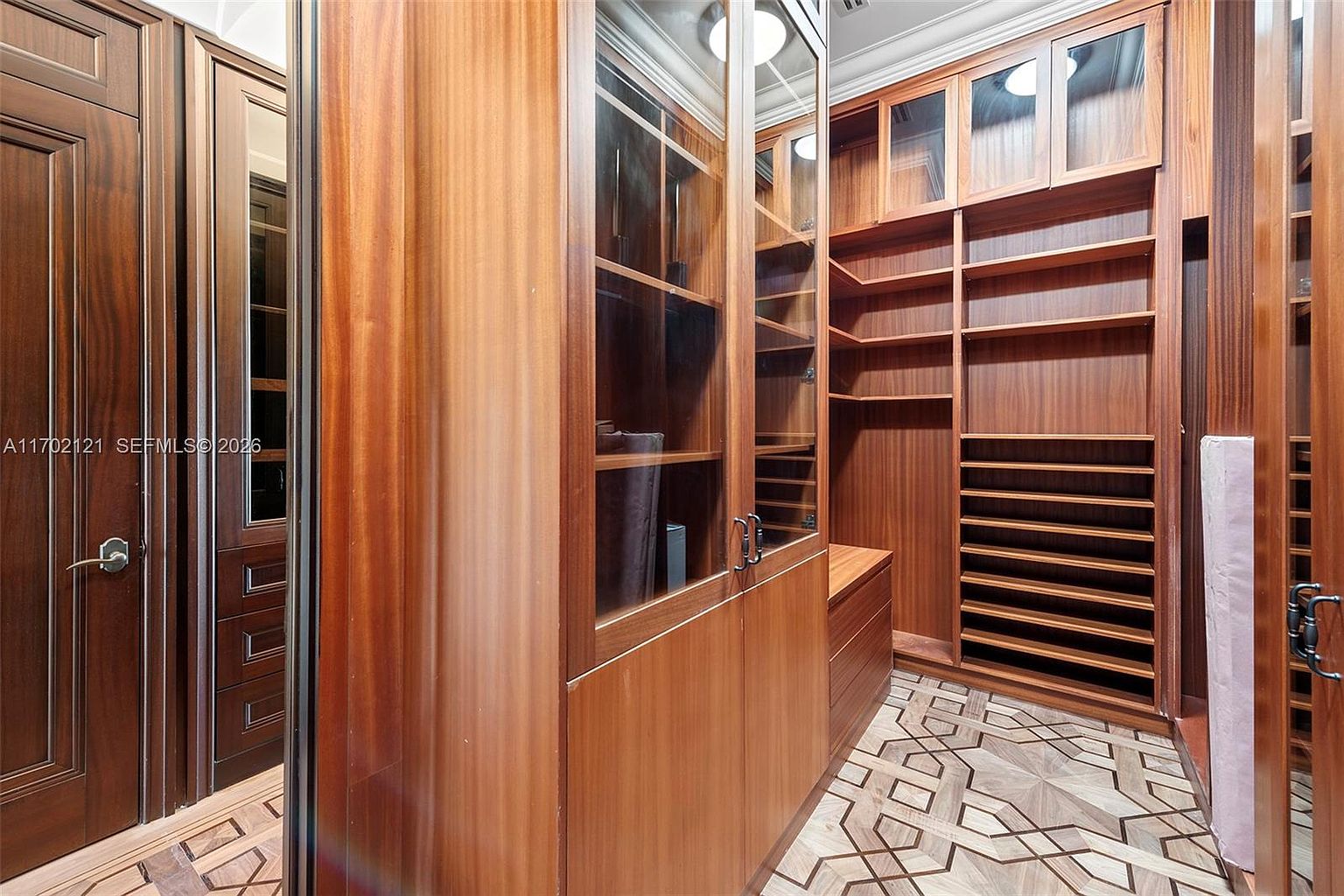
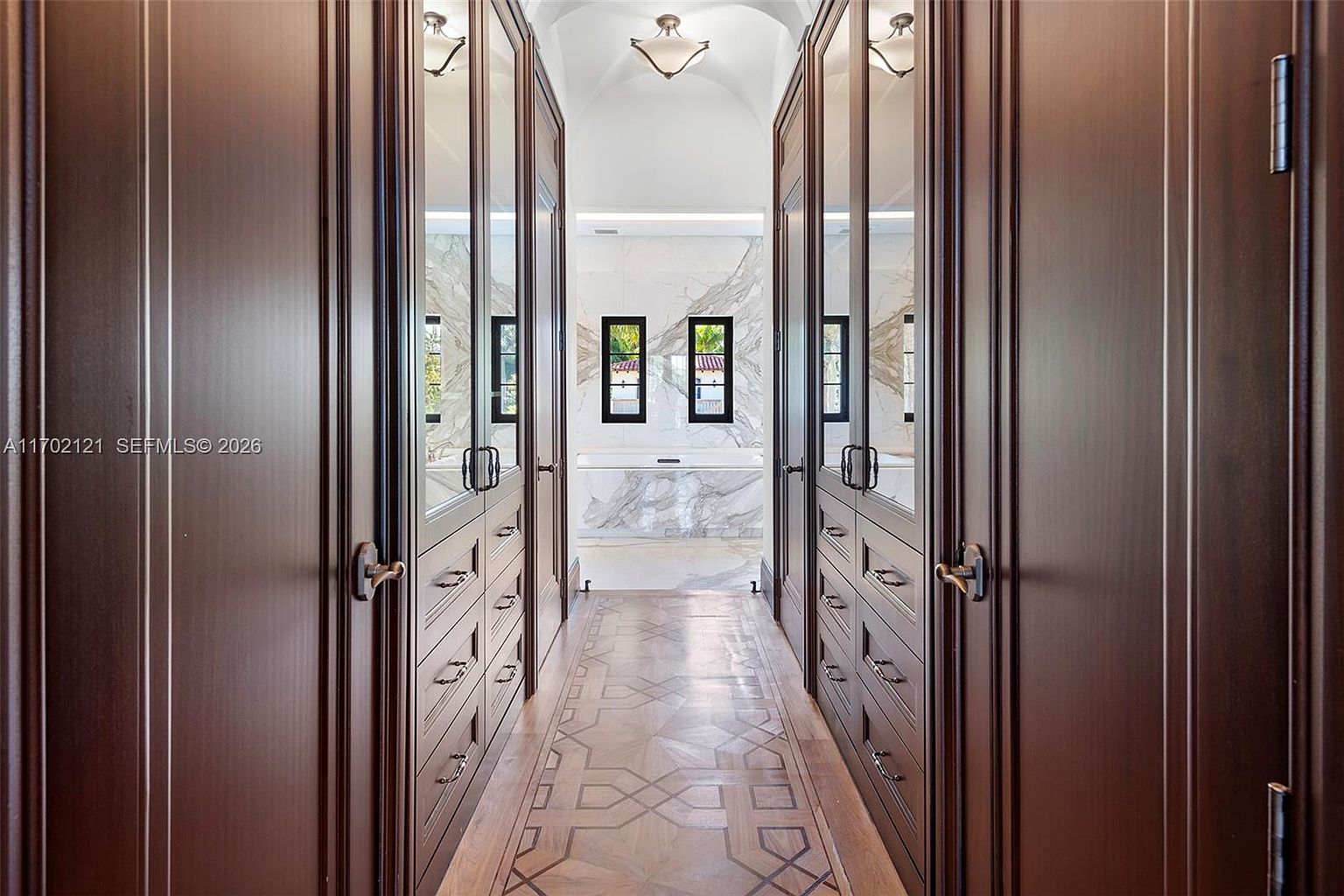
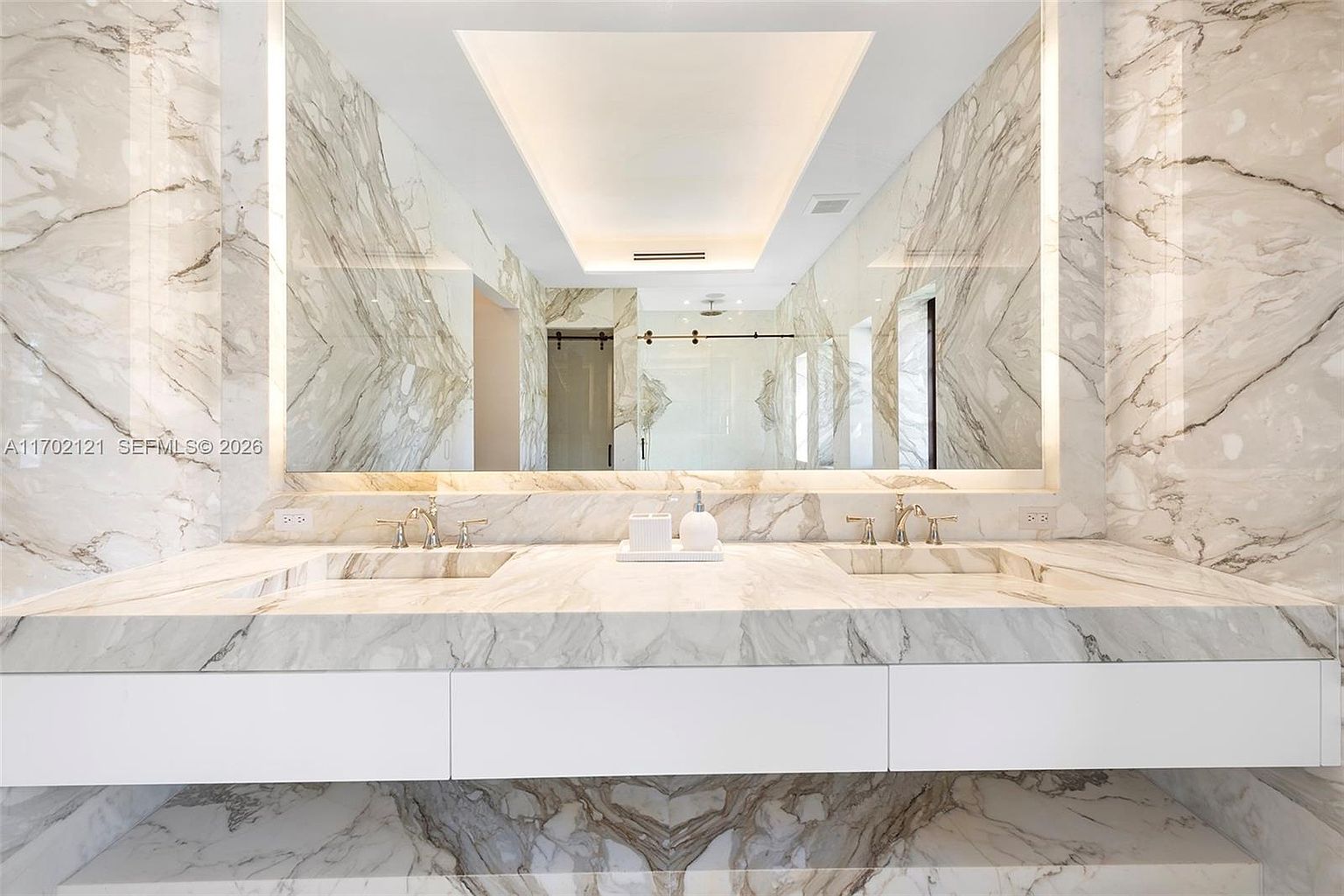
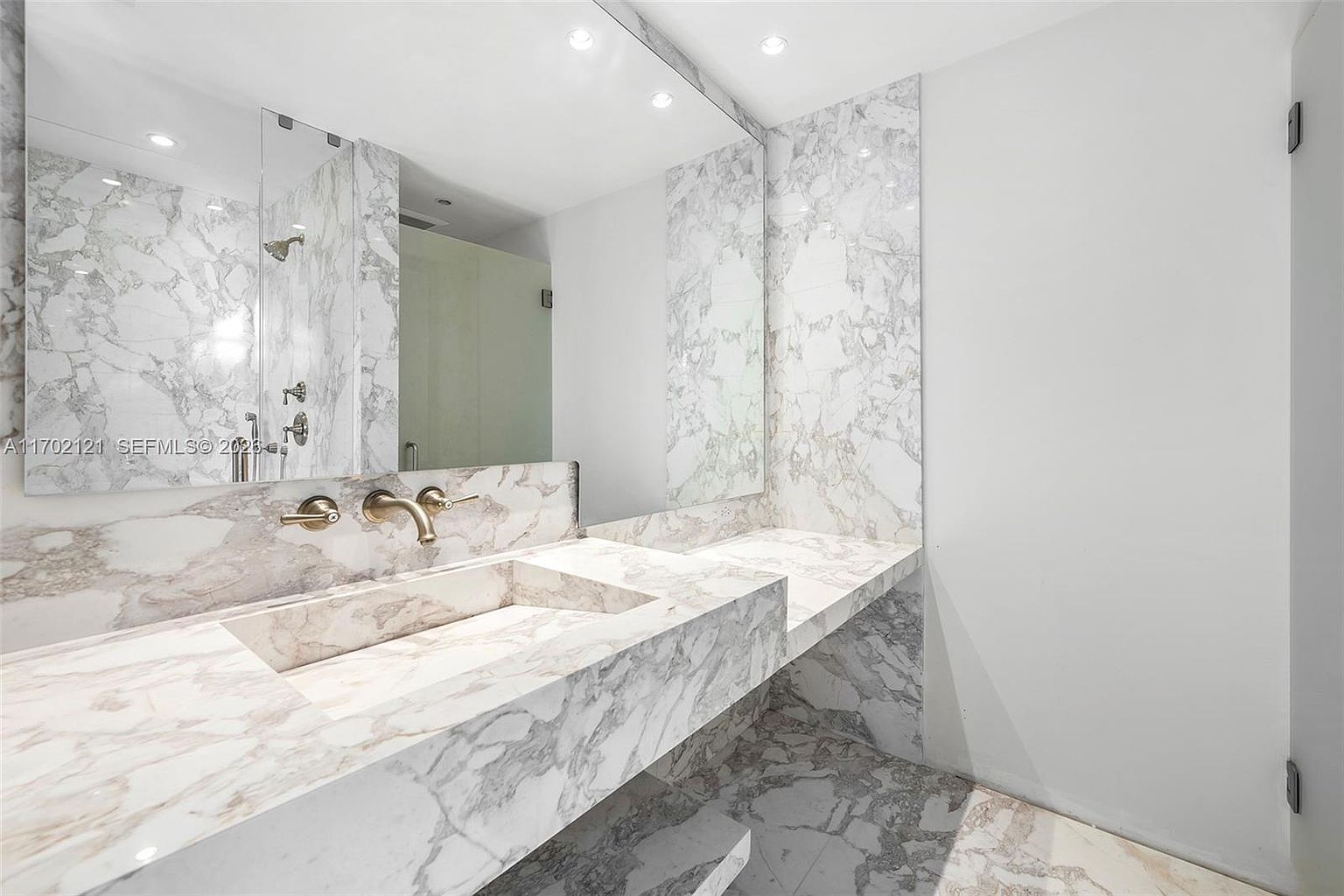
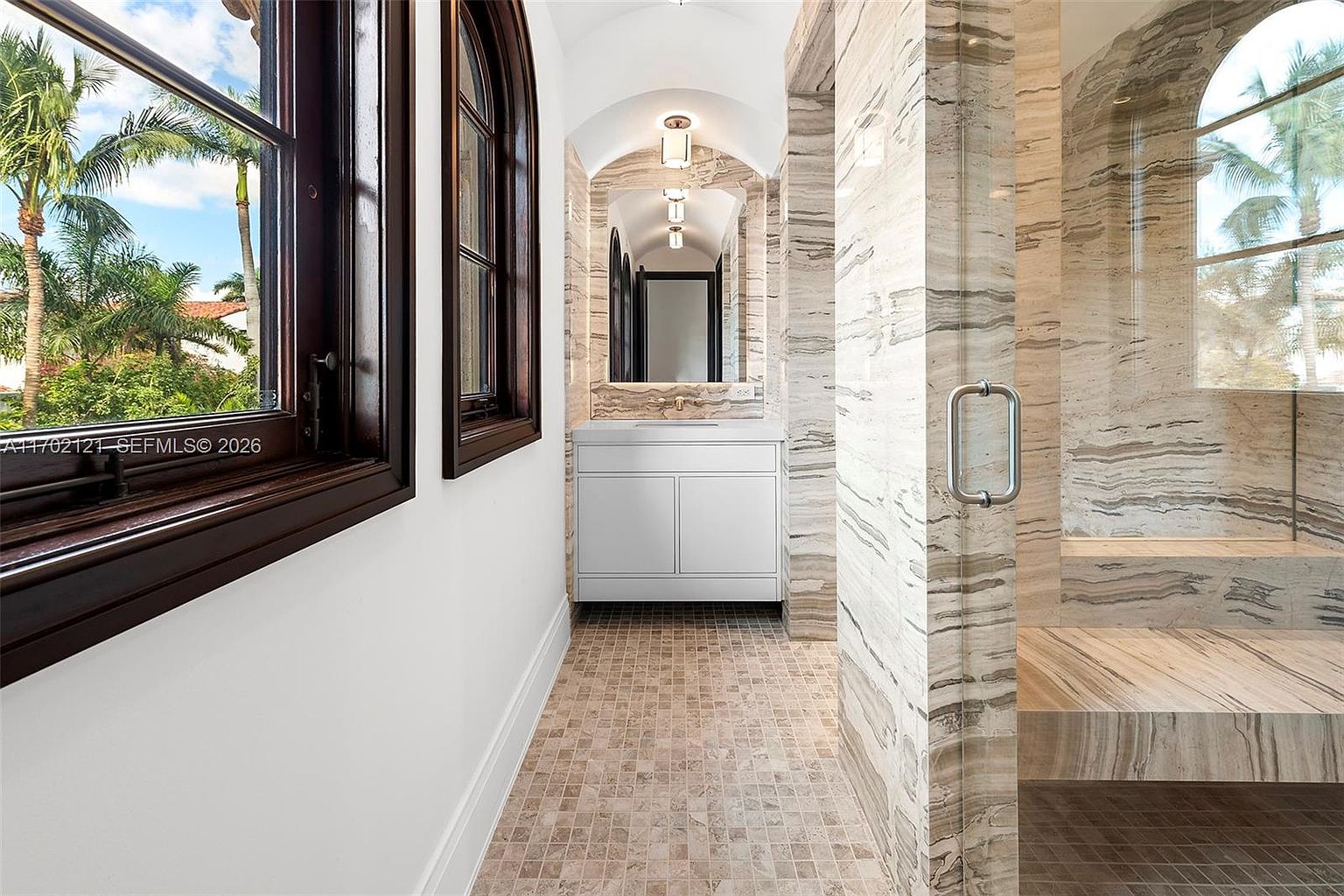
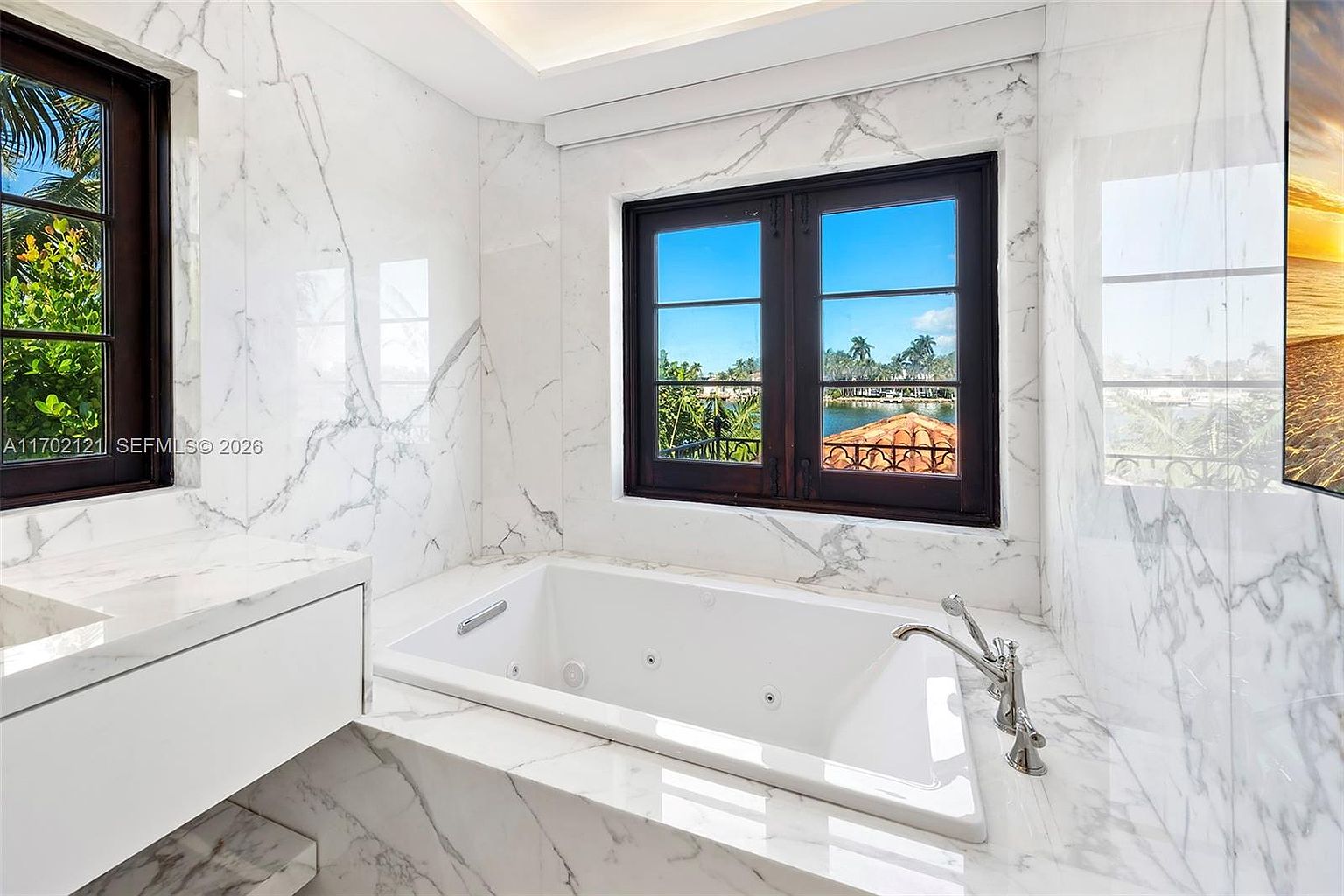
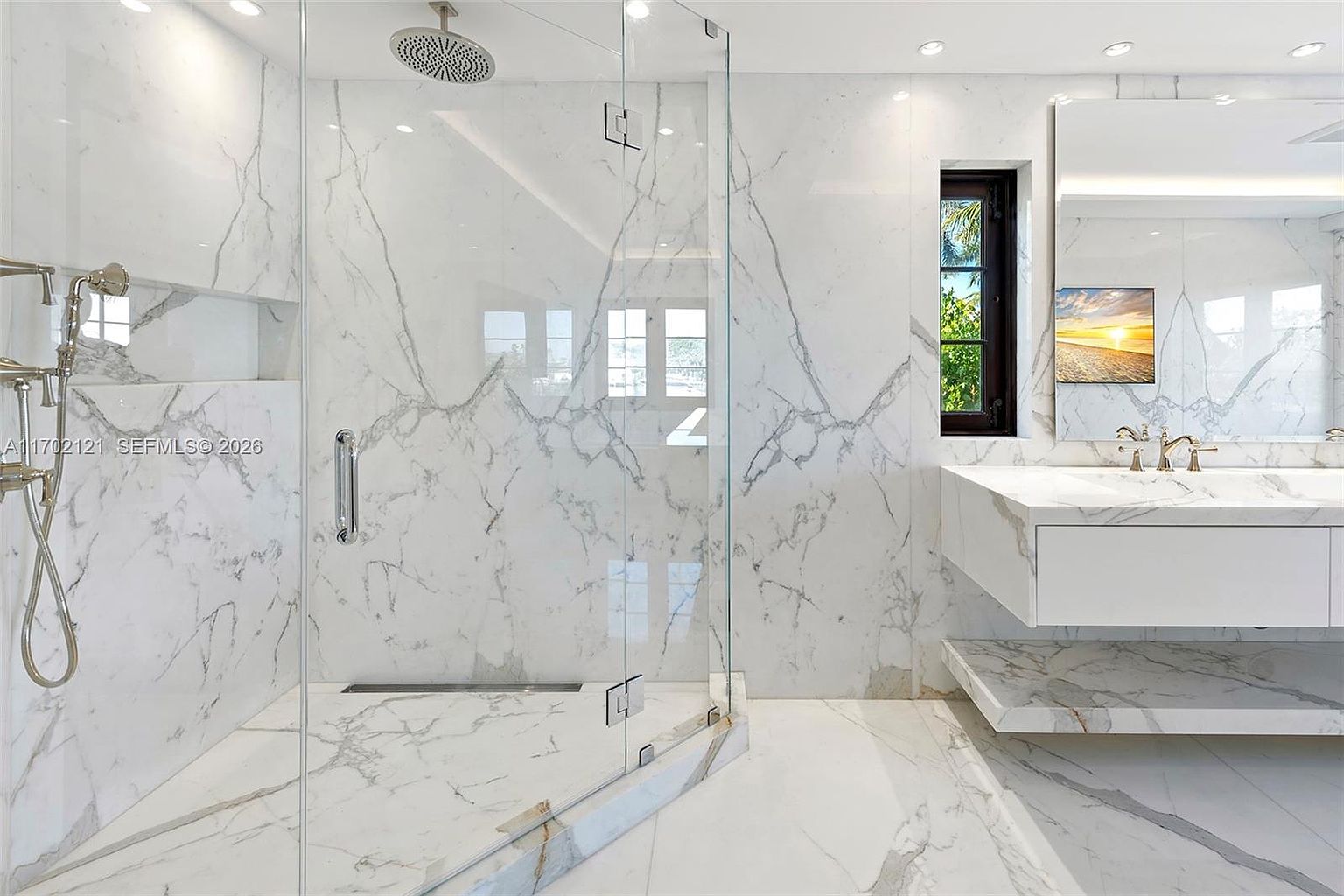
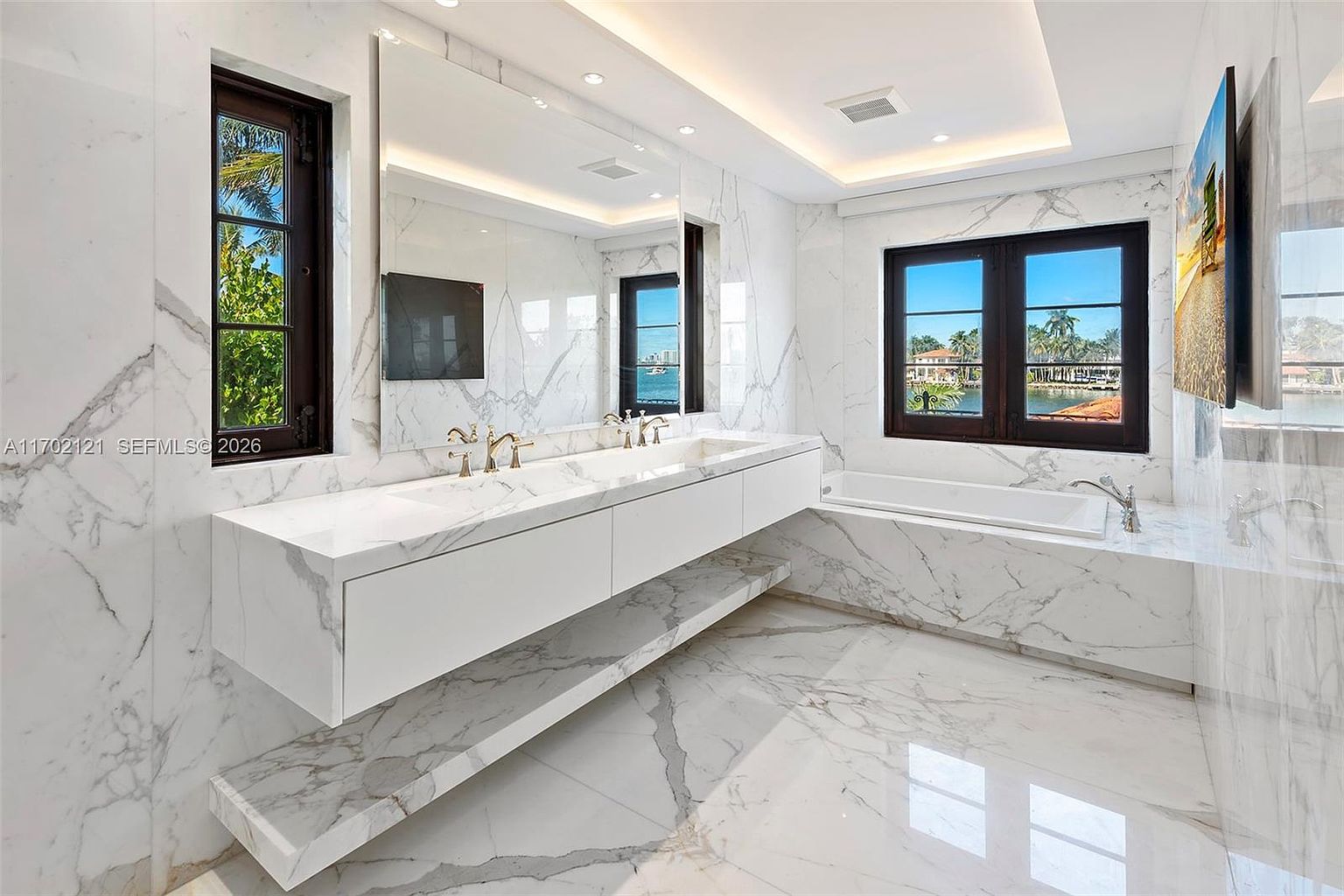
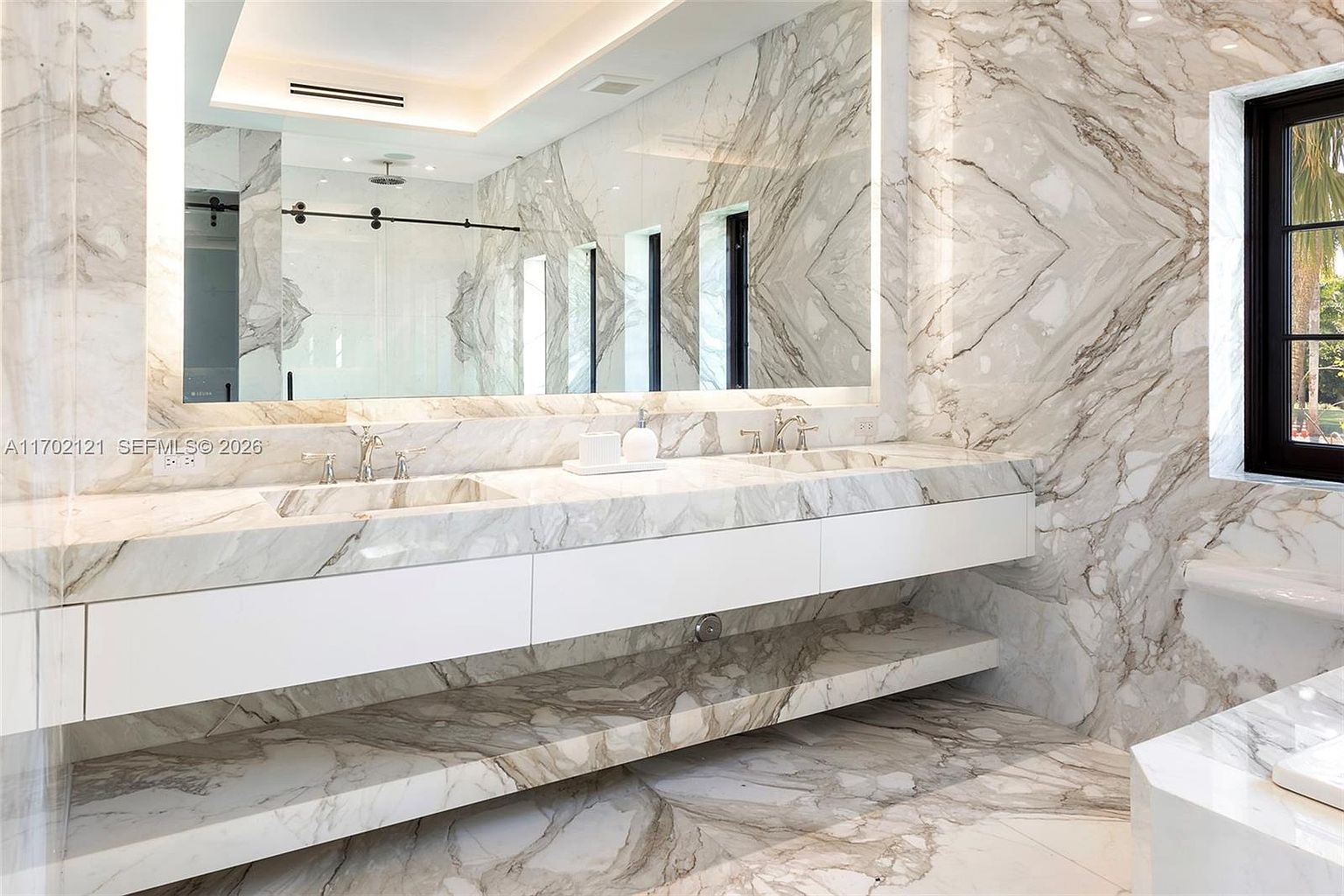
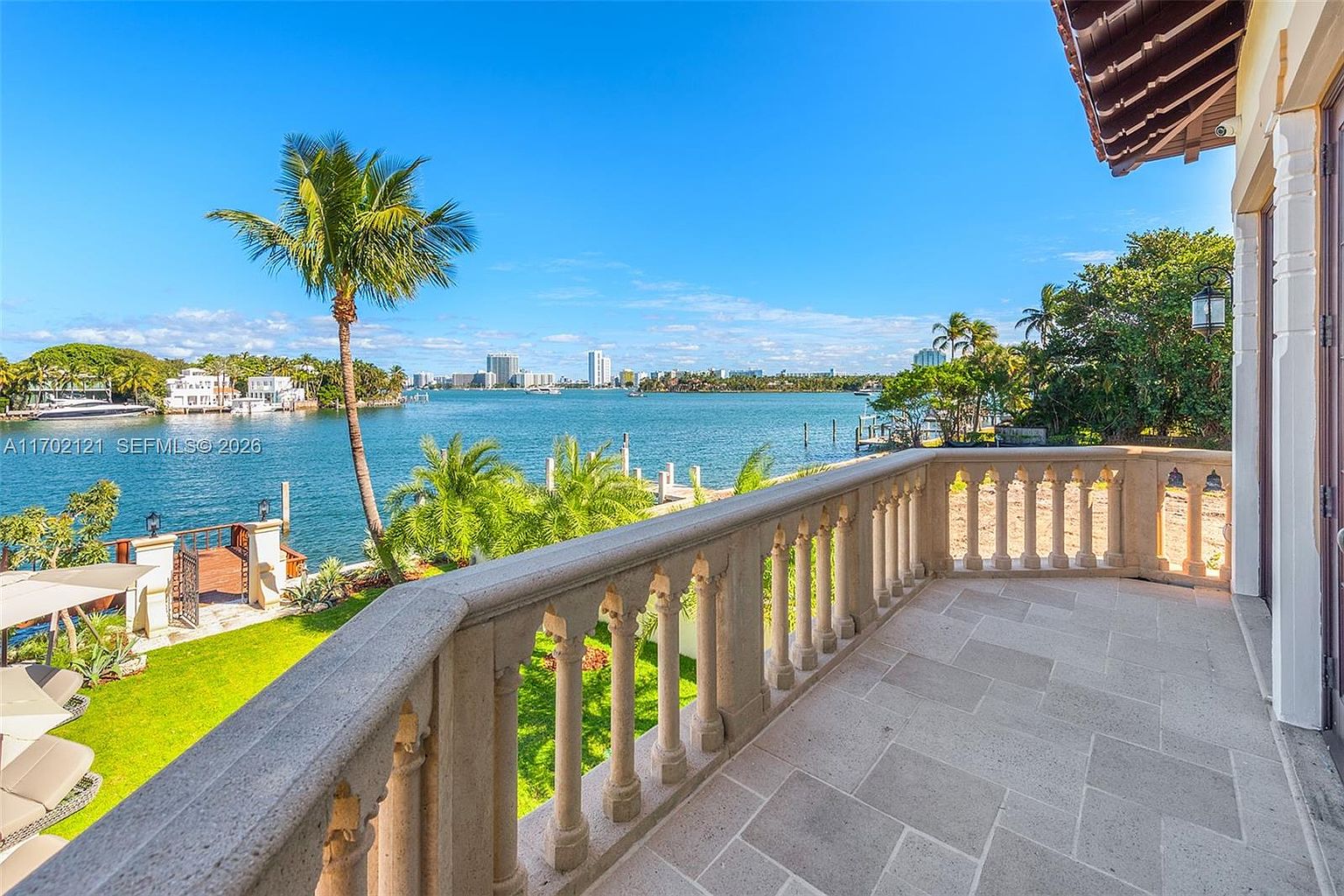
The primary suite is a sanctuary unto itself, where patterned wood floors, glass doors opening to a private balcony with waterfront views, and a stone-clad bathroom with a deep soaking tub overlooking the water converge into an atmosphere of serene luxury. The home's six bedroom suites are each appointed with the same fidelity to craft and comfort, while a dedicated office with curved arched windows and stone walls offers a workspace of genuine inspiration.
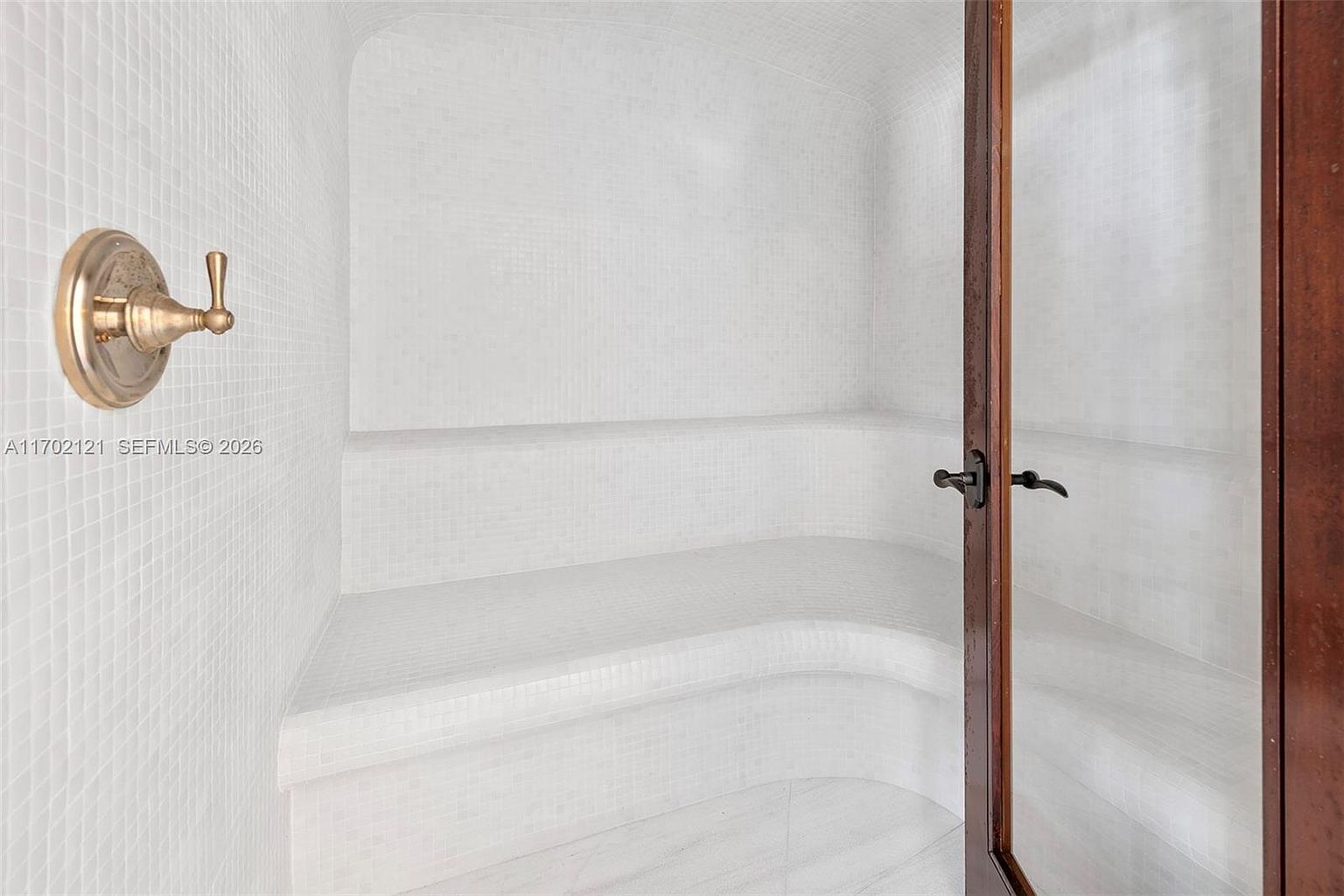
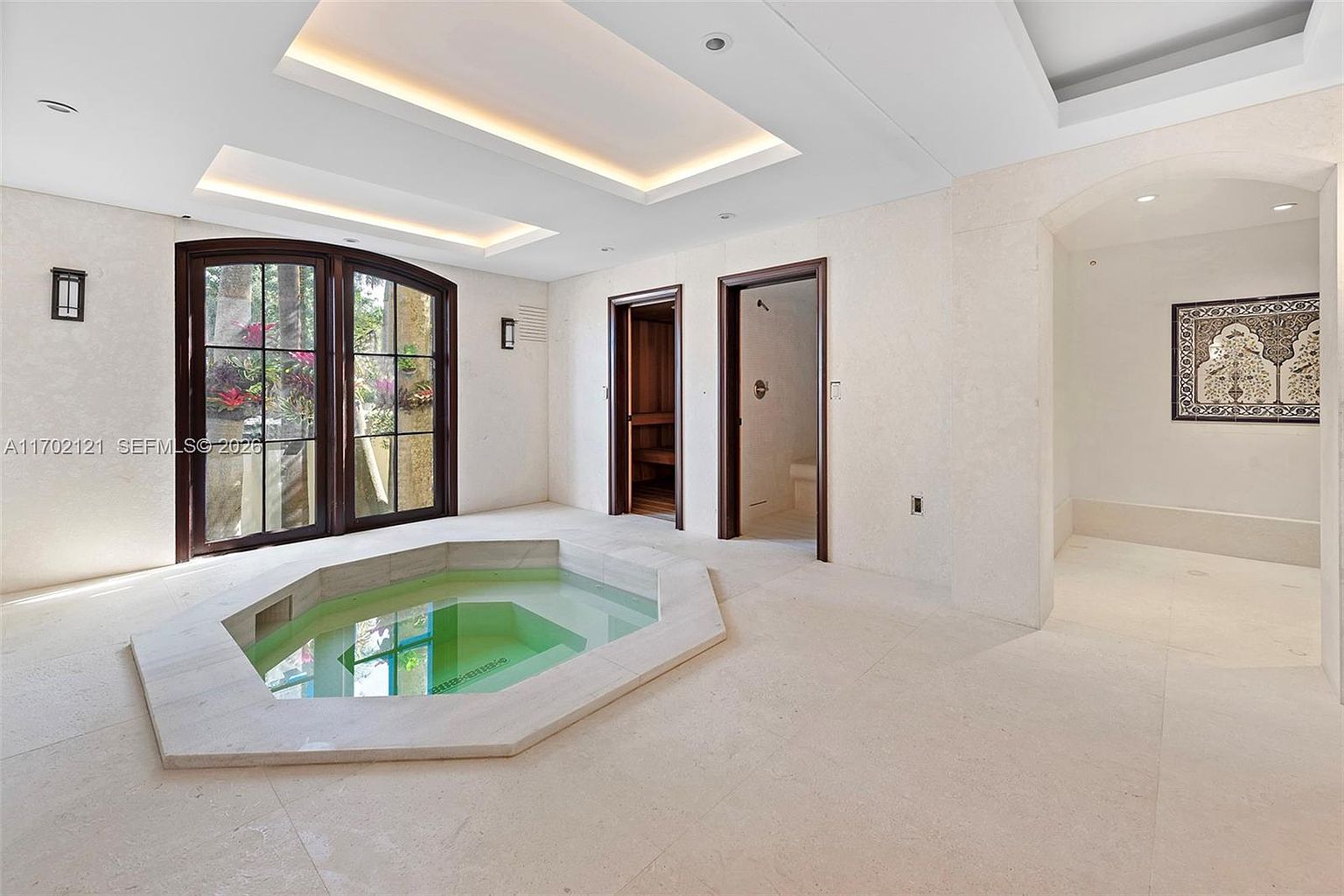
Perhaps the estate's most remarkable amenity is its self-contained guest villa, which functions as a world-class private wellness retreat. A Turkish hammam, traditional wood-lined sauna, plunge pool, massage room, and full gymnasium are housed within, offering a level of restorative privacy rarely found in residential real estate. Two elevators serve the home's multiple levels, ensuring seamless movement throughout.
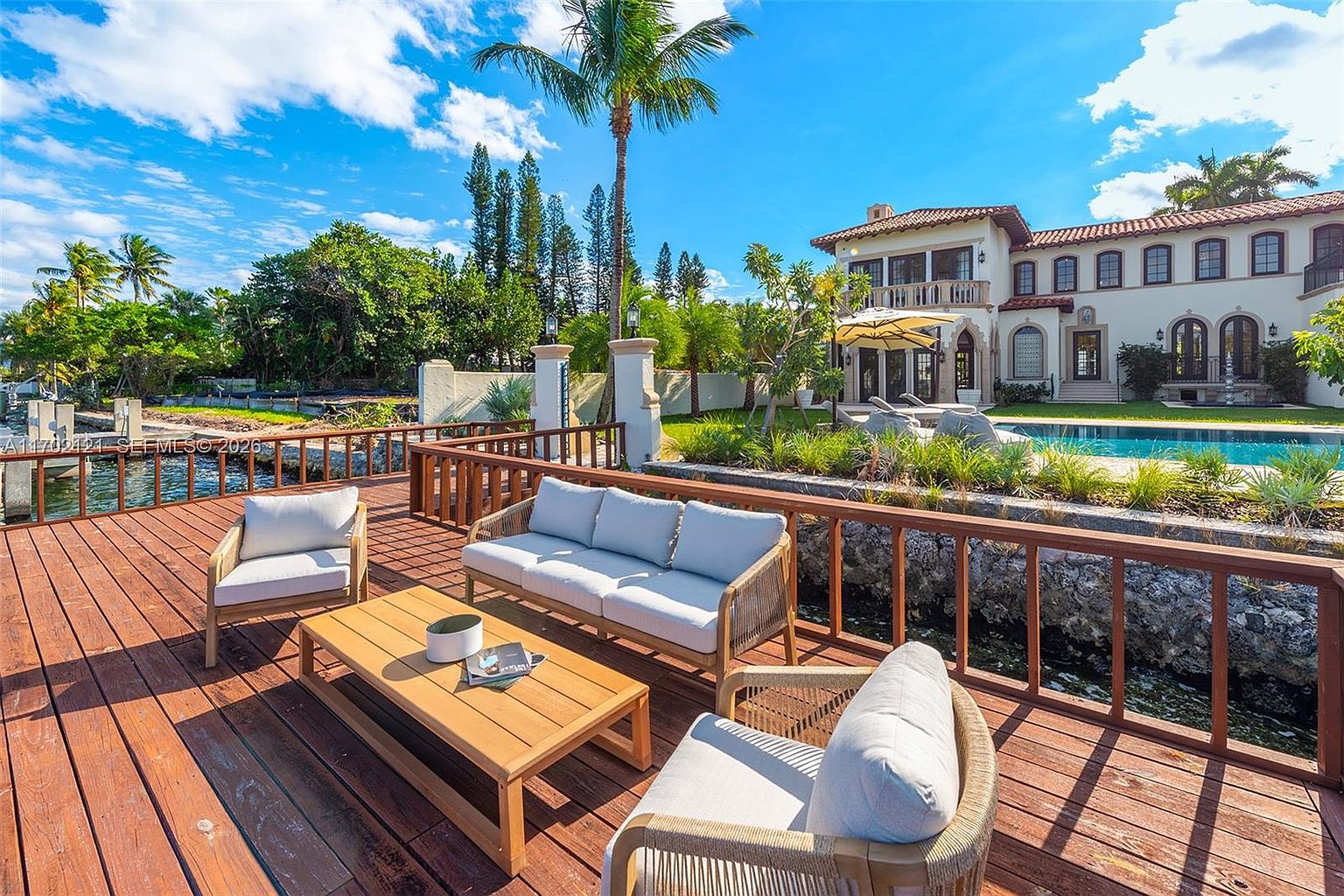
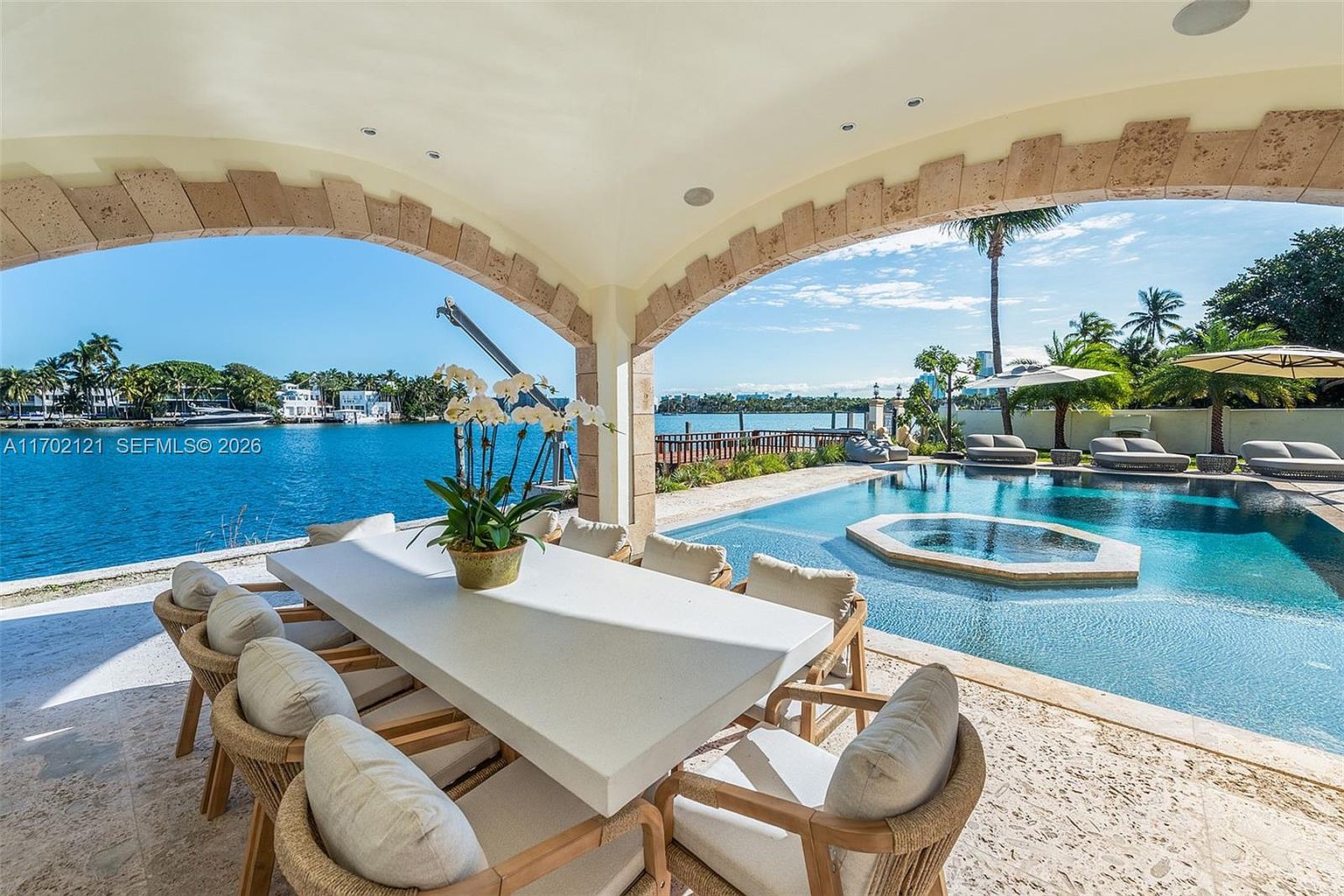
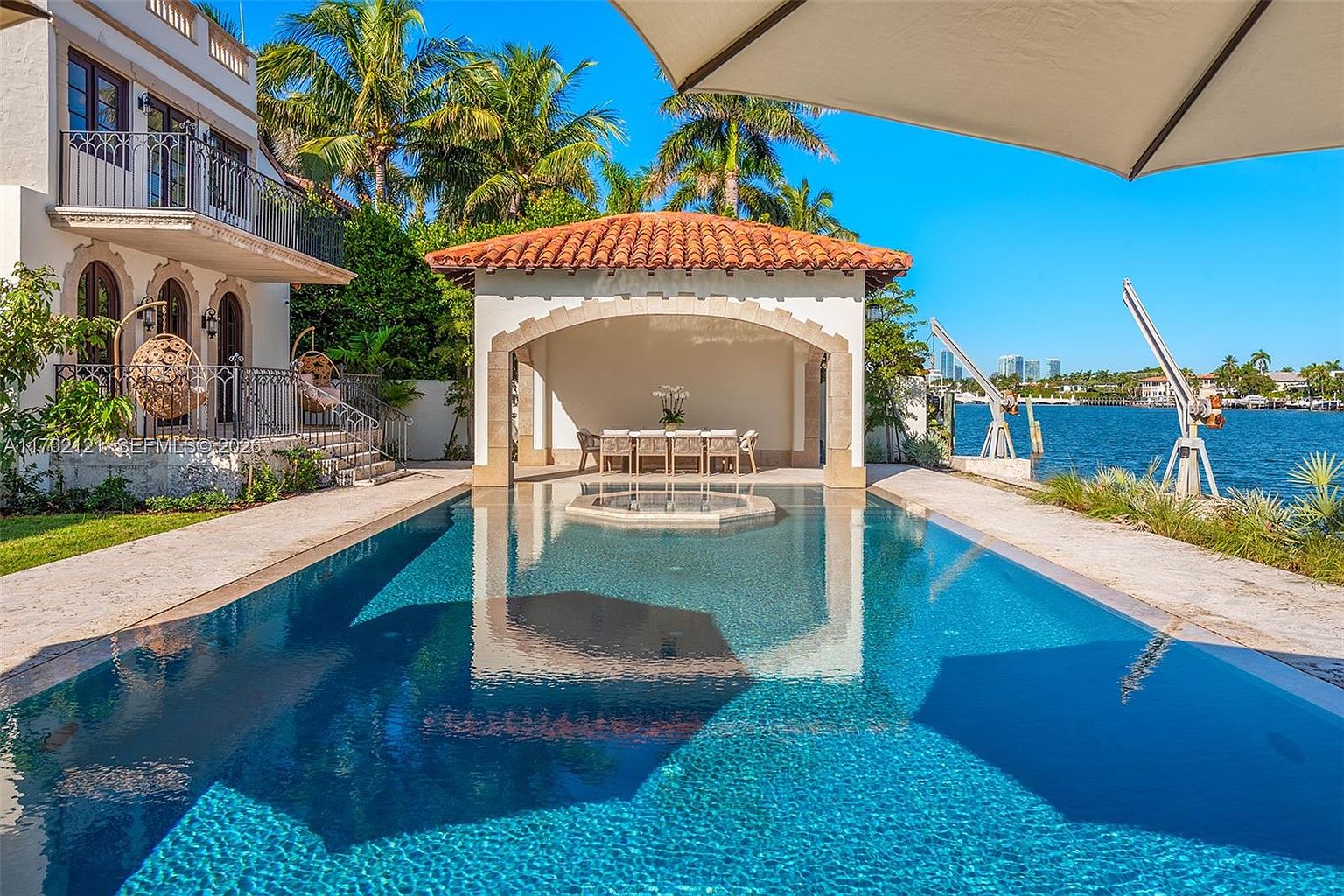
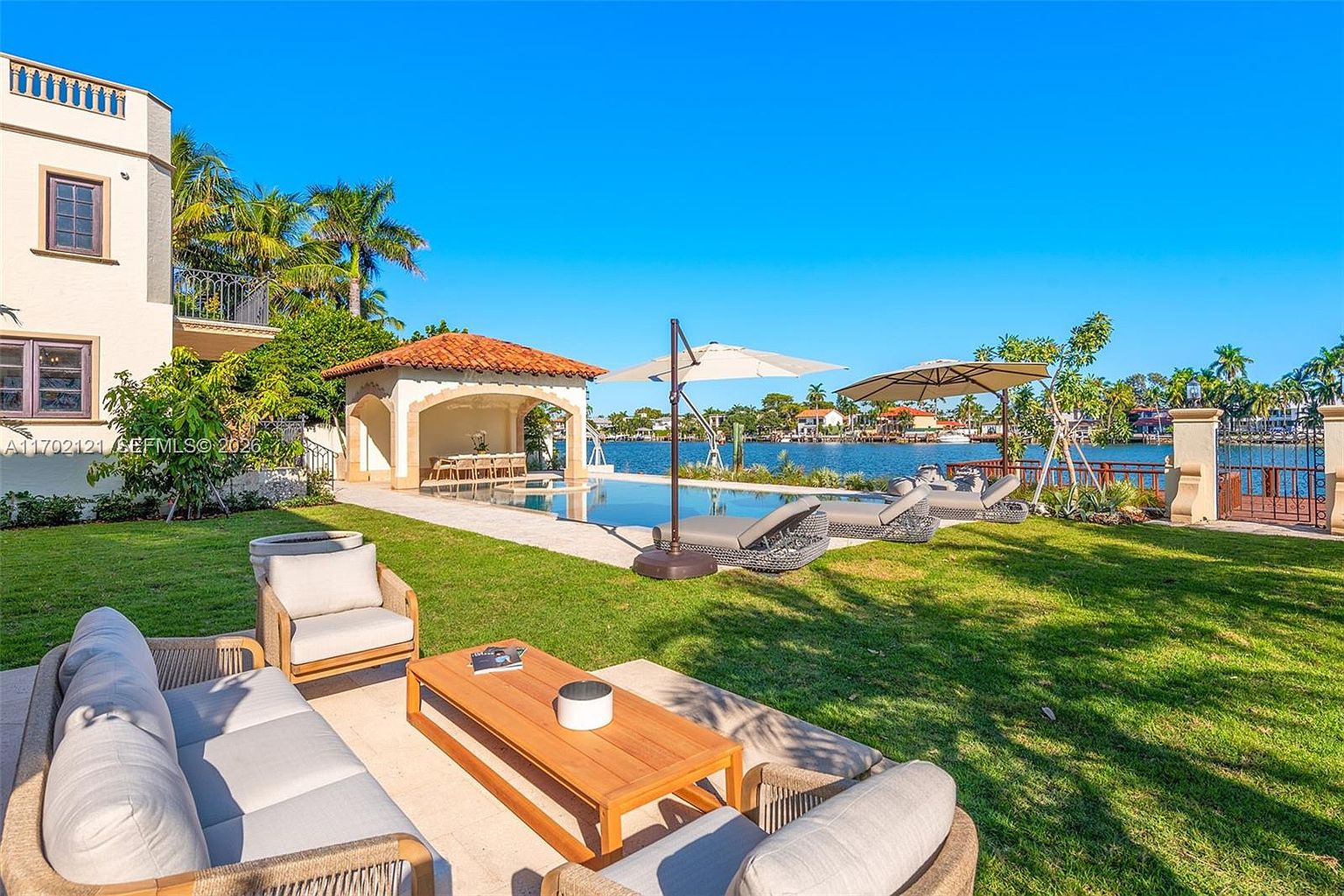
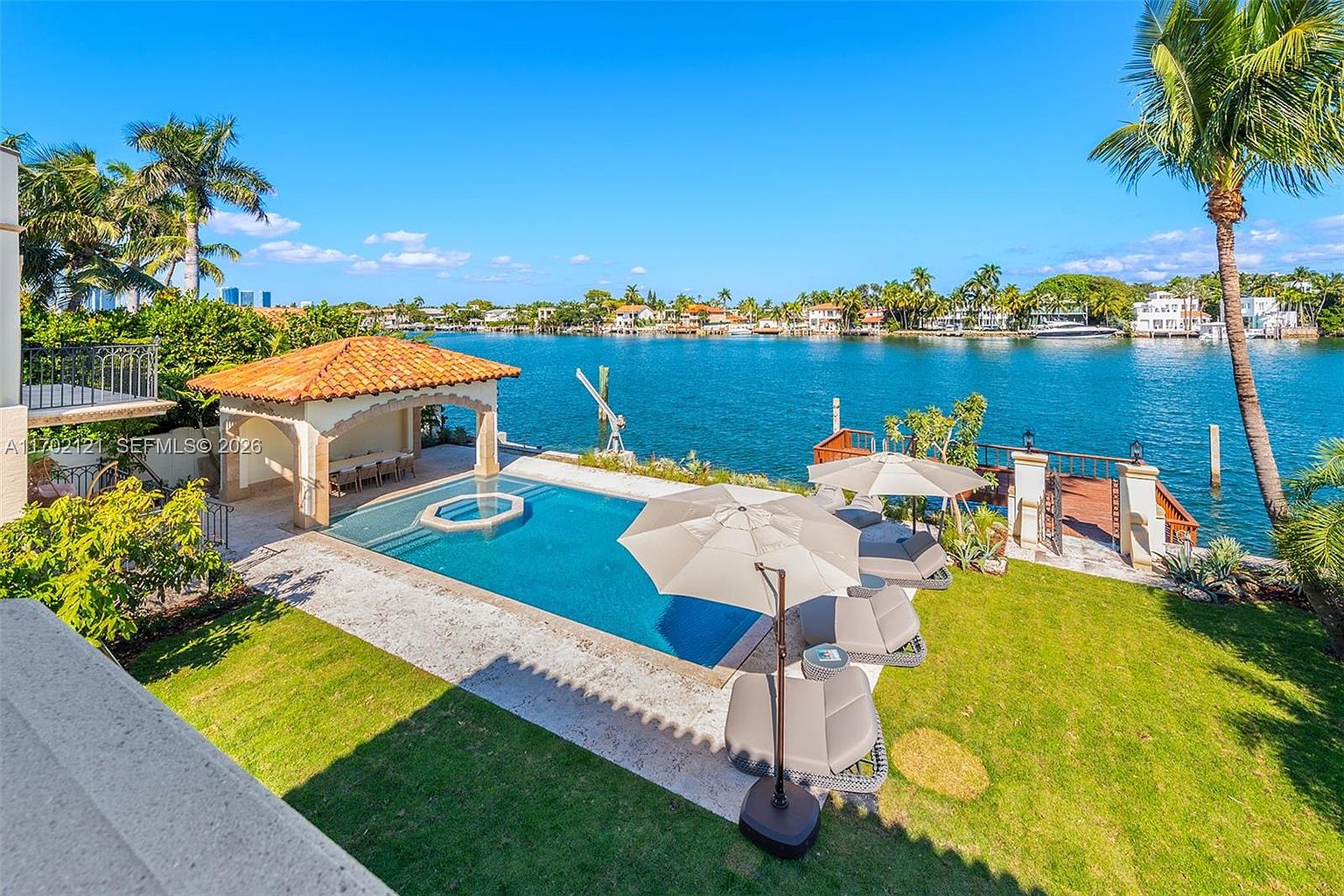
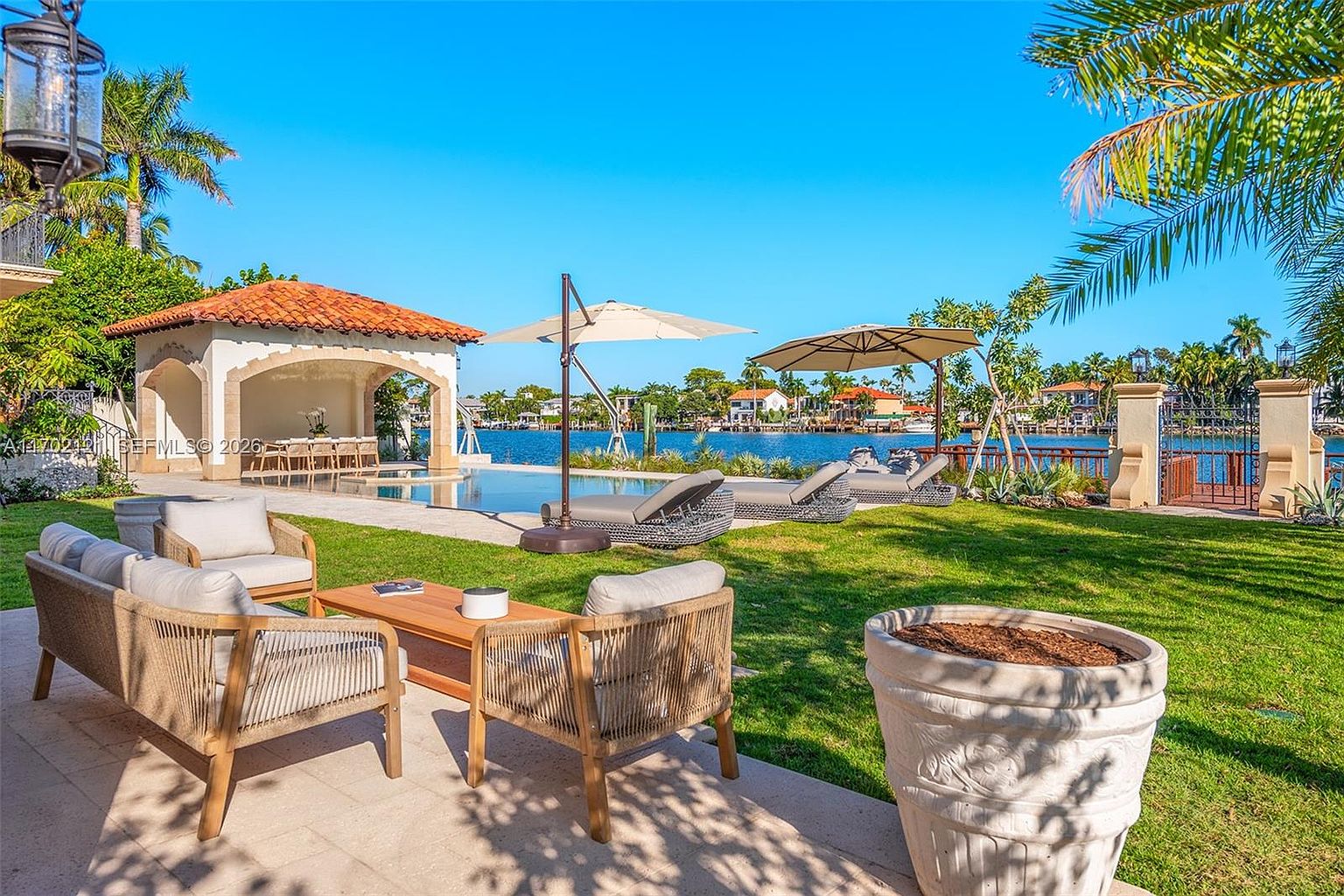
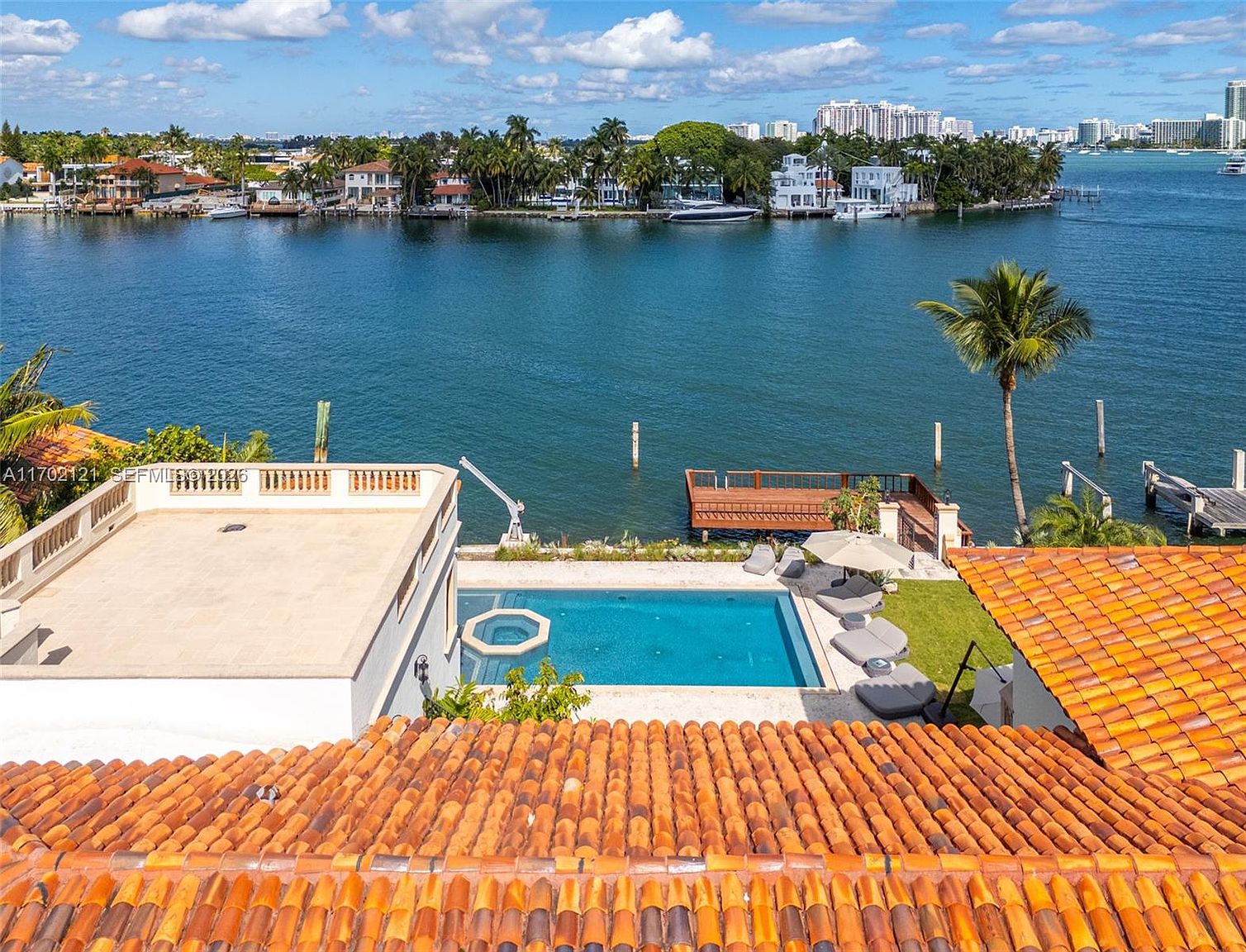
Outdoors, the estate's 30,000-plus square feet of grounds unfold across a landscape of exotic trees, sculpted fountains, and multiple al fresco entertaining terraces. A covered waterfront pavilion with a dining area, a rooftop terrace commanding panoramic views of the Miami skyline, and a private deck extending directly over the water complete an outdoor offering that rivals the finest resort properties in the Caribbean. The 100 feet of unobstructed waterfront and private dock place the entirety of Biscayne Bay — and beyond — within effortless reach.
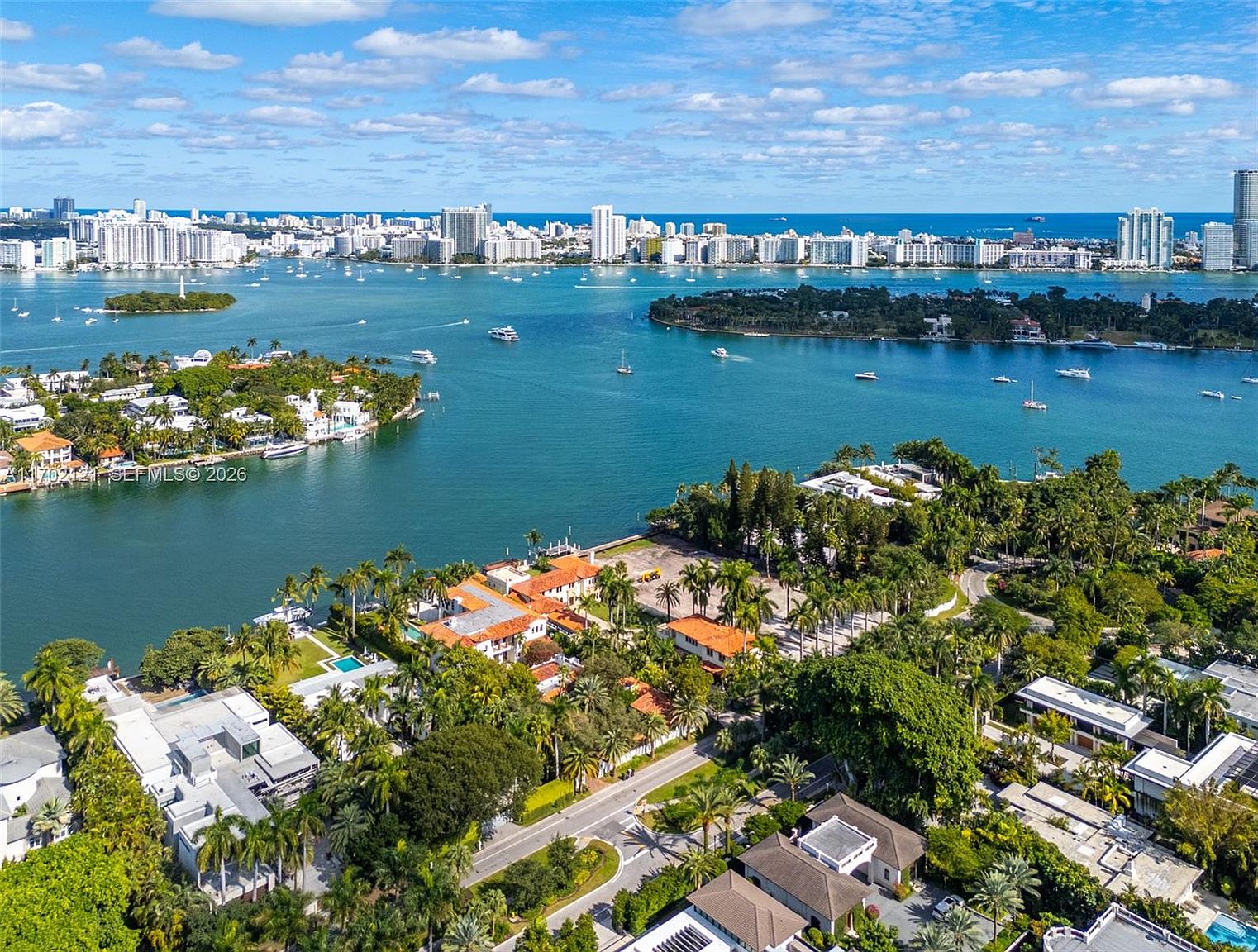
Palm Island occupies a singular position in the geography and mythology of Miami. A man-made island created by dredging in the early 1920s as part of the ambitious development vision that shaped much of Miami Beach, Palm Island — along with its neighboring Hibiscus and Star Islands — was conceived from the outset as a retreat for those of exceptional means. Accessible via a causeway connecting it to the MacArthur Causeway corridor, the island is a gated enclave that has preserved its character as one of South Florida's most private and prestigious residential addresses across a full century of Miami's extraordinary evolution.
The island's position is genuinely strategic. Situated in Biscayne Bay between Miami Beach and the mainland city of Miami, Palm Island residents enjoy an almost paradoxical combination of absolute seclusion and unrivaled proximity. The art galleries, restaurants, and cultural institutions of Miami Beach's South of Fifth neighborhood lie minutes away. The Design District, Wynwood, and Brickell — Miami's most dynamic urban quarters — are similarly accessible without the traffic friction that characterizes much of South Florida living. Miami International Airport is a direct drive, making the estate as practical as it is exclusive for those who travel internationally with regularity.
The waterfront orientation of the island means that Biscayne Bay is not merely a backdrop but a living amenity. Boating, sailing, and water sports are woven into the daily rhythm of island life, with the open waters of the bay providing access to the Florida Keys, the Bahamas, and the broader Atlantic. The Miami skyline, visible across the water from the estate's rooftop terrace and private dock, provides one of the most iconic urban vistas in the Americas — a reminder that world-class city life exists in genuine proximity without ever encroaching on the island's profound quiet.
Palm Island's residential community is characterized by large-lot estate properties, generous setbacks, and a strict commitment to the low-density character that defines the island's appeal. The gated entry provides a level of security and privacy that is increasingly rare in urban coastal markets, attracting a global community of residents who value discretion as highly as they value location. The island's tree canopy — mature palms, tropical hardwoods, and lush flowering species — lends the streets a verdant, almost tropical-garden quality that softens the grandeur of the estates behind their walls.
Culturally, Miami has matured dramatically in recent decades into a city of genuine international significance. Art Basel Miami Beach, held annually each December at the Miami Beach Convention Center, has transformed the city into one of the world's foremost gathering points for the global art market and its attendant community of collectors, curators, and creative figures. The Pérez Art Museum Miami, the Adrienne Arsht Center for the Performing Arts, and a constellation of world-class restaurants helmed by internationally recognized chefs have established Miami as a year-round cultural destination rather than merely a seasonal resort. For the resident of 49 Palm Avenue, all of this — the art, the cuisine, the bay, the skyline — exists not as an aspiration but as the simple texture of daily life.
Featured Highlights
Curated Content • Presented by Jorge Martinez