The Story Behind
A Century-Old Legacy Estate Where Seattle's History Lives
There are homes that merely exist within a city's history, and then there are homes that have helped define it. The 1909 residence at 1642 Federal Avenue East belongs firmly to the latter category — a property so deeply woven into Seattle's architectural narrative that it appears in the city's history books and draws admirers on its regular stop along Seattle's architectural tours.
From the street, the home announces itself with quiet authority. Its light-colored stucco facade and symmetrical window placement speak to an era when proportion and permanence were the highest virtues of design. A covered porch with a brick-paved walkway leads to the main entrance, flanked by mature trees and manicured hedges that lend an air of considered seclusion. The architecture is neither ostentatious nor understated — it is, simply, correct.
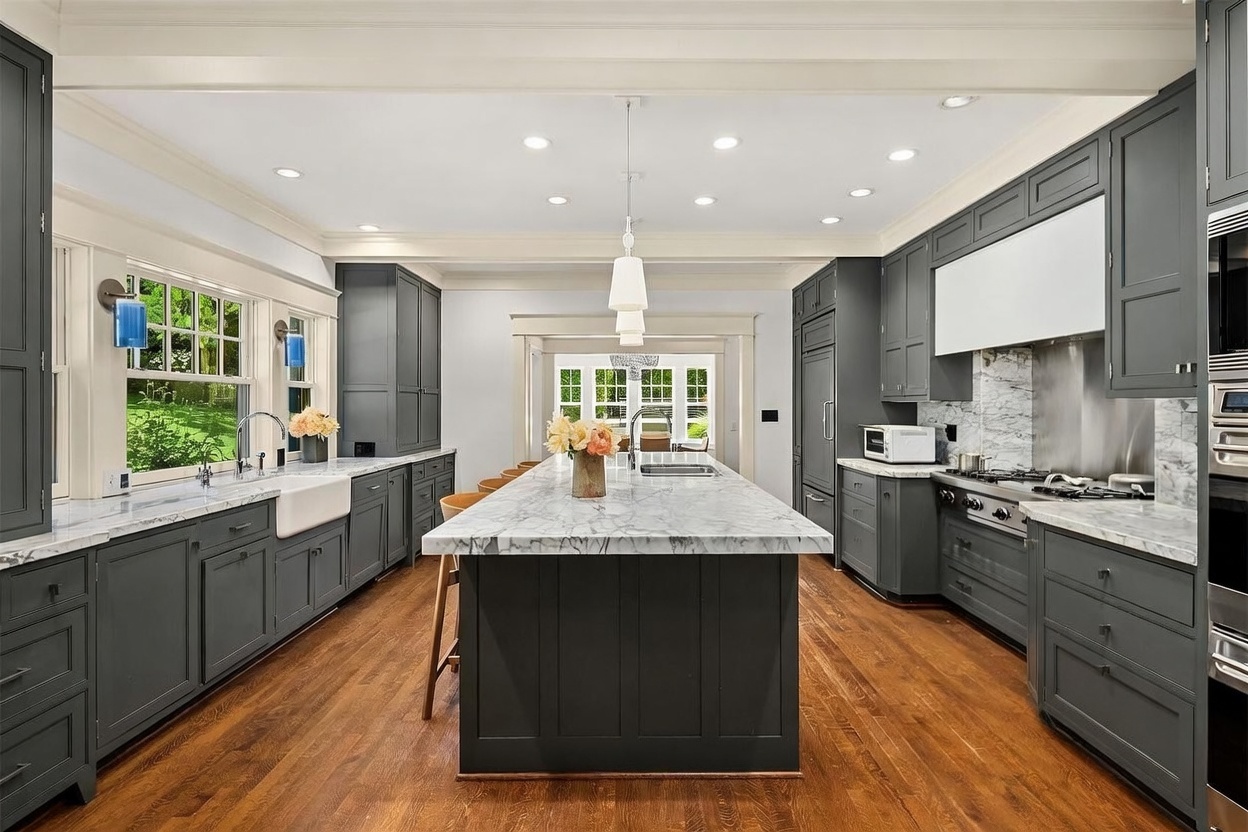
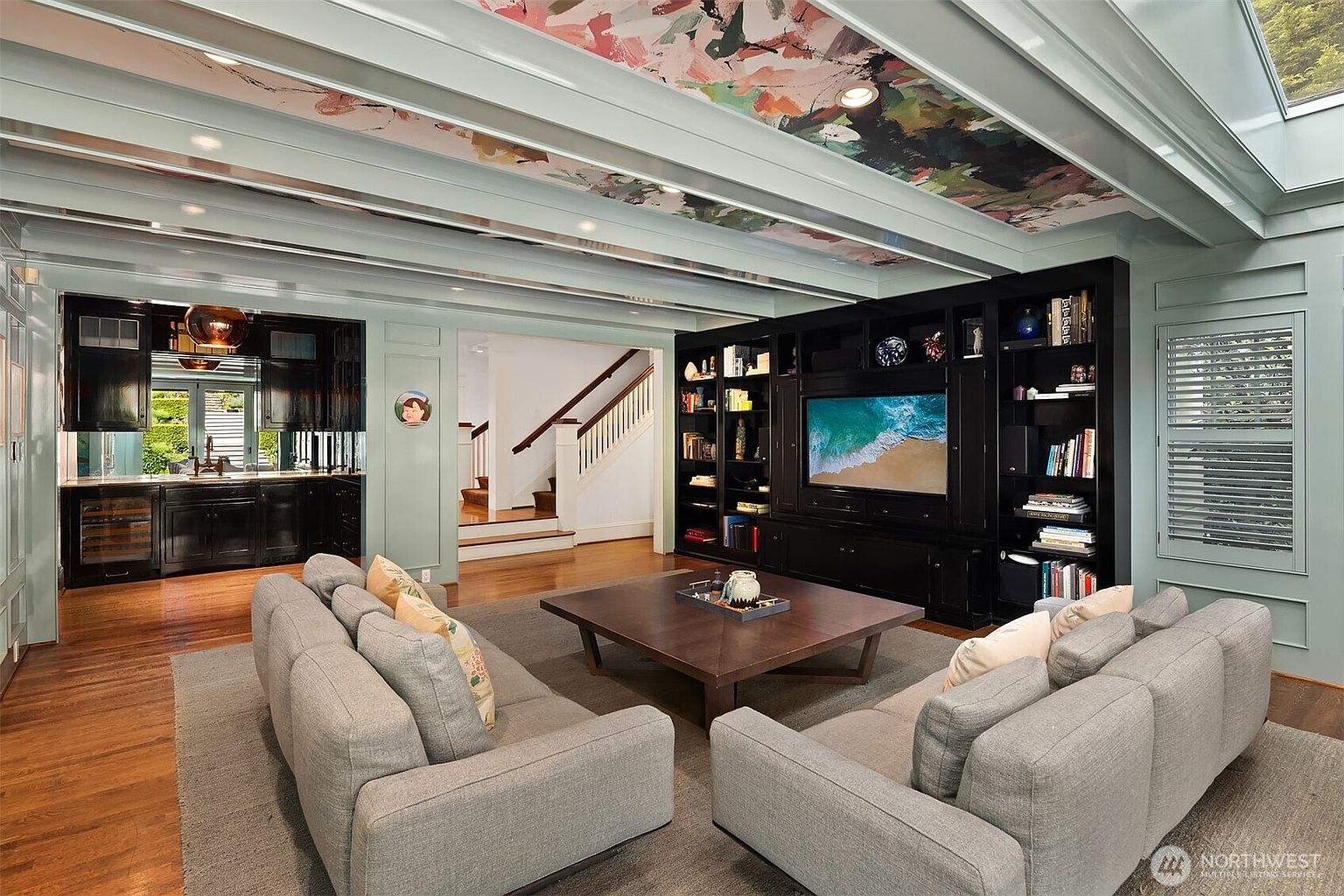
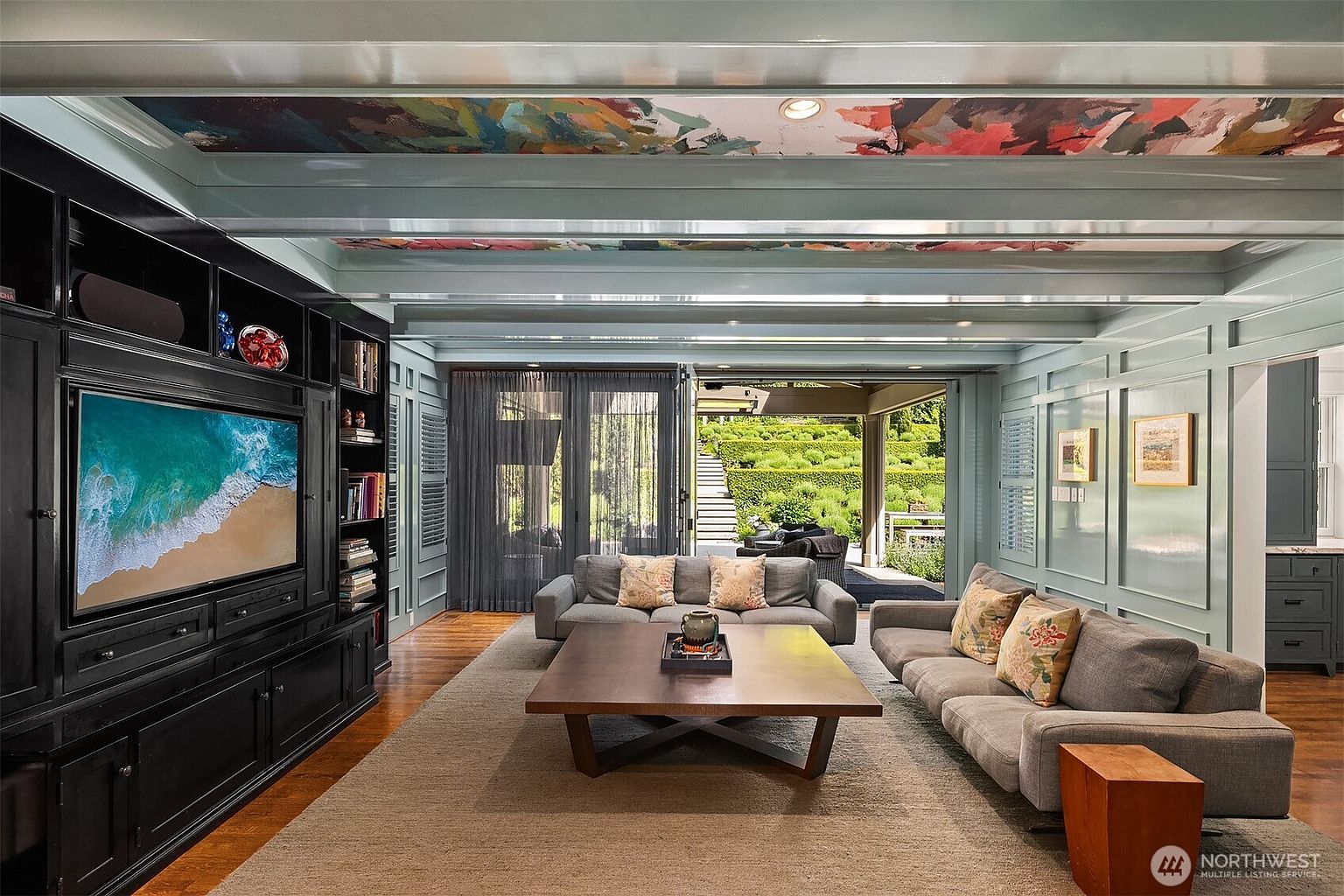
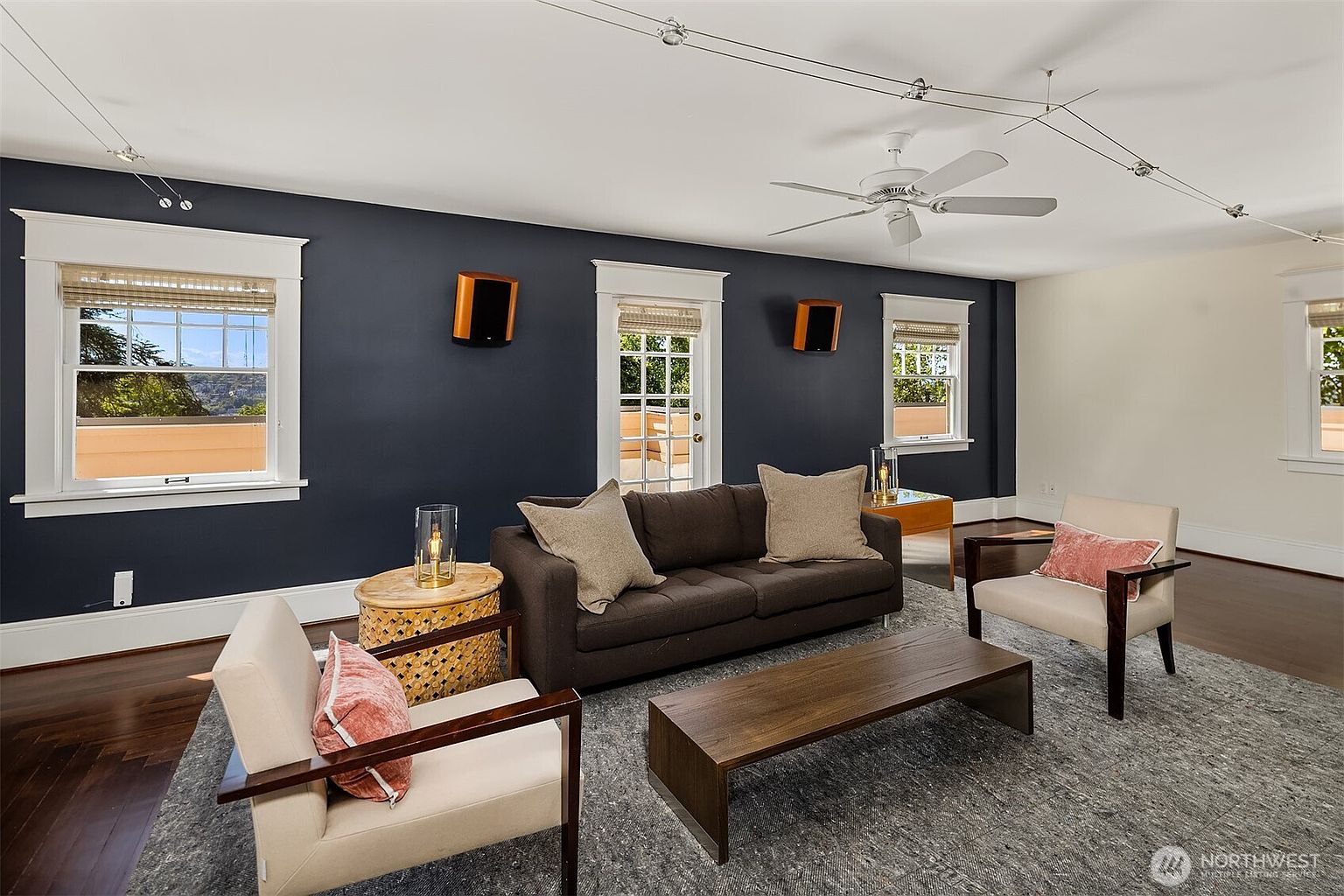
Inside, the bones of a great house have been honored and elevated. Dark wood flooring anchors an entryway that opens into generous living spaces with coffered ceilings, built-in shelving, and fireplaces that serve as natural focal points. Professionally designed lighting systems illuminate gracious walls sized for serious art collections, while wide doorways and open sightlines maintain the sense of unhurried flow that distinguishes homes of this era from their modern counterparts. The kitchen pairs dark cabinetry with light stone countertops and a substantial central island, achieving a balance between the warmth of a family gathering space and the precision of a serious cook's domain.
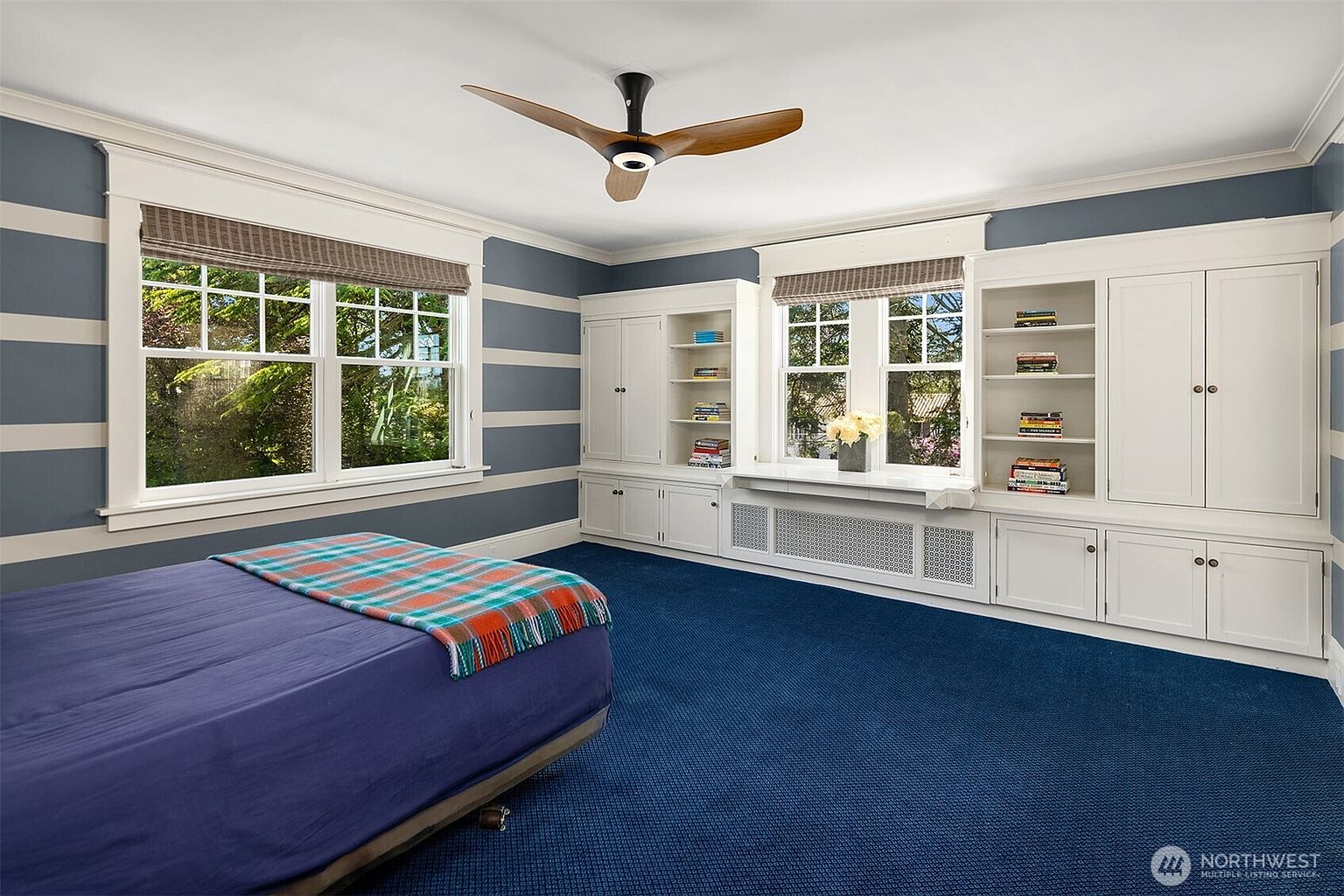
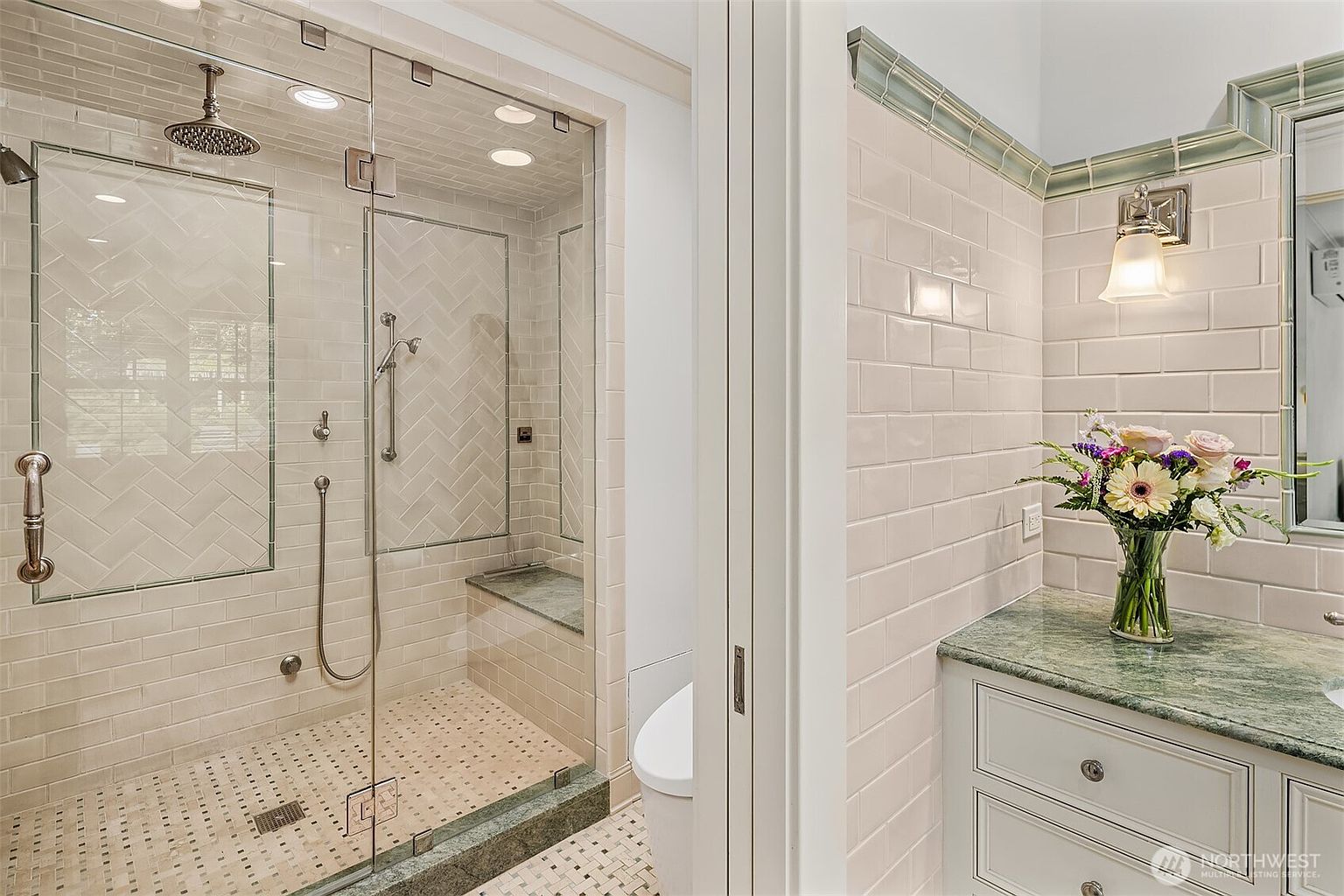
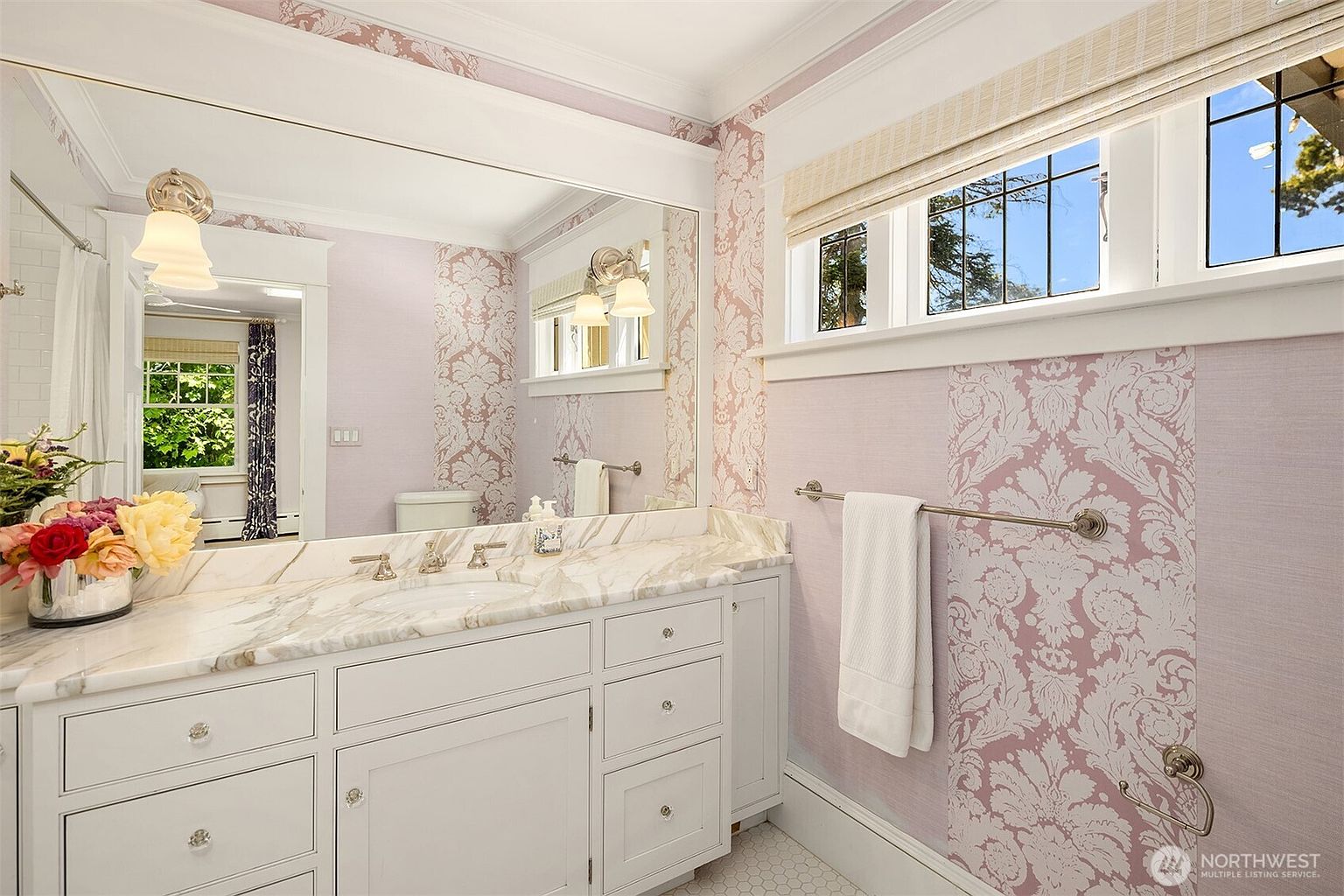
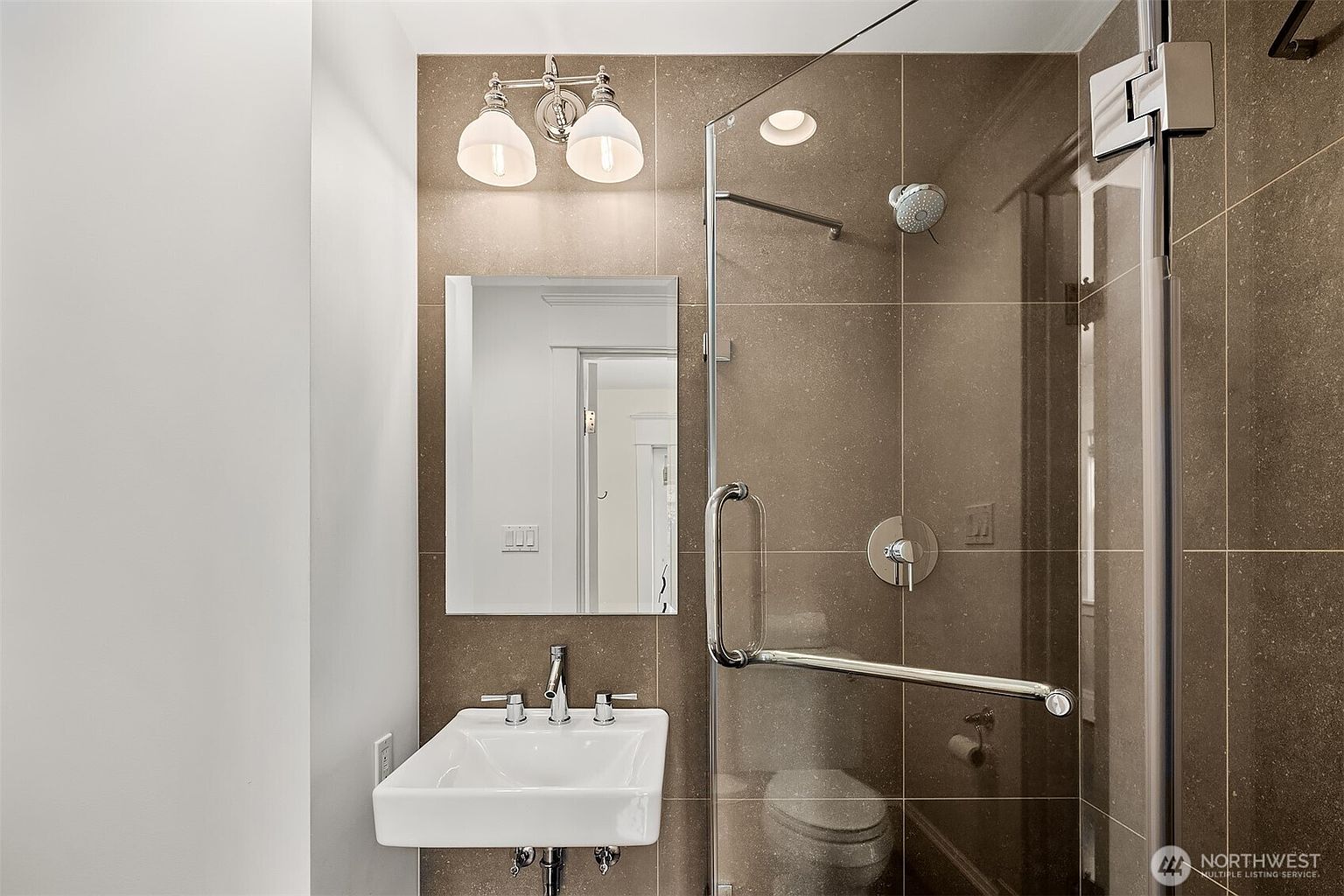
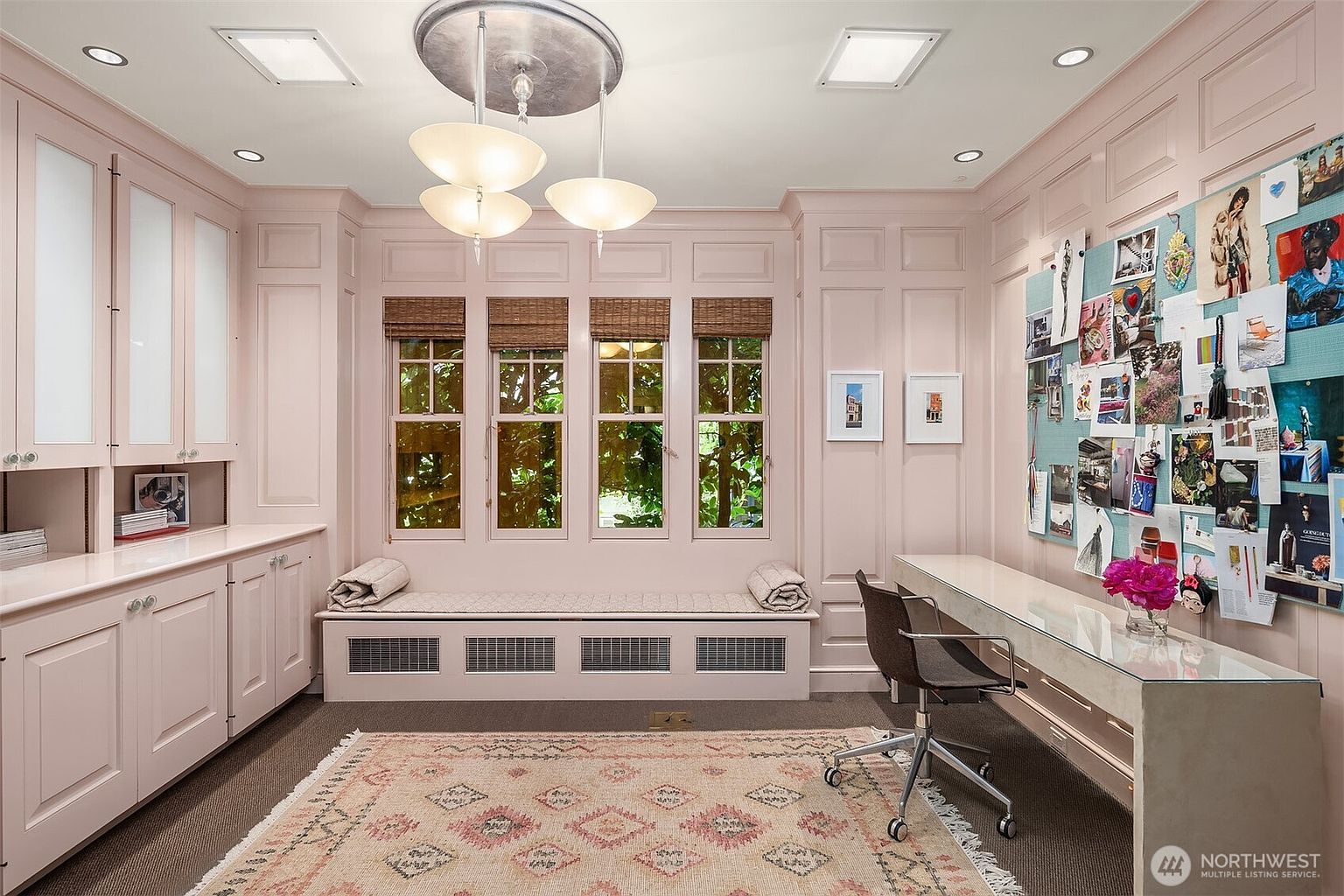
The upper floor is organized around five bedrooms — three en suite, and two sharing a well-appointed bath — including a primary suite with a green stone vanity, dual sinks, a soaking tub positioned beneath a shuttered window, and a glass-enclosed shower with herringbone tilework. The third floor, served by a three-quarter bath, functions with equal ease as a home office, artist's studio, or secluded guest suite. The basement, generous in scale, accommodates a wine cellar, gym, craft space, ample storage, and room for group recreation.
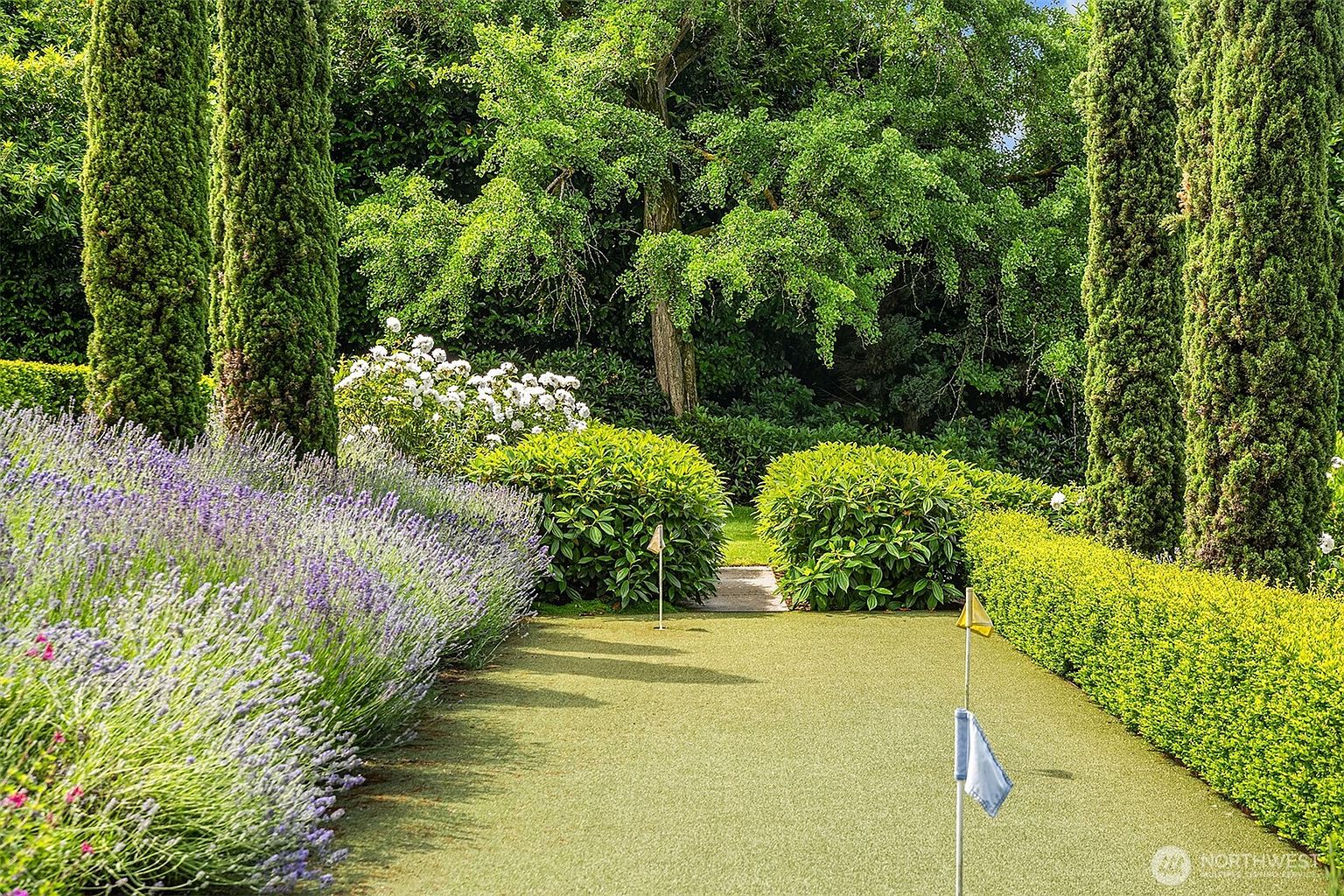
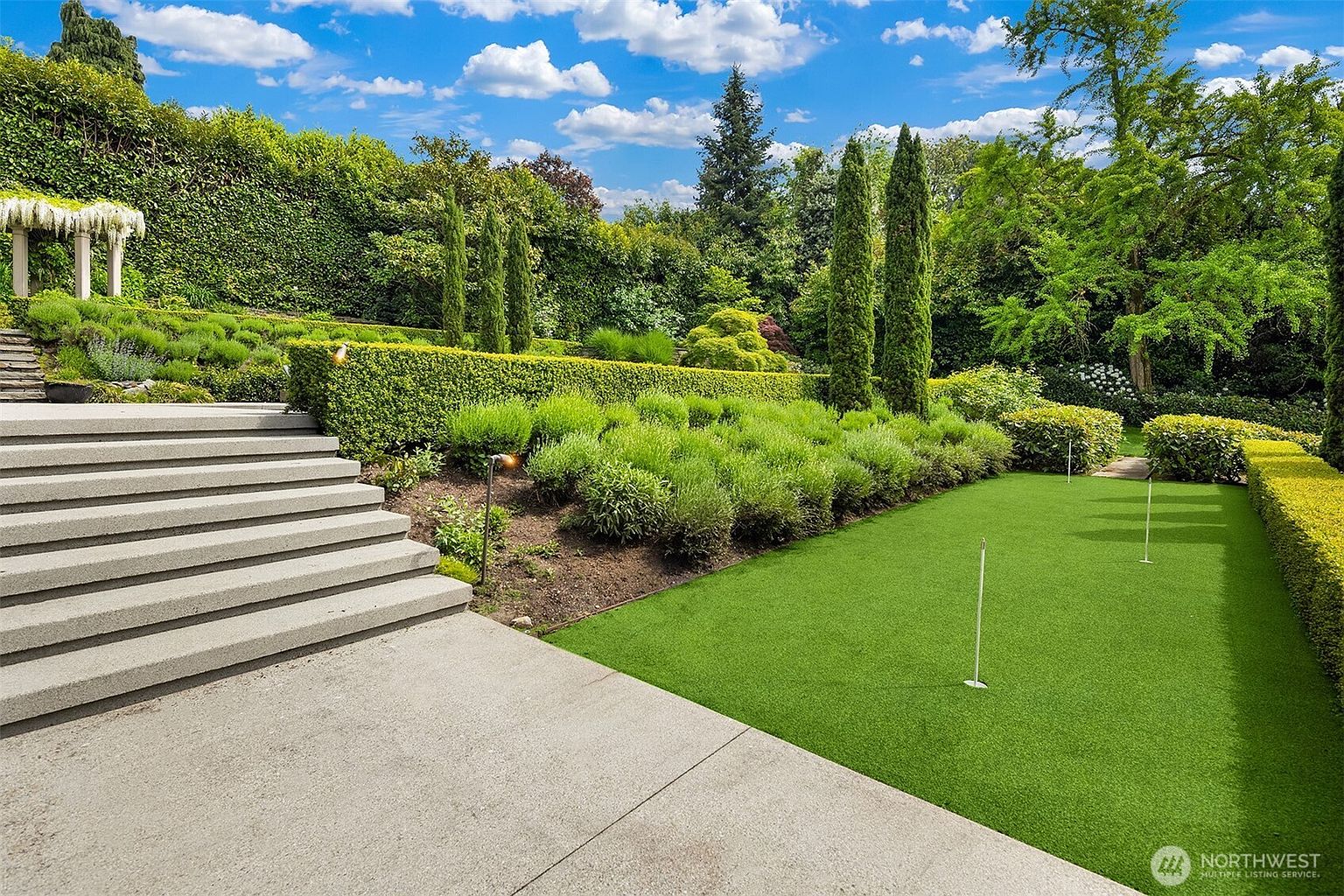
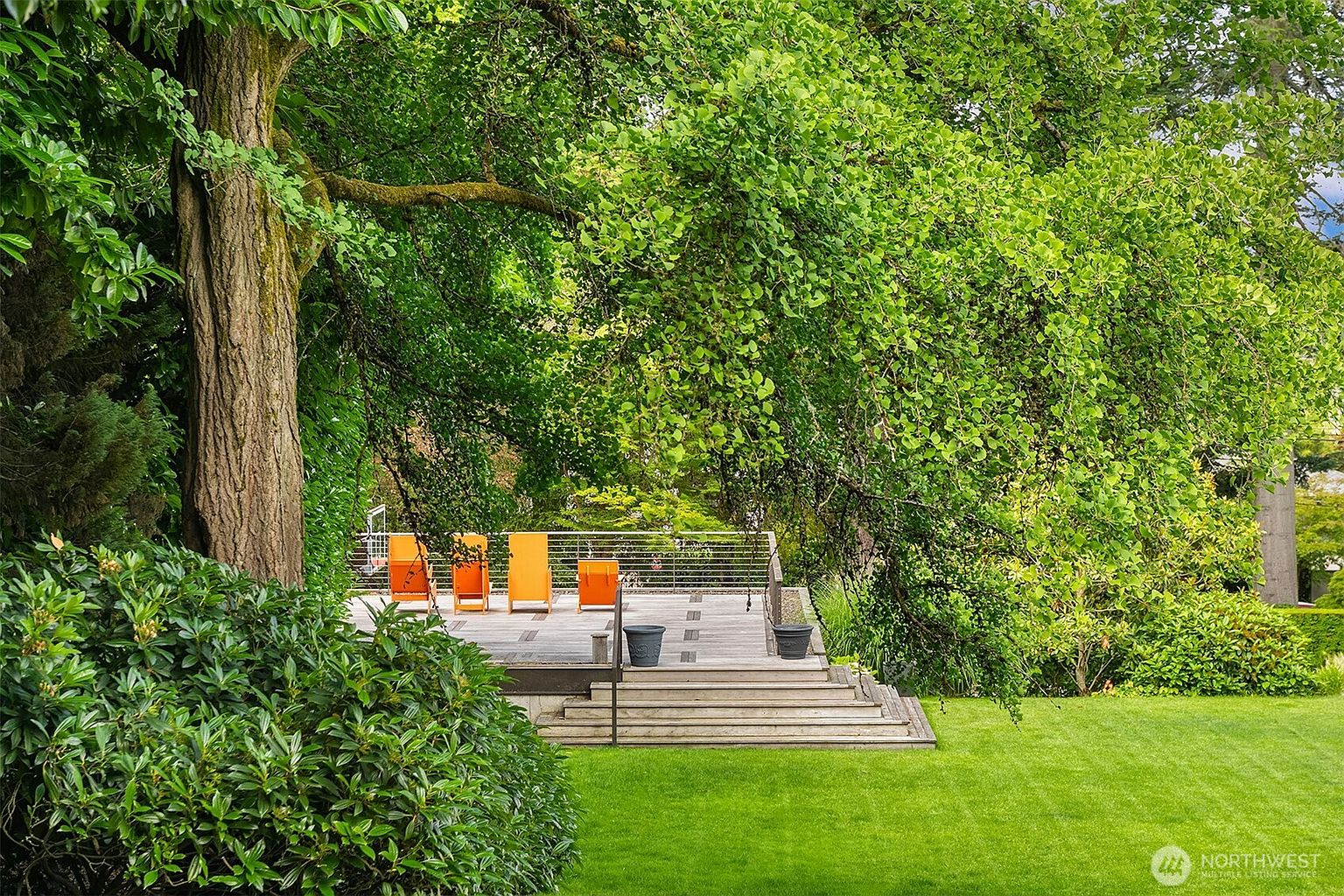
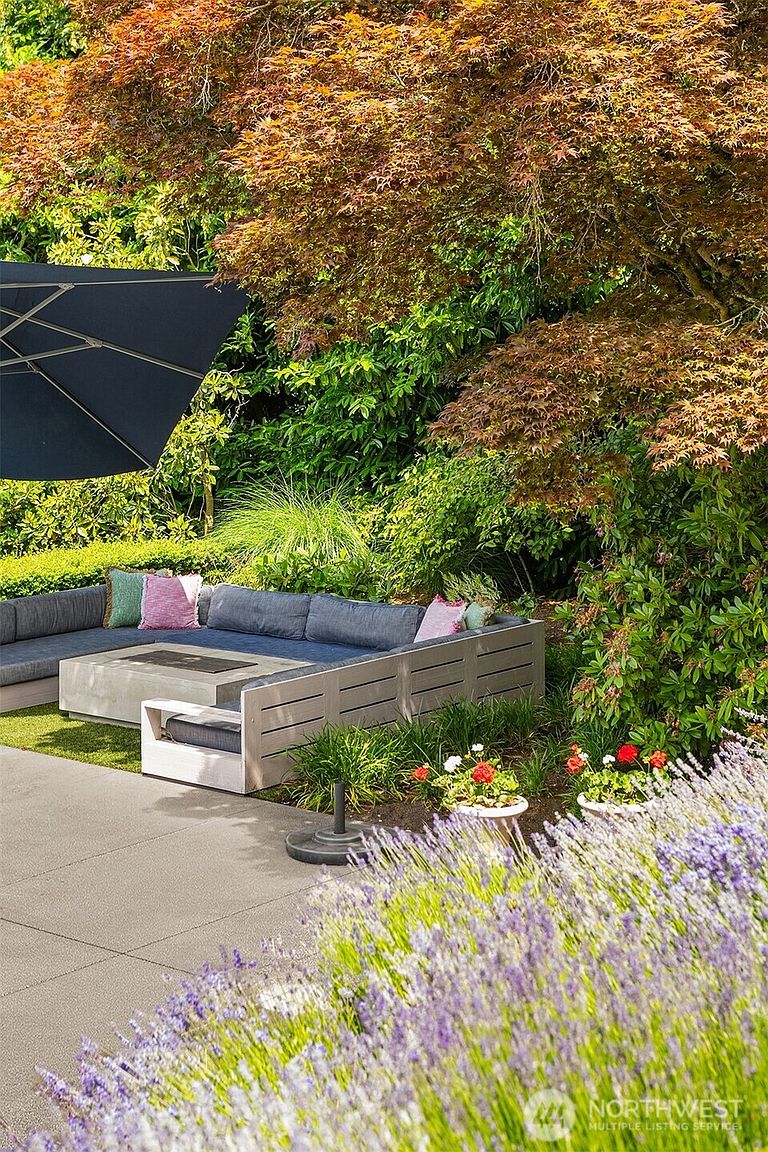
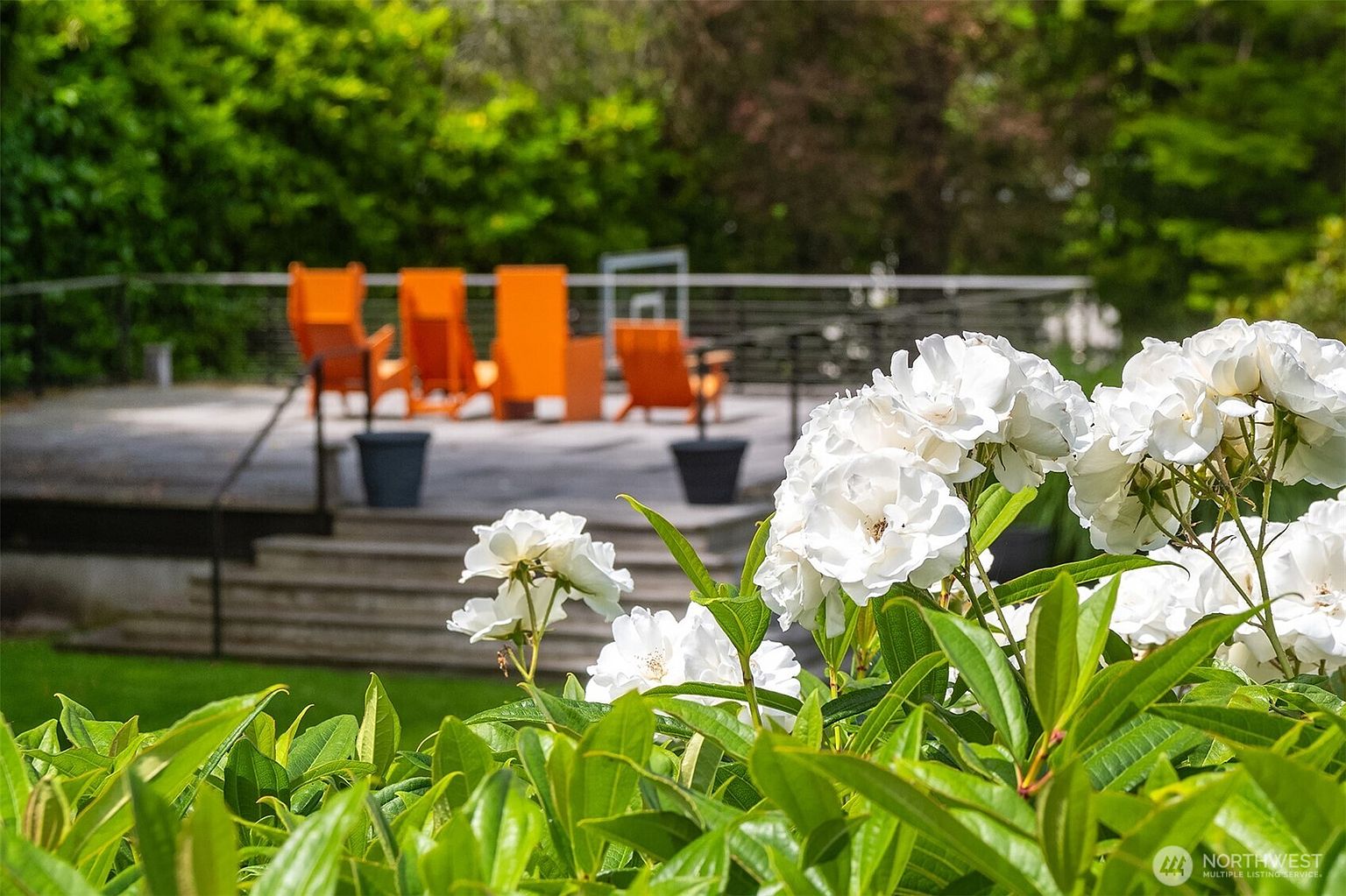
The exterior is where the estate truly transcends category. Across nearly 33,000 square feet spanning multiple lots, landscape architect Randy Allworth has composed a series of outdoor rooms that reward both solitude and celebration. A heated pergola with a stone fireplace anchors a formal terrace suitable for al fresco dining in any season. A putting green bordered by lavender and cypress provides a moment of sporting whimsy. A large rectangular swimming pool with an integrated spa, surrounded by neutral stone decking and shaded by a canopy of mature trees, invites long summer afternoons. A multipurpose sports court — discreetly positioned and generously scaled — serves pickleball, basketball, or whatever the season demands.
Secure garage parking for three vehicles and off-street parking for at least three more complete an estate designed not merely for beauty, but for living. The renovation work by Lockhart Suver has been executed with the restraint and sensitivity that a property of this significance demands — every contemporary convenience absorbed seamlessly into a framework that has stood, and will continue to stand, the test of time.
Federal Avenue East occupies a singular position in Seattle's residential geography — a tree-lined corridor in the Capitol Hill neighborhood that has long attracted the city's most discerning homeowners. The street derives much of its character and cachet from its immediate adjacency to Volunteer Park, the 48-acre public green space designed in the early twentieth century by the Olmsted Brothers, the same firm responsible for New York's Central Park and dozens of America's most celebrated urban landscapes. To live on Federal Avenue East is, in a very real sense, to live on the edge of a park that was designed to endure for centuries.
Volunteer Park itself is a destination of considerable cultural weight. It is home to the Seattle Asian Art Museum, housed in a landmark 1933 Art Deco building that underwent a significant renovation and reopened in 2020 with a refreshed collection spanning thousands of years of Asian artistic tradition. The park also features the historic Volunteer Park Conservatory, a Victorian-era greenhouse built in 1912 that maintains a year-round collection of tropical and exotic plants. The park's water tower, a civic landmark, offers panoramic views of the Seattle skyline, Lake Union, and the Olympic and Cascade mountain ranges — the same views that residents of Federal Avenue East enjoy from within the privacy of their own homes.
Capitol Hill, the broader neighborhood in which Federal Avenue East sits, is one of Seattle's most vibrant and historically layered communities. Originally developed in the late nineteenth and early twentieth centuries as a streetcar suburb for the city's professional class, it retains an extraordinary density of Craftsman bungalows, Tudor Revivals, and Colonial Revival mansions that speak to its origins. The neighborhood's elevated position — Capitol Hill sits on one of Seattle's many glacially formed ridges — provides the sweeping lake and mountain views that have made it perennially desirable.
The practical amenities of Capitol Hill are equally compelling. Pike/Pine, the neighborhood's main commercial corridor, is lined with acclaimed independent restaurants, wine bars, coffee roasters, and cultural institutions. The Broadway corridor offers everyday retail alongside farmers markets and community gathering spaces. The Seattle Central College campus brings a lively intellectual energy to the neighborhood, while proximity to First Hill and the greater downtown core ensures that the city's hospitals, cultural venues, and business centers are all within a short distance.
For those who value access to Seattle's natural landscape, the location is equally strategic. The Burke-Gilman Trail, connecting Seattle's waterfront neighborhoods across miles of dedicated path, is accessible nearby. The shores of Lake Union, with its seaplane activity, kayak rentals, and waterfront restaurants, sit within easy reach. And Seattle's extensive network of parks, including Interlaken Park's wooded ravine just to the north, offers quiet trails and forested solitude within walking distance of the front door.
This is a neighborhood that has never needed to reinvent itself — because it was built right the first time.
Featured Highlights
Curated Content • Presented by Toby Lumpkin