The Story Behind
A Grand 1803 Estate on Cambridge's Most Celebrated Street
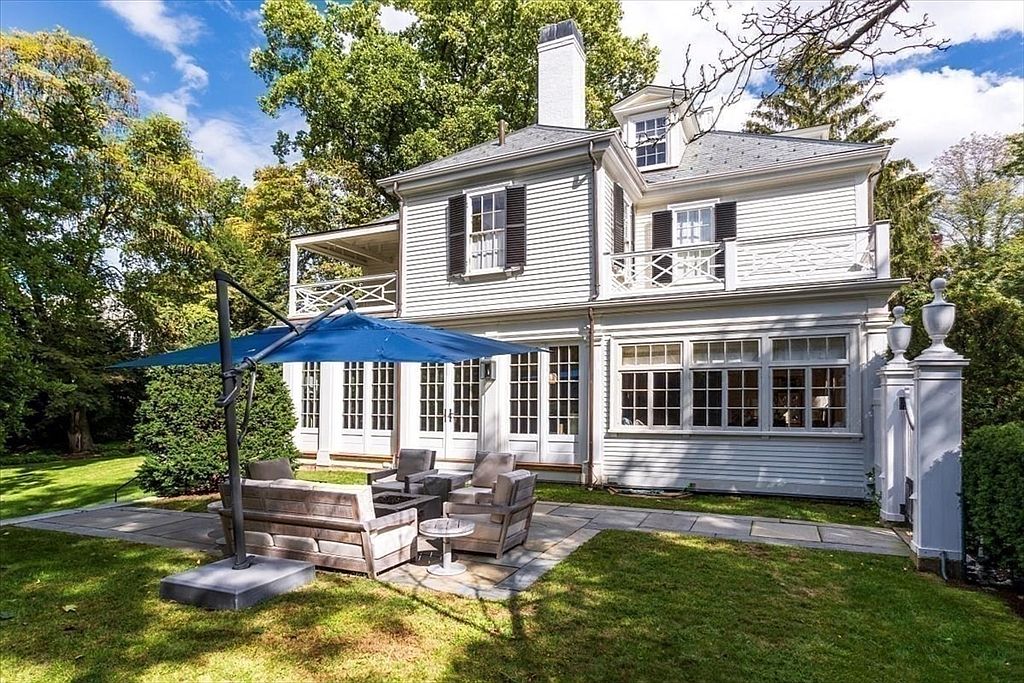
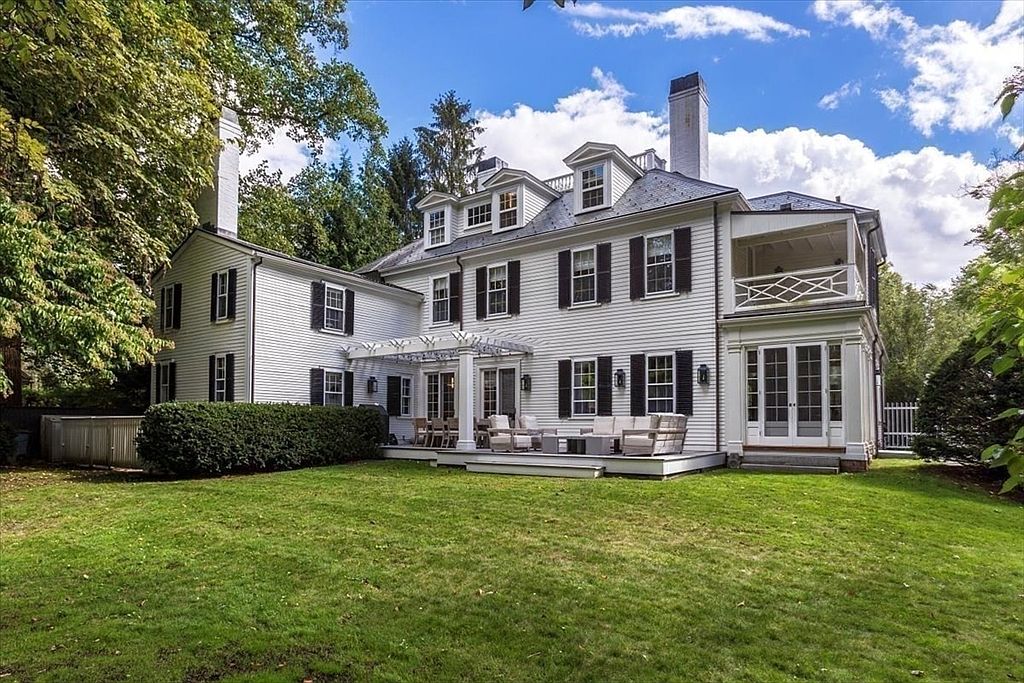
There are homes that have simply survived the passage of time, and then there are homes that have been entrusted to it — properties whose bones were strong enough to endure, and whose custodians were thoughtful enough to honor what they inherited. 153 Brattle Street belongs emphatically to the latter category. Originally constructed circa 1803, this grand center-entrance Colonial stands as a testament to what becomes possible when historical reverence meets uncompromising modern craft.
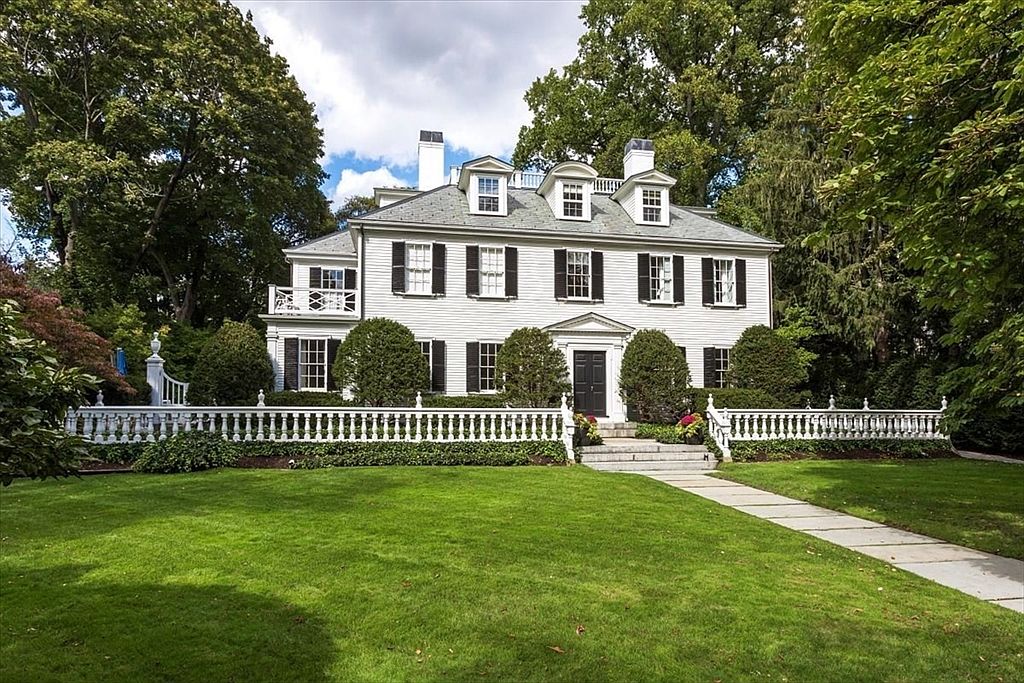
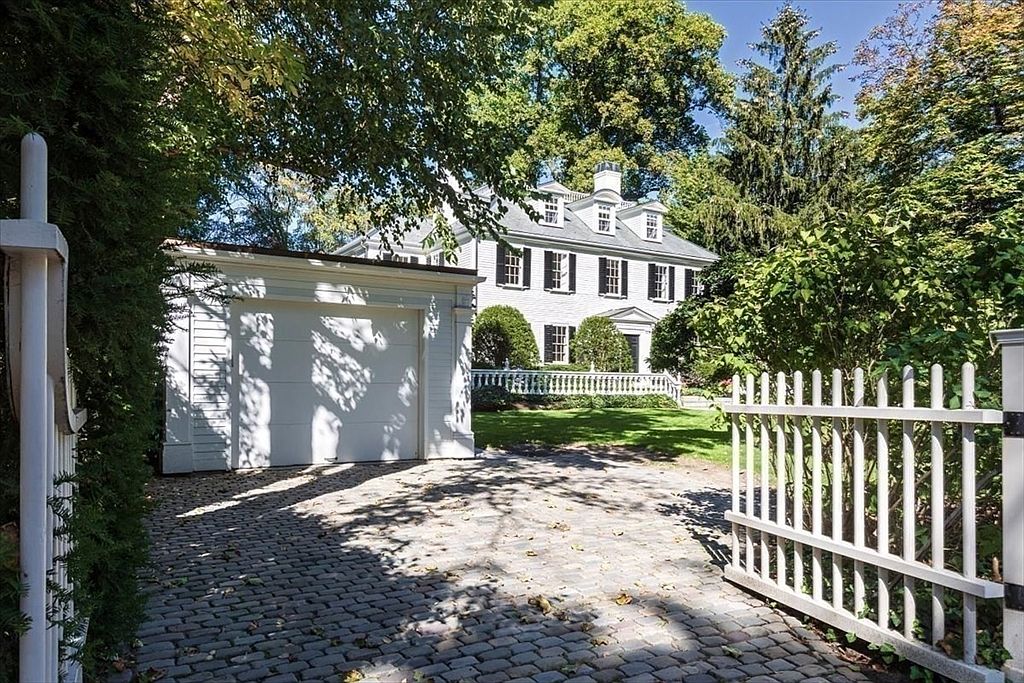
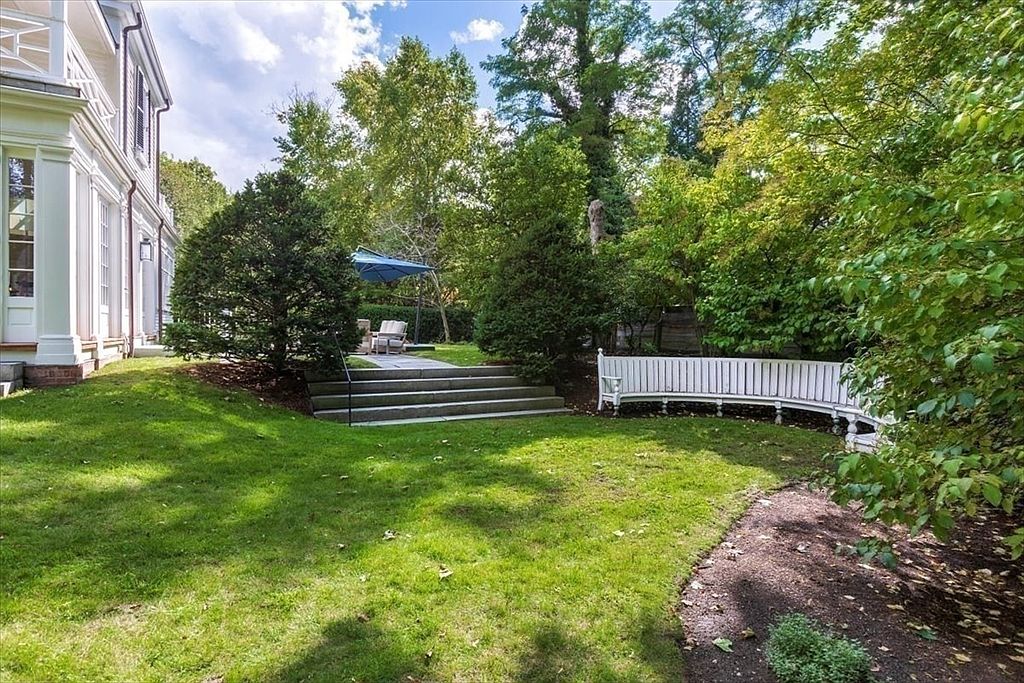
The approach alone announces the property's singular character. Set behind an elegant white fence with antique walkways and a restored balustrade, the home presents a symmetrical facade — dormer windows crowning the roofline, dark shutters framing each opening — that speaks the precise architectural language of Federal-period New England. The cobblestone drive and manicured grounds, framed by mature trees that have witnessed generations of Cambridge life, establish a sense of arrival that few properties in any city can replicate.
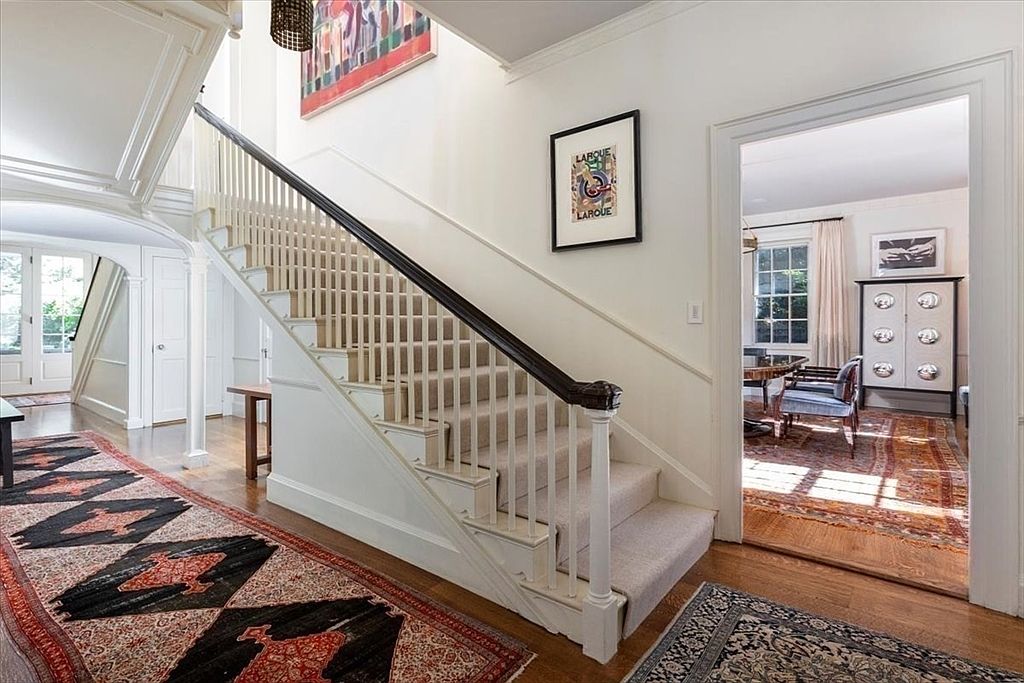
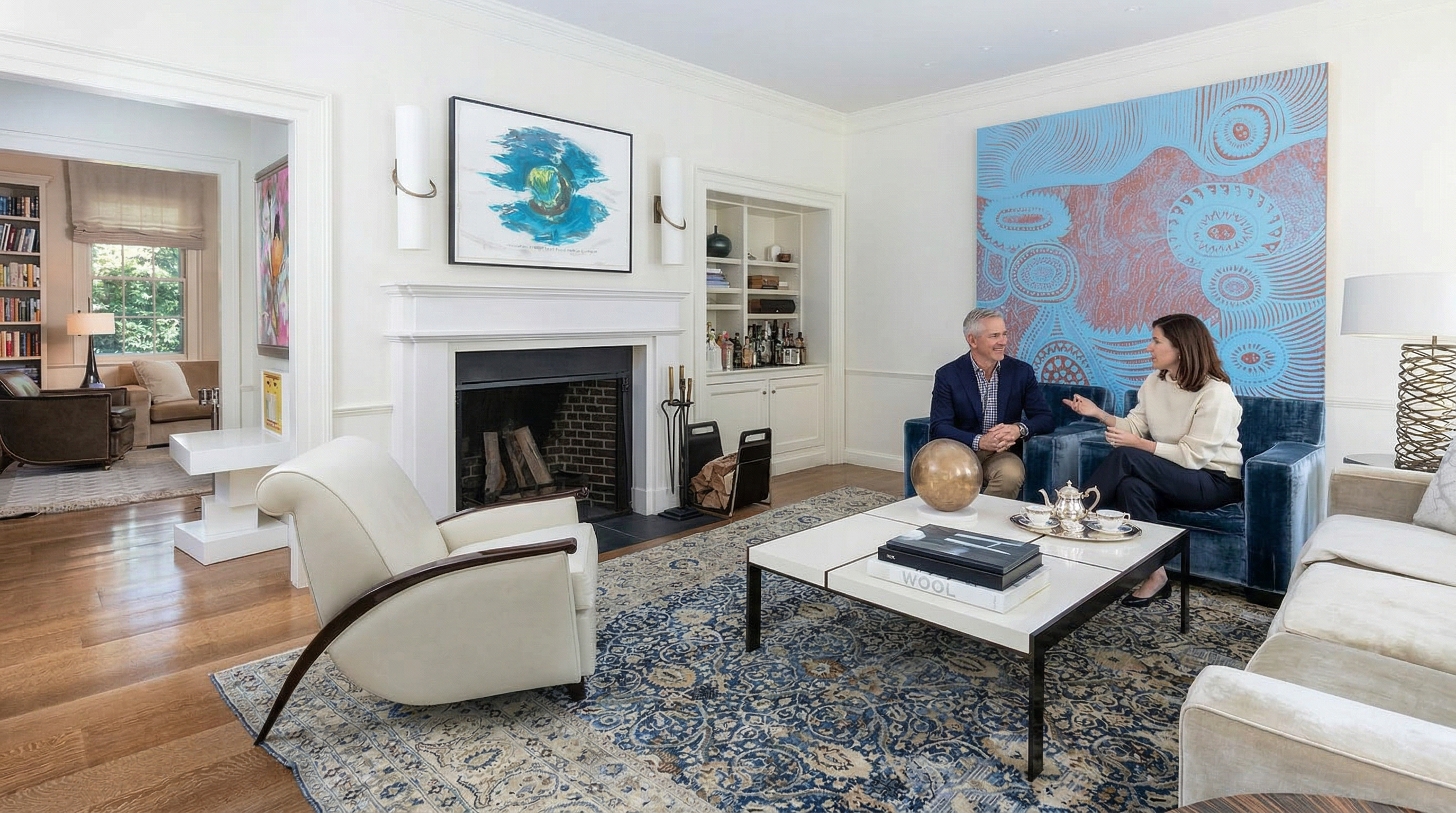
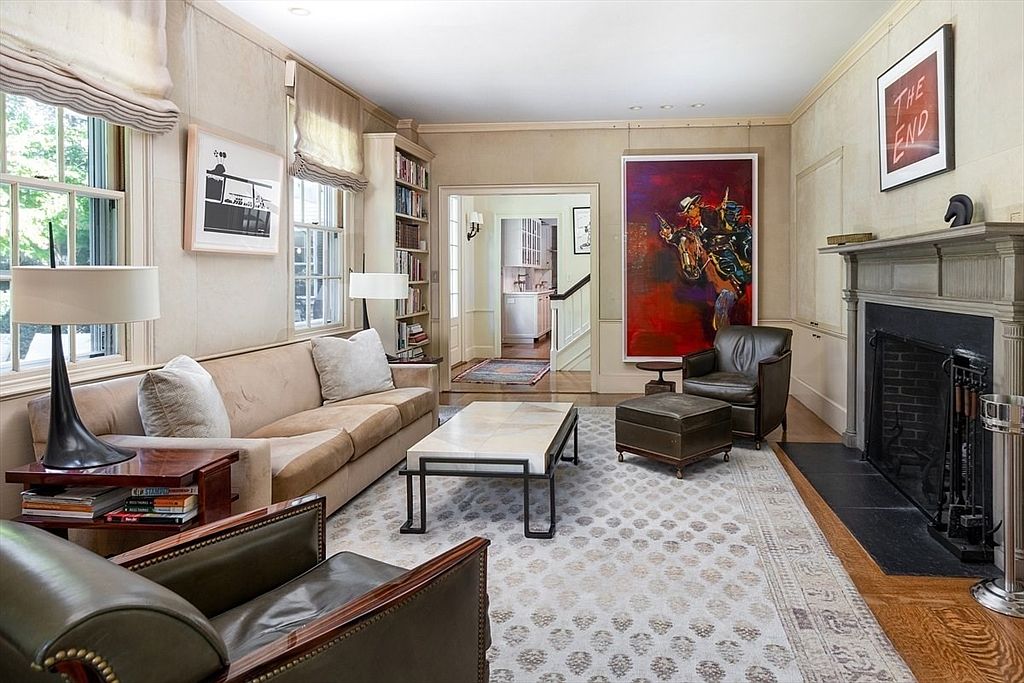
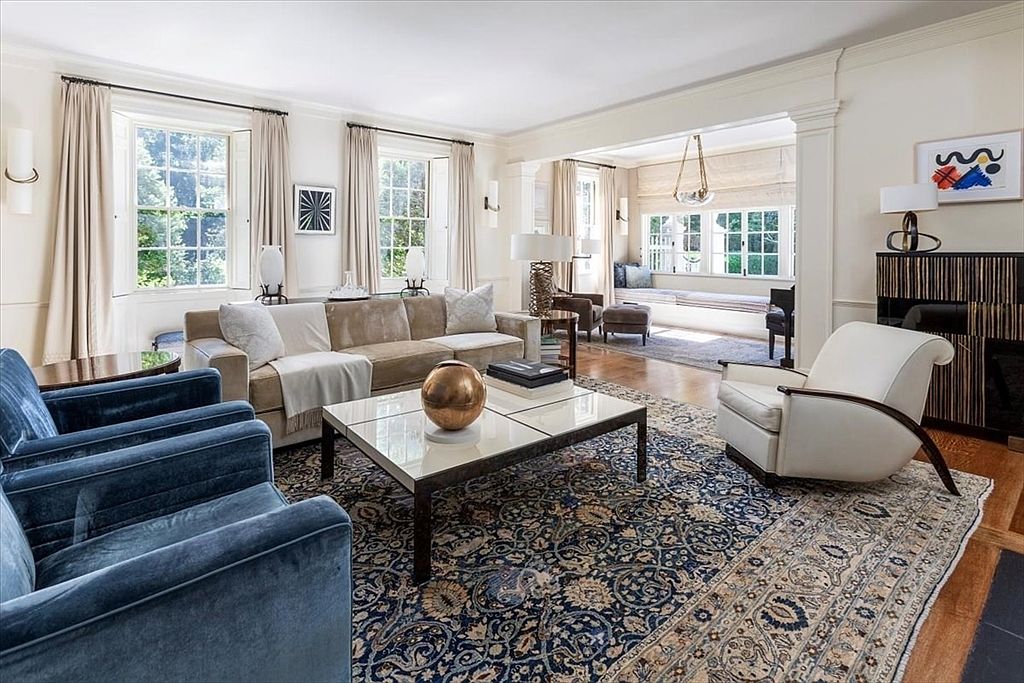
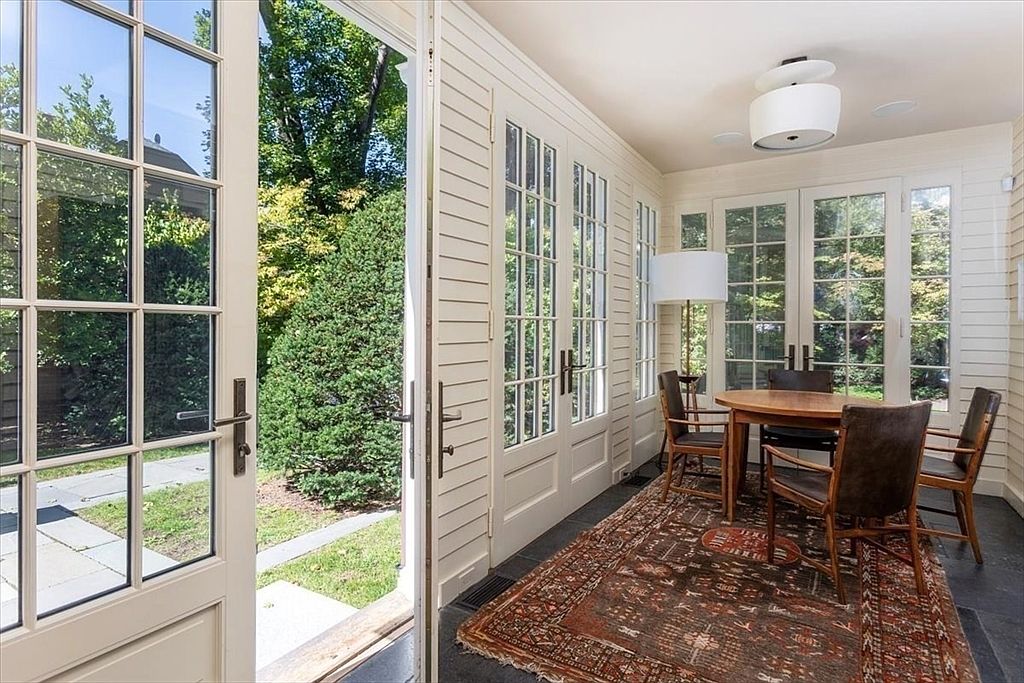
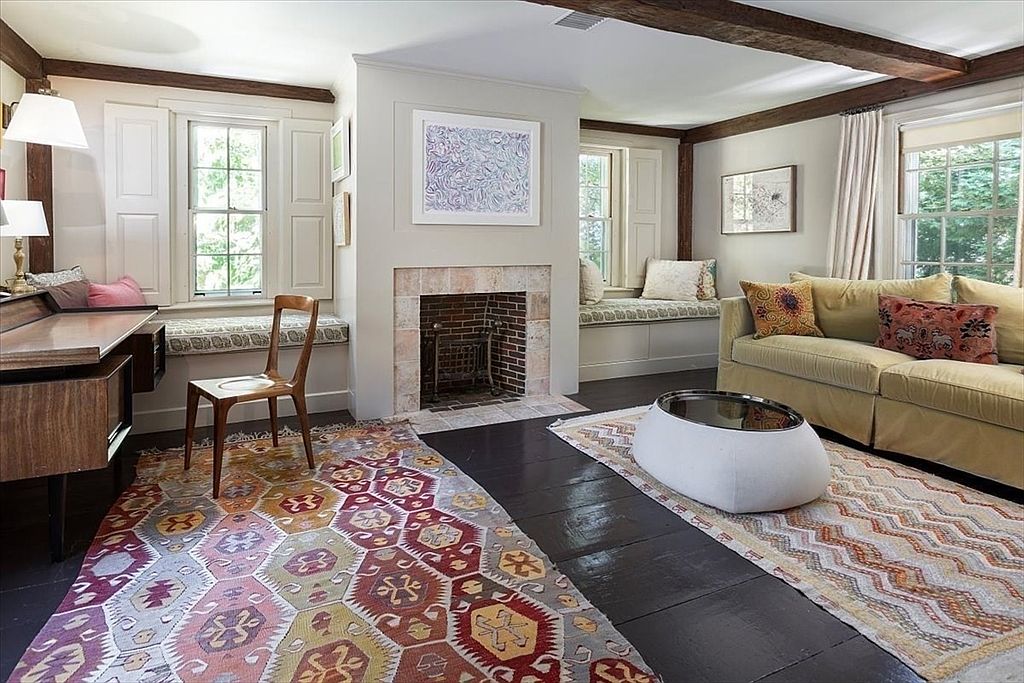
Step through the formal entry and the home reveals its carefully layered story. The foyer greets you with a graceful staircase, restored period details, and hardwood floors that carry both age and warmth in equal measure. Natural light moves generously through the main level, where the large living room anchors daily life with a wood-burning fireplace, custom built-ins, and windows that draw the eye across the front and side yards. The room manages the rare achievement of feeling both grand in scale and genuinely livable in character.
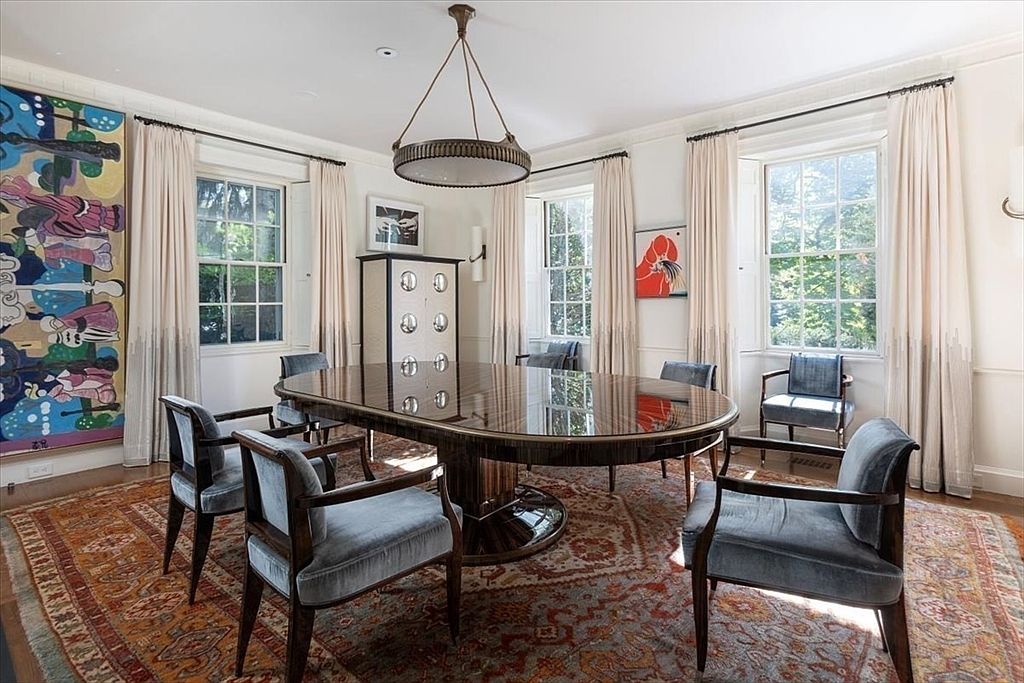
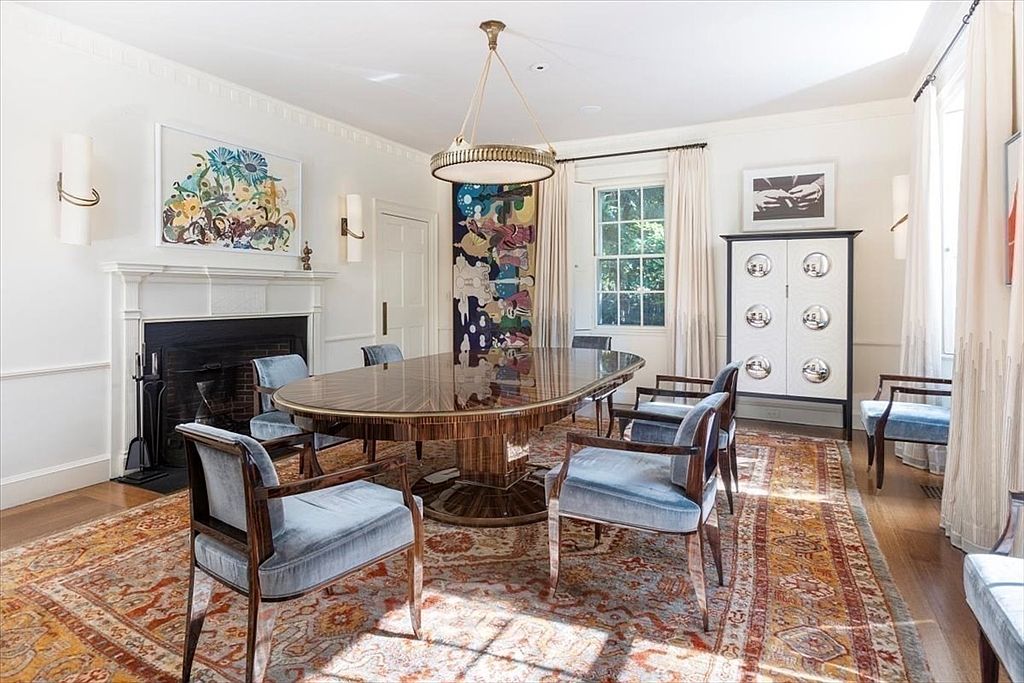
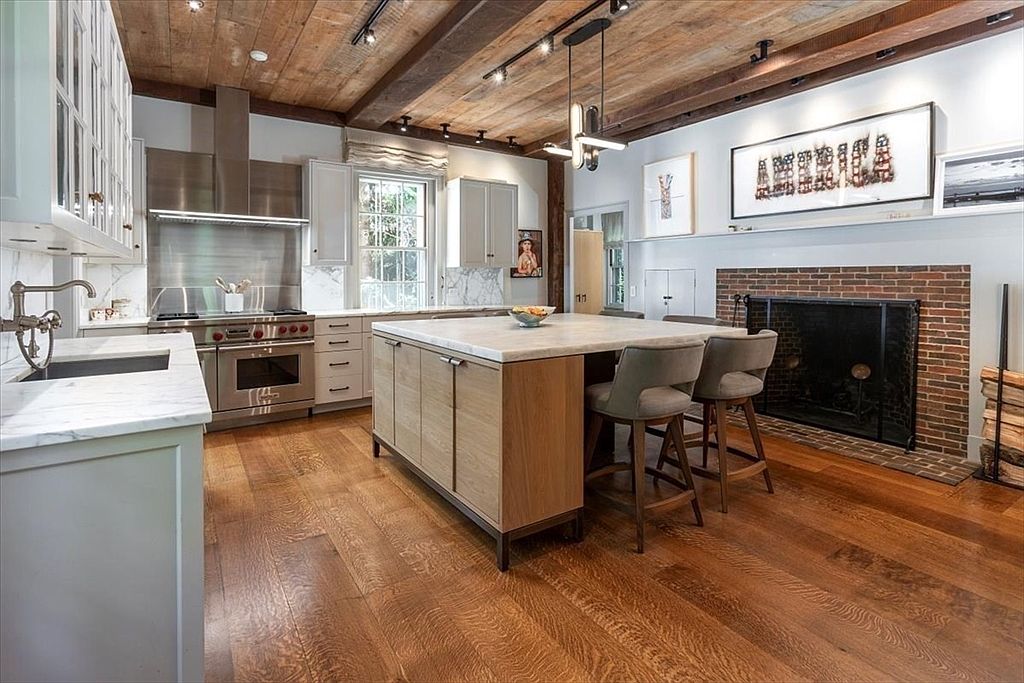
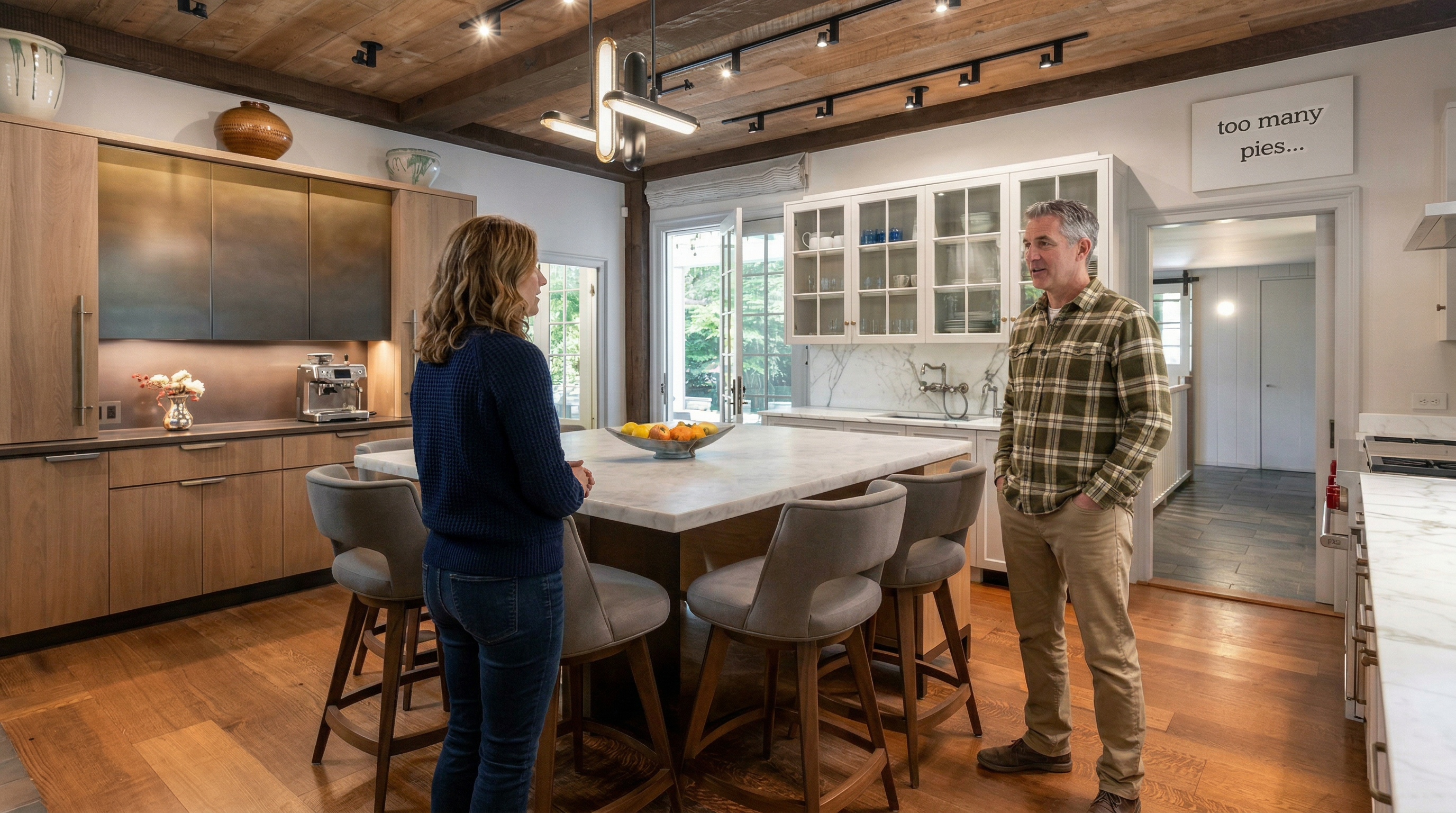
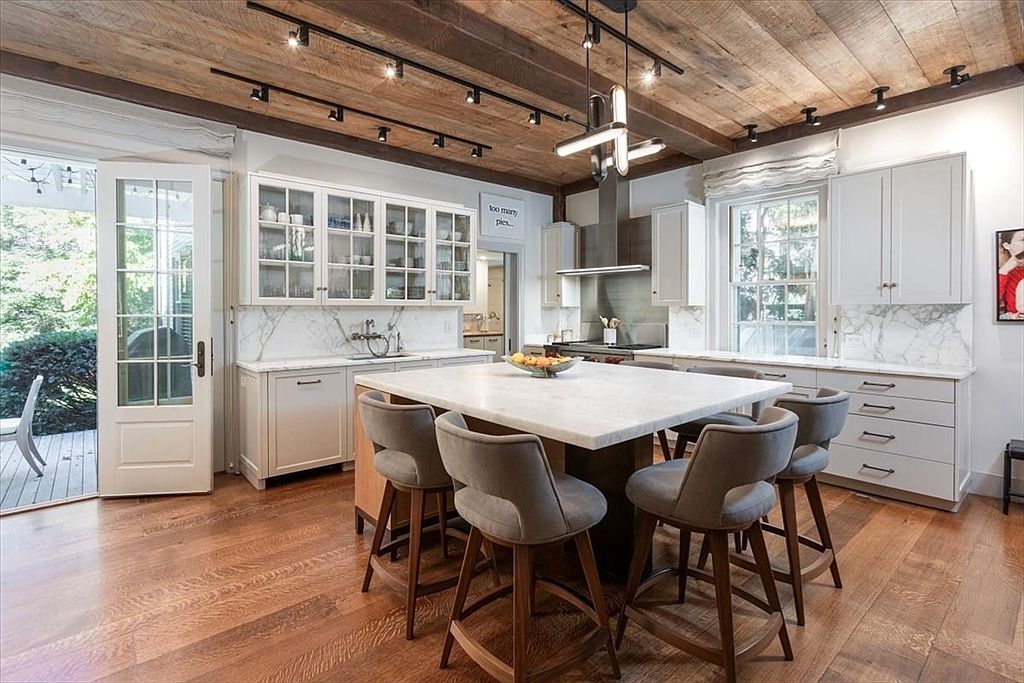
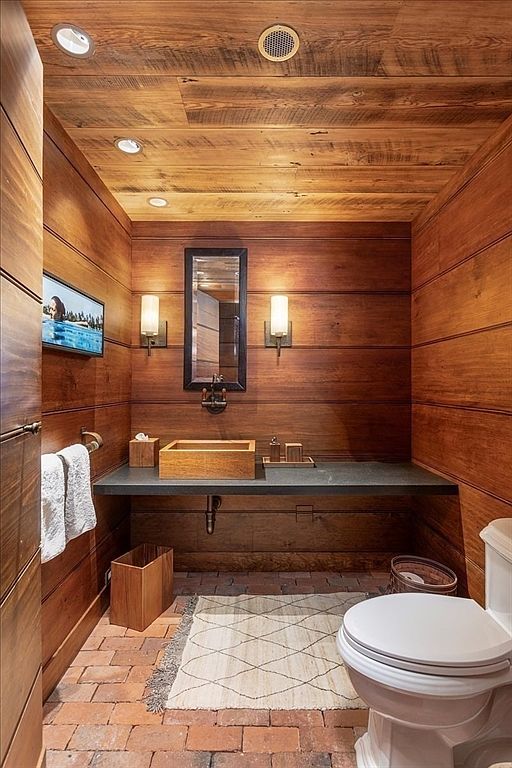
The formal dining room, connected to the kitchen through a properly appointed butler's door and warmed by its own fireplace, possesses the proportions of a room designed for serious entertaining — a banquet-sized space that rewards a well-set table and good company. The eat-in kitchen delivers with equal conviction: top-of-the-line appliances, a generous center island, two pantries, and a mudroom entry that speaks to the practical intelligence built into the renovation. The warmth of the reclaimed wood ceiling and exposed beams anchors the kitchen's rustic-modern sensibility, while the marble countertops and refined cabinetry ensure nothing feels sacrificed for the sake of charm.
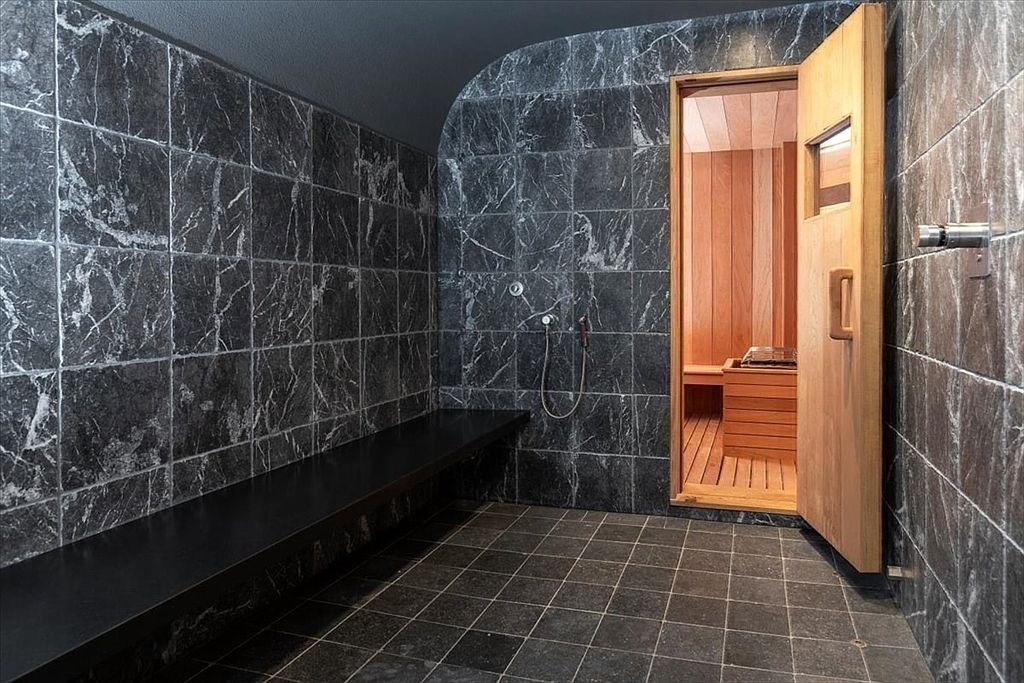
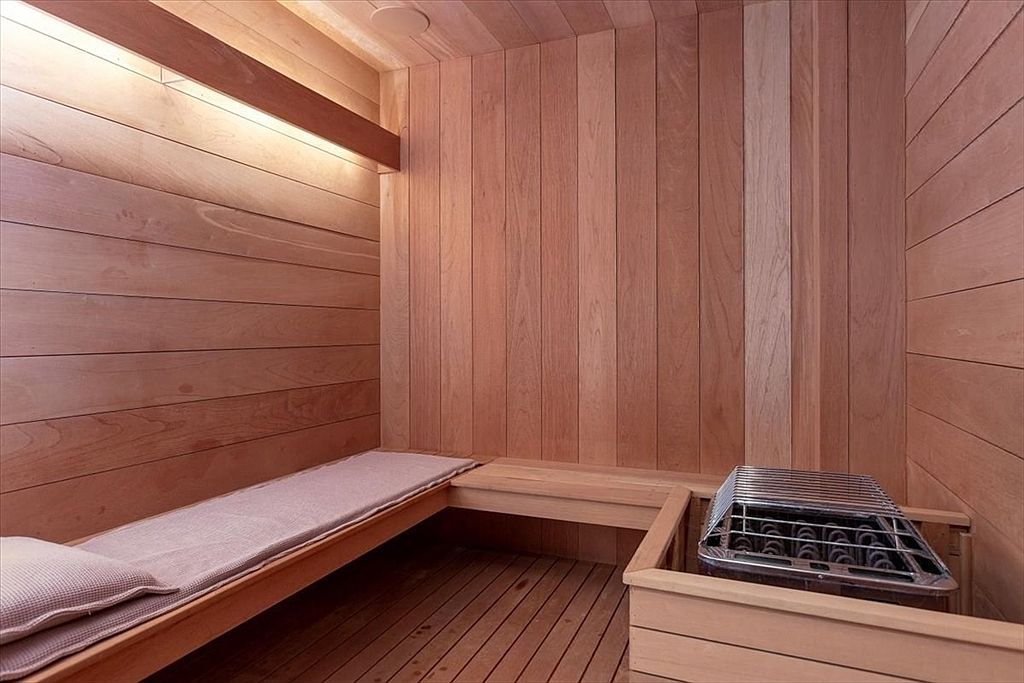
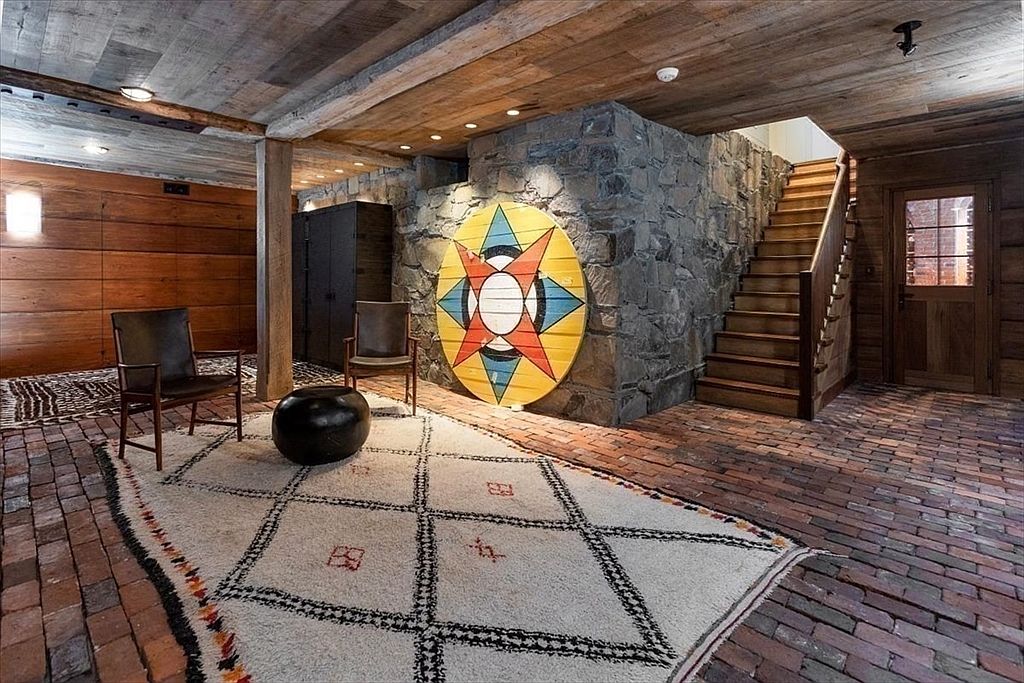
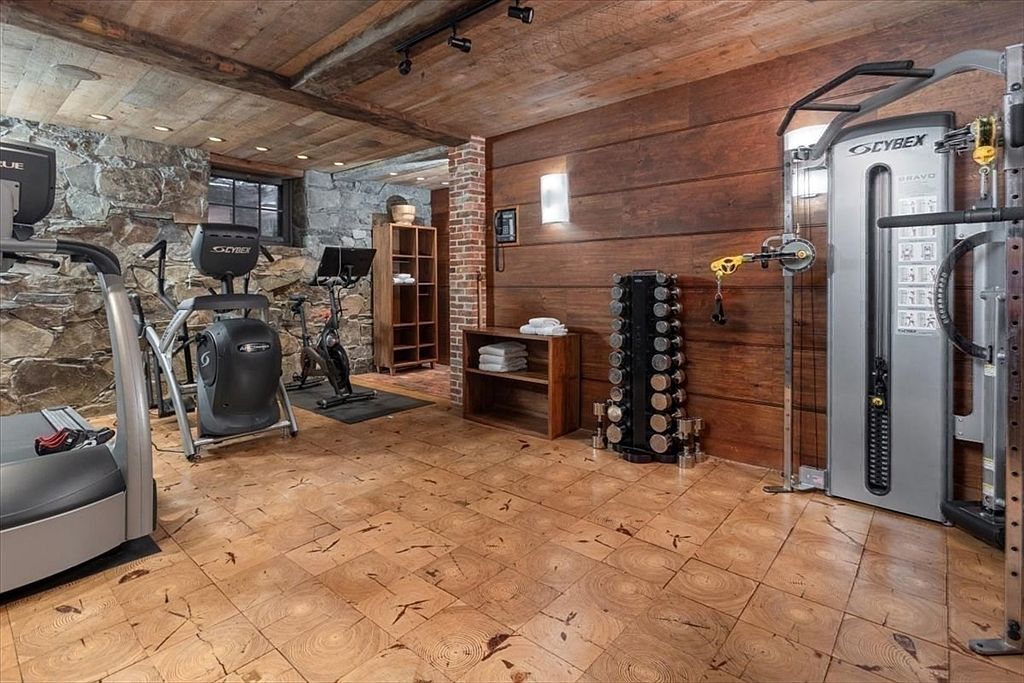
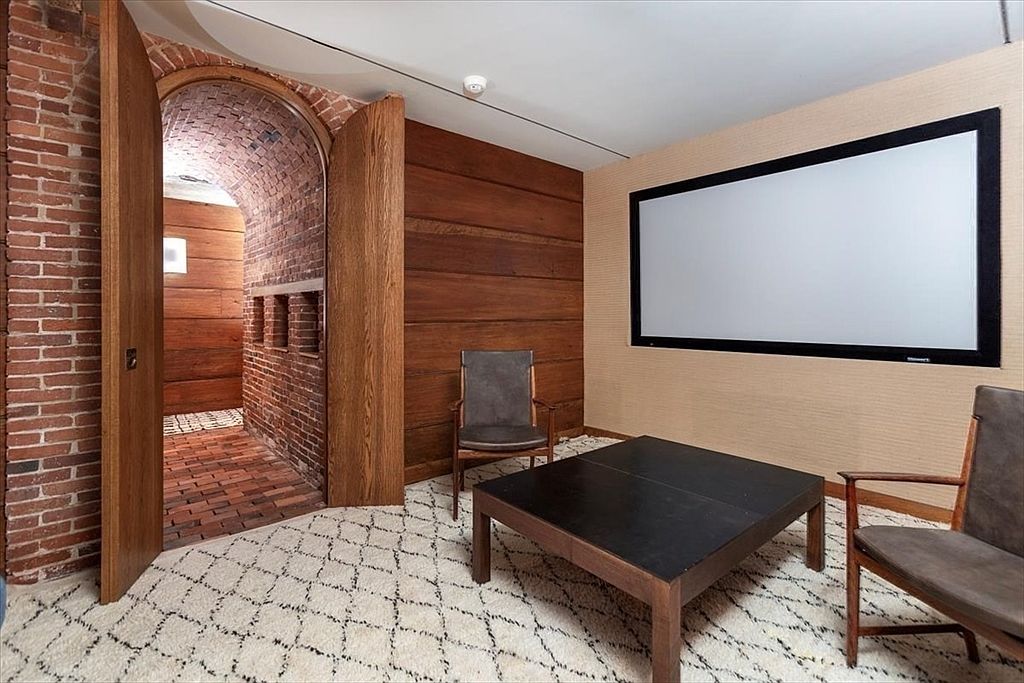
Perhaps nowhere does the restoration reveal its full ambition more completely than below grade. The lower level has been transformed into a wellness and entertainment destination of genuine distinction — a home gym equipped with professional-grade machines, a media room with the atmosphere of a private screening room, a steam shower, a sauna lined in warm cedar, and a two-level wine storage system that would satisfy any serious collector. These are not amenities assembled as afterthoughts; they are spaces conceived and executed with the same intentionality that defines every room above them.
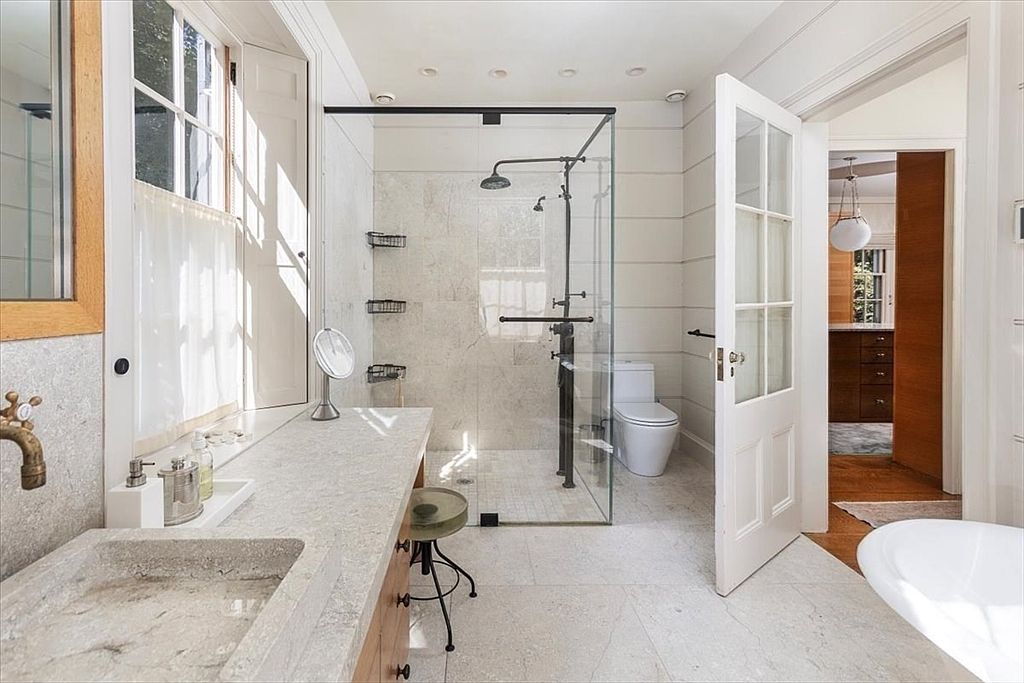
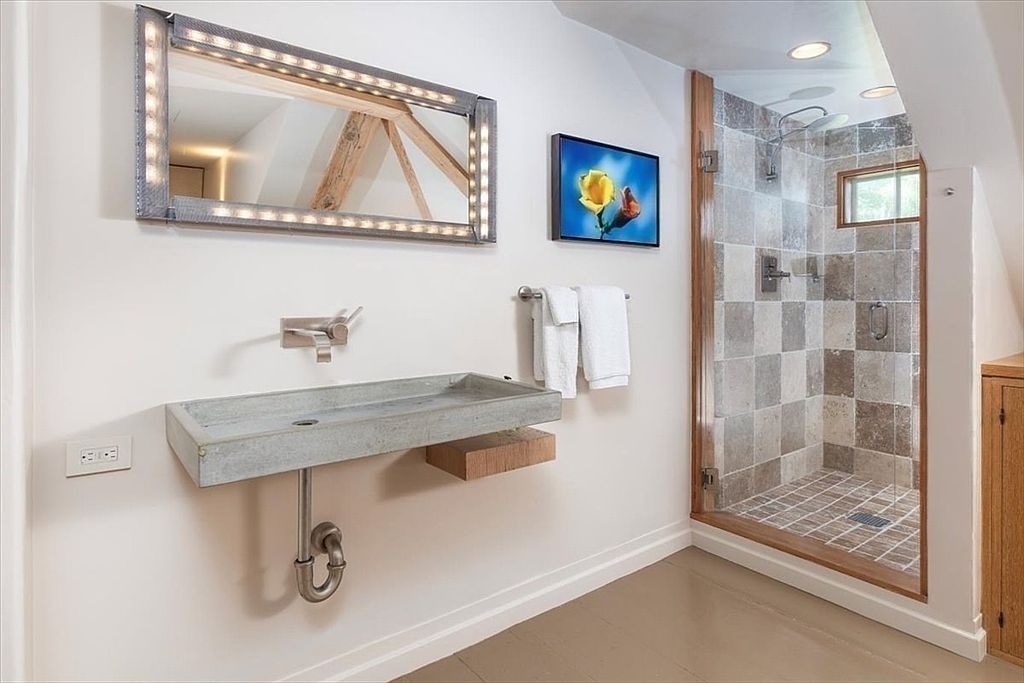
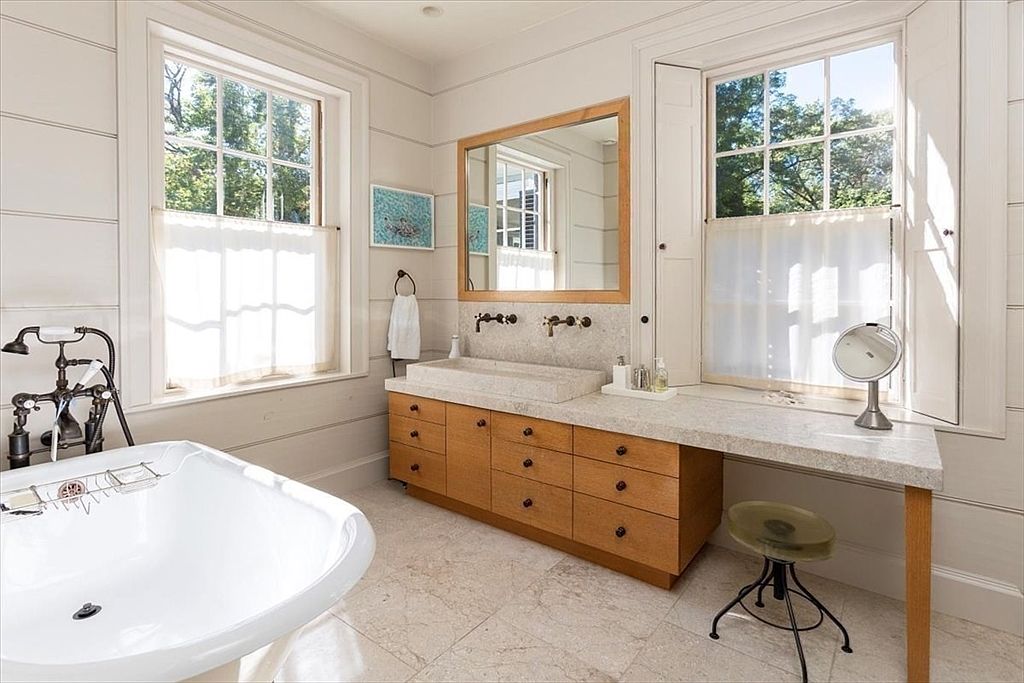
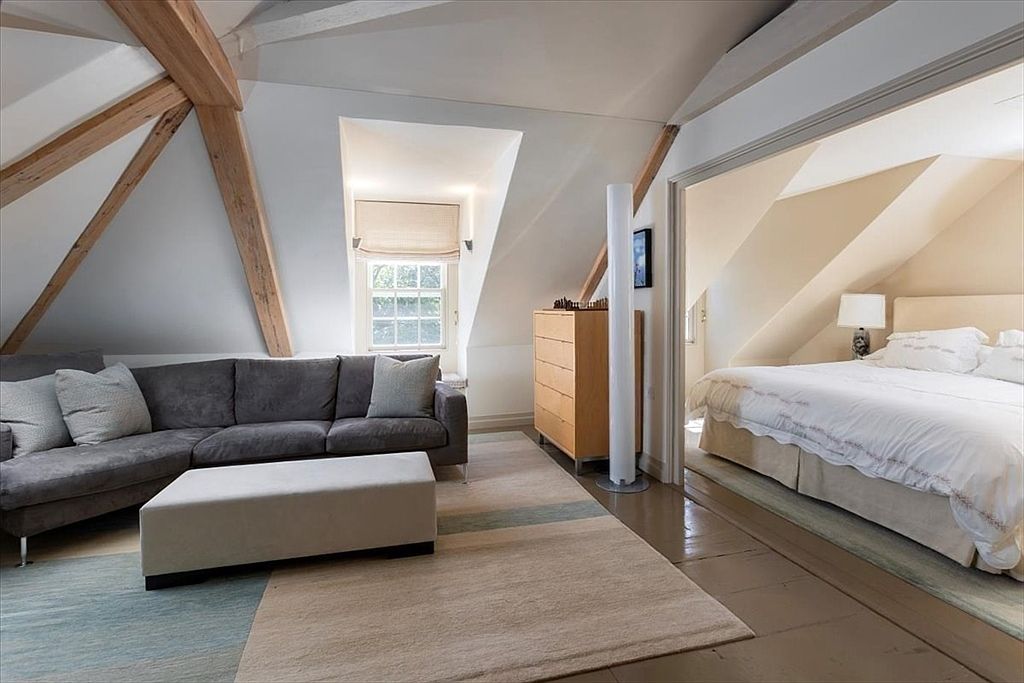
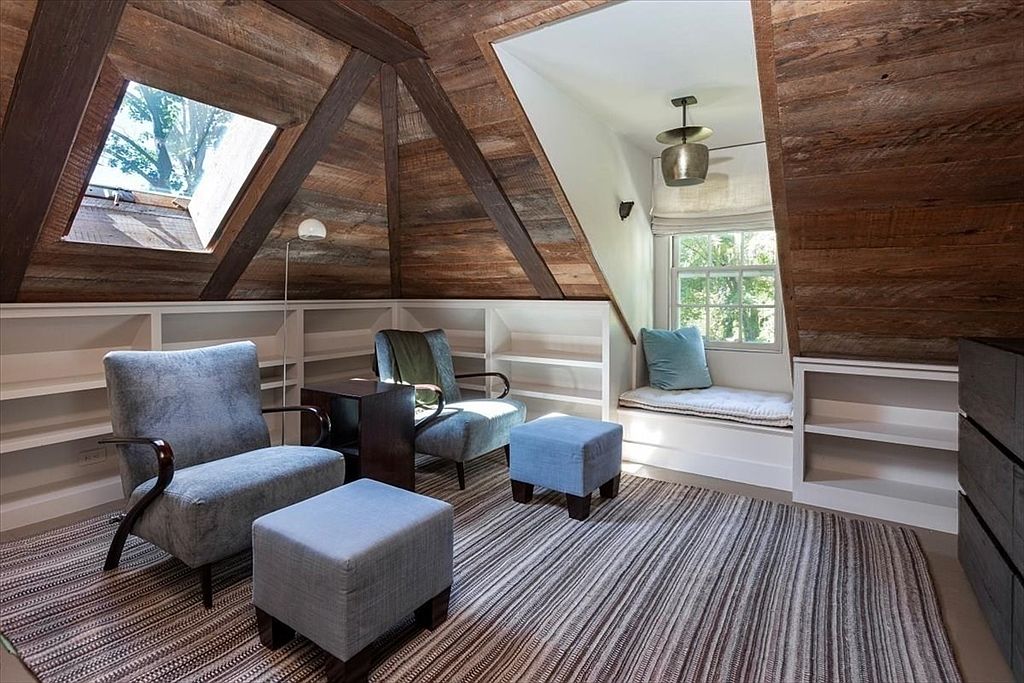
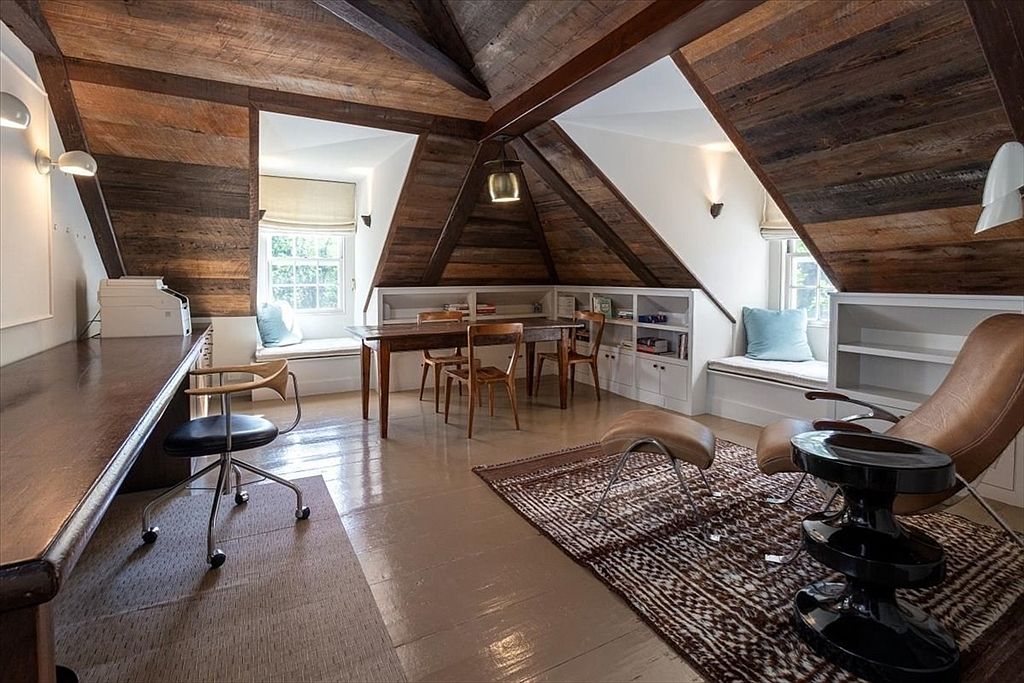
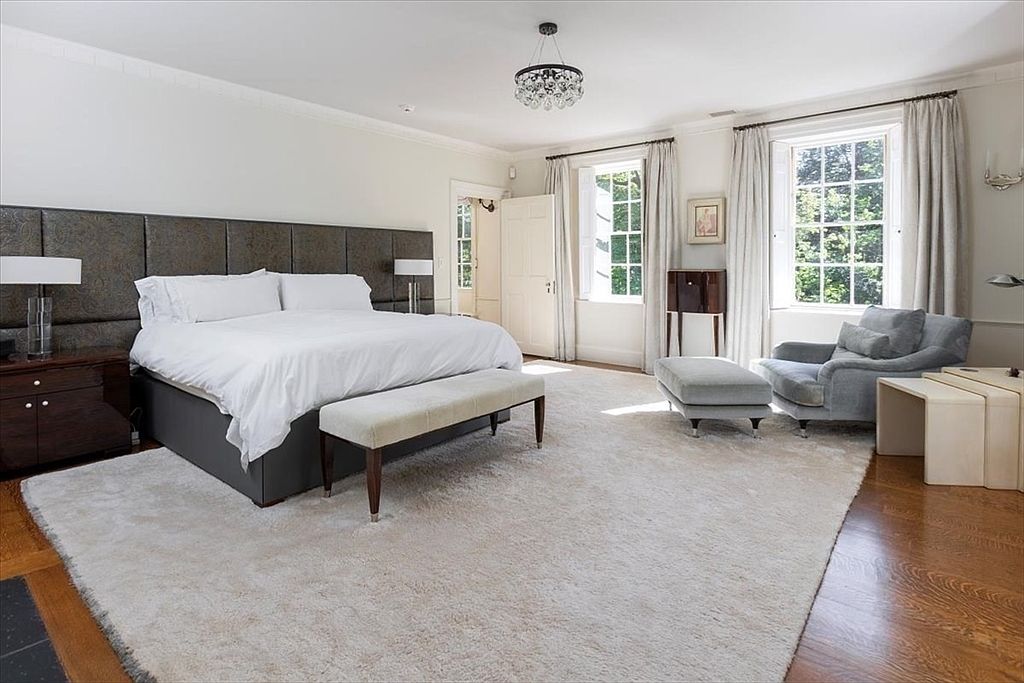
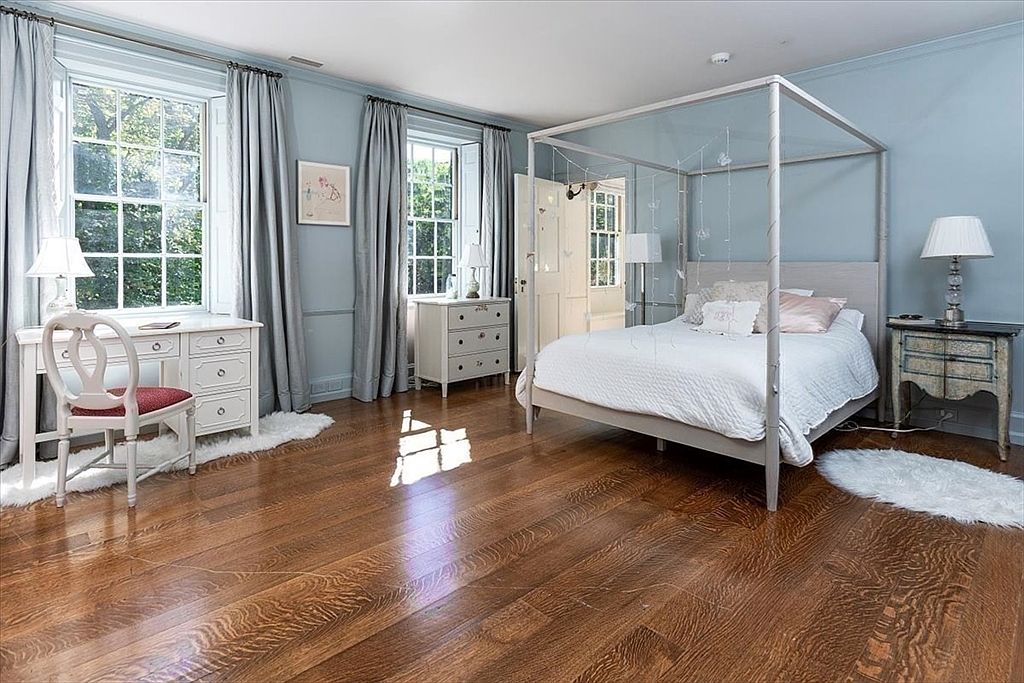
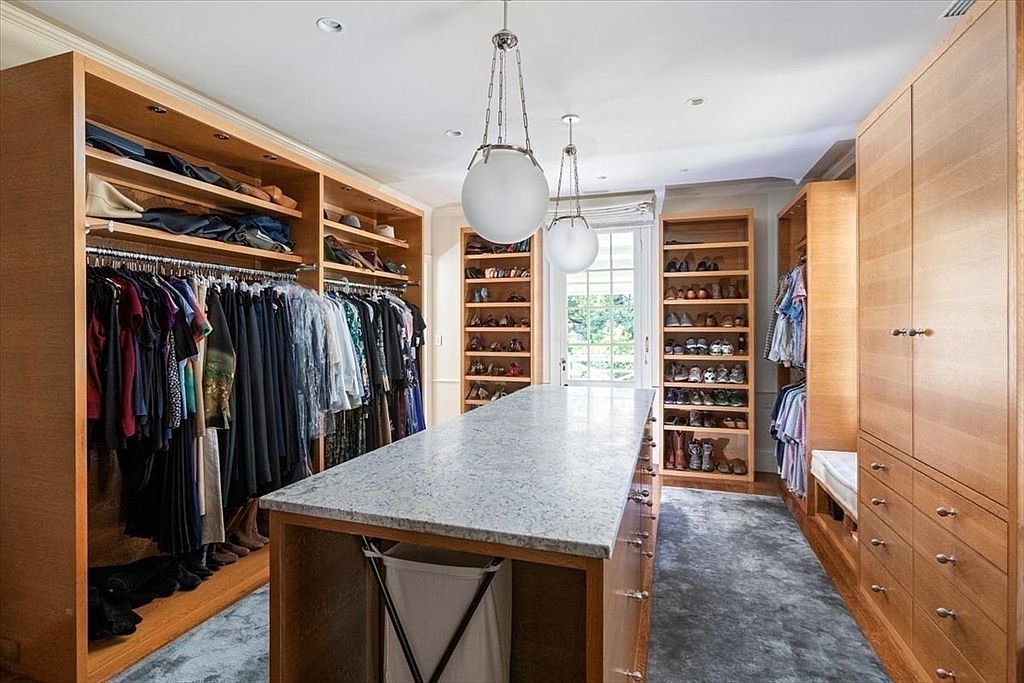
Upstairs, the bedroom accommodations — seven or more in total — offer the same considered balance of period detail and contemporary comfort, including primary suites of notable proportion and finish. A walk-in closet with custom cabinetry and a dedicated dressing island, spa-calibrated primary bathrooms with stone vanities and freestanding soaking tubs, and attic-level spaces that function as creative retreats or flexible guest quarters complete a home that operates at every register of domestic life.
At 153 Brattle Street, over two centuries of architectural legacy have been not merely preserved, but fully realized.
Brattle Street is not simply an address in Cambridge — it is one of the most historically significant residential corridors in the United States. Known colloquially since the colonial era as 'Tory Row' for the loyalist families who once occupied its grandest estates, the street's lineage as a place of intellectual, cultural, and civic importance stretches back more than three centuries. Today, it remains one of the most coveted addresses in Greater Boston, drawing those who seek the rare combination of genuine historical weight and proximity to world-class urban life.
The immediate neighborhood — Cambridge's Brattle Street Historic District — is listed on the National Register of Historic Places, a designation that reflects both the architectural integrity of its streetscape and the collective significance of the properties that line it. The district's preservation standards ensure that the character of the corridor is protected, offering residents not only a beautiful environment today but the confidence that it will remain so.
Harvard University, one of the world's preeminent research and educational institutions, lies within comfortable walking distance, lending the neighborhood its distinctive intellectual atmosphere. The proximity to Harvard brings with it a remarkable concentration of cultural amenities: the Harvard Art Museums — which house collections spanning the Fogg, Busch-Reisinger, and Arthur M. Sackler museums — are minutes away, as is the Harvard Book Store, a beloved independent institution that has anchored the area's literary culture for decades. The American Repertory Theater, one of the country's leading regional theater companies, makes its home nearby at the Loeb Drama Center on Brattle Street itself.
The commercial heart of Harvard Square, a short walk from the property, offers an eclectic and sophisticated mix of independent restaurants, cafés, specialty retailers, and cultural venues that reflect the neighborhood's deeply cosmopolitan character. From the venerable Harvest restaurant to the legendary Brattle Theatre — one of the oldest continuously operating cinemas in the country — the Square rewards those who value a streetscape defined by independent character rather than corporate uniformity.
Practical connectivity is equally strong. The Harvard Square MBTA Red Line station provides direct rail access to downtown Boston and the broader transit network, while the neighborhood's walkability — consistently ranked among the highest in the region — means that daily errands, dining, and cultural engagement are accessible entirely on foot. The Charles River Esplanade, with its celebrated walking and cycling paths, is easily reachable, offering a natural counterpoint to the density and energy of the Square.
Cambridge itself functions as one of the most dynamic intellectual and innovation ecosystems in the world, home to both Harvard and the Massachusetts Institute of Technology and anchoring a broader research and biomedical corridor that has shaped the city's contemporary identity. The result is a community that blends the gravitas of its historical foundations with a restless, forward-looking energy — a place where the past is genuinely honored and the present is genuinely alive.
To live on Brattle Street is to occupy a specific and irreplaceable position within that story.
Featured Highlights
Curated Content • Presented by Michael Harper