The Story Behind
The Former James Cagney Estate: A Beverly Hills Legacy Compound
There are properties that offer luxury, and then there are properties that offer legacy. The former James Cagney Estate, tucked privately behind secured gates beneath the protected wilderness of Franklin Canyon Nature Reserve, belongs irrevocably to the latter category. Here, on more than five serene acres in Beverly Hills, an entire compound was quietly shaped by one of Hollywood's most celebrated personalities — and has since been transformed, through years of meticulous restoration, into one of the most architecturally arresting private estates in Los Angeles.
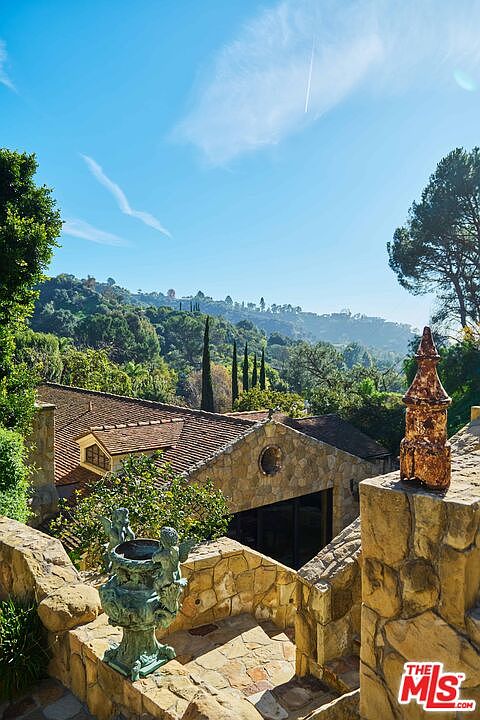
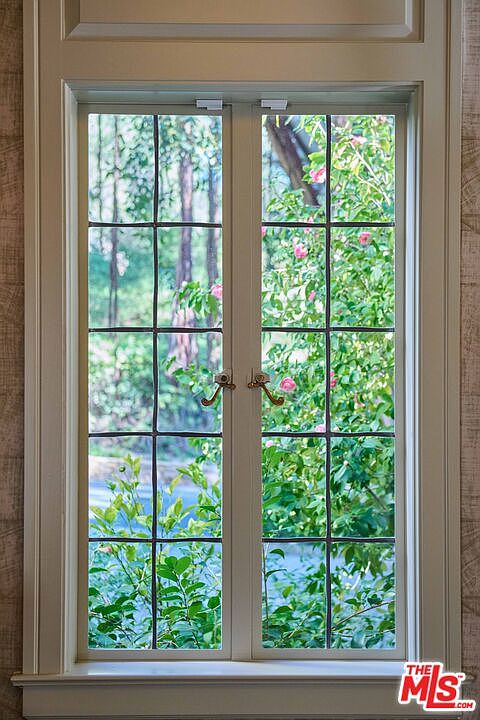
Approach the property along its circular cobblestone drive and the architectural intention announces itself immediately. The Main Villa rises with reclaimed European terracotta roof tiles, its silhouette at once romantic and authoritative against the wooded hillside backdrop. Step inside and the craftsmanship deepens: cathedral ceilings with exposed trussed beams soar overhead, leaded glass windows cast prismatic light across original restored hardwood floors, and multiple fireplaces — each carefully preserved — anchor rooms with the kind of warmth that cannot be manufactured. The kitchen, anchored by a striking blue central island beneath dramatic beamed ceilings, balances artisanal character with professional-grade functionality. A glass-enclosed, climate-controlled wine cellar — distinguished by a heraldic stone crest set within an arched alcove — completes the ground floor with old-world elegance.
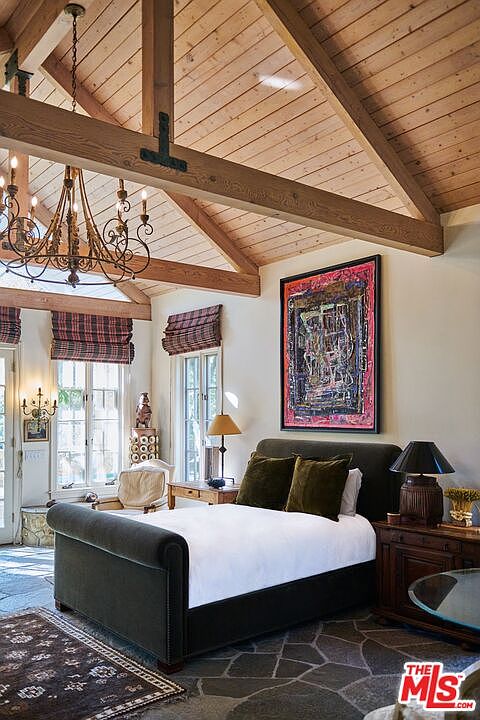
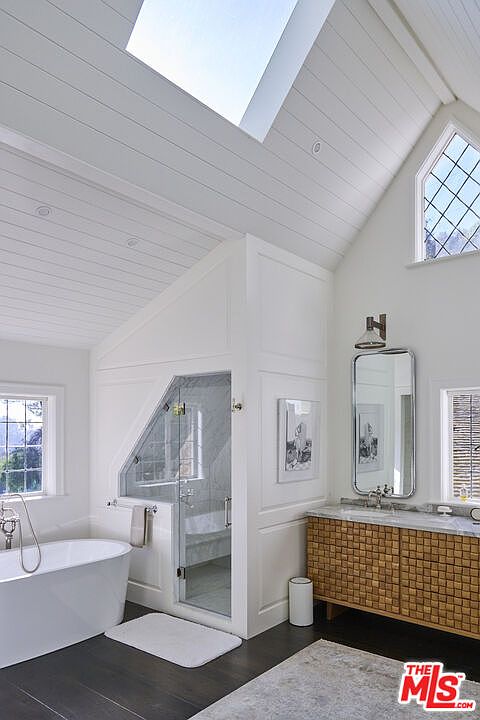
Two primary suites within the Main Villa each command their own architectural moment: vaulted beam ceilings, grand stone fireplaces, built-in bookshelves, and couture-scale closets serve as the setting for ensuite baths appointed with copper soaking tubs and custom vanities bearing marble countertops. A third guest suite offers its own cedar-lined dressing room and private bath — a gesture of hospitality that extends throughout the compound.
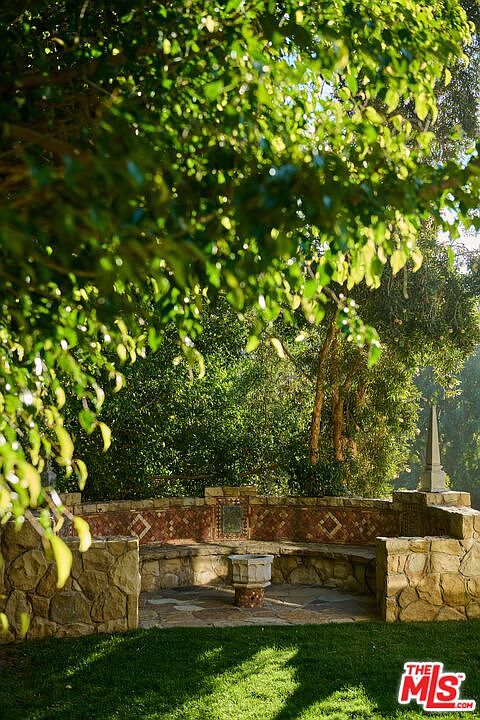
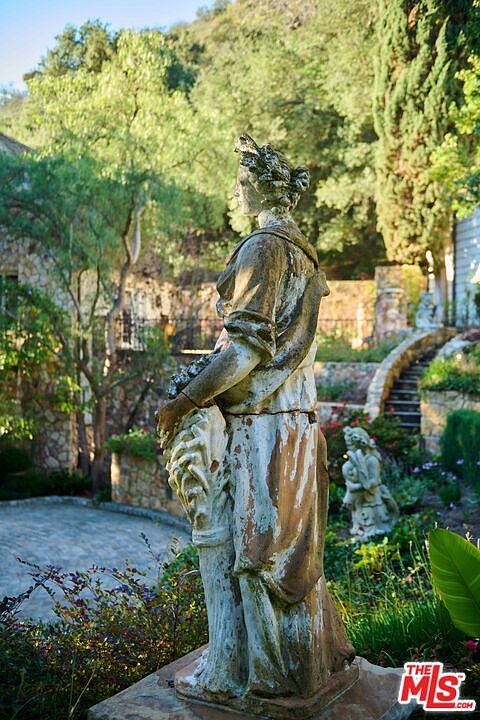
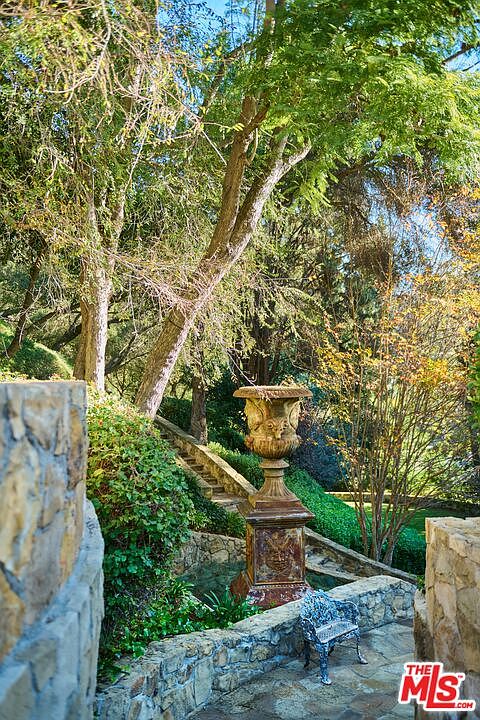
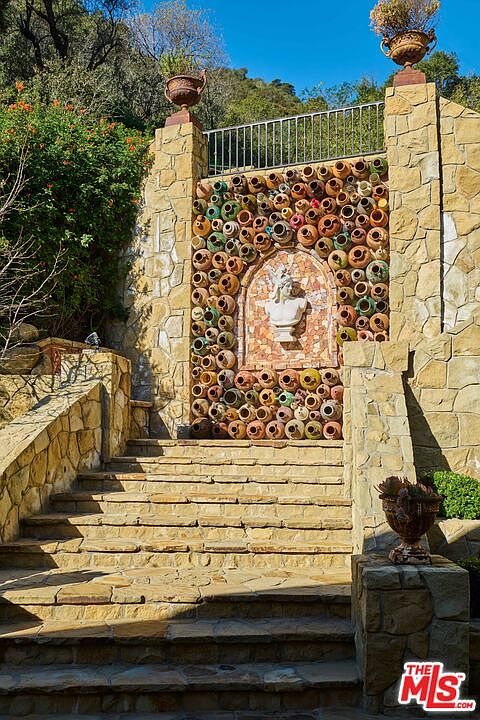
Beyond the Main Villa, hand-laid stone pathways wind past sculptural courtyards, candle-carved stone walls, museum-quality European statuary, and tiered citrus gardens to connect an enclave of secondary residences, each architecturally distinct and fully self-contained. The Boathouse guest residence, framed by antique 19th-century reclaimed French Oak beams and served by its own private gated drive and porte-cochère, functions equally as an event venue, creative retreat, or production studio. The Carriage House Artist's Studio offers flexible multi-purpose space with full kitchen, ensuite bath, and automobile garages. And perhaps most evocative of all: the detached guest cottage where Cagney himself completed many of his paintings — now renovated with a full kitchen and ensuite bath, its artistic spirit intact.
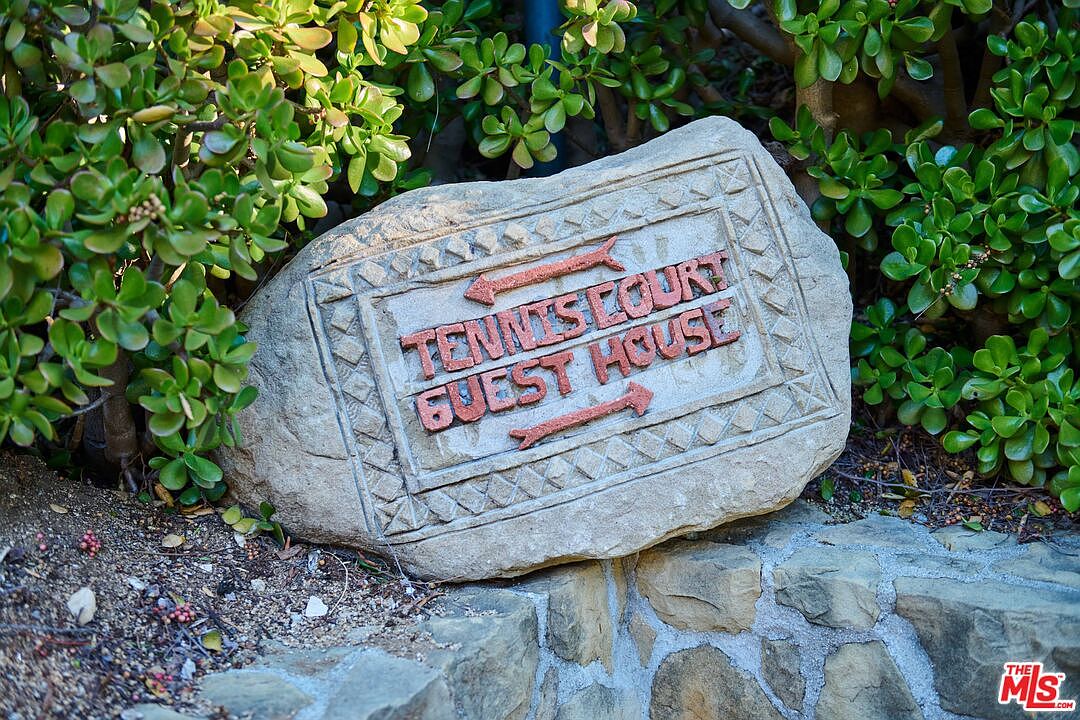
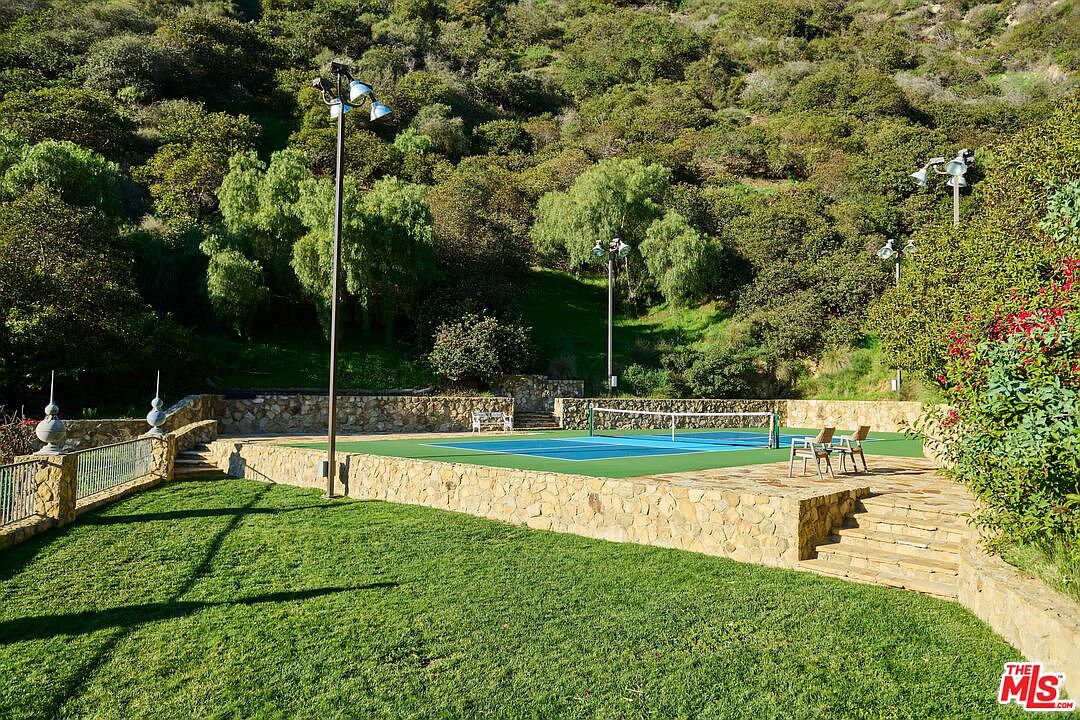
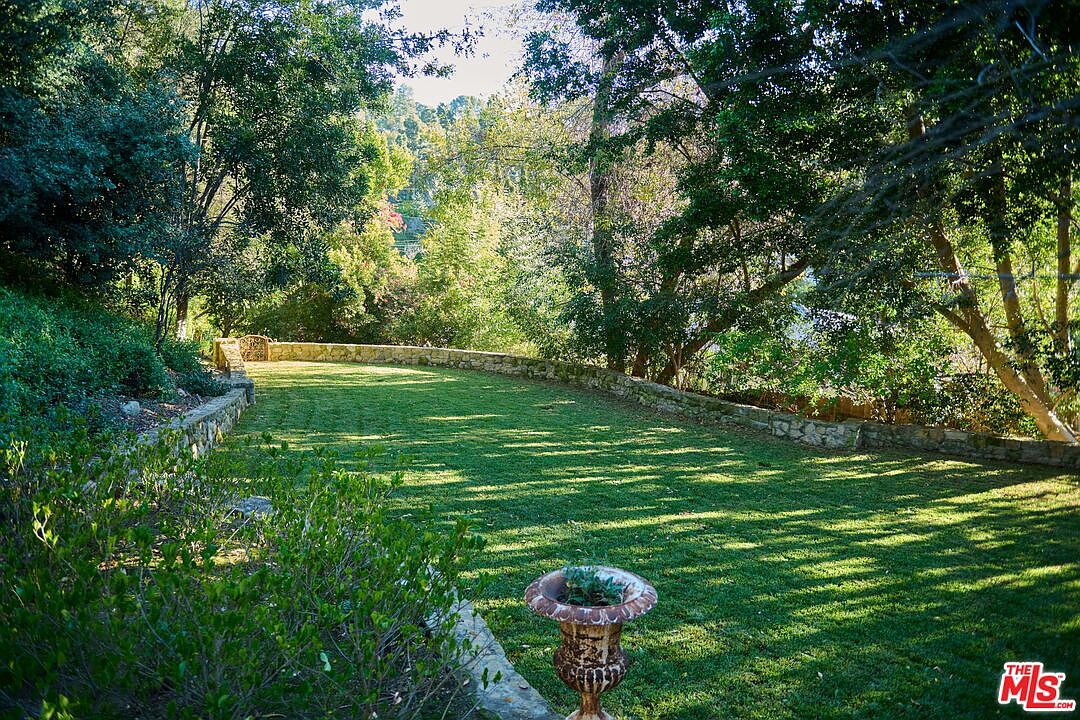
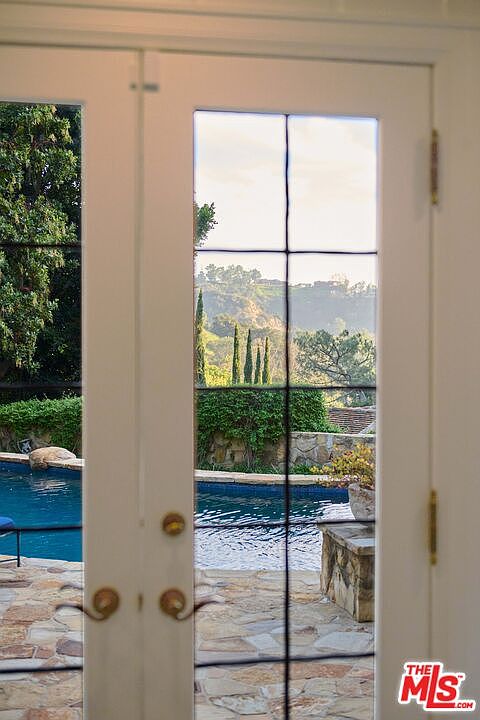
The grounds themselves are a destination. A glass-tile swimming pool and spa anchor a flagstone patio beside an open-air pavilion with a grand stone fireplace and fully equipped outdoor kitchen. A regulation tennis court and pickleball court, both with grandfathered night lighting, are accompanied by a stone-roofed spectator pavilion with wet bar. Expansive flat lawns and play fields — a rarity within the Beverly Hills hillside — complete an outdoor offering that rivals the finest private clubs. Every element of this compound has been considered, composed, and crafted for a life lived beautifully.
Beverly Hills requires little introduction, yet the particular corner of it that cradles this estate occupies a stratum all its own. Positioned above Sunset Boulevard and nestled directly beneath the protected wilderness of Franklin Canyon Nature Reserve — a 605-acre natural preserve administered by the Santa Monica Mountains Conservancy — the property sits at a rare intersection of urban prestige and genuine natural seclusion. The canyon's hiking trails, native chaparral, and reservoir lake begin, in effect, at the estate's doorstep, offering a quality of quietude that is simply unavailable elsewhere in the city.
The 90210 postal code has long served as a global shorthand for a particular kind of American aspiration, and with reason. Beverly Hills itself was incorporated as an independent city in 1914 and has maintained its own municipal services, school district, and police department ever since — a level of civic autonomy that contributes directly to its consistently manicured streets, curated commercial corridors, and fiercely protected residential character. The city's residential hillside neighborhoods, which include the area surrounding Cedarbrook Drive, are among its most private and topographically dramatic, where grand estates disappear behind mature landscaping and gated entries, and neighbors are measured in acreage rather than proximity.
Rodeo Drive and the storied retail and dining corridor of Beverly Hills' Golden Triangle lie within easy reach, offering world-class shopping at Gucci, Chanel, Louis Vuitton, and Tiffany & Co., alongside celebrated restaurants ranging from Spago — Wolfgang Puck's flagship — to the intimate dining rooms that have made Beverly Hills a culinary destination in its own right. The Beverly Hills Hotel, a Los Angeles landmark since 1912, sits close along Sunset Boulevard, its Polo Lounge remaining one of the enduring social institutions of the entertainment industry.
Culturally, the surrounding area is equally rich. The Hammer Museum in nearby Westwood, the Los Angeles County Museum of Art on Wilshire's Miracle Mile, and the Getty Center perched above Bel Air collectively place this estate at the center of one of the most significant concentrations of public art and architecture in the United States. The Hollywood Bowl, the Griffith Observatory, and the broader cultural life of Los Angeles are all within comfortable reach.
For families, the Beverly Hills Unified School District is consistently regarded among the most distinguished public school systems in California. Private educational institutions — including Harvard-Westlake, Crossroads School, and Brentwood School — are similarly accessible, reinforcing the area's enduring appeal for multigenerational households.
Yet what distinguishes this particular address from the broader Beverly Hills landscape is precisely what no civic amenity can provide: the sensation of having left the city entirely while remaining at its most coveted center. The sounds here are those of wind through canyon oak and the distant call of hawks riding thermals above the reserve. The light is different — filtered through a forest canopy that the flat streets below cannot replicate. For the buyer seeking not merely a prestigious address but a genuine sanctuary, the former Cagney Estate occupies ground that, within Beverly Hills, simply has no peer.
Featured Highlights
Curated Content • Presented by Timothy Di Prizito