The Story Behind
Half-Floor Sanctuary Above Central Park at Altitude 56
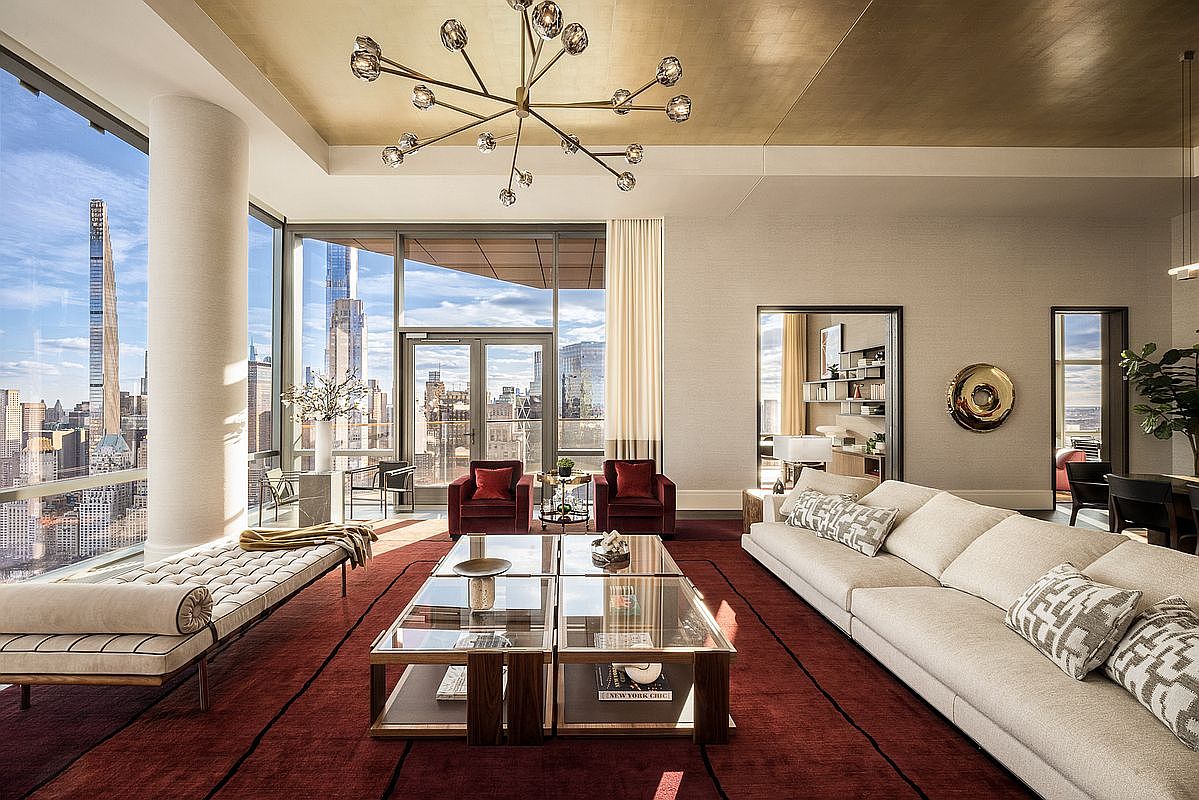
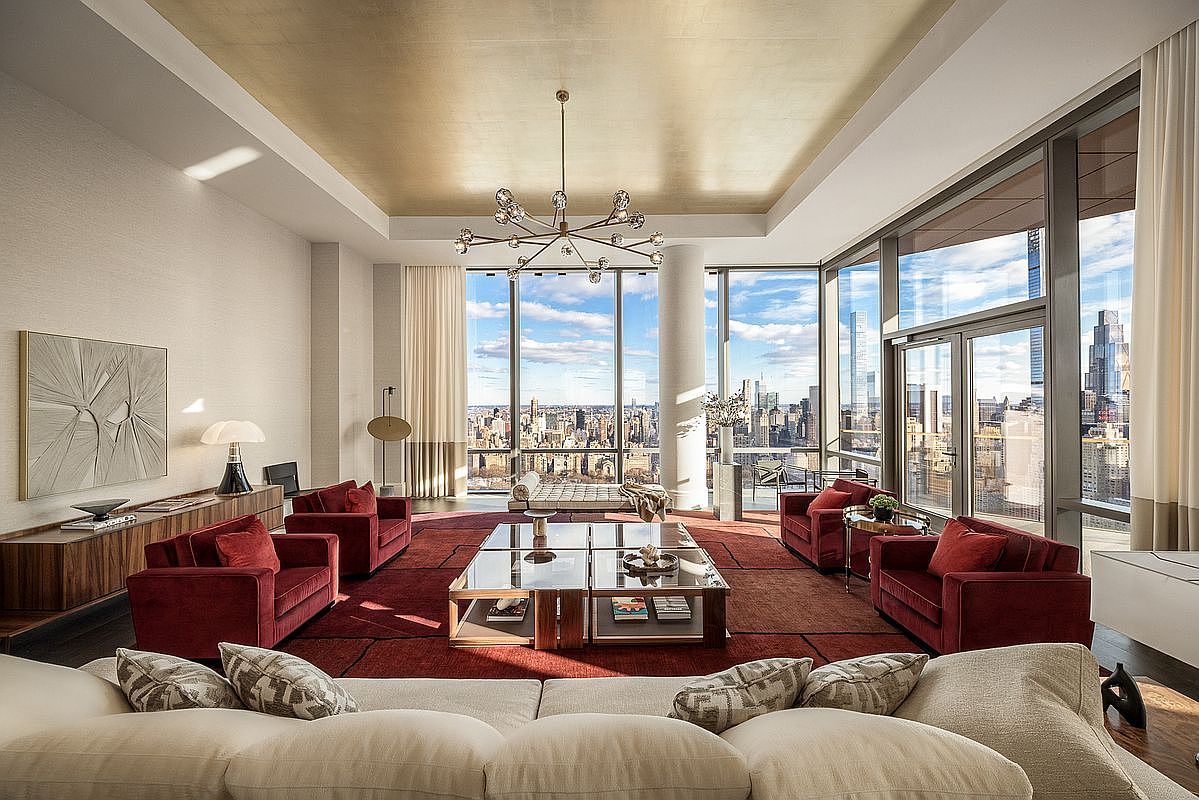
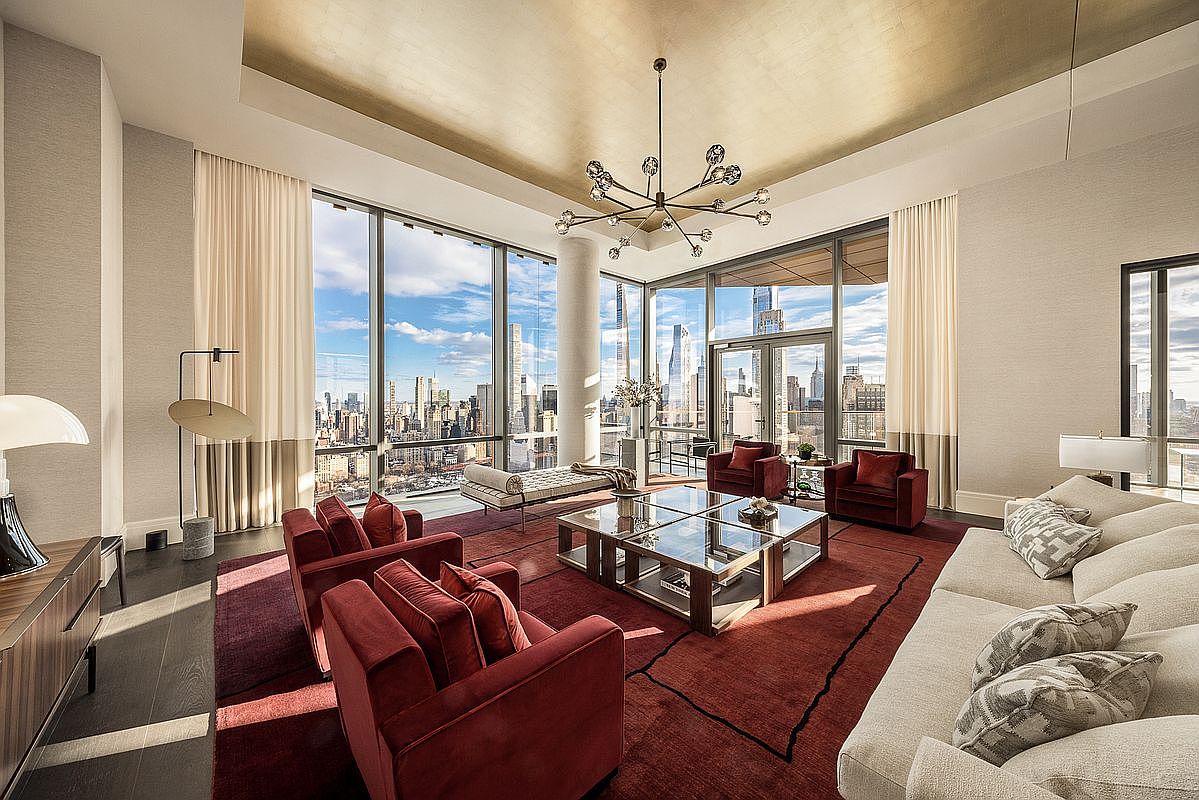
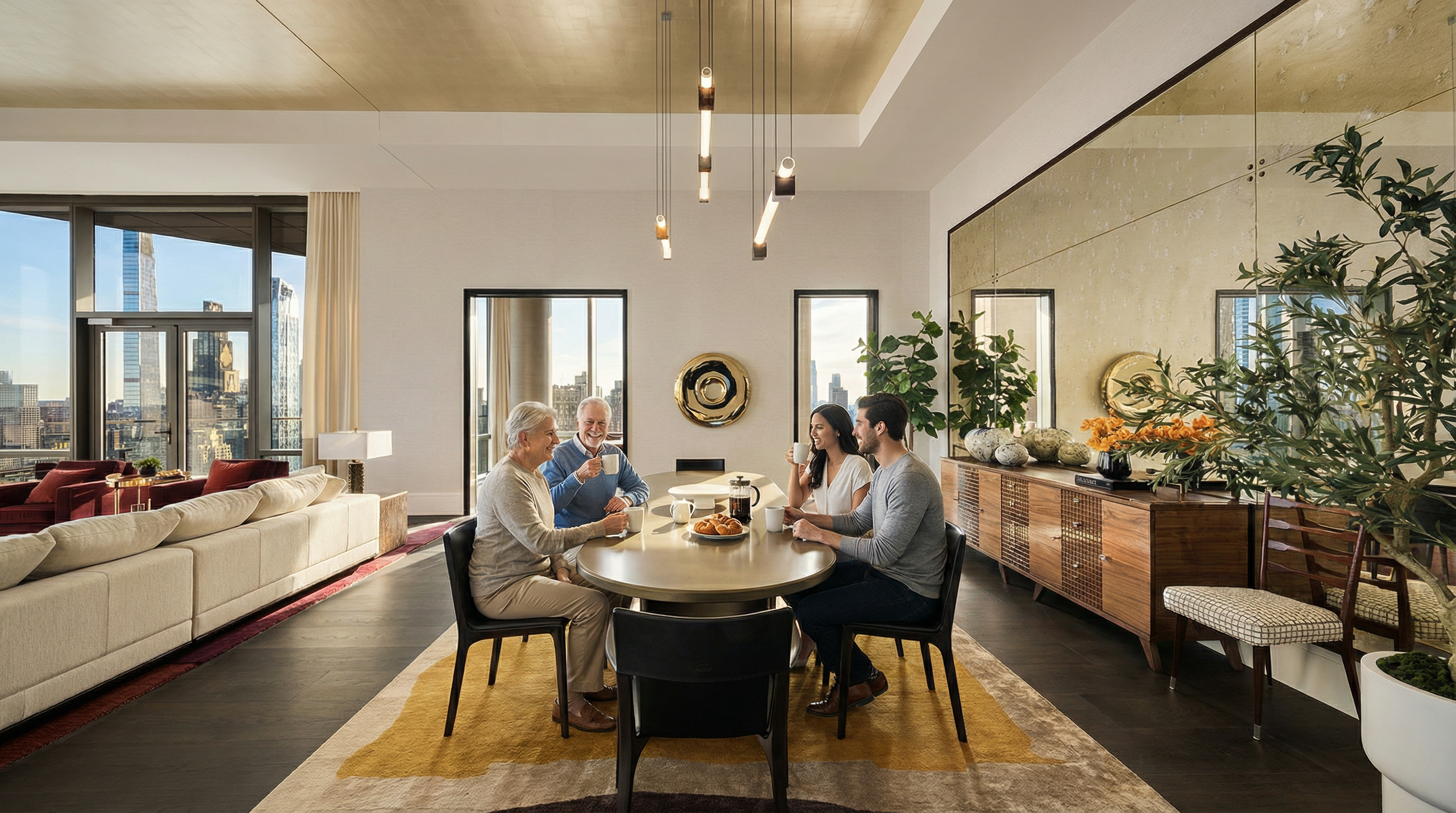
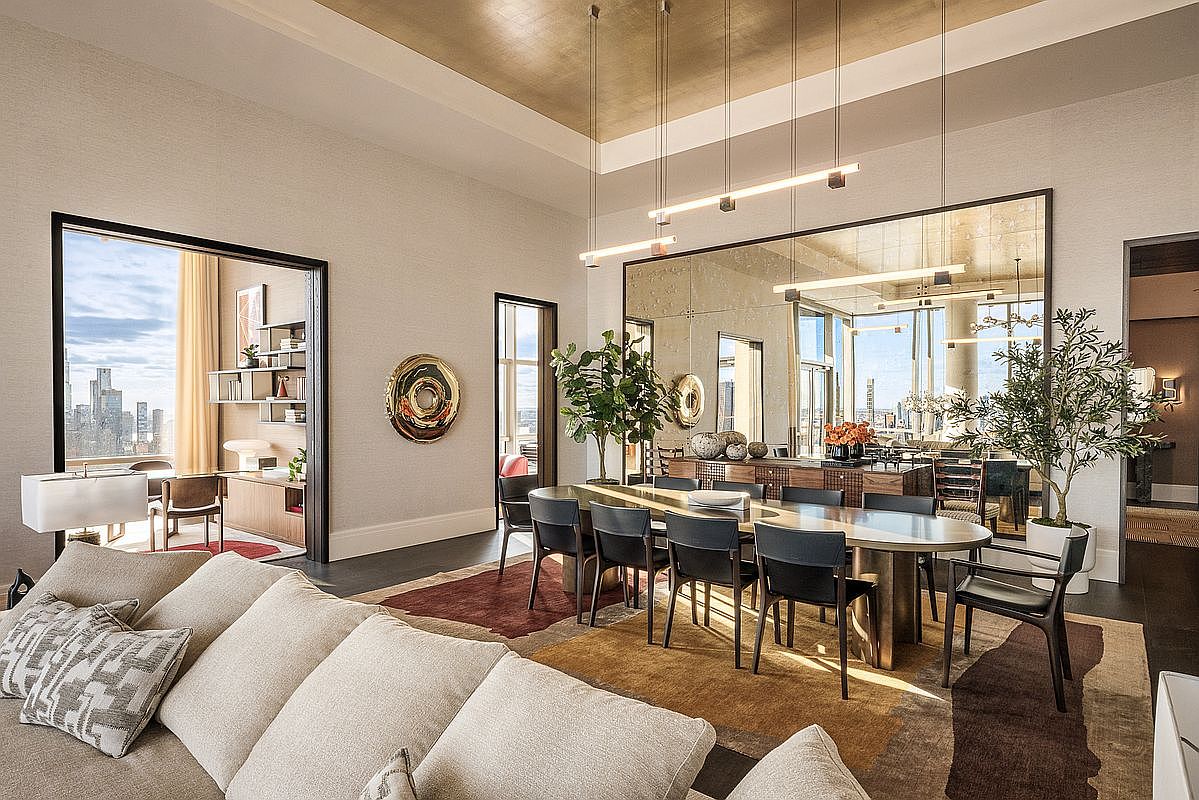
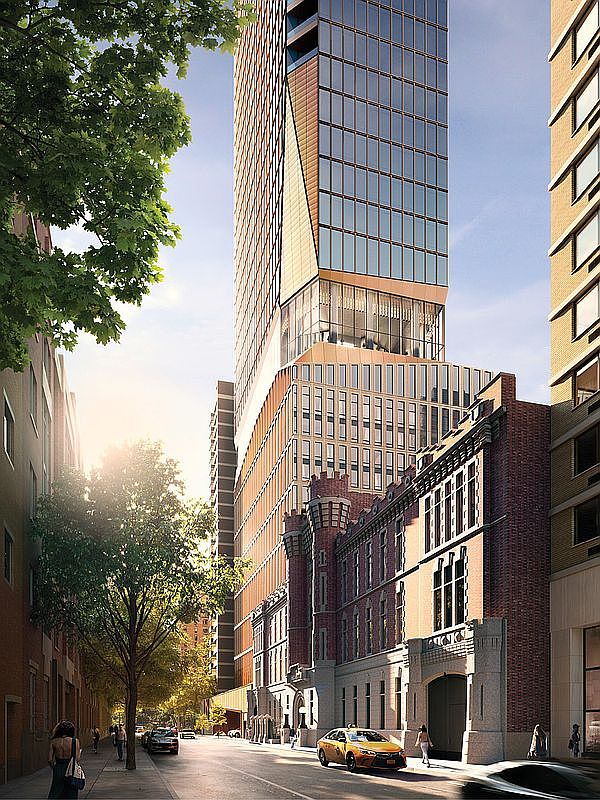
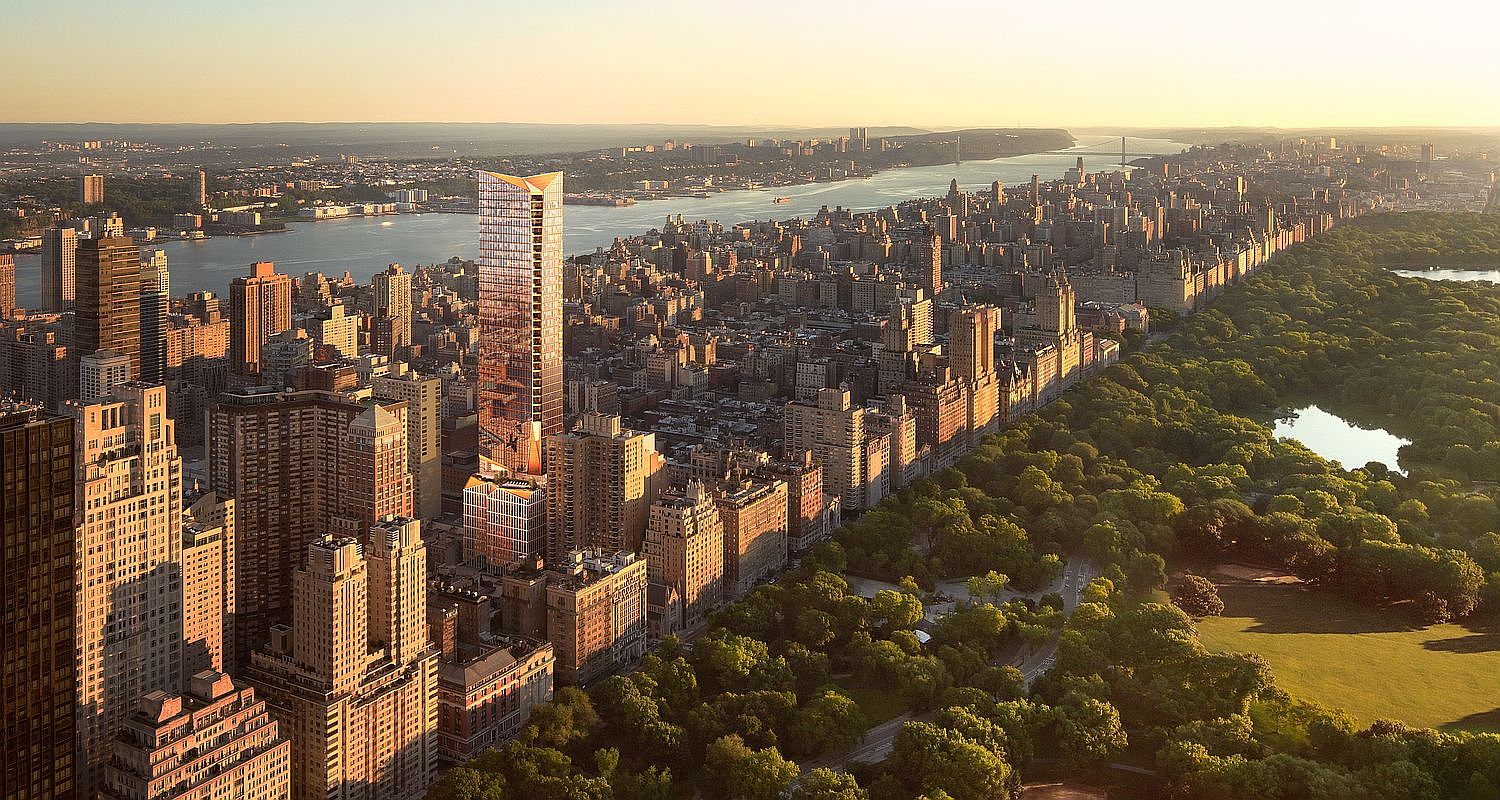
There is a particular quality of light that exists only above the fiftieth floor — a luminosity unfiltered by the city's vertical density, arriving through glass in long, clean planes that shift from the blue-white of morning to the amber dissolution of dusk. Residence 56S was designed to live inside that light. Occupying a full half floor at the summit of 50 West 66th Street, the 4,982-square-foot home opens with a grand gallery that establishes the residence's architectural intention immediately: this is a home conceived at scale, with the kind of proportional generosity — ceiling heights reaching 14'6" — that recalls the great pre-war apartments of Fifth Avenue, reinterpreted through a thoroughly contemporary lens.
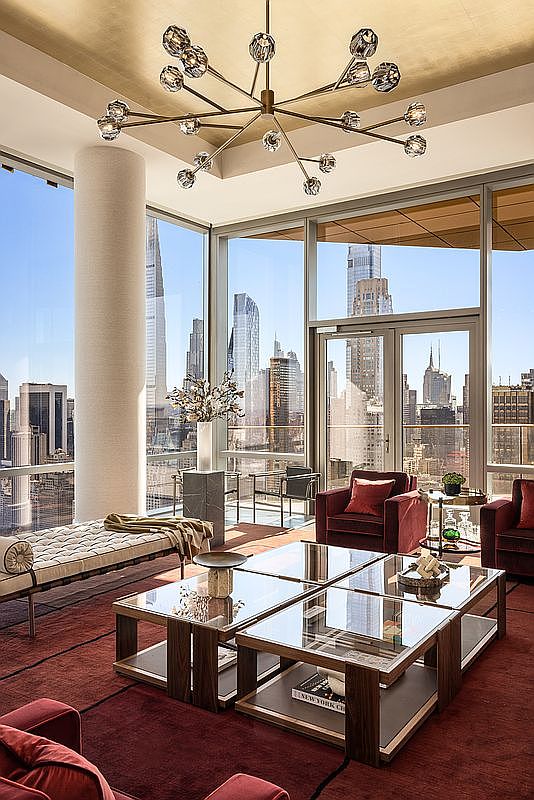
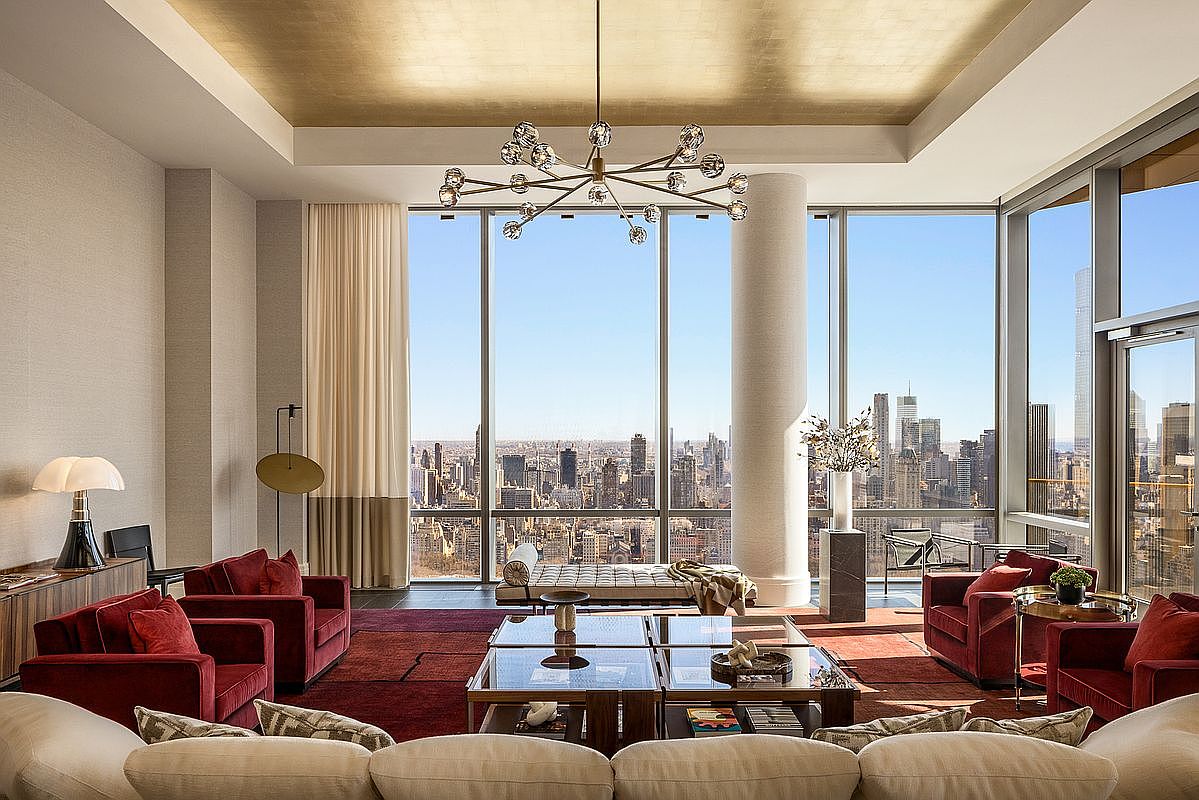
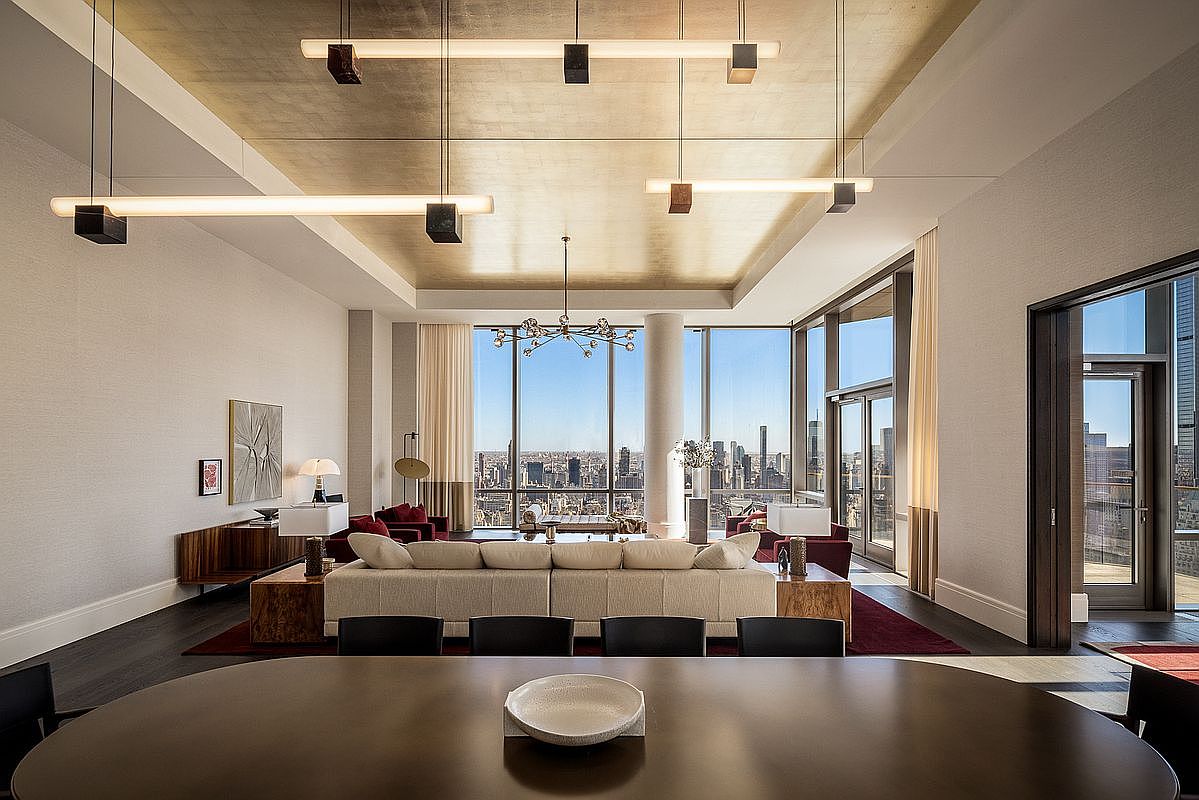
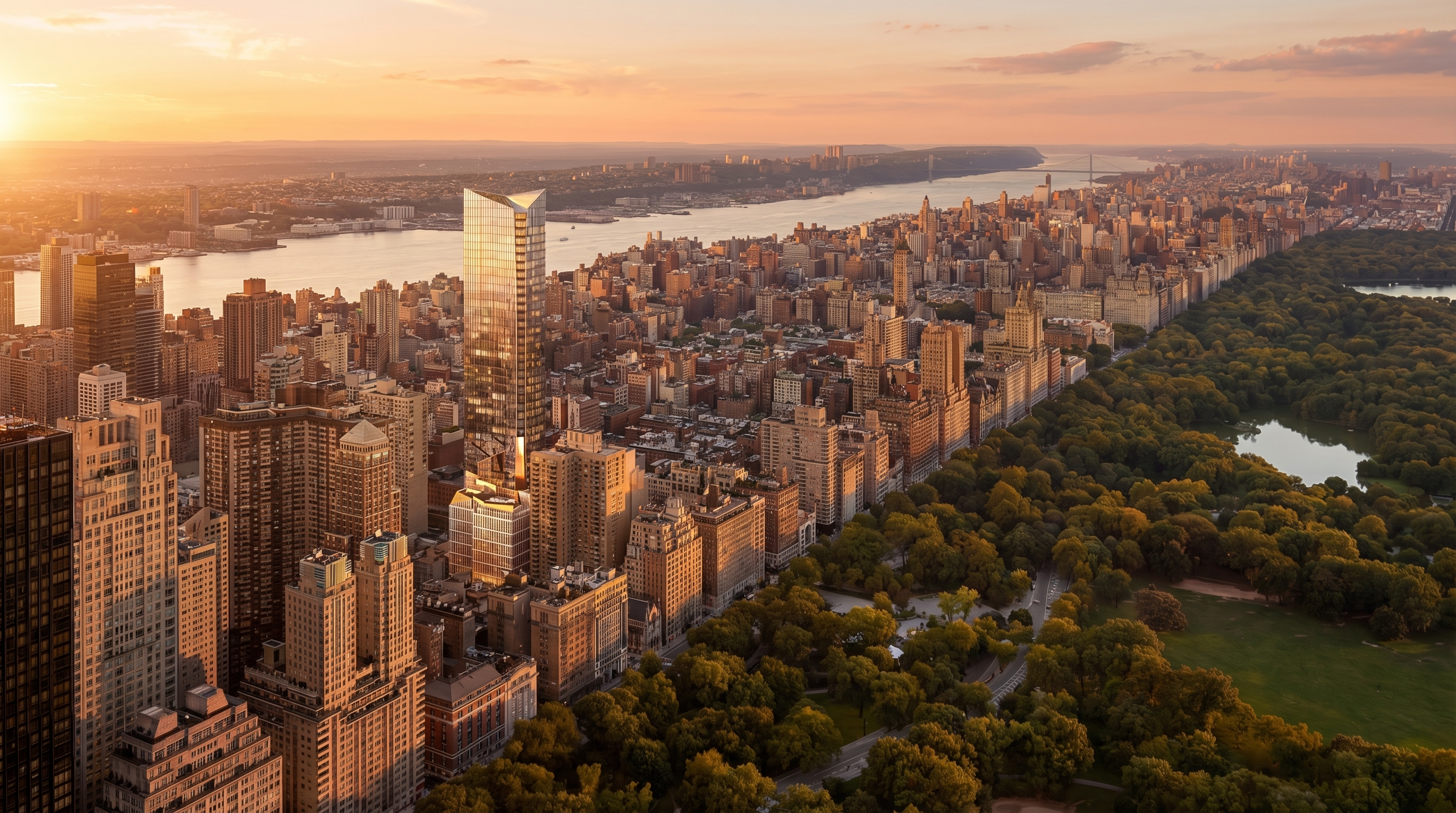
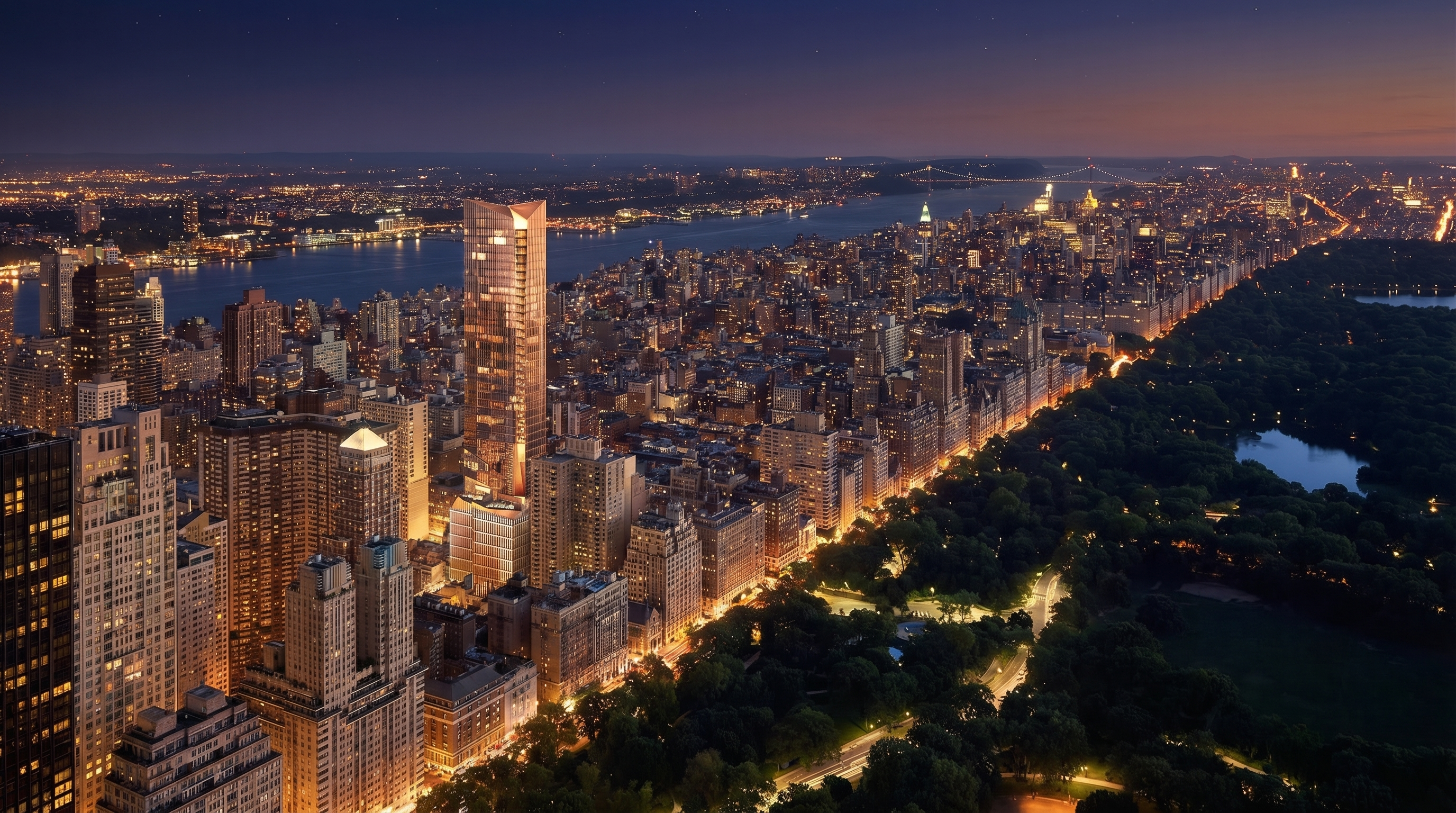
The principal living spaces unfold from that gallery in a deliberate sequence, each room oriented to capture a distinct facet of the panorama. Floor-to-ceiling walls of glass frame Central Park to the north and east, the Hudson River to the west, and the crystalline geometry of Midtown to the south — a triptych of New York's defining landscapes visible in a single sweeping arc. A gold-leaf ceiling crowns the main salon, its warm reflective surface amplifying the natural light and lending the room a quiet ceremonial quality without sacrificing warmth or ease of habitation.
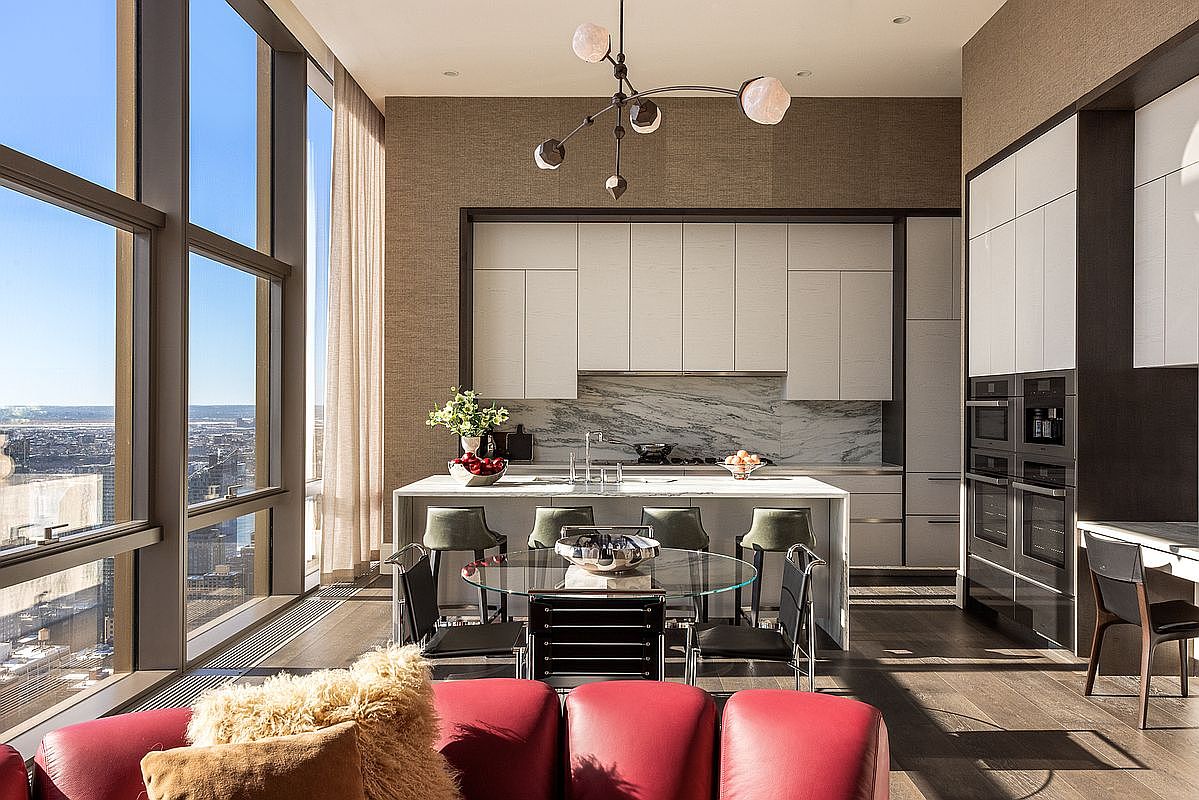
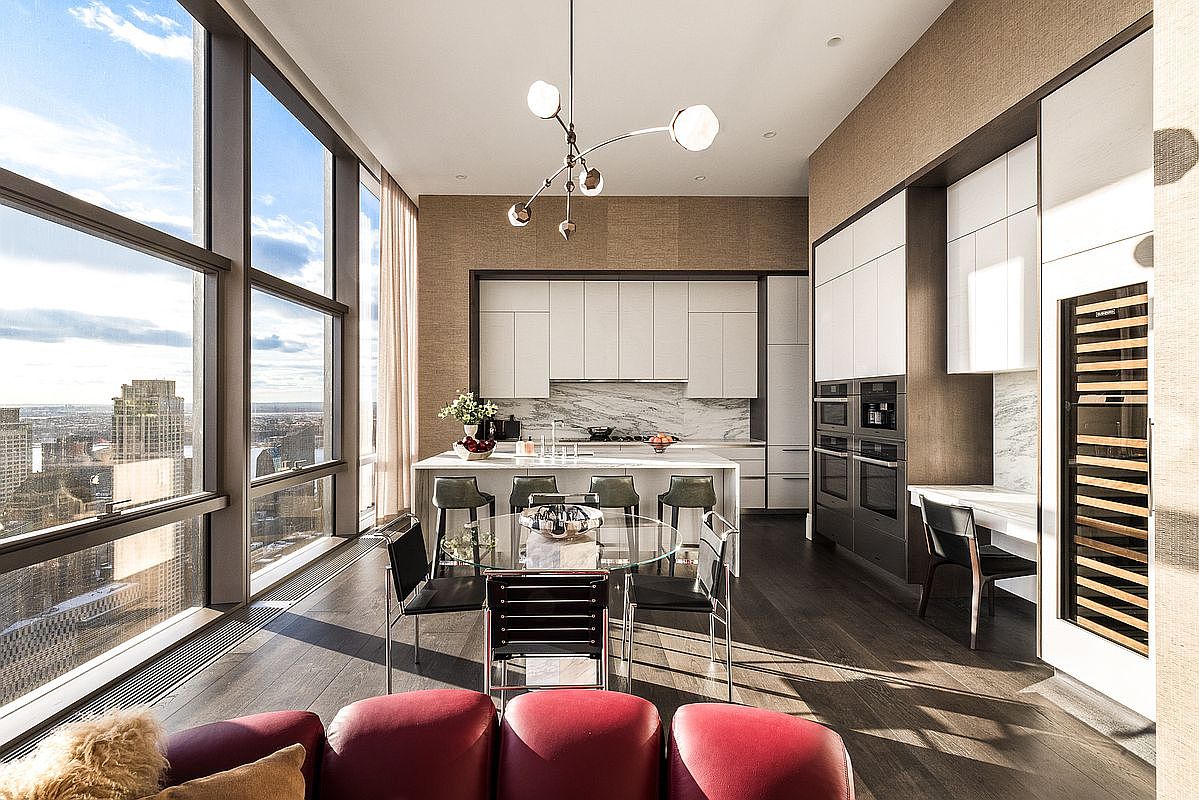
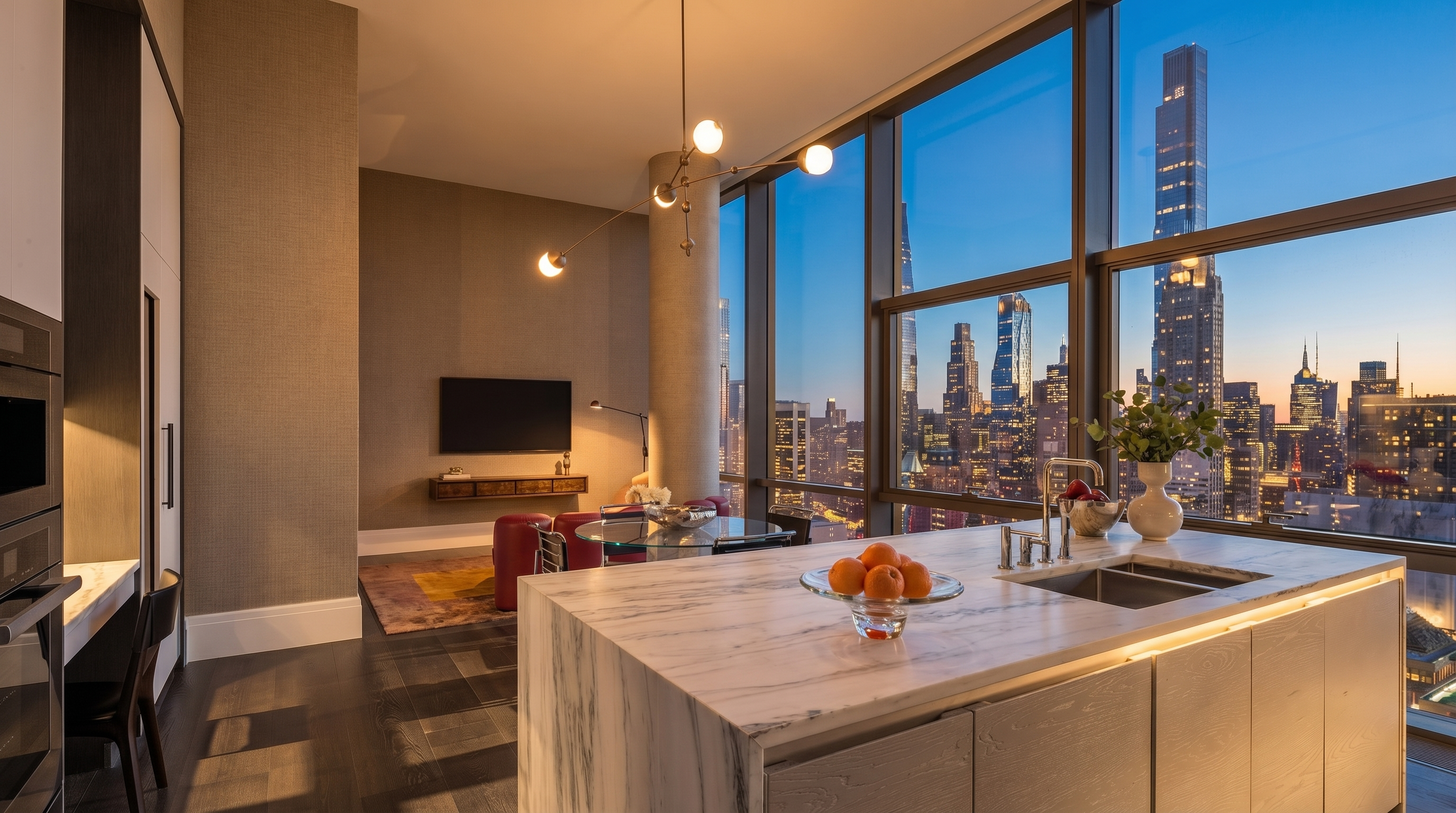
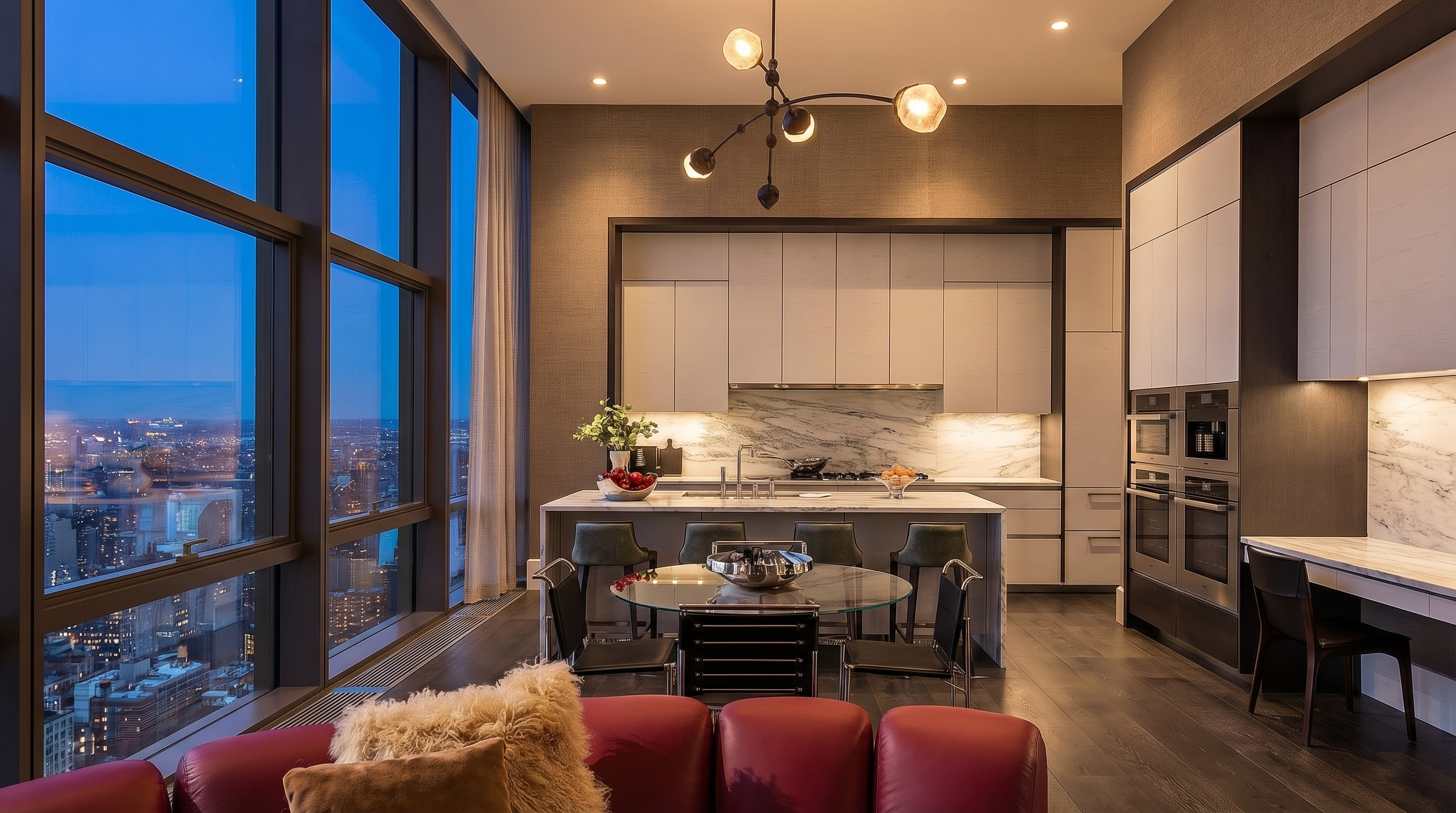
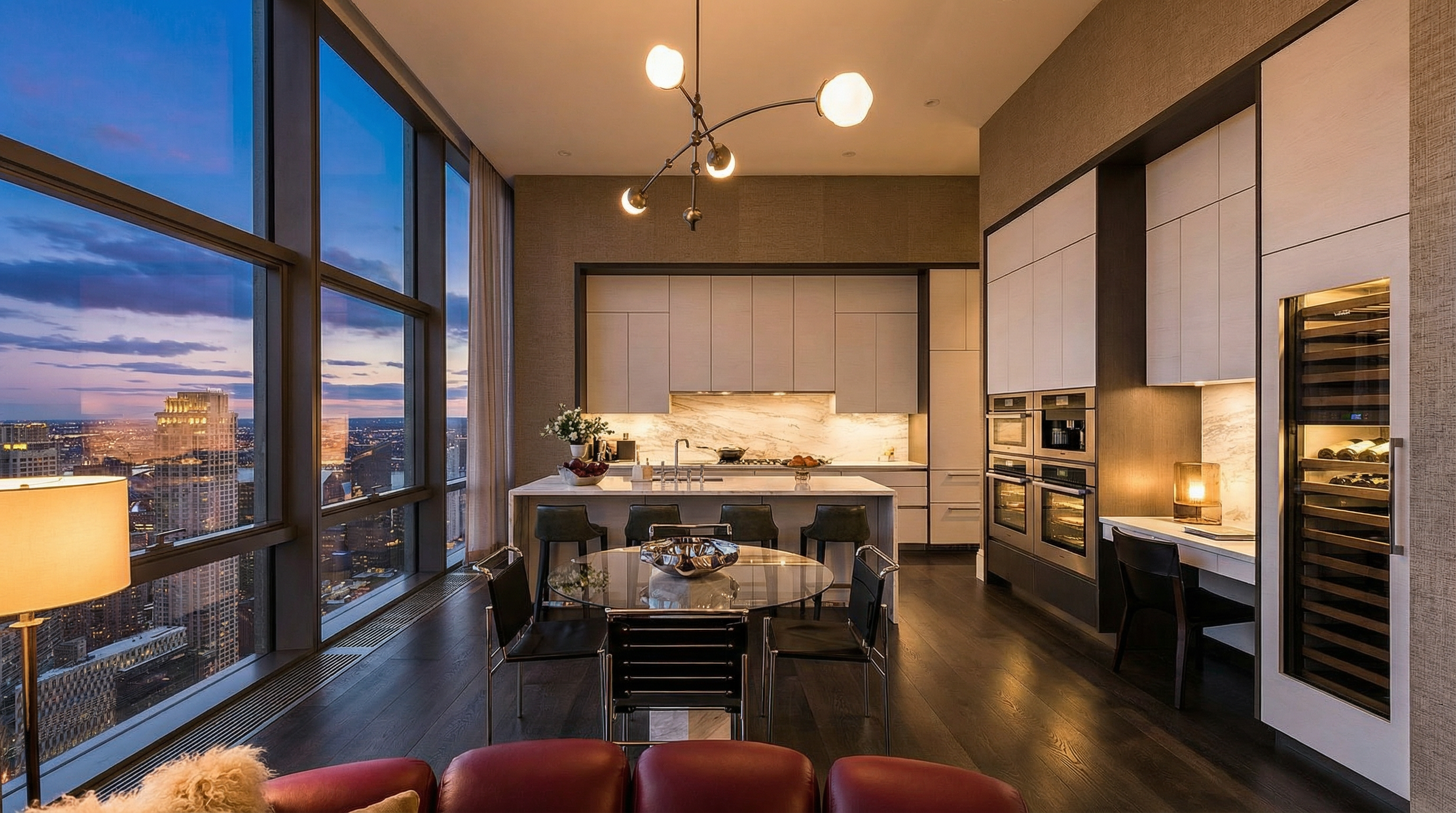
The kitchen, designed and crafted by Smallbone of Devizes — the British atelier whose commissions have included residences of the highest international distinction — anchors the home's social center. White lacquer cabinetry is paired with a waterfall marble island of generous proportion, while integrated Miele and Sub-Zero appliances disappear seamlessly into the composition. The entire kitchen faces outward toward unobstructed city views, transforming the act of cooking into something genuinely cinematic.
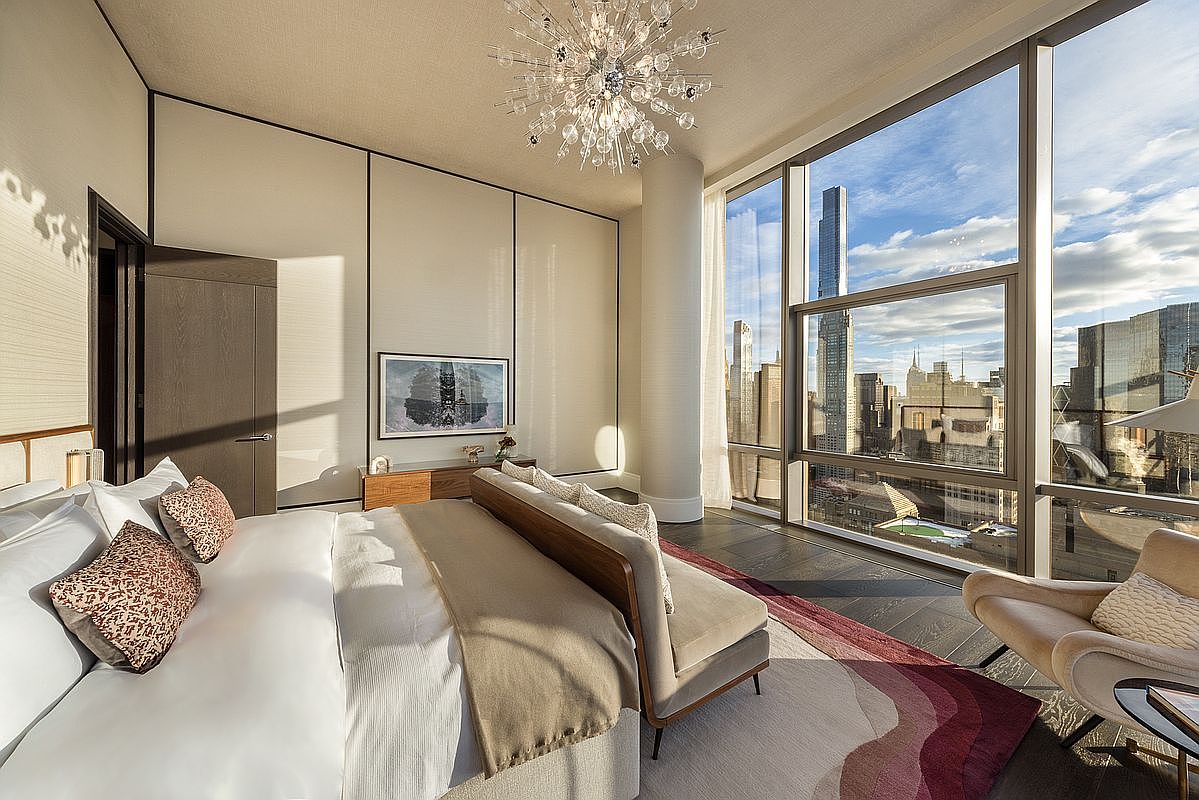
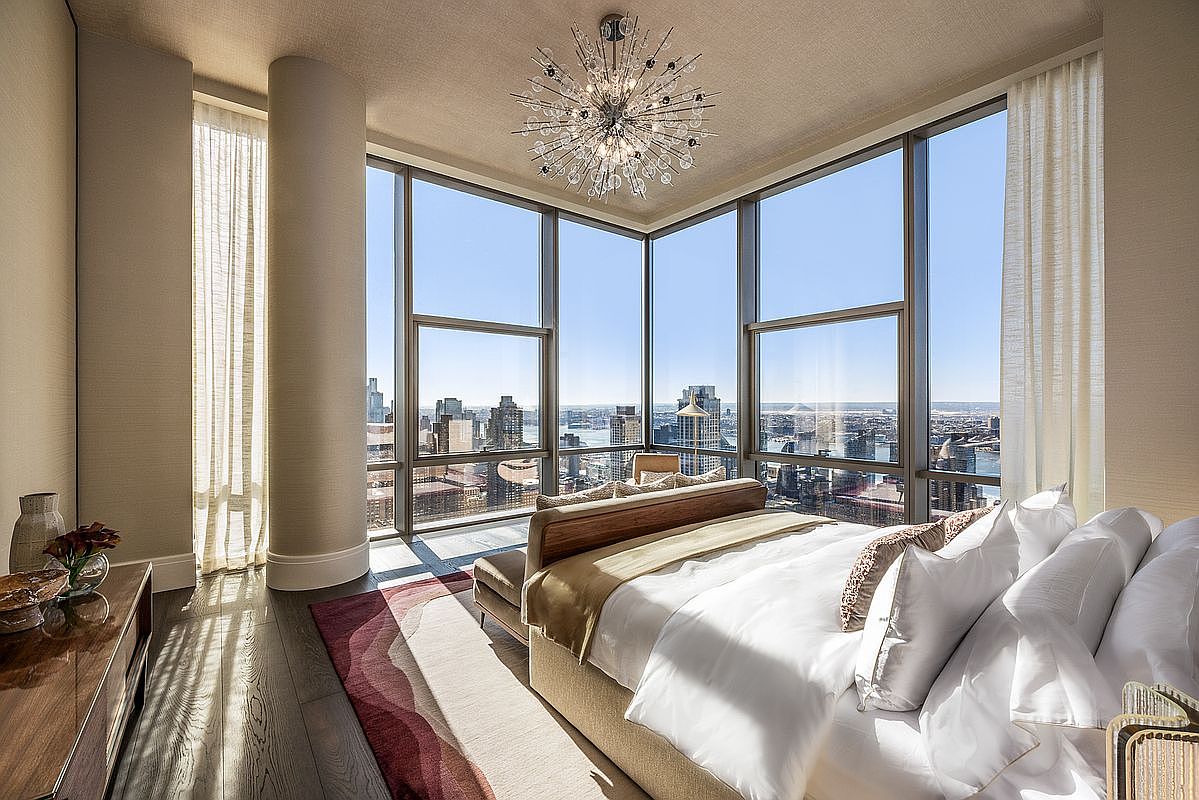
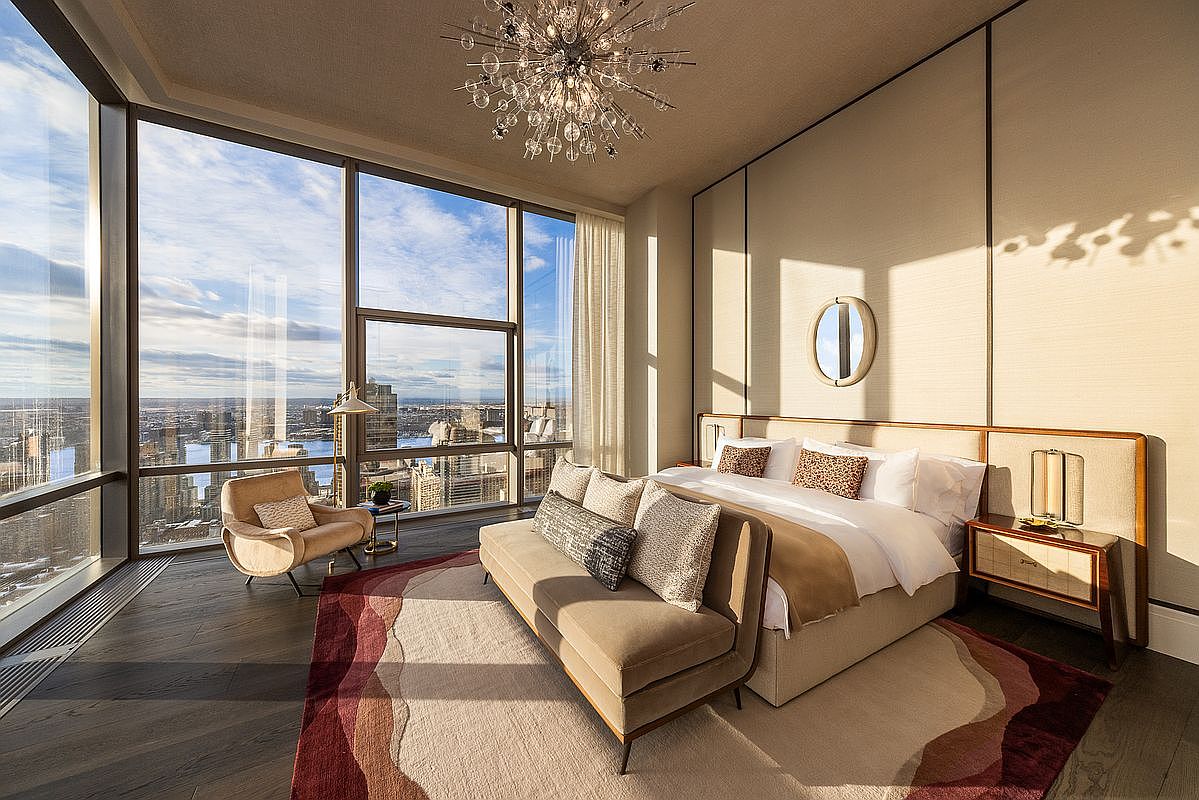
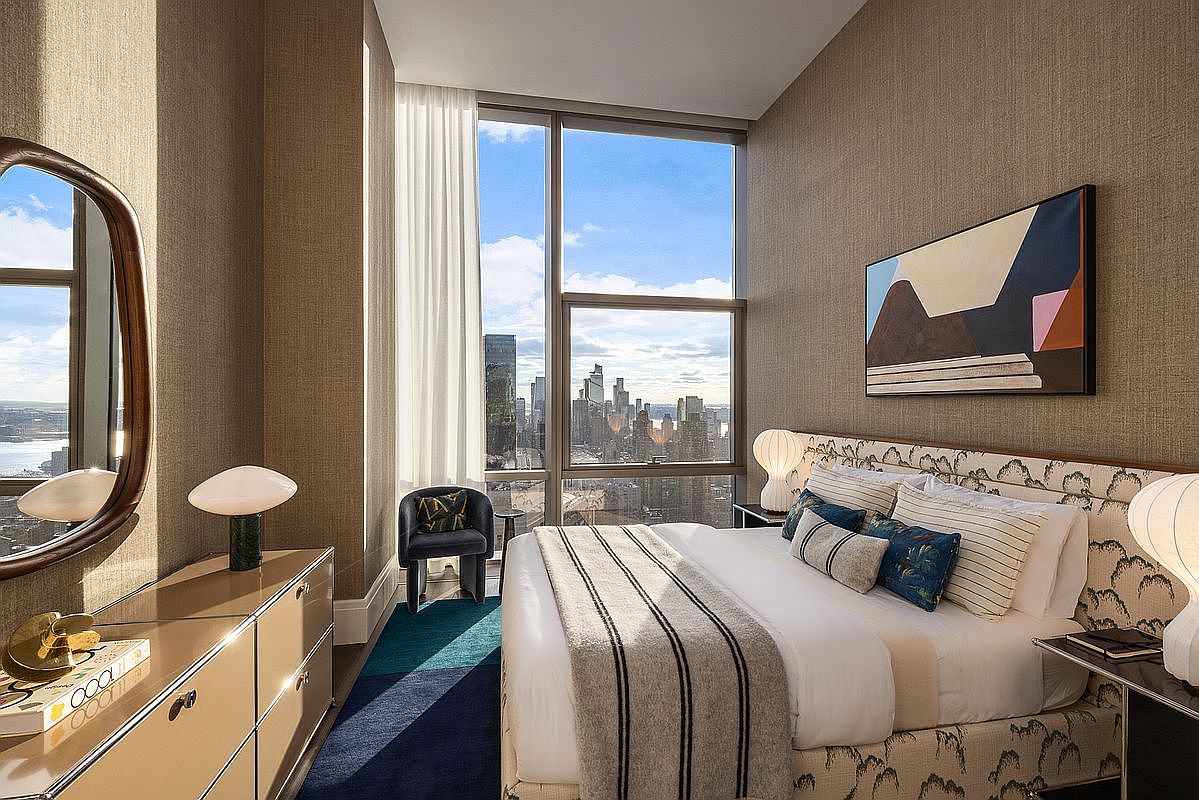
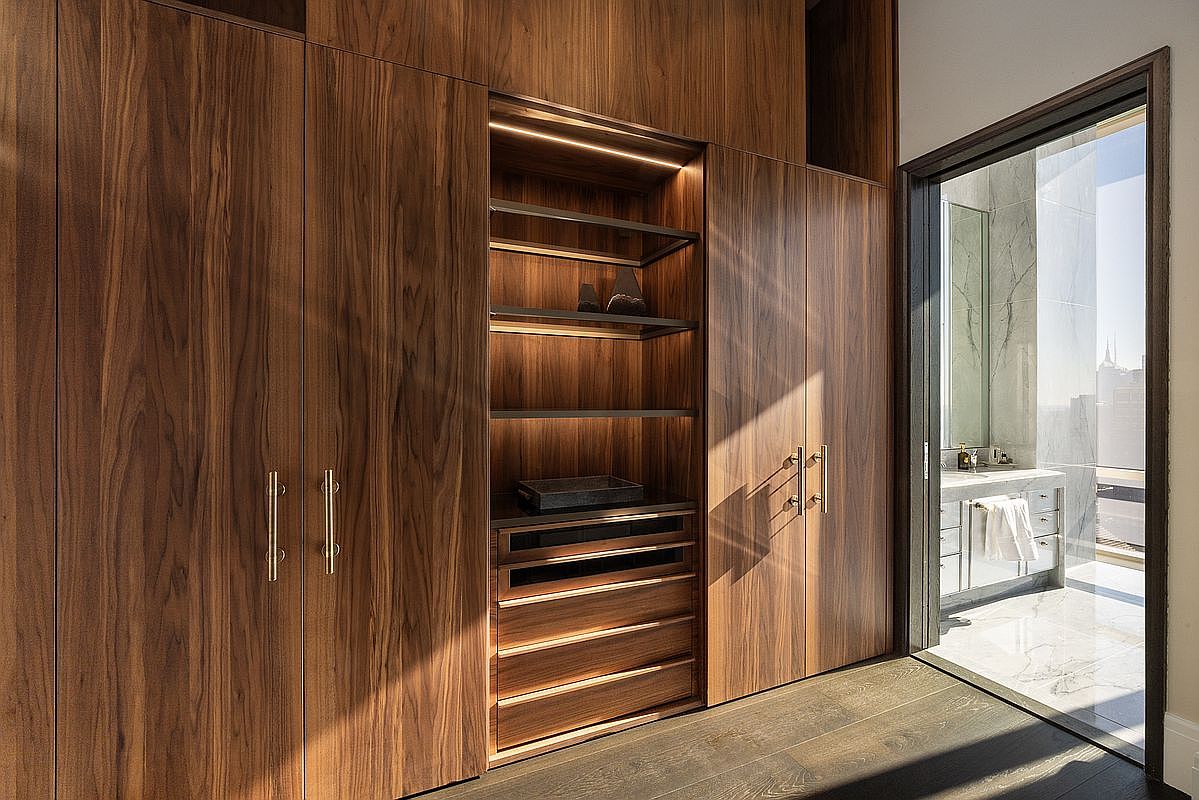
The primary suite occupies its own private wing, where floor-to-ceiling corner windows create the sensation of sleeping suspended above the park. The marble-clad bathroom is organized around a freestanding soaking tub positioned directly against the glass — perhaps the residence's most singular gesture, placing one of domesticity's most private rituals in direct conversation with the skyline. A walk-in closet finished in dark walnut cabinetry with integrated LED lighting adjoins the suite, while a dedicated home office with wood-paneled walls and its own elevated city exposure provides a space of focused refinement.
The private loggia — a feature of exceptional rarity in contemporary Manhattan construction — extends the living environment outward, offering an open-air terrace from which Central Park unfolds below in its entirety. It is the kind of outdoor space that reframes one's understanding of what urban living can offer: not the city as spectacle observed from behind glass, but the city as atmosphere, breathed and inhabited.
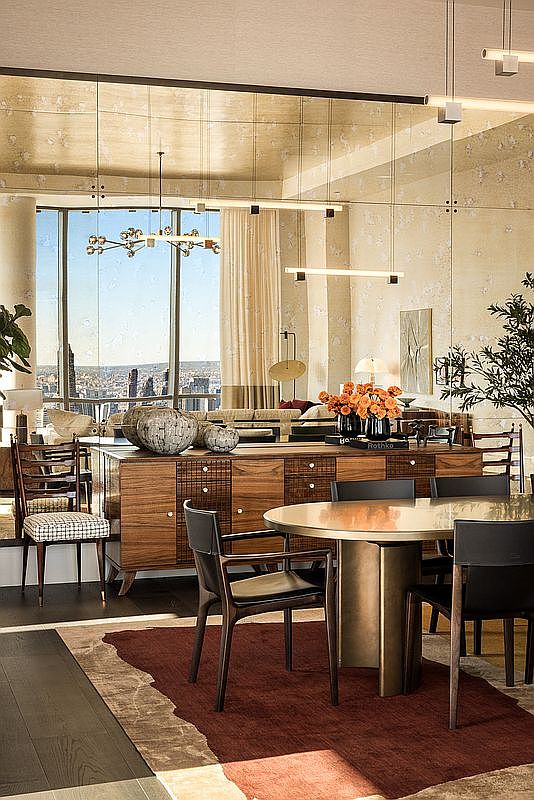
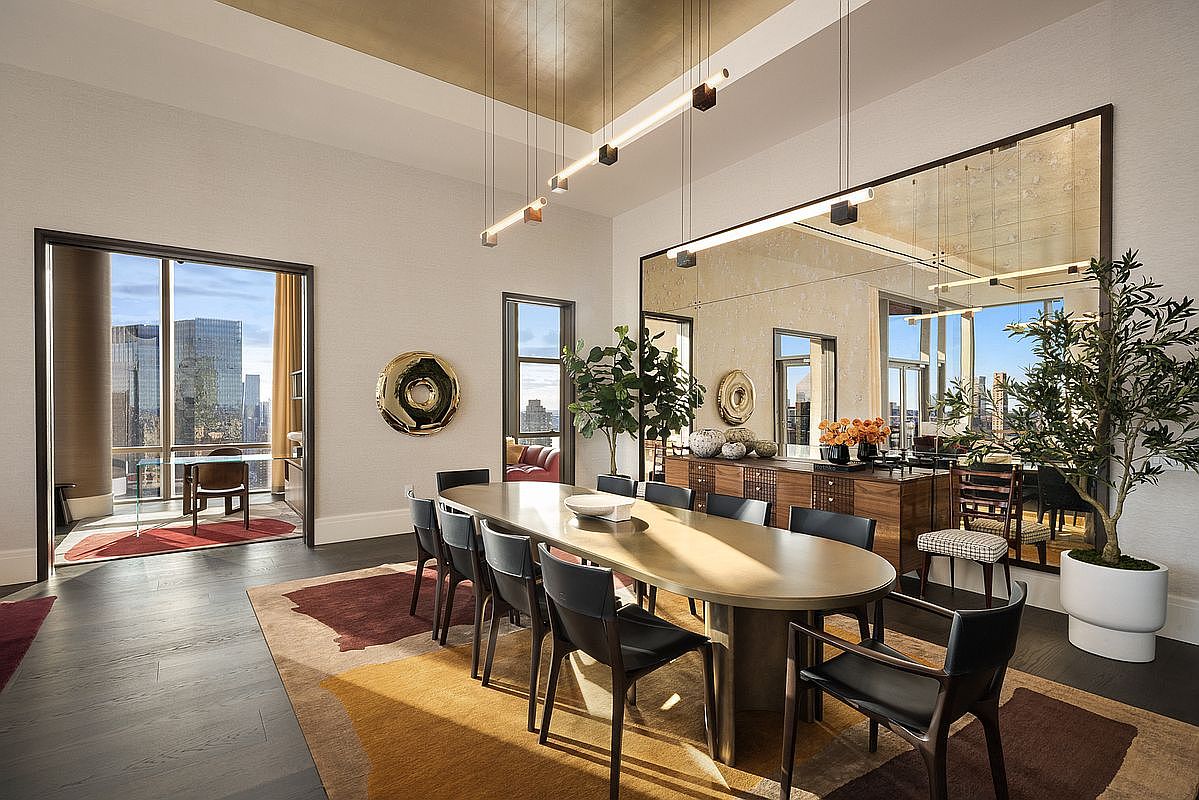
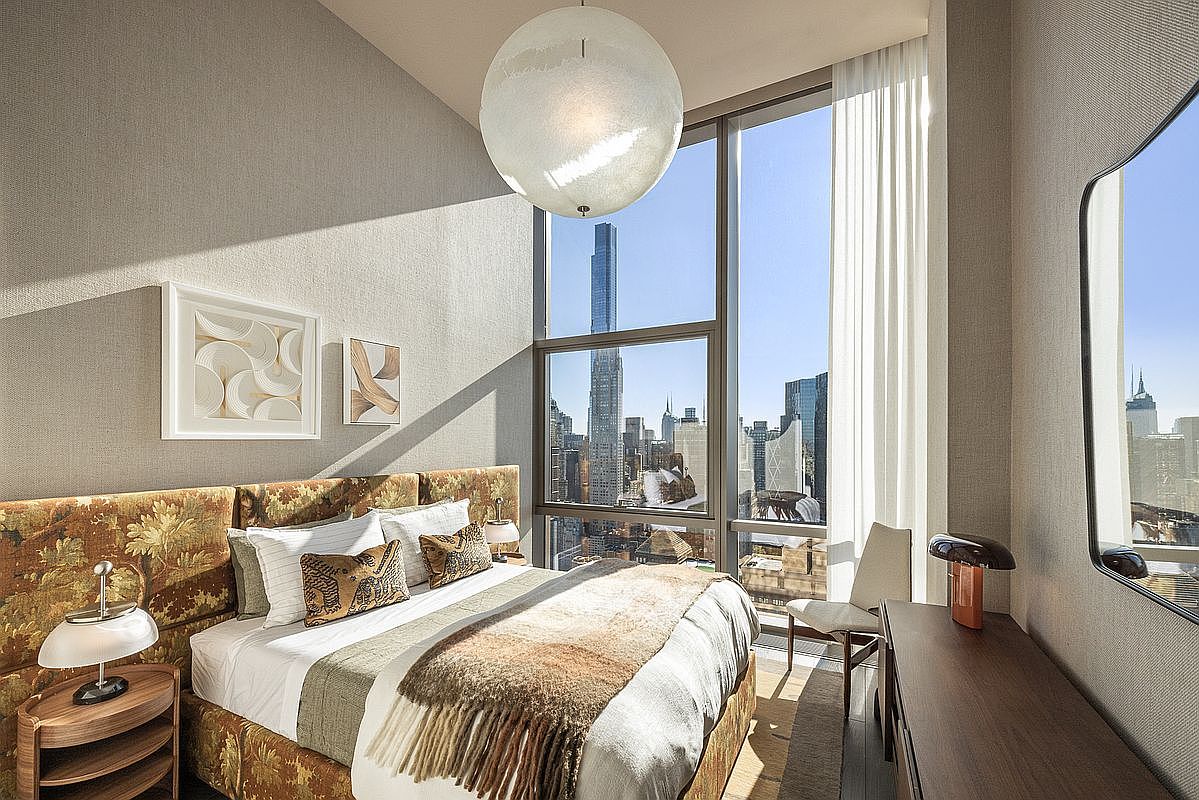
AB Concept's interior design philosophy is evident throughout in the careful layering of materiality — twelve-inch white oak flooring, book-matched marble surfaces, custom millwork — each element selected not for individual impact but for its contribution to an overall sensory coherence that is at once luxurious and deeply livable.
The Upper West Side has long occupied a particular position in the imagination of New York City — neither the financial authority of the East Side nor the bohemian energy of downtown, but something more considered: a neighborhood that has historically attracted artists, intellectuals, musicians, and families who value cultural richness alongside residential grace. Central Park West and its surrounding blocks represent some of the most architecturally distinguished residential addresses in the Western world, and the immediate vicinity of West 66th Street places one at the precise geographic and cultural fulcrum of this storied district.
Lincoln Center for the Performing Arts sits within easy walking distance, its campus anchoring what has become one of the world's foremost concentrations of cultural institutions. The Metropolitan Opera, the New York Philharmonic at David Geffen Hall, the Film Society of Lincoln Center, the Juilliard School, and the New York City Ballet are all housed within a few blocks, creating a cultural gravity that shapes the character of daily life in ways both practical and atmospheric. The neighborhood's bookshops, independent cafés, and restaurants along Columbus and Amsterdam Avenues reflect a community that prizes substance alongside style.
Central Park, at the building's immediate threshold, requires little introduction as a civic achievement, but its particular character at this latitude — between the 66th Street entrance and Strawberry Fields to the south, Sheep Meadow, Tavern on the Green, and the Reservoir to the north — offers a range of experiences within a short walk: open meadows for quiet afternoon reading, the Reservoir's running path frequented by early risers at dawn, the Delacorte Theater for summer Shakespeare performances, and Belvedere Castle as a geographic landmark. The park functions here not as a destination but as an extension of the residential environment, a 843-acre backyard of incomparable scale.
The Hudson River waterfront, accessible within minutes to the west via Riverside Park, provides an additional green corridor along which cycling, running, and waterfront dining have become fixtures of neighborhood life. The park's linear progression from 72nd Street south through Hudson River Park connects residents to a continuous outdoor network that is among the most compelling urban amenity systems in the country.
Practically, the neighborhood is exceptionally well served. The 1, 2, and 3 subway lines at 72nd Street, and the B and C lines at 72nd Street along Central Park West, provide rapid transit connections to the broader city. The concentration of dining along Broadway — from casual neighborhood institutions to destination restaurants — ensures that the Upper West Side functions as a self-contained ecosystem capable of satisfying the most discerning tastes without requiring departure.
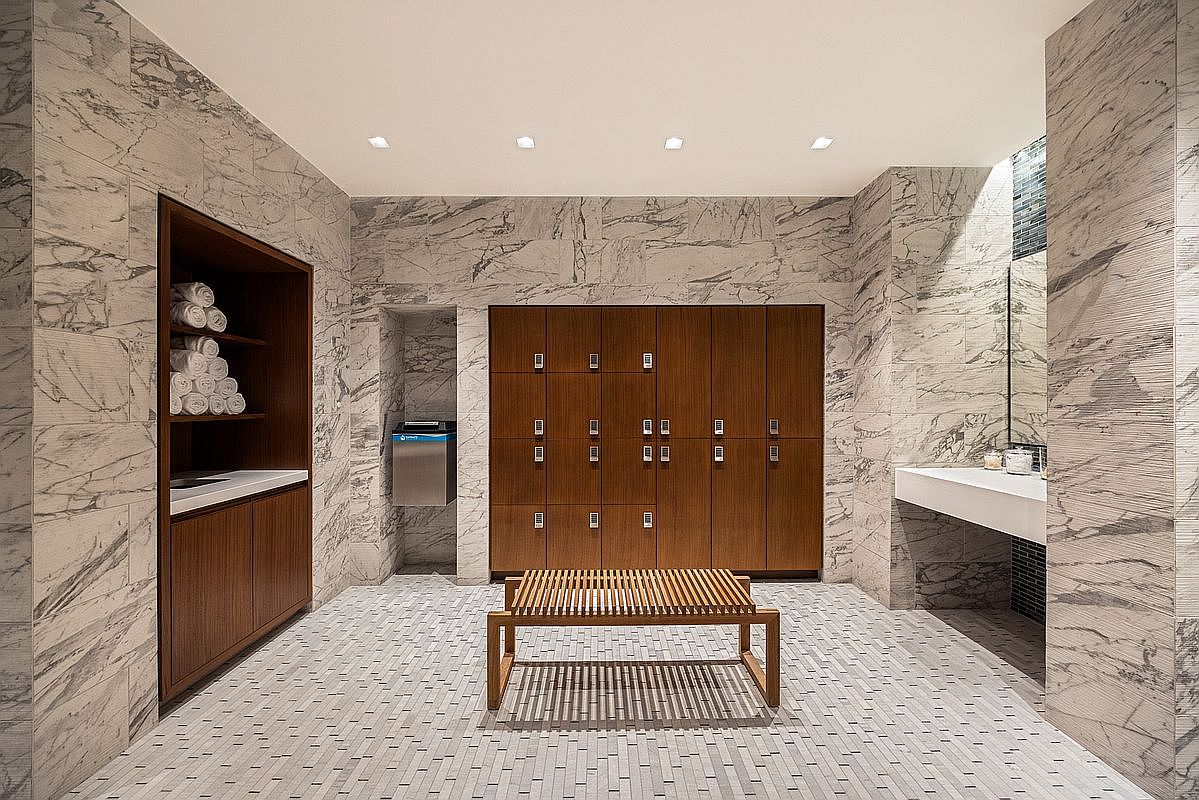
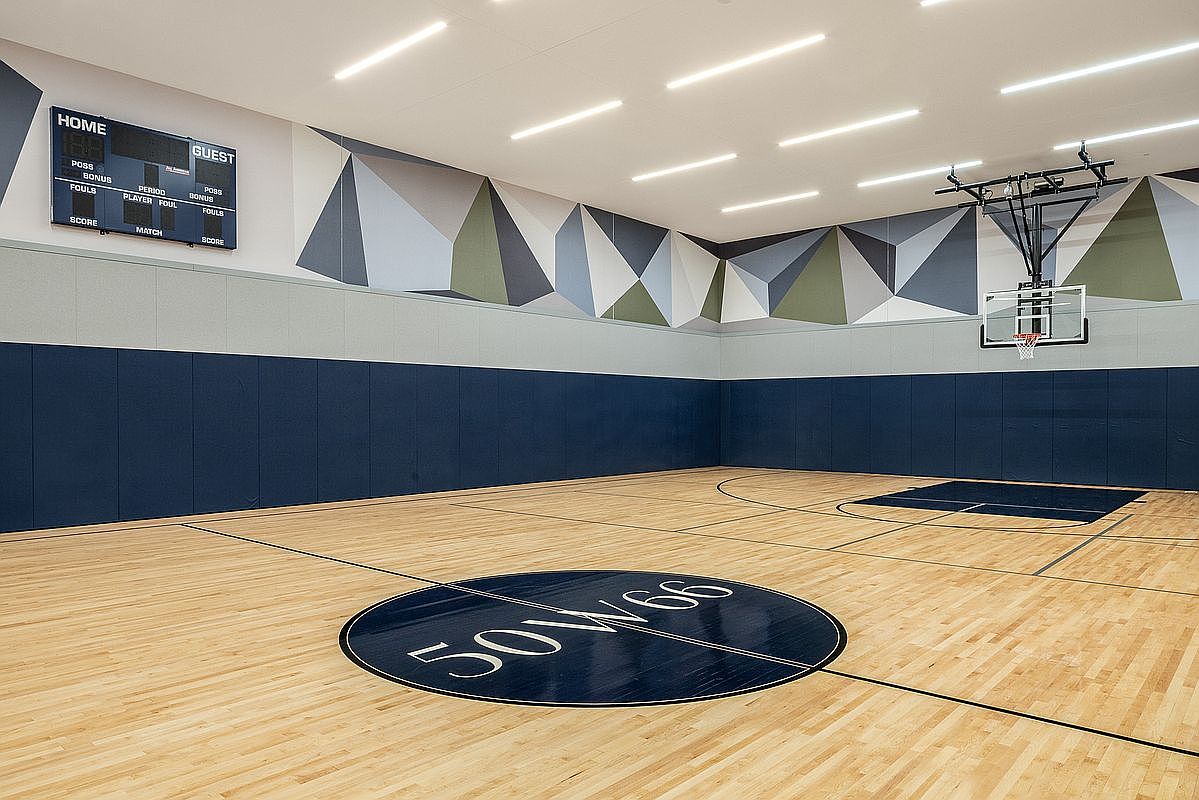
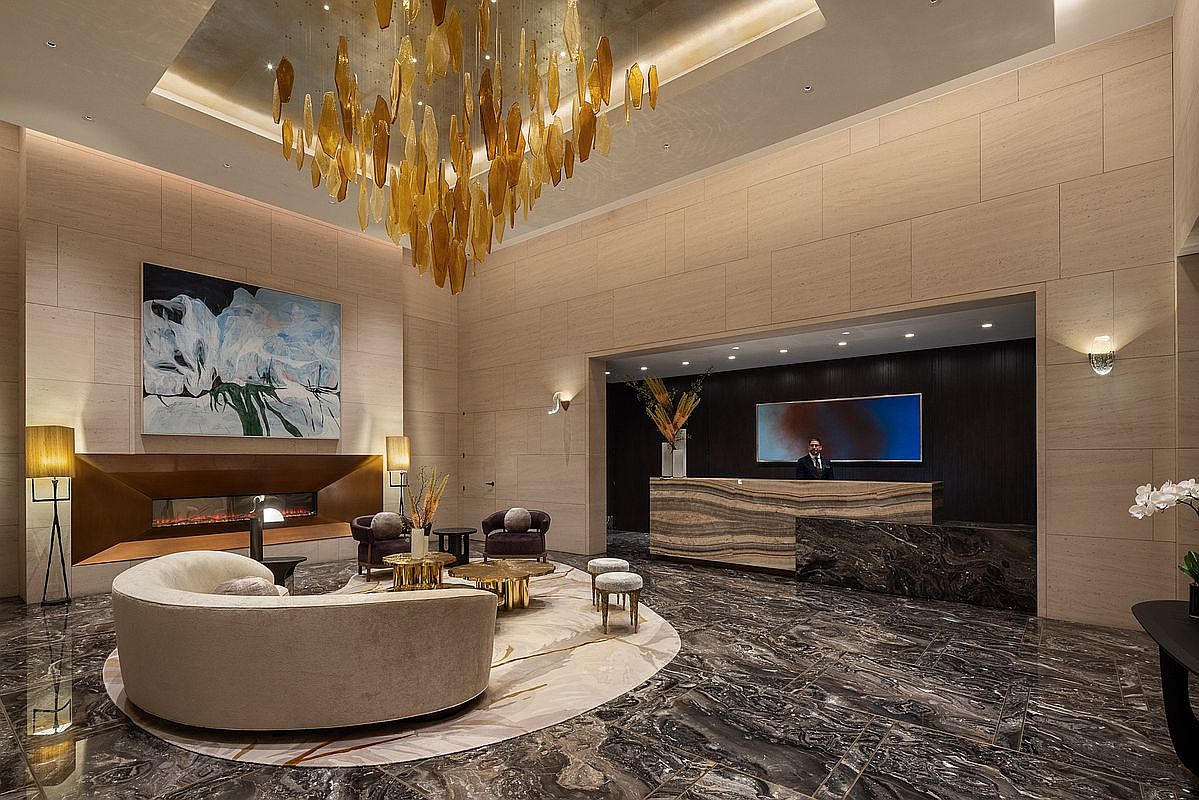
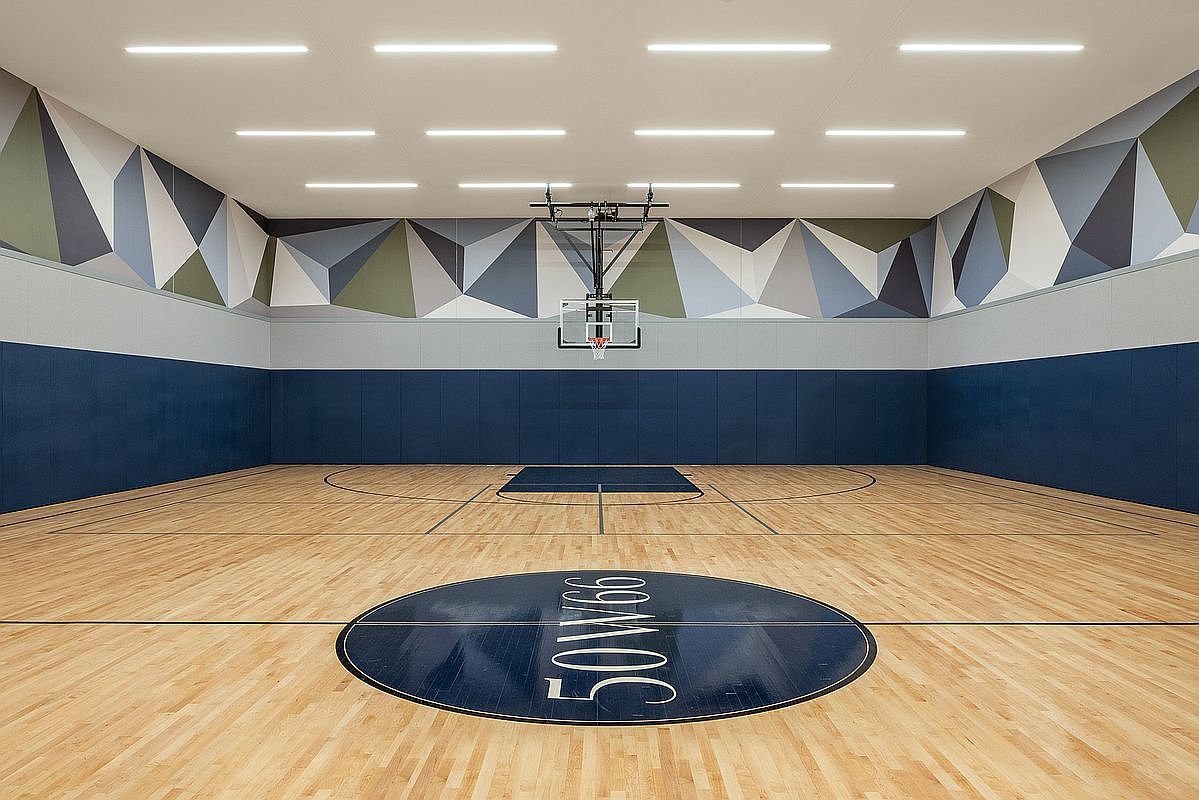
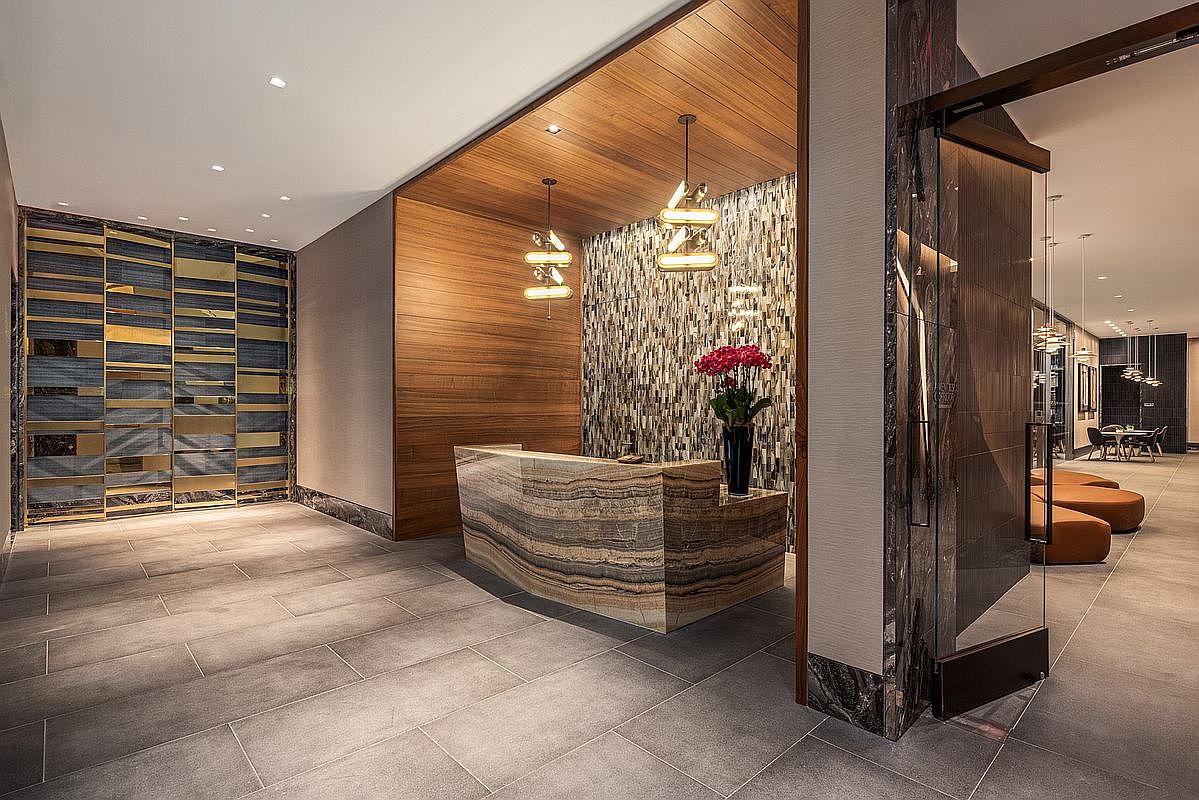
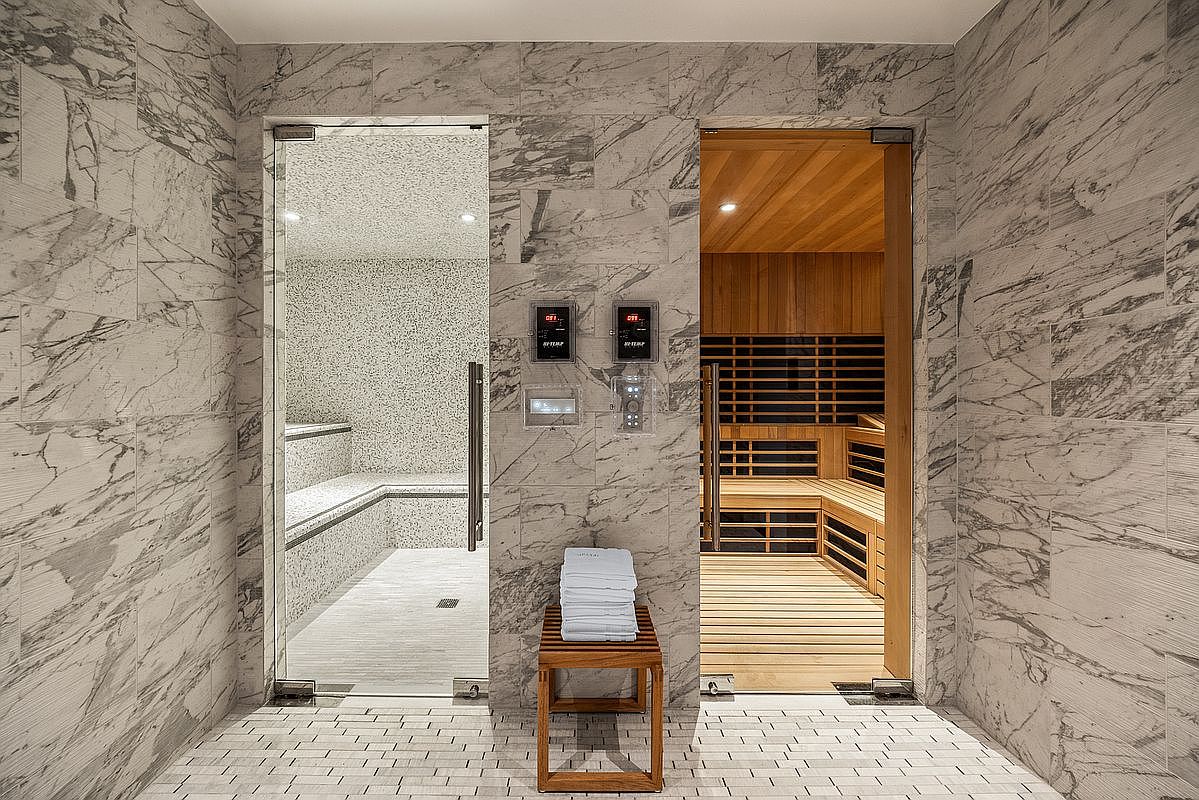
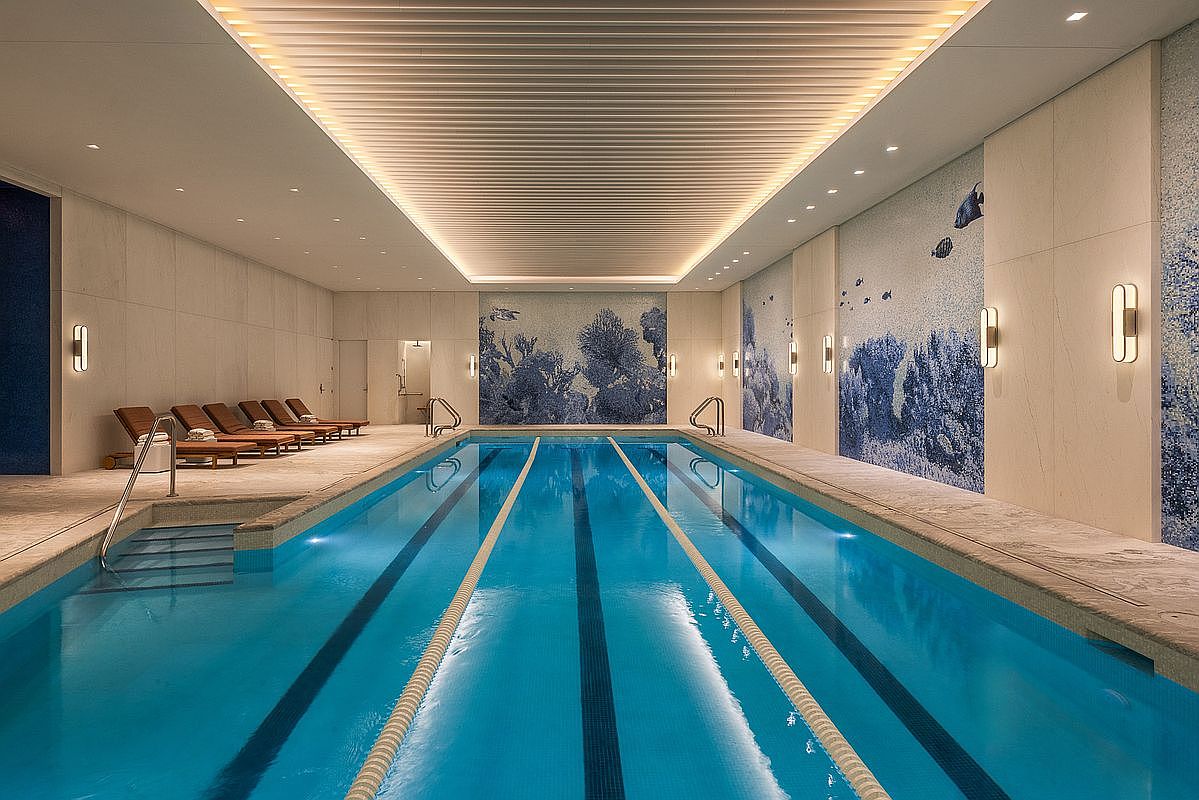
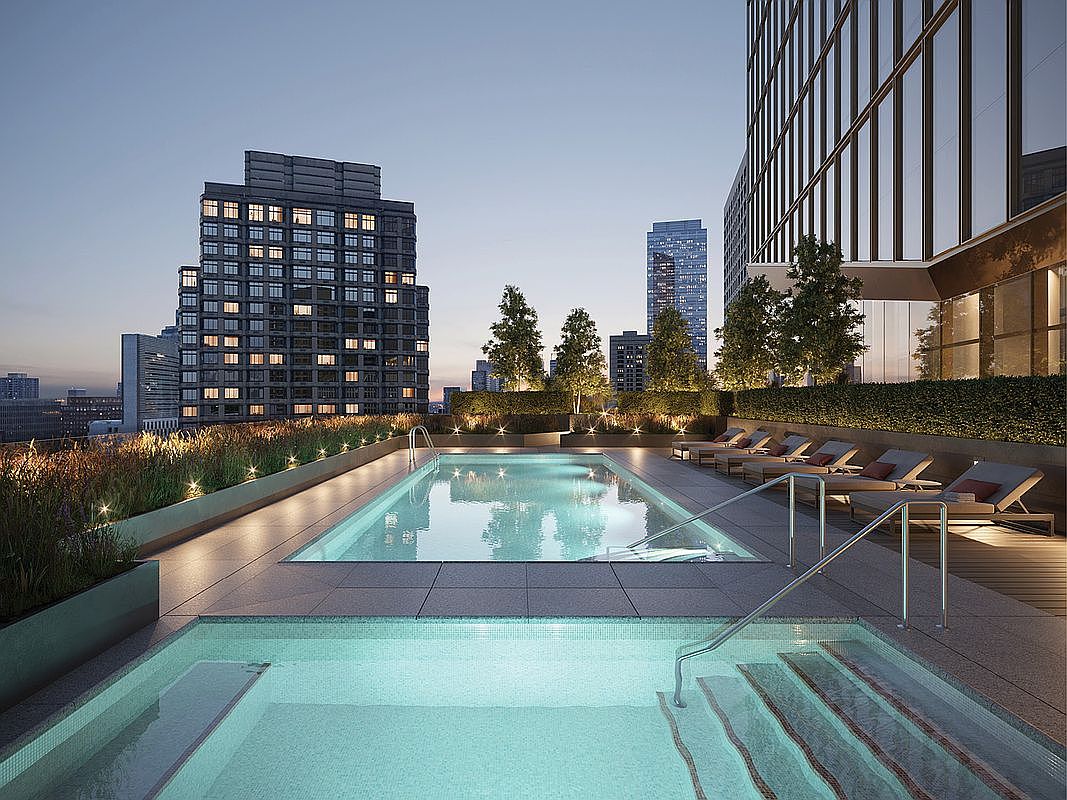
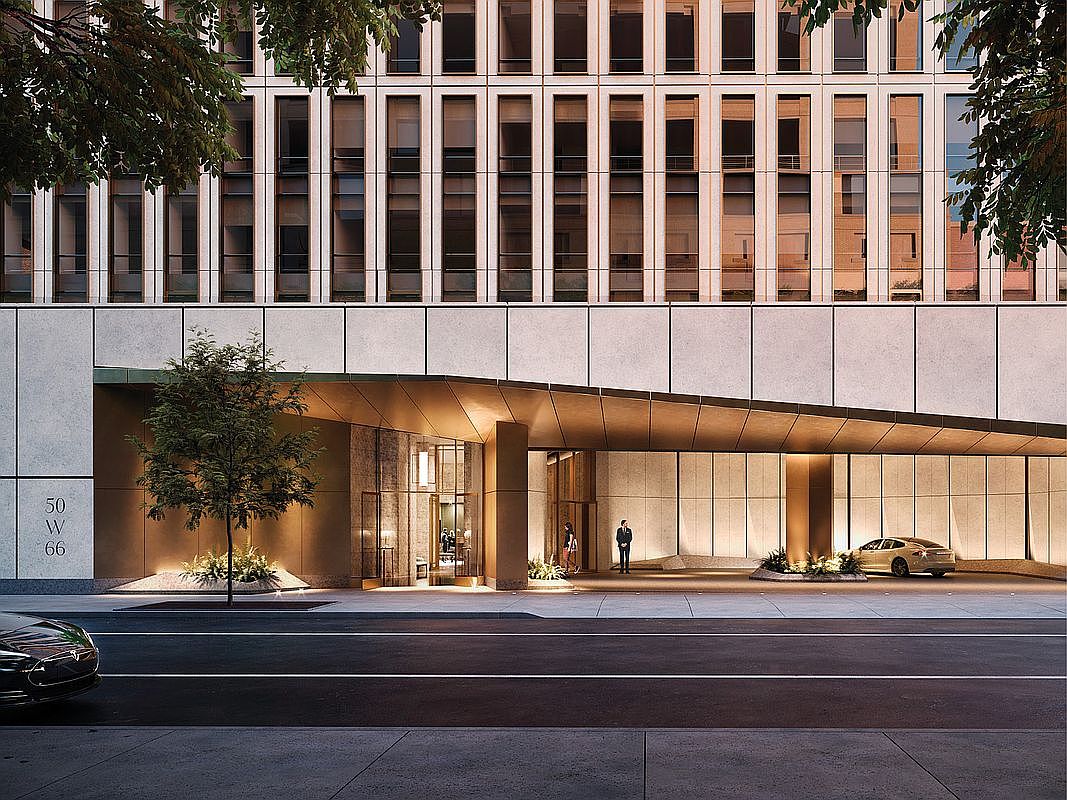
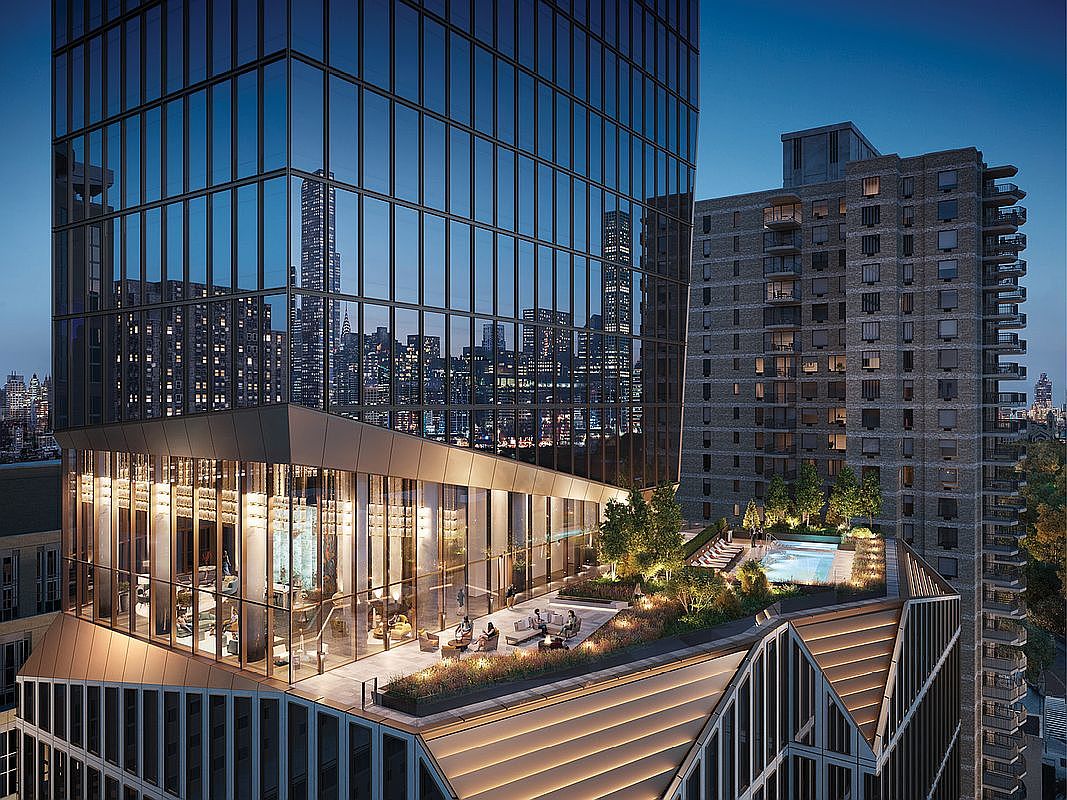
Within 50 West 66th Street itself, nearly 50,000 square feet of amenity space — including an indoor lap pool, outdoor pool and spa terrace, full-sized basketball and pickleball courts, squash court, state-of-the-art fitness center, steam room, sauna, and a rooftop Sky Lounge — constitute a private club of a scale and quality that few residential buildings anywhere in the world can credibly claim. A private porte cochère completes the arrival sequence with the discretion and ease that residents at this level of living rightly expect.
Featured Highlights
Curated Content • Presented by Miko Page