The Story Behind
A Balinese Bluff Estate Where the Pacific Meets Artistry
There are properties that impress, and then there are properties that transport. This Malibu bluff estate belongs unequivocally to the latter category — a masterwork of global craftsmanship and considered design that rewards the eye at every turn and the spirit at every hour of the day.
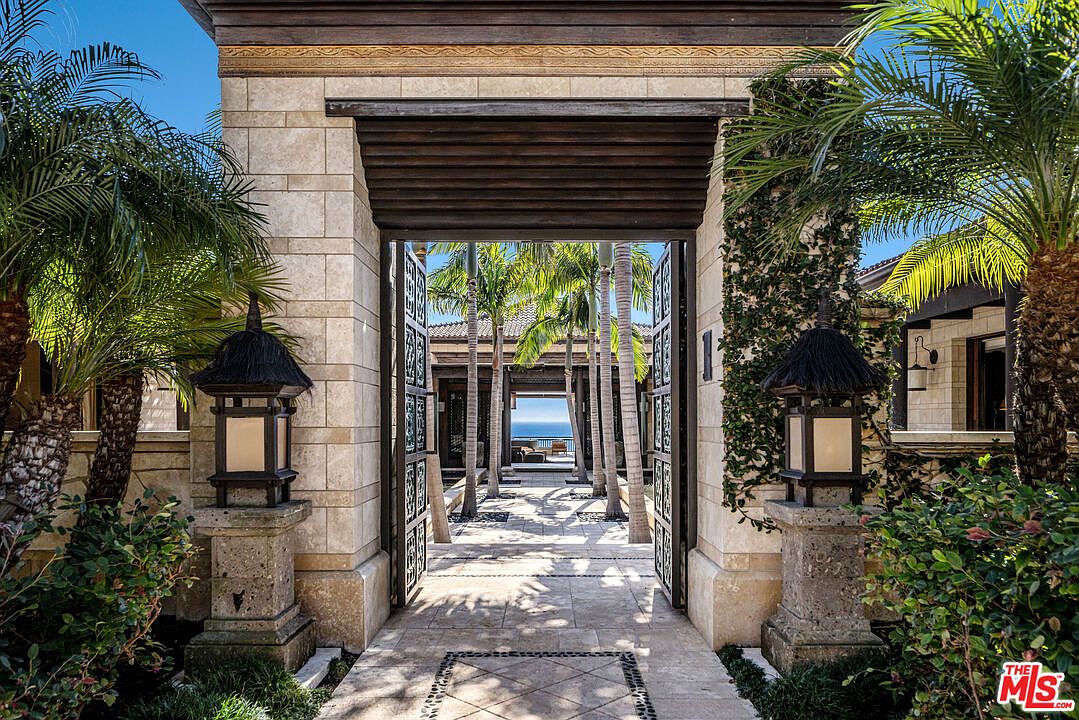
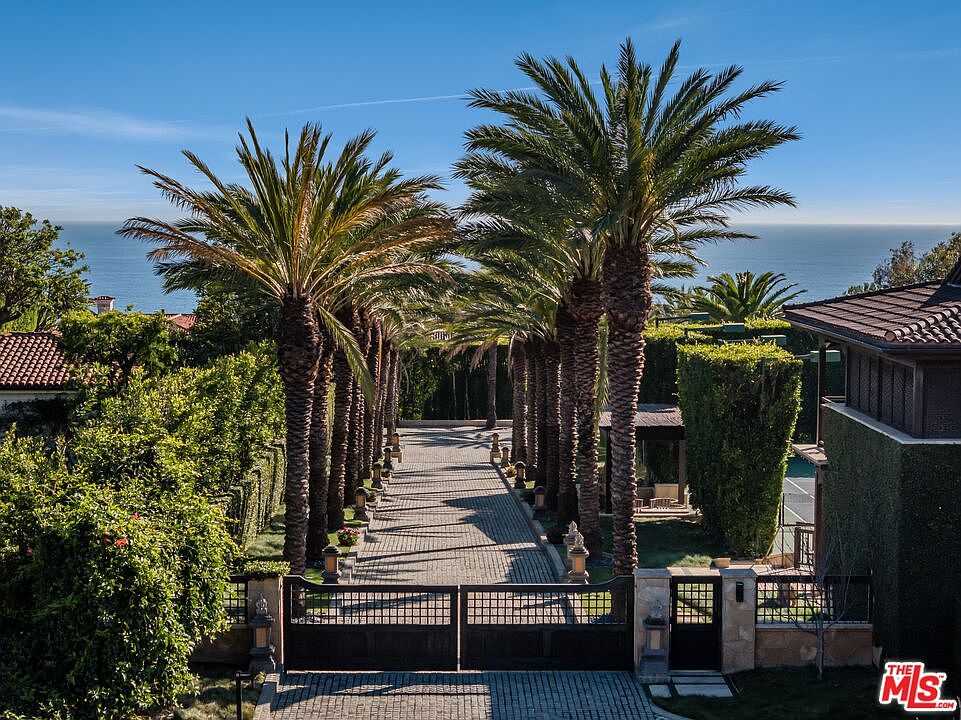
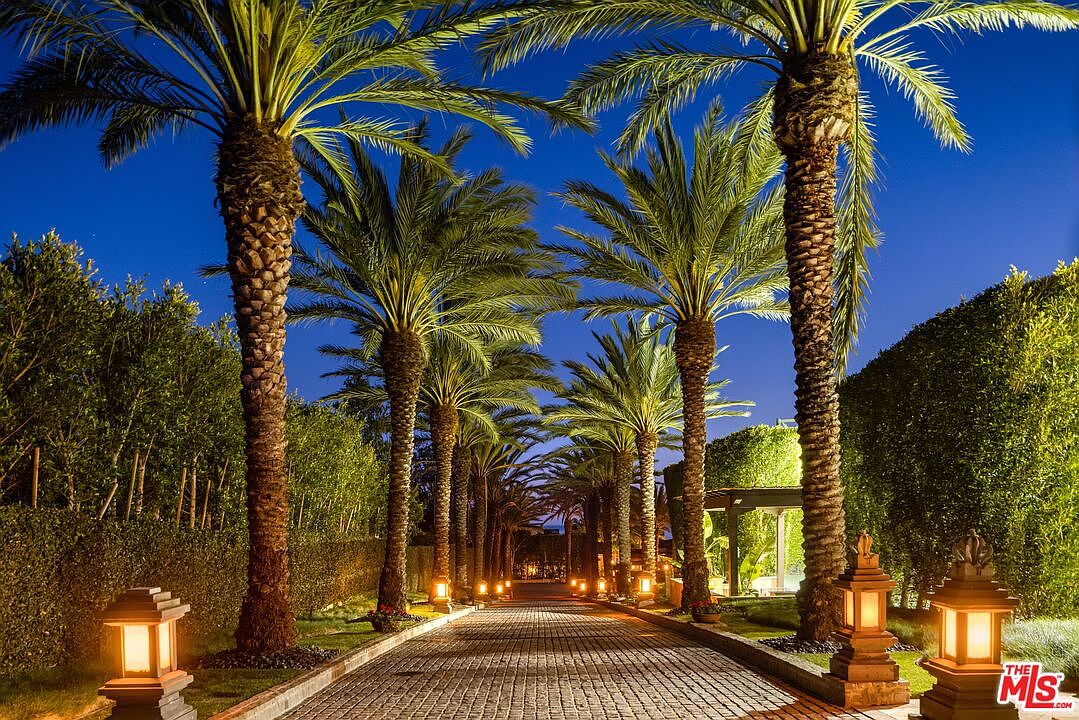
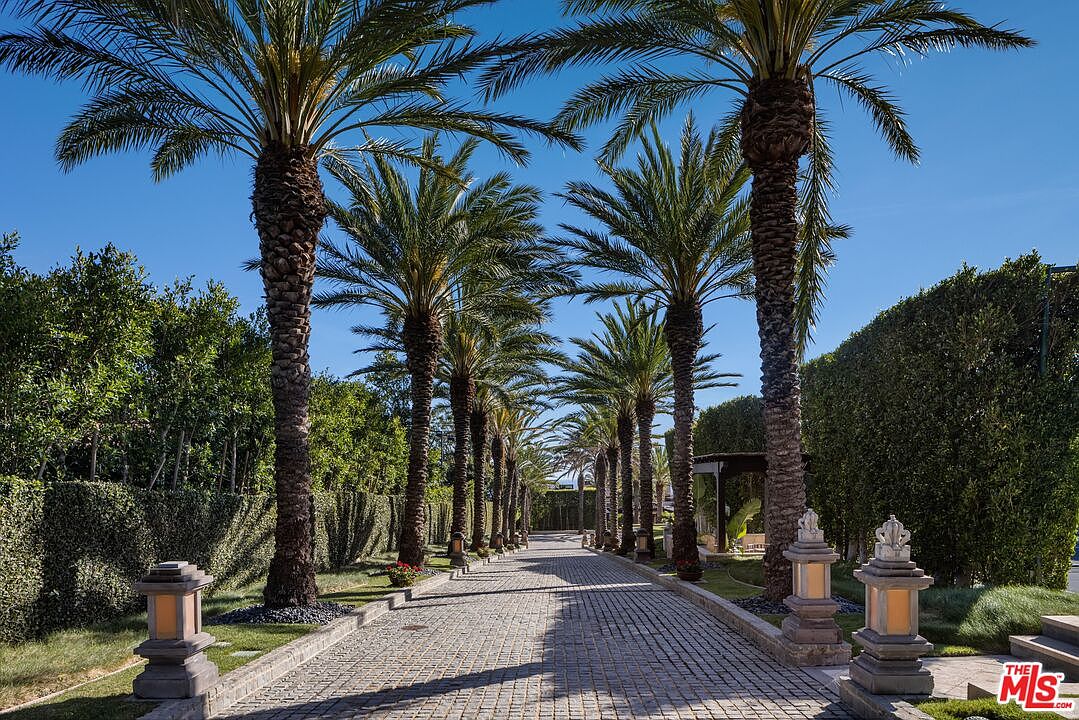
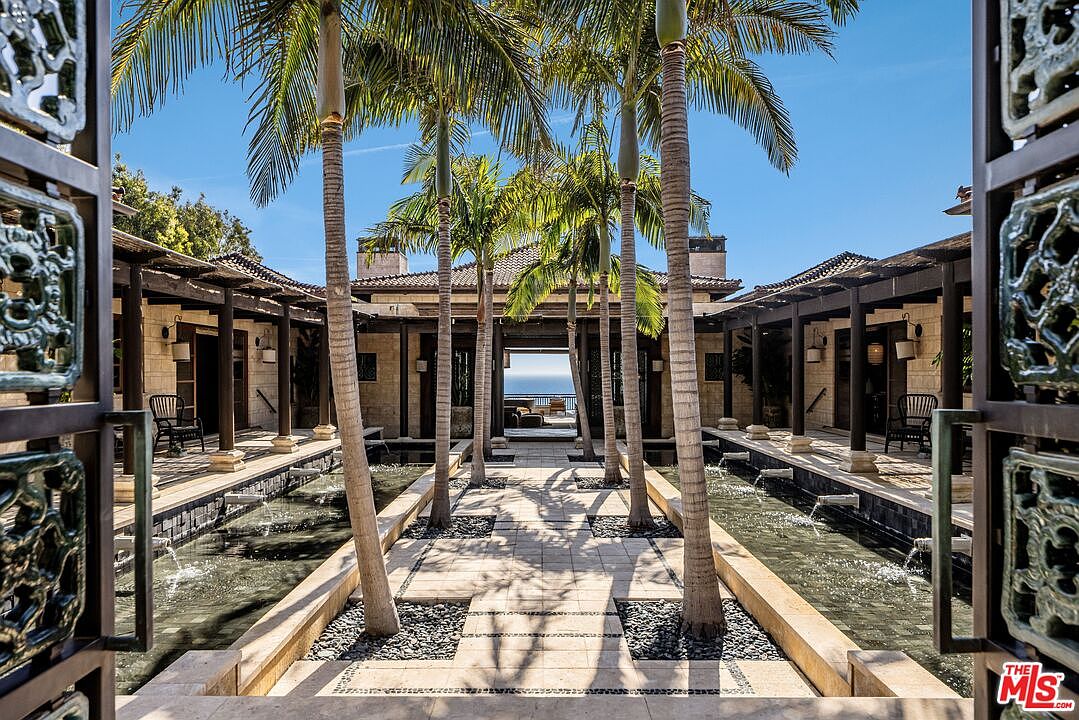
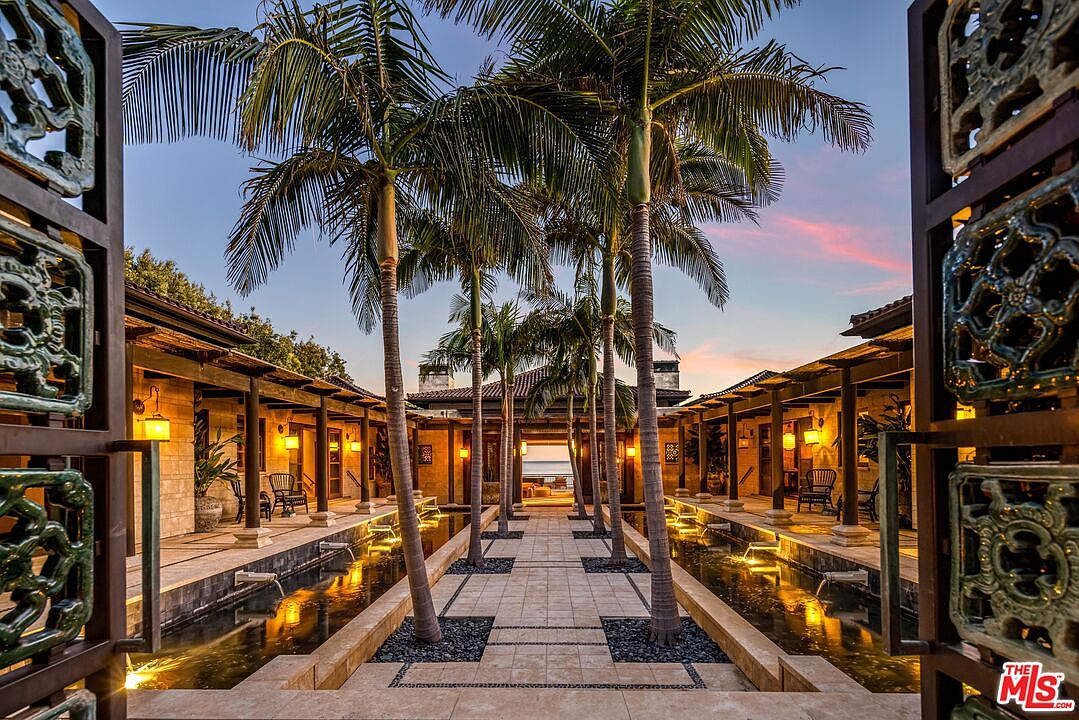
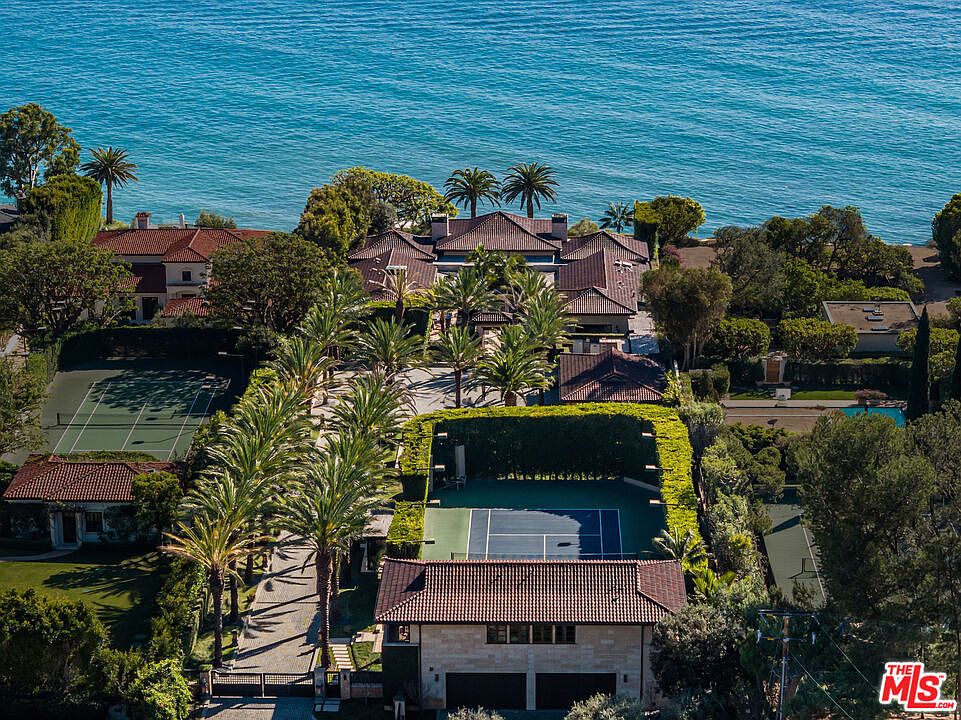
The compound announces itself before you ever reach the front door. A cobblestone motor court, flanked by towering mature palms and stone lanterns, creates a processional entrance that signals the journey ahead. Ornate custom gates, adorned with Chinese green-ware tiles, frame the first glimpse of a courtyard world unto itself — one where twin reflecting pools mirror the sky and the sound of water softens the boundary between the cultivated and the elemental.
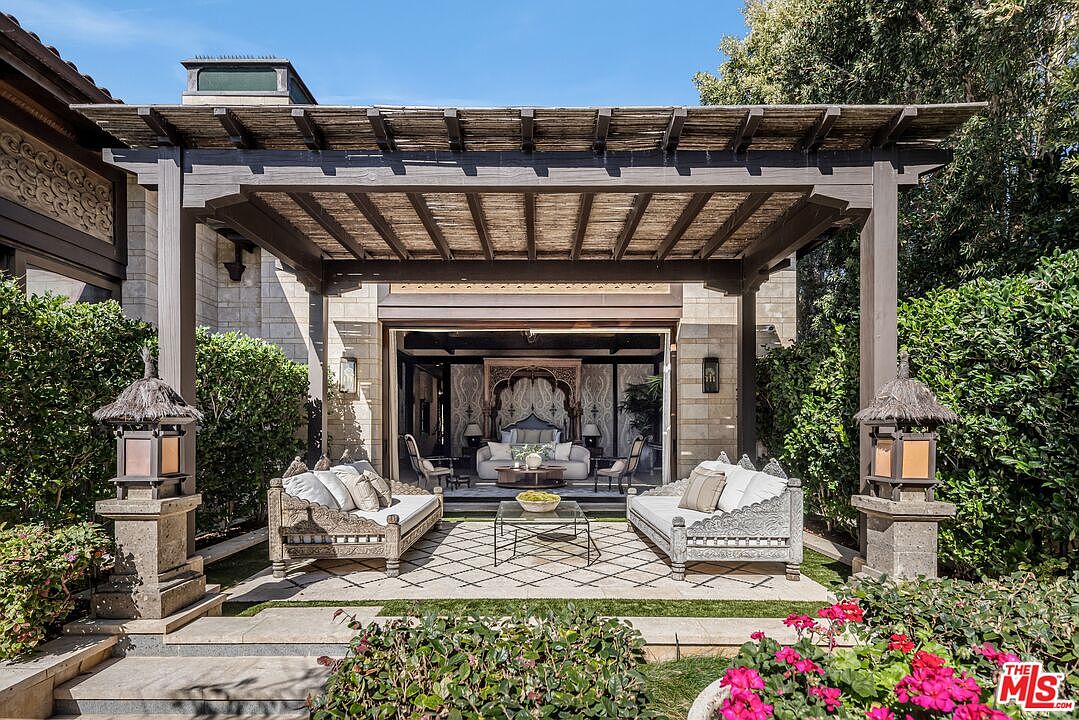
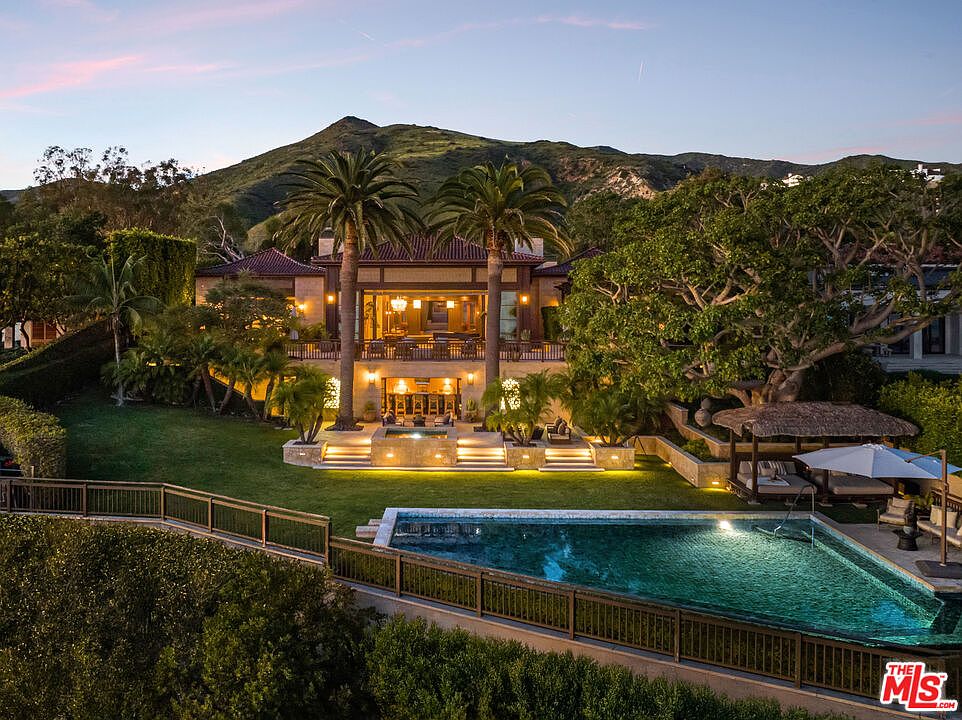
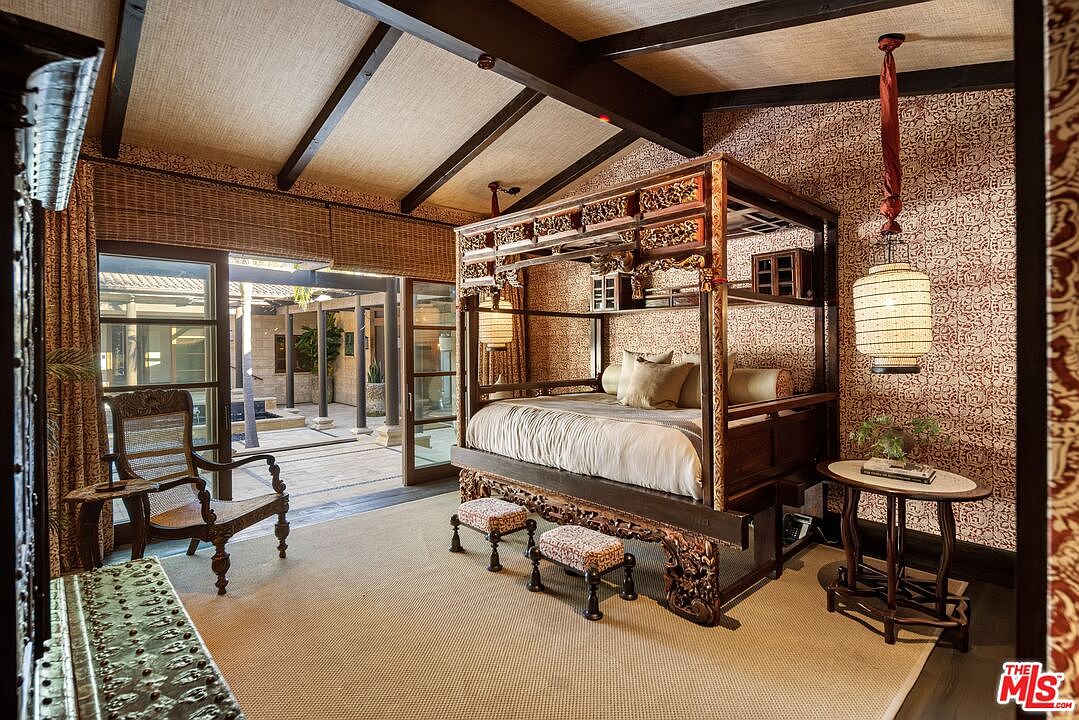
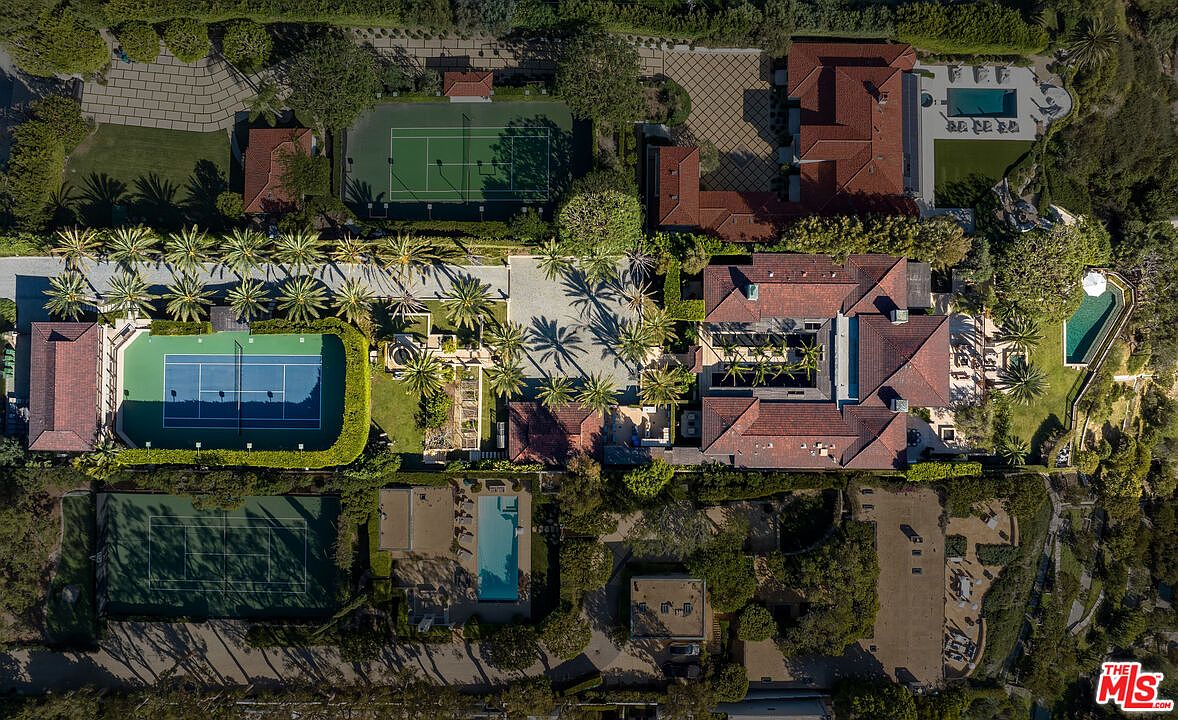
Designed by Martyn Lawrence Bullard — one of the most recognized interior designers working in the luxury residential sphere — the estate is composed of three Balinese-inspired pavilions arranged in a U-shape around terraced gardens and shimmering water features. The limestone-clad exteriors and teak doors and windows speak to a coherent architectural language rooted in tropical refinement, while the street-to-street lot — an increasingly rare configuration in coastal Malibu — provides the compound with a sense of genuine sovereignty.
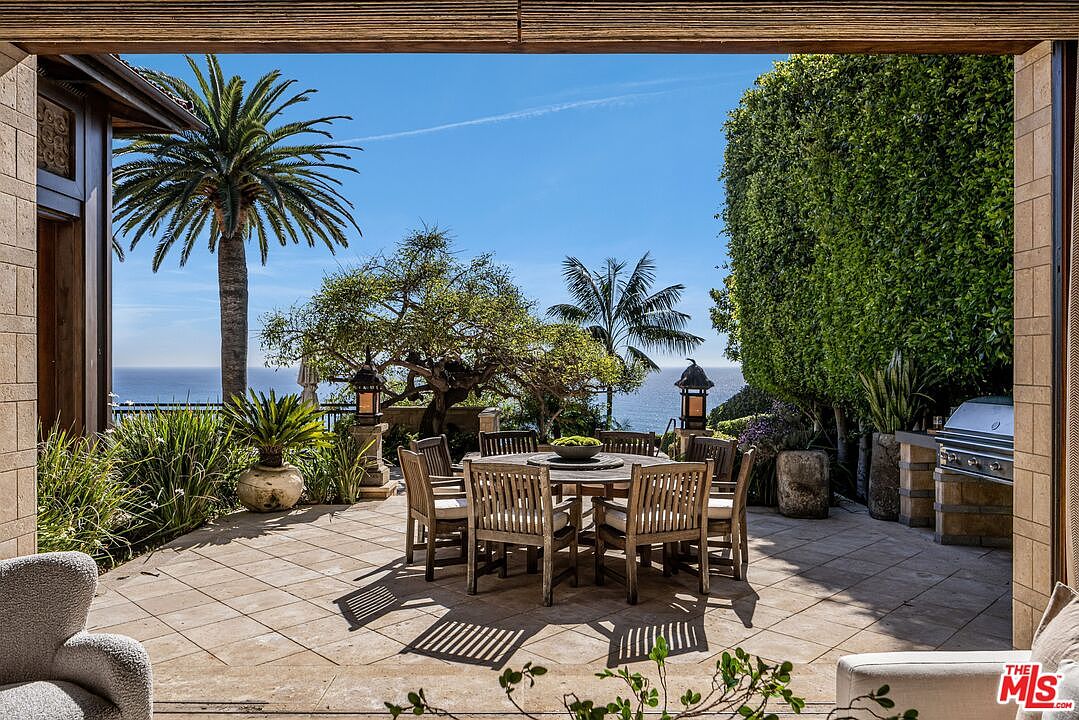
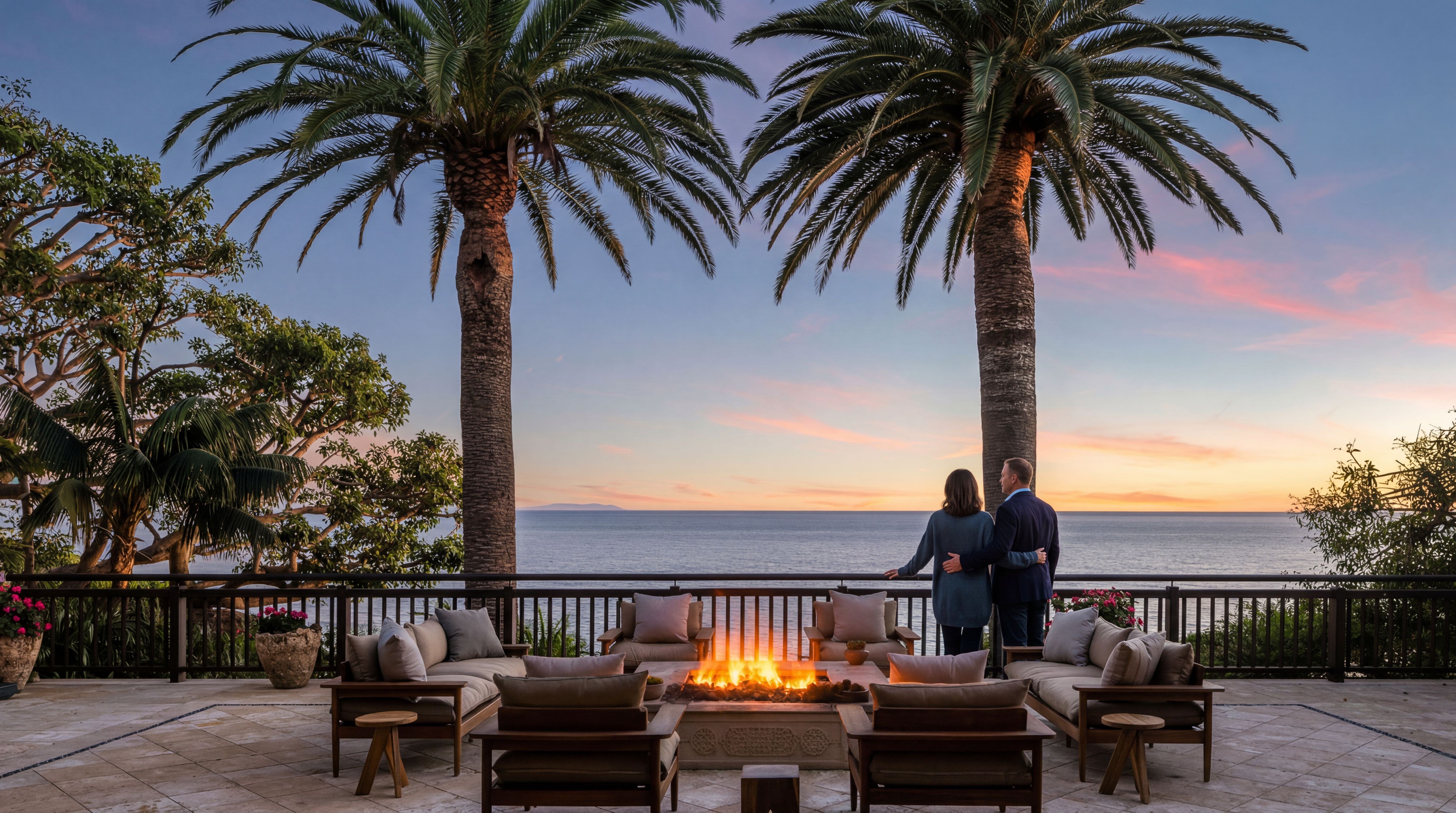
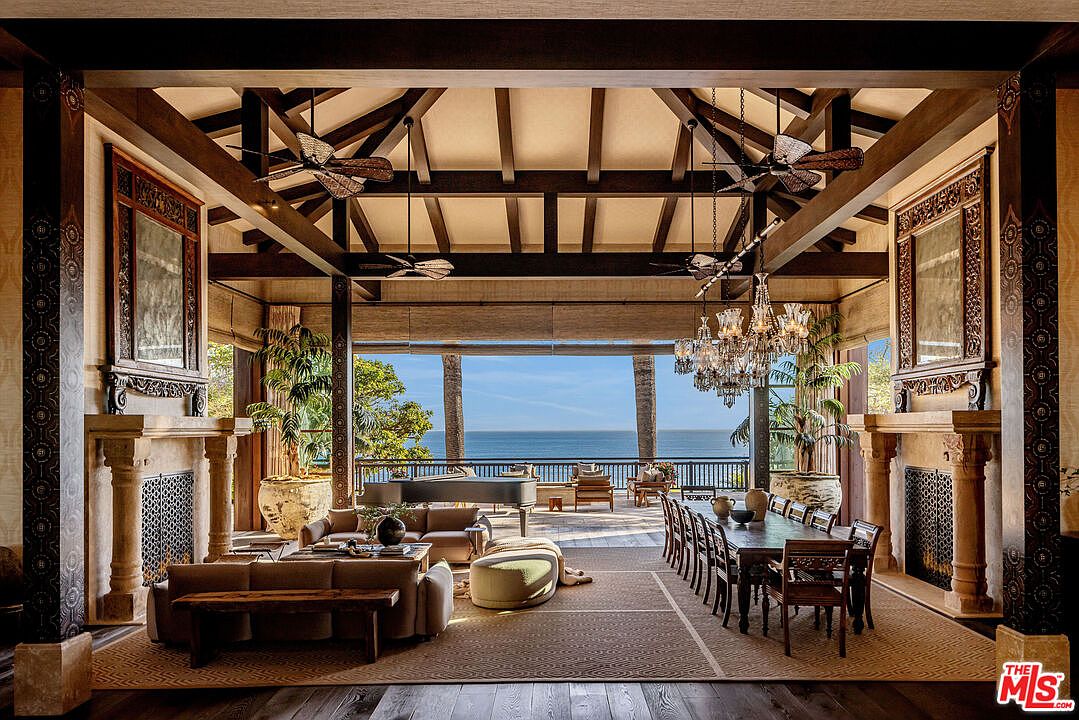
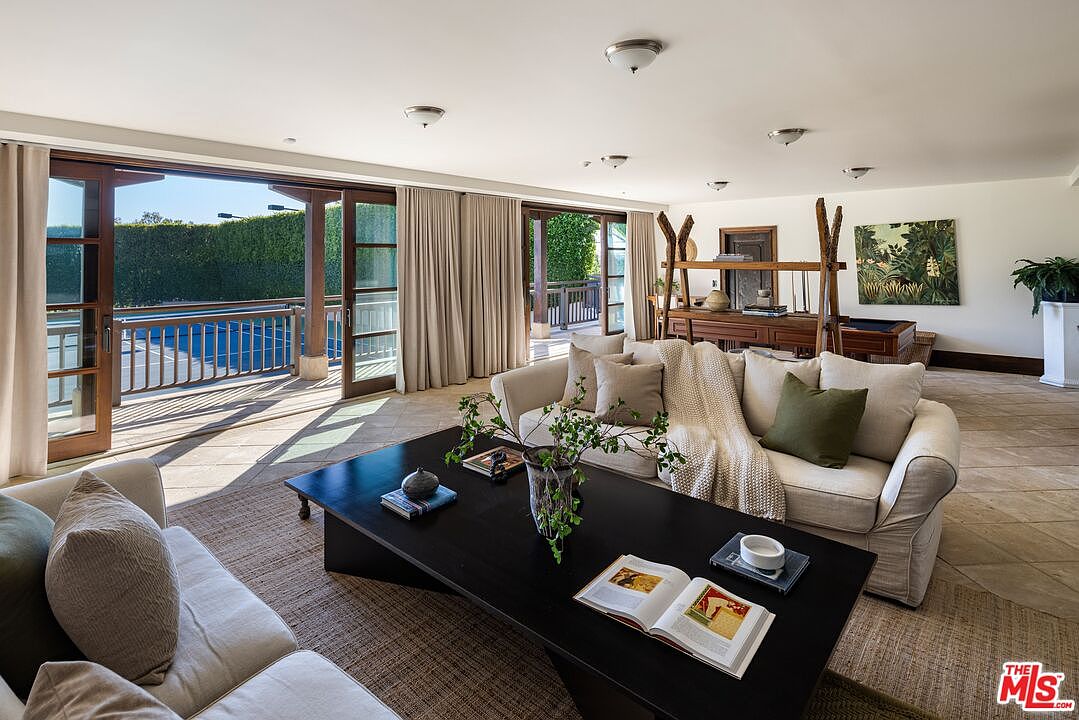
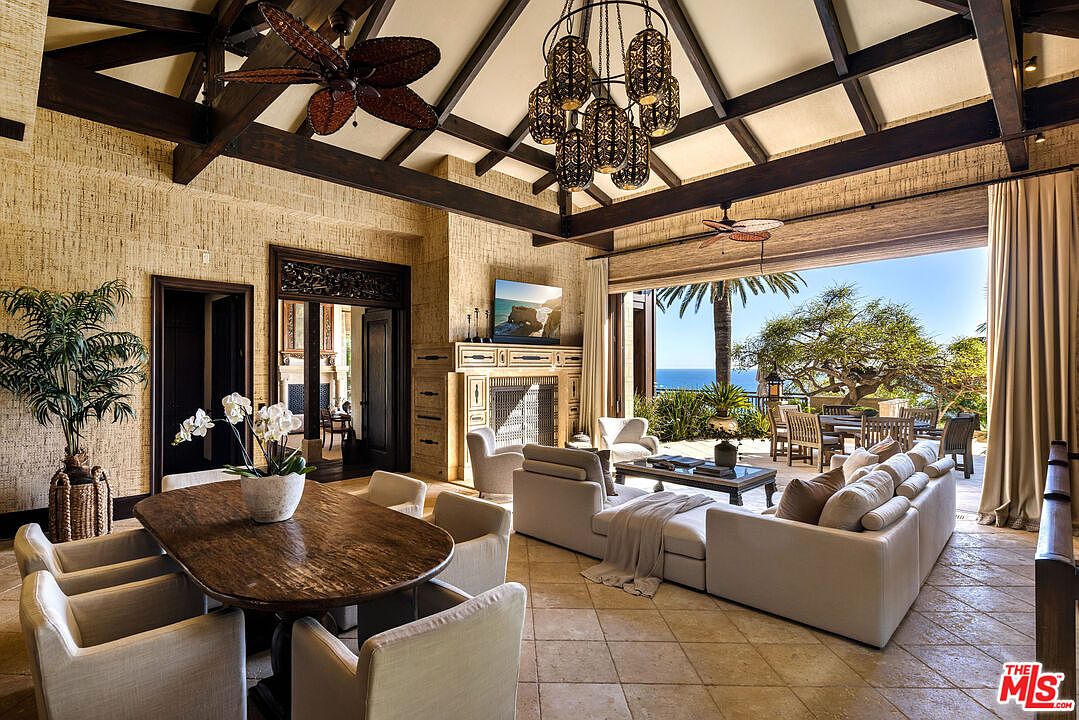
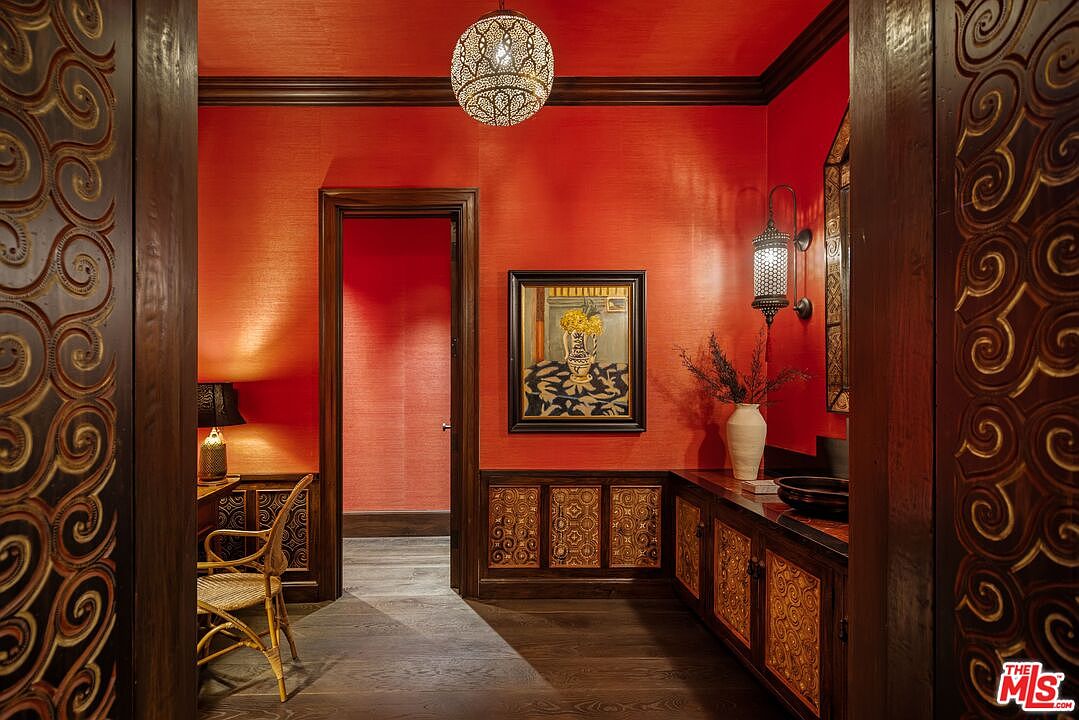
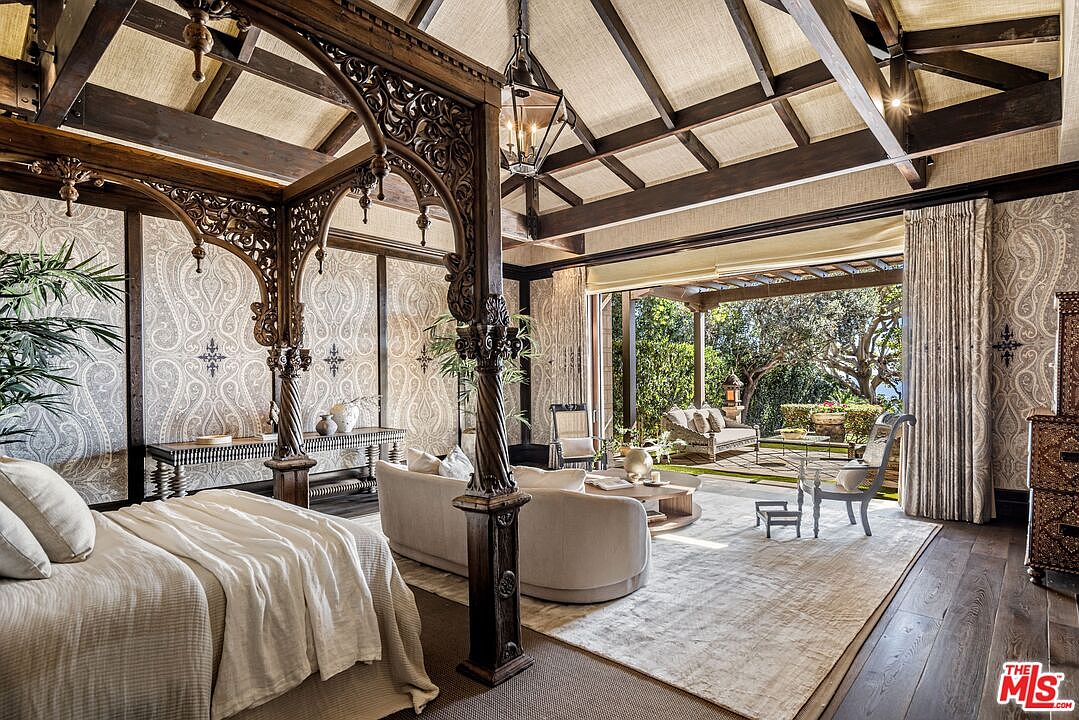
Inside, the soaring great room is the emotional and spatial heart of the residence. Dual fireplaces, each crafted from 17th- and 18th-century Indian columns, anchor a room that opens through thirty-foot sliding glass doors onto expansive ocean-view terraces. The effect is cinematic: the Pacific appears not as a backdrop but as an integral room in itself. Hand-stenciled walls and antique architectural fragments sourced from Java and Rajasthan layer the interiors with a depth that no amount of budget alone can manufacture — these are the accumulations of a genuinely global design sensibility.
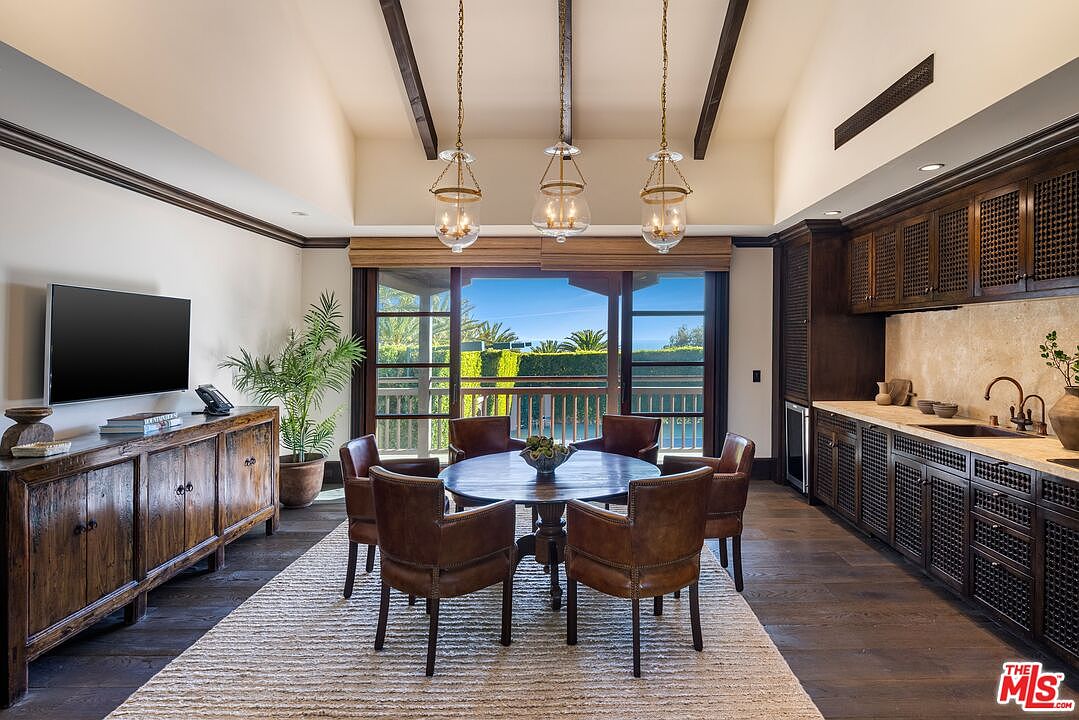
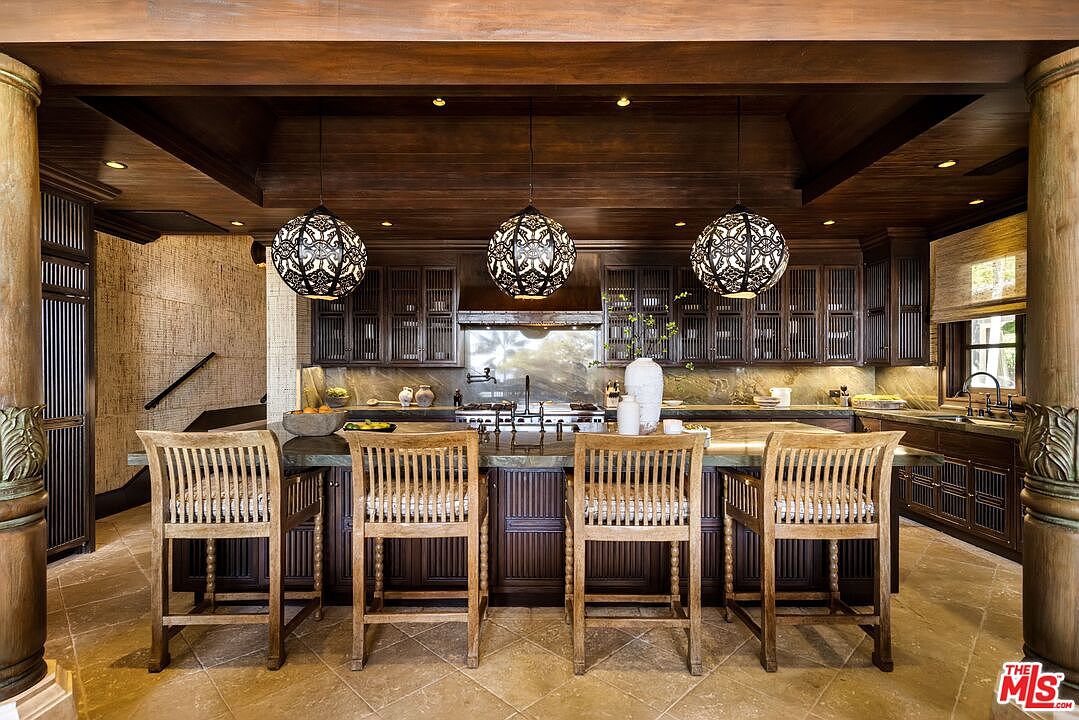
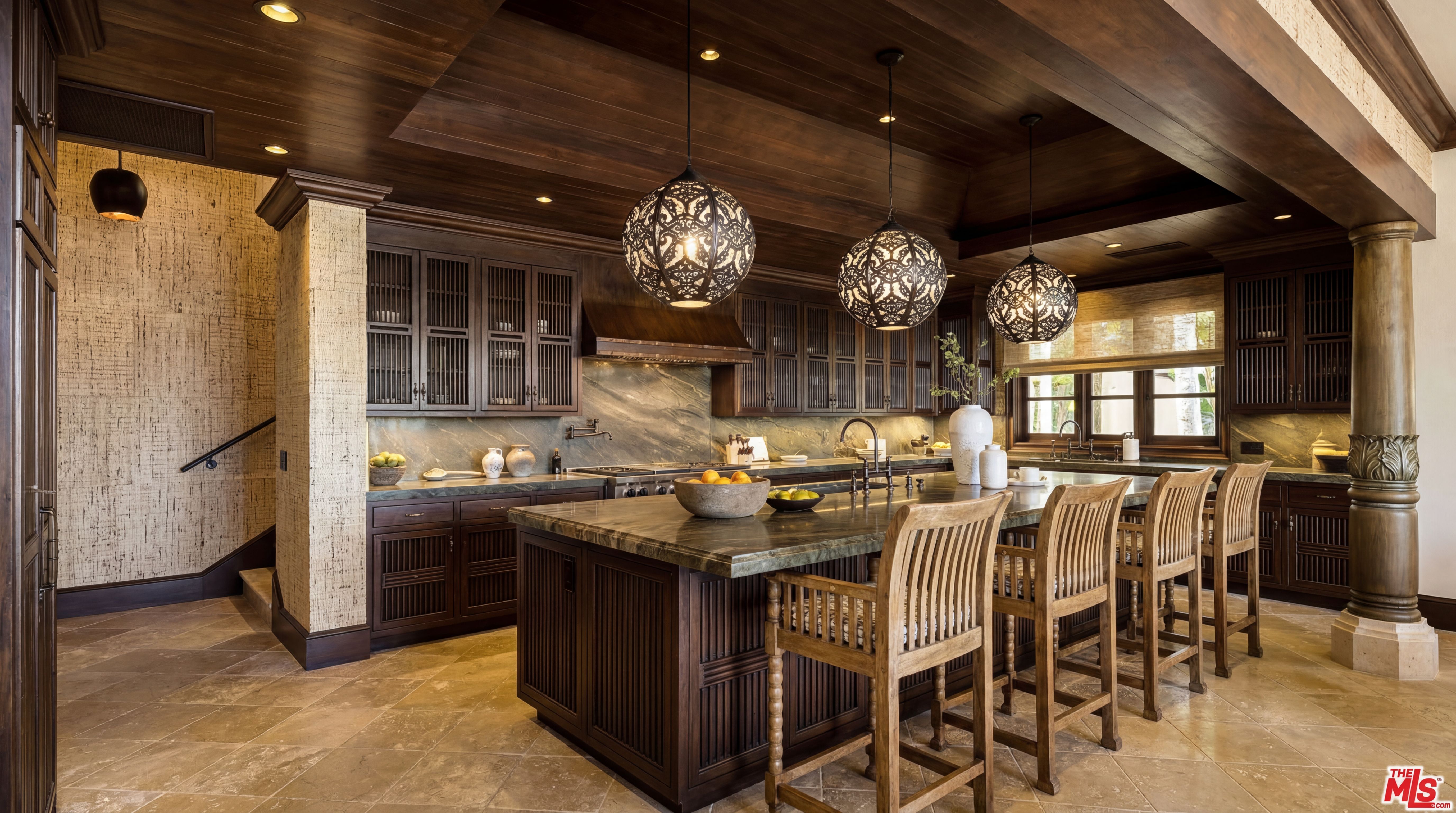
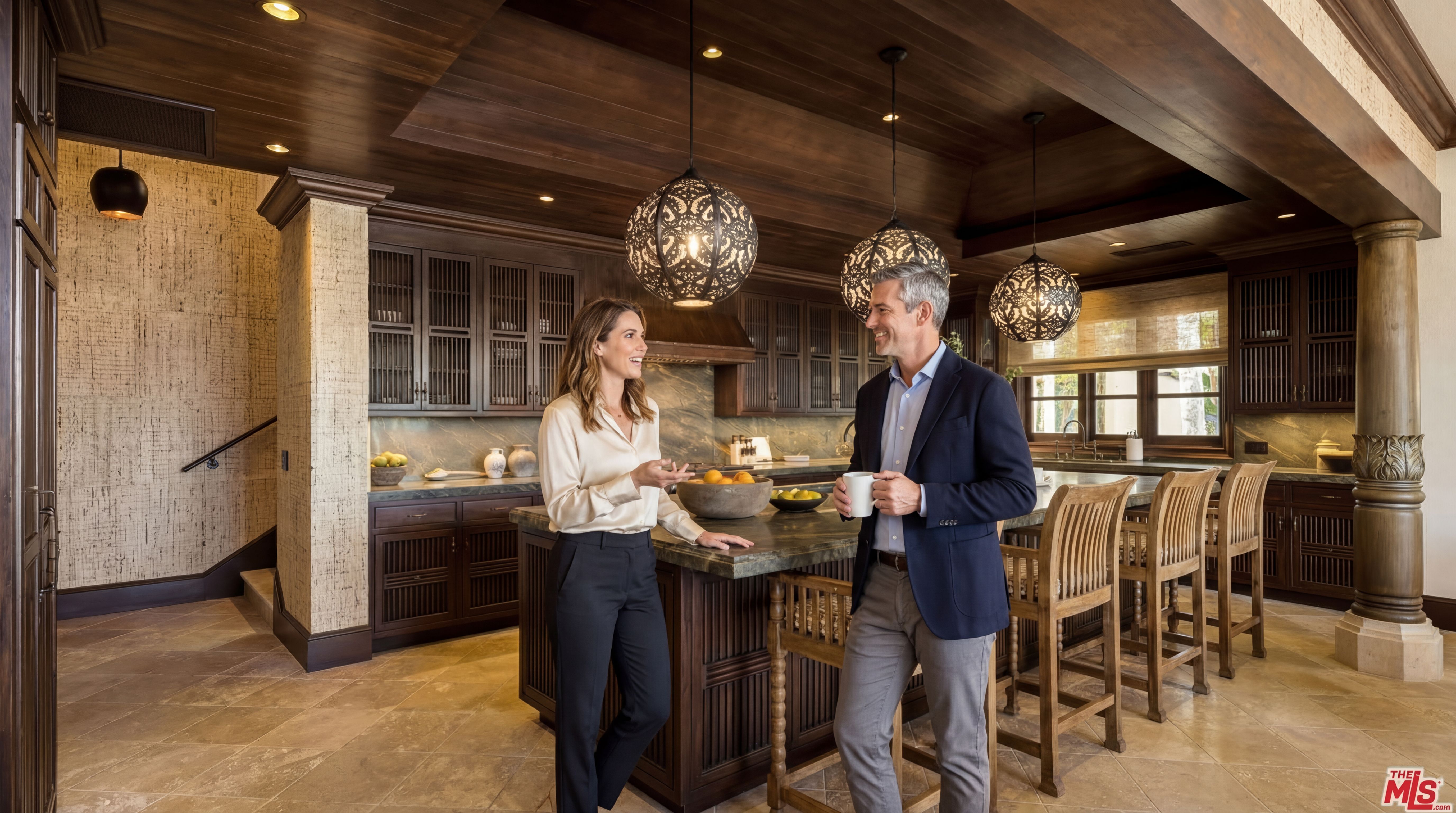
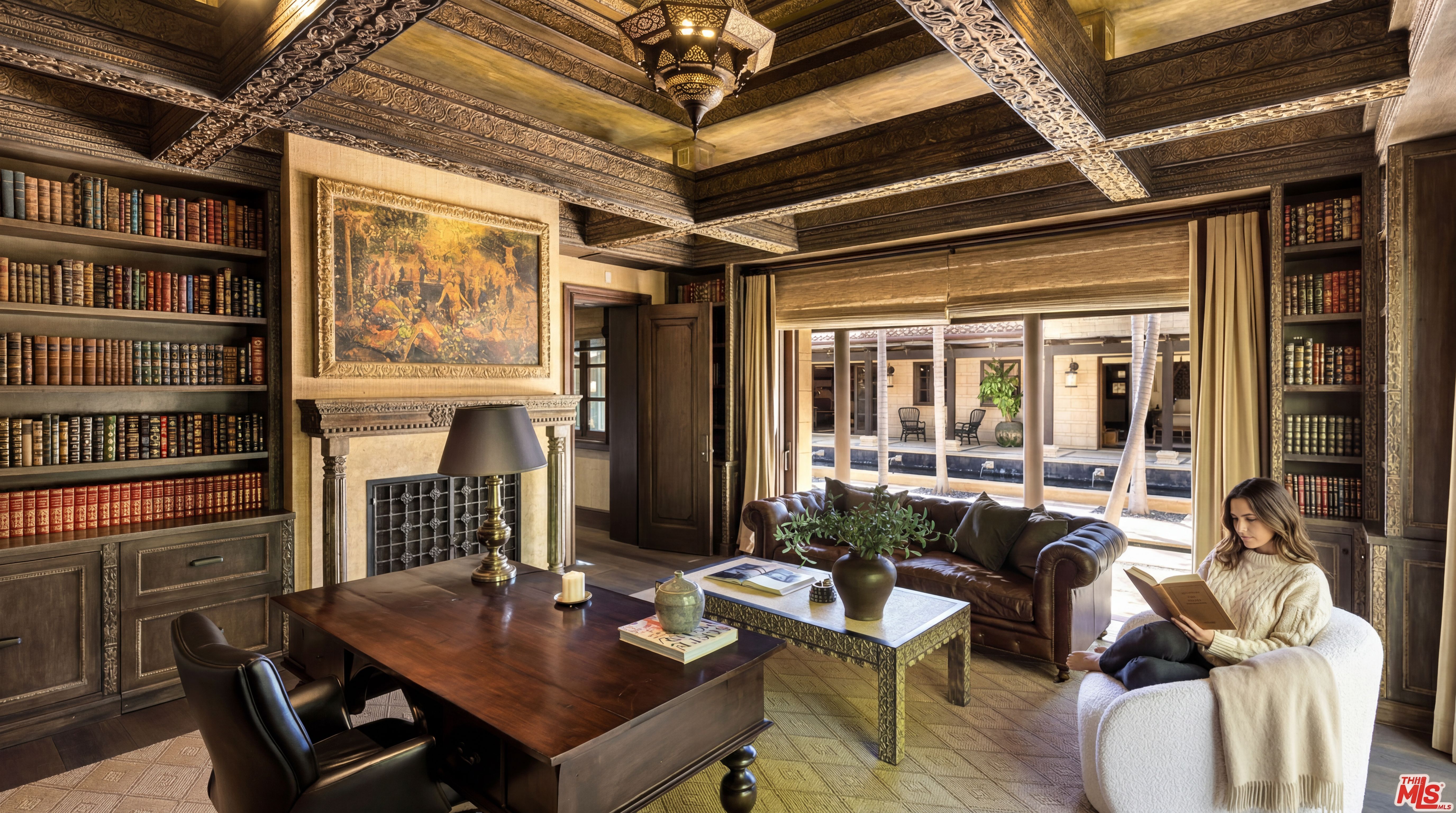
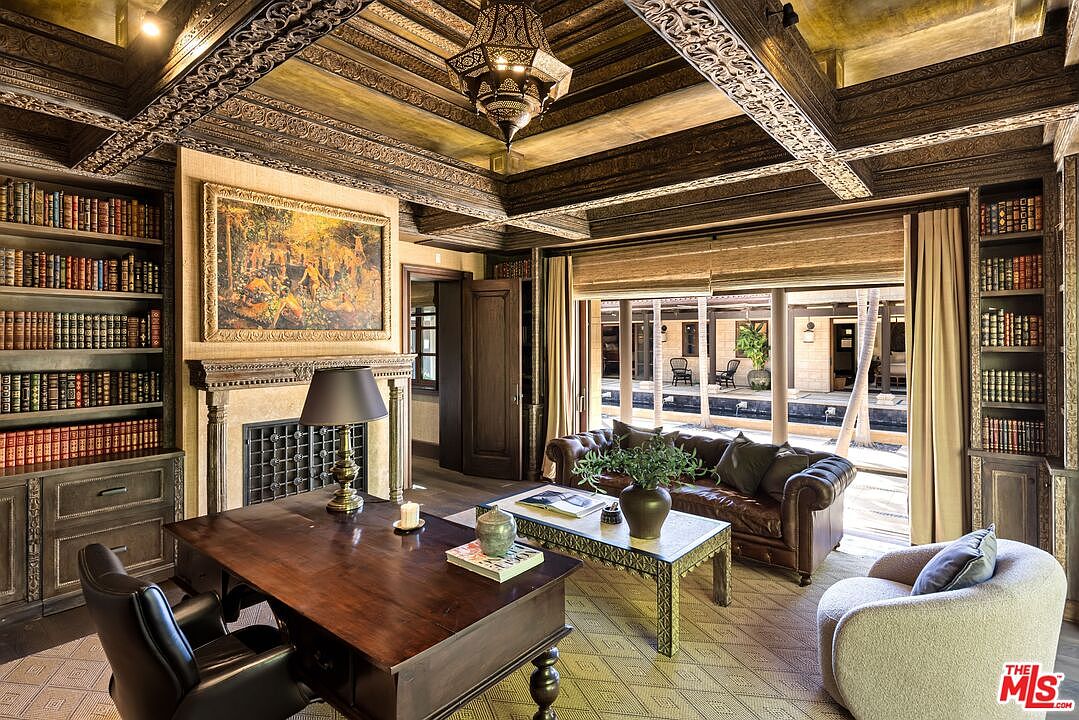
The chef's kitchen draws its inspiration from an antique apothecary cabinet sourced from Kyoto, its dark wood cabinetry and Brazilian green marble counters complemented by a professional suite of Wolf, Sub-Zero, and Bosch appliances. A library assembled from antique wood fragments offers a quieter, more contemplative counterpoint to the home's more theatrical spaces.
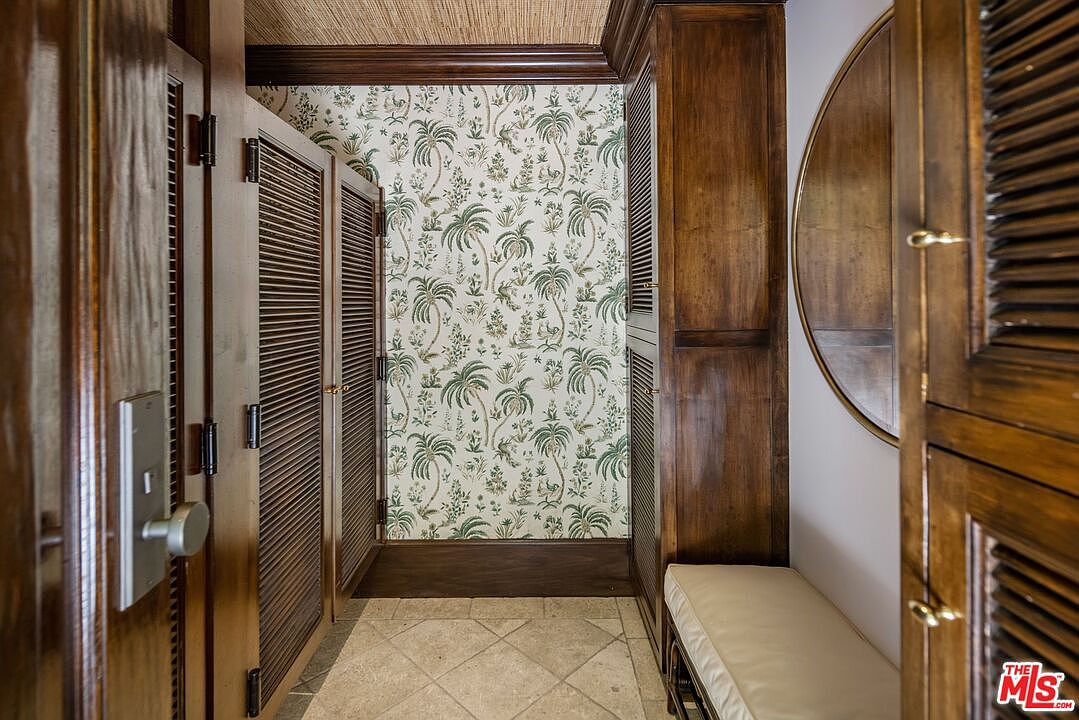
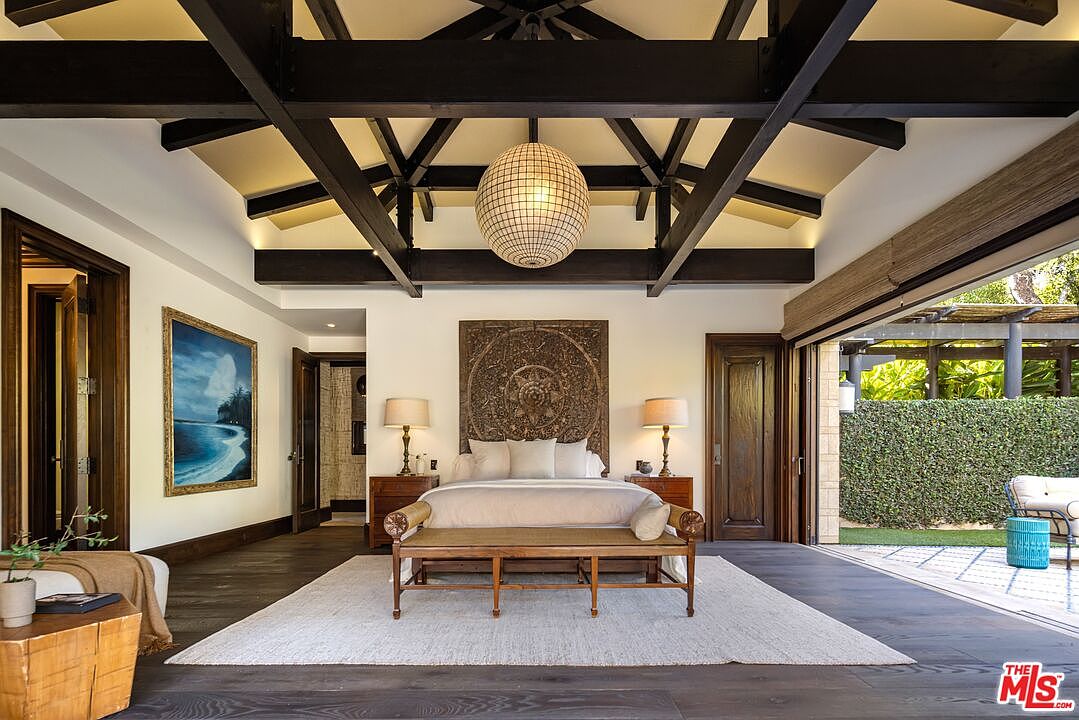
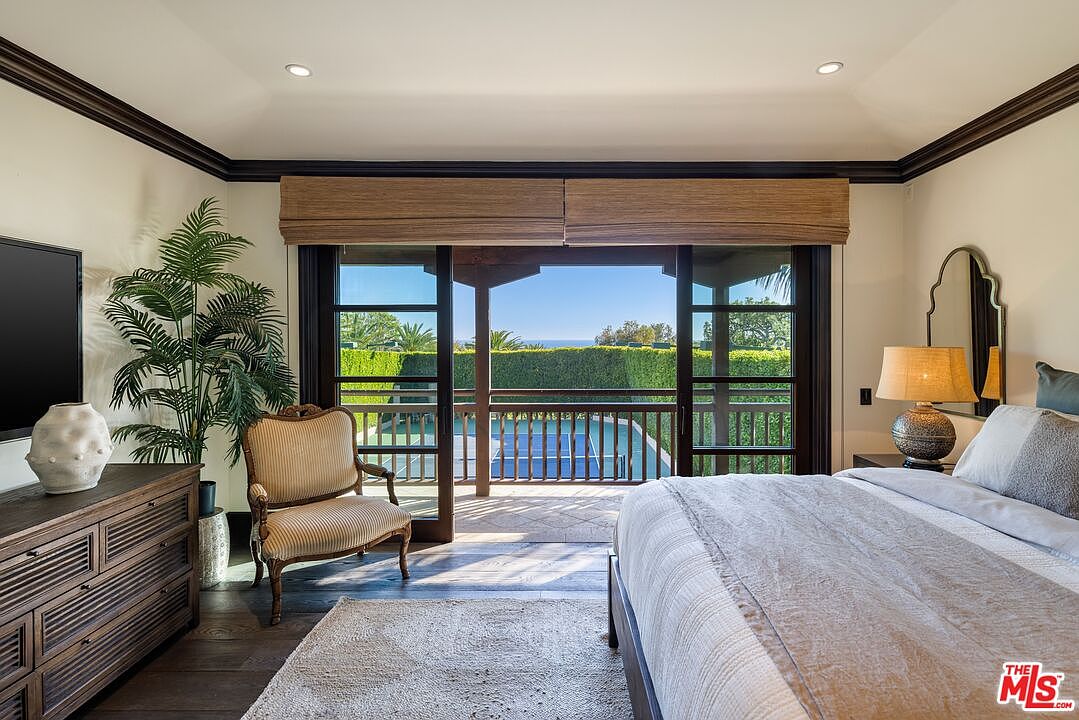
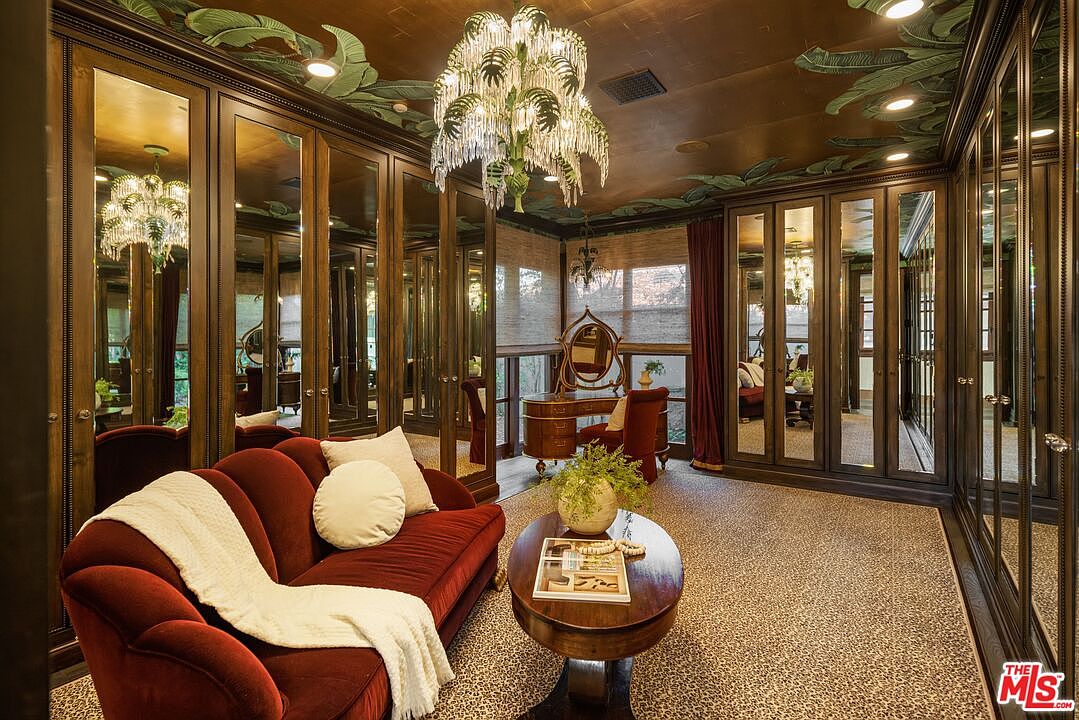
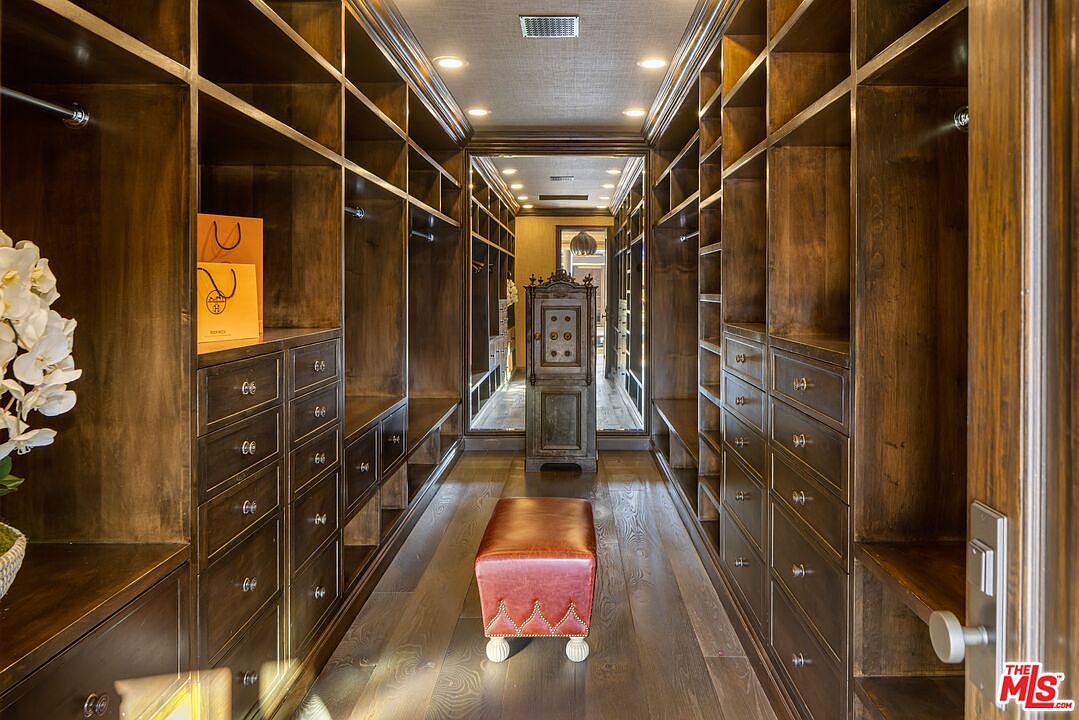
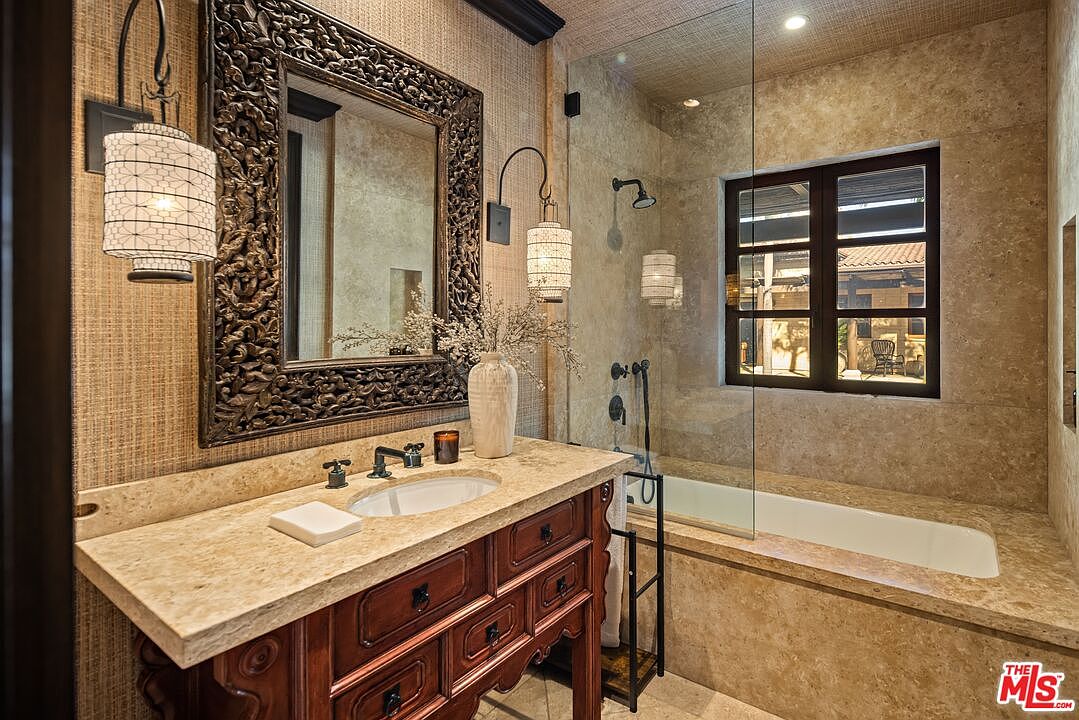
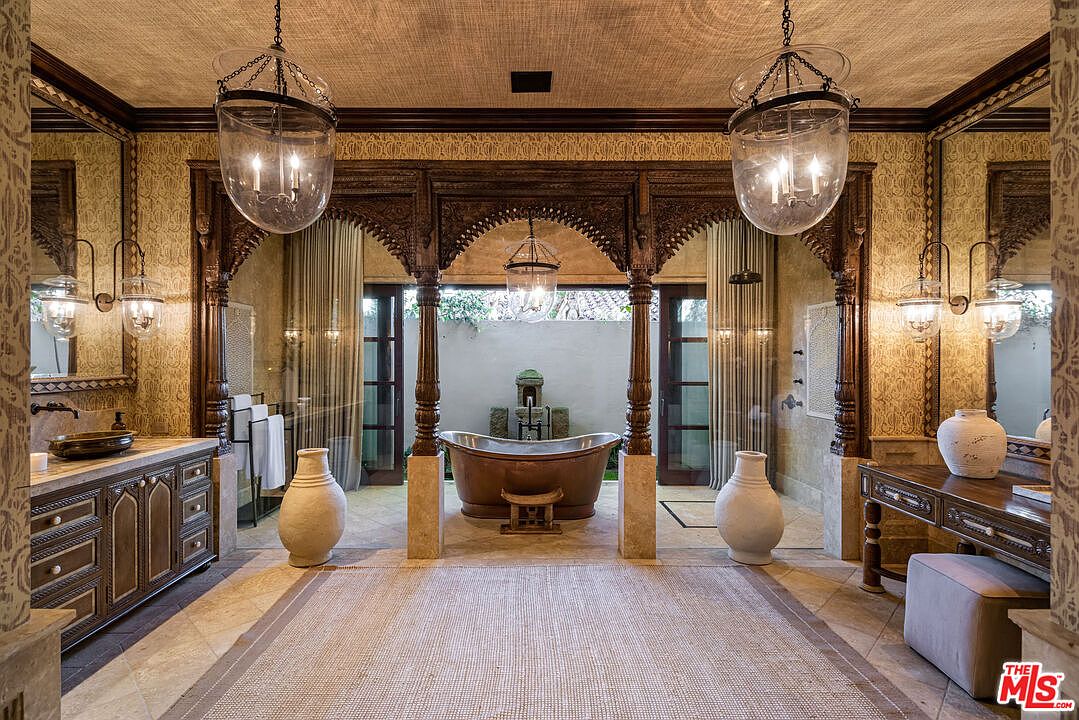
The primary suite is a sanctuary in the truest sense — sliding glass doors open onto a private ocean-view patio framed by a coral tree, while the spa bath, clad in Massangis limestone and anchored by a copper soaking tub by Waterworks, delivers a level of finish more commonly associated with the world's finest hotels. Dual dressing rooms with custom cabinetry complete the suite.
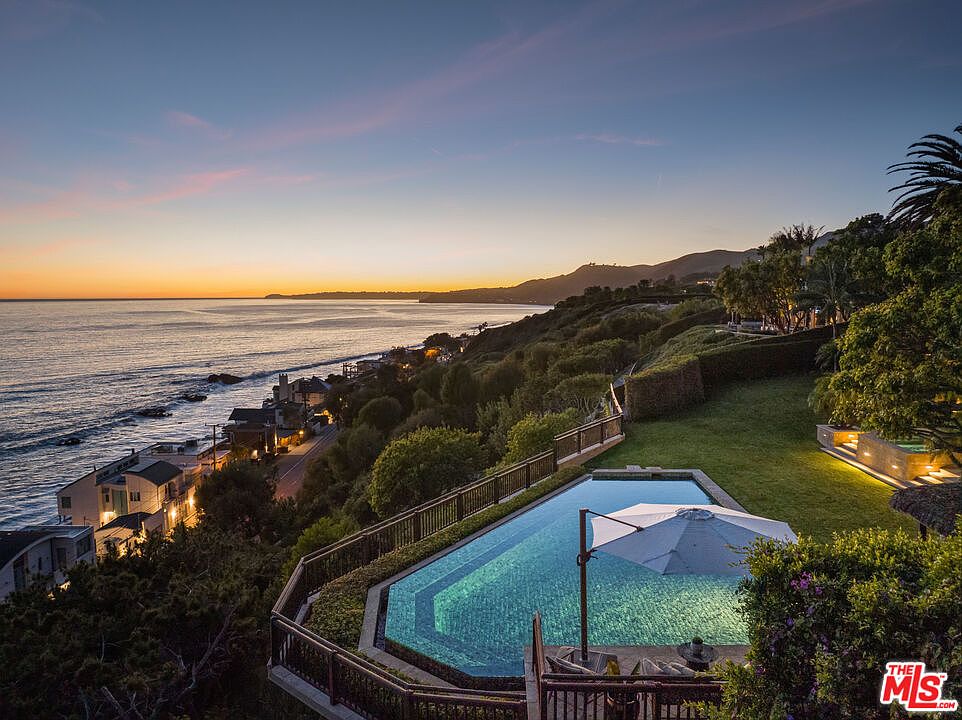
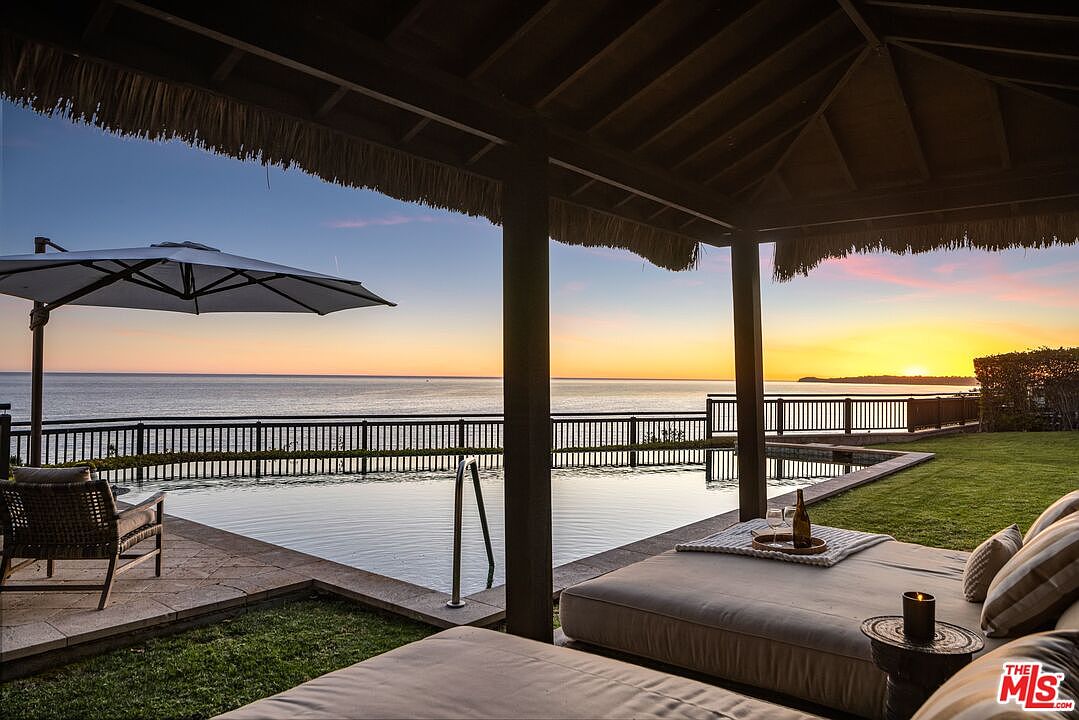
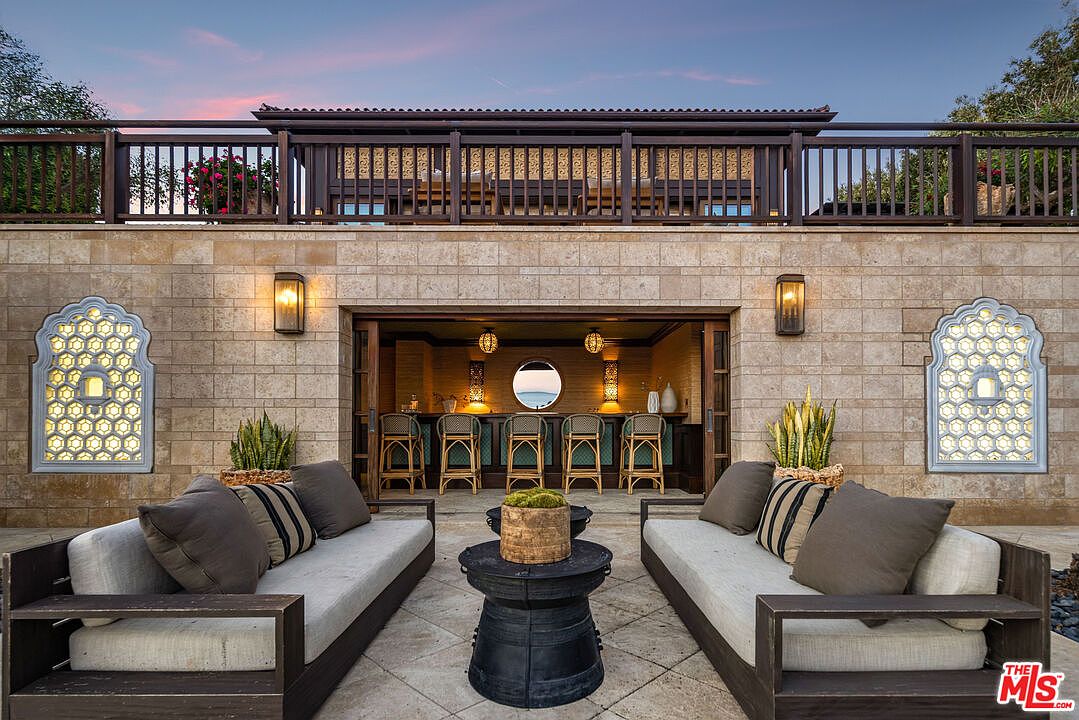
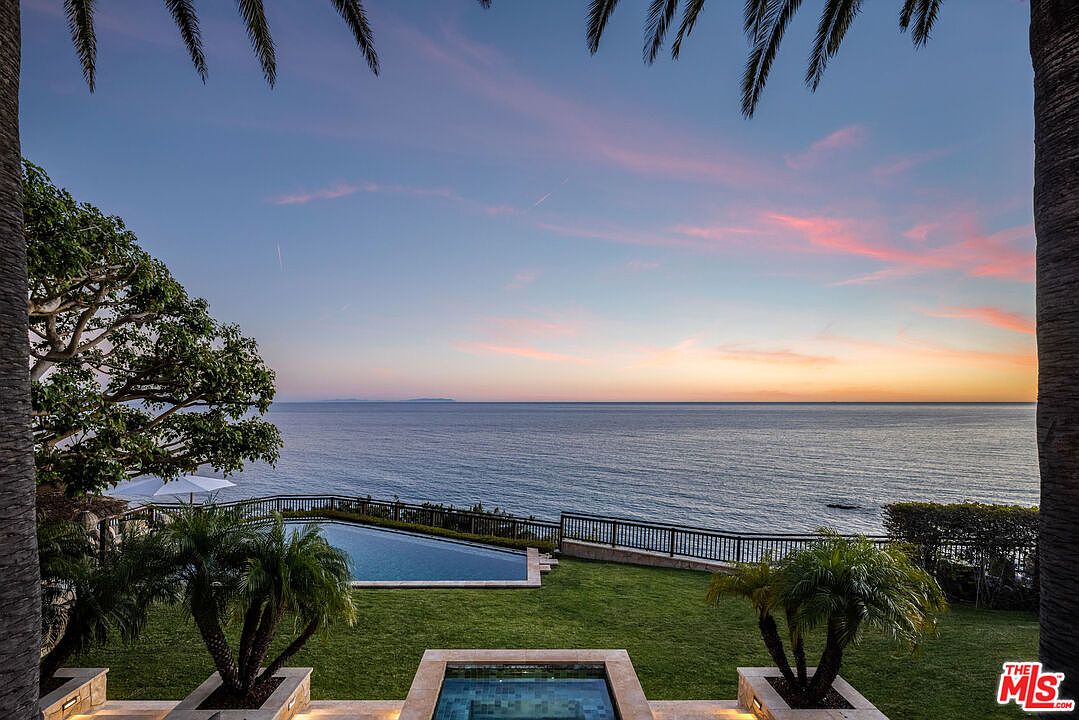
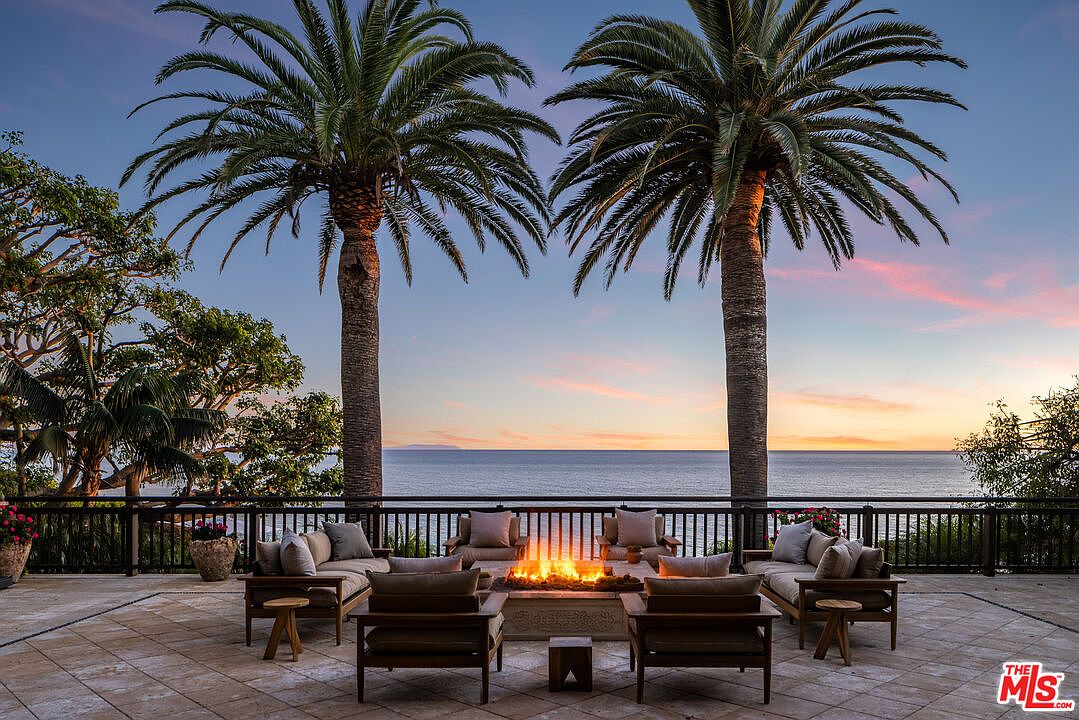
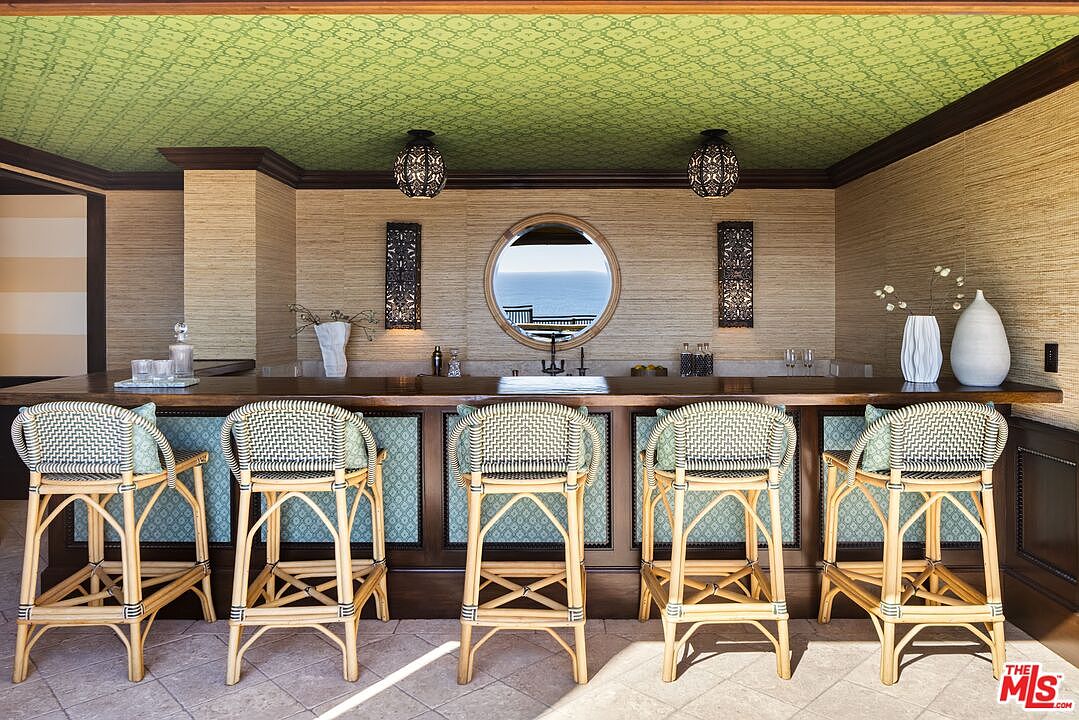
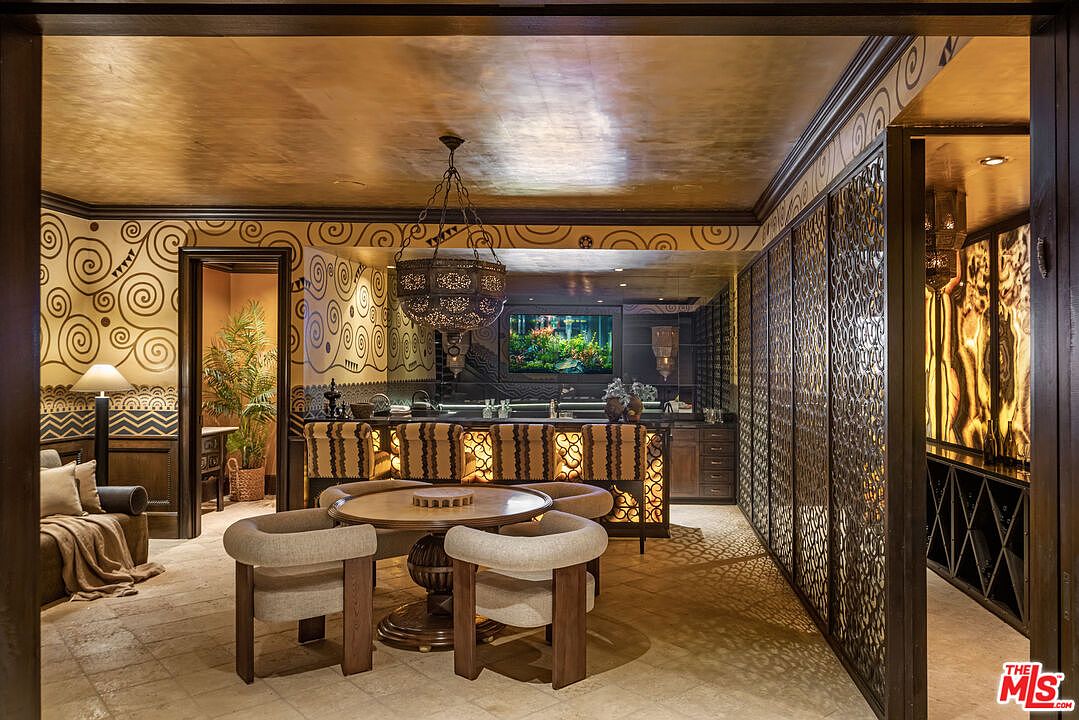
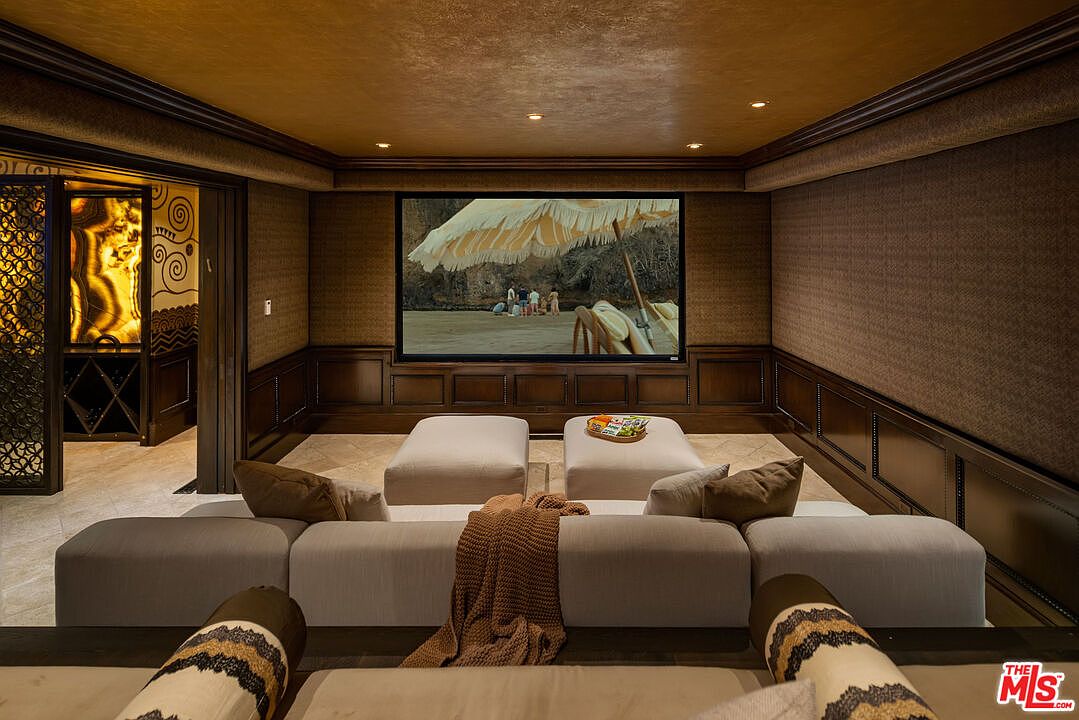
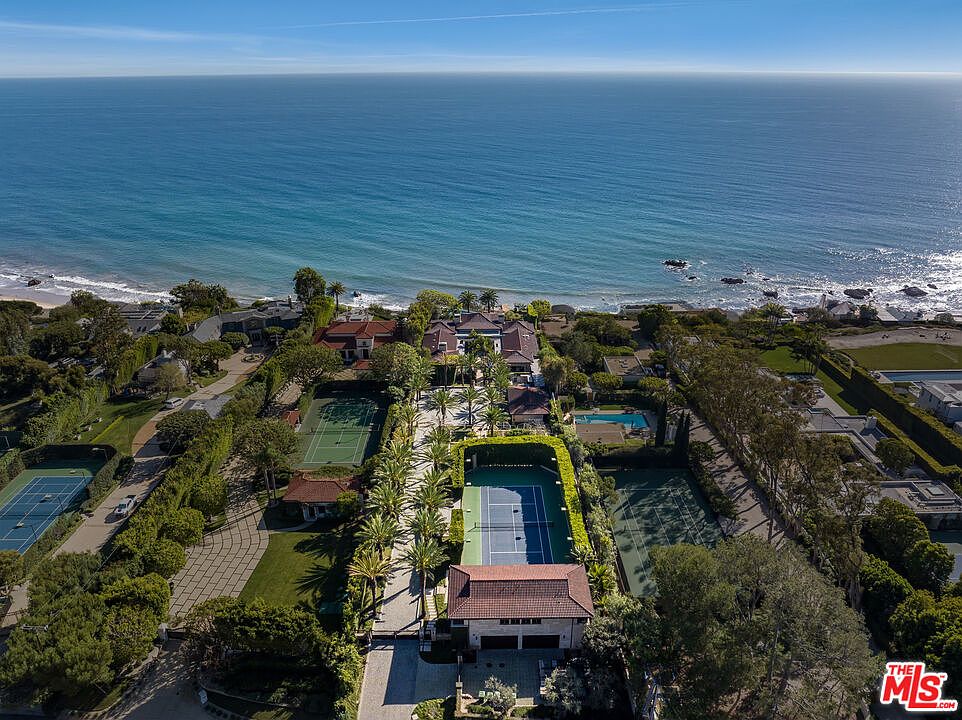
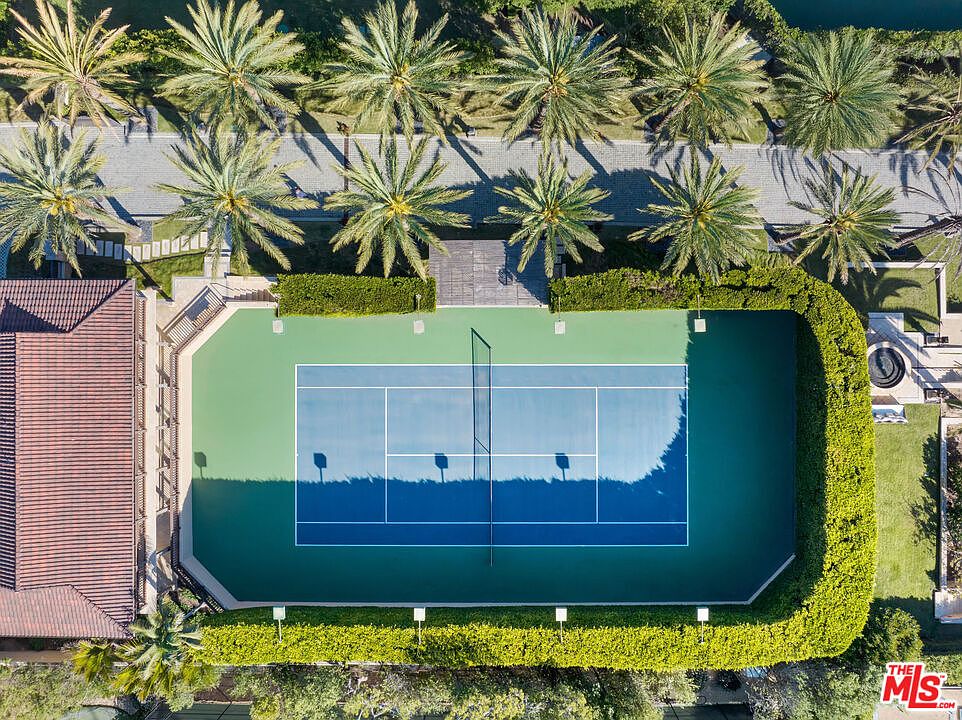
Below, a lower-level lounge with a backlit onyx bar and wine cellar, together with a tiered home theater, establishes the compound's entertainment credentials with equal conviction. Outside, the infinity ozone pool and spa sit at the very edge of the bluff, accompanied by a Balinese-style cabana, a pool bar with full amenities, and manicured lawns that roll toward the horizon. A lighted north-south tennis court with viewing pavilion, a two-story guest house, and private steps leading directly to Malibu Road and the beach complete a compound that offers not merely a home, but an entire world.
Malibu occupies a singular position in the geography of Southern California — and indeed in the broader cultural imagination of coastal American life. Stretching approximately 21 miles along the Pacific Coast Highway between Los Angeles and Ventura County, this narrow strip of coastline has long drawn those who seek beauty, privacy, and a particular quality of light that painters and photographers have struggled to adequately capture. It is a place defined as much by what it refuses to become as by what it is.
The address sits within the Carbon Beach corridor — a stretch of coastline long referred to informally as 'Billionaire's Beach' — one of the most tightly held and valuable residential strips in the United States. The bluff setting places the property above the coastal road in a manner that delivers sweeping panoramic views while maintaining the privacy that defines this enclave. With only 14 homes sharing the bluff, the sense of exclusivity here is structural rather than merely aspirational.
Malibu's history as a community of consequence traces back to the early twentieth century, when the Rindge family — who had purchased the entire Rancho Malibu land grant in 1892 — fought for decades to preserve their coastal holdings against the intrusion of the state highway. That resistance ultimately failed, and the opening of Pacific Coast Highway in the late 1920s gradually introduced the broader world to what the Rindges had so fiercely protected. The community that developed in the decades that followed was defined by a tension between accessibility and seclusion that persists to this day.
The civic and cultural infrastructure surrounding the property is discreet but substantial. The city of Malibu, incorporated in 1991, operates with a strong environmental mandate that has helped preserve the natural character of the coastline and the Santa Monica Mountains that rise dramatically to the east. The Santa Monica Mountains National Recreation Area — one of the largest urban national parks in the country — provides tens of thousands of acres of hiking, equestrian, and nature trails immediately inland, offering a counterpoint to the coastal experience that few luxury markets can match.
For the practical rhythms of daily life, the Malibu Country Mart and Malibu Village provide a curated selection of boutique retail, acclaimed dining, and specialty grocers, including the Malibu Village Farmers Market. The stretch of PCH between Malibu and Santa Monica is lined with destination restaurants — Nobu Malibu, Geoffrey's, and Moonshadows among them — that draw both residents and visitors from across the region.
Pepperdine University, set on a commanding hillside above the Pacific, contributes an intellectual and cultural presence to the community, hosting public lectures, gallery exhibitions, and performing arts events throughout the year. The Malibu Performing Arts Center and various local galleries further enrich the cultural fabric of a city often reduced, unfairly, to its surf culture alone.
The beach access provided directly from this property — via private steps to Malibu Road — connects residents to one of the most celebrated stretches of coastline in California, while the proximity to both Los Angeles International Airport and Santa Monica Airport ensures that the wider world remains entirely within reach.
Featured Highlights
Curated Content • Presented by David Parnes