The Story Behind
Italian Villa Masterpiece with Direct Bridge-Free Bay Access
There are properties that satisfy, and then there are properties that astonish. The estate at 255 Cocoplum Road belongs firmly to the latter category — a work of architectural intention that has lost none of its authority since the day it was completed under the singular vision of Ramon Pacheco, one of South Florida's most respected residential architects.
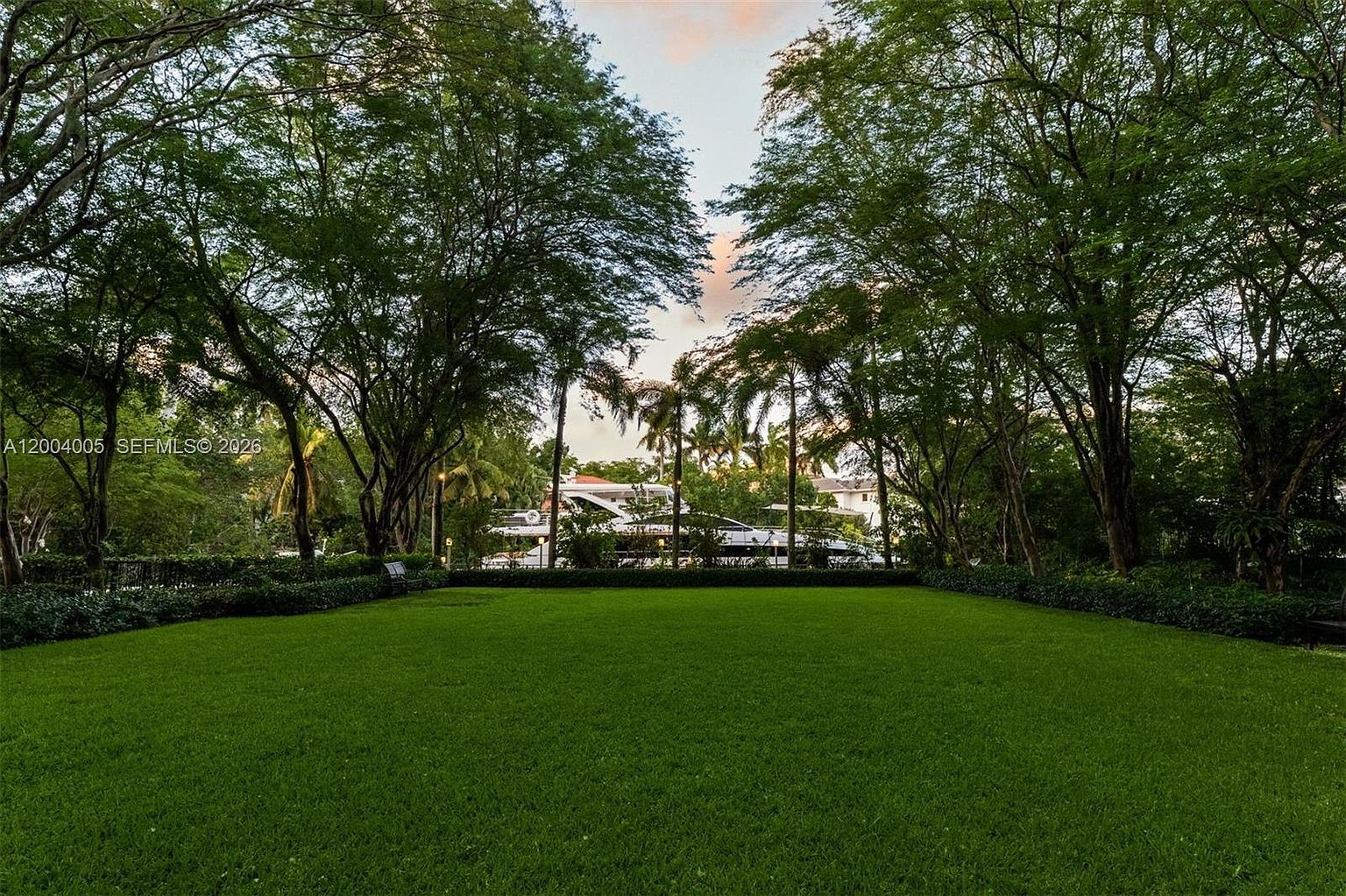
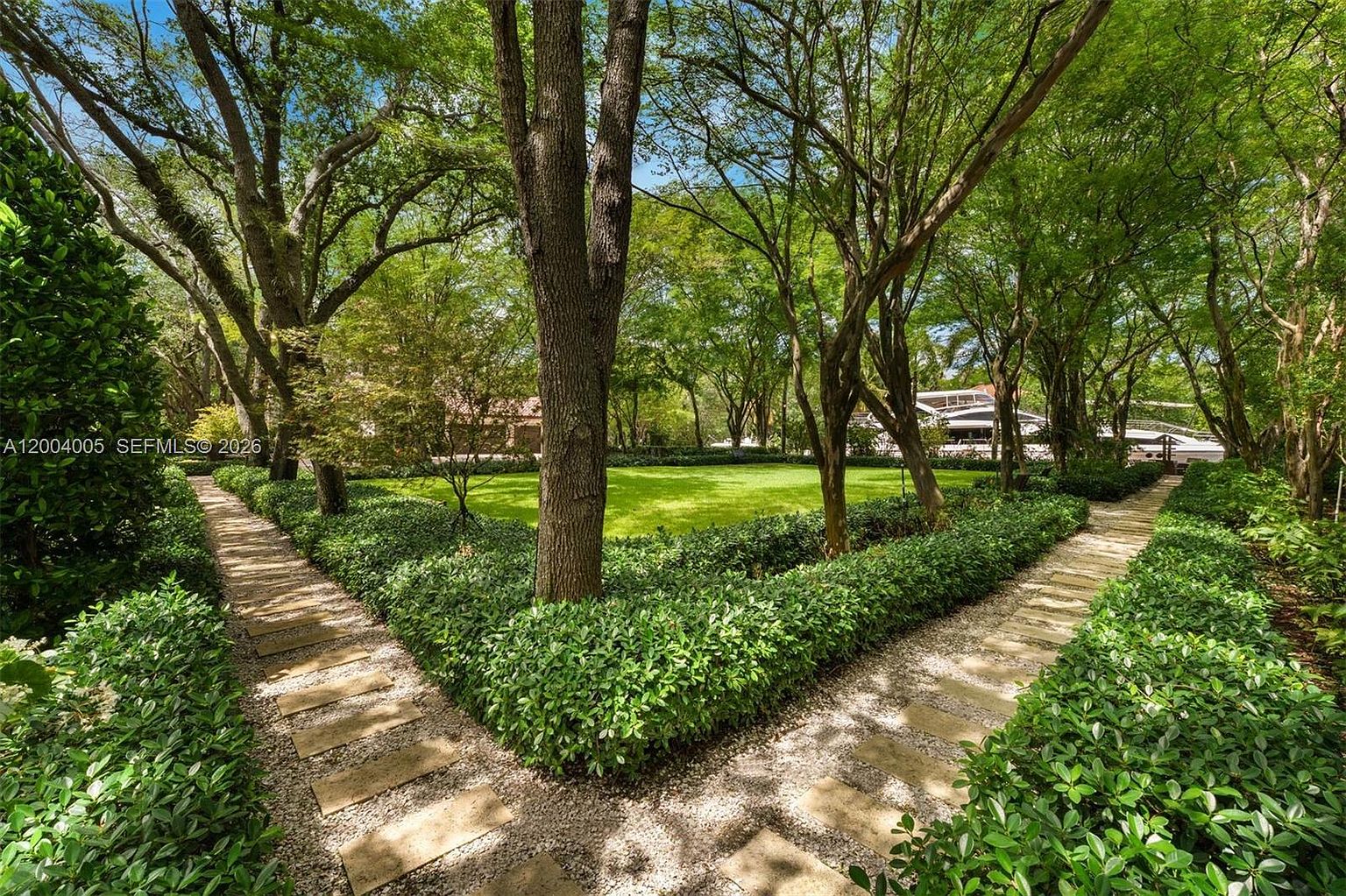
The approach alone communicates the scale of what awaits. Twenty-eight mature oak hammocks frame a circular driveway that draws the eye toward a stone-clad triple-arched portico, its classical columns and ornate iron-and-glass entry composing a Mediterranean façade of genuine gravitas. Built on pilings at high elevation — a decision as practical as it is prescient — the home was engineered to endure, and its immaculate single-owner provenance confirms that it has been stewarded with matching care.
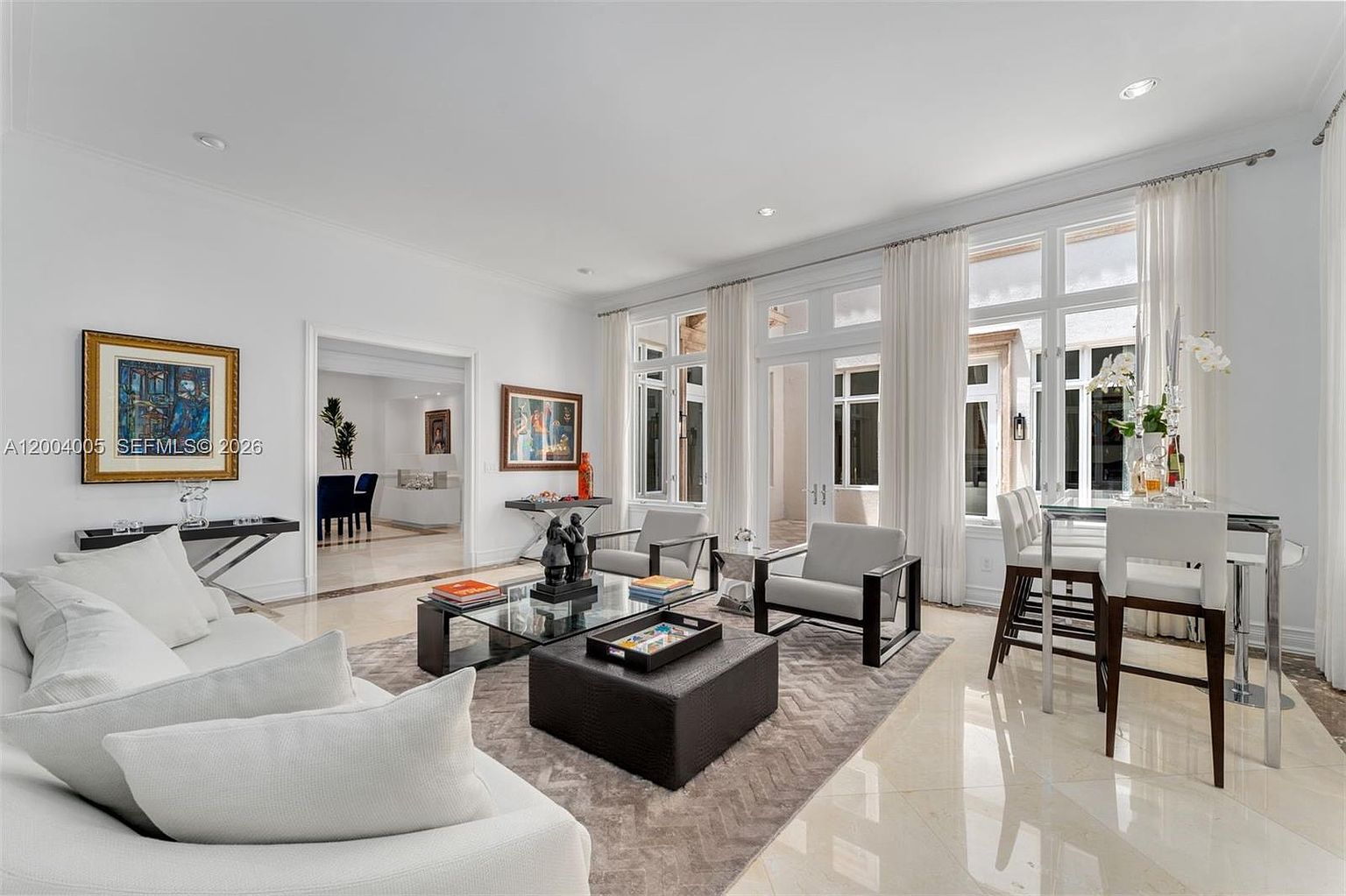
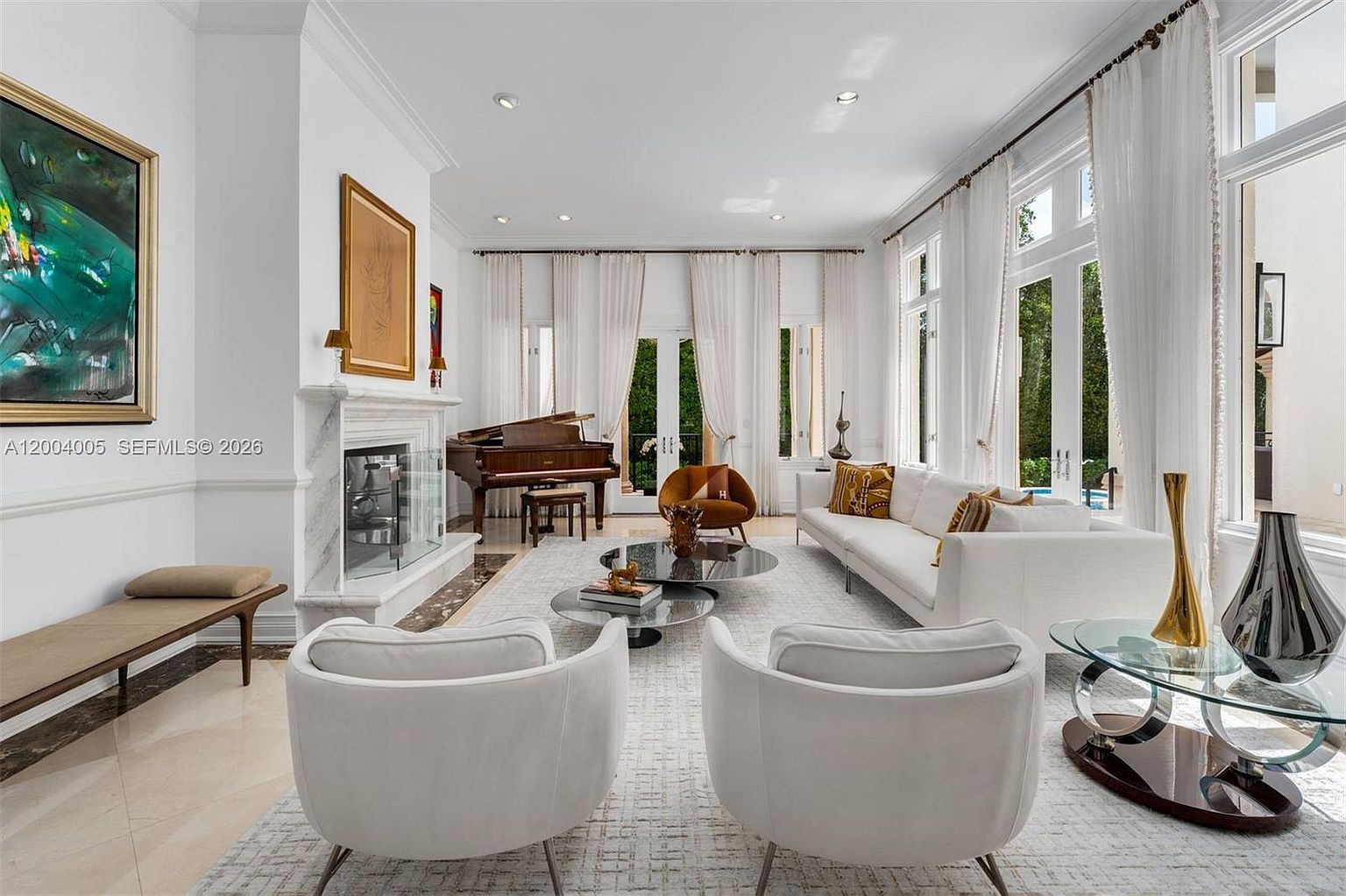
Step through the entry and the triple-height foyer recalibrates your sense of interior space entirely. A marble staircase with glass railings ascends through the volume, catching light from above while refined millwork traces the walls with quiet precision. Fourteen-foot ceilings carry through the principal rooms, lending the residence a proportional generosity rarely encountered outside of estates of far greater vintage. Marble and wood floors anchor each space with warmth and permanence, while four independent air-conditioning units and a Sony integrated audio system ensure that modern comfort operates invisibly beneath the classical surface.
The gourmet kitchen is a study in considered luxury: custom Italian cabinetry, quartz countertops, premium professional appliances, and dedicated wine storage converge in a space that functions as beautifully as it photographs. A striking multi-tiered geometric chandelier anchors the island, and large windows dissolve the boundary between the culinary interior and the lush grounds beyond.
The primary suite occupies its own atmospheric register — a private world of vaulted ceilings, a dedicated office, and a spa-inspired bath appointed with bespoke finishes and custom walk-in closets. Six additional guest rooms extend the same ethos of plush, considered comfort throughout the upper levels.
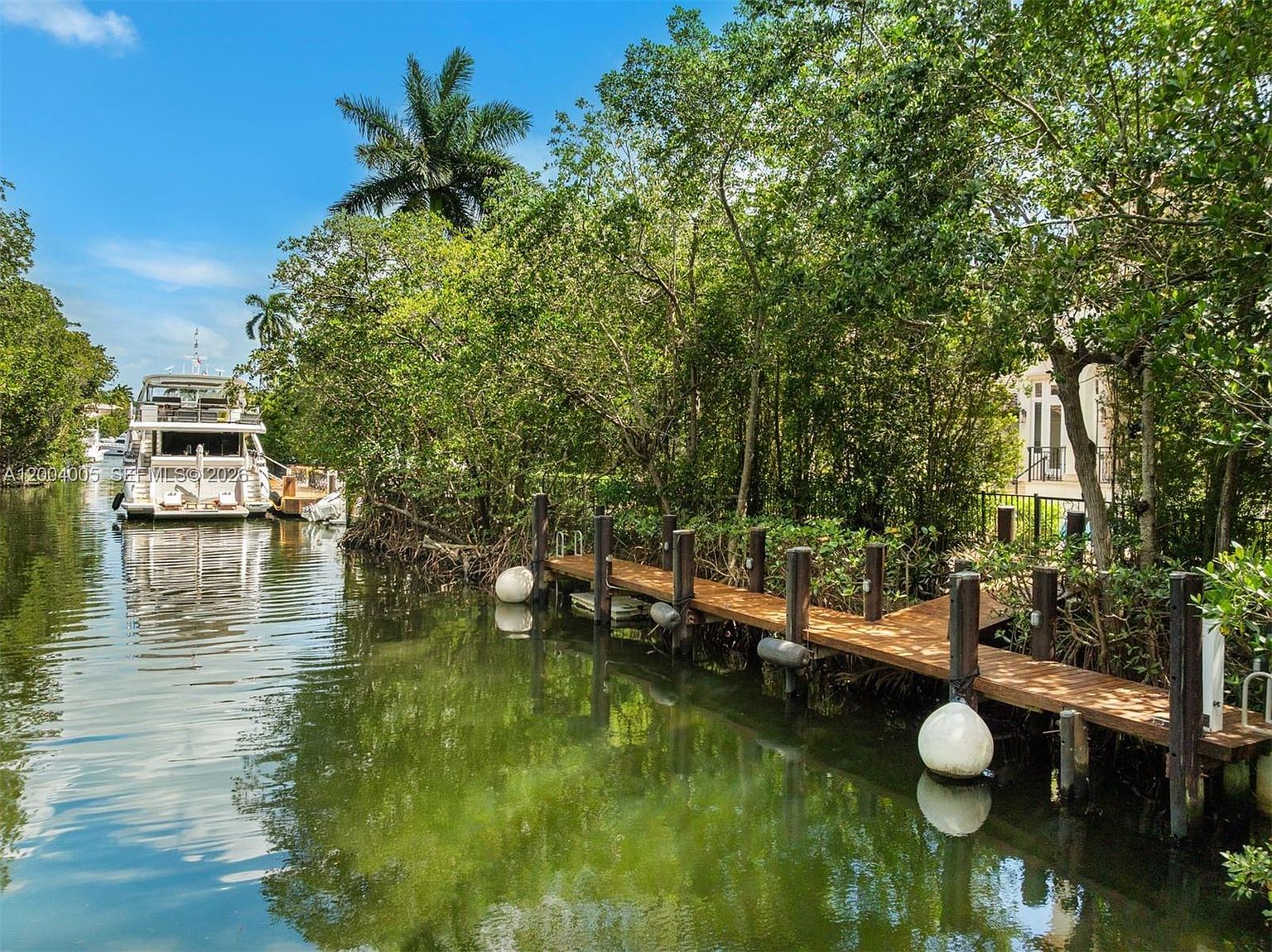
Outdoors, arched colonnades frame a keystone marina deck that flows seamlessly to the pool with its integrated waterfall spa, covered terraces, cabana, and fully equipped summer kitchen. The hundred-foot seawall is complemented by an additional seventy-foot dock and a grandfathered forty-foot slip — a combination that delivers direct, bridge-free access to Biscayne Bay for vessels of serious scale. Underwater lighting illuminates the slip at dusk, transforming the waterfront into something closer to a private marina than a residential dock. The aerial perspective makes the full sweep of the estate legible at once: a lush, canopied acre of land, a glittering pool, and open water stretching toward the horizon — an estate that holds its own against any waterfront address in South Florida.
Coral Gables has always occupied a singular position in the American imagination of what a city should be. Founded in the 1920s by developer George Merrick, it was conceived not as a subdivision but as a complete civic vision — a Mediterranean Revival city of broad boulevards, ornamental fountains, and Spanish-inspired architecture governed by some of the most stringent design standards in the country. Nearly a century later, those standards remain intact, and the result is one of the most architecturally coherent and genuinely beautiful municipalities in the United States. The City Beautiful, as it is widely known, continues to deliver on that original promise.
Within Coral Gables, the gated enclave of Cocoplum represents the community's most exclusive residential expression. Developed along the waterways of the Snapper Creek Canal system, Cocoplum Phase 1 is a private, guard-gated neighborhood that benefits from around-the-clock Coral Gables Police Department protection — a layer of security that distinguishes it even among Coral Gables' most prestigious addresses. Resident amenities include tennis courts within the community, and the neighborhood's mature canopy of oaks and tropical hardwoods creates an atmosphere of park-like seclusion that belies its proximity to one of the most dynamic metropolitan areas in the country.
The waterways of Cocoplum connect directly to Biscayne Bay without bridge interruption, placing residents within easy reach of the open waters of the Atlantic, the Florida Keys, and the Bahamas. This is a neighborhood where the weekend itinerary is as likely to be plotted in nautical miles as in driving directions — a community that takes its relationship with the water seriously and is architecturally built around it.
Beyond the gates, Coral Gables offers a cultural and culinary life of genuine sophistication. Miracle Mile and the adjacent Giralda Plaza form the commercial heart of the city, lined with acclaimed restaurants, boutiques, and wine bars that draw residents from across Miami-Dade County. The Biltmore Hotel, a National Historic Landmark completed in 1926, remains a defining institution of the neighborhood — its landmark tower visible from much of the city and its grounds serving as a venue for golf, spa, and dining at a level consistent with the most celebrated resort properties in the country.
The University of Miami anchors the city's intellectual life and contributes to a year-round calendar of cultural programming, while the Coral Gables Museum chronicles the city's extraordinary architectural heritage. The Lowe Art Museum on the university campus holds a permanent collection of international scope.
For families, Coral Gables is served by some of the most highly regarded schools in South Florida, and the proximity to Miami's international airport — roughly fifteen minutes by car — makes it a natural choice for those whose lives extend across time zones. The Design District, Brickell's financial corridor, and the cultural institutions of Wynwood are all within a short drive, ensuring that the tranquility of Cocoplum never comes at the cost of urban access. This is, in every meaningful sense, the ideal address.
Featured Highlights
Curated Content • Presented by Judith Zeder