The Story Behind
A Howard Backen Masterpiece on Riviera Country Club's Seventh Hole
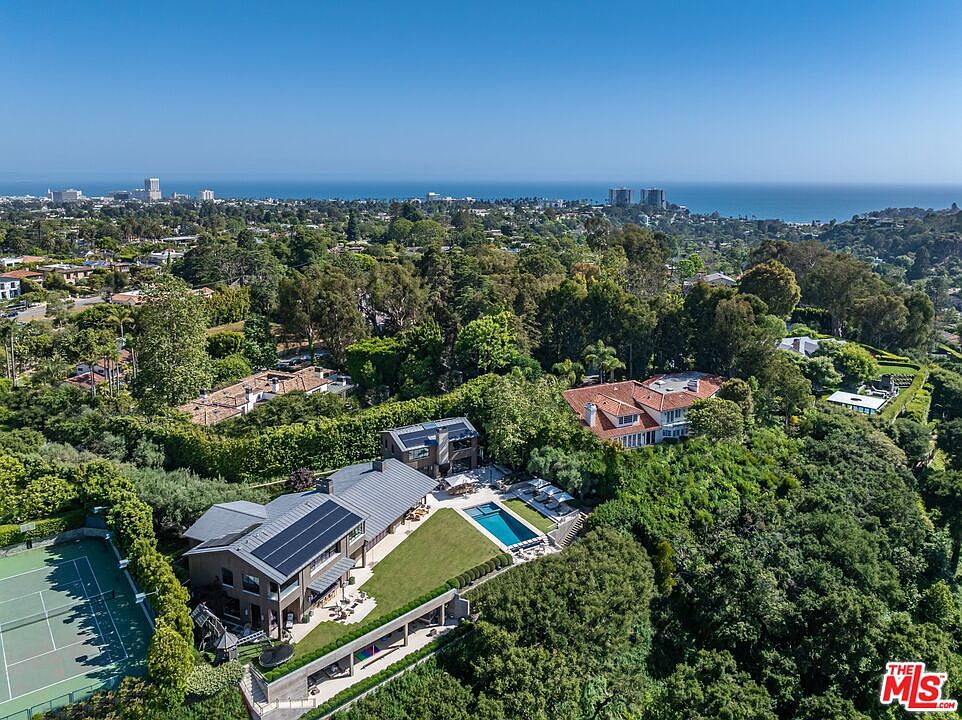
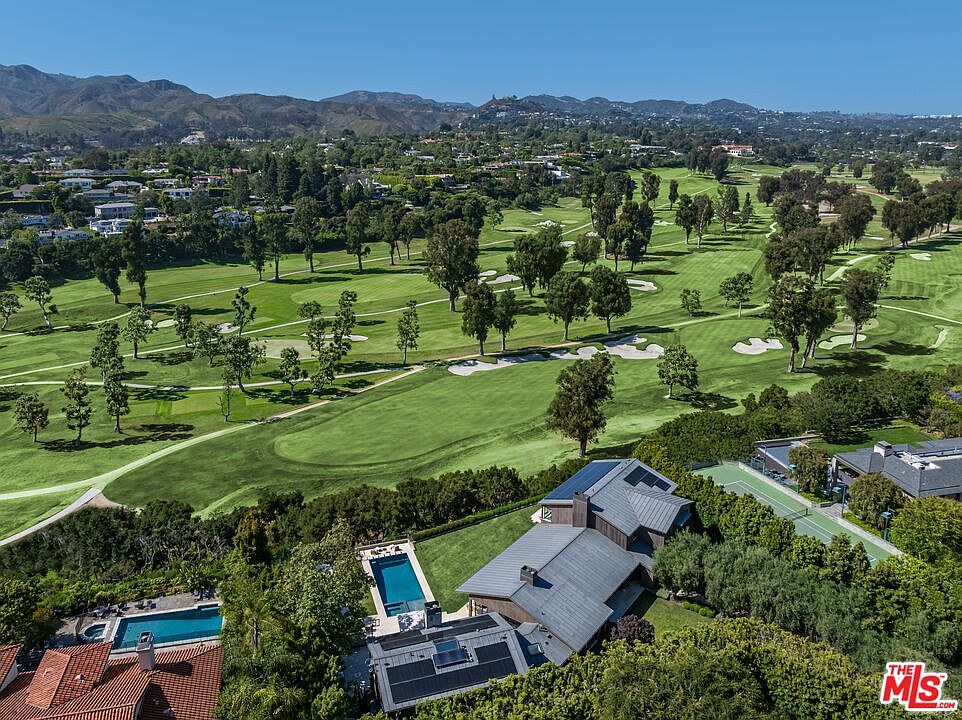
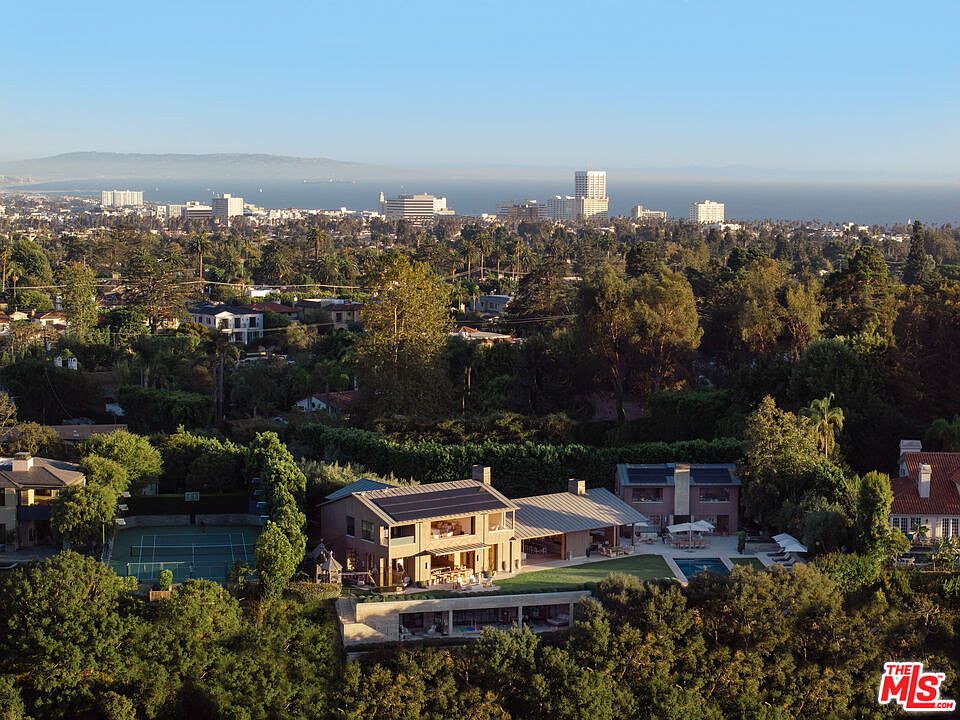
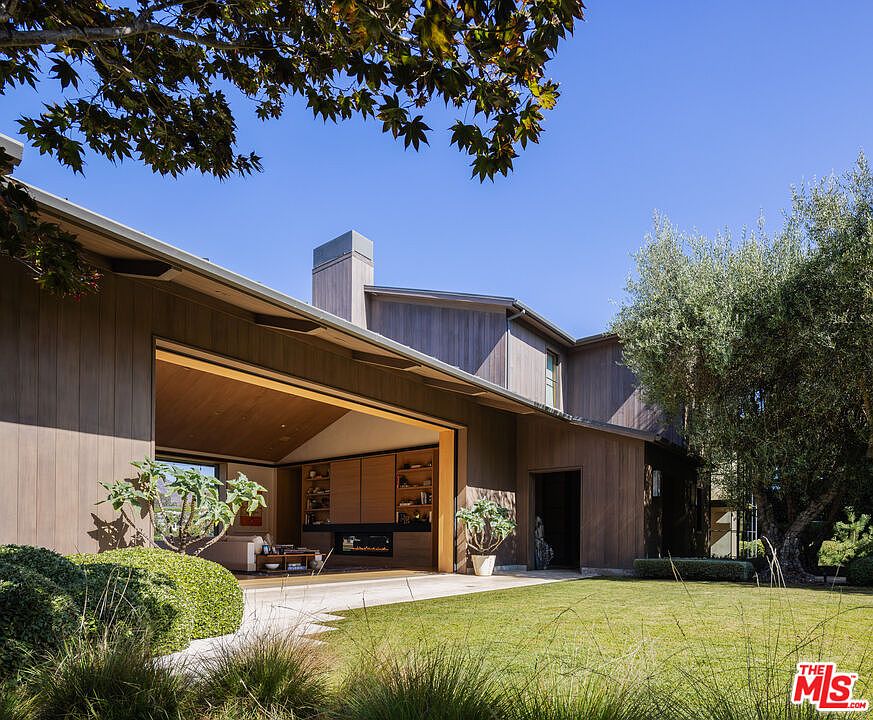
There are homes that shelter, and there are homes that speak. This estate — the sole residential commission Howard Backen ever completed on the fairways of Riviera Country Club — belongs entirely to the second category. Backen, whose decades-long body of work reshaped the vocabulary of California architecture, brought to this property the same convictions that defined his greatest projects: that beauty emerges from restraint, that natural materials carry a quiet authority no applied finish can replicate, and that the boundary between interior and landscape is an obstacle to be dissolved rather than a line to be drawn.
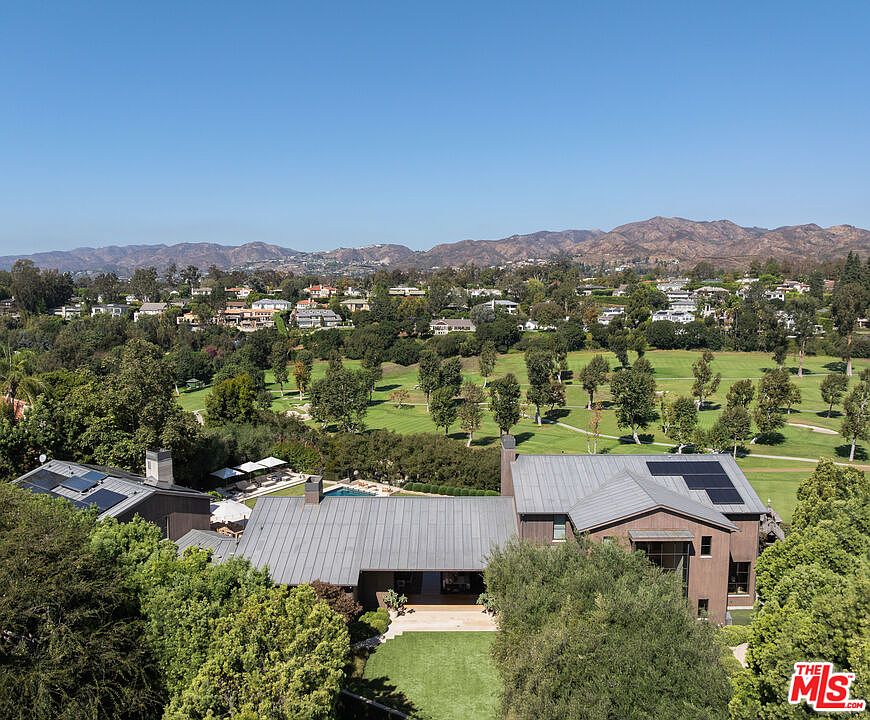
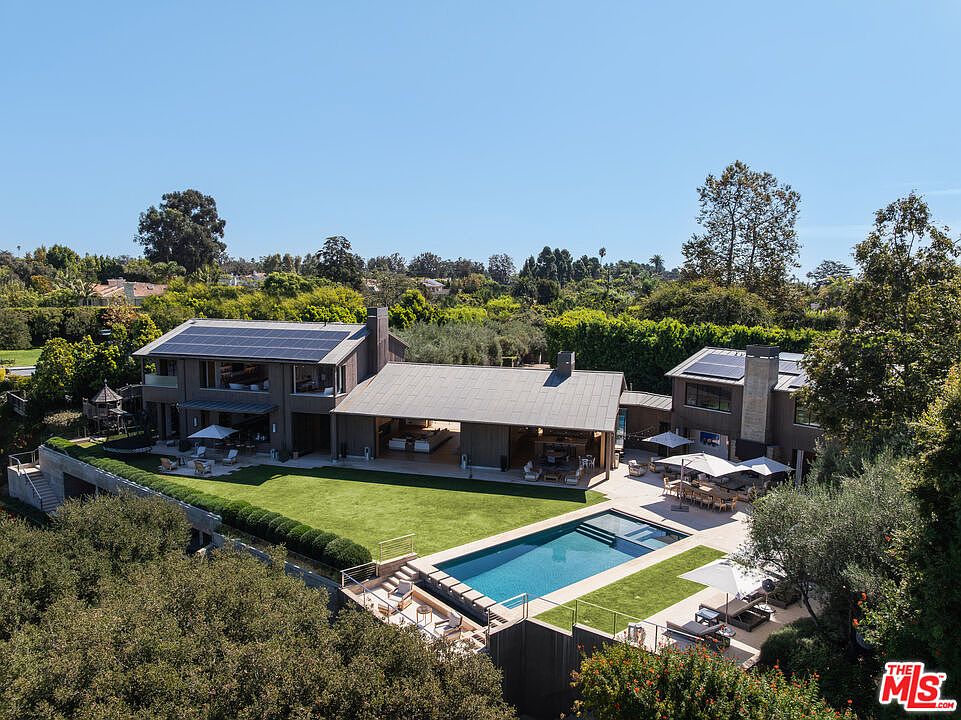
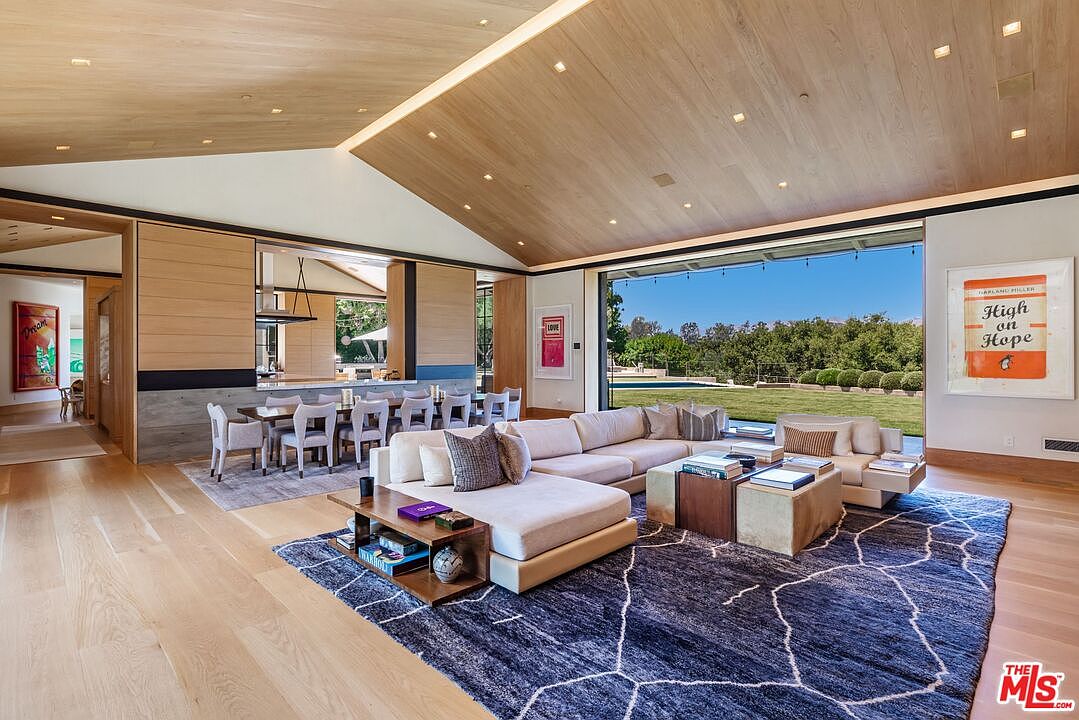
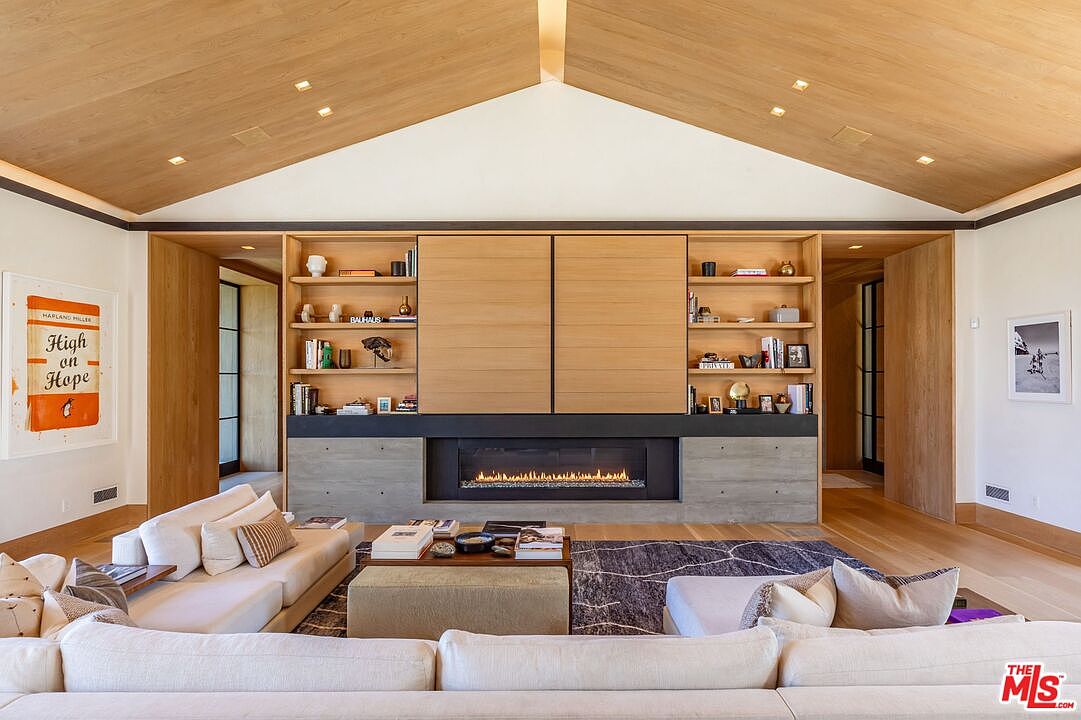
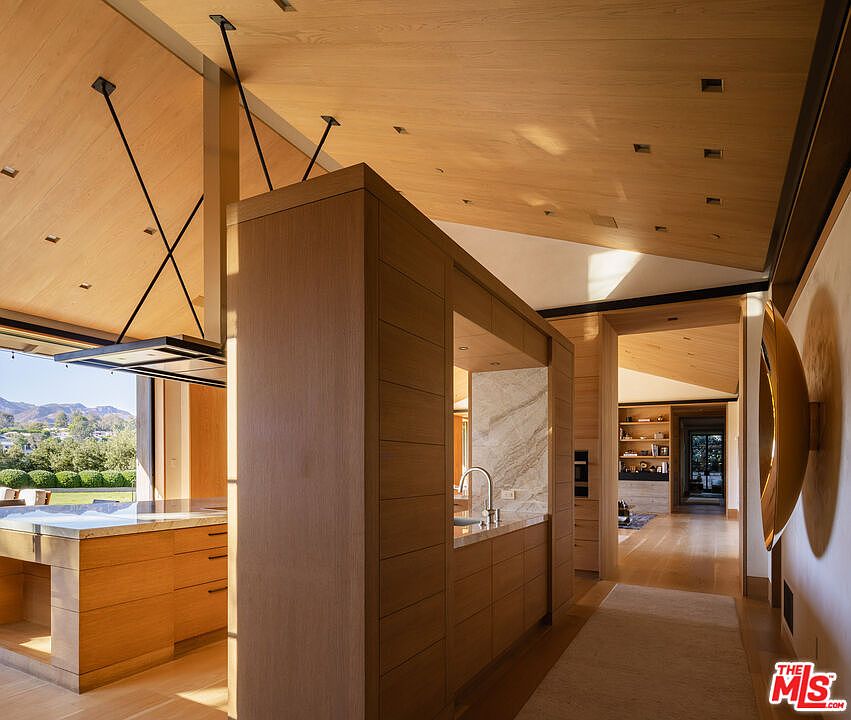
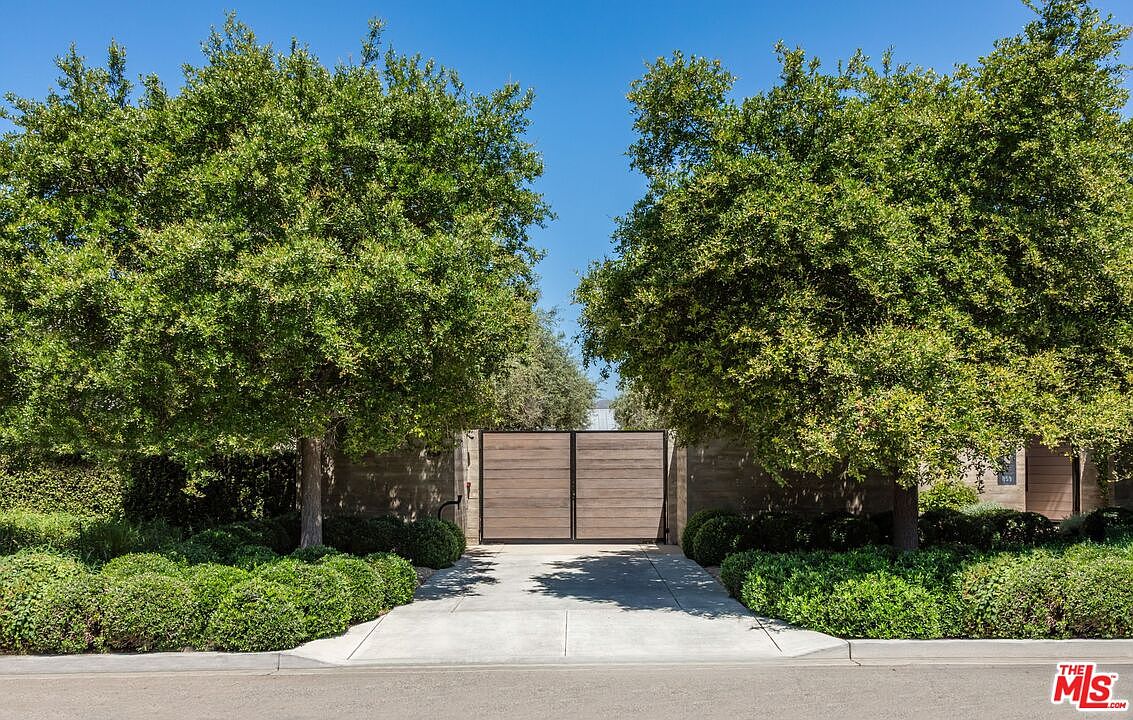
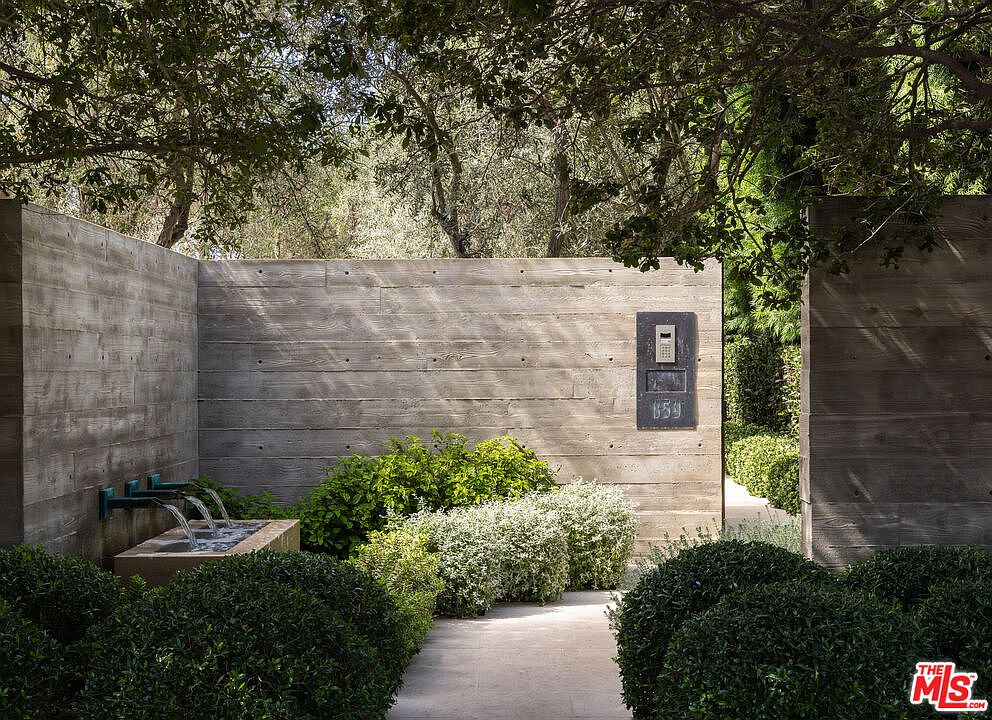
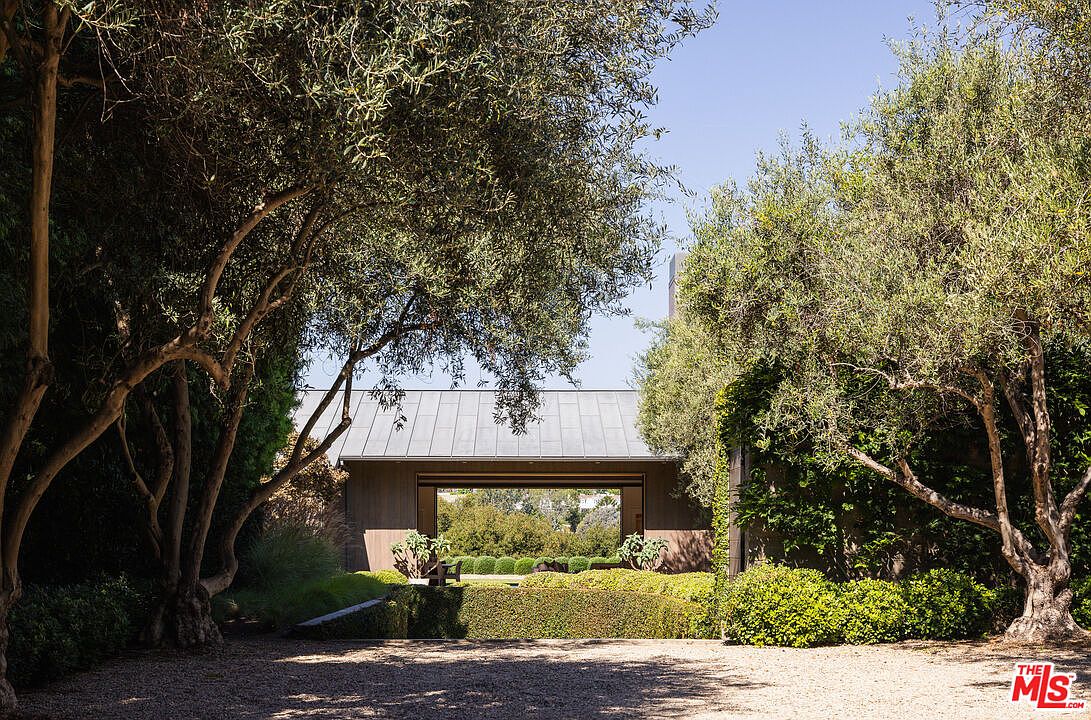
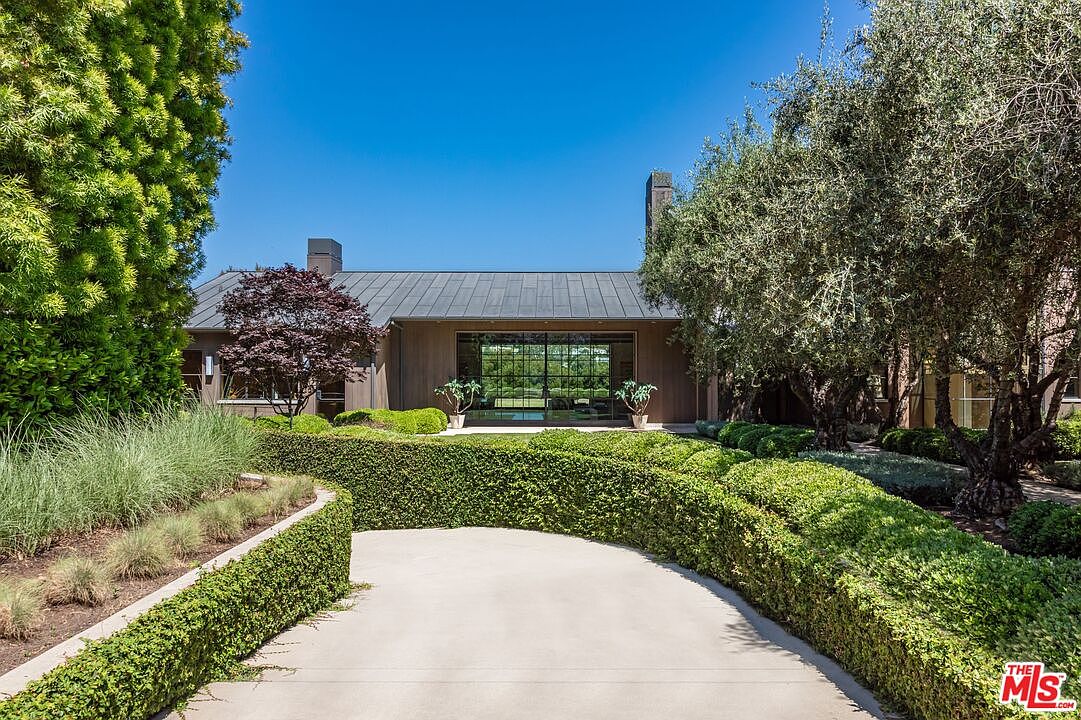
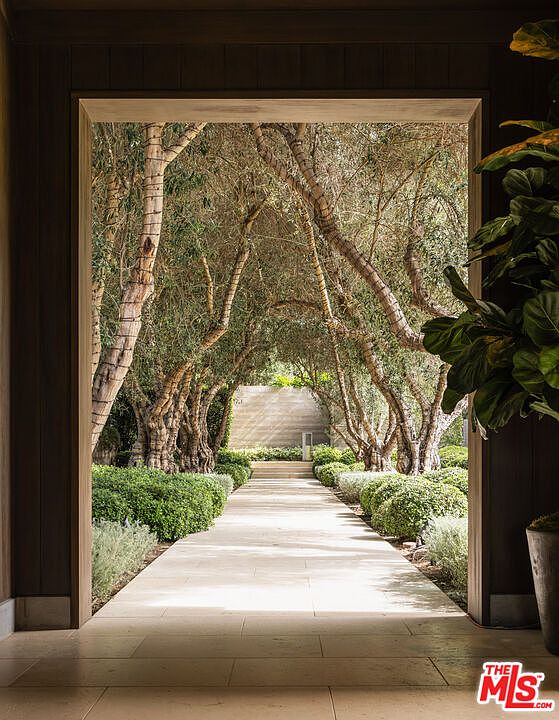
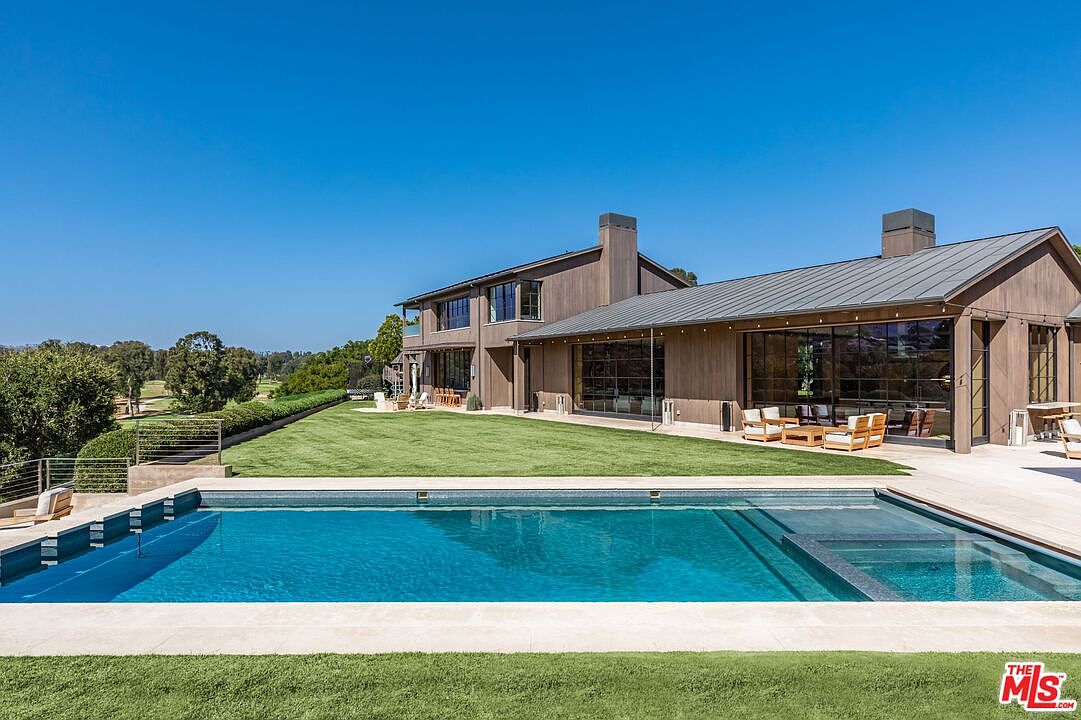
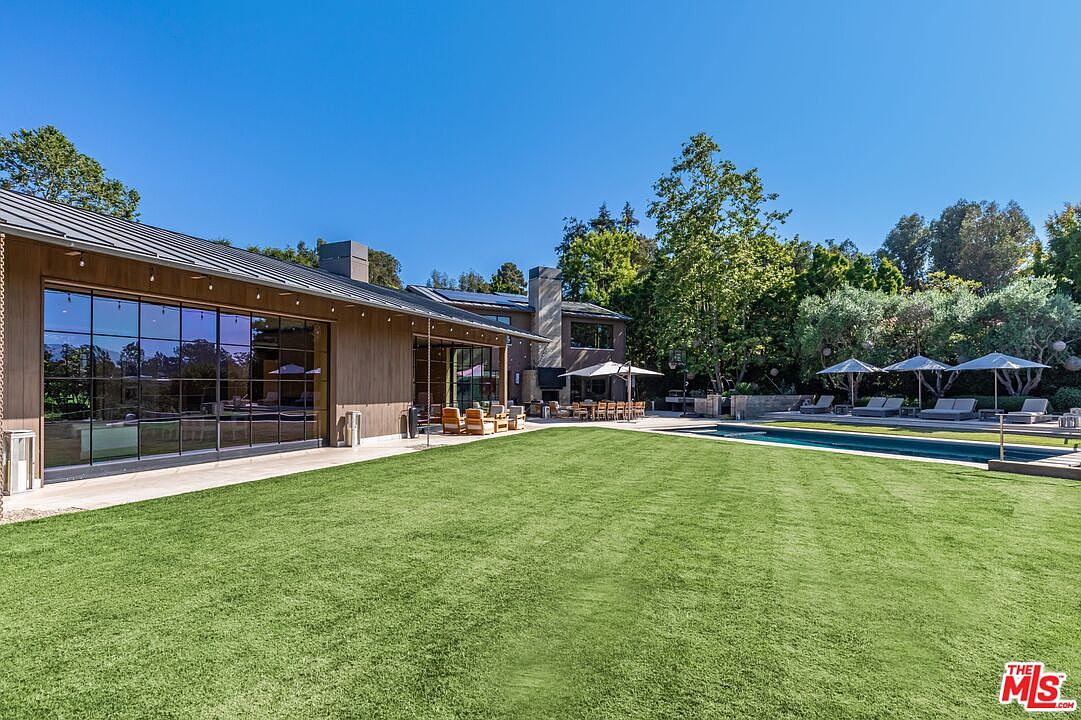
The approach alone signals what lies beyond. A gated entry framed by mature olive trees and board-formed concrete walls sets a tone of considered drama — architecture that announces itself without shouting. Inside, the home unfolds as a sequence of precisely calibrated spaces, each one guided by a vaulted wood-paneled ceiling, warm hardwood floors, and the signature steel-frame windows that filter the Santa Monica Mountains into something that feels almost curated. The great room anchors the composition: a soaring ceiling rises above a generous sectional, a central fireplace is integrated seamlessly into custom light-wood shelving, and floor-to-ceiling glass dissolves any remaining distinction between room and ridgeline.
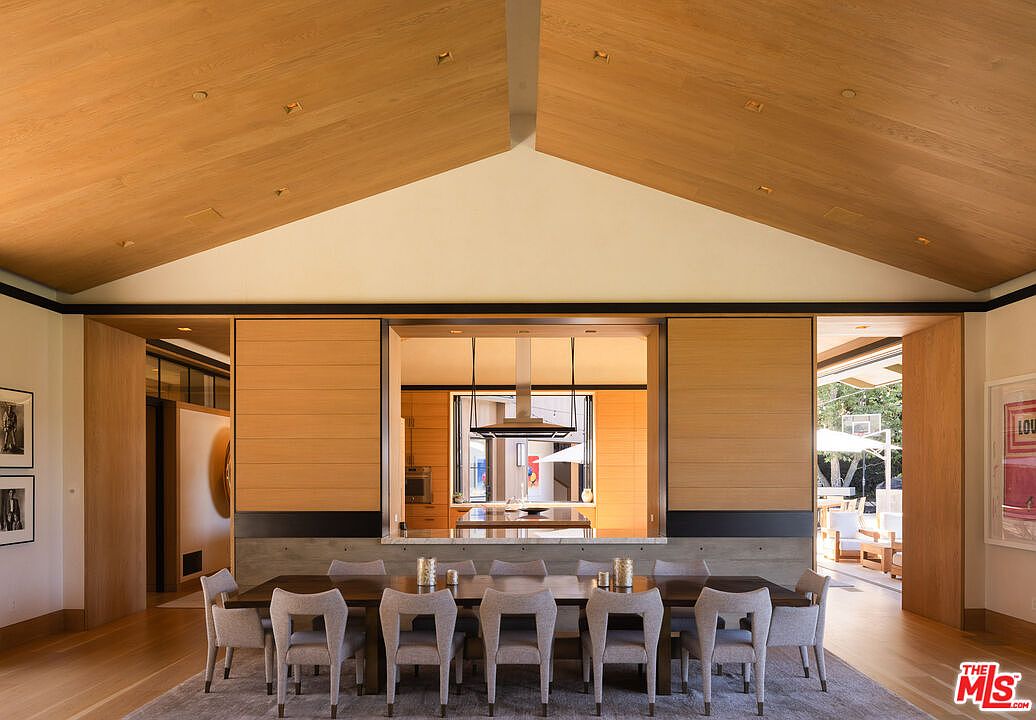
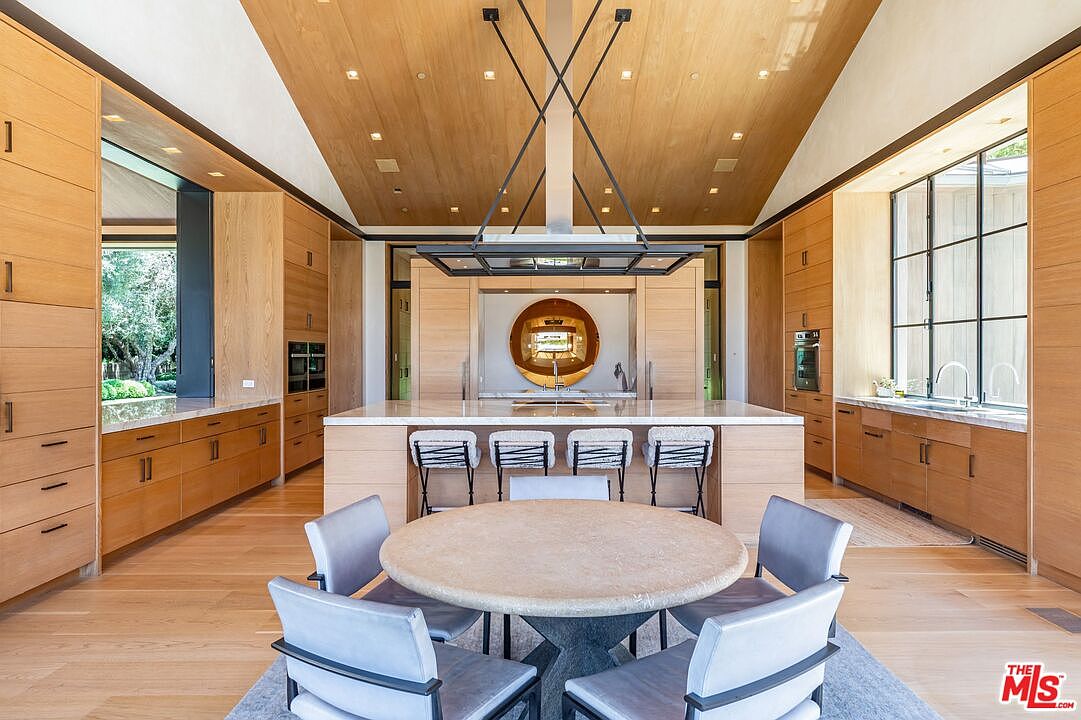
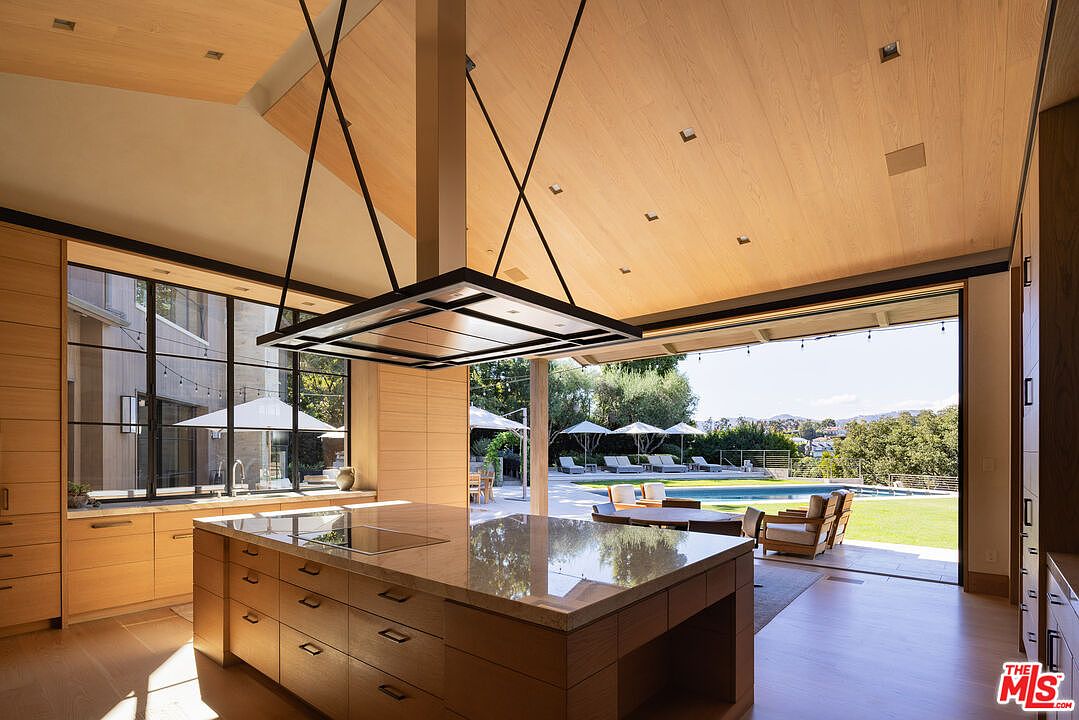
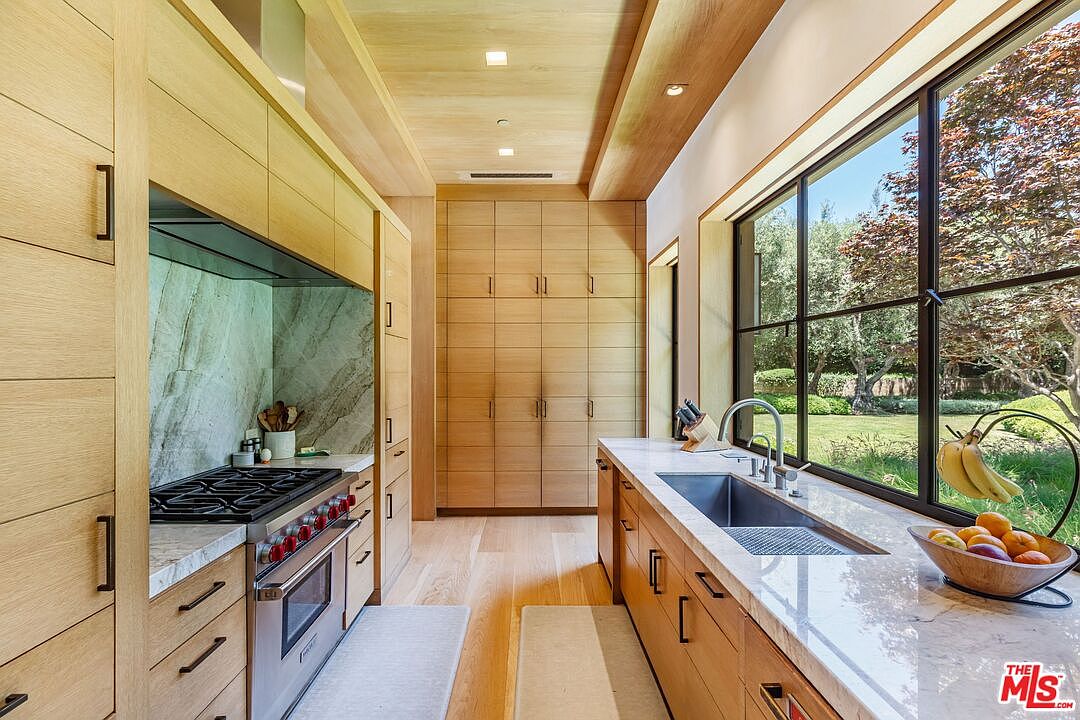
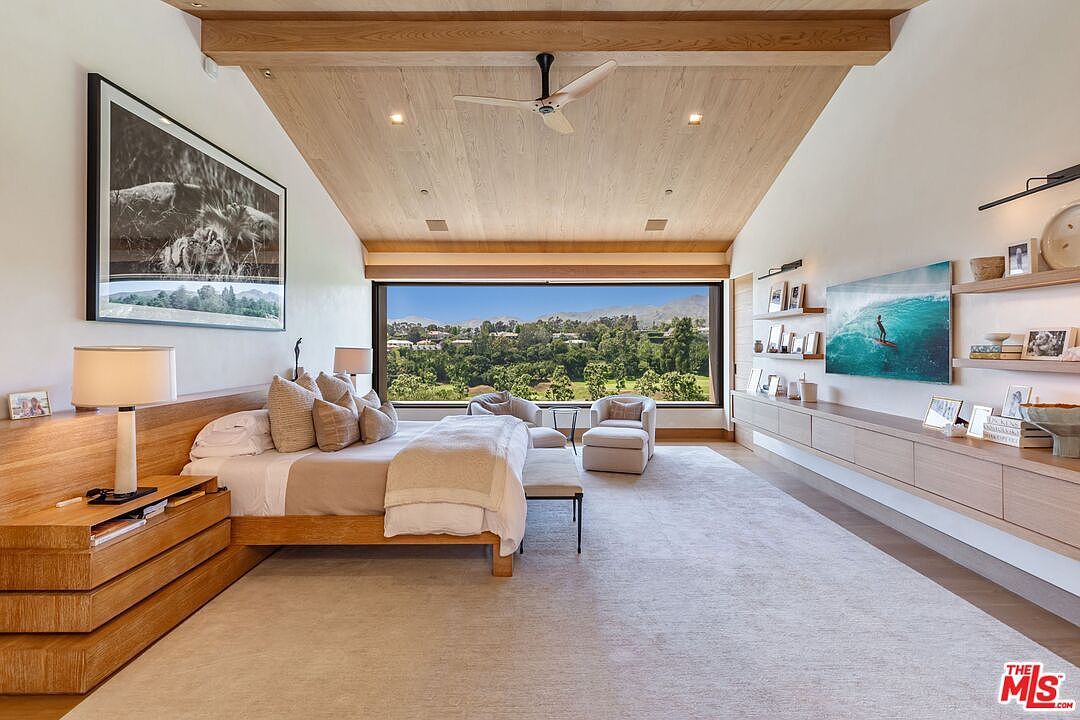
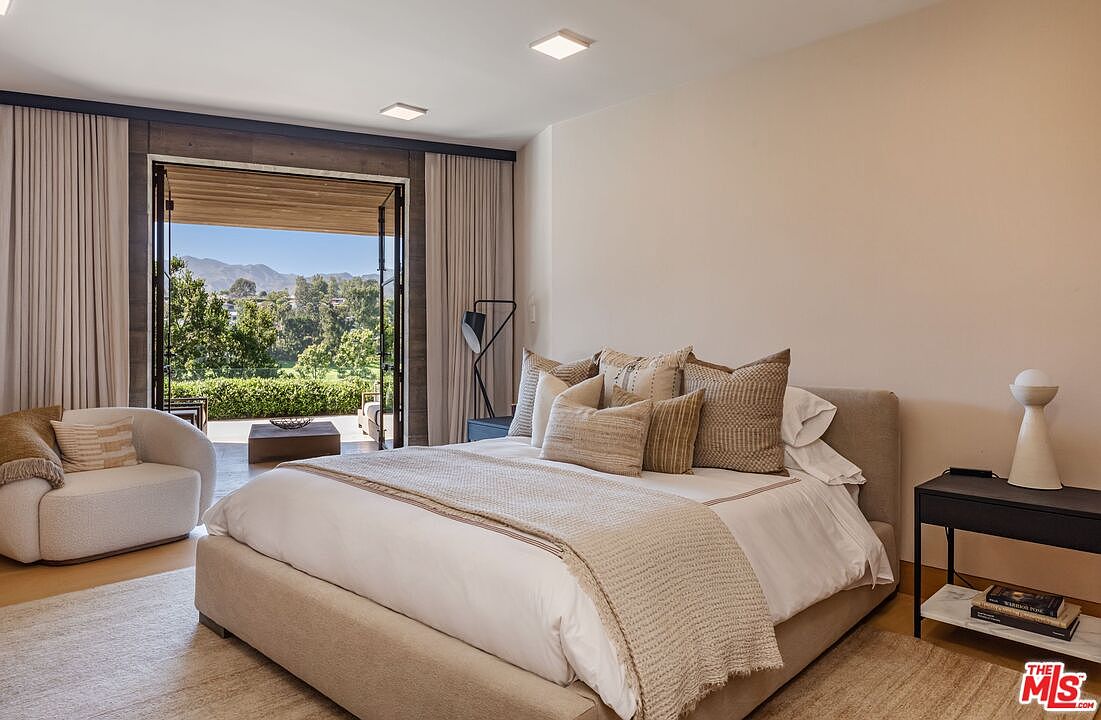
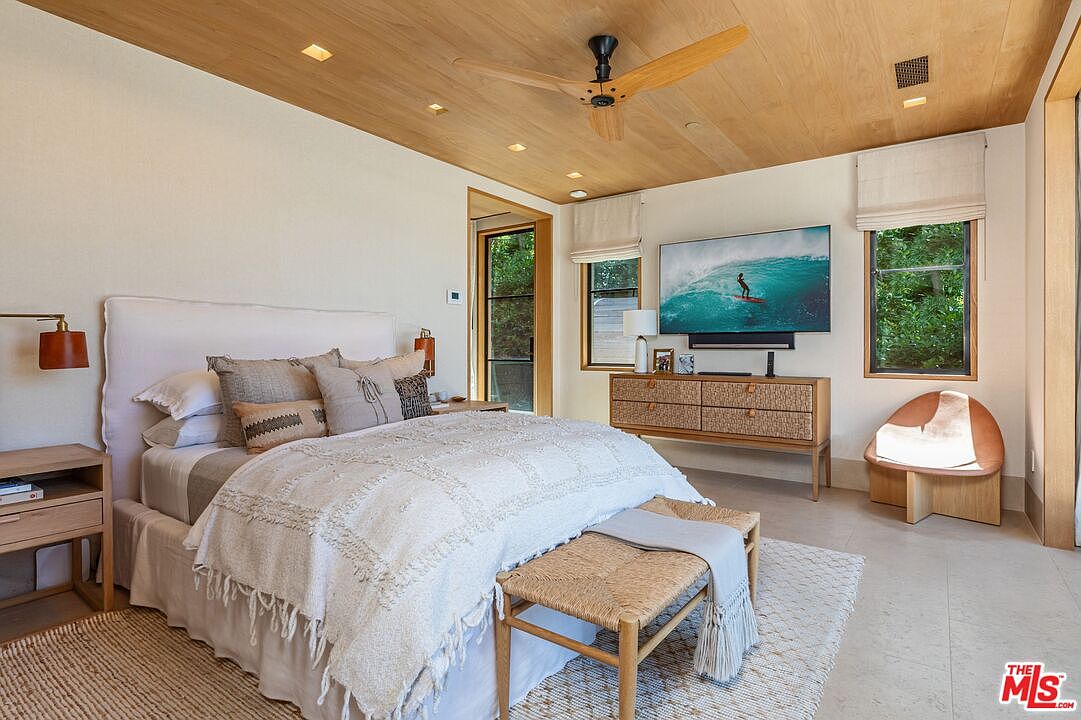
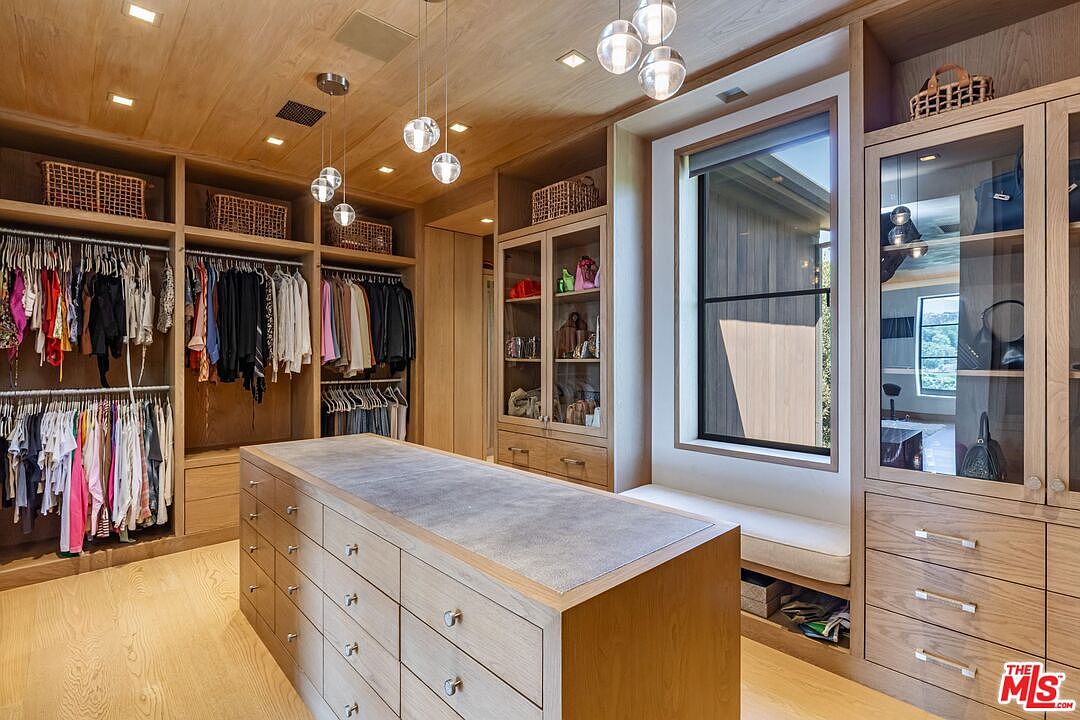
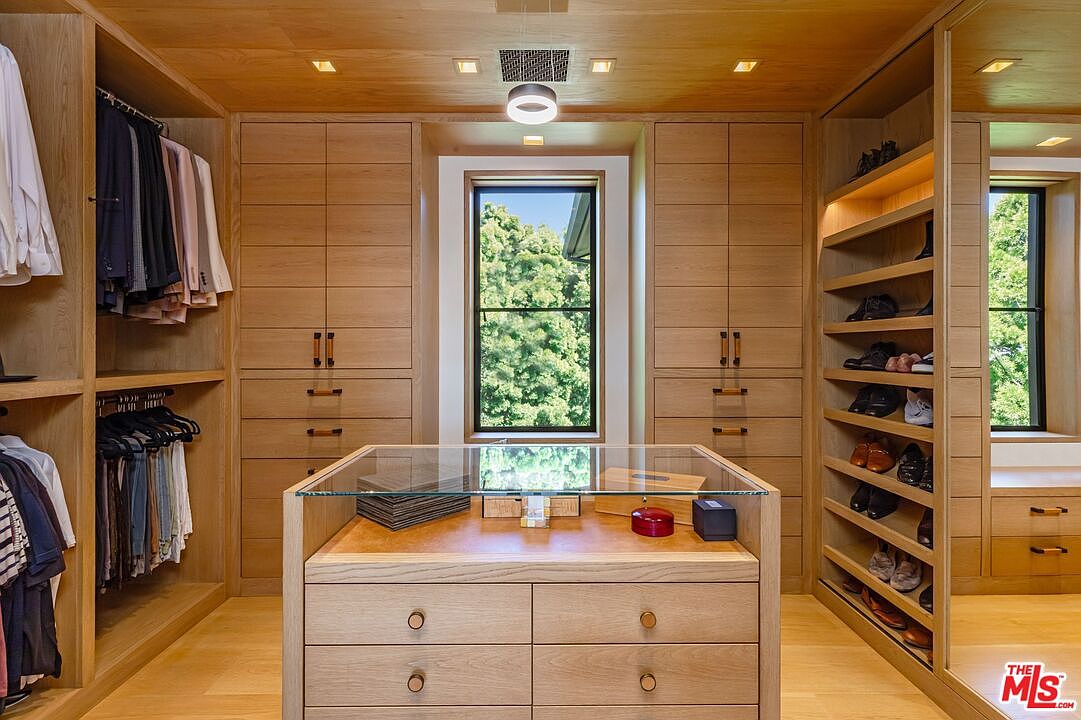
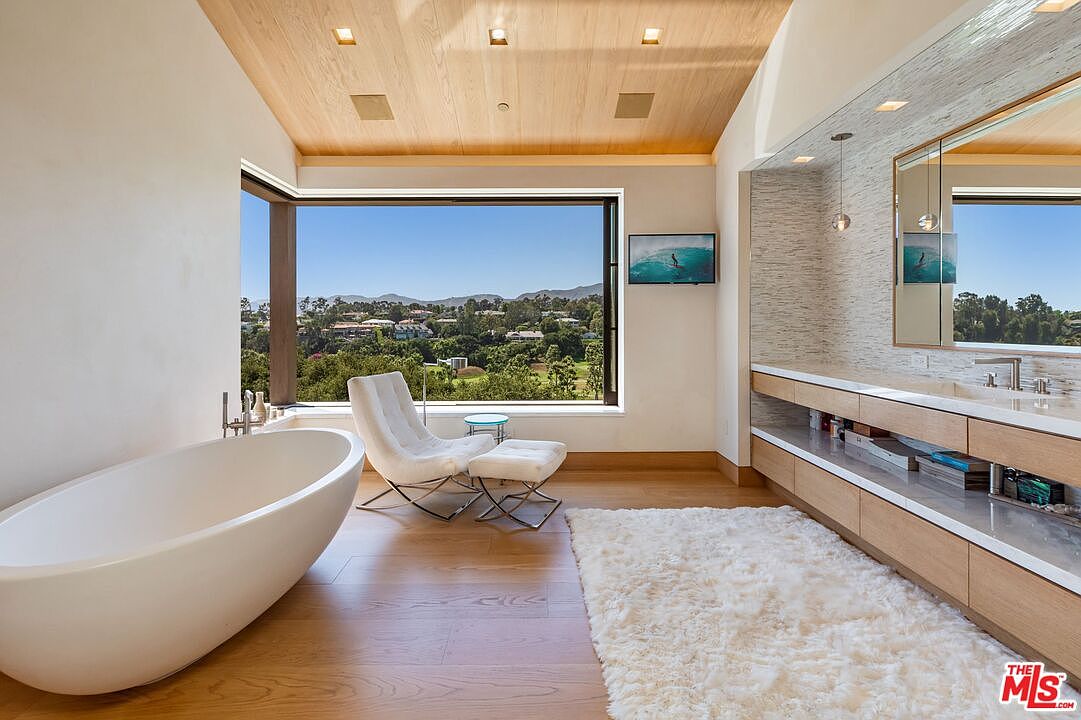
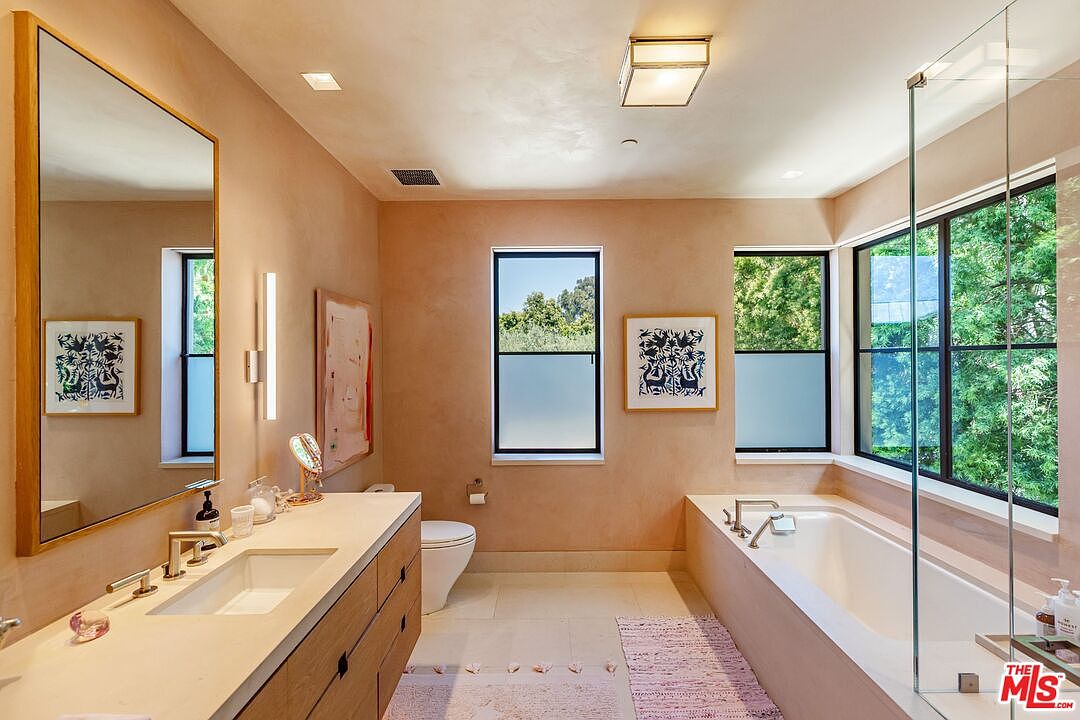
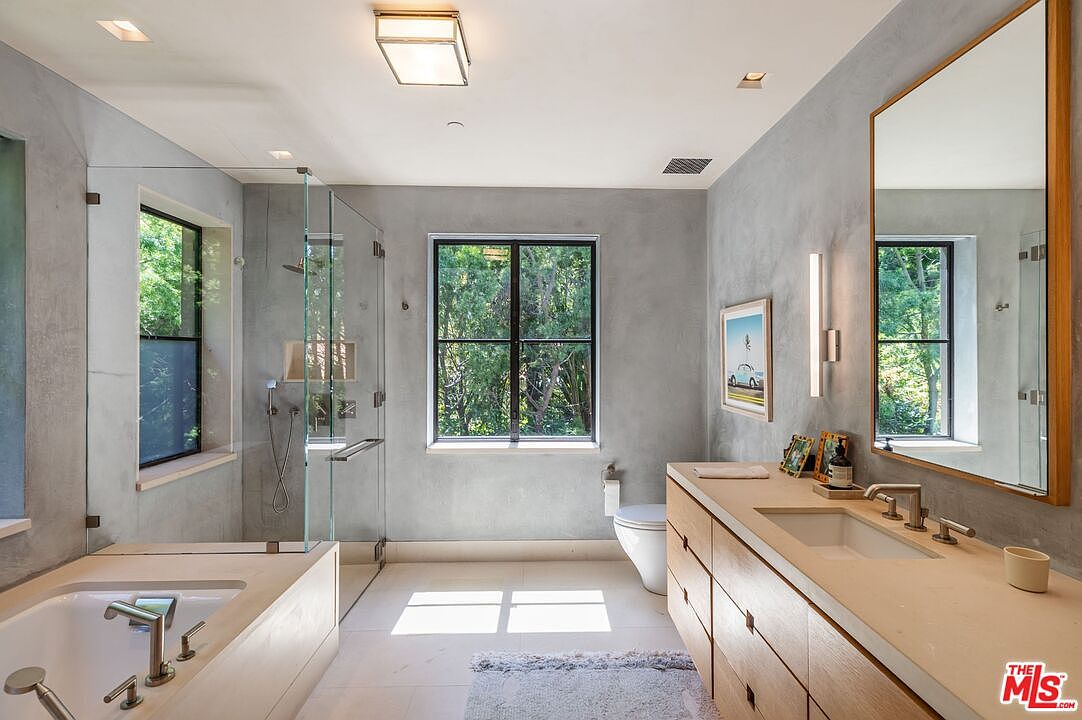
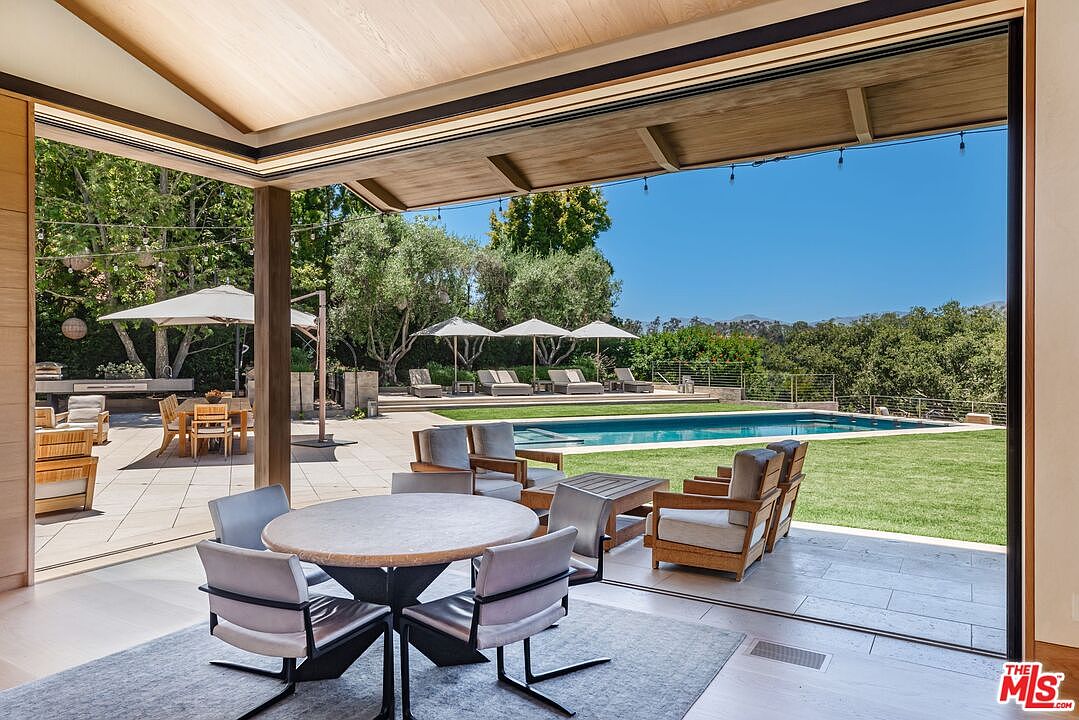
The chef's kitchen reflects the same architectural discipline — stone-topped islands, warm wood cabinetry, a professional-grade range beneath an industrial hood, and a circular dining area that handles a crowd with effortless grace. A vaulted ceiling ties the room to the broader language of the house, while glass walls open the space to a covered terrace and the pools beyond. The primary suite continues the conversation: a freestanding soaking tub is positioned against panoramic hillside windows, a custom walk-in closet offers a glass-topped island and organized millwork throughout, and a spa bathroom finished in textured stone and warm wood completes a retreat of genuine serenity.
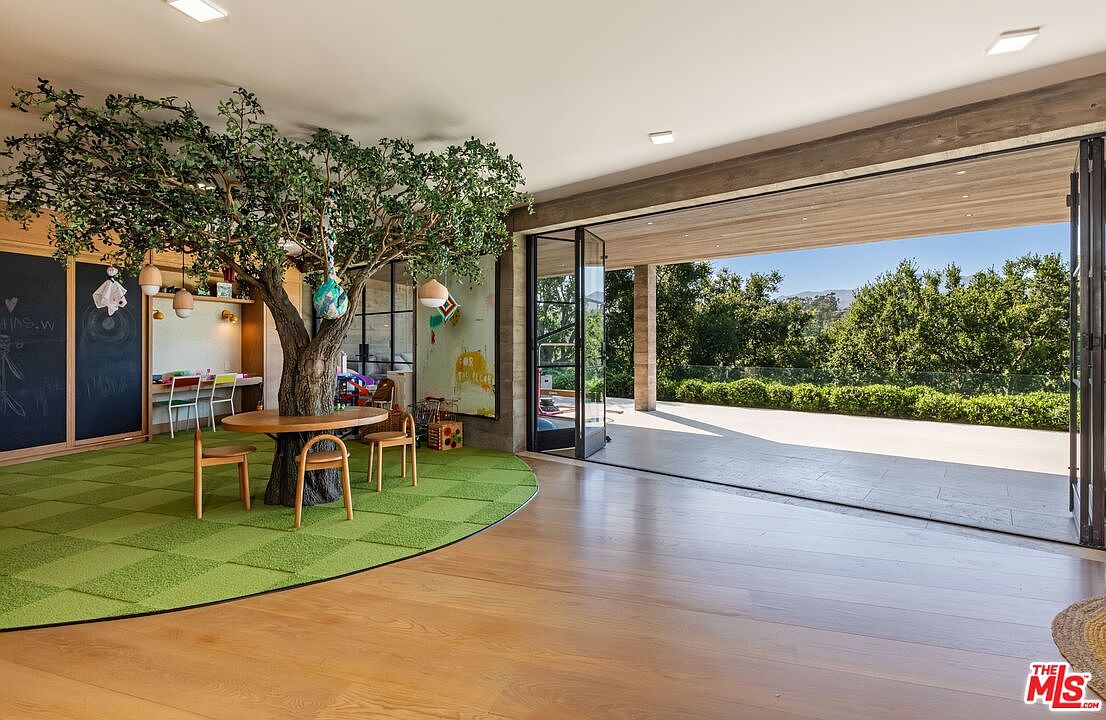
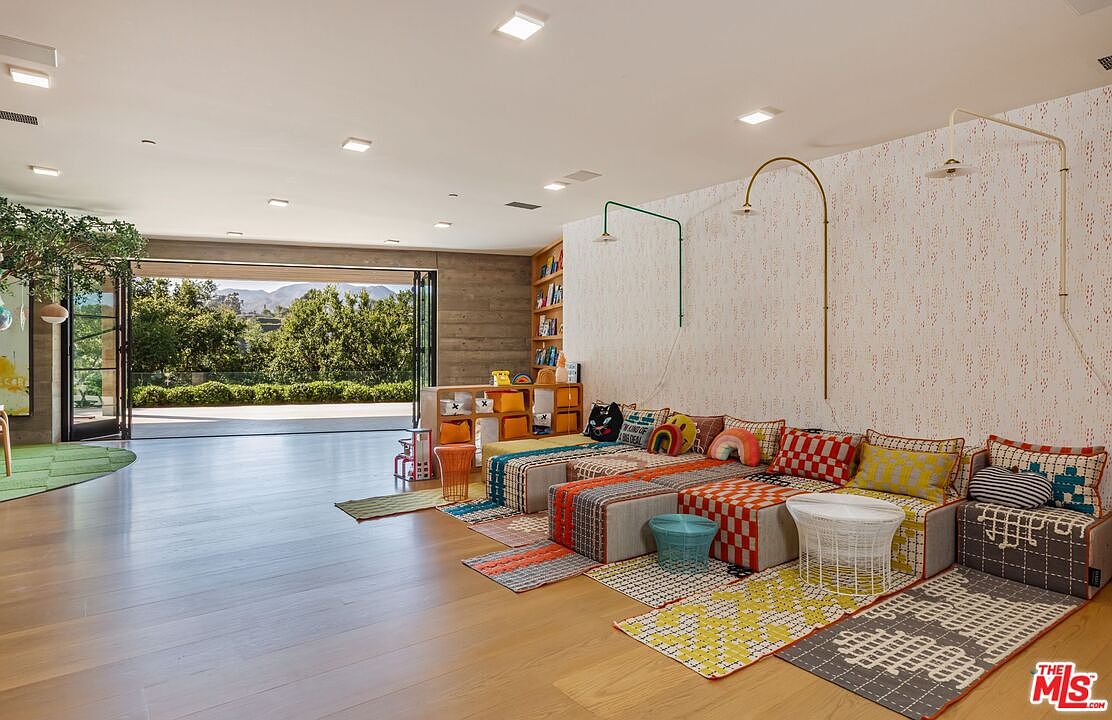
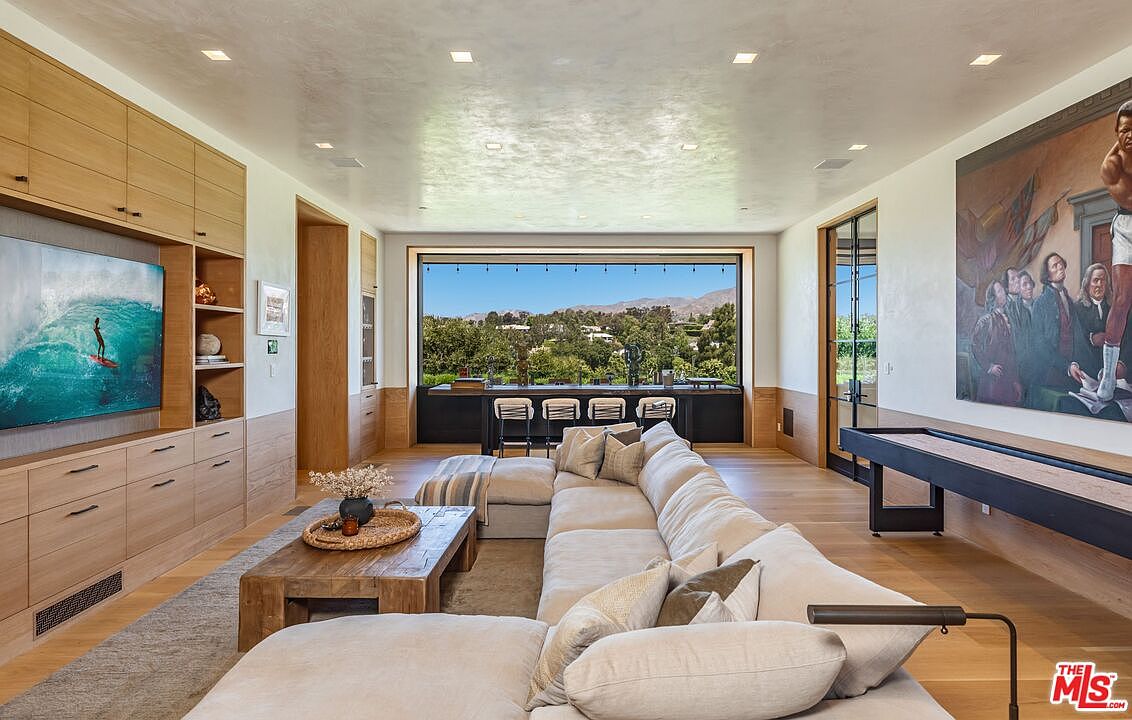
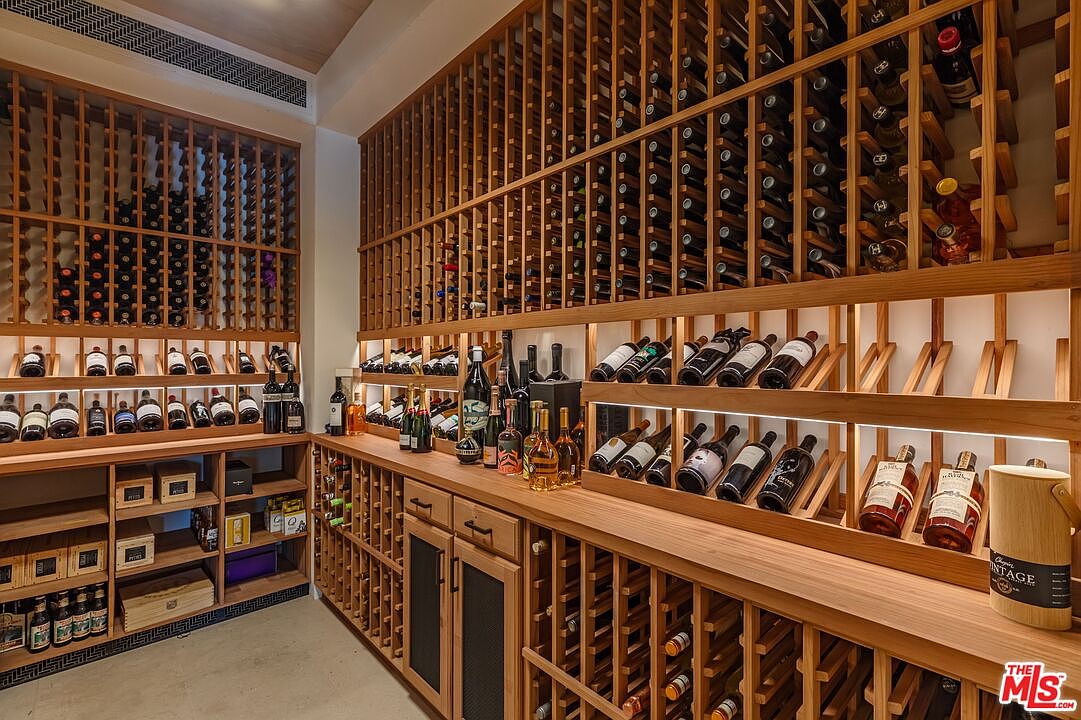
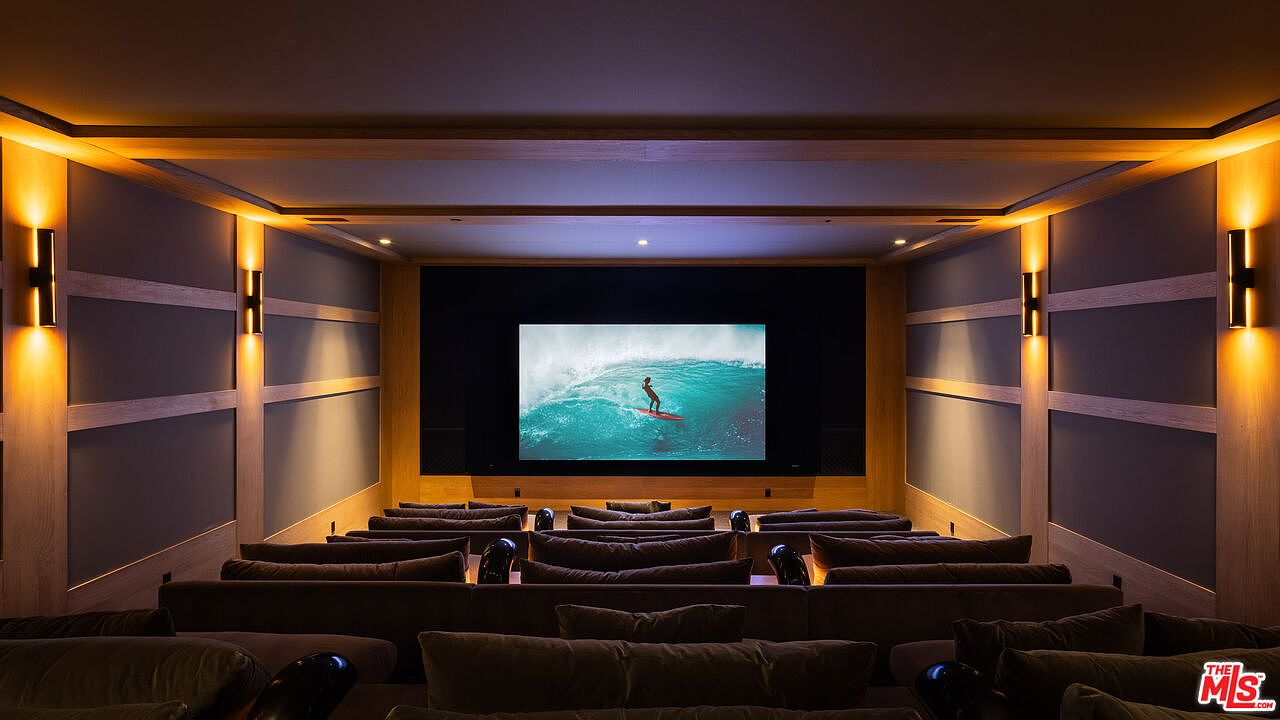
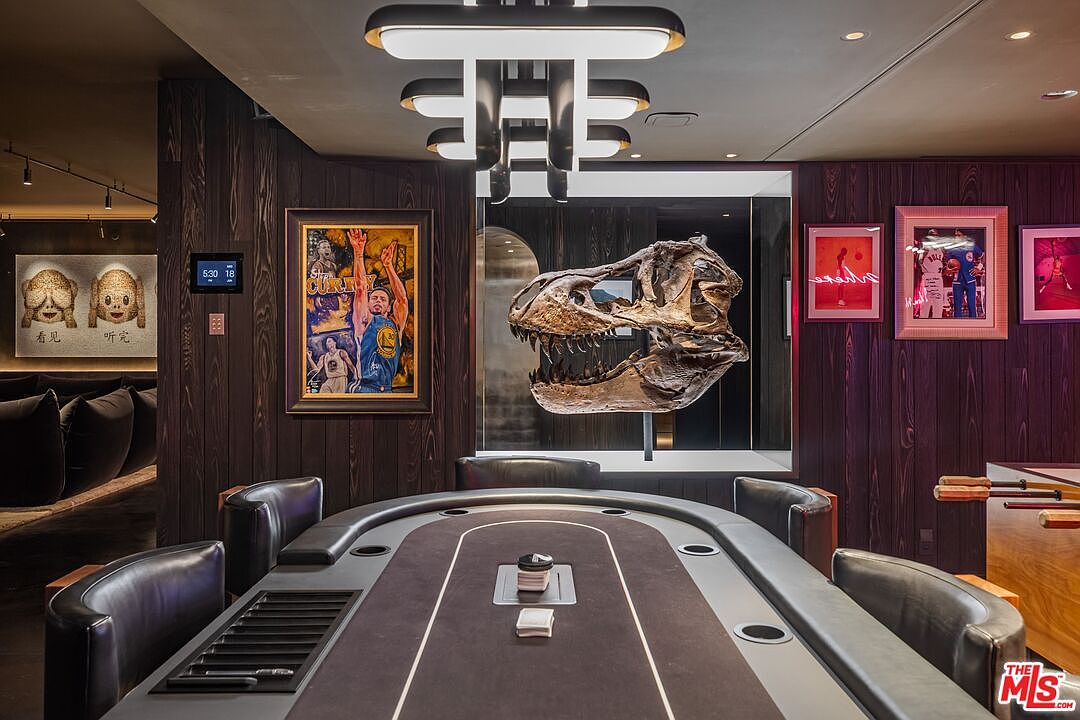
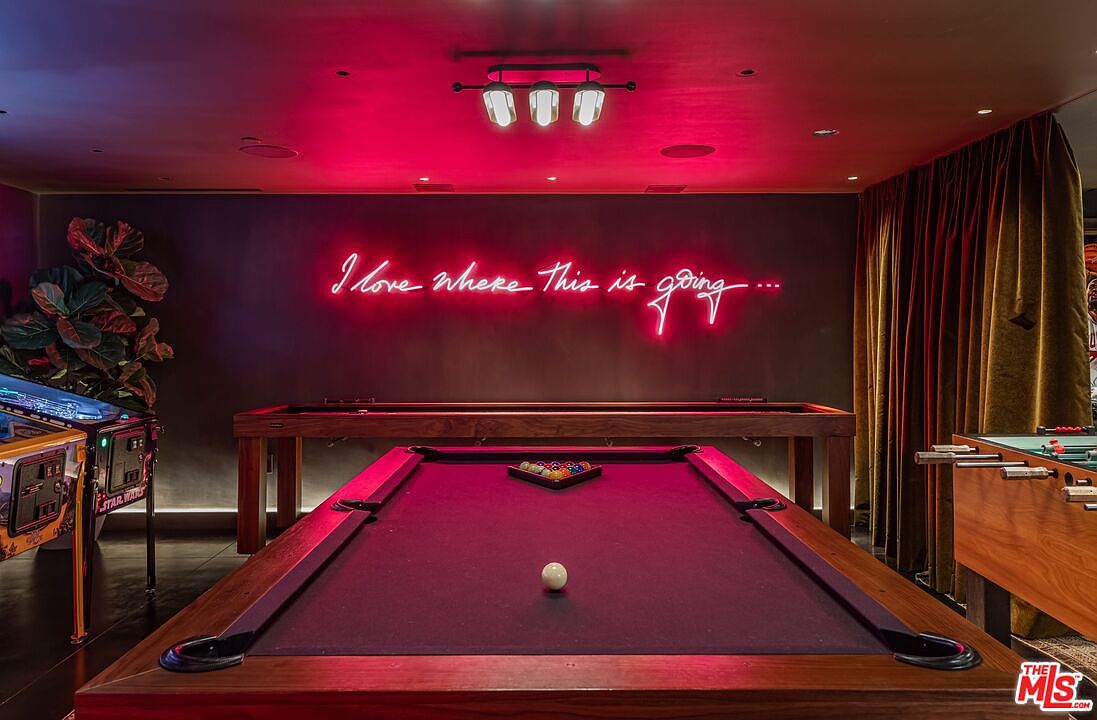
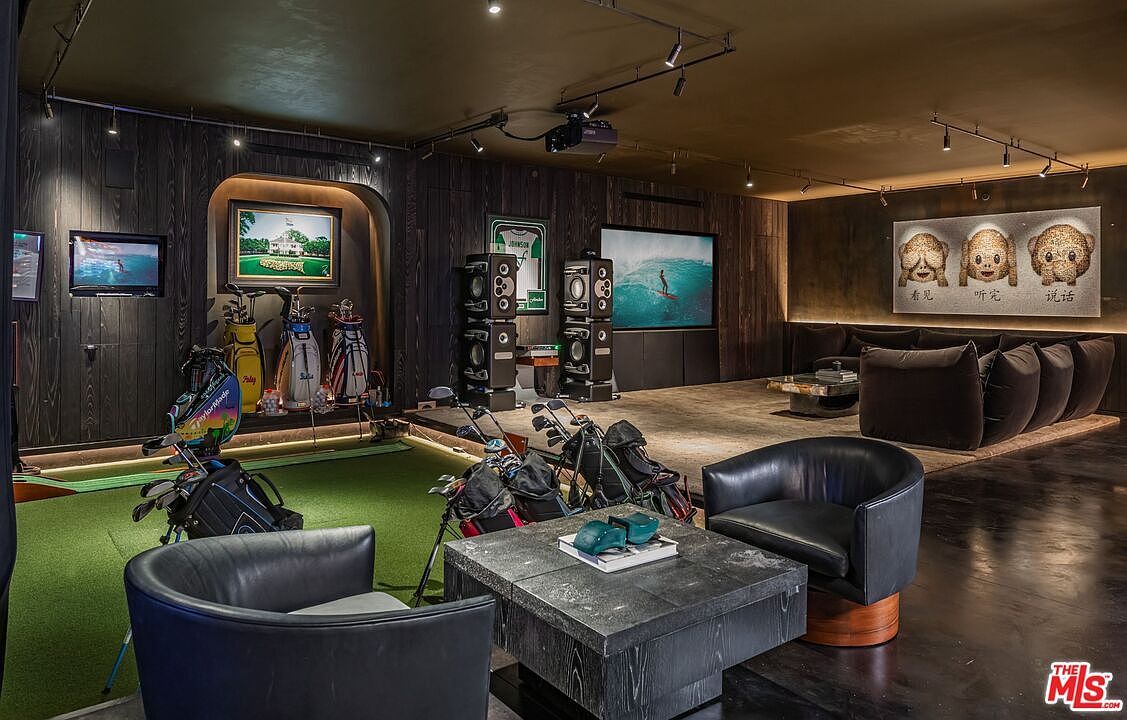
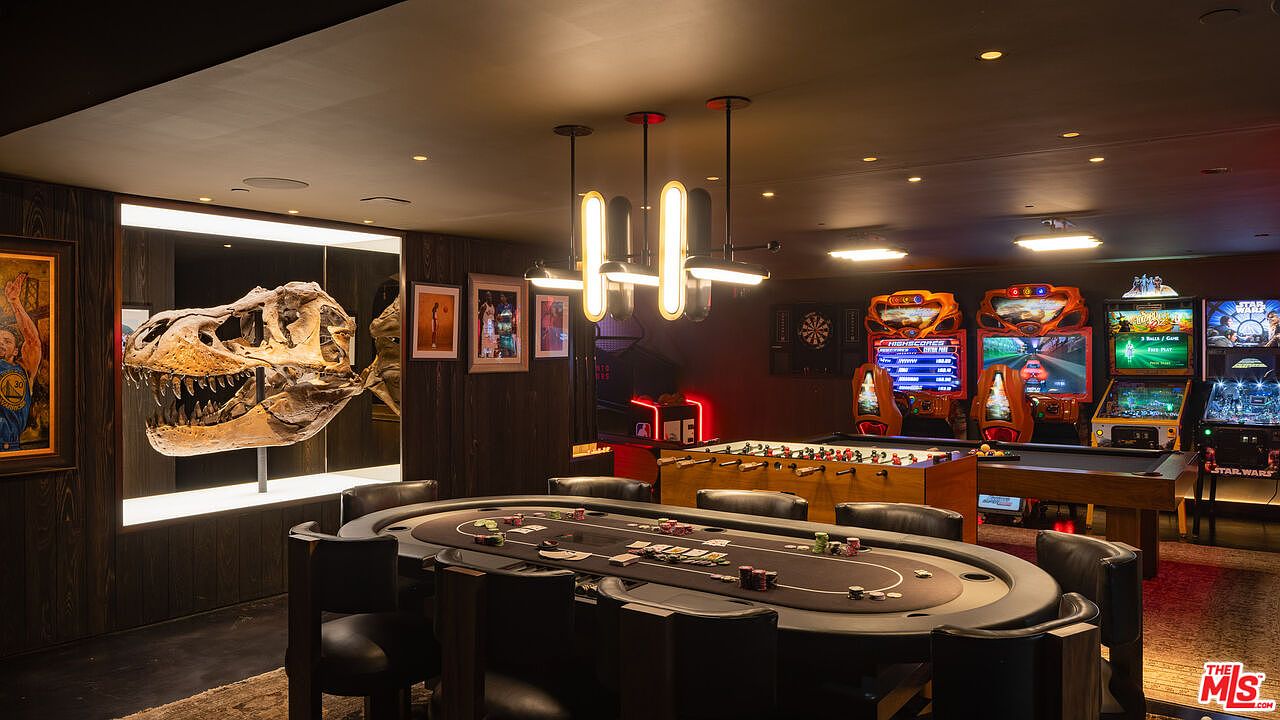
Below grade, the estate shifts registers with confident ease. A tiered home theater delivers a private cinema experience with plush tiered seating and a large projection screen. A temperature-controlled wine cellar lined with floor-to-ceiling racking is both functional and sculptural. A golf simulator lounge, a game room anchored by a custom poker table and a dramatic illuminated T-Rex display, and a dedicated children's lounge — complete with an indoor tree at its center — round out a lower level that is as thoughtfully designed as anything above it.
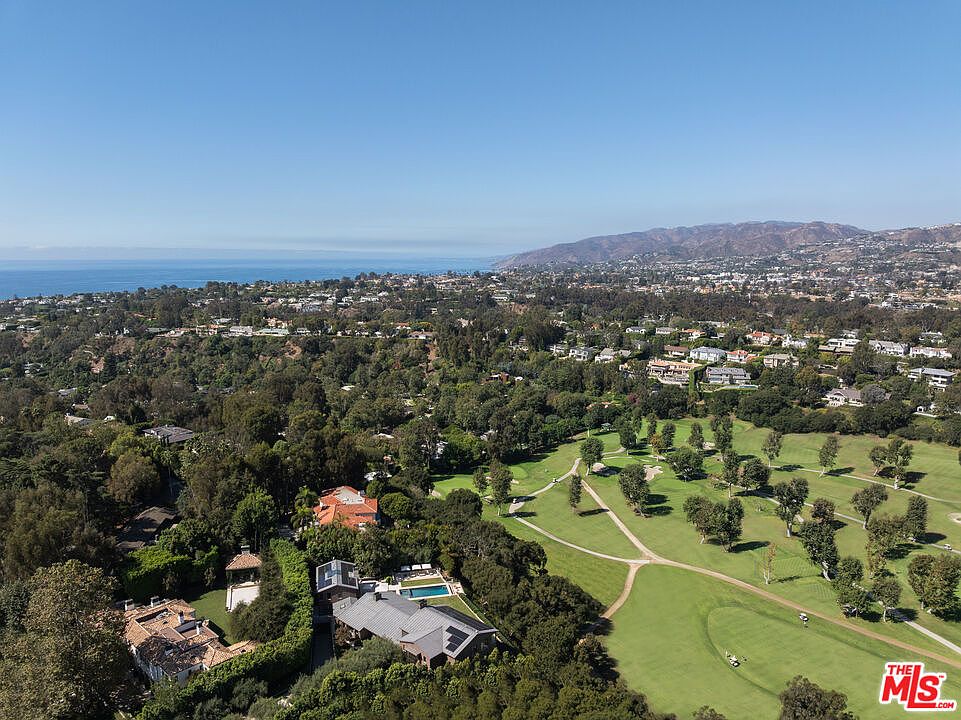
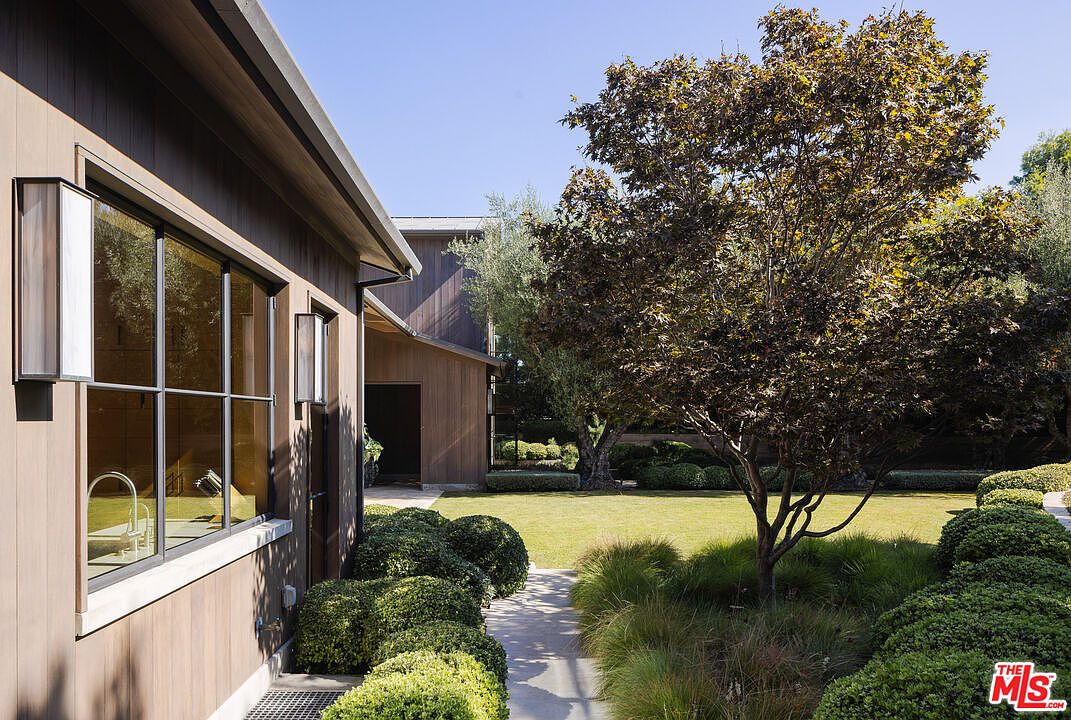
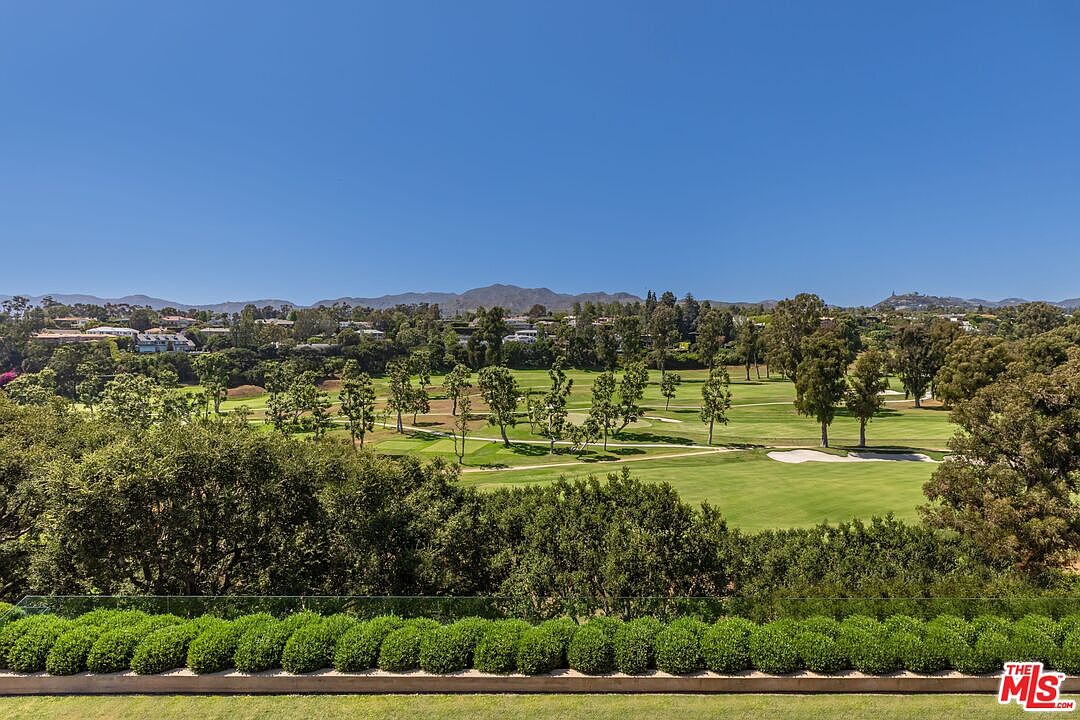
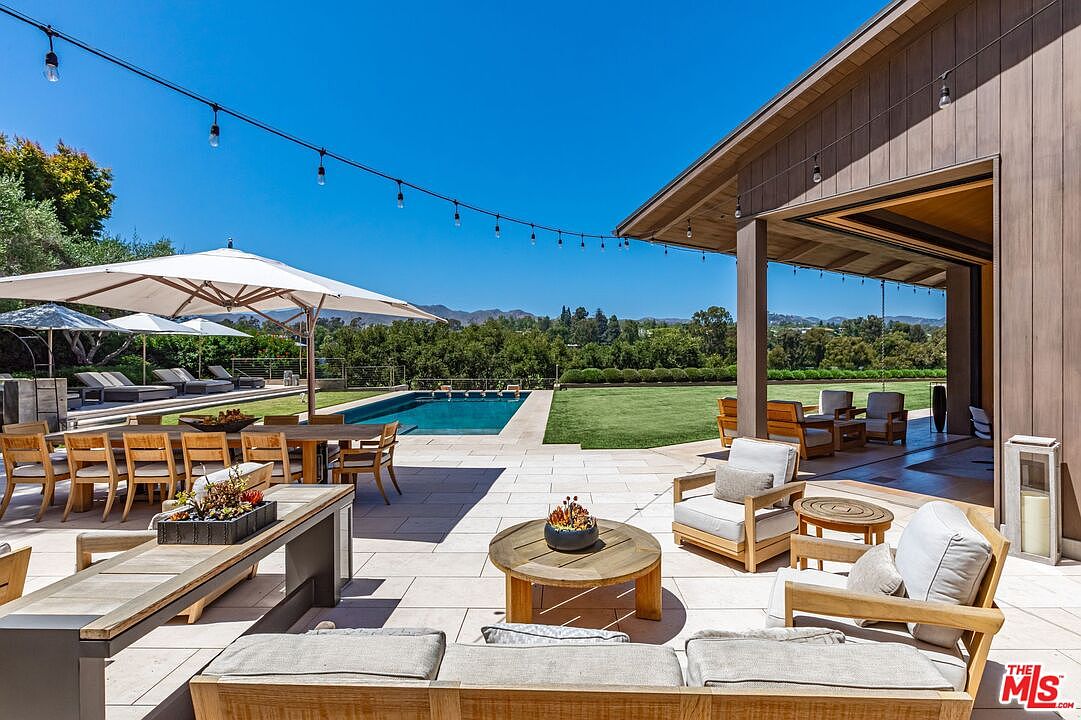
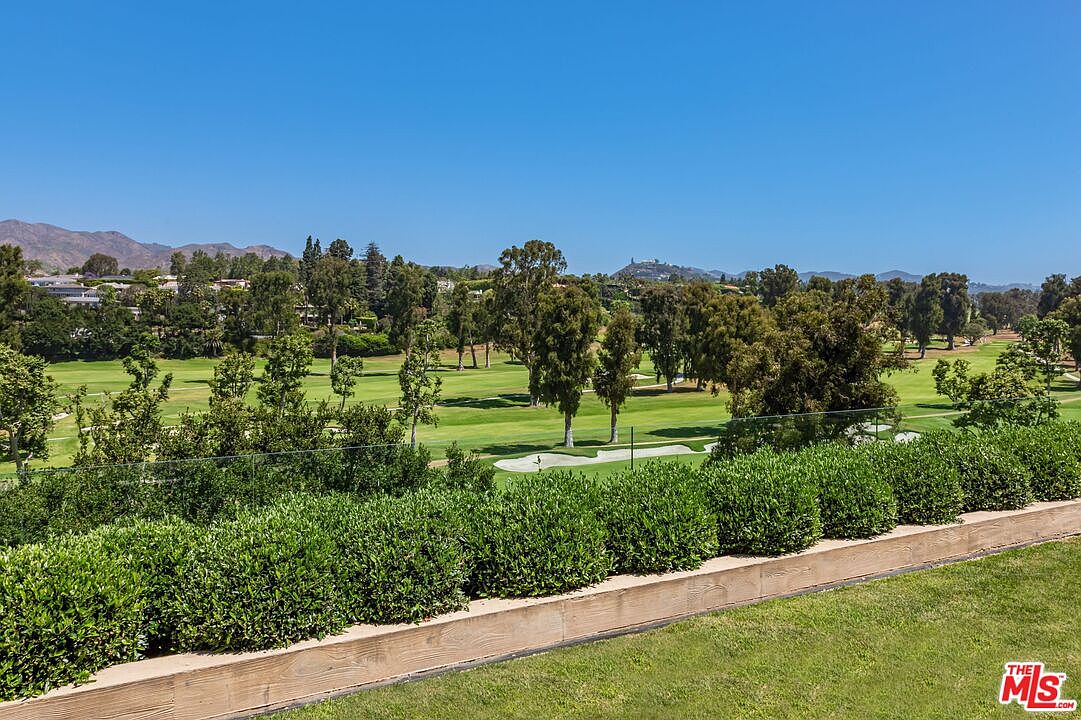
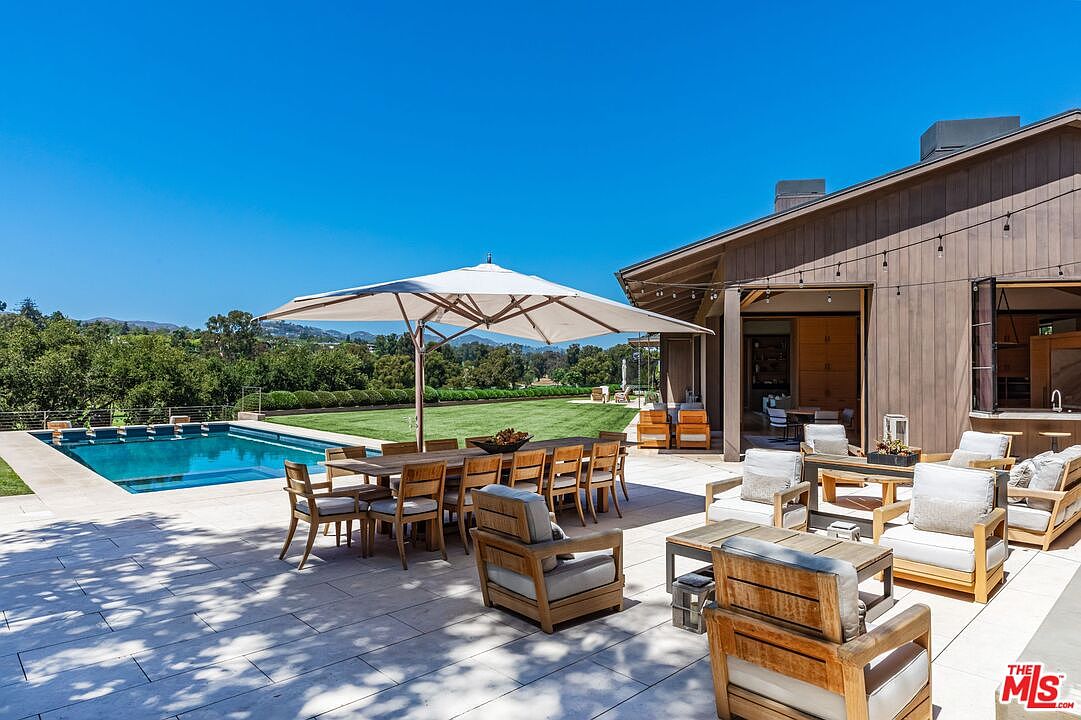
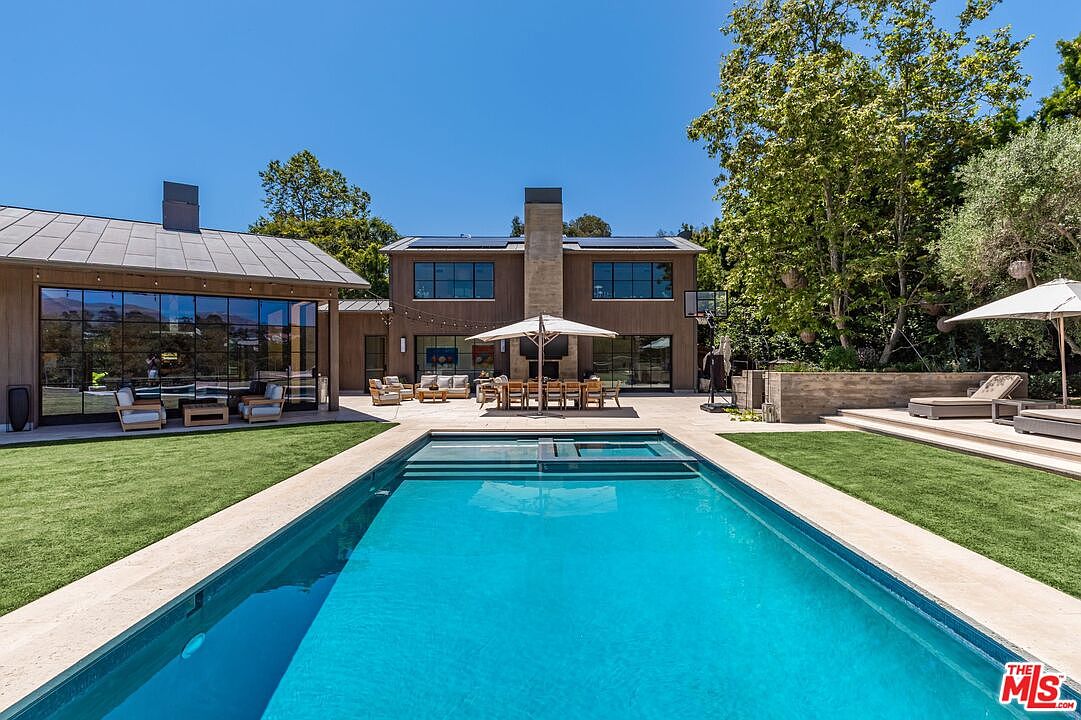
Outside, two pools, a tennis court, and a covered dining terrace look directly onto the seventh hole, the golf course serving as a living landscape that no designer could replicate. The entire compound is powered by geothermal energy, a commitment to sustainability that matches the architectural ethos precisely: luxury and responsibility, held in elegant equilibrium. This is not simply a home. It is a legacy, preserved in board-formed concrete and warm California wood.
Santa Monica's 90402 zip code has long occupied a singular position in the geography of Los Angeles real estate — a coastal enclave defined not by flash but by permanence, where wide tree-lined streets, generous setbacks, and a deeply rooted residential culture have made it one of the most coveted addresses in Southern California for generations. Within this already rarefied context, Woodacres Road represents something rarer still: a private, discreet corridor that most Angelenos have never encountered, tucked alongside the historic grounds of Riviera Country Club and largely invisible to the rhythms of the city beyond its borders.
Riviera Country Club itself carries a weight of history that few private institutions in Los Angeles can match. Founded in 1926 and designed by legendary golf course architect George C. Thomas Jr., Riviera has hosted the Los Angeles Open — now the Genesis Invitational — for decades, and its course has earned the enduring nickname 'the Riviera of the West.' The club's storied fairways have welcomed some of the most celebrated figures in the history of the sport, and its presence lends the surrounding neighborhood a sense of verdant, unhurried grandeur that feels genuinely removed from the urban fabric of the city.
The property's position next to Channel Road is a practical and lifestyle advantage that reveals itself quietly. Channel Road connects Pacific Coast Highway to the neighborhoods above in a matter of minutes, placing the beach within easy reach while maintaining a remove that the coast's more exposed properties cannot offer. Malibu's restaurants, beaches, and open spaces are accessible without the commitment of a true canyon address. The Brentwood Country Mart — one of the westside's most beloved gathering places, home to independent boutiques, celebrated restaurants, and a community atmosphere that resists easy replication — is equally close. San Vicente Boulevard's restaurant corridor, the dining and retail offerings of Montana Avenue, and the broader cultural resources of Santa Monica proper all sit within a short drive.
For families, the area offers access to some of the region's most highly regarded educational institutions, both public and private, along with Palisades Park's coastal blufftop expanse, the Santa Monica Farmers Market, and the recreational amenities of Will Rogers State Beach and State Historic Park to the north. The Santa Monica Mountains, whose ridgelines are visible from within the home itself, provide an extraordinary network of hiking and equestrian trails that begin within minutes of the property.
What Woodacres Road offers, ultimately, is a form of privacy that is increasingly difficult to secure at any price in Los Angeles: the sensation of genuine remove, of a life conducted at a considered pace, surrounded by mature landscaping, golf course green, and mountain horizon — while remaining, in fact, minutes from everything the city offers at its best. It is the rarest of urban conditions: a place that feels like an escape without requiring one.
Featured Highlights
Curated Content • Presented by Branden Williams