The Story Behind
Full-Floor Fisher Island Living With Unrivaled Water Views
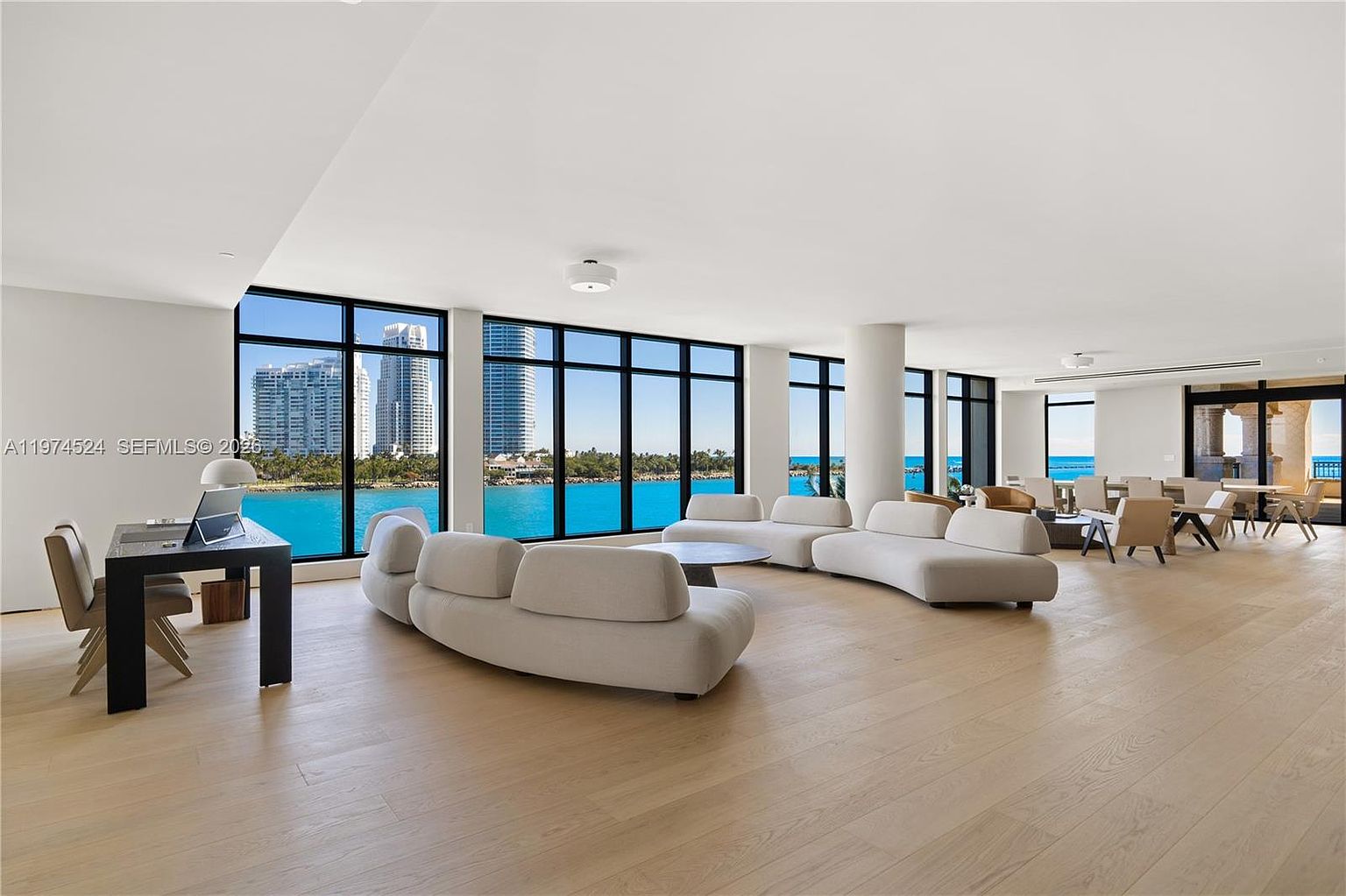
Arrival sets the tone. Two private elevators rise directly to your floor — no shared corridors, no common thresholds — and open into a residence that commands the entirety of its level at Palazzo del Sol. Architect Kobi Karp, whose portfolio of high-design Miami properties has earned consistent critical recognition, conceived the building with quiet authority: a structure that announces itself through proportion and restraint rather than spectacle. Inside, nearly 10,000 square feet unfolds with the confidence of a home that has nothing to prove.
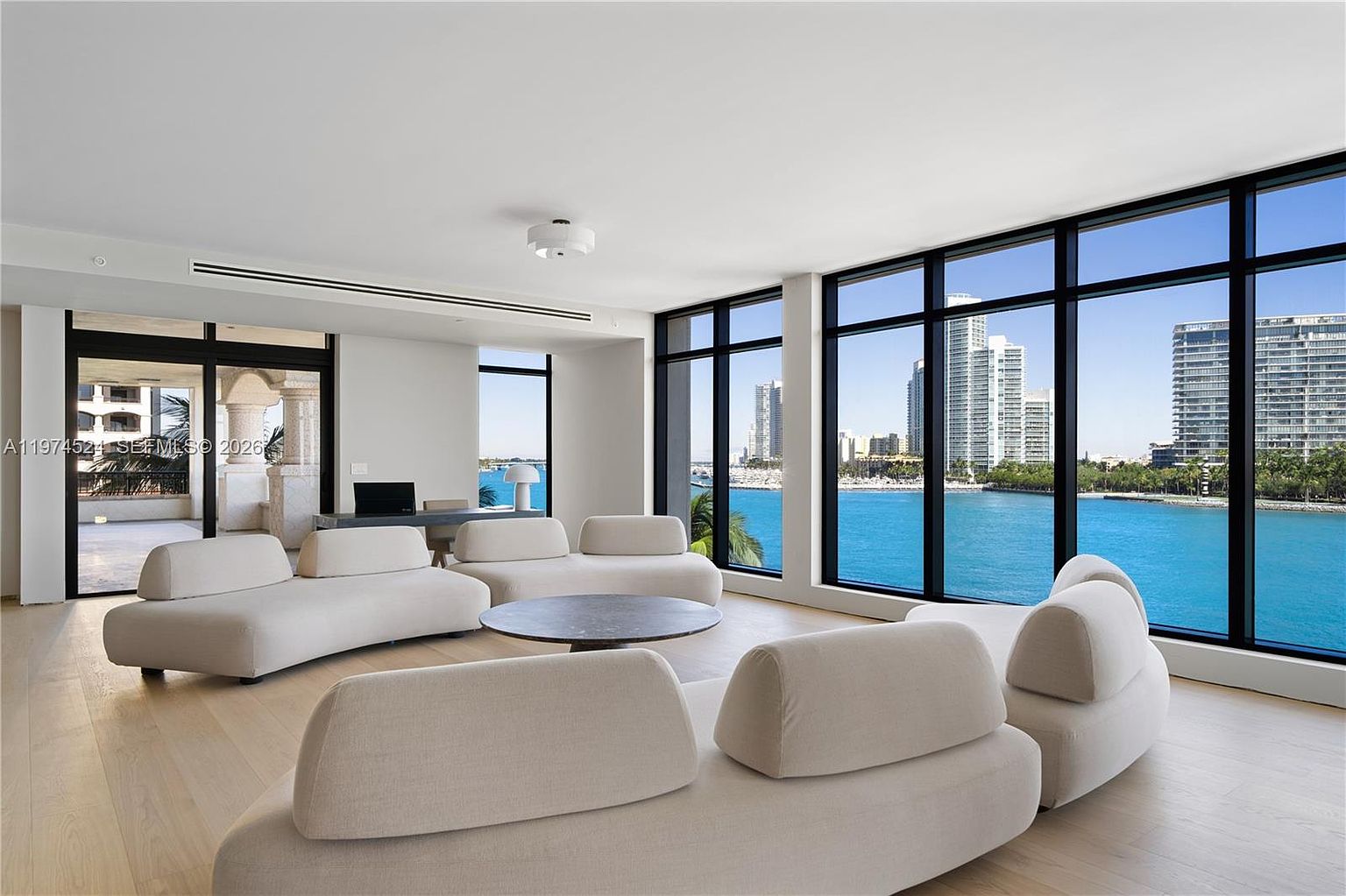
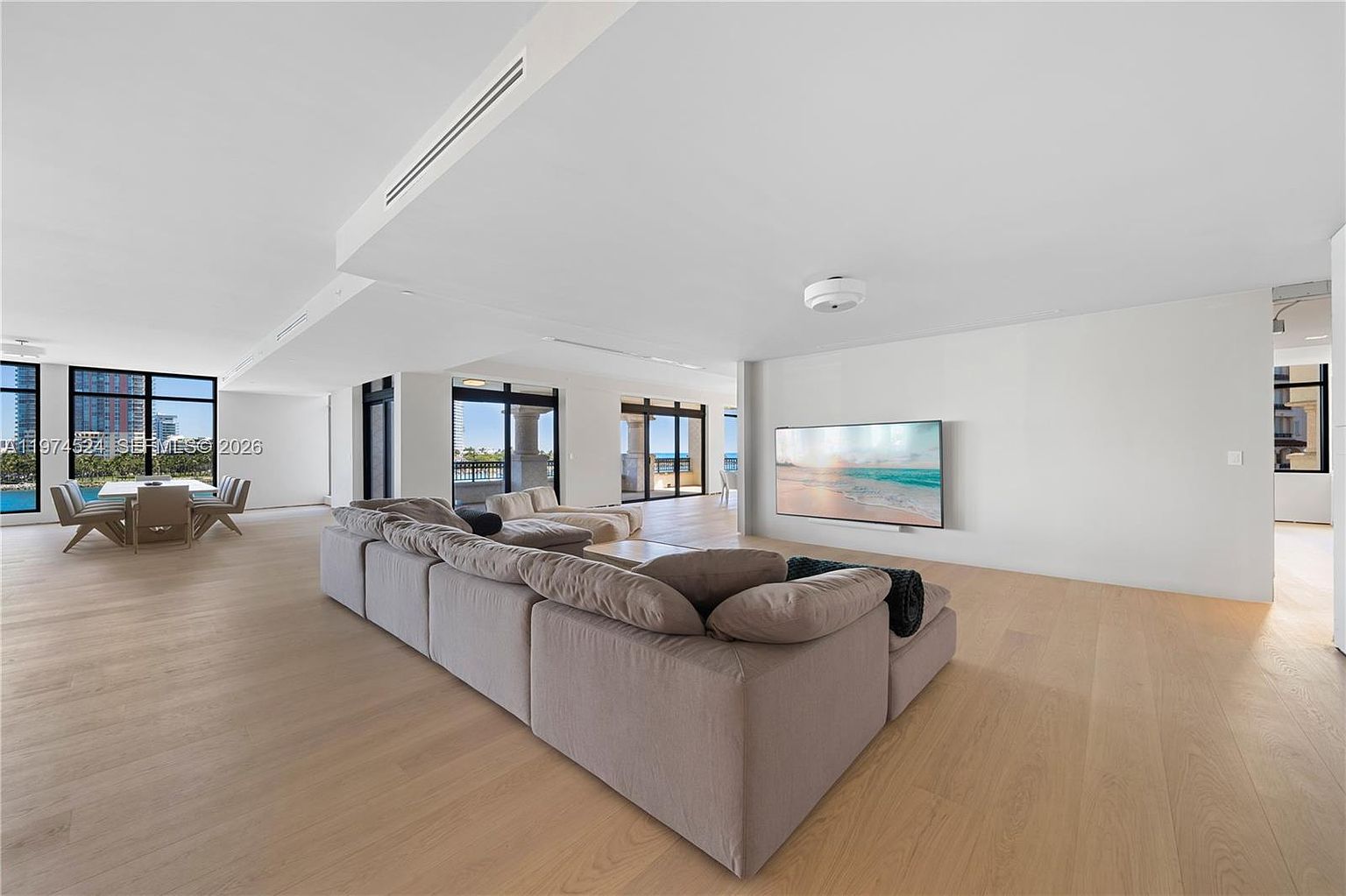
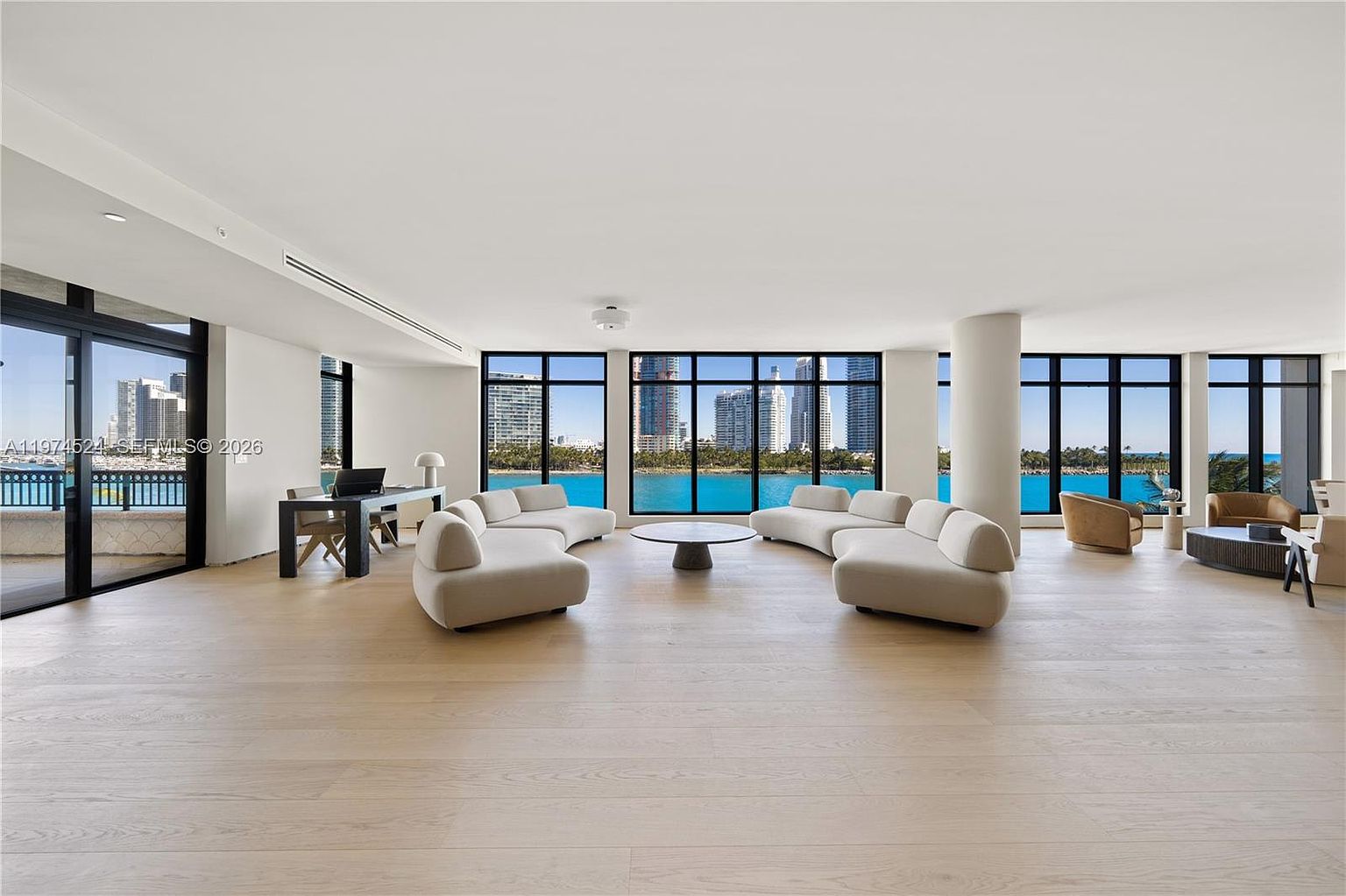
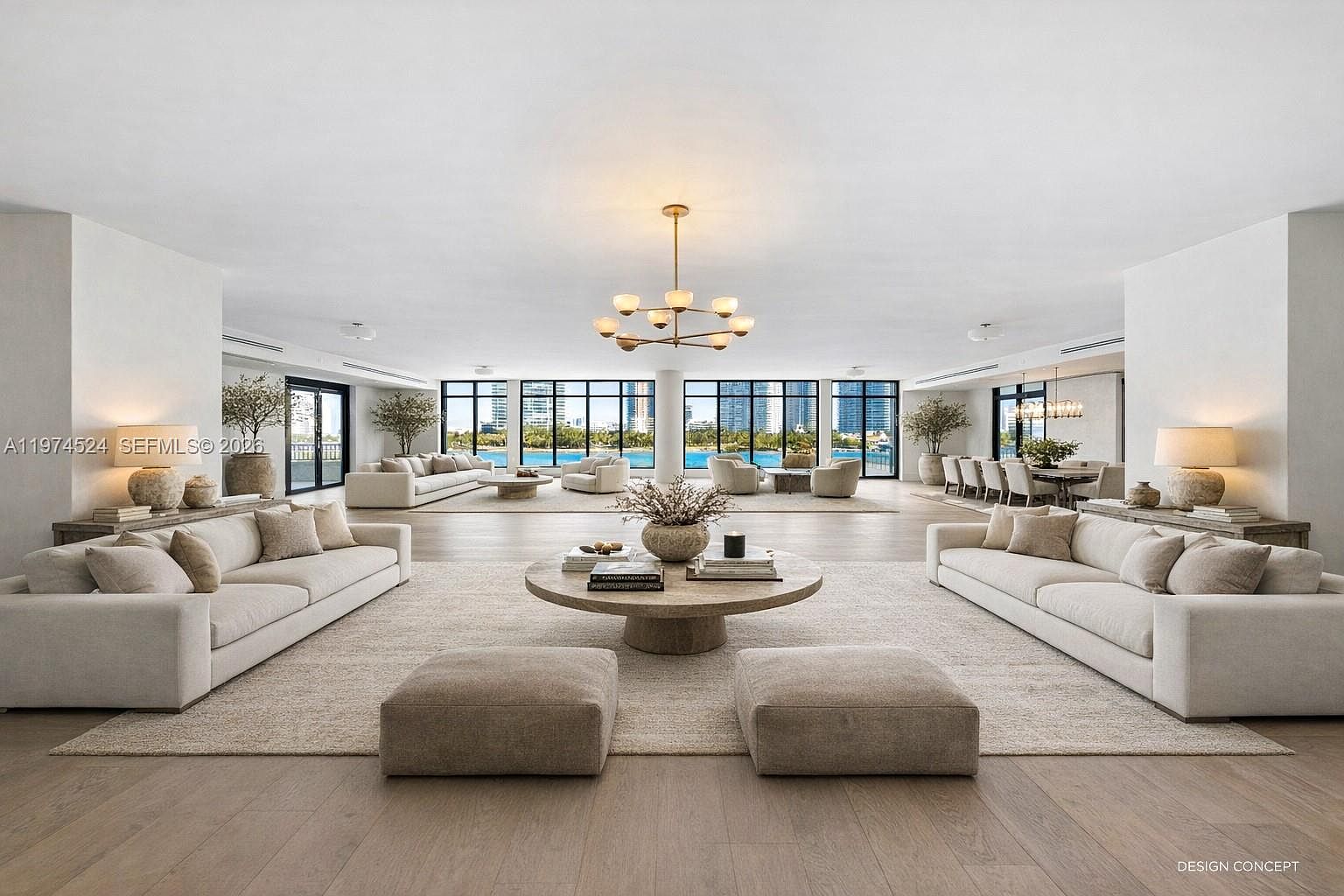
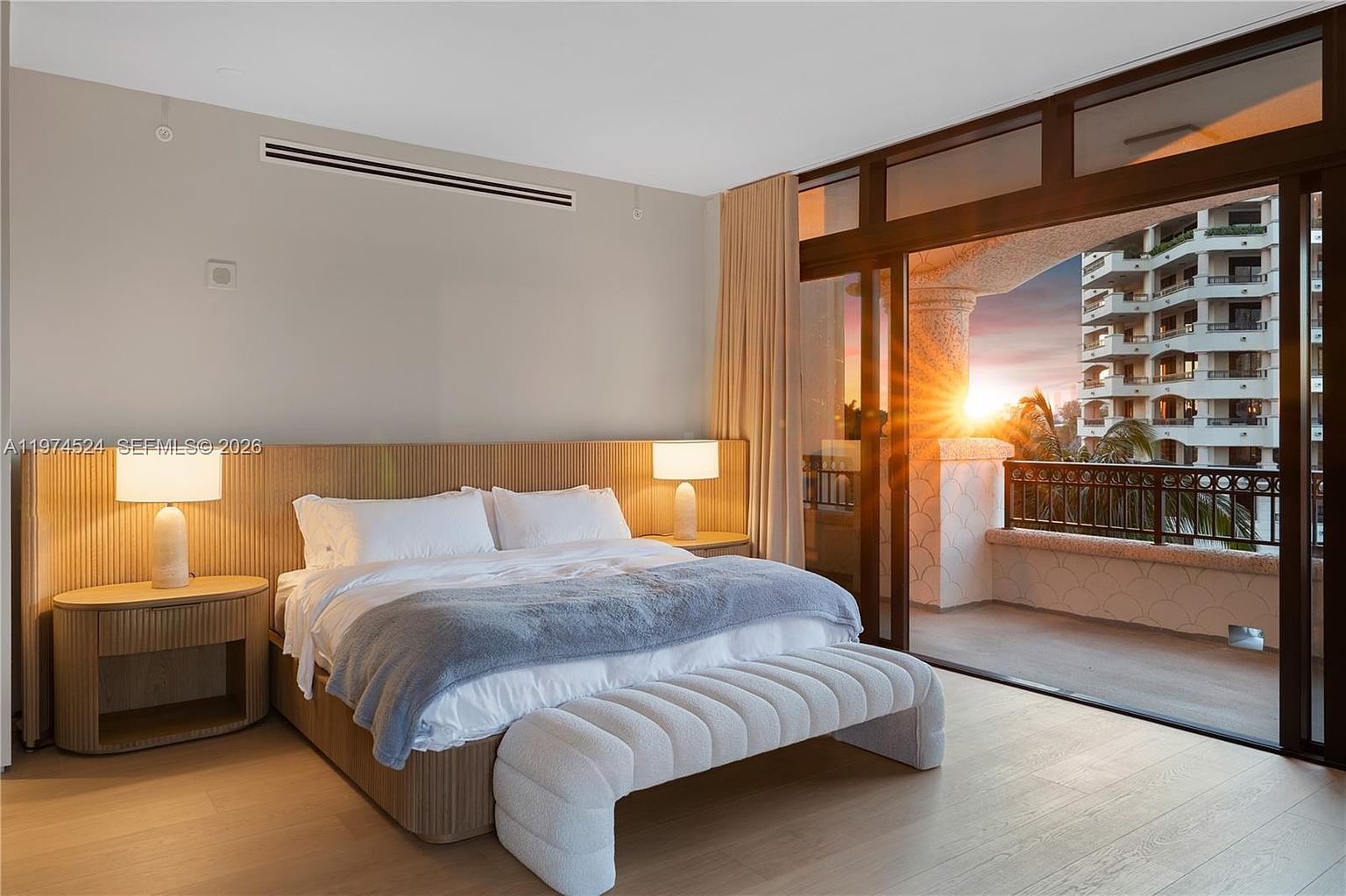
European oak flooring runs the full length of the residence, its warmth grounding an interior where scale and light are the primary design instruments. The bayfront great room is the heart of the plan — a generous, open volume where formal dining and lounging areas coexist without competition, and where floor-to-ceiling glass draws the water and city skyline directly into the room. The wrap-around terraces extend this relationship with the outdoors across 1,797 square feet of deep, covered space, positioned to receive both the morning light rising over the Atlantic and the amber gradients of sunset falling across Biscayne Bay.
The Boffi eat-in kitchen is built for serious use. Bohemian grey granite countertops anchor the space, while Gaggenau appliances — long the choice of professionals and discerning home cooks alike — are integrated seamlessly alongside Dornbracht faucets, a Sub-Zero refrigerator, and a dedicated wine cooler. The aesthetic is controlled and precise, the function uncompromising.
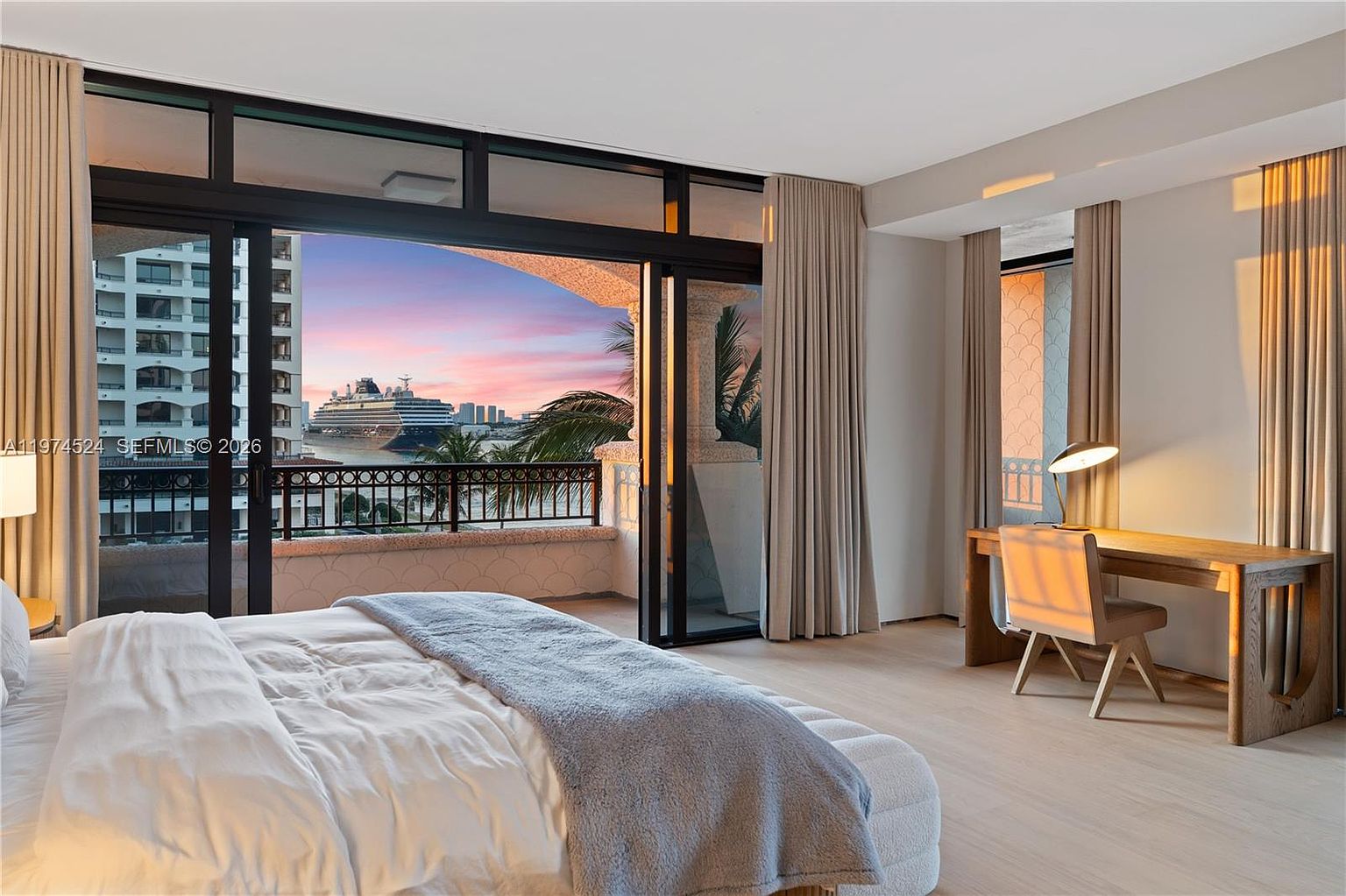
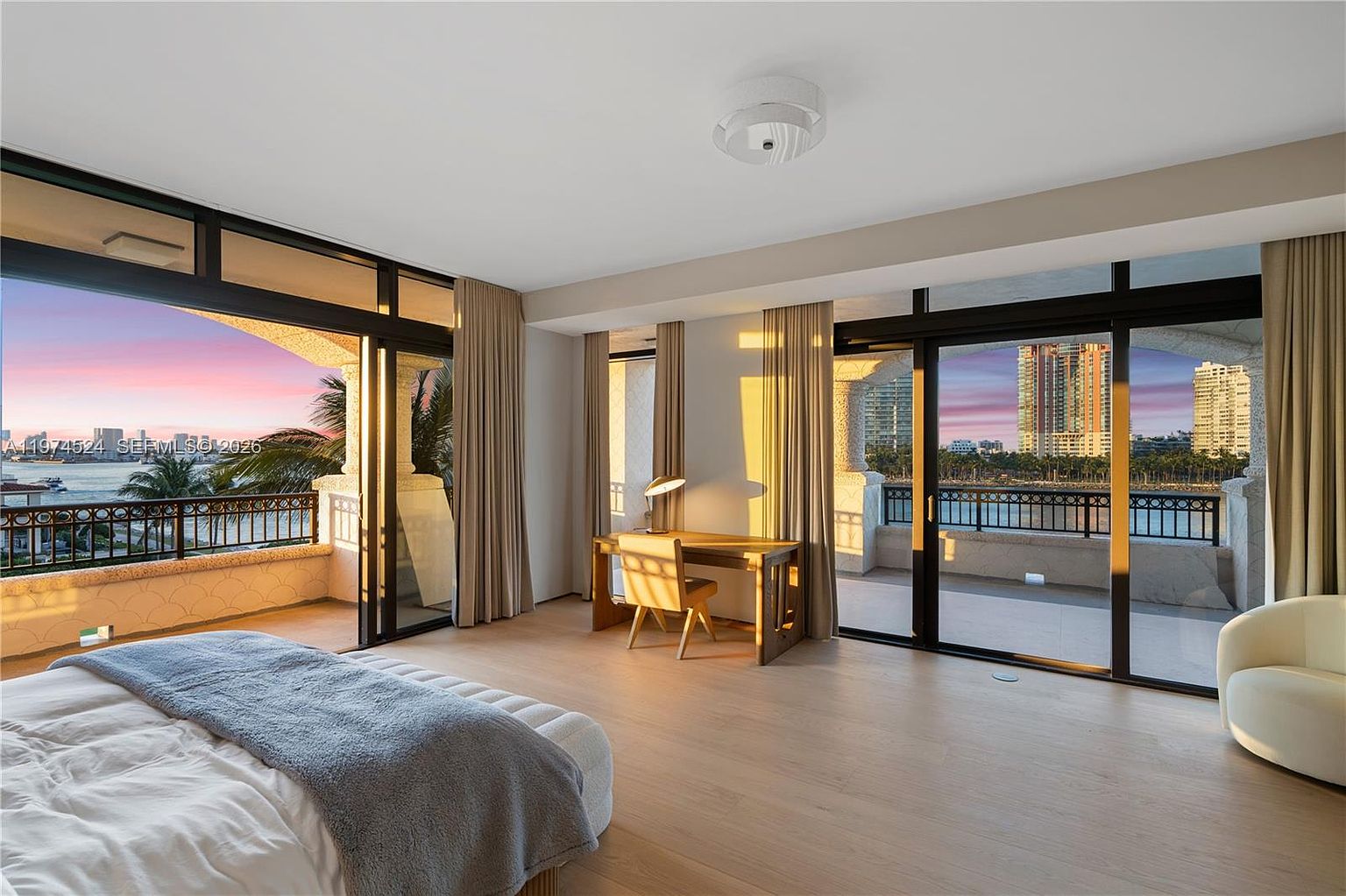
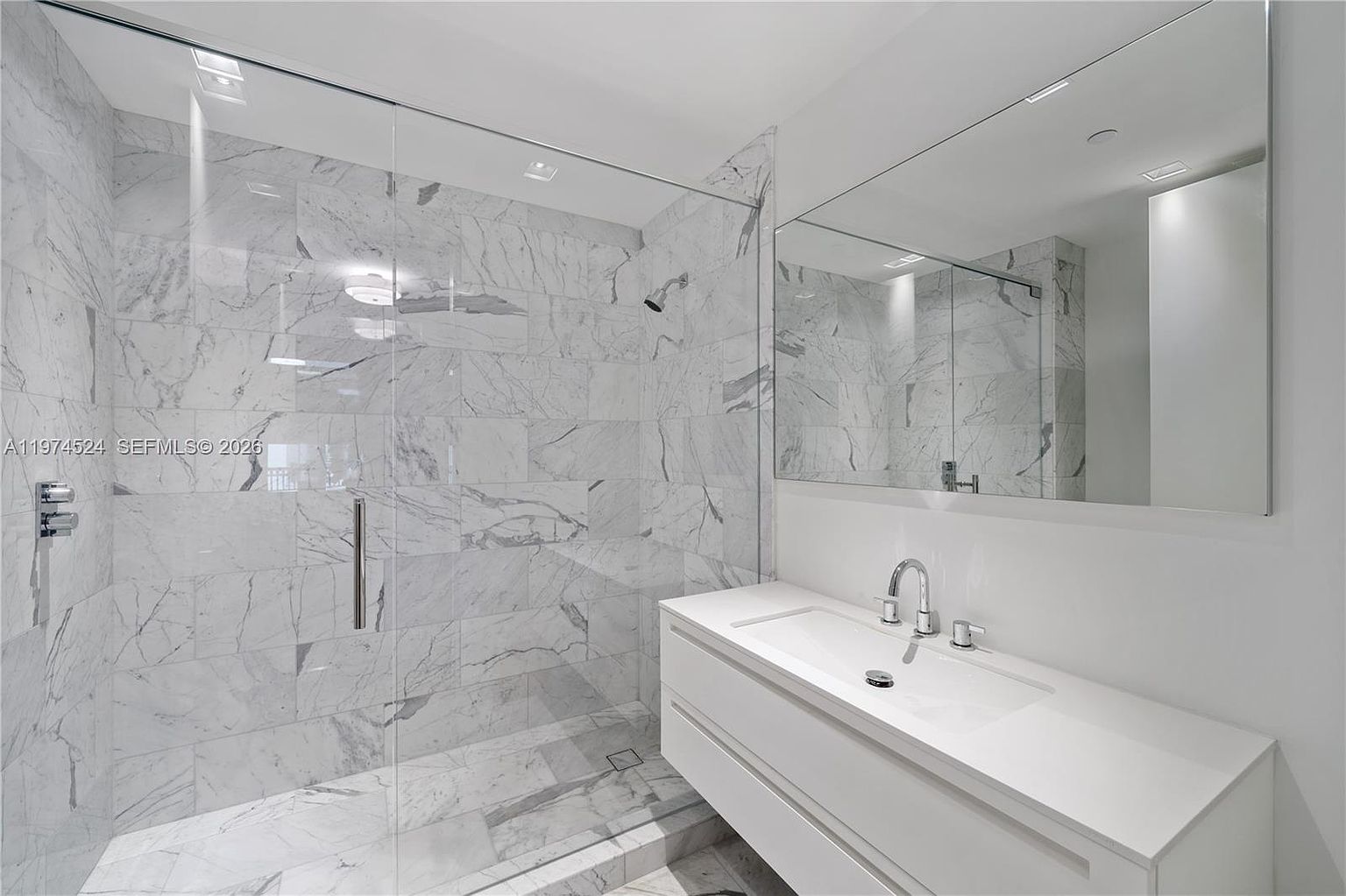
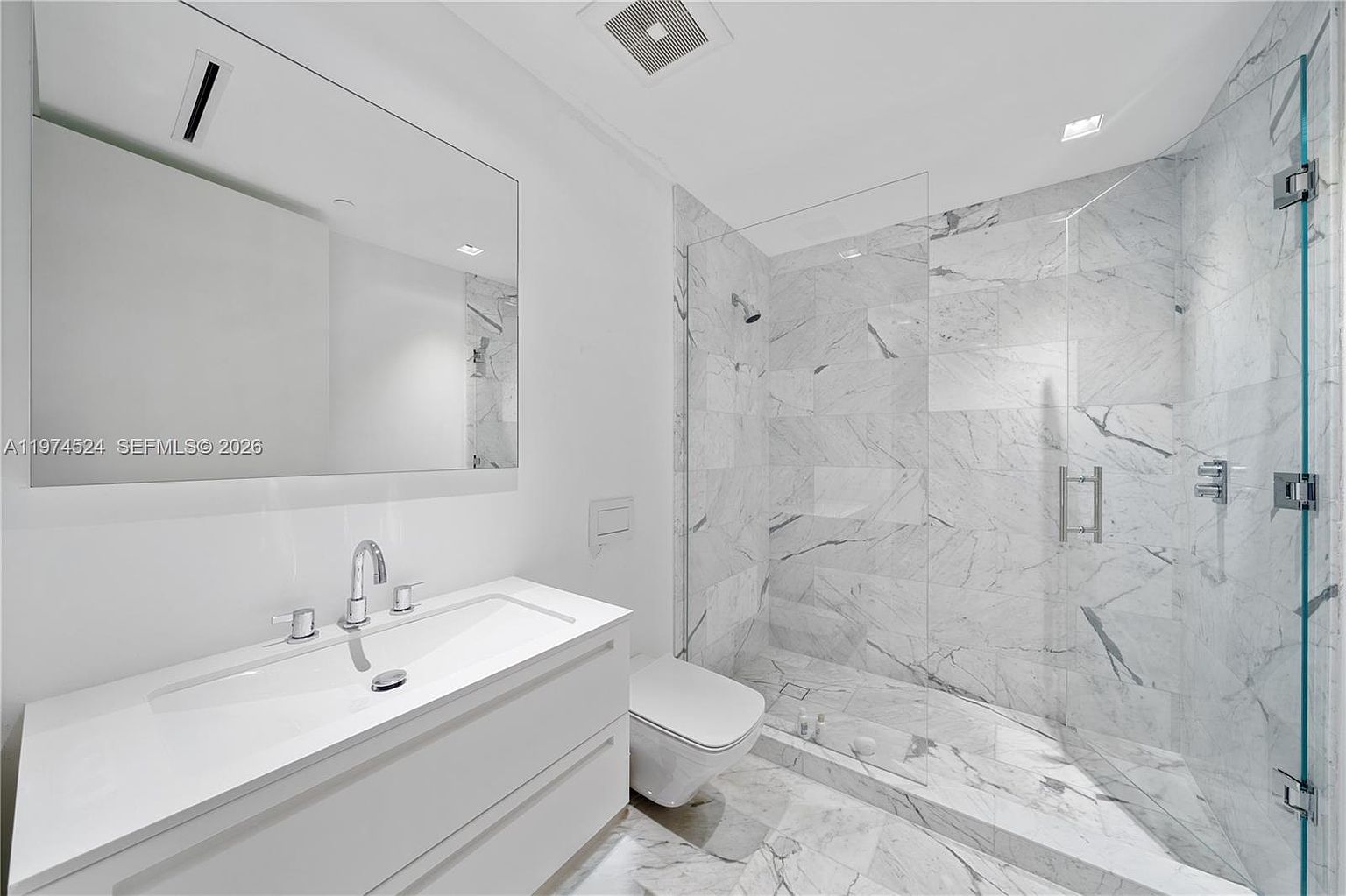
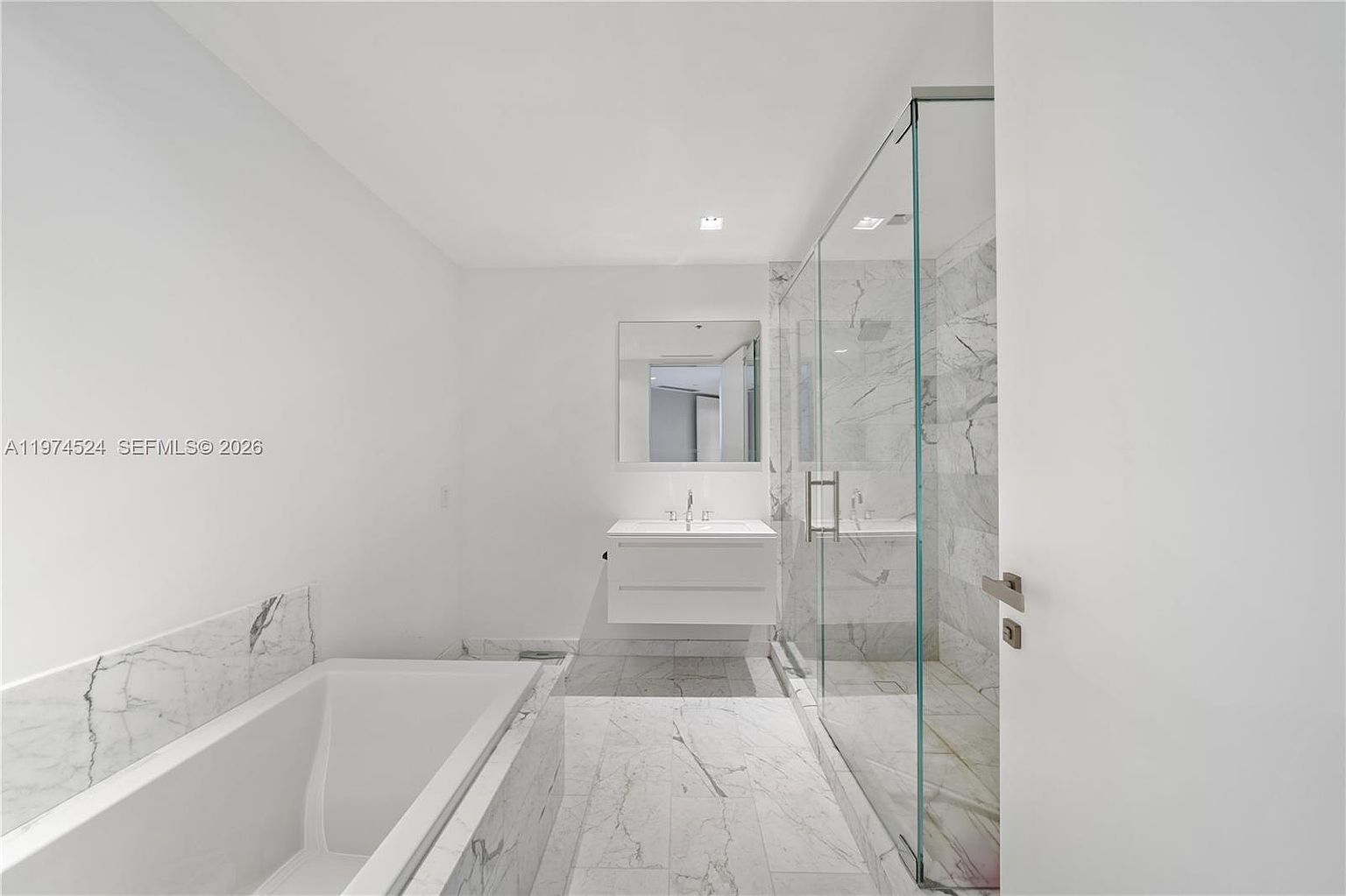
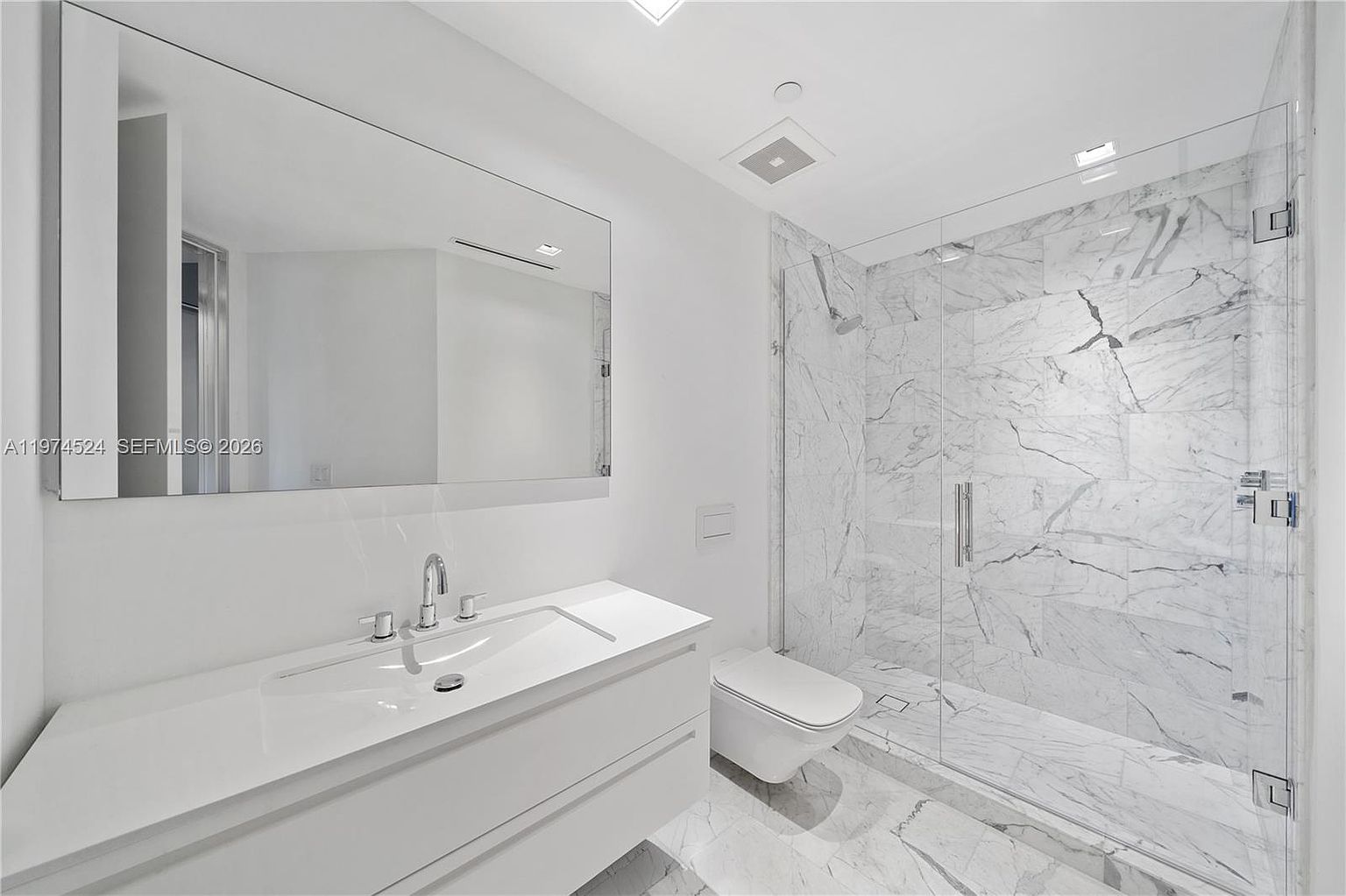
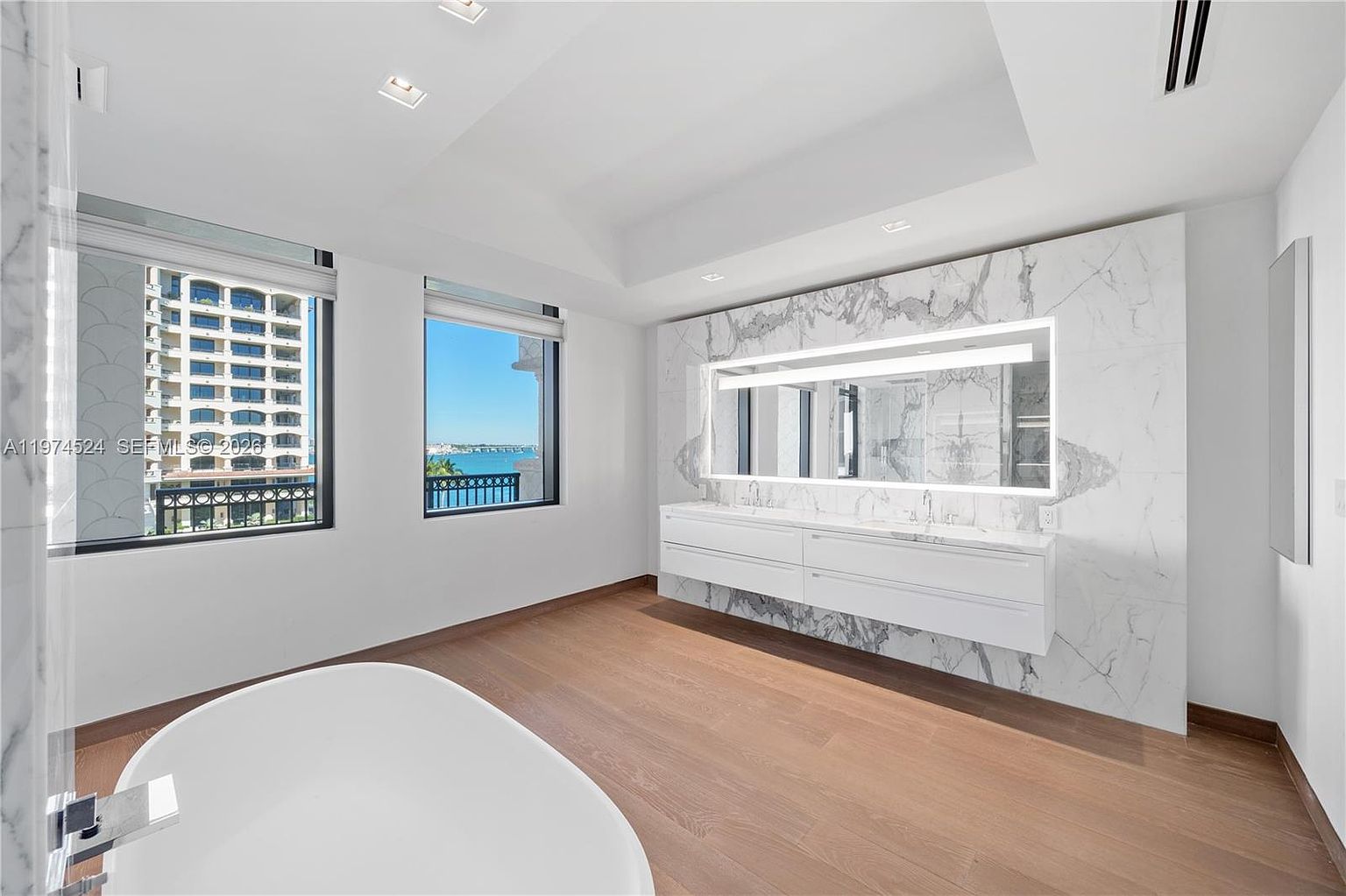
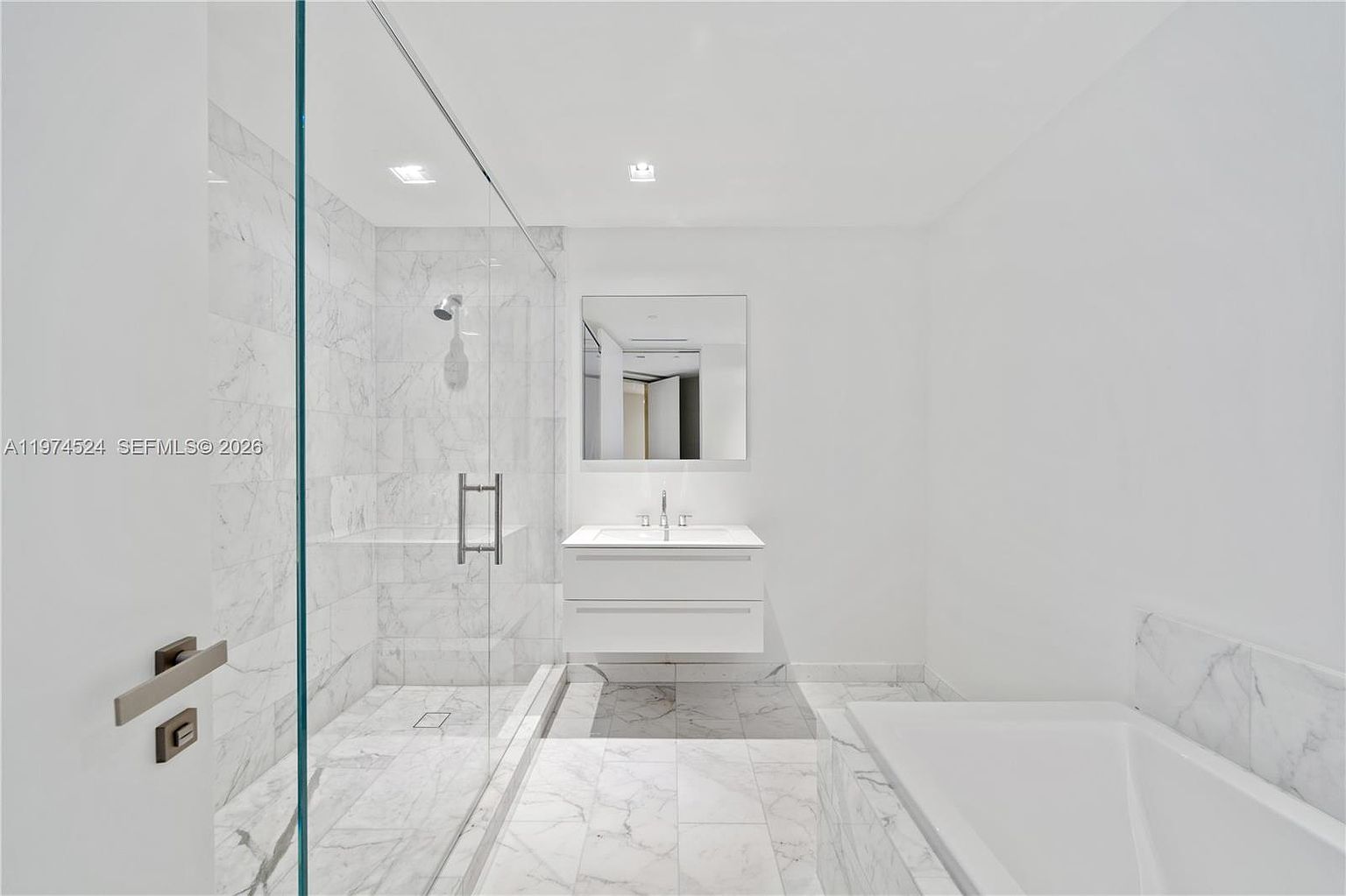
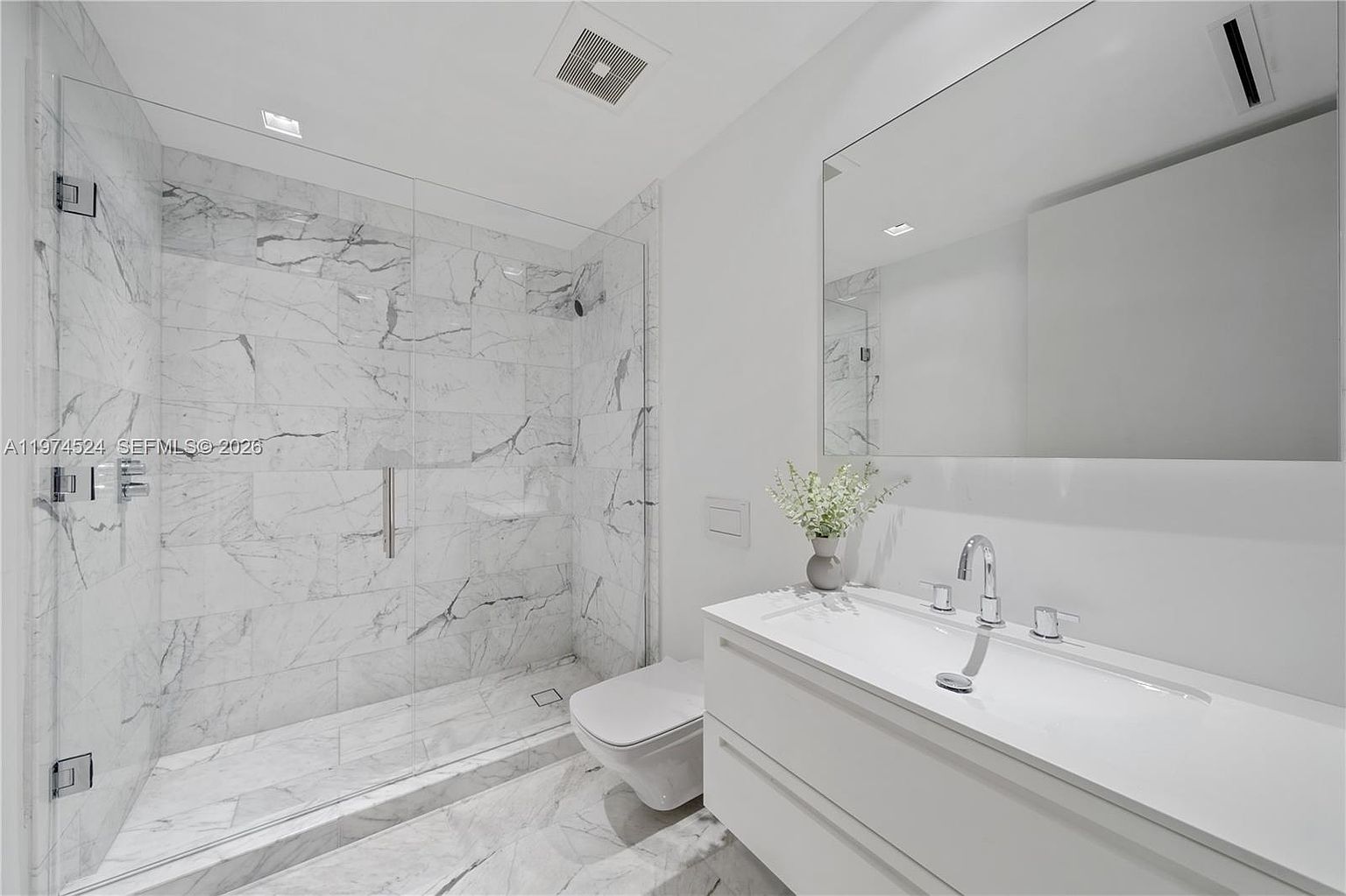
The primary suite occupies its own wing, oriented toward the sunset. A dedicated lounging area provides a private retreat within the retreat, while the bath achieves something genuinely rare: the sensation of a luxury spa that also feels entirely personal. Book-matched white Carrara marble wraps the walls and floors in a continuous, veined composition that could only have been achieved through deliberate curation. A custom Boffi soaking tub, double vanity, and rain shower complete the sequence. The effect is serene, tactile, and unhurried.
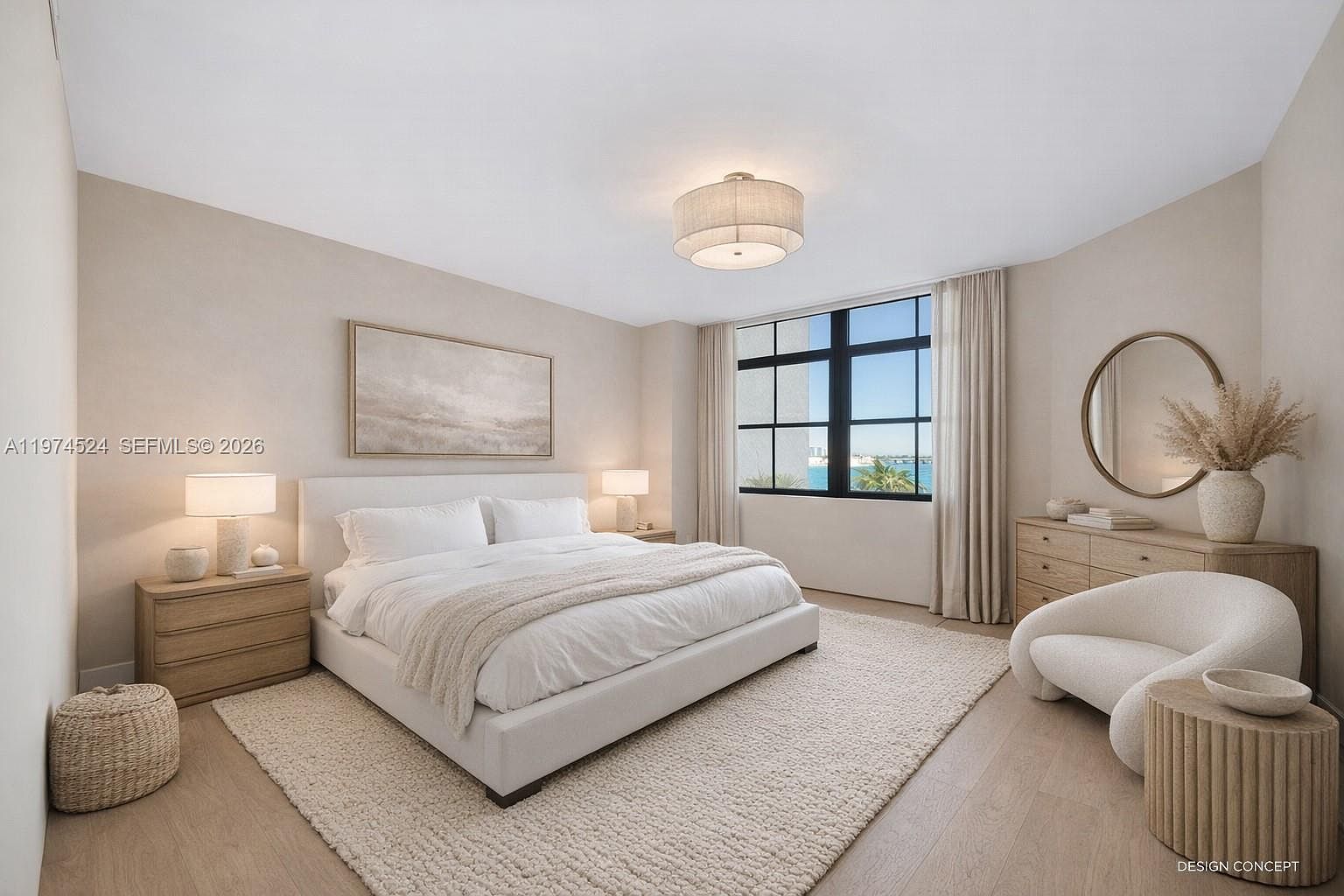
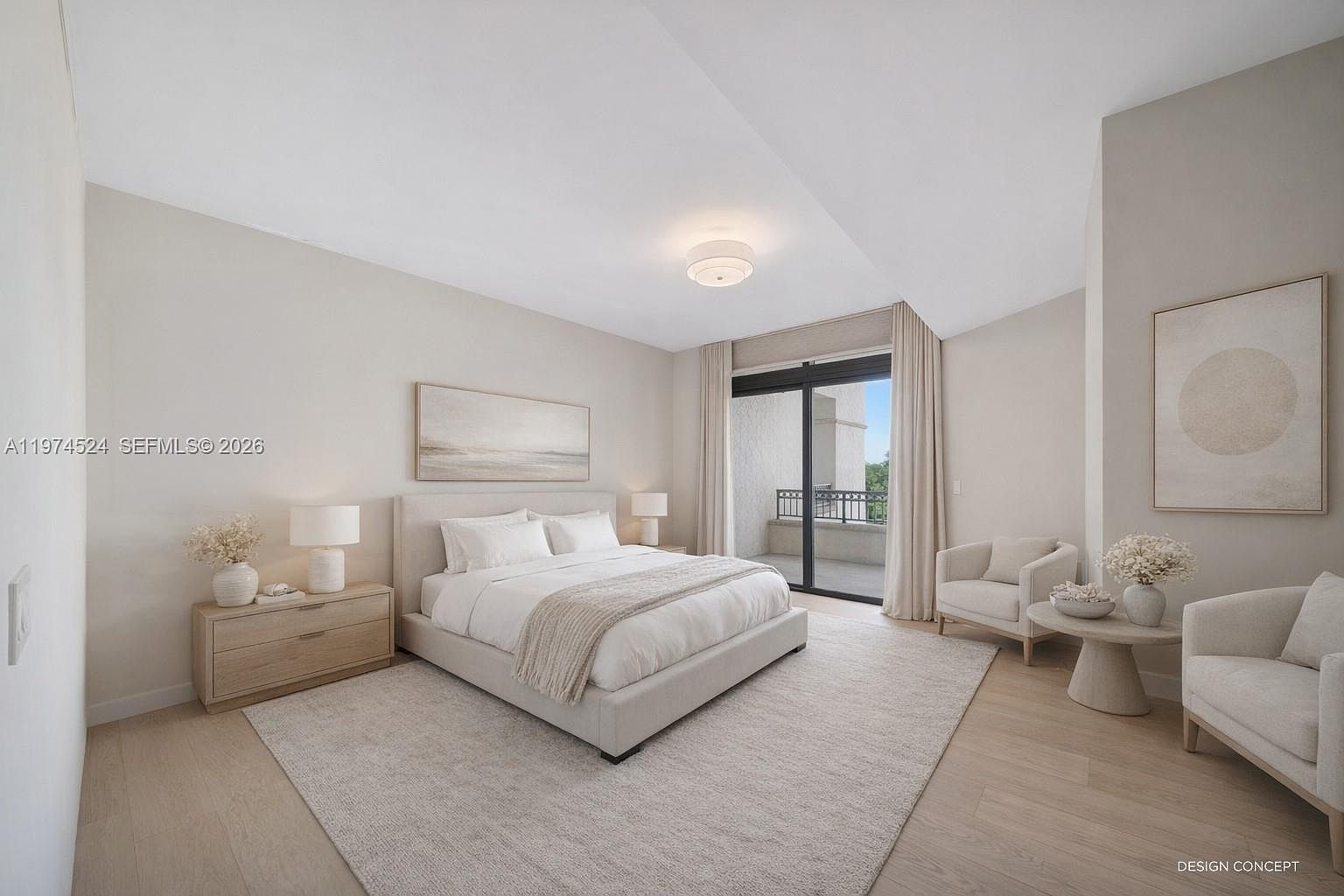
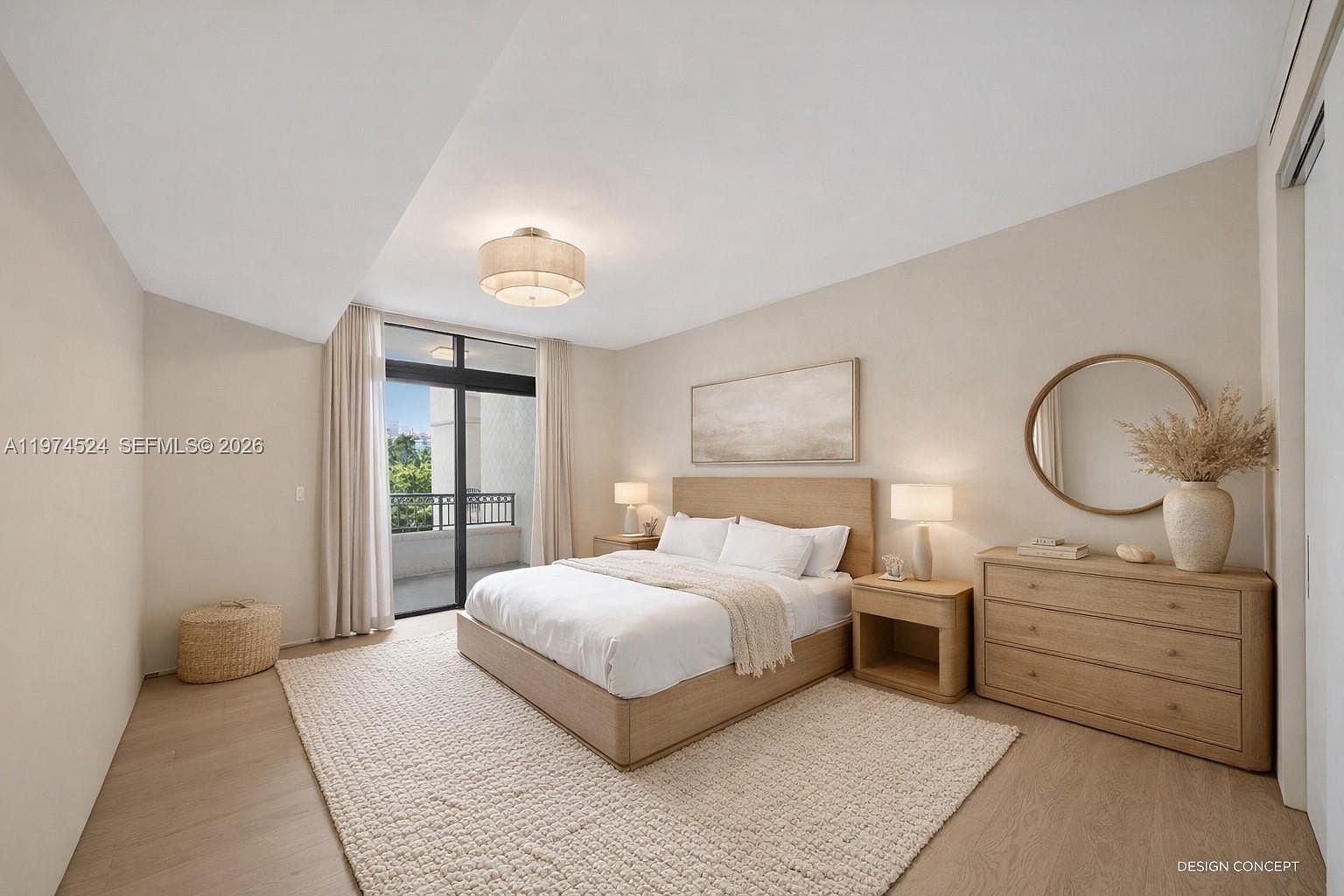
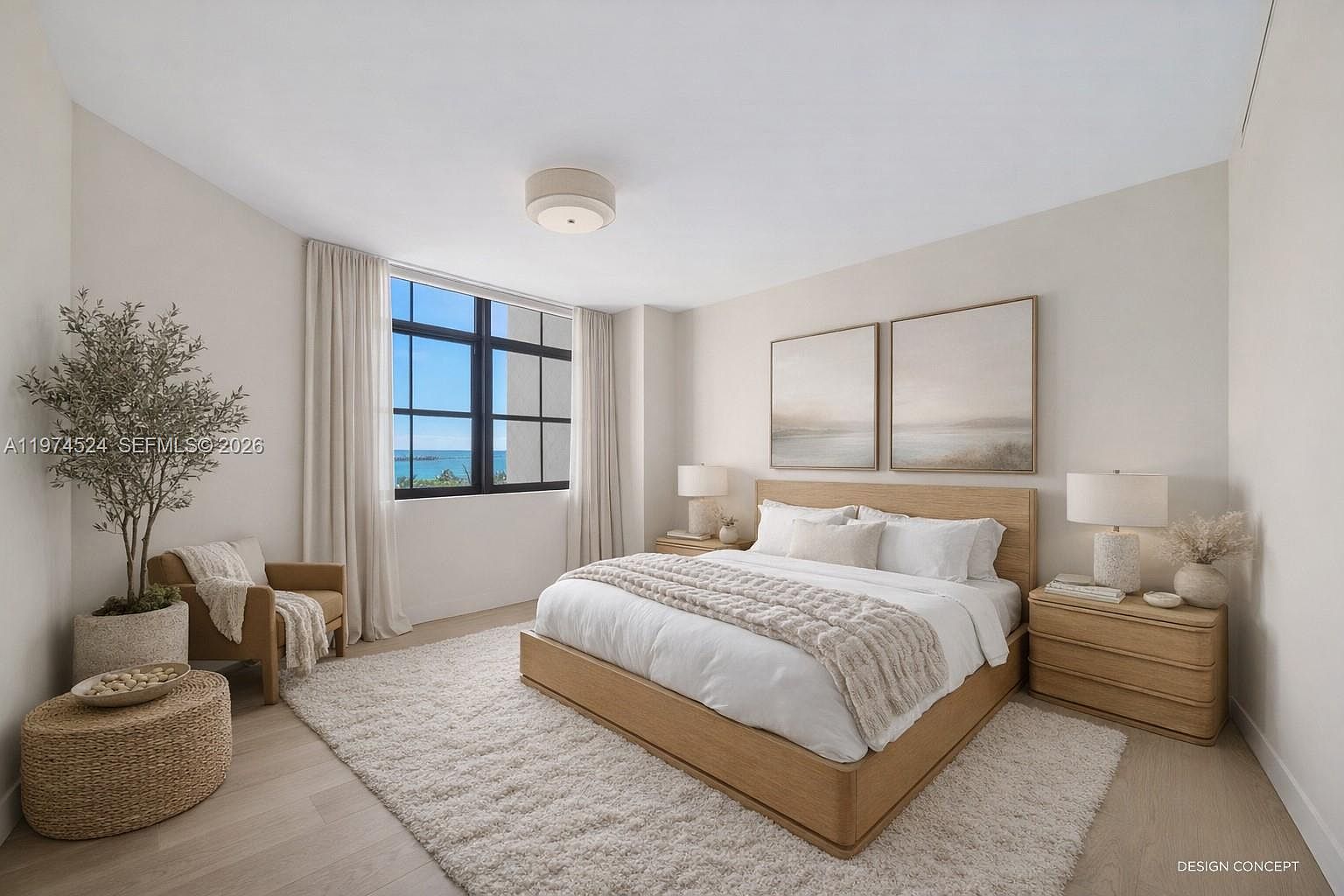
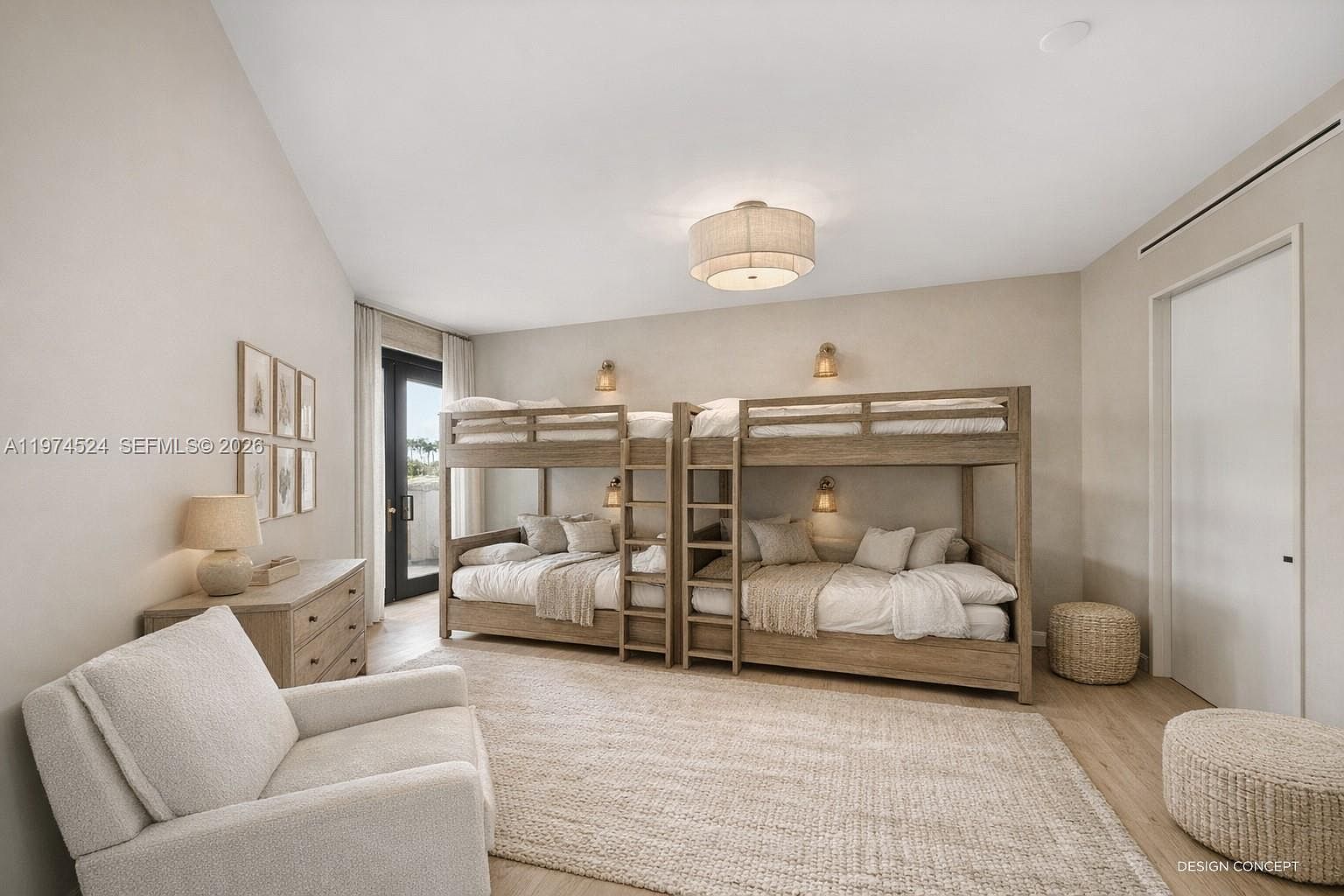
Six additional bedrooms — each finished with the same attention to material and proportion — ensure that the residence functions as effortlessly for a family as it does for large-scale entertaining. Two powder rooms serve the public spaces with the same design vocabulary that defines the rest of the home.
Palazzo del Sol's building amenities extend the residence outward: a zero-edge pool and spa with dedicated attendants, a butler-serviced aperitivo bar and lounge, a private theater, hair and makeup salon, massage rooms, business center, gym, and the Kidville playroom for younger residents. Three parking spaces and a golf cart space complete the offering. This is, in every sense, a complete world.
Fisher Island occupies a singular position in the geography of South Florida — and, in a broader sense, in the imagination of those who prize privacy above almost everything else. Situated just off the southern tip of Miami Beach and accessible only by private ferry, yacht, helicopter, or seaplane, the island spans approximately 216 acres and has long been regarded as one of the most exclusive residential communities in the United States. Its population is small by design, its streets quiet, and its sense of remove from the mainland deliberate and complete.
The island's history is as distinctive as its geography. Originally connected to Miami Beach before a channel was dredged in 1905 to allow larger vessels to pass, Fisher Island was later purchased in 1919 by Carl G. Fisher — the Indianapolis entrepreneur and Miami Beach developer whose vision shaped much of South Florida's early identity. The island's most storied structure, the Vanderbilt mansion, was built in the 1930s after William K. Vanderbilt II acquired the property and constructed a winter retreat that became the nucleus of what is now the Fisher Island Club. That Mediterranean Revival estate, along with its original furnishings and architectural details, remains on the island today as a historic anchor to a community that has grown carefully and selectively over the decades.
The Fisher Island Club, which residents of Palazzo del Sol may access, encompasses a range of amenities that reflect the island's self-contained character: a beach club with what is frequently cited as some of the finest sand on the Florida coast, a golf course, tennis facilities, multiple dining venues, a full-service spa, and a marina. The island operates on its own terms — there are no public roads connecting it to the mainland, no through traffic, no uninvited presence of any kind. Golf carts are the preferred mode of transport, and the pace of life adjusts accordingly.
The surrounding waters place Fisher Island at the confluence of Biscayne Bay and the Atlantic Ocean, with Government Cut — the shipping channel that separates the island from Miami Beach — framing views of cruise ships and container vessels that pass with a stately, cinematic quality. The Miami skyline rises to the northwest, close enough to feel connected to the city's energy, distant enough to preserve the island's essential quietude.
Miami Beach itself, a short ferry ride away, offers the full complement of South Florida cultural and culinary life: the galleries and design hotels of the Art Deco Historic District, the contemporary art institutions of the Design District and Wynwood, the restaurants of South Beach and Mid-Beach that have drawn international attention for decades. Miami International Airport is accessible within approximately thirty minutes, and the private terminal at Opa-locka Executive Airport serves those arriving by charter.
For those who require genuine privacy — not the performance of it, but the actual, structural fact of it — Fisher Island offers something that no amount of gates or walls on the mainland can replicate: an address that requires water to reach, and a community that values that distinction absolutely.
Featured Highlights
Curated Content • Presented by Dora Puig