The Story Behind
A Robert Elliott Masterpiece in the Heart of Highland Park
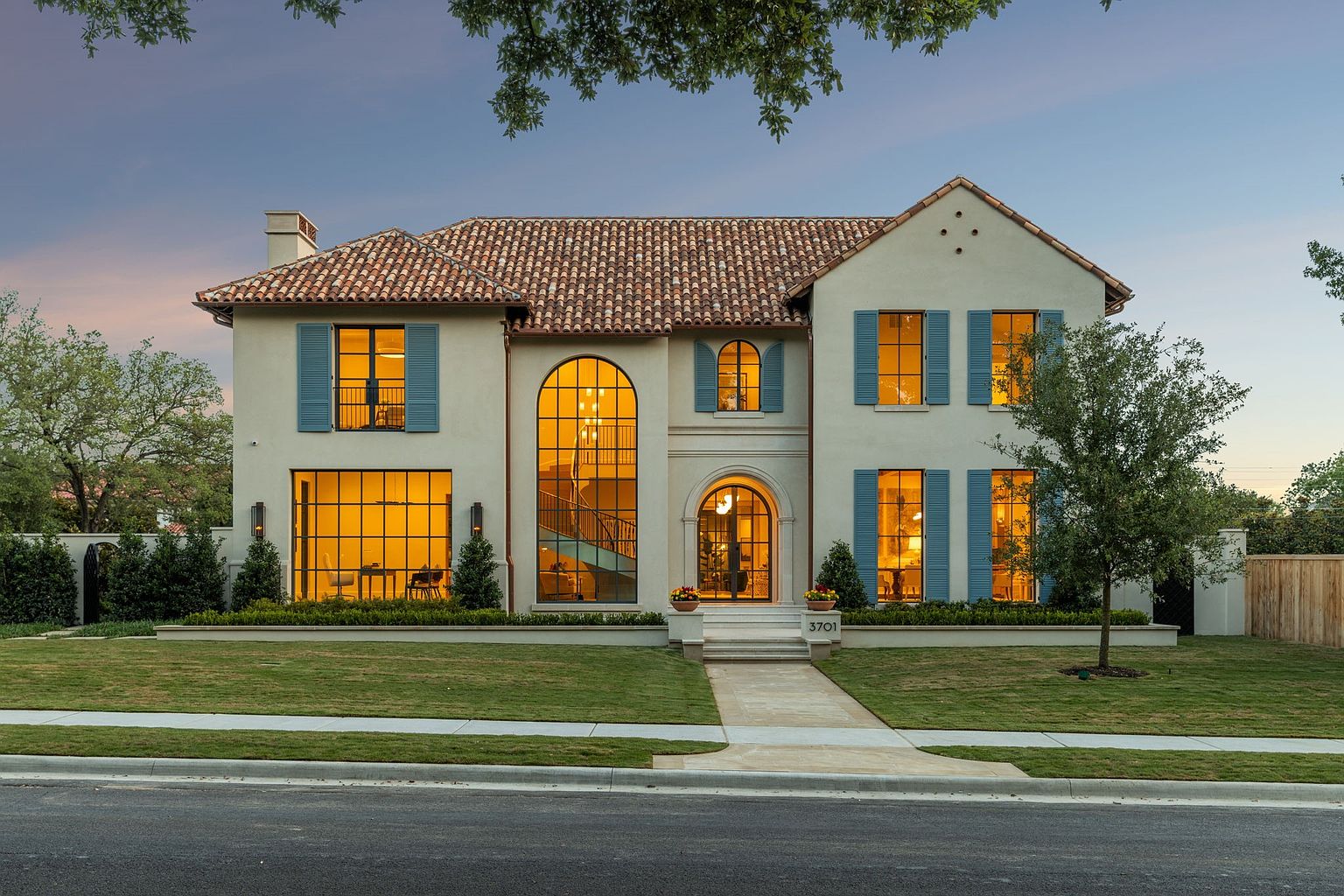
There is a particular kind of confidence that defines the finest new construction — not loudness, but conviction. Every decision deliberate. Every material earned. The Robert Elliott home at 3701 Gillon Avenue is precisely that kind of statement: a residence where the pursuit of excellence is visible in every detail, from the street-facing facade to the furthest corner of its most private spaces.
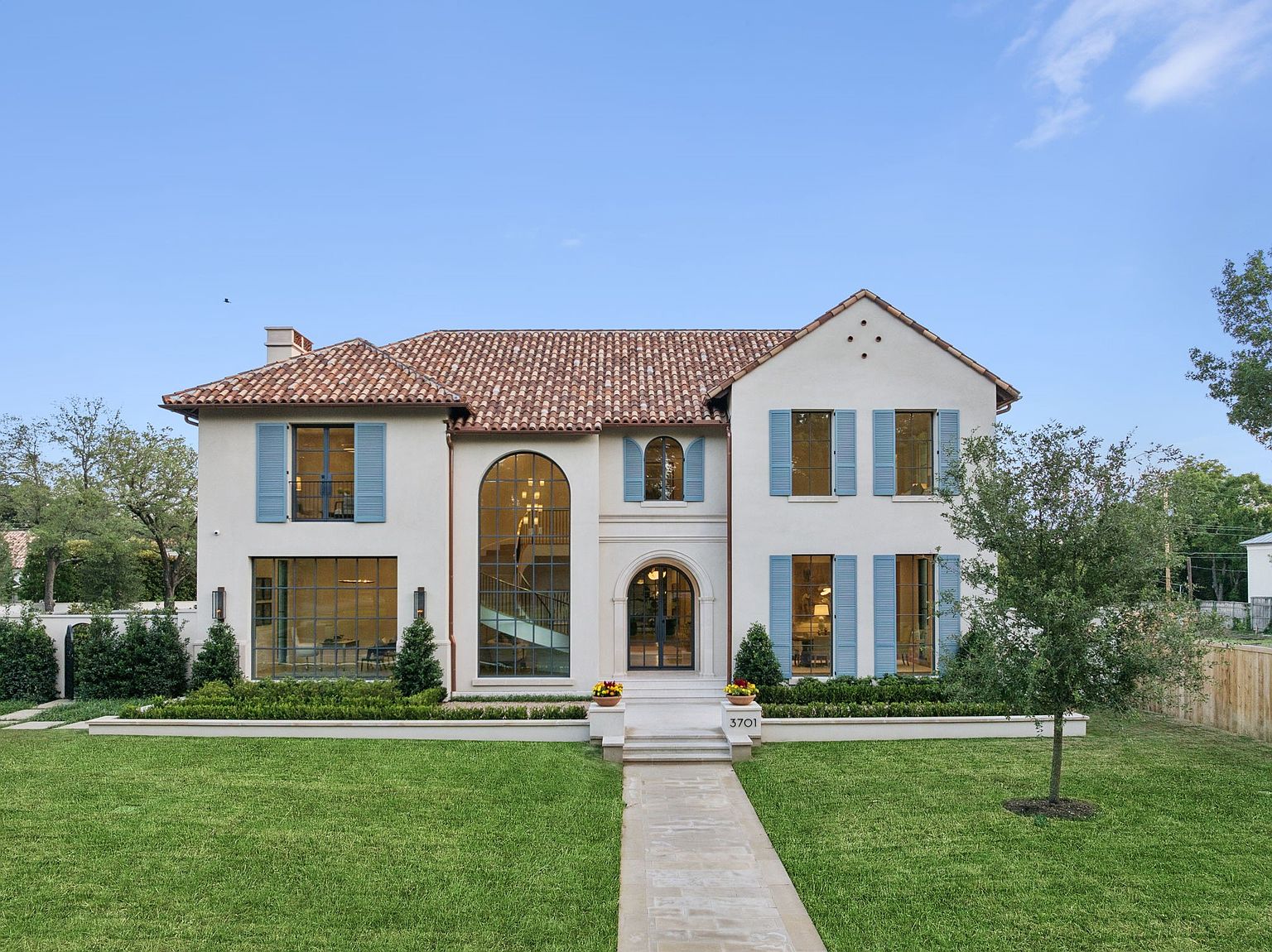
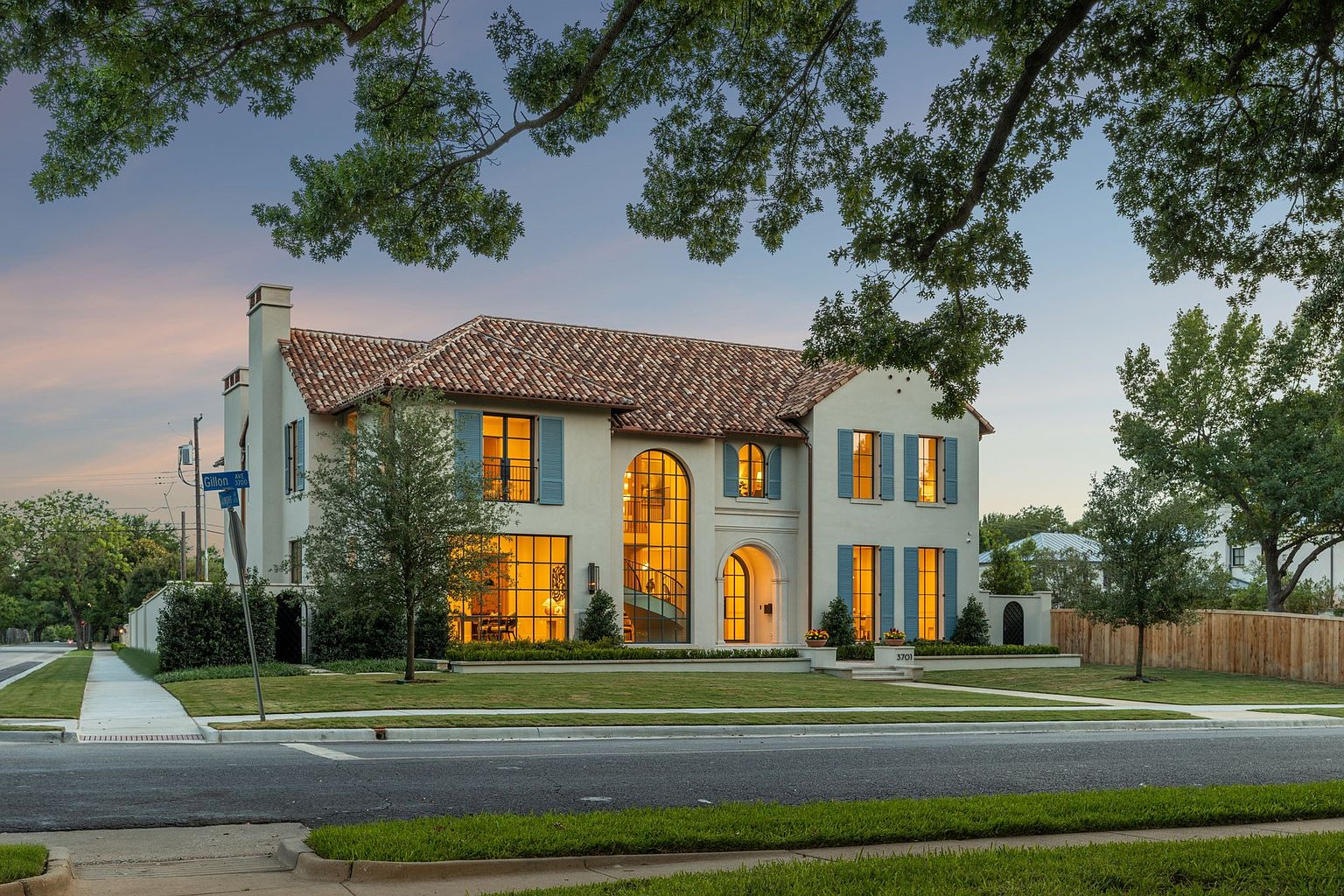
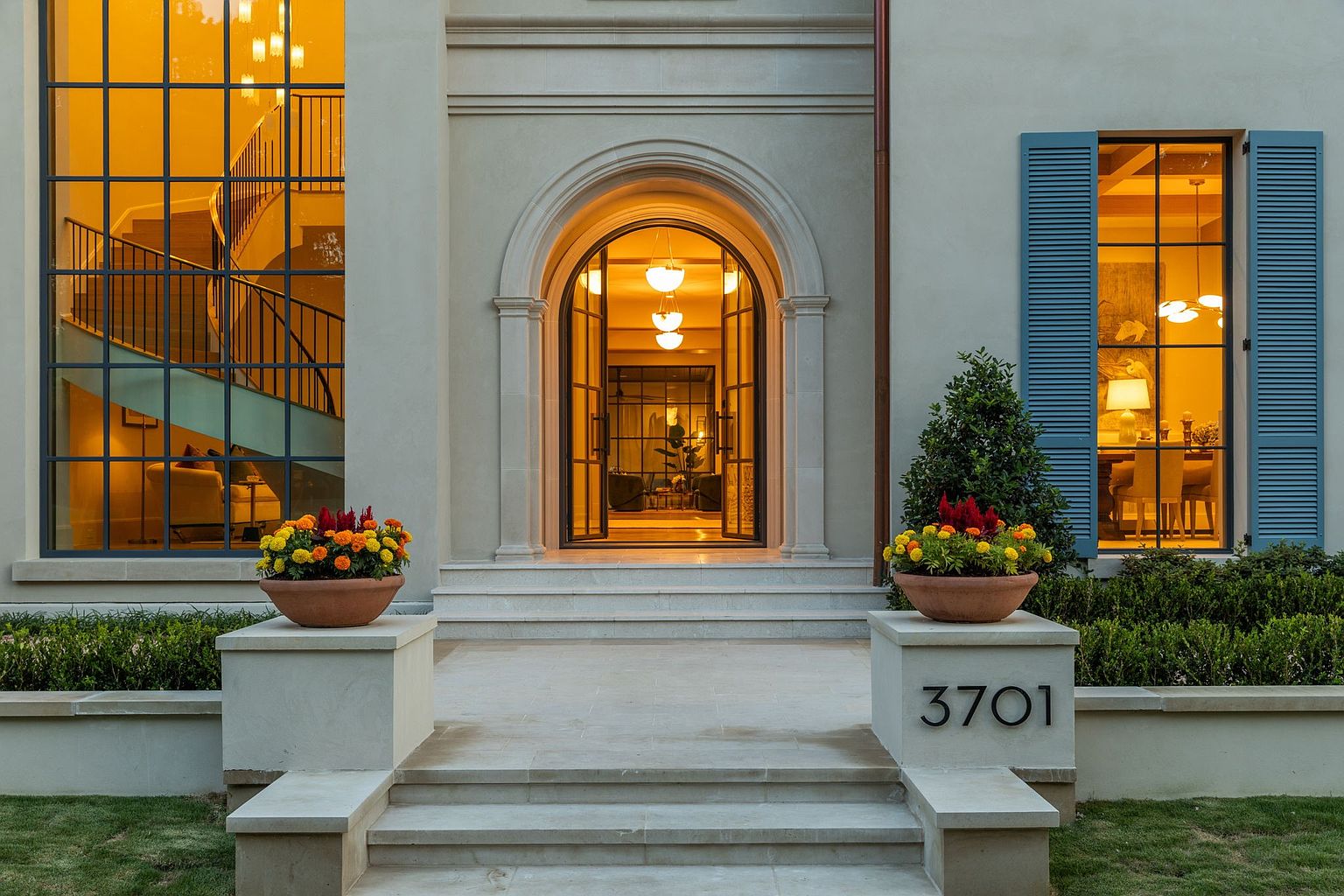
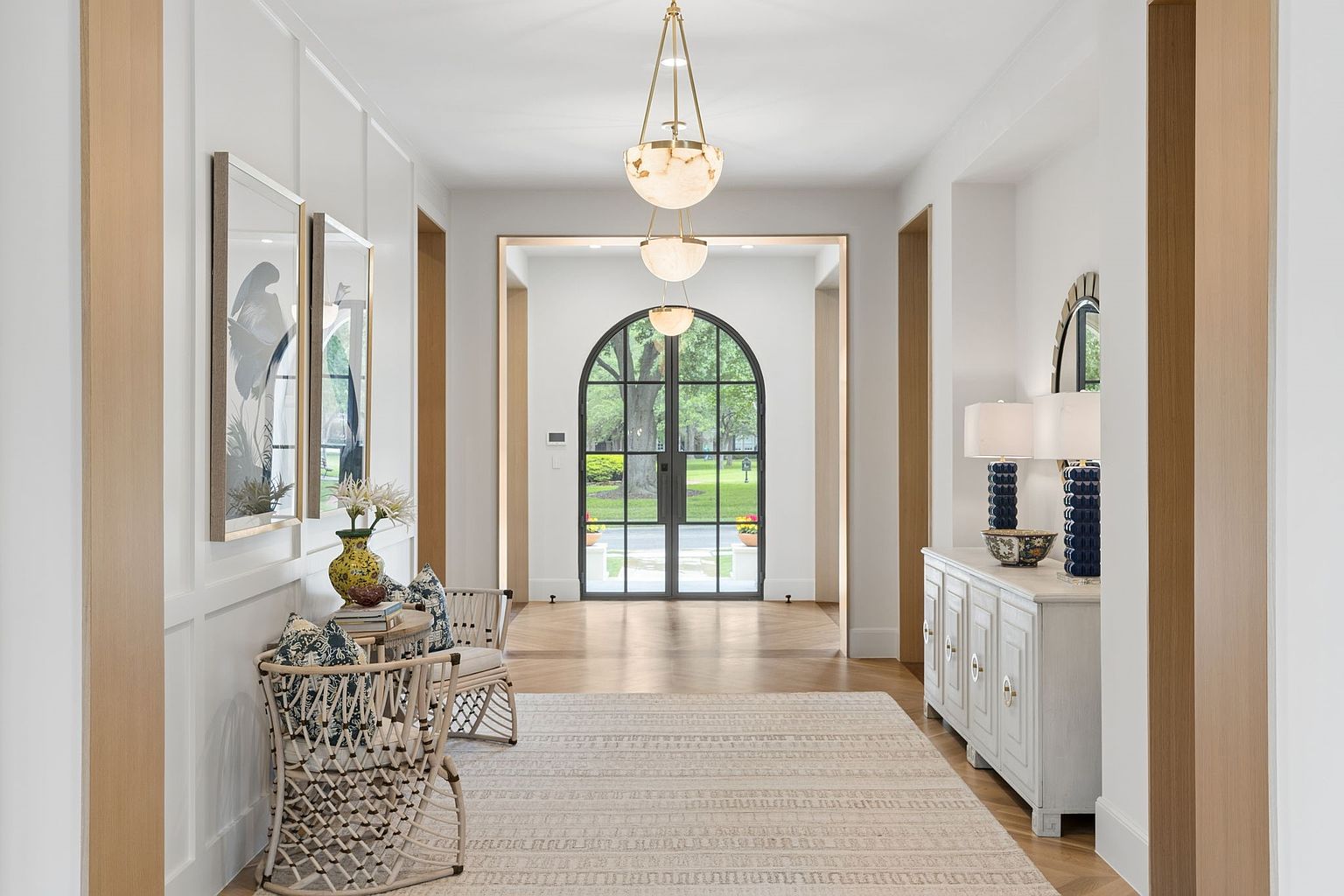
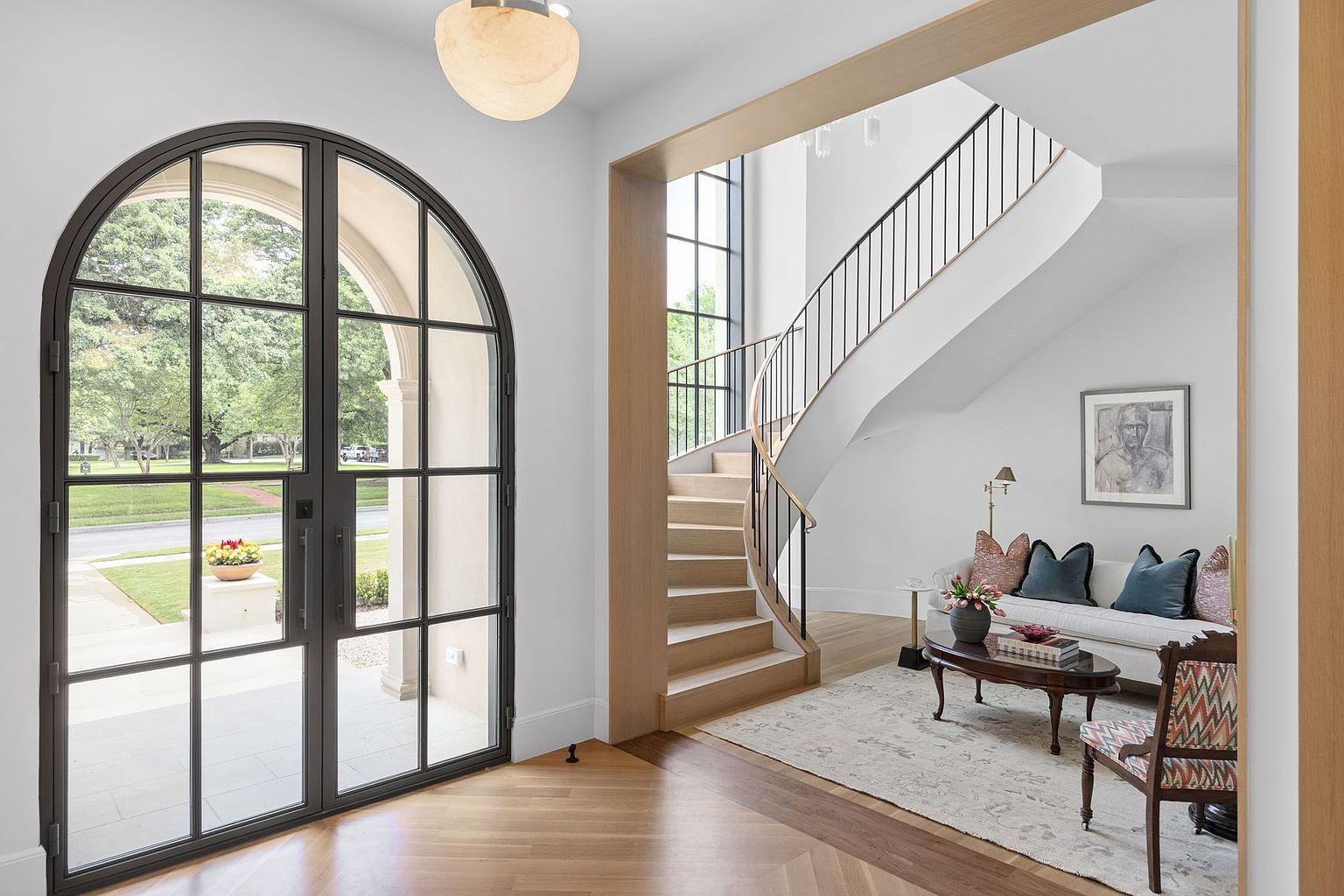
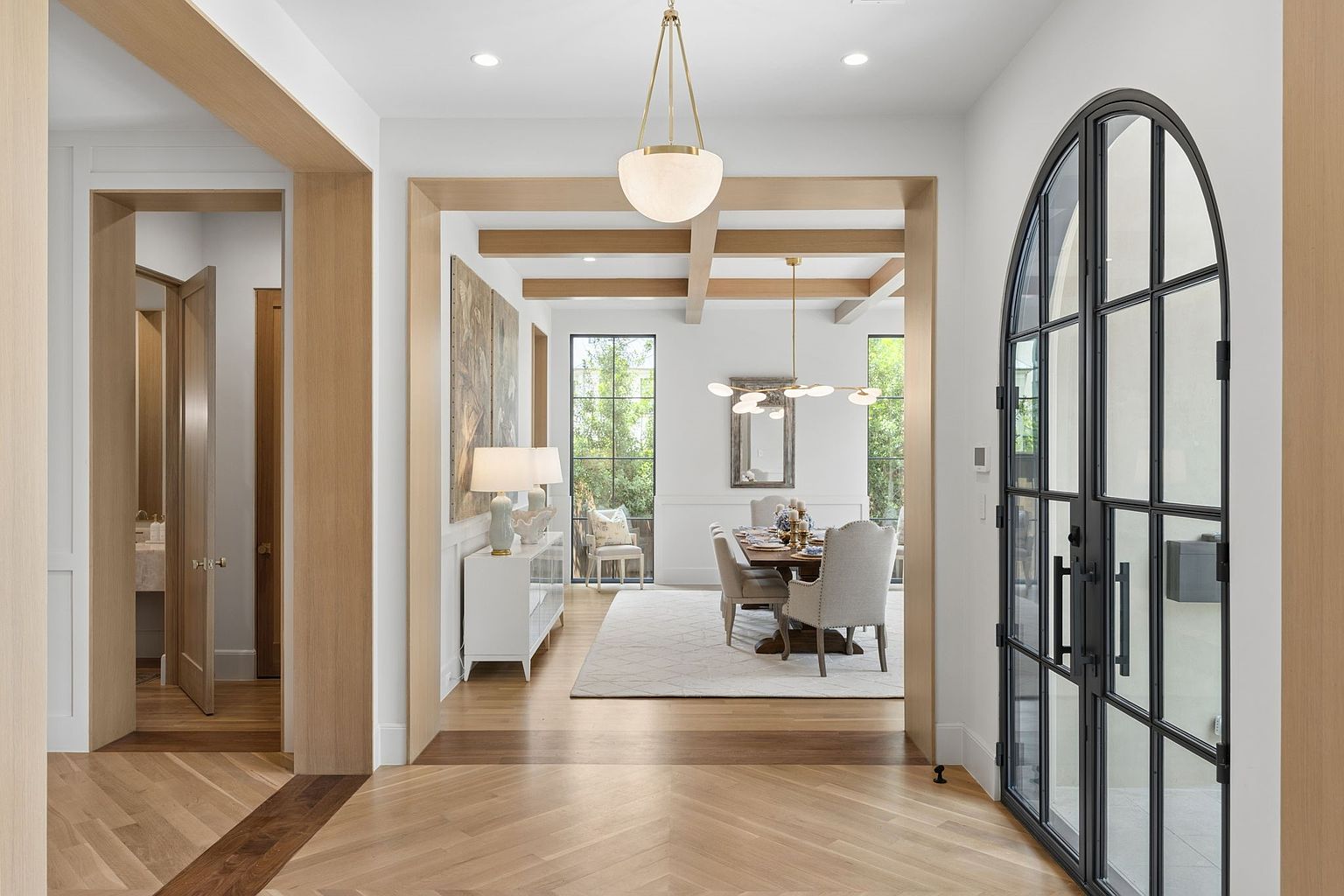
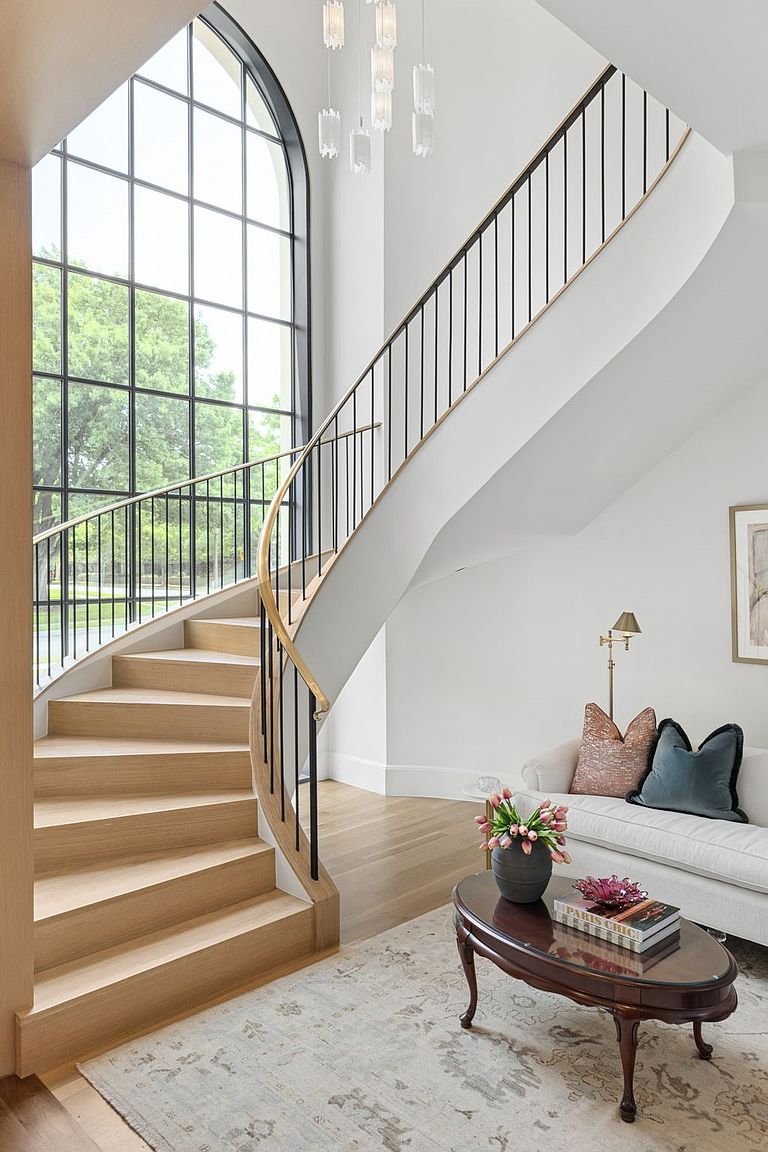
The exterior announces itself with quiet authority. Hand-forged floor-to-ceiling steel windows and doors articulate the facade with an artisanal weight rarely seen in new builds, while a true tile roof finished with copper flashings and a full copper gutter system speaks to a standard of material integrity that transcends trends. The arched entryway — flanked by stone pedestals and flowering planters — draws you in beneath a soaring arched window that floods the curved staircase beyond with natural light. Light wood treads ascend beneath the arc, the black metal railing tracing an elegant line upward. This is an entrance that sets an intention.
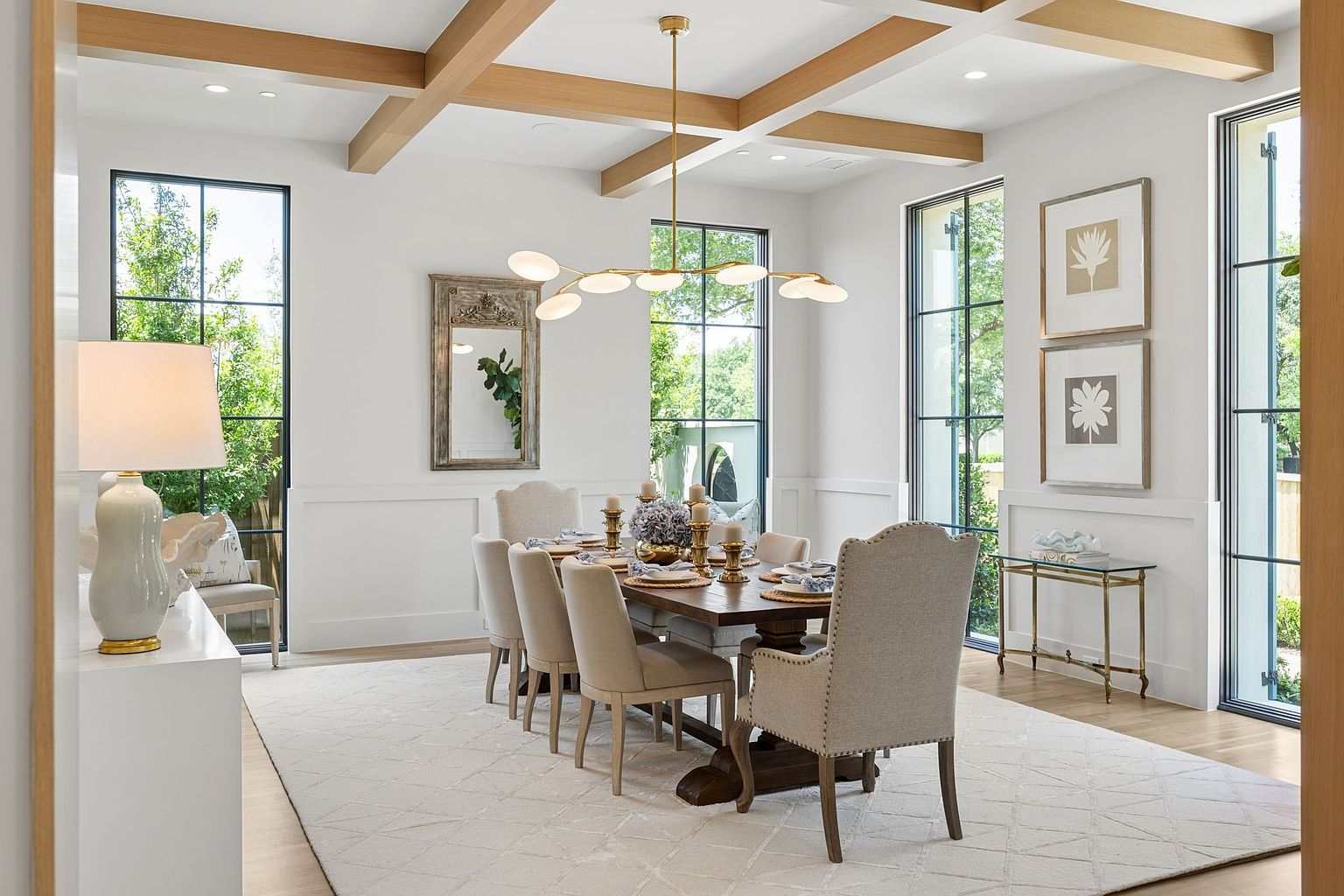
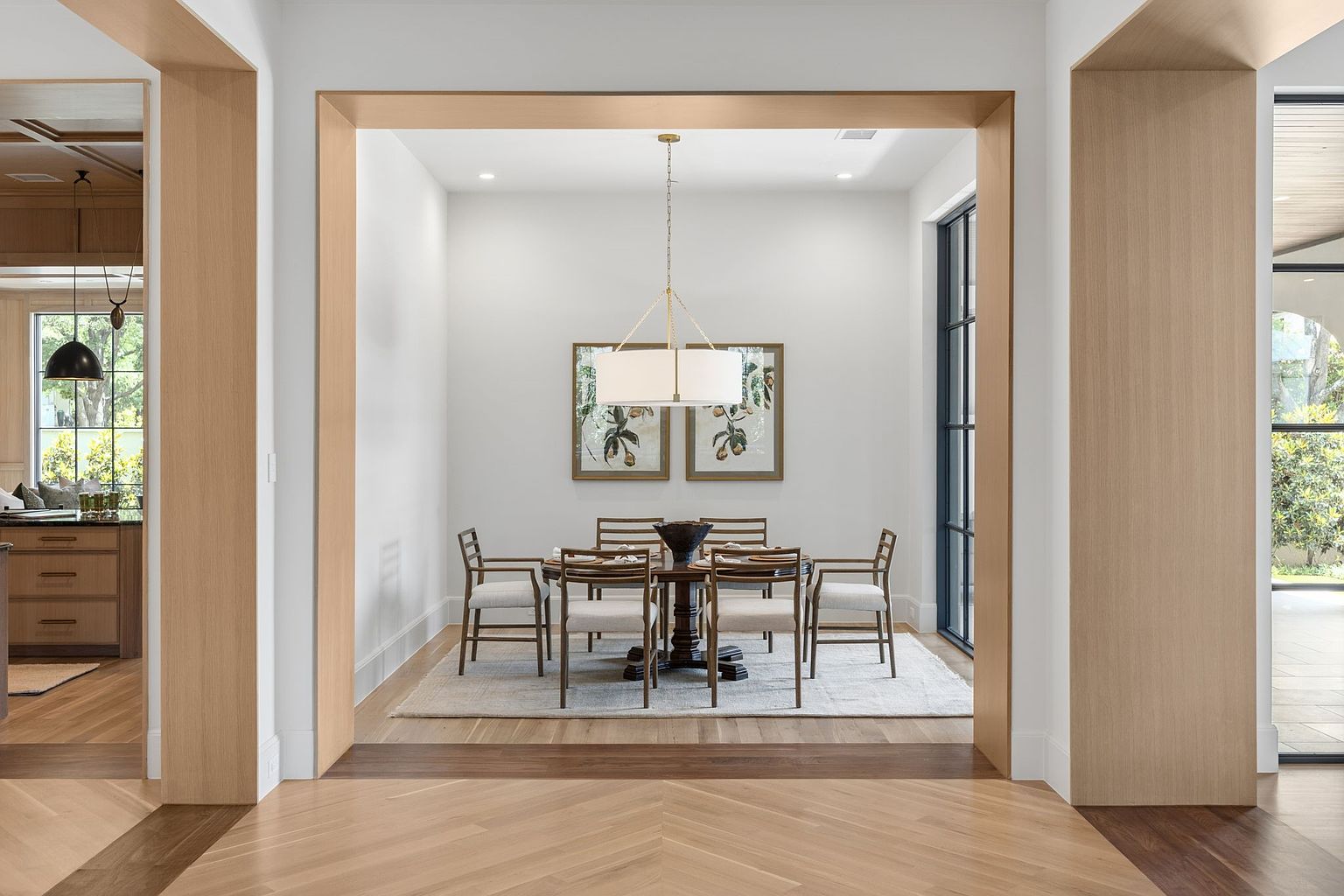
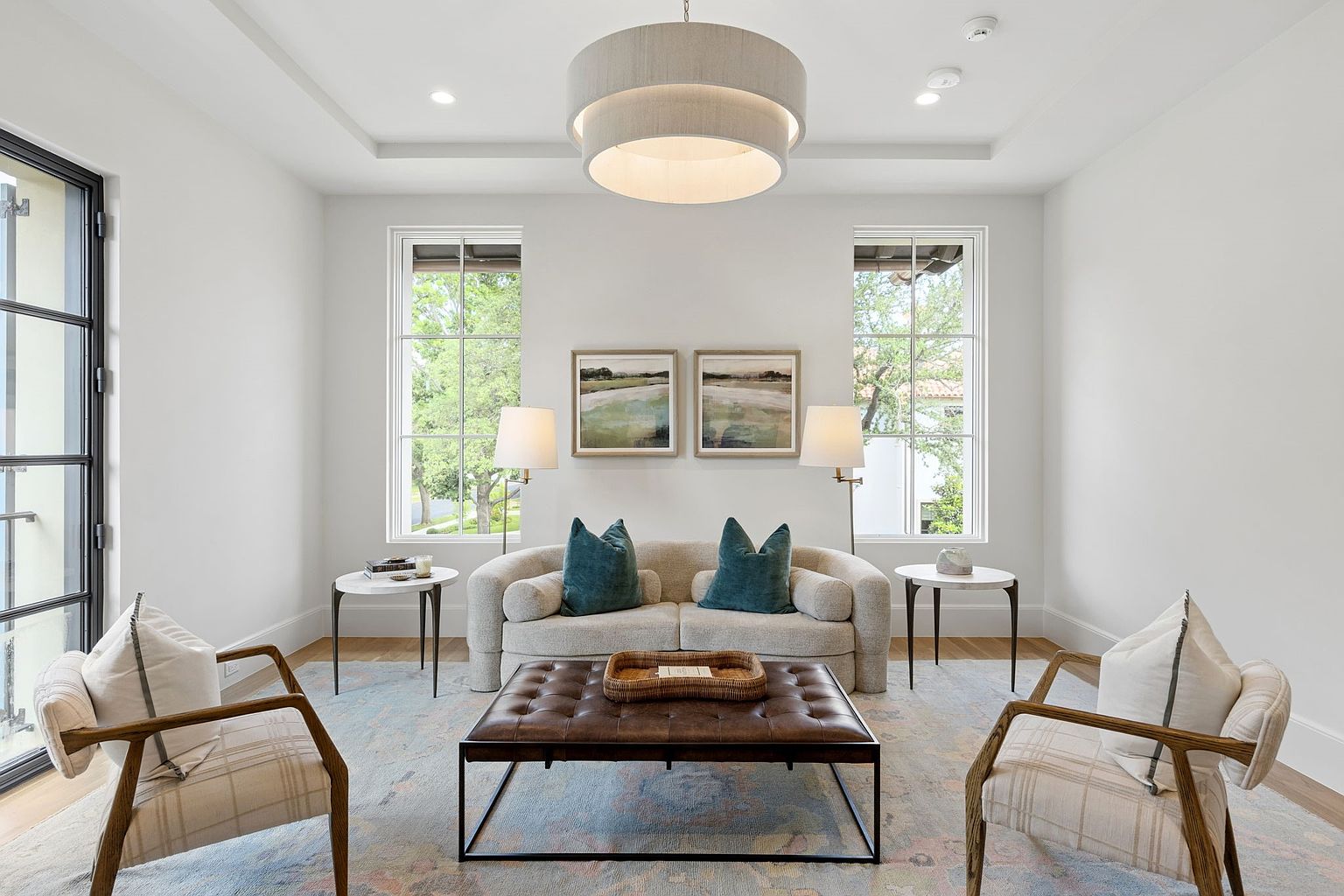
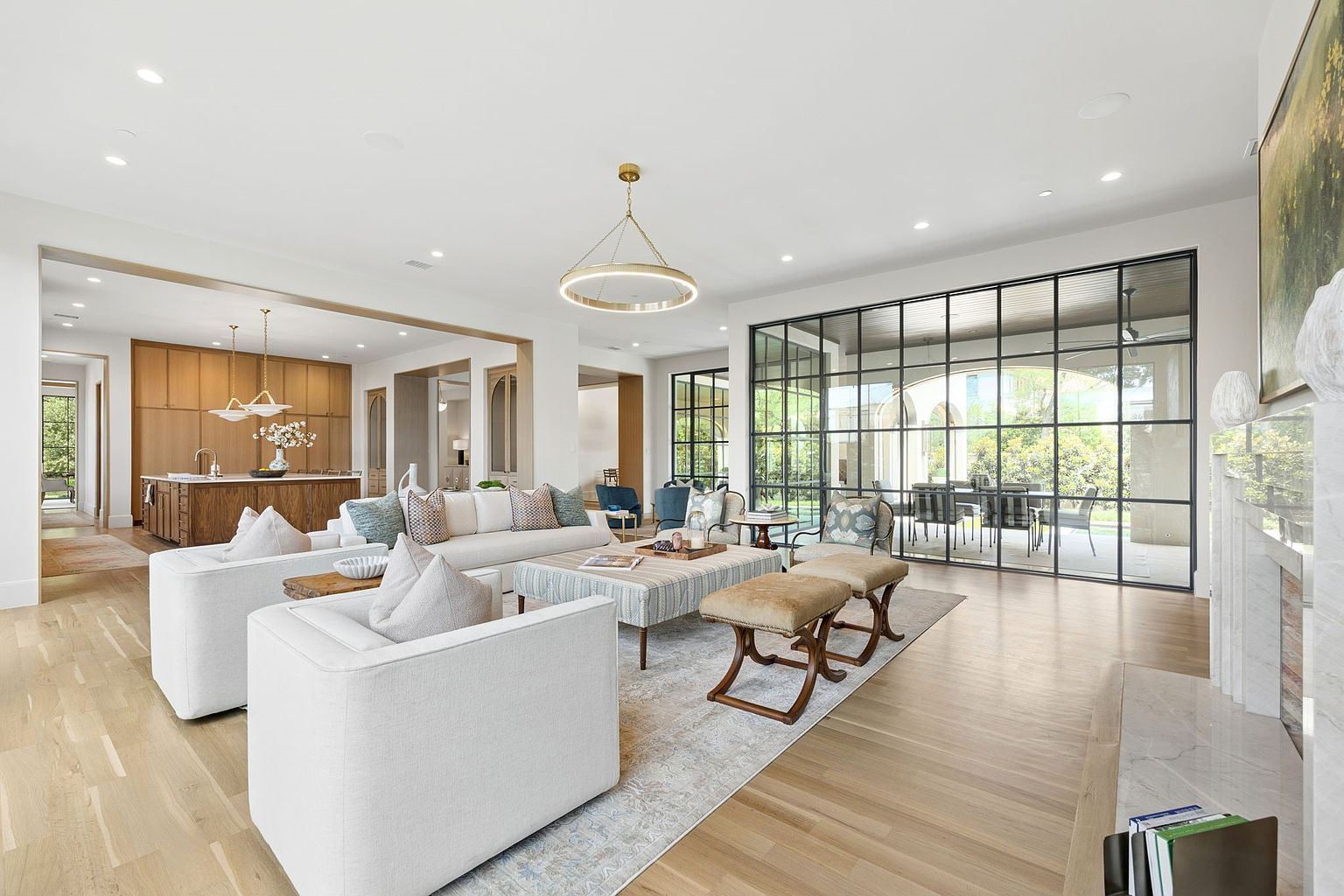
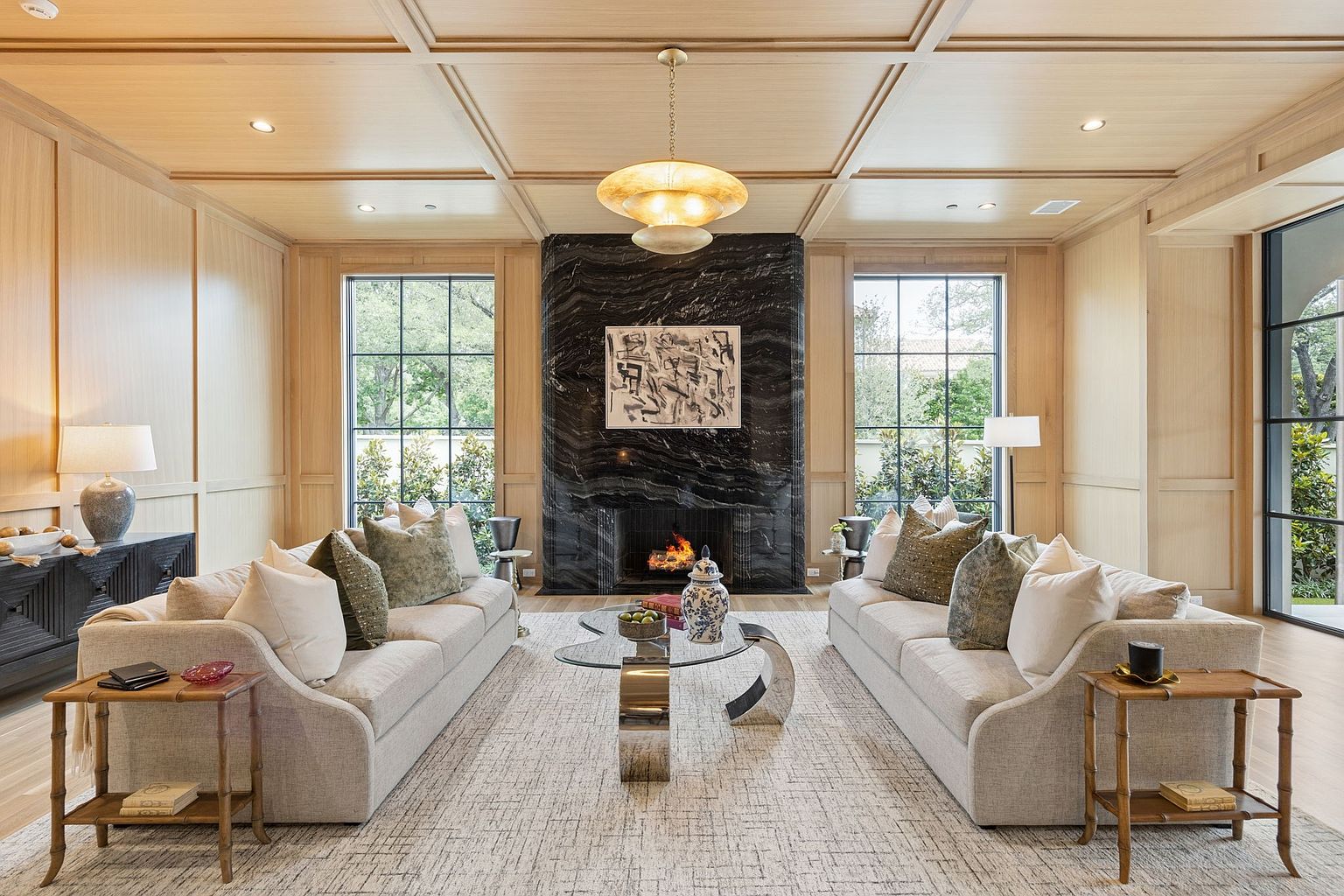
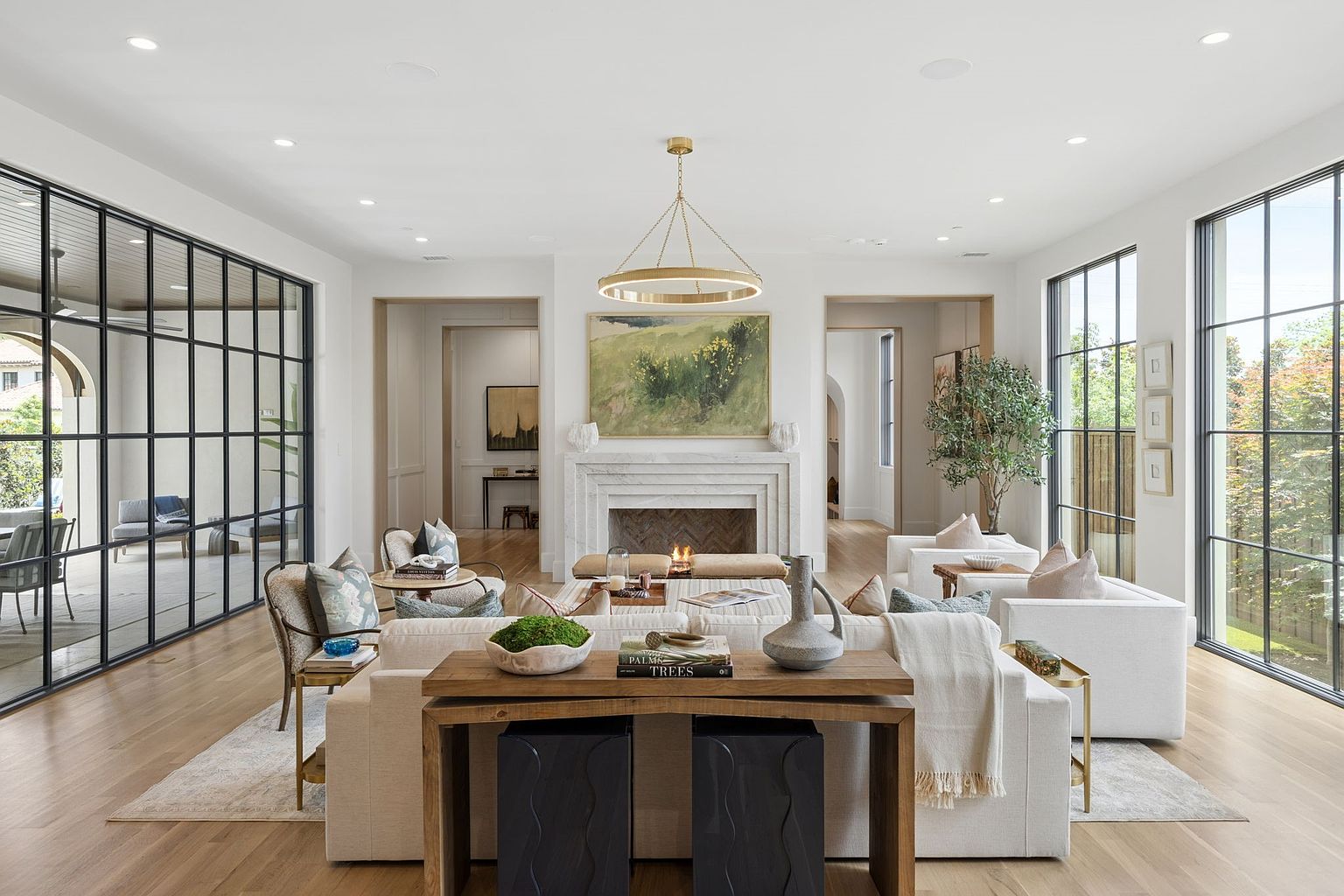
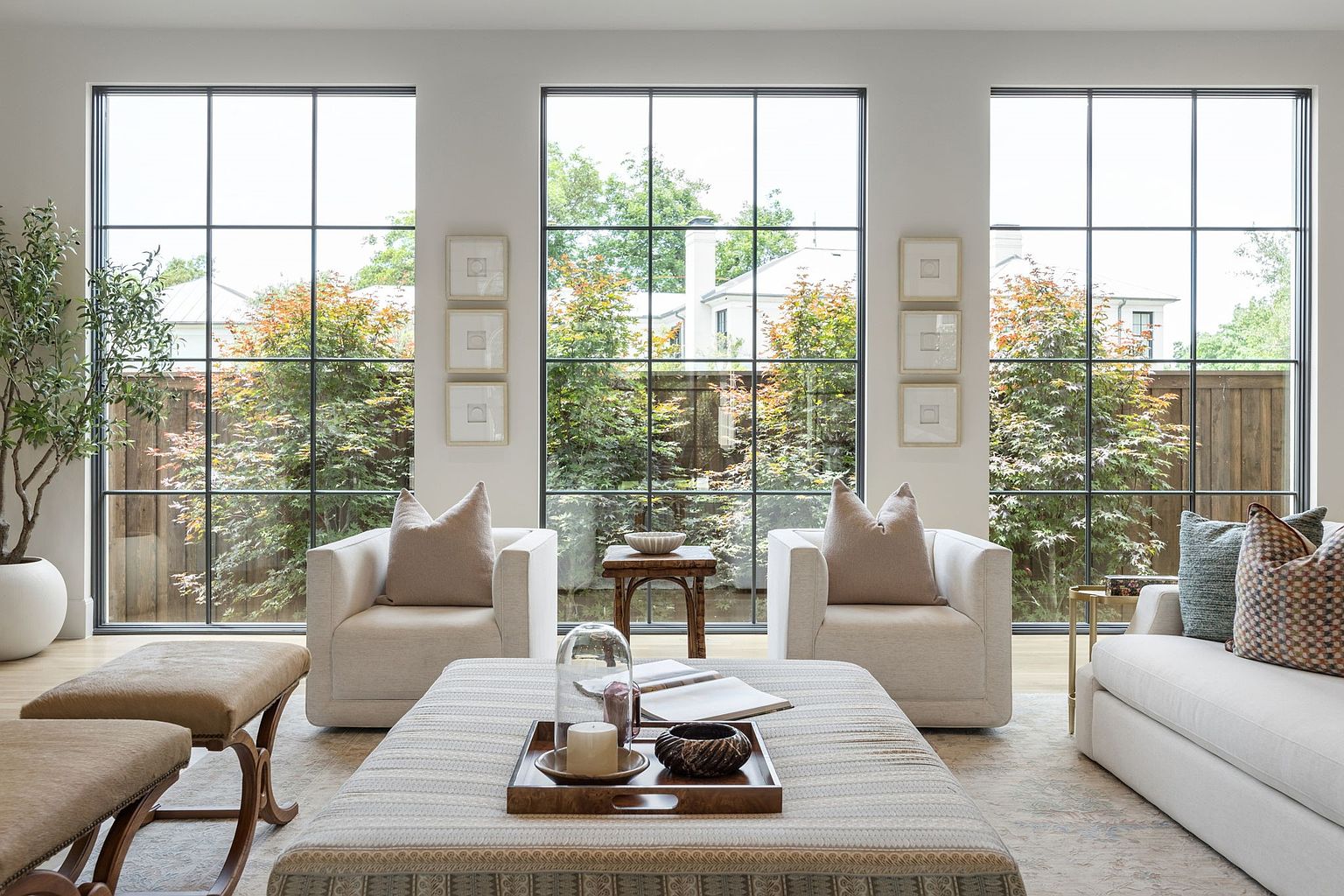
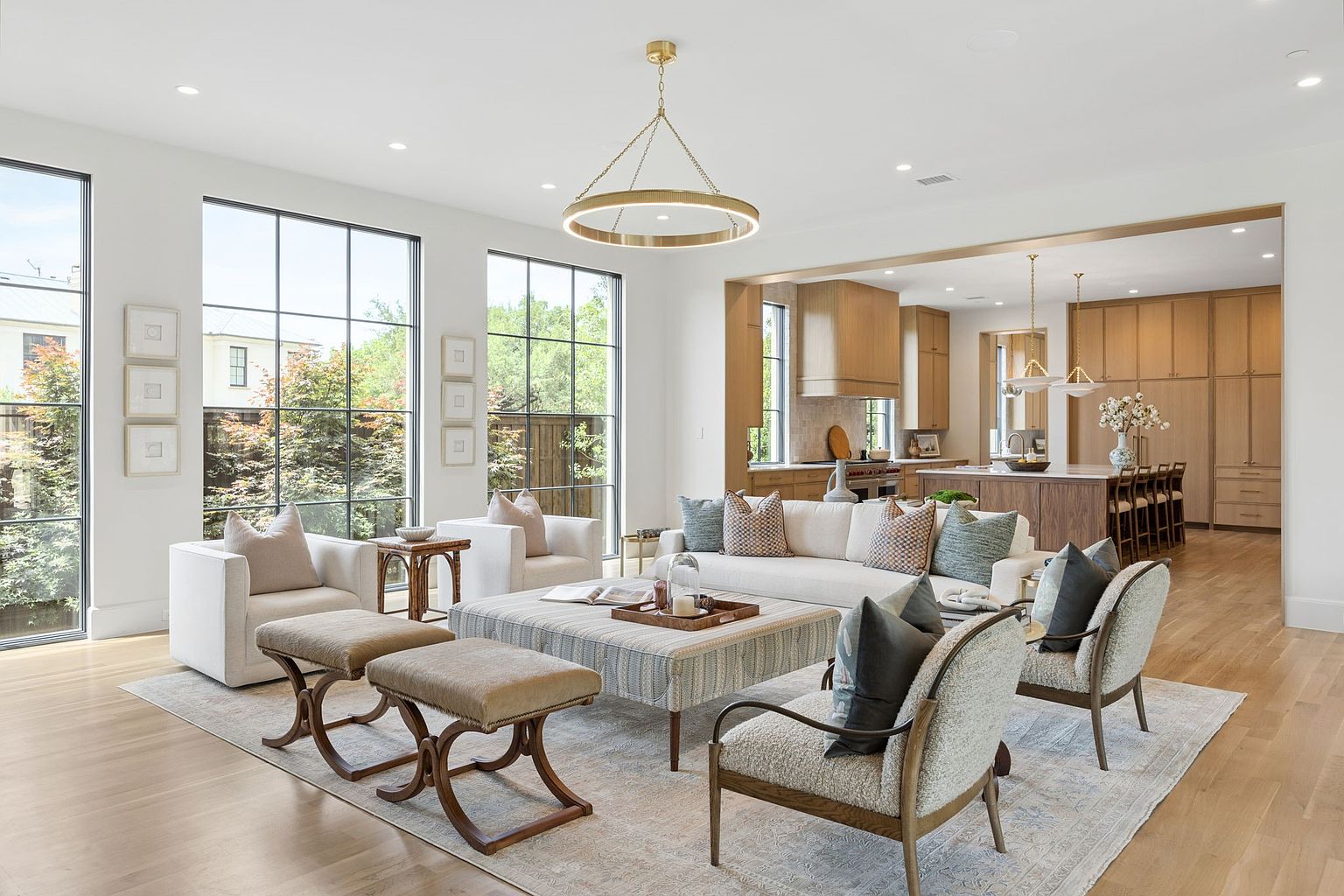
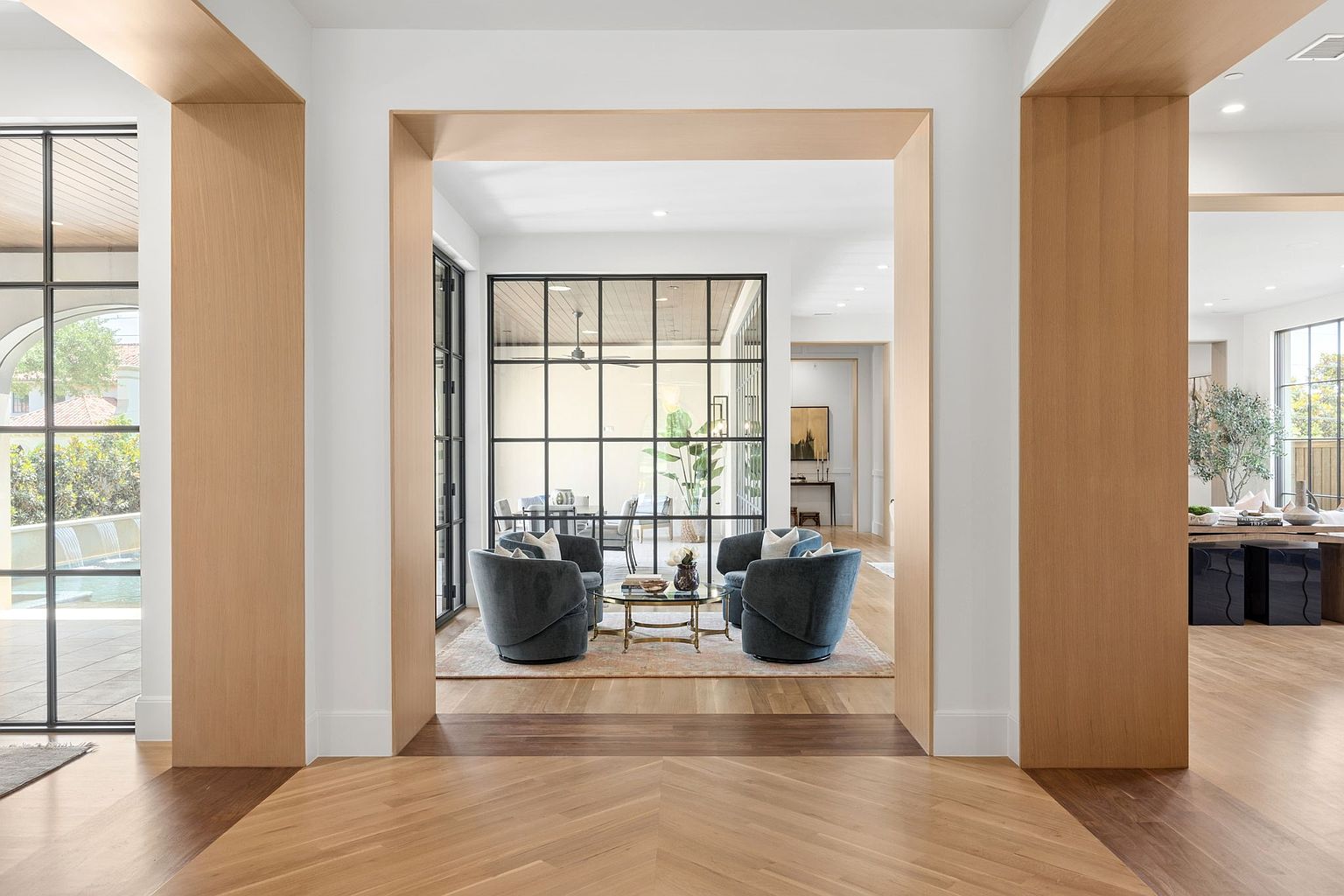
Inside, white oak paneling lines the principal living spaces with a warmth that feels both grounded and sophisticated. The main living room is anchored by a black stone-clad fireplace — one of several hand-carved natural stone surrounds throughout the home — and framed by large windows that bring in the green of the surrounding neighborhood. The design philosophy at work here is one of natural material in conversation with clean, modern line: walnut and white oak against stone and steel, organic texture against architectural precision.
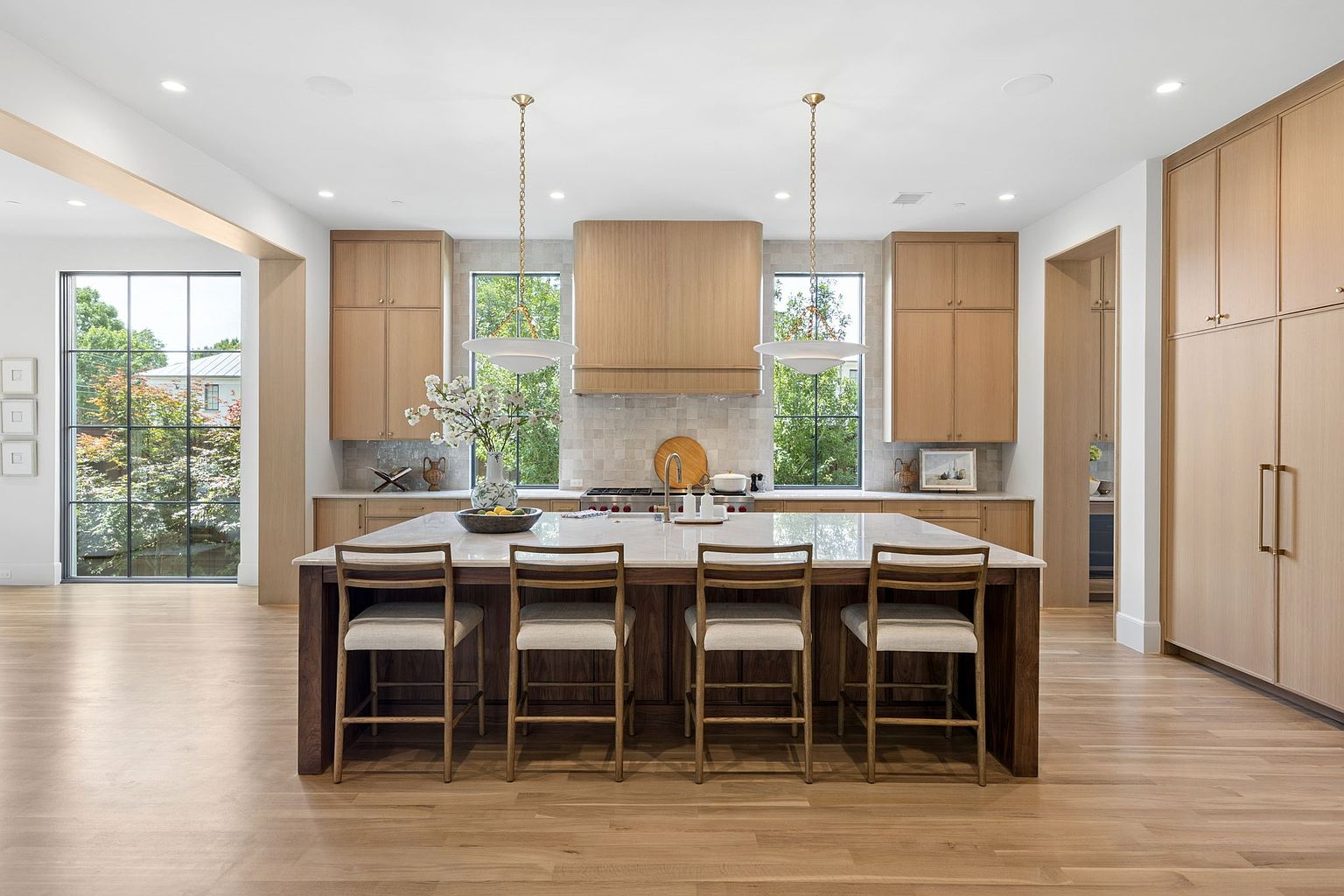
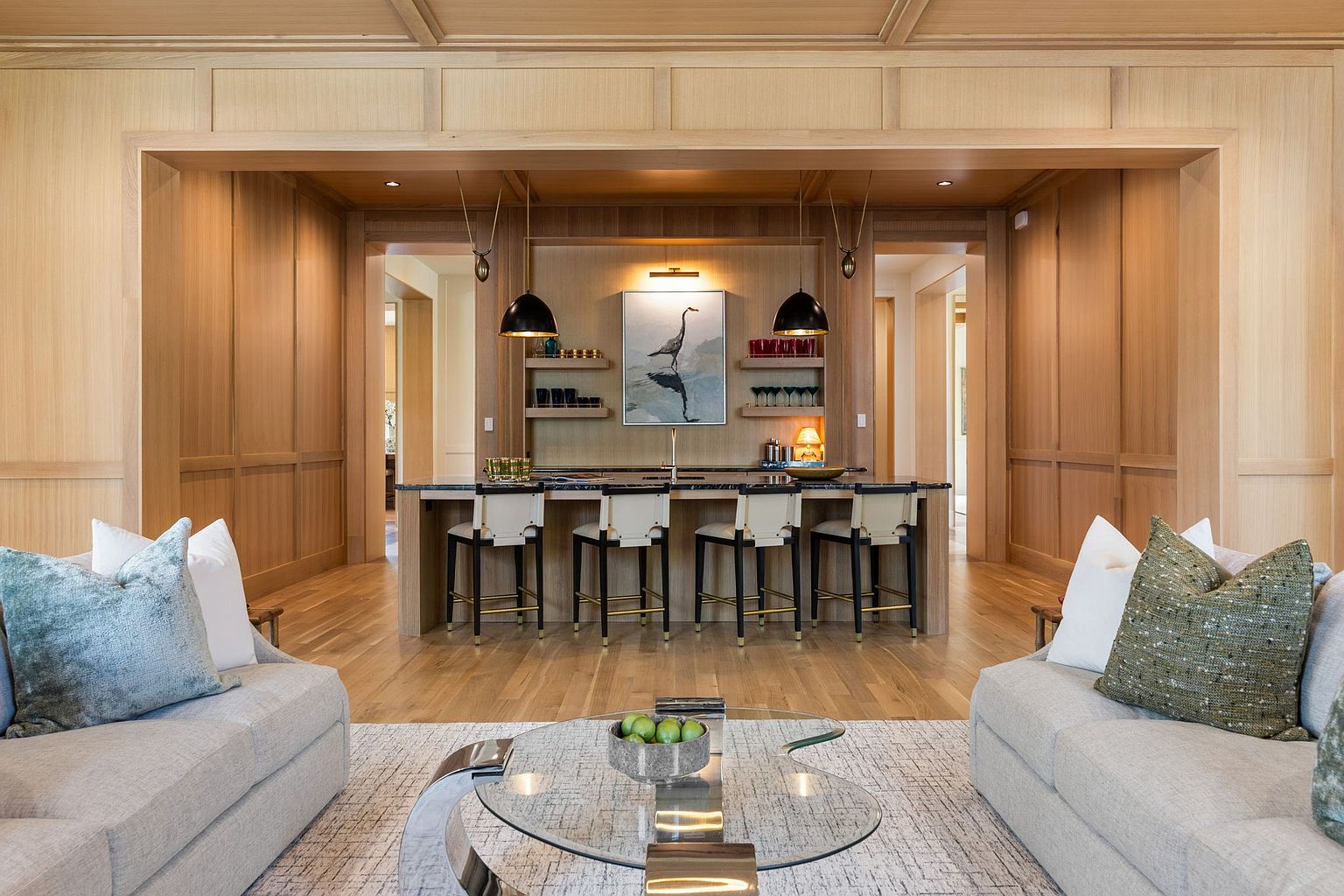
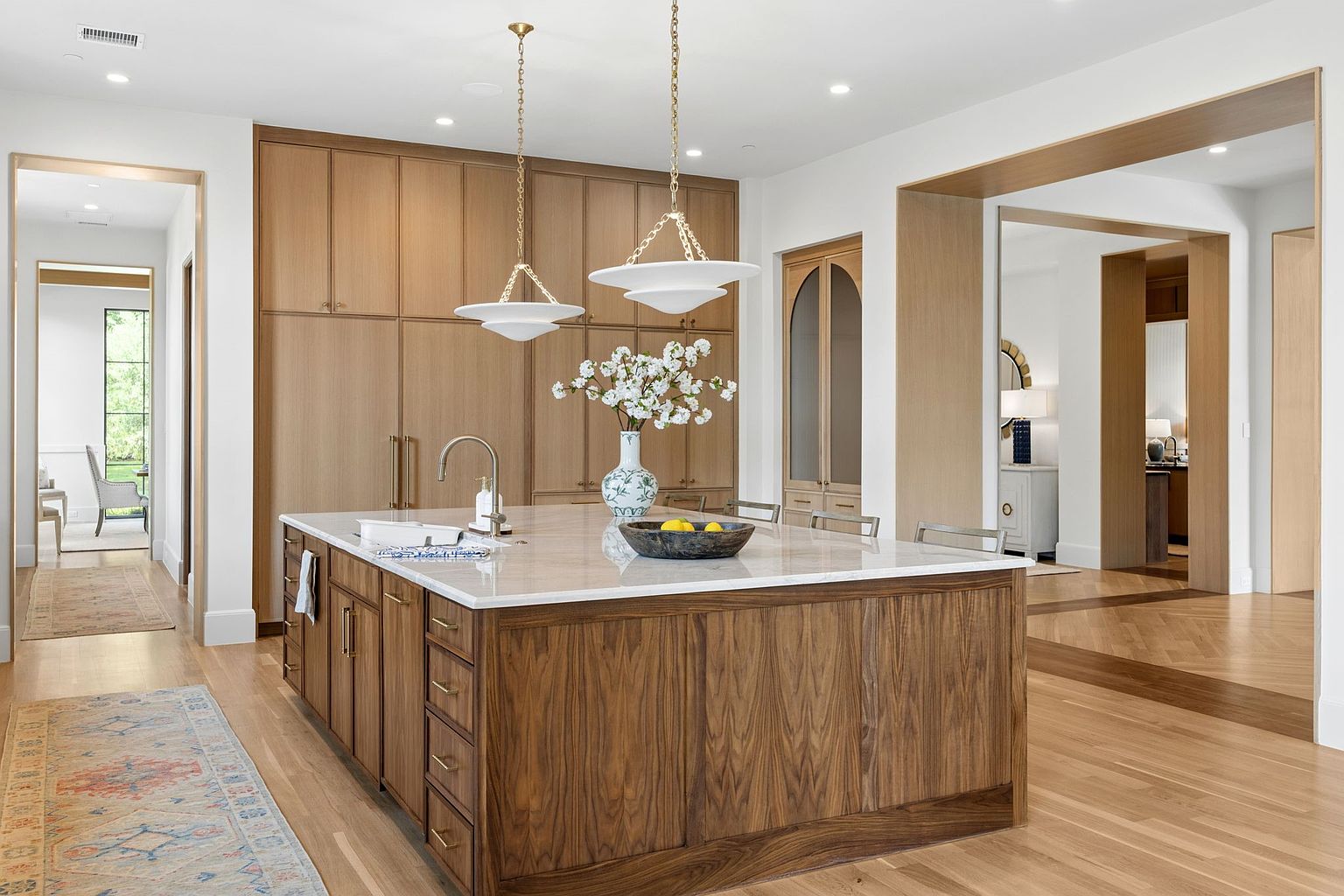
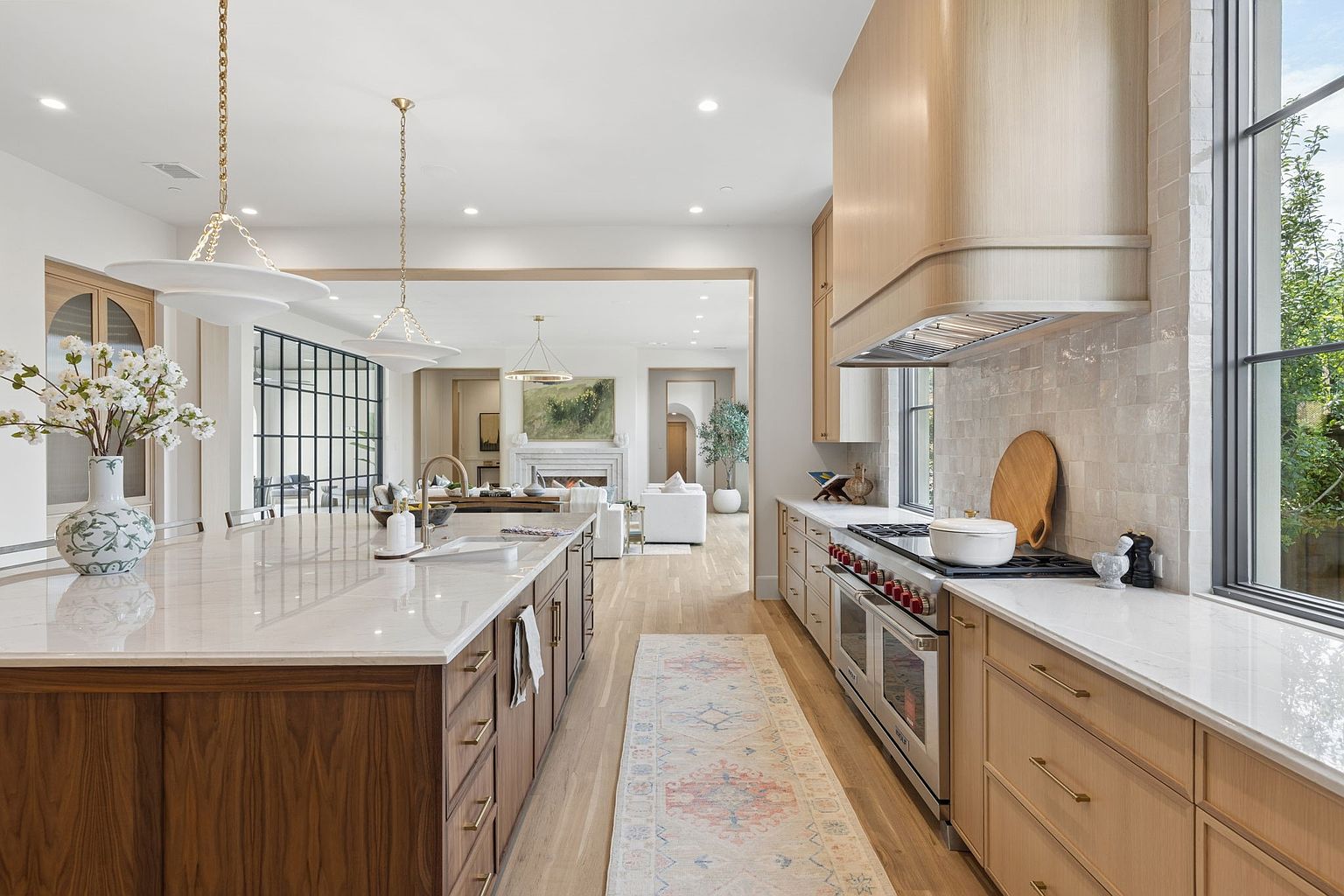
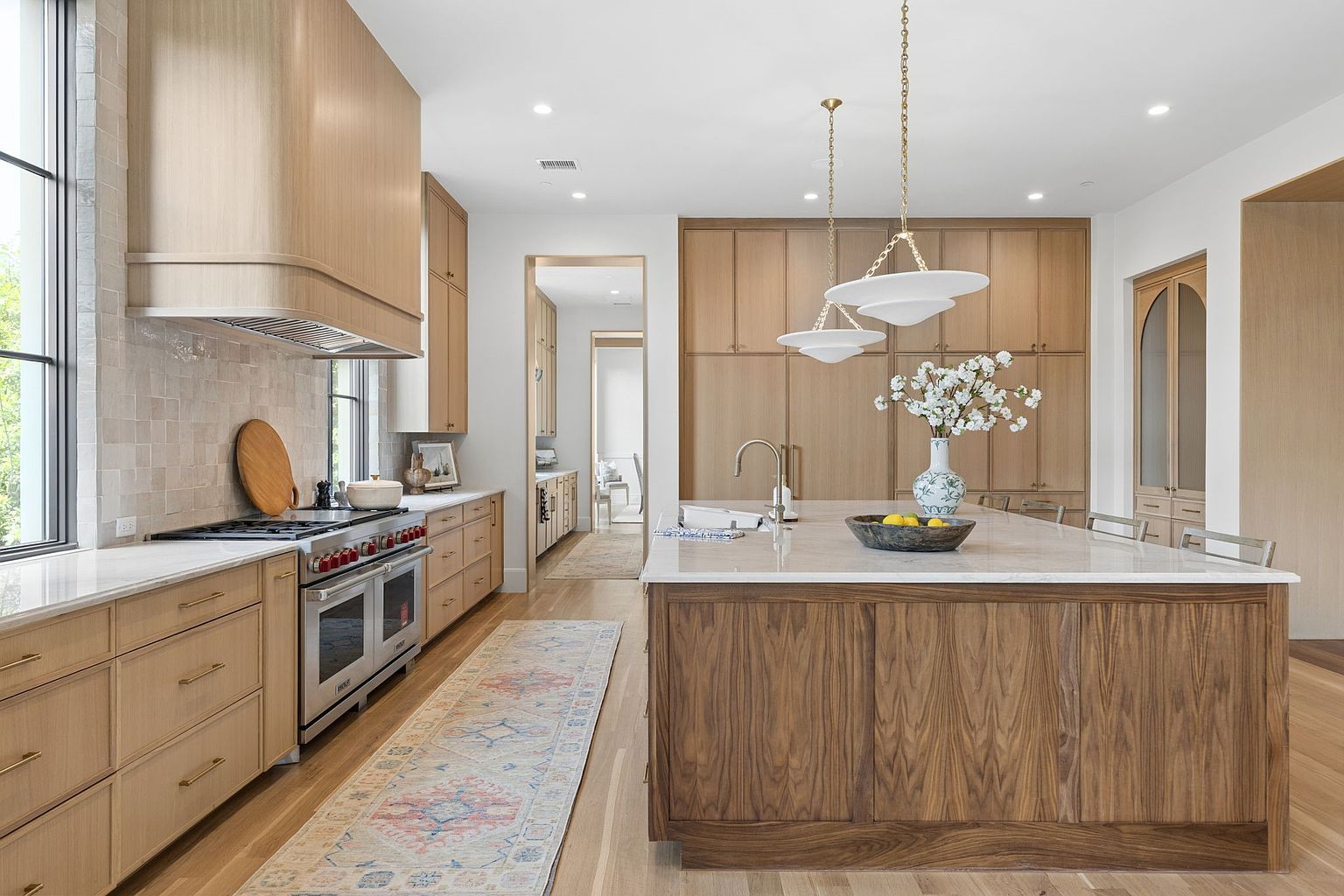
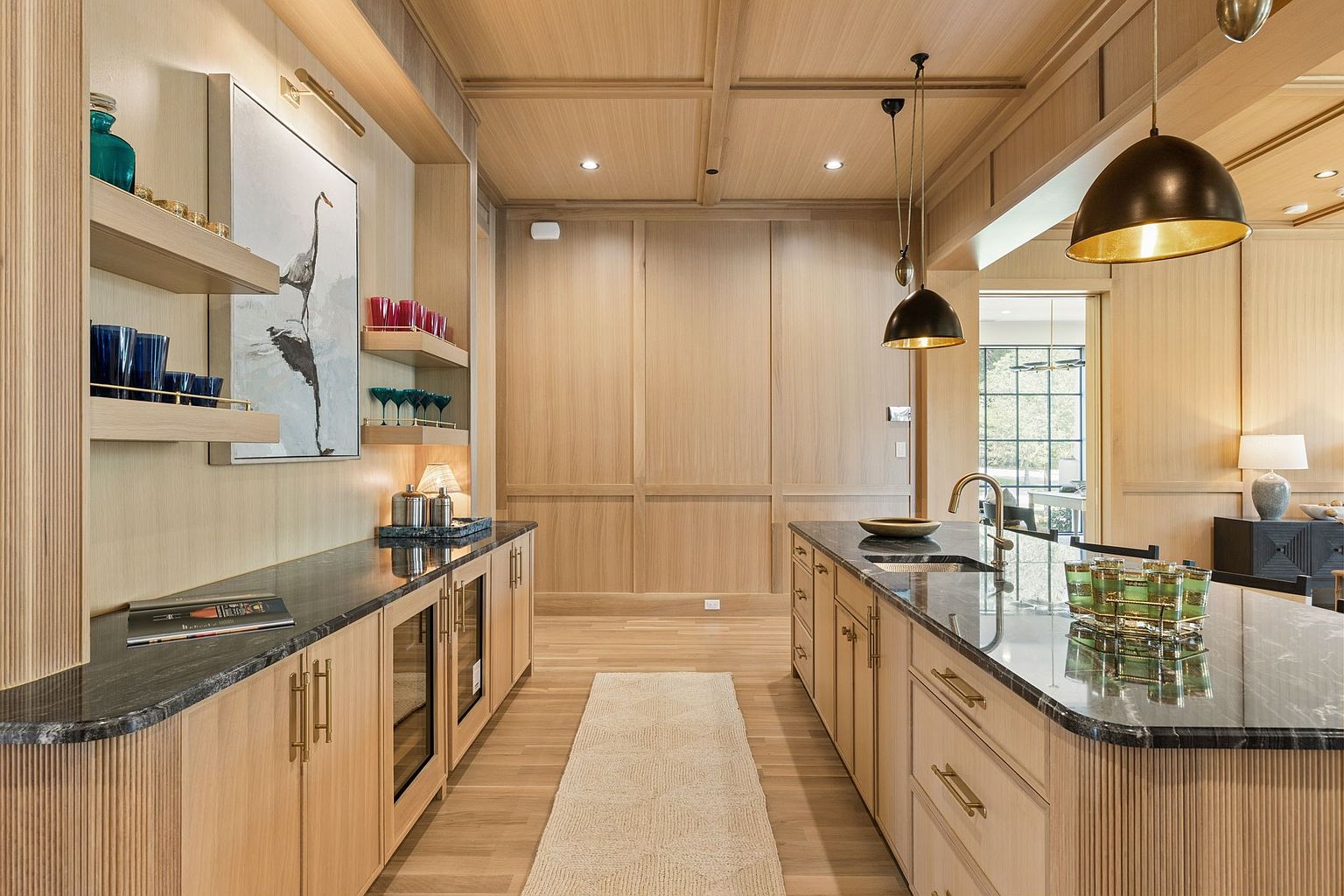
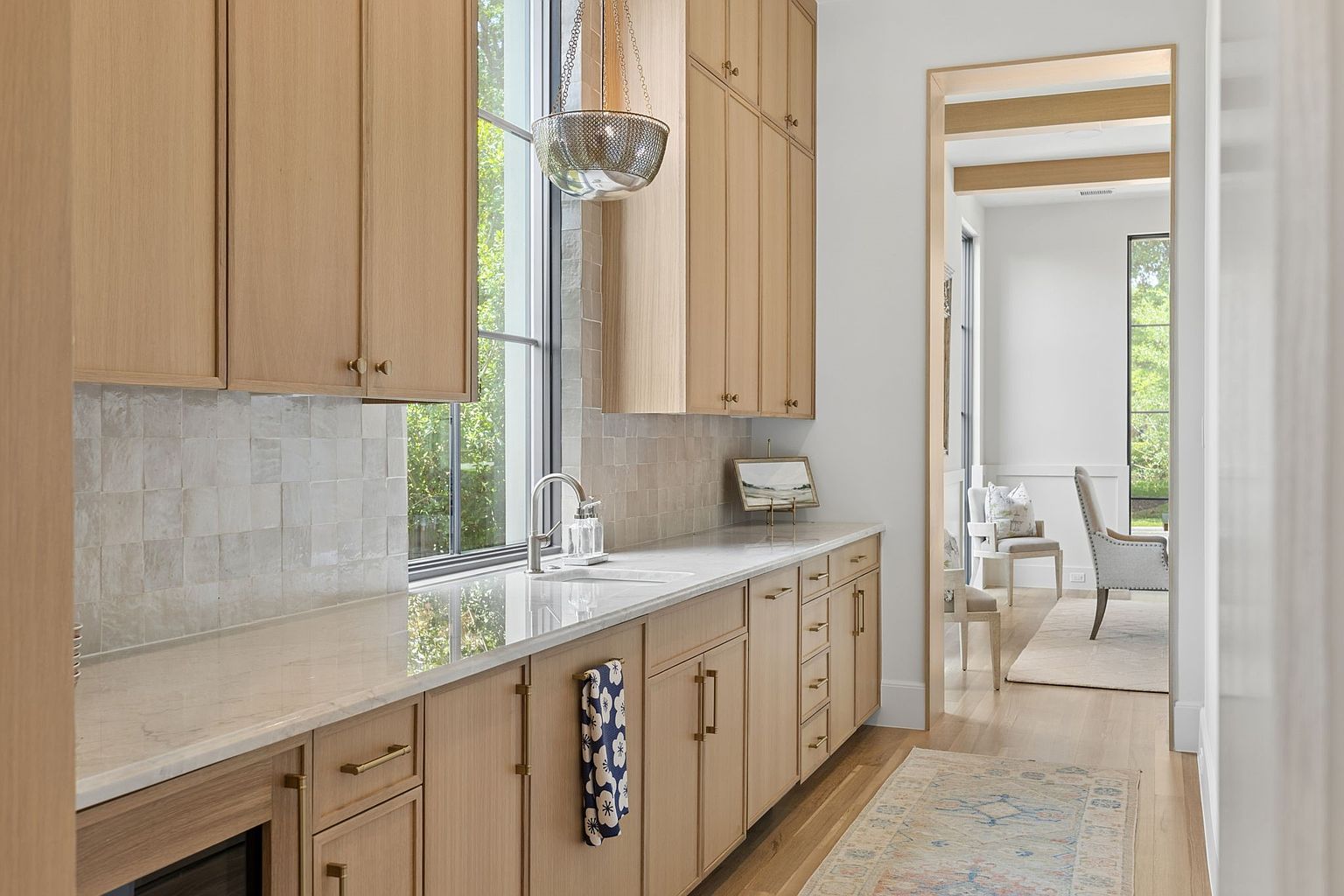
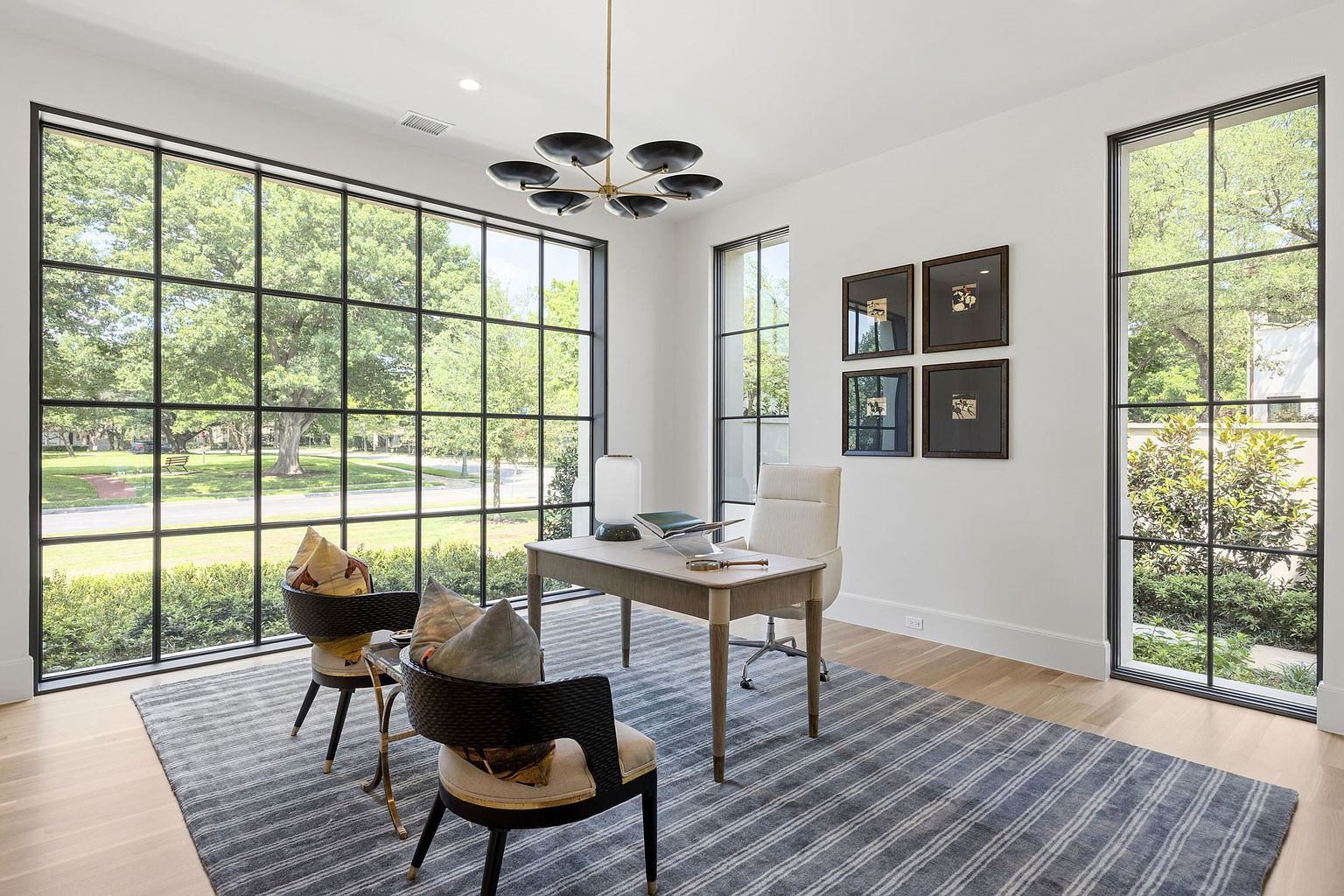
The kitchen centers on a dark wood island with light stone countertops, professional-grade range, and custom hood, with a massive walk-in pantry offering full-depth cabinetry that would satisfy the most serious home entertainer. A formal bar-lounge with ample wine storage adjoins the study or library — a room of genuine purpose, with direct access to the covered patio for seamless indoor-outdoor flow.
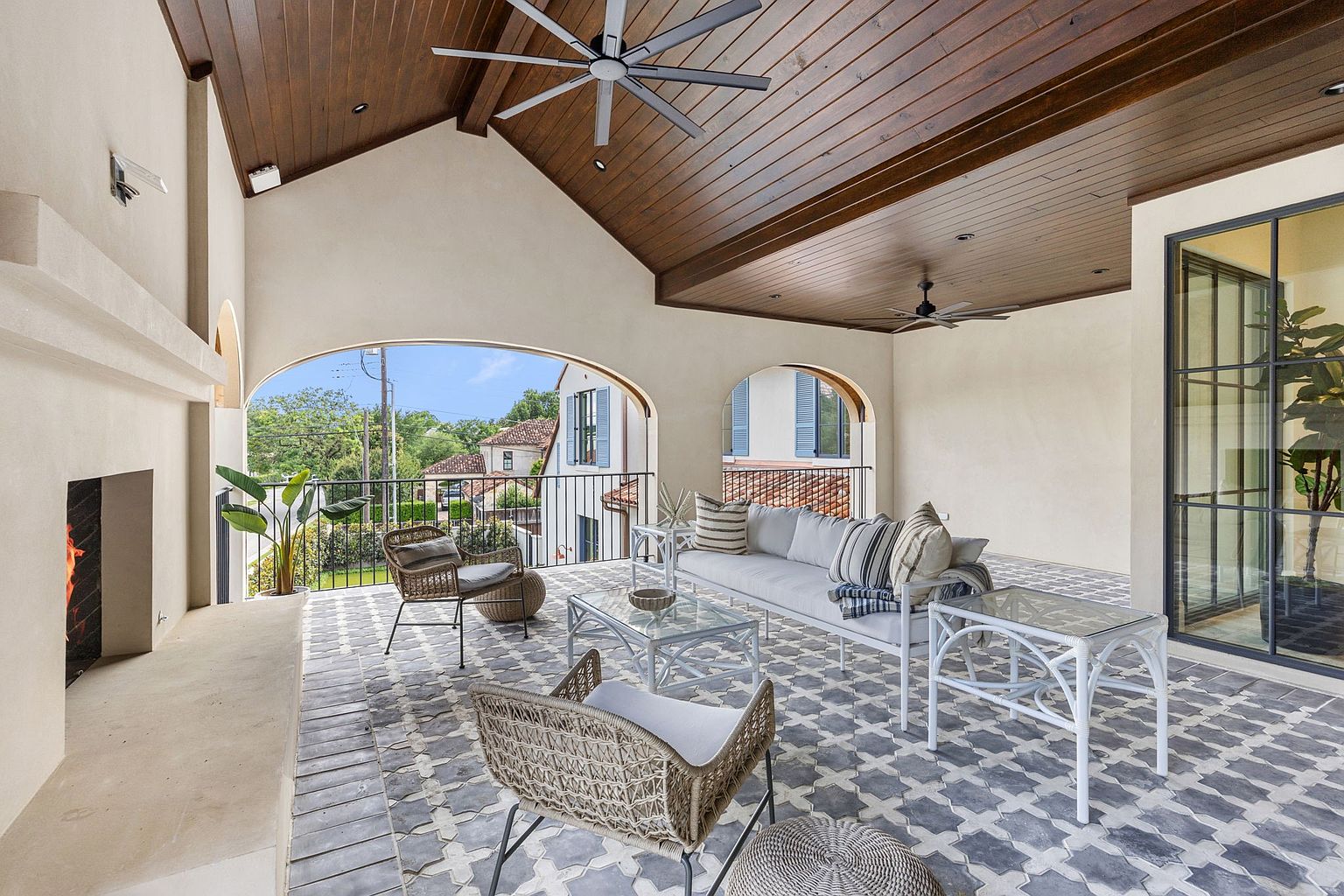
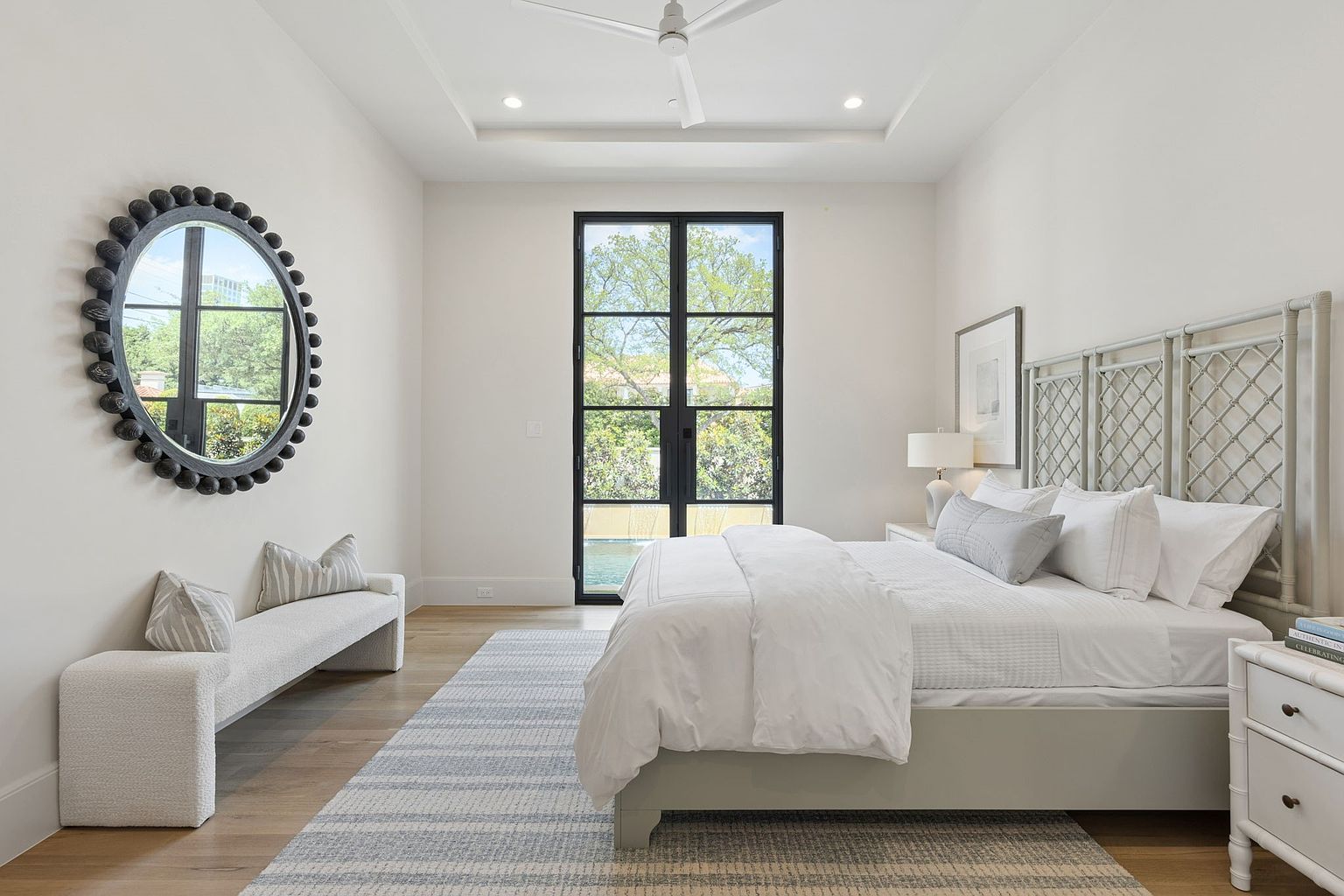
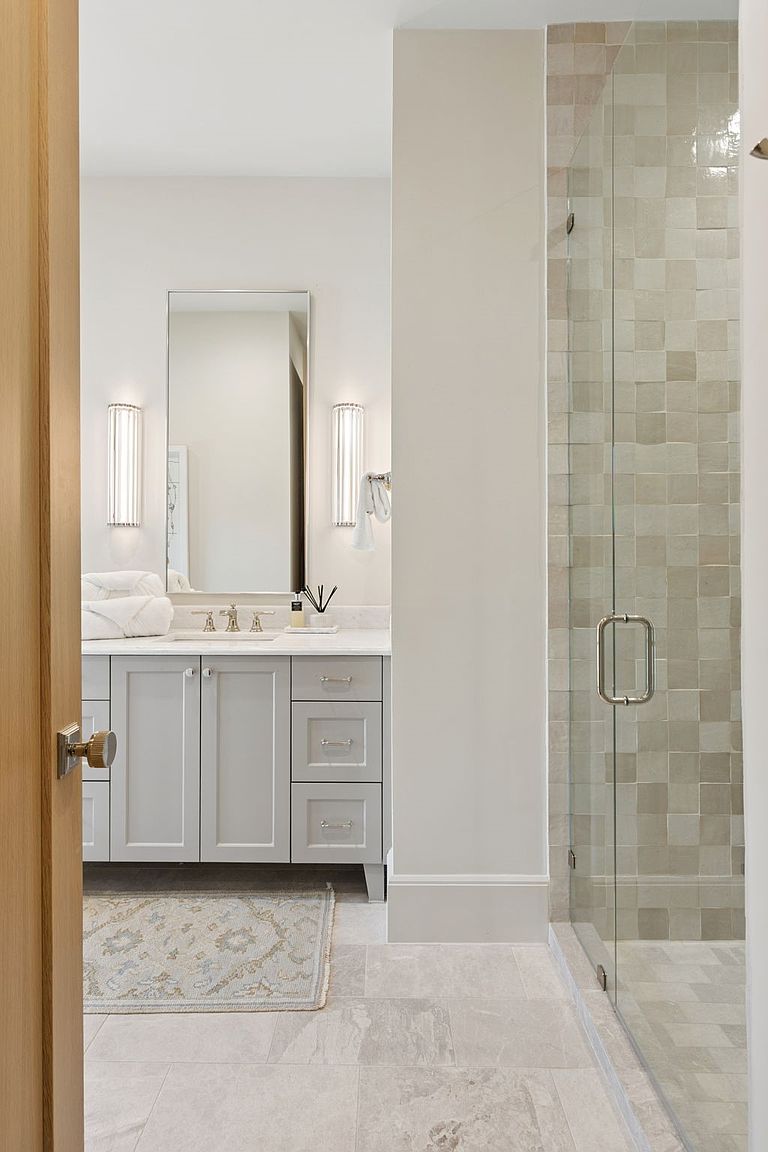
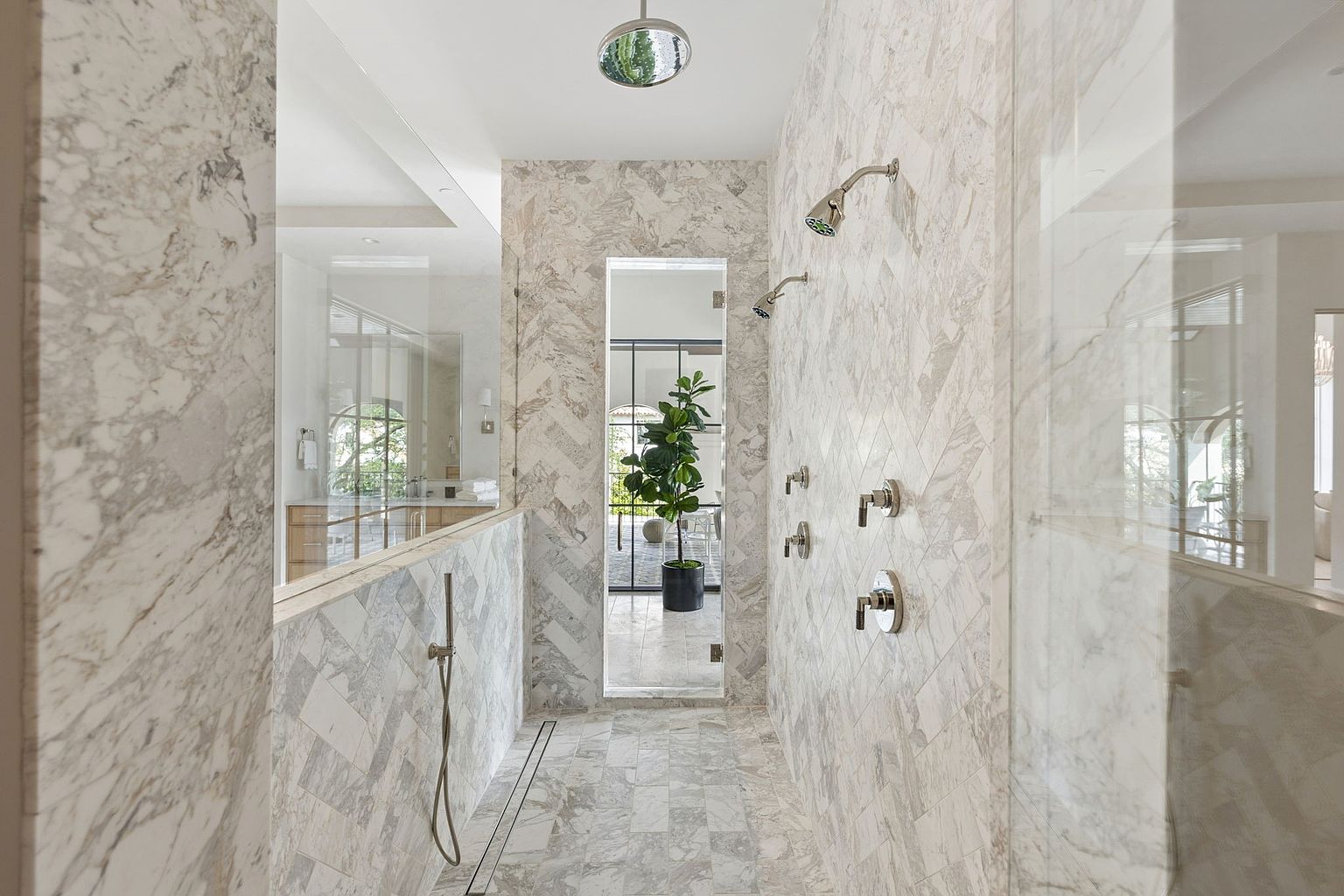
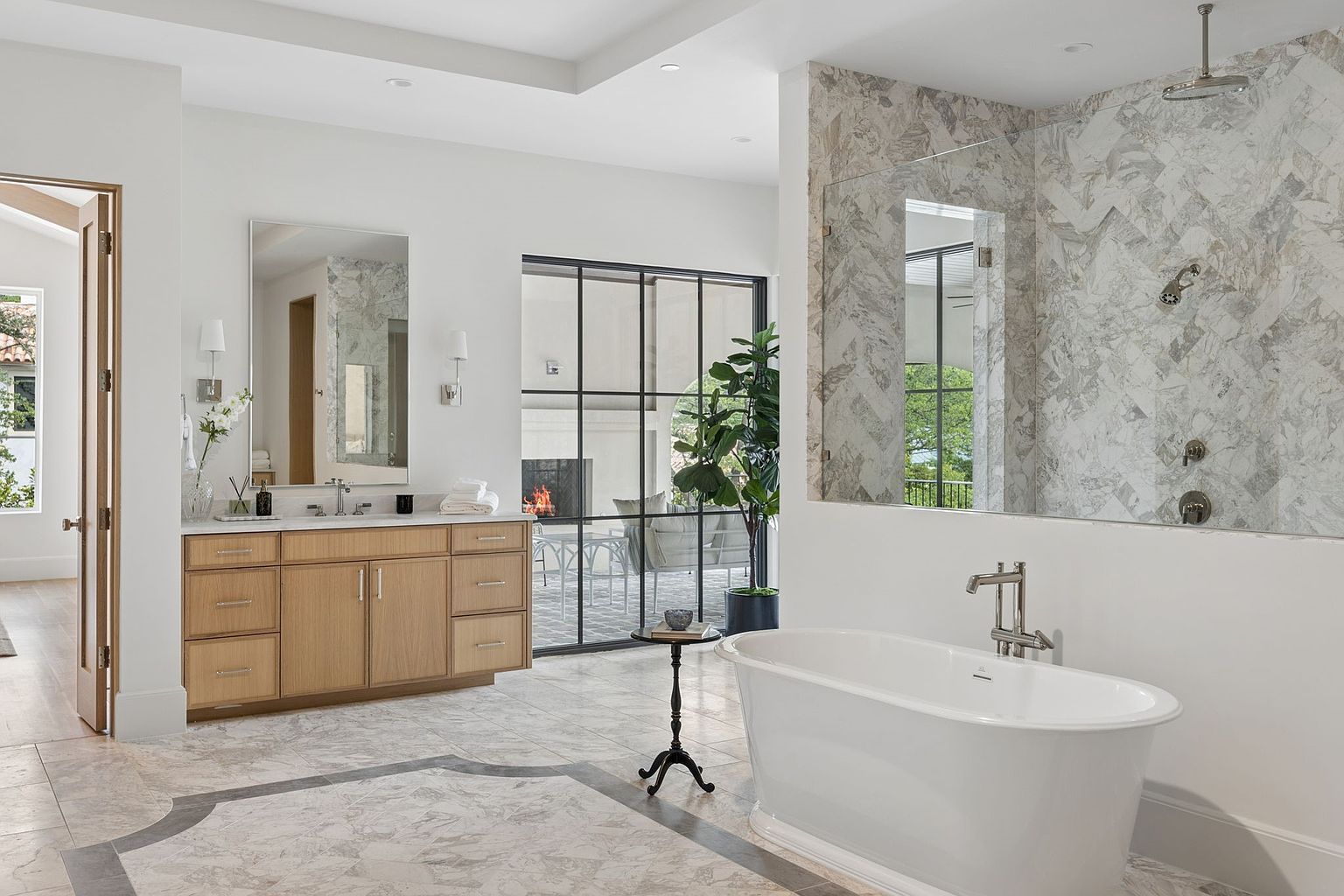
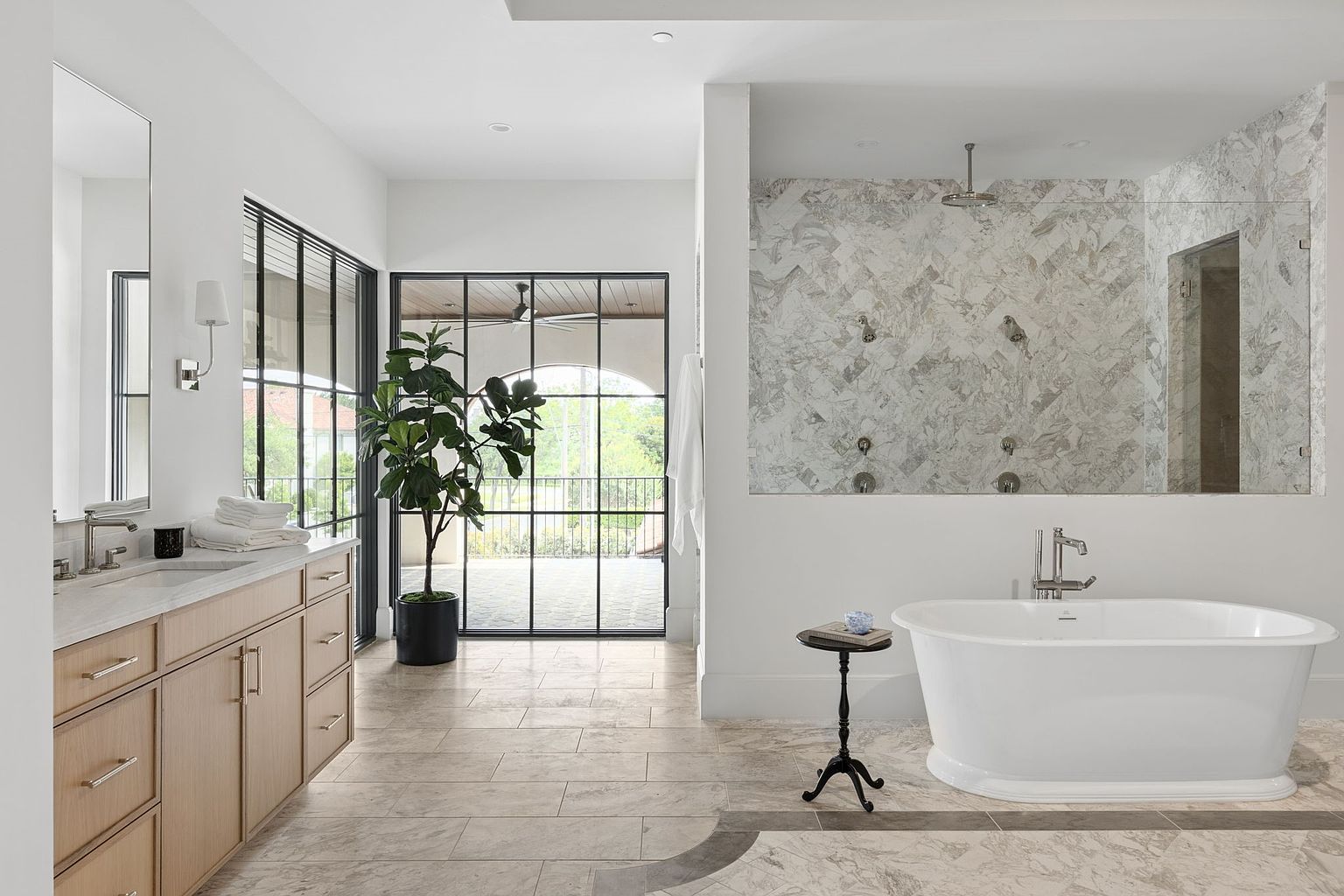
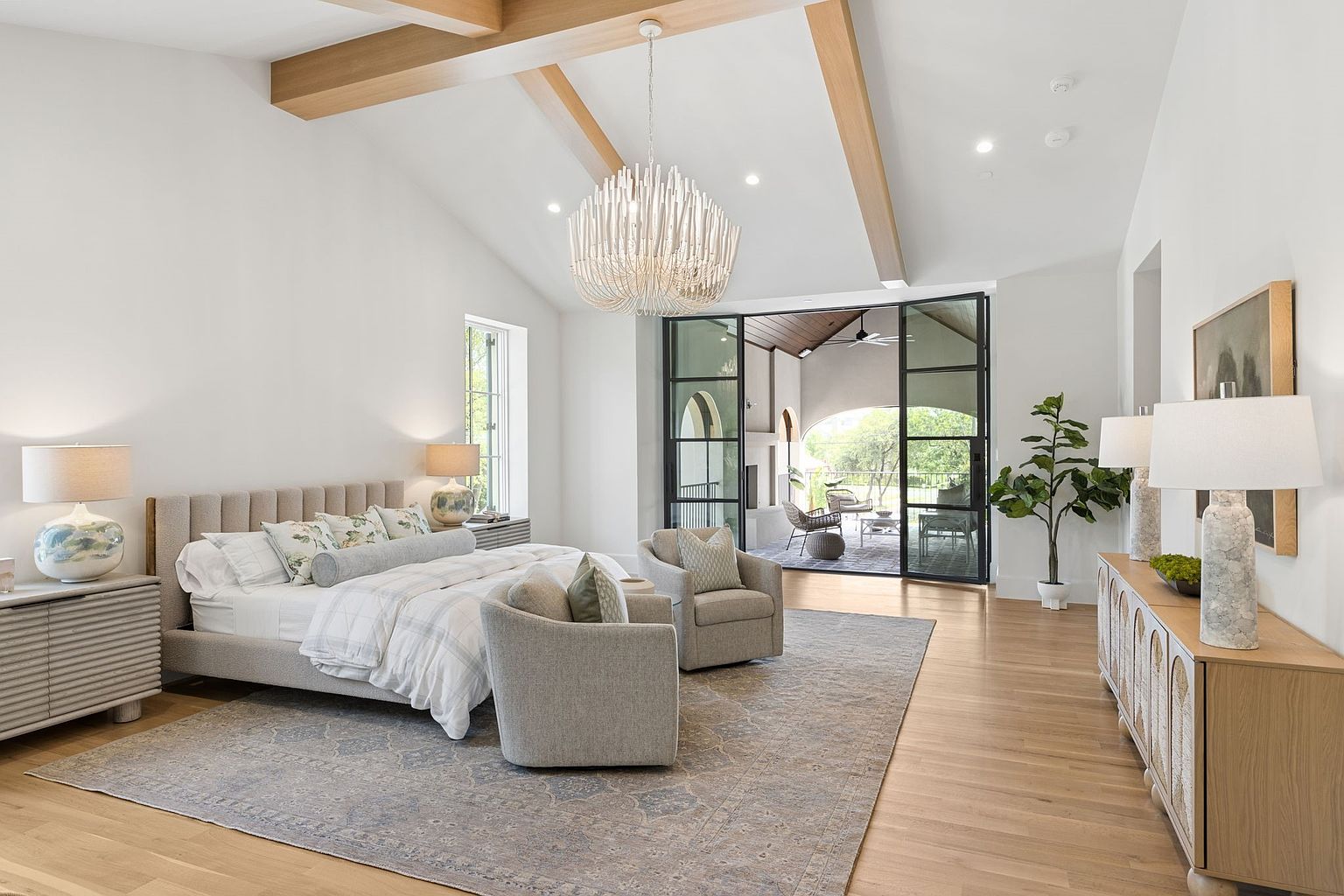
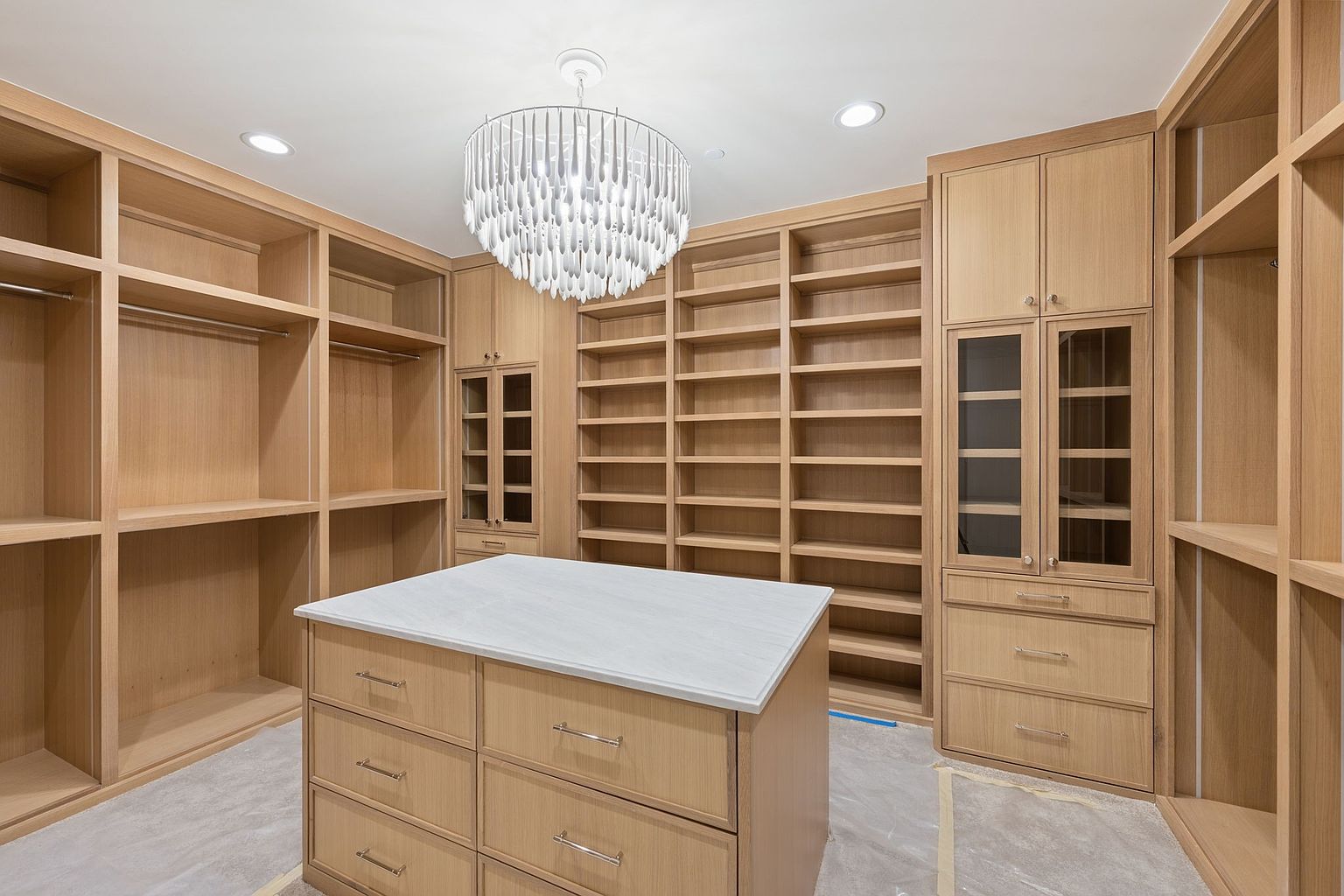
The primary suite occupies its own world: a vaulted beam ceiling rises above a thoughtfully composed bedroom, leading to a spa bathroom of herringbone stone shower walls, freestanding soaking tub, and dual vanities. A balcony extends from the suite with glimpses toward the Dallas downtown skyline — a quiet, private moment of orientation within the city. Primary closets are outfitted with full systems and LED backlighting, merging function with a sense of ceremony.
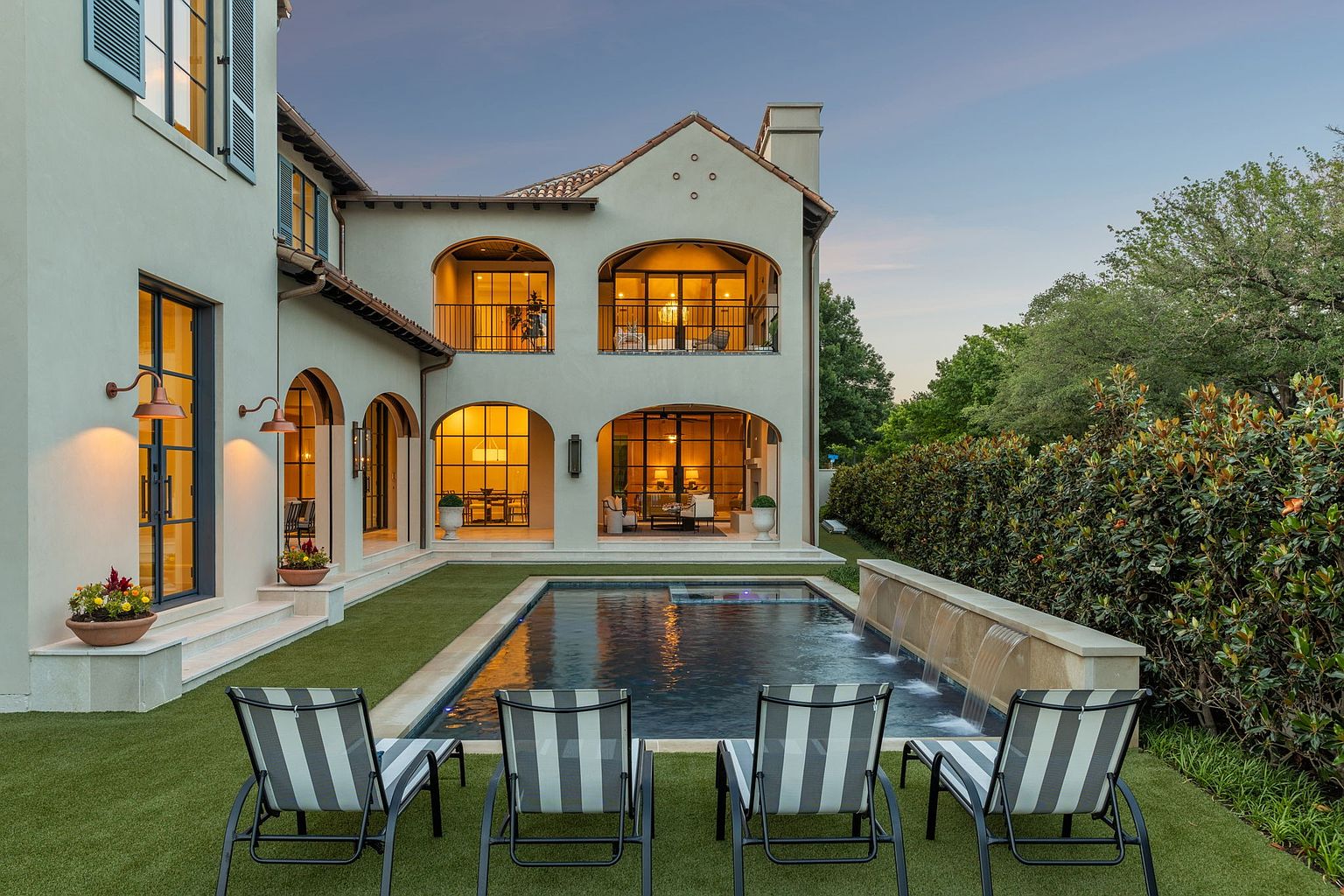
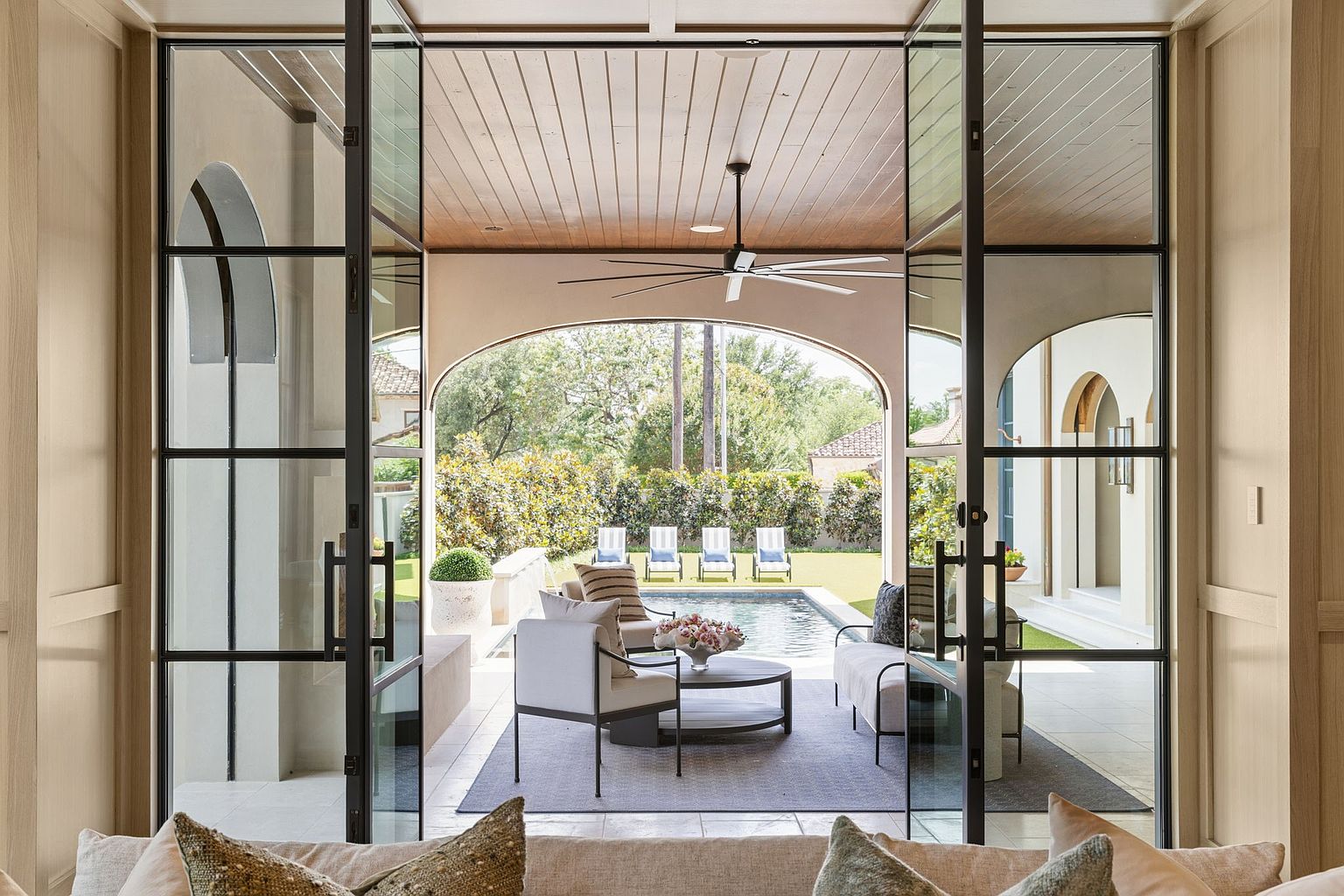
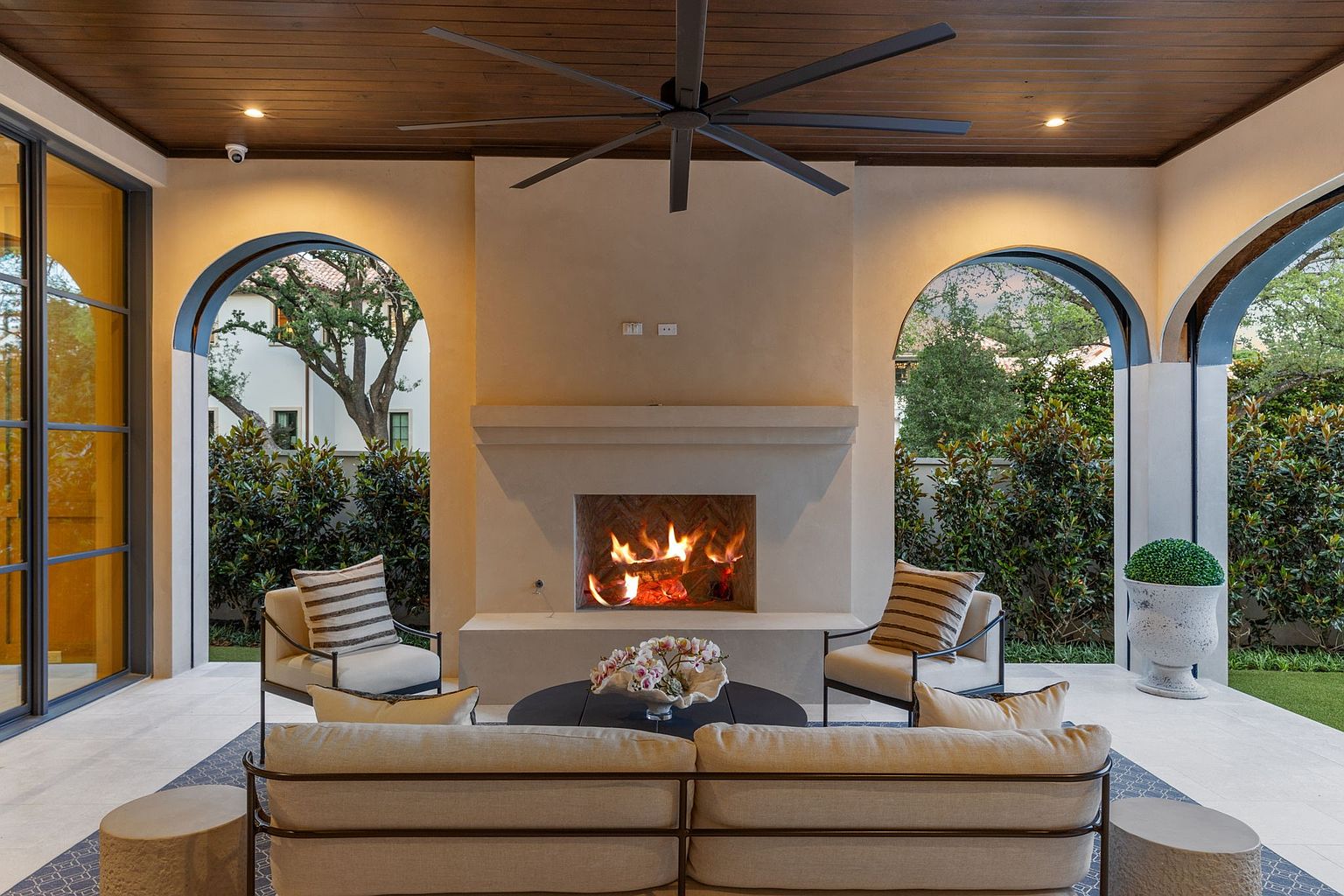
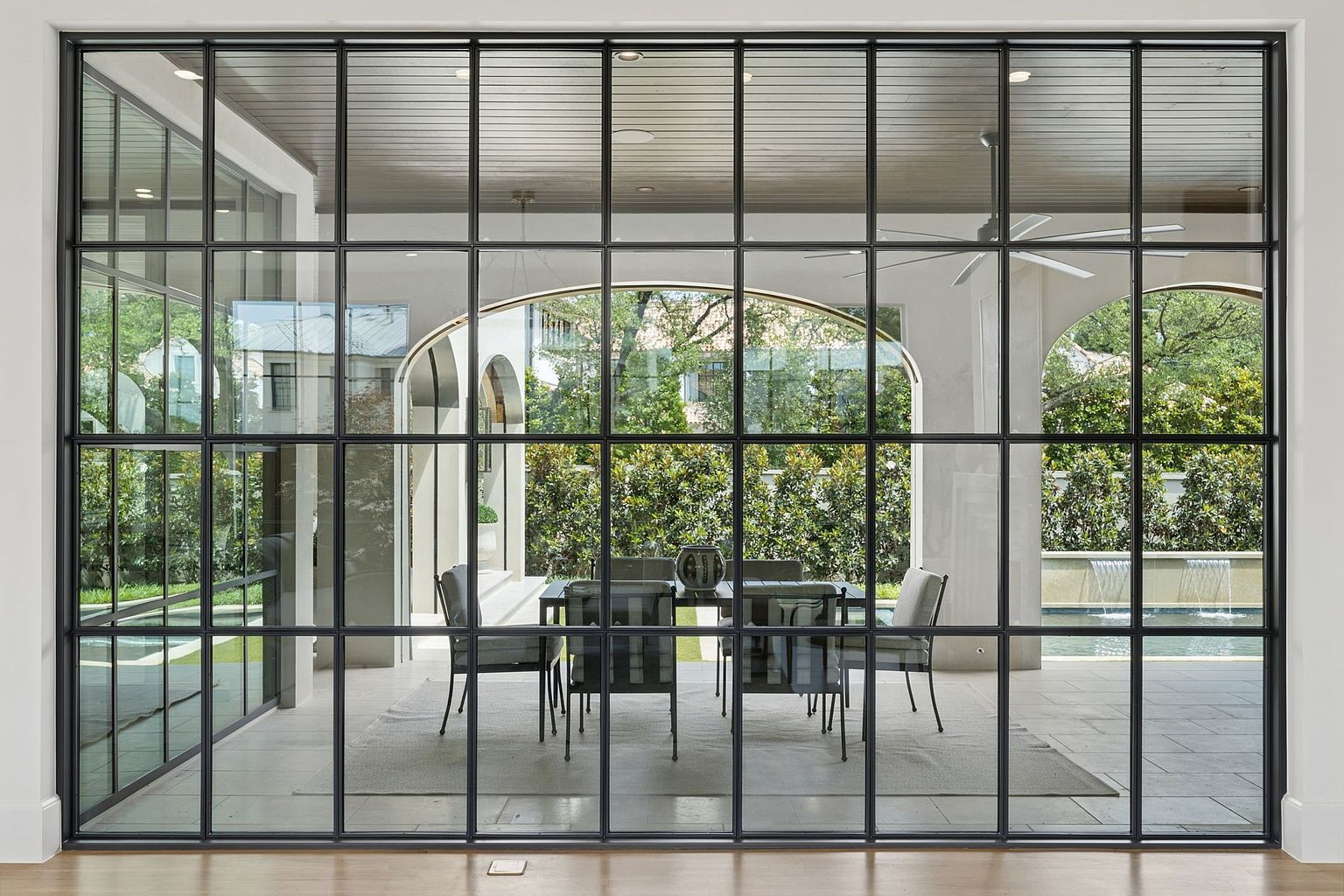
Beyond the glass walls of the main living area, the outdoor environment is equally resolved. A pool with a shear descent water feature anchors the turfed backyard, surrounded by mature landscaping and wrapped by a covered patio equipped with motorized screens — a space that transitions effortlessly from afternoon gathering to evening entertainment regardless of season.
Additional appointments of note include a first-floor bedroom suite ideal for guests or multigenerational living, a Baxter elevator, Lutron lighting system throughout, hand-carved stone fireplace surrounds, floor-to-ceiling white oak paneling, and an oversized three-car garage behind a privacy gate. This is a home built not merely to impress, but to endure — and to be genuinely, deeply lived in.
Highland Park occupies a singular position in the geography of Dallas — a roughly two-square-mile municipality entirely surrounded by the city, yet operating with its own governance, its own school district, and a civic identity that has remained remarkably consistent for more than a century. Developed beginning in the early 1900s by real estate developer John S. Armstrong and designed in part by landscape architect Wilbur David Cook — who also shaped Beverly Hills, California — Highland Park was conceived from the outset as a planned residential community of enduring quality. The wide, tree-canopied boulevards, the generous lot setbacks, and the careful preservation of green space were not accidents of growth but the result of deliberate civic vision.
Today, that vision holds. The neighborhood is defined by architectural diversity of a thoughtful kind — Mediterranean Revival, Colonial, French Eclectic, and contemporary new construction coexist along streets shaded by mature live oaks and elms. The result is a streetscape that feels both historically rooted and vitally current, a place where the built environment rewards the slow walk and the attentive eye.
The location of 3701 Gillon Avenue positions its residents at one of Highland Park's most enviable intersections of amenity and tranquility. Dyckman Park — visible from the home's elevated vantage — provides open green space and a sense of breathing room rare in urban settings. The Dallas Country Club, one of the city's oldest and most storied private institutions, is nearby, as is Highland Park Village, the landmark 1931 Spanish Colonial Revival shopping center widely recognized as one of the first planned shopping centers in the United States. Today it houses an exceptional collection of luxury retail and dining, including Hermès, Veronica Beard, and a curated selection of acclaimed restaurants.
For those who prefer to move through the city on foot or by bicycle, the Katy Trail — a 3.5-mile urban trail built on a former Missouri-Kansas-Texas Railroad corridor — is within walking distance, offering a green corridor that connects Highland Park to Uptown and beyond. The Knox-Henderson corridor, one of Dallas' most dynamic dining and shopping districts, is equally accessible, with a concentration of independent restaurants, boutiques, and wine bars that reflects the cultural energy of the broader city.
The Highland Park Independent School District adds a dimension of long-term value that resonates deeply with families. HPISD is consistently ranked among the top public school districts in Texas, and the home is zoned to Armstrong Elementary — a school that shares its name with the neighborhood's founding developer and carries a reputation for academic excellence that has made it a destination in its own right.
To live at 3701 Gillon is to inhabit a neighborhood that functions as both sanctuary and platform — a place of genuine residential calm from which the full cultural, culinary, and commercial life of Dallas is easily and elegantly reached. It is, in the truest sense, a location without meaningful compromise.
Featured Highlights
Curated Content • Presented by Ty Vaughn