The Story Behind
A Waterfront Masterpiece Redefined on Guard-Gated Palm Island
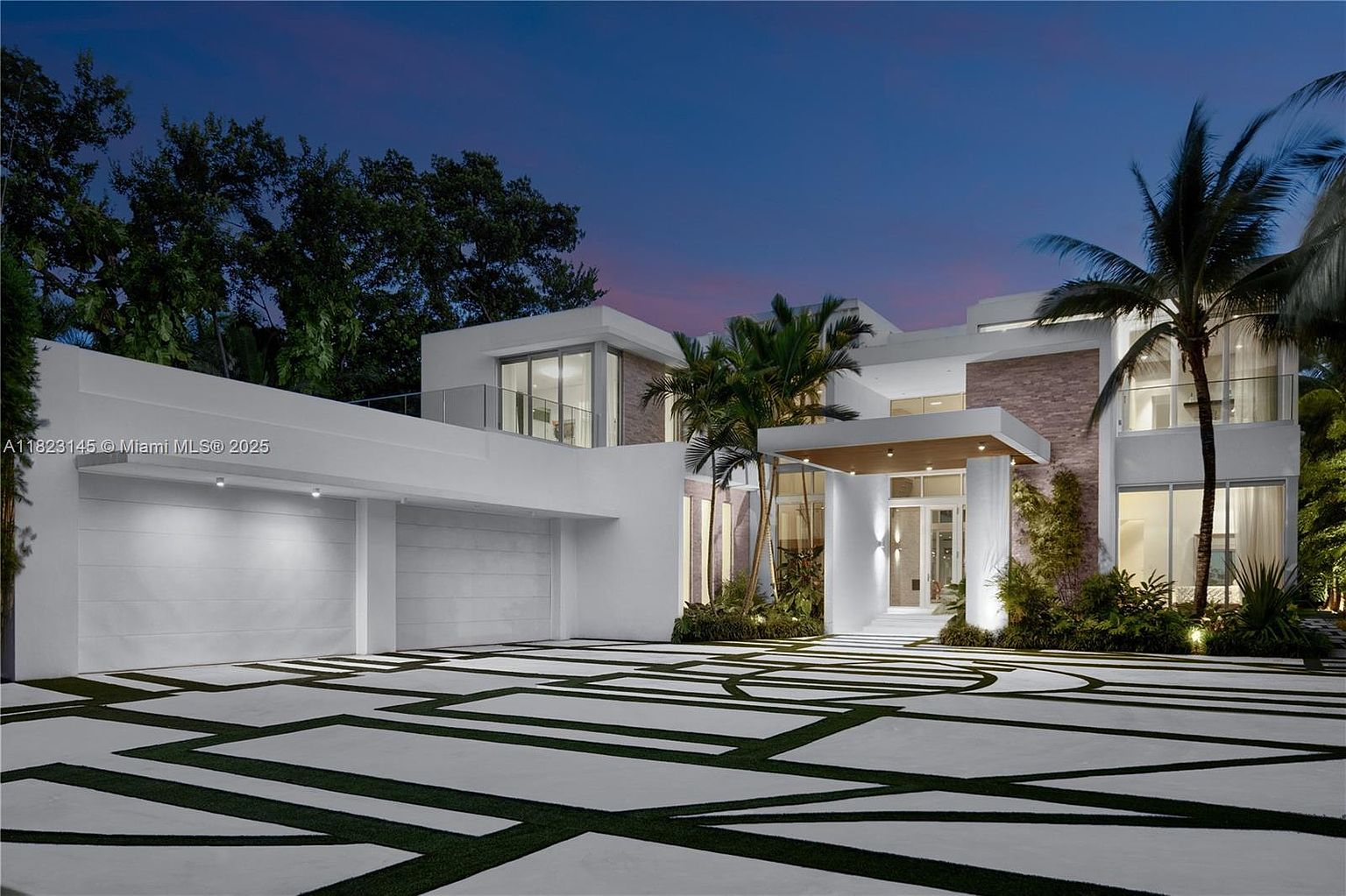
There is a particular kind of confidence that defines the finest residential architecture — a refusal to compete with its surroundings and instead command them. From the moment the geometric black gate at 30 Palm Ave parts to reveal the structured paver driveway, flanked by tall bamboo hedges and anchored by a cantilevered entryway canopy with warm wood-paneled ceiling, it is clear this estate operates on its own terms.
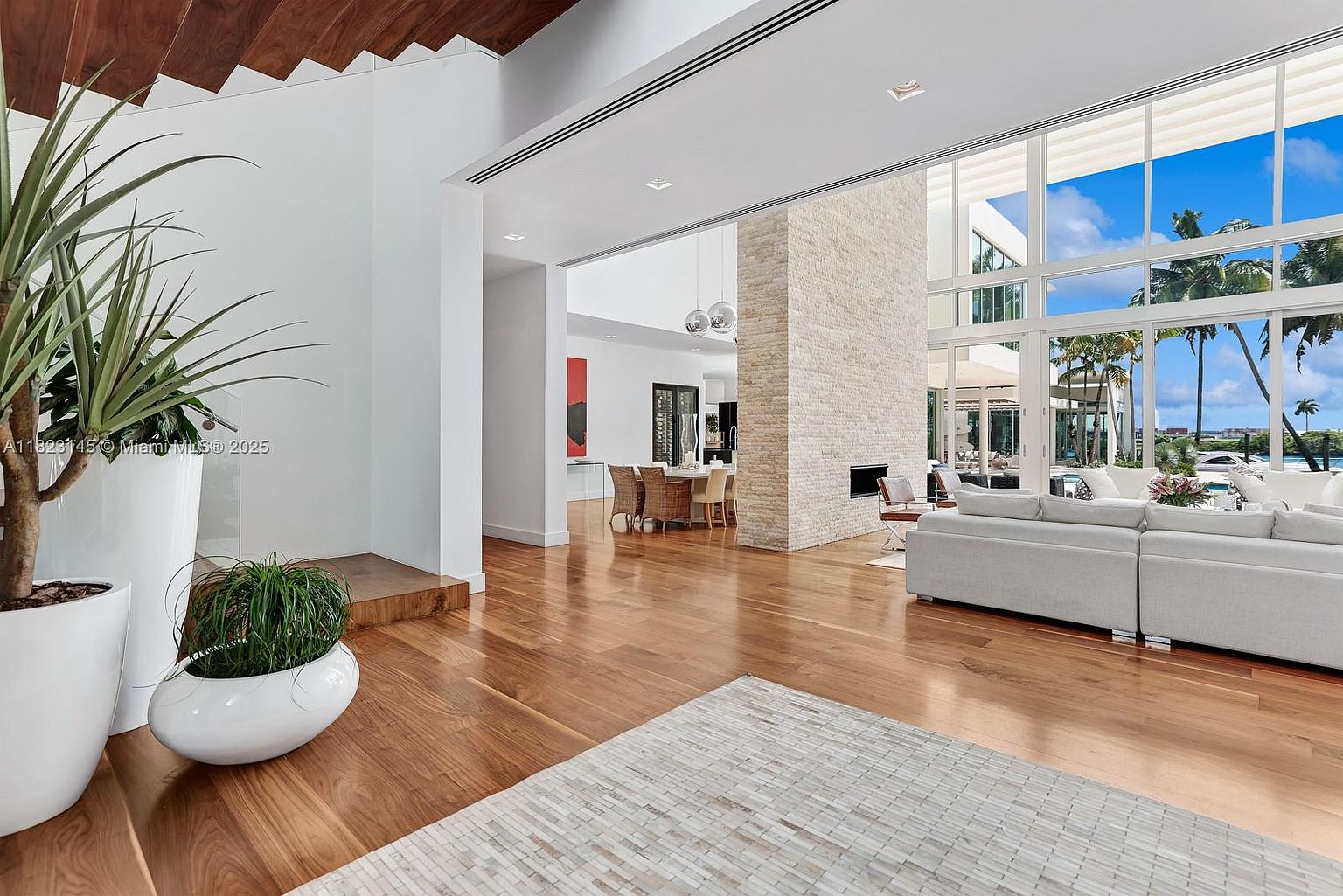
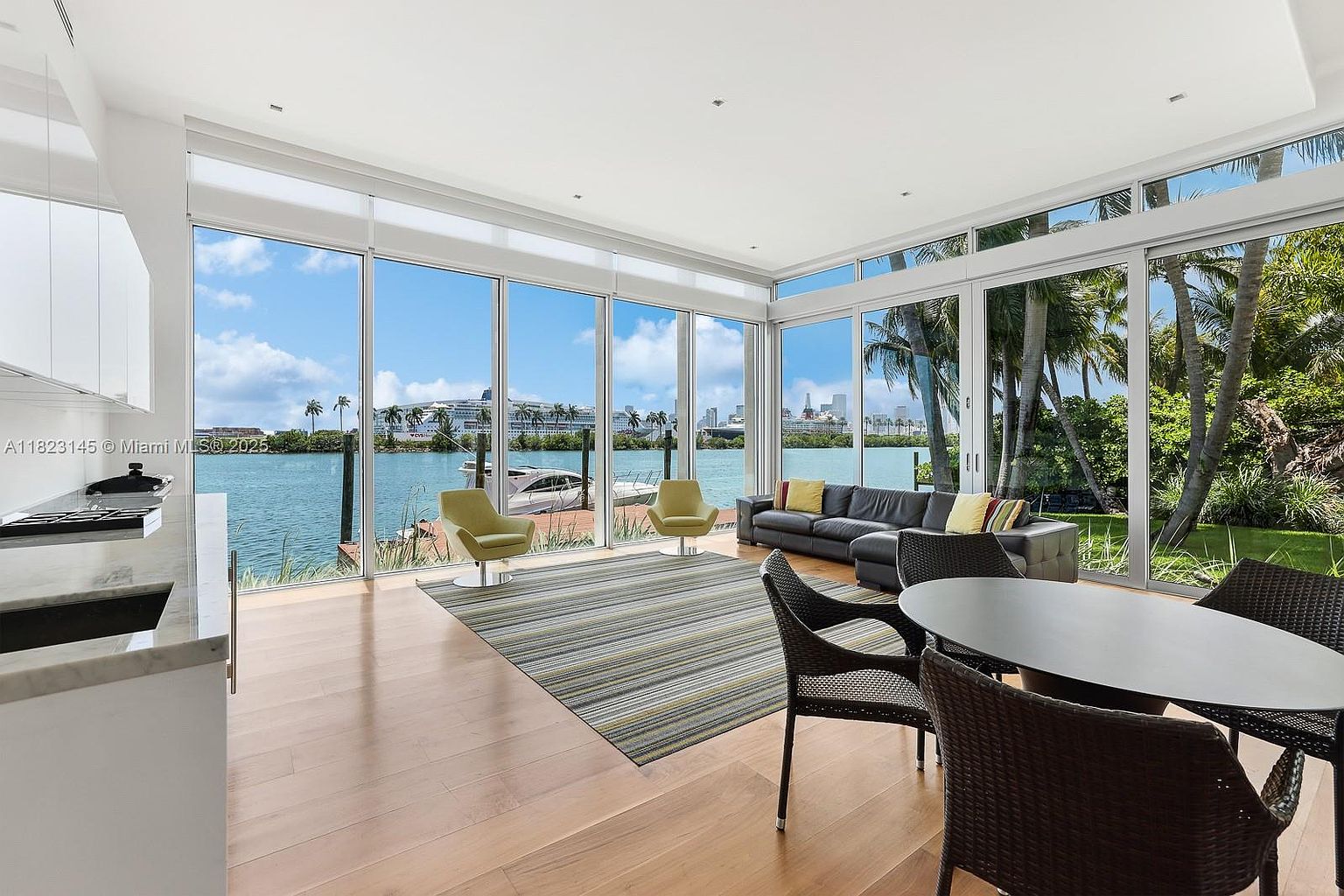
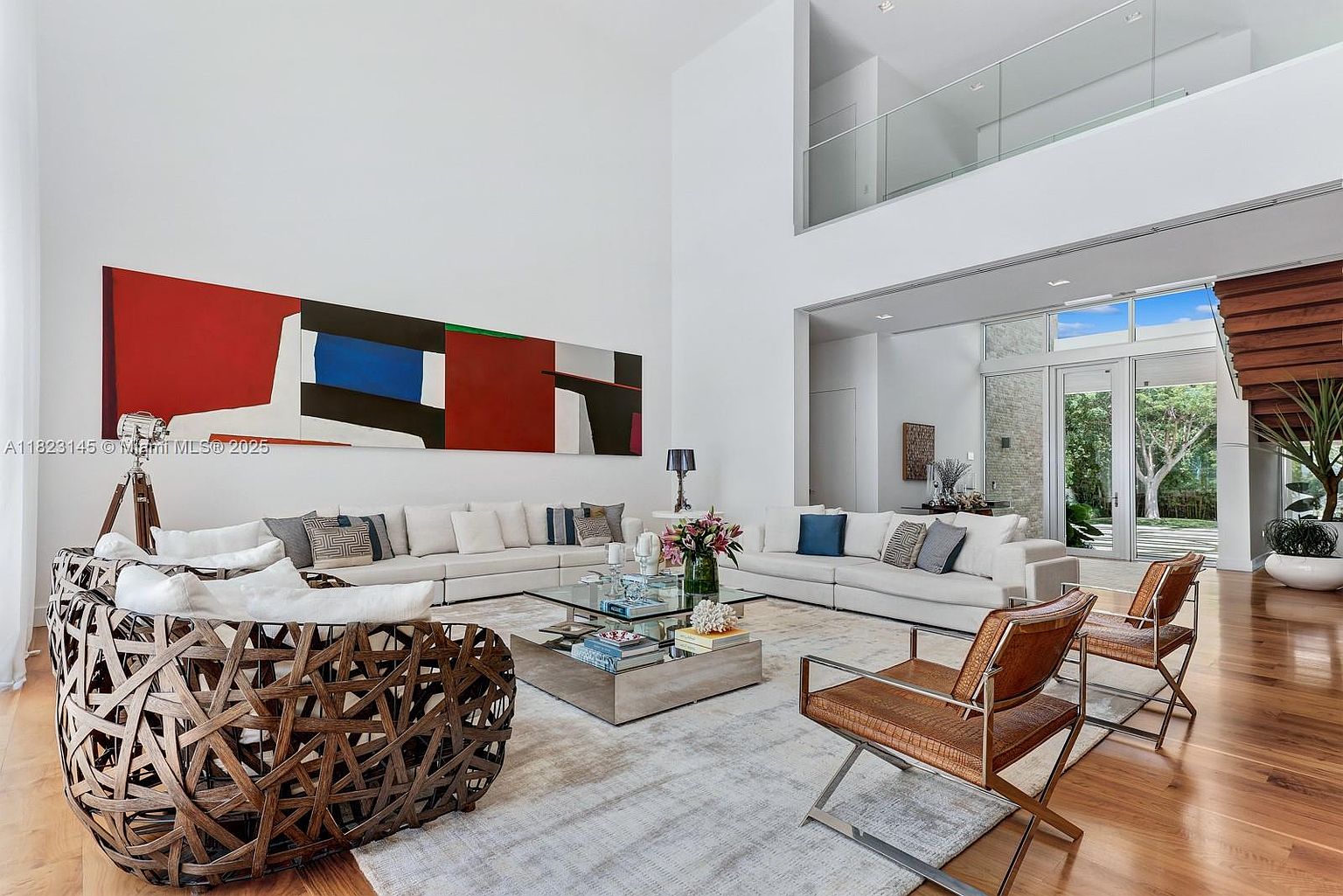
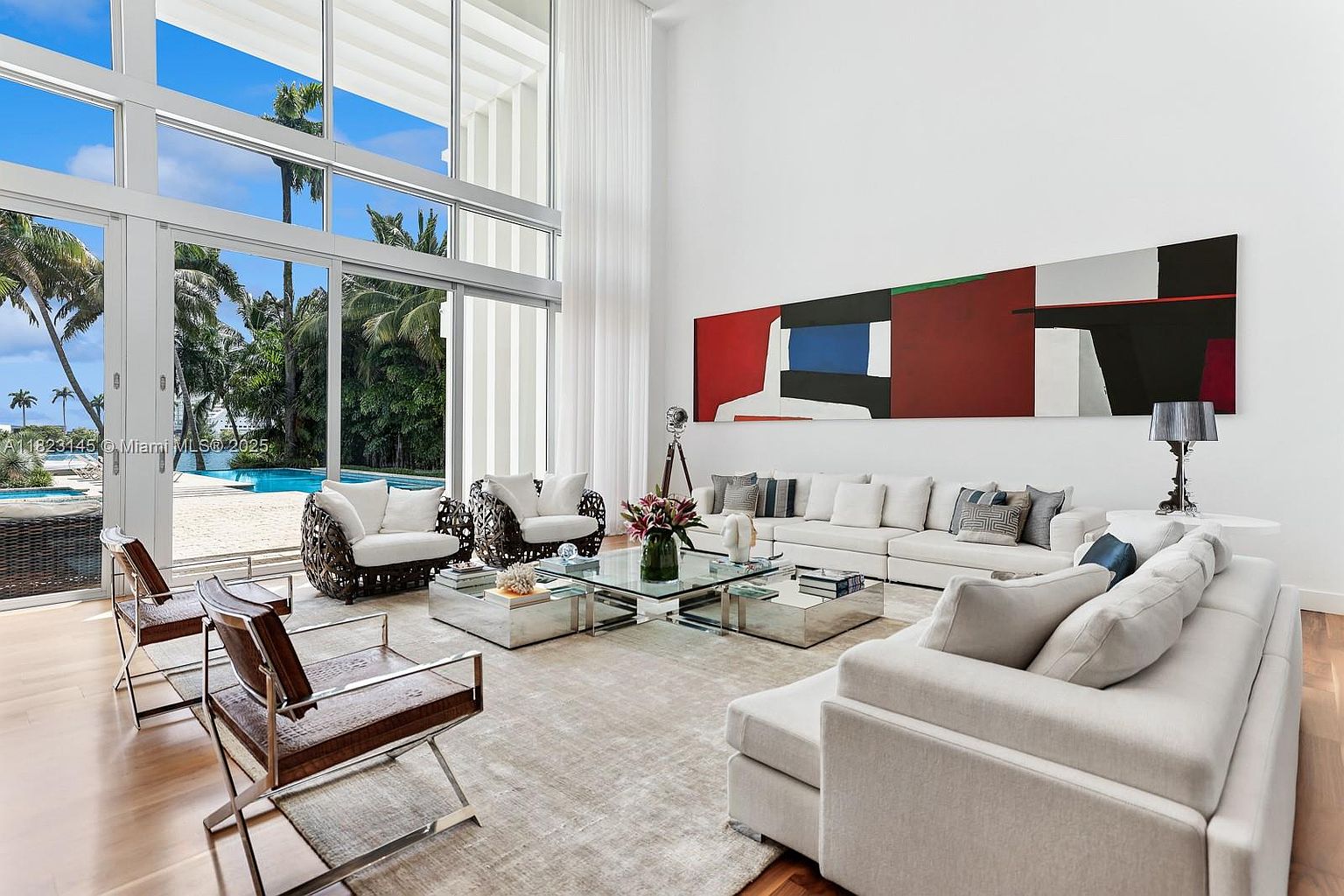
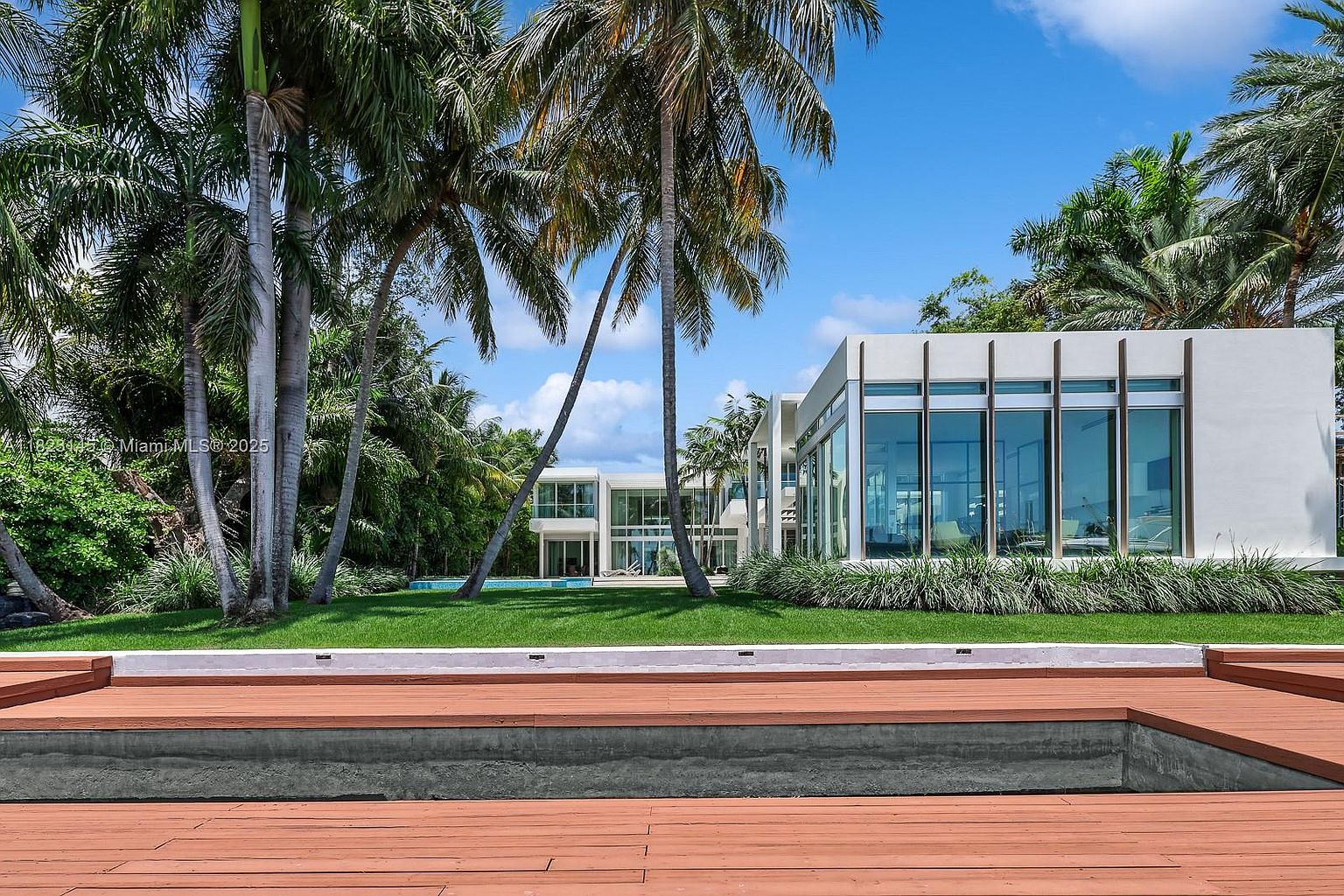
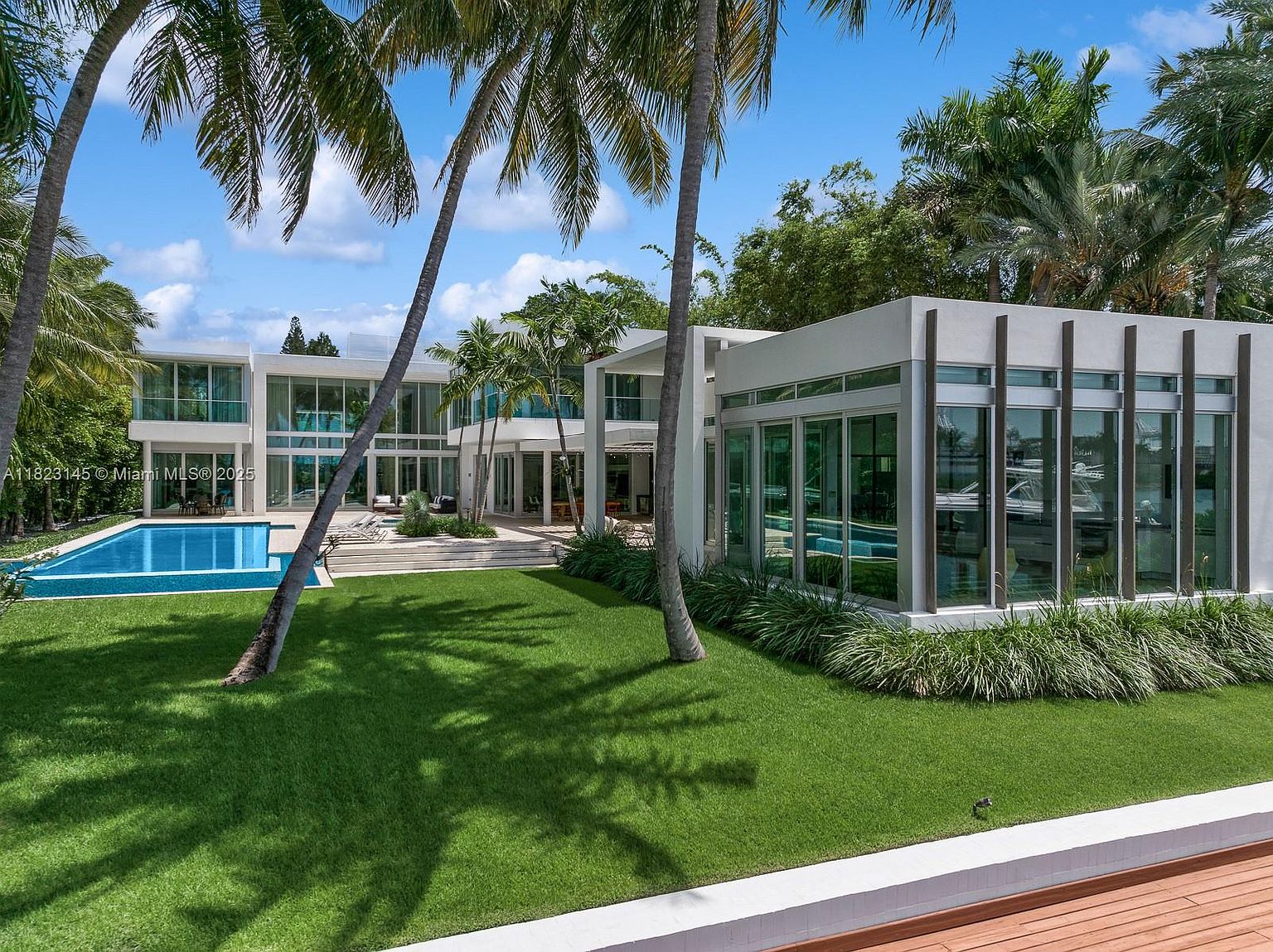
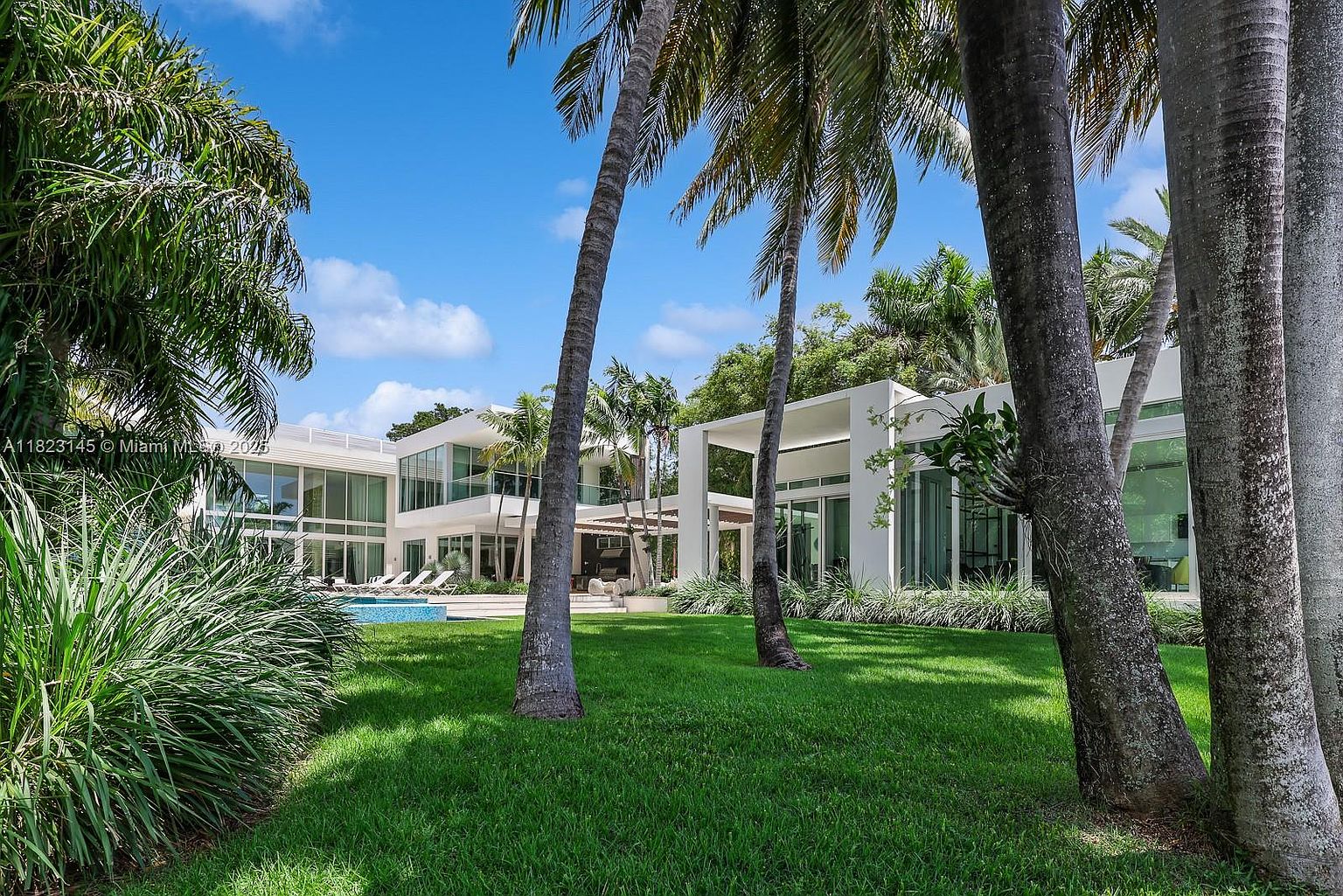
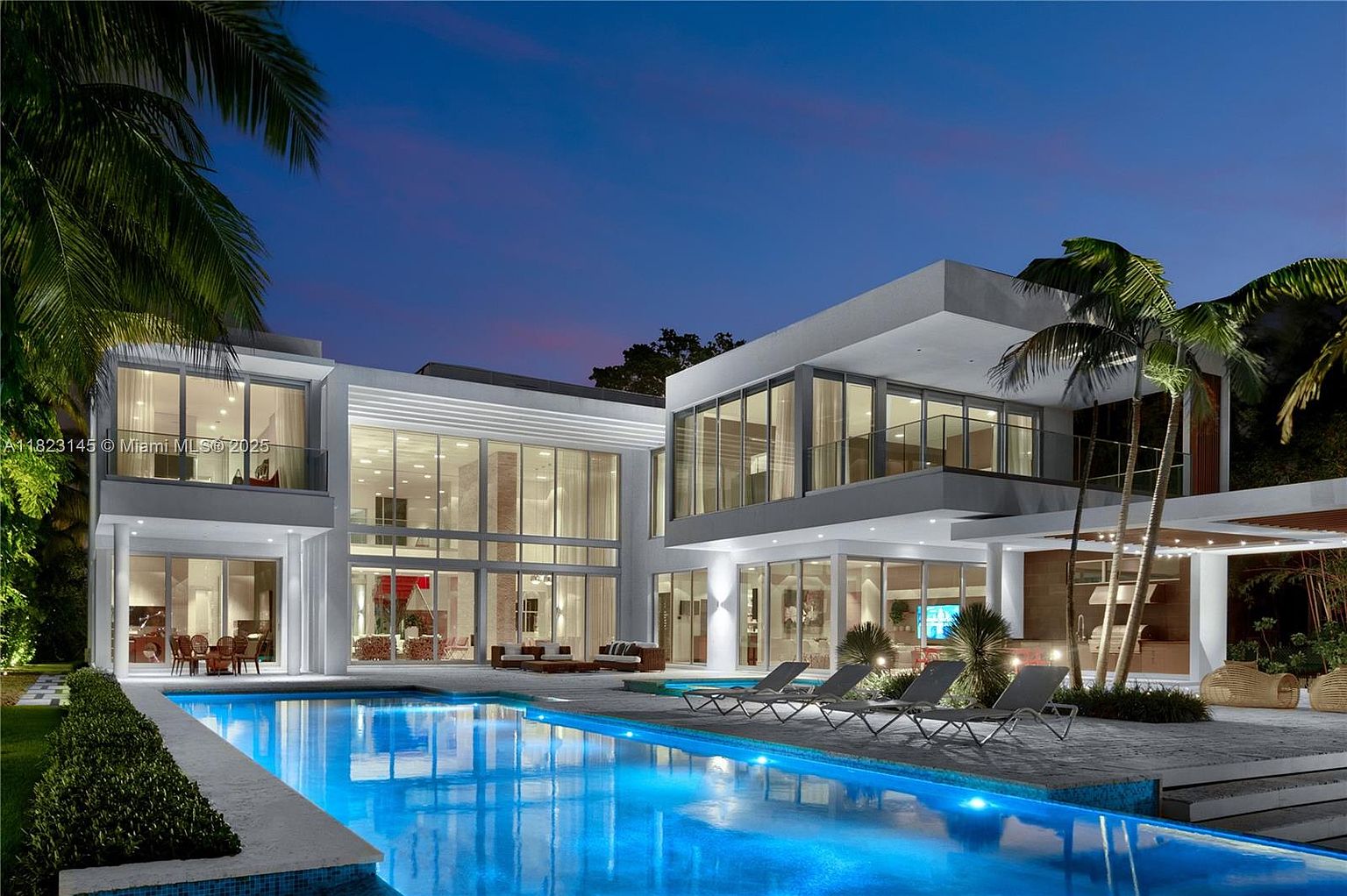
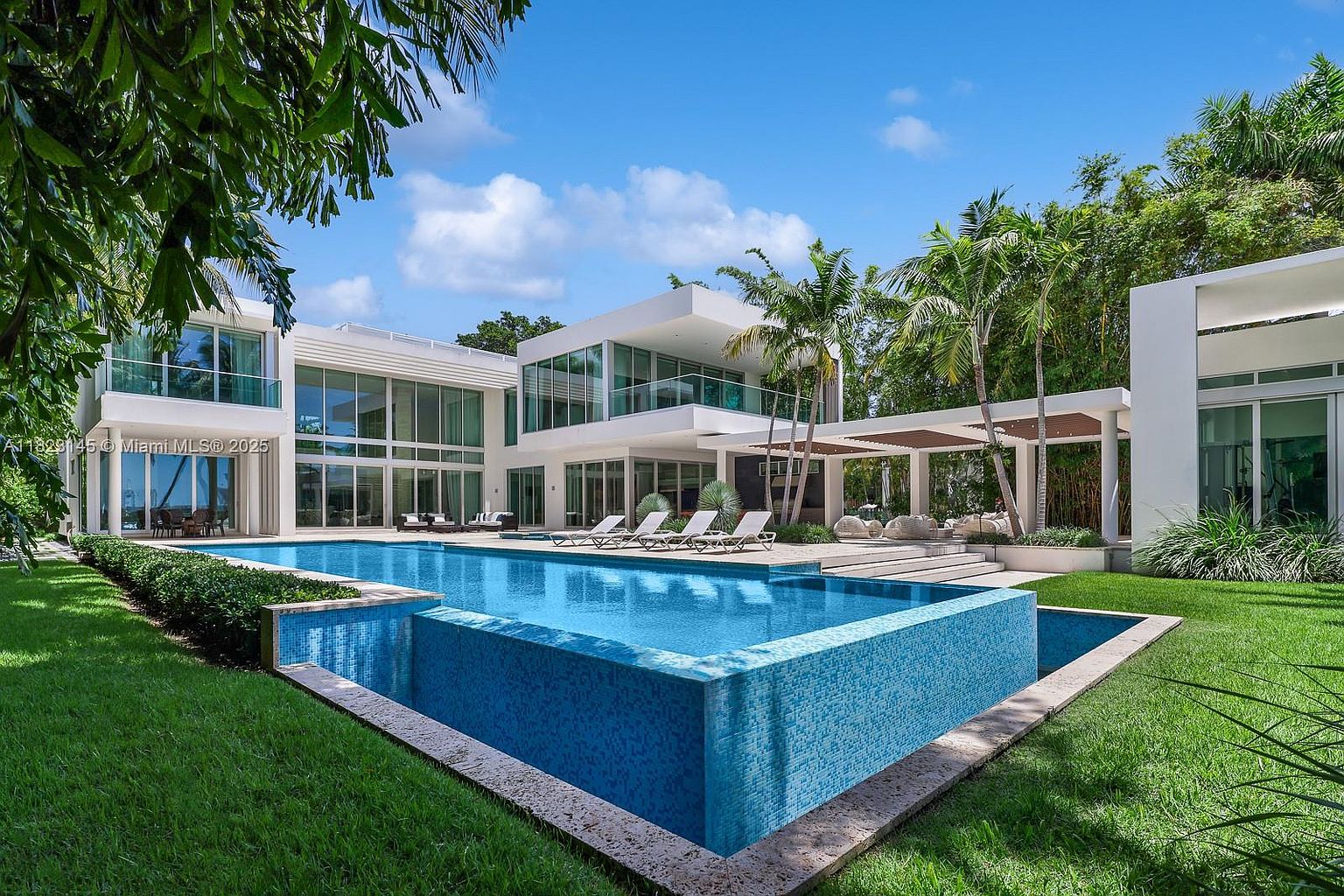
The facade is a study in disciplined modernism: smooth white planes intersecting with textured stone cladding, expansive glass panels that offer a preview of the luminous interior, and proportions scaled generously without tipping into excess. Inside, a floating staircase — wood treads suspended behind a continuous glass railing — rises through a double-height entry foyer, immediately establishing the architectural vocabulary that carries through every room. The staircase is not merely a means of vertical circulation; it is a piece of sculpture that frames the home's soaring central living room, where a stone-clad chimney breast ascends alongside walls of floor-to-ceiling glass. The effect is one of simultaneous enclosure and openness, the bay visible as a living painting beyond.
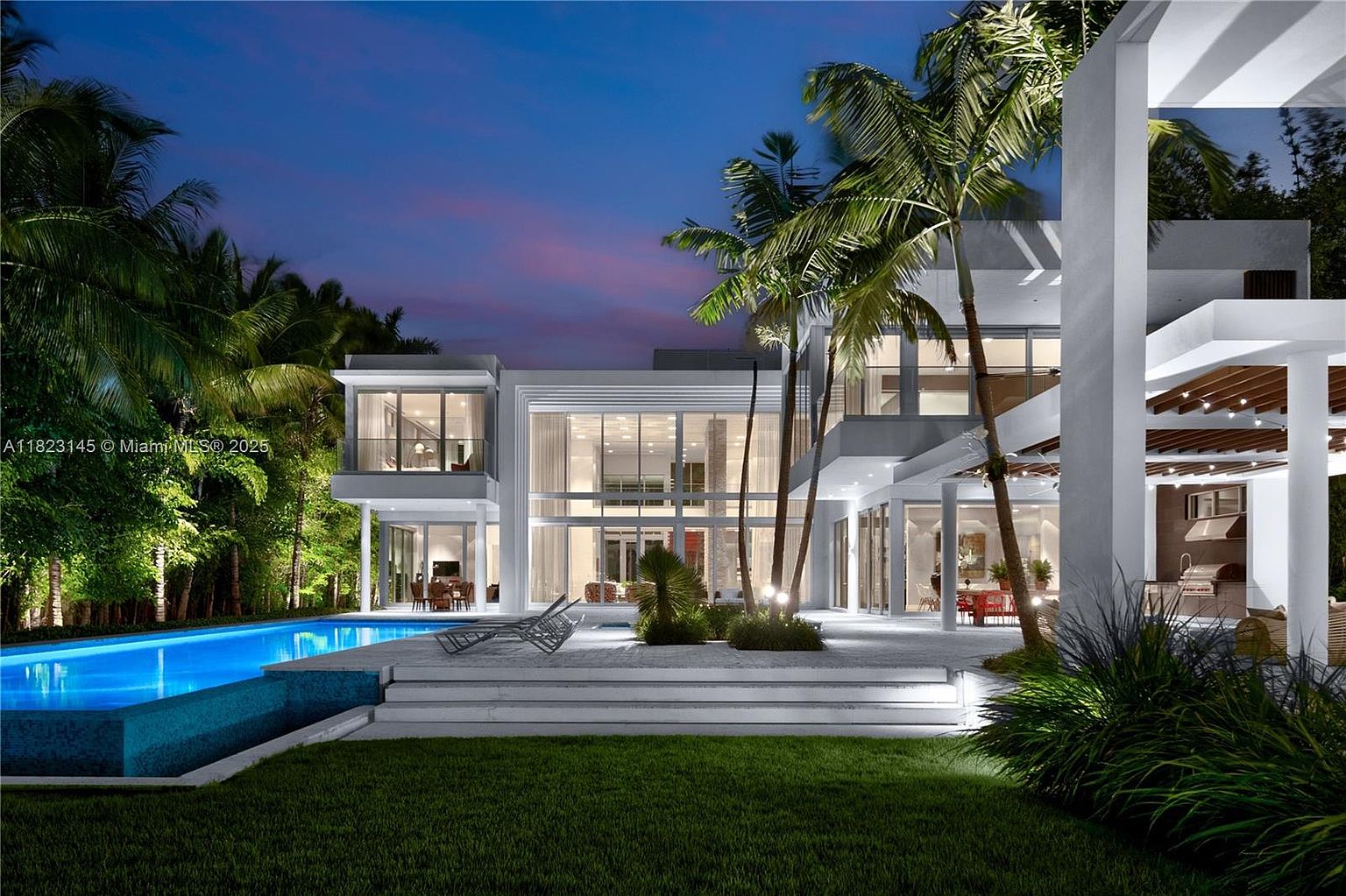
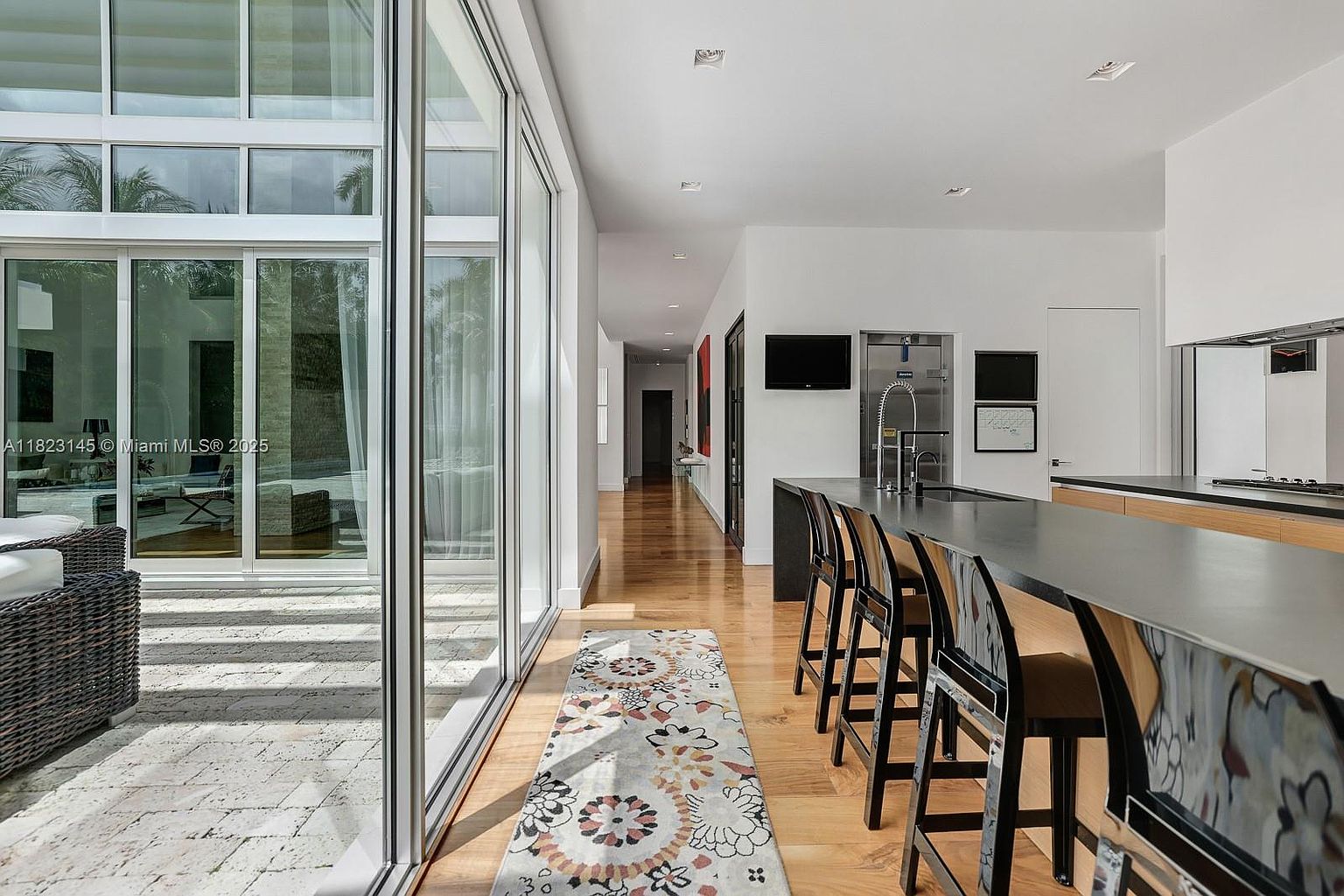
The chef's kitchen is a room that earns its designation. A long dark stone island anchors the space, paired with an integrated cooktop, a prominent stainless steel range hood suspended from the ceiling, warm wood cabinetry, and a walk-in refrigerator that signals the estate's commitment to serious entertaining. The kitchen opens directly to the outdoor covered patio and pool, collapsing the boundary between interior culinary theatre and alfresco living.
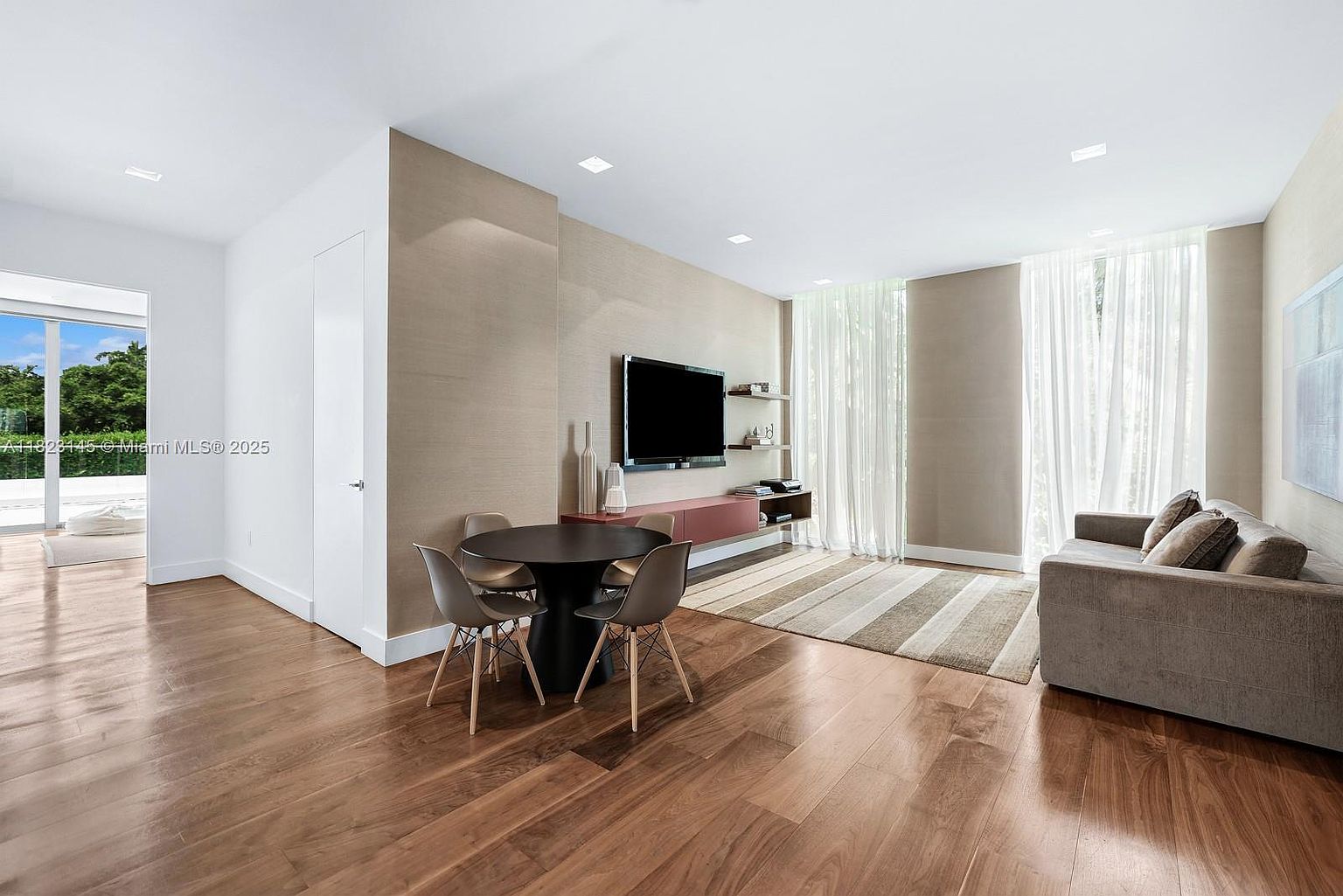
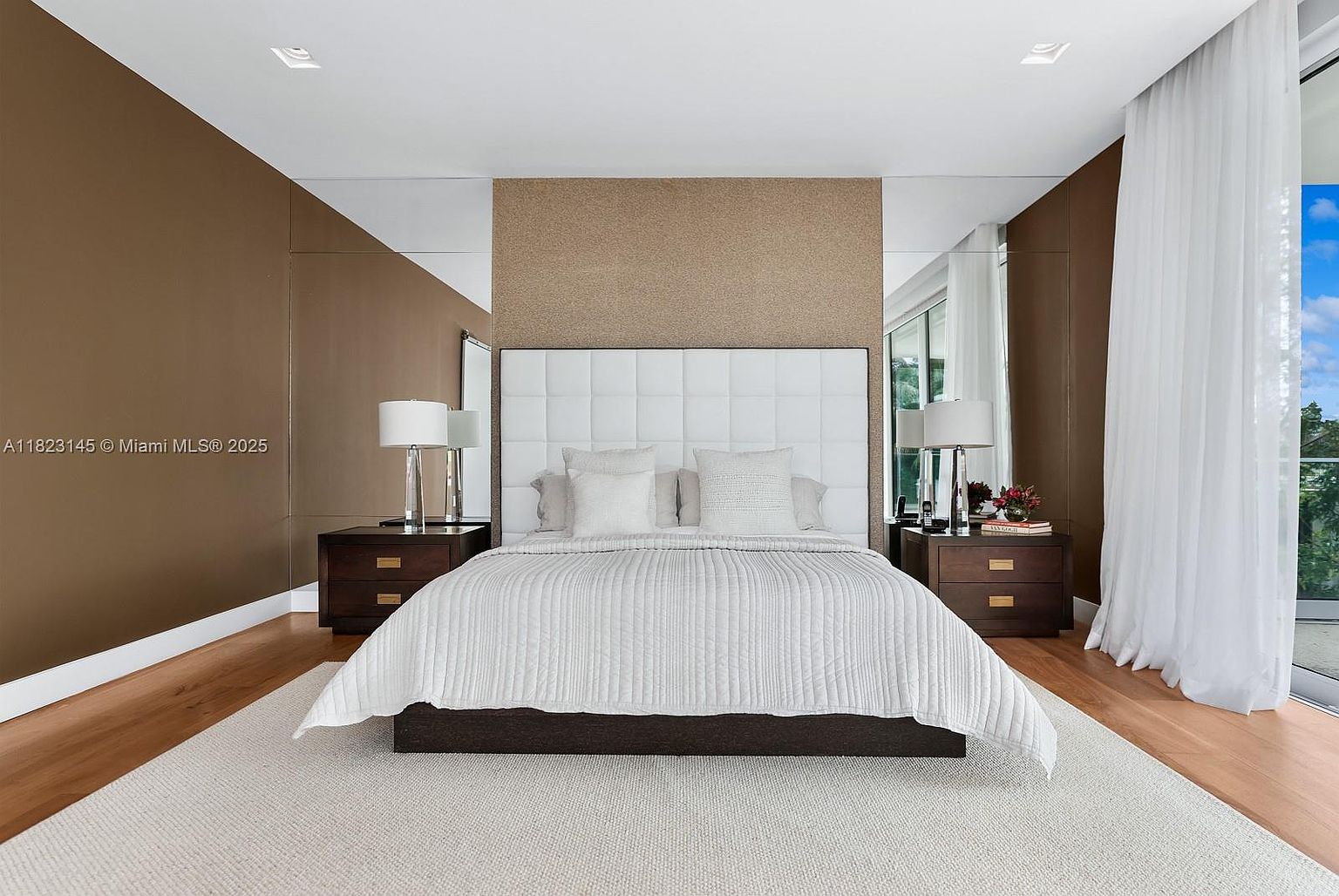
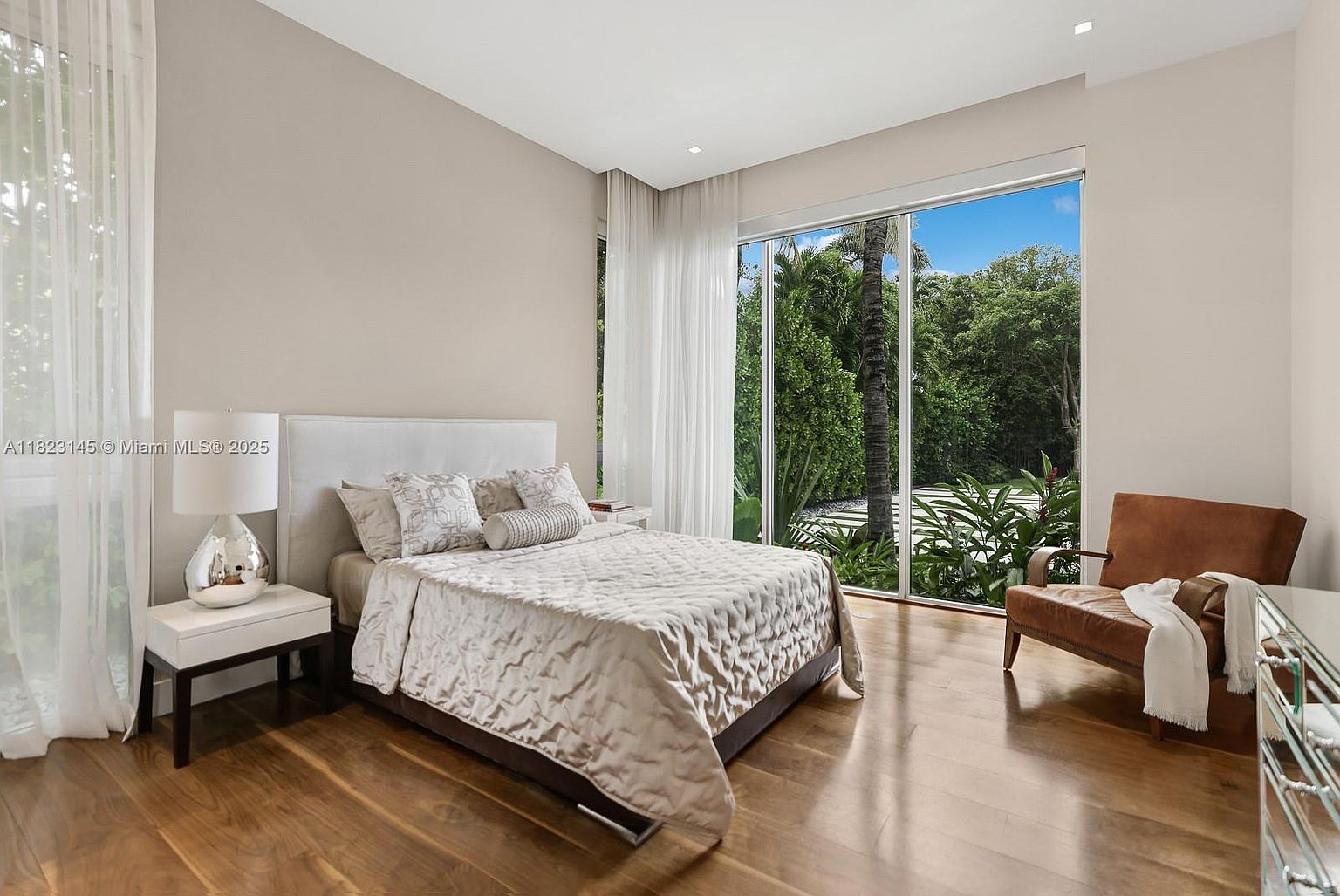
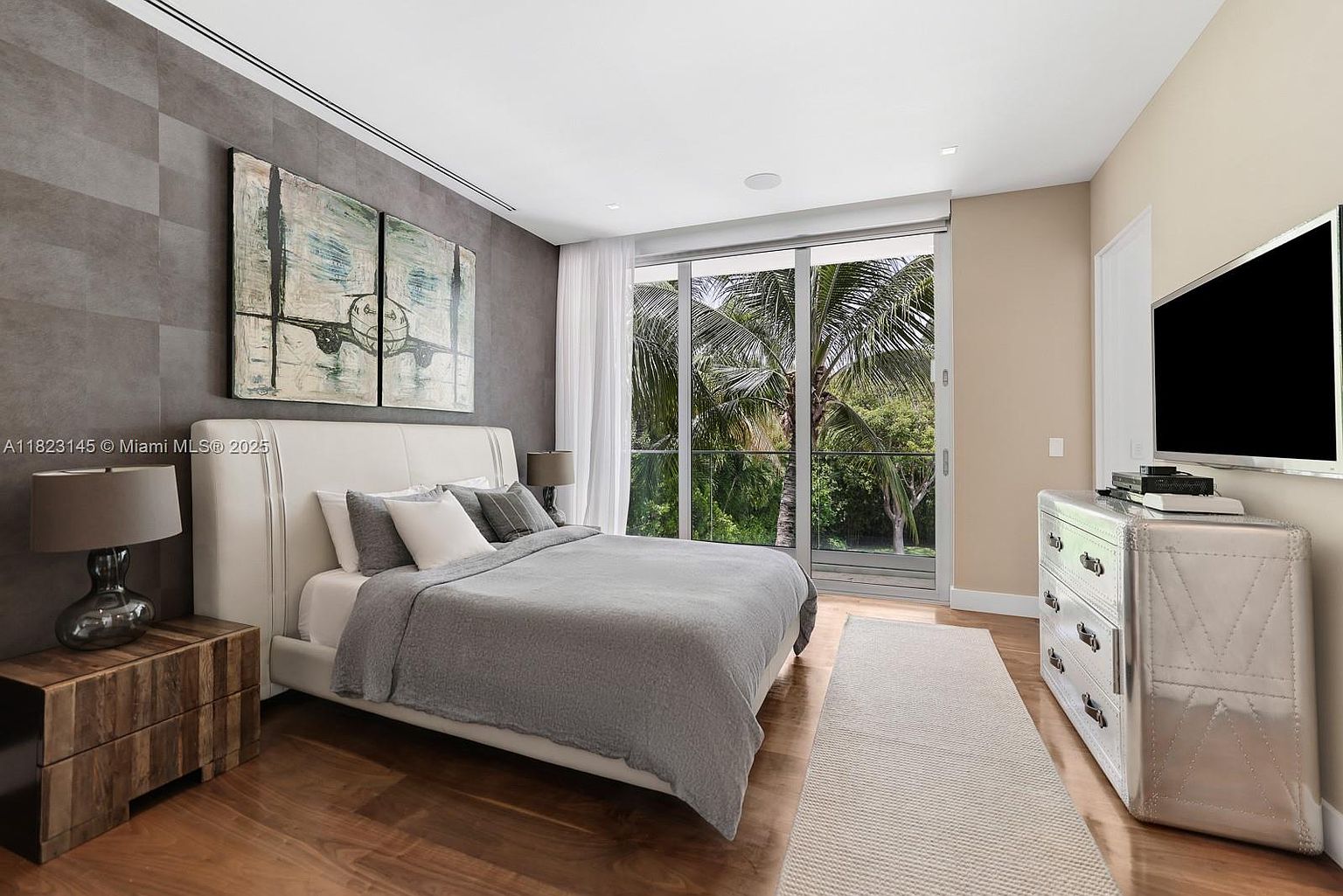
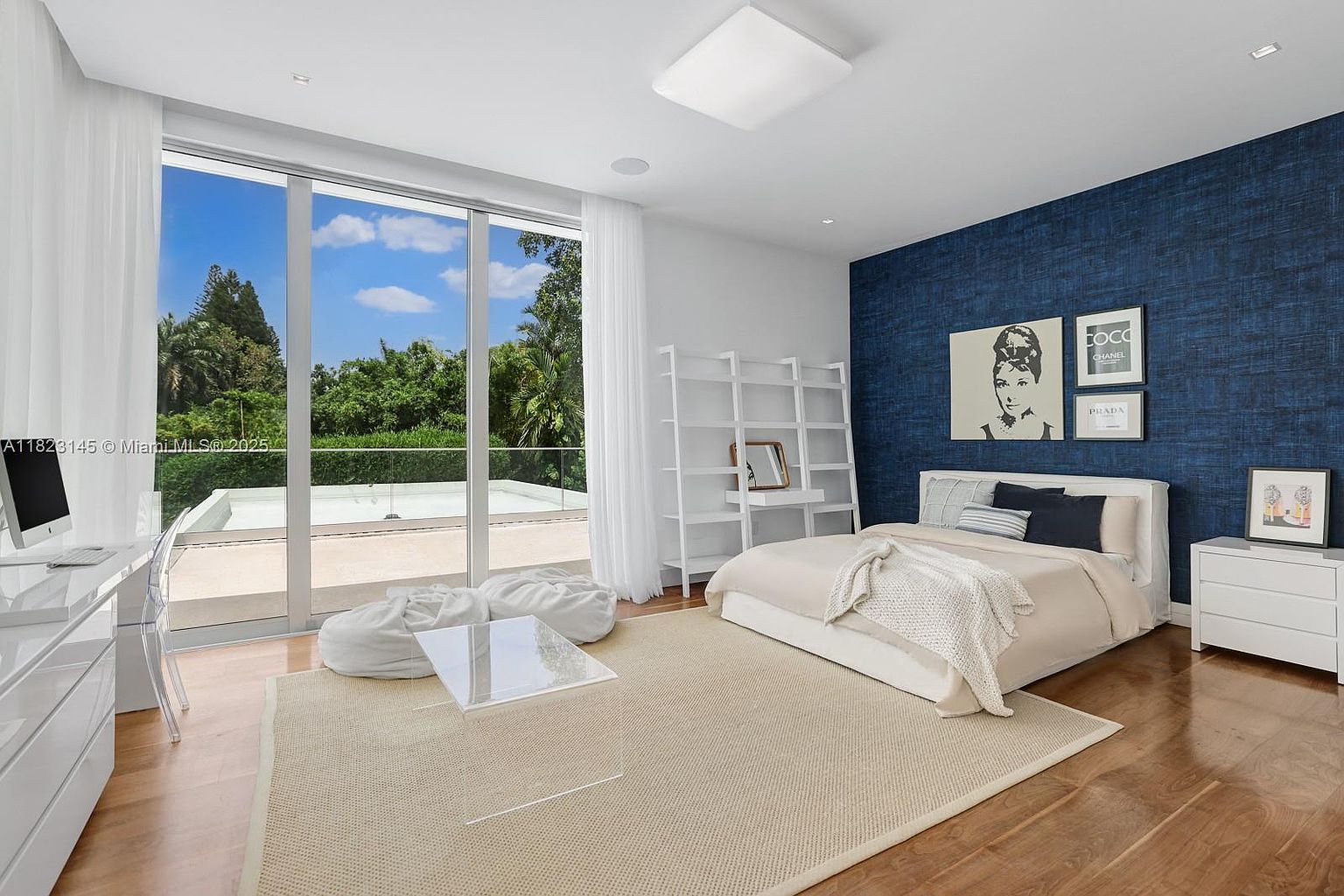
The primary suite occupies its own wing of consequence. Floor-to-ceiling glass sliding doors open to a private balcony overlooking the bay, while the en-suite bathroom — finished in large-format stone with a central soaking tub, dual vanities, and symmetrical mirrors — achieves the calibrated tranquility of a world-class spa. Additional bedrooms maintain the estate's elevated standard, each offering generous proportions, natural light, and considered detailing.
Below the primary living levels, the estate reveals its full range of amenity: a dedicated home theater with tiered brown leather reclining seats and projector screening; a wine cellar; a gym with floor-to-ceiling windows overlooking the pool and tropical landscape; dedicated staff quarters with dual rooms; a pet room; and an elevator connecting all floors. These are not afterthoughts — they are the infrastructure of a home designed for lives lived fully and without compromise.
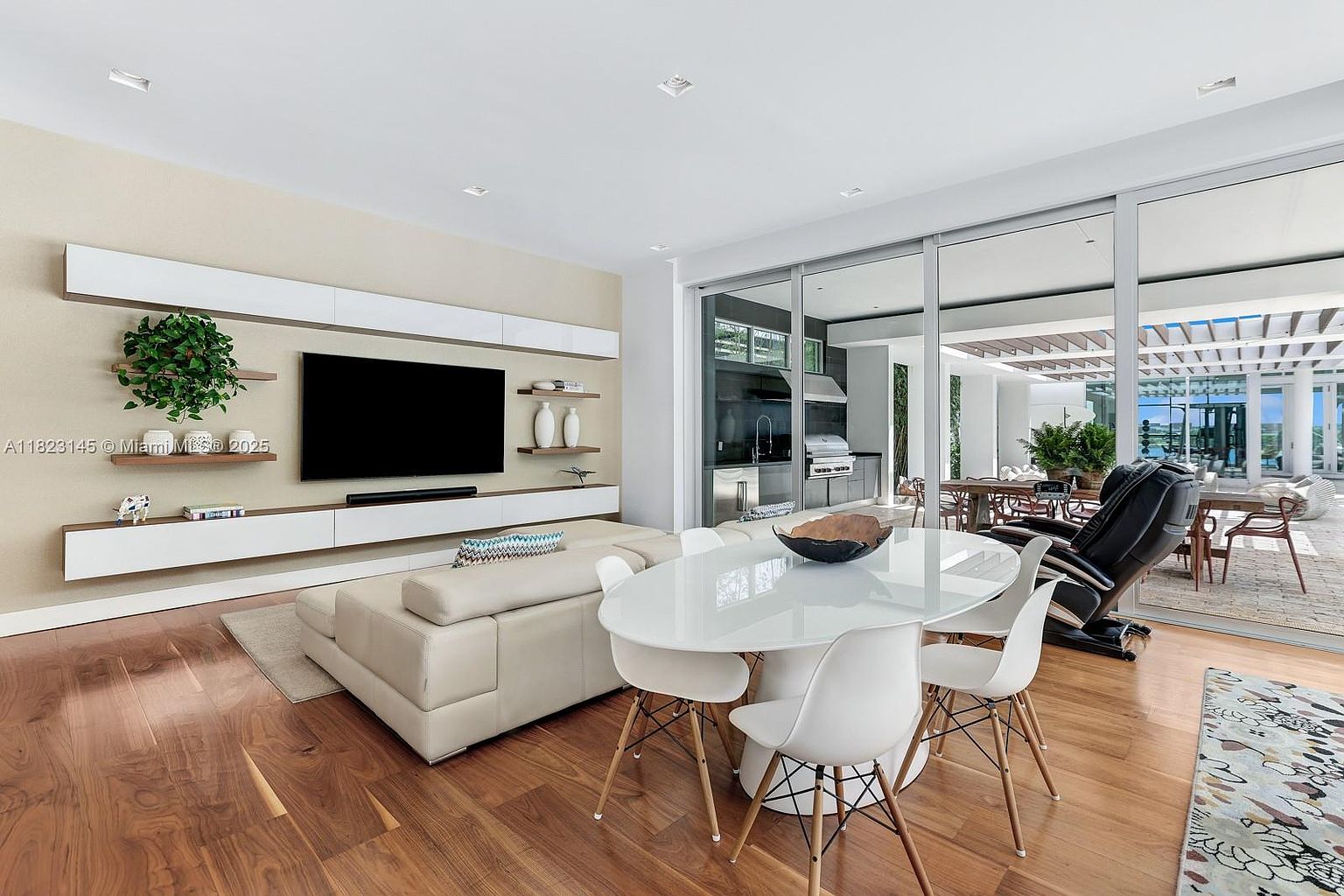
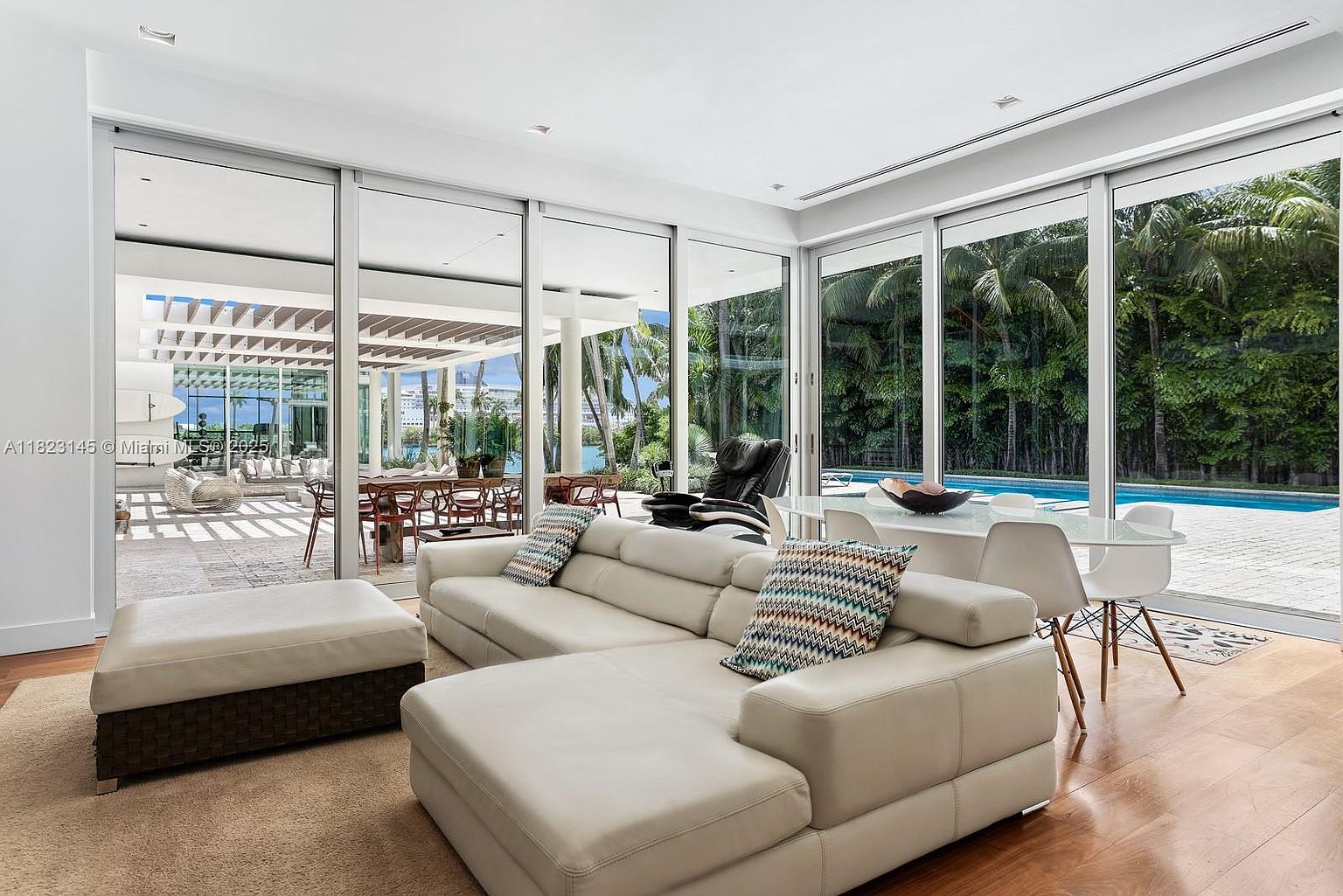
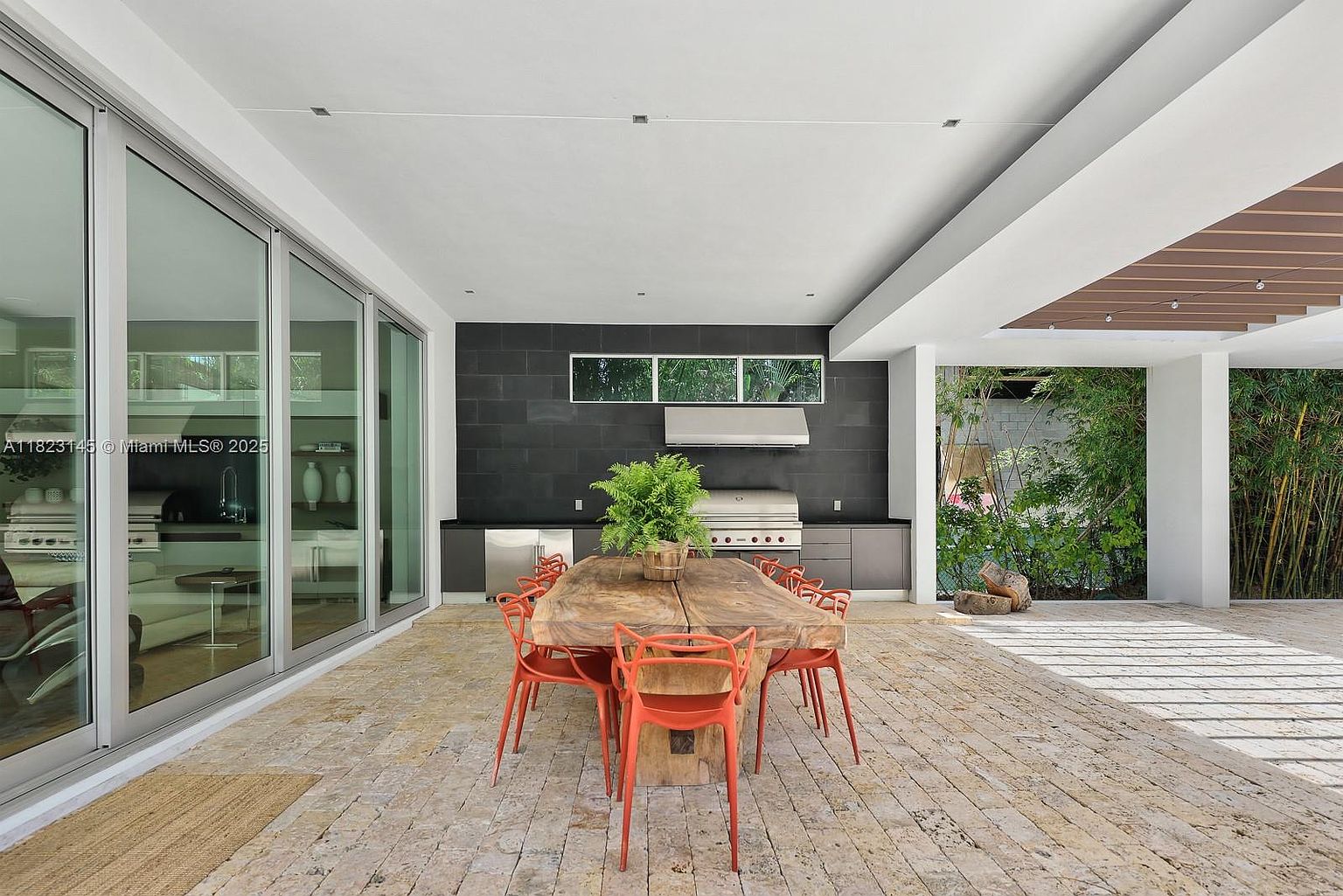
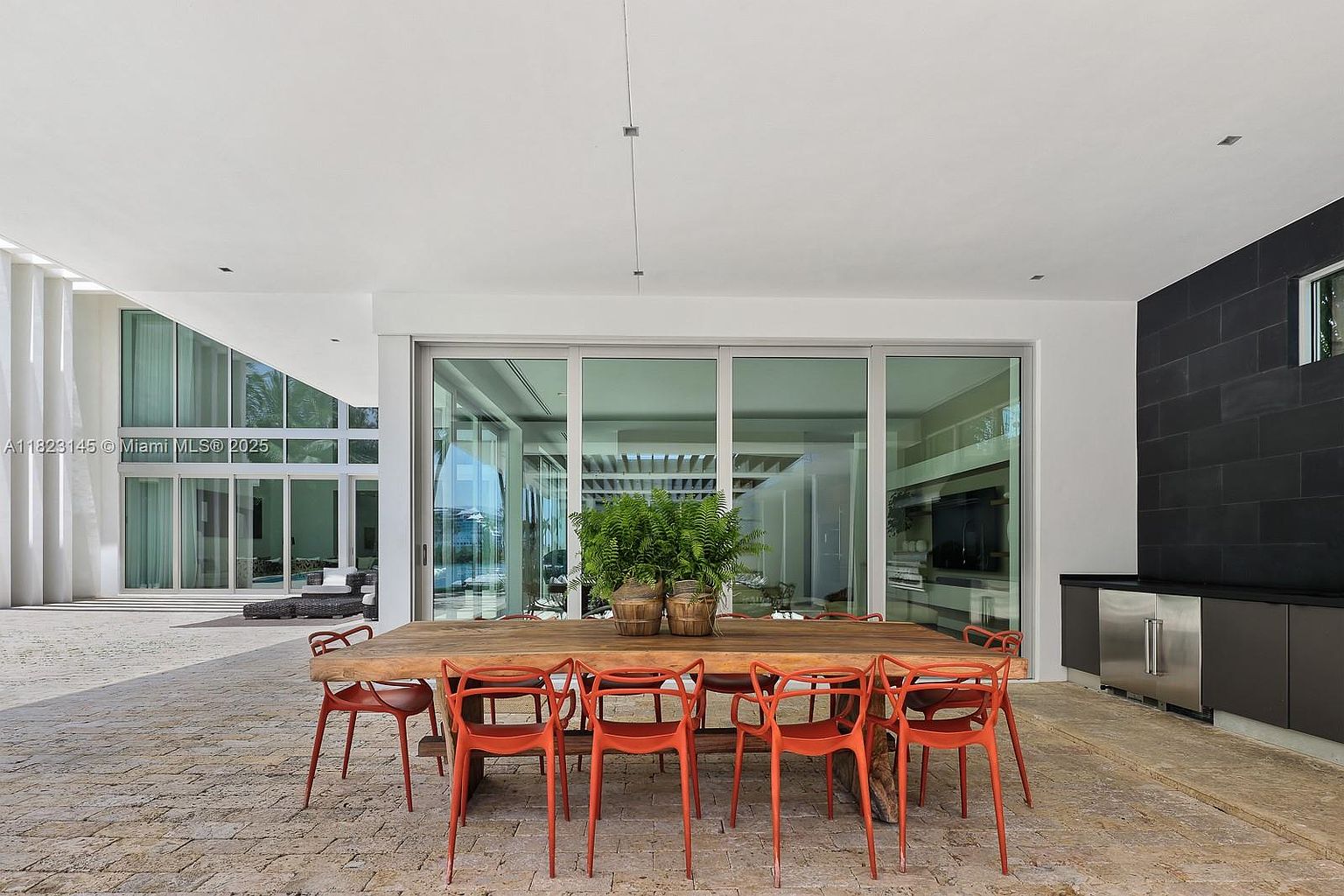
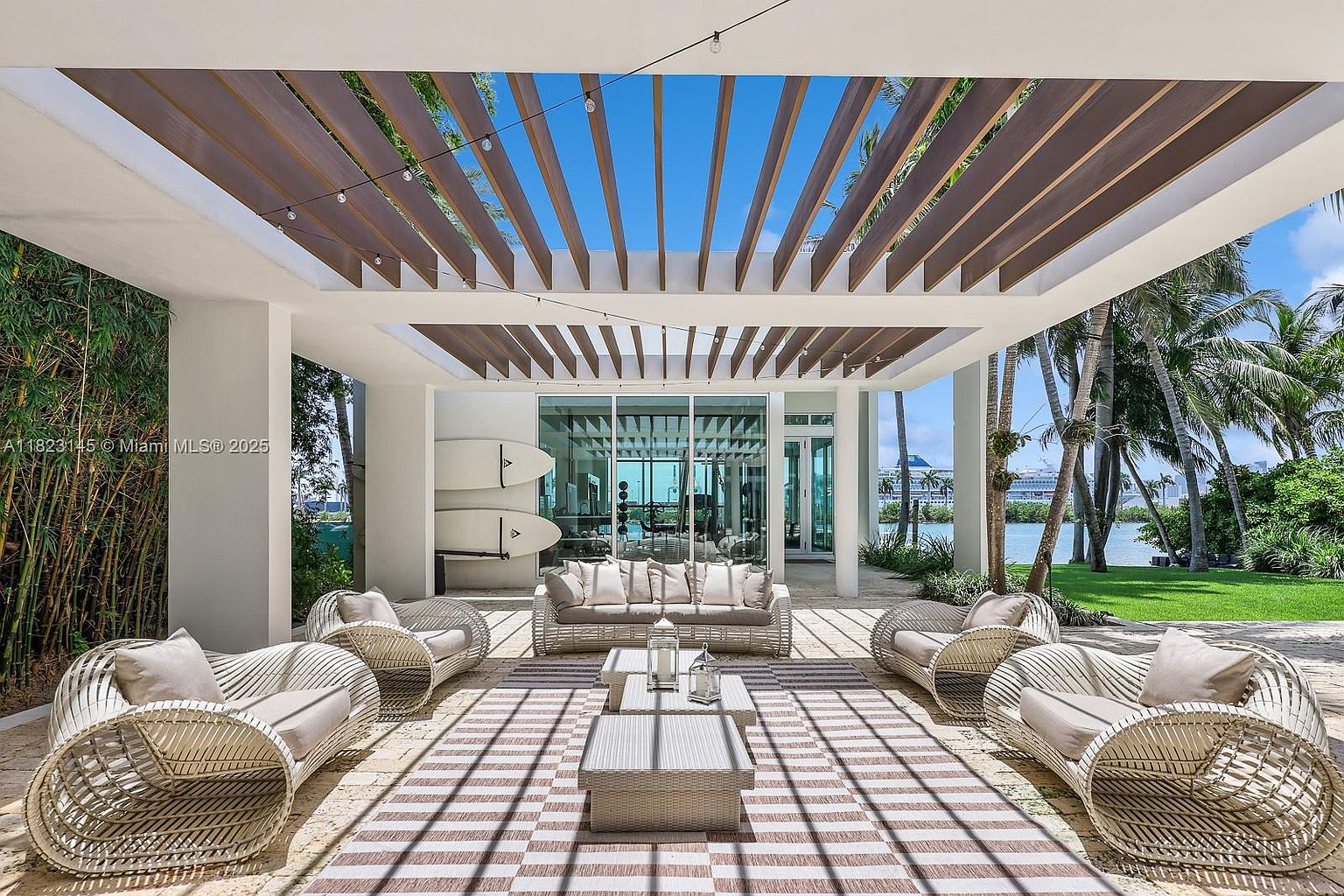
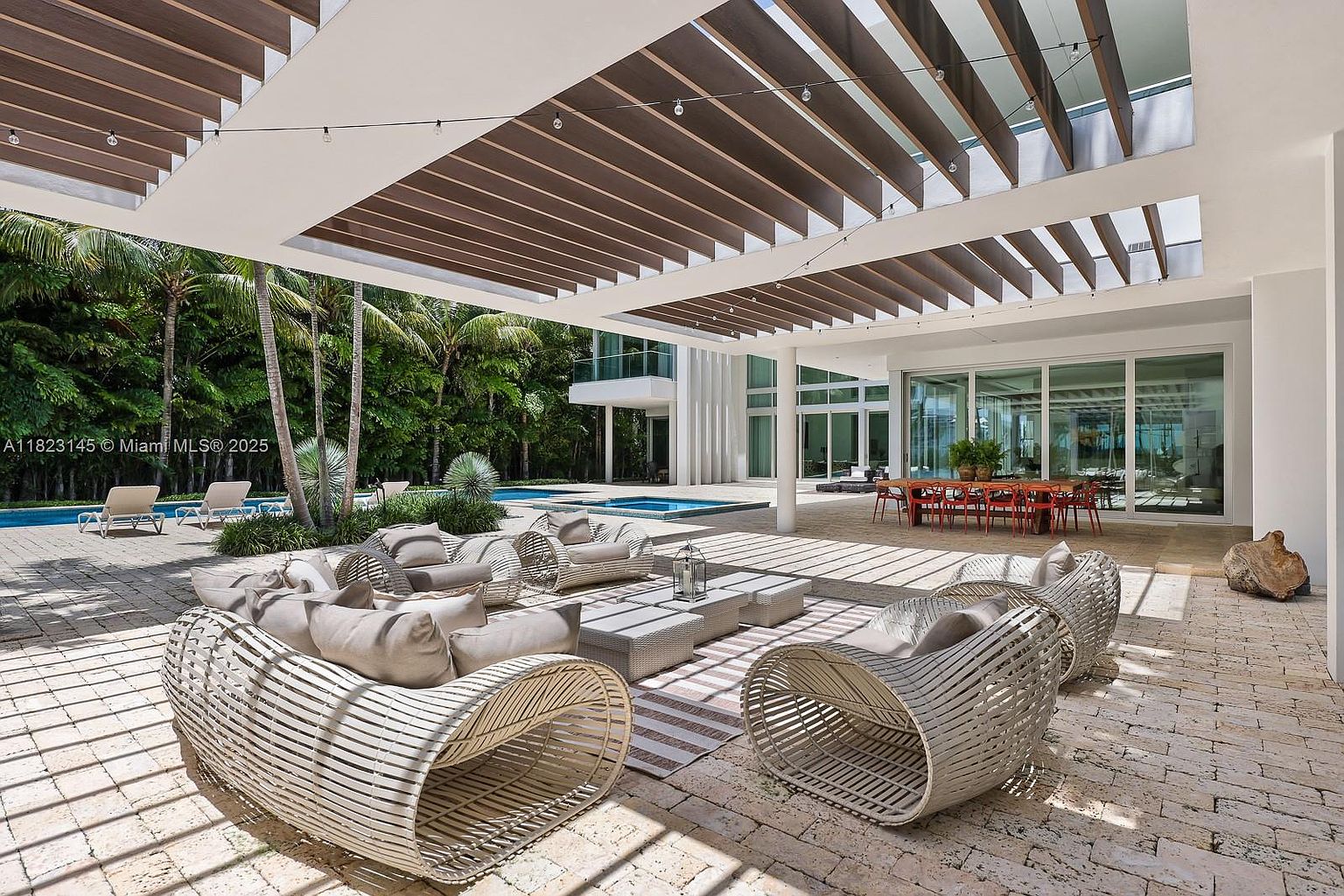
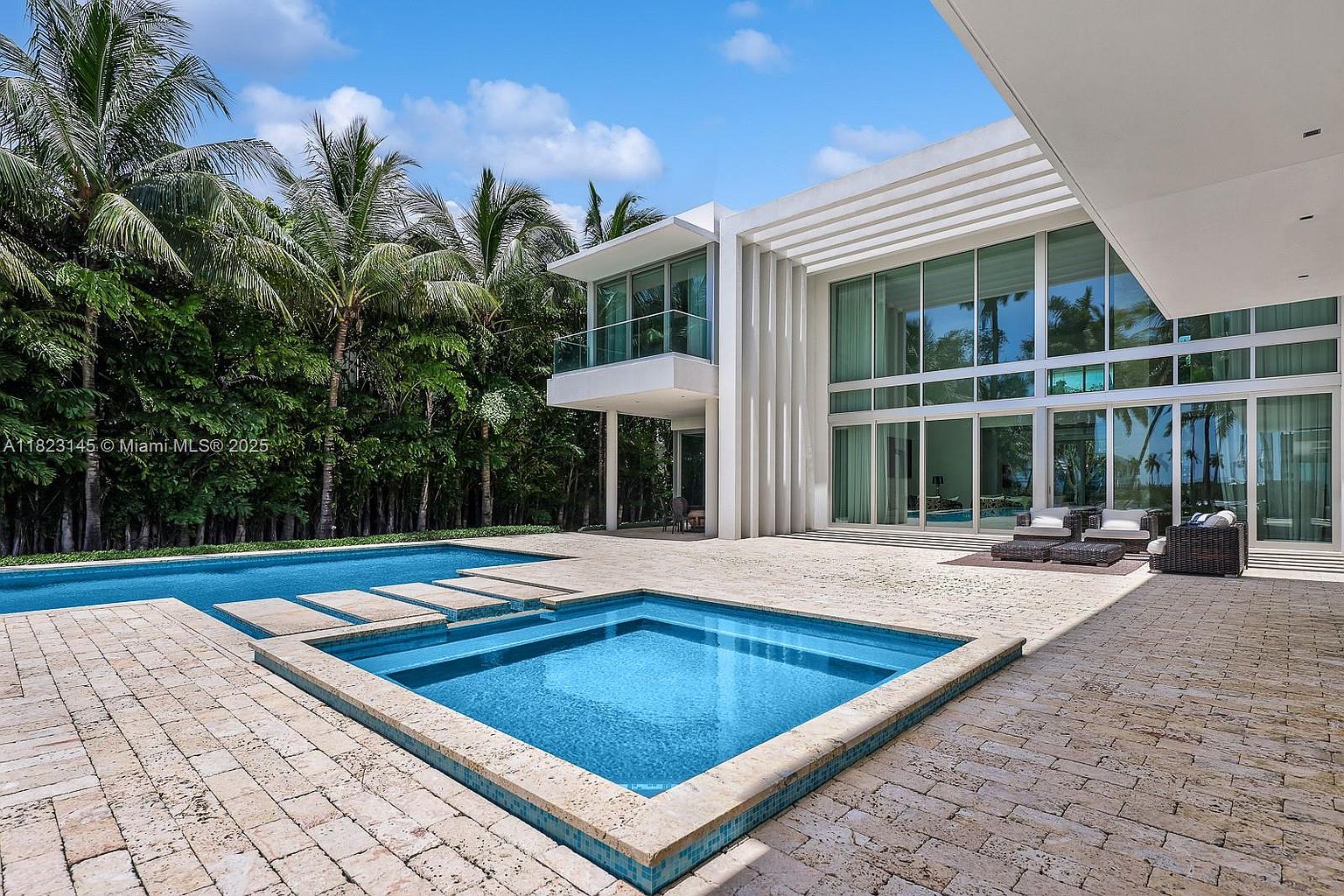
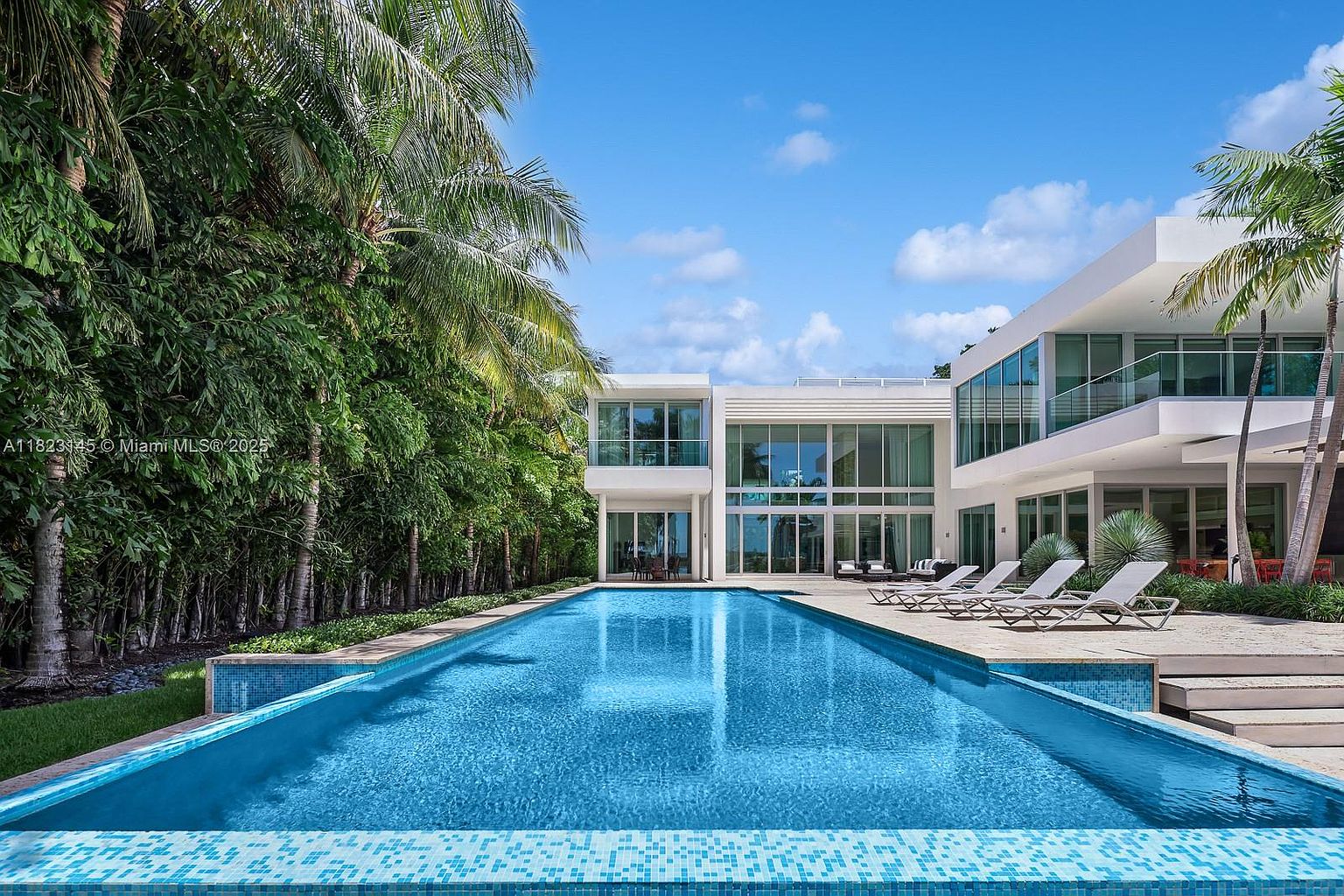
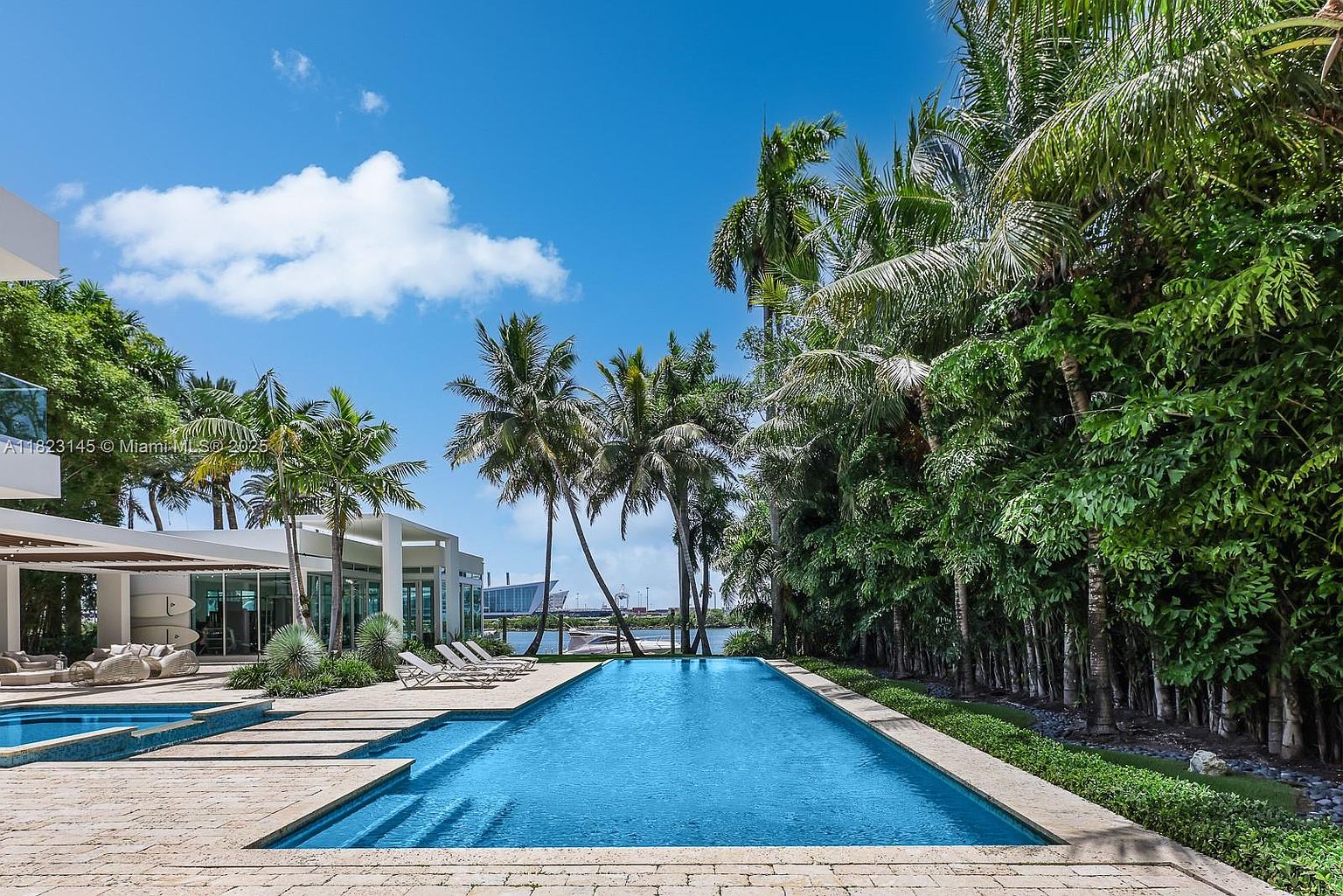
Outside, a rectangular pool and integrated spa anchor a stone-paved terrace that flows to a covered outdoor kitchen — a live-edge dining table surrounded by vibrant chairs beneath a slatted pergola ceiling. Beyond the lawn, the private dock extends into the bay, with room for a substantial yacht, 100 feet of water frontage, and direct ocean access completing an offering that is, by any measure, without peer.
Palm Island is not a neighborhood in the conventional sense. It is a private, guard-gated island community sitting in the middle of Biscayne Bay, connected to the MacArthur Causeway that links Miami Beach to the mainland — yet inhabiting a world entirely removed from the pace of either. Developed in the 1920s as part of Miami's first great era of land reclamation and real estate ambition, Palm Island — alongside its sister communities of Hibiscus Island and Star Island — was designed from its inception as a place of privacy, exclusivity, and waterfront grandeur. The island's palm-lined streets and strict residential character have changed remarkably little in intention over the intervening century, even as the architecture has evolved dramatically.
The island's guard-gated entry is among its most consequential features, providing a level of security and seclusion rare in any urban coastal market. Residents of Palm Island have historically included entertainers, athletes, business leaders, and internationally recognized figures, a tradition that has only deepened as Miami has matured into a global city. The community is small by design — a finite number of waterfront lots, no commercial interruption, and a quietude that feels improbable given the proximity to one of the most dynamic urban waterfronts in the Americas.
Beyond the gates, the full breadth of Miami Beach is immediately accessible. Lincoln Road, the pedestrian promenade that has served as the cultural and commercial spine of Miami Beach since the mid-twentieth century, lies within easy reach, offering acclaimed restaurants, flagship retail, and the Regal South Beach cinema. The Bass Museum of Art, one of South Florida's most respected institutions for modern and contemporary art, sits nearby in Collins Park, while the New World Center concert hall — designed by Frank Gehry and home to the New World Symphony — anchors the cultural landscape of the SoundScape Park district.
South Beach's Art Deco Historic District, a UNESCO-recognized concentration of 1930s and 1940s architecture that represents one of the largest collections of Art Deco buildings in the world, is minutes away, as are the white sand beaches of Miami Beach's Atlantic coastline. For maritime pursuits, the location is without rival: the direct ocean access afforded by the bay's inlet channels means a yacht departing the private dock at 30 Palm Ave reaches open water with minimal transit, connecting to the Bahamas, the Florida Keys, and beyond with ease.
Miami International Airport is accessible in under twenty minutes, and the Brightline high-speed rail, now connecting Miami to Orlando and Fort Lauderdale, has further enhanced the city's connectivity to Florida's broader corridor of commerce and culture. Private aviation is served by Opa-locka Executive Airport and the Miami Executive Airport, both within practical range.
To live on Palm Island is to occupy a position of rare duality: genuine privacy and natural beauty on one side, and one of the hemisphere's most vibrant, globally connected cities on the other. Few addresses in the world resolve that tension as gracefully.
Featured Highlights
Curated Content • Presented by Lourdes Alatriste