The Story Behind
A Generational Italian Villa Crowning the Palisades Riviera
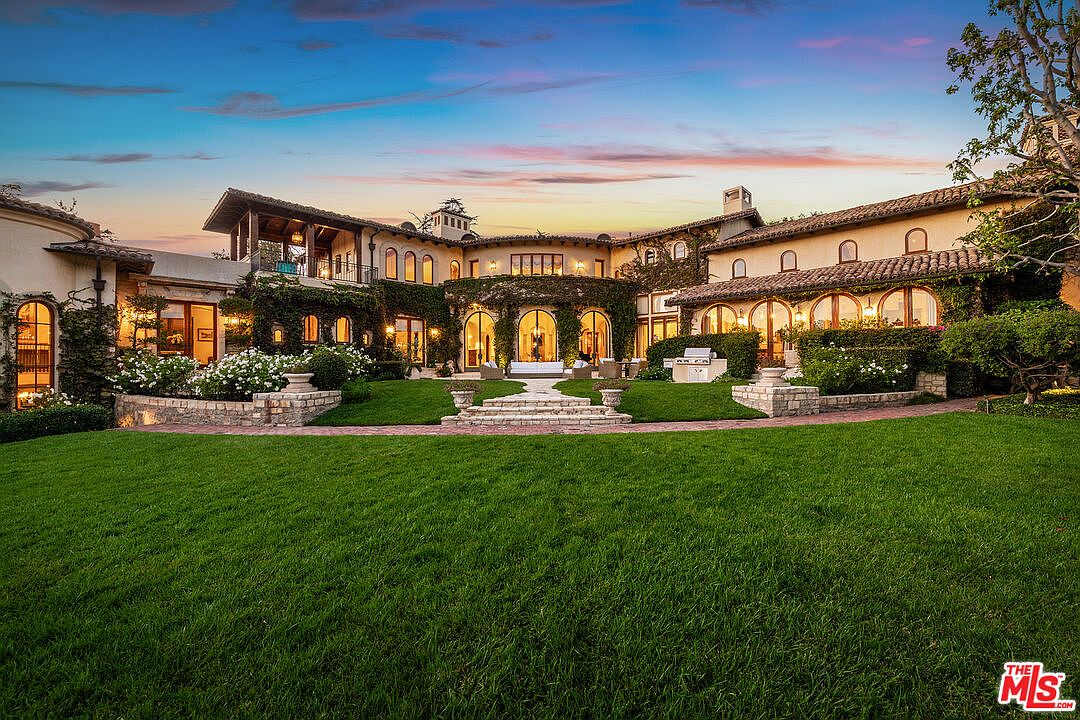
There are properties that impress, and then there are properties that endure. The Leonard Estate belongs unmistakably to the latter category — a residence conceived with the kind of architectural conviction and material integrity that renders it timeless rather than merely fashionable. Envisioned by Richard Landry, whose portfolio of landmark estates has defined the upper register of Los Angeles residential architecture for decades, the home draws its inspiration from the great villas of Florence: disciplined in proportion, generous in spirit, and executed with an obsessive attention to craft that is felt in every room.
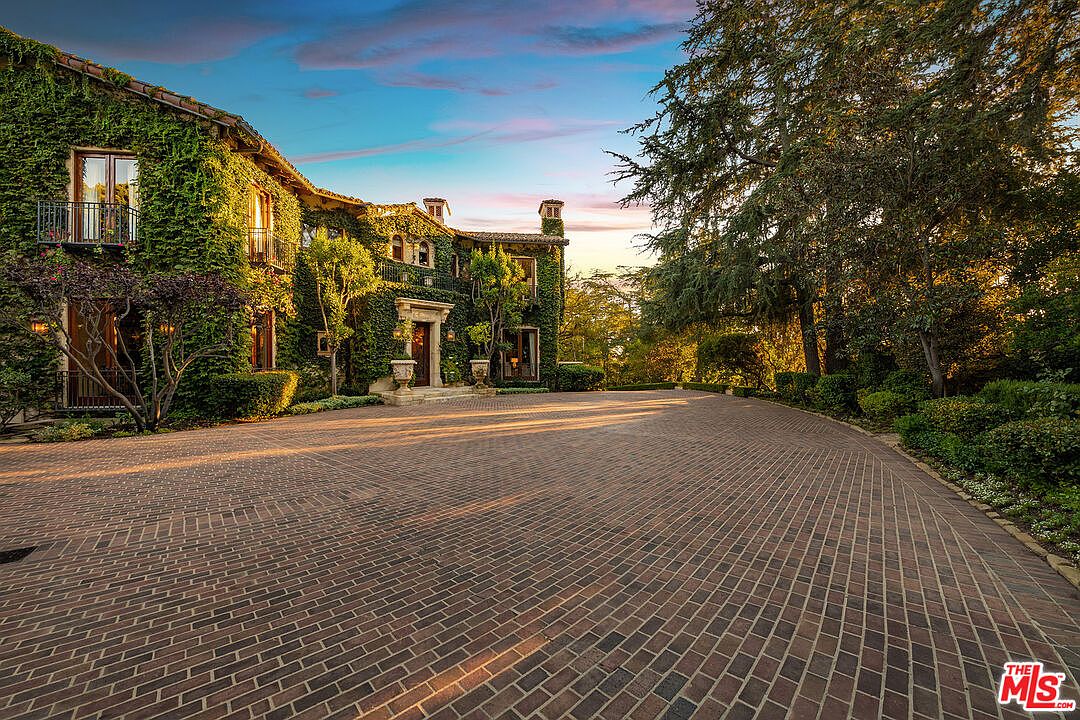
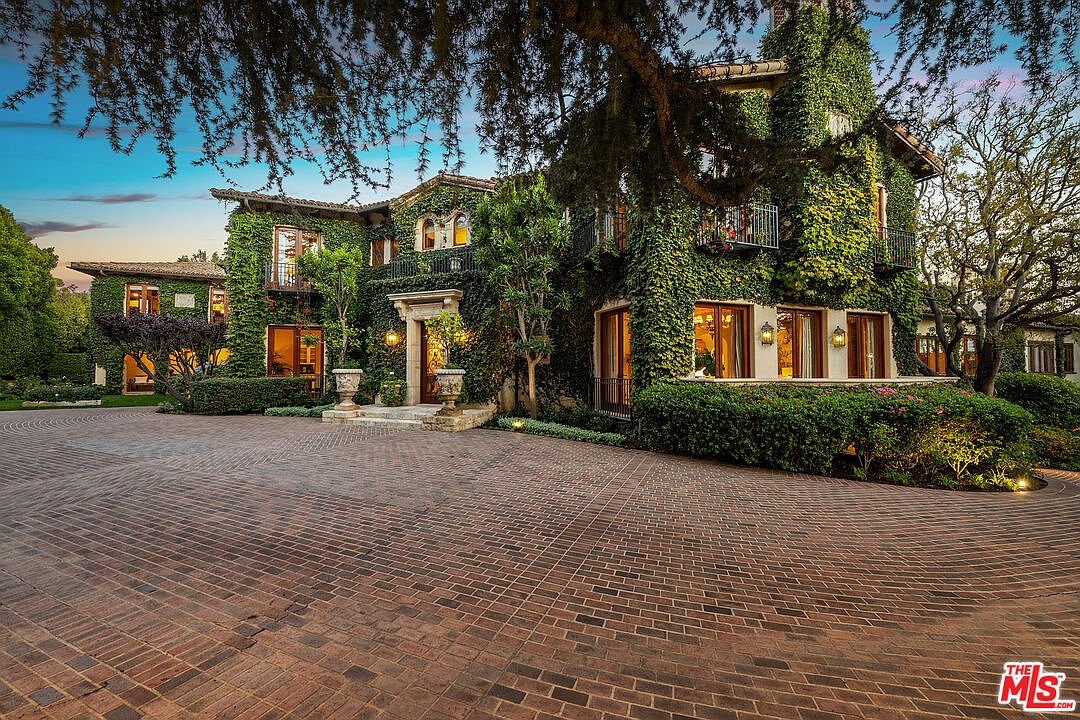
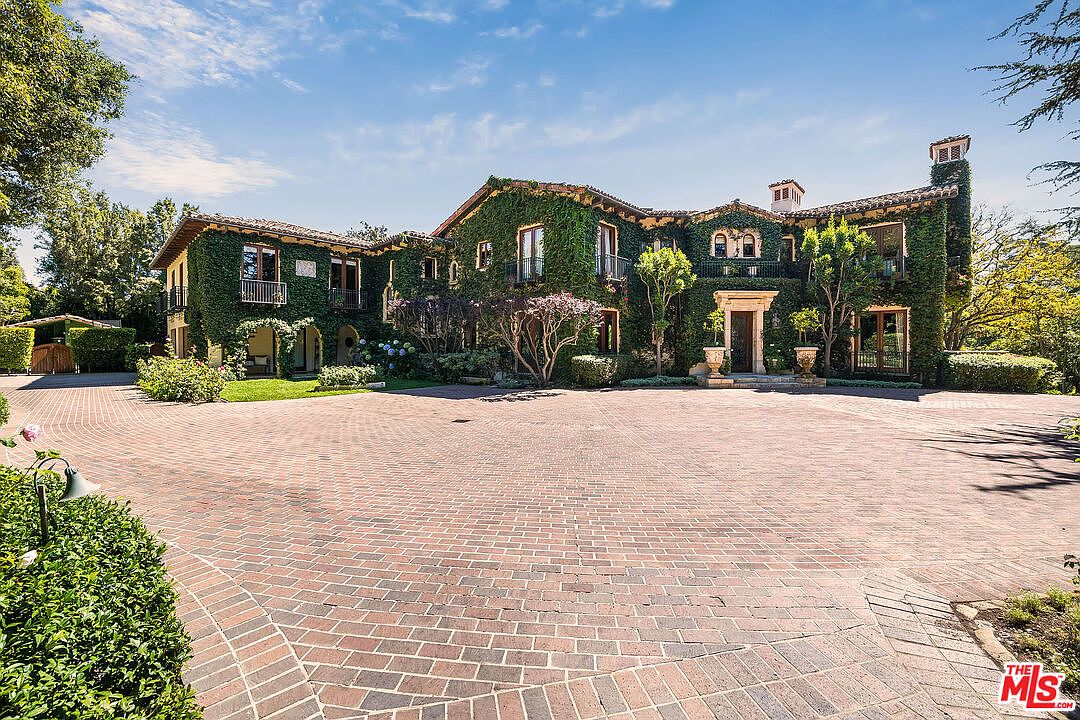
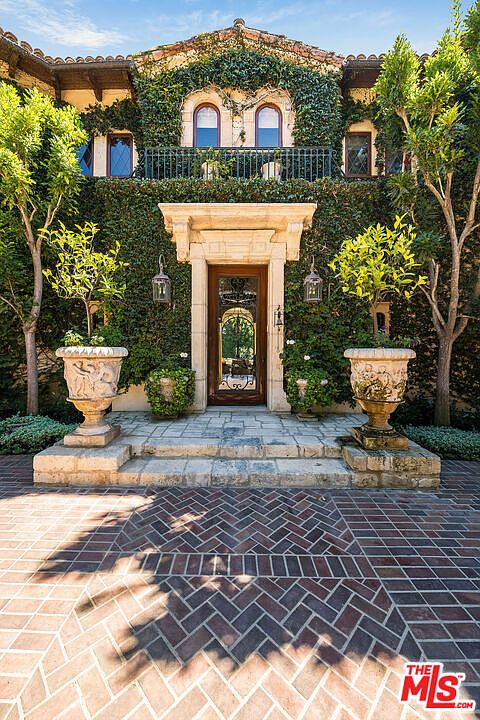
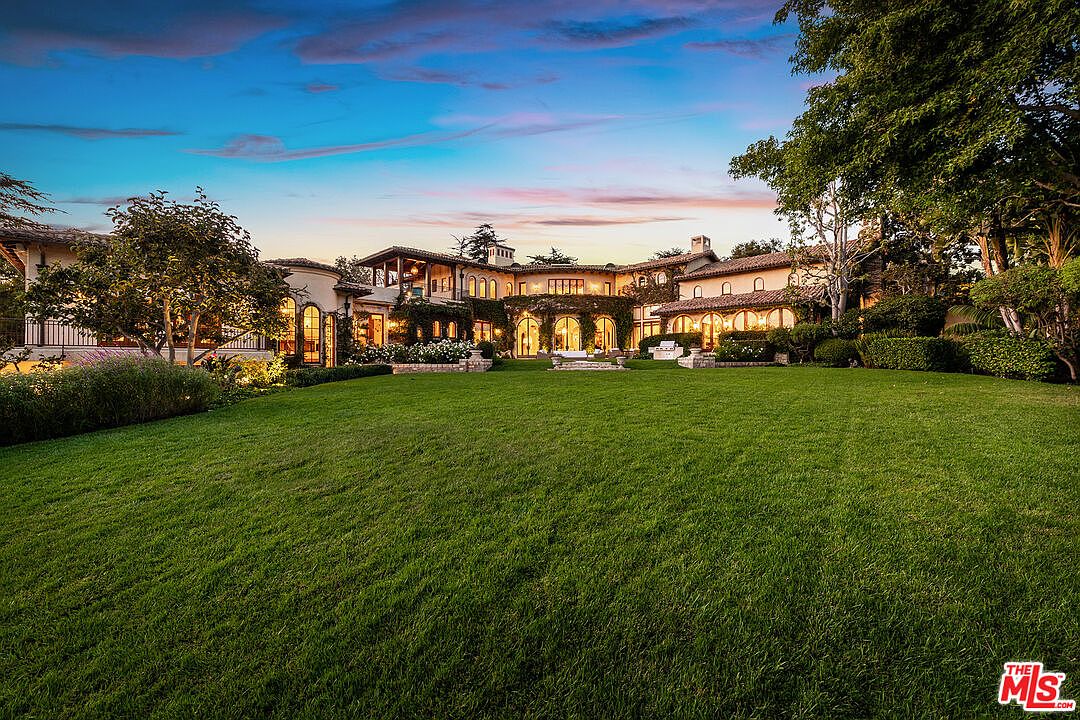
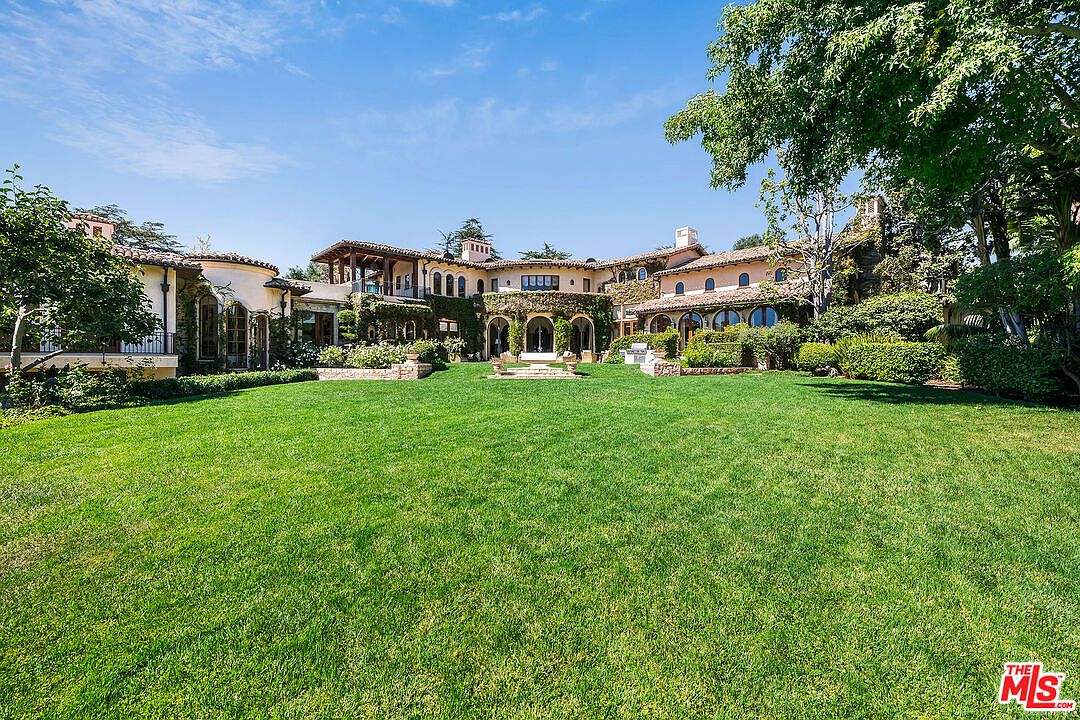
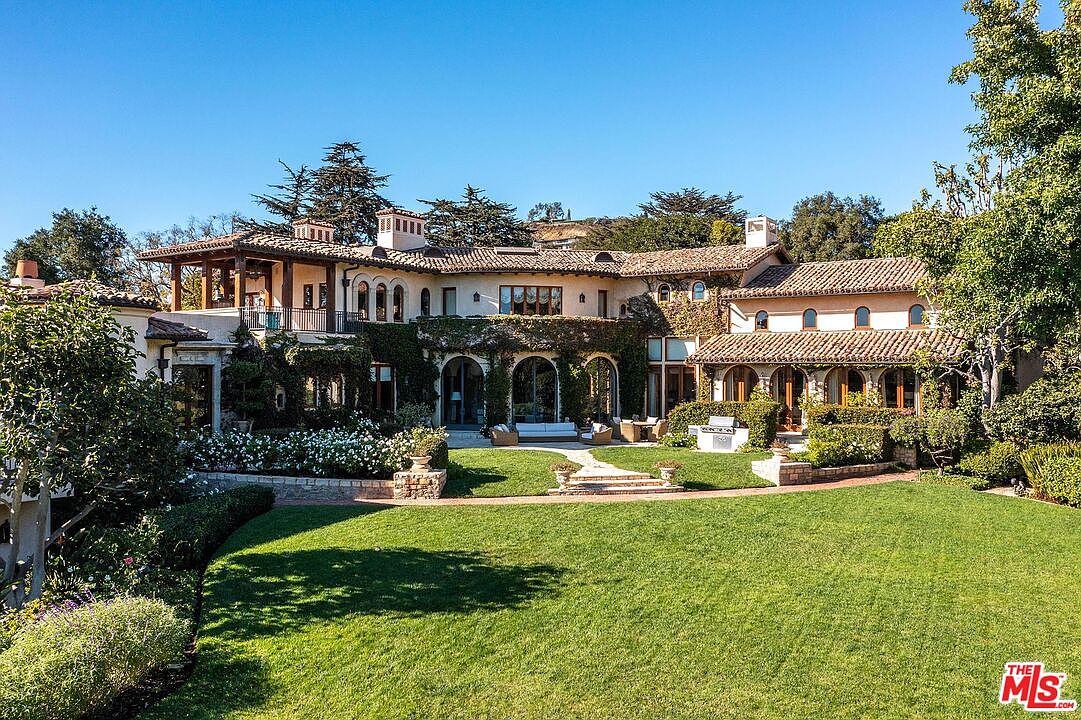
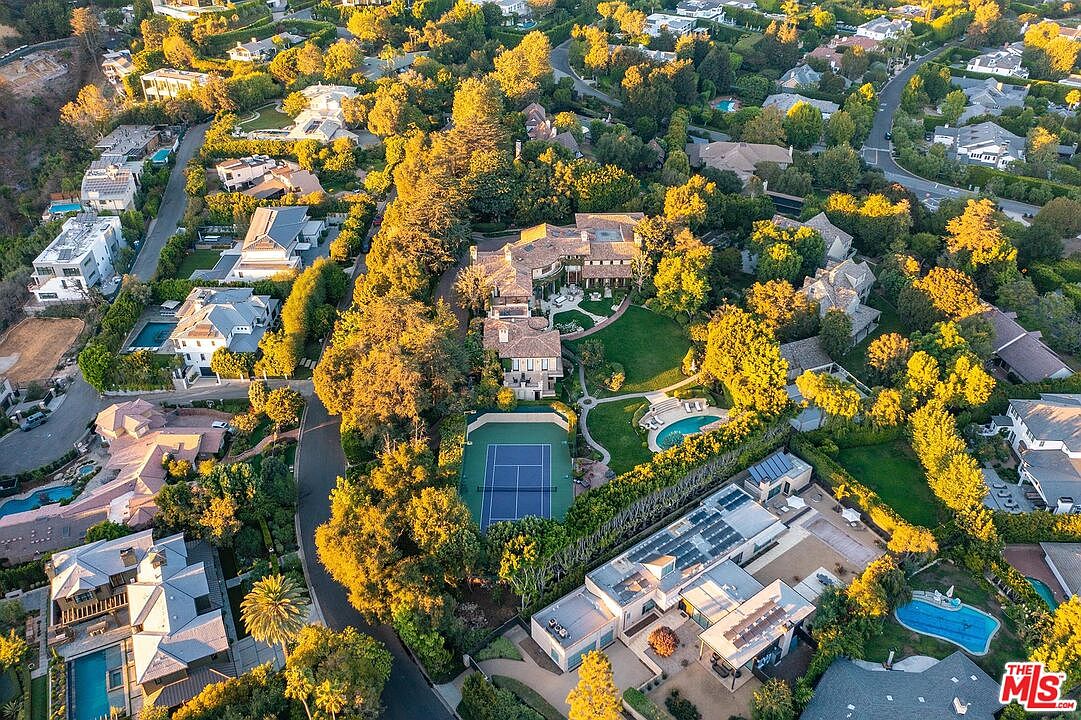
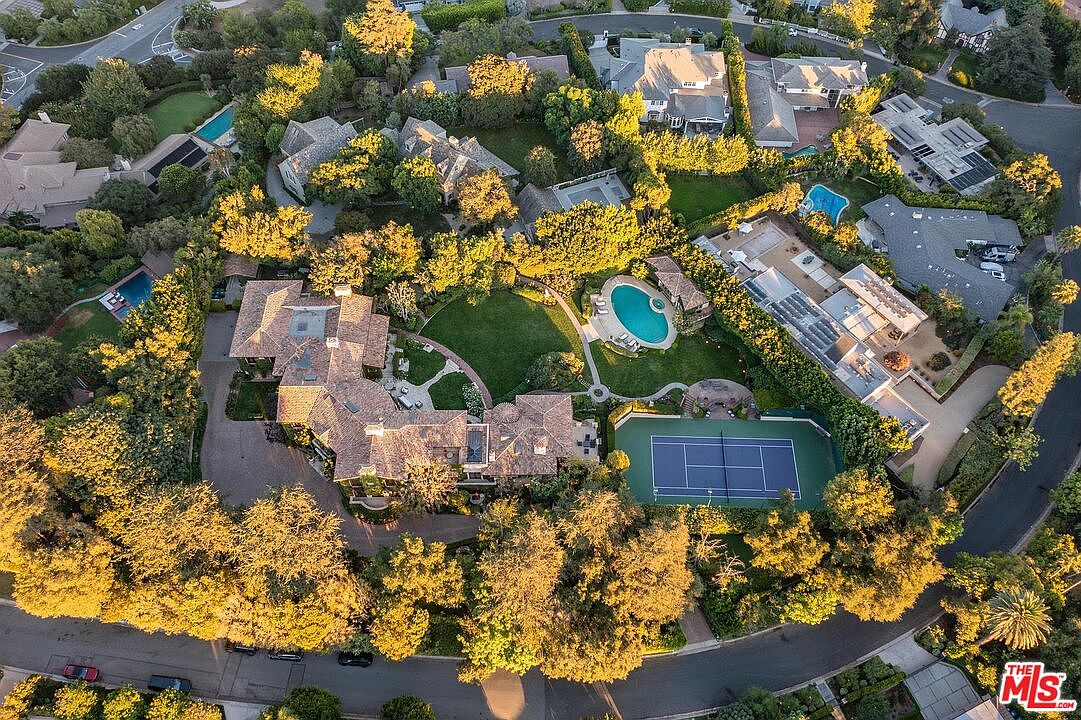
Arrival alone sets the tone for what follows. The estate announces itself through a pair of arched wooden gates flanked by stone pillars, beyond which a long brick-paved driveway — lined with mature hedges that ensure absolute privacy — leads to a grand motor court. The ivy-draped facade, with its arched windows, wrought-iron balcony railings, and warm stucco walls, presents as something discovered rather than built, as though the estate has always occupied this particular hillside.
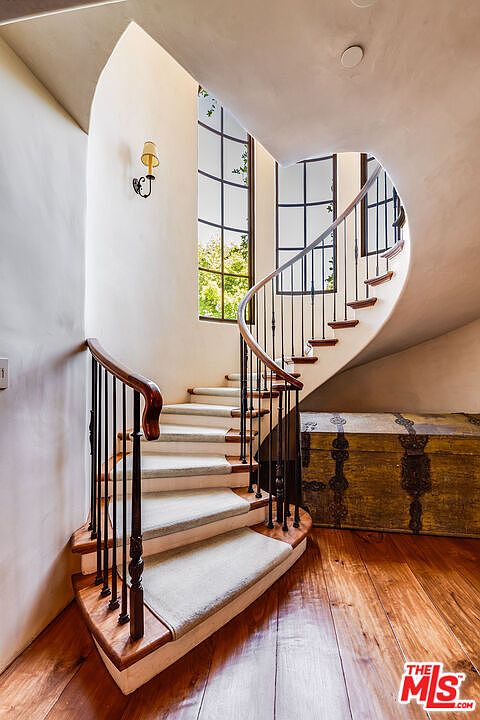
Inside, the grand foyer rewards the approach. A vaulted ceiling adorned with hand-painted frescoes and an ornate iron chandelier establishes the estate's defining register: Italian in soul, Californian in light. Stone floors extend underfoot toward a sweeping curved staircase with a dark wood handrail and black metal balusters — a sculptural centerpiece that rises toward tall multi-paned windows. A stone fountain sits quietly to one side; a decorative console and elaborate mirror anchor the other. The effect is one of considered abundance, never excess.
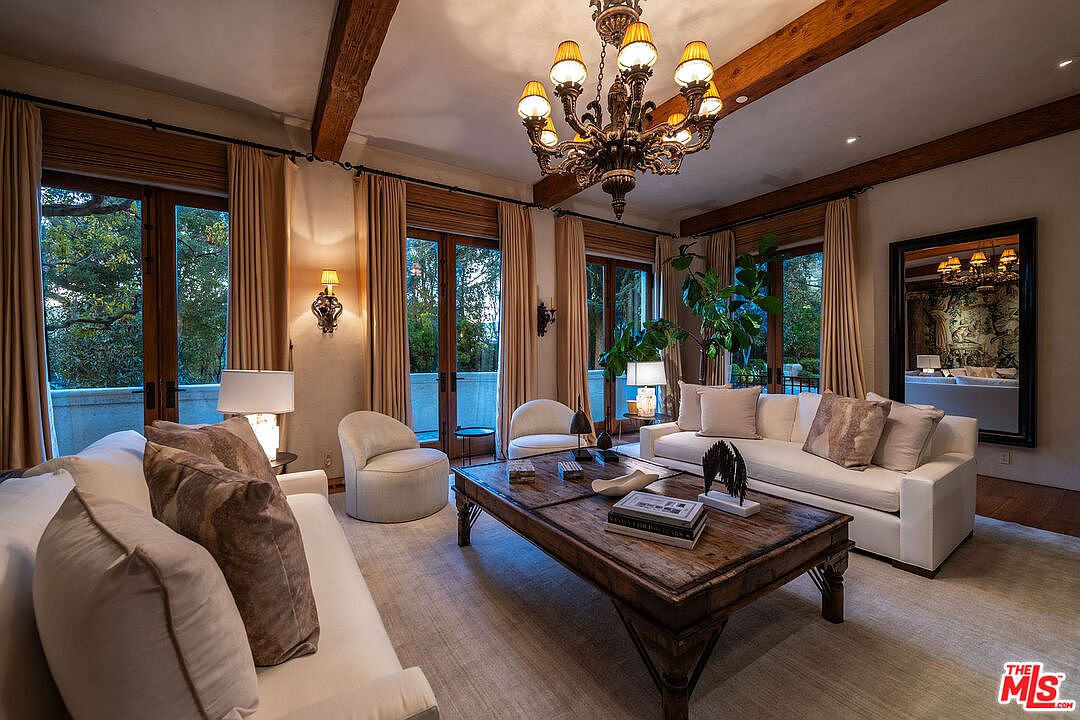
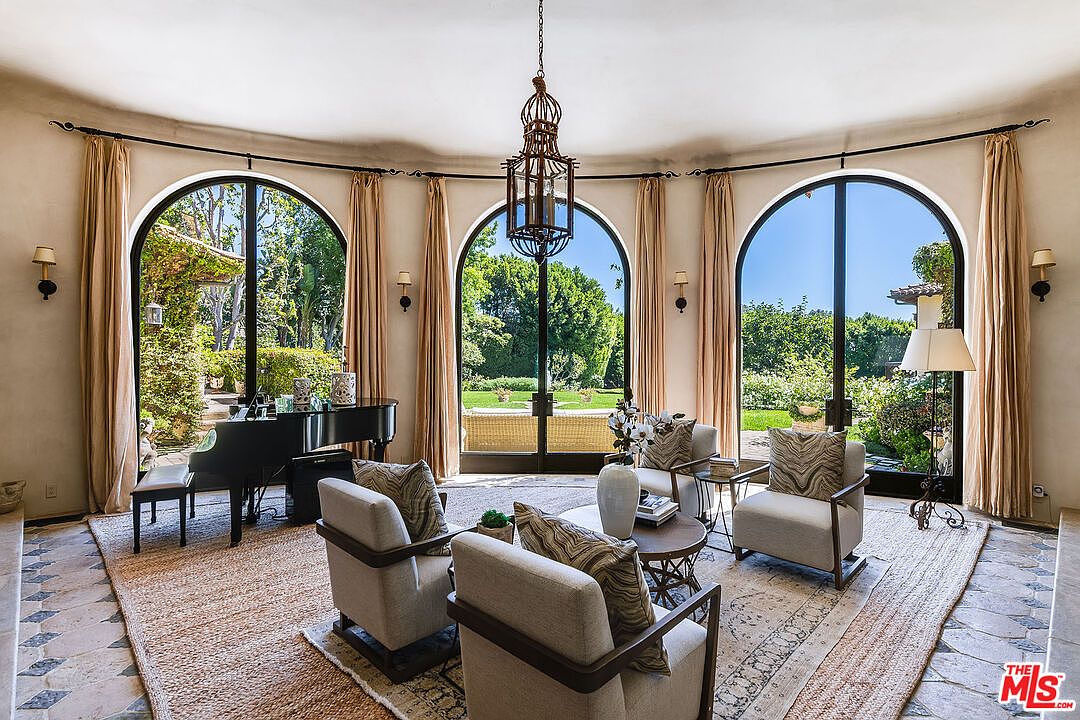
The principal entertaining rooms radiate from this axis with a natural ease that speaks to Landry's mastery of residential flow. The formal living room, defined by exposed wood ceiling beams and a commanding stone fireplace, opens through arched doorways into the dining room beyond. Stone columns and arched openings frame the central rotunda, where hanging lanterns cast a warm, honeyed light over stone tile floors and the lush greenery visible through walls of glass. The kitchen, anchored by a dark stone island beneath ornate lanterns, balances professional function with aesthetic refinement — cream cabinetry, generous proportions, and a view that makes even the quotidian feel elevated.
The primary suite occupies its own wing, functioning as a private residence within the residence. A stone fireplace, a built-in soaking tub framed by decorative glass panels, spa-calibrated finishes, and generous dressing rooms precede a terrace that opens to one of the estate's most remarkable assets: a sweeping panorama of ocean, canyon, and mountain that reminds you, daily, exactly where you are.
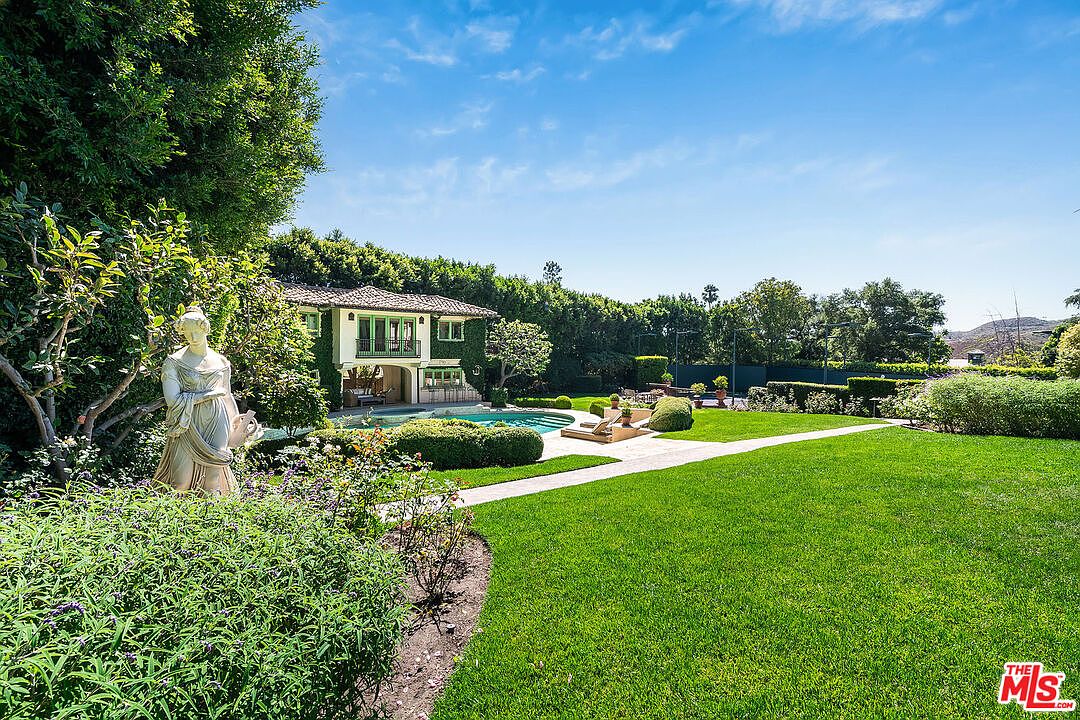
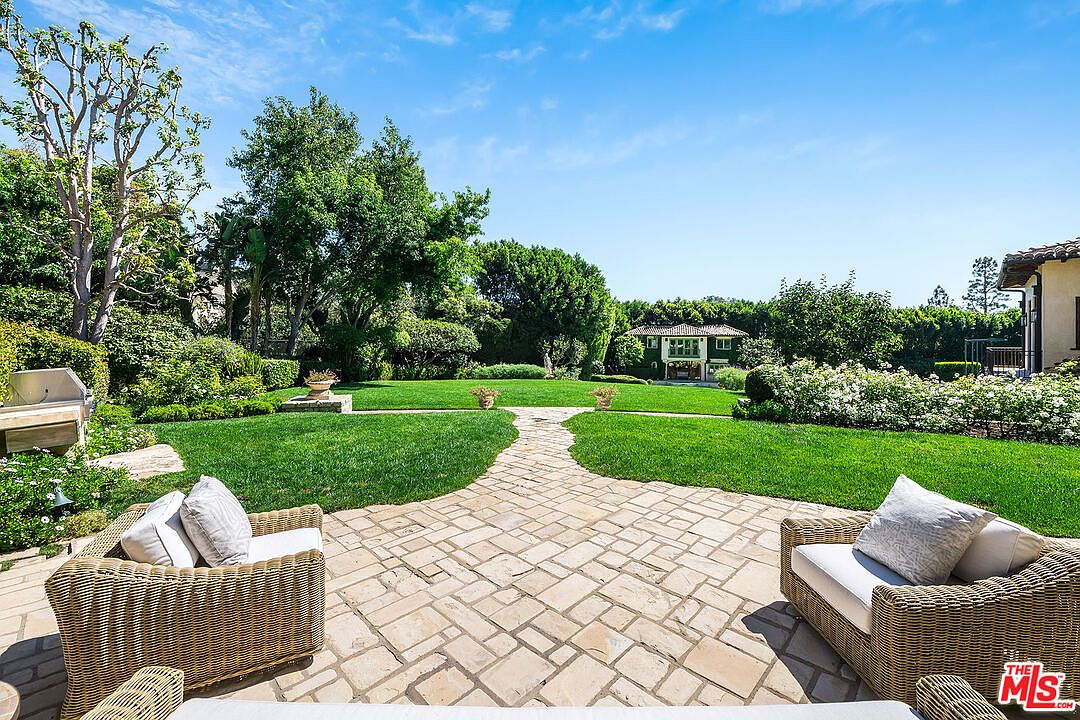
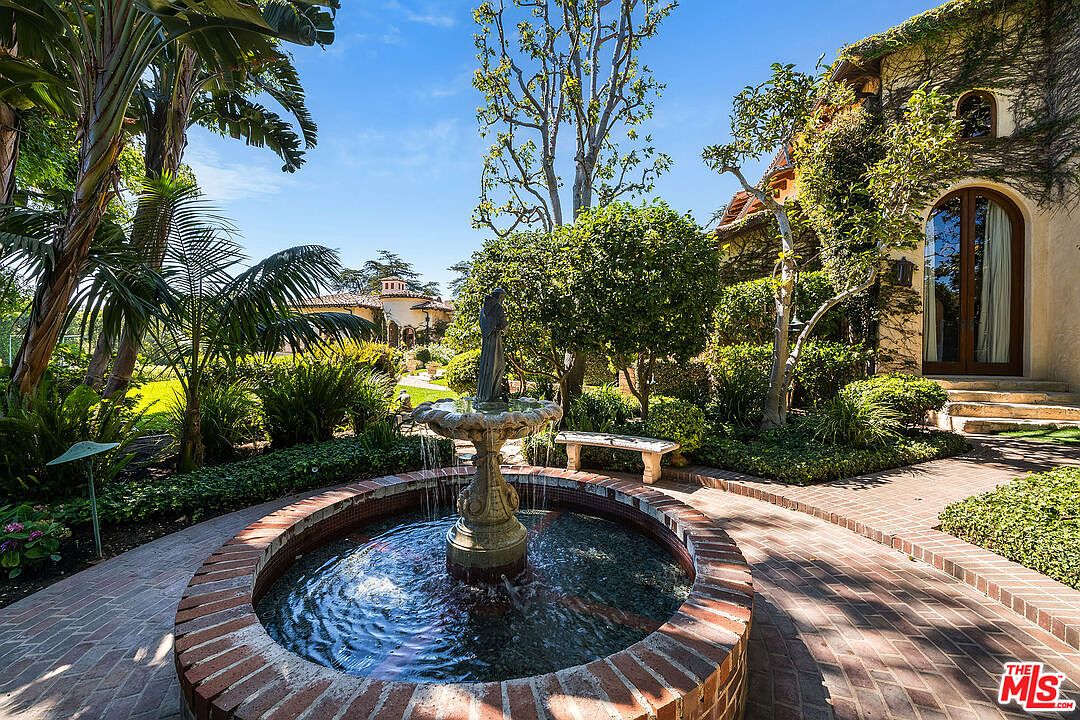
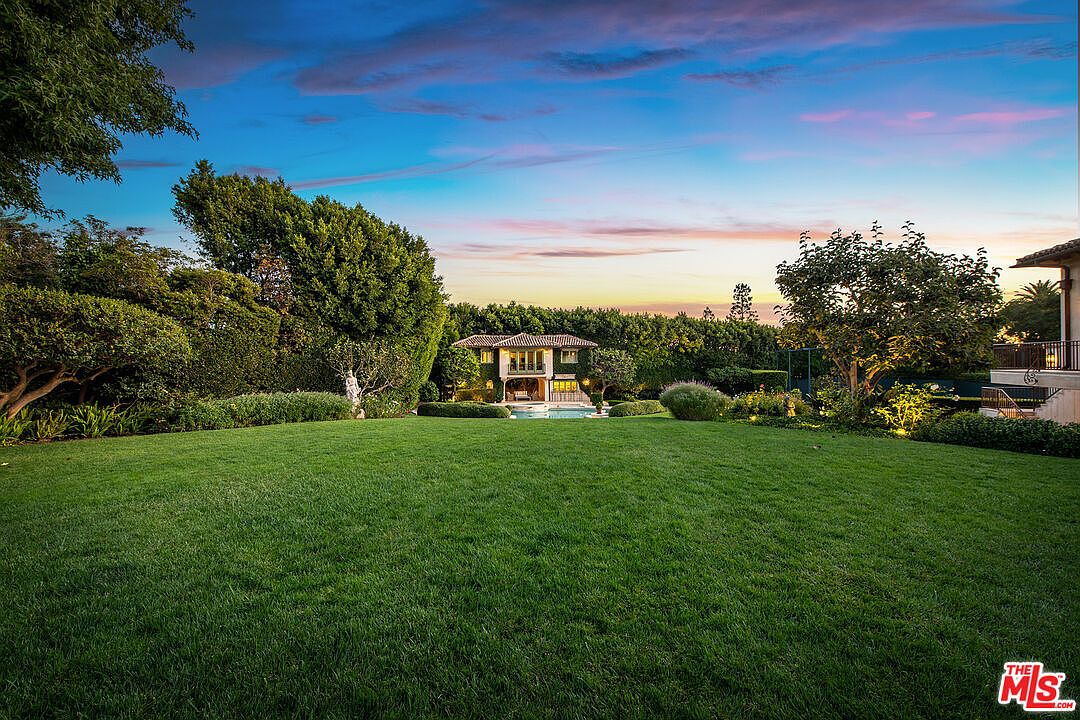
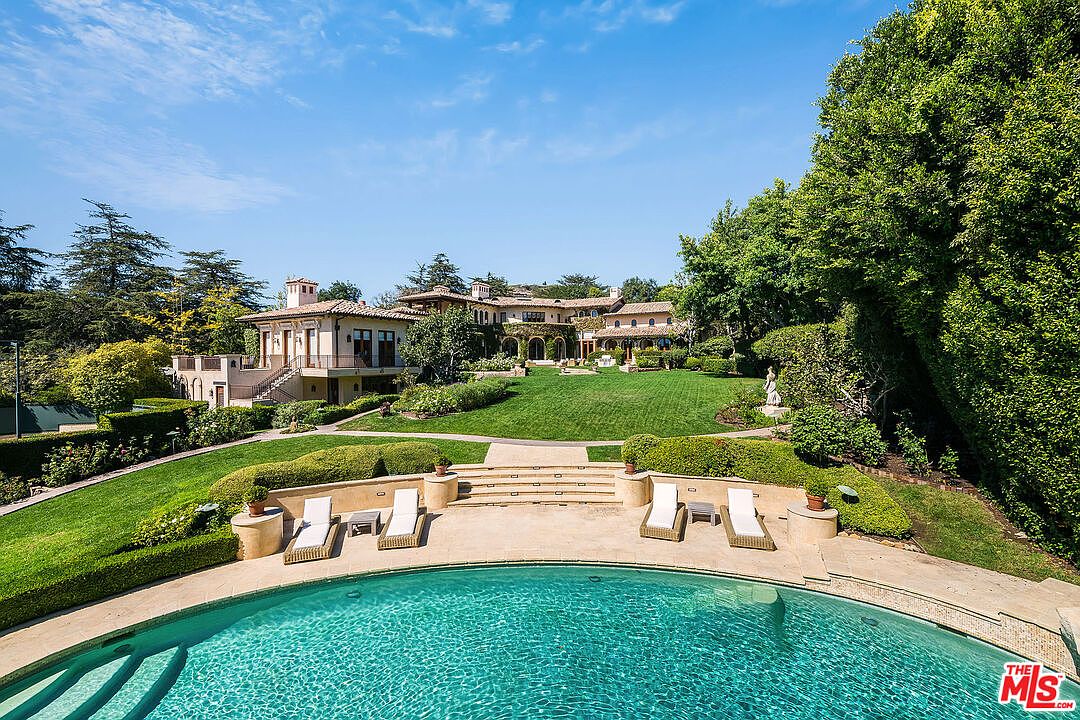
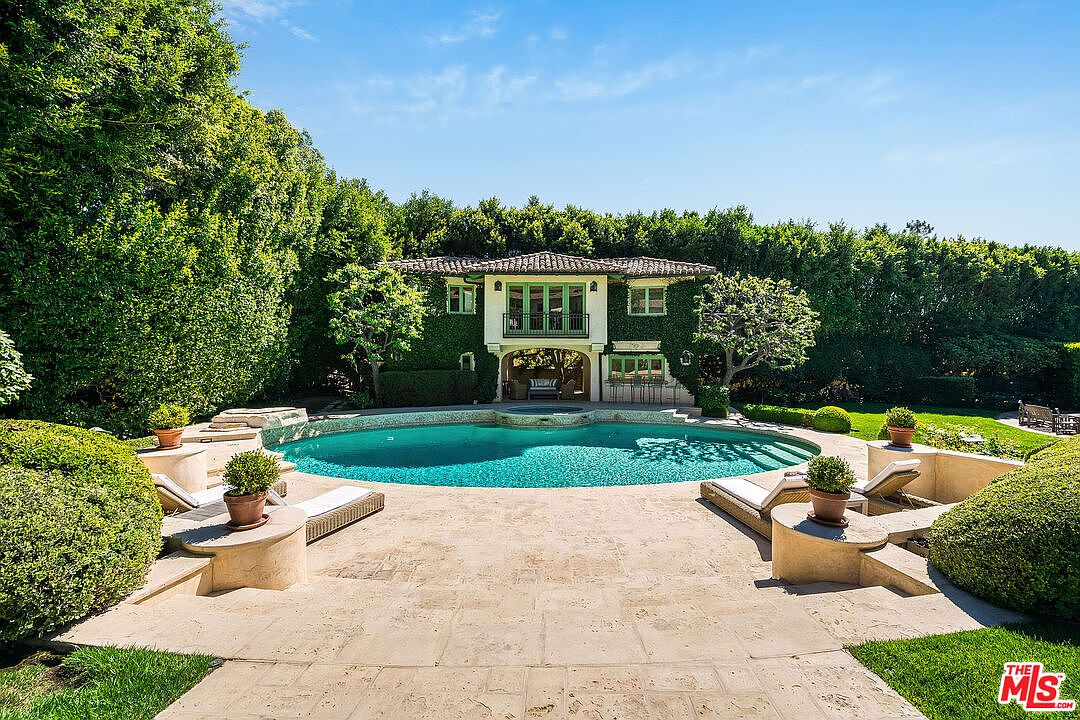
The grounds extend the interior's European romance into the open air. A sun-drenched oval pool and spa, a lit tennis court with a viewing pavilion, a private putting green, rolling lawns, and a tiered stone fountain garden compose an outdoor environment of rare completeness. A full two-story guesthouse adjacent to the pool — with its own kitchen and covered patio — ensures that the estate functions as effortlessly for a weekend of hosting as it does for quiet, private life. The Leonard Estate is a property of genuine permanence: built to be inherited, not merely owned.
Pacific Palisades occupies a stretch of coastal bluffs and canyons between Santa Monica and Malibu that has long attracted those who understand that the finest life in Los Angeles is lived at a certain elevation — both literal and figurative. Within this already distinguished enclave, the Palisades Riviera stands apart. Developed in the 1920s with an eye toward the grand residential neighborhoods of the Mediterranean coast, the Riviera was conceived as an enclave of estates rather than a subdivision of houses, and it has maintained that character with remarkable fidelity across the intervening century. Amalfi Drive, the street on which the Leonard Estate sits, takes its name from the Amalfi Coast of southern Italy — an aspirational gesture by the neighborhood's founders that the estate itself now fully inhabits.
The Palisades Riviera's appeal is rooted in its geography as much as its history. Positioned above the Pacific, the neighborhood benefits from a coastal climate that moderates the heat of Los Angeles summers and bathes the hillsides in the particular quality of light that has made Southern California a subject of artistic fascination for generations. Ocean breezes, canyon views, and proximity to the Santa Monica Mountains Conservancy's network of trails mean that the natural landscape is not a backdrop here but an active participant in daily life. Topanga State Park and the broader Backbone Trail system are accessible within minutes, offering hiking and equestrian terrain that feels worlds removed from the city.
At the same time, Pacific Palisades functions as a self-contained village of considerable sophistication. Palisades Village, the neighborhood's central commercial district, underwent a comprehensive redevelopment in recent years and now offers a curated selection of restaurants, boutiques, a Erewhon market, and a restored Palisades branch of the Los Angeles Public Library, all organized around a walkable, human-scaled streetscape that is notably rare in Los Angeles. The area's dining scene, while intimate by design, includes destinations that have earned regional recognition.
The neighborhood's educational institutions are among the most respected on the Westside. Palisades Charter High School has a long-standing reputation for academic achievement and the arts, while the area is served by a number of well-regarded private schools. The proximity to UCLA, the Getty Center, and the cultural institutions of Santa Monica and West Los Angeles ensures that intellectual and cultural life remains richly accessible.
For those whose lives intersect with the entertainment industry — and in Pacific Palisades, many do — the neighborhood's relative remove from the more trafficked corridors of Beverly Hills and West Hollywood is a feature rather than a liability. Privacy is both architecturally engineered, as the Leonard Estate itself demonstrates, and culturally understood. Neighbors tend to be accomplished, discreet, and deeply invested in the community they share.
To live in the Palisades Riviera is to participate in one of Los Angeles's most enduring residential traditions: the belief that beauty, nature, and privacy are not luxuries to be rationed but foundations upon which a life of genuine quality is built. The Leonard Estate, on Amalfi Drive, is that tradition at its most fully realized.
Featured Highlights
Curated Content • Presented by Jade Mills