The Story Behind
Pearl Lake Ranch: A Once-in-a-Generation Private Lakefront Legacy
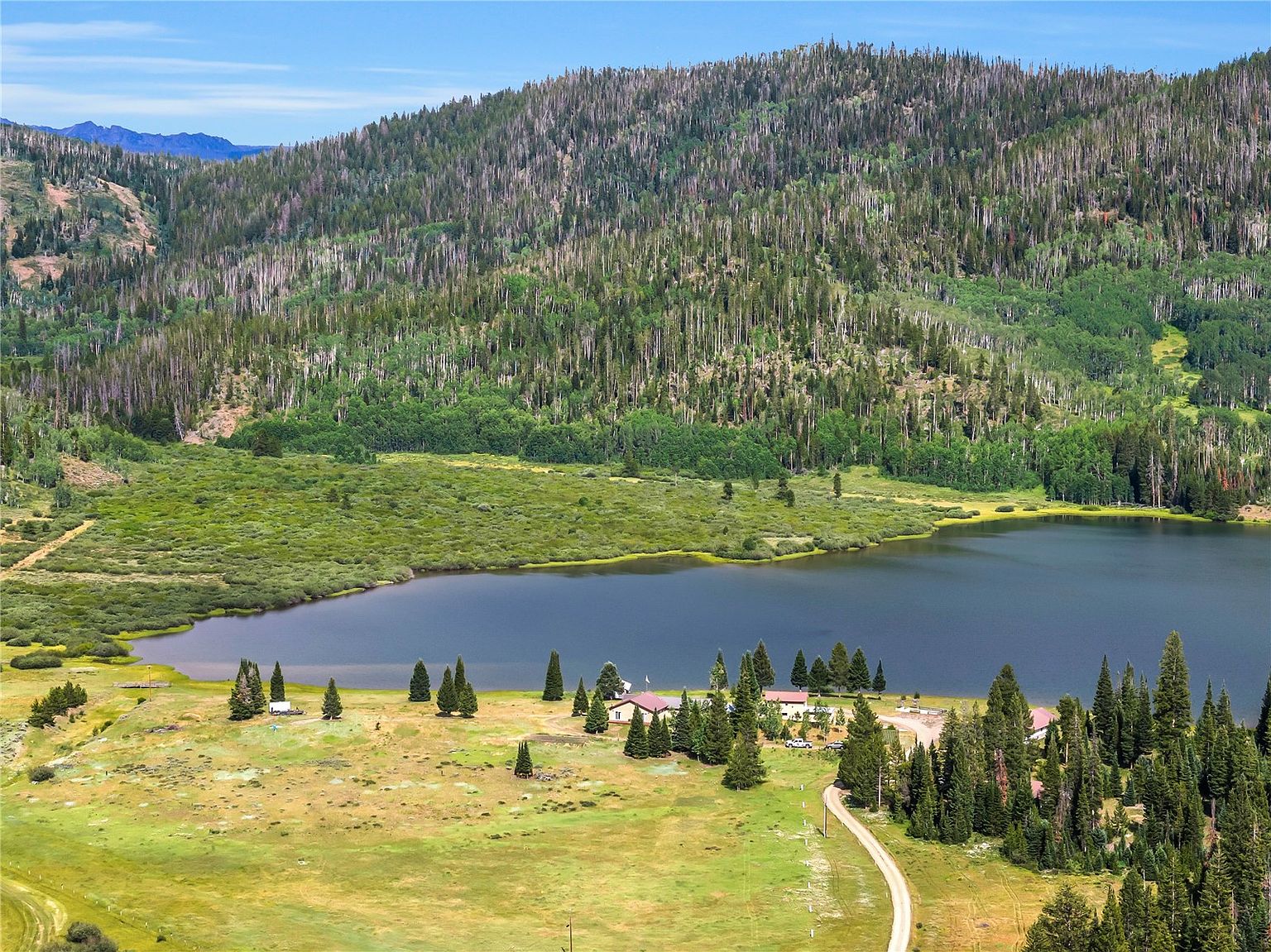
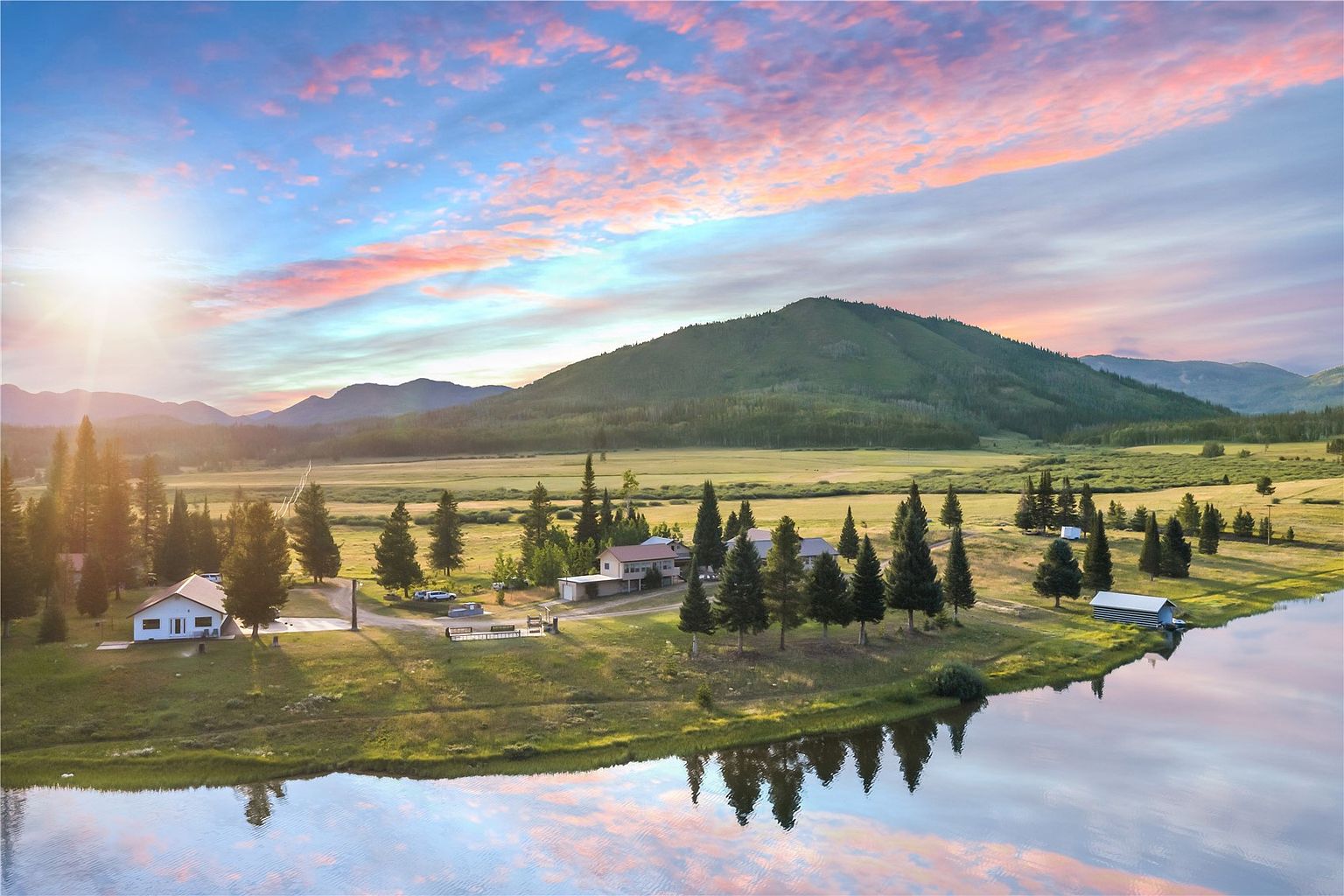
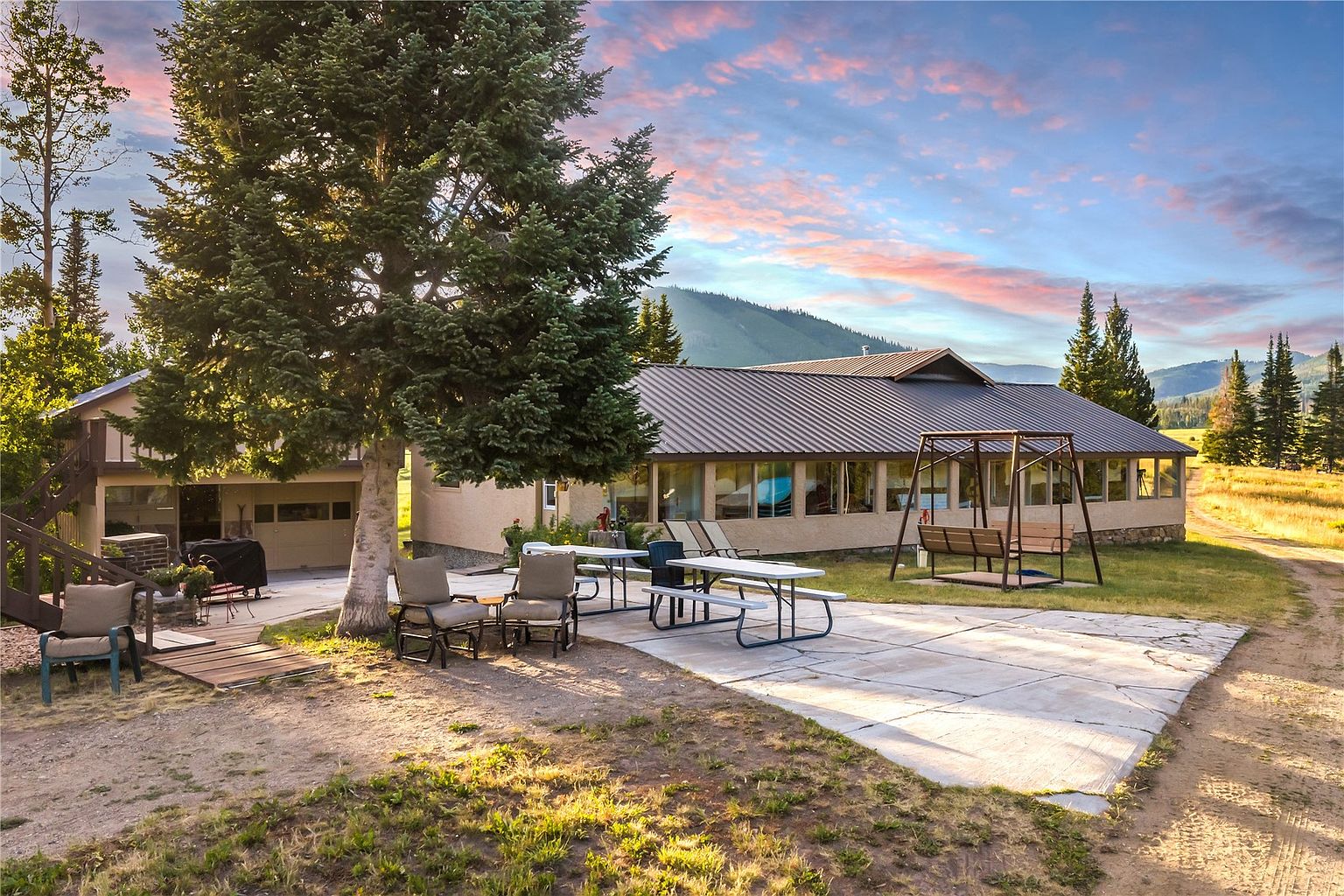
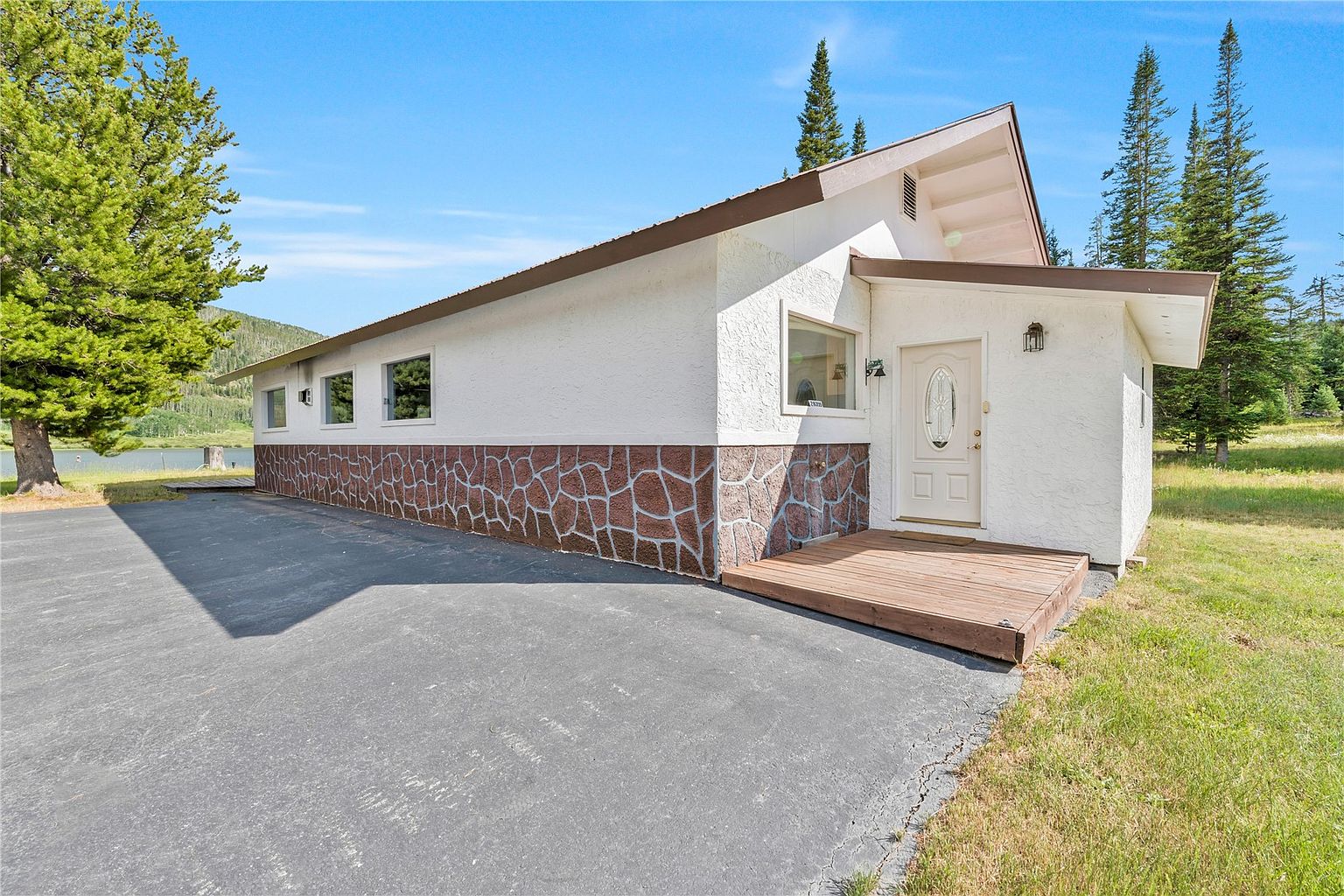
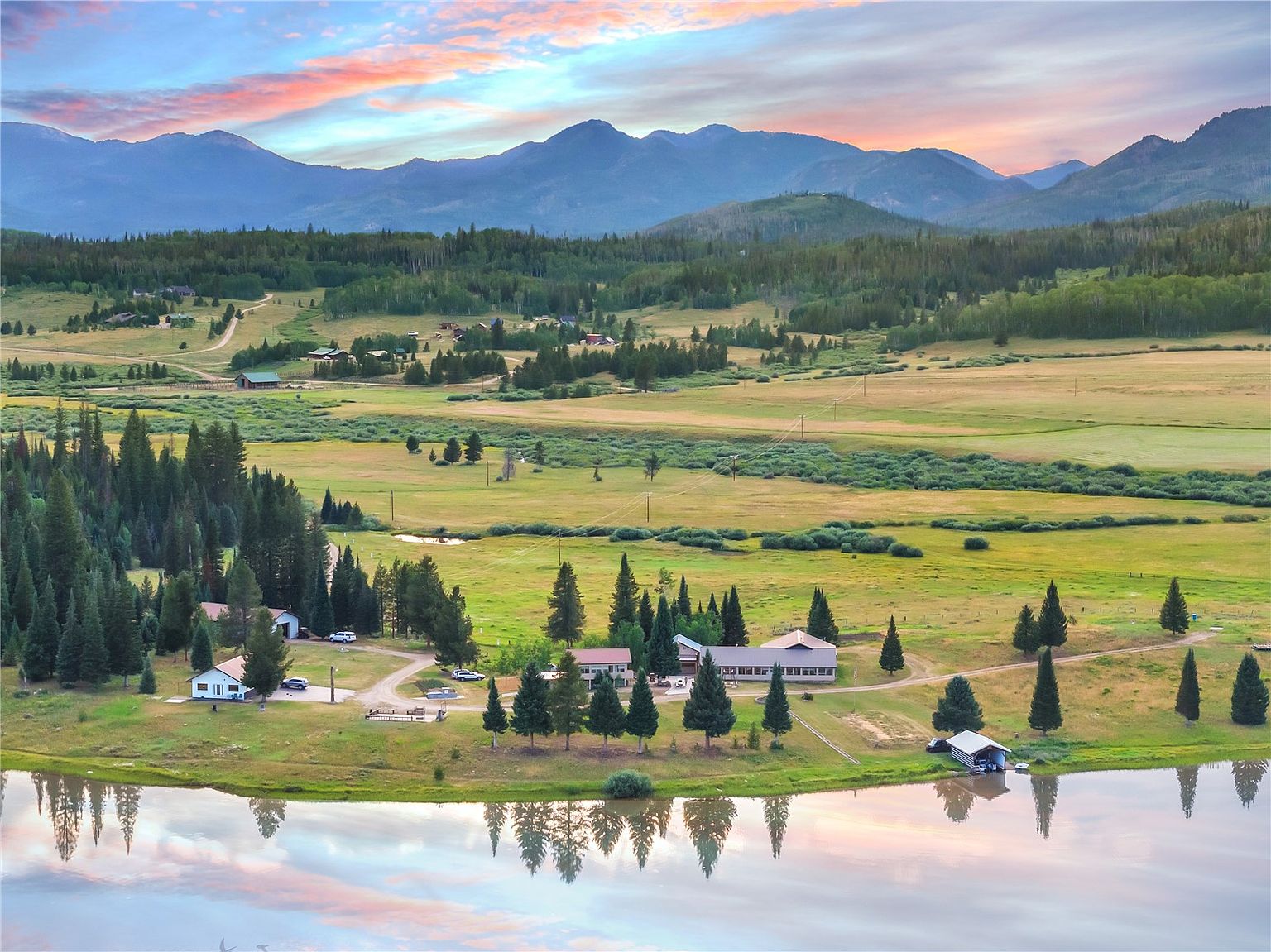
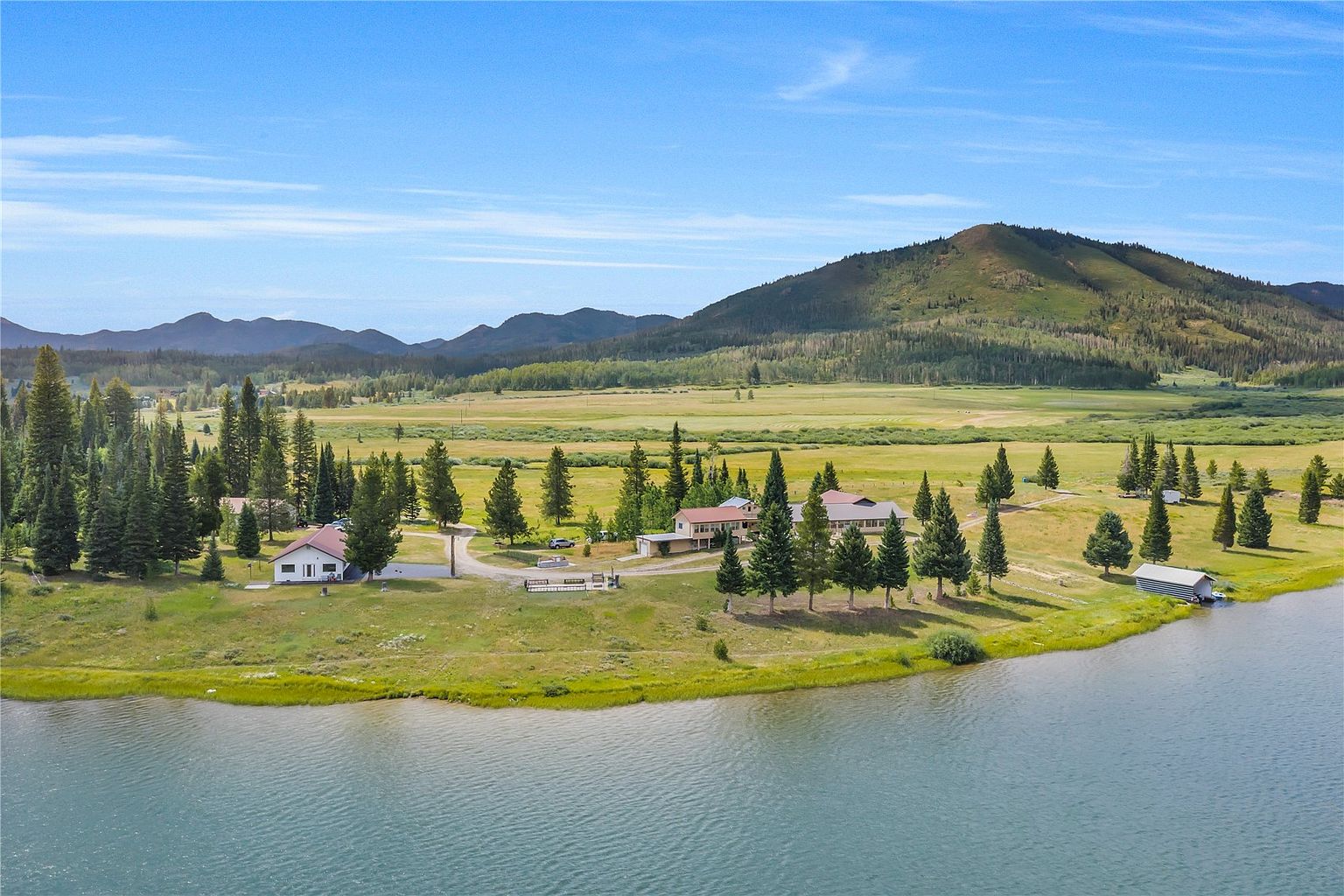
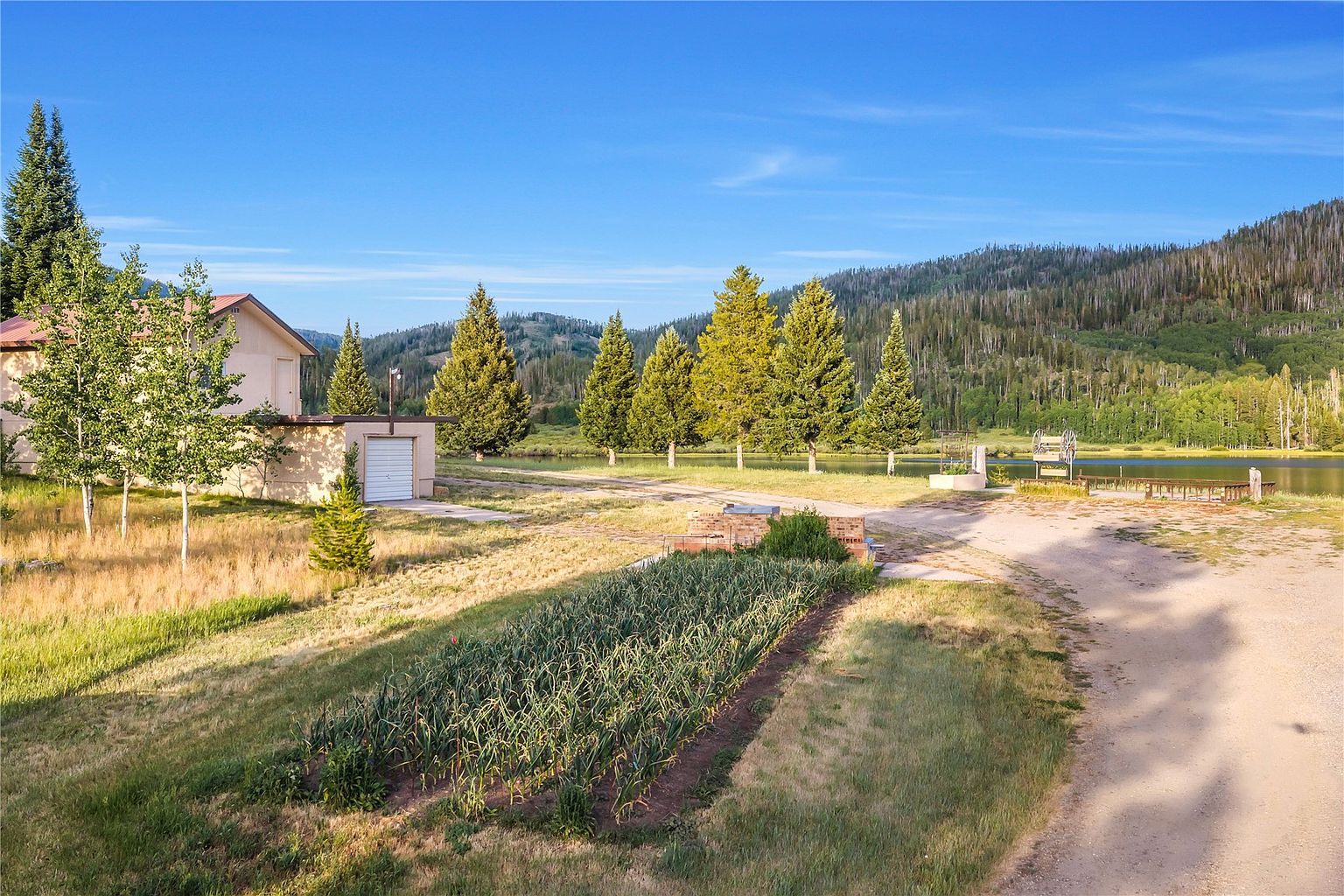
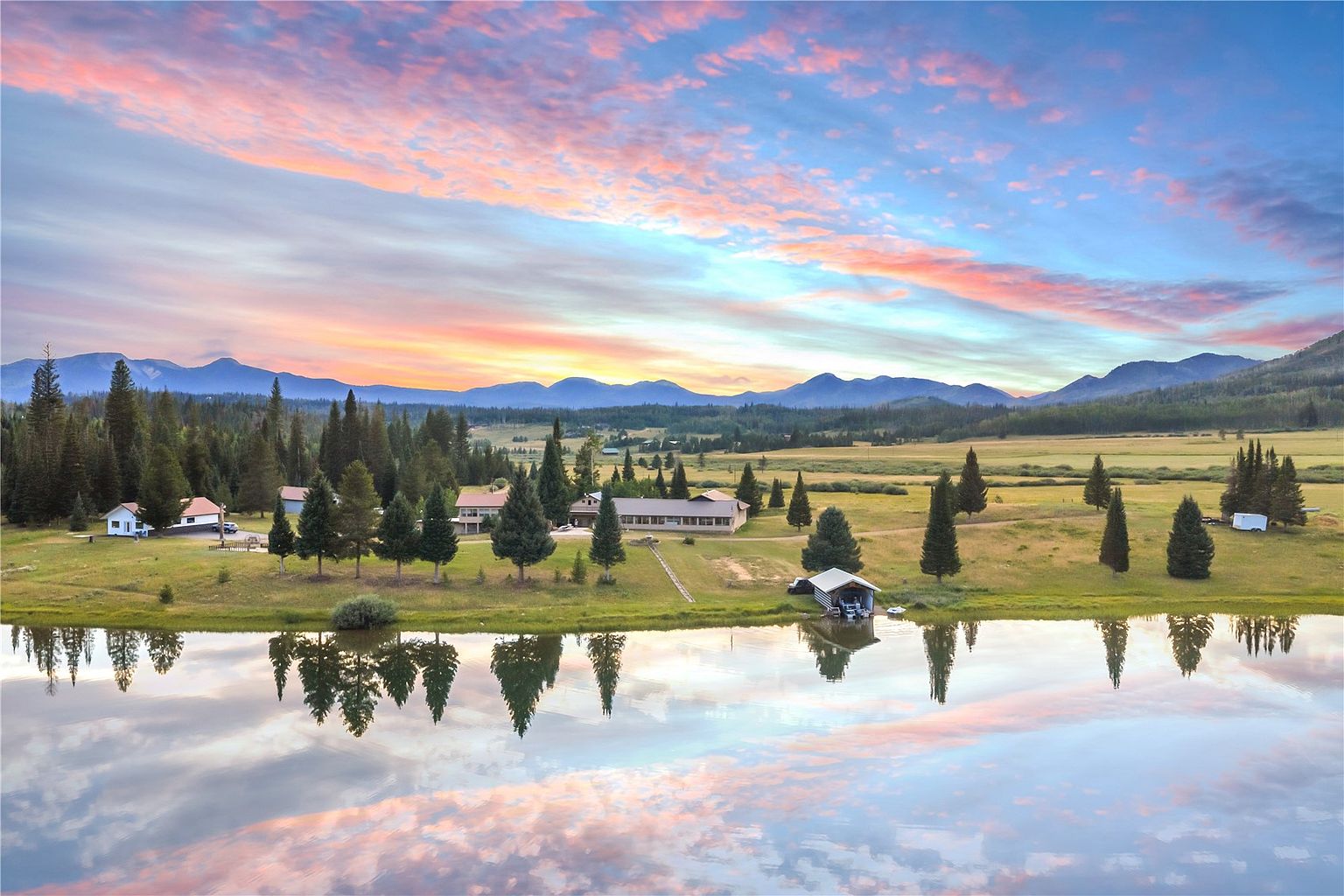
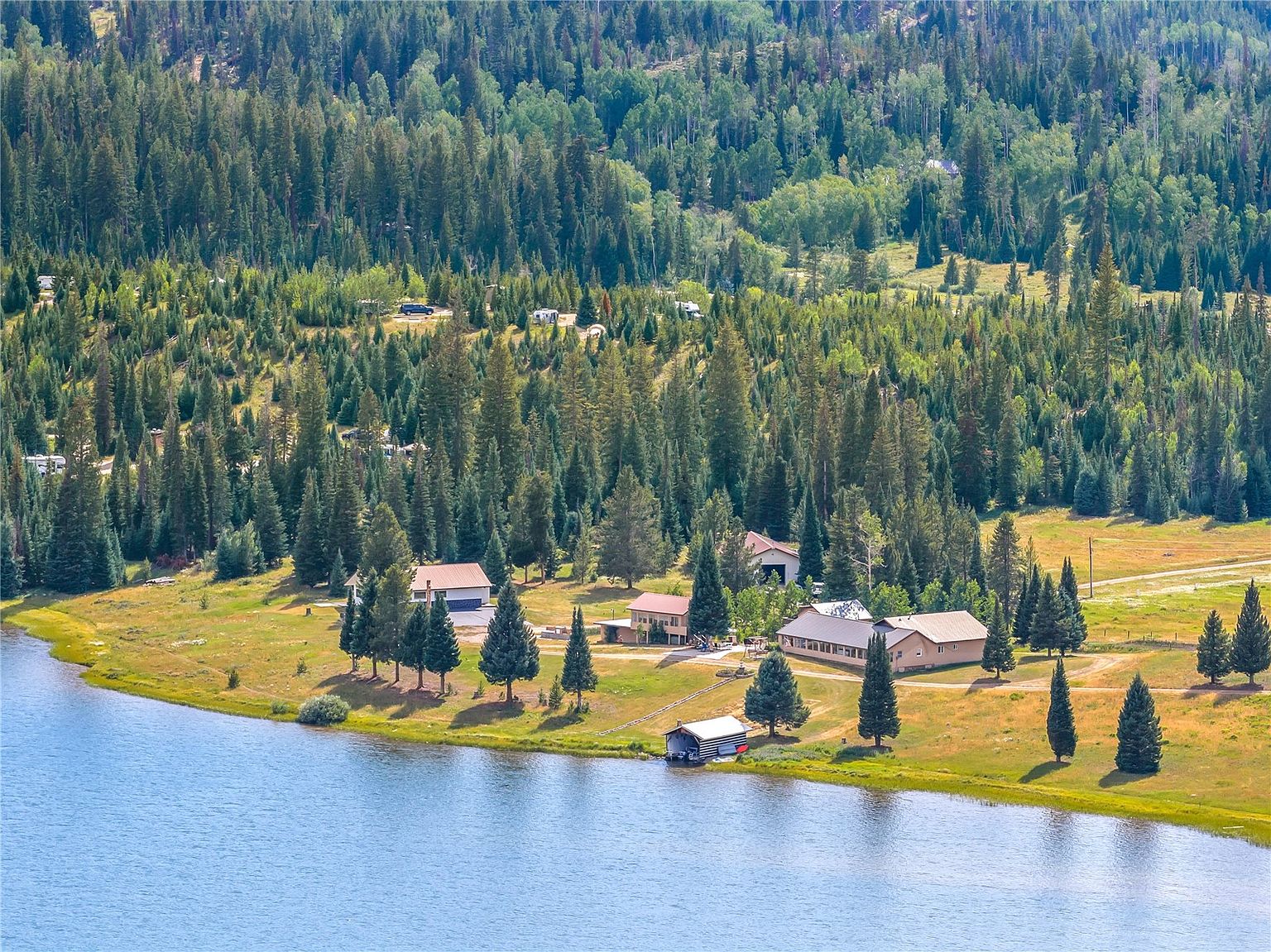
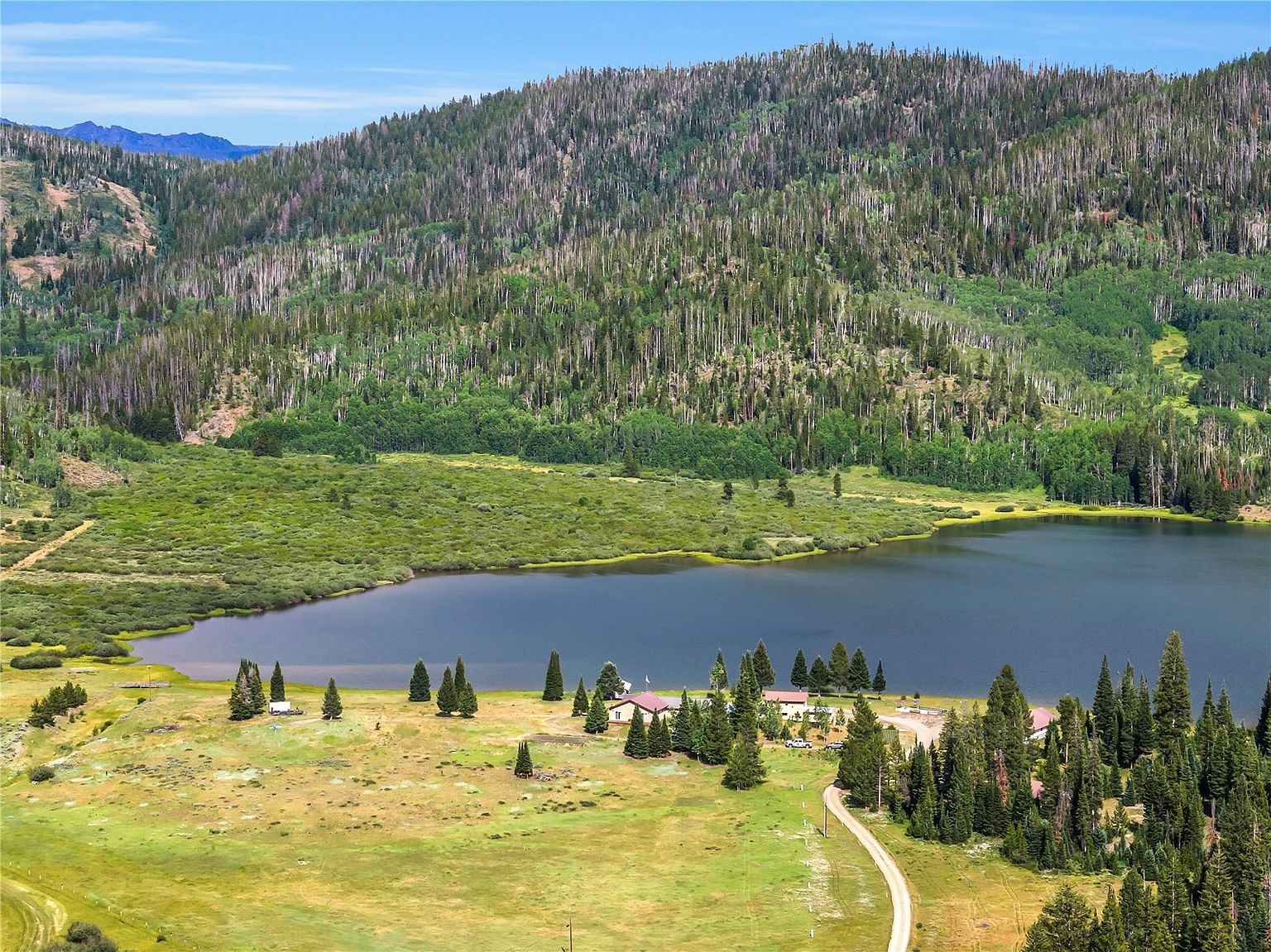
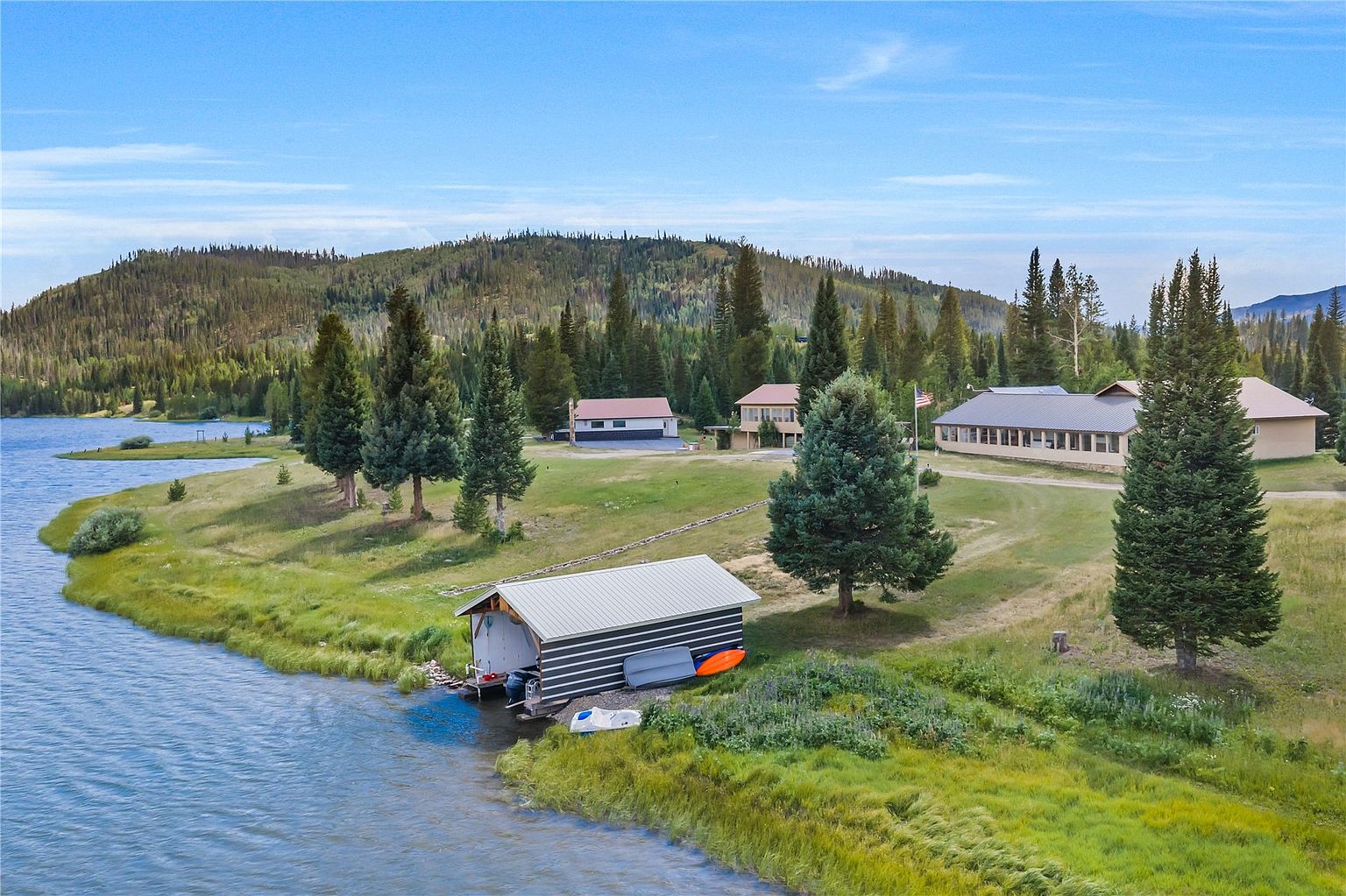
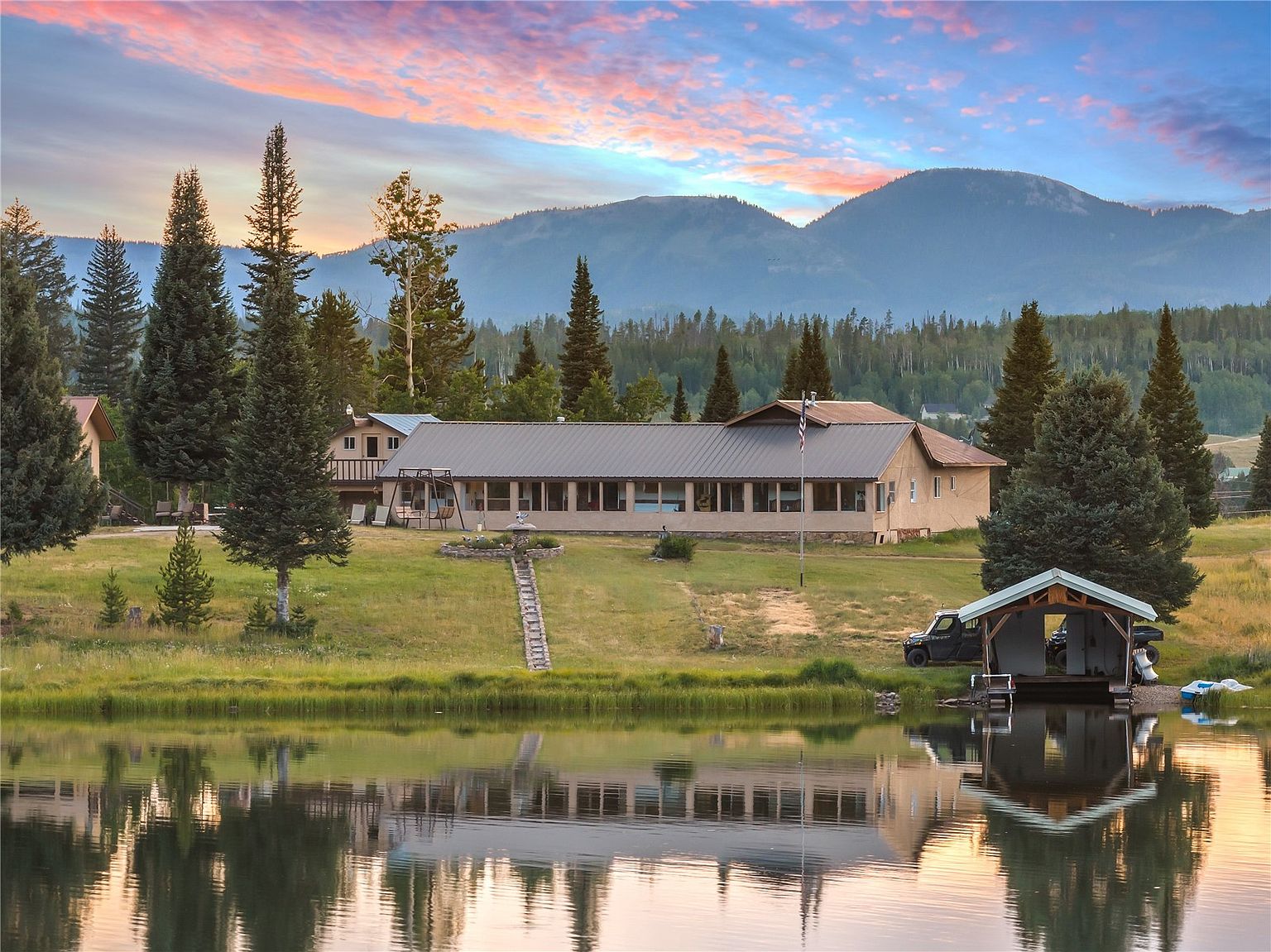
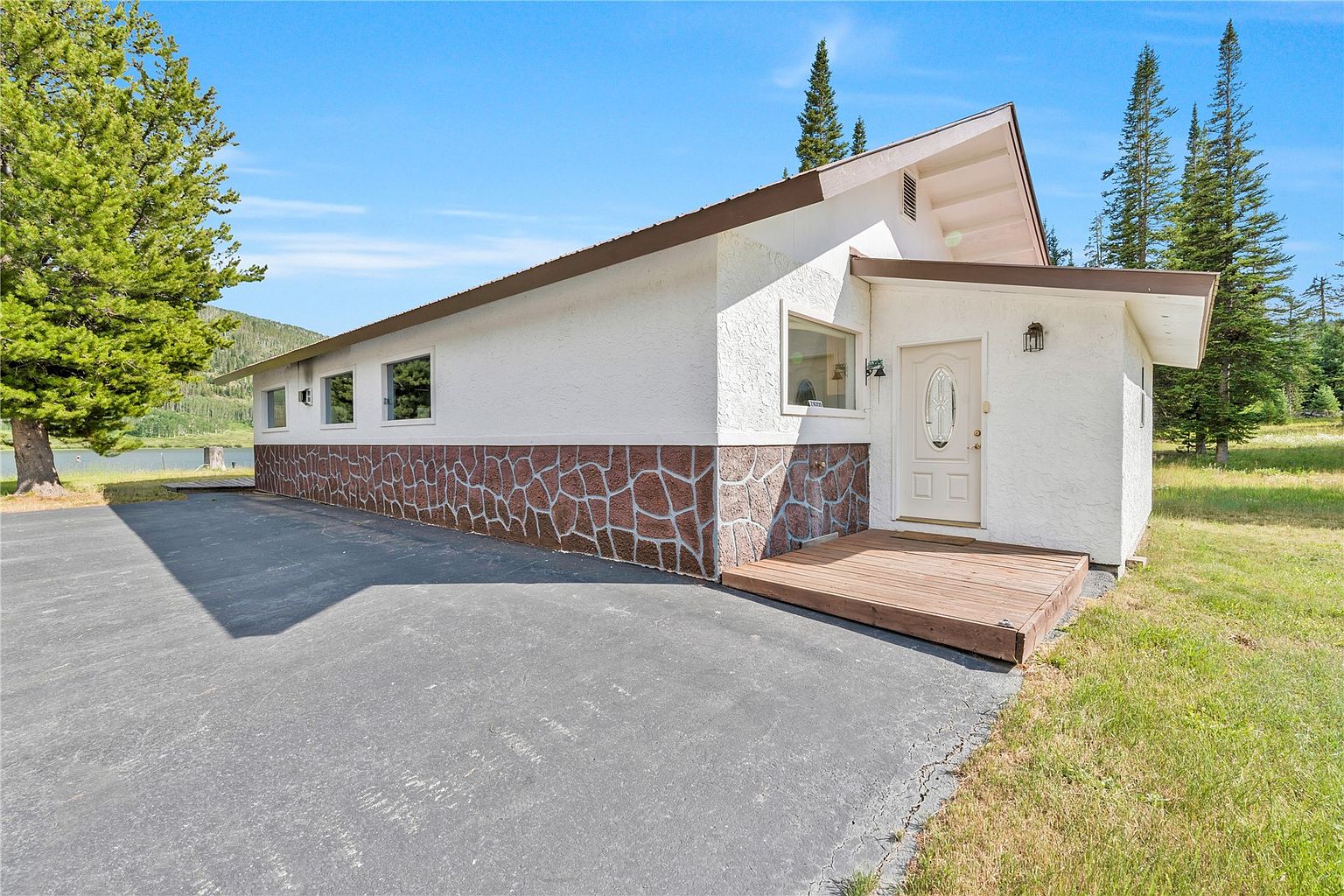
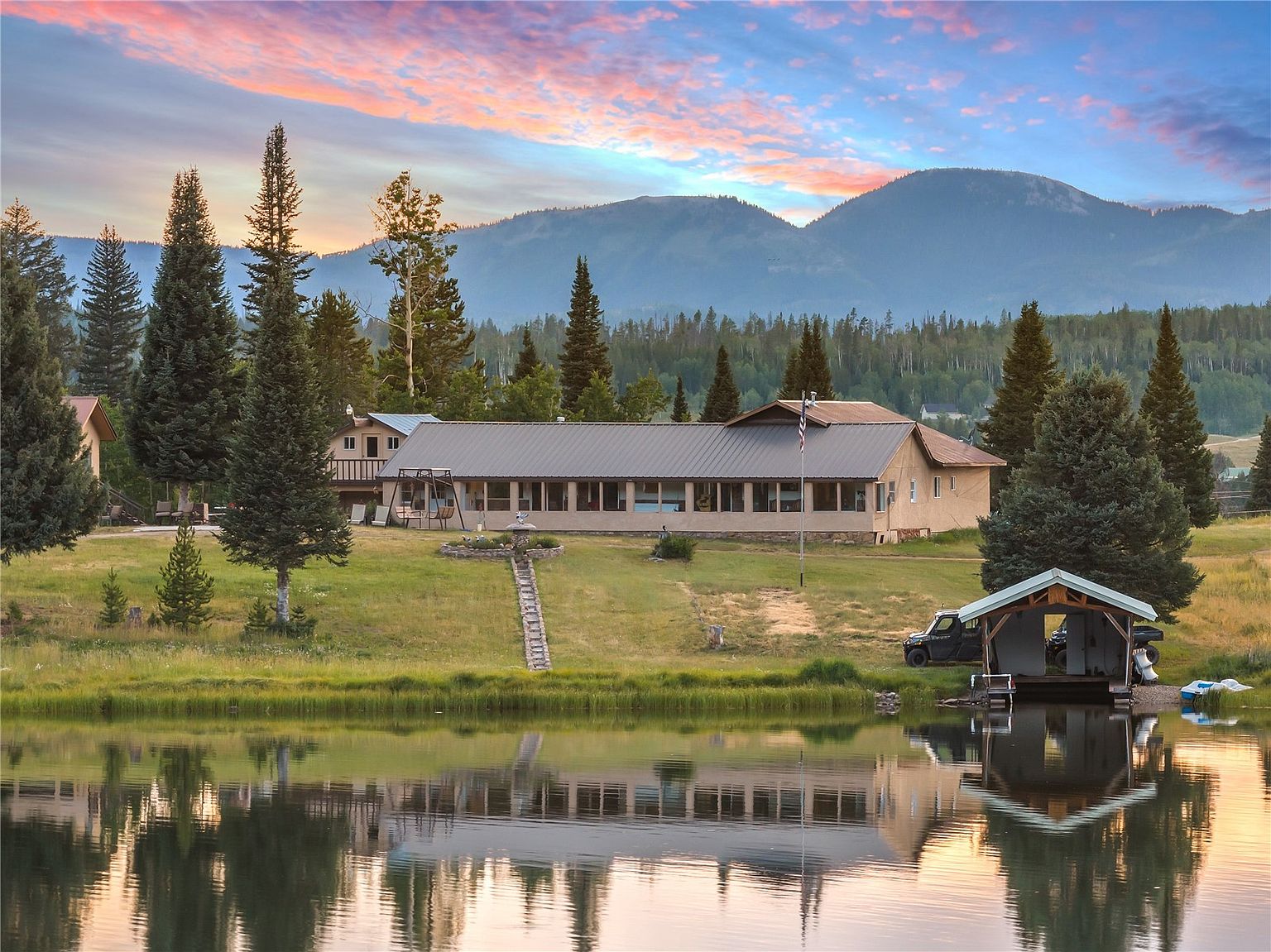
From the moment the main residence comes into view — its metal roof catching the mountain light, its generous windows oriented deliberately toward the water — it becomes clear that Pearl Lake Ranch was built not merely for shelter, but for a sustained, intimate relationship with one of Colorado's most remarkable natural settings. A stone-lined pathway descends from the house to the lake's edge, a small but telling gesture that speaks to the property's organizing principle: every element here is in quiet conversation with the water.
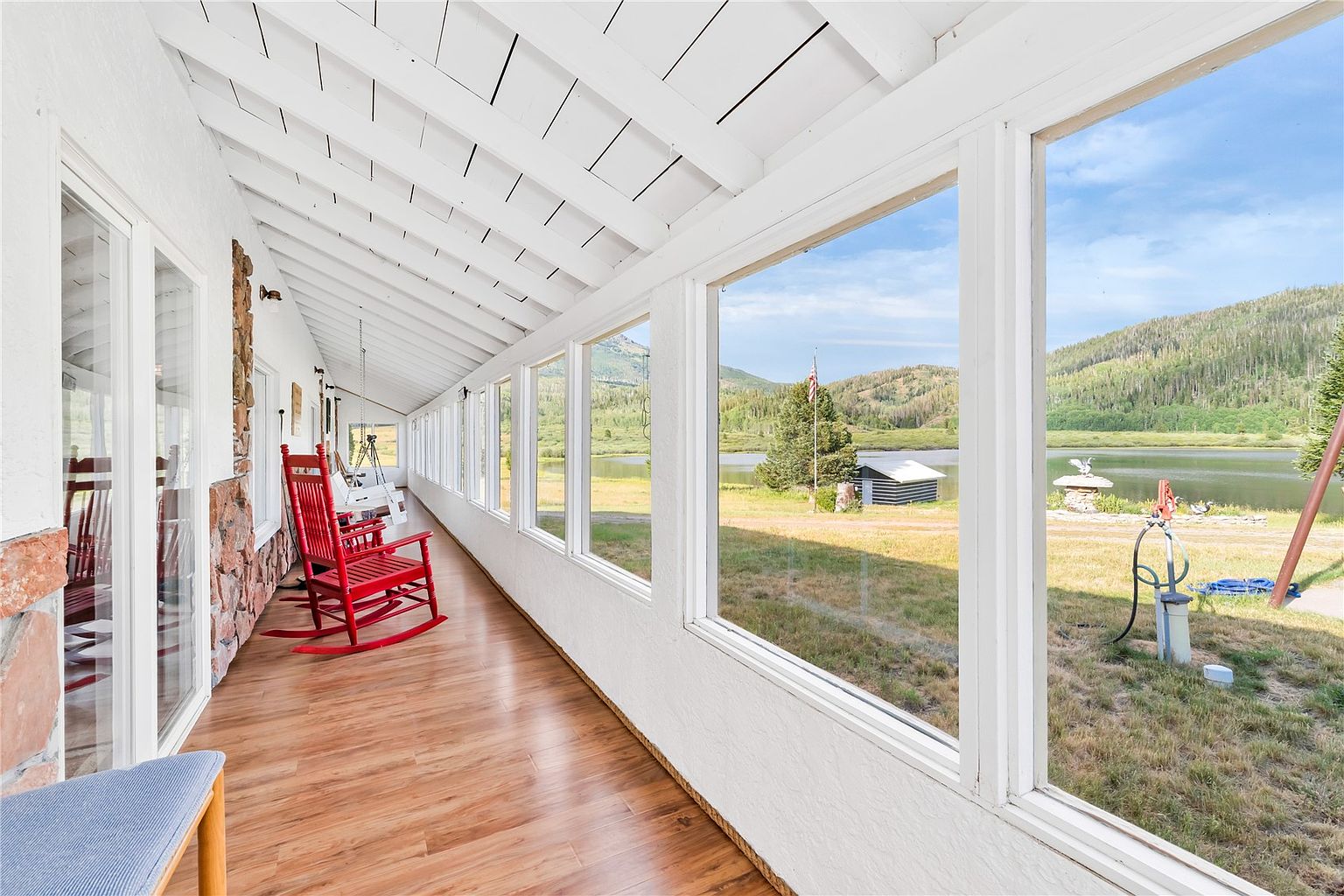
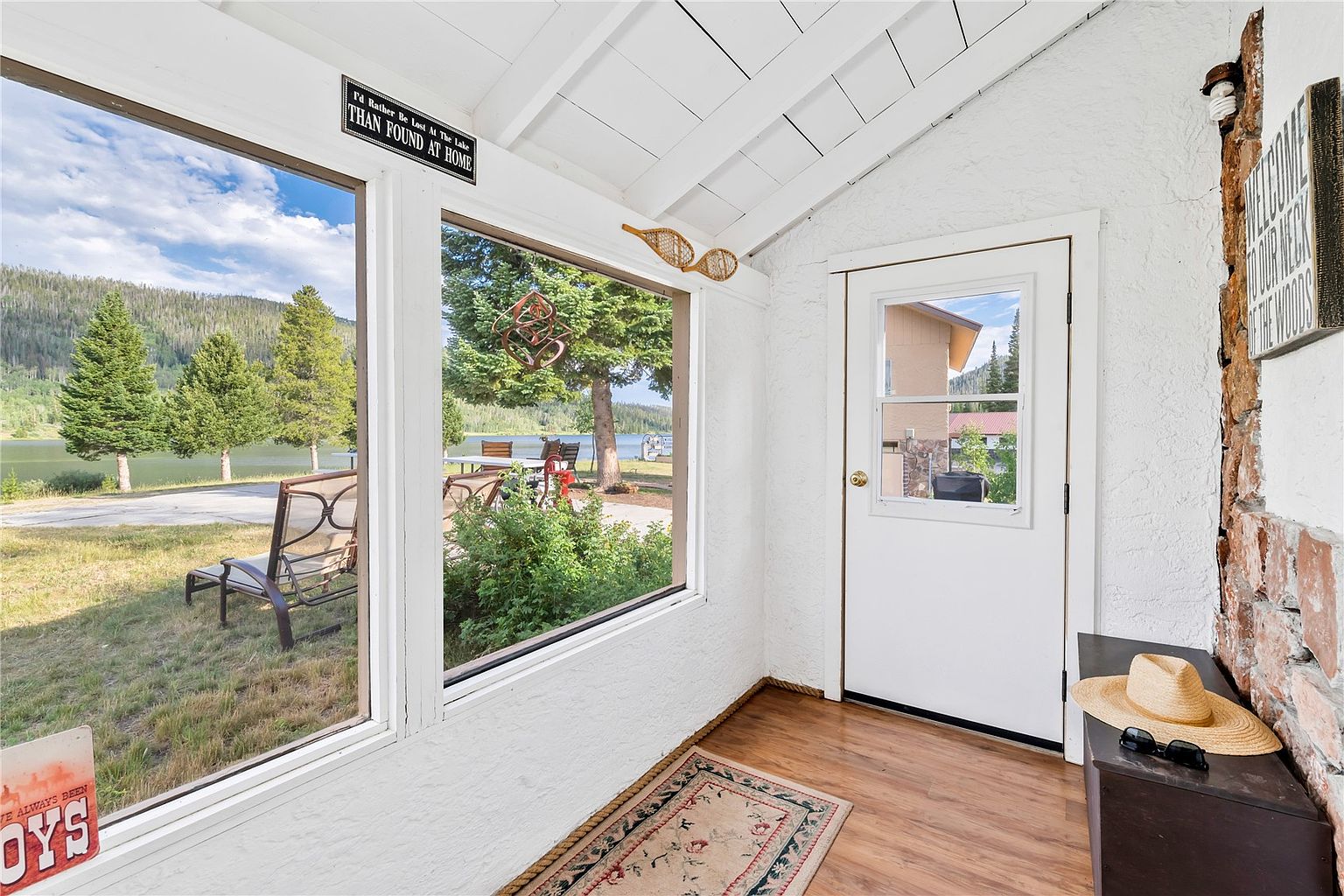
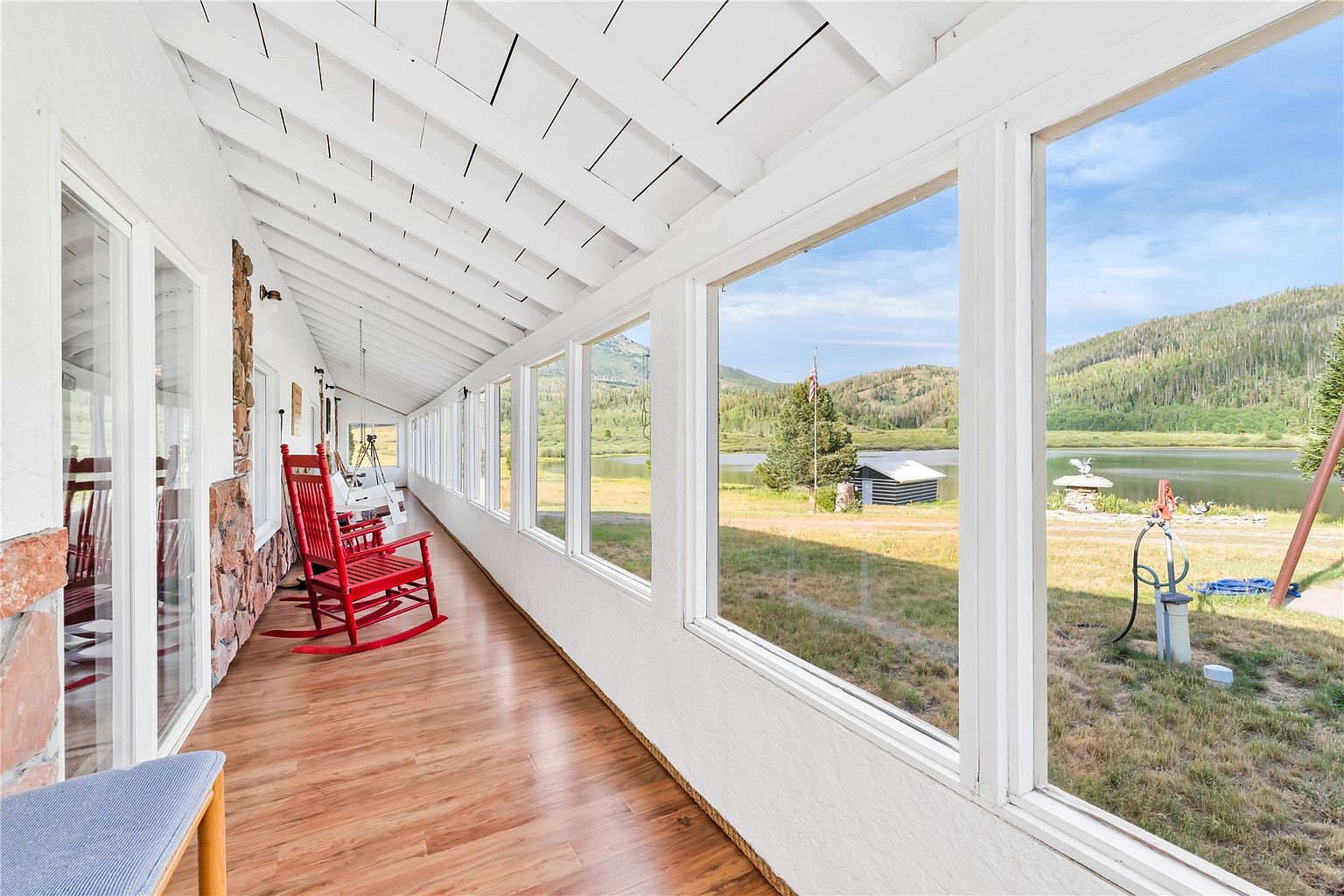
Step inside the main residence and the sunroom announces itself immediately. A long row of large windows frames unobstructed views of Pearl Lake and the surrounding National Forest, while a rustic stone-clad wall and a white-painted exposed beam ceiling anchor the space in the mountain vernacular without tipping into cliché. Red rocking chairs invite long, unhurried afternoons watching osprey work the shoreline. It is a room that understands its purpose entirely.
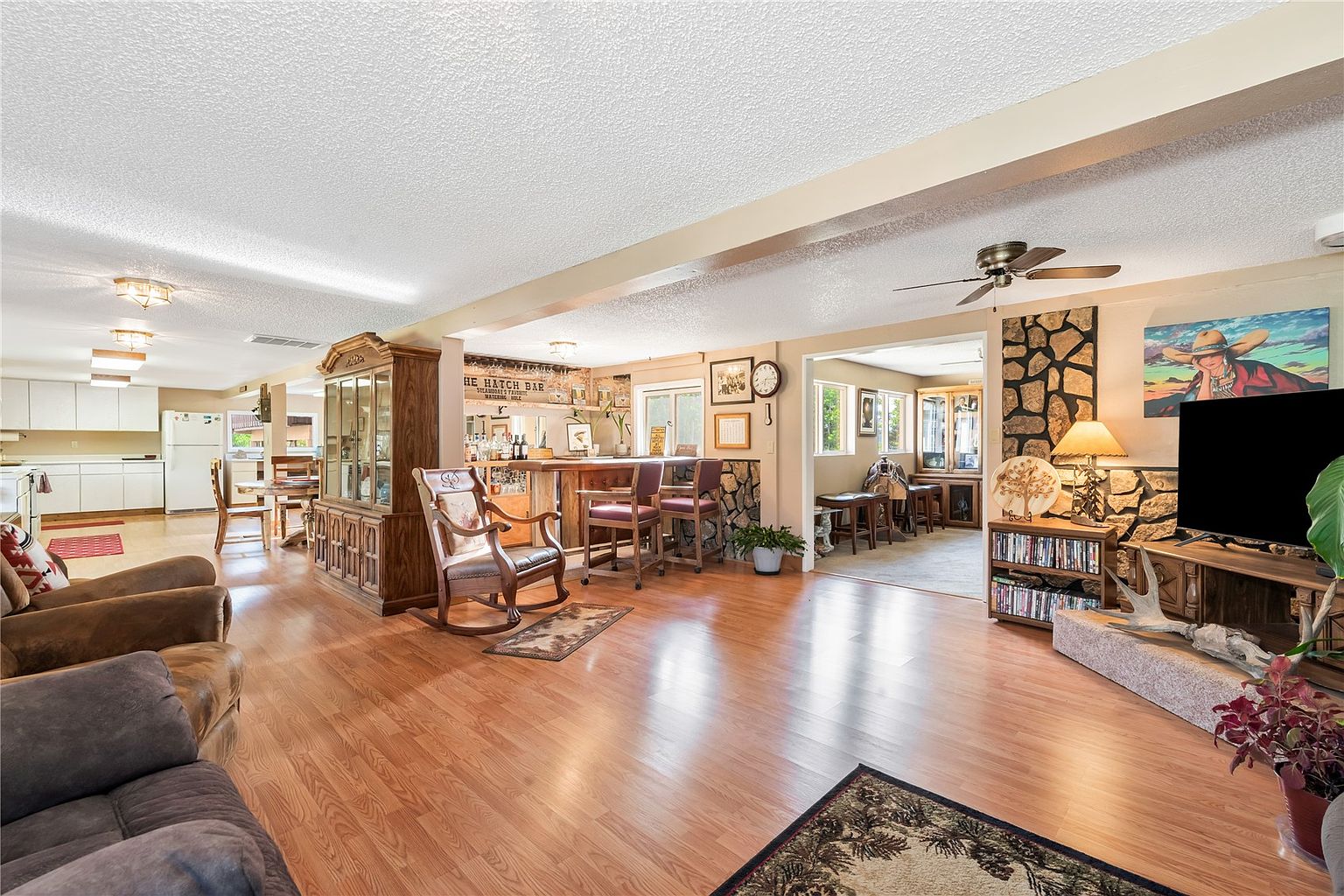
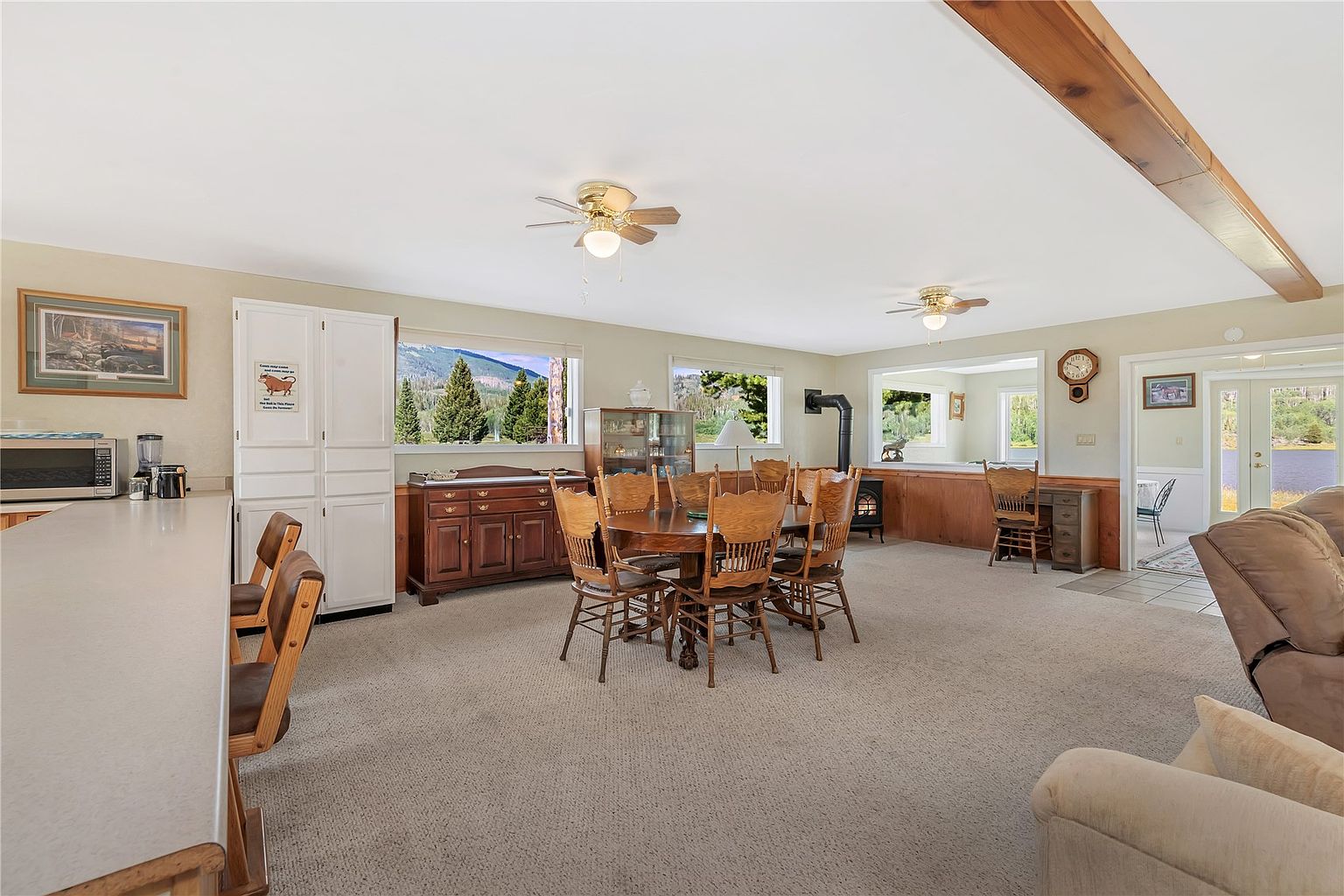
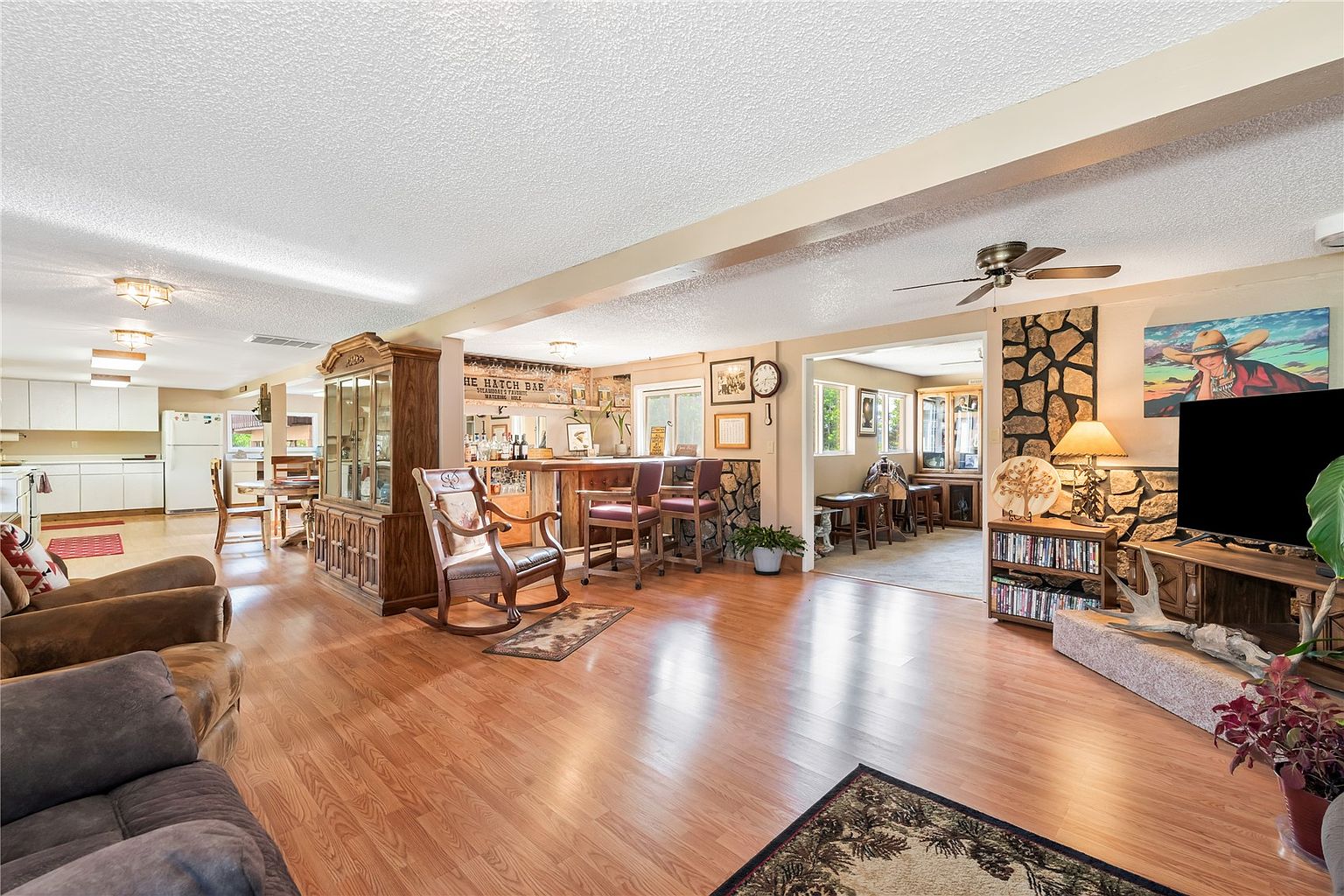
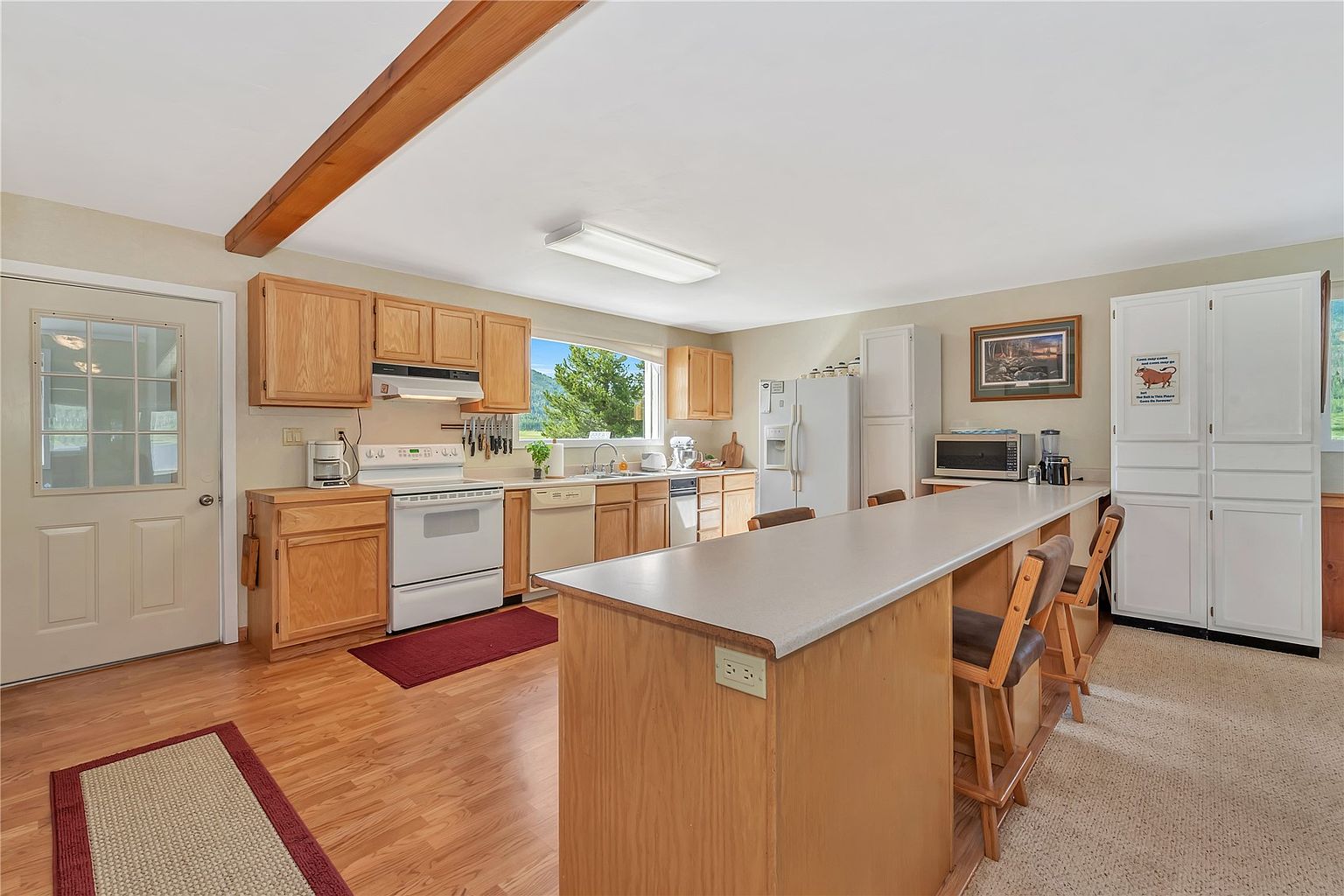
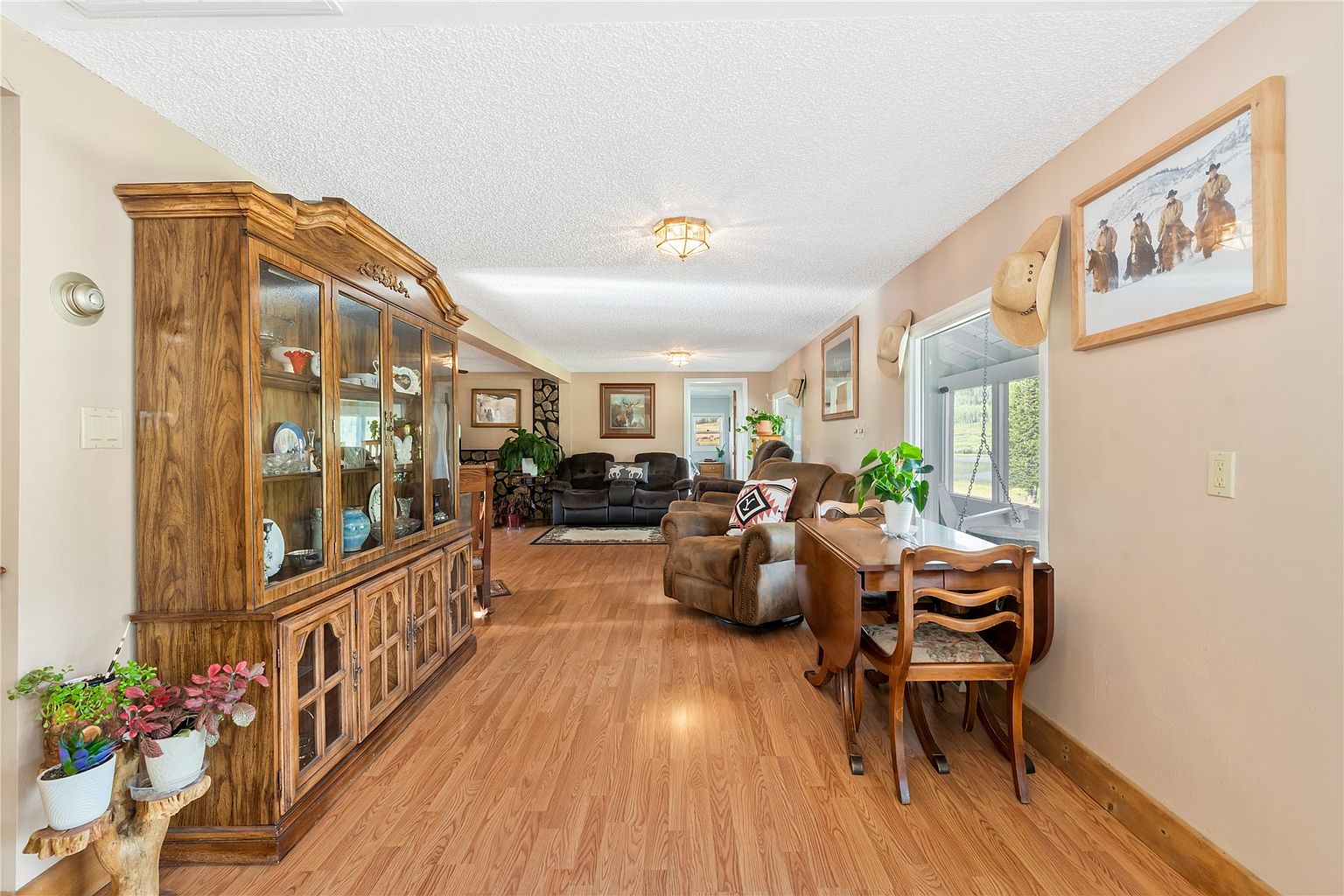
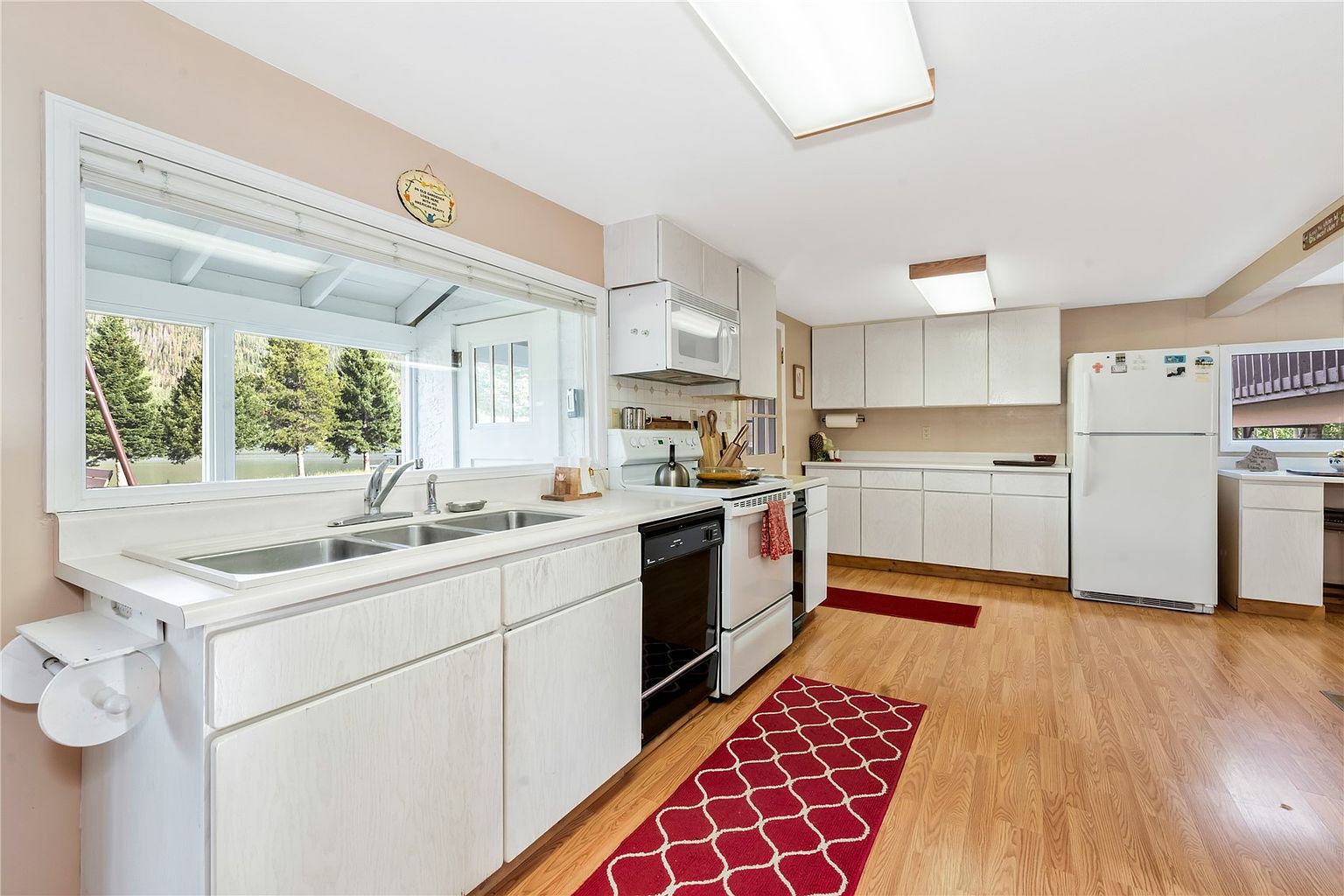
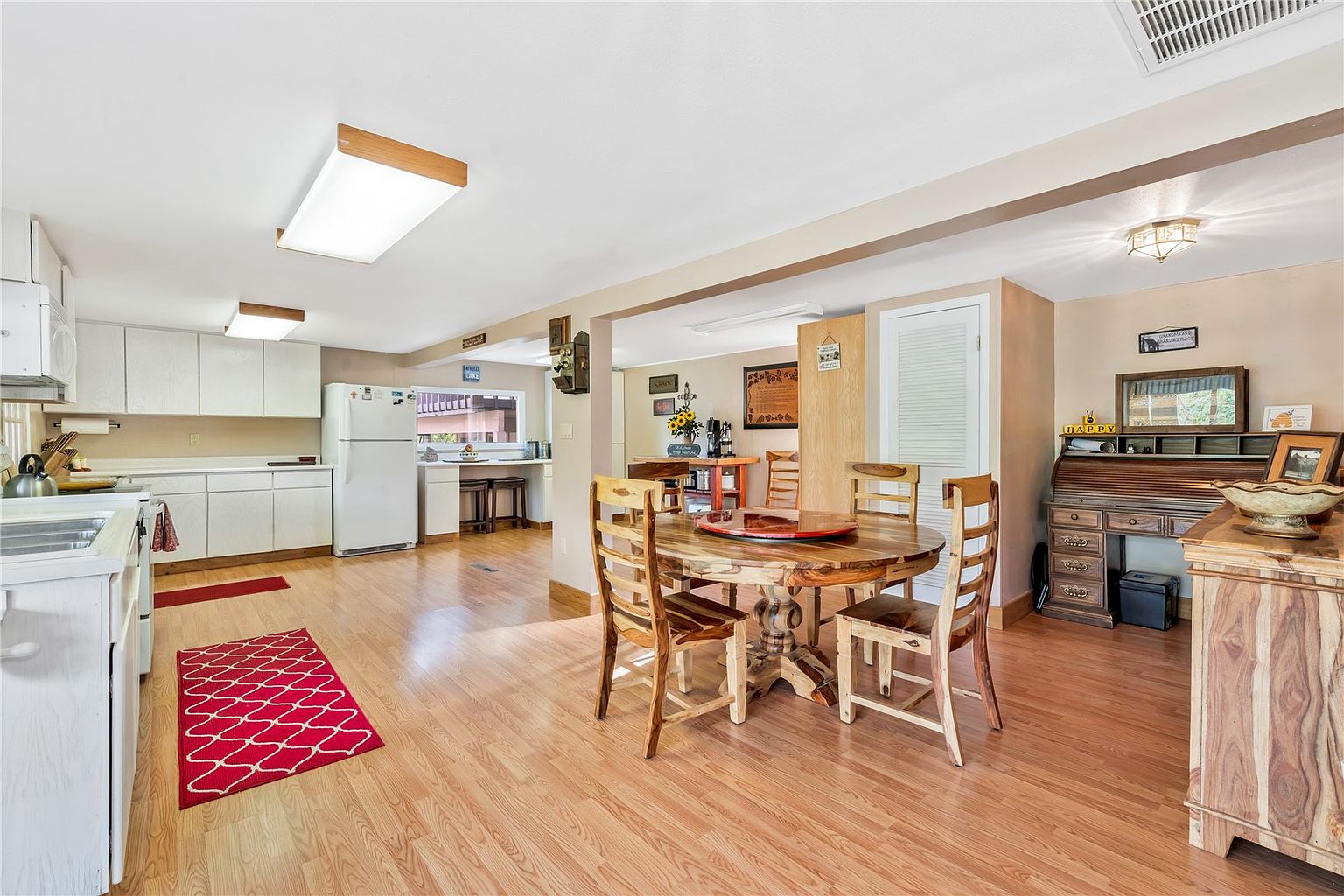
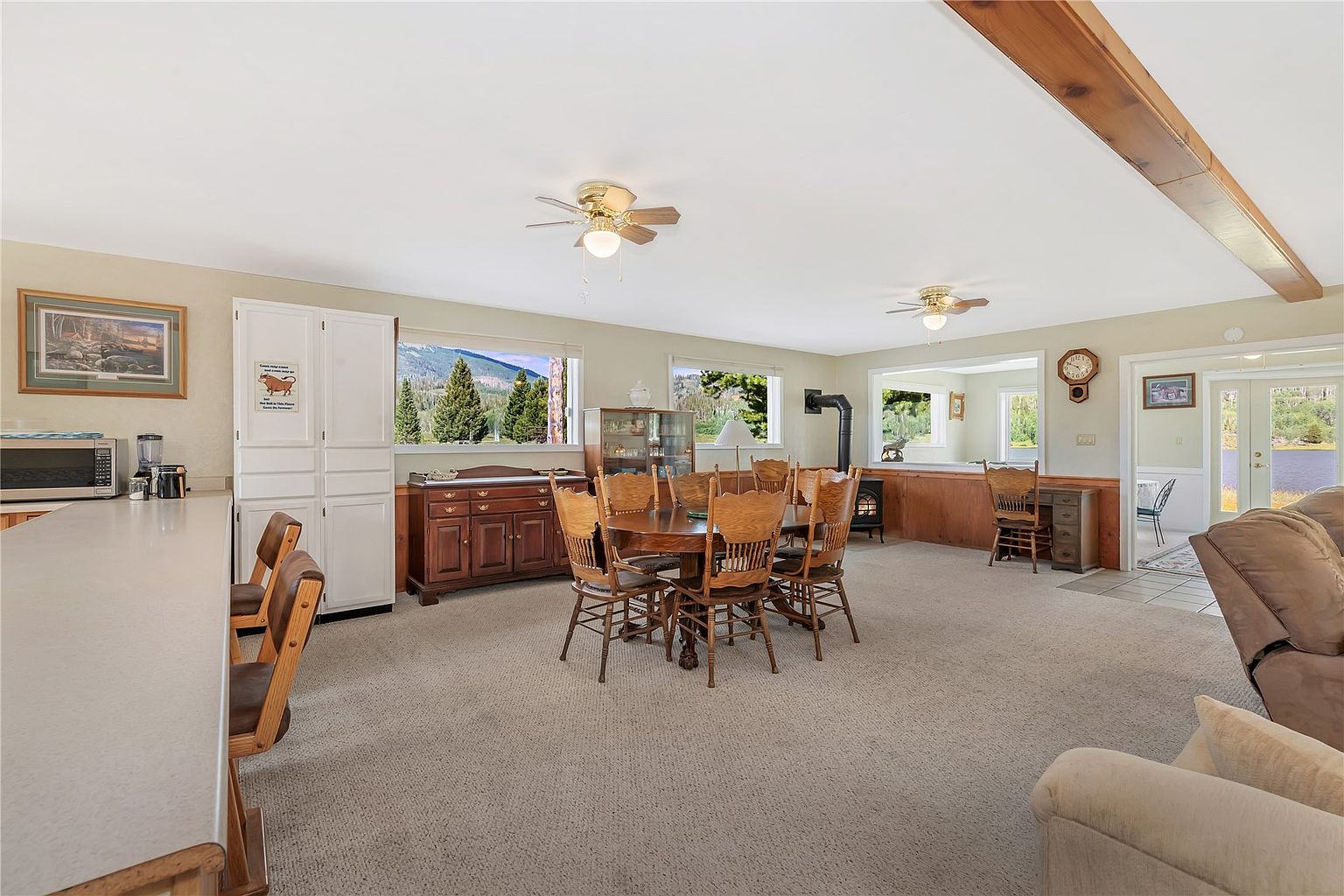
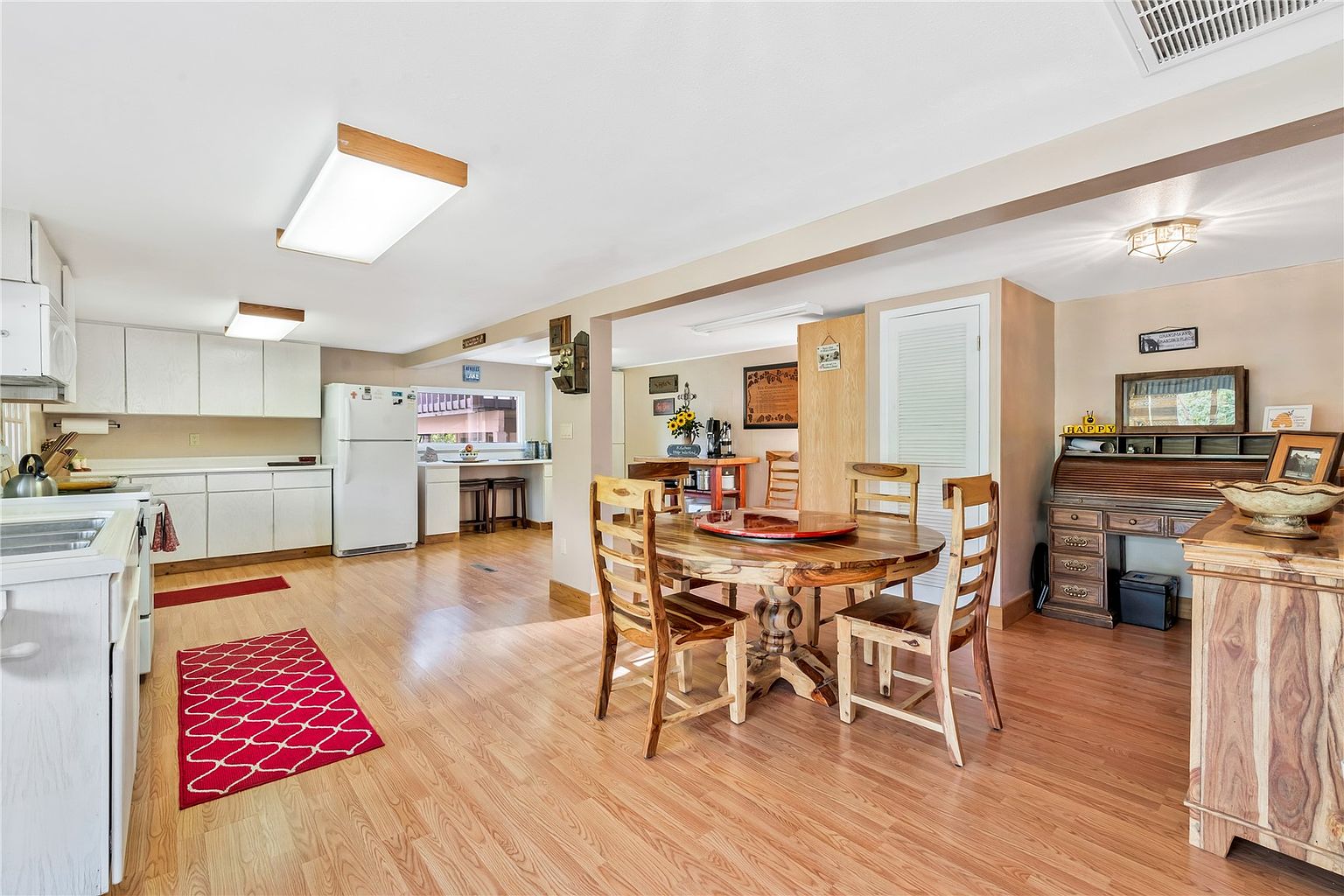
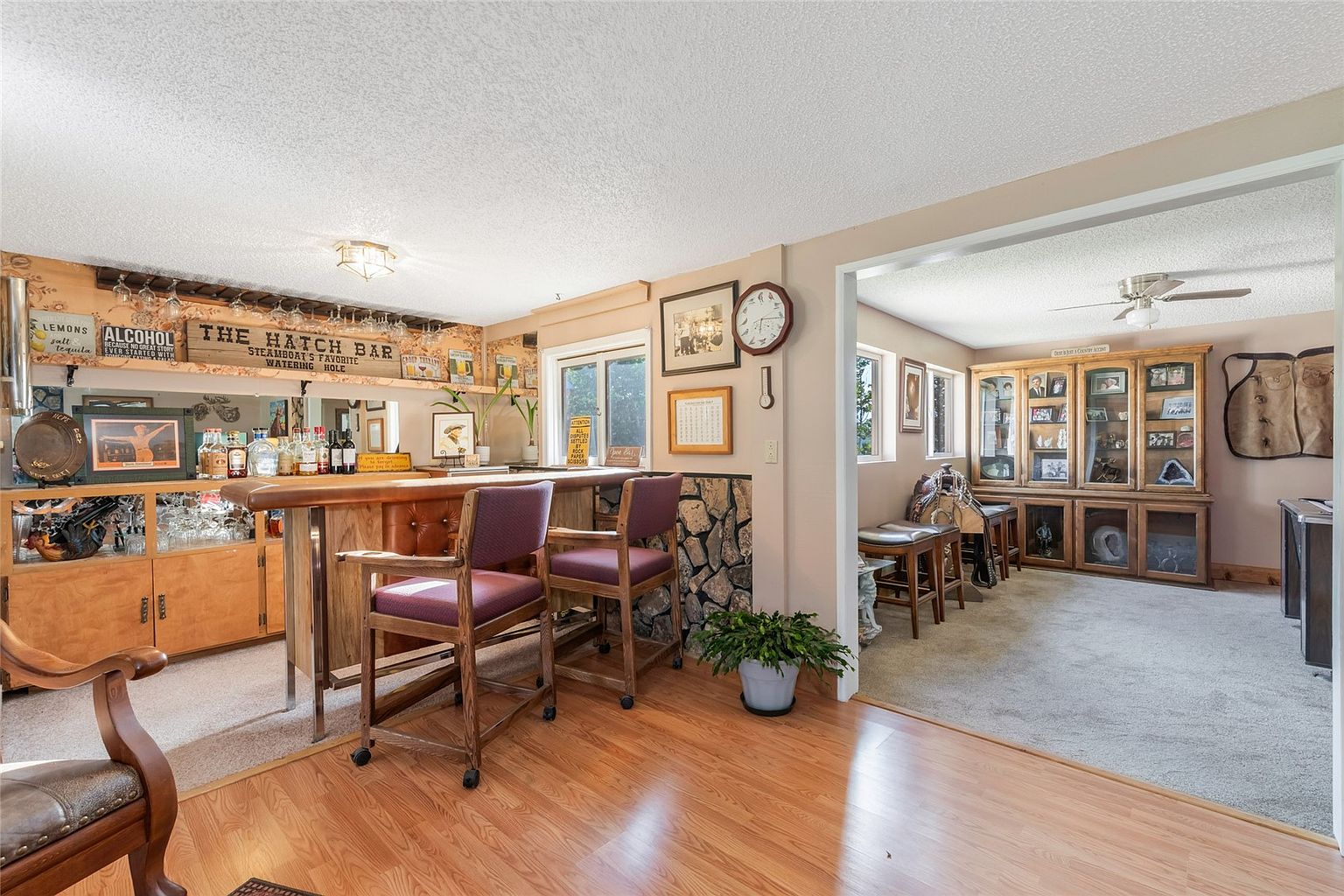
The kitchen is functional and considered — white cabinetry, a central island with bar seating, a wooden ceiling beam overhead that carries the eye upward, and a large window above the sink that ensures even the most ordinary domestic moments are framed by an extraordinary view. The open living area is organized around a prominent stone-clad chimney breast, a natural focal point from which the room flows outward toward a bar and secondary lounge — the kind of space that accommodates an intimate family evening and a larger gathering with equal ease.
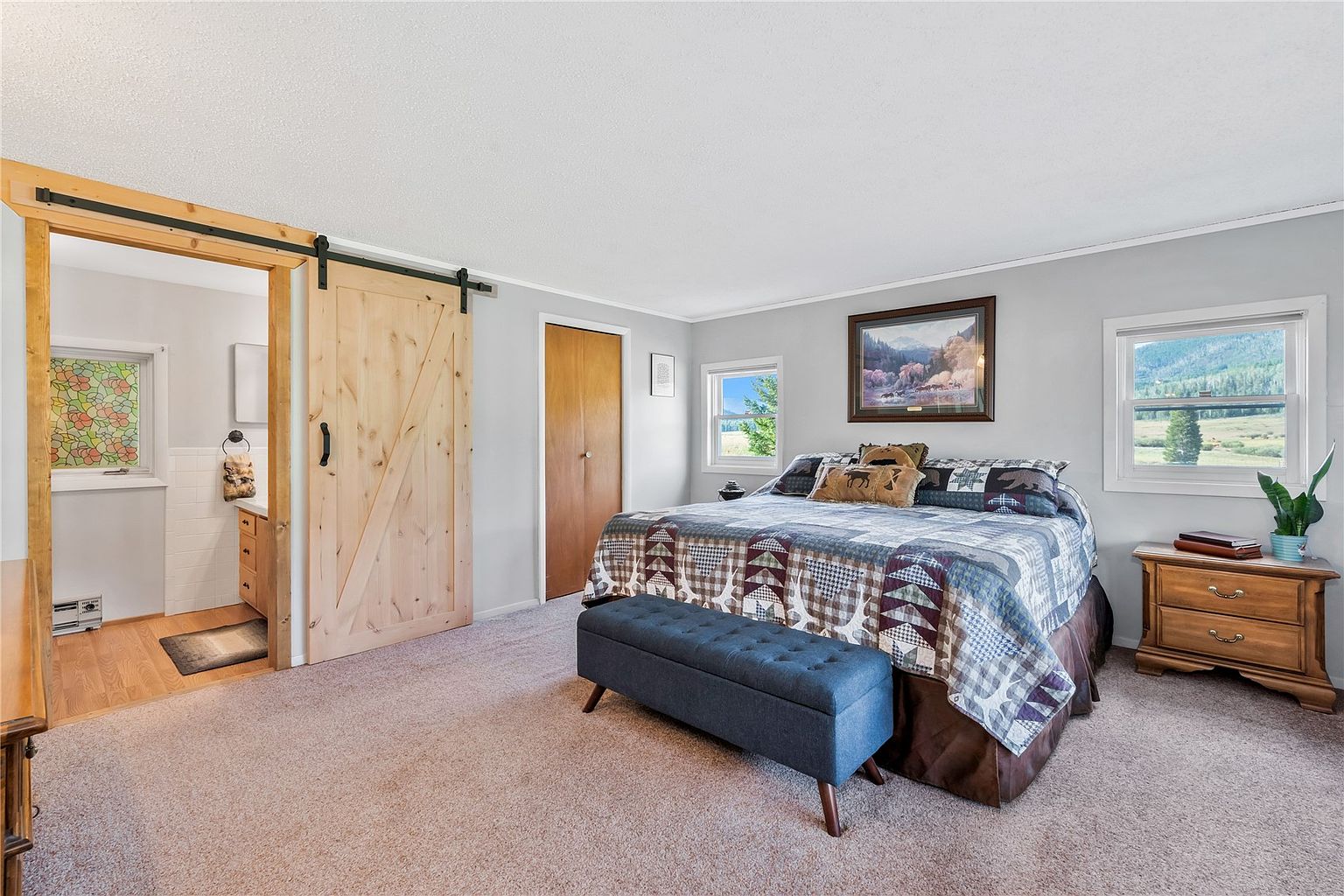
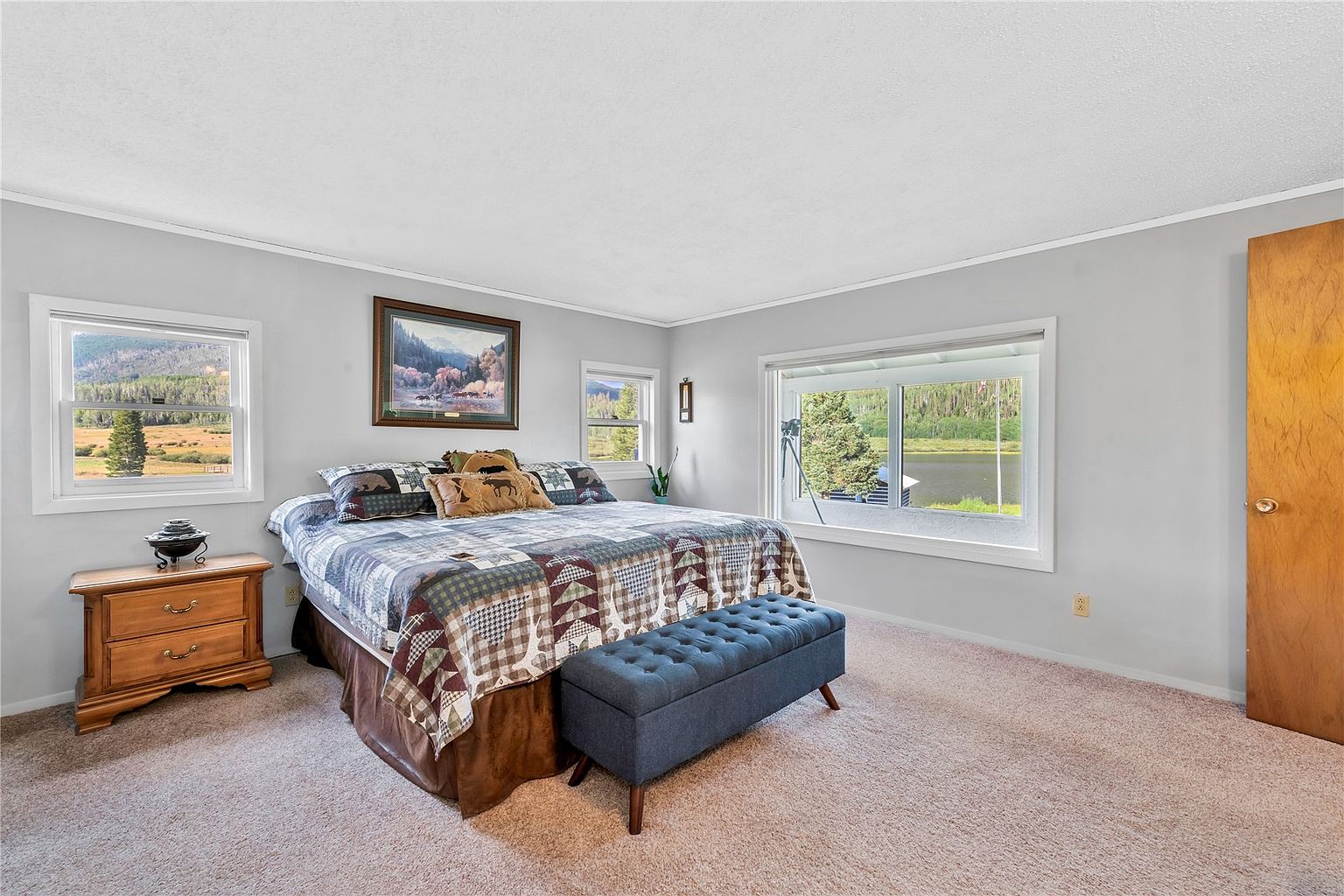
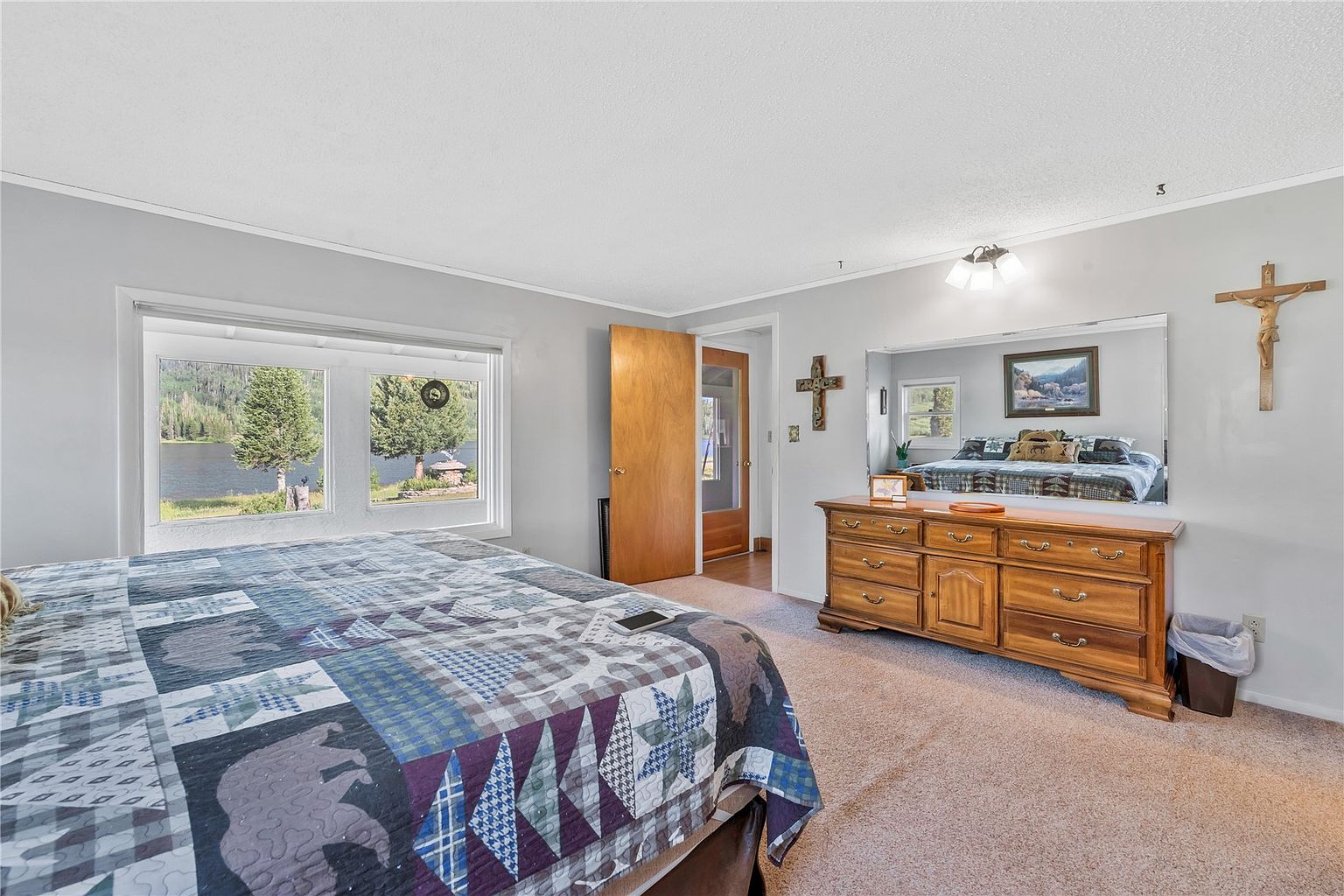
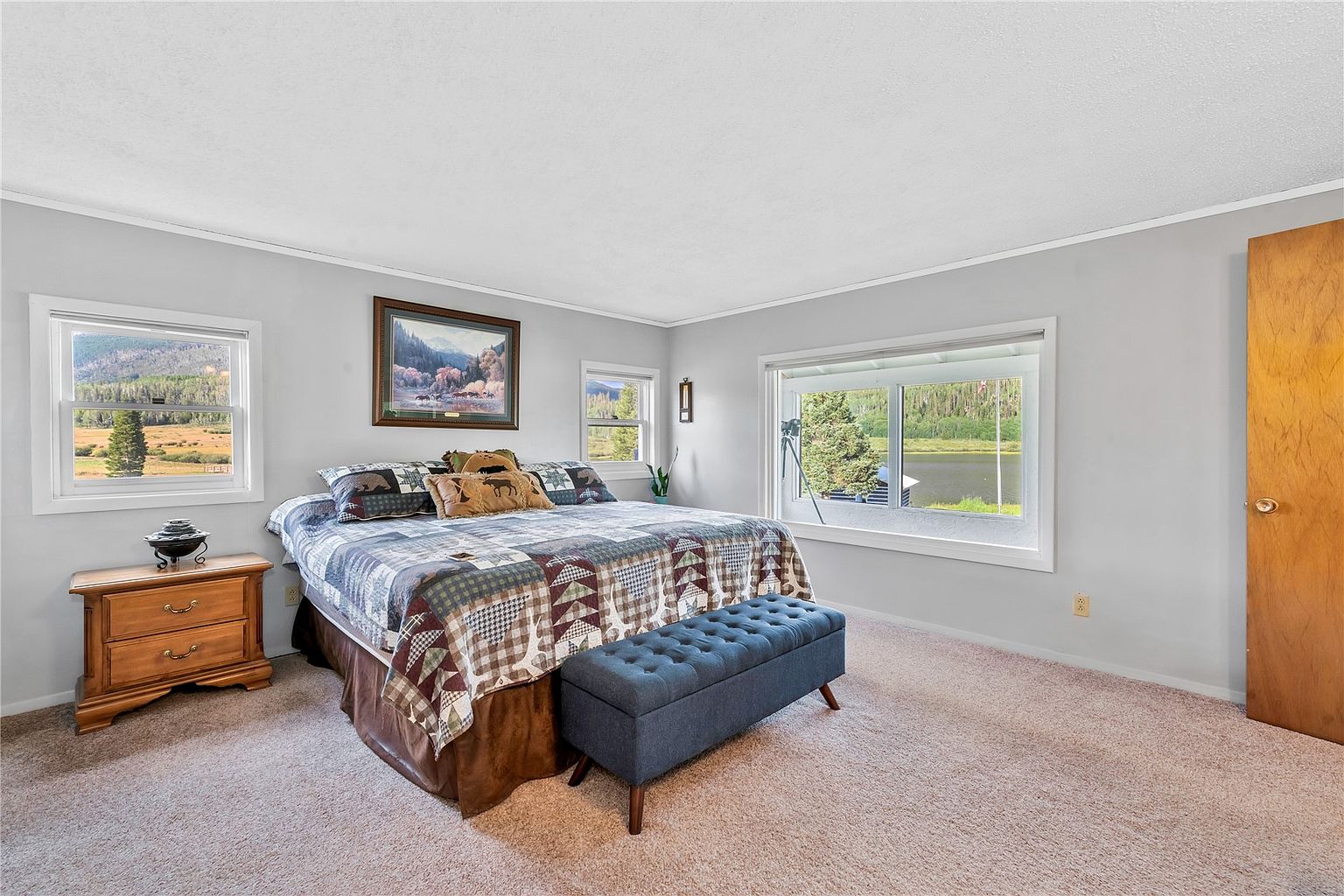
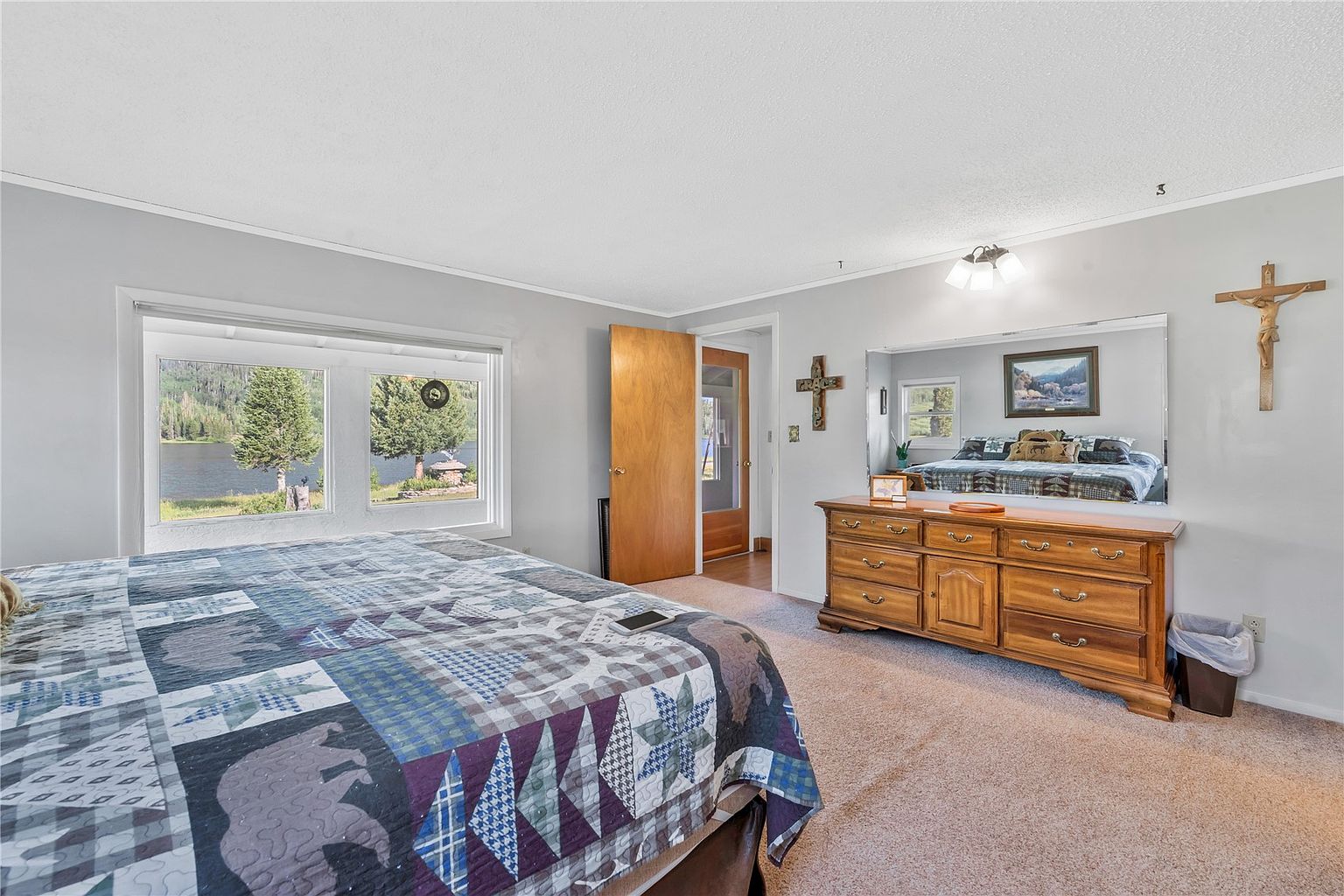
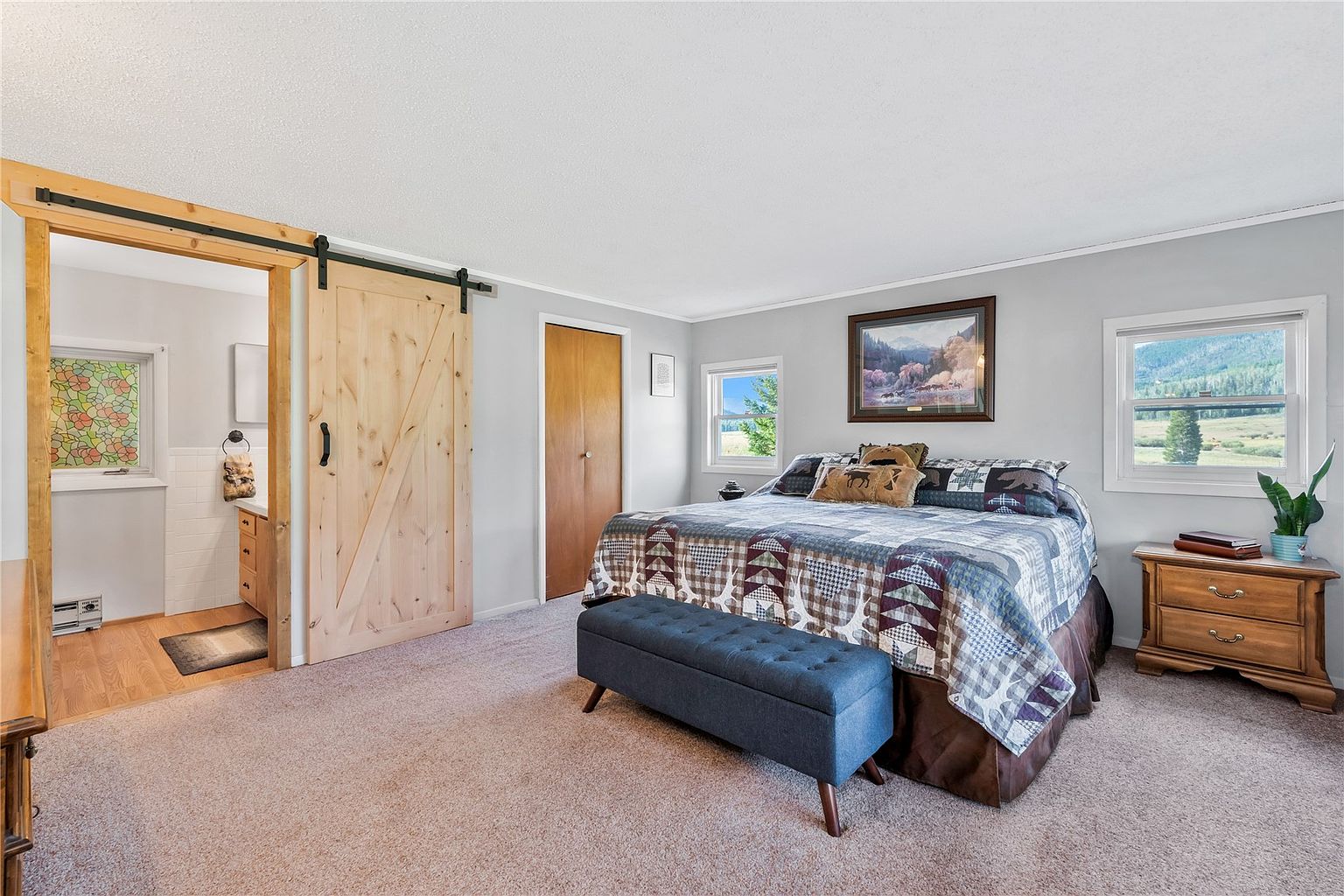
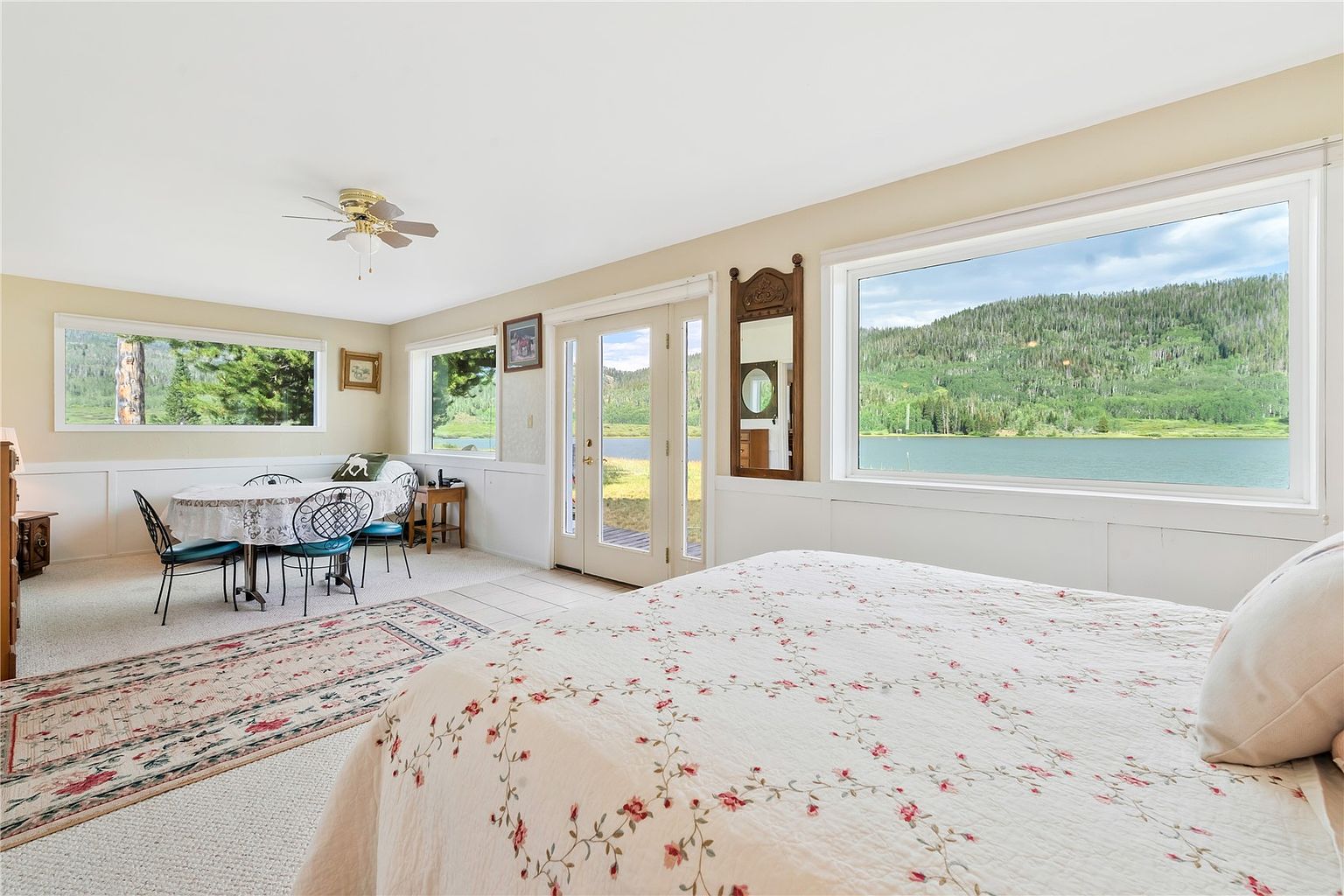
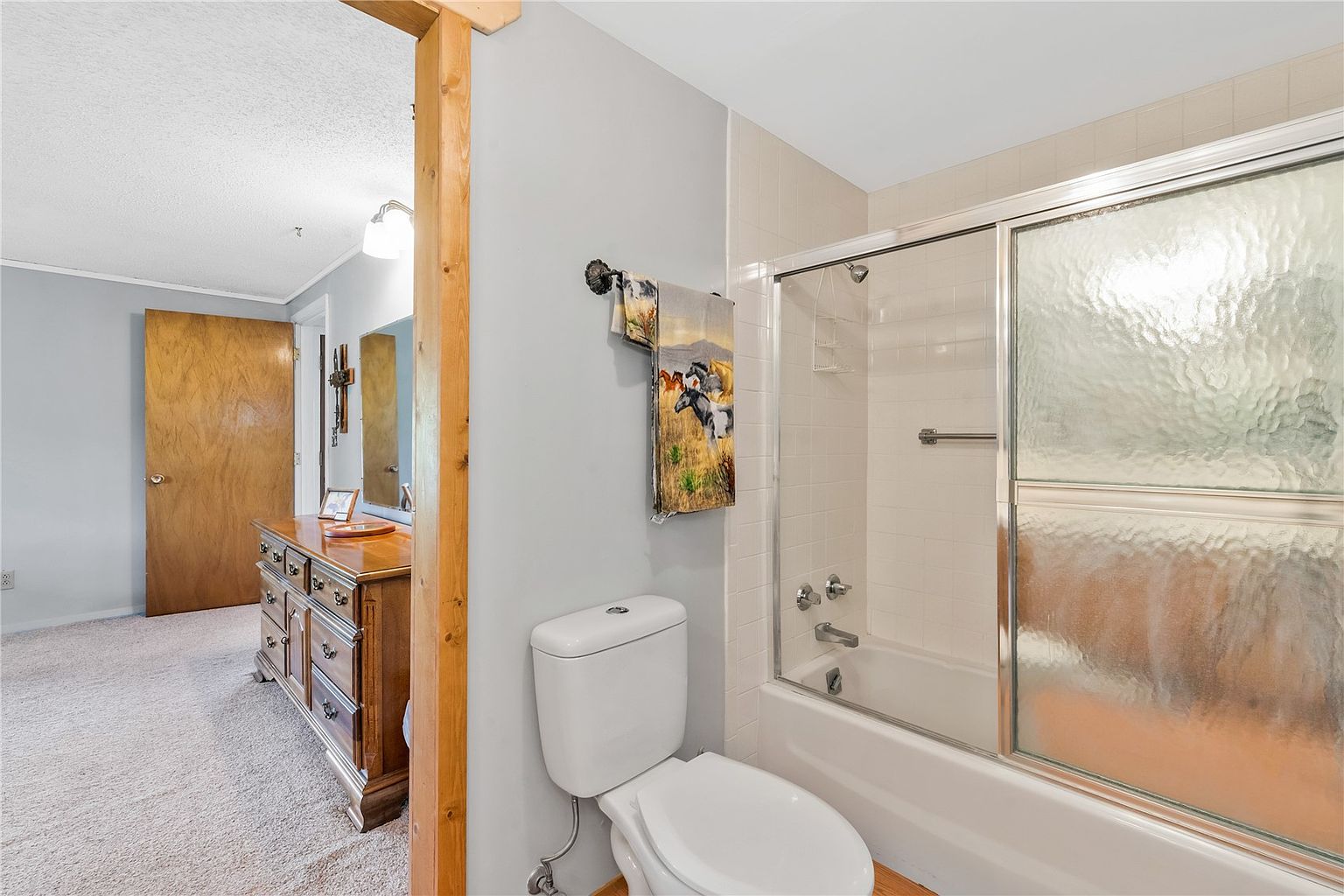
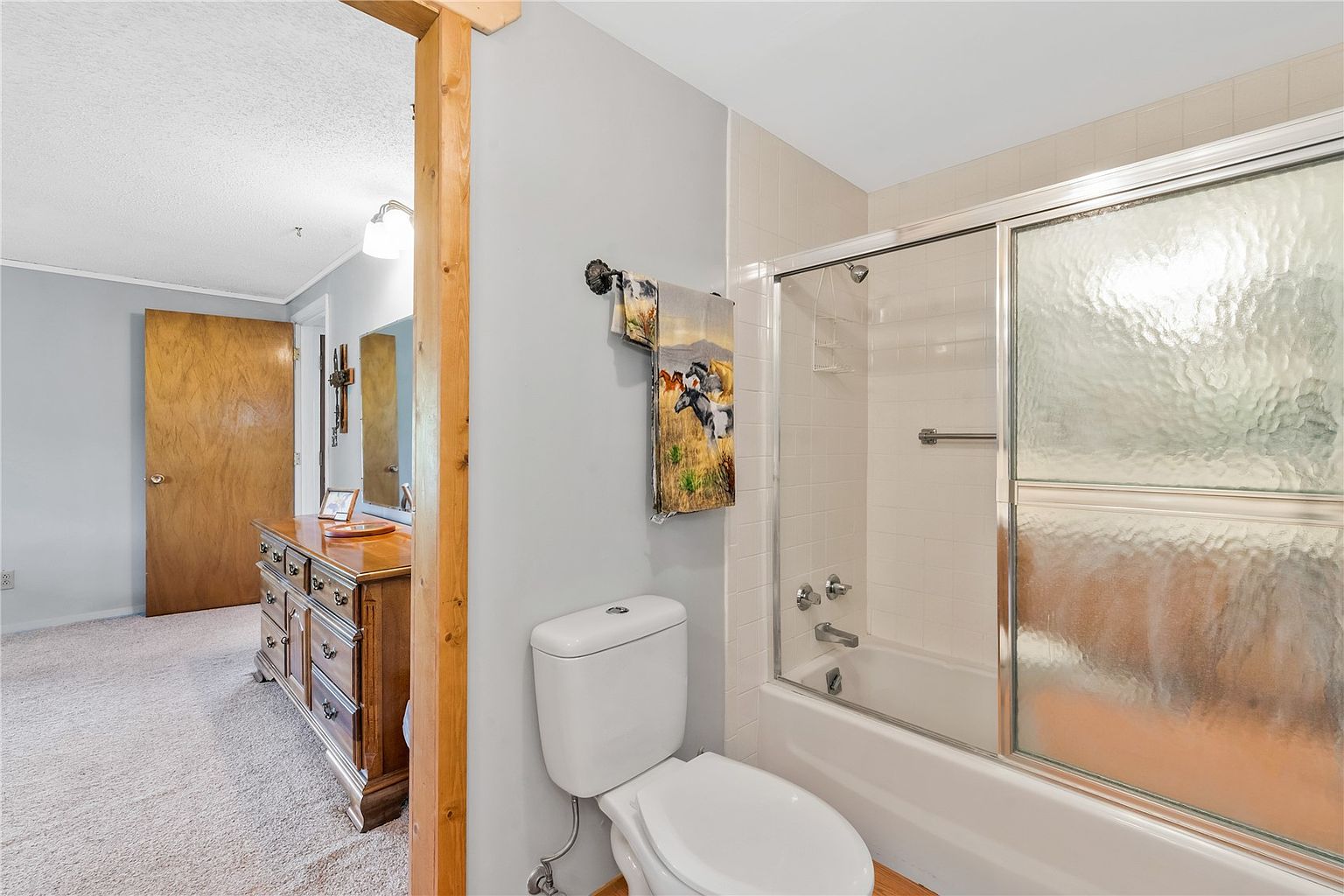
The primary suite is a particular achievement. Large windows on two walls deliver lake views from the bed itself, filling the room with natural light at every hour and orienting the most private space in the home toward its greatest asset. A sliding barn door leads to the attached bathroom, and a tufted bench at the foot of the bed adds a note of considered refinement to the cabin-inspired aesthetic.
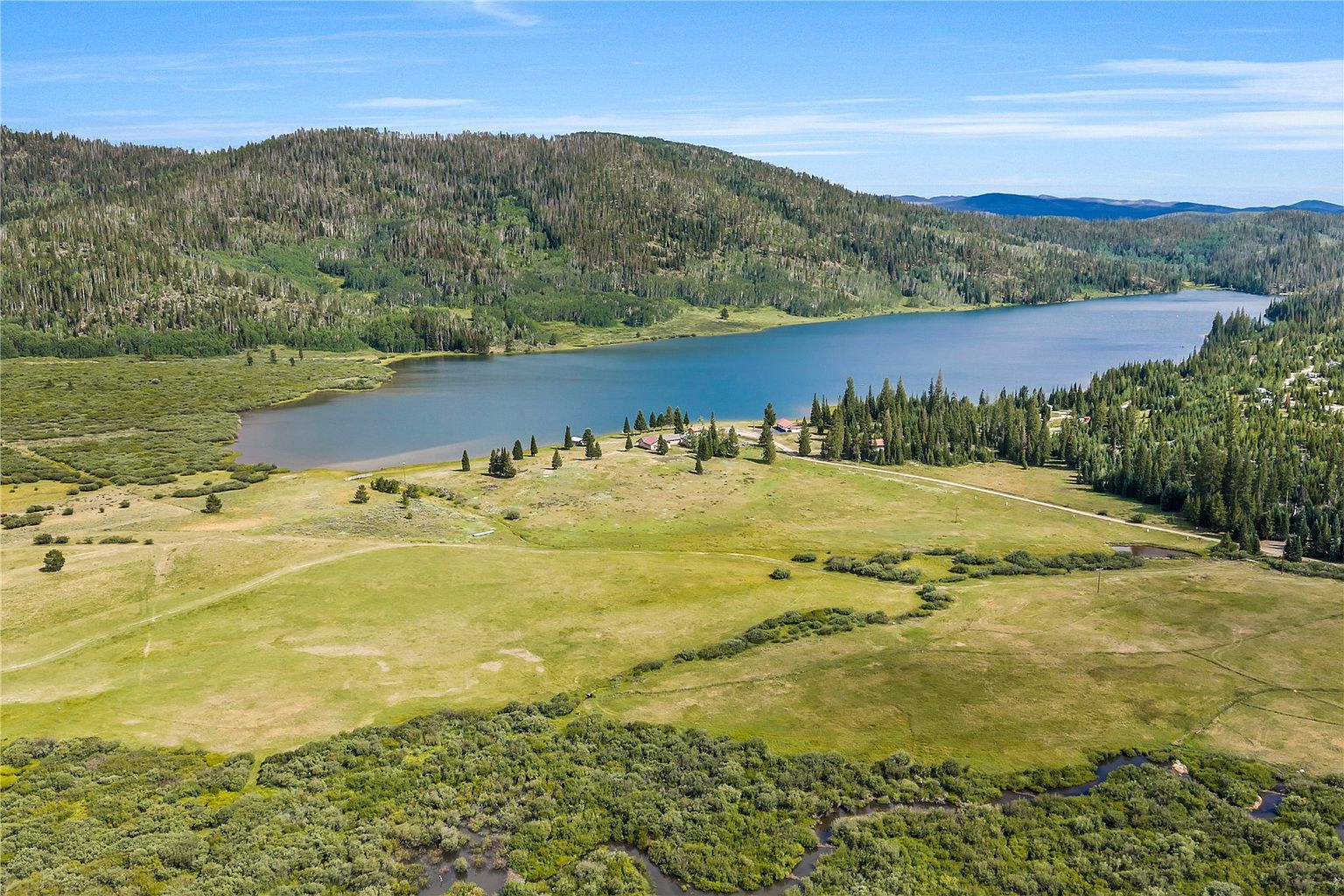
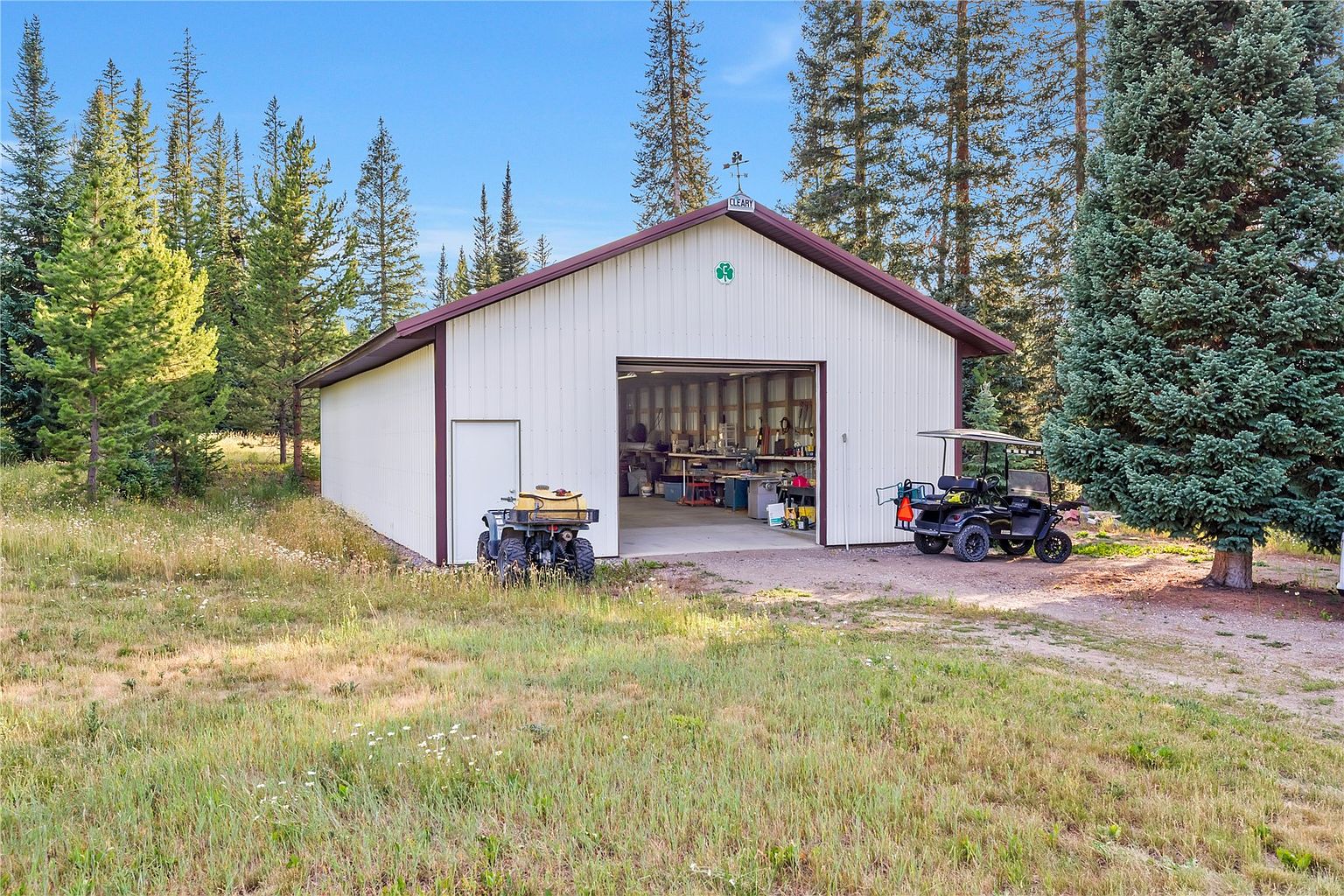
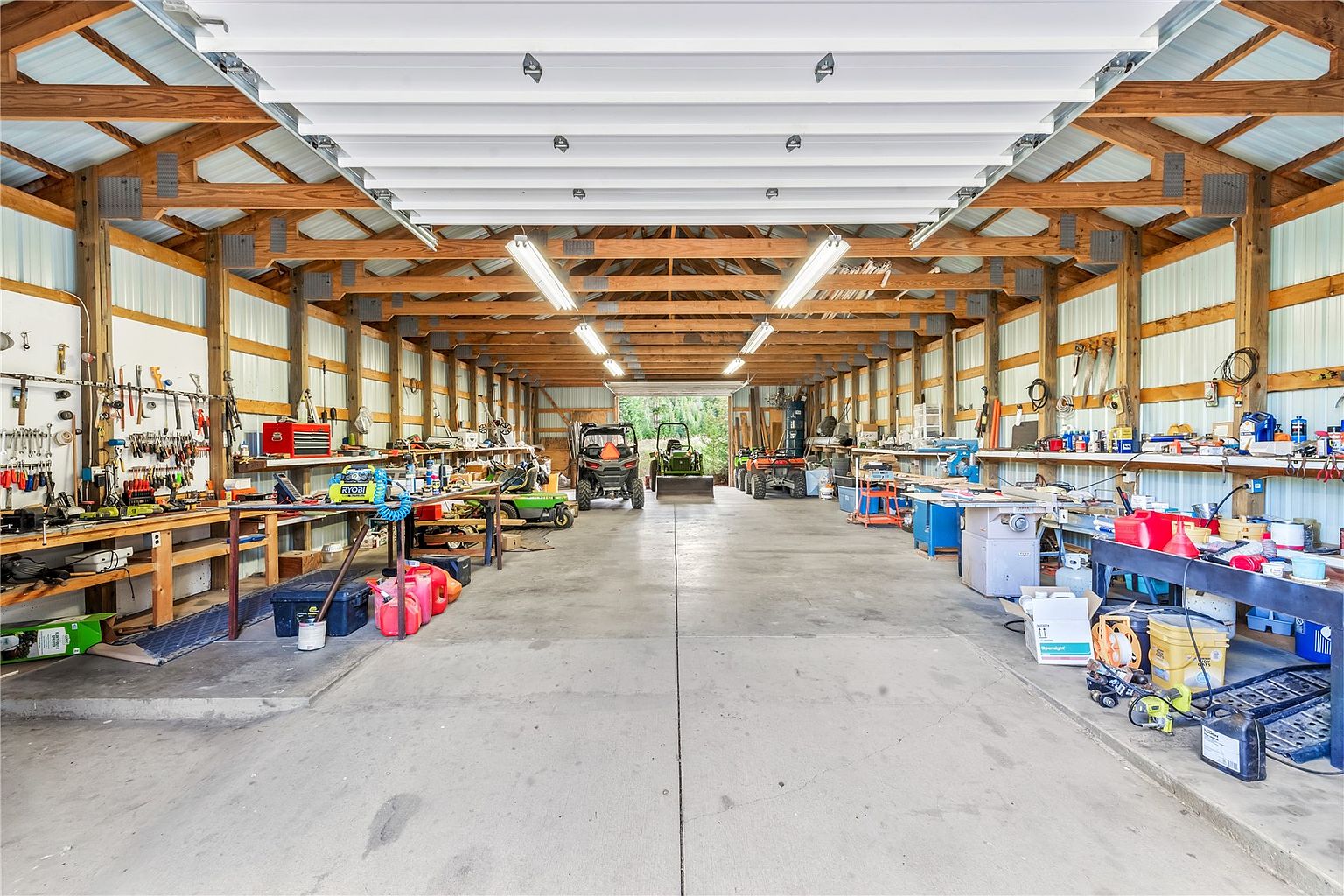
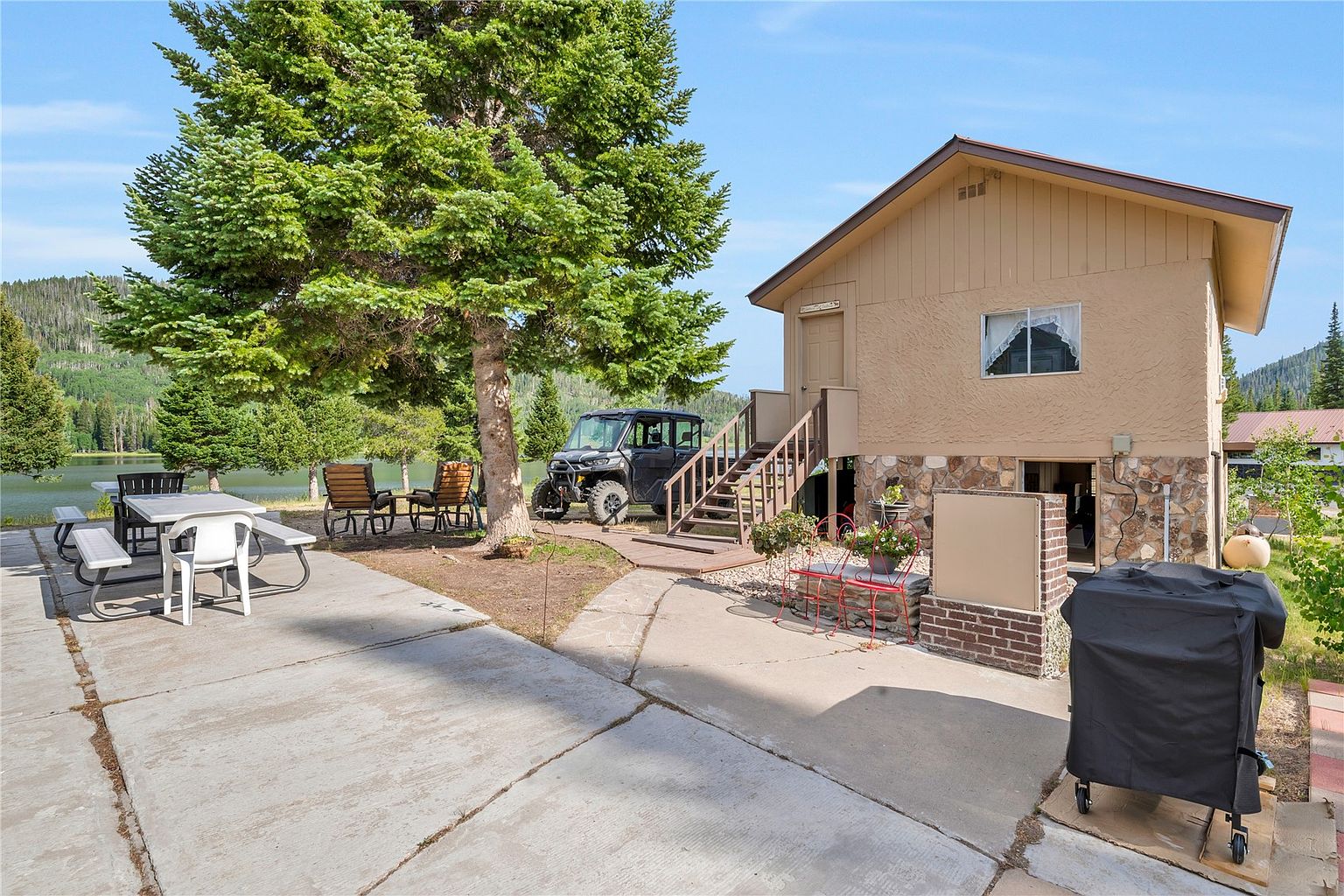
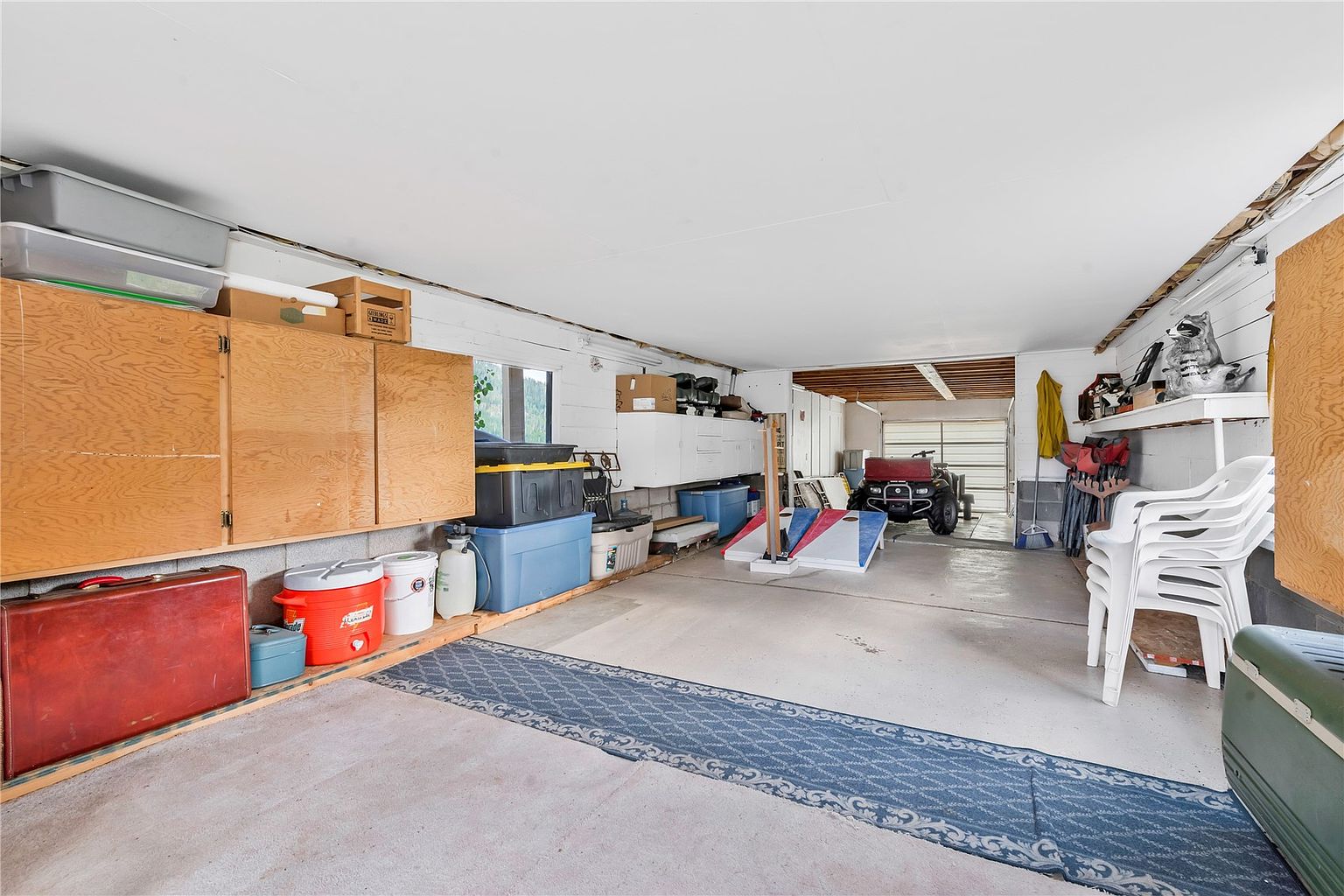
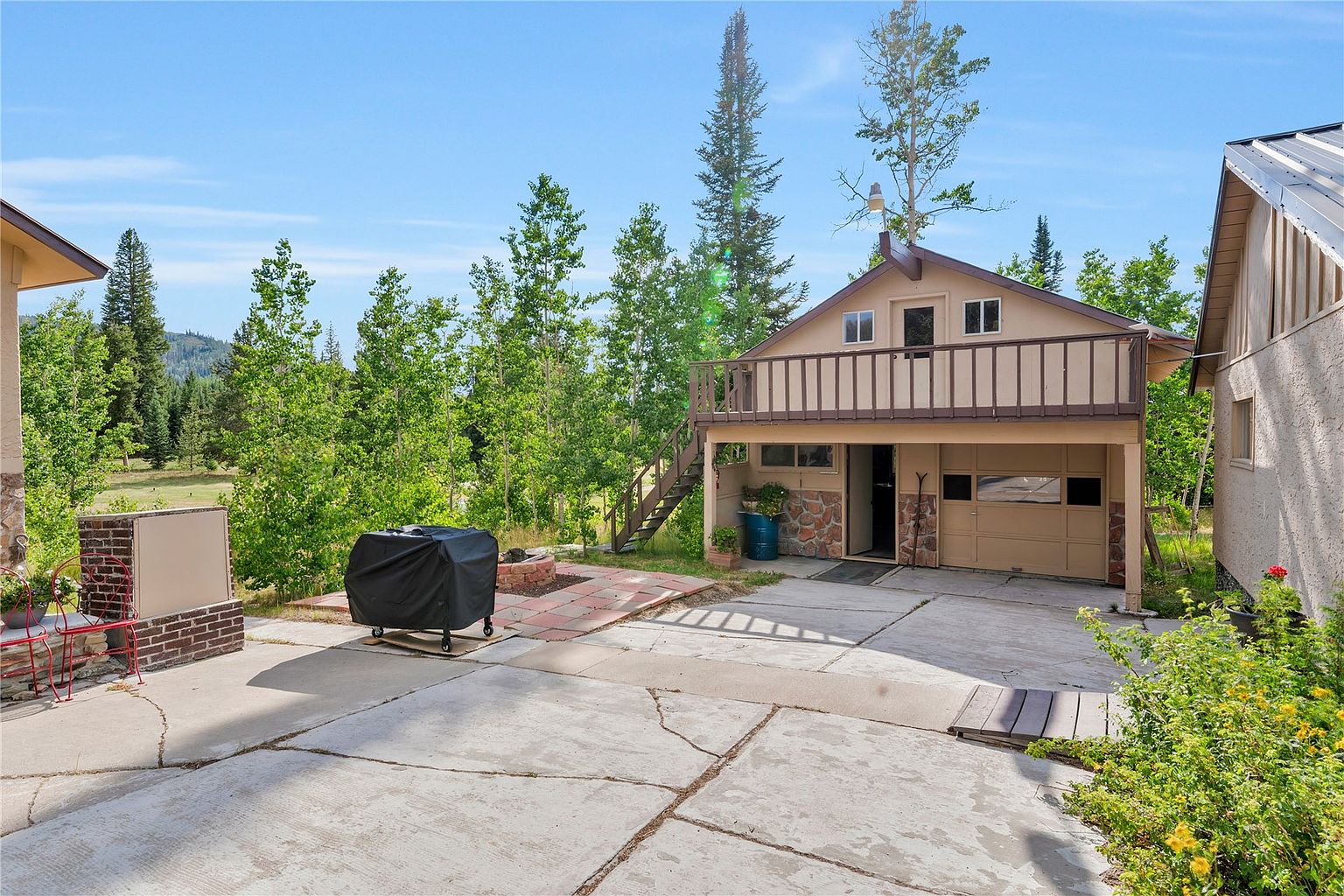
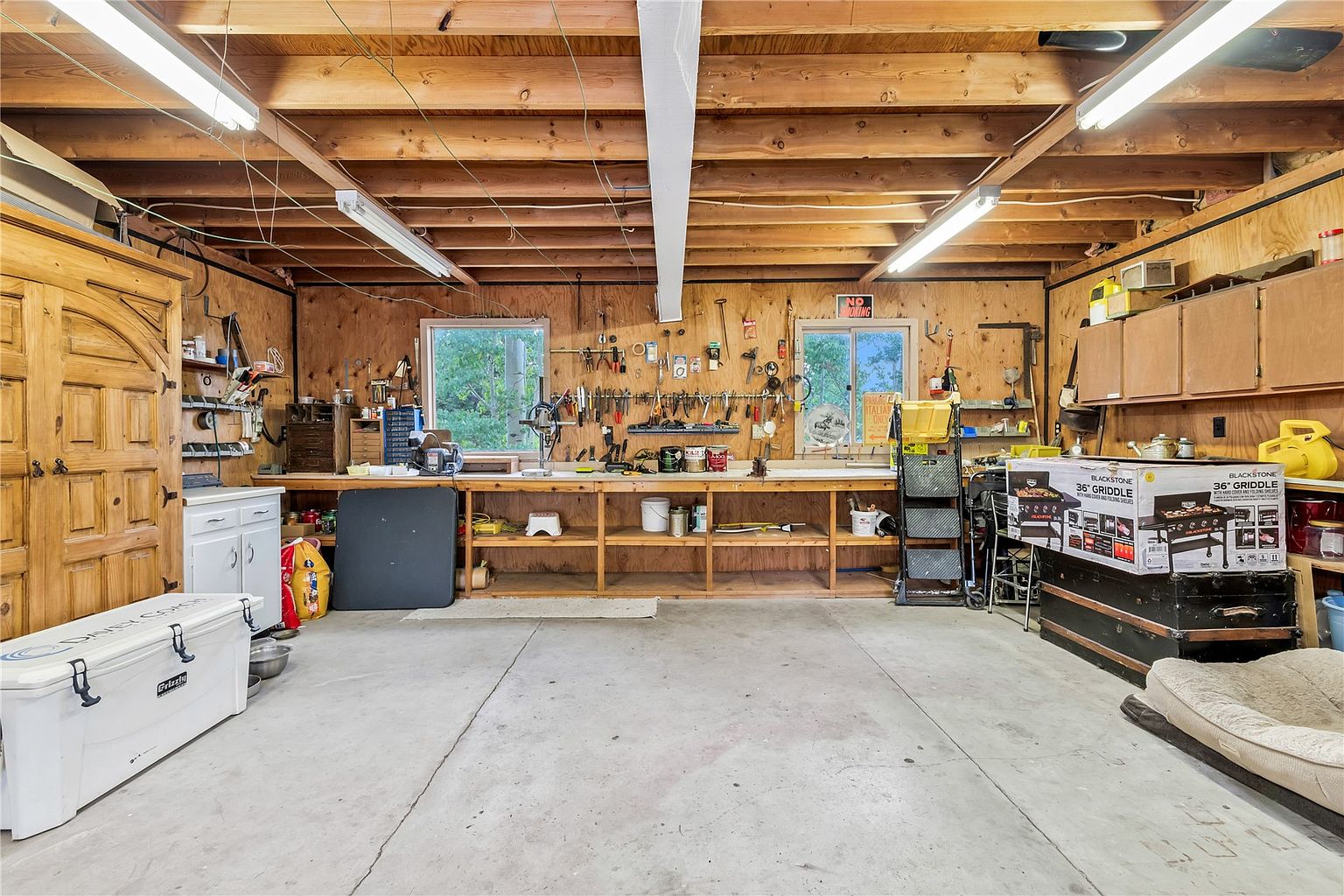
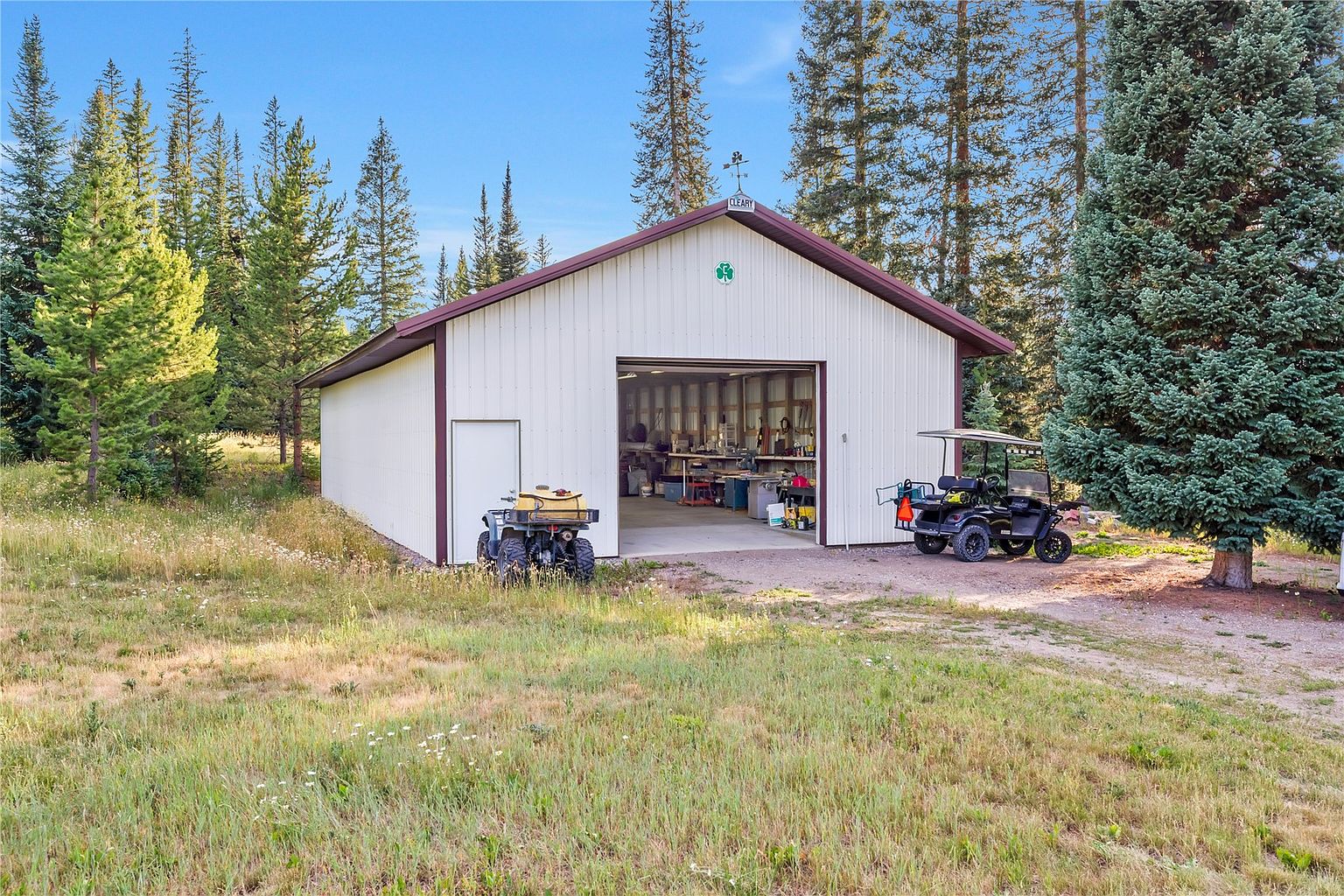
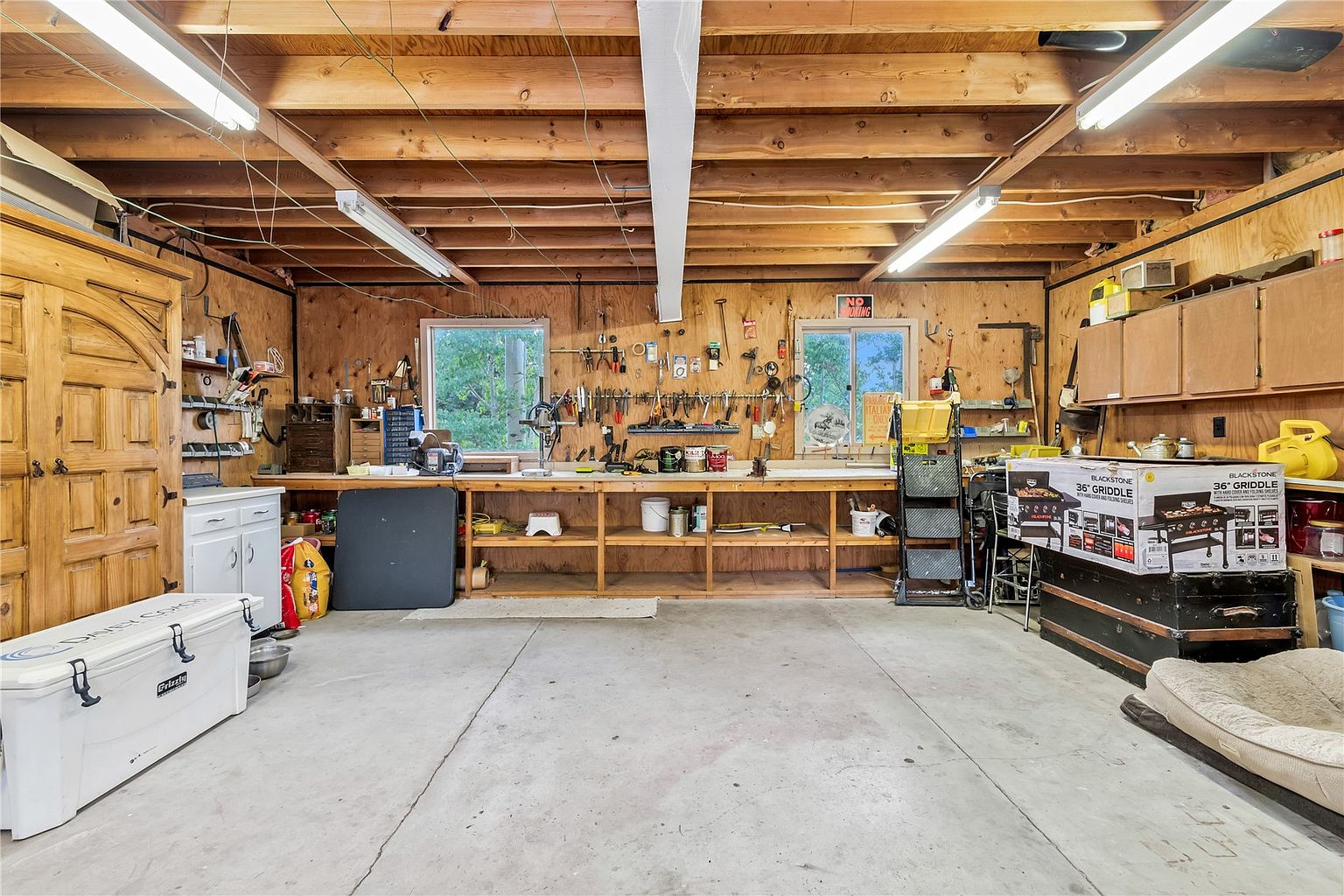
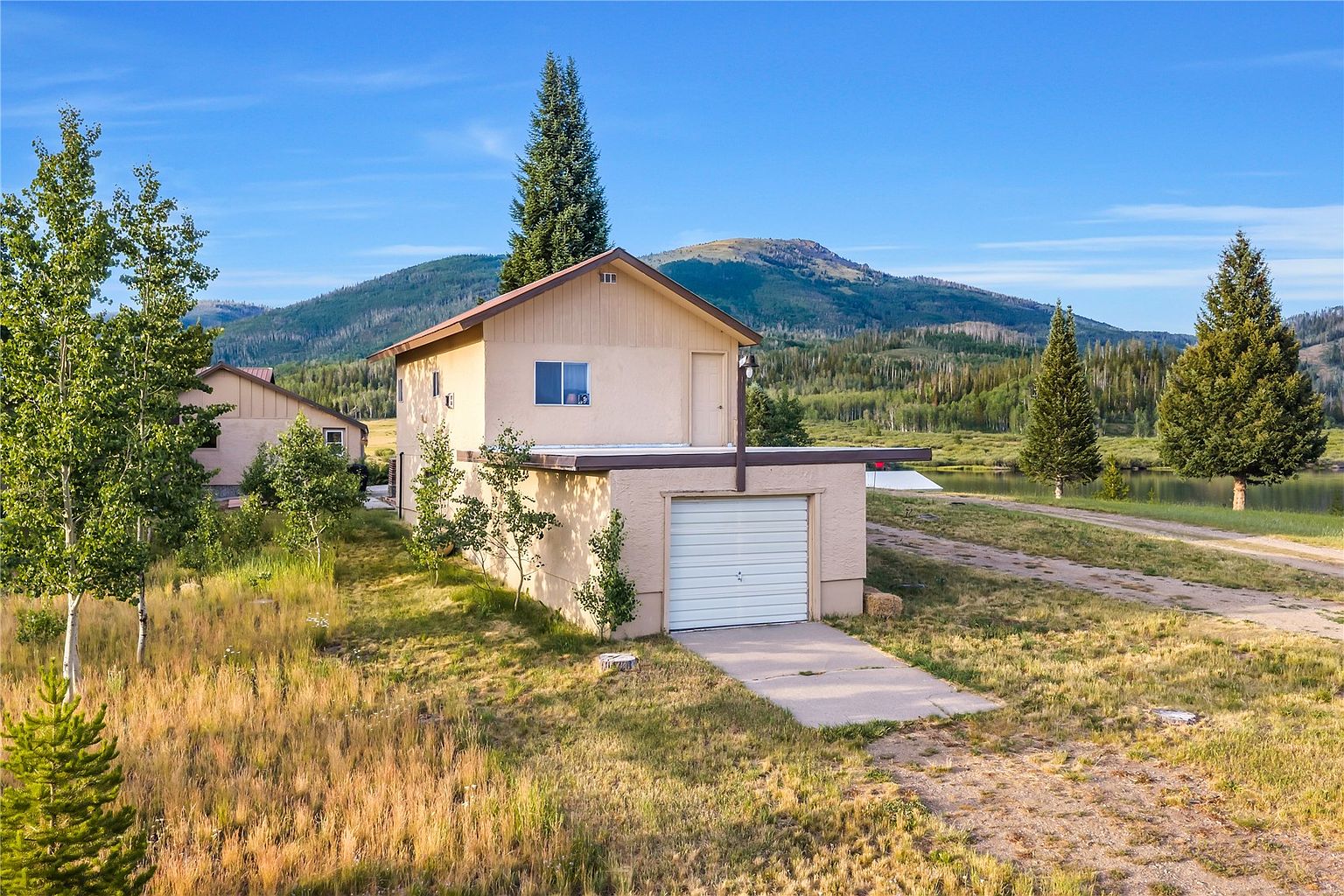
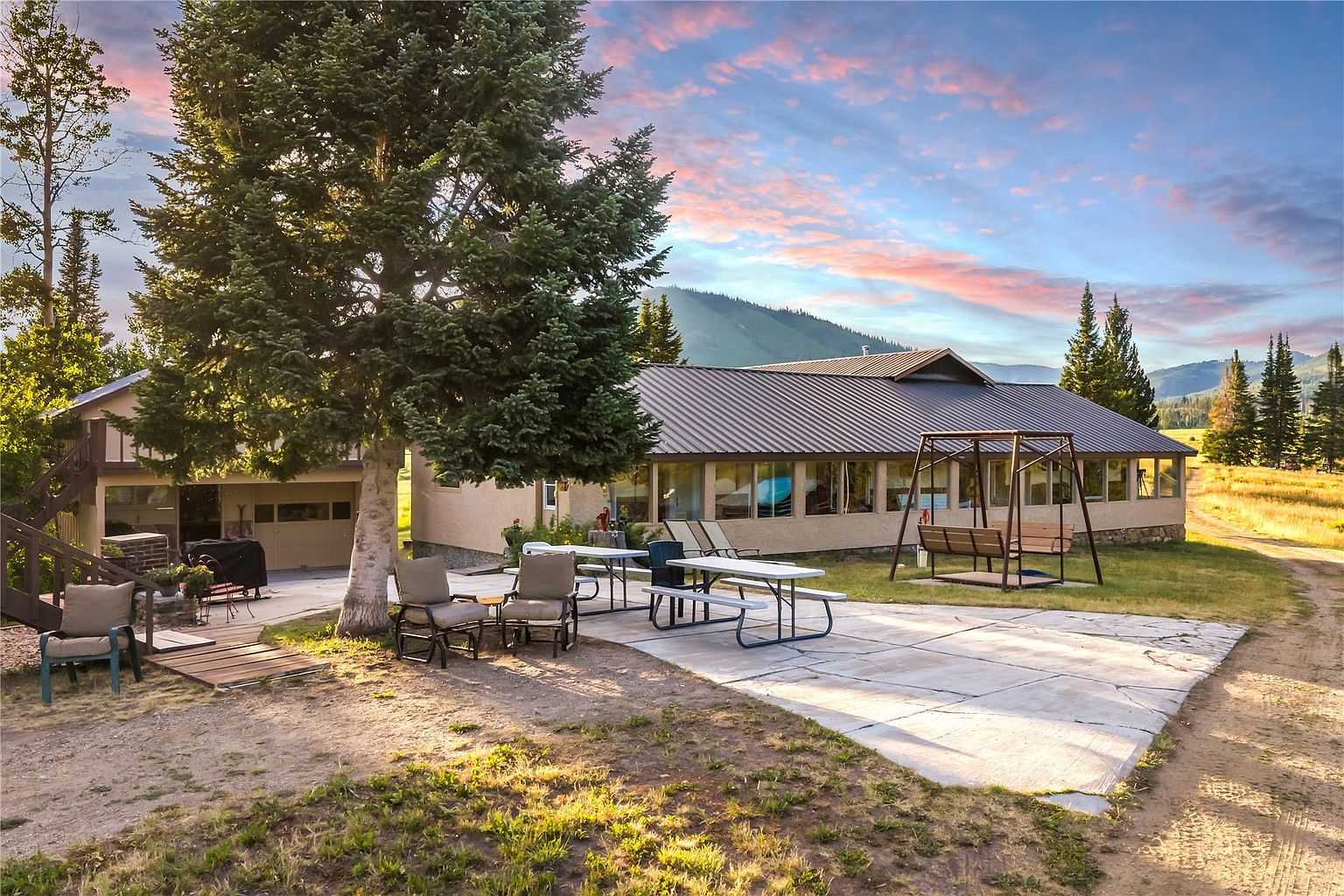
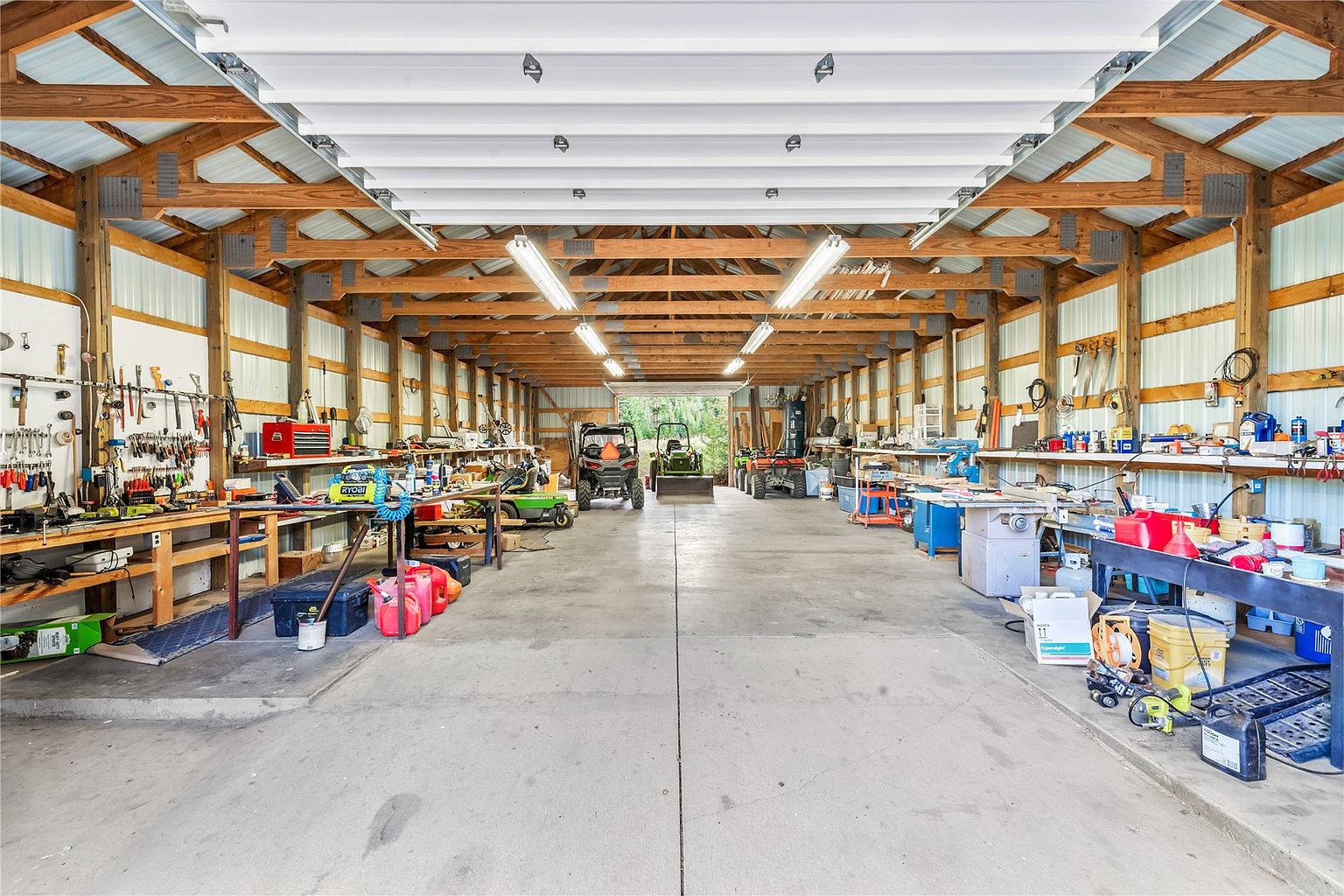
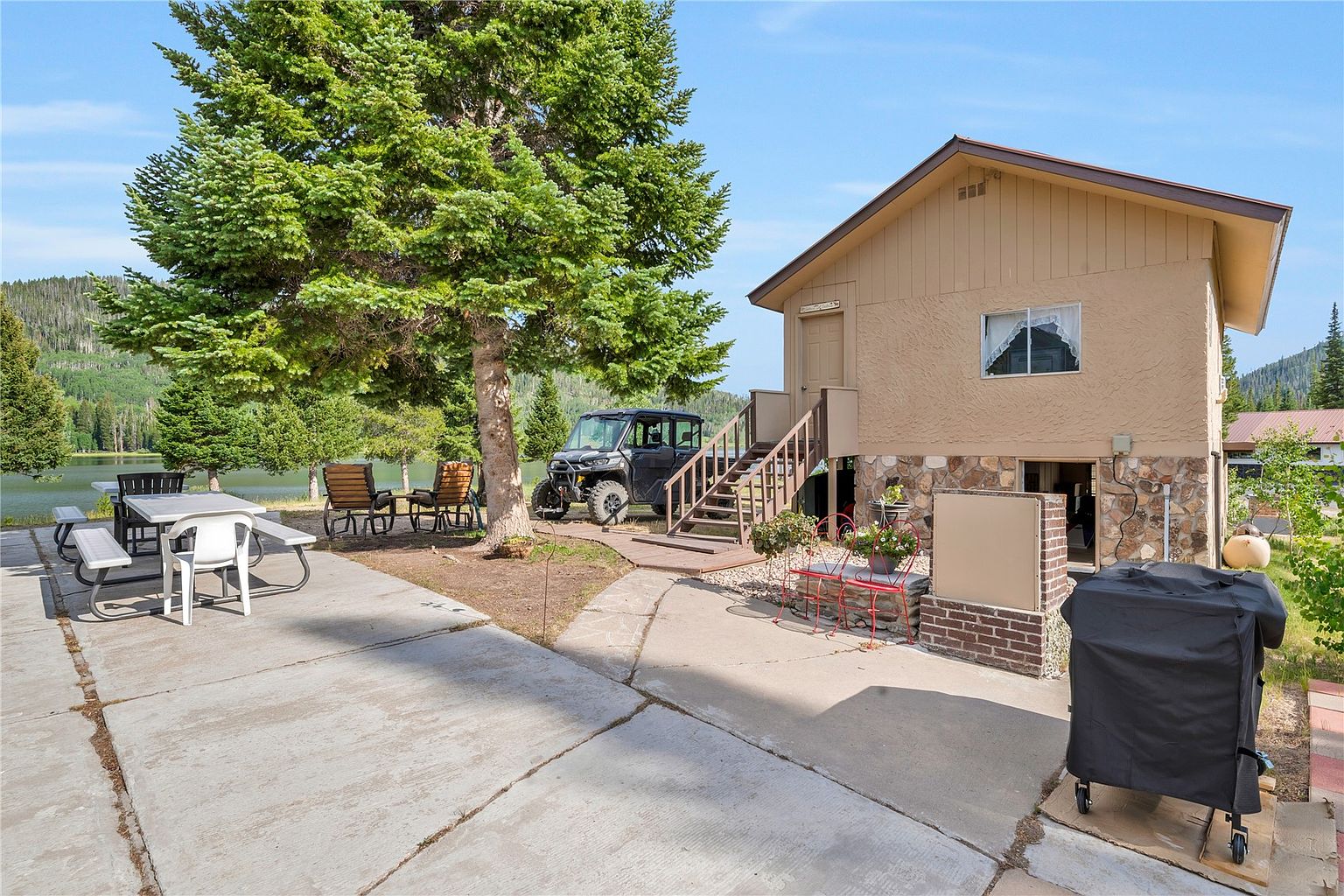
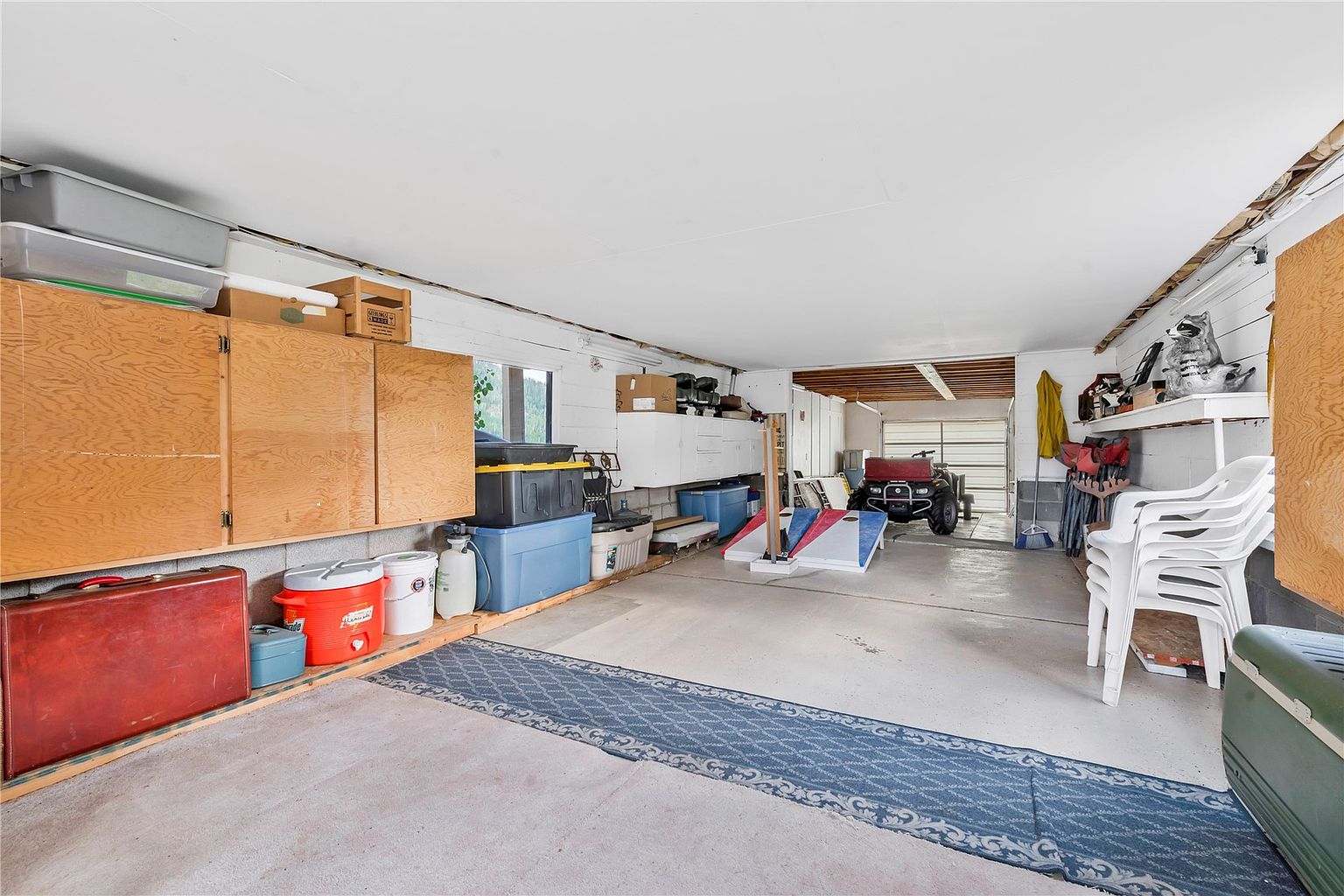
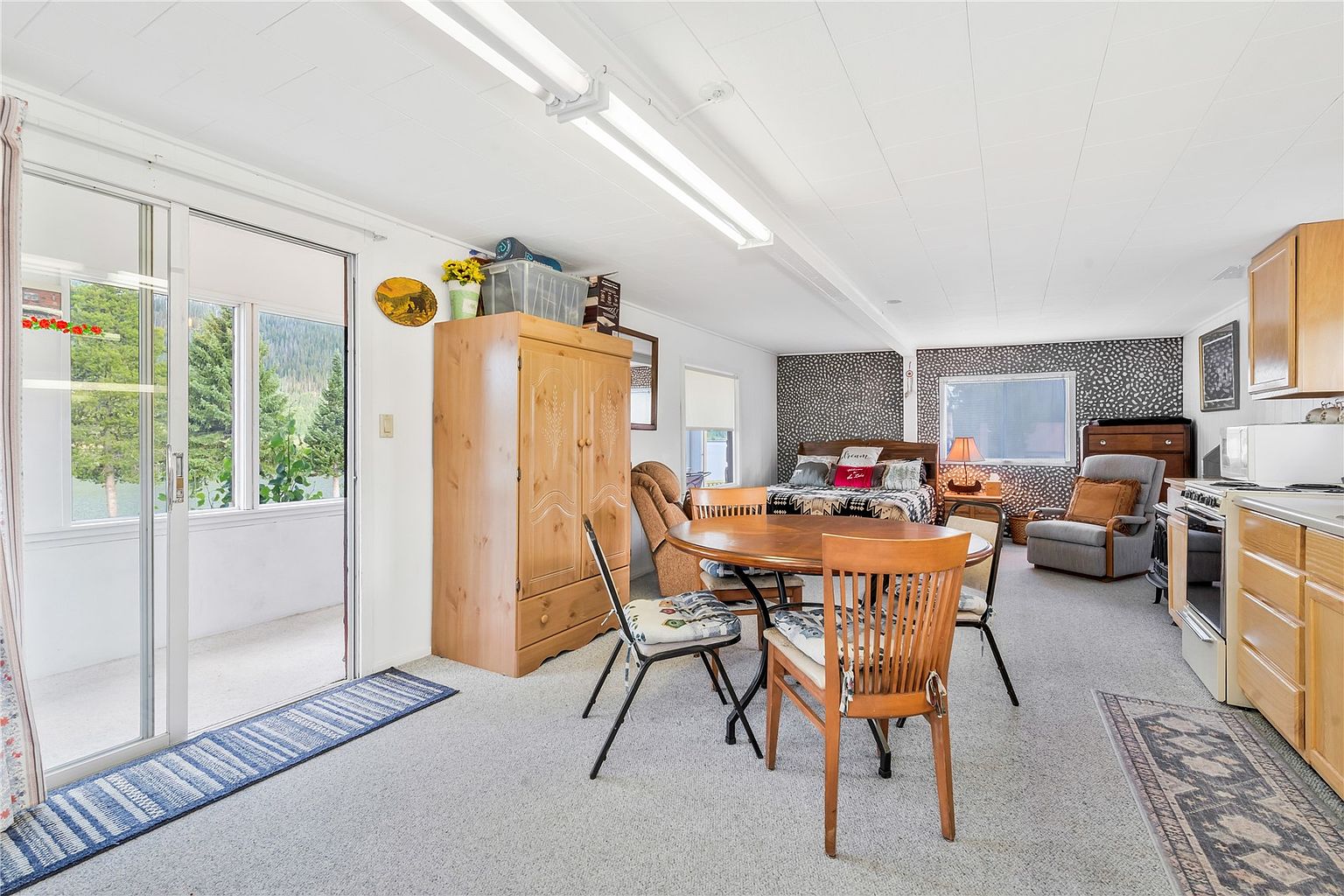
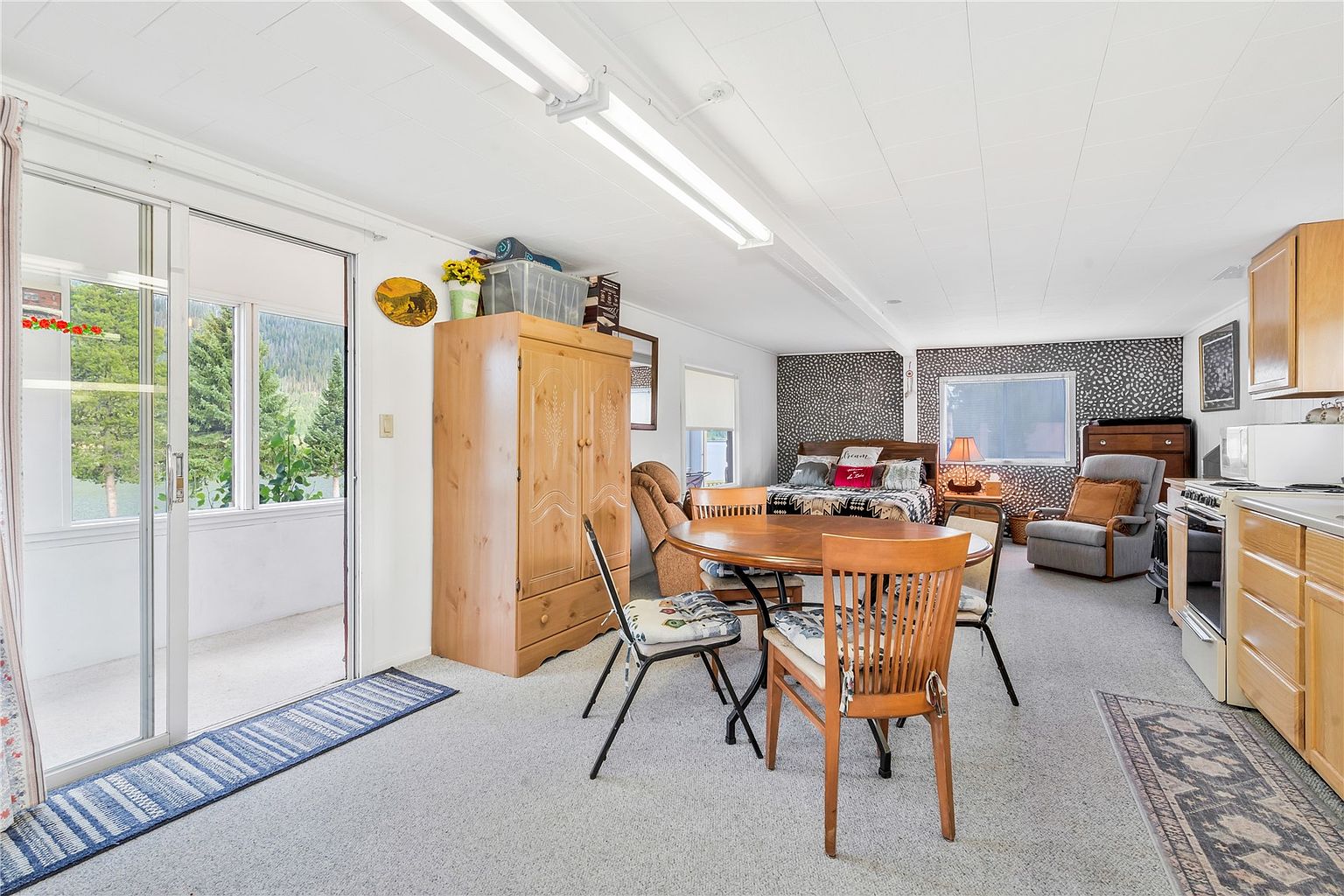
Beyond the main house, the estate's supporting structures reveal a property that has been thoughtfully assembled over time. The guest house and above-garage apartment provide genuine privacy for visitors without removing them from the landscape. The large shop and additional garage offer serious working utility — space for ATVs, a tractor, extensive workbenches, and the full inventory of a life lived outdoors. The detached garage structure with its second-story apartment and exterior wooden staircase adds an architectural moment of its own, its stone-accented lower level and balcony overlooking the surrounding meadow.
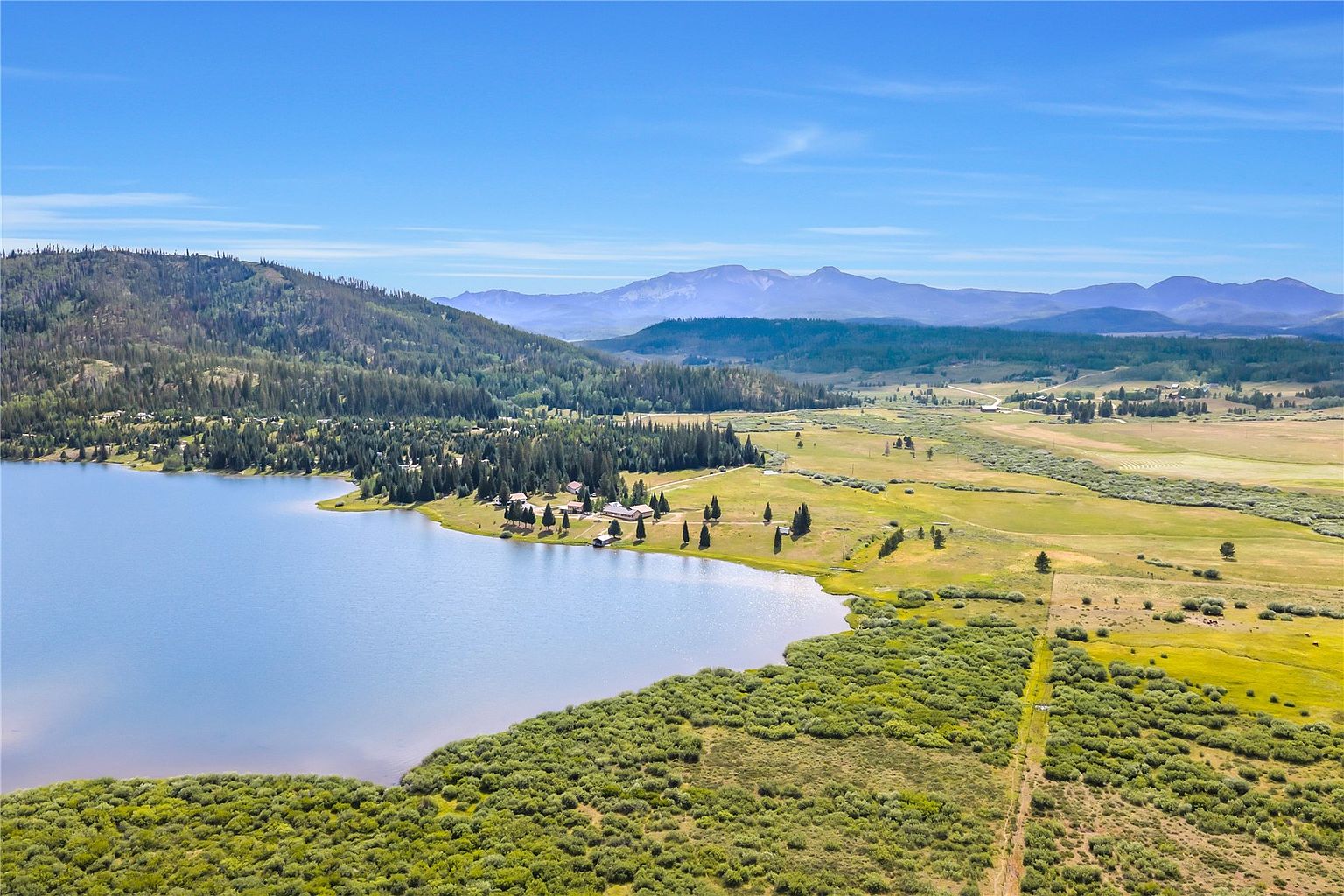
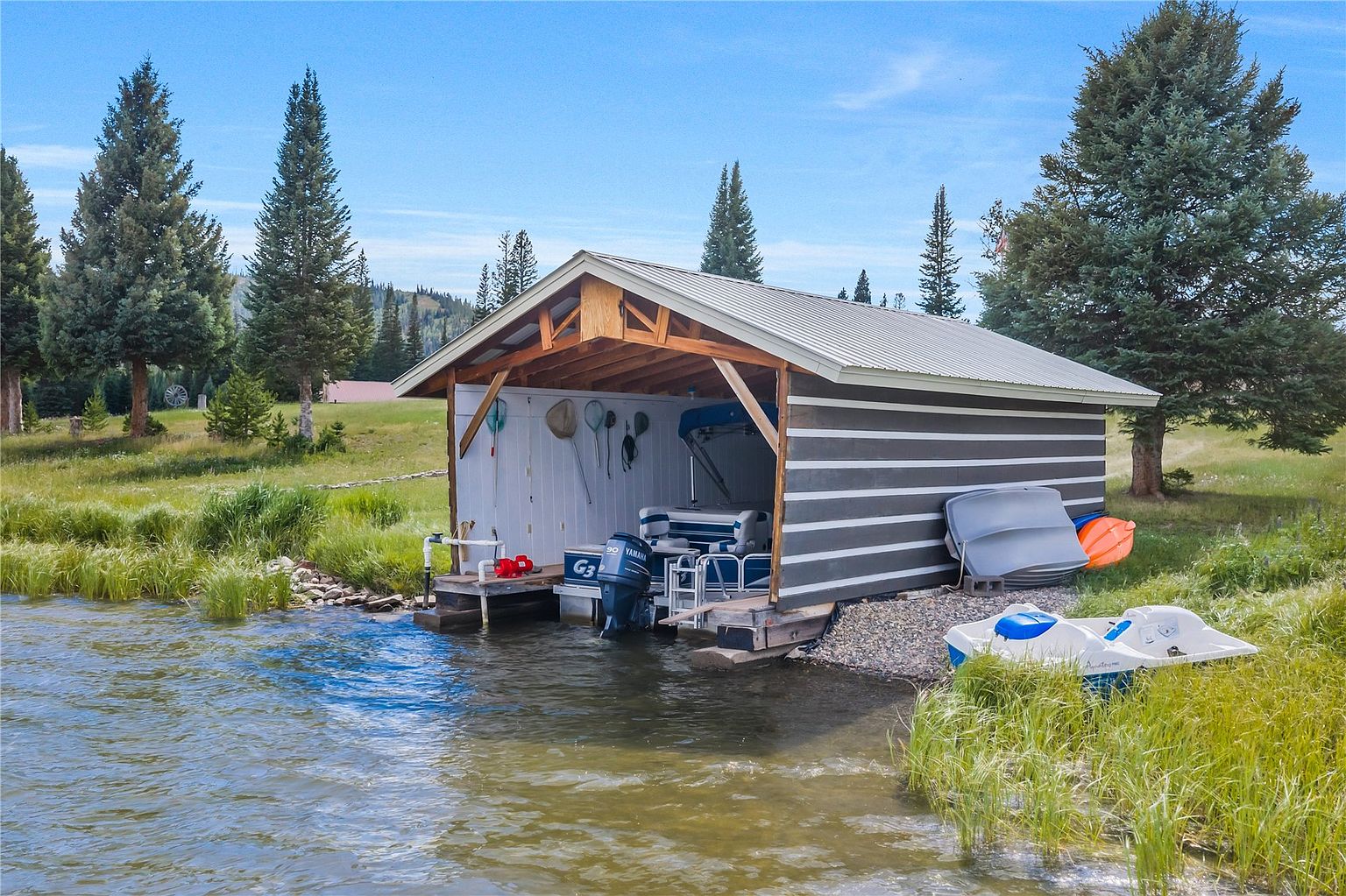
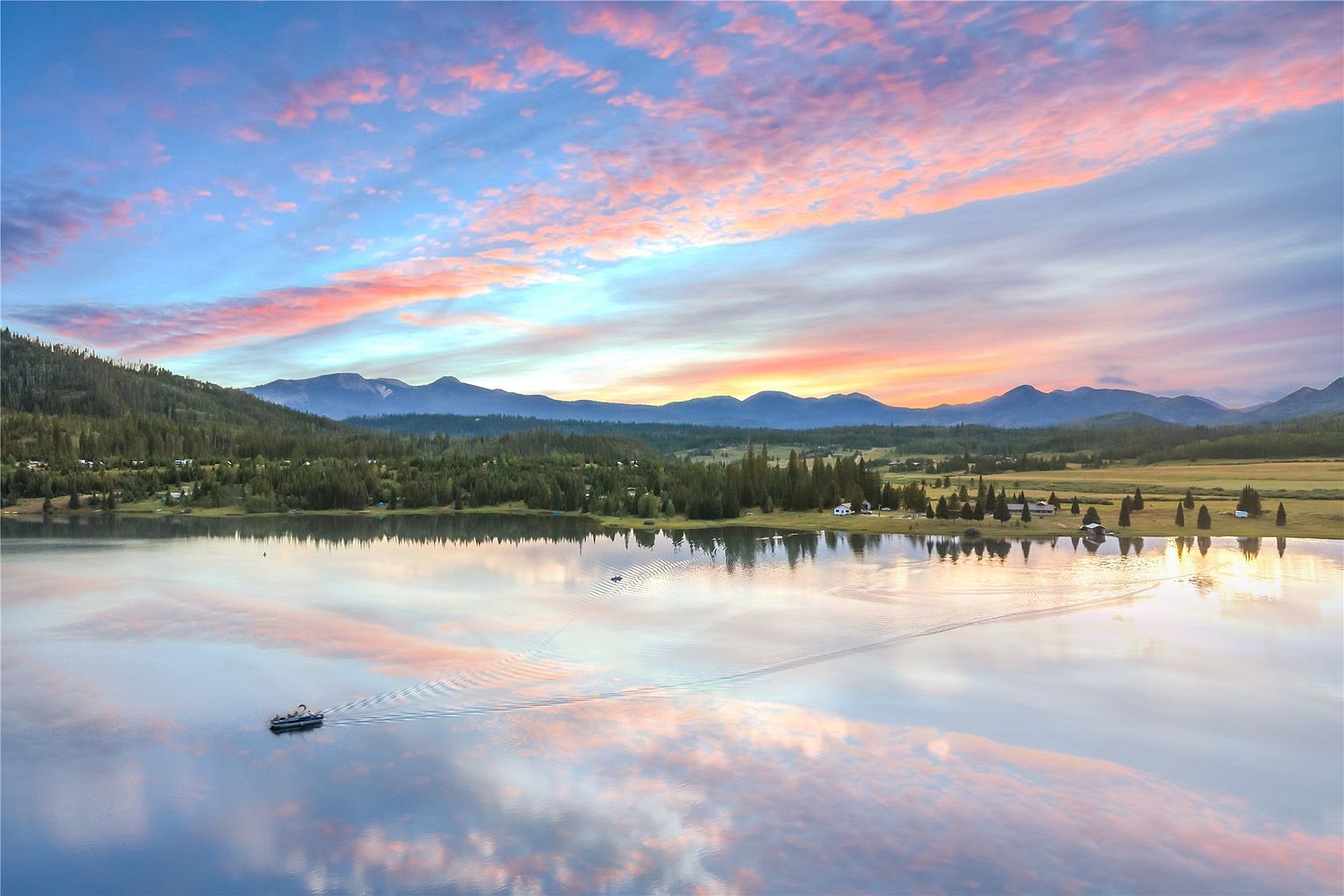
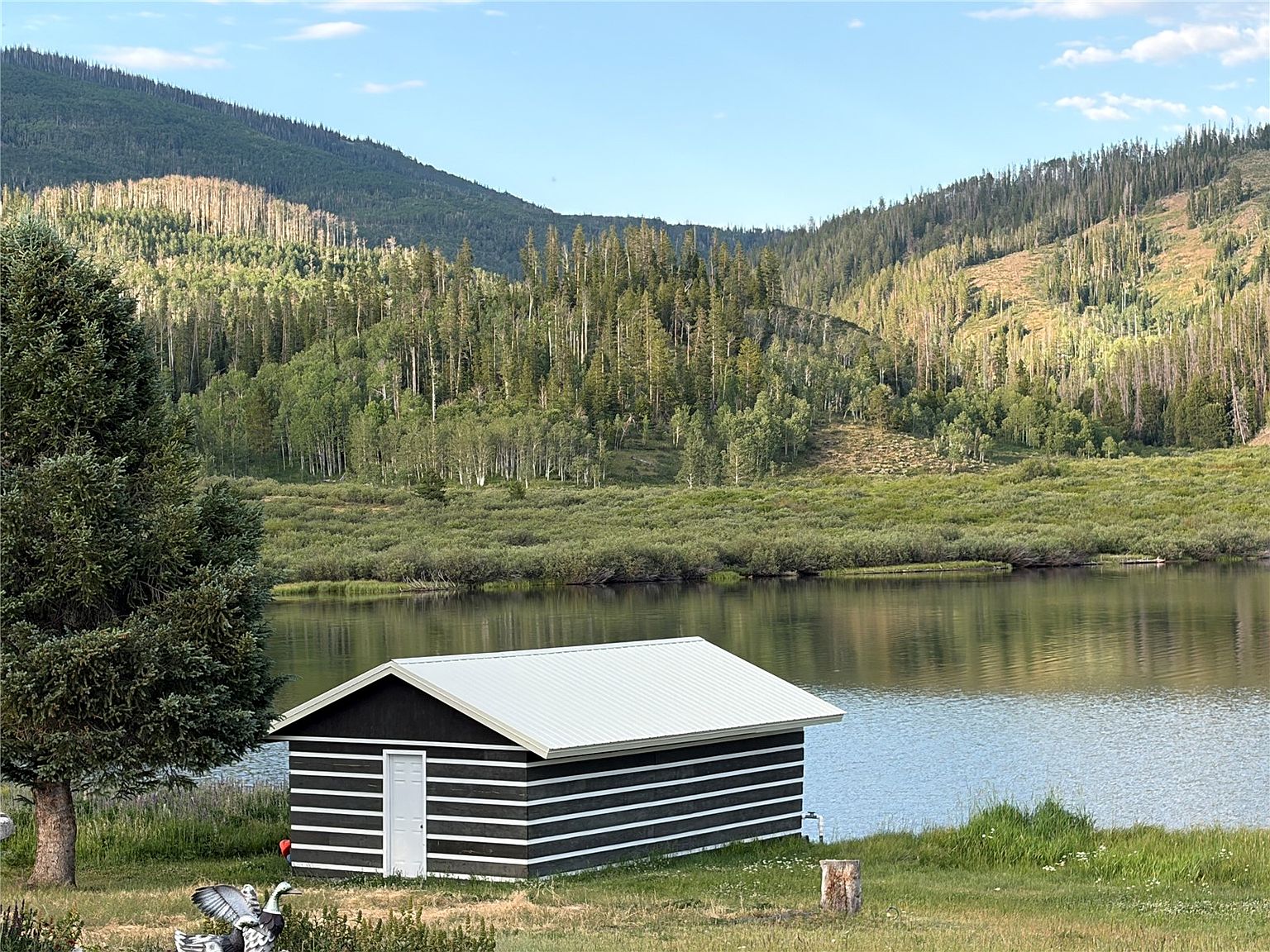
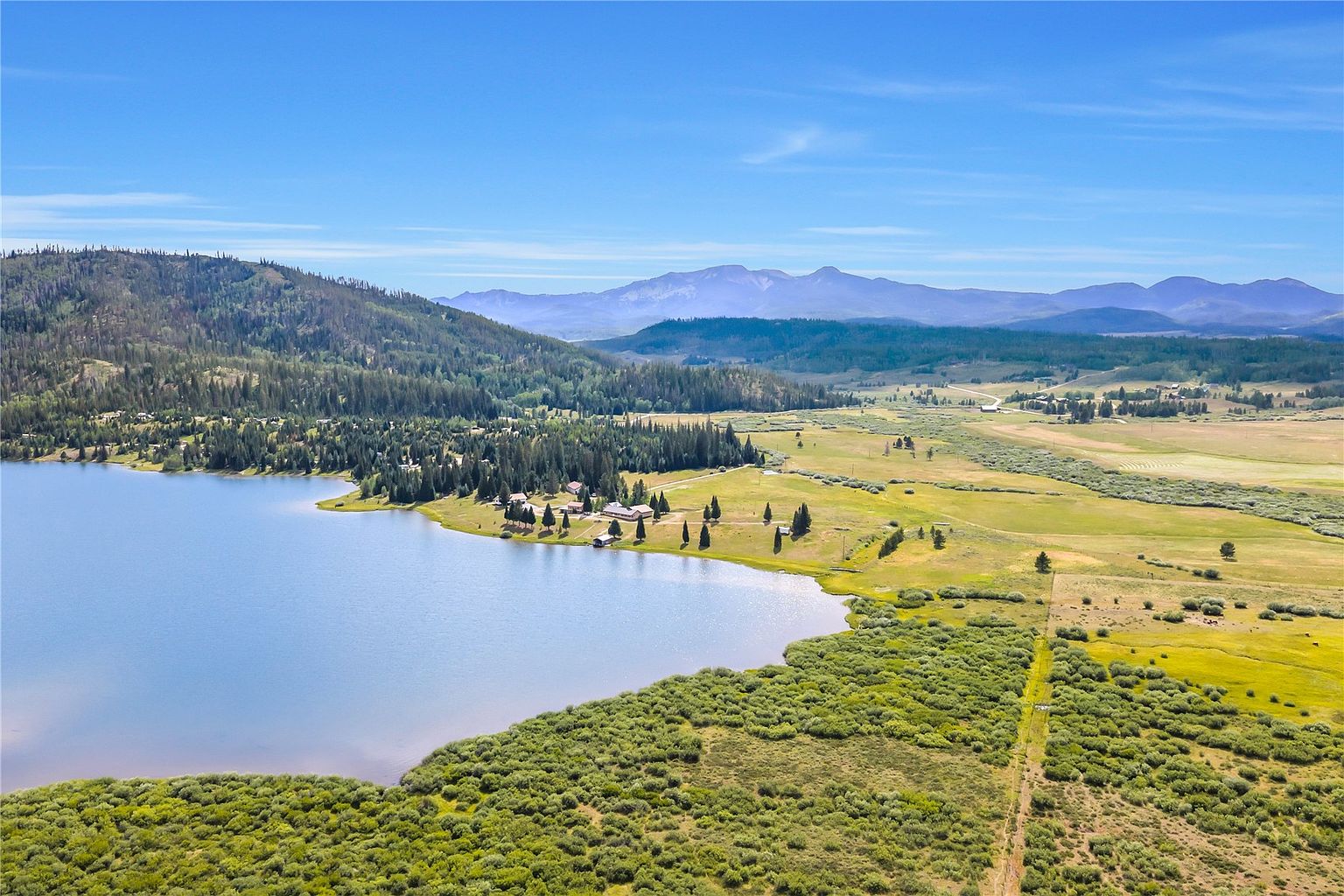
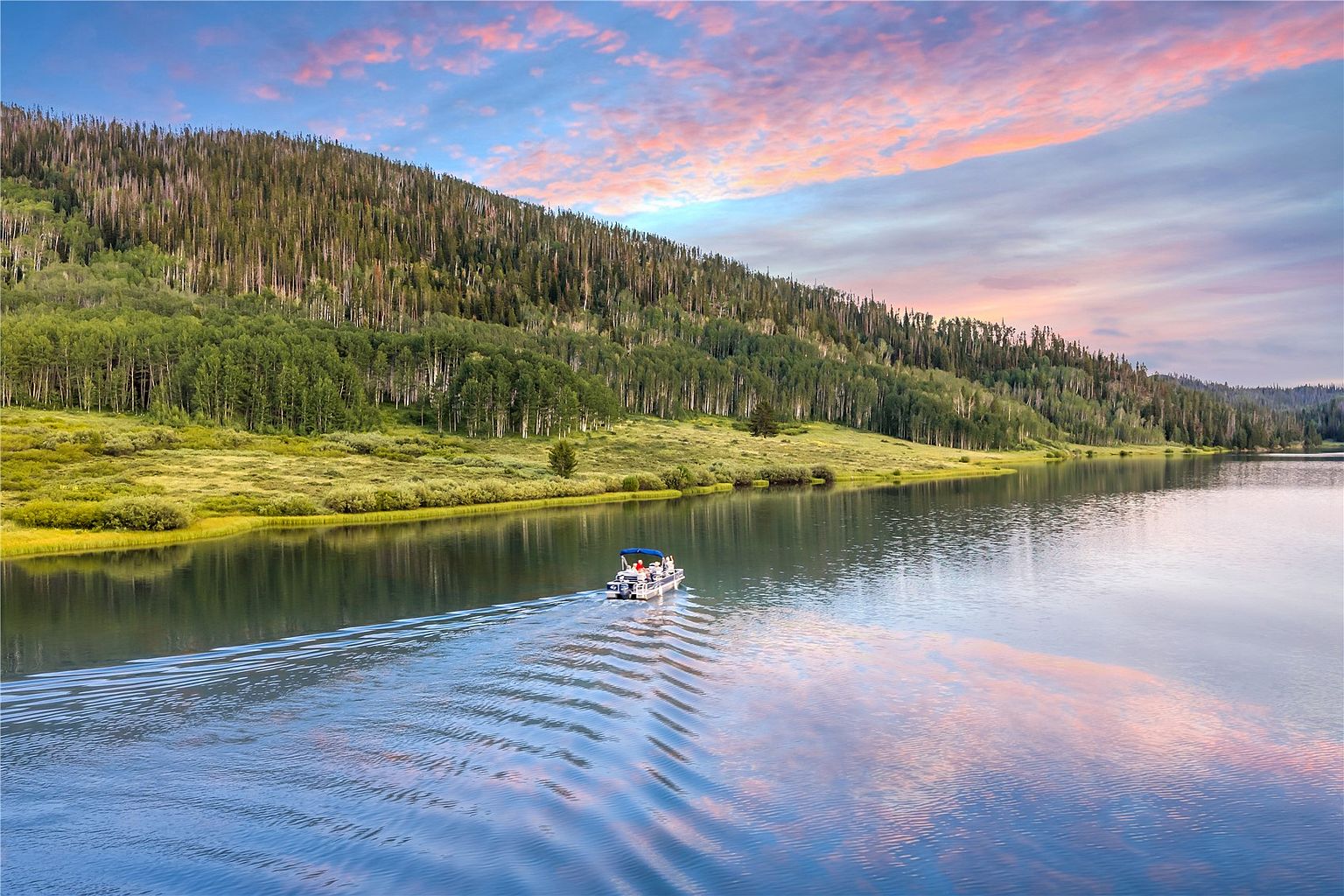
At the water's edge, the boathouse is the estate's most singular feature. Open-fronted, simply constructed, and oriented directly to the lake, it shelters a pontoon on glass-calm water — a point of departure for mornings on the lake and a quiet landmark visible from nearly every vantage point on the property. It is not a grand structure, but it represents something that no amount of money can now create: a private boathouse on a private Colorado mountain lake. That rarity is the true measure of Pearl Lake Ranch.
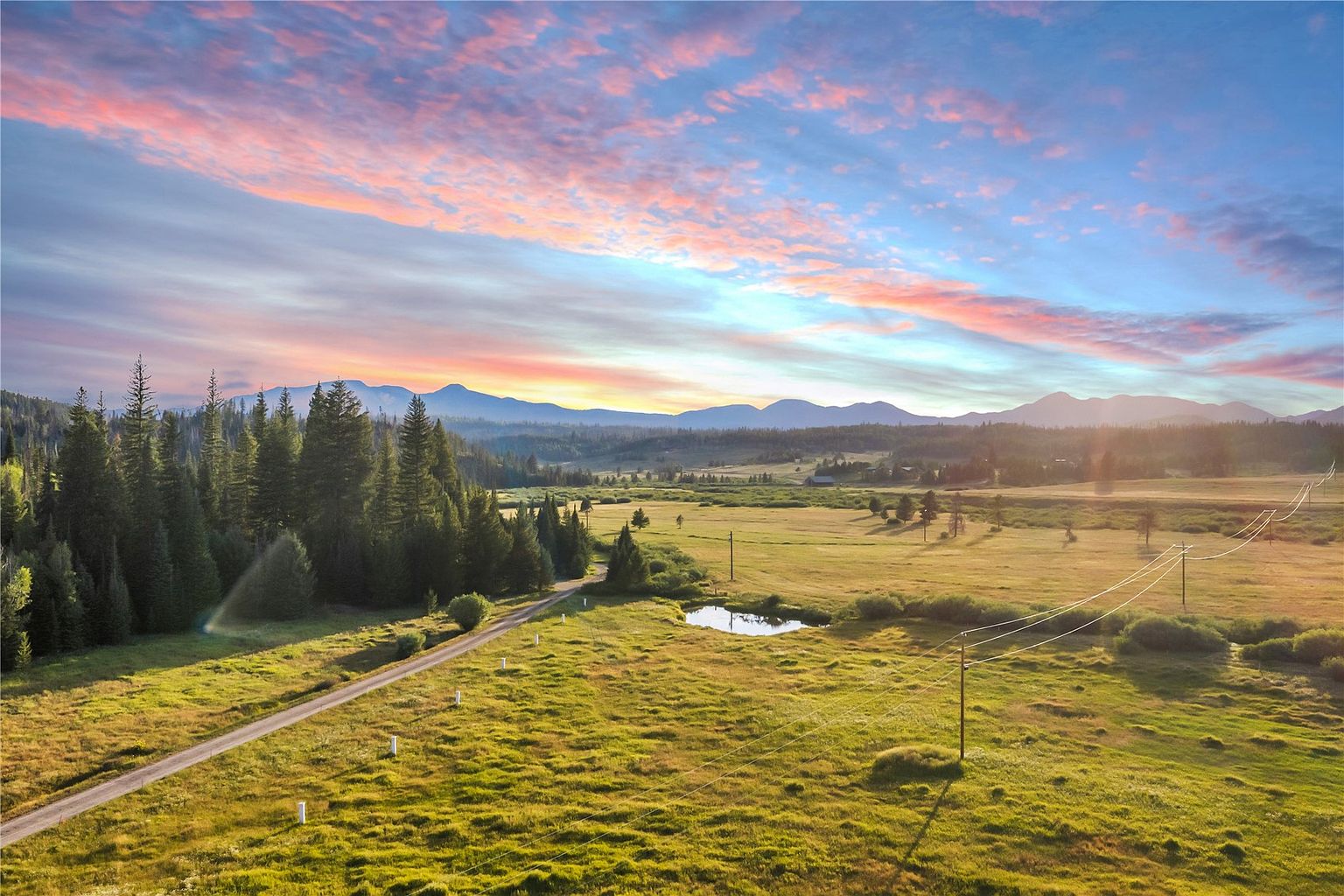
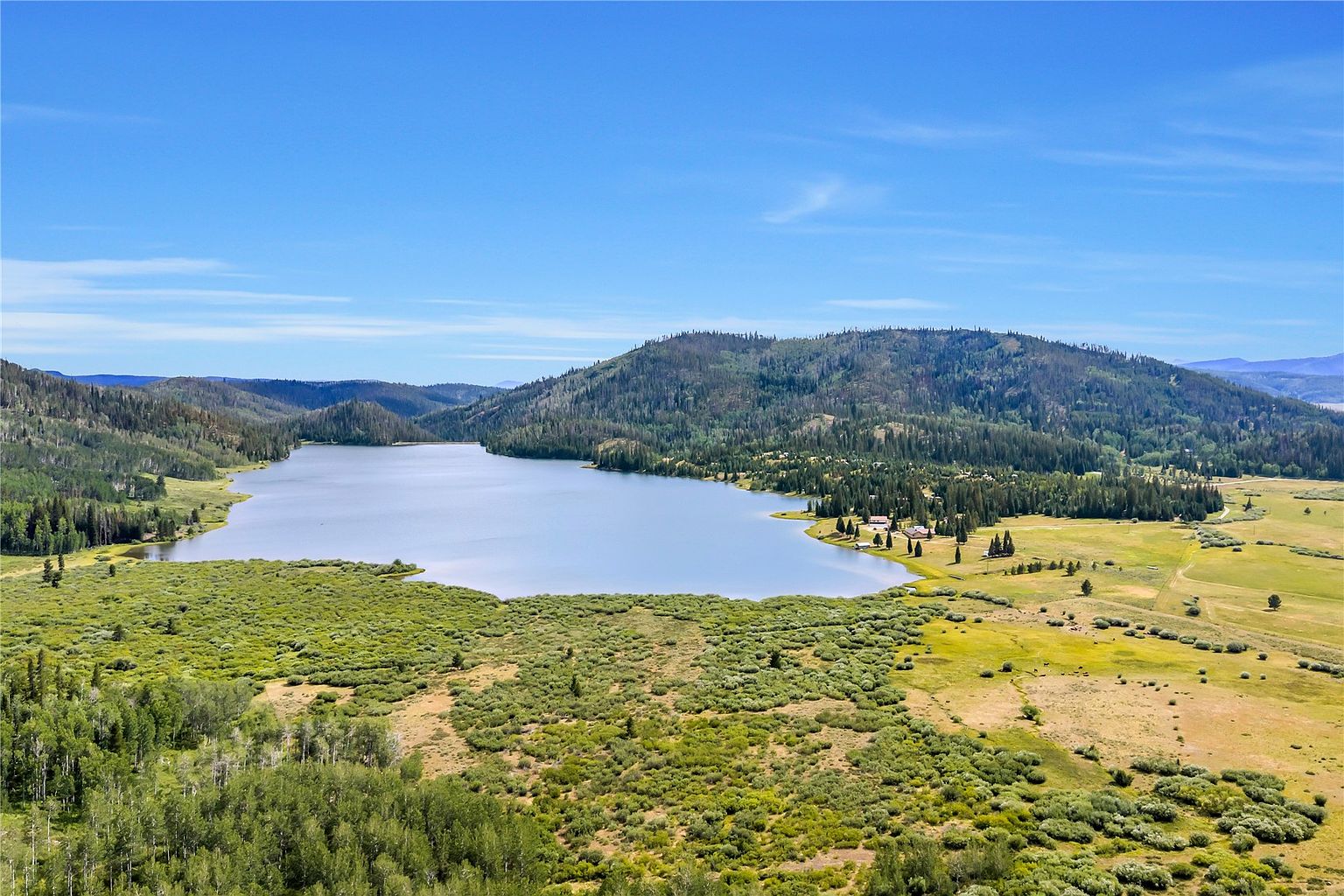
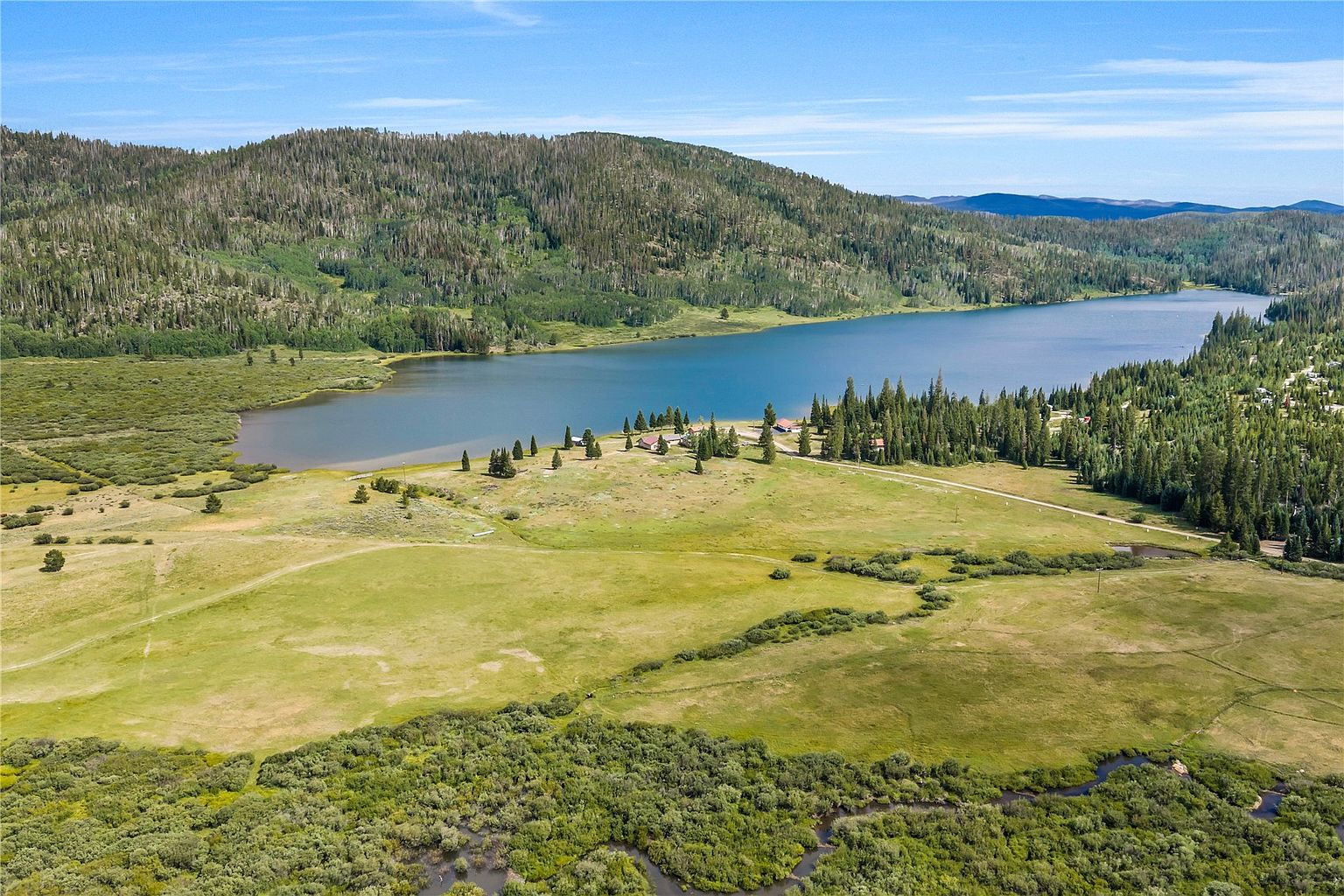
Pearl Lake sits in the Elk River Valley of Routt County, in the far northwest corner of Colorado — a region that has remained, by geography and by temperament, apart from the more heavily trafficked mountain corridors to the south. The valley is framed by the Park Range to the east and the rolling sage-and-timber terrain of the Mount Zirkel Wilderness to the north, and it carries the particular quality of a landscape that has not been asked to perform for an audience. It simply exists, at considerable scale and with considerable beauty.
The nearest town is Clark, a small community roughly ten miles north of Steamboat Springs along State Highway 129 — a corridor known locally as the Elk River Road and recognized among Colorado's more scenic drives, tracing the Elk River through hayfields, guest ranches, and stands of aspen and cottonwood before climbing toward the Wyoming border. Clark itself is a quiet outpost with a general store and a strong ranching heritage; it is the kind of place that functions as a waypoint for those heading into the backcountry rather than a destination in its own right.
Steamboat Springs, less than thirty minutes south, provides the full infrastructure of a world-class mountain resort town while retaining a genuine ranching identity that distinguishes it from its more exclusively resort-oriented Colorado counterparts. The town has operated continuously as an agricultural community since the late nineteenth century, and that heritage remains visible in the working ranches that surround the valley, the annual ProRodeo events, and the cattle that still move through the landscape each season. Steamboat Ski Resort, anchored by the landmark Steamboat Springs ski area on Mount Werner, offers some of Colorado's most celebrated powder skiing — the product of a meteorological phenomenon that locals call Champagne Powder, a trademarked term that reflects the consistently light, dry snow that falls here with unusual regularity.
The broader Routt County landscape provides an extraordinary platform for year-round outdoor life. Pearl Lake State Park, which borders the ranch property, is recognized for its quality fishing — kokanee salmon and brown trout are native to these waters — as well as its non-motorized boating access. The Zirkel Wilderness and the Routt National Forest, which abut the ranch directly, open into hundreds of miles of backcountry terrain for hiking, horseback riding, cross-country skiing, and hunting. Steamboat Lake State Park lies a short distance to the north, offering additional boating and camping resources within an equally dramatic mountain setting.
The Yampa Valley Regional Airport, located approximately twenty-five miles southwest in Hayden, provides direct commercial air service to major hubs during the ski season and increasingly year-round, making the ranch accessible without the extended mountain drives that characterize many comparable Colorado retreats.
What distinguishes this particular corner of Routt County, however, is something less easily quantified: a sense of genuine remoteness that coexists with proximity to real amenities. The Elk River Valley has not been subdivided into density. The working landscape that surrounds Pearl Lake Ranch remains intact, and the National Forest that borders the property ensures it will stay that way. In a state where private lakefront land of this character has largely been absorbed into the market for generations, that combination of solitude, access, and permanence is the rarest offering of all.
Featured Highlights
Curated Content • Presented by Linda Cullen