The Story Behind
A Architectural Masterwork Commanding San Francisco's Most Coveted Panorama
There are properties that accommodate life, and then there are properties that redefine it. 1281 Greenwich Street belongs unmistakably to the latter category — a residence that does not merely respond to its setting but engages it with the full force of architectural intention.
Designed by architect David Swetz, the building operates simultaneously as private home and considered artwork. Its facade — a composed interplay of glass, white geometry, and clean horizontal line — announces its ambitions from the street, where arrival itself is already set apart: a private, gated porte-cochere receives you before the city can intrude. The four-car garage below secures what lies beyond. From this threshold, a private elevator ascends through all four levels, each one a distinct movement in a carefully orchestrated sequence.
At the structural and spiritual heart of the home rises the polished plaster spiral staircase — perhaps the single most arresting interior gesture in all of Russian Hill. Its form is neither decorative nor incidental. It is load-bearing in the truest sense: it carries the visual and emotional weight of the entire residence, announcing at the first step that what follows will be extraordinary.
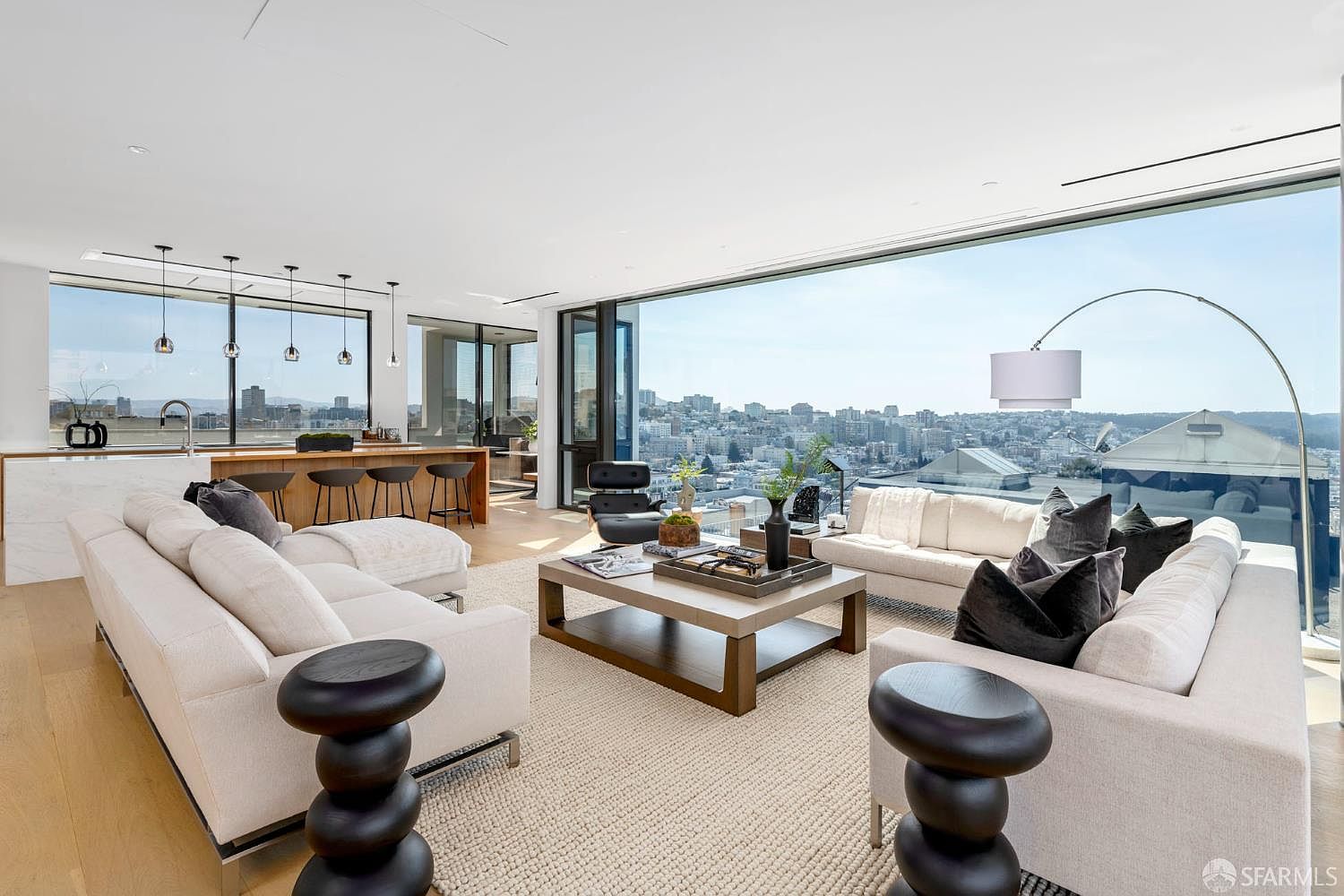
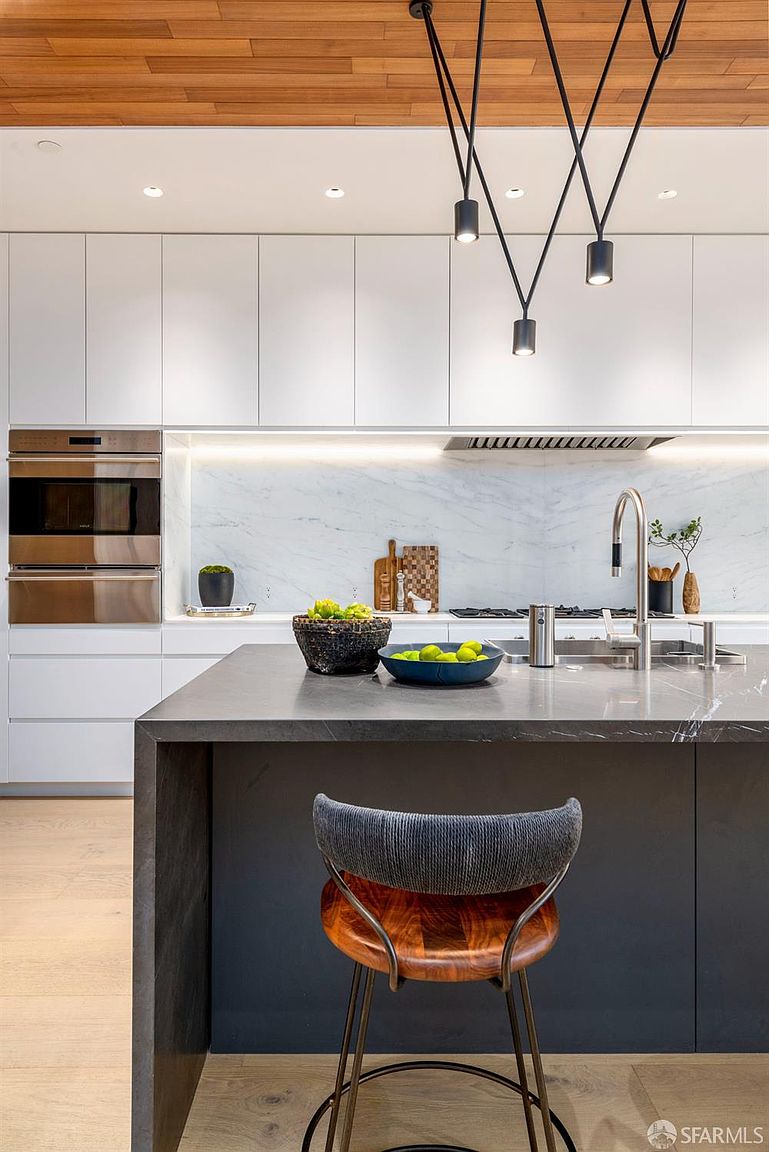
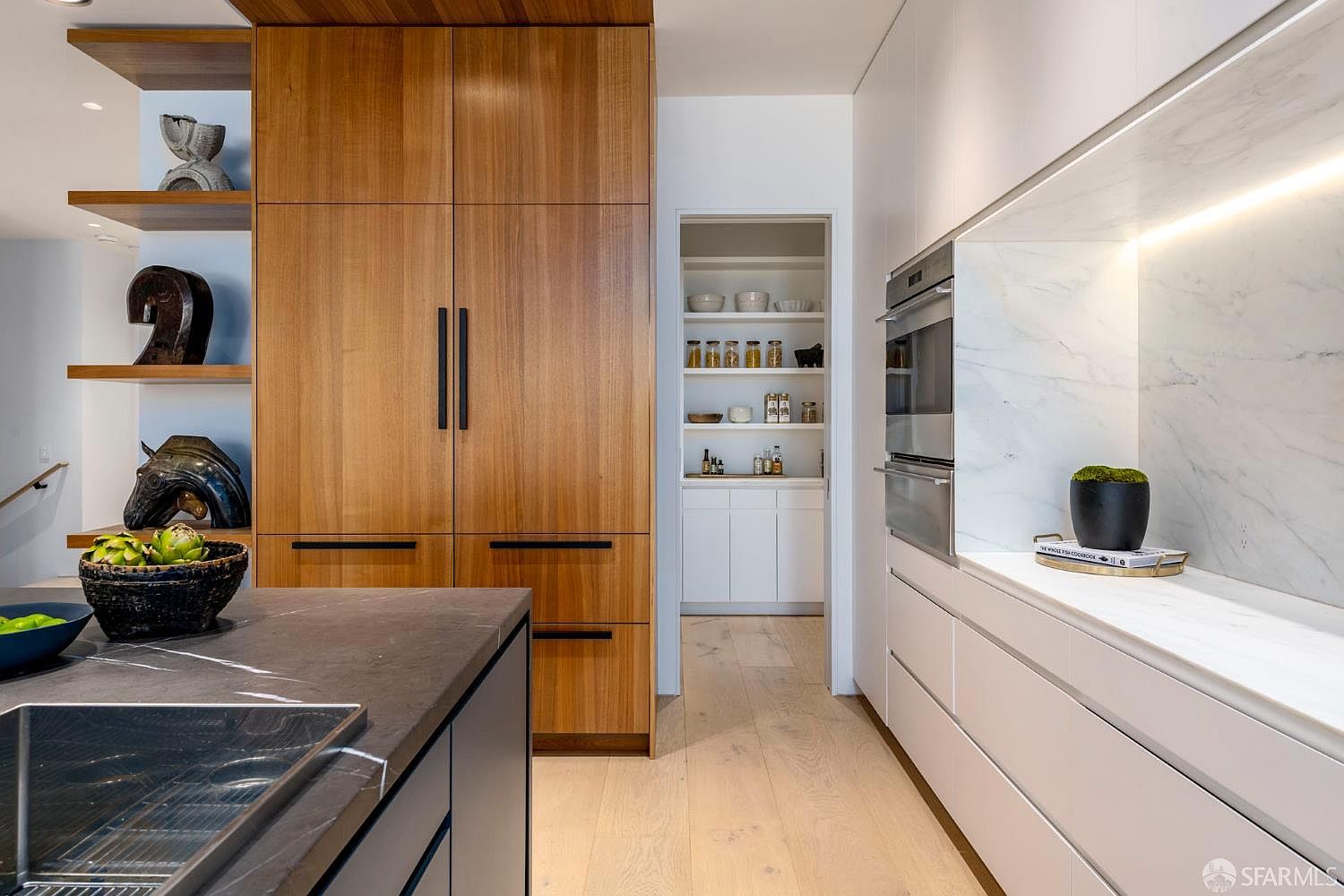
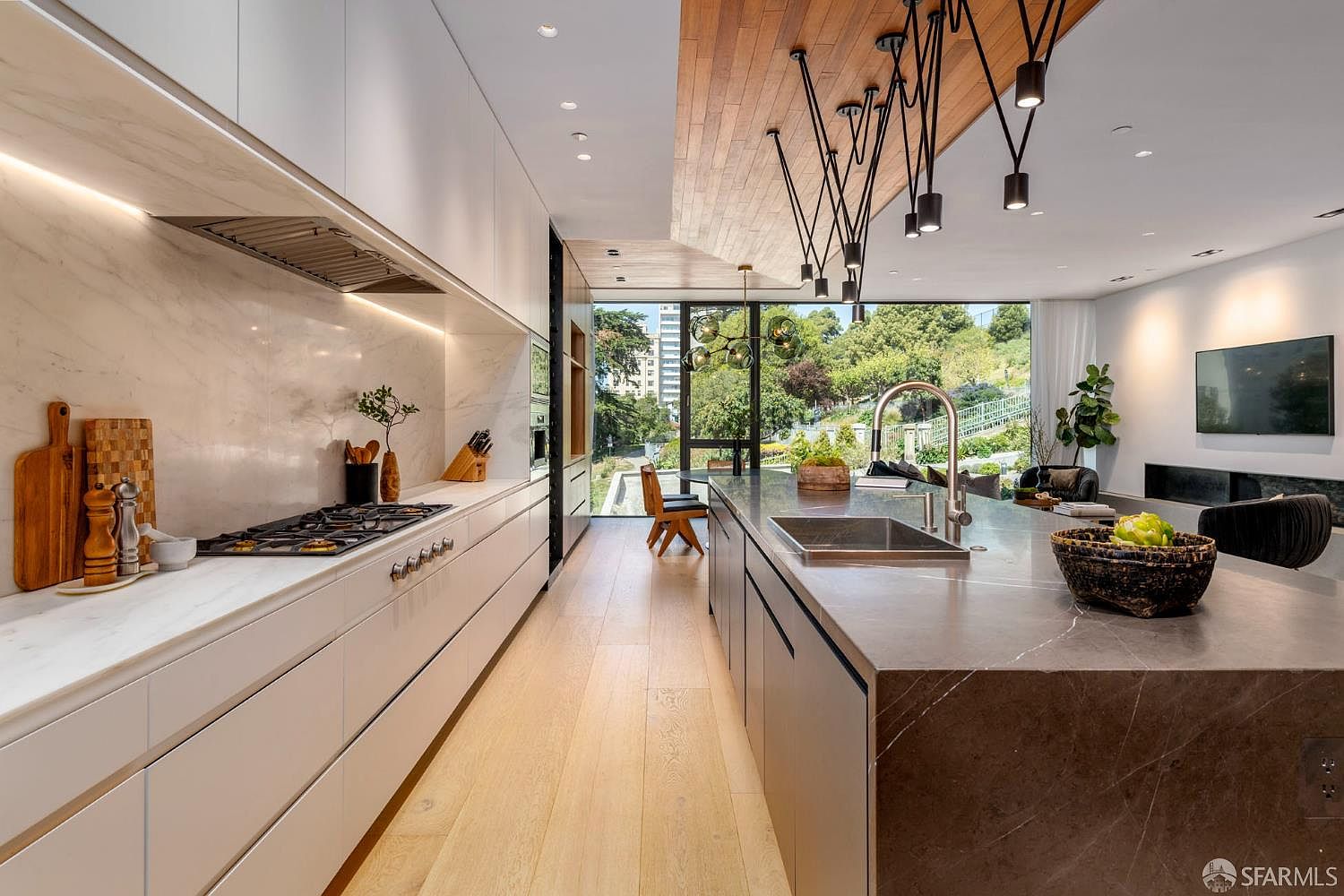
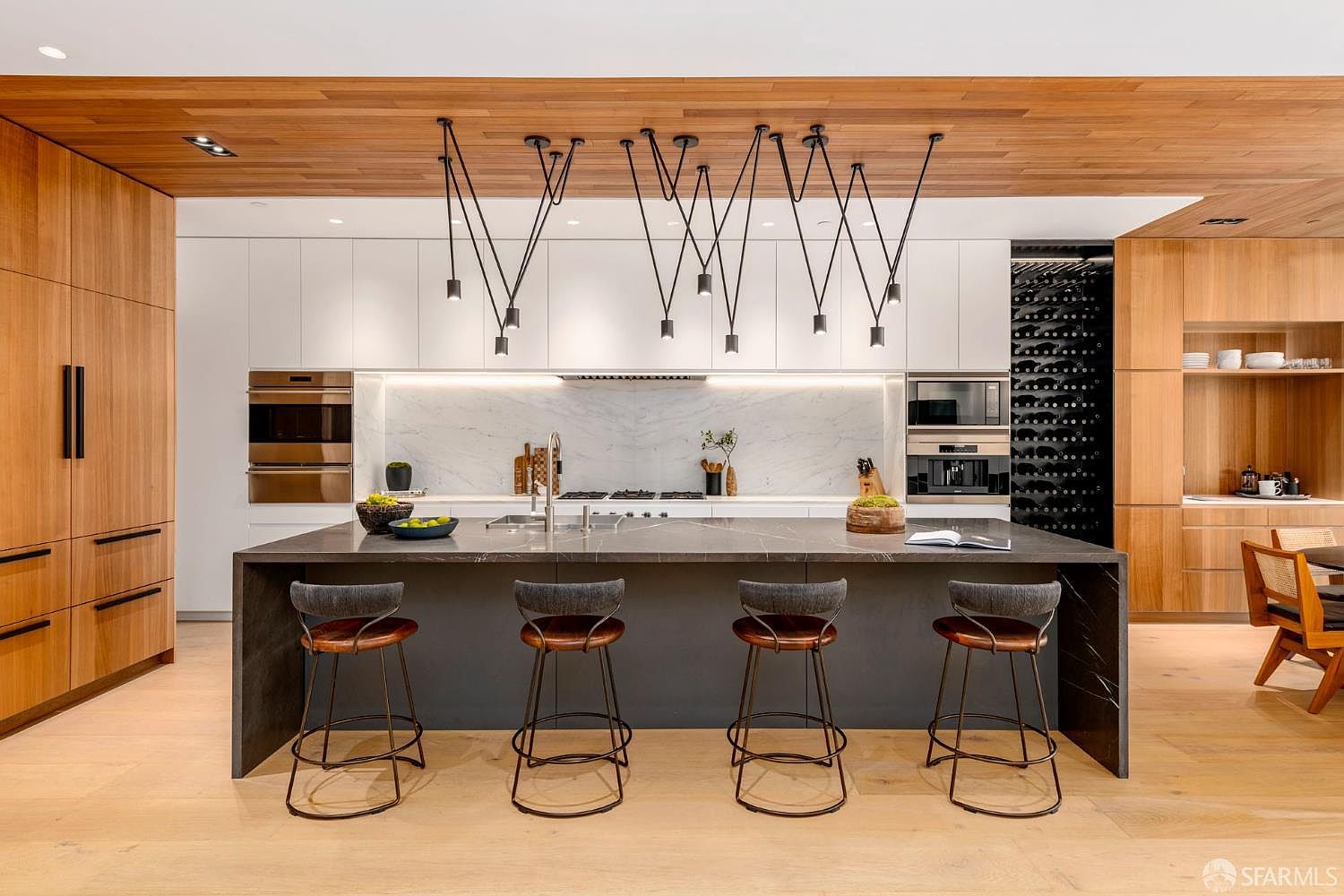
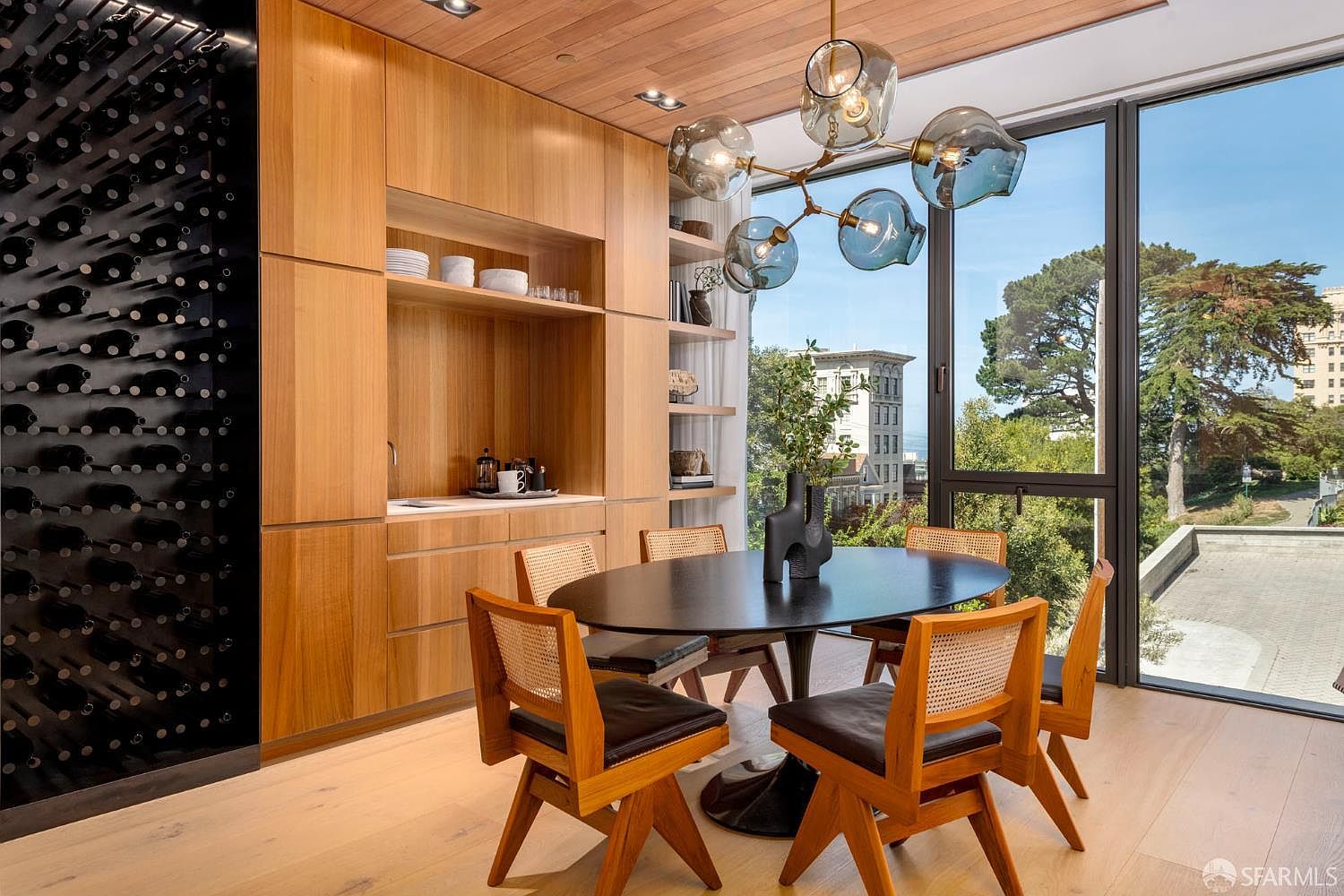
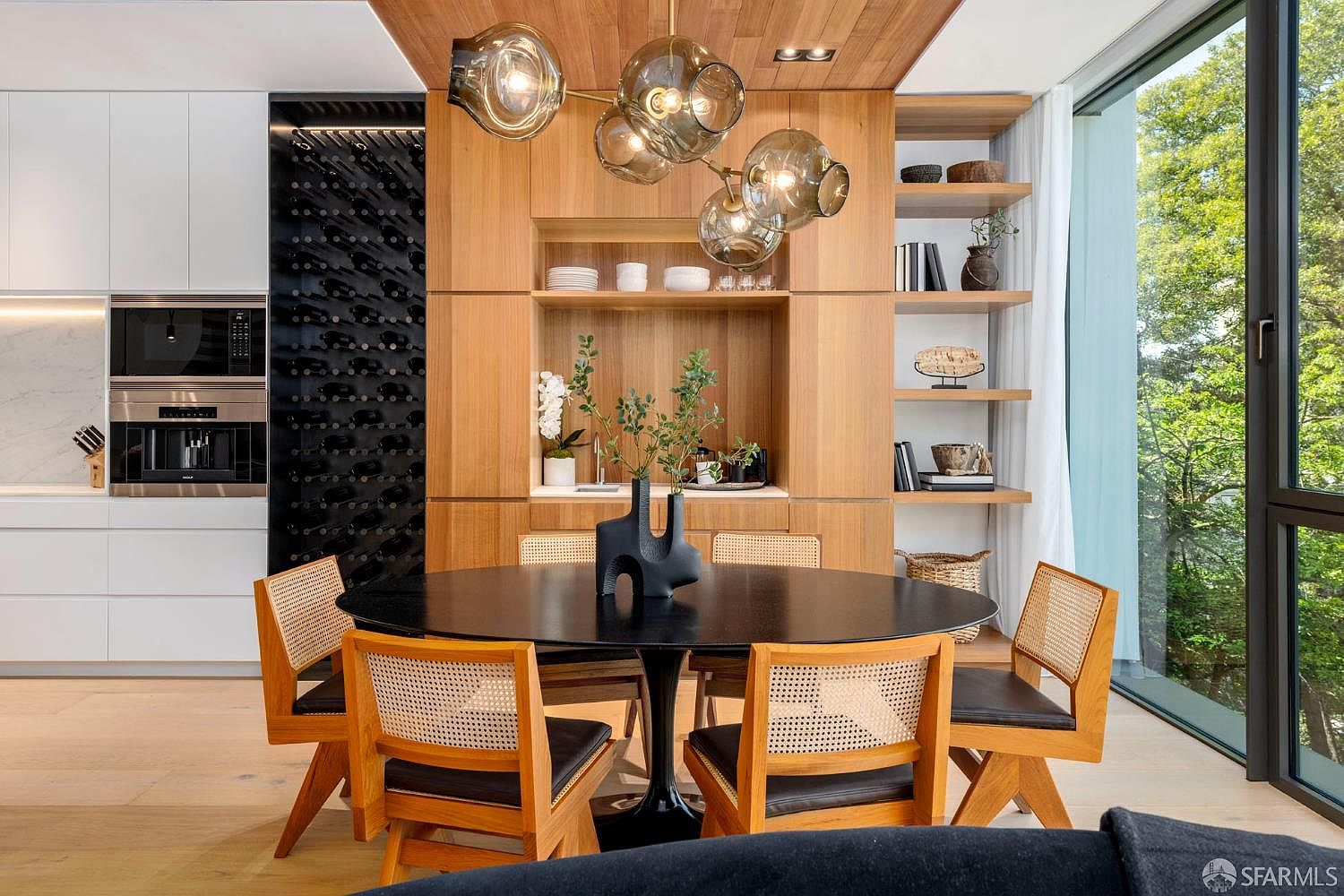
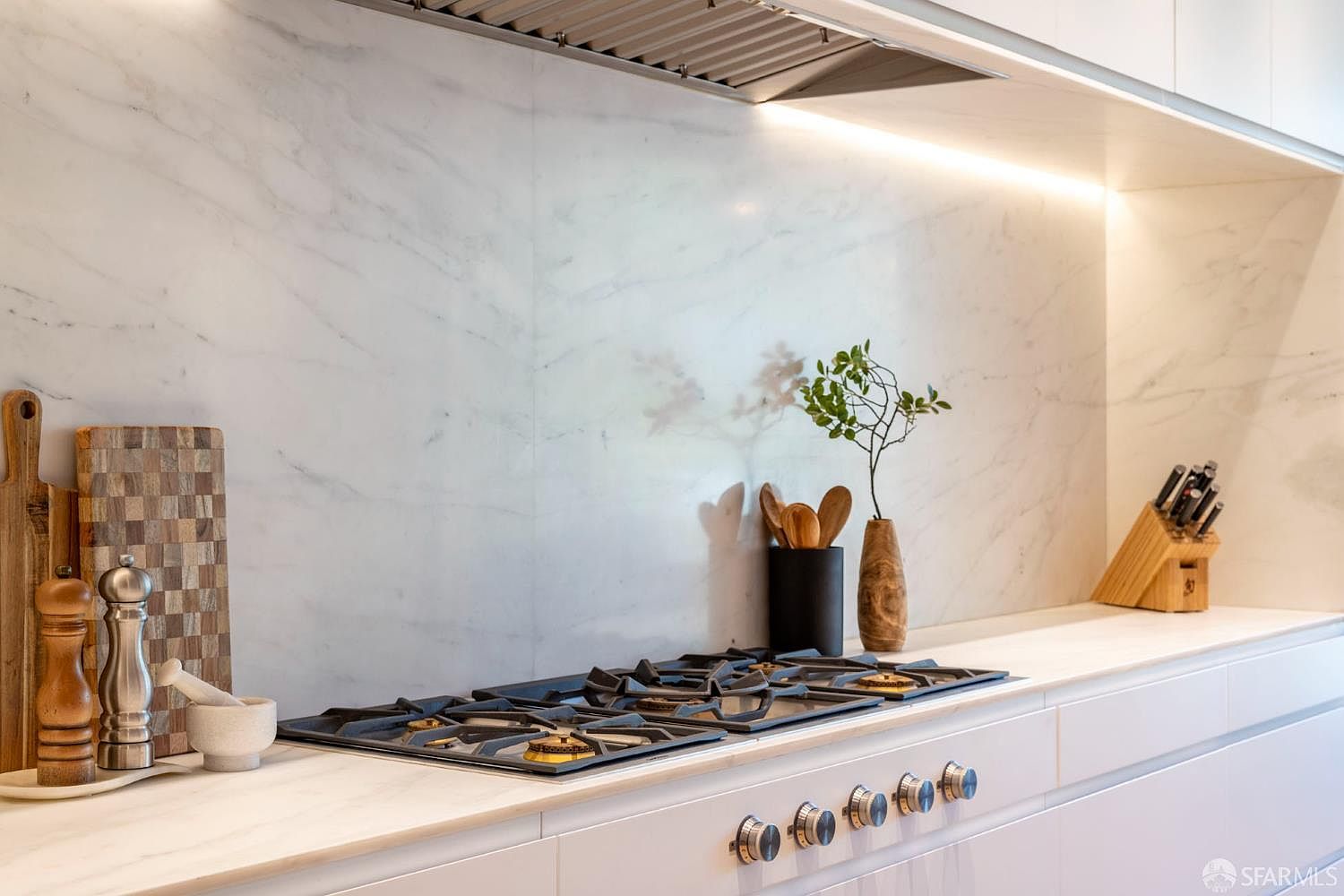
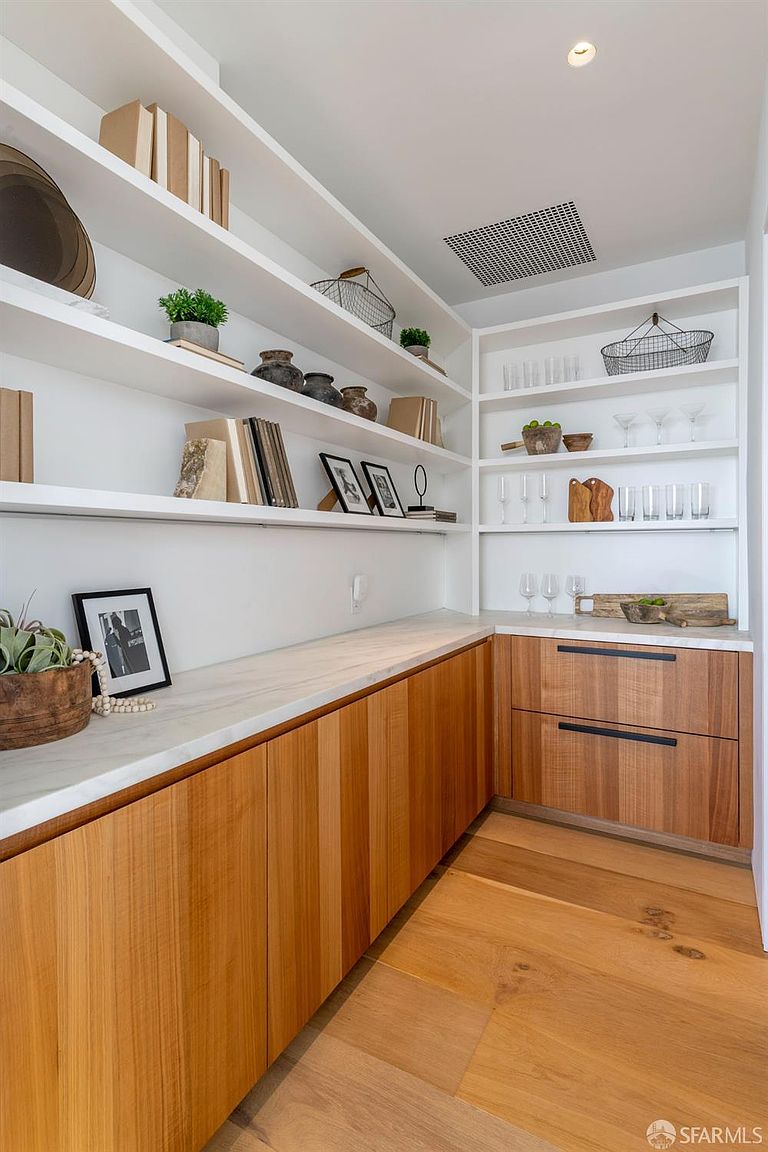
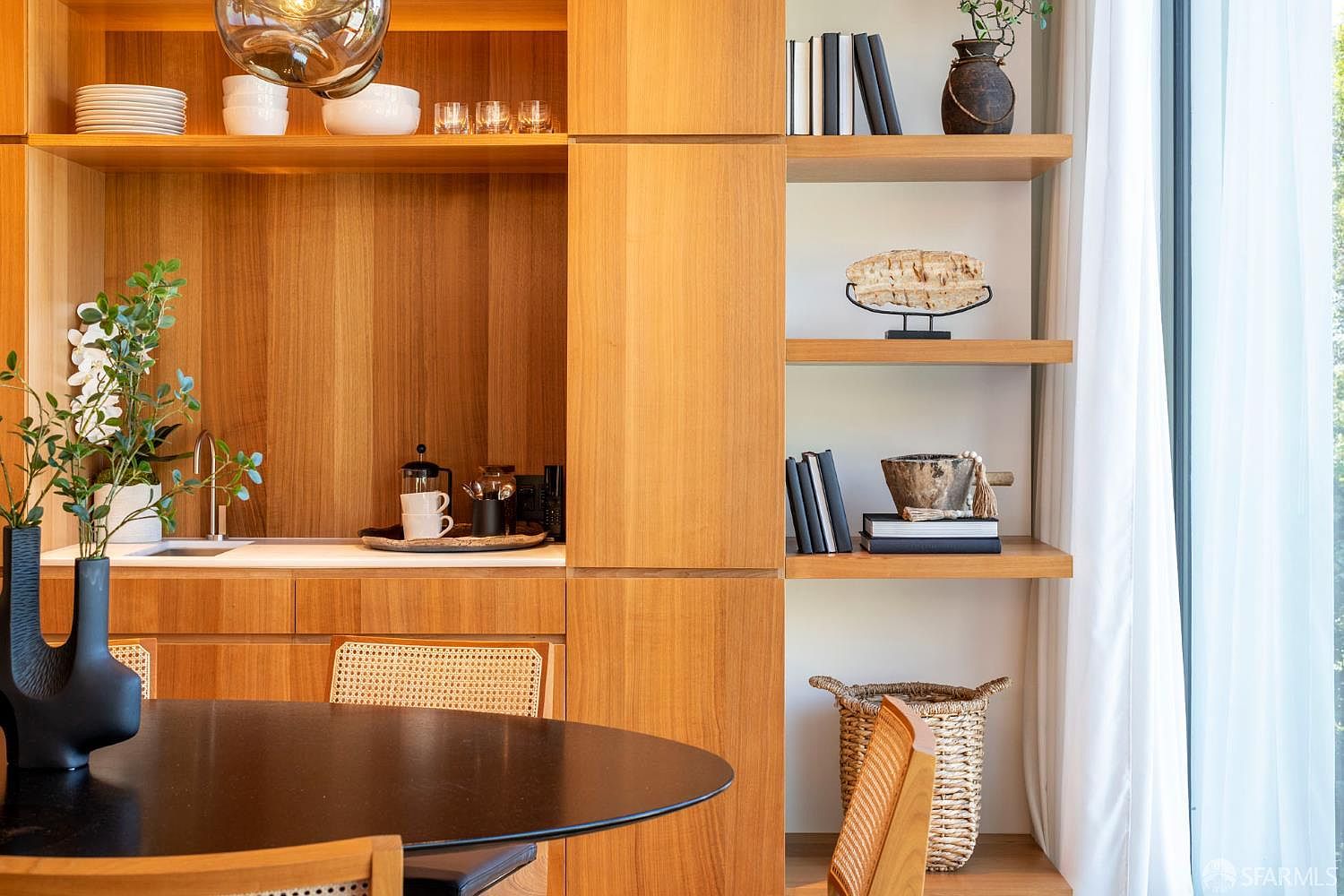
The main level unfolds as an expansive, light-saturated canvas of open-plan living and dining. The chef's kitchen — outfitted with professional-grade appliances including a Gaggenau gas cooktop — is defined by bespoke hardwood cabinetry, dramatic contrasting marble surfaces, and a stone-topped island of commanding scale. Geometric pendant lighting suspended from a warm wood-paneled ceiling gives the space a sculptural coherence that carries throughout. A butler's pantry, curated with open shelving and integrated storage, extends the kitchen's functionality without compromising its refinement.
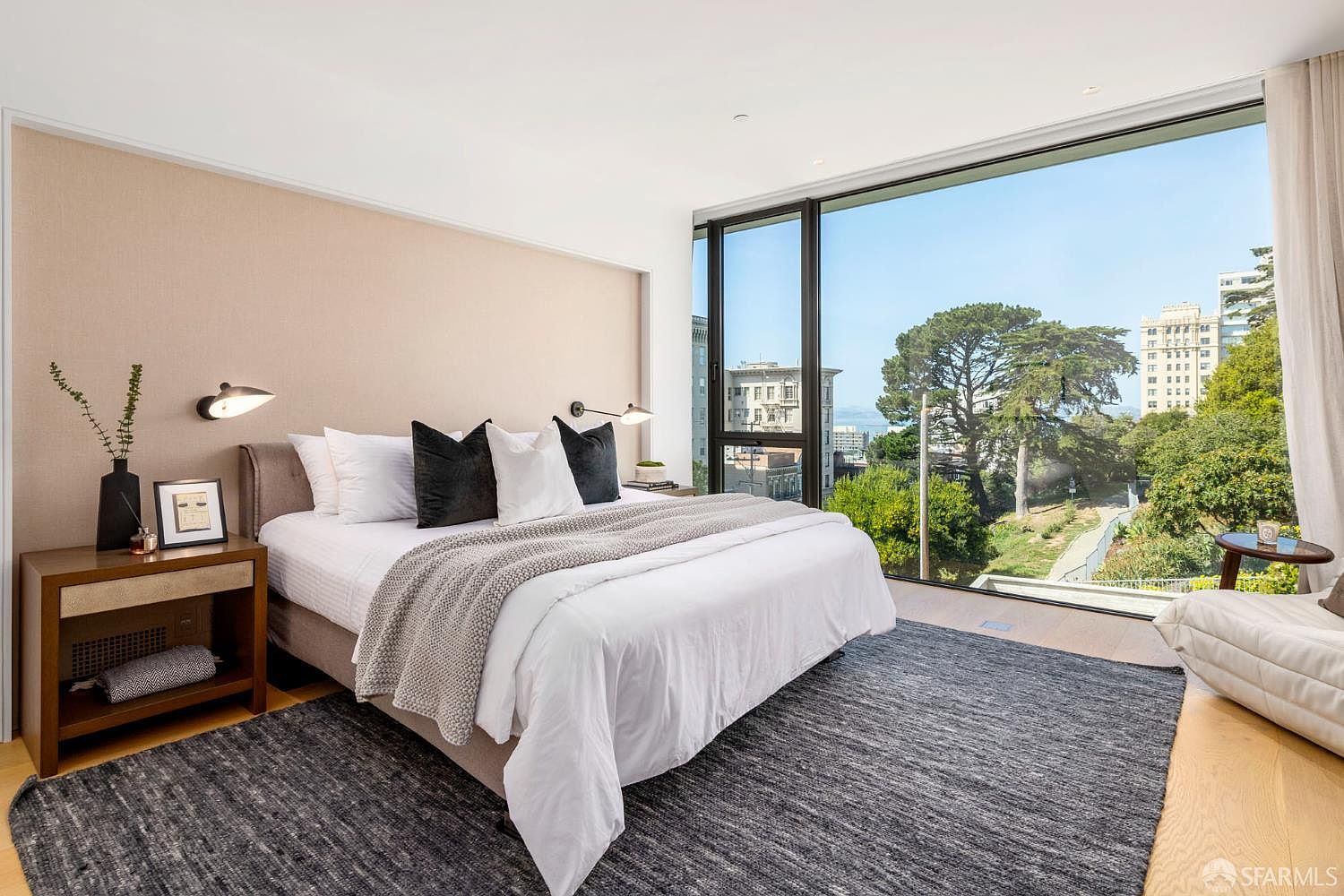
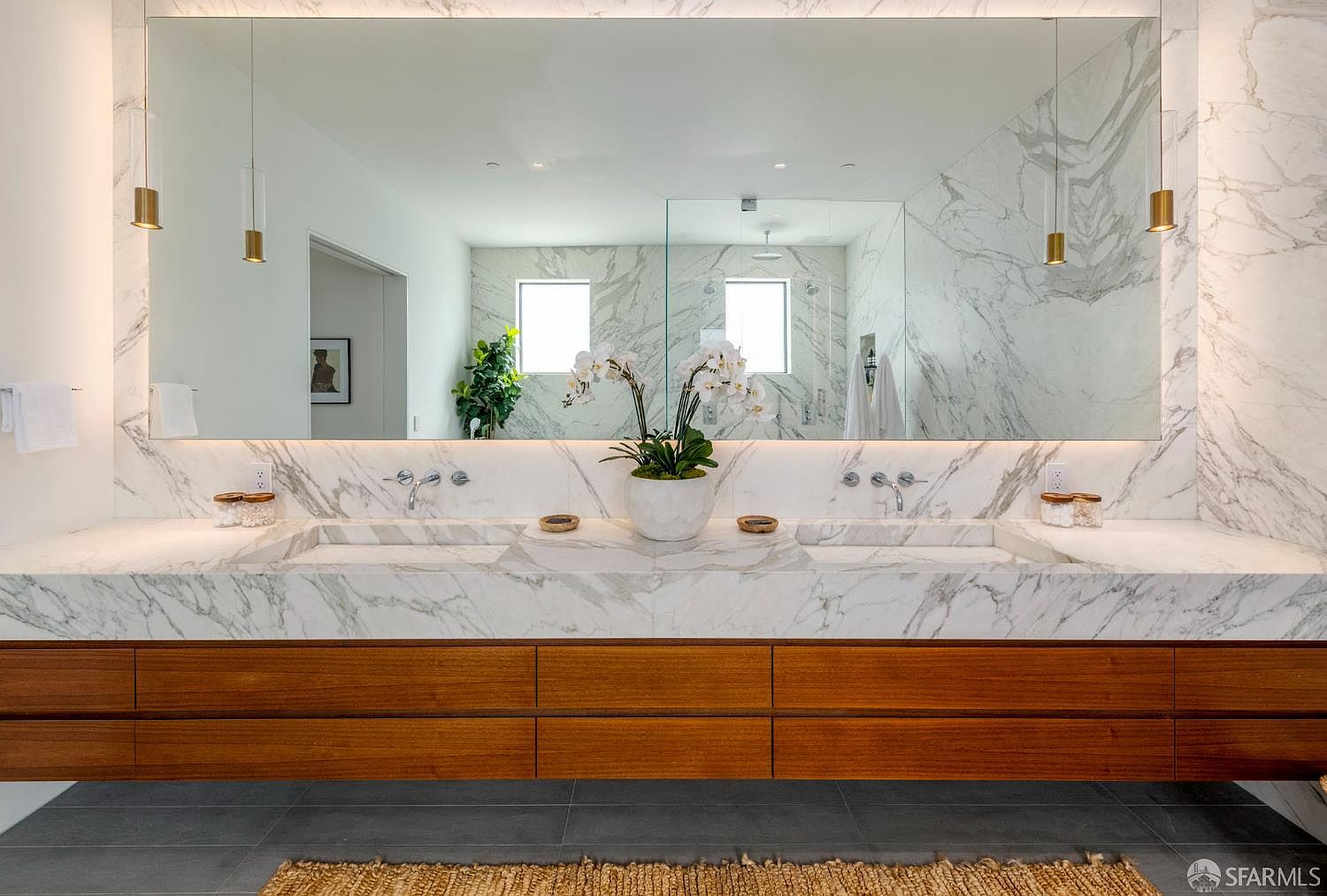
The primary suite is a study in serene, unwavering luxury. A custom-designed walk-in closet — symmetrically laid out in warm wood cabinetry with a central ottoman — flows without interruption into a spa-caliber bathroom enveloped in a single, continuous slab of white Italian marble. No seams. No interruption. The effect is of a space carved rather than assembled. A deep soaking tub, glass-enclosed rainfall shower, and double floating vanity complete a room that rivals the finest hotel suites in the world — and surpasses them in intimacy.
A dedicated wellness sanctuary — infrared sauna, cold plunge — occupies its own considered corner of the private quarters, conceived not as an amenity but as a philosophy: that restoration deserves its own architecture.
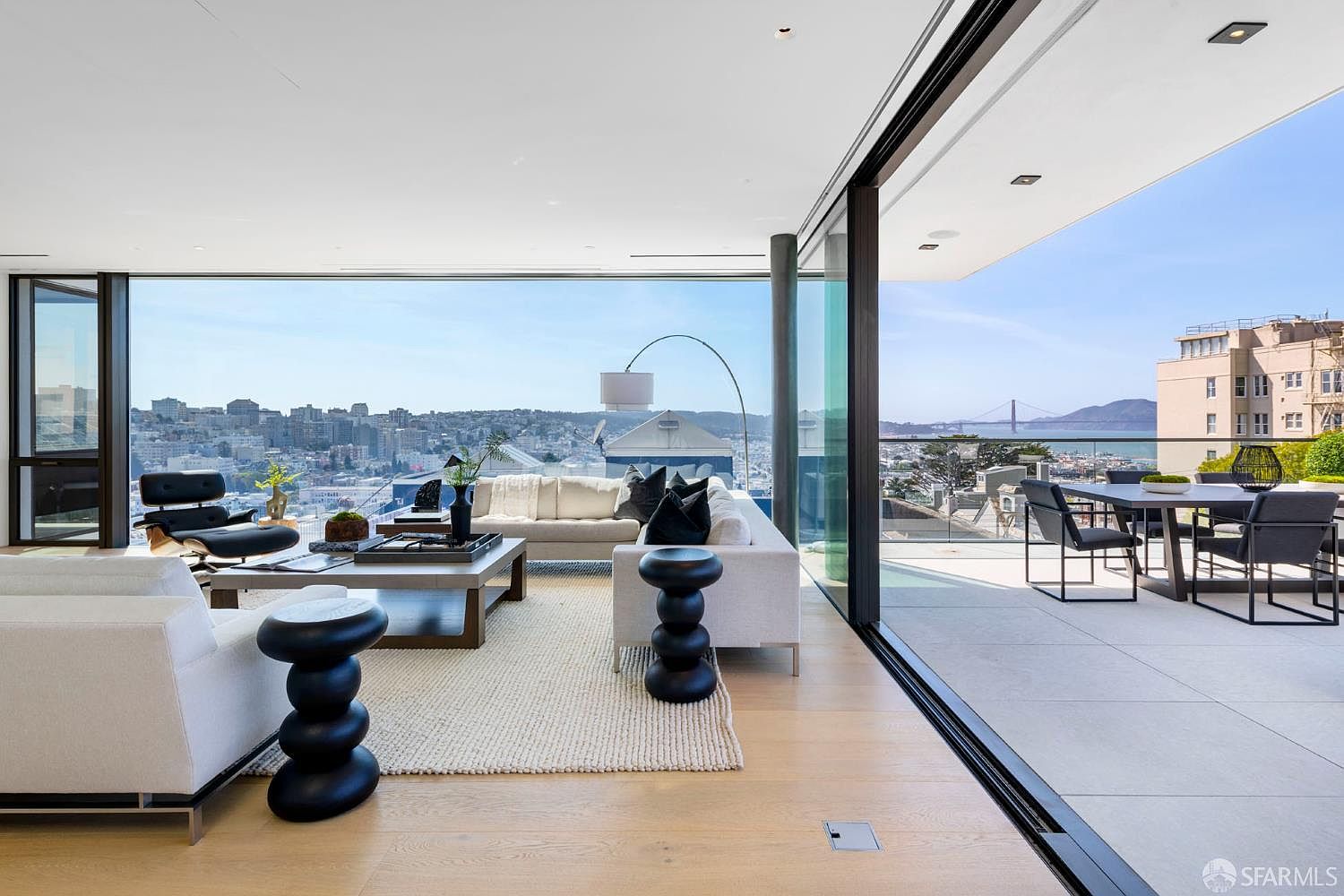
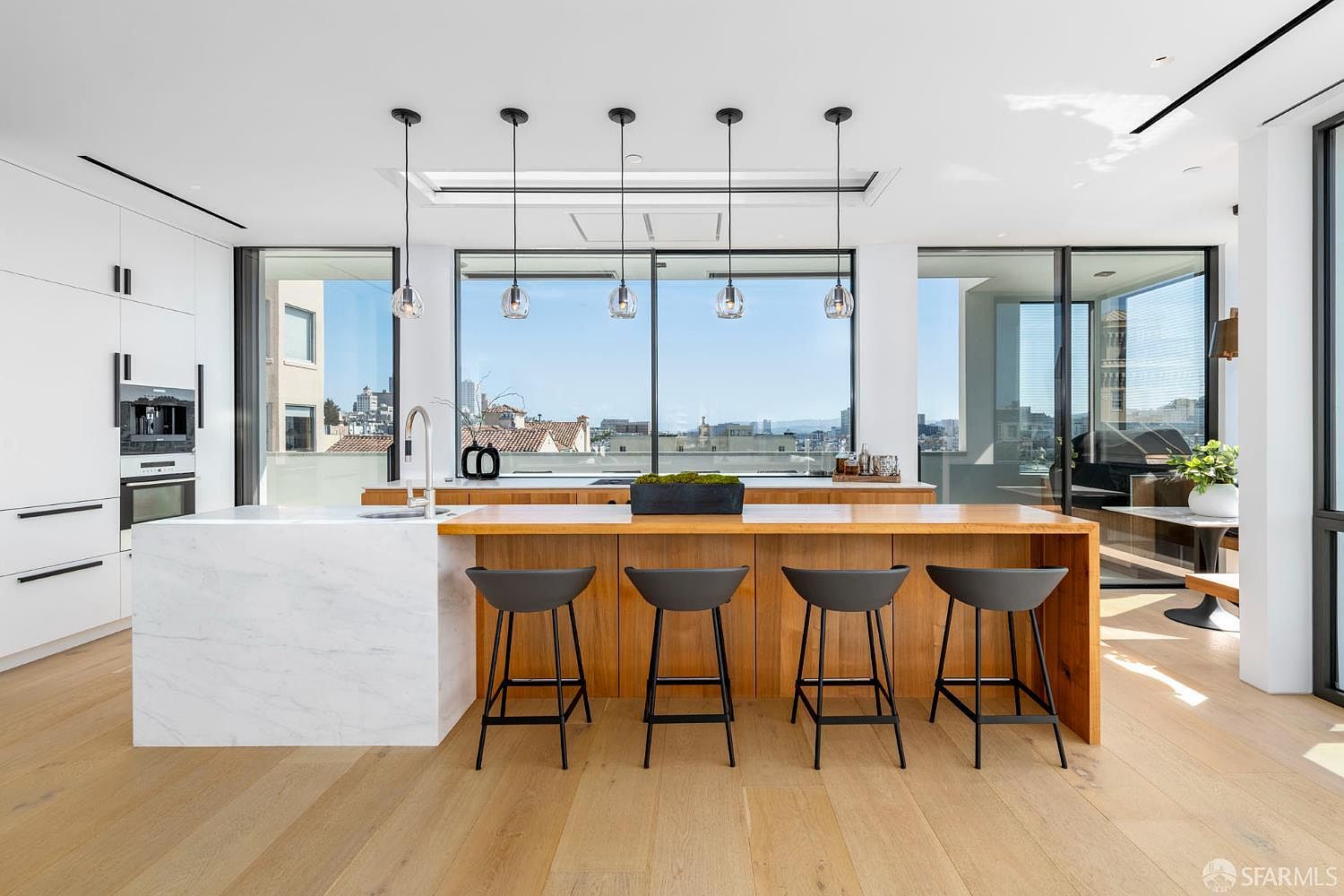
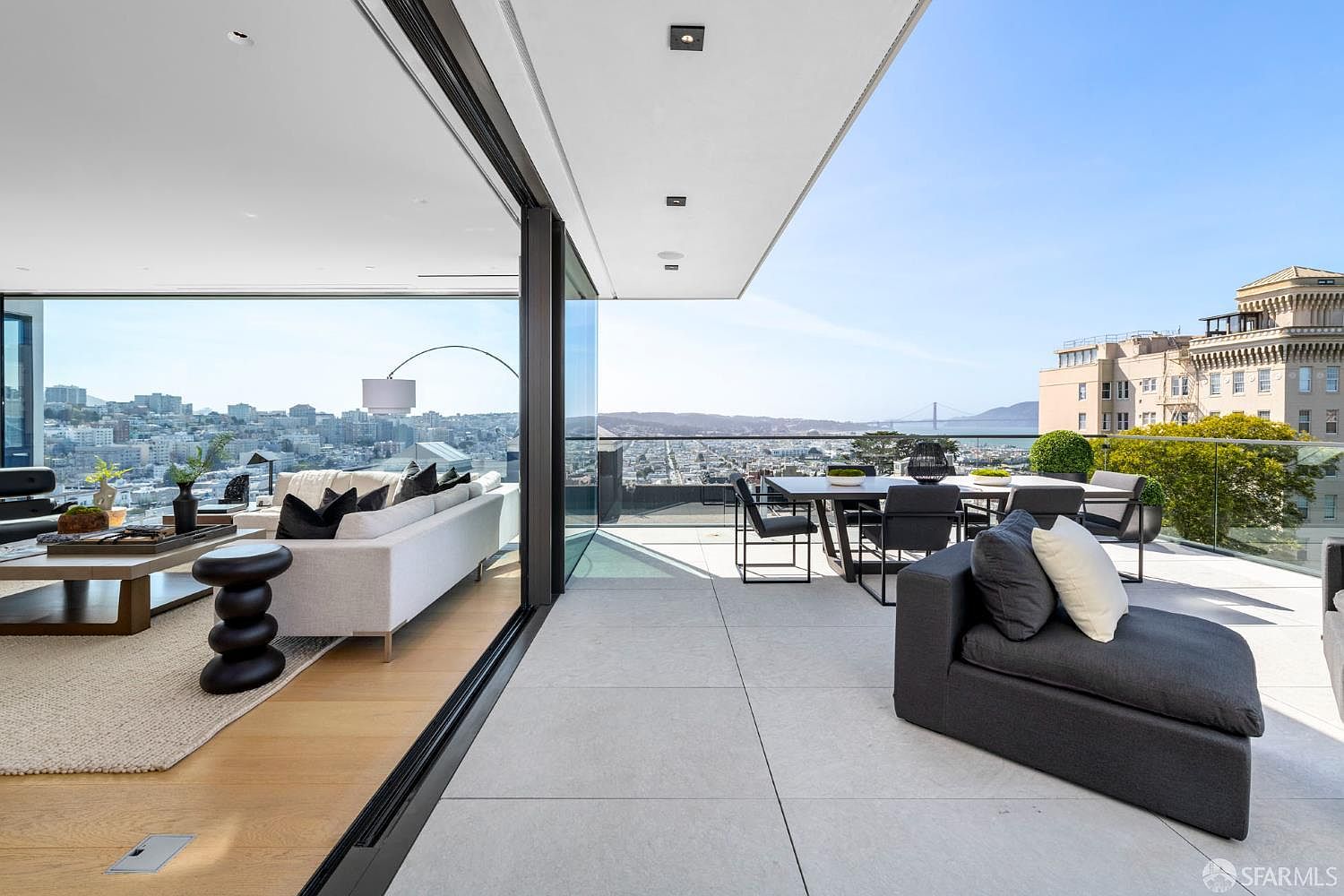
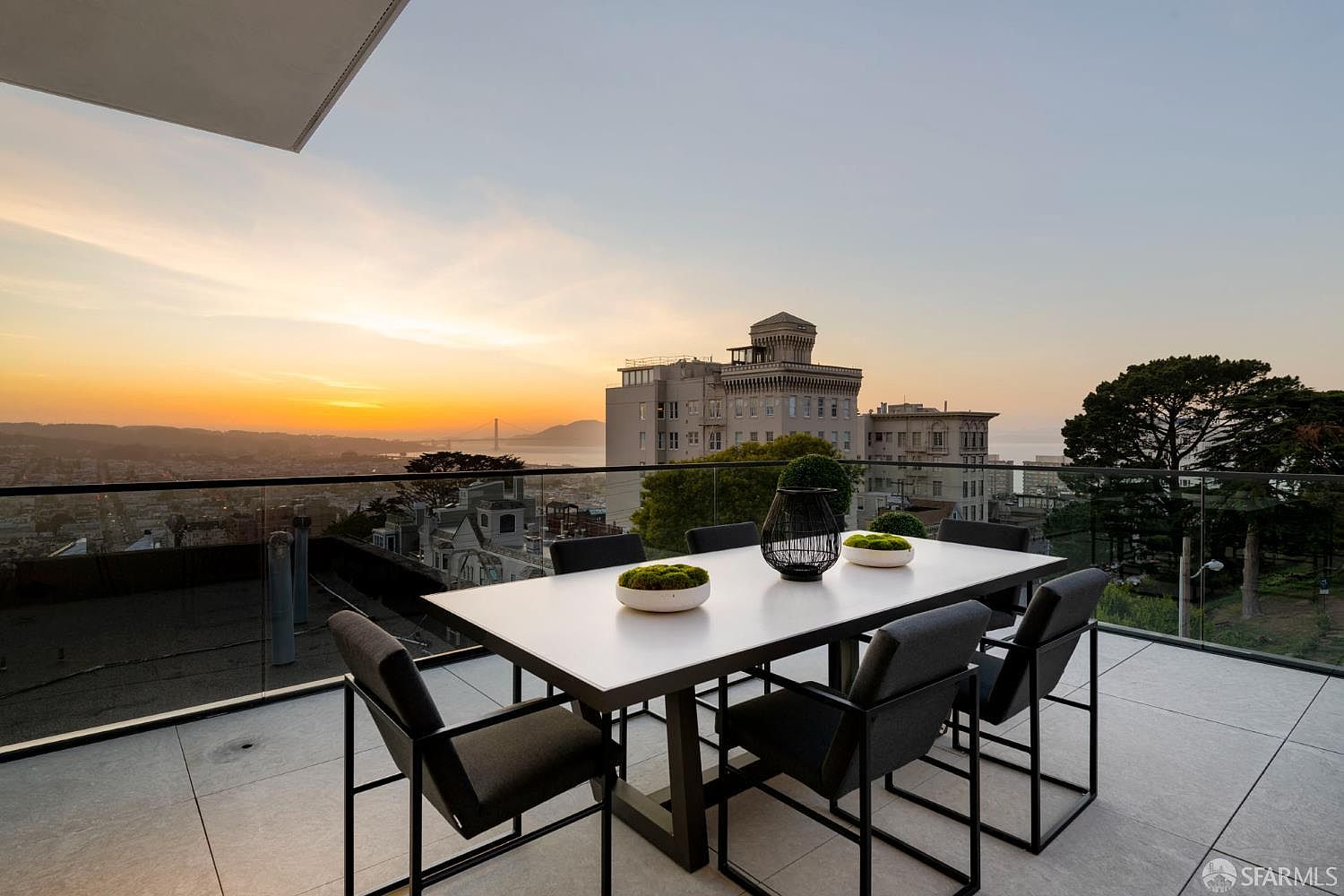
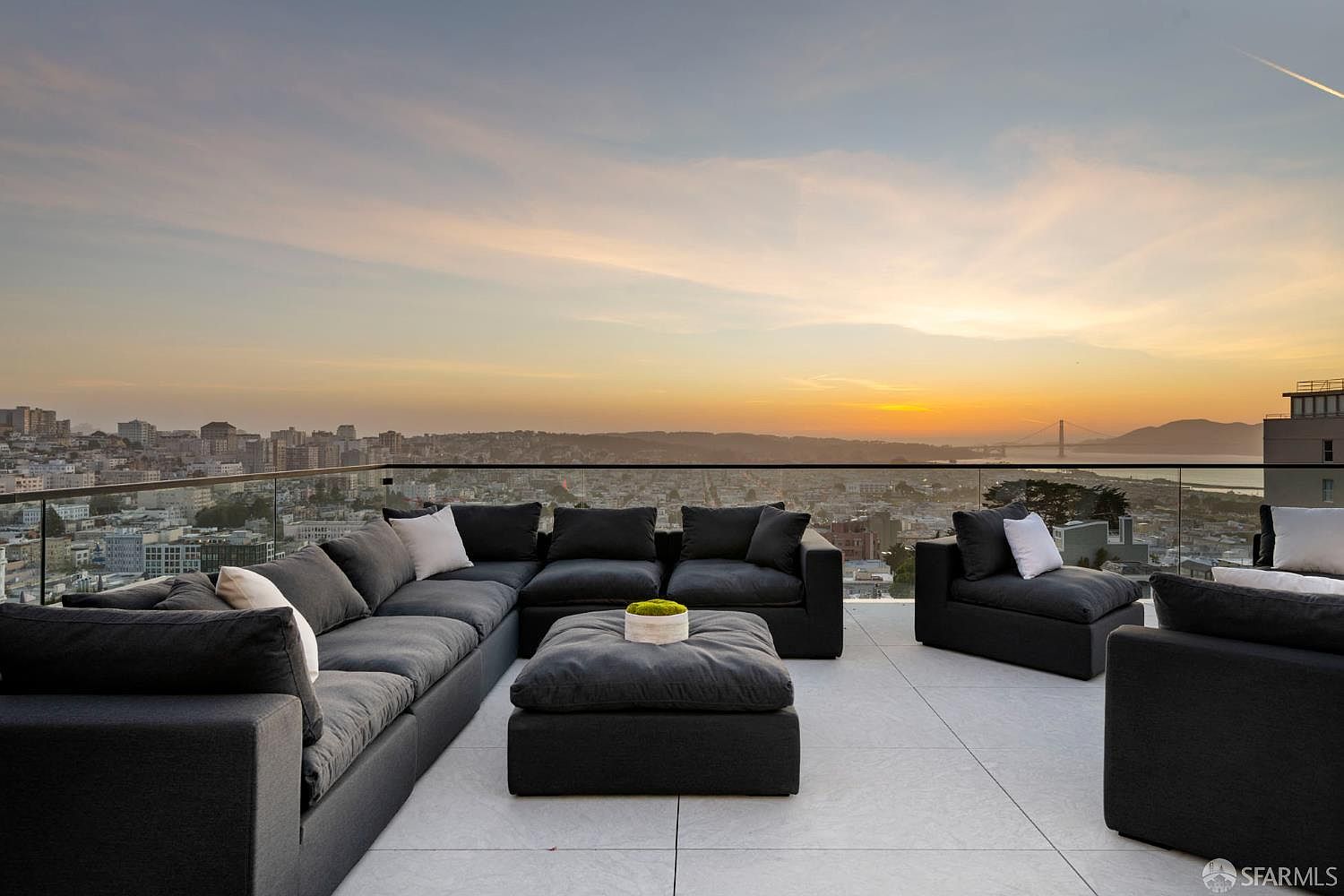
The penthouse level is where the residence reaches its fullest, most theatrical expression. A sophisticated media and family room anchored by a second full chef's kitchen — light wood cabinetry, stone-topped island, panoramic windows — opens through an expansive wall of glass directly onto a generous terrace. The view from this threshold is not incidental. The Golden Gate Bridge, the Palace of Fine Arts, the shimmering expanse of the Bay: they arrive not as backdrop but as primary occupants of every gathering held here.
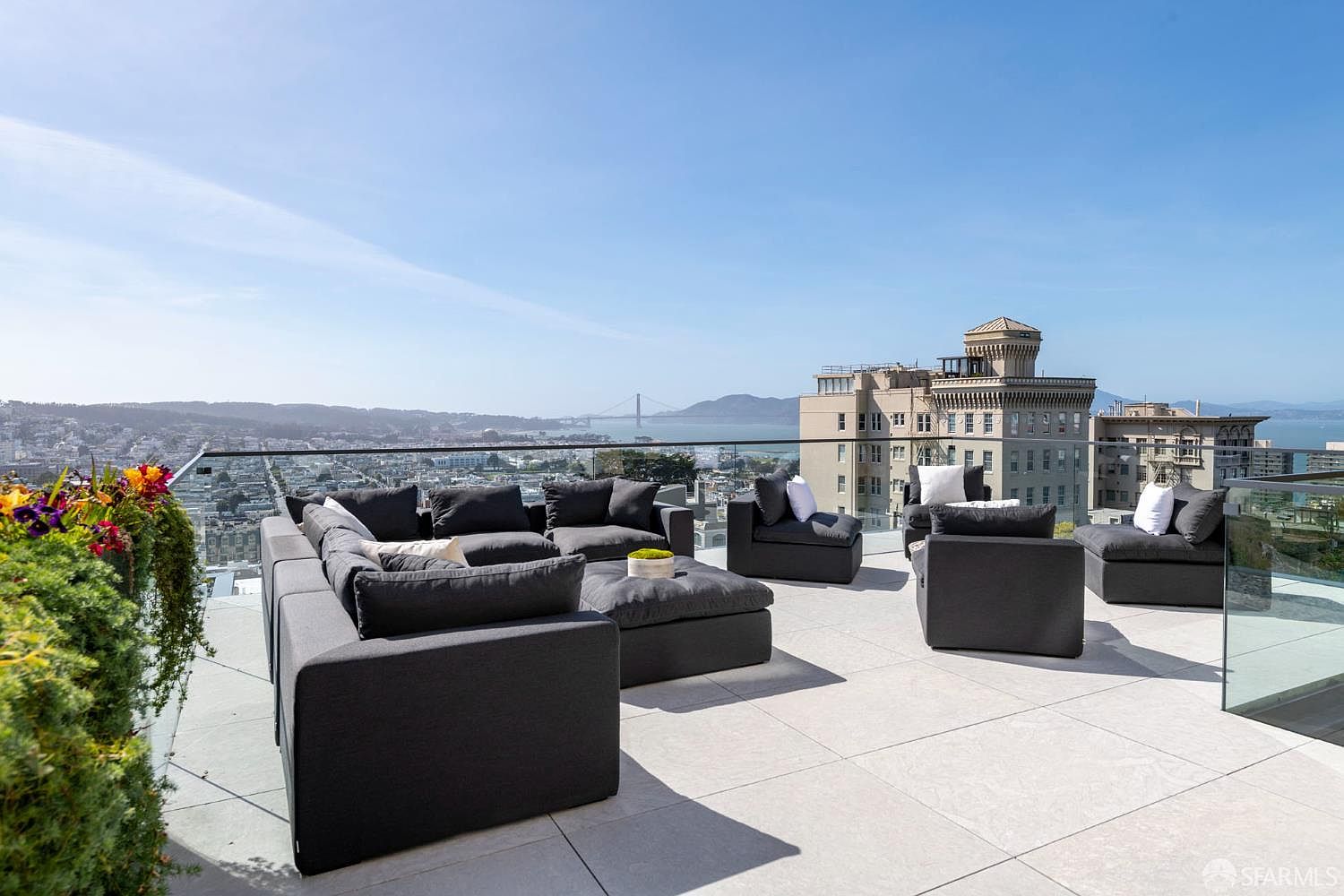
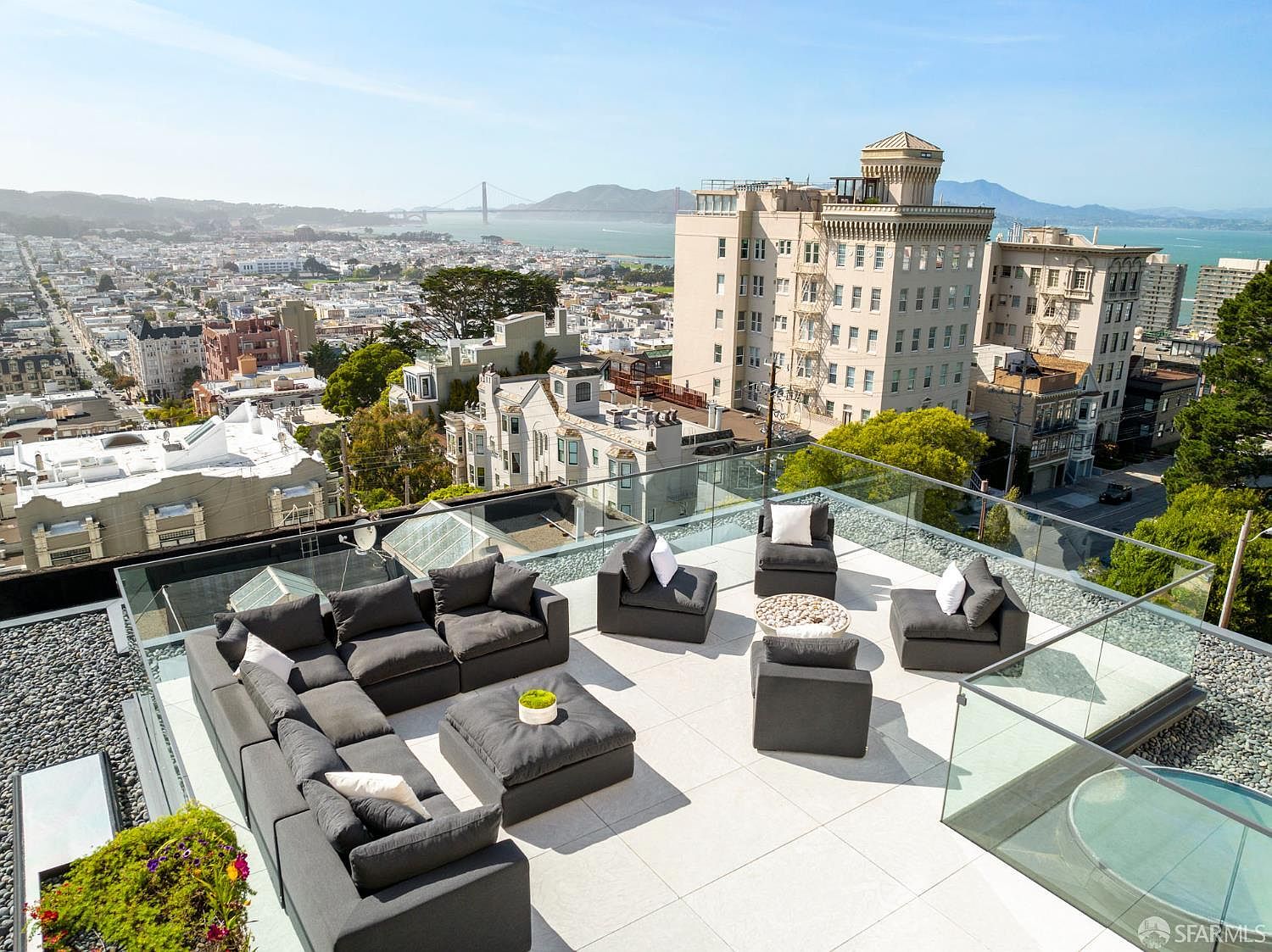
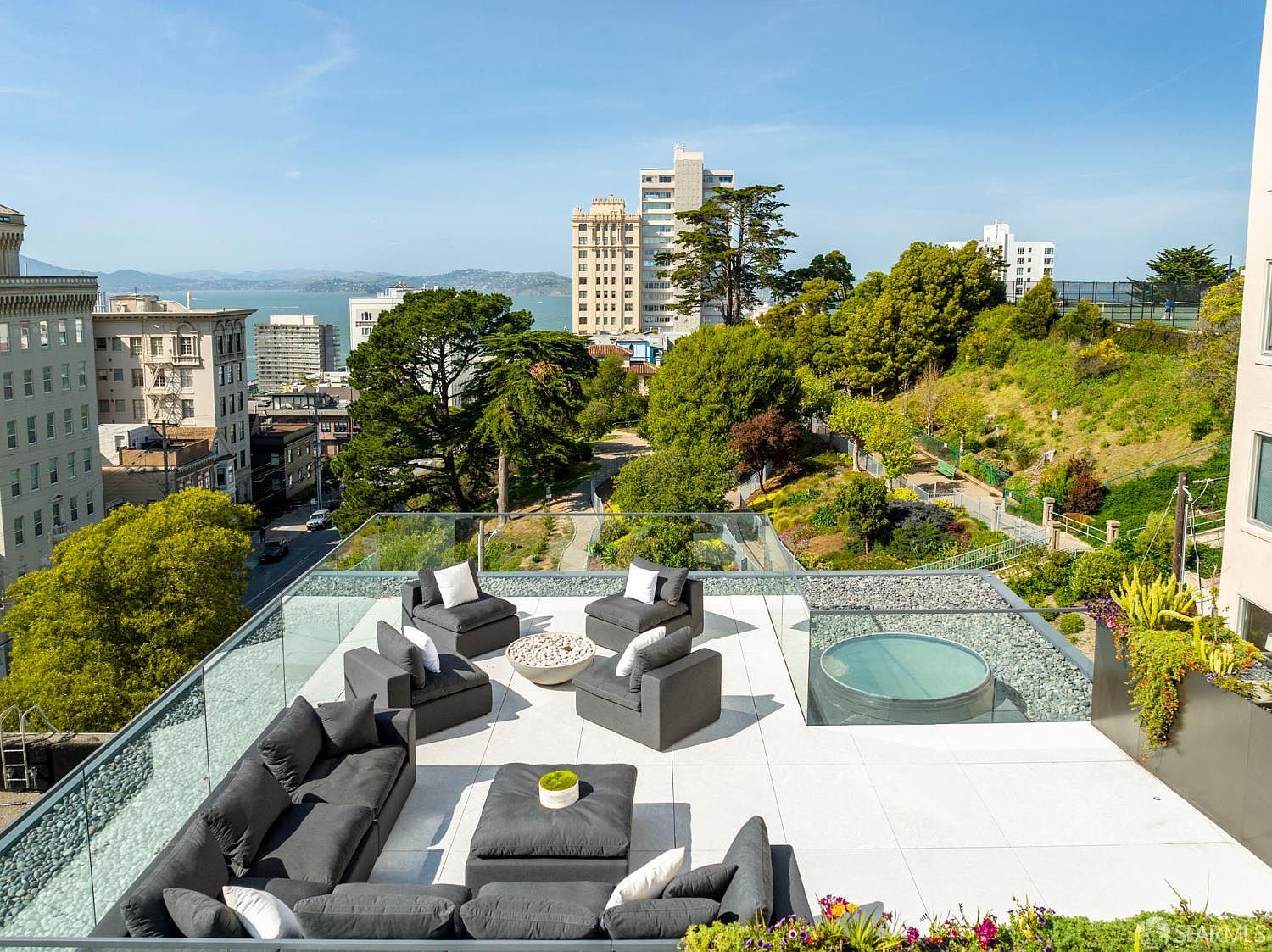
Above even this, the rooftop sky deck extends the horizon further still — furnished for conversation, anchored by a fire pit, enclosed by frameless glass railings that refuse to interrupt what nature and geography have conspired to provide. It is, by any measure, one of the great private vantage points in San Francisco.
Russian Hill occupies a particular position in San Francisco's geography and imagination that no other neighborhood quite replicates. Rising steeply between Nob Hill to the east and the waterfront neighborhoods to the north and west, it commands some of the city's most dramatic natural elevations — and with them, a quality of light, air, and perspective that has long attracted those who understand that where one lives shapes how one lives.
The neighborhood takes its name from the Russian sailors and traders believed to have been buried on its summit during the early nineteenth century, a detail that lends the hill a quiet historical gravitas beneath its contemporary polish. By the turn of the twentieth century, Russian Hill had become home to writers, artists, and intellectuals drawn to its relative remove from the commercial bustle below. Ina Coolbrith, California's first poet laureate, lived here. The neighborhood's literary and bohemian associations have never entirely departed — they simply evolved, over generations, into a more refined residential character.
Today, Russian Hill is among San Francisco's most sought-after addresses — a neighborhood that balances genuine urban energy with the privacy and calm that elevation, narrow streets, and a predominantly residential fabric provide. Its streets are largely spared the density of foot traffic that defines neighborhoods closer to downtown, yet Polk Street — Russian Hill's primary commercial corridor — offers a curated concentration of independent restaurants, wine bars, specialty coffee shops, and neighborhood markets within easy walking distance. The stretch from Broadway to Union Street in particular has cultivated a local dining scene of genuine quality, with establishments that have earned city-wide reputations without sacrificing neighborhood character.
The proximity to the northern waterfront opens access to the Embarcadero, the Ferry Building Marketplace, and the green expanse of Aquatic Park — a historic bathhouse complex and protected cove that provides one of the city's few genuine swimming beaches. Fort Mason, a former military installation transformed into a cultural campus housing the SFMOMA Artists Gallery, the Cowell Theater, and a rotating calendar of farmers markets and public events, sits within the broader neighborhood's reach.
The Palace of Fine Arts — visible directly from the penthouse terrace and rooftop sky deck of 1281 Greenwich — remains one of the most beloved landmarks in American urban architecture: Bernard Maybeck's 1915 rotunda and colonnade, set against a reflecting lagoon in the Marina District, represents a rare instance of designed beauty that time has only deepened. The Presidio, the expansive national park that anchors the northern tip of the San Francisco Peninsula, extends hiking trails, forested paths, and coastal overlooks within cycling or driving distance.
For families, the neighborhood falls within proximity to several of San Francisco's most respected independent schools. For those engaged with the city's professional and cultural life, the Financial District, Jackson Square's design showrooms, and the galleries and institutions of SoMa are reachable in minutes.
But Russian Hill's most enduring quality is perhaps the simplest to describe and the hardest to replicate: the sense, at the end of any day, of returning to a place that sits above the city without being apart from it — commanding its skyline, its bridges, and its light, while remaining, in every meaningful way, a neighborhood of rare and genuine warmth.
Featured Highlights
Curated Content • Presented by Andres Ardila